Monthly Archives: June 2023

Winter planting and litterpicking

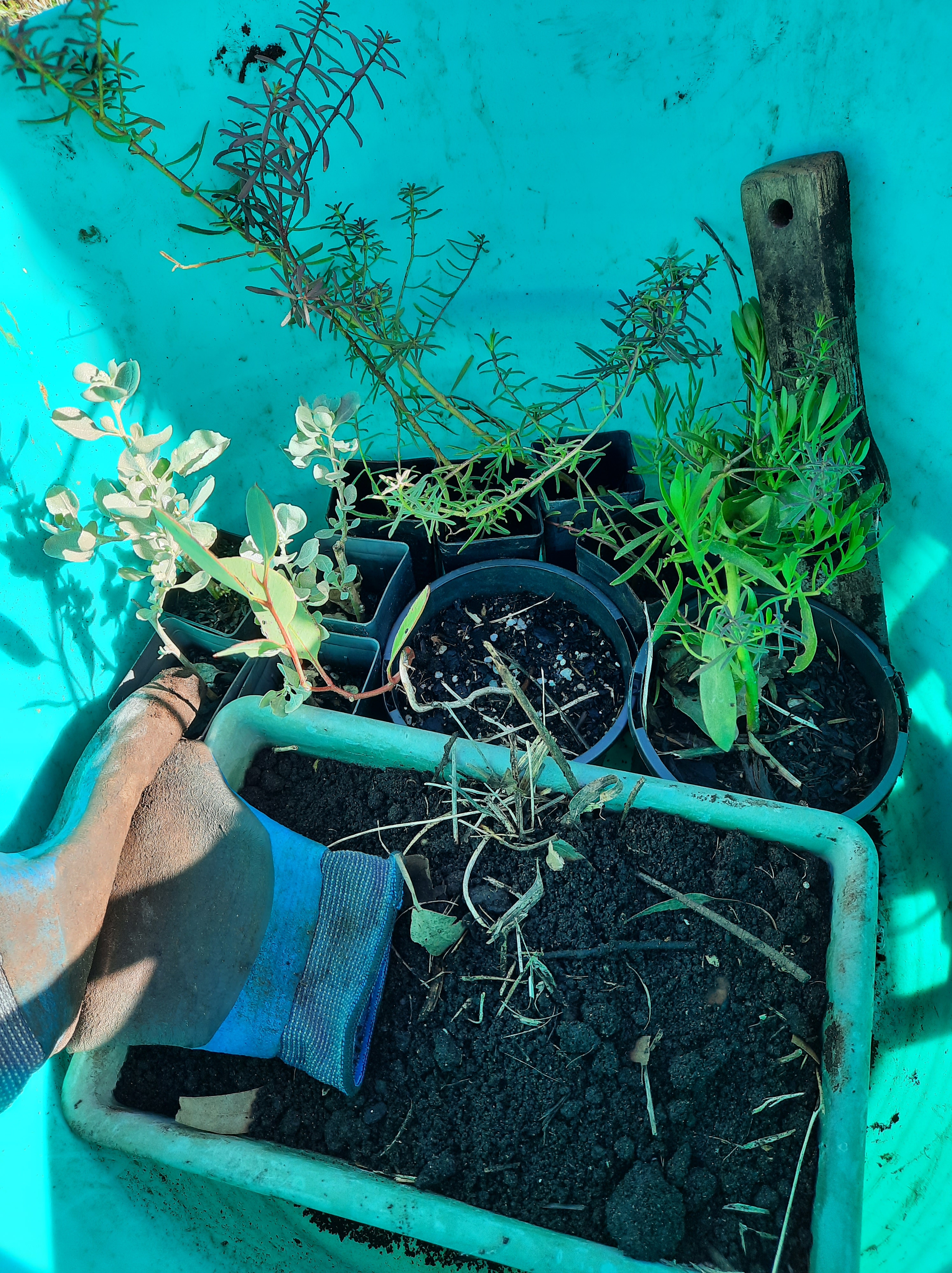
It’s a good time of year to be out planting still… Here I am setting out with some plants and some soil to help them in tough patches along the railway.
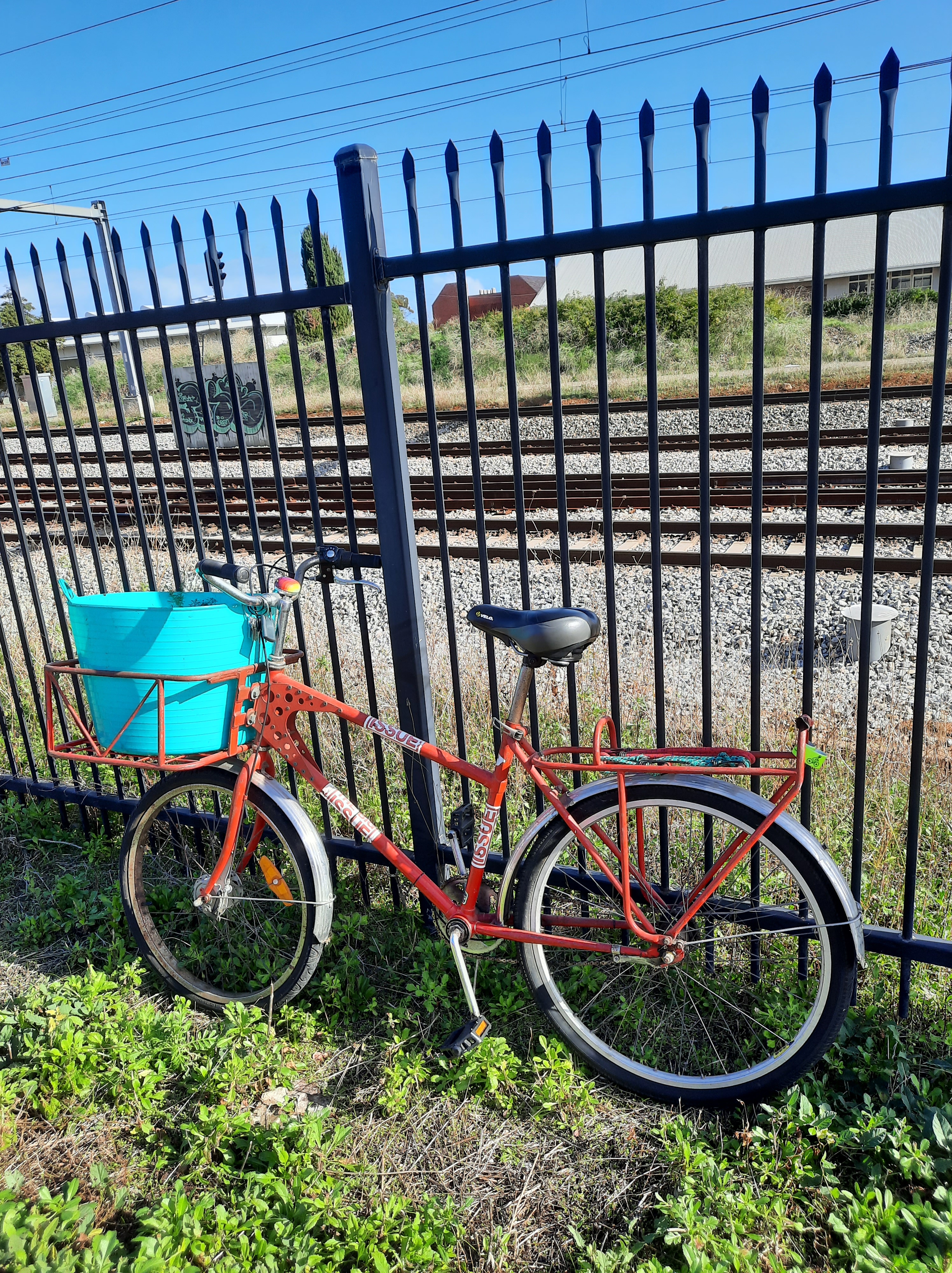
This is my trusty steed. I’ve grown to really appreciate what this retro cargo bike can do!
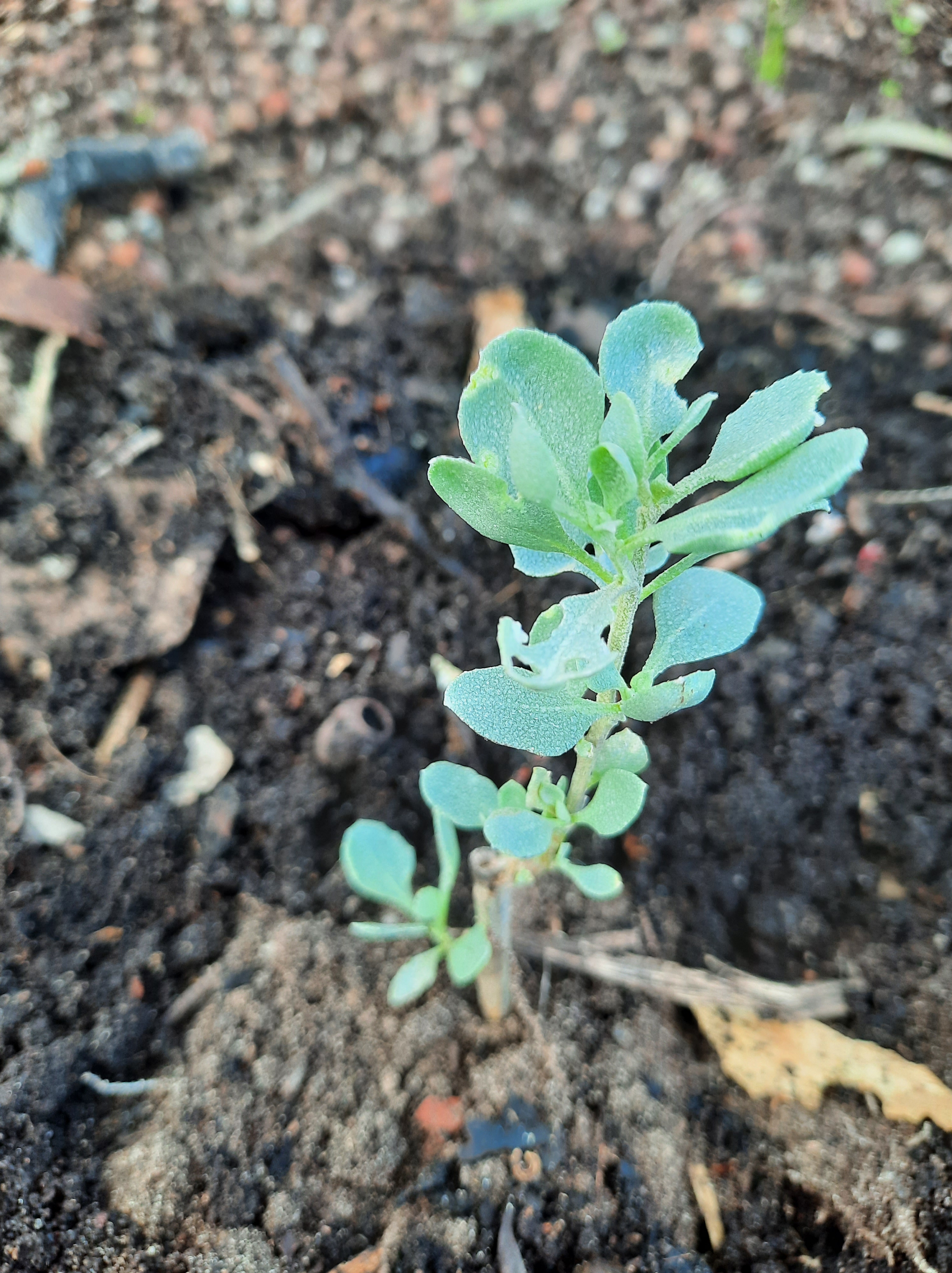
In with the plants, including these Old Man Saltbush (Atriplex Nummularia) I was generously given by a great propagator.
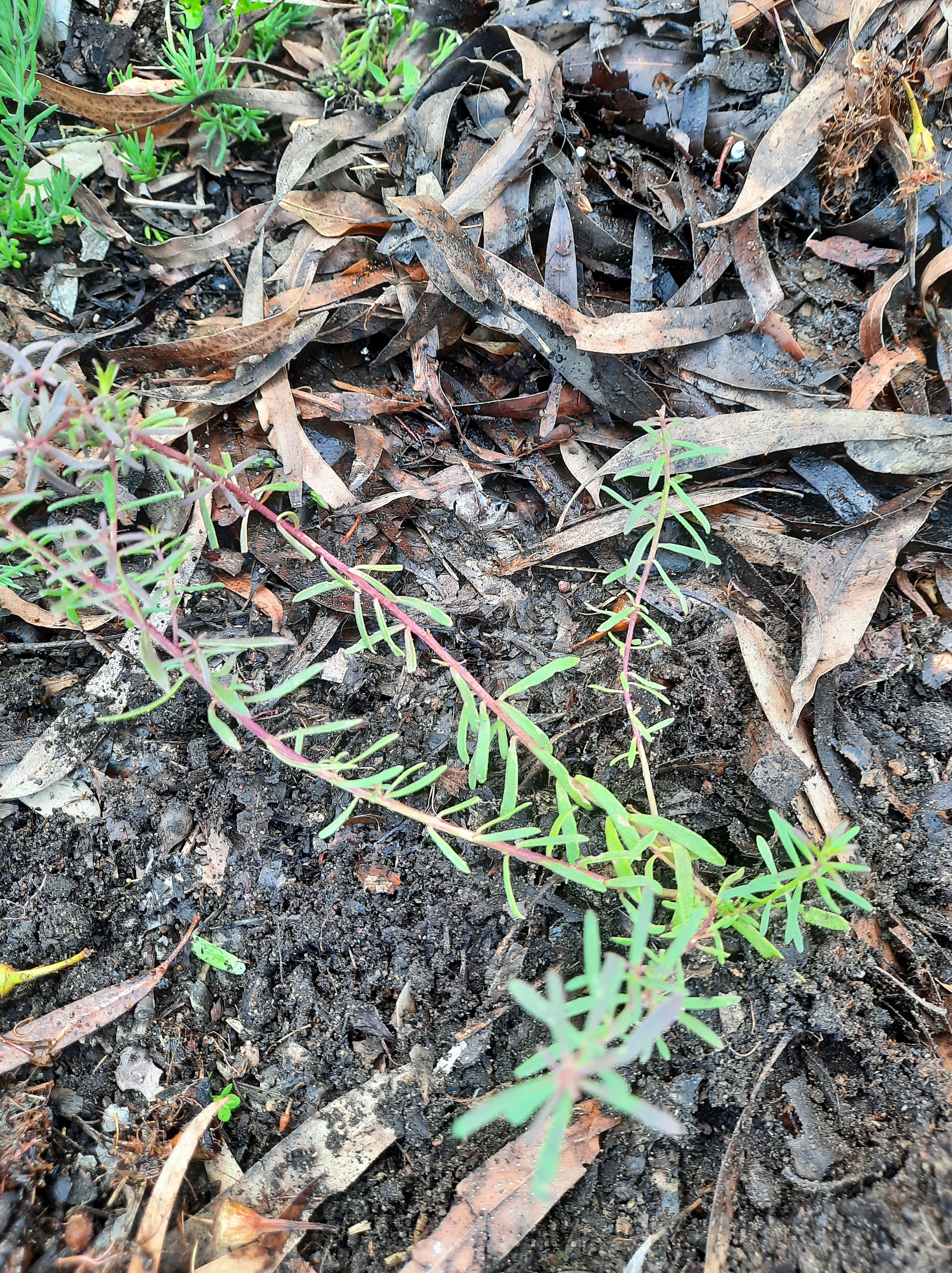
In with creeping boobialla (Myoporum Parvifolium)–this is the narrow- “red”- leafed form.
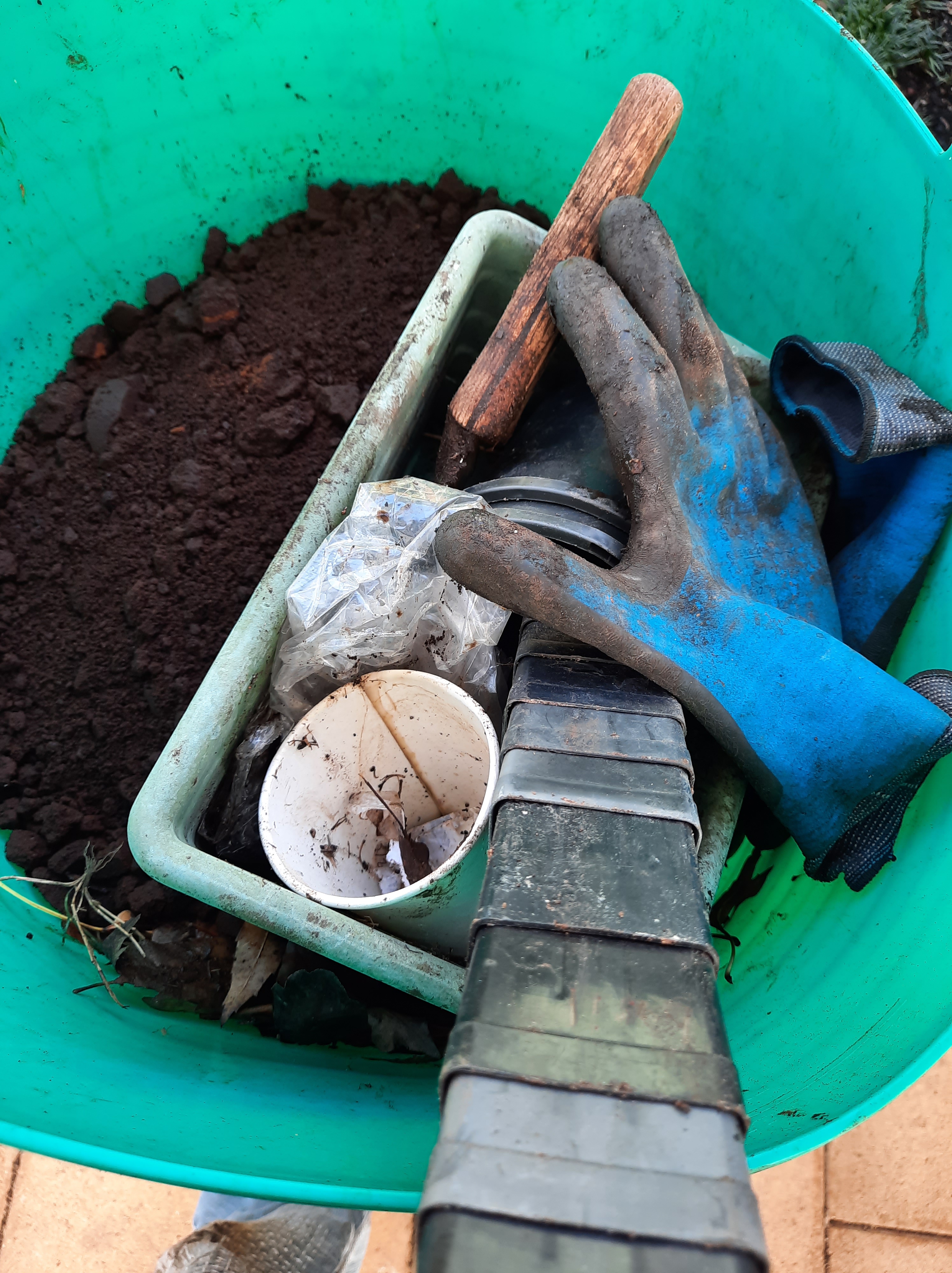
Then I stopped off at the local cafe for coffee grounds on my way home and just piled the rest in on top of them!
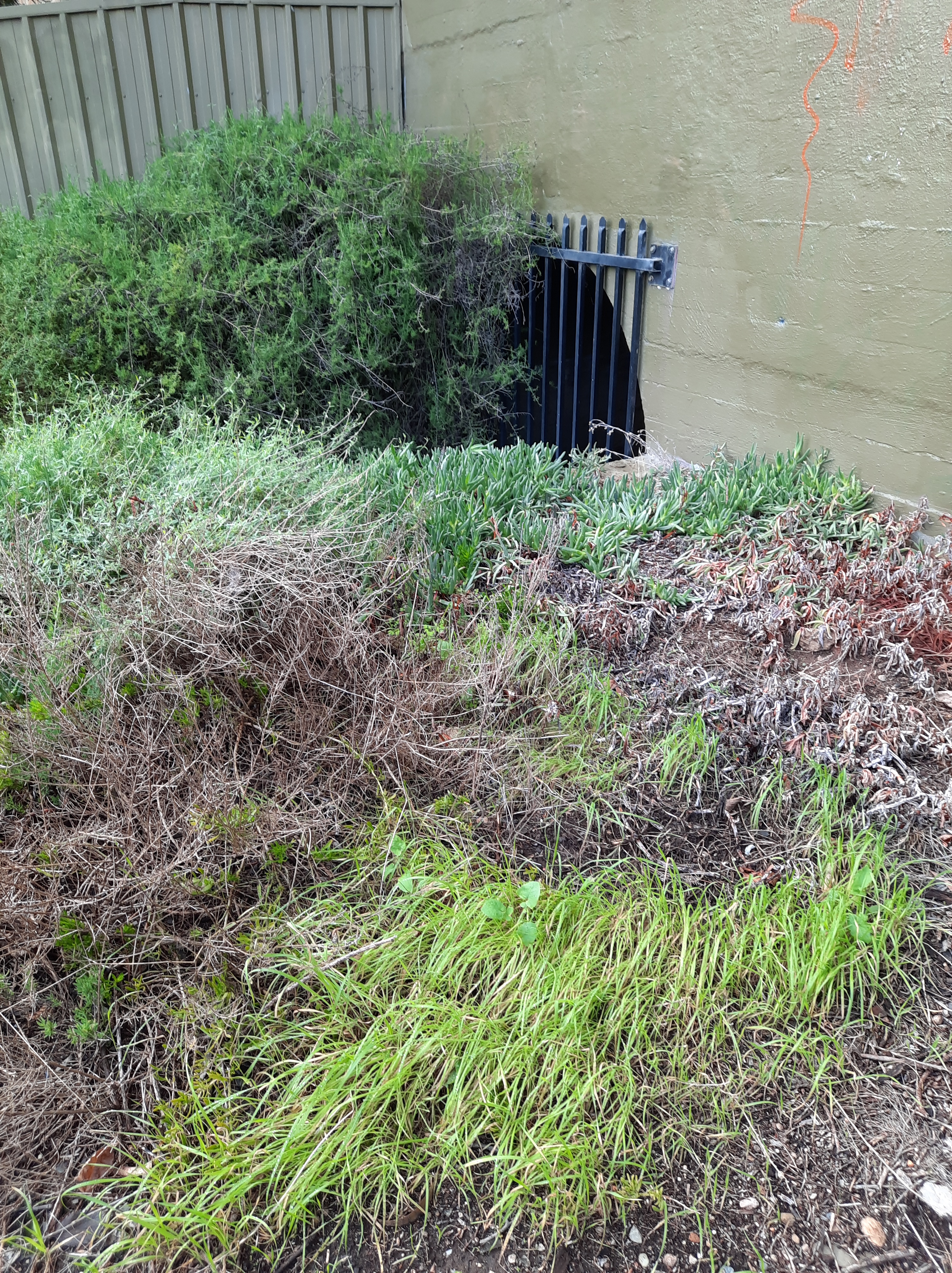
Then here is another trip–this time mulching an established spot I planted many years ago. It has become weedy lately. So I did a little sheet mulching and cleared leaves from the culvert to use as the mulch layer.
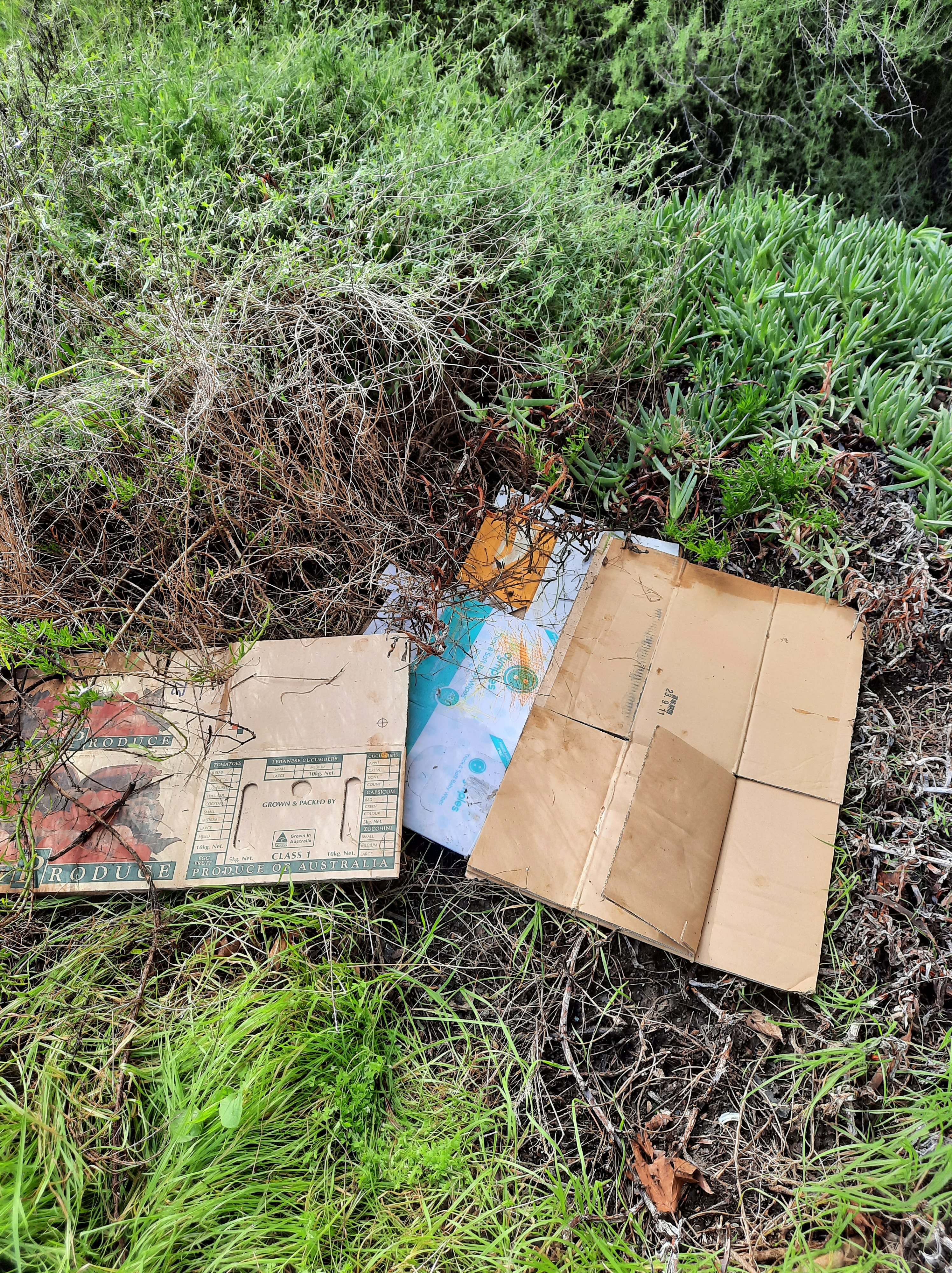
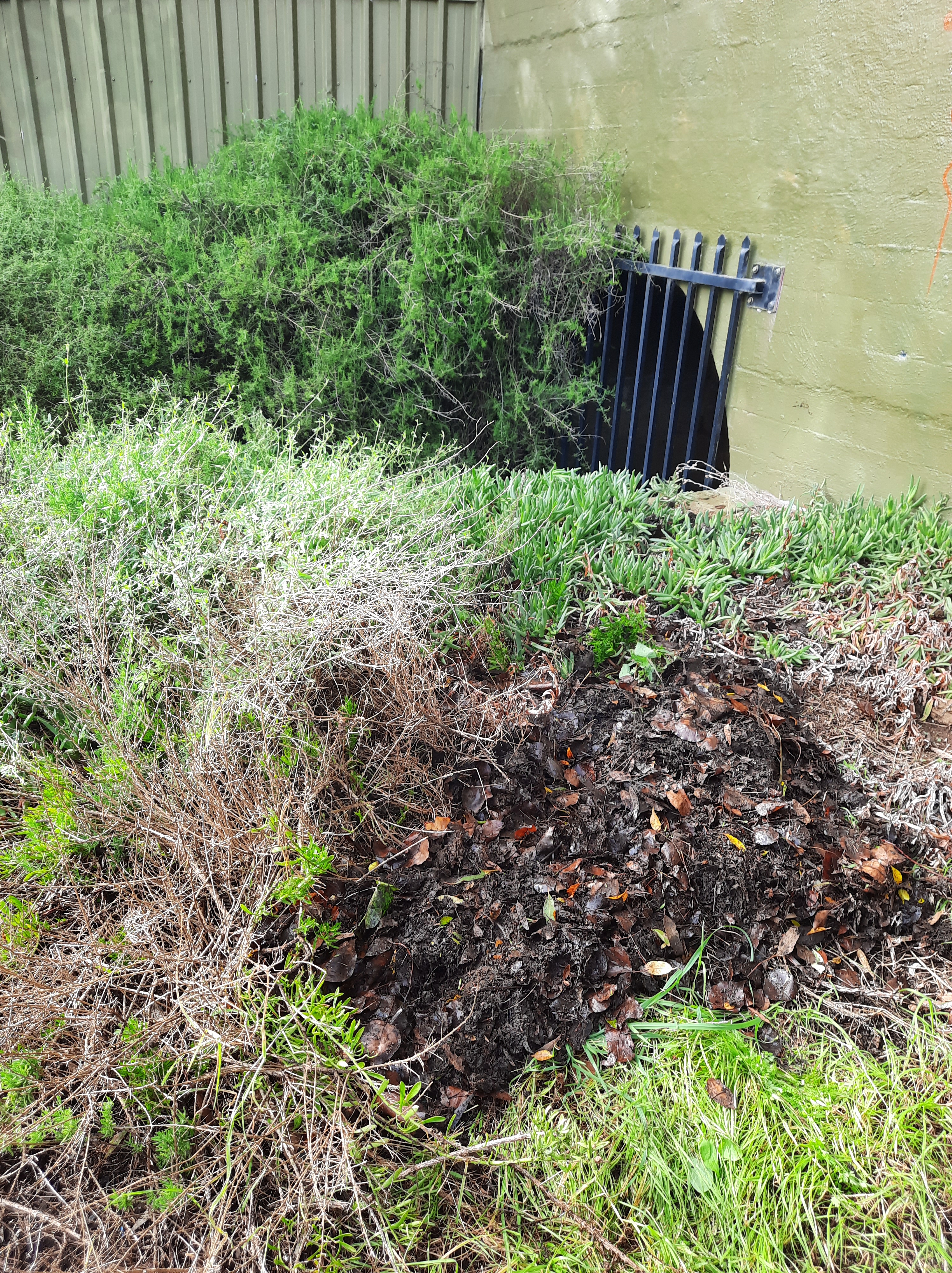
I did some hand weeding too. It’s a start!
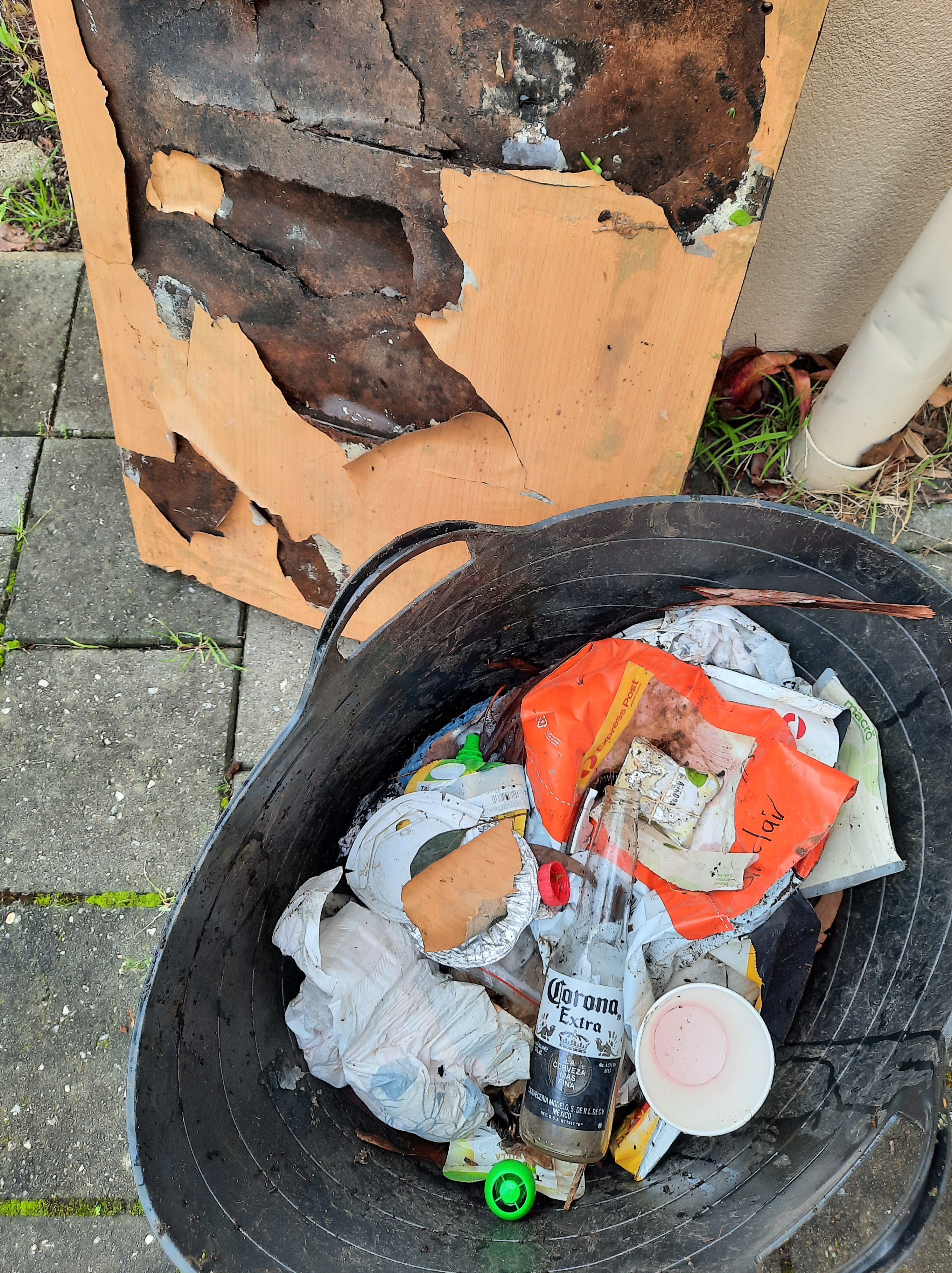
And on the way home, with that nice big bucket (and gardening gloves), I cleared up some rubbish someone in dire straits had left behind, and a cupboard door dumped nearby as well. I have realised that I always feel like I’m making a positive contribution doing these things. Sometimes people say things to me as they pass, most often “that’s not your job, the council should do that”. Maybe it should, but the council is collecting the recycling and the waste that will go to landfill. I would rather deal with the weeds I can without poison (as the council will poison every so often) and keep the area near where I love free of rubbish as much as I can… and not treat these things as always for someone else to do. Care for the land and living things around us is everyone’s business, I think.

3 Comments

Filed under Natural dyeing

Guerilla gardening the railway line

Just across the way from one patch that is thriving, is a patch that is under a completely different regime of care. I would guess this is because it is managed by the railways and not the showgrounds. It gets a lot of poisoning. A few things, including kangaroo apples (the shrubs in the distance) have made it. They die back when poisoned but they haven’t died so far, having been planted in, perhaps, 2021.

I have planted this area out twice, once with a bunch of friends and once by myself. It looks to me as though the poison comes from the railway corridor side (hence the survivors being over close to the kerb). The extent of the poisoning is such that my current strategy is to plant a few more hardy plants up close against the ones that are surviving. One of those is a grevillea winpara gem (I think) that has planted itself in an entirely unsuitable spot, close to the bike path. I’m leaving it there since it is alive and nowhere near its potential final size–and may just be a small relative of the 2 metre sized shrub/tree I have in mind, looking at those leaves.

Here is the same patch after some planting, mulching and cutting back of branches overhanging the path. The grevillea is in the foreground, its foliage a sad yellow, but growing anyway.

Here is the sophisticated mulch collecting system. I also chop up the material that I prune off, and add it to the mulch layer. This area looks so alkaline and has so little soil, every addition is worth having to help it build some soil. I’m hoping that the poisoner will start to see that this area is no longer weedy and actually populated with native plants, one day. I am still pondering whether a sign would help or hurt. Sometimes plant guards and stakes create trouble for little plants, and this area is a strong case, where I have had trees pulled out along with their stakes on several occasions, and a sign attached with cable ties removed. So hard to know!

And here, I’ve added some ruby saltbush into another patch further along in an attempt to create an understorey.

5 Comments

Filed under Natural dyeing

The Harlenes

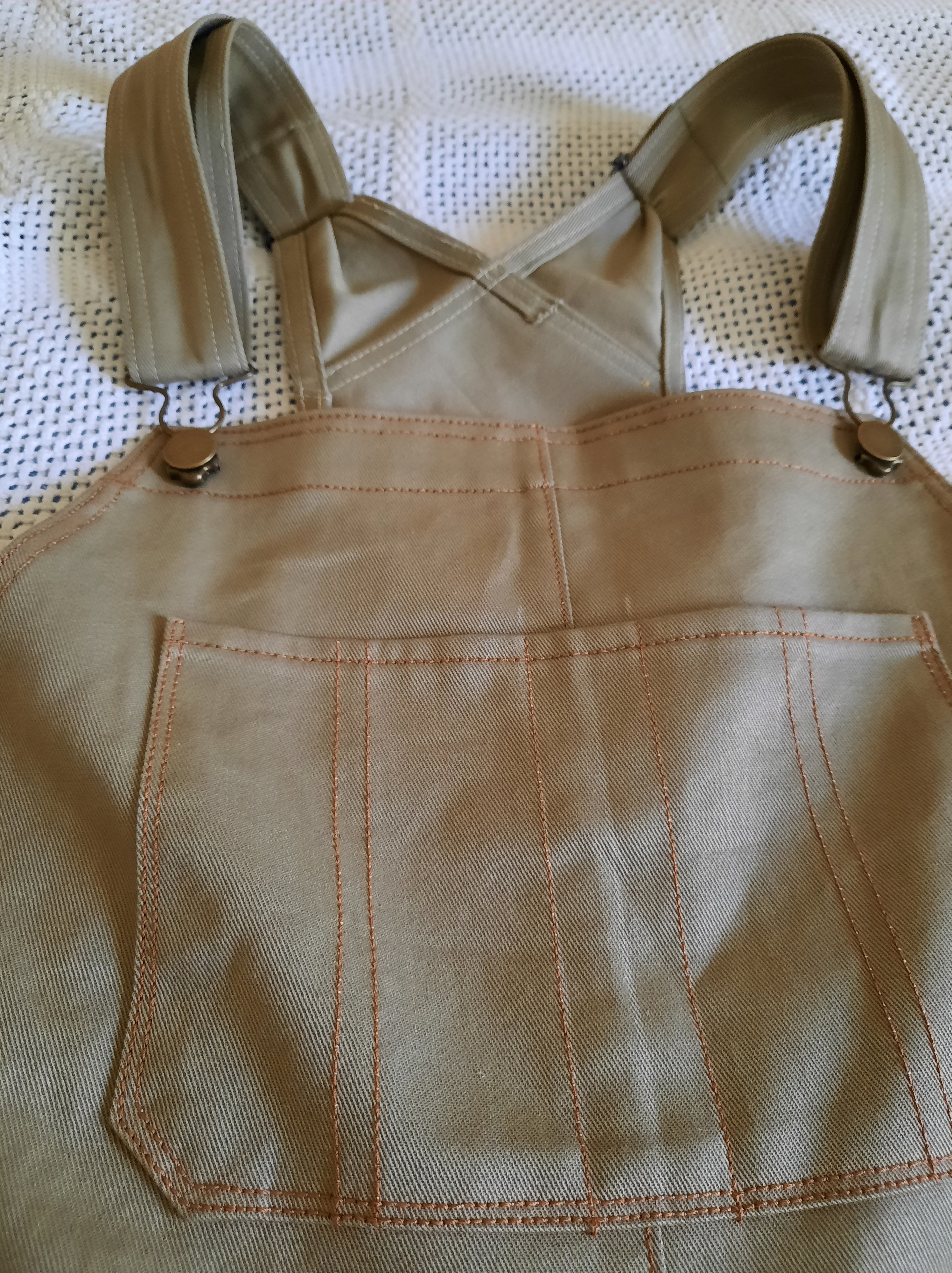
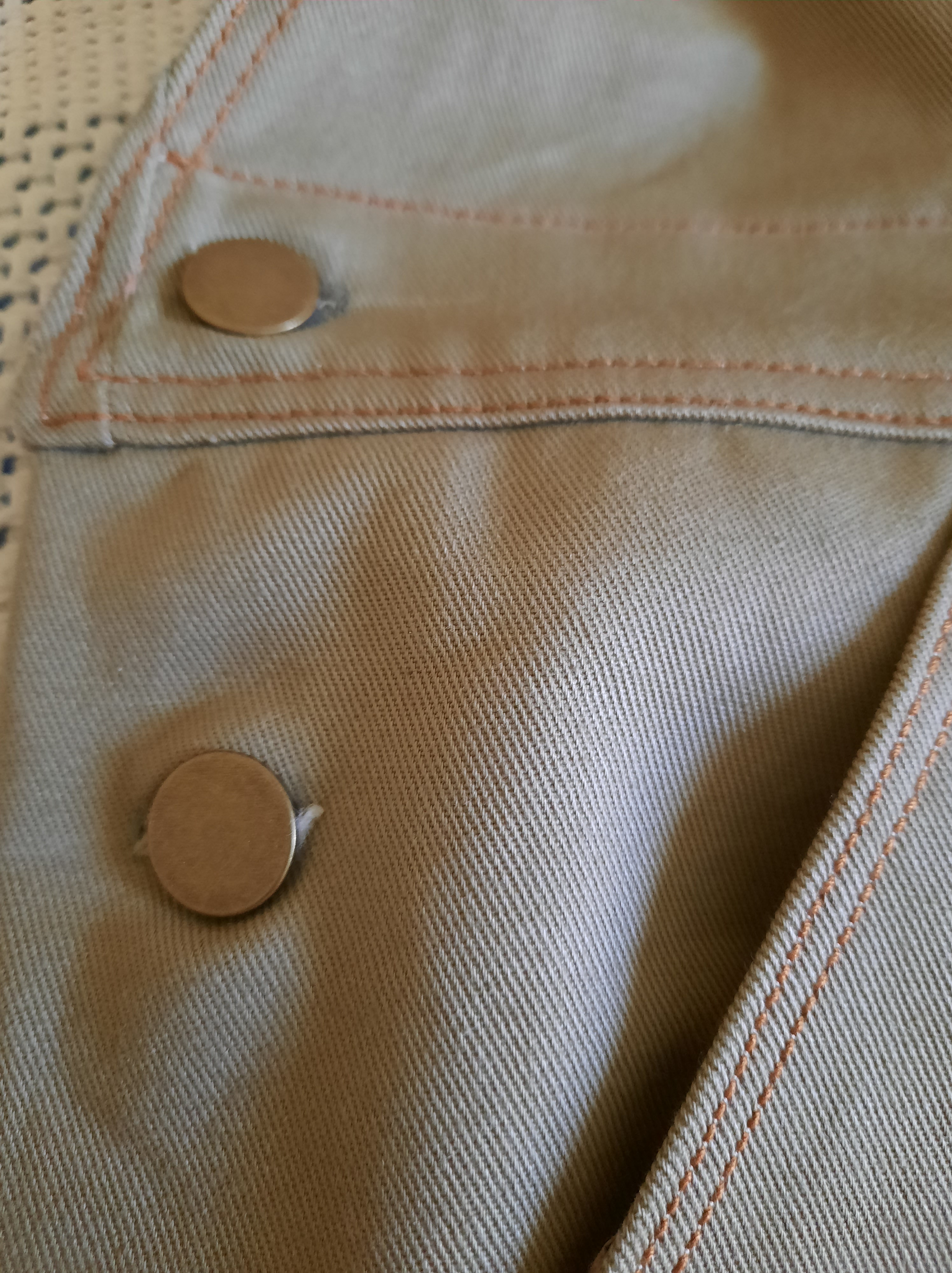
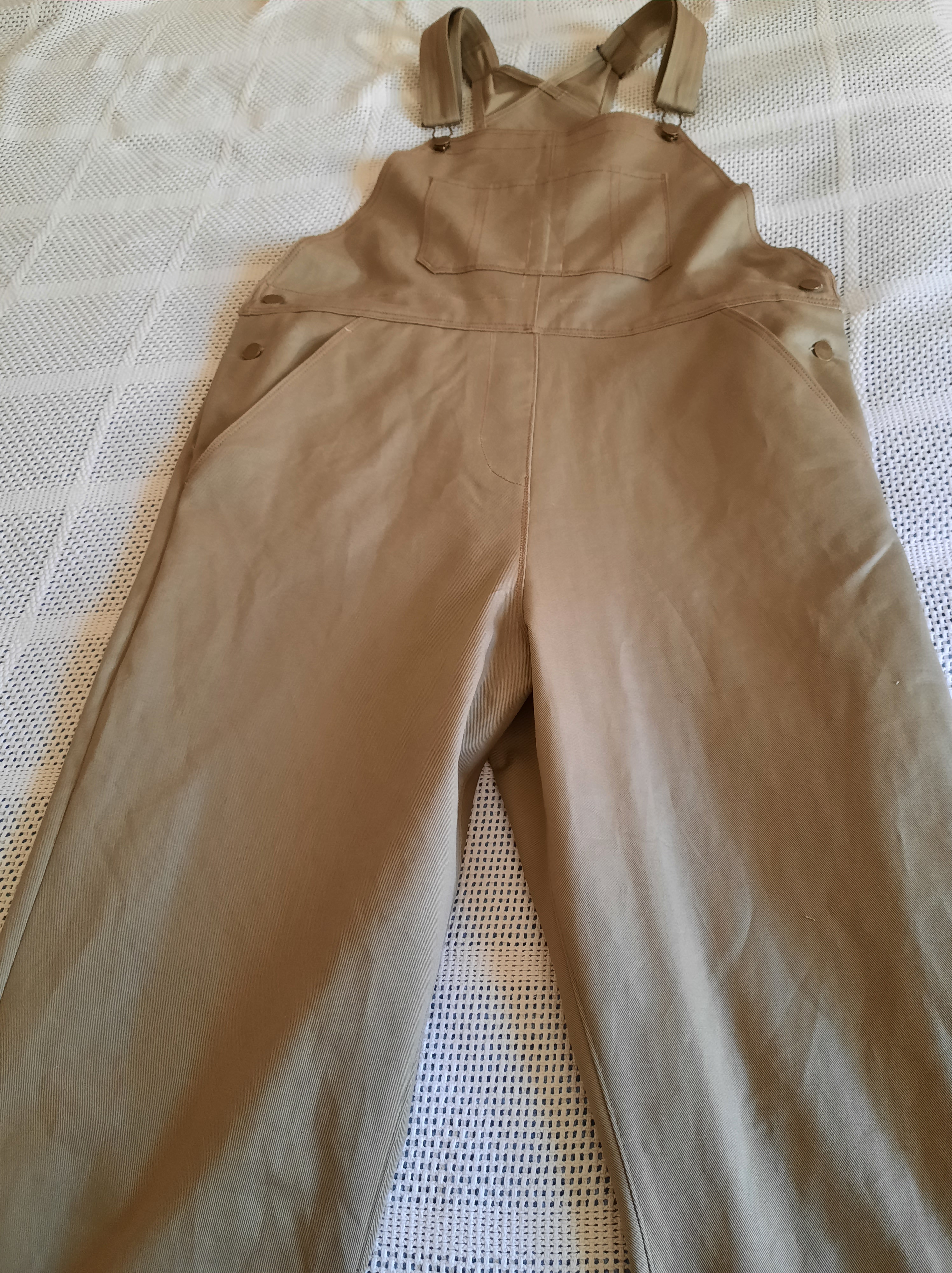
My sweetheart is the kind of human who loves to wear overalls, and loves to be in the shed. I made a lot of pairs of overalls for other people in recent years, but none for her. Eventually, she was keen for her own pair. These are The Harlene, from Merchant and Mills. I have to say that the pattern is beautifully written. I enjoyed the level of care in the instructions and the amount of care that they invited me to take in construction. I had some serious trouble with the top stitching and have since had my machine serviced! But the Harlenes have gone into the shed now and their deficits (from my point of view) are not a problem for the the recipient, as is so often the case!

I’m hoping that this very sturdy cotton drill will last a good, long time. And next time, I promise I will accept the reality that sliders (the hardware on the straps) do NOT come in a range of sizes, and modify the width of the straps to fit the sliders available! I did not go for fancy hardware on these, I sent my sweetheart to Adelaide Leather and Saddlery, where resources for mending and making all manner of things are to be found for reasonable prices and in an amazing assortment. They do not pay me to advertise for them, and they do not know that I am writing about them–but for local-to-me folks, this place is a fabulous resource I hope will stay in business.

8 Comments

Filed under Natural dyeing

Spoons!

The spoon carving project seems to have a lot of fits and starts. Perhaps this is just the way that beginning a new skill can be. The jump from no skills at all, to learning how to keep yourself safe, find the materials and tools you need, learn how to get and keep your tools sharp, how to shape and carve, how to manage the way the new activity impacts your body and where the time and patience come from for going up the steep side of the learning curve–well, it takes a bit! Earlier in the year, I recognised that the main barrier to learning spoon carving is my lack of mastery of the art of sharpening my tools. If I could sharpen my carving tools, that would mean I could sharpen kitchen knives and gardening tools like secateurs a lot better, in addition to making spoon carving better and safer. So I committed myself to treating learning to sharpen tools as a key skill set. Sometimes I’d sit down to sharpen my main two knives and treat that as the work of the day (spoon wise), then carve next day.

We also decided to declare the last of the birch trees dead, and begin to cut it down, with some help from friends. So I had a good bit of birch wood to work with. And I could see that the axe work needed to create a billet (a rectangle of wood without bark and such on it) and then a spoon blank (where the blunt shape of the spoon emerges ready to be refined with a knife) was a separate thing I needed to get a lot better at. I even decided to buy a second hand mallet when I was in Warrnambool and got one that has been home made and well used, and will be much easier to use than the chunk of tree branch I had been using to tap my axe.

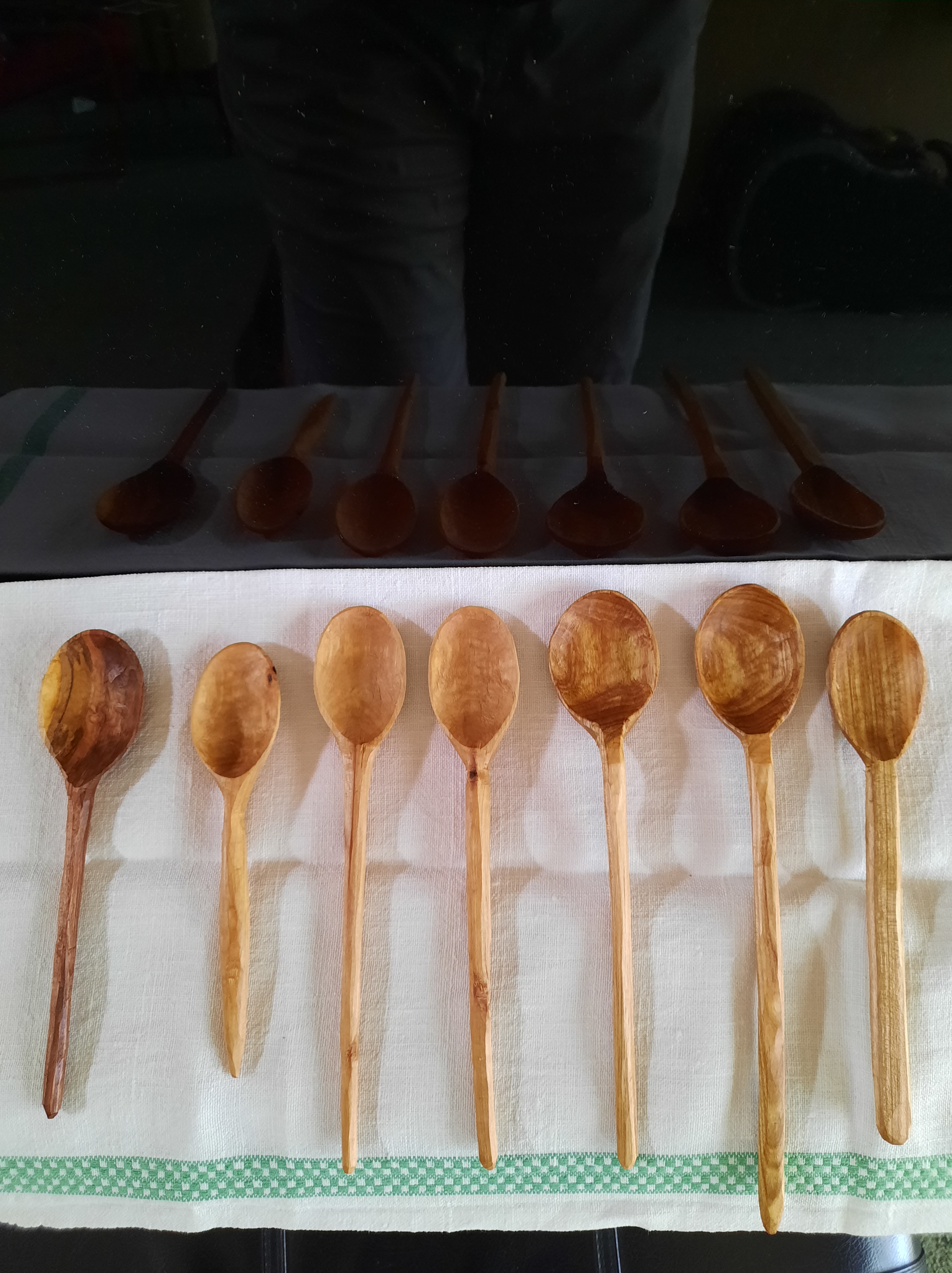
All this thought and then sitting down pretty much every day for a few weeks, resulted in some spoons!

I realised after spending a lot of time and thought carving a series of three, that I was getting better at the side profile of the spoon (rather than it being flat, having the kind of shape that makes a spoon easier and lovelier to use) but that I was tilting the bowl of the spoon in precisely the wrong direction. My friends, that is what learning consists in, at some stages of the journey!

I also learned that I like carving a dessert spoon kind of size and do not like creating a teaspoon kind of size, and I slowed down a lot when I had side branches to work with, not big enough for my preferred size. And I did some work to research sharpening, practised a lot, and then stopped for no apparent reason! It might be time to get back to it. Because it was rather delightful, and I have been gifted some cherry wood and it is waiting for me!

4 Comments

Filed under Natural dyeing

Pyjamas

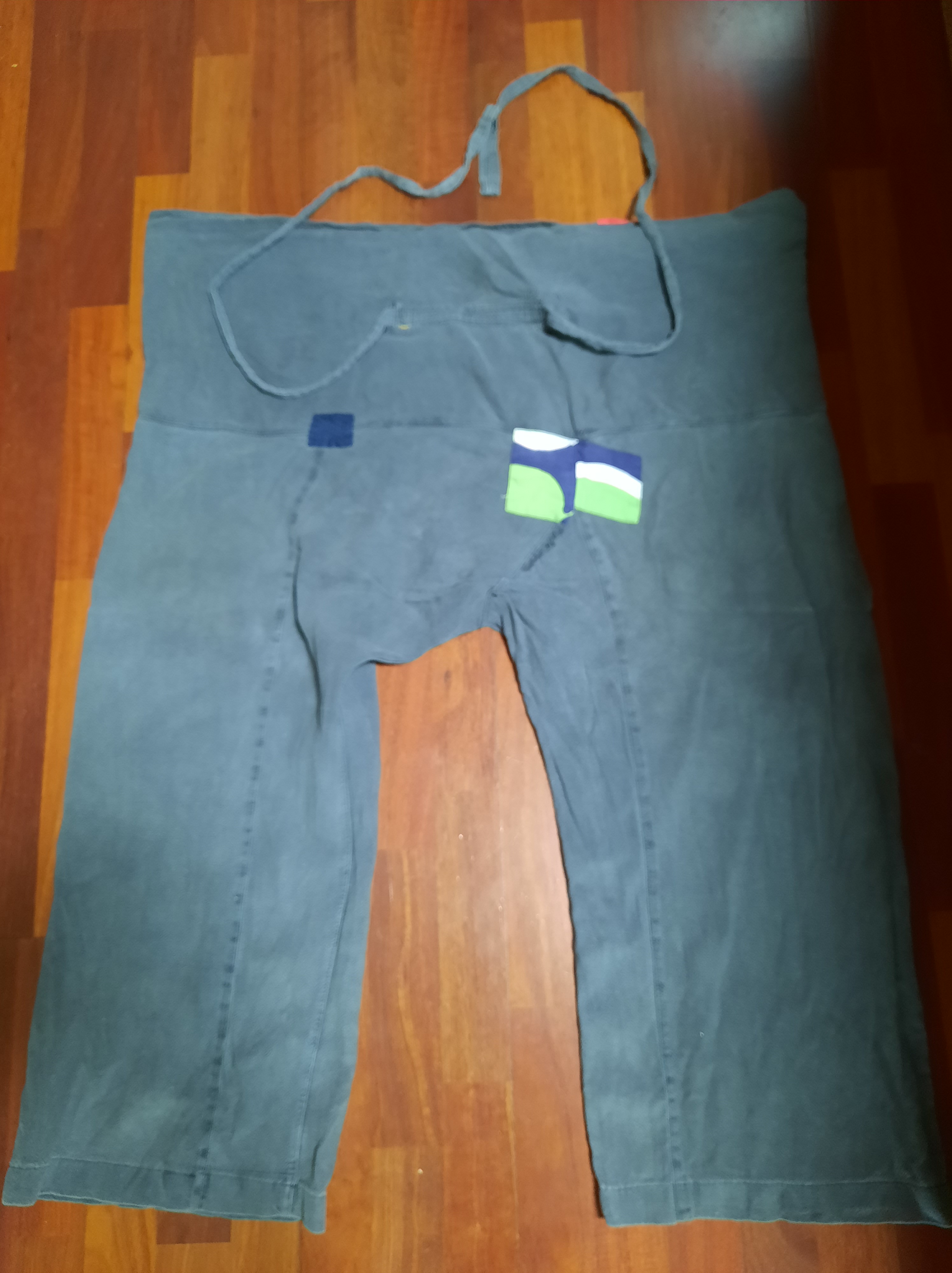
Oh dear. Not only does this post have photos taken indoors at night, it has toes that have crept into the photo, poorly focused photos and plain old bad photos! I offer it as proof that I do throw things out!! This pair of pyjamas, known to some as Thai fishing pants, came to me second hand, from my daughter. Many years ago. They were once black with some kind of subtle print intended to suggest a more complex weave than they actually have. But, they were always loose and 100% cotton, and that’s enough for a good bit of nightwear.

At the time I took this photo, they had 7 patches on them, and a new tear. I’d patched them in red, yellow, a print, red, and plum. On the inside and the outside, by hand and by machine. And this was the day I decided to cut them up. They made nice, soft rag and some cushion stuffing. They had no more to give! And that, my friends, is why the photo cannot be remedied. The garment is gone. In its place, I made a pattern from this pair and turned a glorious piece of fabric from my friend’s stash (thank you Mace!) into a lovely new pair of pyjamas… and here is a fairly awful photo of them!

2 Comments

Filed under Natural dyeing

Needle books

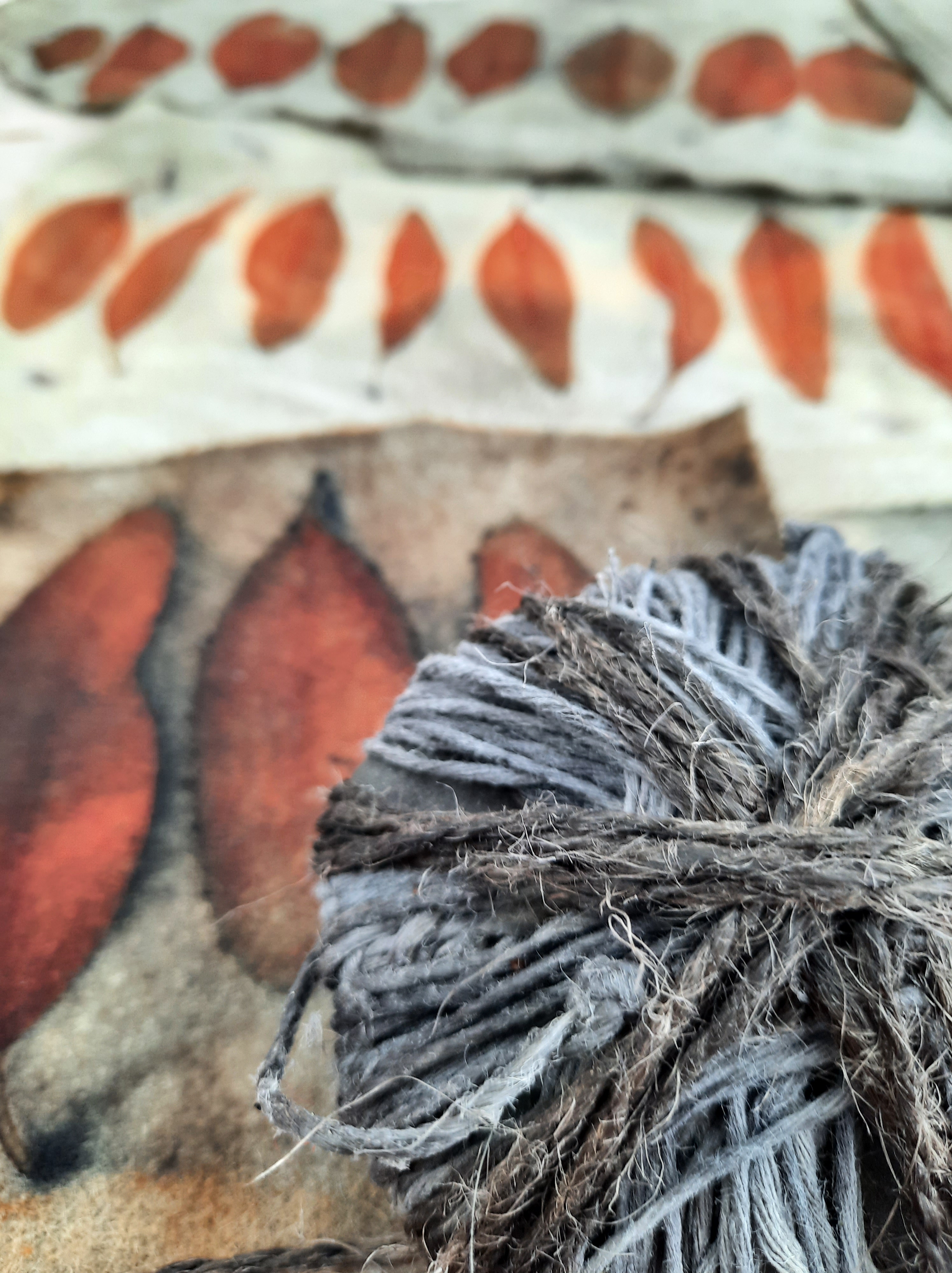
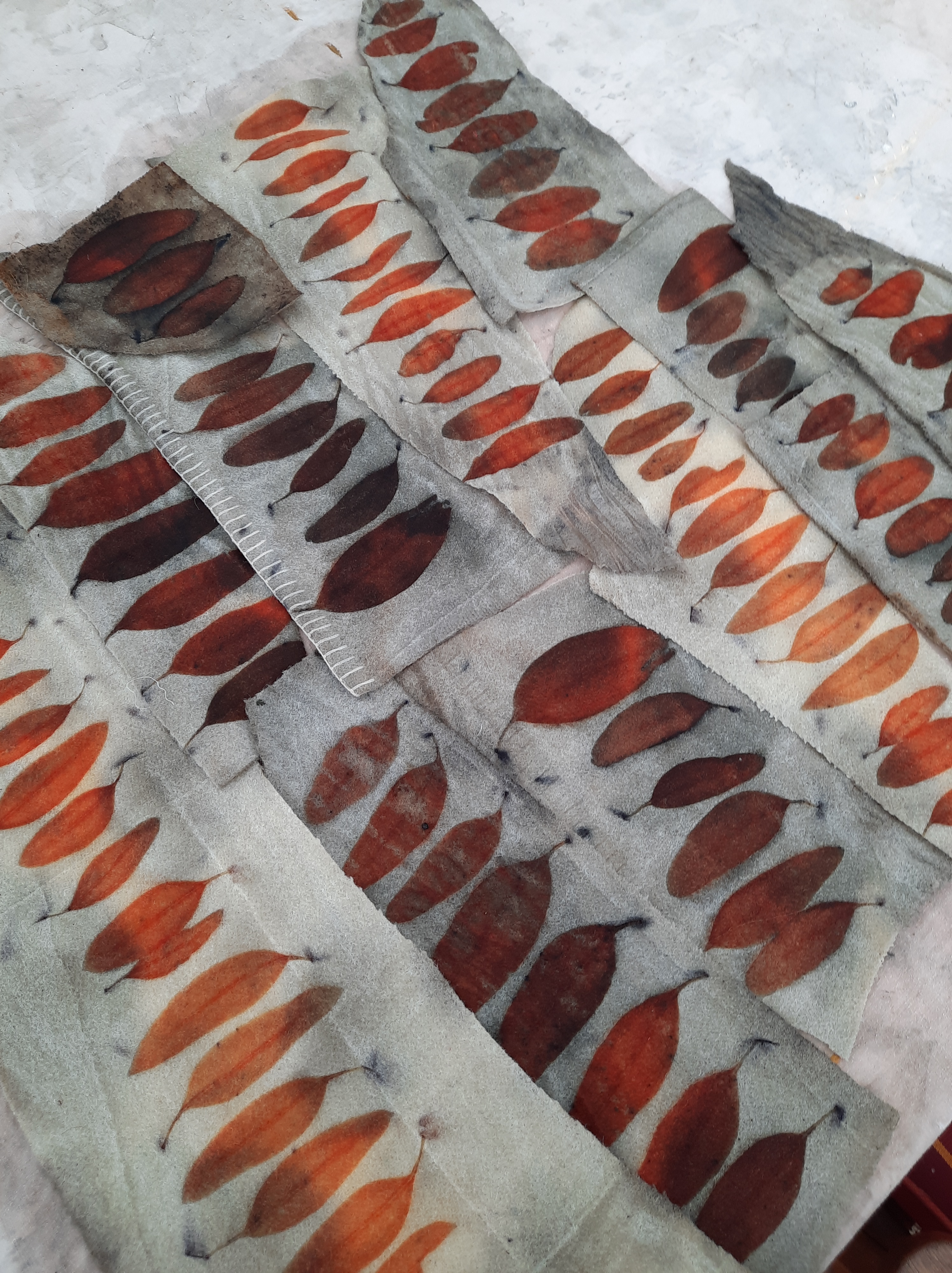
There have been several instalments of needle book making in the last while. I’ve made them to my favourite size, but also made some to the size of scrap blanketing I happen to have.

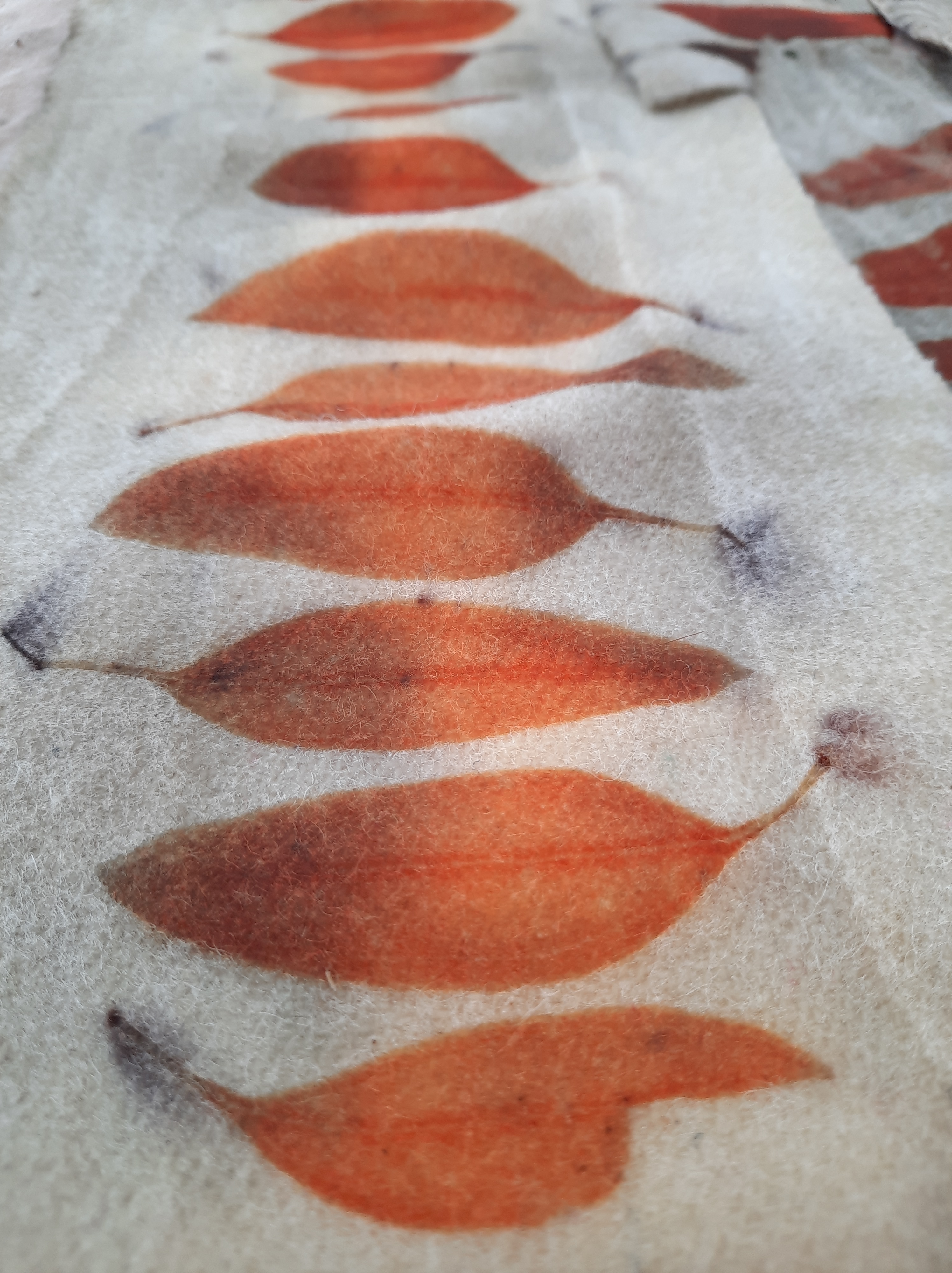
I love these cute, simple, satisfying little projects. Some I made from a gift of scrap blanketing (thank you India!) The dyeing part was fun, too. There are times in life that call for undemanding and straightforward stitching.

Some of these leaves are from a small tree in our yard that has spent years in a pot and finally been liberated into the earth. Unfortunately, in spite of a wire protector the possums are now able to reach it and they are eating it quite freely.

I’ve been creating more mending kits as I go with these, adding in the threads, needles, buttons, scissors and such that come my way from other folks’ discards, and sharing them freely. It’s seldom that a little scrap such as the pieces these are made from, can become so lovely and so useful. I hope some of them journey forward to have long lives of usefulness the way the first one I made this way has done for me.

3 Comments

Filed under Natural dyeing