Category Archives: Dye Plants

A story of a quandong and its mistletoe

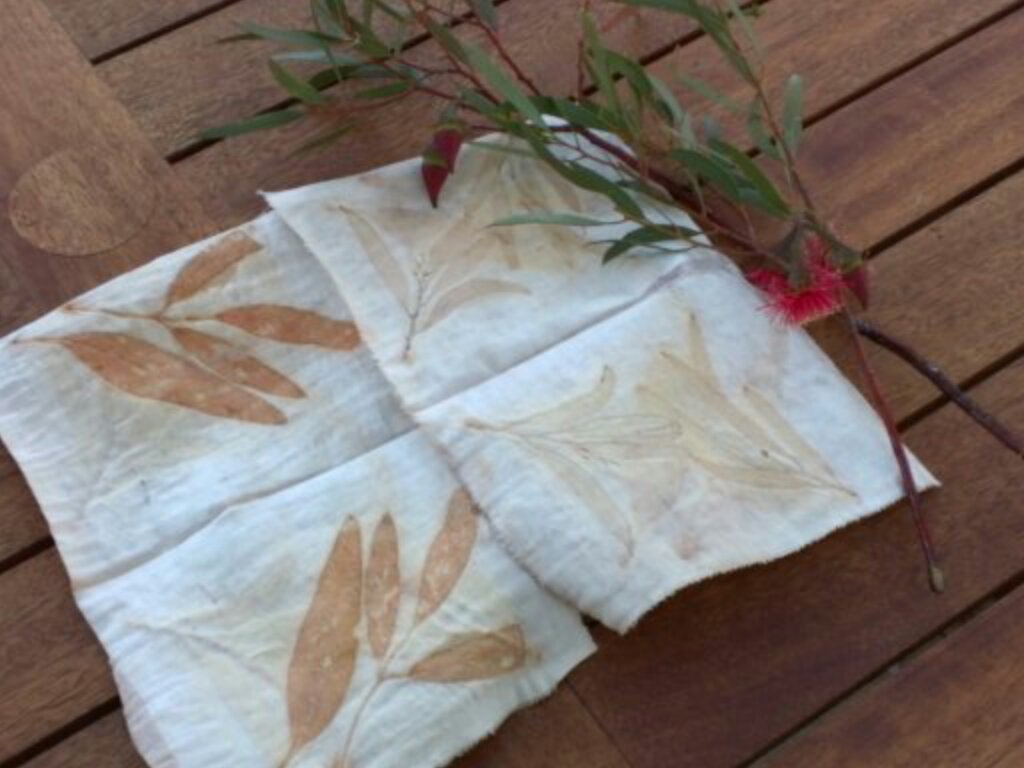
One weekend recently we went to visit a friend who lives near the Aldinga Scrub. While I was there we went for a wonderful walk on the beach, making the dog and ourselves happy.  So I collected a couple of samples while we were out, as many local people, like my friend, are planting as many local species as they can around their homes.  I decided to try a quandong and its mistletoe.  In case you’re not from around here, dear reader, let me advise that in Australia, mistletoe is a big family of parasitic plants which will eventually (but usually slowly) kill their hosts.  It isn’t so much the romantic plant under which people kiss at certain festivals.  There are lots of mistletoes, and they are cunningly adapted to a narrow range of host plants.

I have a fabulous book on mistletoes, Mistletoes of Southern Australia by David M Watson, published by the CSIRO.  It has me in awe of these extraordinary plants, but has convinced me that I am unlikely ever to be able to identify them with confidence.  There are only 46 to choose from in this part of the continent, though, so the task is a good bit smaller than learning Eucalypt identification.  There are some mistletoes in the book that this plant is clearly not.  But as to which one it is… I have several candidates in mind.  And I don’t know which of the quandongs this is, either.  It doesn’t look like the favoured bush food species Santalum acuminatum to me.  But Wikipedia lists a lot of other varieties all called ‘quandong’!

Anyway, on to the leaf prints.  Quandong in flower, before:
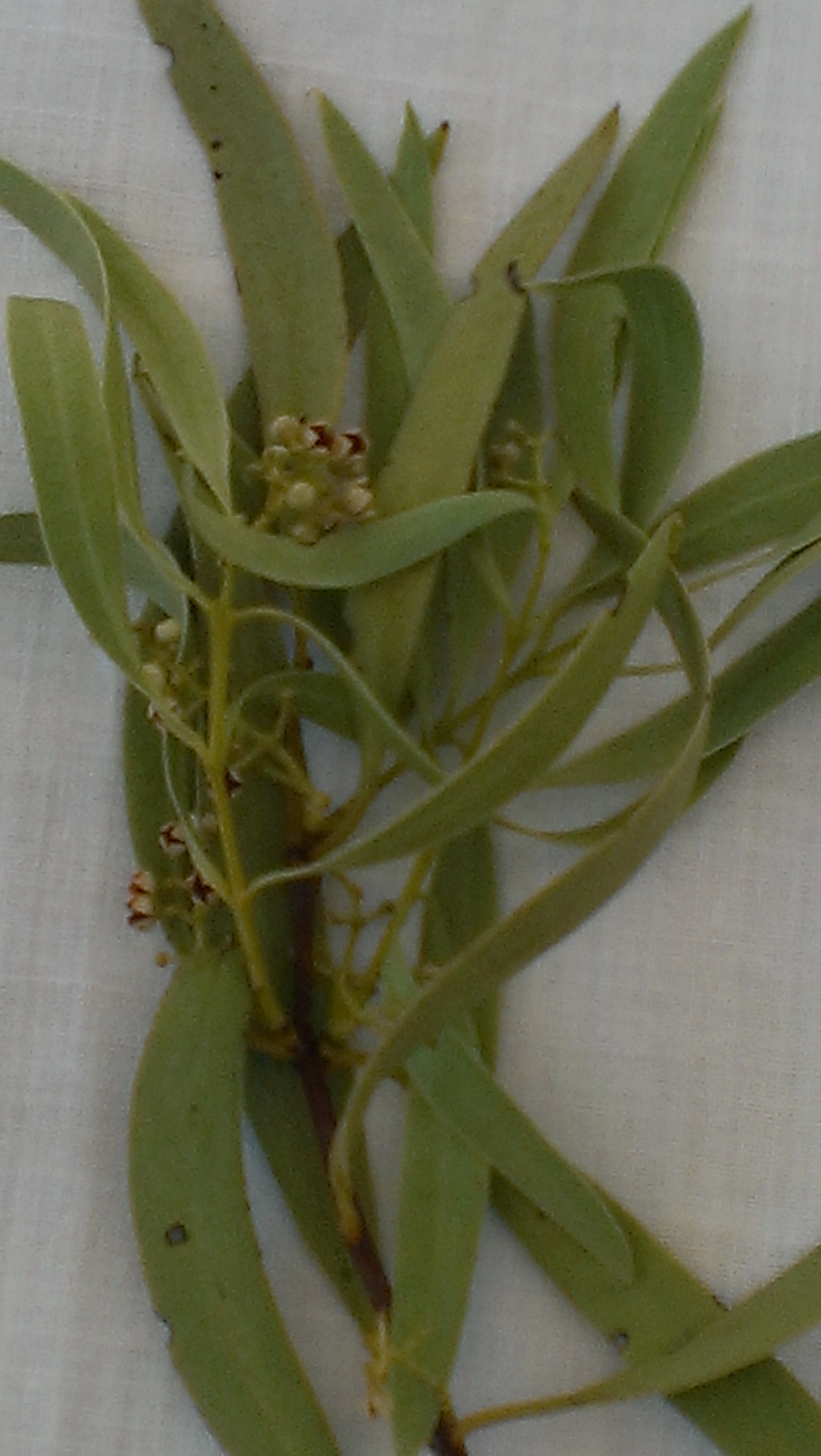
IMAG0825

After cooking with iron, which left quite an impression:

IMAG0846

The iron may have made an impression, but this convinced me that this quandong isn’t much of a dye plant.  And now, the mistletoe, which is in glorious flower and will later create a rather impressive berry.  Before:
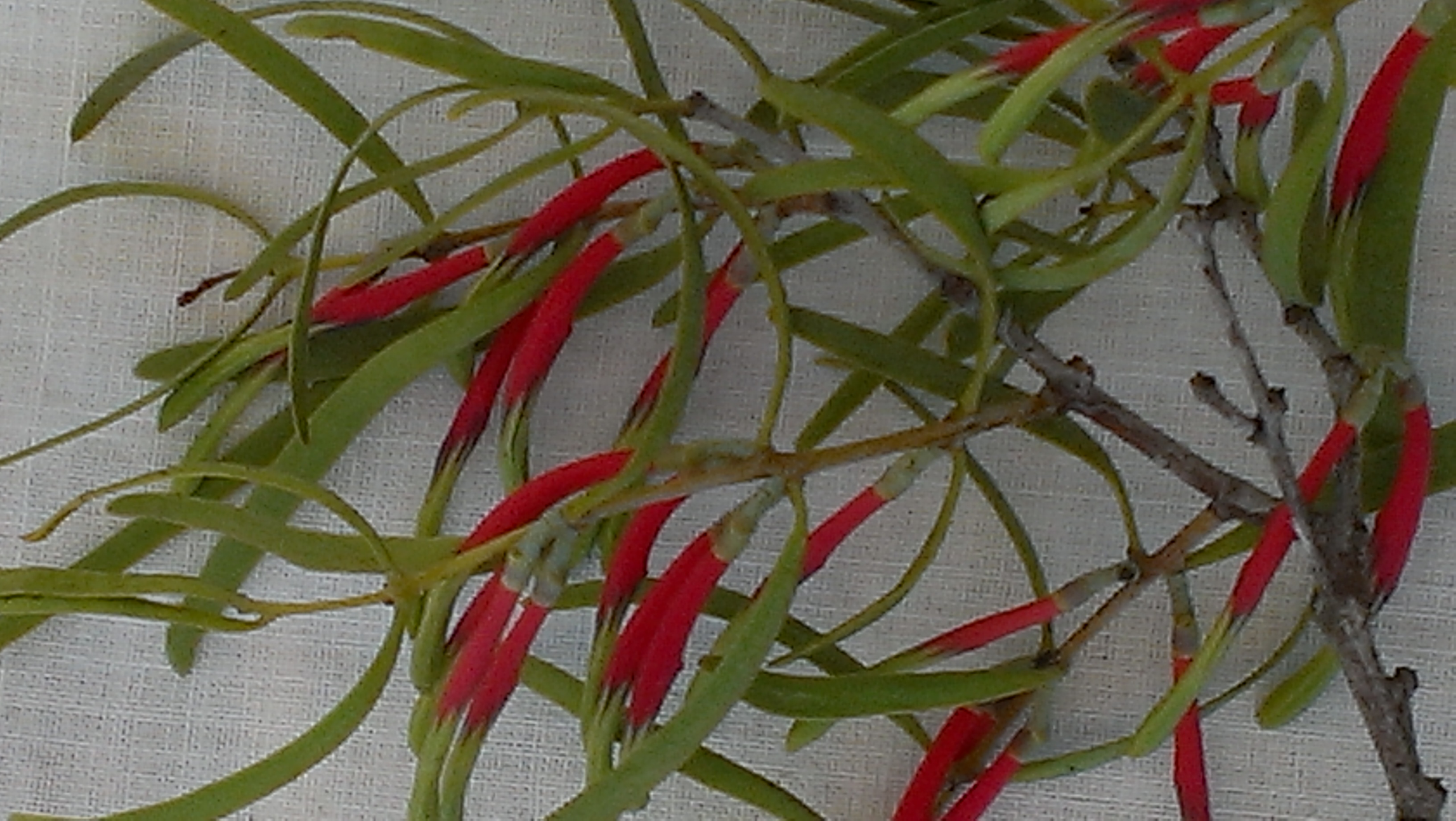
IMAG0827

And after.  I think this leaf print is a good bit less glorious than the plant, but this is definitely a distinct print.  So the mistletoe has dye potential.

IMAG0848

And that is the story of the quandong and its mistletoe for now…

4 Comments

Filed under Dye Plants, Leaf prints, Natural dyeing, Uncategorized

Eucalyptus Erythrocorys


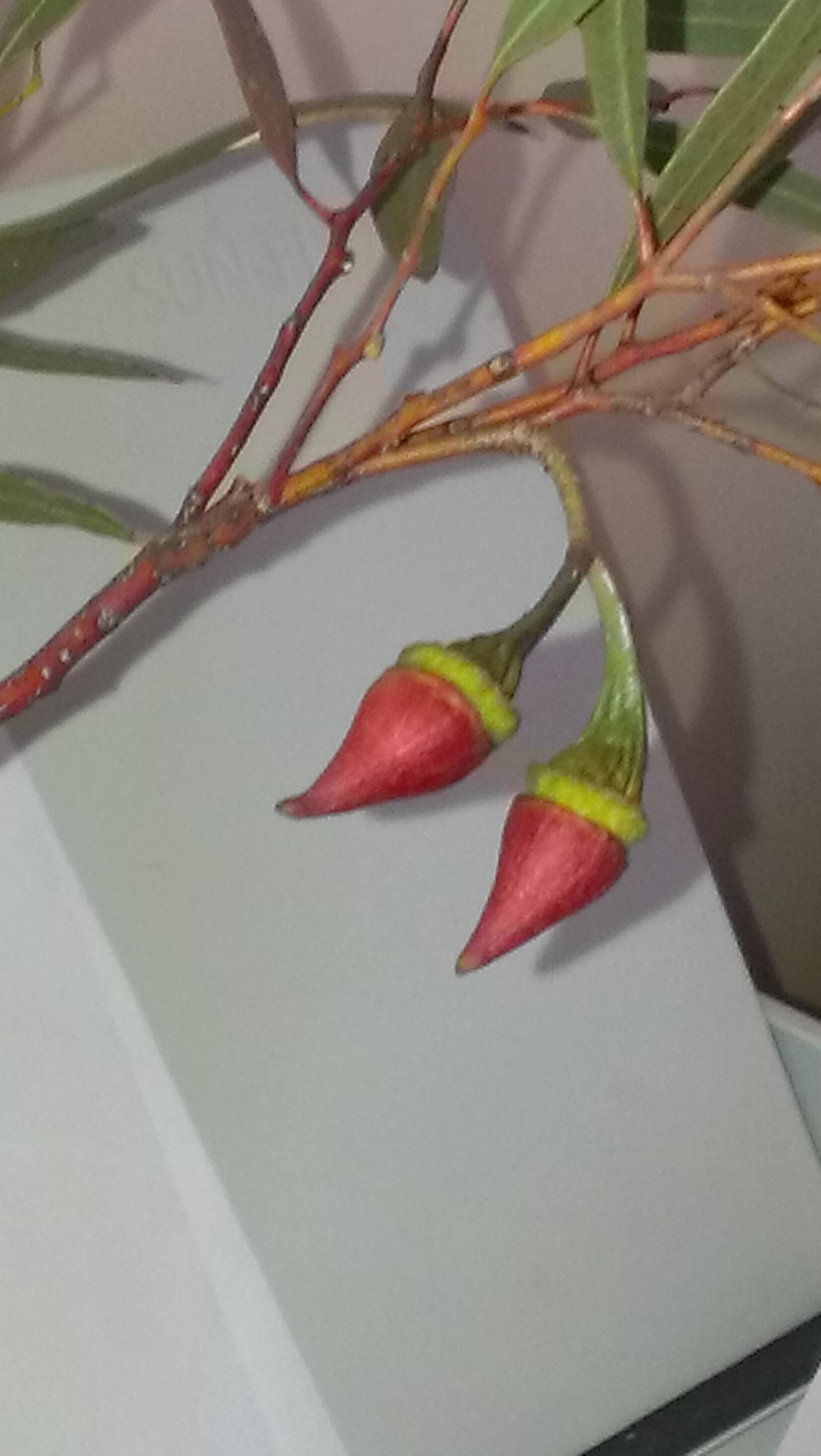
E Erythrocorys (Ilyarrie) is in bud at present. The buds are large, with impressive, unusually shaped bud caps.

IMAG0910

I found a few flowers on one of the trees near a car park at work, but they were high up. The fruits of the previous season are still maturing, and they are just enormous–the size of a large apricot or plum.

IMAG0823

The leaves are long, too.  I’ve experimented with this tree in the past, obtaining a mid-orange from dried fallen leaves. This time I tried leaf prints.  Before…

IMAG0829

And after simmering with iron.  Another not-too-exciting result.

IMAG0849

Leave a comment

Filed under Dye Plants, Eucalypts, Leaf prints, Natural dyeing

Eucalyptus Lehmanii bark dyepot

E Lehmanii (bushy yate) has a very distinctive arrangement of buds, flowers and fruit.  When I was a kindergardener, we used to put the long bud caps on our fingers and call them witch’s fingers and chase each other around.  I can’t pretend to have had any sophisticated critique of the concept ‘witch’ at that stage in my life!

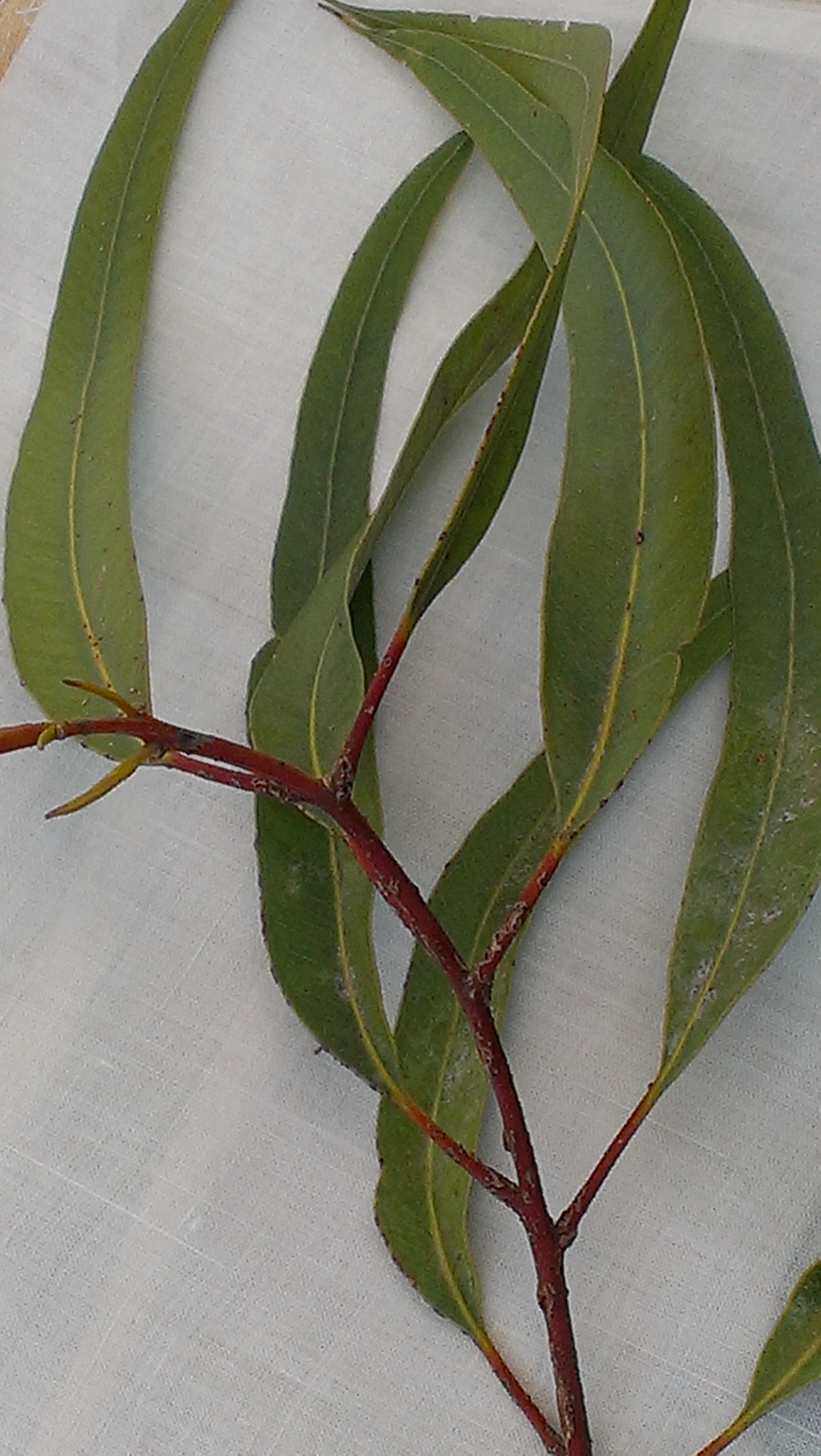
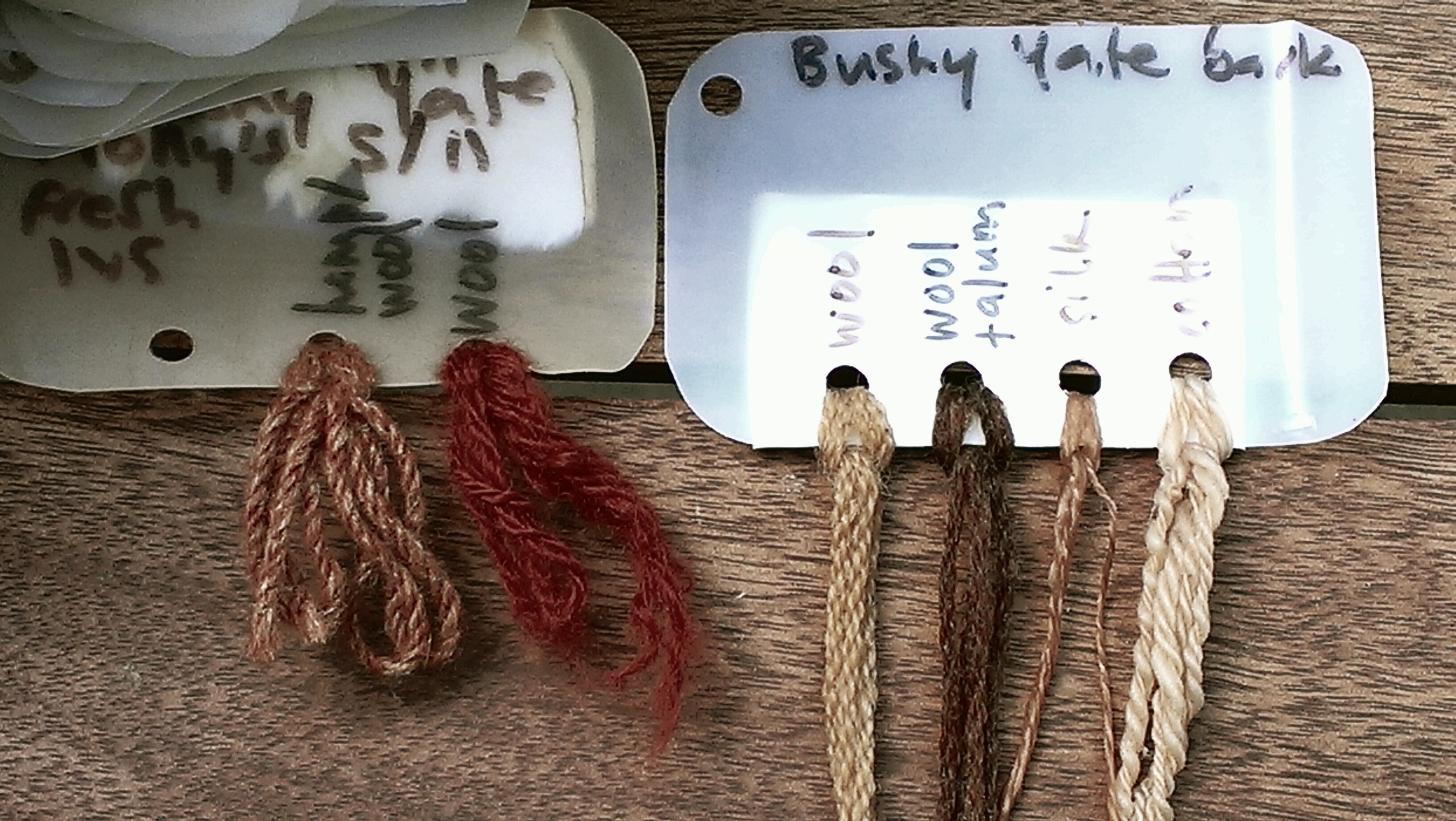
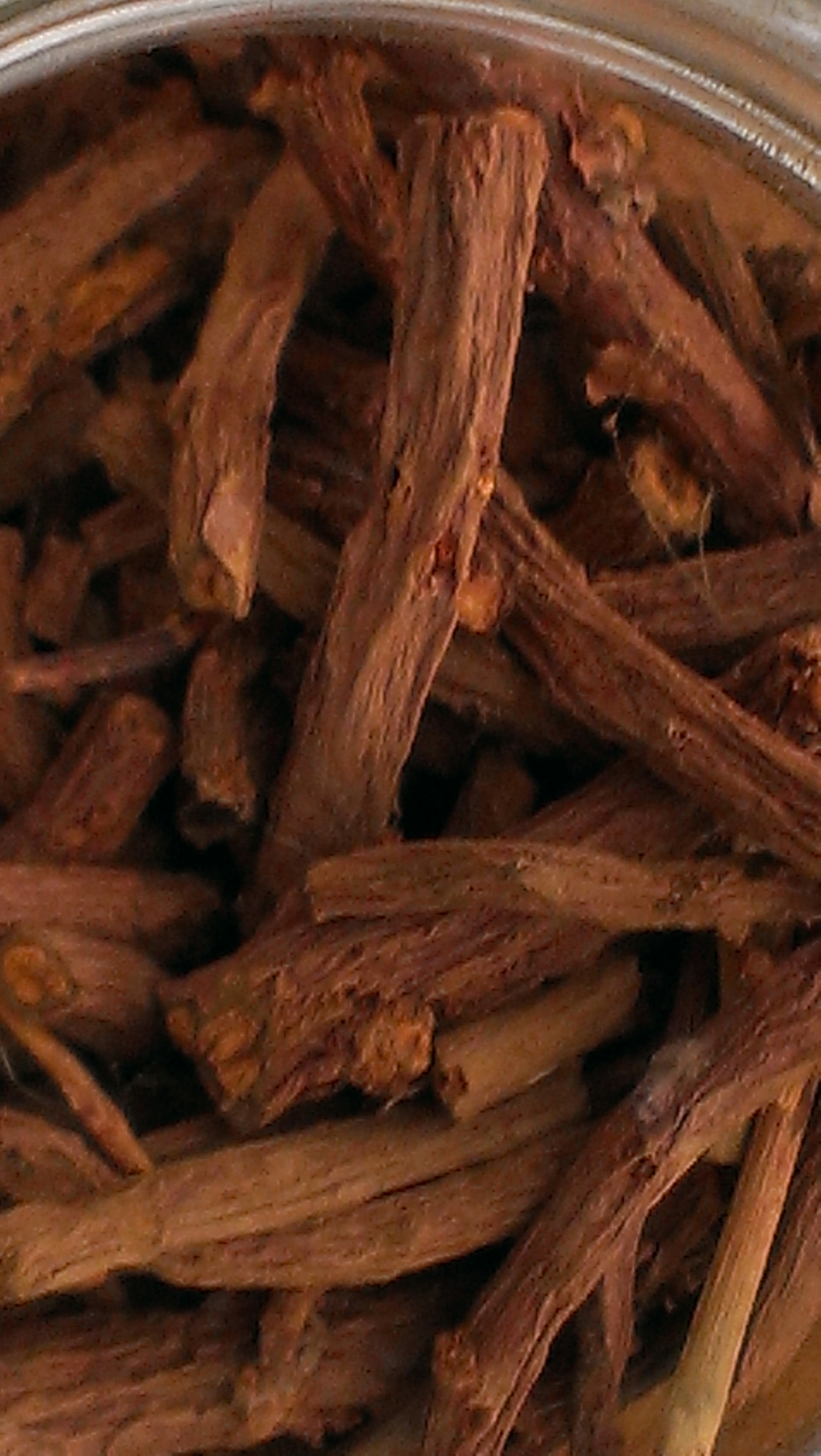
I came across some planted as street trees while I was out doing a run with friends.  On the way back to our car, I managed to collect some bark–since it had helpfully fallen.  I also collected a few leaves.  I have a sample card from a previous experiment with bushy yate leaves from a friend’s property, which gave quite a strong orange-brown.

I used iron with the leaves, and the contribution from the iron on this occasion was really quite intense.  Before…

IMAG0828

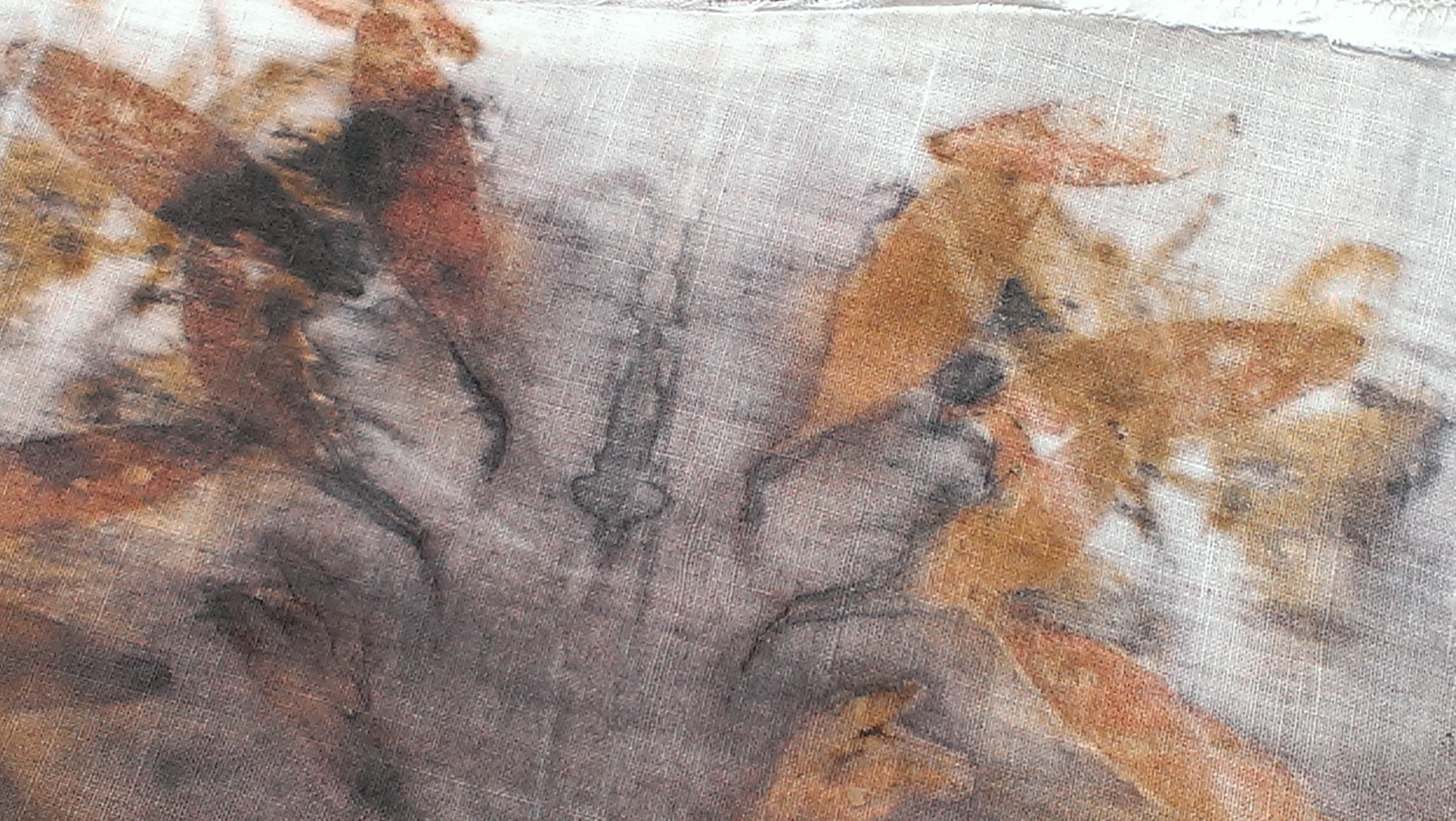
After… a result that won’t have me rushing out to collect bushy yate for leaf prints, but a result just the same.

IMAG0845

And as for the bark pot… tan, again!  I would have to rate the biggest take home message from the series of bark dye pots this summer as being that alum really makes a difference with the Eucalypt barks I’ve tried.  With leaves, I seldom see any impressive difference between alum mordanted wool and plain wool.  I dye with E Scoparia bark often and have found no point in mordanting with alum (though this experience makes me think I should try again and double check). The bark pots, however, have given various shades of tan without mordant and much stronger browns with alum, and E Lehmanii is no exception. On the left, sample card from a pot of fresh leaves.  On the right, results of the bark pot, simmered for an hour and a half.

IMAG0844_1

2 Comments

Filed under Dye Plants, Eucalypts, Fibre preparation, Leaf prints, Natural dyeing

Magical madder

IMAG0623

I received a gift of dried madder root recently: it could be years old! But then, the tradition of madder dyeing is ancient and there was no reason to think it was past its use-by date.  I followed Rebecca Burgess‘ instructions in the beautiful Harvesting Colour to process it during a dyeing day with a friend who (happily) shares my enthusiasm. Here are our fibres going in:

IMAG0649

I left fibres soaking in the dyepot for a week afterward.  And here they are after drying.

IMAG0770

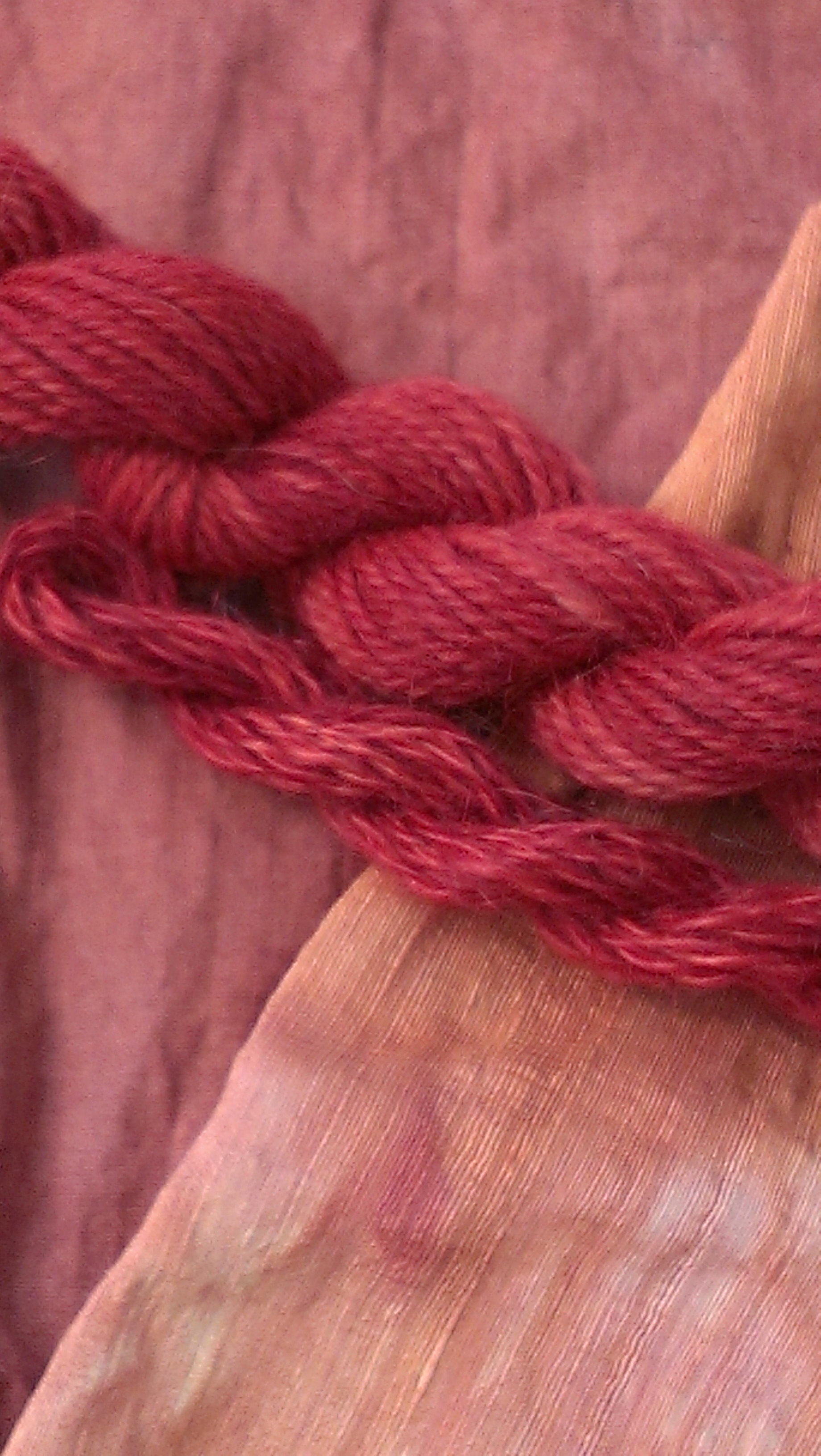
The alpaca/wool (larger skein) is really red, and so is the smaller skein of mohair.  The cotton mordanted with soy on the left is a red-brown shade, and the well-loved but unmordanted silk fabric (previously a precious shirt handmade for my friend) is a lovely red-orange.  This madder bath didn’t begin to give orange until it was on its third exhaust bath. After that, I kept dyeing with it until I got down to peach on some handspun wool and banana fibre blend.

It’s exciting to see madder dye red with my own eyes, as every madder-dyed textile I have seen dyed by anyone I know is decidedly orange.  Not unlike the colour I can get with many local eucalypts.  And it is also exciting because my madder must be getting close to possible harvest!  Here it is at the height of our Australian summer, which is to say, partially crisp.  But about two or three years old and so promising…

IMAG0777

2 Comments

Filed under Dye Plants, Natural dyeing

Tree loving

IMAG0538

I decided on a bark collecting mission prior to a big heatwave we were expecting, so I went out with my trusty bike trailer and a couple of sacks to collect from this glorious Eucalyptus Scoparia.  I was hailed by the woman who lives directly across the road from the tree: ‘Oh, you are a good man!’  Eventually we left the gender confusion (and her embarassment about it) to one side and she embarked on explaining that the council hadn’t swept her street for two months.  We have spoken before when I’ve been admiring this tree, so I wasn’t entirely surprised.  However, tree hating always surprises me somewhat in spite of myself.

IMAG0541

I am privately amazed that this woman leads a life in which she sees this tree only as a source of rubbish that lands on the road, which she would prefer swept clean.  This saddened me so much that after I filled my first sack with bark, I collected up all the leaves from the gutter in my second sack and took them home to be appreciated by my chickens.  I am not sure if I was trying to spare her the agitation she clearly feels, or trying to spare the tree her anger, though the tree is indifferent.  It does concern me that when people hate trees, those trees can be endangered, since even when there are people dedicated to tree preservation, so many are cut down.

I managed not to mention that my favourite local tree has been reduced to this:

IMG_0003

Despite the council agreeing to ensure the tree was not chipped once it was felled, only intervention from an alert and interventionist neighbour from a few blocks away stopped it being shredded for mulch.  The neighbour was kind enough to leave a note in our letterbox explaining what she had done to try to preserve it, even reduced as it now is, to being wood.  Tree loving: now that, I can understand.

2 Comments

Filed under Dye Plants, Eucalypts

After the workshop

This week I ran a natural dyeing workshop for my Guild.  It was exhausting but fun!  I tried taking a picture inside the hall and my poor old camera wanted to use the flash–pretty useless.  Between that and having a lot going on, I decided to forget taking photos.  We ran lots of dye pots: E Scoparia bark, dried E Scoparia leaves (oranges), silky oak leaves (yellow), logwood from the abandoned/donated dyestuffs of the past stash (purple), black beans (not as blue as I hoped)… we mordanted with alum and with soy, there were leaf print experiments.  We dyed silk, alpaca, wool, cotton; fleece, roving, yarn and fabric.  Phew!

I came home with cooked bark and leaves and  ground soybeans to compost, quite a bit of remaining pre-mordanted yarn, a bucket of black beans with yarn tucked into it, a bucket of homemade soymilk and the logwood bath.  Can I just quietly mention how relieved I was when I got home without having sloshed a bucket over in the car?

IMAG0786

I have run the logwood bath twice more so far.  This is the second effort: superwash wool in the foreground, alpaca/wool blend in the middle, and greeny-grey-blue black bean dyed sock yarn at the back.  I have some roving still soaking and rinsing after the third logwood bath, and I’m mordanting more fibre to go into a fourth bath right now.  I wish that logwood was a sustainable local dyestuff.  It is spectacular and straightforward, and purple is a great colour.  I loved pouring boiling water on wood chips and getting purple water; dipping fibre into what became a brownish dyebath and pulling it out purple.  But logwood isn’t local or sustainable, so I’m making the most intense use of the logwood that I have been given that I can figure out.

I hope that my forebears at the Guild who abandoned the logwood there or donated it to the Guild would be happy if they could see the excitement it provoked in the workshop.  It’s possible that the former owners of this logwood are still coming to the Guild and will let me know what they think when word gets out of what we did in the dyeroom this week.  I feel so blessed to be part of the Guild–fancy being part of an organisation that has a dye room!

6 Comments

Filed under Dye Plants, Eucalypts, Leaf prints, Natural dyeing

Eucalyptus Erythronema var Erythronema

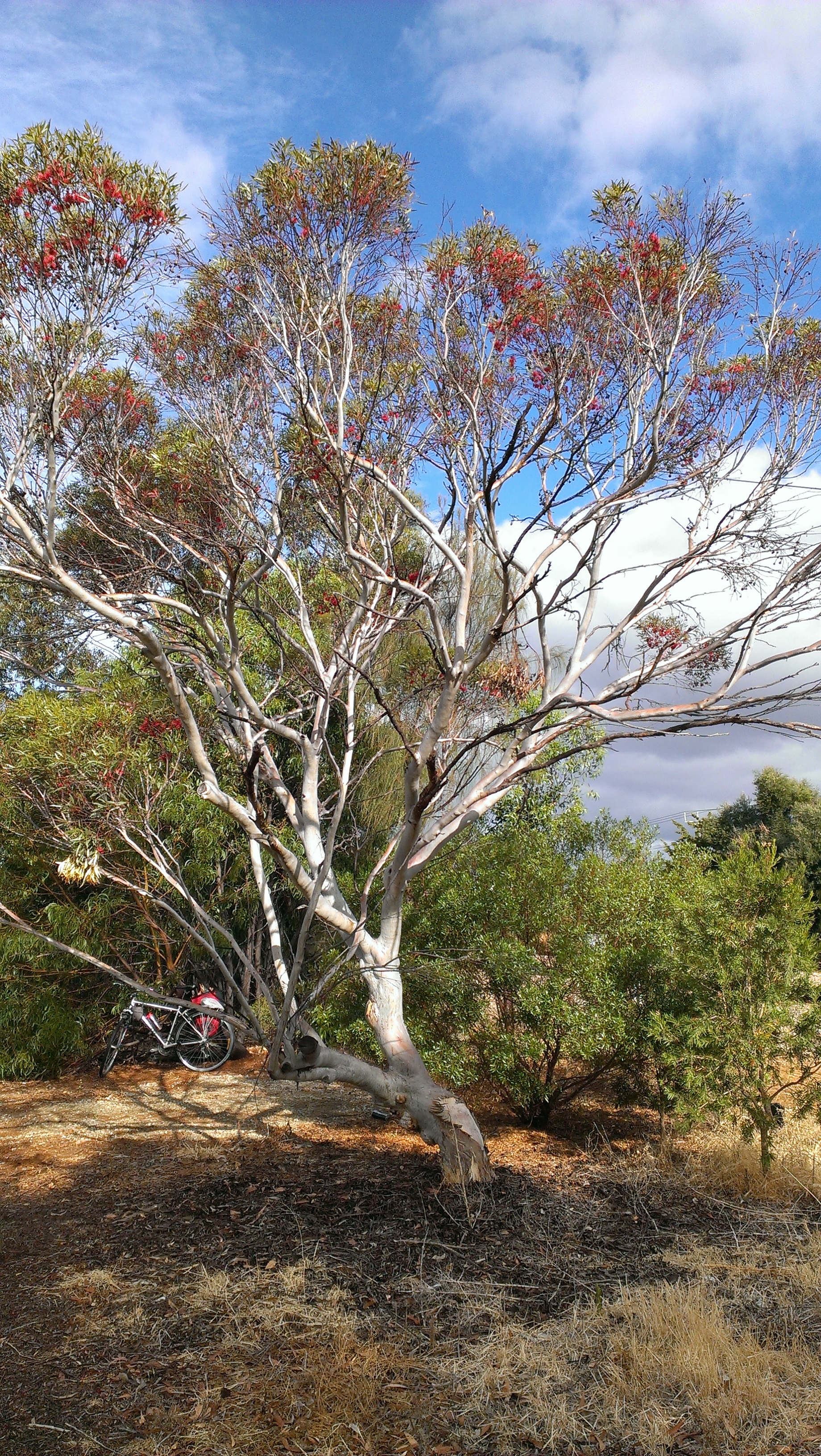
Riding along the railway corridor near Oaklands railway station, I passed one striking red-flowered tree I didn’t recognise and kept pedalling, but when I saw a second, I pulled over.  Here’s the tree.

IMAG0676

The flowers were especially striking: bright red, with stamens curling back up and around the base of the fruit.  The bud caps are bright red, coming to a pointed tip.

IMAG0679

Quite a sight.

IMAG0678

In her book Eco Colour, India Flint argues that eco-prints are a good way to test potential dye plants using minimal leaf material, and she is, of course, right. On the right, E Erythronema var Erythronema.  Not much of a dye specimen.  On the left, leaves from another E Scoparia, I believe.

IMG_0046

4 Comments

Filed under Dye Plants, Eucalypts, Leaf prints, Natural dyeing, Uncategorized

Eucalyptus Camaldulensis Bark Dyepot

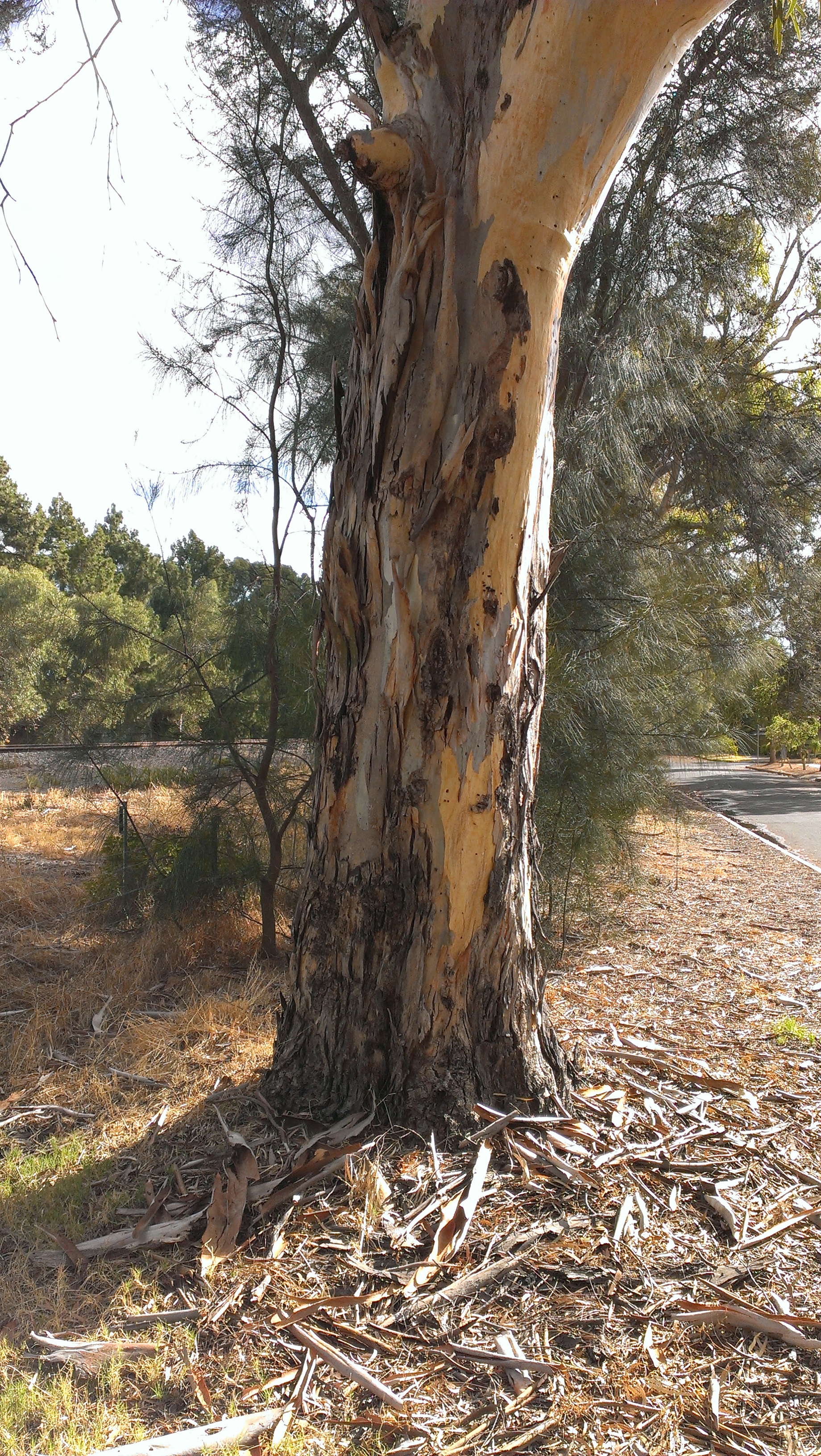
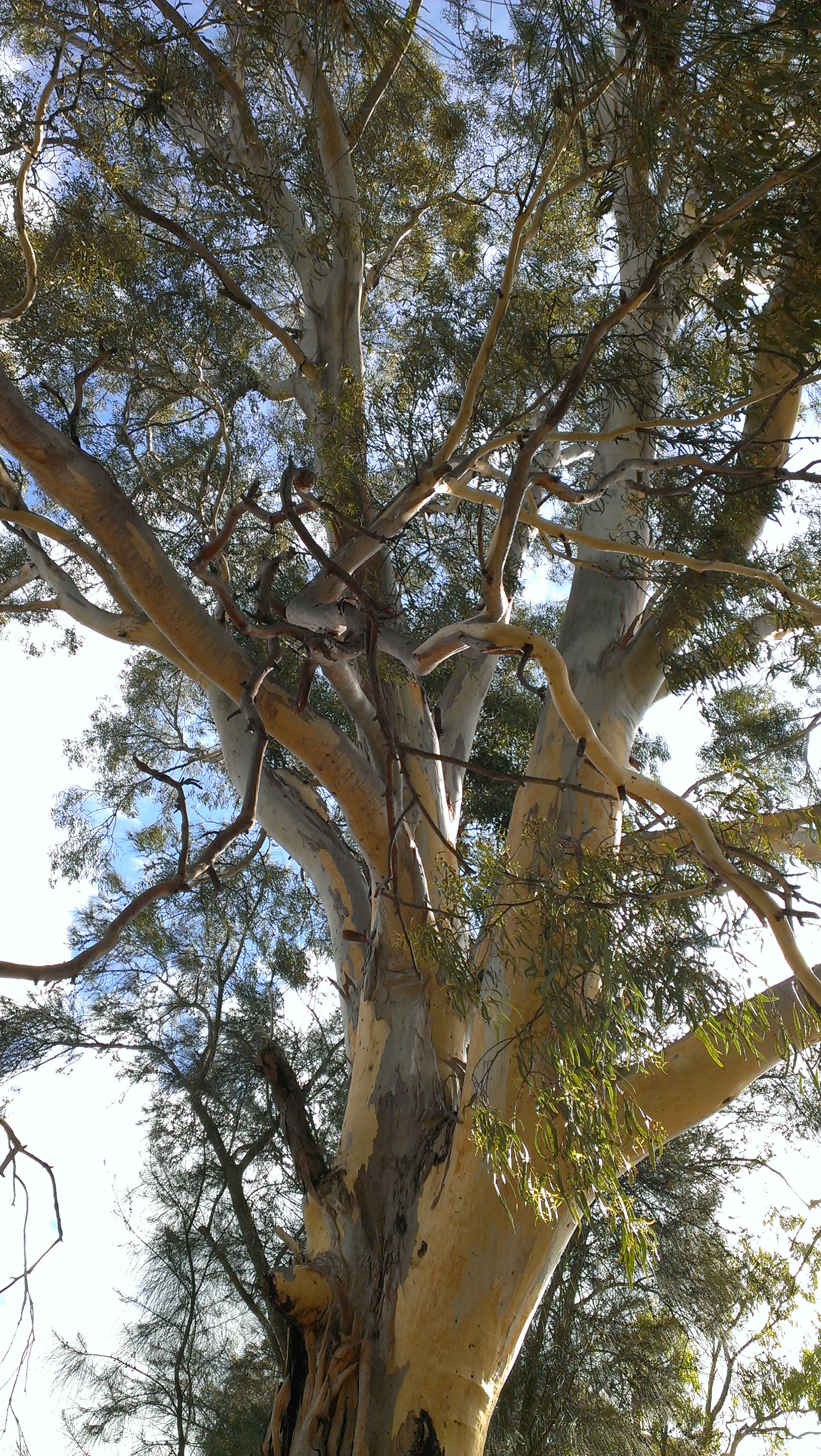
The river red gums are shedding bark all over my city.  I was riding down to visit my parents passing a planting of these trees along the railway corridor near Marion station.  I couldn’t resist, so pulled over and took pictures and bark.  Under these trees, the ground is covered with thousands of tiny gumnuts (as well as bark).

IMAG0670 IMAG0668IMAG0669IMAG0775

So of course, I collected some bark just to try it out… and yes, tan again.  Brown, with alum.  Often I can see almost no difference between wool with no mordant and wool with alum after dyeing, but this was a clear example of alum making a difference.

Leave a comment

Filed under Dye Plants, Eucalypts, Natural dyeing, Uncategorized

Angophora Costata subsp Costata bark dyepot

Our lovely friend has an Angophora Costata subsp Costata (Sydney Red Gum) in her backyard.  When the bark is newly shed, these trees have a stunning rust-orange coloured trunk.  There were many to be seen and admired in and around Sydney when we were there in December.  The other day she came around with… a bag of fallen bark for me!  Here is my sample card and swatch before:

IMAG0665

And, after.  You could call it cinnamon, I suppose–the alum mordanted, superwash sample is really quite brown.  Or on the other hand, you could just call it tan, again.

IMAG0701

1 Comment

Filed under Dye Plants, Eucalypts, Natural dyeing, Uncategorized

Eucalyptus Saligna Bark Dyepot

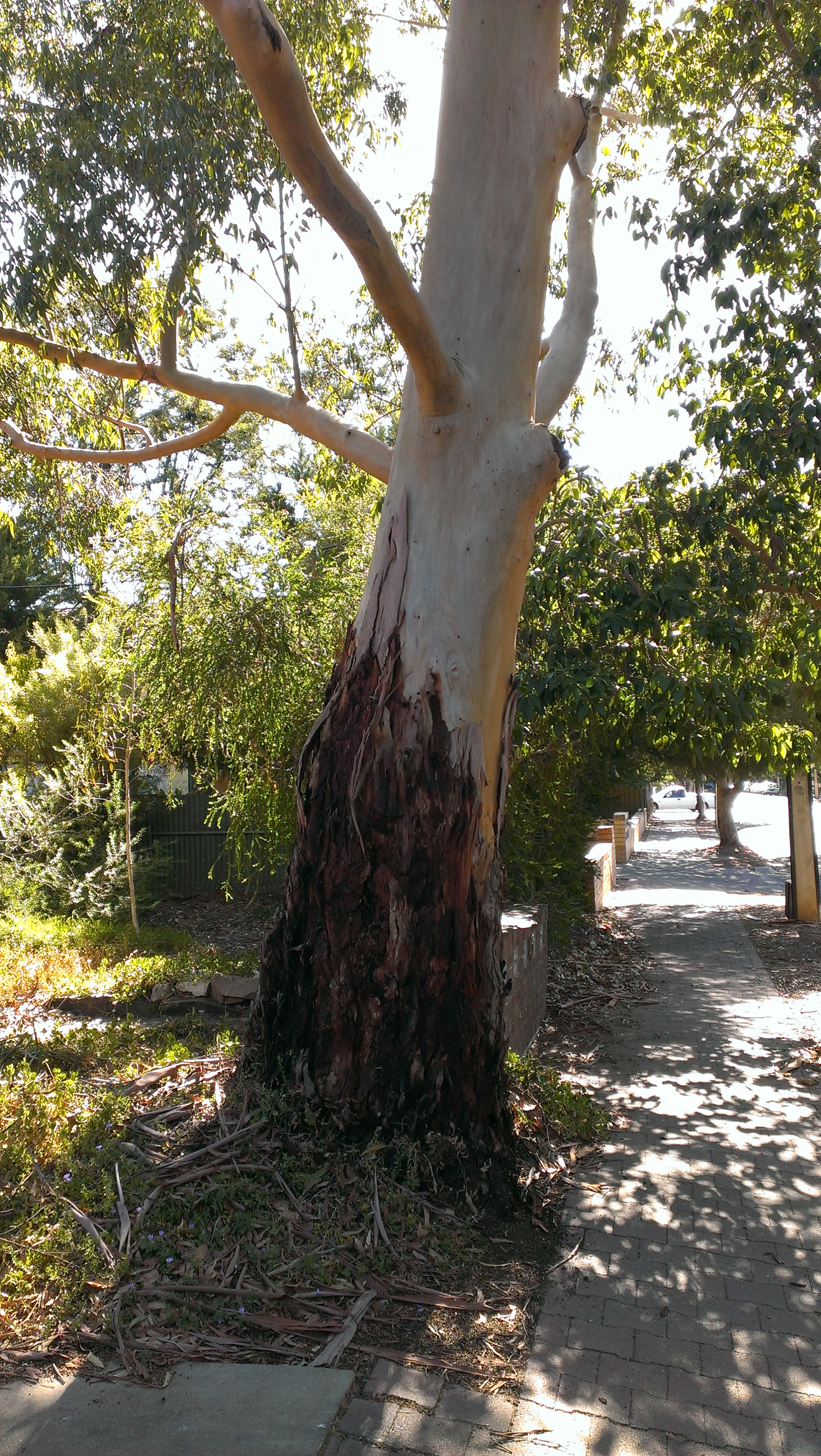
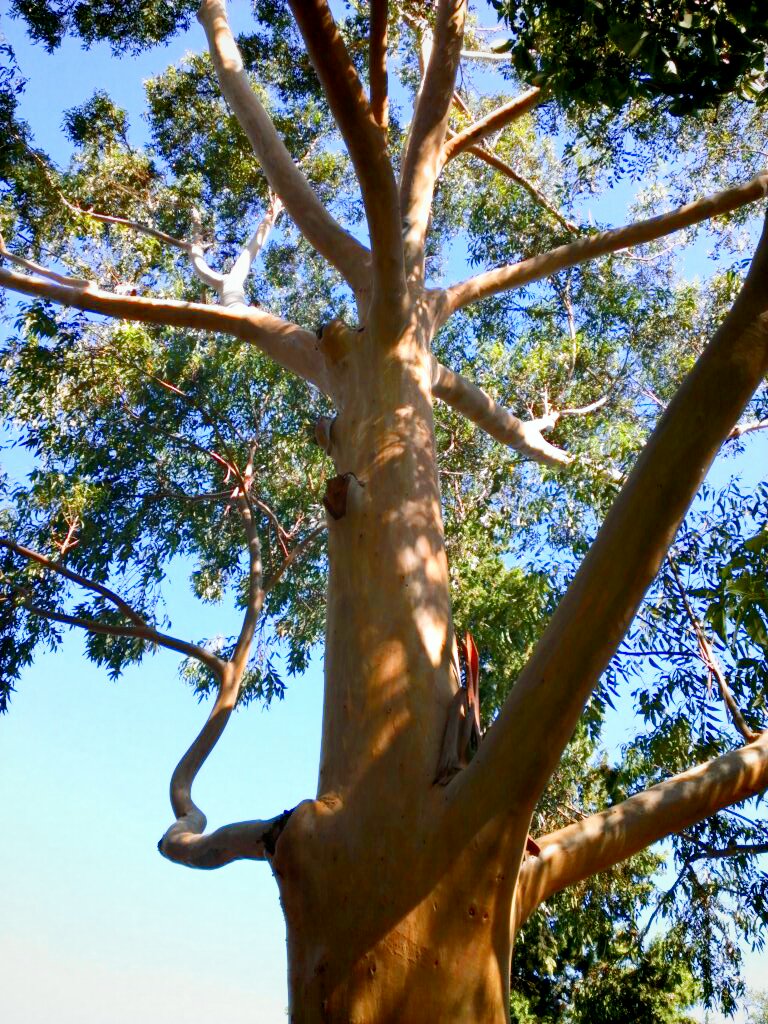
Continuing the recent bark theme… and since it is the season of bark shedding for so many local trees, I bring you a Eucalyptus Saligna (Sydney blue gum) bark dyepot.  I collected the bark in December and had a very funny conversation with a passerby who had lots of ideas about what I might be doing with that bark.  This tree has a rough base but has shed all the bark above it in strips now.

IMAG0572

It is a huge tree!  It is outside a block of townhouses, where some trees were removed a while back but this one was saved by some local friends.

IMAG0574

What a beauty.

IMG_0031

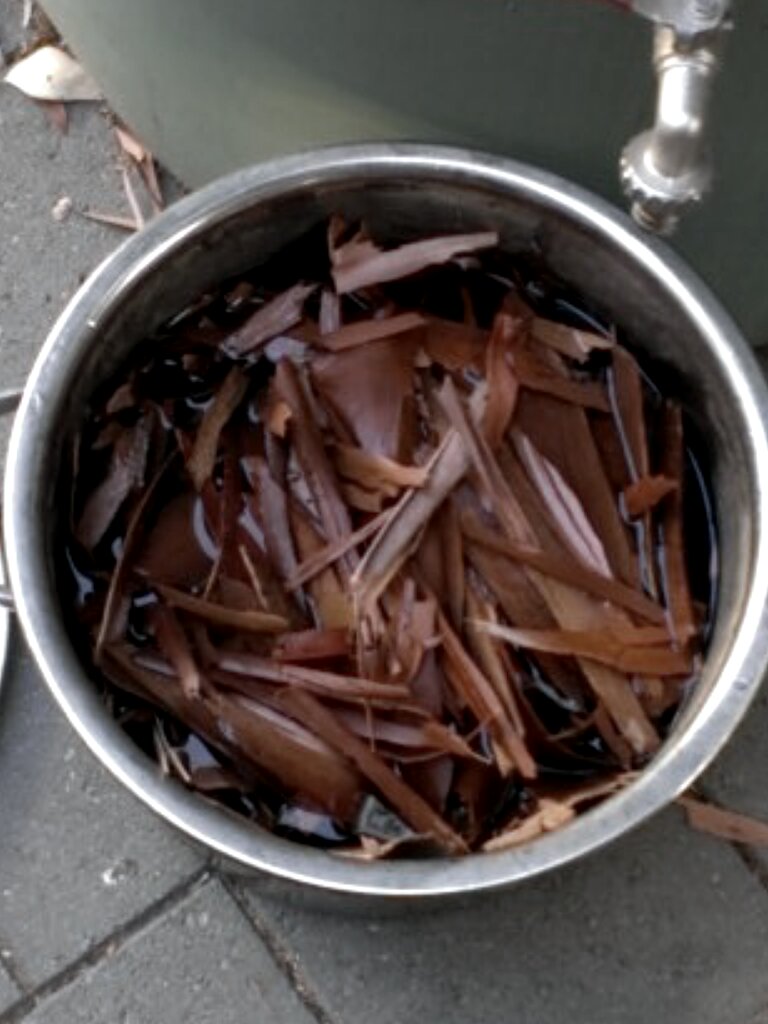
Enjoy the tree, because as I write I’ve looked into the dye pot where my handspun wool is heating and this is a case of tan again, I believe.  Here is the bark after I added rainwater for a few days of soaking. 

IMG_0033

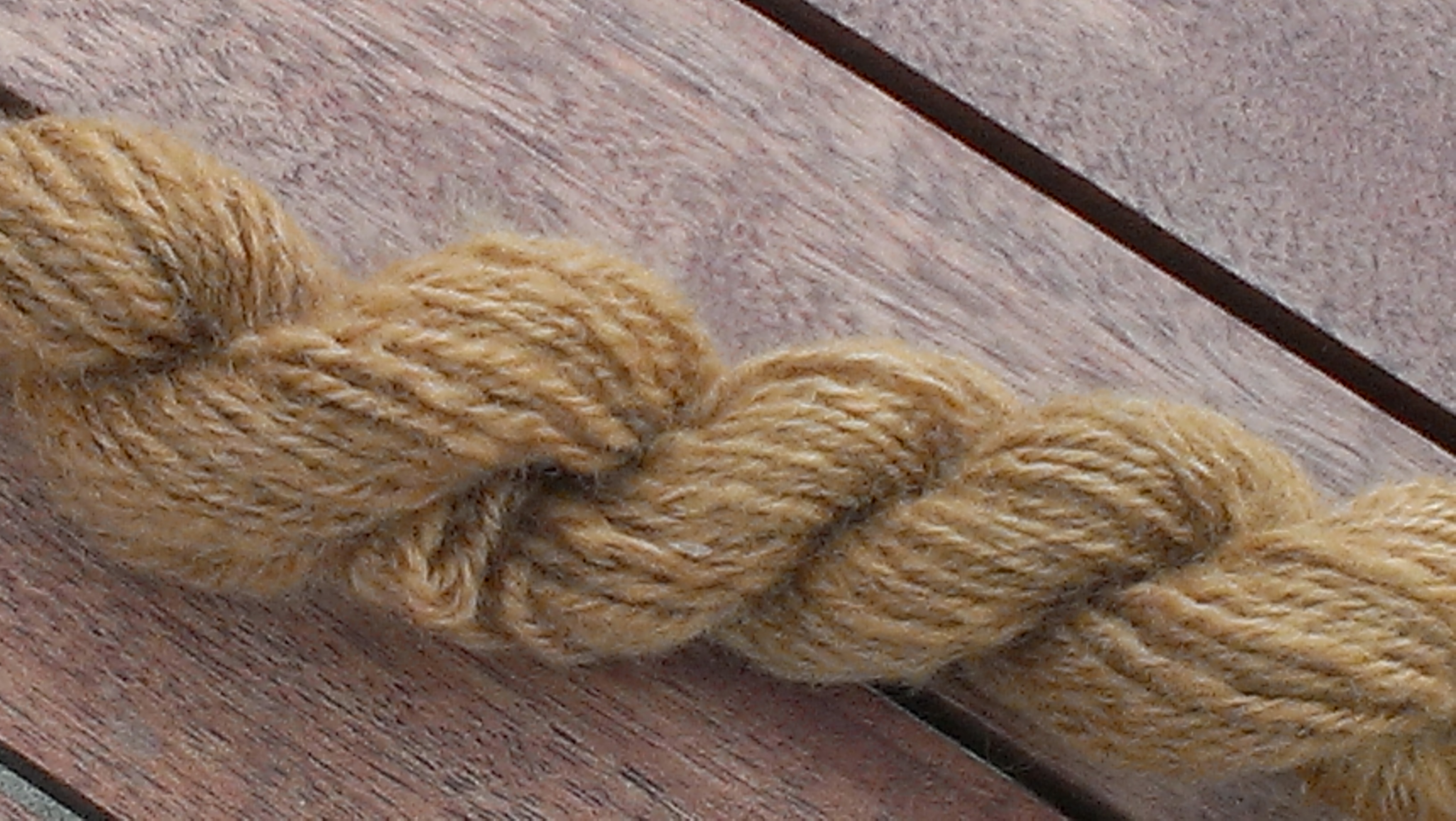
And here, my friends, is my dyed wool.

IMAG0584

And against a background of E Scoparia-dyed merino:

IMAG0583

4 Comments

Filed under Dye Plants, Eucalypts, Natural dyeing, Uncategorized