Category Archives: Eucalypts

Significant Tree

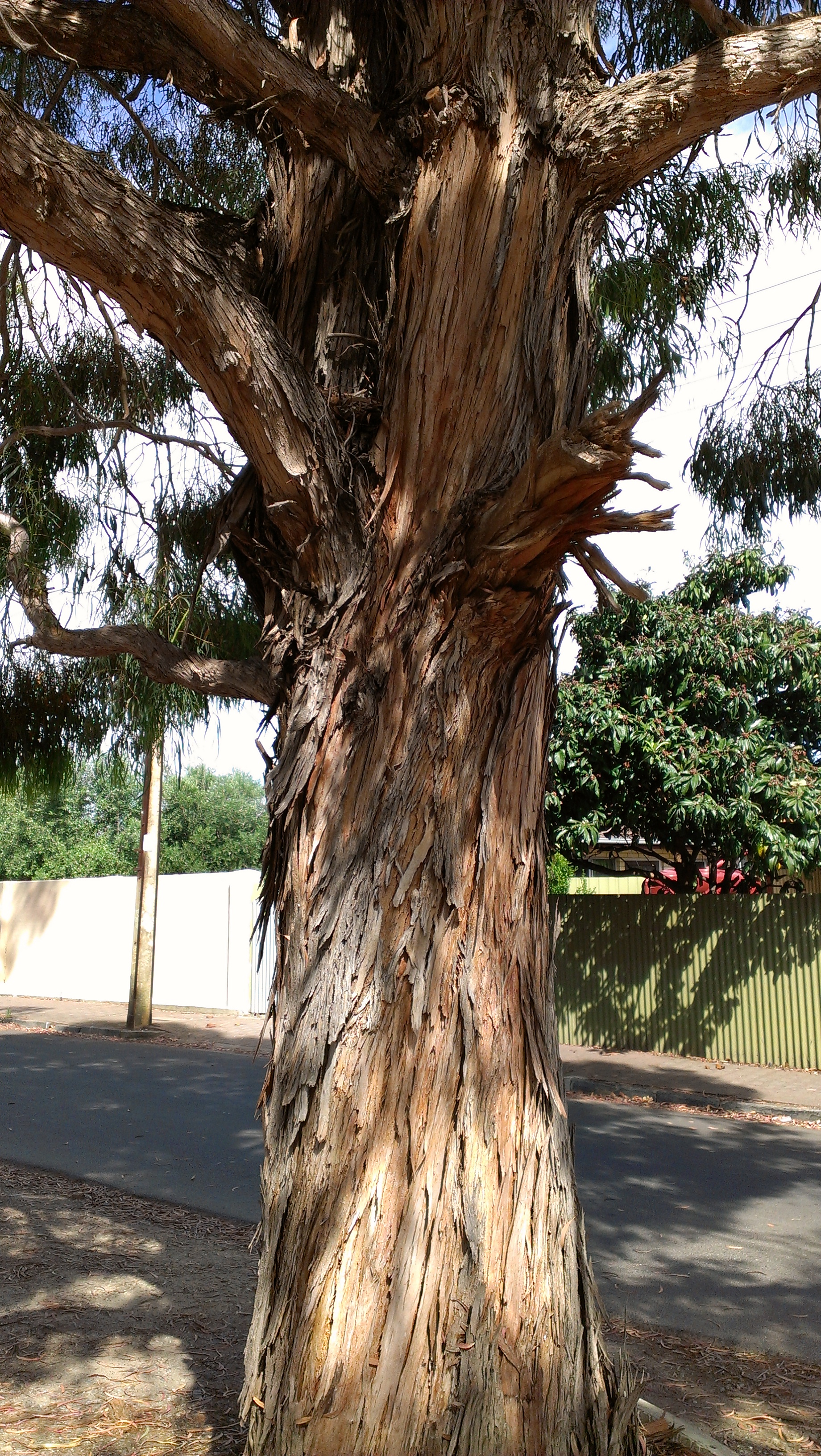
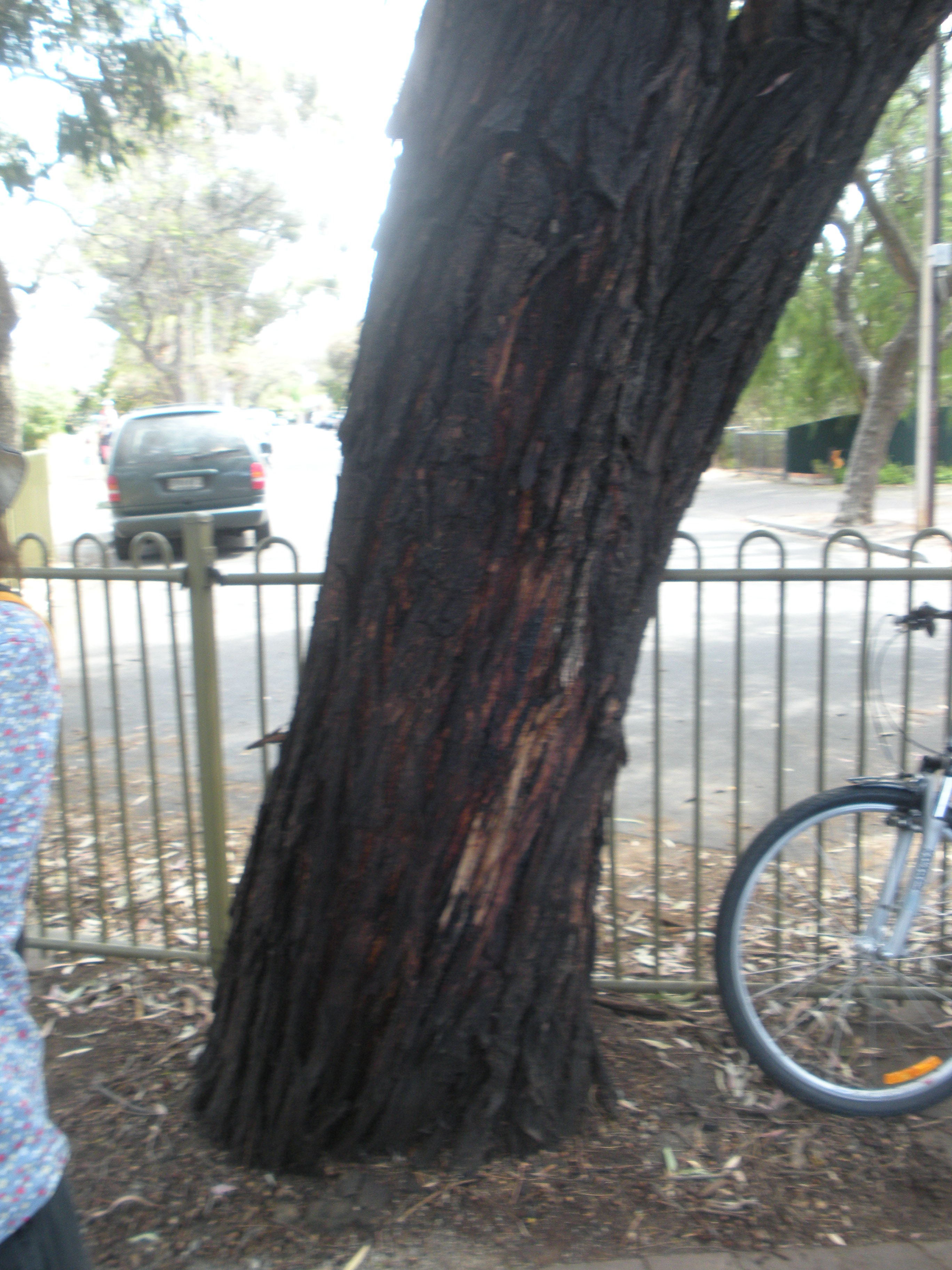
I love trees.  Some are especially precious to me.  Like this one.  The Department of Planning and Infrastructure says it is a Corymbia Maculata (Spotted Gum).  I have tried dyeing with Corymbia Maculata.  As a dye plant, it’s not spectacular: my samples are tan, tan and tan.  Dye potential isn’t the only or even the main value in a lovely tree from my point of view, but just one of its potential fine qualities. 
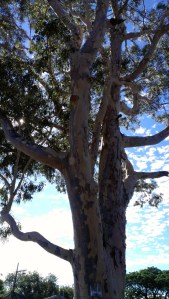
IMAG0356

We failed to save it by objecting to its removal.  A local creek is going to be put into a pipe so big a car would fit into it as part of major infrastructure works, and this tree is standing in the path that pipe is going to take beside the railway.

IMAG0352

The Minister approved its removal, and his decision is not appealable.  That fence along the railway stands where over 10 much smaller, but still appreciated, trees used to stand beside the spotted gum. Since their removal I hear there are six possums fighting in the nearest neighbours’ yard at night instead of just one. We have been given several different dates on which the Corymbia Maculata will be felled, and prepared ourselves for the day each time. It has been fenced off because tomorrow is the day.  9.30 am is the time.  My nearest and dearest is staying with a friend tonight so as not to be here when it happens.  The people who will be felling it will start to arrive at 7 am.  It will be a big job.  The chainsaws will be going all day long, if indeed they can do it in a day.

lIMAG0357
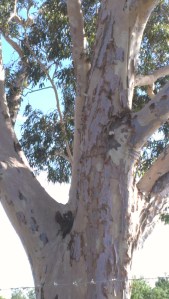
This tree must be decades old.  The whole neighbourhood will be different without it.  The flocks of native birds who have visited it when in bloom every year will no longer stop by.  Under government policy, in our hearts and those of lots of our neighbours, it is a Significant Tree.
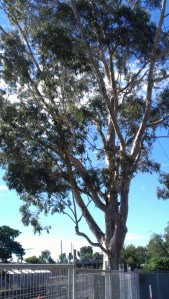
IMAG0353

5 Comments

Filed under Eucalypts

Leaf prints of the week: Eucalyptus Cinerea and pecan leaves

It was another weekend with leaf prints.

Leaf prints 005

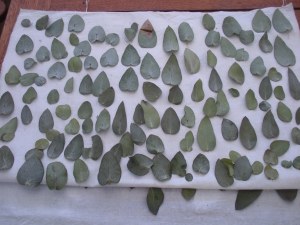
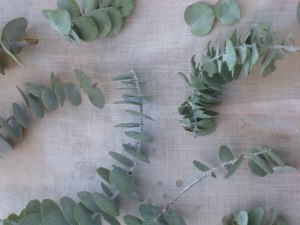
Eucalyptus Cinerea, before..

Leaf prints 001

and after:

Leaf prints 021

My test cotton sample, demonstrating that the mordanting I wrote about a little while back should work out just fine for the natural dyeing workshop I’ll be running.

Leaf prints 022

On the weekend I travelled south of the city to celebrate the lives and love of two dear friends.  They had an all-in-one birthday party and anniversary.  I gave them a teapot and teacosy dyed with silky oak leaves (grevillea Robusta) and eucalypt, and they found it suitably funny.

Dyeing 005

As we left, one of them pointed out their now-flourishing, though still relatively small,  pecan tree.  I had seen pecan eco-prints on Lotta Helleberg’s lovely blog.  I asked if I could pluck a few, and then I took them home and wrapped them in a piece of cotton twill that used to be a pair of trousers.  It was ready and waiting, mordanted in soy and ready to go!  Before… (such lovely leaves…)

Leaf prints 002

and, after:

Leaf prints 025

I had also saved this sample of an unidentified eucalypt a friend was growing in his backyard, but sadly it yielded a few brownish smudges.  It’s much prettier in person than as a leaf print.  I think it is Eucalyptus Kruseana (Bookleaf Mallee).

Leaf prints 003      Leaf prints 009

And I spent some time creating textured batts ready for textured yarn spinning… wool with mohair locks, while I tried a new method for washing wool.

Leaf prints 014

Good times!

1 Comment

Filed under Dye Plants, Eucalypts, Fibre preparation, Leaf prints

Patterns emerge

I keep finding myself humming ‘Deck the halls with boughs of holly’ when collecting bark.  I realise it’s the first of December and there is a chance I have just been ear-wormed by a Christmas carol when passing by a shop… but I don’t think so.  I think I am actually humming ‘Tis the season for bark-collecting, tralalalala tralalala’.  Which may, of course, be even greater cause for concern!  Today I went out with my bike and visited this tree, cunningly hidden behind and beside a carob tree (whose leaves you can see).  I’ve tried dyeing with carob leaves, but nothing exciting emerged.

IMAG0287

As I went to pack my bag of bark into my bike trailer a gecko ran out!  Now that really was an occasion for celebration… a native lizard enjoying one of my favourite dye plants.  I also collected bark from a tree in Leader St.  I ran a sample dye pot some years back from leaves that had dried in the gutter beside it and got rich colour, but the council has trimmed the boughs so high I can’t reach leaves or see any buds or gumnuts.  I am using the pattern of bark shedding to identify more E Scoparia trees.  Anything that has bark that has turned dark grey and red just as it begins to shed is on my plausible candidates list if it is peeling now, which is why I visited the one in Leader St. Needless to say, there is a dye pot running now to test this theory.  After all, ’tis the season for bark collecting…

And, at Guild today I became the happy recipient of natural dyestuffs of antiquity which I might be able to use for my dyeing workshop.  Some had no labels, and this one is the most intriguing of the unidentified specimens.  I could guess many, but not this one.  Any clues?  It looks to be the husk of a small fruit.  Smaller than a hazelnut, say, but bigger than a pea.  Dark on the outside and crimson on the inside.

IMAG0286

This trove is going to take some research, but will be my first opportunity to try logwood and cochineal (let those bugs not have died in vain…) and suchlike, as well as some things I’ve never heard of, like shredded mulga bark (mulga roots are common firewood here, but I’ve never heard of this as a dyestuff) and ‘red sanderswood’. Happy times… I also received some undyed handspun yarn as part of the Guild birthday challenge, labelled ‘Goat Hair’. Perhaps it can be dyed from the new dye collection?

Leave a comment

Filed under Dye Plants, Eucalypts, Natural dyeing

Eucalyptus Acaciiformis

I decided to depart from my recent focus on ironbarks to try to identify this lovely tree, growing alongside the tram line.

This one is not an ironbark… it is a stringybark. Here’s a bit more detail.

All the usual reservations about my skills in eucalypt identification apply, but Euclid and I reached the conclusion this is E.Acaciiformis, wattle-leaved peppermint.

I ran a test pot last week and got a strong, bright orange… so I’m trying out a bigger pot.  I’ve been running pot after pot with the same water and fresh bark over the last few days, but for this, some fresh, clean rainwater.

I brought the pot up to below a boil, then simmered for three hours, adding my fibre after the first hour and taking out leaf material after the second to allow more room for fibre circulation in the dye bath.

This is the result on merino and silk (on the left).  The braid on the right has been dyed with E Scoparia bark.  It is quite striking to see the difference between dye take up on the wool and the silk.  All my sample cards suggest this outcome, and so do leaf prints really: I get colours I prefer on wool and cellulose fabrics rather than silk personally, though I see that other dyers love using silks.  It does seem very different to the usual expectation about how these fibres will take up dyes.

Leave a comment

Filed under Dye Plants, Eucalypts, Natural dyeing

Ironbark identification saga continues

I’ve been working my Eucalypt identification skills overtime and discovered that there are at least 3 dark-barked (by which I mean their trunk bark is brown to grey to black) types of ironbark growing as street trees in my area.  The main two seem to be E Tricarpa and E Sideroxylon, but it appears I also have E Corynodes.  One of the reasons I’m feeling some confidence is because of the results I have had from the dye pot:

In order of appearance:

E Citriodora–not an ironbark, just for comparison!–(Goodwood); E Tricarpa (Goodwood); E Tricarpa (Black Forest)

E Corynodes (Black Forest); E Sideroxylon (Goodwood); E Sideroxylon (a different tree, in Goodwood)

I would have to say that the dye results are more consistent than my perception of the appearance of the trees! One happy outcome of paying more attention is that I have observed that at this time of year E Tricarpa (and some E Sideroxylons) have tiny buds in formation among the fresh young leaves, and this enables a confident identification as between them. E Tricarpa has buds grouped in threes and E Sideroxylon has buds grouped in sevens.  Sometimes fruits are so high in the tree I can’t tell, and sometimes the sample I am able to reach has umbels where some fruits have broken off but I can’t be confident how many.  So this discovery is a help to the person trying confidently to tell them apart–me, for instance.

E Tricarpa (see those tiny buds-in-formation?):

E Sideroxylon:

I need to go a little further afield to consider other variations on the theme, but for now I think I will consider wider-leafed ironbarks to be types I don’t know well, rather than assuming they are E Sideroxylon with a better supply of water and nutrients.  You know what they say about assumptions!

6 Comments

Filed under Dye Plants, Eucalypts, Natural dyeing

Eucalyptus leaf prints of the week

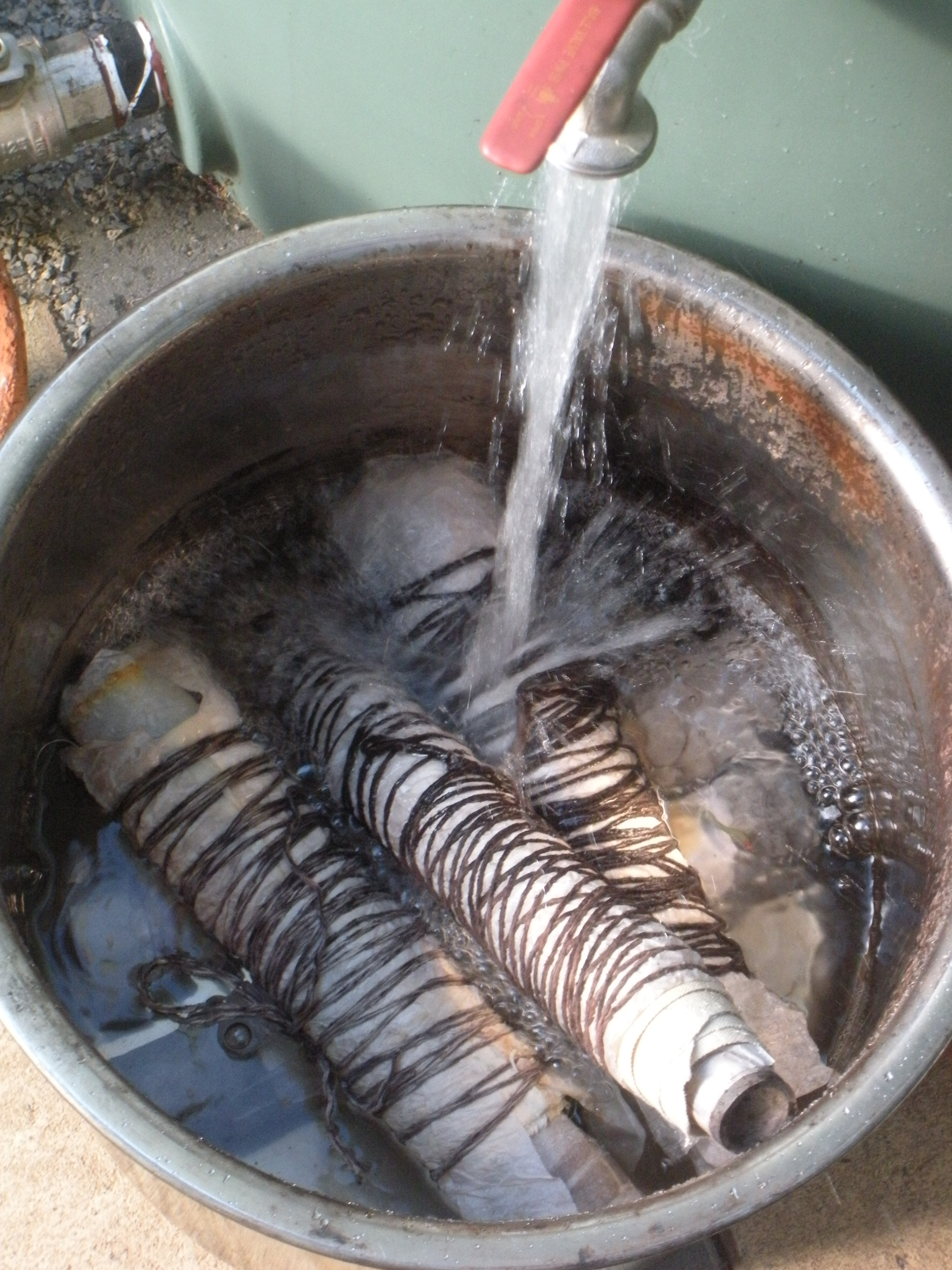
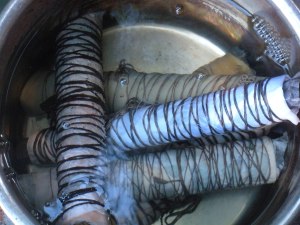
Alongside all these  yarn samples, I made leaf prints.  I sprayed my fabrics in vinegar (as India Flint recommends in her beautiful book Eco-Colour: follow the link on her blog and support her that way if buying online: it is in the left hand sidebar).  Next, I sandwiched the leaves between two layers of fabric, wrapped them tightly around cast iron pipe and cooked them in rainwater for about three hours.

Here is my suspected E Scoparia before cooking: I got a small sample and only what I could reach, and when I got it home, there was a lot of evidence of insect activity!

E Scoparia? Sample

After…

I also set up some E Sideroxylon leaf prints, which as I have now confided in you, were not E Sideroxylon at all!   Some on recycled hemp shorts (I’ve decided that I am allowed to use the fabric of garments I no longer like/want for other purposes), and some on some hemp/silk fabric I ordered online. Here is one piece of what used to be a pair of shorts, before:

I am planning to make a leaf-printed shirt, but I am a bit scared.  I mordanted this fabric months ago.  I have a great pattern.  I did not expect this fabric to have one silk face and one hemp face, and I can’t decide which is the’ right’ side.  So I set up one sample on the silk face and one on the hemp face.  Here are the results.

Silk side:

Hemp side:

So… I think the silk side might be the ‘right’ side.  Feel free to offer alternative opinions!  And I might use a different tree for the shirt prints when I gather my courage.

1 Comment

Filed under Eucalypts, Leaf prints

Let the ironbark identification and dyeing experiments begin!

This tree is growing on the tram route in Goodwood.  It is clearly an ironbark, but I am less certain it is E Sideroxylon, and thus, I chose to investigate further… There are three ironbarks in a little cluster at this spot.  I think one of them is the same species and the other is so tall and branches so many metres above the ground that I may never know.

Here is the key feature of an ironbark: deeply furrowed bark which is impregnated with a sticky saplike substance (kino) which the tree produces in an effort to fend off attack by insects.

Here, more of a sense of the whole tree.  It is a very tall tree… and while the trunk might be secure from predatory borers, the leaves showed penty of signs of lerp and caterpillar attack.

The upper branches were paler, more of a cream colour, and covered in smooth bark which had begun to shed.  We had a very overcast day, but sometimes a natural dyer can’t wait!

The leaves smelled rather lovely while cooking.  I didn’t imagine when I set out on this dyeing path that cooking eucalyptus leaves smelled different, except in the obvious case of ‘lemon scented’!  They do though.  Some smell quite spicy and some smell like classic Eucalyptus oil.  E Crenulata was so overpowering it was voted out of the house for all future time.

As for identifying features, I collected plenty of leaves but could not reach any mature fruit.  Since this tree is growing among others that may not be the same species, picking fruit up from the ground sometimes just confuses the picture.  There were no visible buds or flowers–so, there are some limitations on identification.  Just the same, this tree appeared to bear fruit in pairs and threes (and not the classic 7 flower umbel of E Sideroxylon).  Tentatively, Euclid, hampered by my inadequacies in providing accurate observations, and the limitations in the data available, gives me E Tricarpa.
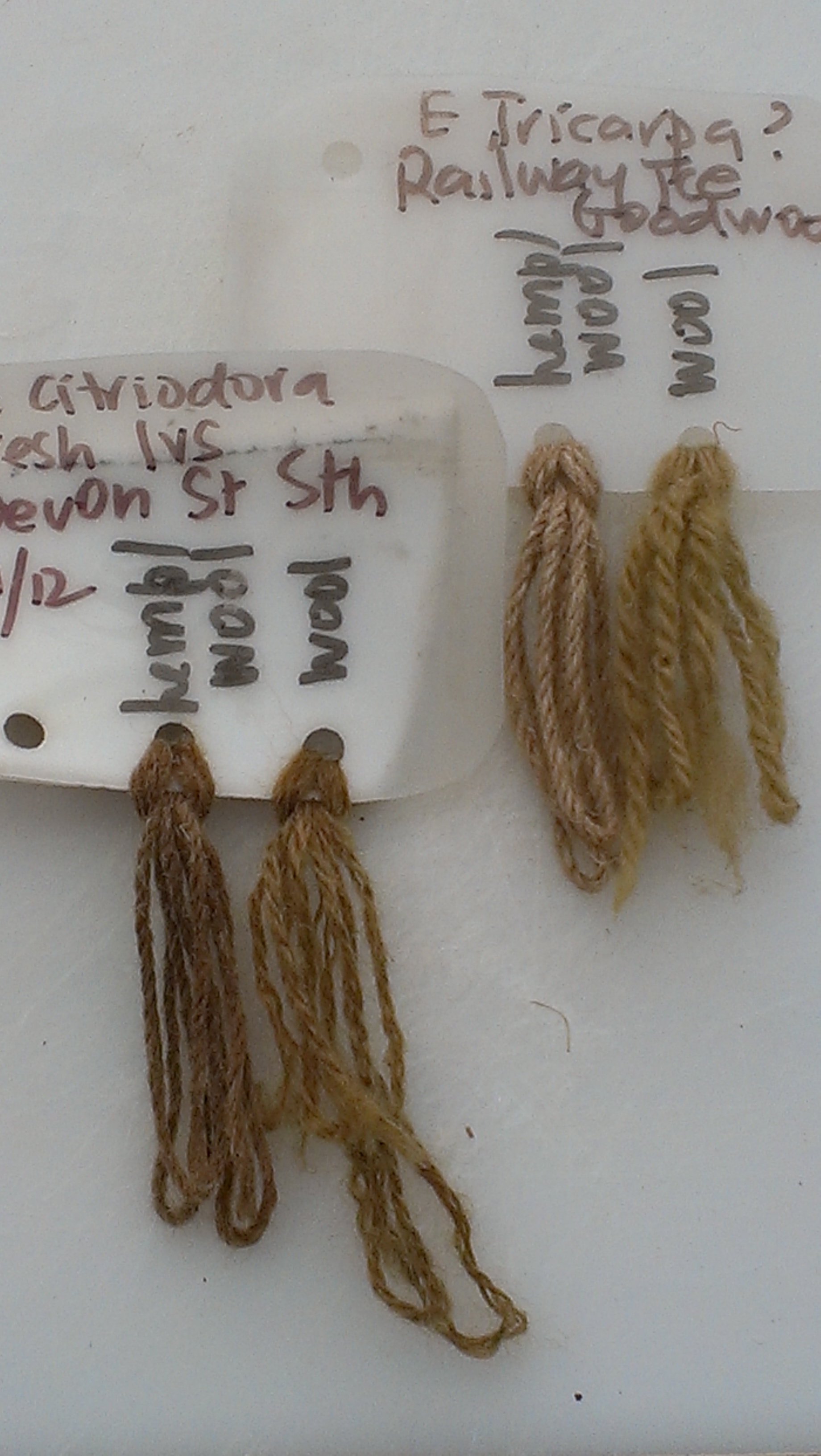
Here is the outcome of my dye sample (hemp/wool blend on the left and and wool on the right on each sample card).  E Citriodora on the left and E Tricarpa (tentatively identified) on the right… equally unexciting to my way of thinking.

Leave a comment

Filed under Dye Plants, Eucalypts, Natural dyeing, Uncategorized

Ironbark experiments: E Corynodes

On the weekend, I went to a fete at Black Forest Primary School.  They had a sensational community garden, complete with a sale of silkworms, 5 for a dollar!  Who could resist?  Clearly not me (you guessed), so there are 5 silkworms in the lounge munching through mulberry leaves.  More on that later.

While my posse of friends and my house guests from Denmark were hitching up their bikes, I took a sample of the tree right at the dead end of Kertaweeta Ave Black Forest where we entered the school grounds, with the help of a taller friend.  Excuse the extra good photo….

This tree had smooth, pale bark in some of the finer upper branches.

I don’t know why, but I do not entirely trust the result that Euclid and I produced: E Corynodes.  Poor Euclid, depending on me.  There were no mature fruits, buds or flowers to consider, and that makes the result less dependable and the chance of detecting an error smaller. Euclid suggests E Corynodes can be confused with several other species, but look at this account of how to tell them apart!

E. fibrosa subsp. fibrosa, E. fibrosa subsp. nubila, E. melanophloia and E. rhombica … differ in having buds with stamens all fertile and irregularly flexed.  E. sideroxylon differs by having buds that hold the outer operculum into maturity and both the inner and outer operculum shed together at anthesis (no operculum scar).

So that would be obvious, then!  Based on this I wonder how I can be sure this is not E Sideroxylon, which would give orange too…  Because whatever its true name, this is the result I got.

Leave a comment

Filed under Dye Plants, Eucalypts, Natural dyeing

Eucalyptus Torquata: Leaf Prints and Modifiers

Remember my modifier experiment?  I have two jars of wonder, based on Jenny Dean’s instructions.  One contains offcuts of copper pipe from my Dad, vinegar and water.  It’s been steeping for months.  My first effort at iron water didn’t work out as I’d hoped, more like a science experiment!  This one is based on my friend’s collecton of bent nails.  He has been turning pallets into furniture, so he has removed a lot of nails.  They got left out in the rain and, bless him!  He thought of me.  Here they are, left to right:

Mystery Science Experiment, Rusty Nail Water, Copper Pipe Water.

Here are my E Torquata samples on hand spun wool and commercial wool/hemp blend:
Unmodified at the top, Iron modifier next, Copper modifier at the bottom.  I have to admit, this isn’t a deeply exciting result.

And here are my E Torquata leaf prints on recycled linen (the darker one was the side against the cast iron pipe):

Here are the prints from my ‘is it E Scoparia?’ experiment.  The answer is a tentative ‘yes!’  Recycled linen on the left, recycled silk on the right.  I included the very young, soft, green foliage you can see printed toward the bottom partly because I have been asked whether it is true you need to use young foliage to get good leaf prints.  My experience is that you don’t (though of course, you can).

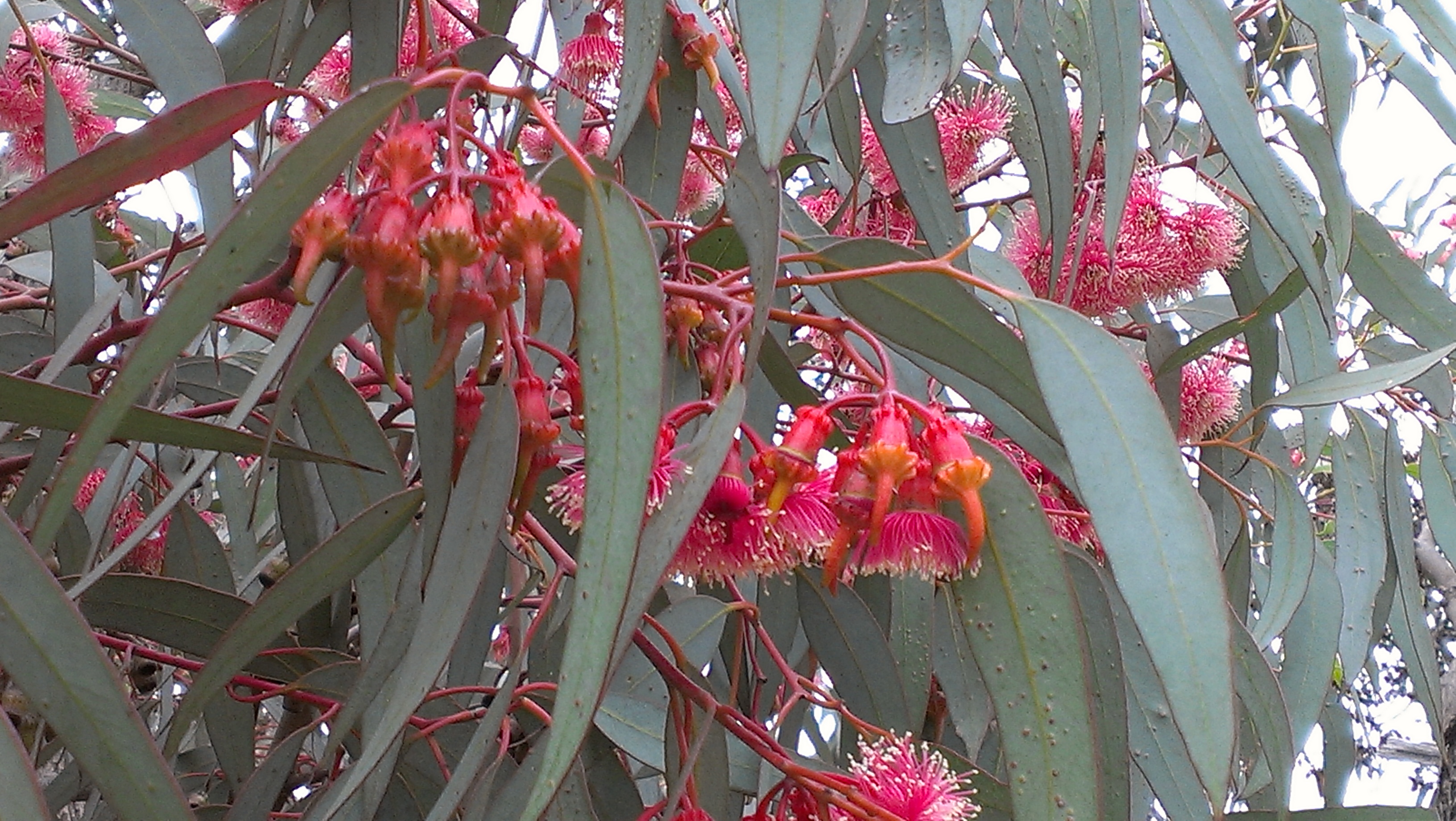
Finally… a gratuitous photo of an E Torquata flowering very pinkly in a car park in my place of work.  One of my co-workers came out of the building to see me with a pile of papers in one hand and my phone in the other, and said: ‘What are you doing, Mary?’  As you would, really.

4 Comments

Filed under Dye Plants, Eucalypts, Leaf prints, Natural dyeing

Ironbark Mystery

This week I found some E Sideroxylon trees in a park with lots of low hanging leaves… too tempting.  So I harvested some.  I brought them home and made leaf prints.  I have obtained strong oranges from these leaves in the past, so imagine my surprise when I unwrapped them and saw this:

This is on the silk-faced side of a hemp and silk blend.  It did confirm for me that the silk-faced side should be the right side.  Here, on hemp-cotton blend:

Disappointed, I considered the possible reasons.  Perhaps those pipes were not cast iron but something else?  I didn’t think so. I re-checked that I still have my cast iron pipes stored separately from my welded steel pipes… yes.  Hmmm.  But then I checked the dye pot using the same leaves, that I was cooking at the same time as the leaf prints.  And the wool was barely tan, almost no colour at all.

So, the metal content of the pipe is not the explanation.  The leaves that had been cooking for 3 hours or more were still green looking.  The dye liquor was barely tan.  I would expect the leaves to be orange and the dye liquor to be strongly coloured.

What could explain this?  I went back to my sample cards to check I really had ever had success with E Sideroxylon and there were my samples, bright orange.  There are a lot of variables in natural dyeing, and season or rainfall or soil could make a difference, but surely not this much of a difference.  The most plausible reason is that this tree was not E Sideroxylon, and that when I have had perplexing results in the past, they have also been caused by using a different species.  So, I consulted my most detailed and sophisticated Eucalypt resource, Euclid.  This is a database of Eucalypts created by the CSIRO, an Australian government-funded scientific research organisation.  Euclid is an amazing tool, but when using it to identify a Eucalypt, an accurate result depends on accurate observations of the tree in question–so user error is still possible.

When I began learning about Eucalypts, I couldn’t tell an ironbark from a stringybark (for those still in this position, please accept my assurance that the difference is quite profound once you grasp it).  I finally worked this out when I tryed dyeing with E Melanophloia and got nothing.  Almost no change in colour.  I thought it was E Cinerea, which has a great reputation as a dye plant.  Well, Melanophoia is a pale trunked ironbark and Cinerea is a stringybark.  They do both have rough, deeply furrowed bark and silver grey heart or round shaped leaves and white-cream flowers, and there the similarity ends!

So… perhaps I am about to move my understanding of Ironbarks up a few notches.  Euclid and my observations reduced the number of possibilities down to 7 (from a possible pool of over 900 Eucalypts).  The plausible candidates are: E Rhombica; E Fibrosa subsp Nubila (Blue Leaved Ironbark); E Decorticans; E Fibrosa subsp Fibrosa (Broad leaved Red Ironbark) and, of course, E Sideroxylon.  I think E Fibrosa subsp Fibrosa is my front-running candidate… it looks very much like E Sideroxylon to me on Euclid even now my suspicions are raised.

Next thrilling update whenever I reach some new insight!  Unfortunately none of these new possibilities are in my ready reference (a book), so I may be observed under trees in the neighbourhood with my laptop in hand.  Well, it won’t be the first time.

6 Comments

Filed under Dye Plants, Eucalypts, Leaf prints, Natural dyeing, Uncategorized