Category Archives: Knitting

Turning a sow’s ear into a silk purse. I mean, a slipper.

This week’s question is whether I can turn a sow’s ear into a silk purse slipper.

I have been the lucky recipient of a lot of free fleece since I took up spinning.  It all started with some filthy Gotland fleece straight from the sheep’s back that my Dad gave me.  He had provided the antique engine that was running the shearing plant in a demonstration of hand shearing at a local show.  Because he knew I wanted to learn to spin, he brought home a few handfuls.   He is a great enabler!  It was rough and filthy, but I spun it on my first spindle and was grateful.  Admittedly, Dad said there was a handspinner at the show and he had spoken to her about it: she advised doing me a favour and not bringing that fleece home to me, but naturally, he didn’t listen!  And I was glad.  I didn’t know anywhere I could get fleece then.

Next, I was given several bags of Dorper fleece by friends who were keeping Dorpers as meat sheep.  I didn’t understand the meaning of ‘meat sheep’ in the context of fleece at that stage.   Dorpers shed their fleece rather than needing to be shorn when they are pure bred, which might have been a clue to (lack of) spinnability for a more knowledgeable person, too!  I dyed it, I spun it, I carded it… oh my goodness. It was the beginning of my fleece preparation journey and it was a very challenging start.  Months later the woman who had lent me her carder said when she saw what I was working with, she was just overcome to think I would even try to spin that fleece!  She didn’t offer me her opinion at the time, though, and it was a long time before I decided that I could, perhaps, compost the rest as my struggles were not only about my lack of skill but also about the state of the fleece.

Needless to say I have also received fleece that has spent lengthy periods in a shed and bred an overwhelming moth population.  Happily, I had said fleece in a plastic tub with a lid.

So… I have had some personal experience of the possibility that people who give the gift of fleece don’t have the judgment necessary to decide whether what they have handed over is worth spinning.   I have to be the one to decide whether the fact that I could turn that into yarn given enough time and effort, is a sufficient reason to do it.  I think I have proved to myself that I can spin almost anything–if I could spin those fleeces as a beginner!

I went to a couple of workshops on fibre preparation (washing, combing and using hackles) at the recent Majacraft Magic camp at Lake Dewar outside Melbourne, and came home ready to tackle some of my current fibre preparation challenges.  I had reached some new conclusions about why I find getting fleece clean difficult sometimes.  1. our hot water tap doesn’t give very hot water, and can’t be adjusted.  Boiling the kettle repeatedly is boring, as well as slow, after a while! 2. I can be more slapdash than is ideal for the task. 3. Most of the fleece I currently have is Polwarth, more gifts from a couple of pet sheep in the hills.  This is a fine and greasy fleece, among the more challenging to clean.  4. I always hope to be able to wash a bigger batch of fleece than is desirable for optimal results.

Anyway… having tried washing some more gifted alpaca fleece and some more gifted Polwarth, and using careful observation of how it behaves with flicking, combing and carding, I have decided the following.  1. The specific Polwarth fleece I am currently working on has tips that are weather damaged.  When I flick card them, they pull right off.  Is it any wonder that these paler tips appear as nepps in the batt when I card the same fleece? The other fleeces I have had from the same sheep don’t have these difficulties. The poor sheep must have had a tough year…
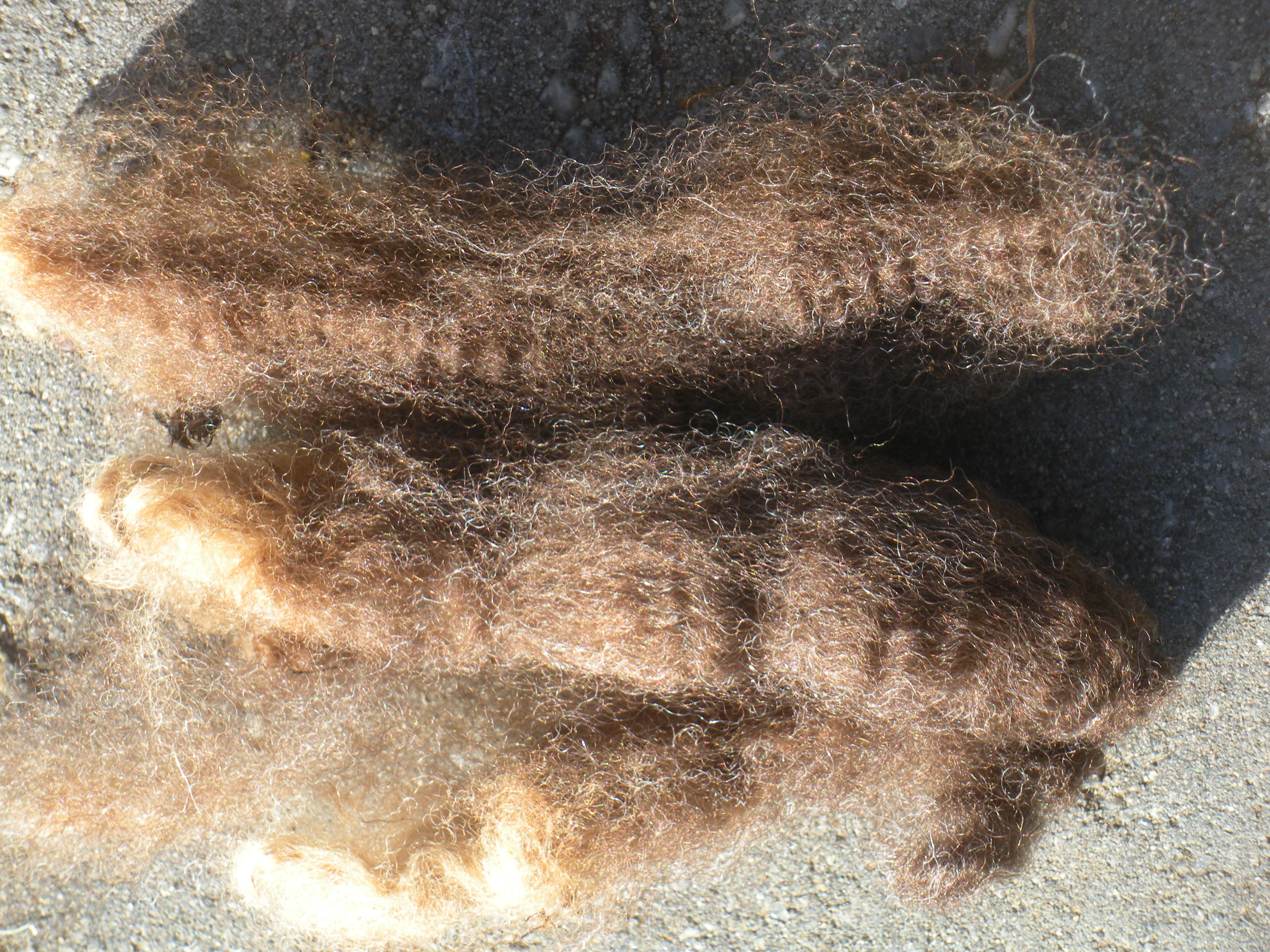
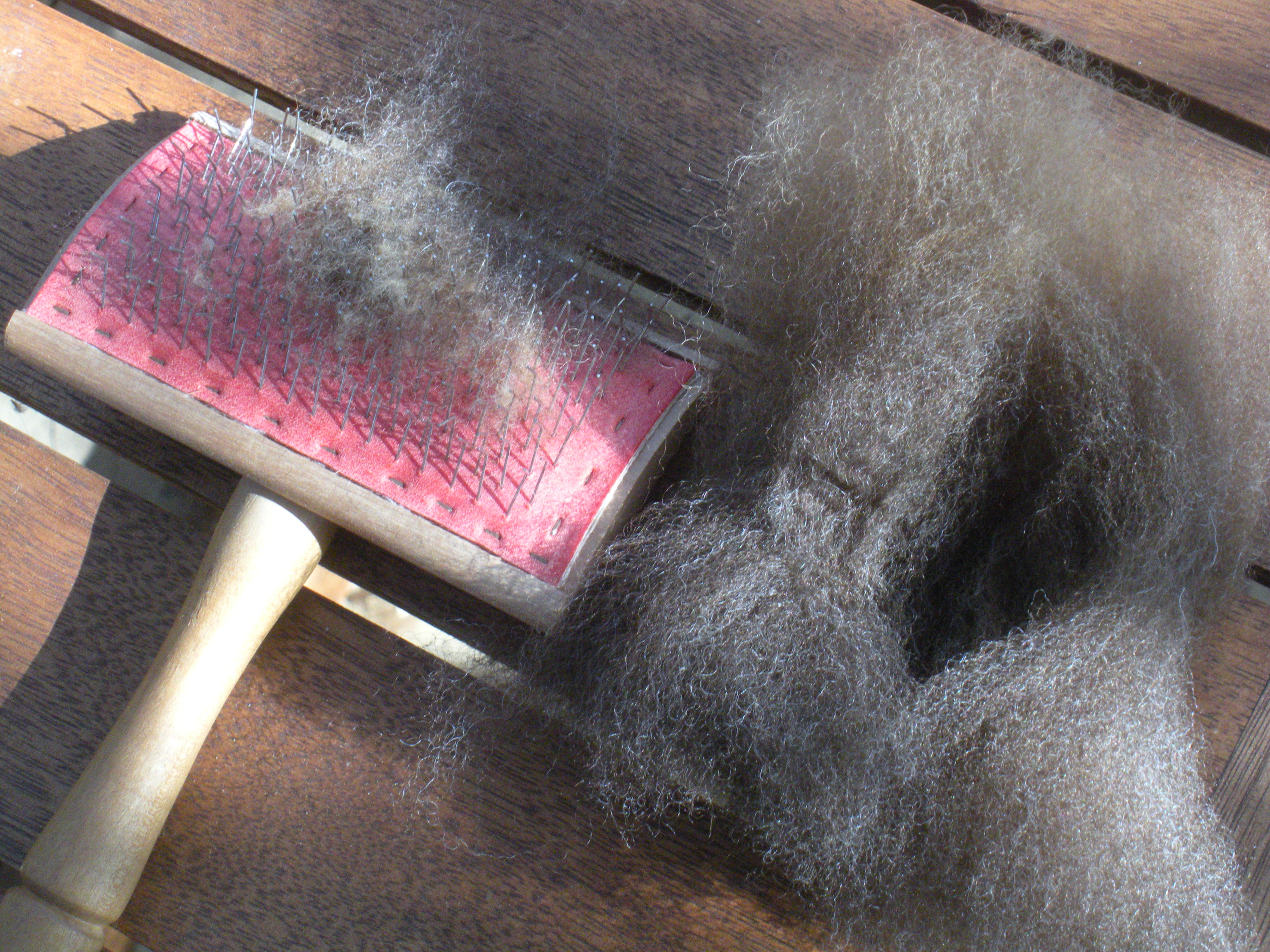
2. That same fleece has a break in it, so the longer locks are giving way under the tension involved in carding, again leading to less than optimal batts.  3. The alpaca is super short (happily, I have now worked with high quality alpaca and no longer assume this s just the way alpaca comes).  It has not really been skirted.  Most of it pulls onto the licker-in (the small drum on the drum carder) when carded. Yes, from the very start, and not only when the large drum is full.
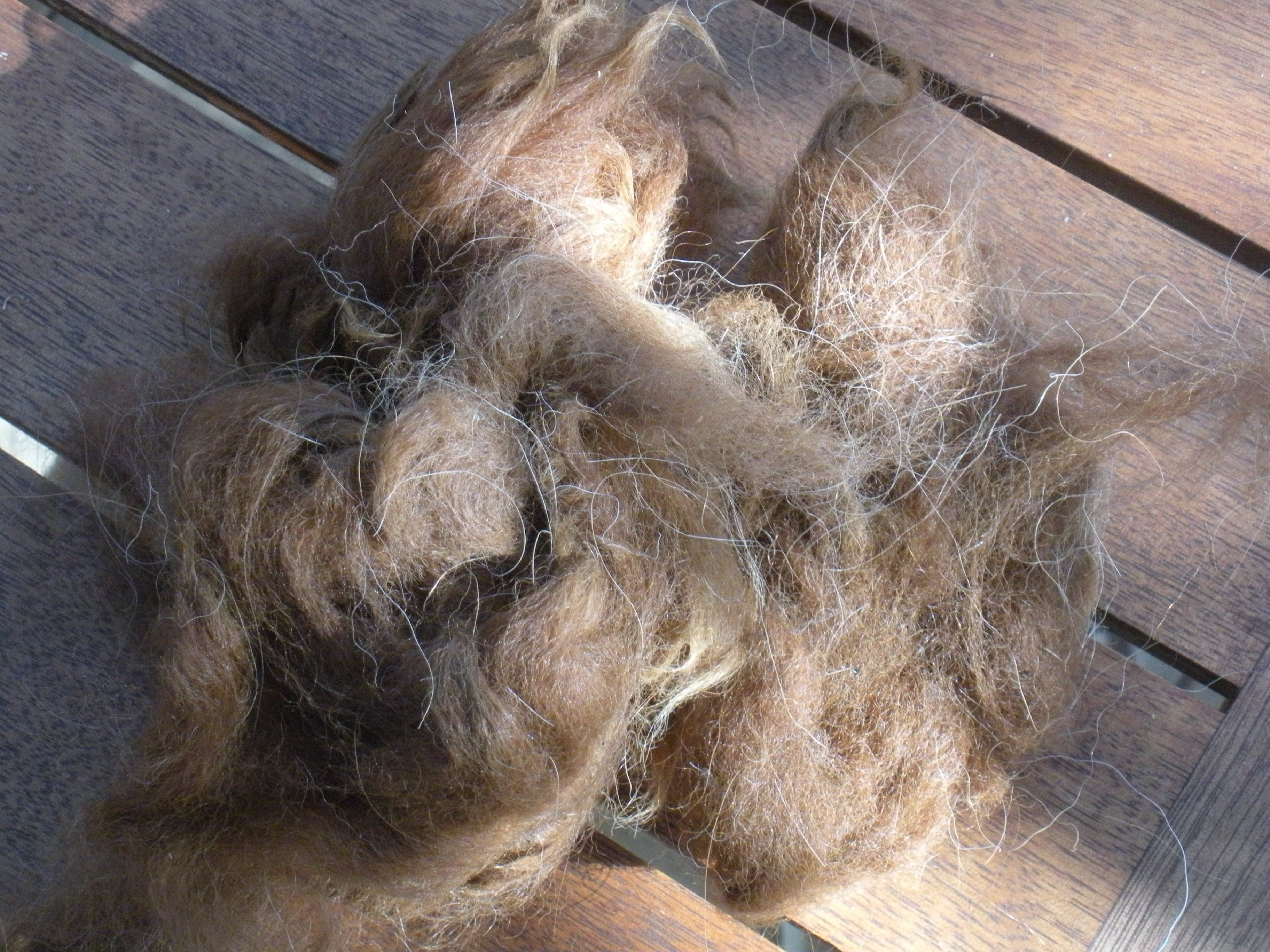
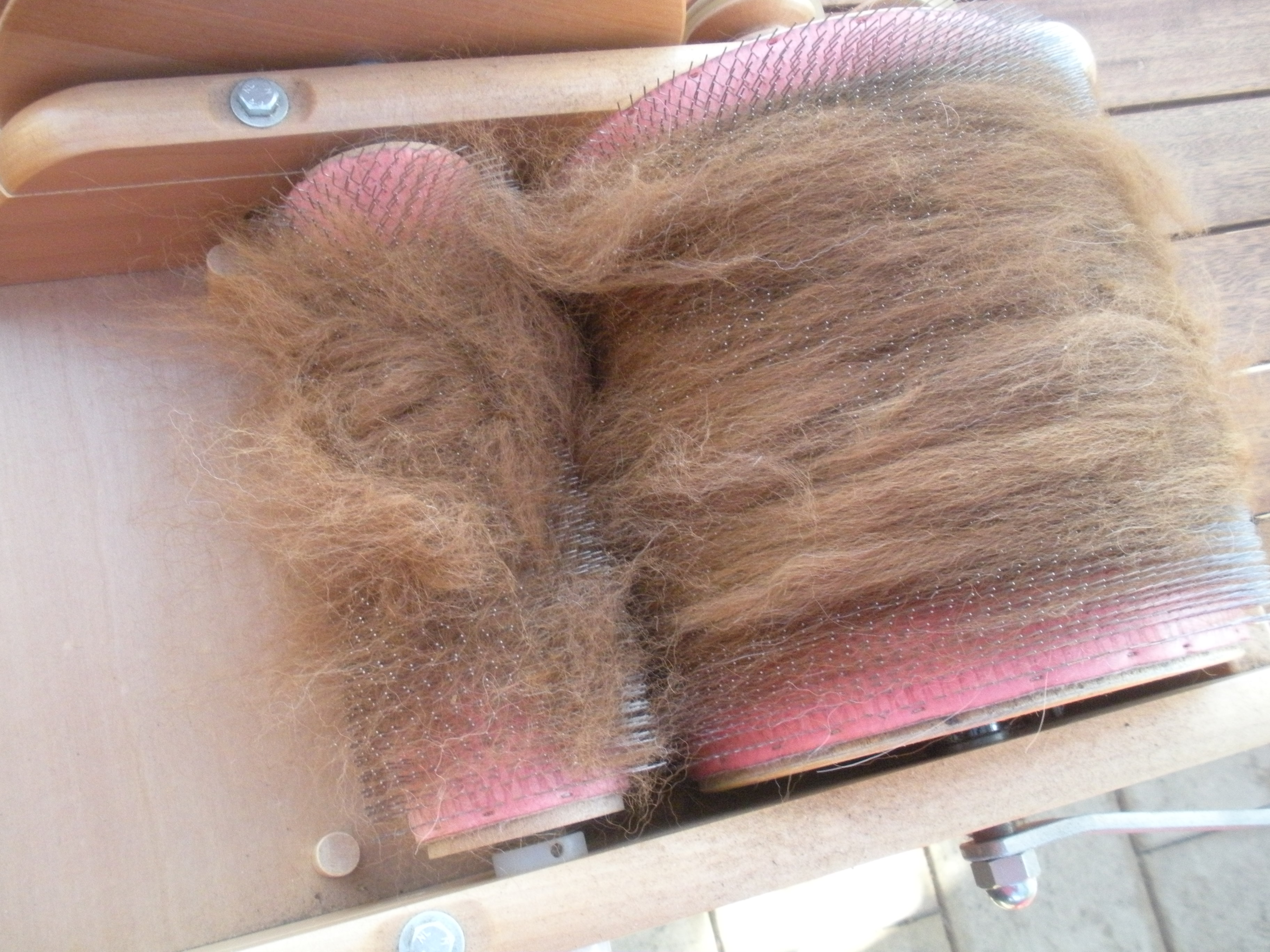
4.That alpaca has big clumps of guard hair and has been shorn without consideration to the future spinner.  Hopefully the shearer was thinking of the animal’s welfare in taking so many passes!

In short, these are not the highest quality fleeces possible and they would present challenges to anyone preparing them for spinning.  No matter how much time I spend I may not be able to turn these sow’s ears into the proverbial silk purses.  I have decided, instead, to attempt to turn them into felted slippers.  I am carding them together as a blend, spinning them up without too much fuss and very fat (good practice) and my ultimate plan is to knit slippers which will be felted and perhaps dyed.  Shazam!  Their less than ideal qualities will no longer be of importance.  I hope!

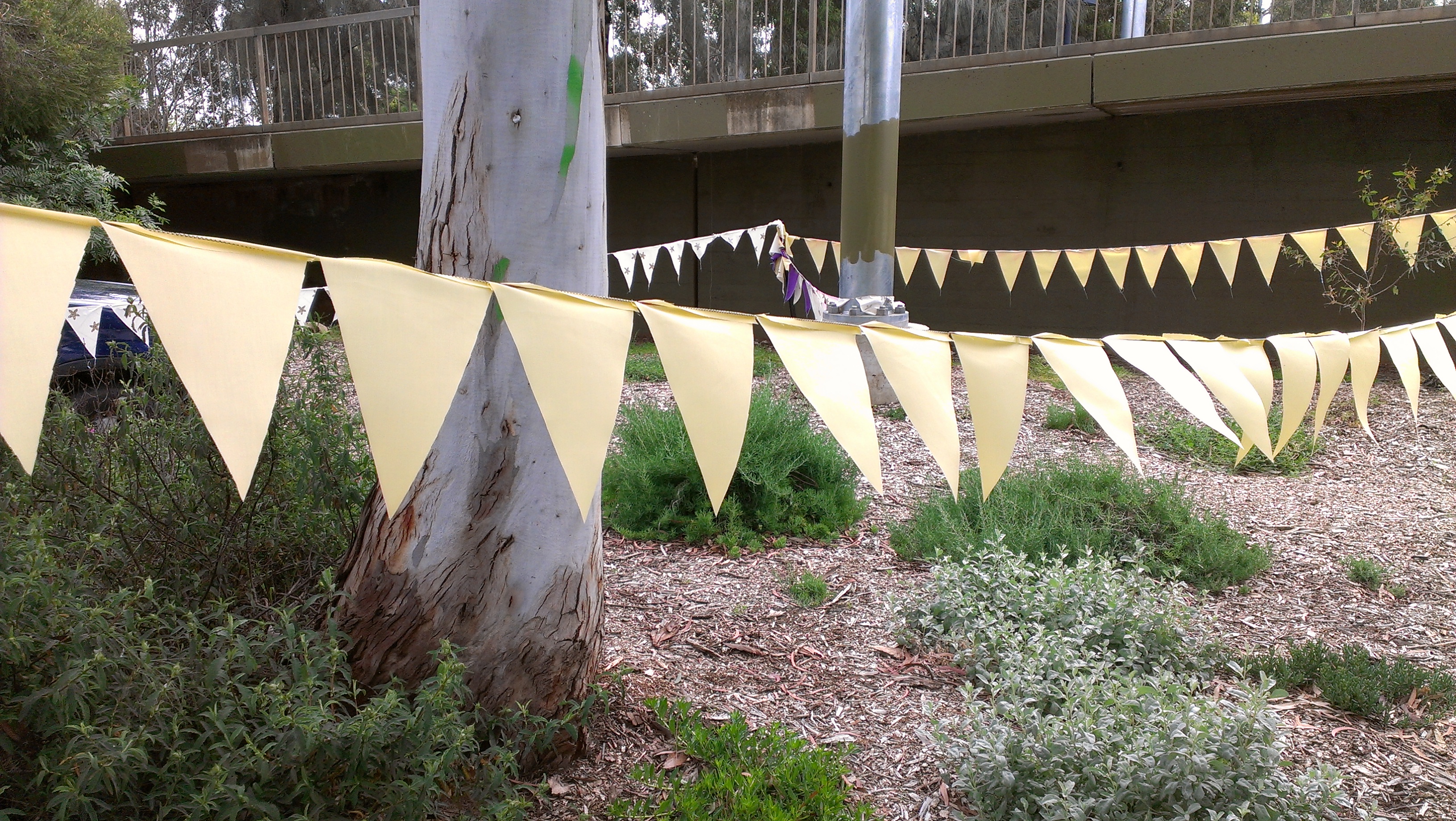
Here are my first few balls, and a slipper with some polwarth content and some eucalyptus dyed wool content to give me hope…

4 Comments

Filed under Fibre preparation, Knitting, Spinning, Uncategorized

The end of the Royal Show… and some show and tell

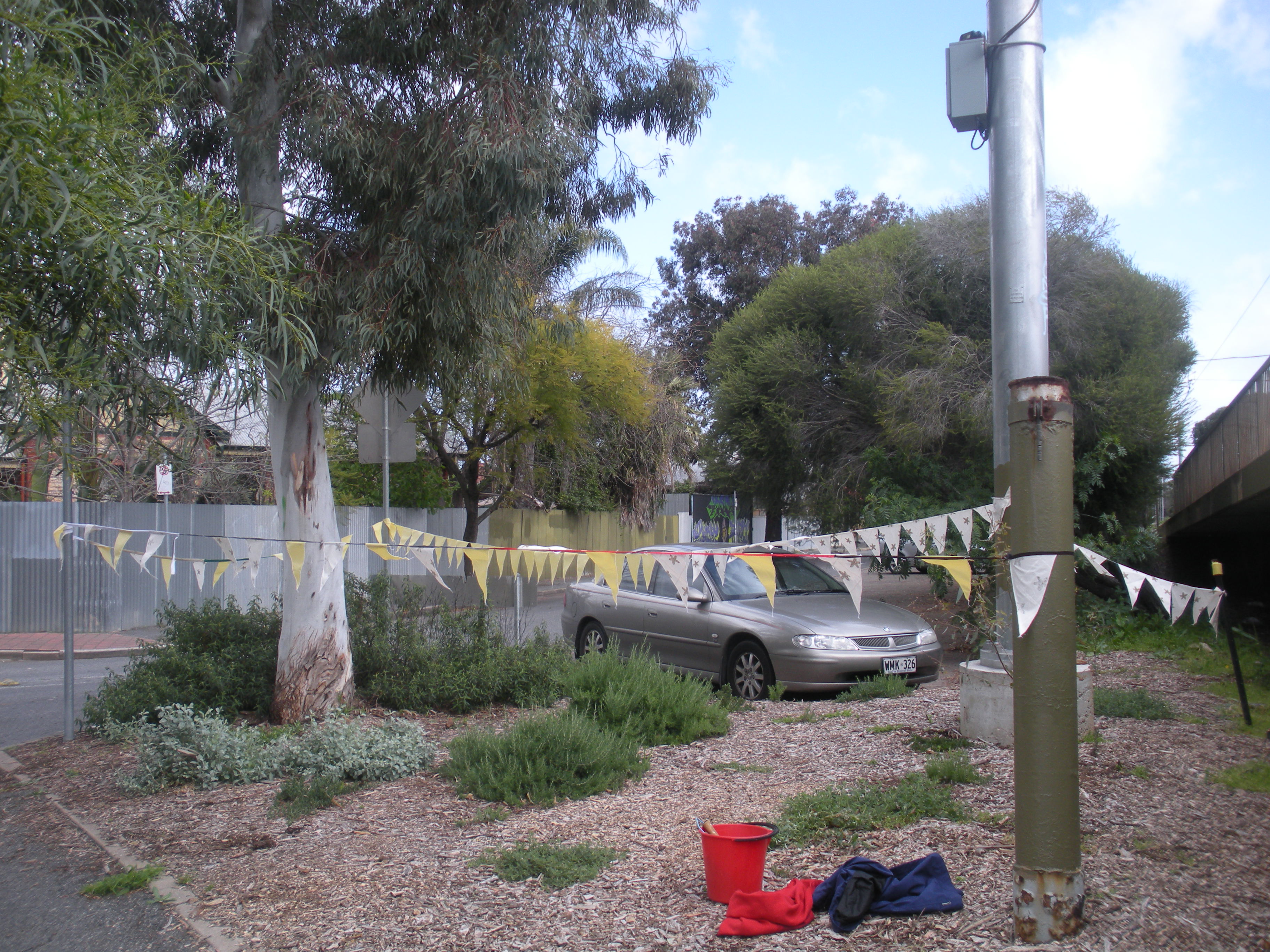
Well, my attempts to keep our saltbush plants from being trampled had partial success.  The bunting was apparently attractive enough that it was stolen several times (but survived gale force winds for a couple of days).  I had initially planned to make very time consuming and beautiful bunting, and there are great tutorials for making it online.  Then, as I contemplated the enormity of the task, a friend told me she would just take her overlocker to each triangle and then overlock the triangles into a strip and that she had success doing this in the past.  I decided that I’d take this lower fi approach, and it was a great use of some of my huge stash of bias binding (which I used to join the triangles on some strips) and some fabric that I bought as offcuts from bedsheet manufacturing years ago.

It took plenty of time to make metres and metres of it anyway and I was glad not to have made over engineered loveliness for this particular application, especially once so much of it was stolen!  After I had replaced about 4 metres of bunting once I was dismayed to find that it had gone within a day.  And, the antique overlocker my grandma gave me when her eyesight reached the point where she hadnt been able to use it for years had a hissy fit and needed to go off to be repaired.  This is unusual.  That overlocker is a workhorse and has responded to irregular maintenance for many years.  My grandma died years ago but I often think of her while using her very dependable machine.

So, in short, the last replacement piece of bunting is extremely low fi… triangles zig zag stitched onto a piece of recycled cotton thread I rescued from a sad old jumper.  However, with one day of the show left to go, it was still there when I went to pick some leaves from the tree, and I found two geckos living under bark at the base of the tree when I checked under it for white ants (sadly, evidence of white ants as well as geckos).  I’ve never seen lizards on this tree before, so this was very exciting!

Here, finally, are my three braids from the twice-run  Eucalyptus dyepot.  I am not sure that the extra-long heating time has made any difference at all, but the low heating temperature has retained the softness of the roving very well.


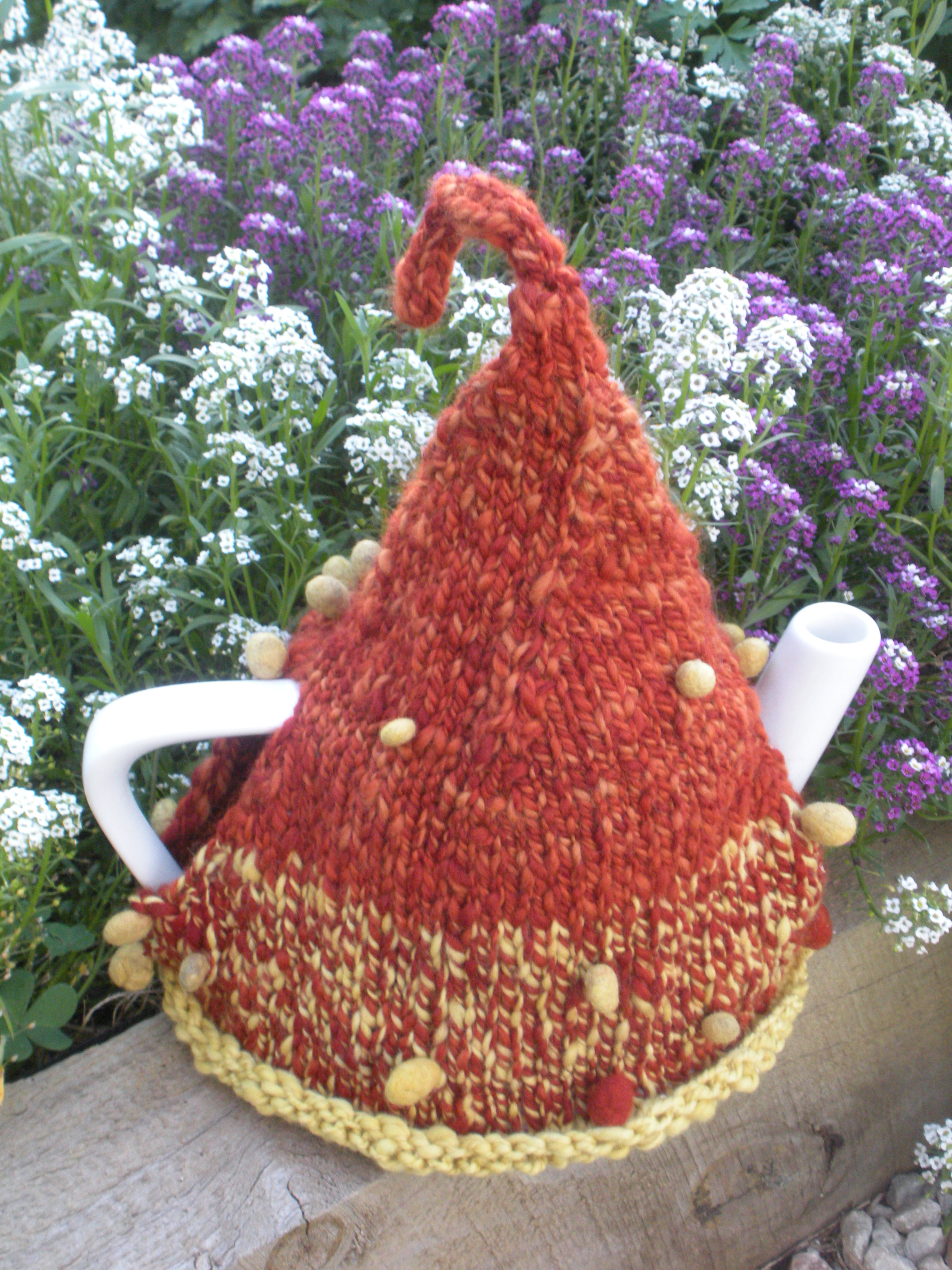
Meanwhile, I have sieved out all the leaves and bark, added more dried leaves and my smallest piece of iron pipe, applied heat, and we’ll see how that goes… Finally, here is another tea cosy.  It’s made from merino dyed with Eucalyptus–for the orange– and Silky Oak (Grevillea Robusta)–for the yellow– with felted shapes spun into the yarn.  Once again, this is based on the Fun and Fast tea cozy by Funhouse Fibers.

1 Comment

Filed under Dye Plants, Eucalypts, Knitting, Natural dyeing, Spinning, Uncategorized

Off to the Royal Show

This week the Royal Show started.  The neighbourhood is full of cheerful people and cars.  One strand of my bunting is gone… it looks for all the world as if someone decided to souvenir the best part!  It has been completely removed.  So I’d better make some more.

I spent some hours on my Guild’s stall, selling things made by members and showing people what spinning looks like.  I took my spindle and some roving dyed with eucalyptus bark, but in the end when I was demonstrating I was on the Guild’s wheel spinning greasy fleece from a bag of locks.  It was interesting to see how many people had some idea what was being done and wanted to show their children.  It is always obvious that people from some parts of the world are much closer to a tradition of spinning in their country of origin than many Anglo-Australians.  I had a great conversation about spinning in India with a couple of people who were surprised I knew what a Charka was… and I am in awe of anyone who can draft with one hand!  Last year, someone took my picture drop spindling because he thought there was no way his mother in Iran would ever believe a white woman in Australia could do this, without a picture.  I heard lots of stories of mothers and grandmothers who were/are spinners, and we joined up a few new members, too.

And, I decided to begin on my tea cosy project.  I have spun a lot of art yarn in the last year and some of it is very bulky.  I think tea cosies would be perfect and I’ve already knit one, which went home with a visitor who thought it was too cute!  That is the kind of home knitting should go to…  I have four teapots I’ve bought second hand.  I decided to start with the smallest one and work up!  This tea cosy bears some relationship to the Fun and Fast tea cozy by Funhouse Fibers, but I’ll have to claim responsibility for its defects as, while I’ve used the central concept… I haven’t exactly followed the pattern… there just wasn’t enough yarn in my smallest skein, and this teapot is a tiddler.  The yarn is corespun, and contains merino I dyed with Earth Palette dyes, tencel and mohair locks.

2 Comments

Filed under Eucalypts, Knitting, Natural dyeing, Spinning

Neighbourhood dyeplants.. and the odd sock

Image

I have finally finished a few pairs of socks that I’ve been carrying around for weeks…  these were dyed with black beans (the blue yarn) and purple carrots (the greyer yarn).  I gave them random cables and I like the effect.  Happily, so does the recipient!

Image

Today I went round to visit my all time favourite neighbourhood dye plant.  I lived in the street this tree grows in for years, and I adopted the tree under a council programme–not that this made me any more fond of it than I already was.  I have had rust through to burgundy colours on wool from the leaves and bark of this tree.  Over the last year or two I have propagated native plants to grown under it (saltbush, mostly), planted them and mulched the tree to keep the weeds down.  My Dad even got in on this, offering me seedlings and cuttings from his garden and collecting saltbush seed for me.  I was surprised to discover that saltbush was so easy to propagate from seed when the weather was warm.  Dad seemed to take it for granted I would be able to do this! I have about 50 more little plants that have stayed tiny all winter but will soon spring into growth ready to be planted around my suburb.

Image

I’ve been weeding around this tree for years in an effort to stop the council spraying poison into the neighbourhood.  I’ve been collecting rubbish from round the neighbourhood, and especially this tree, too.  I like this tree a lot.  Piping shrikes nested in it several years running.  Kookaburras sometimes sit in it and laugh.  Little birds come through it often, and white ants have unfortunately made homes here too.  Someone has put a bird box in it in the last year, but I haven’t seen an occupant yet.

Anyways, today I weeded, cleared rubbish and then applied bunting.  The Royal Show starts in a day or two and people will park in the streets all round this tree and walk through the patch we have been busy revegetating to get to their cars after dark.  In the past,  I have occasionally been dispirited to have quite a few of my little saltbushes pulled out by the roots or casually squashed as people pass through and plant guards thrown away.  I thought bunting might at least cut down on accidental damage.

Image

Over the time I’ve been working on growing things under this tree (and collecting bark and leaves!) people passing by have gone from quizzical to interested to pulling over in their cars or stopping with their dogs to thank me.  I think as the plants grow larger it is more obvious what I am doing and how lovely this otherwise weedy patch could be.  My friends have come along on mulch applying and watering missions, too.  It’s a blustery day, so I hope the bunting will make it!  The show runs over two weeks.  Here’s hoping most of the smaller plants make it to the end.  A cyclist came past while I was working, nodded and told me he thought the bunting was a good idea.  At least until the show is over, I’m thinking.

2 Comments

Filed under Dye Plants, Eucalypts, Knitting, Natural dyeing, Uncategorized