Category Archives: Natural dyeing

In Situ Update

For those who wanted more when they read my recent post about going to In Situ at the Murray Bridge Regional Gallery, more is now available no matter where in the world you may be.

In Situ now has its own online repository here.  There are wonderful images of the works as well as artists’ statements, courtesy of India Flint.  Enjoy!

2 Comments

Filed under Natural dyeing

The tale of a little jumper

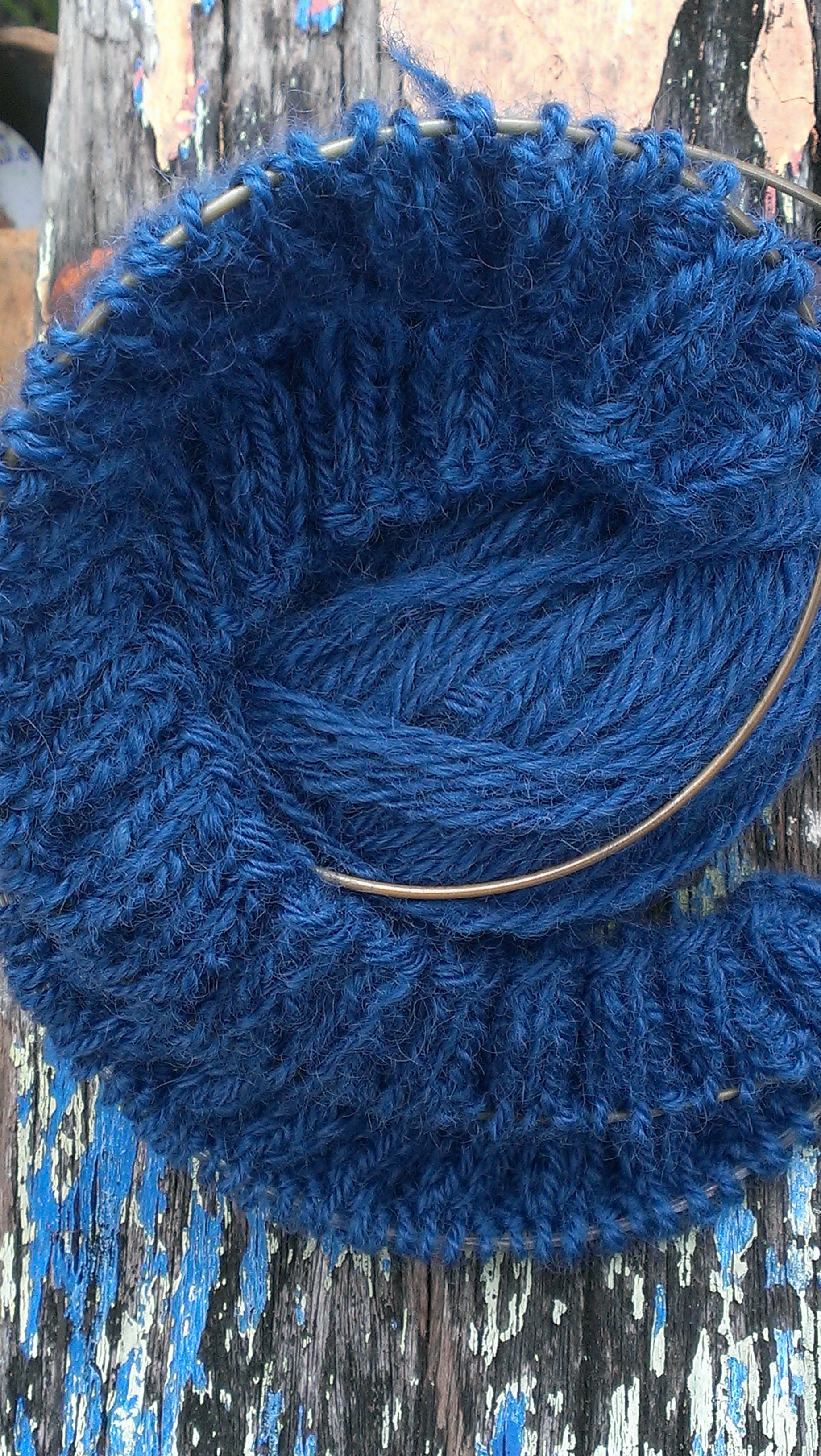
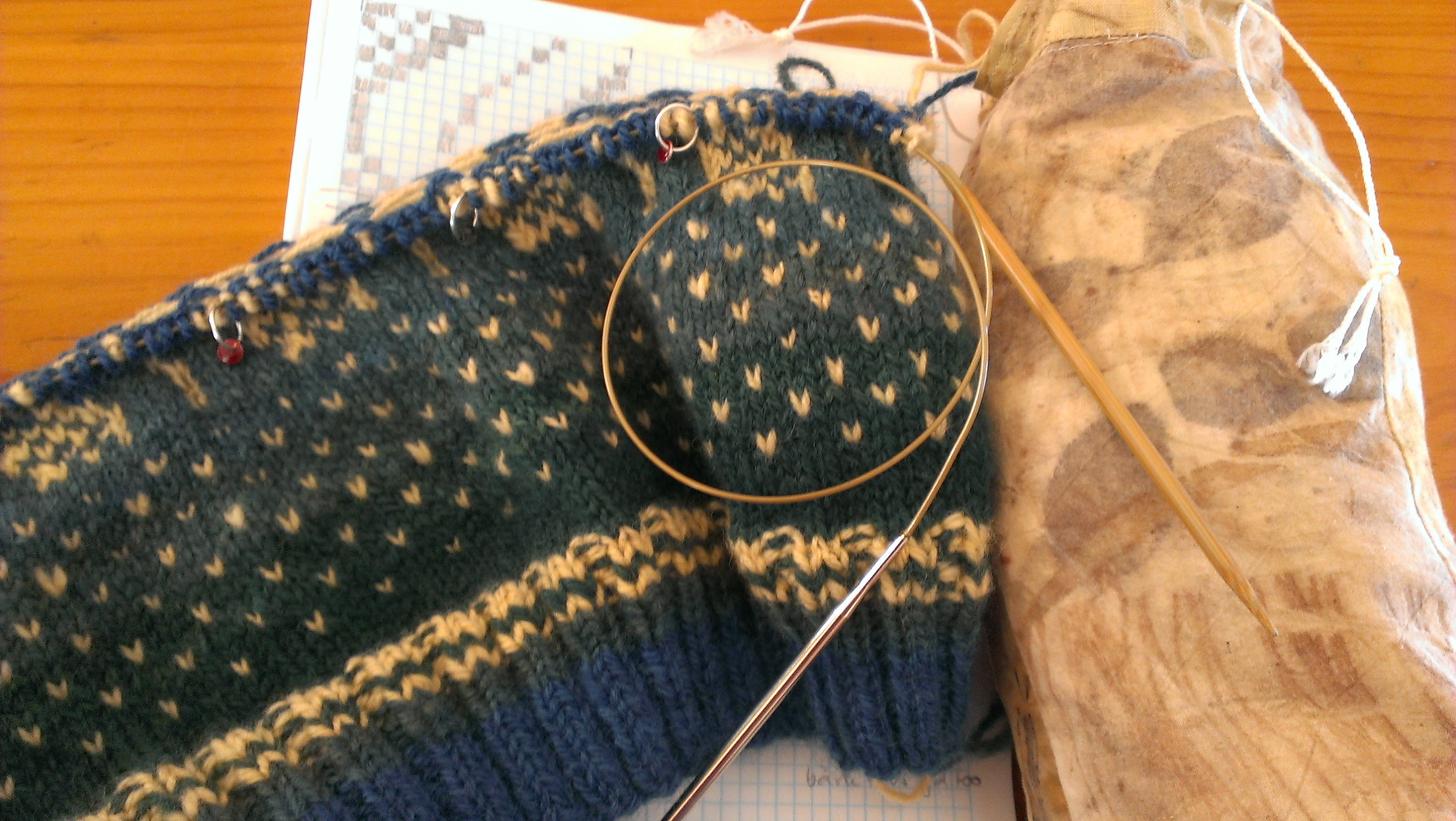
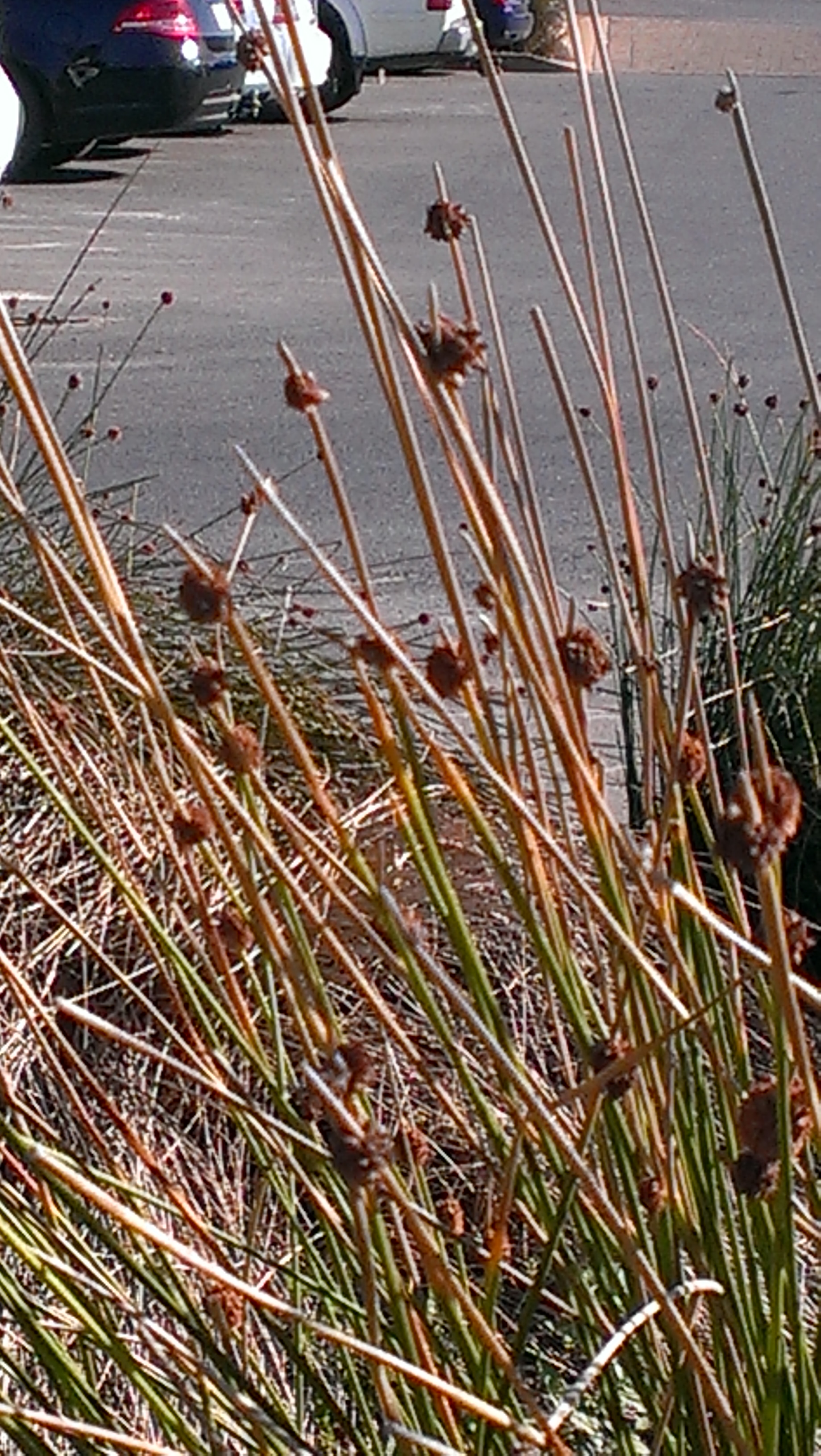
Once upon a time, there was a woman with a feverish imagination and far too much yarn.  Her imagination had only been further stoked by the Knitsonik Stranded Colourwork Sourcebook–ordered after various enthusiastic reviews on blogs and podcasts of her acquaintance.  This one, for instance. This book had been taken on a couple of holidays where it had led to hikes to find the closest stationery shop and purchase graph paper… followed by much sketching and colouring in and even more fevered imagining of stranded colourwork knobby club rush

2015-01-21 18.10.34

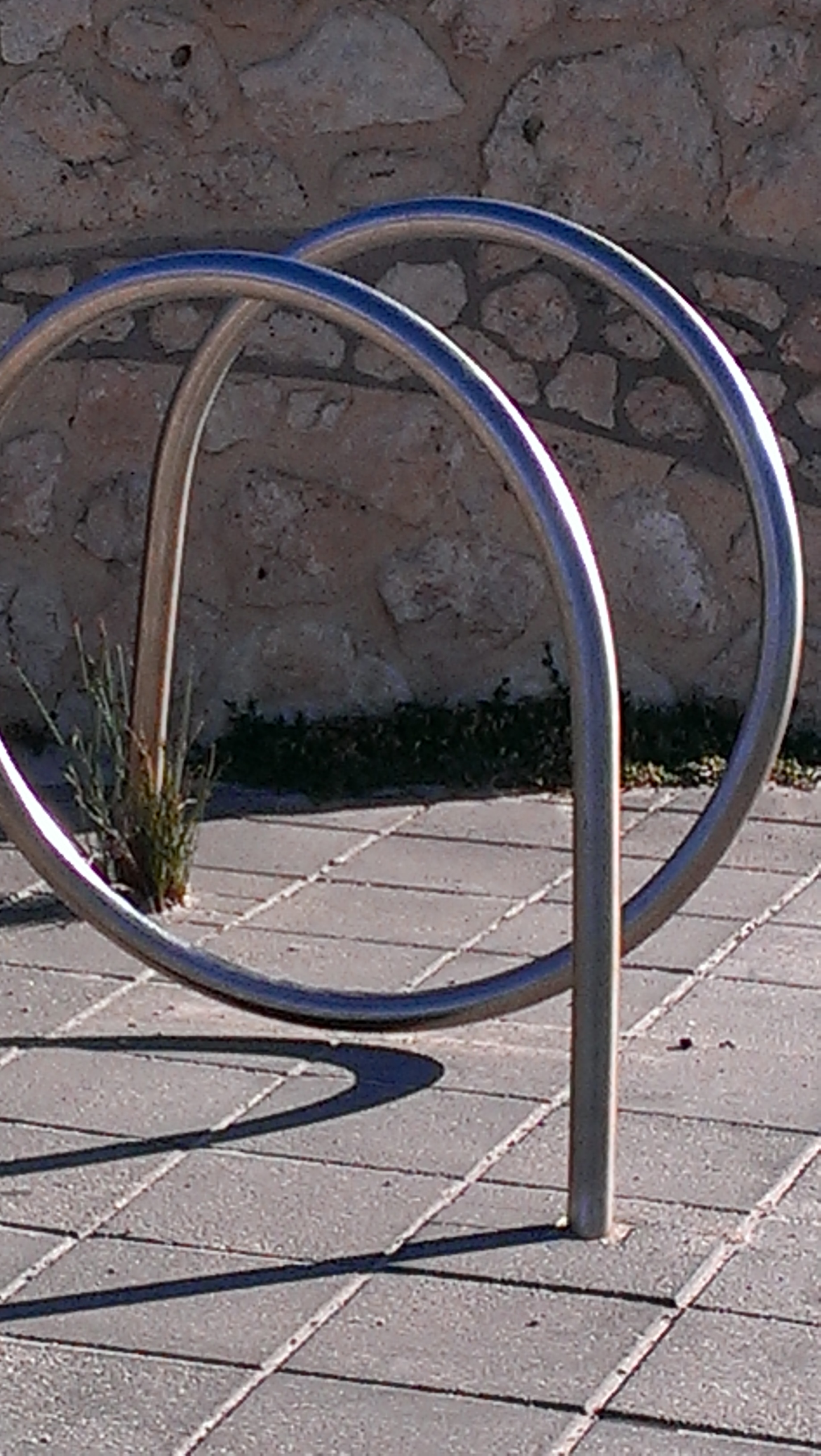
and stranded colourwork bike racks

2015-01-21 18.10.54

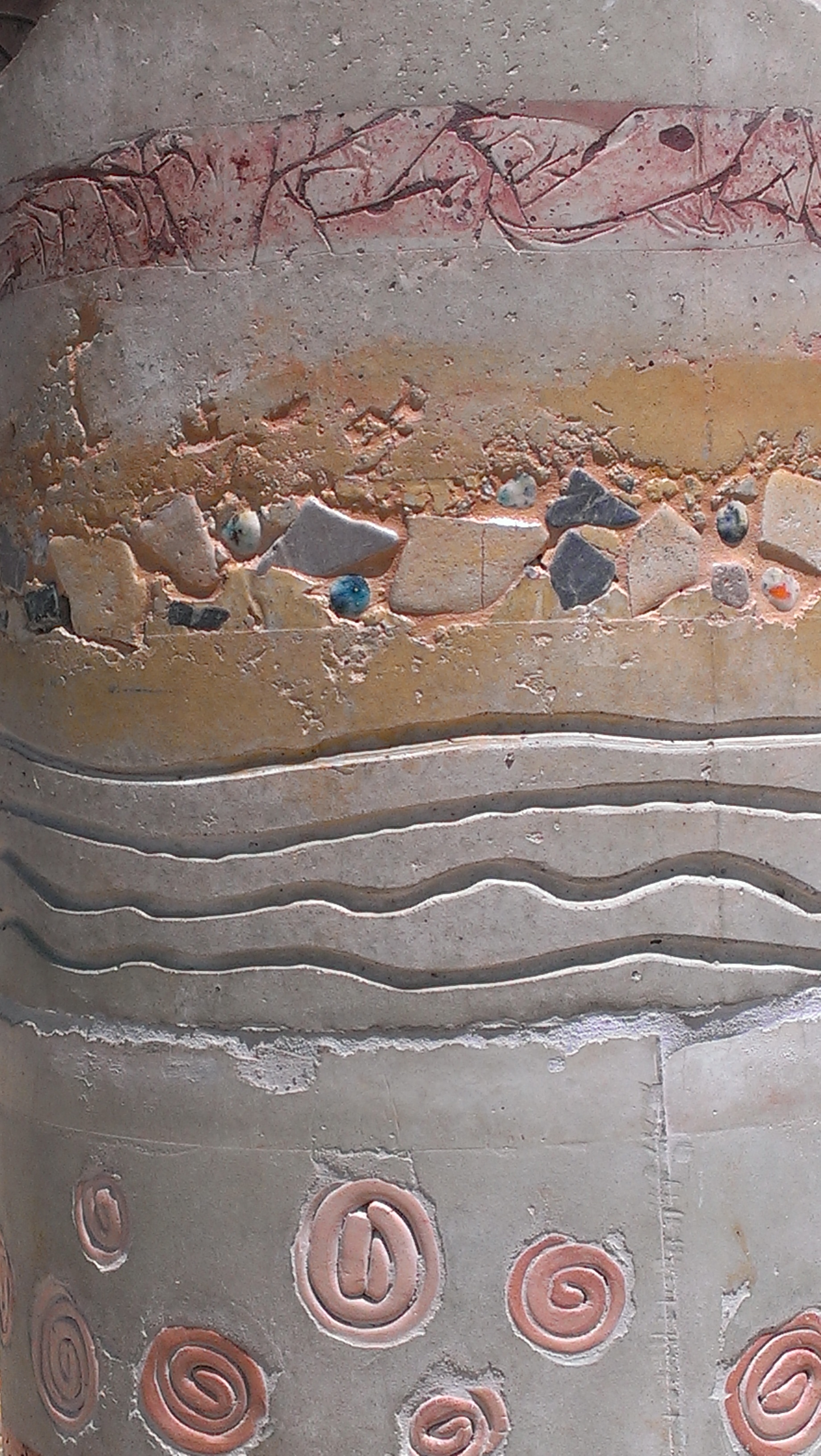
and stranded colourwork public artworks

2014-12-31 14.47.15

and stranded colourwork ruined jetties standing in the incoming tide.

2015-01-21 17.18.08

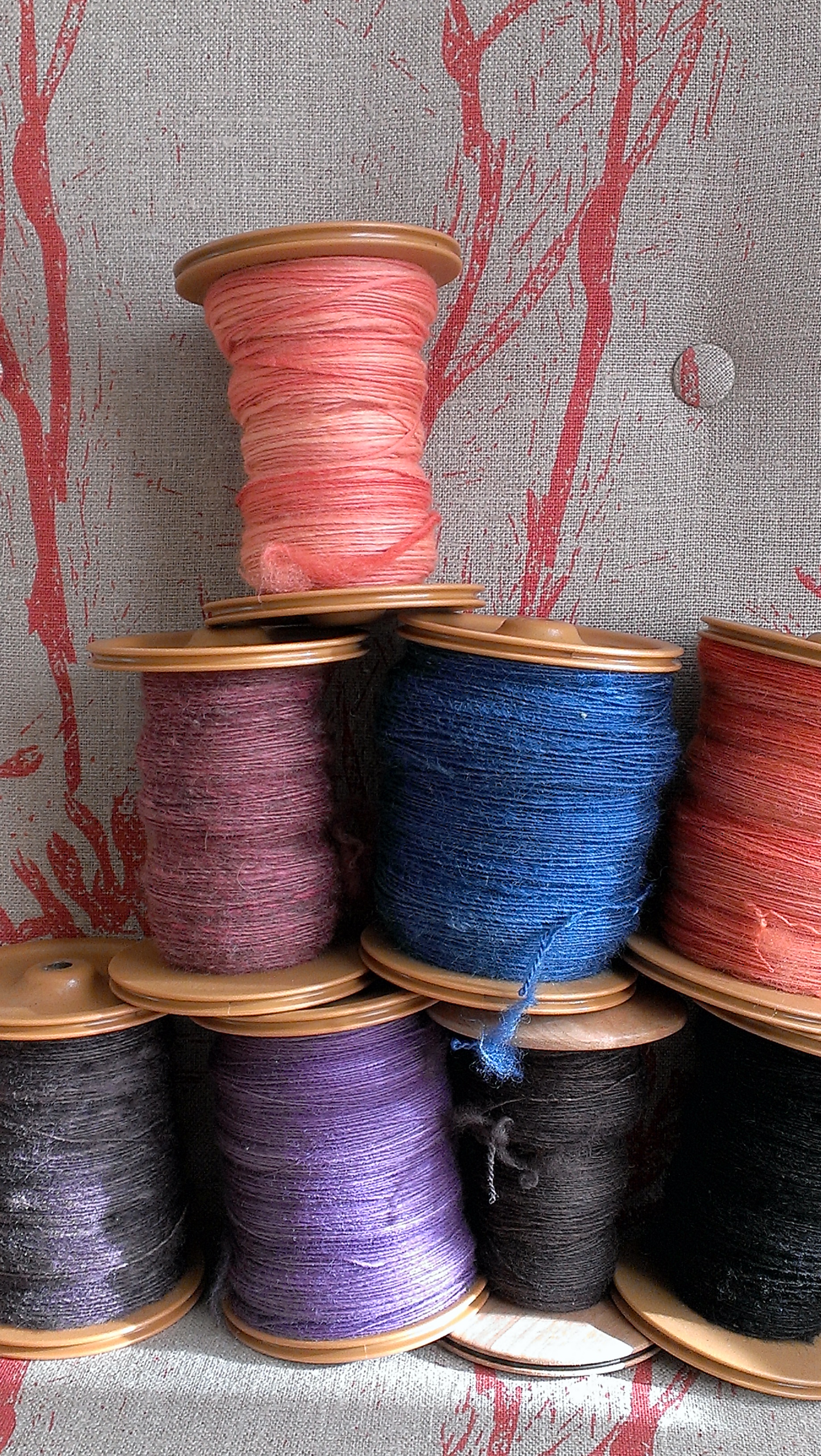
Each time, though, the woman who already had far too much yarn would be driven to a screeching halt by the complete absence of dozens of colours of Jamieson’s shetland wool in her already overwhelming collection, and a return to her far too time consuming paid day job.

2015-03-29 14.47.18

Why, she would think, would it make sense for me to buy more wool when I am spinning more on a regular basis and have entire fleeces waiting in the garage?  Why would it make sense to import wool from the UK when I am trying to reduce my carbon footprint, however inadequately?  On the other hand, what to do about having so much yarn in different weights, gauges, colours, breeds… this is nothing like having hundreds of yarns in the same nice neat breed and grist to knit, is it?

IMAG0963

Then, one day, she was preparing to go to a retreat at Tin Can Bay where surely there would be more knitting time than usual…she remembered how the last such experience (a workshop with India Flint in Melbourne) had triggered a breakthrough into her first really exciting stranded colourwork ever–and two handed colourwork knitting (and no, India wasn’t trying to teach these things–but that’s the way learning and inspiration go hand in hand when they go really well…)

IMAG0086

and there was a bigger than usual surge of blood to her head… and then there was a furious last-minute gathering of the Sourcebook and of skeins despite the lack of time to convert them into centre pull balls… and the addition of a nostepinne (to allow the hand winding of skeins into said balls)… and some creative suitcase stuffing…(although some choices had to be made) and all the pinks, purples and oranges got left at home.

2014-10-12 14.26.11

There were last minute consultations about measurement followed up by long distance text messages with schematics… in short, there was some co-operation coupled with serious planetary alignment.  Though it must be admitted that one of the graph exercise books–the one with the favoured designs in it–defied discovery.

2015-04-20 11.24.49

And then, there was some fabulous creative retreat time and delight and more downtime in the evening than usual, even if in dubiously dim light. And so a jumper began to take shape.  And was relentlessly encouraged by her new-found friends.

2015-04-22 08.50.13

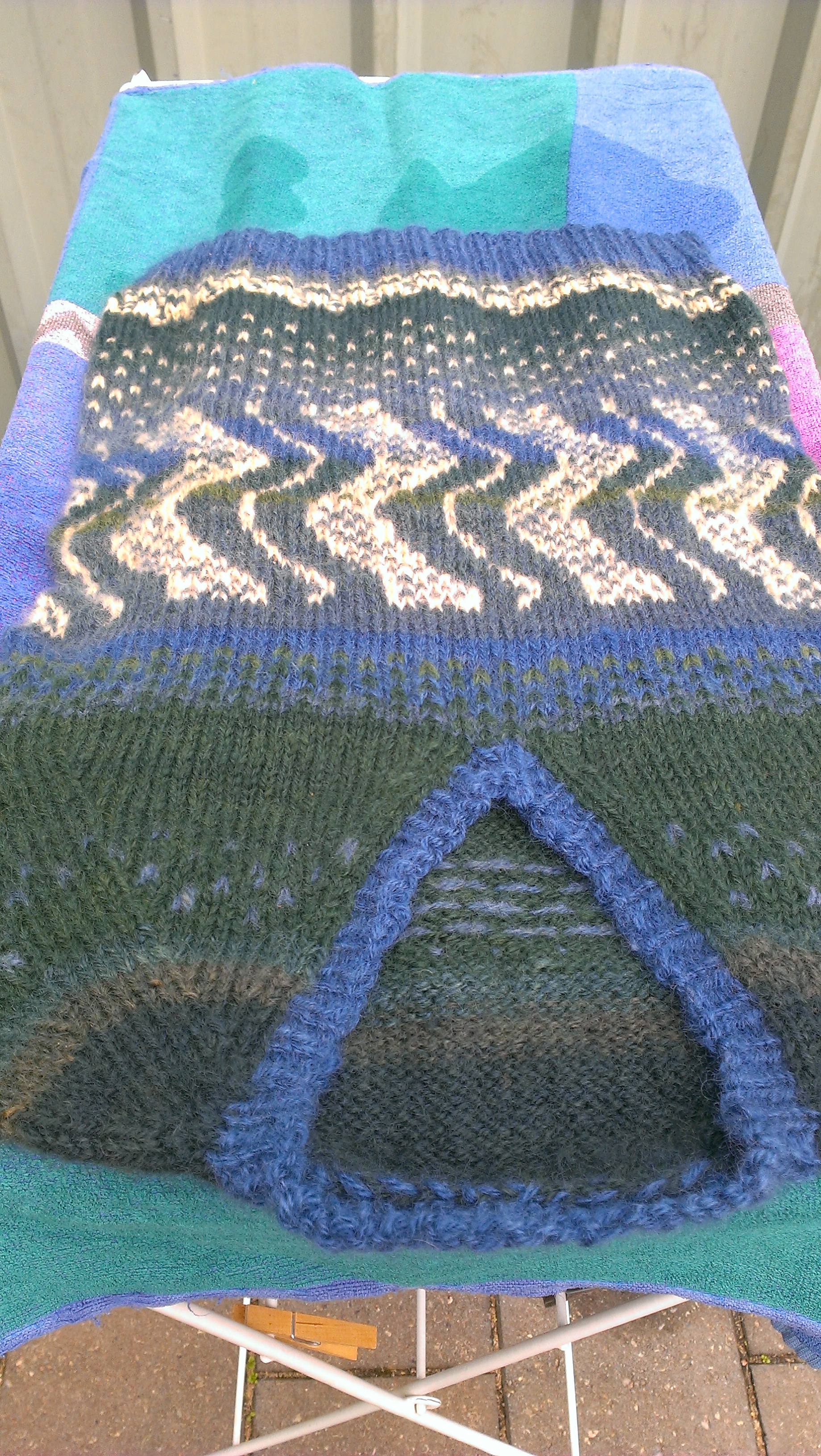
Until one fine day, this jumper that had been knit in two states, on planes, by the beach, in class, by the TV, at the Guild… that had turned out to be smaller than anticipated but still to fit for the moment… came to a conclusion. It had a nice bath and pat into shape.

2015-05-24 13.56.51

By this time it had started many conversations with strangers about potential sale which had to be rebuffed by explaining what gifts from the heart are.  There had also been many unsolicited comments on the terrible ungratefulness and wool washing habits of young things these days.  They gave rise to explanations of the extremely loving, warm reception of all such gifts in the particular family for which it was destined, and their dedication to treating wool as it should be treated and washing and darning when the occasion requires.  And a lot of gratefulness in the heart of the knitter for the presence of such near and dear people in her life.

2015-05-26 15.04.11

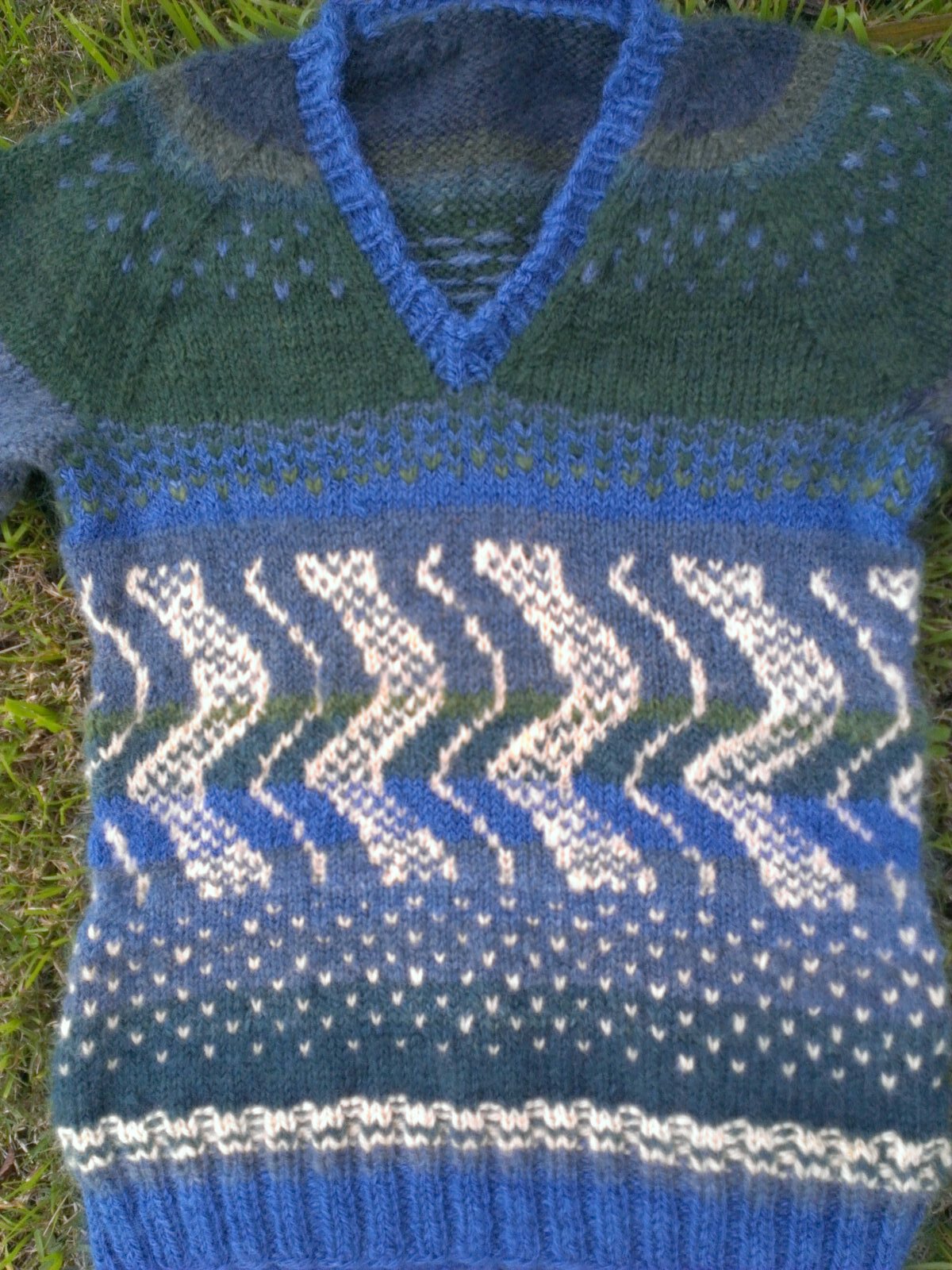
Needless to say, this garment reached a final shape full of all kinds of wonky peculiarities and uniquenesses, which will not be further detailed.  Once it was pulled over the head of the recipient, they didn’t seem important anymore.

2015-05-24 15.14.59

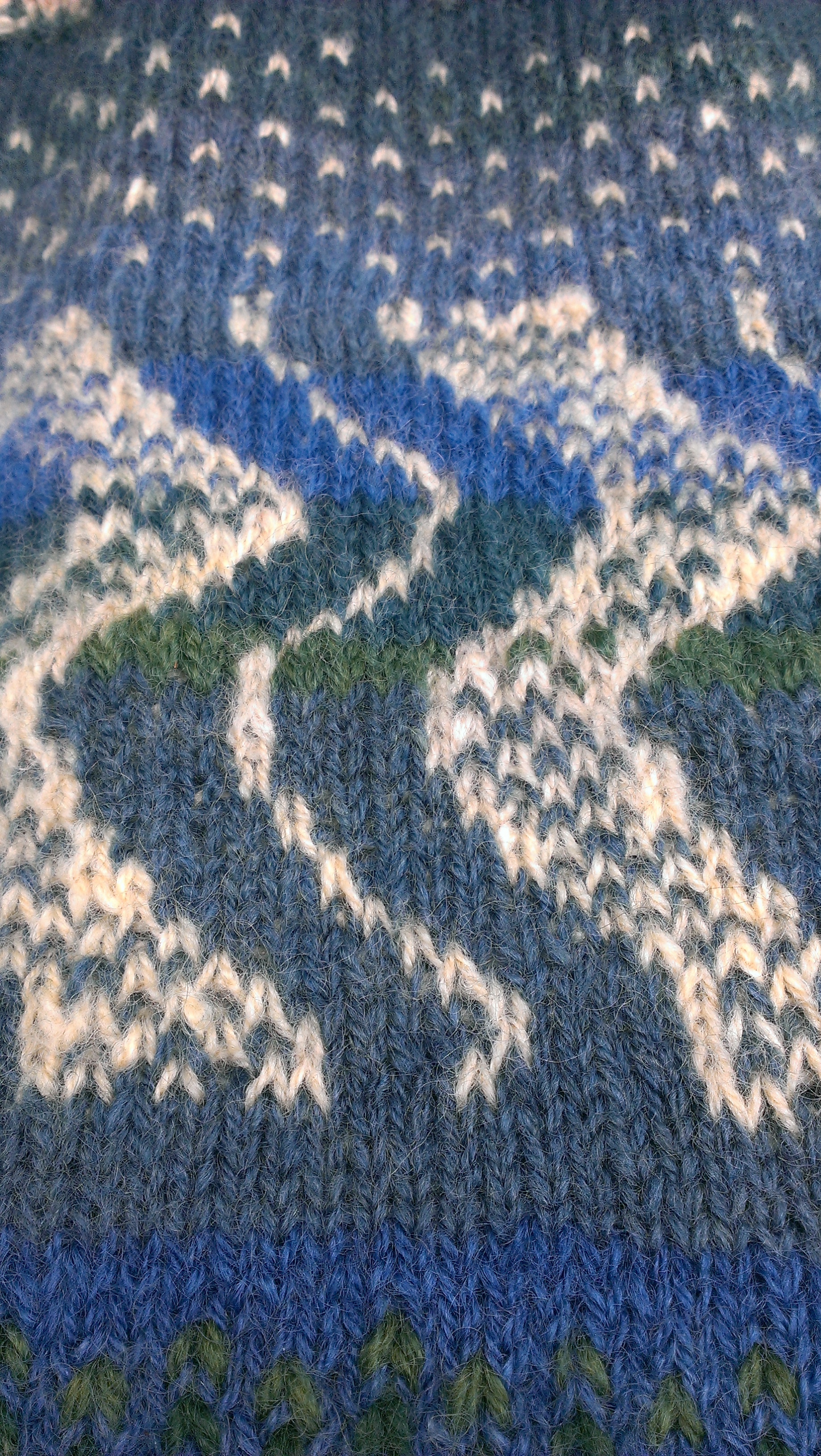
Knitsonik’s design of a road leading into the distance made it onto the front, looking more like waves in this set of colours.

2015-05-26 15.09.22

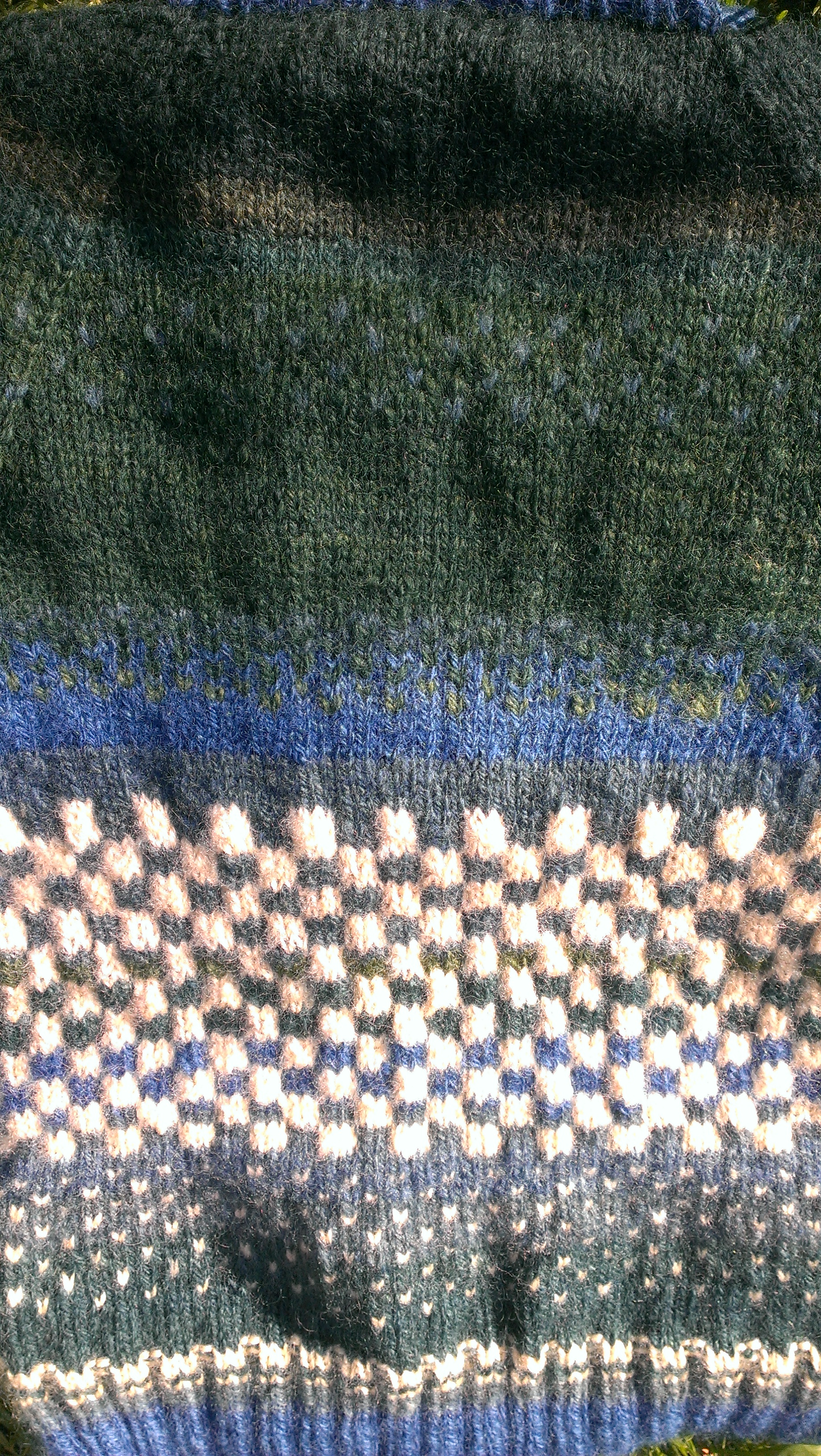
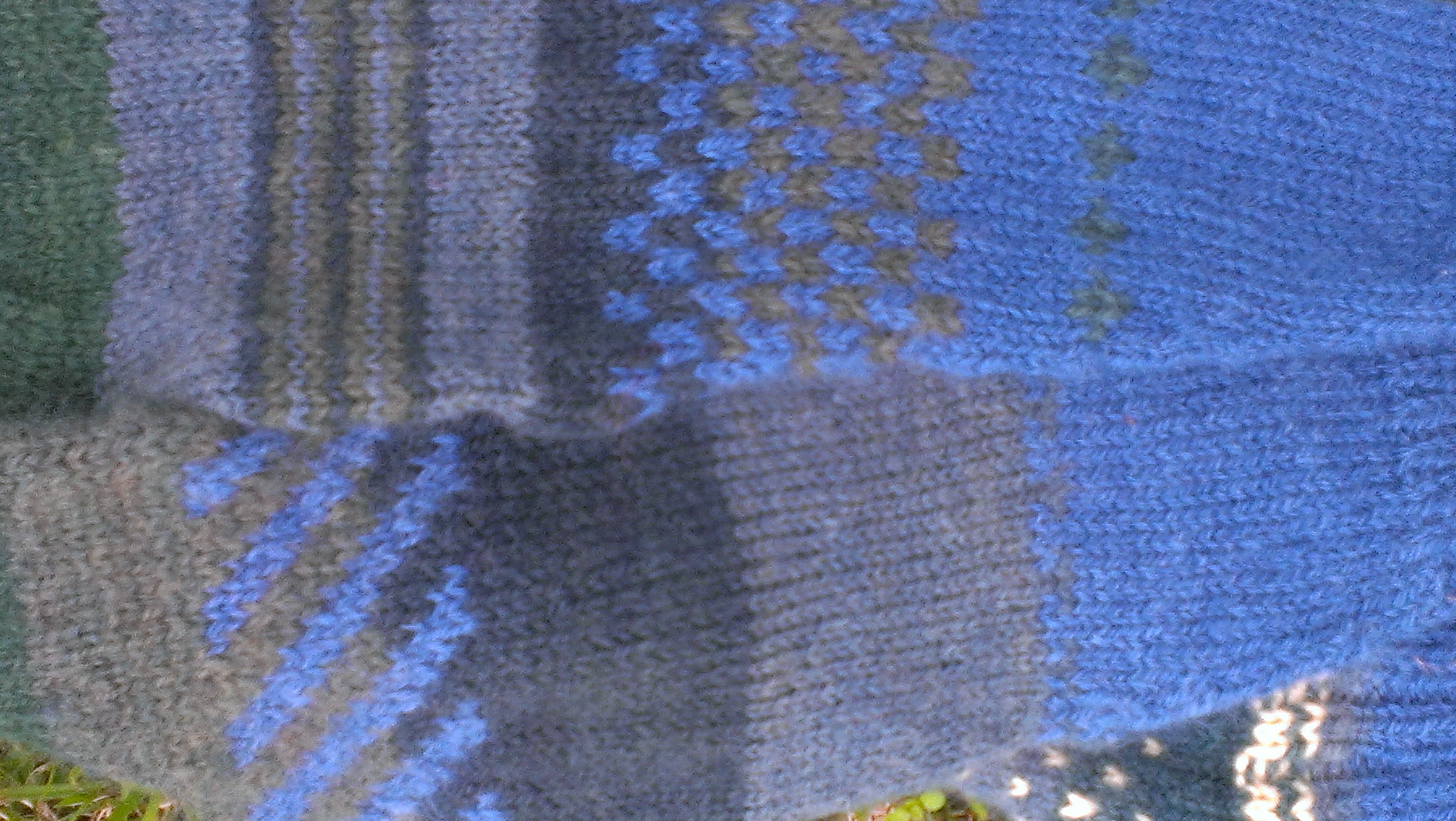
All kinds of asymmetry made their way onto the sleeves.

2015-05-26 15.06.28

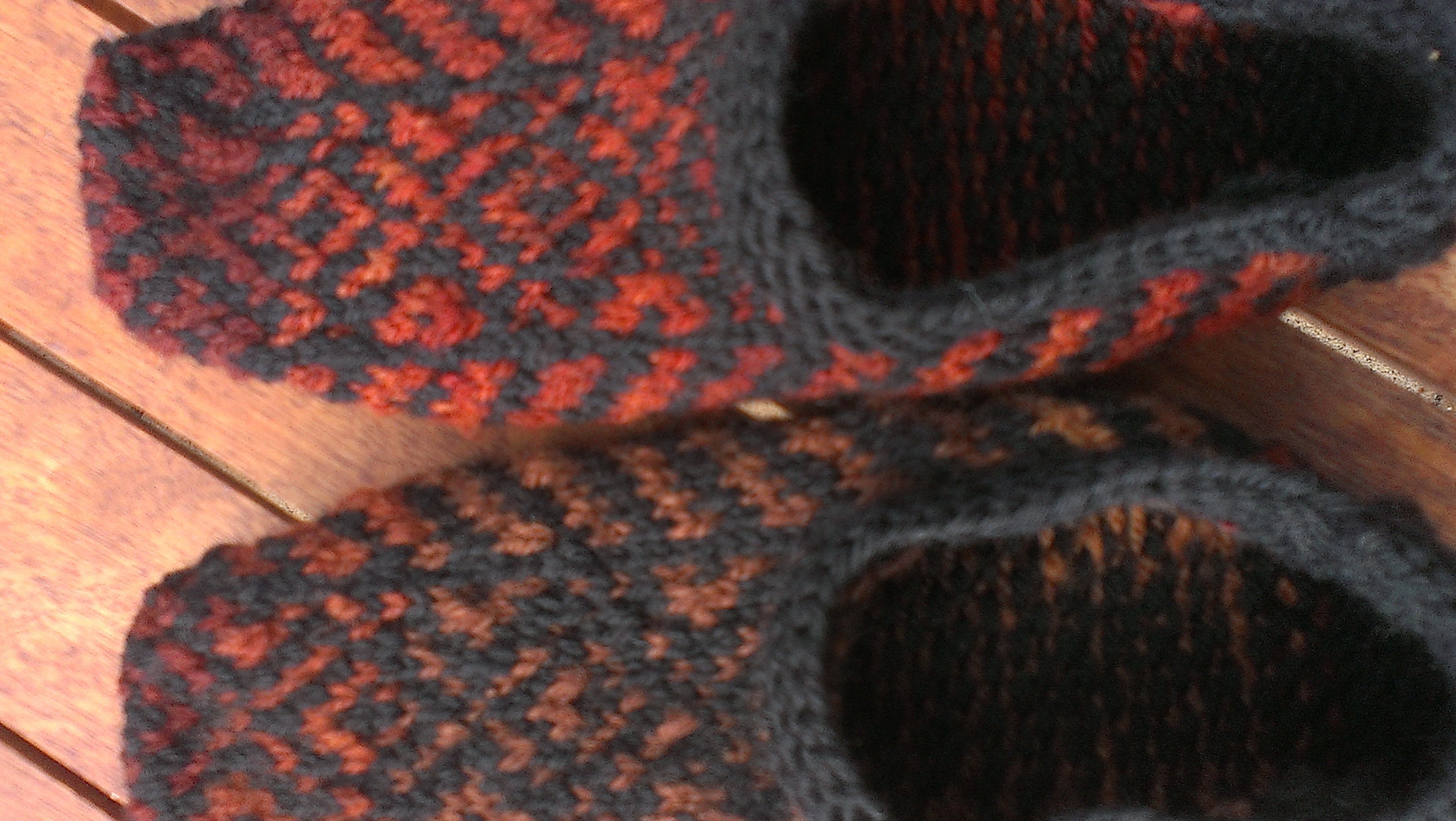
The yarns are mostly from Malcolm the corriedale (may he rest in peace), a sheep who had a long and well loved life in the Adelaide Hills, and a pet Polwarth, also from the Hills.  The creamy pale yellow is from an exhaust bath of coreopsis saved by my mother, a fabulous and generous gardener.  The greens are from that same coreopsis and from osage orange shavings donated to the Guild overdyed with indigo.  The blues are from indigo.  The jumper was designed with much guesswork with help from the intended recipient, my fairy goddess-son (and lots of help from his mother, my friend)–and with so much encouragement from friends, retreat companions and strangers.

2015-05-26 15.08.54

26 Comments

Filed under Knitting, Natural dyeing, Spinning

In Situ: Murray Bridge Regional Gallery

Last week a carload of us made our way to Murray Bridge to see the opening of in situ and Ngarrindjeri Expressions at the Murray Bridge Regional Gallery, where both exhibitions will be open from May 22 to July 19 2015.

The night’s events began with a series of dances and songs by Uncle Major Sumner and some young Ngarrindjeri dancers.  It was a great opening for two exhibitions so powerfully about land and place.  Ngarrindjeri Expressions brings together works by Damien Shen and portraits by local Ngarrindjeri people who came to community workshops to learn Damien’s drawing process.  The exhibition also includes lithographs and photographs by Damien Shen and a video of Damien drawing his uncle (in both the literal and Indigenous sense) Major Sumner–25 hours of drawing condensed into 15 minutes of video, which had many people transfixed.  I didn’t have permission to photograph Ngarrindjeri Expressions–but I was kindly granted permission to photograph in situ.

2015-05-22 19.59.51

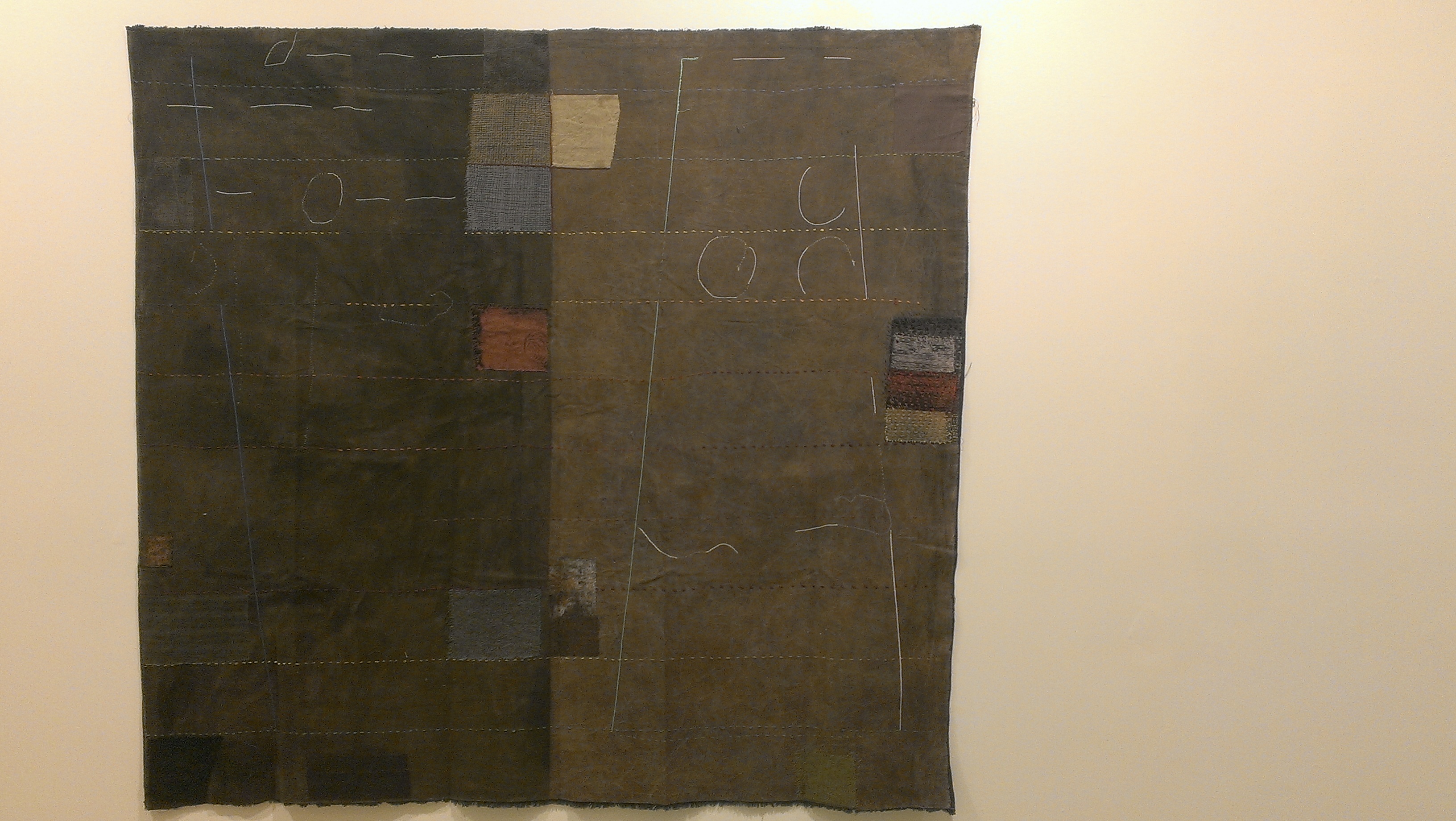
Behind the dancers and speakers hung two large works that drew my eye more and more as the night wore on. This is Looking Up/Looking Down by Dorothy Caldwell (Hastings, Canada).  It brought to mind a landscape seen from above, in which massive features of the landscape below appear as much smaller shapes and patches of colour.

2015-05-22 19.59.25

Indoor lighting doesn’t suit my skills or camera–so these pictures do not do justice to the colours of the originals.  But the smaller details in this work in contrasting colours have been stitched in ways that reminded some of us of rain and others of the stalks/trunks of plants in the wind.

2015-05-22 20.00.25

This patch had me in mind of a dam receding in the face of drought. You can see more of Dorothy’s work and read about her approach at her web site here.
2015-05-22 19.56.01

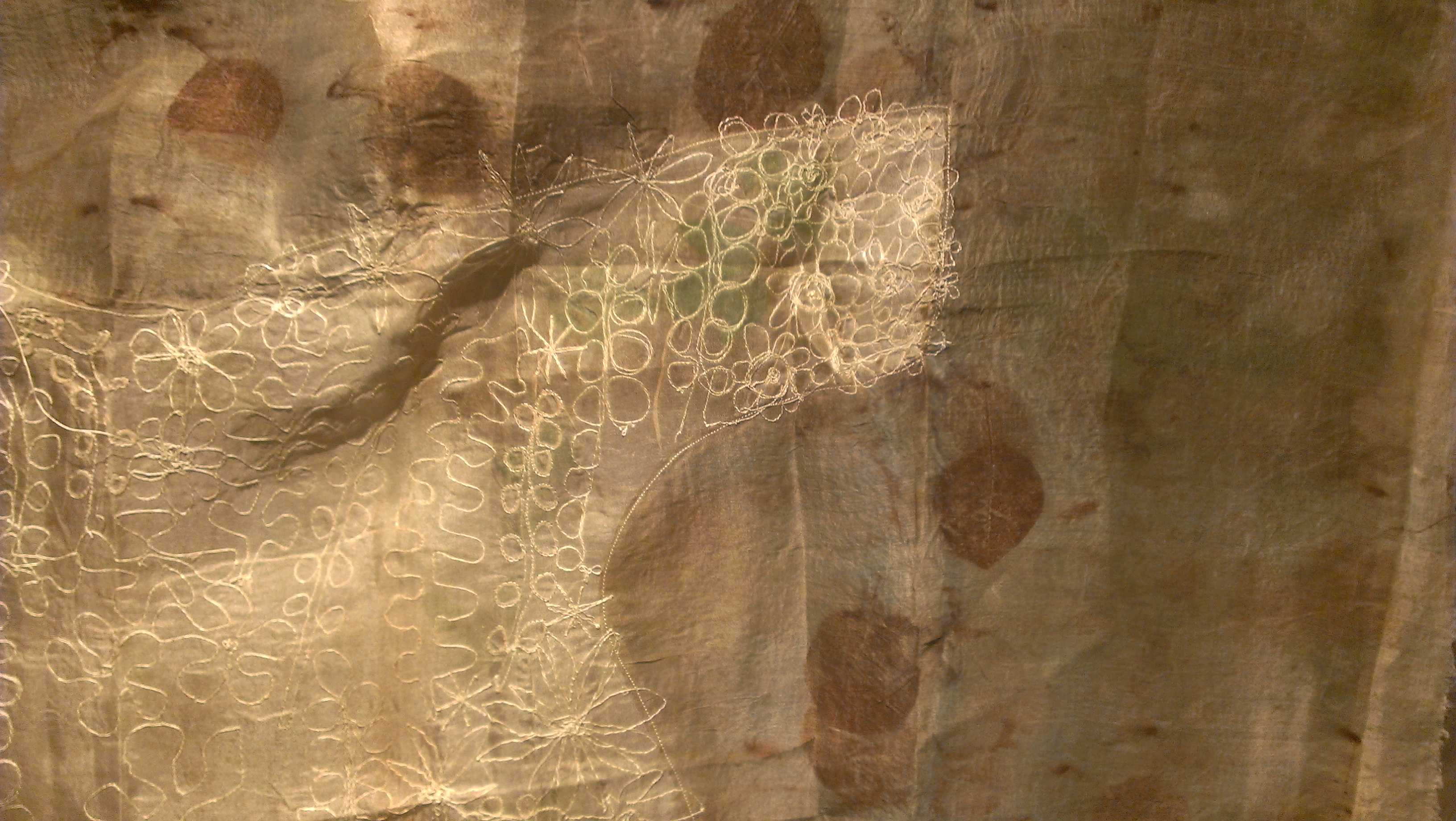
The Story Blanket by Imbi Davidson (North East Coast, New South Wales) is indeed based on a blanket which has been embellished, patched and augmented over time.  The eco-prints of leaves on the left and right panels managed to evoke footprints travelling through sand for me, despite clearly being leaf prints.  The central panel had been stitched with concentric semi circles that are not obvious in this photo–these and the panels of buttons on the mid and lower right side brought to mind some of the familiar images of some styles of Indigenous art, without appropriating them.  I loved the contrasts and the sense of this piece building up layer by layer, as stories often do. There is more of Imbi’s work and process at her www site here.

2015-05-22 19.56.24

Roz Hawker (Bunya, Queensland) contributed Holding Close.  You can follow the link to much better images and her own account of these works.

2015-05-22 19.56.46

This wonderfully embellished, subtly dyed dress is an ode, or perhaps a love letter, to her grandmothers.  I loved the whimsical plants sending tendrils up from the cuffs, blooming upward from the hem…

2015-05-22 19.56.32

and even subtly travelling up the back of the dress.  The dress hung beside a collection of smaller works in silver and silk… a little gathering of treasures which reminded me of nothing so much as the small collection of found objects (mostly from nature) that a child–or a grownup in my case–might bring home from a holiday in a special place.  Conjuring points for memory and wonder.
2015-05-22 19.50.44

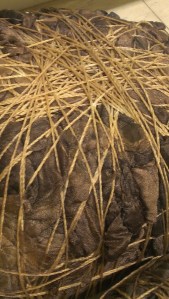
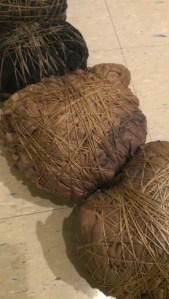
India Flint (Mount Pleasant, South Australia) contributed sheep fold: a semicircle of bundles which look like stones… or like bundles tied around rocks: in either case, the mystery of what is inside is maintained by the outside of the stone/bundle.
2015-05-22 19.49.23

These bundles are full of all the wonderful diversity that rocks have–folds, crinkles, smoothnesses, varied and sometimes mottled colours.  But they did smell rather more wonderful than your average stone.

2015-05-22 19.48.37

On the wall, inside what I pictured as the wall of the sheep fold, hung an empty wire box, its base pointing out toward the room.  As a receptacle for feed might, perhaps.
2015-05-22 20.02.14

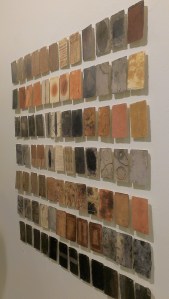
Collecting Cards is also by Dorothy Caldwell.  This really is a group of cards with images of textiles and stitching on them, for the most part.

2015-05-22 20.02.42

I loved looking at these and wondering over their arrangement and their subtle colours and textures.

2015-05-22 20.07.29

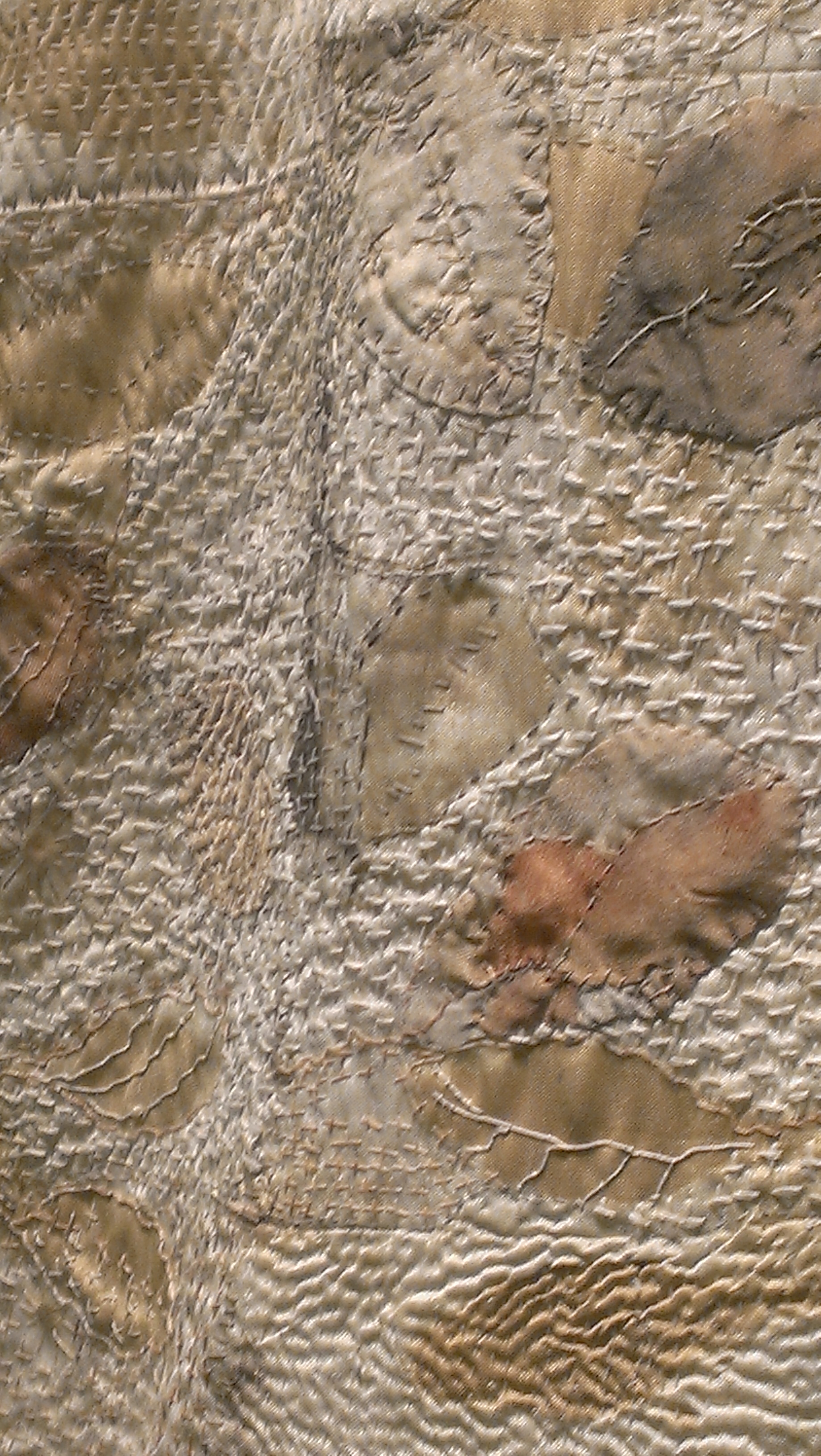
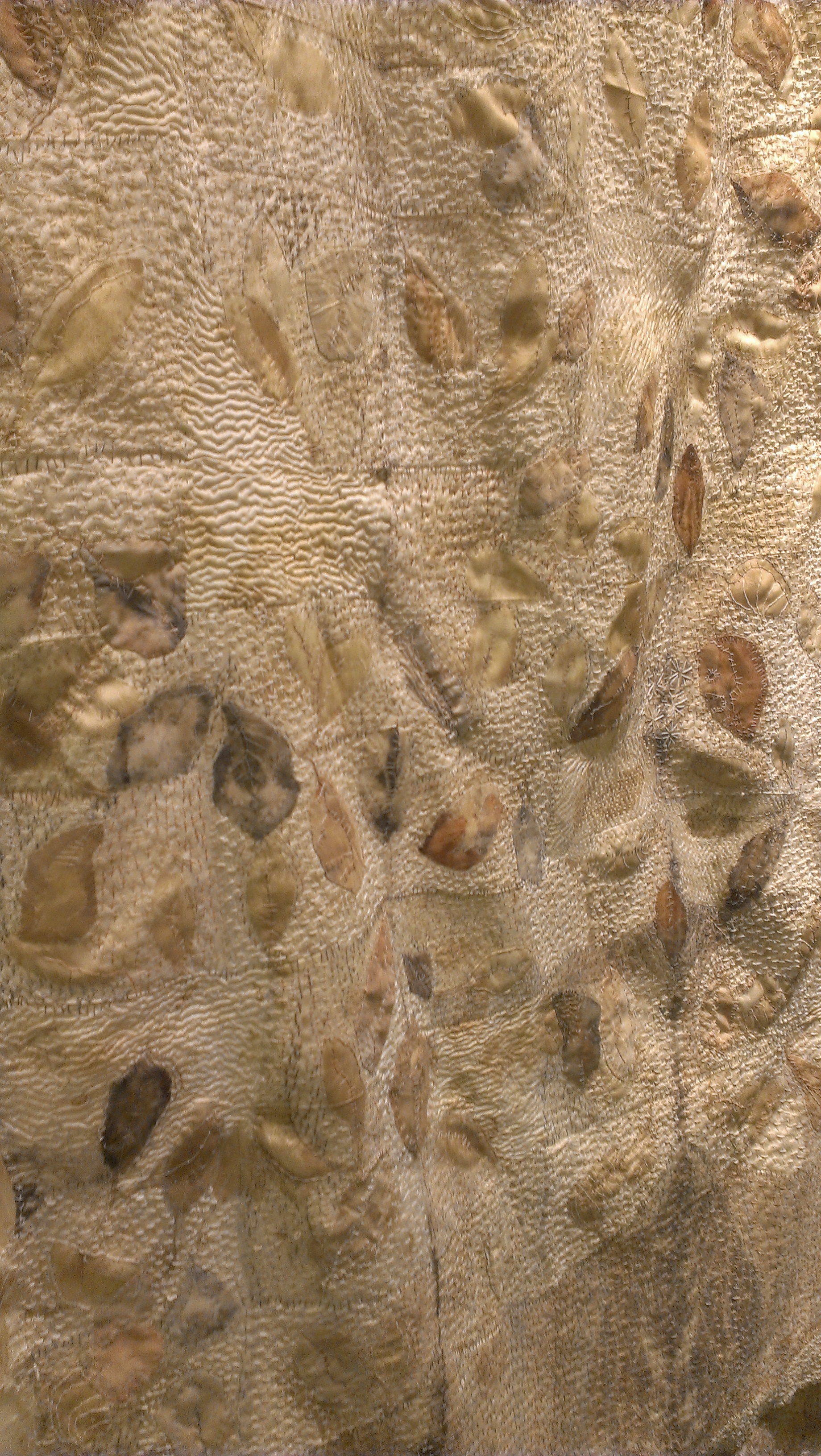
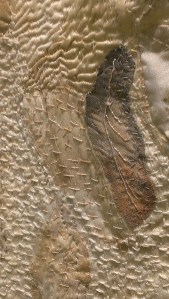
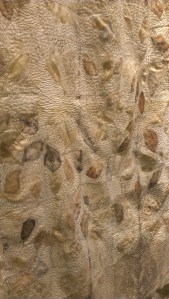
This exquisite, heavily stitched work is Ten Thousand Leaves, by Isobel McGarry (Adelaide, South Australia).
2015-05-22 20.07.10

Leaves have been eco-printed onto the silk as well as appliqued onto it. Isobel was kind enough to answer a lot of questions about this piece–since she was there for the opening.

2015-05-22 20.25.04

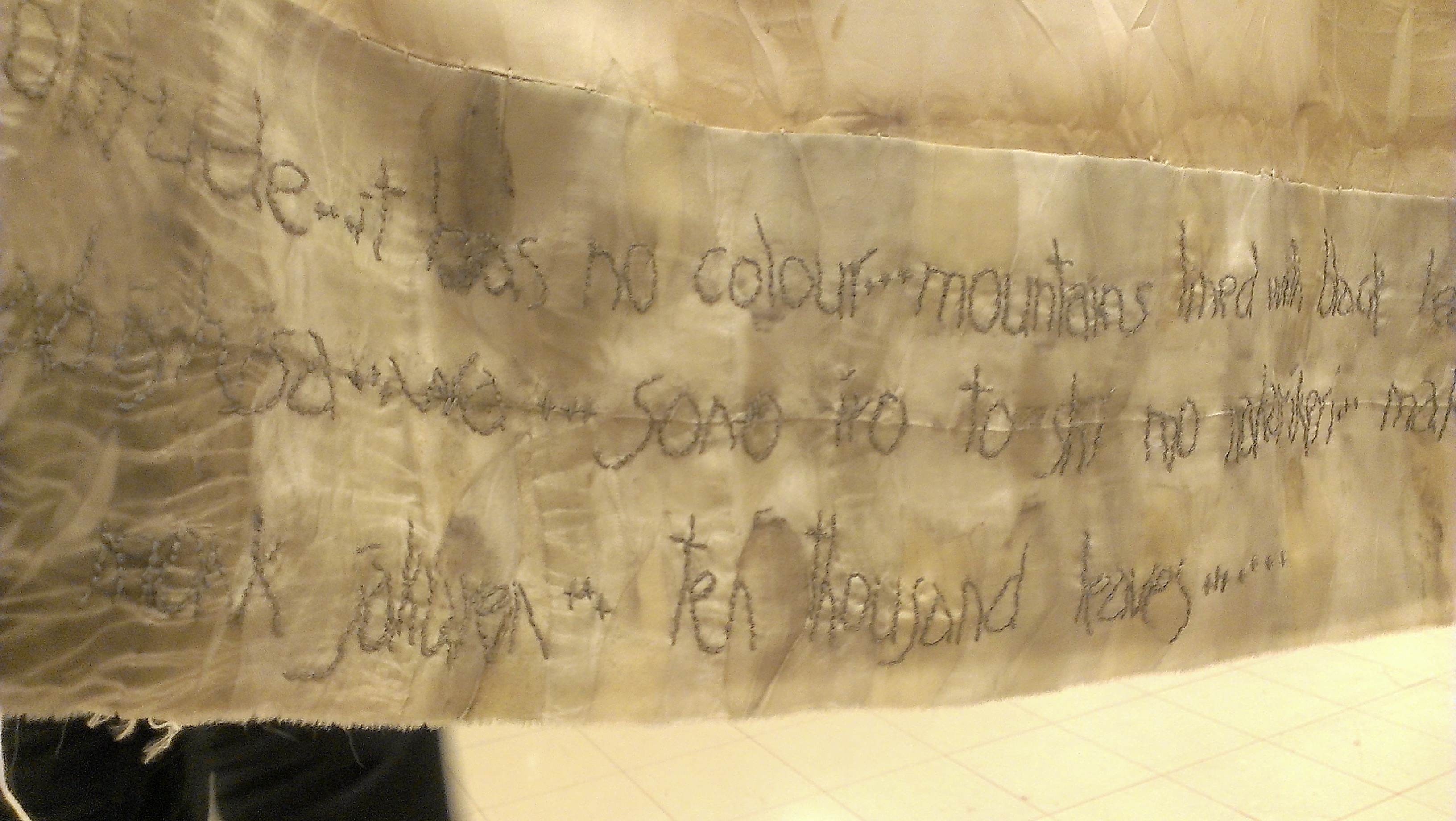
The back of the work was rather plainer–eco-printed silk edged with words in English and (I am guessing) Japanese.

2015-05-22 20.05.24

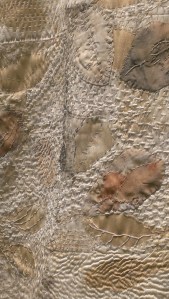
This work is a meditation on peace, with the stitched crosses symbolising those who have died in war.
2015-05-22 20.04.46

The imagery of mending is available here, but the overall effect of this stitching is quite different–or perhaps an homage to the beauty as well as the necessity of mending, its capacity to build up a whole composed of so many tiny actions and scraps and make it gloriously whole without hiding the need for repair or the fact of many pieces having been brought together to create a new, entire fabric.
2015-05-22 20.25.12

365 days at Tickleberry Flats (Desiree Fitzgibbon, Dodges Ferry, Tasmania) held a year in a specific place in 356 small vessels, each with red lines traced around it.  Intriguing and beautiful.

2015-05-22 20.08.32

John Parkes’ Sampler (Dead Two Years Now) remembers his father in a moving sampler constructed from two of his father’s shirts.

2015-05-22 20.10.05

Raw edges called to mind for me the raw emotions grief can provoke as well as the fragility of memories referenced in the stitched words themselves.

2015-05-22 20.10.26

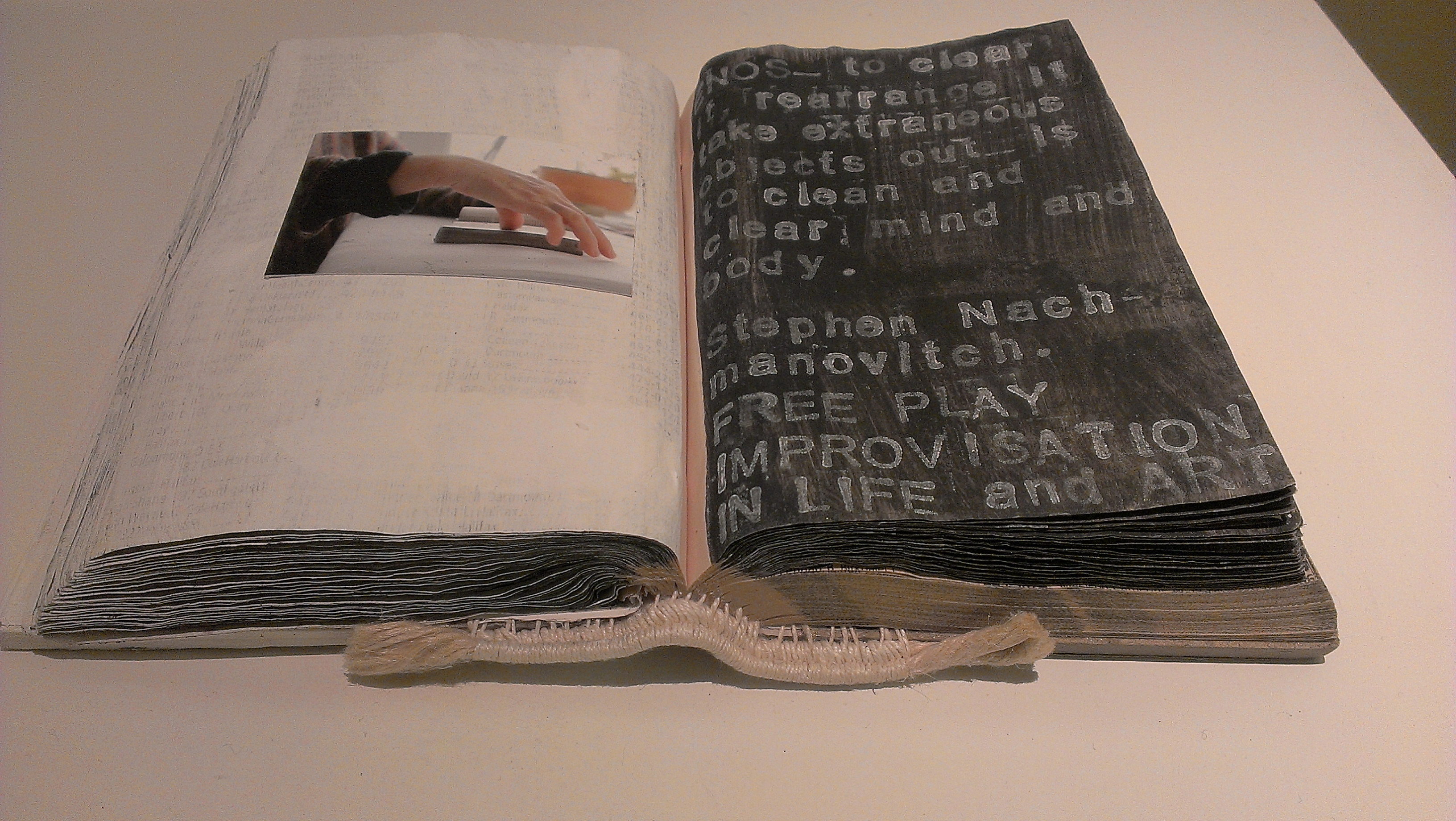
Sandra Brownlee (Dartmouth, Nova Scotia) contributed Untitled artist book, a work that made me long to pick up and touch.  The stitched binding exposed at the base of the book is intricate and rather wonderful.  Sandra’s workshops on tactile notebooks, clearly based in her own practice, are famous–two accounts with images here and here.

2015-05-22 20.14.54

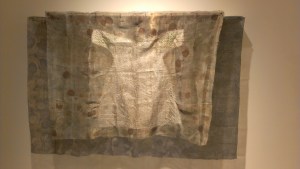
Judy Keylock (Lud Valley, New Zealand) contributed a work of layers and shadows, which was all the more lovely for the way it floated gently in the small movements of air as people passed by or looked at it.
2015-05-22 20.11.08

Although this work is called ‘Dirt’, I found it rather ethereal. (I had to laugh when I found exactly this word in Judy’s artist’s statement).

2015-05-22 20.11.16

Subtle colours and subtle shadows flow through it.

2015-05-22 20.11.20

And perhaps there is a message here about the wonders of dirt, which is, after all, not only the place we might all eventually go–but also the place from which everything emerges.  You can see more of Judy’s work (in this case, with schoolchildren) here.

2015-05-22 20.15.05

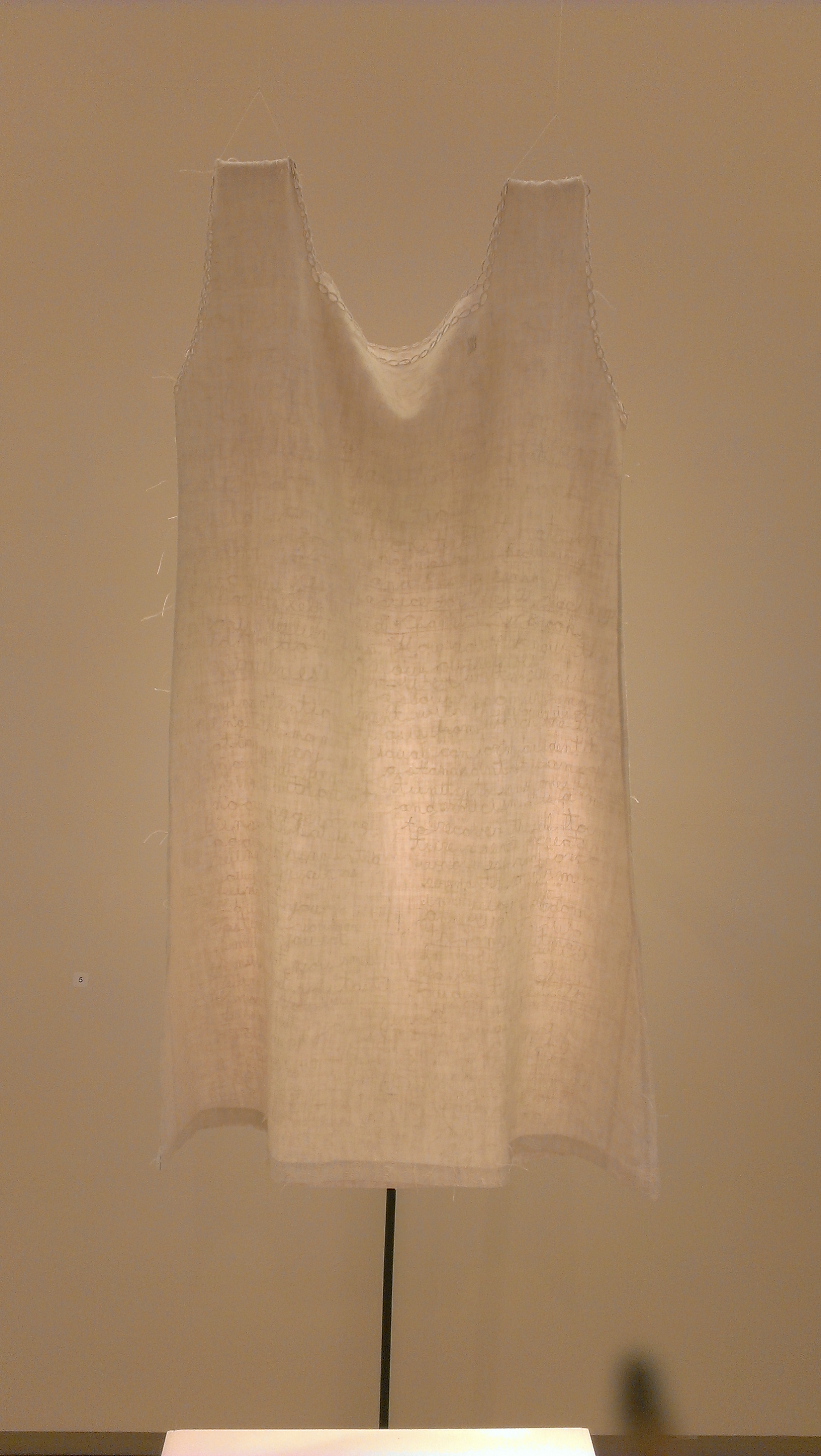
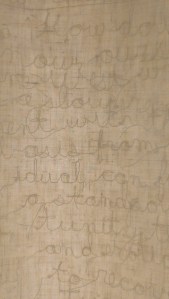
At first sighting, Sandra Brownlee’s Nighdress with text seemed austere.  It appears handwoven and plain.
2015-05-22 20.15.12

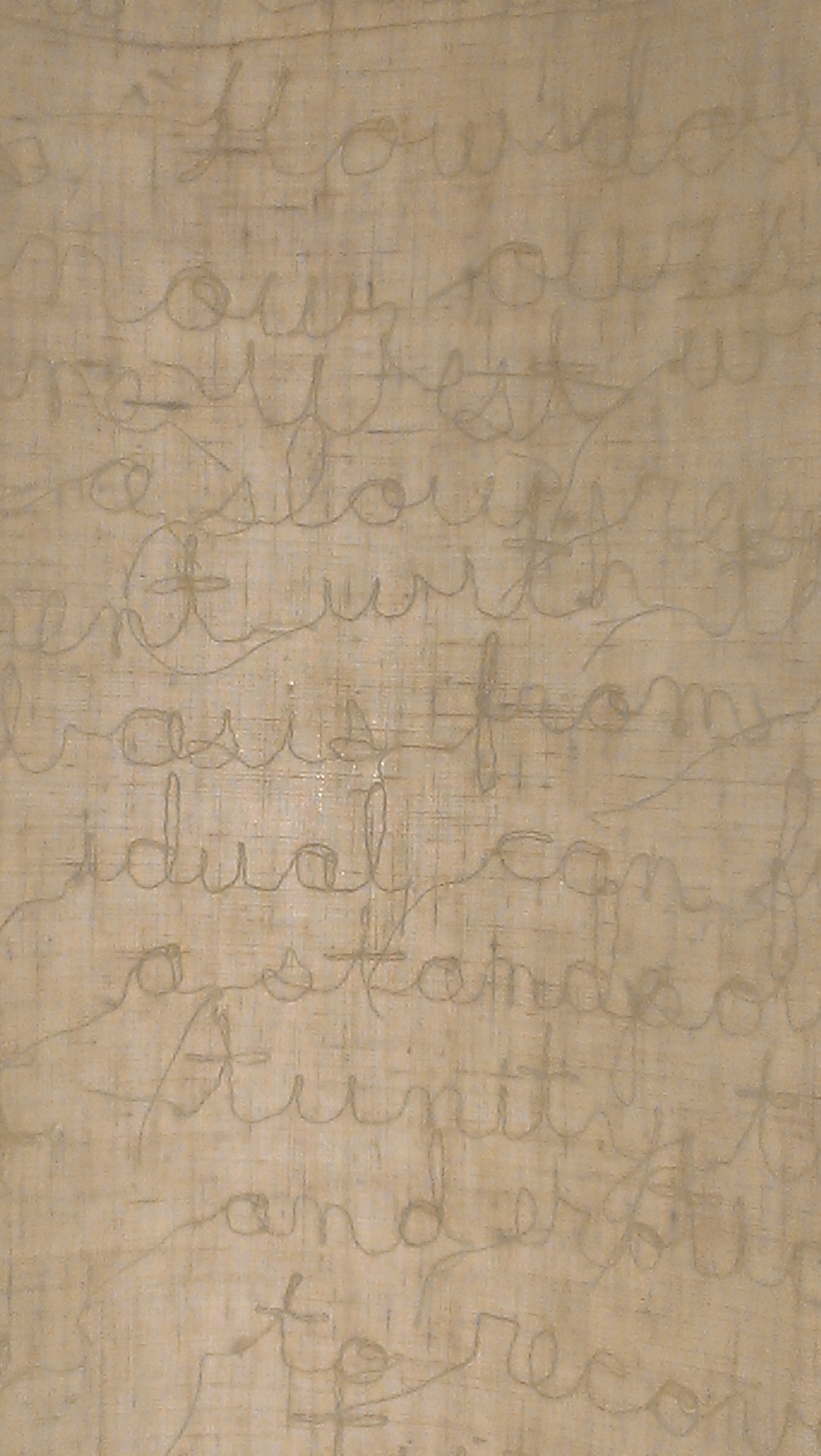
But on closer examination, proves to be a canvas for words which can only just be made out on closer inspection, winding their way across the interior surface and any body that we might imagine wearing it.

Of course… there was so much more!  I know that many readers will not be able to get to Murray bridge, but India Flint has created an online exhibition of these pieces.  How glorious to have the work of artists from such far-flung places brought together locally… and to have the chance to be there and celebrate its opening!  We were the last to leave, and wandered out into the night for some of us to tell stories and others to snooze as we headed back to Adelaide…

24 Comments

Filed under Leaf prints, Natural dyeing, Sewing

Rhubarb leaves and tamarind

I haven’t found a lot of joy with rhubarb leaf mordant so far… but I do grow rhubarb and often wish I could use the leaves somehow before they reach the compost heap. One chilly day I wondered whether they might just be good in the dyepot–if I heated them surely they would release oxalic acid into the dyebath and even if that is all that happened, raising the acidity level of the bath can be a good thing.  Why not?

2015-05-15 09.36.31

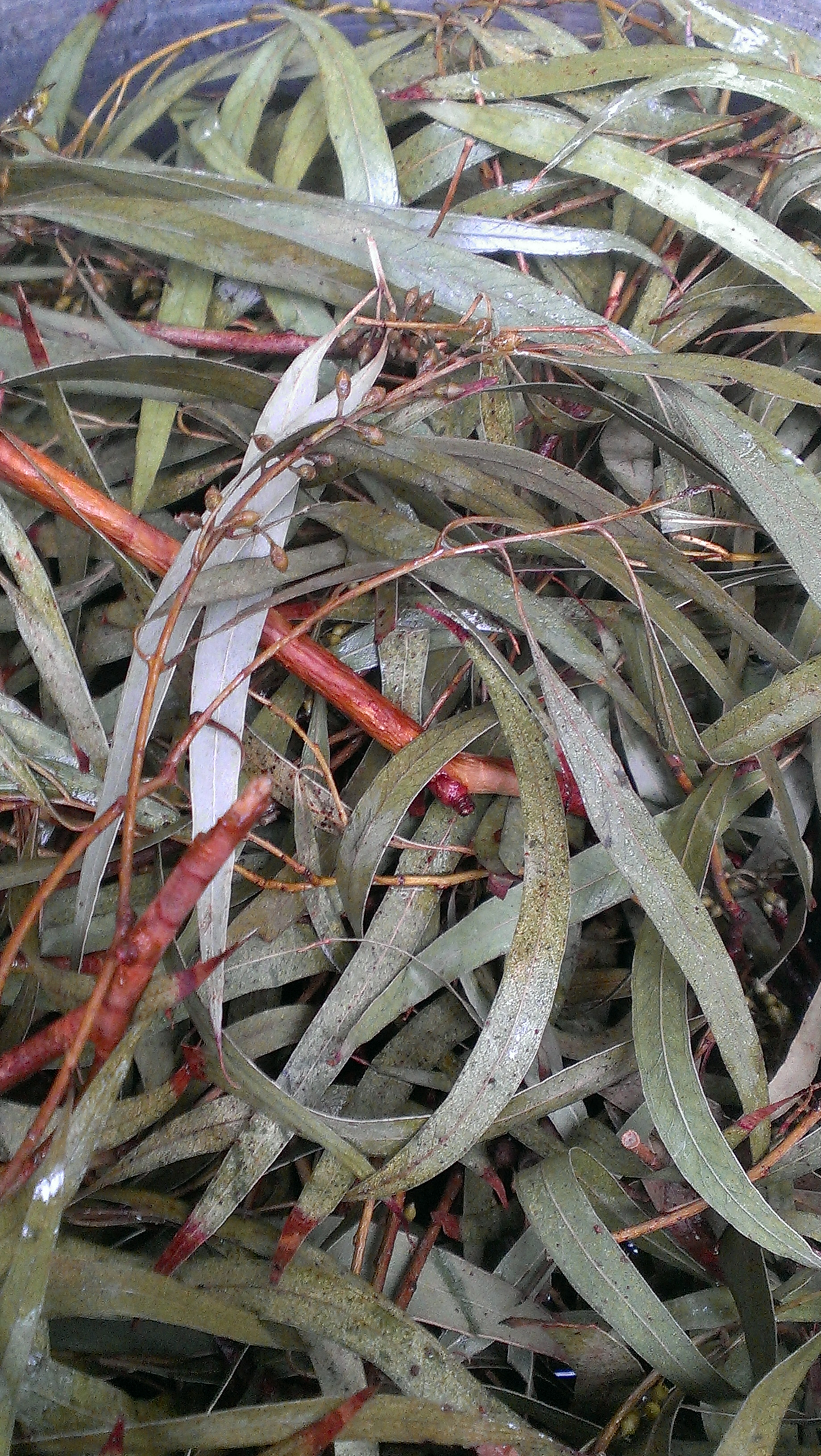
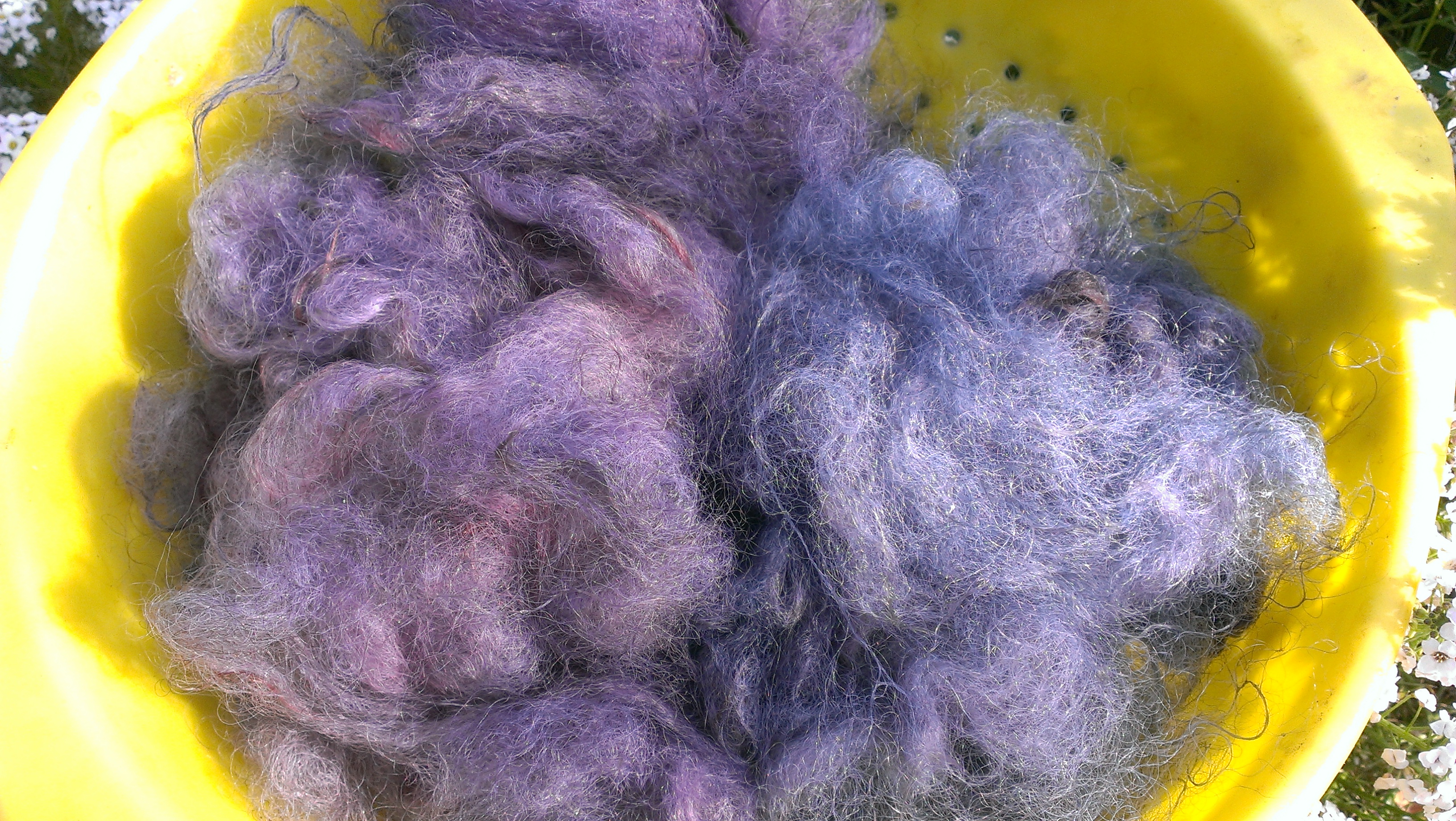
Then, in with E Scoparia bark.  And eventually, two mesh bags full of polwarth fleece.  In fact, the last two!  I seem to have reached the end of the polwarth fleeces, which seems well nigh miraculous–though they have been just lovely to work with, these are BIG sheep.

2015-05-15 12.13.41

The rhubarb leaves did produce a deeper, burgundy shade–than the citrus acidifier in the other pot.  Is this a quantity effect, sheer luck…?  I am not honestly sure, but I will certainly try it again.  The water has to be heated for the dyebath anyway and letting it steep a little before removing rhubarb and adding eucalypt is not too difficult.

2015-05-16 14.21.34

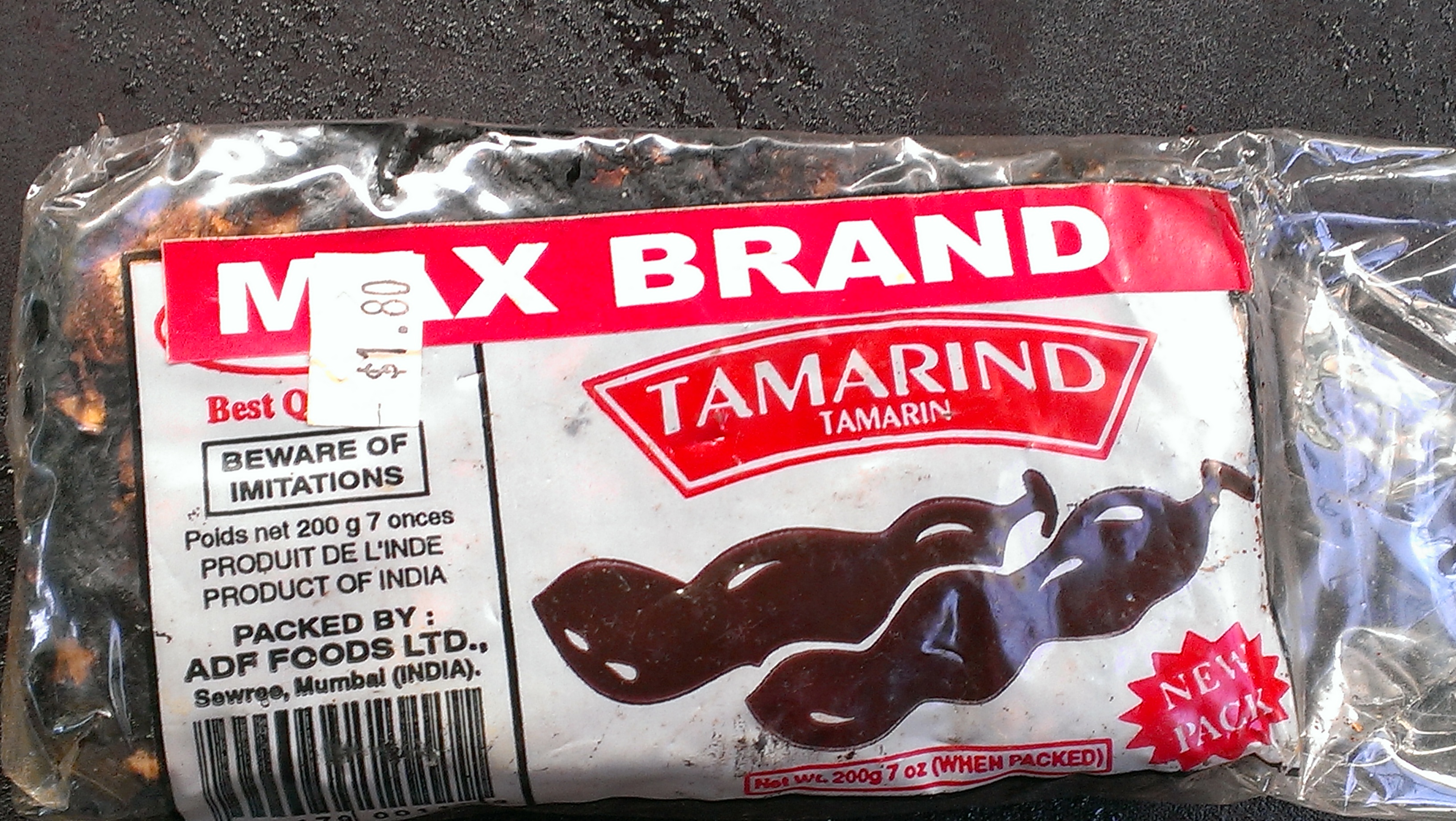
In another acid experiment, I have been cleaning out the kitchen cupboards (well, some things over a decade old are leaving the cupboards)–and found this:

2015-05-23 12.44.56

Wasn’t I in Brisbane at least 12 years ago the last time I cooked with tamarind??  I put it into a big jar and topped up with water.

2015-05-24 15.21.18

Then, into a dyebath with E Nicholii and some of ‘Viola’s’ fleece–she’s a local pet sheep who seems to have some English Leicester parentage.  Another gift fleece.

2015-05-24 15.47.41

Tamarind on the left, citrus acidifier on the right.  Curious!  I have another bath with the exhaust dye baths and a second round of leaves steeping (also known as waiting until I have time and inclination…) now.

2015-05-26 09.18.45

5 Comments

Filed under Natural dyeing

Woad!

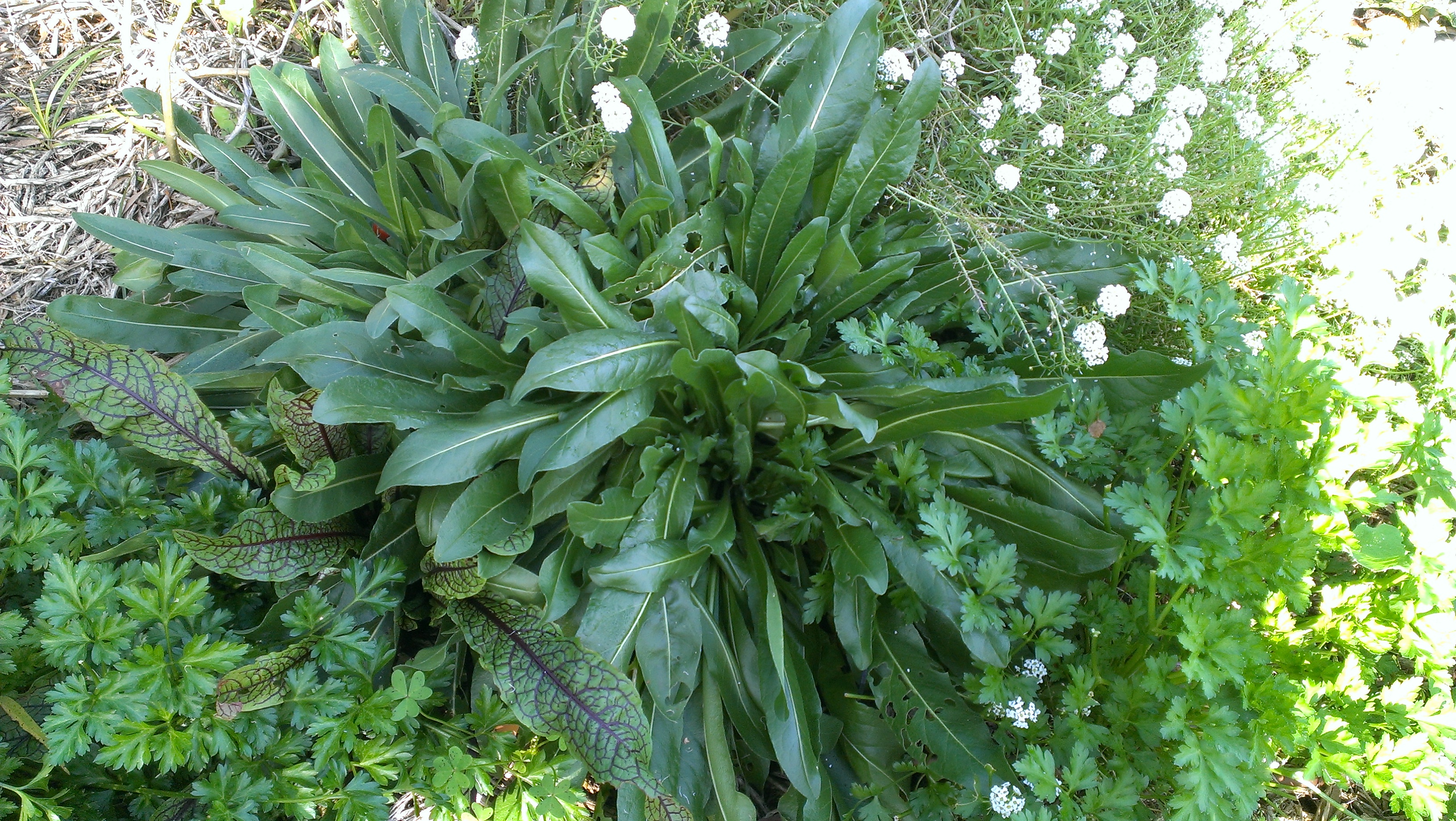
I know, I’m easily excited, and I shouldn’t shout at people who are kind enough to read this blog, but WOAD!  I hang about on a couple of natural dyeing boards on Ravelry and I think it was there I saw a link to this resource about dyeing with woad–entirely graspable (apart from the absence of a reducing agent).  And in metric, always a plus. A couple of other Australians were chatting on Ravelry about when to use your woad–and that had me thinking now was the time to do it.  So.  Here are my two plants (before).

2015-05-23 11.27.58

There has had to be some explanation about this not being a salad green, which ought to be a clue about the  variety of salad greens we grow here.

2015-05-23 11.28.06

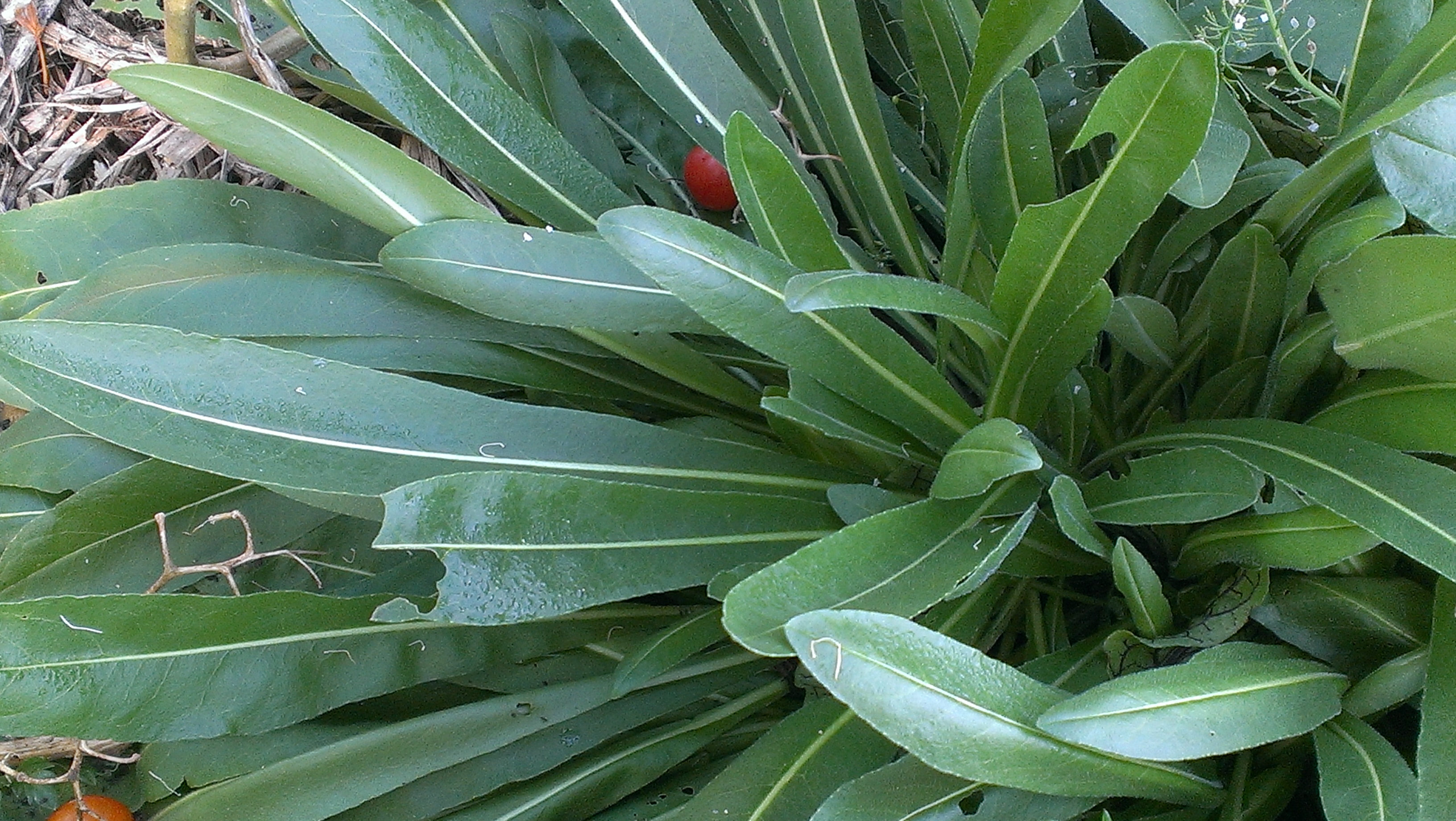
I had a lucky find behind the woad… the last of the cherry tomatoes.

2015-05-23 11.45.29

There was more woad than I thought.  And for anyone who has been wondering, I now know where the snails live and prefer to breed. Which confirms my opinion that the trouble I have had growing woad from seed might be due to its being utterly delectable to snails and slugs and every passing nibbler.

2015-05-23 11.48.33

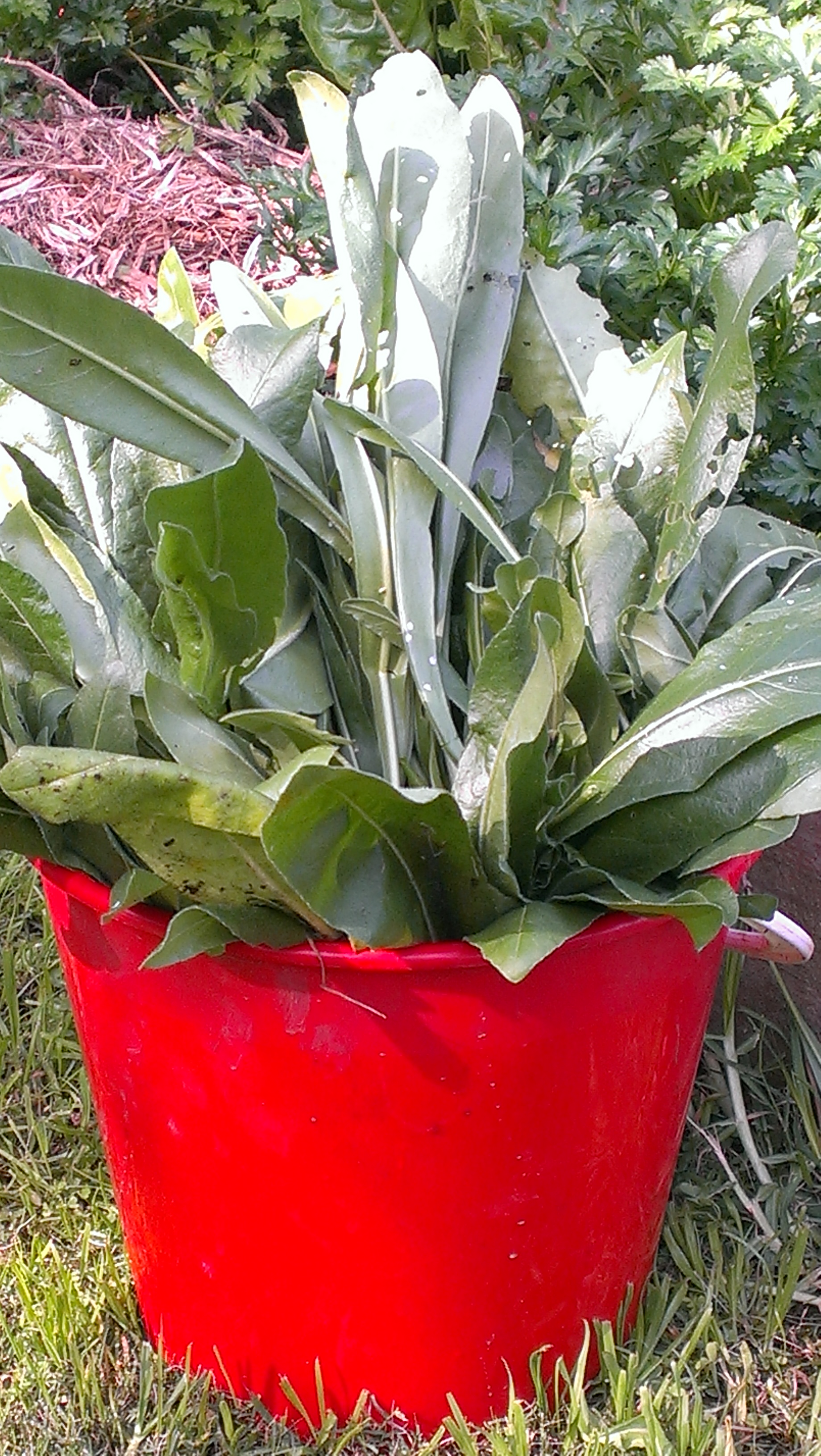
This is the harvest!  For anyone else who has been wondering why some of the silverbeet hasn’t been thriving, another duh!  Moment in the vegie patch.  Those are white beetroot.  I don’t remember planting them, but more than happy to eat them in any case…

2015-05-23 12.06.49

Chopped woad leaves.  Three litres of chopped woad leaves.  A lot of care was taken to ensure no snail was wounded at this stage.

2015-05-23 12.08.39

Into the boiling water.

2015-05-23 12.26.27

Straining through four layers of cloth.

2015-05-23 12.35.49

Measuring the hot liquid (about 2 3/4litres)–and a pinky-browny colour.

2015-05-23 13.19.25

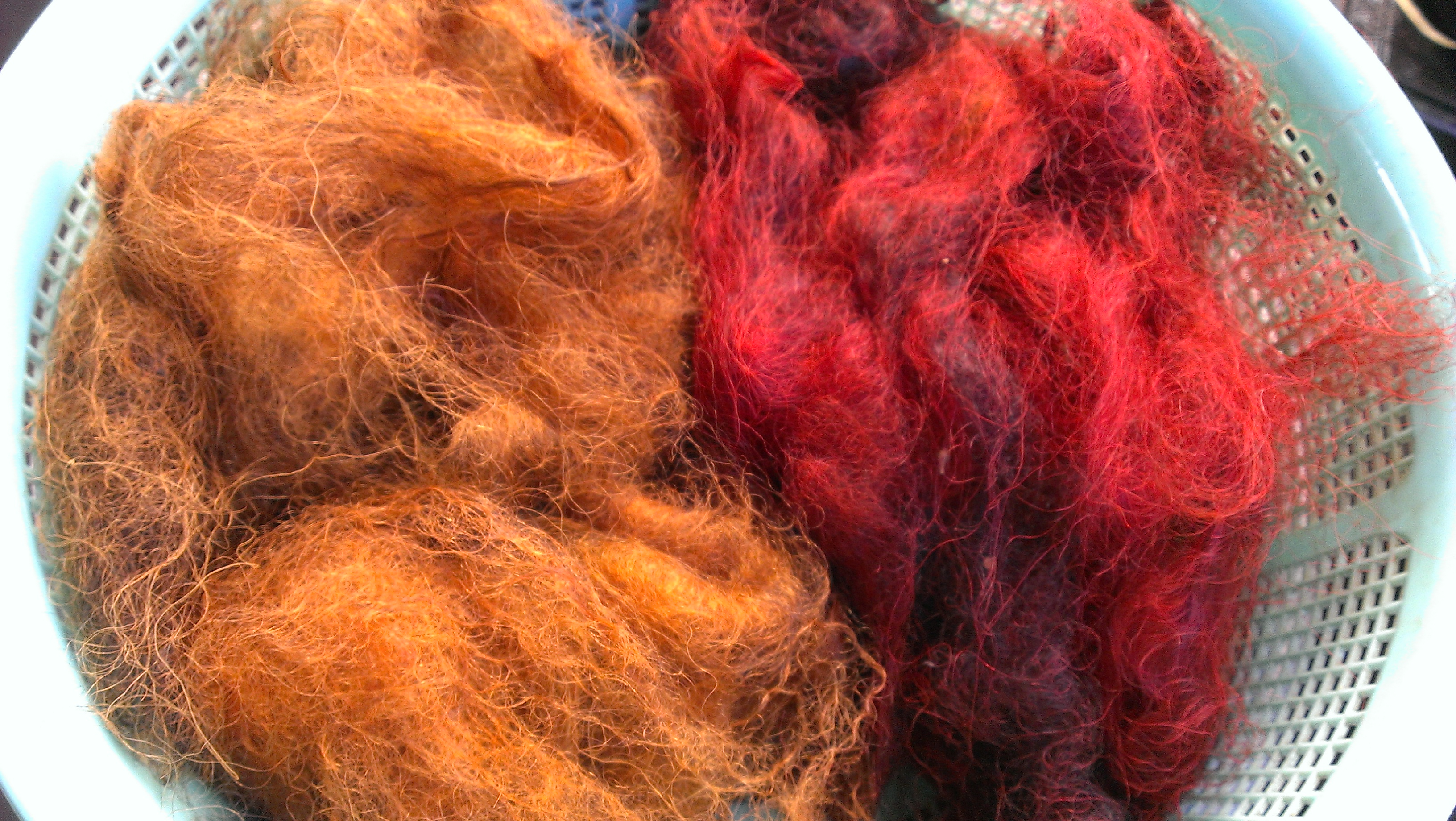
The first few locks of wool went in and ten minutes later–that isn’t blue?!

2015-05-23 13.37.26

After a second quantity of wool which also came out mauve, another batch came out still silver-white.  I decided to try a smidge more ammonia, and out came some pale blue.

2015-05-23 14.22.33

I can’t say this is earth shaking colour, but it is colour, and it is a colour I don’t usually get from the garden, and it isn’t as crushing as the total incompetence and series of accidents I’ve had going with austral indigo.  It’s enough of a success to make me think I should try again.  Let it be said that having a much larger quantity of leaves has to be an asset, because while woad reputedly has a low yield of indigo, so does austral indigo and its leaves are much smaller.  The austral indigo drops a lot of laves at this time of year and… I think I will just let it be this year!
20 Comments

Filed under Dye Plants, Natural dyeing

Bundles of the week

One of the things I noticed at Tin Can Bay was that some people identify that something is less lovely or less suitable than it could be, and go about transforming it into something lovely or suitable.  I have been known to do this… but it made me conscious that often I just live with the ugly version or wish that thing was different every time I wear or use it.  I also realised I don’t have a lot of confidence I can improve on things.  What if my intervention makes them worse?

2015-05-14 17.13.45

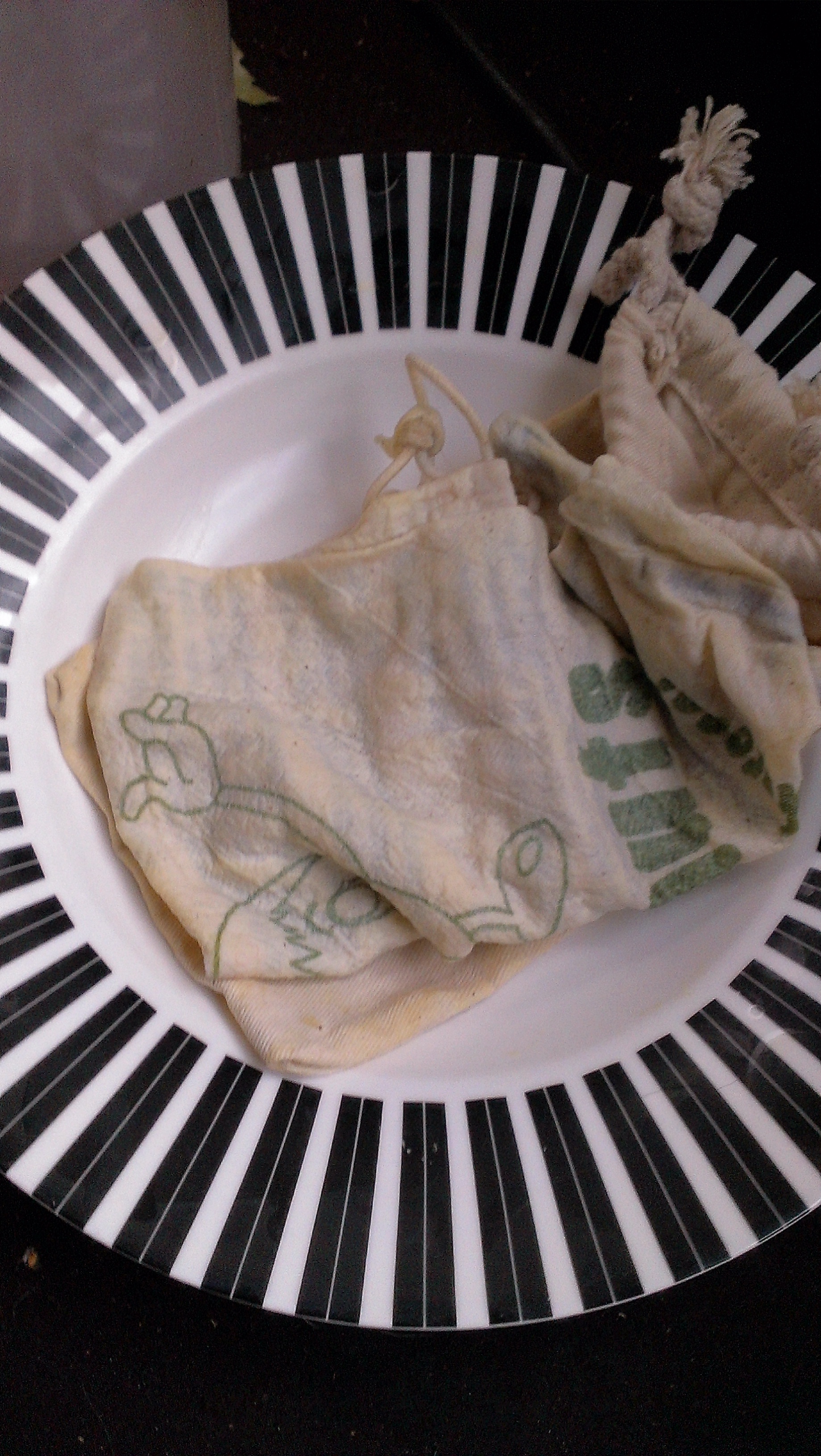
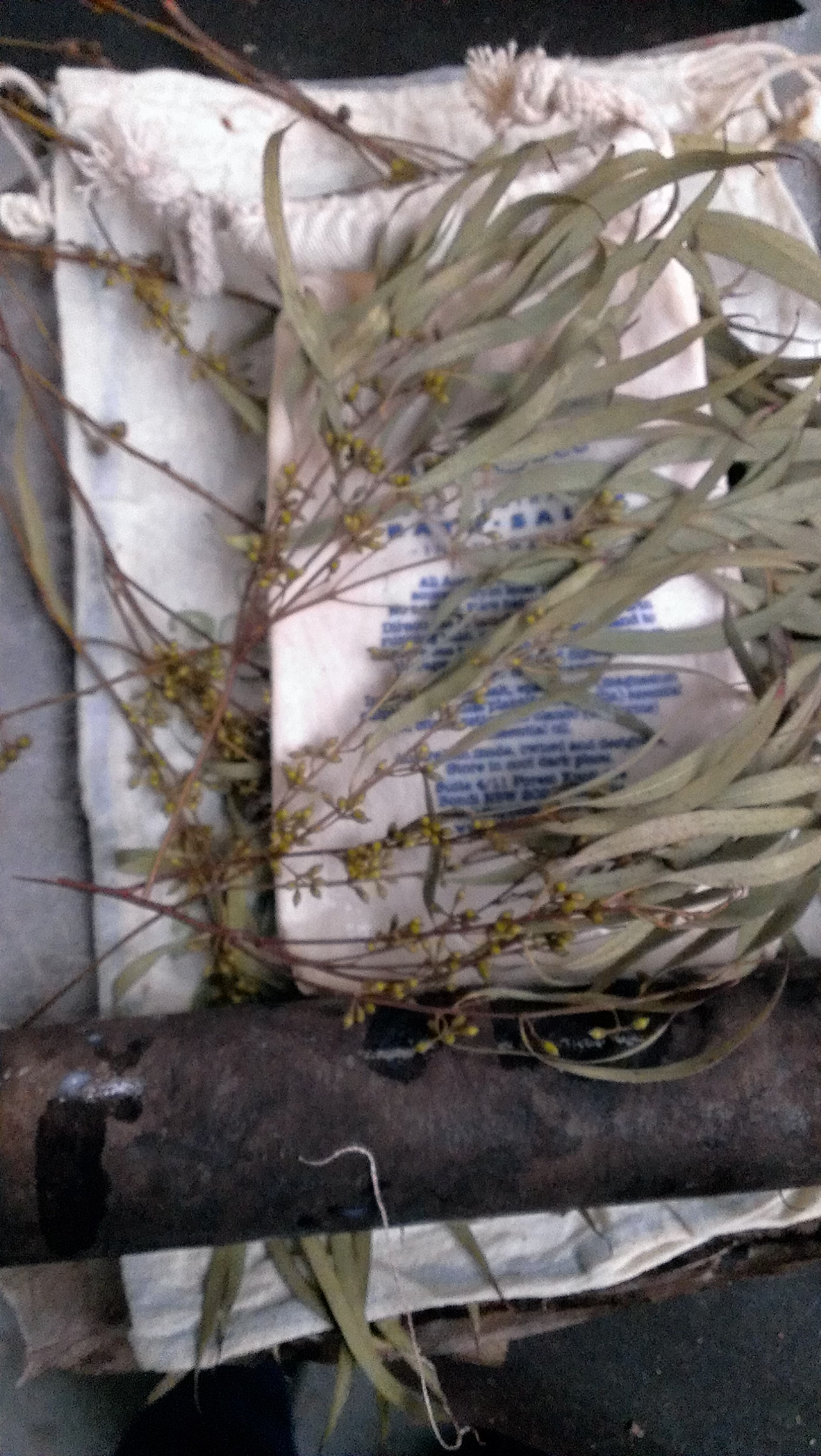
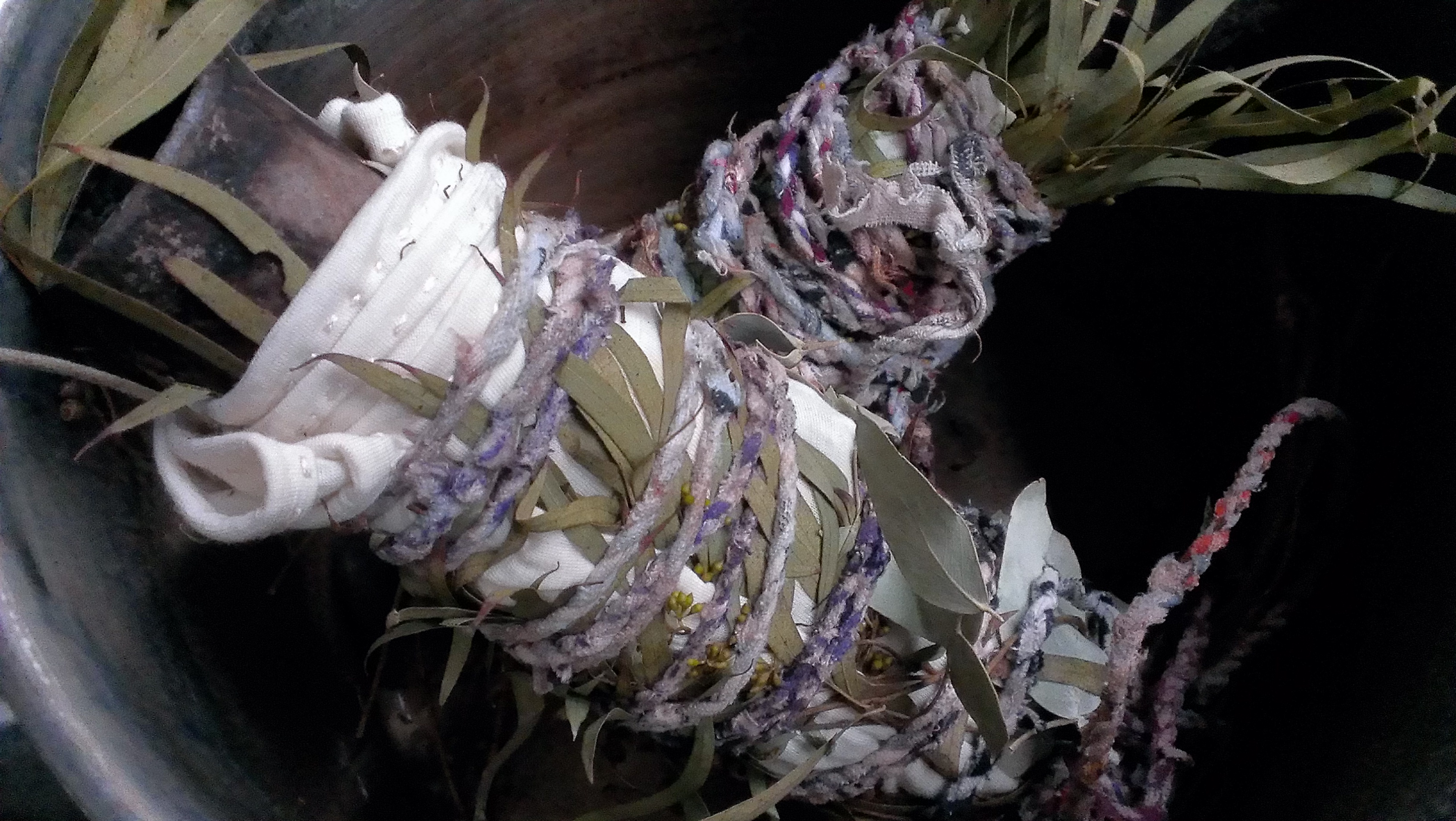
So it occurred to me that I could change the little calico drawstring bags I have acquired full of soap nuts and the odd other item.  They are useful but ugly right now.  Why not dye them?  This idea happened along in a week when there was cow milk in the house (unusual these days), so I decided to try using it as a mordant.  If it doesn’t work–it won’t be too late to use soy another day, I decided.  Duly treated, I applied E Nicholii leaves.  The leaves my friend gave me are full of buds, splendiferous materials for leaf printing goodness.

2015-05-14 17.15.43

There were three bundles in all in this dye pot, and I chose this one to unwrap.  Nothing special had occurred.

2015-05-15 09.34.54

I’m not sure whether this was due to the mordant (poor application, for instance!) or whether I just paid too little attention and the bundle didn’t have a long enough, hot enough time in contact with the dye.  I had left it dyeing and gone out to play guitar and sing and generally be a flibbertygibbet–occasionally something suffers through this kind of neglect (but I had a good time)!  I was undeterred, because if at first you don’t succeed, try again later with tried and true processes you understand on a day when you are paying enough attention.

2015-05-15 09.38.04

I rewrapped, and decided to reheat the other two bundles as well rather than disturb them, when their companion had not done well with careless treatment.

2015-05-15 09.39.26

The other bundles were another calico bag and an infinity scarf destined for a friend who loved the one I made at India Flint’s Melbourne workshop.  I am seeing my friend soon and I have another gift for her too.

2015-05-14 09.35.21

This time, E Cinerea and E Nicholii…

2015-05-14 17.20.23

The other milk soaked calico bag–had rather nice beads on its drawstrings. Here are the bundles prior to heating.

2015-05-14 17.22.39

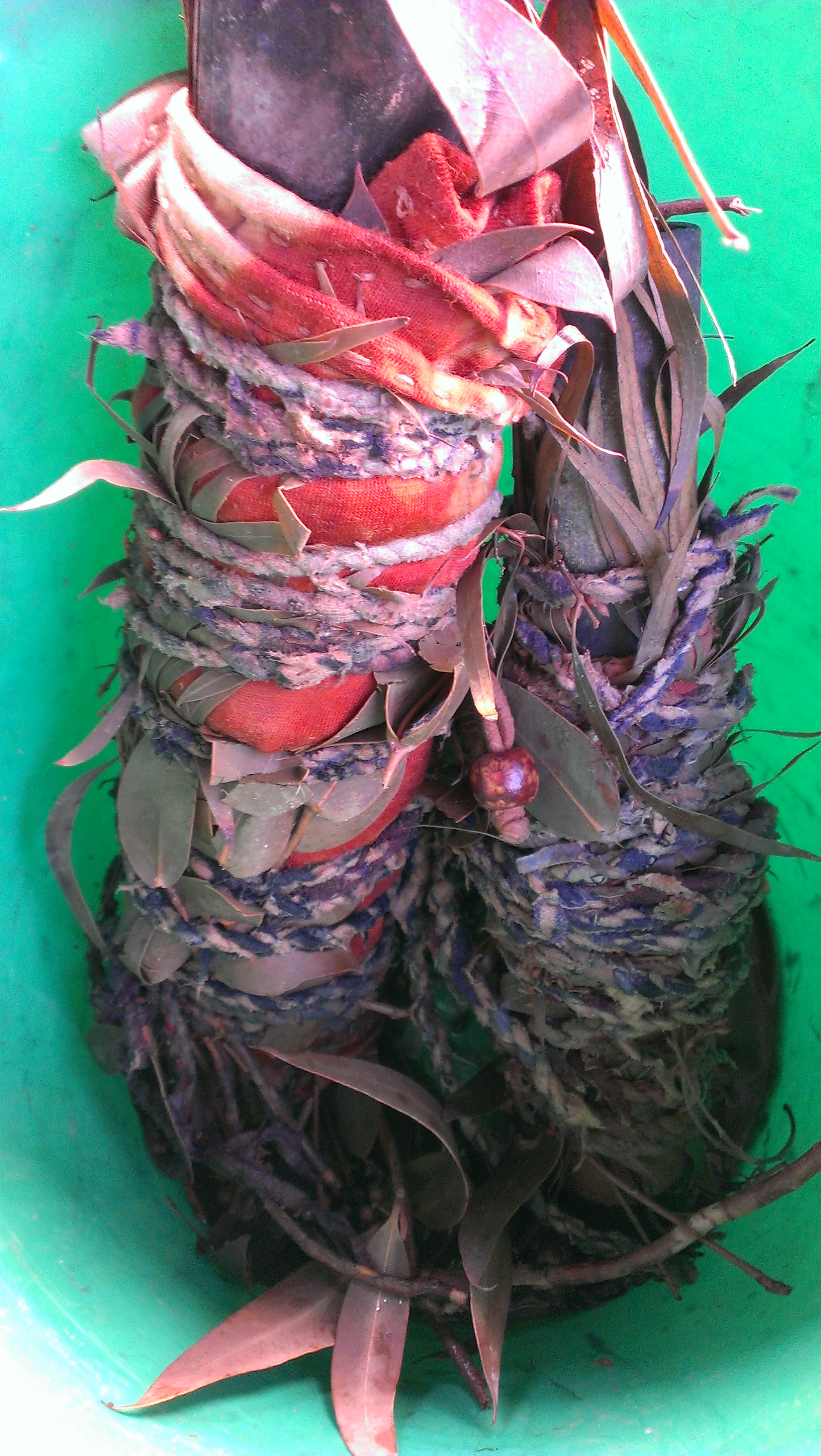
Here they are after the first heating–the silky merino looks good–but I had hoped for deeper colour.  The filthy artisanal plastic bucket in vibrant green is an extra special touch, I feel.

2015-05-15 09.34.59

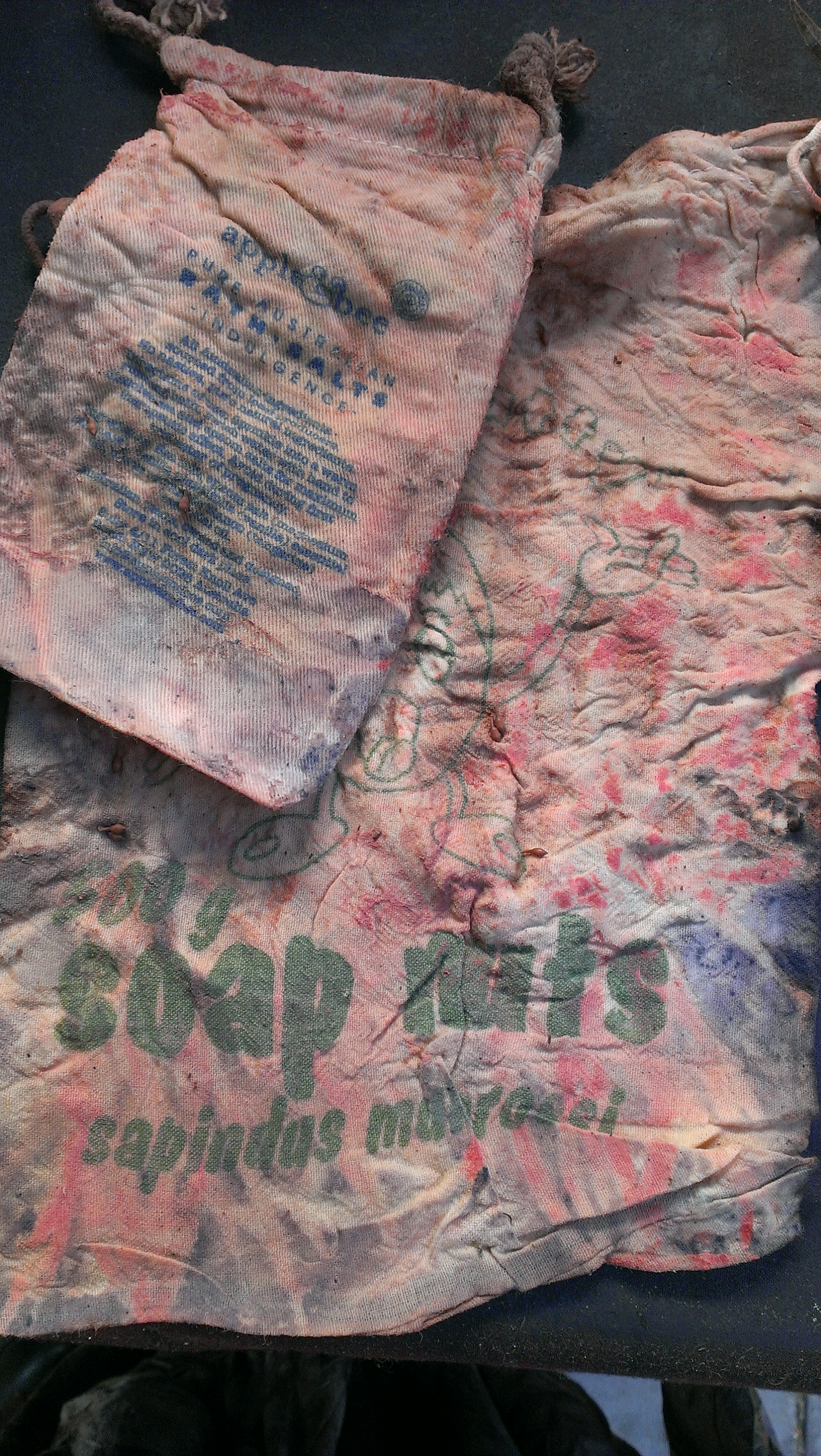
After some further cooking, the calico bags all looked darker but still pretty awful and the whole bucketful was strangely blurred (joke, Joyce!).  Back to soy mordanting for now.   However, that big bundle in the middle is the infinity scarf–looking good.

2015-05-15 13.45.41

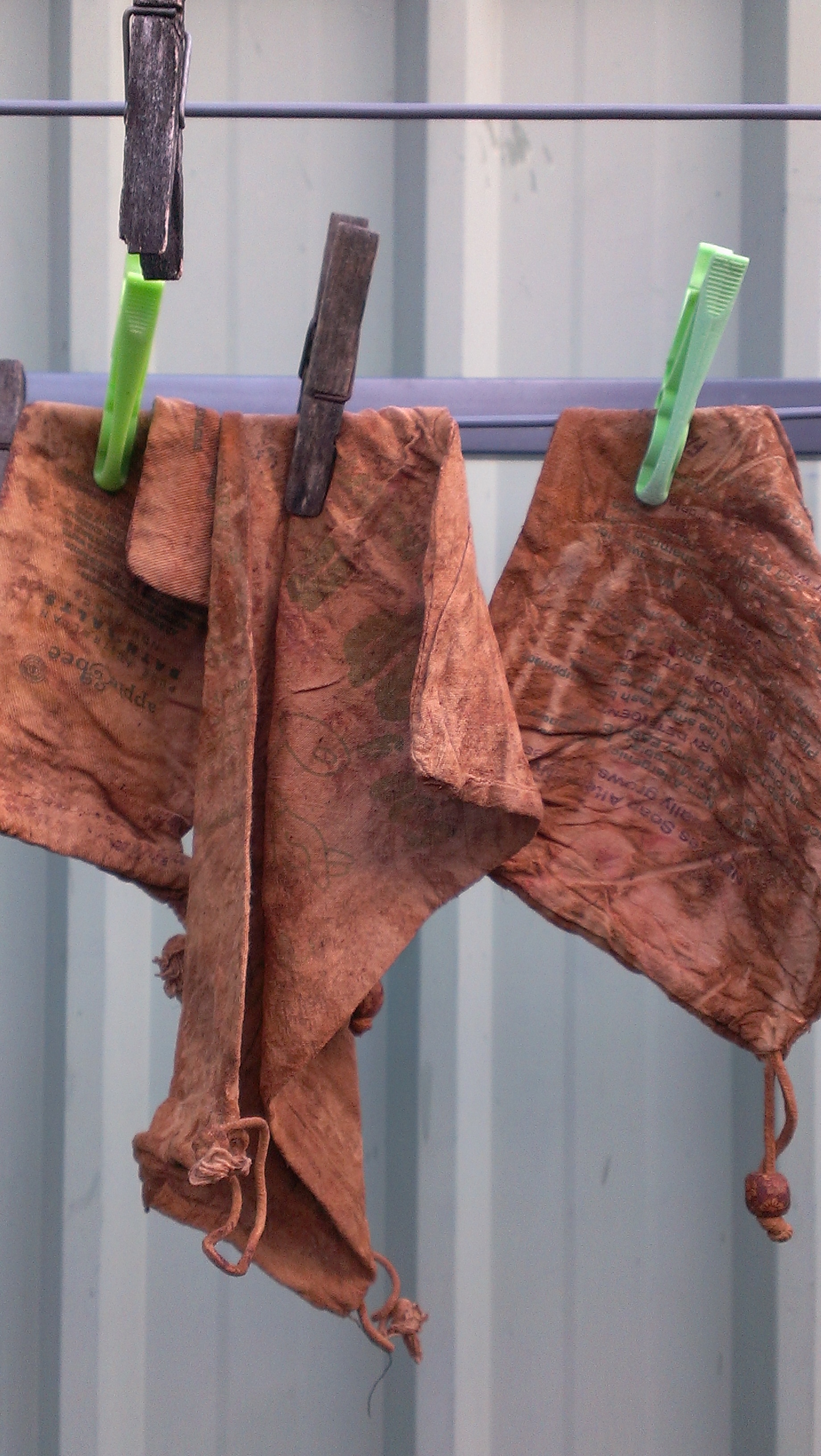
The calico bags still require improvement.  They look better here than in real life!

2015-05-21 16.36.44

I really like the way the scarf turned out.  The colours are rich.  There are some nice ochre and deep grey sections for contrast.

2015-05-19 12.39.34

I really like some of the details–as I had hoped, the E Nicholii buds have left their mark as part of an overall pattern.

2015-05-19 12.40.01

Now to see if my friend likes it–but I have some quiet confidence that she will…


14 Comments

Filed under Leaf prints, Natural dyeing

Winter dyeing

I had some rather pallid silk embroidery thread. That bag it is sitting on came from an op shop and has been through eucalyptus dye pots so many times it is a very deep shade now!

2015-05-02 14.42.56

I had some white and tan polwarth fleece.

2015-05-02 14.44.28

Eucalyptus cinerea leaves… I have sacks of them and decided it was time to get them moving!

2015-05-02 14.44.40

With wool going in a bit later…

2015-05-02 16.47.16

Then a gift of E Nicholii leavea arrived from a fried whose keen eye and quick wits diverted council prunings from going directly to mulch.  Thanks!

2015-05-09 10.06.17

Here they are after some serious cooking.

2015-05-07 12.49.19

My tour of the dye stash also uncovered these, sitting in a bag I used to use for gleaning the neighbourhood.  Perhaps I could use it again if it wasn’t storing these leaves…

2015-05-09 10.10.27

I thought I remembered them being unexciting.  They are clearly ironbark leaves, but presumably I confused my ironbarks.  I wasn’t sure and decided to try them out.

2015-05-09 10.12.21

There has also been E Scoparia bark dyeing.

2015-05-09 10.05.00

And here we have, fresh from the dye bath (a day later): E Nicholii at the top left; the unexciting ironbark, and E Scoparia bark at the bottom.

2015-05-10 12.19.04

Later still, some of that polwarth fleece sitting on the piano like a fluffy flame…

2015-05-12 14.18.21

First pass through the carder…
2015-05-14 09.23.12

Second pass… ready to spin!

2015-05-14 09.30.33


And now I have some thread with a bit more colour in it, too!

2015-05-14 09.45.54

9 Comments

Filed under Eucalypts, Fibre preparation, Natural dyeing

ANZAC Day

Dear Readers, today there is no craft content.  Make your own choices about reading on or coming back another day.

My country has quite a thing about a specific day in April.  On 25 April, we commemorate the landing of troops from Australia and new Zealand at Gallipoli (on the coast of Turkey) during World War One.  That day began a protracted period in which massive numbers of soldiers died on all sides and immense suffering was endured over a long period.  Needless to say, it was not only soldiers who suffered.  Eventually the Australian and NZ soldiers who remained were evacuated.  As a feat of military strategy, the landing at Gallipoli was an unqualified failure.  This year was the 125th anniversary of that awful day.  I am not all that overjoyed with the idea of the nation, and I like the idea of war even less.  One of the things I don’t like about nations (as a concept–nothing against my nation or yours) is that they have rather tended to go to war with one another.

2015-04-25 16.59.33

I know there are other people who think that ANZAC day is an occasion for mourning. That makes sense to me. Lots of people I know, and members of my family went to the dawn service–the traditional event on this day. This is what I used to do as a girl guide in high school.   I had a turning point in my understanding of the meaning of ANZAC day while I was still in school, when I first heard The Band Played Waltzing Matilda–written by Eric Bogle.  It caused me to revise my understanding of ANZAC day and of nationalism. For non-Australian readers who want to listen to the song–it will help you to know that Eric Bogle is a Scottish Australian (he has a Scottish accent but he is writing about Australian experience, which is often also immigrant experience).  It will also help you to know that ‘Waltzing Matilda’ is a folk song that many Australians think of as an unofficial national anthem.  It references the experiences of swagmen–itinerant, male rural workers who had not even a donkey or horse and carried all their belongings on their backs.

2015-04-27 15.16.57

Since I think the appropriate roles for ANZAC day are grieving and remembrance, I have been appalled by the way ANZAC day has been treated as an opportunity for marketing and the glorification of war, and this year it has been worse than ever.  The number of special offers and steak knives involved has had me in mind of Manfred Mann’s song about what would happen if Jesus returned (I will summarise: HUGE marketing opportunity!)  For those who wish more, I can’t believe that an album I acquired second hand at a time when I must have been a young outlier among fans of Manfred Mann is now available on youtube. So you can hear it yourself if you fancy it.

2015-04-25 16.37.14

Some years we organise our own ANZAC day remembrance.  Just the two of us.  Sometimes we have invited friends along.  We’ve made our own wreaths, sung songs we think are relevant, listened to the small folk among us speak about what they know of war and perhaps what older people in their family experienced.  Then we walk to one of the local suburban war memorials and place our wreaths, take time to reflect, and head home.

2015-04-25 16.36.43

I have been taking an(other) accounting of how I think about war.  As a white Australian I have been checking in on whether I am still participating in dominant ideas about war in white culture, like the idea that Gallipoli is the template for what counts as ‘war’.  I find it to be a persistent feature of racism in a colonial context like Australia that I can think two things on the same subject even though they cannot possibly be reconciled with one another.  I think it is my responsibility to become aware of these places in my mind and address them. On ANZAC day I decided I wanted to think about all people who died in all wars, and that the invasion of Australia, and the subsequent genocide of Indigenous people through violence, starvation, introduced disease and mistreatment of so many kinds would be a good place for me personally to begin that process of reflection.  I began at a sculpture that stands on Wirranendi (a Kaurna word ‘meaning “to become wirra”, which means grove or forest’) beside what is now Sir Donald Bradman Drive–an arterial road out of the city leading westward.  It is called ‘The lie of the land’, in reference to the idea that grounded British claims to sovereignty and ownership over this continent: that it was ‘terra nullius’–land belonging to no one–when the British arrived.  In spite of the people who were living in every part of the continent they went to. The artists are Aleks Danko and Jude Walton.

2015-04-25 16.37.44

The dominant Australian account of ANZAC day is that those tragic events at Gallipoli speak in some profound way to our national character.  I am not sure why this conclusion is obvious. Why do we not draw our national character from Indigenous conceptions? Or from the fact of colonisation, for those of us who are descendants of that process in some way? I can see that Gallipoli is seen as evidence of Australia as a fledgling nation independent of Britain.  I can understand that people think courage, sacrifice and heroism might be virtues, and that they were in evidence at Gallipoli.  It’s less obvious to me why we would select out this particular battle in this particular war, why we would choose a battle at all (and not peacetime examples of the virtues we aspire to).  It isn’t obvious to me, either, what Indigenous people, or people who came in the many waves of immigration to Australia that didn’t come from the former empire of Great Britain can make of this, and it doesn’t offer a lot of purchase for women in the national character either.

2015-04-25 16.11.06

I spent time thinking at Wirranendi, with a heavy heart.  And decided that when contemplating genocide, a heavy heart is probably appropriate.  Then I decided one constructive thing I could do was collect all the rubbish lying around.  And replace the stones that have fallen or been pulled from the sculptures.

2015-04-25 16.36.24

I rode back toward the West Terrace cemetery, past many native plantings and a poem by Kimberley Mann, an Indigenous poet.  The line ‘swallow memory and learn/ The wind chases ghosts through here’ stayed with me.

2015-04-25 16.42.14

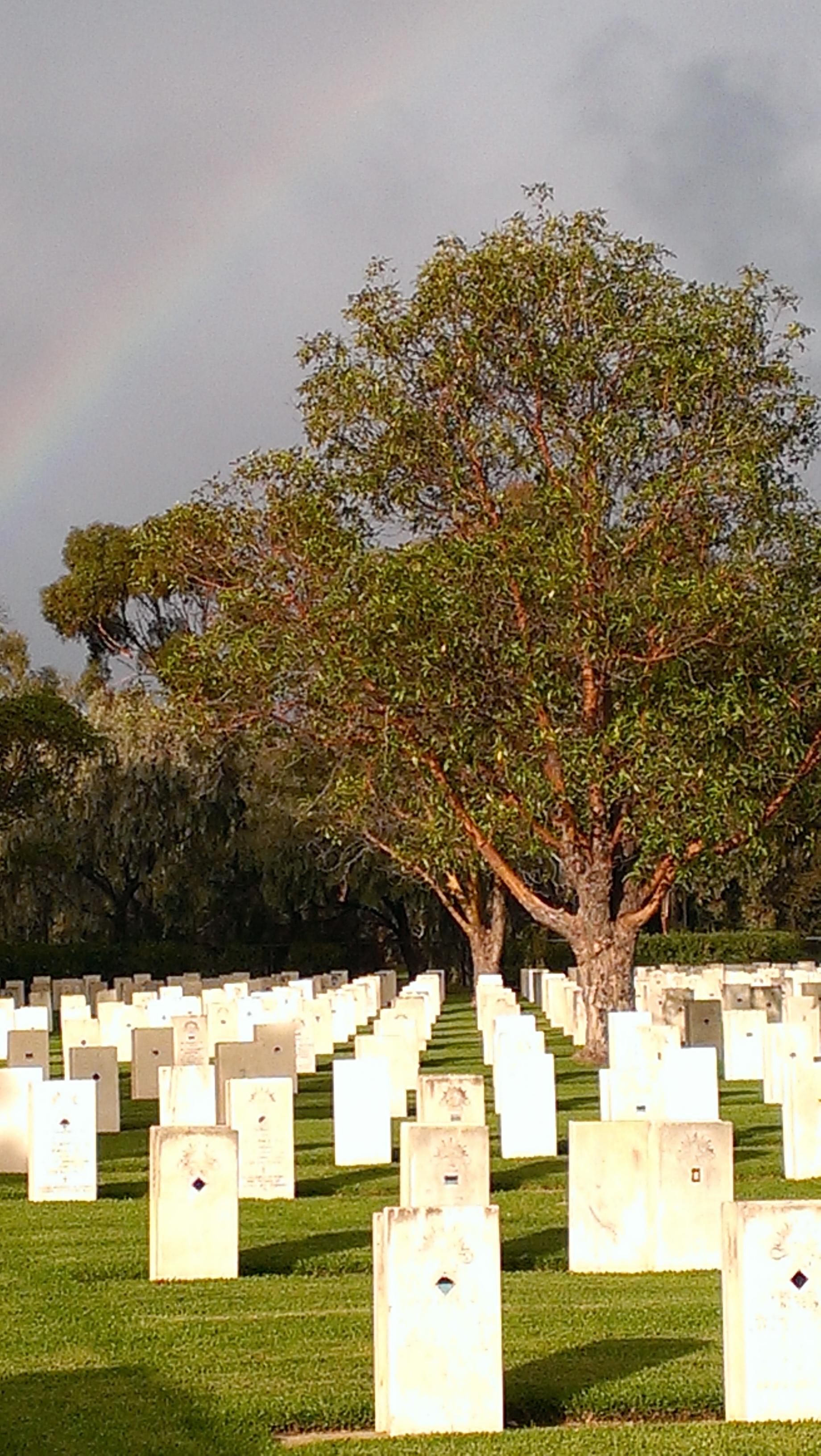
Then I pedalled over to the Imperial War Graves Cemetery.  I run through this cemetery and the imperial war graves form a rather striking part of it. This time I stopped. I passed through that entry you can see in the first picture above, with the flag at half mast.  There are so many graves here. And yet these are only the graves of local soldiers who fought in the world wars, and women who served (as nurses, for the most part) and returned to Australia, later dying here.  In almost every country town and in many suburbs there stand memorials for all those young men who died in these and other wars Australia has participated in.

2015-04-25 16.53.36

I walked among the headstones, reading them, wondering about the lives of these men and women and their families.  I hummed another Eric Bogle song (The Green Field of France)–which has the singer in a war cemetery in France similarly wondering about those who are buried there.  I wondered about all the civilians who died because war took away the means for their survival–usually more people die from hunger and disease in the context of war than die on the battlefields, awful as battlefields are.  Refugees,  prisoners, all those who suffer when an entire country turns all its resources to war instead of the wellbeing of its people. I thought about women and children.  I hummed Judy Small’s song Mothers, Daughters, Wives.  I thought about all those who have tried to resist war from inside the army and from outside.

2015-04-25 16.03.35

I placed the rosemary I had brought from our garden, thought about all those suffering through wars happening right now, and couldn’t quite believe it when this symbol of hope appeared.

2015-04-25 16.02.50

12 Comments

Filed under Natural dyeing

Returning home

I decided to celebrate returning home from Tin Can Bay with some local bundles… and knitting, and a visit to the saltbush plantings… and time with my beloved and our friends, and music… but here I’ll focus on the bundles!  If I can restrain myself that far…

2015-04-25 15.28.09

I took my new found knowledge and experience of bundling paper, which built on my reading of India Flint’s Bundle Book.  There is a cheap and simple e-book version available –or go for the glory of a solid object!  I tried a different kind of paper, acquired in the last few weeks, and I used scrap metal my Dad cut me.  I tried op shopping for flat metal with remarkably little success in previous months.  But there are quite a few priorities on my personal list and some progress slowly.

2015-04-25 17.16.40

Happy results!  These are E Cinerea leaves–different to what I would get on fabric and very lovely. Like all bundle dyeing, part of the mystery and part of the joy is trying out what is local and seasonal. Everyone’s selection is different.  My garden is heavy on calendula and marigold right now and I had some lovely little geranium flowers and all sorts of local leaves to try too.

2015-04-25 17.18.35

I decided to use my flanellette string for bundles despite it being unnaturally dyed.  I loved seeing some of my retreat companions loving their bundles enough to use handmade string to tie them.  And my much re-used string collection is getting to the end of its tether.

2015-04-25 17.14.56

I used all kinds of fabrics–raw silk from a recycled garment, calico, linen offcuts, and a little piece of silky merino given to me by a retreat companion (should she be reading, thankyou again!)

2015-05-06 10.13.36

The silky merino gives such vibrant colours, but actually the linen was a bit of a standout too.

2015-05-06 10.13.52

Meanwhile, the string making continues.  I have decided to try using this process of making string as a point of reflection on my obligations under Indigenous law–and of so many principles of earth care that might come under that set of principles.  The importance of things that will biodegrade and that will not last forever, the way plastic will.  The intertwining of all life.  The cycles by which nature does its magic.  Our dependence on plants and water.  the way things and beings come into closer relationship with one another.  I keep sharing the string–as people admire or ask about it, I have a little stash right here by my hand and I can give them some.  Sharing is a primary principle too.

2015-05-03 15.53.03

I have in mind something like what Grackle and Sun might call atheist prayer.  But different, of course.  Do read her post and be inspired.  I love her idea of chantstrands, but my experiments along those lines didn’t work for me the way taking a few wet leaves out to a tree to twist together into string and considering things has so far.  So I have taken inspiration from her and begun to make cordage from it…

2015-05-02 14.49.32

A few people have been asking about how to make string.  I have put a link to an online tutorial in the How To tab at the top of the blog, but you could learn from a basket weaver (as I did) or from any basic basketry text.  Or put yourself near India Flint, who shares string making everywhere she goes, as far as I can tell (having learned how from Nalda Searles).  Or go to YouTube and be among survivalists who do something similar!  Meanwhile, the garden is growing as rain begins to fall.

2015-05-02 14.49.47

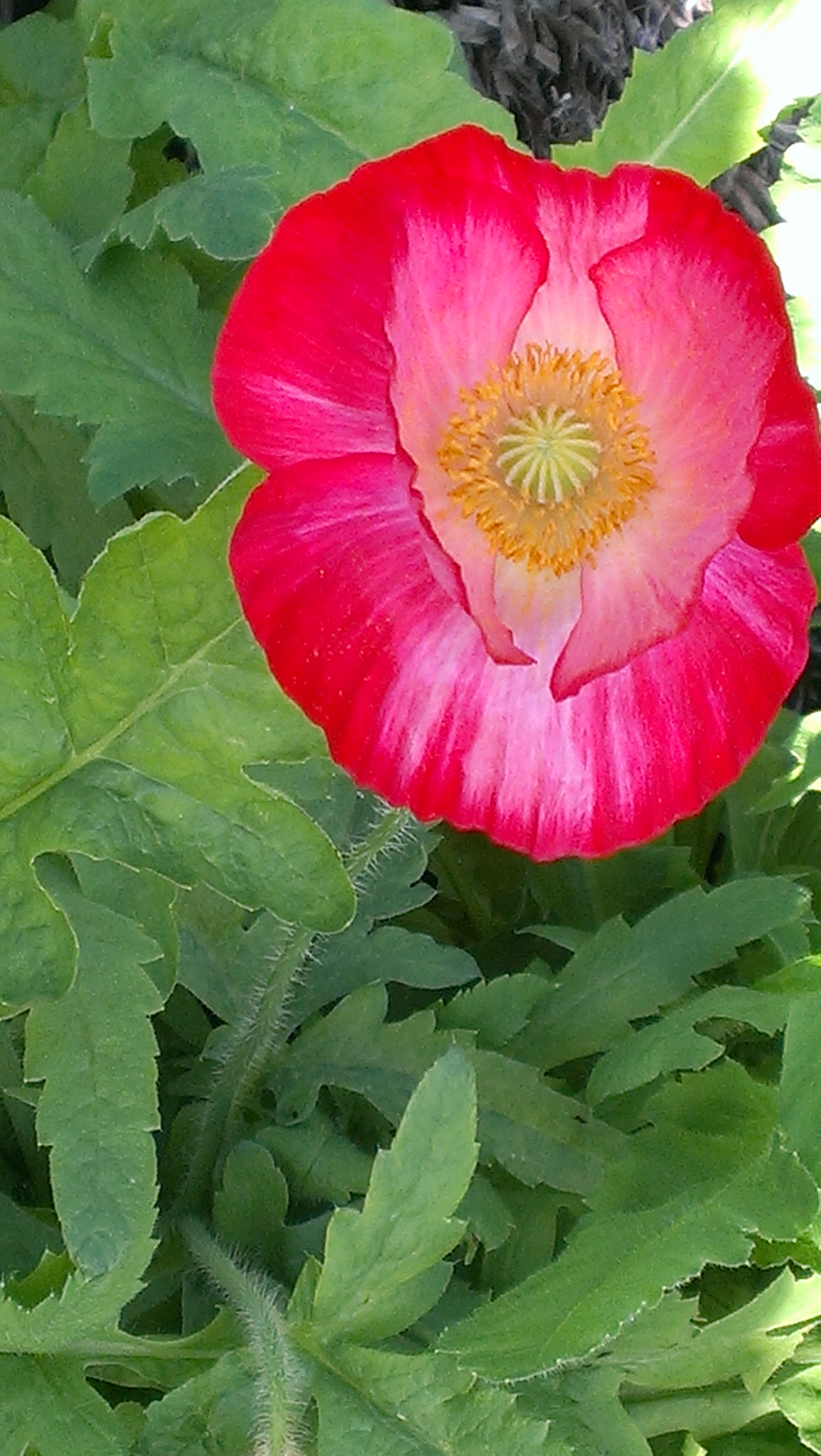
The first poppy of the season is out and beyond lovely.

2015-05-04 12.19.04

And I had a new insight about this especially beautiful saltbush which I have so far not managed to propagate.  It has taken a lot of observations to figure out when I might be able to collect seed, but one day at work recently I pulled out a seed envelope I happened to have with me (as you do) and amused bystanders by rubbing the ends of these silvery stems gently into it.  Who knows what might come of that?  I have high hopes…

8 Comments

Filed under Dye Plants, Natural dyeing, Neighbourhood pleasures

Retreat to Tin Can Bay 2: Wonderment is only natural

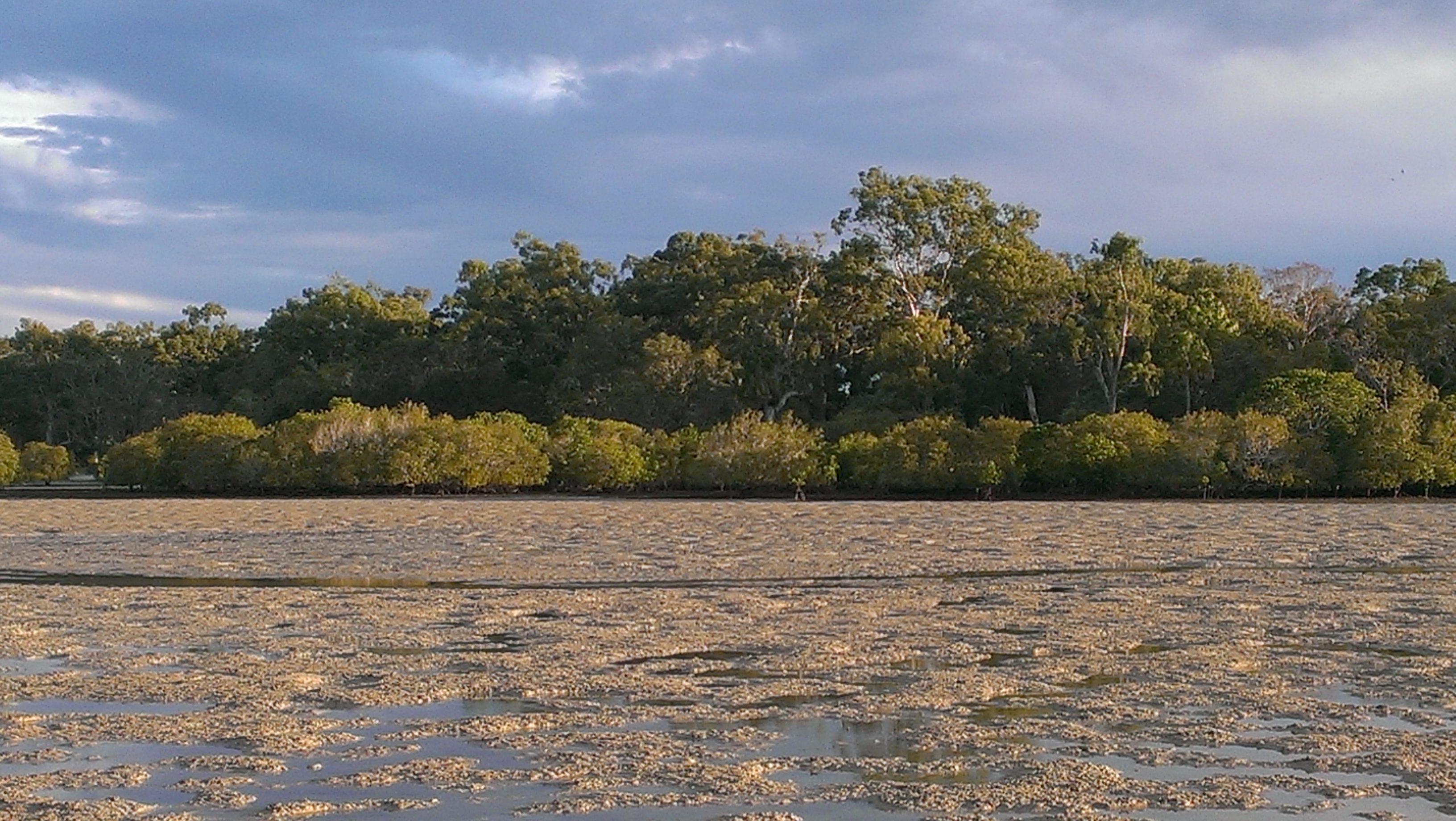
The retreat seemed to me to be organised around creating the space for profoundly noticing and being inspired by the wonderful place we were in.  It was a homage to the natural world and to Tin Can Bay as a specific, special place.  And what a place it is! When we arrived, we first went out onto the mangrove mudflats.

2015-04-19 16.50.06

I love mangroves.  They grow along the coast by Port Augusta, where I spent a lot of school holidays as a child, so for me they hold many happy memories as well as hours of experiencing mangroves.  Being on them and among them, finding the shells and sea plants that get trapped in their branches and roots as the tide recedes, peeling their seeds and even burying treasure in a biscuit tin beneath a particularly special tree.  These did not seem exactly like the mangroves I played among as a child.  I realised at Tin Can Bay that I had somehow imagined all mangroves were sisters.  But it seems that they might be cousins.  There is an extended family of mangroves.

2015-04-19 16.48.39

There were many different invitations to go out into the scrub or the mud flats or the paperbarks with a small set of creative constraints or a little imaginative task. Invitations to focus closely on the wonderment that is nature, and the mangrove flats and the Wallum in particular: to be with and among it, to be inspired by it.  I was fascinated by this process.  It seemed as though others had encountered it before–but many of my companions have had training as artists and I have not. I was in awe of others’ skills and imagination.

2015-04-23 09.49.55

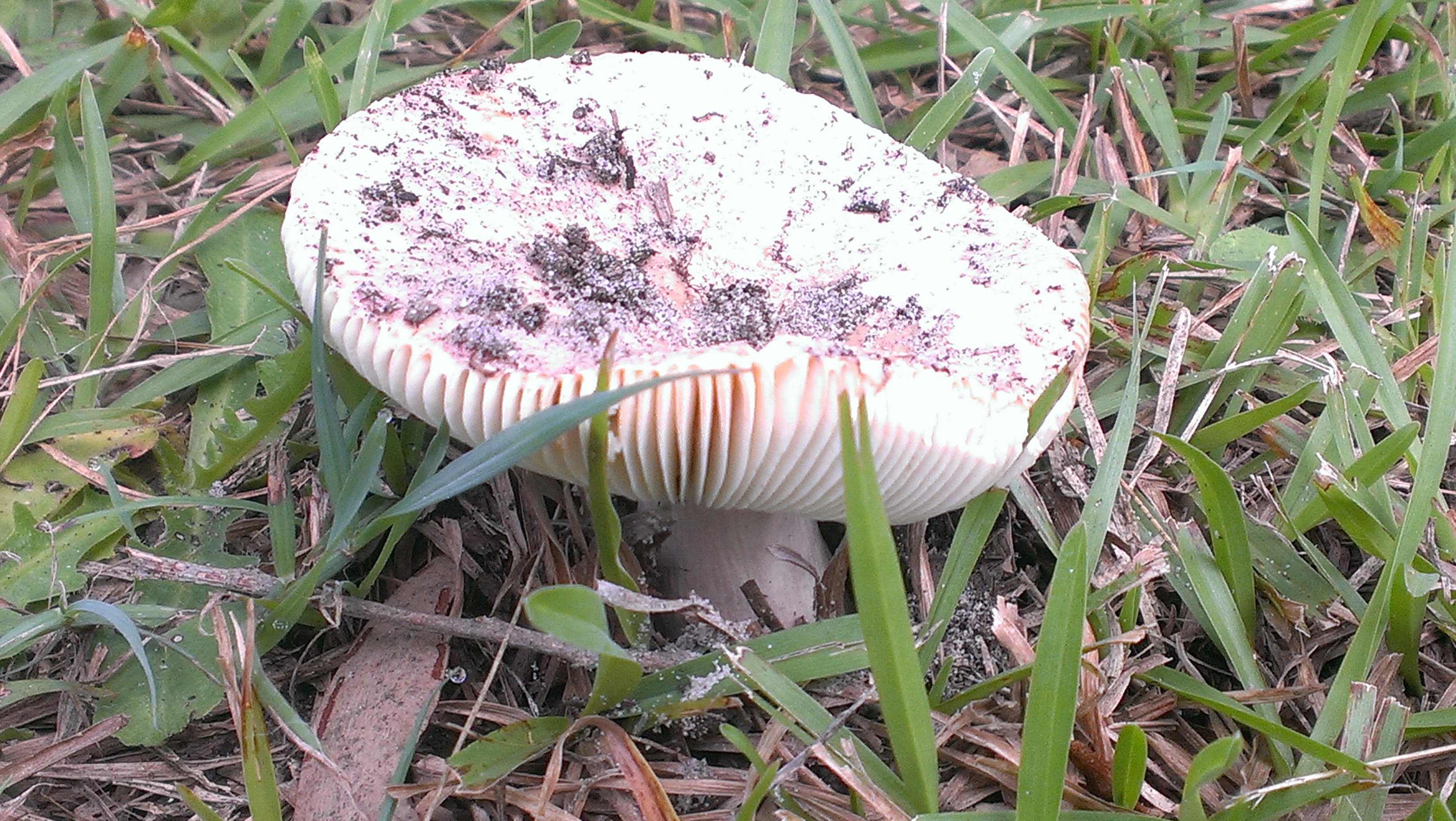
I love being out in the world as an ardent admirer.  Queensland is a tropical, fecund, damp place by comparison with the place where I live, which is dry and bare by comparison.  Here, fungi were everywhere. In all states of growing and decomposition.

2015-04-22 08.59.19

Springing up in all kinds of shapes and places.

2015-04-22 17.26.19

Apparently from every kind of direction.

2015-04-21 11.07.13

The variety of texture was amazing.

2015-04-20 10.17.39

There were flocking fungi and solitary fungi.

2015-04-20 09.29.45

And some extraordinary colours.

2015-04-20 09.30.24

I took many out of focus pictures of orchids and butterflies and spiders but mostly I just gazed in awe and marvelled at sharing a planet with such wonders. I found this skink basking one afternoon.

2015-04-21 12.47.58

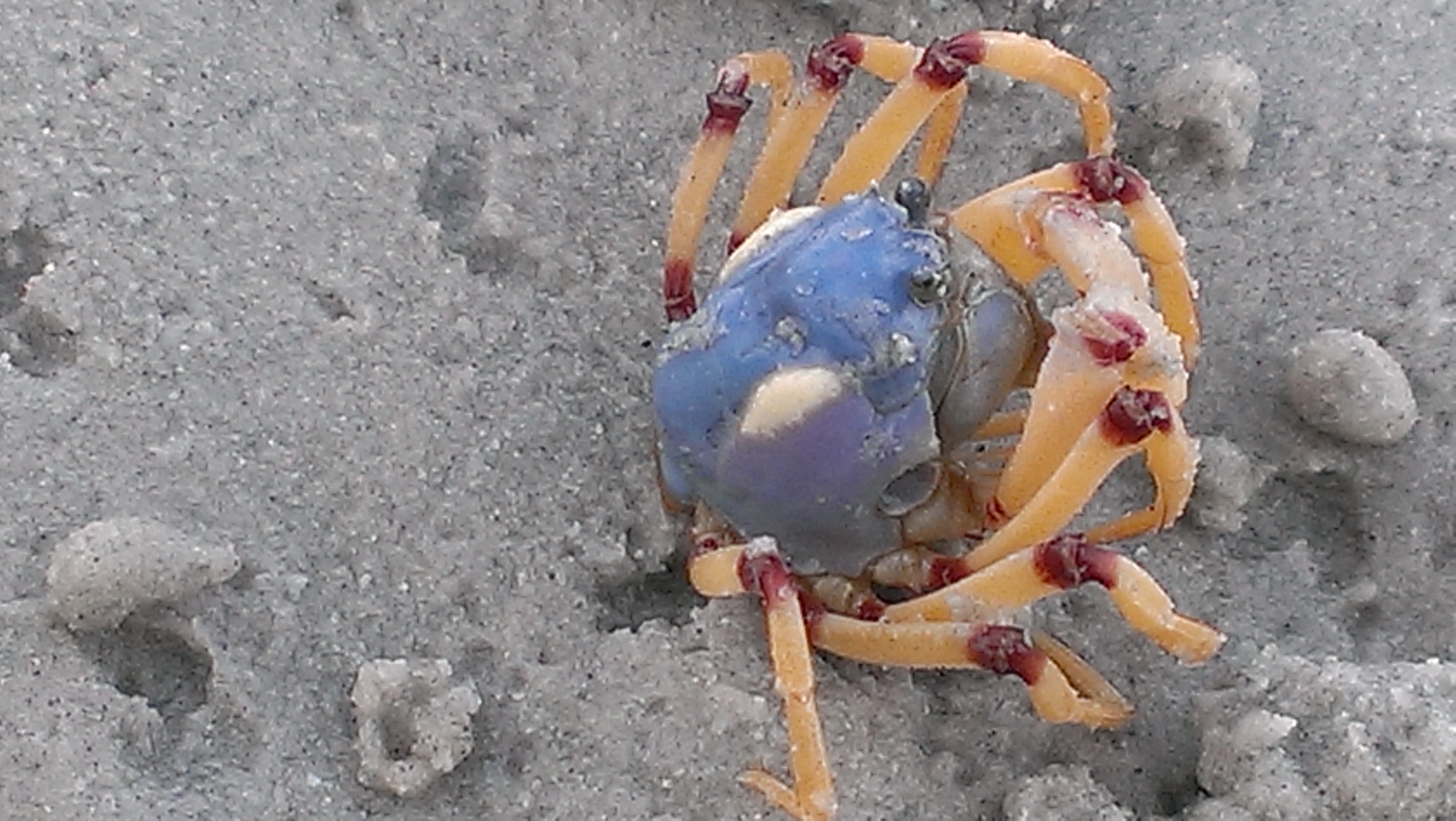
I was amazed by soldier crabs.  I have not manipulated the colours at all.  They really are blue, with burgundy elbows and knees!  These creatures can vanish under the sand and pull the back door closed behind themselves in a very short span of time.

2015-04-19 16.31.53

There were many small wonders. There were tiny orchids and tiny plants and tiny flowers.  Because this isn’t my part of the world, I couldn’t always tell weed from wild plant. This could be a problem in other contexts, but it was quite pleasant to have awareness of environmental devastation slightly further from the centre of my focus awhile.

2015-04-20 10.12.00

There were scribbly gums!

2015-04-21 10.49.36

India says these are Eucalyptus signata–which is wonderfully poetic in itself, to my ear.

2015-04-21 10.48.54

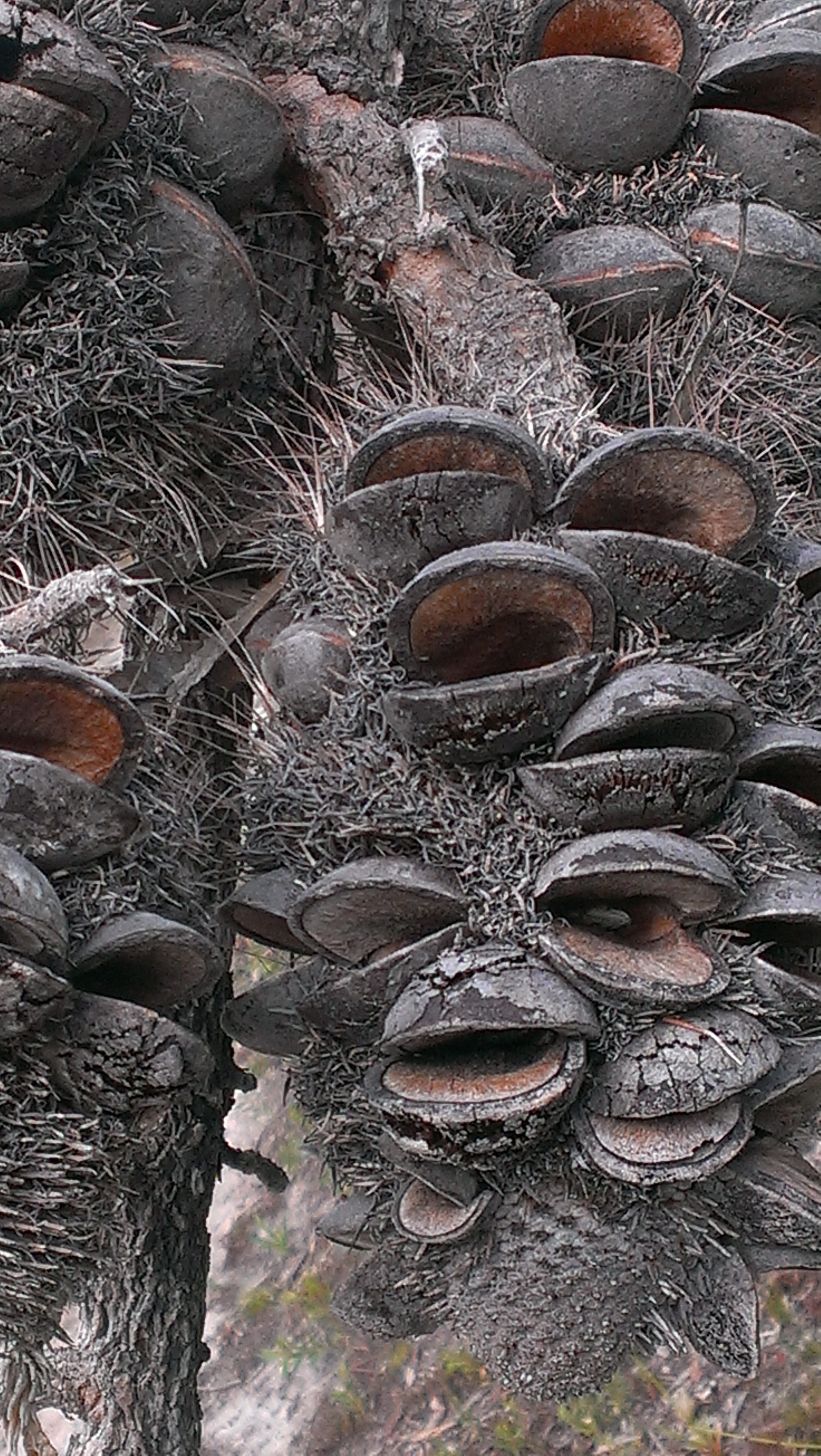
Banksias… tree sized banksias!  I am growing prostrate banksias and the coast in my state is home to shrub sized or low growing banksias.  They are lovely. These were immense.  Even the shrubby banksias were blessed with wonderfully large leaves.  It did have me in mind of May Gibbs’ banksia men, despite my adult critique of them as caricatures of a questionable sort. Non-Australians and maybe even younger Australians should know I am referring to a book by  Australian writer and illustrator May Gibbs called Snugglepot and Cuddlepie, in which the banksia men are inevitably villains–there are no banksia women. I will let you draw your own conclusions about Australian attitudes to hirsute and dark skinned men, particularly in the period in which she was writing–the early 1900s.  If you’re curious, google images will show you what I am talking about with a few keystrokes.  Her illustrations entranced me as a child.

2015-04-21 10.32.04

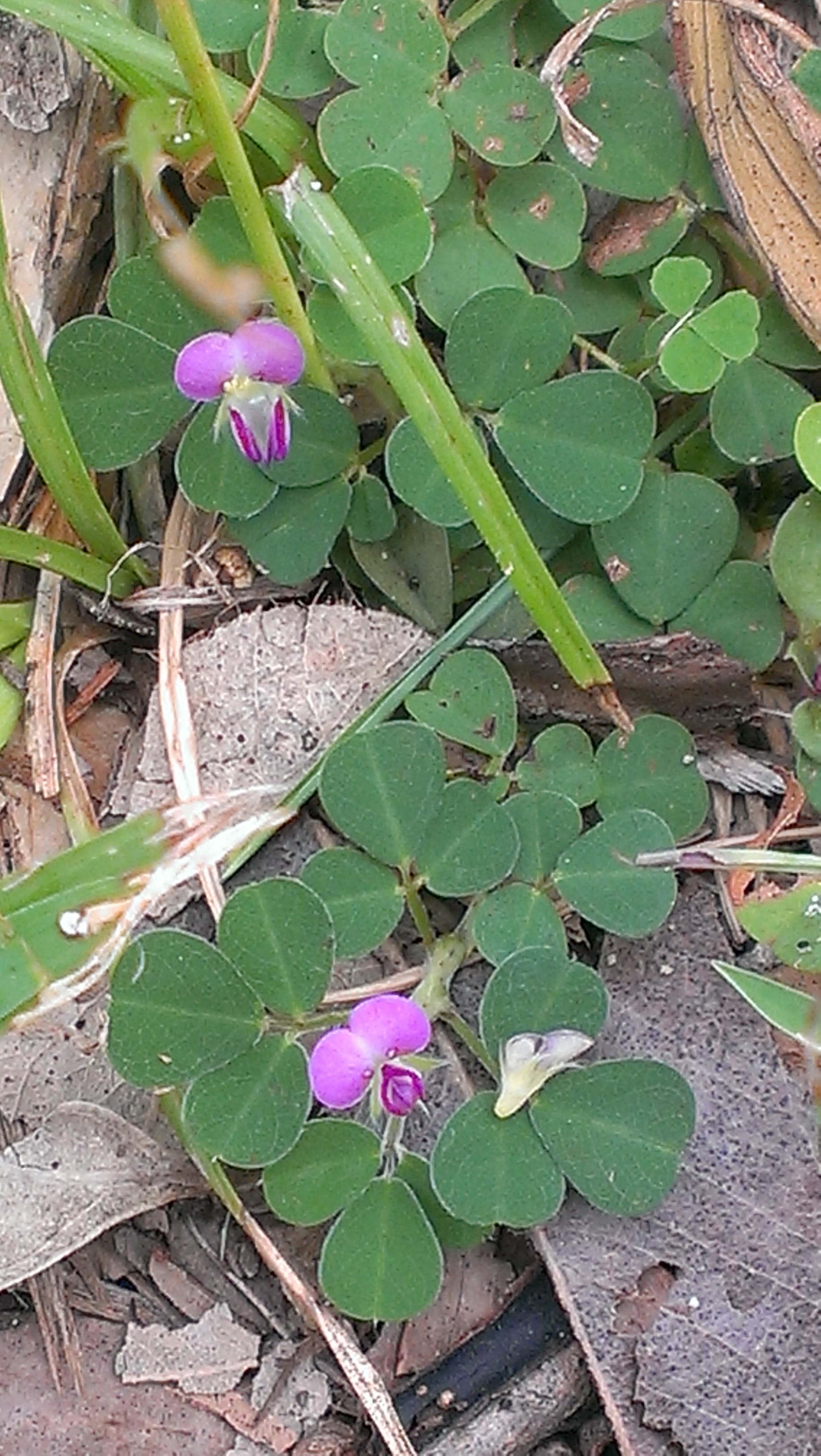
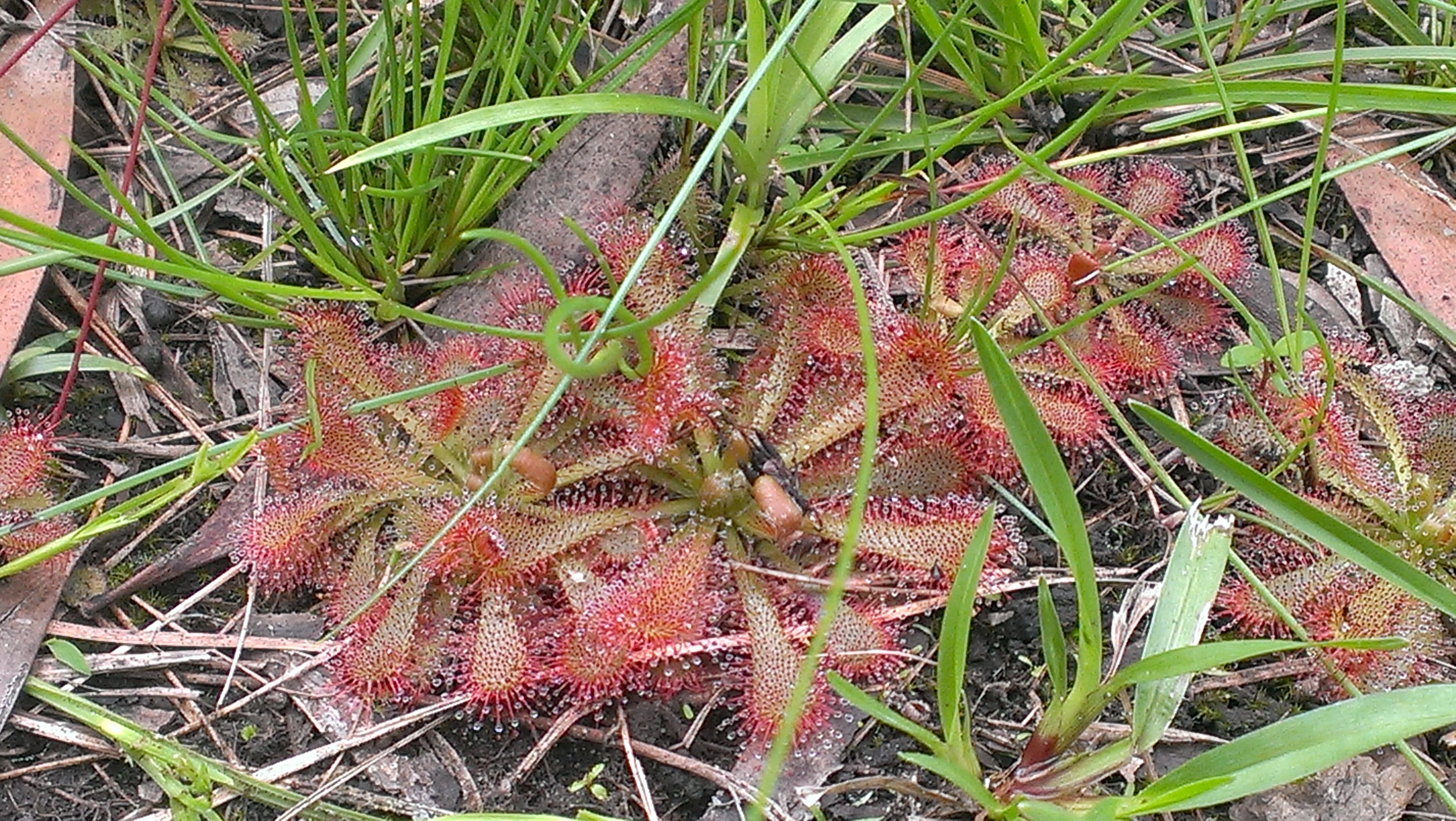
There was another workshop participant who squeaked in glee at sundews–so it wasn’t just me! Insectivorous plants–some even in flower.  Wonderful.

2015-04-20 10.19.57

Roz and India offered all manner of paths into considering how we might be inspired by nature, including videos by artists speaking about or simply showing how they work.  There was the wonderful example of these two artists themselves speaking about their own ways of working and showing some of what they do and think.  And there was poetry and writing as another pathway into how other imaginations might think the natural world and our relationship to it.  Simply wonderful.  It certainly did inspire creativity in all its diversity. But as always this close focus on the natural world inspired in me, first and foremost, awe.

18 Comments

Filed under Natural dyeing