Category Archives: Uncategorized

Eucalyptus Cladocalyx Bark

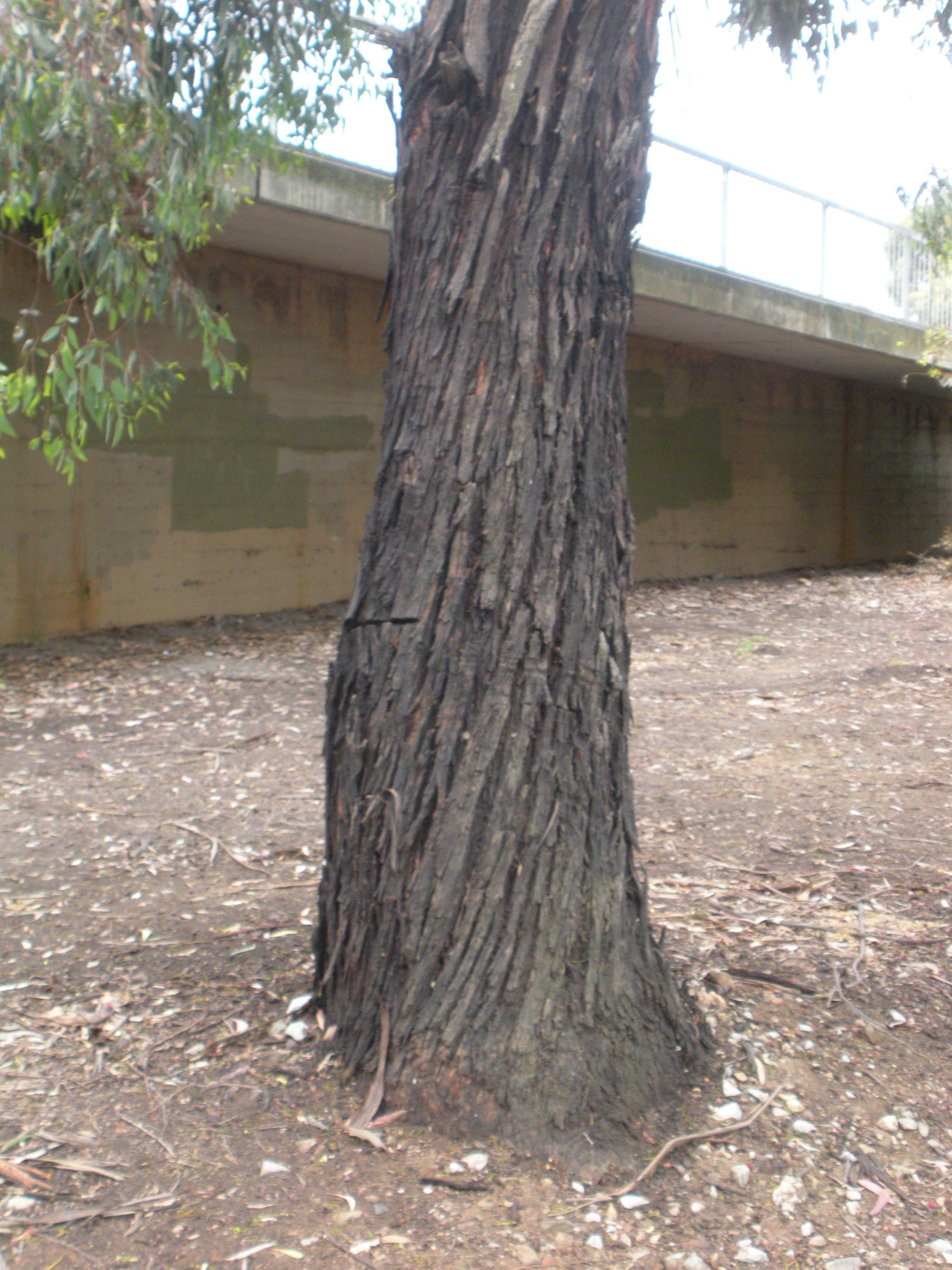
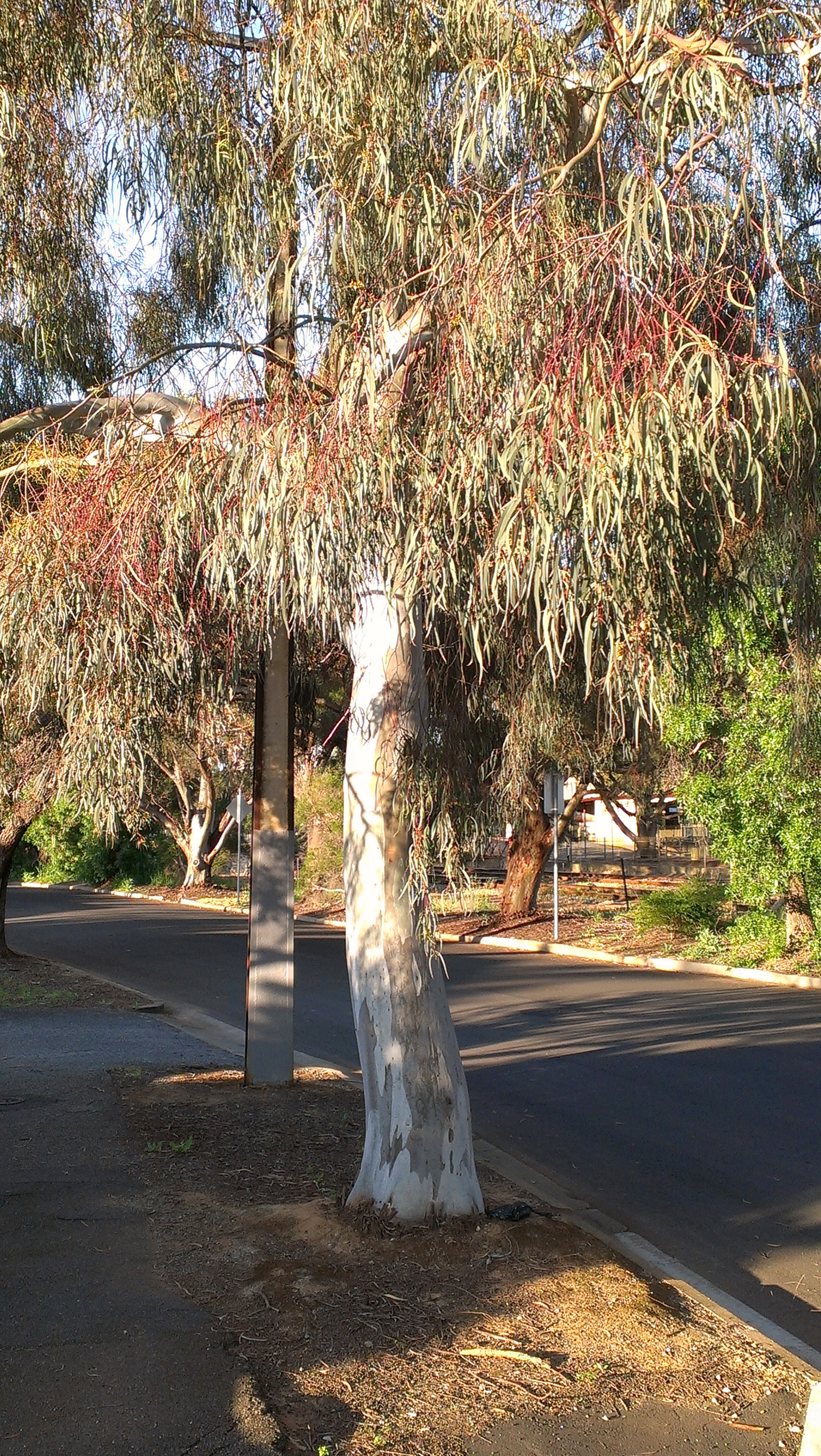
I have been reading Rebecca Burgess’ gorgeous book, Harvesting Color, which had me thinking about how to create a tannin solution.  The local solution for her is to gather acorns.  That might be possible for me in autumn, too. There are some avenues of oaks in my city, and they have tiny newly formed acorns right now.  But it seems to me that eucalypt bark would be a promising source in my own region.  I thought it seemed logical to collect bark from a species that hadn’t shown a lot of dye potential (I’m trying for mordant, not dye).   So I stopped outside the royal showgrounds where this huge E. Claodocalyx (Sugar Gum) had shed its bark recently.  We were having unseasonably cool weather as this dull photograph shows.

IMAG0317

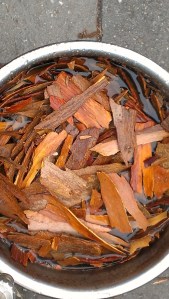
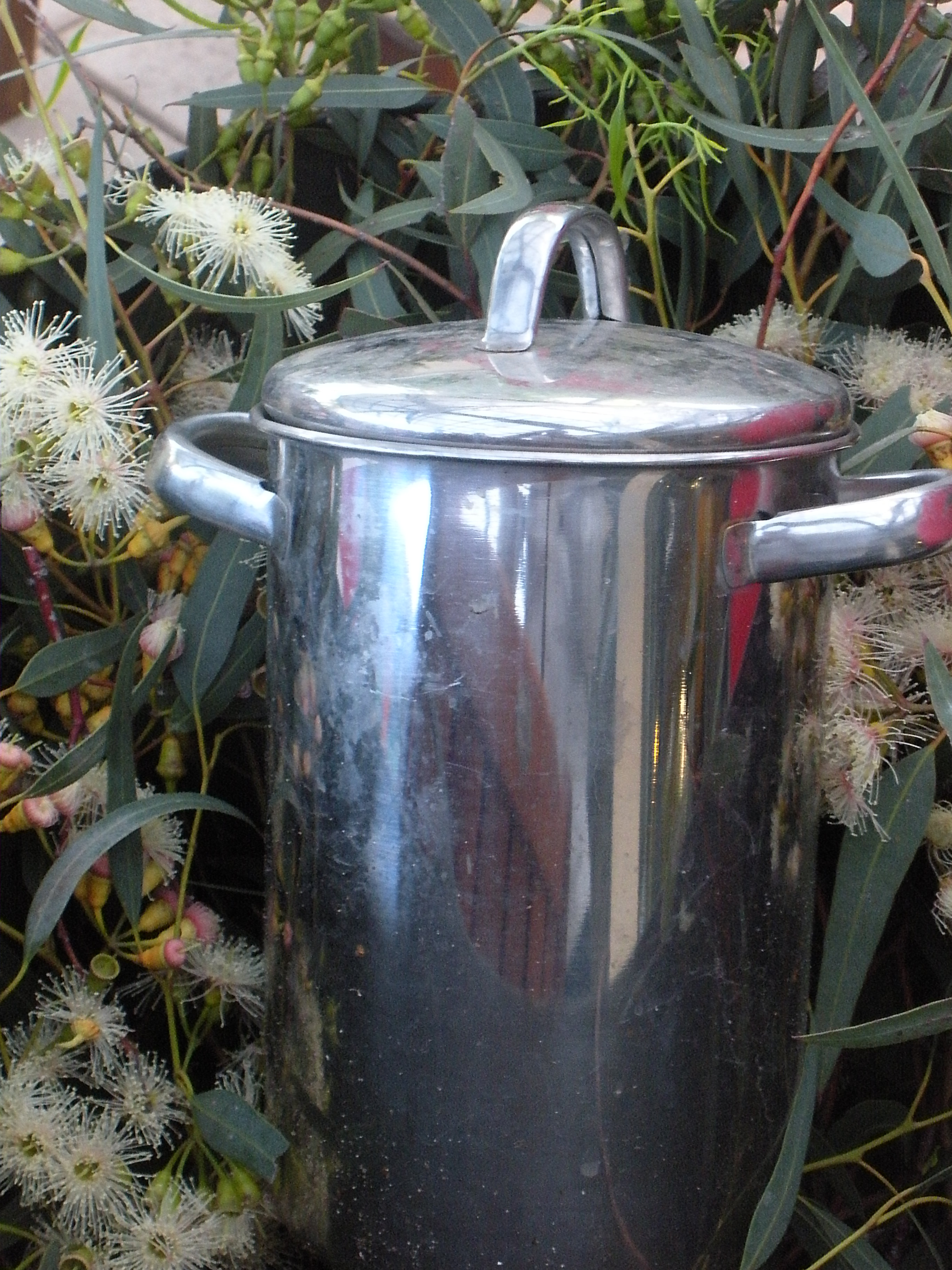
I picked up a bag full of bark and headed home to let it steep in rainwater. This will be an opportunity to consider the dye potential of the bark as well as try it as a source of tannins.  There are many of these trees around my area and this is a truly huge tree when full grown, which sheds its bark once a year, so if this is a good source of dye, I will have access to a lot of it! Here is how it looked on 15 December:

IMAG0330

And two days later:

IMAG0342

…so I put a metre of cotton cloth into it, which immediately turned golden yellow:

IMAG0347

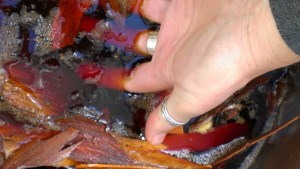
I left the pot in a sunny spot.  The temperatures have ranged from mid-twenties celcius to 40C.  By 1 January, the pot was darker still, with the liquid seeming a ruby red shade.

IMAG0545

And here is the cotton I immersed in it  so many days ago after drying.

IMAG0547

Needless to say, I am now planning to dye wool in my bark liquor and see what happens…

Leave a comment

Filed under Dye Plants, Eucalypts, Fibre preparation, Natural dyeing, Uncategorized

Dianella fruit

IMAG0321

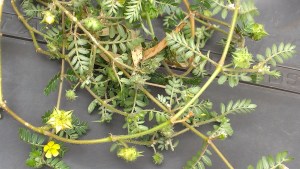
Yesterday I came through the royal showgrounds with my secateurs.  On the way out, I spotted these fruits.  I think this is one of the dianellas, probably Dianella Revoluta. It’s a  common native, drought hardy inclusion in public plantings in my area.  There were so many that on the way back, I took just a couple of stems from each plant and put them in my panniers.  While I was there I saw some caltrop, so I removed that while I was there.

IMAG0323

It’s one of the enemies of cyclists, as you might guess from these immature fruits… which when ripe will be the stuff of many punctures.  I pull this out any time I have the chance.

IMAG0325

I followed Jenny Dean’s suggestions about processing berries…

IMAG0328

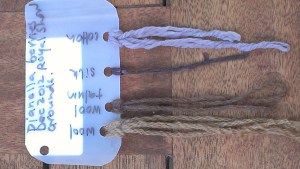
And, as might have been expected, the result was nothing like the fruits I started with.  I would rate the unmordanted wool pale tan, wool with alum dark tan, the silk is grey-brown and the cotton is pale grey.  Not too exciting, is my conclusion!IMAG0340

15 Comments

Filed under Dye Plants, Natural dyeing, Uncategorized

Silk Moths!

Yesterday I got up to find that two of the cocoons were open and there were two silk moths in our kitchen.

Not only that. In the fullness of time it became clear that we had a female and a male.  And silkworm eggs.  My goodness!  At this rate my five silkworms could result in a large second generation. Given that I stared with only five, I had not assumed that there would be two moths alive at the same time, let alone eggs.  Now I have to figure out the next stage…

2 Comments

Filed under Uncategorized

Silkworms!

A while back, I mentionedthat I had acquired some silkworms.  Five for a dollar, to be exact!  There I was, checking out the primary school community garden during their fete and admiring the plants for sale, when I saw them.  So, they went into a strawberry punnet and came home on my bicycle.  Then began weeks of raiding local mulberry trees for stray overhanging leaves (and there were some from my friend’s front yard too).  Since it is mulberry season, I got some food from the whole adventure too, and some berry-stained fingertips. 

Eventually, they began to show signs of wanting to move to the next stage of their life cycles.  I’d sought advice from wormspit, so most of them found themseves moved to a cardboard roll (ahem) at this point:

I was quite fascinated by the way that the colour of the silk changed between the early stages of cocoon-making, when it seemed quite white, to the next day:

Now, we are waiting to see when they emerge and what happens them.  It may be that with a posse of only 5, there will not be opportunities to reproduce.  But we’ll wait and see.

5 Comments

Filed under Uncategorized

Let the ironbark identification and dyeing experiments begin!

This tree is growing on the tram route in Goodwood.  It is clearly an ironbark, but I am less certain it is E Sideroxylon, and thus, I chose to investigate further… There are three ironbarks in a little cluster at this spot.  I think one of them is the same species and the other is so tall and branches so many metres above the ground that I may never know.

Here is the key feature of an ironbark: deeply furrowed bark which is impregnated with a sticky saplike substance (kino) which the tree produces in an effort to fend off attack by insects.

Here, more of a sense of the whole tree.  It is a very tall tree… and while the trunk might be secure from predatory borers, the leaves showed penty of signs of lerp and caterpillar attack.

The upper branches were paler, more of a cream colour, and covered in smooth bark which had begun to shed.  We had a very overcast day, but sometimes a natural dyer can’t wait!

The leaves smelled rather lovely while cooking.  I didn’t imagine when I set out on this dyeing path that cooking eucalyptus leaves smelled different, except in the obvious case of ‘lemon scented’!  They do though.  Some smell quite spicy and some smell like classic Eucalyptus oil.  E Crenulata was so overpowering it was voted out of the house for all future time.

As for identifying features, I collected plenty of leaves but could not reach any mature fruit.  Since this tree is growing among others that may not be the same species, picking fruit up from the ground sometimes just confuses the picture.  There were no visible buds or flowers–so, there are some limitations on identification.  Just the same, this tree appeared to bear fruit in pairs and threes (and not the classic 7 flower umbel of E Sideroxylon).  Tentatively, Euclid, hampered by my inadequacies in providing accurate observations, and the limitations in the data available, gives me E Tricarpa.

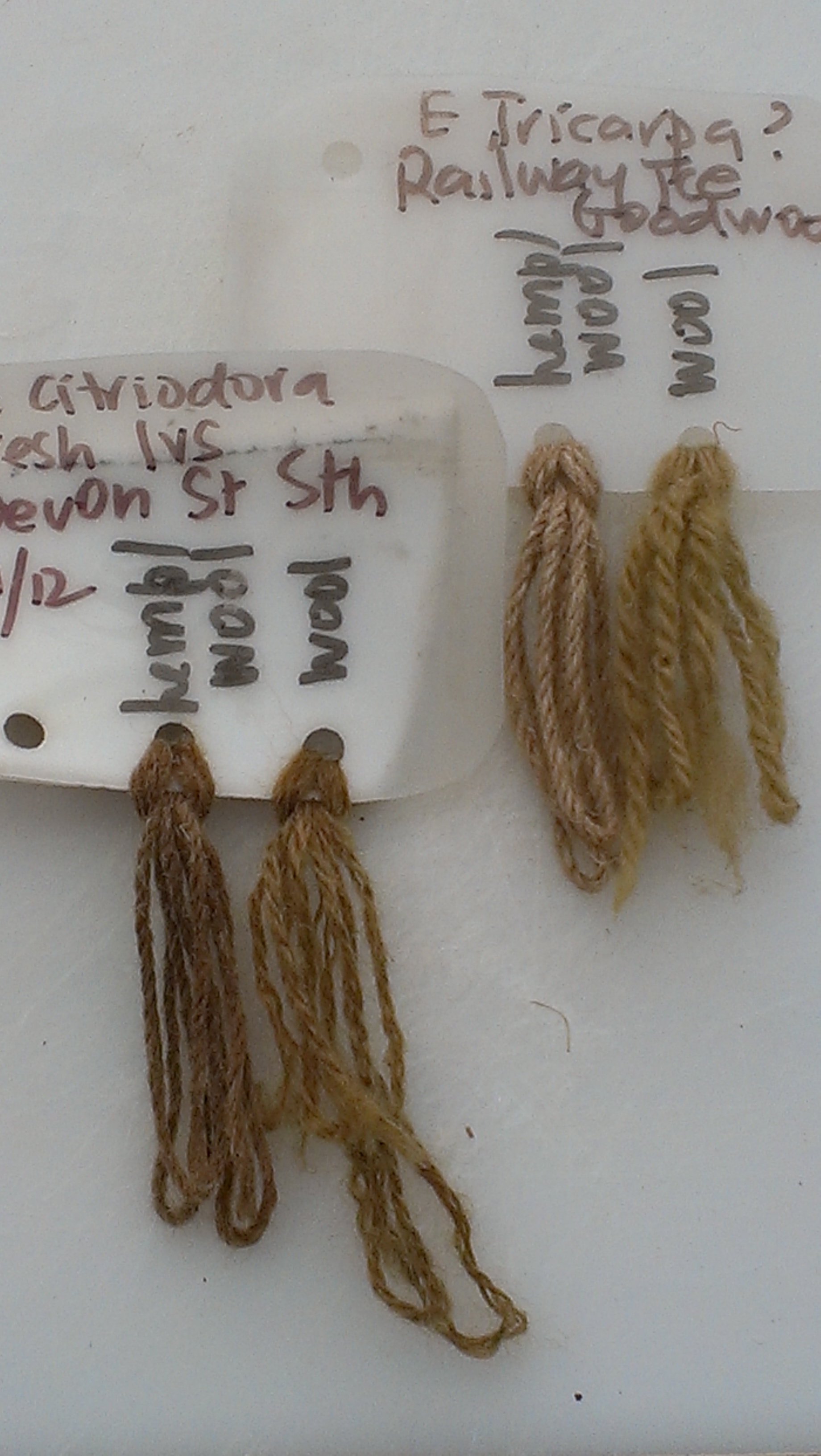
Here is the outcome of my dye sample (hemp/wool blend on the left and and wool on the right on each sample card).  E Citriodora on the left and E Tricarpa (tentatively identified) on the right… equally unexciting to my way of thinking.

Leave a comment

Filed under Dye Plants, Eucalypts, Natural dyeing, Uncategorized

Ironbark Mystery

This week I found some E Sideroxylon trees in a park with lots of low hanging leaves… too tempting.  So I harvested some.  I brought them home and made leaf prints.  I have obtained strong oranges from these leaves in the past, so imagine my surprise when I unwrapped them and saw this:

This is on the silk-faced side of a hemp and silk blend.  It did confirm for me that the silk-faced side should be the right side.  Here, on hemp-cotton blend:

Disappointed, I considered the possible reasons.  Perhaps those pipes were not cast iron but something else?  I didn’t think so. I re-checked that I still have my cast iron pipes stored separately from my welded steel pipes… yes.  Hmmm.  But then I checked the dye pot using the same leaves, that I was cooking at the same time as the leaf prints.  And the wool was barely tan, almost no colour at all.

So, the metal content of the pipe is not the explanation.  The leaves that had been cooking for 3 hours or more were still green looking.  The dye liquor was barely tan.  I would expect the leaves to be orange and the dye liquor to be strongly coloured.

What could explain this?  I went back to my sample cards to check I really had ever had success with E Sideroxylon and there were my samples, bright orange.  There are a lot of variables in natural dyeing, and season or rainfall or soil could make a difference, but surely not this much of a difference.  The most plausible reason is that this tree was not E Sideroxylon, and that when I have had perplexing results in the past, they have also been caused by using a different species.  So, I consulted my most detailed and sophisticated Eucalypt resource, Euclid.  This is a database of Eucalypts created by the CSIRO, an Australian government-funded scientific research organisation.  Euclid is an amazing tool, but when using it to identify a Eucalypt, an accurate result depends on accurate observations of the tree in question–so user error is still possible.

When I began learning about Eucalypts, I couldn’t tell an ironbark from a stringybark (for those still in this position, please accept my assurance that the difference is quite profound once you grasp it).  I finally worked this out when I tryed dyeing with E Melanophloia and got nothing.  Almost no change in colour.  I thought it was E Cinerea, which has a great reputation as a dye plant.  Well, Melanophoia is a pale trunked ironbark and Cinerea is a stringybark.  They do both have rough, deeply furrowed bark and silver grey heart or round shaped leaves and white-cream flowers, and there the similarity ends!

So… perhaps I am about to move my understanding of Ironbarks up a few notches.  Euclid and my observations reduced the number of possibilities down to 7 (from a possible pool of over 900 Eucalypts).  The plausible candidates are: E Rhombica; E Fibrosa subsp Nubila (Blue Leaved Ironbark); E Decorticans; E Fibrosa subsp Fibrosa (Broad leaved Red Ironbark) and, of course, E Sideroxylon.  I think E Fibrosa subsp Fibrosa is my front-running candidate… it looks very much like E Sideroxylon to me on Euclid even now my suspicions are raised.

Next thrilling update whenever I reach some new insight!  Unfortunately none of these new possibilities are in my ready reference (a book), so I may be observed under trees in the neighbourhood with my laptop in hand.  Well, it won’t be the first time.

6 Comments

Filed under Dye Plants, Eucalypts, Leaf prints, Natural dyeing, Uncategorized

Eucalyptus Torquata

This is E Torquata, the Coolgardie Gum.  In my area it is a popular street tree.  It is a relatively small gum tree with a showy lovely flower and distinctive bud caps.  Being native to Western Australia, it tolerates the dry conditions that a street tree in Adelaide can expect to have to manage.

I find Coolgardie Gum easy to identify. When I was a child we lived in the goldfields in WA where this tree is from.  We lived in Kalgoorlie for a while, and this tree grew there as well as over to Coolgardie, which we used to visit.  The other town Wikipedia mentions as within its range is Widgiemooltha.  When I was a kid you could hardly call Widgiemooltha a town, but there was a dam there that someone had set goldfish free in.  We went there once and came home with 15 goldfish, all different!  It was a fantastic day out, picnic plus new pets–what more could a young person want?  We used to break the beak off the bud caps from this tree and string them to make necklaces.  They are distinctive.

This particular tree has relatively yellow flowers, but most nearby have flowers that are closer to orange.  There is a big infrastructure project happening in my suburb soon, and some of the local trees are going to go, including this one.  So I decided to harvest a little.  I have tried it as a dye plant before and I wasn’t impressed (I don’t invest time in natural dyeing with the intention of gettng tan), but I know someone who has achieved green from this tree using modifiers.  These leaves are destined for my sample pot.  I’m aiming to try them with modifiers myself.  I have some rusty-nail-iron-water and some copper-pipe-water, and I’m finally going to try them out.

I have also wrapped up some leaves sandwiched between some recylced silk and some recycled linen to see what happens.  I also put some samples in from some trees I found near a friend’s house in another part of the city just in case they are E Scoparia… the leaf shape and bark are right, the number of valve sin the fruit is right, the flower colour is right, and the bark is colouring up the way the ones in my neighbourhood are, but I trust the dye pot more than I trust my capacity to identify Eucalypts.  I’ve cooked my leaf bundles for 3 hours and I’ll unwrap in a day or two.

While I’m on the topic of Eucalypts that don’t have long to live… RIP this beautiful Corymbia Citriodora (Lemon Scented Gum).  At the community information day on the weekend I was told it would be cut down this week or next.  Right now it is in full bloom.  There are thousands of bud caps showering down and the road is covered in a dusting of yellow stamens.  Lorikeets are screeching and flying in and out of that tree all day long.  They start before I’m out of bed in the morning.

Farewell beautiful trees.

Leave a comment

Filed under Dye Plants, Eucalypts, Natural dyeing, Uncategorized

Dyeing merino braids

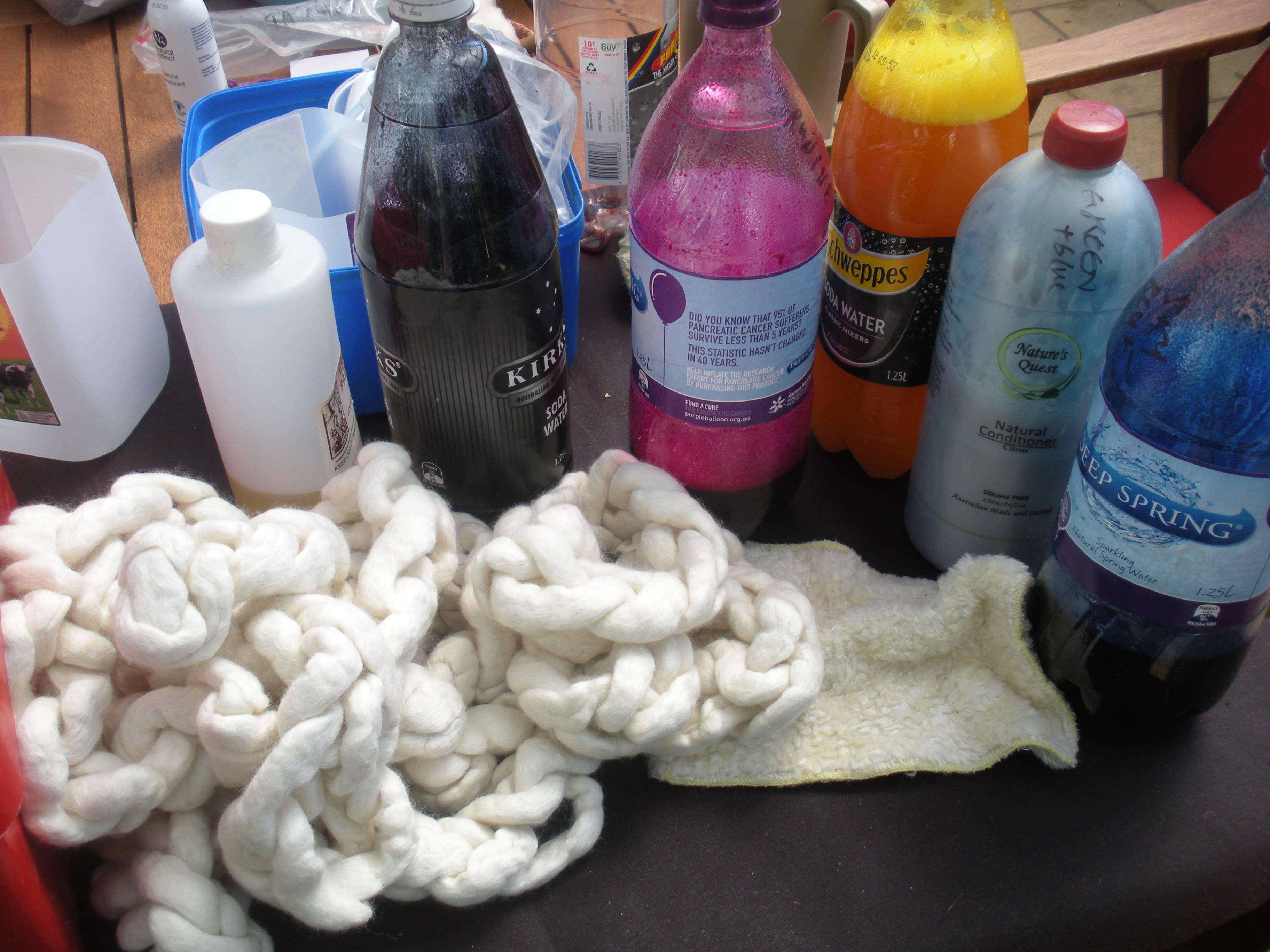
I decided to dye some roving in mixed colours.  So, I braided my merino roving, soaked it overnight, spun it dry in my washing machine until it was moist but not wet (I have to say I won’t do this again–it compacted the fibre a good deal more than I expected), and got out my Earth Palette dyes.  These dyes are made by a small business in a country town called Gladstone, in my state.  I’m pleased to see they’ve made it onto the interwebs.  The railway between Adelaide and Port Augusta used to stop in Gladstone and I had a holiday there once.  It’s not much of a tourist destination, but I was there for the fine company.

I had pre-mixed several colours and that is what you can see in the soft drink bottles.

Request Feedback

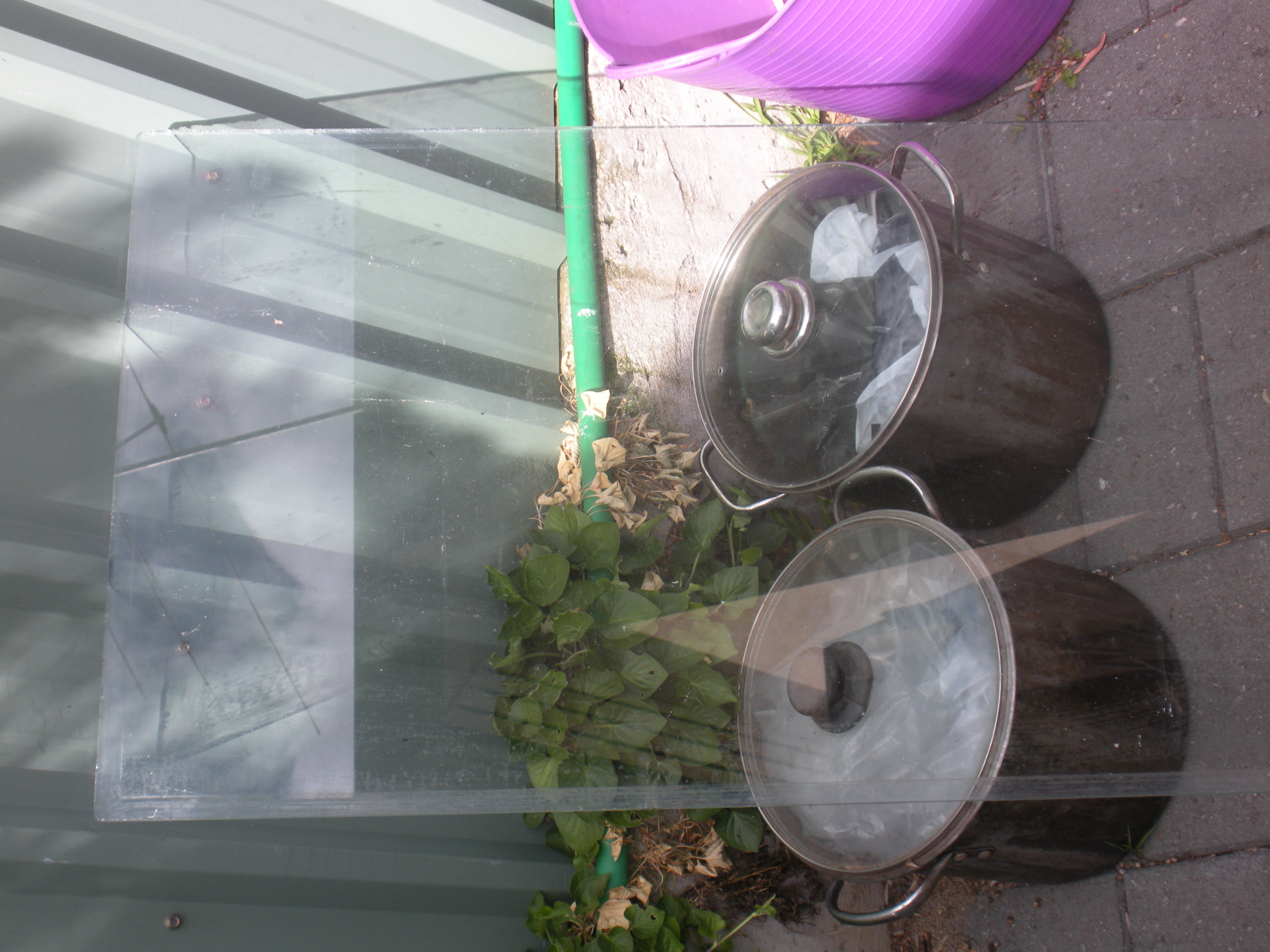
These dyes can be applied cold and fixed at room temperature–what a fantastic system.  So I applied dye, plastic bagged each plait, and set them in a warm sunny spot to fix.  I enhanced the warmth factor by putting the plastic bags in my dye pots and under a pane of glass since we’re expecting 20C maximums.  Ahhh, what a simple method.

I was really happy with the colours… but it turned out that as I feared, spin drying this merino roving, even though it was braided and bagged and cold and I’ve done this before without trouble… meant these braids needed to find adifferent use than the one I had planned.  They will never draft easily or evenly.  So I’ve been spinning them up after extensively fluffing them up.

Once again…not exactly what I planned, but sufficiently satisfying.

2 Comments

Filed under Uncategorized

Introducing Eucalyptus Scoparia

Finally today a friend from my Guild has been able to tell me the name of some of my favourite dye Eucalypts.  Here is one example: Eucalyptus Scoparia (Wallangarra White Gum).

I love these trees, and they are fabulous dye plants. I feel lucky to have several in my neighbourhood! If you’ve been following this blog you’ve met three of the four I have foundnearby: (October 4; September 5; August 22 2012).  Here’s a bag I made with E Scoparia leaf prints on cotton, using a sea water and soy mordant and cast iron:

And this is a corespun yarn.  I carded merino dyed with E Scoparia bark with dyed mohair locks and dyed silk and corespun it over a crossbred wool core.

Thanks to E Scoparia, and thanks to Helen for organising an identification for me!

8 Comments

Filed under Dye Plants, Eucalypts, Leaf prints, Spinning, Uncategorized

Nettle and flax fibres 1

I have been fascinated with the idea of growing fibre for spinning for a long time, but it is not a simple matter to process bast (stem) fibres. There are amazing YouTube videos of people (in Nepal, for example) spinning fibres which must have been hand prepared with the most basic of equipment and a corresponding maximum amount of skill, time and patience.  There are also videos showing the process of linen production from start to finish, like this Irish film.  Here is a re-enactment film using decent tools but with all steps done by hand (needless to say I lack the right tools and must improvise), and another showing how this was done in Germany (with an excellent rooster crowing in the backgound).  Even with some parts of the process mechanised, the preparation of the fibres is backbreaking and dangerous work I’m glad I don’t depend on doing for my living.

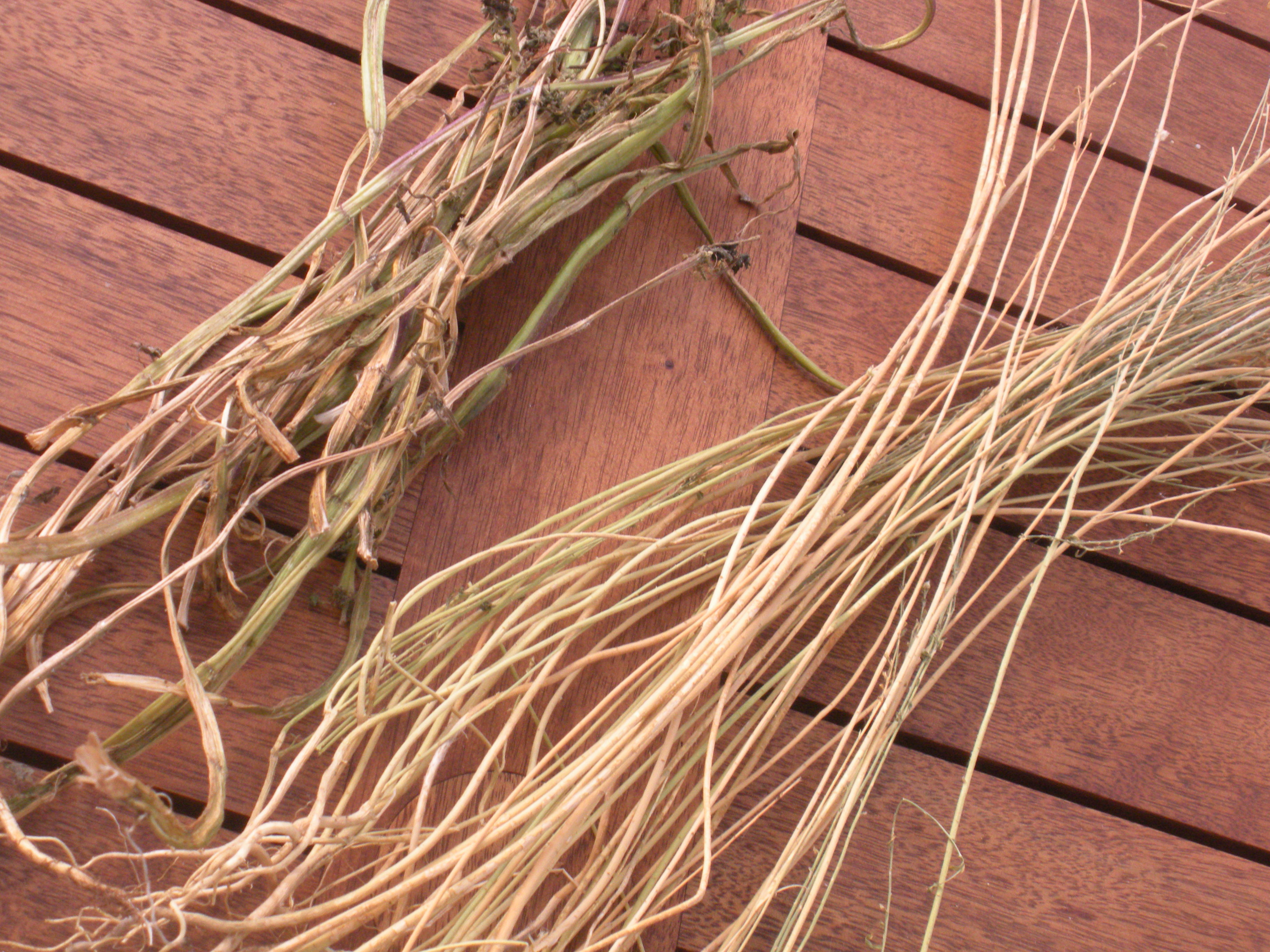
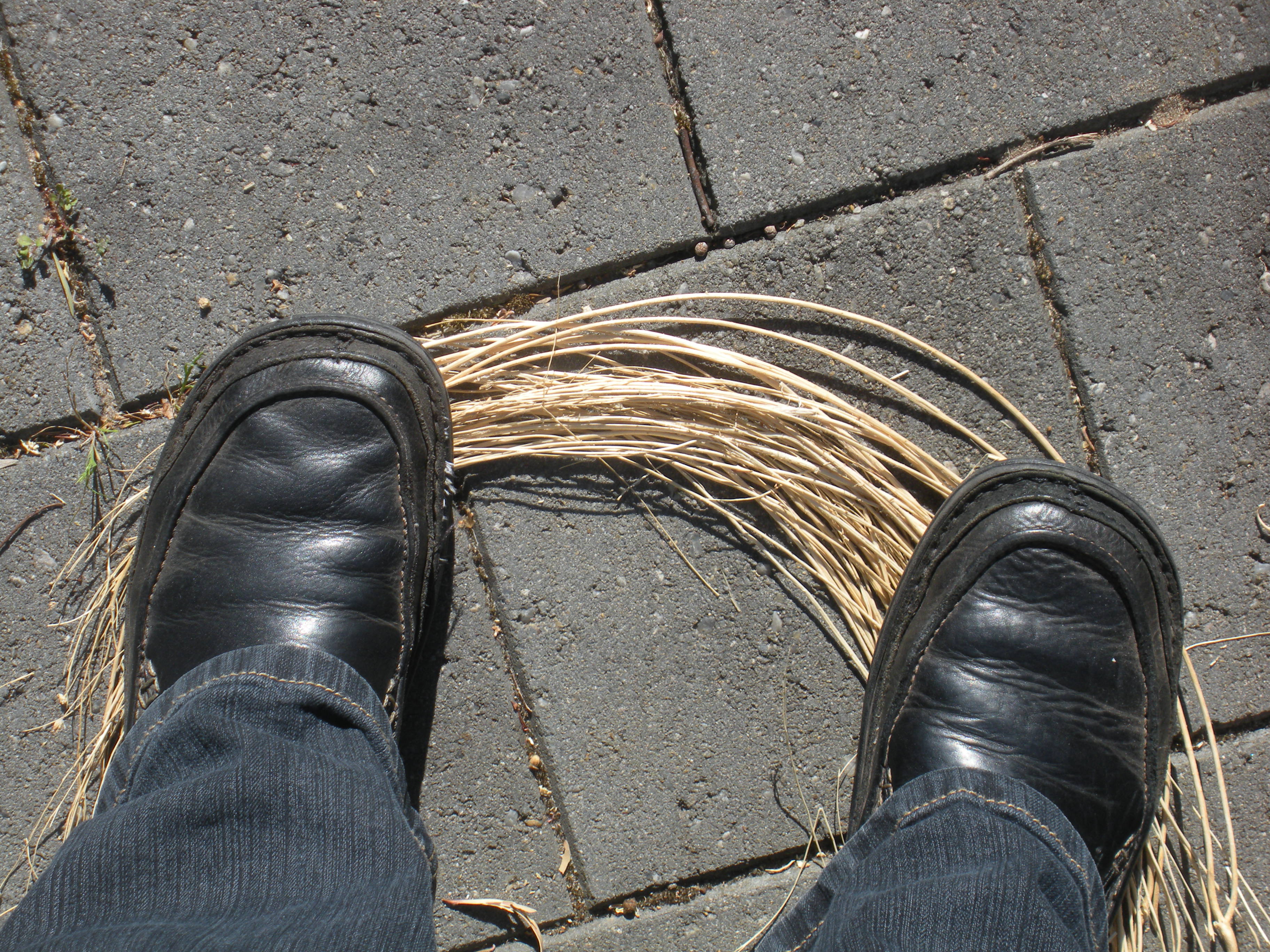
The skills and tools needed for hand preparation of bast fibres were probably known to someone in my family tree, but at a guess, this must have been many generations back.  I’ve decided to have another attempt.  I have here the total outcome of my latest nettle harvest (left) and my first flax harvest (right), dried and saved.  No, it isn’t impressive!  I have pulled them, stripped the leaves and side stems and dried them.  Next step, retting.
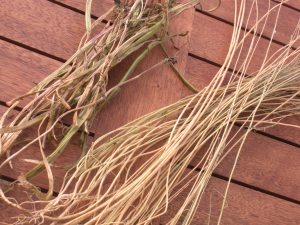
I put the stems into a bucket and covered them with rainwater on Labour Day.  It’s important to celebrate the achievementof the 8 hour day by doing things you love, so I was washing fibre and mucking around in the garden, visiting friends for dinner and making treats for the week to come.  And, putting these stems to soak.
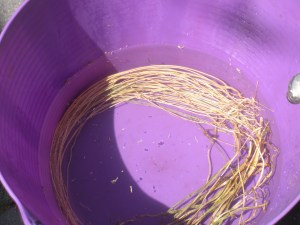
The week turned out to be warm, so I changed the water several times.  Part way through the week, Through the Eye of a Needle by John-Paul Flintoff arrived in the mail from dear friends in Denmark.  They know me well!  I have already read this book and just loved it.  In fact, I set about this experiment after a long break from thinking about it because I followed a link to a YouTube video of Flintoff talking about nettle fibre.  Needless to say it falls short of being a full instructional guide on how to rett nettle fibre.  In fact, I have really struggled to find any instruction on how to decide when flax or nettle has retted long enough.  Even Alden Amos’ Big Book of Handspinning (not normally a model of concision or falling short on the challenge of offering instructions) offers no real assistance.  I am guessing that even a skilled person might struggle to describe how much decomposition of the woody parts of a stem is enough, but not too much!  The most detailed account I’ve found is online here.  So, I decided to leave the stems in the water for 5 days–based on the best advice I could find so far.

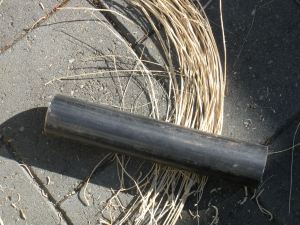
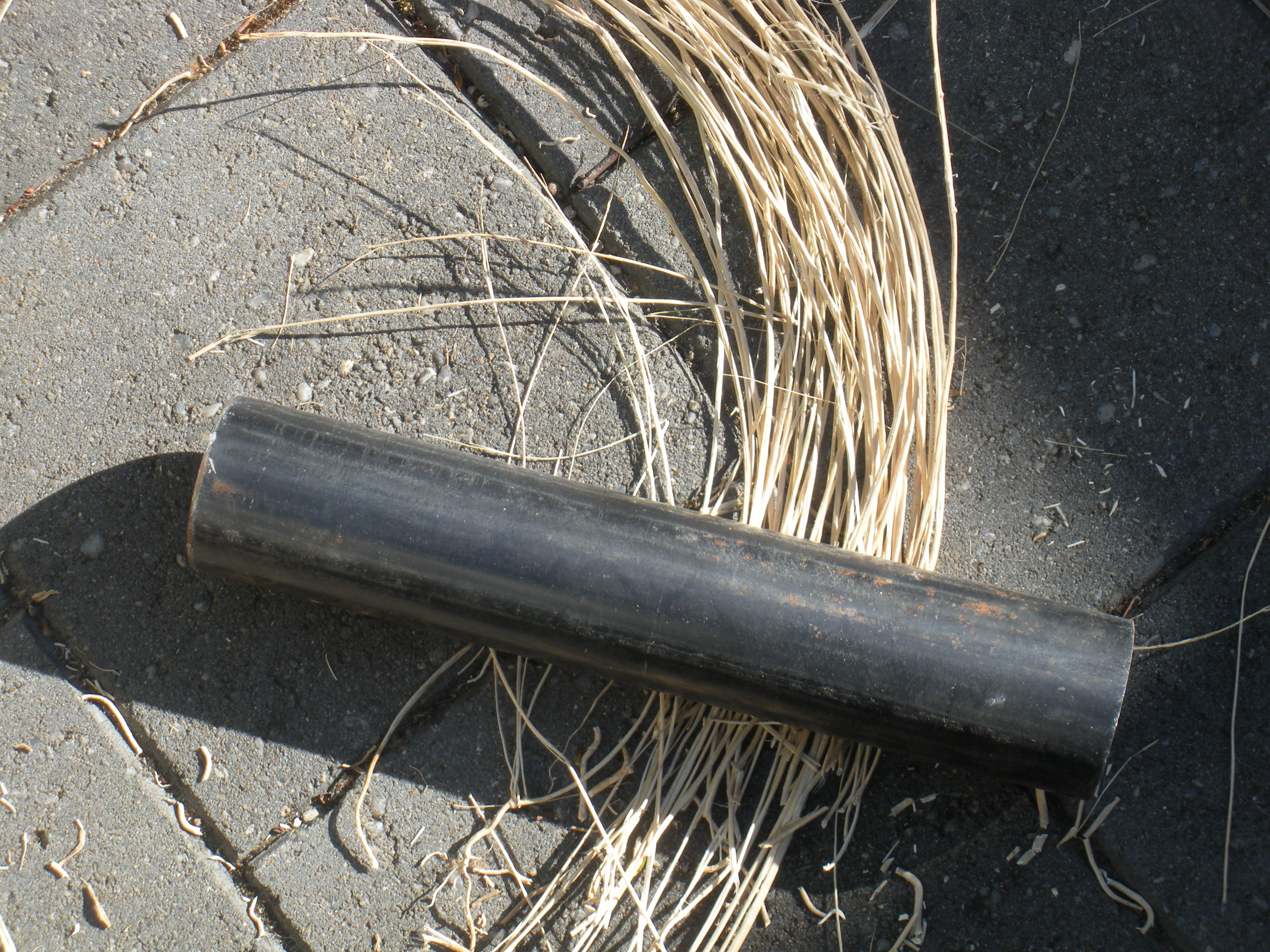
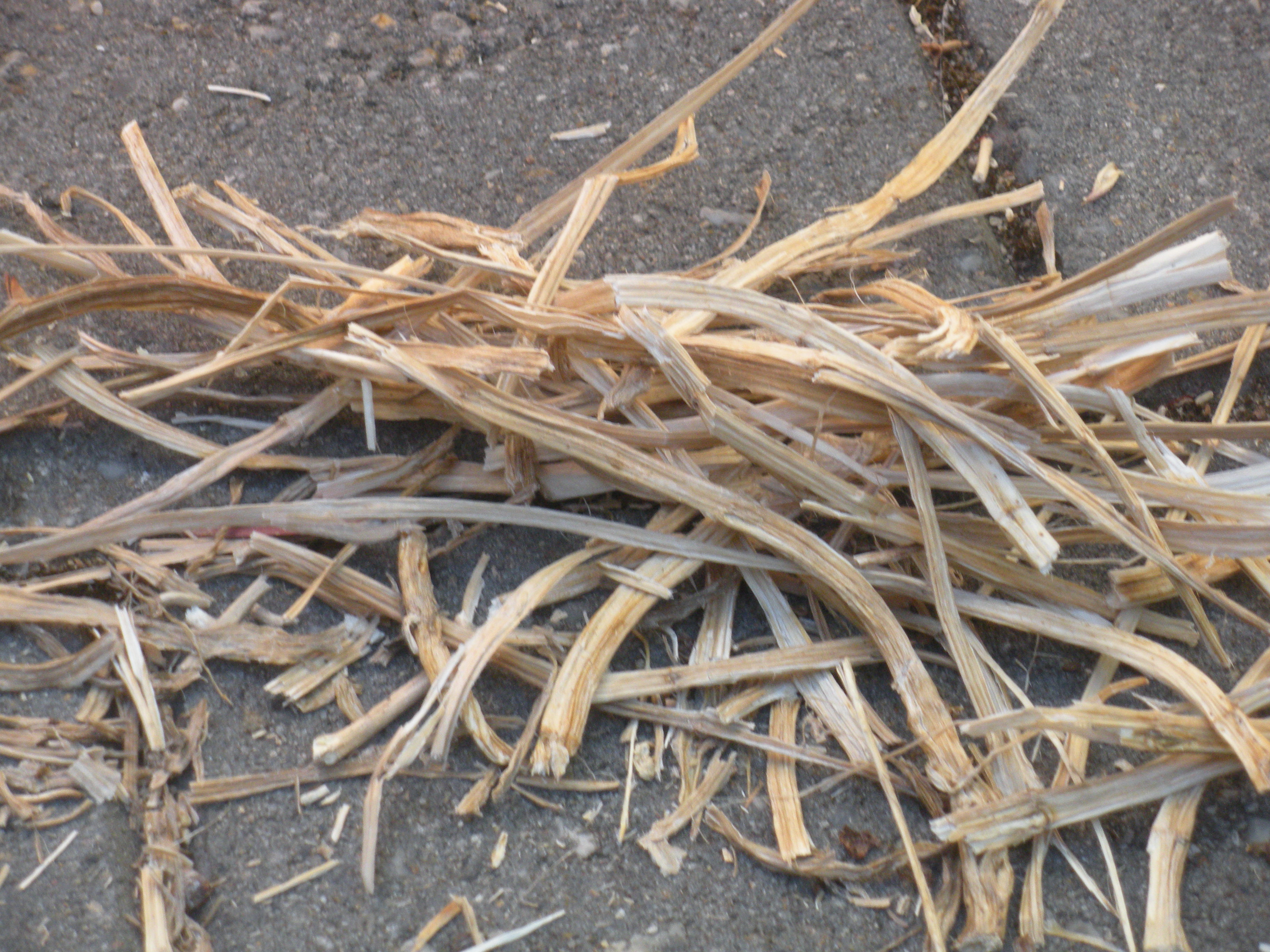
Nothing much to see at the end of the 5 day soaking.  I dried the stems and set to work figuring out how to break the woody parts enough that I could detach them from the fibrous parts (traditionally, breaking, scutching and hackling, all with speciic tools).  I tried stamping on them and rolling a metal pipe over them first.  You can see some results from the rolling…

At this stage I delared the nettle unfit for further effort (shattered into pieces with little evidence of fibre).  I am not sure why.  I squashed the nettle stems as they were drying out the first time and maybe that was wrong, or maybe they were just too young.
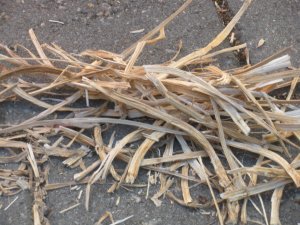
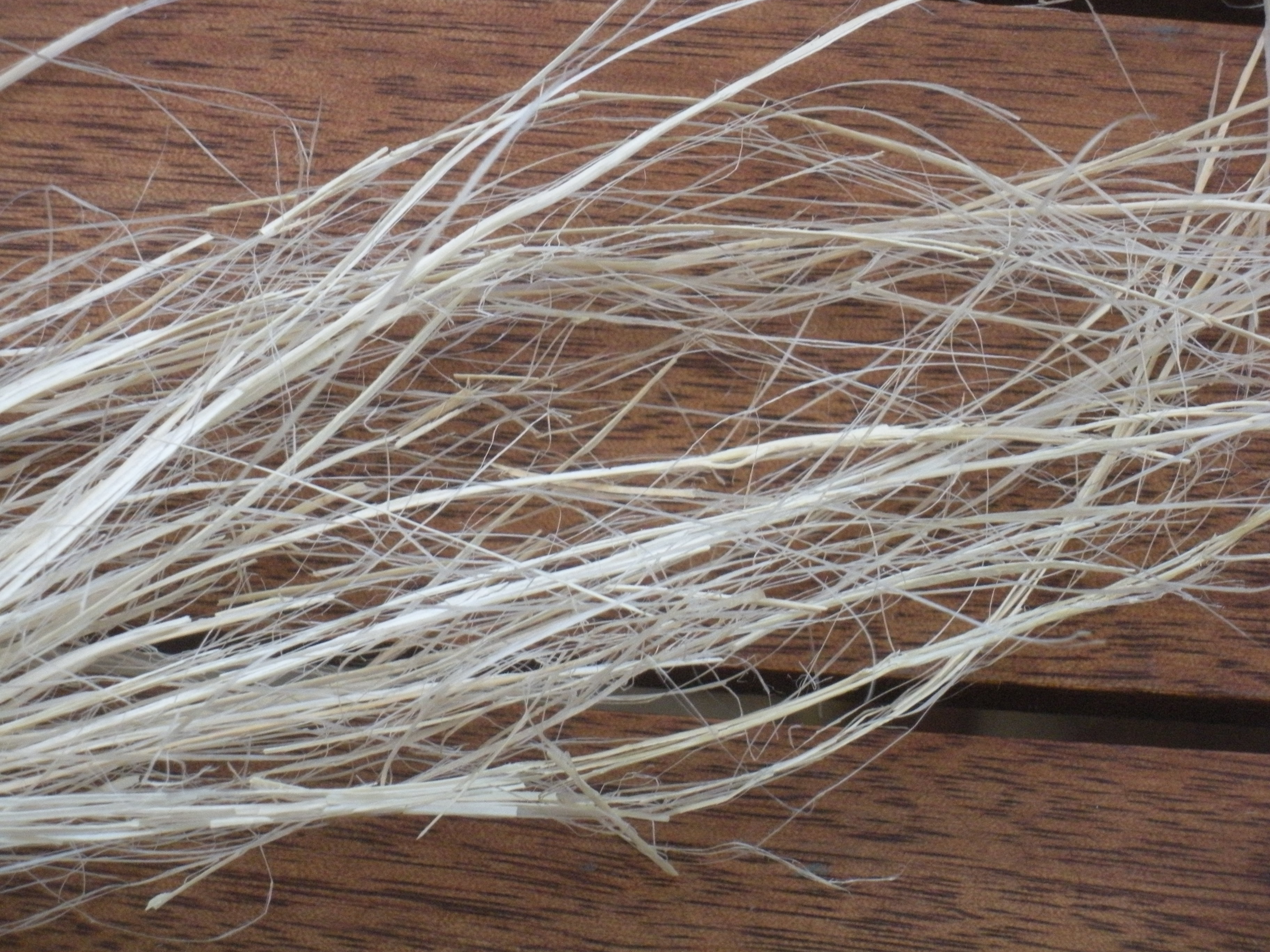
Fibres were becoming more visible at each stage of flax bashing… and more chaff was falling away.  I would say that means it was retted long enough. I tried my wool combs.  Not great for the job, but some improvement.  I really don’t have the tools (let alone skills) for breaking, scutching and hackling, and looking at the videos in the links above suggests my flax is very poor quality and short–no great suprises there either!
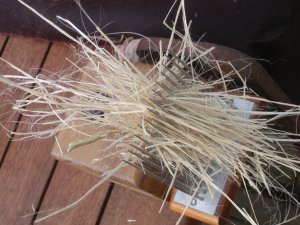
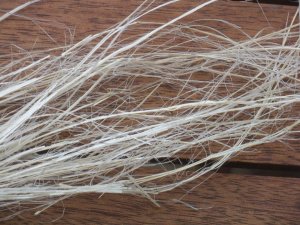
Next stage, laborious hand picking, I think.

6 Comments

Filed under Fibre preparation, Spinning, Uncategorized