There is a thing that’s happening a lot lately. Like the day I thought I’d work on a quilt, and then I constructed most of this book. And the next day, when I thought I’d finish the book, but actually made a yoga bolster out of old jeans. Go figure.
But in the end, things get made and it’s all good and no one else cares about what order things happen in, most days!
I think it was just that a memory of a book a little bit like this from my own childhood came floating through my mind, and I’m the kind of person who acts on those thoughts!
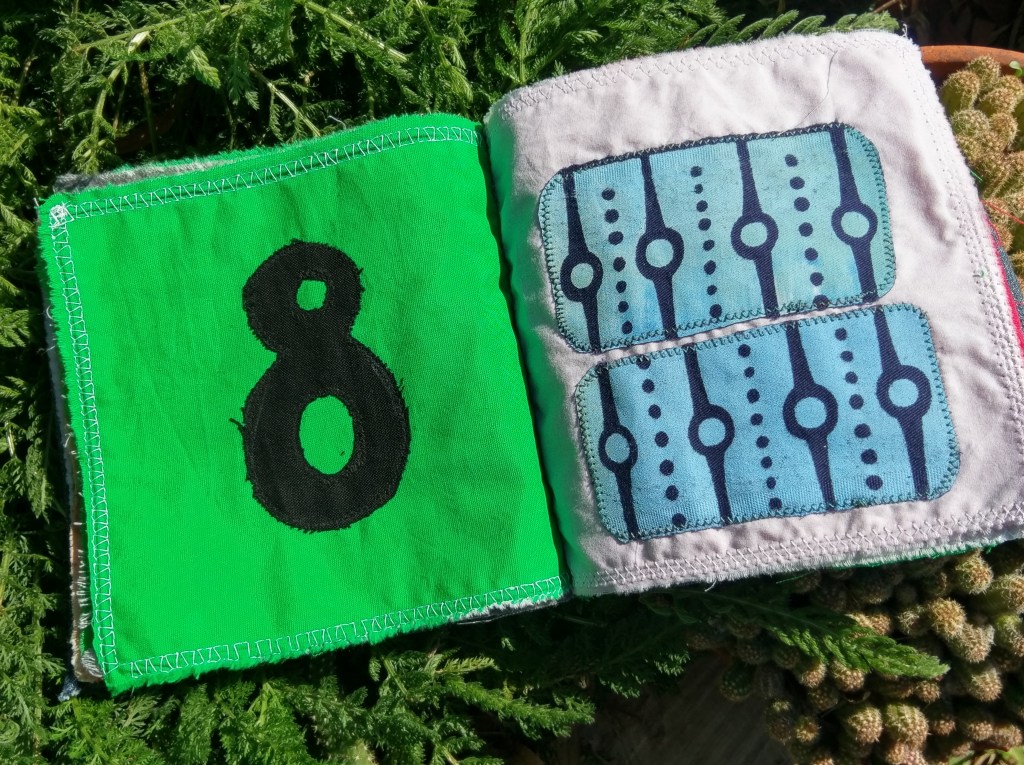
So I got choosing and cutting and ripping up old pillowcases and stitching, and ended up with this, which I hope will brighten some days and be impossible to pull apart!
And there you have it, a book for the grandbub, who is way too little to be learning to count. At the moment!
Any time I feel like I could bear to wash fleece, is the right time to be washing fleece. I don’t love it the way I love spinning, but I’m prepared to do it so I can spin local fleece. And, I have a lot of fleece right now and have turned more down. Several times! The capacity to wash fleece came upon me, so I made a start.
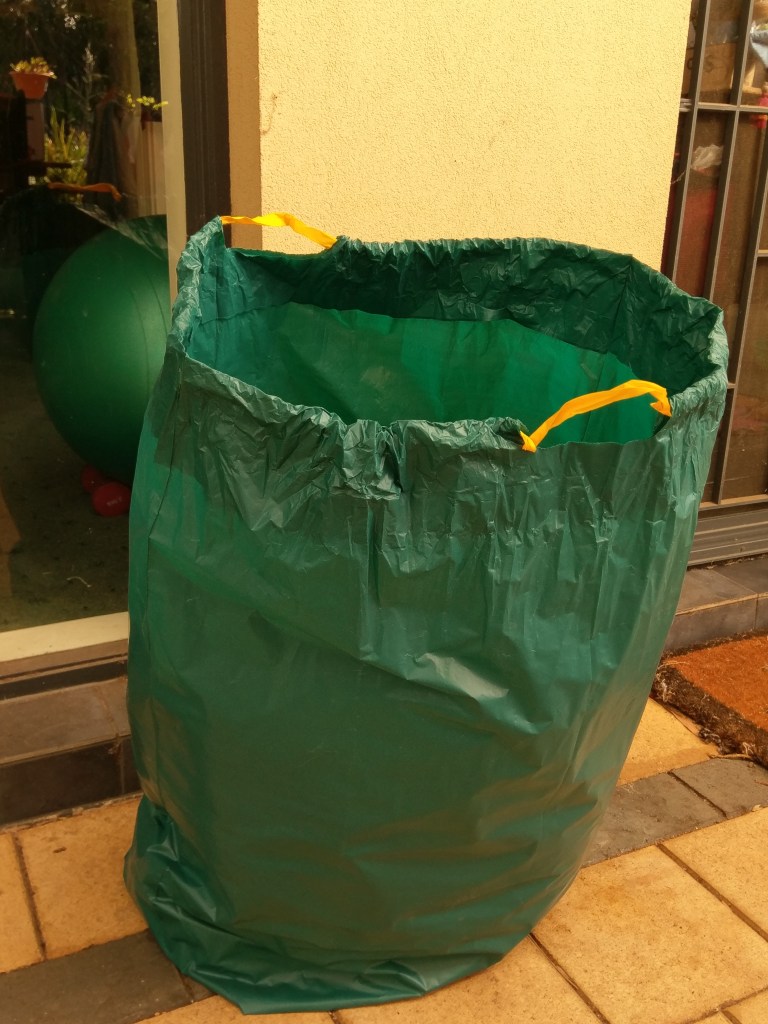
I am washing a fleece that is Polwarth or perhaps a Polwarth cross. Polwarth is a fine wool, but this sheep mows a lawn, it isn’t a prize stud animal with breeding for fineness–so maybe not the finest Polwarth ever. Polwarth is a big breed. This photo shows the garbage bag the fleece came in, packed quite full. That’s after skirting (removal of the really yucky and really short bits at the point of shearing). In the picture I am 2 kg in, with 1.75 kg of raw fleece still to go. I am washing it 250g at a time. So that is many rounds of soak, wash 1, wash 2, rinse. Big job.
Brown Polwarth locks beside a pair of secateurs
This is lovely fleece–soft, a beautiful colour, and with some very dark sections and some where the sheep’s age is starting to show in some greying. Also, fine fleece is the greasiest and the easiest to felt (that means it is hardest to wash well) and I much prefer washing coarser fleece. However coarse fleece makes itchy hats… so off we go!
Now washing raw fleece is a subject on which much has been written. I have drawn the conclusion that there are many ways to arrive at a cleaner fleece, and that different people have the capacity to manage different methods. It isn’t always obvious why. Most spinners have found a way, even if most of us have felted at least one fleece on the path! Anyway, here’s a small list of my personal suggestions.
Care for your back. Plan for safe lifting and carrying of things like containers full of hot water. Do not do anything in your own home that your union would criticise your boss for making you do. In my case, I carry water in containers with a handle (a bucket, not a dye pot). I lift with care: engage the belly muscles and bend the knees, lift with your big muscle groups and not your back. Consider the carrying involved and plan for safety and comfort.
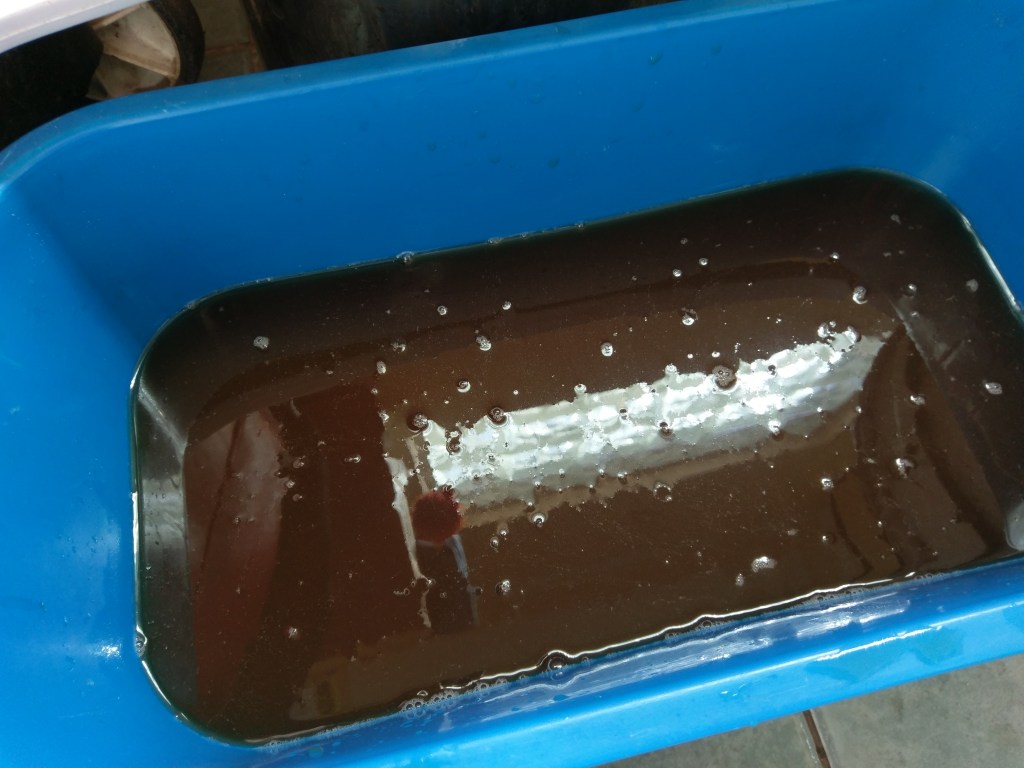
The water after a cold overnight soak. As you can see, this step really takes a load off the hot washes.
Care for your plumbing. Is it up to this? Is anything going to stop short cuts and entire locks washing into the drain?
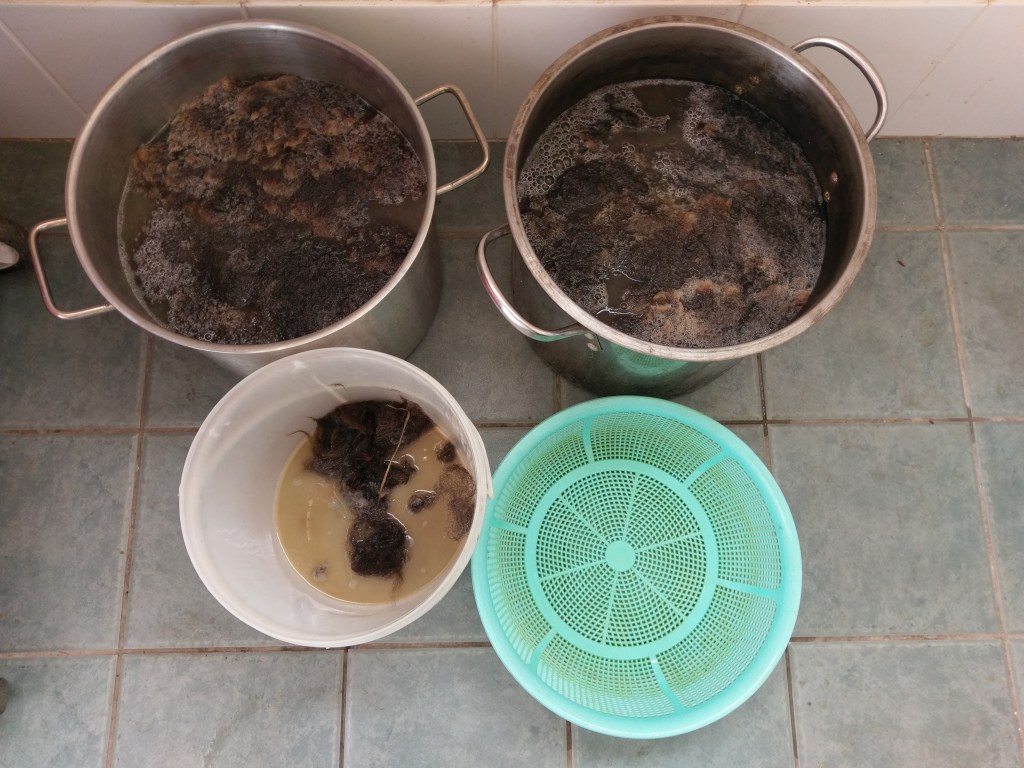
The water after hot wash #1 (and the wet fleece)
Expect things to get messy and wet. Set up your work station accordingly. I use gloves, apron, the lot. I always have a couple of the dyeing towels at the ready, one on the floor soaking up spills and one just in case. I like to use colanders or sieves that fit my buckets/dye pots so that I can rest wet fleece in them and squeeze it firmly–I gather everything before I start. In my case, I need an electric jug to raise the water to the right temperature. The hot tap won’t do it. I use scales to weigh my fleece and cleanser. I always have a container for bits I want to remove. Short cuts, seeds, pine cone parts, dead bugs, locks I have pulled out of the drain. I like to remove all barriers to removing anything I don’t want, immediately.
After hot wash #2
Consider your cleanser. I’ve heard of people using just about everything to clean fleece, from grease removing products used in the car industry, to dishwashing detergent, soap, fleece specific products, soapnuts, and fermentation. I’d like to use something clean and green but the green claims of a lot of products are hard to adequately assess, some of them travel long distances to get to me, and others don’t seem to work very well. I’ve been right up to “I will never do this again” at times, too, and I’ve found choice of cleanser can make a big difference to how difficult it is to get fleece clean and how good the outcome is.
Set up and ready to go!
Have a water saving strategy. Saving water and saving energy go together when you’re using hot water. I try to save water by soaking the fleece overnight in cold water before I start. I lift the fleece out, squeeze it to get as much water out as possible (then squeeze some more–wool is super absorbent), and move to the hot water wash. The soak water is full of nutrients so I use it as a fertiliser on the garden. I wash two batches at once. The final hot rinse for the first batch becomes the first hot wash for the second batch. I am on a roll at the moment, so I put tomorrow’s fleece to soak in the rinse water of today’s.
Yesterday I soaked two batches in the final hot rinse water of yesterday’s fleece washing, and two batches in cold water. This morning I was greeted with two very different sights. The batch that had soaked in cold water still looked like wet wool. The batch soaked in hot water allowed to go cold had a layer of grease on top. This is what is happening as your water cools down. Don’t leave it too long!
Congealed grease on top of soaking wool
Have an entertainment strategy. I have about 15 minutes between hot washes and rinses, and it goes so much better if I have something pleasurable but interruptible to do. This time, I’ve been watching 12 minute videos from the Woodlanders series when the internet allows. It is beautiful. It is wonderful. It is inspiring. Basketry, charcoal, mushroom growing, forest care, nut growing and more! It shows several different Indigenous traditions. It includes woodland cultures and traditions from several different countries and continents. Also, crowd funded, so if you love this series all about forests and those who live and work in them–feel free to chip in, if you can.
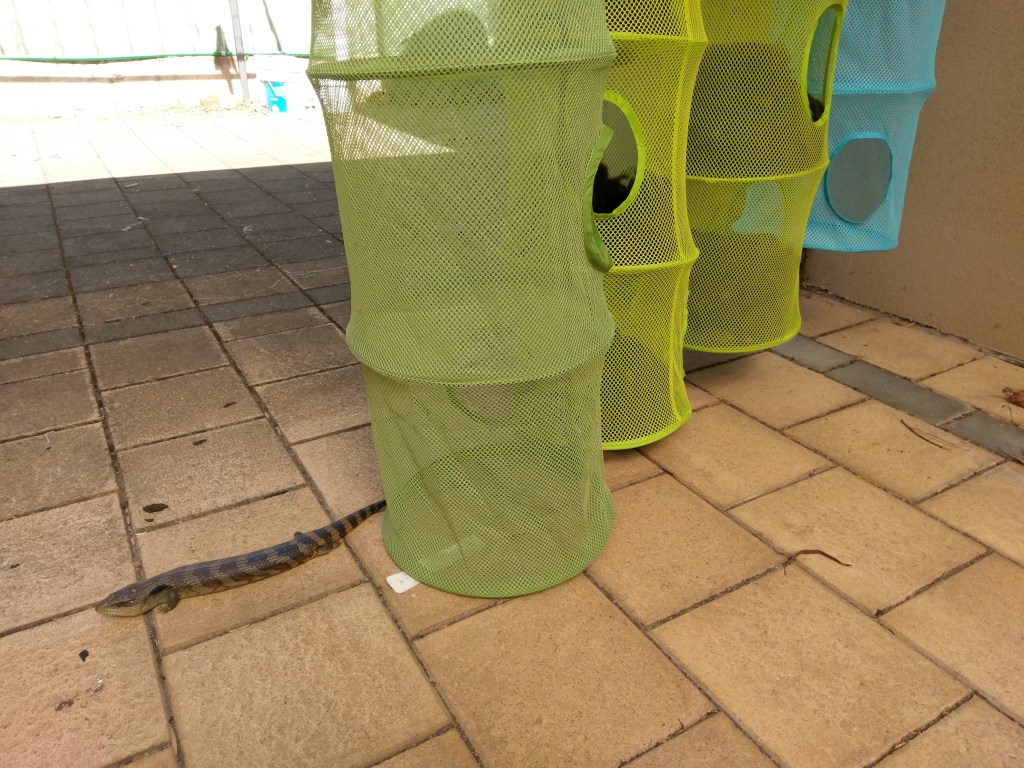
Wool drying in devices found at the op shop. And a visitor!
Accept feedback. The wool itself will tell you whether what you did worked. In time as you come to spin you will find it felted or you won’t. You’ll find it clean or still too dirty for your taste. You’ll find it a bit sticky from retained greases, or you won’t. Then it’s on you to work out why. I think a lot of us have the concept that wool+ heat+alkalinity+agitation=felt. The wool, the heat and the alkalinity are unavoidable. Agitation is harder. You have to look for your blind spots. Examples include: running water into a vessel that contains wool. Pouring the whole load of water and wool into a draining sieve or similar (water running through wool=agitation). Then there’s good old fashioned playing with the wool while it soaks. I don’t. Submerge it, hold it down, if necessary squeeze and release once or twice to reduce trapped air, walk away.
Close up of my visitor–a blue tongue lizard. Happy day!
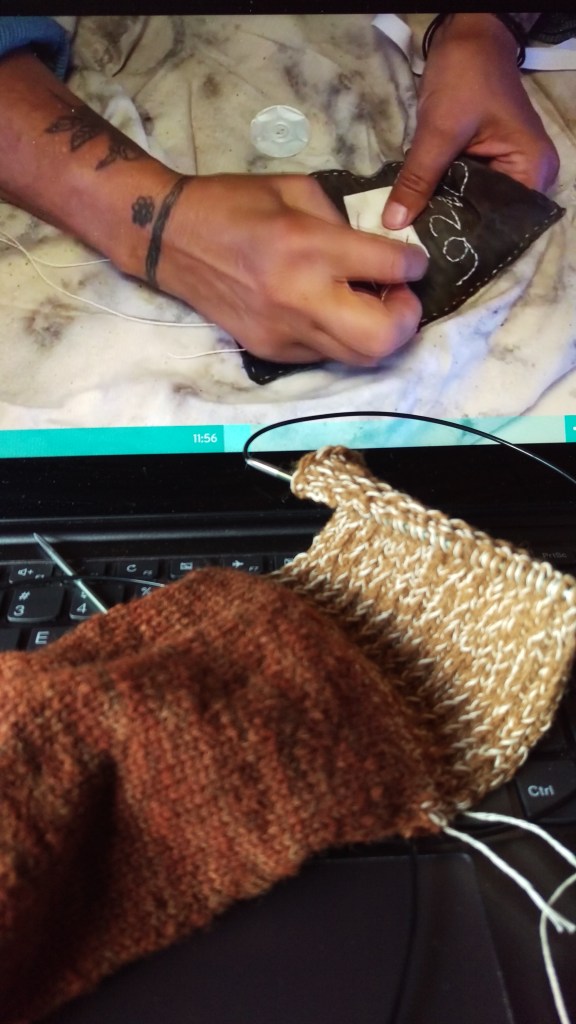
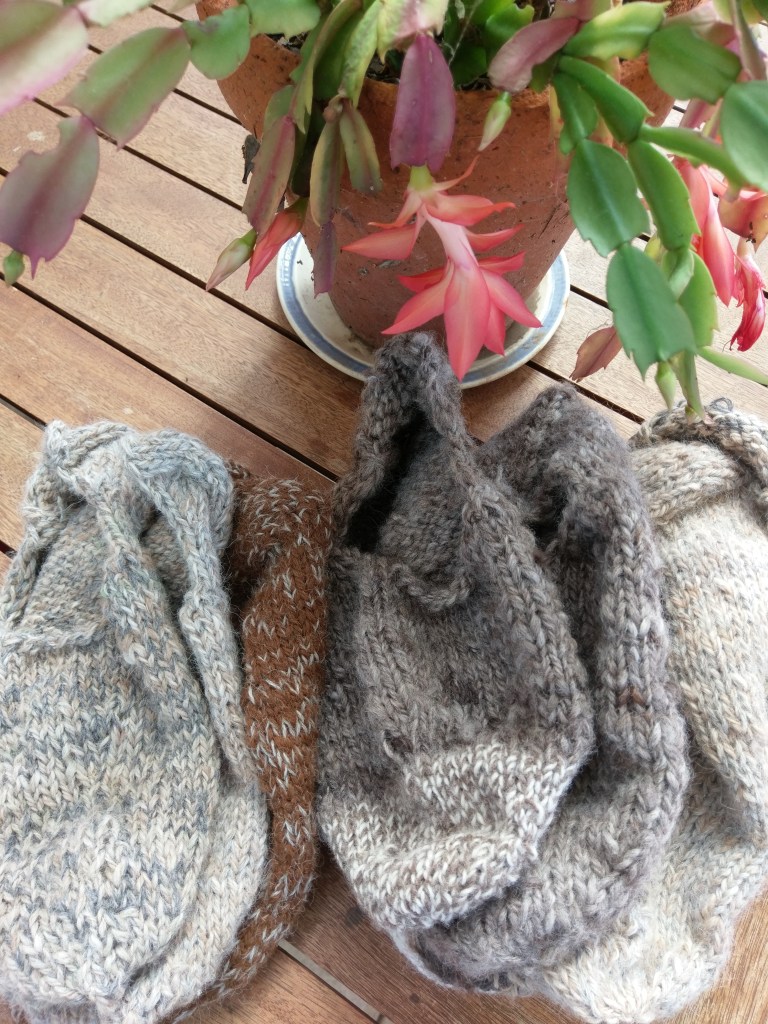
The latest tuffsocks are done. I am spending hours on Zoom at present and it’s great knitting time. I’ve knit these for India Flint, and I had to giggle when I was knitting these while watching one of her online classes, some weeks back. She has a new class all about string making, one of my pleasures in life (and things to do with string). For those who can afford an online class–India is one of the enormous number of folk losing their work at this time and I am sure she would appreciate your support. If you read this blog there is an excellent chance you would love her classes. For those also facing loss of income, or just not able to afford it–there are some lovely free items at the link above too, including a grounding meditation you might enjoy if it’s not too calm at your place right now.
Here they are, finished.
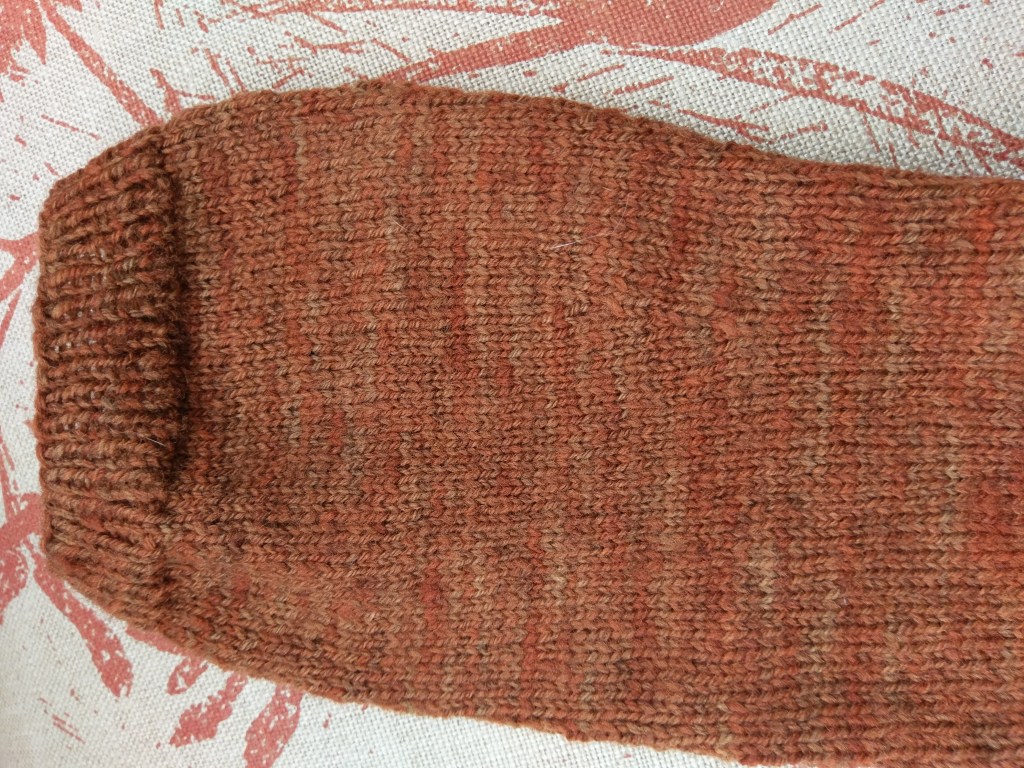
Kangaroo Island “black” merino lamb, dyed with eucalyptus scoparia. And the by-now familiar calf shaping move for inside-boot wear.
The reinforced heel. Silk and cotton blend thread for reinforcement.
Feet knit with Ryeland from Victoria, dyed with walnut hulls. Why did I not reinforce the toe? Mysteries in sock knitting (in other words–I have no idea what I was thinking)! There were a LOT of walnuts from friends who have moved to a house with a huge, beautiful tree. This is the result of my dyeing effort.
Here’s hoping they will warm and cheer India in the winter that is coming under such complicated circumstances.
Are you ready to think about something else? I recommend the EarthHand Gleaners’ Society. They have an entire YouTube channel of awesomeness and storytelling from Canada. The most recent post is Sharon Kallis pitching their central question: ‘how can we be makers without first being consumers?’ and beginning a project of engaging with people who can’t leave home, around what they can make with things that are already in their homes and gardens. It’s quite delightful! She is asking for people to be in touch and tell her what they have to work with so she can help people problem solve what they might like to make. The rest of the channel is full of beautifully produced little films. This one is Sharon Kallis using what she has in her own home and creating her own video, so it has a lovely DIY vibe that is quite different. Maybe you’d like to participate? Her book is just so wonderful, I think this will be fun and include small people and parents beautifully.
A few more thoughts on viruses. Skip to final paragraph if you’ve had enough of that today!
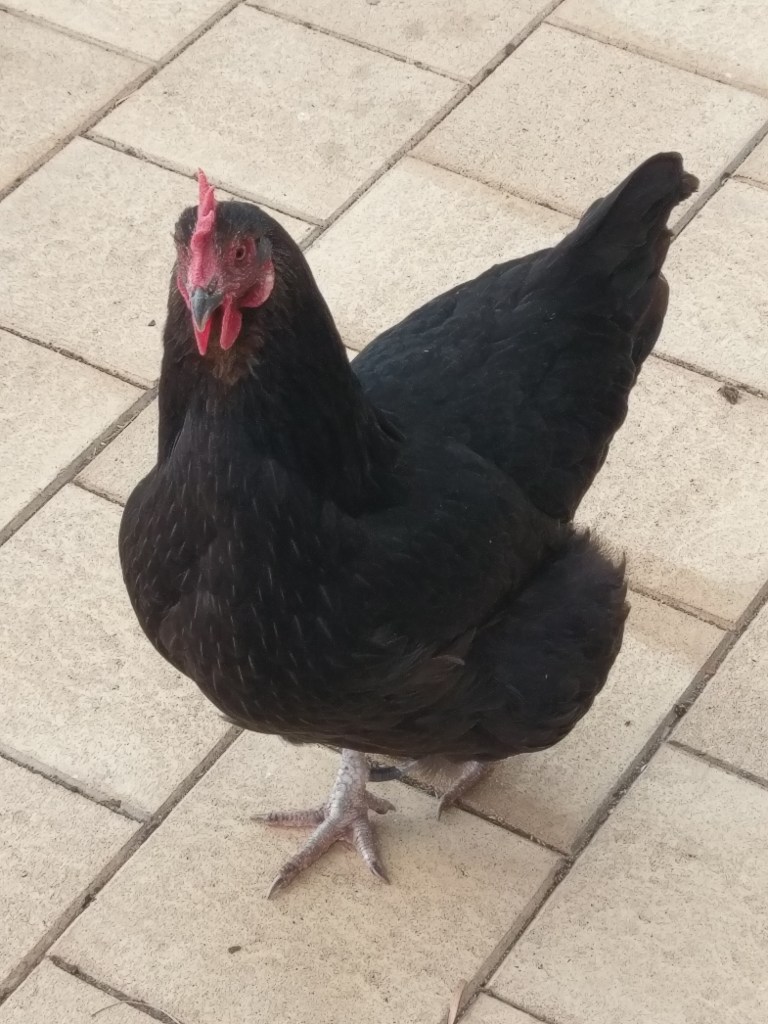
Audrey, one of the resident hens.
The precautionary principle is a good guide to action. If in doubt (for example, because a new virus has shown up), the precautionary principle suggests we take the option that involves protecting others and protecting yourself most reliably. Is it over the top to take the advice of my best informed and most rigorous friend and not leave home at all? Here’s the thing–I can take that advice until I am clear that there is an option that protects the health system, other folks and myself equally well.
Blackie–the imaginatively named other member of our very small flock
Each person is only as safe as the worst decision of their relevant contacts. I return to the HIV epidemic, prior to the availability of treatments and fully accurate information about transmission, when testing took a lot longer than it does now and was less accurate… It became clear to me that each person I might have a relationship with would bear the consequences of all my prior decisions, the decisions of my previous partners and my preparedness to be honest about them. I would in turn bear the consequences of their decisions. And in each case, we could be only as safe as the worst decision either of us had made. If I was unable to negotiate safer sex, or if I made it hard for the other person to tell me all that I might wish to know—then I would not be affecting only myself, and might be acting in ignorance.
We need to think about this when we consider shaming others about what we believe they are doing right now, instead of listening to them. We need to bear it in mind when we are tempted into magical thinking–for example, that believing something is safe, is the same thing as it being safe. Viruses don’t care about your feeling of moral superiority or your feelings for special people in your life. They only care what we do–and even then they are only interested in whether it lets them replicate and travel, or prevents that happening.
Some serious propagating!
Lives can depend on our ability to hold difficult conversations in this context. This is where we find out whether we can hold difficult conversations. And if not, it is tough to build those skills as fast as a virus can move. It is good to face the fact that this is part of the difficulty: while our government prevaricates and sends out mixed messages… members of my family are reaching different decisions about what it is OK to do. Most of them cannot be told that their ideas are not in alignment with current science. If more people could hear this message, we would not be in such a pickle about the climate crisis, eh?
So I am working to honour those who have taken the time to have difficult conversations with me. I want to be a person who can hear when I am told I am doing the wrong thing and seriously consider this. I have lived a life of swimming against the stream in many ways, including by being a queer person–but this is not a reason for me to hold a rigid position of never listening to others’ concerns about my actions.
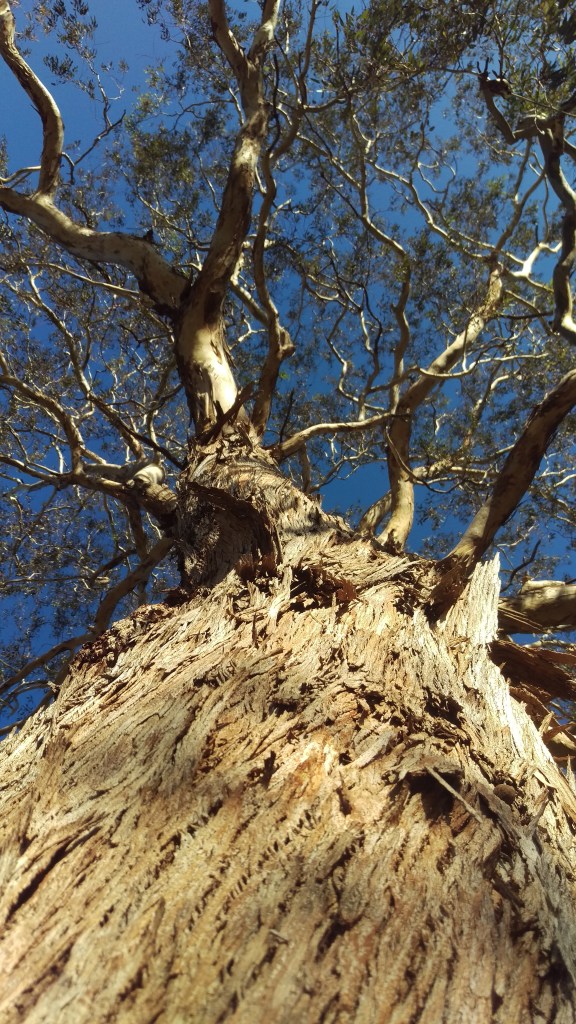
Sky through branches
There are places in life where others know better: after leaving an abusive relationship long ago, I decided that any time friends raised a red flag about my relationship/s, I should take that seriously. In our own lives we become accustomed to bad treatment that corrodes self confidence and the level of judgment needed for self-protection. Those who ask us to reconsider our conduct and to take more protective action are taking a social risk. They are placing trust in us, and they do it from their love and concern for us. Best not to skate right by such moments. Some of them have changed my life.
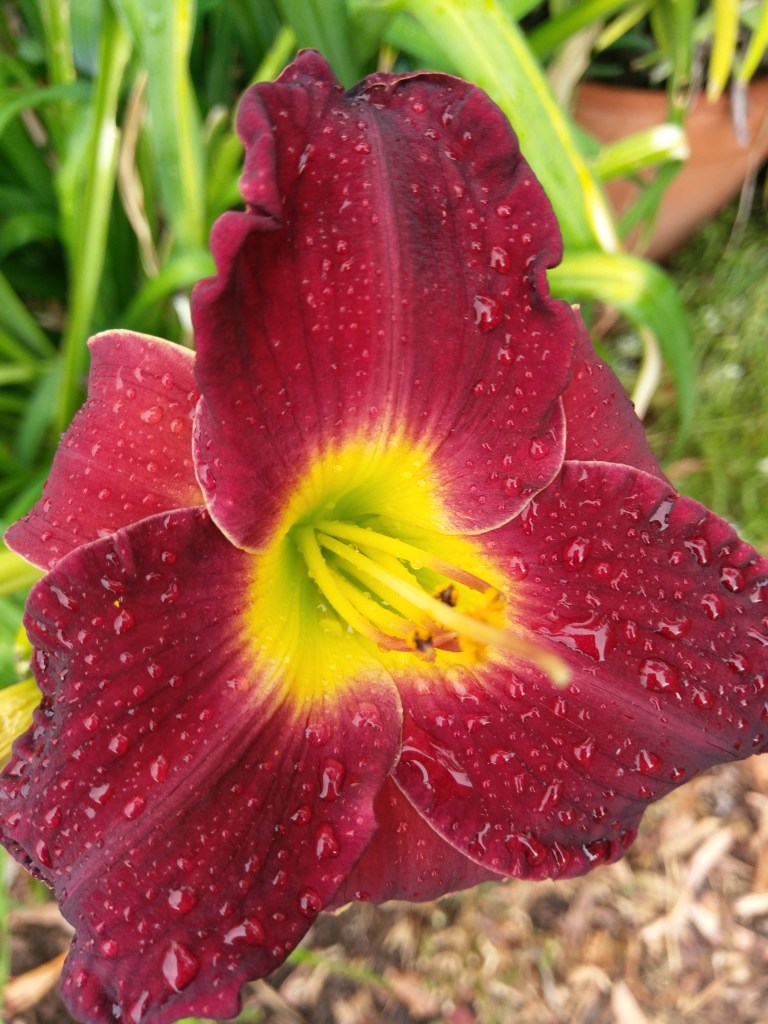
Daylily with raindrops
Are you ready to think about something else? I have been listening to the podcast Dolly Parton’s America from WNYC hosted by Jad Abumrad. No, I am not really a Dolly Parton fan of any note, though I did have a youthful love affair with ‘Jolene’ as covered by Olivia Newton John. *Cough*. And I do have a soft spot for Nine to Five, both the film and the song. This is first class storytelling that not only digs into Dolly Parton as a phenomenon, a songwriter, a storyteller and a phenomenally successful public figure and musician–but does so much more. The team working on this show take the story in such unexpected directions, it is quite wonderful and very disarming. I am loving listening to Dolly Parton’s laugh! But there is also such interesting social history, musical lore, and even musicology.
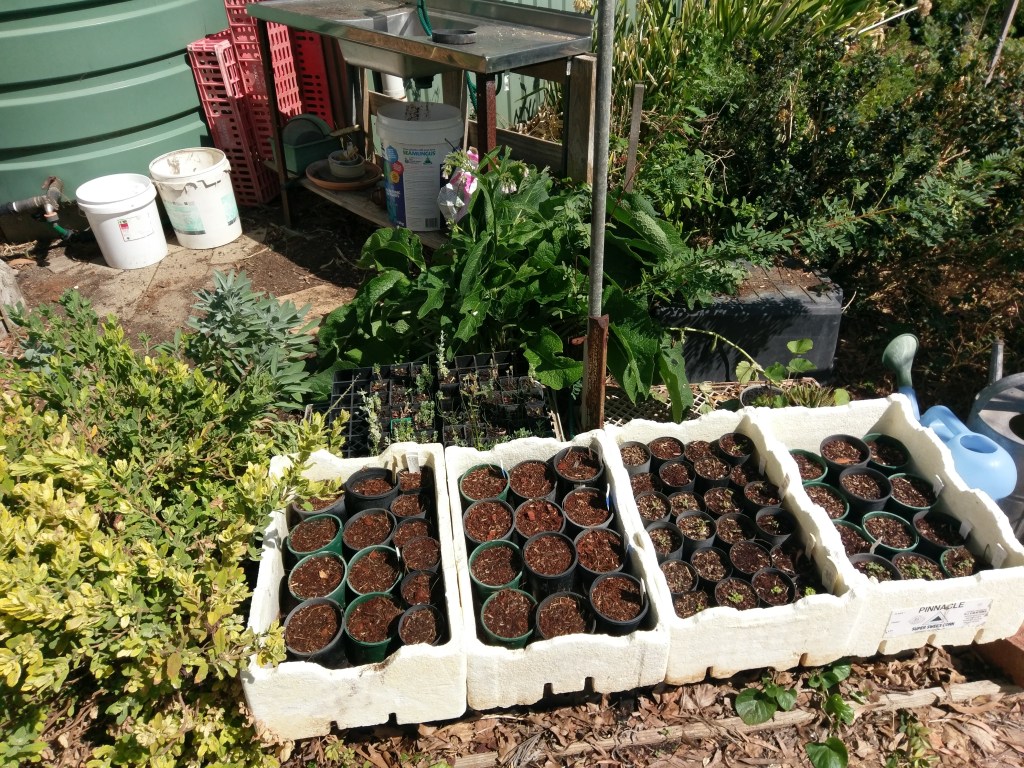
Vegetable seedlings
In the course of listening to the podcast, I came across this wonderful album by Rhiannon Giddens with Francesco Turrisi. One standout track is Brown Baby (with Oud). Oh my goodness. So good.
Sometimes it seems there is some kind of barrier to commencing a project. I got myself over a hump of not knitting slippers while quite a few people wished I would recently–and I did it by making all the decisions on one day, and starting the next. I gathered wool leftovers in about the right quantities, bagged them up, located needles and pattern, found stitch marker and darning needle… and while I was there, made 4 kits, each in its own bag. This decisively tipped the balance away from other activities and toward slipper knitting in the evening, and slippers are still piling up as a result.
Yesterday my covid 19-best informed and most rigorous friend essentially made the case for my shutting the gate and not going out at all from here on for some time. This is a contribution we can make, she said. We do not need to go out, and we can make sure we are not cases clogging up very much needed health care resources, and nor are we vectors for the virus to spread. Protecting the health care system (and need I say, health care workers, some of whom I am glad to have as friends) is a crucial goal at this time. And I won’t share all else that she said, bracing as it was.
That took some processing, but made complete sense, which is more than can be said for some of our government’s actions. Yesterday was a day on which 1000 people died in Italy alone, in a single day. Also the day I first heard that this virus has reached the Gaza strip. And on which news of lockdown in India reached me. Others face much larger challenges than I do. So I’m sitting with that decision, that has already been made by, or enforced on, so many others already. And I finished a sock.
And I thought, maybe I should make sock kits as well as slipper kits–because I do not own even one single ball of sock yarn anymore, and hours of spinning will be required to create one. I’m sure it will happen. But for now–sock kits that will mean I have simple knitting for all those Zoom meetings and calls. Knitting for long phone calls, maybe, sometimes. And for whatever other situation calls for sock knitting as a reassuring, soothing, fidget-managing, pleasurable activity.
Tough realities lie ahead. And if having a sock ready to go helps me manage them better–that would be a good thing. Anything that helps with rising above, is to be welcomed at a time of global crisis.
I feel sure there are many such stories out there. If you wish to share yours, please do!
For those interested in using up scraps, I have found the series #yearofthescrap at The Craft Sessions blog enchanting. I can only aspire to creating such beautifully designed gloriousness from scraps. I can’t bring myself to care enough to thoughtfully design, rip and design again. And regular readers know, I’m more likely to just charge in and make stuff. For me that works out! But for those who feel differently, or perhaps aspire to better designed scrap projects, or simply seek inspiration for their stash busting hopes–please do wander over.
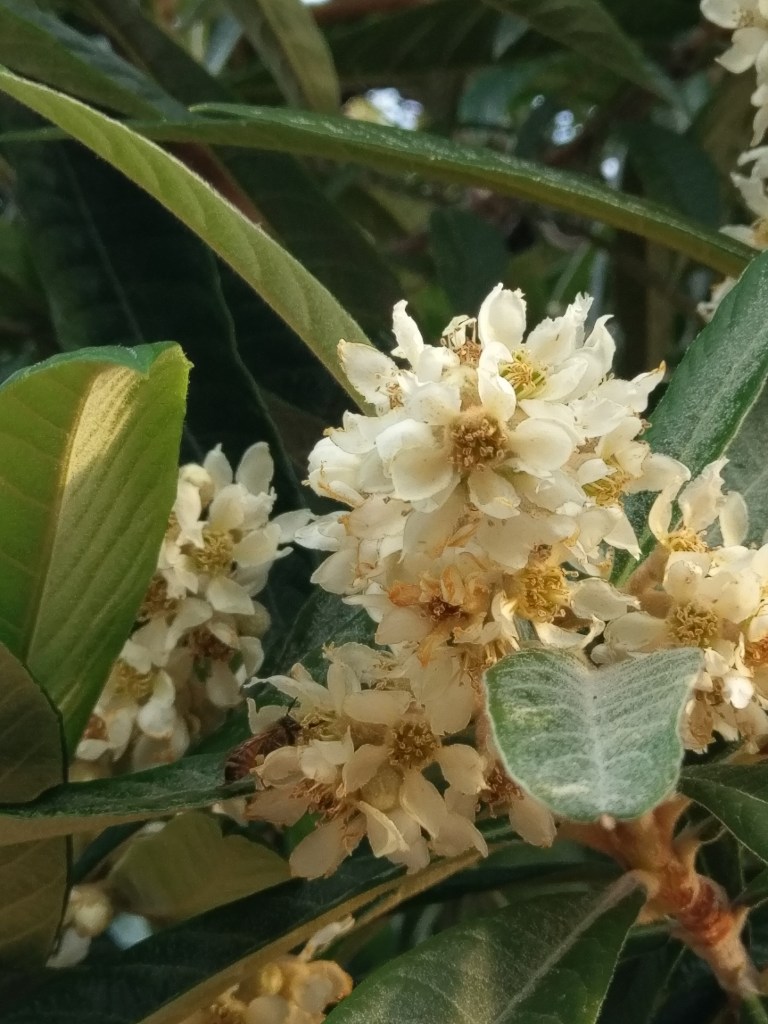
Loquat blossom
And–I am thinking it might be good to share resources for when you want to think about something else. When you can’t turn the radio on and hear more about the pandemic. When you can hear your own anxiety about climate change keening alongside the anxiety about the virus. And so forth. Last night I watched Inhabit. It is now available for free–though of course, donate if you are able. It is an exquisitely beautiful film offering a permaculture perspective on preparing for the future. It showcases particular North American practitioners and projects, and it is rather wonderful viewing.
Greetings, dear readers. Let me be clear right from the get-go, that there are very reliable sources of medical information about the current covid 19 virus, and I am not one of them. Also, that the situations people are facing right now vary widely depending on who you are, where you are, what resources you have… and so much more. Your mileage may vary, and all that.
But… I keep thinking, in this current situation, about what it was like to be a young non-heterosexual as the HIV virus spread around the world, and the things I learned then, that inform me now. So just in case this turns out to be helpful for others, here are some key things I learned in the period before HIV was called HIV. When we did not understand how it spread, we did not know how to dependably protect ourselves, there was no treatment–and people we knew, people like us, began to die.
viruses don’t care who you are or how you feel. Viruses travel just as happily between friends or lovers as between enemies. That sweet belief my parents express that I represent no risk to them because I share their DNA? Not a thing. The idea that this is a Chinese virus? Viruses have no nationality, they stalk the earth self-replicating, and that’s it. The appalling racism of white Australians like myself to people of Asian appearance, or folk who run Chinese (Japanese, Korean… who’s paying close attention?) restaurants for a living? Just as rubbish, just as cruel, as racism in any other time or setting. Nothing logical going on there anytime.
viruses only care what you do. You either do things that make it easier for them to travel or you don’t. It isn’t a moral judgment, it’s a blunt fact. You can be sharing a virus without knowing you have it. You will pass it on unless you act appropriately–by which I mean, you act as if you have it already, and ask yourself if you would act this way if you knew for sure you had it.
prejudice gets in the way of better outcomes for everyone. While HIV was seen as “a gay disease” (in the more developed world), there were plenty of places that treated everyone thought to be “gay” badly, whether they had HIV or not. But treating gay people (and sex workers, and injecting drug users) as expendable, where that happened, just meant the virus got to travel further, faster. People who needed to be tested were too scared to get tested because they had to face this prejudice. When it reached Africa and Asia, this misinformation and prejudice took new forms but continued to create similar problems for humans and opportunities for the virus to replicate and spread.
being scared won’t protect you. Being informed and deciding how to act, plus sticking to it all the time–those things protect you. Being too scared to think just gets in your way and puts you at risk of irrational behaviour that places you and others at risk. Accepting someone else’s preparedness to do risky things because you’re not prepared to stand up and say what you think makes sense, places you both at risk.
new skills can help you. I came from a conservative family. HIV meant that I had to acquire new skills. How to talk about sex, in some detail, in advance, more openly and frankly. How to negotiate about risk and protection. The people I learned from were people who had better skills about that than I did, including sex workers and BDSM practitioners. I was just a timid teenager, but the generosity of people who did all they could to help us keep one another safe helped me decide to learn. This time round I’m helping people problem solve their way into teleconferencing!!
Context is important, and so is gratitude. I remember listening to a woman with HIV talk about how much easier she thought it was for someone more or less like me to deal with negotiating HIV protection, than it had been for her to tell her regular partner that she’d cheated, and now there were sexually transmitted infections to deal with. Fair call. In general, the suffering of this earth is very unequally distributed. Those who already are vulnerable, are likely to suffer so much more than lucky folk like me with a home, savings and food, living in a country with relatively affordable health care. Right now people in India are dealing with this as floods destroy homes and livelihoods. Right now the risk to First Nations people in my country is so much bigger than to white folk like me. Right now I have friends who have lost their incomes and others who may well die if infected because they are already so unwell. Right now people are dying in Africa with nothing like the health care of Europe or Australia. So the ethical thing for me to do is appreciate that this isn’t all about me and the risks I face. It’s about the risks other people face and how I can be part of lessening the risk to them.
we need one another. We need support from one another. We need to pull together. We need practical mutual aid. The [other] challenges we face, including the climate crisis, have not gone away. To address the covid crisis we need to build stronger relationships, even if at physical distance. And for the future of all life on earth, we will need those relationships and more. So let’s not allow this whole physical distancing in order to protect one another and make sure health systems are available for those who really need them, get in the way of building relationships.
When I found I could get safflower seed… it was just too good to resist. So I grew safflowers.
Does this look thistle-y to you? Yes! They are spiny and they are a form of thistle. On the upside, they were more than up for the conditions of a South Australian summer garden.
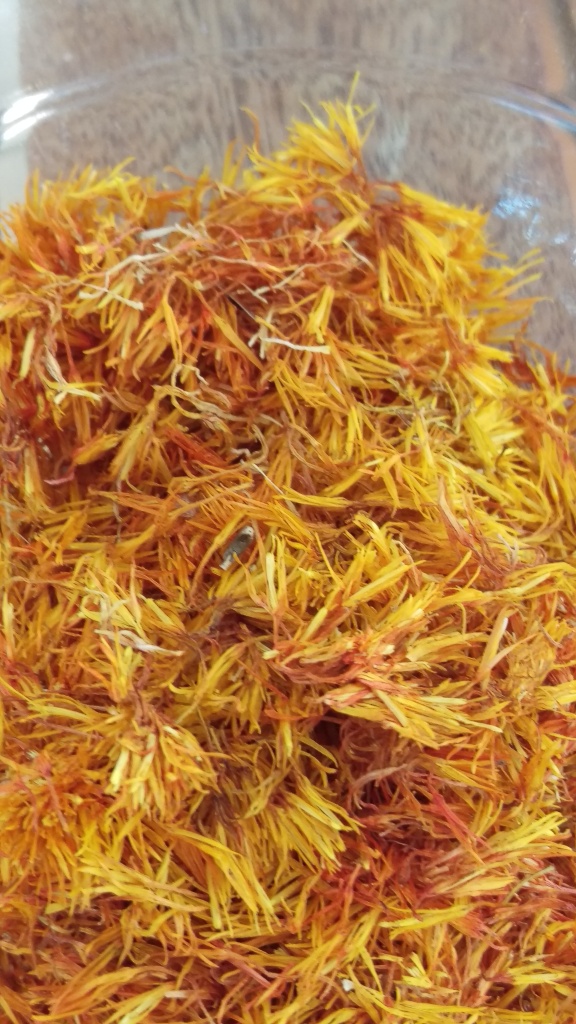
Downside… the entire harvest of petals, yes, petals! was 3 g. After quite a lot of petal pulling… However, upside… ravening brushtail possums patrol our vegetable garden these days and they were not at all interested in the safflowers. Three cheers!
I experienced some confusion in my attempts to find instructions on how to extract dye from this plant. It famously gives more than one colour when you treat it right, but one book referred to flower heads while others referred to petals (I tried flower heads and gave up). Others explained the principle behind dye extraction but, I have never done this before and wanted something a little more like a recipe. In the end, I followed the Maiwa instructions, for which I am grateful!
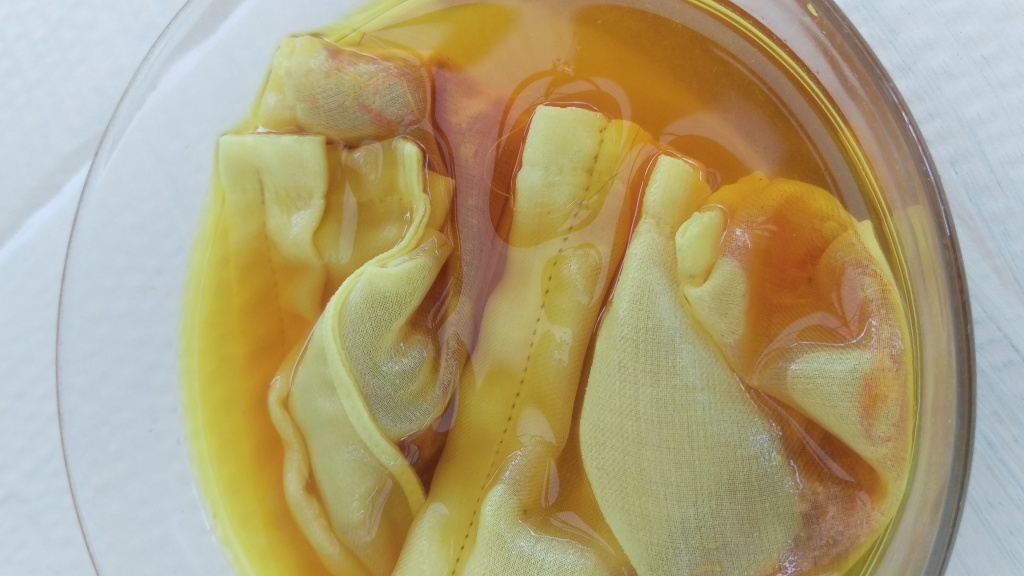
I stitched the petals into a bag made from a double layer of cotton voile (leftover from handkerchief making, no less!). There was so much yellow dye in stage 1!
Changes came about as I soaked and re-soaked my precious petals.
Finally, the dye bath! Some magic with Ph, and then… In goes my cotton thread, which immediately takes on a pink tinge.
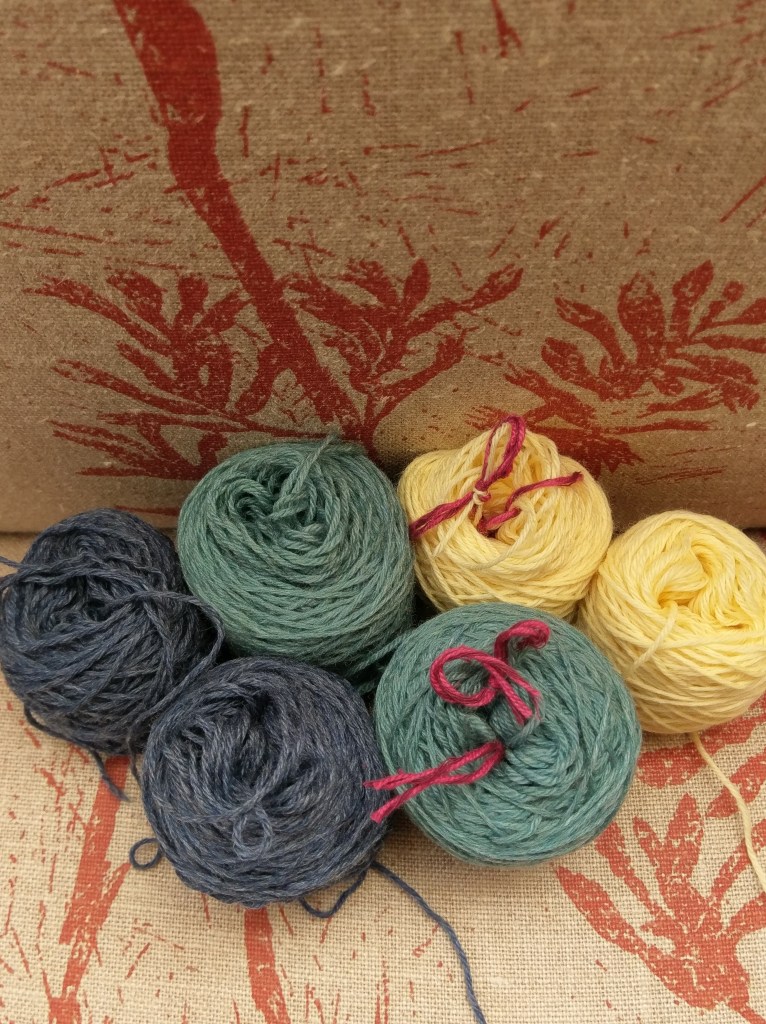
Until eventually I have both yellow-dyed silk thread and pink dyed cotton thread.
And, of course, seeds and seed heads.
But for a sumptuous film about how this could be done by far more skilled hands and heads (and with fields of safflowers to begin with)… watch this!
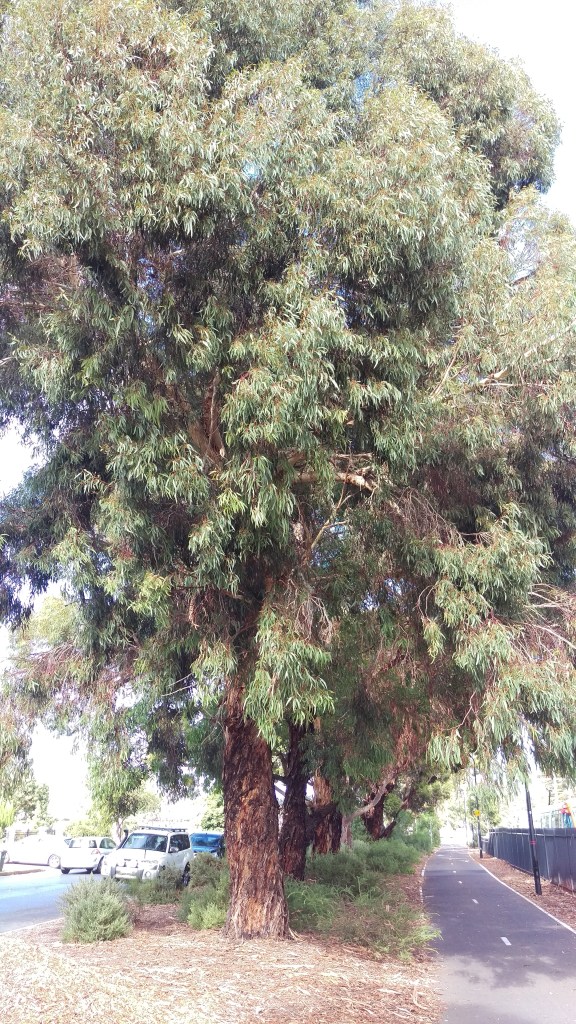
Well, who knew? But evidently it’s true. Today is national eucalypt day. My brother-out-law told me!
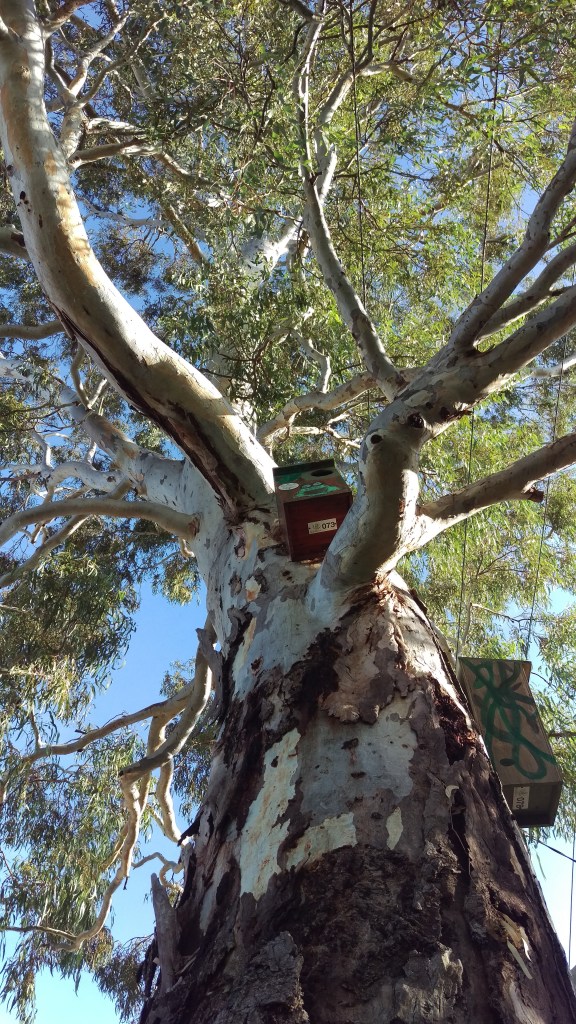
This is a E Camaldulensis (River Red Gum) that is growing in a nearby park. It may not be the best image of the tree but those rainbow lorikeets!
This is the same tree from further away for your delectation.
Here, the twin trunks of a E Cladocalyx (Sugar Gum) from Belair National Park.
Another E Camaldulensis from our neighbourhood. It has been housing rainbow lorikeets too.
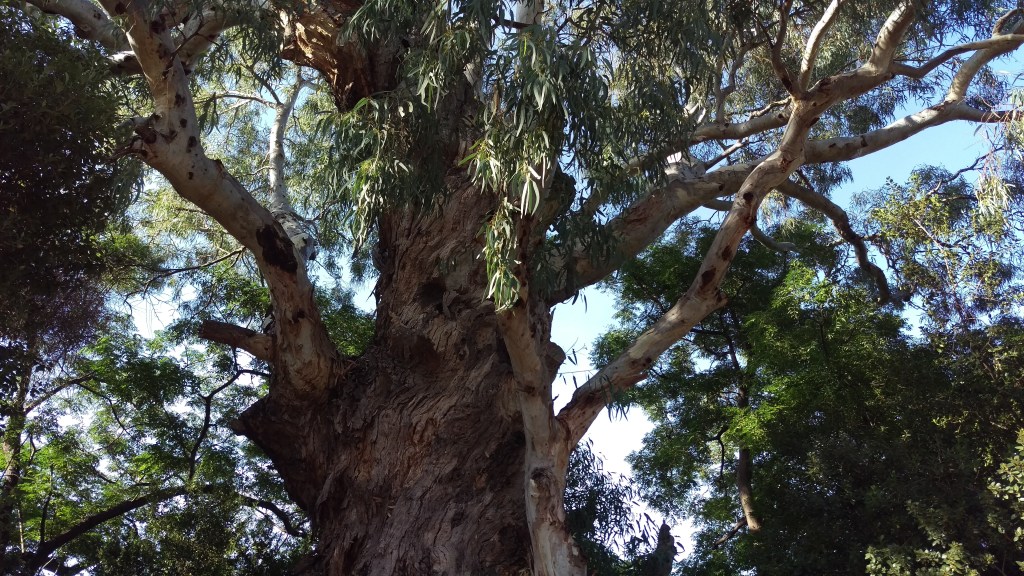
This is also a River Red, one that has been growing since prior to colonisation. I can’t get its immensity into a single image because it now stands crowded in on every side. But what a glorious, beautiful, astonishing being it is.
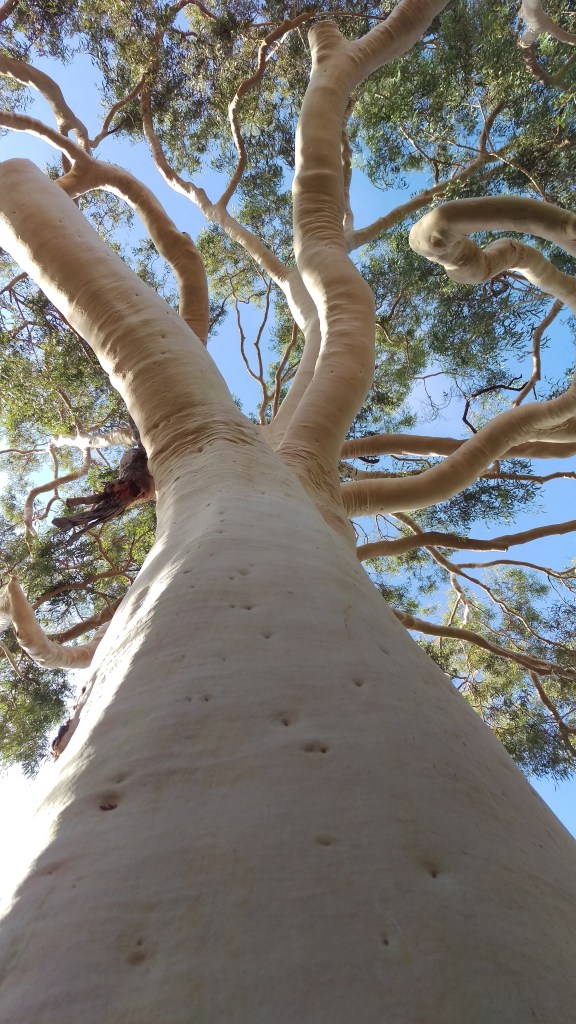
This looks more like a E Maculata (spotted gum) to me, but I’m not claiming to know it all here, just sharing my awe with you, friends! I have tried hard to learn about eucalypts, but there is so much to know.
Corymbia Citriodora, I believe (lemon scented gum). There is a row of these beauties not far from home and they are fabulous in size, spread, scent and station.
And a glorious specimen of E Incognita (this is my way of saying I do not know its name!)
E Maculata, perhaps.
Well, my darlings. It doesn’t feel like national eucalypt day to me. It feels like a day of national covid 19 panic. Or maybe that’s just the PM on the television last night, a lot of the news coverage this morning, and talking down a member of my family in high stress this morning. If it feels like a day of unsettled or frightened or stressful or anxious or panicky to you today, I hope you can rest your mind on trees for a moment right here. I’m going to go into the garden for a while!
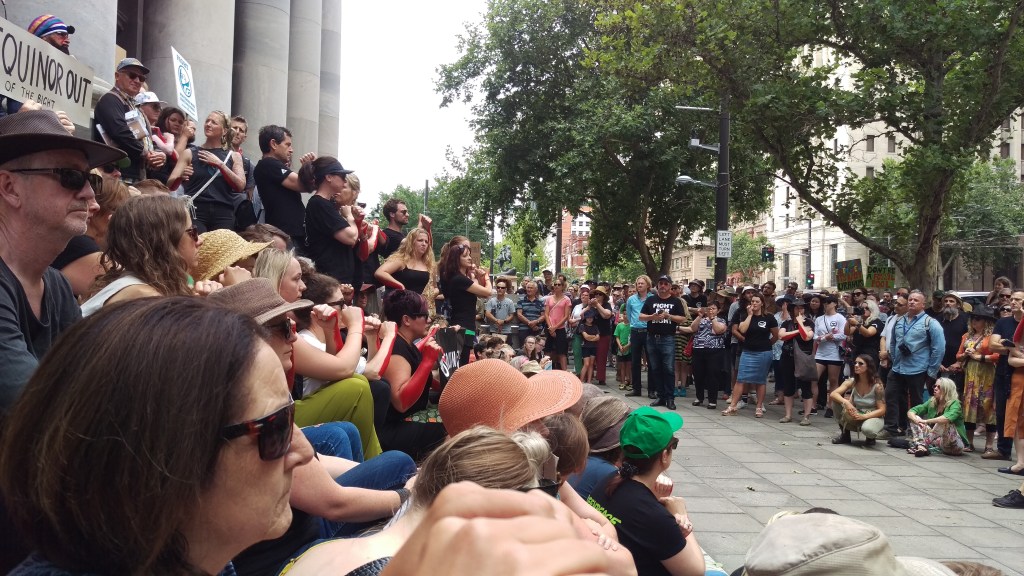
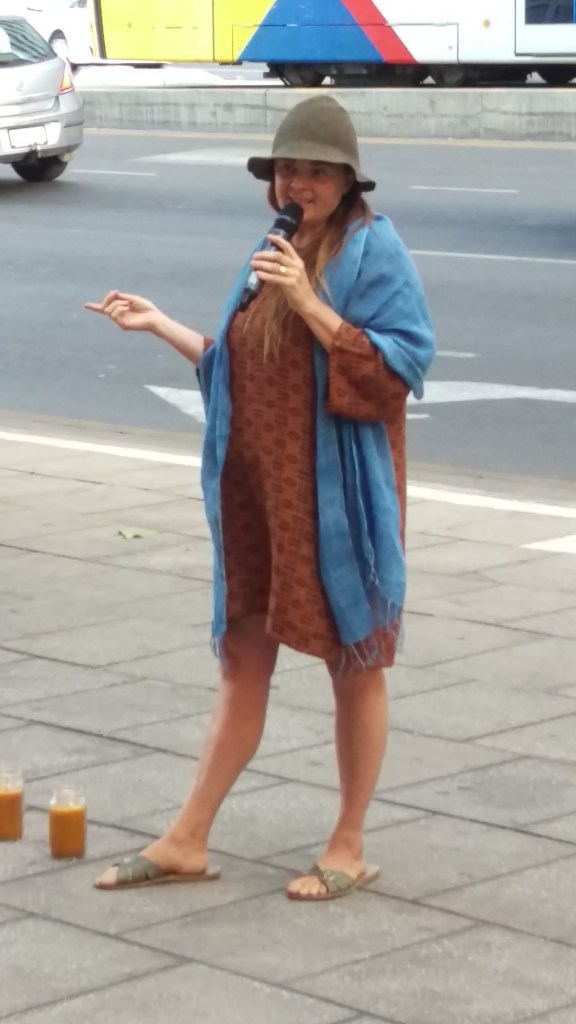
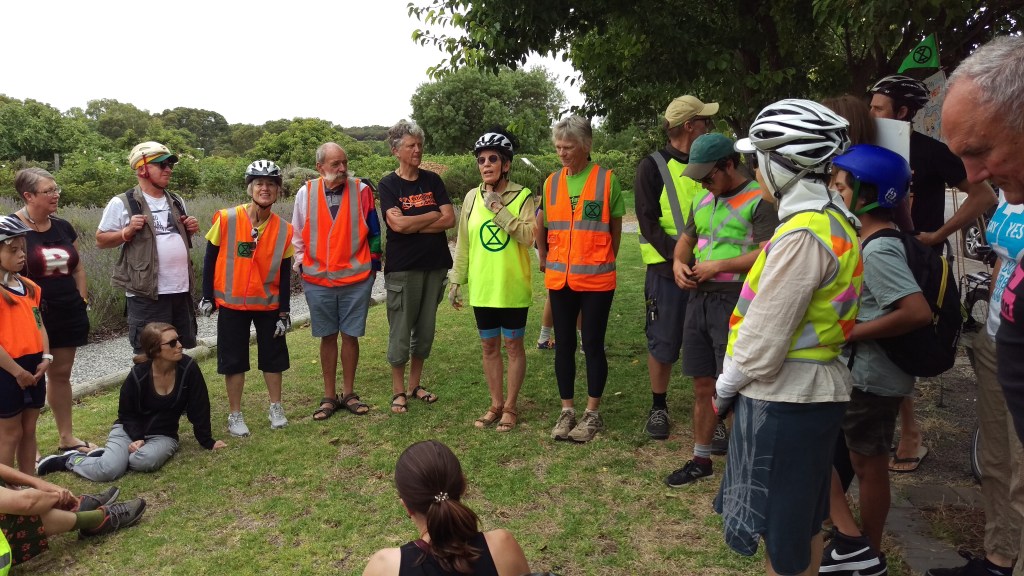
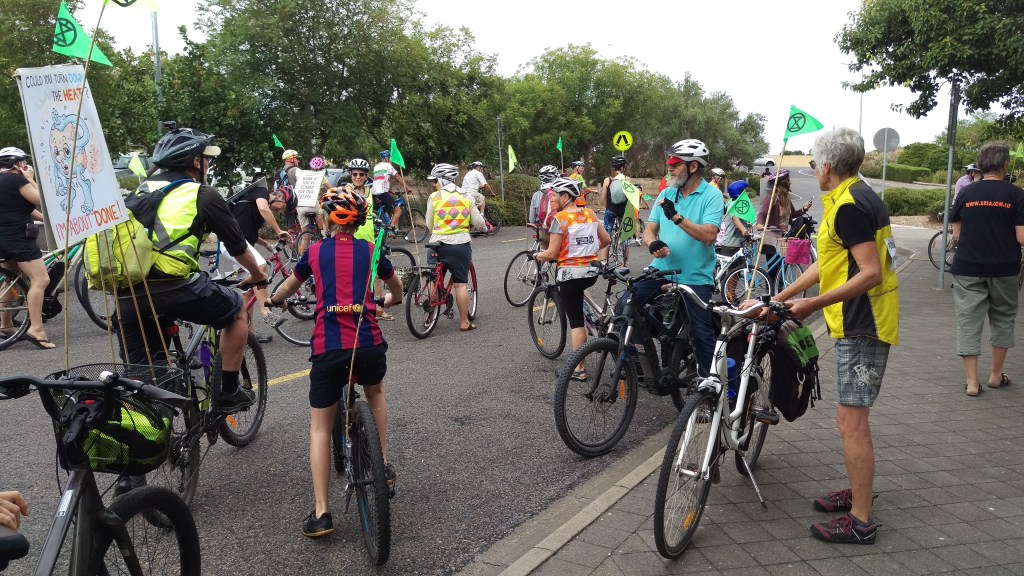
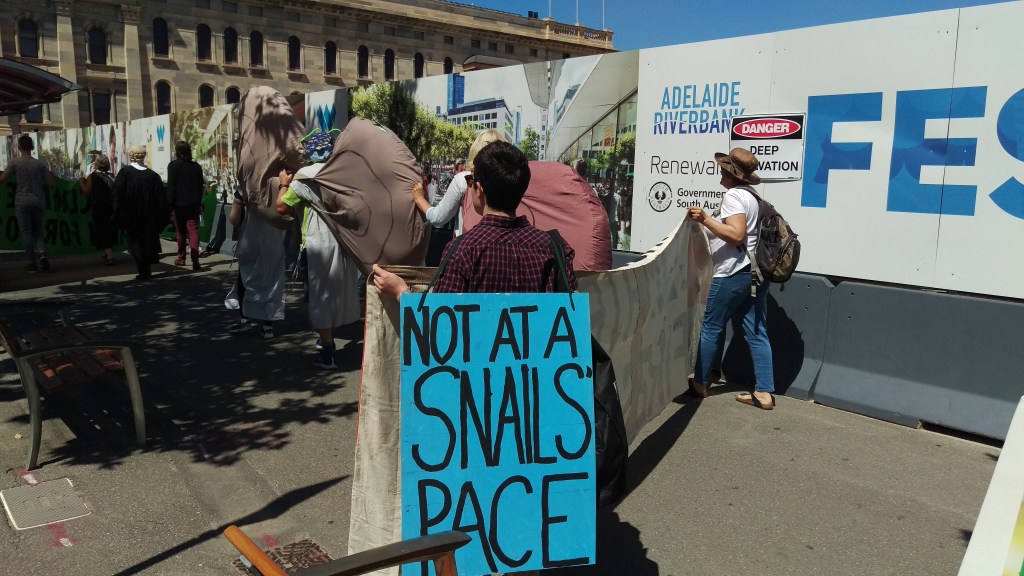
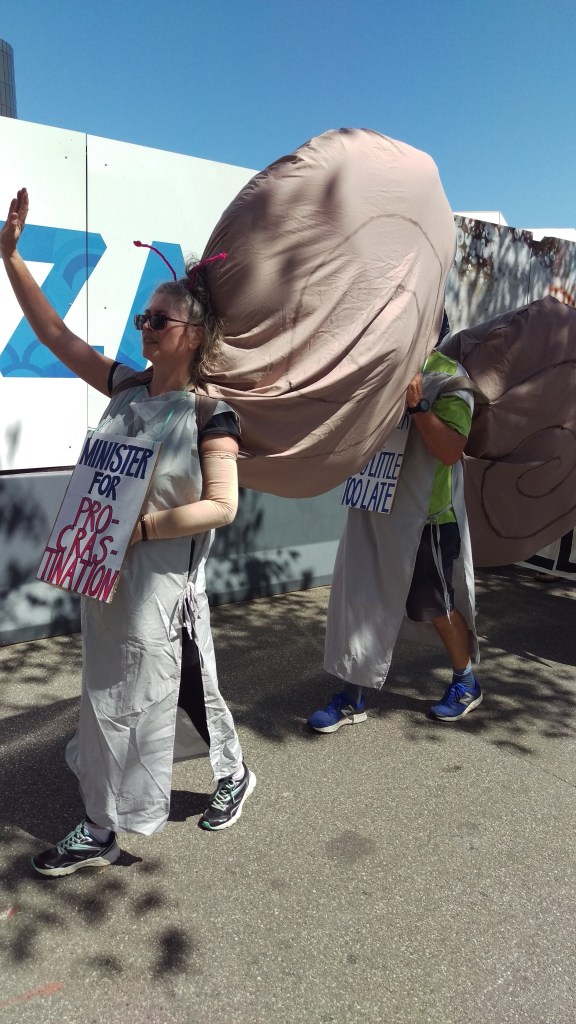
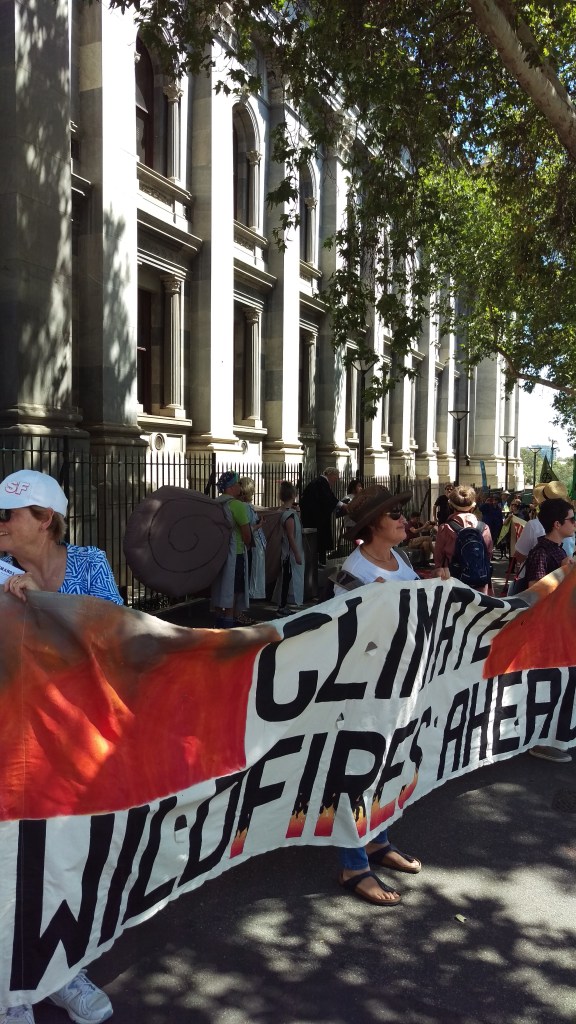
What with bushfires in Australia, famine raising its terrifying face as locusts swarm across parts of Africa already in drought, floods in Indonesia and NZ, and a pandemic spreading across China and beyond, I have not decided to give up on pressing for action on climate and ecological crisis. I’m often doing some role at actions I attend but sometimes I get a photo in! So here’s a round up of a few from the last month or so through to early February.
This is my second attempt at this post, having lost the first when it was complete but not scheduled… so this is the crisp and fast version!
I’ve had a long break from every kind of gardening with a protracted recovery from an injury–but now I am decisively on the mend I’m doing little gardening often. Gleefully propagating and planting! So today, out to a new patch planted by Council and provided with a watering system, where a lot of plants have died and not been replaced. It’s not the best time, but that passed some time ago and these plants can’t thrive in pots forever either.
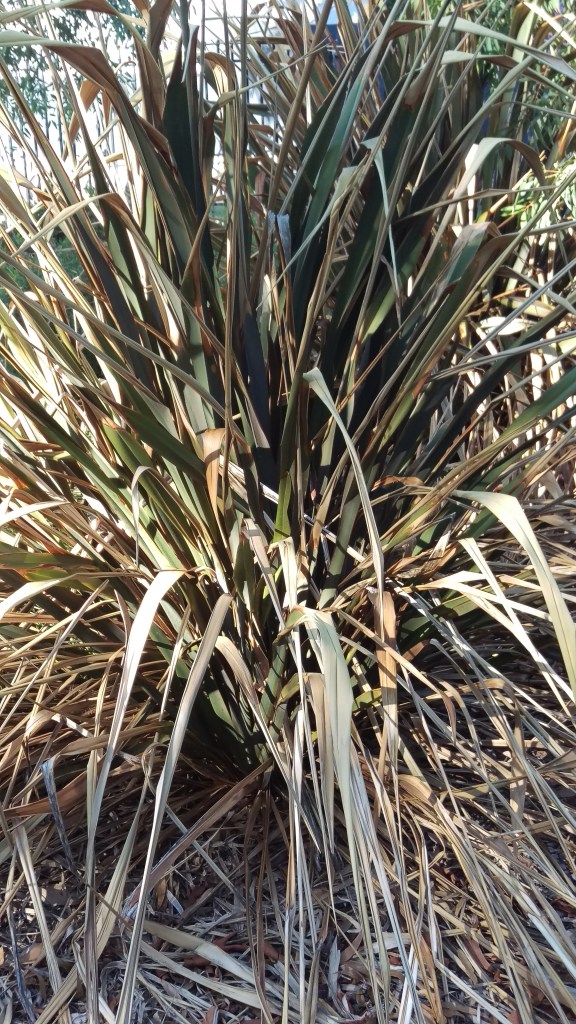
I found a little message from the universe as I contemplated the crispified NZ flax at this site that was so lush until we hit 40C. Count me among those trying to care for creation, whether it resulted from the actions of deities and spirits or whether it arose from the big bang and evolution. This garden mixes plants from different parts of Australia with some from Africa and one from Aotearoa (New Zealand) and that seems quite wrong to me. But–Council has provided for my future flax weaving ambitions and I am glad this garden is there and growing to maturity despite some losses.
In went dianella revoluta, two species of tall saltbush and a Eucalyptus Nicholii that was irresistible at the hardware shop for $A3. Long may they live and thrive. And then, litter picking, watering, weeding and home for breakfast. **Save draft** **LOL**



























 Local & Bespoke