
‘Tis the season for bark collecting, again! I’ve been out on my trusty bike visiting all the E Scoparias I know and investigating others that might prove to be (or not to be) E Scoparia. I pull my bike over to pack bark into a bag, trampling on it to crush it and make space for more, and filling again before loading my panniers. Or, go to visit friends with my big bucket in hand and pick up whatever has fallen since my last visit. Or, head out for a run, leaving my rolled up bag under a tree and pick it up to fill on my cool-down walk on the way back. This E Scoparia, tucked in behind the foliage of a carob tree, is peeling lavishly.

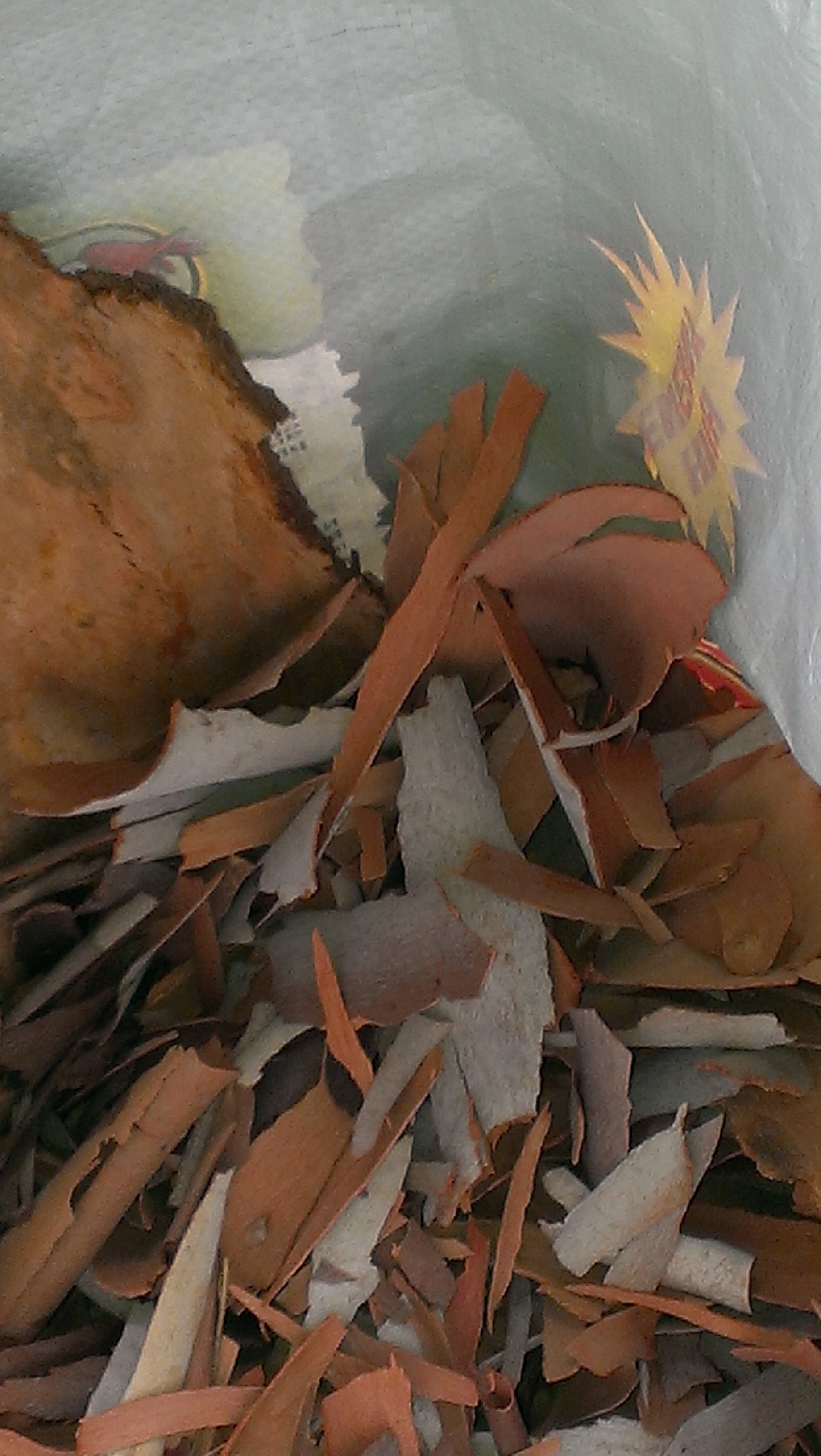
At home, I stash the bark in a chook feed sack, offering more opportunities for trampling which let me stack a lot of bark into one bag and get it into a form that will go into the dyepot with minimal fuss.
This week, I found a new E Scoparia (at least, that was my hope). I collected a bag full of bark and it is now soaking so I can test whether I have that right, in consultation with the dyepot. A friend who appreciates natural dyeing lives in this street–so I’ll look forward to telling her if she has a great dye tree at the end of her street! Blackett St:
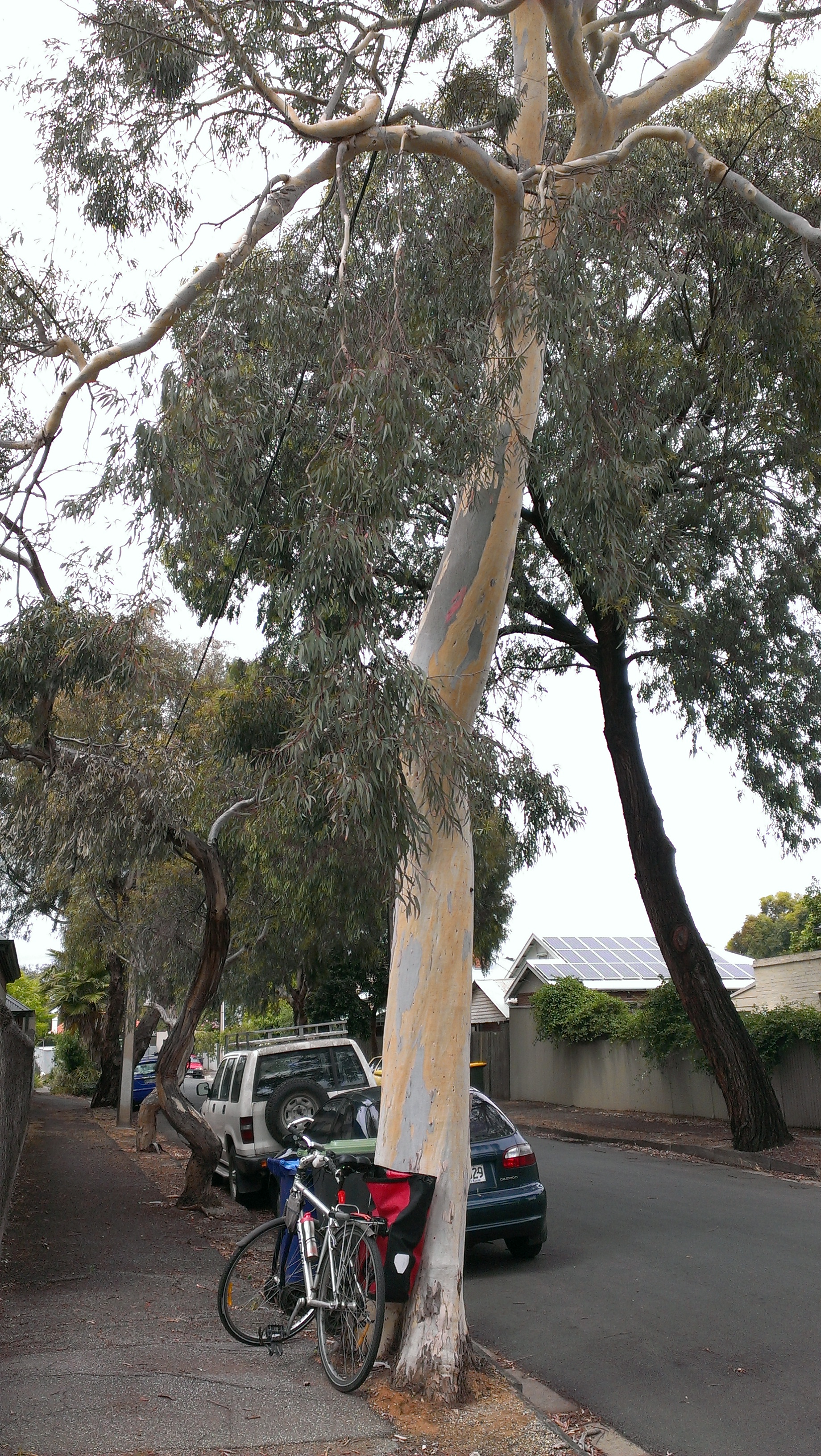
I also collected bark from this enormous specimen. Last year I collected a lot of bark from this tree and then found I had one bag of bark that gave brown and not red to orange as expected. I suspect that means this is not an E Scoparia. Checking it out again today it is bigger than any other tree I believe to be E Scoparia and it has many more fruits visible and clinging to the stem. My initial sense is that the bark smells different, too. The leaves give fantastic colour (at least they did before someone took a chainsaw to all the lower branches), but I am running a trial bark pot before the tree sheds the main part of its bark. It is soaking alongside the other one as I write. Laught Ave:

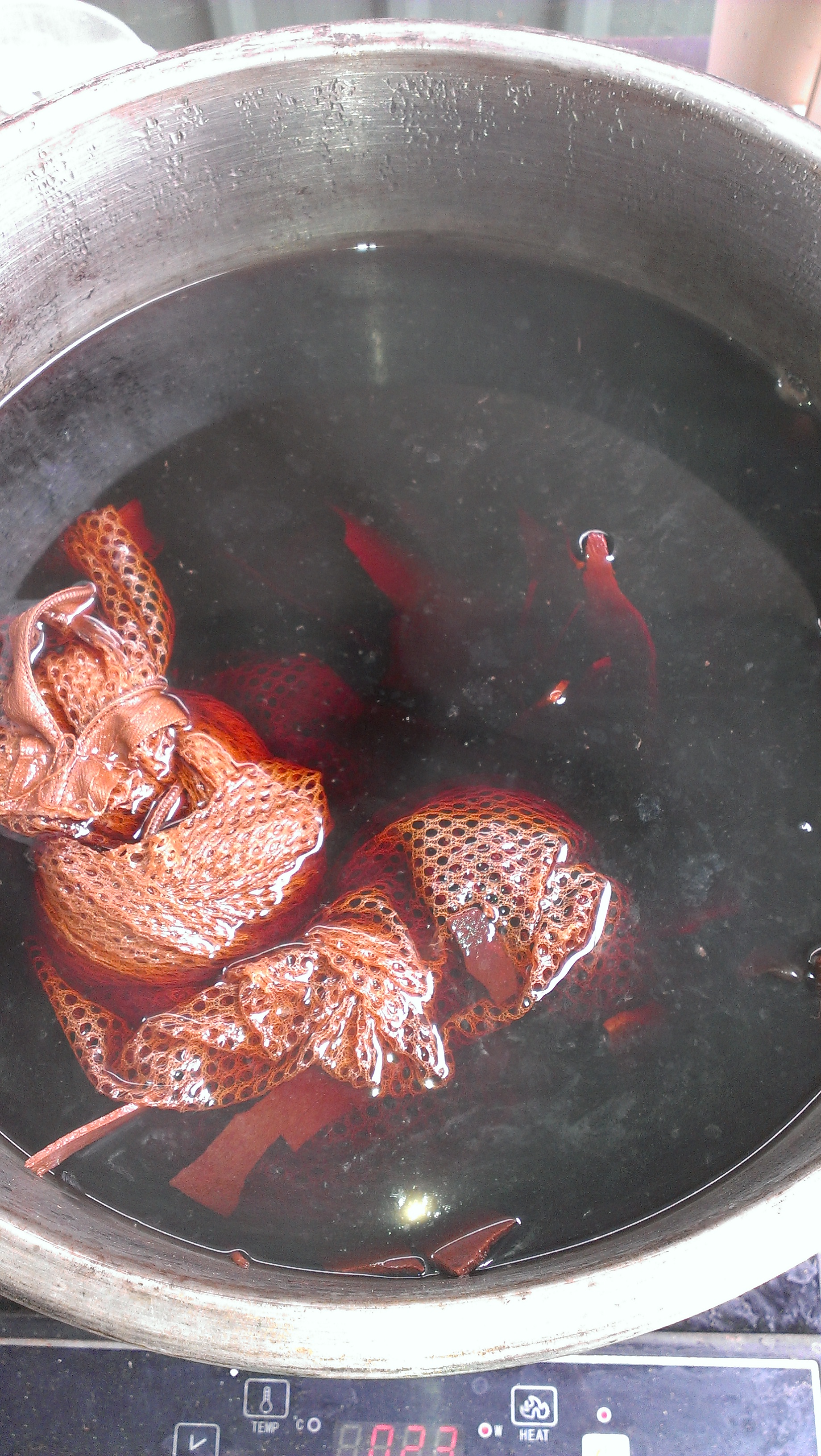
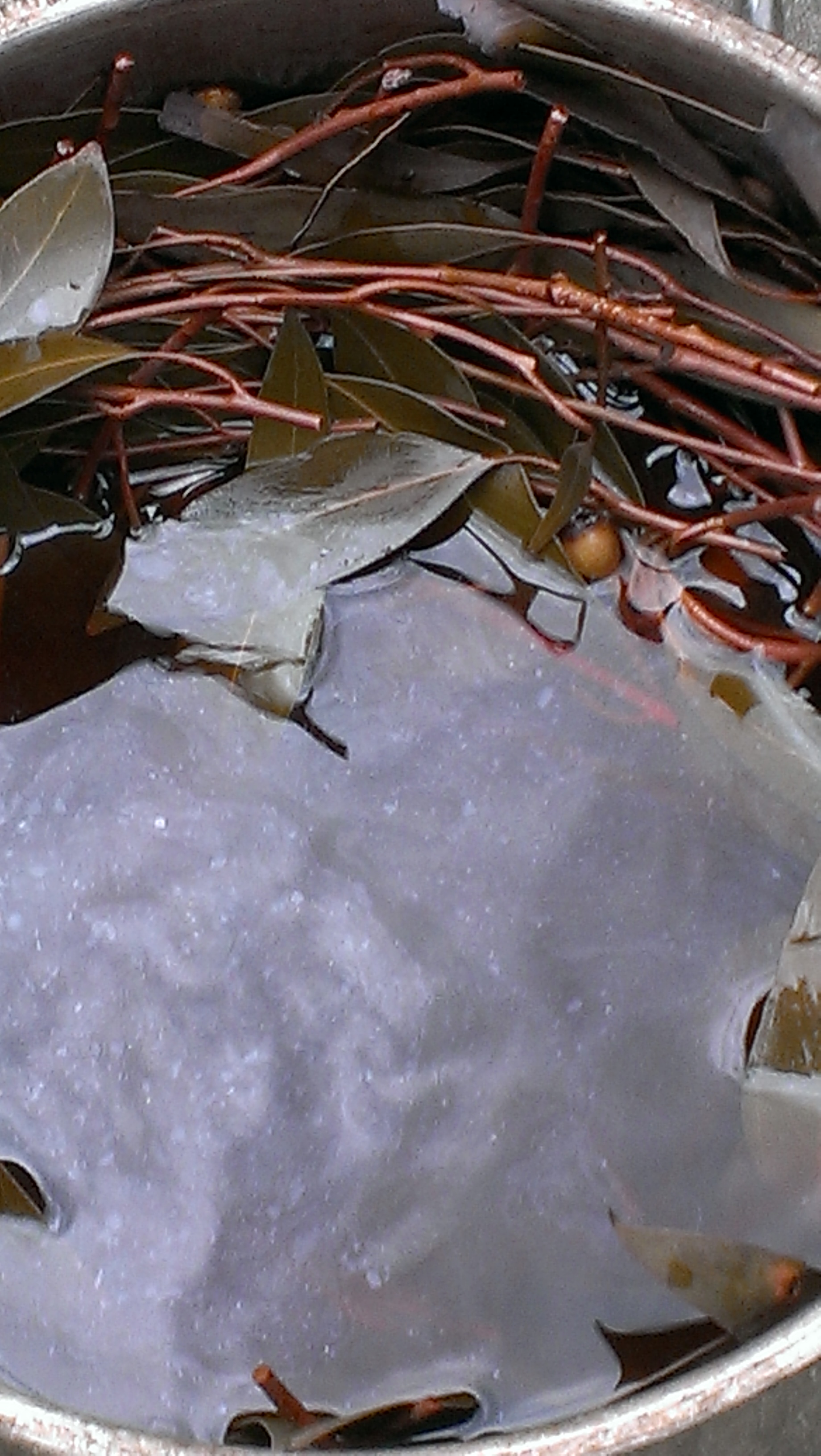
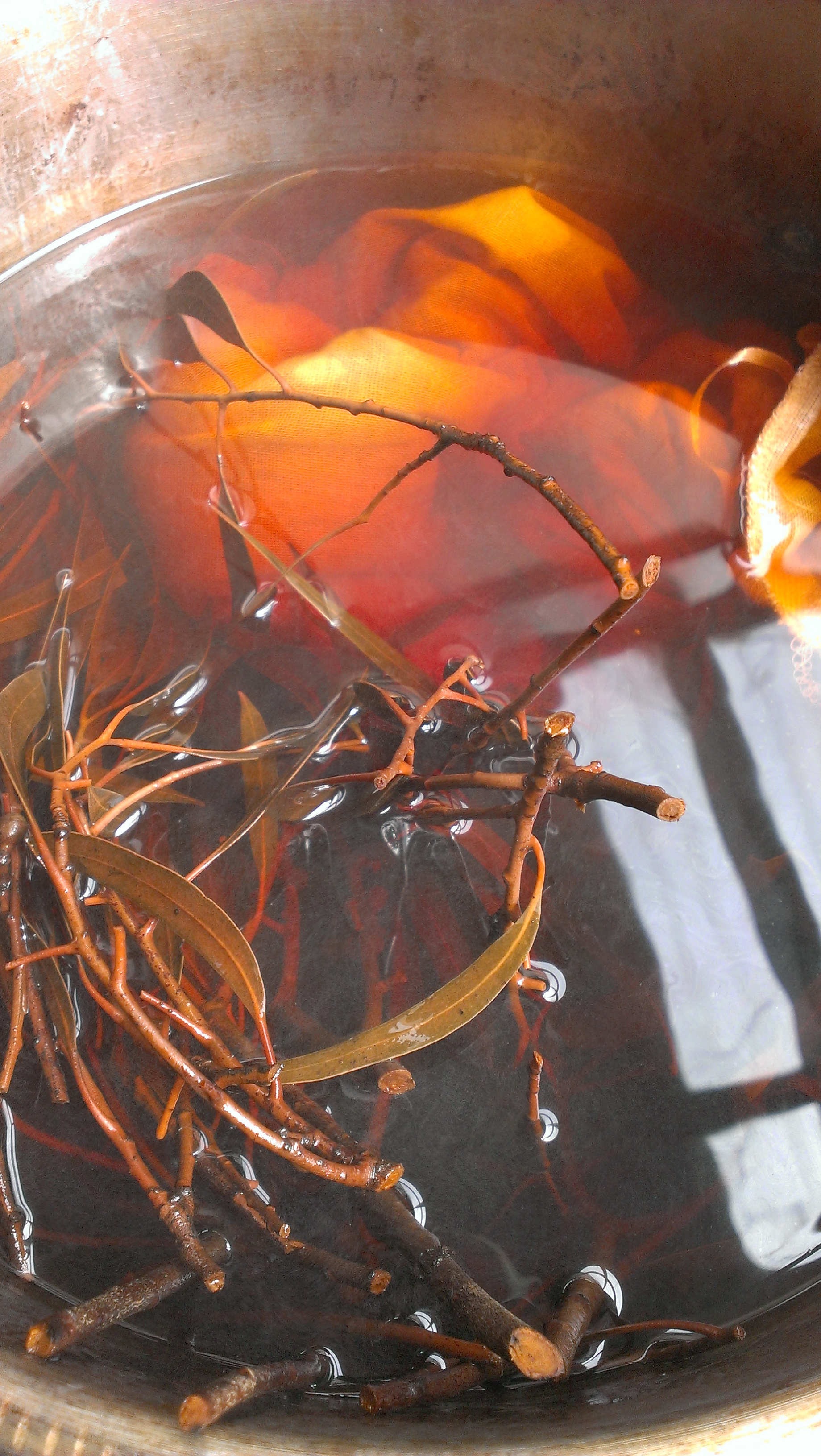
Next day, here are the dye baths, three hours in, presented in the same order as the trees from which the bark came. They look remarkably similar but smell quite different:
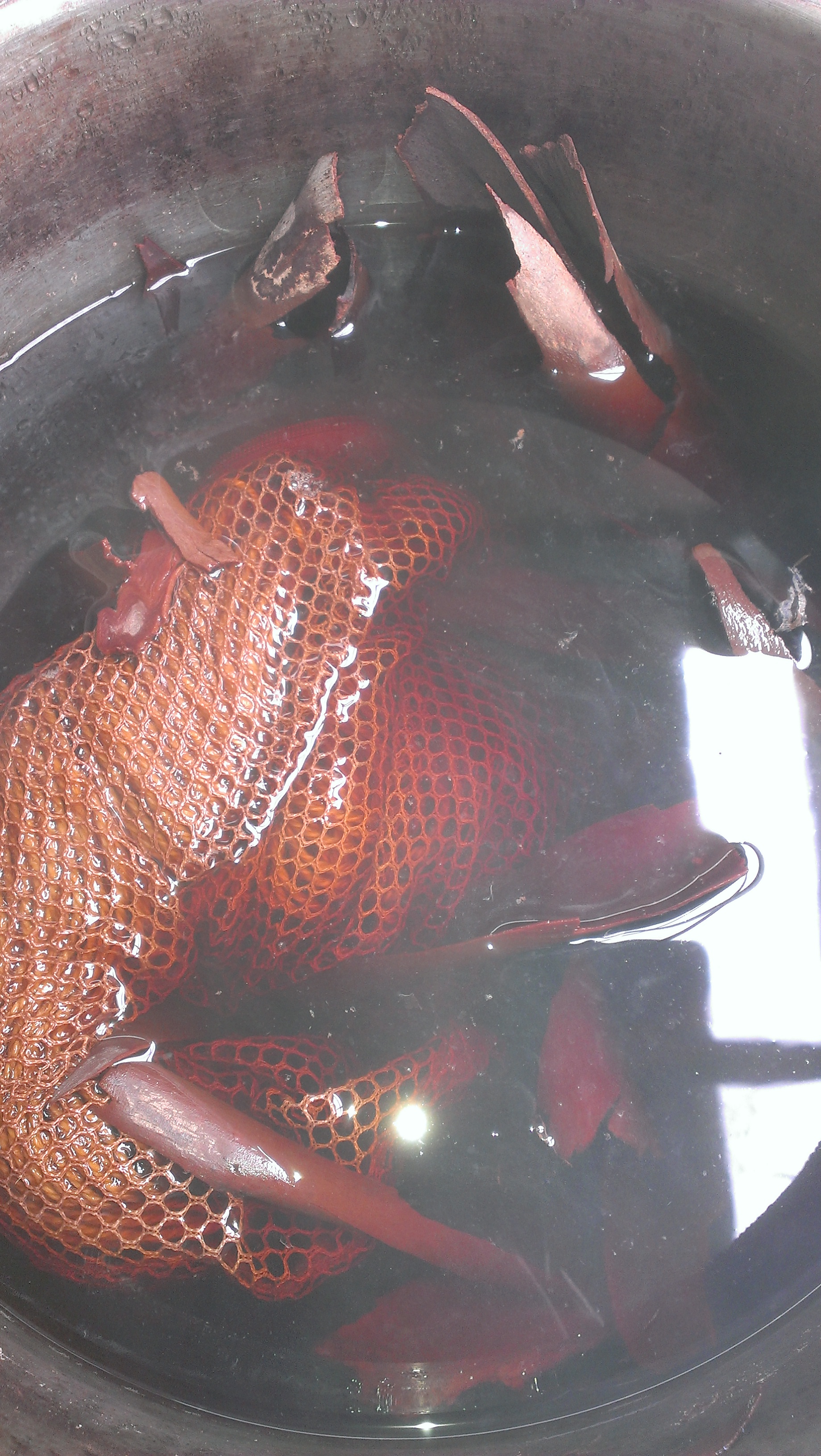
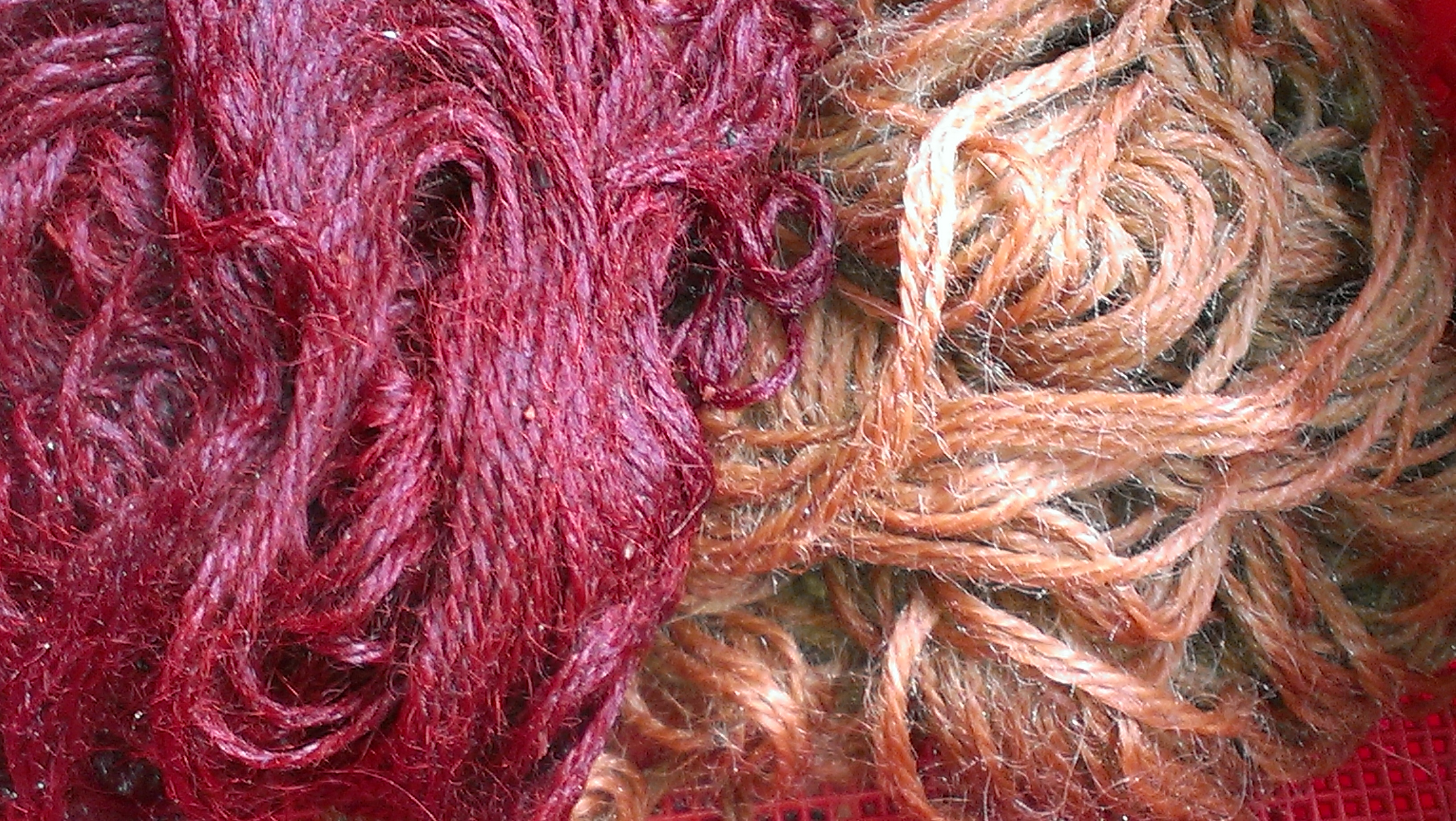
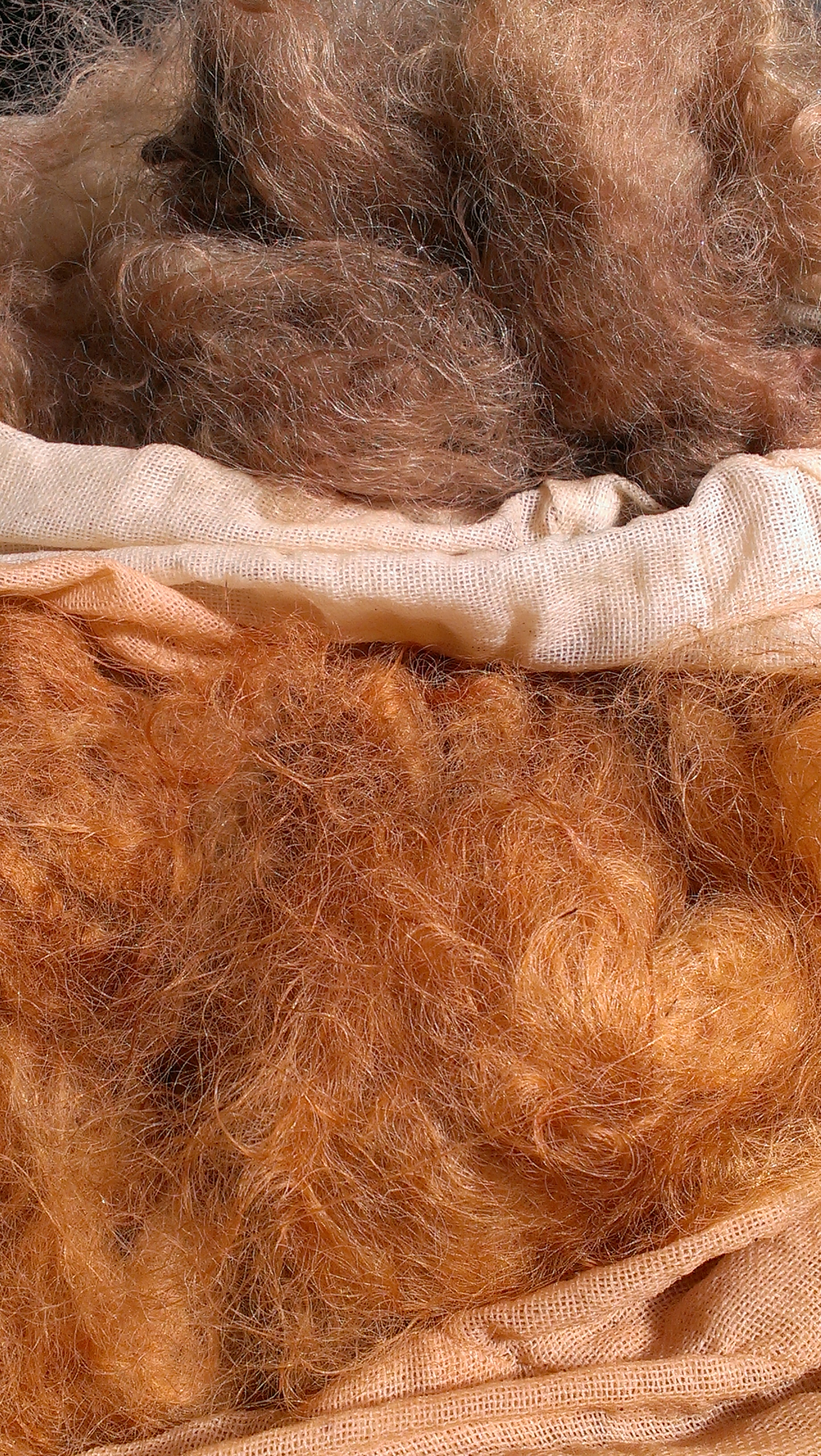
Here are the (still wet) yarns that came from those dyepots, in the same order again. Clearly, the second tree is not E Scoparia–or–for some reason its context means it doesn’t give the same colour.
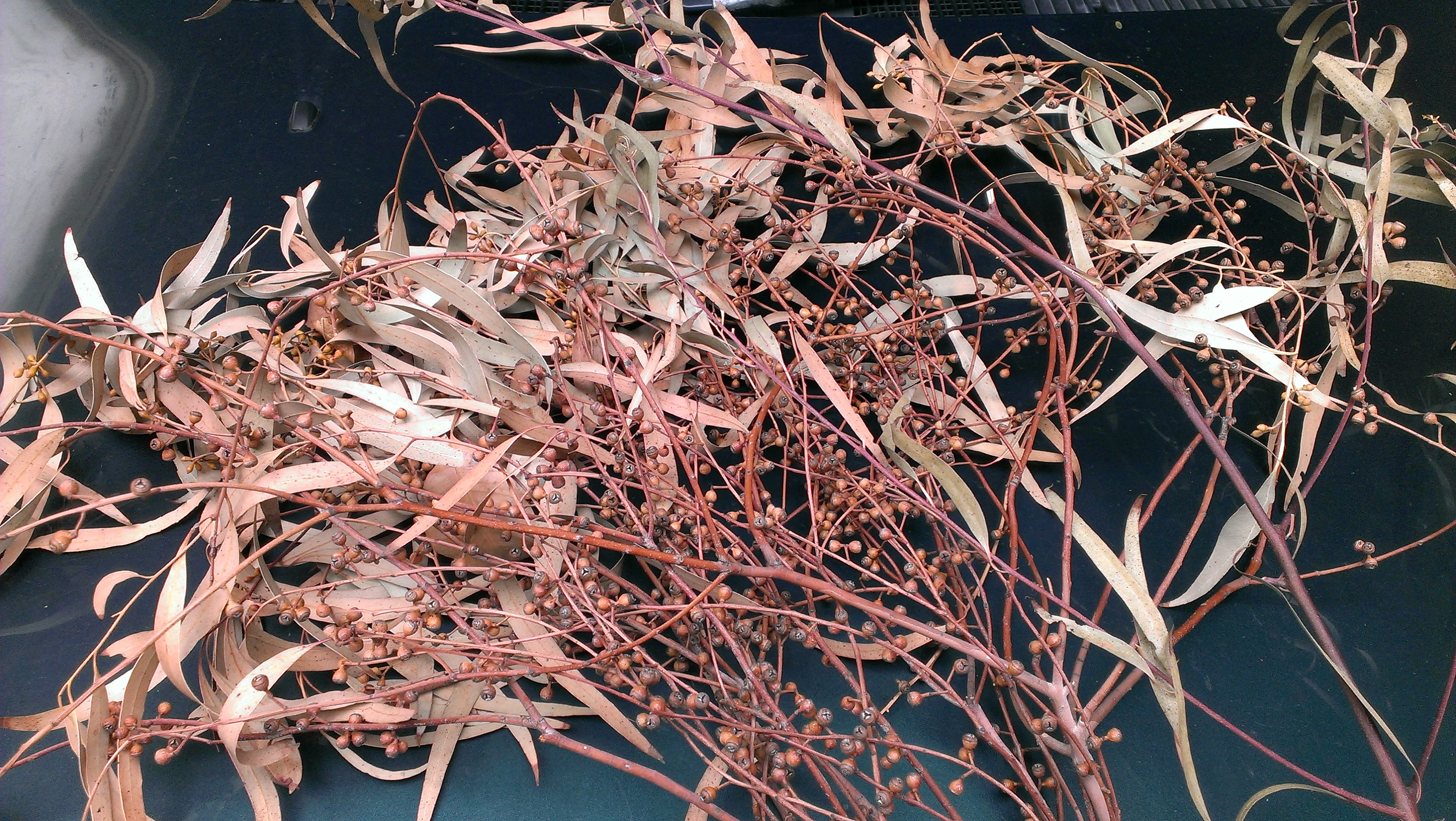
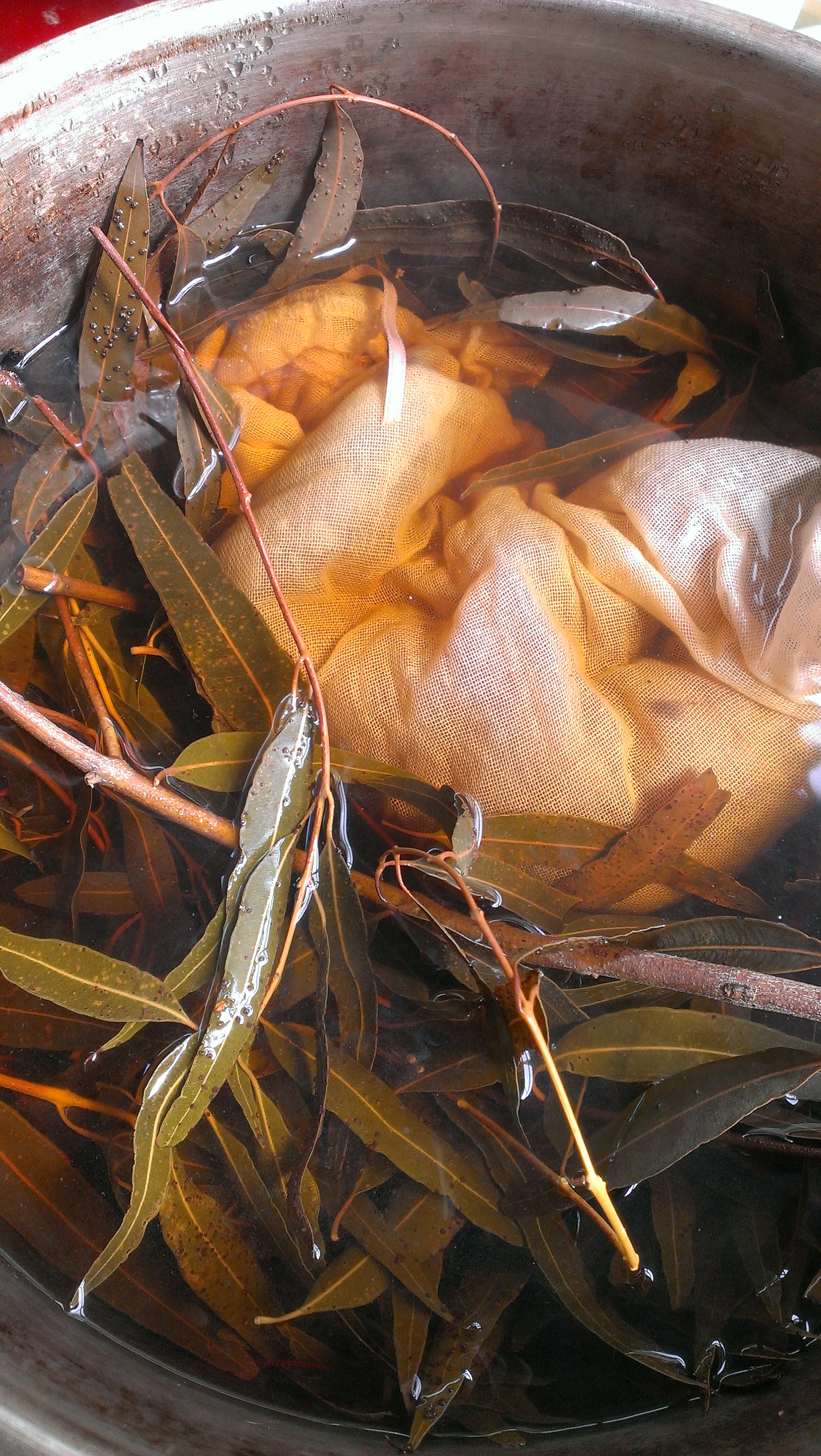
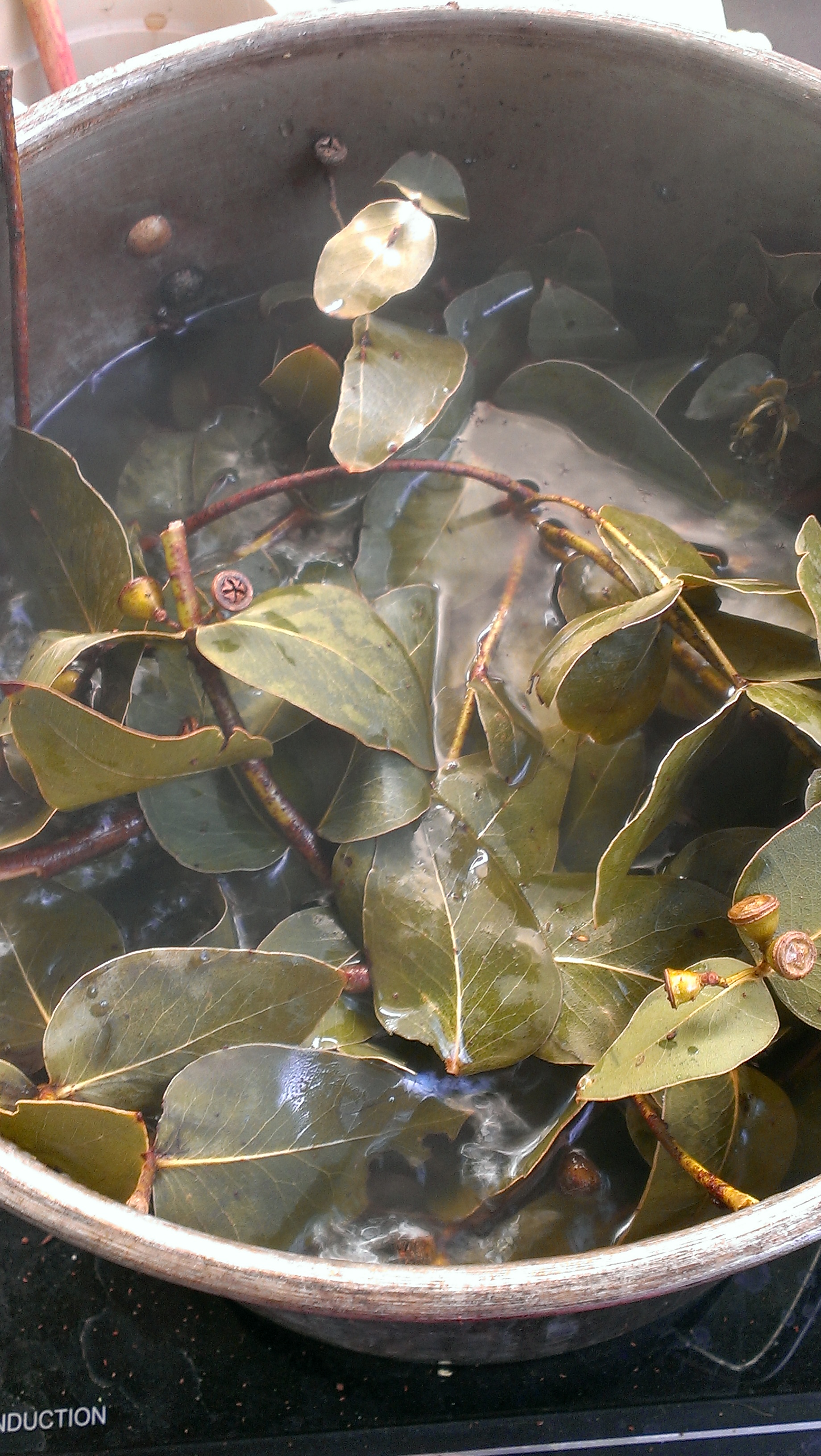
As I have had great results from the leaves of that second tree, I pulled the bark out, put some fallen leaves in, and re-dyed the tan skein…!






 Local & Bespoke