Tag Archives: for the love of the Guild

Abandoned dyestuffs of the past

A while back, I became the happy recipient of some dyestuffs that had been left at my Guild long ago.  Most were labelled, some were not.  The only one I had previously tried was indigo.  I’m thinking we’ll dye with some of them at natural dyeing workshops I’m running for the guild this year, but I needed to try them out first, check they still have dyeing capacity.  There are some in tiny quantities.  This one, for instance.  8g of something that looks like a dried fruit or husk, between the size of a hazelnut and a pea.  I posted this picture on natural dyeing fora online but got no clues at all. I await any clues readers might be able to offer.

986

The fact that I can’t identify it is a shame, because here is what happened when my dear friend and I had a dyeing day and tried it out. We soaked it overnight (in rainwater); simmered for an hour, added fibres mordanted in alum and here is the resulting colour. The yarn is mohair mordanted in alum, the sample card (wool and wool+alum) won’t wash off, and the fabric is silk, no mordant.  Burgundy… maroon yarns (with pink silk as a background).

IMAG0682

We dyed with Osage Orange, which gave jewel bright yellows on silk especially; and Logwood, which gave strong purples even on the second bath (I plan a third).

IMAG0685

The Madder is still soaking; and then there is the Red Sanderswood/Red Sandalwood.  Based on reading Jenny Dean‘s informative book Wild Colour, my dependable guide in many such matters, I expected hues of orange to brown.  I expected to think ‘why ever import this wood when these colours are readily obtainable from so many local plants’?  But nature is a complicated thing.  I did not expect this:

IMAG0684

The roving is unmordanted merino.  Almost no dye took at all.  What did take amounts to a smudge of orange.  The cloth is cotton mordanted with soy, and it is quite a red-brown.  Rust, perhaps.  The skeins are alpaca-wool blend and mohair, both mordanted in alum.  They are vivid purple, and so is the wool mordanted in alum on the sample card.  I could scarcely tell the sanderswood skeins apart from the logwood dyed skeins once they dried.

Jenny Dean offers no suggestion of purple from this plant using any combination of mordants.  It can’t be a simple case of mislabelling–the logwood baths have produced purple on silk and cotton as well as wool.  The sample card was mordanted months ago, using different wool and different alum than these skeins, and any contaminants in my dyepots would have been different, surely.  Even my rainwater will have changed in that time.  What can it mean?  My friend and I decided it meant ‘dye more protein fibres mordanted in alum’, because we both think purple is an exciting outcome!

More natural dyeing mystery–meaning the depths of my ignorance are still being plumbed by this process.  But since the result was purple… I mean, purple… I’m not feeling sad about this outcome at all.  And the exhaust dyebaths were good fun too.  The madder is on its third turn as I write.  But more on that later…

IMG_0053

5 Comments

Filed under Natural dyeing

Patterns emerge

I keep finding myself humming ‘Deck the halls with boughs of holly’ when collecting bark.  I realise it’s the first of December and there is a chance I have just been ear-wormed by a Christmas carol when passing by a shop… but I don’t think so.  I think I am actually humming ‘Tis the season for bark-collecting, tralalalala tralalala’.  Which may, of course, be even greater cause for concern!  Today I went out with my bike and visited this tree, cunningly hidden behind and beside a carob tree (whose leaves you can see).  I’ve tried dyeing with carob leaves, but nothing exciting emerged.

IMAG0287

As I went to pack my bag of bark into my bike trailer a gecko ran out!  Now that really was an occasion for celebration… a native lizard enjoying one of my favourite dye plants.  I also collected bark from a tree in Leader St.  I ran a sample dye pot some years back from leaves that had dried in the gutter beside it and got rich colour, but the council has trimmed the boughs so high I can’t reach leaves or see any buds or gumnuts.  I am using the pattern of bark shedding to identify more E Scoparia trees.  Anything that has bark that has turned dark grey and red just as it begins to shed is on my plausible candidates list if it is peeling now, which is why I visited the one in Leader St. Needless to say, there is a dye pot running now to test this theory.  After all, ’tis the season for bark collecting…

And, at Guild today I became the happy recipient of natural dyestuffs of antiquity which I might be able to use for my dyeing workshop.  Some had no labels, and this one is the most intriguing of the unidentified specimens.  I could guess many, but not this one.  Any clues?  It looks to be the husk of a small fruit.  Smaller than a hazelnut, say, but bigger than a pea.  Dark on the outside and crimson on the inside.

IMAG0286

This trove is going to take some research, but will be my first opportunity to try logwood and cochineal (let those bugs not have died in vain…) and suchlike, as well as some things I’ve never heard of, like shredded mulga bark (mulga roots are common firewood here, but I’ve never heard of this as a dyestuff) and ‘red sanderswood’. Happy times… I also received some undyed handspun yarn as part of the Guild birthday challenge, labelled ‘Goat Hair’. Perhaps it can be dyed from the new dye collection?

Leave a comment

Filed under Dye Plants, Eucalypts, Natural dyeing

Soy mordanting

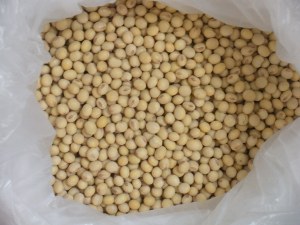
Ah, the humble soybean.  It gives me enormous respect for Japanese culture to see all that they have achieved with this rather unpromising bean (to say nothing of all the other skills and treasures of Japanese culture). Tempeh and tofu are very much on our menus at present, too.

I am just using it to mordant cellulose fibres ready for leaf prints, nothing as complex as tempeh, or even tofu. Usually I dip the fabric in the sea first when I’m visiting someone by the sea and then dry it and then begin with beans, but not this time. I forgot to take the cloth when I went visiting at Hove and the beans were already soaking. I measure out 3 cups of beans to every kilogram of fabric. I soak the beans overnight, grind them finely and dilute, then strain out the solids.

Then, it’s dip and dry at least three times.  So this week I made the most of hot weather: 4 dips on a single day.  These pieces of cloth are destined to be dyed by those who attend my dyeing workshop in January. It isn’t a difficult process to mordant this way, but there are a few steps to it.  I’ve decided to try mordanting in advance in the hot weather of summer.  Drying fabrics that have been through this process in winter is pretty trying and makes this a 4 day process, by the end of which the soymilk smells less pleasant. Mind you, even then, it takes about 5 minutes a day of actual effort for me!

Next, I’ll be testing one of these out to make certain sure there will be a good result on the day of the workshop. And perhaps, doing some more mordanting while the weather is perfect for it, as part of working toward taking advantage of the seasons to do the work that is most suitable to the weather and conditions.

25 Comments

Filed under Fibre preparation

Works in progress

I’ve been puttering along on a number of different projects over the last few weeks… and lest this sounds unusual in some way, that is probably the way life goes most of the time around here!  I returned to cold dyeing roving after retrieving my last spectacular failure.  For good measure, I also dyed some local mohair locks.  I am planning toward a textured yarn spinning workshop and I’m determined to go as close as I can to a local supply of materials for the participants.

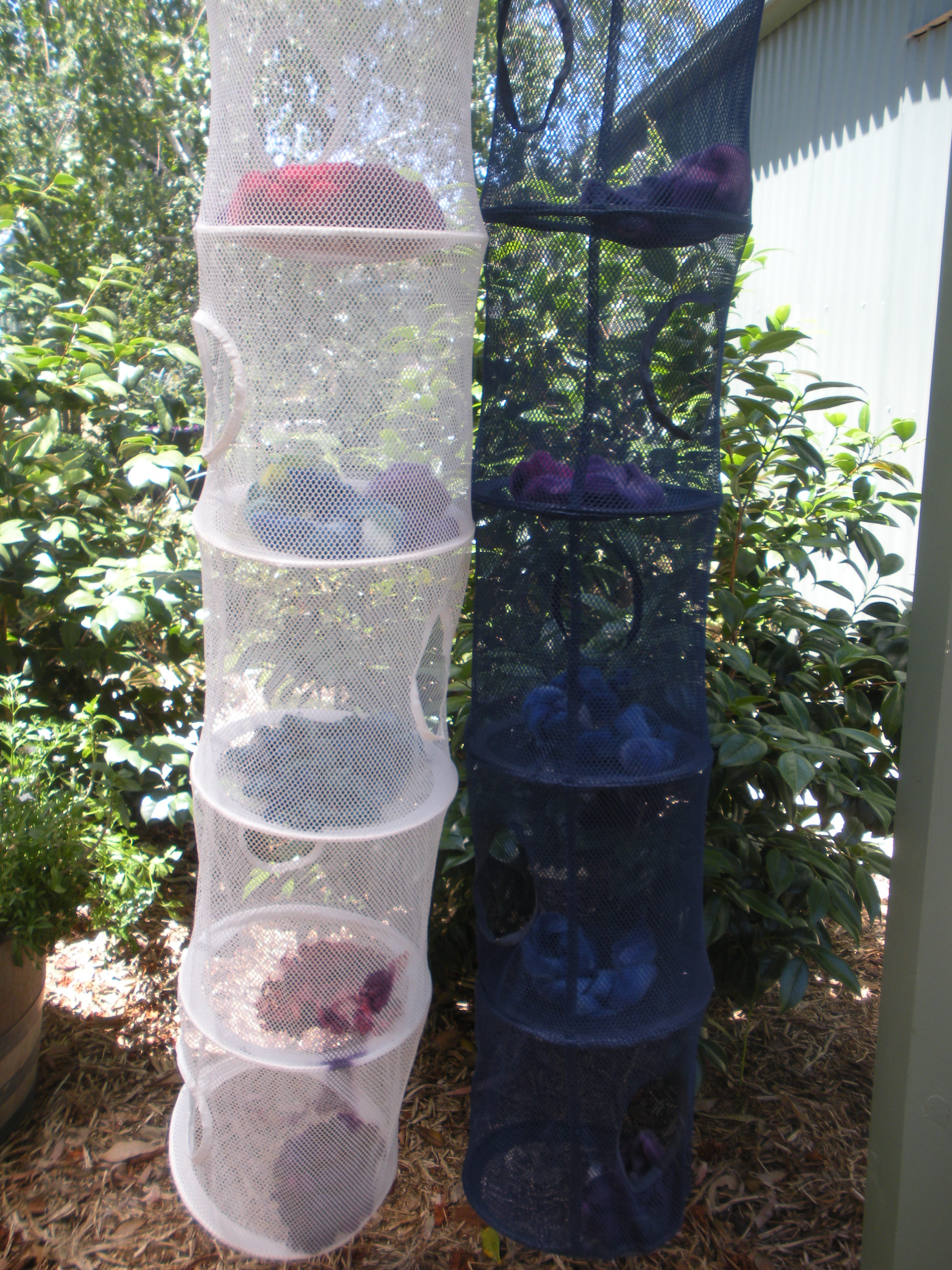
We’ve had Ikea here for long enough that the op shops of the city now turn up these fantastic wool drying apparatuses.  One came with a small supply of plastic animals.  This time, just when I thought I had found them all, a small plastic dalmatian dropped out.  Hopefully the child whose toys left home this way is not grieving and bereft!

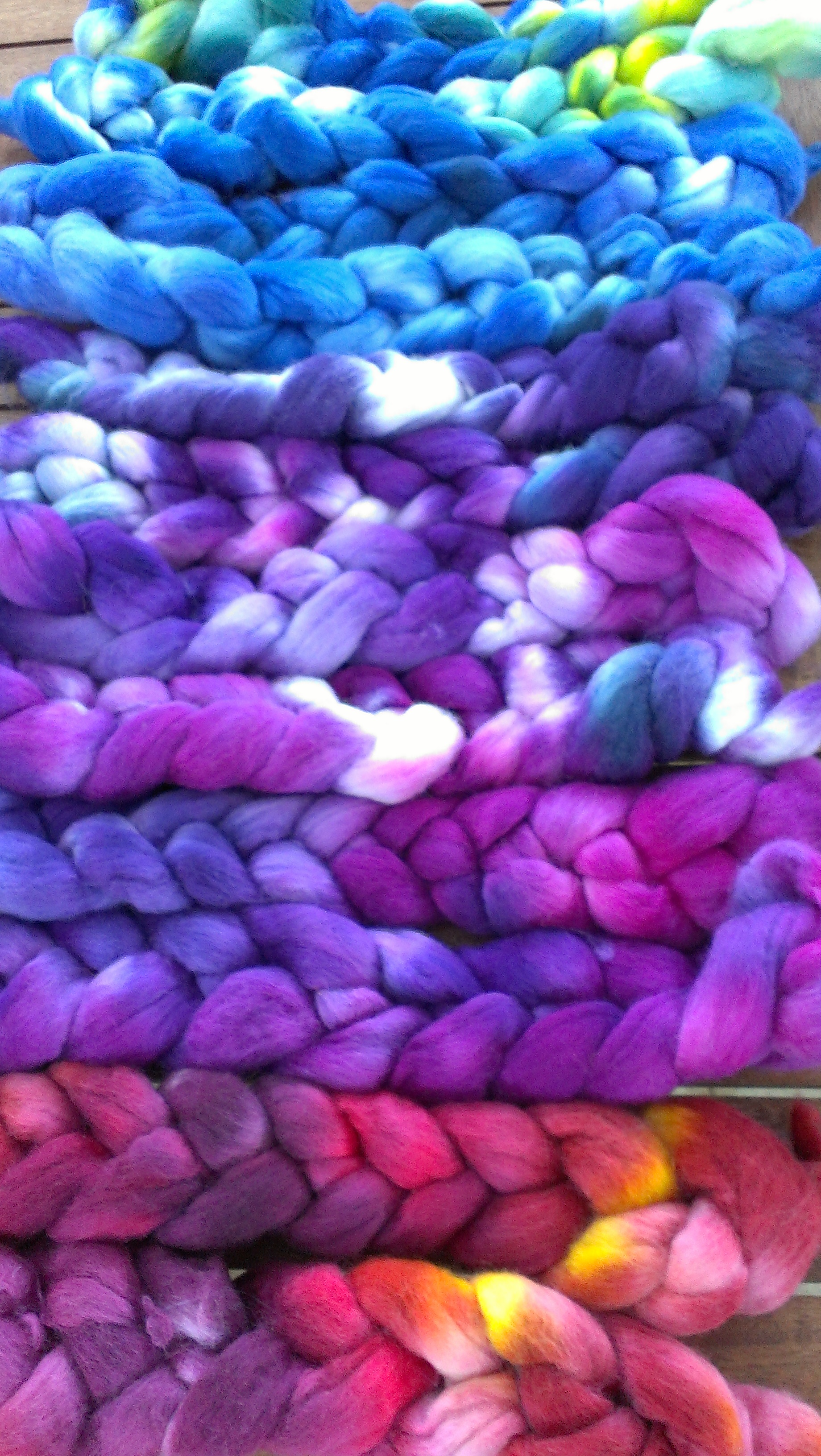
This time, the merino braids turned out better than I had hoped.  Perhaps I am slowly acquiring a better sense of colour.  Those with a red base (at the bottom of the picture) were the ones I felt most tentative about, but I like them best of all.

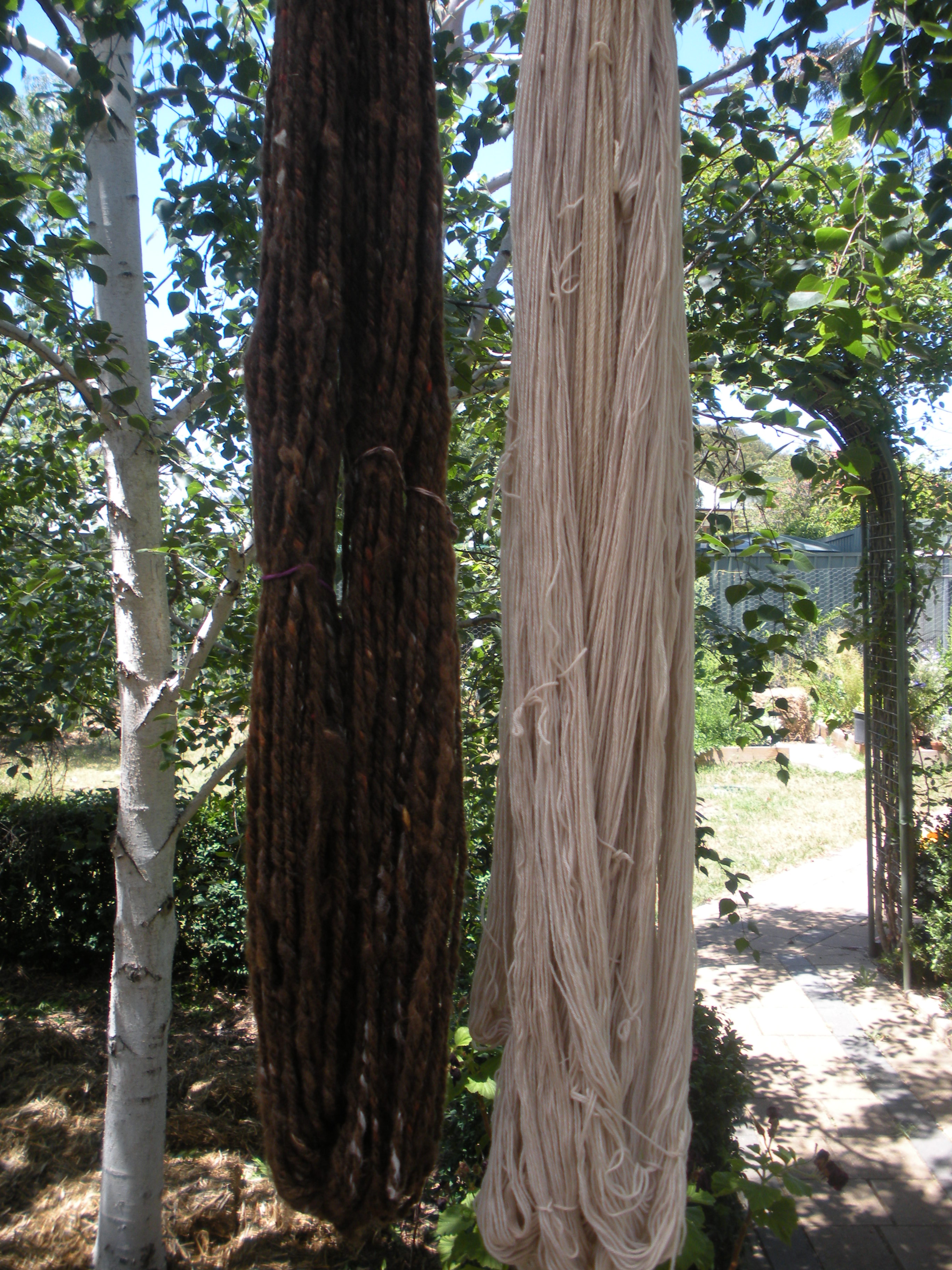
The mohair is ready to have seed heads picked out of it and to become part of some textured batts for corespinning and other good times.  Meanwhile, I have been preparing for a natural dyeing workshop focusing on eucalypts.  Again, I need to provide materials, so I’ve been laying in what I need.  It’s the season for bark collection so I have been touring the neighbourhood with my trusty bike trailer and a chook feed sack, pulling over if I’m passing in the car, or wandering out with a bucket, whichever may be appropriate to the day and location of the tree.  In short, I am keeping the E Scoparia bark that is falling to the ground from being blown away, tidied up by others or crushed on the road.  I have almost 3 sacks full so far.  Seeing the bark shedding has allowed me to run test dye pots on a few trees I had been unsure of with more confidence.  I’ve found several more specimens in the local area.  Meantime, I have been mordanting fibres (wool with alum on the right) and continuing to convert my sow’s ear fibre into slipper-suitable yarn (left) as I knit up what has already been spun. I think that particular batch of unlovely spinning may finally be over.  Two pairs of slippers are knit, one to go.

I’ve been converting milk bottles into sample cards, writing up notes and assessing the state of the Guild’s dye room.  Today, I’ve got soybeans soaking ready to mordant cotton for the workshop.  It has me wanting to dye…

10 Comments

Filed under Dye Plants, Fibre preparation, Spinning