Tag Archives: India Flint

Let there be string!

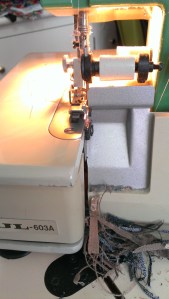
Making string from scrap fabric is so simple and pleasurable (and satisfies my love of using up every last scrap so well) that I’ve found myself making more string this week. I have been thinking, since Second Skin, that it is not so much that I come from the zero waste school of sewing as that I come from the austerity school of sewing.  I do draft so as to avoid creating waste, and I watched my mother dothis as a child, often starting with less fabric than her pattern called for.  Then I take all the remnant fabric from previous projects and turn it into something else, even if this requires a lot of patchwork.  Little of what is left beside my overlocker is wide enough to make string, even. When I tried carding ovwerlocker waste into batts a while back, most of it fell out because there was so much thread cut so short!

IMAG4603

Anyway… I’ve been turning a pair of jeans and a pair of linen pants into a bag, and although that process will use almost all the fabric in each (since I’m piecing together even relatively small sections), there are some scraps left.  I cut them all to suitable widths for string making.  It began with this little pile.

IMAG4597

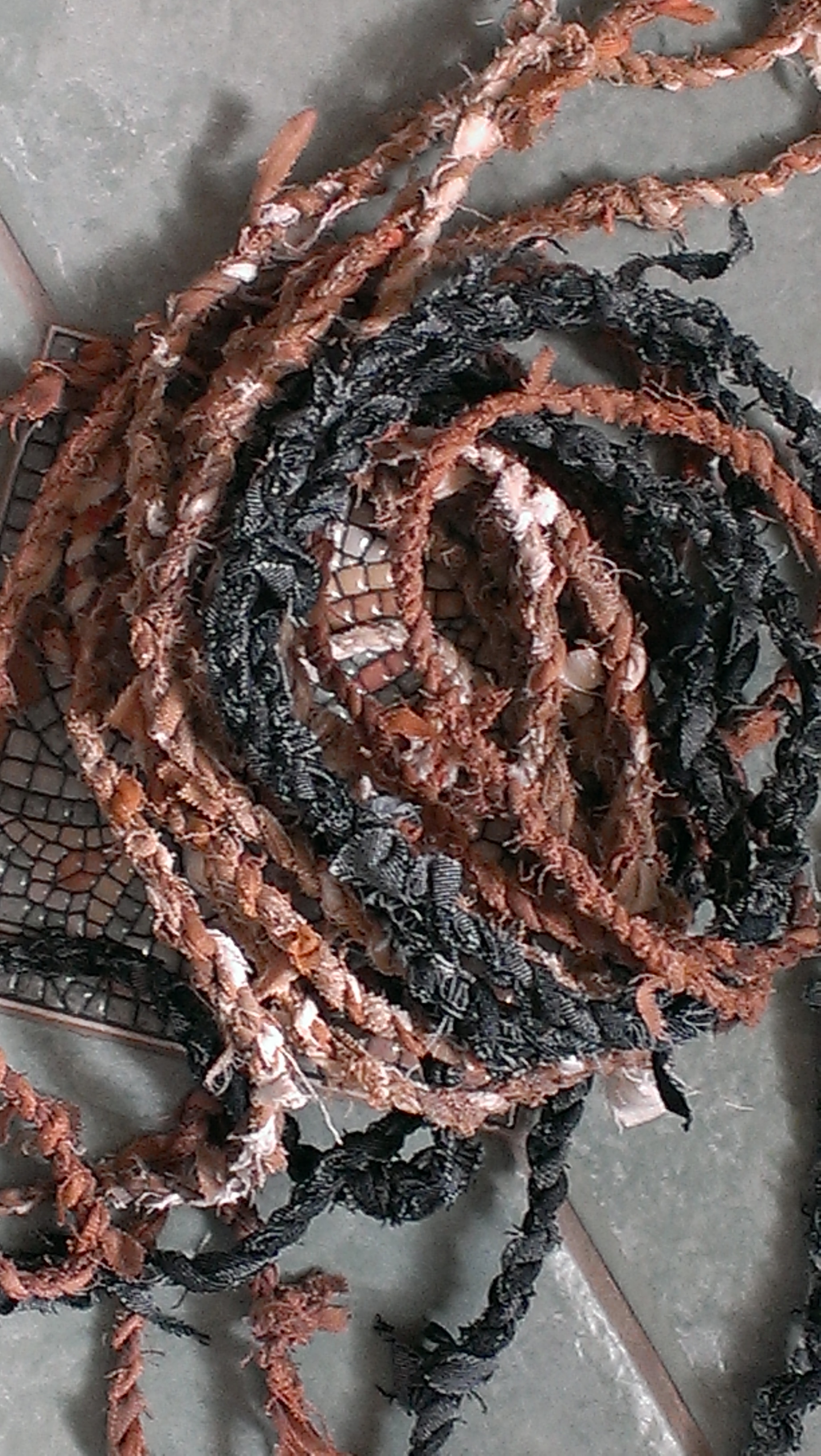
By later in the week, I had three lengths of… well… cord?  Light rope?  Very shaggy string?

IMAG4641

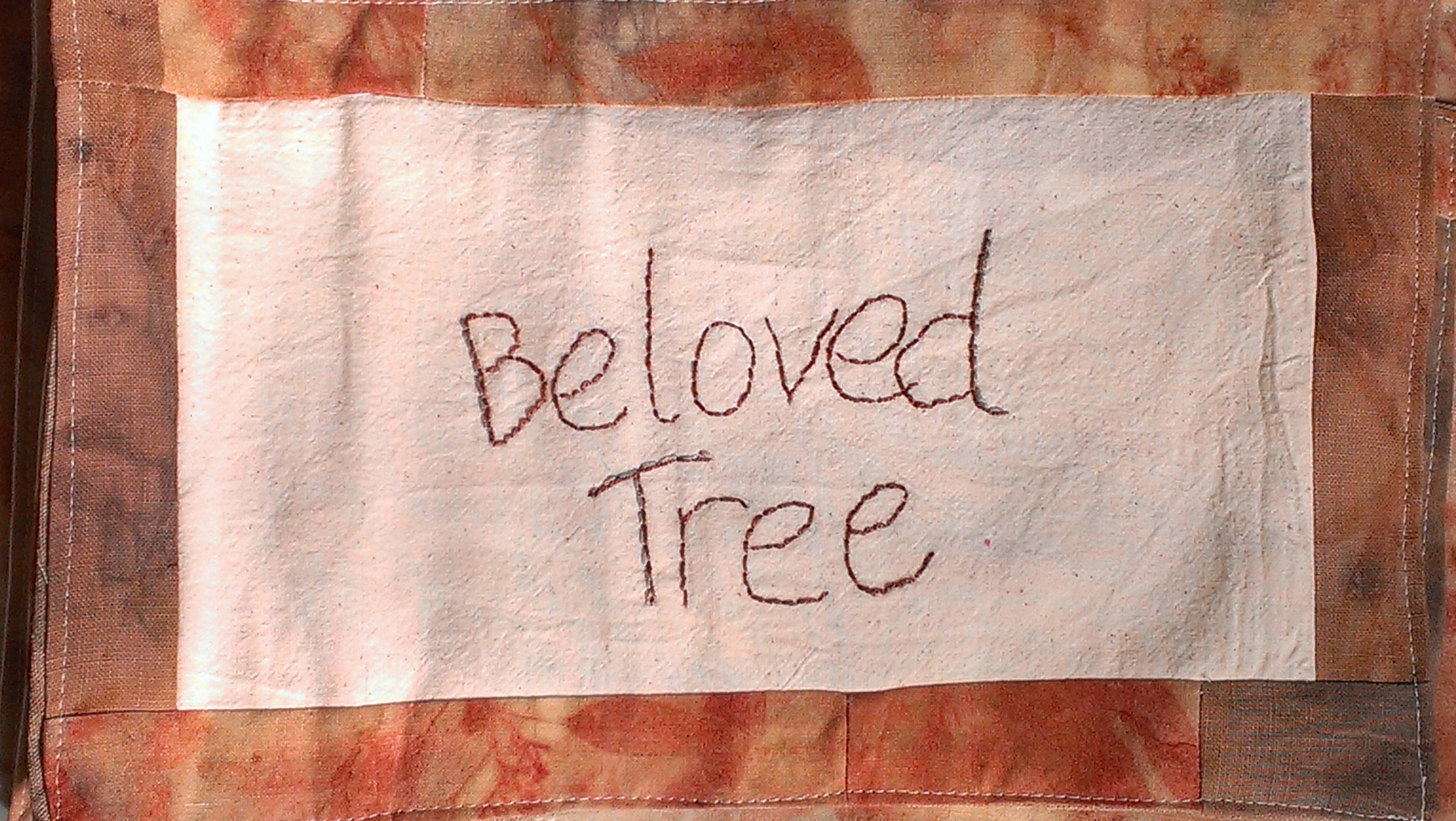
I’ve been creating small banners for trees in our local neighbourhood, and so string–cord–rope will come in handy.

IMAG4644

There’s a plan for these banners… involving other people… and brought into being by the enthusiasm of my fairy godson.  I’ve made several so far from a calico sack I scored from a local business, together with recycled eco-printed fabrics and eucalyptus-dyed embroidery threads.  On the inside, the interfacing is a set of damask napkins which saw their glory days long ago and have been rendered threadbare by long use.  My mother-out-law sent them down to Adelaide last time my sweetheart visited her.  I hope she’ll approve of this way of using them!

IMAG4643


16 Comments

Filed under Craftivism, Sewing

Sampling eucalypts

IMAG4429

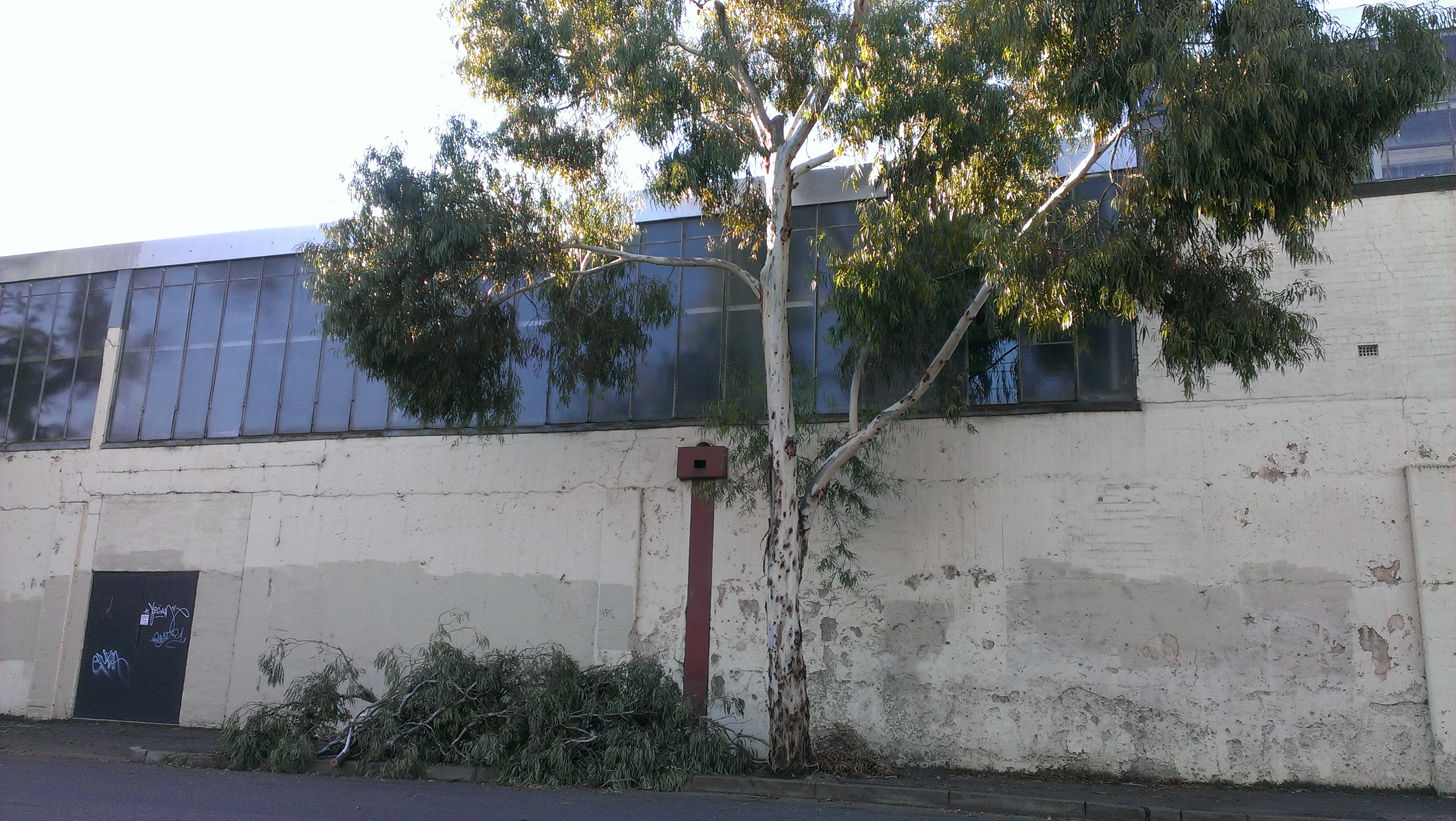
As we drove home from exercise group last Saturday morning, it became clear that a big part of a tree had been cut down beside a warehouse-style business near home.  A big chunk of tree canopy was lying on the footpath.  I didn’t think I had sampled the tree in question, but there are several in that area that look like E Scoparia, but have been pruned to branch very high–out of reach.  There isn’t much hope of my identifying this one–it has no fruit, flowers or buds on it right now, though it does have red twigs and white-barked branches and leaves the right shape for E Scoparia.   I have had some success with leaves from the gutters on that street, but not right where these branches were lying.  I went back and applied my secateurs.

IMAG4432

To my sadness when I actually stopped I could see that a tree had been felled and that its trunk had been taken away.  The very base of it was all that was left, and it was clear that a large section of the root mass had rotted away or become diseased.  Just the same… the continuing loss of trees around our way feels relentless. This week someone else aggrieved by the felling of three massive trees on one block which I posted about recently took a spray can to the fence of the block in question.  One fence had something I can’t fully reprint here: ‘What the f*** have you done?’, and the other fence said the neighbourhood was in mourning for the loss of the trees and that planning laws should be changed.  I thought I would take a photo but this morning there was a chap with a paintbrush taking it out less than 48 hours after it went up.

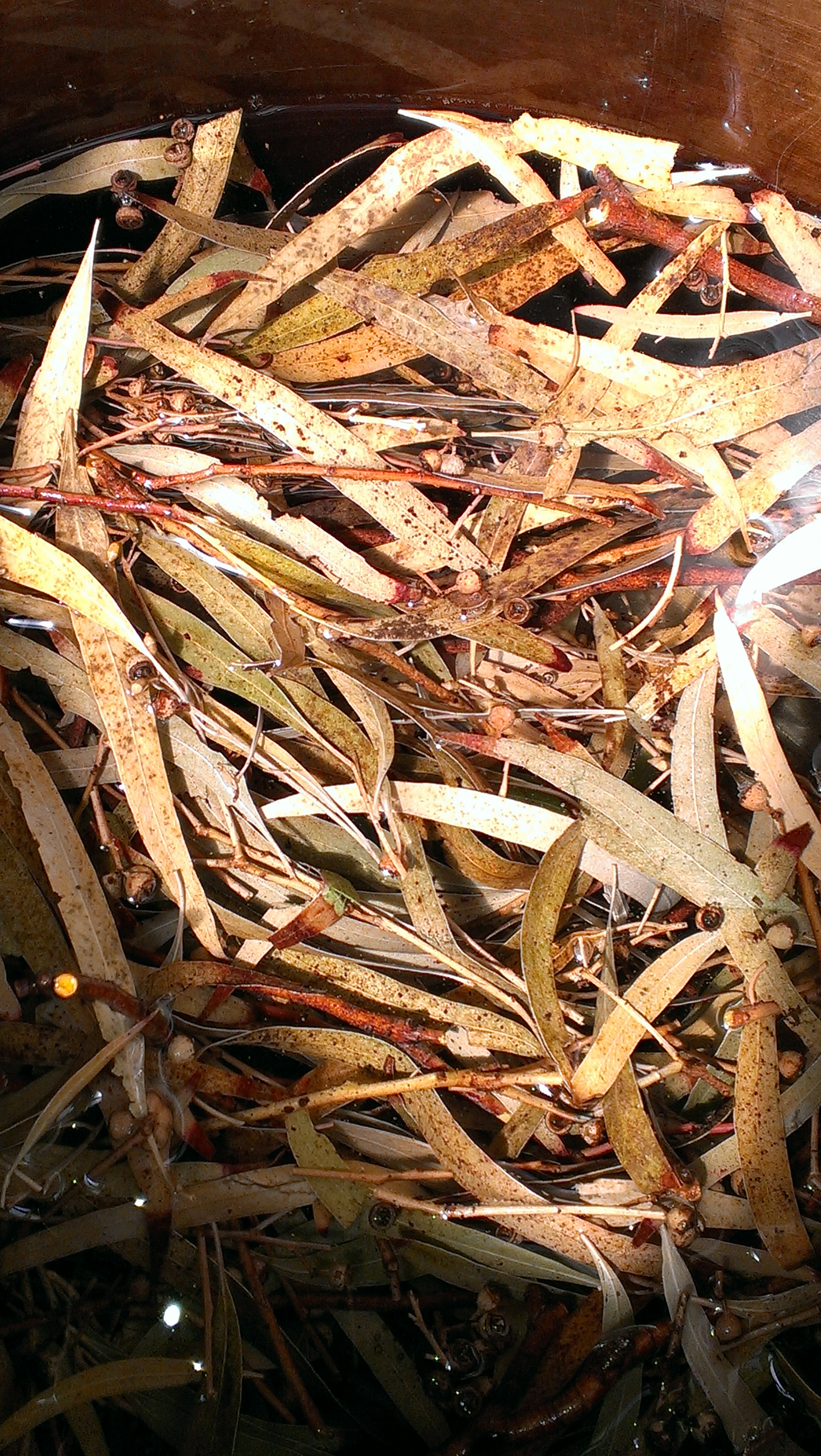
But this is no reason to allow all the leaves of this felled tree to go to commercial composting if I could dye with them and then compost them.  Needless to say, after this flame orange result, I went back and cut all I could get into a chaff bag (that’s a very big sack, in my terms). As a bonus to my visit, the tree had been felled beside an E Cinerea, so I picked up every last leaf that had fallen from the E Cinerea too.  I’ll be running a workshop at my Guild in June and I’ll need to bring a goodly amount of dye material.

IMAG4483

This next eucalypt was standing in the parklands in North Adelaide.  I went there early one morning for an appointment so had a walk before my appointment.  I decided to sample it because India Flint suggests silver grey leaved eucalypts are promising dye plants.  The buds were so pretty!

IMAG4374

Clearly when it flowers there are many flowers… but not yet…

IMAG4375

The tree was an interesting shape…

IMAG4377

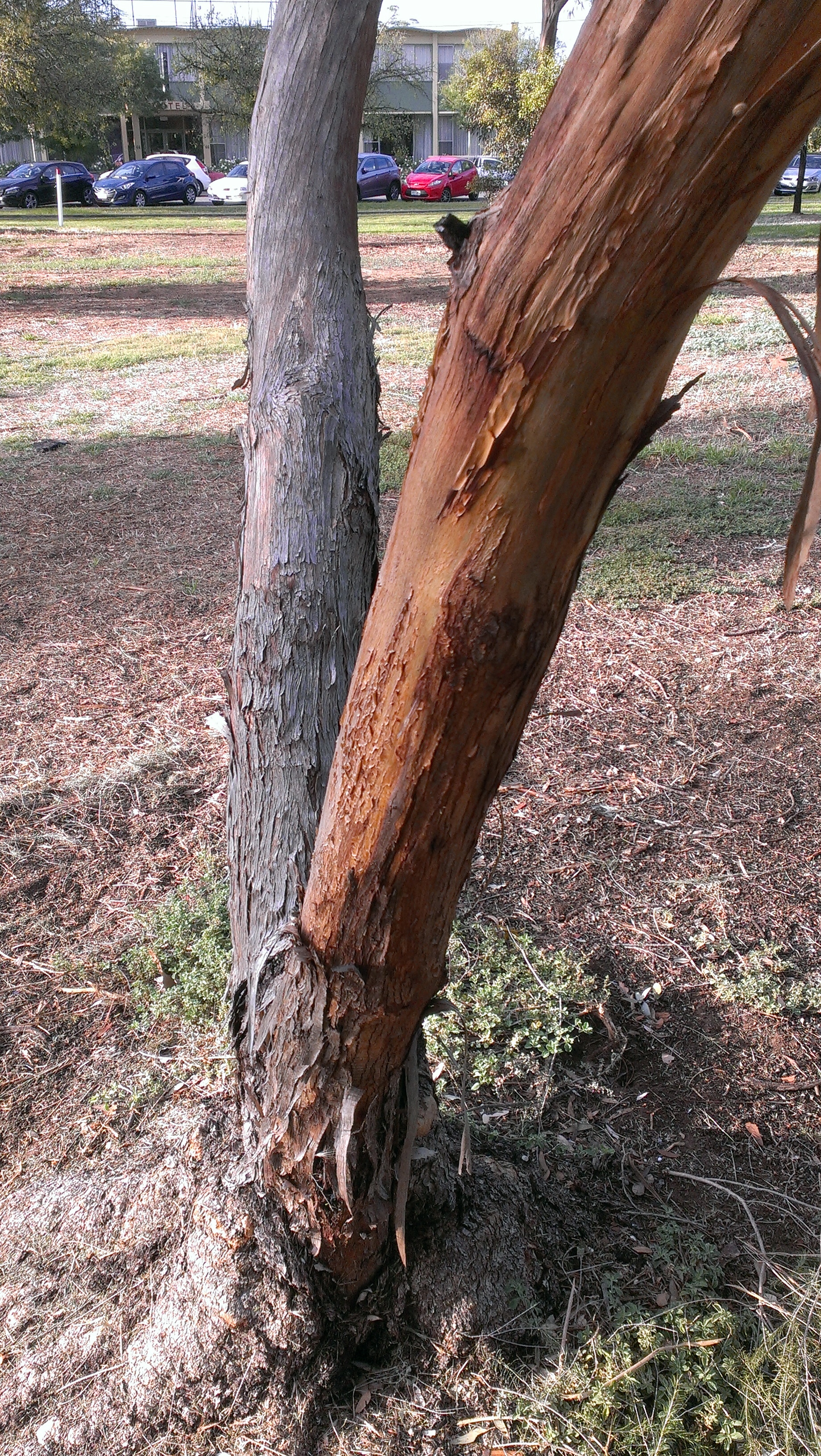
There was the intriguing feature of two different coloured trunks coming from one lignotuber.

IMAG4379

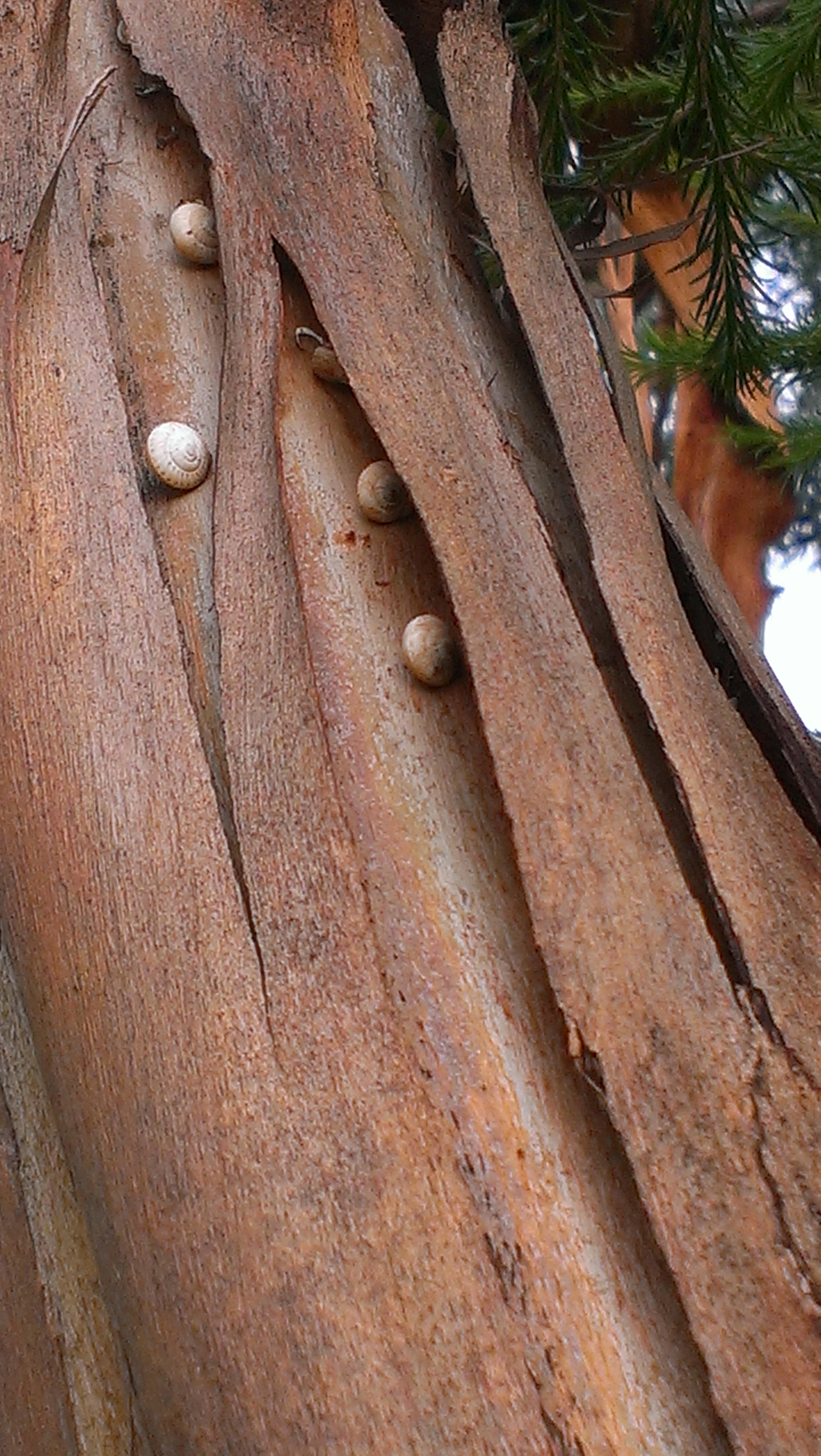
And I just can’t explain why there were so many land snails, but I love land snails.

IMAG4382

The result in the dyebath was a pale apricot.

IMAG4434

Then there was this tree, growing on the far outskirts of my workplace just outside a car park.  It seems like a box (one branch of the eucalypt family) to me.

IMAG4385

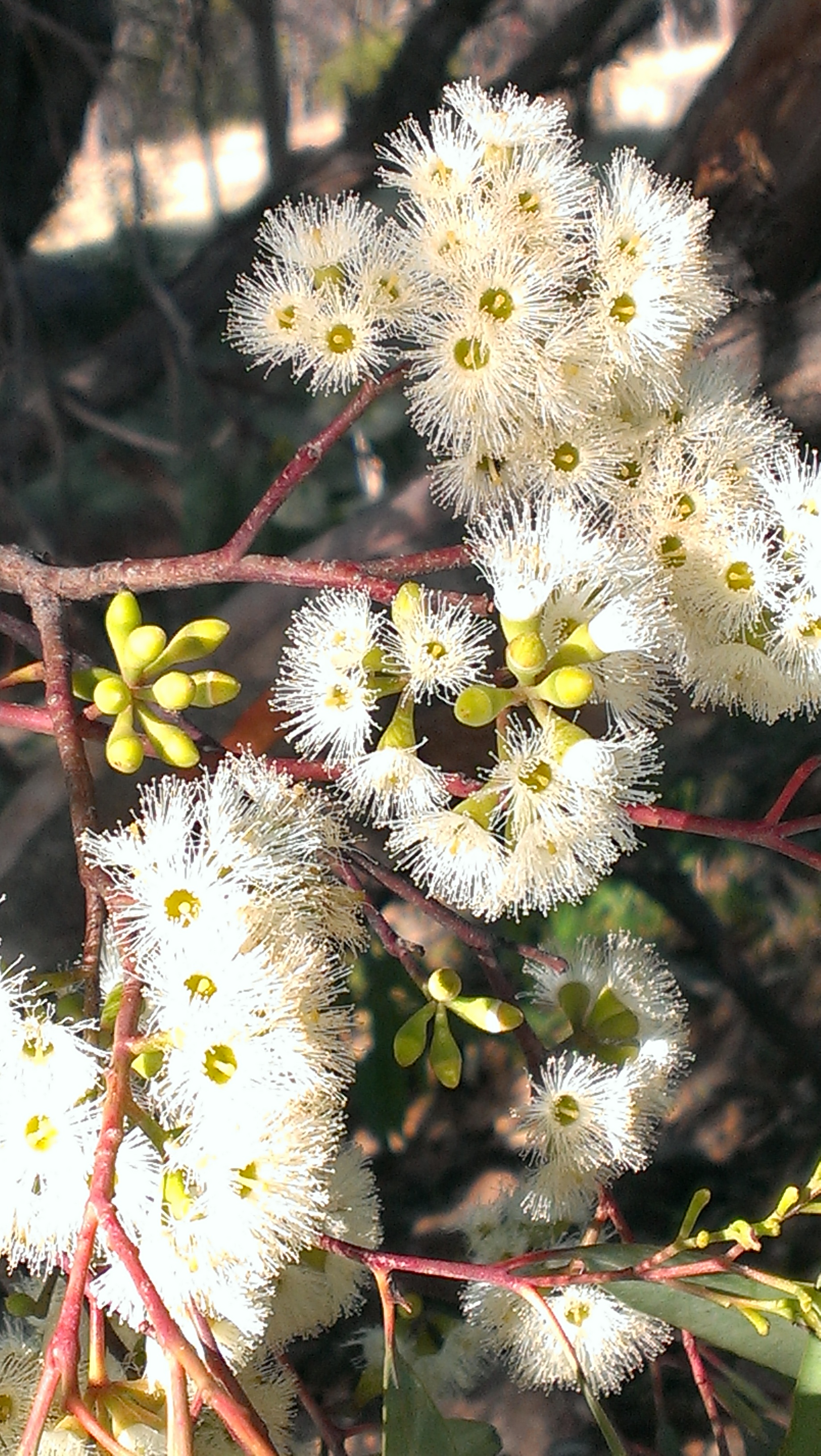
It was gloriously in flower, full of bees and birds.

IMAG4388

When I went back in the evening, I realised there were a few of these trees and there were also fallen branches.  Well worth sampling, in my view!

IMAG4396

I loved the colour from this plant, and I used a dyeing strategy India Flint described in Melbourne.  Far less energy use and potential for fibre damage… and clearly this may become my new normal way to dye with eucalypts!

IMAG4436

19 Comments

Filed under Dye Plants, Eucalypts, Natural dyeing

Things learned 4

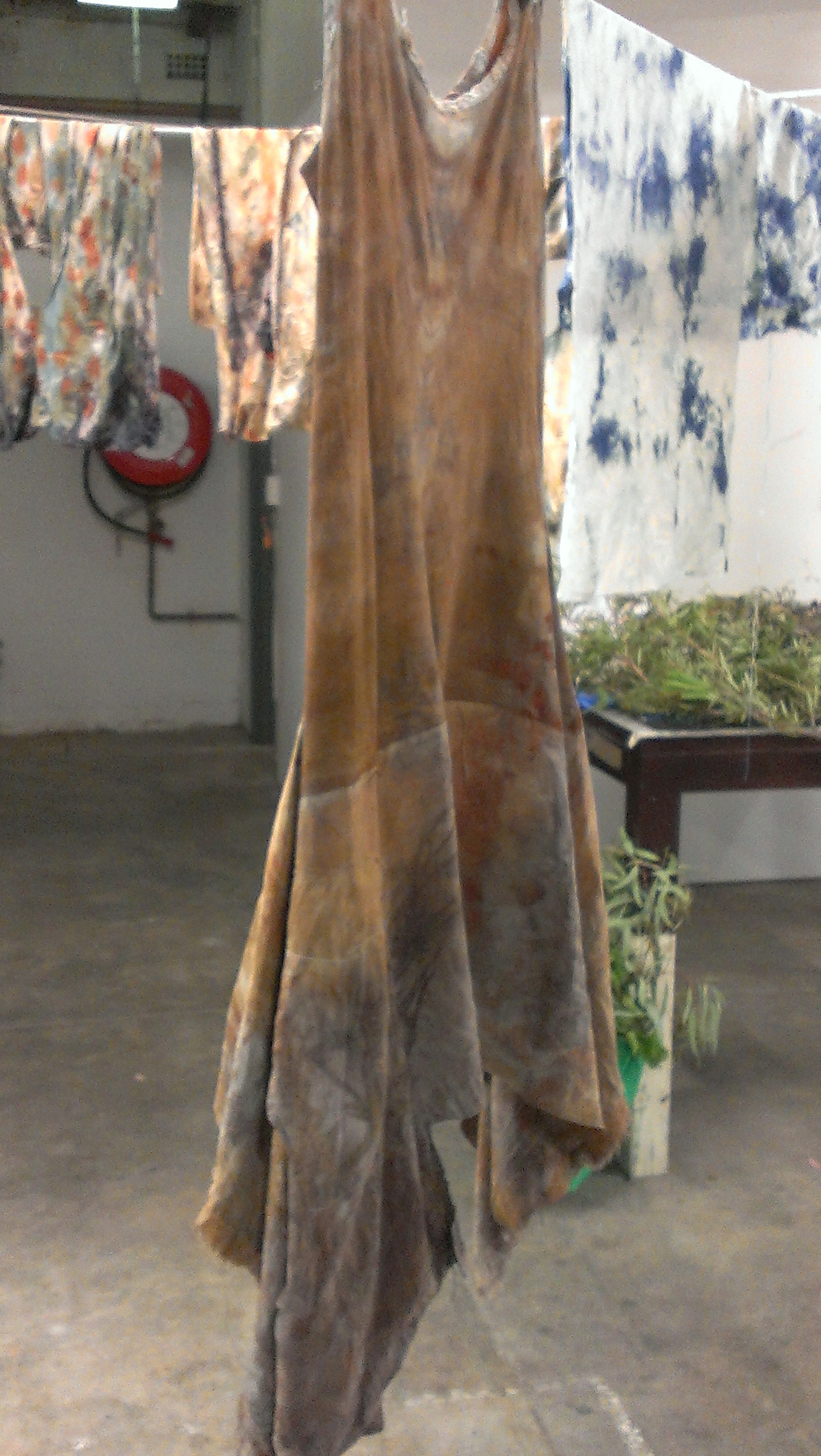
Second Skin offered lots of possibilities for learning-by-looking through the admiration of plant-dyed clothing.  India Flint was wearing her own creations every day and it was a delight to have that opportunity to see them in use and to think about their construction/reconstruction/dyeing. Other participants wore clothing they had dyed sometimes too–also a pleasure to admire.  And India brought along some garments to show. She gave permission for me to show images of this dress.   The upper part (bodice?) is a knit fabric–I am assuming it’s silky merino.  The neckline and armscyes have been bound with a different fabric: a sheeny silk that has taken up dye differently. There’s a lovely leafy detail heading toward one shoulder.

IMAG4311

The skirt of the dress is asymmetrical, and composed of a variety of fabrics, some repurposed.  There is a large pocket in the skirt that might once have been the neckline and part of the front of a shirt, replete with buttons.  I found that a delectable detail.

IMAG4310

This view shows how lush the skirt is.  I loved the generous, undulating hemline and skirt.  India gave a demonstration of how it had been created.  I loved the idea of using a variety of fabrics and textures in a single garment. I’m a plain sewer, as you may have detected, and my mind was abuzz with ideas for using some of the lovely pieces of fabric in my stash of eco-printed fabrics in this way.  Hand-stitching clearly has advantages in creating this kind of garment and coaxing all its component parts into a sweet relationship with one another.

IMAG4304

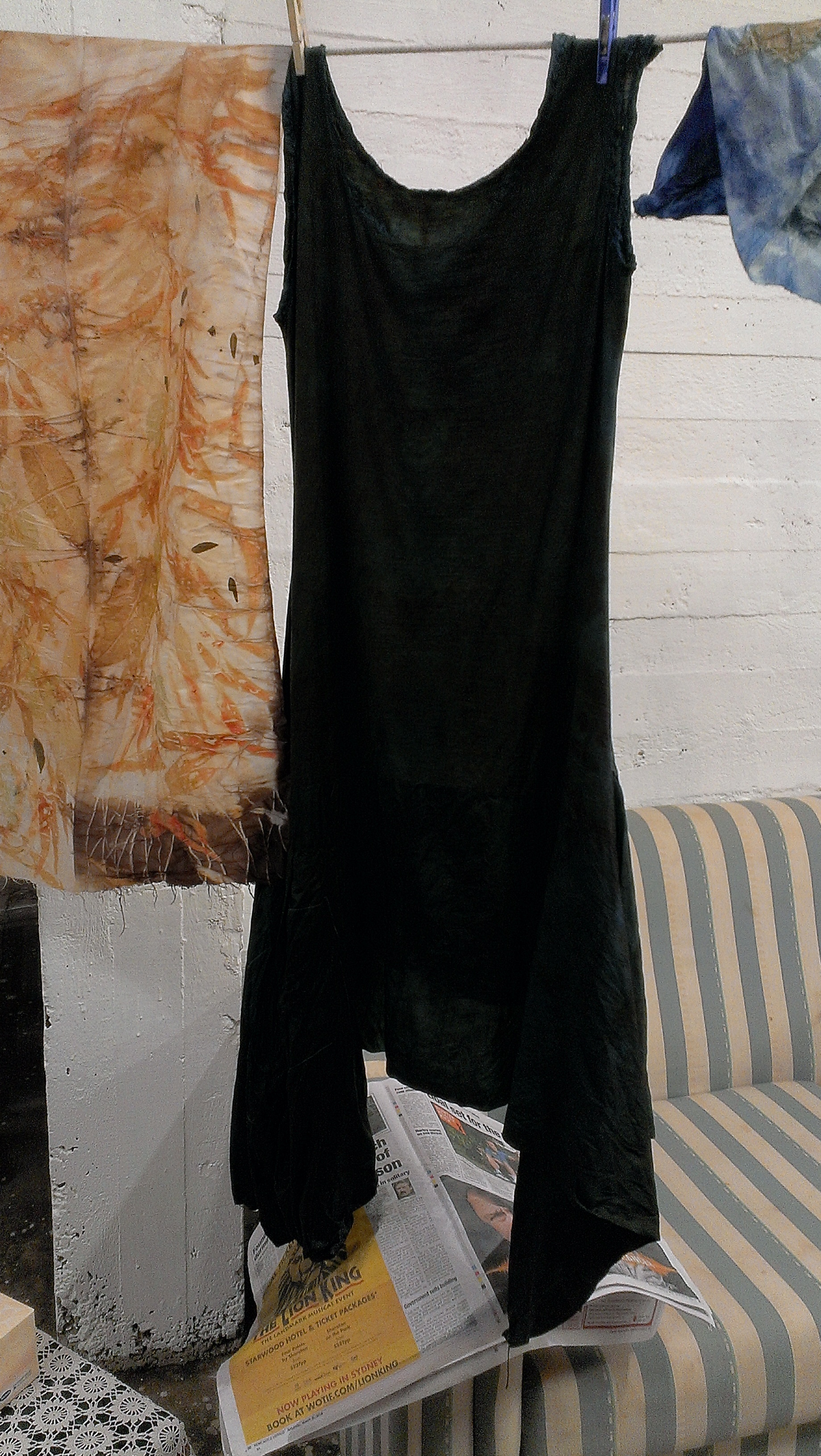
I found it really interesting to observe this use of eco-printing as a way of creating a series of colour and texture effects, rather than the way I tend to use it, in which I am aiming for images of leaves as a predominating motif.  Here is the same dress again, drying after a dip in indigo!

IMAG4359

5 Comments

Filed under Leaf prints, Sewing

Things learned 3

Have I made it sound as though there was no real making at Second Skin, and it was all about the thinking?  Well, I was surprised by how pleasurable hand stitching and the odd spot of thinking were, but of course, there was making.

It began with string. This was part of an extremely cunning method of having all your measurements to hand without any numbers attached to them.  Hand twined string is further evidence of human genius, from my point of view.  I first learned how to make it from a basket weaver and was delighted and intrigued from that point forward.  Usually I make it from daylily leaves.  But this application of it struck me as further genius.  I know I always hate the part of pattern using where I have to compare my measurements to those contemplated by the pattern drafter.  Let me tell you, “The Vogue Body” and the one I am getting around in have little in common!  So many women’s feelings about clothing are really just feelings about our own bodies in the context of an environment where very few of us have the idealised shape and there is a lot of unwanted critique of female bodies.  What genius to sidestep a large part of that drama and along with it, simplify the process of design.  My string is made from tired old cotton that didn’t improve in some dye bath or other, but there were glorious examples of silk string, beautifully crafted by my fellow workshop participants.

IMAG4246

Then there was the infinity scarf.  I made two, because when I modelled a plain cream version for my daughter she liked it so much I stitched all evening to hem hers and bundled it next day along with the frocks… and promptly forgot to take a picture.  Mine, of course, still needs one hem!  But it has been touched by indigo as well as leafy goodness of other kinds:

IMAG4487

I like it very much!  I’d better finish the hem…

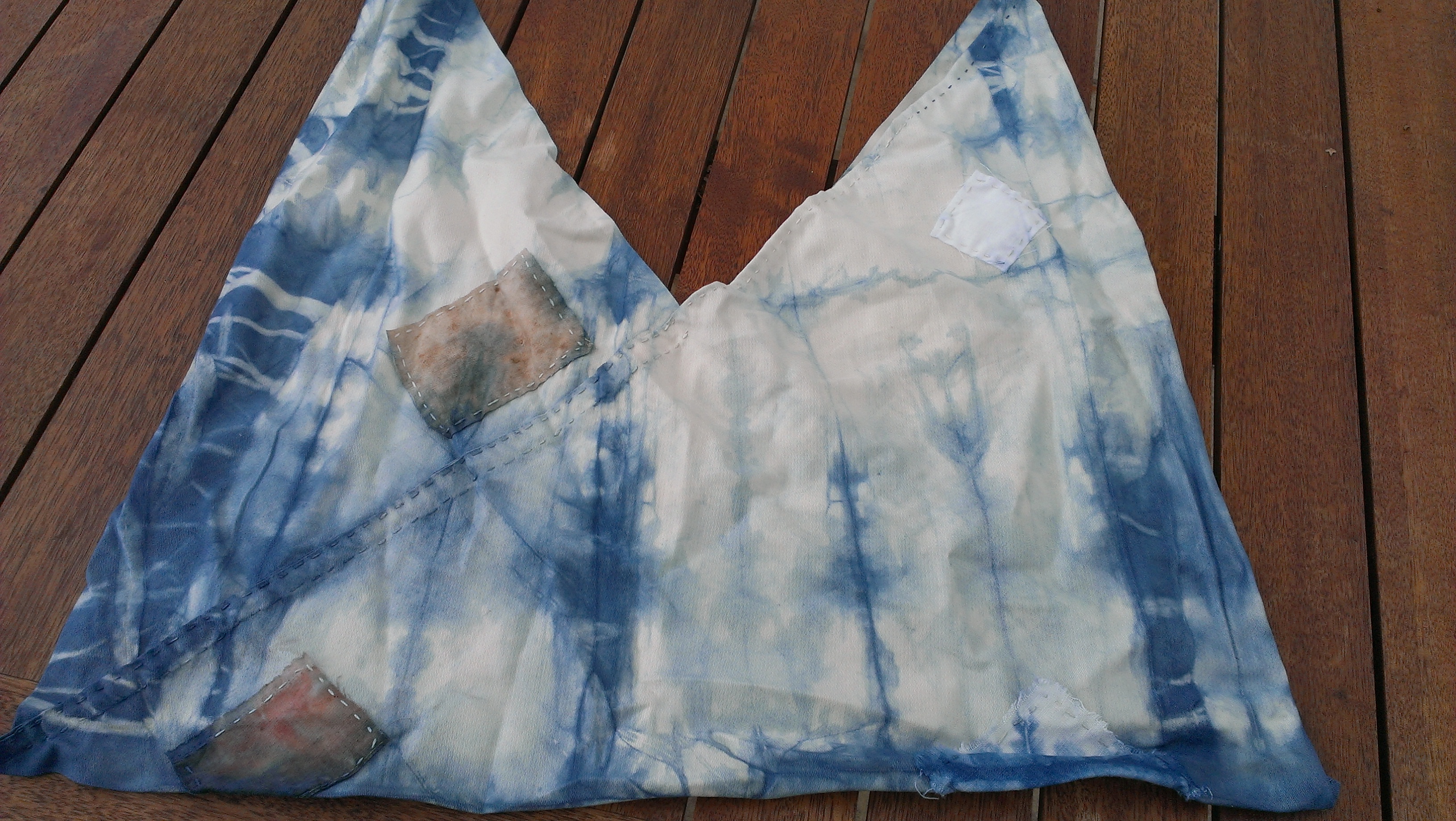
We had the good luck to be at Beautiful Silks in the aftermath of workshops on Indigo.  The bag below has also been dipped…  India said that this style of bag revels in the name tsunobukuro (I hope I have that right), which evidently translates as ‘horn bag’, because, of course, it has horns, which you tie together to create a handle.  Japanese design is so often beautifully economical–I did not fully grasp the geometry of this bag, but made it anyway and finished it a few nights ago.

I am not sure I can explain the feeling I have about ‘hornbag’ as an Australian…  and perhaps people who haven’t encountered Kath and Kim won’t be able to understand even if I try to explain this Australian phenomenon.  Those want to try could start with Wikiquote’s take on it.  I won’t trouble you with a critique of Kath and Kim right now, after all, we’re talking about things learned and things made!  Anyone in Melbourne could still take advantage of the fermentation indigo vats at afternoon sessions using them at Beautiful Silks.  The vats were set up when master indigo dyer Aboubakar Fofana was there recently.  Our getting to use them was an unexpected bonus.

IMAG4485

And finally, there was a dress.  It features E Crenulata leaves, happily found in a park near where I was staying.  India said: ‘everything will be beautiful in the end.  And if it isn’t beautiful, it isn’t the end.’  I think this is a beautiful piece of fabric, and I learned a lot from turning it into a dress.  Partly because of my feelings on the subject of myself in a dress, and partly because of the inevitable features of a first attempt (in my case), I think this isn’t finished.  Or perhaps it is finished, but I haven’t found its true owner yet.  But I am still glad to have made it and learned from it.  That’s enough for me.

IMAG4349

My eyes popped out when I saw the number of hits on this blog for today, (it’s usually a friendly but low traffic part of the glorious online universe) and then I realised there was a link in from India’s blog.  Thanks for stopping by if that is what brought you here.  If it wasn’t, and this workshop sounds like it’s for you, India Flint is running this workshop in Victoria later in the year, and there may still be places if that sounds like the holiday for you!

35 Comments

Filed under Natural dyeing, Neighbourhood pleasures, Sewing

Things learned 2

Continuing on the theme of things learned at India Flint’s workshop recently…

IMAG4298

I thought a good deal about the nature of knowledge.  How it is built up, a bit like sediment at the bottom of a river, microscopic layer by microscopic layer as information passes over and small deposits become part of the riverbed.  Once in a while comes a big event: a boulder of new thinking crashes in and becomes part of the muddy bottom, changing all that comes later and some of what came before.  A flood comes through, sweeping away some of the old and perhaps replacing it with new.  Some learnings feel like sludgy algae: they might be temporary and tentative and may or may not last.  Others have been there so long under so much pressure they are more like sedimentary rock and can only be eaten away by a lot of water passing by over a long period of time.  Troublesome if that ‘knowledge’ was inaccurate or those beliefs were unhelpful.

IMAG4296

Knowledge is profoundly social.  We accumulate it consciously and unconsciously from the people around us.  Sometimes the path of acquisition is hard to trace.  In some ways, for example, I am very different from my parents.  But in other ways, I think I am very similar to them: I have taken values and inclinations from them at a very deep level but transformed them into a very different approach to the world.  There are profoundly common themes articulated in very different ways through our lives.  I just loved the learning environment of a workshop in which there was such a lovely balance of  overt instruction, observation, casual commentary, questions and answers, storytelling and demonstration.  I also loved learning from and about the other women in the workshop–sitting next to one another seeing other people’s ways, hearing people’s stories, coming across them in the street at lunchtime or turning up next to them in a cafe.

IMAG4244

I also thought about forgetfulness and originality.  The conversation about originality in art and craft (as in other fields of life) is always interesting to me, but so often, also distressing.  The online world has created so many new ways for ideas and images and concepts and techniques to be shared, displayed, and passed around with and without agreement or awareness, that it raises new issues for originality.  But some of these issues are very old.  I found it fascinating to listen to accounts being exchanged of egregious or perhaps merely irritating uses of others’ ideas, terms, techniques or concepts.  At the same time, there were a couple of moments when I realised that something I thought I discovered for myself though years of trial and error had already been discovered (by India, for example), with the strong likelihood that I encountered it in her work and at some later point it came into my mind as a thing to try out, without any stamp attached to mark it as hers.  A bit like those moments when I struggle for the name of a person or a plant.  Sometimes, if I have time and can avoid panic, a name floats into my mind.  I haven’t invented it: I have learned it previously and retrieval from the archive is proceeding mighty slowly.  It seems like magic, but I am sure it could be explained by someone with a scientific approach to the brain. But it does open the way for making mistaken claims of originality, or just failing to acknowledge the work and ideas of others.

IMAG4347

There’s another thing I notice about forgetfulness.  I have read Eco Colour more that once.  But I overheard a couple of questions India answered in part by saying “I wrote about that in Eco Colour in some detail” (or something like that).  In my mind, that thing just isn’t in that book.  It’s not a natural dyeing phenomenon: sometimes I start a detective novel and recognise the beginning but can’t for the life of me remember who the murderer turned out to be or what the crucial clue was.  I think it is extremely hard to remember things, even useful things, when you don’t yet have enough of a scaffolding of knowledge to fully understand them.  I am sure I have had this experience in dyeing hundreds of times already.  Perhaps more!  I notice my students having it in my classes every single day I teach.  I get something new from Jenny Dean or Ida Grae or India Flint every time I read them.   Always Coming Home by Ursula LeGuin has repaid every single reading I have given it with new treasure.  Each time I find new awareness of what is in these works, new understanding of how the parts form a whole, new insights or realisations, new inspirations.

IMAG4285

I am not sure there is a conclusion to the question of human knowledge, forgetfulness or the matter of originality.  I don’t have one, at any rate!  Second Skin turned out to be a great opportunity to think new thoughts and hear what others are thinking on these questions, in an in-person setting and not in the online world, rich and interactive as it is.

IMAG4316

I do like Elizabeth Zimmermann’s idea of unvention:  “ One un-vents something; one unearths it; one digs it up, one runs it down in whatever recesses of the eternal consciousness it has gone to ground. I very much doubt if anything is really new when one works in the prehistoric medium of wool with needles. … In knitting there are ancient possibilities; the earth is enriched with the dust of the millions of knitters who have held wool and needles since the beginning of sheep.”  (Knitter’s Almanac).  It isn’t an answer to every issue of intellectual property or livelihood for craftspeople and artists.  It doesn’t resolve every ethical conundrum, or even try–and these are vital issues that can’t be skirted around.  I like unvention, though, because it offers up the possibility of humility in the face of human ingenuity and the scale of time.

IMAG4249

Finally, a little gratuitous street art from Melbourne, and an arbutus fruit.  Dear Commenters, this one was out of season on a tree in Melbourne while all the others were tiny and green (arbutus are in flower in my own neighbourhood)–and it was delicious!  Thankyou for your tips and encouragement!


15 Comments

Filed under Leaf prints, Natural dyeing

Things learned 1

I finally went to a workshop with India Flint: Second Skin, at Beautiful Silks in Melbourne.  It’s an extravagant thing to go to another city and spend three days doing things you enjoy for the sheer pleasure of doing them and learning more–and what a treat it was!

India began each day with a stretch and a lovely metaphorical invitation to focus on the here and now of our time together.  Each time we did it, I thought some more about how I don’t do this at the beginning of my days, but that they would probably go a lot better if I did.  I loved spending that little piece of time with my mind on an image, before leaping into the excitement or the sheer tasks of the day.  I managed to remember to do it again at work once this week so far…

IMAG4275

I thought a lot about being a teacher at this workshop.  I make my living teaching.  One of the reasons I spend a lot of time learning is that I love learning and I think human beings are one of the few creatures who must, of necessity, learn for the entirety of our lives.  I think it is a skill for life as well as a delight.  But another reason is that as a teacher, it is immensely helpful to be a learner over and over again and be reminded constantly of the joys, frustrations, excitements and fears that attend learning for most of us.  To be confronted by places you thought you understood and suddenly realise you didn’t.  To see the bigger picture open up.  To feel fear of failure.  To find some things work for you and some don’t.  To notice you learn differently than others.

IMAG4267

I always find it very interesting to be in the presence of a teacher whose approach is really different to mine.  I think that great teaching draws on the whole of who you are as a person, and it is only right and appropriate that there are many great teachers whose styles and approaches are exquisitely different.  India is unquestionably a deeply different teacher than I am. I have often thought that Eco-Colour and Second Skin are more inspirational than instructional.  That they invite experimentation rather than providing a step by step guide to anything.  I don’t mean there are no instructions in these books.  Of course, there are.  But I think the weight of India’s teaching strategy is on inspiring and challenging people to make techniques their own and to discover what is local and useful to them in their own lives and environments.  I am much more of an instructor, and this is, in part, because I’m a structured and linear thinker, comparatively speaking.  Freeform creativity… not so much!  I have spent quite a bit of time in the last few years honing my capacity to deliver a short, inspirational speech, because I notice that while I see usefulness in a technique or skill and set about practicing it until I’ve mastered enough of it to satisfy myself, many others do not feel moved in this way (at least, in my current context).  I love to be inspired, but I can accept less and still feel motivated and act on that motivation.  I notice a lot of other people can’t.

IMAG4268

I was so impressed by India’s capacity to inspire.  Understand that I don’t wear frocks and went to a class where you make (among other things, but principally) a dress.  Understand that when I make a garment I usually start from a pattern or draft one from a garment because I don’t believe I have much capacity for design.  Also, understand that the expression “measure twice and cut once” was liberally applied in my childhood.  This is the base from which I watched India demonstrate zero waste drafting of a dress and then freehand cutting the design, with many examples of how this might be adapted or modified or experimented with.  I eventually found myself thinking that this was so exciting it was a shame I couldn’t just play with these ideas every day for the foreseeable future… I could picture all manner of things taking shape in my mind.  Curiosity, play, particular fabrics I have at home, shapes… then, a short while later, I was standing in front of a length of rather expensive and lovely fabric, with a pair of scissors and a hand-twined string.  Terrified!

IMAG4269

It was pretty funny, and partly because I have watched people I teach having that sense of possibility and capacity, and then watched them attempt something new and feel their fear return and their doubts re-enter.  If you’re lucky, courage and inspiration win out until the first hurdle has been mounted, a sense of possibility begins to solidify and the hard work begins…

IMAG4273


13 Comments

Filed under Natural dyeing, Sewing

Well Made Guildhouse Members Exhibition

This week I had to go into the centre of the city for a work related event, so I left early and went to Well Made, an exhibition of members of the Guildhouse at the Light Square Gallery.  India Flint is one of those members, so I thought I’d go along.  I thought of you, blog readers, while I was there, and wished I could take you along–especially those who live outside our fair city.  I just wasn’t sure it would be OK to take pictures inside the gallery.  In fact, I thought it probably wouldn’t be OK and that I should err on the side of refraining, even if only because the artists undoubtedly have better images of their work than my photography would create.  So I took pictures of the building, and found you links to follow to see the works–or other works by the artists concerned.  Click away!

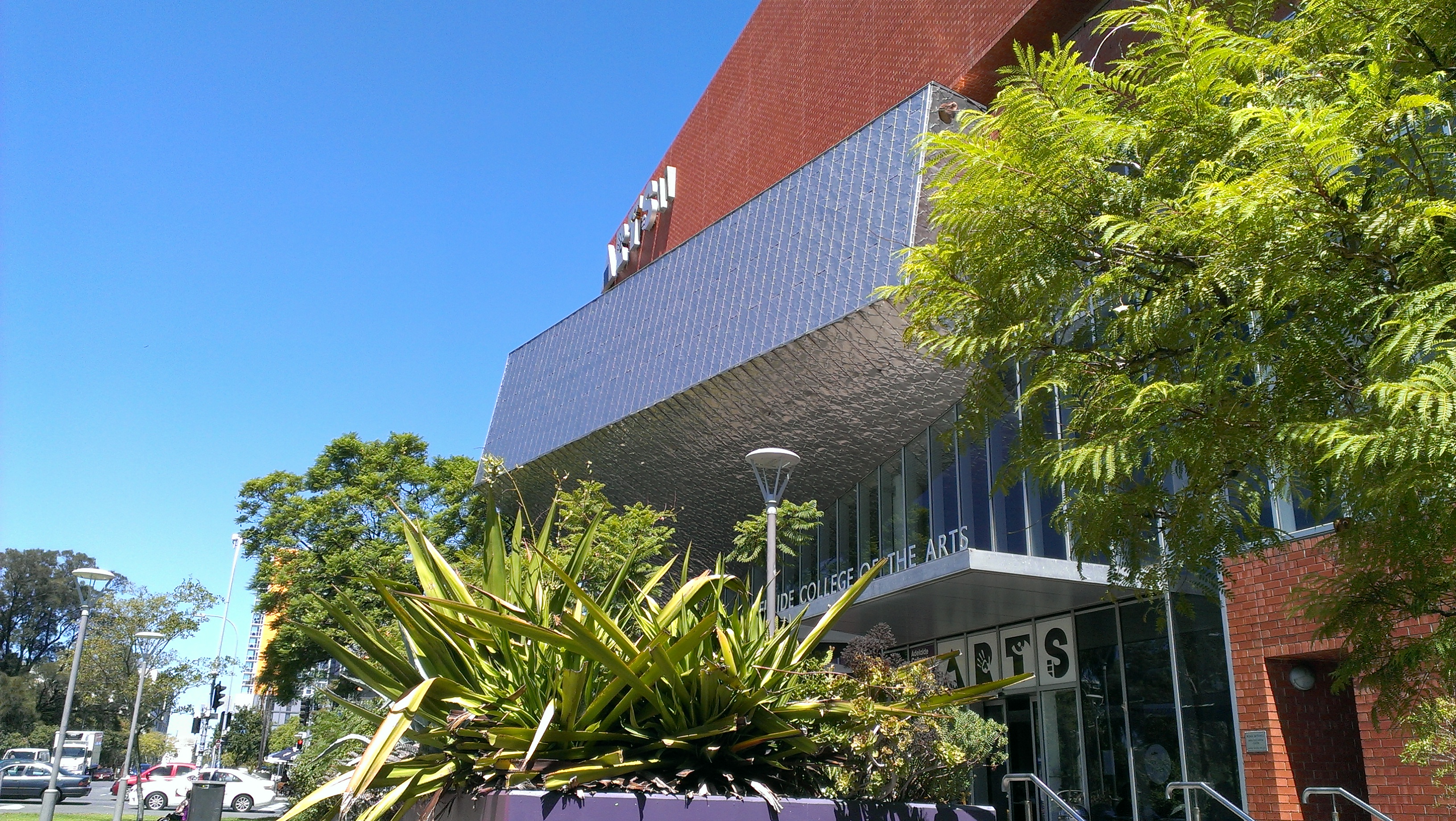
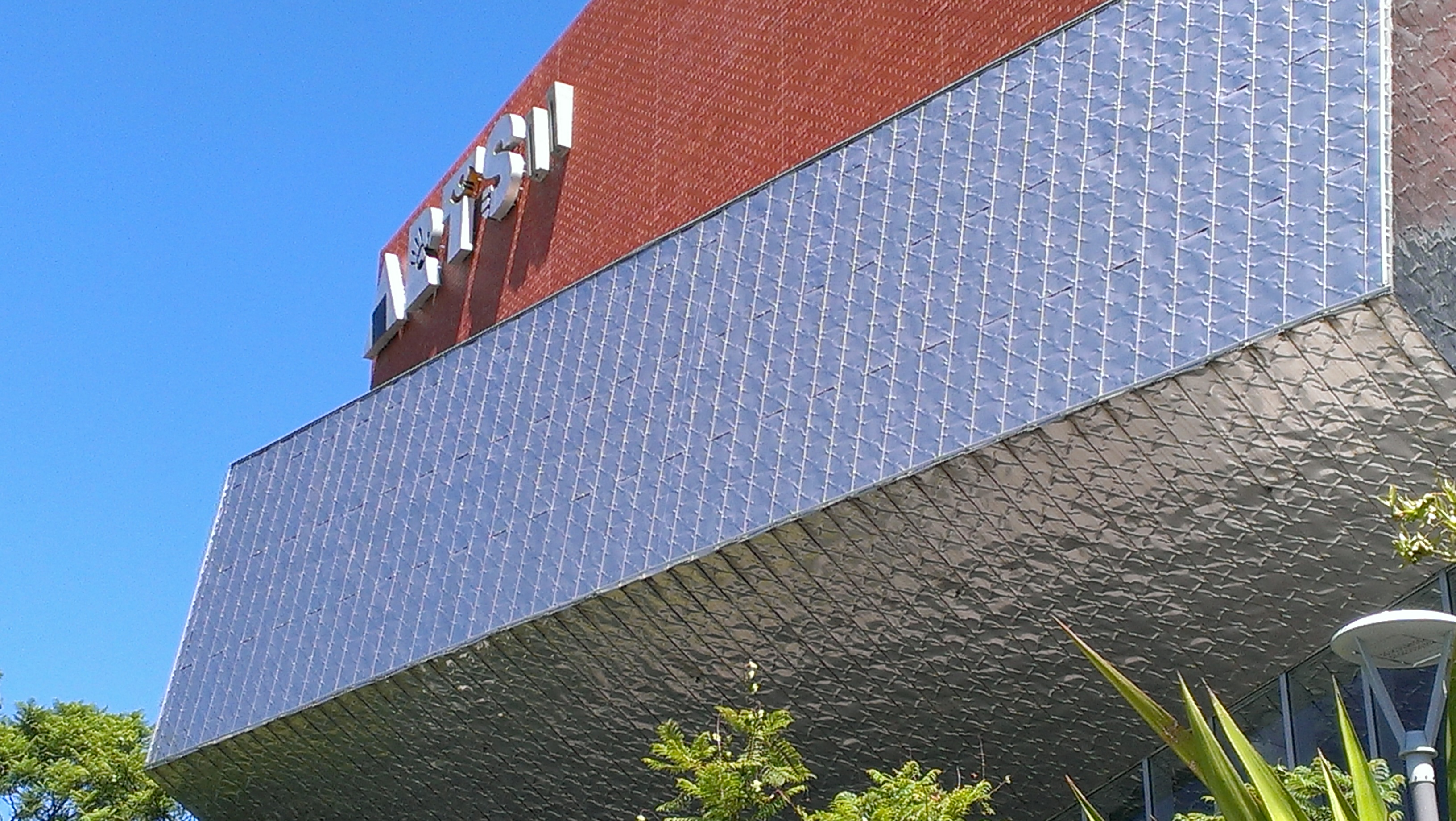
The Centre for the Arts is a great building, and the day was glorious.

IMAG3887

I can’t pretend to be an art critic (or for that matter, an educated art appreciator) of any kind.  I am an art ignoramus.  So when I go to an exhibition I am just curious and interested.  I know there are all kinds of things to know about and think on, as well as skills I know little about, that underpin the artworks.  I am aware of only the tiniest segment of all that knowledge, skill and thoughtfulness.  On the other hand, it’s a shame to say nothing at all… and thus not invite others to go along and wonder at what there is to see, no matter how ignorant we each might be!

There were all kinds of forms and media represented: painting, sculpture, leather cutting, glass, ceramics and of course, textiles.  Among the works that caught my attention was a glowing and almost–but not quite– geometric oil painting with gold leaf: ‘Golden Ochre’ by Megan O’Hara.  Beautiful images of her artworks, including this one, can be found here.  Two sets of intriguing glass mushrooms were ‘growing’ from wood: ‘Fungi’ by Roger Buddle. Seldom has glass looked less like glass to me.  Blue fungi on wood are there to be seen and admired on his home page today for anyone who wishes to see them.  There was a striking 3mm mild steel sculpture: ‘Feather’ by Anna Small (more of her work here). Pamela Kouwenhoven contributed ‘Muddy Waters Murray River’, a wall-mounted sculpture of faded plastic (car) battery cases.  There are images of this sculpture and others in the same series here.

IMAG3888

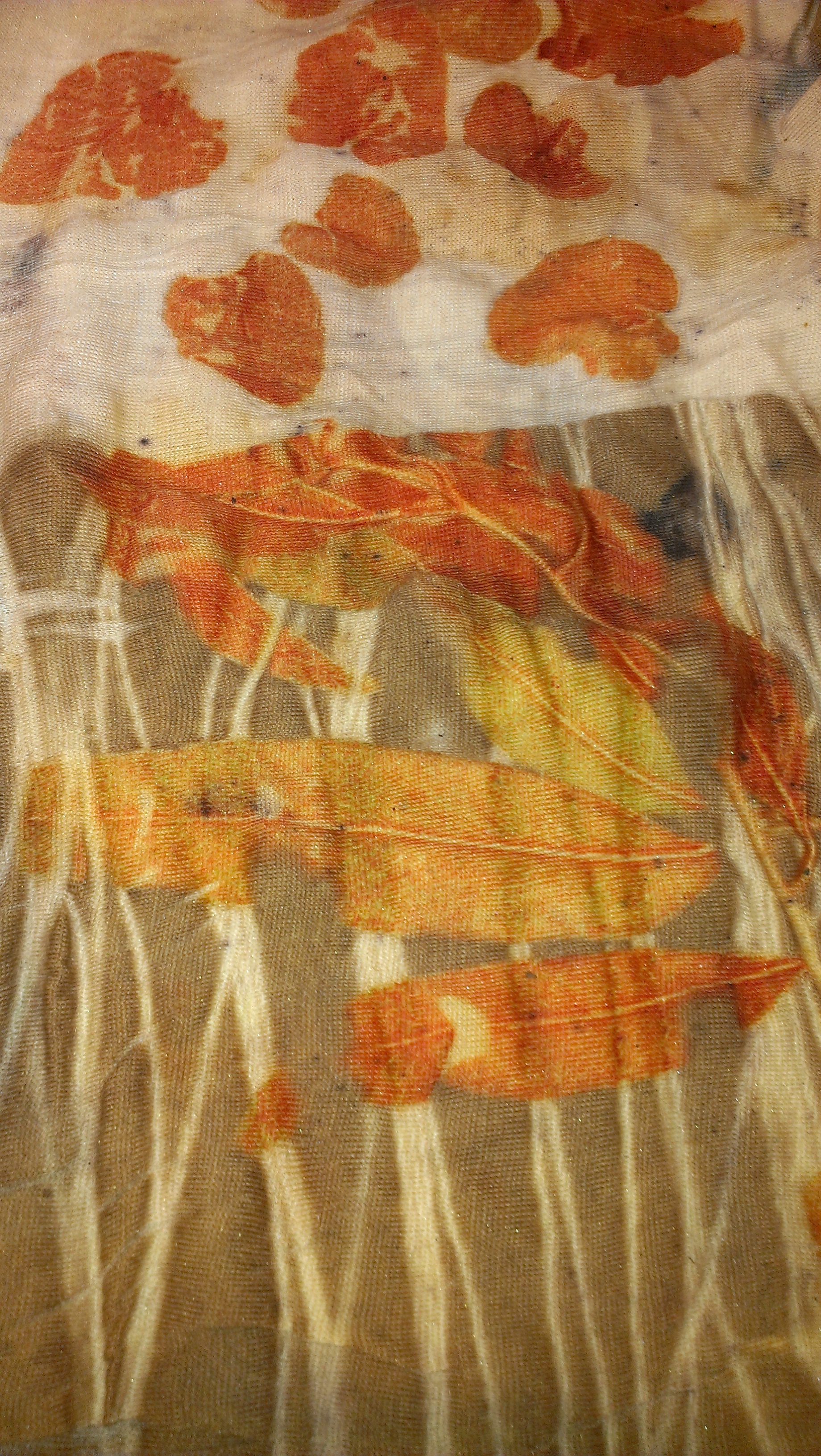
India Flint’s contribution is called ‘The Wasteland in Bloom’.  A more than fitting title.  It is a silk and wool dress, hand stitched in silk thread, to judge by the sheen of those stitches.  It is flowing, floor length and sleeveless.  It features a striking eco-print design of orange/red leaf prints alternating with bands of darker colour, which are almost black (iron, I assume) and striped by the resist created by the ties used in bundling the fabric.  It has slanting, curved side seams, creating a very interesting draping of the garment.  One of the seams had some… pleats is the closest term I know, but it suggests something crisp and vertical while these are soft and horizontal … creating further interest in the drape of the fabric toward the hemline.  The hemline is a feature in its own right, a separately stitched band with its own embellishments.  I don’t think India has published a picture of this work, but you can of course see many glorious garments she has created here.

So if you can… go along and see what you find interesting!

IMAG3889

2 Comments

Filed under Leaf prints, Sewing

Where do I find the time?

I was at a wonderful birthday picnic today, celebrating my friends turning 7 and 40, respectively.  There was all kinds of interesting chat, of course, and in the midst of it another friend who reads this blog was marvelling at the way things seem to happen at my place, to judge by the blog.  I had to break the news that I write posts at all kinds of odd times and that their sequence isn’t always entirely mapping the way things happen at my place, and that I auto scheduled posts to load every two days while I was on holidays…  I guess I think the way that things really do happen is not quite such a good story!

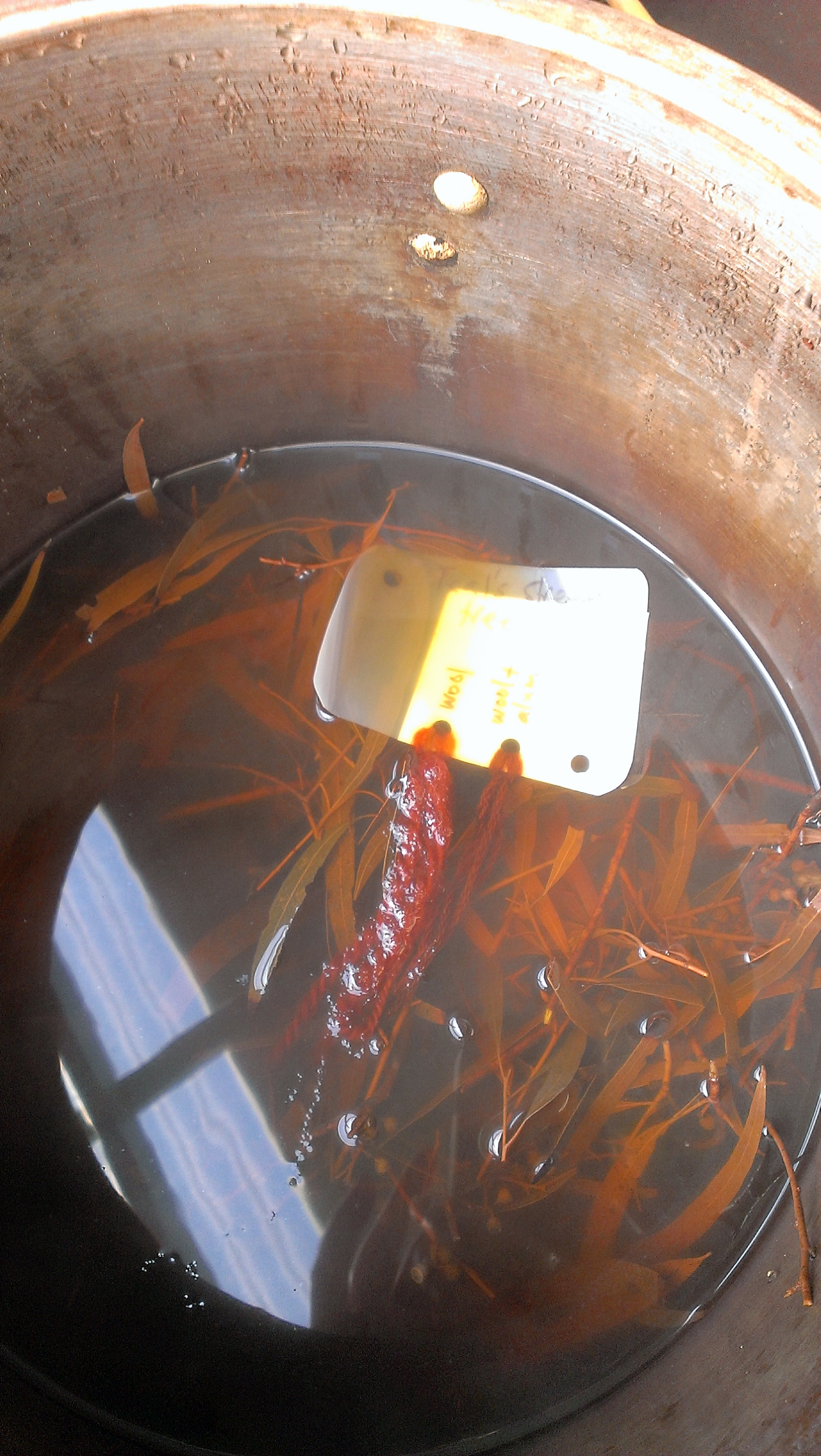
But just in case…   here’s the story of my Saturday.  We were up early to go to an exercise class.  I was ready in plenty of time so went outside, removed the sock yarn from its eucalypt dye bath, put it to soak in rainwater and hung the soy-soaked-indigo-dyed sock yarn up to dry.  Then there was exercise, a ‘coffee’ (I don’t drink coffee so for me it was yoghurt and hot chocolate).  I knit a few rows on my sock.

Then there was grocery shopping and visiting an upholsterer who had calico flour sacks and hessian sugar sacks on the wall that had come out of old chairs he was refurbishing (I like him already).  Then preparing food and gifts and off to the picnic.  I knit more on my sock there.  Another friend was appliqueing on a pair of jeans which were her gift.  Then home.  Cleaning up and a short pause.  So many ideas in my head! I have a couple of hours to do what I like and so… I have samples of two trees collected yesterday.
IMAG3779

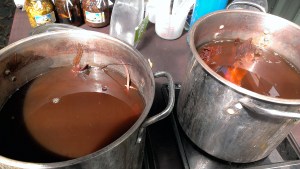
Dealing with them requires two empty dye pots but my two are full.
IMAG3782

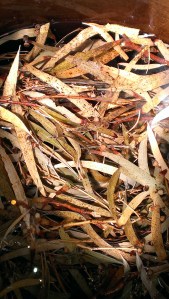
They are the ones the sock yarn came out of at breakfast time. I empty, rinse and refill them. One with my friend’s street tree in case it might be E Nicholii (I live in hope, but not much!!)
IMAG3788

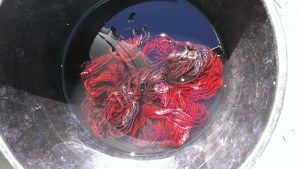
The other with leaves from a tree that has intrigued me every time I’ve driven to her house–but yesterday it was in flower and I was running early, so I stopped. Put the heat on them. While dealing with that I’ve remembered the sock yarn.  That bucket isn’t very clean, is it?  Better keep rinsing.
IMAG3784

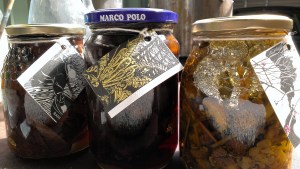
Thank goodness we’ve had rain and the whole place is on rainwater at last. Must deal with the sealing fail on my dye jars.  That requires another free dye pot I don’t have.  Next.
IMAG3781

I decide to try to identify the eucalypt. Oh, remember to rinse the sock yarn.

IMAG3786

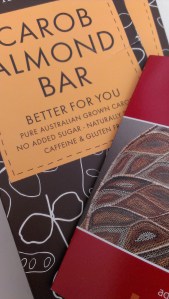
Uploading photos for this post takes a while, so I set about turning saved cardboard into tags to clean it off the desk.
IMAG3795

Miraculously I manage to find some of the lovely pre-used string and thread I’ve been saving… some of it with attached safety pins, and that gets reuse too.  It puits me in mind of clearing out my grandfather’s shed after he died.  String saved for re-use, straightened out nails, screws that have been saved from previous applications…
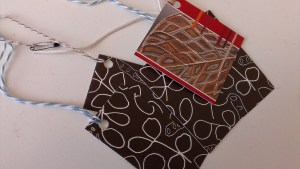
IMAG3798

Now these tags can join the ones that are already in the drawer made from last year’s calendar.  Out comes my favourite euc book.  If that tree is in the book it is E Stricklandii, which means I probably should have recognised it.  Mmmm.  A friend comes over.  More chat and then my beloved and said friend head off into the shed.  Rinse the sock yarn.  Put sample cards into the dye pots and turn them down.  One looks promising, the other not so much. Back to the computer, to check out my euc.  These leaves are not glossy… and so on….

Some work on another blog post.  Go to the bin to put the cardboard remains in the recycling only to find my beloved has put some greeting cards in there that surely shouldn’t be so readily disposed of… three new postcards created, one card saved for potential use as a stencil (lovely cut out design).  Check out my files for the last time I identified E Stricklandii.  Clearly I did try it out as a dye plant so there will be a comparison… Re-file craft books and fabrics. Check dye pots. Looking good.

IMAG3801

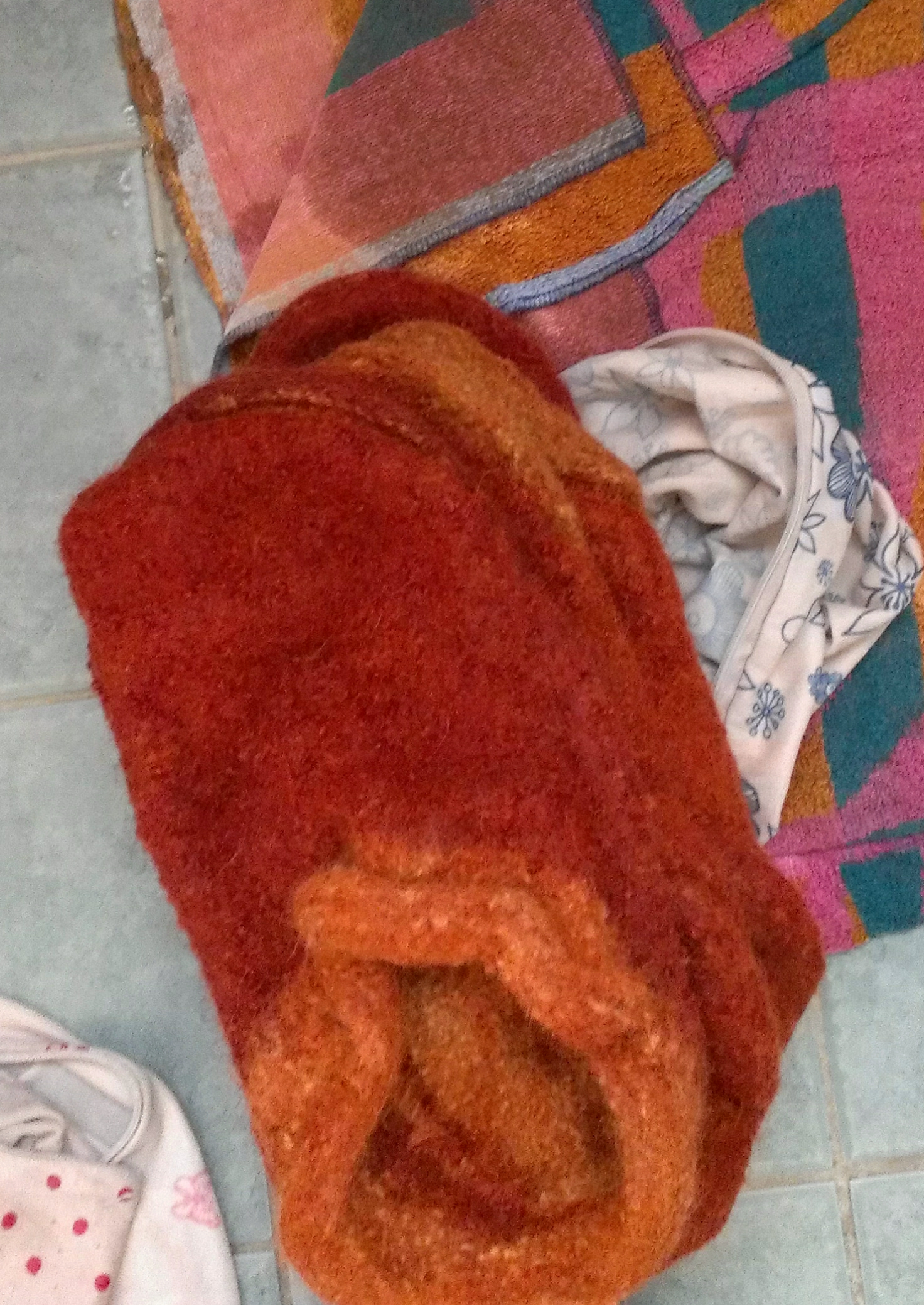
Empty sock yarn rinse water.  Tidy up in the laundy and see those slippers I finished ages ago but haven’t felted.  What the hey?  Put them in the washing machine and get out a timer so I won’t forget they are there (sure sign of overreach but always a good idea with felting).  Put timer in pocket.  Set up India Flint’s suggested fix for hard to seal jars (I think mine suffered from being heated too quickly despite using the lowest heat on the stove, but may as well add insurance).  Now they will be ready when the dye pot comes free.  Or tomorrow, if it comes to that!
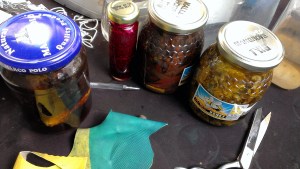
IMAG3803

Timer rings.  Check slippers.  Not ready yet.  Go to find traced shape of my friend’s foot.
IMAG3804_1

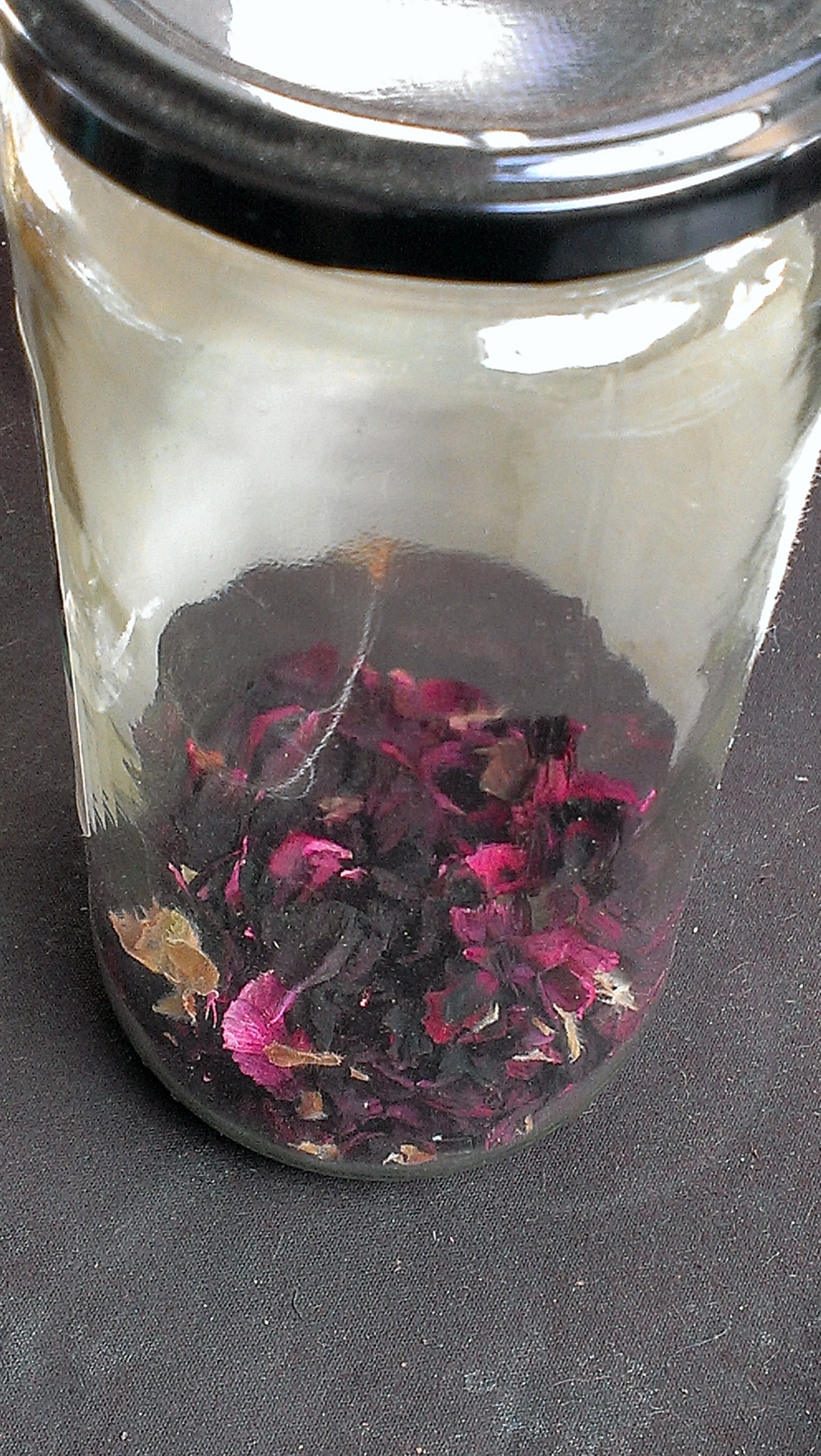
Take drum carder and the vacola jars Dad picked up secondhand out to the shed.  Check dye pots. terminate the less interesting dye pot ready for the jars, pour the dyebath into a bucket.  Put the knitting nancy (french knitting kit) I found at an op shop in the box for delivery to friends who might use this, plus things from the picnic that need to go to their place.  Decide to make another dye jar with the pelargonium petals, since the pelargonium has stopped flowering. I must have been so optimistic when I started gathering them in this jar!

IMAG3806

Timer goes.  Slippers look about right. Take them out to cool.

IMAG3807

One slipper pair is perfect.  The other, back in for ten minutes.  Finish sorting out those jars of stuff, steep and store goodness.

IMAG3811

In they go!

IMAG3815

The dried avocado peels from the kitchen finally make it out into dyestuff storage land.

IMAG3809

Slippers come out just after our other dinner guest arrives (with dinner! bless her!)  I shape the slippers over chat with crackers and avocado and cheese.  And put a load of the really dirty dyeing stuff on to wash.  I need to keep an eye on the stuff, steep and store jars during the evening.  I am pronounced a nerd with glee…  After main course, one of our guests says she wants to ask a technical question, which is whether I could draft a pattern from a simple vest she has so that she can make one on a ‘trashed and treasured’ theme… Out comes the recycled tissue paper and we give it a go and find a vest pattern that might help with conceptualising construction.

IMAG3816

Well, it’s bedtime.  After heating extremely slowly (the dye burners win over the gas stove in the kitchen for slowly heating, clearly) my jars are now a little too hot… I turn them down and leave them to the dye pot timer.  Goodnight!
IMAG3817


11 Comments

Filed under Dye Plants, Eucalypts, Knitting, Natural dyeing, Neighbourhood pleasures

Trying out Stuff, Steep and Store

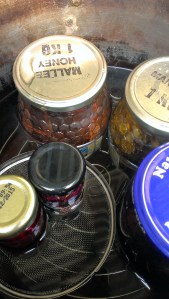
I mentioned a while back that I let out a squeak of glee when I got my copy of India Flint’s new book Stuff, Steep and Store… and it was only a matter of time before I’d try it out.

IMAG3530

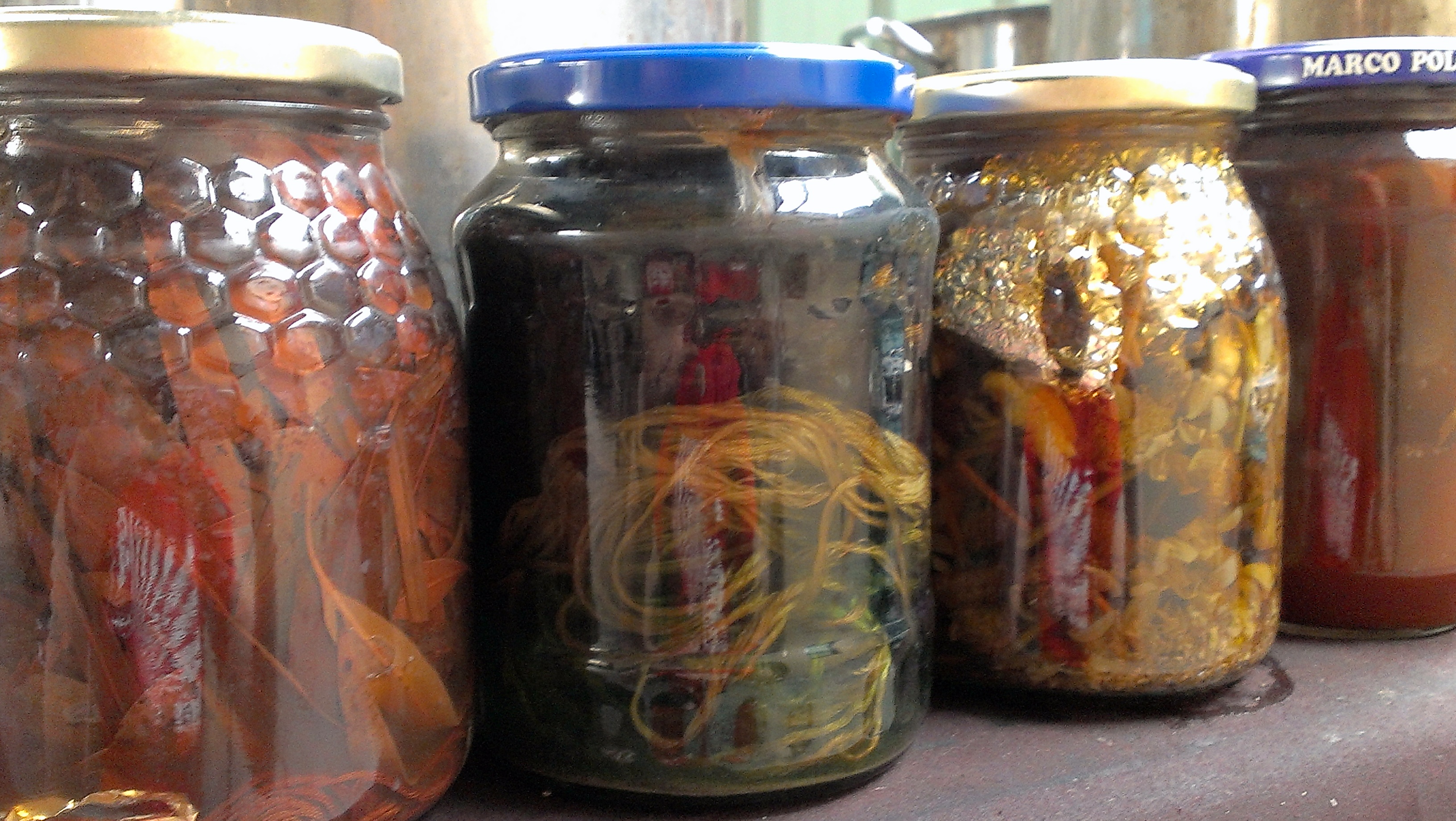
I’m trying out the following.  I can’t pretend to think they are especially well suited to this method but there it is… time will tell, as it always does!

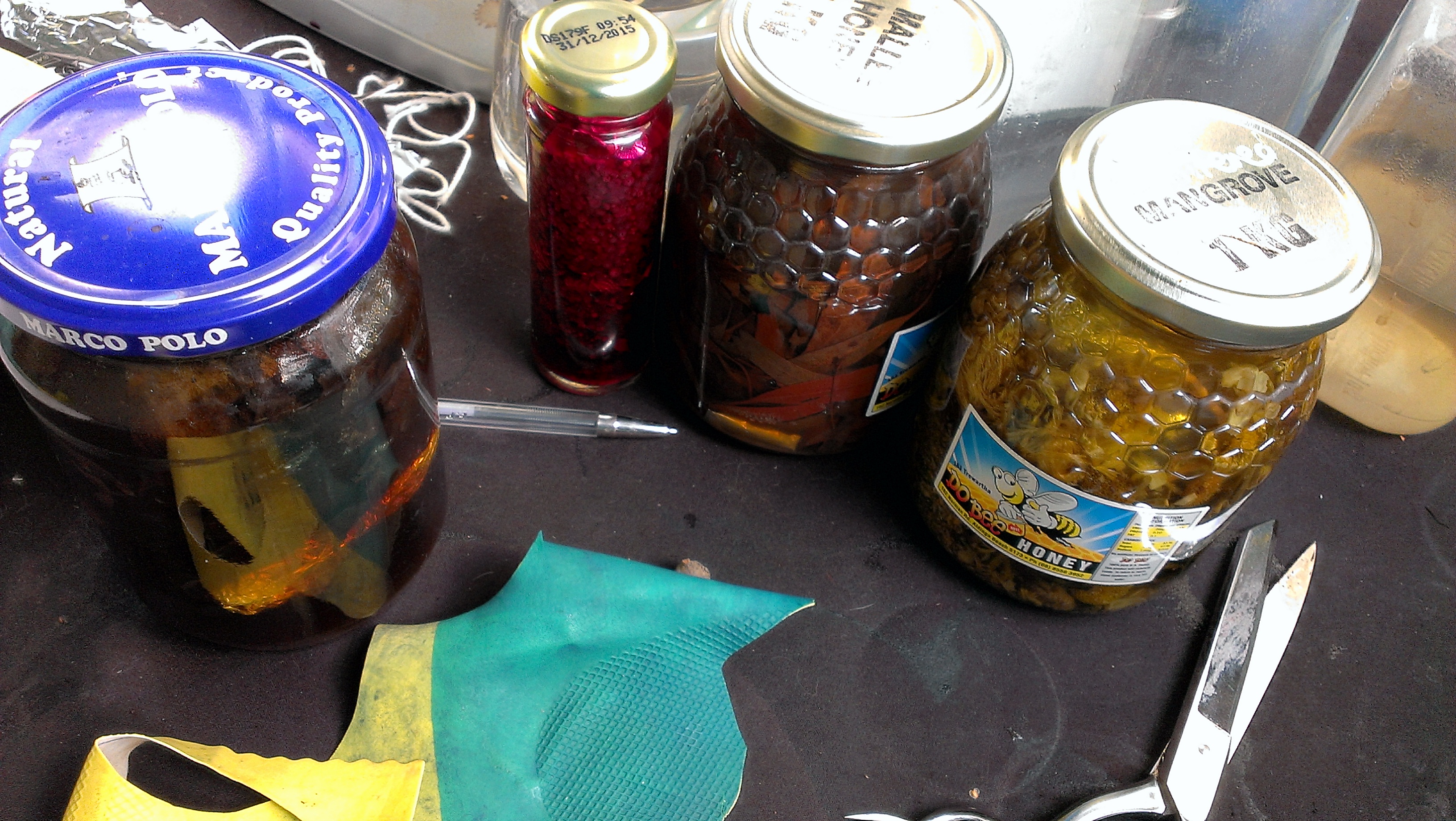
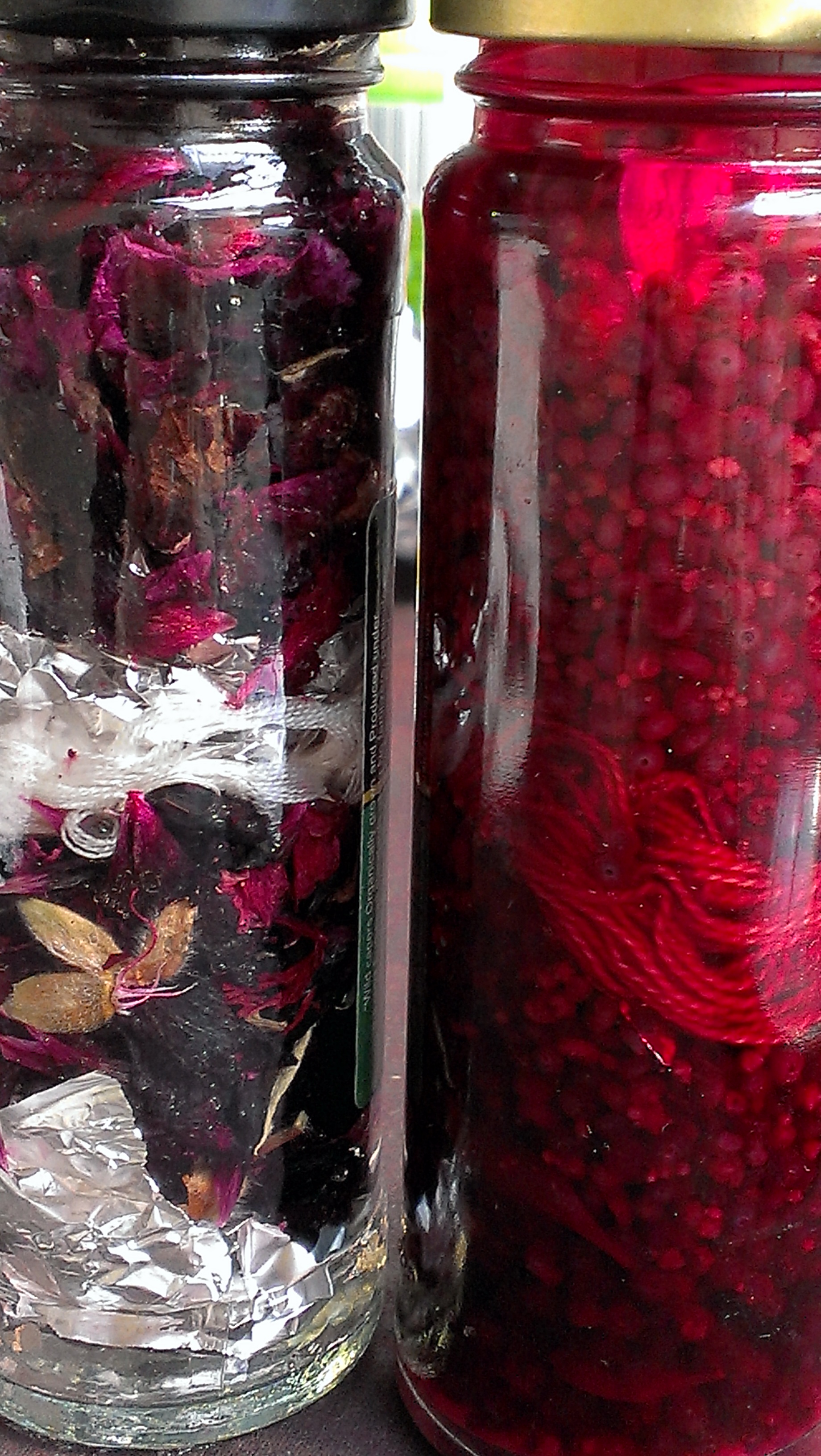
  • Brown onion skins, aluminium foil, E Scoparia dyebath with vinegar (I hope I wrote some fibre or other on the label!!)
  • E Scoparia leaves, bark and dye, aluminium foil, silk thread, vinegar
  • Dyers’ chamomile flowers, aluminium foil, silk thread, water and seawater and finally
  • Red onion skins, silk thread, copper and vinegar water, seawater.

Entertainingly enough, while India Flint says she has been inspired in this dyeing process by years of food preserving (and that’s evident from the book)… After my first batch of dye jars I was inspired to pitch a round of food preserving to my beloved.  We put up a dozen or so jars of white peaches and yellow plums for later enjoyment.  I am not sure why this is called ‘canning’ in the US, but in Australia it’s usually called ‘bottling’ because it is done in glass jars.  I have a massive collection. I have been the receiving point for others’ Fowlers Vacola preserving kits for so long I now gift or share them with friends who are not so well endowed.  Perfect, really!

Since filling these jars I’ve been on a seaside holiday.  I set the blog to load scheduled posts while I was gone… and being lazy at the beach is the reason for slow responses to comments lately.  WordPress and my phone have an on-again-off-again relationship, which doesn’t help.  Since I was by the sea and pedalling around the neighbourhood, I collected seeds of hardy native plants for later propagation and planting in the abandoned waste parts of my own neighbourhood. Plantings on public land just call out for seed collection, don’t you think?

IMAG3651

One plant, the seaberry saltbush (rhagodia spp, probably rhagodia candolleana), was in such profuse fruit that I collected enough to fill a small jar we had finished using.

IMAG3657

I can confirm that rhagodia fruit ferments quickly in heat like we’ve had lately (41C today)… and began to do so before I managed to get it home and process my jar properly.  Ooops!  That really should not have been a surprise.  The fruits are smaller than a currant but very pretty…

IMAG3670

Another experiment, since if anyone else has tried dyeing with this plant I don’t know about it and have only a foggy memory of the Victorian Handspinners reporting they got some colour from saltbush fruit (saltbush is a big family).  I happened to have embroidery thread with me… and into the jar it went with chocolate-bar-foil.  And now we wait.

IMAG3687

To see how others are working with this process, visit the delectable ‘pantry’ India Flint has set up, or if you’re so inclined, have a look on facebook.

8 Comments

Filed under Dye Plants, Eucalypts, Natural dyeing

A squeak of glee and a visit to the beach

I was in Melbourne when I saw that India Flint had put out a new book: Stuff, Steep and Store.  Yesterday (well, the day before I wrote this post–) it arrived in the mail and I gave out a squeak of glee.  It is short but lovely, so there was one reading before bed and another over breakfast.  I happened to be heading out to an early appointment at a suburb near the beach.  Inspired as I was, and consequently full of exciting plans, I decided to go to the beach to dip some fabric (the last of a roll of cotton sheeting from a church fete) in the sea and  collect seawater for later use.  And, of course, for a walk.

IMAG3291

I am my father’s daughter, so my walk was accompanied by the collection of glass shards from the sand.  There was also the greeting of a lot of dogs and a smaller number of humans.

IMAG3302

A great start to the day, and multiple dyeings to come.

IMAG3300

10 Comments

Filed under Fibre preparation, Natural dyeing