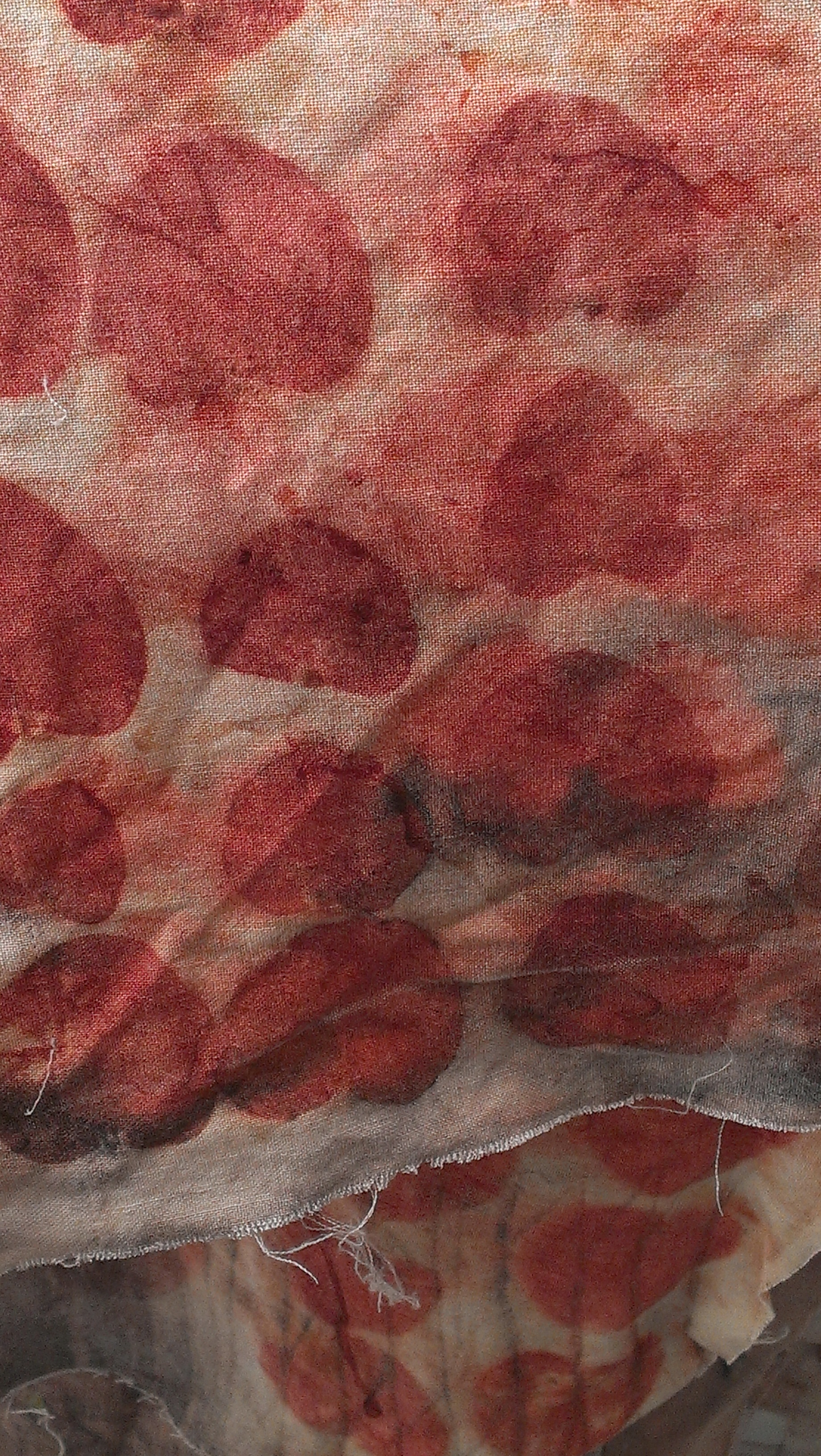
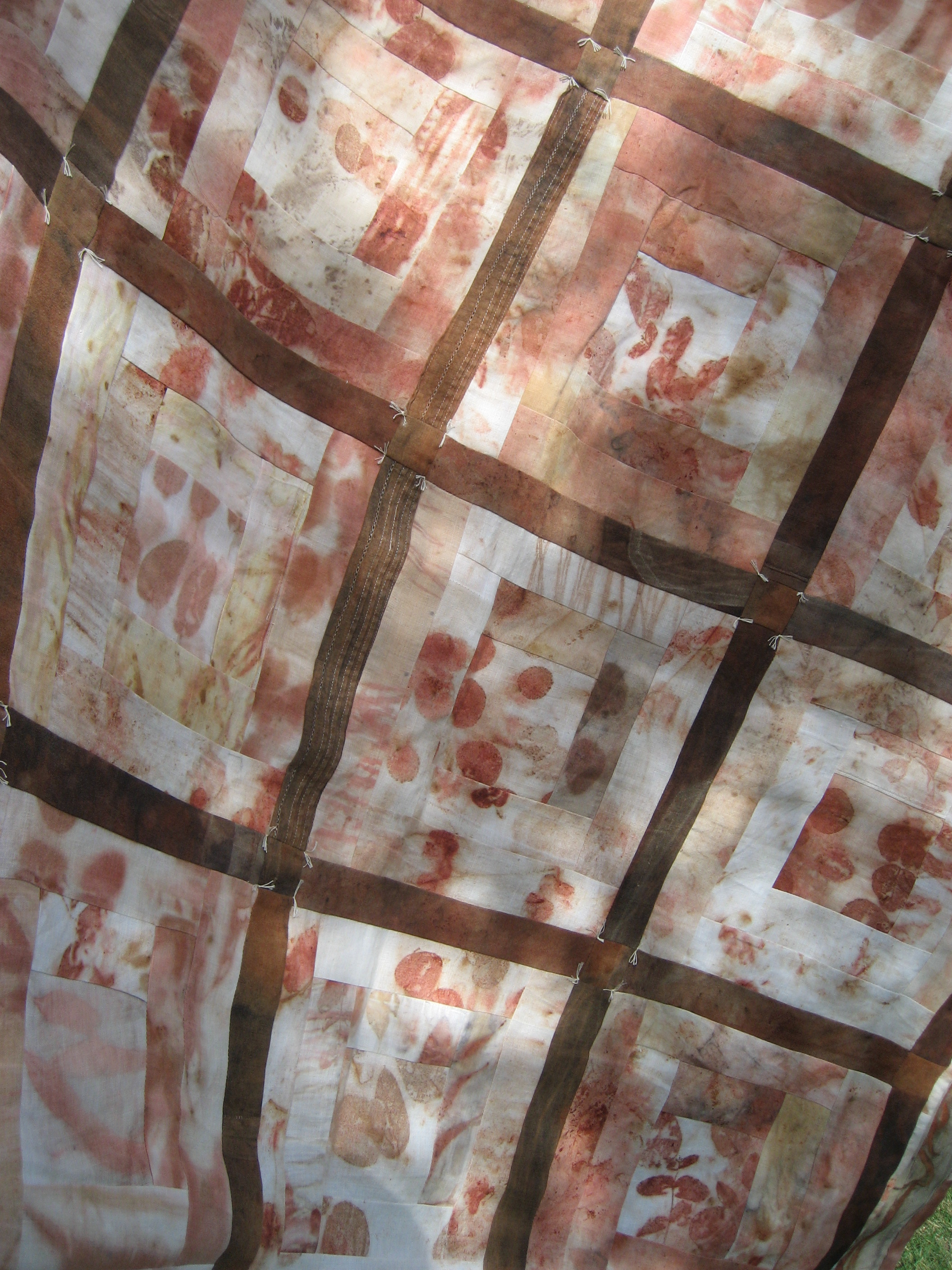
Quite some time ago, I made a quilt. It was a project I decided on when I began to experiment with India Flint’s eco-printing technique on cotton and linen. Her book Eco-Colour (see the left hand sidebar of her blog if you’re following the link–her books are there) mostly focused on wool and silk, but offered some guidance about cotton and linen. I followed that guidance as best I could and at first I could achieve only pinkish smudges. I had become pretty decent at dyeing wool by this stage, but only some of these skills proved transferable.
Leaf printing or eco-printing was clearly a whole other skill. I teach for a living and observe the process of learning almost daily both in those I teach and in myself. It is very rarely possible to read instructions and then successfully and immediately carry out a process someone else (that would be India Flint) has spent years figuring out and becoming exquisitely good at. Nor can the outcomes of a process with so many variables always be confidently predicted by a novice (that would be me). Indeed, just plain carrying out instructions accurately is not always possible on the first attempt.
The amount of fabric wastage that might be involved in learning and practising made me think I would have to give up and just admire the work of others. India Flint, for instance. This was the point at which I thought of the quilt. If I made a log cabin style quilt, I could frame whatever leaf-ish smudges were my then best efforts, and the smudgy parts could simply be borders. Standards are not always high round here.
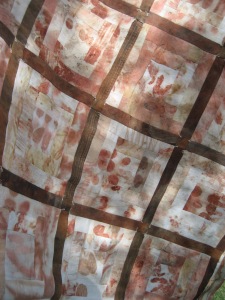
By the time I came to halfway through the back of the quilt, I had been experimenting for about a year and I had some breakthroughs–in understanding the process, in refining my skills at using it, in mordanting, in identifying eucalypts, even growing a few.
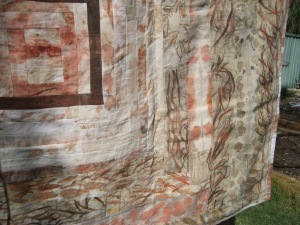
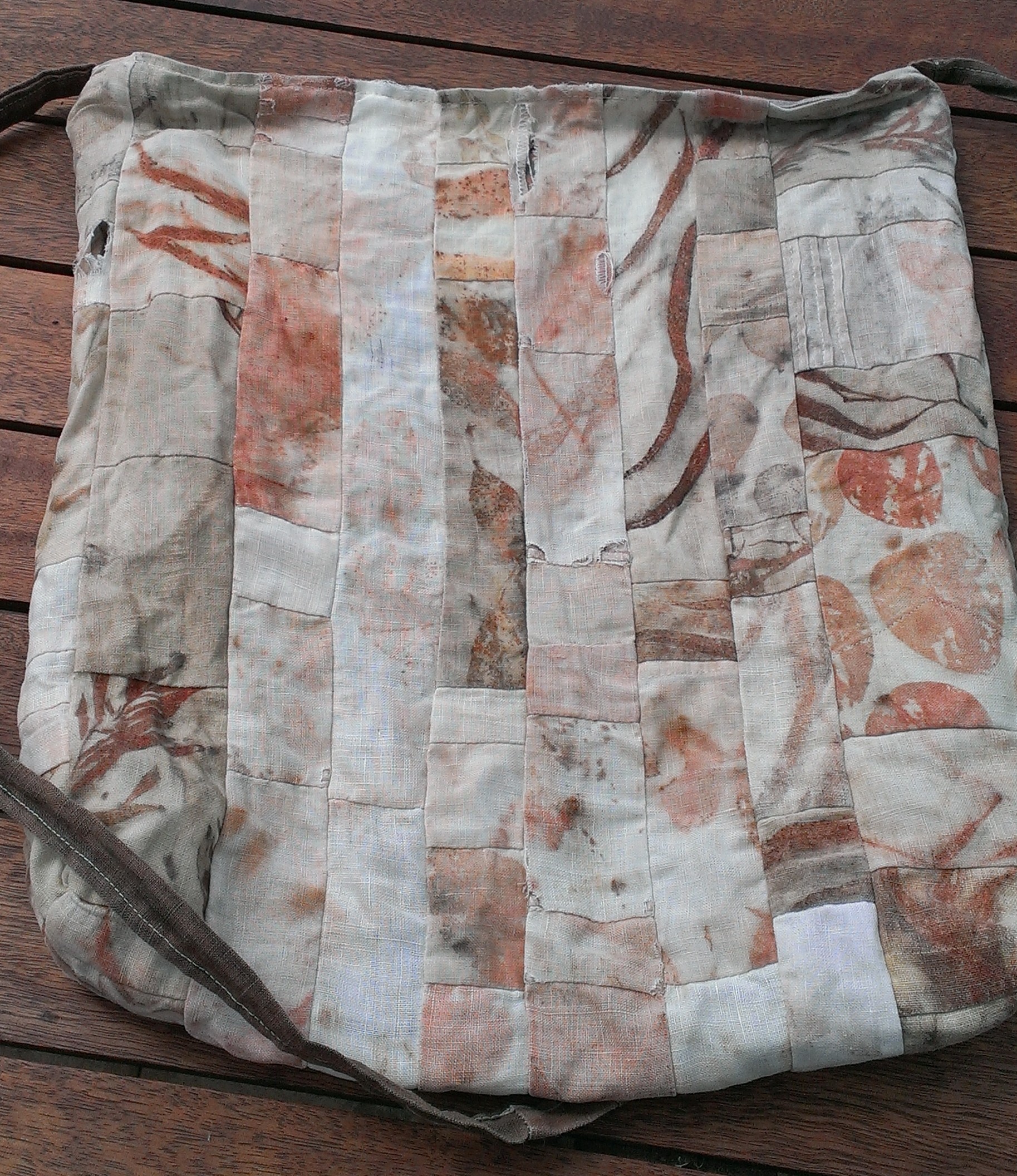
I made this entire quilt from recyled/upcycled linen garments from op shops and garage sales, most of them having gone there because they were stained beyond rescue. Needless to say, I couldn’t bear to waste a scrap. So even the tiny leftovers of the log cabin quilt were turned into other things. Including bags–which won’t surprise regular readers!
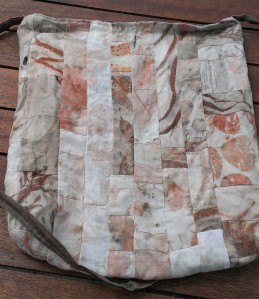
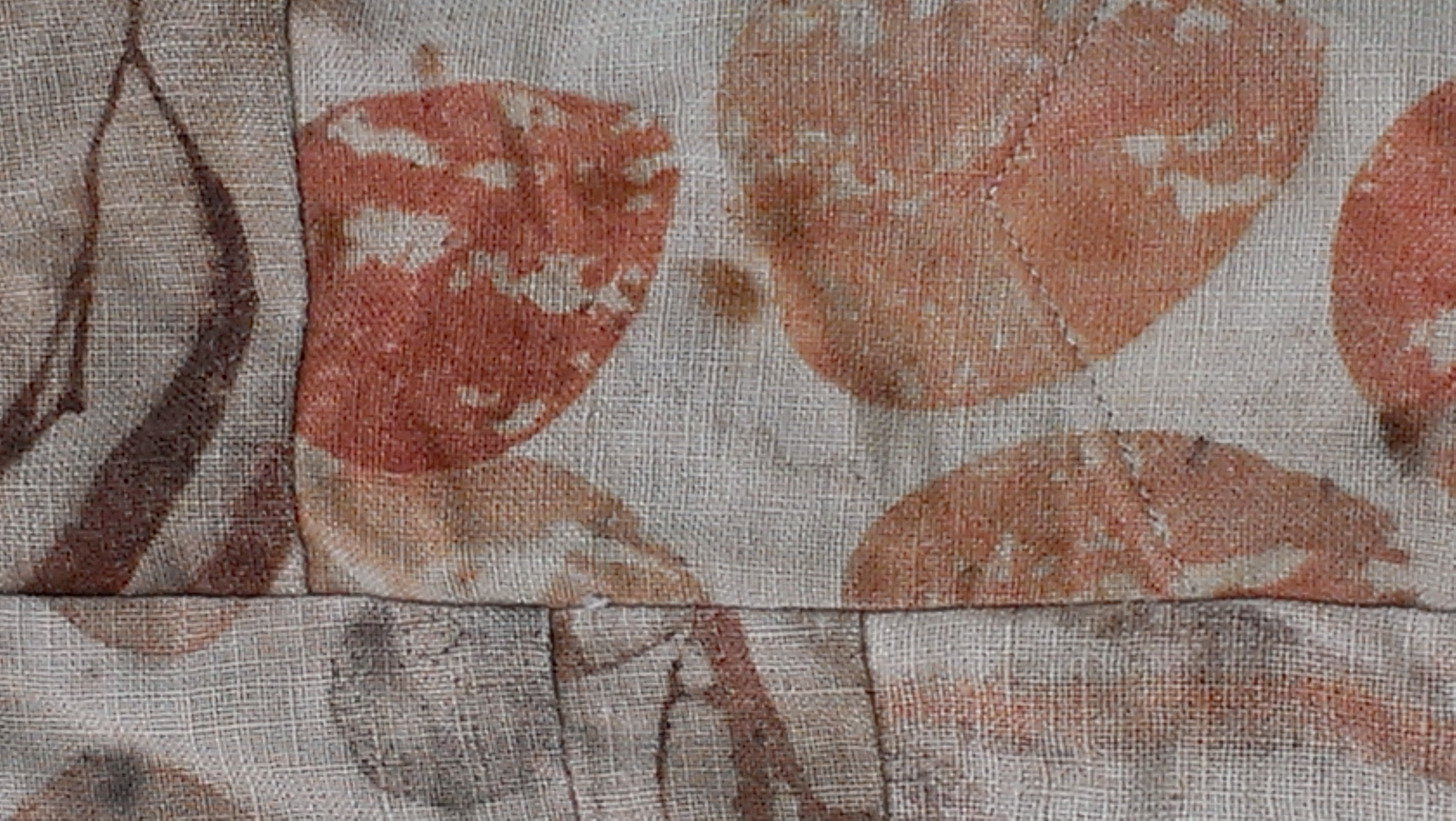
This bag has had a lot of use, because I like it so much. Which is to say it has been treated roughly, stuffed full, rammed into other bags and rubbed against all manner of things. And although parts of it are still glorious… including what must have been virtually my first really exciting E Cinerea, E Scoparia and E Nicholii prints:
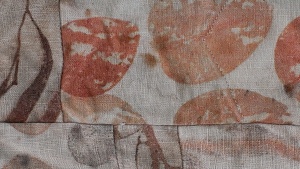
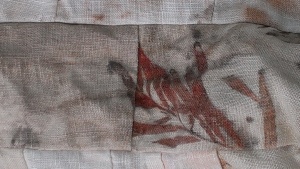
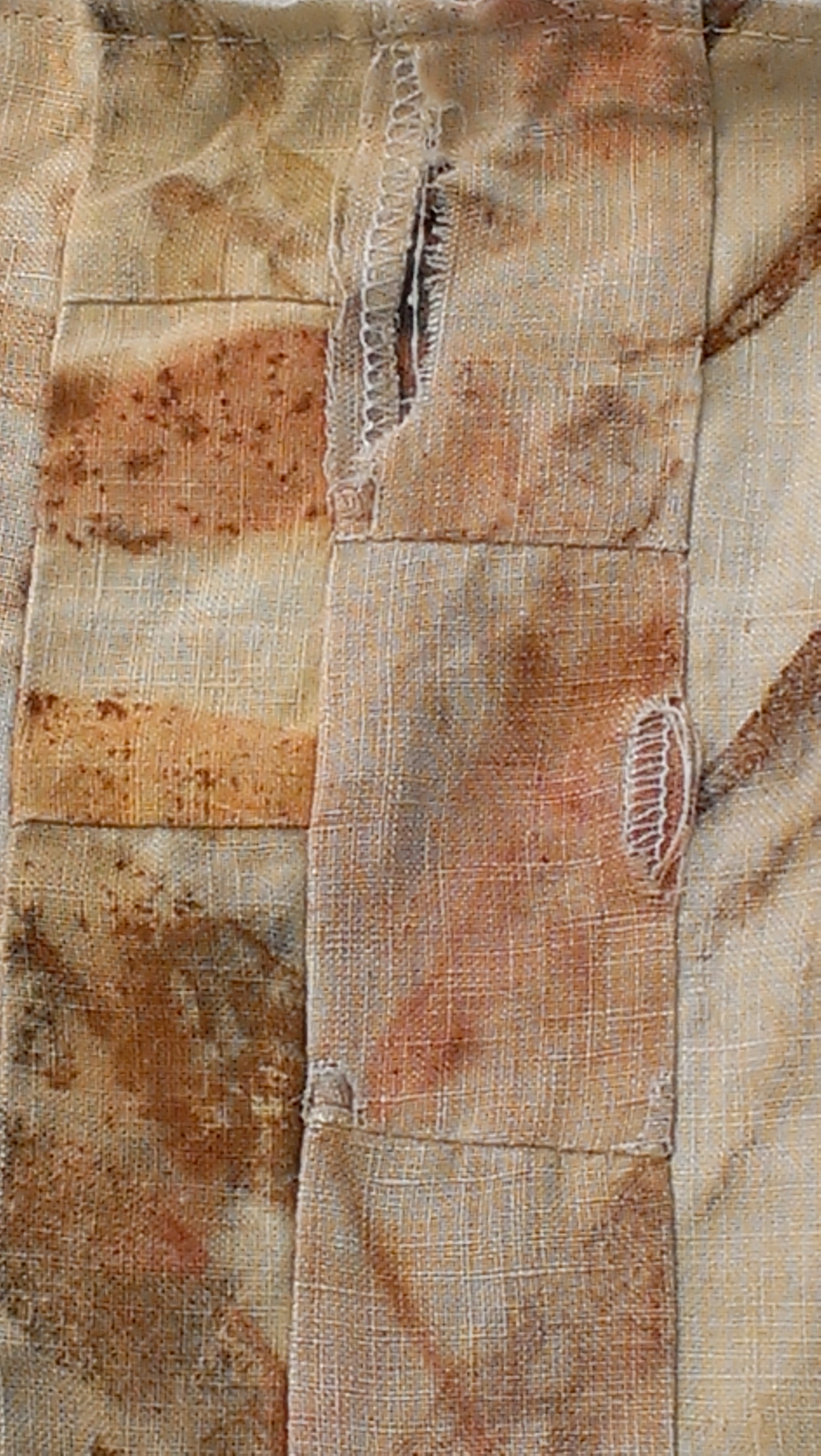
There are also some points of real wear.

I often think that a well made, long lasting garment or bag is highly desirable. But a thing that will stand the test of time is only a good thing when the item remains one you (or someone else) want to keep using. I own things that I wish would reach the end of their useful lives because I’m tired of them even though they don’t need replacement, or because a better version exists 20 years later. I have things I wish I had never acquired or that don’t have the capacity to biodegrade. I now think about the benefits of things that can break down and won’t last forever to burden coming generations.
This bag, though, has had a short life as a bag because of the hard life some parts of it had as clothing, and it certainly will biodegrade. I polled some of my near and dear and they thought the bag should continue even if it required lots and lots of mends… So here it is, reworked considerably.

And the other side…

Ready for more years of hard use, I hope! For those who are wondering, the quilt is doing fine so far and I remain happy to use it.


























 Local & Bespoke