Tag Archives: local trees

Guerilla Gardeners and Yarn Bombers Strike the Neighbourhood!

Yarn bombers have been out and about in our neighbourhood!  They have improved a neglected spot a short distance from our place, cheering up people who’ve had a year of more construction noise, dust and reverse beeping than most of us can readily stand.  Bless them!

IMAG2226

Not content with tree decorating, they bombed the odd pole as well…

IMAG2228

Plus a raised herb garden for the locals to enjoy…

IMAG2229

They even left a potted lime tree and a bougainvillea.  I took a down-at-mouth neighbour along to see and she was quite cheered up by the constructive neighbourhood reclamation and whimsy of it all.  So was I.

IMAG2231

They go by the name of ‘Viva La Broad Bean’ and I can only congratulate and cheer them on.  I met one of them when I went to take these pictures and congratulated her in person.  I was able to share our neighbourhood revegetation projects with her, too.

IMAG2230

Meanwhile, the streets nearby are full of bottlebrush (callistemon) trees in flower.  Thousands of blooms, each the size of an old fashioned bottlebrush–but splendidly red.  It occurred to me that this is a form of wonder and beauty that non-Australians mostly don’t experience.

IMAG2220

The abundance of flowers has brought lorikeets into the neighbourhood to feed on the nectar and hold high pitched, apparently gleeful conversation.  They don’t hang about to be photographed, but I managed to take a picture of this rainbow lorikeet before it flew off like a green comet.

IMAG2232

10 Comments

Filed under Knitting, Neighbourhood pleasures, Sewing

A pair of backyard Eucalypts…

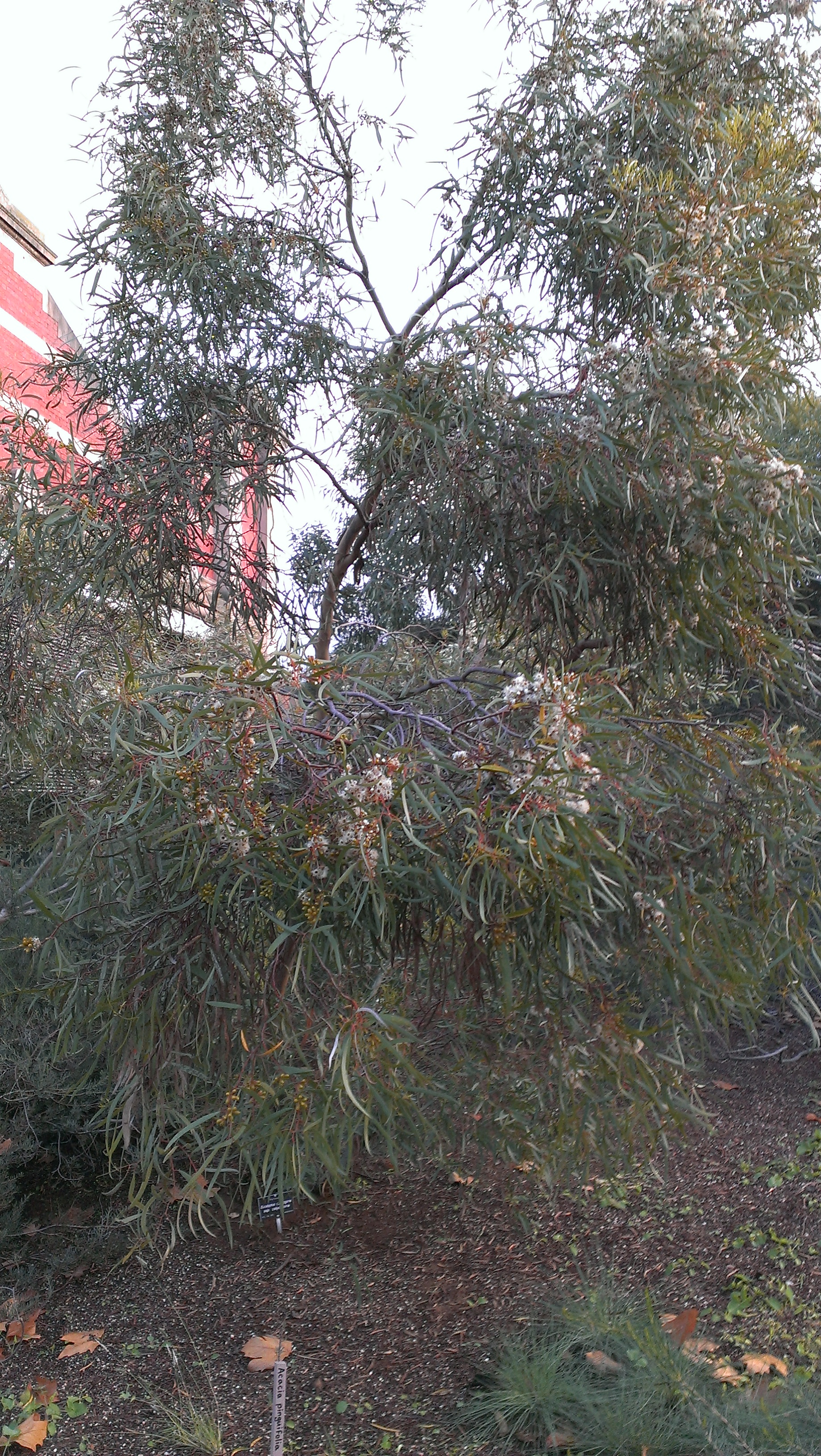
Recently I discovered that a friend who has one of the biggest E Cinerea trees I have ever seen in her back yard would like some of it removed.  I offered to cut and take away the dead and insect affected parts, to her surprise, and have now made three visits to do just that. I’ve begun some dye pots with alpaca another friend has asked me to dye.

IMAG2075

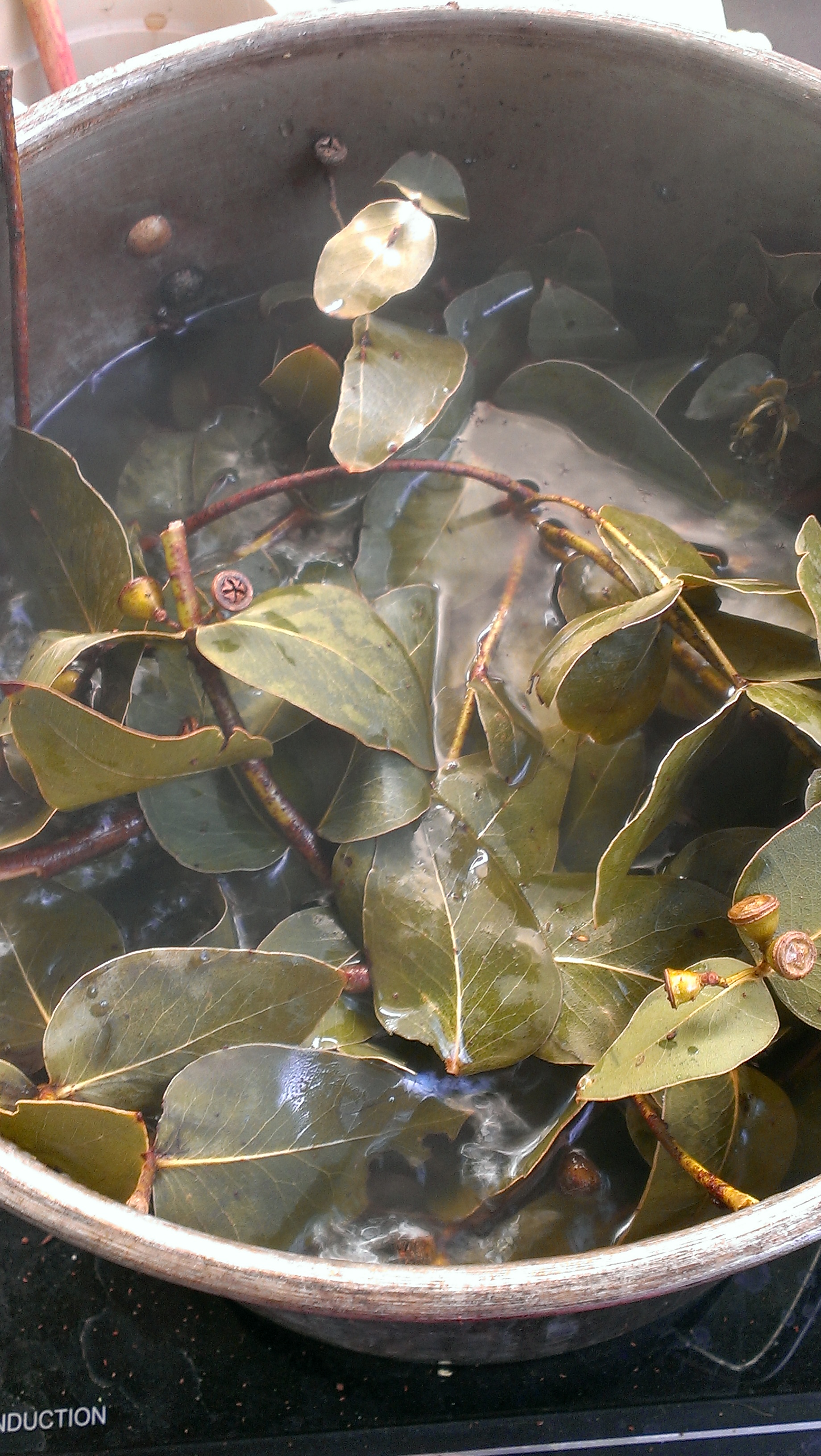
On the second visit to trim the E Cinerea, my friend’s partner spoke about the loss of a bough on their other eucalypt.  I looked closely at this second very large tree with rough, fibrous bark on the trunk and very narrow leaves and ‘Eucalyptus Nicholii’ went through my head.  Could I at last have found a fully grown specimen?  It branched so high and the ground had been so thoroughly cleared in the effort to remove all the fallen material that I couldn’t find fruit.  I did manage enough leaves for a dye pot however… and it is very promising! I heated the leaves for an hour, dropped the sample card in and went for a bike ride leaving the heat off.  When I got back:

IMAG2078

As I write I have added some alpaca fleece.  I will have to wait to make a more definitive identification… I have sometimes found that all the hours I’ve spent with books on Eucalypts have created the context for me to have a correct intuition about a particular tree.  Equally often, though–I have completely the wrong end of the stick!  But the alpaca is looking good as it sits draining…

IMAG2101

8 Comments

Filed under Dye Plants, Eucalypts, Natural dyeing

Intriguing trees…

I returned today to two trees I have sampled a little that are growing on my favourite running track.  We rode our bikes down it, so I took pictures (and some more leaves, needless to say!)

IMAG2069 IMAG2073

Into the dye pot they went, with a sample card.

IMAG2100

Since I have two burners, I also ran a pot from leaves I collected when we went planting native trees on a friend’s farm.  It looked like E Cinerea to me… but an enormous tree, growing where there is so much more water than in the city where we live.

IMAG2099

The dye pot confirms that the E Cinerea gives great colour.  And the mystery trees gave  rusty orange with some tan undertones on handspun wool with no mordant, and brown on alum mordanted superwash.  Even more intriguing, really!

2 Comments

Filed under Dye Plants, Eucalypts, Natural dyeing

Unknown Eucalypts

IMAG1422

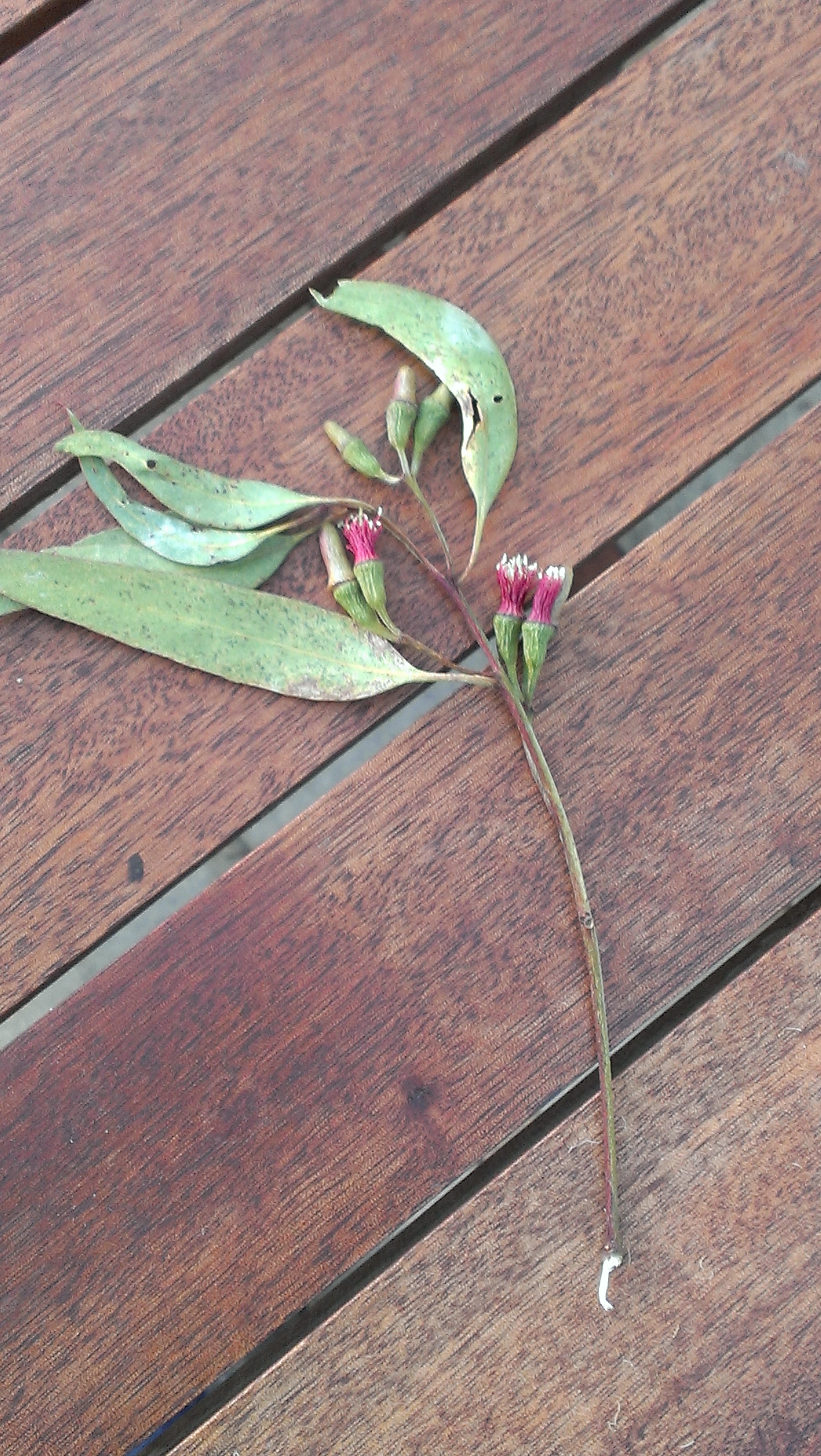
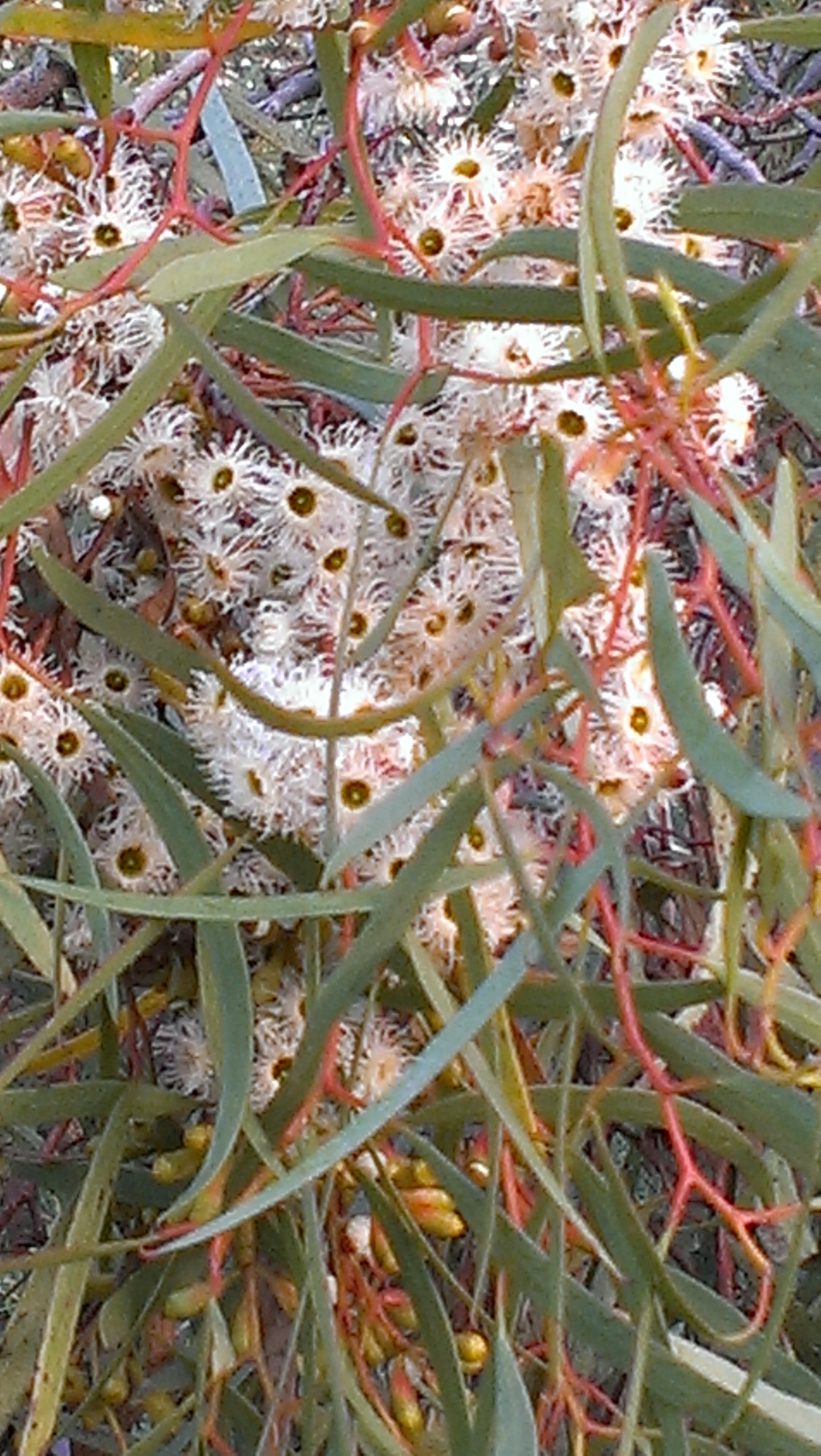
I found an unusual looking eucalypt in bloom on my favourite running track. Which means I had no camera and no bag with me.  This is a small dried sample… The tree has a lovely bronze, smooth trunk, with bark peeling in strips.  Euclid isn’t speaking to me at present but perhaps later identification will be possible with those wonderful red flowers!

IMAG1419

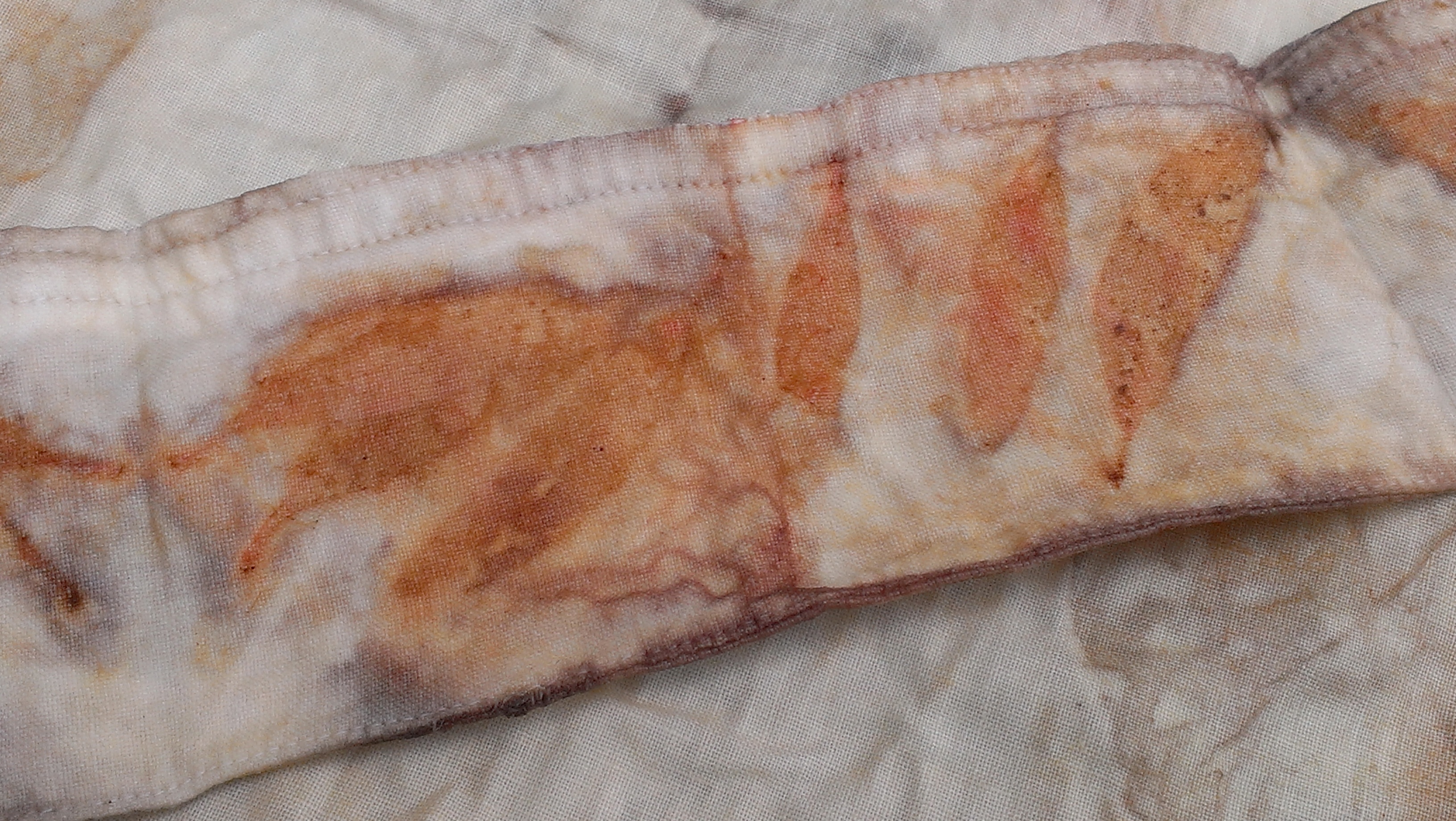
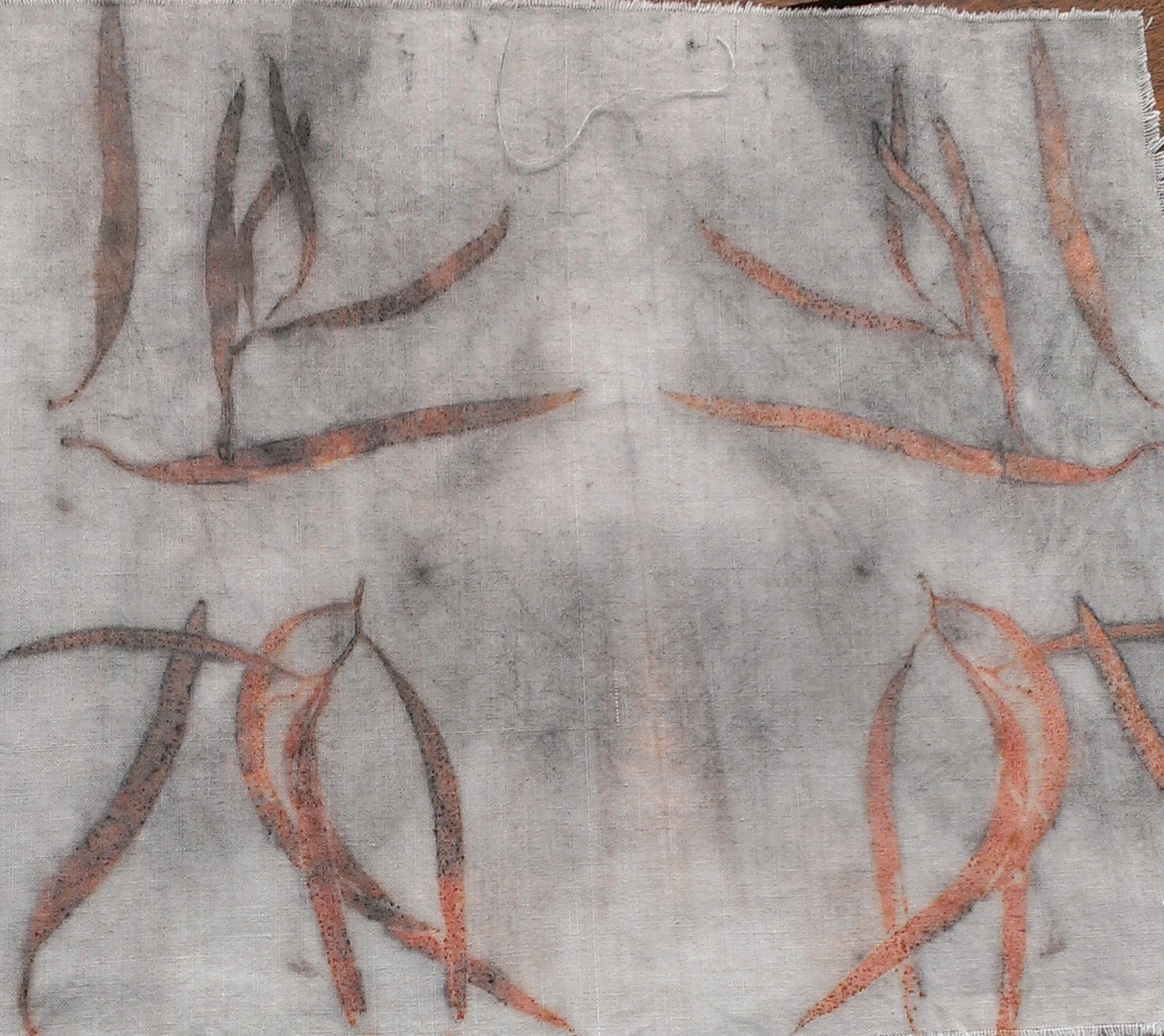
There is a smudge of red among the orange leaf prints these leaves gave…

This is my second unidentified eucalypt.  It was growing in Botanic Park when I rode through recently.  It had been raining and this extremely tall tree had lost some twigs, leaves, buds and flowers.  Sadly, no one had given it a name tag for my edification… but it seemed an opportunity too good to miss.

IMAG1427

Or on the other hand… further evidence that there are Eucalypts which give very little colour!

IMAG1434

4 Comments

Filed under Dye Plants, Eucalypts, Leaf prints

Tour de Fleece continues…

Have I mentioned that I’m participating in the Tour de Fleece, spinning each day during the Tour de France?  Clearly this strikes a lot of people as a truly bizarre and quaint pastime. I am not an especially sports loving person, so from my point of view, this is great sport!

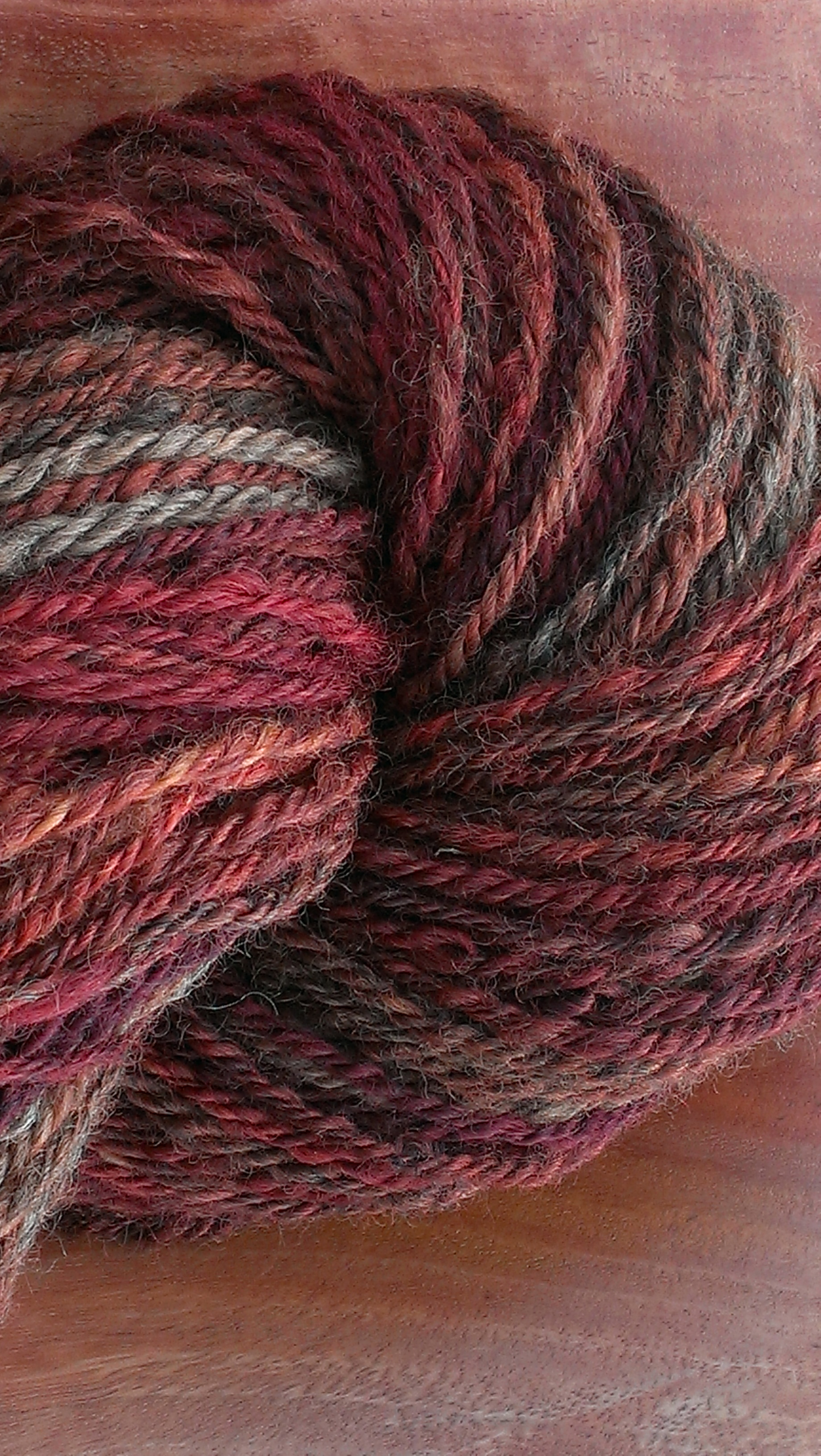
I have been spinning more of my eucalyptus dyed grey corriedale.  I loved the 3 ply yarn I made from it, but it isn’t going to make gauge for the cardigan I now have in mind and will stripe in a way that won’t work for it either.  This may be a clue that I should make the cardigan from some other fibre, of course, but I decided to try 2 ply, which raises entirely different issues about colour blending.

IMAG1776

I’m struggling to get the colours to show right in photos… but this approach clearly will even out the colour variations without making them disappear.  And perhaps it is time to try a swatch to discover how I am doing on gauge.  I have been feeling squeamish since plying… two plies of different colours is not something I would usually be aiming to achieve.  My beloved has offered the view that the yarn is lovely and will look ‘tweedy’, which sounds good to me…

5 Comments

Filed under Eucalypts, Natural dyeing, Spinning

Eucalyptus Calycogona subsp Calycogona

While on the path of trees helpfully labelled in Botanic Park… I bring you E Calycogona Calycogona. It is native to Western Australia.  Here it is flowering generously in early June in Adelaide.

IMAG1405

IMAG1404

And what a result in the dye bath!  Every fallen bud cap printed.

IMAG1431

Leave a comment

Filed under Dye Plants, Eucalypts, Leaf prints

Eucalyptus colours over grey wool

I have a lot of Polwarth fleece, both brown and variegated white/tan. All of it gifted from pet sheep that live nearby.  It is a privilege and it is also a difficulty.  Washing fleece so fine and so greasy has been intimidating as well as slow.  I have spun some in the grease, and washed some twice, and tried several different washing approaches.  I have dyed and spun and spun and dyed.  Two and three ply, corespun. you name it! I spun and knit an entire cardigan from naturally brown Polwarth, too.

And then one day someone at Guild said “I hate fine fleeces!” in my hearing, and it occurred to me that I do not have to spin it for the rest of my life.  I lashed out and bought a considerable quantity (3.5 kg) of grey Corriedale (nothing to approach the stash of Polwarth, mind you) and it has been heavenly.  I love grey fleece, and this is the loveliest corriedale I’ve ever had the pleasure to spin.

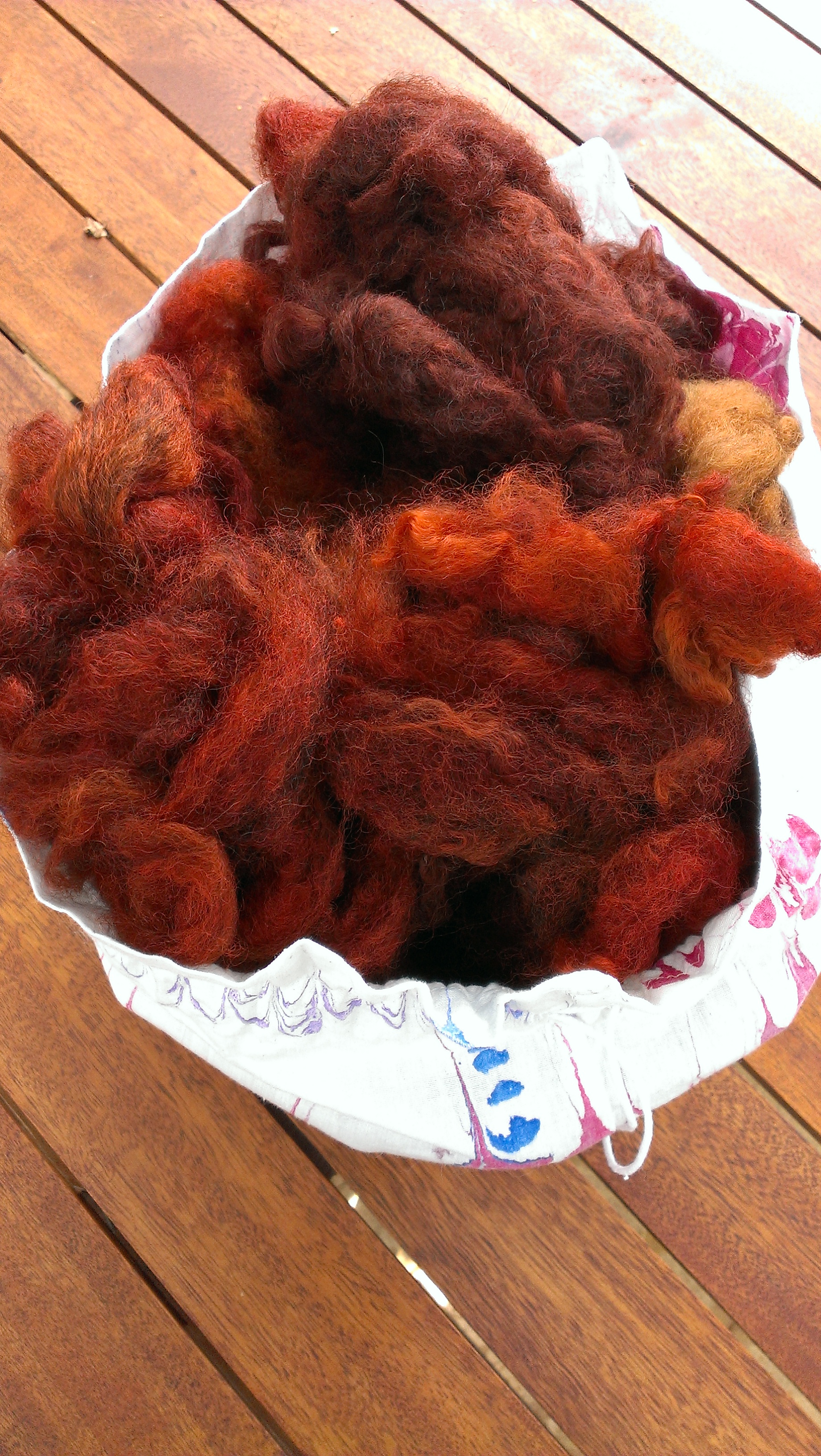
I have been dyeing it with eucalypt leaves and bark.  I have oranges of many shades from rust and brick to flame to gentle sunset.

IMAG1363

I have burgundy and plum.

IMAG1364

And I also have some tans and walnuts.  It appears I collected some bark that wasn’t exactly what I thought I had collected.  But to be honest, I think these are lovely additions in this context.  I’ve begun spinning yarns of many hues, chain plying to maintain the colour contrasts.  Lovely.  It’s hard to believe I can find these colours through combining bark and hot water and time with wool.

IMAG1308

Now… I have figured out that what I would really like to do with at least some of this wool is knit a particular cardigan.  And my beautful 3 ply yarn is too thick to make gauge for it!  Possibly also for the design I have in mind those colour changes will not be ideal.  So, I am about to embark on two ply yarns.  This is my Tour de Fleece project.

20 Comments

Filed under Eucalypts, Fibre preparation, Natural dyeing, Spinning

Eucalyptus Cretata

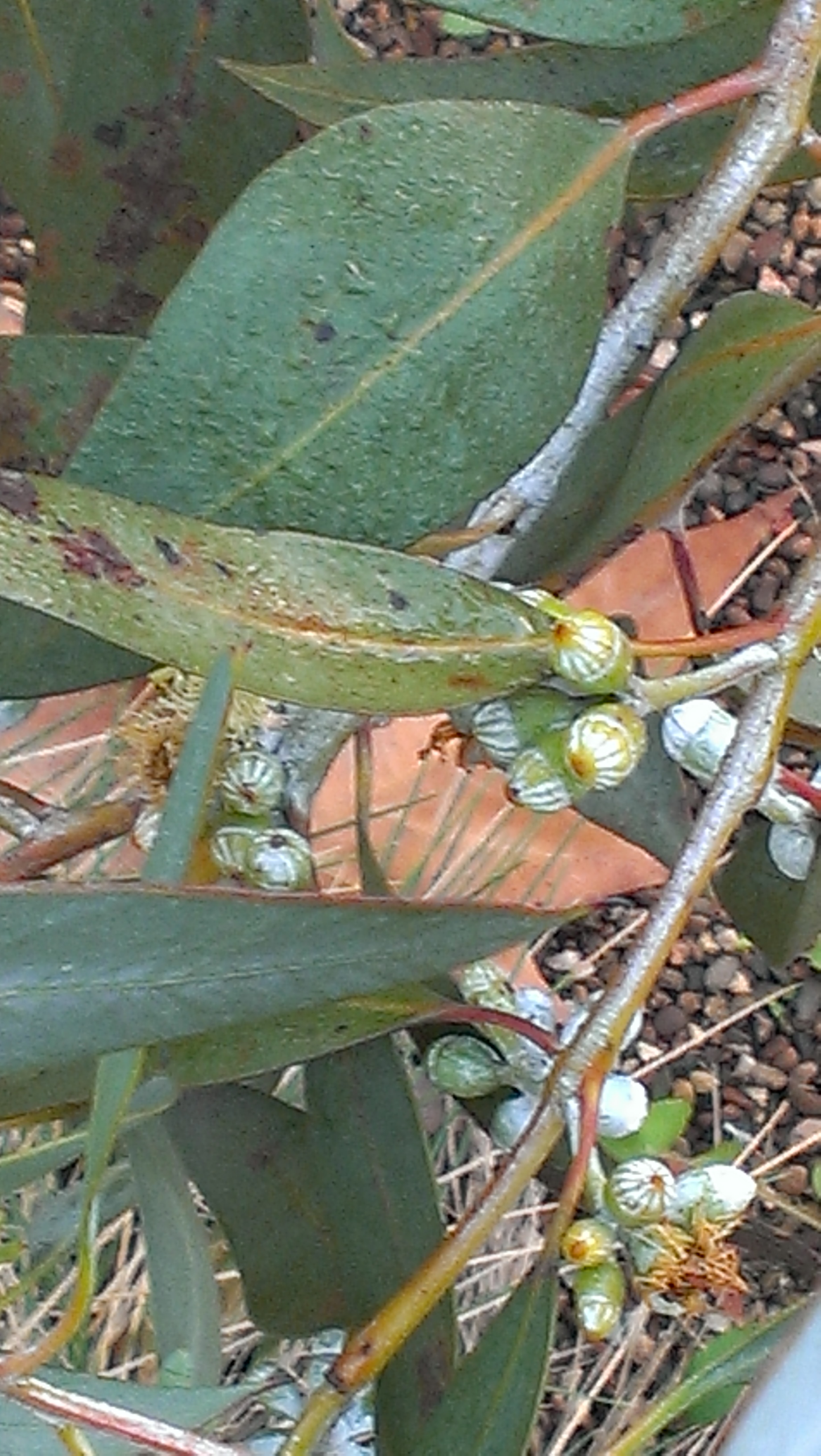
These trees were rather young and rather prostrate. However, the fact that they were helpfully labelled made me feel I should take an interest!

IMAG1402

I took only a few leaves, which is one of the big advantages of the eco-print technique of assessing dye potential, as India Flint has emphasised.

IMAG1401

The grooves on the bud caps are rather lovely, I think.  The sample print… not deeply exciting, even with some help from iron!

E Cretata

2 Comments

Filed under Dye Plants, Eucalypts, Leaf prints

Plum Pine 3: Let the dyefastness testing begin!

Unbelievably, the plum pine is still fruiting, and I am keen to dye enough to be able to do some wash and light-fastness tests in the year before it fruits next time.  So I harvested again, picking up fallen ripe fruit from the ground until I filled the bags I had with me.  A man in white overalls who seemed to be working nearby was gripped to see me doing this and asked me all about what I was doing and why.  He was fully supportive of ‘making use of our natural resources’–as he put it–!

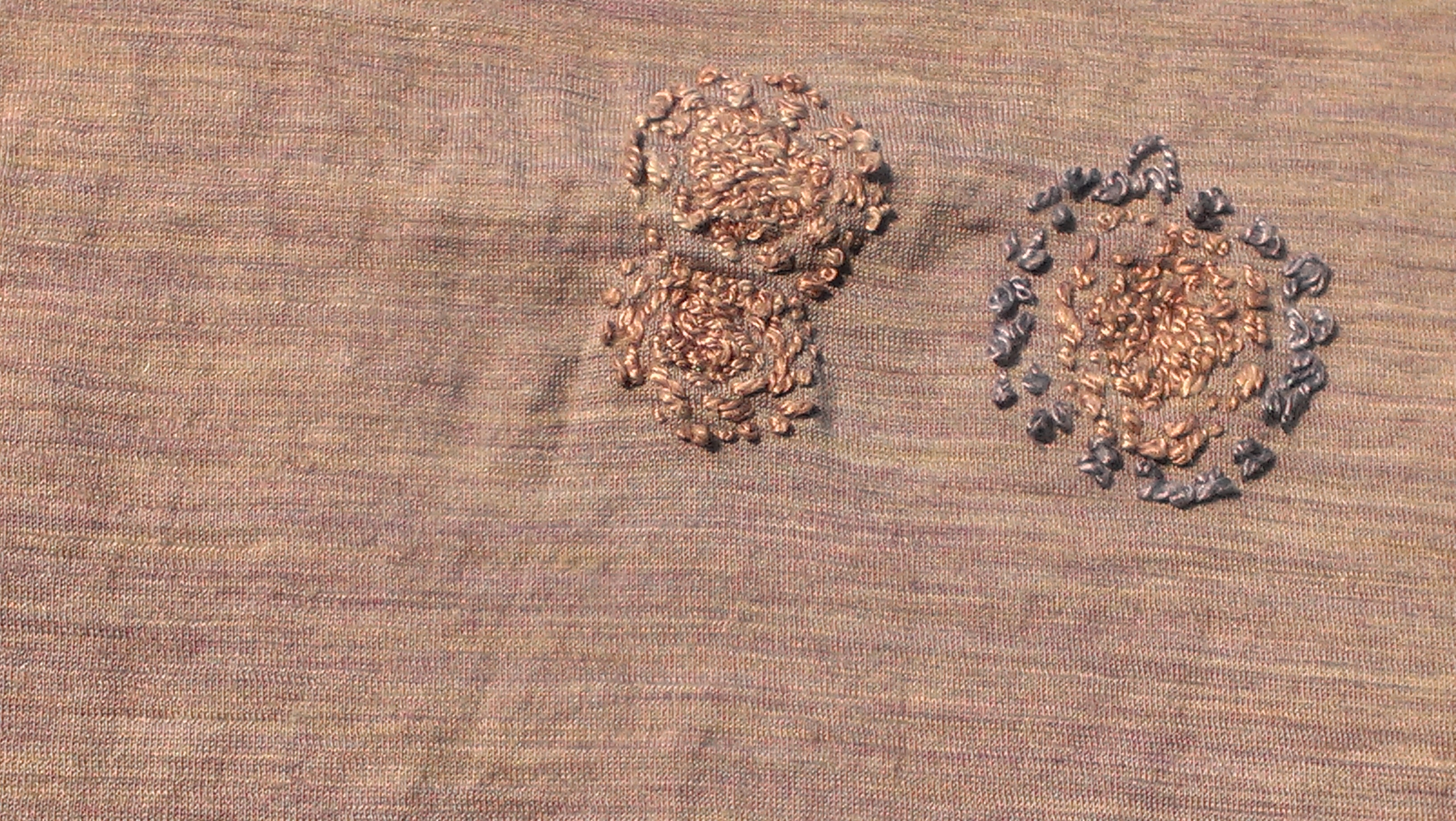
Early signs are that my silk threads dyed without alum will not be washfast. My mending has changed colour in only a couple of washes, and seems to be Ph sensitive, with pink without alum noticeably paler and purple with alum (the contrasting outermost ring on the right) turning blue in a mildly alkaline wash.

IMAG1571

Only someone accustomed to dyeing with eucalypts, which are fast on wool and silk with no mordant, would think unmordanted yarns were a good beginning place.  So, I’ve had a mordant bath on the hob.  I did not have loads of anything much ready to mordant and dye except Bendigo Woollen Mills alpaca rich, so 200g of that hit the alum and cream of tartar bath along with smaller quantities of other yarns.

After removing the seeds, I had 2650g of fruit.  I was a bit gobsmacked by the quantity!  Never one to shy away from a challenge,   I put my fruit in a pot of rainwater with a cup of vinegar and simmered for an hour.  Then, I entered some handspun wool, some commercial alpaca-wool blend and some silk thread and silk/cotton 70/30 thread, all mordanted in alum and cream of tartar.  The colour takeup on the silk was dramatic and almost immediate!  I simmered for another hour and then left overnight.  The colour change overnight was again worth the wait.

IMAG1656

Meanwhile, I’ve set up further washfastness and lightfastness tests…

Leave a comment

Filed under Dye Plants, Fibre preparation, Natural dyeing

Kurrajong

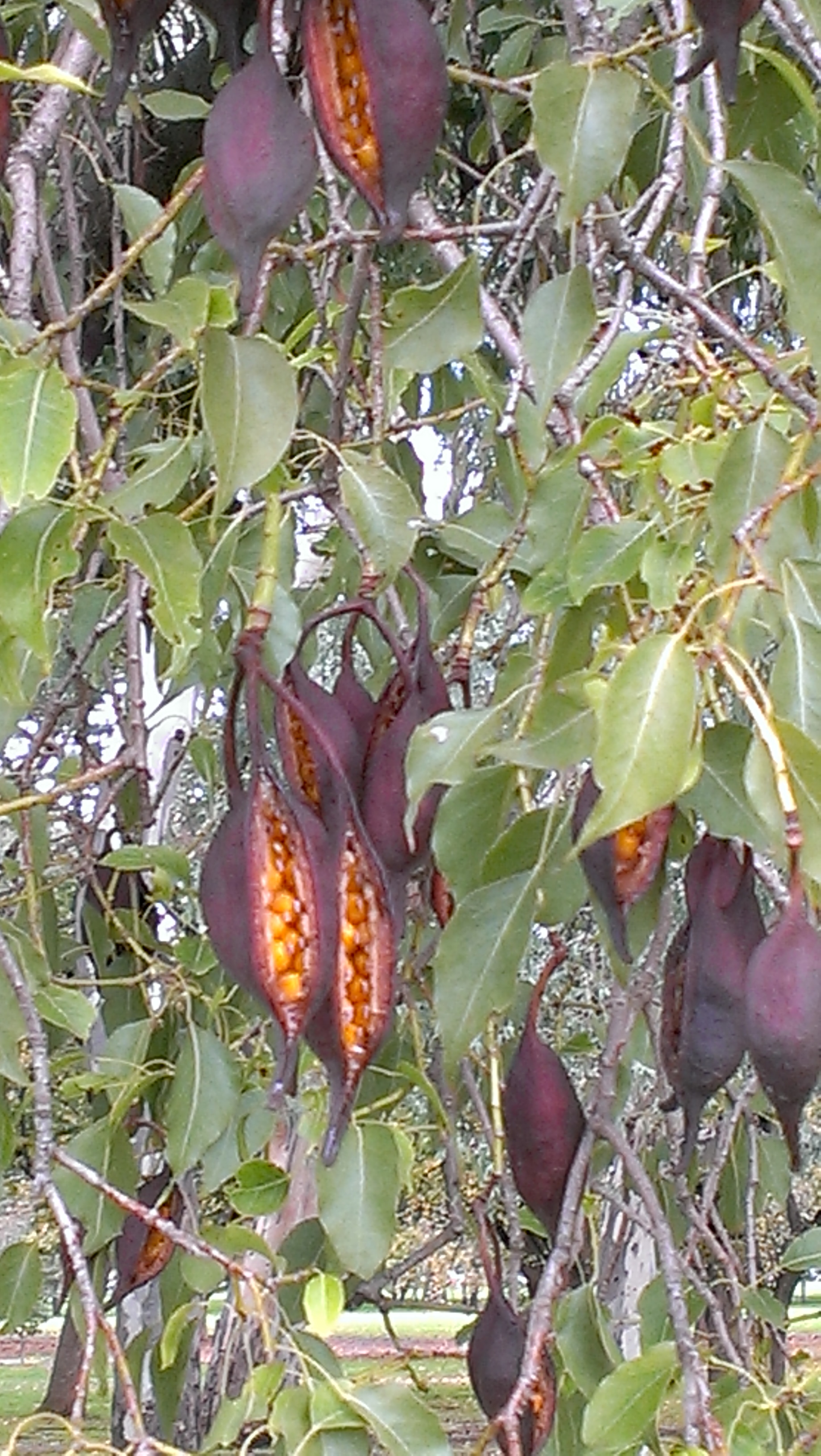
Kurrajong trees (Brachychiton spp) are in fruit in the parklands and suburbs.  They are native to Australia, but not my part of it.

IMAG1397

The seeds are edible when roasted, but the fact that they come nestled into their little boat-shaped pods in a bed of irritating hairs puts a lot of people off (I’m one of those people)!

We went for a run by Victoria Park Racecourse a few weeks back, and there were many. Some with glorious lichen-covered trunks.

IMAG1392

Here is the whole tree…

IMAG1398

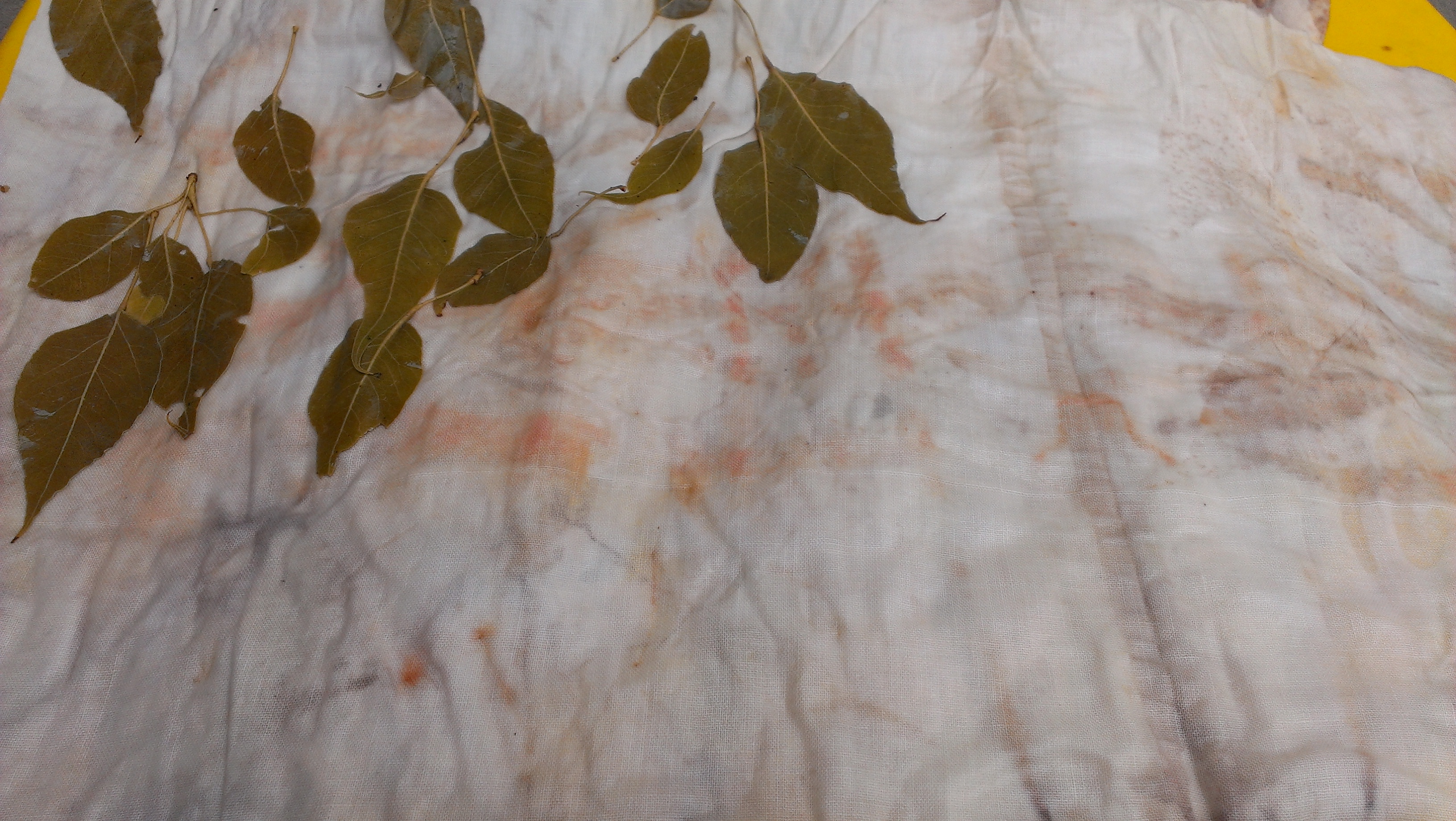
And evidence that it is not on the verge of becoming a world-renowned dye plant.  In this image you can see my test piece, with half the leaves removed from it.  The smudges of colour you see have transferred through from other samples in the same bundle.  Nothing from the kurrajong leaves my beady eye could detect.

IMAG1415

2 Comments

Filed under Dye Plants, Leaf prints