Tag Archives: not tan again!

Significant Tree

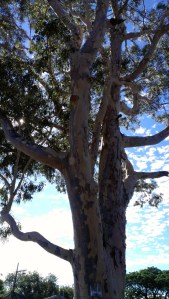
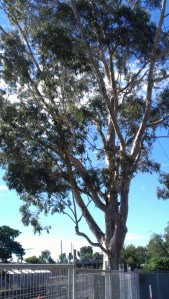
I love trees.  Some are especially precious to me.  Like this one.  The Department of Planning and Infrastructure says it is a Corymbia Maculata (Spotted Gum).  I have tried dyeing with Corymbia Maculata.  As a dye plant, it’s not spectacular: my samples are tan, tan and tan.  Dye potential isn’t the only or even the main value in a lovely tree from my point of view, but just one of its potential fine qualities. 
IMAG0356

We failed to save it by objecting to its removal.  A local creek is going to be put into a pipe so big a car would fit into it as part of major infrastructure works, and this tree is standing in the path that pipe is going to take beside the railway.

IMAG0352

The Minister approved its removal, and his decision is not appealable.  That fence along the railway stands where over 10 much smaller, but still appreciated, trees used to stand beside the spotted gum. Since their removal I hear there are six possums fighting in the nearest neighbours’ yard at night instead of just one. We have been given several different dates on which the Corymbia Maculata will be felled, and prepared ourselves for the day each time. It has been fenced off because tomorrow is the day.  9.30 am is the time.  My nearest and dearest is staying with a friend tonight so as not to be here when it happens.  The people who will be felling it will start to arrive at 7 am.  It will be a big job.  The chainsaws will be going all day long, if indeed they can do it in a day.

lIMAG0357
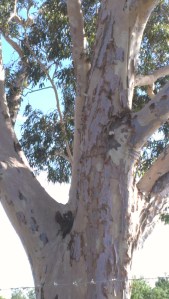
This tree must be decades old.  The whole neighbourhood will be different without it.  The flocks of native birds who have visited it when in bloom every year will no longer stop by.  Under government policy, in our hearts and those of lots of our neighbours, it is a Significant Tree.
IMAG0353

5 Comments

Filed under Eucalypts

Dianella fruit

IMAG0321

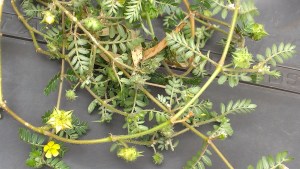
Yesterday I came through the royal showgrounds with my secateurs.  On the way out, I spotted these fruits.  I think this is one of the dianellas, probably Dianella Revoluta. It’s a  common native, drought hardy inclusion in public plantings in my area.  There were so many that on the way back, I took just a couple of stems from each plant and put them in my panniers.  While I was there I saw some caltrop, so I removed that while I was there.

IMAG0323

It’s one of the enemies of cyclists, as you might guess from these immature fruits… which when ripe will be the stuff of many punctures.  I pull this out any time I have the chance.

IMAG0325

I followed Jenny Dean’s suggestions about processing berries…

IMAG0328

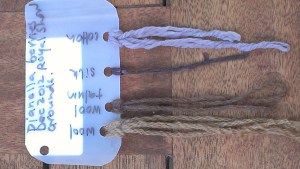
And, as might have been expected, the result was nothing like the fruits I started with.  I would rate the unmordanted wool pale tan, wool with alum dark tan, the silk is grey-brown and the cotton is pale grey.  Not too exciting, is my conclusion!IMAG0340

15 Comments

Filed under Dye Plants, Natural dyeing, Uncategorized

Leaf prints of the week: Eucalyptus Cinerea and pecan leaves

It was another weekend with leaf prints.

Leaf prints 005

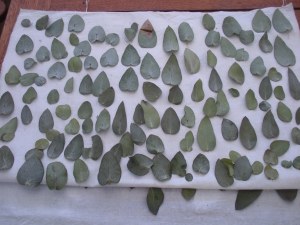
Eucalyptus Cinerea, before..

Leaf prints 001

and after:

Leaf prints 021

My test cotton sample, demonstrating that the mordanting I wrote about a little while back should work out just fine for the natural dyeing workshop I’ll be running.

Leaf prints 022

On the weekend I travelled south of the city to celebrate the lives and love of two dear friends.  They had an all-in-one birthday party and anniversary.  I gave them a teapot and teacosy dyed with silky oak leaves (grevillea Robusta) and eucalypt, and they found it suitably funny.

Dyeing 005

As we left, one of them pointed out their now-flourishing, though still relatively small,  pecan tree.  I had seen pecan eco-prints on Lotta Helleberg’s lovely blog.  I asked if I could pluck a few, and then I took them home and wrapped them in a piece of cotton twill that used to be a pair of trousers.  It was ready and waiting, mordanted in soy and ready to go!  Before… (such lovely leaves…)

Leaf prints 002

and, after:

Leaf prints 025

I had also saved this sample of an unidentified eucalypt a friend was growing in his backyard, but sadly it yielded a few brownish smudges.  It’s much prettier in person than as a leaf print.  I think it is Eucalyptus Kruseana (Bookleaf Mallee).

Leaf prints 003      Leaf prints 009

And I spent some time creating textured batts ready for textured yarn spinning… wool with mohair locks, while I tried a new method for washing wool.

Leaf prints 014

Good times!

1 Comment

Filed under Dye Plants, Eucalypts, Fibre preparation, Leaf prints

Let the ironbark identification and dyeing experiments begin!

This tree is growing on the tram route in Goodwood.  It is clearly an ironbark, but I am less certain it is E Sideroxylon, and thus, I chose to investigate further… There are three ironbarks in a little cluster at this spot.  I think one of them is the same species and the other is so tall and branches so many metres above the ground that I may never know.

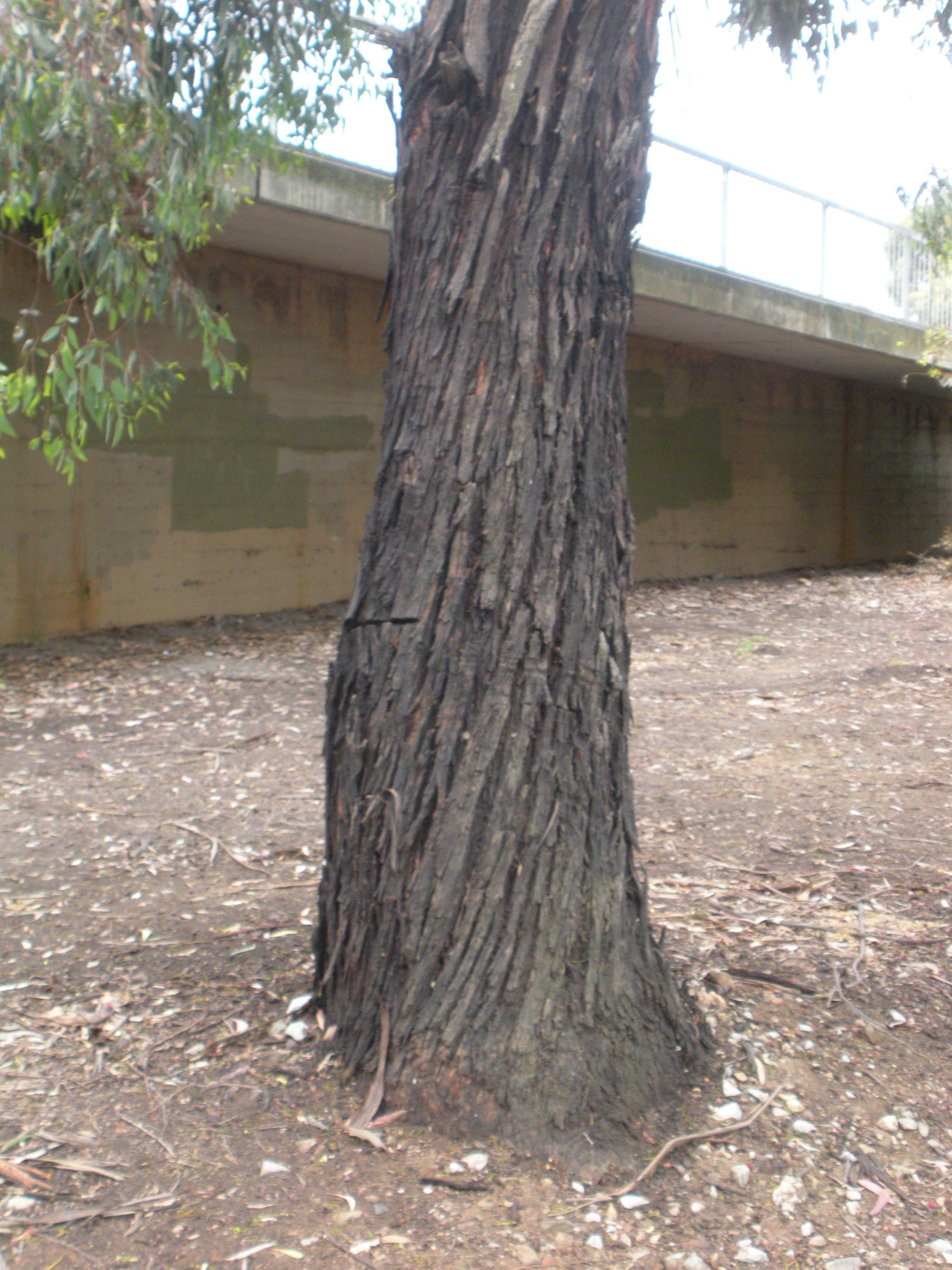
Here is the key feature of an ironbark: deeply furrowed bark which is impregnated with a sticky saplike substance (kino) which the tree produces in an effort to fend off attack by insects.

Here, more of a sense of the whole tree.  It is a very tall tree… and while the trunk might be secure from predatory borers, the leaves showed penty of signs of lerp and caterpillar attack.

The upper branches were paler, more of a cream colour, and covered in smooth bark which had begun to shed.  We had a very overcast day, but sometimes a natural dyer can’t wait!

The leaves smelled rather lovely while cooking.  I didn’t imagine when I set out on this dyeing path that cooking eucalyptus leaves smelled different, except in the obvious case of ‘lemon scented’!  They do though.  Some smell quite spicy and some smell like classic Eucalyptus oil.  E Crenulata was so overpowering it was voted out of the house for all future time.

As for identifying features, I collected plenty of leaves but could not reach any mature fruit.  Since this tree is growing among others that may not be the same species, picking fruit up from the ground sometimes just confuses the picture.  There were no visible buds or flowers–so, there are some limitations on identification.  Just the same, this tree appeared to bear fruit in pairs and threes (and not the classic 7 flower umbel of E Sideroxylon).  Tentatively, Euclid, hampered by my inadequacies in providing accurate observations, and the limitations in the data available, gives me E Tricarpa.

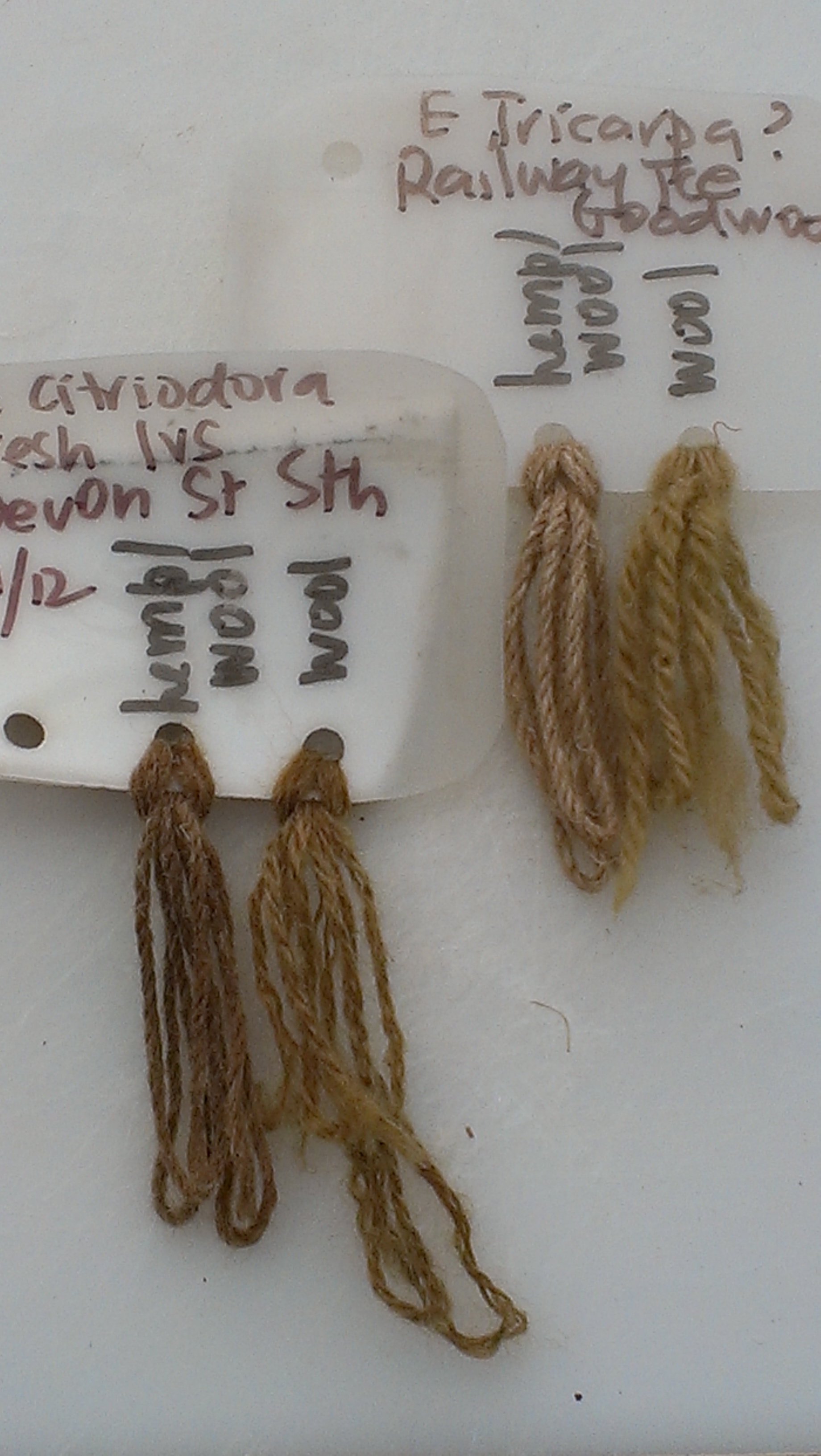
Here is the outcome of my dye sample (hemp/wool blend on the left and and wool on the right on each sample card).  E Citriodora on the left and E Tricarpa (tentatively identified) on the right… equally unexciting to my way of thinking.

Leave a comment

Filed under Dye Plants, Eucalypts, Natural dyeing, Uncategorized