Tag Archives: polwarth

Silkworms: 4 week update

The silkworm marathon continues. This week, there has been a hiatus in the relentless chewing while they prepare to shed their skins and move on to a still larger stage of life.

image

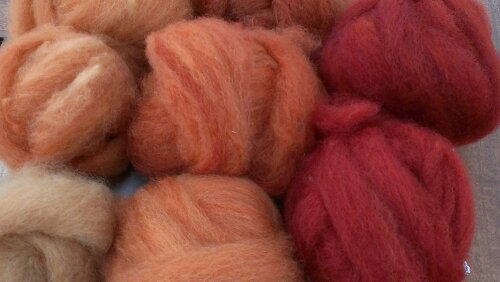
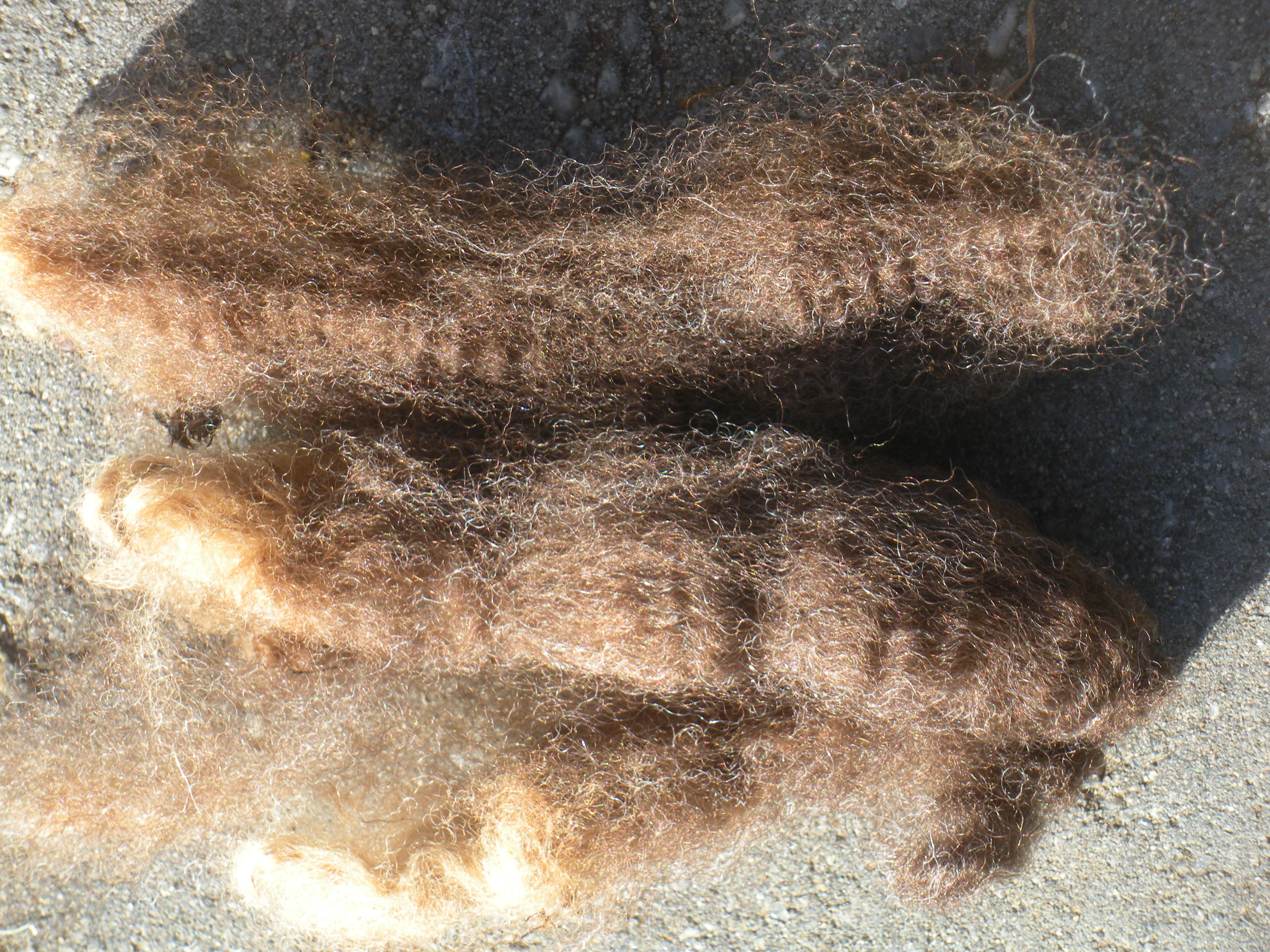
Meanwhile, I have been carding my eucalyptus dyed corriedale in preparation for spinning…

image

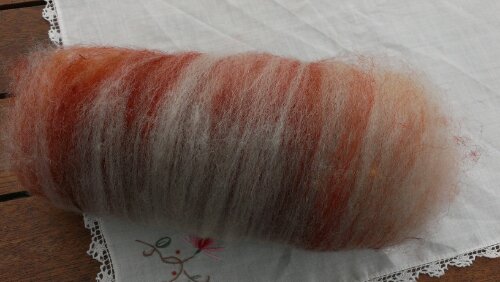
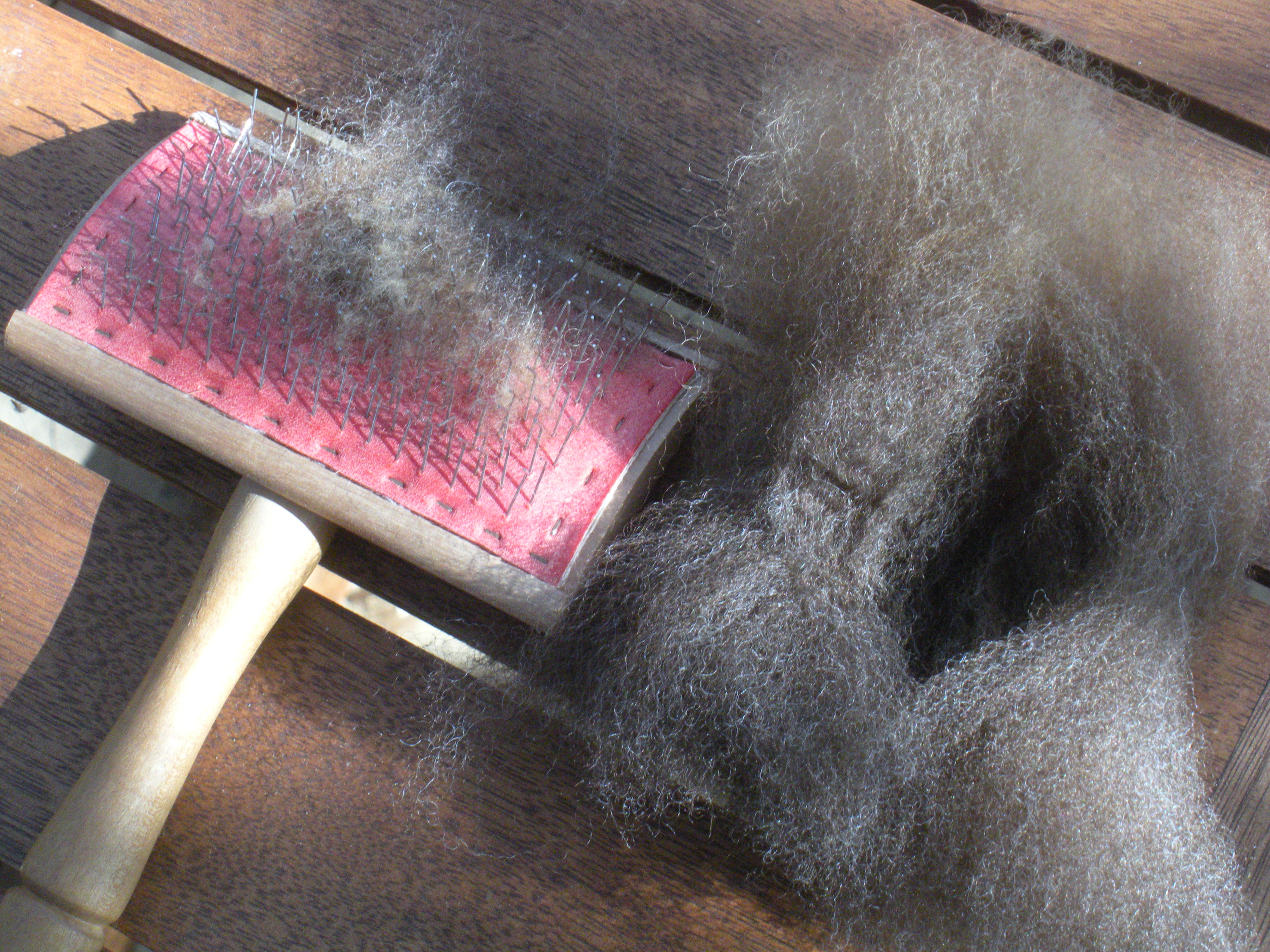
And creating another trash batt from the carder waste and some polwarth locks.

image

Leave a comment

Filed under Dye Plants, Eucalypts, Fibre preparation, Natural dyeing

How diverting!

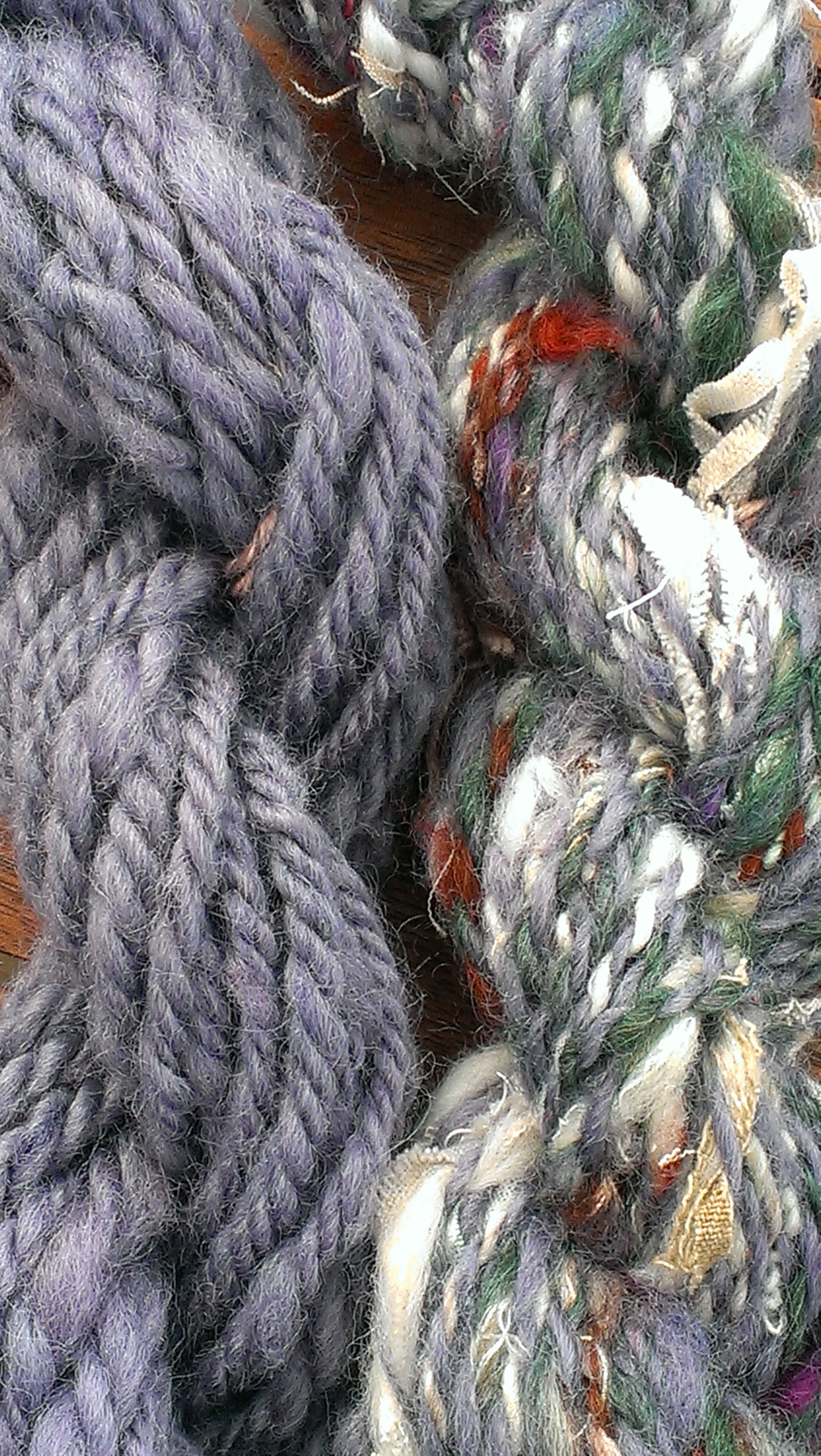
Experiments in diverting textile waste from the rubbish bin or compost continue… The lavender wool and the entirely waste batt are all spun up.  In the end, I plied the trash batt with a single of the lavender wool.  I can’t say I expected loveliness, and to my mind this is not lovely. As for the spinning experience: it was fine to spin though my lack of foresight about a plying strategy wasn’t ideal and I didn’t think a chain 3 ply would work.  I also have to say that even with a  generous apron under my drafting zone, this yarn shed loads of pieces of chopped thread at every stage, which didn’t make me popular with my beloved.

IMAG2278

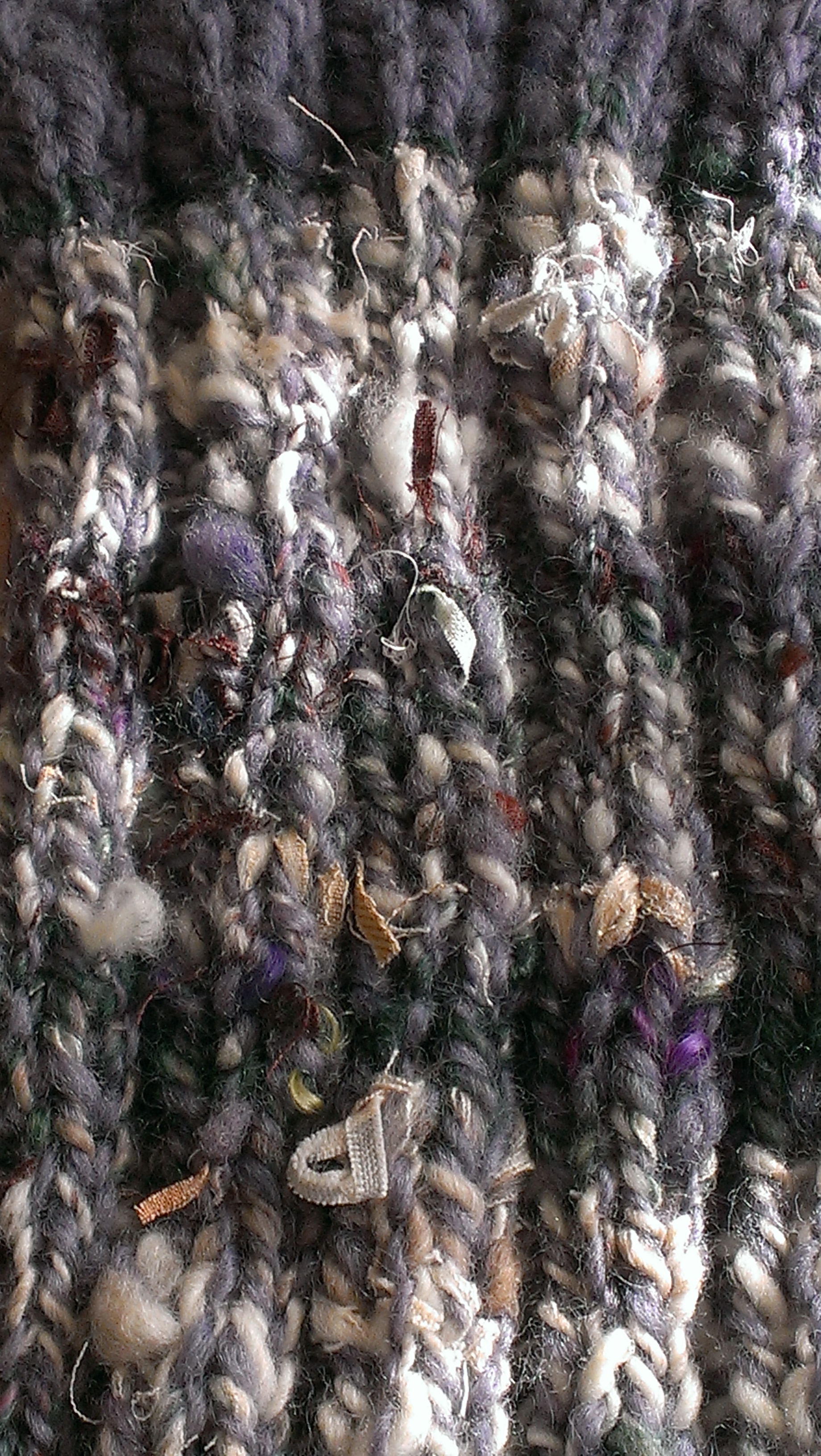
These yarns are destoned for yarnbomb glory.  I knit then into K2P2 ribbing and will apply them when I’ve chosen a suitable spot and the rain and wind abate!

IMAG2353

On the other hand, here is a corespun yarn made from the batt composed of white polwarth locks, eucalyptus dyed corriedale carding waste and overlocker waste (much of it from leaf printed fabrics).  I like this very much. I think the ratio of polwarth to other inclusions is part of what works, but so is the texture of the polwarth–it helps hold everything together.  The happy combination of colours doesn’t go astray either…

IMAG2281

6 Comments

Filed under Knitting, Spinning

Further experiments in converting textile waste

I have been wondering about trying some more spinning experiments with waste from the overlocker and the carding process.  There is nothing like yarn bombing to make me consider any kind of yarn useable!  Yarn bombing is even more forgiving than teapots when it comes to the texture and qualities of the fibre concerned… and there is an argument for only using fibres that can’t be made into clothing or blankets for yarn bombing, I think.  So in a  burst of carding enthusiasm, I’ve been preparing batts.

First up, carding waste (corriedale dyed with eucalypt), overlocker waste (from bag making, mostly–silk, cotton, linen and some polyester blend) and some polwarth locks to hold it all together.  Here it is going into the drum carder:

IMAG2241

Carded and ready to spin.

IMAG2249

More fabric scraps and overlocker thread in some parts than others…

IMAG2256

While I was on the job, I carded some rough lavender wool of unknown origin.  It was discarded by the felting group at the Guild: say no more!   I re-washed it, which improved its texture and cleanliness somewhat…

IMAG2262

The felters also passed on this green fibre of unknown origin, which was improved very much by re-washing and carded out beautifully.  I have added dyed mohair locks and silk noil, and we’ll see if it can become a repectable art yarn.

IMAG2261

Carding waste from those two batts and some more overlocker waste…

IMAG2264

I’ll report back when I’ve tried turning these away from the waste stream and into something of use!

12 Comments

Filed under Fibre preparation

Fibre processing continues…

For those who are wondering… the nettle stems are back in the retting wheelbarrow for now. So I return to our regularly scheduled fibre–wool.

All I want to say about this last Polwarth fleece, with the prickly seedheads and the tips that were spiny and pulled off… is that I have reached the end of it.  Here it is–the last of it–!  It will be keeping toes warm for years to come once these slippers are felted. I do not need to spin more of it, ever.  The fleece from this sheep’s sibling, and fleece from this sheep in other years, are lovely, and I will return to those in time.

IMAG2143

Next stop on the fibre processing journey is a Corriedale fleece one of my co-workers gave me (in 2011!! I wrote the date down).  I dyed some greasy a year or so ago and it came out badly.  I can be put off by experiences like that, which so often indicate the current limitations of my skills or patience, or both.  I put the Corriedale down and haven’t come back to it for at least a year.  It does have vegetable matter in it, but it is otherwise a lovely fleece.  I weighed the remainder and there was 2.3 kg still to wash.  It’s in a yellow plastic bag designed for a double bed feather quilt.

IMAG2138

I sat a kilogramme of it to soak cold for a few days, because I’ve seen this suggested on Ravelry and it makes good sense as a first stage in getting mud, as well as grease, out of the fleece.  having tried it now, I would definitely use this process again.

IMAG2139

This kilogramme is now clean and drying, and that leaves only 1.3kg of this fleece yet to be washed.  After that, only one more Polwarth fleece left to wash. I admit, a Polwarth is a mighty big sheep.  However, this is the closest I have been in years to having the fleece stash clean and ready to spin!

7 Comments

Filed under Fibre preparation, Knitting, Spinning

Revelations at the drum carder

Recently I made good on my intention to properly clean and oil the drum carder.  It meant I had to find the instruction sheets.  And that was when I had the revelation that my drum carder has two speeds.

IMAG2086

Conceivably, this was a selling point when I decided to buy it–that does sound curiously familiar–and I had managed to completely forget.  I have had it on the setting which would be ideal for blending roving for some years.  That’s been good sometimes, because it really does make a great batt for artyarn spinning, and there has been quite a bit of that at my place.  However, I have struggled to make great batts from fleece, sometimes with a lack of patience, I admit.  But there has been plenty of trying and some of it has been patient.  So, I have been applying my newly oiled and cleaned carder to some Polwarth fleece on the correct setting, and wonder of wonders, it actually is better!

IMAG1884

I have also been carding some of the lower quality end of my enormous stash of Polwarth and spinning it fat, soft and three ply with YET MORE Fibertrends Clogs in mind.  The short cuts and brittle ends will never be seen again once they’ve been felted.  And I have to say the spinning is a lot of fun.

IMAG2082

Every time I use the drum carder and pick up the doffer–a long pointed metal tool for removing the batt from the carder–I find myself earwormed with a folk song called The Doffing Mistress.  The link is to the singing of Maddy Prior and June Tabor, two of the shining stars of English folk music over some decades.  The quality of sound is no doubt better on iTunes, but this version comes with a description of the job of a doffer in the period after the industrial revolution.  I am very glad not to be a small child pulling bobbins on and off an industrial spinning machine to earn sufficient to eat…  Instead, I have been hand winding big fat balls of this yarn, since it is a bit thick for my ball winder.  Let the knitting begin!

IMAG2118

4 Comments

Filed under Fibre preparation, Knitting, Spinning

Finished objects completed in my holidays

There has been a lot of holiday crafting going on round here.  But this post marks return to my day job!

I made some Thai style fishing pants.  I bought a pair in 2000 as the new century began, and they have finally gone to the worms in our worm farms, the ultimate destination of natural fibres that are worn past the point of repair and reuse around here.  I traced a pattern from them and made this pair from a sarong found at the op shop.  I assume the originals were cut to maximise the use of fabric from a loom that is a standard-ish size in the region, because the sarong was the perfect amount of fabric, with almost no fabric left over to be wasted or used for other things.  Surely this is the goal of all hand weavers, as well as a decent goal for thrifty and green sewers.

I used french seams and then top-sewed them flat, so that I could use only cotton thread and ignore the polyester sucking overlocker.  When commercially sewn garments go to the worms, the overlocker thread is usually all that remains.  The worm farm offers an education in the biodegradability of garments, and I am increasingly aiming for biodegradable.  There is a cotton-polyester t shirt in one of them that has been there since my daughter left home and abandoned it.  Over 10 years ago.  Polyester will clearly survive the apocalypse, along with cockroaches.   Seriously, my everyday garments do not need to live as long as the Gobelin tapestries.

IMAG0590

I made a pair of radmila’s slippers from a new book, Knitting from the Center Out by Daniel Yuhas.  They are knit from handspun merino roving dyed with Eucalypts.  I have to say that I gave up making matching pairs a long time ago and now make siblings rather than twins… further proof lies in the next two images. OK, make that three!

IMAG0579

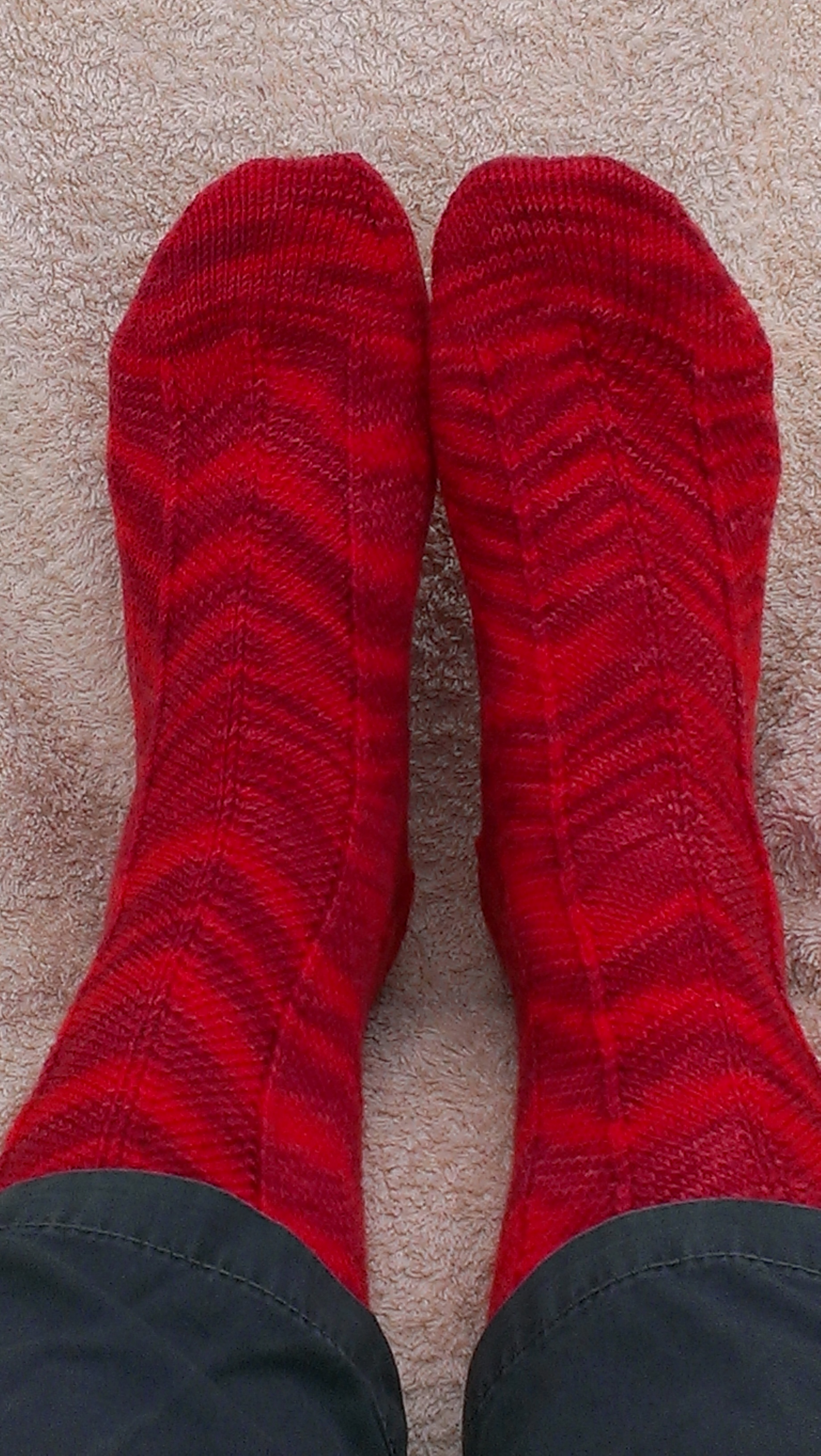
I took up knitting in order to be able to knit socks, and that is what led me to spinning and then dyeing.  Sock production has slowed down, but I finally finished a pair of Jaywalkers for a beloved friend. She is a lover of bright colours who has appreciated these as splendidly red while they were still in progress.  This yarn was dyed by a fabulous local dyer, Kathy Baschiera.

IMAG0595

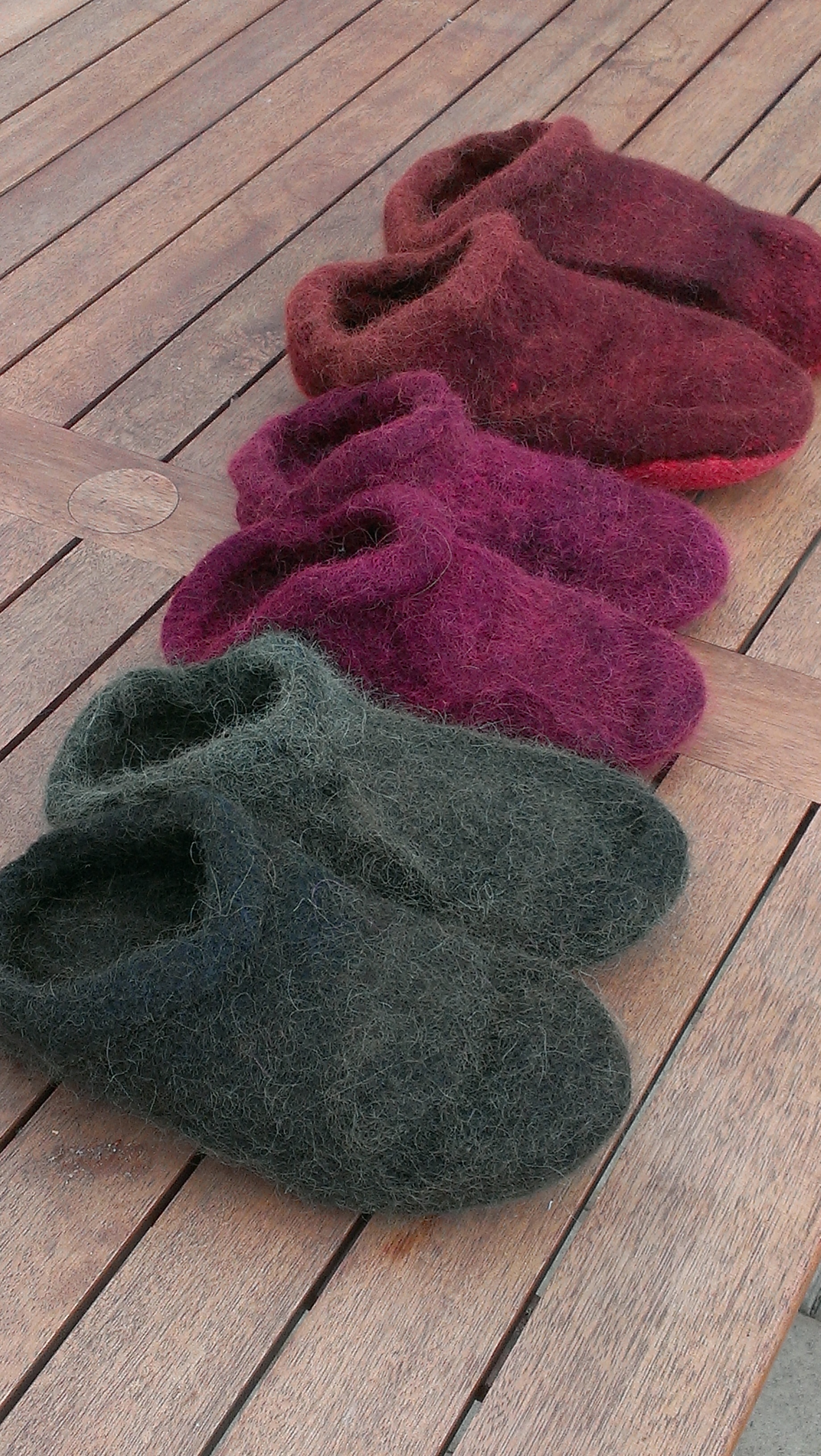
Remember the post where I was wondering whether a sow’s ear could be turned into a silk purse (actually, whether I could turn the less exciting parts of a polwarth fleece and some low quality alpaca into slippers)?  Well, the answer is yes.  These are knit using Bev Galeskas’ Felted Clogs pattern and dyed with Landscapes dyes.  I hope Bev Galeskas has made millions from her pattern.  I sure have made tens upon tens of these, though most are a shade less hairy.  Clearly I spun in a fair amount of guard hair, and it won’t felt.  Just the same, the recipient of the red pair at the back was very enthusiastic as he turned 40, and the delightful women who will be receiving a parcel today or tomorrow with the front two pairs are great mend and make-do experts who have darned their previous pairs extensively… they live in a very cold place and will enjoy warm feet and hopefully overlook the odd stray guard hair!

IMAG0588

Ah, holidays.  I hope you’ve had some to enjoy.

3 Comments

Filed under Eucalypts, Knitting, Natural dyeing, Sewing, Spinning

Angophora Costata subsp Costata bark dyepot

Our lovely friend has an Angophora Costata subsp Costata (Sydney Red Gum) in her backyard.  When the bark is newly shed, these trees have a stunning rust-orange coloured trunk.  There were many to be seen and admired in and around Sydney when we were there in December.  The other day she came around with… a bag of fallen bark for me!  Here is my sample card and swatch before:

IMAG0665

And, after.  You could call it cinnamon, I suppose–the alum mordanted, superwash sample is really quite brown.  Or on the other hand, you could just call it tan, again.

IMAG0701

1 Comment

Filed under Dye Plants, Eucalypts, Natural dyeing, Uncategorized

Hibiscus Flowers

IMAG0332

Until recently, there was a house near us that we were told would be demolished within the next week (it’s gone now).  The inhabitants moved out in a hurry, leaving the tide of unfinished business you might expect in the circumstances: the gate and doors open and unwanted stuff everywhere.  I picked all the grapefruit they’d left on the tree and gave it to a friend who loves grapefruit, saved the water lily and goldfish for another friend with a pond, with the help of friends, I put out the bins and piled their recyclables into our recycling bin and their recycling bin and a crate or two, ready for collection the next day.  I decided to harvest the flowers from their red hibiscus, which was in full bloom.   I followed the instructions Jenny Dean gives in her very fine book Wild Colour, up to a point…

IMAG0335

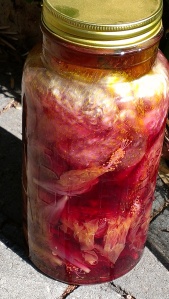
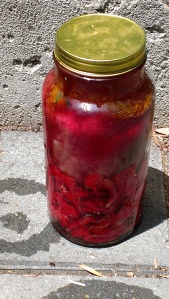
I decided to use more rather than less dyestuff, 125g flowers to 50g washed unmordanted polwarth locks to begin with.  I began as Jenny Dean suggests but decided to try solar dyeing.  You can see the wool in the top of the jar wrapped in a couple of yellow onion nets.

IMAG0337

Two days after beginning the dyebath, I picked a whole extra round of flowers, sieved out the ones that had been steeping two days, gave them to the worms in our worm farm and added a fresh lot of flowers to my dye jar.  The dye liquid was a plum colour and a little thicker than water.  I took the second round of flowers out after they gave their colour up.

IMAG0346

Well, after a good fortnight in the jar, almost no colour on the fleece.  So I returned to Jenny Dean’s instructions and heated the dye bath.  The fleece still didn’t take up colour, but my sample card gave green on alum mordanted wool.  Green???  I have dyed with hibiscus before and achieved a rose pink on unmordanted washed fleece, which I spun up three-ply and knit into socks for my mother.  Green isn’t even on Jenny Dean’s horizon.  Deep, olive green (checked against a couple of friends with decent eyesight).

So, I put a skein of alum mordanted, commercial superwash in the dye bath, heated again and my skein turned steely grey.  This picture gets the colour right despite its defects in the focus department:

IMG_0027

To me, this is quite bizarre.  I can only think that the fleece failed to take colour because it was inadequately scoured, though it didn’t feel at all greasy or sticky.  Polwarth is a high-grease breed.  But how I can explain the green and grey outcomes?  Well, I can’t–and I await your thoughts.  Dye pots which had been inadequately cleaned might mean there was some iron in the dye bath, but Jenny Dean suggests purple to pink would still be the outcome.  And after all this, the dye bath was still full of colour–red-purple colour.  Mystery!

12 Comments

Filed under Dye Plants, Natural dyeing

Turning a sow’s ear into a silk purse. I mean, a slipper.

This week’s question is whether I can turn a sow’s ear into a silk purse slipper.

I have been the lucky recipient of a lot of free fleece since I took up spinning.  It all started with some filthy Gotland fleece straight from the sheep’s back that my Dad gave me.  He had provided the antique engine that was running the shearing plant in a demonstration of hand shearing at a local show.  Because he knew I wanted to learn to spin, he brought home a few handfuls.   He is a great enabler!  It was rough and filthy, but I spun it on my first spindle and was grateful.  Admittedly, Dad said there was a handspinner at the show and he had spoken to her about it: she advised doing me a favour and not bringing that fleece home to me, but naturally, he didn’t listen!  And I was glad.  I didn’t know anywhere I could get fleece then.

Next, I was given several bags of Dorper fleece by friends who were keeping Dorpers as meat sheep.  I didn’t understand the meaning of ‘meat sheep’ in the context of fleece at that stage.   Dorpers shed their fleece rather than needing to be shorn when they are pure bred, which might have been a clue to (lack of) spinnability for a more knowledgeable person, too!  I dyed it, I spun it, I carded it… oh my goodness. It was the beginning of my fleece preparation journey and it was a very challenging start.  Months later the woman who had lent me her carder said when she saw what I was working with, she was just overcome to think I would even try to spin that fleece!  She didn’t offer me her opinion at the time, though, and it was a long time before I decided that I could, perhaps, compost the rest as my struggles were not only about my lack of skill but also about the state of the fleece.

Needless to say I have also received fleece that has spent lengthy periods in a shed and bred an overwhelming moth population.  Happily, I had said fleece in a plastic tub with a lid.

So… I have had some personal experience of the possibility that people who give the gift of fleece don’t have the judgment necessary to decide whether what they have handed over is worth spinning.   I have to be the one to decide whether the fact that I could turn that into yarn given enough time and effort, is a sufficient reason to do it.  I think I have proved to myself that I can spin almost anything–if I could spin those fleeces as a beginner!

I went to a couple of workshops on fibre preparation (washing, combing and using hackles) at the recent Majacraft Magic camp at Lake Dewar outside Melbourne, and came home ready to tackle some of my current fibre preparation challenges.  I had reached some new conclusions about why I find getting fleece clean difficult sometimes.  1. our hot water tap doesn’t give very hot water, and can’t be adjusted.  Boiling the kettle repeatedly is boring, as well as slow, after a while! 2. I can be more slapdash than is ideal for the task. 3. Most of the fleece I currently have is Polwarth, more gifts from a couple of pet sheep in the hills.  This is a fine and greasy fleece, among the more challenging to clean.  4. I always hope to be able to wash a bigger batch of fleece than is desirable for optimal results.

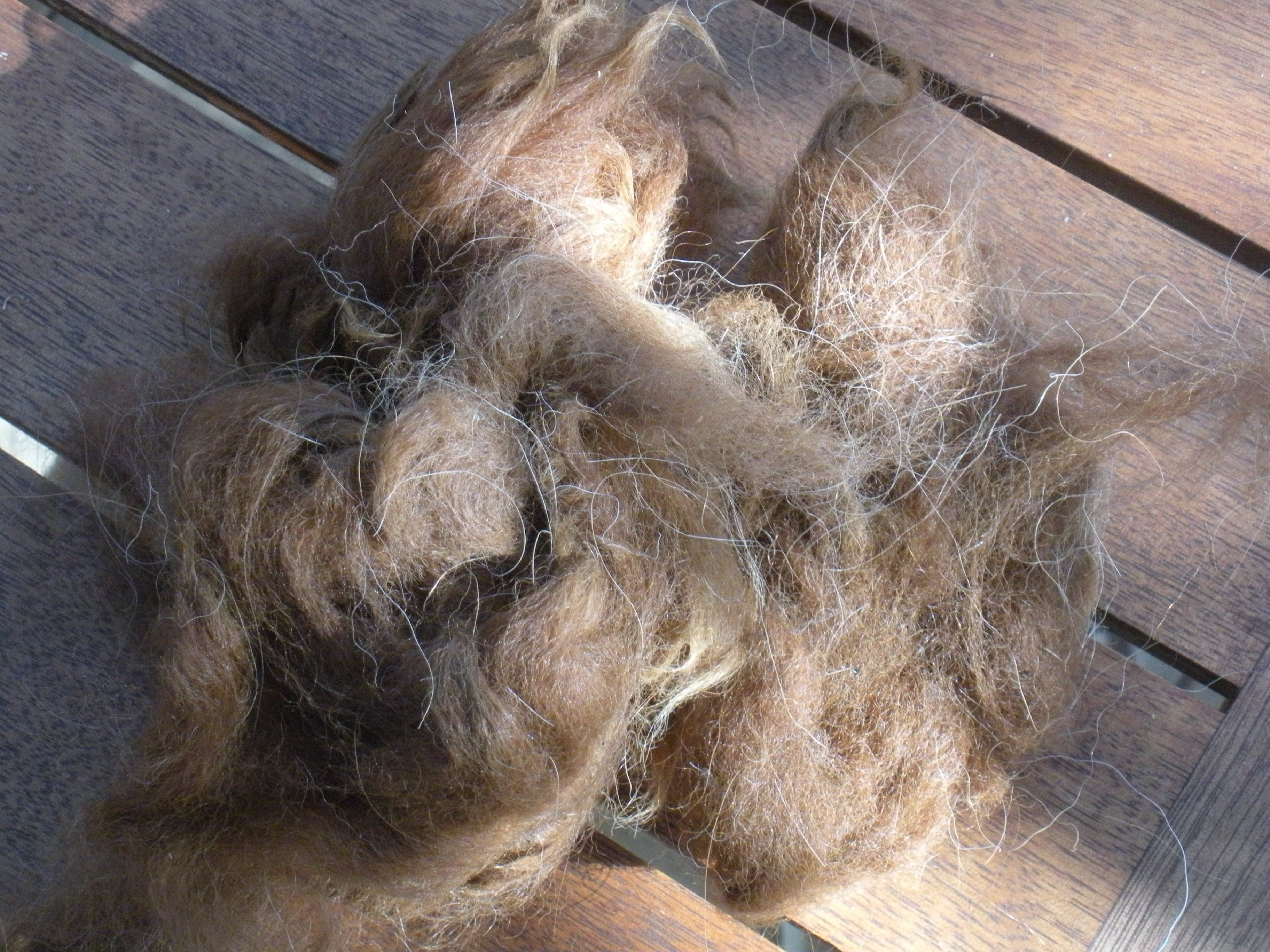
Anyway… having tried washing some more gifted alpaca fleece and some more gifted Polwarth, and using careful observation of how it behaves with flicking, combing and carding, I have decided the following.  1. The specific Polwarth fleece I am currently working on has tips that are weather damaged.  When I flick card them, they pull right off.  Is it any wonder that these paler tips appear as nepps in the batt when I card the same fleece? The other fleeces I have had from the same sheep don’t have these difficulties. The poor sheep must have had a tough year…

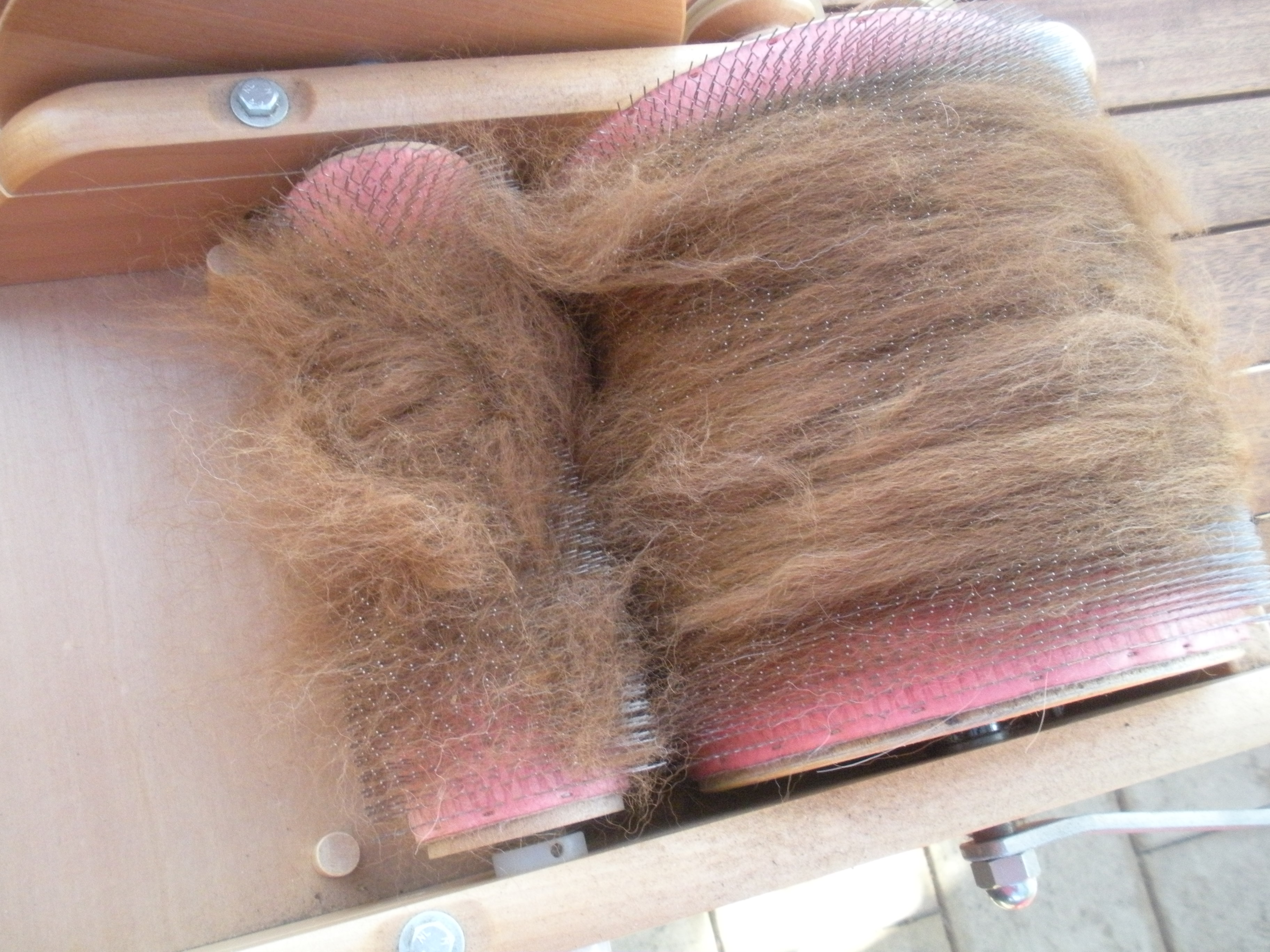
2. That same fleece has a break in it, so the longer locks are giving way under the tension involved in carding, again leading to less than optimal batts.  3. The alpaca is super short (happily, I have now worked with high quality alpaca and no longer assume this s just the way alpaca comes).  It has not really been skirted.  Most of it pulls onto the licker-in (the small drum on the drum carder) when carded. Yes, from the very start, and not only when the large drum is full.

4.That alpaca has big clumps of guard hair and has been shorn without consideration to the future spinner.  Hopefully the shearer was thinking of the animal’s welfare in taking so many passes!

In short, these are not the highest quality fleeces possible and they would present challenges to anyone preparing them for spinning.  No matter how much time I spend I may not be able to turn these sow’s ears into the proverbial silk purses.  I have decided, instead, to attempt to turn them into felted slippers.  I am carding them together as a blend, spinning them up without too much fuss and very fat (good practice) and my ultimate plan is to knit slippers which will be felted and perhaps dyed.  Shazam!  Their less than ideal qualities will no longer be of importance.  I hope!

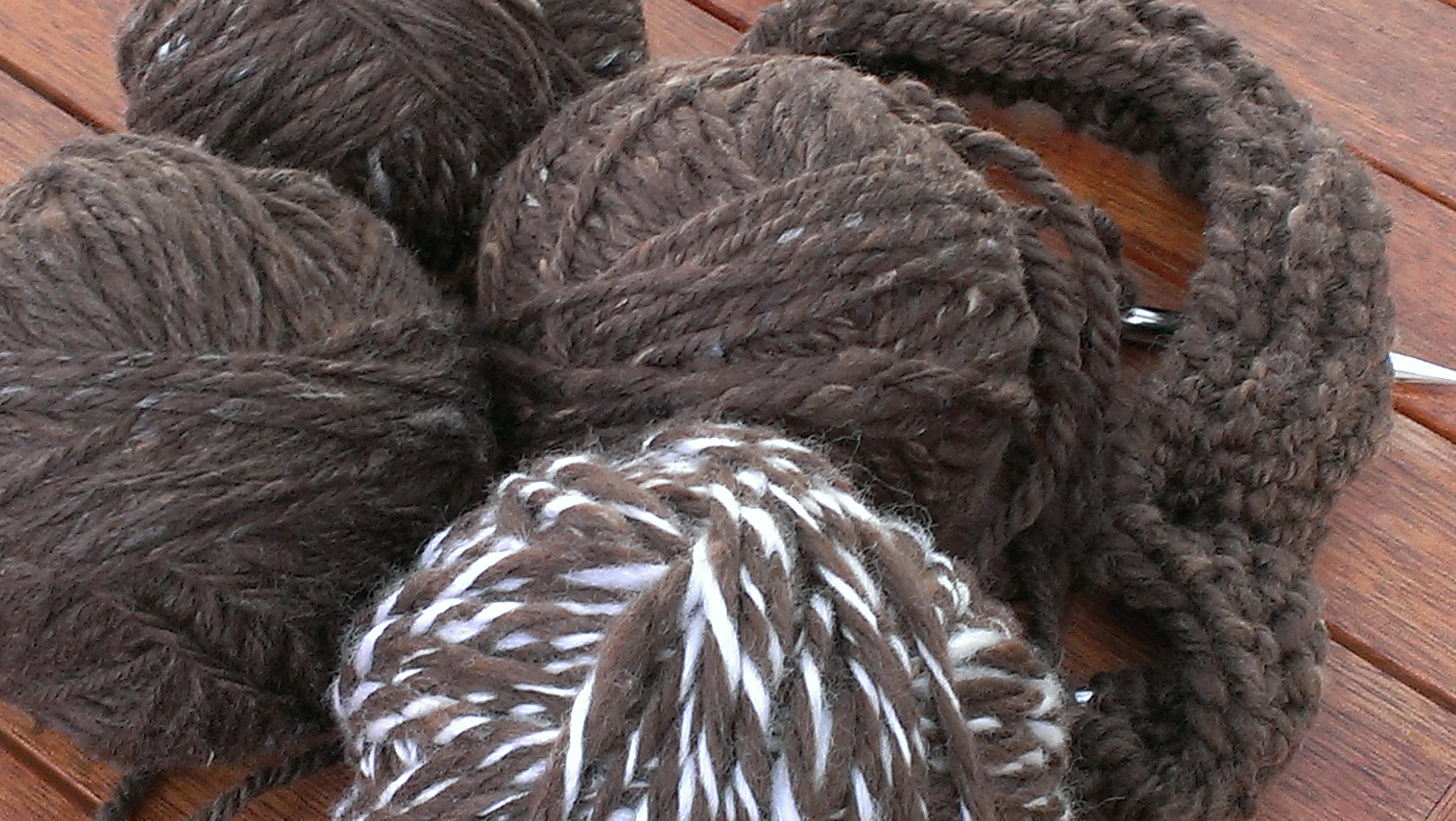
Here are my first few balls, and a slipper with some polwarth content and some eucalyptus dyed wool content to give me hope…
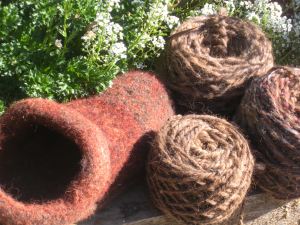
4 Comments

Filed under Fibre preparation, Knitting, Spinning, Uncategorized