Tag Archives: silk

Dianella fruit

IMAG0321

Yesterday I came through the royal showgrounds with my secateurs.  On the way out, I spotted these fruits.  I think this is one of the dianellas, probably Dianella Revoluta. It’s a  common native, drought hardy inclusion in public plantings in my area.  There were so many that on the way back, I took just a couple of stems from each plant and put them in my panniers.  While I was there I saw some caltrop, so I removed that while I was there.

IMAG0323

It’s one of the enemies of cyclists, as you might guess from these immature fruits… which when ripe will be the stuff of many punctures.  I pull this out any time I have the chance.
IMAG0325

I followed Jenny Dean’s suggestions about processing berries…

IMAG0328

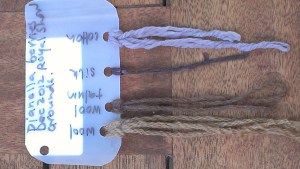
And, as might have been expected, the result was nothing like the fruits I started with.  I would rate the unmordanted wool pale tan, wool with alum dark tan, the silk is grey-brown and the cotton is pale grey.  Not too exciting, is my conclusion!IMAG0340
15 Comments

Filed under Dye Plants, Natural dyeing, Uncategorized

Eucalyptus Acaciiformis

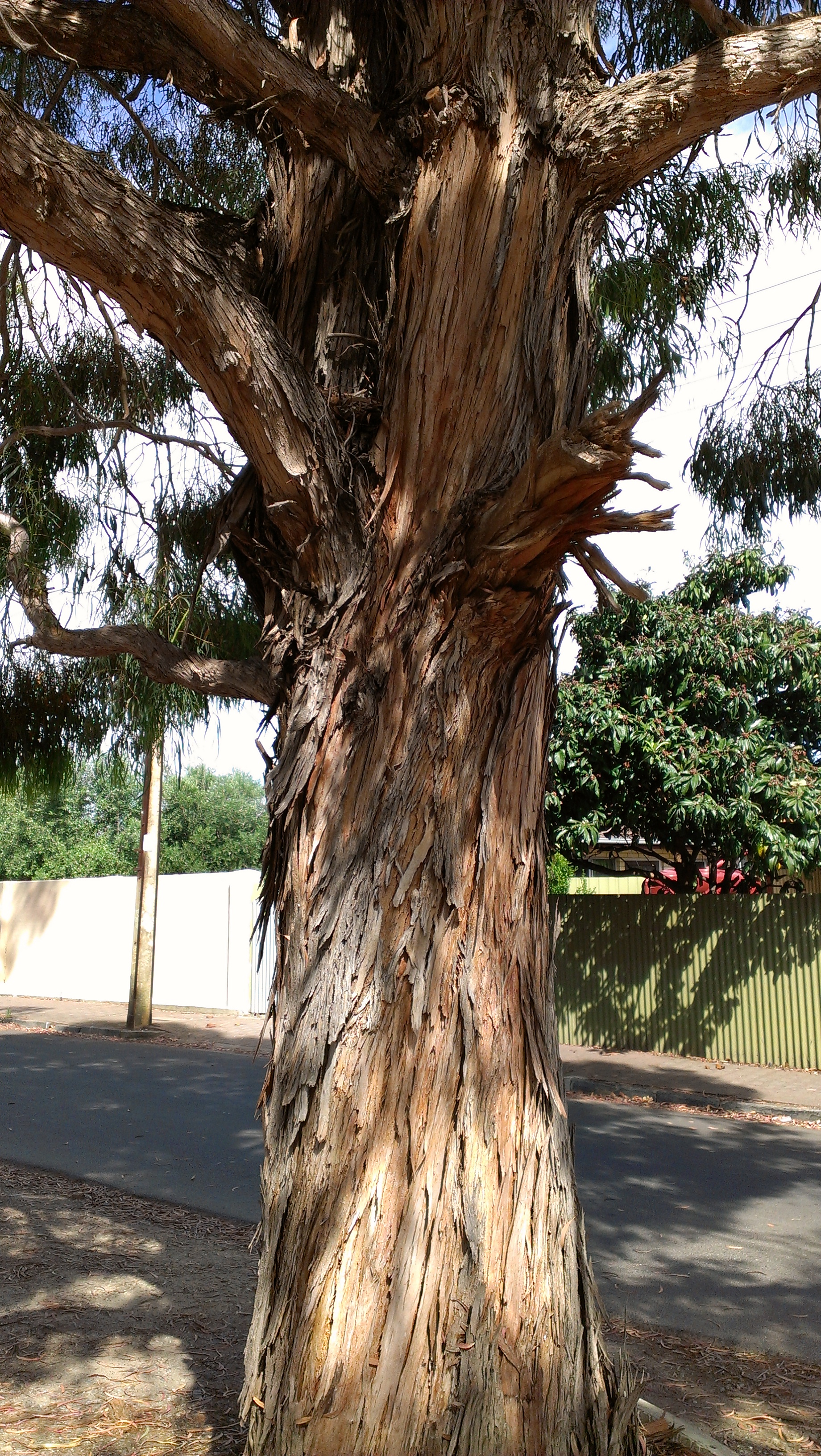
I decided to depart from my recent focus on ironbarks to try to identify this lovely tree, growing alongside the tram line.

This one is not an ironbark… it is a stringybark. Here’s a bit more detail.

All the usual reservations about my skills in eucalypt identification apply, but Euclid and I reached the conclusion this is E.Acaciiformis, wattle-leaved peppermint.

I ran a test pot last week and got a strong, bright orange… so I’m trying out a bigger pot.  I’ve been running pot after pot with the same water and fresh bark over the last few days, but for this, some fresh, clean rainwater.

I brought the pot up to below a boil, then simmered for three hours, adding my fibre after the first hour and taking out leaf material after the second to allow more room for fibre circulation in the dye bath.

This is the result on merino and silk (on the left).  The braid on the right has been dyed with E Scoparia bark.  It is quite striking to see the difference between dye take up on the wool and the silk.  All my sample cards suggest this outcome, and so do leaf prints really: I get colours I prefer on wool and cellulose fabrics rather than silk personally, though I see that other dyers love using silks.  It does seem very different to the usual expectation about how these fibres will take up dyes.

Leave a comment

Filed under Dye Plants, Eucalypts, Natural dyeing

Silk Moths!

Yesterday I got up to find that two of the cocoons were open and there were two silk moths in our kitchen.

Not only that. In the fullness of time it became clear that we had a female and a male.  And silkworm eggs.  My goodness!  At this rate my five silkworms could result in a large second generation. Given that I stared with only five, I had not assumed that there would be two moths alive at the same time, let alone eggs.  Now I have to figure out the next stage…

2 Comments

Filed under Uncategorized

Silkworms!

A while back, I mentionedthat I had acquired some silkworms.  Five for a dollar, to be exact!  There I was, checking out the primary school community garden during their fete and admiring the plants for sale, when I saw them.  So, they went into a strawberry punnet and came home on my bicycle.  Then began weeks of raiding local mulberry trees for stray overhanging leaves (and there were some from my friend’s front yard too).  Since it is mulberry season, I got some food from the whole adventure too, and some berry-stained fingertips. 

Eventually, they began to show signs of wanting to move to the next stage of their life cycles.  I’d sought advice from wormspit, so most of them found themseves moved to a cardboard roll (ahem) at this point:

I was quite fascinated by the way that the colour of the silk changed between the early stages of cocoon-making, when it seemed quite white, to the next day:

Now, we are waiting to see when they emerge and what happens them.  It may be that with a posse of only 5, there will not be opportunities to reproduce.  But we’ll wait and see.

5 Comments

Filed under Uncategorized

Eucalyptus leaf prints of the week

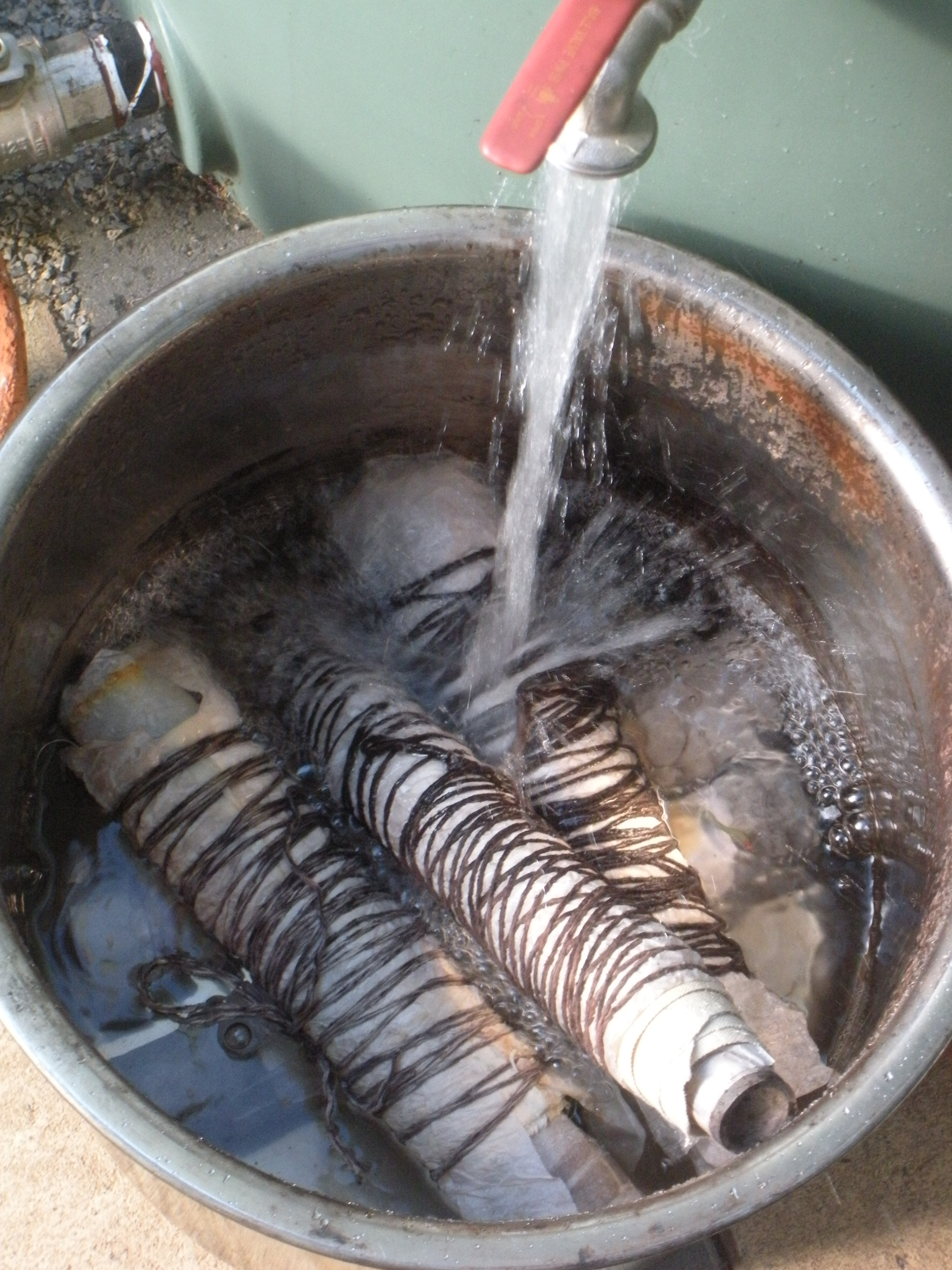
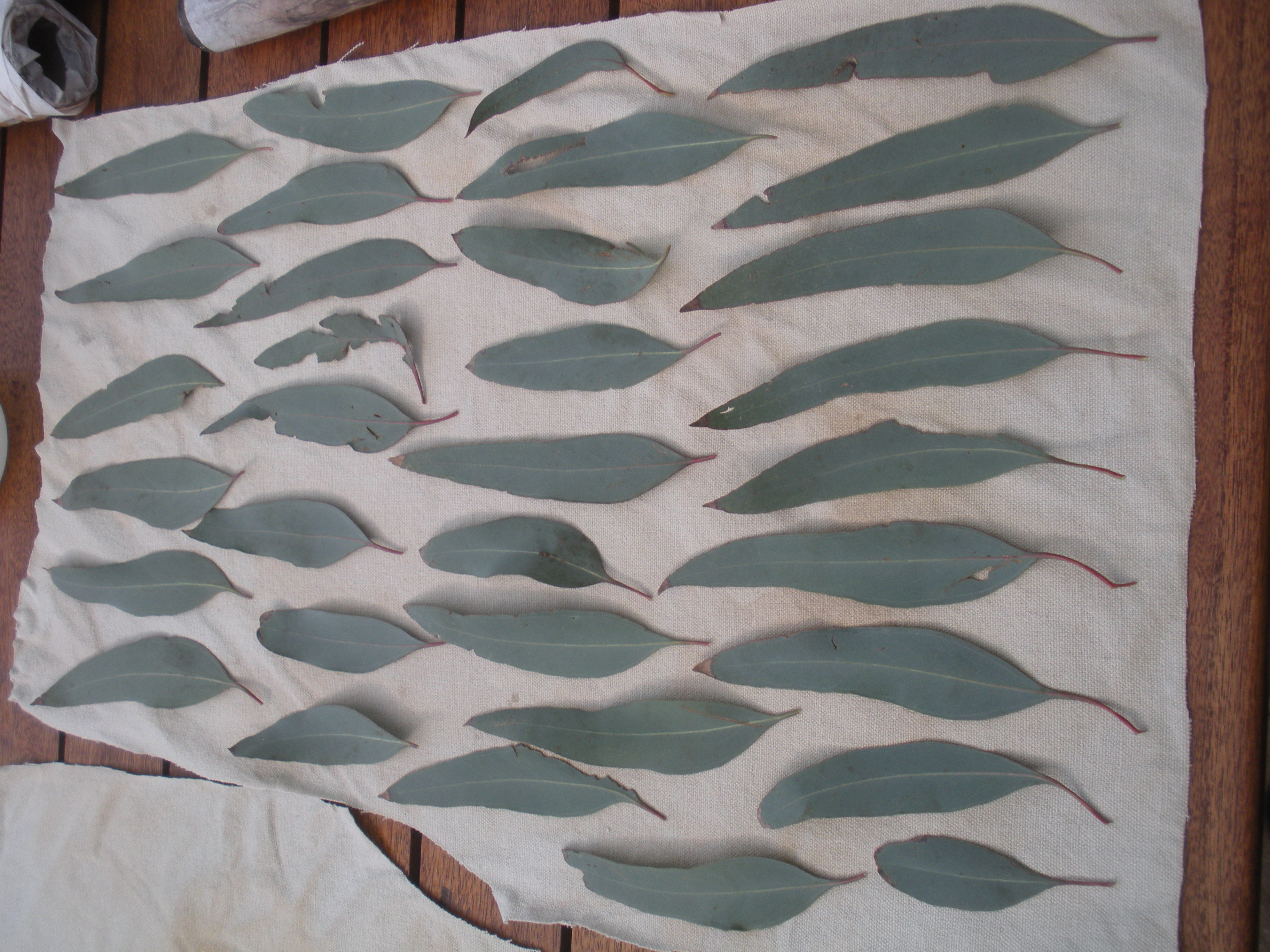
Alongside all these  yarn samples, I made leaf prints.  I sprayed my fabrics in vinegar (as India Flint recommends in her beautiful book Eco-Colour: follow the link on her blog and support her that way if buying online: it is in the left hand sidebar).  Next, I sandwiched the leaves between two layers of fabric, wrapped them tightly around cast iron pipe and cooked them in rainwater for about three hours.

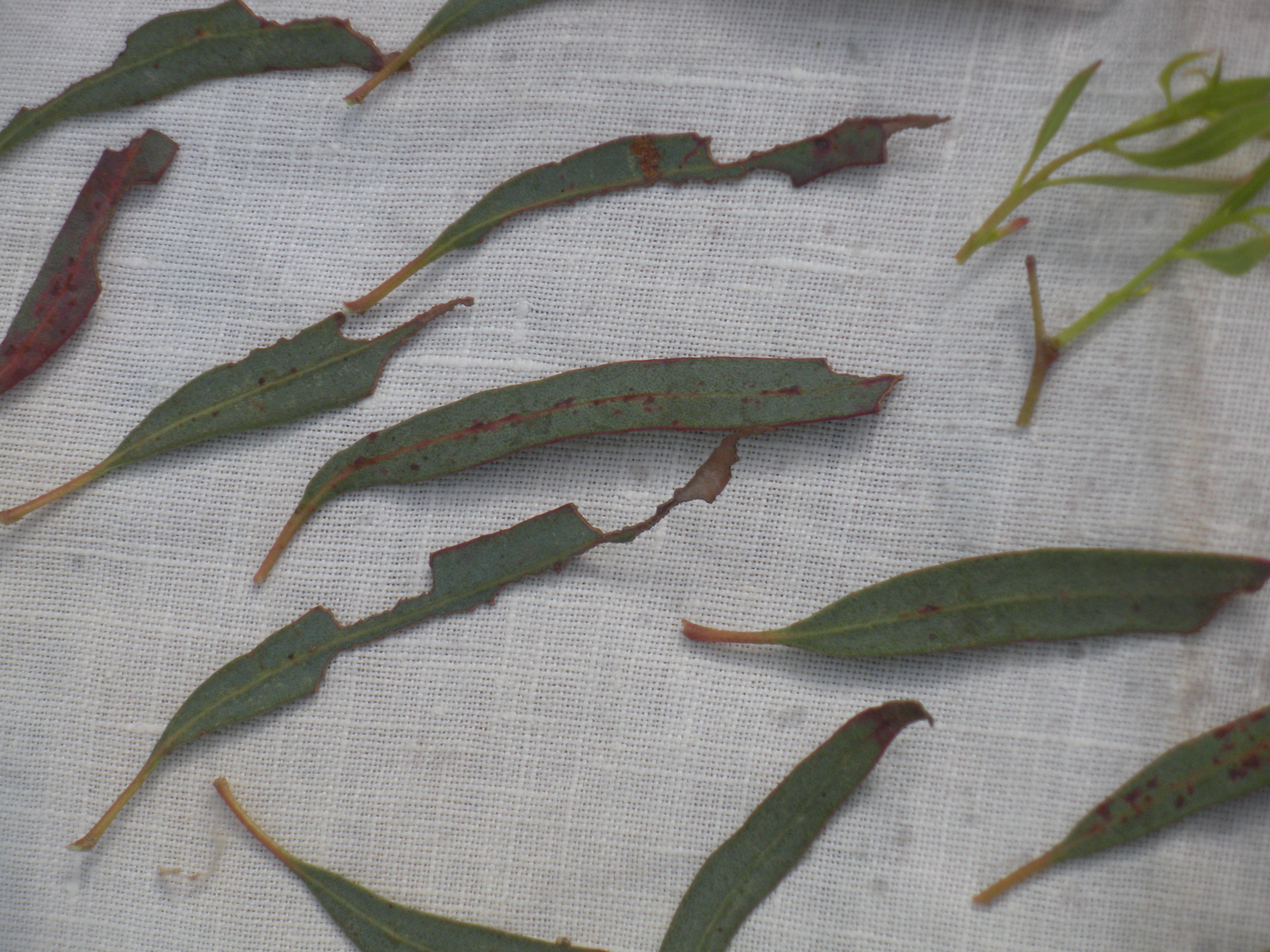
Here is my suspected E Scoparia before cooking: I got a small sample and only what I could reach, and when I got it home, there was a lot of evidence of insect activity!

E Scoparia? Sample

After…

I also set up some E Sideroxylon leaf prints, which as I have now confided in you, were not E Sideroxylon at all!   Some on recycled hemp shorts (I’ve decided that I am allowed to use the fabric of garments I no longer like/want for other purposes), and some on some hemp/silk fabric I ordered online. Here is one piece of what used to be a pair of shorts, before:

I am planning to make a leaf-printed shirt, but I am a bit scared.  I mordanted this fabric months ago.  I have a great pattern.  I did not expect this fabric to have one silk face and one hemp face, and I can’t decide which is the’ right’ side.  So I set up one sample on the silk face and one on the hemp face.  Here are the results.

Silk side:

Hemp side:

So… I think the silk side might be the ‘right’ side.  Feel free to offer alternative opinions!  And I might use a different tree for the shirt prints when I gather my courage.

1 Comment

Filed under Eucalypts, Leaf prints

Dyeing weekend outcomes

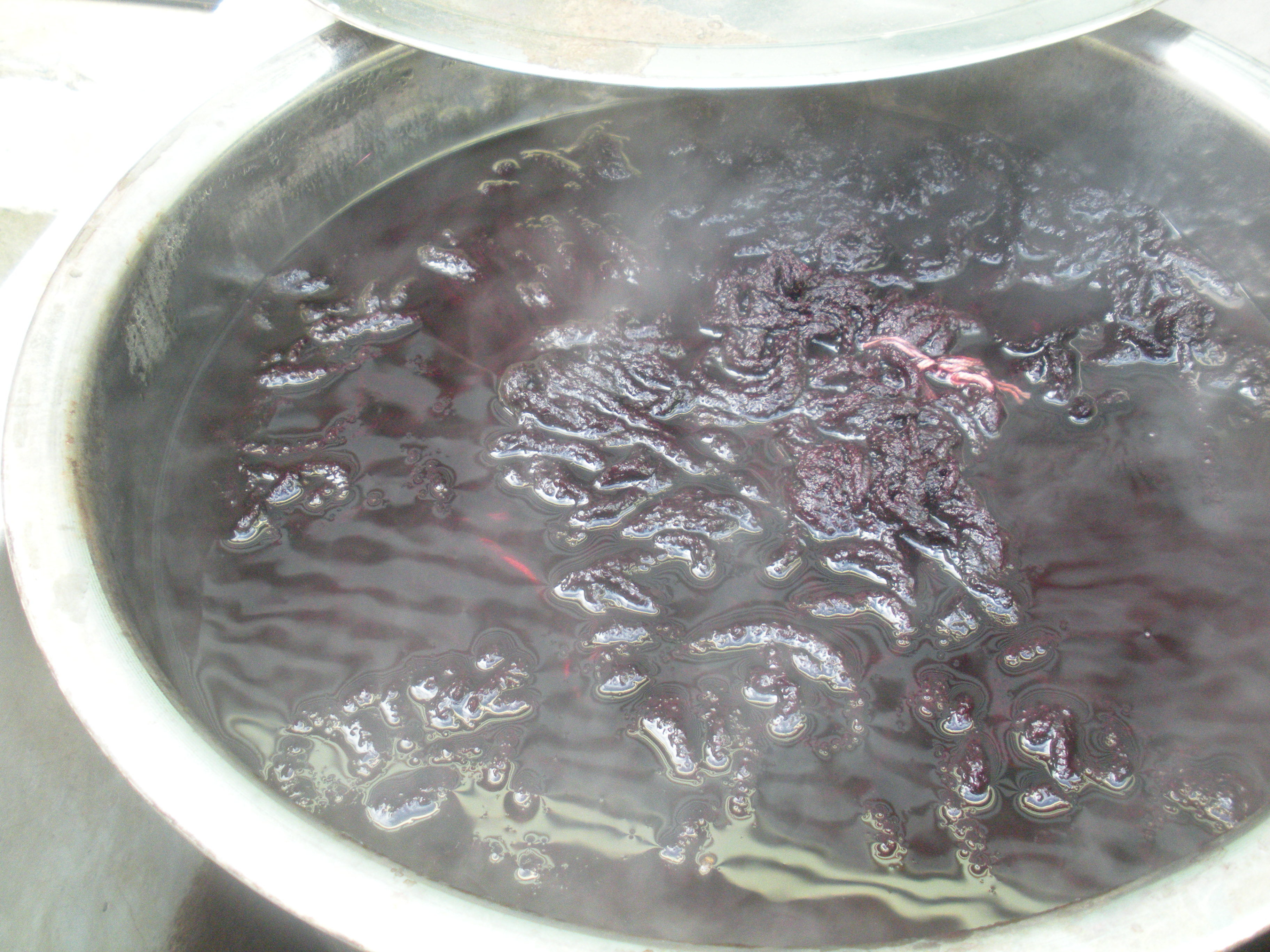
As I suggested earlier… it was once more into the dyepot for my kilogram of wool.  This time, Landscapes ‘Bloodwood’.  I am still soaking and rinsing it, but I am much happier with the outcome so far.  Here it is in the dyepot for the second time:

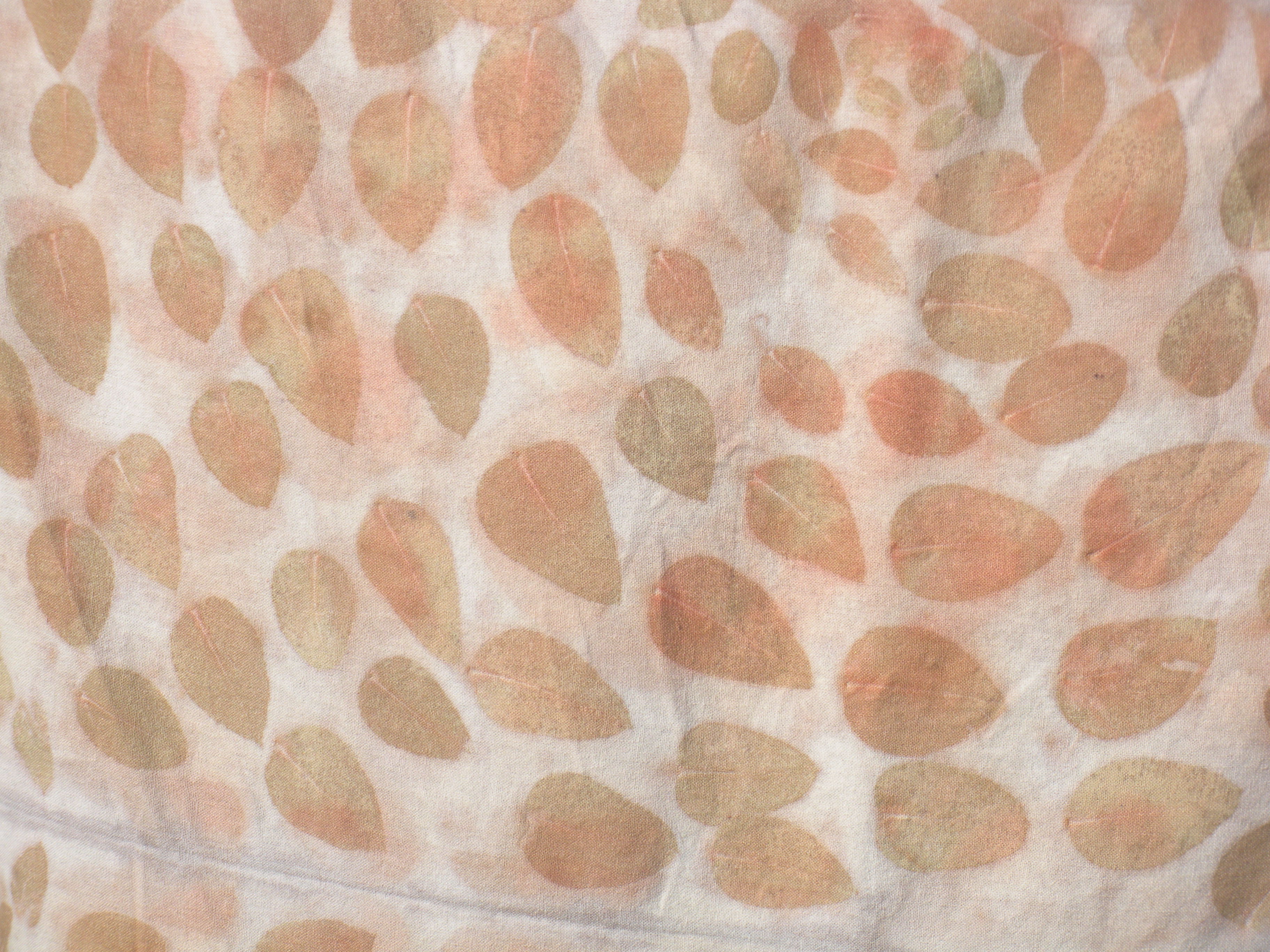
The silk noil printed beautifully and perhaps it will become pillowslips…

And my efforts to spin bulky, soft, squishy yarn are yielding some improvements.  This is polwarth from a pet sheep that lives in the hills, carded and spun three ply.  The sheep is mostly white with a pale brown patch or two so I can create yarns with some variegation, which I love.

Leave a comment

Filed under Eucalypts, Leaf prints, Spinning