Tag Archives: think globally

Dyeing with Eucalypts

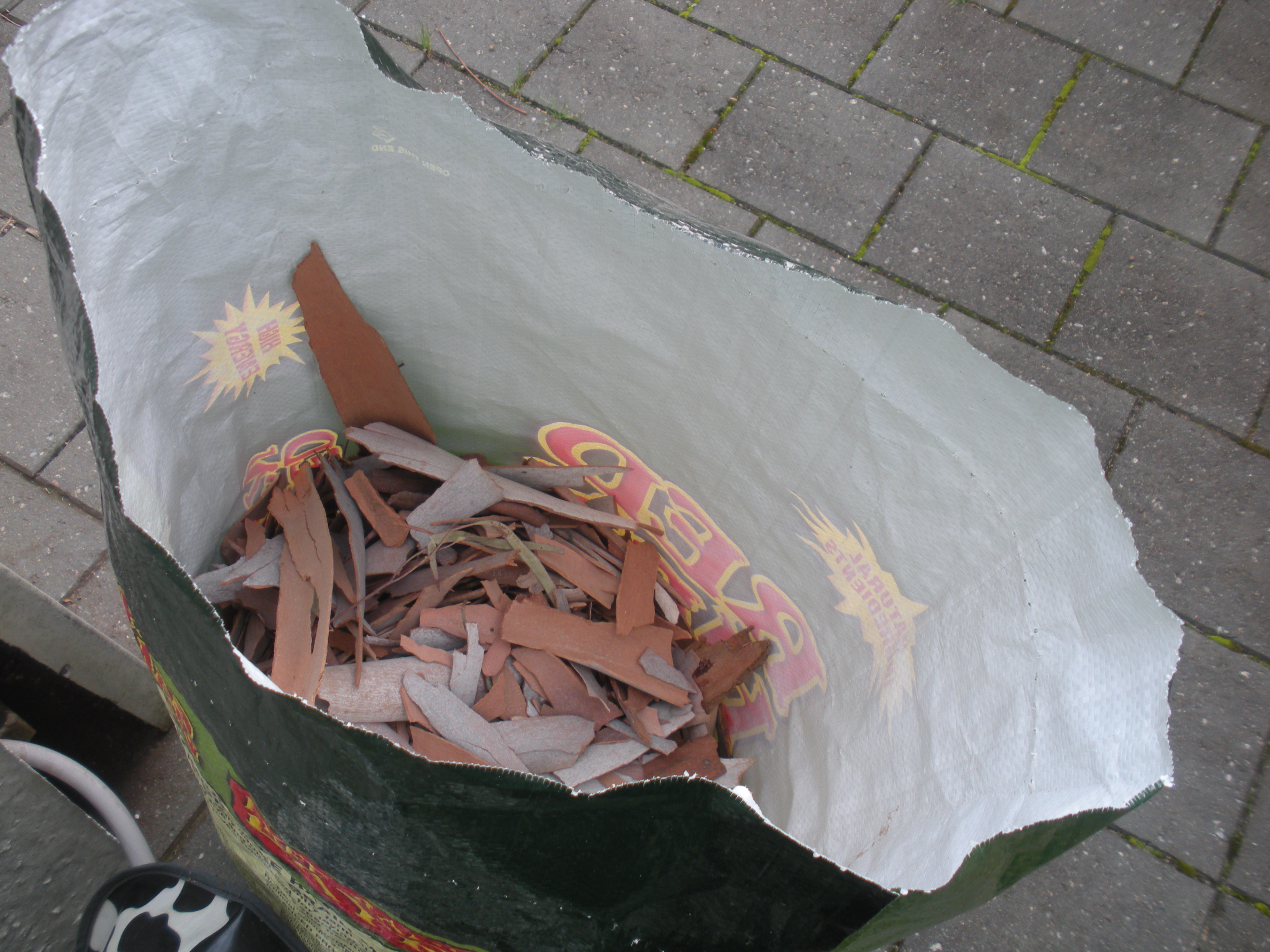
I began the process of dyeing I’m finishing this weekend months ago by collecting the bark of some of my favourite dye trees when they shed their bark.  I don’t muck around when making the most of this resource that the council and other people in my suburb will treat as rubbish if it lands on a footpath.  I take a chook feed sack if there is a lot of bark, as you can see.  Otherwise, I take a shoulder bag with me when I’m out and aboout and just pick up bark bit by bit as it falls to the ground.  There are four trees nearby which have bark which gives a lot of colour.
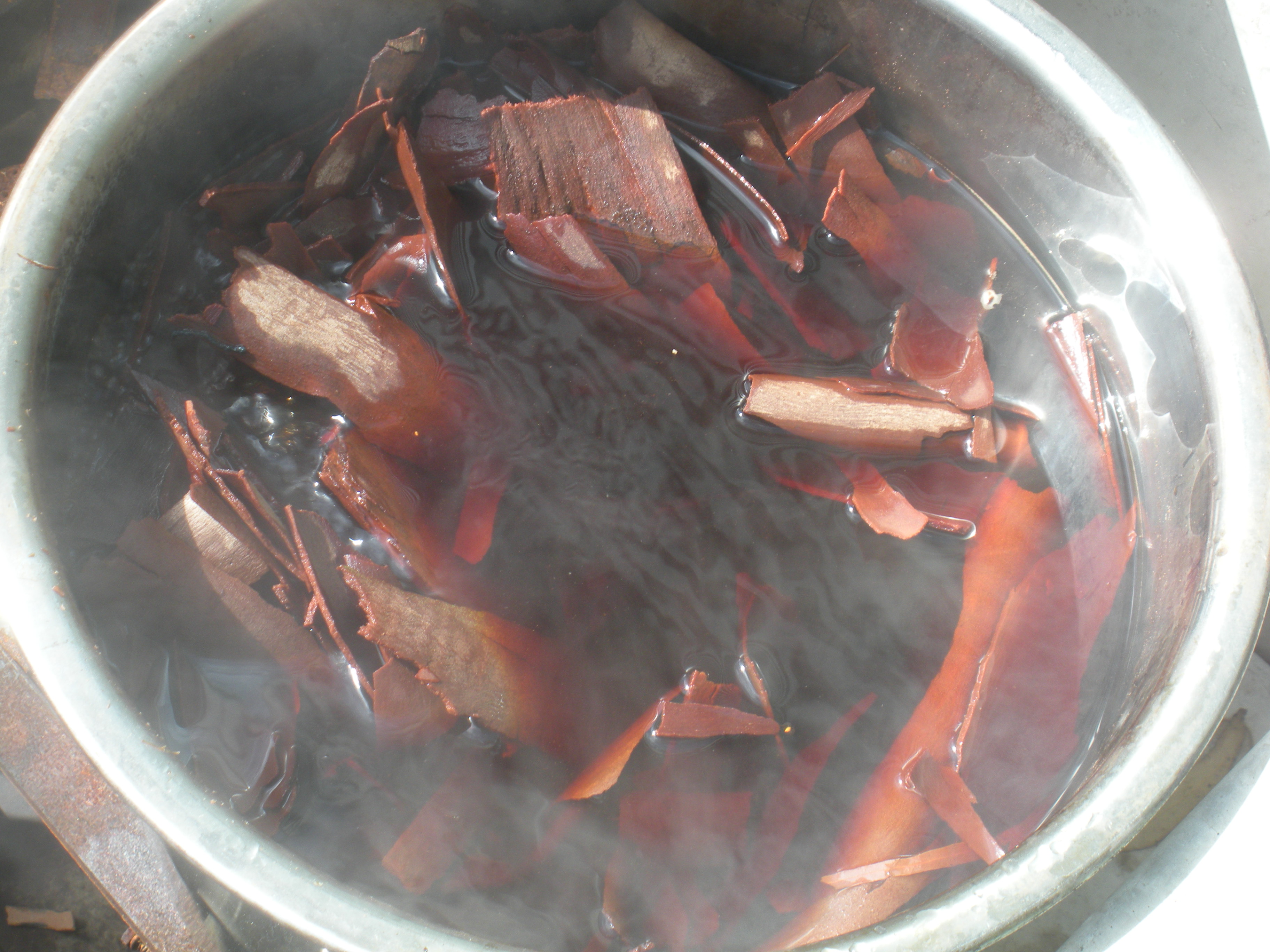
I discovered this quite by accident when I was experimenting with mordanting cotton one year. I couldn’t figure out where I would get tannin to apply to my fabric.  Then I thought… why buy tannin online and have it transported all the way to my house when Eucalypt bark is rich in tannin and I have it lying on the ground less than a block from my front door?  Imagine my surprise when I heated my pot of bark and saw the water turn deep orange within an hour!  I haven’t stuck with using this method to mordant cotton, but I use it for great colour on wool.
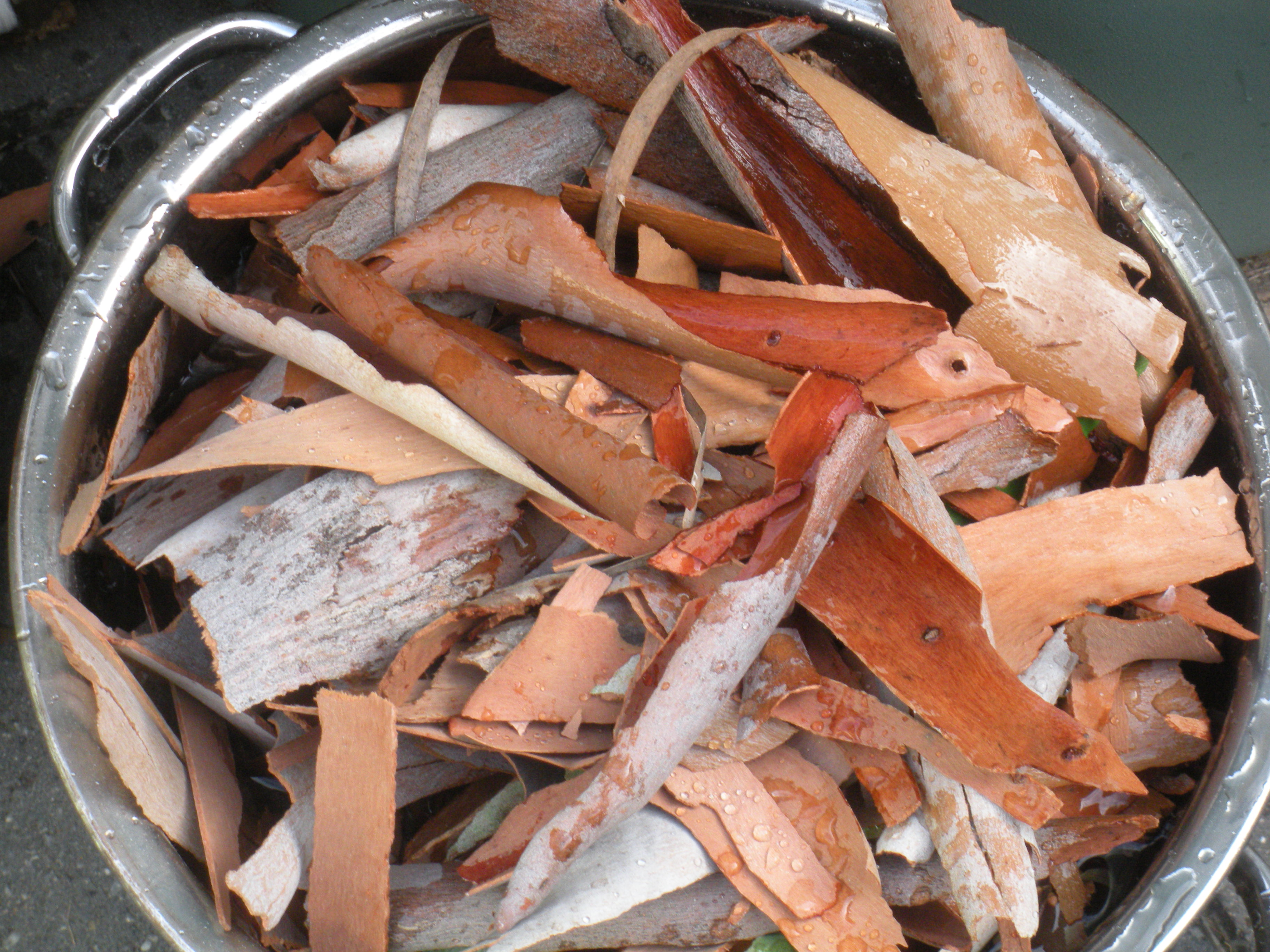
First, I soaked the bark for 48 hours.  I don’t think 48 hours is a magic number, but it is more than enought to wet the bark through.  Then, I brought the pot to the boil and kept it simmering for 2 1/2 hours.  I like to develop the colour in the dye bath without subjecting the wool to heat for so long, especially because my burners are difficult to control and default to a rolling boil rather than any more subtle temperature.
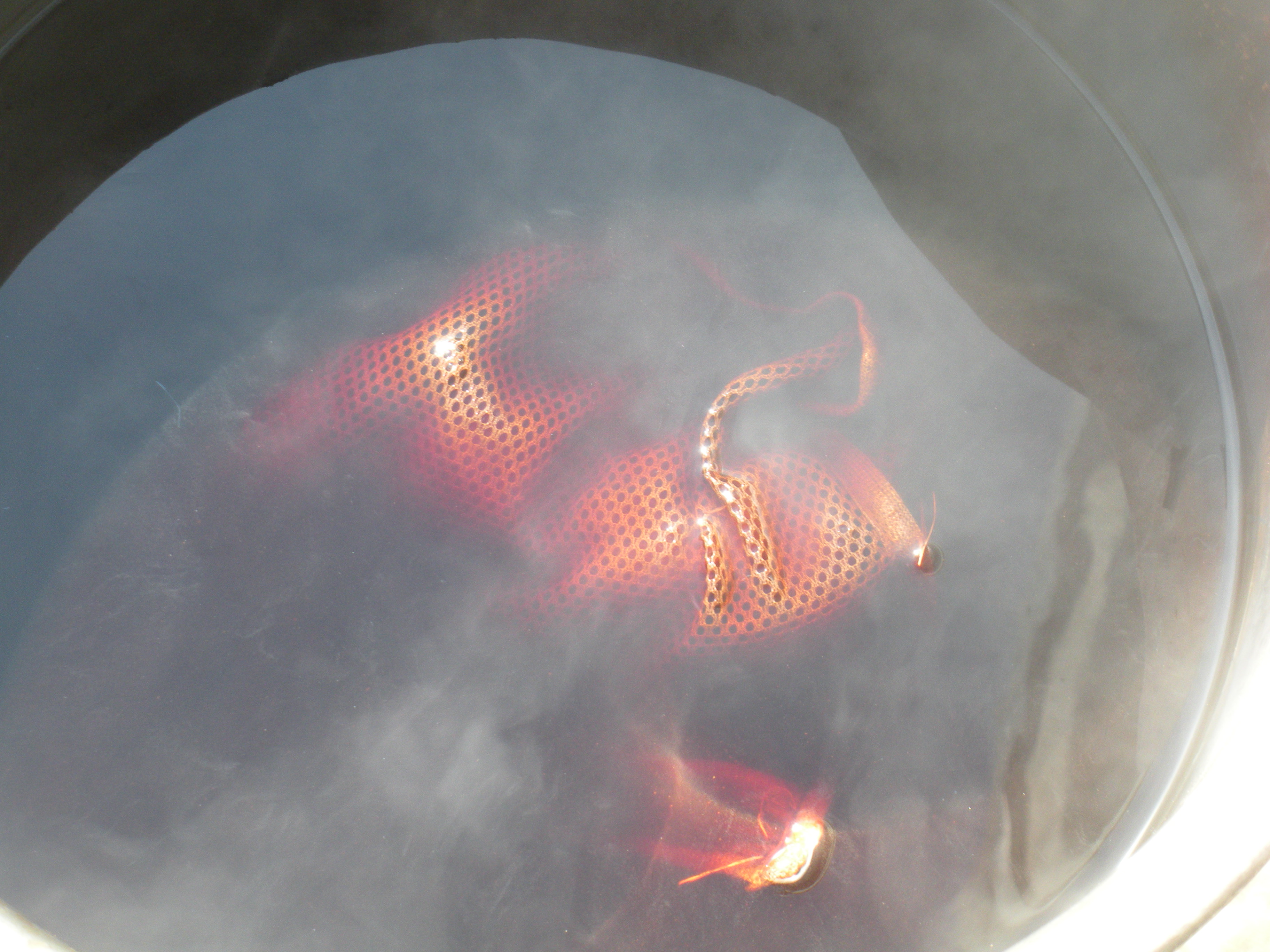
Then, I removed enough bark to allow my wool to move freely and put 25g merino roving into the pot. Sometimes I leave more bark in the pot, because it can produce contact prints on yarn or roving and this can be a lovely effect.  I like to plait the roving because it produces interesting variegation–not just different shades, but different colours–and a semi solid yarn once spun.  Even though this is a huge pot crammed with bark, I’m using a little wool because this gives the best chance of a burgundy… but no guarantee!  I can add more wool for orange or tan later.  Today, I have left the pot steaming but without heat for an hour, then applied heat for 15 minutes, and now another hour without heat.  I’m always happy if I can find a way to save energy… less heat will reduce the chance of felting (or just turning the wool harsh), and I am not convinced that a lot of cooking the wool itself improves the colour.  Well, that’s the theory.
2 Comments

Filed under Dye Plants, Eucalypts, Natural dyeing

Neighbourhood dyeplants.. and the odd sock

Image

I have finally finished a few pairs of socks that I’ve been carrying around for weeks…  these were dyed with black beans (the blue yarn) and purple carrots (the greyer yarn).  I gave them random cables and I like the effect.  Happily, so does the recipient!

Image

Today I went round to visit my all time favourite neighbourhood dye plant.  I lived in the street this tree grows in for years, and I adopted the tree under a council programme–not that this made me any more fond of it than I already was.  I have had rust through to burgundy colours on wool from the leaves and bark of this tree.  Over the last year or two I have propagated native plants to grown under it (saltbush, mostly), planted them and mulched the tree to keep the weeds down.  My Dad even got in on this, offering me seedlings and cuttings from his garden and collecting saltbush seed for me.  I was surprised to discover that saltbush was so easy to propagate from seed when the weather was warm.  Dad seemed to take it for granted I would be able to do this! I have about 50 more little plants that have stayed tiny all winter but will soon spring into growth ready to be planted around my suburb.

Image

I’ve been weeding around this tree for years in an effort to stop the council spraying poison into the neighbourhood.  I’ve been collecting rubbish from round the neighbourhood, and especially this tree, too.  I like this tree a lot.  Piping shrikes nested in it several years running.  Kookaburras sometimes sit in it and laugh.  Little birds come through it often, and white ants have unfortunately made homes here too.  Someone has put a bird box in it in the last year, but I haven’t seen an occupant yet.

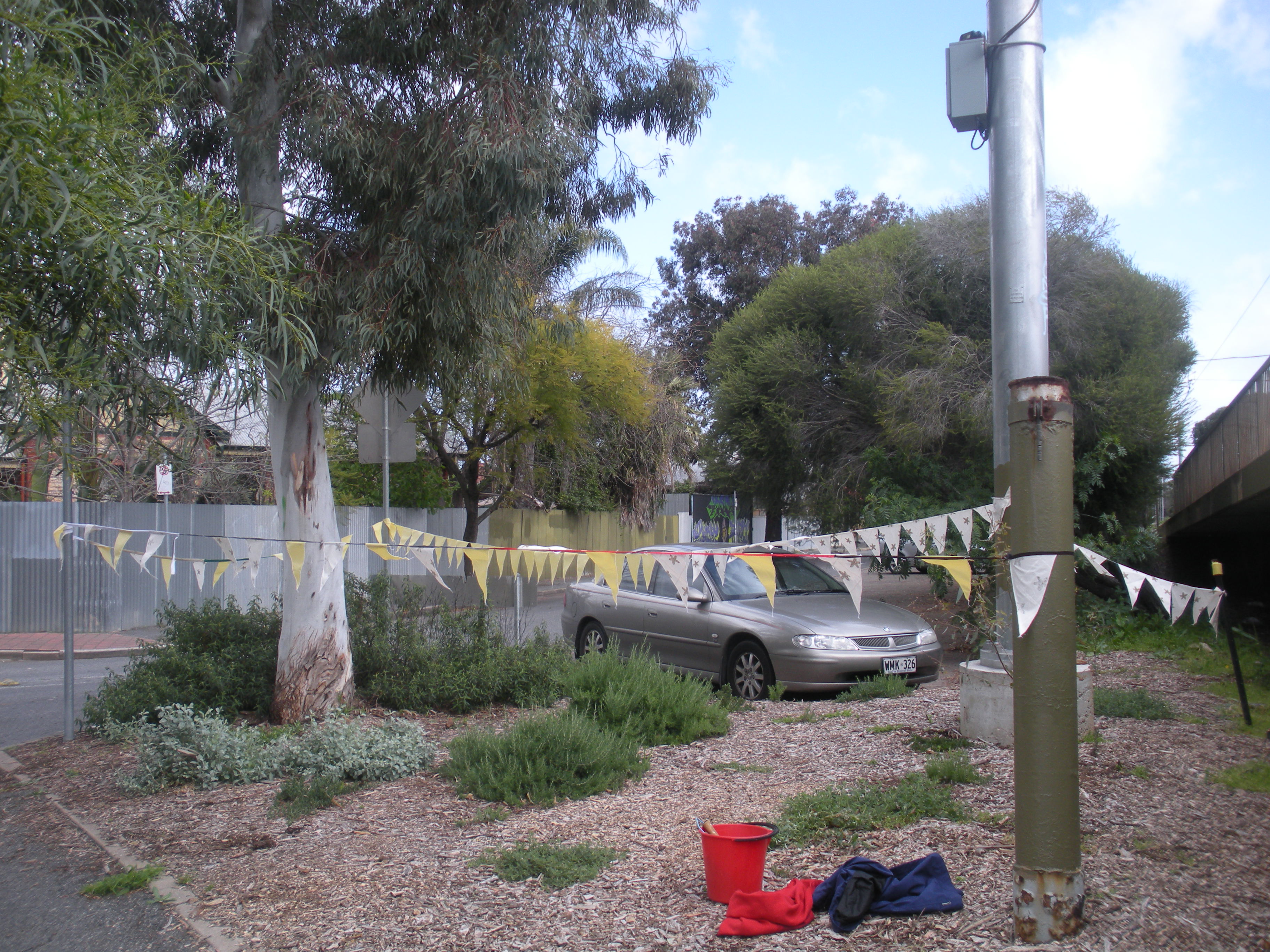
Anyways, today I weeded, cleared rubbish and then applied bunting.  The Royal Show starts in a day or two and people will park in the streets all round this tree and walk through the patch we have been busy revegetating to get to their cars after dark.  In the past,  I have occasionally been dispirited to have quite a few of my little saltbushes pulled out by the roots or casually squashed as people pass through and plant guards thrown away.  I thought bunting might at least cut down on accidental damage.

Image

Over the time I’ve been working on growing things under this tree (and collecting bark and leaves!) people passing by have gone from quizzical to interested to pulling over in their cars or stopping with their dogs to thank me.  I think as the plants grow larger it is more obvious what I am doing and how lovely this otherwise weedy patch could be.  My friends have come along on mulch applying and watering missions, too.  It’s a blustery day, so I hope the bunting will make it!  The show runs over two weeks.  Here’s hoping most of the smaller plants make it to the end.  A cyclist came past while I was working, nodded and told me he thought the bunting was a good idea.  At least until the show is over, I’m thinking.

2 Comments

Filed under Dye Plants, Eucalypts, Knitting, Natural dyeing, Uncategorized