Tag Archives: wool

Finished objects completed in my holidays

There has been a lot of holiday crafting going on round here.  But this post marks return to my day job!

I made some Thai style fishing pants.  I bought a pair in 2000 as the new century began, and they have finally gone to the worms in our worm farms, the ultimate destination of natural fibres that are worn past the point of repair and reuse around here.  I traced a pattern from them and made this pair from a sarong found at the op shop.  I assume the originals were cut to maximise the use of fabric from a loom that is a standard-ish size in the region, because the sarong was the perfect amount of fabric, with almost no fabric left over to be wasted or used for other things.  Surely this is the goal of all hand weavers, as well as a decent goal for thrifty and green sewers.

I used french seams and then top-sewed them flat, so that I could use only cotton thread and ignore the polyester sucking overlocker.  When commercially sewn garments go to the worms, the overlocker thread is usually all that remains.  The worm farm offers an education in the biodegradability of garments, and I am increasingly aiming for biodegradable.  There is a cotton-polyester t shirt in one of them that has been there since my daughter left home and abandoned it.  Over 10 years ago.  Polyester will clearly survive the apocalypse, along with cockroaches.   Seriously, my everyday garments do not need to live as long as the Gobelin tapestries.

IMAG0590

I made a pair of radmila’s slippers from a new book, Knitting from the Center Out by Daniel Yuhas.  They are knit from handspun merino roving dyed with Eucalypts.  I have to say that I gave up making matching pairs a long time ago and now make siblings rather than twins… further proof lies in the next two images. OK, make that three!

IMAG0579

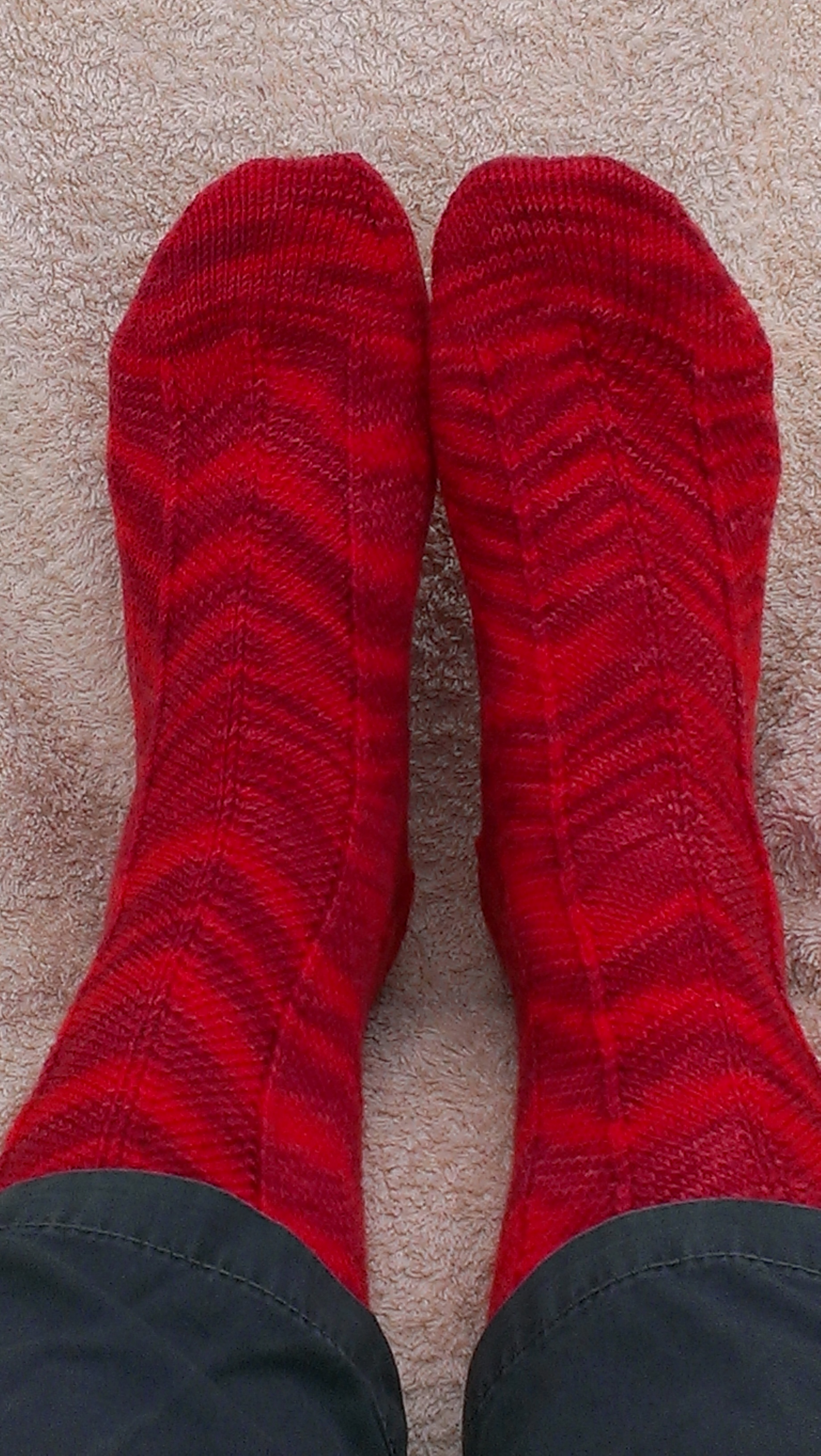
I took up knitting in order to be able to knit socks, and that is what led me to spinning and then dyeing.  Sock production has slowed down, but I finally finished a pair of Jaywalkers for a beloved friend. She is a lover of bright colours who has appreciated these as splendidly red while they were still in progress.  This yarn was dyed by a fabulous local dyer, Kathy Baschiera.
IMAG0595

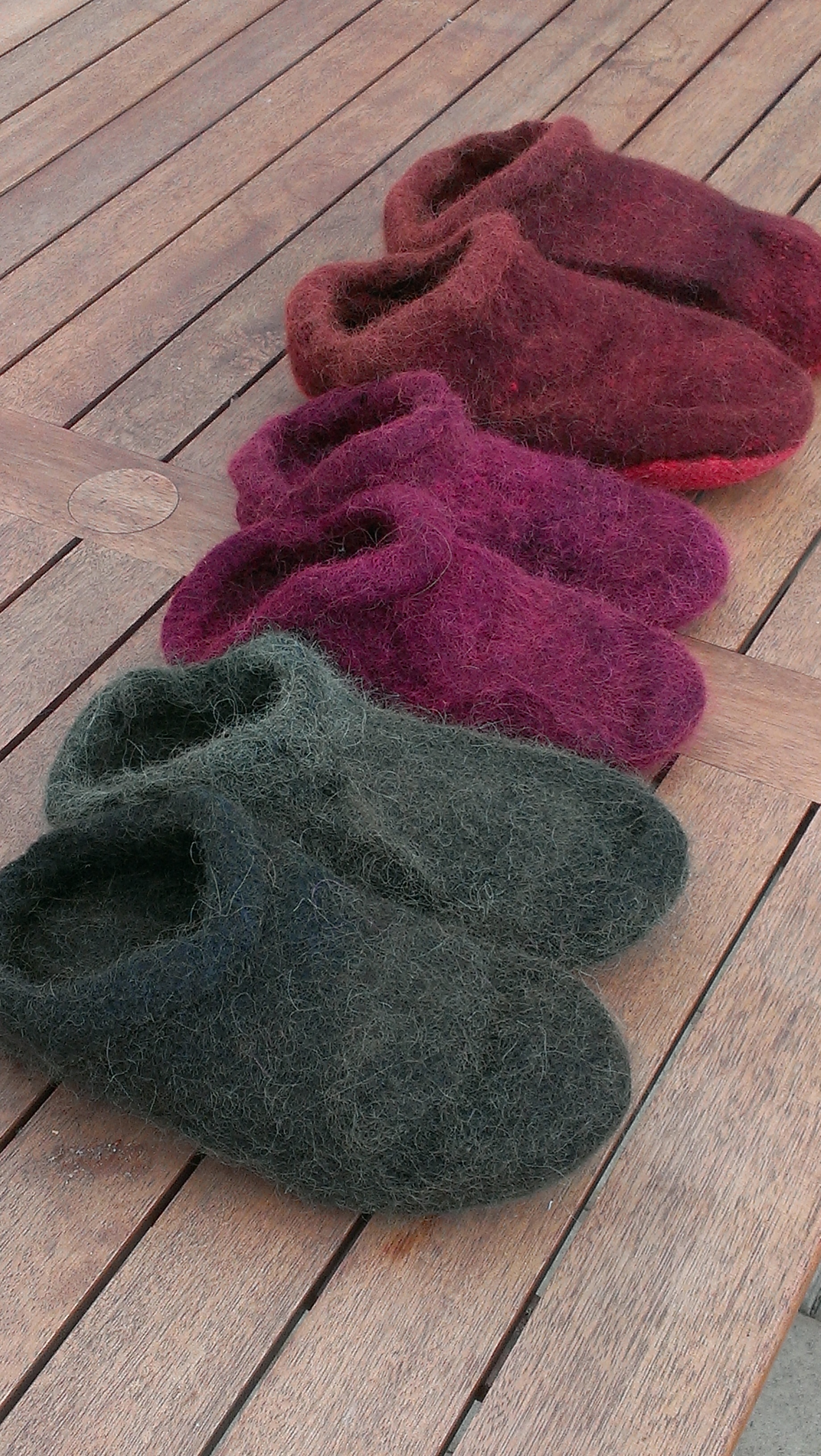
Remember the post where I was wondering whether a sow’s ear could be turned into a silk purse (actually, whether I could turn the less exciting parts of a polwarth fleece and some low quality alpaca into slippers)?  Well, the answer is yes.  These are knit using Bev Galeskas’ Felted Clogs pattern and dyed with Landscapes dyes.  I hope Bev Galeskas has made millions from her pattern.  I sure have made tens upon tens of these, though most are a shade less hairy.  Clearly I spun in a fair amount of guard hair, and it won’t felt.  Just the same, the recipient of the red pair at the back was very enthusiastic as he turned 40, and the delightful women who will be receiving a parcel today or tomorrow with the front two pairs are great mend and make-do experts who have darned their previous pairs extensively… they live in a very cold place and will enjoy warm feet and hopefully overlook the odd stray guard hair!
IMAG0588

Ah, holidays.  I hope you’ve had some to enjoy.

3 Comments

Filed under Eucalypts, Knitting, Natural dyeing, Sewing, Spinning

Angophora Costata subsp Costata bark dyepot

Our lovely friend has an Angophora Costata subsp Costata (Sydney Red Gum) in her backyard.  When the bark is newly shed, these trees have a stunning rust-orange coloured trunk.  There were many to be seen and admired in and around Sydney when we were there in December.  The other day she came around with… a bag of fallen bark for me!  Here is my sample card and swatch before:

IMAG0665

And, after.  You could call it cinnamon, I suppose–the alum mordanted, superwash sample is really quite brown.  Or on the other hand, you could just call it tan, again.

IMAG0701

1 Comment

Filed under Dye Plants, Eucalypts, Natural dyeing, Uncategorized

Eucalyptus Saligna Bark Dyepot

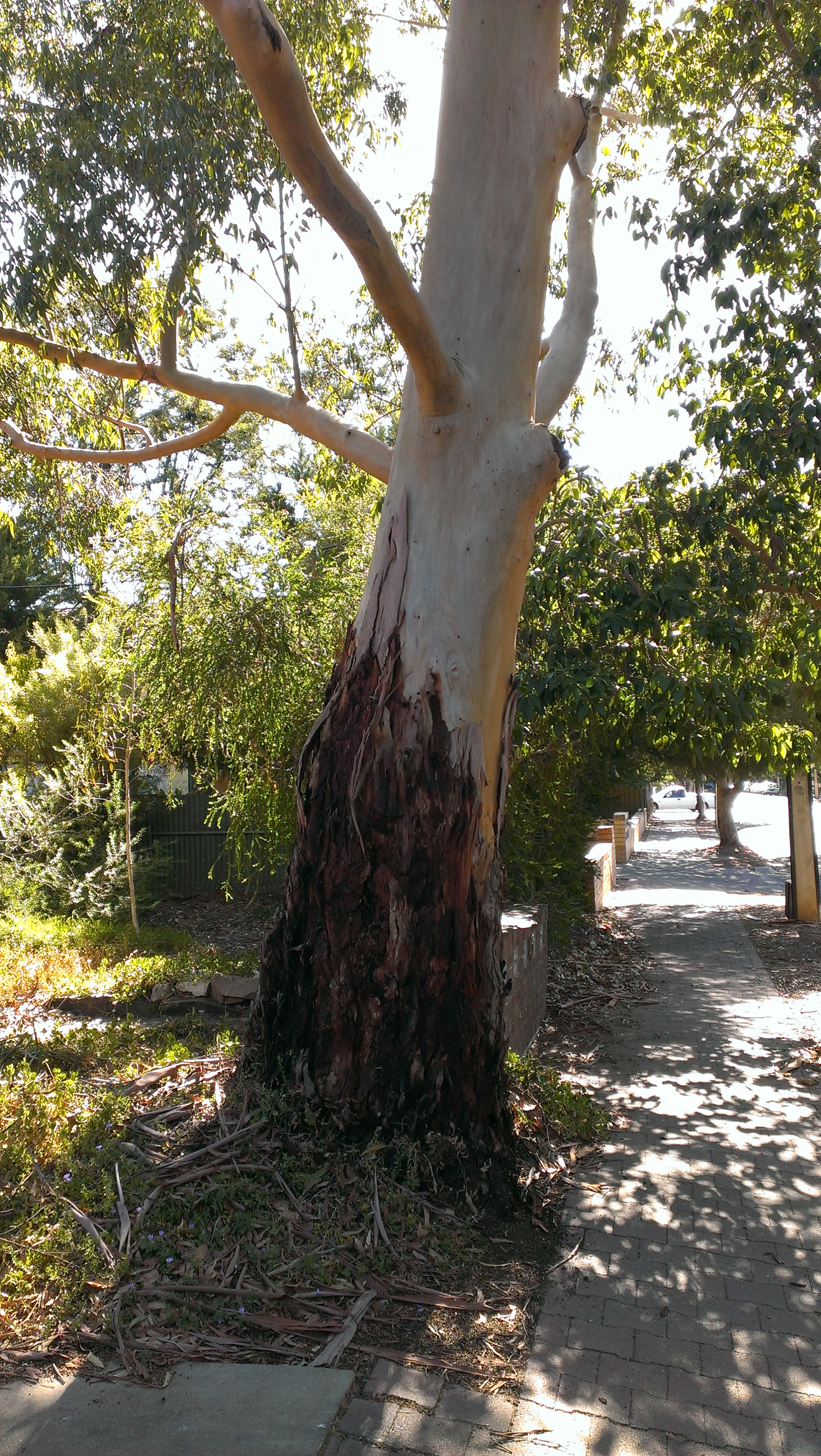
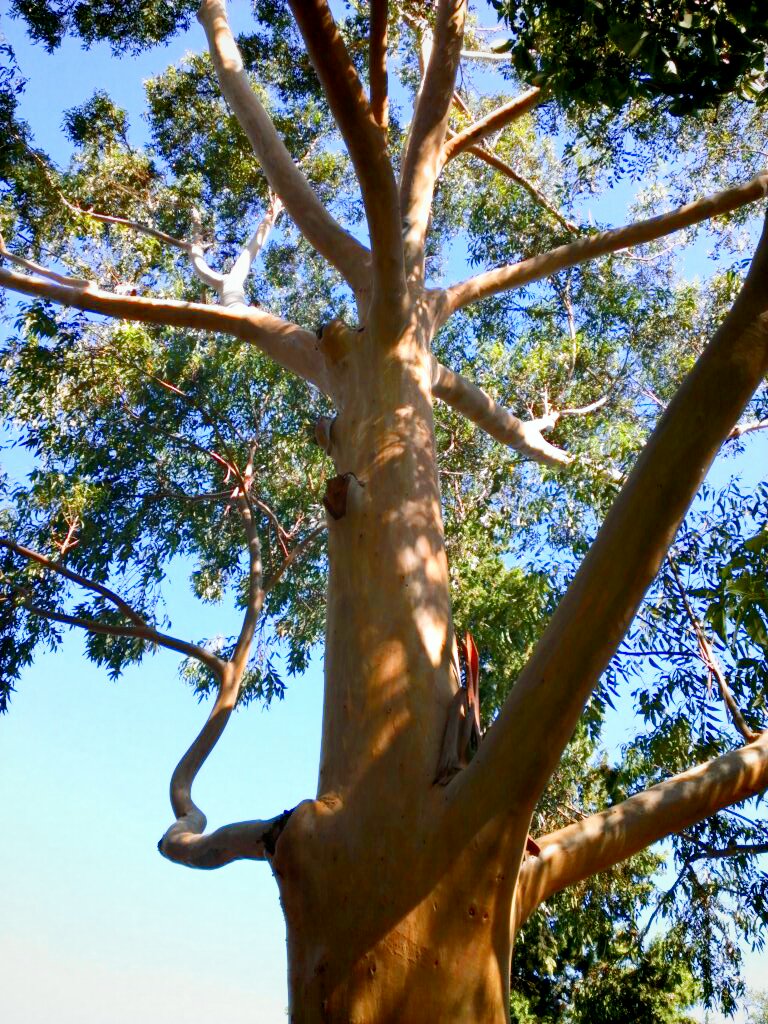
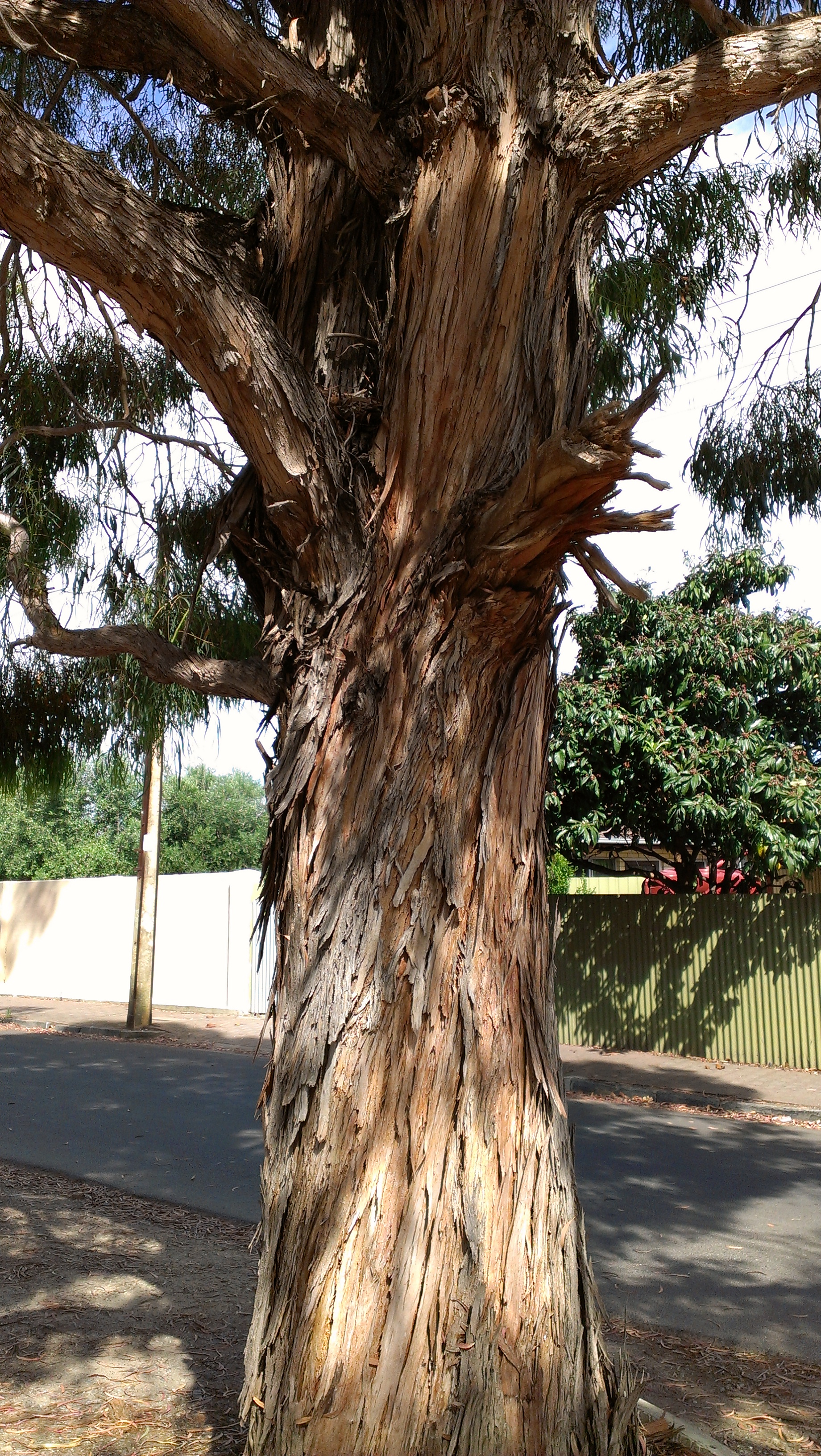
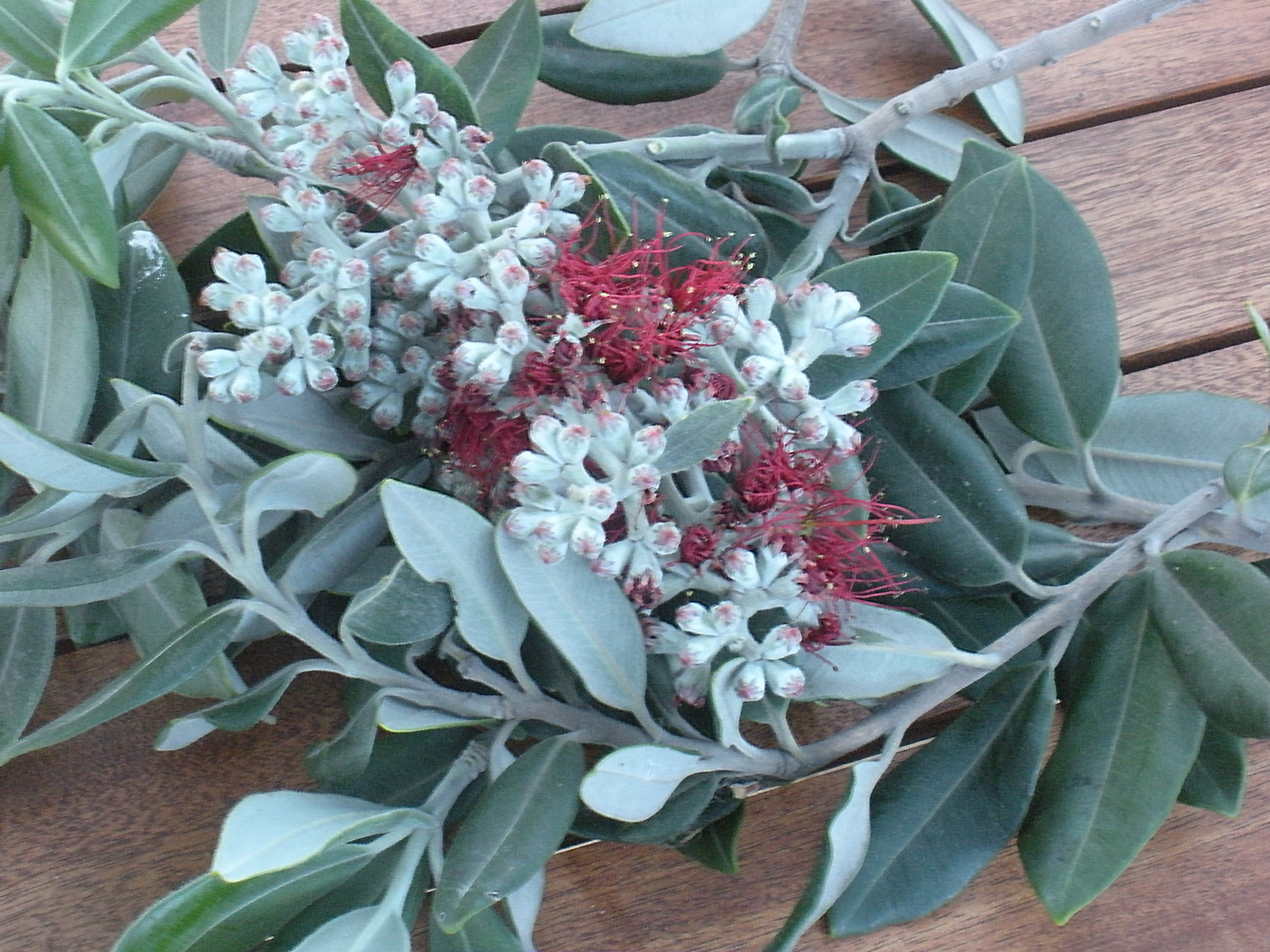
Continuing the recent bark theme… and since it is the season of bark shedding for so many local trees, I bring you a Eucalyptus Saligna (Sydney blue gum) bark dyepot.  I collected the bark in December and had a very funny conversation with a passerby who had lots of ideas about what I might be doing with that bark.  This tree has a rough base but has shed all the bark above it in strips now.

IMAG0572

It is a huge tree!  It is outside a block of townhouses, where some trees were removed a while back but this one was saved by some local friends.

IMAG0574

What a beauty.
IMG_0031

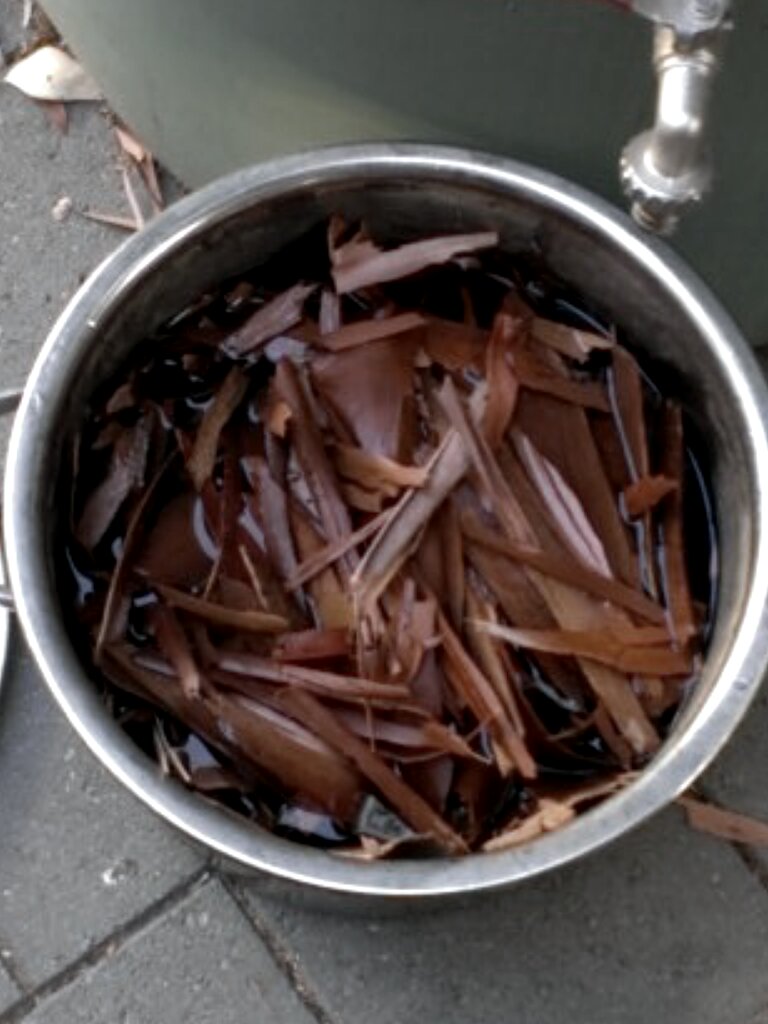
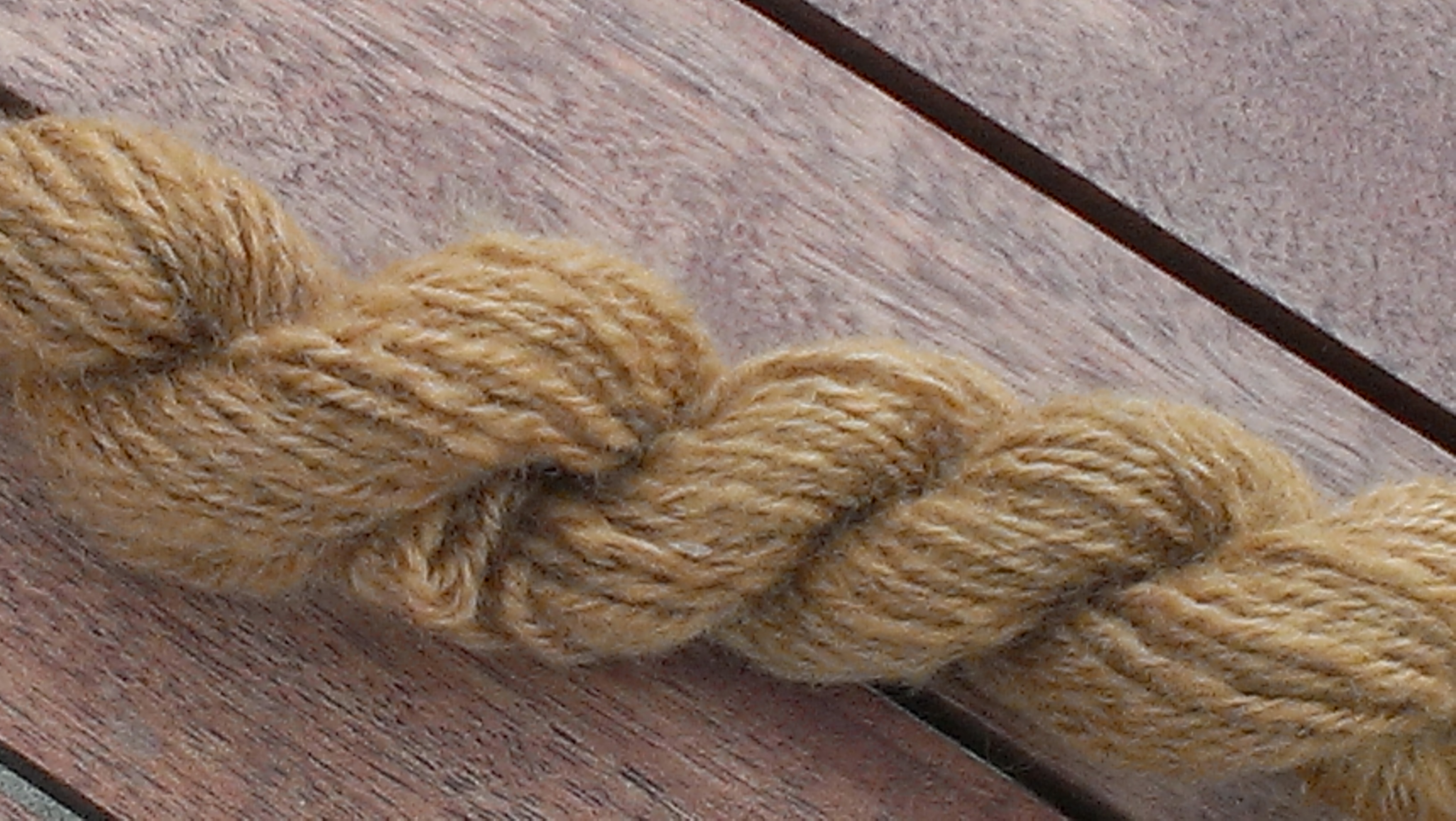
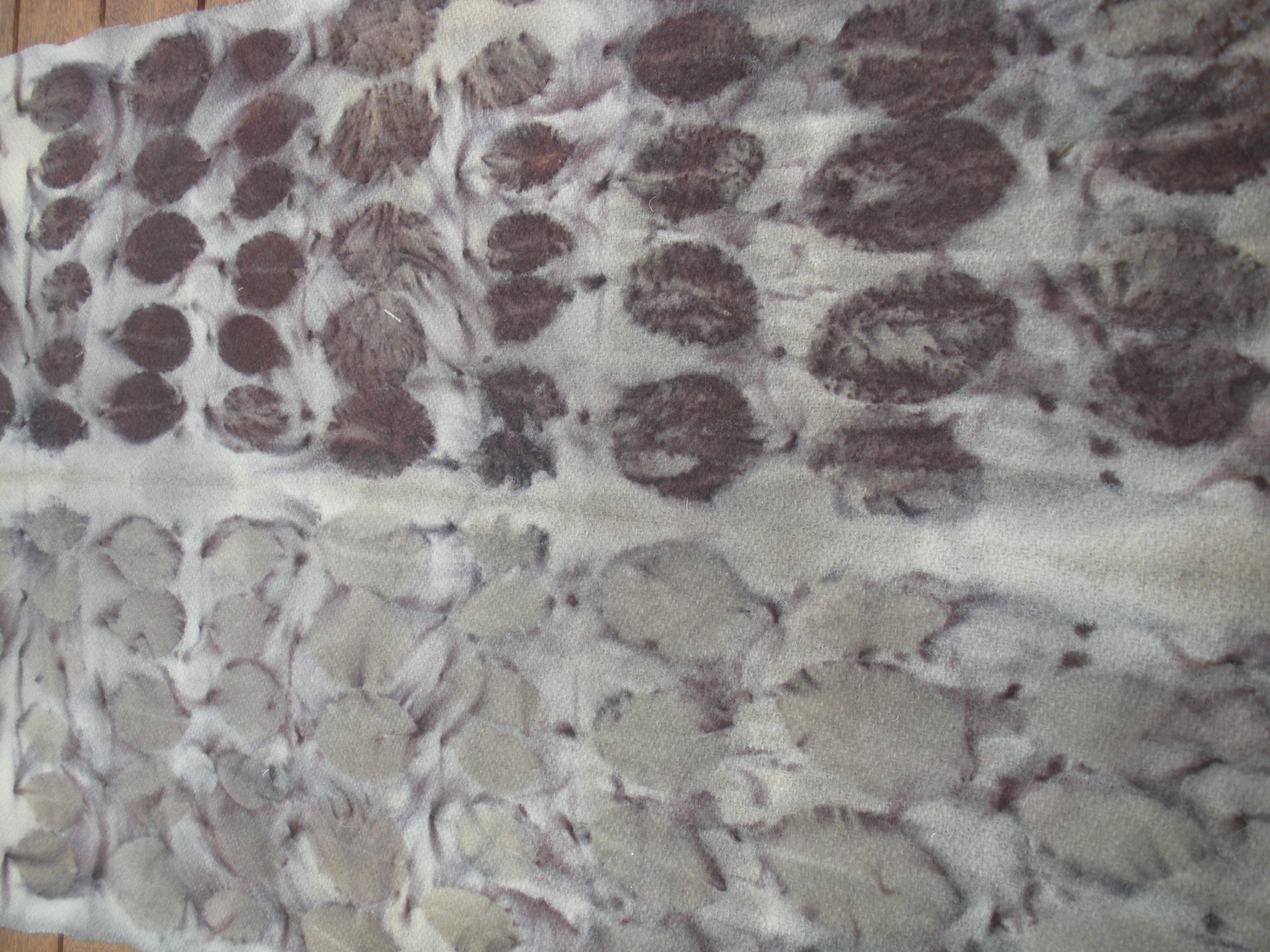
Enjoy the tree, because as I write I’ve looked into the dye pot where my handspun wool is heating and this is a case of tan again, I believe.  Here is the bark after I added rainwater for a few days of soaking. 
IMG_0033

And here, my friends, is my dyed wool.

IMAG0584

And against a background of E Scoparia-dyed merino:

IMAG0583

4 Comments

Filed under Dye Plants, Eucalypts, Natural dyeing, Uncategorized

Hibiscus Flowers

IMAG0332

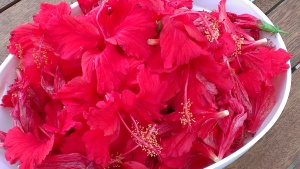
Until recently, there was a house near us that we were told would be demolished within the next week (it’s gone now).  The inhabitants moved out in a hurry, leaving the tide of unfinished business you might expect in the circumstances: the gate and doors open and unwanted stuff everywhere.  I picked all the grapefruit they’d left on the tree and gave it to a friend who loves grapefruit, saved the water lily and goldfish for another friend with a pond, with the help of friends, I put out the bins and piled their recyclables into our recycling bin and their recycling bin and a crate or two, ready for collection the next day.  I decided to harvest the flowers from their red hibiscus, which was in full bloom.   I followed the instructions Jenny Dean gives in her very fine book Wild Colour, up to a point…

IMAG0335

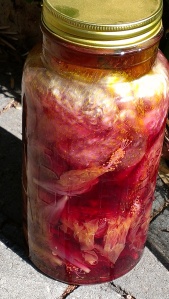
I decided to use more rather than less dyestuff, 125g flowers to 50g washed unmordanted polwarth locks to begin with.  I began as Jenny Dean suggests but decided to try solar dyeing.  You can see the wool in the top of the jar wrapped in a couple of yellow onion nets.

IMAG0337

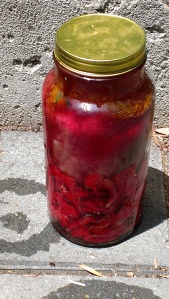
Two days after beginning the dyebath, I picked a whole extra round of flowers, sieved out the ones that had been steeping two days, gave them to the worms in our worm farm and added a fresh lot of flowers to my dye jar.  The dye liquid was a plum colour and a little thicker than water.  I took the second round of flowers out after they gave their colour up.

IMAG0346

Well, after a good fortnight in the jar, almost no colour on the fleece.  So I returned to Jenny Dean’s instructions and heated the dye bath.  The fleece still didn’t take up colour, but my sample card gave green on alum mordanted wool.  Green???  I have dyed with hibiscus before and achieved a rose pink on unmordanted washed fleece, which I spun up three-ply and knit into socks for my mother.  Green isn’t even on Jenny Dean’s horizon.  Deep, olive green (checked against a couple of friends with decent eyesight).

So, I put a skein of alum mordanted, commercial superwash in the dye bath, heated again and my skein turned steely grey.  This picture gets the colour right despite its defects in the focus department:

IMG_0027

To me, this is quite bizarre.  I can only think that the fleece failed to take colour because it was inadequately scoured, though it didn’t feel at all greasy or sticky.  Polwarth is a high-grease breed.  But how I can explain the green and grey outcomes?  Well, I can’t–and I await your thoughts.  Dye pots which had been inadequately cleaned might mean there was some iron in the dye bath, but Jenny Dean suggests purple to pink would still be the outcome.  And after all this, the dye bath was still full of colour–red-purple colour.  Mystery!

12 Comments

Filed under Dye Plants, Natural dyeing

More Eucalyptus Cladocalyx Bark Outcomes

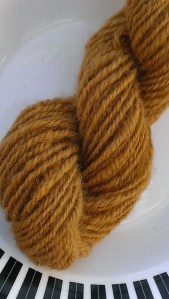
Given the level of colour in my E Cladocalyx bark tannin bath (see previous post), I couldn’t resist trying to dye some wool.  This is handspun finn cross wool, cooked for about 90 minutes in a solution of E Cladocalyx bark, which had been soaked in a sunny spot for 14 days prior to dyeing. The commercial superwash, alum mordanted strand of wool on my test card is a much darker shade of brown.

IMAG0557

Leave a comment

Filed under Dye Plants, Eucalypts, Natural dyeing

Dianella fruit

IMAG0321

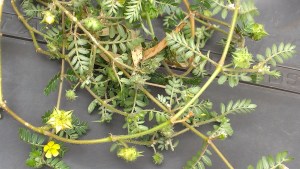
Yesterday I came through the royal showgrounds with my secateurs.  On the way out, I spotted these fruits.  I think this is one of the dianellas, probably Dianella Revoluta. It’s a  common native, drought hardy inclusion in public plantings in my area.  There were so many that on the way back, I took just a couple of stems from each plant and put them in my panniers.  While I was there I saw some caltrop, so I removed that while I was there.

IMAG0323

It’s one of the enemies of cyclists, as you might guess from these immature fruits… which when ripe will be the stuff of many punctures.  I pull this out any time I have the chance.

IMAG0325

I followed Jenny Dean’s suggestions about processing berries…

IMAG0328

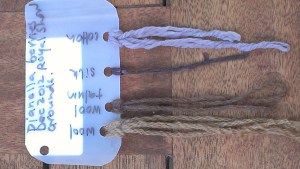
And, as might have been expected, the result was nothing like the fruits I started with.  I would rate the unmordanted wool pale tan, wool with alum dark tan, the silk is grey-brown and the cotton is pale grey.  Not too exciting, is my conclusion!IMAG0340

15 Comments

Filed under Dye Plants, Natural dyeing, Uncategorized

Leaf prints of the week: Eucalyptus Cinerea and pecan leaves

It was another weekend with leaf prints.

Leaf prints 005

Eucalyptus Cinerea, before..

Leaf prints 001

and after:

Leaf prints 021

My test cotton sample, demonstrating that the mordanting I wrote about a little while back should work out just fine for the natural dyeing workshop I’ll be running.

Leaf prints 022

On the weekend I travelled south of the city to celebrate the lives and love of two dear friends.  They had an all-in-one birthday party and anniversary.  I gave them a teapot and teacosy dyed with silky oak leaves (grevillea Robusta) and eucalypt, and they found it suitably funny.

Dyeing 005

As we left, one of them pointed out their now-flourishing, though still relatively small,  pecan tree.  I had seen pecan eco-prints on Lotta Helleberg’s lovely blog.  I asked if I could pluck a few, and then I took them home and wrapped them in a piece of cotton twill that used to be a pair of trousers.  It was ready and waiting, mordanted in soy and ready to go!  Before… (such lovely leaves…)

Leaf prints 002

and, after:

Leaf prints 025

I had also saved this sample of an unidentified eucalypt a friend was growing in his backyard, but sadly it yielded a few brownish smudges.  It’s much prettier in person than as a leaf print.  I think it is Eucalyptus Kruseana (Bookleaf Mallee).

Leaf prints 003      Leaf prints 009

And I spent some time creating textured batts ready for textured yarn spinning… wool with mohair locks, while I tried a new method for washing wool.

Leaf prints 014

Good times!

1 Comment

Filed under Dye Plants, Eucalypts, Fibre preparation, Leaf prints

Eucalyptus Acaciiformis

I decided to depart from my recent focus on ironbarks to try to identify this lovely tree, growing alongside the tram line.

This one is not an ironbark… it is a stringybark. Here’s a bit more detail.

All the usual reservations about my skills in eucalypt identification apply, but Euclid and I reached the conclusion this is E.Acaciiformis, wattle-leaved peppermint.

I ran a test pot last week and got a strong, bright orange… so I’m trying out a bigger pot.  I’ve been running pot after pot with the same water and fresh bark over the last few days, but for this, some fresh, clean rainwater.

I brought the pot up to below a boil, then simmered for three hours, adding my fibre after the first hour and taking out leaf material after the second to allow more room for fibre circulation in the dye bath.

This is the result on merino and silk (on the left).  The braid on the right has been dyed with E Scoparia bark.  It is quite striking to see the difference between dye take up on the wool and the silk.  All my sample cards suggest this outcome, and so do leaf prints really: I get colours I prefer on wool and cellulose fabrics rather than silk personally, though I see that other dyers love using silks.  It does seem very different to the usual expectation about how these fibres will take up dyes.

Leave a comment

Filed under Dye Plants, Eucalypts, Natural dyeing

Works in progress

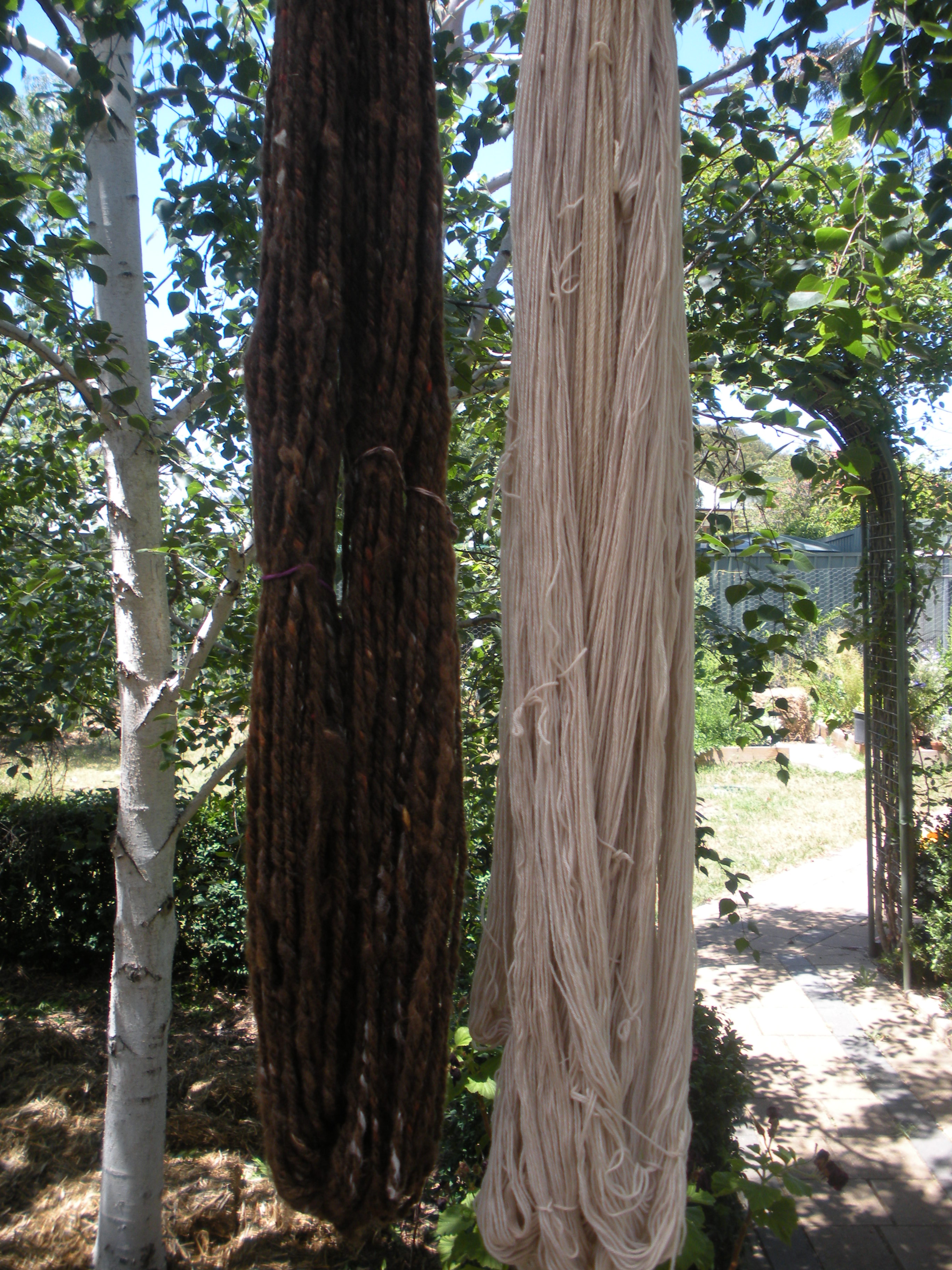
I’ve been puttering along on a number of different projects over the last few weeks… and lest this sounds unusual in some way, that is probably the way life goes most of the time around here!  I returned to cold dyeing roving after retrieving my last spectacular failure.  For good measure, I also dyed some local mohair locks.  I am planning toward a textured yarn spinning workshop and I’m determined to go as close as I can to a local supply of materials for the participants.

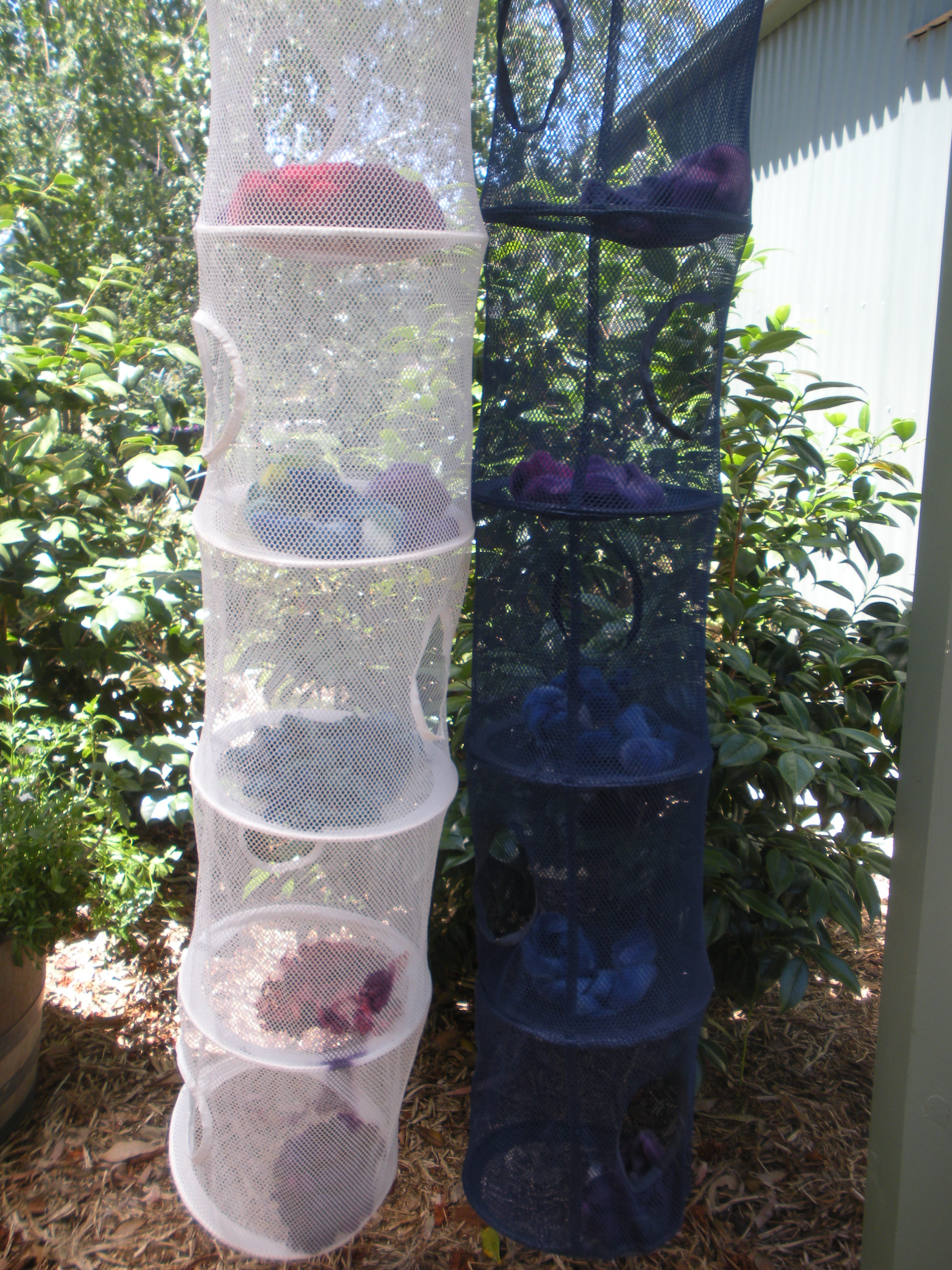
We’ve had Ikea here for long enough that the op shops of the city now turn up these fantastic wool drying apparatuses.  One came with a small supply of plastic animals.  This time, just when I thought I had found them all, a small plastic dalmatian dropped out.  Hopefully the child whose toys left home this way is not grieving and bereft!

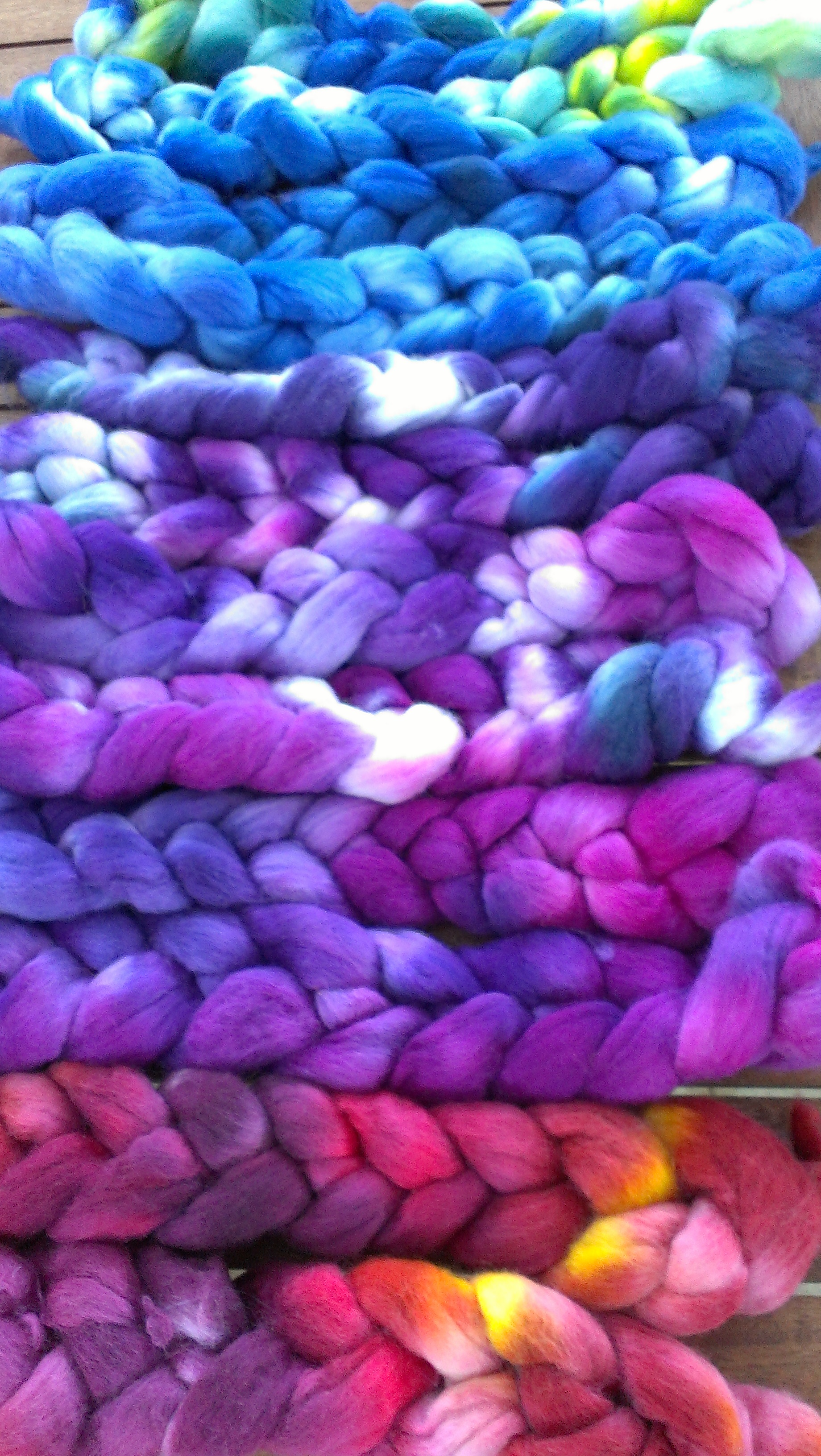
This time, the merino braids turned out better than I had hoped.  Perhaps I am slowly acquiring a better sense of colour.  Those with a red base (at the bottom of the picture) were the ones I felt most tentative about, but I like them best of all.

The mohair is ready to have seed heads picked out of it and to become part of some textured batts for corespinning and other good times.  Meanwhile, I have been preparing for a natural dyeing workshop focusing on eucalypts.  Again, I need to provide materials, so I’ve been laying in what I need.  It’s the season for bark collection so I have been touring the neighbourhood with my trusty bike trailer and a chook feed sack, pulling over if I’m passing in the car, or wandering out with a bucket, whichever may be appropriate to the day and location of the tree.  In short, I am keeping the E Scoparia bark that is falling to the ground from being blown away, tidied up by others or crushed on the road.  I have almost 3 sacks full so far.  Seeing the bark shedding has allowed me to run test dye pots on a few trees I had been unsure of with more confidence.  I’ve found several more specimens in the local area.  Meantime, I have been mordanting fibres (wool with alum on the right) and continuing to convert my sow’s ear fibre into slipper-suitable yarn (left) as I knit up what has already been spun. I think that particular batch of unlovely spinning may finally be over.  Two pairs of slippers are knit, one to go.

I’ve been converting milk bottles into sample cards, writing up notes and assessing the state of the Guild’s dye room.  Today, I’ve got soybeans soaking ready to mordant cotton for the workshop.  It has me wanting to dye…

10 Comments

Filed under Dye Plants, Fibre preparation, Spinning

Pohutukawa leaves

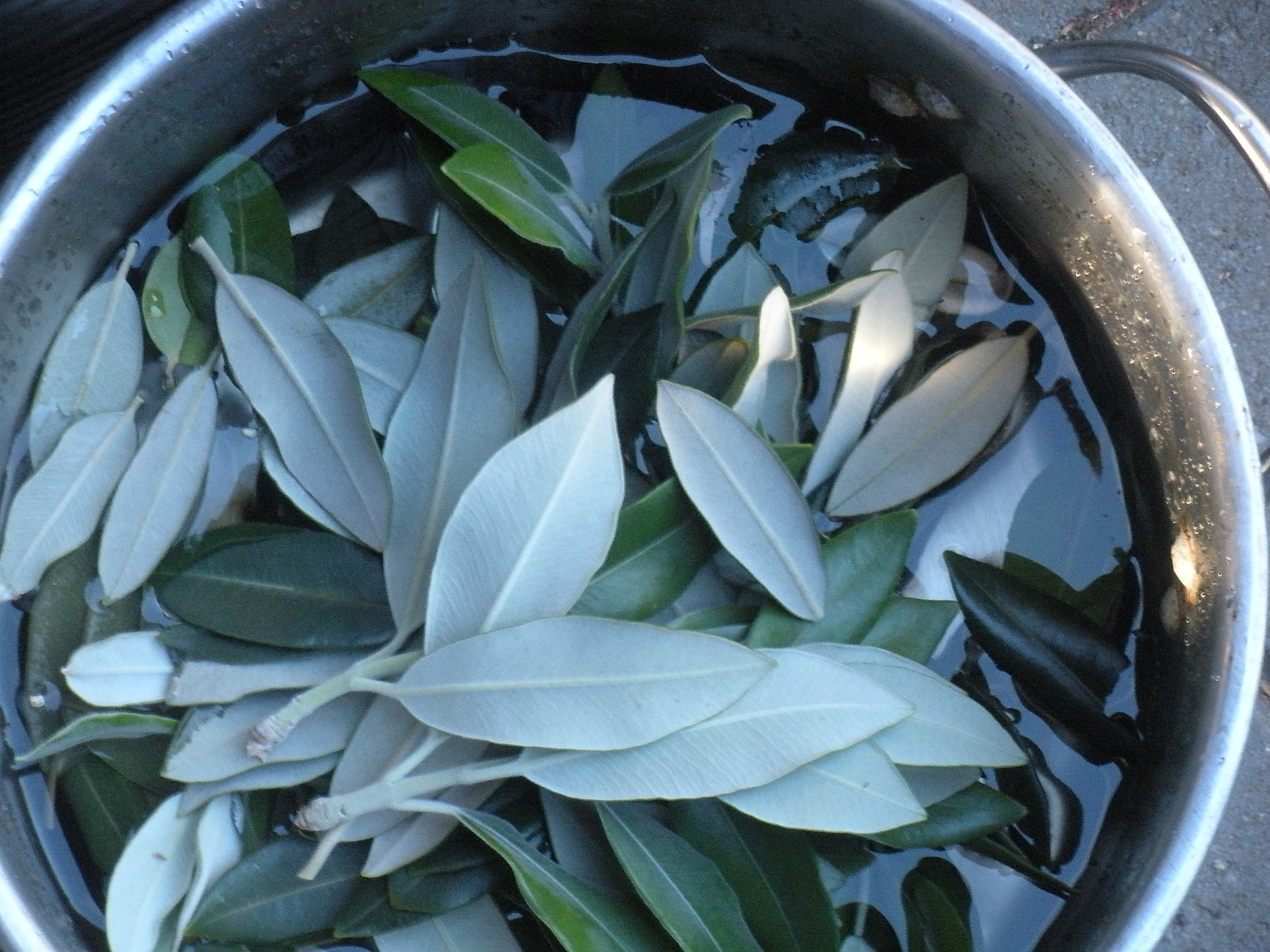
Pohutukawa (Metrosideros Excelsa; known in Australia as New Zealand Christmas Tree) is a native plant from New Zealand, which is grown in Australia as a street tree, particularly in seaside locations.  In New Zealand/Aotearoa I saw it growing right on the beach, gloriously.  It is a hardy and beautiful tree.  I came past dozens of them on Oaklands Road (a main road in the southern suburbs of Adelaide) yesterday and pulled over.  I was immediately approached by some people who were looking for Marion Pool, so I gave some directions while I was there harvesting.

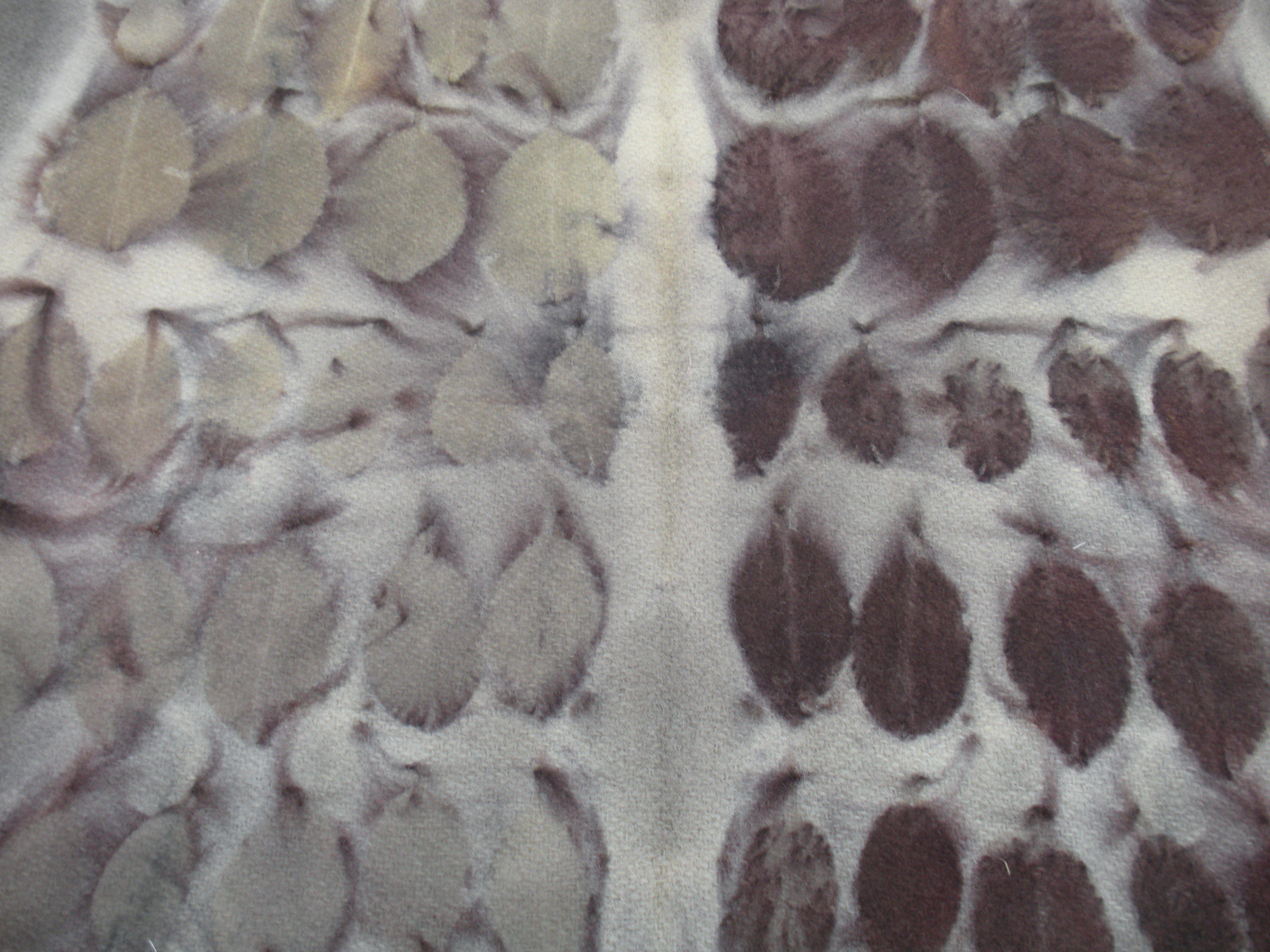
I was keen to try dyeing with the leaves of this tree because I’ve leaf printed with them on wool and found the colour almost purple. These leaf prints are on a strip of cream-coloured woolen blanket.

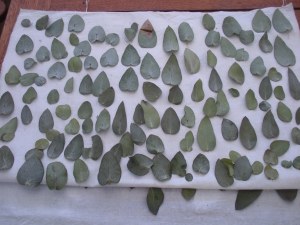
The leaves are green and glossy on one side and almost white and slightly fluffy on the back.  One side printed pale green and the other, deep purply-brown. Or perhaps the purple part is in my imagination. These leaf prints were cooked with a set of eucalyptus prints, so for about 3 hours.  It is possible a shorter time would be better for these leaves, though they are tough too.

Searching the web and Ravelry for clues yesterday though all I found were browns.  Undeterred, I went ahead with two test dyebaths.

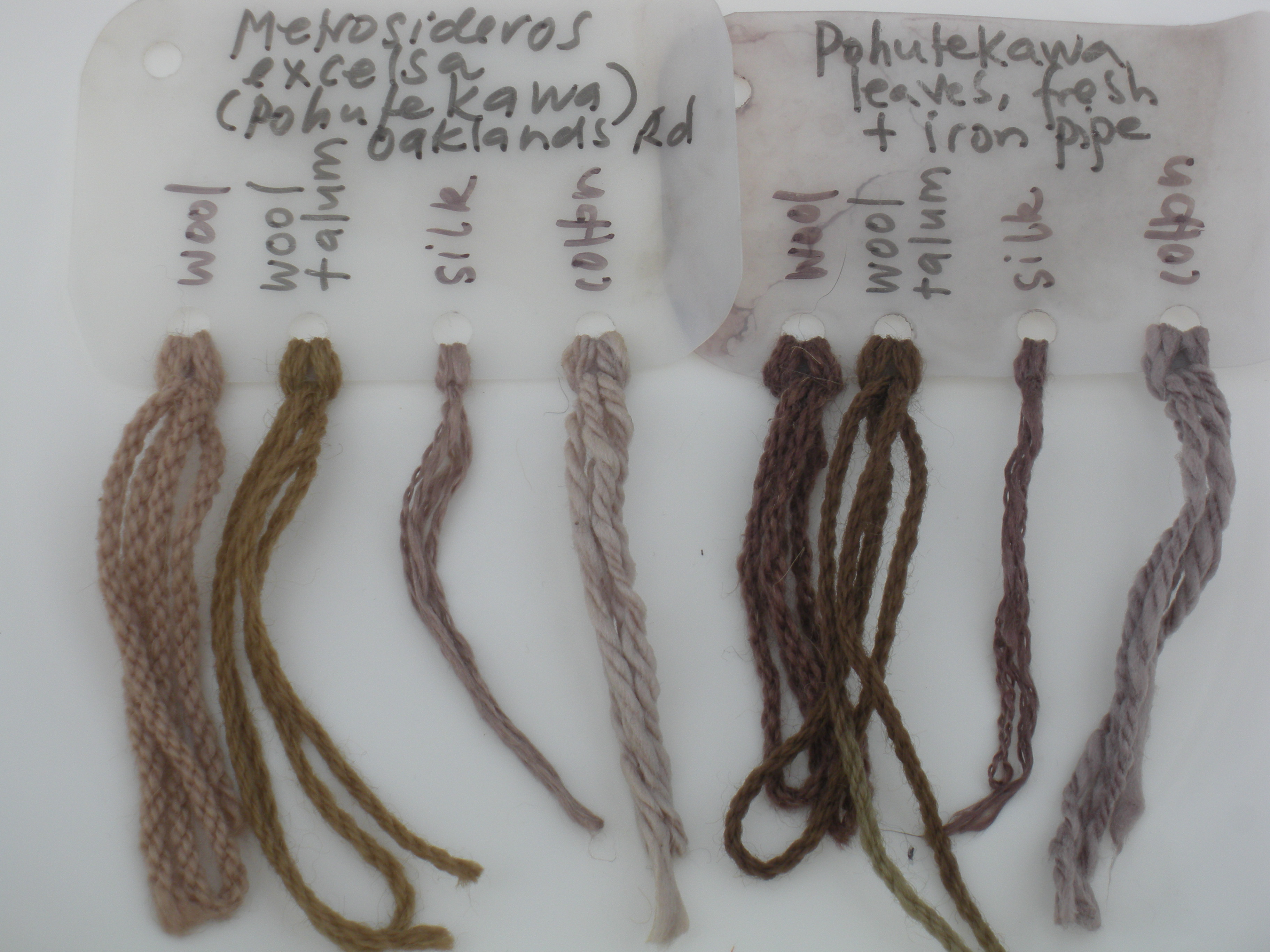
I cooked one with the leaves alone in rainwater and one with leaves, rainwater, and a trusty piece of iron pipe.  I cooked them for an hour at a light simmer and left to cool and sit overnight.  The olive green (or is it khaki) on alumed wool with leaves alone is interesting, but if there are exciting colours to be coaxed from these leaves, clearly I’ll have to try another method. For now, leaf prints are the best result I have achieved.

Leaves alone in rainwater (left) and  leaves, rainwater, and  iron pipe (right) with wool; wool + alum; silk; cotton).

4 Comments

Filed under Dye Plants, Leaf prints, Natural dyeing