
We had a make do and mend afternoon with friends recently. We’re investigating actions we might take about climate change, and we’ve begun with some conversations about consumerism. Who knows where that might lead? I began by stitching up a torn out seam for my partner and tightening all the screws on the clothes rack so it works properly. Meanwhile a rusty frypan was rehabilitated, an electrical plug was replaced, and the endless chewing of moths on fine wool was darned in by others.
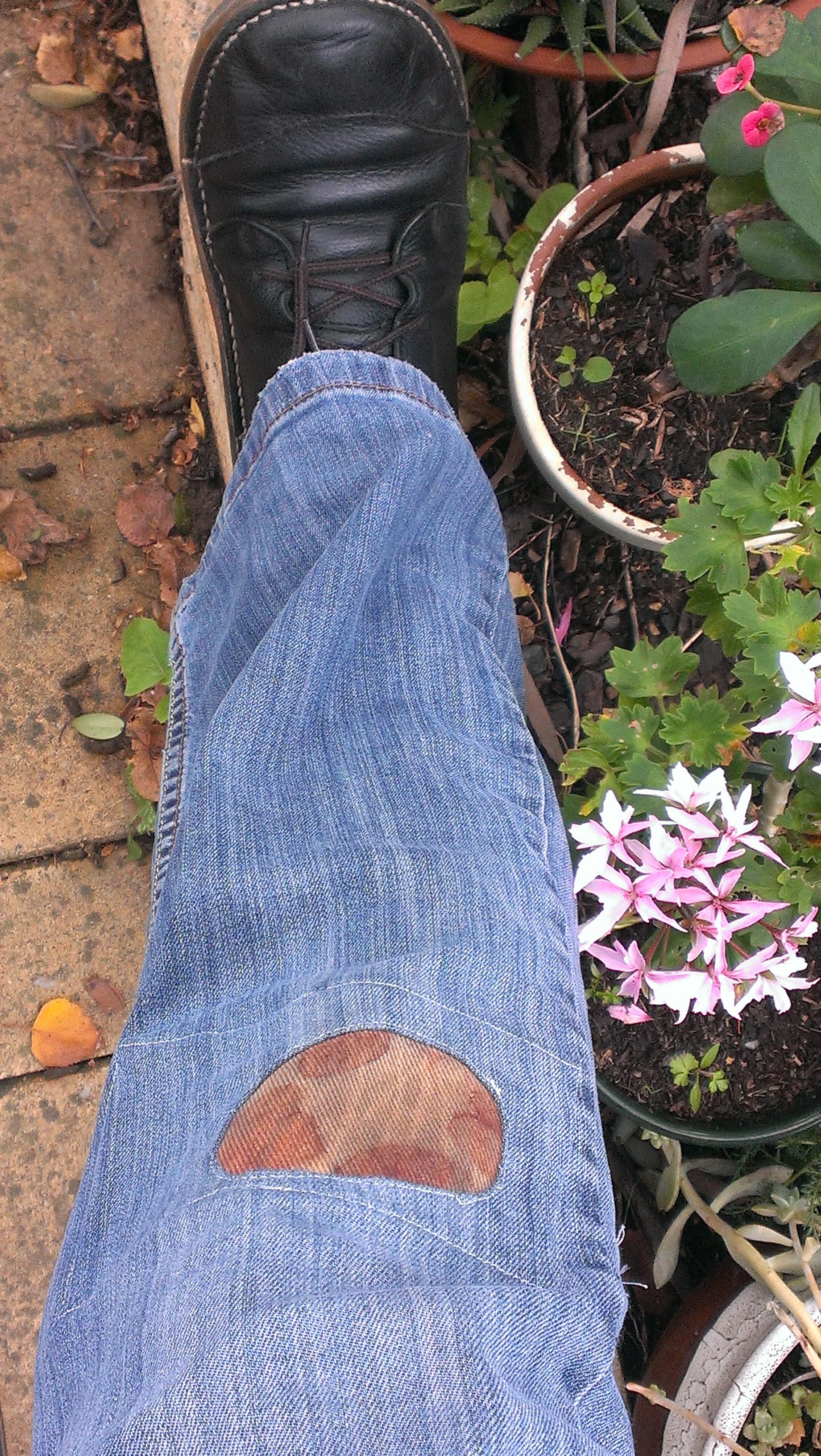
I have a wardrobe which is heavy on the bottom end. I always have more clothes suitable for gardening and doing filthy jobs than I have clothes for best. And my favourites are usually my gardening clothes. Things that are no longer suitable for wearing to work or to visit my mother, unless I’ll be weeding while I’m there. My father is a bit like me. When I knit him socks he puts them in the drawer until he has worn out a previous pair. My current favourite jeans are well past their best, and weeks ago they went through in the knee. I kept thinking I would turn them into a bag, but then I kept taking them out of the reuse pile and pulling them on. So with a crowd of friends who were mending and repairing too, and a pot of pumpkin soup to keep it cheery, I patched them. Maybe one day this patch will be part of a bag!
For those who wish they knew how to patch the knee of jeans, step one for a simple mend is to rip out whichever seam is less complicated. Leave the flat felled, beautifully topstitched seam intact and rip the other one, if there is a choice.

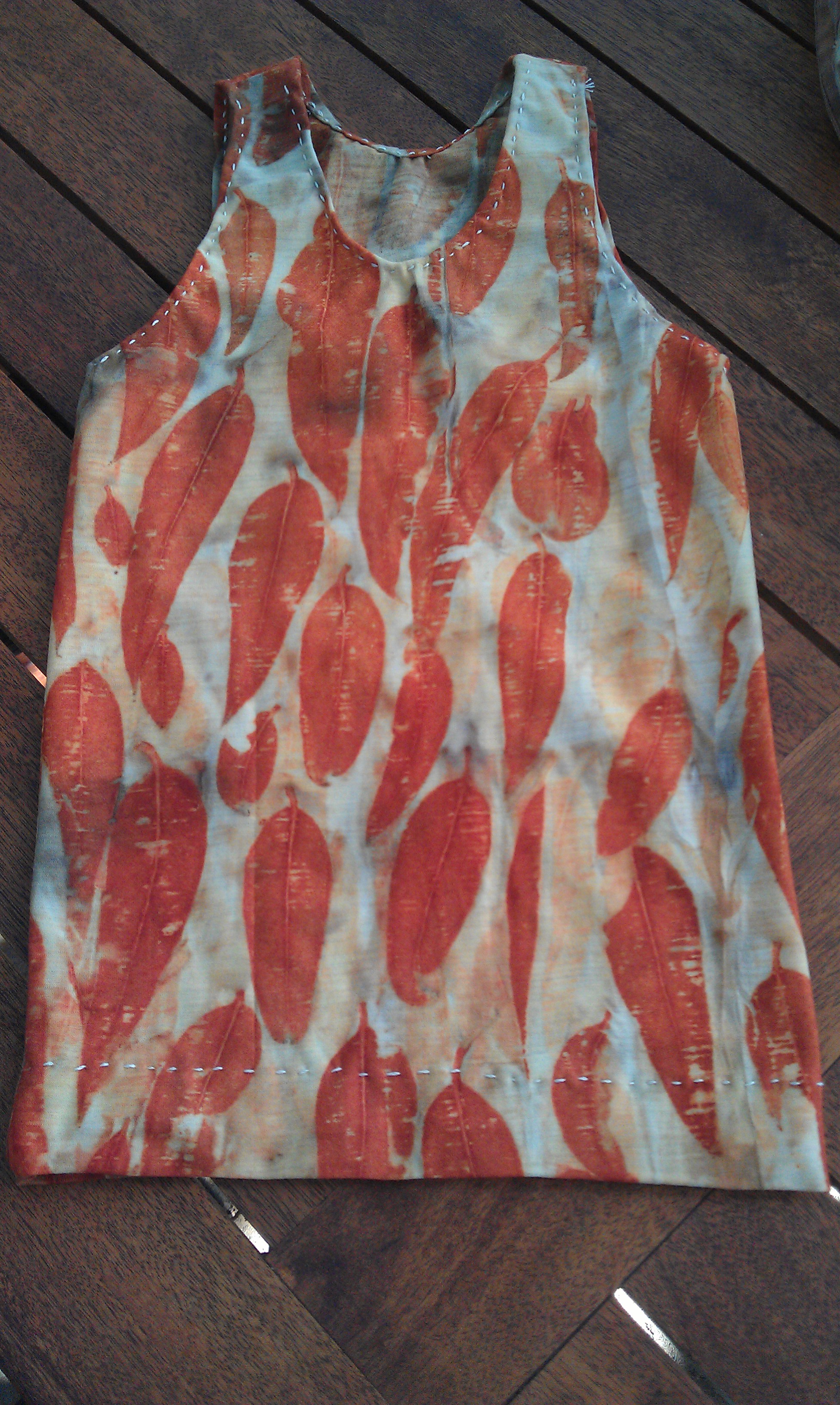
Choose a nice patch. This one was once part of a pair of cotton twill pants and is now eco printed with E Cinerea leaves. Trim back the hole to some solid fabric, and shape it. My mother taught me this mend and always created a straight sided shape, like a rectangle. I decided to try something rounded. Put the patch on the inside, and turn the edges of the jeans under all around, attaching to the patch fabric. Tacking would be a great way to proceed, but I prefer pins. Call me a daredevil!
On the inside, turn the edges of the patch under, toward the wrong side of the jeans. Stitching the first seam and then turning the second would have been a good idea, but I was having an interesting conversation and didn’t want to leave the room to use the sewing machine yet!

Stitch around each edge.

Apologies for the indoor pictures on a rainy day–but here is the patch, being a mend on gardening jeans, in the garden, with the sun out, however weakly!
One of my treasured friends brought some socks with him. It’s a shame about the lighting, but never mind.
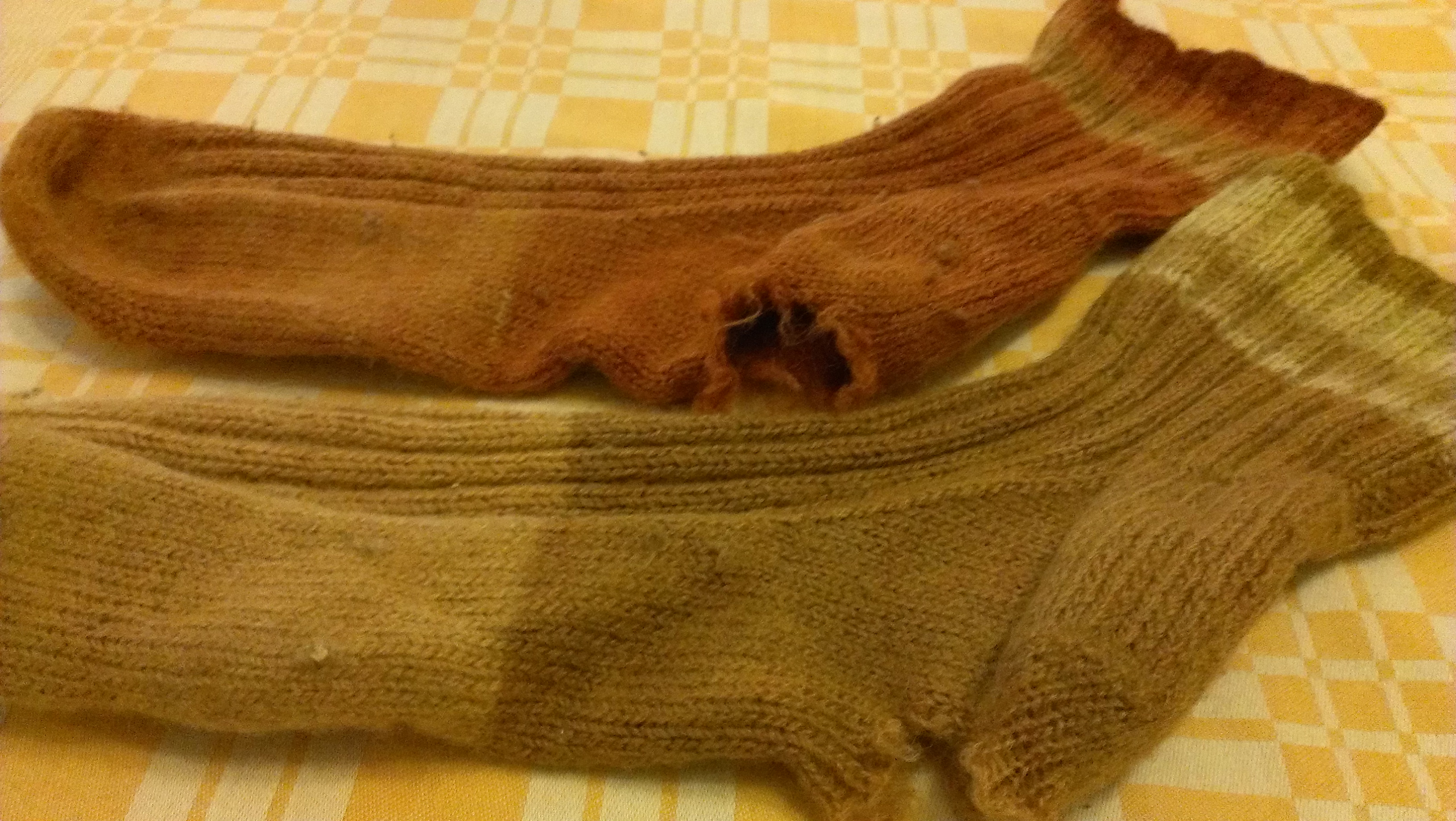
I made these from Cleckheaton 5 ply crepe in pure wool (not the best possible choice for socks) in 2009. Here they are on my desk at work in all their glory in 2009. Who can believe I managed to find the photo (or understand why I took it at work?)

The stripes at the tops are all my samples for the previous period–a metre or two of yarn dyed with samples of local eucalypts and other plants. The rue dyepot was the worst ever–but a triumph of neighbourhood cooperation involving a rendezvous at the local train station where my friend handed a bag of rue prunings out the door and I stood there ready receive them as he continued on his way on the train relieved of his pungent burden! One of the socks is all in orange tones and the other tans and greens. Rue. The ordinary kind does not give red, my friends, take it from me (or sort me out if you know how to get red from it–seems like there is a Siberian kind that might give red–but only from the seeds–or some such). I digress. These socks have been worn a lot, which is very flattering, and my heart’s friend wanted to keep them, though perhaps only for in-slipper wear. We consulted about whether it was feasible to darn these holes. I wasn’t sure. He can darn but has not kept up his knitting skills in a period when carpentry has been needed more at his place.
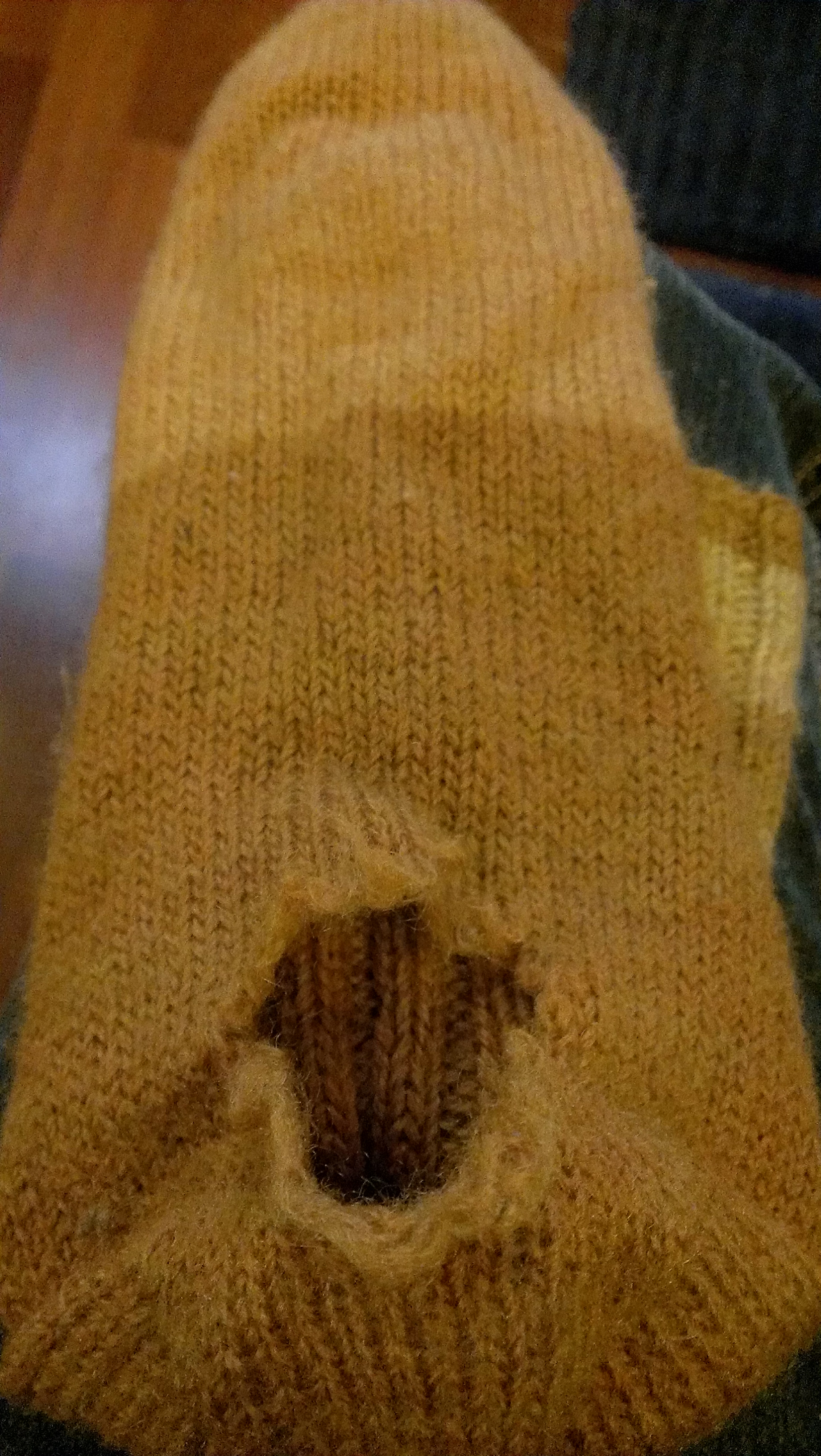
He has the biggest feet on my knitting roster. These holes are BIG. I wasn’t sure about darning them. He went off to tend to a bicycle (there were others people dealing with wood and still others entertaining children with the wheelbarrow and others still darning). I thought it over, no doubt drawing on things I’ve seen and read, and wondered if I could just pick up and knit on a patch. I pulled out 4 ply patonyle dyed with eucalypts. I’ve learned a few things about getting a strong colour since I dyed these socks. the original wool in the socks has worn thin and the 4 ply was fine for the job. I decided on a visible mending aesthetic.

At first, I wasn’t sure how to join on the sides on. Then it dawned on me… pick up a further stitch and knit or purl it together with the edge stitch. What could be simpler?
Put your sunglasses on, I must have changed the settings on the camera.

When I got to the end of each hole, I decided to graft.

I picked up more stitches and kitchener stitched (grafted) them together. And in the end… the conversation was so good I mended all three of the big holes. Comfy socks to wear when your feet are up. Eat your hearts out!




 Local & Bespoke