Category Archives: Dye Plants

Opening the first experimental jars

I finally decided I could open some of my stuff, steep and store jars.  I have to say that all three of the first I decided to open are experiments–not just my experimenting with India Flint’s preservation dyeing process (I have shown myself a poor follower of instructions many times so everything is an experiment in one sense)–but using this method to try out plants that have no dependable dye properties I know about.  India Flint seems a genius to me, but even she can’t convert a plant with no exciting dye properties into a gem on my behalf.  I find India Flint’s process exciting, and I am loving using it with experiments using small quantities.  But naturally, India hasn’t stood by my side and saved me from my own mistakes.  Speaking of my mistakes, I want to say: One total sealing failure which resulted in mould.  So far, 24 jars that sealed in spite of some of them being re0used many times.

1. Rhagodia berries.  These are the fruits of the seaberry saltbush, gathered on holiday.  I learned a lot from this jar.  Its contents began to ferment while we were on holiday and before I could get it to a place where I could try to seal it.  Ahem.  Next time, I’d put it in the fridge while it waited, because this was totally predictable.  I failed to think of these berries as essentially, just like a jar of any other fruit.  After all, they are a (small) fruit. And it was summer.  Next, I had sealing trouble and decided in the end that we re-use jars a lot, and that if I want a really good seal, perhaps I should try using jars I know won’t have lids that have been bent out of shape.  India kindly assisted with a re-sealing strategy (I’d forgotten about it, but there it was tucked inside the lid!).  13 months after they went into the jar:

2015-03-27 16.42.03

And here are the contents! Including some respectably orange-brown silk embroidery thread.

2015-03-27 16.44.36

2. Hibiscus flowers from the Himeji gardens. The trees in Himeji gardens have purple leaves–very pretty.

2015-03-29 08.23.05

By coincidence I found these trees growing at West Lakes when I was there supporting three friends doing a triathlon (there is a lot of waiting if you’re a spectator)–a man saw me taking a photograph of his tree and told me it was a cottonwood hibiscus (H tiliaceus–more here).

2015-03-27 16.46.58

This is the most unappealing looking of all my dye jars.
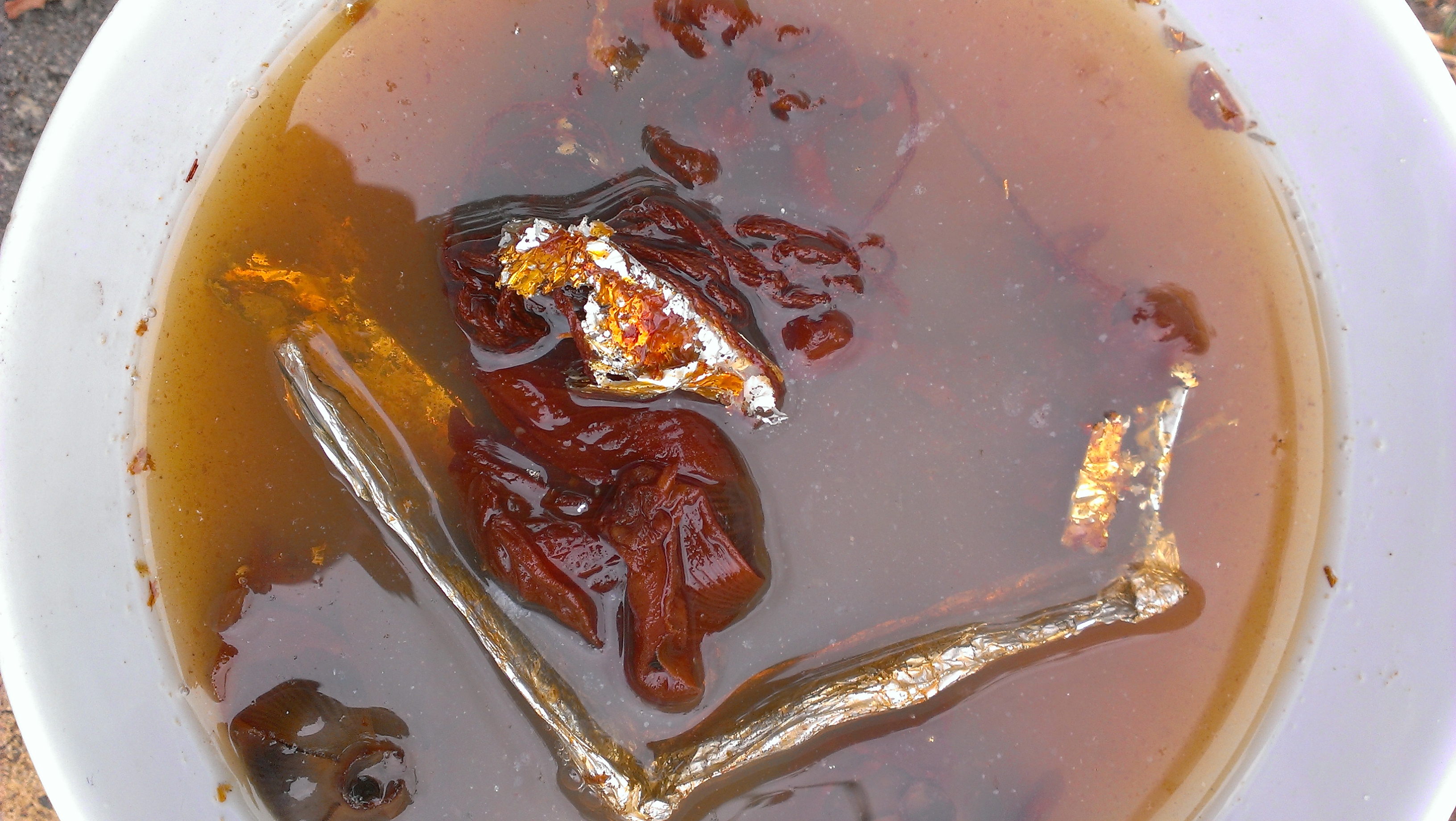
2015-03-27 16.47.51

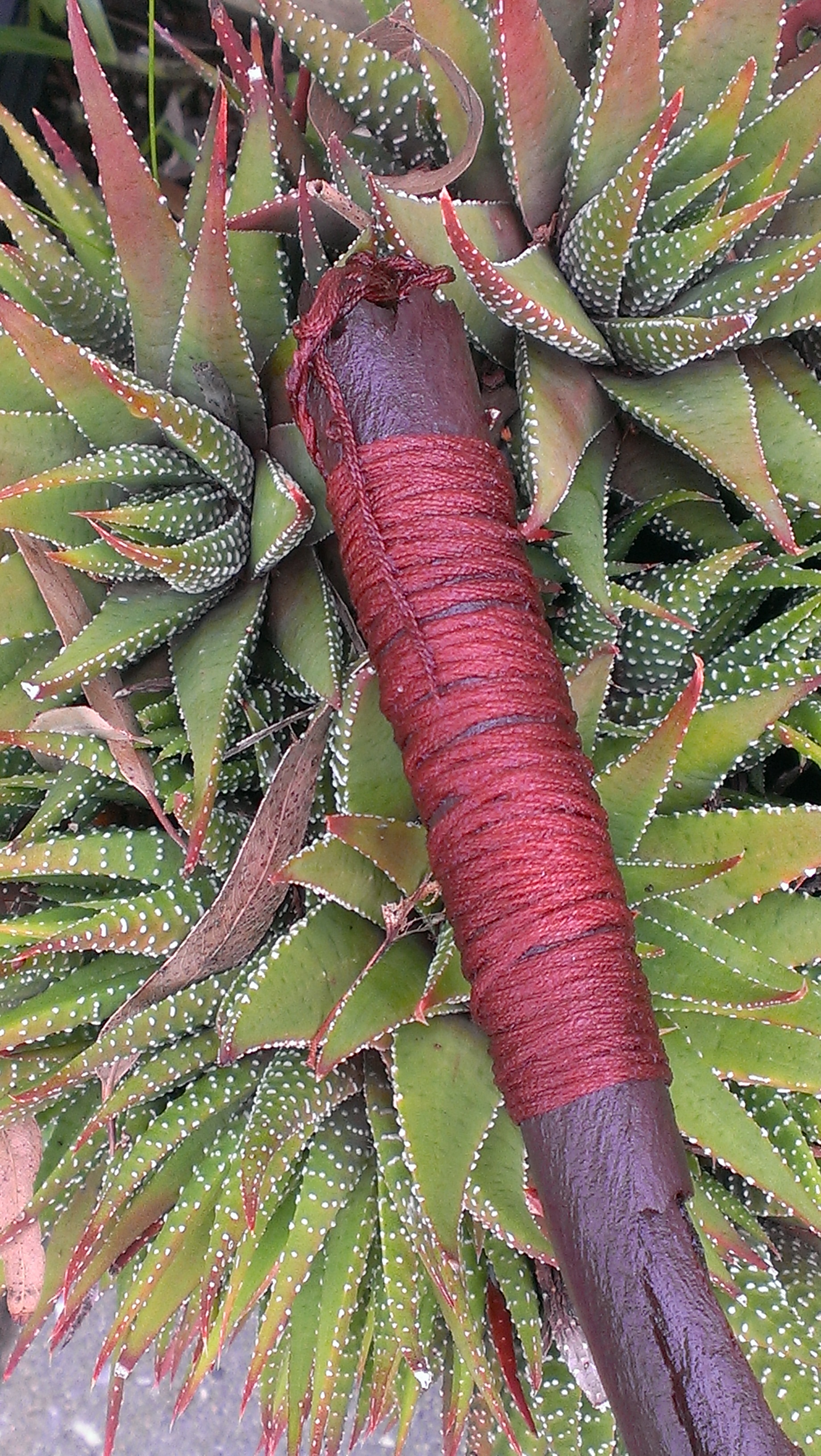
The contents are no more spectacular but the thread in this jar is quite a deep brown colour.

3. Finally, the camellia flowers.  Hope springs eternal!  I had all kinds of experiments with the camellia flowers  when they were plentiful. This jar looked almost grey.  This one had only been in the jar since August 2014.  Not really enough time for a full result, maybe.
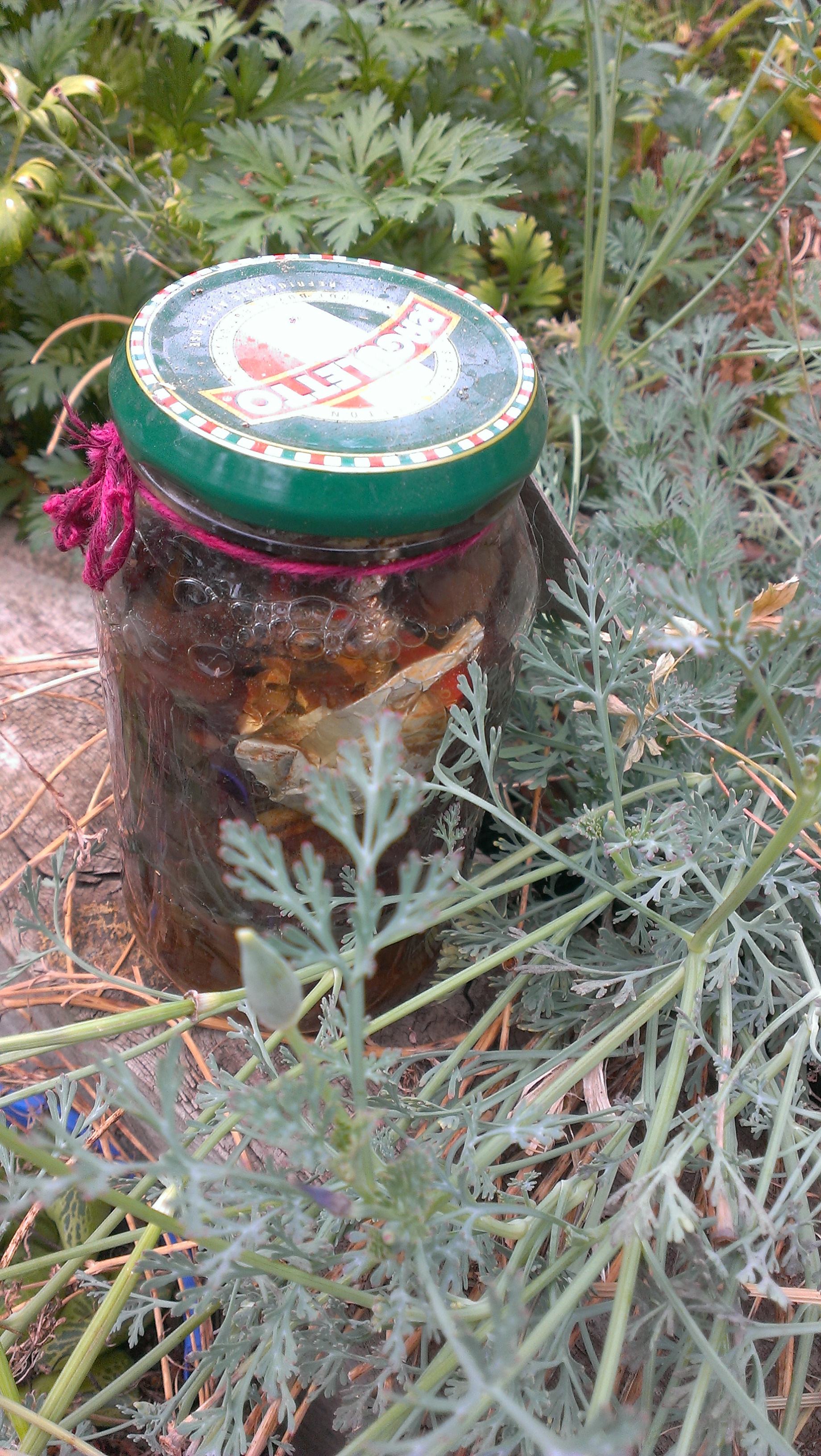
2015-03-27 16.51.15

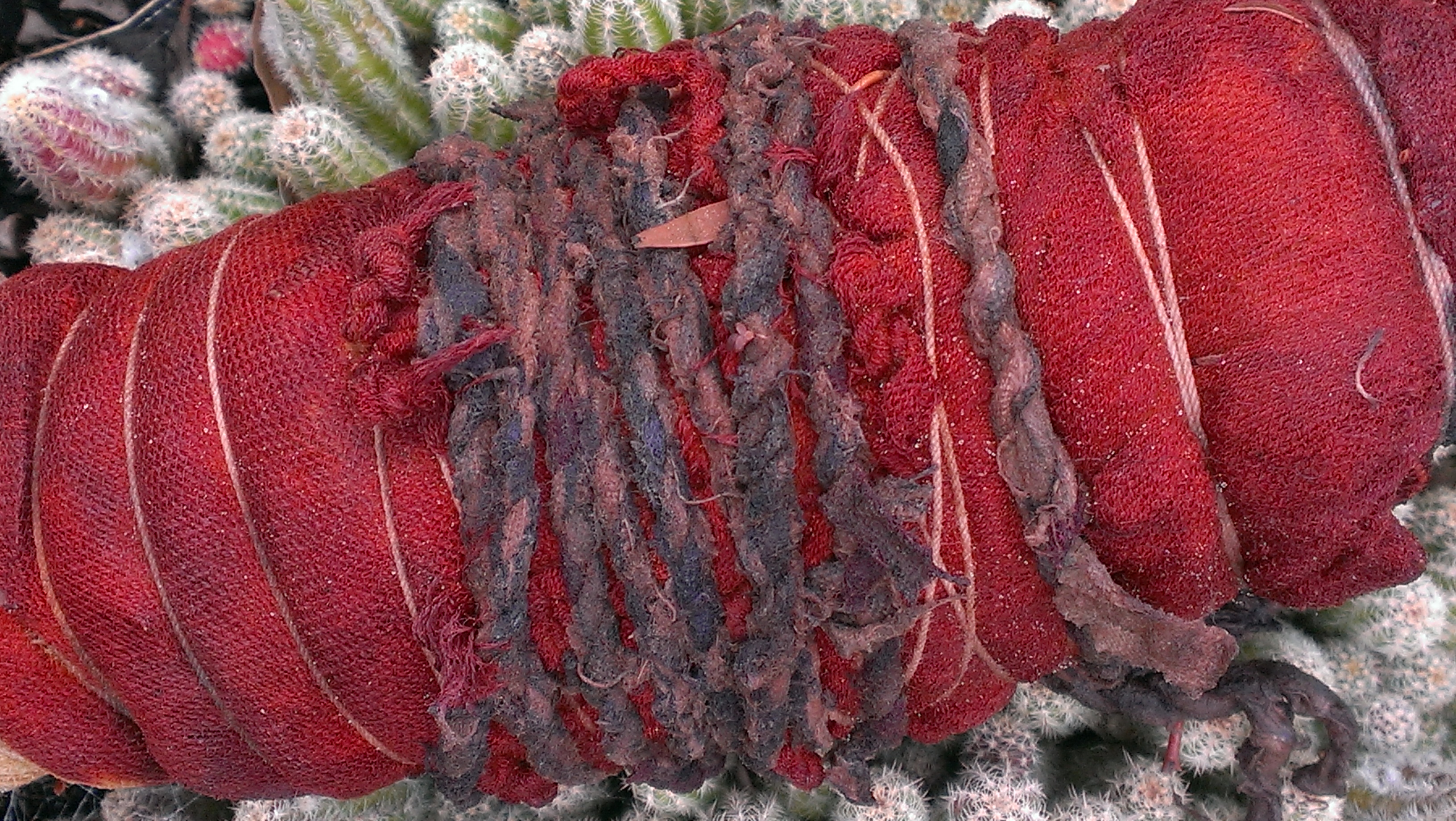
Actually the colour on that silk thread is pretty good. But nothing like the colour of the flowers from whence it came.

2015-03-27 16.53.32

If you are curious, there is a lovely post on using this method here.  Another here.  Another blogger has some glorious results to show here.  Go visit and be inspired!  There is a wonderful online pantry of people’s experiments kept by India Flint with links to the book and all here.  You can find my jars as they looked once sealed up there.  Now to wait until some more jars have had a good long wait.
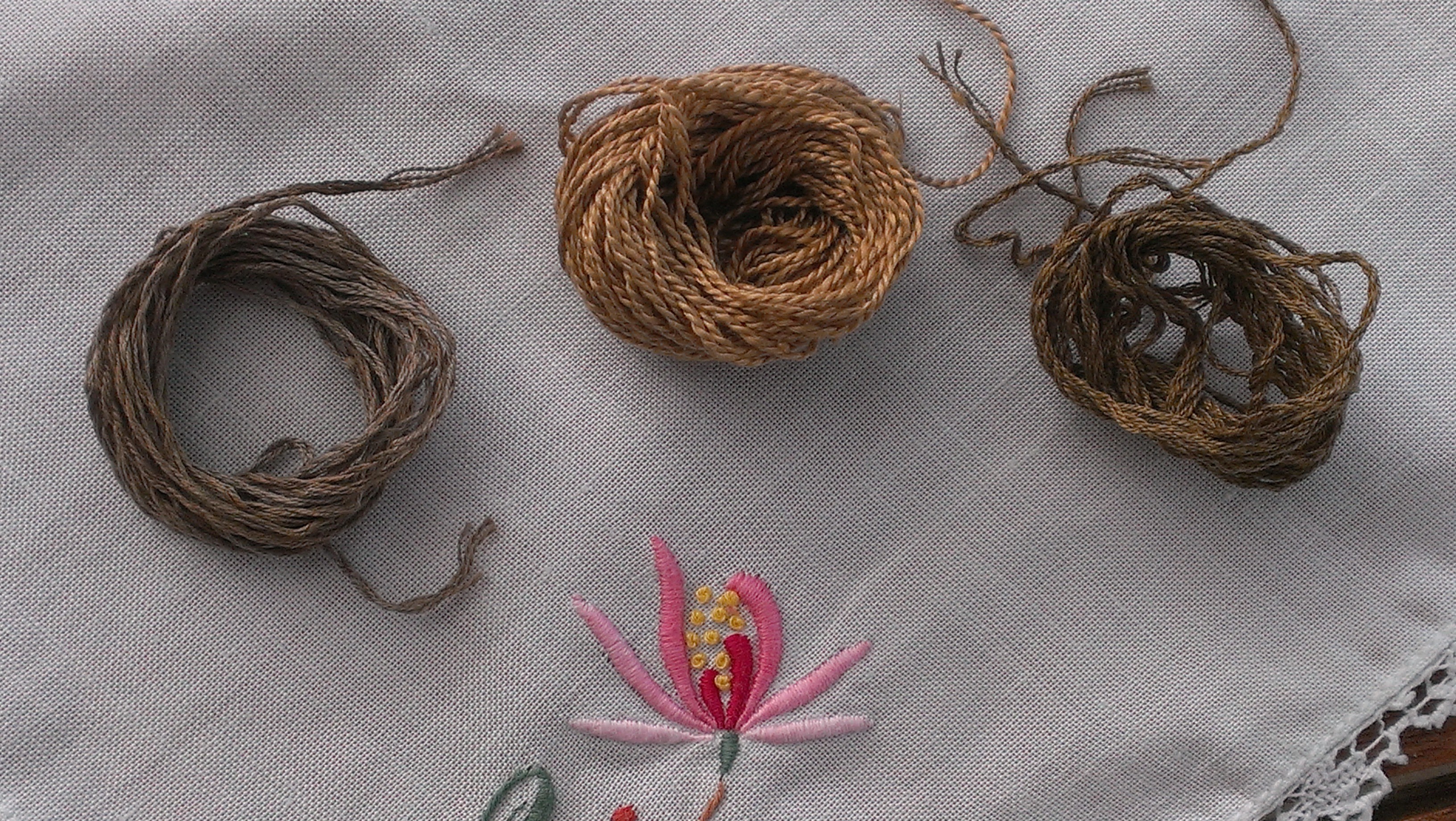
2015-04-05 15.50.34

Things learned so far:

  • use a jar that has a good chance of sealing–an undamaged lid is a good start.
  • treat contents with care if they have to wait for sealing.  Duh.
  • jars that appear not to have sealed completely may still be fine.  I selected three of these jars because I had concern about sealing despite multiple attempts.  The contents smelled pleasant.  Nothing mouldy, smelly or rank at all.  They were not bulging at the lid (which would suggest fermentation) but they didn’t have any indication of having vacuum sealed either.  Perhaps I conceded too quickly! I have a madder jar that contains some mould, which Deb McClintock on madder dyeing says can provide good colour even if it happens to go mouldy…I decided to re-heat and leave the steeping madder on the strength of these jars having sealed.
  • be bold.  What if I’d had a little more boldness and some bigger jars?  I would now have more than thread to show for my efforts.  Timidity has its place, but not every place!

2015-04-05 15.50.58

4 Comments

Filed under Dye Plants, Natural dyeing

Birthday gift

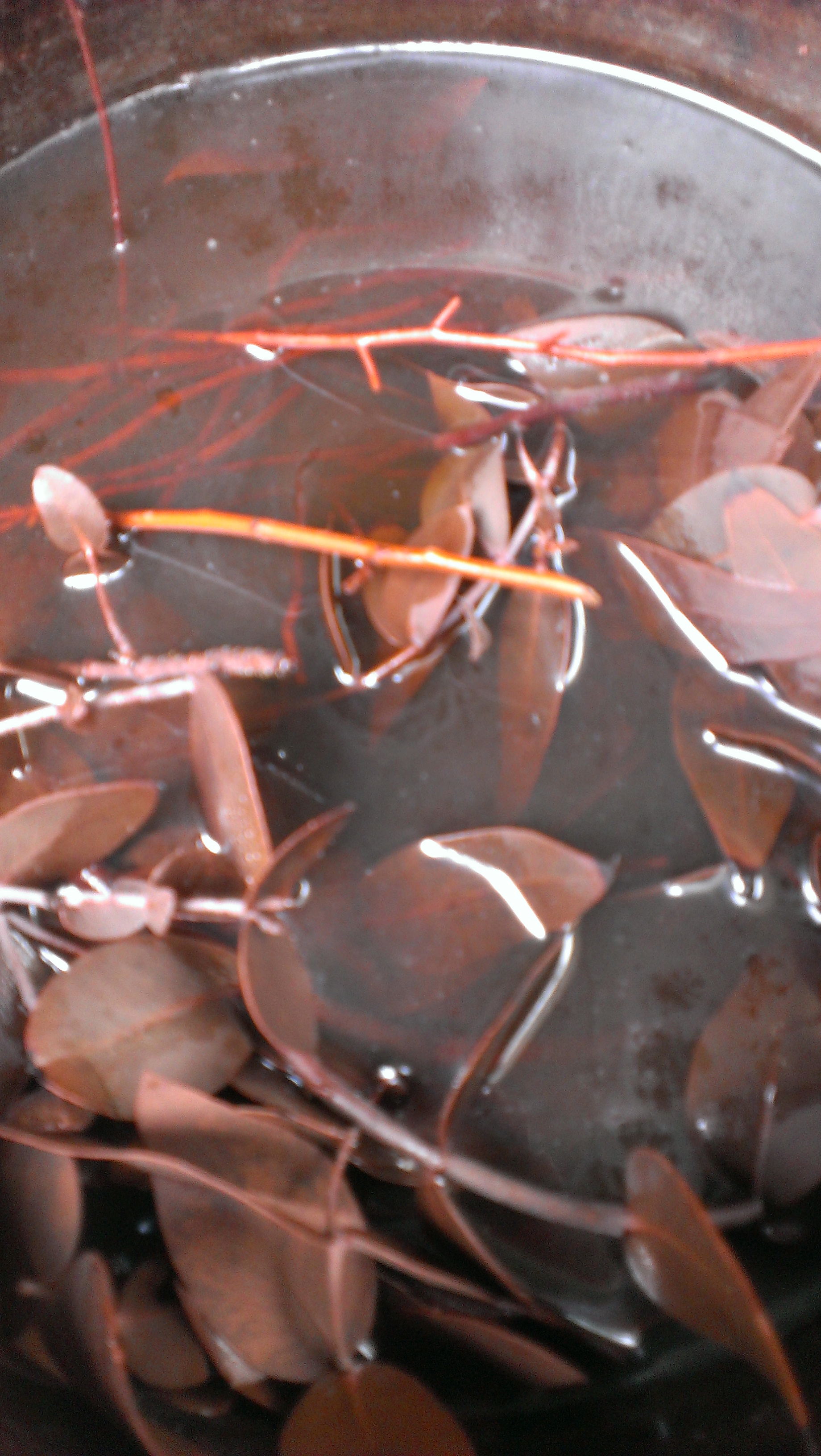
It came to my notice that a niece who was shortly to visit us also has a birthday approaching. I put on the dye pot.

2015-08-15 14.49.20

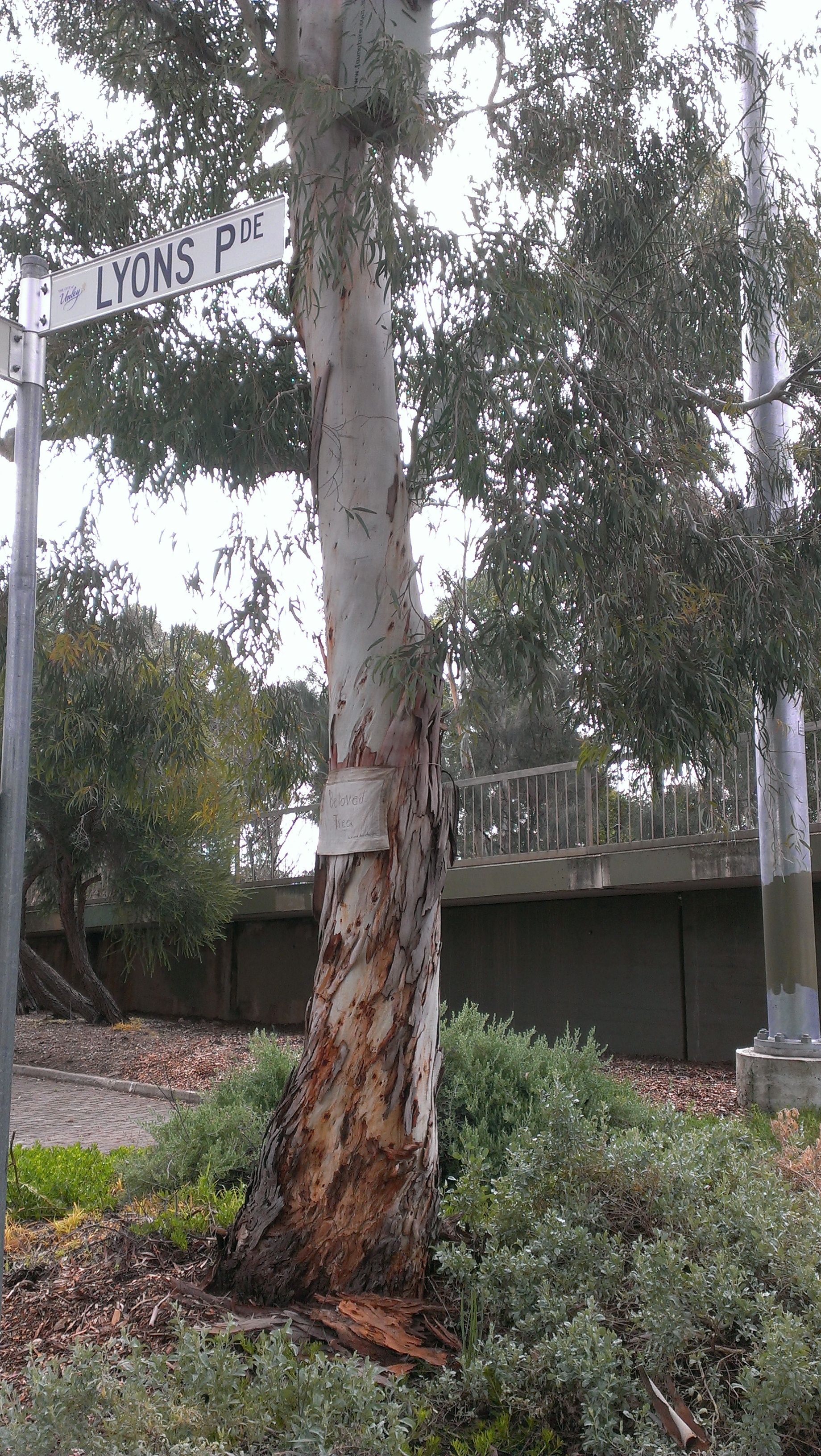
I went out to visit a favourite tree.

2015-08-15 14.57.39

I had ordered the scarves with this kind of occurrence in mind, so I pulled one out and pulled out the new silk thread as well.

2015-08-15 16.06.10

In they went (and so did the stems that were left from the leaves I’d used)!

2015-08-15 17.09.30

The transformation is always amazing in the dye pot.

2015-08-16 10.19.20

But the contents are even better fun!

2015-08-16 10.20.21

Shown here wet from the dye bath…

2015-08-16 10.20.58

And here hung out to dry.

2015-08-16 10.25.05

Yes, she does like it….! And we took her out on a walk to see the tree that contributed its glory to her gift.

2015-08-16 10.25.14

20 Comments

Filed under Dye Plants, Eucalypts, Leaf prints, Natural dyeing, Neighbourhood pleasures

Himeji Gardens in autumn

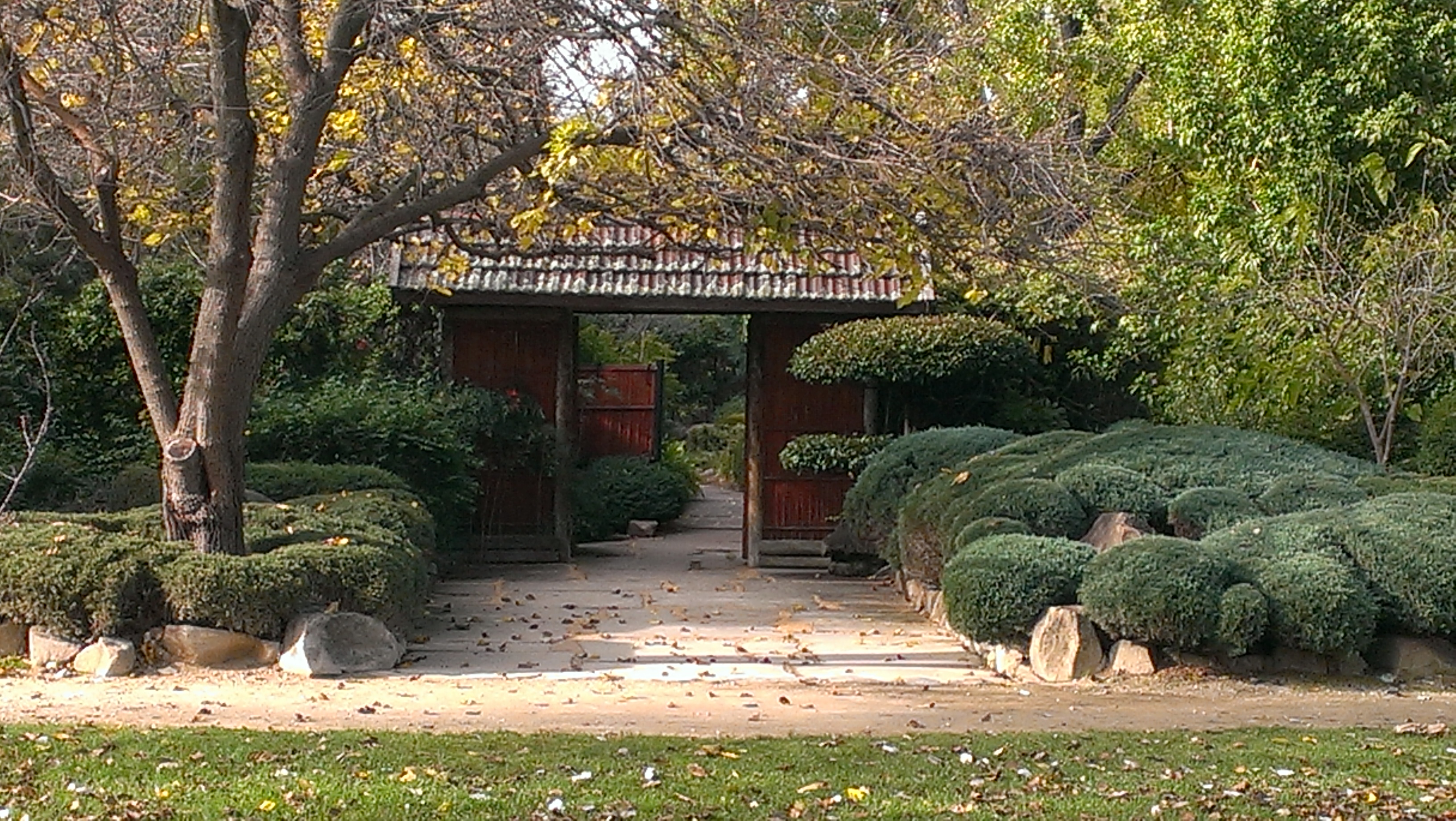
I love the Himeji Japanese gardens, which are in the parklands that surround our city, on the southern side.

2015-05-30 09.53.35

I was passing on my way home from something, in the daytime, by myself (no passengers to convince)–so I pulled over and went in to see what I could see.

2015-05-30 09.46.11

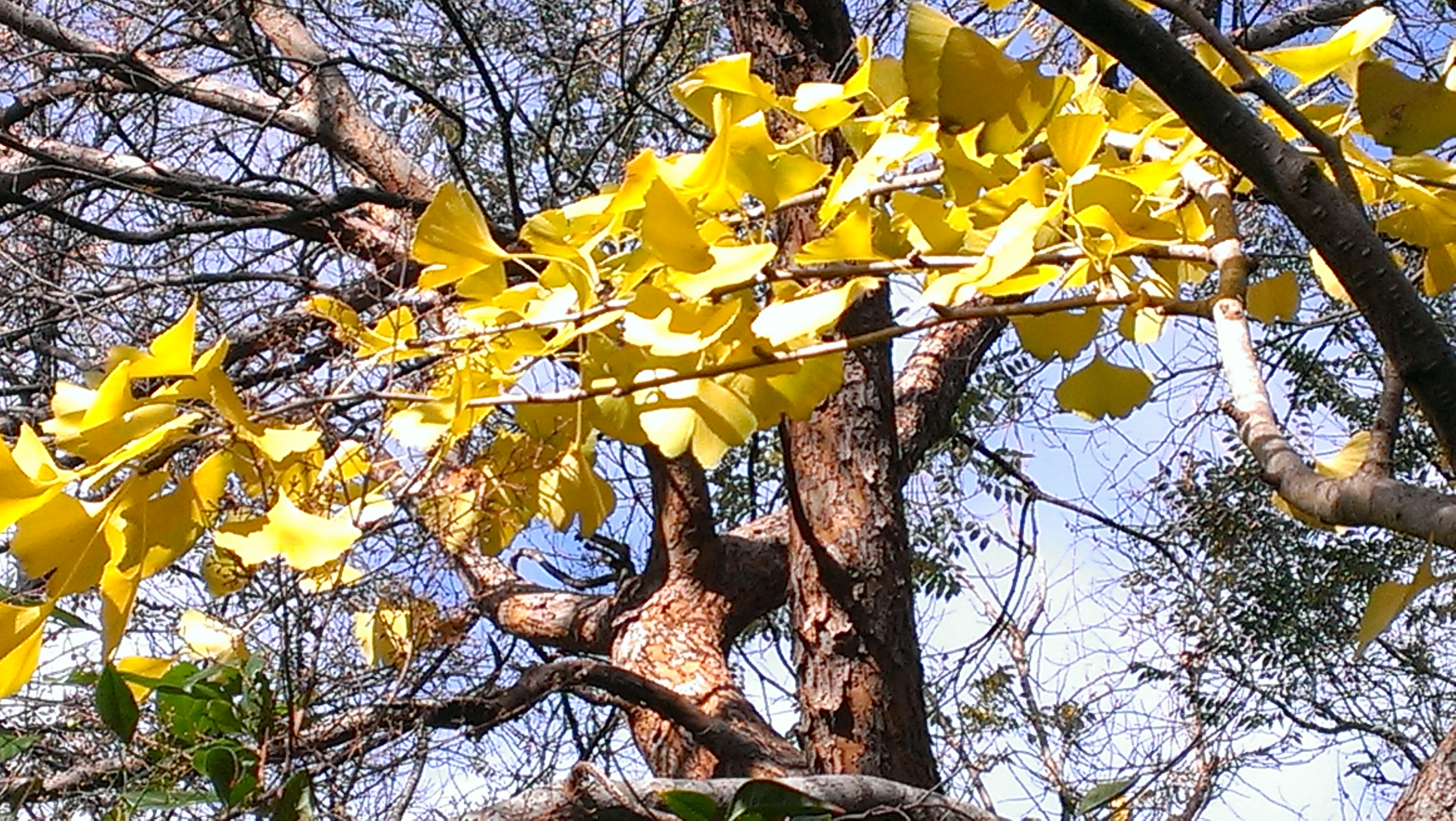
The gingkos had turned yellow and begun to drop their leaves.

2015-05-30 09.44.29

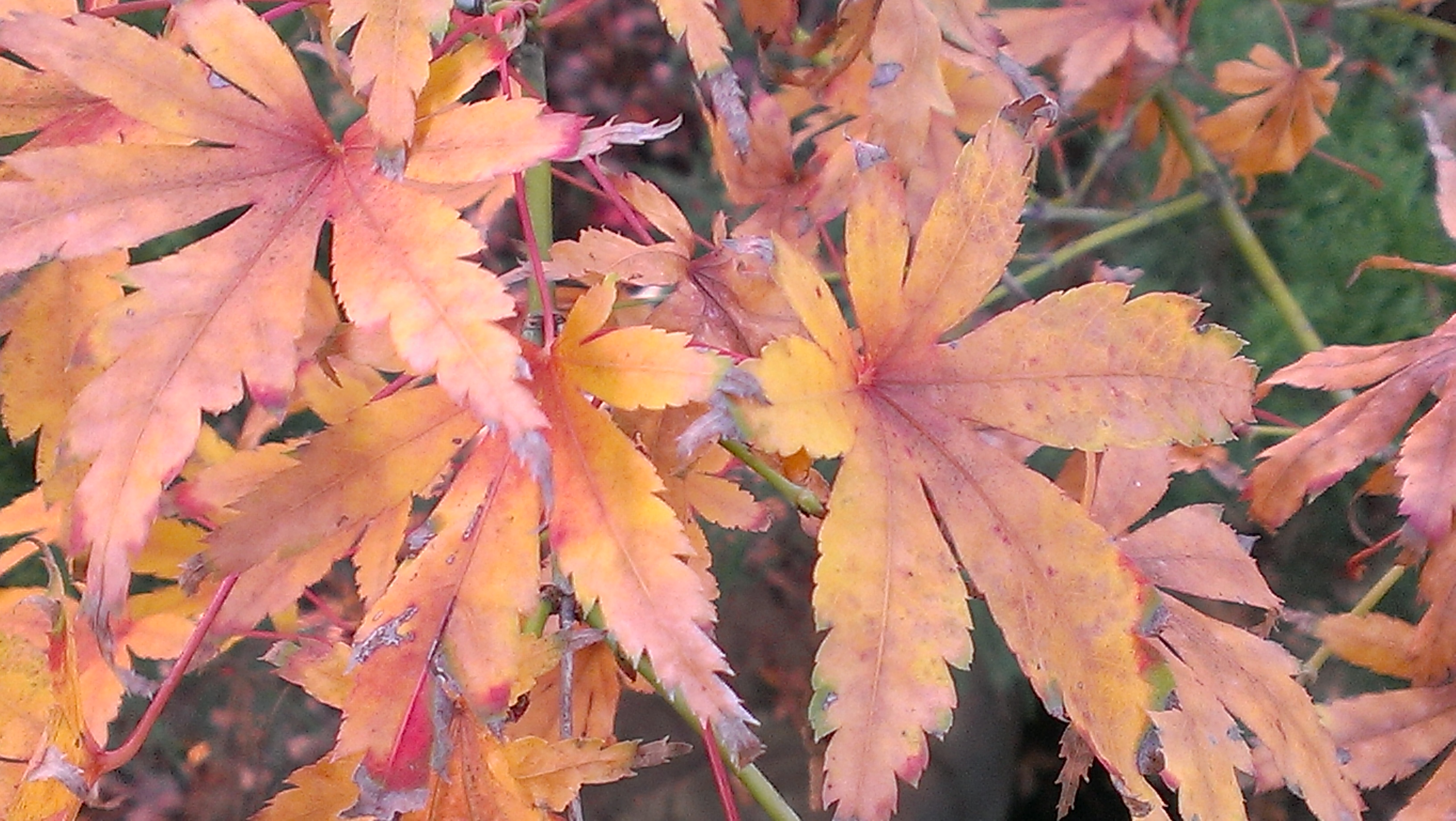
The maples were in various stages of colouring and falling.

2015-05-30 09.49.26

The camellias had begun to flower (the same is true at home).

2015-05-30 09.50.00

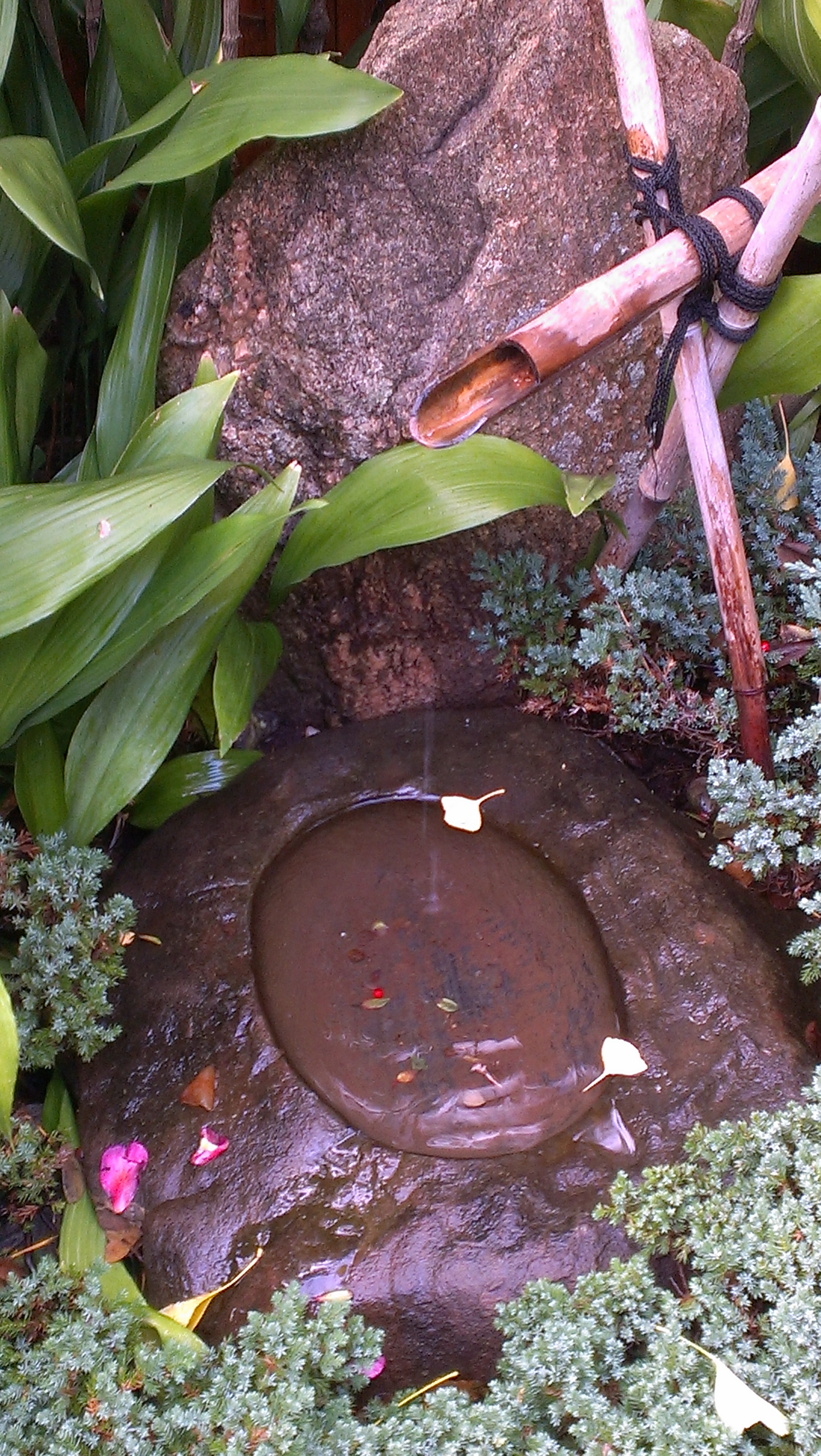
The water features were as glorious as ever.  I managed to glean a few dead daylily leaves which made lovely string.

2015-05-30 16.51.16

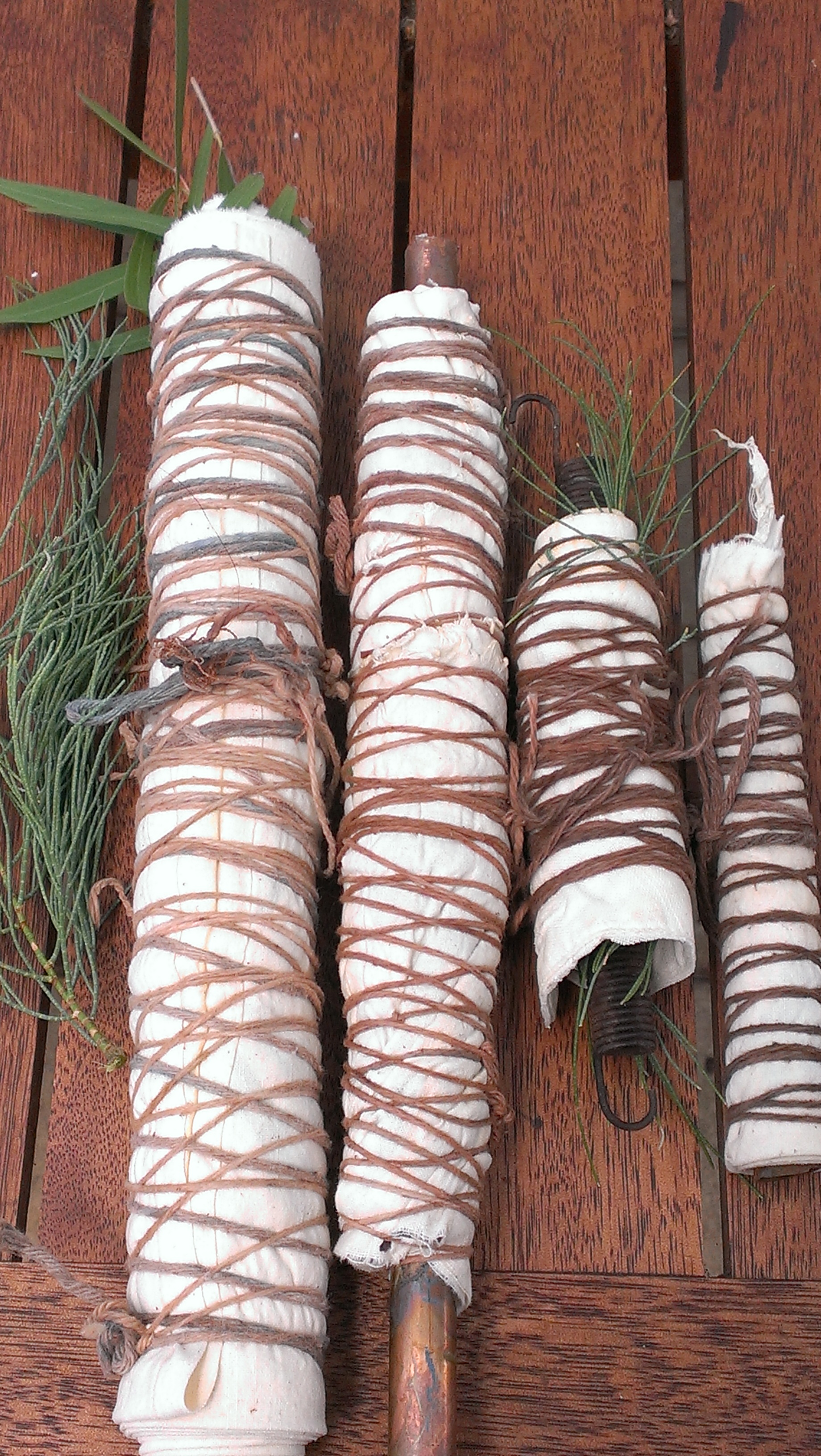
I collected fallen leaves and the odd twig that had come down in the wind.  At home, I added prunus leaves from trees in the neighbourhood and some dried eucalyptus leaves… and rolled experimental bundles too.

2015-05-30 17.05.01

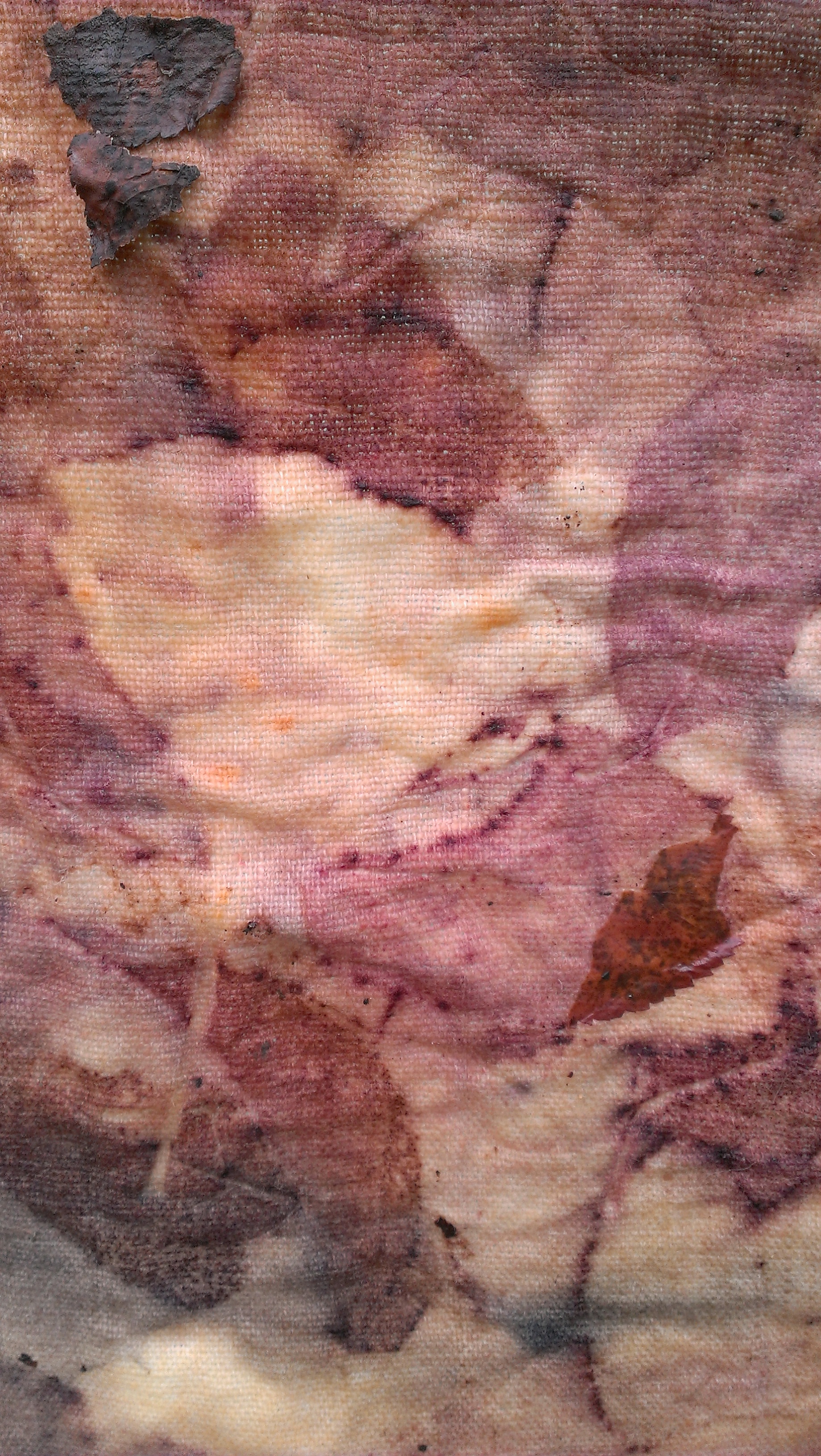
I love the maple prints on linen.

2015-06-01 08.57.23

The prunus leaves came out pretty too–and in some places I did get gingko leaf resist prints.  If you look carefully!

2015-06-01 08.58.02

This bundle was an experiment–maple/prunus/eucalypt on some gifted silk fabric.

2015-06-01 08.57.33

I tried woad leaves (and japanese indigo leaves and the odd soursob leaf for good measure) but clearly I’ll have to try that again!  The fabric is wet here and by the time it dried there was almost nothing to see.  On the other hand… the woad is leafing up, and my woad seed is germinating!

2015-06-01 08.59.31


11 Comments

Filed under Dye Plants, Leaf prints

Woad!

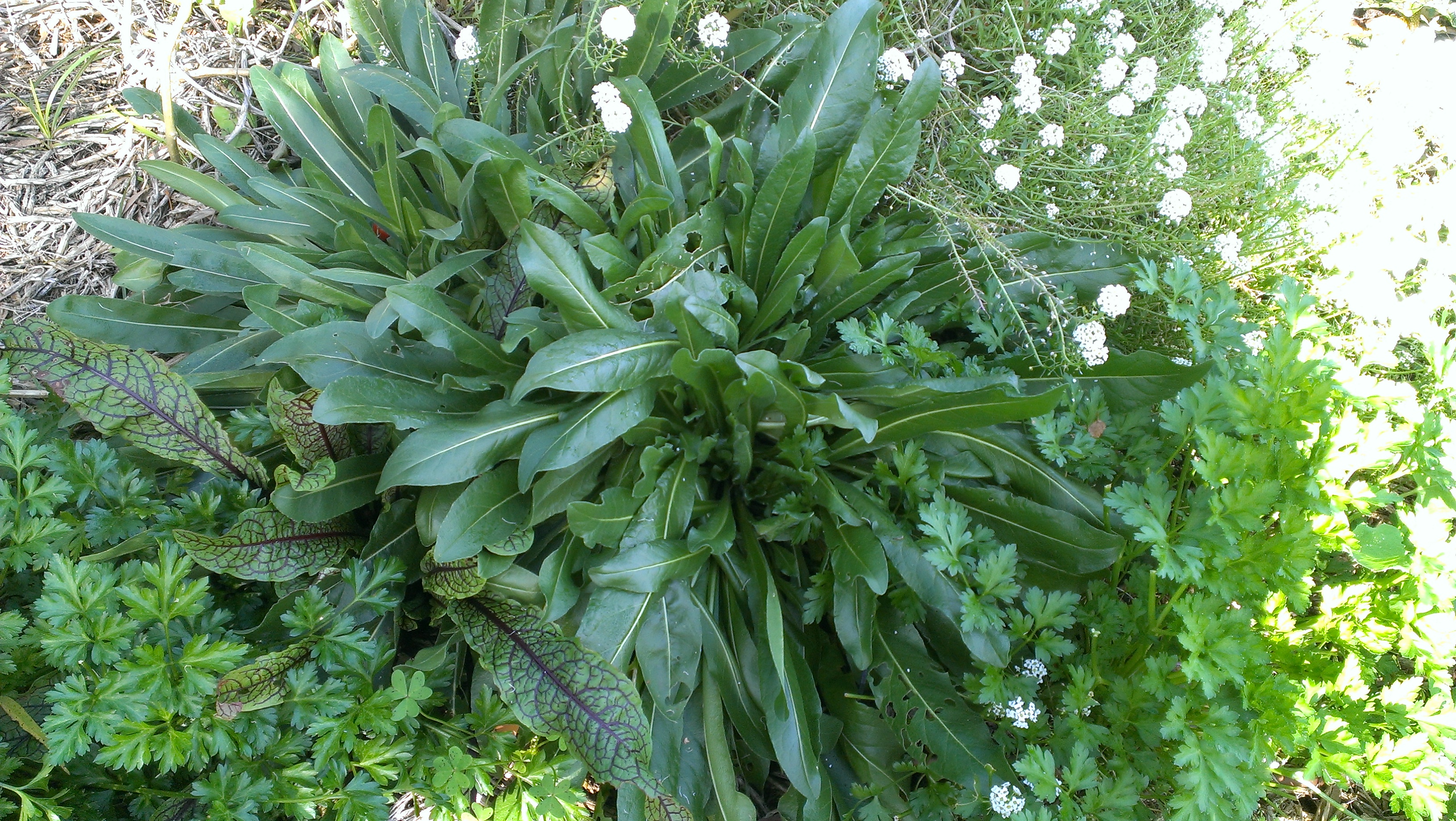
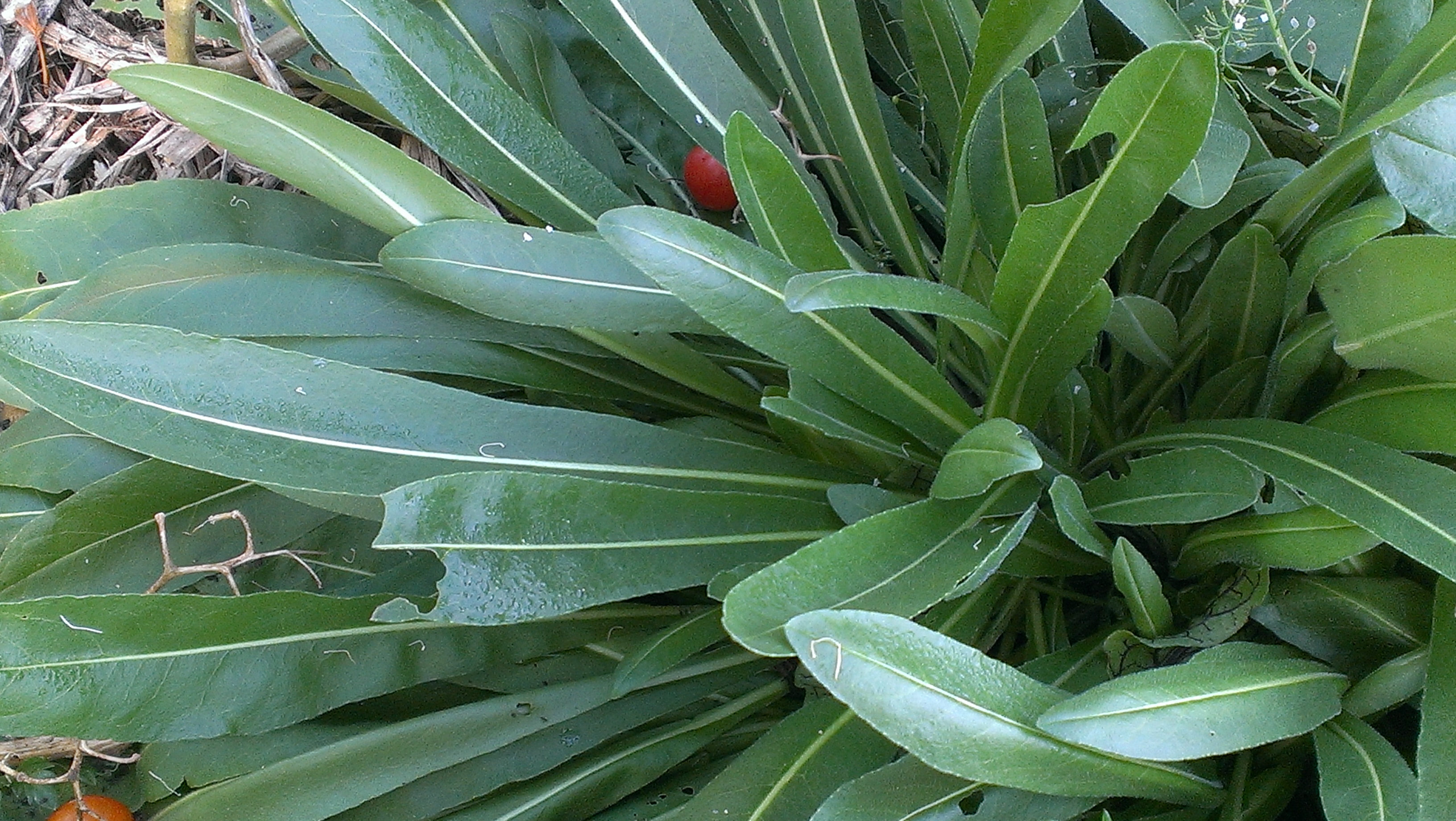
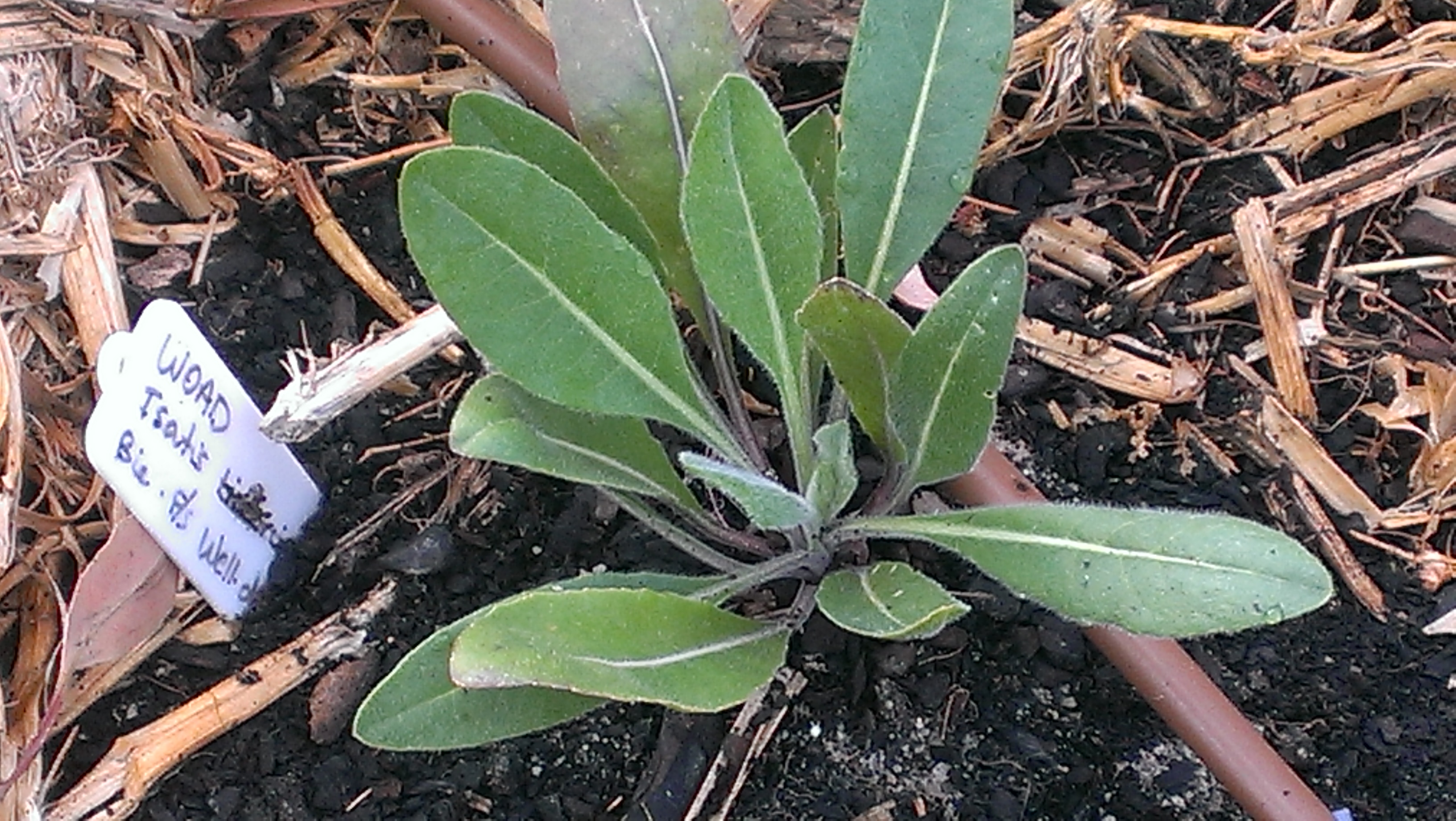
I know, I’m easily excited, and I shouldn’t shout at people who are kind enough to read this blog, but WOAD!  I hang about on a couple of natural dyeing boards on Ravelry and I think it was there I saw a link to this resource about dyeing with woad–entirely graspable (apart from the absence of a reducing agent).  And in metric, always a plus. A couple of other Australians were chatting on Ravelry about when to use your woad–and that had me thinking now was the time to do it.  So.  Here are my two plants (before).

2015-05-23 11.27.58

There has had to be some explanation about this not being a salad green, which ought to be a clue about the  variety of salad greens we grow here.

2015-05-23 11.28.06

I had a lucky find behind the woad… the last of the cherry tomatoes.

2015-05-23 11.45.29

There was more woad than I thought.  And for anyone who has been wondering, I now know where the snails live and prefer to breed. Which confirms my opinion that the trouble I have had growing woad from seed might be due to its being utterly delectable to snails and slugs and every passing nibbler.

2015-05-23 11.48.33

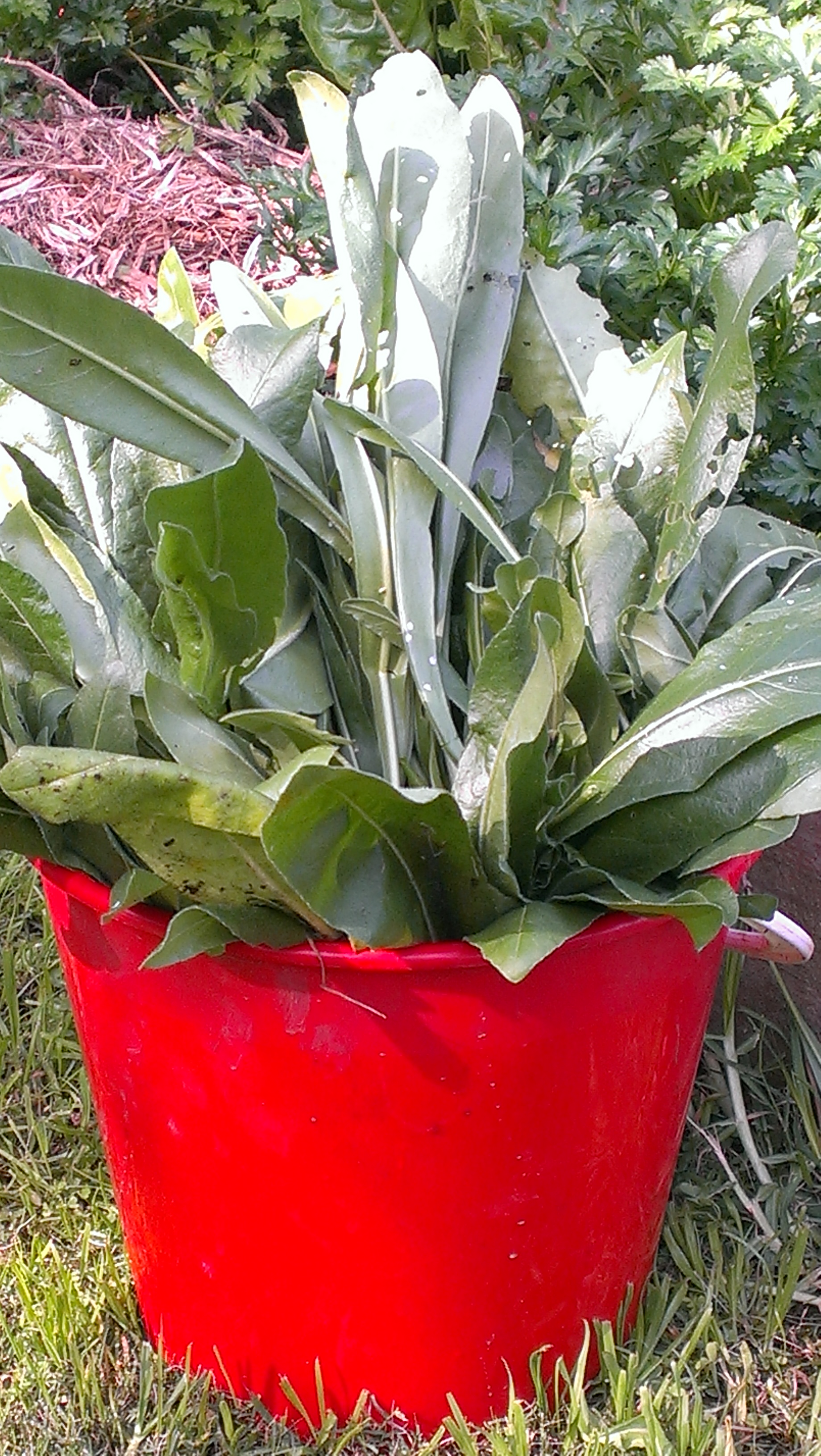
This is the harvest!  For anyone else who has been wondering why some of the silverbeet hasn’t been thriving, another duh!  Moment in the vegie patch.  Those are white beetroot.  I don’t remember planting them, but more than happy to eat them in any case…

2015-05-23 12.06.49

Chopped woad leaves.  Three litres of chopped woad leaves.  A lot of care was taken to ensure no snail was wounded at this stage.

2015-05-23 12.08.39

Into the boiling water.

2015-05-23 12.26.27

Straining through four layers of cloth.

2015-05-23 12.35.49

Measuring the hot liquid (about 2 3/4litres)–and a pinky-browny colour.

2015-05-23 13.19.25

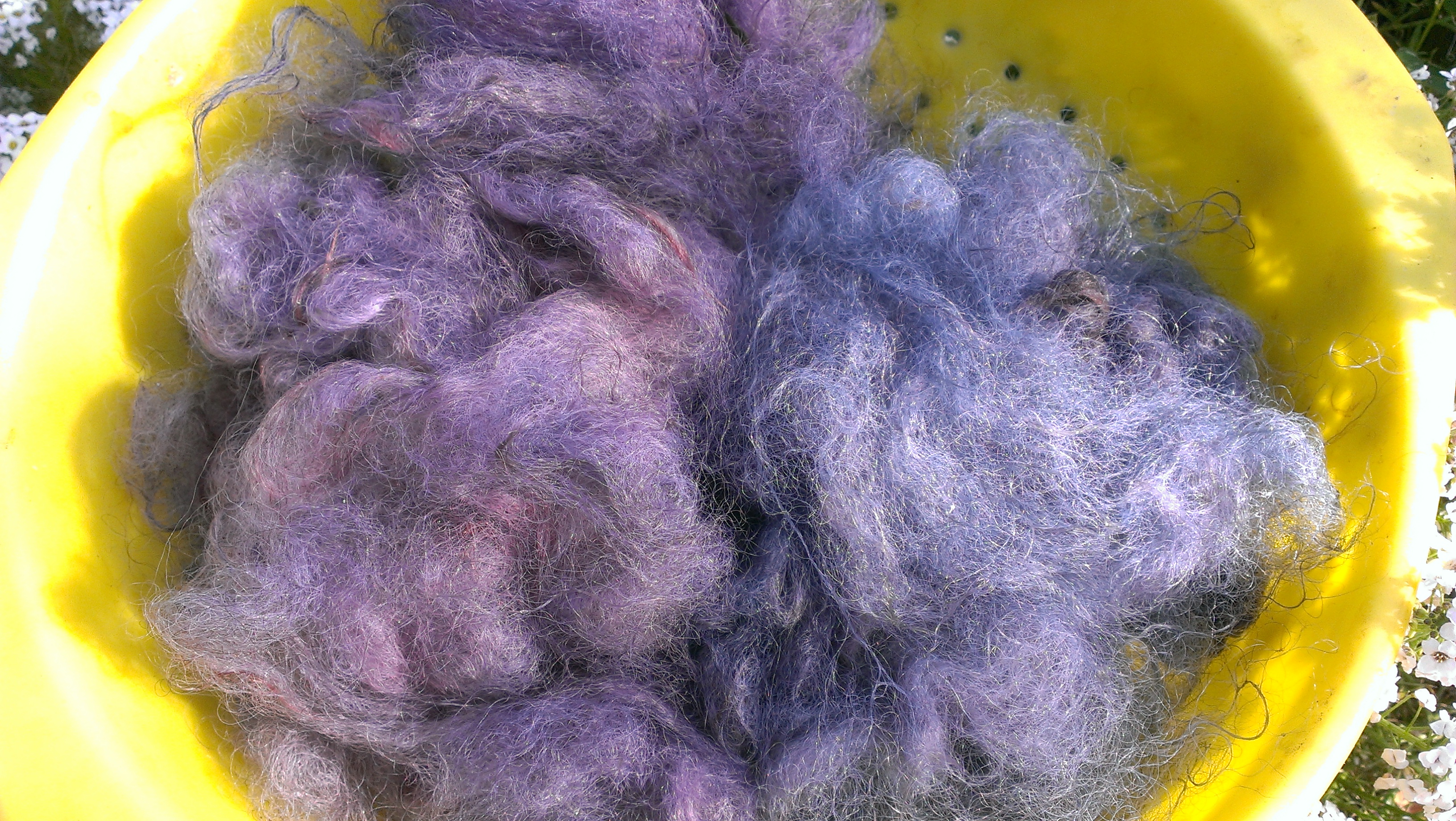
The first few locks of wool went in and ten minutes later–that isn’t blue?!

2015-05-23 13.37.26

After a second quantity of wool which also came out mauve, another batch came out still silver-white.  I decided to try a smidge more ammonia, and out came some pale blue.

2015-05-23 14.22.33

I can’t say this is earth shaking colour, but it is colour, and it is a colour I don’t usually get from the garden, and it isn’t as crushing as the total incompetence and series of accidents I’ve had going with austral indigo.  It’s enough of a success to make me think I should try again.  Let it be said that having a much larger quantity of leaves has to be an asset, because while woad reputedly has a low yield of indigo, so does austral indigo and its leaves are much smaller.  The austral indigo drops a lot of laves at this time of year and… I think I will just let it be this year!

20 Comments

Filed under Dye Plants, Natural dyeing

Returning home

I decided to celebrate returning home from Tin Can Bay with some local bundles… and knitting, and a visit to the saltbush plantings… and time with my beloved and our friends, and music… but here I’ll focus on the bundles!  If I can restrain myself that far…

2015-04-25 15.28.09

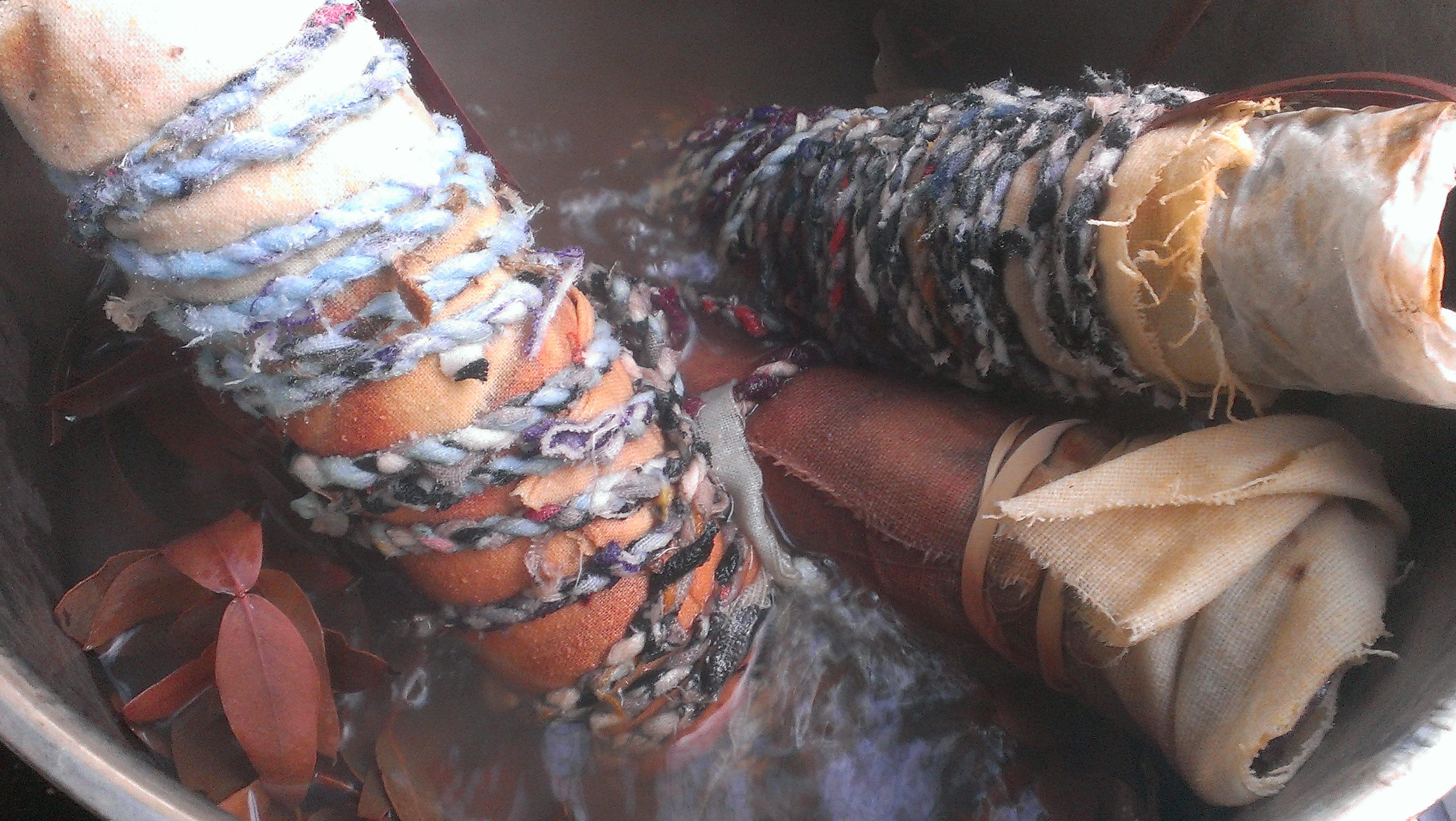
I took my new found knowledge and experience of bundling paper, which built on my reading of India Flint’s Bundle Book.  There is a cheap and simple e-book version available –or go for the glory of a solid object!  I tried a different kind of paper, acquired in the last few weeks, and I used scrap metal my Dad cut me.  I tried op shopping for flat metal with remarkably little success in previous months.  But there are quite a few priorities on my personal list and some progress slowly.

2015-04-25 17.16.40

Happy results!  These are E Cinerea leaves–different to what I would get on fabric and very lovely. Like all bundle dyeing, part of the mystery and part of the joy is trying out what is local and seasonal. Everyone’s selection is different.  My garden is heavy on calendula and marigold right now and I had some lovely little geranium flowers and all sorts of local leaves to try too.

2015-04-25 17.18.35

I decided to use my flanellette string for bundles despite it being unnaturally dyed.  I loved seeing some of my retreat companions loving their bundles enough to use handmade string to tie them.  And my much re-used string collection is getting to the end of its tether.

2015-04-25 17.14.56

I used all kinds of fabrics–raw silk from a recycled garment, calico, linen offcuts, and a little piece of silky merino given to me by a retreat companion (should she be reading, thankyou again!)

2015-05-06 10.13.36

The silky merino gives such vibrant colours, but actually the linen was a bit of a standout too.

2015-05-06 10.13.52

Meanwhile, the string making continues.  I have decided to try using this process of making string as a point of reflection on my obligations under Indigenous law–and of so many principles of earth care that might come under that set of principles.  The importance of things that will biodegrade and that will not last forever, the way plastic will.  The intertwining of all life.  The cycles by which nature does its magic.  Our dependence on plants and water.  the way things and beings come into closer relationship with one another.  I keep sharing the string–as people admire or ask about it, I have a little stash right here by my hand and I can give them some.  Sharing is a primary principle too.

2015-05-03 15.53.03

I have in mind something like what Grackle and Sun might call atheist prayer.  But different, of course.  Do read her post and be inspired.  I love her idea of chantstrands, but my experiments along those lines didn’t work for me the way taking a few wet leaves out to a tree to twist together into string and considering things has so far.  So I have taken inspiration from her and begun to make cordage from it…

2015-05-02 14.49.32

A few people have been asking about how to make string.  I have put a link to an online tutorial in the How To tab at the top of the blog, but you could learn from a basket weaver (as I did) or from any basic basketry text.  Or put yourself near India Flint, who shares string making everywhere she goes, as far as I can tell (having learned how from Nalda Searles).  Or go to YouTube and be among survivalists who do something similar!  Meanwhile, the garden is growing as rain begins to fall.

2015-05-02 14.49.47

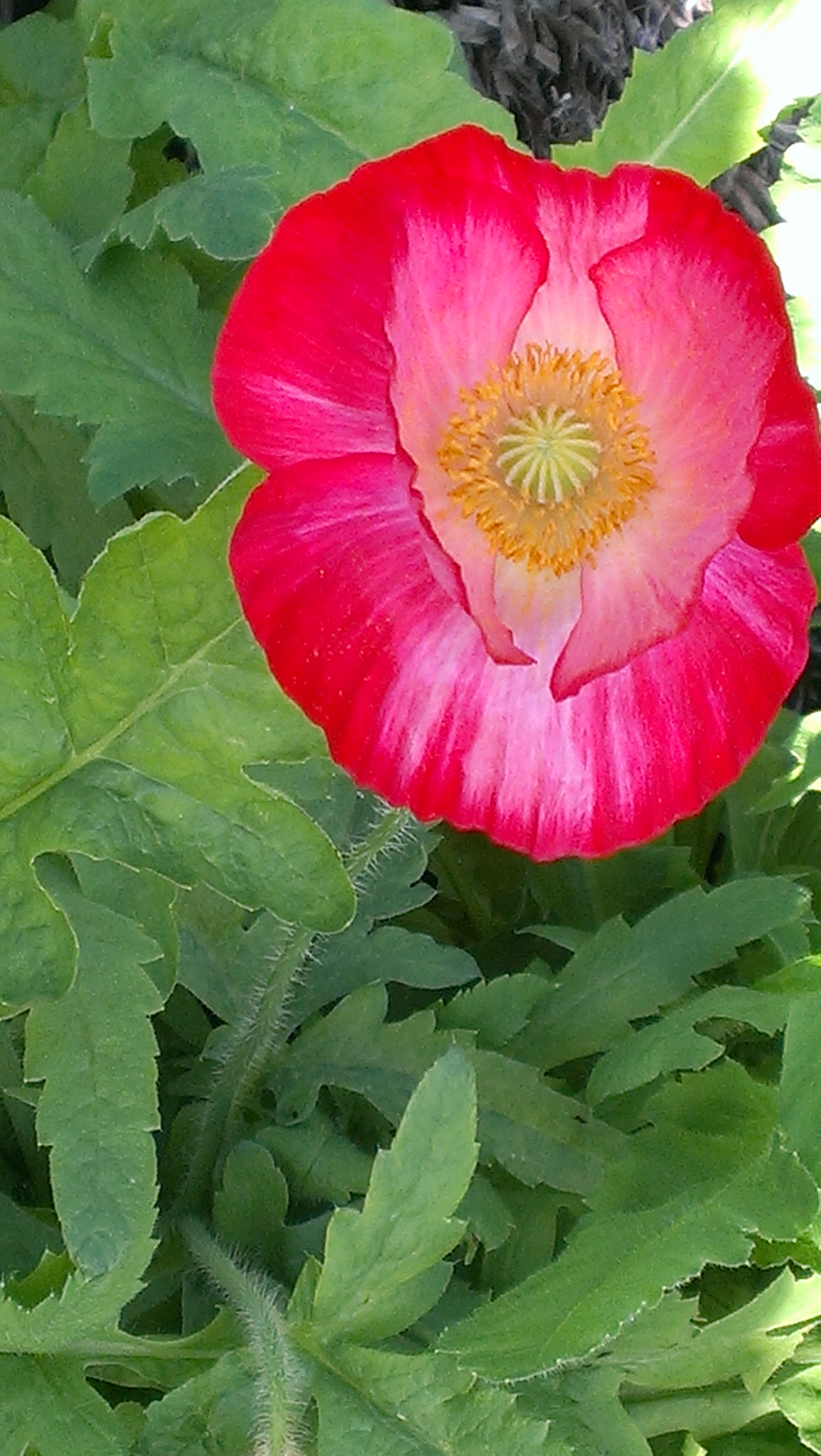
The first poppy of the season is out and beyond lovely.

2015-05-04 12.19.04

And I had a new insight about this especially beautiful saltbush which I have so far not managed to propagate.  It has taken a lot of observations to figure out when I might be able to collect seed, but one day at work recently I pulled out a seed envelope I happened to have with me (as you do) and amused bystanders by rubbing the ends of these silvery stems gently into it.  Who knows what might come of that?  I have high hopes…

8 Comments

Filed under Dye Plants, Natural dyeing, Neighbourhood pleasures

Eucalyptus bark dyepots—the outcome

Well, the outcomes are in– E Scoparia bark on the left and E Poyanthemos bark on the right.

2015-04-06 12.36.17

As I was rinsing my pots a sudden movement caught my eye.

2015-04-06 12.39.58

All those cuttings and seedlings and little trees are doing well, because, we have finally had some lovely rain!

2015-04-06 16.28.10

It’s lovely to see water pooling after the long dry of summer.

2015-04-06 16.33.13

And, a lovely pair of warm socks for the coming winter chilly toes have made their way off the needles!

2015-04-06 16.33.34

They have gone to their happy home already…

2015-04-06 16.35.44

18 Comments

Filed under Dye Plants, Knitting, Natural dyeing

Leaf print experiments

2014-12-14 14.31.15

I’ve been trying leaves I don’t usually use and some different strategies for cooking them up. Prunus leaves, kindly contributed by this block of flats.  I am sure they wouldn’t mind!

2014-12-14 09.41.35

Maple… I think this is Japanese maple.

2014-12-14 14.07.59

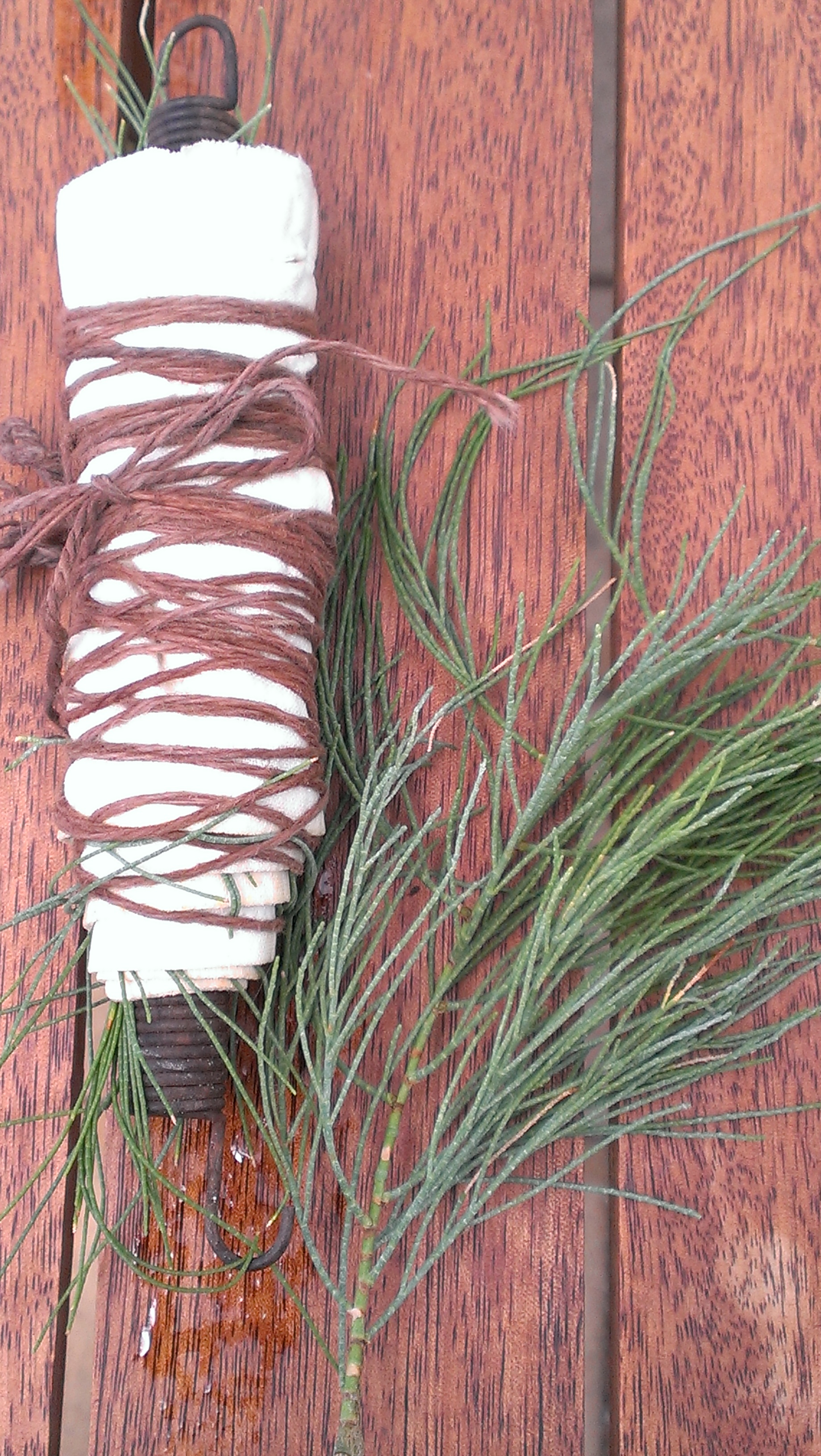
I have tried several different sheoaks.

2014-12-14 14.14.17

Some of the results are really spectacular.  My favourite is quite green, very exciting.

2014-12-19 11.02.42

Here it is beside the prunus prints.

2014-12-19 11.03.47

They are pretty pale…

2014-12-19 11.03.25

The maple leaves were interesting, and I love the impression of the string ties.  And this sheoak came out better than any other so far.  I tried 6he leaves out on a linen collar, and wrapped it around a rusty spring I found in my leaf gathering travels.  This bundle was so small I overlooked it, so this one had a long time in the pot, which is no doubt a clue for future experiments.

2014-12-19 11.02.27

Some results were less exciting.  I did get a pale green print from our birch leaves, which is a first and might be promising.

2014-12-19 11.01.23

I went back for more juvenile E Polyanthemos and this time, not so great prints resulted, but I did get some that were quite green, and that’s promising too.

2014-12-19 11.02.04

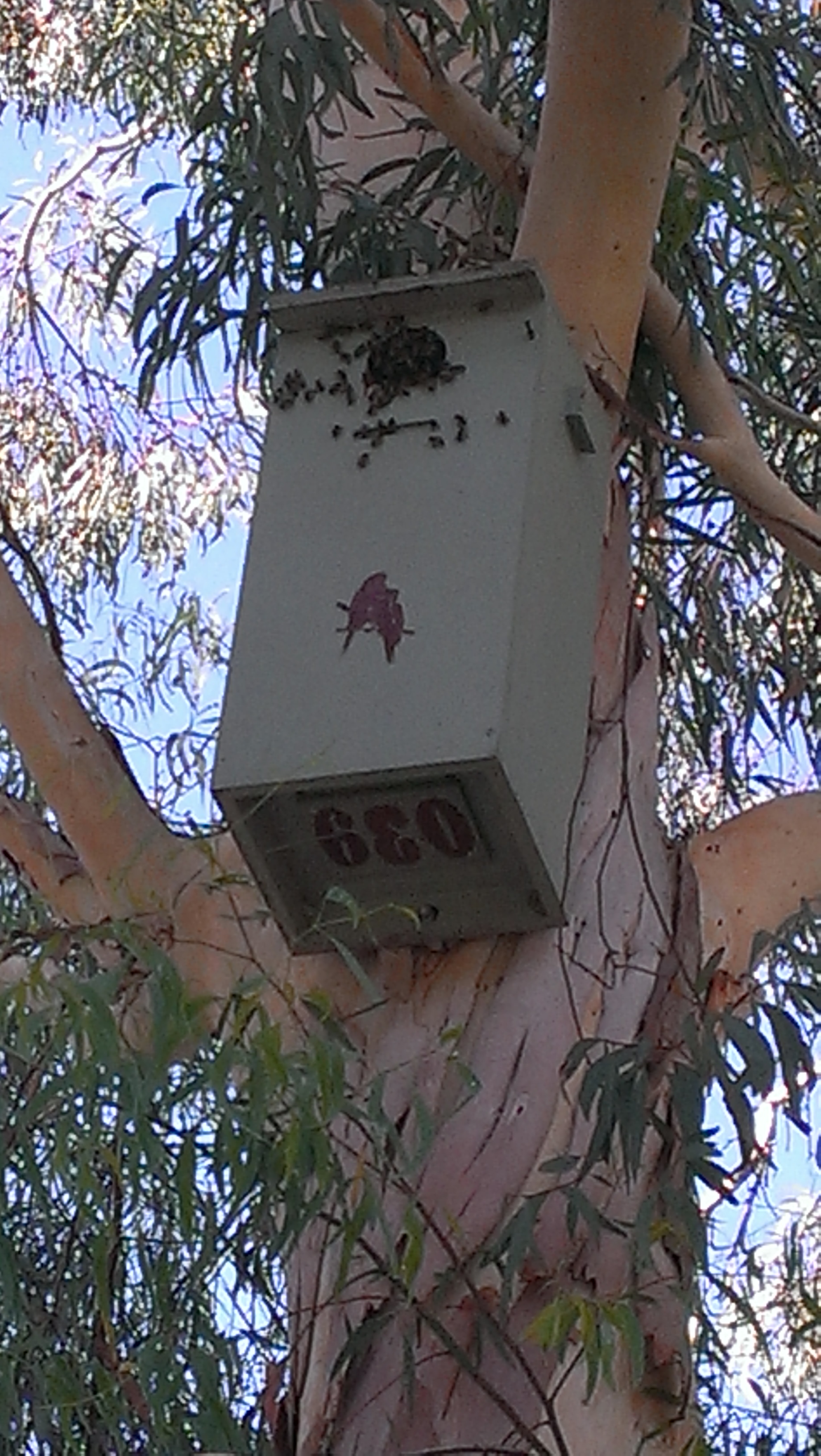
Meanwhile, the saga of the neighbourhood bees continues.  The lorikeets moved out of this nesting box, and the bees moved in weeks ago.  There is now honeycomb visible in the opening.

2014-12-14 09.46.25

8 Comments

Filed under Dye Plants, Leaf prints, Natural dyeing, Neighbourhood pleasures

‘Tis the season for bark collecting

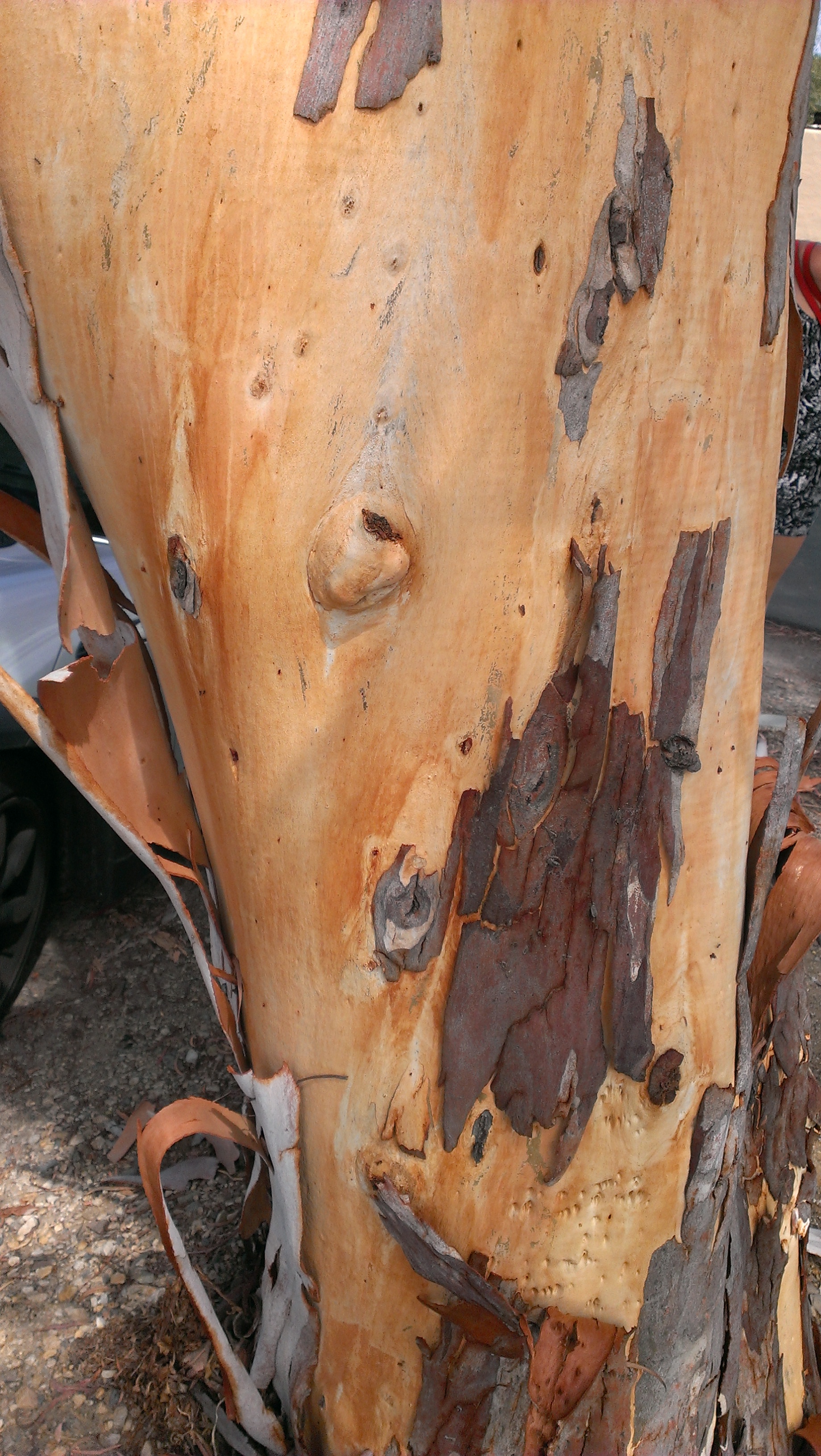
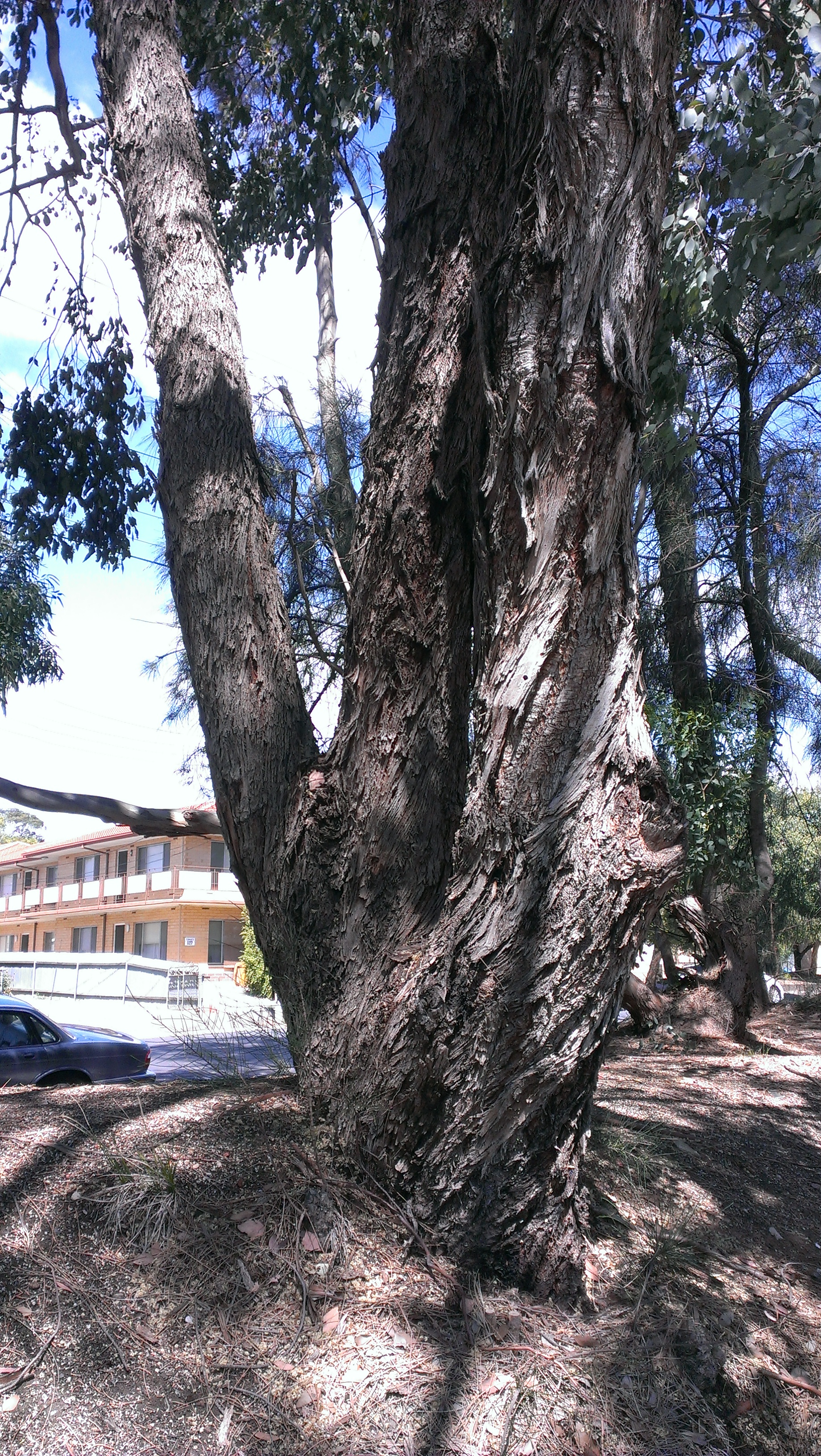
It is the season when a lot of eucalypts shed their bark here.  It’s impressive…  here are a couple of local and spectacular examples… E Scoparia:

2014-11-29 15.01.30

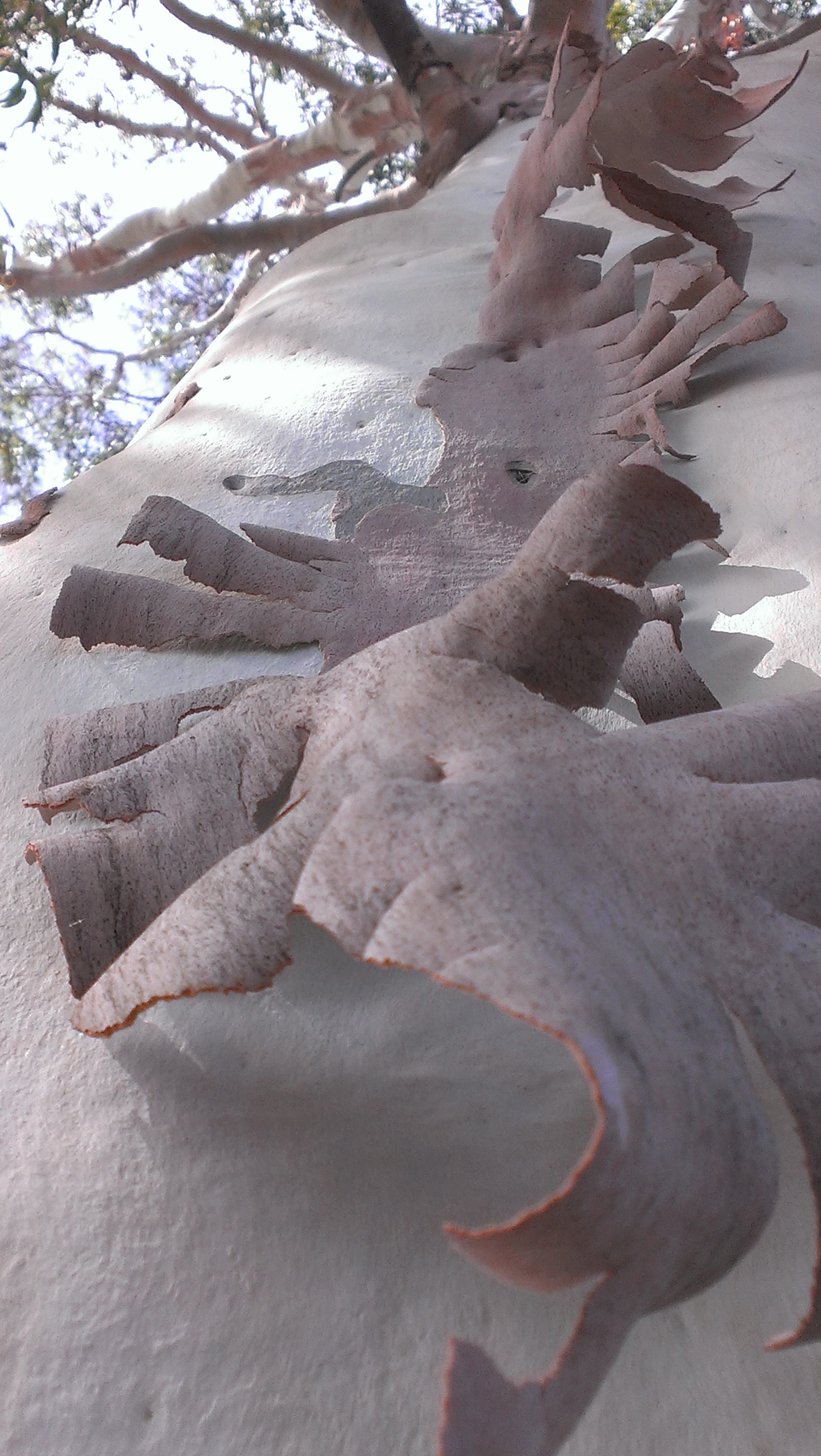
And closer up:

2014-11-29 15.01.25

Corymbia Citriodora:

2014-11-29 15.00.00

Needless to say there has been some collecting, though I haven’t done as much as I thought I might so far… often it’s just a bagful when I pass.

2014-11-29 15.07.23

But one time when we went to visit for dinner with some saltbush to plant out we just brought back the wheelbarrow full!

2014-12-07 11.59.52

It has led to dyeing, especially now I’m done with work for the year!

2014-11-29 15.48.51

6 Comments

Filed under Dye Plants, Eucalypts, Natural dyeing, Neighbourhood pleasures

Additions to the dye garden

It’s a mighty busy time of year in my day job, which is why it has been quiet here at the blog.  That, and a series of lovely house guests.  Those present in the flesh trump the online world on an average evening at our place!  However, life has been busy at home too.  Propagating and planting is going all out so long as the serious heat holds off.  I even have a few Japanese Indigo seedlings, though this morning some of them had been chewed in the night.  There is a period in summer here where planting anything seems merely unkind and doomed to failure, but we’re not there yet.  I have been germinating and planting out, and there has been guerilla gardening too… but I digress.

2014-11-06 08.22.25

A few weeks ago, I had some surprise purchases at the annual Herb Society fair.  I cycled up there with friends who had brought a picnic and we came home laden with plants and seeds… it was a lovely day.  I have been to the fair many times looking for dye plants and failing to find them.  One year I succeeded in buying madder, which was very exciting.  This year, though, I bought woad!  Who knows what will come of it, but I have two plants and they are thriving in the vegie beds so far.  I had managed to buy seed but have never grown even one seedling.

2014-11-06 08.22.08

Then there was weld!  I decided to bring it home in spite of all the other sources of vegetable yellow.  we’ll see where that leads, too.  And finally, this rather spectacular form of sorrel.  Nothing to do with dye that I know of, but it does promise some pleasurable and spectacular summer eating…

2014-11-06 08.22.13


6 Comments

Filed under Dye Plants, Neighbourhood pleasures

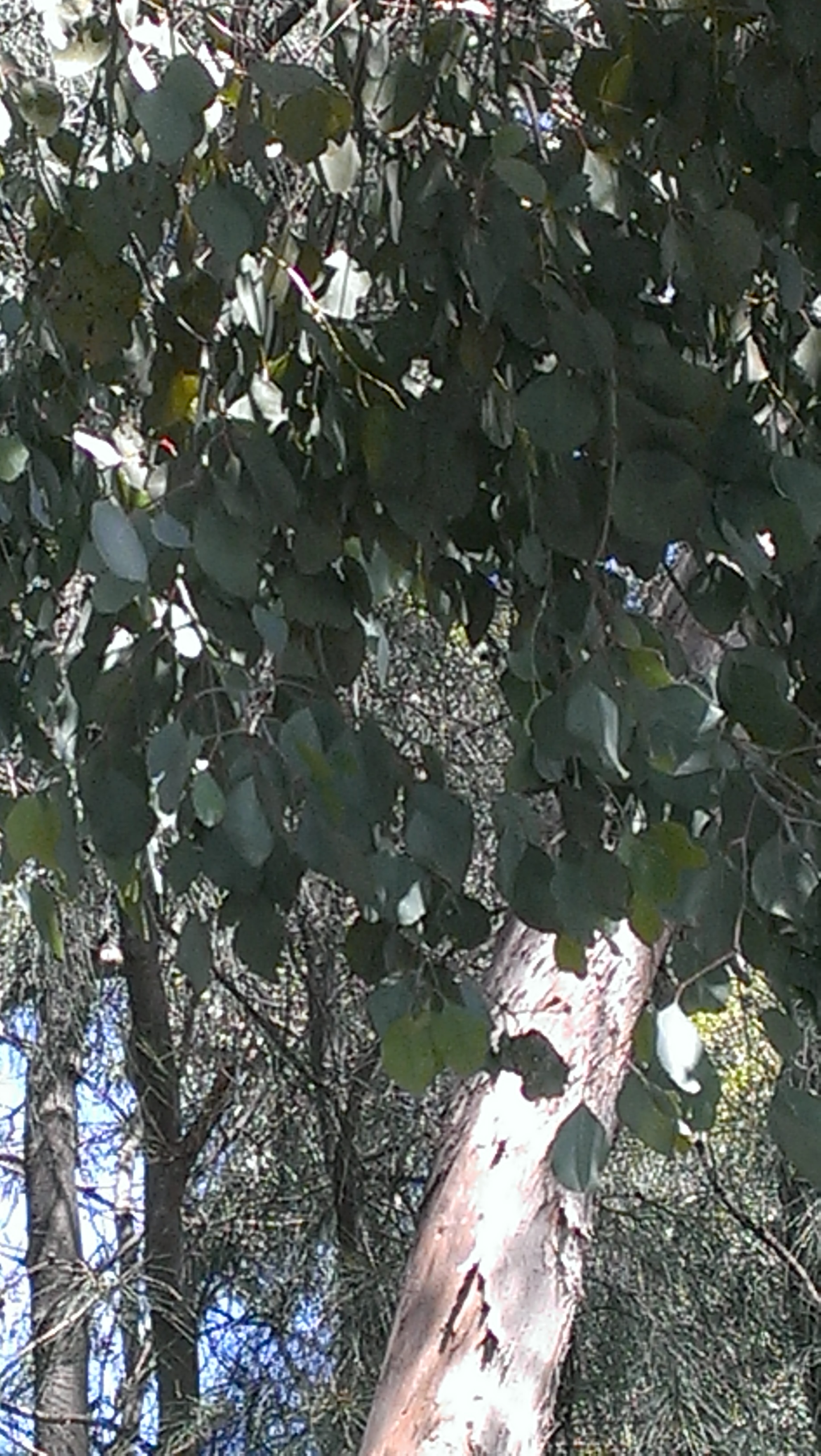
The quest for Eucalyptus Polyanthemos continues

One weekend recently, I went to Norwood.  Well, really, I was deposited in this well heeled inner Eastern  suburb while my beloved went on a mission further from home, with a plan for collecting me on her way back.  The idea was that I would look for a birthday present for my Mum.  I had a few other goals in mind that involved the very nice bookshop there and a bit of random wandering.

2014-11-01 14.53.35

At some stage I decided a gelati would be perfect, as you do, given the chance.  So, gelati in hand, I wandered away from the main road and down a side street to see what I could see.  There on a bank sloping down to an unlovely carpark were some glorious sheoaks and some not-so-common eucalypts.  To me they seemed like plausible instances of E Polyanthemos, but the tallest I had ever seen.

2014-11-01 14.54.29

The evidence there had been many-anthers was all over the ground.  I think my eyes were caught by the fluttering of somewhat oval leaves in the breeze.

2014-11-01 14.53.42

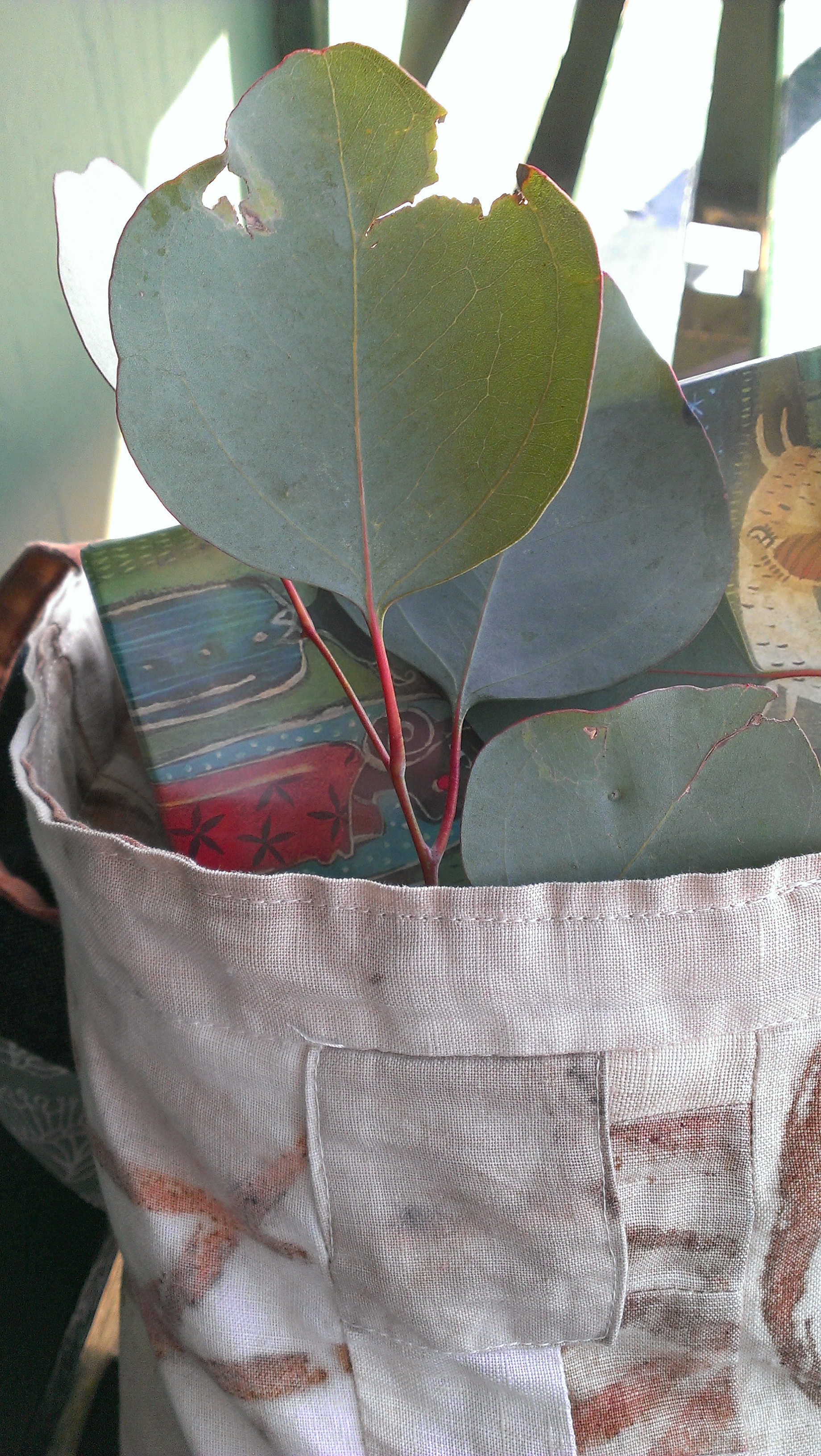
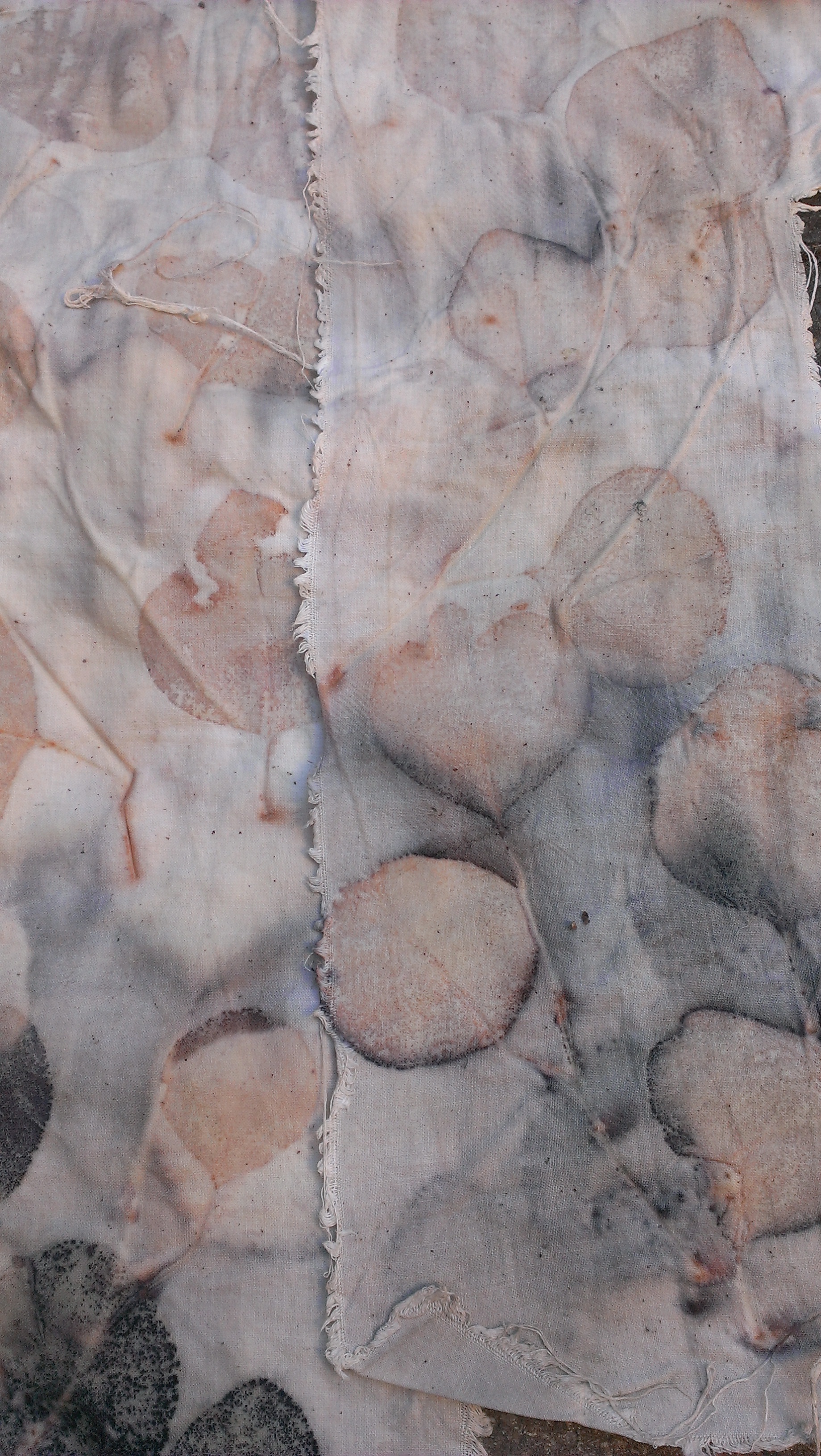
Before long I was climbing the bank and dodging the cars.  Some of the trees had been cut and had re-sprouted with juvenile leaves that were almost round, and quite large.  My manual (Holliday and Watton’s Gardener’s Companion to Eucalypts) says ‘The juvenile leaves are blue and almost circular, the apex notched.’  Round, yes.  Blue, yes.  Notched?

2014-11-01 14.55.02

One thing led to another, as it so often does (well, in my case)… so I picked a small sample and tucked it in my bag.

2014-11-01 15.45.36

After a long walk and as much shopping as I could take, I sat myself down at a bus stop and waited for the return of my beloved.

2014-11-01 15.47.51

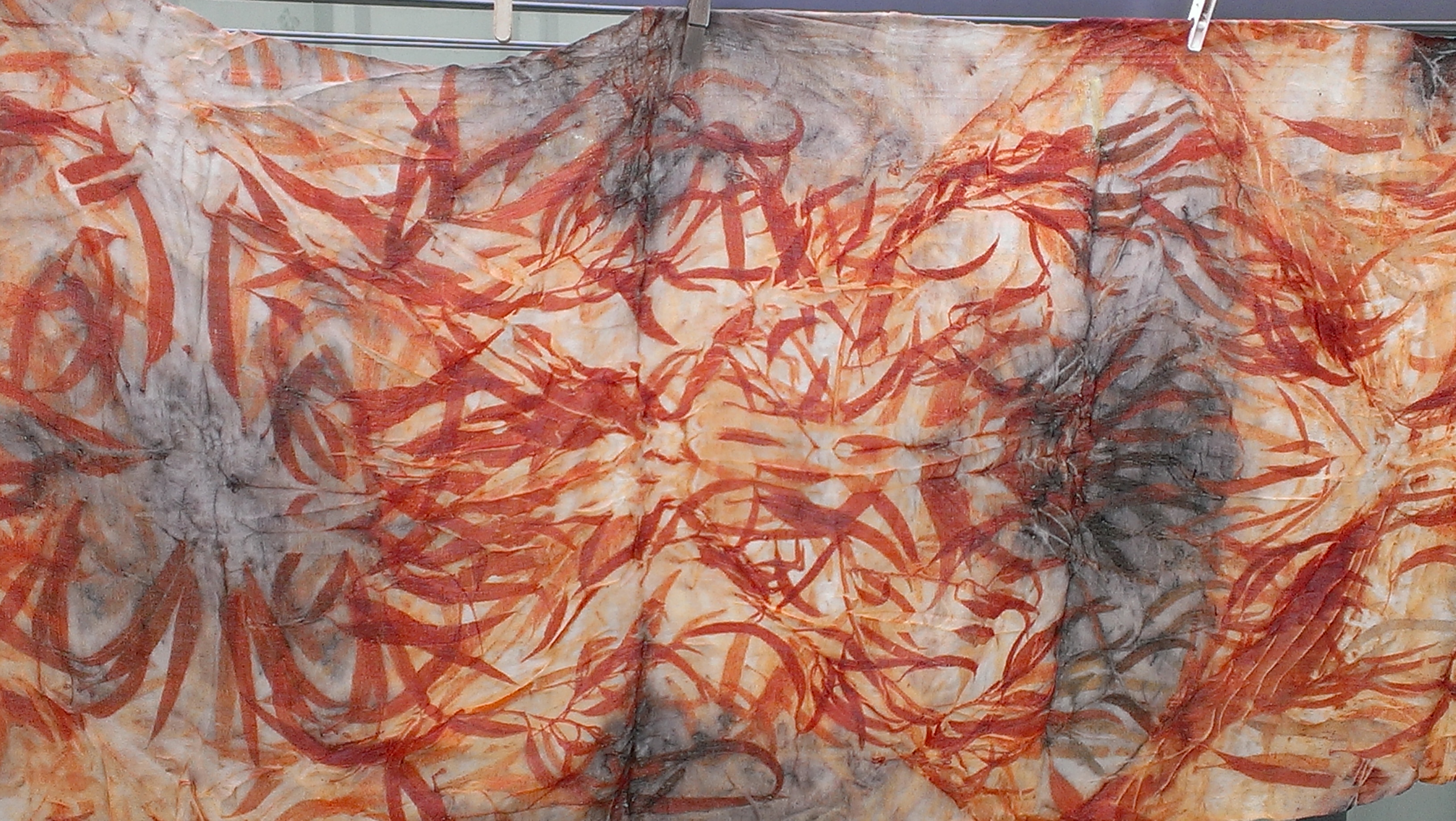
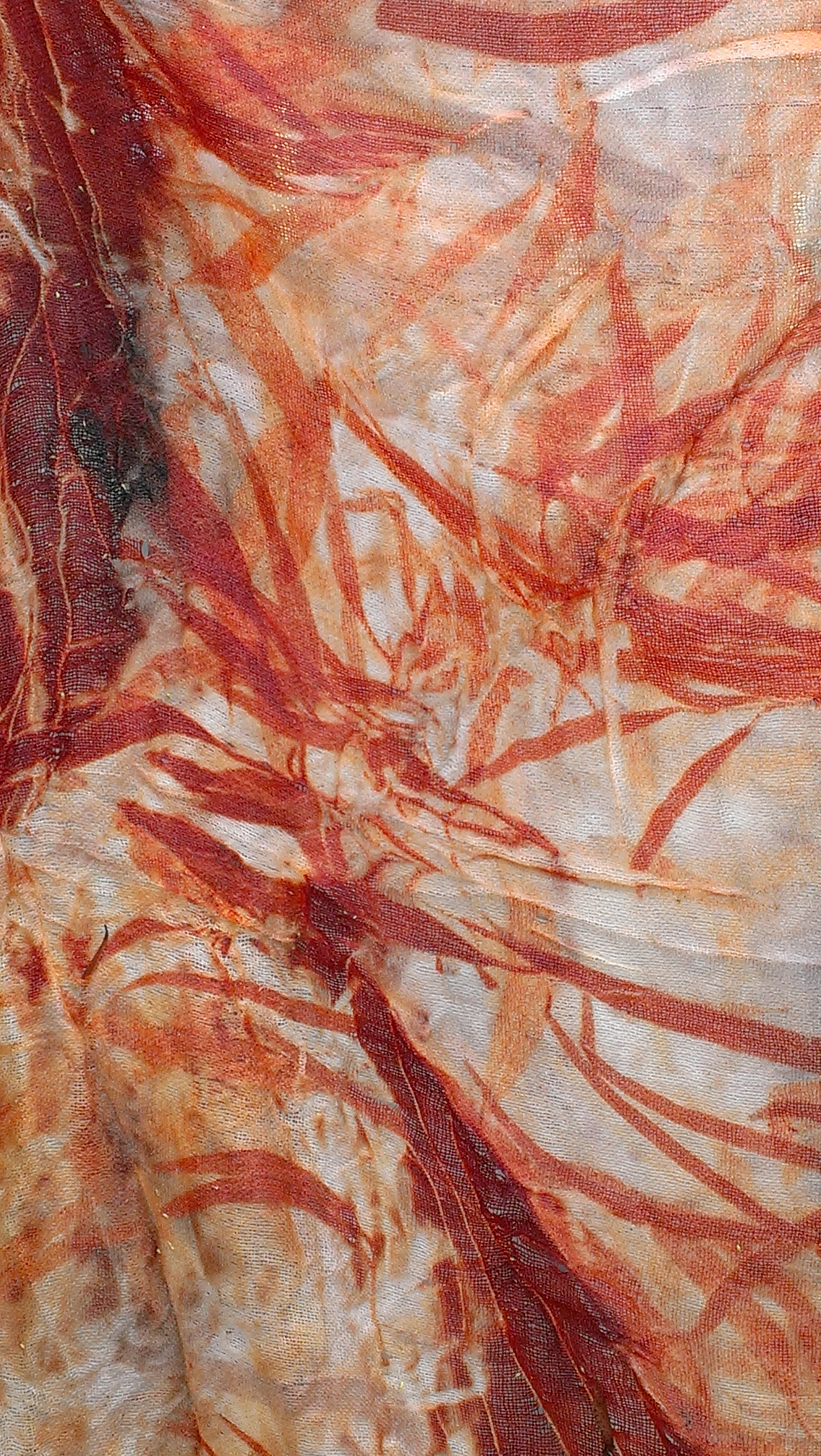
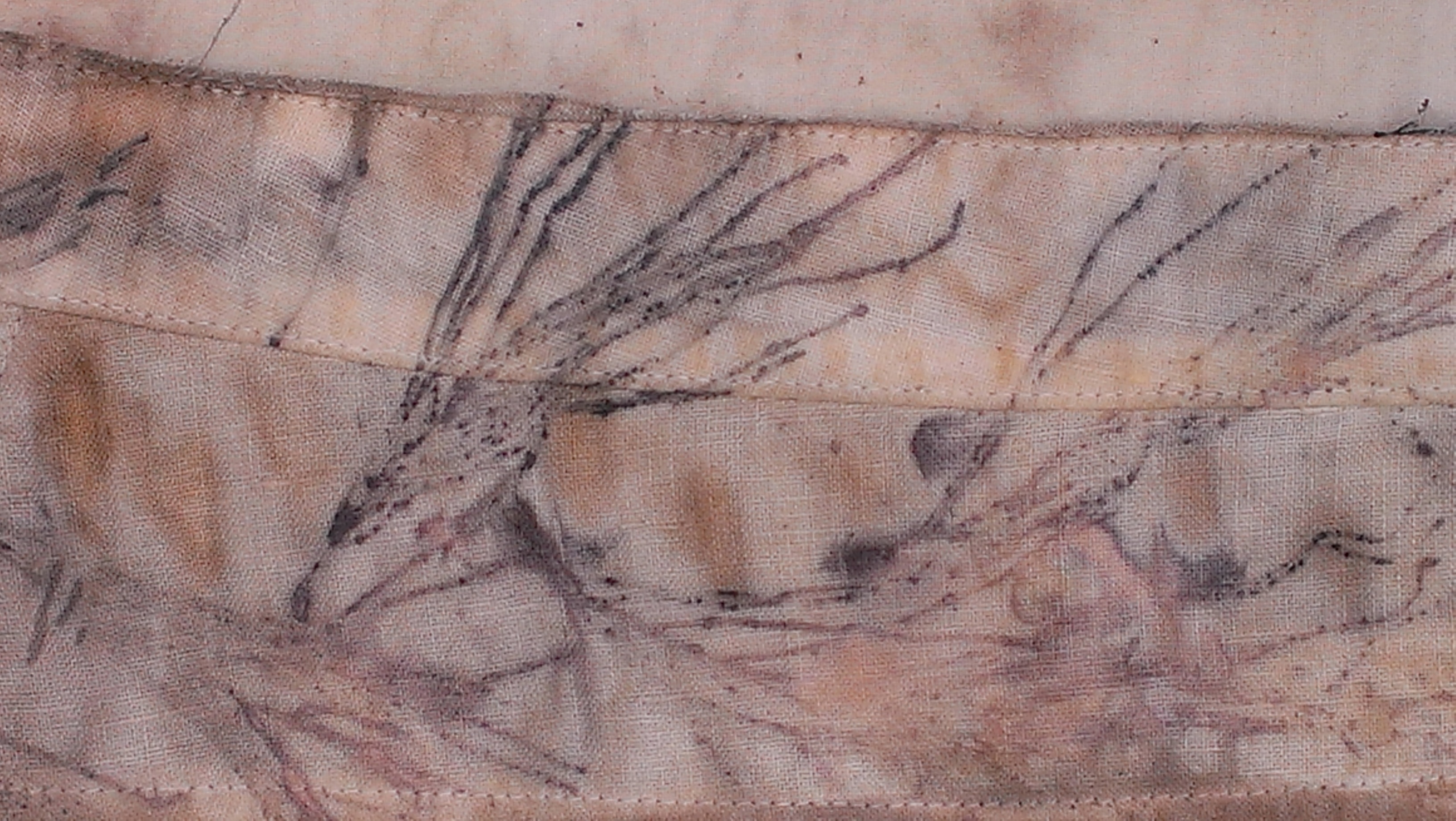
This morning I unwrapped the resulting bundle… very pleasing.

IMAG1394


And another from the same pot… which is a little greener than the picture suggests…

IMAG1396

And now for today’s completely gratuitous flower picture. This poppy is a completely different colour from any of its predecessors.  You have to love nature, and the frolicsomeness of bees rolling around in pollen…

IMAG1388

9 Comments

Filed under Dye Plants, Eucalypts, Leaf prints, Natural dyeing