Category Archives: Eucalypts

Harvest time: Eucalyptus Scoparia bark

‘Tis the season for bark collecting, again!  I’ve been out on my trusty bike visiting all the E Scoparias I know and investigating others that might prove to be (or not to be) E Scoparia. I pull my bike over to pack bark into a bag, trampling on it to crush it and make space for more, and filling again before loading my panniers.  Or, go to visit friends with my big bucket in hand and pick up whatever has fallen since my last visit.  Or, head out for a run, leaving my rolled up bag under a tree and pick it up to fill on my cool-down walk on the way back.  This E Scoparia, tucked in behind the foliage of a carob tree, is peeling lavishly.

IMAG2991

At home, I stash the bark in a chook feed sack, offering more opportunities for trampling which let me stack a lot of bark into one bag and get it into a form that will go into the dyepot with minimal fuss.
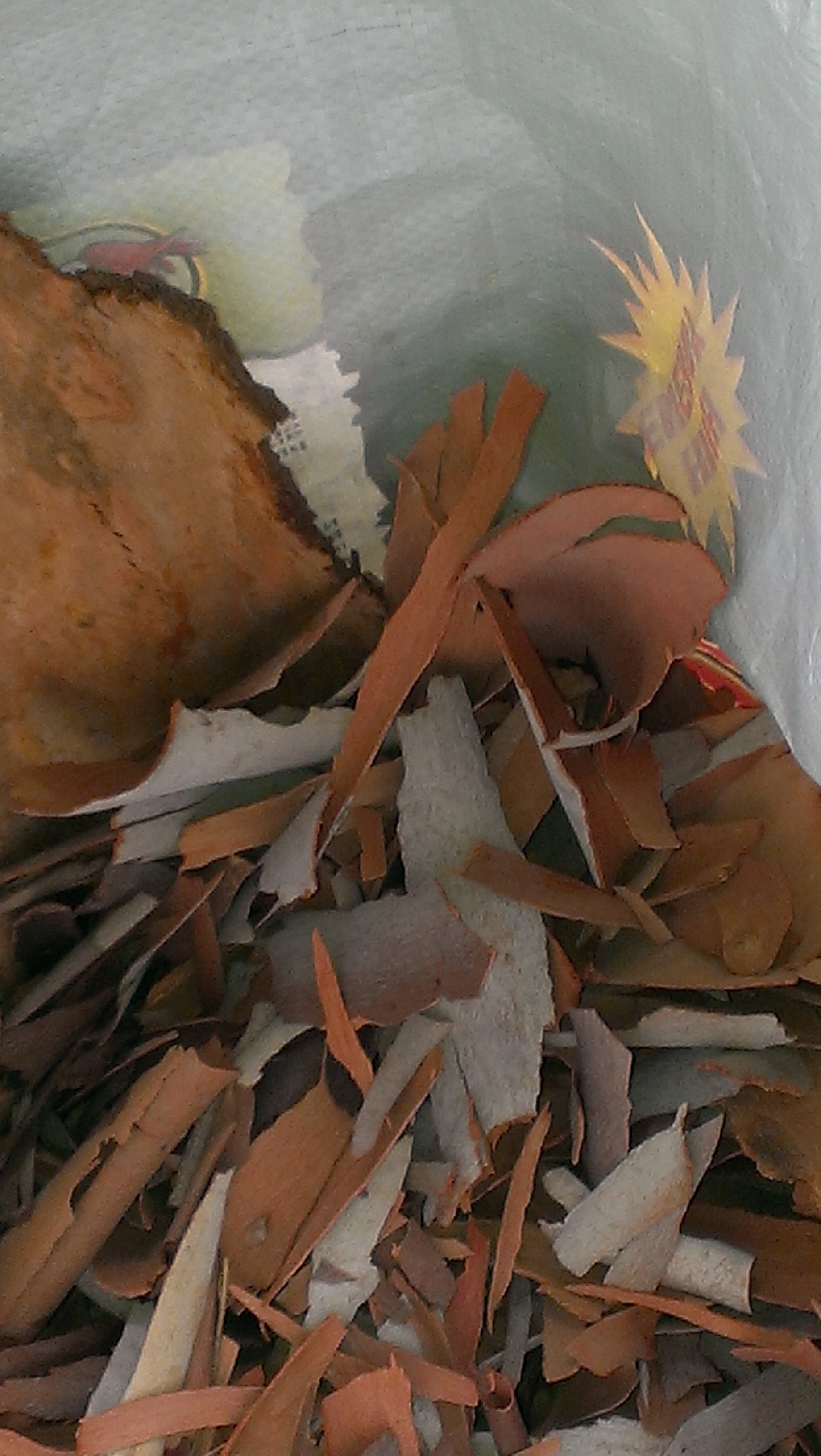
IMAG2841

This week, I found a new E Scoparia (at least, that was my hope).  I collected a bag full of bark and it is now soaking so I can test whether I have that right, in consultation with the dyepot. A friend who appreciates natural dyeing lives in this street–so I’ll look forward to telling her if she has a great dye tree at the end of her street! Blackett St:
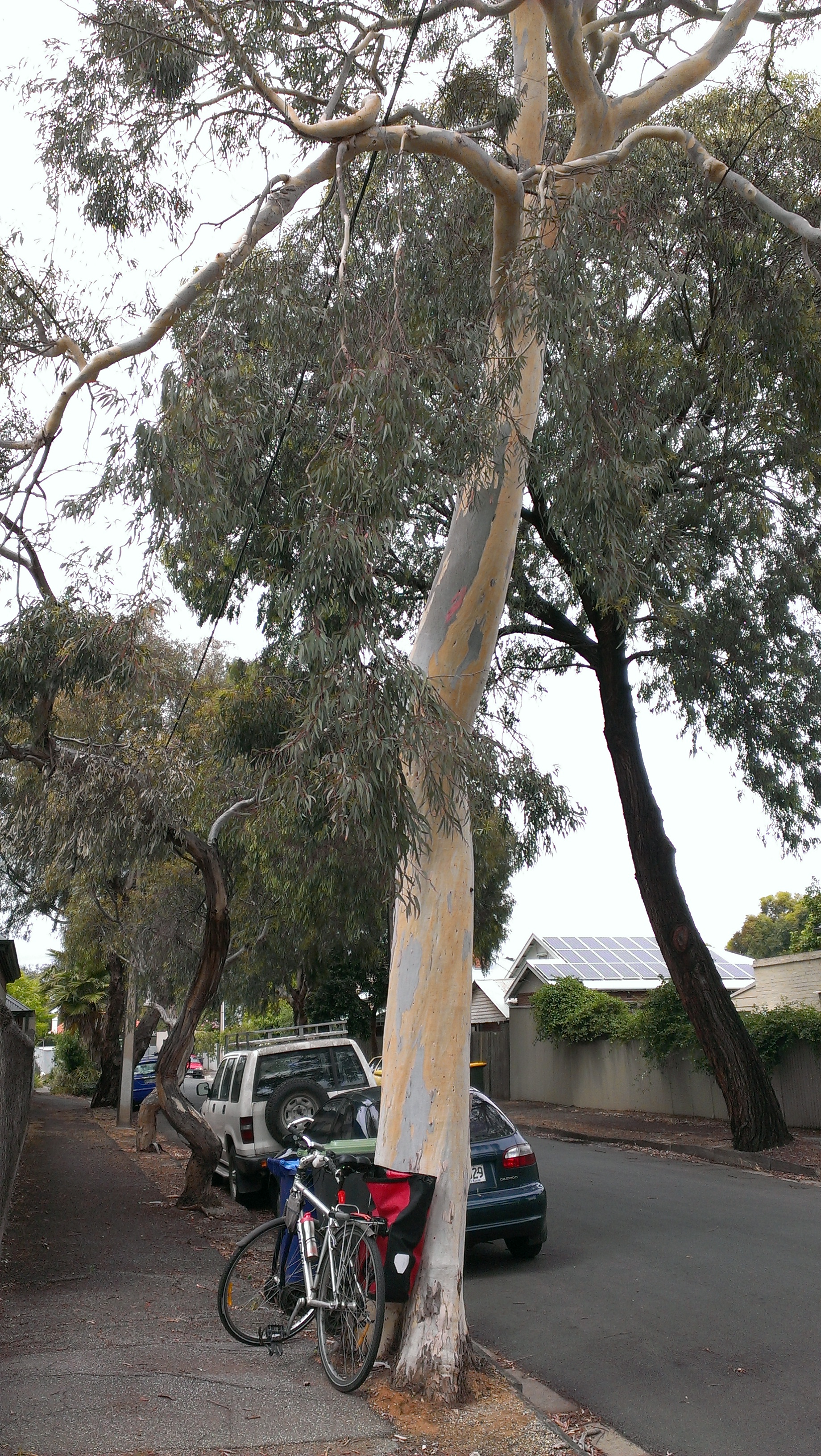
IMAG3022

I also collected bark from this enormous specimen.  Last year I collected a lot of bark from this tree and then found I had one bag of bark that gave brown and not red to orange as expected.  I suspect that means this is not an E Scoparia.  Checking it out again today it is bigger than any other tree I believe to be E Scoparia and it has many more fruits visible and clinging to the stem.  My initial sense is that the bark smells different, too. The leaves give fantastic colour (at least they did before someone took a chainsaw to all the lower branches), but I am running a trial bark pot before the tree sheds the main part of its bark.  It is soaking alongside the other one as I write. Laught Ave:

IMAG3024

Next day, here are the dye baths, three hours in, presented in the same order as the trees from which the bark came. They look remarkably similar but smell quite different:
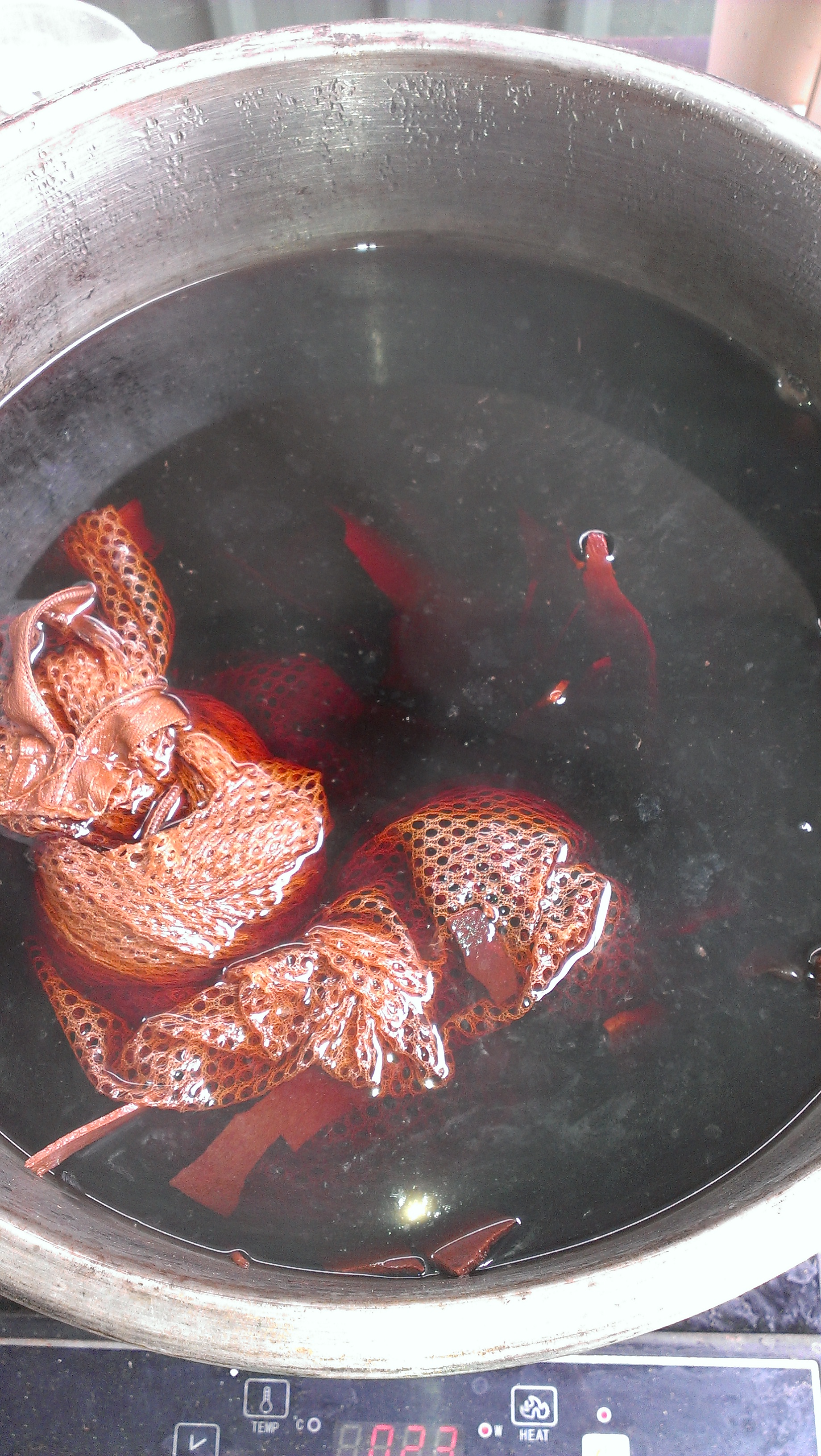
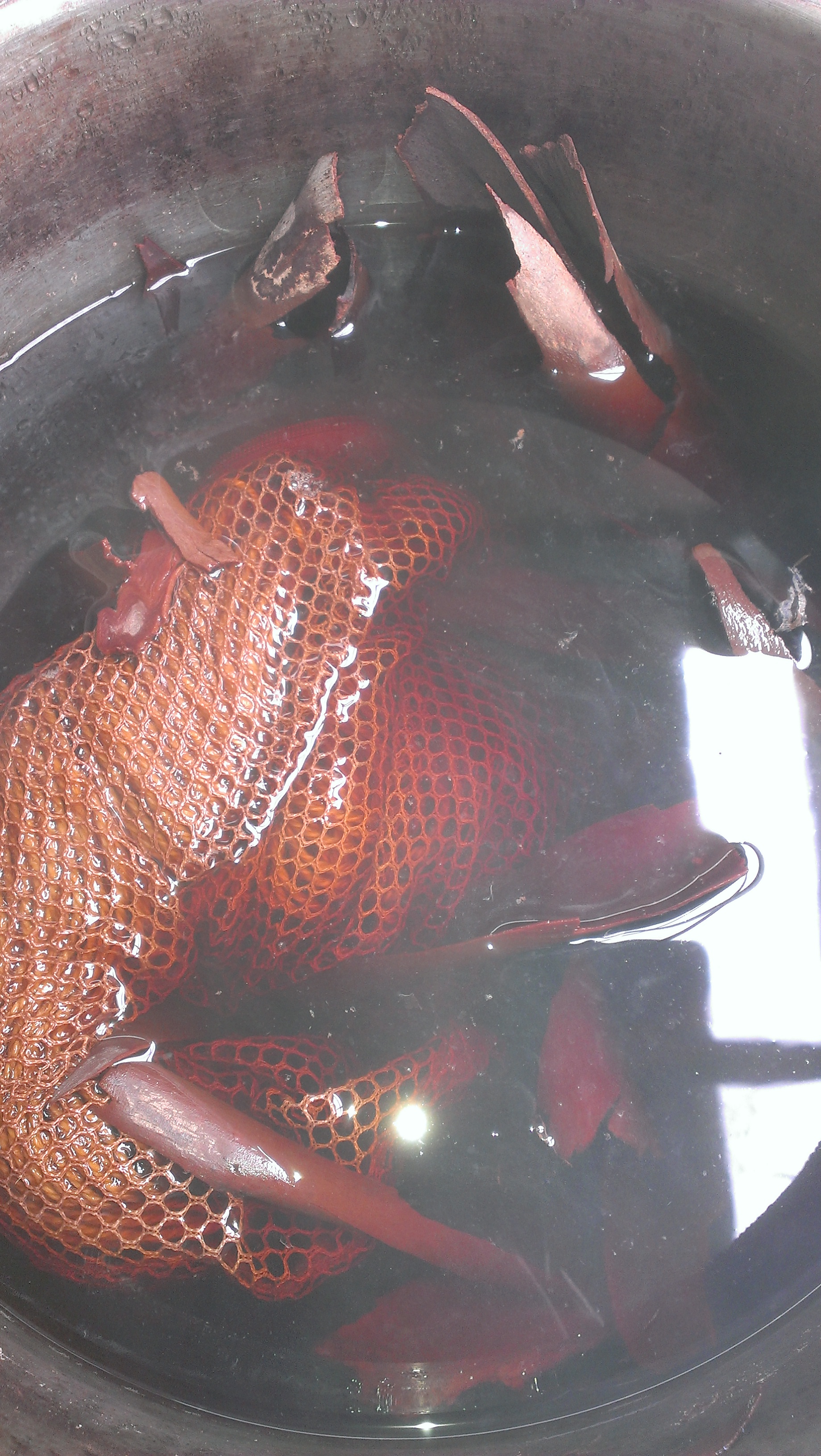
IMAG3027 IMAG3029

Here are the (still wet) yarns that came from those dyepots, in the same order again.  Clearly, the second tree is not E Scoparia–or–for some reason its context means it doesn’t give the same colour.
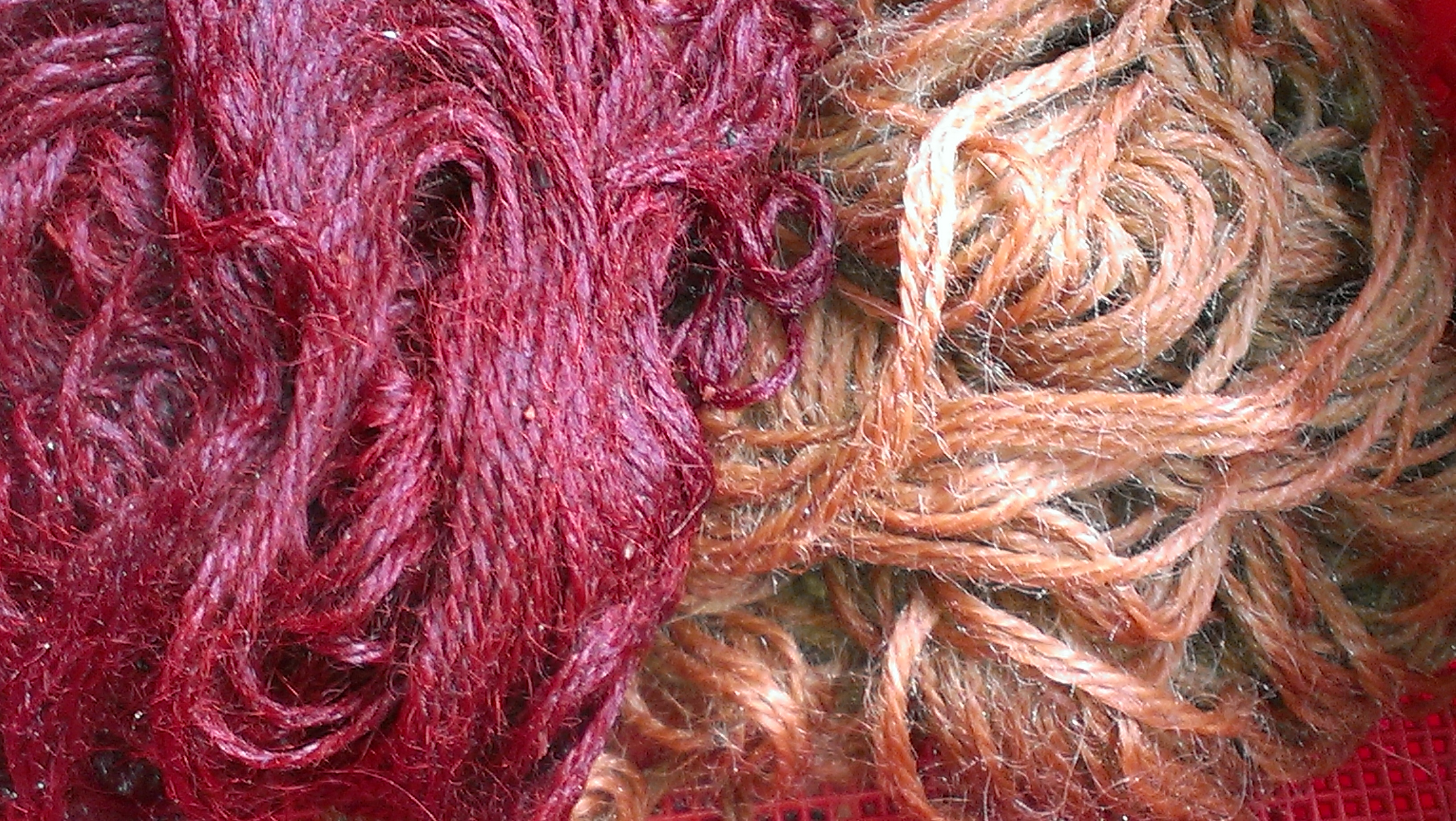
IMAG3031

As I have had great results from the leaves of that second tree, I pulled the bark out, put some fallen leaves in, and re-dyed the tan skein…!
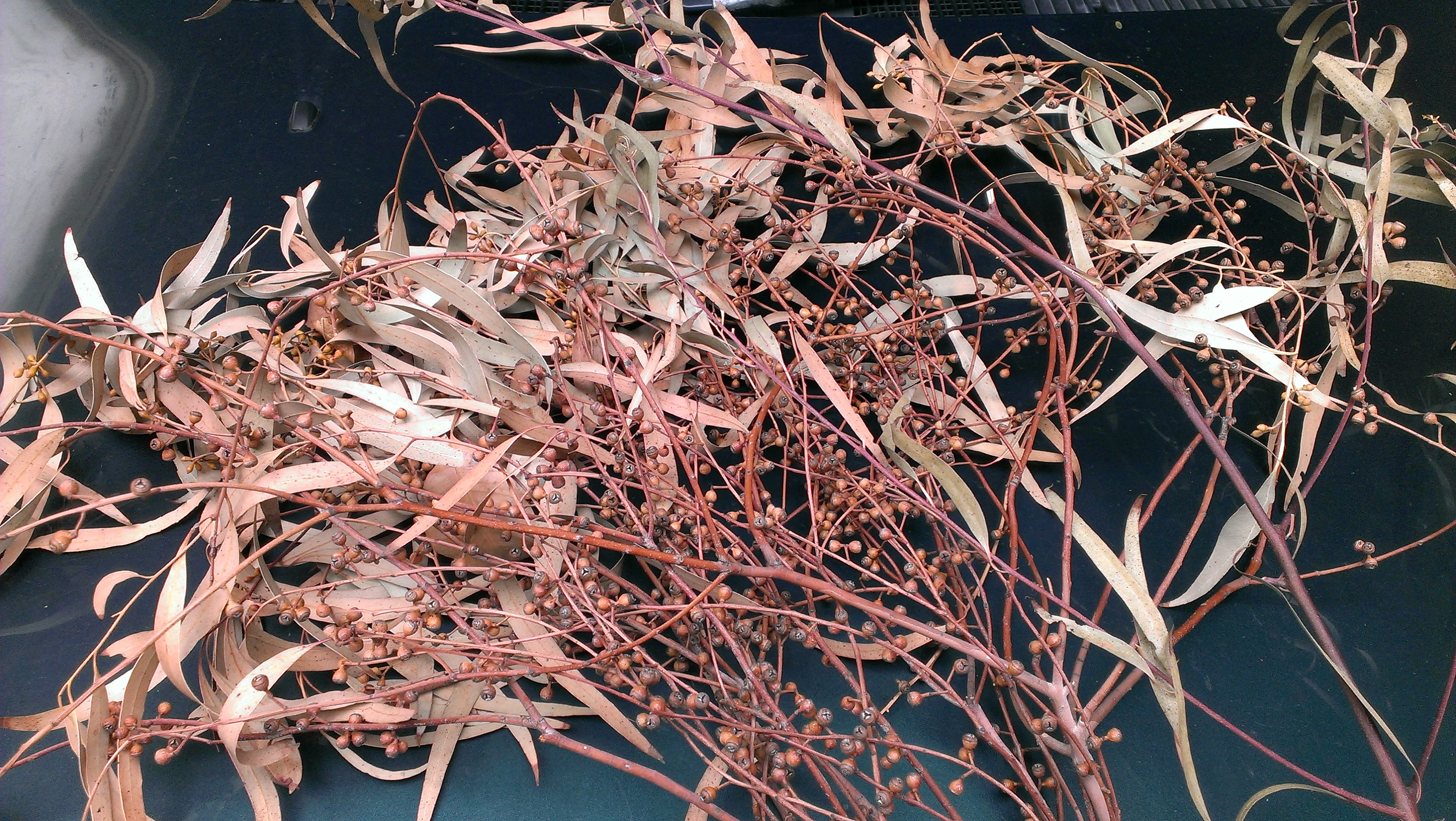
IMAG3030

10 Comments

Filed under Dye Plants, Eucalypts, Natural dyeing, Neighbourhood pleasures

Harvesting the neighbourhood: Dyer’s Chamomile

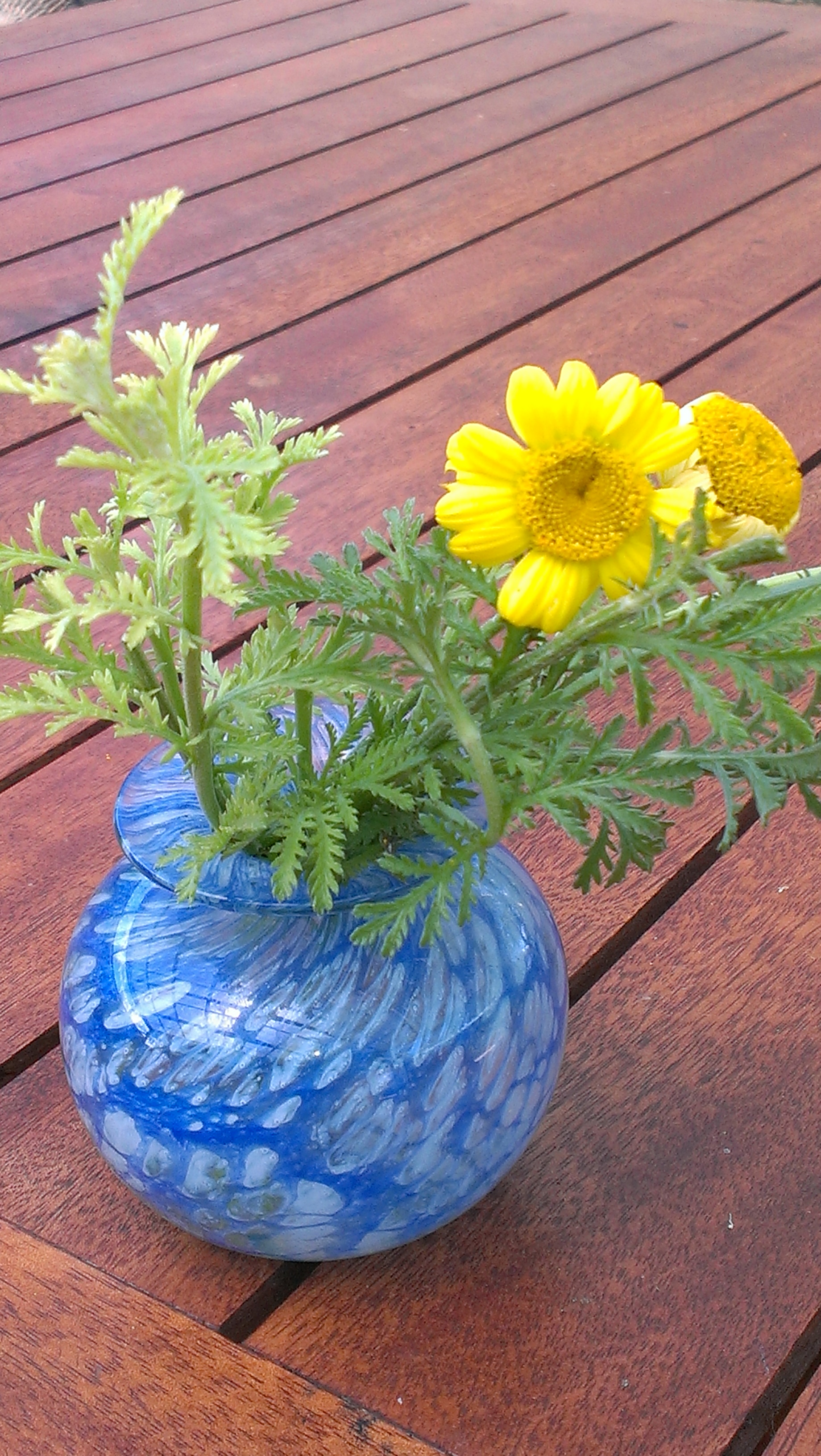
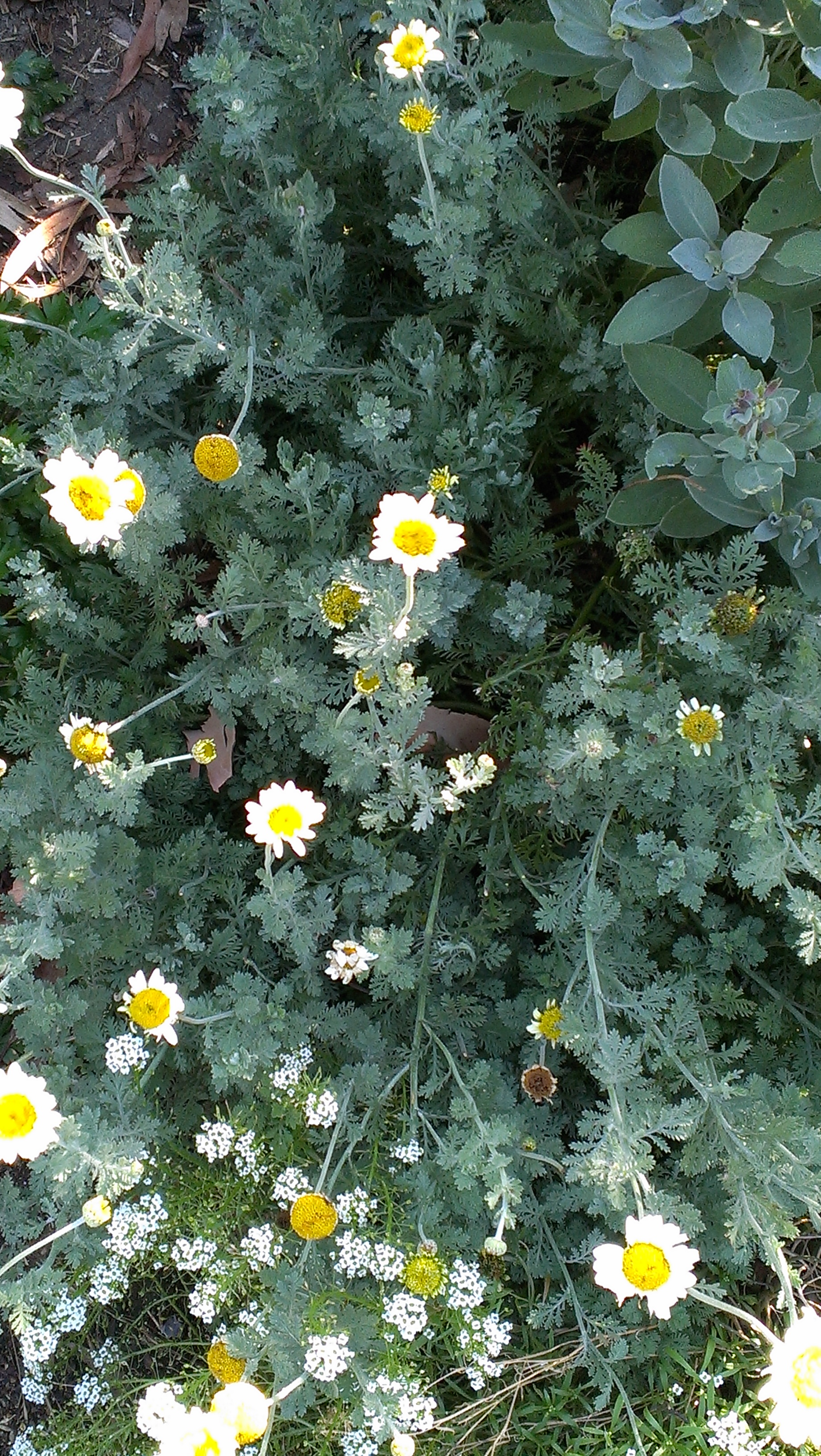
This summer, I have been collecting dyer’s chamomile for the first time.  I have some in the garden, gifted to me by a fellow Guild member who was keen to have some of my madder (this wish granted, needless to say)! It has white petals.

IMAG3008

But recently I found some with vivid yellow petals in the parklands beside the river Torrens.

IMAG3026 (2)

Our exercise class were astonished when I said I was planning to harvest while we were out on a DIY exercise session (our instructor was off doing the Busselton Ironman–she is our hero).  They offered to shield me from passersby who might intervene.  I think they underestimated how scared most people seem to be when they see someone doing something so inexplicable (to them)! I let them know I’d only be taking the dead flowers and we all relaxed again.  The patch is so big I really want to go back with more time… and it is flowering so generously, I am sure I have weeks in which to organise a return visit.

IMAG2998

Meanwhile, we’ve been harvesting at home, too.

IMAG3035

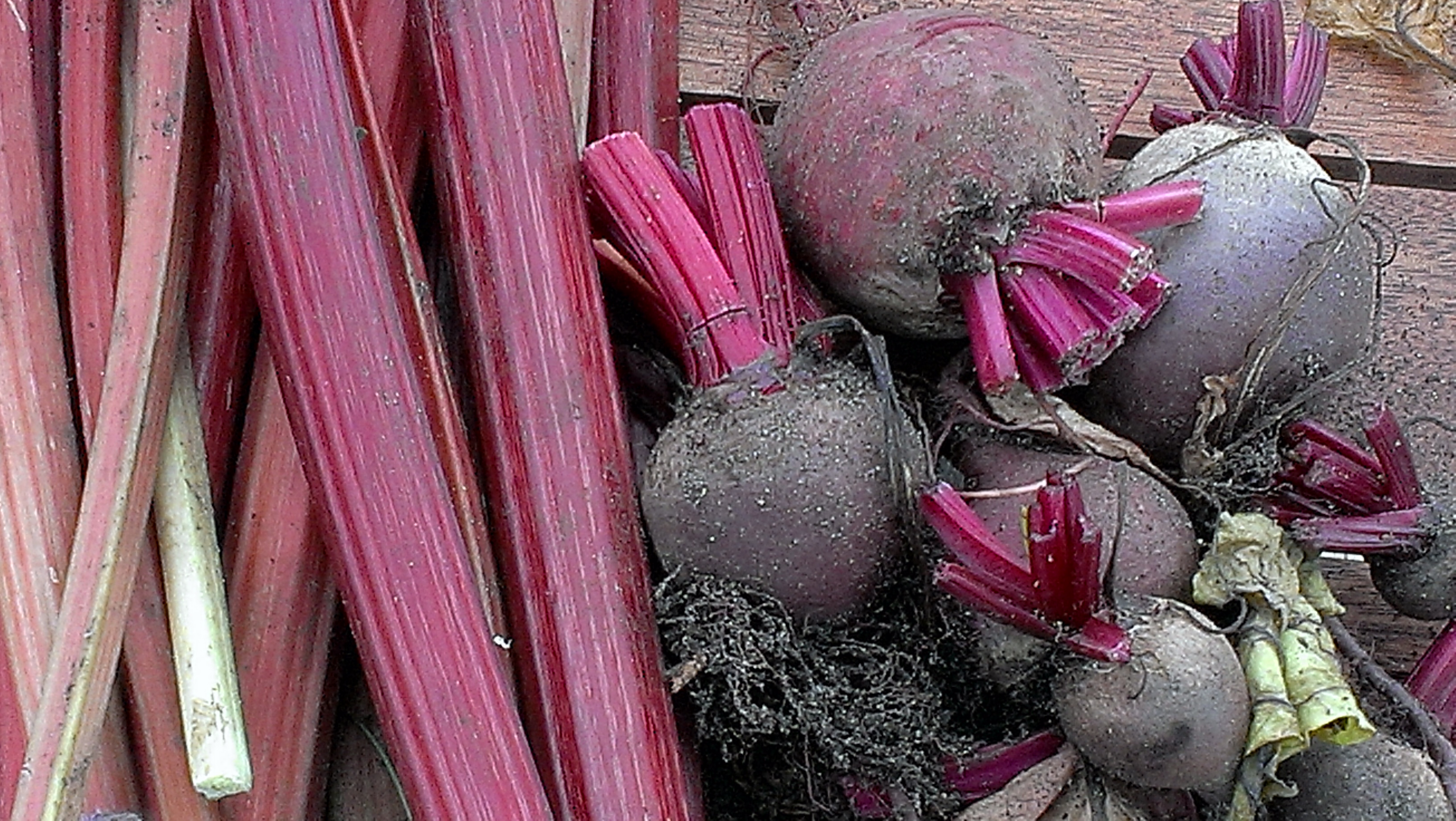
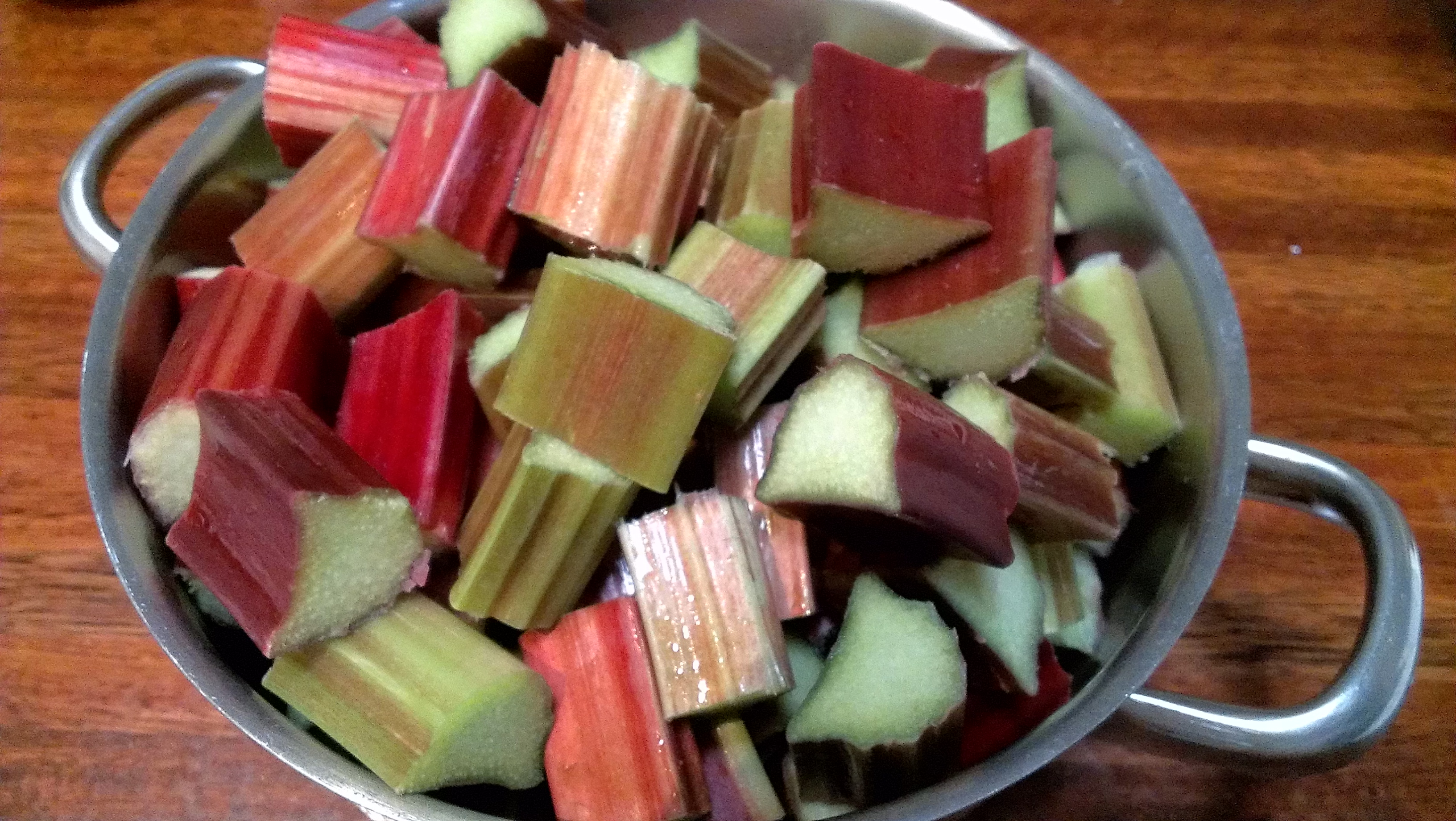
I keep thinking I’ll make rhubarb leaf mordant, and then not getting round to it!

IMAG3021

Leave a comment

Filed under Dye Plants, Eucalypts, Neighbourhood pleasures

Eucalyptus Nicholii?

Remember this bundle of leaves and my excitement about finally meeting E Nicholii, fully grown? The straight, narrow leaves below were supposed to be E Nicholii.

IMAG2935

Well.  E Nicholii is a well- and long-recognised dye eucalypt, described by Jean Carman and the Victorian Handspinners and Weavers Guild in their classic books, and prized by dyers I have spoken to who were using it in the 1970s and 1980s to obtain reds and oranges.  So I was rather surprised to find this result from the best of several attempts:

IMAG2980

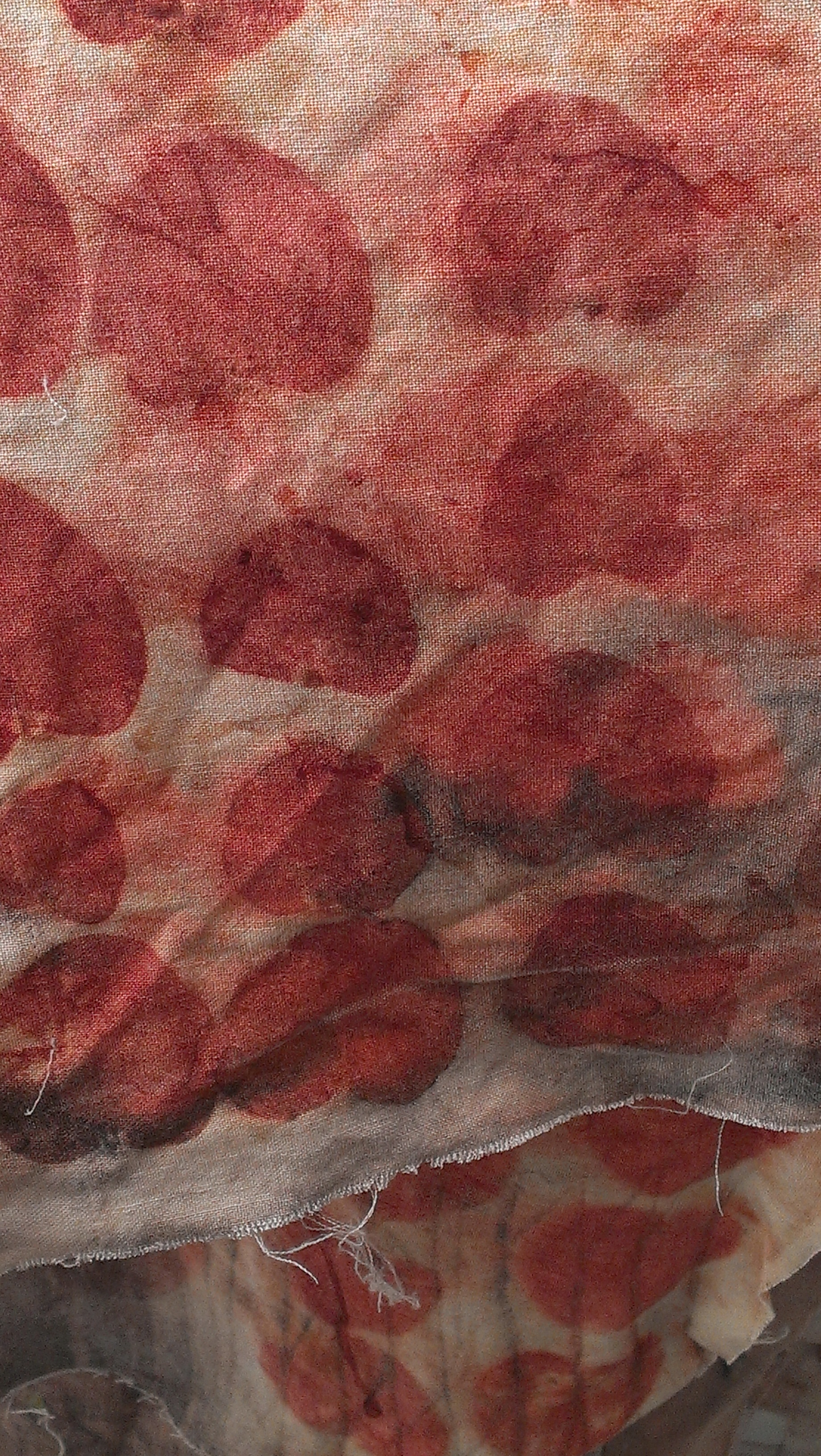
I did get a roughly orange smudge on some of my fabrics from the ‘E Nicholii’. In the same pot, cooked for the same length of time and on fabric mordanted in the same batch, E Cinerea produced vibrant colour:

IMAG3020

In the past, using trees I was entirely confident were E Nicholii (albeit small specimens) I have got something more like this:

IMAG3015

These are blocks from a quilt I have been working on…

IMAG3016

My own E Nicholii is a tiny specimen, surrounded by a personalised fence to prevent certain marauders with a tendency to dig up anything promising with no thought for the future.

IMAG3006

The marauders came past to check what was happening as I took a photo of the tree.

IMAG3005

How to explain this eco-printing result?  I didn’t identify these trees myself but relied on someone else who was clearly knowledgeable, which is not to say any of us are above error.  If I had identified them myself, I would say without hesitation that the dye pot is more reliable than my identification skills.  But there are so many variables: these trees were mature while I have tried only young trees–all I have been able to find and identify with confidence.  They were in relative shade and growing in a relatively cool spot…    I just don’t know!

10 Comments

Filed under Dye Plants, Eucalypts, Leaf prints

Of leaves and linking opportunities

IMAG2978

It was a weekend of leaf printing… and more about that later, since there were some expected outcomes as well as some surprises!  But meanwhile… India Flint, whose techniques I am trying to use to create these prints (though as they say in the classics, all failures are my own work), has a brilliant blog.  It is just as interesting and informative as on previous occasions when I’ve linked to it, but currently India is inviting people to post what they would like her to write about.  So, should you wish to take up this opportunity, click here and contribute to the conversation!

4 Comments

Filed under Eucalypts, Leaf prints

Alas, poor Malcolm the Corriedale

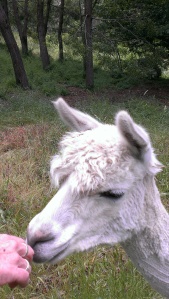
We had a glorious visit to our friends in the hills on the weekend. There were recently shorn alpacas.  In black…

IMAG2929

In white…

IMAG2926

And in cinnamon.  But like the sheep, the brown alpacas were too shy for photos.  There was a woodlot of blackwood trees, and some stumps with very impressive fungi growing on them:

IMAG2932

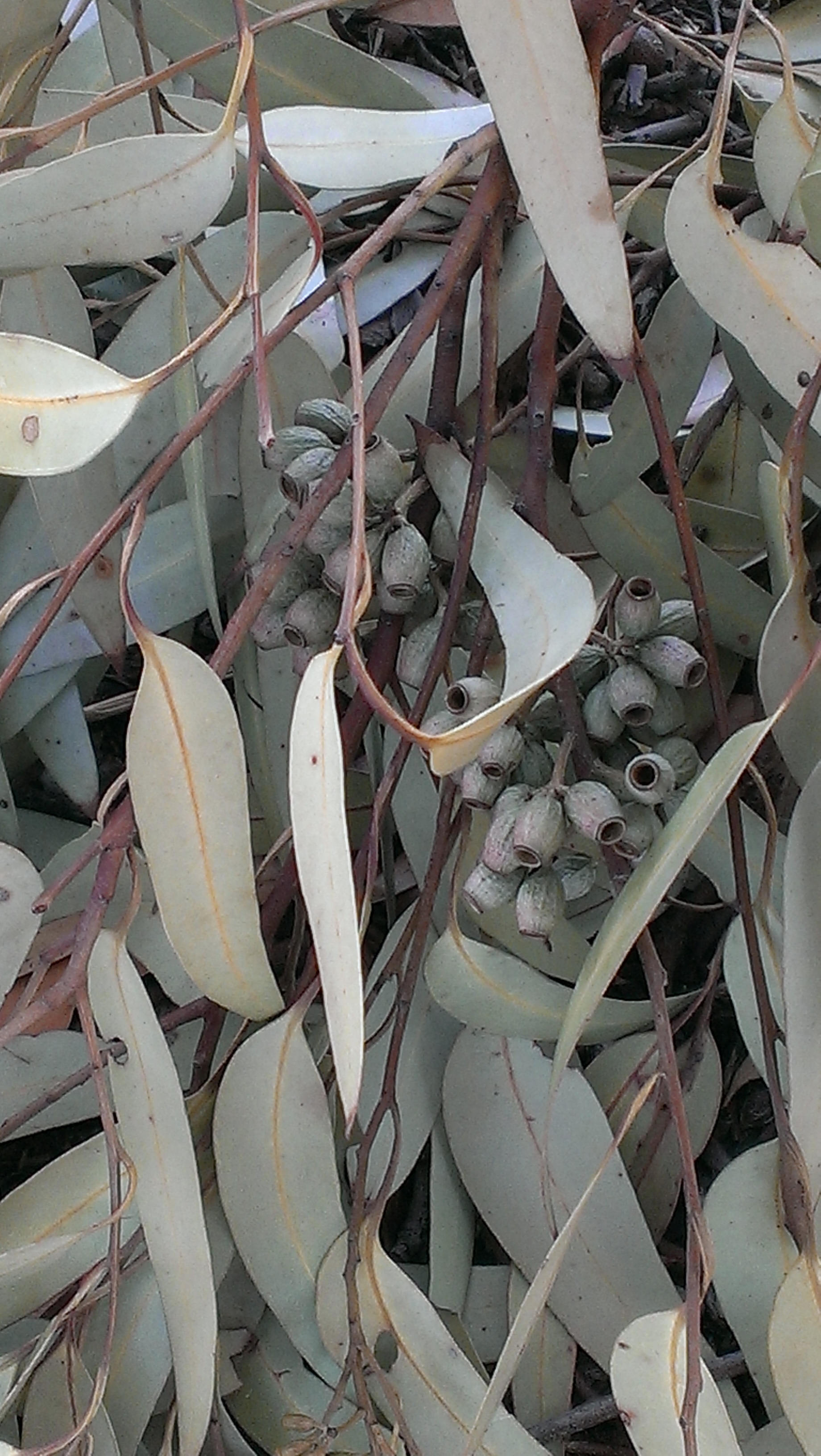
There was a wealth of eucalypts and a knowledgeable community member who knew what many of them were. I brought home E Nicholii leaves (I have not had the chance to greet a fully grown specimen before, let alone a row of them), E Cinerea leaves and some massive juvenile E Globulus leaves.

IMAG2935

There was fine company, cake and scones and home grown cherries.  Not only that, but koala sightings and visits with rescue joeys (baby kangaroos whose mothers have been killed on the road, being raised by hand with tender loving care).  Such awesomeness!  I took lots of handspun yarn and left quite a bit behind where creative minds were whirling with plans and fingers were itching to get knitting… but there was bad news too.  I got to meet with the people who hand raised the corriedale whose fleece I have been working with most recently, from a lamb.  And sadly, poor Malcolm had recently and unexpectedly died, just before the shearer was due to visit.  We paused on Malcolm’s grave.  So it was special to have taken yarns made from Malcolm’s fleece to share… and I still have some, plus fleece that I dyed with eucalypts last week (it is E Scoparia bark peeling season) …

IMAG2936


And fleece that is prepared and ready to spin, from my recent coreopsis–osage orange–indigo dyeing season.  So… although I never did get to meet Malcolm, it’s conceivable I’ve spent more hours with my hands in his fleece than anyone…

IMAG2939

And I now have 5 alpaca fleeces and one from Lentil the sheep to think about and share around, such is the generosity of our friends!

7 Comments

Filed under Dye Plants, Eucalypts, Fibre preparation, Natural dyeing, Spinning

Drawstring bags

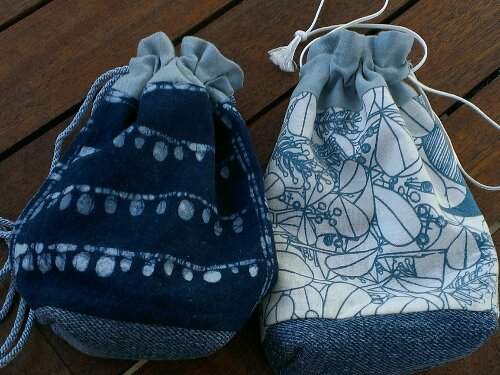
I have been using up smaller scraps of indigo dyed fabric. I decided on lined drawstring bags. The kind I like to use when carrying small knitting projects around. The linings allow the use of all kinds of little scraps.

wpid-IMAG2294.jpg

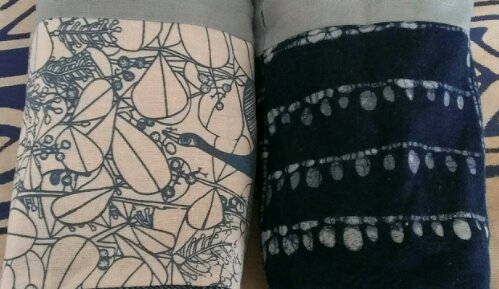
These outers use some of the hemp I dyed with indigofera australis as well as the last of my wax resist indigo dyed fabric, and some with a delectable Australian designed print.

wpid-IMAG2298_1.jpg

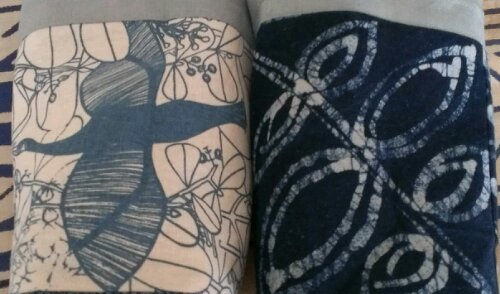
Here is the other side:

wpid-IMAG2299_1.jpg

And here they are with cords drawn through their casings:

wpid-IMAG2366_1.jpg

I also made some larger bags with small pieces of leaf printed recycled linen and another Australian print.

wpid-IMAG2362_1.jpg

Surely this is the last of the famous brown ramie shirt and those hemp jeans! And I have found use for some pre-loved cord as well.

6 Comments

Filed under Eucalypts, Leaf prints, Sewing

An appreciation of Eucalyptus Cladocalyx, the Sugar Gum

Sometimes I travel in and out of the city through the parklands.  My favourite part of the route (when travelling on bike or on foot)  is this pathway lined with sugar gums.  They are yet to reach their full height but they are still impressive, majestic and beautiful trees.

IMAG2786

The City of Adelaide is famously circled by parks.  In our harsh summers, the parklands become dry and brown well before summer reaches its height. You can see in this image that the crisping of the parklands has begun already. The trees branch too high for me to be able to photograph the canopy, but this branch had fallen and dried.

IMAG2788

Friends have spent months of the last year trying to save an avenue of sugar gums  that are twice this size, at least, and much older.  Our campaign to save them succeeded, but the sugar gums are growing along a railway line that is being electrified and a few days ago they were scheduled to be ‘pruned’ in a way that will render them lopsided amputees.  I am glad the railway is being electrified (it is diesel powered now, polluting and unsustainable).  Its impact on local trees is less welcome.  I haven’t been able to bear to go and look yet.  It was a huge achievement to save those trees and I am hoping the pruning has not been too brutal.  And that this avenue of trees in the parklands will stand tall for decades, or even better, centuries to come.

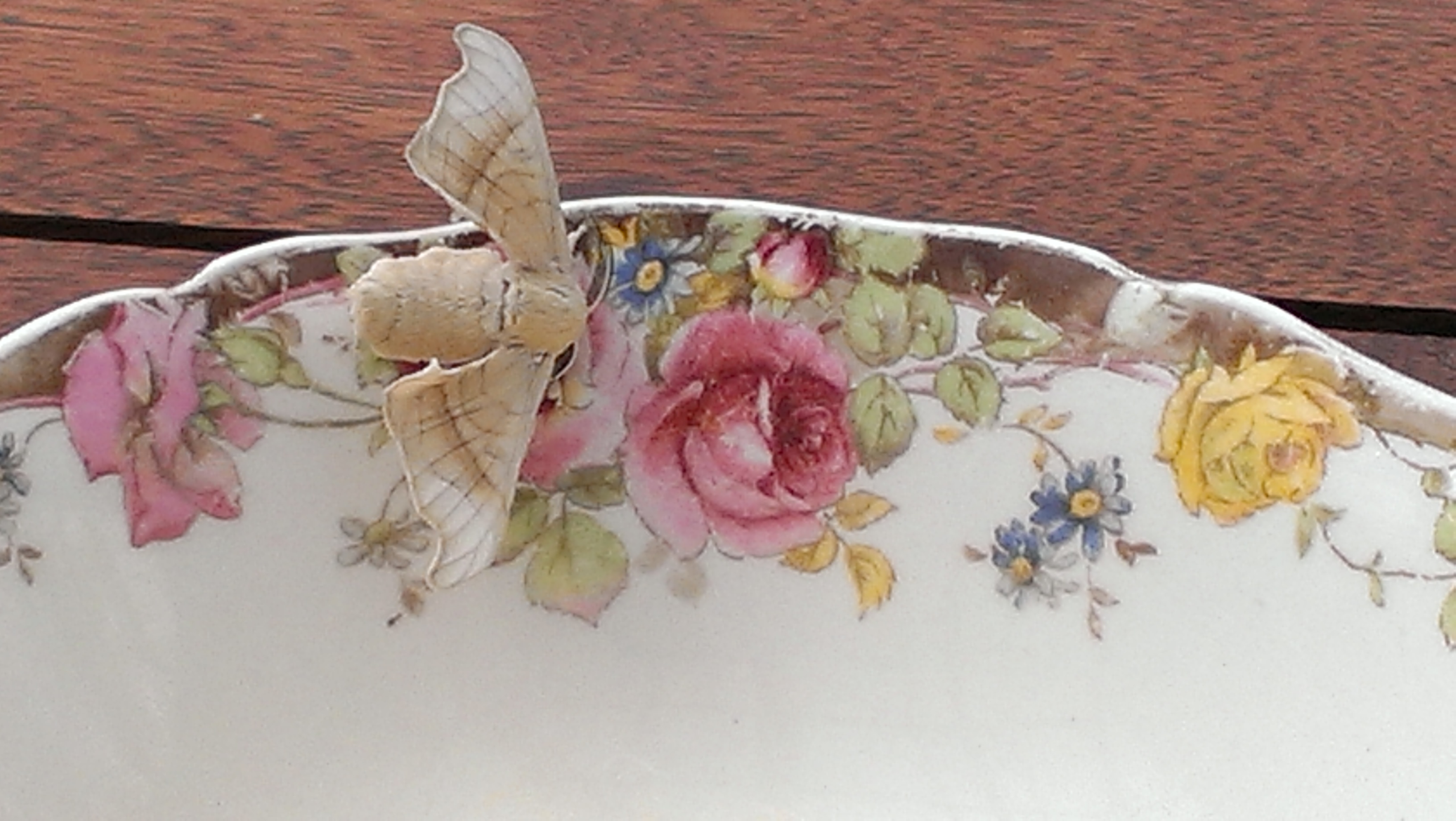
Oh, and have I mentioned the silk moths?

IMAG2758

4 Comments

Filed under Eucalypts, Neighbourhood pleasures

Eucalyptus dyed gradient yarns

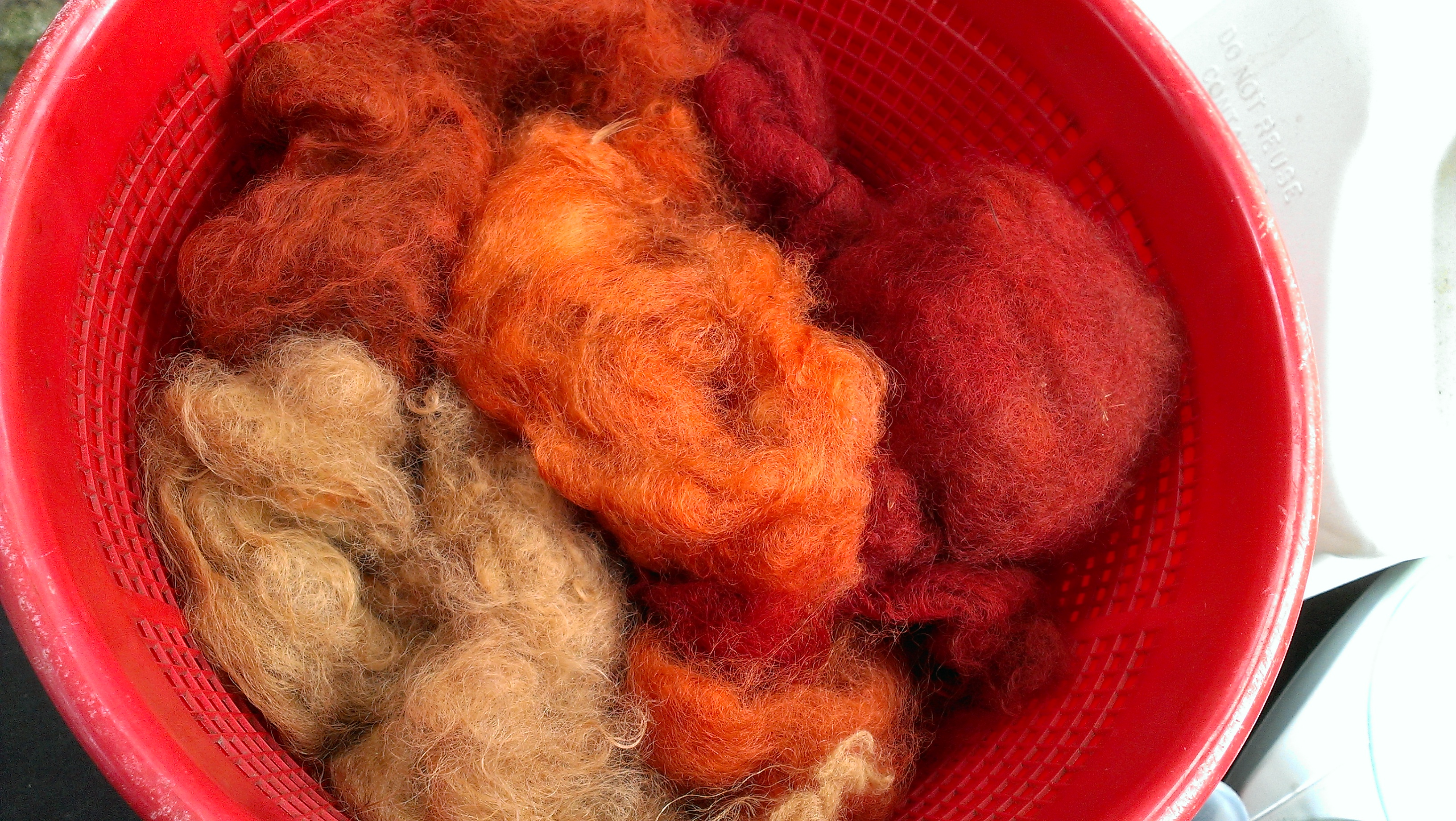
Some time ago I blogged about dyeing with windfall eucalyptus leaves. I had been dyeing over white corriedale and had quite a range of colours in the range of ochre and caramel through flame orange and… opinions differ about whether that really is red. Here it is, wet from dyeing and ready to be rinsed:

IMAG2316

I divided my fleece up into colour groupings, carded it and pulled a roving straight from the carder drum with a diz.  What a great technique.  You can find it on YouTube, but it was watching a friend from the Guild demonstrate it that really convinced me to try it out.  This Youtube video has an explanation of the same simple homemade diz my friend has made, so maybe she was inspired by that video.  Here are my rovings.  Creating these made me feel like I have learned a few things about fleece preparation.

IMAG2392

Then I created bumps of roving with segments of each colour, lined up to create a gradient from ochre through to reddish. Then, there was spinning and plying and skeining and washing–spinning being a craft of many stages–and now…

wpid-IMAG2742.jpg

I am so happy with this yarn! I can’t wait to share it with the friends whose sheep this wool came from.  Coincidentally, the week I finished this yarn, they invited me to their place for shearing time.

wpid-IMAG2750.jpg

16 Comments

Filed under Eucalypts, Fibre preparation, Natural dyeing, Spinning

Eucalyptus dyes over grey corriedale: The spinning finale

I have a bit of a tendency to go a long way toward the completion of a big project and then pause near the end.  Sometimes for a little while, sometimes for a long while.  So here, finally, is the very last of the grey corriedale I dyed months ago and planned to spin during the Tour de Fleece. I loved the two ply yarn I created during the Tour a good bit less than my initial chain plied skein, even though it is what I need if I ever knit that cardigan I dream of.

I found the label for this fleece on the weekend and I started out with 3.5 kg of fleece.  I made a true three ply yarn (three singles plied together) from most of the last part…

IMAG2559

And chain plied the rest (one single plied on itself in a chain).  I think the long pause on this was caused by the way my heart sank when I stopped chain plying it in the first place.  I love the distinct colours in the last little leftover skein!   IMAG2562

I also spun up a little batt of alpaca dyed in eucalyptus.

IMAG2382


Three ply wins again!

IMAG2563

Leave a comment

Filed under Eucalypts, Fibre preparation, Natural dyeing, Spinning

Yellows from coreopsis flowers and osage orange

I have decided to branch out from the eucalyptus based palette of ochre–caramel–tan–orange–red–maroon I have been so focused on for the last while and plan toward an indigo vat.  Don’t you love these bold statements?

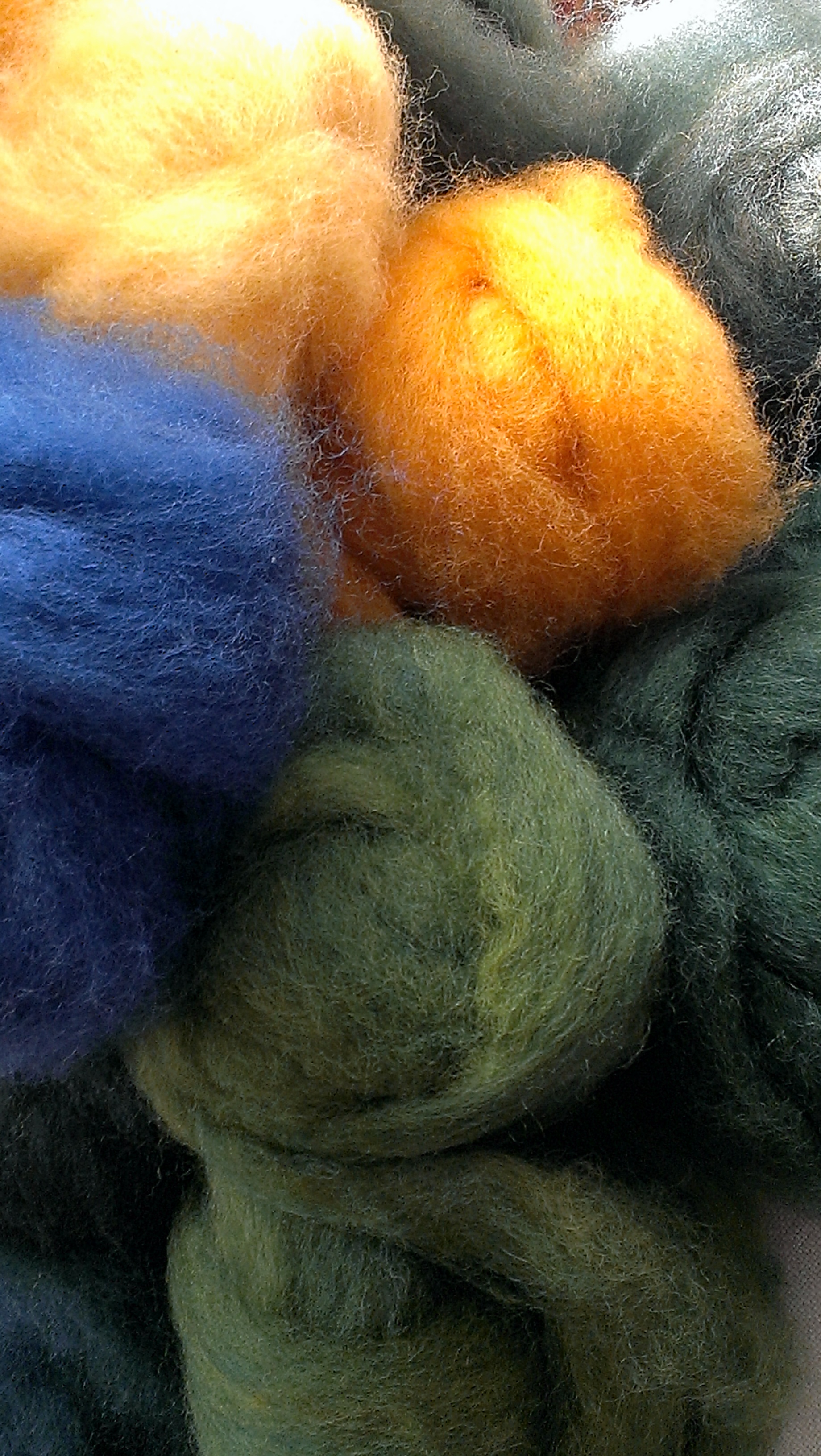
I still love the eucalypt colours: here, a small quantity of alpaca passing through various stages of preparation.  Picked, dyed locks;

IMAG2377

Partially carded batt;

IMAG2379

and, finally, yarn–pictured in the dyer’s chamomile patch.

IMAG2428

I have decided to try for yellow–green–blue transitions, which will necessarily begin with yellow.  I had coreopsis flowers my mother saved me one summer, as she deadheaded her plants. This collection of flower heads speak to me of her love and her fine qualities as a gardener and a person who loves to share.  I had reservations about the colour I would get from them, as some had gone mouldy.  Her -plants are just so prolific–the stack of wilted heads had trapped enough moisture to create mould.

IMAG2370

I also had a little remaining quantity of osage orange shavings of antiquity, gifted to me from the Guild.

IMAG2371

I prepared them both for the dyebath, but have to say my tea ball was not a good enough receptacle to retain the osage orange.  I not only sieved the dye vat before adding wool (thank goodness I remembered to do this as I tackled it one night when the amount of sawdust in the vat was not as obvious as in the clear light of day) but also placed the whole tea ball in another fine cloth bag before running an exhaust bath.

IMAG2372

Even after the first bath of each dye, there was a lot of colour left, so I ran an exhaust bath and dyed a total of about 800g of white corriedale.  I was especially impressed with the amount of colour and the wonderful smell of the coreopsis bath.  I need not have worried about the mould.  Here is the coreopsis bath between dyeings.

IMAG2383

The resulting yellows are lovely.  On the left, coreopsis bath 1, then coreopsis bath 2, osage orange bath 1 and osage orange bath 2.  The coreopsis yellows are quite buttery and golden and the osage orange colours are a little more lemony.  And, there is further evidence that grass seeds and other vegetable matter take dyes quite well!  Now, to build up my courage for the indigo stage and some greens and blues.

IMAG2453

10 Comments

Filed under Dye Plants, Eucalypts, Fibre preparation, Natural dyeing