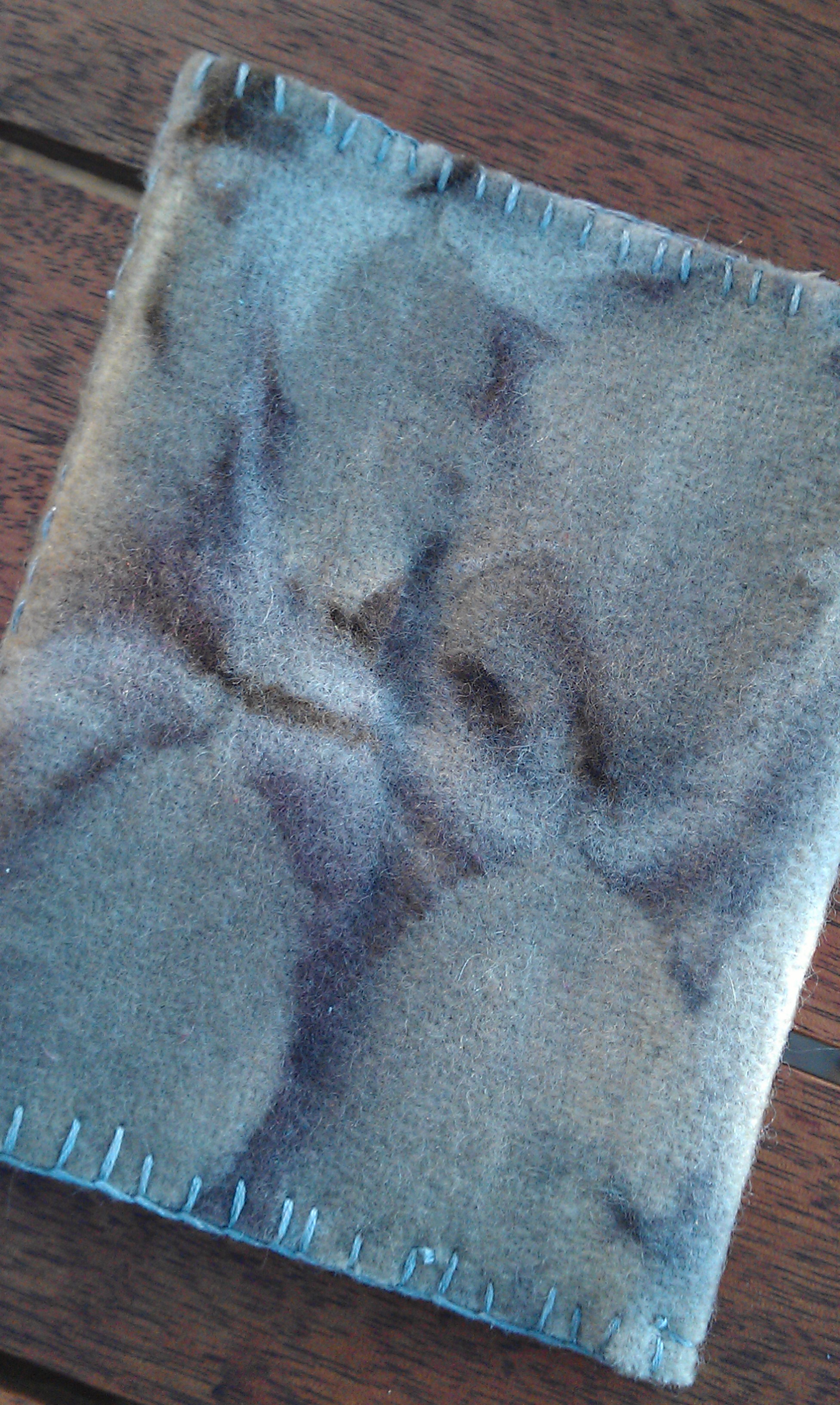
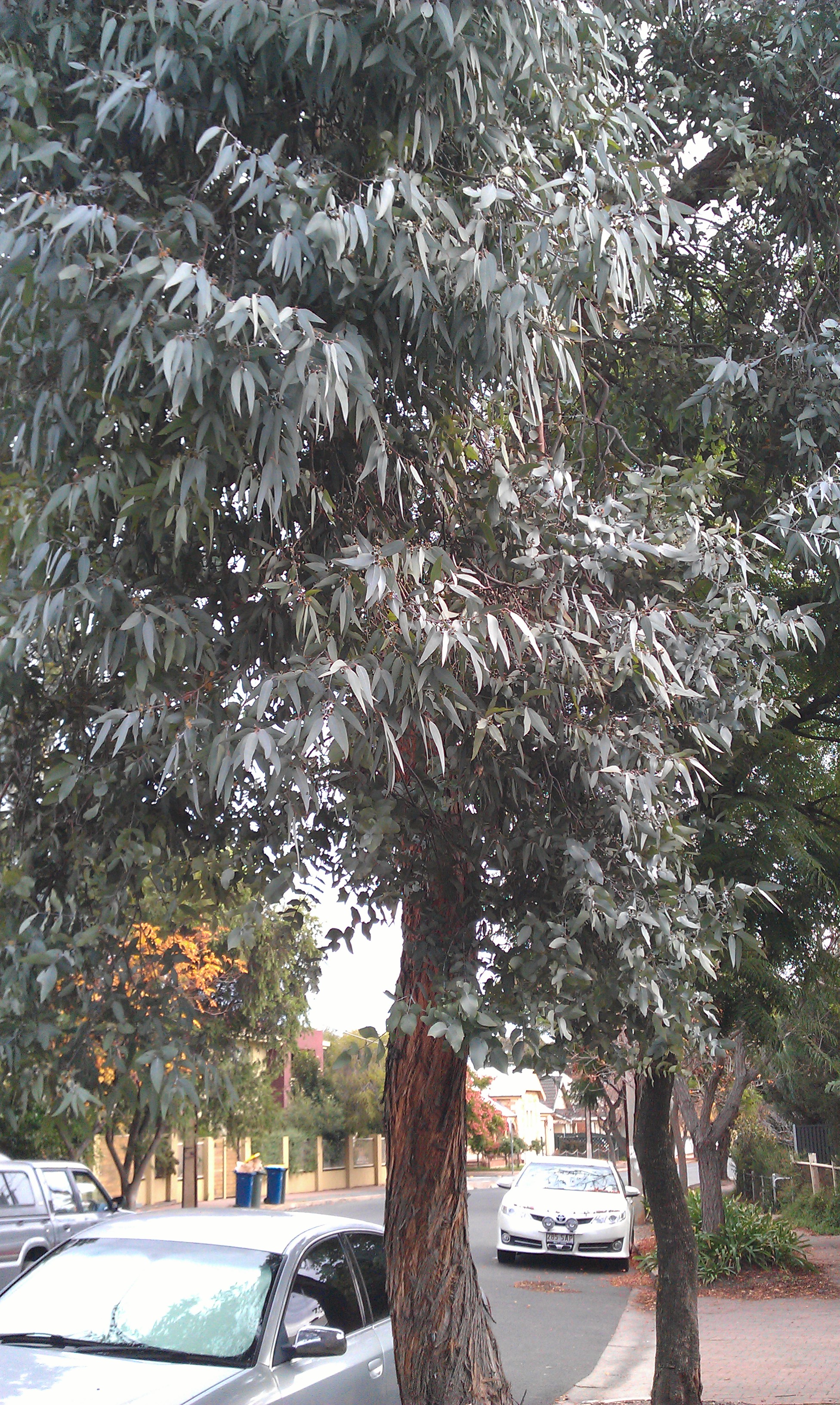
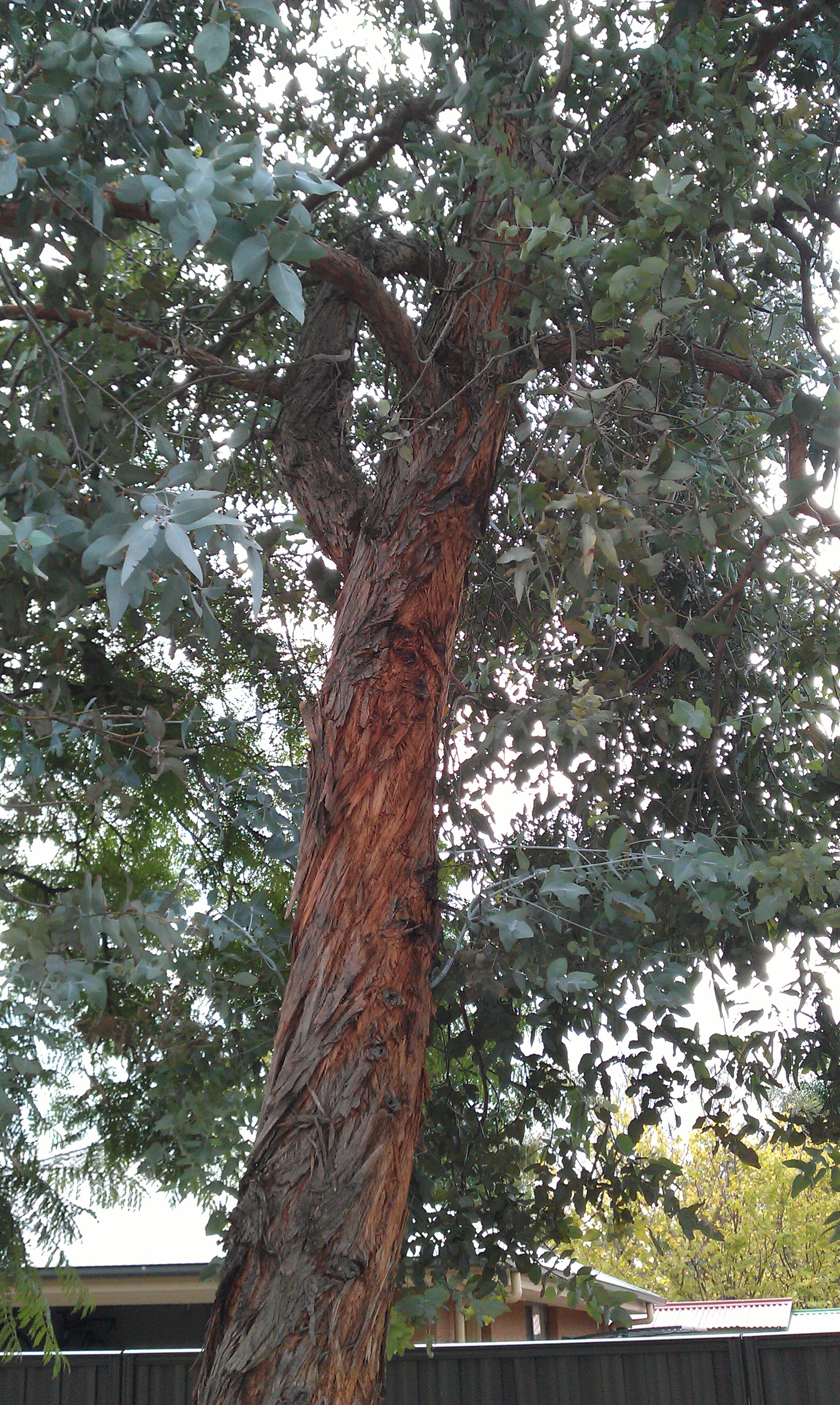
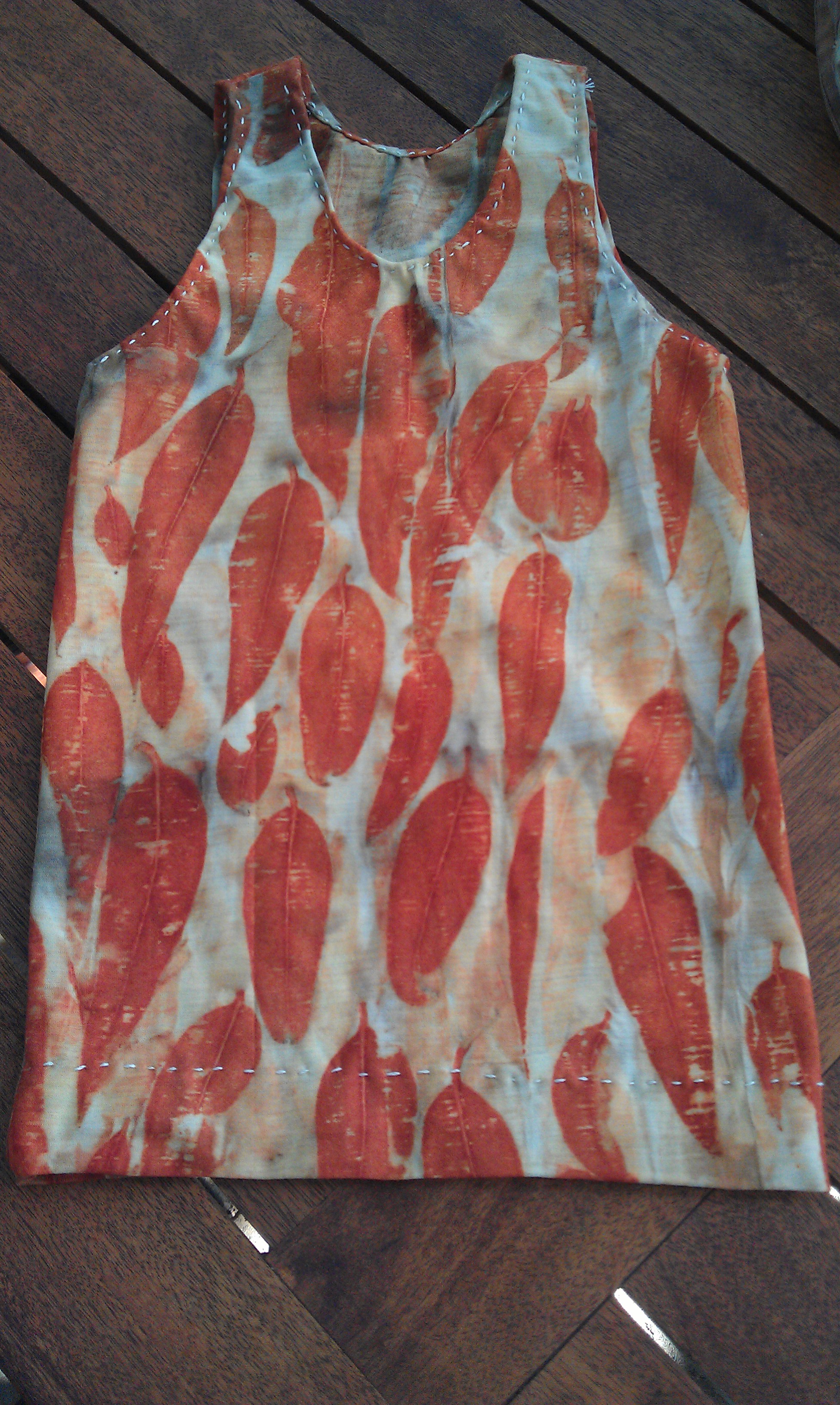
Category Archives: Leaf prints

A birthday gift sewing kit

One of my beloved friends–I think of her as family of choice, really–had a birthday recently.  I love to celebrate birthdays, but to be honest, I prefer to give gifts as they come gleefully to hand or come into existence and not save them up for a specific day.  Perhaps I am just impulsive, or perhaps I don’t have enough gift ideas!  Anyway, near enough to the big day I came to understand that she didn’t have a sewing bag… even though she is such a wonderful stitcher and mender, and even though she is currently spending many hours on public transport where stitching might be a good thing to be carrying.  I started out with making a bag.

IMAG1745


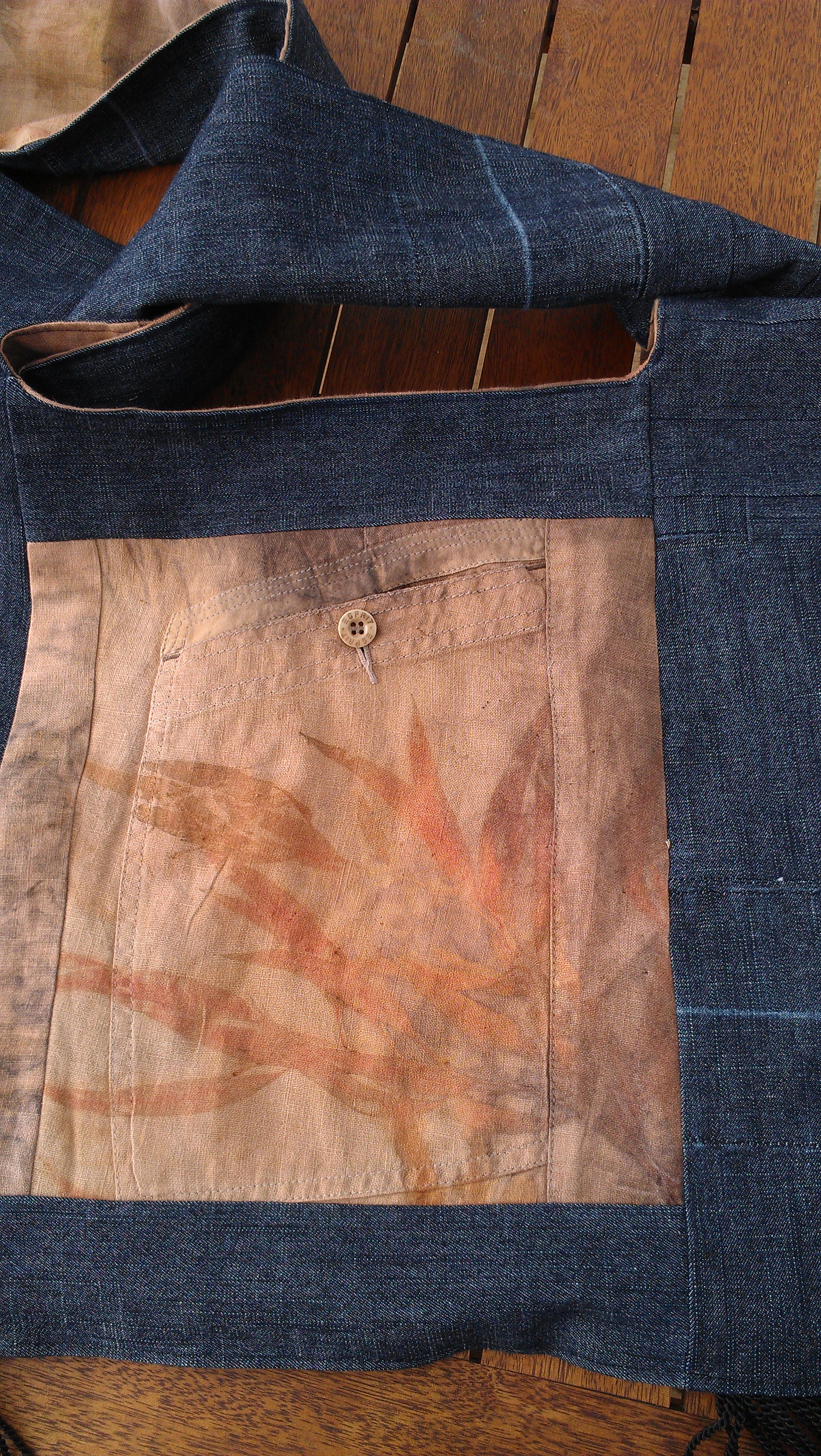
The main panel is a superb quality linen which was once part of a pair of suit pants.  At a  guess, they had their heyday in the early 1980s.  I have saved the jacket, but the pants were past use as a garment and long since met the dye pot, bundled with E Scoparia leaves.  My favourite combination, pretty much.  The chocolate brown ramie and linen sections were also op shop garment finds, and there is a leaf printed silk noil lining.  Naturally, I acquired some pretty pins and suchlike… And then made a needlecase.

IMAG1741


These prints are pohutukawa (Metrosideros excelsa) leaves on a strip of old woolen blanket, stitched with silk thread dyed in Austral indigo (Indigofera Australis)–but only just!  The thread colour seemed perfect for the job to me, being just to the blue side of grey.  Those pohutakawa leaves have the glorious feature of giving two completely different coloured eco-prints, one on each side of the leaf.

IMAG1742

Long ago, another friend gifted me a pile of small leather samples, perhaps from an upholsterer–each one labelled with the name of the colour.  This one met its destiny as a scabbard of the most basic kind, intended to stop these scissors finding their way out through the bag.  In the end, this gift extended the birthday season by some days… the anniversary of my friend coming into the world came and passed–and a bit later, along came this belated present.


7 Comments

Filed under Leaf prints, Natural dyeing, Sewing

Milky merino: Second effort

I decided to use the scraps from my milky merino to make a singlet for a small friend. One inspiration was the discovery of another E Cinerea nearby on a suburban street.  It is beautiful.

IMAG1723

It is covered in new growth, whose leaves are larger and teardop shaped rather than the rounder heart shape that is usual for mature leaves.

IMAG1722

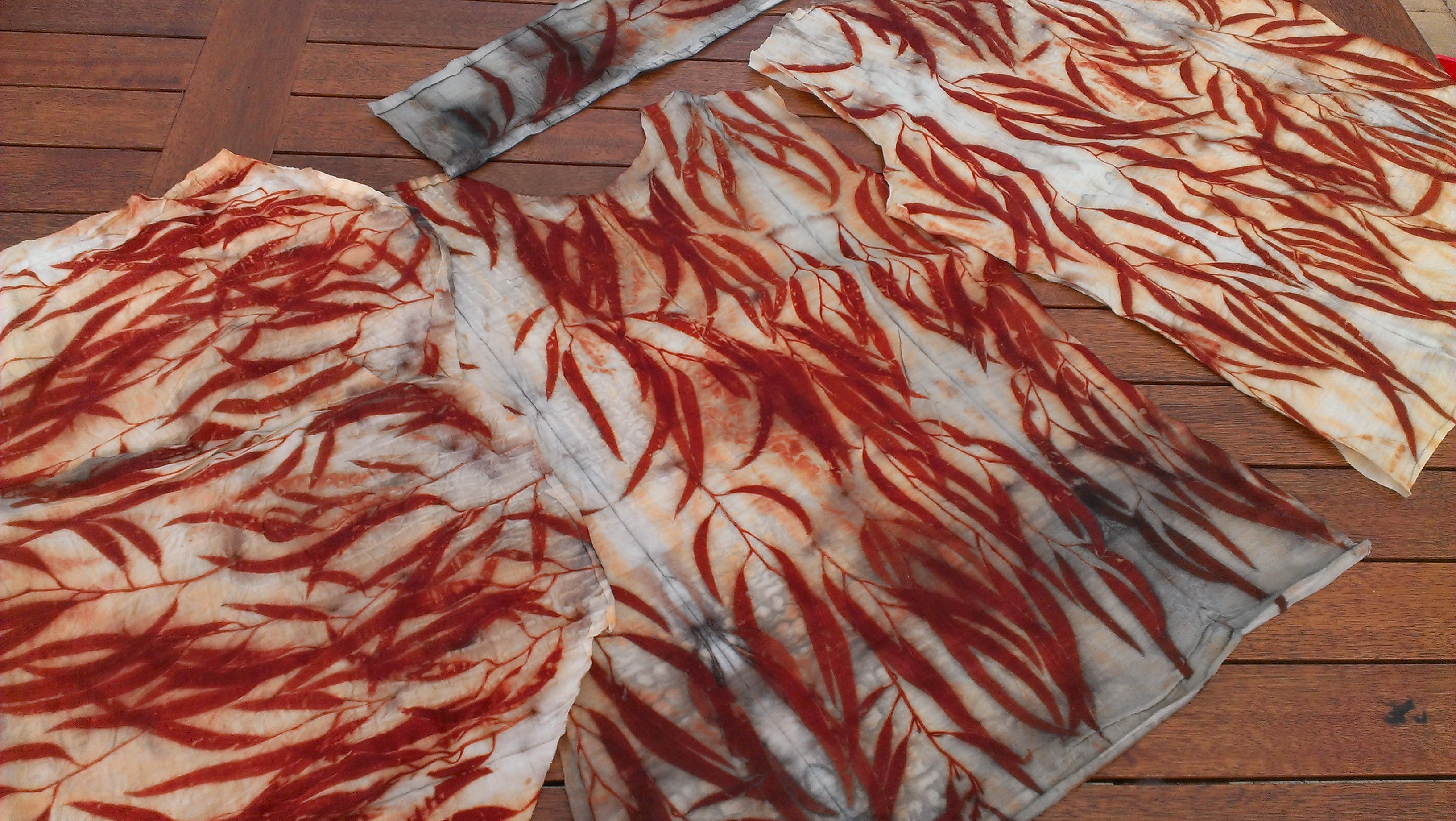
I have to say milky merino is a glorious fabric to use for eco-printing.  It takes colour in a most spectacular fashion.  I bundled up one night and unbundled a day or so later.

IMAG1731

I love the way the fabric took on a golden creamy colour where it did not absorb a direct print.

IMAG1733]

Action shot!

IMAG1735

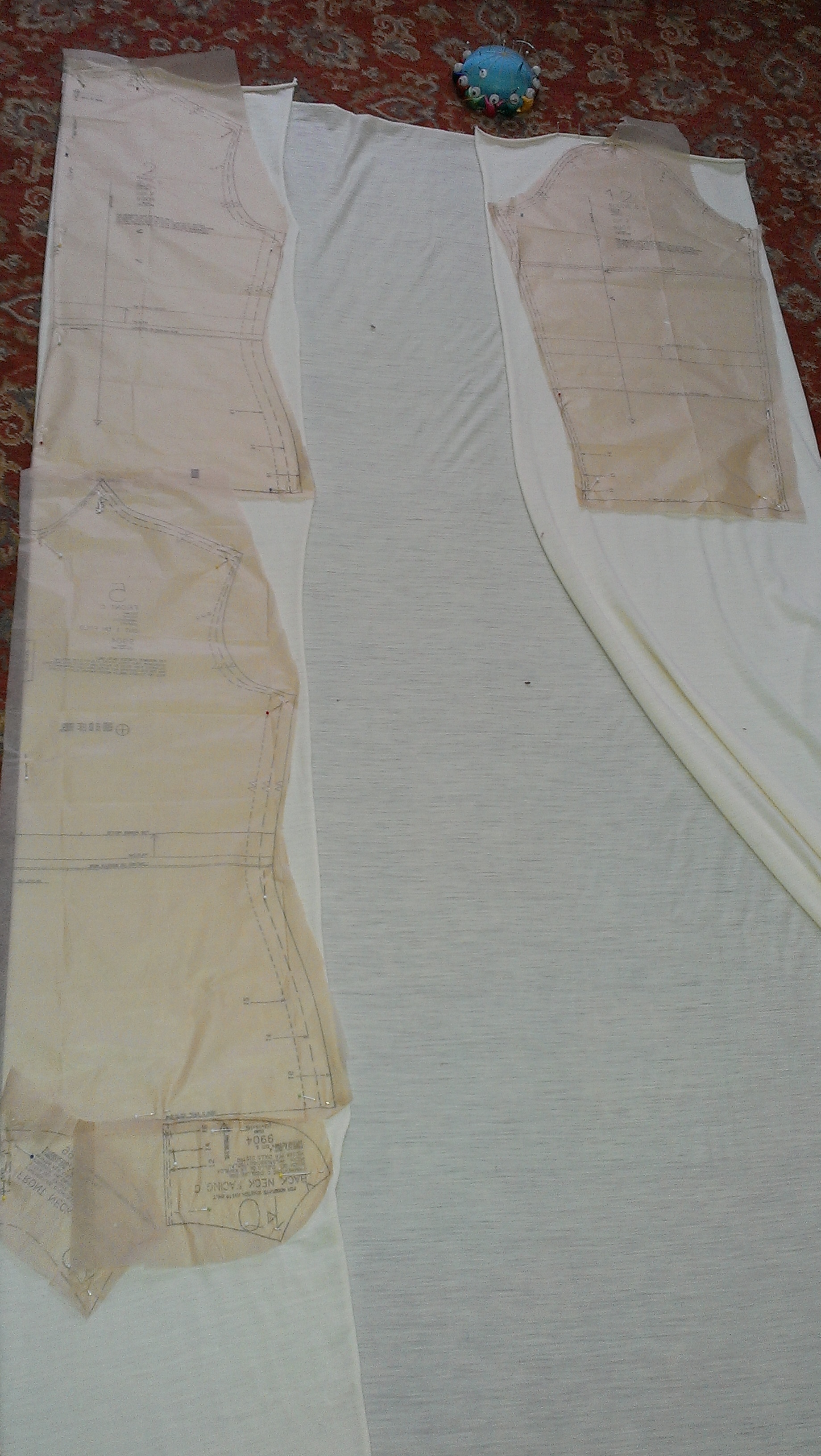
I created a pattern from an existing garment and set about cutting and sewing it from the fabric.

IMAG1753

The finished garment is sooo cute, and so tiny I need to find a different recipient for it.  I should have recognised the difference in stretch between the garment I measured up and the milky merino…!

IMAG1754


9 Comments

Filed under Dye Plants, Eucalypts, Leaf prints, Natural dyeing, Neighbourhood pleasures, Sewing

Milky Merino: First effort

Last year, I managed (with a little help from cossack design) to acquire some milky merino knit fabric. I have been thinking that if I want to make all my own clothing I will need to learn how to make turtle neck, knit, long sleeved tops for winter and T shirts for summer (though perhaps it will be years before I wear out my current collection of T shirts–and people keep giving them to me)!  I decided to try a pattern I bought some time ago.  Then I managed to trace a pattern from a garment I already have and like to wear and cut one of those from the length of fabric I had as well.

IMAG1897

I was feeling positively gleeful about the potential for two garments to emerge from this experiment.  Many other dyers–see examples here, here and here have had beautiful results dyeing this fabric.

  IMAG1903 (1)

I’m delighted with these results.

IMAG1905

I also dyed the little samples that came in the pack, neatly enclosed in my soup ball:

IMAG2270


IMAG2277

This thread has since been applied to a ‘beloved tree’ banner.

IMAG2291

That was all very well.  I sewed my garment together, only to discover that I had succeeded in shrinking the fabric… and more in one direction than the other.  In the end, I gave the garment to a smaller friend and she adjusted it to fit her.  She looks wonderful in it!  Now I am building up my nerve to sew the second turtleneck together and see who that will fit!

12 Comments

Filed under Eucalypts, Leaf prints, Natural dyeing, Sewing

Whatever became of the dress?

IMAG0041

Well, my friends, true confession time.  I sounded out a lot of people about the second skin frock, on and off line.  Their, and your, ideas were full of genius.  If I’d had ten of that frock I could have made ten different lovely garments from it.  But I didn’t!  I still could not overcome the fundamental issue—believing I’d wear it no matter how lovely it was.

IMAG0042

I turned it into a series of what India Flint calls ‘infinity scarves’, though a  little less fancy than the model we created in Melbourne.  Three of them.  Two have already gone to happy homes, in fact I saw one in use yesterday.  It had a leaf print from a white cedar (Melia azaderach var australasica) leaf, pale green, which my friend had particularly appreciated.

IMAG0043

One has been hand-pieced to manage the top part of the garment, and naturally it’s my favourite.  I’m surprised to find that the clean, shiny white of the silk and cotton thread stitches against the dyed fabric is pleasing to the eye.

IMAG0044

I’m now left with only a small pile of little scraps.  Each time I come past them, I think ‘pincushion’.  So there may still be another object to emerge from what was once a frock…

IMAG0077

5 Comments

Filed under Leaf prints, Natural dyeing, Sewing

Eucalyptus Polyanthemos

I’ve been curious about E Polyanthemos for ages.  I saw one on a tour of the Currency Creek Eucalyptus arboretum years back and I had already heard it was a good dye plant.  I am guessing it is mentioned in Eco-Colour.  It has been on my mental list for quite some time.  So when I found one that had been identified by a more knowledgeable person recently, I paid a lot of attention.

2014-04-25 16.10.31-55

I think the two trees I have been holding in mind as potential examples of E Polyanthmos might actually be E Polyanthemos on the basis of this sighting.

2014-04-25 16.10.31-56

It’s a lovely tree–those wide grey green leaves are truly lovely.  Evidently, they are also delicious, because this one was covered in leaves that had been nibbled by some kind of insect.

2014-04-25 16.10.31-58

This tiny sample went into my dyepot…

IMAG0032

And created very interesting prints. It intrigues me that one plant can create such different colours in such close proximity.  I have had wonderful colour from the buds of the other two trees I visit from time to time, and the tree is truly spectacular when in blossom, because the many-anthers its botanical name promises are needless to say held on many flowers which attract many birds.  Ah, the glory of eucalypts!

IMAG0010

4 Comments

Filed under Dye Plants, Eucalypts, Leaf prints

From old garments to new bag

I have been making a bag from two pairs of old pants.  One, a pair of second hand jeans, and the other, a pair of linen pants styled for the 1980s that I found in an op shop.  Before I leaf-printed them, they were pale green.  At first I didn’t like the effect, but it has grown on me.

IMAG4601

As much as the print, I think what made me want to turn them into a bag was the back pockets.  They are glorious pieces of construction. I love a good pocket.  The 3/4 jeans feature unusual pockets for jeans, too.  I don’t think I ever owned jeans with a welt pocket before.

IMAG0004

I cut feature sections for the outside of the bag which included the button-down pockets.  The jeans pockets went on the inside panels.  Then I pieced the rest of the garments together to create the straps and lining.

IMAG4605

It has been a feature of my sewing career that as I’ve moved away from sewing with fabrics gleaned from all kinds of places free or as cheaply as possible out of sheer necessity–into sewing for pleasure and having the capacity to afford to buy lovely fabric…. I continue to love sewing recycled fabrics.  Shirts made from linen tablecloths and flourbags.  Quilts from recycled garments.  Bags from all manner of fabrics.  I especially love retaining beautiful seaming and details like pockets into a new application.

IMAG0027

Every time I make one of these my beloved makes the case for me/us keeping it.  It’s funny, but flattering!  I haven’t decided yet if this one stays or goes to a new home.

IMAG0029


8 Comments

Filed under Leaf prints, Natural dyeing, Sewing

Things learned 4

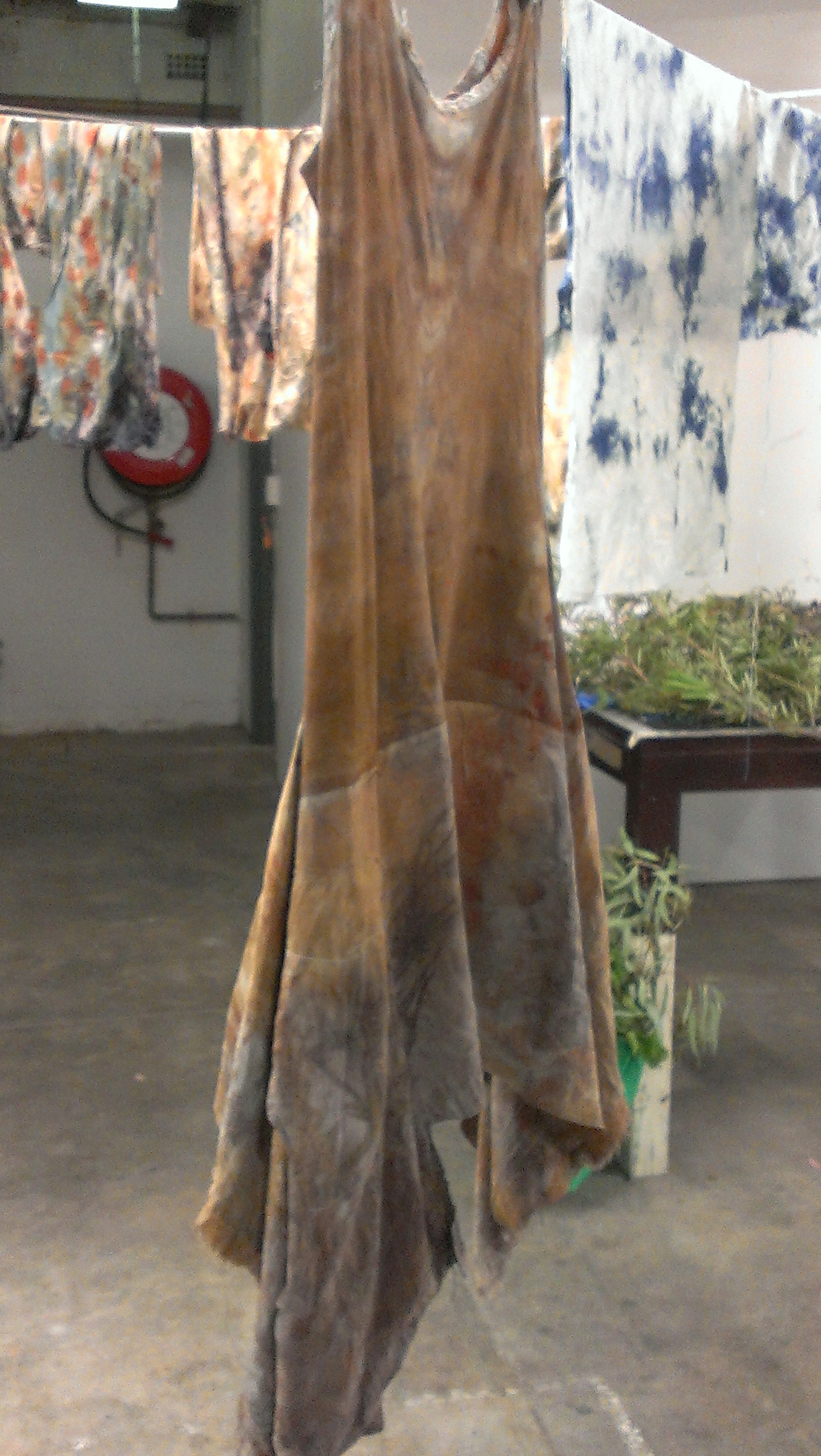
Second Skin offered lots of possibilities for learning-by-looking through the admiration of plant-dyed clothing.  India Flint was wearing her own creations every day and it was a delight to have that opportunity to see them in use and to think about their construction/reconstruction/dyeing. Other participants wore clothing they had dyed sometimes too–also a pleasure to admire.  And India brought along some garments to show. She gave permission for me to show images of this dress.   The upper part (bodice?) is a knit fabric–I am assuming it’s silky merino.  The neckline and armscyes have been bound with a different fabric: a sheeny silk that has taken up dye differently. There’s a lovely leafy detail heading toward one shoulder.

IMAG4311

The skirt of the dress is asymmetrical, and composed of a variety of fabrics, some repurposed.  There is a large pocket in the skirt that might once have been the neckline and part of the front of a shirt, replete with buttons.  I found that a delectable detail.

IMAG4310

This view shows how lush the skirt is.  I loved the generous, undulating hemline and skirt.  India gave a demonstration of how it had been created.  I loved the idea of using a variety of fabrics and textures in a single garment. I’m a plain sewer, as you may have detected, and my mind was abuzz with ideas for using some of the lovely pieces of fabric in my stash of eco-printed fabrics in this way.  Hand-stitching clearly has advantages in creating this kind of garment and coaxing all its component parts into a sweet relationship with one another.

IMAG4304

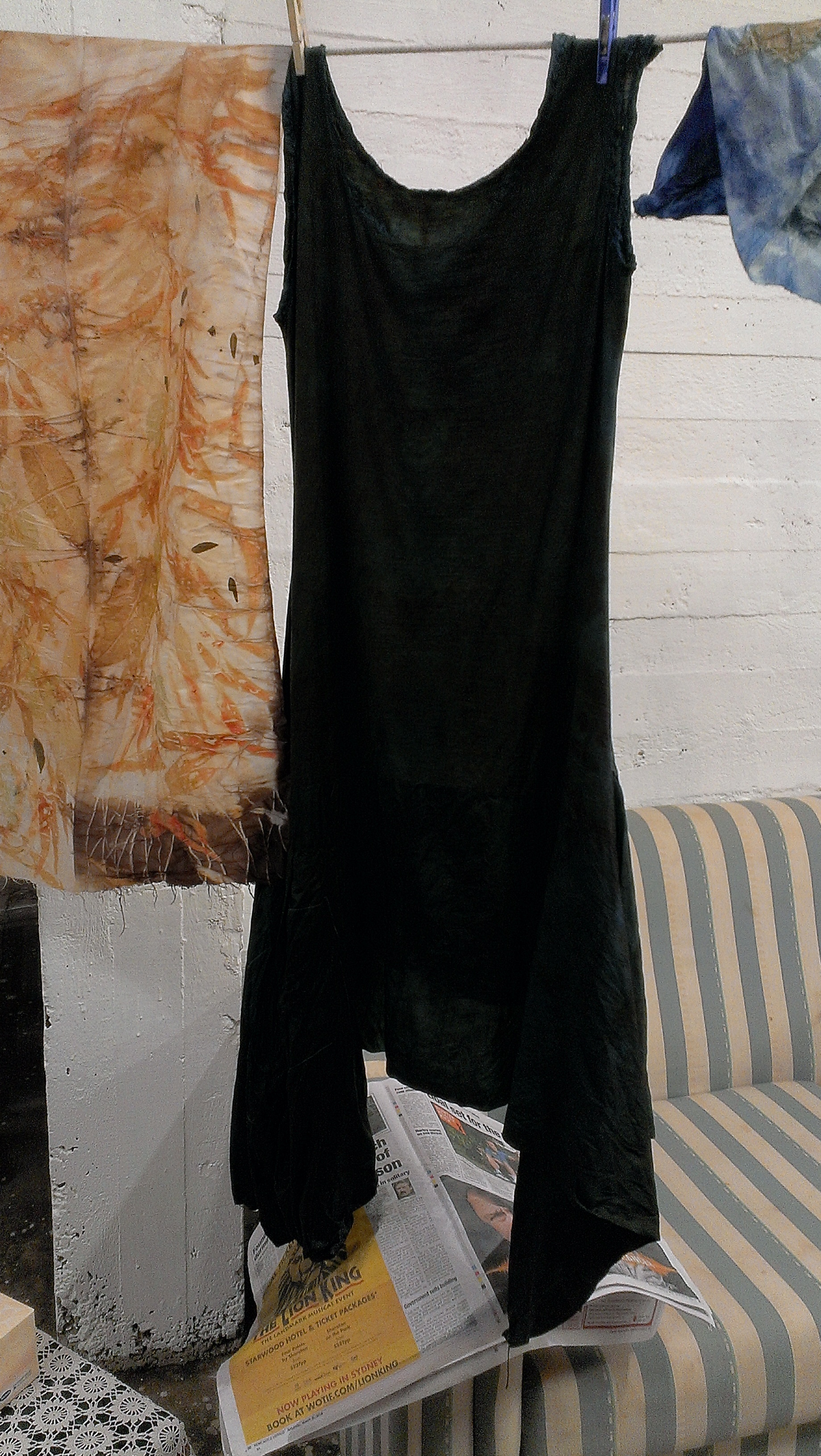
I found it really interesting to observe this use of eco-printing as a way of creating a series of colour and texture effects, rather than the way I tend to use it, in which I am aiming for images of leaves as a predominating motif.  Here is the same dress again, drying after a dip in indigo!

IMAG4359

5 Comments

Filed under Leaf prints, Sewing

Things learned 2

Continuing on the theme of things learned at India Flint’s workshop recently…
IMAG4298

I thought a good deal about the nature of knowledge.  How it is built up, a bit like sediment at the bottom of a river, microscopic layer by microscopic layer as information passes over and small deposits become part of the riverbed.  Once in a while comes a big event: a boulder of new thinking crashes in and becomes part of the muddy bottom, changing all that comes later and some of what came before.  A flood comes through, sweeping away some of the old and perhaps replacing it with new.  Some learnings feel like sludgy algae: they might be temporary and tentative and may or may not last.  Others have been there so long under so much pressure they are more like sedimentary rock and can only be eaten away by a lot of water passing by over a long period of time.  Troublesome if that ‘knowledge’ was inaccurate or those beliefs were unhelpful.
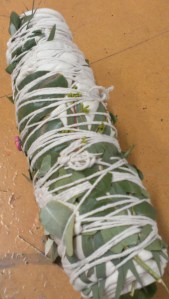
IMAG4296

Knowledge is profoundly social.  We accumulate it consciously and unconsciously from the people around us.  Sometimes the path of acquisition is hard to trace.  In some ways, for example, I am very different from my parents.  But in other ways, I think I am very similar to them: I have taken values and inclinations from them at a very deep level but transformed them into a very different approach to the world.  There are profoundly common themes articulated in very different ways through our lives.  I just loved the learning environment of a workshop in which there was such a lovely balance of  overt instruction, observation, casual commentary, questions and answers, storytelling and demonstration.  I also loved learning from and about the other women in the workshop–sitting next to one another seeing other people’s ways, hearing people’s stories, coming across them in the street at lunchtime or turning up next to them in a cafe.

IMAG4244

I also thought about forgetfulness and originality.  The conversation about originality in art and craft (as in other fields of life) is always interesting to me, but so often, also distressing.  The online world has created so many new ways for ideas and images and concepts and techniques to be shared, displayed, and passed around with and without agreement or awareness, that it raises new issues for originality.  But some of these issues are very old.  I found it fascinating to listen to accounts being exchanged of egregious or perhaps merely irritating uses of others’ ideas, terms, techniques or concepts.  At the same time, there were a couple of moments when I realised that something I thought I discovered for myself though years of trial and error had already been discovered (by India, for example), with the strong likelihood that I encountered it in her work and at some later point it came into my mind as a thing to try out, without any stamp attached to mark it as hers.  A bit like those moments when I struggle for the name of a person or a plant.  Sometimes, if I have time and can avoid panic, a name floats into my mind.  I haven’t invented it: I have learned it previously and retrieval from the archive is proceeding mighty slowly.  It seems like magic, but I am sure it could be explained by someone with a scientific approach to the brain. But it does open the way for making mistaken claims of originality, or just failing to acknowledge the work and ideas of others.

IMAG4347

There’s another thing I notice about forgetfulness.  I have read Eco Colour more that once.  But I overheard a couple of questions India answered in part by saying “I wrote about that in Eco Colour in some detail” (or something like that).  In my mind, that thing just isn’t in that book.  It’s not a natural dyeing phenomenon: sometimes I start a detective novel and recognise the beginning but can’t for the life of me remember who the murderer turned out to be or what the crucial clue was.  I think it is extremely hard to remember things, even useful things, when you don’t yet have enough of a scaffolding of knowledge to fully understand them.  I am sure I have had this experience in dyeing hundreds of times already.  Perhaps more!  I notice my students having it in my classes every single day I teach.  I get something new from Jenny Dean or Ida Grae or India Flint every time I read them.   Always Coming Home by Ursula LeGuin has repaid every single reading I have given it with new treasure.  Each time I find new awareness of what is in these works, new understanding of how the parts form a whole, new insights or realisations, new inspirations.

IMAG4285

I am not sure there is a conclusion to the question of human knowledge, forgetfulness or the matter of originality.  I don’t have one, at any rate!  Second Skin turned out to be a great opportunity to think new thoughts and hear what others are thinking on these questions, in an in-person setting and not in the online world, rich and interactive as it is.

IMAG4316

I do like Elizabeth Zimmermann’s idea of unvention:  “ One un-vents something; one unearths it; one digs it up, one runs it down in whatever recesses of the eternal consciousness it has gone to ground. I very much doubt if anything is really new when one works in the prehistoric medium of wool with needles. … In knitting there are ancient possibilities; the earth is enriched with the dust of the millions of knitters who have held wool and needles since the beginning of sheep.”  (Knitter’s Almanac).  It isn’t an answer to every issue of intellectual property or livelihood for craftspeople and artists.  It doesn’t resolve every ethical conundrum, or even try–and these are vital issues that can’t be skirted around.  I like unvention, though, because it offers up the possibility of humility in the face of human ingenuity and the scale of time.

IMAG4249

Finally, a little gratuitous street art from Melbourne, and an arbutus fruit.  Dear Commenters, this one was out of season on a tree in Melbourne while all the others were tiny and green (arbutus are in flower in my own neighbourhood)–and it was delicious!  Thankyou for your tips and encouragement!


15 Comments

Filed under Leaf prints, Natural dyeing

Leafy quilt back finished!

IMAG3956
On the weekend, I finally stitched together the back for a quilt that has been in some kind of progress through most of the last year.
IMAG3952
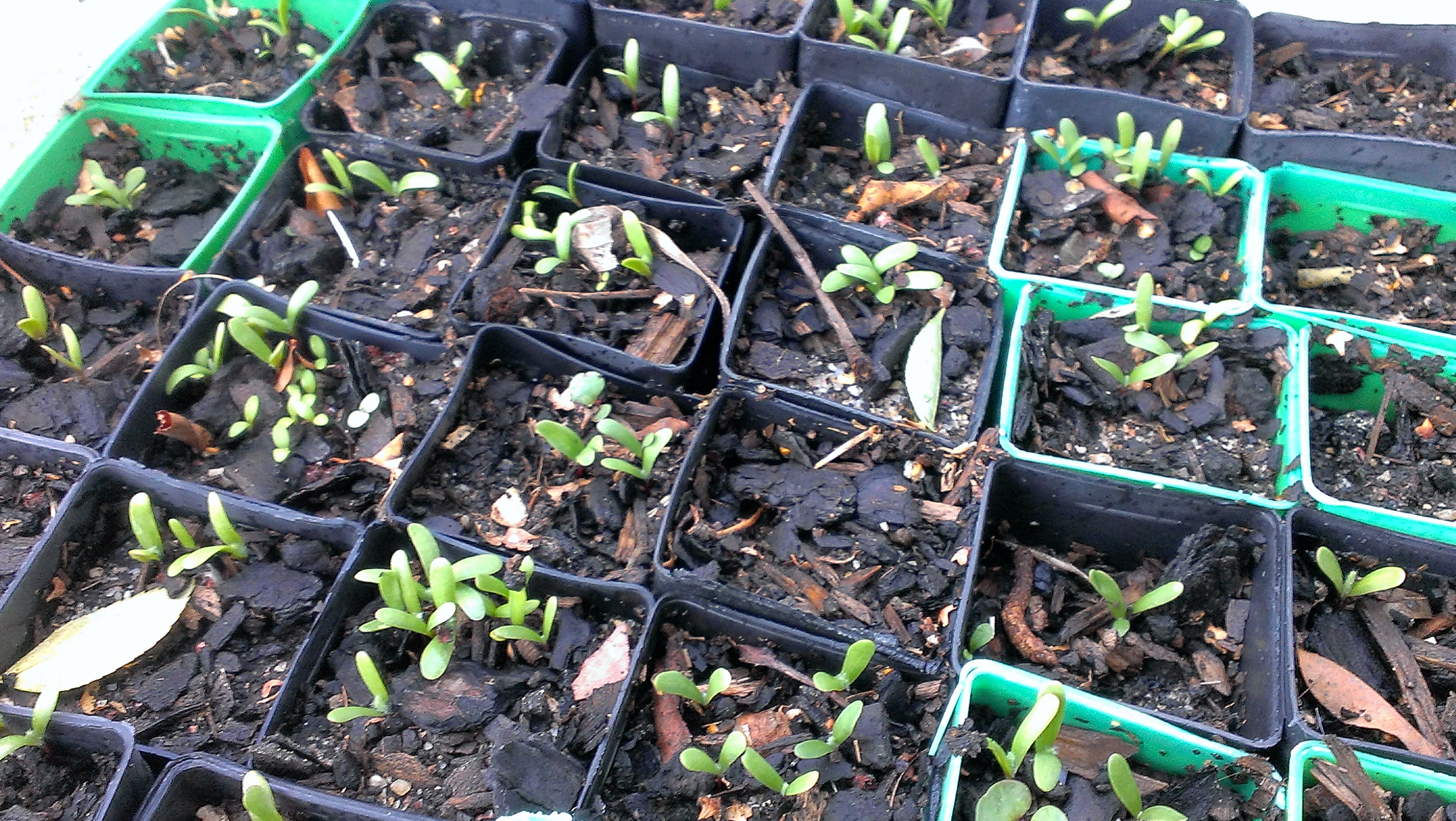
The blocks for the front are finished and I hope I have eco printed enough fabric for a border. A friend who was over on the weekend advised me about the sashing. So… now I need to get started on piecing the front together. Don’t hold your breath! Meanwhile, the saltbush seed I collected while we were on holidays is coming up and so are my vegetable seedlings, and I’m contemplating what to do with the home grown indigo and when I should do it!
IMAG3893

5 Comments

Filed under Leaf prints, Natural dyeing, Sewing

Well Made Guildhouse Members Exhibition

This week I had to go into the centre of the city for a work related event, so I left early and went to Well Made, an exhibition of members of the Guildhouse at the Light Square Gallery.  India Flint is one of those members, so I thought I’d go along.  I thought of you, blog readers, while I was there, and wished I could take you along–especially those who live outside our fair city.  I just wasn’t sure it would be OK to take pictures inside the gallery.  In fact, I thought it probably wouldn’t be OK and that I should err on the side of refraining, even if only because the artists undoubtedly have better images of their work than my photography would create.  So I took pictures of the building, and found you links to follow to see the works–or other works by the artists concerned.  Click away!
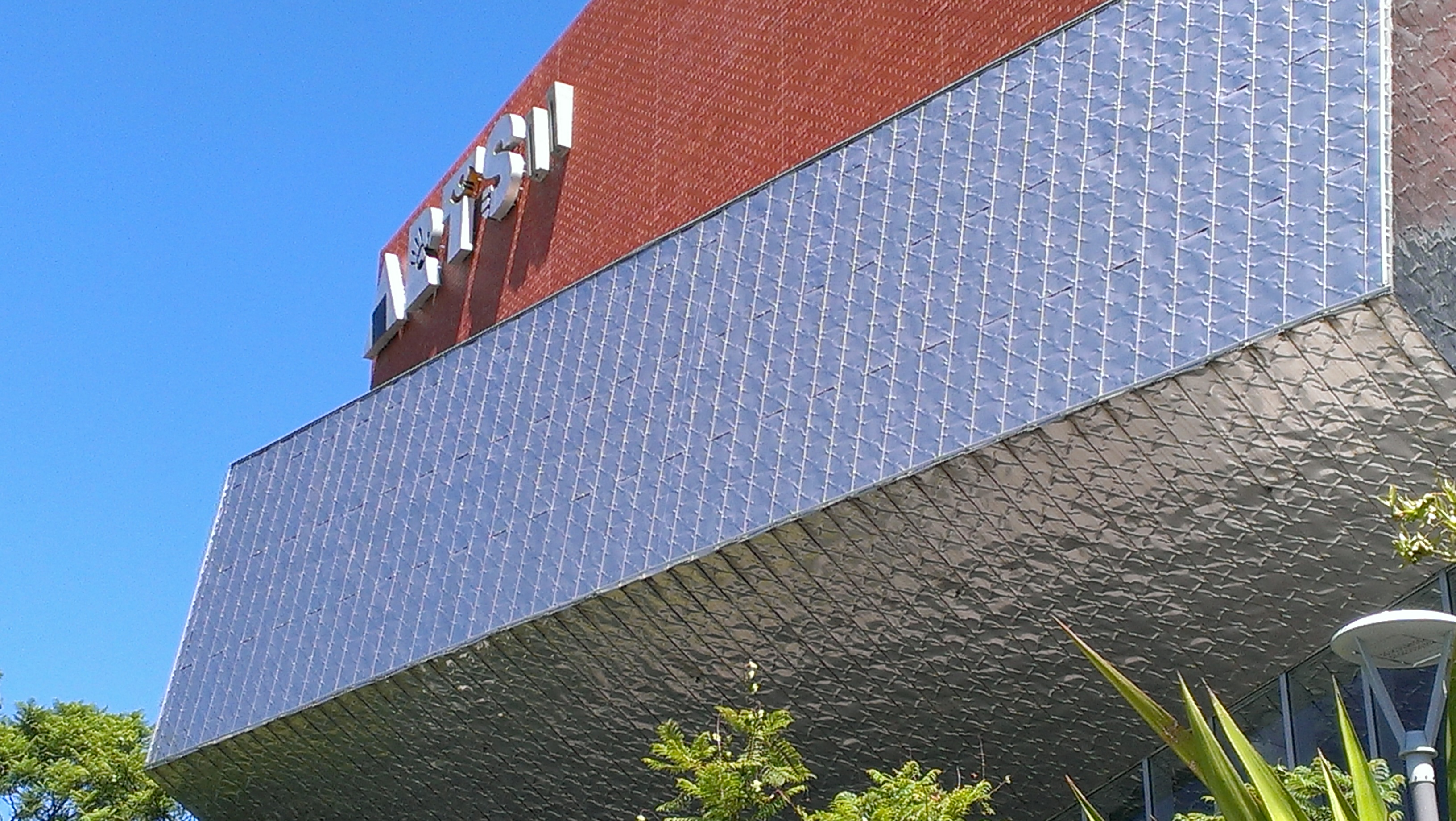
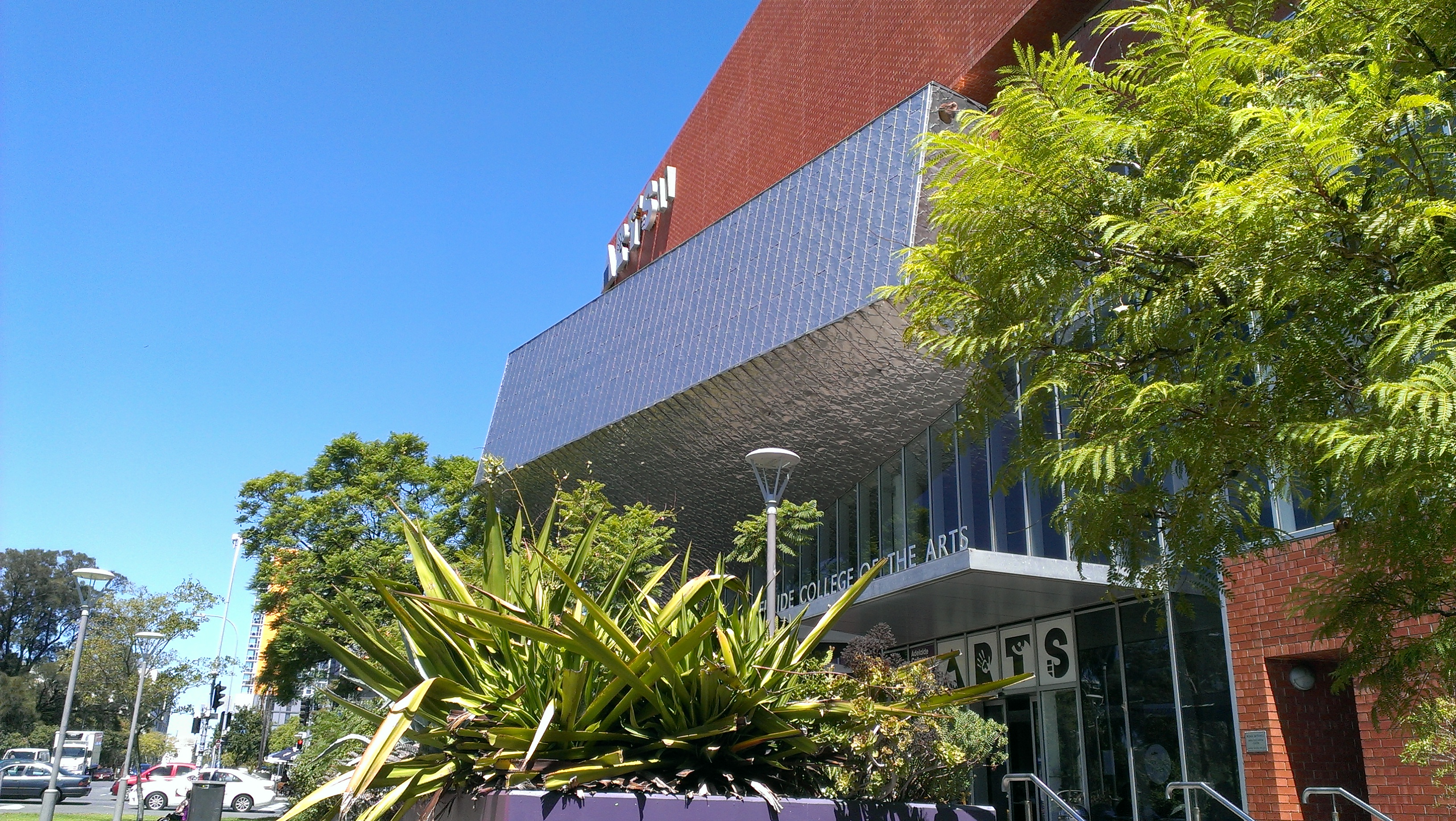
The Centre for the Arts is a great building, and the day was glorious.

IMAG3887

I can’t pretend to be an art critic (or for that matter, an educated art appreciator) of any kind.  I am an art ignoramus.  So when I go to an exhibition I am just curious and interested.  I know there are all kinds of things to know about and think on, as well as skills I know little about, that underpin the artworks.  I am aware of only the tiniest segment of all that knowledge, skill and thoughtfulness.  On the other hand, it’s a shame to say nothing at all… and thus not invite others to go along and wonder at what there is to see, no matter how ignorant we each might be!

There were all kinds of forms and media represented: painting, sculpture, leather cutting, glass, ceramics and of course, textiles.  Among the works that caught my attention was a glowing and almost–but not quite– geometric oil painting with gold leaf: ‘Golden Ochre’ by Megan O’Hara.  Beautiful images of her artworks, including this one, can be found here.  Two sets of intriguing glass mushrooms were ‘growing’ from wood: ‘Fungi’ by Roger Buddle. Seldom has glass looked less like glass to me.  Blue fungi on wood are there to be seen and admired on his home page today for anyone who wishes to see them.  There was a striking 3mm mild steel sculpture: ‘Feather’ by Anna Small (more of her work here). Pamela Kouwenhoven contributed ‘Muddy Waters Murray River’, a wall-mounted sculpture of faded plastic (car) battery cases.  There are images of this sculpture and others in the same series here.

IMAG3888

India Flint’s contribution is called ‘The Wasteland in Bloom’.  A more than fitting title.  It is a silk and wool dress, hand stitched in silk thread, to judge by the sheen of those stitches.  It is flowing, floor length and sleeveless.  It features a striking eco-print design of orange/red leaf prints alternating with bands of darker colour, which are almost black (iron, I assume) and striped by the resist created by the ties used in bundling the fabric.  It has slanting, curved side seams, creating a very interesting draping of the garment.  One of the seams had some… pleats is the closest term I know, but it suggests something crisp and vertical while these are soft and horizontal … creating further interest in the drape of the fabric toward the hemline.  The hemline is a feature in its own right, a separately stitched band with its own embellishments.  I don’t think India has published a picture of this work, but you can of course see many glorious garments she has created here.

So if you can… go along and see what you find interesting!

IMAG3889

2 Comments

Filed under Leaf prints, Sewing