Category Archives: Leaf prints

Blog Hop Around the World

Leah from Seattle Spinner has generously nominated me as the next person in her blog hop around the world.  If you’ve stopped by because she mentioned my blog, a special welcome!  For regular readers of this blog who don’t know her… Leah says:

Spin, knit, weave…I LOVE these areas, for a multitude of reasons. … I am fascinated with things that go to the root of who we are–things or ideas that existed before the world of modern technology. Instead of being pastimes, these were things needed for our very survival.

She has an Etsy shop: all proceeds (after costs) go to to support a non profit organization in Peru called Awamaki which ‘is a nonprofit social enterprise that empowers rural Andean women with skills training, connects them to global market opportunities, and enables them to earn an income to transform their communities.’  Such a sensational idea…

And now for my answers to the blog hop questions!

1. What are you working on?

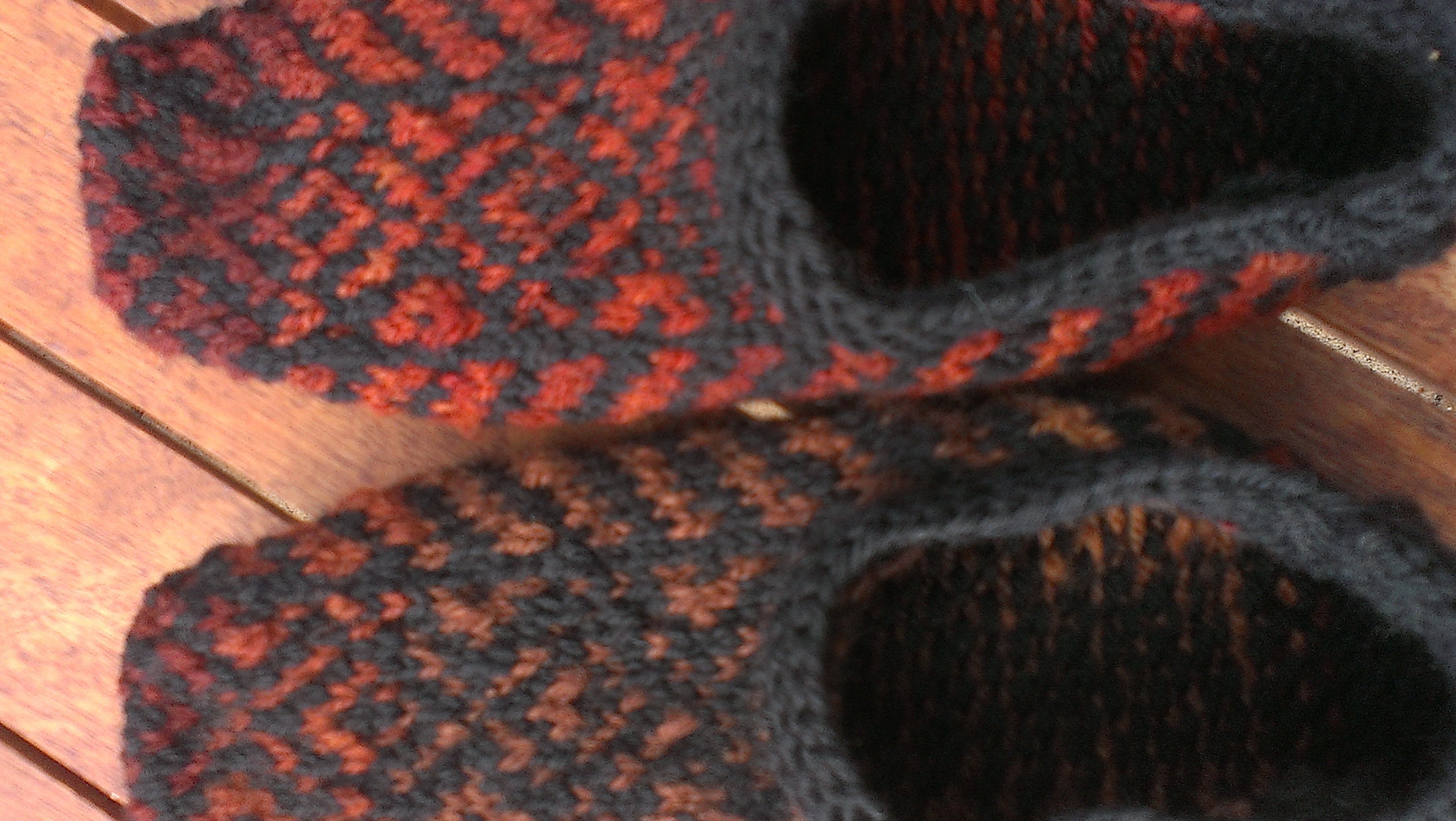
I always have more projects on the go than makes any kind of sense.  Some lie around for extended periods until I can find the right amount of time or mental space to move them forward.  Right now I am knitting a pair of socks… these travel with me on public transport and to meetings.  I am practicing my picking and Norwegian purling, since I think this would be a far more efficient way to knit than the throwing, ‘English’-style knitting I learned first.  I just need to build up some skill by doing it enough…

IMAG0967

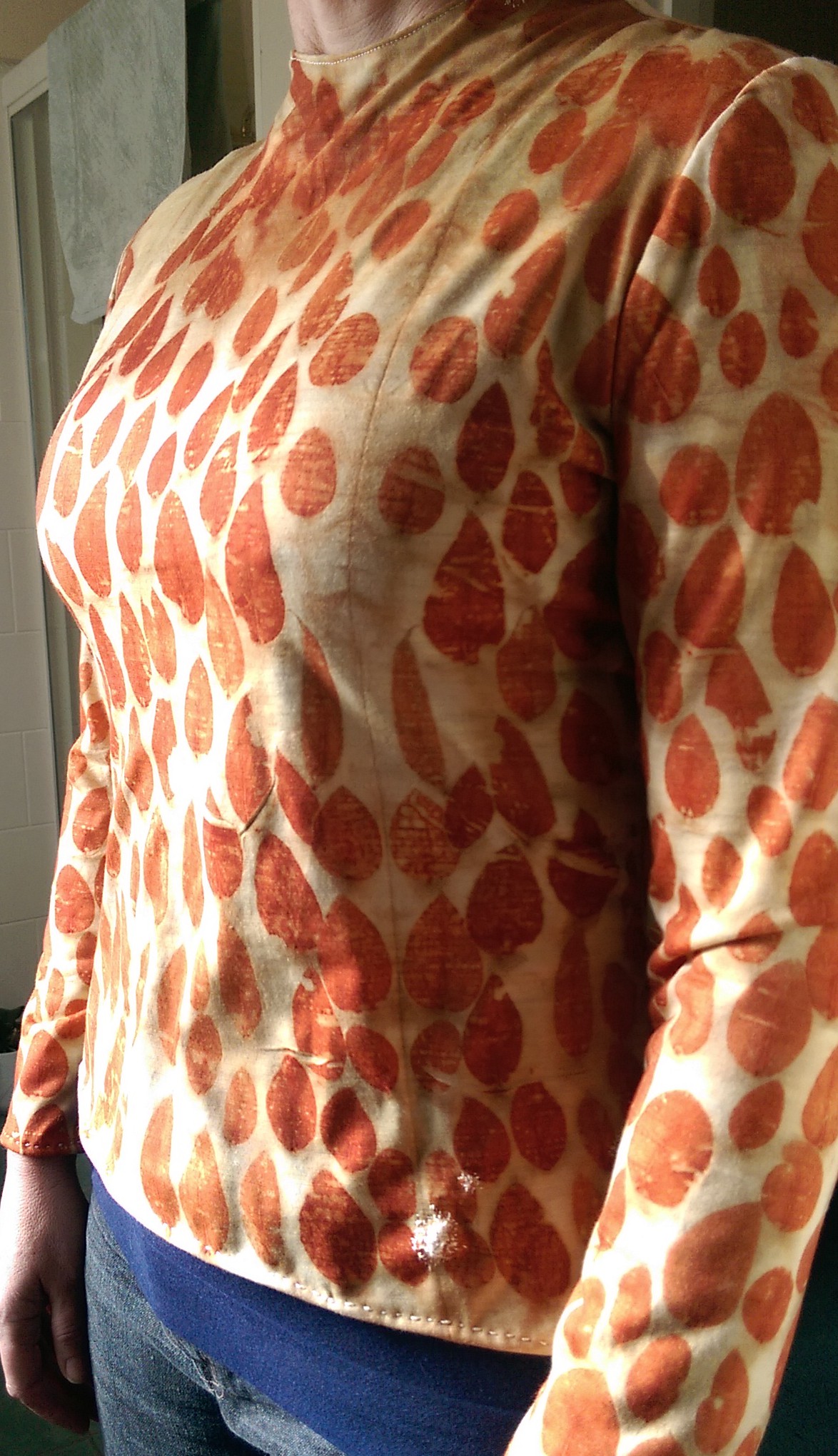
I have a quilt in progress.  Must get back to it!  All the blocks use India Flint’s eco-print technique to showcase a eucalypt species and I’ve embroidered the name of each tree onto the block in eucalyptus-dyed silk.  And stopped, having dyed the fabric for the front and pieced the back… apparently there is something about cutting the sashing I can’t face… or some part of me that thinks I need a week to do it in!

IMAG0959

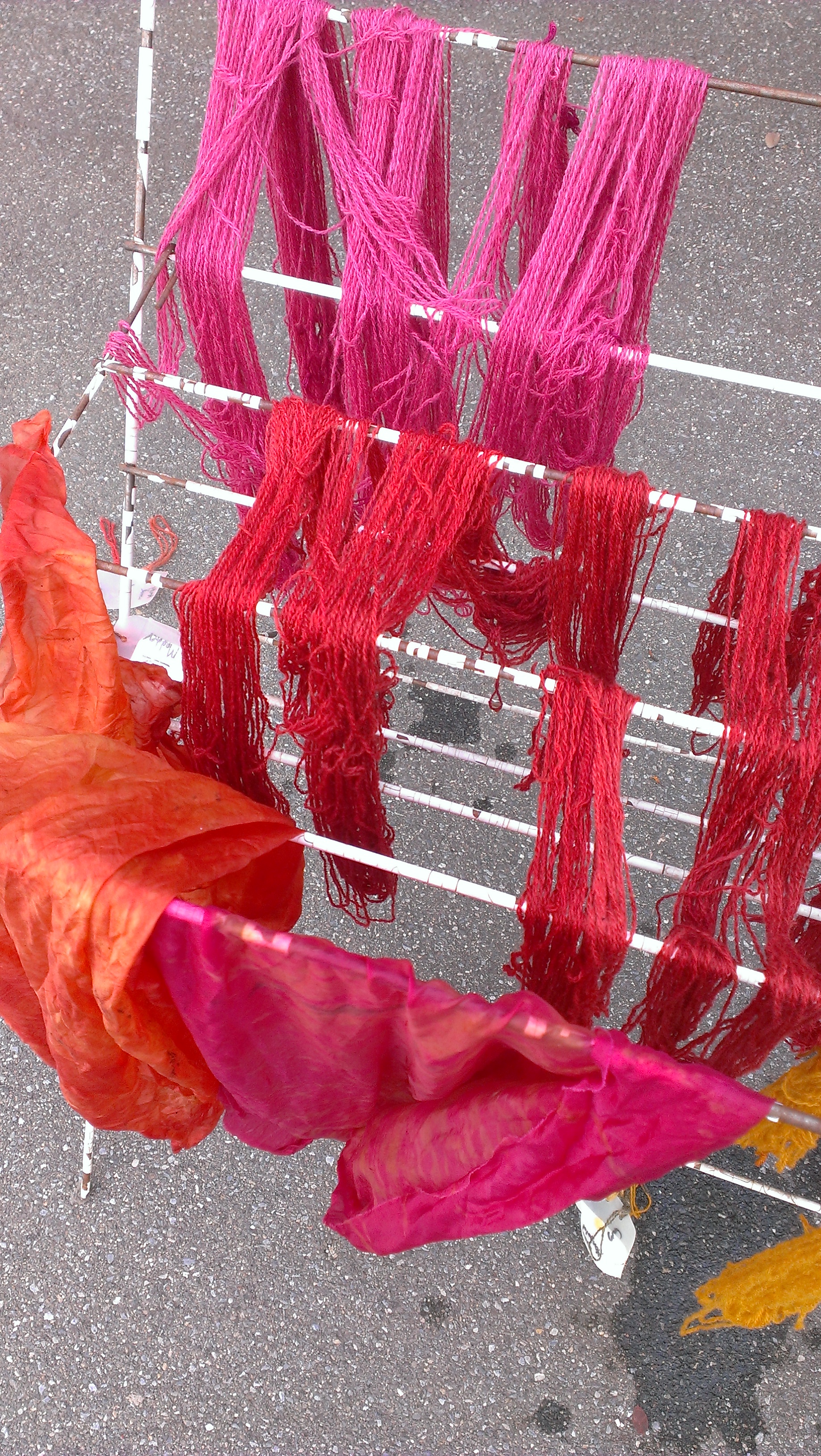
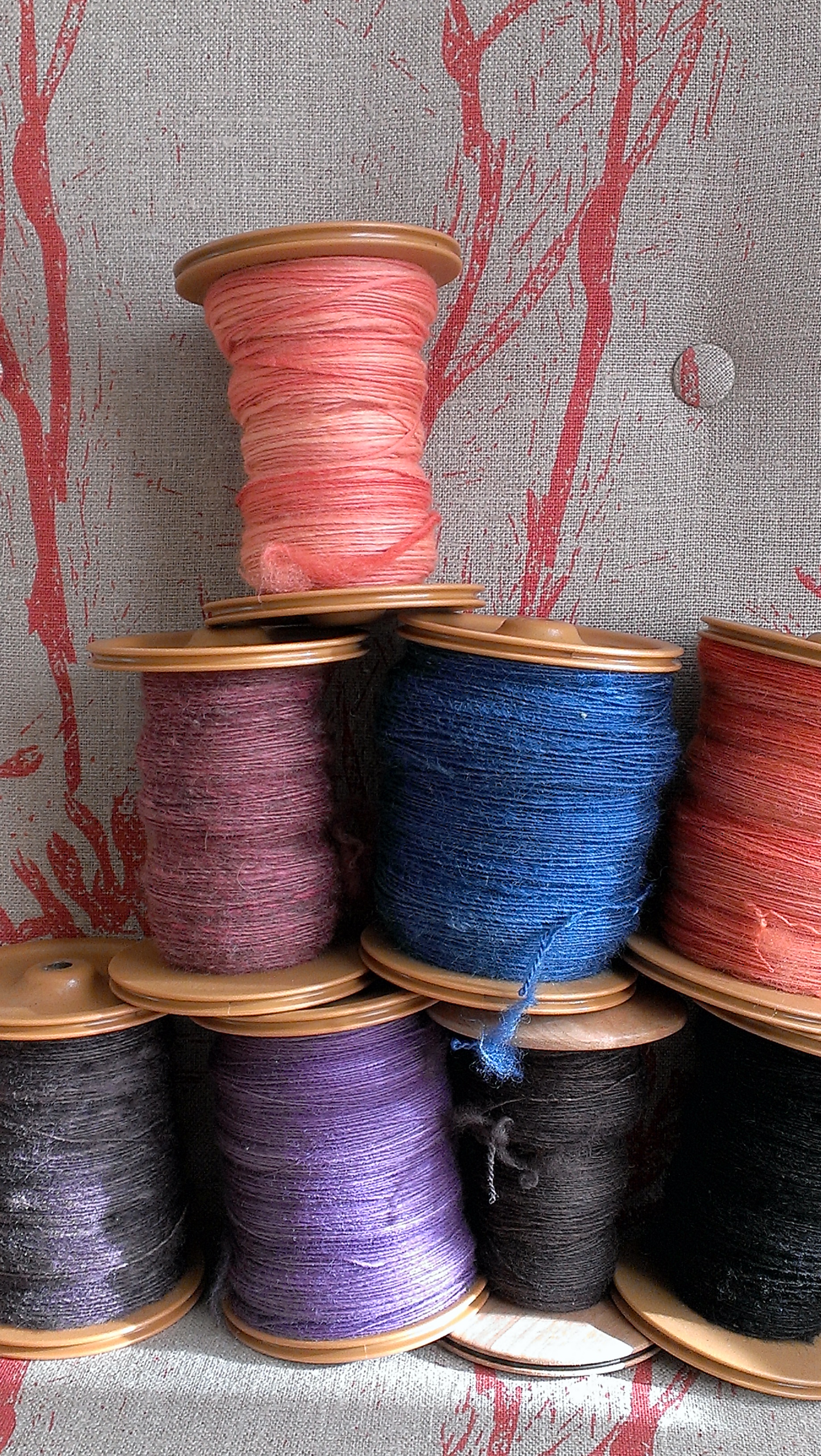
I am spinning a lot, in several different fibres.  I went to a weekend away with members of my Guild recently and carded a lot of naturally dyed wool.  It must be time to do some plying soon!  These colours include indigo, logwood and cochineal. Many came from exhaust dyebaths after a dyeing workshop where I used old dyestuffs donated to the Guild.
IMAG0963

2. How does my work differ from others?

I am not sure it always does!  Over time, I find myself working further and further back along the process of creating things: over some years I went from knitting socks to spinning yarn to dyeing fibre to processing raw fleece and identifying local weeds and trees for dyeing and growing dye plants.  This doesn’t interest everyone.  Yet, I can’t claim to be all about process. I enjoy creating a finished thing that will be of use.  I am less excited about things that are just for display.

IMAG0966

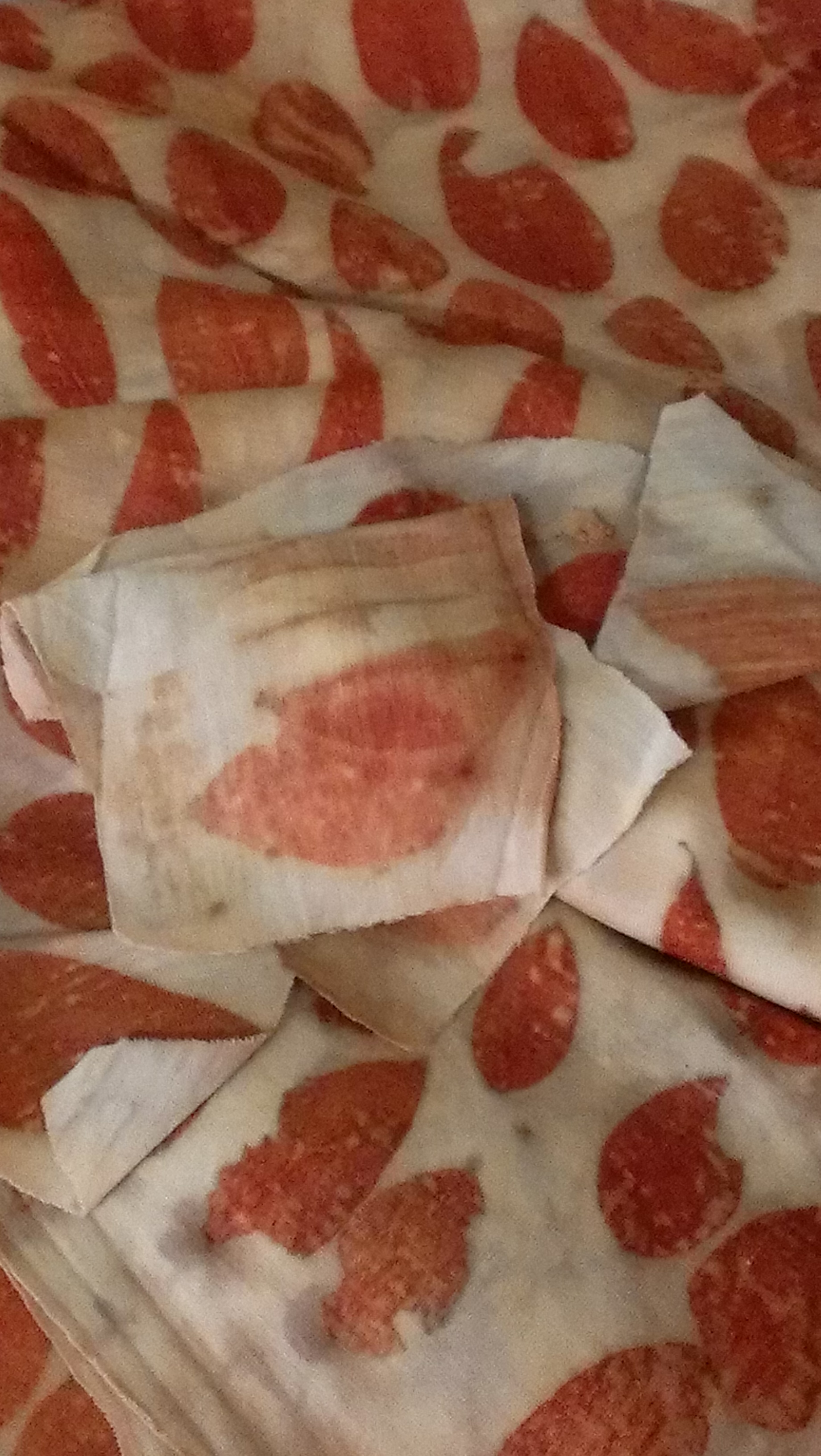
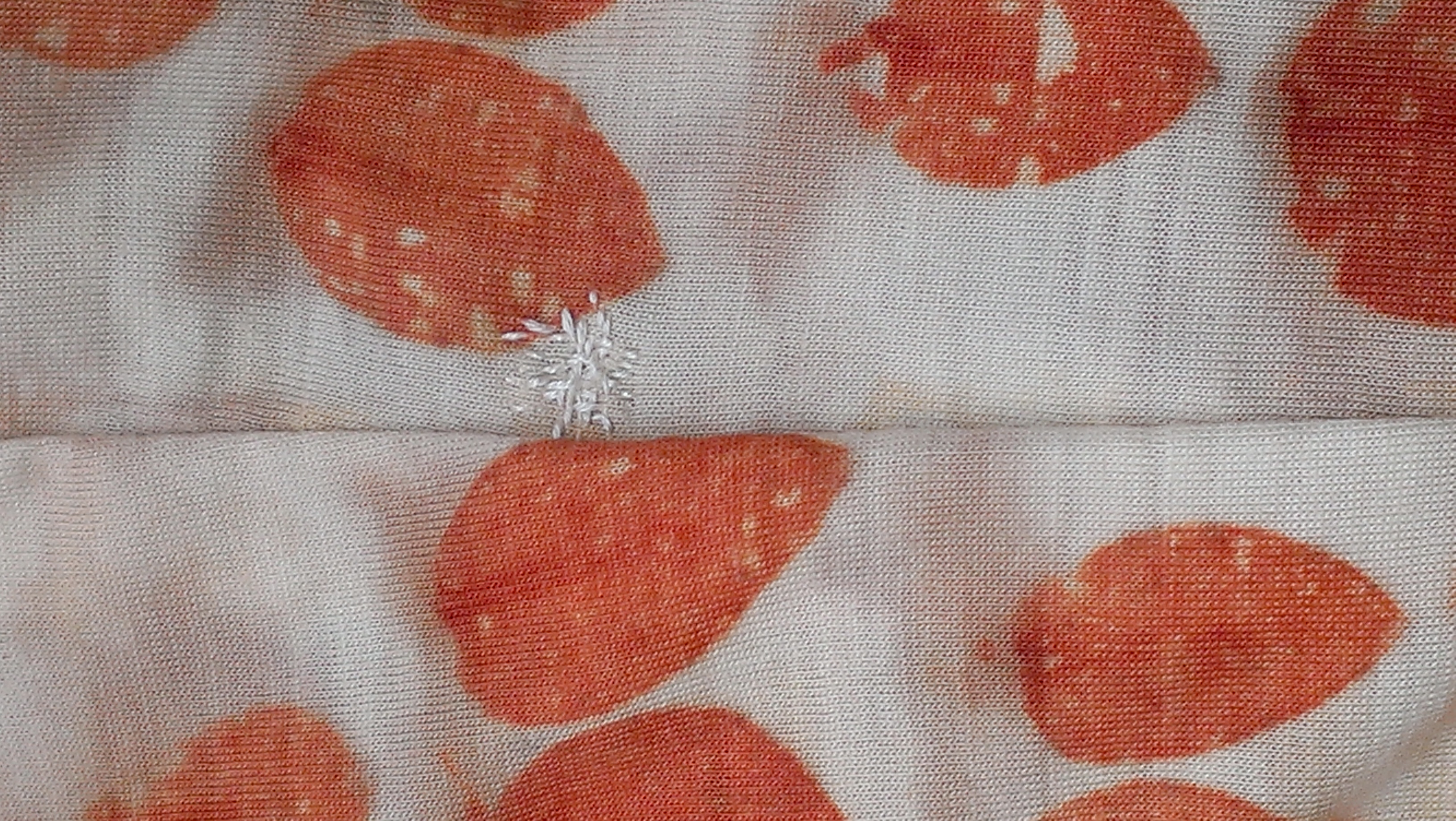
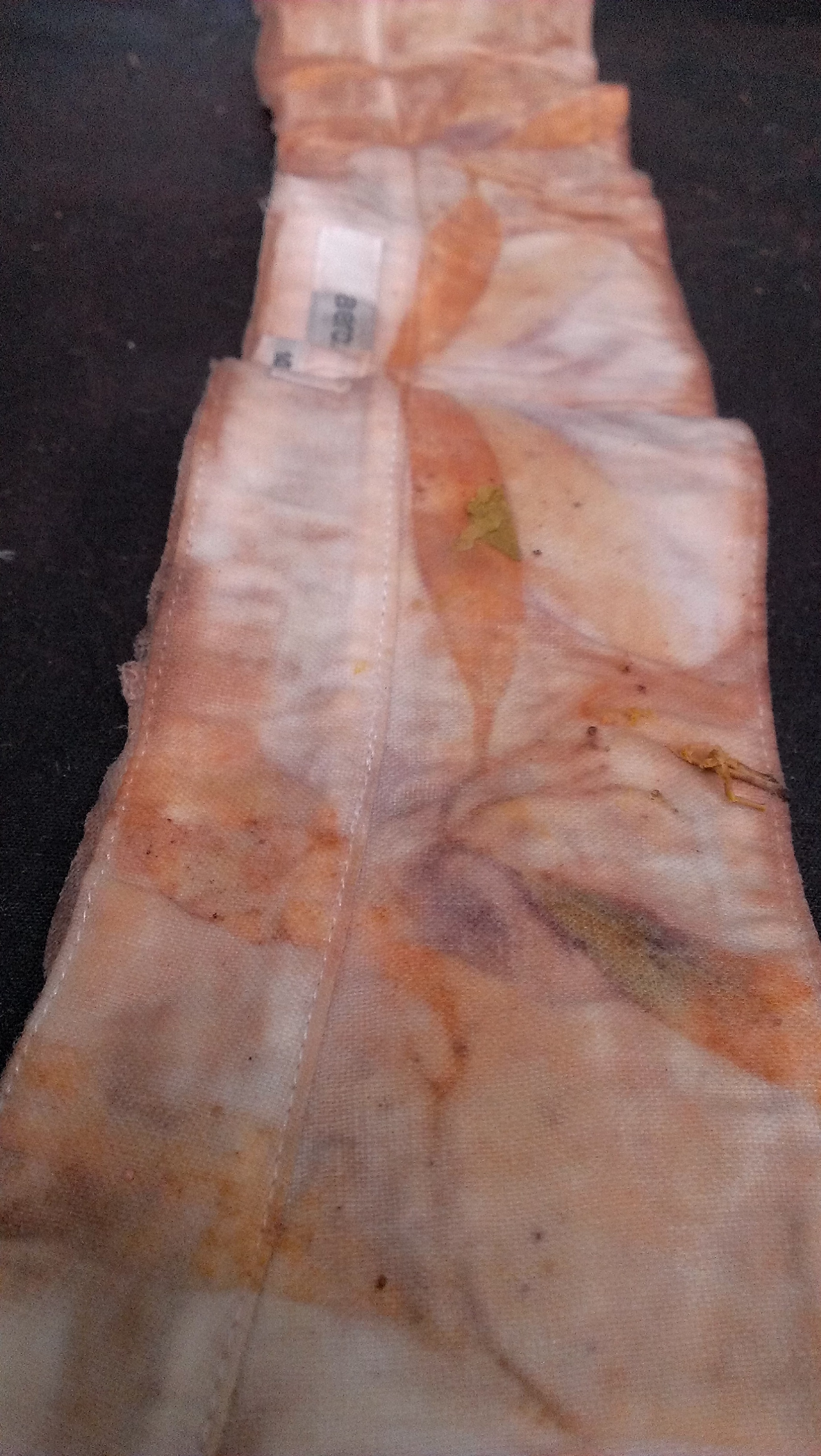
I also find that I like to recycle things… I am interested in using every last scrap of a piece of fabric or yarn, and I enjoy turning fabrics that would otherwise be discarded into something useful.  Sometimes I think this is a recent impulse, but then I look into my wardrobe where there are shirts made from flour sacks and old damask tablecloth… However–I also have a large collection of all manner of fabrics, yarn and threads and have become a collecting place for other women’s fabrics and notions. Happily, I am able to give a lot of things away to people who will use and enjoy them.  This weekend, I am mordanting these fabrics, mostly salvaged from a friend’s mother’s stash.  Most of the prints and plain coloured fabrics have gone to new homes but I kept the offcuts of calico and white sheeting for leaf printing…

IMAG0955

3. Why do I create what I do?

I love to identify something that is wanted or needed, and the raw materials that would bring that thing into existence, and match the two.  Sometimes I make to request or to fill a need I perceive in someone else.  or I just imagine the delight a handmade item might produce.  I look for opportunities to make something special and think about the recipient as I stitch it.  But I also do things as they interest or inspire me and the look for the right home for them to go to.  I make plenty of mistakes and have become adept at turning mistakes into useful items and finding ways to use or refashion things that are not as intended, or seem at first not-too-promising.

2014-08-23 11.57.15

I also create to satisfy my fidgety nature, I think.  To fend off the possibility of wasted time or boredom, and turn what might otherwise be wasted to use.
IMAG0086

4. How does my creative process work?

Gradually.  I have a substantial day job, which means that I don’t need to make a living from my craft, and also that I have limited time for crafting.  I do what I can, when I can, and I am motivated by having an exciting idea, wanting to meet a date for a gift, or seeking to meet a need for some specific item.  I don’t have a spiritual or romantic sense of creative process.  Rather, I see myself as part of a long tradition of thrift, skill and creativity–and this delights me.  So many people in the developed world are now bereft of the skills needed to meet simple, everyday material needs for themselves.  I would feel a great sense of loss at not being able to make or mend.  These activities are sources of pleasure and satisfaction in my life.

IMAG0128

I have chosen to pass the baton to Barbro from Barbro’s Threads–from Australia to Finland! She says she is:

a handspinner who likes to work with many kinds of fibers in all forms. I’m interested in the history and cultural history of sheep and textiles. … Right now I’m spinning and researching for my master spinner title in my guild Björken at Stundars. I’m concentrating on three sheep from Finland (Finnsheep, Kainuu Grey, and Åland sheep), and three from Sweden (Swedish Finull, Gotland sheep, and Värmland sheep).

I am in awe of Barbro’s skills as a spinner and love reading about her textile adventures–learning new skills and visiting museums full of textile traditions quite different to the ones I can see here in Australia.  I am so impressed by her work toward becoming a Master Spinner.  This is something members of my Guild speak about but which my Guild can’t currently support.  Barbro also has a very handsome dog… I hope you’ll visit her blog and enjoy it as much as I do!

9 Comments

Filed under Knitting, Leaf prints, Natural dyeing, Sewing, Spinning

Sheet bundles

There has been some more bundle cooking for my friend.  She handed over these massive bundles–they are bedsheets. We’d walked over to visit with a bale of straw for our friends’ hens… and walked back with the bundles and cartons of fabric.  I spent time helping a friend clear out her Mum’s sewing room recently and since then have been finding new homes for sewing machines, yarn, fabric and a wide array of other items.  Some of my fellow guildies were delighted to take possession of tapestry bobbins…

2014-08-23 17.19.02


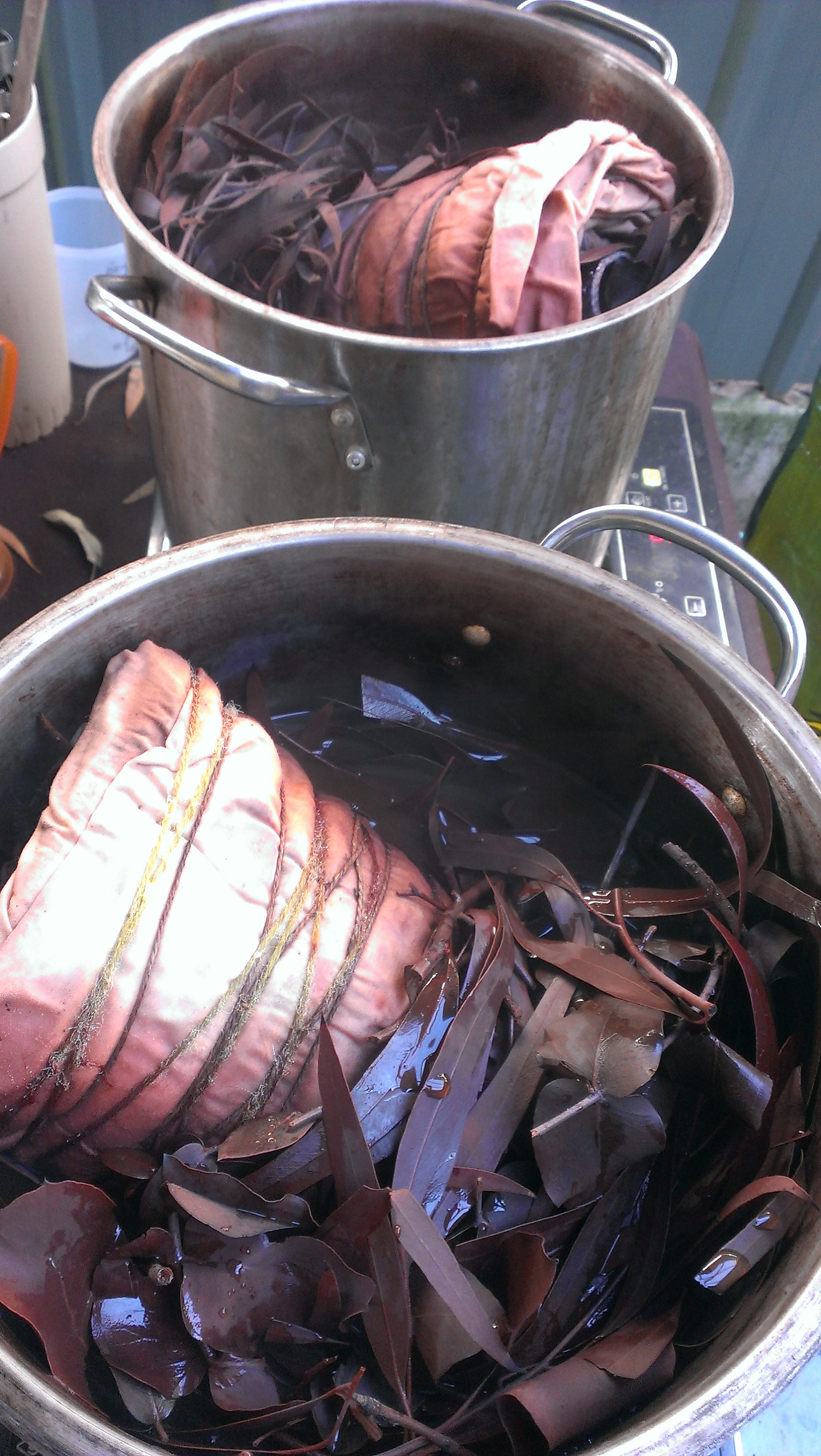
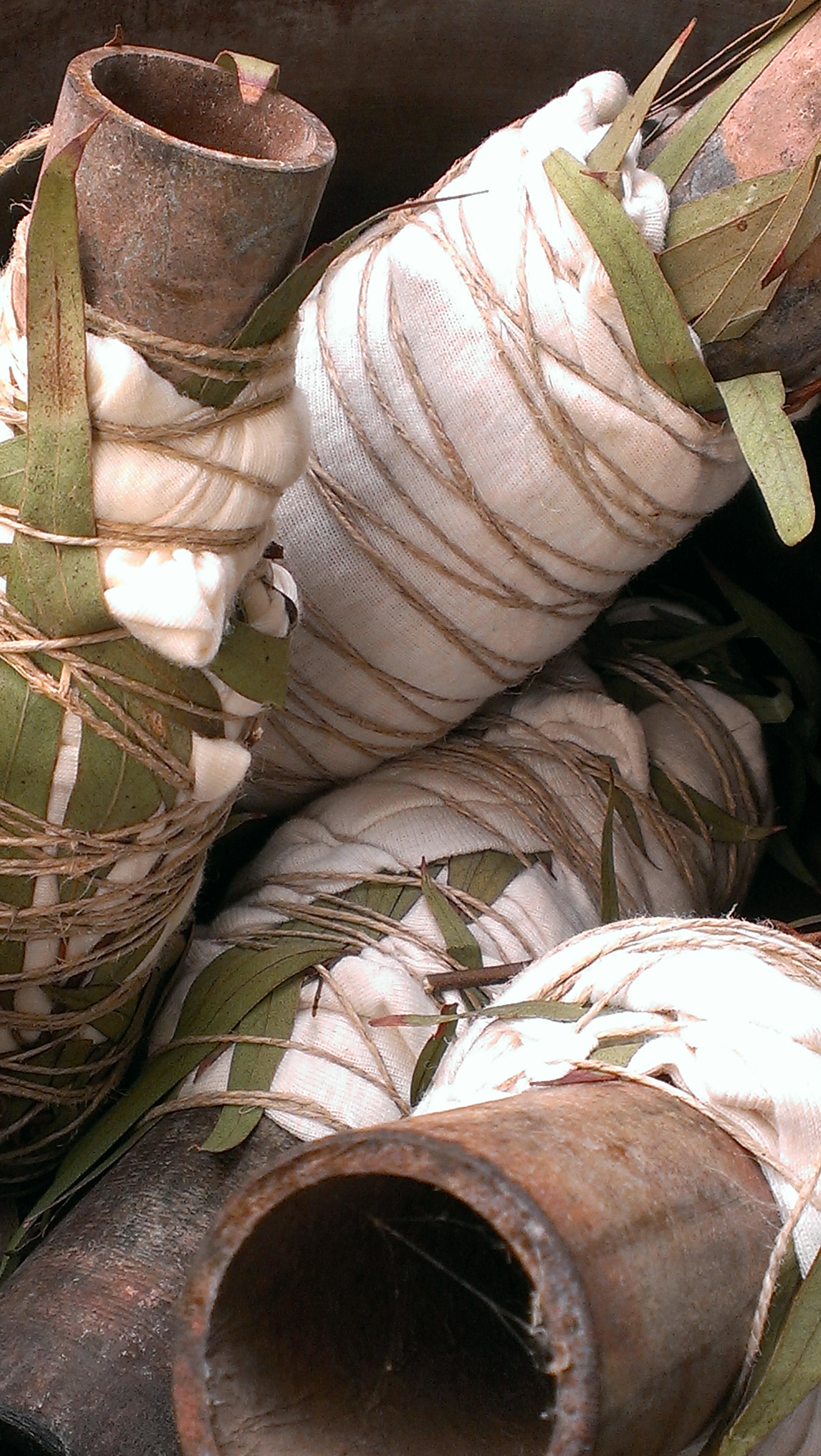
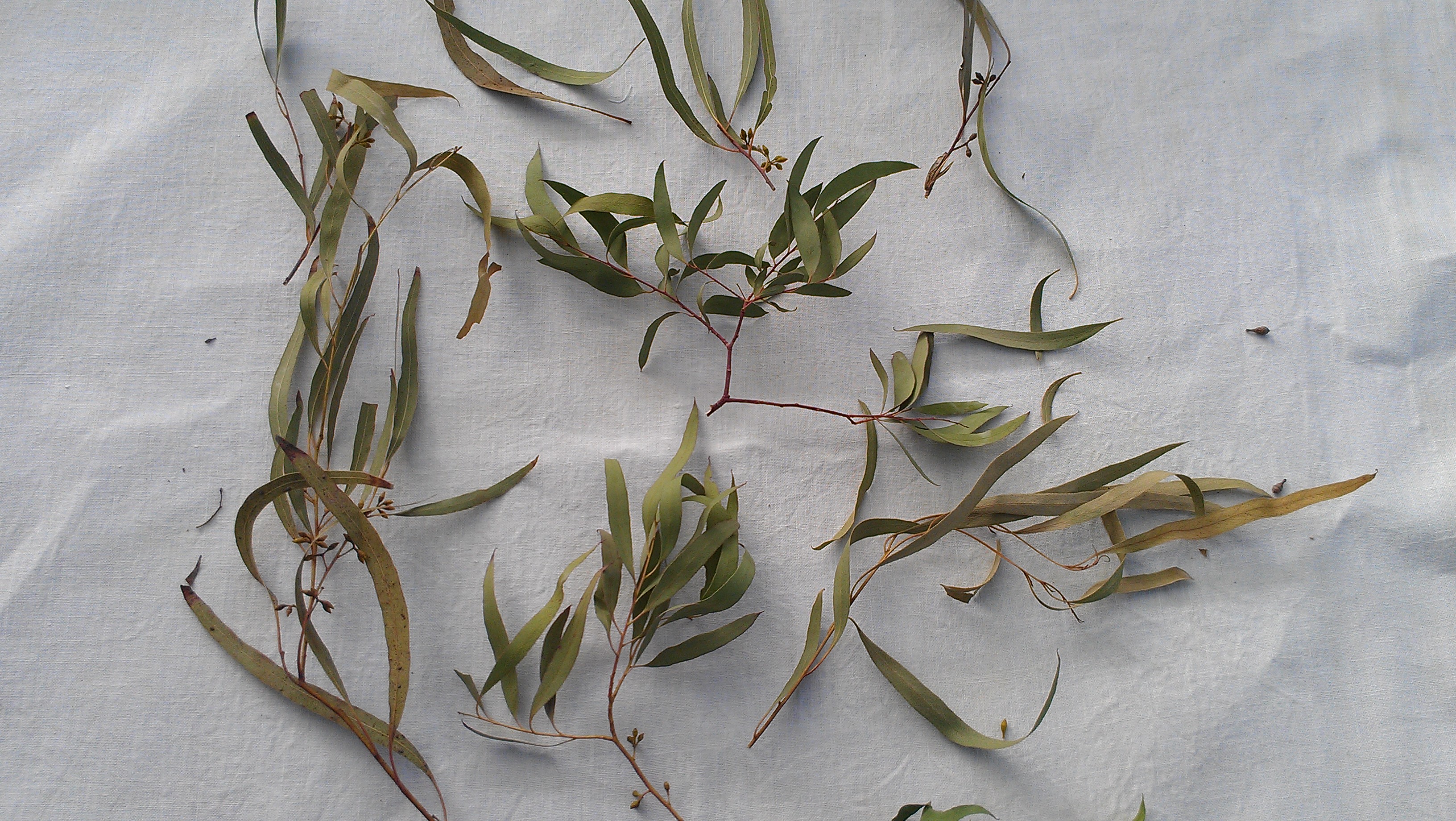
Here are the parcels going into the pot, packed with dried leaves.  My friends have an E Scoparia at the end of their street, and that’s what was inside the bundle… leaves and some bark, too!


2014-08-23 17.33.28


Some time later…

2014-08-24 08.15.25

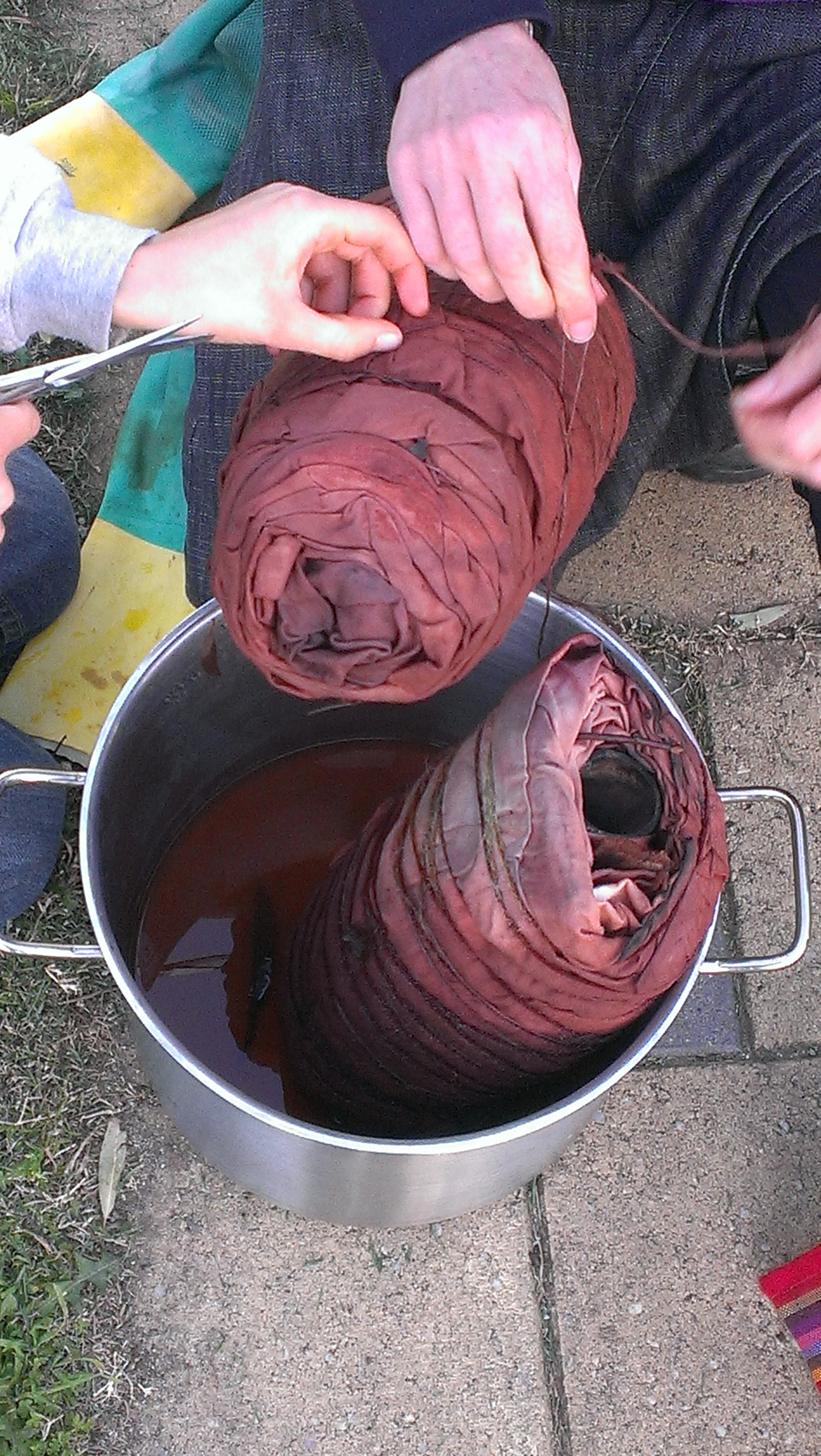
And being unbundled!
2014-08-24 16.43.03

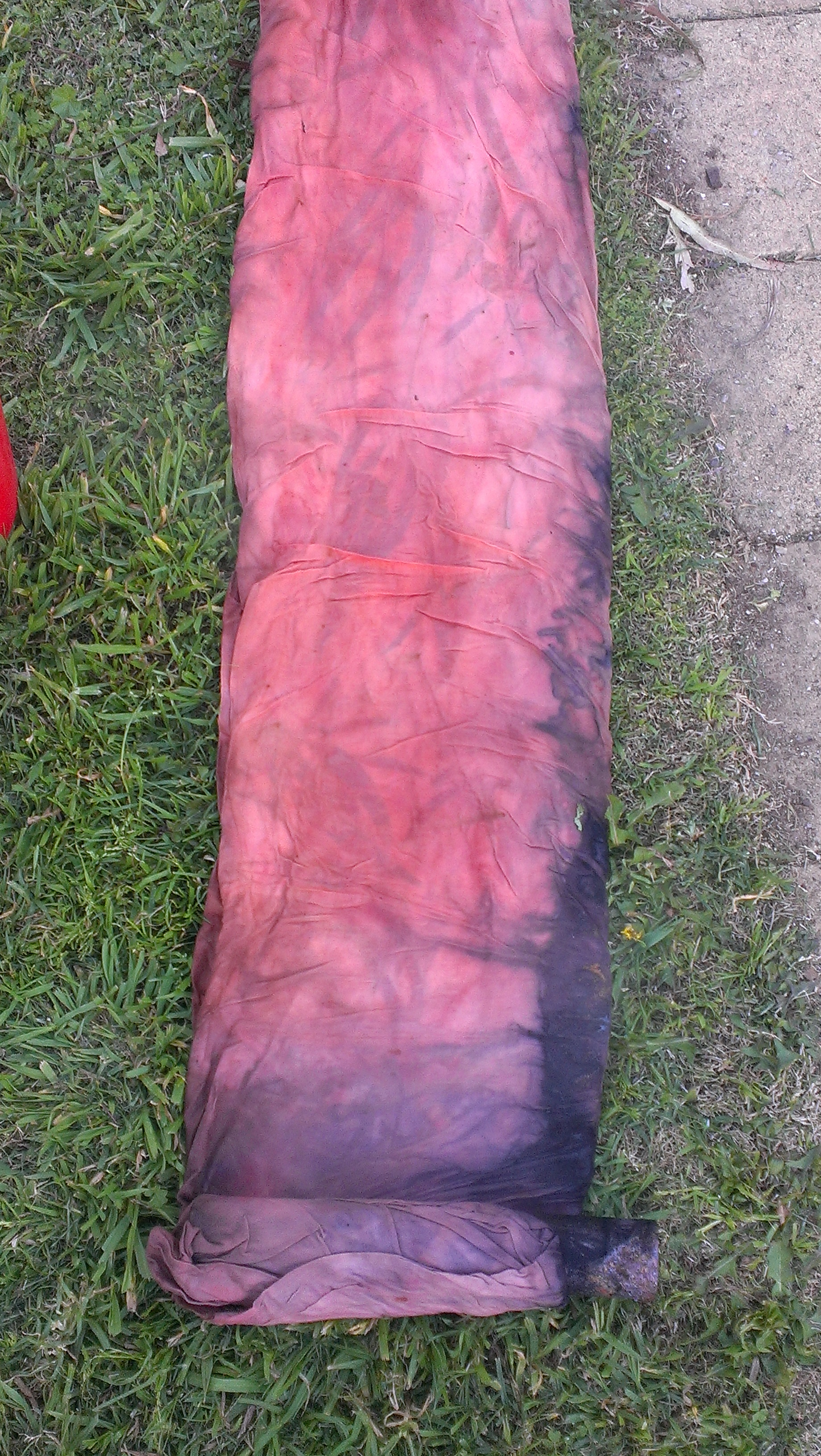
One had remarkably little in the way of distinct leaf prints.  I am amazed that there was enough dye in those leaves to colour so much fabric.  Unrolling…

2014-08-24 16.48.16


Flapping about over the lawn, wet from the dye pot…

2014-08-24 16.52.15

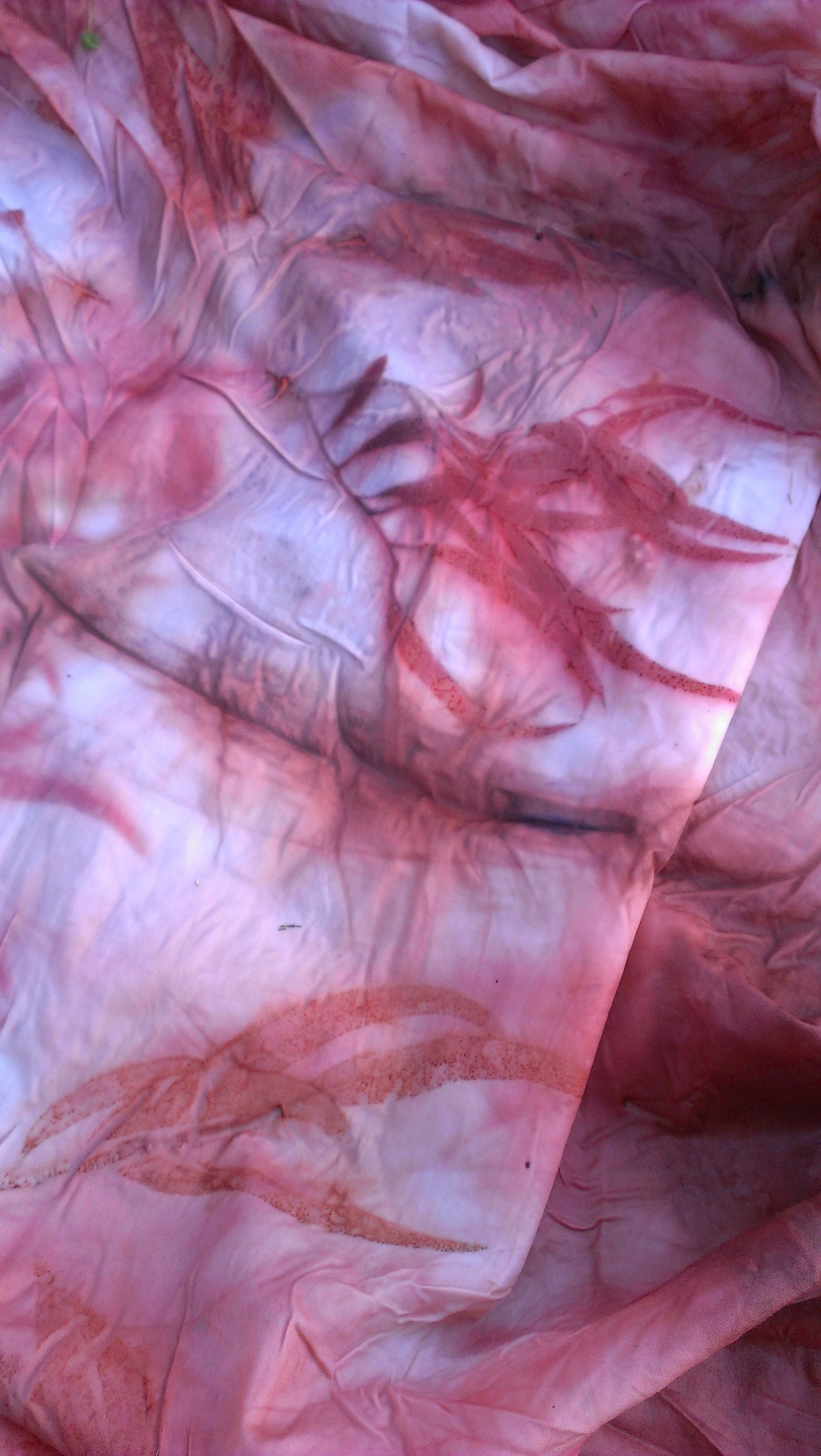
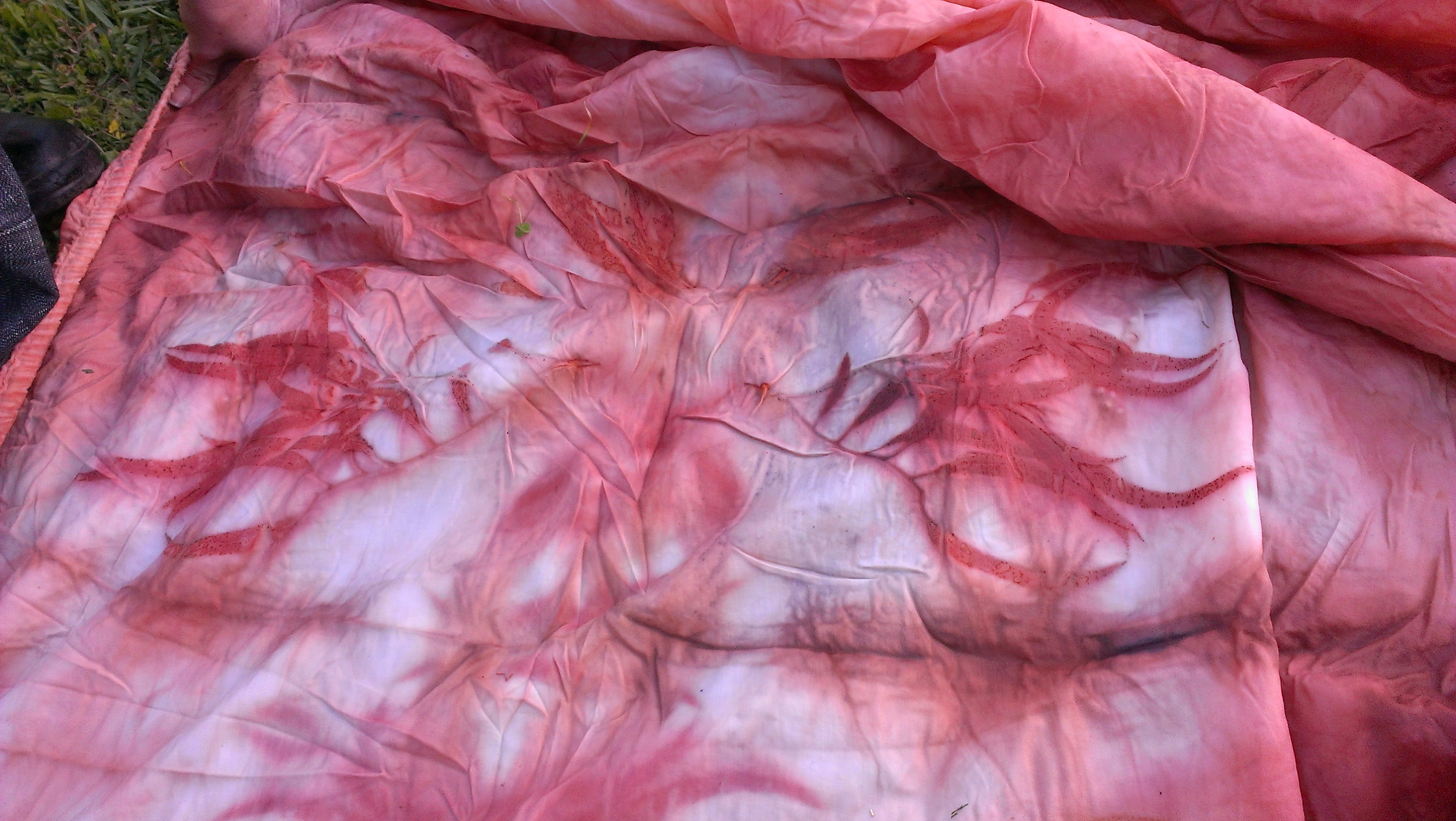
The second one had some prints in closest to the centre of the bundle. 

2014-08-24 16.58.53


Glorious!  A third immense bundle has gone home with my biggest pot, for some time on a gas burner.  I love that big pot but it just doesn’t work with my electric burners.  This is going to be one fabulous set of sheets!

2014-08-24 16.58.56

13 Comments

Filed under Leaf prints, Neighbourhood pleasures

Bundle over-dyeing

2014-08-02 13.49.00

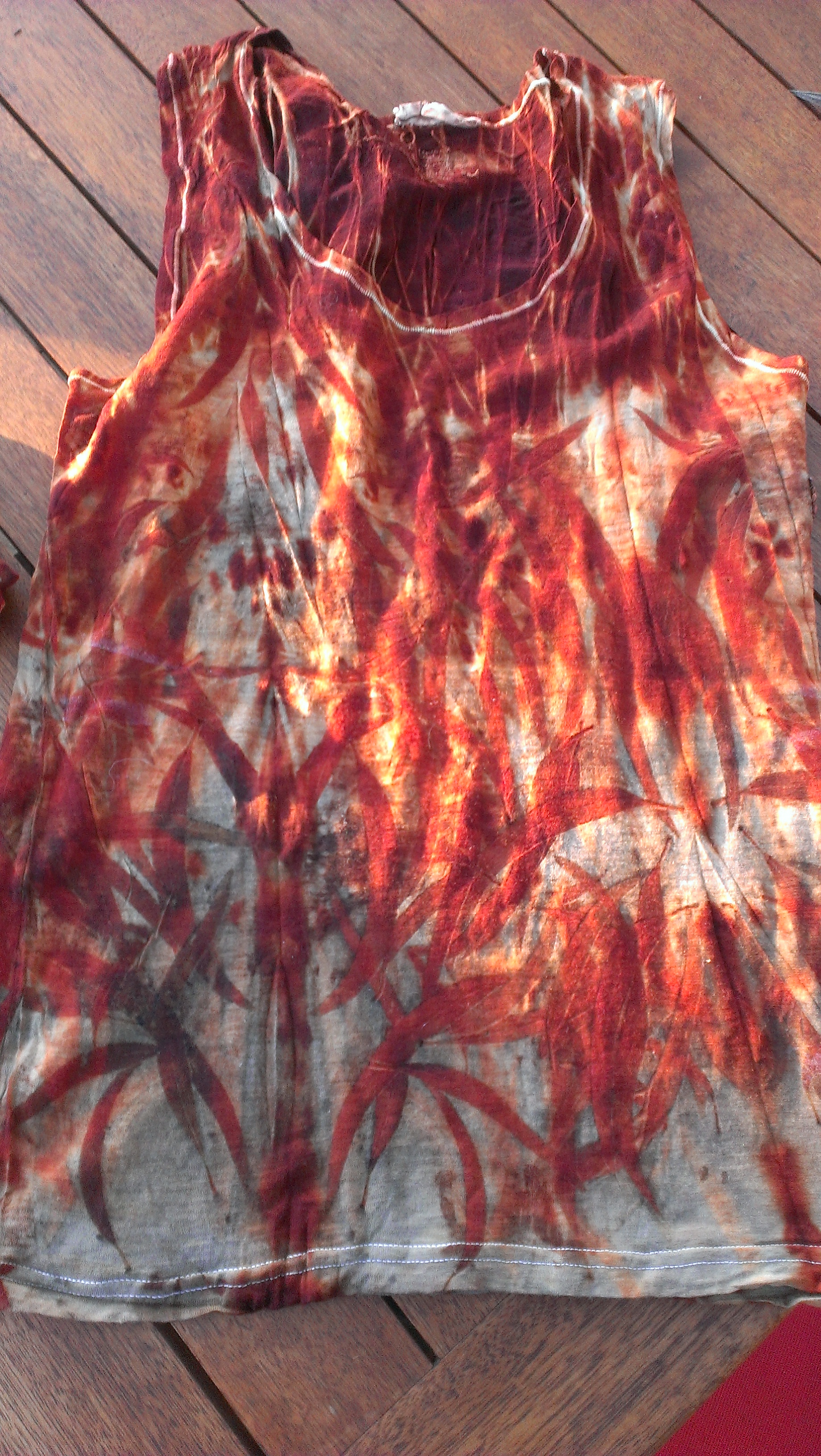
I began with this… a much worn and washed and somewhat faded and darned merino singlet.  There was also a silky merino infinity scarf, but the ‘before’ picture was not too exciting.

2014-08-02 14.35.52

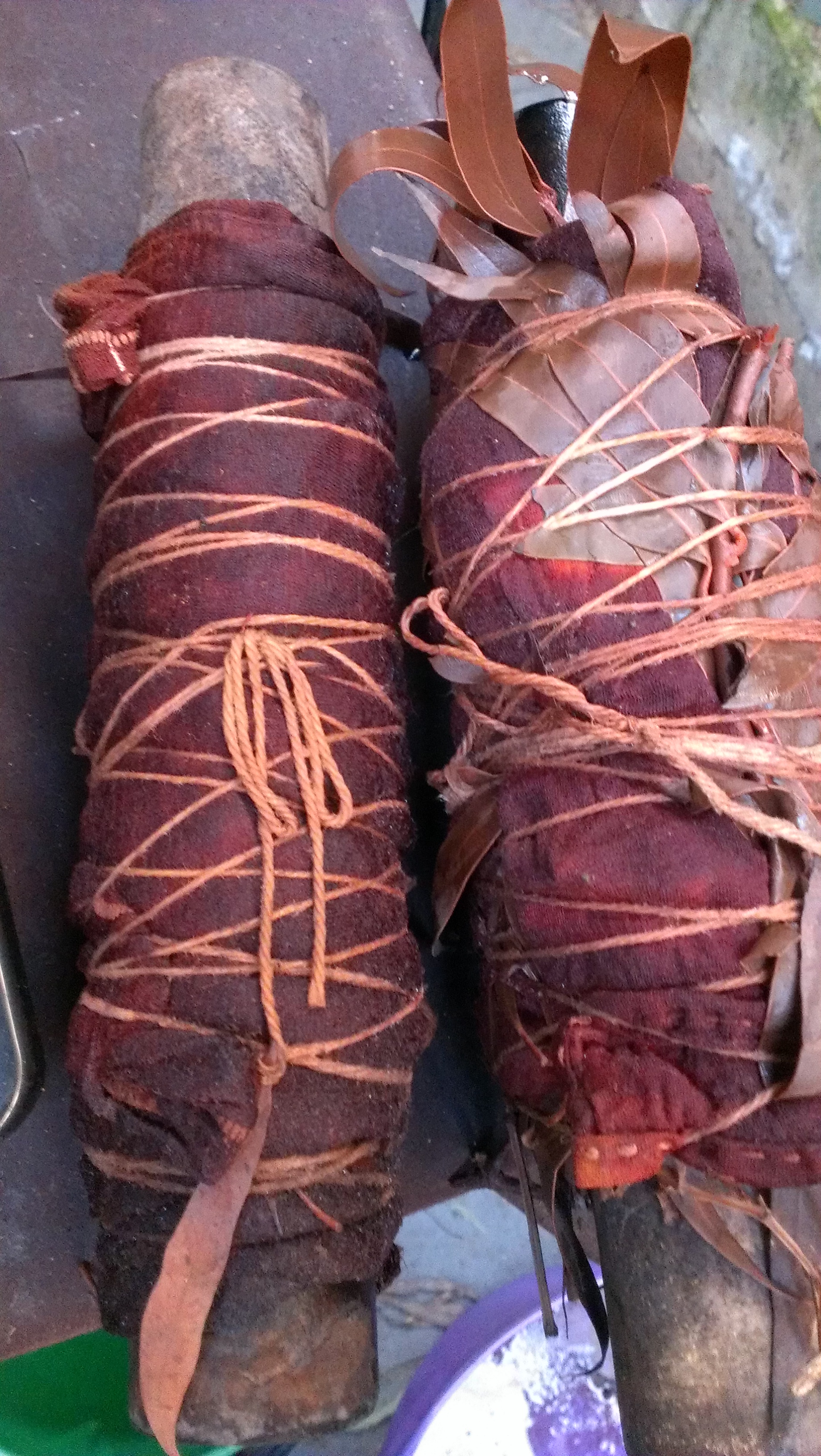
And there were these… four bundles friends had wrapped up and prepared for the dye pot.  So much creativity…

2014-08-02 14.22.39

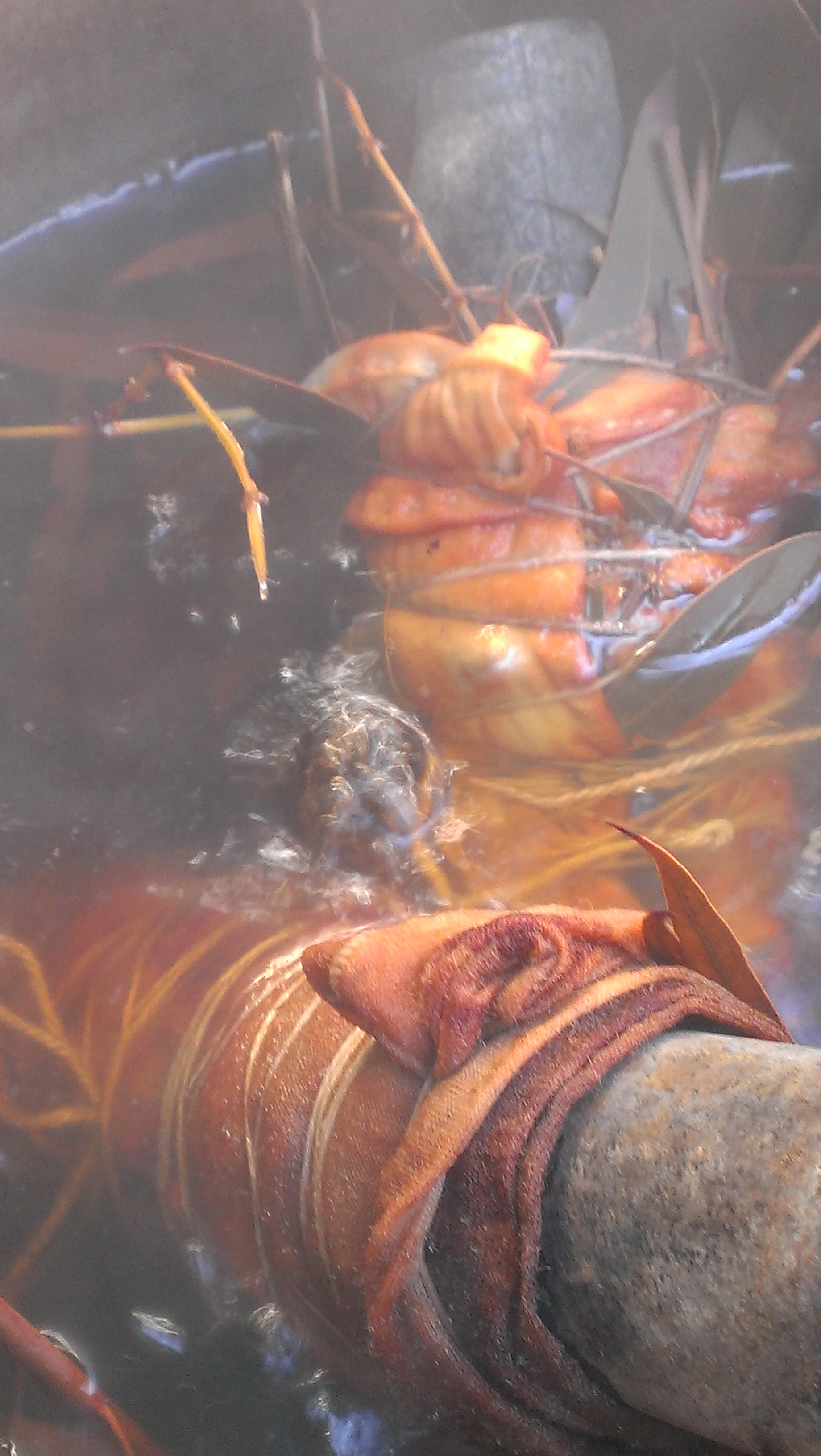
Needless to say, heat and eucalyptus worked their magic.

2014-08-02 16.04.00

By next day, I had these bundles to pass on to my friends at the local farmers’ market (where one was unwrapped on the spot)!

2014-08-03 09.51.33

My two were unwrapped on my happy return from Back Country, which seemed entirely appropriate to me.

2014-08-03 17.03.18

Here they are, wet and glorious, freshly unbundled.

2014-08-03 17.08.31

The silky merino was more red/yellow and orange–and the overdye full of greys and blacks and reds.

2014-08-03 17.48.17

Finding daylight and sunshine to photograph in has been challenging, but… I am wearing the scarf today at work and feel very snug and cheery about it.

2014-08-06 07.57.15

And the singlet looks even darker and richer than this photo, and the darning has receded into  the background quite suitably!

2014-08-06 07.56.37


14 Comments

Filed under Eucalypts, Leaf prints, Natural dyeing, Neighbourhood pleasures

India Flint: ‘Back Country’ Barossa Regional Gallery

The South Australian Living Artists’ Festival has begun, and yesterday I went out to Tanunda to the Barossa Regional Gallery to see India Flint’s latest local exhibition, Back Country. Needless to say, I can’t show pictures of the exhibition itself, but India has posted some here and (later) here.  Her pages also include the poem the exhibition is named after, which speaks to my concerns about this continent of ours and of the planet.

Back Country contains works using a wide variety of skills, techniques and materials.  As you enter, you can see the eponymous poem painted onto the wall–in mud, perhaps, which is drying in a bowl beneath.  There are sculptures of found objects.  In the foyer, what looked to me like well worn and weathered metal parts of some kind of machine were arranged in a rather glorious horizontal triptych.  I wished I had my father with me—he would have known what those parts were or been prepared to voice his best guess equally confidently!  He is such a lover of all things metal, he would have been very entertained by some of the pieces on display, I think.  There was part of an old innerspring mattress–just some of the metal springs and their framing, mounted on the wall and titled ‘Sweet Dreams’–that made me grin.  So did the equally ironic rusted steel ‘snake’ and ‘string of pearls’.

There were many works on paper, some using eco printing (so far as I could tell); with or without stitched on textile fragments, others using plant dyes and other painting media, some bearing marks from metals.  Some were stitched, others treated with resin and made substantial and glossy.  Many contained repeating motifs–I wandered up and down one series painted and printed onto the pages of a book that might have been a dictionary entertained by the words peeking out from the paint and markings.  I love the way that each individual part of such a work has a life of its own that is in some way made different, more significant and more substantial through its relationship to other parts that are like it and yet unlike it.  A bit like human beings, really.

Rather wonderfully, there was one installation of bones suspended from the ceiling which had been partially coloured and (to judge from the list of works) treated with beeswax in a way that made them gleam in the gallery lighting.  It had been installed near an airconditioning duct outlet so that the bones were turning lazily in the afternoon sunlight.  I probably would have liked this installation if it hadn’t been moving, but the slowly twirling bones were particularly splendid.

2014-08-03 14.21.19

Turning to textiles… one of my favourite pieces was ‘groundsheet’, which the list of works describes as ‘vintage silk, pre-used cot sheet, plant dyes, stitch’.  The sheen of the silk formed the face of the work turned toward the viewer, while  another fabirc, which I assume was the cot sheet–perhaps flanellette–formed a light absorbing matte edge on two sides and seemed the have been stitched on as a backing.  I am always itching to touch and explore details, but respect decrees that I keep my itchy fingers in my pockets.  The leaf prints and resists on this quite large work were detailed, many rounded, and in a dark palette of greys, browns and blacks.  A similar palette and use of silk were evident in a series of smaller textile works using eco-printing called ‘ dust and sunlight’.  The effect of greys and blacks and the sheen of silk evokes silver in places in a way that gives a lovely gleaming, luminous quality to the paler parts of the work.

The work that seemed to me to have been set up as the feature of the exhibition can be seen at the link I’ve provided (with some of the works on paper on the walls in the background).  It is a floor length silk and wool dress suspended above a dark woollen blanket which has darker eucalypt prints on it (and a contrasting–cotton, I assume–darn in it).  The absent woman in the dress is surrounded by a suitcase and rusted enamelware, a common feature of Australian home life in the past that has largely gone out of fashion. To my mind, it gives an impression she is preparing to leave home. I don’t assume that is the artist’s intention–I have played in bands and had people explain to the songwriter what her songs are about–not!–while she politely listens with muted surprise…

I loved the dress.  It is sleeveless, the neckline and armscyes bound and stitched.  A small number of pleats below the neckline begin a cascade of complex folds and drapes.  I lack the language to describe the way this effect has been created.  Insets and piecing have been used in the lower parts of the gown to create volume which is gathered up and stitched in place to allow it to fall again in a different form of cascade.  The back of the dress features a shaping sash tie.  The upper part of the dress–which is not a separately stitched bodice, though at the back it is framed by the neckline and sash–features striking rust-brown and orange abstract contact prints.  There are small prints of gumnuts or buds and the odd leaf scattering down the fall of the fabric.  Yet there is quite a bit of paler colour–silver-grey and almost white, especially toward the hem (more evident in person than in the photo India has posted).  The contrasts are rather lovely.

So there you have it.  If you’re keen to see more images of India’s works on paper–you might like to look at fieldnotes on blurb: the preview will suggest what these works might be like–and of course, may tempt you to seeing more…

2014-08-03 14.22.06

The gallery itself is not exciting from the outside, though the inside was full of light, white walls and a lovely wooden floor.  It’s one of the myriad soldiers’ memorial halls built to commemorate Australian soldiers who lost their lives in the world wars.  They tell a story of many lives lost and so gravely missed from so many small rural communities.  This one has suffered a coating of grey spackle over its original frame, as the picture shows.  Since the new expressway from Adelaide to its north has numerous overpasses each named after a battle (some in Vietnam, some in Europe)… the futility of war and the realities of present wars were on my mind as I headed for Tanunda.

Inside the hall, the fallen were remembered with an intricately carved wooden memorial and pictures.  And right at back of the hall is a truly extraordinary pipe organ, which evidently used to live in the Adelaide Town Hall (a much bigger building, since Adelaide is the capital of this state).  It seems that it has only recently been restored and is soon to be celebrated with a concert.  It is certainly glorious in its restored state–gleaming, beautifully decorated and positively towering over an exhibition space. That room also contains a tapestry of the Barossa region called ‘Woven Recital’ worked by Katharina Urban (a member of my Guild) and the Barossa Weavers.  It includes images recognising the Indigenous peoples of the region, famous colonial women and men, and the wine tradition of the area as well as some of its current recreational activities—cycling and hot air ballooning.  There is also  a quilt depicting the Barossa Valley and celebrating its history of German migration , wine making , coopering and associated skills, religion, farming and famous buildings.  So, local folk–you have all of August to go and visit.  The Gallery is on Basedow Rd just off the main street, where I had never previously found it when wandering Murray St, Tanunda.


16 Comments

Filed under Leaf prints, Natural dyeing

How not to sew knits

Last winter, I believe… I bundled up this milky merino and dyed it.  Actually, I cut and dyed two different garments, and when I stitched the first one, I found the fabric had shrunk in one direction.  I think this was the appalling realisation that led me to put this garment aside for at least a year.

2014-07-19 16.52.57

One weekend a while back, I had a new sense of the possible.  If it has shrunk, waiting won’t make it grow back and I’ll just have to figure out what to do then, I thought.  I measured it against the pattern pieces.  I has indeed shrunk–but I pressed on.  I sat down to sew and that’s when I realised there was another profound sense of foreboding involved in my reluctance to start stitching this together.  Step 2 of Very Easy Vogue 9904 involves setting in an invisible zipper.  Suggesting Vogue’s idea of ‘very easy’ may have as much in common with mine as ‘the Vogue body’ has with my body shape!  I have applied a lot of zippers, albeit intermittently, but not into a knit fabric.  And not with any real pretence to invisibility.  I won’t catalogue all the things that went wrong.  I’ll just sum up by saying that sometimes a sense of foreboding is your subconscious letting you know–ahem, you don’t have the skills for this to go well!

2014-08-01 15.26.22

I set the zipper in by machine the first time and it was truly appalling.  In the end, I did it again by hand.  Decent!  I won’t bore you with all the missteps–in the end I hand stitched the hems as well, and I like them too.  Perhaps I should have dyed the thread, but I quite like the luminous stitches. I used dyed thread for the zipper after all the chat in the comments and so much practice sewing with embroidery thread.

2014-08-01 15.35.53

Speaking of which, right now… no wool garment story could be complete without darning.  Sigh!  I spoke to another friend who has been doing unprecedented levels of darning at her place this morning at Guild.

2014-08-01 15.36.24

In fact–I needed about six darns on this garment. Without washing or wear.

2014-08-01 15.36.15

Never before have I needed to darn prior to completing a garment!  But… I like the garment.  I would prefer it hadn’t required darning!  I’d make this pattern again, and the fit might be smaller than I intended and snugglier than I prefer… but it’s decent.  Even if it ends up being an underlayer, that’s better than staying on the chair where the moths found, it, not being finished!

IMAG0115

10 Comments

Filed under Leaf prints, Natural dyeing, Sewing

Bundle dyeing–and a new book

After the recent massive vat dyeing project, and with so many Eucalyptus Cinerea leaves lying around drying slowly, I was itching to dye some bundles. After a full day of mordanting and dyeing and sewing in windy overcast weather… here’s the view over the back fence and up into the sky.

2014-06-28 17.26.19

I had a piece of silk twill left when one of my workshop participants didn’t appear. In it went.  I also had a linen shirt and a cotton t shirt sourced at op shops and ready for renewal that I had mordanted in summer.  By the time I tied those bundles the sun was setting.

2014-06-28 17.19.53

I filled the pot with madder exhaust, and topped it up with some of my very-much reused alum pot. As the remains of the madder rose up the fabric and the temperature rose, the sun went down.

2014-06-28 17.25.37

When I opened these first two bundles the impact of the chalk in the madder pot became clear.  And despite having allowed the leaves to dry for days, it is midwinter here.  Those leaves would have started out full of water, and they are drying very slowly.  Interesting results… This is the silk twill.  The round green shapes are from dried E Cladocalyx ‘Vintage Red’ leaves.

2014-07-16 09.10.56

This is the t shirt.

2014-07-03 16.41.11

Here is the part of the t-shirt bundle that was in the madder exhaust/alum blend.  So little colour from the E Cinerea!

2014-07-03 16.41.25

I decided to set the third bundle (linen shirt) aside and give it some more time in the pot, which I did after work later in the week. Front view:

2014-07-16 09.12.15

Back view.

2014-07-16 09.12.31

If you wish you could try this method and have experiments of your own and bundles to untie at your place–but you’re not sure where to start, India Flint has just published ‘the bundle book’.  It is a concise introduction to her technique on fabrics and on paper.  You can see an extensive preview if you follow the link.  This book is unspeakably cute–being both small and exquisitely illustrated with photos to inspire.

2014-07-17 09.29.06

It presents information about techniques (such as dyeing paper) not covered in her earlier books, strategies for sustainable and safe dyeing and a history of the eco-print method.  It also addresses fresh ideas developed since the publication of Eco Colour and Second Skin.  And, it is full of India Flint’s inimitable voice.  I am old enough to remember when recipe books were sold on  the basis of recipes and not celebrity cooks, and when the writing was bland and spreadable.  I don’t miss the bland and spreadable writing, though I’m less sure about the cult of celebrity cooks.  No danger of bland here!  I very much enjoy the sense of a unique intelligence at work on subject matter I think about a lot that is a feature of India Flint’s writing.  It is a rich addition to her insights and strategies about harvest, recycling and dyeing.

This book is published on demand, which is a no waste, effective way of publishing a book for something short of a mass market. I suspect it also means that the book you order in Australia is printed here, but a book ordered in North America will be printed there, and not have to travel the seas or skies to reach you.  The printed versions of the book are fairly expensive, however.  If your wallet is up for it, it’s a great way to support an independent artist and the end product is delectable.  If your wallet isn’t up for it, the downloadable pdf option is instant and very affordable, and still a great way to support an independent artist.

I’m looking forward to trying out dyeing paper… perhaps when the rain pauses (I went out to figure out why the gutters were overflowing mid-edit on this post–and fixed the trouble with my dyeing tongs!).  While the rain continues, I’m having a knitting jag suitable to the weather…

16 Comments

Filed under Book Review, Leaf prints, Natural dyeing

Eucalyptus Nicholii

On a public holiday some time back, I had a picnic in the Wittunga botanical gardens with a friend.  It was an overcast day, and my phone was in for repair, so I took my Mum’s old camera.  In case it isn’t obvious, I am apologising for the quality of the photos.   Last time I went there thinking about dye plants was a long time ago.  This time, we parked and almost as soon as I stepped out, I could see that there were trees that could be E Nicholii all around the carpark.  They were indeed E Nicholii and they were many and very large!

???????????????????????????????

I couldn’t really get a picture that gave a sense of scale.

2014-04-25 16.10.31-3

These were huge trees with many little leaves.

???????????????????????????????

Luckily for me, they had dropped twigs and leaves on the ground below…

IMAG0034

And later… into the dye pot they went!

IMAG0012

Lovely–and justly famous as a dye plant, I think.

IMAG0030

2 Comments

Filed under Dye Plants, Eucalypts, Leaf prints

Garments to bags…

The time has come for some of my clothes to find new uses.  These worn out jeans have had years of use as jeans…

2014-06-26 18.29.13

I made these shorts from a length of linen I found on a pile of hard rubbish on a Brisbane kerb when I was there one summer.  They have had years of hard wear and been re-dyed once or twice.  Surprisingly enough the screen printed design on the pocket details didn’t take dye!

2014-06-27 19.53.25

They are now completely threadbare in places that would create embarrassment if they were to fail, further evidence of the hard wearing qualities of linen.

2014-06-27 19.53.56

I paired the jeans up with some leftovers from past sewing adventures, which finished out the lining.

2014-06-27 18.47.06

The jeans pockets went on the inside, retained for future use.  The outside features the pockets of a pair of hemp shorts that hit the dye pot some time ago.

2014-06-29 20.07.39

I teamed the linen shorts up with the remainders of a pair of men’s twill cotton pants bought for a dollar from the Red Cross.

2014-06-29 20.06.44

I love a beautifully executed pocket, and there are two of them featured on the outside of this bag, while the back pockets of the shorts are still on the inside of the bag.

2014-06-29 20.06.05

In between the sewing, I spent the weekend mordanting fibre and continuing to try to exhaust dye baths from the workshop a fortnight ago!  By the end of the weekend I was down to pastels… And there was the odd Stuff, Steep and Store jar to be going on with.  Using the microwave has lowered the barriers to taking an opportunistic dye find or something that seems promising but whose dye properties are unknown to me and putting it up for future reference.  Here, rat-nibbled pomegranate remains collected off the ground… as no edible pomegranate would be turned to dye at our house!

2014-06-28 09.37.59

1 Comment

Filed under Leaf prints, Natural dyeing, Sewing

Eucalyptus Megacornuta: Warty Yate

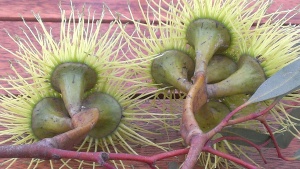
Sometimes it is hard to know which to prefer.  The common name (Warty Yate)–splendiferous as it is–or the Latin name (E Megacornuta), also glorious!  Both names focus on the bud caps of this tree, which are both mega (4.5 cm long) and warty.

2014-06-12 08.30.35

There was a yate (one of the still-splendid but not-so-warty yates–I am guessing E Lehmanii) growing in the playground at the kindergarten I went to. We would put the bud caps on our fingers and chase each other around, yelling ‘witch’s fingers!’  Needless to say, we had been offered no information about whether witches really have long pointy fingers and no one had offered me the perspective that witches might mostly have been maligned herbalists and midwives…

2014-06-12 08.31.39

A friend’s dog is staying with us and we went for a walk the morning I picked these.  The flowers called out to me.  I identified this tree a couple of years back.  Those bud caps made identification simple, but as you might imagine this tree also has impressive fruit.   Speaking of awesomely good names, please note the ‘flattened, strap-like peduncle’ my eucalyptus manuals mention.

2014-06-12 08.31.29

I picked up fallen, dried leaves and took home a small sample.  My sample dyepot showed a barely-orange tinted brown. I did also create a small sample bundle.

2014-06-14 16.50.17


Fresh from the pot and still damp, it also was on the slightly orange side of brown.  However once dried out, washed and dried again, it had turned quite definitively brown.

2014-06-14 16.52.53


4 Comments

Filed under Dye Plants, Eucalypts, Leaf prints, Natural dyeing, Neighbourhood pleasures

Natural dyeing workshop

I began the final stage of preparation for my natural dyeing workshop by packing the car to capacity the night before and steeping logwood and madder in hot water. These are more of the dyes that have been left at the Guild.  It seemed good to share them with other Guildies this way.

2014-06-12 16.20.18

I came through the parklands on my way to the Guild and stopped in homage to a few trees.  This one turned out to be E Tricarpa…

2014-06-14 08.32.52

The unpacking was quite a thing.  This is a view of the back seat of the car before unpacking.

2014-06-14 08.42.38

The steeped fermenting walnut hulls (another dyestuff left at the Guild) travelled in the front seat footwell, in a pot with a lid, in a big bucket in case of spills.  No spills.  Whew!! I put heat under them an hour before people arrived in hopes of getting it over with.  My friends, I will never do this again.  It may take me years to live down the smell this dye pot gave off!  At one point when a heater went on, someone told me they had found a dead mouse in the heater.  When I went to see, they were looking for a mouse they were sure must be in there because they could smell it.  Cough!  The women who were rostered on in the Little Glory Gallery in another part of the Guilds premises exclaimed.  So did the treasurer, who came in to work on the books and was similarly appalled.  Eventually walnut tailed off and a eucalyptus bark dyepot began to prevail.  The smell of natural dyeing had people who had come to the gallery wanting to come and see what we were doing all day!  I give you the walnut hulls I will be living down at the Guild for years to come.  They produced an inky dye.  Truly impressive.

2014-06-14 09.08.23

I set up a bit of a display table of yarns and knits, leaf prints, tea cosies, sample cards and books.

2014-06-14 09.41.47

People had their first go at India Flint’s eco-print technique.  Some had read the book but never tried it.  I don’t know how people can resist!  The Guild has a copper which had been repaired because we were planning to use it.  Use it we did!

2014-06-14 11.08.32

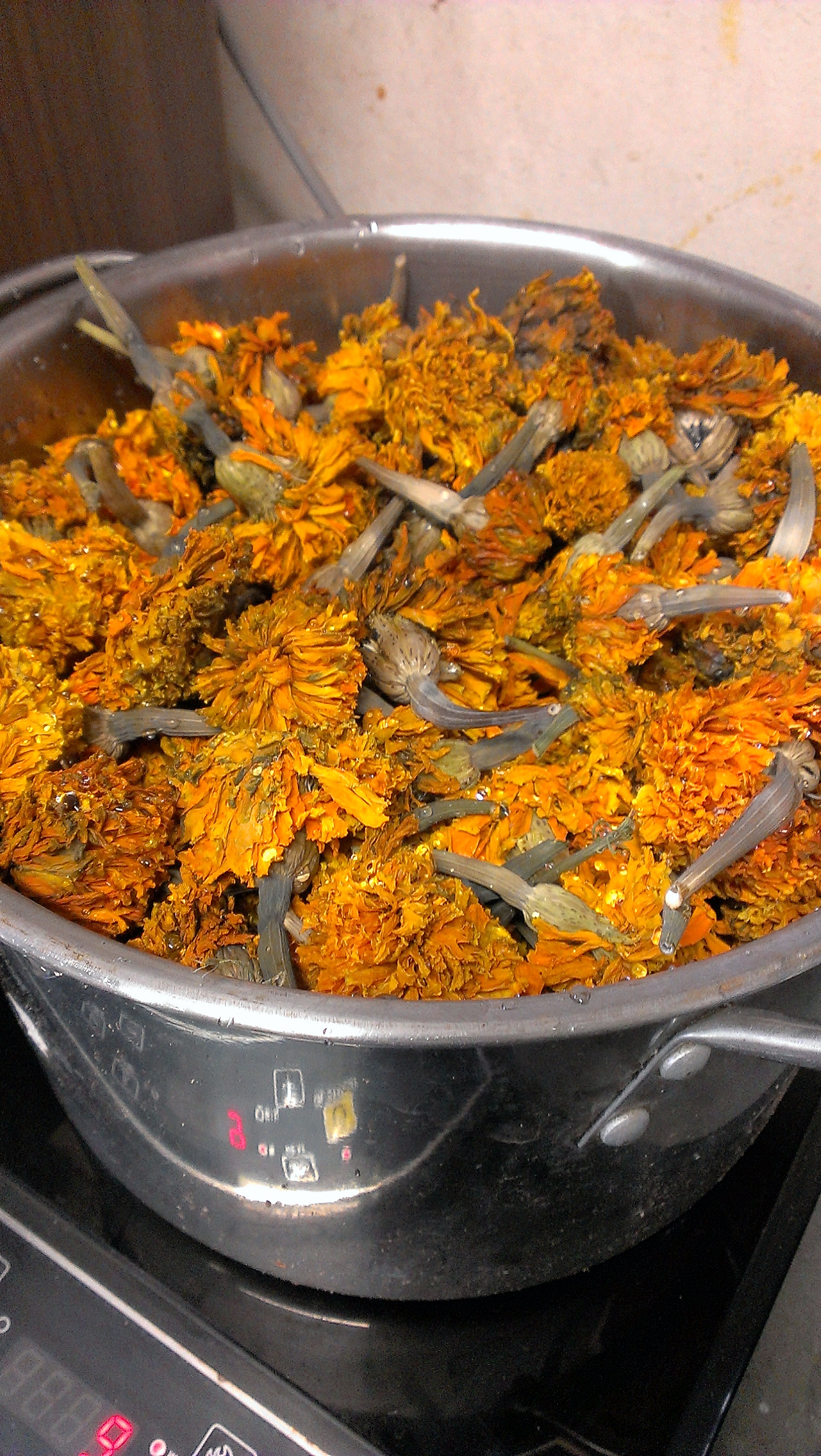
My Mum deadheaded her African marigolds for me through summer and they made a great yellow.

2014-06-14 13.42.52

I tried grinding the soaked madder in a blender as Rebecca Burgess suggests (the second hand blender was pretty challenged) and here it is in the dye bath, in its own stocking… we got some lovely reds.

2014-06-14 13.43.07

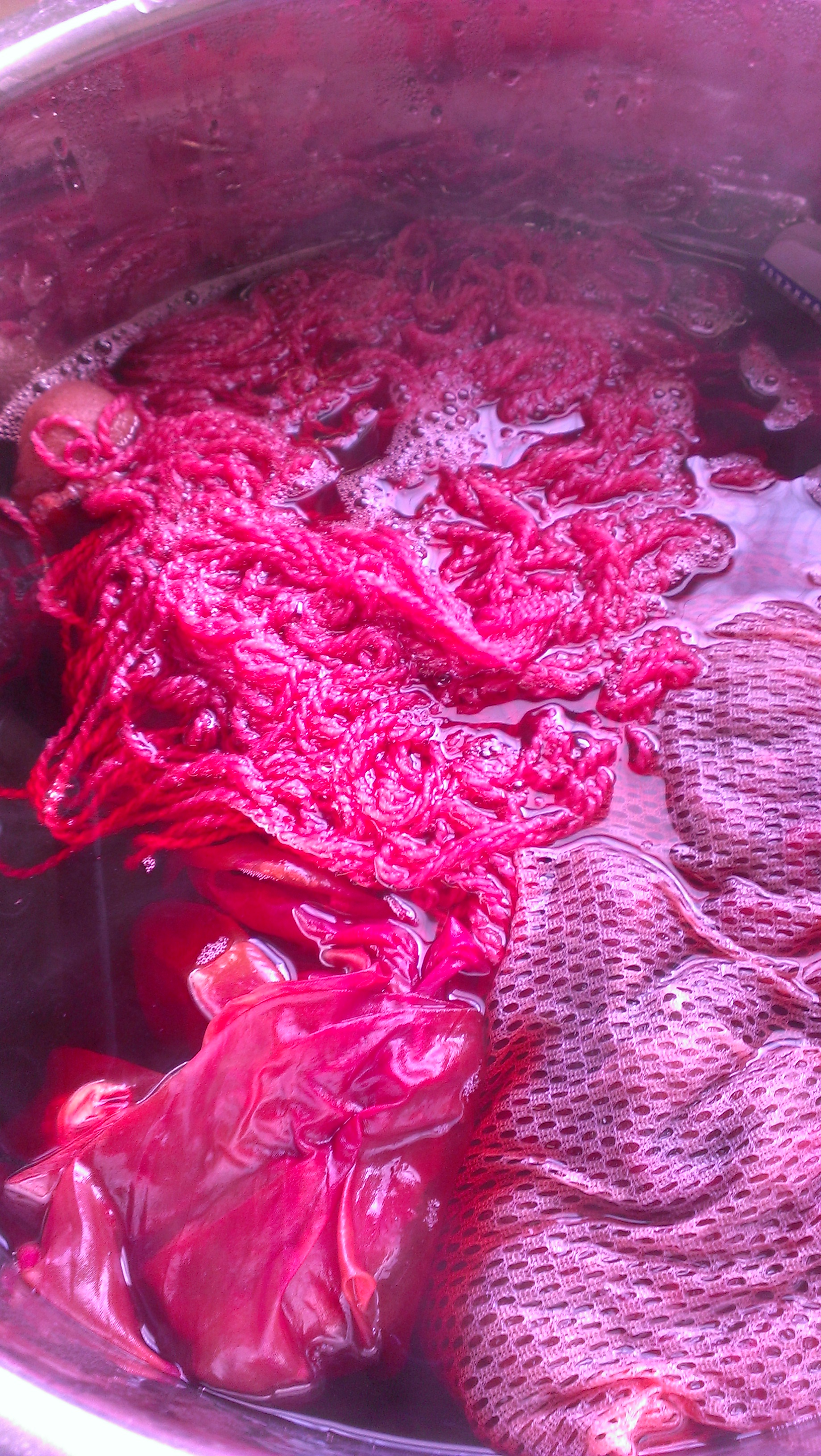
I used one of the bottles of pre-ground cochineal that had appeared in the dye room cupboard.  The colour was entirely startling!

2014-06-14 14.20.01

There was a pot of logwood that came out so deep it was virtually black.  There was a pot of E Scoparia bark that gave some burgundy on the first round and some tan for a skein added in later.  There was an E Scoparia leaf pot and an E Cinerea leaf pot–oranges of different shades.  The dye room at the Guild has four gas burners as well as the copper–so we went wild.

The wonder of unwrapping eco print bundles never wears thin!

2014-06-14 15.07.14

I used the opportunity of being at Beautiful Silks in March to acquire organic wool as well as silk noil twill and some silky merino for this workshop.  E Cinerea did its wonderful thing.

2014-06-14 15.07.21

And so did human imagination…

2014-06-14 15.07.35

The string print on the upper right of this next image was a lovely surprise…

2014-06-14 15.07.51

It was overcast and the results of the dye vats which were the focus of the day are seen here in all their glory drying in the Guild car park! These are eucalyptus and logwood.

2014-06-14 15.11.00

These are cochineal, madder and marigold.  I had mordanted some silk paj in alum and taken it along.  I tried eco printing it years ago and didn’t think much of the results.  Wendi of the Treasure suggested jewellery quality string (which sounds very promising to me), so I’d been planning to eucalypt dye them–but took this opportunity to expand my palette.  The silk went orange in the madder bath even though wool in the same bath was much more red–still good.

2014-06-14 15.11.40

People made their own series of test cards too.

2014-06-14 15.21.44

It was a day of happy experimentation, I think, the smell of fermented walnut hulls fighting it out with stewed eucalyptus bark notwithstanding.  The people who came were friendly, warm and generous–a delight to be among.  It was a treat to be in the company of other people who are fascinated by eucalypts and by the dye possibilities of plants. Folk were talking about what they might do with their cloth and how they might approach their neighbourhoods differently…  I hope that for at least some it will be the start of an exciting new journey.  By the end of the dye I was deeply weary.  I took the logwood, madder and cochineal baths home with me (after taking suitable precautions against spillage) and began some exhaust dye baths next day.  But by late afternoon I was down to twining silk string mindlessly and happily…

2014-06-14 15.21.07

19 Comments

Filed under Leaf prints, Natural dyeing