Category Archives: Natural dyeing

Of shoes, and ships, and sealing-wax. I mean, of silk, and string, and bias binding…

Sometimes you need a lot of Jabberwocky genius to join disparate elements into any kind of intriguing whole.  Or perhaps you just need rhyming couplets. I have neither, but I do have string and bias binding. I blame India Flint for infecting me with her enthusiasm for twining string.  I loved doing it with plant leaves, but it required pre-planning.  String from fabric shreds… you just decide it’s time and get going!

2014-07-04 12.46.48

I have shaggy string from my pyjama-making jag a while back.

2014-07-04 12.49.29

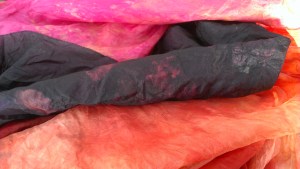
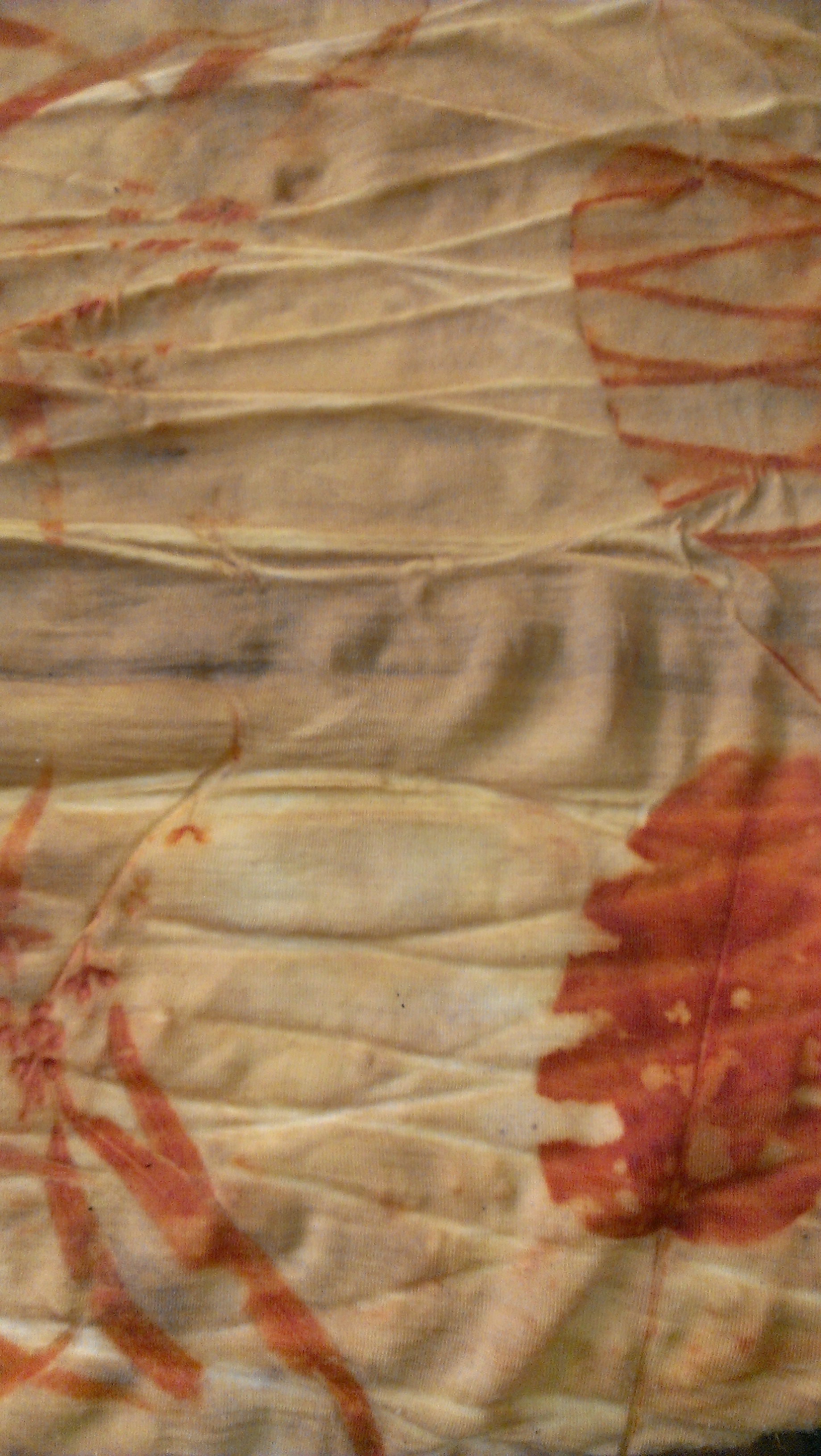
However, Wendi of the Treasure suggested silk string.  And then along came an opportunity to dye silk all kinds of wild colours.  I took up some silk paj that was among my very first Eco-Colour adventures. It took colour then, but not in any really riveting way, and it has been in the cupboard awaiting a new idea for some years.  Wendi’s was the new idea.  When it hit my workshop dye pots, the original onion skin and eucalypt dyed portions created all kinds of interesting effects.

2014-06-15 15.32.37

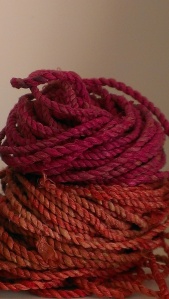
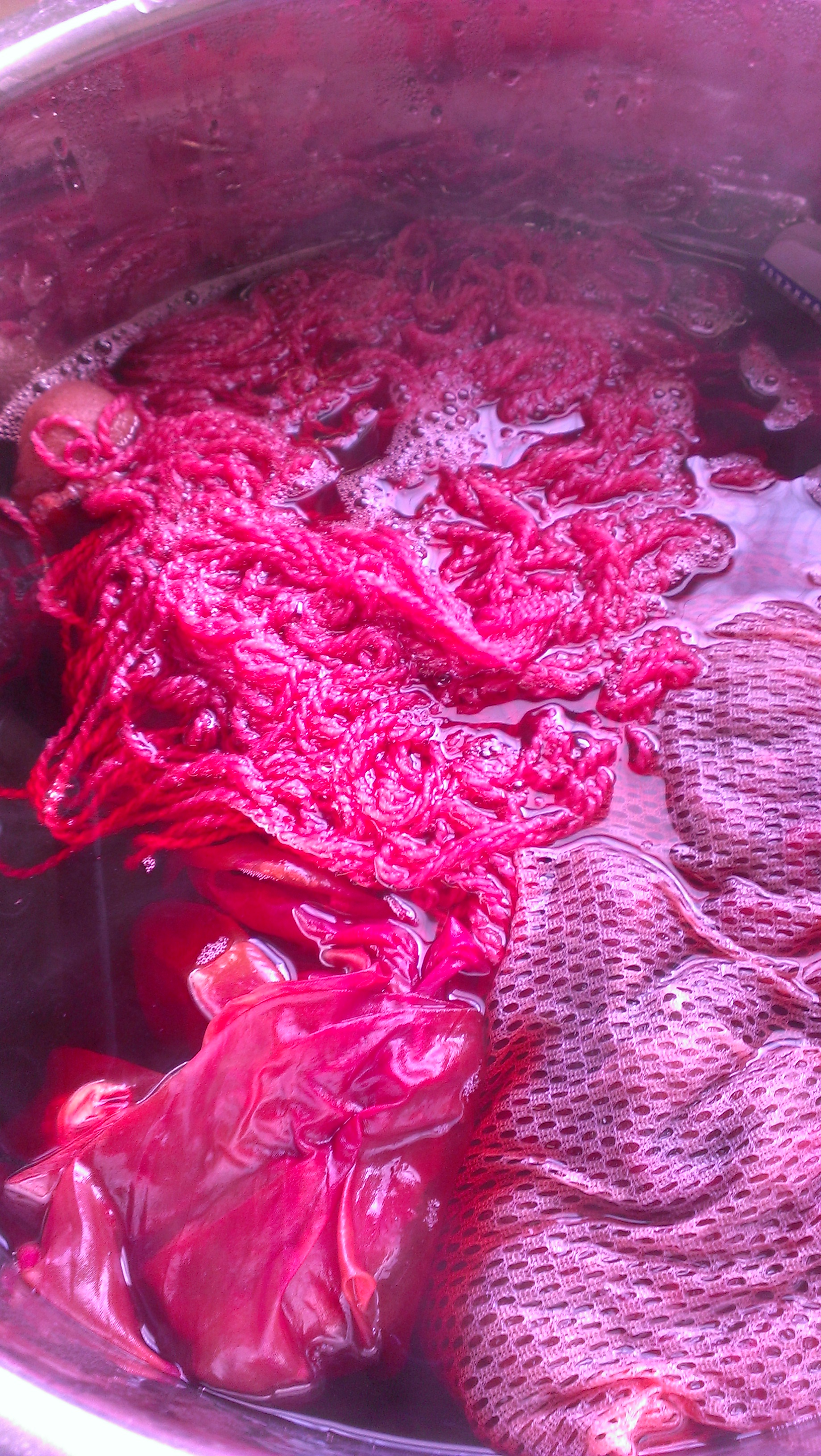
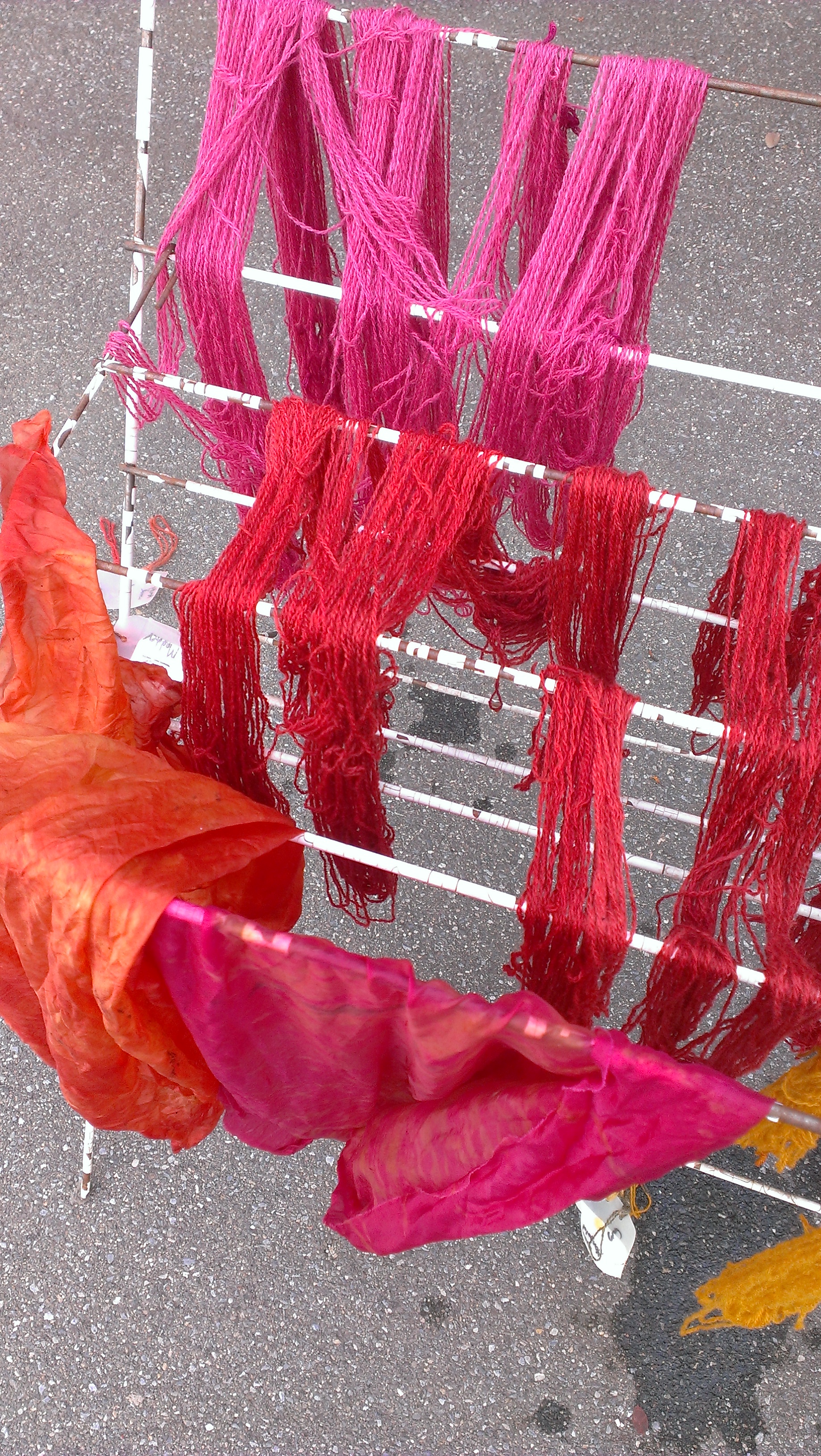
Thanks to Wendi and India, I now have logwood-dyed string so deep purple it is almost black, madder-dyed orange string, and cochineal pink string.

2014-07-04 12.52.33

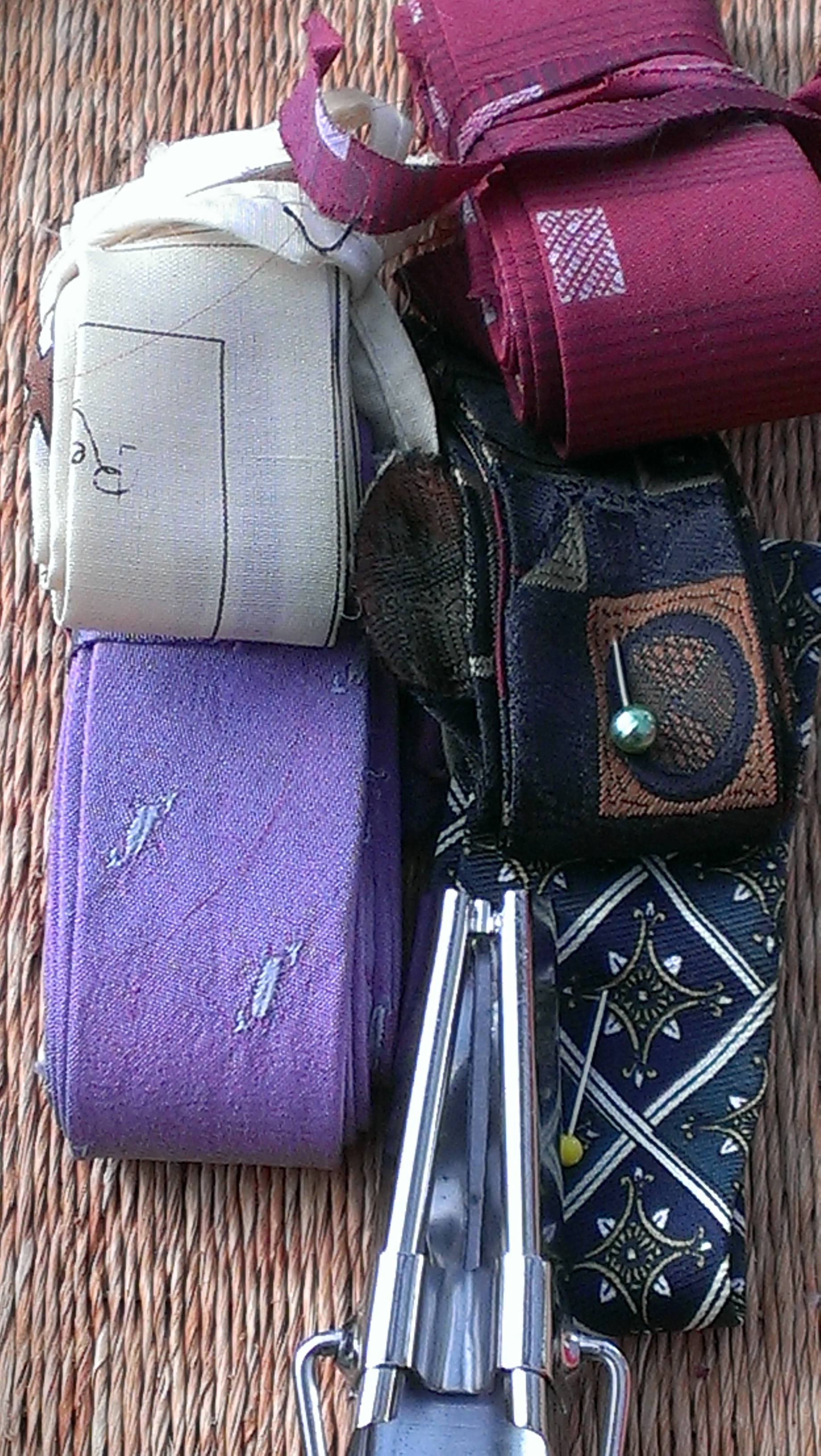
But there is more… I have had some ties unpicked, ironed and ready to be made into bias binding for years.  What can I say?  I have been engaged in a task in relation to my day job so mind numbingly dull that I realised the time for bias binding making was upon me, all of a sudden!  The existing collection of tie-bias binding was getting low.

2014-07-04 12.55.23

I now have this…

2014-07-04 12.54.14

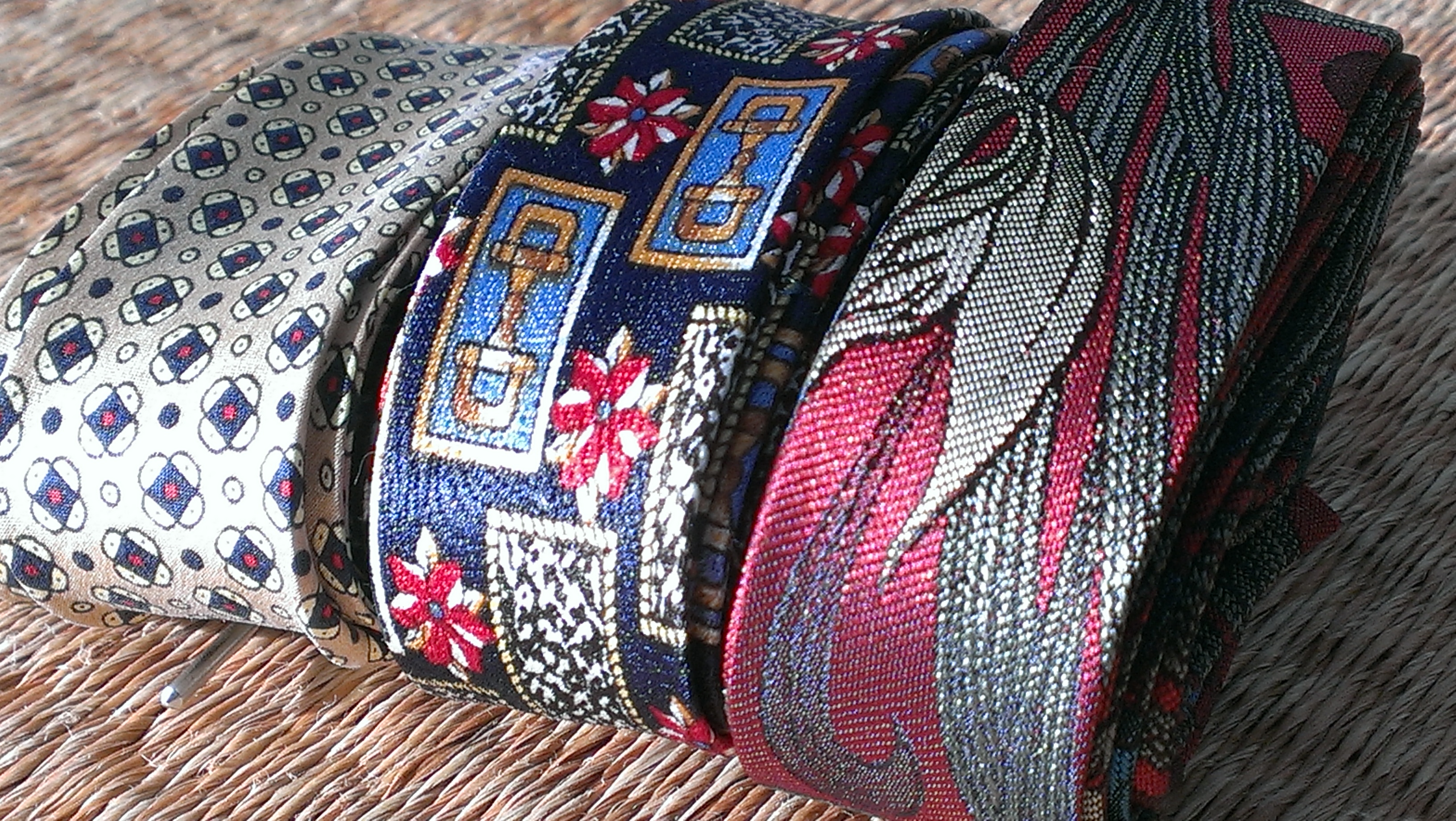
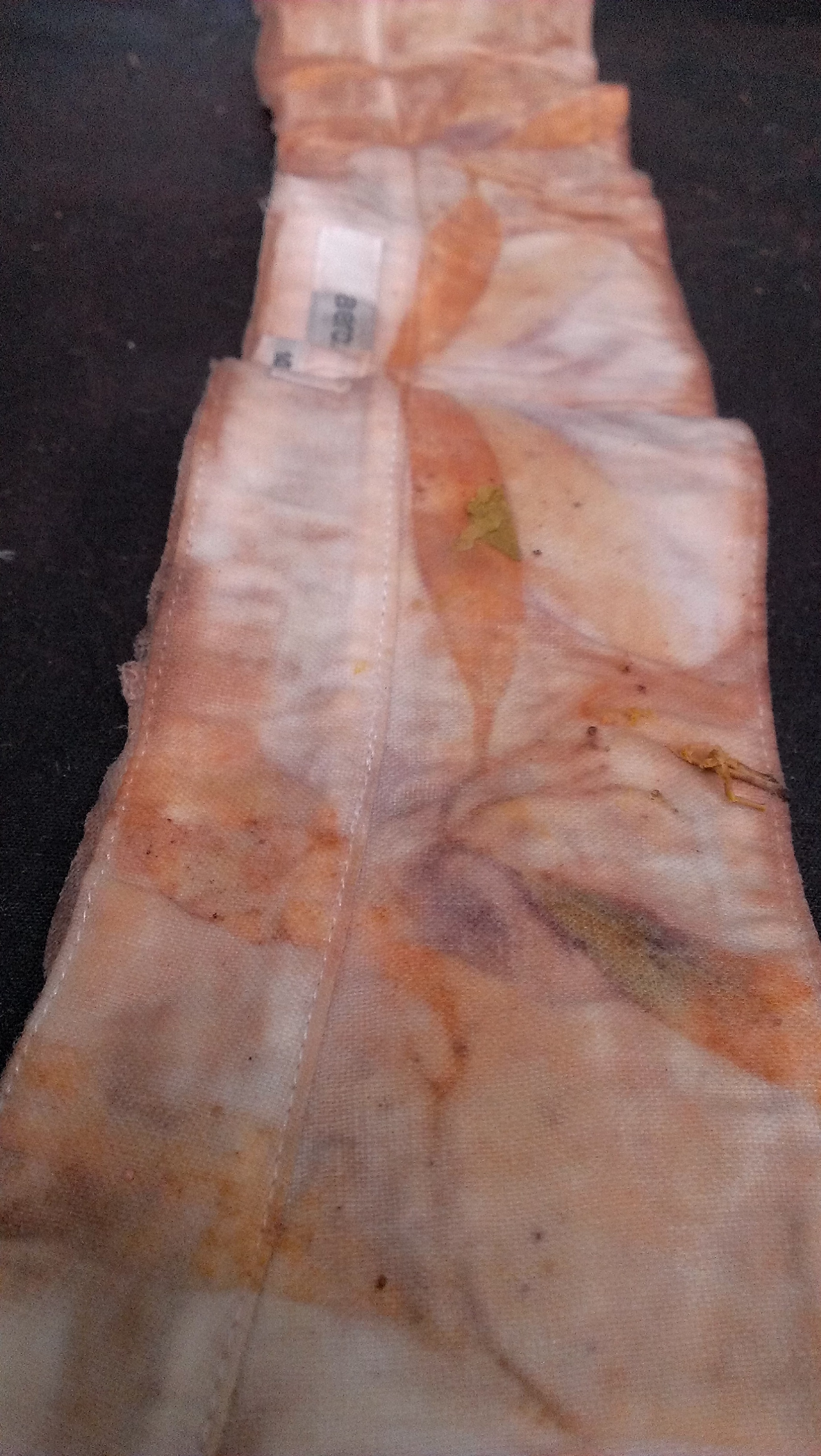
And this… so if I am struck by the urge to create garments again soon, I’ll be able to create beguiling interior details in a heartbeat.

2014-07-05 14.51.45

Mercifully, my marking is over, too.

10 Comments

Filed under Natural dyeing, Sewing

Mock Orange–Choisya Ternata

Choisya Ternata (which I grew up hearing called ‘mock orange’) is appearing more and more as a hedge in my neighbourhood.  It looks very lush at this time of the year… leafy and green and just beginning to flower. Inspired by blog posts I’d read like Aqua and Flora and Debbie Herd, I ran a dyepot with no modifier and got a beautiful yellow. Then, I modified with copper water and obtained an olive green.

IMAG1740

The effect of this addition was impressive, to say the least.

2014-06-23 10.57.48

This rated as one of the most delectably scented dye baths ever, and it is certainly one I’ll try again.


3 Comments

Filed under Natural dyeing, Neighbourhood pleasures

Garments to bags…

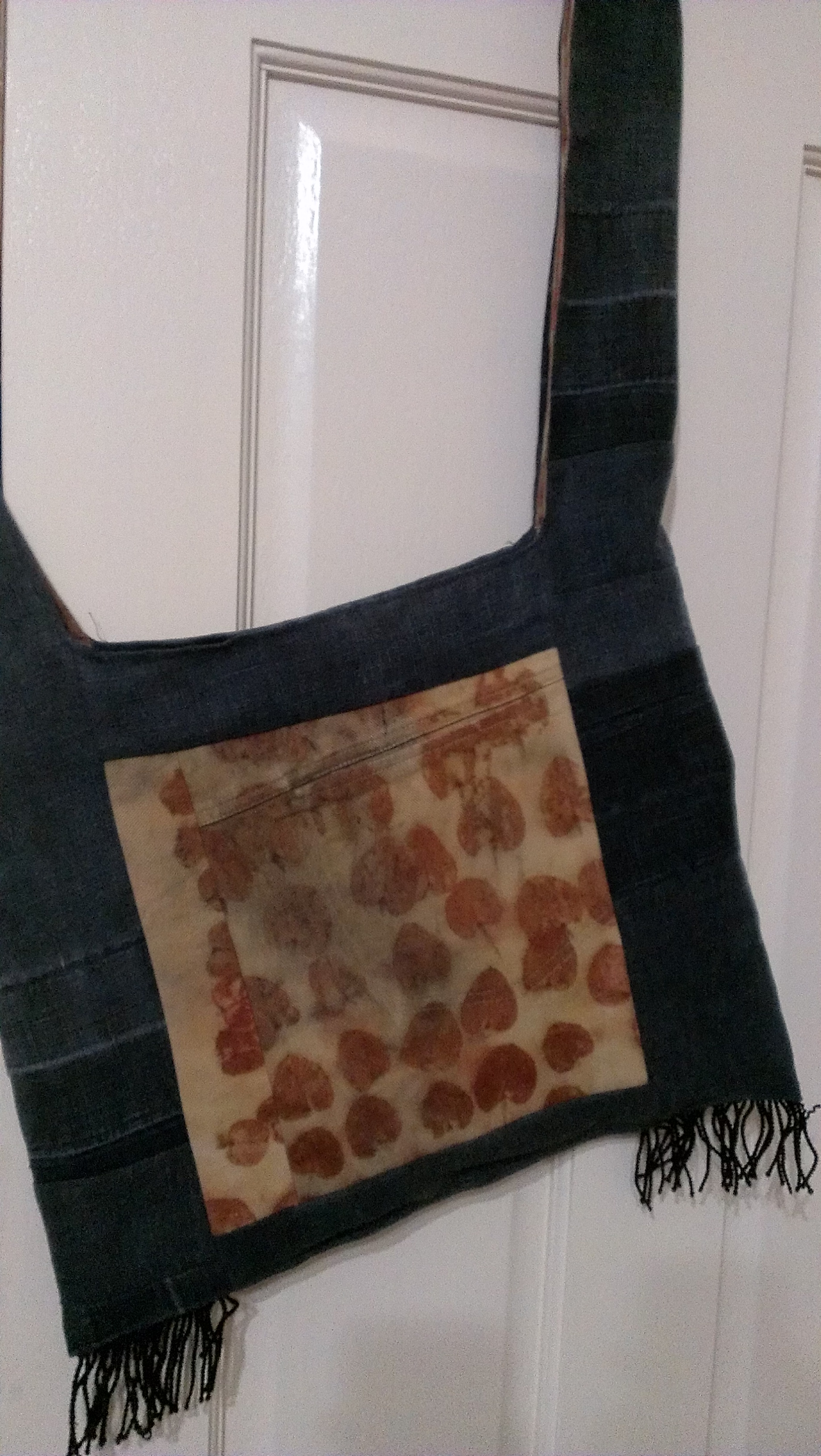
The time has come for some of my clothes to find new uses.  These worn out jeans have had years of use as jeans…

2014-06-26 18.29.13

I made these shorts from a length of linen I found on a pile of hard rubbish on a Brisbane kerb when I was there one summer.  They have had years of hard wear and been re-dyed once or twice.  Surprisingly enough the screen printed design on the pocket details didn’t take dye!

2014-06-27 19.53.25

They are now completely threadbare in places that would create embarrassment if they were to fail, further evidence of the hard wearing qualities of linen.

2014-06-27 19.53.56

I paired the jeans up with some leftovers from past sewing adventures, which finished out the lining.

2014-06-27 18.47.06

The jeans pockets went on the inside, retained for future use.  The outside features the pockets of a pair of hemp shorts that hit the dye pot some time ago.

2014-06-29 20.07.39

I teamed the linen shorts up with the remainders of a pair of men’s twill cotton pants bought for a dollar from the Red Cross.

2014-06-29 20.06.44

I love a beautifully executed pocket, and there are two of them featured on the outside of this bag, while the back pockets of the shorts are still on the inside of the bag.

2014-06-29 20.06.05

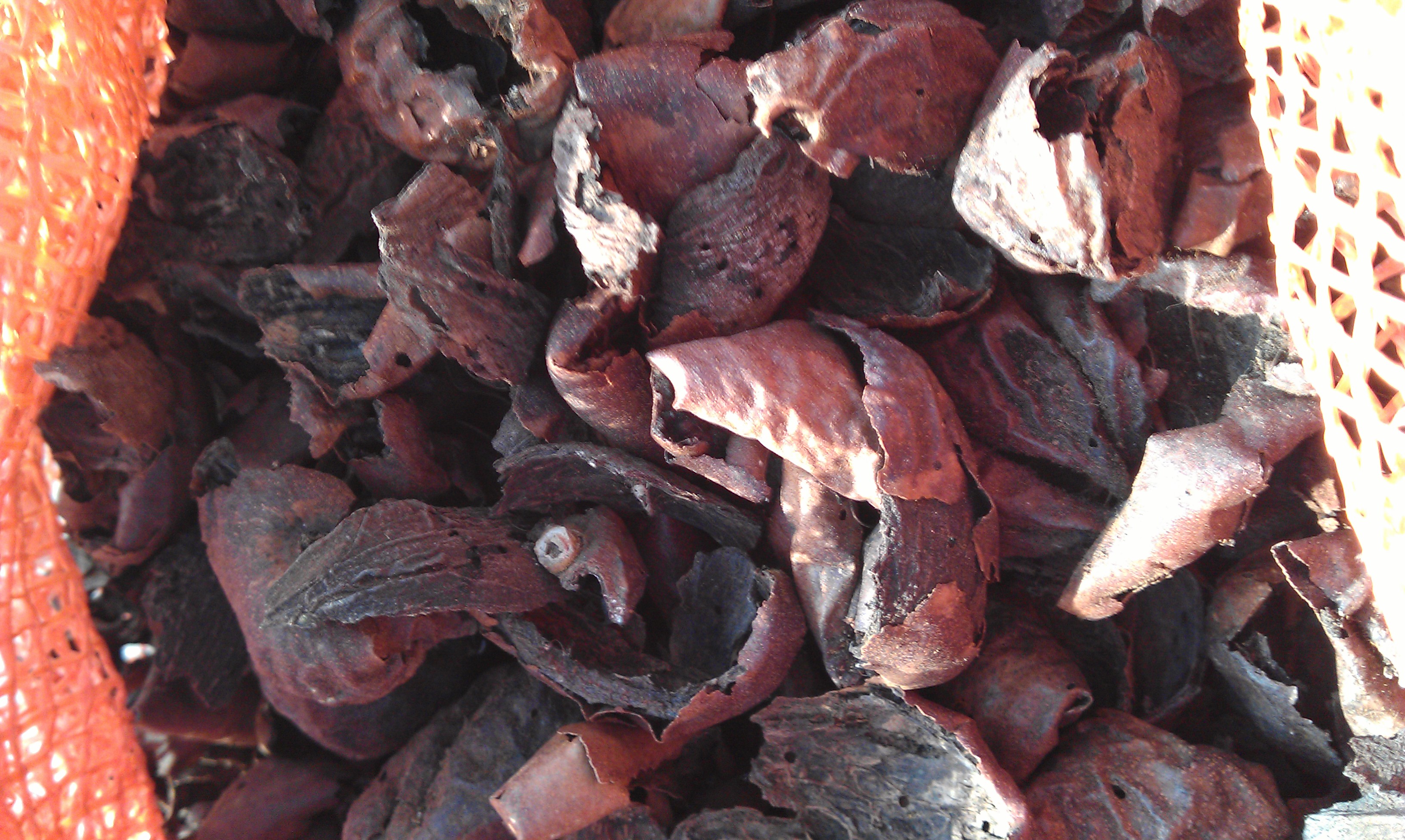
In between the sewing, I spent the weekend mordanting fibre and continuing to try to exhaust dye baths from the workshop a fortnight ago!  By the end of the weekend I was down to pastels… And there was the odd Stuff, Steep and Store jar to be going on with.  Using the microwave has lowered the barriers to taking an opportunistic dye find or something that seems promising but whose dye properties are unknown to me and putting it up for future reference.  Here, rat-nibbled pomegranate remains collected off the ground… as no edible pomegranate would be turned to dye at our house!

2014-06-28 09.37.59

1 Comment

Filed under Leaf prints, Natural dyeing, Sewing

Eucalyptus Megacornuta: Warty Yate

Sometimes it is hard to know which to prefer.  The common name (Warty Yate)–splendiferous as it is–or the Latin name (E Megacornuta), also glorious!  Both names focus on the bud caps of this tree, which are both mega (4.5 cm long) and warty.

2014-06-12 08.30.35

There was a yate (one of the still-splendid but not-so-warty yates–I am guessing E Lehmanii) growing in the playground at the kindergarten I went to. We would put the bud caps on our fingers and chase each other around, yelling ‘witch’s fingers!’  Needless to say, we had been offered no information about whether witches really have long pointy fingers and no one had offered me the perspective that witches might mostly have been maligned herbalists and midwives…

2014-06-12 08.31.39

A friend’s dog is staying with us and we went for a walk the morning I picked these.  The flowers called out to me.  I identified this tree a couple of years back.  Those bud caps made identification simple, but as you might imagine this tree also has impressive fruit.   Speaking of awesomely good names, please note the ‘flattened, strap-like peduncle’ my eucalyptus manuals mention.

2014-06-12 08.31.29

I picked up fallen, dried leaves and took home a small sample.  My sample dyepot showed a barely-orange tinted brown. I did also create a small sample bundle.

2014-06-14 16.50.17


Fresh from the pot and still damp, it also was on the slightly orange side of brown.  However once dried out, washed and dried again, it had turned quite definitively brown.

2014-06-14 16.52.53


4 Comments

Filed under Dye Plants, Eucalypts, Leaf prints, Natural dyeing, Neighbourhood pleasures

Dyes of antiquity: Walnut hulls

IMAG1788

When these walnut hulls came home from the Guild hall with me, who knows how long they had been stored?  I can only give an educated guess to the time involved in separating them from the walnuts… or the year in which that might have happened.  In the meantime, insects had become involved… so I put them in water and put a lid on and left them to steep in mid to late May 2014.  As you may remember, I decided I should honour the effort involved in all that dye gathering and storage… and so over a month later, a dye vat emerged…

2014-06-14 09.08.23

The stinkiness of which was unholy.  It may become a legend in my Guild.  But not in a good way!  The dye that emerged was inky and impressive.  I rather wish I had saved some to try using it as ink, but in all honesty I didn’t have that thought on the day… my nostrils said ‘begone!’.  The dark brown skeins in the foreground are walnut.

2014-06-14 15.21.07

And here is my sample card.

2014-06-23 10.55.33

Interestingly, the walnut dyes, together with every dye I have tried on both hot and cold processed mordants so far, show cold processed alum as the most obviously effective mordant, with hot processed alum coming second.  The cold processed sample is noticeably darker than all other samples.  My eye cannot detect a difference between the hot and cold processed rhubarb leaf mordant samples.  In this case, I expected that since I used an overwhelming quantity of rhubarb leaf, achieving a dye effect and not just a mordanting… that these samples would be a stronger shade of brown.  I can’t detect a difference between the rhubarb leaf mordanted samples and the no mordant sample.  So far, I have to concur (sadly) with Pia at Colour Cottage in finding that rhubarb leaf is not terribly effective as a mordant, at least in the ways I have applied and used it.  I have enough mordanted yarn to continue experimenting for some time to come…


10 Comments

Filed under Fibre preparation, Natural dyeing

More stuff, steep and store jars…

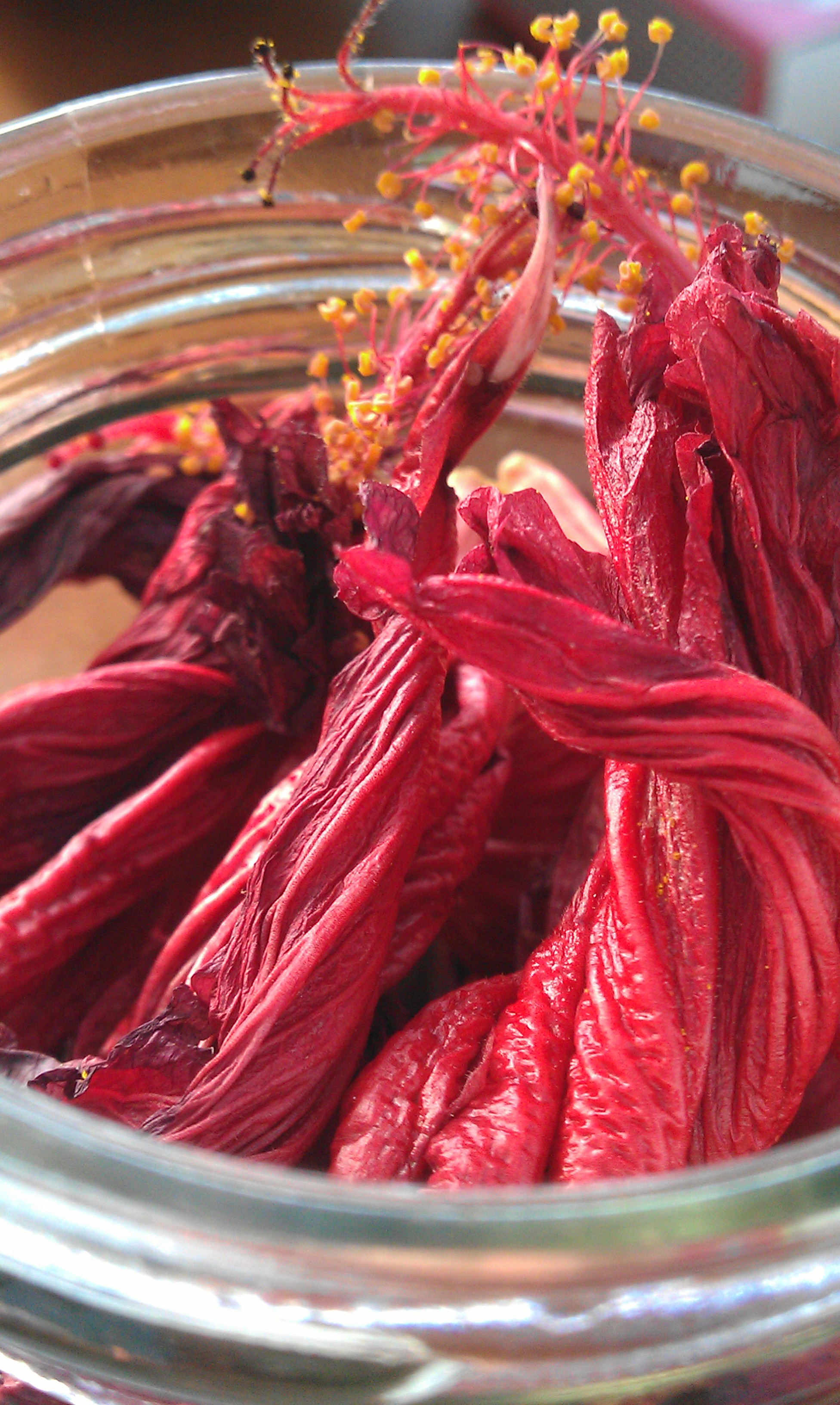
The last hibiscus are only just still flowering…

IMAG1719

And being packed into jars…

IMAG1726

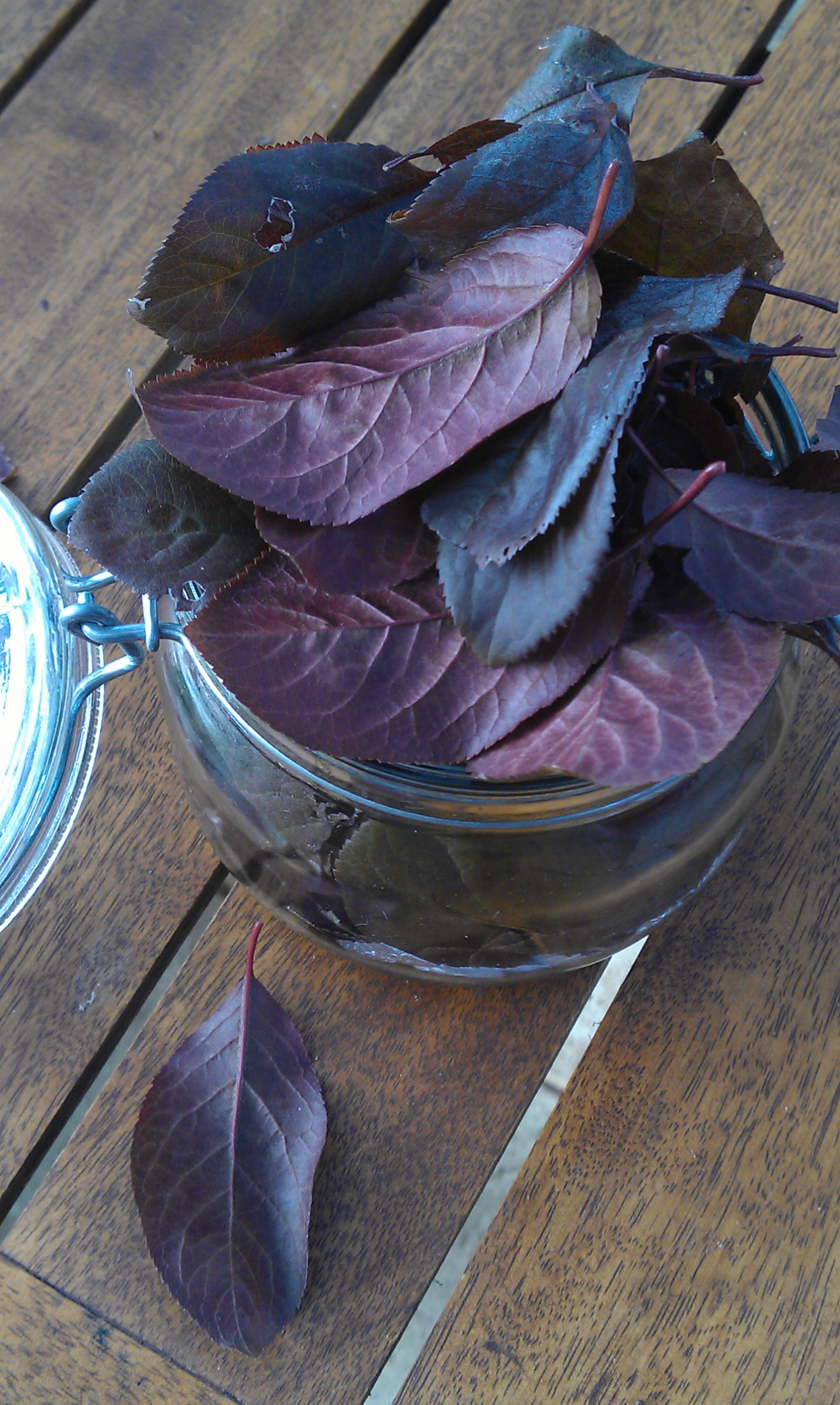
And the prunus trees are getting more and more bare…

IMAG1724

but not all those leaves are going to compost immediately…

IMAG1725

Since a friend introduced me to this book: Five Minute Microwave Bottling–I have been experimenting with that.  Yes, the bottles seal.  No, there is no obvious cataclysm despite the metal lid being in the microwave (and the book explains why).  Yes, my friend is successfully bottling fruit this way.

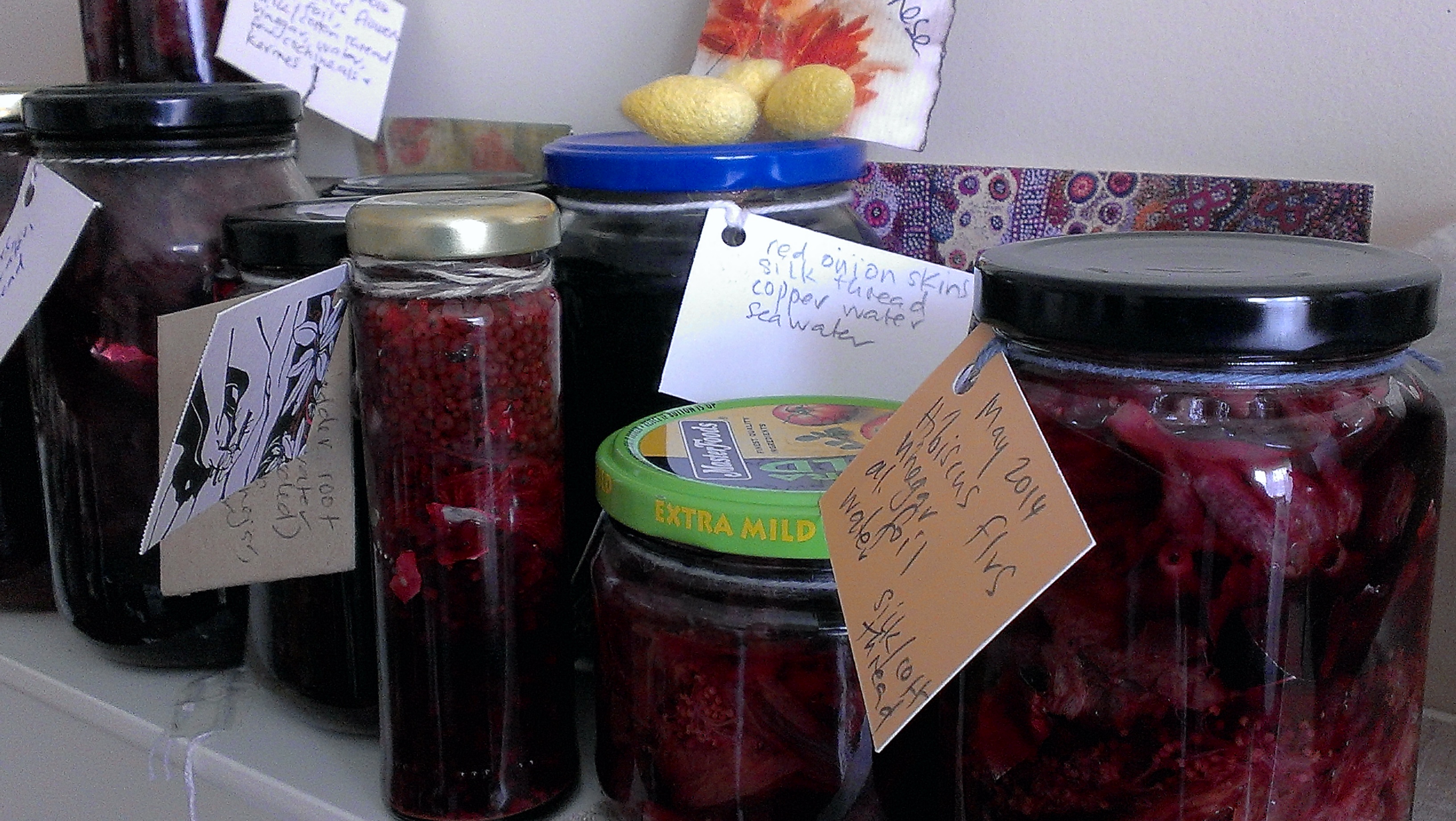
So, as well as having a few items in India Flint’s online pantry, (what a fabulous idea that is), I have a little pantry on my shelf at home…

2014-06-09 12.51.47


5 Comments

Filed under Natural dyeing, Neighbourhood pleasures

Dyes of antiquity: Usnea spp lichen

I could tell the Guild member who suggested that I be the one to use some of the plant dyestuffs that have been left at the Guild was as appalled as I was to see that there was a large plastic bag full of packs of lichens in one of the cupboards.  They were packaged up in such a way as to suggest they might have been purchased dried from a supplier in a time when understanding of the precarity of lichen was less widespread.  Concern for the wellbeing of dyers and the planet is widespread at the Guild now and I assume, it was widespread there in the past when levels of information were different, too.  I think it would be well recognised now that these are not sustainable dyes.  And to be honest, the descriptions of the colours some of these lichens will give made me wonder why anyone would disturb something so slow growing when there are prolific sources readily accessible in the suburbs.  No point asking now. No way to know when these lichens were harvested, either.  I am guessing, many years ago.

IMAG1797

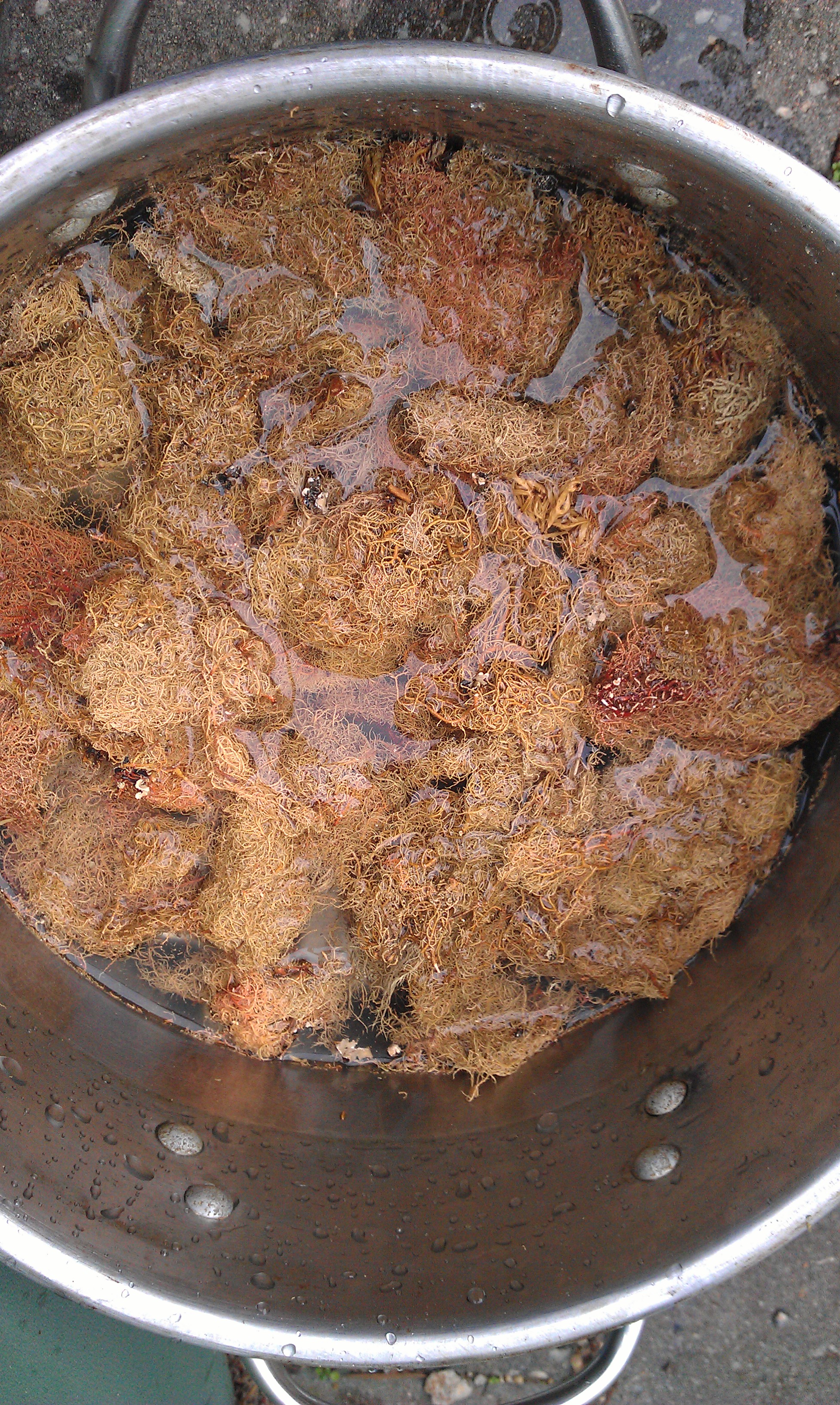
The only thing sadder than these lichens having been killed for dyeing would be composting them without using them at all–So I chose one of the types of lichen for which I could readily find instructions and began what is going to be a lengthy investigation. Out of the bag with ‘Usnea spp’ and into rainwater for a long soak.

IMAG1798

I took Karen Casselman’s advice and steeped for some days in an alkaline solution before heating and cooling several times.

IMAG0020

On the big day (9 days after beginning), I strained out the lichen—using a pair of preloved pantyhose which had been thoughtfully brought into the Guild for just such purposes to strain out all the itty bitty lichen particles.  Then the diluting, heating and dyeing began.  One of my new rolls royce sampler cards (two different mordants, two different applications of each) and 50g of Polwarth entered the pot.

2014-06-02 14.22.46

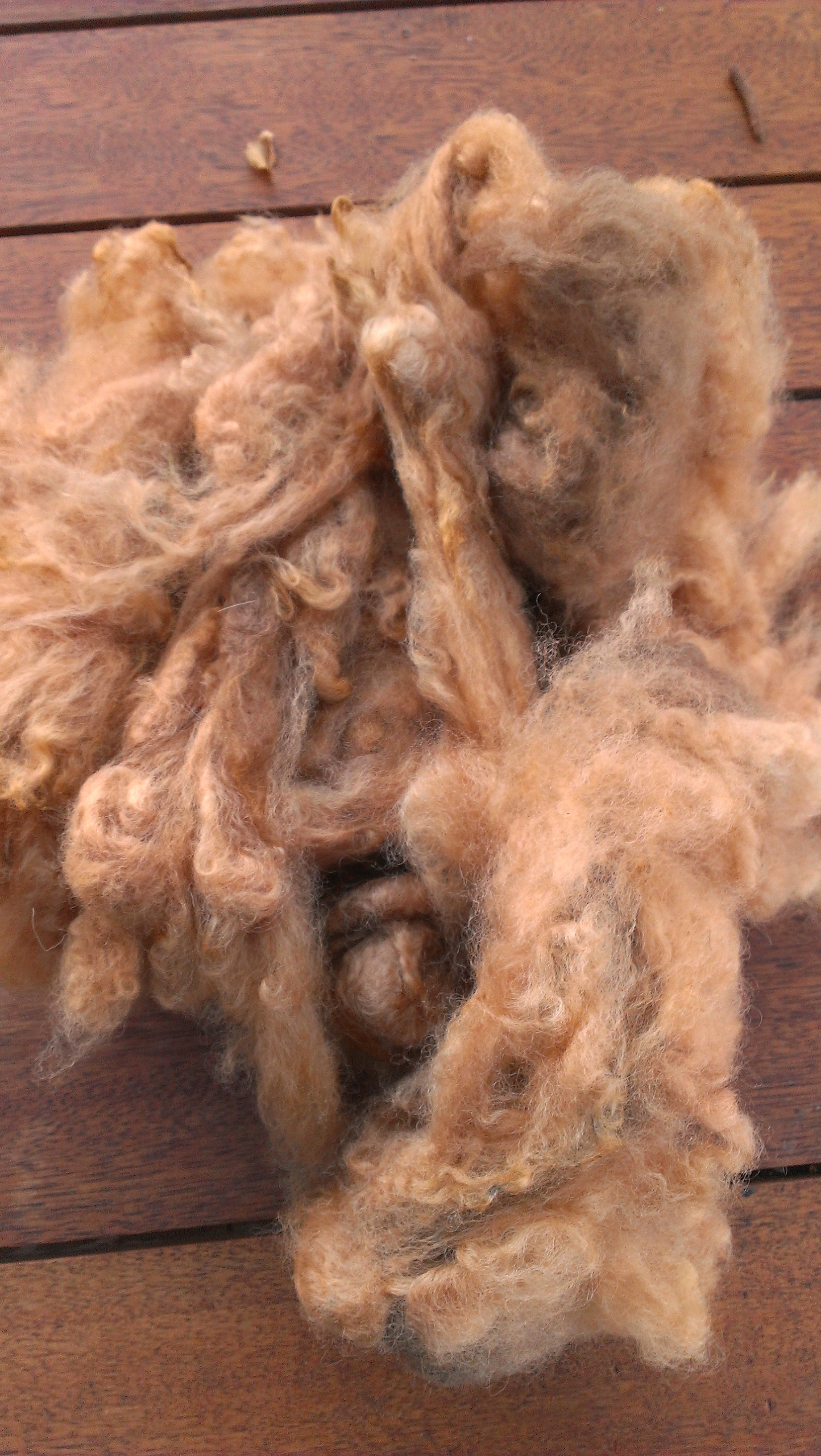
I simply don’t have the experience to know whether I did something wrong, or the age of the lichen made a difference, or what-but both my sample card and my fleece turned tan while the dye bath remained orange.

2014-06-05 14.06.45

Not so special, in my opinion.

2014-06-08 16.24.45

The stash of dyestuff also included many items that were labelled, and some which were identifiable without labels, and then there were some like this:

IMAG1791

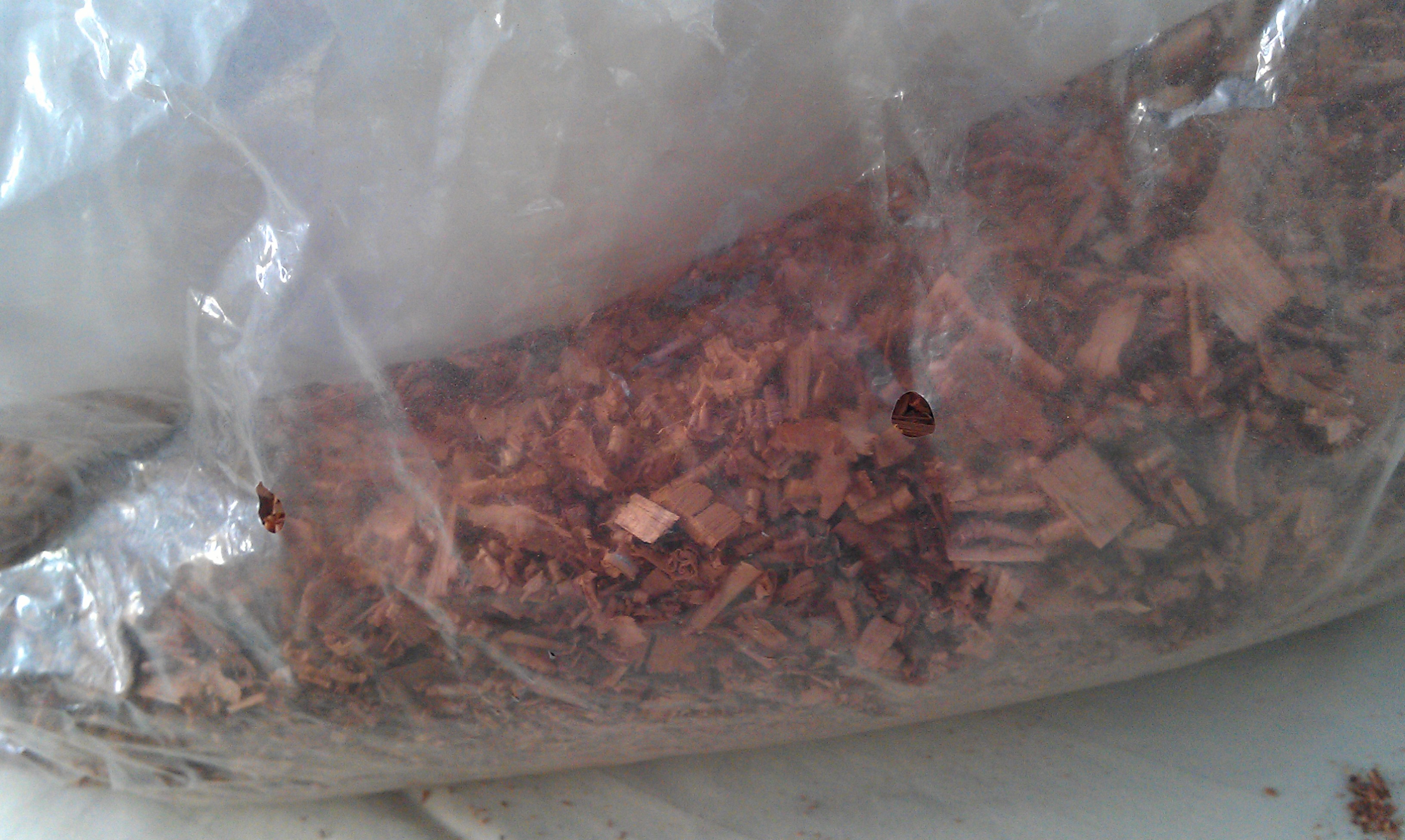
I checked with my sweetheart, who was a long time woodworker.  She said ‘looks and smells like meranti to me’. This looks quite unlike osage orange, sandalwood and logwood (all of which were present in the trove from the Guild).  I did a test… and nothing exciting happened. This batch of wood shavings went to the compost.

IMAG1792

The rest was sorted out and repackaged and relabelled where necessary.  Ready for further dyeing adventures!

12 Comments

Filed under Natural dyeing

Natural dyeing workshop

I began the final stage of preparation for my natural dyeing workshop by packing the car to capacity the night before and steeping logwood and madder in hot water. These are more of the dyes that have been left at the Guild.  It seemed good to share them with other Guildies this way.

2014-06-12 16.20.18

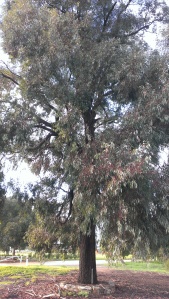
I came through the parklands on my way to the Guild and stopped in homage to a few trees.  This one turned out to be E Tricarpa…
2014-06-14 08.32.52

The unpacking was quite a thing.  This is a view of the back seat of the car before unpacking.

2014-06-14 08.42.38

The steeped fermenting walnut hulls (another dyestuff left at the Guild) travelled in the front seat footwell, in a pot with a lid, in a big bucket in case of spills.  No spills.  Whew!! I put heat under them an hour before people arrived in hopes of getting it over with.  My friends, I will never do this again.  It may take me years to live down the smell this dye pot gave off!  At one point when a heater went on, someone told me they had found a dead mouse in the heater.  When I went to see, they were looking for a mouse they were sure must be in there because they could smell it.  Cough!  The women who were rostered on in the Little Glory Gallery in another part of the Guilds premises exclaimed.  So did the treasurer, who came in to work on the books and was similarly appalled.  Eventually walnut tailed off and a eucalyptus bark dyepot began to prevail.  The smell of natural dyeing had people who had come to the gallery wanting to come and see what we were doing all day!  I give you the walnut hulls I will be living down at the Guild for years to come.  They produced an inky dye.  Truly impressive.

2014-06-14 09.08.23

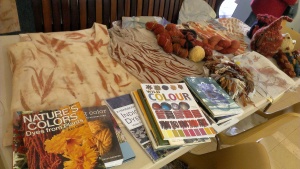
I set up a bit of a display table of yarns and knits, leaf prints, tea cosies, sample cards and books.
2014-06-14 09.41.47

People had their first go at India Flint’s eco-print technique.  Some had read the book but never tried it.  I don’t know how people can resist!  The Guild has a copper which had been repaired because we were planning to use it.  Use it we did!

2014-06-14 11.08.32

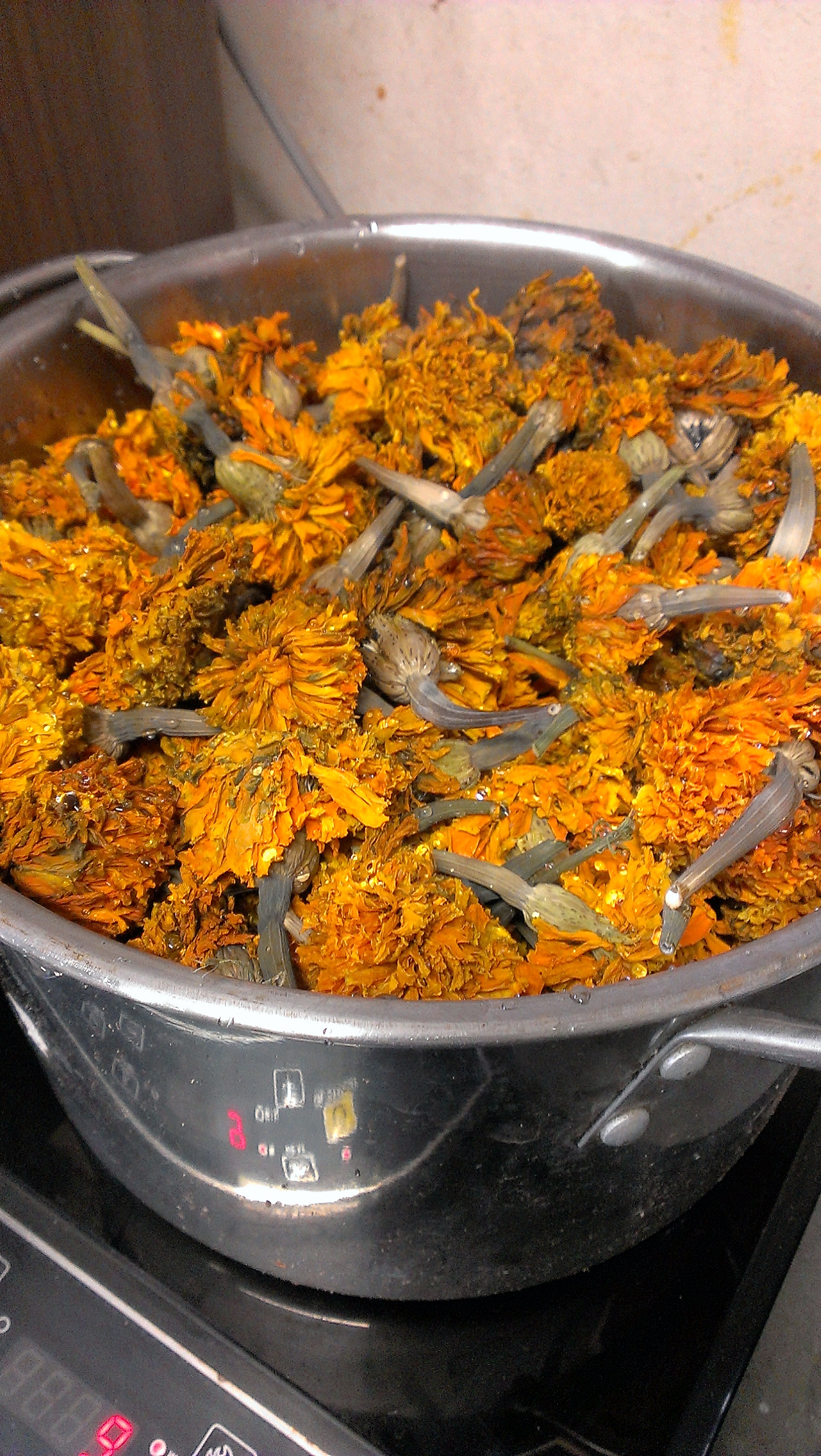
My Mum deadheaded her African marigolds for me through summer and they made a great yellow.
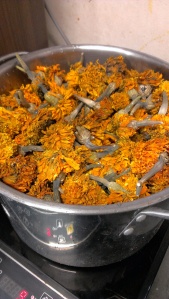
2014-06-14 13.42.52

I tried grinding the soaked madder in a blender as Rebecca Burgess suggests (the second hand blender was pretty challenged) and here it is in the dye bath, in its own stocking… we got some lovely reds.

2014-06-14 13.43.07

I used one of the bottles of pre-ground cochineal that had appeared in the dye room cupboard.  The colour was entirely startling!
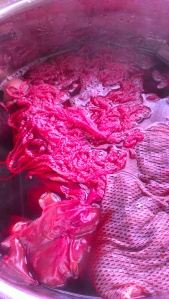
2014-06-14 14.20.01

There was a pot of logwood that came out so deep it was virtually black.  There was a pot of E Scoparia bark that gave some burgundy on the first round and some tan for a skein added in later.  There was an E Scoparia leaf pot and an E Cinerea leaf pot–oranges of different shades.  The dye room at the Guild has four gas burners as well as the copper–so we went wild.

The wonder of unwrapping eco print bundles never wears thin!
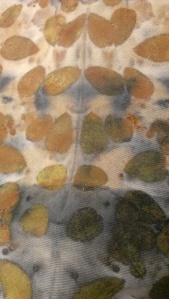
2014-06-14 15.07.14

I used the opportunity of being at Beautiful Silks in March to acquire organic wool as well as silk noil twill and some silky merino for this workshop.  E Cinerea did its wonderful thing.
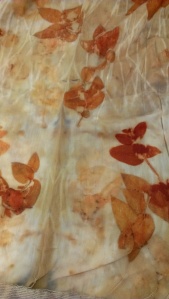
2014-06-14 15.07.21

And so did human imagination…

2014-06-14 15.07.35

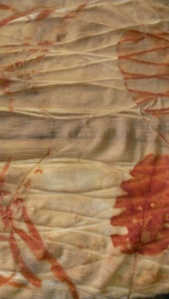
The string print on the upper right of this next image was a lovely surprise…
2014-06-14 15.07.51

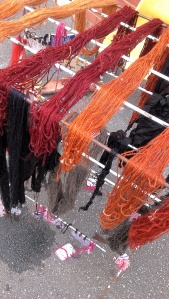
It was overcast and the results of the dye vats which were the focus of the day are seen here in all their glory drying in the Guild car park! These are eucalyptus and logwood.
2014-06-14 15.11.00

These are cochineal, madder and marigold.  I had mordanted some silk paj in alum and taken it along.  I tried eco printing it years ago and didn’t think much of the results.  Wendi of the Treasure suggested jewellery quality string (which sounds very promising to me), so I’d been planning to eucalypt dye them–but took this opportunity to expand my palette.  The silk went orange in the madder bath even though wool in the same bath was much more red–still good.

2014-06-14 15.11.40

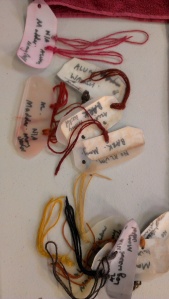
People made their own series of test cards too.
2014-06-14 15.21.44

It was a day of happy experimentation, I think, the smell of fermented walnut hulls fighting it out with stewed eucalyptus bark notwithstanding.  The people who came were friendly, warm and generous–a delight to be among.  It was a treat to be in the company of other people who are fascinated by eucalypts and by the dye possibilities of plants. Folk were talking about what they might do with their cloth and how they might approach their neighbourhoods differently…  I hope that for at least some it will be the start of an exciting new journey.  By the end of the dye I was deeply weary.  I took the logwood, madder and cochineal baths home with me (after taking suitable precautions against spillage) and began some exhaust dye baths next day.  But by late afternoon I was down to twining silk string mindlessly and happily…

2014-06-14 15.21.07

19 Comments

Filed under Leaf prints, Natural dyeing

In preparation for a natural dyeing workshop

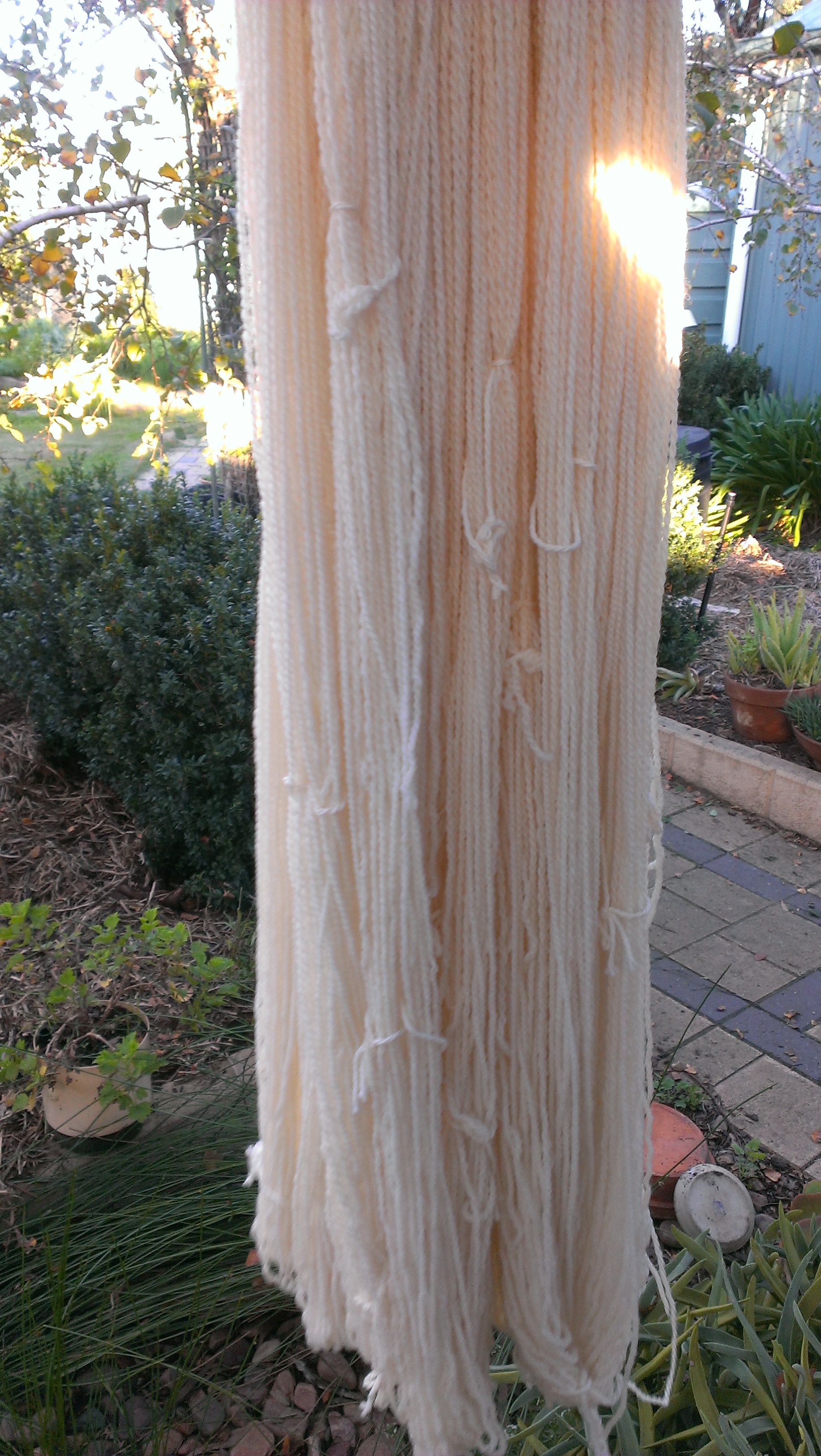
As I write, I’m preparing to run a workshop at my Guild.  I’m counting down and there are only a few days left.  Preparation has been going on for weeks now! I’ve skeined beautiful organic wool and mordanted some.

2014-06-08 16.22.13

I’ve washed fleece in two colours and two breeds, and mordanted some.  I’ve decided being able to mordant cold in alum is a real benefit to preparing unspun fibres.  Less opportunity for felting or simply mooshing the fibres.  Three cheers to Jenny Dean, who introduced me to the idea of cold mordanting with alum.

2014-06-09 12.38.23

I treated some merino roving to a cold alum bath too. Later I decided that past unlovely experiments with paj silk could go in the mordant bath with a view to being overdyed.  And added silk embroidery thread.

2014-06-09 12.59.57

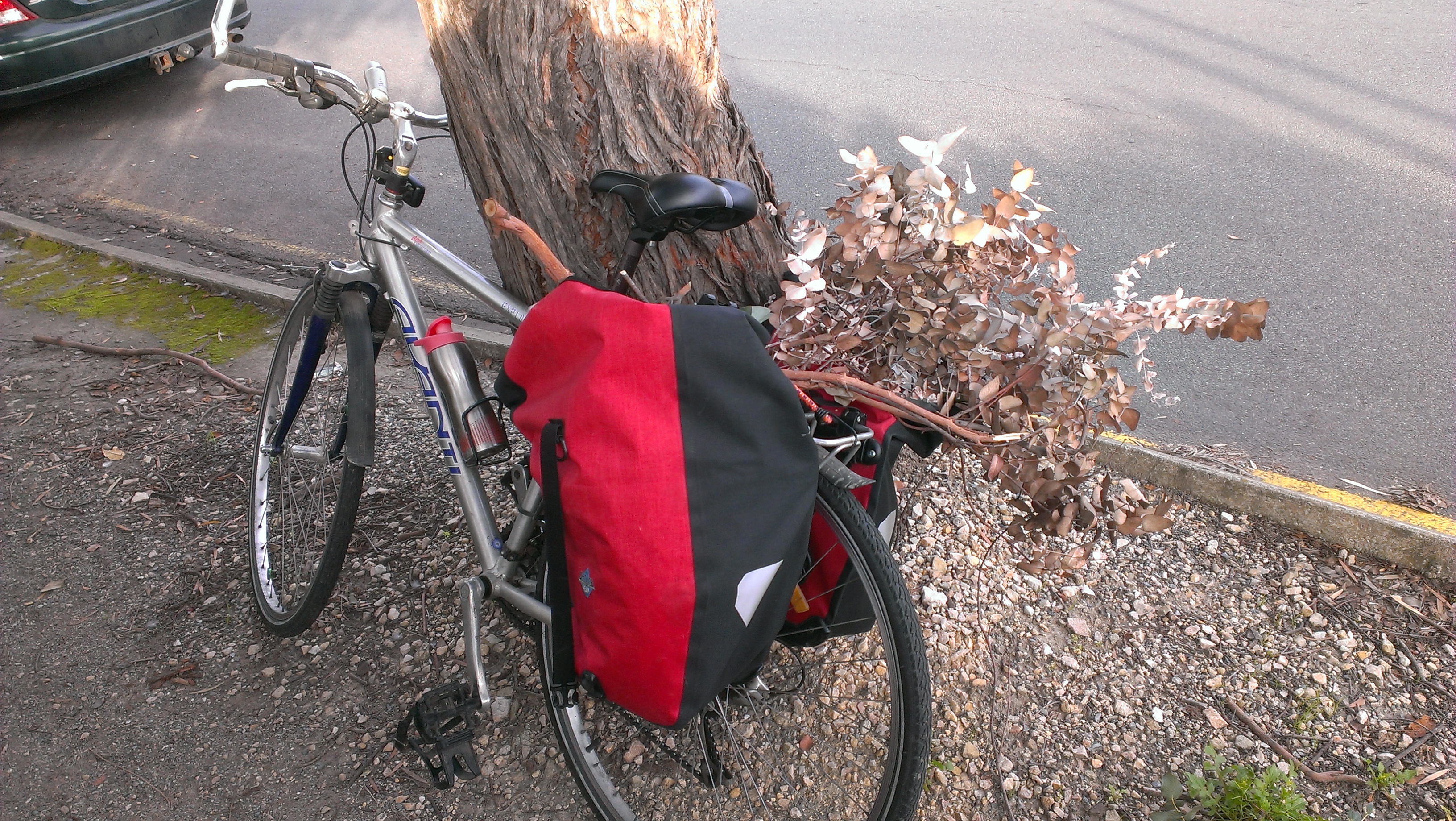
I have been packing things into bags and writing lists. I’ve begged milk bottles from coffee carts and turned them into sample cards. Finally, on the weekend, I wandered the neighbourhood on my bike gleaning leaves, and finding some damaged pomegranates that might be used for dyeing–the rats that were scampering along the fence nearby had clearly been having a banquet!  It was overcast, but can you see these two E Cinereas forming an arch at the end of this street?  Cute as a button!

2014-06-09 14.58.15

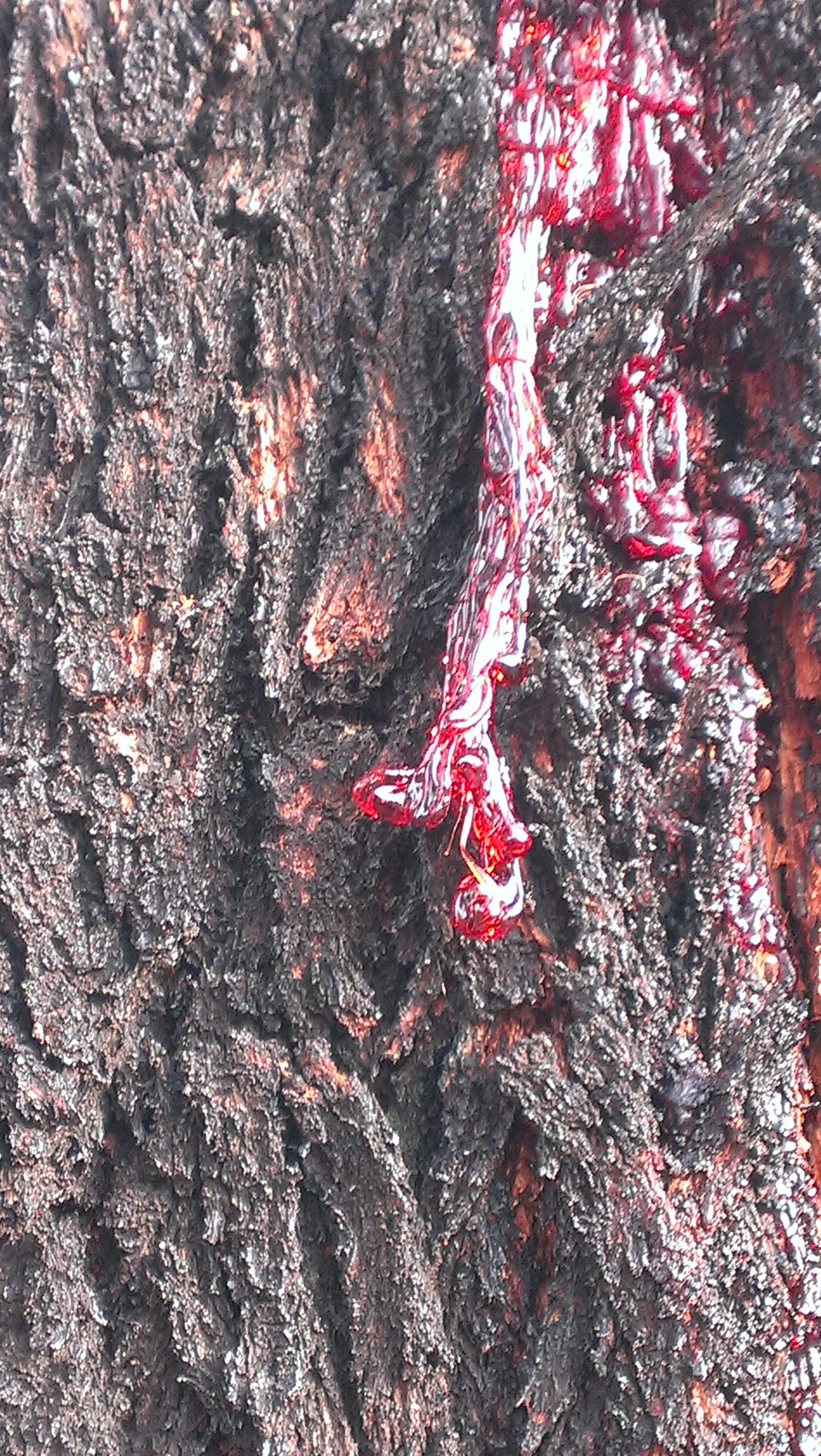
Ironbarks were oozing kino, which is their main strategy for avoiding pest attack.  This one seemed to have gone a bit too far…

2014-06-09 15.46.52

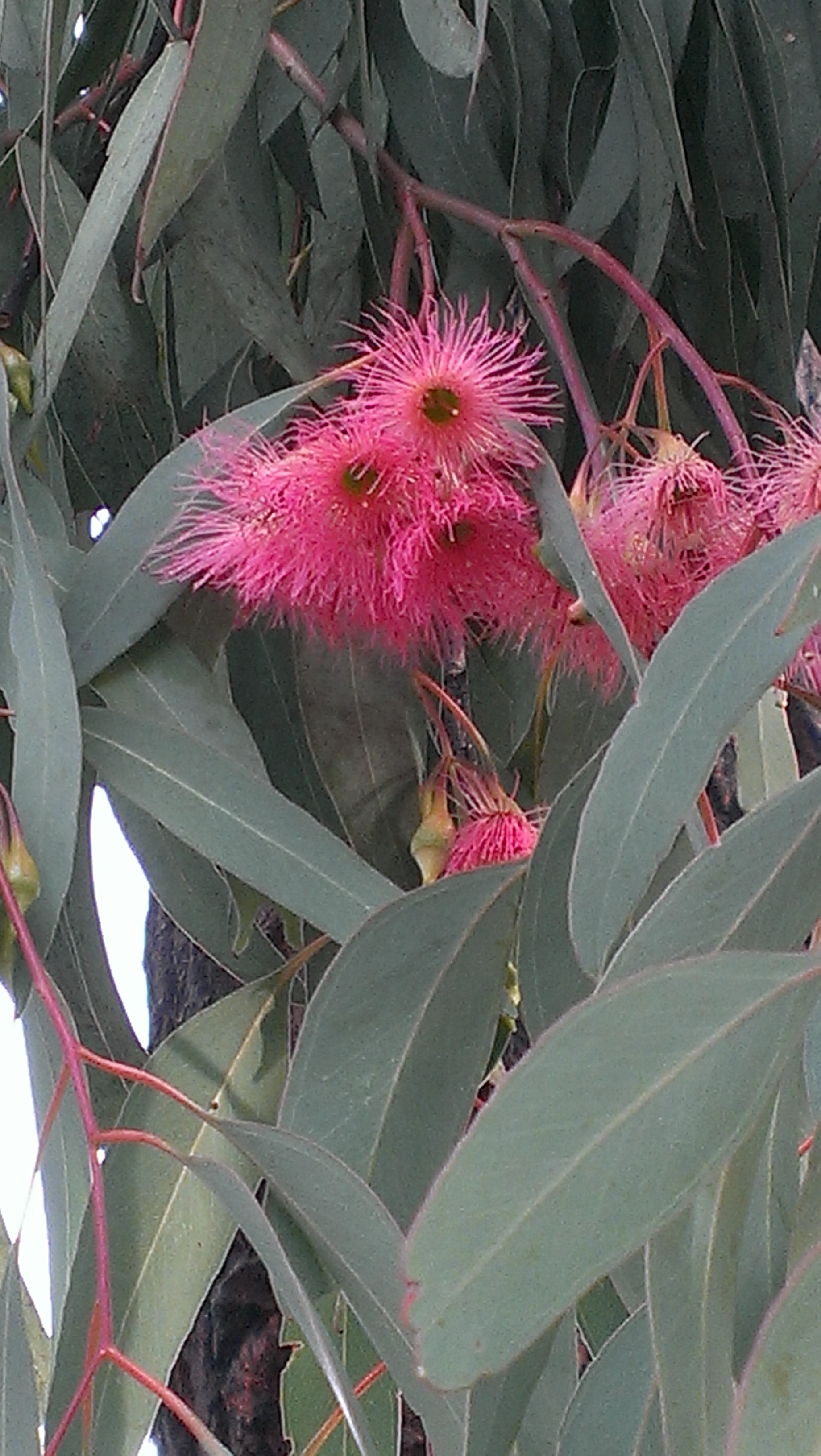
Some ironbarks were in flower. Gloriously.

2014-06-09 15.47.02

In some streets there was a carpet of flowers on the ground where lorikeets and rosellas had been partying.

2014-06-09 15.47.16

Some of the neighbourhood E Cinereas have recovered from the most recent attack of the chainsaws a bit.

2014-06-09 15.50.43

I stopped off at my favourite E Scoparia on my way home.  It now has some leaves I can reach for the first time since a bough was lopped a couple of years ago.

2014-06-09 16.08.04

So, I came home fully laden.  I even found an E Cinerea branch that had been cut some time ago but must have fallen to the ground more recently. Needless to say, it came home with me.

2014-06-09 15.59.41

Hopefully, my preparations are nearing completion.  I had a dream the other night where my workshop went terribly wrong… for one thing, there were two workshops and I had not prepared for the first one at all… and the Guild hall, which is a bit of a rabbit warren, had several rooms that I had not previously seen!  Perhaps it is the idea of using cochineal for the first time acting on my overdeveloped sense of responsibility…

7 Comments

Filed under Dye Plants, Eucalypts, Fibre preparation, Natural dyeing, Neighbourhood pleasures

Happily spinning alpaca

2014-06-05 11.36.43

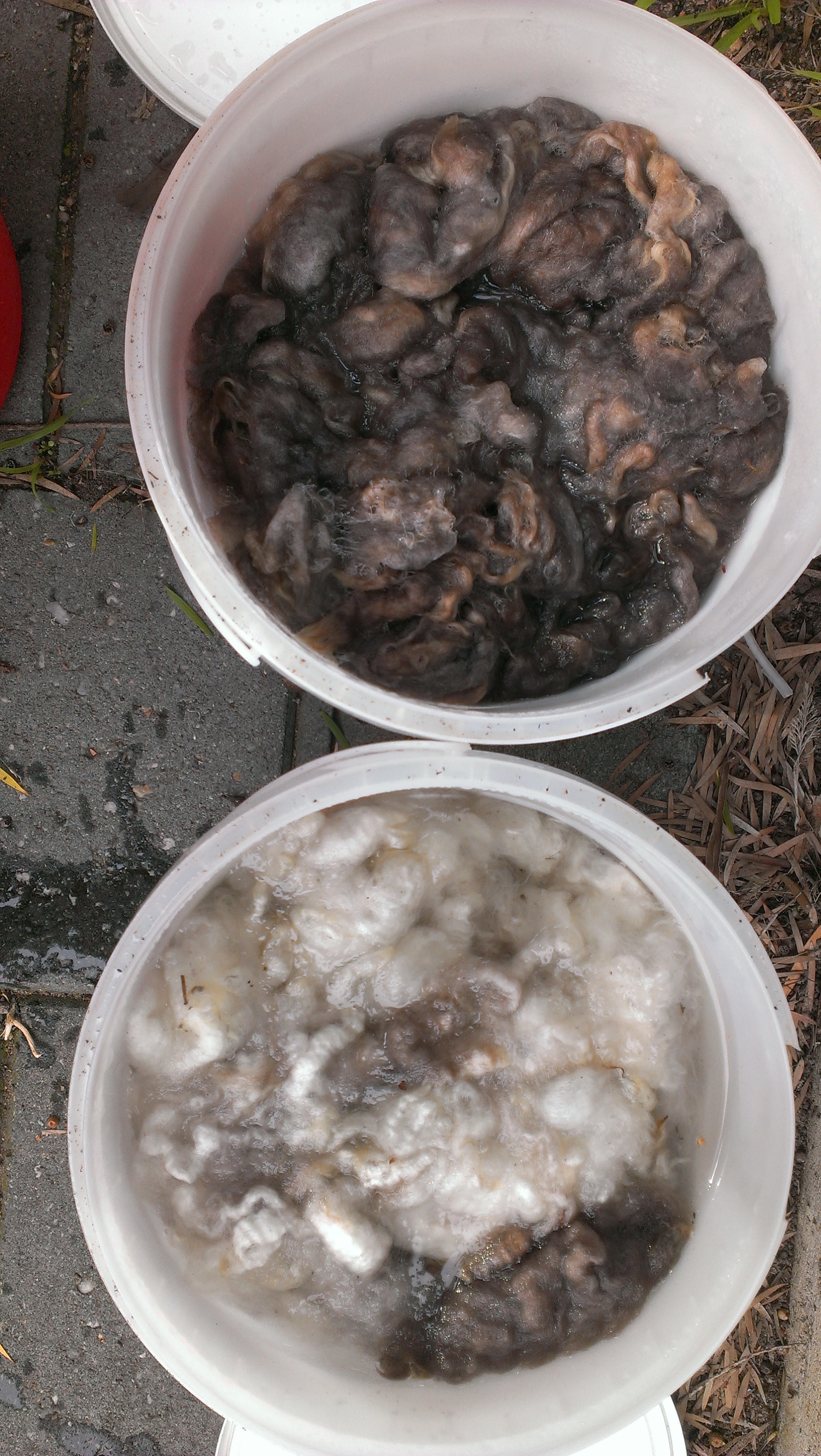
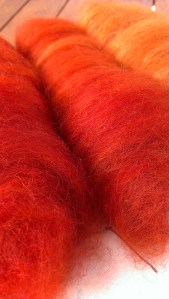
I have been happily but slowly dyeing an entire white alpaca fleece with eucalypts. I’ve been dyeing it without washing it, what’s more! The washing stage comes after dyeing instead, treating the dye bath as stage 1 of the cleaning process. I love the way muddy tips create a resist which will produce a sunny yellow which shows wonderfully among all that flame orange.

IMAG1727

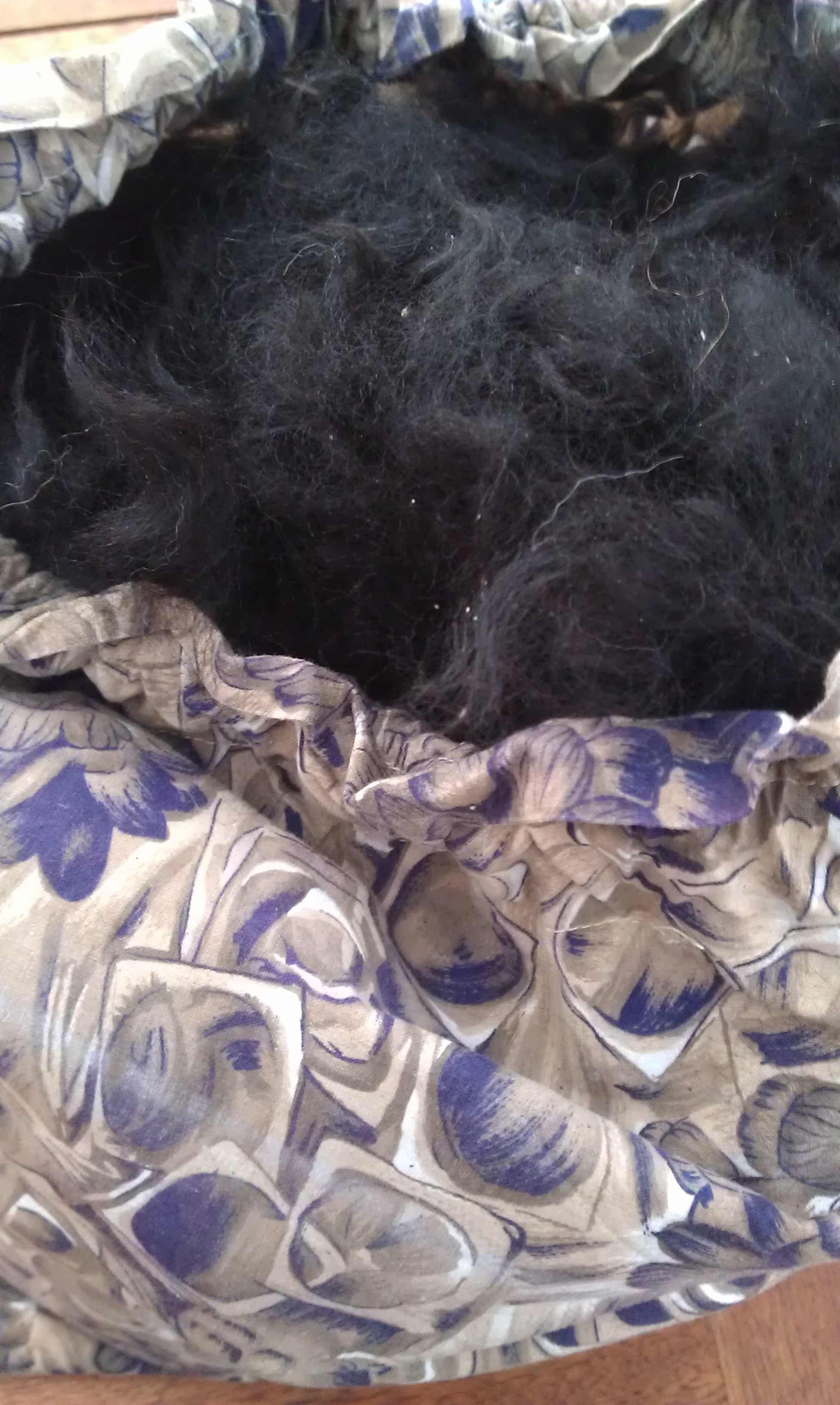
I have a lot of black alpaca too… this I have already washed.

IMAG1686

On weekends sometimes there is fibre processing and vegetable harvesting–this is one of the last of the capsicums.

IMAG1730

Then, of course, carding.

2014-06-05 13.47.18

Out in the back yard when the weather is sunny.

IMAG1764

I’ve been spinning up more colour changing yarns and including some of the black alpaca… and that is the entirety of the lemon crop beside the skein.  Can’t wait until the fruit trees grow up a bit…

IMAG1697

4 Comments

Filed under Natural dyeing, Spinning