Neighbourhood dye plant for this week

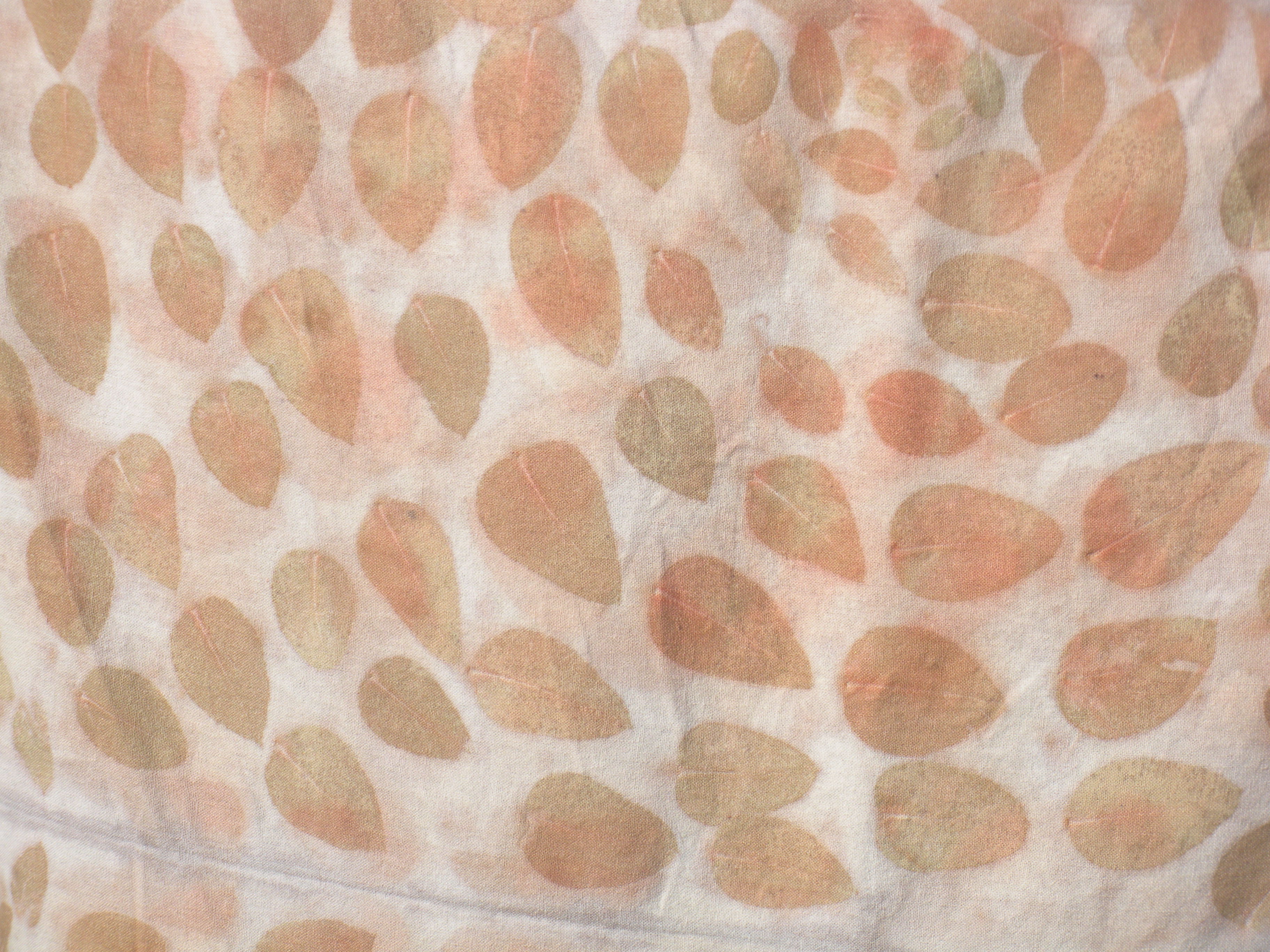
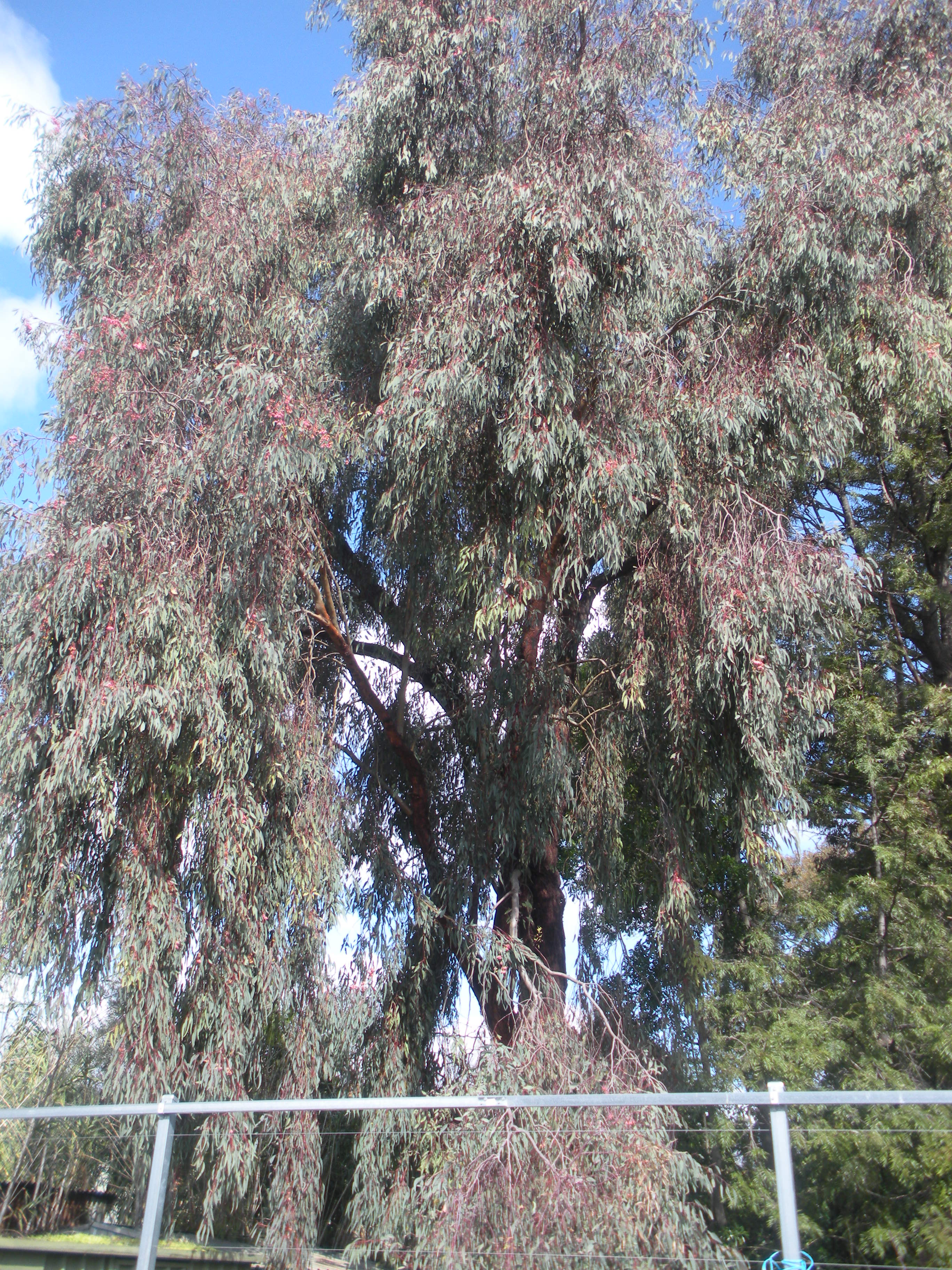
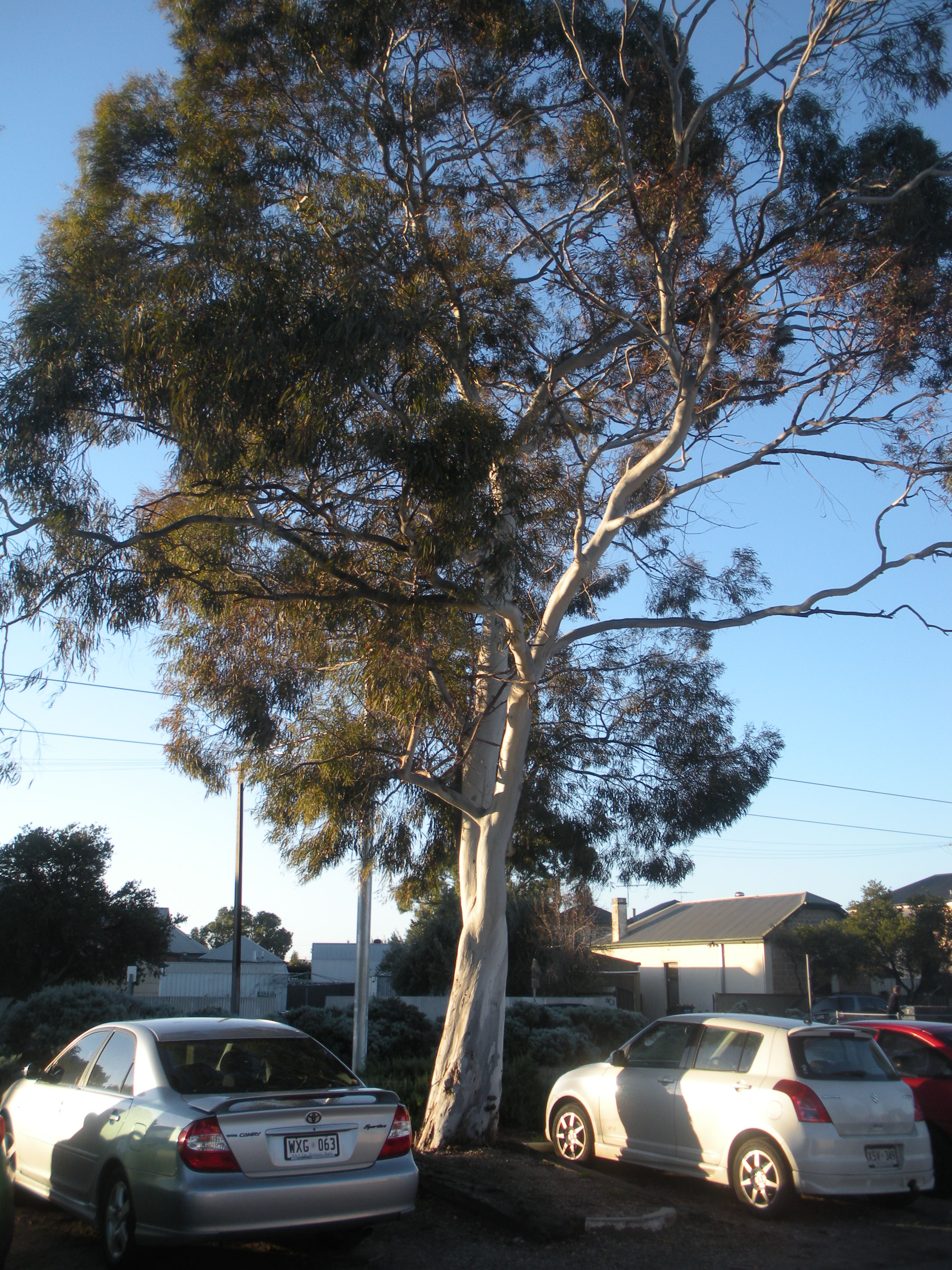
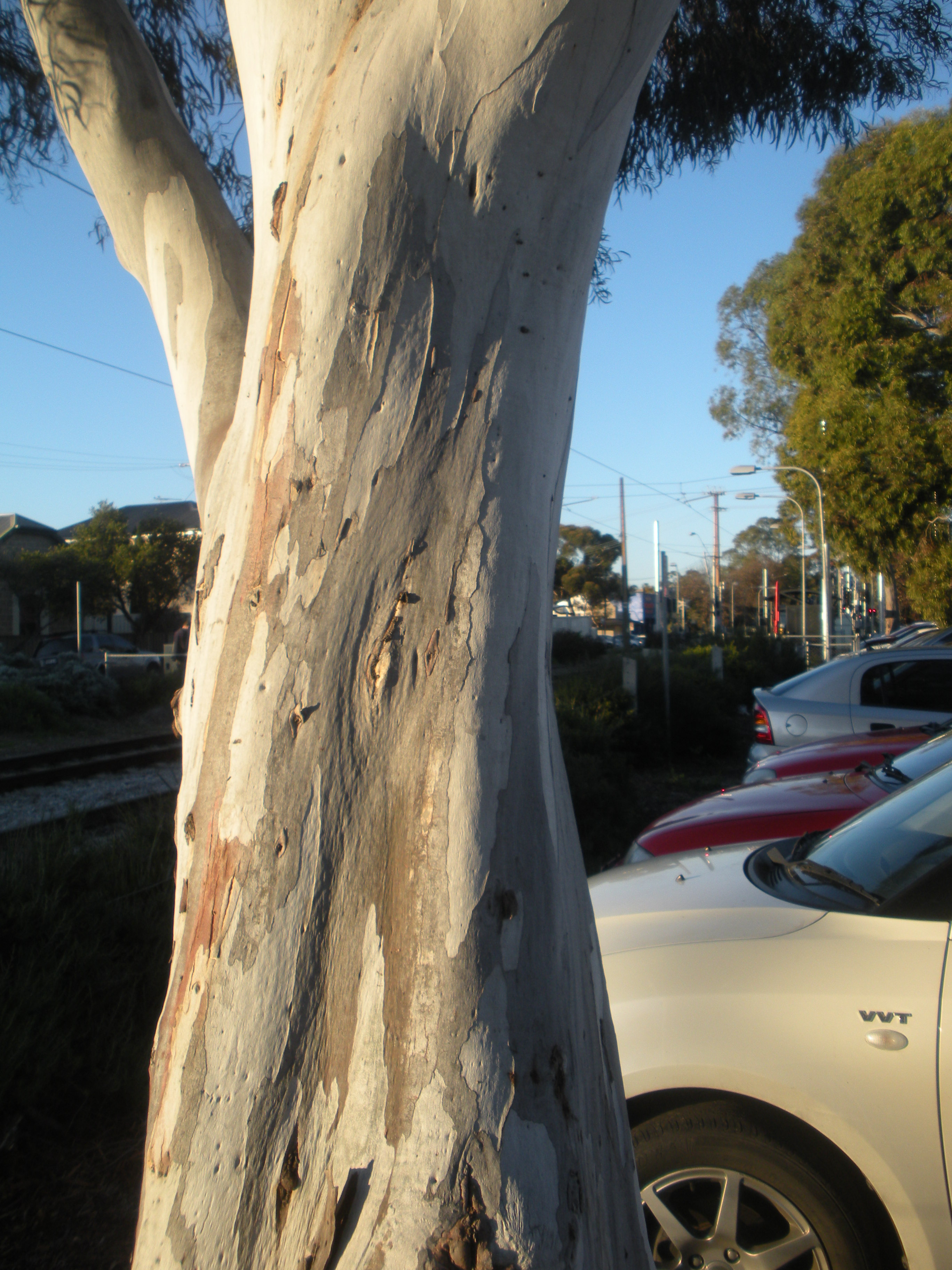
This is another of my favourite dye plants, and another Eucalypt that is as-yet-identified.  It has very fine leaves and a lovely weeping habit. I’ve used it to create tablecloths with leaf prints cascading across them.

For much of the year the trunk is white to grey, and then as it enters the period of the year when it sheds its bark, pinks and reds begin to appear. It looks like I’ll be visiting again soon to collect bark.

When I visited today there were several generations of fruit as well as white flowers on the tree. I had a very funny visit to this tree last year.  I pulled over on my bike and was harvesting when people pulled up in the driveway next to it.  I greeted them, since there was no way to pretend this wasn’t happening.  They were glad I was trimming the tree and explained that they thought the council should be pruning it more diligently.  I offered to come back and prevent it hanging over the footpath and they were enthusiastic, so I came back with a friend, secateurs, a chook food sack and a milk crate a few days later.  Very funny!  There was I being selective and taking little… until we went back and took a sackful of leaves, which have lasted through the winter.

Leave a comment

Filed under Dye Plants, Eucalypts, Leaf prints

The end of the Royal Show… and some show and tell

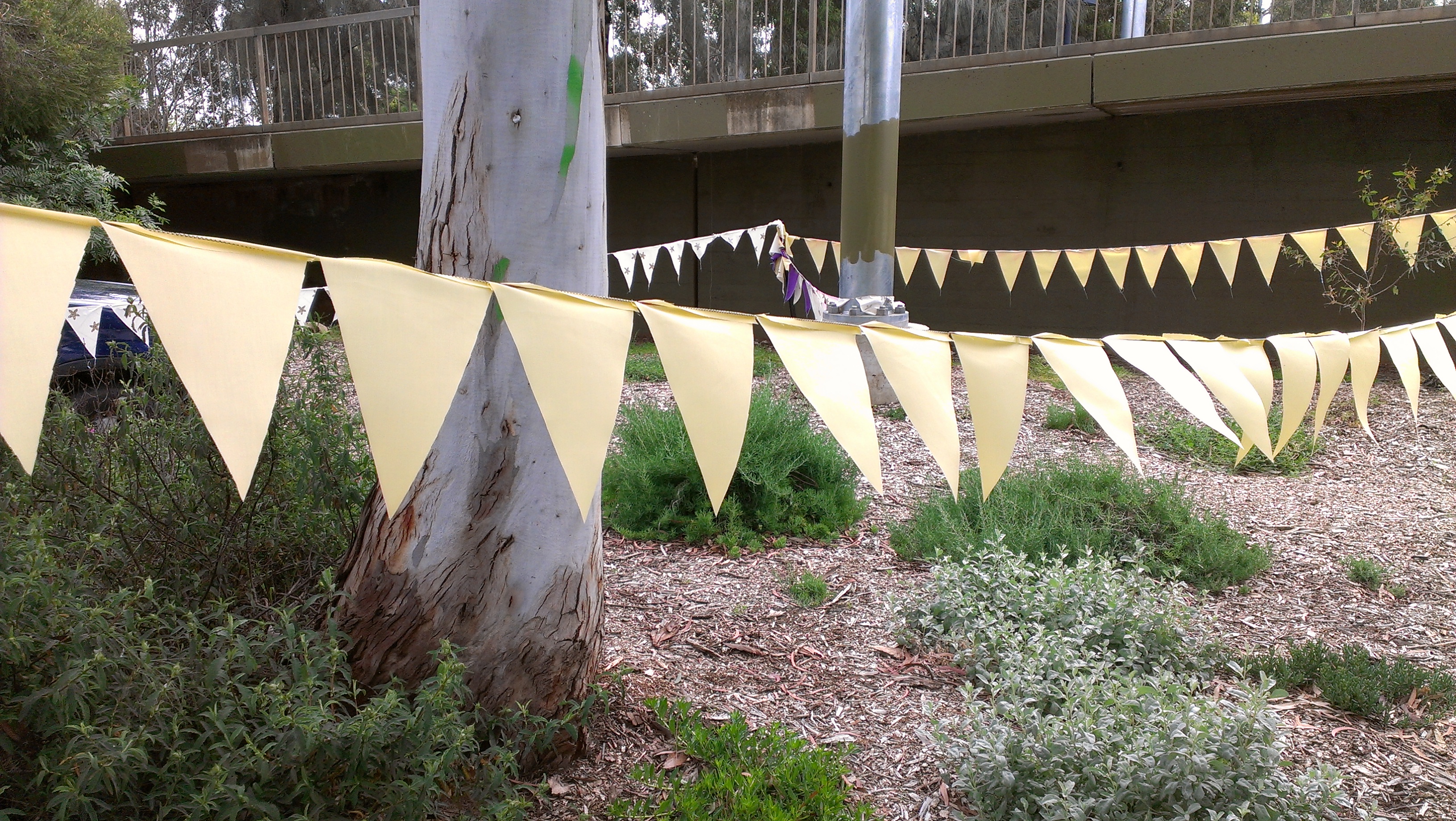
Well, my attempts to keep our saltbush plants from being trampled had partial success.  The bunting was apparently attractive enough that it was stolen several times (but survived gale force winds for a couple of days).  I had initially planned to make very time consuming and beautiful bunting, and there are great tutorials for making it online.  Then, as I contemplated the enormity of the task, a friend told me she would just take her overlocker to each triangle and then overlock the triangles into a strip and that she had success doing this in the past.  I decided that I’d take this lower fi approach, and it was a great use of some of my huge stash of bias binding (which I used to join the triangles on some strips) and some fabric that I bought as offcuts from bedsheet manufacturing years ago.

It took plenty of time to make metres and metres of it anyway and I was glad not to have made over engineered loveliness for this particular application, especially once so much of it was stolen!  After I had replaced about 4 metres of bunting once I was dismayed to find that it had gone within a day.  And, the antique overlocker my grandma gave me when her eyesight reached the point where she hadnt been able to use it for years had a hissy fit and needed to go off to be repaired.  This is unusual.  That overlocker is a workhorse and has responded to irregular maintenance for many years.  My grandma died years ago but I often think of her while using her very dependable machine.

So, in short, the last replacement piece of bunting is extremely low fi… triangles zig zag stitched onto a piece of recycled cotton thread I rescued from a sad old jumper.  However, with one day of the show left to go, it was still there when I went to pick some leaves from the tree, and I found two geckos living under bark at the base of the tree when I checked under it for white ants (sadly, evidence of white ants as well as geckos).  I’ve never seen lizards on this tree before, so this was very exciting!
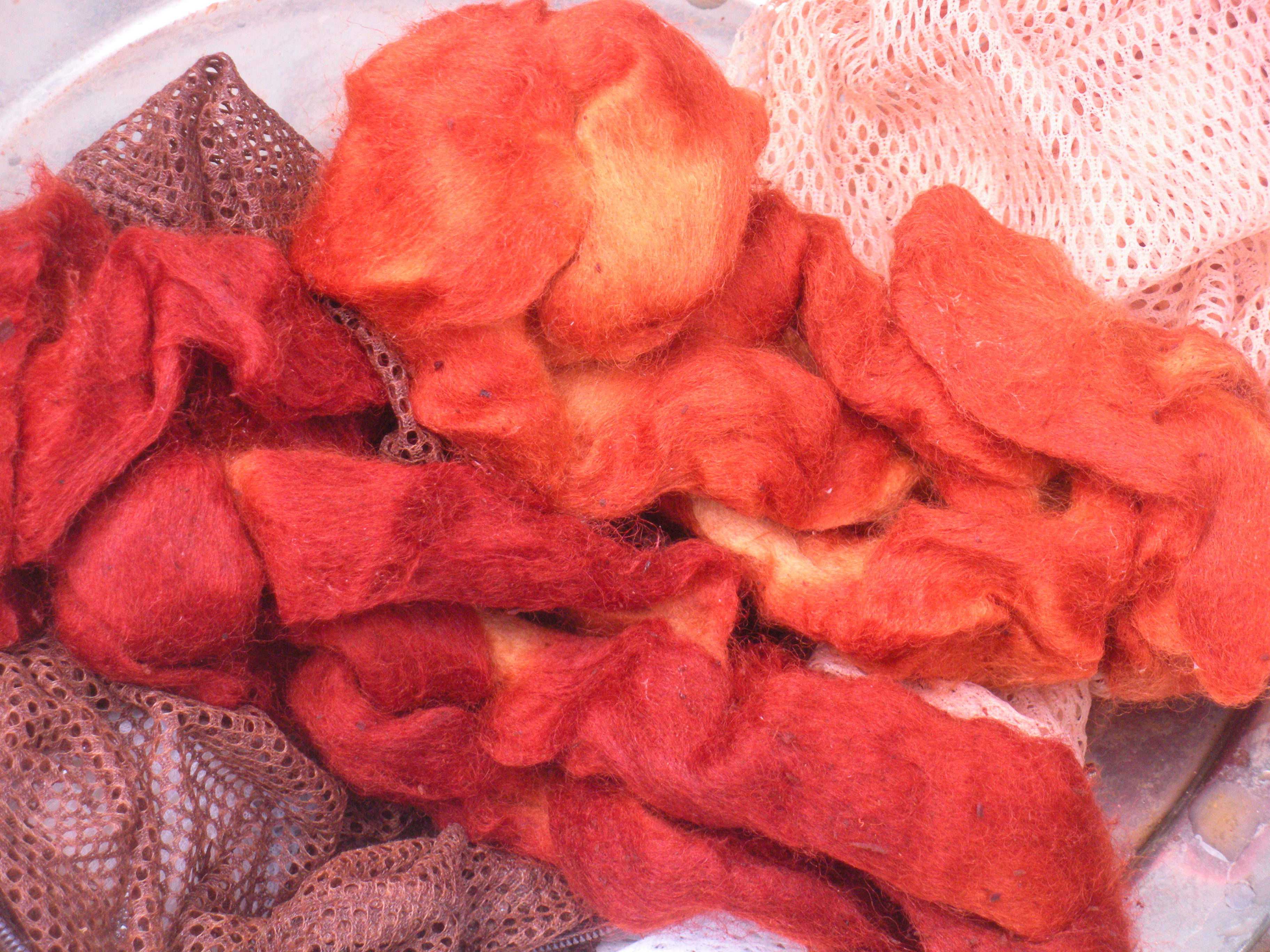
Here, finally, are my three braids from the twice-run  Eucalyptus dyepot.  I am not sure that the extra-long heating time has made any difference at all, but the low heating temperature has retained the softness of the roving very well.


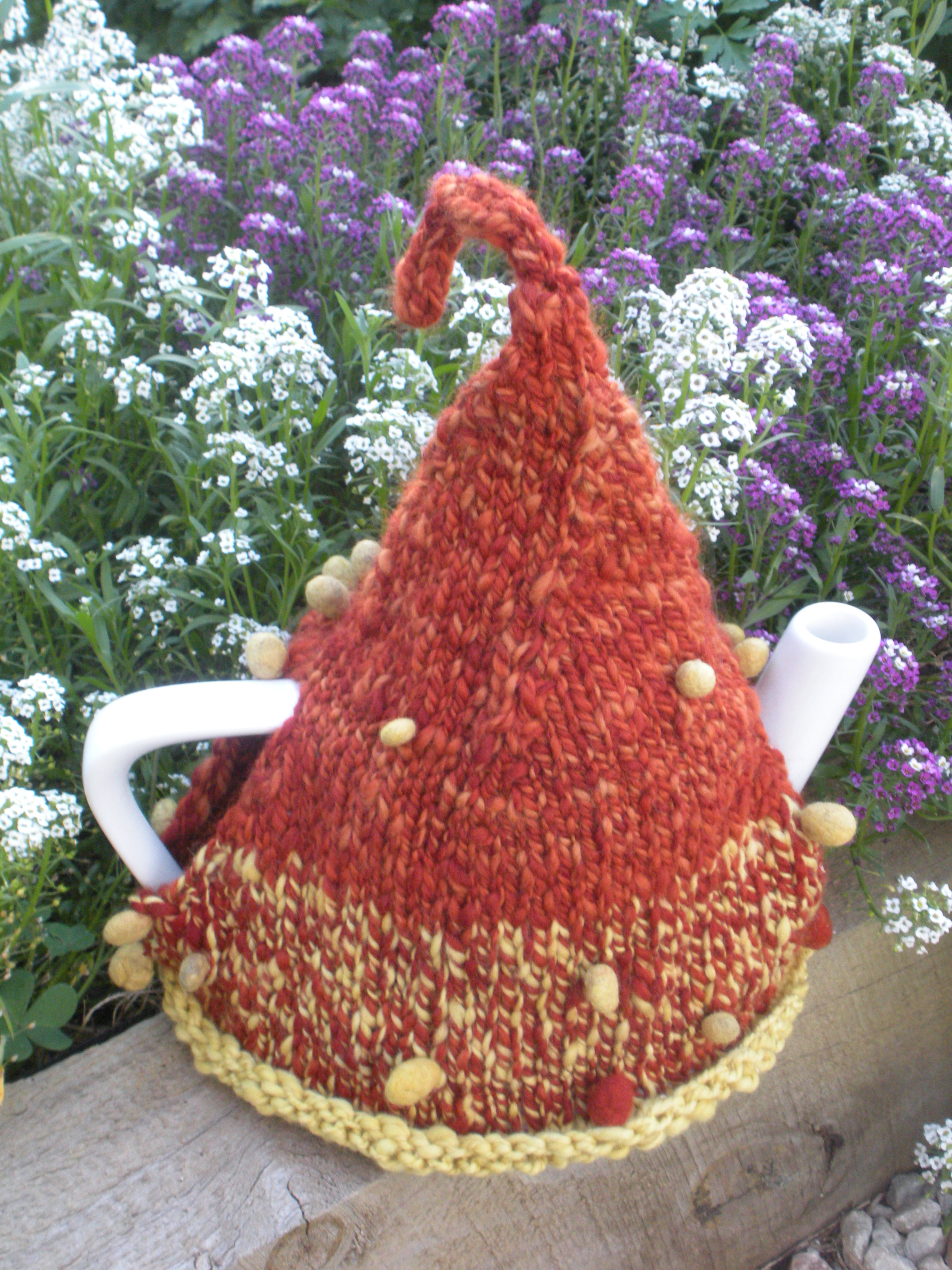
Meanwhile, I have sieved out all the leaves and bark, added more dried leaves and my smallest piece of iron pipe, applied heat, and we’ll see how that goes… Finally, here is another tea cosy.  It’s made from merino dyed with Eucalyptus–for the orange– and Silky Oak (Grevillea Robusta)–for the yellow– with felted shapes spun into the yarn.  Once again, this is based on the Fun and Fast tea cozy by Funhouse Fibers.

1 Comment

Filed under Dye Plants, Eucalypts, Knitting, Natural dyeing, Spinning, Uncategorized

Dyeing with Eucalypts… the next instalment

Dyeing with Eucalypts sometimes reminds me of baking sourdough bread.  You can step away for long periods and pick up where you left off, with the process having continued while you were gone.
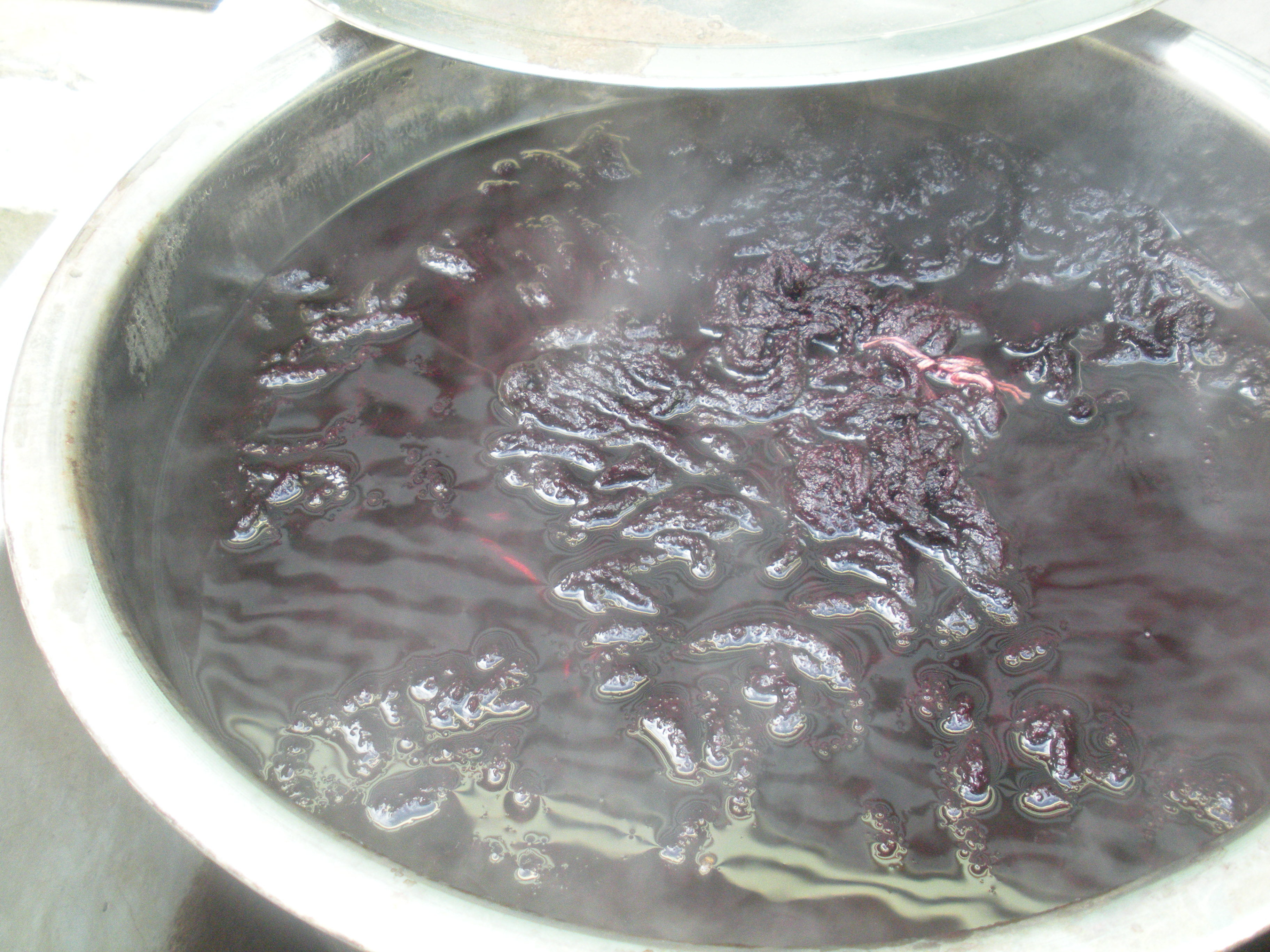
To reprise the last post, having cooked my bark for  a couple of hours on its own, I had added 25 g wool.  The dye pot then went through 3 cycles of heat for 10 minutes and sitting for 60 minutes before I went out to see some live music with a friend.  Kristina Olsen happened to be in our town!  I added an additional 25 g wool after 2 cycles to see what would happen.  Then yesterday I was busy and the wool sat in a cold dye pot all day.  Today, here are my two bedraggled little braids.  I’ve squeezed them out but they are still wet.

The one on the left is the colour I would expect to get (and has spent longest in the dye bath)… the one on the right is a bit pale for my taste. The dye liquor has changed colour from the initial clear deep red colour to a murky orange.  This is also dependable, even if I don’t grasp why it happens exactly!  Maybe I am just cooking that bark to sludge.

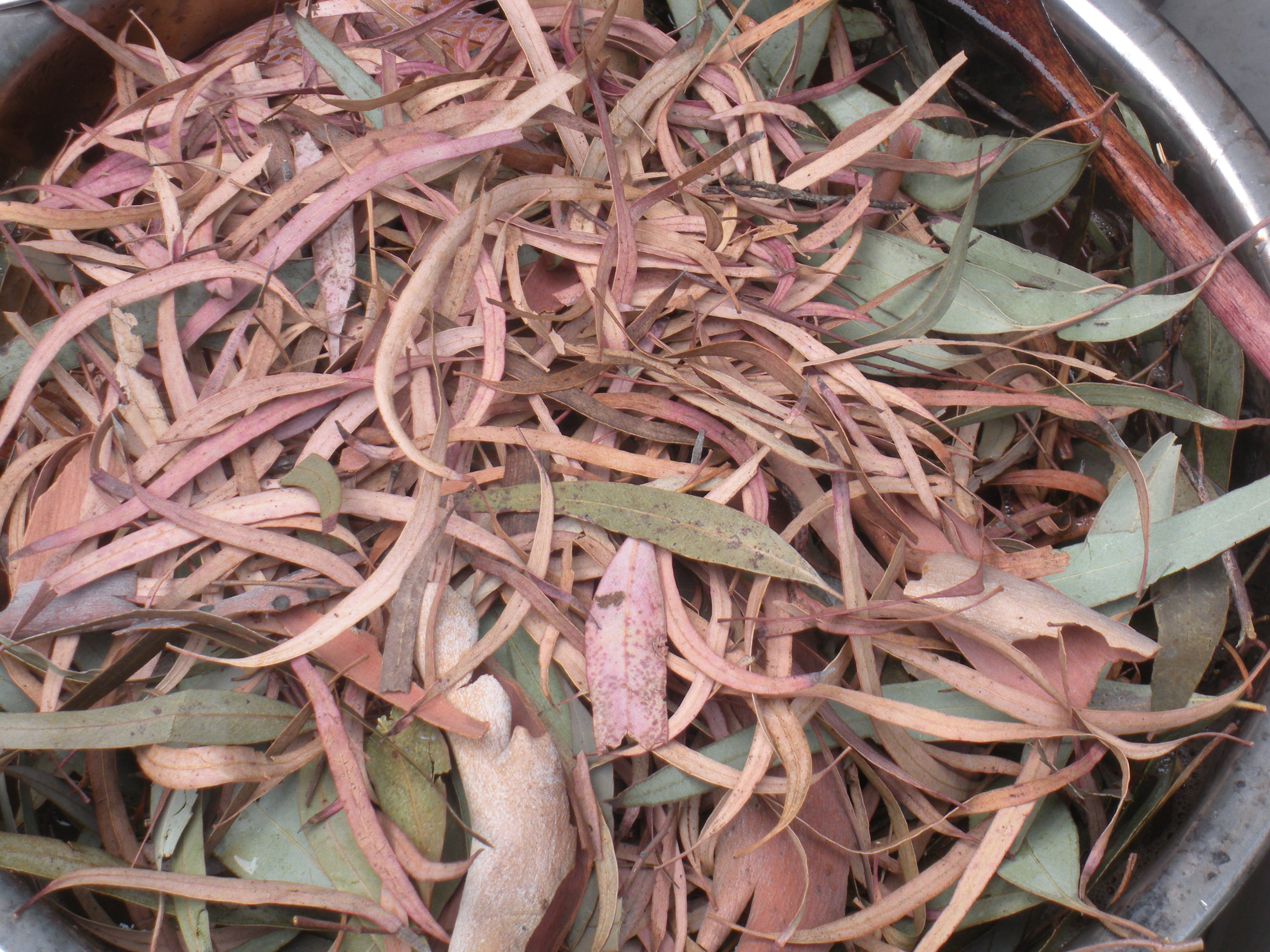
So since I’m home today I decided to run the dye pot again.  I added more rainwater and as many leaves as I could cram in.  This is a dried leaf mix. I have a big paper bag I’ve been using to stash windfalls and leftovers and such, so here are leaves from E Sideroxylon, E Cinerea, E Websteriana (not that it is a specially great dye plant but it has cute heart-shaped leaves and minnirichi bark–what’s not to like?) as well as E As-yet-to-be-accurately-identified.  I moved the pot indoors, since I’m home alone and no one else will be bothered… and I can keep the heat really low without it blowing out in the wind.  I added a further 25g wool, and now we see what happens.  I have the wool in between the residual bark at the bottom and the leaves I added, where I am hoping they’ll have the benefit of both and perhaps some contact printing.

The other reason I think natural dyeing (with Eucs especially)  is like making sourdough bread is because the number of variables is so big, I can get a dependable result up to a certain point, but the most exciting results always contain some element of mystery.  So, I can’t turn out my best loaf every time, and I have achieved burgundy from Eucs more than once, but not often and not predictably.  In my opinion, the only thing to do is to keep experimenting!

1 Comment

Filed under Eucalypts, Natural dyeing, Uncategorized

Dyeing with Eucalypts

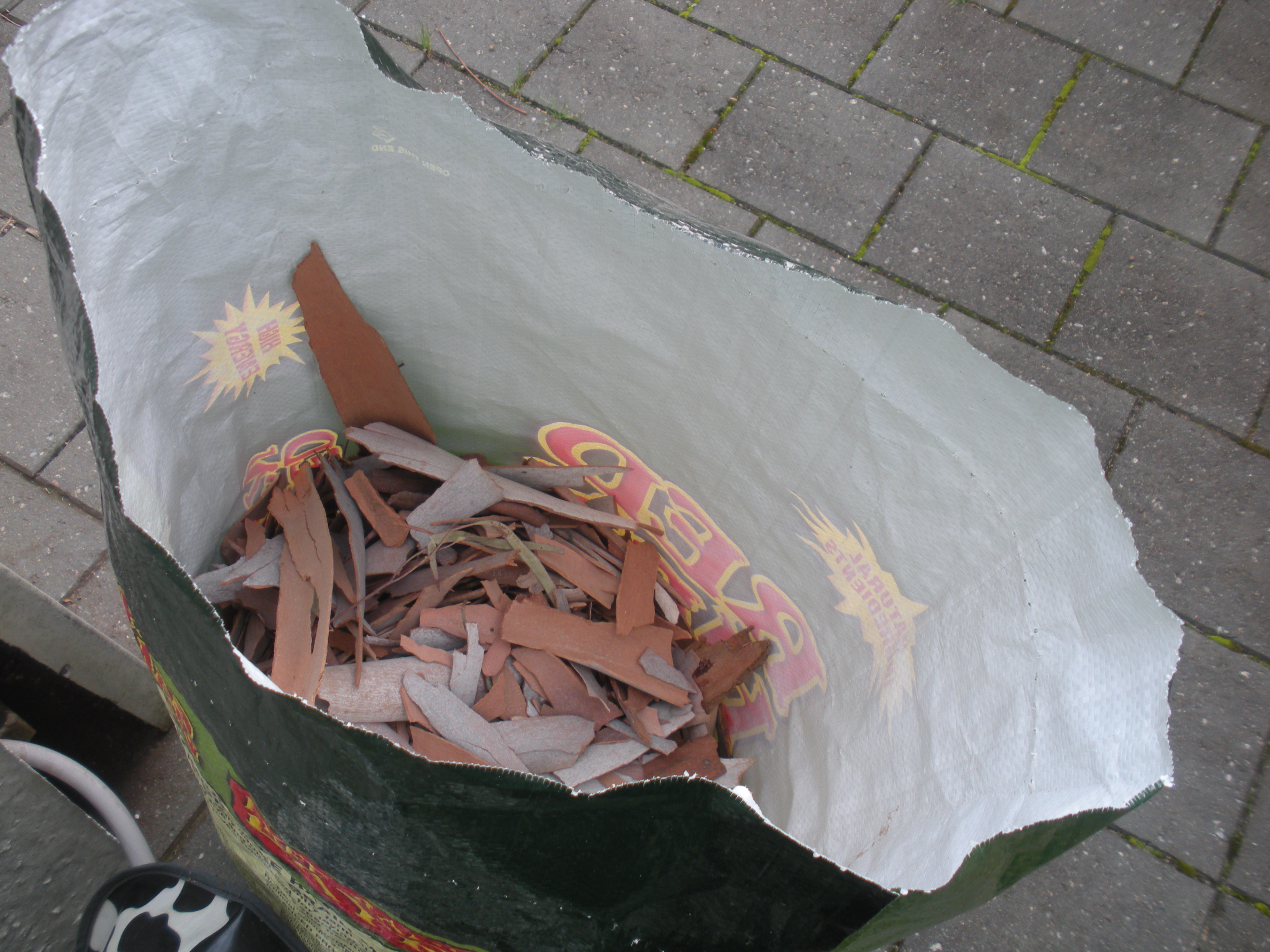
I began the process of dyeing I’m finishing this weekend months ago by collecting the bark of some of my favourite dye trees when they shed their bark.  I don’t muck around when making the most of this resource that the council and other people in my suburb will treat as rubbish if it lands on a footpath.  I take a chook feed sack if there is a lot of bark, as you can see.  Otherwise, I take a shoulder bag with me when I’m out and aboout and just pick up bark bit by bit as it falls to the ground.  There are four trees nearby which have bark which gives a lot of colour.

I discovered this quite by accident when I was experimenting with mordanting cotton one year. I couldn’t figure out where I would get tannin to apply to my fabric.  Then I thought… why buy tannin online and have it transported all the way to my house when Eucalypt bark is rich in tannin and I have it lying on the ground less than a block from my front door?  Imagine my surprise when I heated my pot of bark and saw the water turn deep orange within an hour!  I haven’t stuck with using this method to mordant cotton, but I use it for great colour on wool.

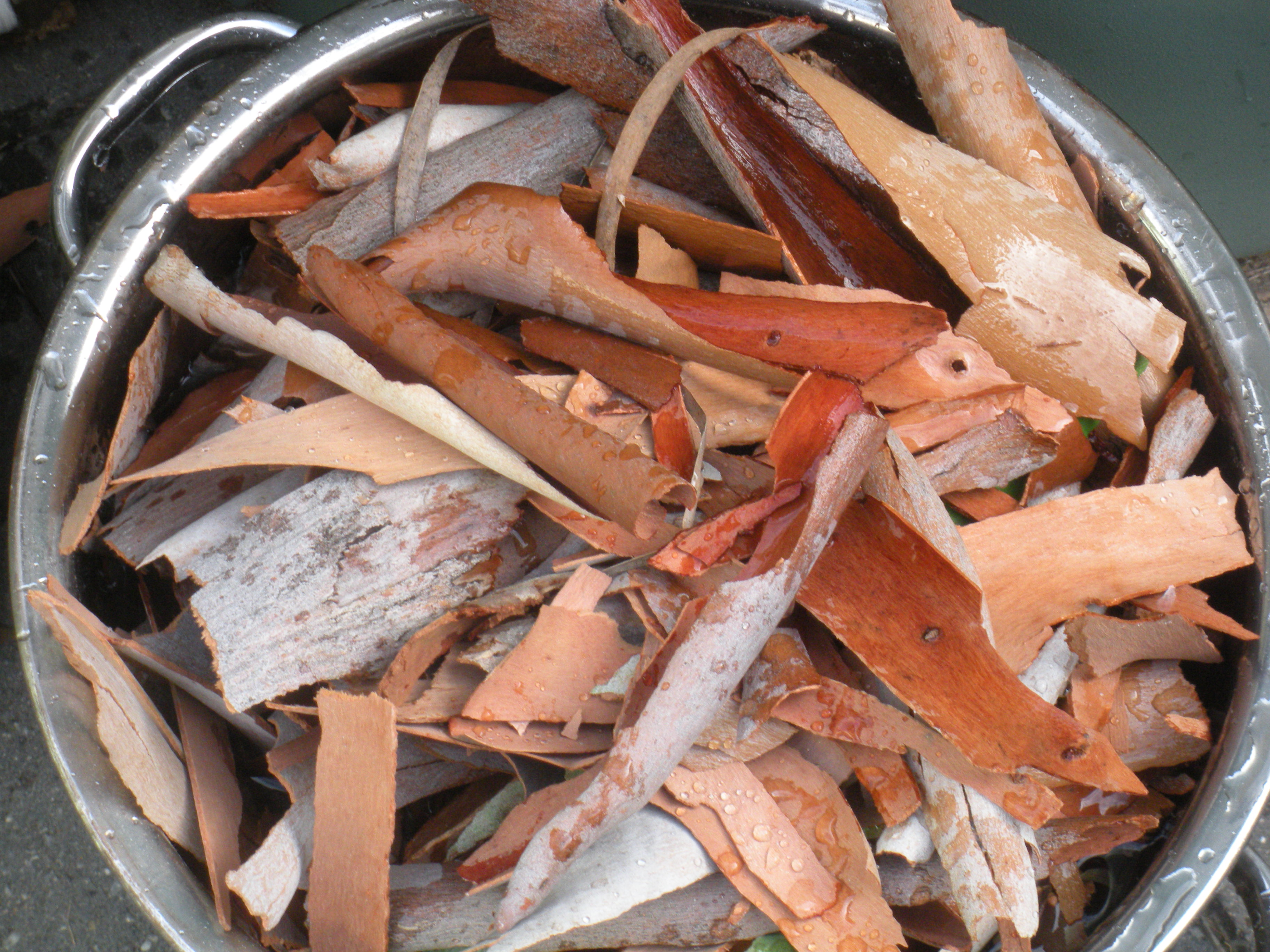
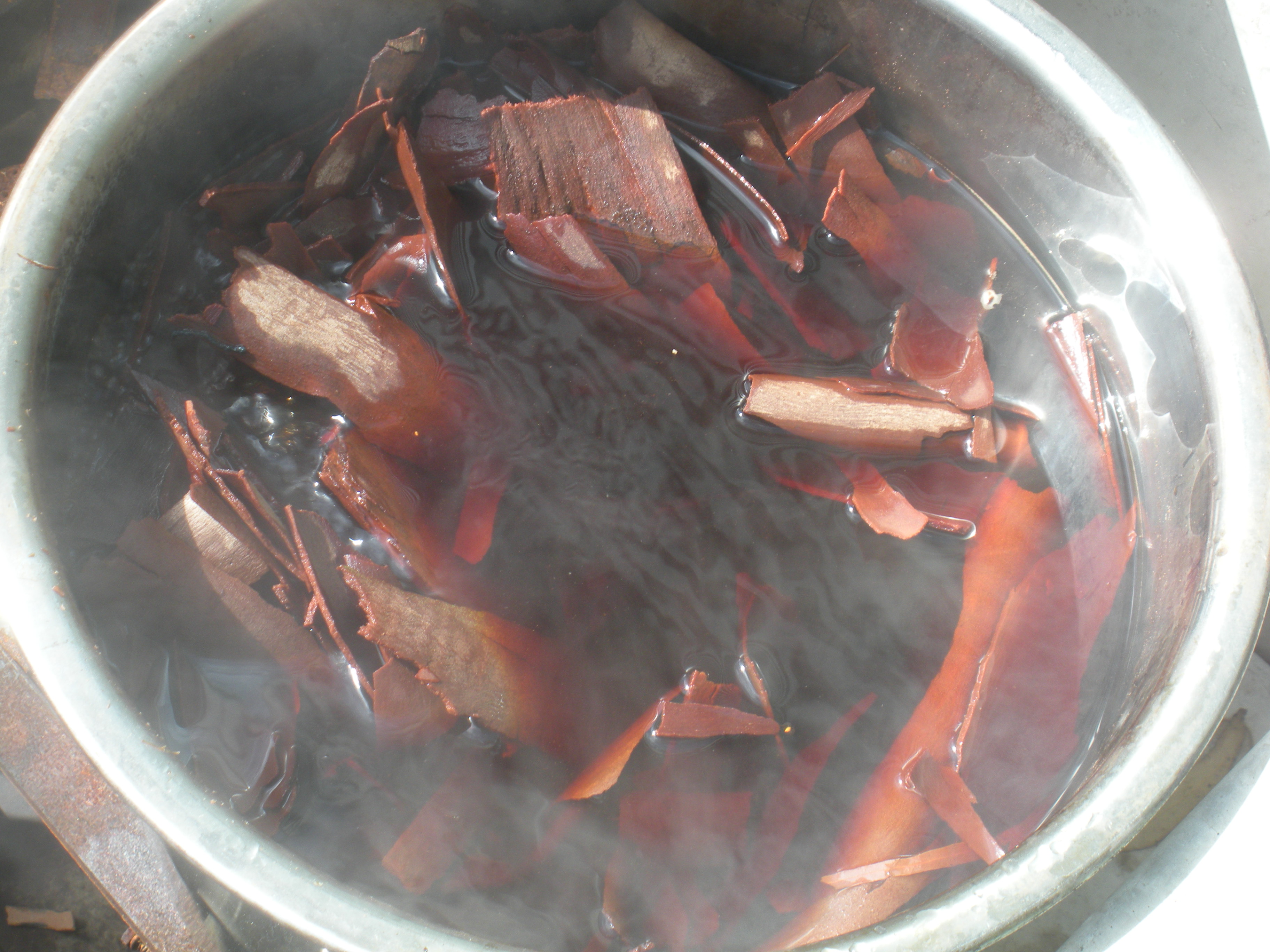
First, I soaked the bark for 48 hours.  I don’t think 48 hours is a magic number, but it is more than enought to wet the bark through.  Then, I brought the pot to the boil and kept it simmering for 2 1/2 hours.  I like to develop the colour in the dye bath without subjecting the wool to heat for so long, especially because my burners are difficult to control and default to a rolling boil rather than any more subtle temperature.

Then, I removed enough bark to allow my wool to move freely and put 25g merino roving into the pot. Sometimes I leave more bark in the pot, because it can produce contact prints on yarn or roving and this can be a lovely effect.  I like to plait the roving because it produces interesting variegation–not just different shades, but different colours–and a semi solid yarn once spun.  Even though this is a huge pot crammed with bark, I’m using a little wool because this gives the best chance of a burgundy… but no guarantee!  I can add more wool for orange or tan later.  Today, I have left the pot steaming but without heat for an hour, then applied heat for 15 minutes, and now another hour without heat.  I’m always happy if I can find a way to save energy… less heat will reduce the chance of felting (or just turning the wool harsh), and I am not convinced that a lot of cooking the wool itself improves the colour.  Well, that’s the theory.

2 Comments

Filed under Dye Plants, Eucalypts, Natural dyeing

Off to the Royal Show

This week the Royal Show started.  The neighbourhood is full of cheerful people and cars.  One strand of my bunting is gone… it looks for all the world as if someone decided to souvenir the best part!  It has been completely removed.  So I’d better make some more.

I spent some hours on my Guild’s stall, selling things made by members and showing people what spinning looks like.  I took my spindle and some roving dyed with eucalyptus bark, but in the end when I was demonstrating I was on the Guild’s wheel spinning greasy fleece from a bag of locks.  It was interesting to see how many people had some idea what was being done and wanted to show their children.  It is always obvious that people from some parts of the world are much closer to a tradition of spinning in their country of origin than many Anglo-Australians.  I had a great conversation about spinning in India with a couple of people who were surprised I knew what a Charka was… and I am in awe of anyone who can draft with one hand!  Last year, someone took my picture drop spindling because he thought there was no way his mother in Iran would ever believe a white woman in Australia could do this, without a picture.  I heard lots of stories of mothers and grandmothers who were/are spinners, and we joined up a few new members, too.

And, I decided to begin on my tea cosy project.  I have spun a lot of art yarn in the last year and some of it is very bulky.  I think tea cosies would be perfect and I’ve already knit one, which went home with a visitor who thought it was too cute!  That is the kind of home knitting should go to…  I have four teapots I’ve bought second hand.  I decided to start with the smallest one and work up!  This tea cosy bears some relationship to the Fun and Fast tea cozy by Funhouse Fibers, but I’ll have to claim responsibility for its defects as, while I’ve used the central concept… I haven’t exactly followed the pattern… there just wasn’t enough yarn in my smallest skein, and this teapot is a tiddler.  The yarn is corespun, and contains merino I dyed with Earth Palette dyes, tencel and mohair locks.

2 Comments

Filed under Eucalypts, Knitting, Natural dyeing, Spinning

Neighbourhood dyeplants.. and the odd sock

Image

I have finally finished a few pairs of socks that I’ve been carrying around for weeks…  these were dyed with black beans (the blue yarn) and purple carrots (the greyer yarn).  I gave them random cables and I like the effect.  Happily, so does the recipient!

Image

Today I went round to visit my all time favourite neighbourhood dye plant.  I lived in the street this tree grows in for years, and I adopted the tree under a council programme–not that this made me any more fond of it than I already was.  I have had rust through to burgundy colours on wool from the leaves and bark of this tree.  Over the last year or two I have propagated native plants to grown under it (saltbush, mostly), planted them and mulched the tree to keep the weeds down.  My Dad even got in on this, offering me seedlings and cuttings from his garden and collecting saltbush seed for me.  I was surprised to discover that saltbush was so easy to propagate from seed when the weather was warm.  Dad seemed to take it for granted I would be able to do this! I have about 50 more little plants that have stayed tiny all winter but will soon spring into growth ready to be planted around my suburb.

Image

I’ve been weeding around this tree for years in an effort to stop the council spraying poison into the neighbourhood.  I’ve been collecting rubbish from round the neighbourhood, and especially this tree, too.  I like this tree a lot.  Piping shrikes nested in it several years running.  Kookaburras sometimes sit in it and laugh.  Little birds come through it often, and white ants have unfortunately made homes here too.  Someone has put a bird box in it in the last year, but I haven’t seen an occupant yet.

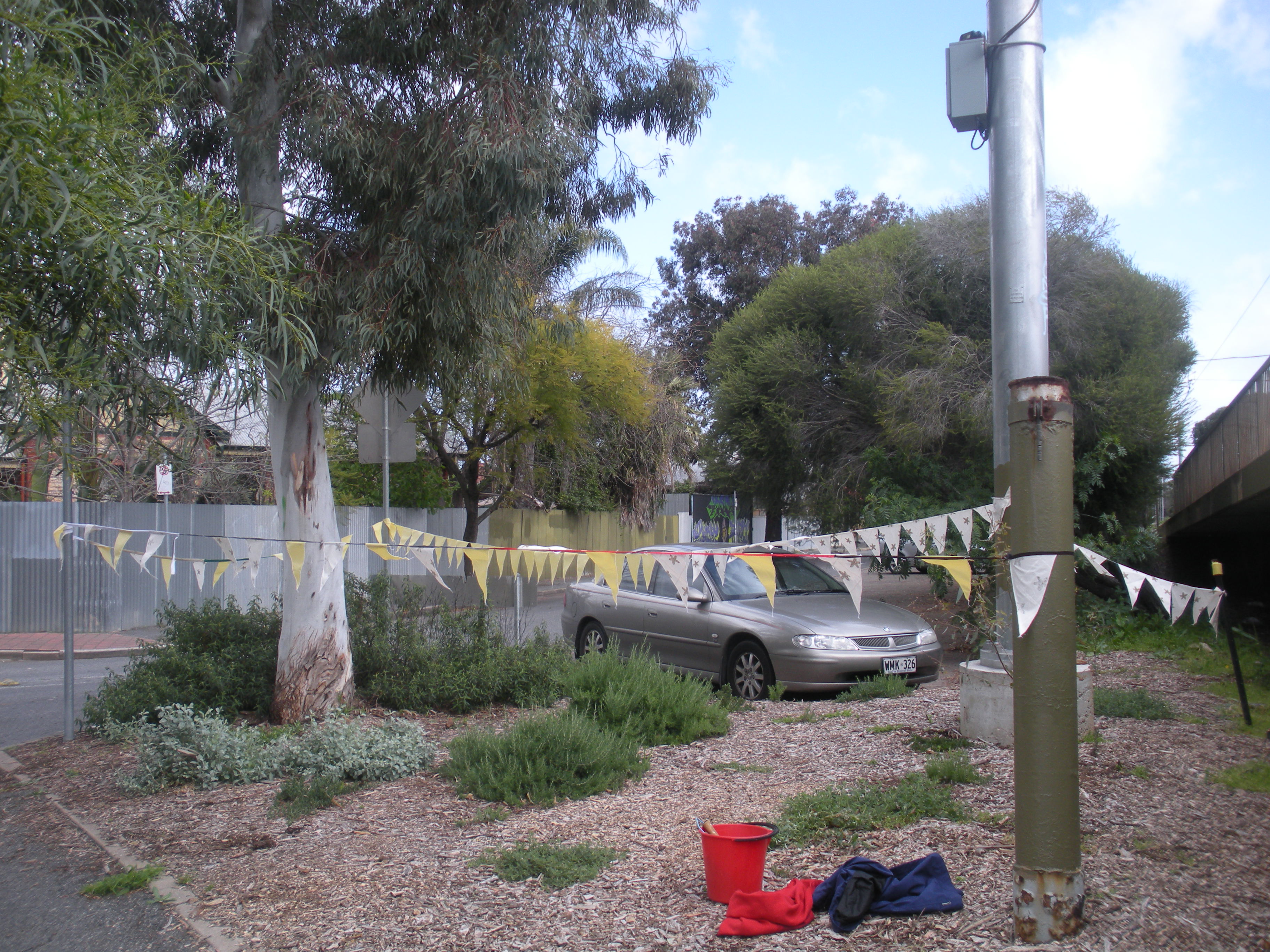
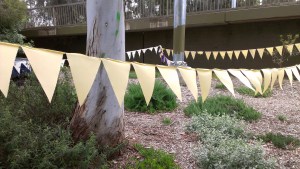
Anyways, today I weeded, cleared rubbish and then applied bunting.  The Royal Show starts in a day or two and people will park in the streets all round this tree and walk through the patch we have been busy revegetating to get to their cars after dark.  In the past,  I have occasionally been dispirited to have quite a few of my little saltbushes pulled out by the roots or casually squashed as people pass through and plant guards thrown away.  I thought bunting might at least cut down on accidental damage.

Image

Over the time I’ve been working on growing things under this tree (and collecting bark and leaves!) people passing by have gone from quizzical to interested to pulling over in their cars or stopping with their dogs to thank me.  I think as the plants grow larger it is more obvious what I am doing and how lovely this otherwise weedy patch could be.  My friends have come along on mulch applying and watering missions, too.  It’s a blustery day, so I hope the bunting will make it!  The show runs over two weeks.  Here’s hoping most of the smaller plants make it to the end.  A cyclist came past while I was working, nodded and told me he thought the bunting was a good idea.  At least until the show is over, I’m thinking.

2 Comments

Filed under Dye Plants, Eucalypts, Knitting, Natural dyeing, Uncategorized

Dyeing weekend outcomes

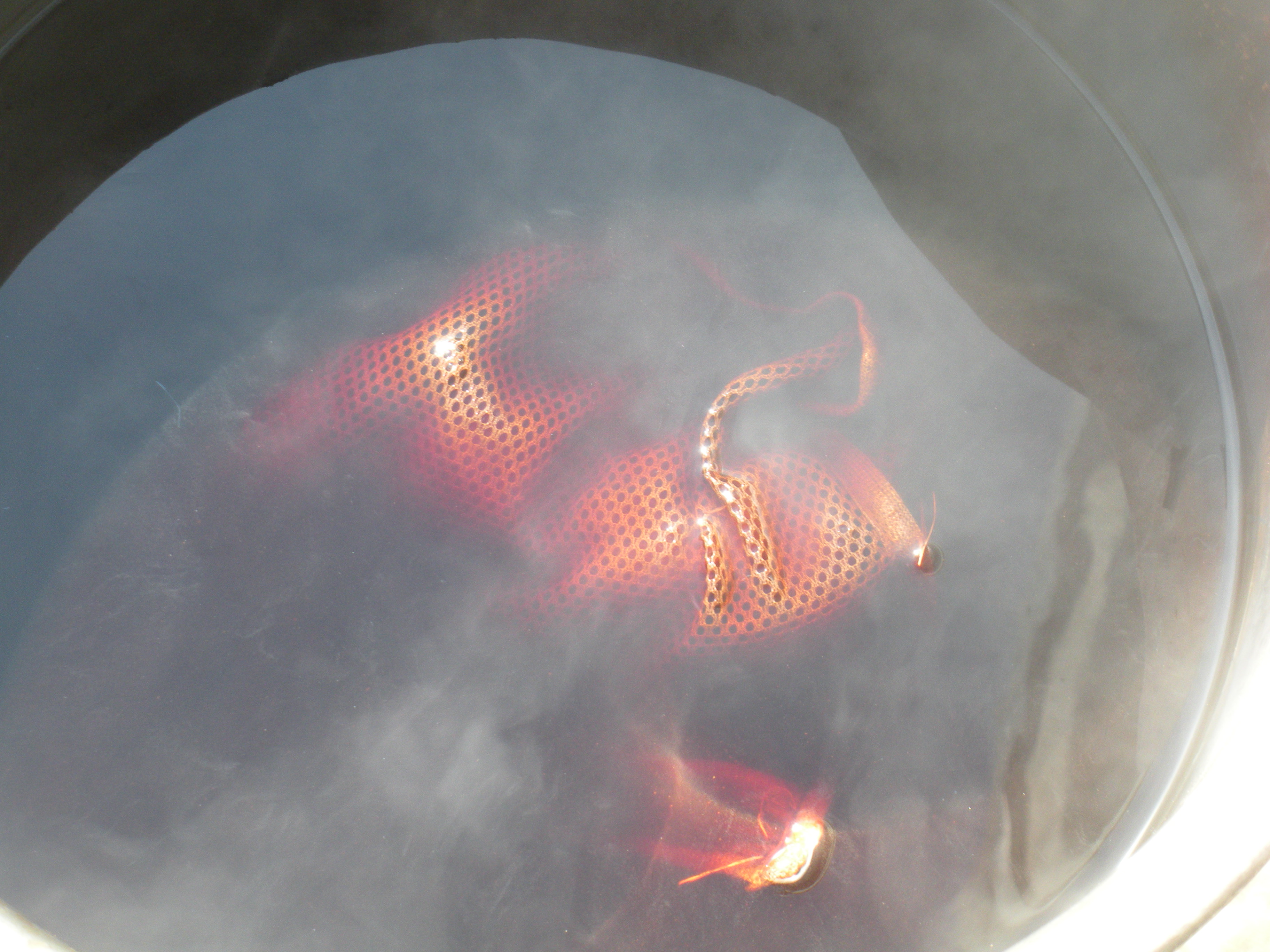
As I suggested earlier… it was once more into the dyepot for my kilogram of wool.  This time, Landscapes ‘Bloodwood’.  I am still soaking and rinsing it, but I am much happier with the outcome so far.  Here it is in the dyepot for the second time:

The silk noil printed beautifully and perhaps it will become pillowslips…

And my efforts to spin bulky, soft, squishy yarn are yielding some improvements.  This is polwarth from a pet sheep that lives in the hills, carded and spun three ply.  The sheep is mostly white with a pale brown patch or two so I can create yarns with some variegation, which I love.

Leave a comment

Filed under Eucalypts, Leaf prints, Spinning

Neighbourhood dyeplants from the backyard

There are some big trees in my neighbourhood.  Some are Eucalyptus Citriodora (lemon scented gum), which is a spectacular tree but gives no colour to speak of.  On the other hand, in summer it drops so many leaves I can collect sackfuls for mulch and chook bedding and they smell awesome.

One of the other major street tress around here is E Sideroxylon (Mugga, red ironbark).  My neighbour has one in the backyard.  Right next to it is a Grevillea Robusta (Silky Oak), also native to Australia.  Mugga leaves give orange and the silky oak gives a sensational yellow, also from the leaves.  Here is the Mugga–with some detail of the leaves:

Here is the tree–hard to give a sense of scale.  There are some huge specimens planted as street trees in my suburb, but presumably in a forest they would be still bigger!

And here are both trees, side by side.

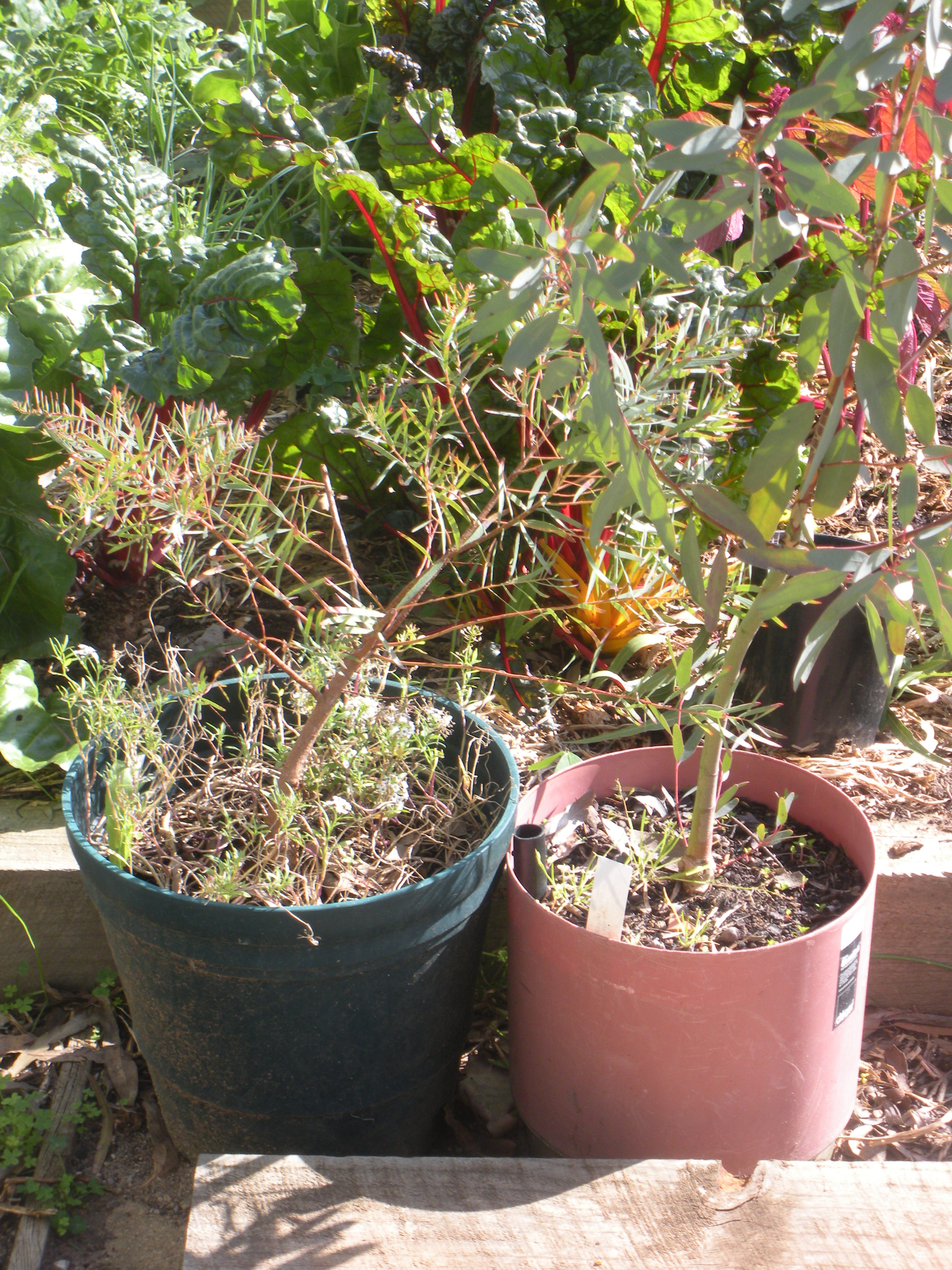
On a much smaller scale, there are Eucalypts I have read about in the work of other dyers which I haven’t found growing in my wanderings around my city (well, not that I was able to recognise as yet)  So I also have some in pots.

E Nicholii on the left and E Melliodora on the right.  I have done a few leaf prints with these two but there is no immediate danger I’ll be dyeing a skein of wool with them!  Eventually I might need to find a spot in the neighbourhood that needs a tree and plant them where they can grow  taller…

Leave a comment

Filed under Dye Plants, Eucalypts

Neighbourhood dye plants

Introducing one of my neighbourhood dye plants.  It is a Eucalyptus tree, but after many efforts, I still can’t say what specific kind of Eucalypt it is. I have books and I even have Euclid, but I am up against the limits of my own ignorance and the complexity of the task given the hundreds of different varieties of Eucalypt Australia has to offer.

But I can say that this tree is beautiful and that it gives rust-orange-maroon just depending on the method, whether I use leaves or bark, the ratio of plant material to fibre and my luck on the day.  Here it is, beside the tram track, with a close up of the trunk.  It is opposite number 23, Railway Tce South.  It branches so high up that I visit for fallen leaves after it has been really windy, but mostly I collect bark when it is peeling–later in the year.

2 Comments

Filed under Dye Plants, Eucalypts

The garden comes to life

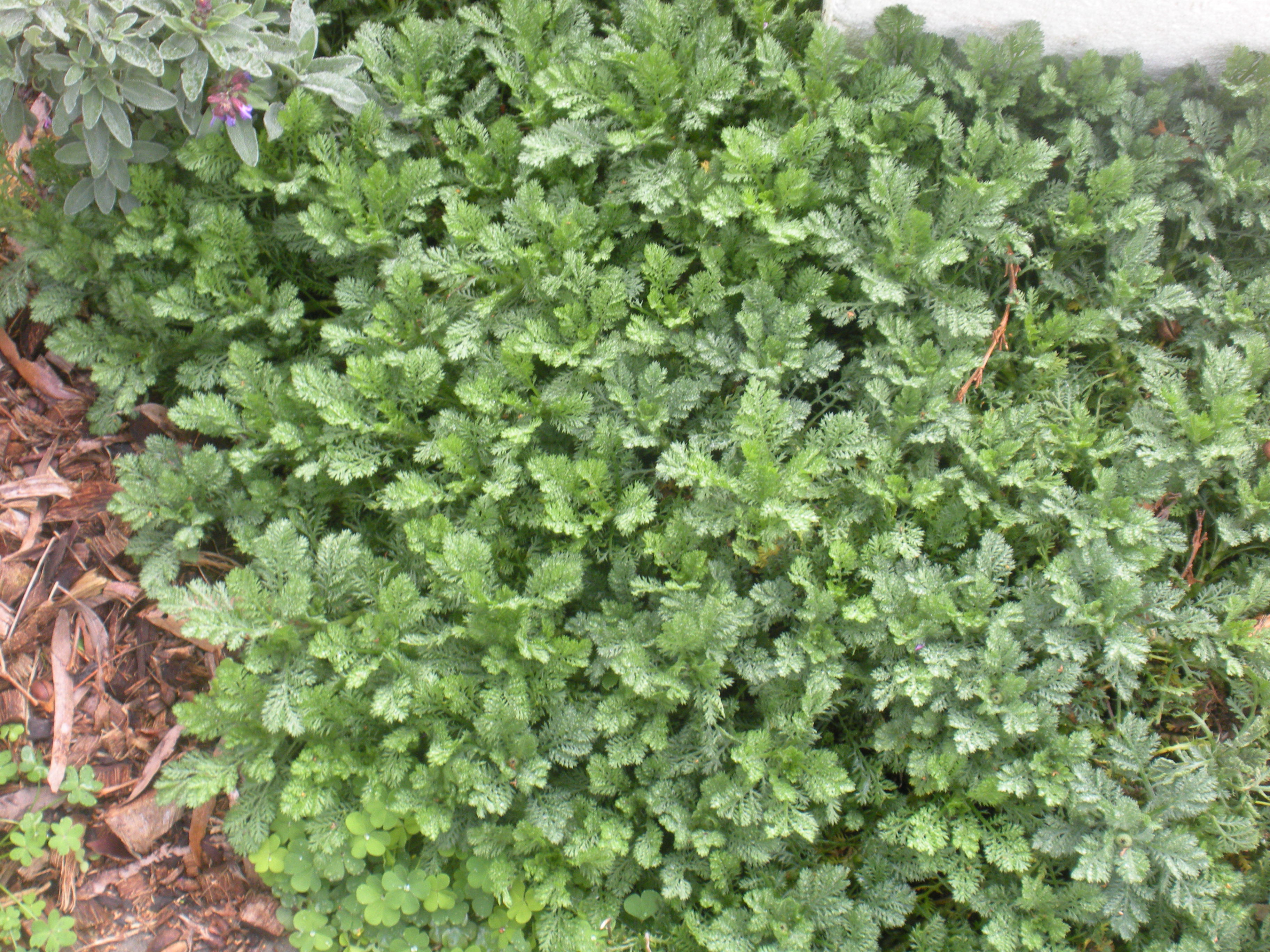
My garden can tell that the coldest part of winter has passed and the days are lengthening.  Our street trees (Manchurian Pear) are in bloom.  My vegetables and herbs have sprung into life.  The chooks have begun to lay again.  The fruit trees are in bud, in flower or beginning to leaf up.  Even the dye plants are springing to life.  The dyer’s chamomile is looking lush:

The austral indigo (indigofera australis) is in flower, though disappointingly it lost a lot of leaves over the colder months.  I have not been able to find a source of Japanese Indigo seeds and have had no success with Woad seed as yet.  So this is my theoretical source of blue natural dye…

The madder has poked its head up after having died back completely.  I think it might be time for me to look up when I could try dyeing with the roots… I have been growing it for two years now and divided it to give some away twice in that time, as well as moving it from one house to another.  It seems to be coming on just fine.  You can see from all that madder-straw that it was much bigger before the cold sent it back under ground:

And, of course, there are the buckets.  On the left, chicken happiness (weeds, mostly).  On the right, dinner.  Since the chooks are laying and the weeds are growing and the silverbeet is in full flight, I made two spinach and weed pies last night with dill and parsley, silverbeet, dandelion, prickly lettuce and sow thistle.  Mmmmm.

When I was in high school, I became fascinated by herbs.  I’ve spent a long time learning about them and growing them.  I used to read Mrs Grieve’s Herbal (the only one I had) back then and marvel at what a hedgerow was and all the wonder she was able to find in her hedgerow.  Later, as na adult, when I took up keeping chooks I decided I really needed to learn to identify weeds so that I wouldn’t poison them.  I know now that chooks know what to eat and what to avoid better than we do.  I also realise that a lot of things that were growing in Mrs Grieve’s hedgerow were growing as weeds in my suburb and it was only that I didn’t recognise them.  But I’ve learned a lot about weeds and their uses.

When I went to Greece a few years back I asked what was in a delicious dish I was eating, and the cook said ‘things they call weeds in England’.  We didn’t have enough common language for me to understand what plants she meant or whether they grew here.  It was a breakthrough for me though.  I had tried eating weeds before but not found it interesting enough to keep doing when I could grow lettuce and spinach.  Now that I see cooking them and including them in dishes where steamed greens make sense is the way to go… I eat weeds when my favourites are young and plentiful.  The chooks don’t seem to miss the ones we eat!

3 Comments

Filed under Natural dyeing