Tag Archives: alpaca

Alpaca preparation

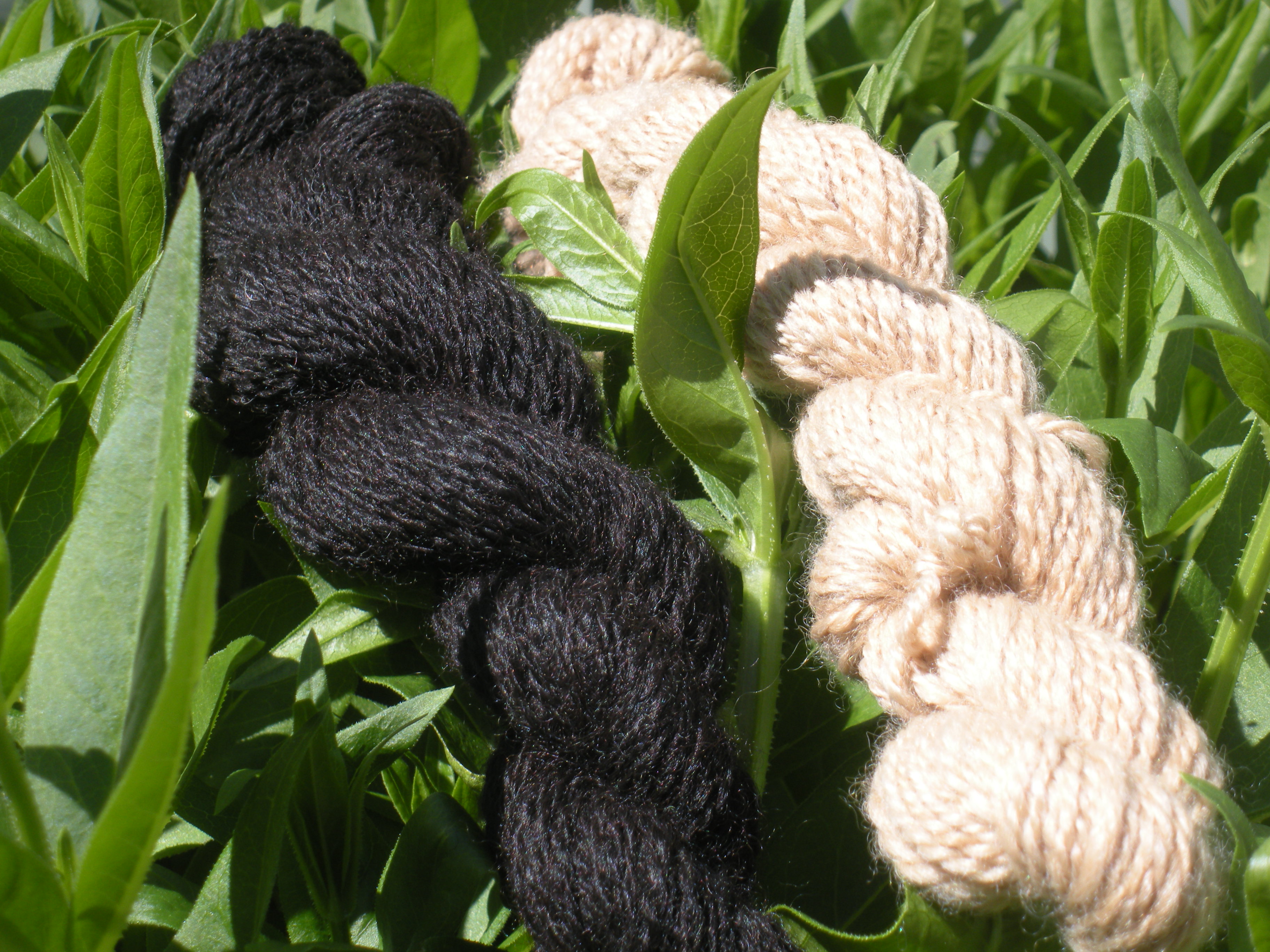
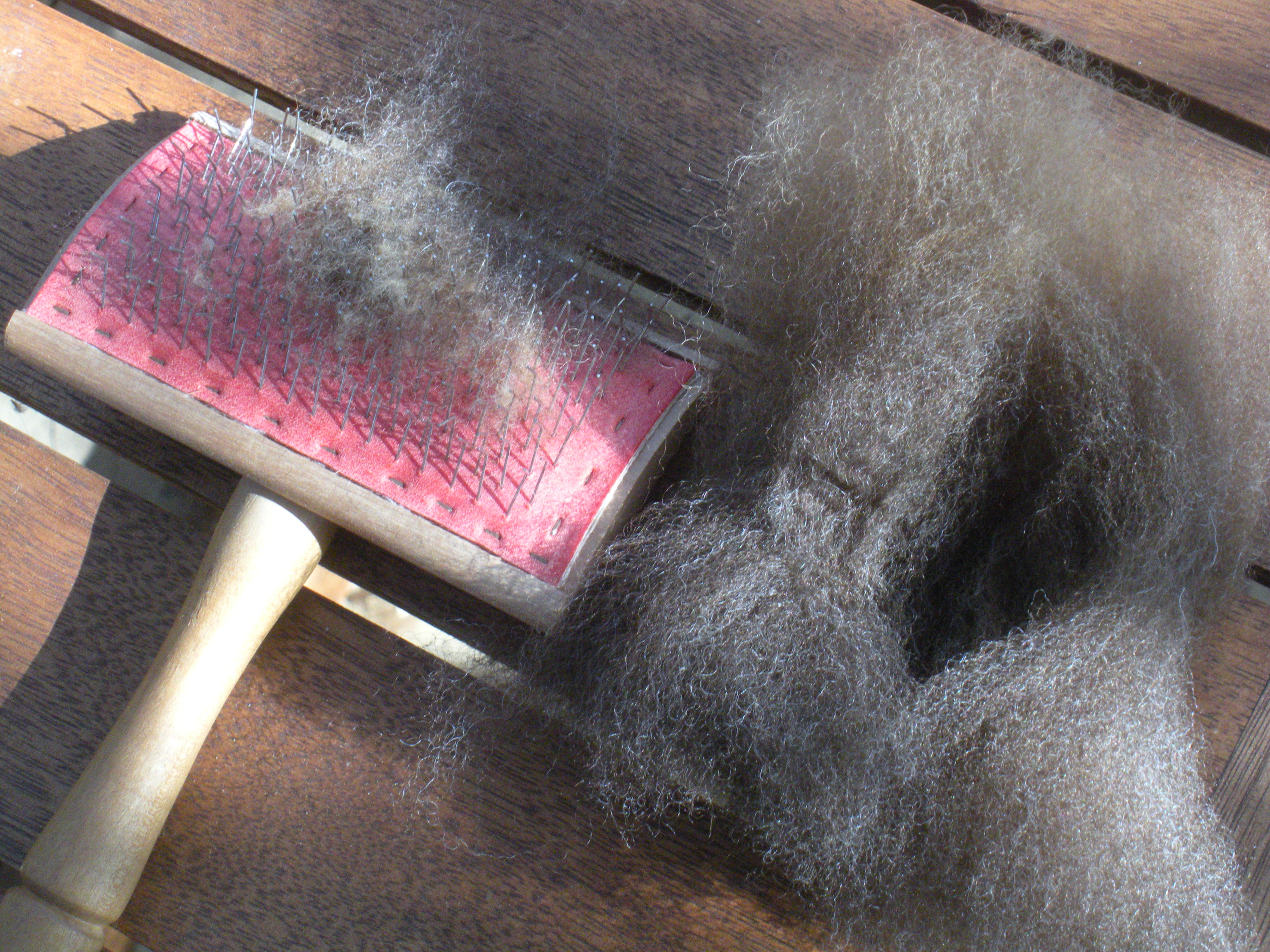
I’ve been having a lovely time spinning alpaca given to me by a generous friend.  She gave me samples of three different fleeces, white, black and what she rather fetchingly calls ‘champagne’.  I’ve been combing it and spinning it two ply and I’m very happy with the results.

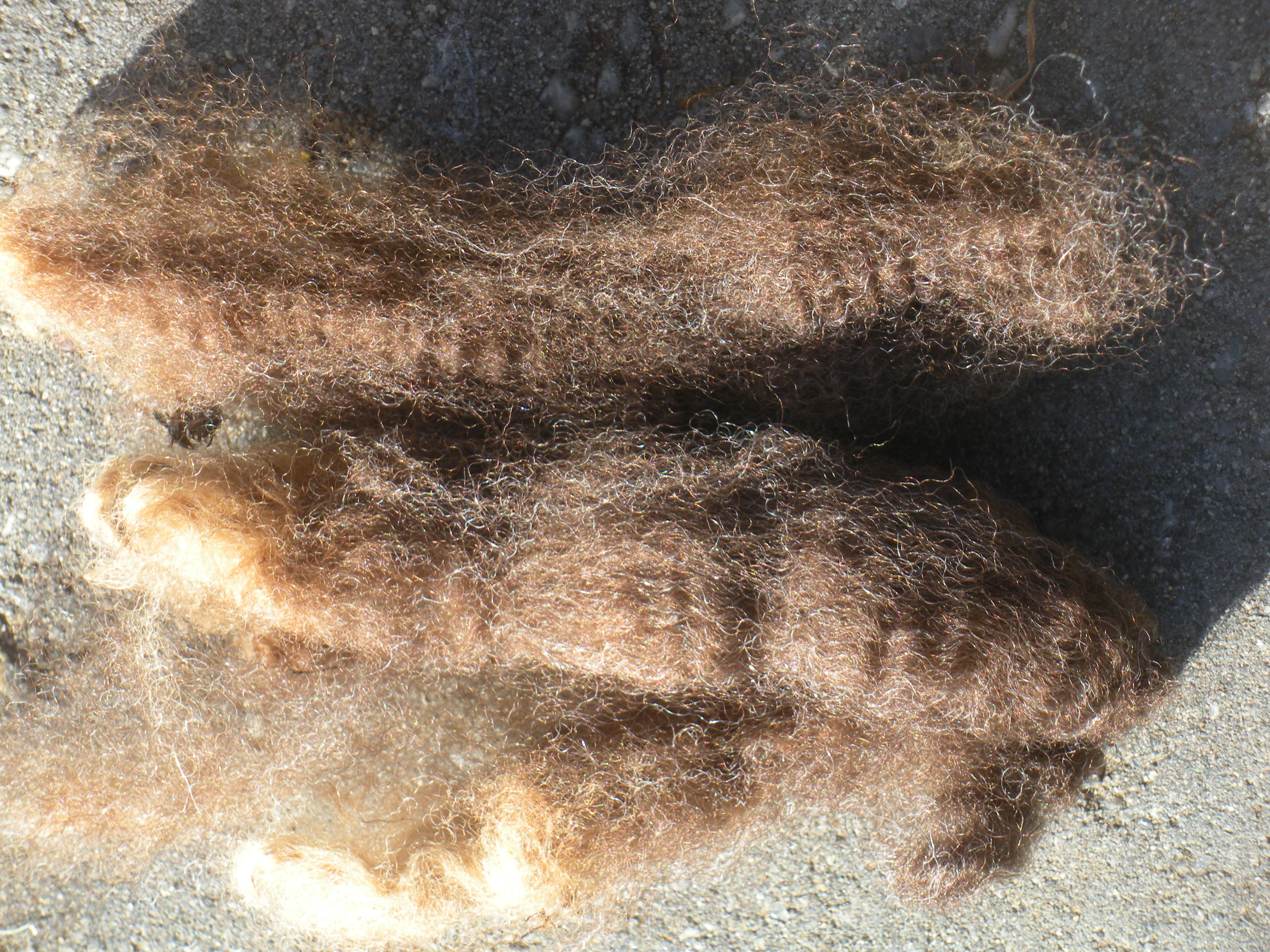
I told my friend how lovely I thought the alpaca was, and she gave me more!  I have spun alpaca before, sometimes in quite a large quantity, but this has the longest staple I have ever seen, about 90 mm (these are the 90 mm matches I use to light to the dye pots–extra long.

I have to confess I have never washed alpaca, and it is always filthy, since alpacas roll and dust bathe.  My chooks dust bathe too, and watching them,  it’s no wonder that sand falls out of this fleece any time I move it! This fleece had so much dust in it that combing it was an outside activity that gave me hayfever.  I spun a lot of the white fleece rinsed and combed (that stopped the hayfever at least).  Then, I decided to brace myself and washed the rest of it.  And that led to dyeing the unspun fibre, as it turned out.  I have been working my dyepots hard experimenting toward red and…

IMAG1267

I am getting more interesting colours on silk thread (wrapped around the cards at left) than ever before.  My friends agree that the alpaca on the left, first through the dye bath, is red, then there is grey corriedale (second pass, same dye bath), more alpaca (third pass, still the same dyebath) and some still damp alpaca (fourth pass).  Three cheers for the potential to spin alpaca of many colours!

4 Comments

Filed under Dye Plants, Eucalypts, Fibre preparation, Natural dyeing, Spinning

On obtaining reds from Eucalypts

I’ve spent a good deal of time trying to figure out how to get stronger colours, and especially red to burgundy, from Eucalypts.  I’ve had occasional, but not dependable, success.

I have had the thought that the temperature of a dye bath might affect the colour obtained from eucalypts several times.  In particular, I’ve had the thought that relatively low temperatures might be required to obtain reds. Bear with me in my ignorance about chemistry… I’ve had this idea when thinking about the way that madder turns toward brown if heated too much. The chemical constituents are not the same, but perhaps their reaction to heat could be.   I’ve had the same idea reading the inspiring Karen Casselman’s Craft of the Dyer, in which she mentions that tannin bearing plant dyes will move toward brown if overheated.  I’ve certainly obtained many oranges from boiled eucalypt dyebaths.  I had this idea about reds and temperature again reading this glorious and informative post by Dustin Kahn and her comments.  I had it when reading Ravelry and coming across very infrequent references to people achieving red from eucalypts of unknown variety, in which I’ve noticed slow cooker or crockpot methods seem to get success sometimes, suggesting low temperatures and long processing.  I’ve noticed that when I’ve achieved red or maroon shades I’ve considered temperature to be a factor sometimes.

I used to use two gas burners that would do ‘boiling hard’ or ‘blowing out’ with only luck in between, and a lot of turning on and turning off to manage my results.  Now that I have hobs that will allow relatively finely tuned temperature control, I think it is time to test this theory a bit more systematically. I’ve tried to test it before and been unable to replicate anything close to red. More recently I tested it again and felt that while keeping the pot at a simmer close to but below boiling is a good idea in order not to create felt, the lower temperatures I trued did not generate reds and sometimes were too low for good fixation. For the time being I am letting go of my temperature theory.  So what are the other factors?

It is beyond question that the variety of eucalypt will predict the range of colours that are possible.  I have best results with E Scoparia, E Cinerea, E Kingsmillii Alatissima and E Sideroxylon in the red range and of these, the best is E Scoparia bark in my own experiments.

I’ve found that sheer quantity of dyestuff to fibre is a factor in achieving any strong colour, certainly including red, but it is not a guarantee.  Dustin Kahn reported using 340g fresh E Sideroxylon leaves and stems to 10g yarn to obtain brick red (and then achieved yellow and orange on two other 10g skeins).  I am convinced that time is a factor.  Rebecca Burgess and Dustin Kahn both report heating their dyestuffs for long periods with cooling in between (which I have found changes the colour but not in a red direction necessarily). The redoubtable Ida Grae reports achieving red from E Cinerea only after 3 hours of simmering.

India Flint recommends acidity as influencing brightness of colour, but I have to admit having tried it without being confident it made a difference–hence, more experiments needed, preferably with higher acidity levels. At a recent workshop, we had two E Scoparia bark pots running.  We did a trial and put vinegar in one pot and not the other.  The no-vinegar pot gave brown on alum mordanted superwash wool and alum mordanted alpaca.  Brown surprised me, but I wouldn’t usually use alum.  We’d run out of unmordanted wool in the mix that day.  In the with-vinegar pot, grey handspun wool with no mordant came out burgundy, which was very exciting!  Polwarth locks with no mordant came out brilliant orange, and the alum mordanted skeins of alpaca and alpaca blends came out toward the red end of orange.  We cooked them on as low a heat as we could–but the no vinegar pot was bigger, so heat control was easier.

So… I am continuing to experiment with favourite species, no excessive heat (wasteful in any case), a high ratio of dyestuff to fibre and acidity.

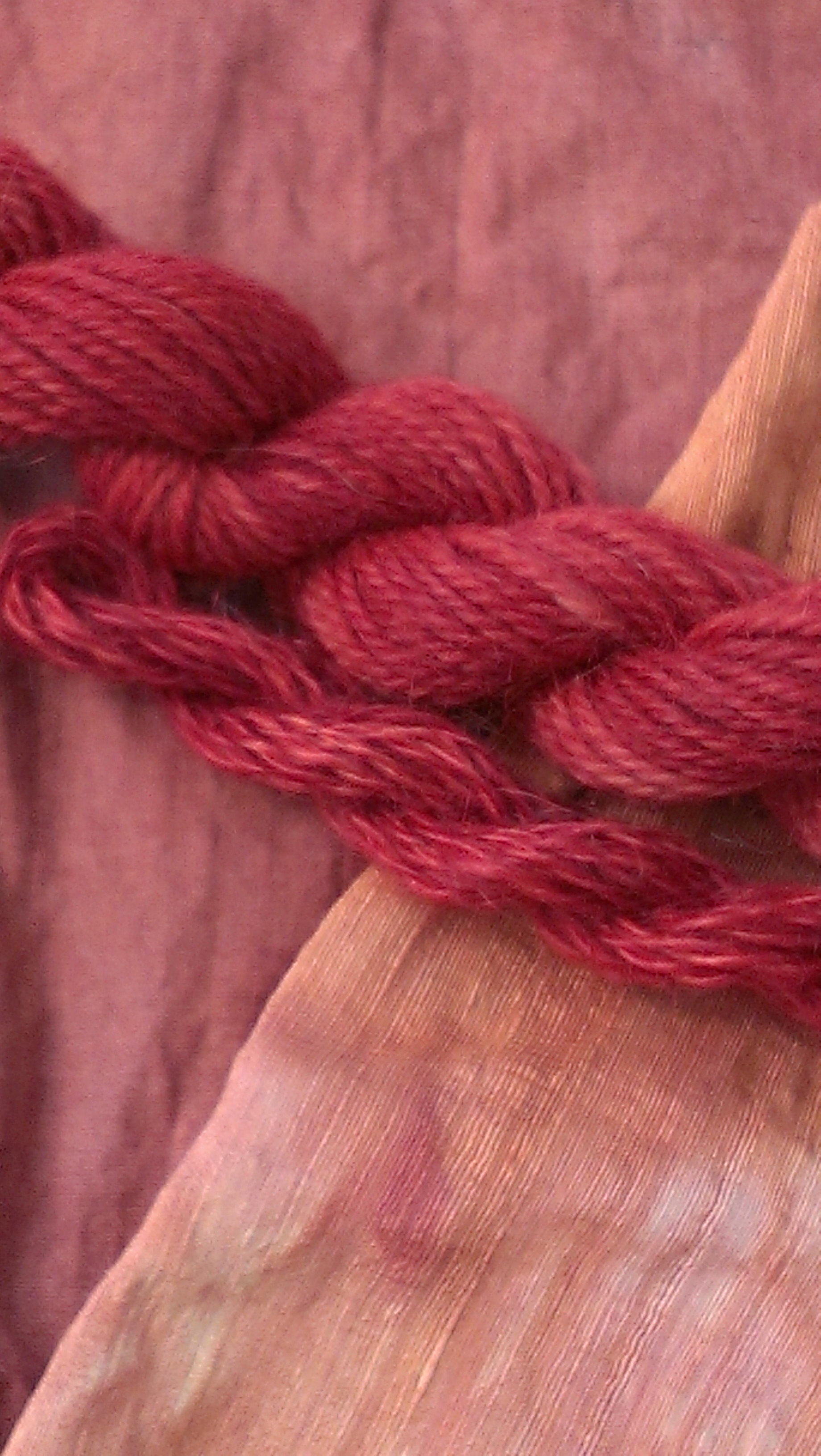
Here are the latest findings: red on alpaca!  Burgundy on the wool samples, rosy pink and orange on silk thread.  The top sample used E Scoparia (dried leaves) and The lower samples used dried E Cinerea leaves, both with white wine vinegar.

IMAG1270


18 Comments

Filed under Dye Plants, Eucalypts, Natural dyeing

Preparing

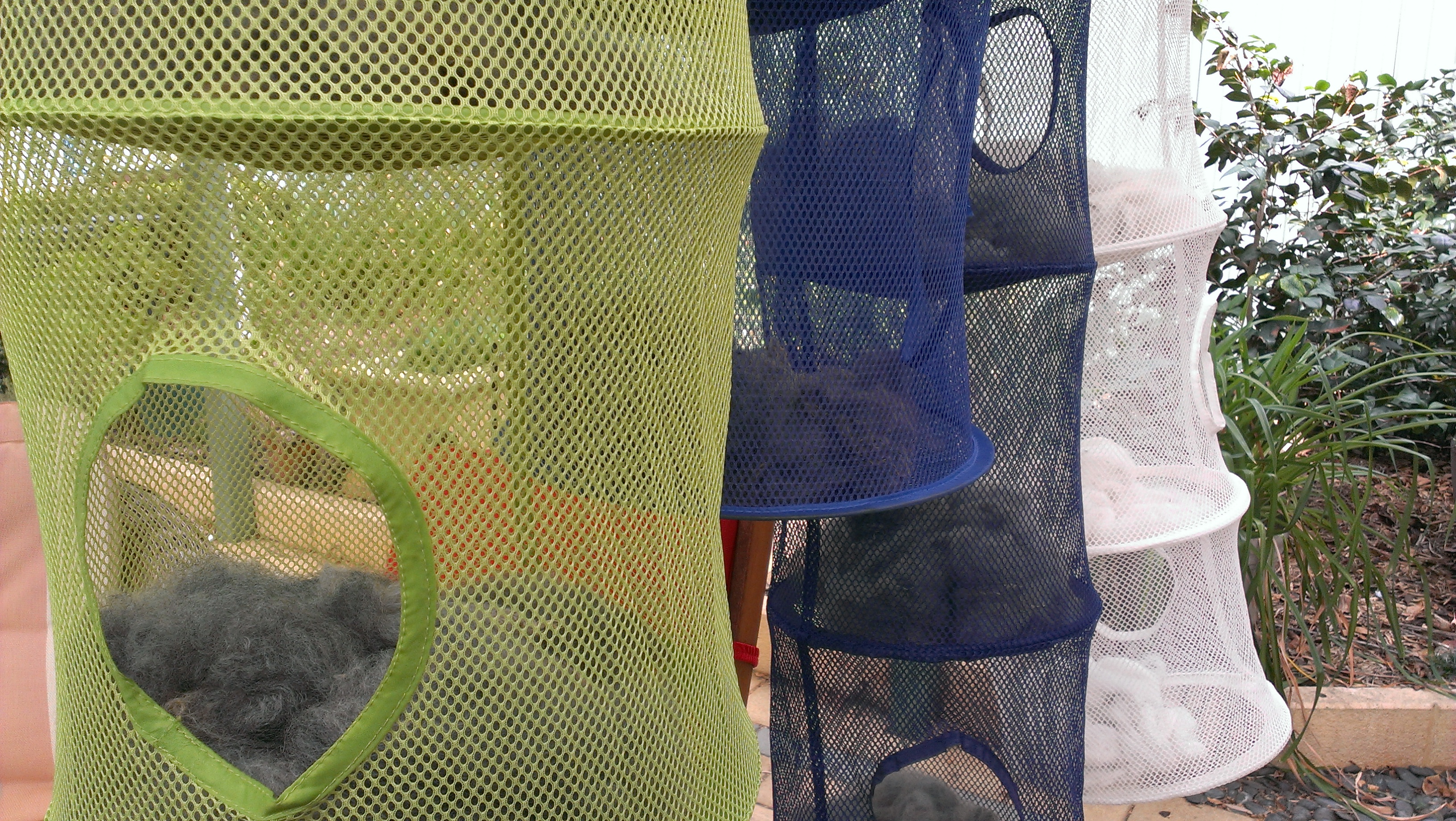
It has been a time of preparation, lately.  I’ve been on a fleece washing project.  After months of thinking I should wash while it is still warm but feeling quite unable to begin, apparently the change in the weather (toward autumn) brought on the sense that fleece washing would be possible. I have washed all that remained of over 3 kg of grey corriedale and some white alpaca for good measure.  My motley collection of drying apparatus have all been in use.  I still have a lot of high-grease polwarth and a filthy corriedale to wash.

IMAG1226

A bunch of friends got together to make passata and I was too sick to go and join in the fun.  However, my partner went along and I put the results up in these jars preparing for the winter.  The Fowlers Vacola outfit is steaming on the stove as I type.

IMG_0109

Our freezer is full of pesto from all the basil of this summer.

wpid-IMG_0133.JPG

I have some Lincoln locks sitting waiting for cold dyes to fix .  And I had better get ready to use the drum carder!

3 Comments

Filed under Fibre preparation

The spinning continues

Unfortunately, it has been a time of illness and low energy round here just lately.  Fortunately, spinning provides solace and the level of exercise I’ve been capable of undertaking.

Here, some delicious black baby alpaca I bought from SpunOut at Bendigo (three plied).  It is called Handspinners Dream and, mmmm.  It was! Luxury fibre with a price tag to match.

IMAG1234

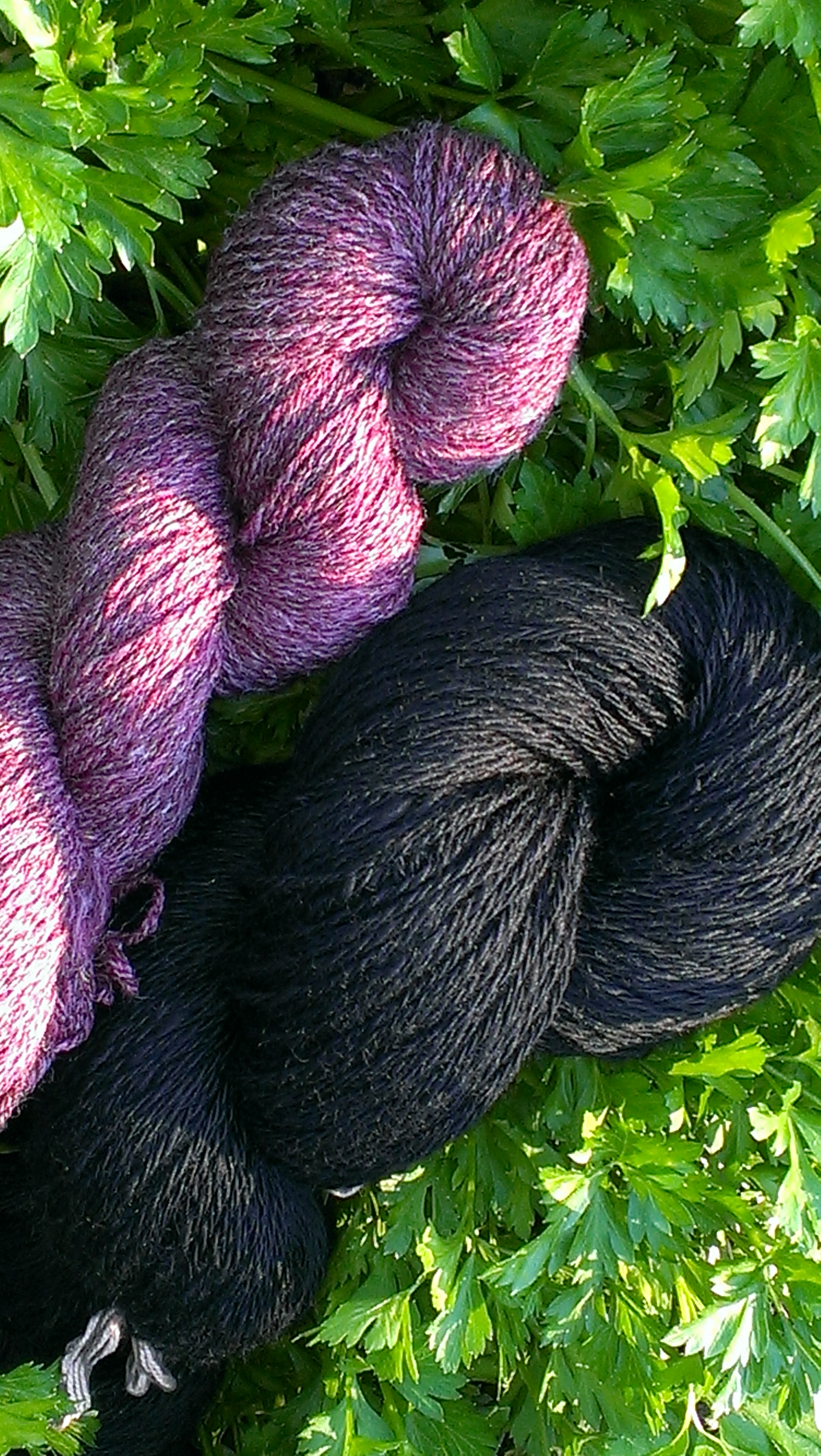
I also finished some spinning intended as sock yarn–the purple yarn in the photo.  It is a true three ply yarn with high twist.  I spun it slowly since it has been on the wheel I take to the Guild only twice a month.  There have been many jokes about frog hair, and more than one person has asked me if I am really spinning, because the singles were so fine they couldn’t be seen from across the hall.  I will be so interested to see how this works out as  socks.  Despite all the joking, this is not too fine for sock knitting.  Since I have three pairs of socks on my needles at present and all three are still in the first sock stage, I may not find out for a while.  I have one still on the leg, one just past the heel and still on the gusset, and one almost at the toe.

Back to spinning though–and that is where my time has been spent lately–the purple sock yarn is from Ewe Give Me the Knits.  It’s her Superwash Merino/Bamboo/Nylon blend, especially for sock spinners.  Another lovely spinning experience.  I am warming up to spinning some of the fleece I’ve washed through summer after all this pre-prepared fibre.

3 Comments

Filed under Knitting, Spinning

Things I’ve done with with plant dyed yarns…

When I was preparing for the natural dyeing workshop I ran recently, I mordanted a lot of Bendigo Woollen Mills yarn as well as some handspun in small skeins–25g or less.  Having all those small skeins of different colours in alpaca and wool and mohair, activated my imagination. Eventually it led to this…

IMAG0792

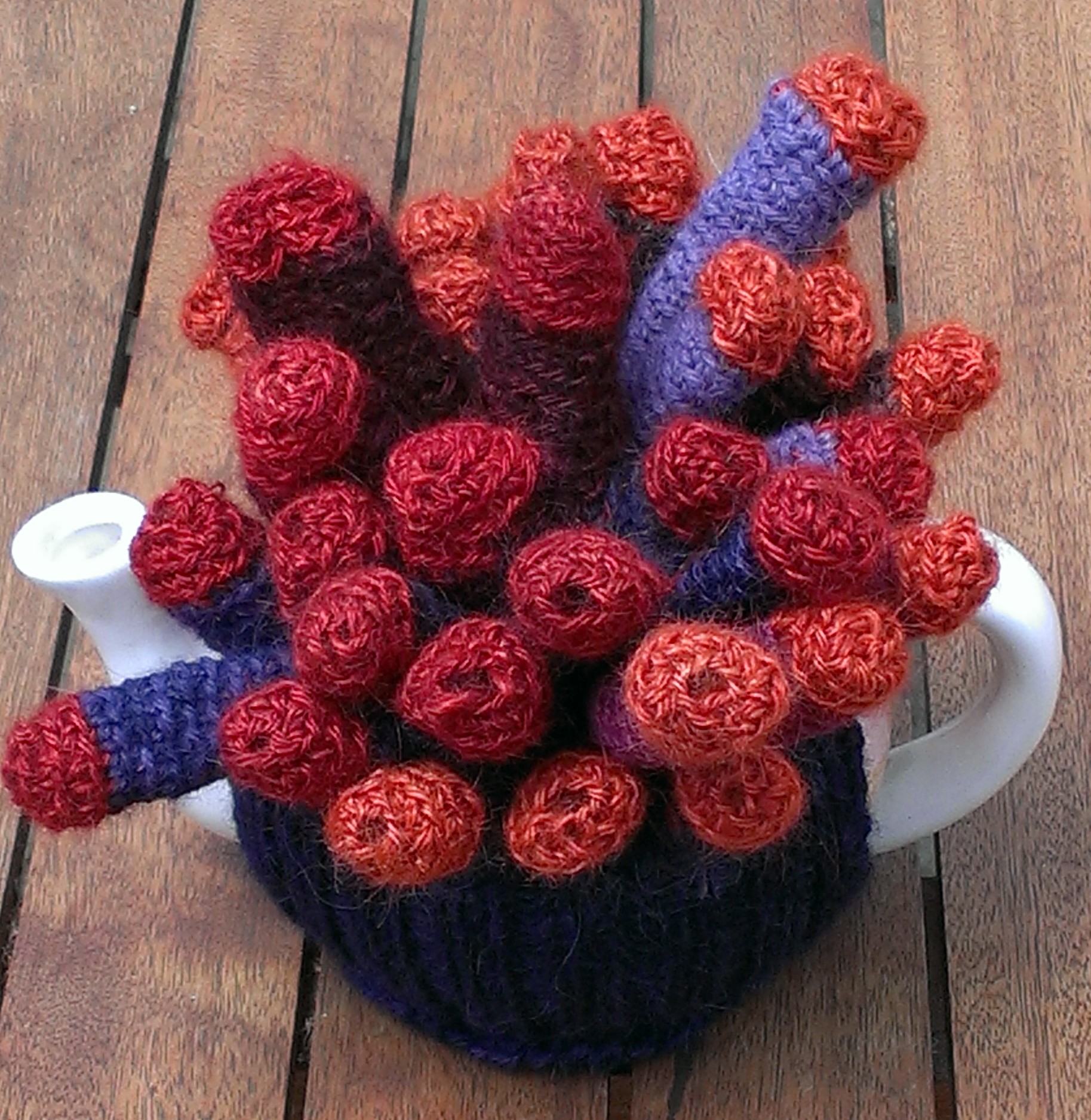
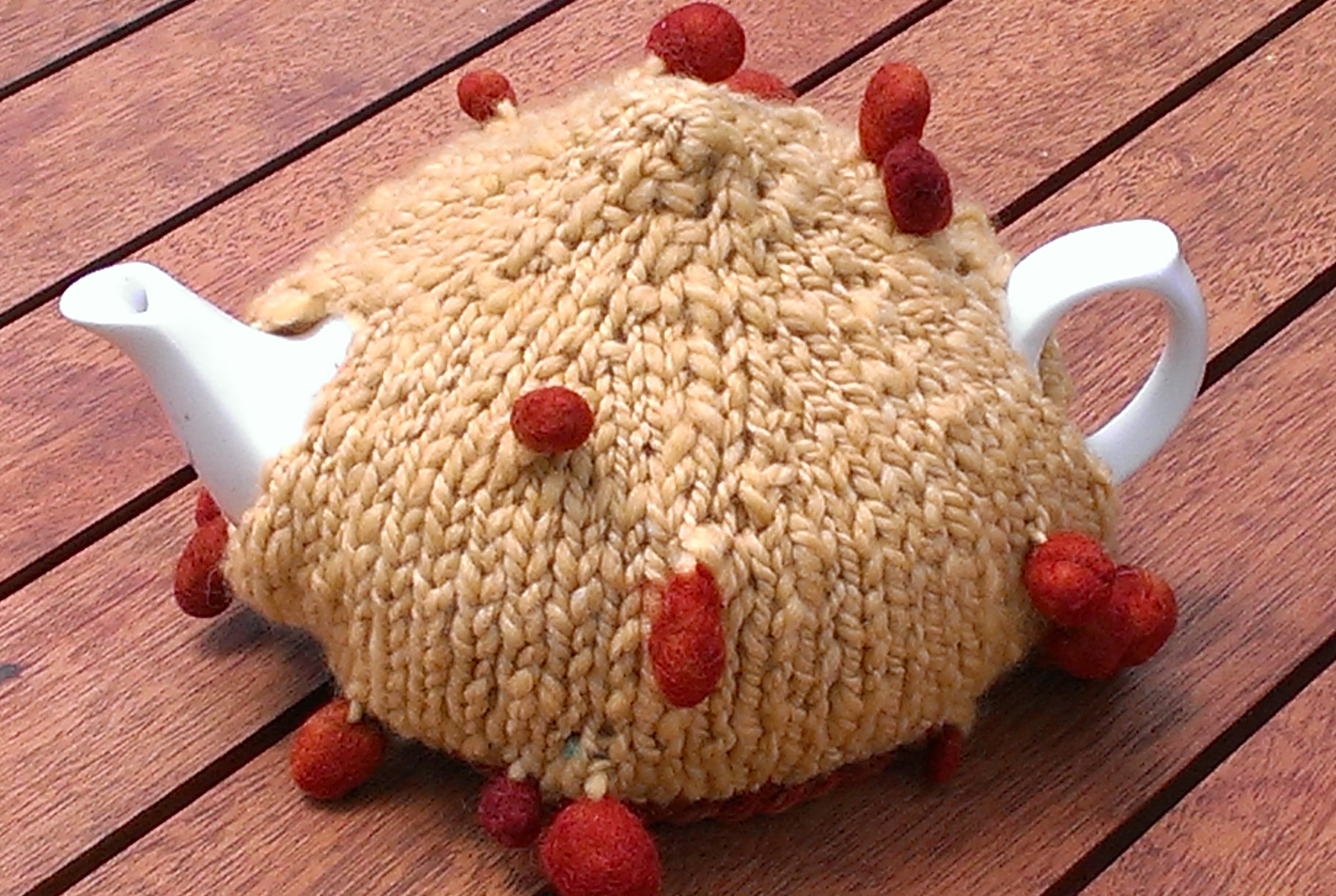
These are madder-tipped, logwood-stemmed crocheted coral thingummies, inspired by Loani Prior’s ‘coral punk’.  When I say ‘inspired by’, let me confess.  I bought her beautifully designed and entertaining book Really Wild Tea Cosies with a Christmas book voucher I was given.  So I had the pattern.  But even though only one, basic, crochet stitch was involved, my crochet skills are decidedly remedial and I don’t happen to have a crochet instructor on tap.

I turned to Maggie Righetti’s book Crocheting in Plain English (I don’t have the new revised edition, needless to say).  Apparently sometimes I just can’t believe what I am reading… or perhaps I just don’t understand on the first eight passes.  I see students I teach with the same difficulties!  By the time I had finished this tea cosy and started on the next, I’d managed to figure out that I wasn’t doing what Loani Prior must have believed was involved in the one stitch involved in her cosy.  Luckily for me crocheting badly still produces a fabric of a sort.  I also figured out that for me, improvising a knit version of the pot cover itself was going to beat freeform crocheting one as the pattern suggests with my inadequate skill set.  So that’s what I did, and Loani Prior shouldn’t be held responsible for the outcome.  I like it anyway.

IMAG0843

It has highly entertained people who watched me crocheting coral at parties (as one does) as well as those who have seen the finished object, many of whom thought immediately of a sea anemone.

Let it be said that at present coral punk is not alone.  Here is the present plain Jane of the tea cosy selection at our place: yellow from silky oak leaves and orange from eucalyptus–with the felted blobs spun into the yarn.  Pattern improvised.  Luckily, tea pots are just not that fussy about how you clothe them.

IMAG0840

I’ve been branching out and using up some particularly strange art yarn spinning experiments.  This next one is commercially dyed mohair with silk curricula cocoons spun onto it.  Scratchy for a head, perfect for a teapot!  I was surprised how many people liked the look of the ‘hat’ emerging as I knit this at a picnic, riffing off Funhouse Fibers’ Fast and Fun Cozy.  Once again, that is to say, dispensing with the pattern when it became inconvenient.  I guess the hat admirers hadn’t felt the yarn yet.

IMAG0842

And for anyone who is wondering, I have continued to dye with the logwood exhaust from the dyeing workshop.  I ran out of yarn for a while and dyed two, 200g lengths of merino roving.  This morning I pulled out another 100g of superwash yarn.  I think it might be just about done, and I only wish I had kept a record of the weight of fibre that has been dyed with what was a small quantity of logwood in the beginning!  This weekend, the second in a series of two natural dyeing workshops. I’d better eat my crusts and get my beauty sleep in preparation.

IMAG0839

2 Comments

Filed under Crochet, Eucalypts, Knitting, Natural dyeing, Spinning, Uncategorized

Magical madder

IMAG0623

I received a gift of dried madder root recently: it could be years old! But then, the tradition of madder dyeing is ancient and there was no reason to think it was past its use-by date.  I followed Rebecca Burgess‘ instructions in the beautiful Harvesting Colour to process it during a dyeing day with a friend who (happily) shares my enthusiasm. Here are our fibres going in:

IMAG0649

I left fibres soaking in the dyepot for a week afterward.  And here they are after drying.

IMAG0770

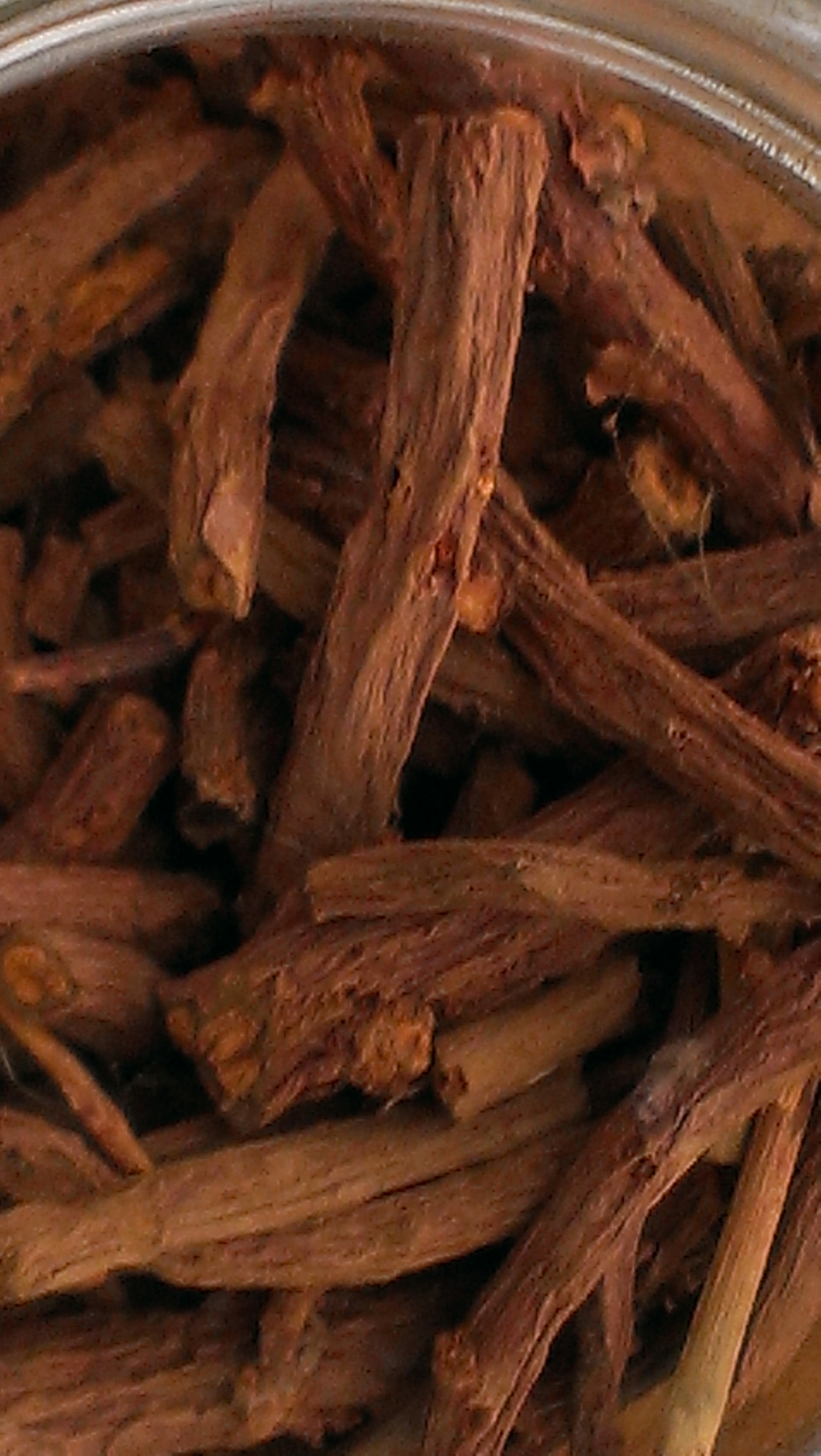
The alpaca/wool (larger skein) is really red, and so is the smaller skein of mohair.  The cotton mordanted with soy on the left is a red-brown shade, and the well-loved but unmordanted silk fabric (previously a precious shirt handmade for my friend) is a lovely red-orange.  This madder bath didn’t begin to give orange until it was on its third exhaust bath. After that, I kept dyeing with it until I got down to peach on some handspun wool and banana fibre blend.

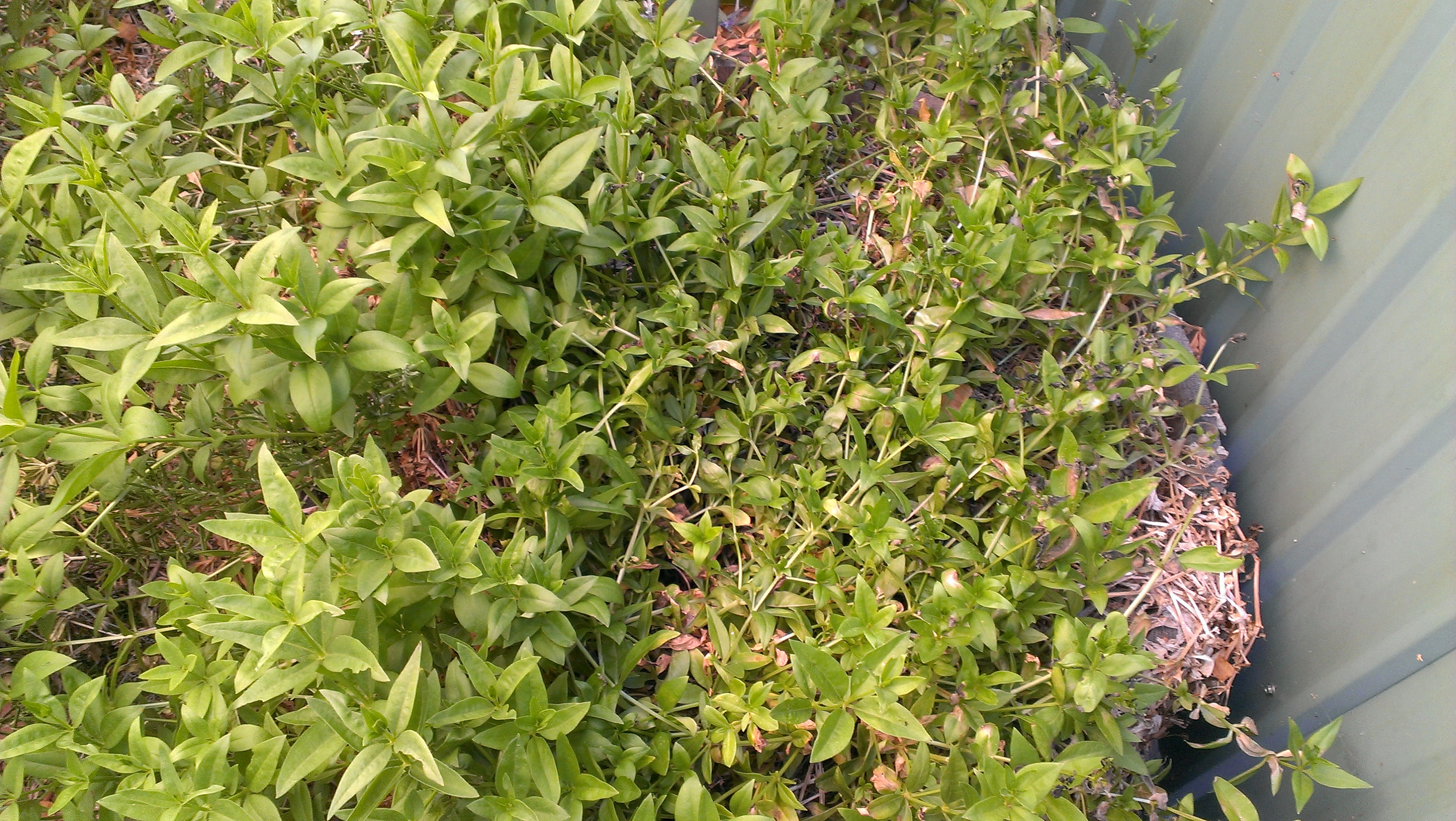
It’s exciting to see madder dye red with my own eyes, as every madder-dyed textile I have seen dyed by anyone I know is decidedly orange.  Not unlike the colour I can get with many local eucalypts.  And it is also exciting because my madder must be getting close to possible harvest!  Here it is at the height of our Australian summer, which is to say, partially crisp.  But about two or three years old and so promising…

IMAG0777

2 Comments

Filed under Dye Plants, Natural dyeing

After the workshop

This week I ran a natural dyeing workshop for my Guild.  It was exhausting but fun!  I tried taking a picture inside the hall and my poor old camera wanted to use the flash–pretty useless.  Between that and having a lot going on, I decided to forget taking photos.  We ran lots of dye pots: E Scoparia bark, dried E Scoparia leaves (oranges), silky oak leaves (yellow), logwood from the abandoned/donated dyestuffs of the past stash (purple), black beans (not as blue as I hoped)… we mordanted with alum and with soy, there were leaf print experiments.  We dyed silk, alpaca, wool, cotton; fleece, roving, yarn and fabric.  Phew!

I came home with cooked bark and leaves and  ground soybeans to compost, quite a bit of remaining pre-mordanted yarn, a bucket of black beans with yarn tucked into it, a bucket of homemade soymilk and the logwood bath.  Can I just quietly mention how relieved I was when I got home without having sloshed a bucket over in the car?

IMAG0786

I have run the logwood bath twice more so far.  This is the second effort: superwash wool in the foreground, alpaca/wool blend in the middle, and greeny-grey-blue black bean dyed sock yarn at the back.  I have some roving still soaking and rinsing after the third logwood bath, and I’m mordanting more fibre to go into a fourth bath right now.  I wish that logwood was a sustainable local dyestuff.  It is spectacular and straightforward, and purple is a great colour.  I loved pouring boiling water on wood chips and getting purple water; dipping fibre into what became a brownish dyebath and pulling it out purple.  But logwood isn’t local or sustainable, so I’m making the most intense use of the logwood that I have been given that I can figure out.

I hope that my forebears at the Guild who abandoned the logwood there or donated it to the Guild would be happy if they could see the excitement it provoked in the workshop.  It’s possible that the former owners of this logwood are still coming to the Guild and will let me know what they think when word gets out of what we did in the dyeroom this week.  I feel so blessed to be part of the Guild–fancy being part of an organisation that has a dye room!

6 Comments

Filed under Dye Plants, Eucalypts, Leaf prints, Natural dyeing

Abandoned dyestuffs of the past

A while back, I became the happy recipient of some dyestuffs that had been left at my Guild long ago.  Most were labelled, some were not.  The only one I had previously tried was indigo.  I’m thinking we’ll dye with some of them at natural dyeing workshops I’m running for the guild this year, but I needed to try them out first, check they still have dyeing capacity.  There are some in tiny quantities.  This one, for instance.  8g of something that looks like a dried fruit or husk, between the size of a hazelnut and a pea.  I posted this picture on natural dyeing fora online but got no clues at all. I await any clues readers might be able to offer.

986

The fact that I can’t identify it is a shame, because here is what happened when my dear friend and I had a dyeing day and tried it out. We soaked it overnight (in rainwater); simmered for an hour, added fibres mordanted in alum and here is the resulting colour. The yarn is mohair mordanted in alum, the sample card (wool and wool+alum) won’t wash off, and the fabric is silk, no mordant.  Burgundy… maroon yarns (with pink silk as a background).

IMAG0682

We dyed with Osage Orange, which gave jewel bright yellows on silk especially; and Logwood, which gave strong purples even on the second bath (I plan a third).

IMAG0685

The Madder is still soaking; and then there is the Red Sanderswood/Red Sandalwood.  Based on reading Jenny Dean‘s informative book Wild Colour, my dependable guide in many such matters, I expected hues of orange to brown.  I expected to think ‘why ever import this wood when these colours are readily obtainable from so many local plants’?  But nature is a complicated thing.  I did not expect this:

IMAG0684

The roving is unmordanted merino.  Almost no dye took at all.  What did take amounts to a smudge of orange.  The cloth is cotton mordanted with soy, and it is quite a red-brown.  Rust, perhaps.  The skeins are alpaca-wool blend and mohair, both mordanted in alum.  They are vivid purple, and so is the wool mordanted in alum on the sample card.  I could scarcely tell the sanderswood skeins apart from the logwood dyed skeins once they dried.

Jenny Dean offers no suggestion of purple from this plant using any combination of mordants.  It can’t be a simple case of mislabelling–the logwood baths have produced purple on silk and cotton as well as wool.  The sample card was mordanted months ago, using different wool and different alum than these skeins, and any contaminants in my dyepots would have been different, surely.  Even my rainwater will have changed in that time.  What can it mean?  My friend and I decided it meant ‘dye more protein fibres mordanted in alum’, because we both think purple is an exciting outcome!

More natural dyeing mystery–meaning the depths of my ignorance are still being plumbed by this process.  But since the result was purple… I mean, purple… I’m not feeling sad about this outcome at all.  And the exhaust dyebaths were good fun too.  The madder is on its third turn as I write.  But more on that later…

IMG_0053

5 Comments

Filed under Natural dyeing

Finished objects completed in my holidays

There has been a lot of holiday crafting going on round here.  But this post marks return to my day job!

I made some Thai style fishing pants.  I bought a pair in 2000 as the new century began, and they have finally gone to the worms in our worm farms, the ultimate destination of natural fibres that are worn past the point of repair and reuse around here.  I traced a pattern from them and made this pair from a sarong found at the op shop.  I assume the originals were cut to maximise the use of fabric from a loom that is a standard-ish size in the region, because the sarong was the perfect amount of fabric, with almost no fabric left over to be wasted or used for other things.  Surely this is the goal of all hand weavers, as well as a decent goal for thrifty and green sewers.

I used french seams and then top-sewed them flat, so that I could use only cotton thread and ignore the polyester sucking overlocker.  When commercially sewn garments go to the worms, the overlocker thread is usually all that remains.  The worm farm offers an education in the biodegradability of garments, and I am increasingly aiming for biodegradable.  There is a cotton-polyester t shirt in one of them that has been there since my daughter left home and abandoned it.  Over 10 years ago.  Polyester will clearly survive the apocalypse, along with cockroaches.   Seriously, my everyday garments do not need to live as long as the Gobelin tapestries.

IMAG0590

I made a pair of radmila’s slippers from a new book, Knitting from the Center Out by Daniel Yuhas.  They are knit from handspun merino roving dyed with Eucalypts.  I have to say that I gave up making matching pairs a long time ago and now make siblings rather than twins… further proof lies in the next two images. OK, make that three!

IMAG0579

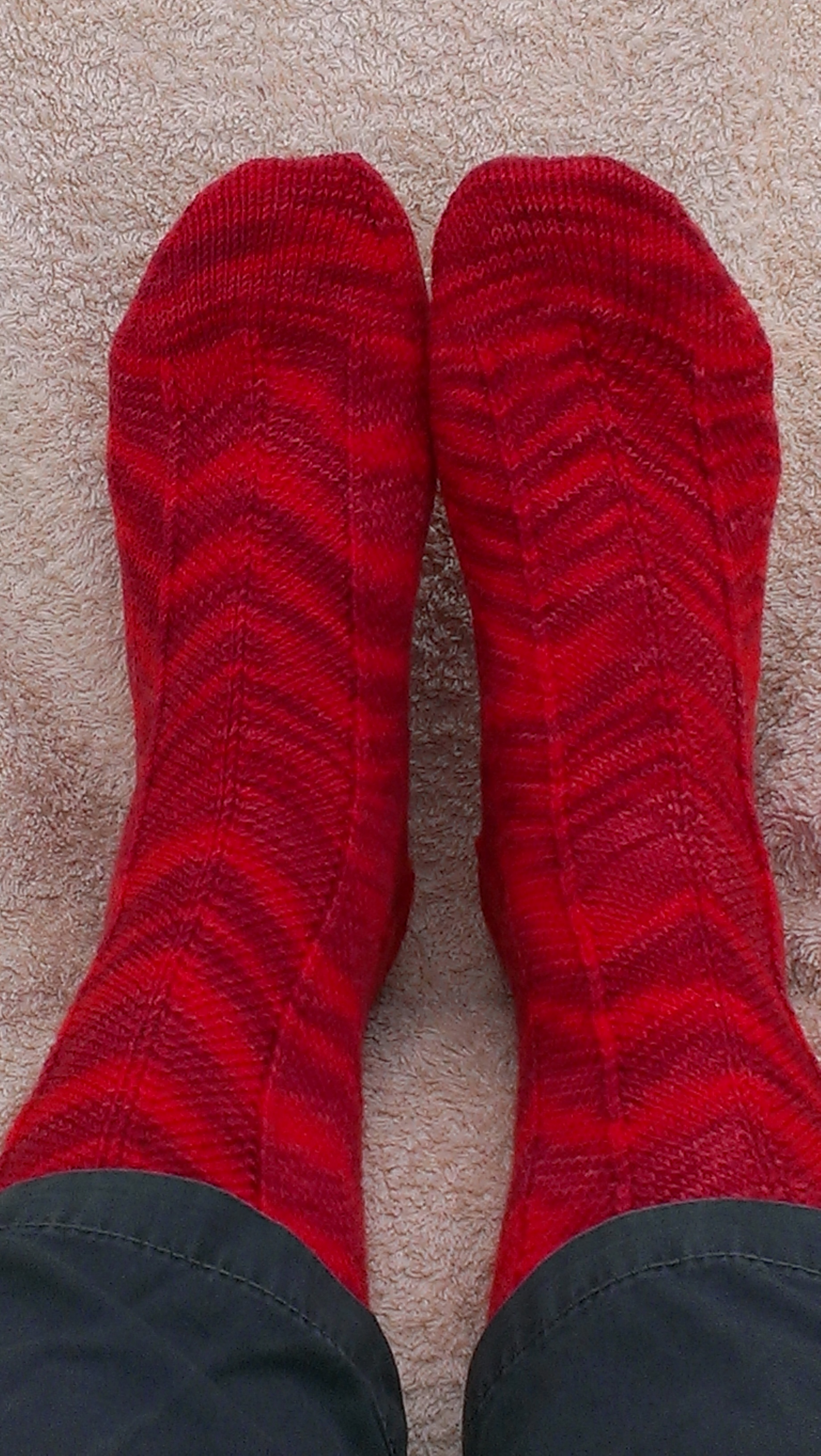
I took up knitting in order to be able to knit socks, and that is what led me to spinning and then dyeing.  Sock production has slowed down, but I finally finished a pair of Jaywalkers for a beloved friend. She is a lover of bright colours who has appreciated these as splendidly red while they were still in progress.  This yarn was dyed by a fabulous local dyer, Kathy Baschiera.

IMAG0595

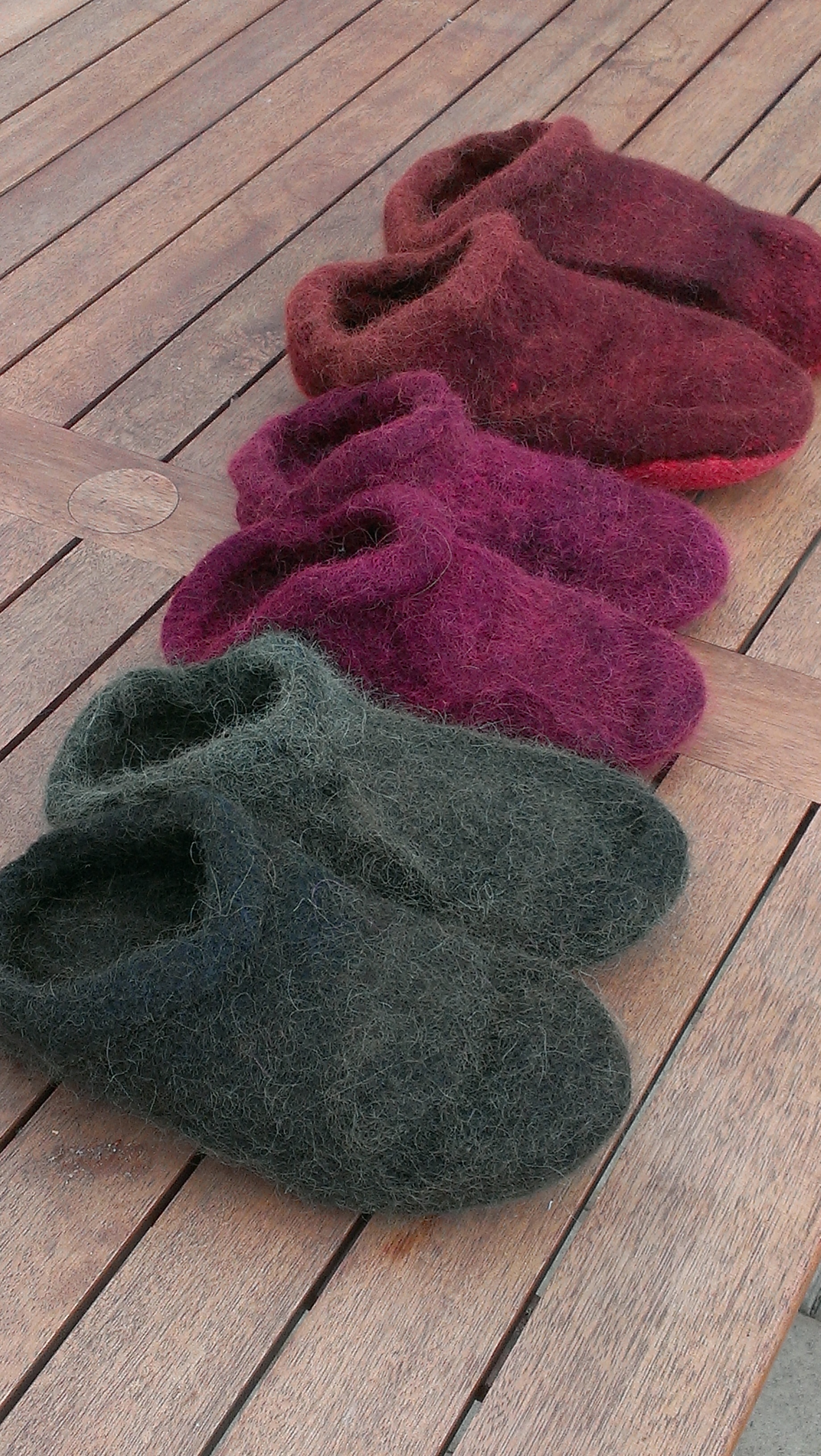
Remember the post where I was wondering whether a sow’s ear could be turned into a silk purse (actually, whether I could turn the less exciting parts of a polwarth fleece and some low quality alpaca into slippers)?  Well, the answer is yes.  These are knit using Bev Galeskas’ Felted Clogs pattern and dyed with Landscapes dyes.  I hope Bev Galeskas has made millions from her pattern.  I sure have made tens upon tens of these, though most are a shade less hairy.  Clearly I spun in a fair amount of guard hair, and it won’t felt.  Just the same, the recipient of the red pair at the back was very enthusiastic as he turned 40, and the delightful women who will be receiving a parcel today or tomorrow with the front two pairs are great mend and make-do experts who have darned their previous pairs extensively… they live in a very cold place and will enjoy warm feet and hopefully overlook the odd stray guard hair!

IMAG0588

Ah, holidays.  I hope you’ve had some to enjoy.

3 Comments

Filed under Eucalypts, Knitting, Natural dyeing, Sewing, Spinning

Turning a sow’s ear into a silk purse. I mean, a slipper.

This week’s question is whether I can turn a sow’s ear into a silk purse slipper.

I have been the lucky recipient of a lot of free fleece since I took up spinning.  It all started with some filthy Gotland fleece straight from the sheep’s back that my Dad gave me.  He had provided the antique engine that was running the shearing plant in a demonstration of hand shearing at a local show.  Because he knew I wanted to learn to spin, he brought home a few handfuls.   He is a great enabler!  It was rough and filthy, but I spun it on my first spindle and was grateful.  Admittedly, Dad said there was a handspinner at the show and he had spoken to her about it: she advised doing me a favour and not bringing that fleece home to me, but naturally, he didn’t listen!  And I was glad.  I didn’t know anywhere I could get fleece then.

Next, I was given several bags of Dorper fleece by friends who were keeping Dorpers as meat sheep.  I didn’t understand the meaning of ‘meat sheep’ in the context of fleece at that stage.   Dorpers shed their fleece rather than needing to be shorn when they are pure bred, which might have been a clue to (lack of) spinnability for a more knowledgeable person, too!  I dyed it, I spun it, I carded it… oh my goodness. It was the beginning of my fleece preparation journey and it was a very challenging start.  Months later the woman who had lent me her carder said when she saw what I was working with, she was just overcome to think I would even try to spin that fleece!  She didn’t offer me her opinion at the time, though, and it was a long time before I decided that I could, perhaps, compost the rest as my struggles were not only about my lack of skill but also about the state of the fleece.

Needless to say I have also received fleece that has spent lengthy periods in a shed and bred an overwhelming moth population.  Happily, I had said fleece in a plastic tub with a lid.

So… I have had some personal experience of the possibility that people who give the gift of fleece don’t have the judgment necessary to decide whether what they have handed over is worth spinning.   I have to be the one to decide whether the fact that I could turn that into yarn given enough time and effort, is a sufficient reason to do it.  I think I have proved to myself that I can spin almost anything–if I could spin those fleeces as a beginner!

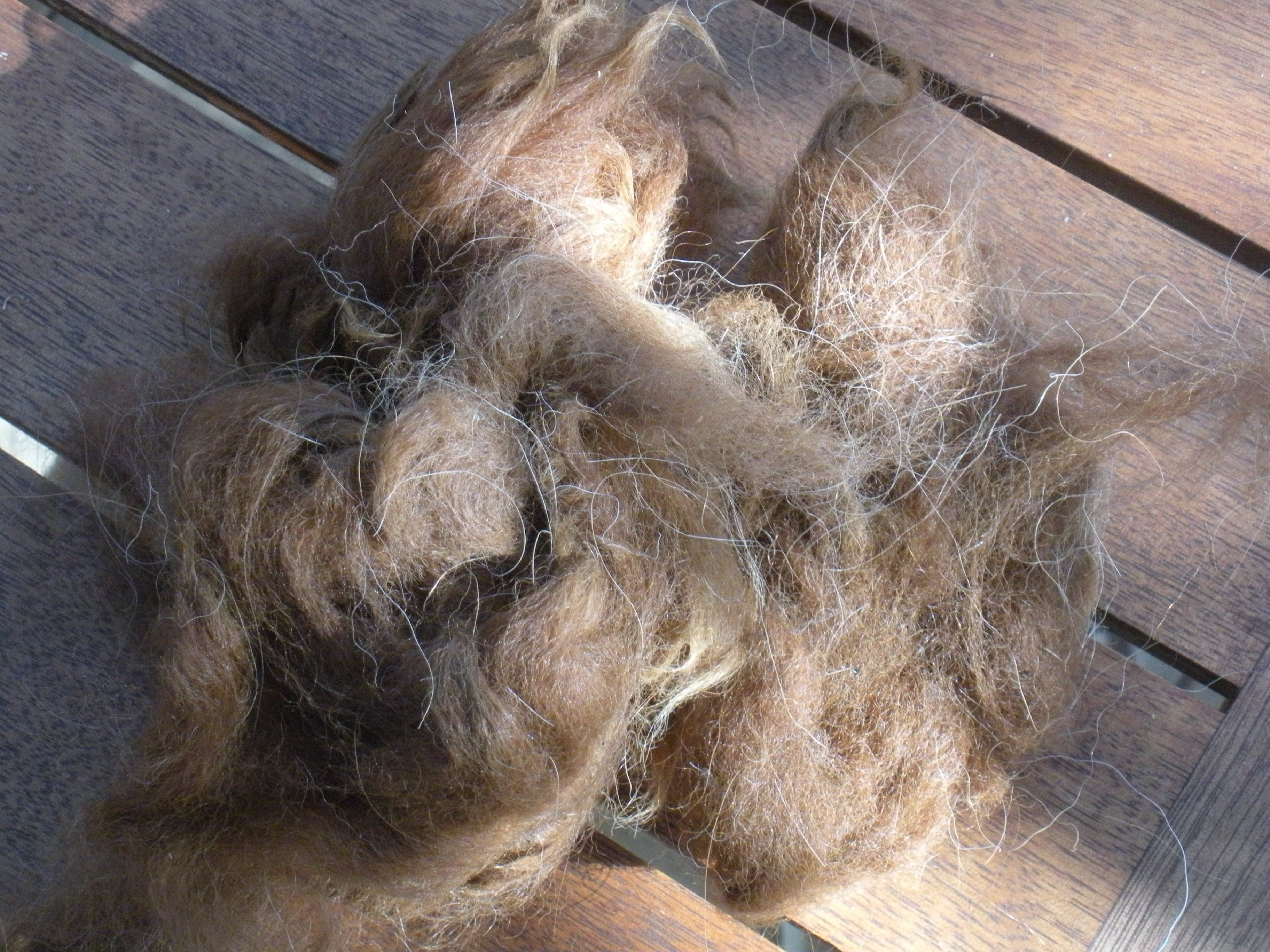
I went to a couple of workshops on fibre preparation (washing, combing and using hackles) at the recent Majacraft Magic camp at Lake Dewar outside Melbourne, and came home ready to tackle some of my current fibre preparation challenges.  I had reached some new conclusions about why I find getting fleece clean difficult sometimes.  1. our hot water tap doesn’t give very hot water, and can’t be adjusted.  Boiling the kettle repeatedly is boring, as well as slow, after a while! 2. I can be more slapdash than is ideal for the task. 3. Most of the fleece I currently have is Polwarth, more gifts from a couple of pet sheep in the hills.  This is a fine and greasy fleece, among the more challenging to clean.  4. I always hope to be able to wash a bigger batch of fleece than is desirable for optimal results.

Anyway… having tried washing some more gifted alpaca fleece and some more gifted Polwarth, and using careful observation of how it behaves with flicking, combing and carding, I have decided the following.  1. The specific Polwarth fleece I am currently working on has tips that are weather damaged.  When I flick card them, they pull right off.  Is it any wonder that these paler tips appear as nepps in the batt when I card the same fleece? The other fleeces I have had from the same sheep don’t have these difficulties. The poor sheep must have had a tough year…

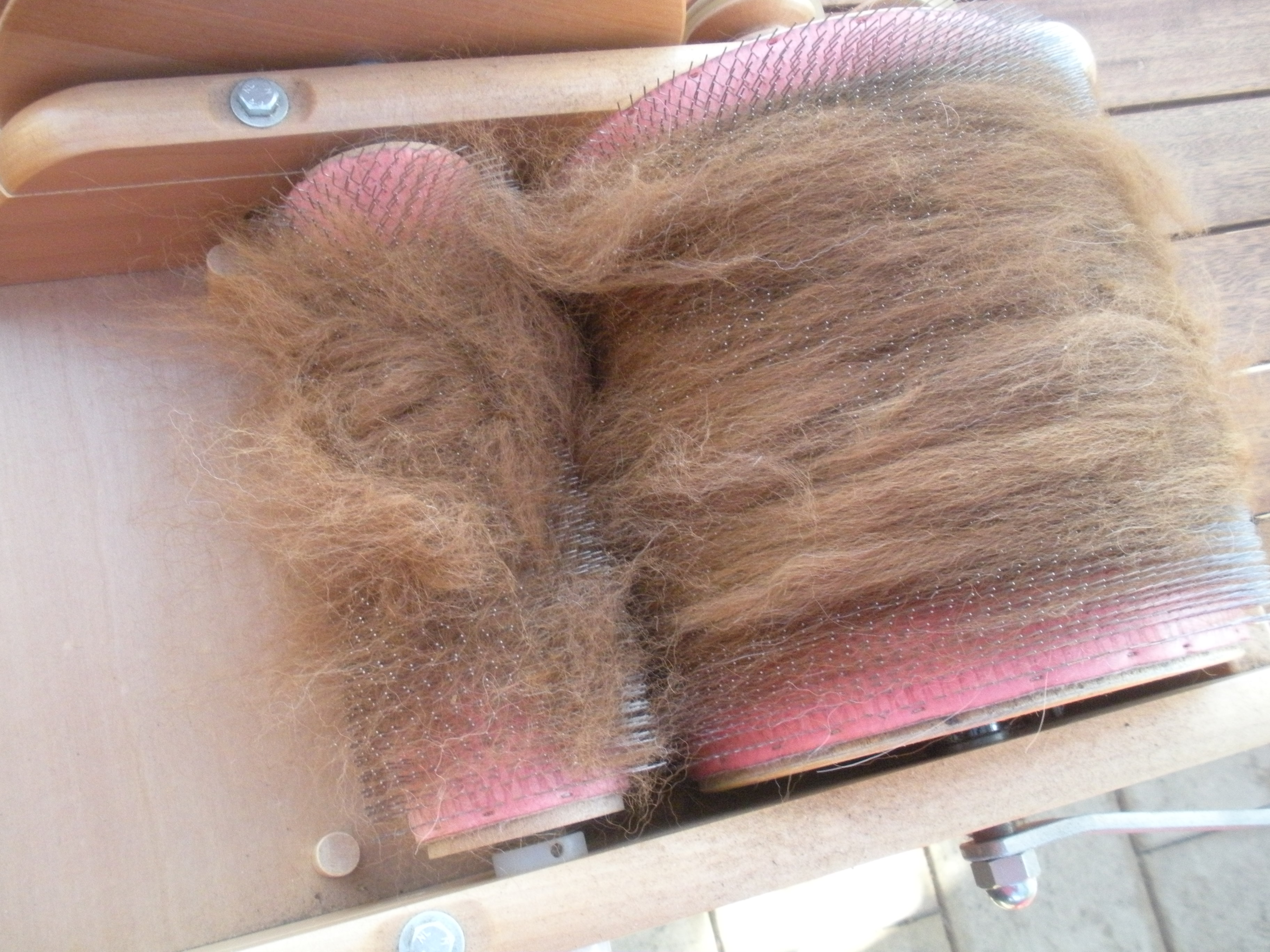
2. That same fleece has a break in it, so the longer locks are giving way under the tension involved in carding, again leading to less than optimal batts.  3. The alpaca is super short (happily, I have now worked with high quality alpaca and no longer assume this s just the way alpaca comes).  It has not really been skirted.  Most of it pulls onto the licker-in (the small drum on the drum carder) when carded. Yes, from the very start, and not only when the large drum is full.

4.That alpaca has big clumps of guard hair and has been shorn without consideration to the future spinner.  Hopefully the shearer was thinking of the animal’s welfare in taking so many passes!

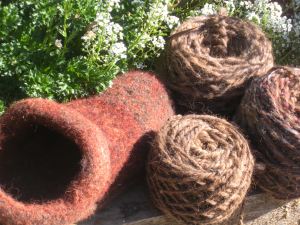
In short, these are not the highest quality fleeces possible and they would present challenges to anyone preparing them for spinning.  No matter how much time I spend I may not be able to turn these sow’s ears into the proverbial silk purses.  I have decided, instead, to attempt to turn them into felted slippers.  I am carding them together as a blend, spinning them up without too much fuss and very fat (good practice) and my ultimate plan is to knit slippers which will be felted and perhaps dyed.  Shazam!  Their less than ideal qualities will no longer be of importance.  I hope!

Here are my first few balls, and a slipper with some polwarth content and some eucalyptus dyed wool content to give me hope…
4 Comments

Filed under Fibre preparation, Knitting, Spinning, Uncategorized