Tag Archives: cotton

Bundle dyeing–and a new book

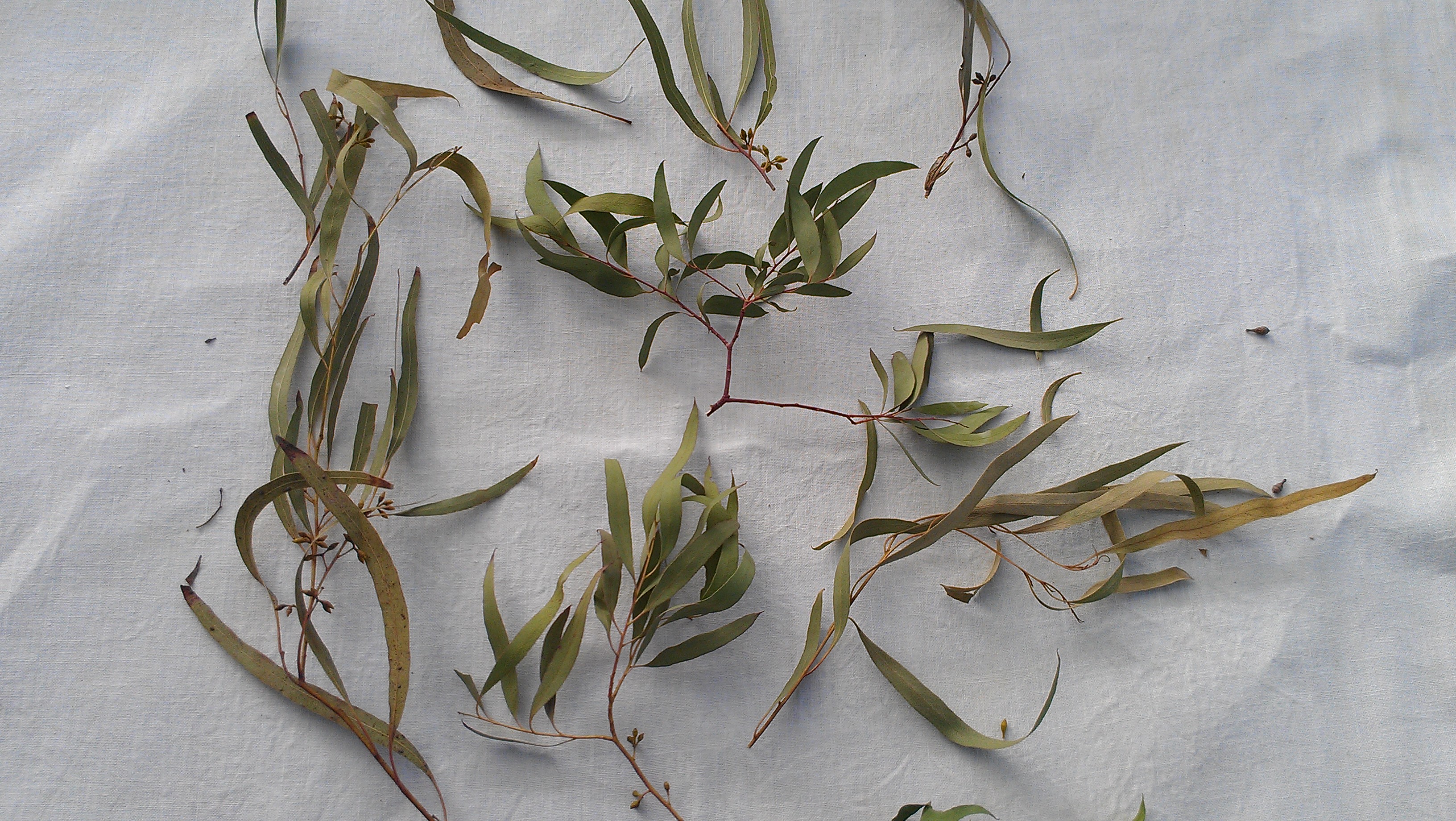
After the recent massive vat dyeing project, and with so many Eucalyptus Cinerea leaves lying around drying slowly, I was itching to dye some bundles. After a full day of mordanting and dyeing and sewing in windy overcast weather… here’s the view over the back fence and up into the sky.
2014-06-28 17.26.19

I had a piece of silk twill left when one of my workshop participants didn’t appear. In it went.  I also had a linen shirt and a cotton t shirt sourced at op shops and ready for renewal that I had mordanted in summer.  By the time I tied those bundles the sun was setting.

2014-06-28 17.19.53

I filled the pot with madder exhaust, and topped it up with some of my very-much reused alum pot. As the remains of the madder rose up the fabric and the temperature rose, the sun went down.

2014-06-28 17.25.37

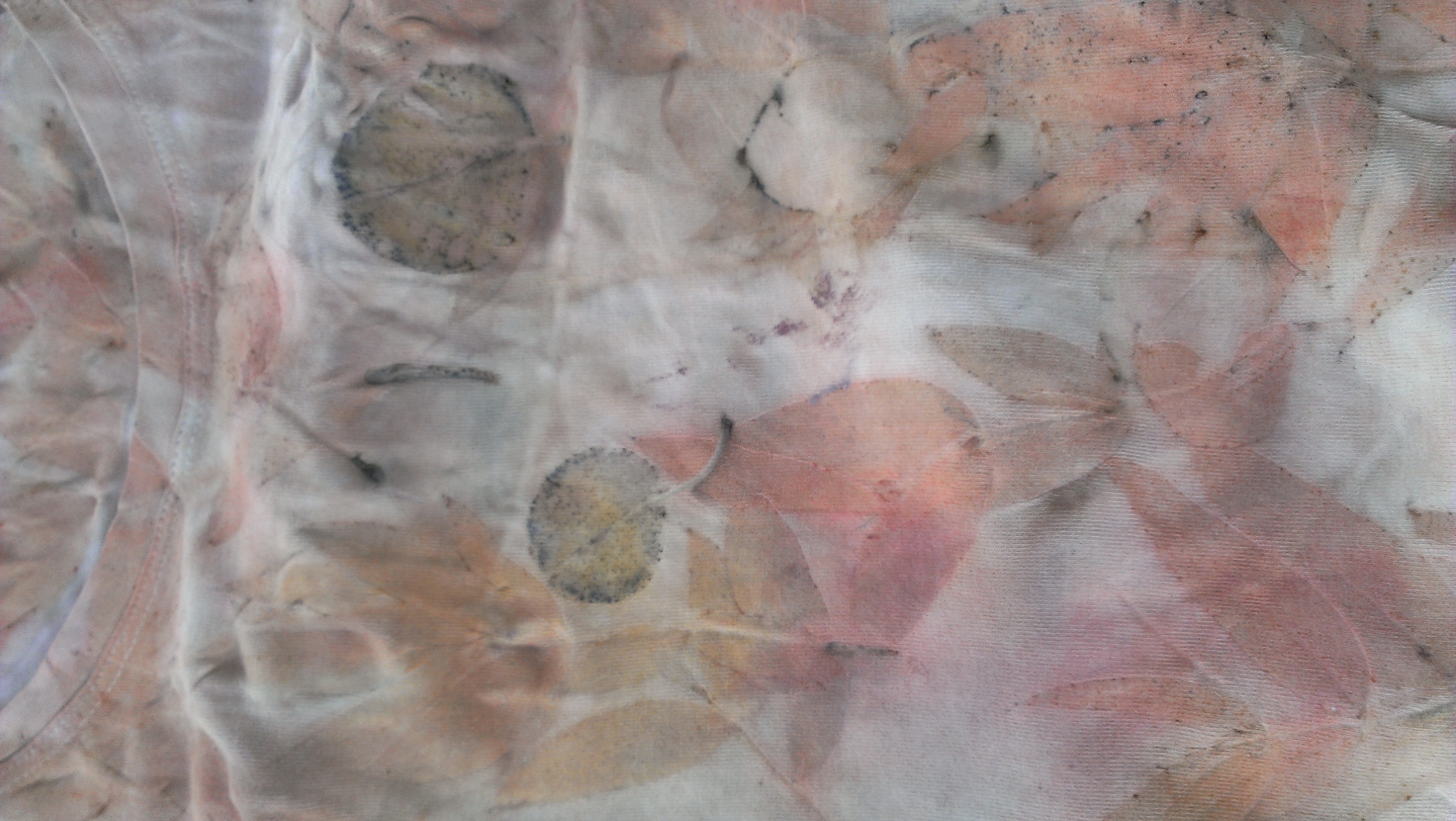
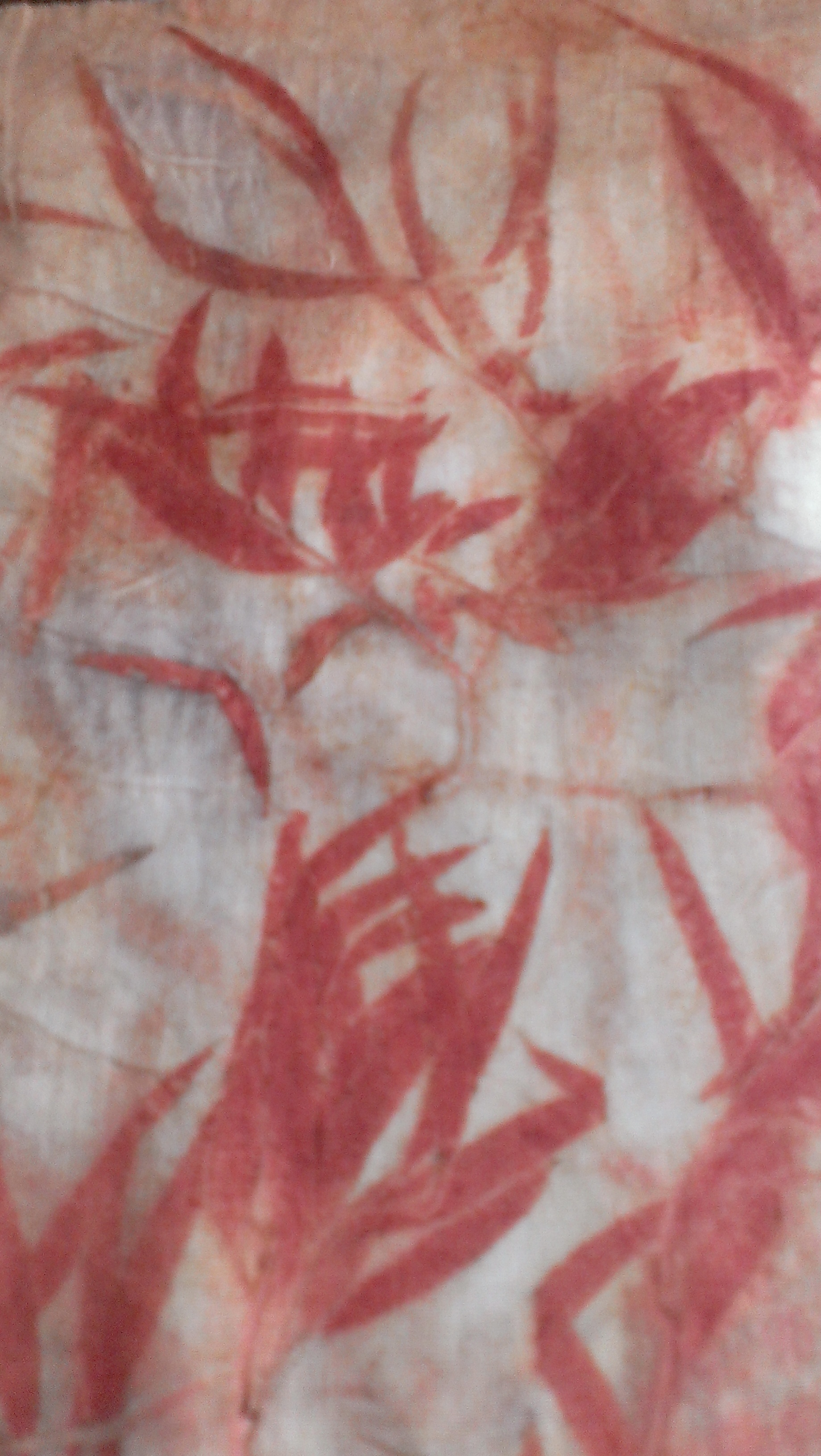
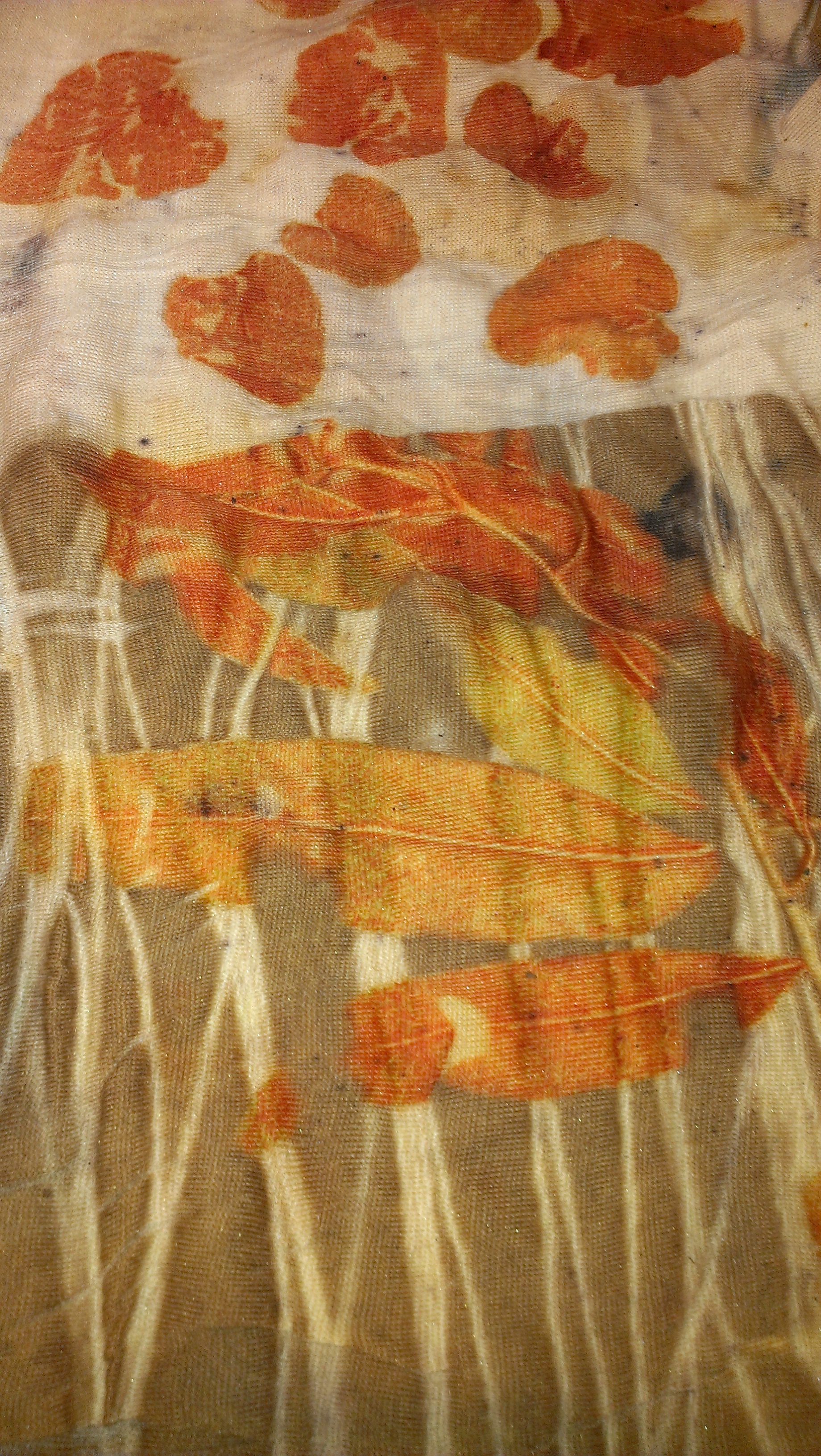
When I opened these first two bundles the impact of the chalk in the madder pot became clear.  And despite having allowed the leaves to dry for days, it is midwinter here.  Those leaves would have started out full of water, and they are drying very slowly.  Interesting results… This is the silk twill.  The round green shapes are from dried E Cladocalyx ‘Vintage Red’ leaves.

2014-07-16 09.10.56

This is the t shirt.

2014-07-03 16.41.11

Here is the part of the t-shirt bundle that was in the madder exhaust/alum blend.  So little colour from the E Cinerea!
2014-07-03 16.41.25

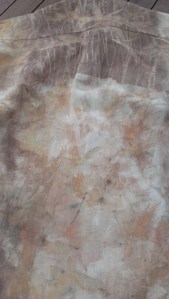
I decided to set the third bundle (linen shirt) aside and give it some more time in the pot, which I did after work later in the week. Front view:

2014-07-16 09.12.15

Back view.

2014-07-16 09.12.31

If you wish you could try this method and have experiments of your own and bundles to untie at your place–but you’re not sure where to start, India Flint has just published ‘the bundle book’.  It is a concise introduction to her technique on fabrics and on paper.  You can see an extensive preview if you follow the link.  This book is unspeakably cute–being both small and exquisitely illustrated with photos to inspire.

2014-07-17 09.29.06

It presents information about techniques (such as dyeing paper) not covered in her earlier books, strategies for sustainable and safe dyeing and a history of the eco-print method.  It also addresses fresh ideas developed since the publication of Eco Colour and Second Skin.  And, it is full of India Flint’s inimitable voice.  I am old enough to remember when recipe books were sold on  the basis of recipes and not celebrity cooks, and when the writing was bland and spreadable.  I don’t miss the bland and spreadable writing, though I’m less sure about the cult of celebrity cooks.  No danger of bland here!  I very much enjoy the sense of a unique intelligence at work on subject matter I think about a lot that is a feature of India Flint’s writing.  It is a rich addition to her insights and strategies about harvest, recycling and dyeing.

This book is published on demand, which is a no waste, effective way of publishing a book for something short of a mass market. I suspect it also means that the book you order in Australia is printed here, but a book ordered in North America will be printed there, and not have to travel the seas or skies to reach you.  The printed versions of the book are fairly expensive, however.  If your wallet is up for it, it’s a great way to support an independent artist and the end product is delectable.  If your wallet isn’t up for it, the downloadable pdf option is instant and very affordable, and still a great way to support an independent artist.

I’m looking forward to trying out dyeing paper… perhaps when the rain pauses (I went out to figure out why the gutters were overflowing mid-edit on this post–and fixed the trouble with my dyeing tongs!).  While the rain continues, I’m having a knitting jag suitable to the weather…

16 Comments

Filed under Book Review, Leaf prints, Natural dyeing

Eucalyptus Nicholii

On a public holiday some time back, I had a picnic in the Wittunga botanical gardens with a friend.  It was an overcast day, and my phone was in for repair, so I took my Mum’s old camera.  In case it isn’t obvious, I am apologising for the quality of the photos.   Last time I went there thinking about dye plants was a long time ago.  This time, we parked and almost as soon as I stepped out, I could see that there were trees that could be E Nicholii all around the carpark.  They were indeed E Nicholii and they were many and very large!

???????????????????????????????

I couldn’t really get a picture that gave a sense of scale.

2014-04-25 16.10.31-3

These were huge trees with many little leaves.

???????????????????????????????

Luckily for me, they had dropped twigs and leaves on the ground below…

IMAG0034

And later… into the dye pot they went!

IMAG0012

Lovely–and justly famous as a dye plant, I think.

IMAG0030

2 Comments

Filed under Dye Plants, Eucalypts, Leaf prints

Garments to bags…

The time has come for some of my clothes to find new uses.  These worn out jeans have had years of use as jeans…

2014-06-26 18.29.13

I made these shorts from a length of linen I found on a pile of hard rubbish on a Brisbane kerb when I was there one summer.  They have had years of hard wear and been re-dyed once or twice.  Surprisingly enough the screen printed design on the pocket details didn’t take dye!

2014-06-27 19.53.25

They are now completely threadbare in places that would create embarrassment if they were to fail, further evidence of the hard wearing qualities of linen.

2014-06-27 19.53.56

I paired the jeans up with some leftovers from past sewing adventures, which finished out the lining.

2014-06-27 18.47.06

The jeans pockets went on the inside, retained for future use.  The outside features the pockets of a pair of hemp shorts that hit the dye pot some time ago.

2014-06-29 20.07.39

I teamed the linen shorts up with the remainders of a pair of men’s twill cotton pants bought for a dollar from the Red Cross.

2014-06-29 20.06.44

I love a beautifully executed pocket, and there are two of them featured on the outside of this bag, while the back pockets of the shorts are still on the inside of the bag.

2014-06-29 20.06.05

In between the sewing, I spent the weekend mordanting fibre and continuing to try to exhaust dye baths from the workshop a fortnight ago!  By the end of the weekend I was down to pastels… And there was the odd Stuff, Steep and Store jar to be going on with.  Using the microwave has lowered the barriers to taking an opportunistic dye find or something that seems promising but whose dye properties are unknown to me and putting it up for future reference.  Here, rat-nibbled pomegranate remains collected off the ground… as no edible pomegranate would be turned to dye at our house!

2014-06-28 09.37.59

1 Comment

Filed under Leaf prints, Natural dyeing, Sewing

Eucalyptus Polyanthemos

I’ve been curious about E Polyanthemos for ages.  I saw one on a tour of the Currency Creek Eucalyptus arboretum years back and I had already heard it was a good dye plant.  I am guessing it is mentioned in Eco-Colour.  It has been on my mental list for quite some time.  So when I found one that had been identified by a more knowledgeable person recently, I paid a lot of attention.

2014-04-25 16.10.31-55

I think the two trees I have been holding in mind as potential examples of E Polyanthmos might actually be E Polyanthemos on the basis of this sighting.

2014-04-25 16.10.31-56

It’s a lovely tree–those wide grey green leaves are truly lovely.  Evidently, they are also delicious, because this one was covered in leaves that had been nibbled by some kind of insect.

2014-04-25 16.10.31-58

This tiny sample went into my dyepot…

IMAG0032

And created very interesting prints. It intrigues me that one plant can create such different colours in such close proximity.  I have had wonderful colour from the buds of the other two trees I visit from time to time, and the tree is truly spectacular when in blossom, because the many-anthers its botanical name promises are needless to say held on many flowers which attract many birds.  Ah, the glory of eucalypts!

IMAG0010

4 Comments

Filed under Dye Plants, Eucalypts, Leaf prints

Most ridiculous pyjamas ever?

I am planning a pair of pants for a spectacularly slender and tall 7 year old.  A person needs pants in winter!  But especially when the person is growing fast–fit needs to be right too.  So rather than start straight in with denim or corduroy or whatever might be lurking warmly in my stash, I decided to try a pair of pyjamas, because the pyjamas of the past have left a pretty interesting legacy.

IMAG0061

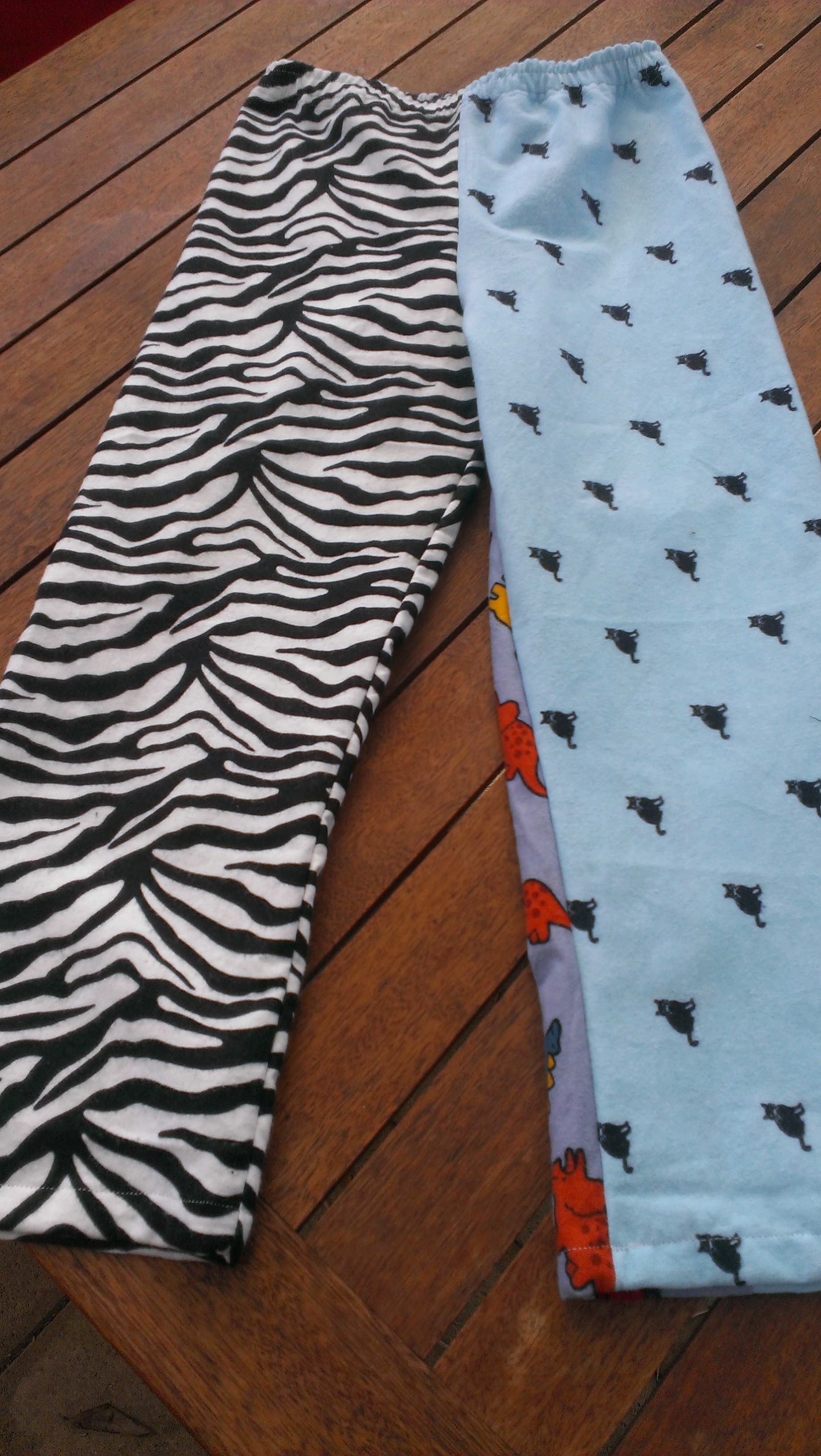
This is a New Look pattern of the 1980s by the look of the happy children on its front cover, which I clearly scored at some op shop or other. I started out with it and a pair of pyjamas that fit the intended recipient, and adjusted as I went.  Nothing complicated, just having a go at getting the basics right.  Zebra print on one leg, cats on a blue background on the other…
IMAG0062

Dinosaurs up the inside back leg to complete the picture!  I am sure there is a good deal of competition for the silliest PJs ever, but this pair are on my list!  So now I wait to see if they fit, and whether these just serve their function as a test garment or become part of the wardrobe for chilly nights…

10 Comments

Filed under Sewing

From old garments to new bag

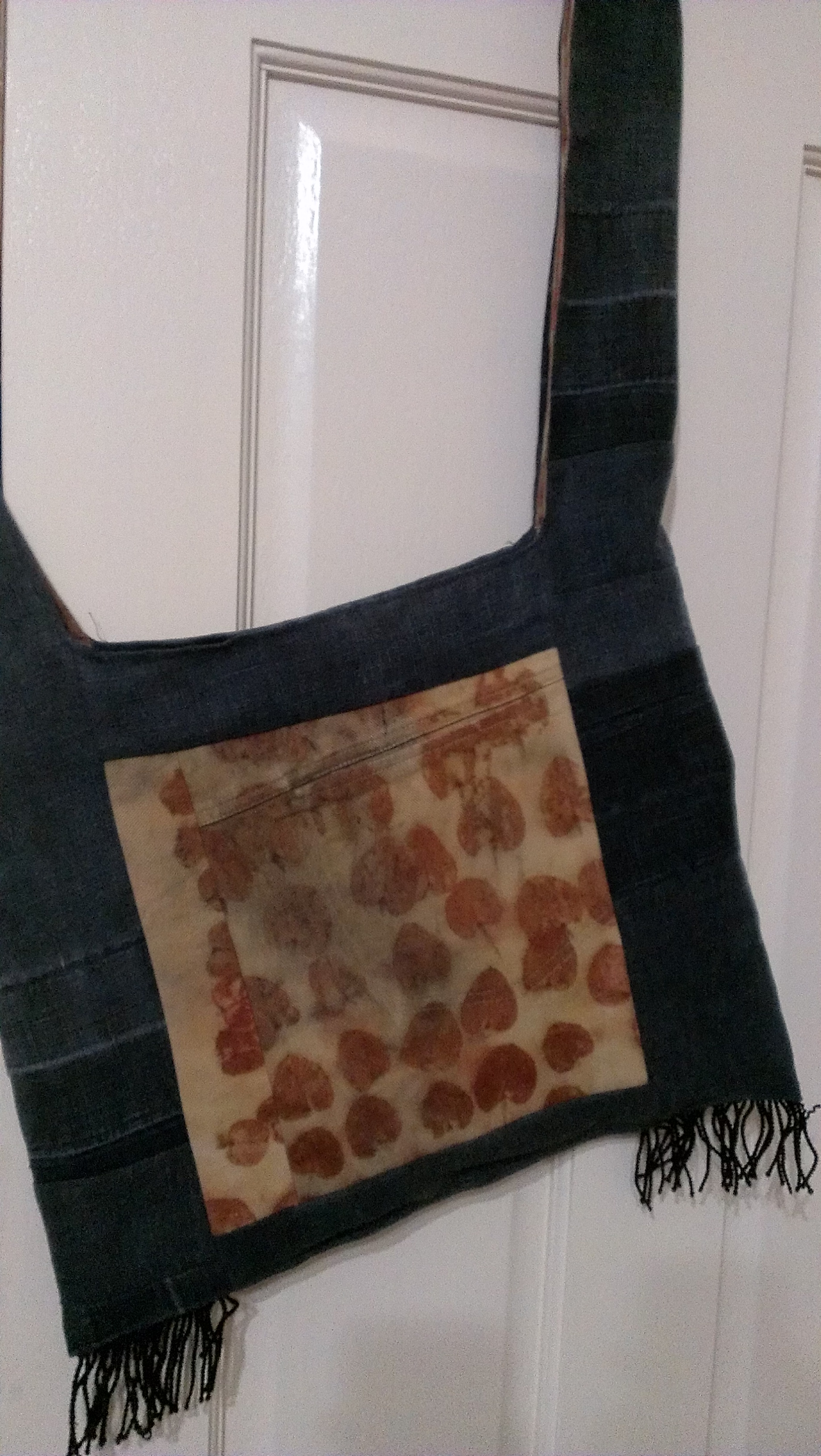
I have been making a bag from two pairs of old pants.  One, a pair of second hand jeans, and the other, a pair of linen pants styled for the 1980s that I found in an op shop.  Before I leaf-printed them, they were pale green.  At first I didn’t like the effect, but it has grown on me.

IMAG4601

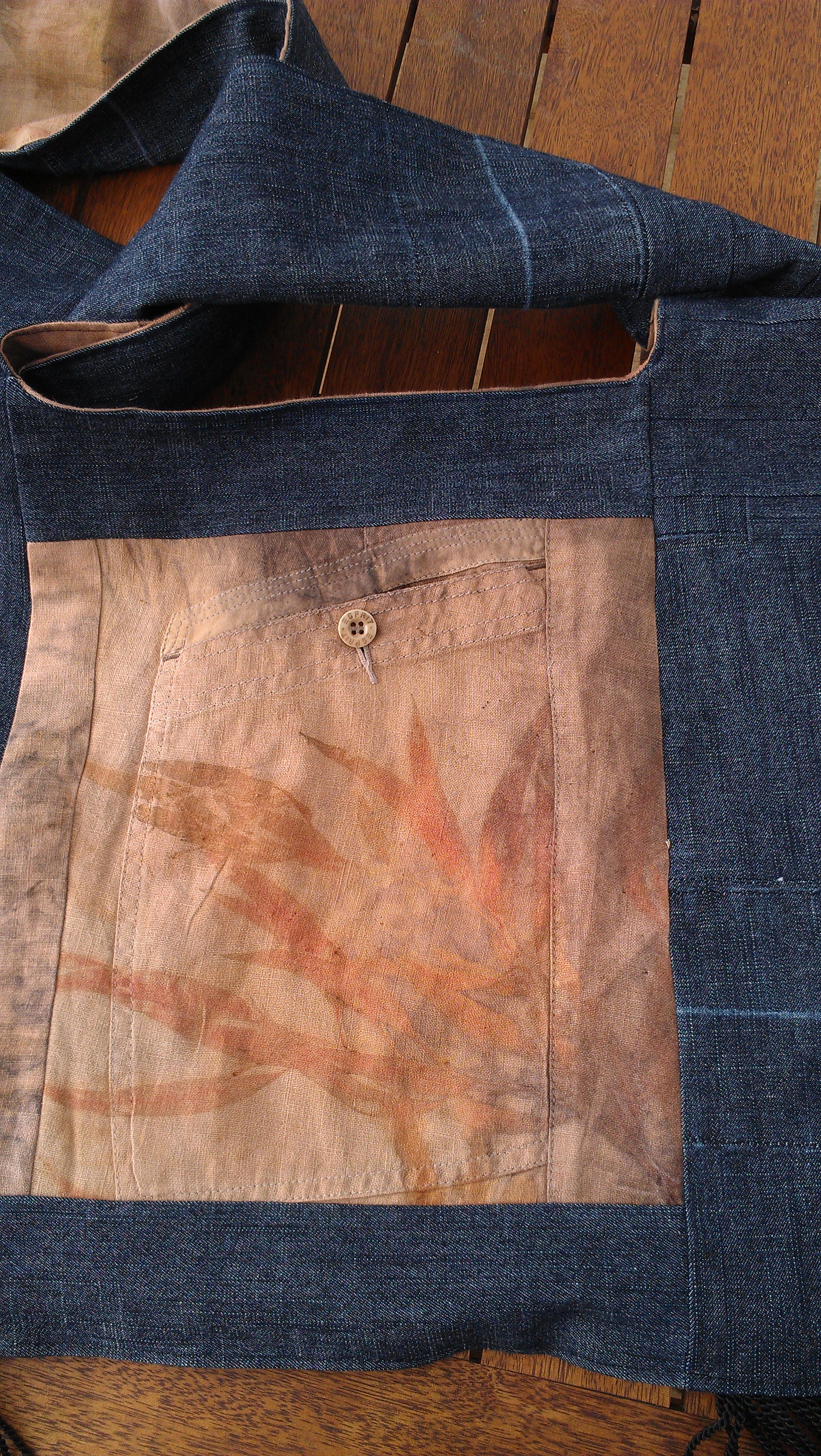
As much as the print, I think what made me want to turn them into a bag was the back pockets.  They are glorious pieces of construction. I love a good pocket.  The 3/4 jeans feature unusual pockets for jeans, too.  I don’t think I ever owned jeans with a welt pocket before.

IMAG0004

I cut feature sections for the outside of the bag which included the button-down pockets.  The jeans pockets went on the inside panels.  Then I pieced the rest of the garments together to create the straps and lining.

IMAG4605

It has been a feature of my sewing career that as I’ve moved away from sewing with fabrics gleaned from all kinds of places free or as cheaply as possible out of sheer necessity–into sewing for pleasure and having the capacity to afford to buy lovely fabric…. I continue to love sewing recycled fabrics.  Shirts made from linen tablecloths and flourbags.  Quilts from recycled garments.  Bags from all manner of fabrics.  I especially love retaining beautiful seaming and details like pockets into a new application.

IMAG0027

Every time I make one of these my beloved makes the case for me/us keeping it.  It’s funny, but flattering!  I haven’t decided yet if this one stays or goes to a new home.

IMAG0029


8 Comments

Filed under Leaf prints, Natural dyeing, Sewing

Opening some jars and filling others…

Once upon a time, I used to make ginger beer, recycling glass beer bottles for the purpose.  We had some with us one time years ago when I was travelling by (even-then-antique) Kombi.  We stopped at a wonderful national park, near Hattah Lakes.  There was a long walk in intense dry heat.  We walked much further than we planned, perhaps having failed to fully understand the map on the sign before setting out.  The water in the lakes was so low that we eventually realised we were not seeing eels in the lake, we were seeing the spines of large fish as they swam in water so shallow that it was barely as deep as the fish were tall.  We got back to the Kombi, and since we’d been walking for hours, and we were on holiday, opened up the back of the van and lay down on the bed for a nap.  We’d been there a little while when there was an almighty bang.  We sat up pretty quickly, because to our untrained ears, it sounded like a gunshot.  There were no other people in sight and only one car in the distance.  All fell quiet.  No dramatic action.  Eventually realisation dawned on one of us, and the three way (gas–electric–car battery) fridge was opened.  Inside it were the remains of a bottle of ginger beer which had exploded under the pressure of its own contents, sprayed though the vegies and suchlike.  Three cheers for the fridge keeping the glass shards safely contained.  Long story short–all bottles of ginger beer stashed under the bed were emptied right there and then, and I never put ginger beer in glass again, except once the lid was off!

IMAG4581

In case you can’t tell, this is a sideways introduction to my circumspection about the state of my steeping jars of dyestuff.  I’ve had some difficulty getting a good seal with with the Stuff, Steep and Store method.  The first time,  I think I raised the temperature too quickly.  It’s a vice I’ve been known to indulge in (or a problem I’ve suffered from, depending on source of heat) when preserving fruit, too.  I resealed some jars and took additional steps to ensure a good seal.  But several of the lids began to dome up again (or just plain leak). This one (pelargonium petals) leaked, as you can see.

IMAG4611

Luckily I had stored it on top of another jar.  Ahem.  So much dye lost!

IMAG4613

The very reverse of a vacuum seal (which is the intention), all of this suggested to me the contents were fermenting.  Perhaps the lids were damaged.  Perhaps my thermometer was actually faulty… I went off and checked when I had this thought on the weekend.  Yes, the thermometer was faulty–the little glass blob that should have held it in a fixed position had clearly broken away unnoticed, allowing the whole business part to slide down by about ten degrees.  So… back to the drawing board.  I am glad I didn’t use that thermometer for preserving peaches and plums!  The jars of fruit all came out just fine, which leads me to think that Stuff, Steep and Store should work for me, as it undoubtedly does for others.  Clearly I can manage a vacuum seal under favourable circumstances.  The good news on my jars of dye is that it looks like I got colour even though these jars haven’t steeped as long as I planned.  Here they are wet from their baths… and not smelling especially fermented.

IMAG0068

From left to right, pelargonium petals (greyer and less blue than the image);  dyers’ chamomile,  brown onion skins, and E Scoparia exhaust dye bath on various silk threads.  Since it’s my patience and my thermometer and not the method that are at fault… I decided to try again.

IMAG0046

From left to right (below): red hibiscus flowers, dried prunus leaves and fallen flowers from an unusual, purple-leaved hibiscus I found almost at the end of its flowering season when I visited the Himeji Japanese gardens on the weekend.  Each with vinegar, sea water, silk/cotton thread and aluminium foil.  Wait and see!

IMAG0081


7 Comments

Filed under Dye Plants, Natural dyeing

Let there be string!

Making string from scrap fabric is so simple and pleasurable (and satisfies my love of using up every last scrap so well) that I’ve found myself making more string this week. I have been thinking, since Second Skin, that it is not so much that I come from the zero waste school of sewing as that I come from the austerity school of sewing.  I do draft so as to avoid creating waste, and I watched my mother dothis as a child, often starting with less fabric than her pattern called for.  Then I take all the remnant fabric from previous projects and turn it into something else, even if this requires a lot of patchwork.  Little of what is left beside my overlocker is wide enough to make string, even. When I tried carding ovwerlocker waste into batts a while back, most of it fell out because there was so much thread cut so short!

IMAG4603

Anyway… I’ve been turning a pair of jeans and a pair of linen pants into a bag, and although that process will use almost all the fabric in each (since I’m piecing together even relatively small sections), there are some scraps left.  I cut them all to suitable widths for string making.  It began with this little pile.

IMAG4597

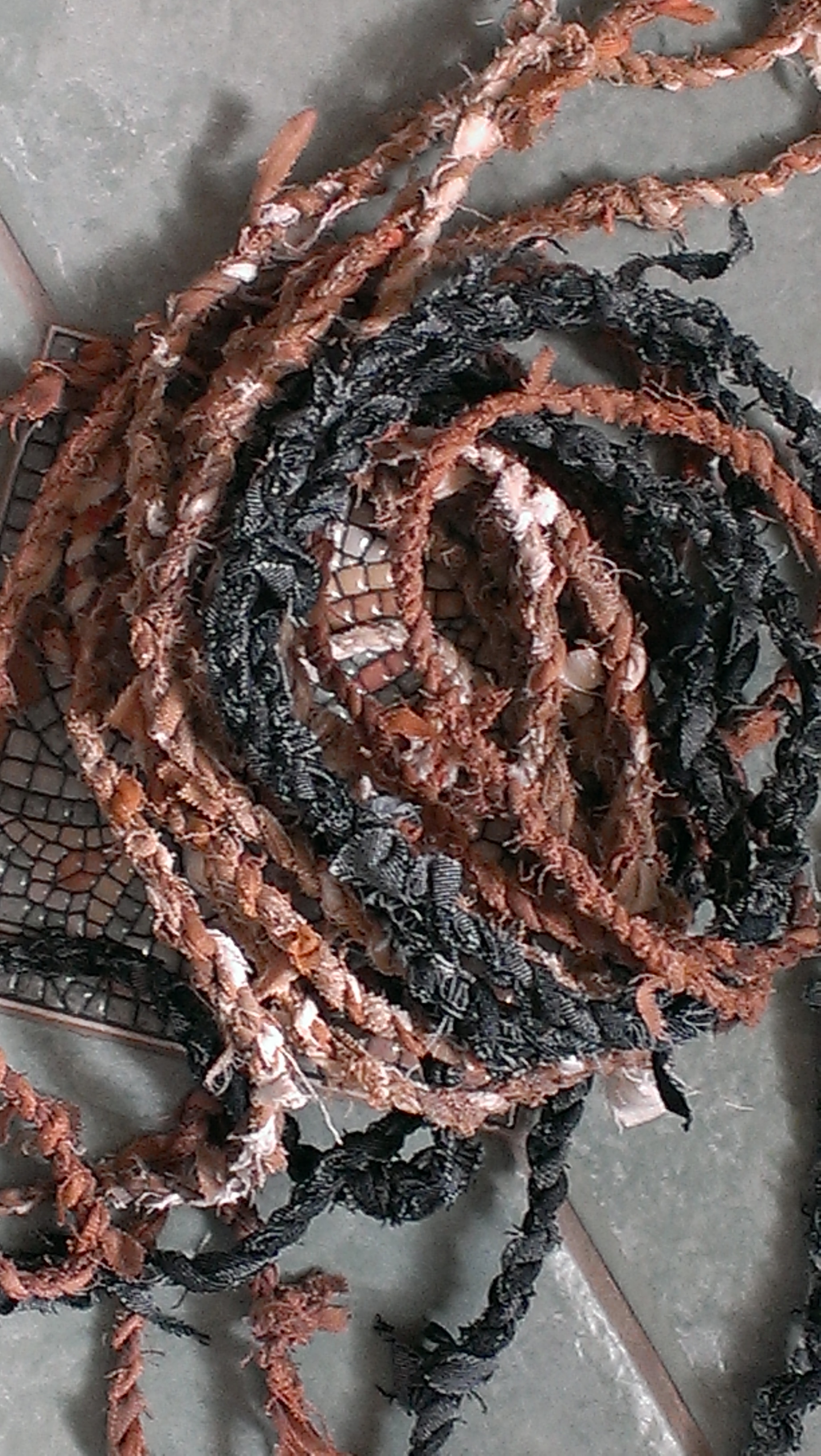
By later in the week, I had three lengths of… well… cord?  Light rope?  Very shaggy string?

IMAG4641

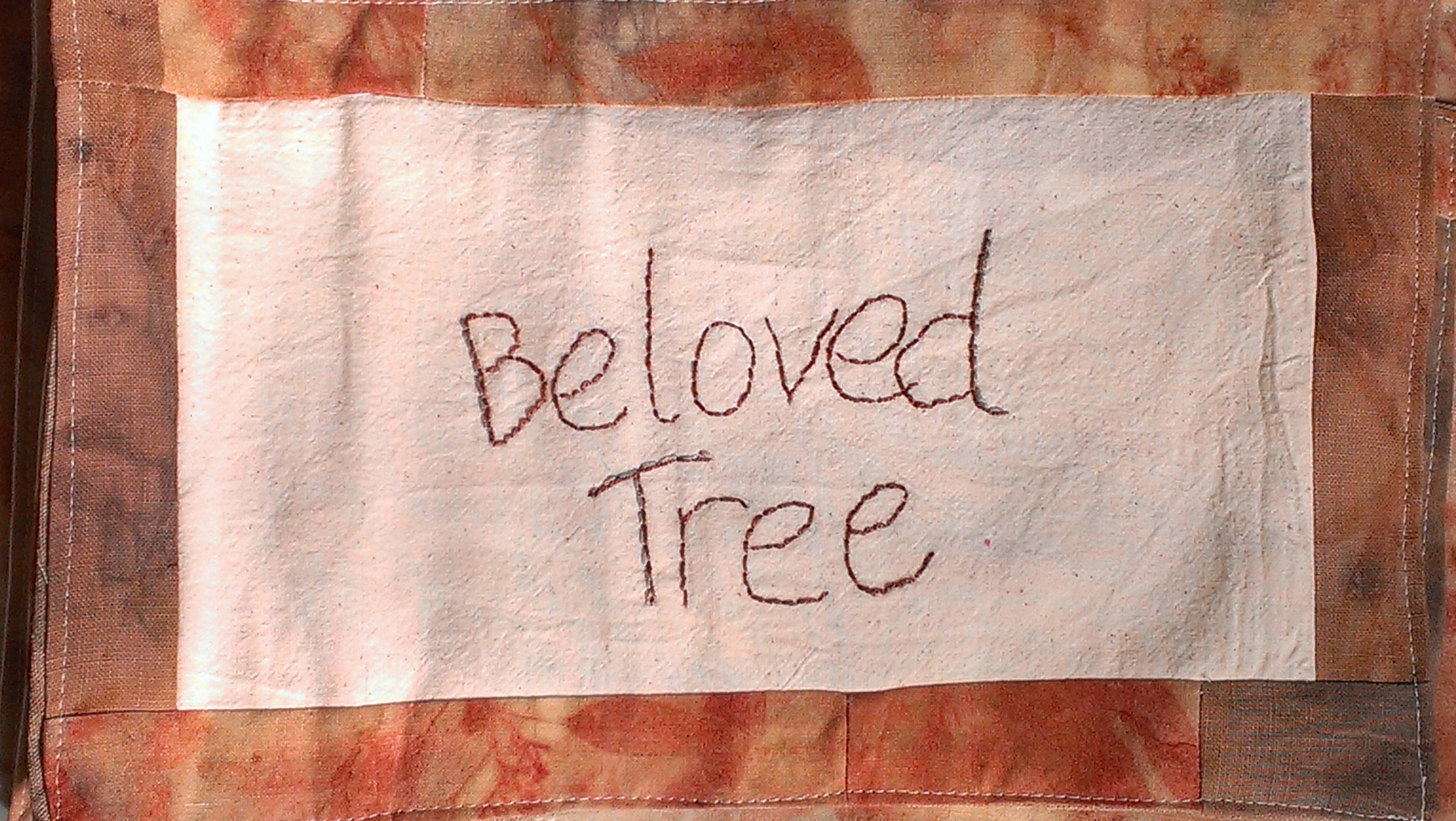
I’ve been creating small banners for trees in our local neighbourhood, and so string–cord–rope will come in handy.

IMAG4644

There’s a plan for these banners… involving other people… and brought into being by the enthusiasm of my fairy godson.  I’ve made several so far from a calico sack I scored from a local business, together with recycled eco-printed fabrics and eucalyptus-dyed embroidery threads.  On the inside, the interfacing is a set of damask napkins which saw their glory days long ago and have been rendered threadbare by long use.  My mother-out-law sent them down to Adelaide last time my sweetheart visited her.  I hope she’ll approve of this way of using them!

IMAG4643


16 Comments

Filed under Craftivism, Sewing

Craftivist pennants and another handspun hat

There have been some small moments of crafty completion in the recent period of day job overwork. The ‘thanks for cycling!’ bunting, which had been ripped down, was replaced after mending by a group of friends one sunny afternoon.

IMAG4425

Proper attention was paid to all its hanging particulars by willing fingers….

IMAG4426

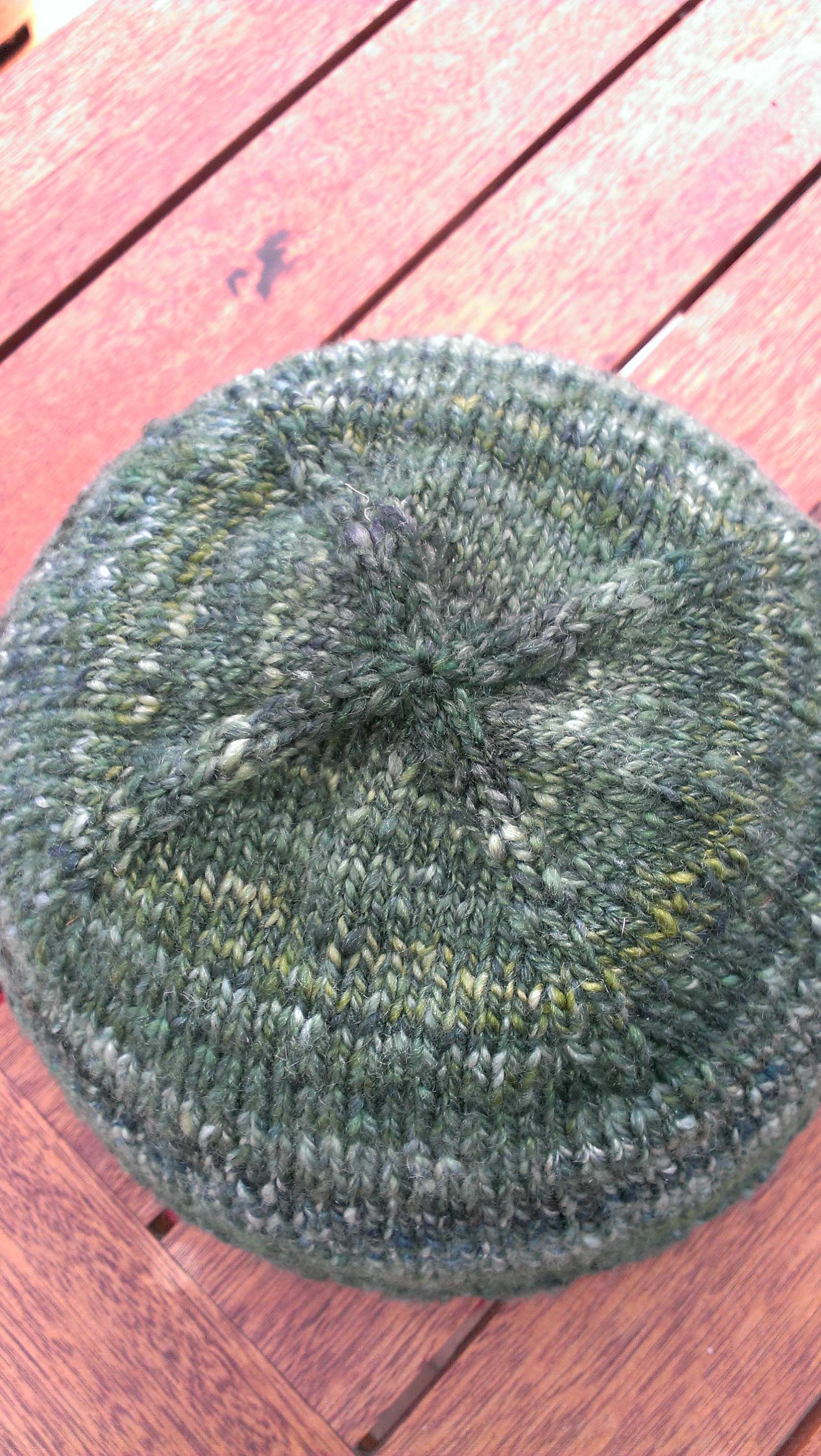
And there has been still another Turn A Square made from the remainder of a skein of luscious handspun yarn.  Here it is, modelled by a particularly willing bowl.

IMAG4414

The distinctive crown shaping of this pattern is so simple, yet so effective. 

IMAG4411

Upcoming public holidays may prove more viable crafting time than recent weeks have done… and I am looking forward to it!  I have plans!


Leave a comment

Filed under Book Review, Knitting, Neighbourhood pleasures, Sewing

Things learned 1

I finally went to a workshop with India Flint: Second Skin, at Beautiful Silks in Melbourne.  It’s an extravagant thing to go to another city and spend three days doing things you enjoy for the sheer pleasure of doing them and learning more–and what a treat it was!

India began each day with a stretch and a lovely metaphorical invitation to focus on the here and now of our time together.  Each time we did it, I thought some more about how I don’t do this at the beginning of my days, but that they would probably go a lot better if I did.  I loved spending that little piece of time with my mind on an image, before leaping into the excitement or the sheer tasks of the day.  I managed to remember to do it again at work once this week so far…

IMAG4275

I thought a lot about being a teacher at this workshop.  I make my living teaching.  One of the reasons I spend a lot of time learning is that I love learning and I think human beings are one of the few creatures who must, of necessity, learn for the entirety of our lives.  I think it is a skill for life as well as a delight.  But another reason is that as a teacher, it is immensely helpful to be a learner over and over again and be reminded constantly of the joys, frustrations, excitements and fears that attend learning for most of us.  To be confronted by places you thought you understood and suddenly realise you didn’t.  To see the bigger picture open up.  To feel fear of failure.  To find some things work for you and some don’t.  To notice you learn differently than others.

IMAG4267

I always find it very interesting to be in the presence of a teacher whose approach is really different to mine.  I think that great teaching draws on the whole of who you are as a person, and it is only right and appropriate that there are many great teachers whose styles and approaches are exquisitely different.  India is unquestionably a deeply different teacher than I am. I have often thought that Eco-Colour and Second Skin are more inspirational than instructional.  That they invite experimentation rather than providing a step by step guide to anything.  I don’t mean there are no instructions in these books.  Of course, there are.  But I think the weight of India’s teaching strategy is on inspiring and challenging people to make techniques their own and to discover what is local and useful to them in their own lives and environments.  I am much more of an instructor, and this is, in part, because I’m a structured and linear thinker, comparatively speaking.  Freeform creativity… not so much!  I have spent quite a bit of time in the last few years honing my capacity to deliver a short, inspirational speech, because I notice that while I see usefulness in a technique or skill and set about practicing it until I’ve mastered enough of it to satisfy myself, many others do not feel moved in this way (at least, in my current context).  I love to be inspired, but I can accept less and still feel motivated and act on that motivation.  I notice a lot of other people can’t.

IMAG4268

I was so impressed by India’s capacity to inspire.  Understand that I don’t wear frocks and went to a class where you make (among other things, but principally) a dress.  Understand that when I make a garment I usually start from a pattern or draft one from a garment because I don’t believe I have much capacity for design.  Also, understand that the expression “measure twice and cut once” was liberally applied in my childhood.  This is the base from which I watched India demonstrate zero waste drafting of a dress and then freehand cutting the design, with many examples of how this might be adapted or modified or experimented with.  I eventually found myself thinking that this was so exciting it was a shame I couldn’t just play with these ideas every day for the foreseeable future… I could picture all manner of things taking shape in my mind.  Curiosity, play, particular fabrics I have at home, shapes… then, a short while later, I was standing in front of a length of rather expensive and lovely fabric, with a pair of scissors and a hand-twined string.  Terrified!

IMAG4269

It was pretty funny, and partly because I have watched people I teach having that sense of possibility and capacity, and then watched them attempt something new and feel their fear return and their doubts re-enter.  If you’re lucky, courage and inspiration win out until the first hurdle has been mounted, a sense of possibility begins to solidify and the hard work begins…

IMAG4273


13 Comments

Filed under Natural dyeing, Sewing