Tag Archives: dyeing

A pair of backyard Eucalypts…

Recently I discovered that a friend who has one of the biggest E Cinerea trees I have ever seen in her back yard would like some of it removed.  I offered to cut and take away the dead and insect affected parts, to her surprise, and have now made three visits to do just that. I’ve begun some dye pots with alpaca another friend has asked me to dye.

IMAG2075

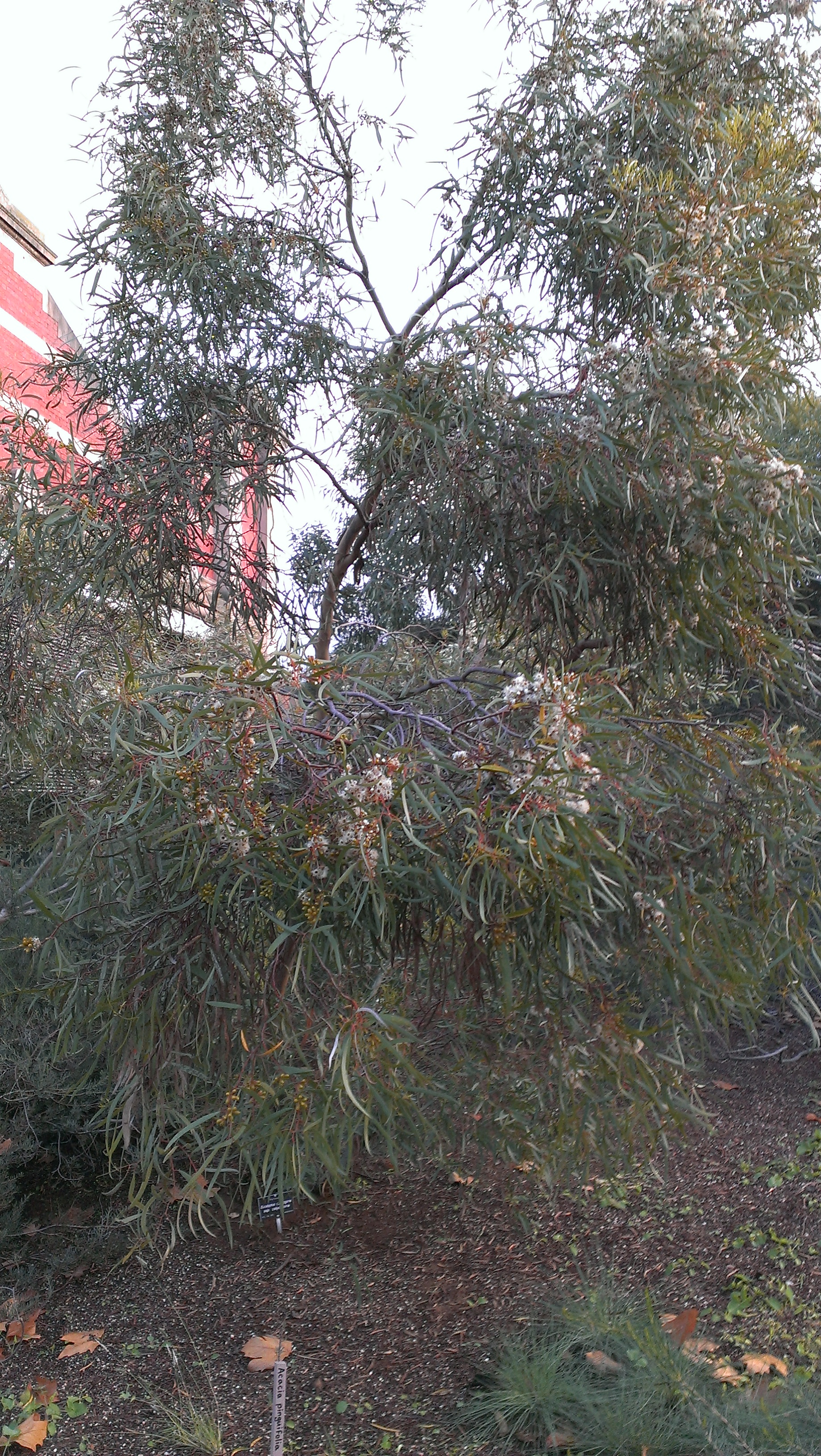
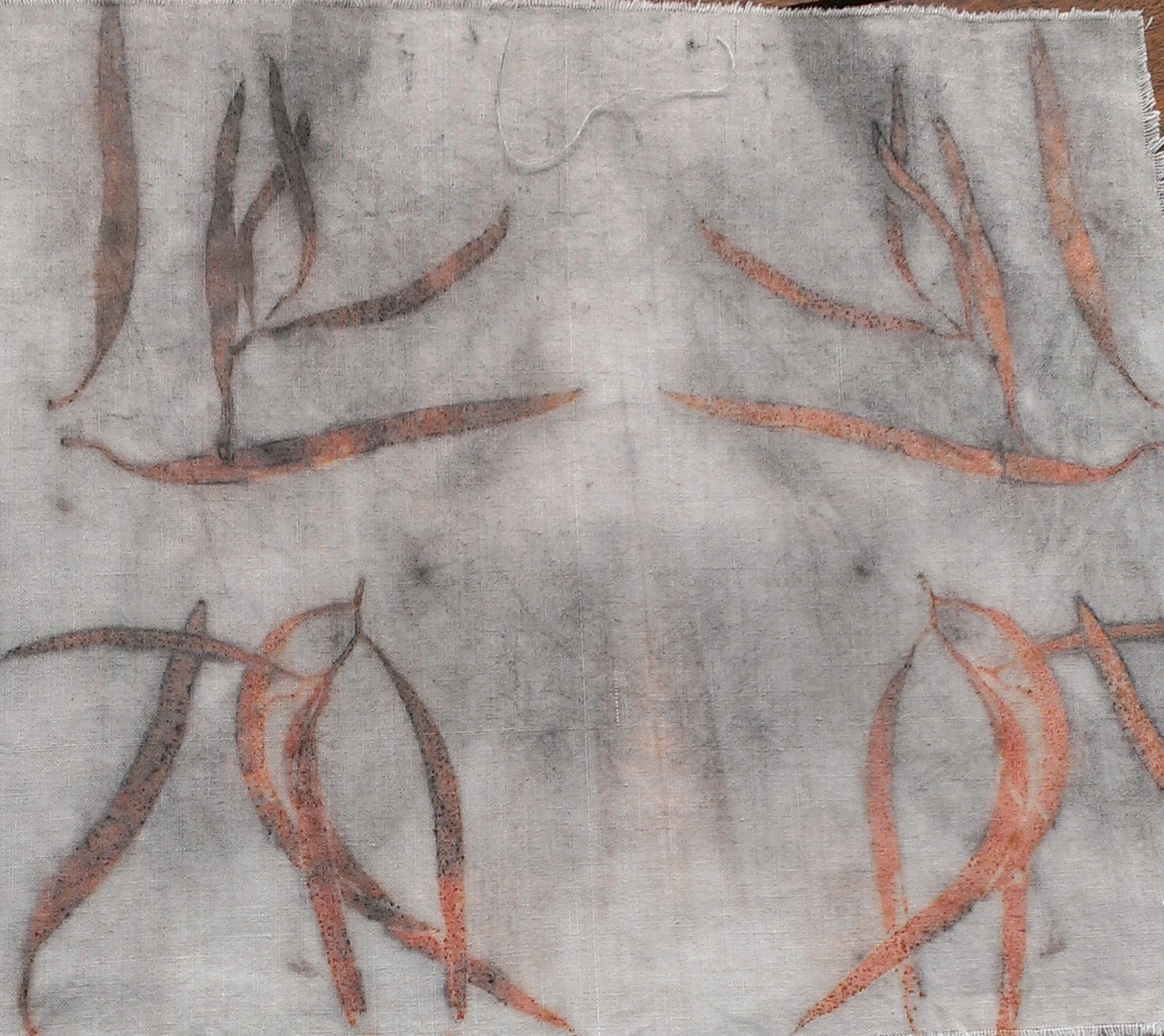
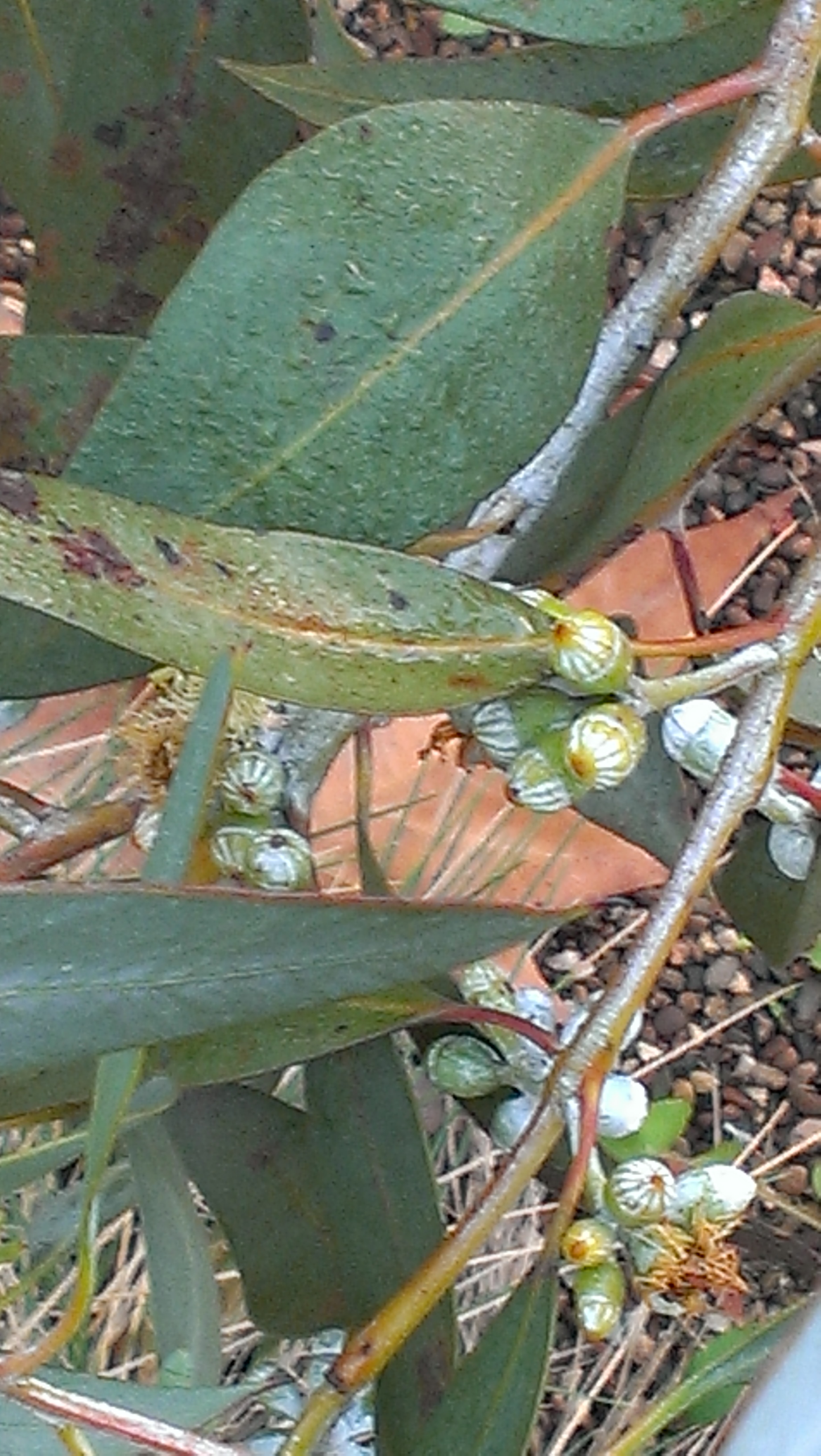
On the second visit to trim the E Cinerea, my friend’s partner spoke about the loss of a bough on their other eucalypt.  I looked closely at this second very large tree with rough, fibrous bark on the trunk and very narrow leaves and ‘Eucalyptus Nicholii’ went through my head.  Could I at last have found a fully grown specimen?  It branched so high and the ground had been so thoroughly cleared in the effort to remove all the fallen material that I couldn’t find fruit.  I did manage enough leaves for a dye pot however… and it is very promising! I heated the leaves for an hour, dropped the sample card in and went for a bike ride leaving the heat off.  When I got back:

IMAG2078

As I write I have added some alpaca fleece.  I will have to wait to make a more definitive identification… I have sometimes found that all the hours I’ve spent with books on Eucalypts have created the context for me to have a correct intuition about a particular tree.  Equally often, though–I have completely the wrong end of the stick!  But the alpaca is looking good as it sits draining…

IMAG2101

8 Comments

Filed under Dye Plants, Eucalypts, Natural dyeing

Indigo dyeing

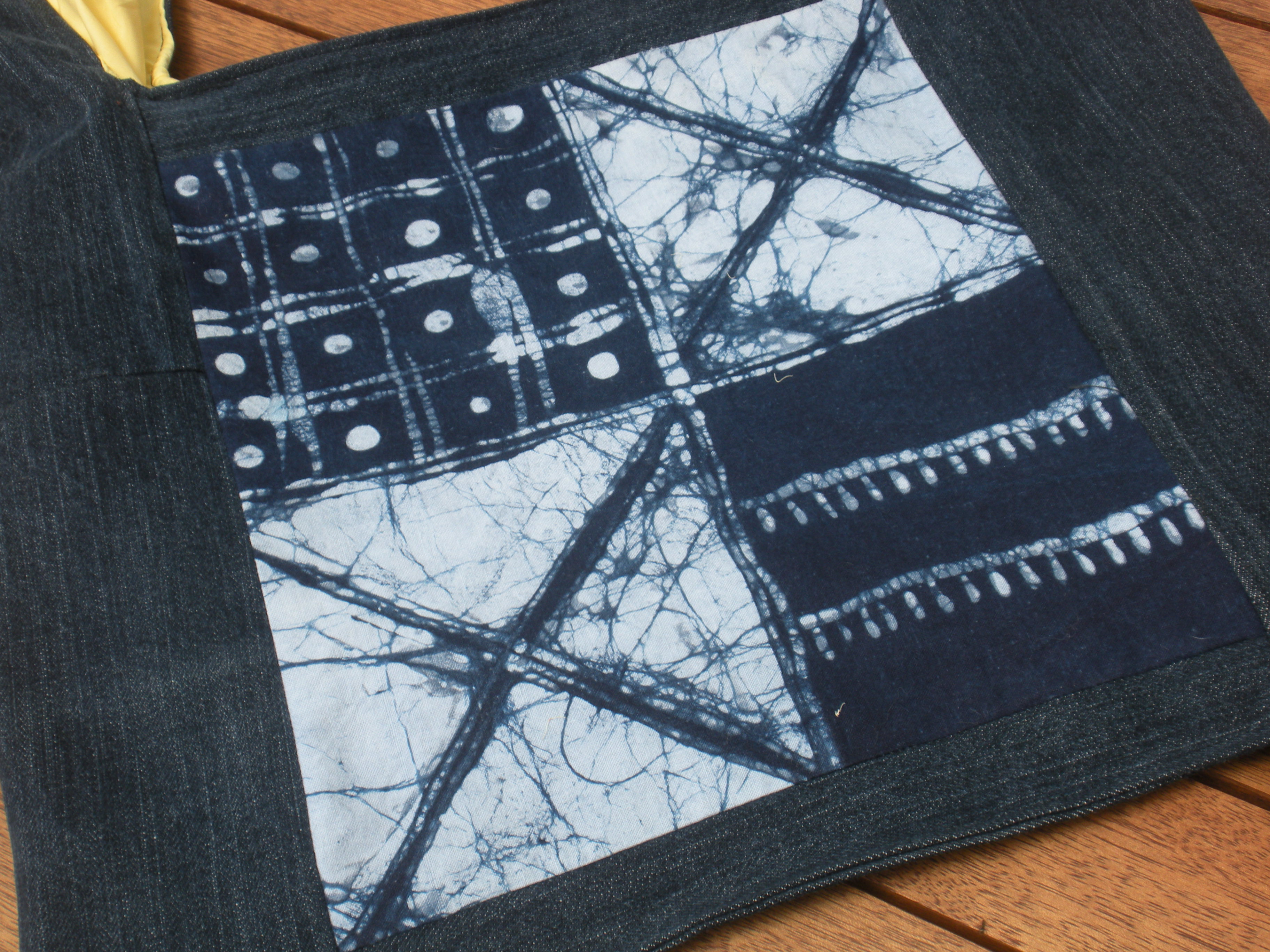
A while back, I did a workshop on Nigerian Indigo dyeing with CraftSouth.  The tutor was the fabulous Oluwole Oginni.  I highly recommend this workshop, part of a series of Traditional Craft Workshops.  Indigo dyeing wasn’t offered in 2012 but hopefully there will be another opportunity.

We used wax resists and then dyed with indigo, using several dips.

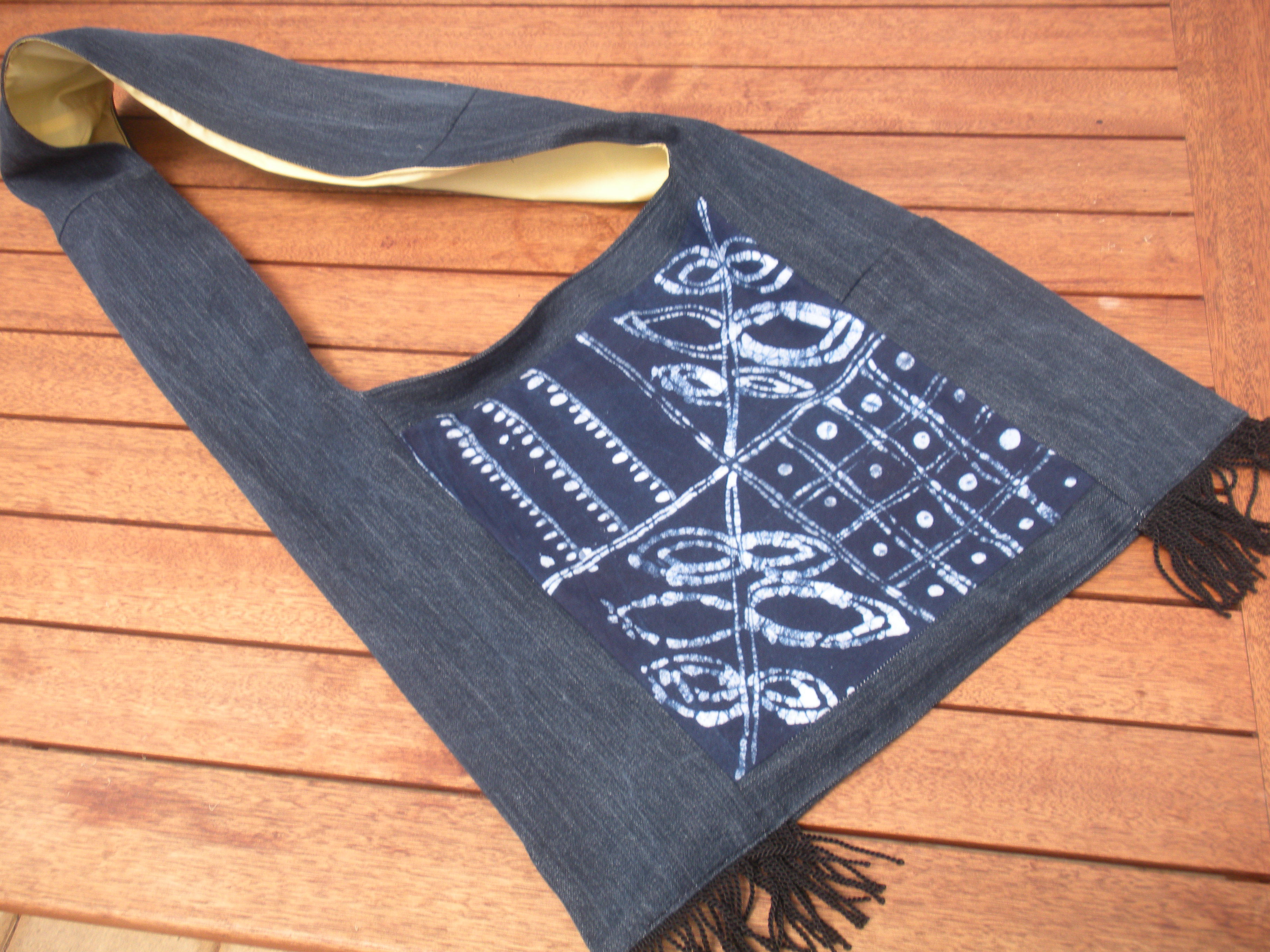
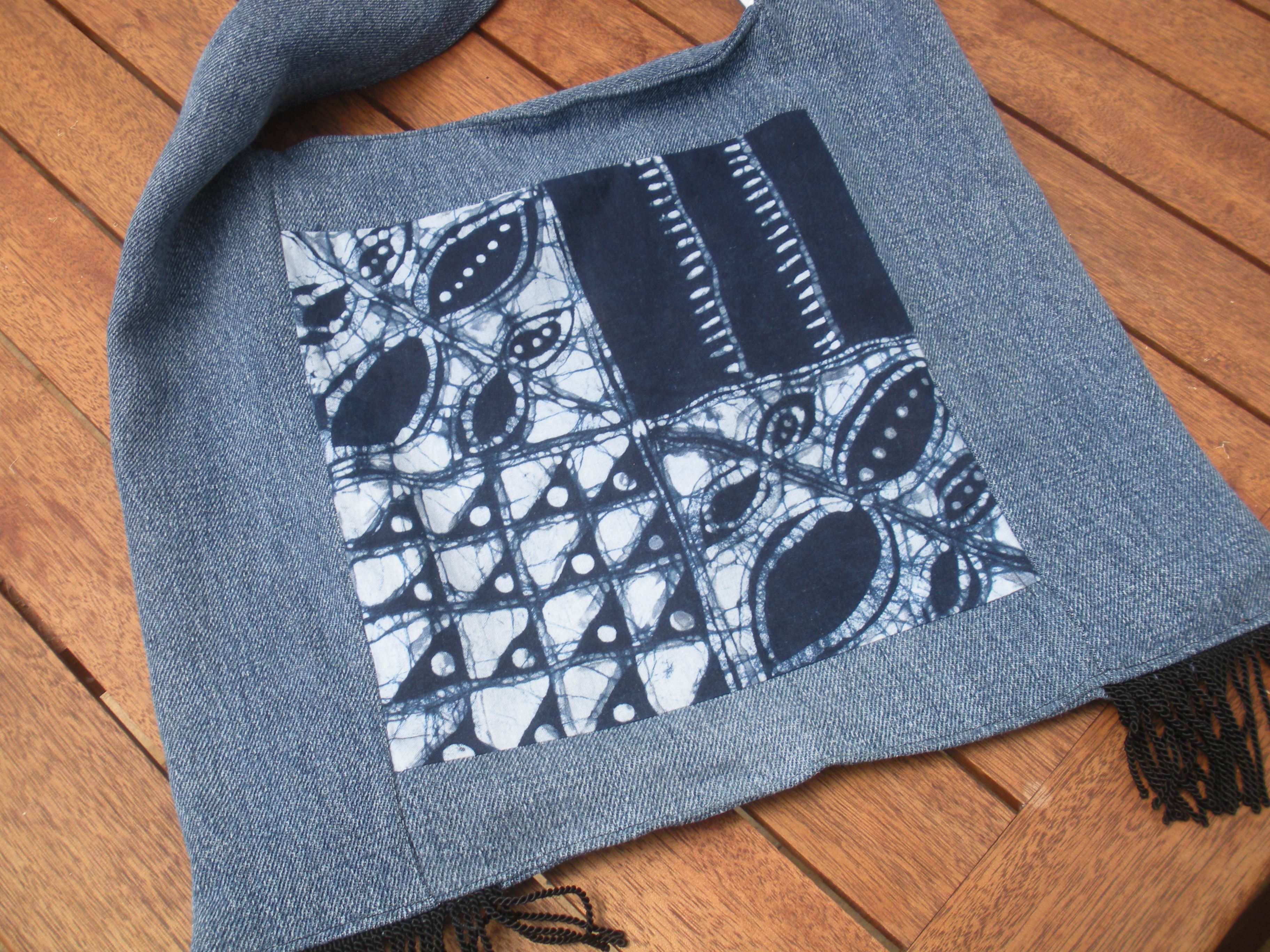
I turned some of the fabric I worked on into these fully lined bags.

The denim is from recycled jeans, one pair to each bag!  This pair are a hemp blend.

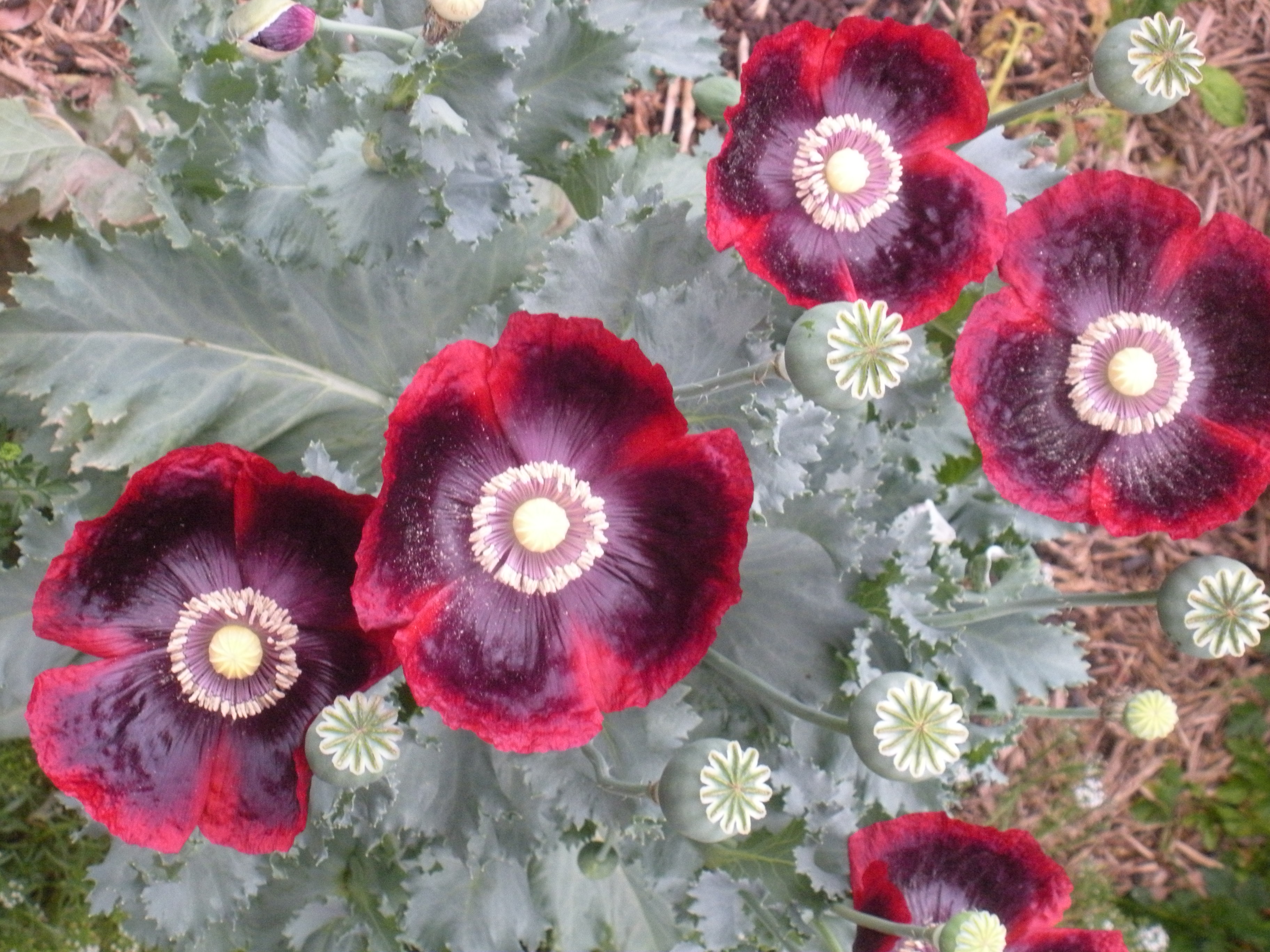
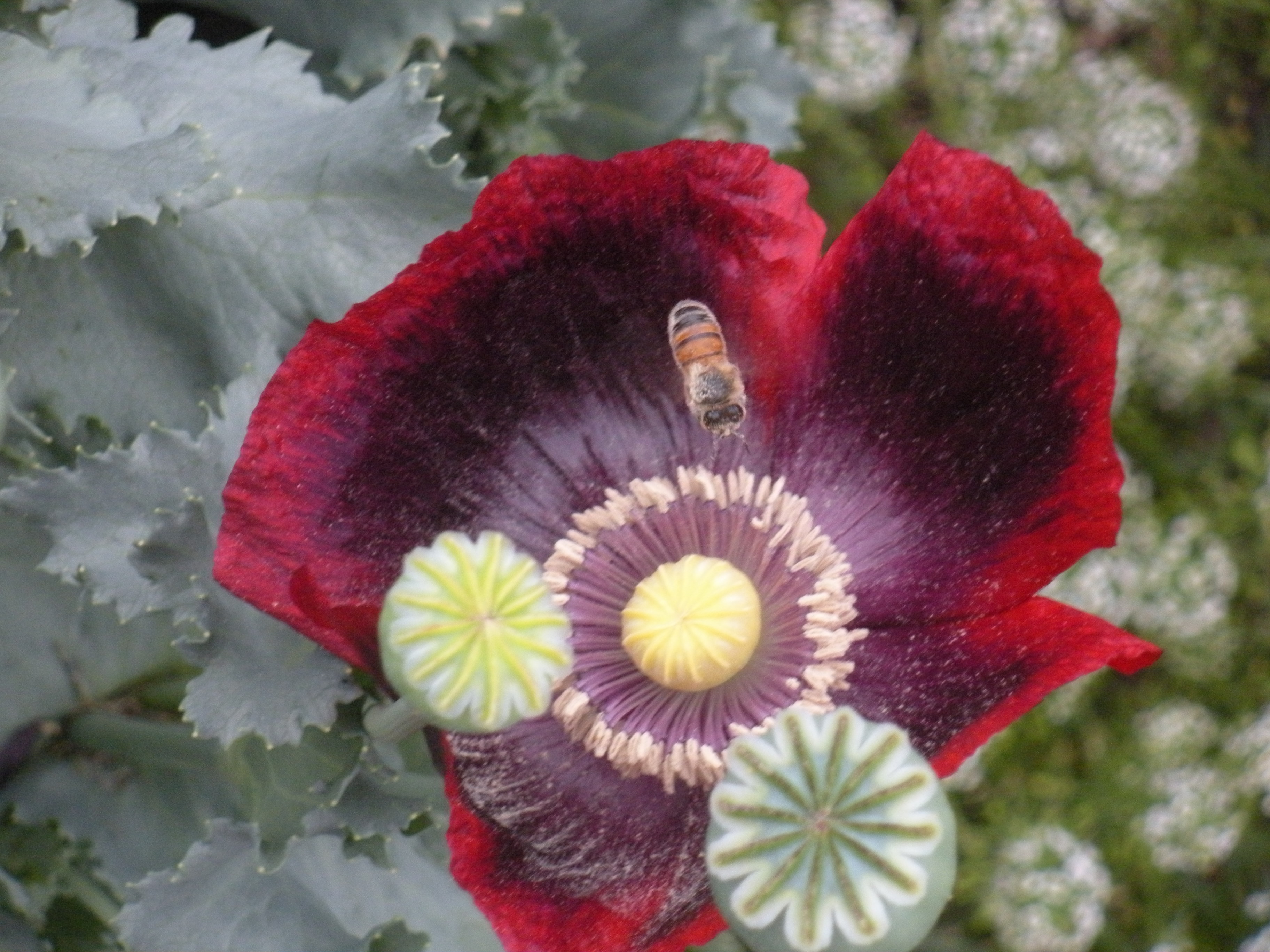
And since we’re here… a couple of gratuitous pictures of a poppy that came up in my garden.  I can’t really claim to have planted it, though it bears a strong resemblance to some blood poppies I grew years back from a gift of seed.  But it was beautiful, and the bees love these flowers.  It is winter here now and I have just a few of these poppies beginning life in the garden, which have escaped the caterpillars.  So here’s hoping for more flowers later in the year!

2 Comments

Filed under Sewing

Plum Pine 5: Lightfastness

Having discovered that plum pine had so much potential for colour, I felt obliged to test for lightfastness and washfastness. This is my lightfastness testing apparatus on the day I set it up: it is a none too sophisticated set of threads wrapped around card, inside a heavy card envelope with a window cut out of it, which has been sitting in the front window since 23 June 2013.

IMAG1602

At the top, 3 silk thread samples, handspun Wensleydale, handspun Polwarth, two shades dyed on BWM alpaca rich and finally, two shades dyed on Patonyle (superwash woool+nylon blend).

After over a month in the (winter) sun, fading is quite evident.  I realise now that I could have made a lightfastness test which made the results clearer, but you’re stuck with my limitations on this learning curve. If you squint, you can see the original colour at the sides.  The fibre that performed best was the handspun wensleydale with alum.  It was also the winner on the washfastness test.

IMAG1890

I have to say that I think I have chosen well in using the bulk of the yarn I dyed for some slippers (they are Fibertrends Clogs), which might spend their lives tucked under a bed and come out only at night!  Here they are awaiting felting…

IMAG1889

And here they are after a wash at 40C, with some commercially dyed companions.

IMAG1906

5 Comments

Filed under Dye Plants, Dyefastness, Natural dyeing

Plum Pine 4: Washfastness

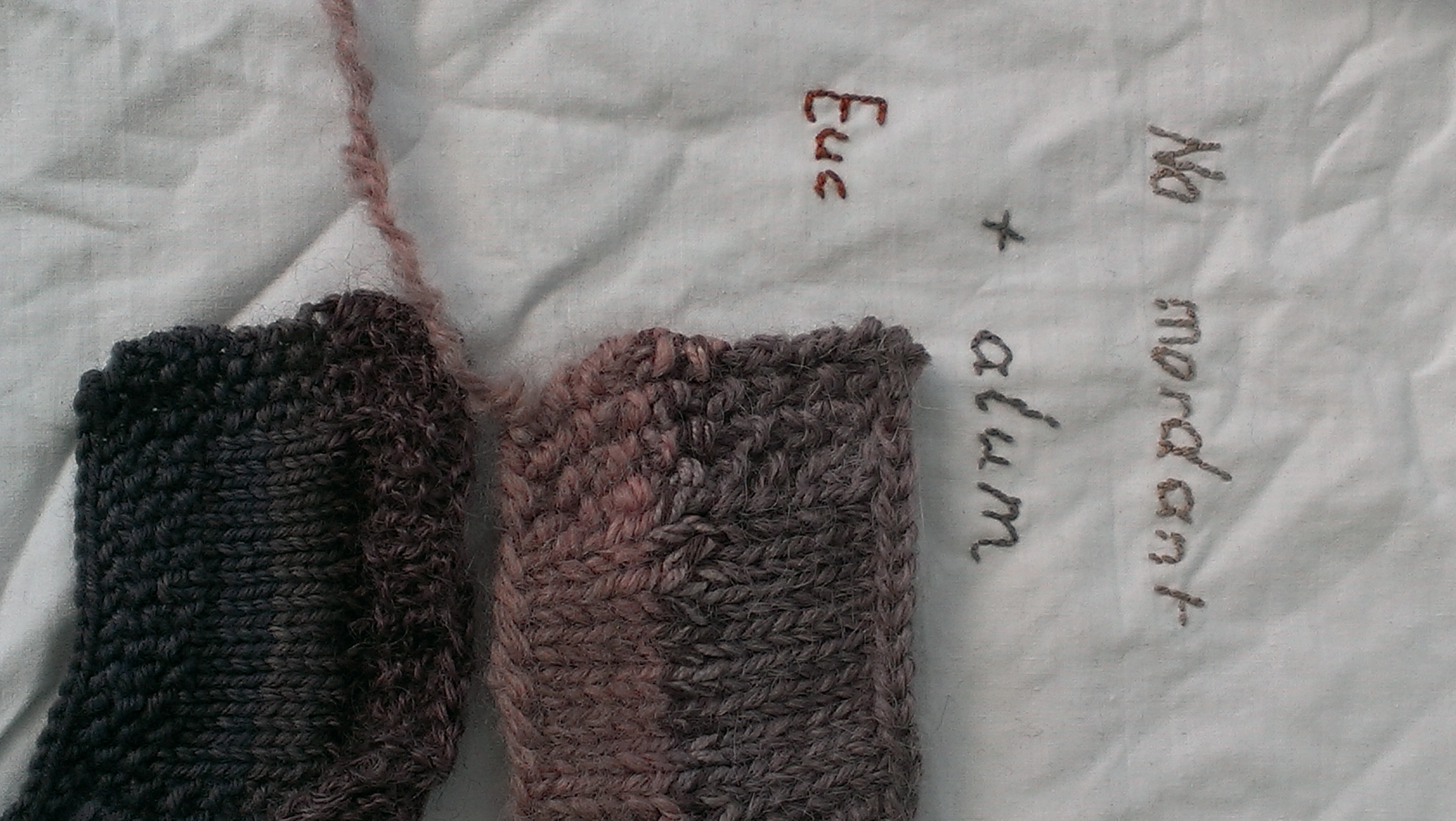
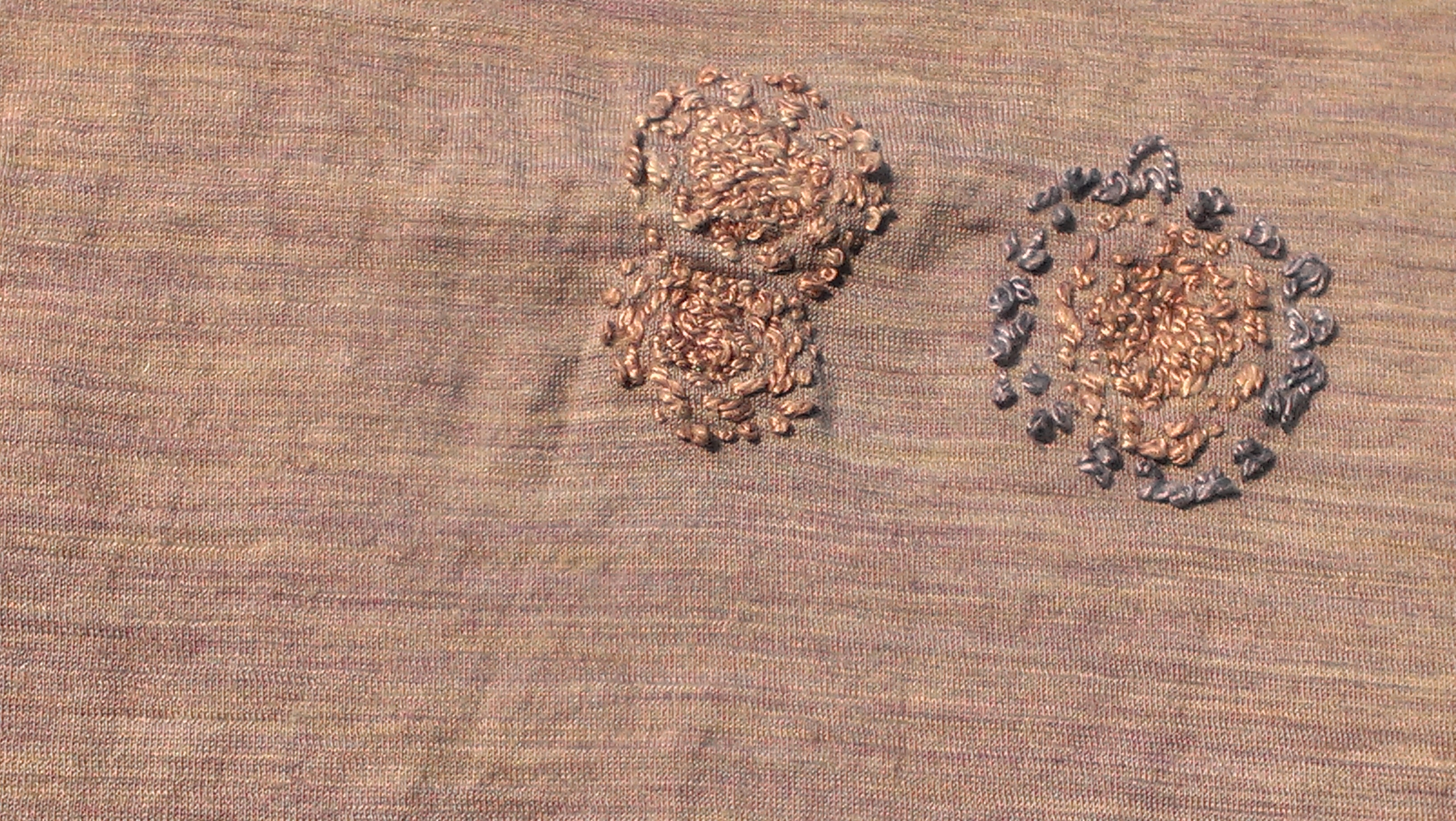
I decided the obvious way to test for washfastness was to wash.  So I embroidered with the plum pine fruit–no mordant–silk thread, and with the plum pine fruit-with alum and cream of tartar on a piece of cotton… and added a little eucalyptus dyed silk thread for good measure.  Not the best example of embroidery ever seen, but it will do the job.  The two upper examples were purple (like the thread on the cards) when they went into a normal wash–30C with eco-detergent.  One wash later, the no-alum sample is grey and the with-alum sample is green-grey.  Eucalyptus shows its true colours yet again.

IMAG1655

Yesterday I tried washing my sample cards at 40C with eco-balls (we have laundry variety here, as you will shortly understand) and they were still purple when they came out of the wash.  Interesting… this made me wonder if part of what is going on here about Ph.  Detergent would be more alkaline than eco-balls.

After 4 more washes:

IMAG1892

You might remember that I did some darning with my early silk samples.  They have not fared well either–but the mending is still doing the job!  The pink is still pink, but much faded after what I would guess as being about 8-10 washes.  The purple is blue, and paler.

IMAG1894

I knit some test samples from my yarns.  They fared better, washed with other woollens, cold with soapnuts rather than detergent (if anything, a slightly acidic wash).  The sample on the right has two shades of plum pine with alum and CoT on BWM alpaca rich, with a band of cotton used to tie the skeins in between because this yarn took so much colour during the dyeing I was curious.  The sample on the left has two shades of plum pine on patonyle (wool and nylon superwash sock yarn and a sample of handspun Wensleydale).  One has gone from purple to grey and the other from purple to blue.  Blue?  Before:

IMAG1661

After, with unwashed BWM Alpaca Rich in the background for comparison.

IMAG1893

Well then.  Not what you’d call really excellent washfastness. And some new mysteries to ponder, as usual.

3 Comments

Filed under Dye Plants, Dyefastness, Natural dyeing

Davidson’s Plum

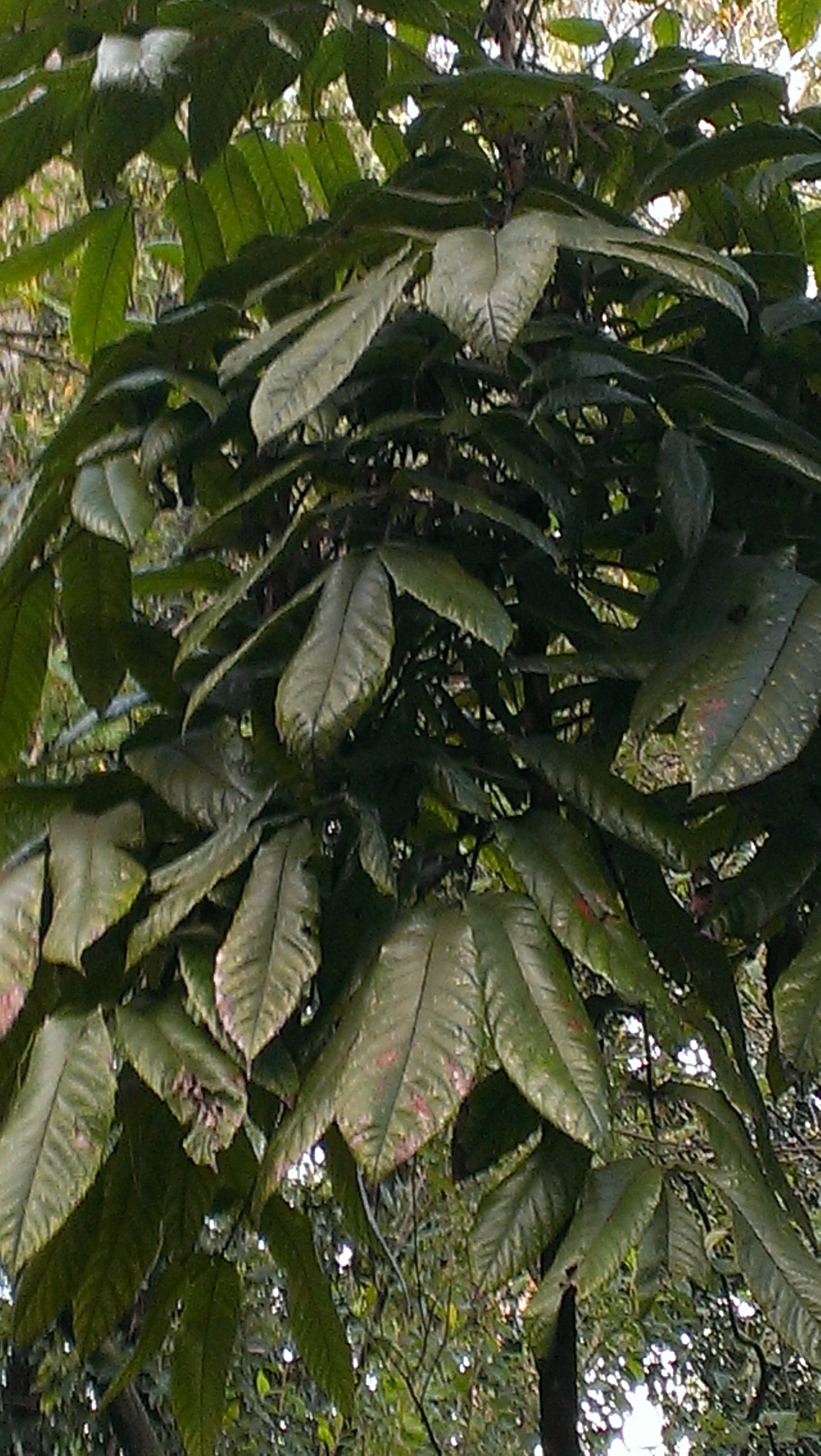
In the interests of experimentation, when I came across some fallen Davidson’s Plums recently, I picked them up and carried them home.  As you do!

IMAG1754

This is a rainforest tree, native to Queensland: Davidsonia Pruriens.

IMAG1743

It’s narrow and tall and the fruit are surprisingly large (many native fruits are small by comparison with the European cultivated fruits they reminded colonists about).

IMAG1744

There might be a way to get colour from these fruits.  But the way I chose (cooking the fruit and applying to alum mordanted fibre) is not really one of them.  The alum mordanted wool turned a pale tan–and this may be a generous interpretatio– and the alum mordanted silk became ever such a pastel shade of apricot.

IMAG1775 (1)

5 Comments

Filed under Dye Plants, Natural dyeing

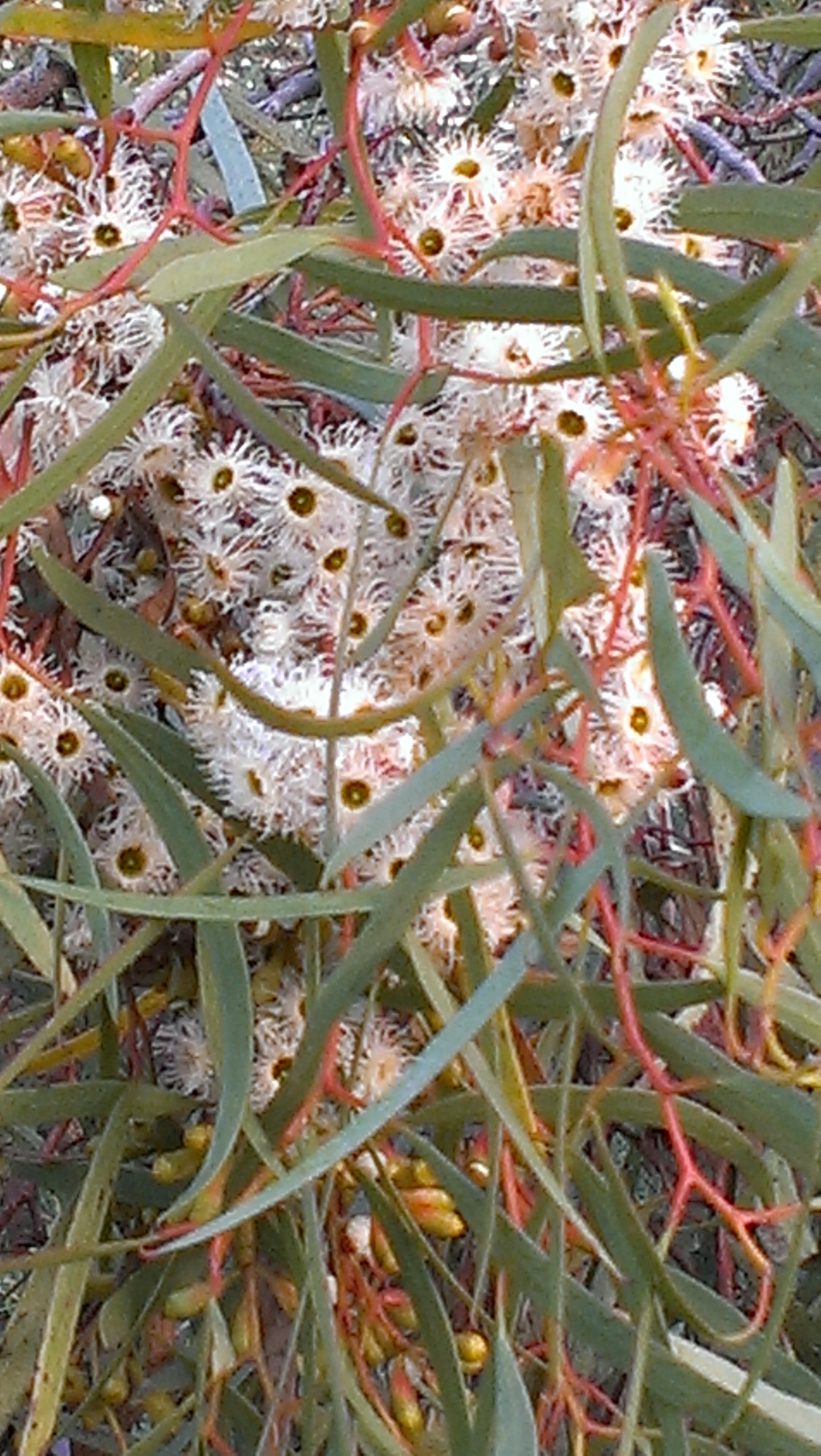
Eucalyptus Calycogona subsp Calycogona

While on the path of trees helpfully labelled in Botanic Park… I bring you E Calycogona Calycogona. It is native to Western Australia.  Here it is flowering generously in early June in Adelaide.

IMAG1405

IMAG1404

And what a result in the dye bath!  Every fallen bud cap printed.

IMAG1431

Leave a comment

Filed under Dye Plants, Eucalypts, Leaf prints

Austral Indigo 2: Hydrosulphite vat process

My second experiment with Indigofera Australis was a hydrospulphite vat. Robyn Heywood from the Victorian Handspinners and Weavers Guild has made her experiments with Indigofera Australis available online. I was delighted to be able to see the records and samples of the Victorian Handspinners and Weavers dyeing group at their Guild Rooms when I was in Melbourne last year.  It was really inspiring to see the variety of methods they had used and the range of colours they had achieved.

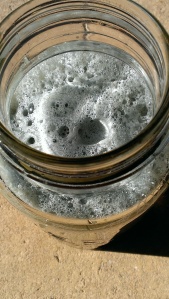
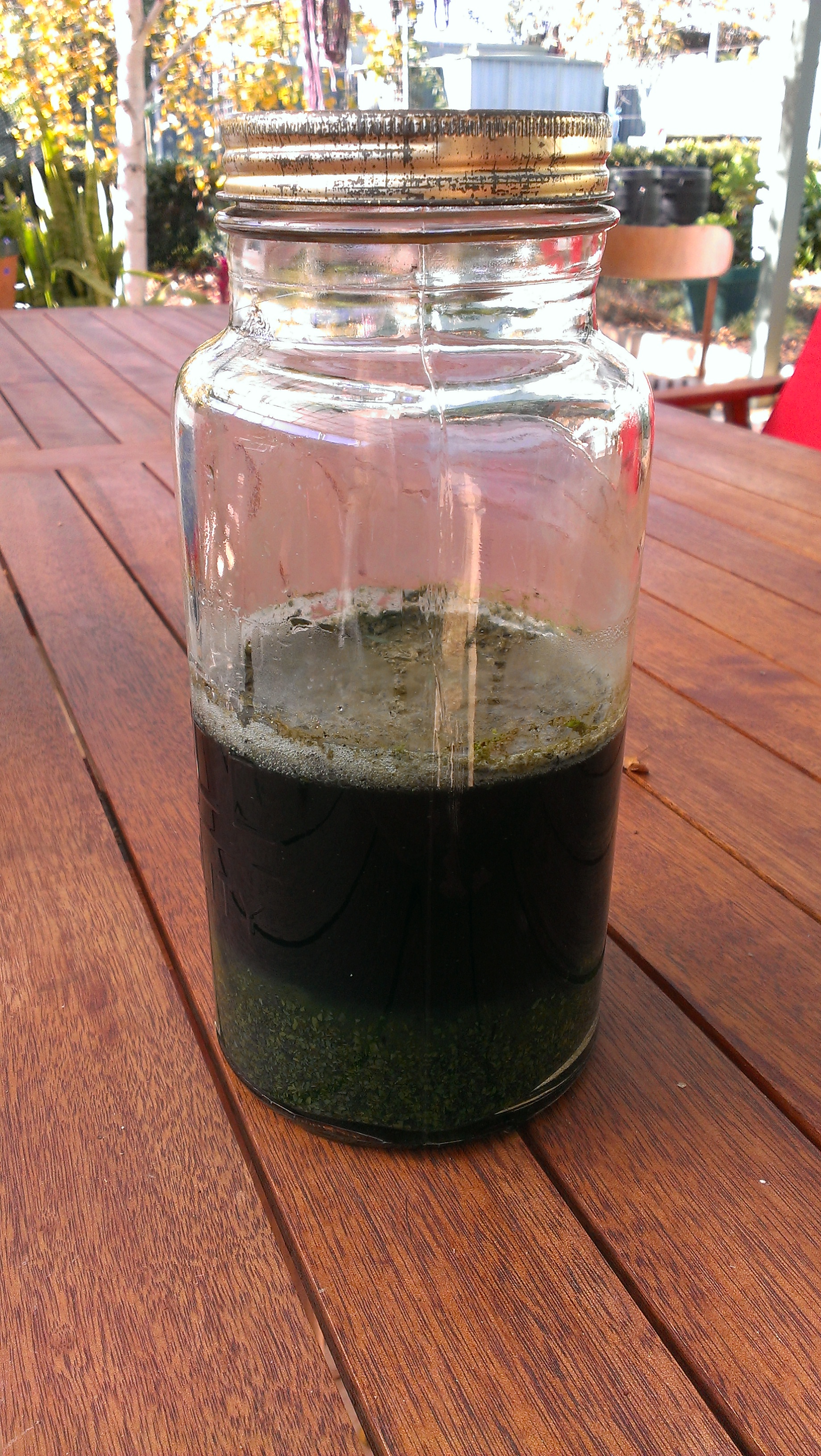
Robyn Heywood has trialled this method as well as the cold vinegar method and provided instructions.  So, since I still had some hydrosulphite left from my last indigo vat, I decided to try it.  Robyn Heywood soaked the leaves… apparently it is too much to expect that I would follow instructions exactly.  I blended them and left to soak for a couple of days. Here they are 18 hours later.
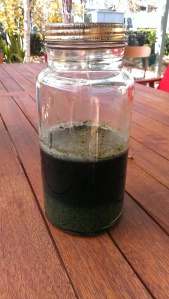
IMAG1614

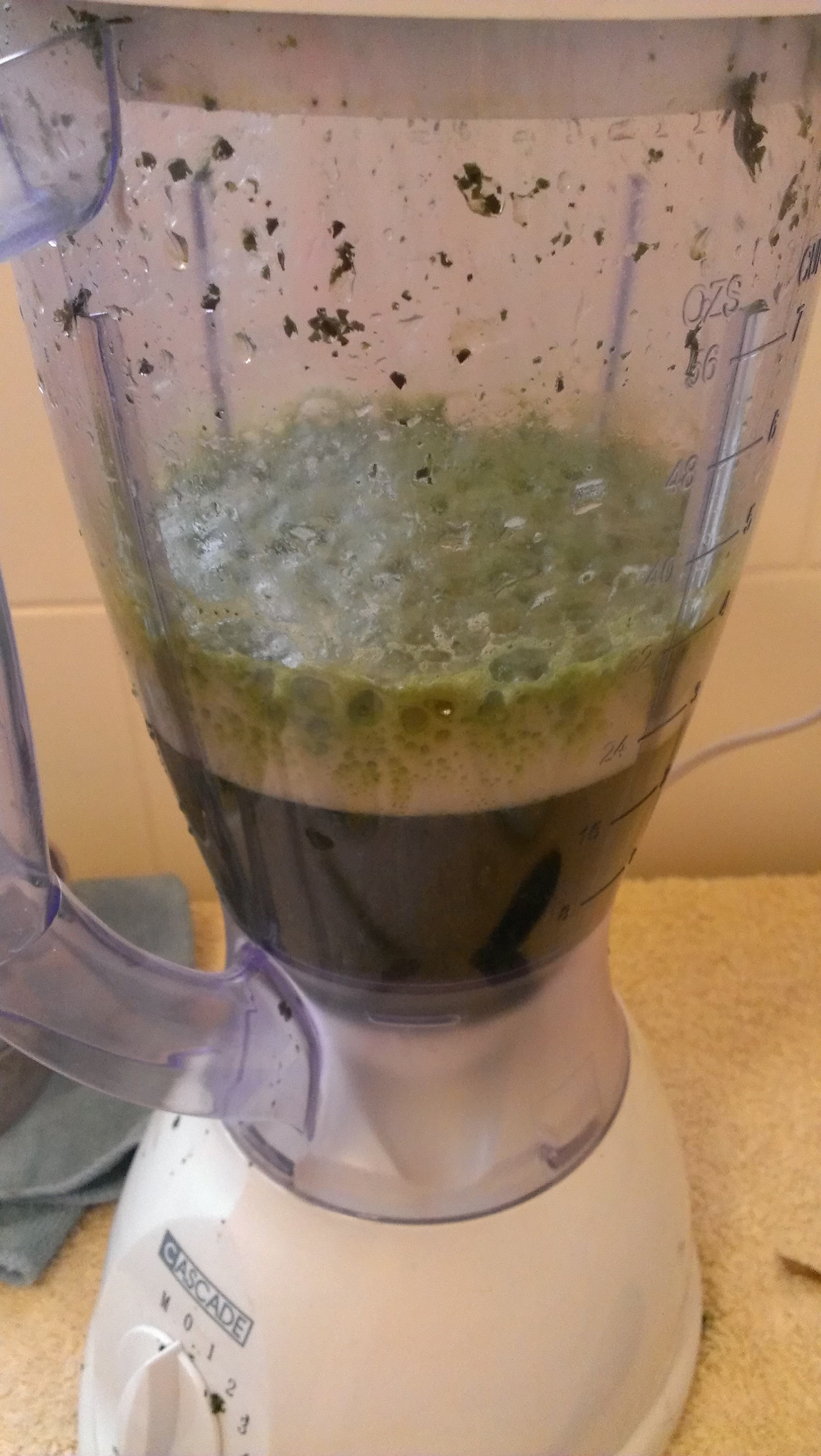
Robyn’s proposal was to leave them in a warm place.  I created one the first night by sitting my vat in a bucket of warm water, and then since the days aren’t warm right now (17C maximum)– the best I could do was a sunny spot.  48 hours later–or so–I started in on the preparation of the vat.  First, I sieved out the plant matter.  Then, added washing soda.  Now for aeration.  I went with the trusty blender method, which I was sure would introduce a lot of air.  Before:

IMAG1624

After:

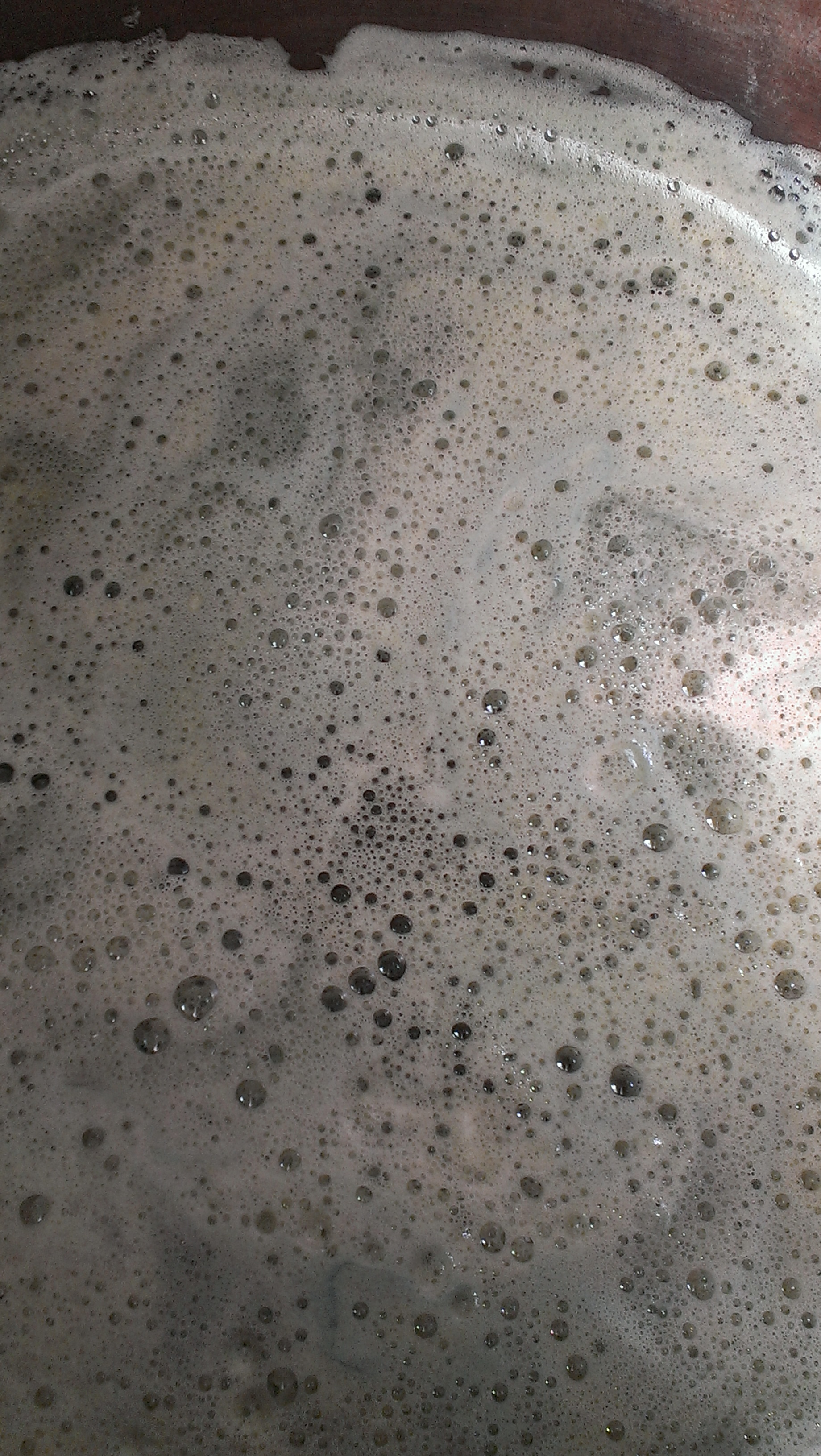
IMAG1629 (1)

I watched sceptically, but indeed, the bubbles did turn from green to bluish!  I prepared a hot water bath to raise the temperature of my vat.  I put the jar into it.  I turned away, and a few minutes later there was an almighty crack as the jar came apart.  Rude words were used.  On the down side, I now had glass shards I couldn’t see in my dye;  evidence of poor judgment on my part; a  broken jar and a clean up job.  My dye bath had at least 1.5 litres of water added to it, so probably now had three times the amount of water I had decided on (that sounded like a weak vat to me!)  And it was now in a stainless steel dyepot, along with whatever contaminants it contained after being rinsed out.  On the up side, the bath got to 50C almost immediately and the bubbles were still going blue.
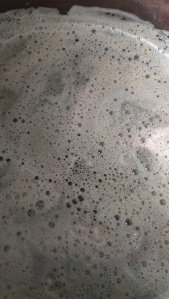
IMAG1632

‘Press on, how do I know what will happen?’  I thought.  ‘Don’t be wasting that precious dyestuff’, I thought.   I got out my trusty milk crate/felted blanket dyebath insulating system, filled up one hot water bottle which promptly sprung a leak; filled up another hot water bottle, sprinkled on the dye run remover, applied hot water bottle and felt blanket to vat and walked away.  ‘Que sera, sera and all that’,  I said, sighing.  Well, I need not have sighed, because the vat turned a vivid yellow.  In went some silk/cotton thread and a piece of hemp fabric.

IMAG1641

They came out bright yellow and turned green and then blue-ish almost immediately.
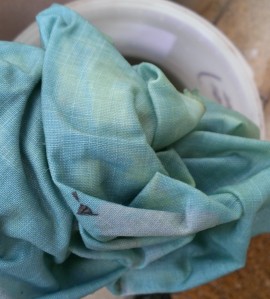
IMAG1649

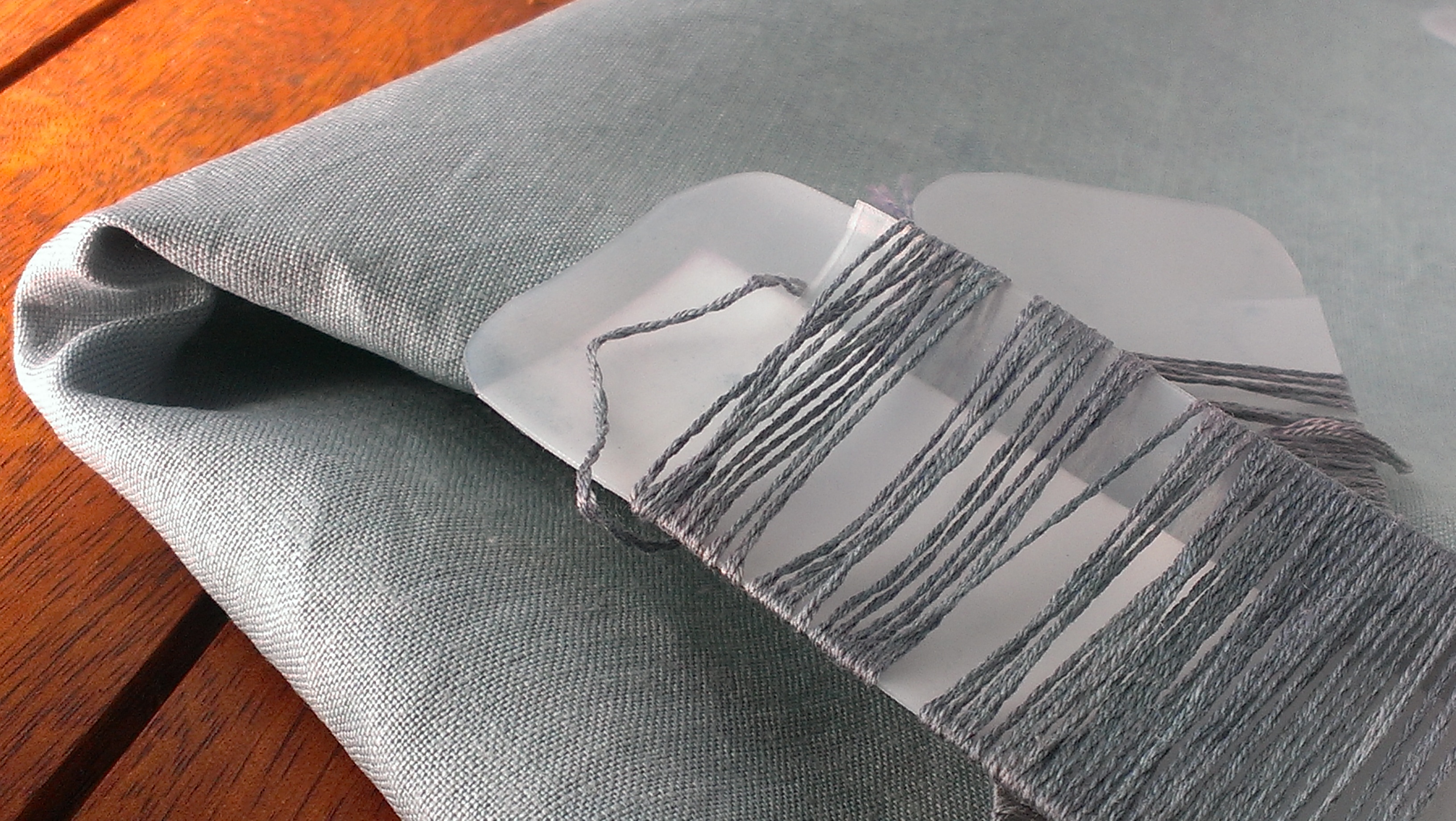
And so, to re-dipping, gleefully (and repeatedly).  Yield: several lengths of silk thread in shades of blue and grey, and a piece of pale blue fabric.  I have plans for them.  I am not sure whether this amount of leaf would always have produced a pale shade and to what extent my accidentally diluted dyebath contributed.  But, some blue resulted, and that part is excellent!

IMAG1664

6 Comments

Filed under Dye Plants, Natural dyeing

Austral Indigo 1: Cold vinegar process

My plant-knowledgeable and extremely generous Katoomba friends harvested some Indigofera Australis for me recently, and I brought it home gleefully to experiment.  They have regular access to a place where Indigofera Australis is growing plentifully and where it is native.  I had one previous opportunity to try dyeing with this plant and it was fascinating but completely unsuccessful.  So, it was exciting to have another chance.  There were 112g leaves in my parcel once I stripped them from their branches.  They had been kept cool or refrigerated in the 7-10 days since they had been picked–fresh but not really fresh.  I decided to try two different methods.

The first is a cold process suitable for protein fibres only, using vinegar.  I have found it described online as a way to process Japanese Indigo to achieve turquoise by Dorothea Fischer and in a booklet by Helen Melville.  Japanese Indigo is a prohibited import and not available in Australia (no matter my feelings on the subject of Japanese Indigo as a dyestuff, this country does not need more weeds).  It does seem logical that this method should work on other indigo bearing species, even if Austral Indigo bears a lower proportion of indigo!  However, using the leaves fresh is a key element and my leaves weren’t as fresh as possible.

Since my last effort, my Dad bought me a cheap secondhand blender (which I planned to use for papermaking).  It made pulping the leaves so easy I didn’t even try cutting them up manually…

IMAG1605

The water immediately went a vivid green, and so did the froth on top.

IMAG1606

I began with a sample card and a small quantity of silk thread, and gave them a few dips before bed time, then left them in overnight and re-dipped in the morning.  Here they are before being further re-dipped, with every fibre on my test card except cotton one shade of turquoise or another:

IMAG1617 (1)

I also tried dyeing some wool, but even after a lot of dips my little skein is barely blue.  End yield: 2 lengths of blue silk thread, three lengths of grey-green-blue silk thread and some off-white-in-the-direction-of-blue-merino.  Clearly, as I had heard, Indigofera Australis is a low yielding source of indigo.  But this method was brilliantly simple, easy and non toxic.  I will happily try it again when my plants are a little bigger.

IMAG1703

14 Comments

Filed under Dye Plants, Natural dyeing

Eucalyptus Cretata

These trees were rather young and rather prostrate. However, the fact that they were helpfully labelled made me feel I should take an interest!

IMAG1402

I took only a few leaves, which is one of the big advantages of the eco-print technique of assessing dye potential, as India Flint has emphasised.

IMAG1401

The grooves on the bud caps are rather lovely, I think.  The sample print… not deeply exciting, even with some help from iron!
E Cretata

2 Comments

Filed under Dye Plants, Eucalypts, Leaf prints

Plum Pine 3: Let the dyefastness testing begin!

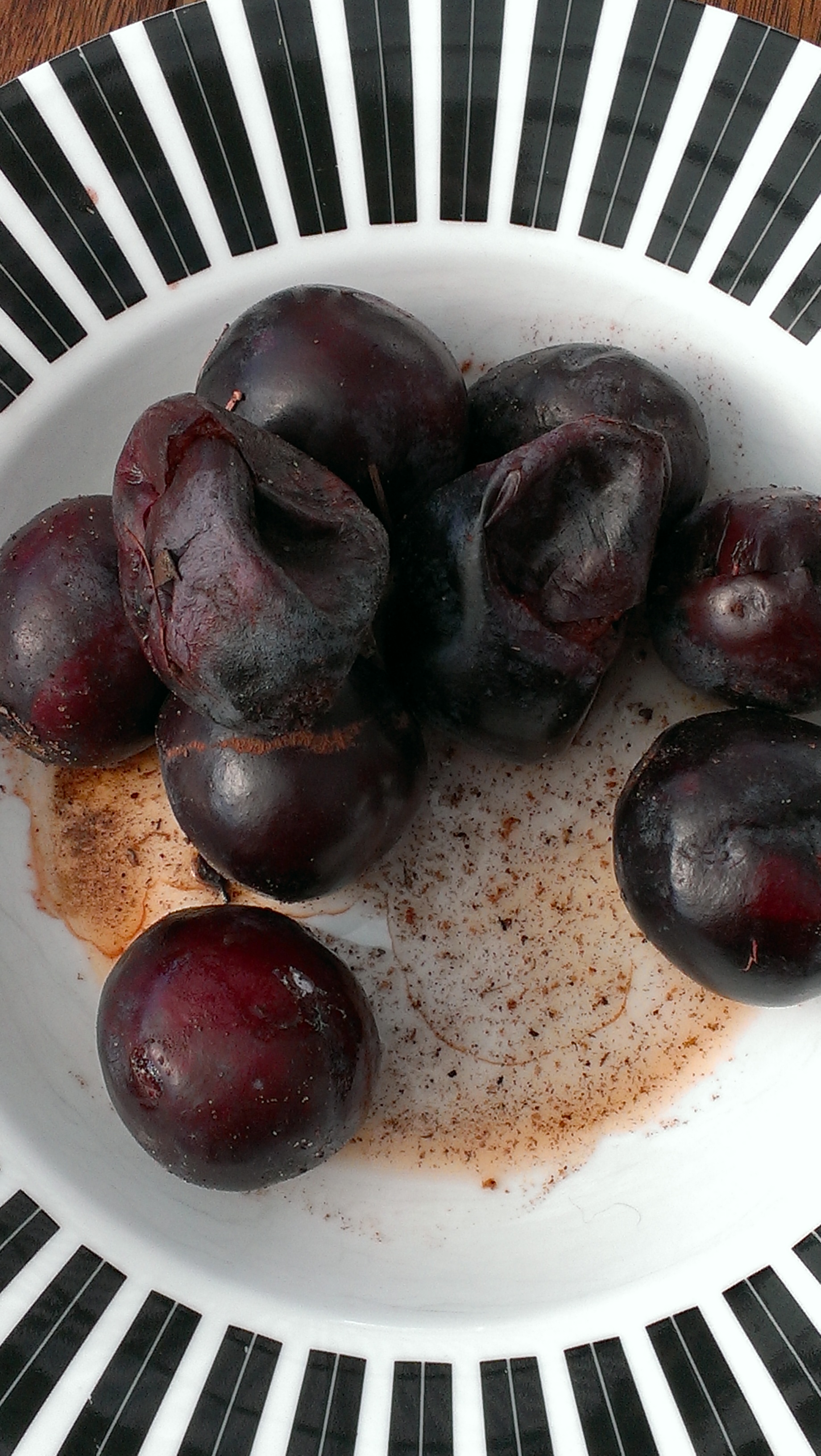
Unbelievably, the plum pine is still fruiting, and I am keen to dye enough to be able to do some wash and light-fastness tests in the year before it fruits next time.  So I harvested again, picking up fallen ripe fruit from the ground until I filled the bags I had with me.  A man in white overalls who seemed to be working nearby was gripped to see me doing this and asked me all about what I was doing and why.  He was fully supportive of ‘making use of our natural resources’–as he put it–!

Early signs are that my silk threads dyed without alum will not be washfast. My mending has changed colour in only a couple of washes, and seems to be Ph sensitive, with pink without alum noticeably paler and purple with alum (the contrasting outermost ring on the right) turning blue in a mildly alkaline wash.

IMAG1571

Only someone accustomed to dyeing with eucalypts, which are fast on wool and silk with no mordant, would think unmordanted yarns were a good beginning place.  So, I’ve had a mordant bath on the hob.  I did not have loads of anything much ready to mordant and dye except Bendigo Woollen Mills alpaca rich, so 200g of that hit the alum and cream of tartar bath along with smaller quantities of other yarns.

After removing the seeds, I had 2650g of fruit.  I was a bit gobsmacked by the quantity!  Never one to shy away from a challenge,   I put my fruit in a pot of rainwater with a cup of vinegar and simmered for an hour.  Then, I entered some handspun wool, some commercial alpaca-wool blend and some silk thread and silk/cotton 70/30 thread, all mordanted in alum and cream of tartar.  The colour takeup on the silk was dramatic and almost immediate!  I simmered for another hour and then left overnight.  The colour change overnight was again worth the wait.

IMAG1656

Meanwhile, I’ve set up further washfastness and lightfastness tests…

Leave a comment

Filed under Dye Plants, Fibre preparation, Natural dyeing