Tag Archives: India Flint

Spring Sewing Circle 2

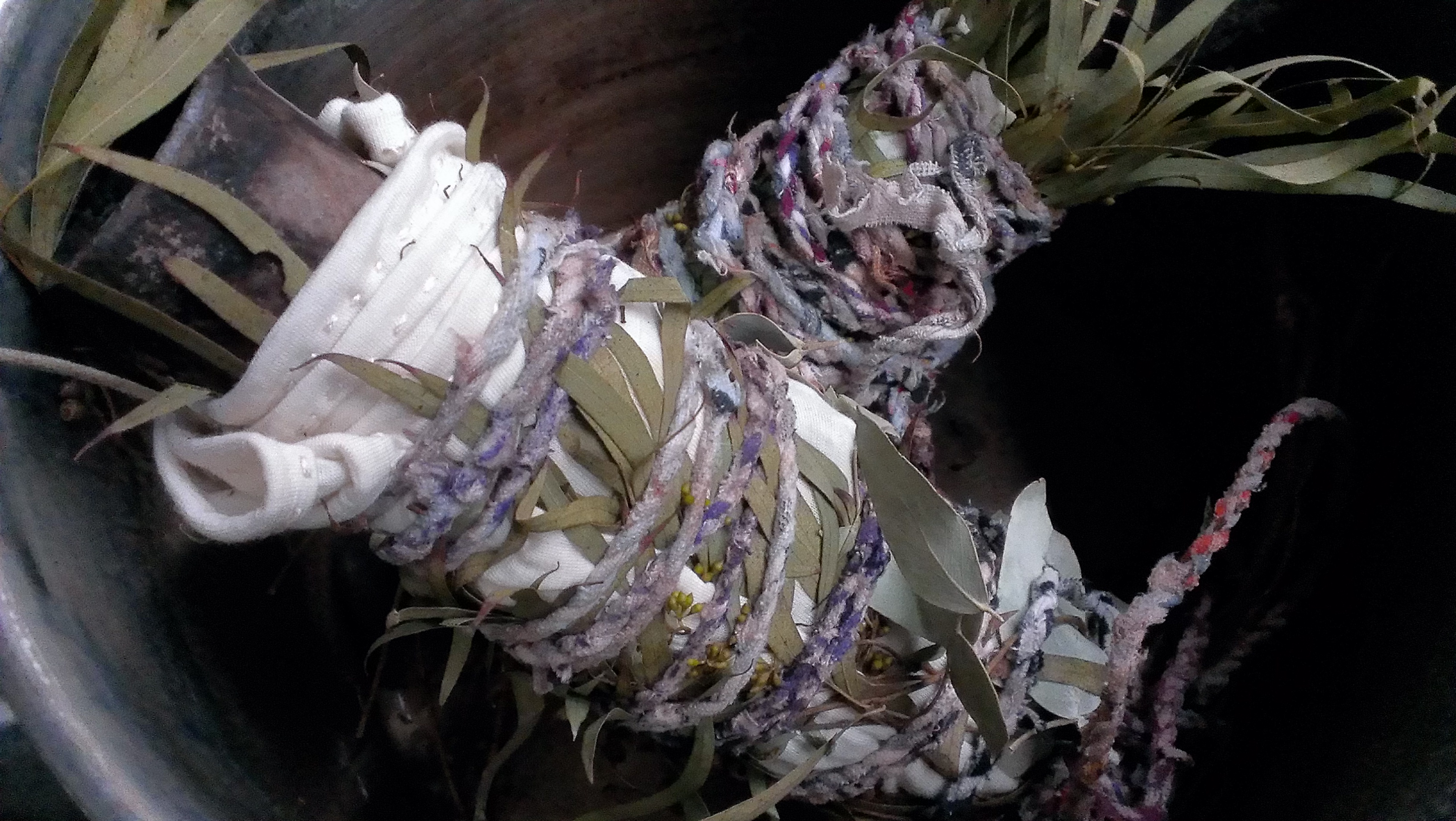
This time, a little more about dyes and dyeing at the Spring Sewing Circle.  In the main street of Mansfield, there was a great two colour display of pansies.  I am not sure what the passersby made of me deadheading the purple pansies… I suspect no one noticed from their car. I took them along to the day’s sewing circle with me after they had spent a night in the freezer and this produced an impromptu class in dye chemistry from India.

2015-11-17 09.45.34

Once a selection from the three kinds of water available had been made, I tucked the remainder of the blooms into some raw silk (the pocket bag from an op shop suit).

2015-11-17 11.43.21

Into a clean yoghurt tub they went with some silk thread.

2015-11-17 11.49.38

The colour got bluer…

2015-11-17 12.02.19

Overnight it became turquoise.

2015-11-17 15.10.21

It came home in my bags, and surprise!  The water at home really does have the capacity to create greens.   My last experience of this was not an accident or a one off. Thread that had been quite blue and fabric that had been purple and blue went green immediately on rinsing.  I’m not complaining–these are great colours!

2015-11-22 14.28.23

There were many incidental marvellings at the beauty of plants and fabrics…

2015-11-17 11.49.24

I had a lesson in mordants I hadn’t used before, and some help with my issues with milk.  Very exciting.  Sure to lead to all manner of future experiments.

2015-11-15 15.39.14

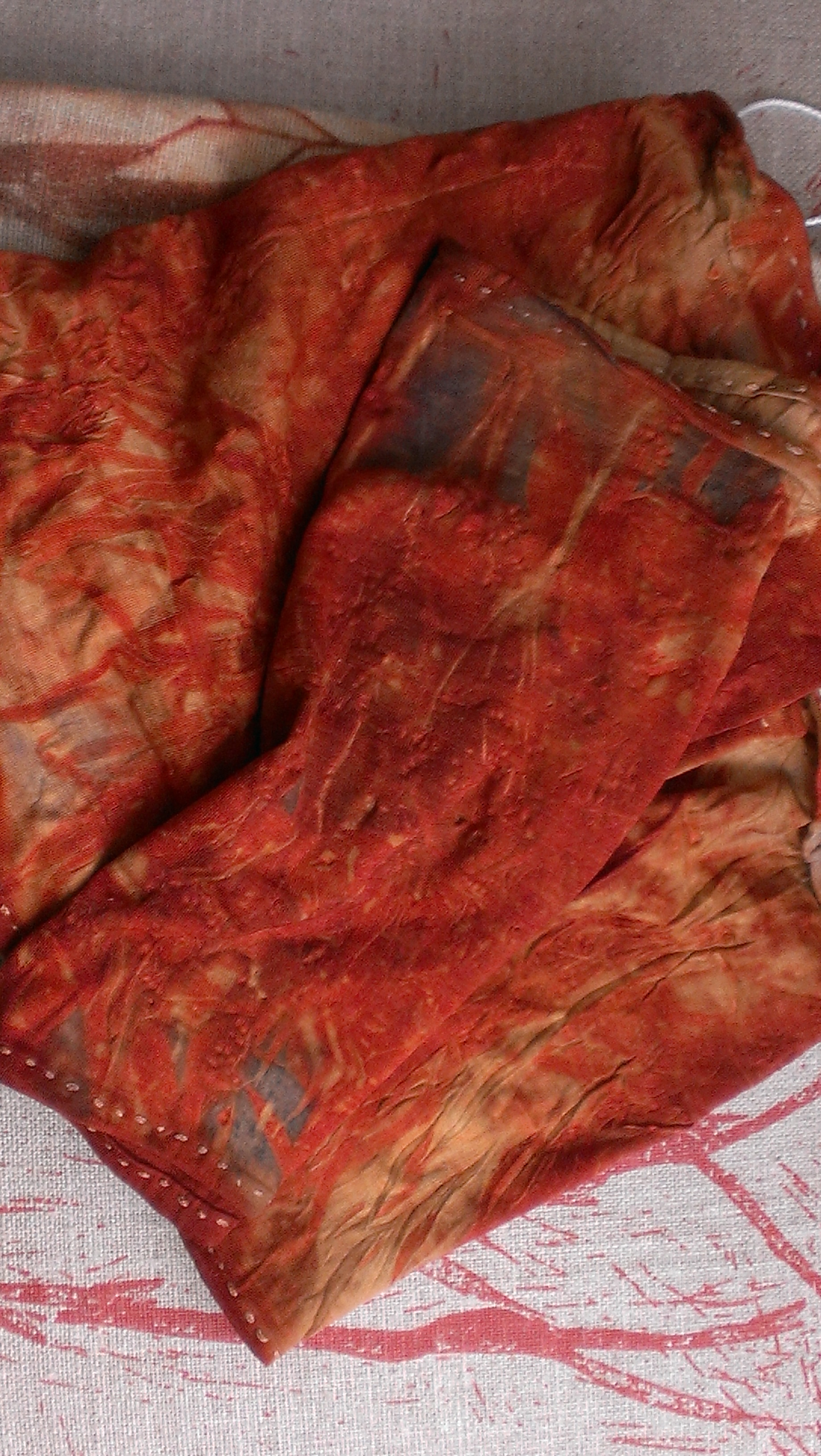
I had an unexpected visit to a laundrette (laundromat?) on the day I left home, and found one just doors from a rather good op shop that benefits Medecins Sans Frontieres.  I spent the time my quilt was washing there and scored a long sleeved t shirt, which was the subject of these experiments.  Greens… oranges… iron…

2015-11-17 15.38.33

Using this technique for all-over colour and pattern is something I notice others doing to great effect but often don’t attempt.  I’ve realised that when buying fabric I tend to plain colours or picture prints, and evidently I have carried this over into my own dyeing. Workshops are for learning so I tried stepping away from my habits a bit.  It’s interesting to observe how entrenched some of my habits are.

2015-12-10 12.16.44

The back of the t shirt.  These last two photos show the garment laundered and dry.

2015-12-10 12.17.01

For those who can’t resist the idea of pictures of food… picture this as afternoon tea!  Extraordinary.  India turns out to have the kind of fine cooking skills capable of making everything delectable.  She also has the capacity to turn a few ingredients that might be mere sustenance in other hands (I am not knocking sustenance) into something irresistibly delicious.  Macaroni and cheese much better than a restaurant meal.  Just saying.  We have an onion, garlic and dairy free household and India was kind enough to load me up with garlic and butter and other fabulous things we can’t share at home for the duration.  Such happy pleasures for me and such generosity and skill from her.

2015-11-14 15.03.01

8 Comments

Filed under Dye Plants, Leaf prints, Natural dyeing

Spring Sewing Circle 1

Ah, Mansfield.  I was privileged to go to India Flint’s Spring Sewing Circle in this lovely Victorian town not so long ago.  I have been itching to write about it–but overcome by my day job.  Mansfield was full of fabulous plants for dyeing, including eucalypts that are hard to find in my dry, hot hometown. This is a stunning E Crenulata that was just hanging over the caravan park fence.

2015-11-16 08.24.34

There were catalpas and prunus trees that were so full of little plums that possums were harvesting all night, leaving leaves all over the ground for the enterprising dyer.  There were cotinus trees, and berberis plants, maples and E Polyanthemos… and there was St John’s Wort in quantity, which India harvested to share with us.

2015-11-16 12.14.36

I loved wandering the streets with enough time to admire the trees and expect to be able to use these leaves if I collected a few. I even found this one sunning itself at the edge of someone’s front fence!

2015-11-17 09.28.19

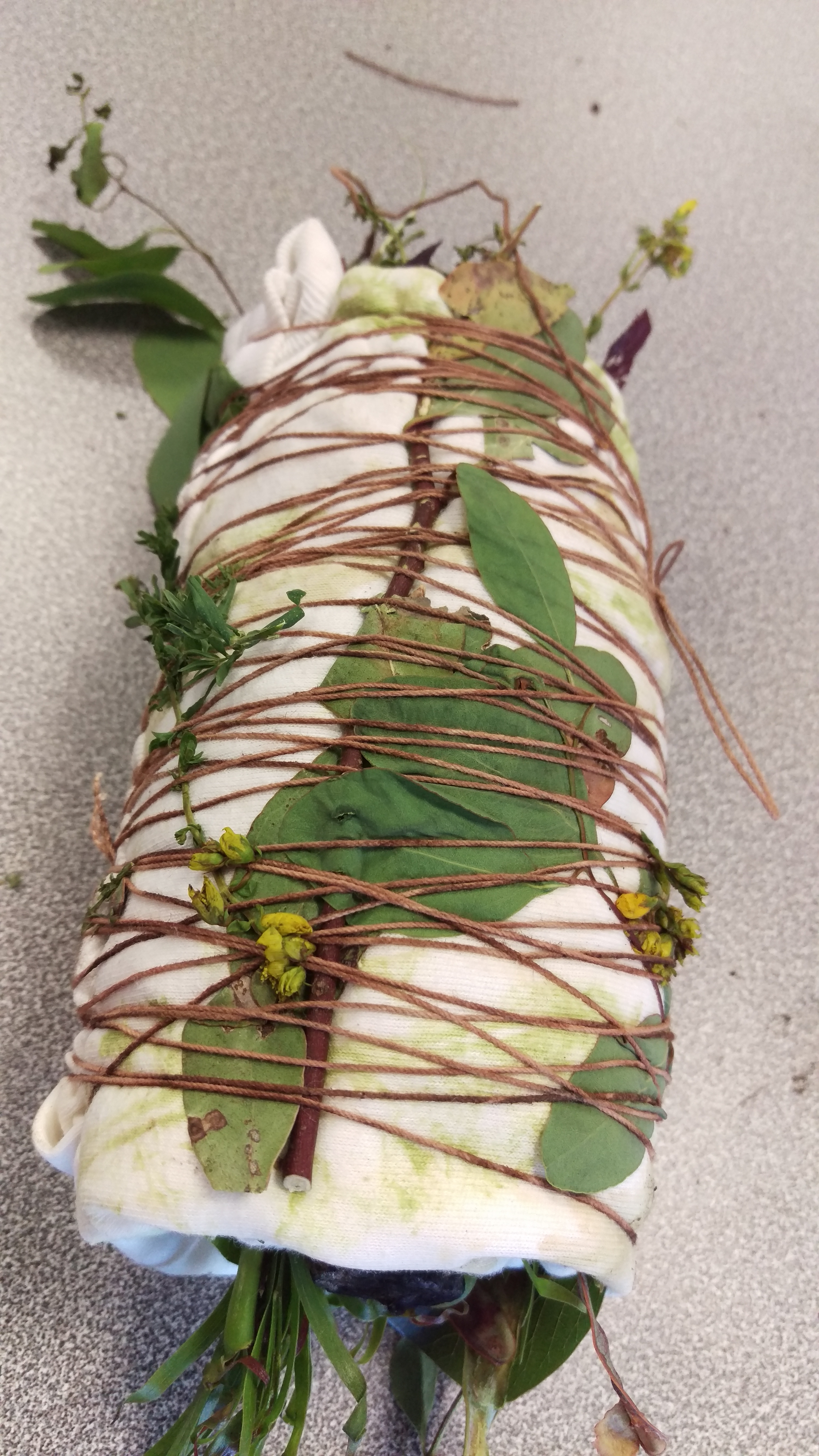
With all this bounty, people’s bundles were packed full of amazing windfalls and all kinds of leafy wonder.  I had come with some serviceable garment plans: I brought along a singlet with all its main seams machine stitched and hemmed it by hand, finishing all the edges.  It used up all my scraps of silky merino.  Then I made another one completely by hand.  I really didn’t think I could be converted to making garments by hand, but India has turned me round.  I still love my machine–but this is another pleasure altogether.  One of them got wrapped around a piece of copper and given a long, mild cook.

2015-11-16 13.50.10

Out came greens and purples and pinks and a little apricot.  The St John’s wort was a spectacular dye plant I have never had a chance to try before.  This dyeing process taught me that I’ve been reading and not understanding.  More experiments will surely follow as I try to consolidate all I learned from this bundle.

2015-11-16 10.12.45

I loved that St John’s wort!  If weeding has to be done, this is a rather glorious outcome.  Others had made wonderful silk bloomers and nighties that also got the St John’s wort treatment.

2015-11-17 15.44.08

The catalpa greens and maple leaves were fun too… and prunus leaf pink and purple… well, so much bounty.

2015-11-17 15.43.26

The other singlet had a hotter time in a dye bath that had already seen a lot of iron- and eucalypt-rich bundles, the things of which lovely string resist marks are made. I always love watching other people bundle up and unbundle.  This is a deceptively simple process that different people use to achieve gloriously different effects.  Finally I had E Polyanthemos I could be confident in, and E Crenulata, and so much more!

2015-11-16 10.09.21

Here’s the E Crenulata on the back, with some string marks on show and fresh from the dye pot.

2015-11-16 10.08.25

And here is the front, with those wonderful almost-round E Polyanthemos leaves. I am looking forward to wearing these come winter!

2015-11-16 10.09.26

Eucalyptus magic.  Sensational!  I see over on India’s blog that she is advertising a new Australian class for 2016 and some tips for the new leaf printer.  There is so much to learn from someone whose dye knowledge, love of plants and capacity for design are so extensive.  And so much pleasure in learning from someone so generous, creative and imaginative.  Do not get me started on the food…  I may have started out with plain and serviceable garments, but I had a feeling I wouldn’t be stopping there, and… I was right.  More instalments to come as time allows, my friends!


12 Comments

Filed under Leaf prints, Natural dyeing, Sewing

Blankets Re-imagined

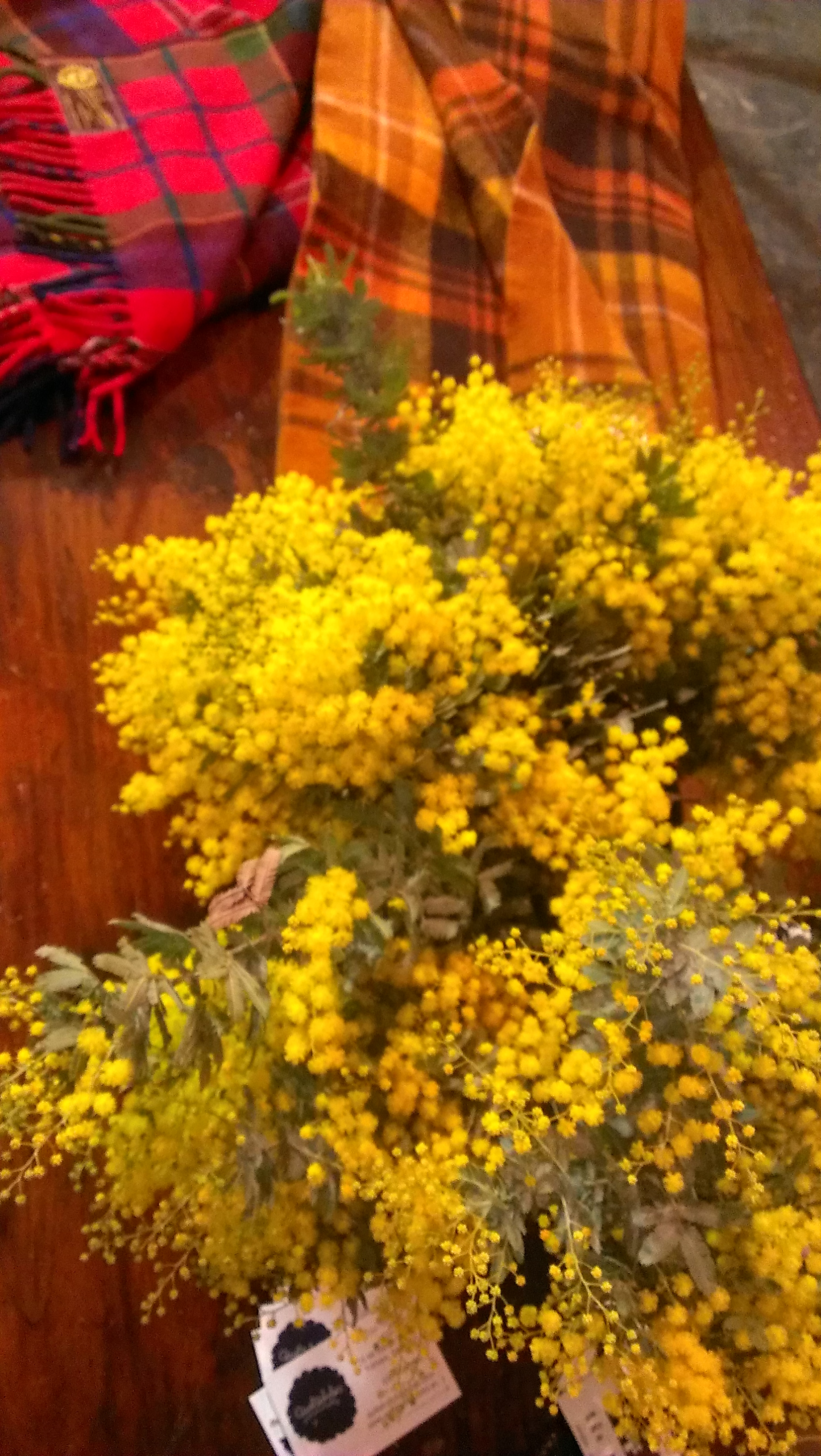
My dear friends were the ones paying close enough attention to realise that the launch of Blankets Re-Imagined was imminent. They also were the ones with the genius and generosity to organise a wonderful supper that must have made us the envy of most of the people who were there!  So last Friday on a chilly night after a long working week we ventured out into the hills to Lobethal. The exhibition (of over 40 artists and more than 100 works) was held in the shell of the once great Onkaparinga Woollen Mills, still a very impressive building.

2015-08-07 18.20.42

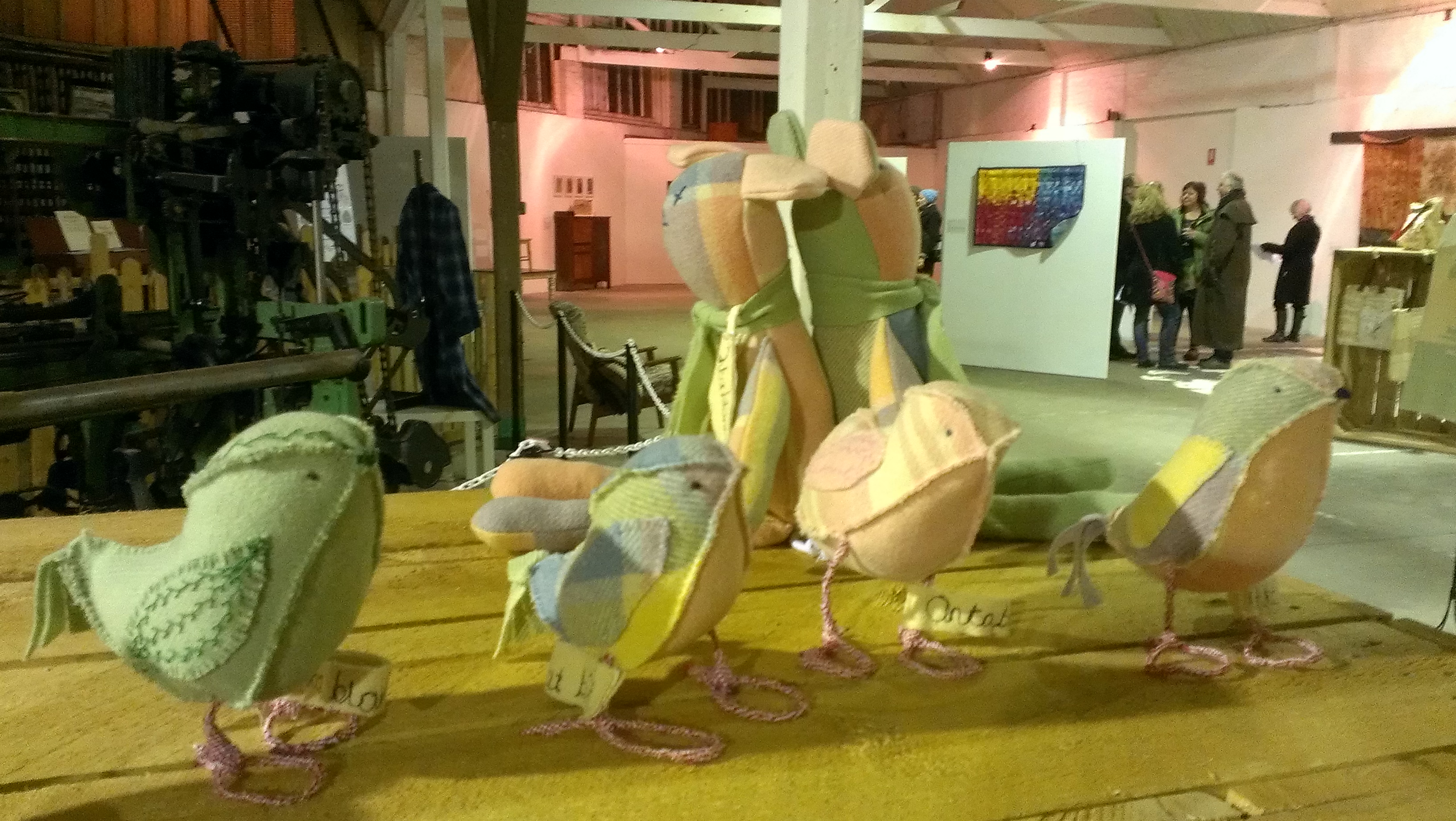
This is, indeed, a building in which many blankets were made and of course, there were many blankets on display.

2015-08-07 18.21.25

Some were being worn.  Others adorned walls and had been turned into all manner of art works, ranging from political commentary through multiple forms and techniques and into sheer whimsy. It was night, and indoors.  I can’t say the lighting was ideal for photography, even though I now have more understanding of white balance, due to another friend’s kindness and expertise.  So please bear with me on colour variations…

2015-08-07 19.03.09

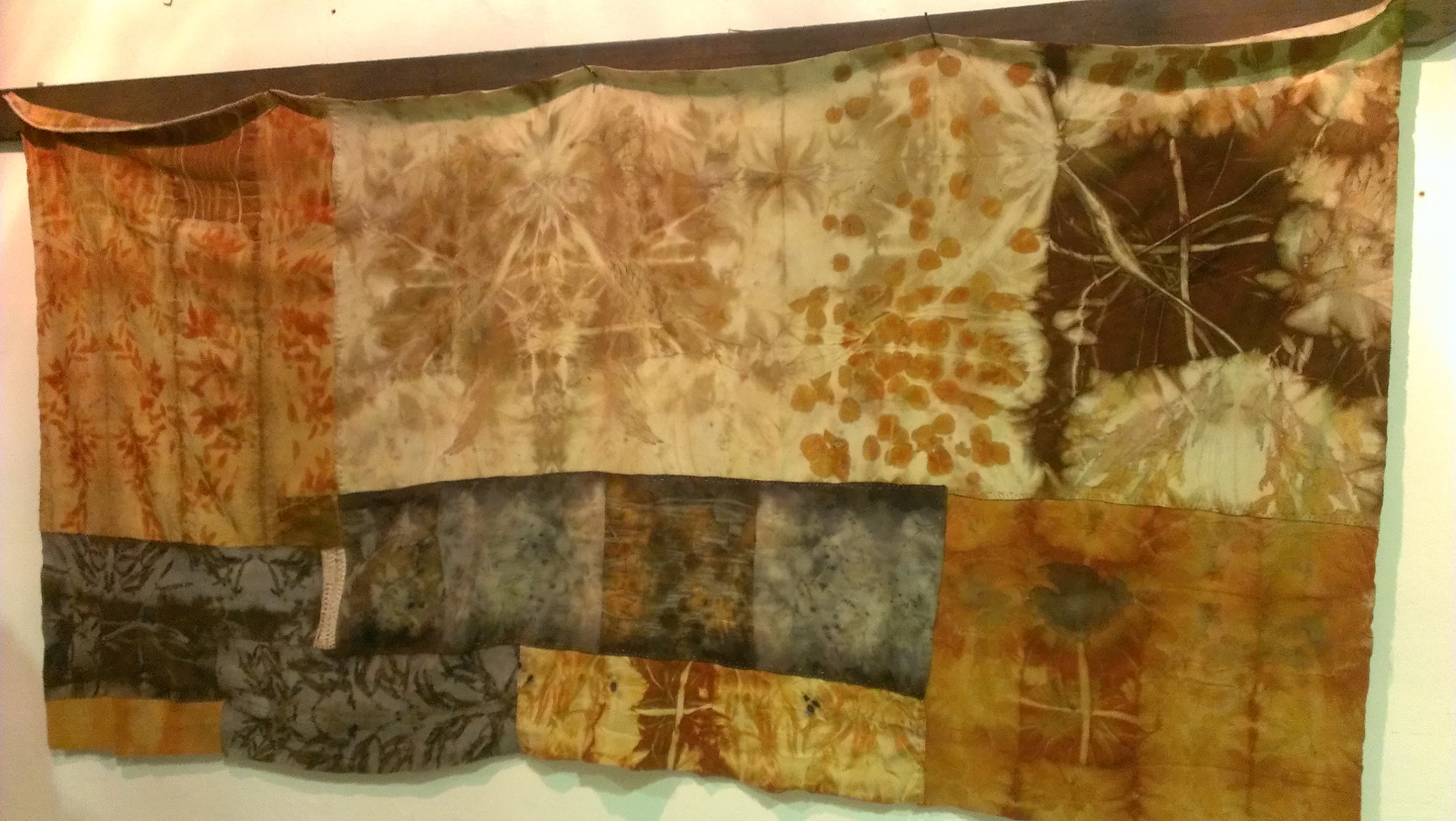
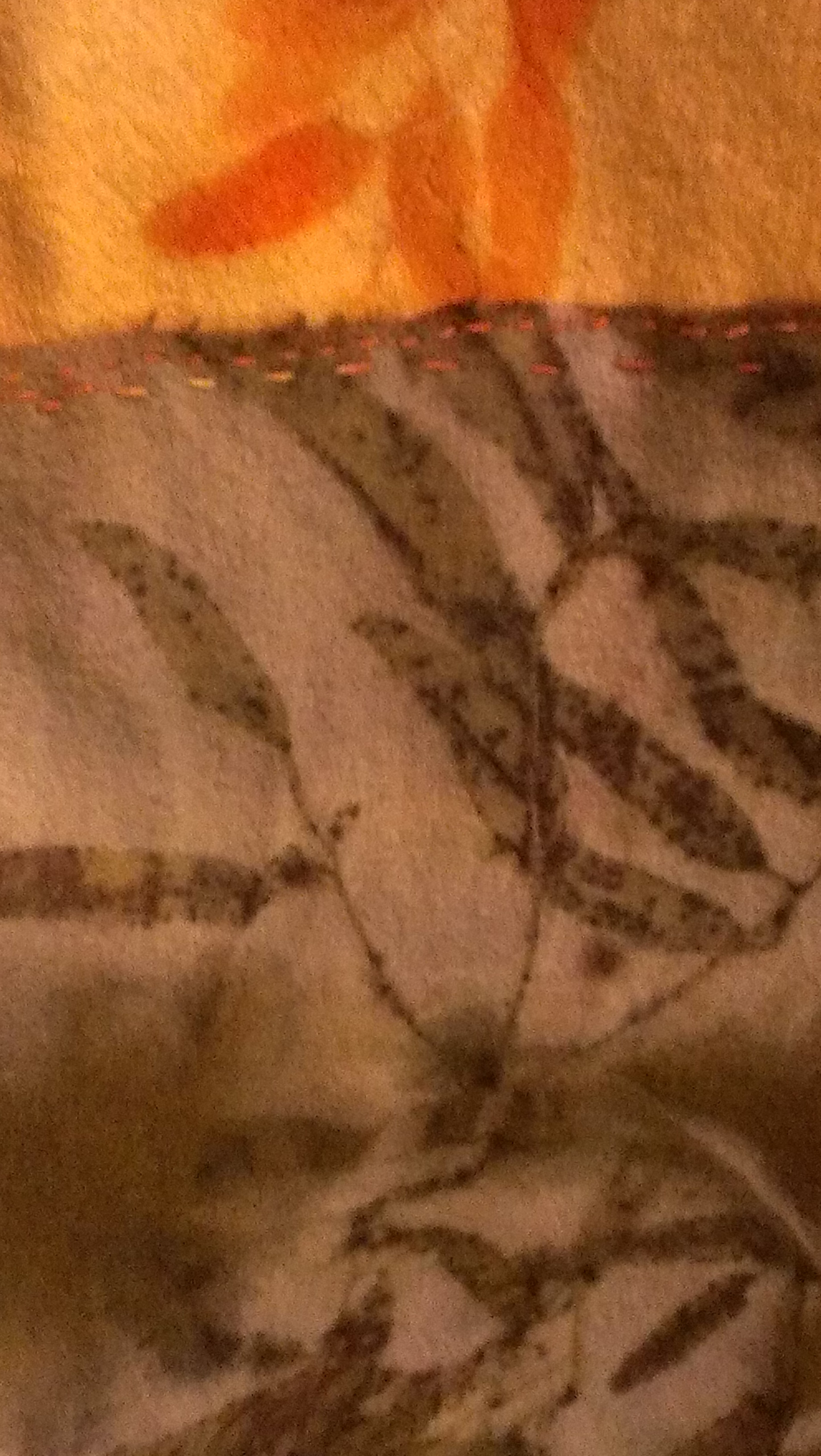
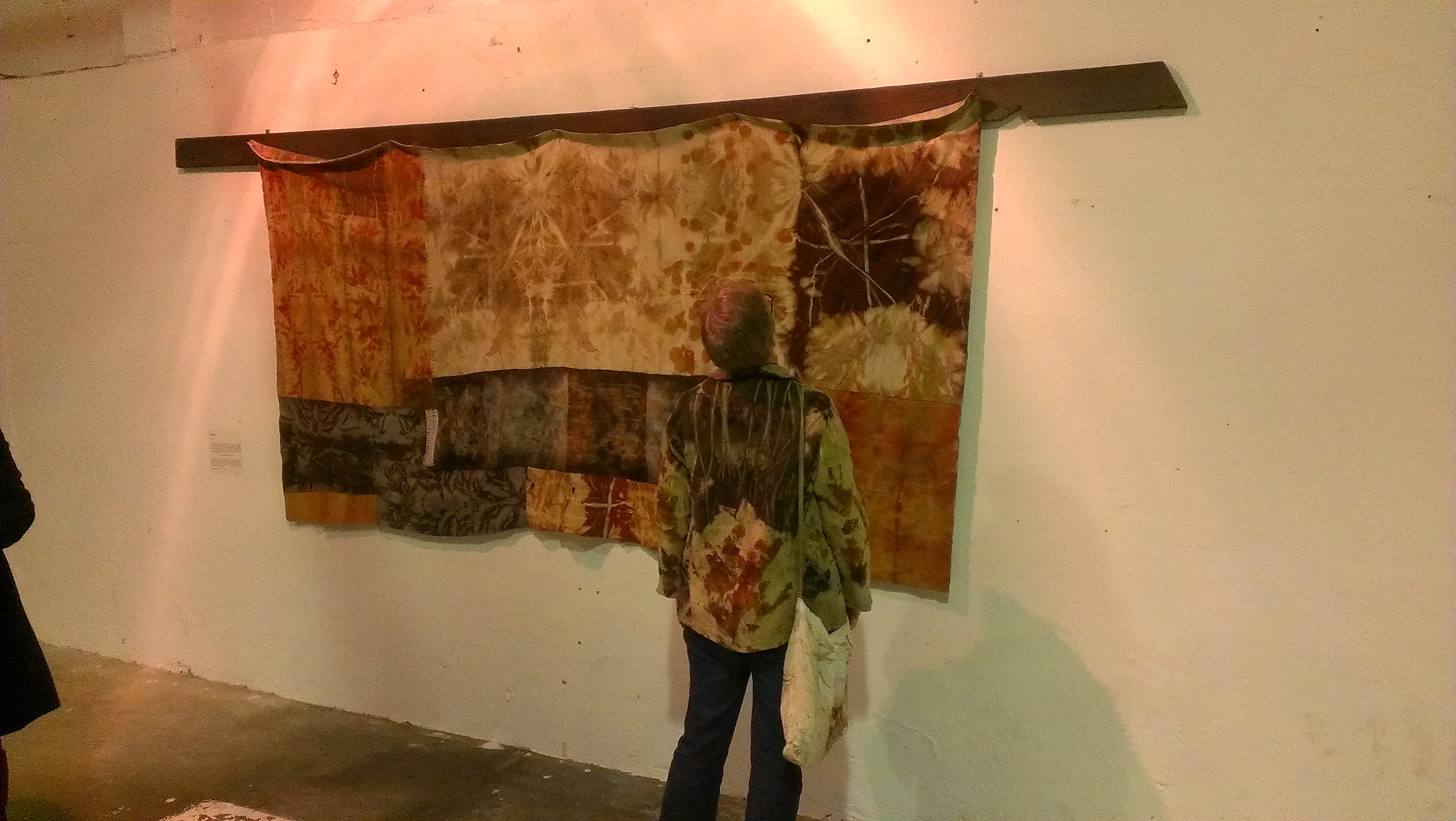
India Flint’s work is substantial in every way: created from segments of eco dyed blanket and nailed to a massive piece of kauri with nails that would make my father proud.  (He is the kind of man who would never use one nail if four nails could do the job.)  The colours and leafy shapes are glorious, and the trails of eucalyptus dyed stitching form an understated uniting tracery that seems to me to be a signature of India’s.

2015-08-07 19.06.59

The variety of colour and leaf form was just lovely.

2015-08-07 19.07.18

There were a whole series of blankets from this mill in awesomely seventies oranges (lime greens and purples too).  I believe we have one in our very own home.  I love the way this section references that orange but does something that is absolutely not tartanesque with it.

2015-08-07 19.08.21

Here I am blending in to the artwork perfectly well in an India Flint original!  This effect gave rise to numerous comments from passersby as well as friends, and there were a few strangers who needed to feel my sleeve.  I completely understand the urge!

2015-08-07 19.05.50

It was a delight to see Isobel McGarry and admire her contribution even though I failed completely to capture its colours.  Her work, ‘Oppenheimer’s Suns’ carries her trademark close stitching and conveys her grieving for all war has cost humanity and the environment. The launch happened close to Hiroshima Day and Nagasaki Day–and therefore spoke to things that had been on my mind a good deal.

2015-08-07 19.06.10

But as always her work also conveys her longing for peace and healing…

2015-08-07 19.06.34

This wonderful work by Sandy Elverd was on display…   she has long used blanketing as a medium to fabulous effect.

2015-08-07 19.14.29

Indigo Eli contributed a piece commenting on the Australian government’s recent Border Protection Act and its silencing of criticism of the treatment of asylum seekers.

2015-08-07 19.17.10-2

There was plenty of whimsy… these by Victoria Pitcher.

2015-08-07 19.28.56

This echidna by Lindi Harris and Lisa Friebe.

2015-08-07 19.30.13

Then there was the blanket cubby.

2015-08-07 19.30.45

Unfortunately I did not record the name of the artist.

2015-08-07 19.31.00

There were also reminders of the machinery on which so much wool was processed into fabric.

2015-08-07 19.25.09

And there was the building itself to admire.

2015-08-07 19.32.18

Adorned for the event rather wonderfully.

2015-08-07 19.44.03

Such a wonderful evening. So much to think about and wonder over, admire and revel in. And such glorious company to do it in.

2015-08-07 19.44.09

15 Comments

Filed under Leaf prints, Natural dyeing, Sewing

In Situ Update

For those who wanted more when they read my recent post about going to In Situ at the Murray Bridge Regional Gallery, more is now available no matter where in the world you may be.

In Situ now has its own online repository here.  There are wonderful images of the works as well as artists’ statements, courtesy of India Flint.  Enjoy!

2 Comments

Filed under Natural dyeing

In Situ: Murray Bridge Regional Gallery

Last week a carload of us made our way to Murray Bridge to see the opening of in situ and Ngarrindjeri Expressions at the Murray Bridge Regional Gallery, where both exhibitions will be open from May 22 to July 19 2015.

The night’s events began with a series of dances and songs by Uncle Major Sumner and some young Ngarrindjeri dancers.  It was a great opening for two exhibitions so powerfully about land and place.  Ngarrindjeri Expressions brings together works by Damien Shen and portraits by local Ngarrindjeri people who came to community workshops to learn Damien’s drawing process.  The exhibition also includes lithographs and photographs by Damien Shen and a video of Damien drawing his uncle (in both the literal and Indigenous sense) Major Sumner–25 hours of drawing condensed into 15 minutes of video, which had many people transfixed.  I didn’t have permission to photograph Ngarrindjeri Expressions–but I was kindly granted permission to photograph in situ.

2015-05-22 19.59.51

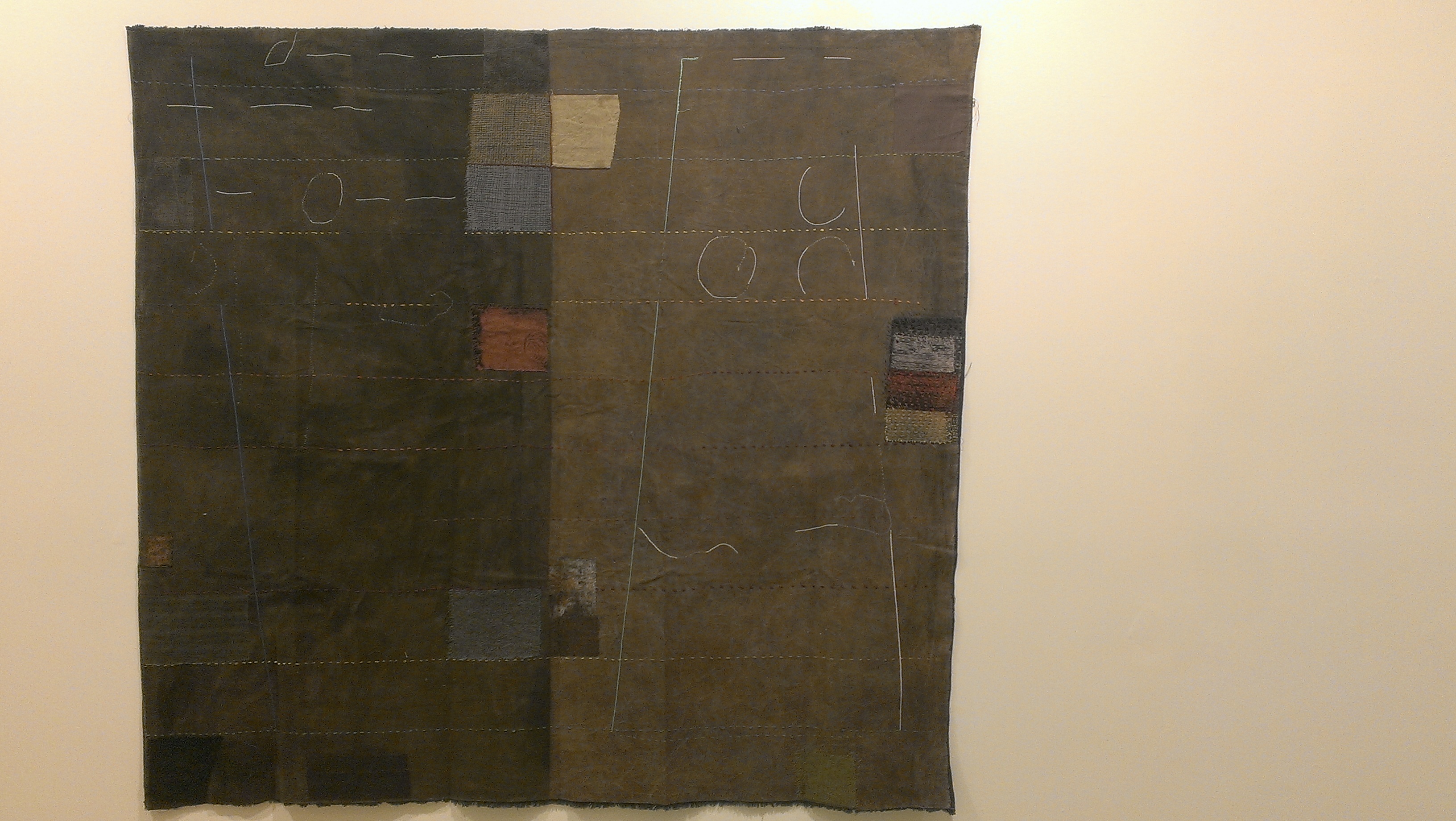
Behind the dancers and speakers hung two large works that drew my eye more and more as the night wore on. This is Looking Up/Looking Down by Dorothy Caldwell (Hastings, Canada).  It brought to mind a landscape seen from above, in which massive features of the landscape below appear as much smaller shapes and patches of colour.

2015-05-22 19.59.25

Indoor lighting doesn’t suit my skills or camera–so these pictures do not do justice to the colours of the originals.  But the smaller details in this work in contrasting colours have been stitched in ways that reminded some of us of rain and others of the stalks/trunks of plants in the wind.

2015-05-22 20.00.25

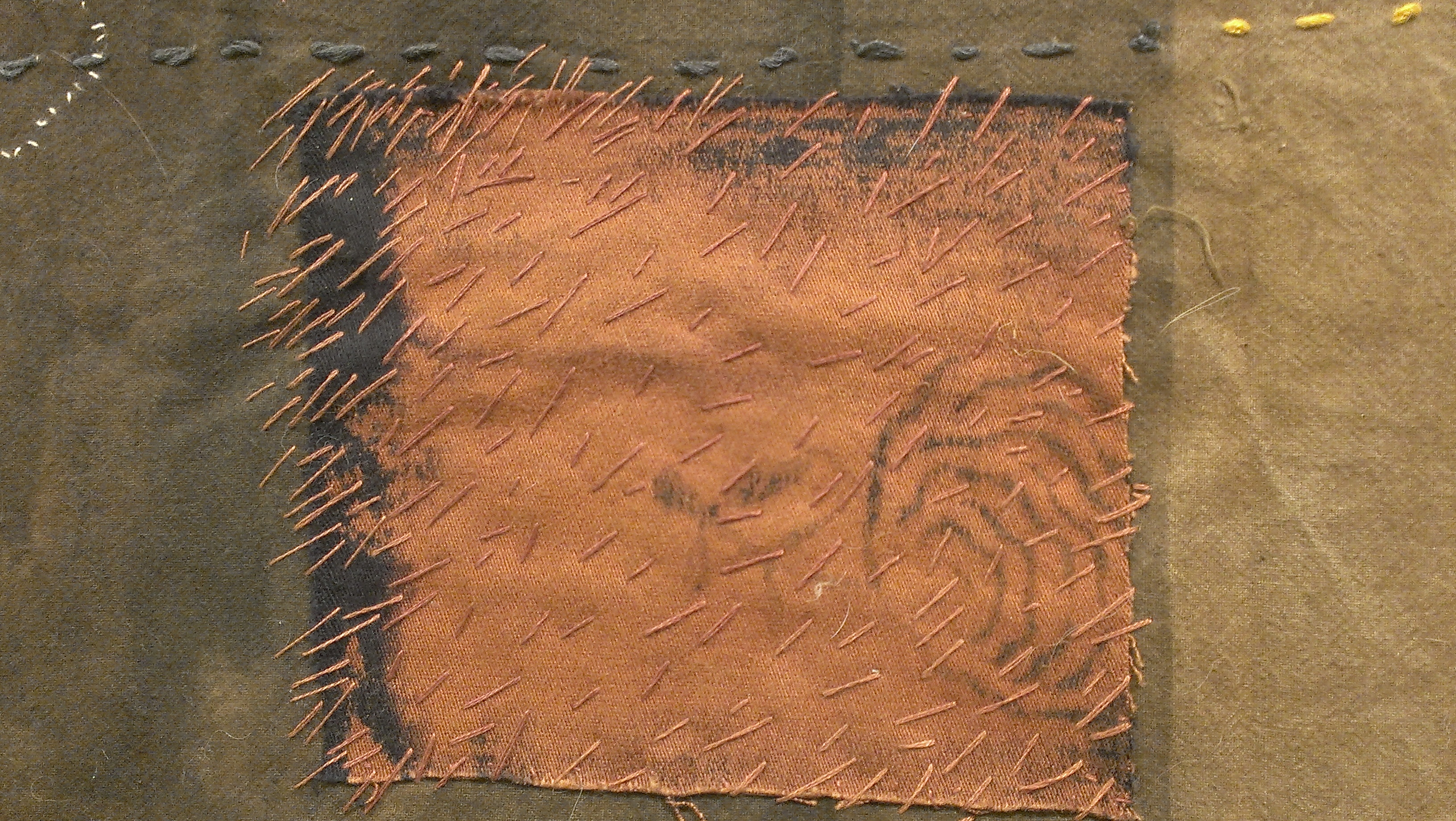
This patch had me in mind of a dam receding in the face of drought. You can see more of Dorothy’s work and read about her approach at her web site here.
2015-05-22 19.56.01

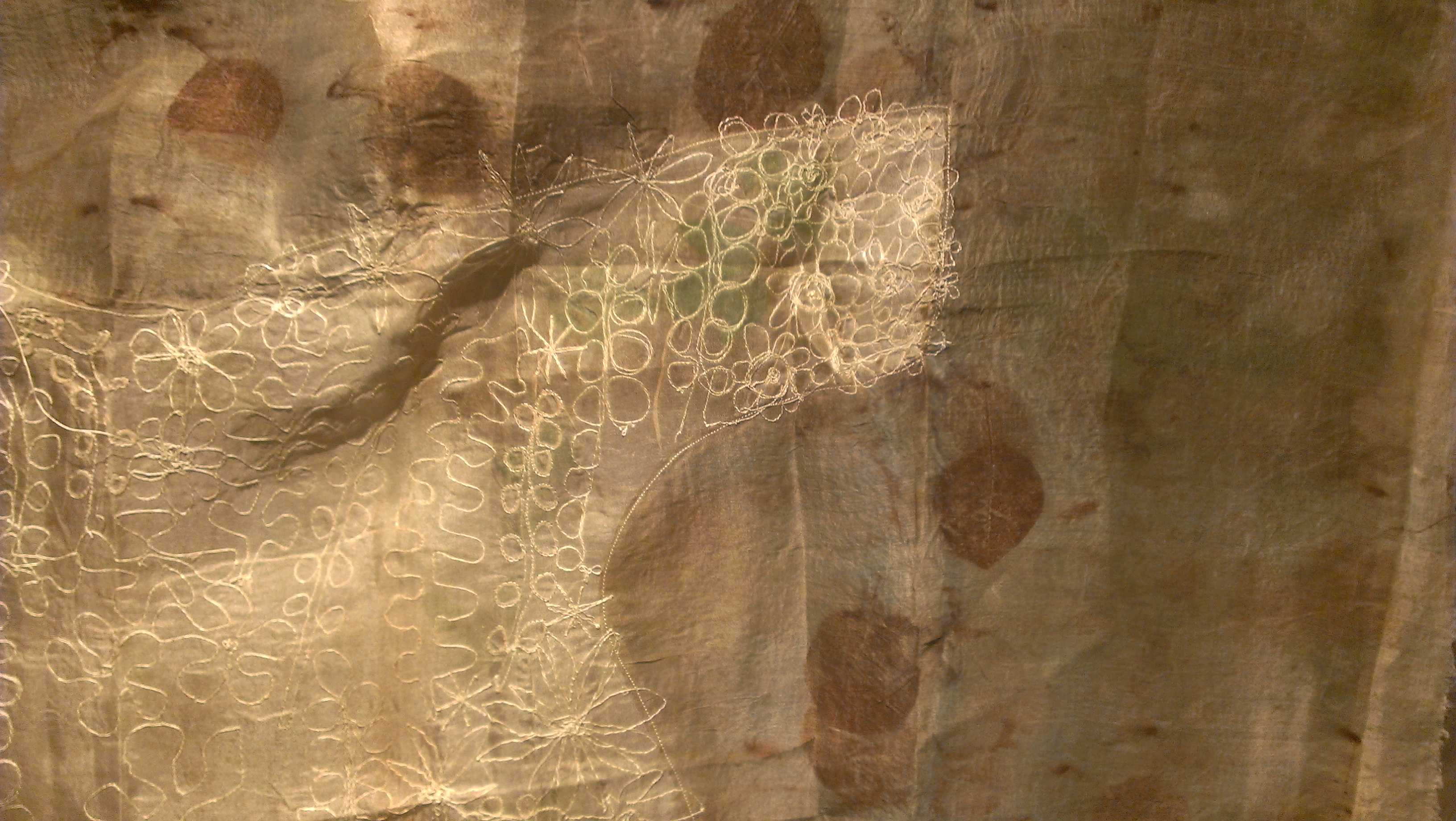
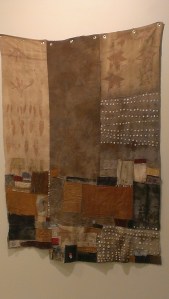
The Story Blanket by Imbi Davidson (North East Coast, New South Wales) is indeed based on a blanket which has been embellished, patched and augmented over time.  The eco-prints of leaves on the left and right panels managed to evoke footprints travelling through sand for me, despite clearly being leaf prints.  The central panel had been stitched with concentric semi circles that are not obvious in this photo–these and the panels of buttons on the mid and lower right side brought to mind some of the familiar images of some styles of Indigenous art, without appropriating them.  I loved the contrasts and the sense of this piece building up layer by layer, as stories often do. There is more of Imbi’s work and process at her www site here.

2015-05-22 19.56.24

Roz Hawker (Bunya, Queensland) contributed Holding Close.  You can follow the link to much better images and her own account of these works.

2015-05-22 19.56.46

This wonderfully embellished, subtly dyed dress is an ode, or perhaps a love letter, to her grandmothers.  I loved the whimsical plants sending tendrils up from the cuffs, blooming upward from the hem…

2015-05-22 19.56.32

and even subtly travelling up the back of the dress.  The dress hung beside a collection of smaller works in silver and silk… a little gathering of treasures which reminded me of nothing so much as the small collection of found objects (mostly from nature) that a child–or a grownup in my case–might bring home from a holiday in a special place.  Conjuring points for memory and wonder.
2015-05-22 19.50.44

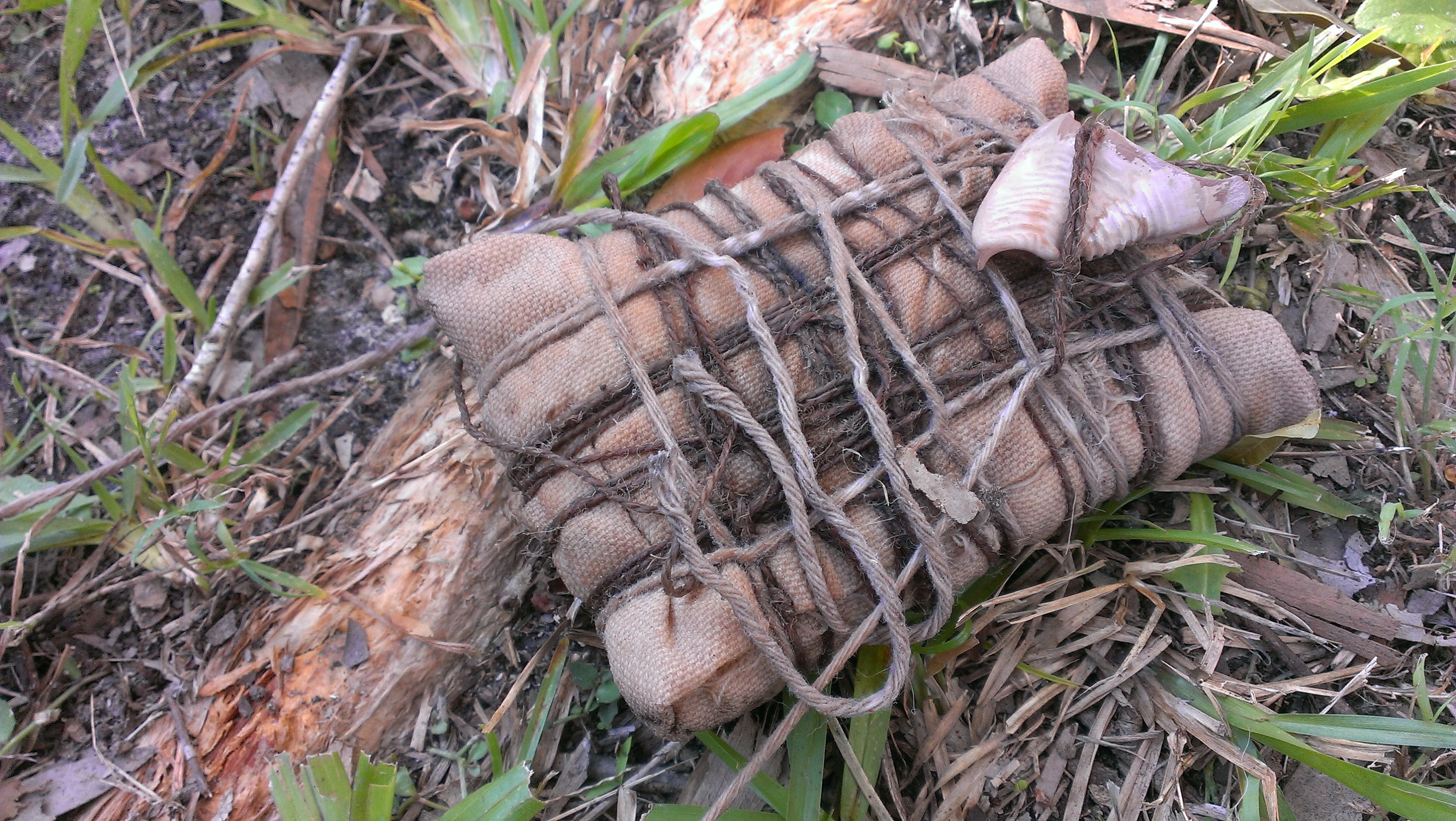
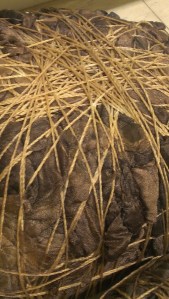
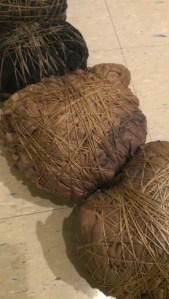
India Flint (Mount Pleasant, South Australia) contributed sheep fold: a semicircle of bundles which look like stones… or like bundles tied around rocks: in either case, the mystery of what is inside is maintained by the outside of the stone/bundle.
2015-05-22 19.49.23

These bundles are full of all the wonderful diversity that rocks have–folds, crinkles, smoothnesses, varied and sometimes mottled colours.  But they did smell rather more wonderful than your average stone.

2015-05-22 19.48.37

On the wall, inside what I pictured as the wall of the sheep fold, hung an empty wire box, its base pointing out toward the room.  As a receptacle for feed might, perhaps.
2015-05-22 20.02.14

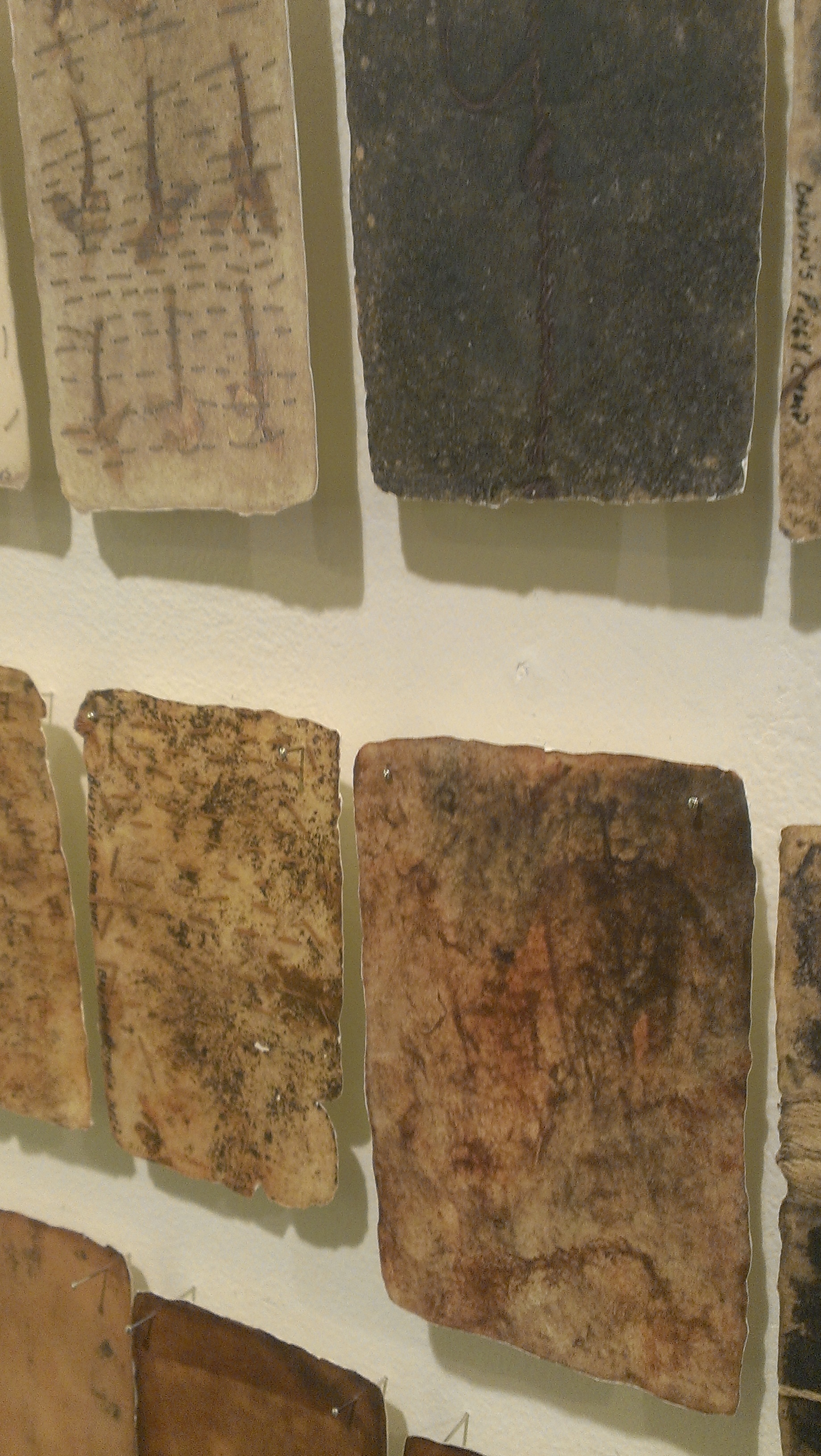
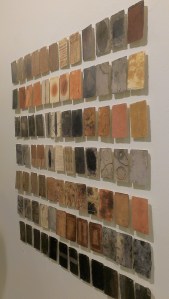
Collecting Cards is also by Dorothy Caldwell.  This really is a group of cards with images of textiles and stitching on them, for the most part.

2015-05-22 20.02.42

I loved looking at these and wondering over their arrangement and their subtle colours and textures.

2015-05-22 20.07.29

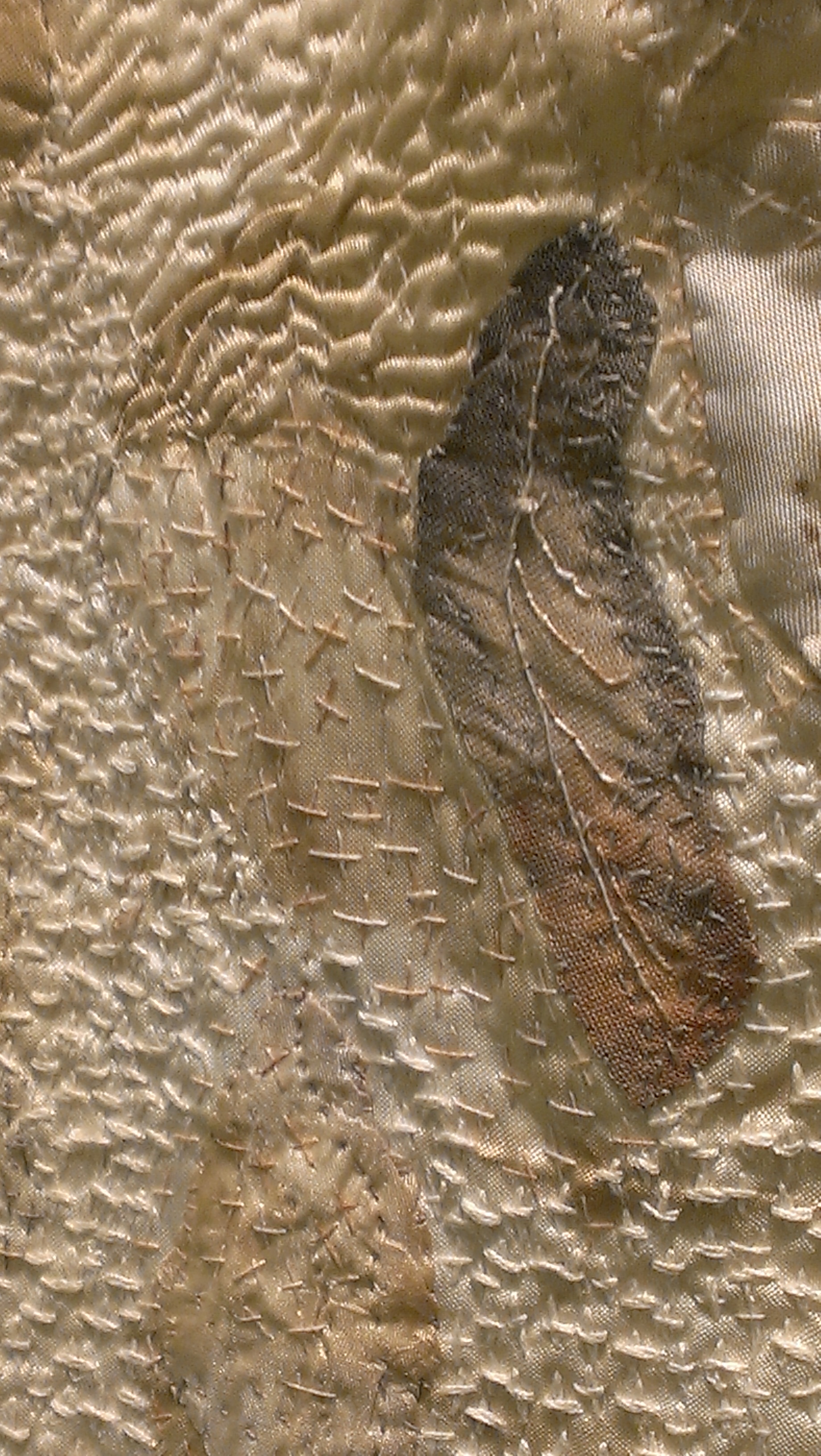
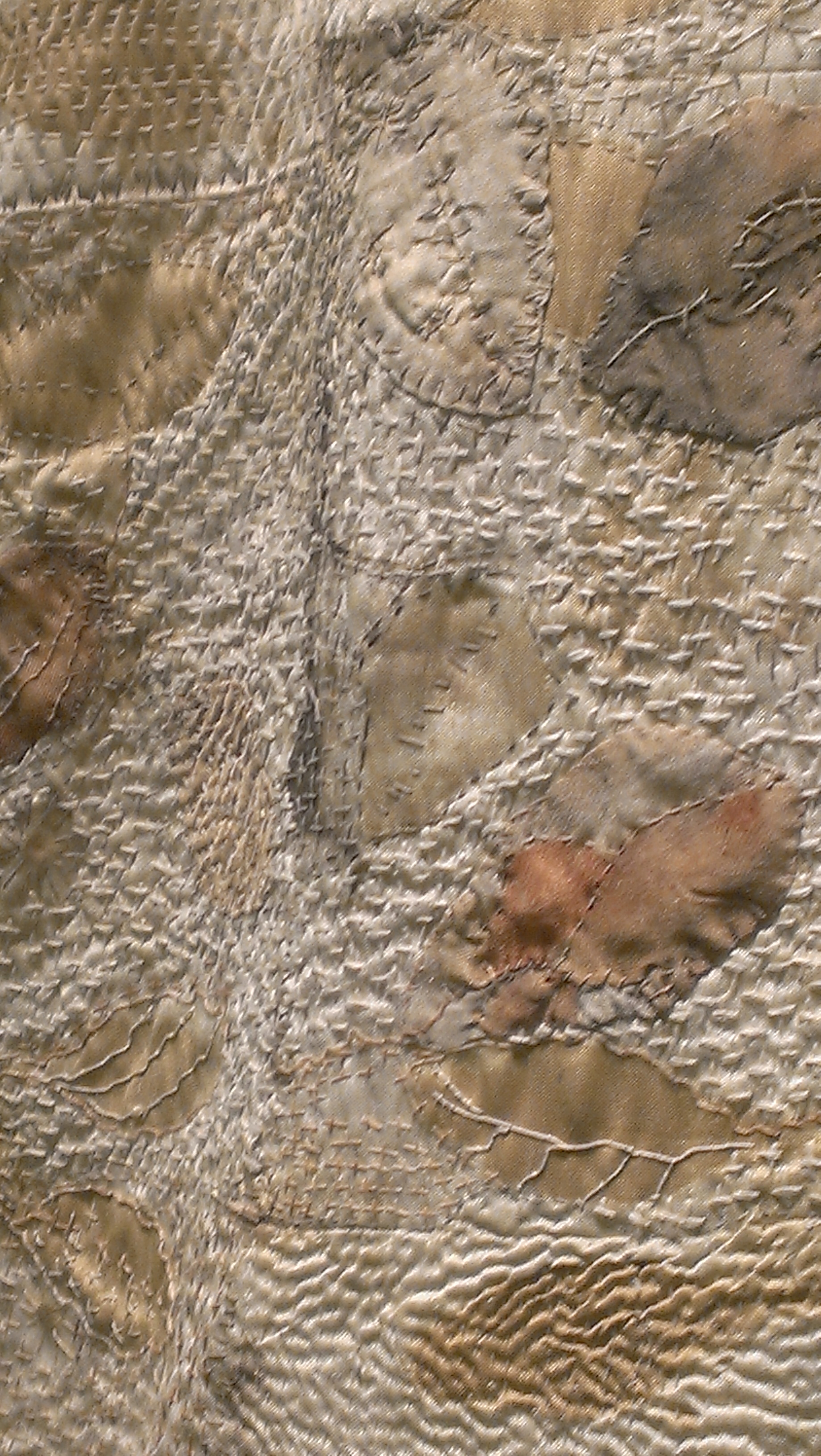
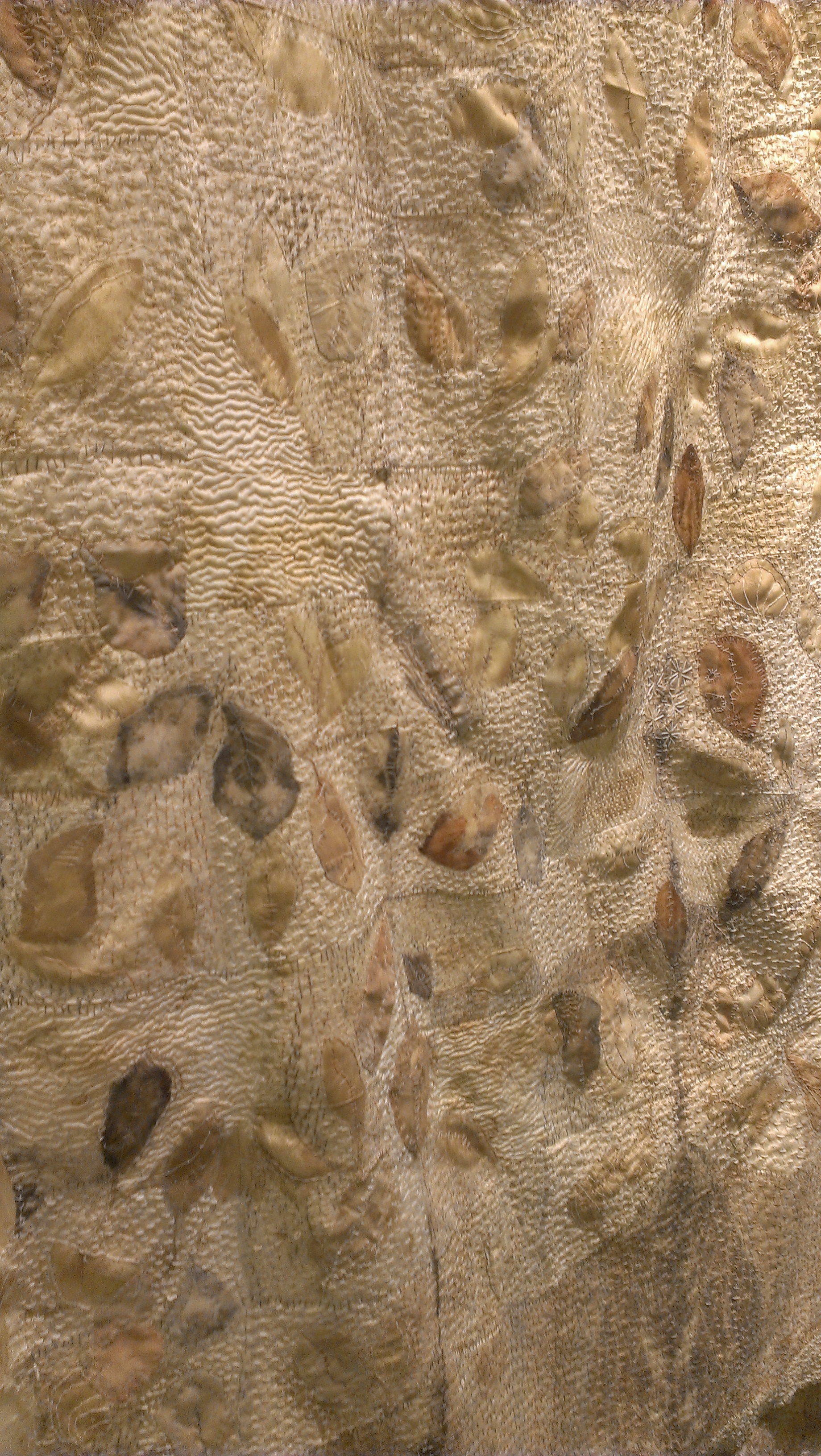
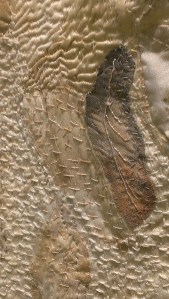
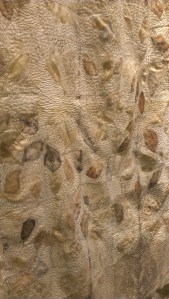
This exquisite, heavily stitched work is Ten Thousand Leaves, by Isobel McGarry (Adelaide, South Australia).
2015-05-22 20.07.10

Leaves have been eco-printed onto the silk as well as appliqued onto it. Isobel was kind enough to answer a lot of questions about this piece–since she was there for the opening.

2015-05-22 20.25.04

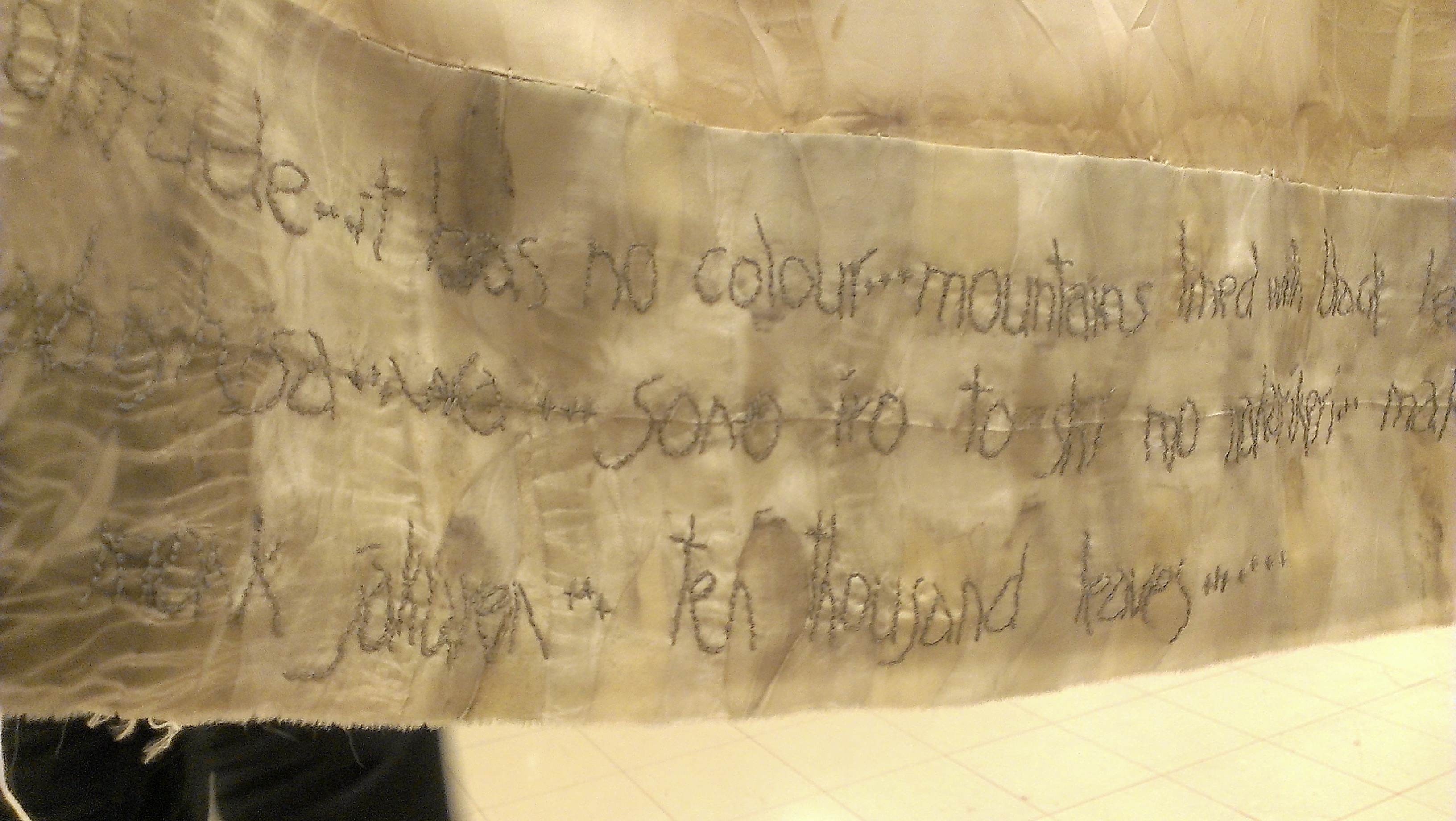
The back of the work was rather plainer–eco-printed silk edged with words in English and (I am guessing) Japanese.

2015-05-22 20.05.24

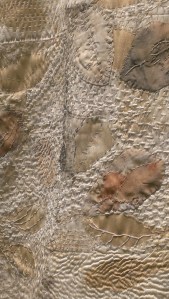
This work is a meditation on peace, with the stitched crosses symbolising those who have died in war.
2015-05-22 20.04.46

The imagery of mending is available here, but the overall effect of this stitching is quite different–or perhaps an homage to the beauty as well as the necessity of mending, its capacity to build up a whole composed of so many tiny actions and scraps and make it gloriously whole without hiding the need for repair or the fact of many pieces having been brought together to create a new, entire fabric.
2015-05-22 20.25.12

365 days at Tickleberry Flats (Desiree Fitzgibbon, Dodges Ferry, Tasmania) held a year in a specific place in 356 small vessels, each with red lines traced around it.  Intriguing and beautiful.

2015-05-22 20.08.32

John Parkes’ Sampler (Dead Two Years Now) remembers his father in a moving sampler constructed from two of his father’s shirts.

2015-05-22 20.10.05

Raw edges called to mind for me the raw emotions grief can provoke as well as the fragility of memories referenced in the stitched words themselves.

2015-05-22 20.10.26

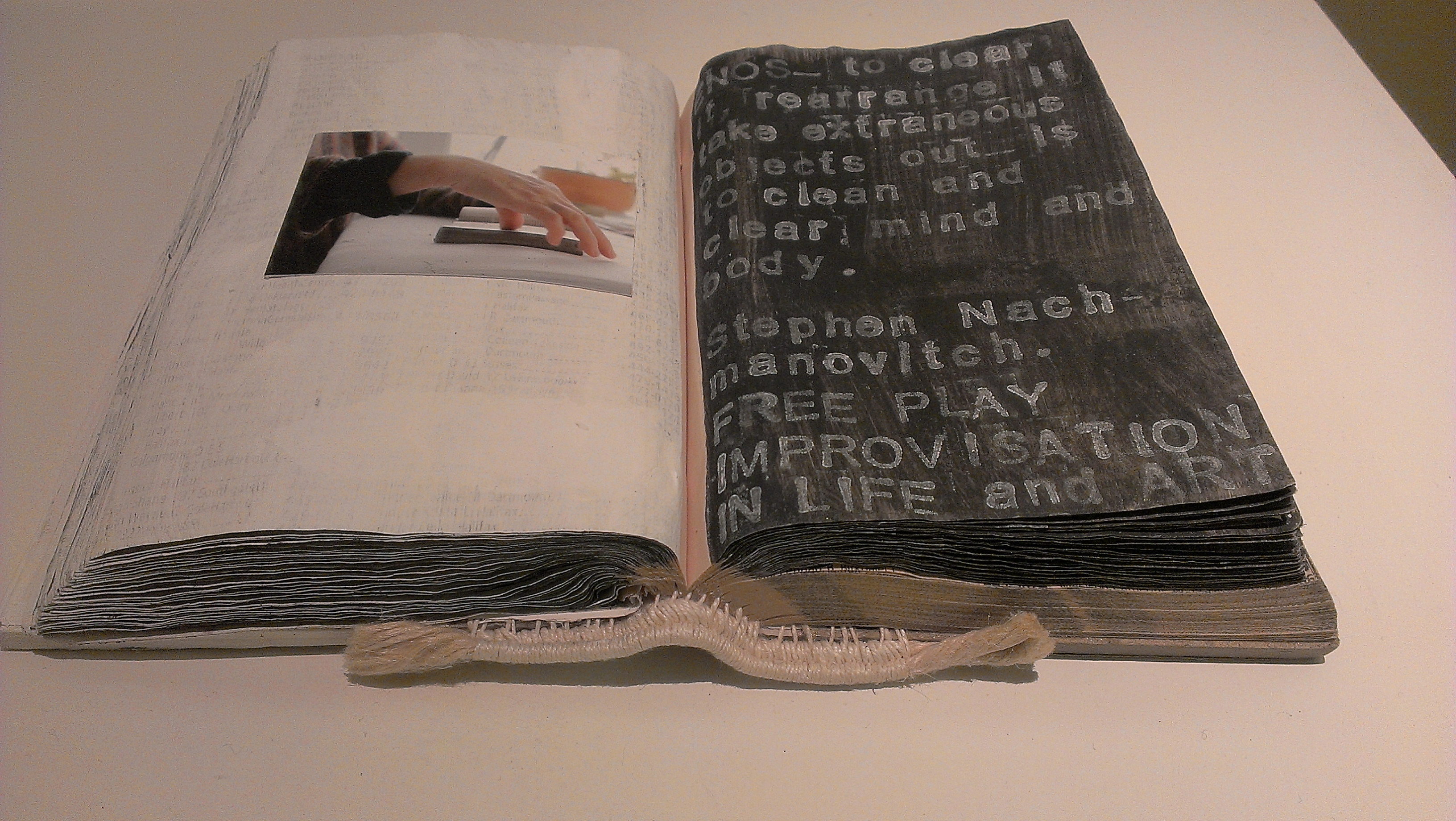
Sandra Brownlee (Dartmouth, Nova Scotia) contributed Untitled artist book, a work that made me long to pick up and touch.  The stitched binding exposed at the base of the book is intricate and rather wonderful.  Sandra’s workshops on tactile notebooks, clearly based in her own practice, are famous–two accounts with images here and here.

2015-05-22 20.14.54

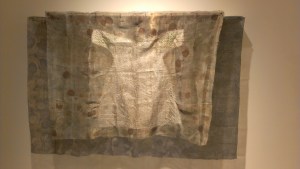
Judy Keylock (Lud Valley, New Zealand) contributed a work of layers and shadows, which was all the more lovely for the way it floated gently in the small movements of air as people passed by or looked at it.
2015-05-22 20.11.08

Although this work is called ‘Dirt’, I found it rather ethereal. (I had to laugh when I found exactly this word in Judy’s artist’s statement).

2015-05-22 20.11.16

Subtle colours and subtle shadows flow through it.

2015-05-22 20.11.20

And perhaps there is a message here about the wonders of dirt, which is, after all, not only the place we might all eventually go–but also the place from which everything emerges.  You can see more of Judy’s work (in this case, with schoolchildren) here.

2015-05-22 20.15.05

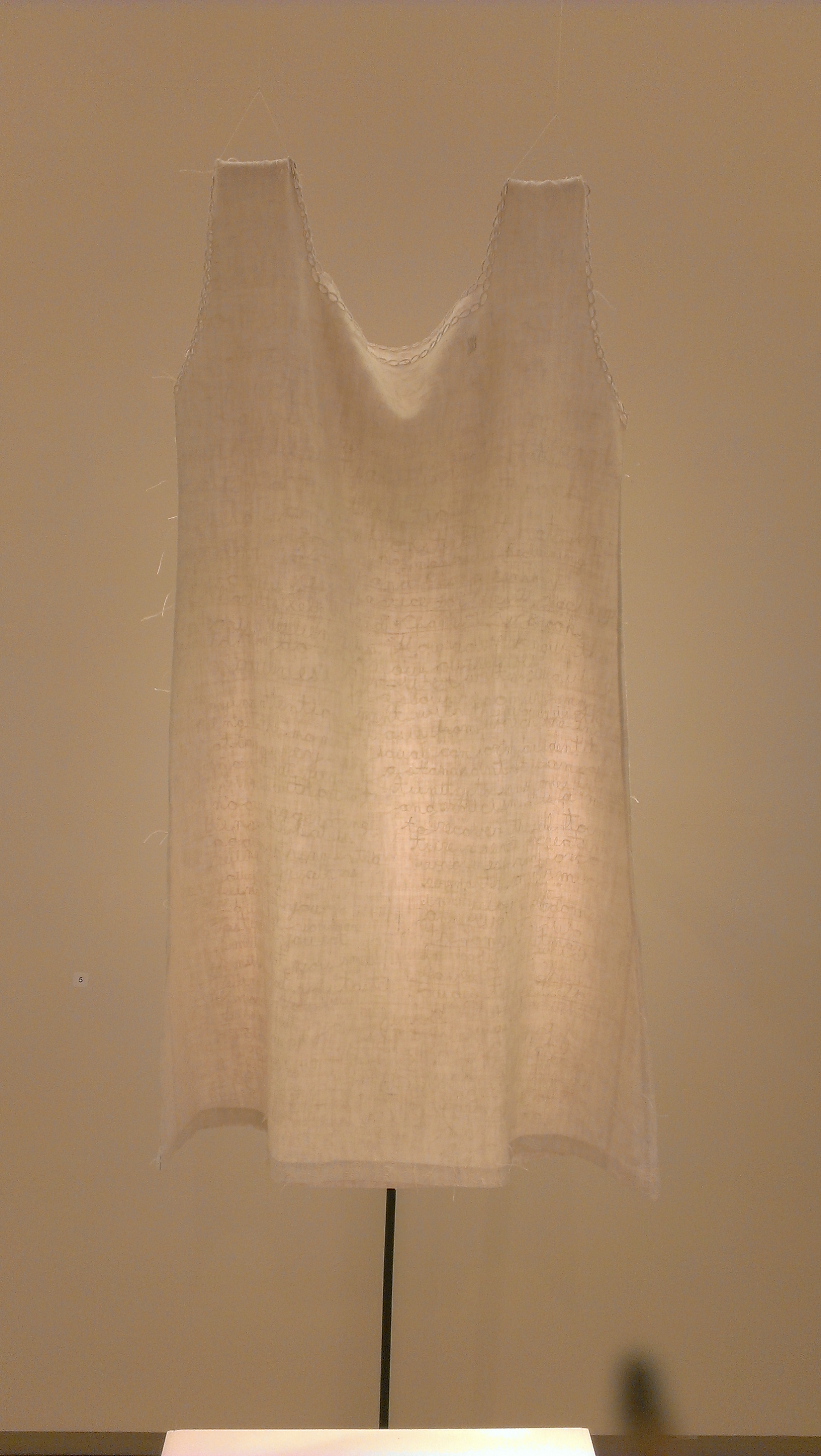
At first sighting, Sandra Brownlee’s Nighdress with text seemed austere.  It appears handwoven and plain.

2015-05-22 20.15.12

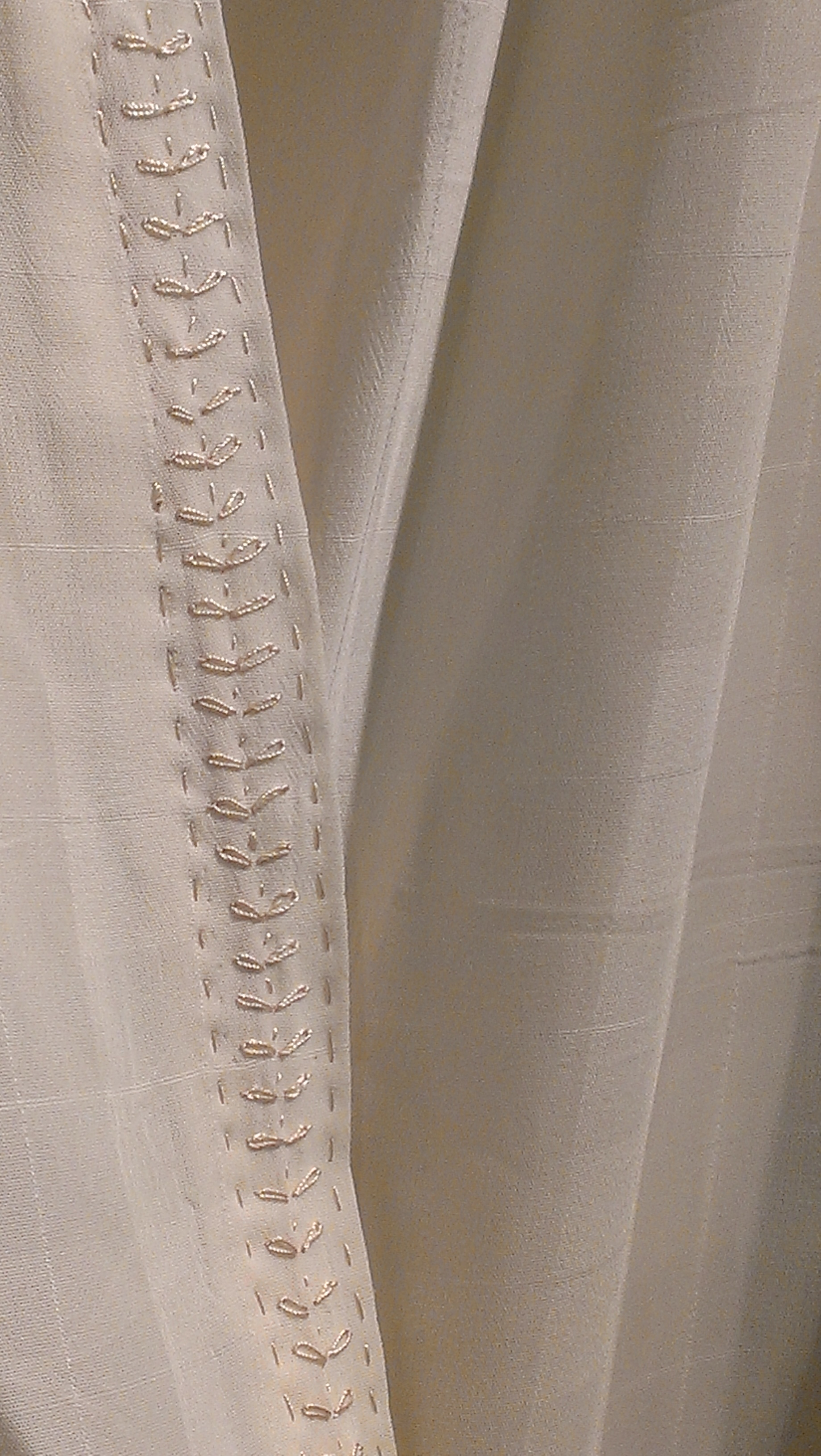
But on closer examination, proves to be a canvas for words which can only just be made out on closer inspection, winding their way across the interior surface and any body that we might imagine wearing it.

Of course… there was so much more!  I know that many readers will not be able to get to Murray bridge, but India Flint has created an online exhibition of these pieces.  How glorious to have the work of artists from such far-flung places brought together locally… and to have the chance to be there and celebrate its opening!  We were the last to leave, and wandered out into the night for some of us to tell stories and others to snooze as we headed back to Adelaide…

24 Comments

Filed under Leaf prints, Natural dyeing, Sewing

Bundles of the week

One of the things I noticed at Tin Can Bay was that some people identify that something is less lovely or less suitable than it could be, and go about transforming it into something lovely or suitable.  I have been known to do this… but it made me conscious that often I just live with the ugly version or wish that thing was different every time I wear or use it.  I also realised I don’t have a lot of confidence I can improve on things.  What if my intervention makes them worse?

2015-05-14 17.13.45

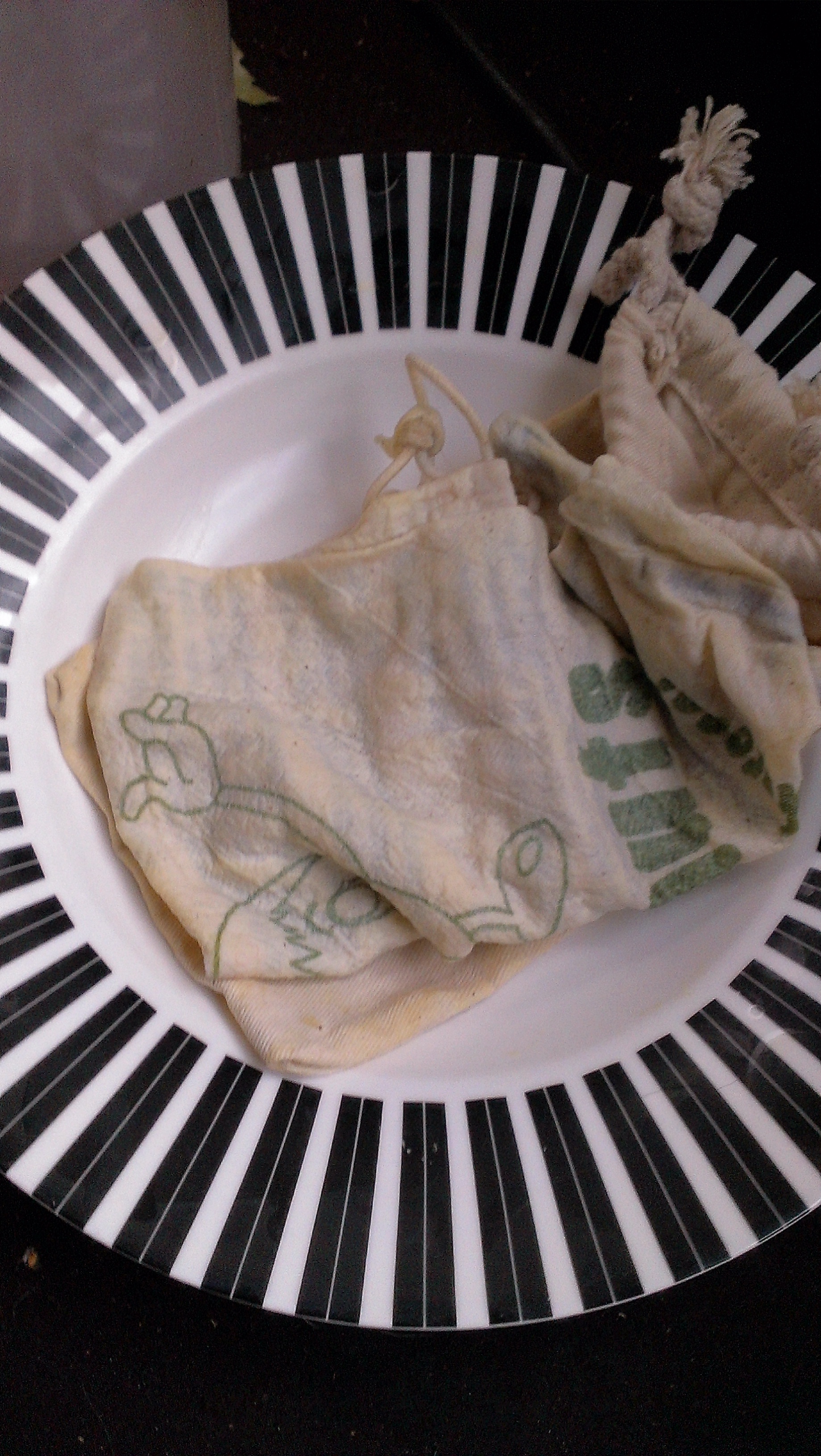
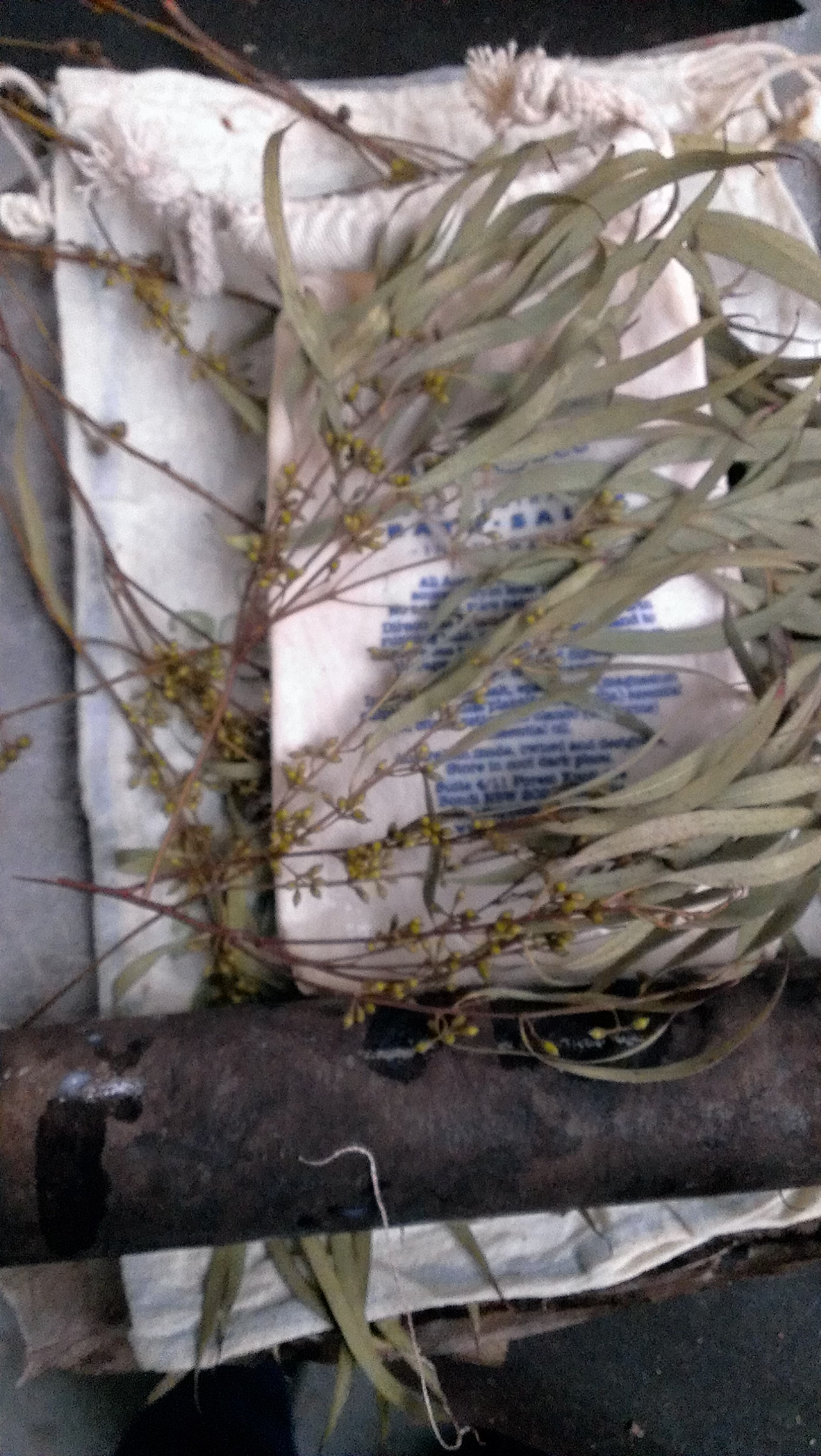
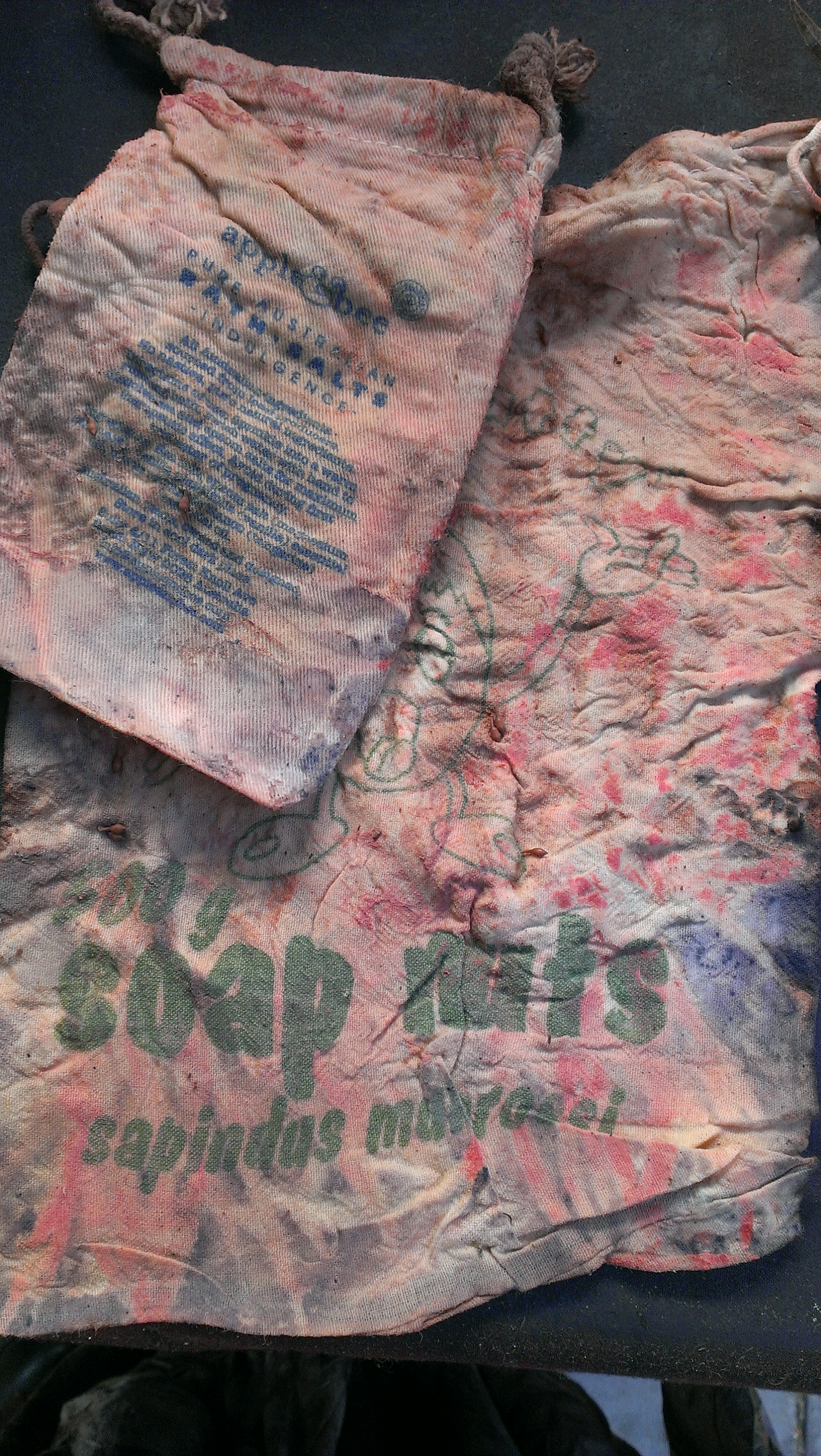
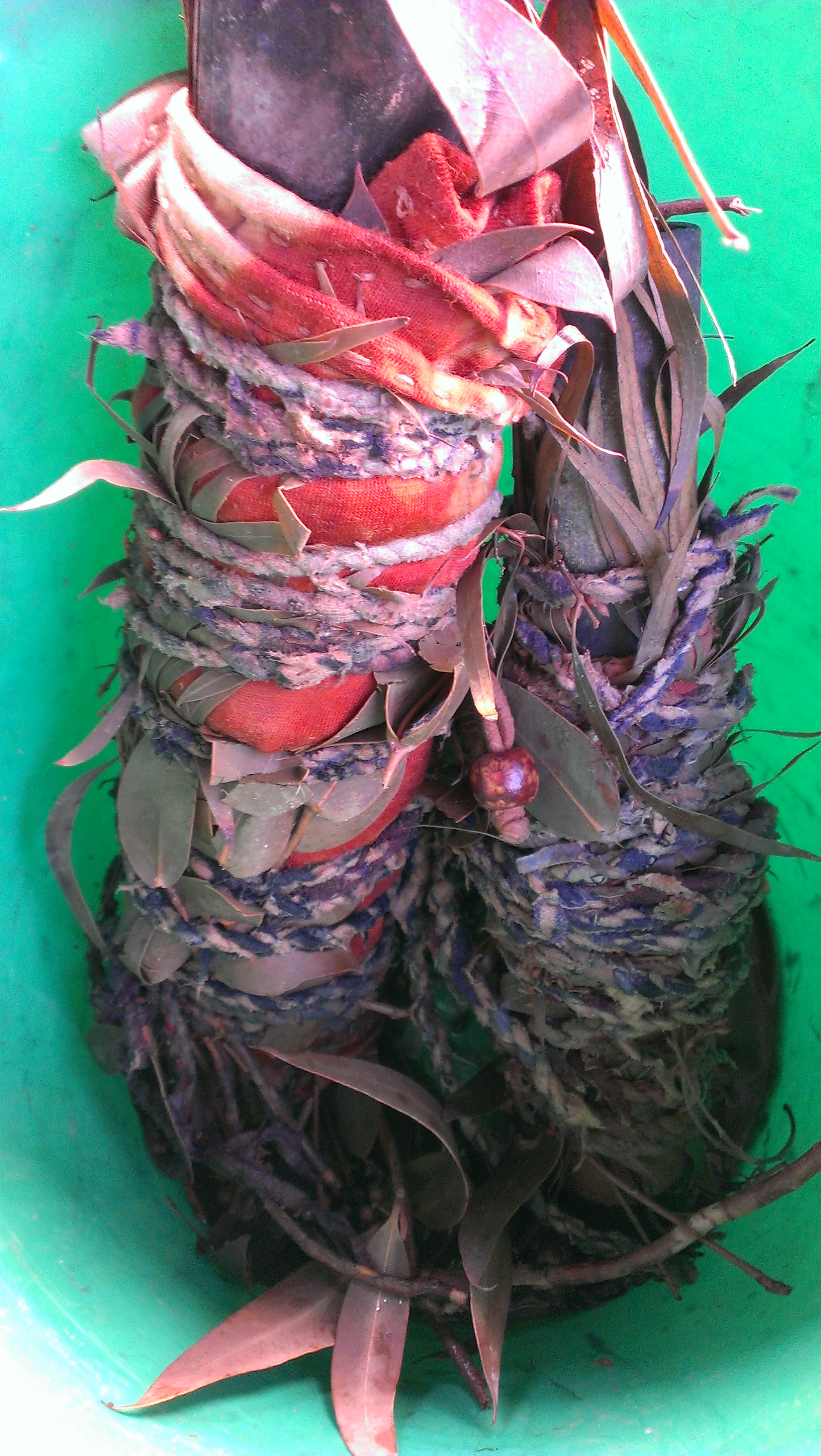
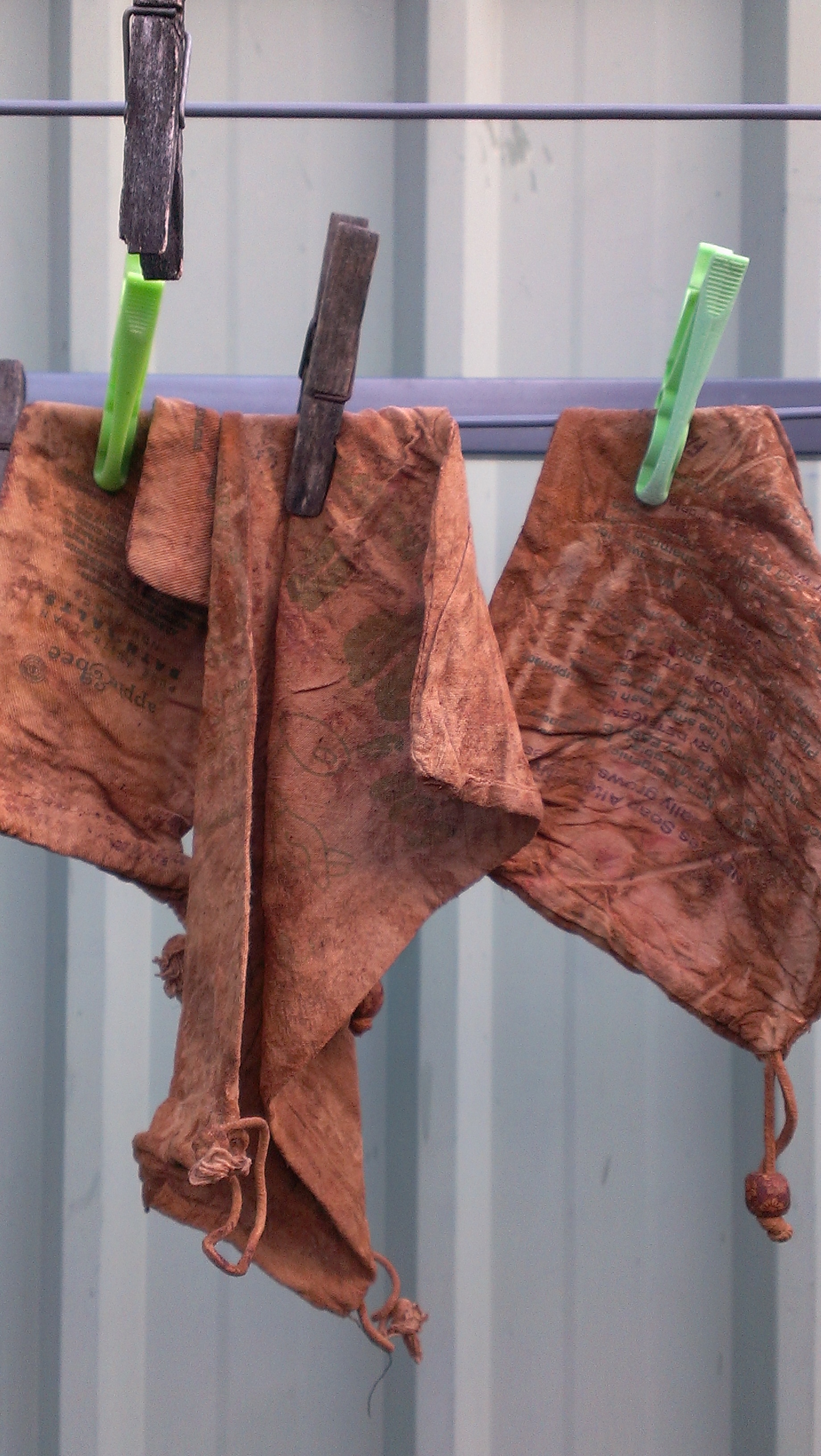
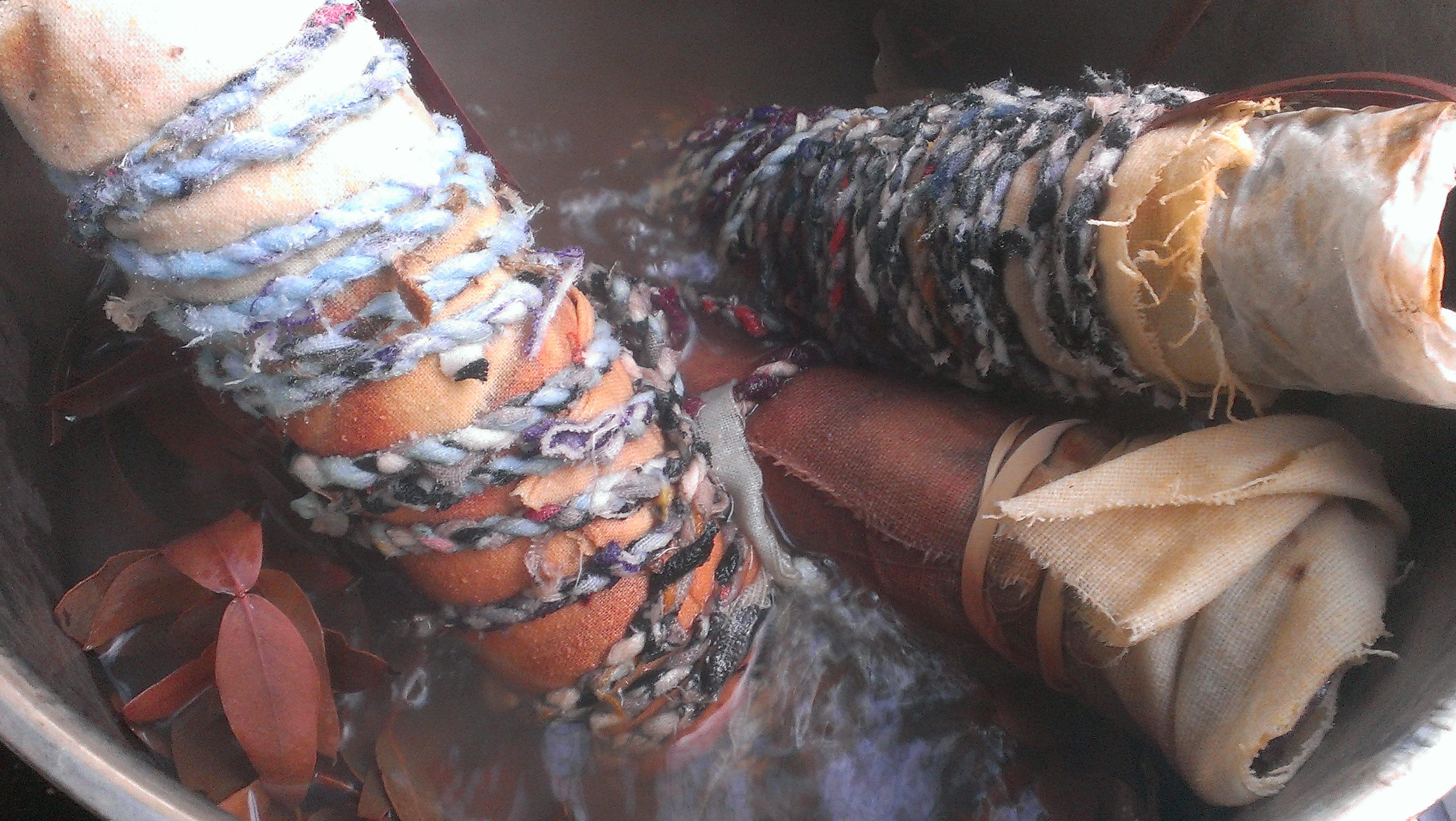
So it occurred to me that I could change the little calico drawstring bags I have acquired full of soap nuts and the odd other item.  They are useful but ugly right now.  Why not dye them?  This idea happened along in a week when there was cow milk in the house (unusual these days), so I decided to try using it as a mordant.  If it doesn’t work–it won’t be too late to use soy another day, I decided.  Duly treated, I applied E Nicholii leaves.  The leaves my friend gave me are full of buds, splendiferous materials for leaf printing goodness.

2015-05-14 17.15.43

There were three bundles in all in this dye pot, and I chose this one to unwrap.  Nothing special had occurred.

2015-05-15 09.34.54

I’m not sure whether this was due to the mordant (poor application, for instance!) or whether I just paid too little attention and the bundle didn’t have a long enough, hot enough time in contact with the dye.  I had left it dyeing and gone out to play guitar and sing and generally be a flibbertygibbet–occasionally something suffers through this kind of neglect (but I had a good time)!  I was undeterred, because if at first you don’t succeed, try again later with tried and true processes you understand on a day when you are paying enough attention.

2015-05-15 09.38.04

I rewrapped, and decided to reheat the other two bundles as well rather than disturb them, when their companion had not done well with careless treatment.

2015-05-15 09.39.26

The other bundles were another calico bag and an infinity scarf destined for a friend who loved the one I made at India Flint’s Melbourne workshop.  I am seeing my friend soon and I have another gift for her too.

2015-05-14 09.35.21

This time, E Cinerea and E Nicholii…

2015-05-14 17.20.23

The other milk soaked calico bag–had rather nice beads on its drawstrings. Here are the bundles prior to heating.

2015-05-14 17.22.39

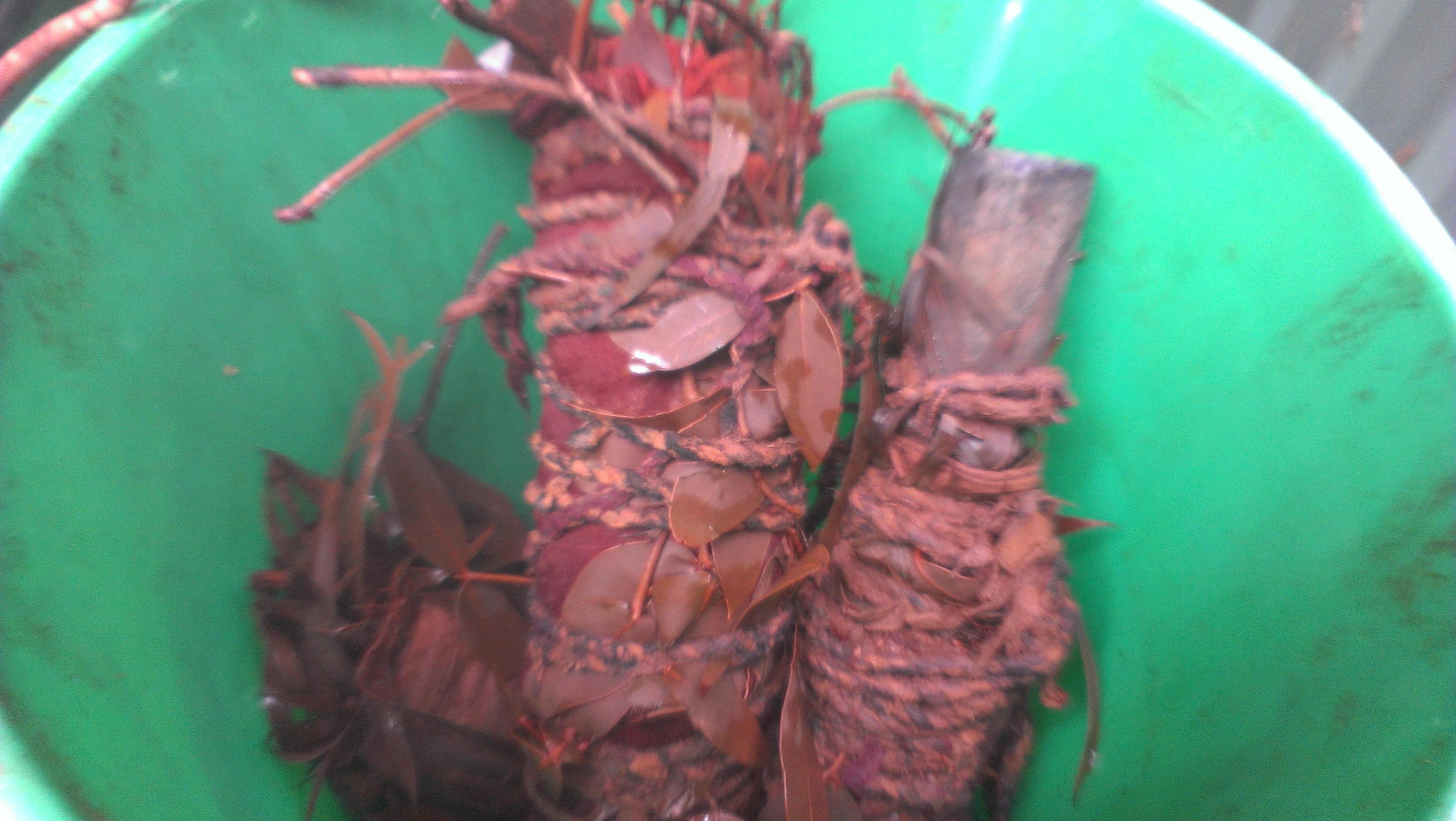
Here they are after the first heating–the silky merino looks good–but I had hoped for deeper colour.  The filthy artisanal plastic bucket in vibrant green is an extra special touch, I feel.

2015-05-15 09.34.59

After some further cooking, the calico bags all looked darker but still pretty awful and the whole bucketful was strangely blurred (joke, Joyce!).  Back to soy mordanting for now.   However, that big bundle in the middle is the infinity scarf–looking good.

2015-05-15 13.45.41

The calico bags still require improvement.  They look better here than in real life!

2015-05-21 16.36.44

I really like the way the scarf turned out.  The colours are rich.  There are some nice ochre and deep grey sections for contrast.

2015-05-19 12.39.34

I really like some of the details–as I had hoped, the E Nicholii buds have left their mark as part of an overall pattern.

2015-05-19 12.40.01

Now to see if my friend likes it–but I have some quiet confidence that she will…


14 Comments

Filed under Leaf prints, Natural dyeing

Returning home

I decided to celebrate returning home from Tin Can Bay with some local bundles… and knitting, and a visit to the saltbush plantings… and time with my beloved and our friends, and music… but here I’ll focus on the bundles!  If I can restrain myself that far…

2015-04-25 15.28.09

I took my new found knowledge and experience of bundling paper, which built on my reading of India Flint’s Bundle Book.  There is a cheap and simple e-book version available –or go for the glory of a solid object!  I tried a different kind of paper, acquired in the last few weeks, and I used scrap metal my Dad cut me.  I tried op shopping for flat metal with remarkably little success in previous months.  But there are quite a few priorities on my personal list and some progress slowly.

2015-04-25 17.16.40

Happy results!  These are E Cinerea leaves–different to what I would get on fabric and very lovely. Like all bundle dyeing, part of the mystery and part of the joy is trying out what is local and seasonal. Everyone’s selection is different.  My garden is heavy on calendula and marigold right now and I had some lovely little geranium flowers and all sorts of local leaves to try too.

2015-04-25 17.18.35

I decided to use my flanellette string for bundles despite it being unnaturally dyed.  I loved seeing some of my retreat companions loving their bundles enough to use handmade string to tie them.  And my much re-used string collection is getting to the end of its tether.

2015-04-25 17.14.56

I used all kinds of fabrics–raw silk from a recycled garment, calico, linen offcuts, and a little piece of silky merino given to me by a retreat companion (should she be reading, thankyou again!)

2015-05-06 10.13.36

The silky merino gives such vibrant colours, but actually the linen was a bit of a standout too.

2015-05-06 10.13.52

Meanwhile, the string making continues.  I have decided to try using this process of making string as a point of reflection on my obligations under Indigenous law–and of so many principles of earth care that might come under that set of principles.  The importance of things that will biodegrade and that will not last forever, the way plastic will.  The intertwining of all life.  The cycles by which nature does its magic.  Our dependence on plants and water.  the way things and beings come into closer relationship with one another.  I keep sharing the string–as people admire or ask about it, I have a little stash right here by my hand and I can give them some.  Sharing is a primary principle too.

2015-05-03 15.53.03

I have in mind something like what Grackle and Sun might call atheist prayer.  But different, of course.  Do read her post and be inspired.  I love her idea of chantstrands, but my experiments along those lines didn’t work for me the way taking a few wet leaves out to a tree to twist together into string and considering things has so far.  So I have taken inspiration from her and begun to make cordage from it…

2015-05-02 14.49.32

A few people have been asking about how to make string.  I have put a link to an online tutorial in the How To tab at the top of the blog, but you could learn from a basket weaver (as I did) or from any basic basketry text.  Or put yourself near India Flint, who shares string making everywhere she goes, as far as I can tell (having learned how from Nalda Searles).  Or go to YouTube and be among survivalists who do something similar!  Meanwhile, the garden is growing as rain begins to fall.

2015-05-02 14.49.47

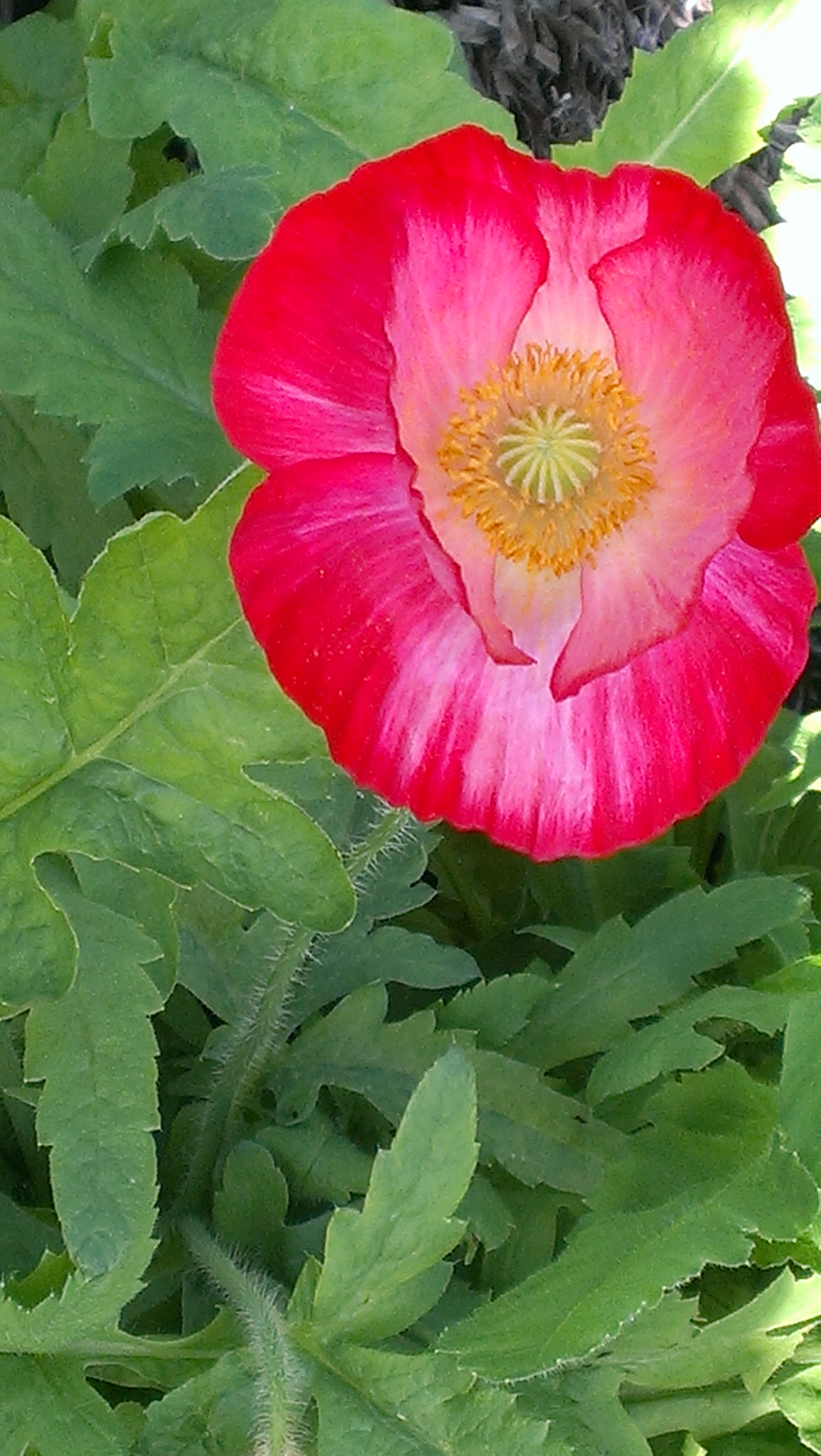
The first poppy of the season is out and beyond lovely.

2015-05-04 12.19.04

And I had a new insight about this especially beautiful saltbush which I have so far not managed to propagate.  It has taken a lot of observations to figure out when I might be able to collect seed, but one day at work recently I pulled out a seed envelope I happened to have with me (as you do) and amused bystanders by rubbing the ends of these silvery stems gently into it.  Who knows what might come of that?  I have high hopes…

8 Comments

Filed under Dye Plants, Natural dyeing, Neighbourhood pleasures

Retreat to Tin Can Bay 2: Wonderment is only natural

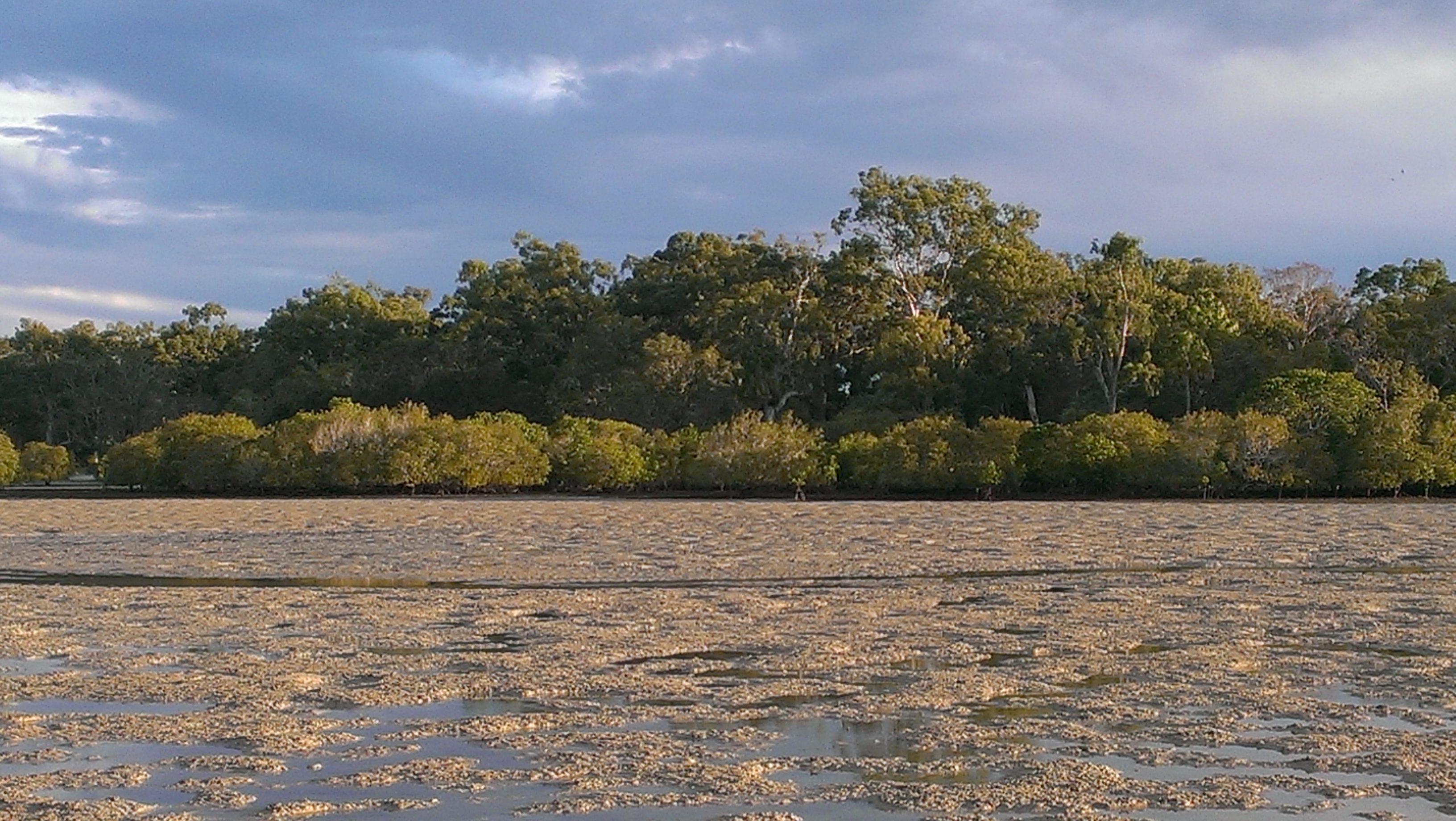
The retreat seemed to me to be organised around creating the space for profoundly noticing and being inspired by the wonderful place we were in.  It was a homage to the natural world and to Tin Can Bay as a specific, special place.  And what a place it is! When we arrived, we first went out onto the mangrove mudflats.

2015-04-19 16.50.06

I love mangroves.  They grow along the coast by Port Augusta, where I spent a lot of school holidays as a child, so for me they hold many happy memories as well as hours of experiencing mangroves.  Being on them and among them, finding the shells and sea plants that get trapped in their branches and roots as the tide recedes, peeling their seeds and even burying treasure in a biscuit tin beneath a particularly special tree.  These did not seem exactly like the mangroves I played among as a child.  I realised at Tin Can Bay that I had somehow imagined all mangroves were sisters.  But it seems that they might be cousins.  There is an extended family of mangroves.

2015-04-19 16.48.39

There were many different invitations to go out into the scrub or the mud flats or the paperbarks with a small set of creative constraints or a little imaginative task. Invitations to focus closely on the wonderment that is nature, and the mangrove flats and the Wallum in particular: to be with and among it, to be inspired by it.  I was fascinated by this process.  It seemed as though others had encountered it before–but many of my companions have had training as artists and I have not. I was in awe of others’ skills and imagination.

2015-04-23 09.49.55

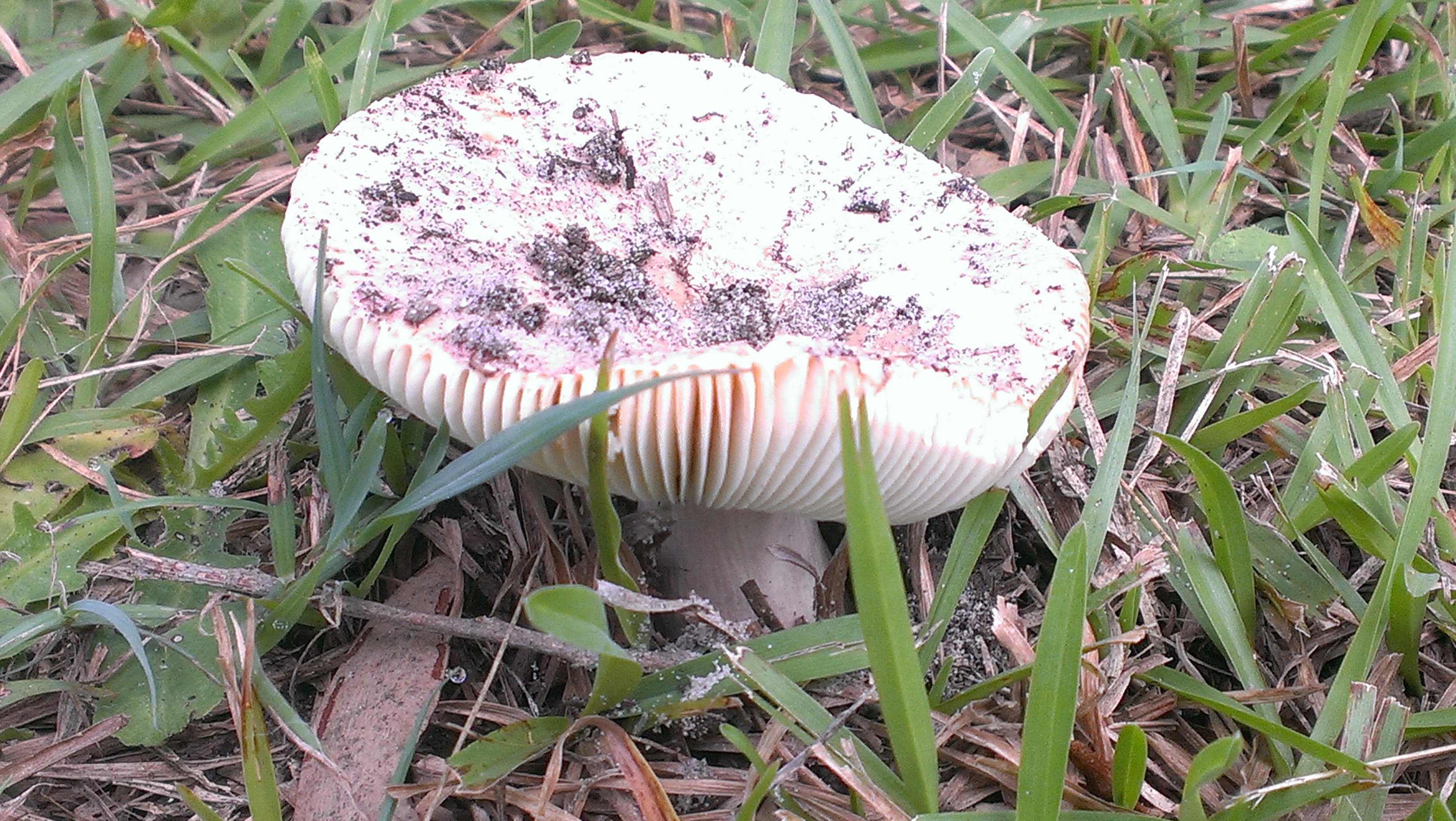
I love being out in the world as an ardent admirer.  Queensland is a tropical, fecund, damp place by comparison with the place where I live, which is dry and bare by comparison.  Here, fungi were everywhere. In all states of growing and decomposition.

2015-04-22 08.59.19

Springing up in all kinds of shapes and places.

2015-04-22 17.26.19

Apparently from every kind of direction.

2015-04-21 11.07.13

The variety of texture was amazing.

2015-04-20 10.17.39

There were flocking fungi and solitary fungi.

2015-04-20 09.29.45

And some extraordinary colours.

2015-04-20 09.30.24

I took many out of focus pictures of orchids and butterflies and spiders but mostly I just gazed in awe and marvelled at sharing a planet with such wonders. I found this skink basking one afternoon.

2015-04-21 12.47.58

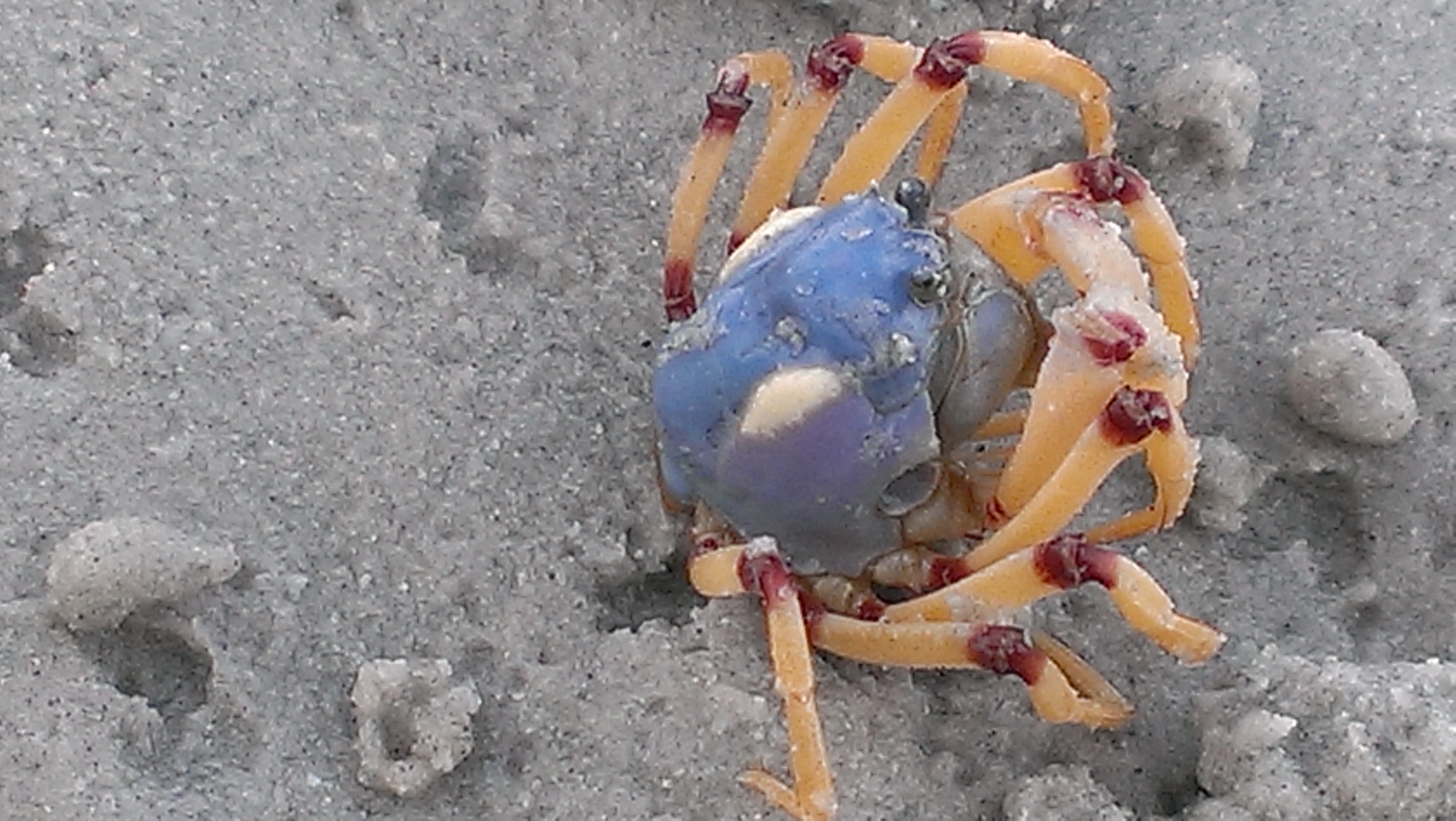
I was amazed by soldier crabs.  I have not manipulated the colours at all.  They really are blue, with burgundy elbows and knees!  These creatures can vanish under the sand and pull the back door closed behind themselves in a very short span of time.

2015-04-19 16.31.53

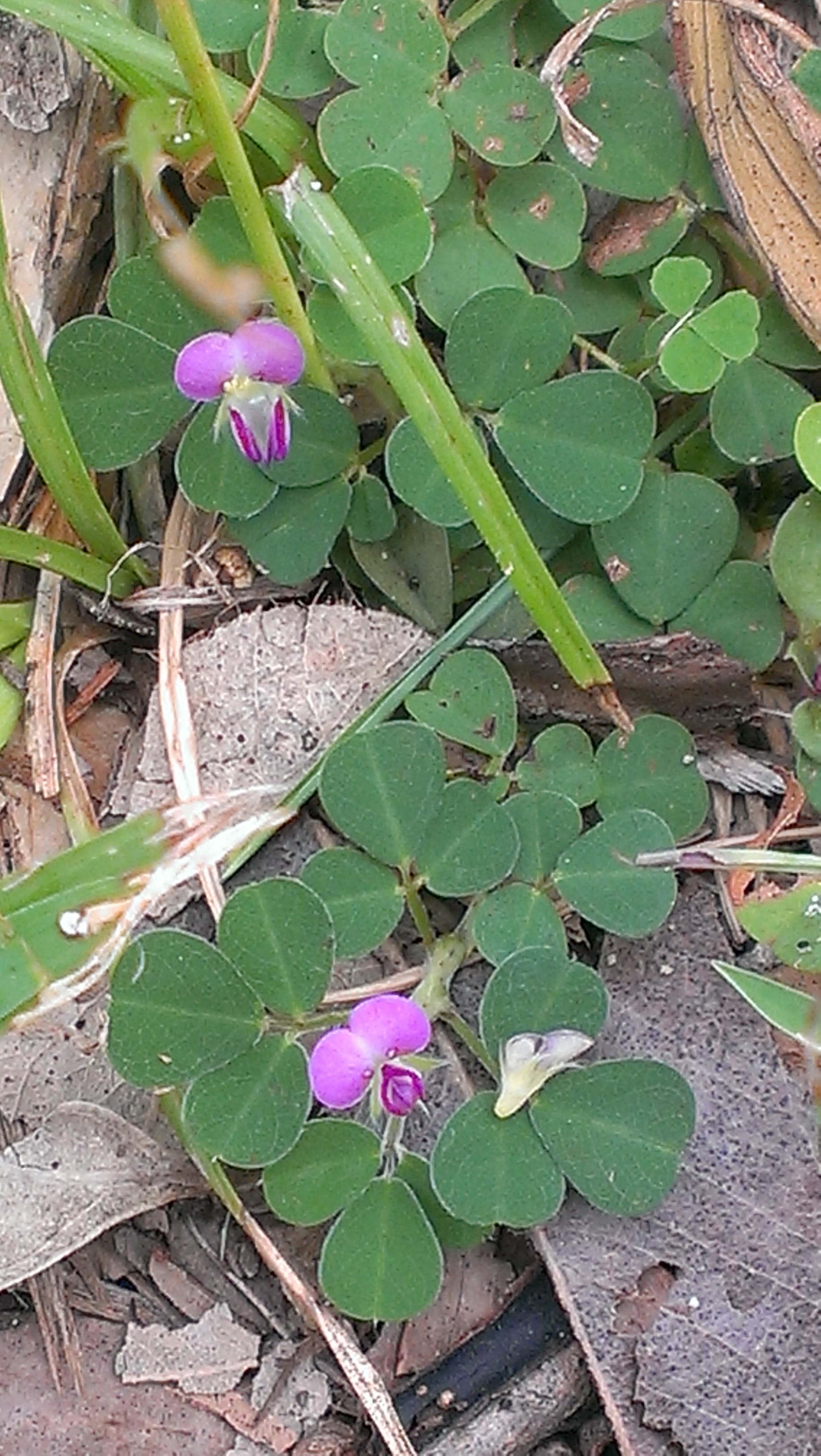
There were many small wonders. There were tiny orchids and tiny plants and tiny flowers.  Because this isn’t my part of the world, I couldn’t always tell weed from wild plant. This could be a problem in other contexts, but it was quite pleasant to have awareness of environmental devastation slightly further from the centre of my focus awhile.

2015-04-20 10.12.00

There were scribbly gums!

2015-04-21 10.49.36

India says these are Eucalyptus signata–which is wonderfully poetic in itself, to my ear.

2015-04-21 10.48.54

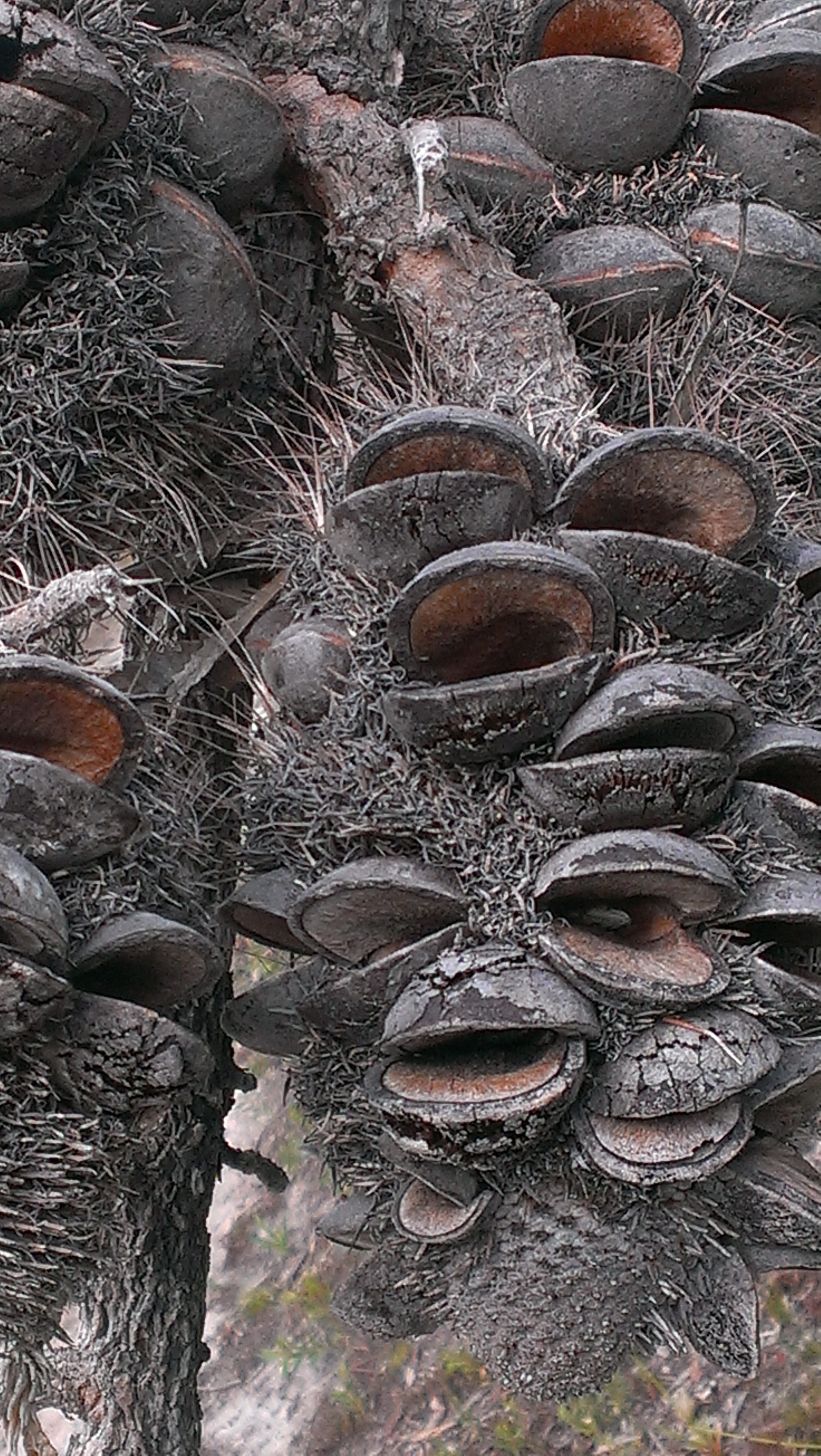
Banksias… tree sized banksias!  I am growing prostrate banksias and the coast in my state is home to shrub sized or low growing banksias.  They are lovely. These were immense.  Even the shrubby banksias were blessed with wonderfully large leaves.  It did have me in mind of May Gibbs’ banksia men, despite my adult critique of them as caricatures of a questionable sort. Non-Australians and maybe even younger Australians should know I am referring to a book by  Australian writer and illustrator May Gibbs called Snugglepot and Cuddlepie, in which the banksia men are inevitably villains–there are no banksia women. I will let you draw your own conclusions about Australian attitudes to hirsute and dark skinned men, particularly in the period in which she was writing–the early 1900s.  If you’re curious, google images will show you what I am talking about with a few keystrokes.  Her illustrations entranced me as a child.

2015-04-21 10.32.04

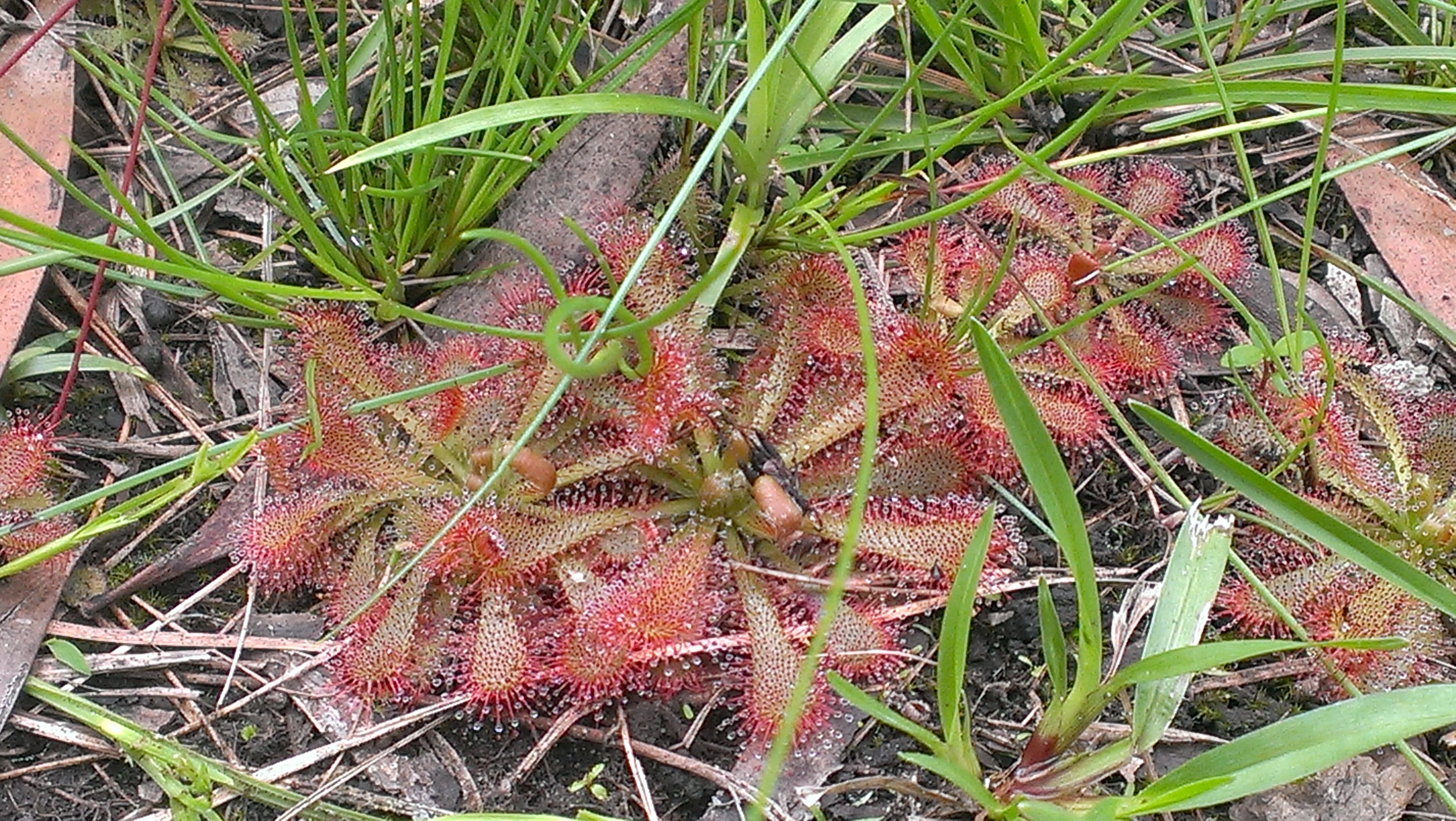
There was another workshop participant who squeaked in glee at sundews–so it wasn’t just me! Insectivorous plants–some even in flower.  Wonderful.

2015-04-20 10.19.57

Roz and India offered all manner of paths into considering how we might be inspired by nature, including videos by artists speaking about or simply showing how they work.  There was the wonderful example of these two artists themselves speaking about their own ways of working and showing some of what they do and think.  And there was poetry and writing as another pathway into how other imaginations might think the natural world and our relationship to it.  Simply wonderful.  It certainly did inspire creativity in all its diversity. But as always this close focus on the natural world inspired in me, first and foremost, awe.

18 Comments

Filed under Natural dyeing

Retreat to Tin Can Bay 1: Things made

This last week I have been away from my day job and away from home at the Retreat to Tin Can Bay with Roz Hawker and India Flint.  What a wonderful opportunity!  I felt as though planetary alignment must have occurred when it turned out to be possible for me to get there, and I managed to get a place.  There is a lot I would like to say about this week.  There will be a little series of posts, if you would like to stay with me a while on this theme.

2015-04-23 14.33.38

I’m going to start small, with some of the things we made.  I call this starting small both because some of the things we made were small–tiny, even!  But I also say this is starting small because, as these posts from Roz Hawker and India Flint both make clear–the things we made are, in important ways, the least of it.  I was delighted to be among other folk who clearly felt the same way–that the growing of relationships and the creaking and whooshing sound of minds expanding and the beginnings of new ideas that will grow and develop and become larger and different… are so much more than these little packages of wonderment.

2015-04-23 14.34.02

Not that I would wish to trivialise little packages of wonderment in the slightest!  Naturally, there were some bundles.

2015-04-23 15.44.50

Here is one of mine as it emerged from the dye pot.

2015-04-23 15.52.39

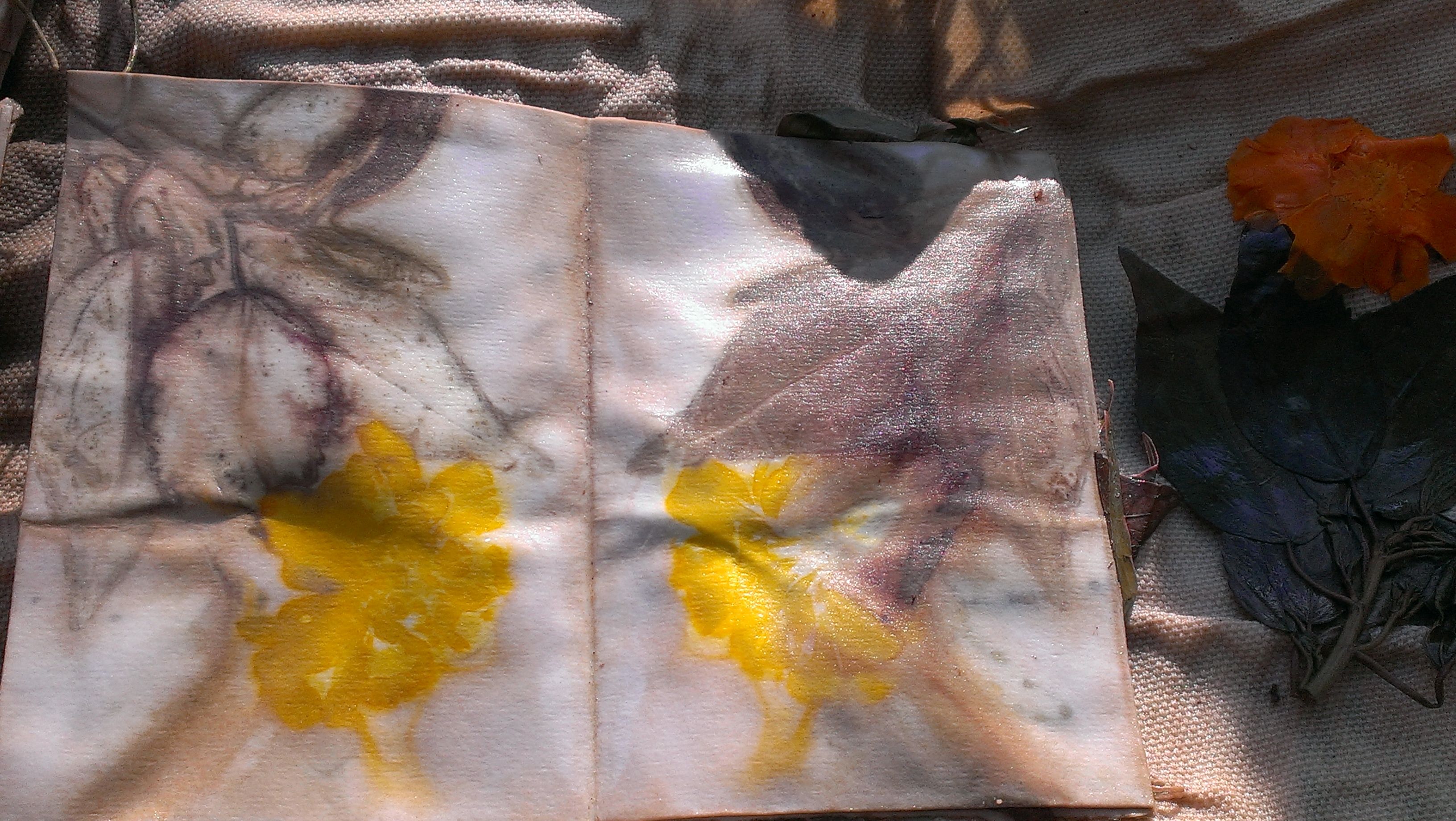
Weeds can give some great colour on paper, clearly!  I got another lovely print from cobblers’ pegs (Bidens pilosa), a plant with very sticky seed heads well-known by all who have worn socks in Queensland.

2015-04-27 10.43.43

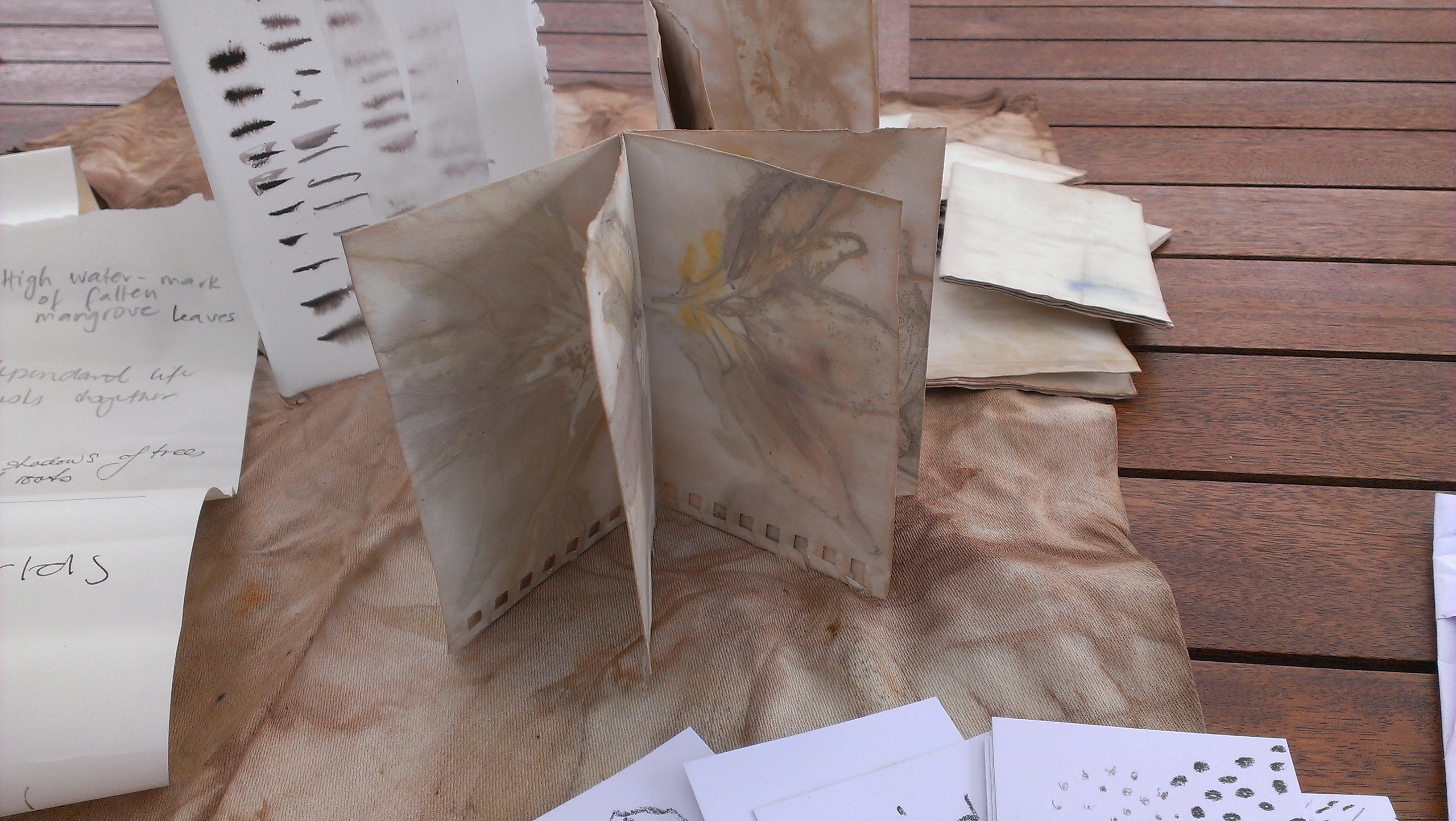
There were little books and little packets cunningly folded from paper.  I know I’ll be making these again.  Small, achievable acts of genius please me immensely… and I think any regular reader knows that I am completely capable of finding repetition pleasurable.

2015-04-21 09.45.45

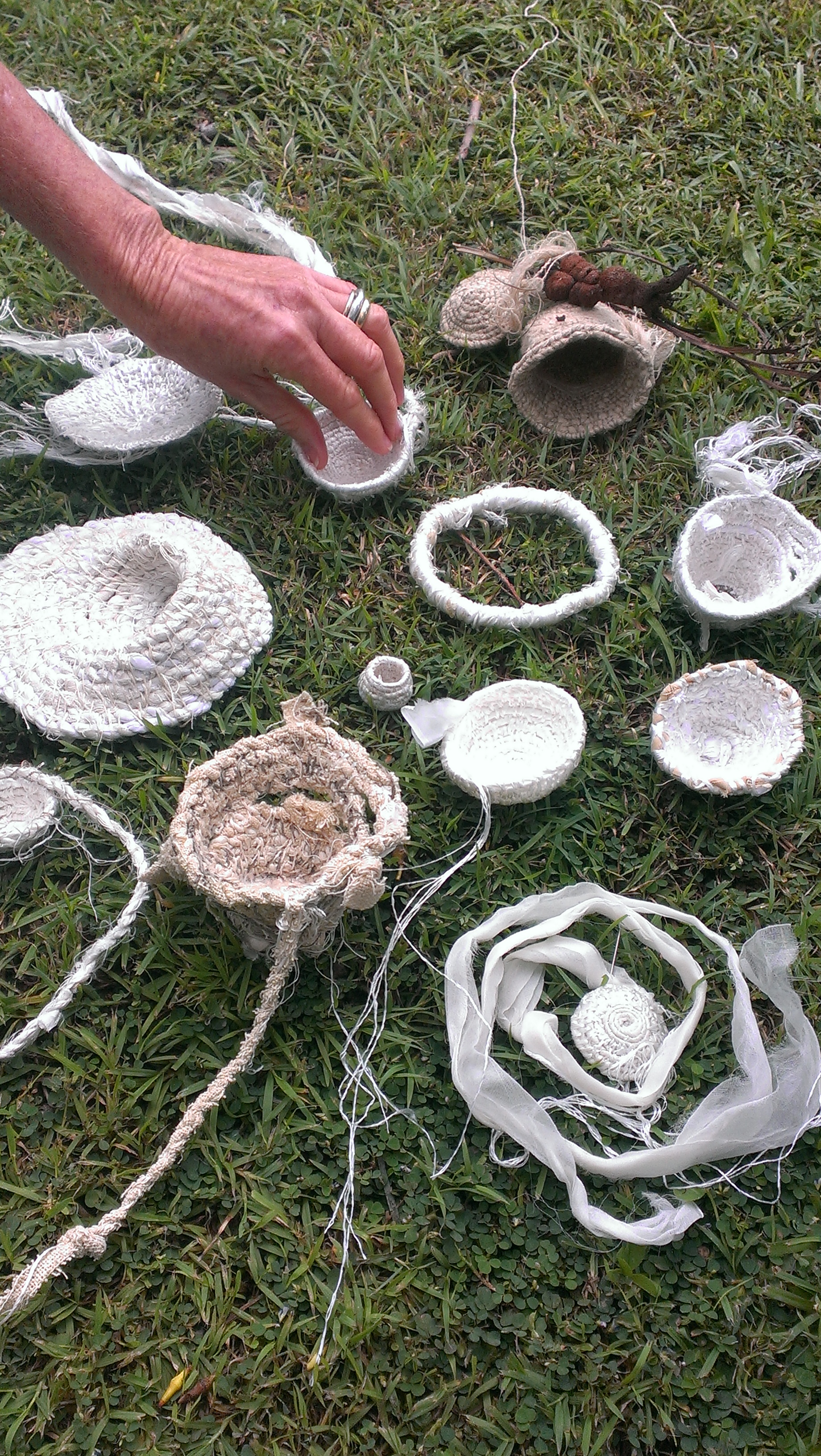
There was coiled basketry of a kind I hadn’t tried before, shown here prior to dyeing. It was glorious to see how different people did different things with the same concept and even with the same materials.  I have had little exposure to the kinds of exercises we did some days–using a set of constraints that paradoxically demand and therefore set free creativity.  It was rather lovely to see that process work out with a group of different minds and different skills sets and personalities.

2015-04-24 11.41.34

There was drawing and playing with ink and graphite and making marks with plant materials and… so much more…

2015-04-21 12.25.13

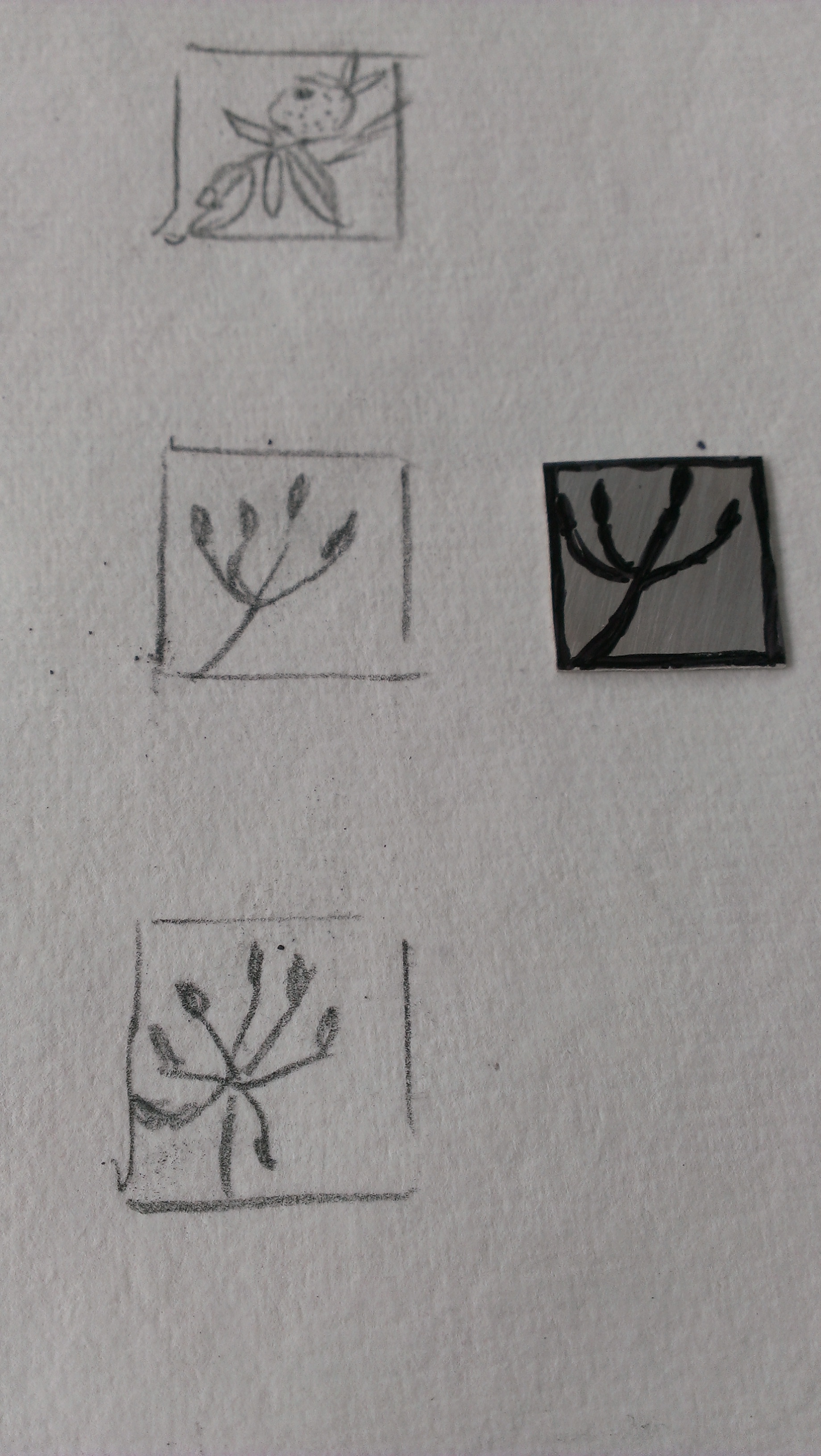
There was a little etching on silver.

2015-04-22 11.13.31

There was the sampling of new and sometimes unidentified windfalls.

2015-04-22 11.21.48

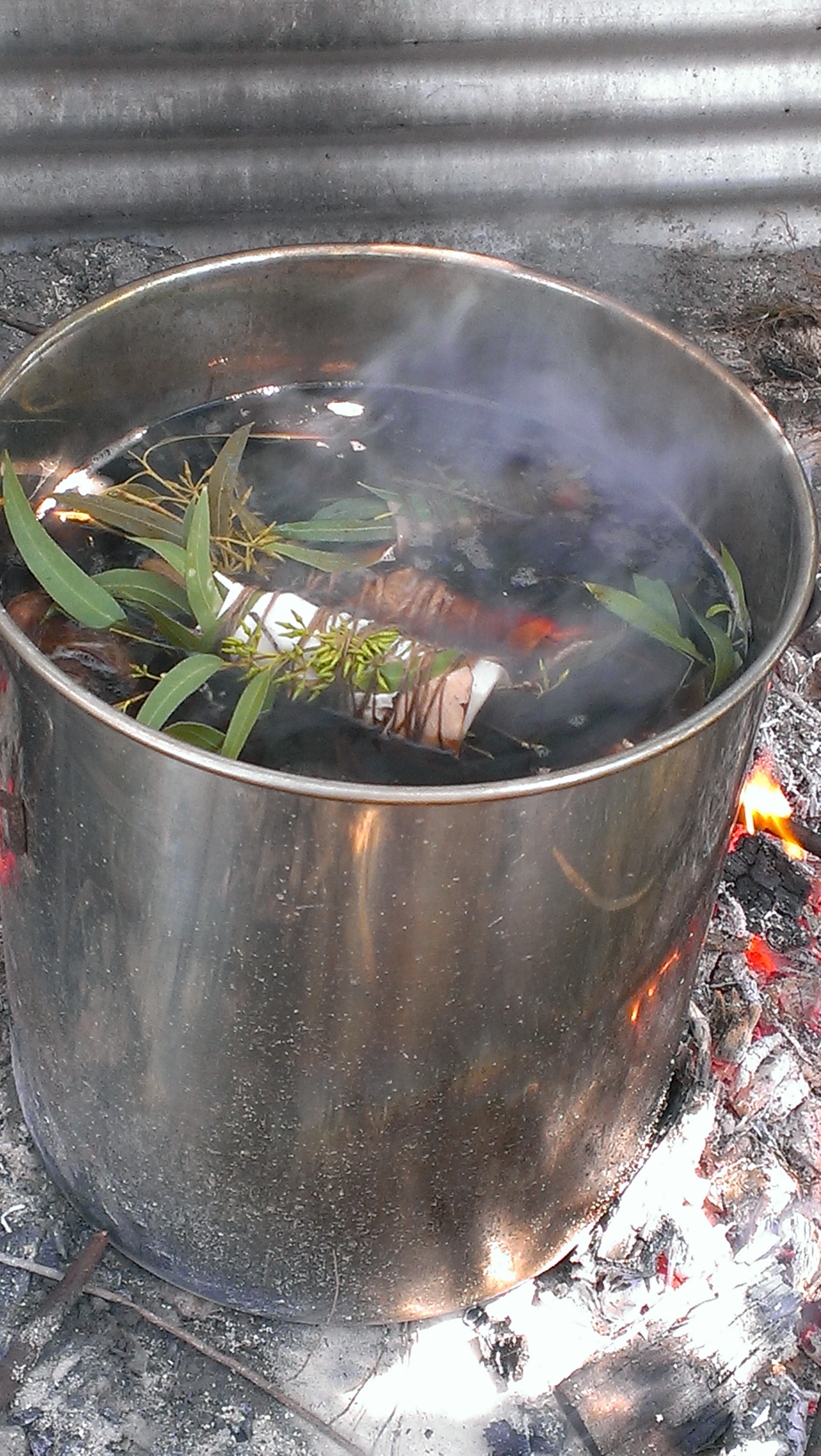
There was a dyepot over a glorious wood fire (the smoke came in handy considering the array of insects keen to nibble on any exposed skin–Queensland would not be Queensland without critters).

2015-04-27 10.42.18

I was surprised to get a leaf print from one of the local banksias.

2015-04-23 14.56.53

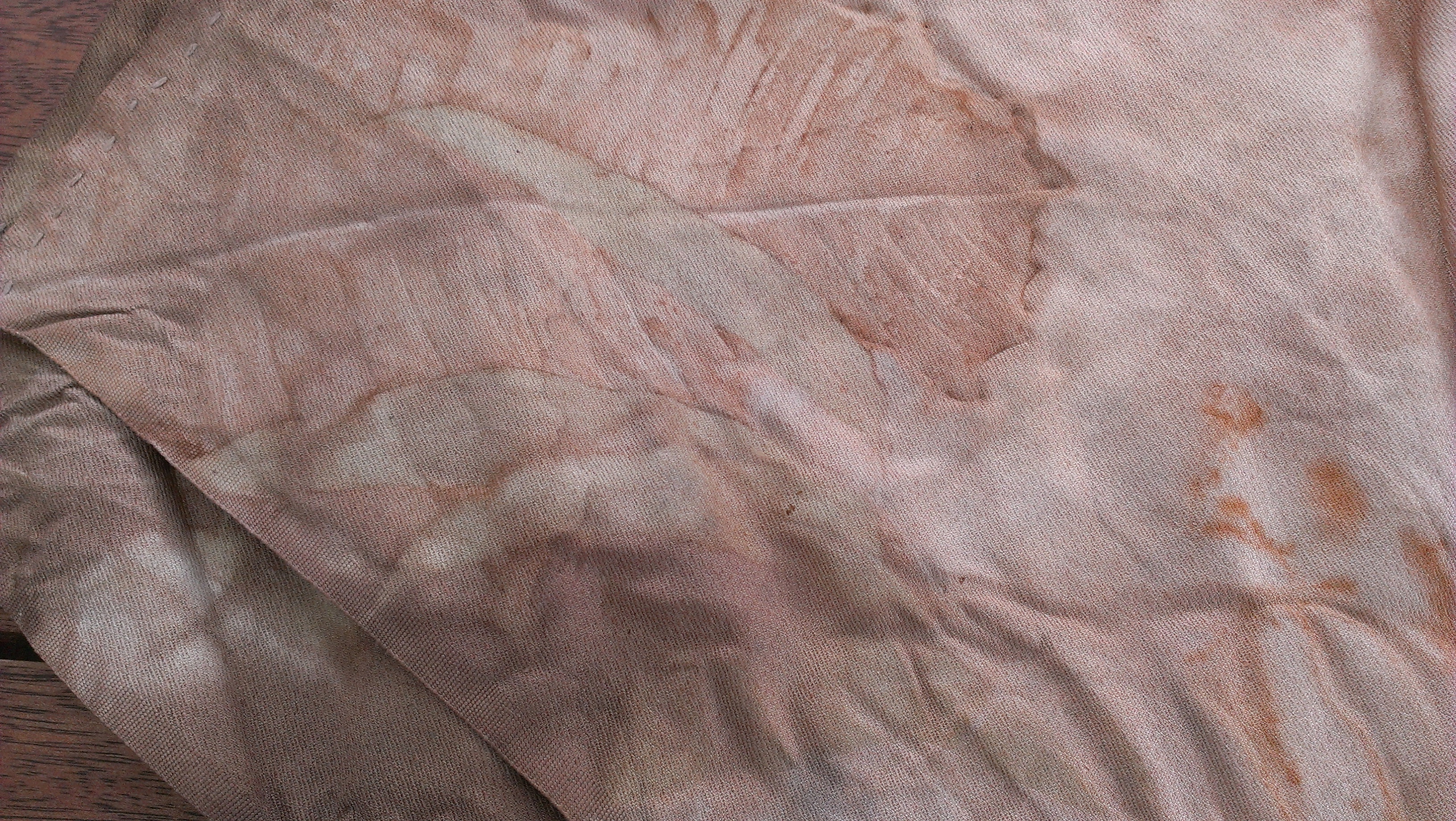
And also to get green from one of the local eucalypts.  It doesn’t show as well here as it does on my new silk bag!

2015-04-28 09.35.14

This was one of my favourite things… a small collaboration  between leaf, insect and eucalpytus-dyed silk thread.
2015-04-19 16.24.58

But there was so much more… feet in the sand and the mud.  Banksias and mangroves.  The pleasure of being nourished by poetry wonderfully read and collectively created.  Admiring the creativity, beauty and thoughtfulness of my companions.  Time to play and time to delight.  Friends to make.  Leaves to be twisted into string.  And so much smiling.

21 Comments

Filed under Basketry, Leaf prints, Natural dyeing, Sewing

Solace

It is not too late to add your contribution to India Flint’s Solace project, should you wish to.  Here is further encouragement on India’s blog.  Here is the invitation to the project–which explains it all rather beautifully… and here is SweetPea’s collection of inspirational blog posts about worldwide contributions to the project, should you need inspiration.  SweetPea’s blog is rather spectacular.  I commend it to you.

2015-04-10 15.20.10

In the meantime, I’ve been taking solace in guerilla planting and native plant propagating. Earth hours are going well. I feel as though I should make some pennants that say ‘salt bush berries’ and ‘kneeling in the dirt’.  I still might.  It certainly is a source of solace in my life in the face of all the planet has to contend with.

2015-04-13 08.14.43

Ruby saltbush has kept coming up.  In fact, I think my success rate has increased as I have become more careless.  I thought over the way it comes up under existing bushes and just gathered up berries straight from the bush and threw them onto the top of the tubes where nothing had germinated along with leaf litter and saltbush leaves and whatnot.  So many seedlings this way!  Pricking these tiddlers out has been working, so I pricked out yet more.  28 more!

2015-04-13 08.14.57

I haven’t had so many of the stash of plastic pots in use for years.  My potting mix is basically compost turned by our chooks, sieved to get out the lumps, so there seems nothing to lose by potting up more.  Garden and kitchen waste goes out to the chooks, and eggs and compost come back. It is a fabulous arrangement.  Last week my Dad gave us masses of his guavas, and there was a separate collection of fallen mushy or rotten fruit for the chooks.  What a sweetheart.

2015-04-14 07.35.02

Meanwhile, it’s seedlings out into the neighbourhood (two different types here)…

2015-04-14 08.07.45

And rubbish from the neighbourhood back home to be dealt with appropriately.  There is less of it each time I go out to the new patch. It might not show, but the patch of planted and mulched earth is growing larger.  Nothing has been lost on this patch yet.  It seems there is not a lot of traffic of people wanting to walk across or dogs keen to dig it up. And we had rain. All good.

2015-04-14 08.07.55

One morning this week I thanked the chap from the council who was watering the council plantings.  We talked about the plant thefts and he thanked me for replanting those that were abandoned.  He asked me if I was the one who had planted the saltbush on this new patch as he had noticed it appear, and warned me that it might all get taken out if Council decided to do something in that spot–but when he had asked, they had no such plans.  I said I was prepared to take the risk. I managed not to explain that I think my time is better spent just planting than asking the council nicely–they haven’t been responsive in the past and quite a few of my plantings are doing well without their permission.  He had also noticed someone was weeding the spot where he was watering, and he explained a few things about why some plantings are thriving and others are not. It seems the council have some knowledgeable and dedicated workers and the contractors are not as diligent.  And I was happy to hear he thought myoporum (boobialla) was a suitable thing to plant in tough contexts–as that is the main focus of my cool weather propagating programme, as you know!

5 Comments

Filed under Neighbourhood pleasures