Tag Archives: madder

Fermentation Indigo Vat… not this time…

On the first day of the new year, I started up a fermentation indigo vat, following Rebecca Burgess’ recipe in Harvesting Color.  I’d had the ingredients waiting for some time but finally decided to gather my courage and give it a try.  I have previously used the hydrosulphite vat with success, but this was my first time trying a fermentation method.  I thought setting this vat up in the heat of an Australian summer was a good application of the principle that you should do those processes which work with the seasons and not against them.

We had a heat wave in January where the temperature went up to 45C during the day, but it was blessedly cooler at night. I stirred every day.  No sign of a coppery sheen.  In February, we had another hot spell where the temperature went up to 38C during the day and stayed well above 20C at night.  I wondered if that was a coppery sheen, or my imagination.  On the days I noticed it, I was too busy to try dyeing.

Well.  Here it is, May and the vat never became active in summer and won’t now that winter is on its way.  So the other week my friend wanted to indigo dye a birthday surprise item, and what with the need for it to be a surprise, the difficulty of laying in hydrosulphite and the volume of other things to do, by the time we got the vat happening, it was after dark.  What I am saying is, these pictures are not great!

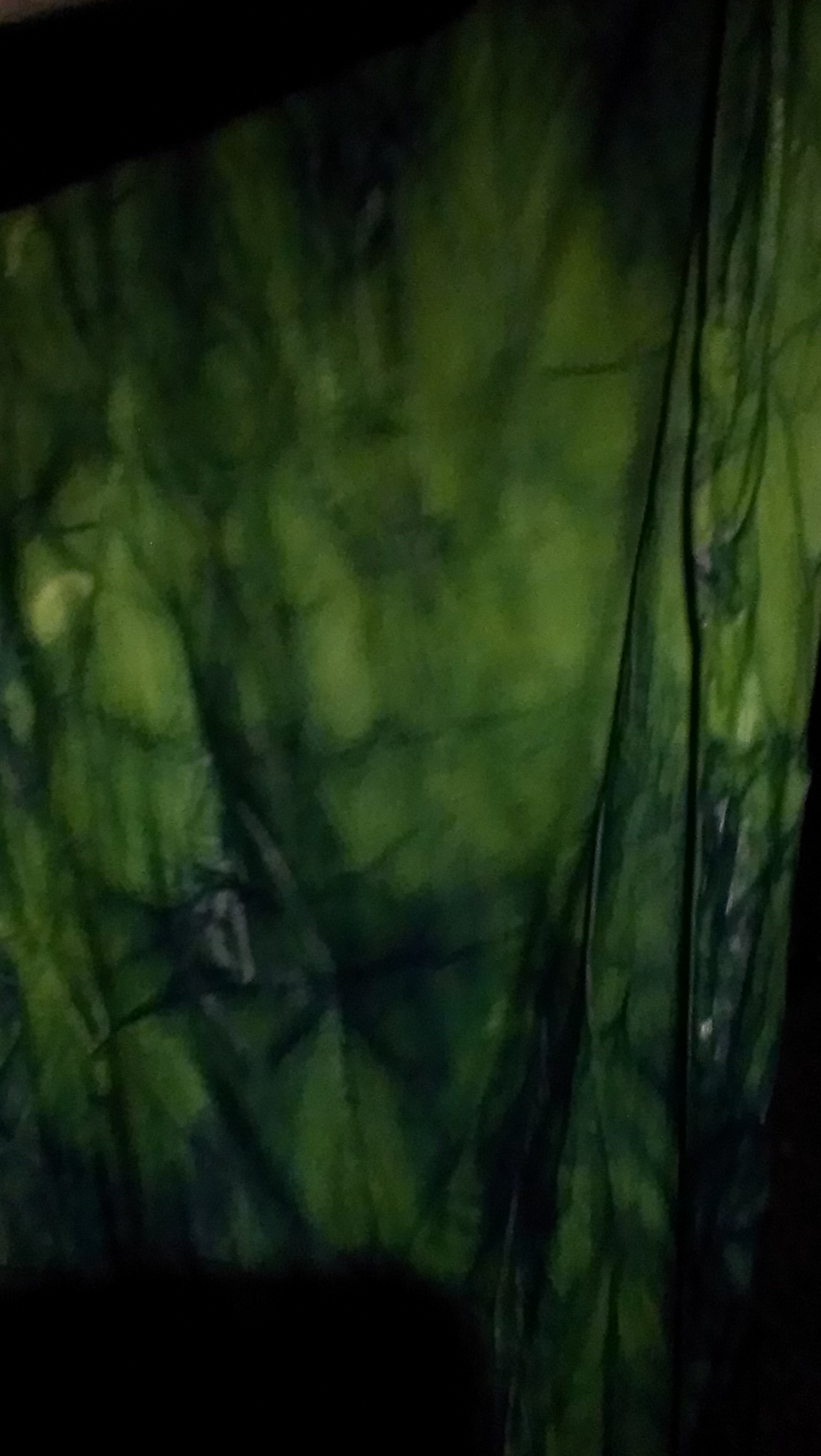
We used about half of my fermentation dye bath and added hydrosulphite. With the help of a nice woollen blanket (sold to me as a dog blanket due to what must have been a vey sad felting episode in its previous home) for insulation, and of course big red protective gloves… we got started and had that indigo magic in spite of the months the vat has lain untended.  In goes the white fabric…

IMAG1314

Exposure to the air on the clothesline
IMAG1324

After a good rinse!

IMAG1332

Next summer, I can see I’ll have to do better to get fermentation happening.  Better focus, more effort at maintaining temperature, and perhaps some feeding and maintenance.

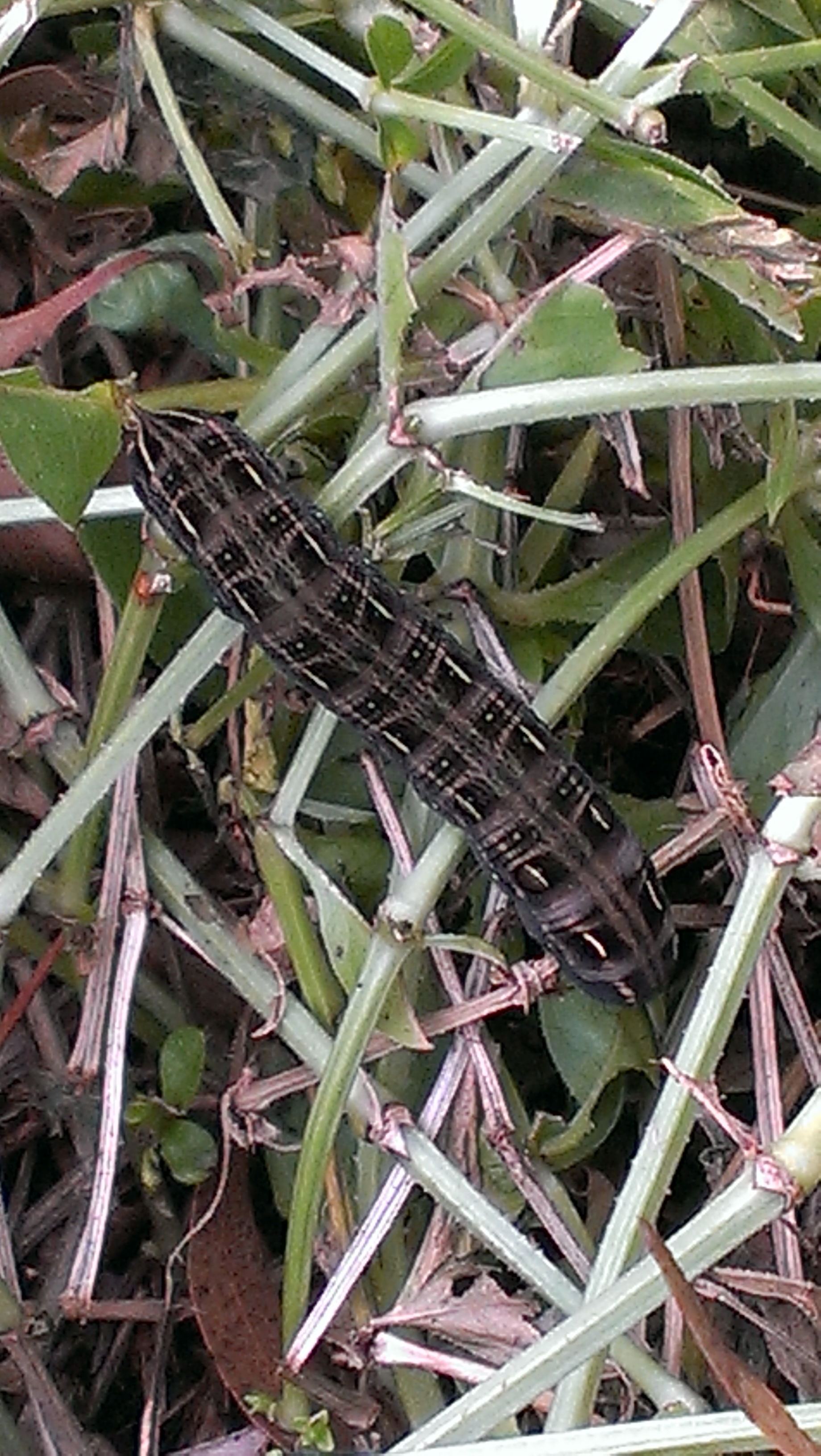
For those who have been worried, our caterpillars have apparently changed into moths and moved on, and the madder is recovering.

IMAG1357

2 Comments

Filed under Dye Plants, Natural dyeing

A funny thing happened in the madder patch…

This morning I gave the madder a closer than usual look.  The weather has turned toward autumn here, so I expected the madder to look a little leafier, and it really doesn’t.  I found snails–which is normal–and then I found this, which is a first…

IMAG1298

That, my friends, is a bigger than average caterpillar, and I have no idea what it might become in the fullness of time.  And through being full of madder leaves.  It has at least one friend/relative.  So I decided not to remove all the stems for now and let the caterpillars munch what remains of the madder leaves until they transform.  I’m still pondering whether to dig roots and try them as I think this plant must be getting up toward 3 years old now!

5 Comments

Filed under Dye Plants

Alpaca preparation

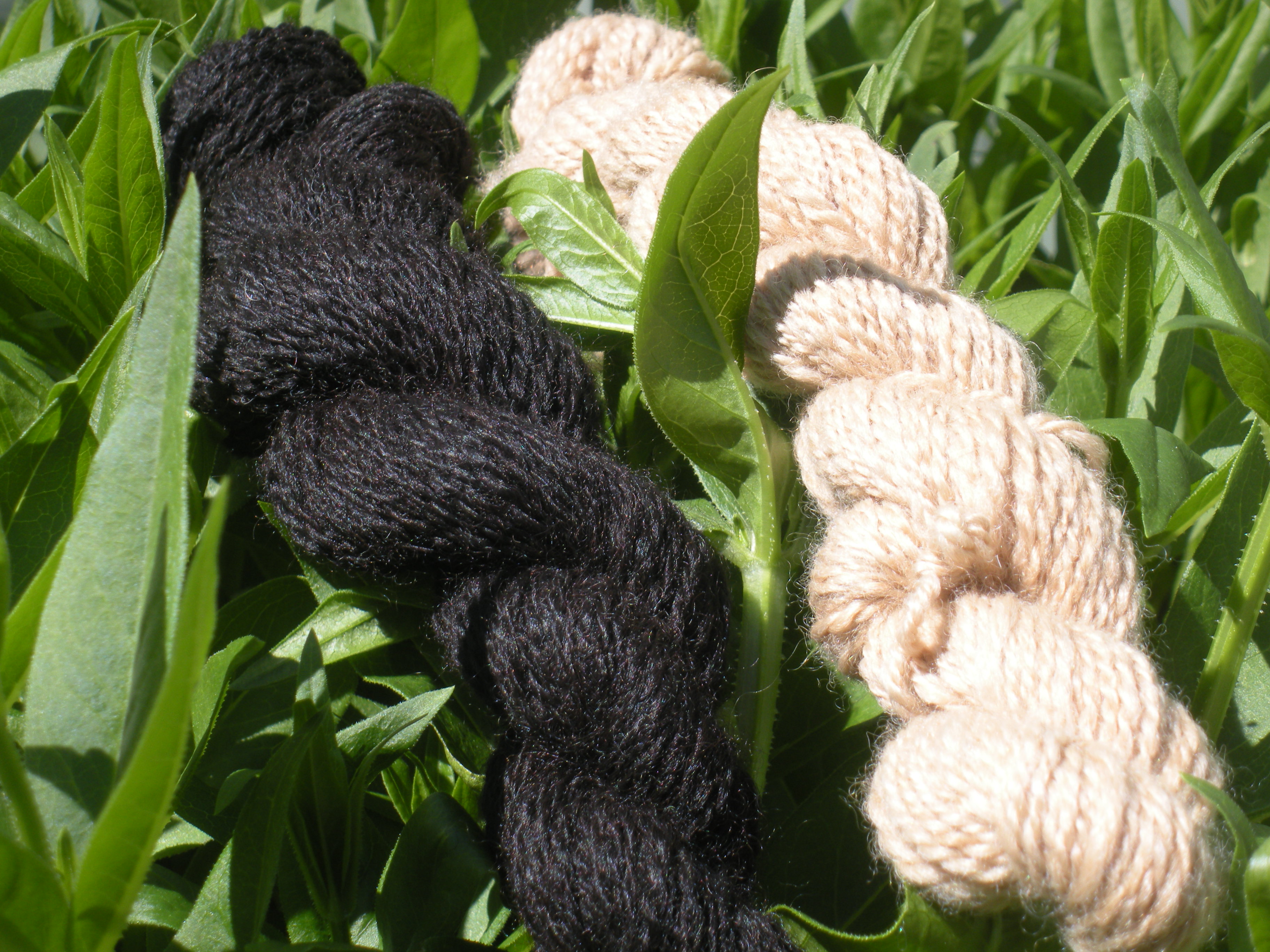
I’ve been having a lovely time spinning alpaca given to me by a generous friend.  She gave me samples of three different fleeces, white, black and what she rather fetchingly calls ‘champagne’.  I’ve been combing it and spinning it two ply and I’m very happy with the results.

I told my friend how lovely I thought the alpaca was, and she gave me more!  I have spun alpaca before, sometimes in quite a large quantity, but this has the longest staple I have ever seen, about 90 mm (these are the 90 mm matches I use to light to the dye pots–extra long.

I have to confess I have never washed alpaca, and it is always filthy, since alpacas roll and dust bathe.  My chooks dust bathe too, and watching them,  it’s no wonder that sand falls out of this fleece any time I move it! This fleece had so much dust in it that combing it was an outside activity that gave me hayfever.  I spun a lot of the white fleece rinsed and combed (that stopped the hayfever at least).  Then, I decided to brace myself and washed the rest of it.  And that led to dyeing the unspun fibre, as it turned out.  I have been working my dyepots hard experimenting toward red and…

IMAG1267

I am getting more interesting colours on silk thread (wrapped around the cards at left) than ever before.  My friends agree that the alpaca on the left, first through the dye bath, is red, then there is grey corriedale (second pass, same dye bath), more alpaca (third pass, still the same dyebath) and some still damp alpaca (fourth pass).  Three cheers for the potential to spin alpaca of many colours!

4 Comments

Filed under Dye Plants, Eucalypts, Fibre preparation, Natural dyeing, Spinning

Things I’ve done with with plant dyed yarns…

When I was preparing for the natural dyeing workshop I ran recently, I mordanted a lot of Bendigo Woollen Mills yarn as well as some handspun in small skeins–25g or less.  Having all those small skeins of different colours in alpaca and wool and mohair, activated my imagination. Eventually it led to this…

IMAG0792

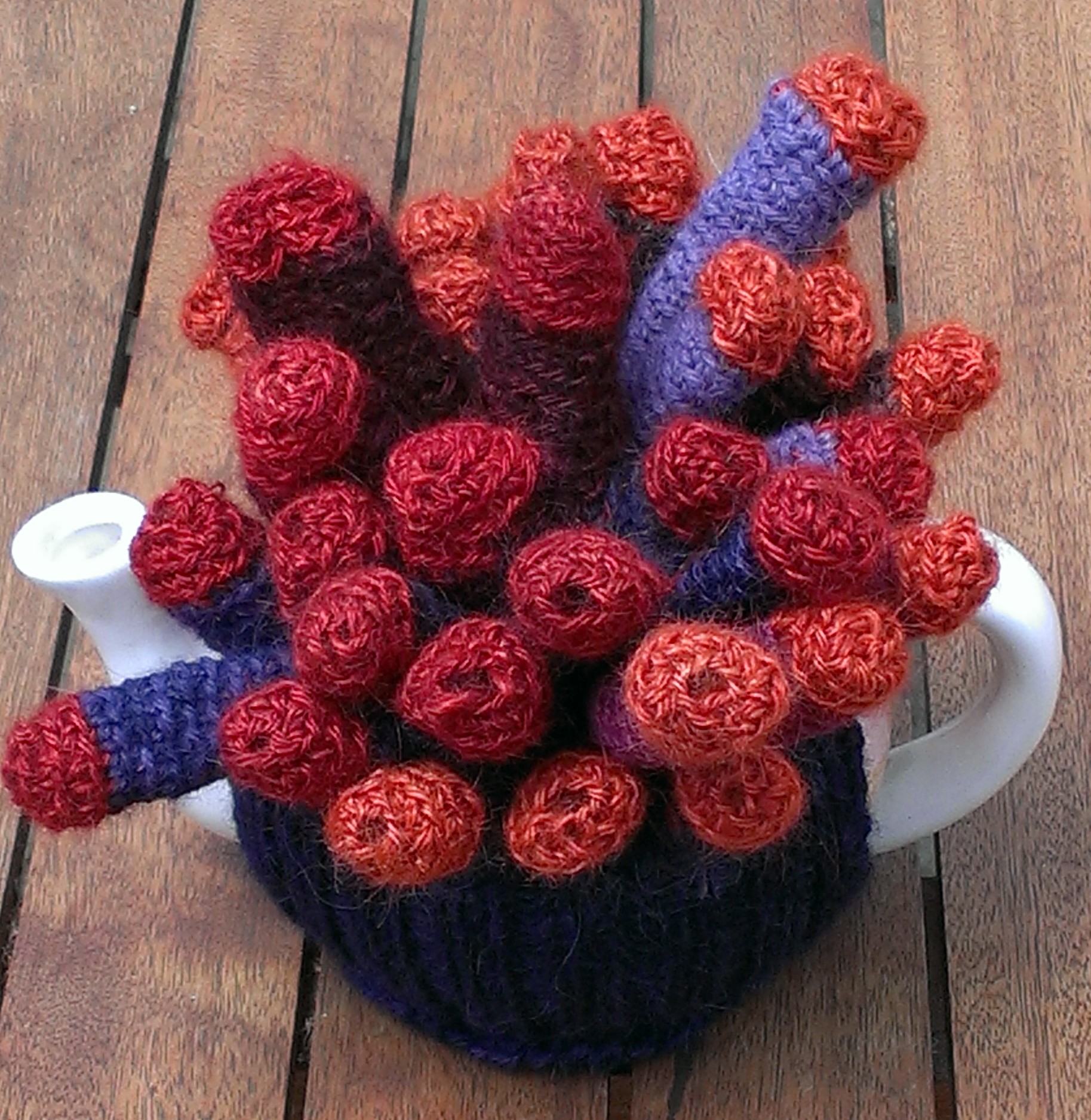
These are madder-tipped, logwood-stemmed crocheted coral thingummies, inspired by Loani Prior’s ‘coral punk’.  When I say ‘inspired by’, let me confess.  I bought her beautifully designed and entertaining book Really Wild Tea Cosies with a Christmas book voucher I was given.  So I had the pattern.  But even though only one, basic, crochet stitch was involved, my crochet skills are decidedly remedial and I don’t happen to have a crochet instructor on tap.

I turned to Maggie Righetti’s book Crocheting in Plain English (I don’t have the new revised edition, needless to say).  Apparently sometimes I just can’t believe what I am reading… or perhaps I just don’t understand on the first eight passes.  I see students I teach with the same difficulties!  By the time I had finished this tea cosy and started on the next, I’d managed to figure out that I wasn’t doing what Loani Prior must have believed was involved in the one stitch involved in her cosy.  Luckily for me crocheting badly still produces a fabric of a sort.  I also figured out that for me, improvising a knit version of the pot cover itself was going to beat freeform crocheting one as the pattern suggests with my inadequate skill set.  So that’s what I did, and Loani Prior shouldn’t be held responsible for the outcome.  I like it anyway.

IMAG0843

It has highly entertained people who watched me crocheting coral at parties (as one does) as well as those who have seen the finished object, many of whom thought immediately of a sea anemone.

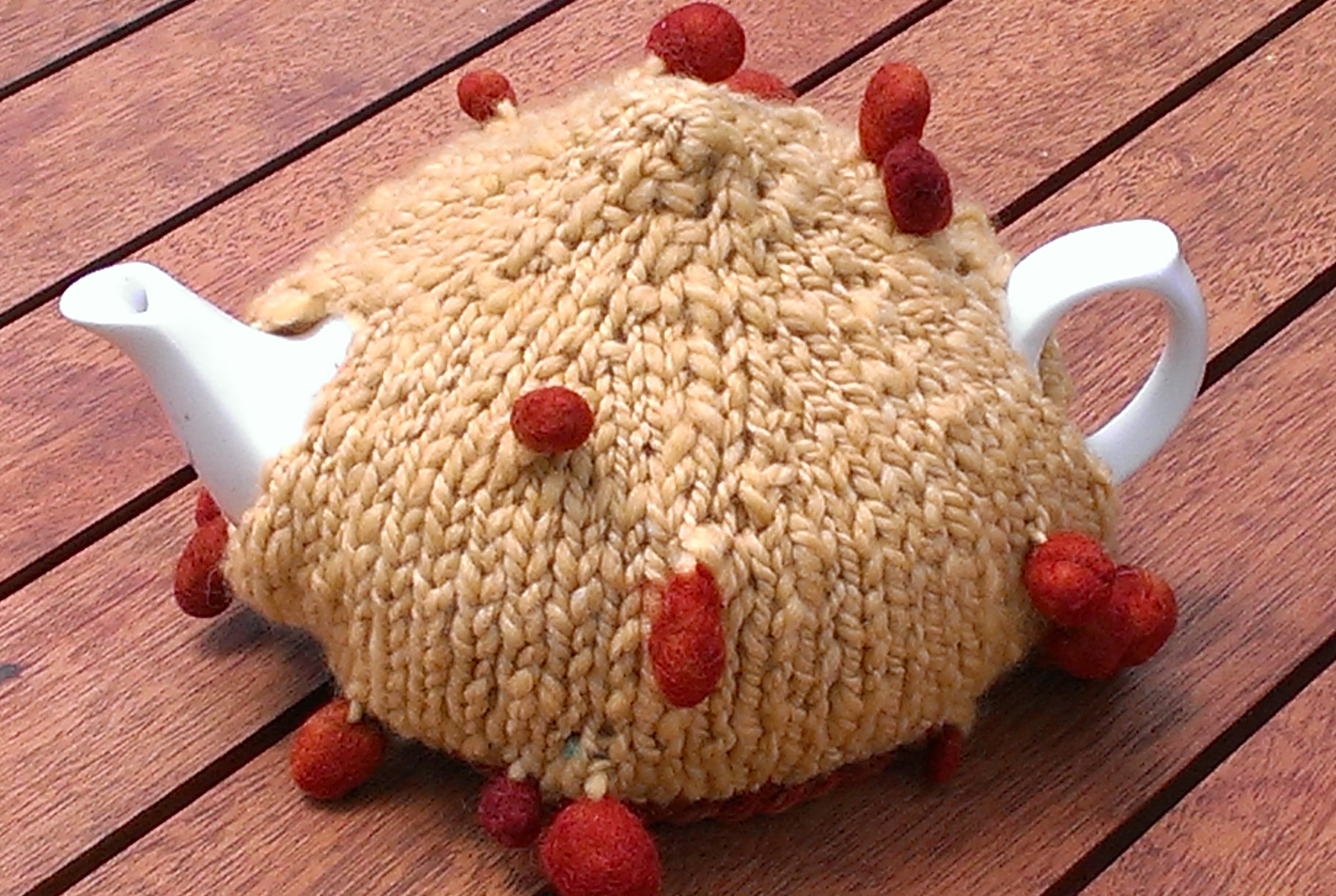
Let it be said that at present coral punk is not alone.  Here is the present plain Jane of the tea cosy selection at our place: yellow from silky oak leaves and orange from eucalyptus–with the felted blobs spun into the yarn.  Pattern improvised.  Luckily, tea pots are just not that fussy about how you clothe them.

IMAG0840

I’ve been branching out and using up some particularly strange art yarn spinning experiments.  This next one is commercially dyed mohair with silk curricula cocoons spun onto it.  Scratchy for a head, perfect for a teapot!  I was surprised how many people liked the look of the ‘hat’ emerging as I knit this at a picnic, riffing off Funhouse Fibers’ Fast and Fun Cozy.  Once again, that is to say, dispensing with the pattern when it became inconvenient.  I guess the hat admirers hadn’t felt the yarn yet.

IMAG0842

And for anyone who is wondering, I have continued to dye with the logwood exhaust from the dyeing workshop.  I ran out of yarn for a while and dyed two, 200g lengths of merino roving.  This morning I pulled out another 100g of superwash yarn.  I think it might be just about done, and I only wish I had kept a record of the weight of fibre that has been dyed with what was a small quantity of logwood in the beginning!  This weekend, the second in a series of two natural dyeing workshops. I’d better eat my crusts and get my beauty sleep in preparation.

IMAG0839

2 Comments

Filed under Crochet, Eucalypts, Knitting, Natural dyeing, Spinning, Uncategorized

Magical madder

IMAG0623

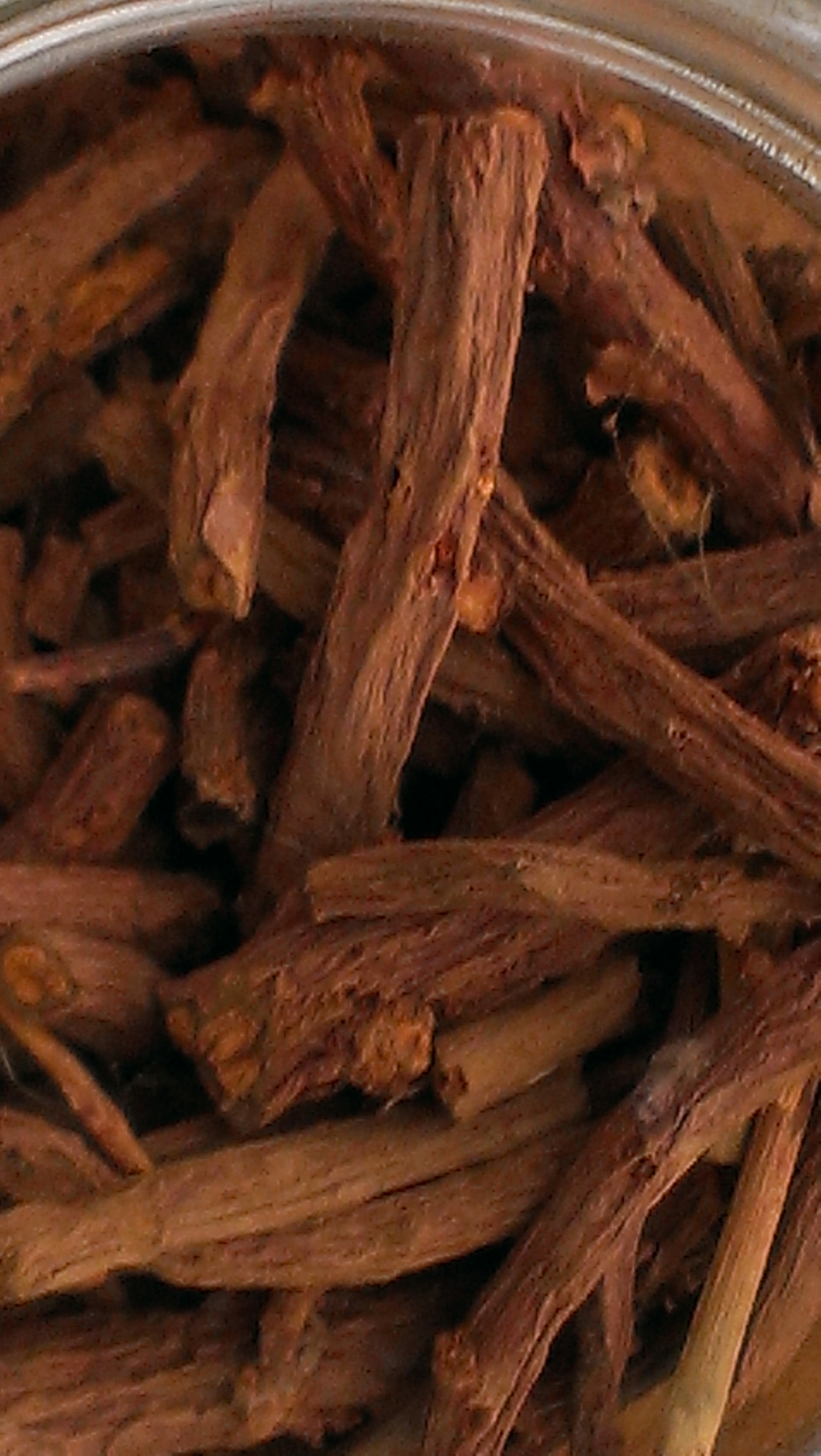
I received a gift of dried madder root recently: it could be years old! But then, the tradition of madder dyeing is ancient and there was no reason to think it was past its use-by date.  I followed Rebecca Burgess‘ instructions in the beautiful Harvesting Colour to process it during a dyeing day with a friend who (happily) shares my enthusiasm. Here are our fibres going in:

IMAG0649

I left fibres soaking in the dyepot for a week afterward.  And here they are after drying.

IMAG0770

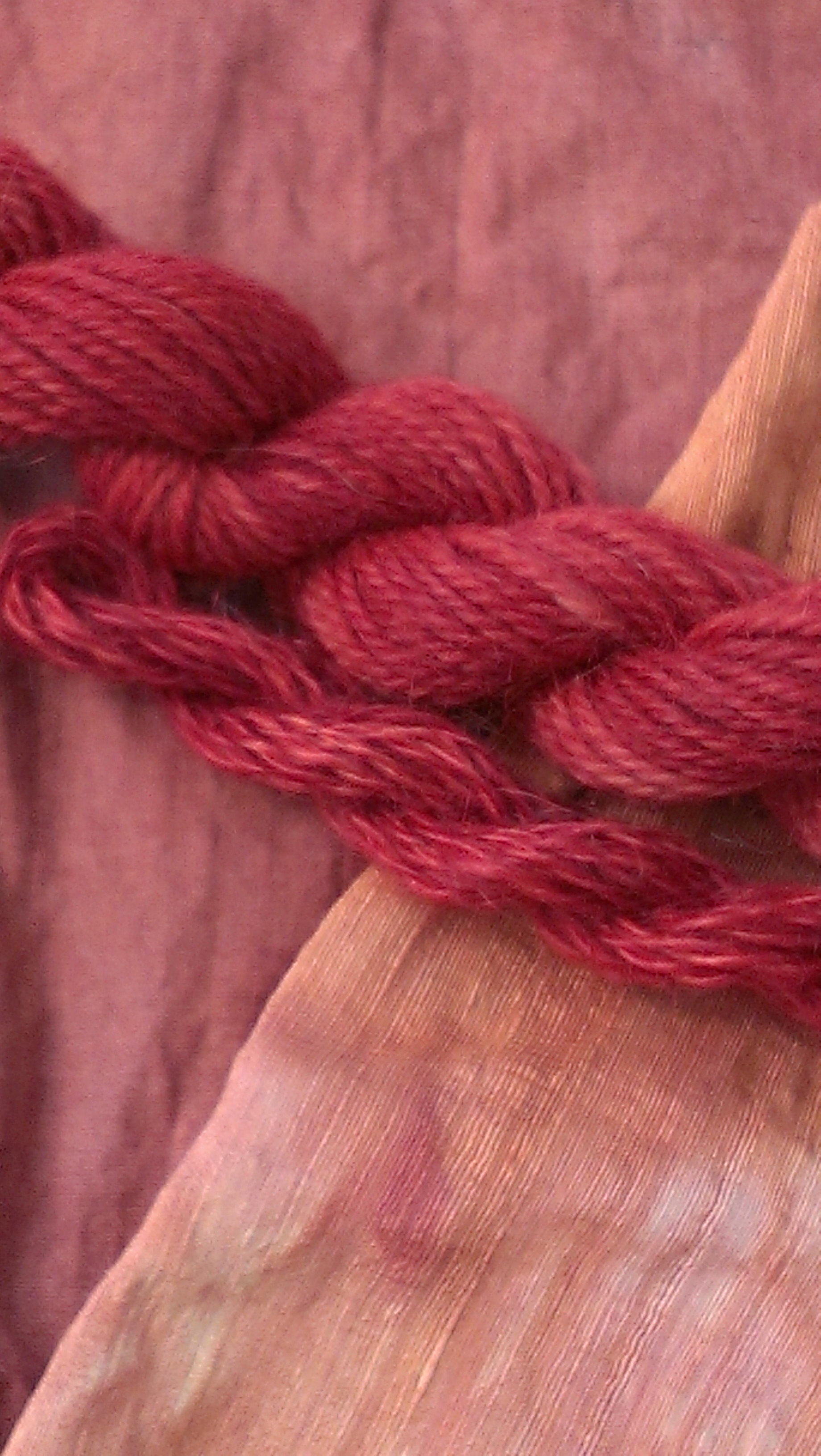
The alpaca/wool (larger skein) is really red, and so is the smaller skein of mohair.  The cotton mordanted with soy on the left is a red-brown shade, and the well-loved but unmordanted silk fabric (previously a precious shirt handmade for my friend) is a lovely red-orange.  This madder bath didn’t begin to give orange until it was on its third exhaust bath. After that, I kept dyeing with it until I got down to peach on some handspun wool and banana fibre blend.

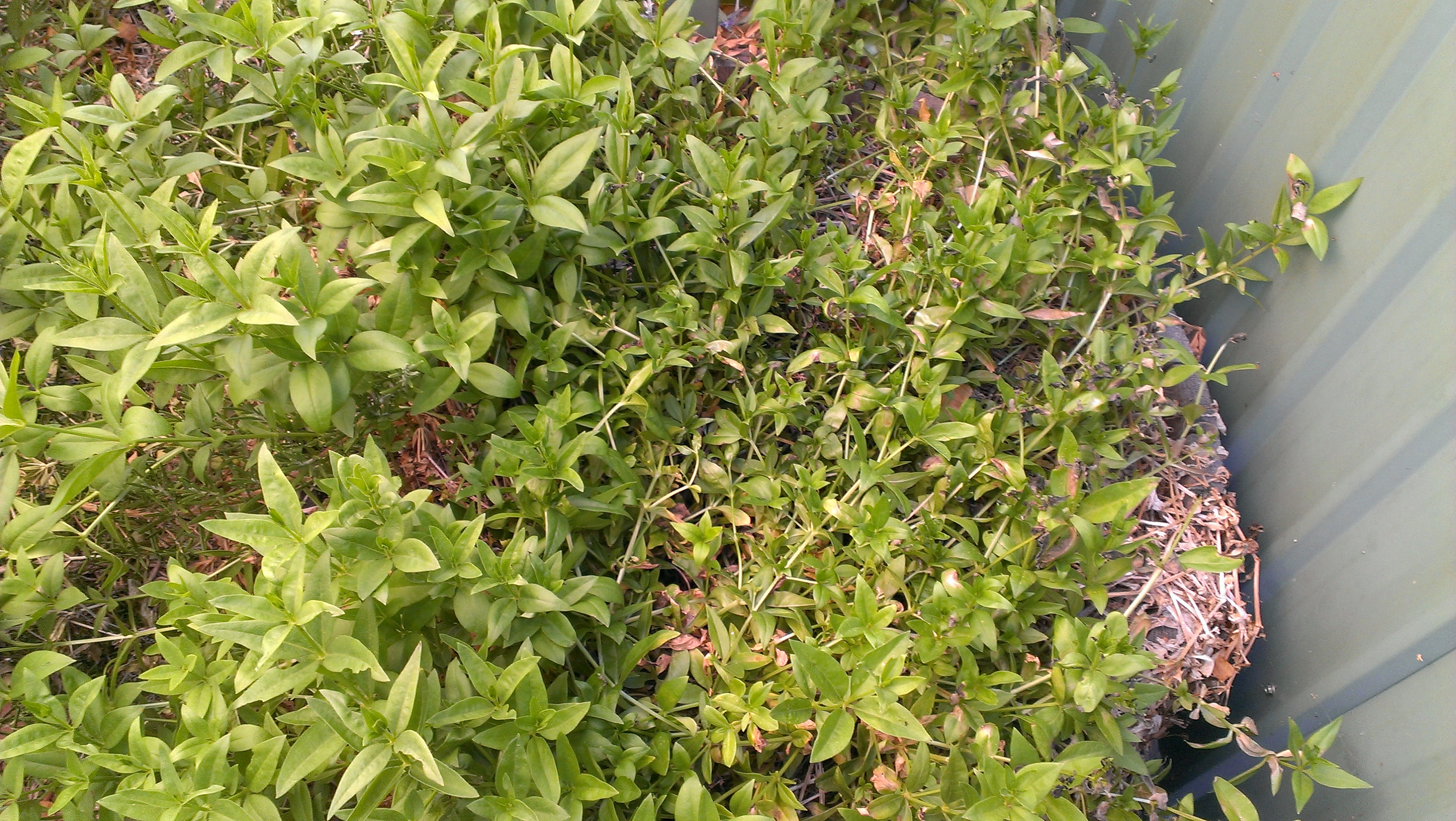
It’s exciting to see madder dye red with my own eyes, as every madder-dyed textile I have seen dyed by anyone I know is decidedly orange.  Not unlike the colour I can get with many local eucalypts.  And it is also exciting because my madder must be getting close to possible harvest!  Here it is at the height of our Australian summer, which is to say, partially crisp.  But about two or three years old and so promising…

IMAG0777

2 Comments

Filed under Dye Plants, Natural dyeing

Abandoned dyestuffs of the past

A while back, I became the happy recipient of some dyestuffs that had been left at my Guild long ago.  Most were labelled, some were not.  The only one I had previously tried was indigo.  I’m thinking we’ll dye with some of them at natural dyeing workshops I’m running for the guild this year, but I needed to try them out first, check they still have dyeing capacity.  There are some in tiny quantities.  This one, for instance.  8g of something that looks like a dried fruit or husk, between the size of a hazelnut and a pea.  I posted this picture on natural dyeing fora online but got no clues at all. I await any clues readers might be able to offer.

986

The fact that I can’t identify it is a shame, because here is what happened when my dear friend and I had a dyeing day and tried it out. We soaked it overnight (in rainwater); simmered for an hour, added fibres mordanted in alum and here is the resulting colour. The yarn is mohair mordanted in alum, the sample card (wool and wool+alum) won’t wash off, and the fabric is silk, no mordant.  Burgundy… maroon yarns (with pink silk as a background).

IMAG0682

We dyed with Osage Orange, which gave jewel bright yellows on silk especially; and Logwood, which gave strong purples even on the second bath (I plan a third).

IMAG0685

The Madder is still soaking; and then there is the Red Sanderswood/Red Sandalwood.  Based on reading Jenny Dean‘s informative book Wild Colour, my dependable guide in many such matters, I expected hues of orange to brown.  I expected to think ‘why ever import this wood when these colours are readily obtainable from so many local plants’?  But nature is a complicated thing.  I did not expect this:

IMAG0684

The roving is unmordanted merino.  Almost no dye took at all.  What did take amounts to a smudge of orange.  The cloth is cotton mordanted with soy, and it is quite a red-brown.  Rust, perhaps.  The skeins are alpaca-wool blend and mohair, both mordanted in alum.  They are vivid purple, and so is the wool mordanted in alum on the sample card.  I could scarcely tell the sanderswood skeins apart from the logwood dyed skeins once they dried.

Jenny Dean offers no suggestion of purple from this plant using any combination of mordants.  It can’t be a simple case of mislabelling–the logwood baths have produced purple on silk and cotton as well as wool.  The sample card was mordanted months ago, using different wool and different alum than these skeins, and any contaminants in my dyepots would have been different, surely.  Even my rainwater will have changed in that time.  What can it mean?  My friend and I decided it meant ‘dye more protein fibres mordanted in alum’, because we both think purple is an exciting outcome!

More natural dyeing mystery–meaning the depths of my ignorance are still being plumbed by this process.  But since the result was purple… I mean, purple… I’m not feeling sad about this outcome at all.  And the exhaust dyebaths were good fun too.  The madder is on its third turn as I write.  But more on that later…

IMG_0053

5 Comments

Filed under Natural dyeing