Category Archives: Dye Plants

Alyogyne Huegelii

Alyogne Huegelii is a spectacular flowering shrub that is native to Western Australia.  It is drought hardy but blooms profusely, and this very much explains its popularity in gardens here in Adelaide.  There are a couple of these shrubs flowering spectacularly in my neighbourhood at the moment.

2014-10-19 19.21.35

One of the things I really like about natural dyeing is the fact that you can enjoy flowers, gather them as they fall or pass their best, and have the joy of the flower as well as your dyepot.  So I have been stopping by to collect fallen flowers from the footpath and the gutter, and pulling withered blooms that will not re-open.

2014-10-19 19.21.16

I crammed the dried petals into my jar along with some vinegar, foil, water and a woolen sample card.  For those who are not familiar, this is India Flint’s Stuff, Steep and Store process.  I have no idea if these flowers will yield dye–they are from the same plant family as hibiscus (and hibiscus petal yield dye)–so they do seem promising–but they are free and readily available and there is nothing but time to be lost by trying them out.  I might learn something!

2014-10-18 09.19.51

After cooking, I had a deep purple dyebath in my jar.  So I gave it a label, added it to my collection, and now we wait.  It belatedly occurred to me to check my reference books.  The Handweavers and Spinners Guild of Victoria’s Dyemaking with Australian Flora (1974) reports that they achieved pink-fawn using cream of tartar as a mordant (I haven’t heard of cream of tartar being used without alum, so I have learned something already).  They also achieved green and pale lemon with chrome, which I am not prepared to use.  My sample card has alum-mordanted and rhubarb-leaf mordanted sample yarns, as well as an unmordanted sample–and the jar contains aluminium foil.  Joyce Lloyd and India Flint’s books are silent on the matter.  So–we’ll just have to see what happens.

2014-10-19 13.39.32

I later decided on an alkaline jar, since hibiscus dyes are ph sensitive, and created another.  It leaked green liquid when I heated it, but the jar as a whole doesn’t look green (yet).

2014-10-24 15.41.50


Oh.  And, we have moths.

2014-10-25 13.46.05


8 Comments

Filed under Dye Plants, Natural dyeing

Dyeing red with dandelion–more speculation

Some time ago, there was quite a conversation about dyeing with dandelion here. Just in case the name of a chicory that I grow–Chicory ‘red dandelion’ might be a clue to some crooked turn in the path on this subject where names had been mixed up–I tried dyeing with chicory root here to no very exciting outcome.  I did a bit more research on the subject after our last conversation, and here is what I can add…

Accounts of how reds may be obtained from dandelions:

Winifred E Shand gives the account that got me started on the dandelions in my garden, in: ‘Dyeing Wool in the Outer Hebrides’ in Dye Plants and Dyeing–A Handbook (Brooklyn Botanical Gardens, Brooklyn NY, 1964) 64.  She says that to obtain ‘Dandelion (Bearnan Bride) Magenta (Taraxacum officinale) Use whole plant, boil for two hours, remove plant and boil wool for half an hour.’  The author clearly collected these recipes from other people, though she does refer to ‘most of the recipes which I have collected and tried out…’.  Mordants are mentioned in many recipes but not this one, and it is clear there are some  recipes she hasn’t tried out.  Those involving urine, for example, where her feelings on the subject are made known in plain terms!

There is a writer on Ravelry who states that she has obtained red from dandelion but was not using taraxacum officinale.  Rather, she believes the original Scottish plant was a red-veined form called Leontodon palustre.  Now known as taraxacum palustre (marsh dandelion) it clearly has been identified in North America and many other parts of the world.  It was thought to be a subspecies of taraxacum officinale in the past, and is known by a variety of other names.  You can read her account of how it was done, using a fermentation method, by searching for Purple from Dandelions on Ravelry.  That, my friends, is the end of all I can tell you about how to obtain red from dandelion.  On the other hand, I can point to a couple of  sceptics:
  • Hetty Wickens, Natural Dyes for Spinners and Weavers (Batsford, , London, 1983) 10-11 ‘Dandelion roots have always been a great disappointment to me.  Scottish dyers are said to have obtained magenta from dandelion roots, but I have only obtained a dirty yellow.  (My dandelions grew in Sussex).’
  • Ida Grae Nature’s Colors: Dyes from Plants (MacMillan Publishing, New York, 1974) 20 ‘Much mention has been made of the dandelion root yielding magenta.  I have never found it so.  One of my students from the East Coast [USA] says that a lavender-gray is sometimes obtained from this root.’

A number of authors I have read describe dandelion as a source of greens and/or yellows only:

  • Jenny Dean, Wild Colour: How to Grow, Prepare and Use Natural Plant Dyes (revised) (Mitchell Beazley, London 2010) 137 (Though see this post on Jenny dean’s blog which speaks to their reputation for giving magenta).
  • Karen Leigh Casselman Craft of the Dyer: Colour from Plants and Lichens (2nd edition) (Dover Press, New York, 1993) 134
  • Joyce Lloyd Dyes from Plants of Australia and new Zealand: A Practical Guide for Craftworkers (Reed, Sydney, 1971) 37
  • Alma Lesch, Vegetable Dyeing: 151 Color Recipes for Dyeing Yarns and Fabrics with Natural Materials (Watson-Guptill, New York, 1970) 41-42
  • See, too, the Harris Tweed Authority (this page has wonderful pictures of Scots women dyeing).

A couple of others I consulted offered no comment whatever:

  • Betty E M Jacobs Growing Herbs and Plants for Dyeing (Select Books, Missouri, 1977)
  • Rita J Adrosko Natural Dyes and Home Dyeing (Dover Publications, new York, 1971)

So there you have it!  Dandelions have many fine qualities but magenta dye may or may not be one of them unless, perhaps you can access Leontodon palustre

11 Comments

Filed under Dye Plants, Natural dyeing

Peach leaf dye

2014-07-19 10.58.09

It seems a long time since I was admiring the rather lovely green another dyer on Ravelry had achieved using peach leaves.  She sounded a little apologetic when she explained that the leaves she used had fallen–but I was delighted, since that meant we were both Australians, experiencing autumn at the same time–and my peach tree was also dropping its leaves too.  We moved here less than three years ago and planted about 8 fruit trees in the first autumn, so our trees are, as yet, on the small side and my leaf harvest was similarly small.  Then I became distracted.  It is now midwinter and those leaves have been hanging off a chair in the dyeing area in a calico bag since then.  They are now quite dry.

2014-07-19 11.45.20

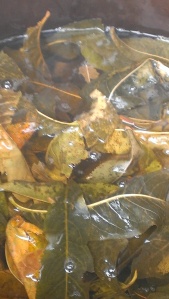
Recently, I spent time bagging dried leaves, sweeping and cleaning up–and it seemed like the right time.  Into the pot they went with some of the lovely rain that has fallen lately.  It is always wonderful to be blessed with rain here.  The leaves gave a rather soft and beautiful yellow, which you can just about see through the steam in this picture.

2014-07-19 16.00.19

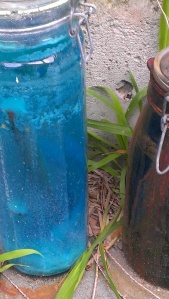
Now for the next step.  I added about 50 ml of copper water.  This jar sits in the garden along with my rusty iron water jar and a few other chemistry experiments.

2014-07-19 16.30.10

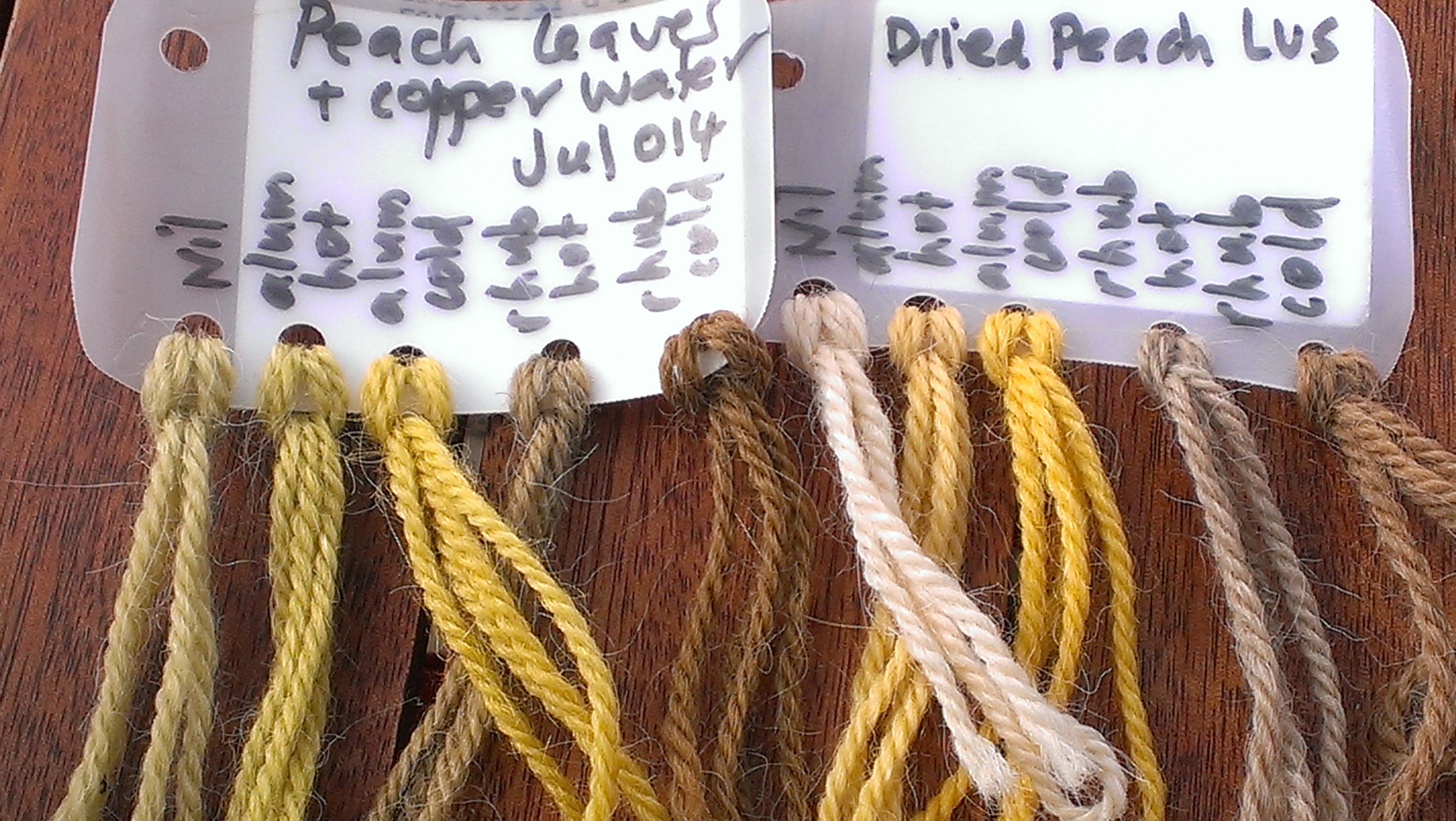
There was nothing of the dramatic change in colour I observed with the Choisya Ternata bath, which made me wonder if I added more copper water to that bath and had simply forgotten quantity.  I returned the heat to the dye pot and added another sample card.

2014-07-19 16.31.51

I tried longer heating and more copper water–and the dye itself turned greenish–but the wool hardly moved from yellow.  Perhaps fresh leaves next time?

2014-07-24 12.20.45

9 Comments

Filed under Dye Plants, Natural dyeing

Dyeing with camellia flowers

2014-07-16 09.13.02

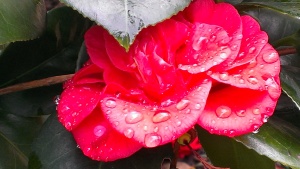
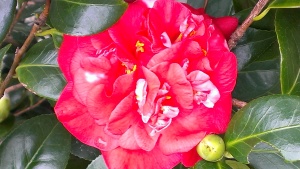
It’s camellia season here.  We have two camellias, a red flowering variety and a more compact white flowering variety.  I put up a jar of camellia flowers a while back using the Stuff Steep and Store method… I couldn’t resist trying!  For those who don’t know what I am talking about–this is a method of ‘preservation dyeing’ developed by India Flint and published in this book.  There is also a rather wonderful online pantry of people’s dye jars to peruse and become inspired by, should you wish.

2014-07-20 16.27.51

However, I had no idea whether camellia flowers give reliable dye when I stuffed those blooms in the jar.  So I felt heartened when I found Aphee showing her camellia dyes on Ravelry.  She has posted about them on her blog a few times, too.  She was inspired by a Japanese blog.  My French is not very good, but my Japanese is non-existent: I enjoyed the pictures though!!

2014-07-19 10.54.19

Aphee’s posts suggest that camellia flowers give colour, that the contents of my jar are a promising combination, and that the nature of the dyestuff is exactly the kind India Flint says Stuff, Steep and Store works especially well for.  This, I had hoped for, but not expected.  I decided that while the camellias were blooming, I may as well try dyeing by more usual methods.

2014-07-19 10.57.27

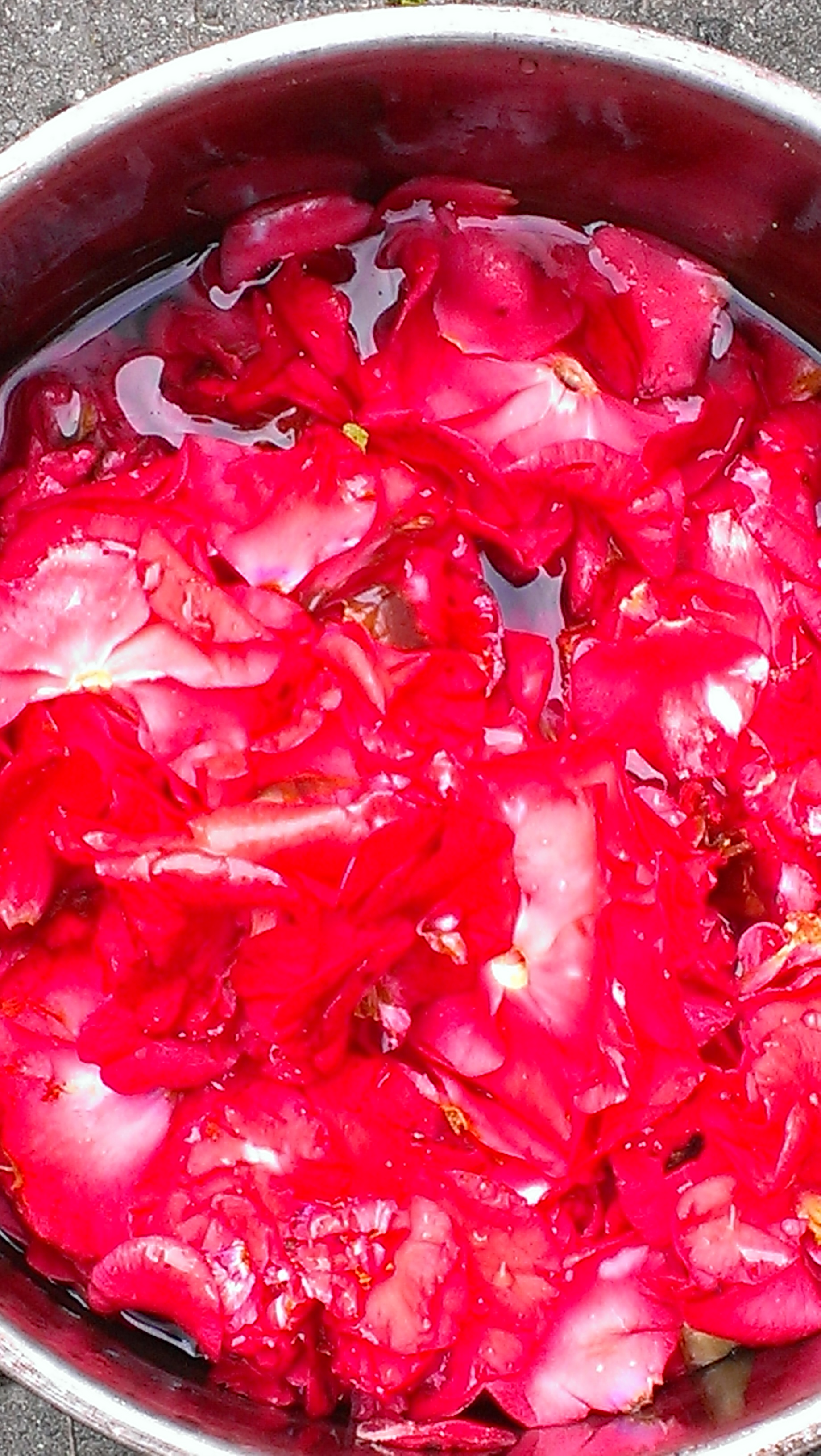
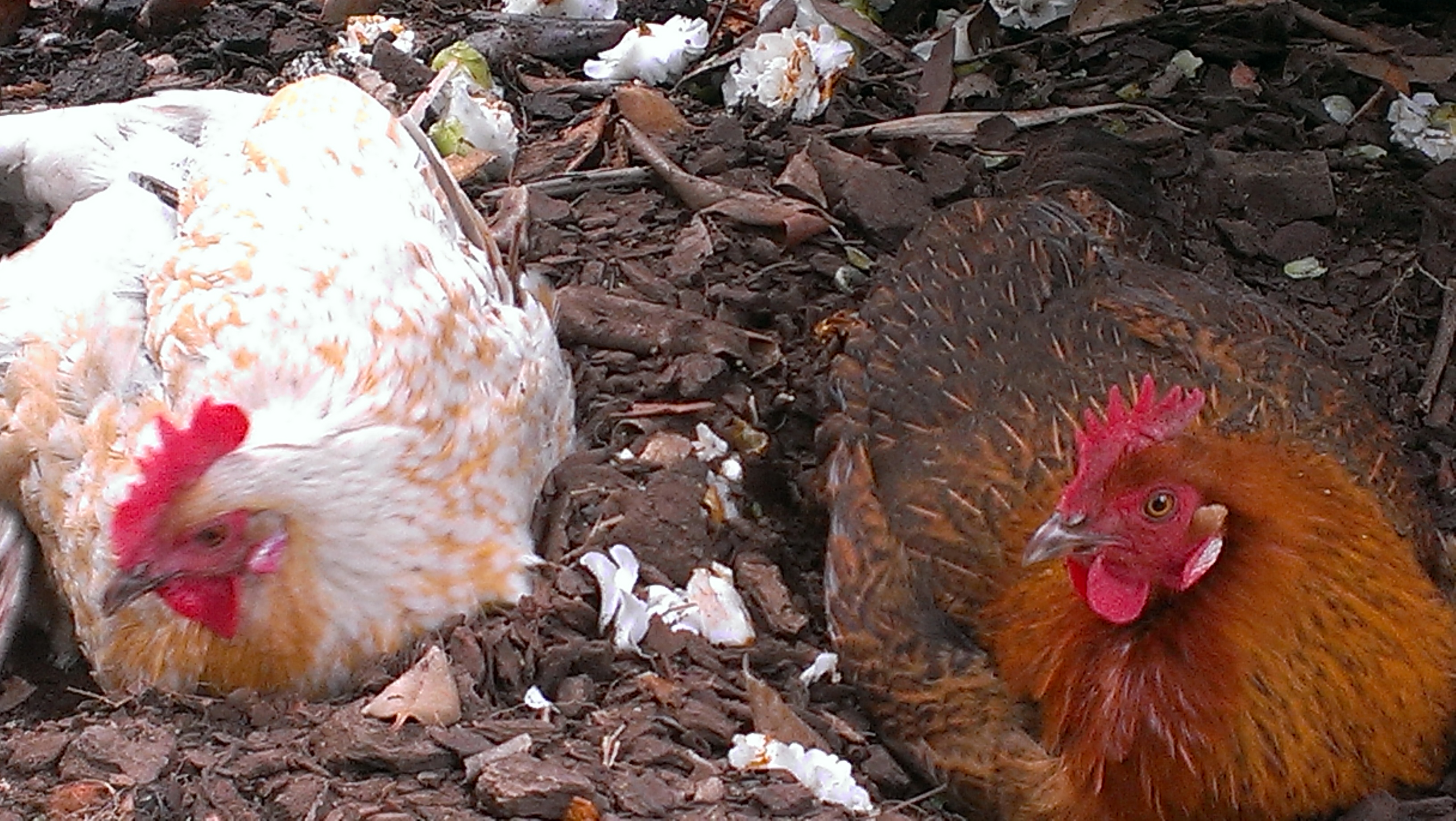
I gathered all the fallen blooms and tried to rinse the mud and mulch from them.  Meanwhile, our chooks were out wandering the yard–and the camellias are their favourite dust bathing spot.  The edge of the bed must be in the rain shadow of the verandah, so the soil there is still dry while the whole garden has been generously rain watered lately.

2014-07-19 10.53.54

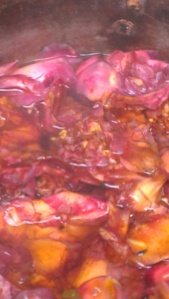
They left big circles of earth on the paving where they shook out the dust once they were finished!  The camellias soon turned brown though I kept the heat low.  This is one of the reasons the preservation dyeing method seems so promising for dyestuffs like these.

2014-07-19 11.45.14

Well… the result in this case was not impressive.  This test sample was barely nudged out of the cream and white it was before dyeing.  Longer heating didn’t change that at all.  So–let that be another example of the mysterious in natural dyeing for the time being.  Aphee is doing something differently to me and I have no idea what it is!  I’ll put the next clutch of fallen blooms in jars until I have a new thought… who knows what I might learn between now and next camellia season?

2014-07-20 16.34.35

19 Comments

Filed under Dye Plants, Natural dyeing

Eucalyptus Nicholii

On a public holiday some time back, I had a picnic in the Wittunga botanical gardens with a friend.  It was an overcast day, and my phone was in for repair, so I took my Mum’s old camera.  In case it isn’t obvious, I am apologising for the quality of the photos.   Last time I went there thinking about dye plants was a long time ago.  This time, we parked and almost as soon as I stepped out, I could see that there were trees that could be E Nicholii all around the carpark.  They were indeed E Nicholii and they were many and very large!

???????????????????????????????

I couldn’t really get a picture that gave a sense of scale.

2014-04-25 16.10.31-3

These were huge trees with many little leaves.

???????????????????????????????

Luckily for me, they had dropped twigs and leaves on the ground below…

IMAG0034

And later… into the dye pot they went!

IMAG0012

Lovely–and justly famous as a dye plant, I think.

IMAG0030

2 Comments

Filed under Dye Plants, Eucalypts, Leaf prints

Eucalyptus Megacornuta: Warty Yate

Sometimes it is hard to know which to prefer.  The common name (Warty Yate)–splendiferous as it is–or the Latin name (E Megacornuta), also glorious!  Both names focus on the bud caps of this tree, which are both mega (4.5 cm long) and warty.

2014-06-12 08.30.35

There was a yate (one of the still-splendid but not-so-warty yates–I am guessing E Lehmanii) growing in the playground at the kindergarten I went to. We would put the bud caps on our fingers and chase each other around, yelling ‘witch’s fingers!’  Needless to say, we had been offered no information about whether witches really have long pointy fingers and no one had offered me the perspective that witches might mostly have been maligned herbalists and midwives…

2014-06-12 08.31.39

A friend’s dog is staying with us and we went for a walk the morning I picked these.  The flowers called out to me.  I identified this tree a couple of years back.  Those bud caps made identification simple, but as you might imagine this tree also has impressive fruit.   Speaking of awesomely good names, please note the ‘flattened, strap-like peduncle’ my eucalyptus manuals mention.

2014-06-12 08.31.29

I picked up fallen, dried leaves and took home a small sample.  My sample dyepot showed a barely-orange tinted brown. I did also create a small sample bundle.

2014-06-14 16.50.17


Fresh from the pot and still damp, it also was on the slightly orange side of brown.  However once dried out, washed and dried again, it had turned quite definitively brown.

2014-06-14 16.52.53


4 Comments

Filed under Dye Plants, Eucalypts, Leaf prints, Natural dyeing, Neighbourhood pleasures

Windfall!

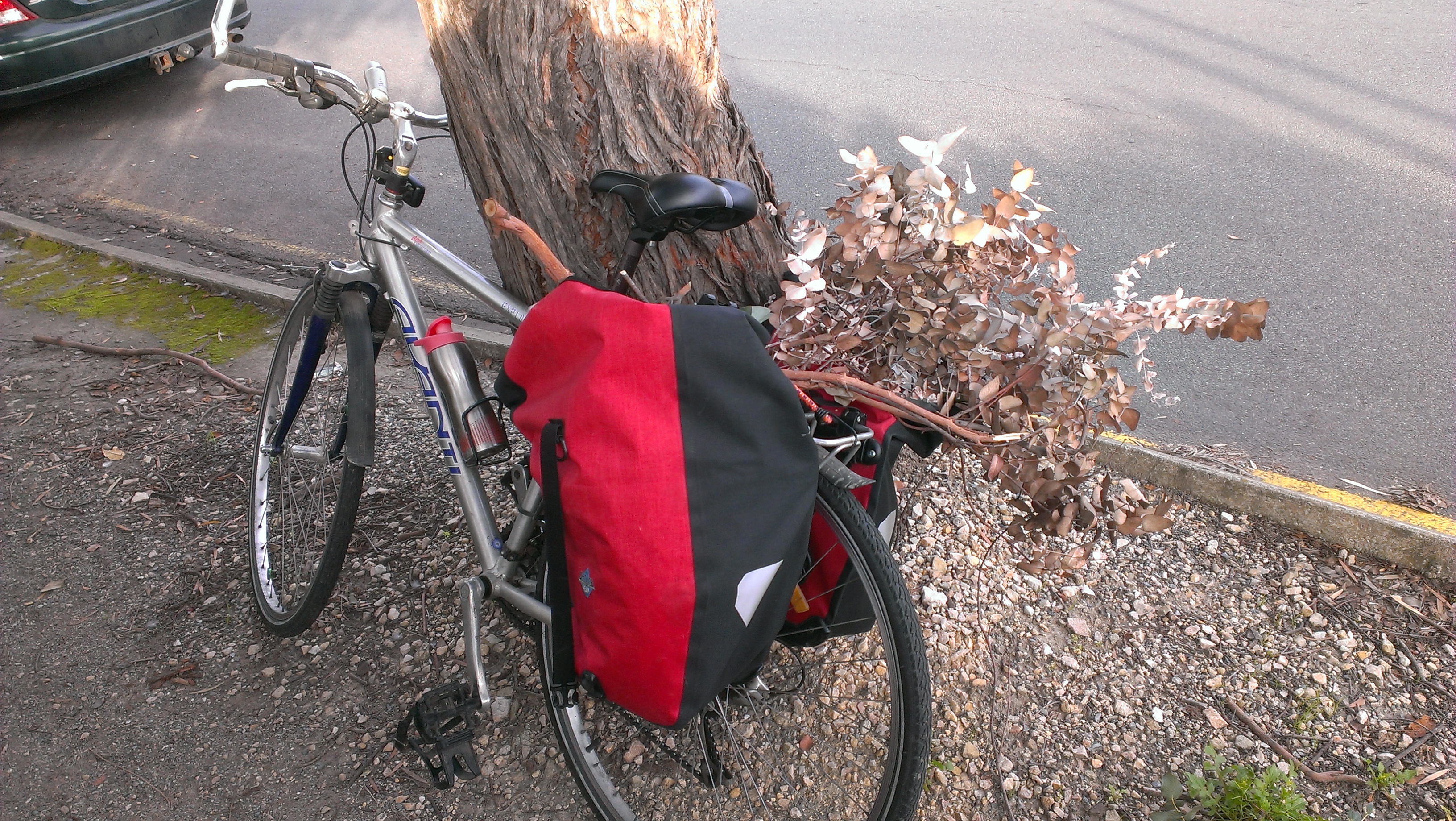
My friend emailed to say that a branch had come down on her Eucalyptus Cinerea.  I was visiting anyway, and I think I’m in a much more physically capable position to deal with a fallen branch than anyone at her house.  So I packed my loppers, gloves, secateurs and sacks.  We’ve had gale force winds and lots of rain here and it was late on a windy rainy day when I arrived.

2014-06-25 09.25.10

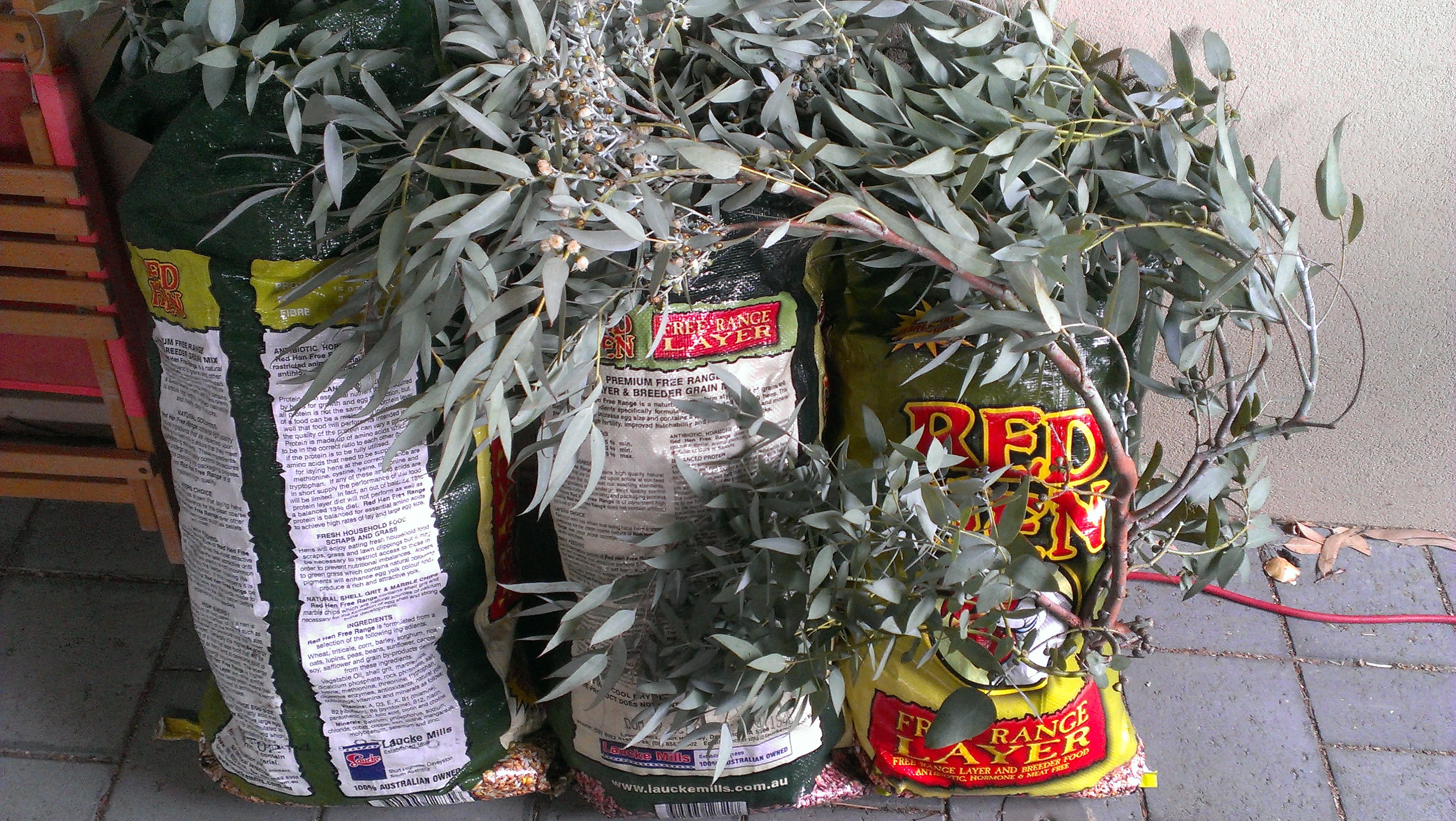
Well… I managed to saw up the bough and cut up the woody parts and get them all into the green bin that signifies they will go to commercial composting through council collection, and then we packed stuffed the leafy stuff into three feed sacks.  Wowsers!  My friend couldn’t believe I would use them all.  Little does she know! (I am glad to hear I haven’t been boring her stupid with details that don’t interest her).  Then I realised that in spite of it being cold and wet, I need to let these leaves dry out, because these sacks are not permeable enough to let them dry and I don’t want mould.

2014-06-25 09.26.49

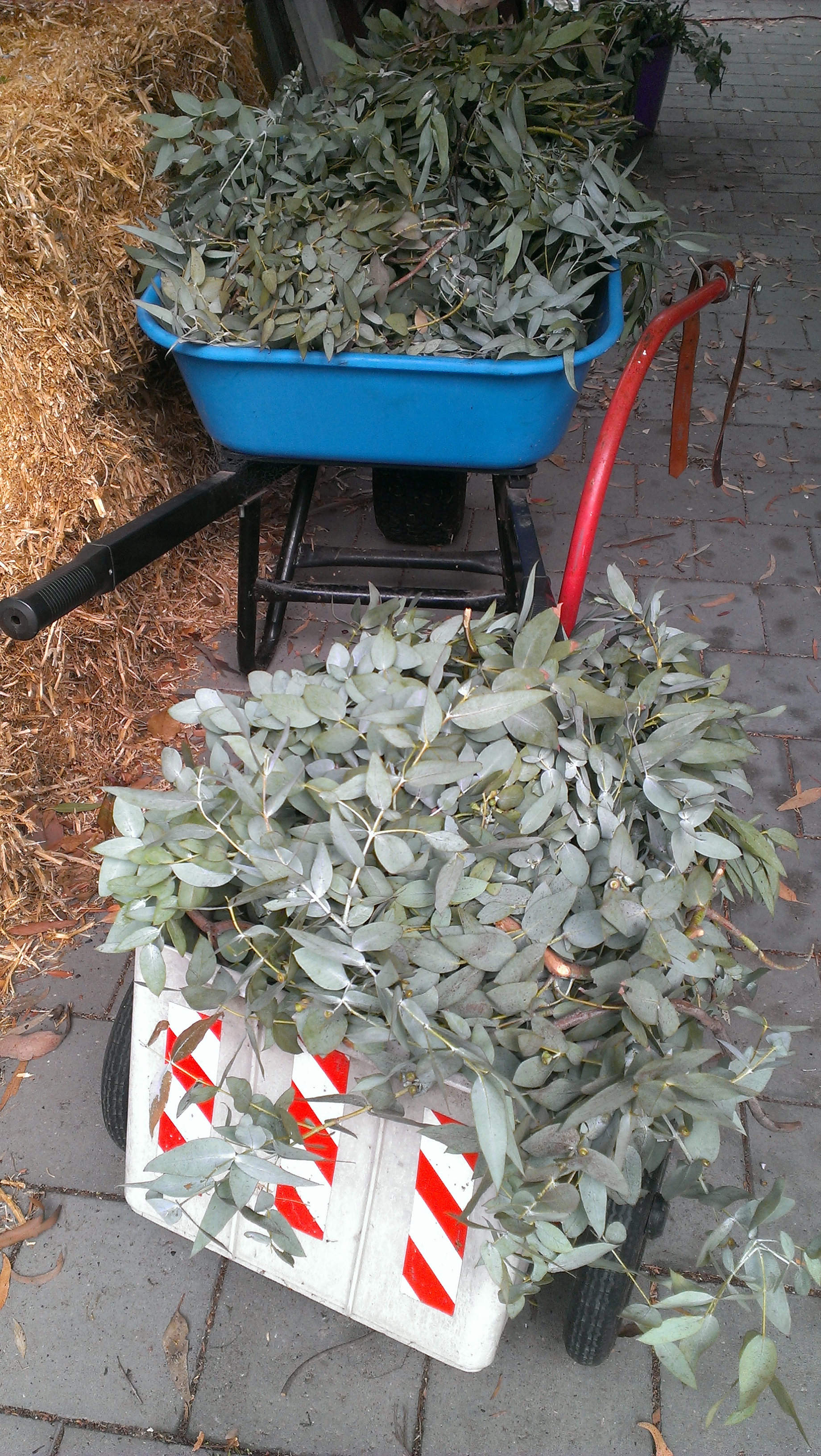
The wheelbarrow–ever useful–and my bike trailer were pressed into use.  I have had about 30 years of trusty service from that little box on wheels (the bike trailer).  But that was not enough…

2014-06-25 09.28.52

Leaves in the bathtub…!  My friends are happy and have one less physically taxing job to do in wild weather.  Their garden is in better shape.  The gum tree is still immense, the bay tree no longer has a broken bough tangled up in it,and the smaller plants underneath are safer.  I was up to doing the labour, delighted to be able to help them out, and now have loads of lovely leaves to work with.  I know it’s cheesy, but I have to say that was a win-win-windfall…!

4 Comments

Filed under Dye Plants, Eucalypts

In preparation for a natural dyeing workshop

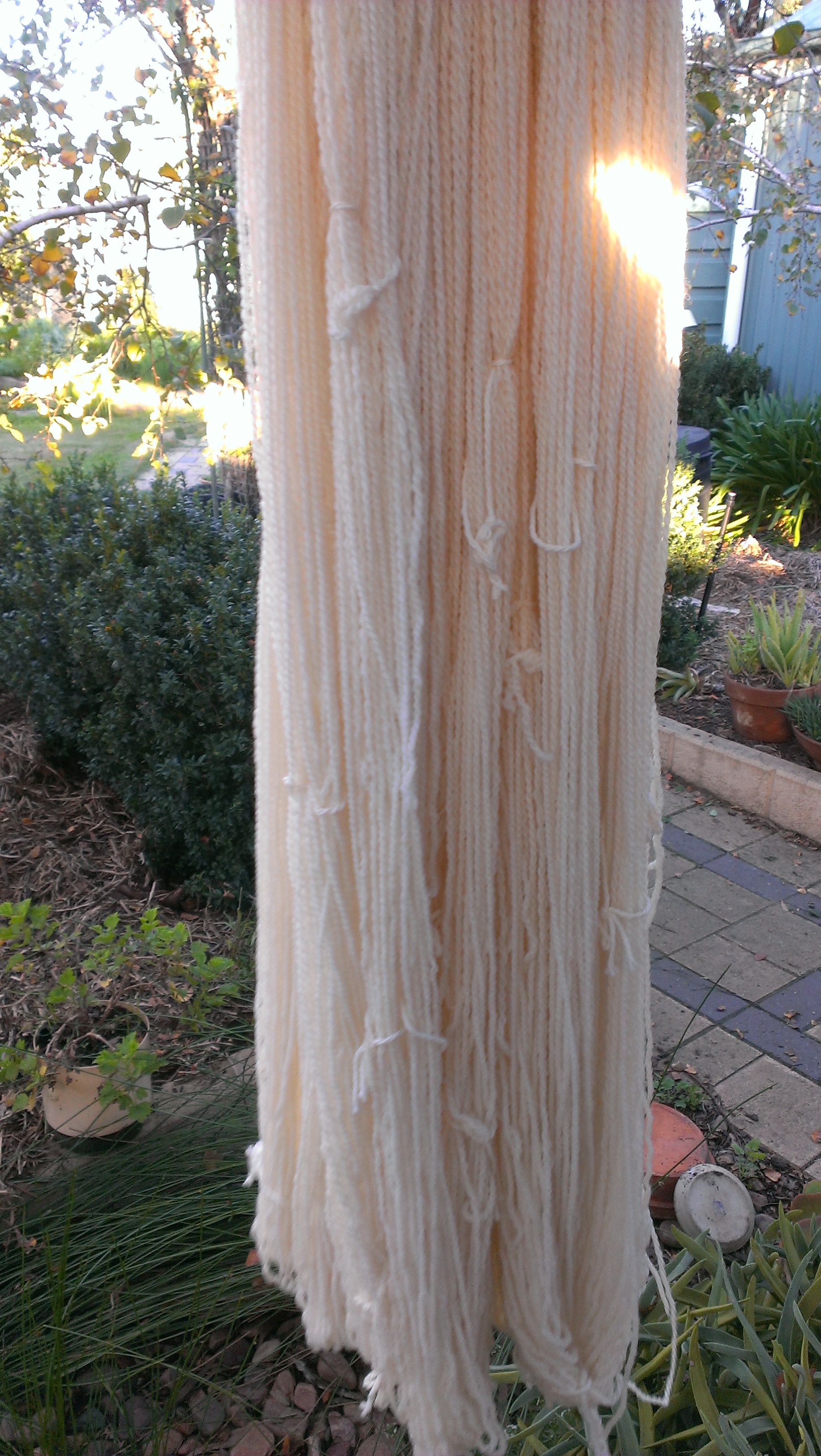
As I write, I’m preparing to run a workshop at my Guild.  I’m counting down and there are only a few days left.  Preparation has been going on for weeks now! I’ve skeined beautiful organic wool and mordanted some.

2014-06-08 16.22.13

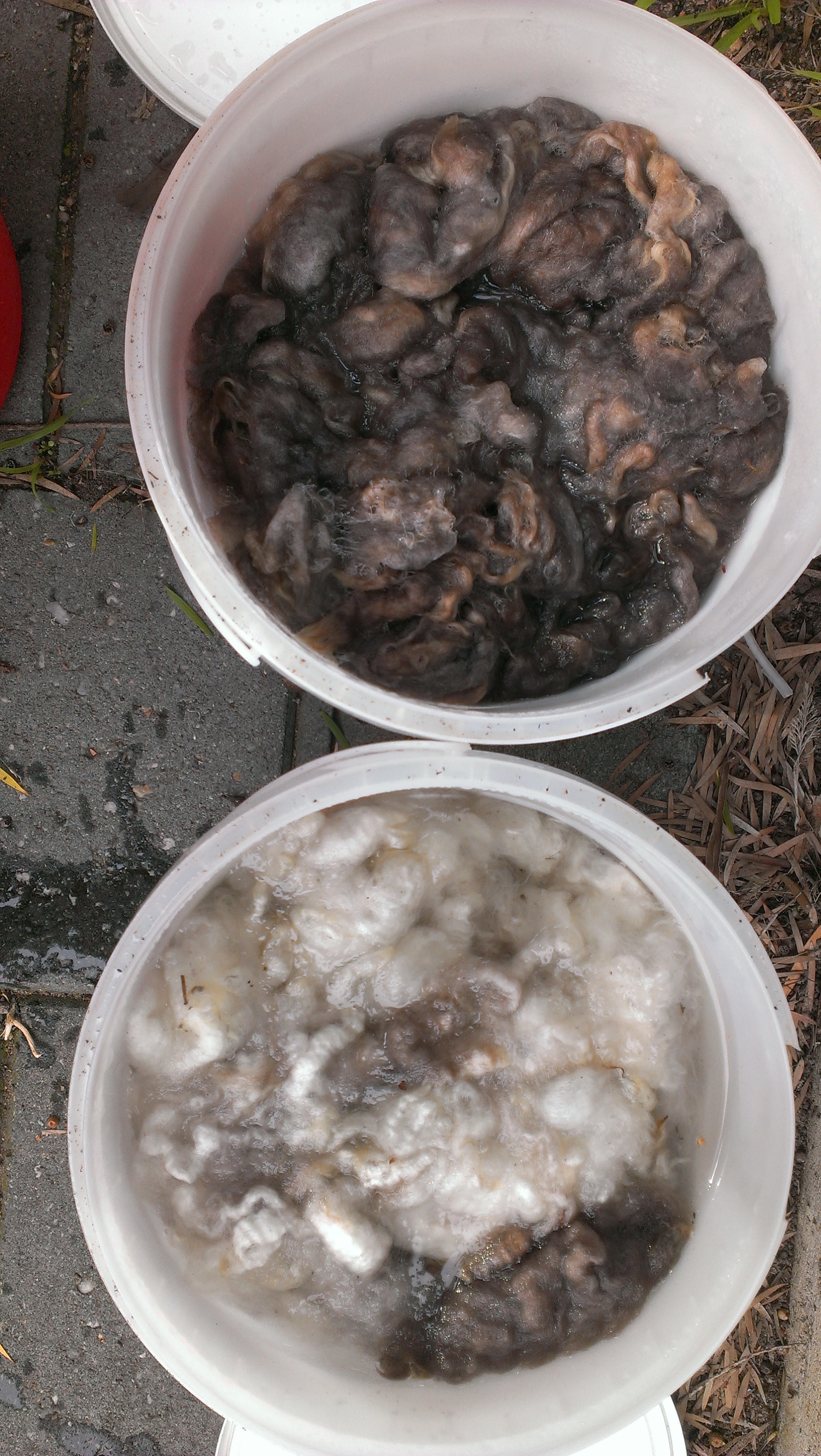
I’ve washed fleece in two colours and two breeds, and mordanted some.  I’ve decided being able to mordant cold in alum is a real benefit to preparing unspun fibres.  Less opportunity for felting or simply mooshing the fibres.  Three cheers to Jenny Dean, who introduced me to the idea of cold mordanting with alum.

2014-06-09 12.38.23

I treated some merino roving to a cold alum bath too. Later I decided that past unlovely experiments with paj silk could go in the mordant bath with a view to being overdyed.  And added silk embroidery thread.

2014-06-09 12.59.57

I have been packing things into bags and writing lists. I’ve begged milk bottles from coffee carts and turned them into sample cards. Finally, on the weekend, I wandered the neighbourhood on my bike gleaning leaves, and finding some damaged pomegranates that might be used for dyeing–the rats that were scampering along the fence nearby had clearly been having a banquet!  It was overcast, but can you see these two E Cinereas forming an arch at the end of this street?  Cute as a button!

2014-06-09 14.58.15

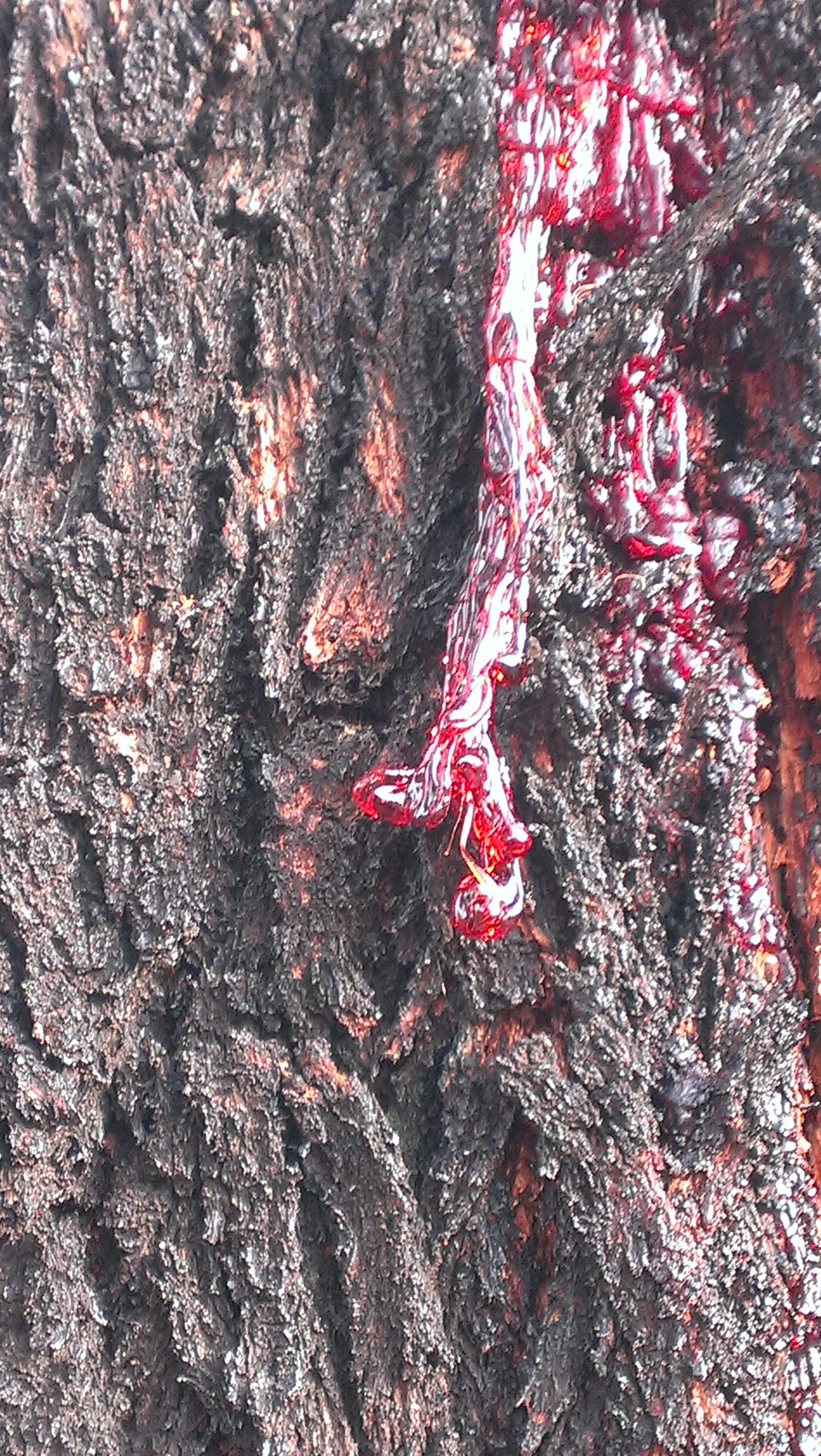
Ironbarks were oozing kino, which is their main strategy for avoiding pest attack.  This one seemed to have gone a bit too far…

2014-06-09 15.46.52

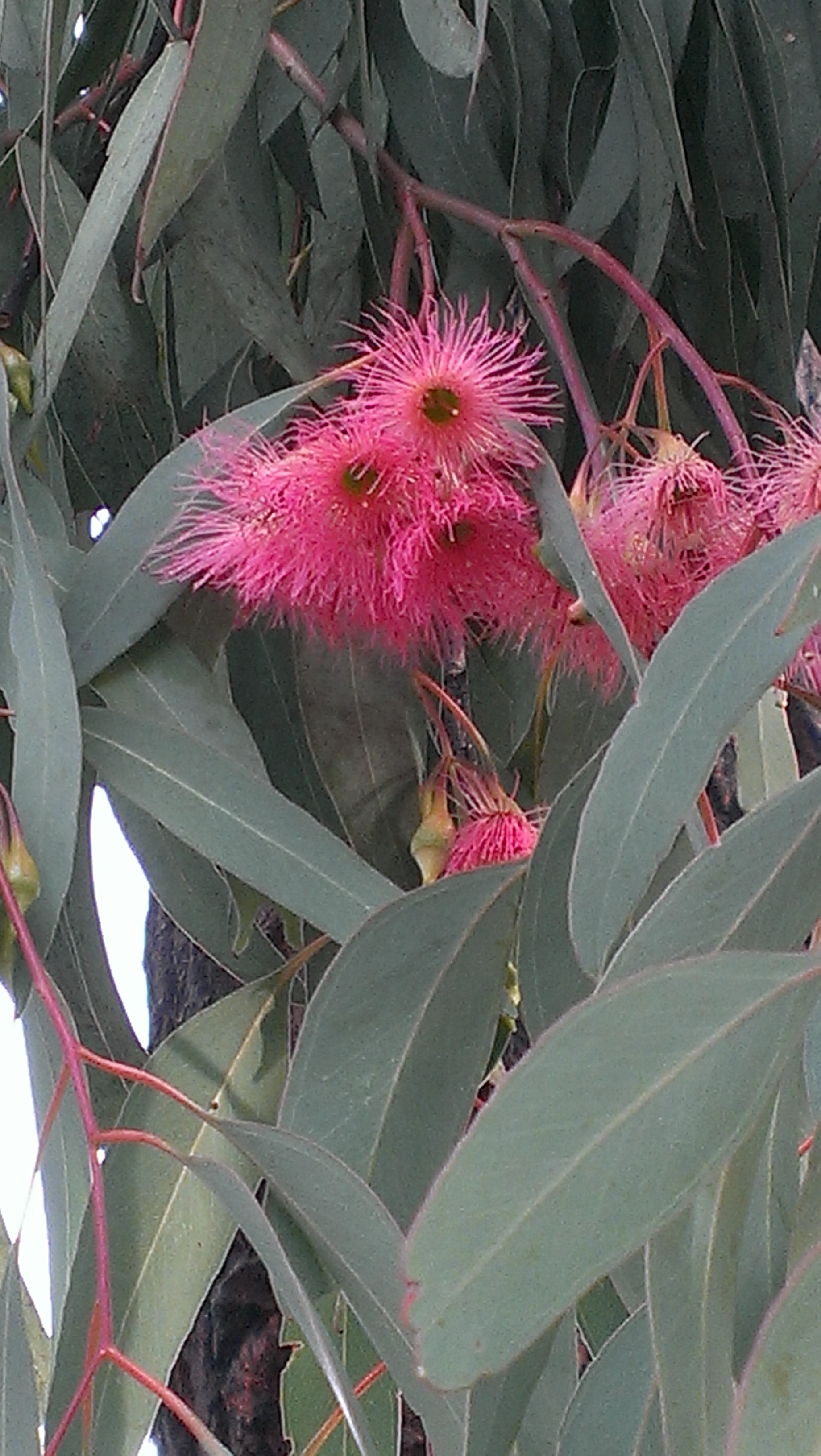
Some ironbarks were in flower. Gloriously.

2014-06-09 15.47.02

In some streets there was a carpet of flowers on the ground where lorikeets and rosellas had been partying.

2014-06-09 15.47.16

Some of the neighbourhood E Cinereas have recovered from the most recent attack of the chainsaws a bit.

2014-06-09 15.50.43

I stopped off at my favourite E Scoparia on my way home.  It now has some leaves I can reach for the first time since a bough was lopped a couple of years ago.

2014-06-09 16.08.04

So, I came home fully laden.  I even found an E Cinerea branch that had been cut some time ago but must have fallen to the ground more recently. Needless to say, it came home with me.

2014-06-09 15.59.41

Hopefully, my preparations are nearing completion.  I had a dream the other night where my workshop went terribly wrong… for one thing, there were two workshops and I had not prepared for the first one at all… and the Guild hall, which is a bit of a rabbit warren, had several rooms that I had not previously seen!  Perhaps it is the idea of using cochineal for the first time acting on my overdeveloped sense of responsibility…

7 Comments

Filed under Dye Plants, Eucalypts, Fibre preparation, Natural dyeing, Neighbourhood pleasures

Milky merino: Second effort

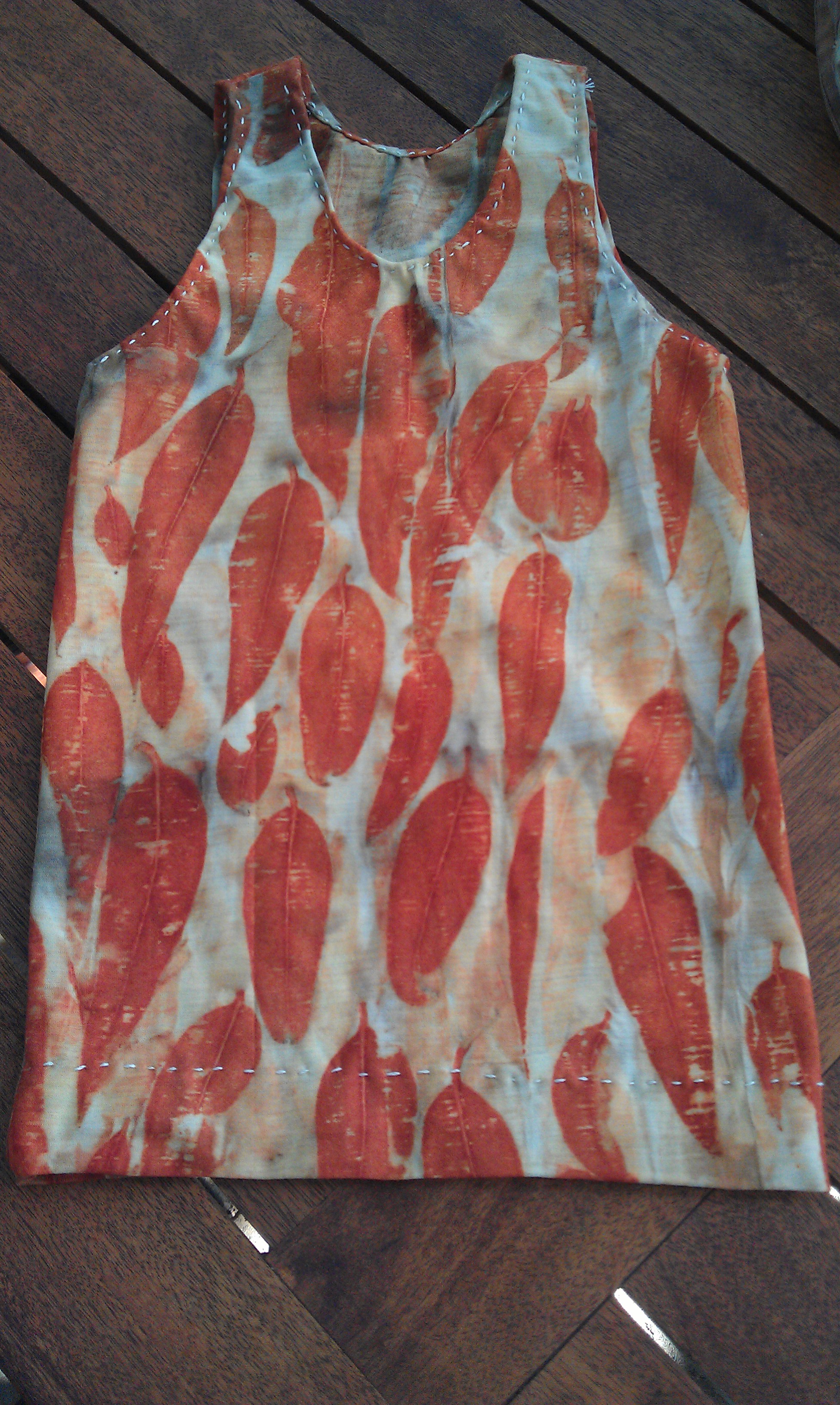
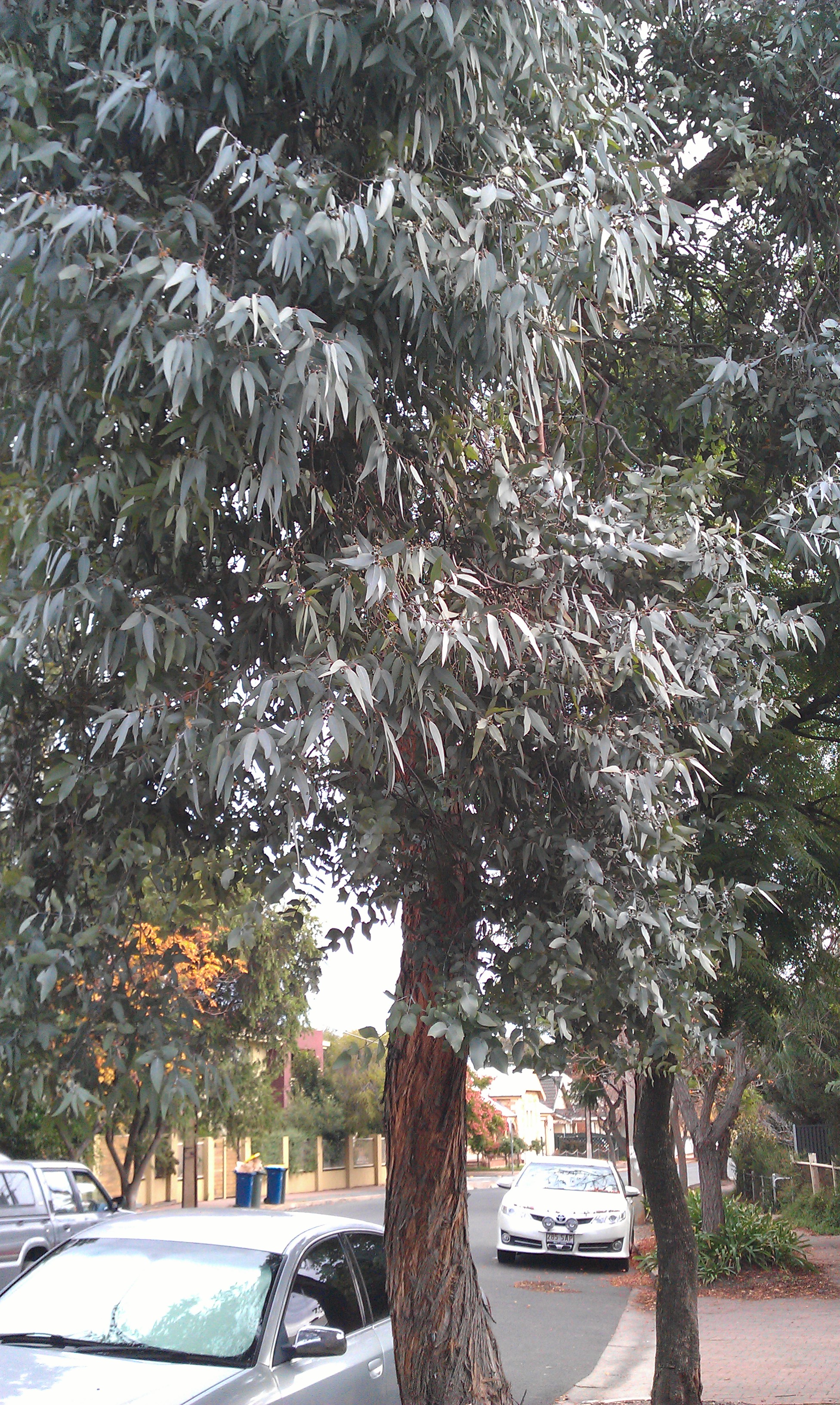
I decided to use the scraps from my milky merino to make a singlet for a small friend. One inspiration was the discovery of another E Cinerea nearby on a suburban street.  It is beautiful.

IMAG1723

It is covered in new growth, whose leaves are larger and teardop shaped rather than the rounder heart shape that is usual for mature leaves.

IMAG1722

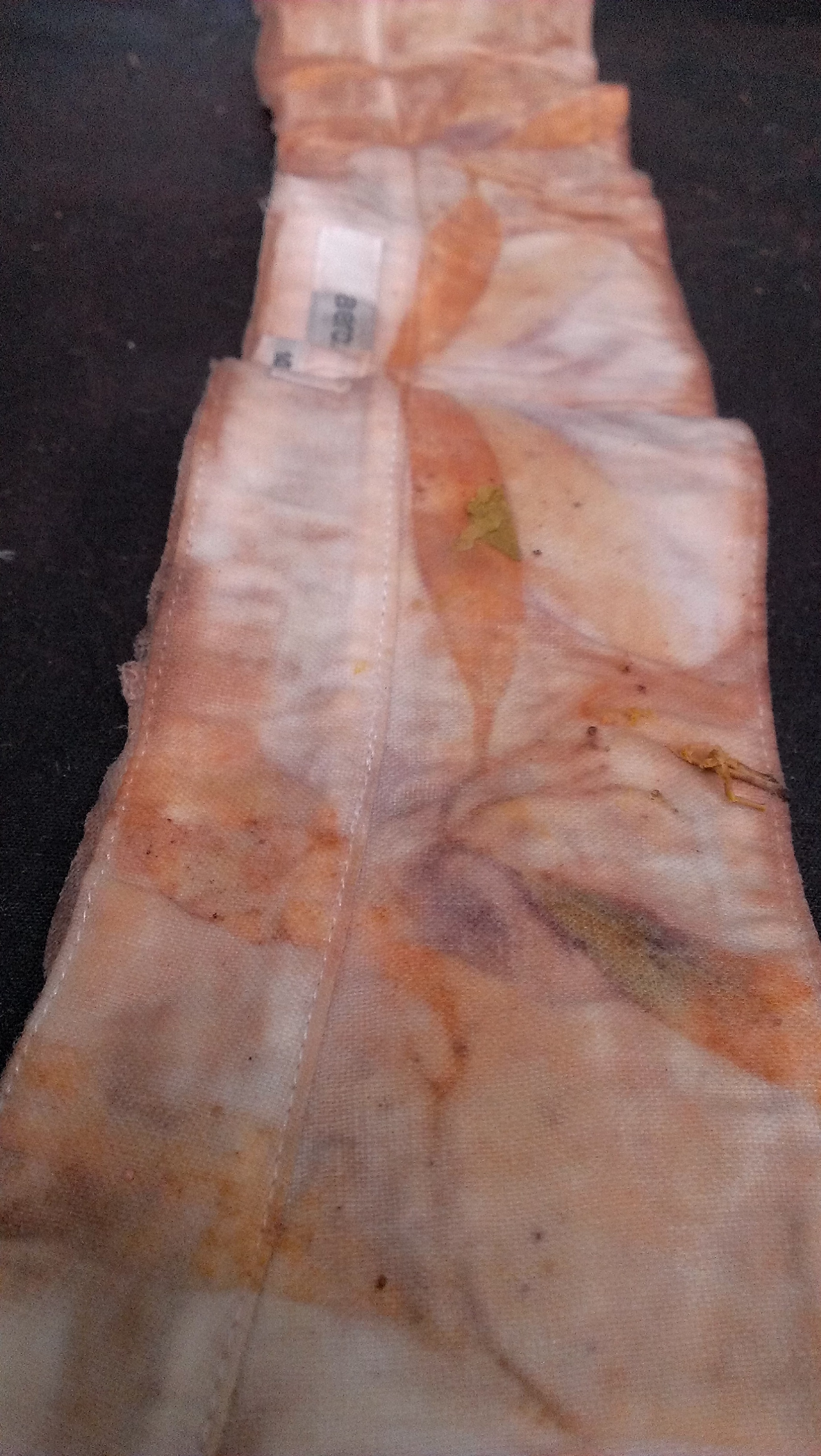
I have to say milky merino is a glorious fabric to use for eco-printing.  It takes colour in a most spectacular fashion.  I bundled up one night and unbundled a day or so later.

IMAG1731

I love the way the fabric took on a golden creamy colour where it did not absorb a direct print.

IMAG1733]

Action shot!

IMAG1735

I created a pattern from an existing garment and set about cutting and sewing it from the fabric.

IMAG1753

The finished garment is sooo cute, and so tiny I need to find a different recipient for it.  I should have recognised the difference in stretch between the garment I measured up and the milky merino…!

IMAG1754


9 Comments

Filed under Dye Plants, Eucalypts, Leaf prints, Natural dyeing, Neighbourhood pleasures, Sewing

Eucalyptus Polyanthemos

I’ve been curious about E Polyanthemos for ages.  I saw one on a tour of the Currency Creek Eucalyptus arboretum years back and I had already heard it was a good dye plant.  I am guessing it is mentioned in Eco-Colour.  It has been on my mental list for quite some time.  So when I found one that had been identified by a more knowledgeable person recently, I paid a lot of attention.

2014-04-25 16.10.31-55

I think the two trees I have been holding in mind as potential examples of E Polyanthmos might actually be E Polyanthemos on the basis of this sighting.

2014-04-25 16.10.31-56

It’s a lovely tree–those wide grey green leaves are truly lovely.  Evidently, they are also delicious, because this one was covered in leaves that had been nibbled by some kind of insect.

2014-04-25 16.10.31-58

This tiny sample went into my dyepot…

IMAG0032

And created very interesting prints. It intrigues me that one plant can create such different colours in such close proximity.  I have had wonderful colour from the buds of the other two trees I visit from time to time, and the tree is truly spectacular when in blossom, because the many-anthers its botanical name promises are needless to say held on many flowers which attract many birds.  Ah, the glory of eucalypts!

IMAG0010

4 Comments

Filed under Dye Plants, Eucalypts, Leaf prints