Category Archives: Natural dyeing

Winter wardrobe: from white to wow!

Before I went to Mansfield (… a year ago!) I cut out a long sleeved knit top.  The last one I made, a few years back, was nibbled by moths before I even sewed it together, so this one has been safely in a ziplock bag for its quiet year in pieces.IMAG2026

In the end, it took me only an evening to sew it together.  Why did I wait so long? Last time, I had a lot of trouble with this top and hand finished a lot of it, hand inserting the zipper and hand sewing the hems. I think I was a bit intimidated by the job, sorry to admit.  This time it all came together on the machine although the zipper is not lying terribly flat.

IMAG2029

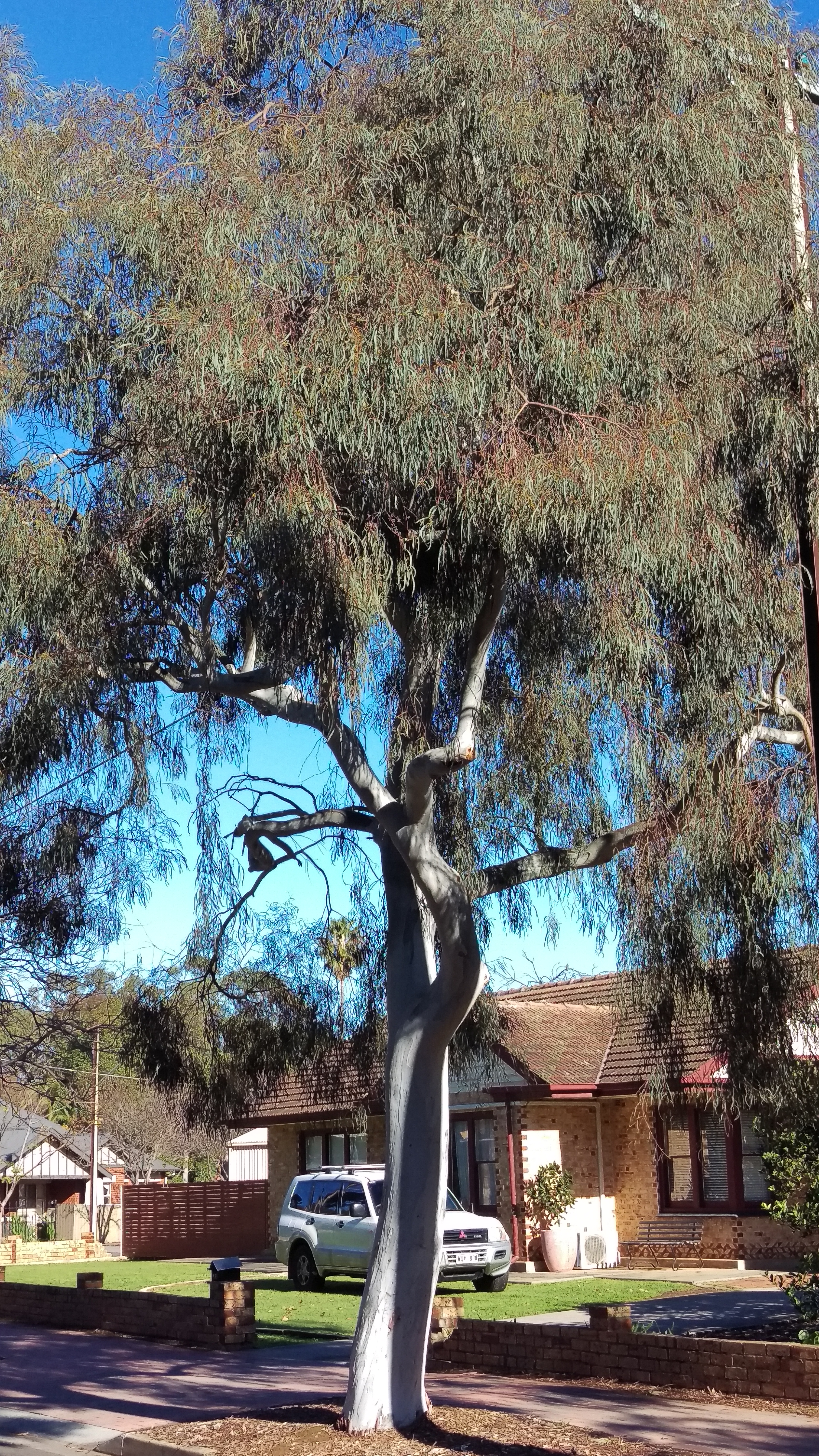
Next morning, I was out in search of dye plants and visited one of my favourites (E Scoparia). The whole time I was collecting leaves I could hear clicking and popping sounds.  Eventually I realised there was a rosella (maybe more than one) very high up–more than 10 metres up) in the sugar gums on the other side of the street, nibbling on the gumnuts and then letting them fall onto the surface of the road (so that was beak clicking and the popping sound of gumnuts dropping on the hard surface)!
IMAG2038

There has been so much wind and rain I hardly needed to cut anything from this tree.  I have learned enough to be able to pick the leaves of this tree out from all the others in the gutter (which I could not always do dependably in the past–I have learned some things!)IMAG2039

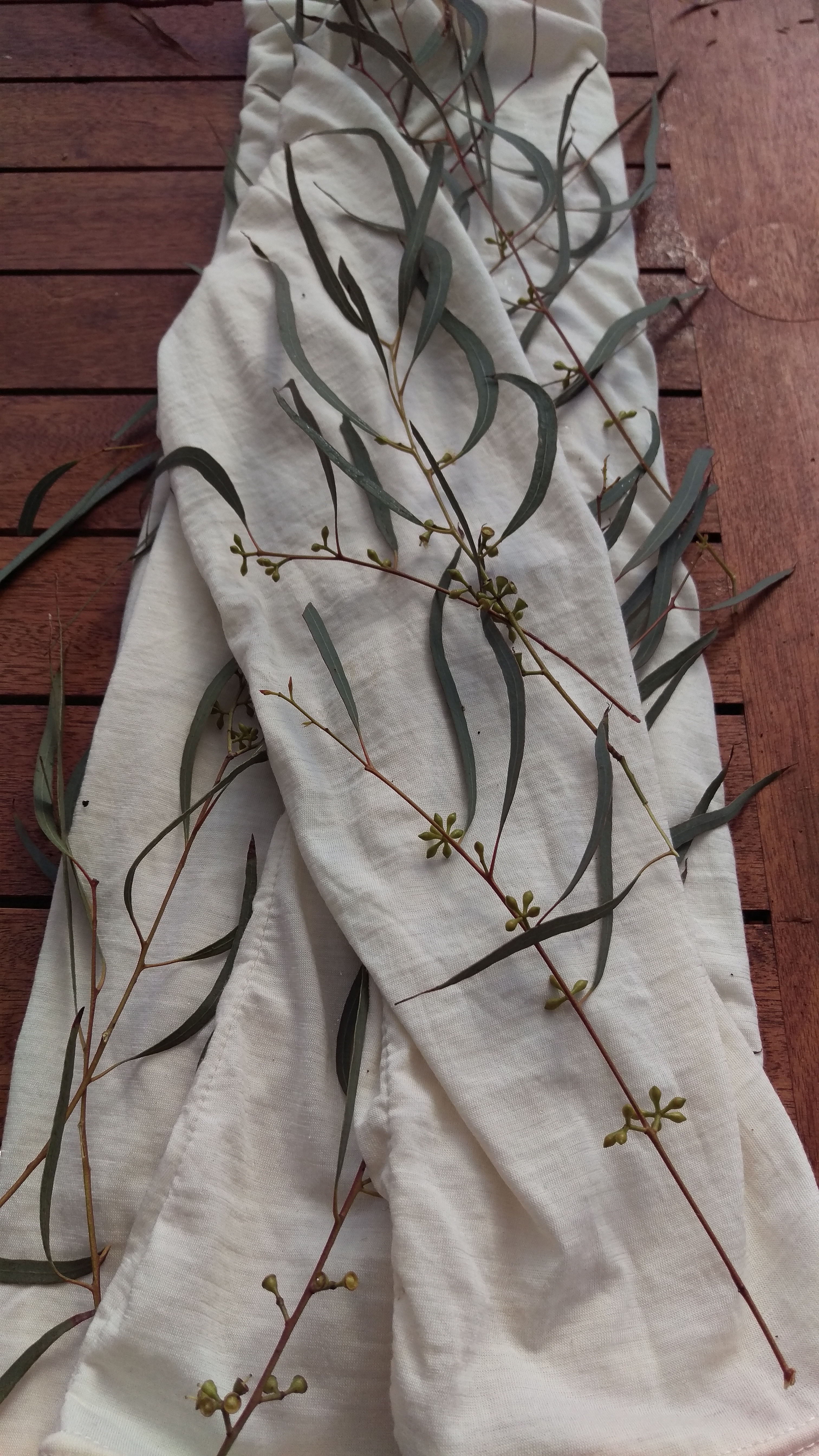
Deciding how to fold and wrap is always intriguing…
IMAG2045

In the end I decided to dye a woven wool scarf at the same time. I spent time with a friend I don’t see very often recently and thought I might send her a gift. This will be part of it if it turns out well enough! I tucked some more leaves from my stash of dried leaves into the dye bath.
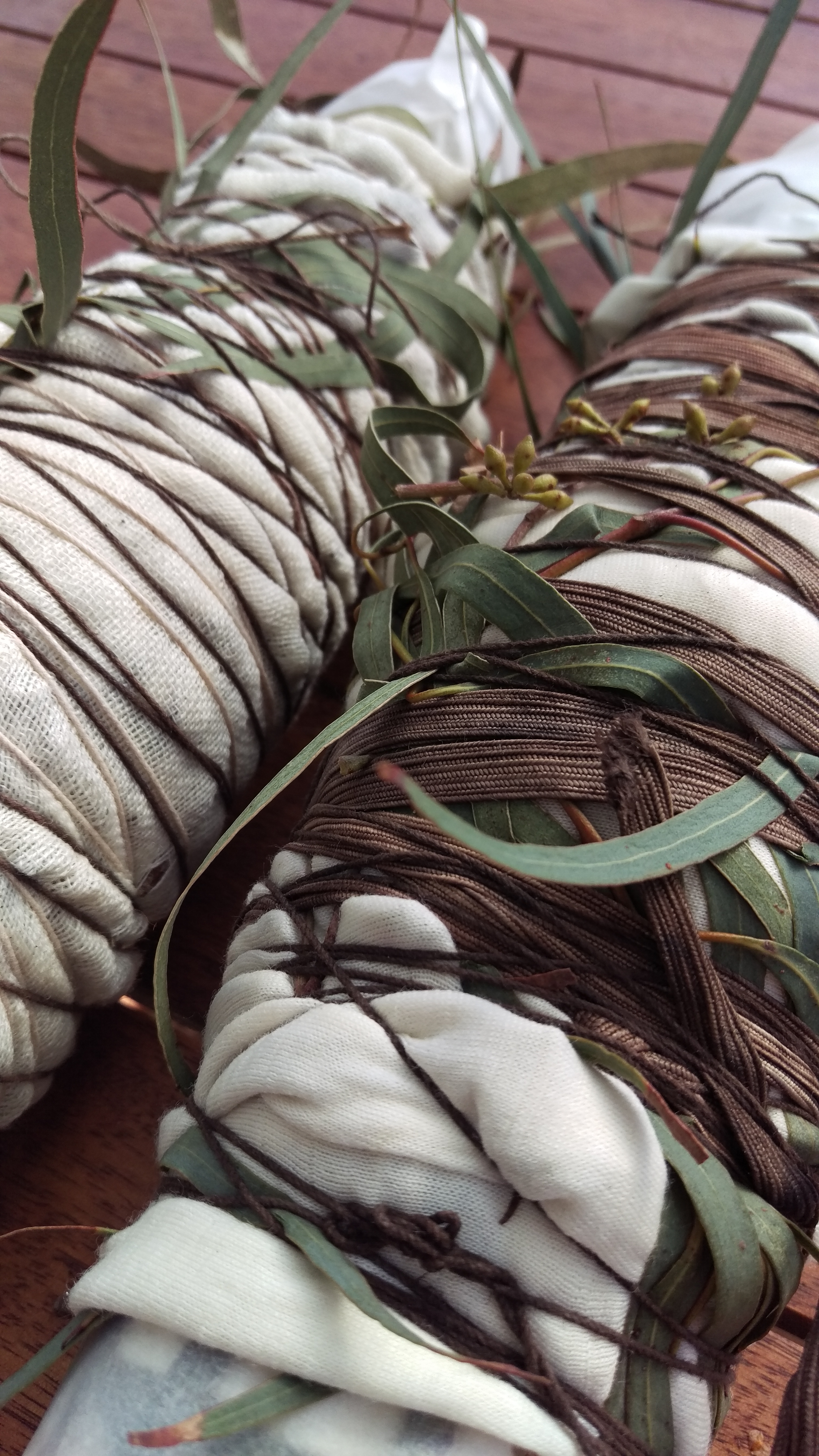
IMAG2048

I love the transformation… and wish I could be more patient…

IMAG2077

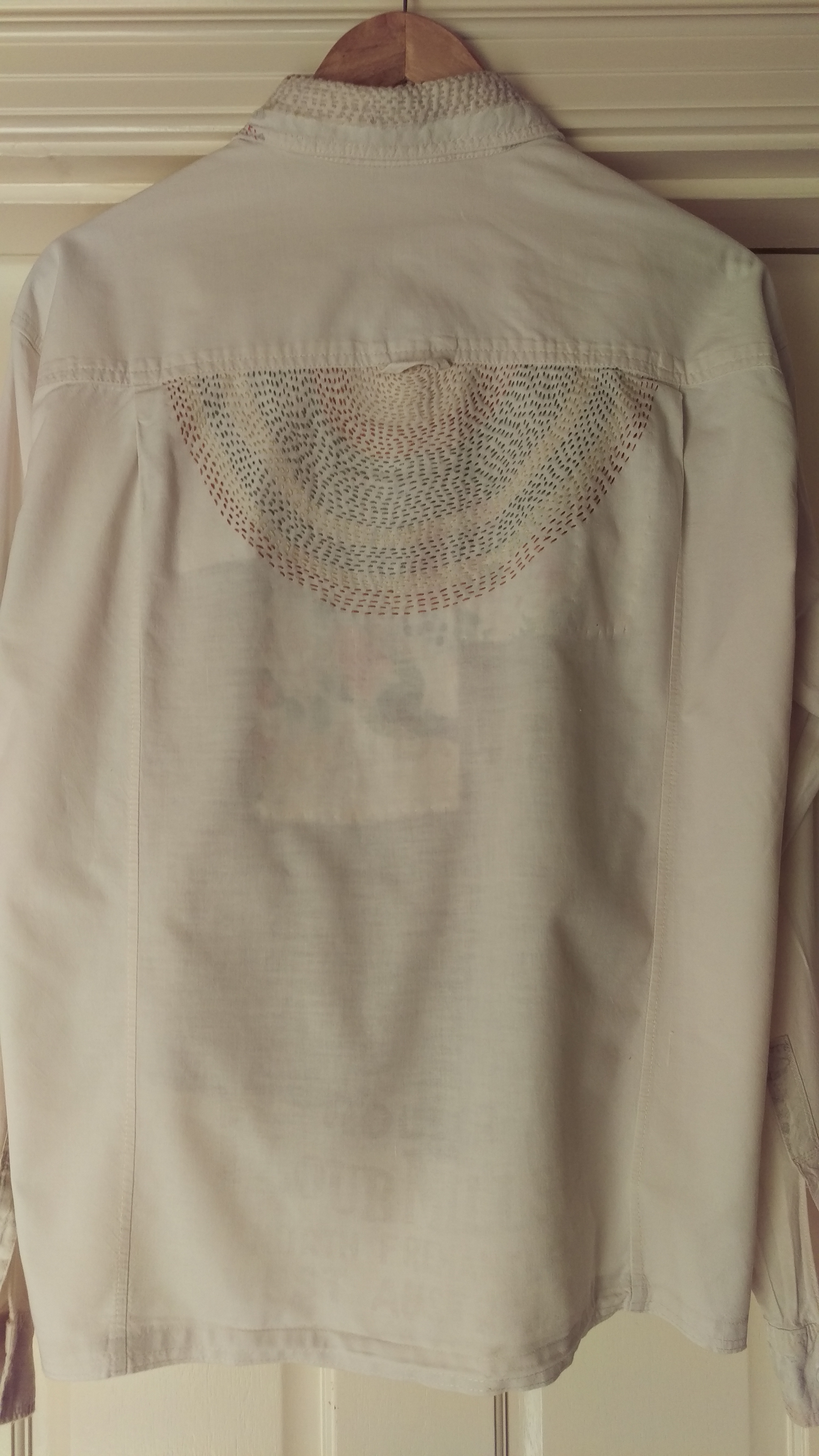
And I love the outcome!  Here is the front…

IMAG2082

Here is the back… (the zipper looks pallid now but it was what I had, recycled and saved).

IMAG2081

This has motivated me to make another, as my stock of winter warm work clothes is becoming pilled and threadbare, and I’ve had some lovely encouragement from friends lately.  Sometimes I think it is a shame I can’t get away with just wearing the same thing every day, as my tendency is clearly to make the same thing over and over again…

18 Comments

Filed under Eucalypts, Natural dyeing, Neighbourhood pleasures, Sewing

Work in progress

IMAG1855

I realise that teasing is mean… but I can’t resist sharing this work in progress instead of waiting until it’s done.  Who knows when that will be?

6 Comments

Filed under Natural dyeing

Ngarrindjeri Basket Weaving Retreat 3

IMAG1796

I can’t leave the weaving retreat without some more images.  These are eucalypt shoots coming out from the lignotuber at the base of the tree, along with mosses and lichens.  Now this is the way to experience lichens.

IMAG1795

Who can believe fungi grow in pure sand?  I was amazed… maybe it is just me.

IMAG1814

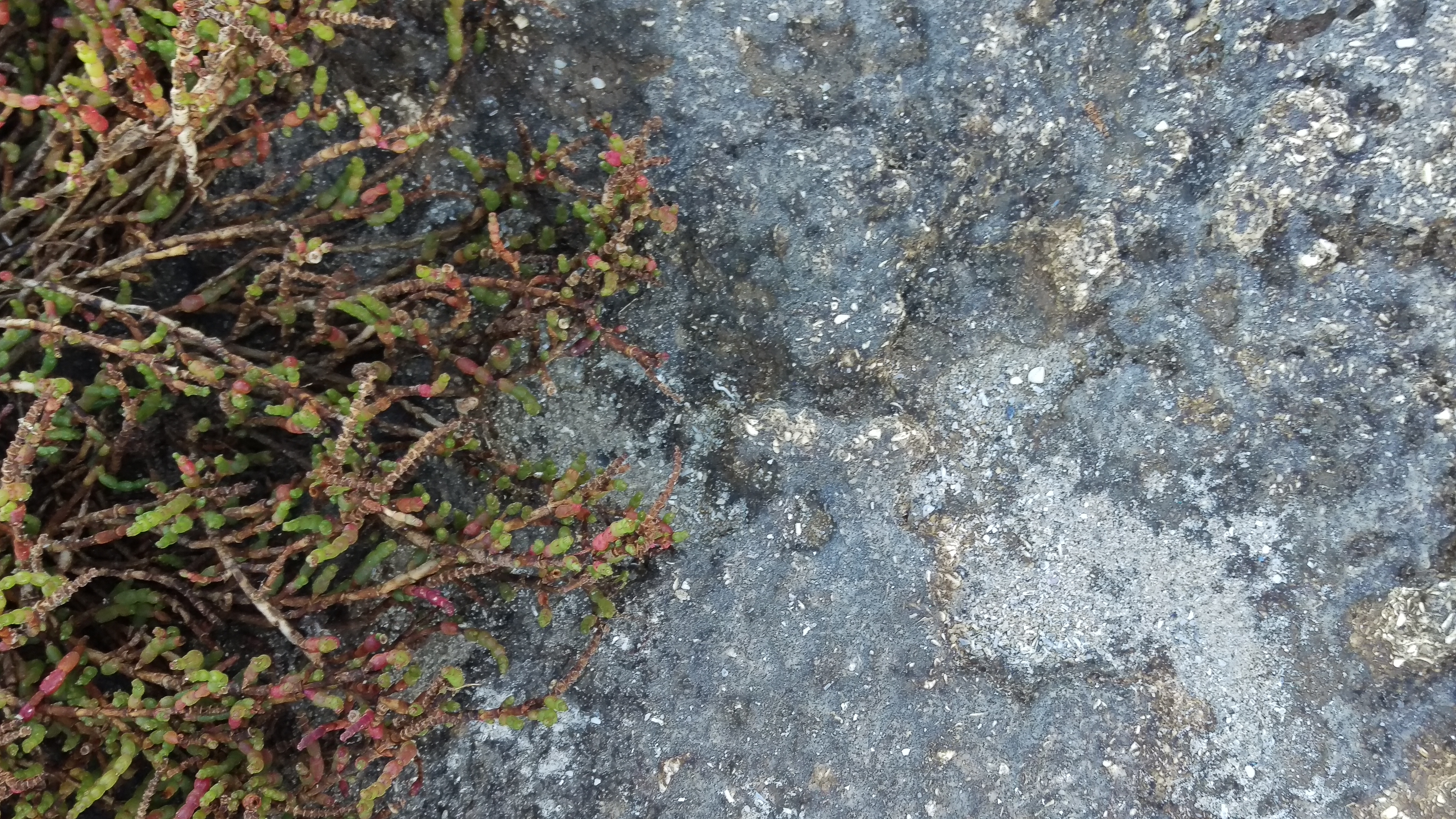
Samphire remnants beside a Coorong rock formation that must have been formed by millennia of shell deposits.

IMAG1811

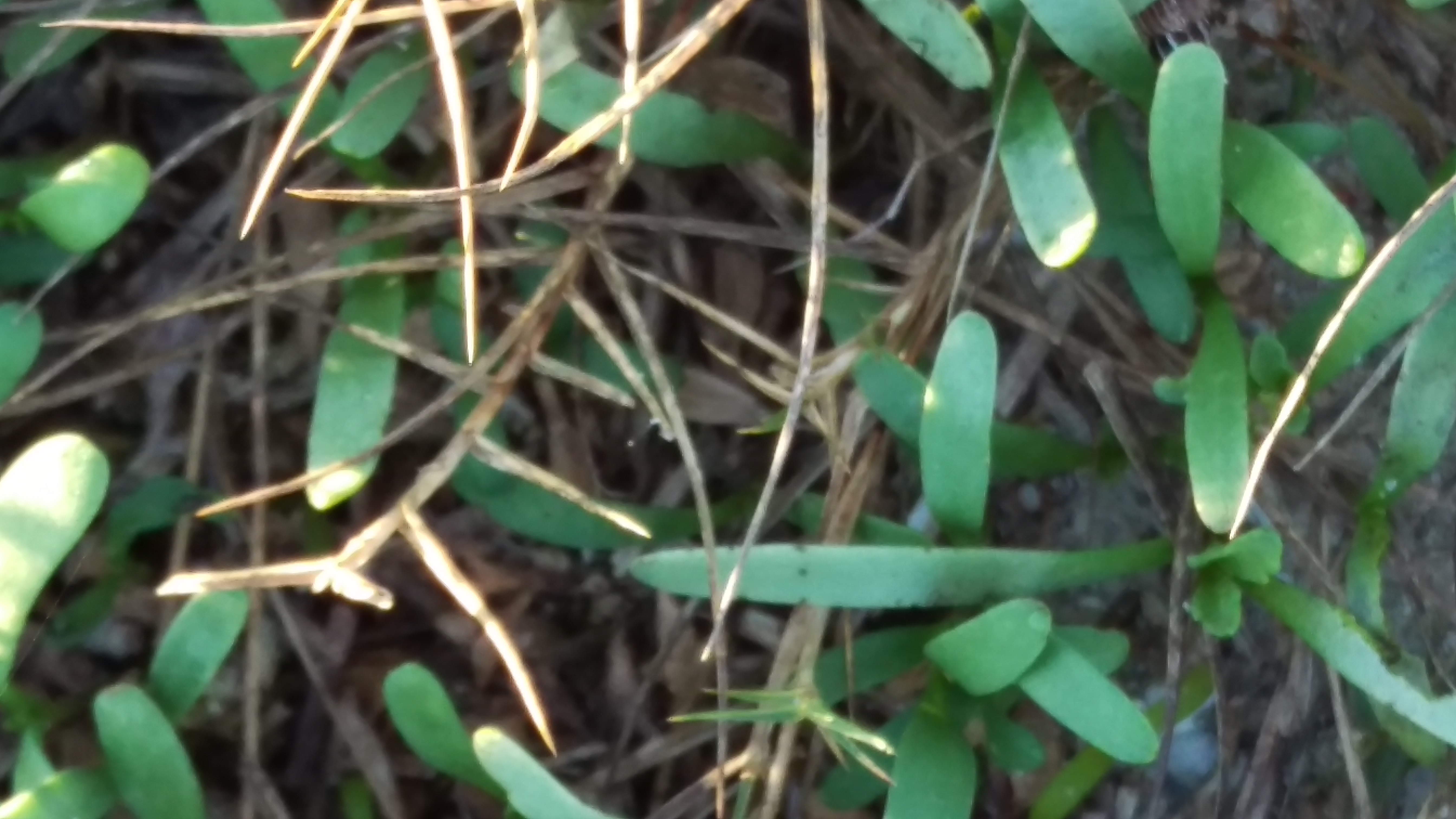
Samphire. I love the plant and I think the name is lovely too.

IMAG1822

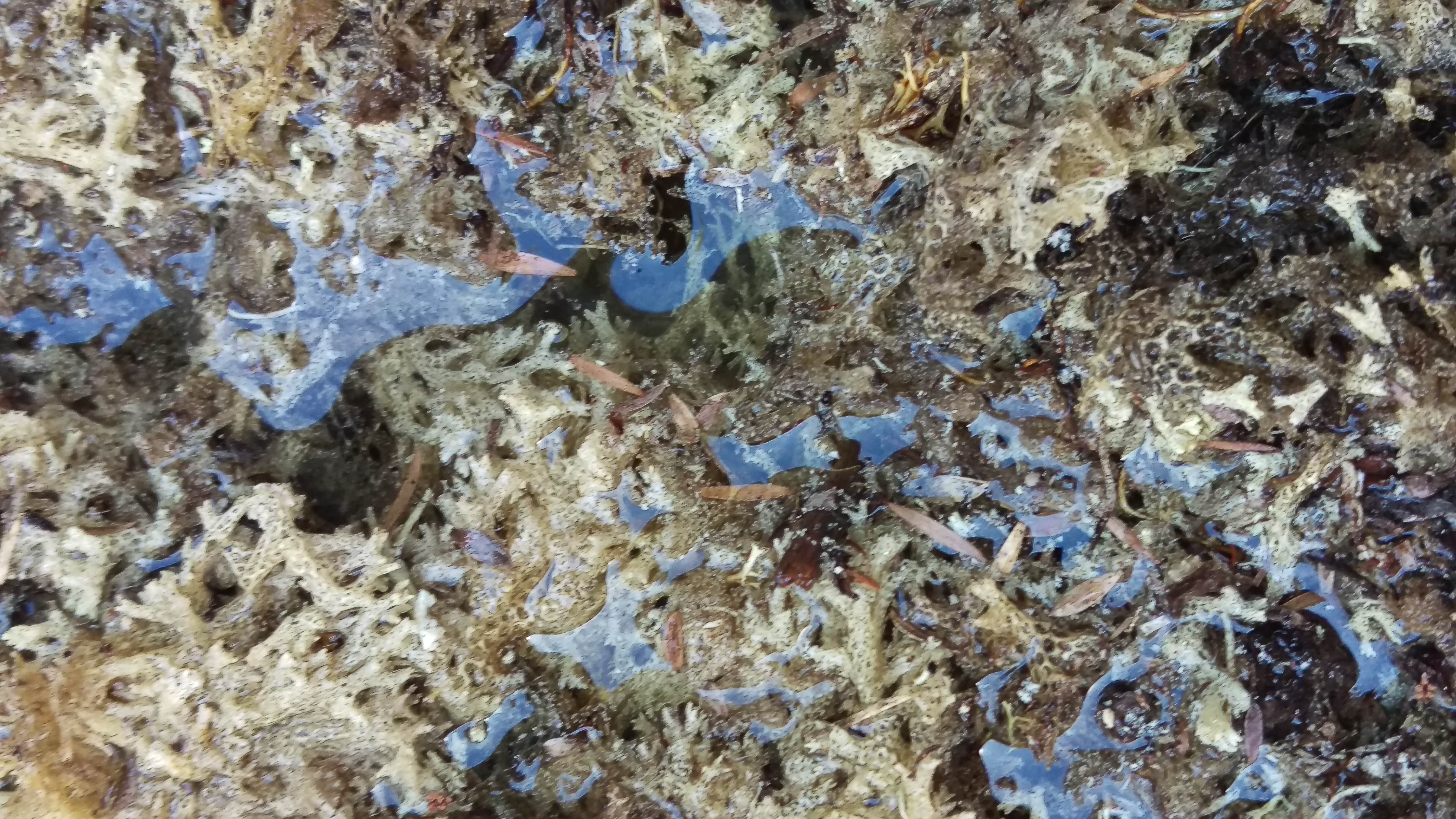
I think these (much magnified) tubes might be all that remains of tubeworms.  But I don’t know, I’m guessing. They were on the edge of the water in drifts, crunching underfoot unless you walked around them.

IMAG1821

For scale, here is a ruby saltbush growing beside them.

IMAG1826

Plants growing up right by the water.

IMAG1828

Cushion bush in the sand.

IMAG1819

And a bit more of the view across the Coorong once the sun came up!

IMAG1824

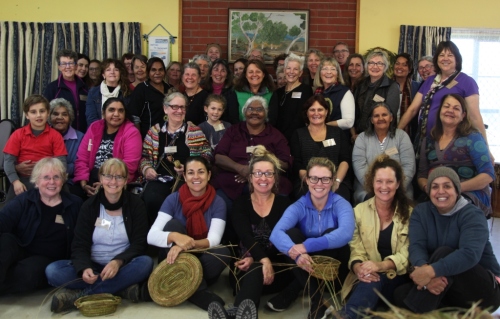
A photo of the entire retreat arrived just in time for this post, along with permission to share it.  Here we are in all our glory!  A huge thanks to the Aunties who so patiently and generously taught us, and the the Staff of the Ngarrindjeri Lands and Progress Association/Camp Coorong and the South Coast Basket Cases who organised the retreat. It was a privilege to participate and a delight to be among so many wonderful women.

Ngarrindjeri Retreat 2016 participants

10 Comments

Filed under Natural dyeing

Dupion silk

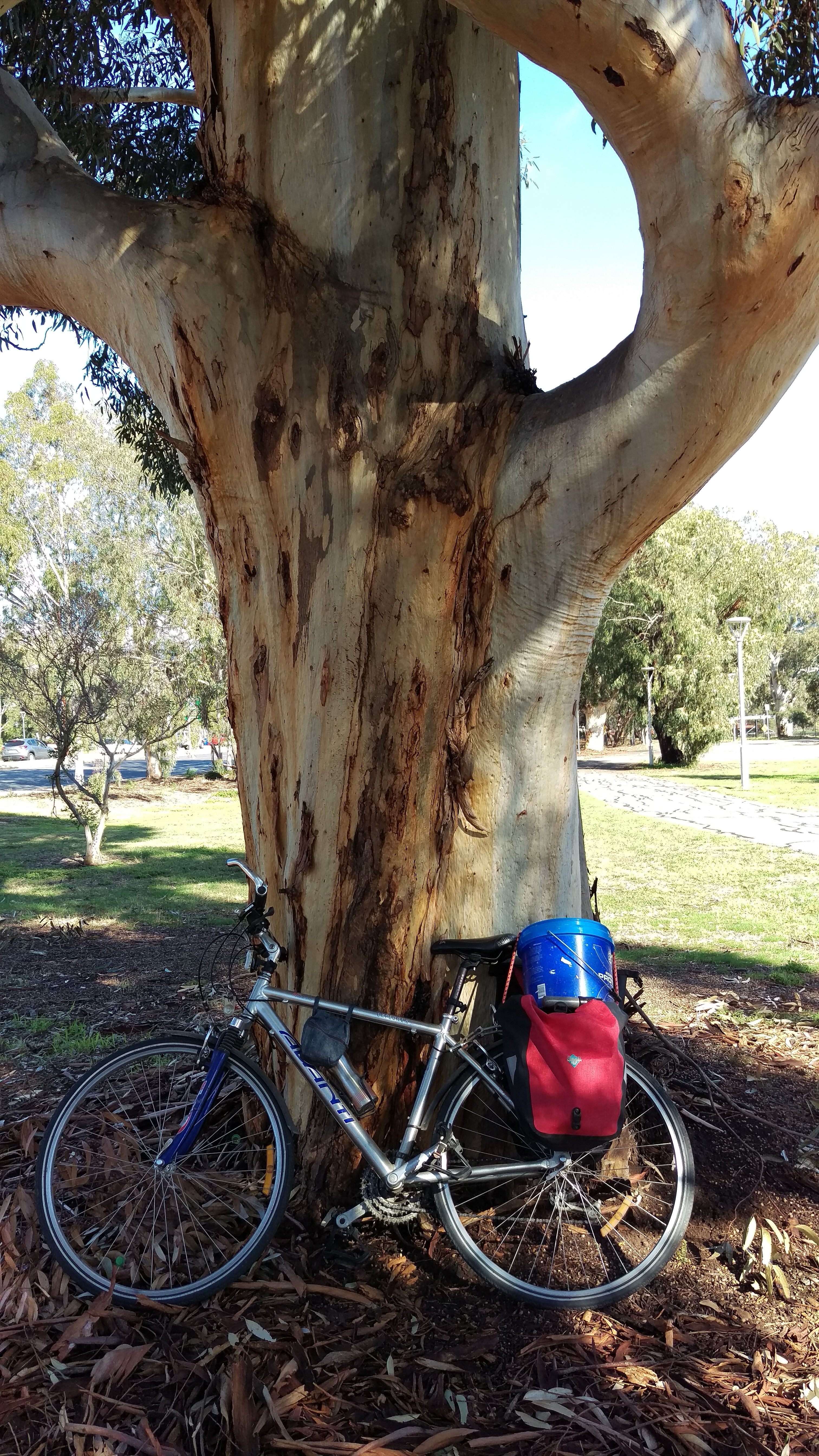
Oh. My. Goodness.  Dupion silk isn’t really my cup of tea.  I made my beloved a beautiful shirt from it for a big event once, but my one venture into wearing it myself was a brightly striped waistcoat made from a minimum amount.  But recently I went to the Guild and there were leftover dupion lengths on the trading table.  I walked away with the palest pieces for $3.  They were a lot bigger than I expected but with some sun damage.  The Guild was full of cheery folk eating cake and chatting on and admiring all manner of knitting and felting and spinning exploits.  There were conversations about mordants in which I broke the news about how toxic many of them are and turned down offers to give me some toxic variations on the theme.  I explained about the toxic waste dump where my Guild has been disposing of such chemicals for years now. I accepted a gift of some alum and cochineal extract (the kind my mother used to use for icing).  Then there was quite a conversation about woad, cultivation and uses, which was good fun–and I gave the person concerned (who was new to the Guild) the alum!   Anyway… I rode away feeling all activated and cheerful, and on my way home picked up a bucket from a skip, and from there the world was my oyster. Here’s the bucket on the back of my bike.

IMAG1669

I rode through the lovely park lands and sampled all kinds of likely looking eucalypts as well as a sheoak. This one, with interesting bark and at least three different kinds of leaves.

IMAG1681

This one I think is E Platypus.  I have heard of others getting colour from it: me, not so much, so far.

IMAG1678

And some lovely silver-leaved varieties too.

IMAG1675

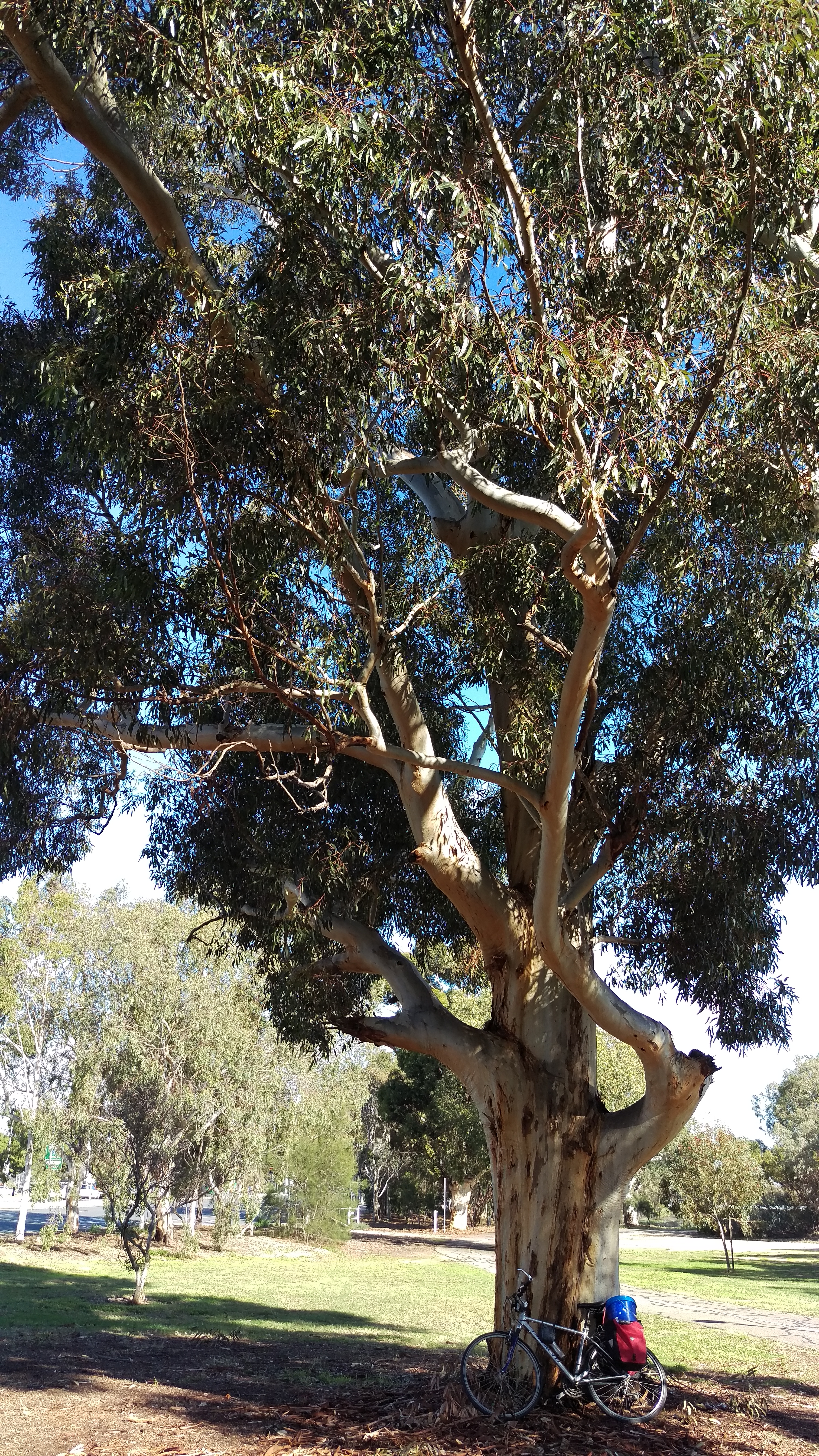
Finally I collected E Cladocalyx bark and filled my bucket to capacity.  Here is the tree up close-ish.

IMAG1689

Here it is from further away with the bike still there for size and a lot of the tree still not in the picture.

IMAG1690

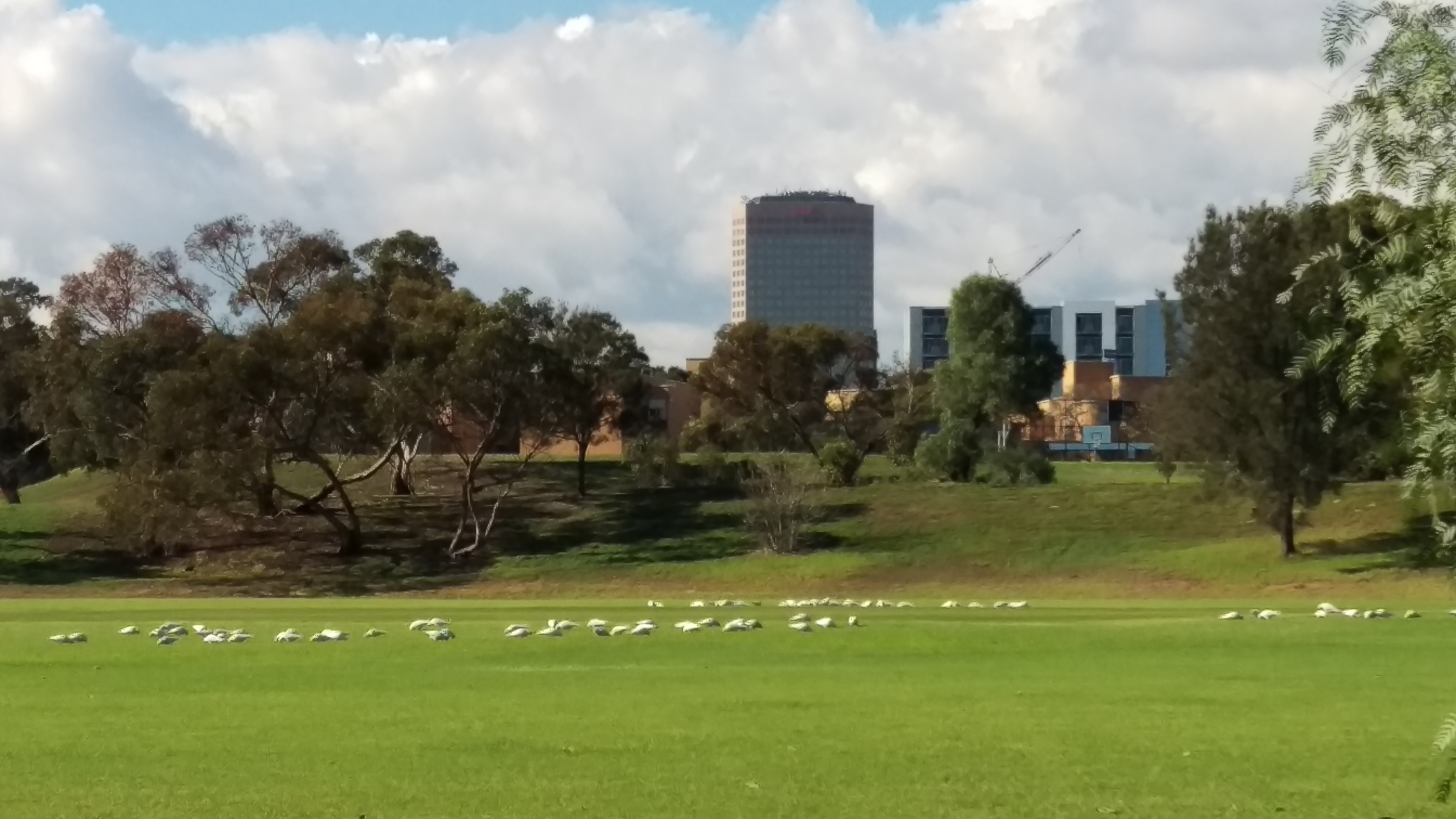
As I rode along the corellas were out grazing on one of the playing fields in the parklands (they are the white spots on the grass), with the city centre sprouting up in the near distance.

IMAG1670

I arrived home and bundled up…

IMAG1697

So pretty!

IMAG1703

And then into the pot.

IMAG1715

The various eucalypt samples from the parklands gave little colour (left), but my dependable friend E Scoparia dyed the silks a treat (right).

IMAG1712

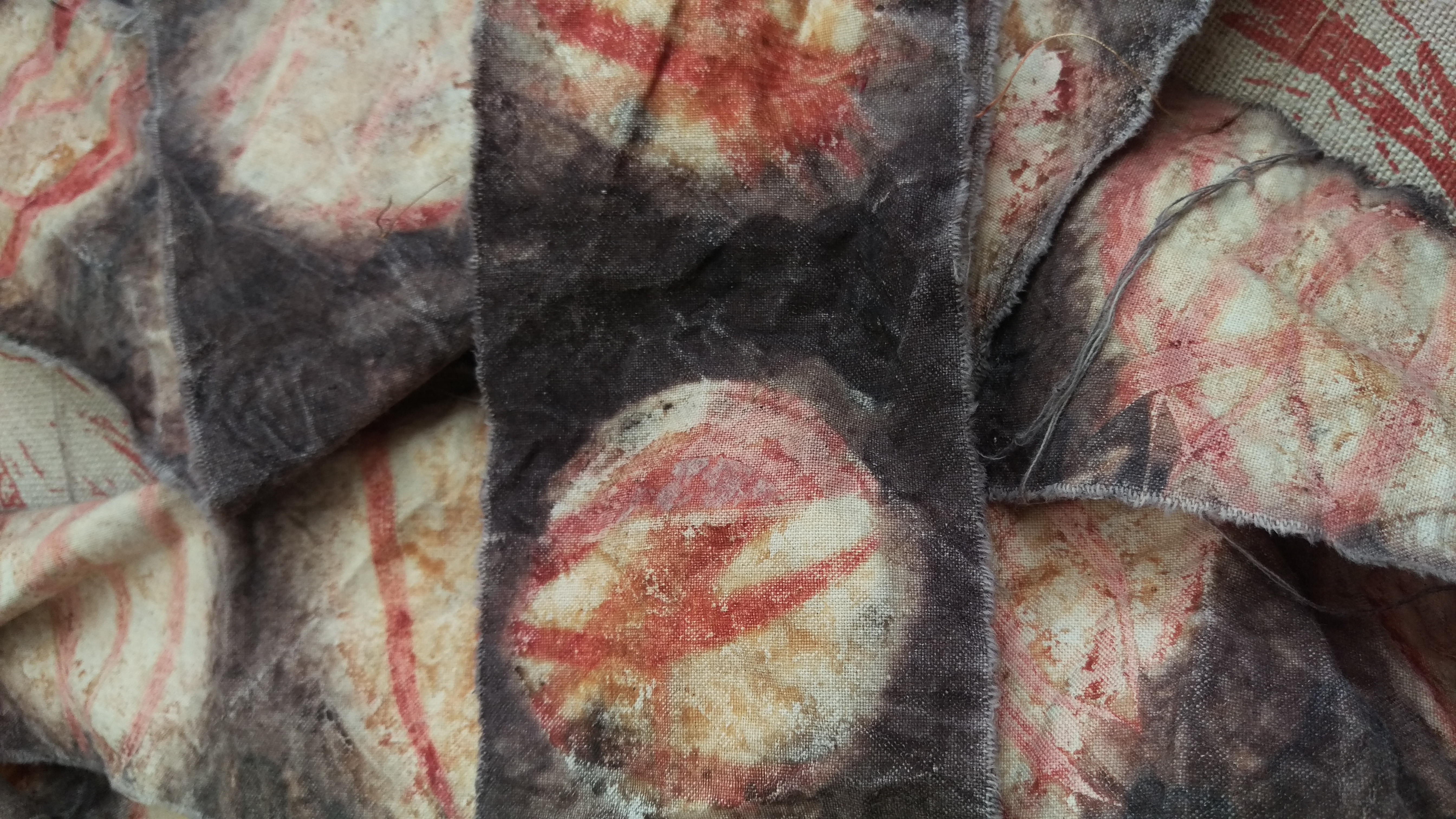
I soaked the bark and saved it for later. The prints are lovely and detailed…

IMAG1771

I put the not so successful silk in for another bundling…

IMAG1772

And remembered that my last experiments with clamping went better with less than maximum pressure… after the results were in!

IMAG1773


9 Comments

Filed under Leaf prints, Natural dyeing

Dyes of Antiquity: Coral lichen and Sticta Colensi

IMAG1692

Quite some time ago, I became the beneficiary of natural dyes that had been abandoned at, or gifted to, my Guild.  Among them were some very old looking bags of dried lichen.  I was appalled by this discovery, to be honest.  Lichens are slow growing, increasingly threatened, complex organisms.  I hear they are plentiful in some parts of the world but I am not living in one of those parts. People far more articulate and knowledgeable than I am on this subject, such as India Flint, have explained why harvesting these plants for dye is not a good idea.   However, clearly there was a point in the past when these lichens were harvested and it is too late to make that unhappen.  So I have done some research into the lichens that have labels on them.  Some of them are so old they have imperial labels on them rather than metric labels.  Wikipedia says Australia began metrication of weights and measures in 1971.  So you know what I’m saying.

IMAG1693

I decided to start with some of the lichens whose labels suggested they should be treated using the boiling water method.  The simplest, and the one achievable in winter. First, a soak in rain water.  Coral lichen above and Sticta Colensi below. I gave them a 24 hour soak in rain water, and then started the heating.  Then there was straining out.  Then a contest between dye baths on the go.  In the end I decided that since Karen Casselman’s book on lichen dyes pretty clearly recommends long processing, perhaps this was a dye that could spend some time wrapped in a blanket to stay warm between heatings.

IMAG1694

The whole time I was working on these two dyes I was thinking about why anyone would harvest lichens to get the colours suggested on the labels which say things like ‘boiling gives gold’ and ‘boiling gives pale olive green’ or even ‘boiling gives warm beige’. And the outcome: Sticta Colensi is the yellow on the left.  Coral lichen pale brown on the right.  So now we know. Leave them where you find them, my friends. There are faster growing ways of achieving these colours.

IMAG1767

20 Comments

Filed under Natural dyeing

Carrot tops and carding

When a moment arises and there is an opportunity for dyeing, I dye, my friends, I dye.  One such moment came a little while back when we had lovely organic carrots from our friends’ farm… and they came with lovely organic carrot tops, of course.

IMAG1695

Fixing carrot top dye requires alum, but I am well prepared.  I have sheep fleece sitting in cold alum solution in buckets in my driveway.

IMAG1636

Into the dye pot they went!  This went so well that I am doing it again as I write.

IMAG1638

In the mean time, undyed fleece from the same sheep, Viola the pale grey crossbred, is also being prepared for spinning, because… I have an ambitious plan that will require some more undyed yarn…

24 Comments

Filed under Fibre preparation, Natural dyeing

#MenditMay Mending sewing machines and more

2016-05-14 15.28.54

This sewing machine was found in a shed.  It was unwanted by the new resident, so it came to me for cleaning, oiling and a look over.  You see it here with some of the upper casing removed to allow lubrication. It is now on its way to new users in the Anangu Pitjantjatjara Yangkunytjatjara lands. Meanwhile at our place, the threadbare flourbag shirt got some more patches added.  Here, the glue stitching I mentioned in my last post holding them in position.

2016-05-14 11.26.19

Here, the inside view.

2016-05-14 11.32.17

And here, the finished–for now–view of the back.

IMAG1604

Threads dyed with pansy, dyer’s chamomile and eucalyptus.

IMAG1605

I took up my friend’s jeans.  I feel like I have almost got top stitching denim sorted!

2016-05-14 17.41.39

Top tips: use a jeans needle.  If using top stitching thread, thread the needle by hand (should you have any other options, don’t use them); and leave ordinary thread in the bobbin. Use a 4mm stitch at least.

2016-05-12 11.27.07

Buttons replaced in position and stitched down so they don’t get away. I had to laugh when one button fell off at work the day of the second mending workshop!

2016-04-26 19.46.29

And another sewing machine cleaned, oiled, tested and ready to go to its new owners.  My grandmother lived in a country town where getting your machine serviced was not easy to arrange (cost may have been an issue too).  She was a fearless tender to her own machine and those of all her friends and told me many times that cleaning and oiling fixed most troubles.  So I am in her footsteps here, but in this case with a manual to guide me.  I took this machine apart and oiled all. the. places.  It really whirs along! It is now headed to asylum seekers who have been released from increasingly notorious conditions in detention on Nauru, who were tailors in their country of origin and will make great use of this well maintained machine.  It came to me because I was working on the mending kits and a lovely volunteer in an op shop asked if I could re-home a machine she knew needed to find a new home. I feel sure its new use would please the original owner very much.

8 Comments

Filed under Natural dyeing, Sewing

Plant dyed yarns, I’ve spun a few

2015-07-04 16.35.48

Last year I had an extensive plant dyeing series: eucalpytus, needless to say, but also woad and dyer’s chamomile, alkanet, madder, cochineal and indigo overdyes (why didn’t I actually dye any blue wool while I was at it?).  I have belatedly realised that I haven’t shown you the yarns that resulted.

2015-10-22 14.29.48

Here are some of them in process… and here are some finished!

2016-02-23 16.59.00

Part of the reason for the pause may be that I realised I could not make the intended colour work project unless I also spun some of Viola’s fleece in natural heathered grey.  Somehow, I haven’t managed to do that as yet and have needless to say, found other things to do. The time is now, though, to start that process of creating some natural coloured yarns so I can return to the idea that began all this dyeing and spinning, now quite some time ago…

2016-02-23 16.58.07


21 Comments

Filed under Natural dyeing

#MenditMay: Loving up a lining

2016-05-05 13.12.37

My generous friend India Flint gave me this coat. I would never have chosen it for myself, and if I had been the one to find it second hand, I would have been too scared to throw it in a dye pot.  India suffers from no such shyness (and there are good reasons for her confidence, of course!)  I love it.  It is a gorgeous fabric with wool content but cashmere too, and the edges have been picked out in a fine, shiny thread, by hand.

2016-05-05 13.13.08

I think India sewed a new button on, or moved the old one.  The thread looks like it met Eucalyptus at some stage, and is in two subtly different colours.  The coat is lined with silk.  It is like wearing a big snuggly hug.  I find I take it out when the day holds particular challenges, even on days when it might not be cold enough to wear it, because it has comfort factor. I took it on a very challenging hospital visit last year even though I never put it on!  I patted it on the long trip out and home again.

2016-05-05 13.12.53

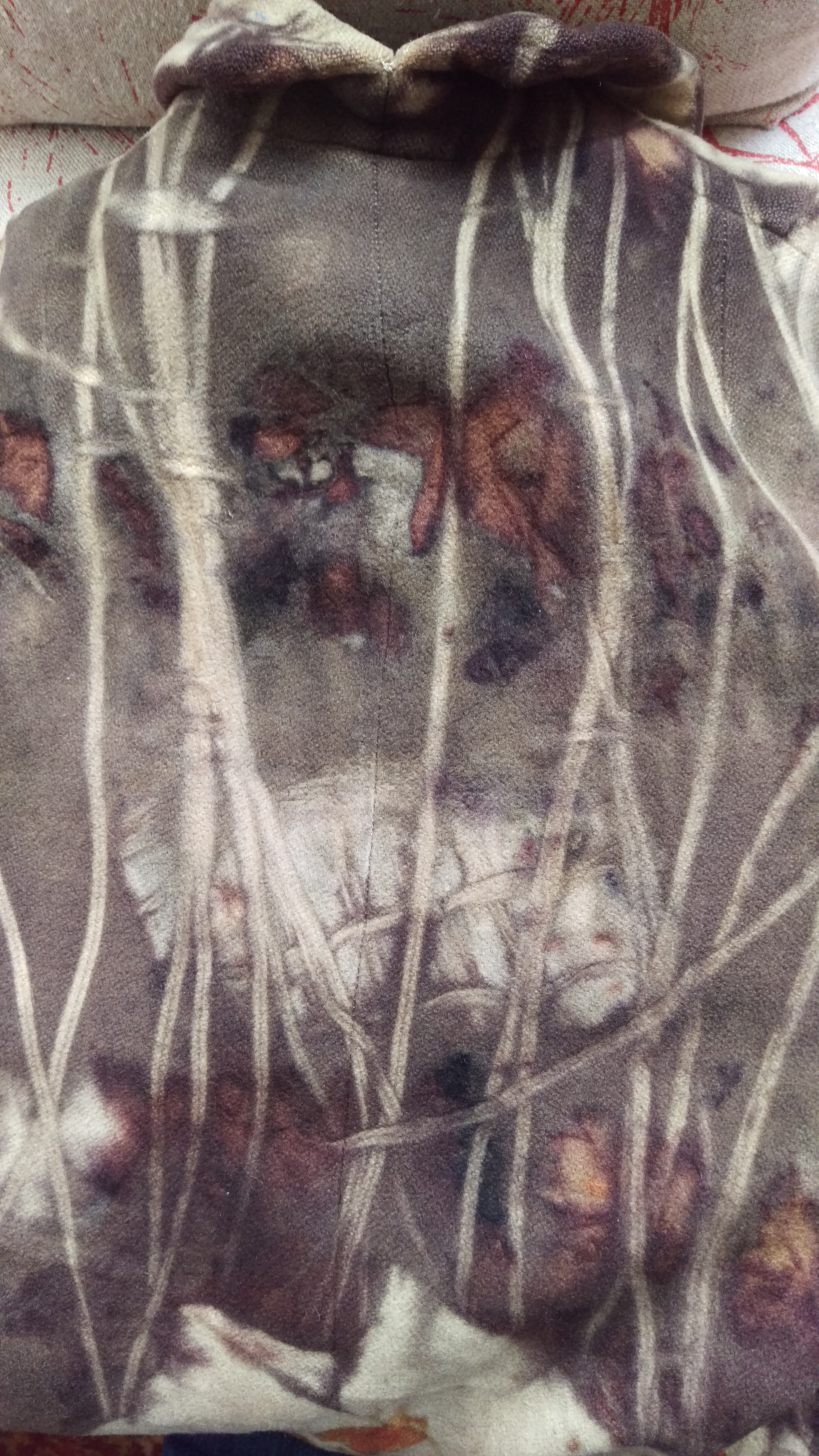
The back has a wonderful set of resist marks from a nice rich dye pot.  In short, this coat is a treasure.  A treasure with  a history in which it has been loved and worn by other people, found by India in a suitably romantic location in the US, dyed and then gifted on to me!  And now, it needs a little love from me.

2016-05-05 13.13.26

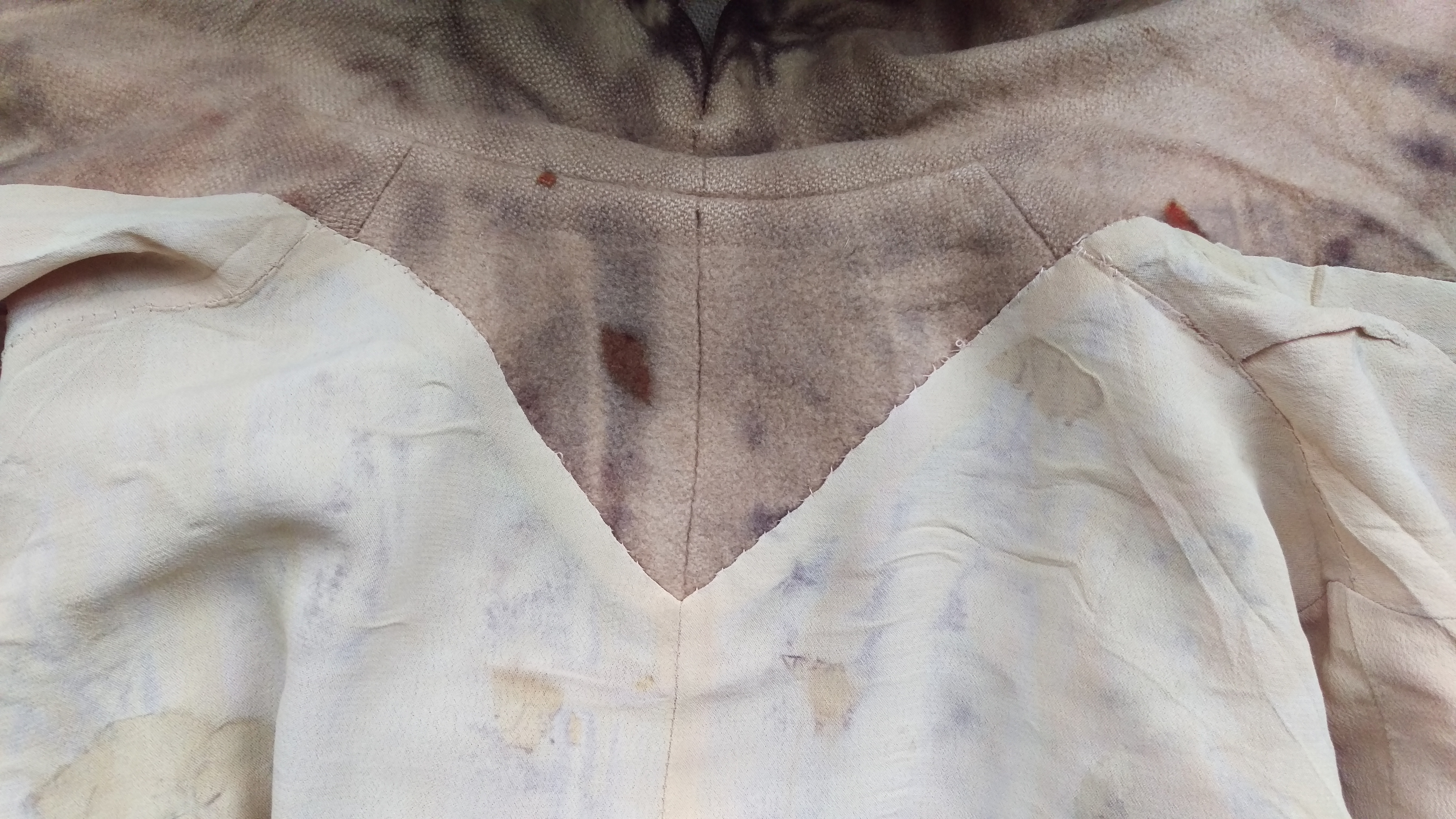
The lining is coming away below the neck line.  Those two peaks are an interesting detail at the inside centre back.

2016-05-05 13.13.32

Clearly the armscyes were the most vulnerable place in the lining.  They  have been restitched by hand, in several different threads.

2016-05-05 13.13.48

This one has a thicker thread and a different, bolder stitching strategy.

2016-05-05 13.14.34

And, there is a label explaining that the garment has been made under fair labor standards.  I wondered whether this was a reference to union labor, or something else.  It took a little google-fu but in the end it turned out that this is a union label from the National Recovery Board for Coats and Suits, used 1938 to 1964.  This coat was made before I was born! According to my online source, ‘The National Labor Relations Act encouraged growth in stateside unions to create more jobs during the economic crisis of the ’30s. The Coat & Suit Industry union was born out of FDR’s New Deal Coalition.’ This label was used by the International Ladies’ Garment Workers’ Union and there is a wonderful online history which details some of their labels as well as so much more.

2016-05-12 10.45.23

And so, to mending it back into good shape so that it can go on keeping me warm and being its lovely, touchable and glorious self.


18 Comments

Filed under Natural dyeing, Sewing

Walnut, weld and purple fountain grass

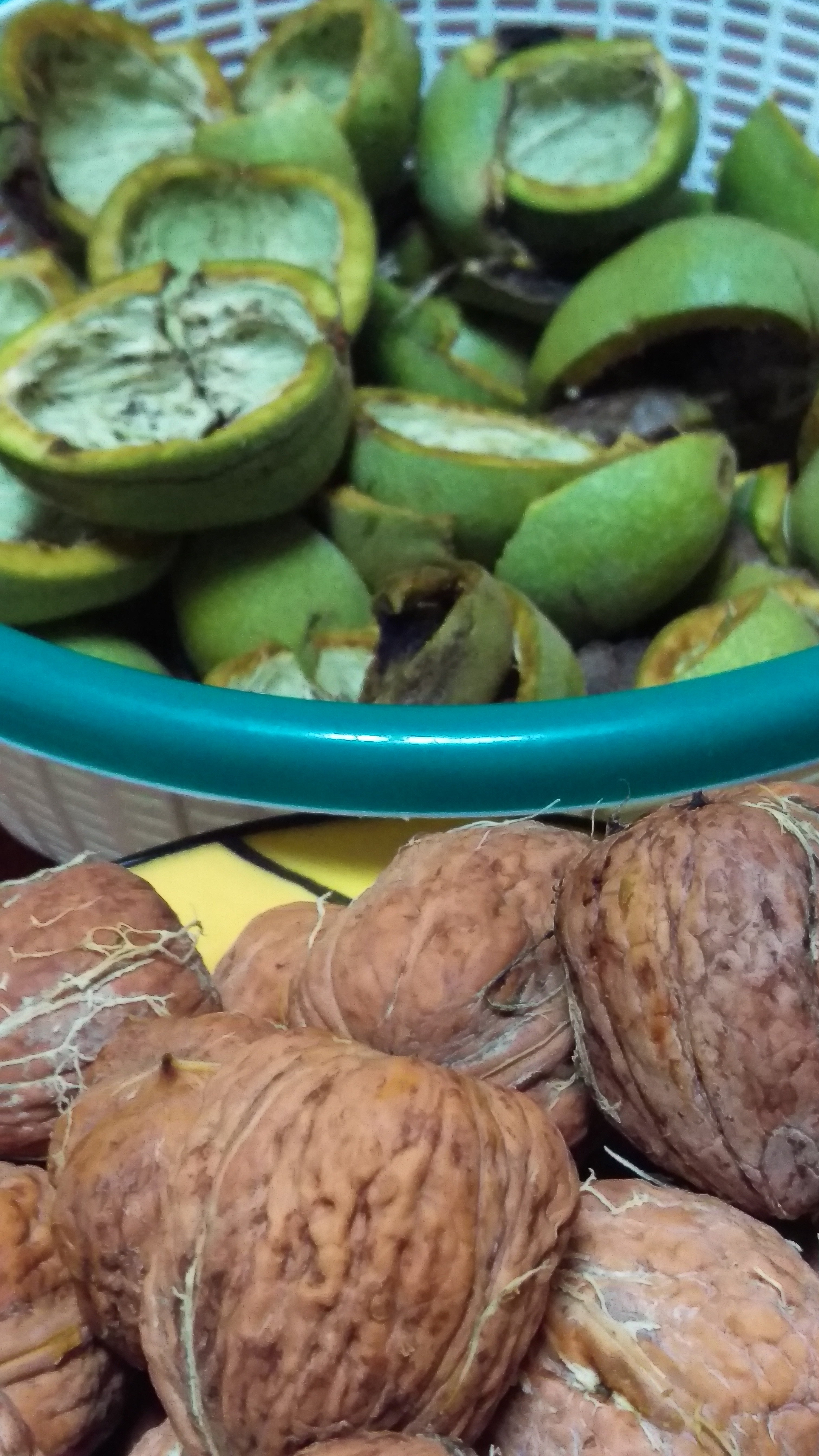
I went out to help with the local organic food co-op recently and came home with walnuts from the local food forest produce swap, with the nuts soon ready for eating and the hulls ready for dyeing:

2016-04-02 13.14.09

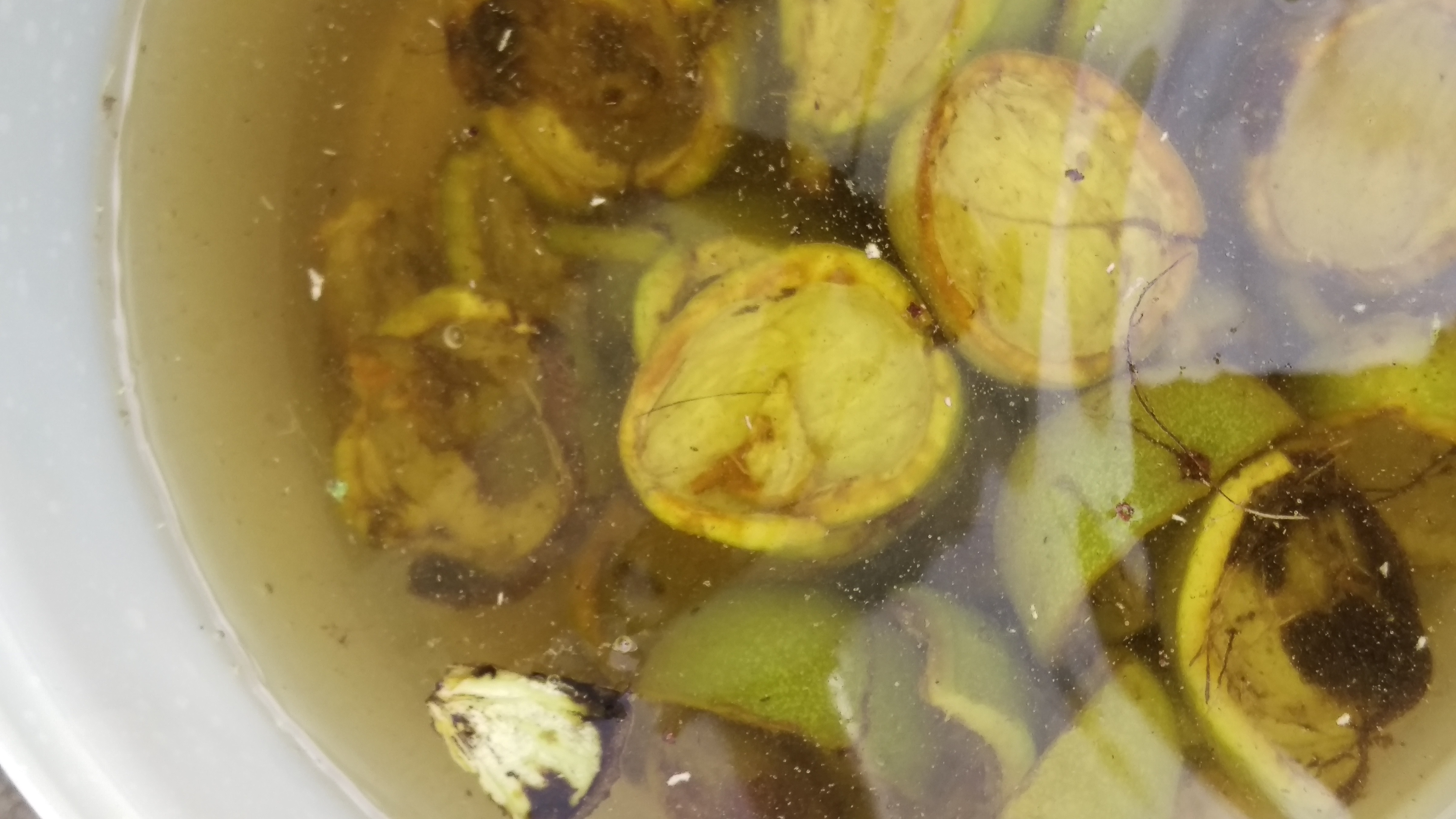
In the bucket, ready for their three week soak/fermentation:

2016-04-02 13.16.50

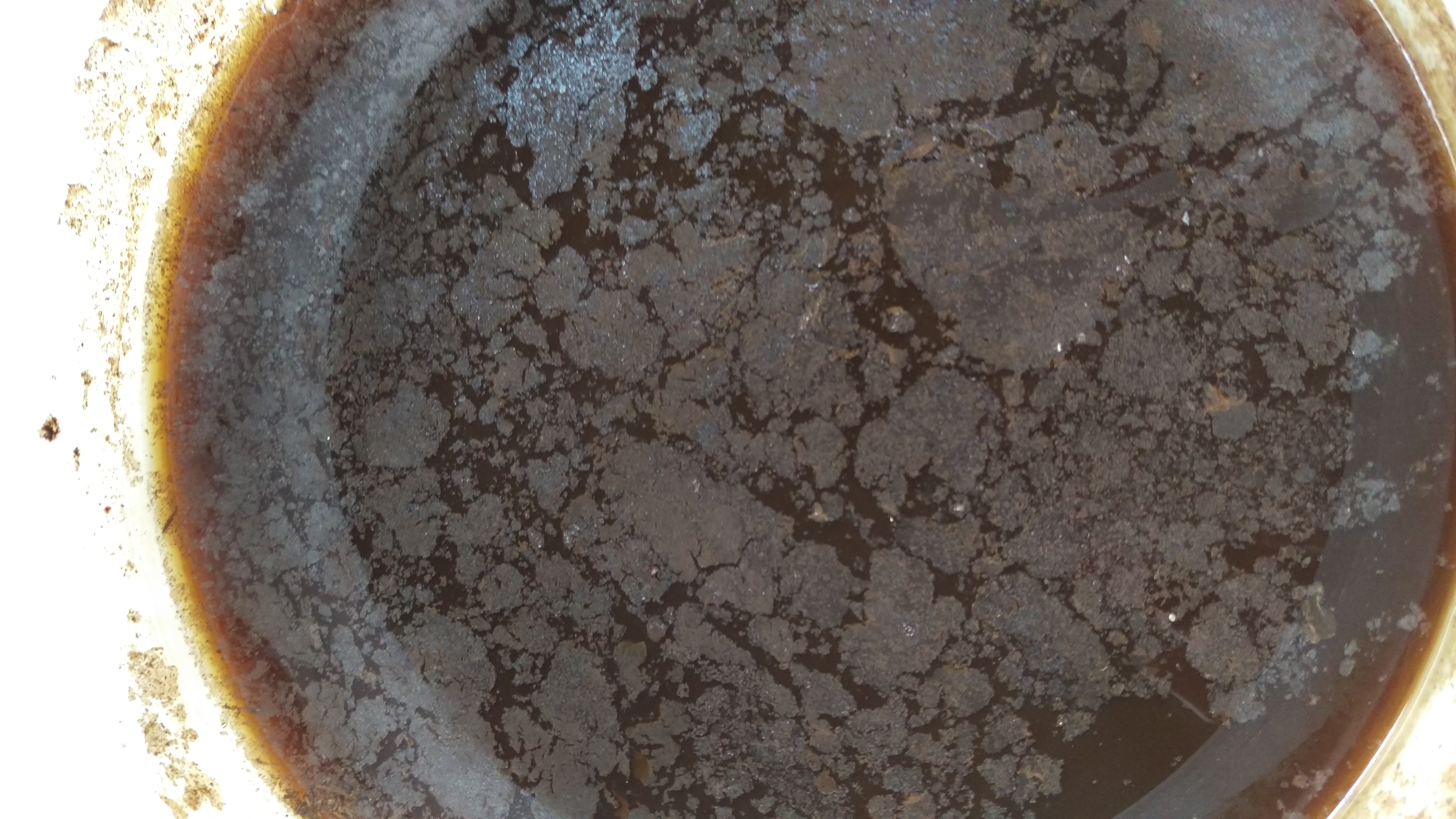
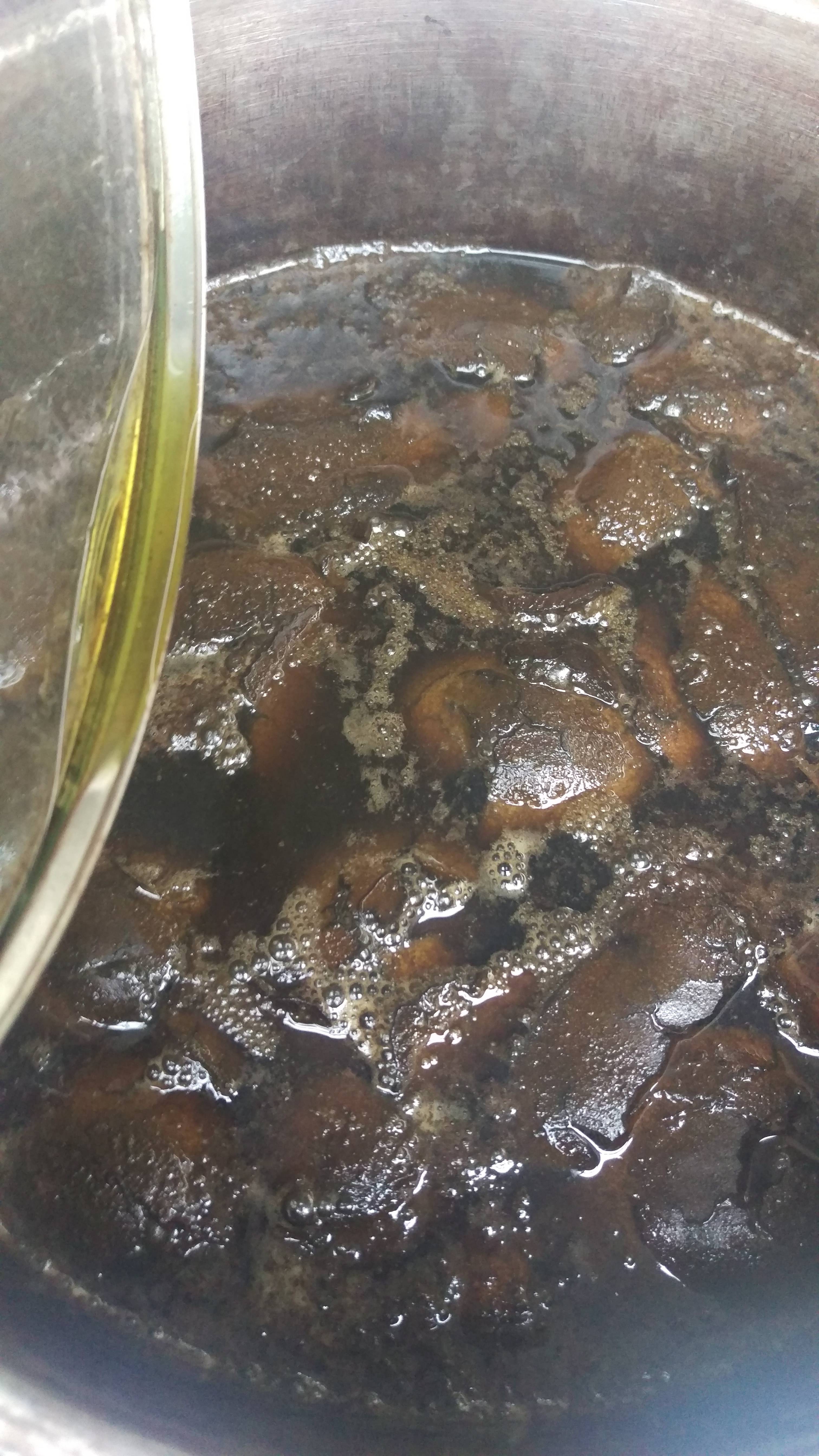
Post soaking and ready for the heat:

2016-04-16 10.00.10

With the application of heat, the dye bath grew darker still.  So in went my remaining suffolk fleece. It was with deep relief that I assessed the (acceptable though not delectable) smell of the dye bath.  It was a walnut dye bath that almost had me excommunicated from my Guild for cooking it up in the dye room when the Little Glory Gallery was open.  Ahem!

2016-04-16 10.33.49

Here is weld growing in the vegie patch:

2016-04-16 10.02.36

One of my plants wilted and fell over for no obvious reason, so I cut it out and set it to dry. I wondered if something has nibbled on its roots from below ground. Some days later I went out and found that the rest of the plant had died.  This time it is obvious that the main root has been chewed on or rotted away.  Curious.  I followed Jenny Dean’s instructions (more or less…) and due to lack of time, left the dye bath to sit for some days.

2016-04-16 10.05.53

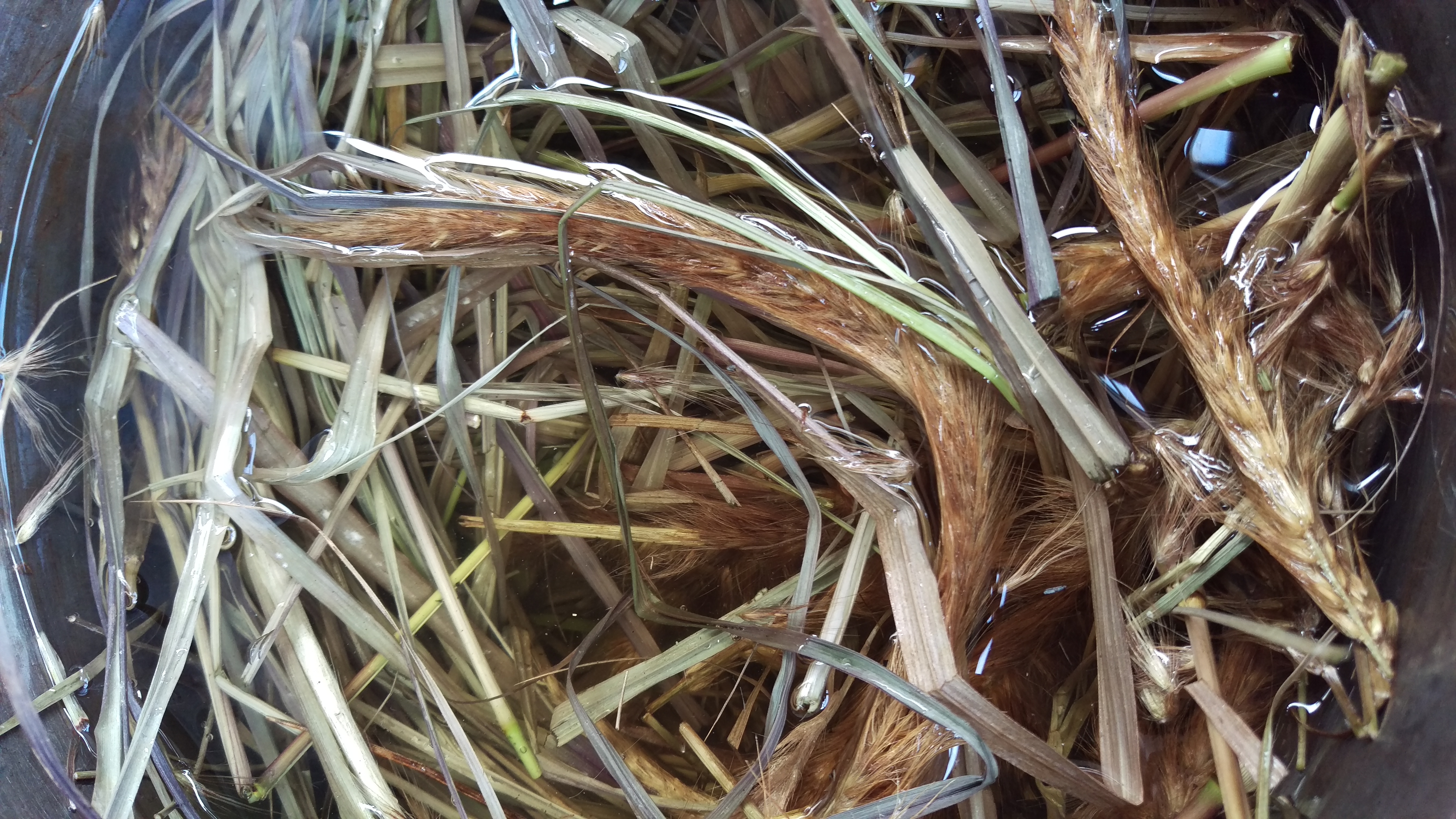
Mum saved me her purple fountain grass–a whole wheelbarrow load.  I saw a post on Ravelry where a lovely green came from this plant just about when she was planning to cut hers back.  This was exciting!  For me, however–it gave only a fawn colour.  Sadly!

2016-04-16 10.41.11

Here is the walnut dye on the left and the fountain grass on the right.  It is a little more yellow-brown in life, but nothing exciting.  It went into the walnut exhaust.

2016-04-21 13.27.54

I now have two shades of brown Suffolk and some weld-yellow crossbred fleece ready to join a future colour knitting project.  May the rinsing begin!

2016-04-22 13.16.13

6 Comments

Filed under Dye Plants, Natural dyeing, Neighbourhood pleasures