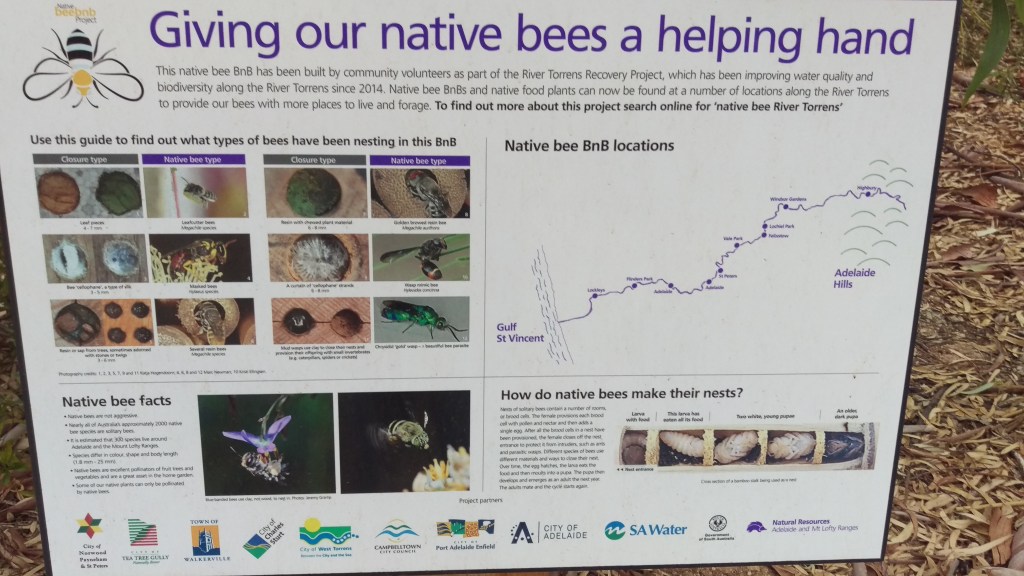
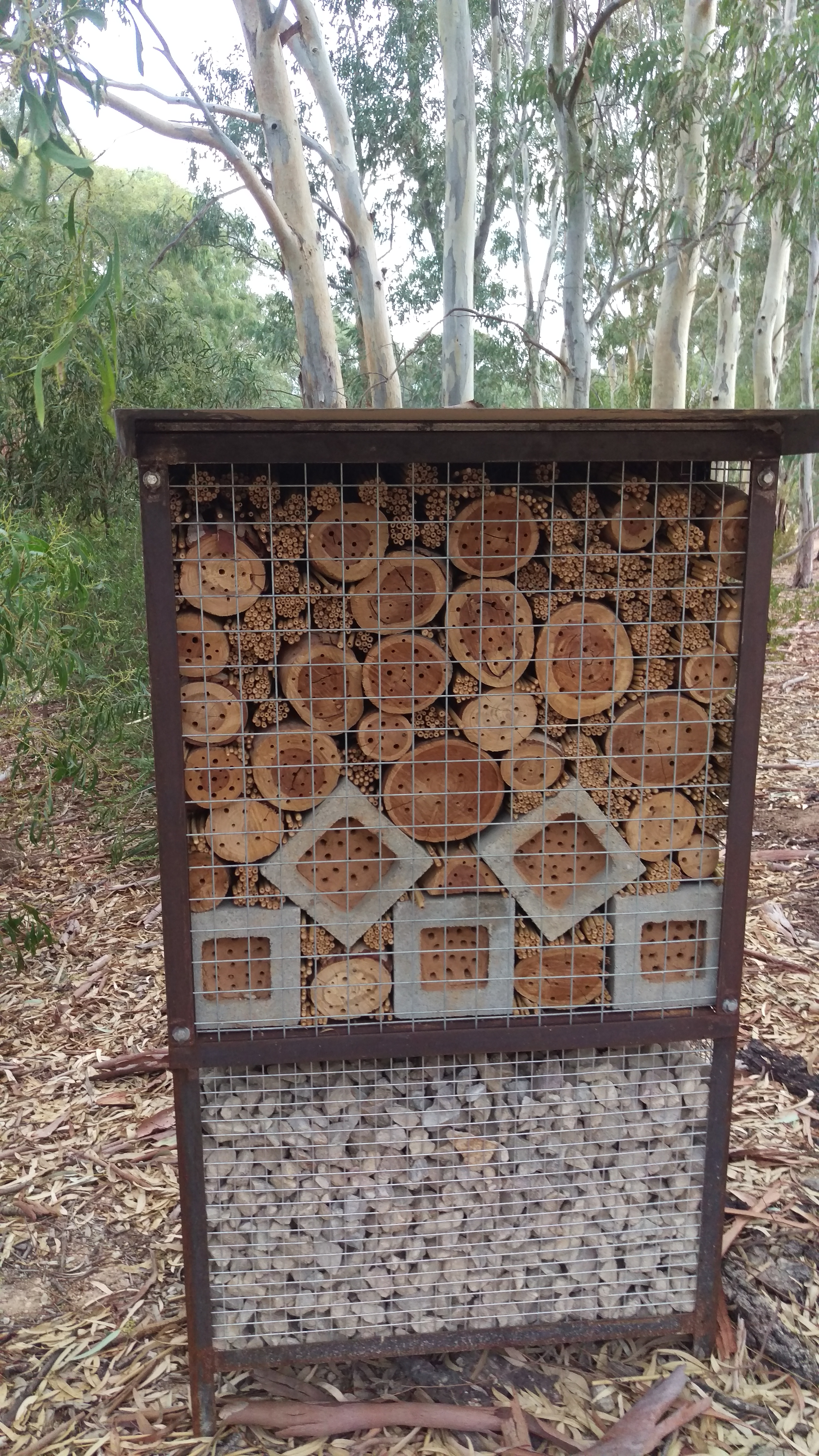
It is a sign that fills my heart with dread–that bees are in so much danger. Leaving aside the honey bee for a moment, calls now go out for the creation of habitats for native bees–a real indictment of the devastation of native habitats. This has led to “bee motels” turning up all kinds of places. This one is in the park lands.
This one is near our local community garden.
Honestly, the best things I do for bees are growing without chemicals at home, and guerilla planting native plants. But, I decided I could make a bee motel with things that would otherwise be going to recycling or compost, and why not?
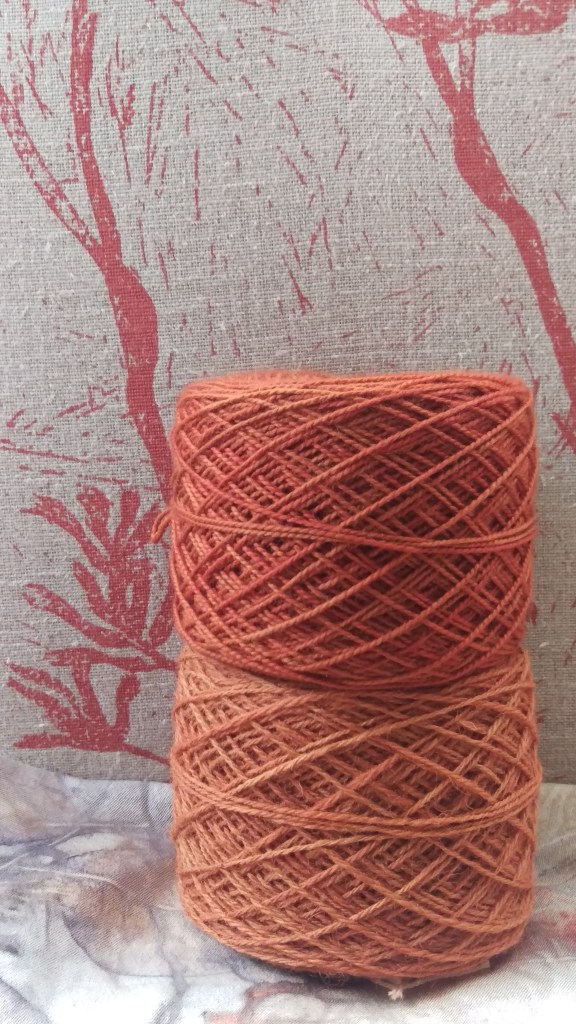
The cans come from the kitchen, thought not very often these days. The bamboo grows in our neighbourhood. I had harvested some for banner poles and the side shoots have gone into the cans as well as the excess length. And I’ve tied them together with pre-loved string that has come from the dye pot and before that–from ripped up and upcycled clothing and manchester. Here’s hoping the bees will like it!
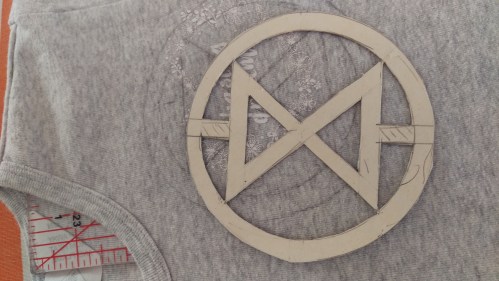
I have a friend who has made several beautiful reverse applique t shirts with lovely images of plants or insects. Then she made a couple with the Extinction Rebellion logo (a circle representing the earth with an hourglass shape in the centre that symbolises time running out and the urgency of action). I loved them! When she said she would offer it as a crafternoon project I decided to try and give it a go–I guess that was an indication she thought it wasn’t too difficult, where previously I assumed I would not be able to do this.
The hard part for me was getting the image right. In the end, it was cereal box stencil to the rescue.
T shirt from the op shop with a little image on it that I thought could vanish in the process.
I tacked another piece of old t shirt under it and then had a go!
And–result! I made two! And gave them away at a working group meeting to people who will use and appreciate them.
Some time ago I made a Very Hungry Caterpillar shirt, while under the delusion that I am twice my usual size. Or something. Anyway, the fit was appalling, so that even I was not prepared to wear it much. So there came a day when I pulled it apart and cut out a different shirt from the pieces, with a bit of creative piecing together in places. And the shirt was reborn as Lotta Jansdotter’s Esme Shirt.
And the back… and now we wait to see if this one gets more wear!
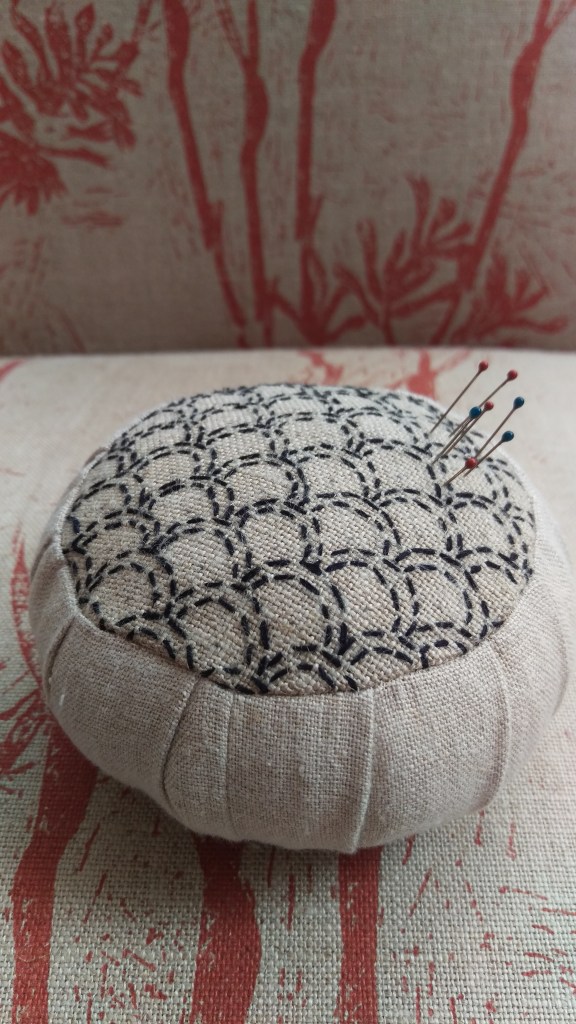
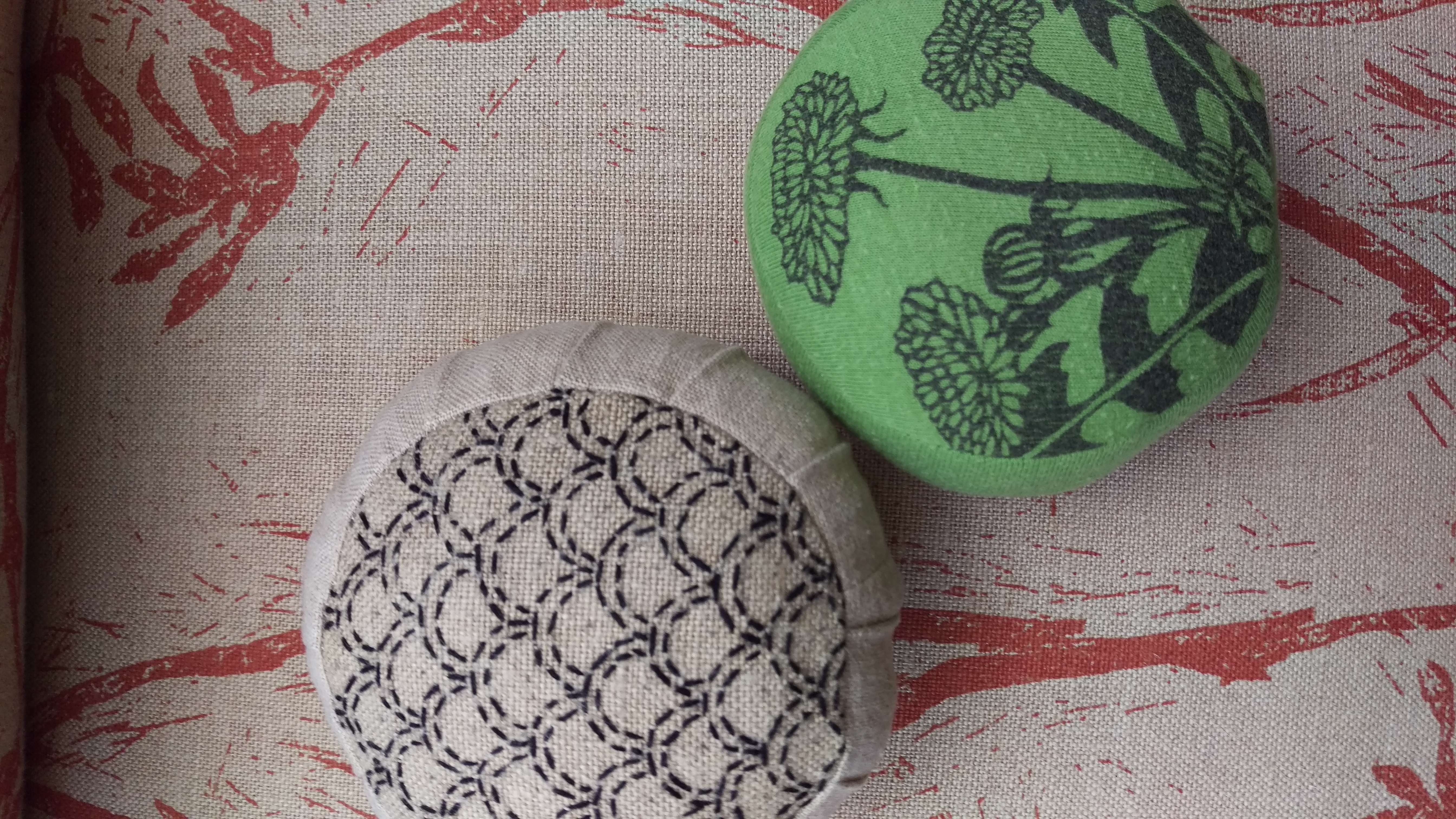
I have tried a few pincushions thinking I’d like to go beyond the commercial ones I own. This one has been so long in the making I’ve lost track of its antecedents on the internets–there is no longer anything like it at sewandso.com.uk. I even completed the embroidery on the top ages ago and apparently squibbed (that is, acted on my cowardice) at the sewing it together stage.
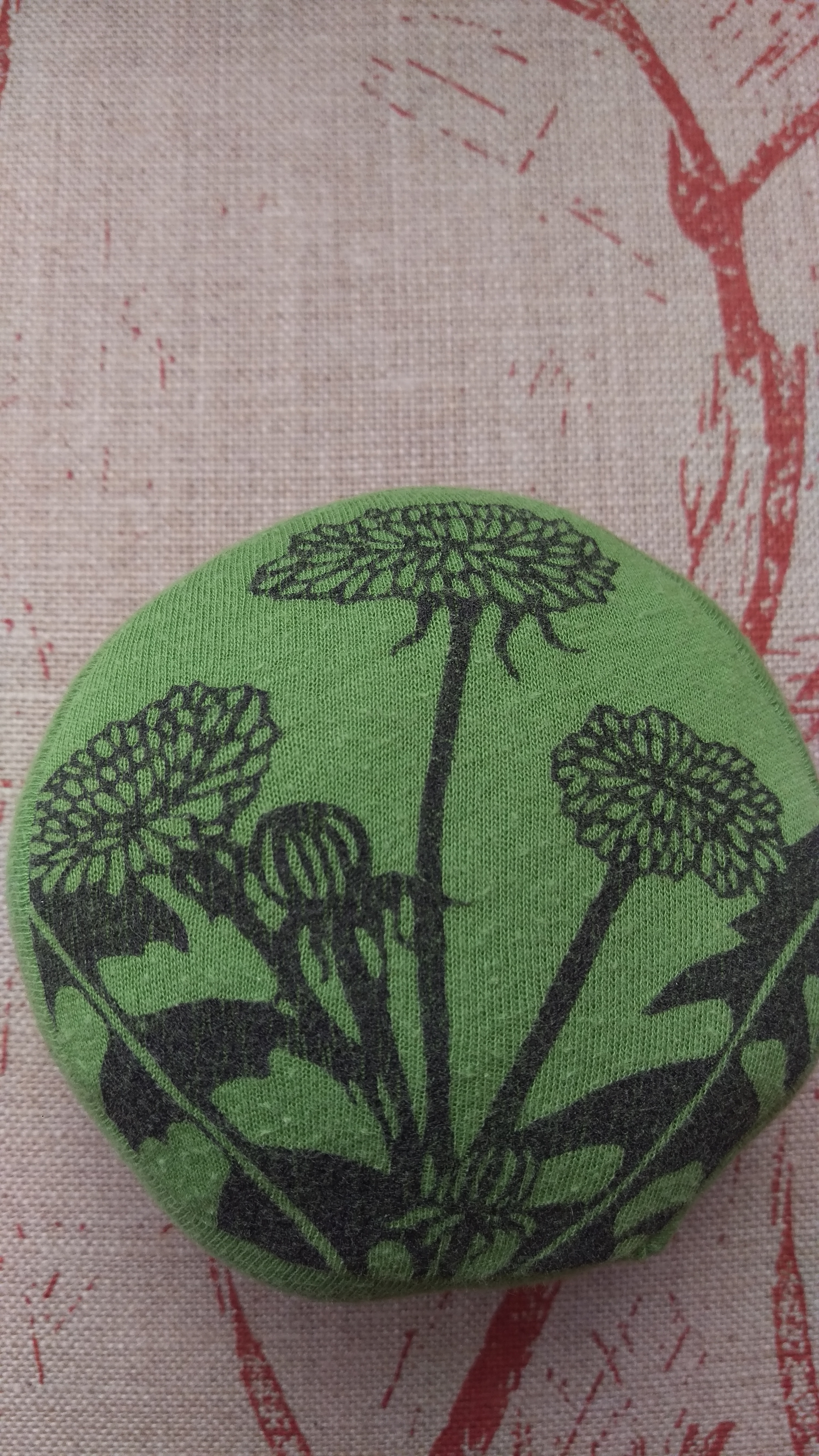
Then my sweetheart requested a very specific cushion and it occurred to me that it was about the size and shape of this rather large pincushion–and so a second item came to be. Two layers of a t shirt that was waiting to become part of a quilt batting. I’m happy that part of the image has lived to see another life!
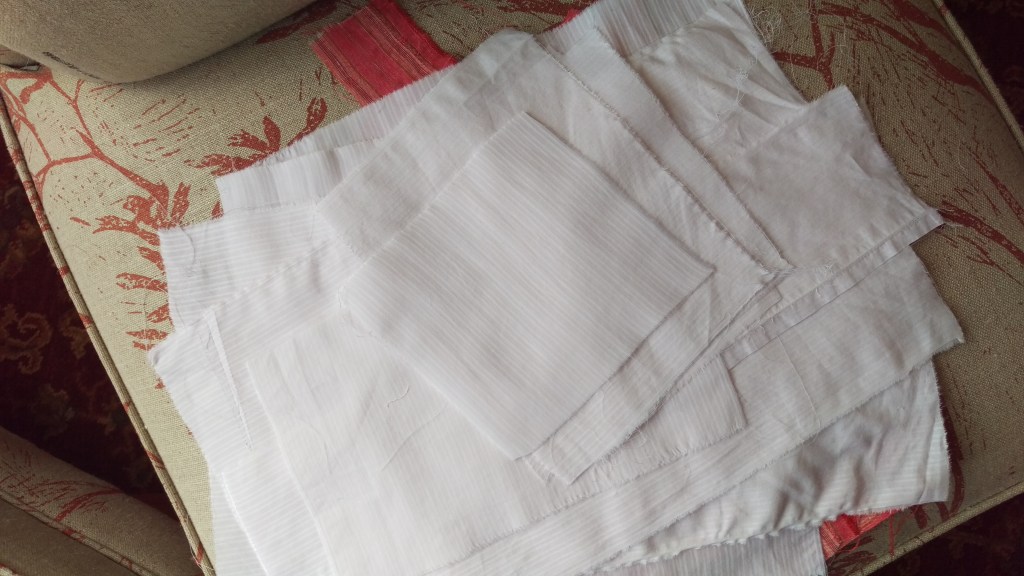
I’ve also had some fun ripping apart business clothing I will no longer need. It came from the op shop and is a bit far gone to go back there and expect to be sold again. Rather than have it enter waste or rag streams, I’ve converted it to component parts and begun transforming it into bags, beginning with drawstring bags…
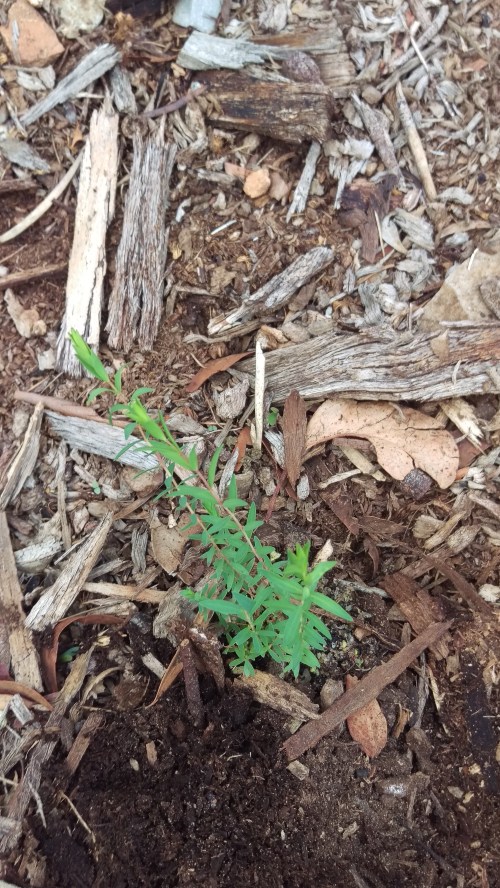
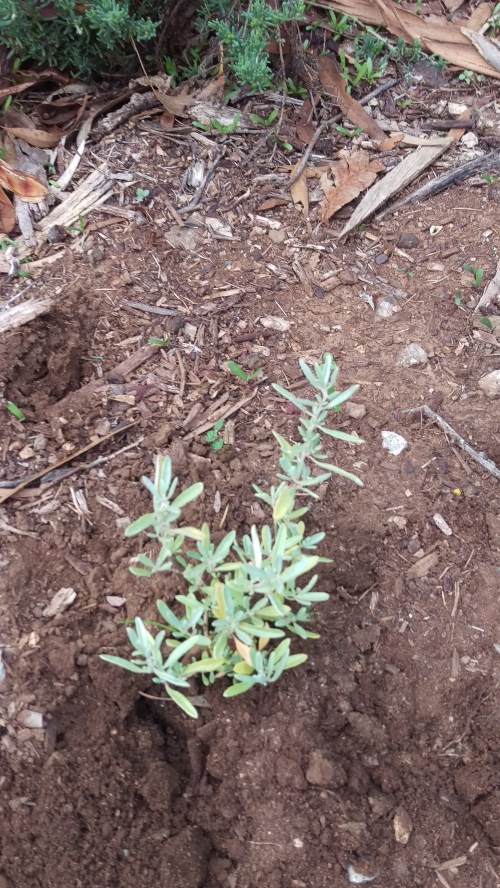
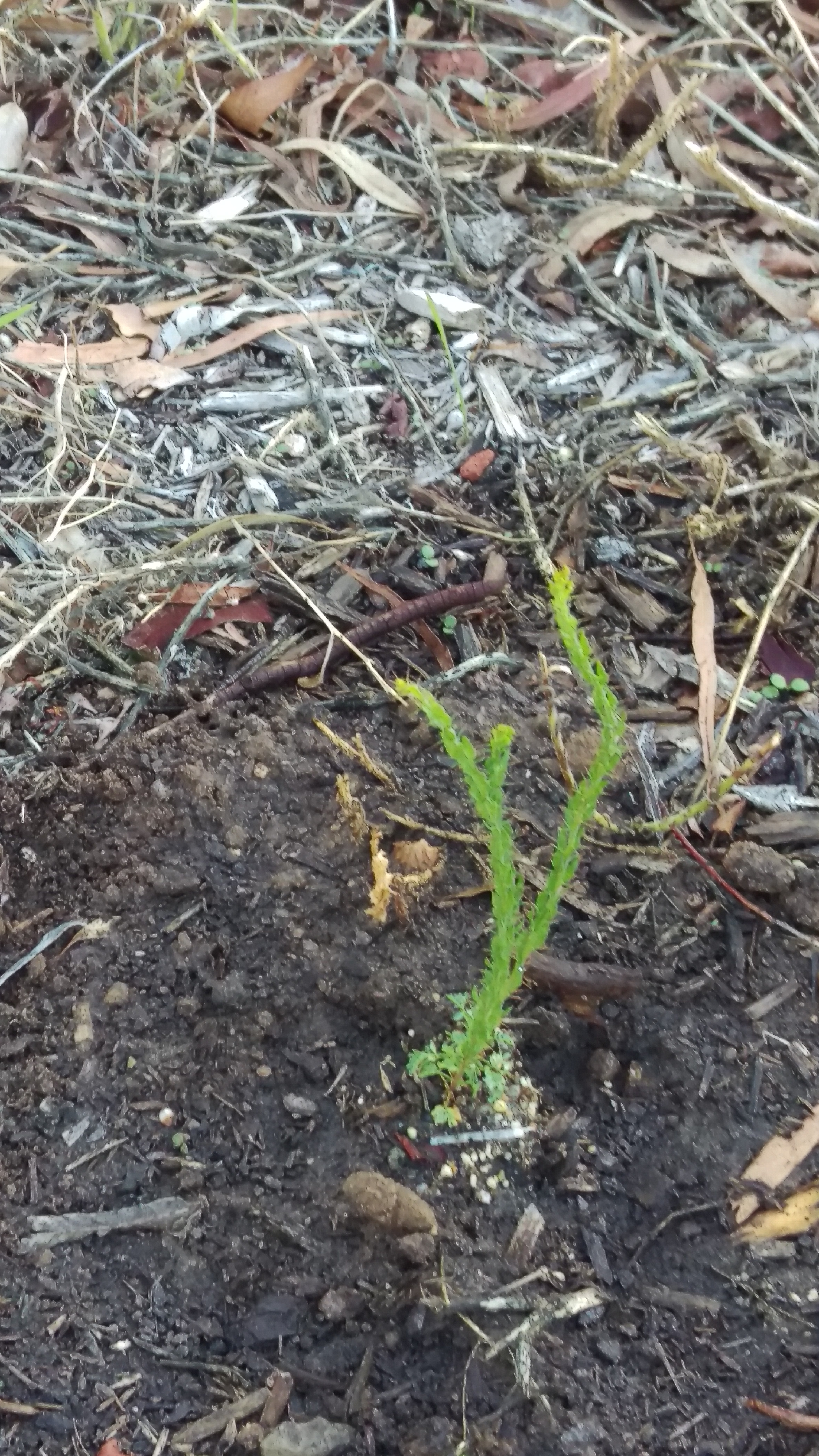
I have had more success with propagating correas (from cuttings) than previously, and so–the correa alba babies go out into the big wide world.
I have planted them in a spot the council has installed a watering system. The parent plant for all these cuttings almost died in the 47C heat of summer.
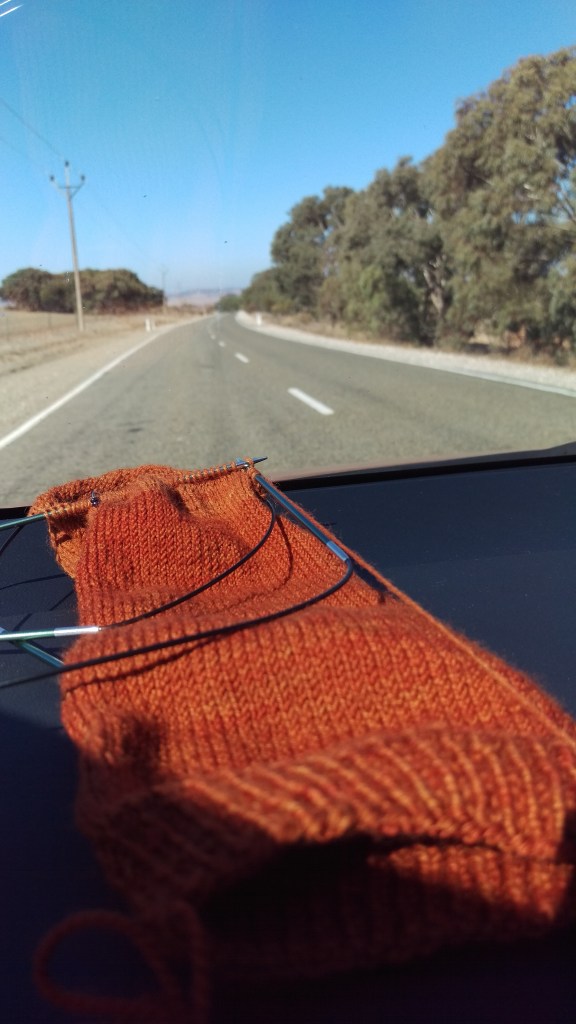
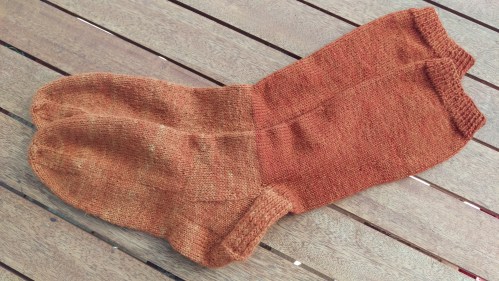
Another pair of frankensocks begins! It had been so long since I dyed this yarn that I was looking for undyed yarn and realised I had already dyed it. On the bottom, handspun Southdown. I am pretty happy with this spinning. High twist, true three ply, quite even (well, maybe just for me). On the top, a high twist 100% commercial merino sock yarn bought in a Ravelry destash.
I decided on a long leg and calf shaping for the boot-loving, extensive walking awesome woman for whom these socks are destined. They went with us on a trip to our first same sex wedding, in the north of the state. Oh my, what a dry state we are in. Always, but especially this year, the driest one of the betrothed can remember in her more than fifty years in this place.
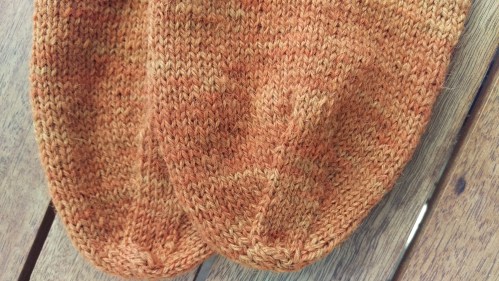
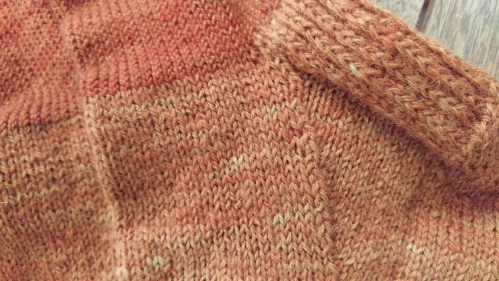
Here they are finished, with the difference in colour between the yarns clearly visible. And here are some details…
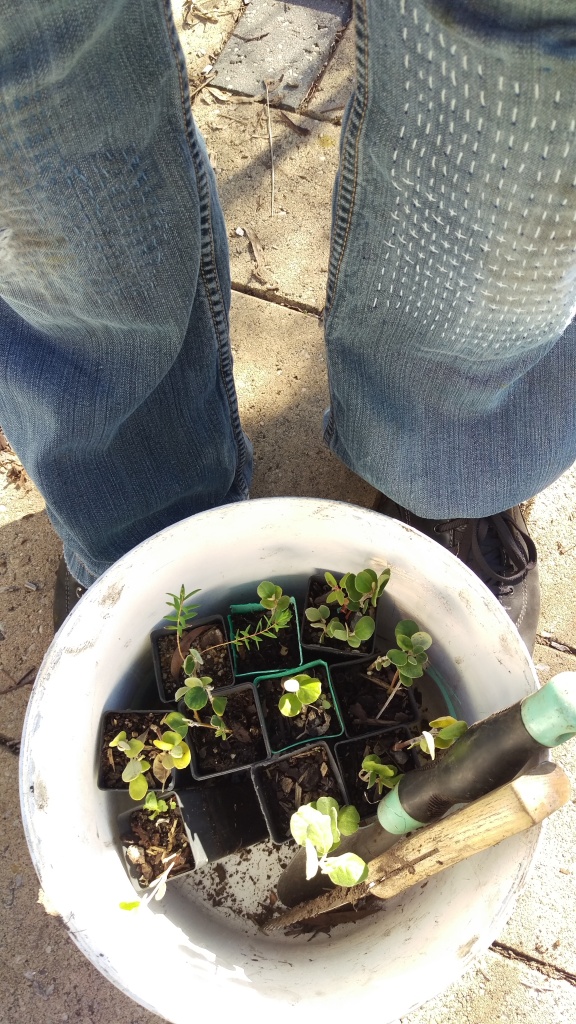
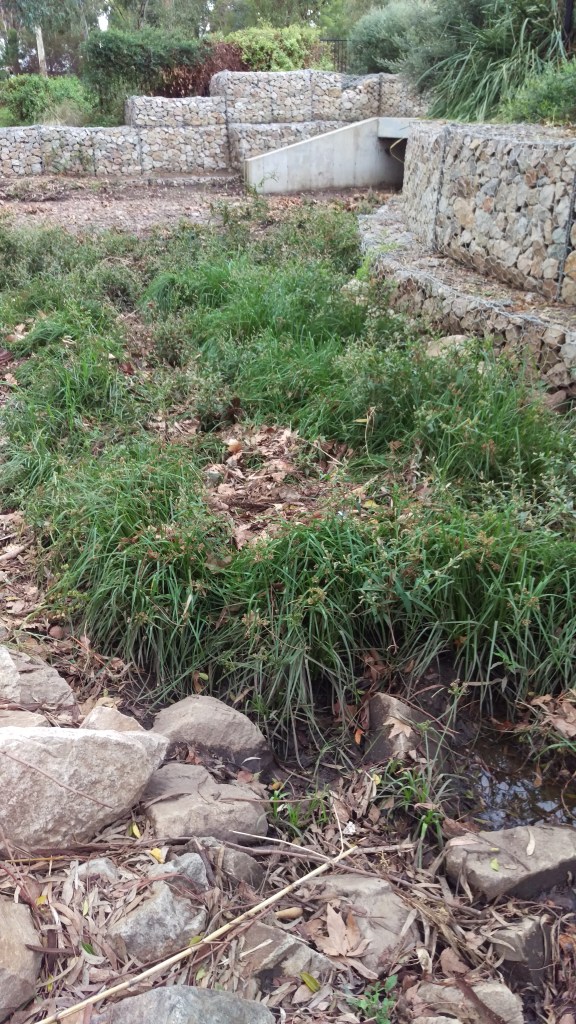
I have been propagating Ngarrindjeri weaving rushes (Cyperus gymnocaulos) from the plantings I made in a local culvert, which are now quite established. Here are little starts I’ve planted in pots.
I’ve decided in consultation with friends to plant them in Brownhill Creek.
Where it has been rerouted to suit human infrastructure near us, there is suitably wet ground and it has just been getting weedier and weedier since rerouting.
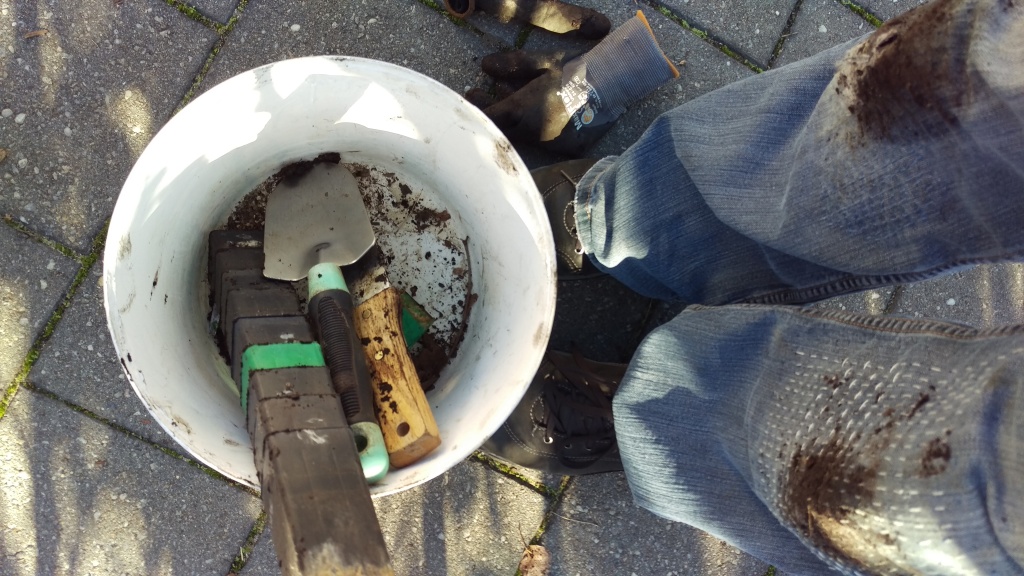
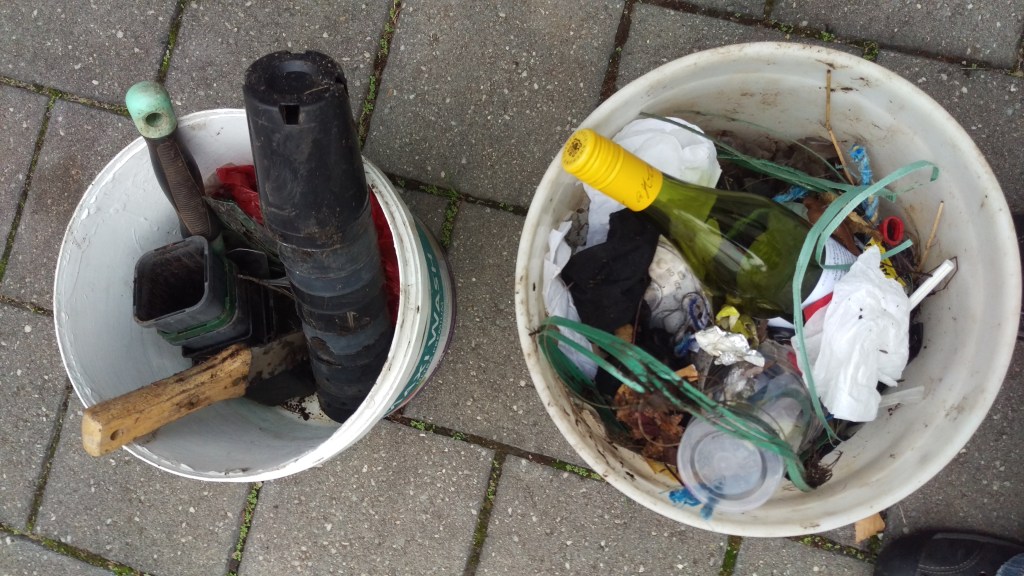
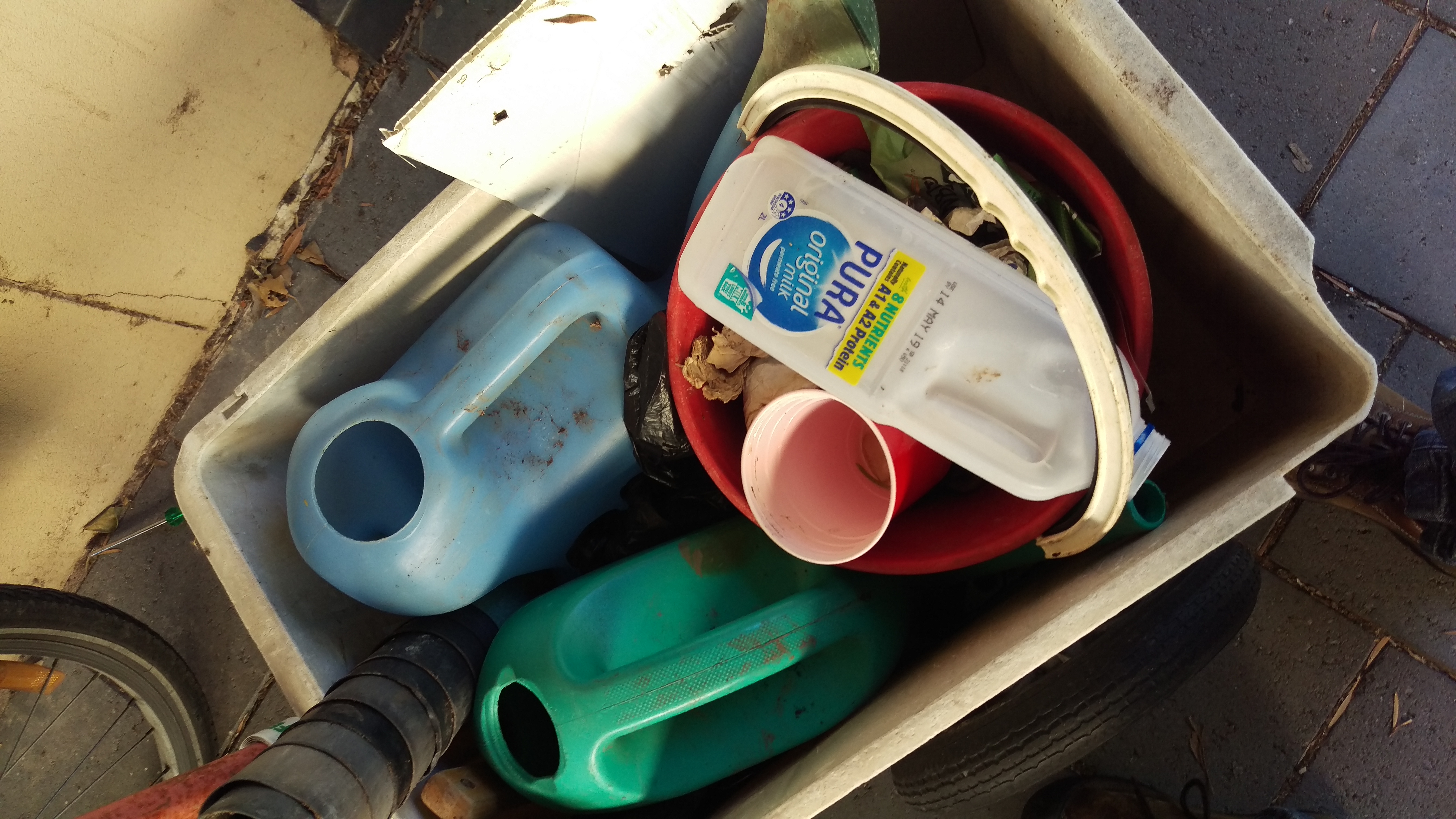
So out I went with a bucket in each hand, and some tools.
Then planted them at the edges.
And in they went–about twenty on this occasion–and then it was all litter picking, all the way home.
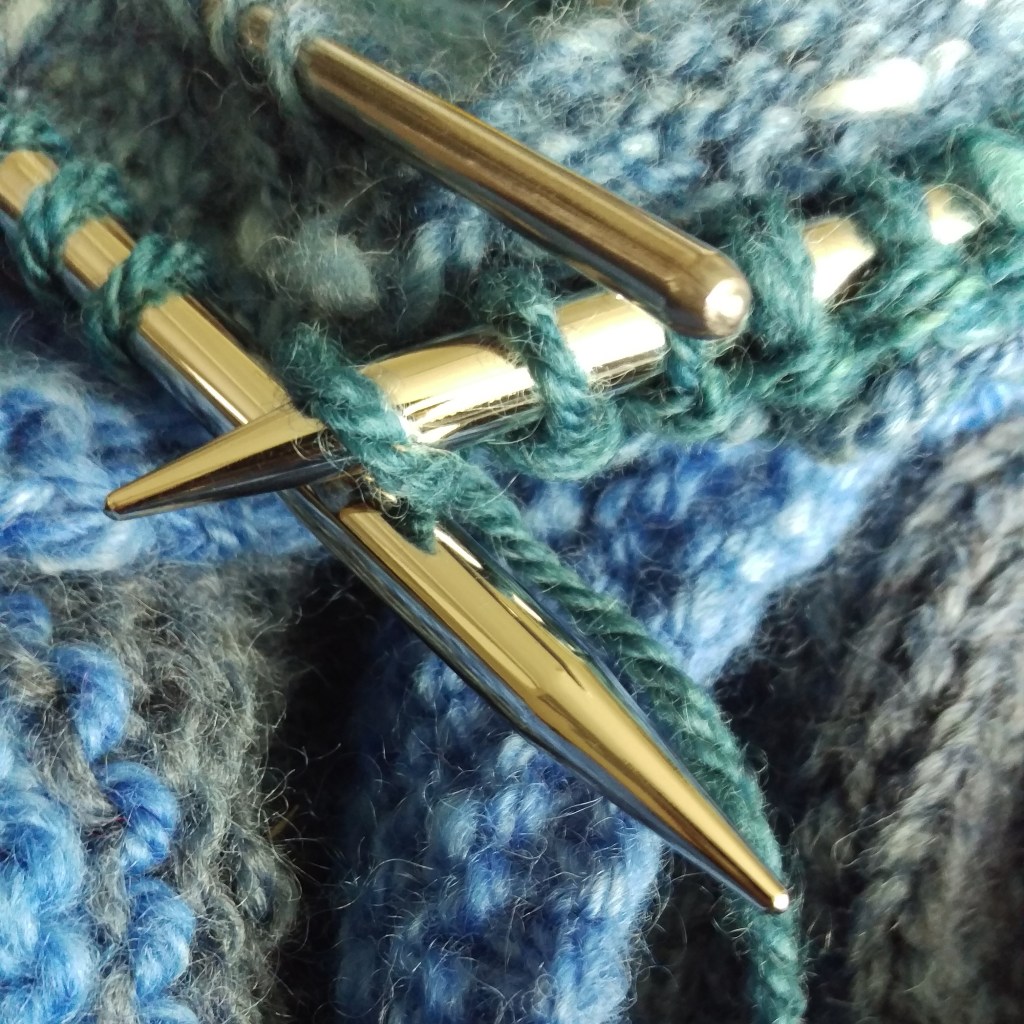
These slippers (Felted clogs by Bev Galeskas, may her memory be a blessing) have been waiting around for quite a while. Composed of handspun dyed in all shade of blue, mostly handspun and indigo dyed but some unnatural blues too… I grafted the top to the sole one day while travelling and found I did not have the required third needle. Out came my chopstick! The plastic-avoiding cutlery pouch my fairy-goddess-son made me comes with chopsticks rather than a knife and fork, with backup knitting needles as a further advantage!
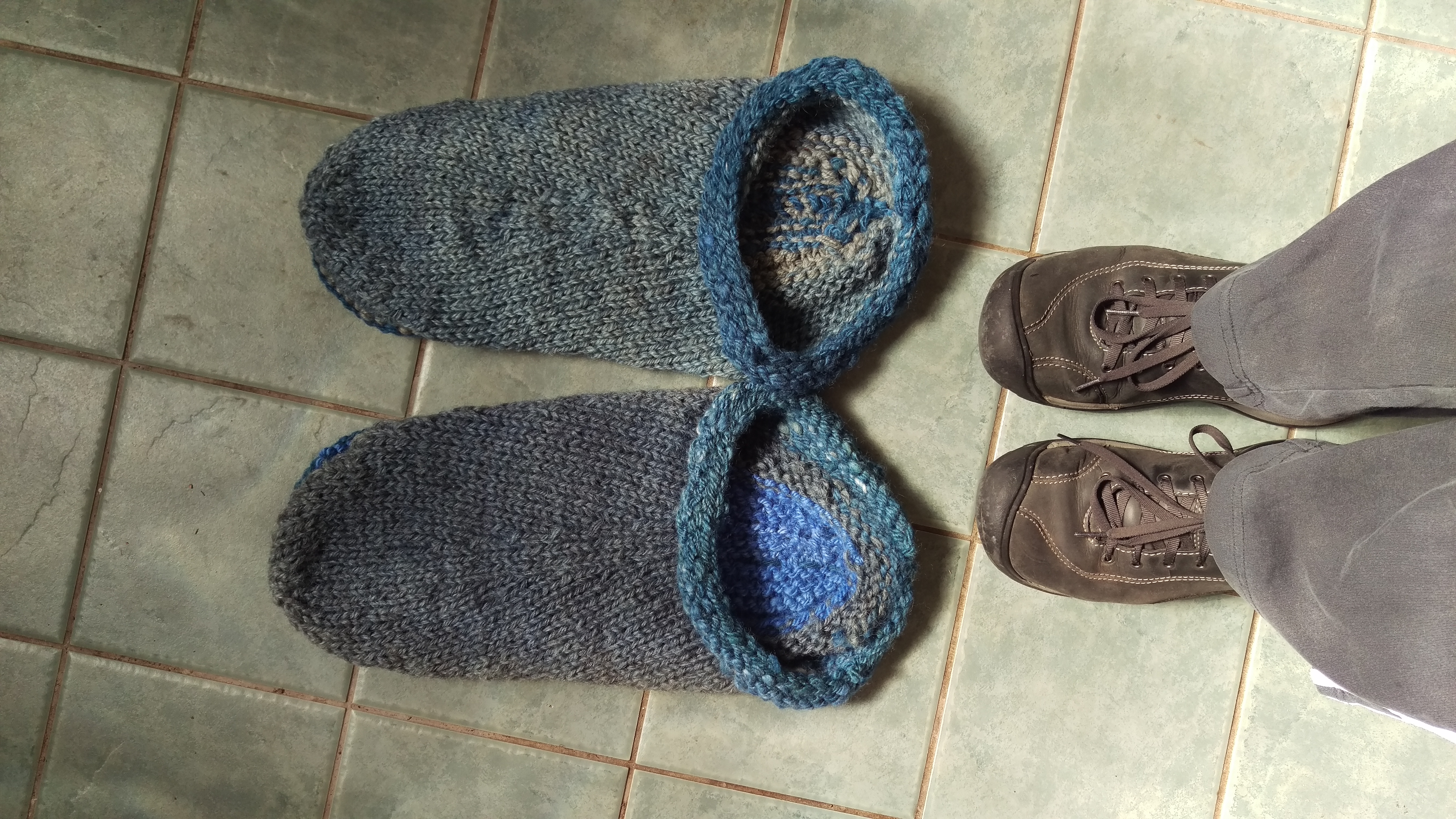
Here they are prior to felting with my size 10 feet for comparison.
And here they are after felting and prior to delivery to friends who run
a permaculture farm where slippers I’ve knit are apparently in constant
use!
Well. A field, it certainly is not. But today I decided to hitch up my bicycle trailer and guerilla plant further from home. A couple of kilometres away, actually… a place by the tram line I sometimes run past and where there has been nothing but weeds growing for years.
My bike and trailer with a double decker set of buckets
I managed to get two bucket loads of plants in the trailer by putting the ground covers on the bottom layer and adding tools to keep the top bucket from crushing them.
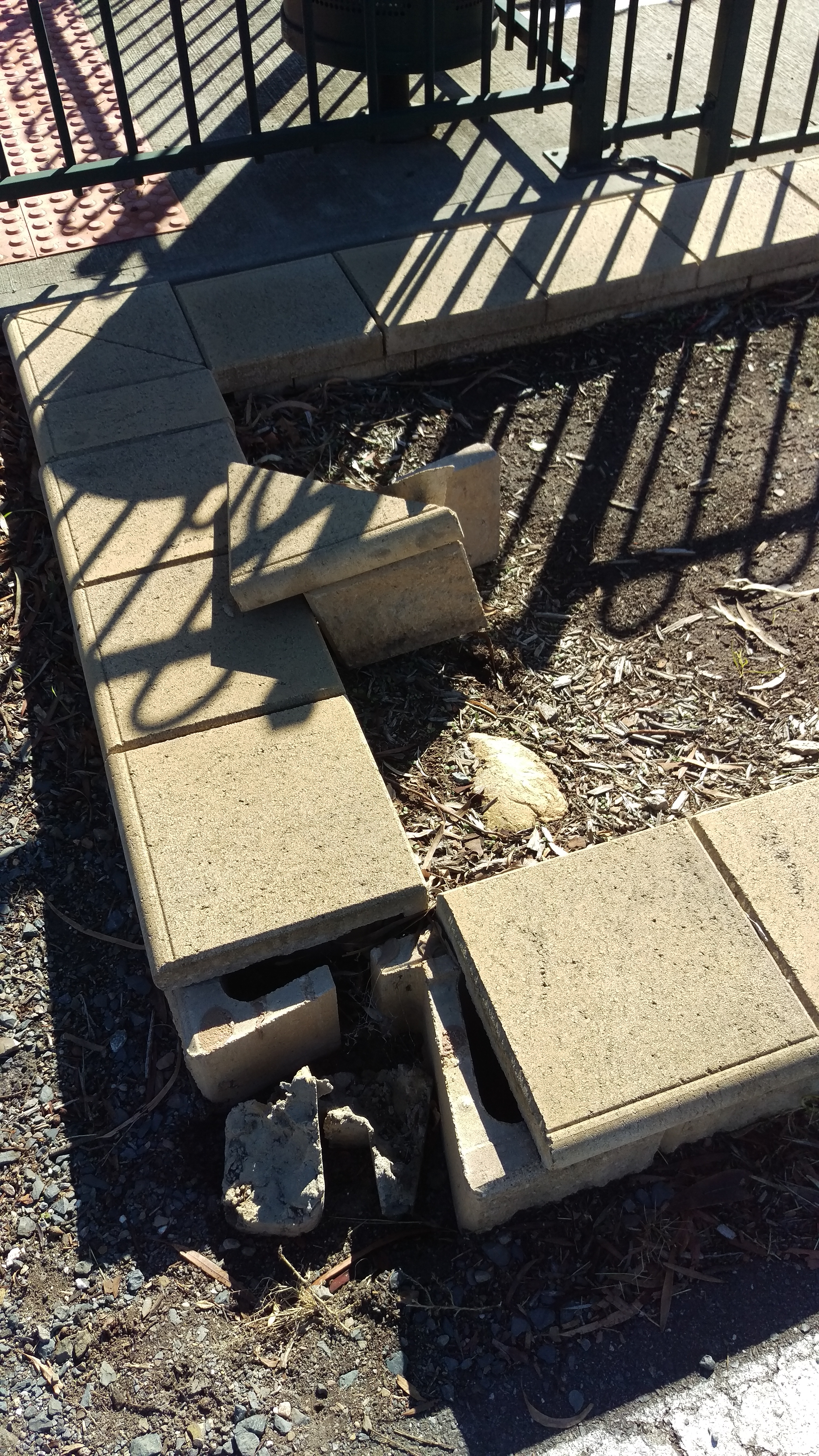
One bed was empty except for the remains of weeds. I reassembled the edging on the bed where it had fallen or been pulled apart and began. I planted three acacia paradoxa seedlings in the bed beside it (also a pretty sad sight but with some native plantings still alive). I was feeling pretty pessimistic about their chances in life and questioning my decision to plant somewhere where I haven’t done as much observation as usual when a gentleman walked up and asked if I was planting. I wasn’t sure of the alternative interpretations at this stage, but soon we were chatting about what I was planting and his past in Trees for Life. I have grown for Trees for Life too, so we chatted on.
Broken edging on the raised bed
He said he’d do some weed management! He thought he could add some stakes! He’d considered planting native grasses in this area. He lived nearby. He used to have that same trailer (we had both bought them from the chap who used to make them himself, in the 1980s). The chances of these seedlings making it to any size at all have just risen immensely!
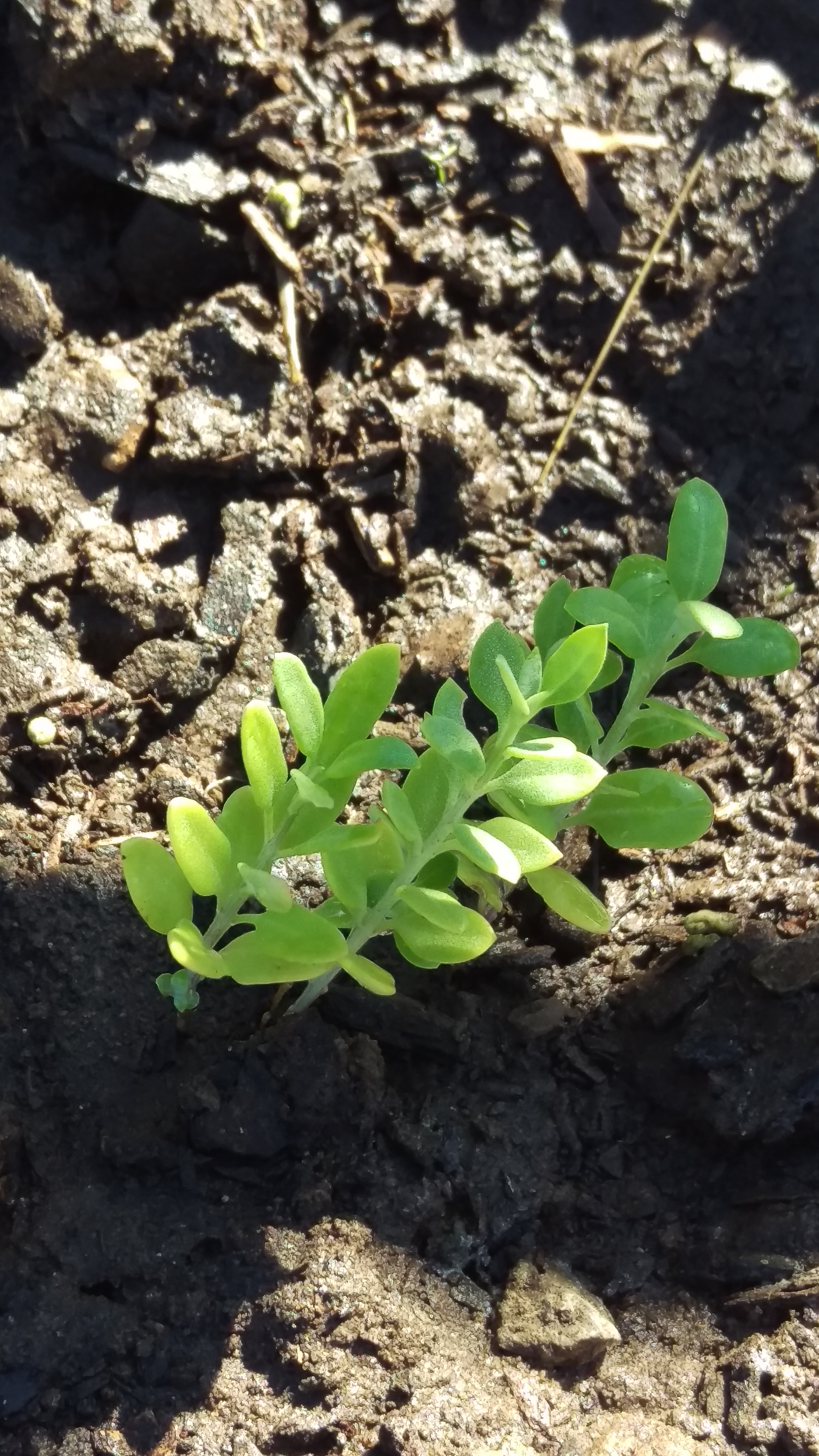
So–in went seaberry saltbush (rhagodia). I lost some water going over bumps and when bike and trailer were travelling at different speeds downhill, but most of it was still in the watering cans to give the new plantings a drink.
Prickly wattle
I also planted ruby saltbush… and picked up rubbish. In fact, I made several stops on the way home. I do find cups, plastic lids for cups and bottles, straws and such but a staggering amount of cable ties and gaffer tape too, and today I found those plastic soy sauce fish in two different locations. Go figure. Hoping next time I run past these little plants will be bigger!

















 Local & Bespoke