Tag Archives: blue glorious blue

Ply time!

A while back I had used almost every bobbin I own, each with a different colour of thread on it.

IMAG0963

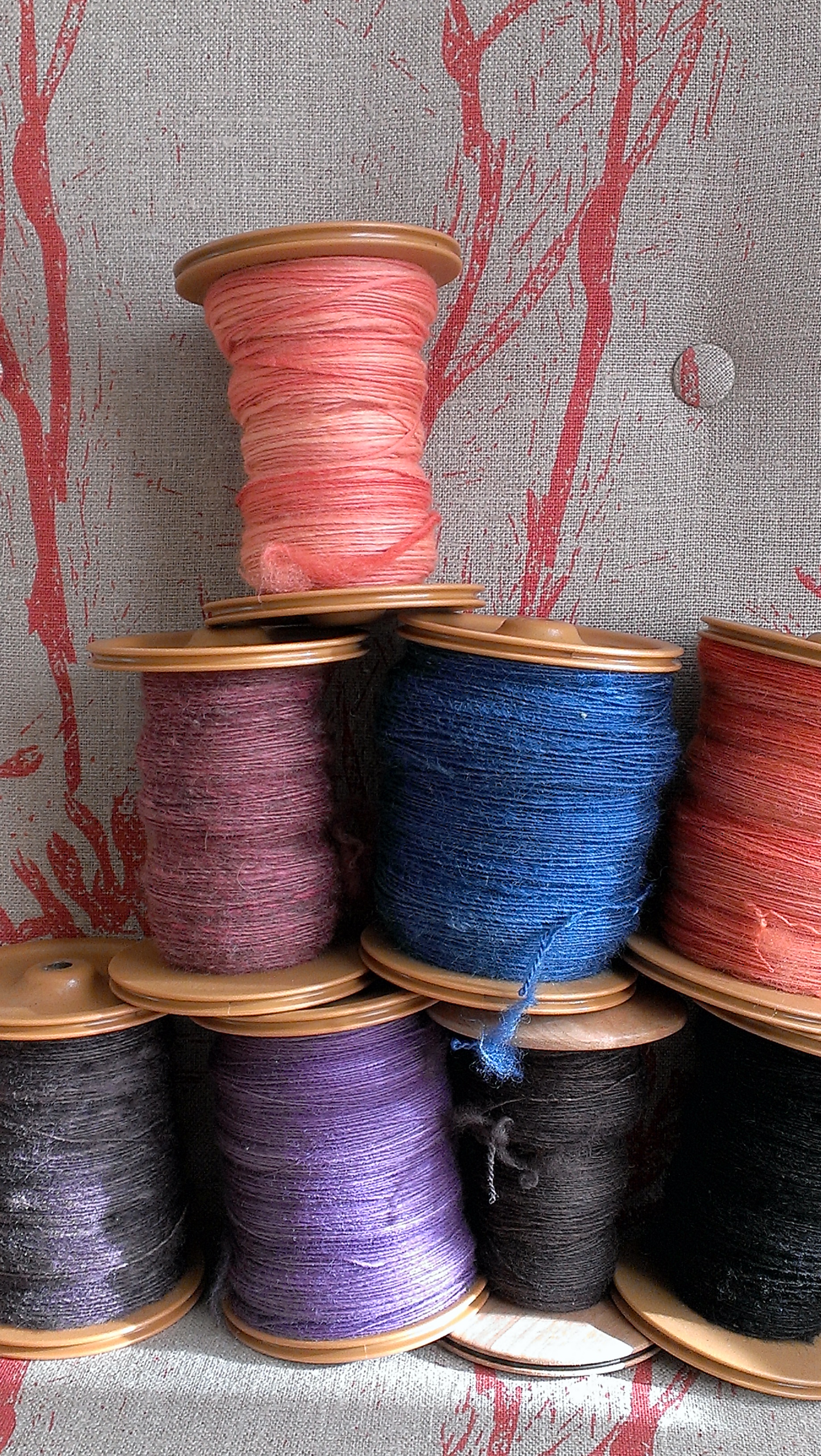
Over time there were even more bobbins of singles than this pictures shows…  finally there has been a season of plying, skeining and washing, and now I have this pile instead.

2014-10-12 14.26.11

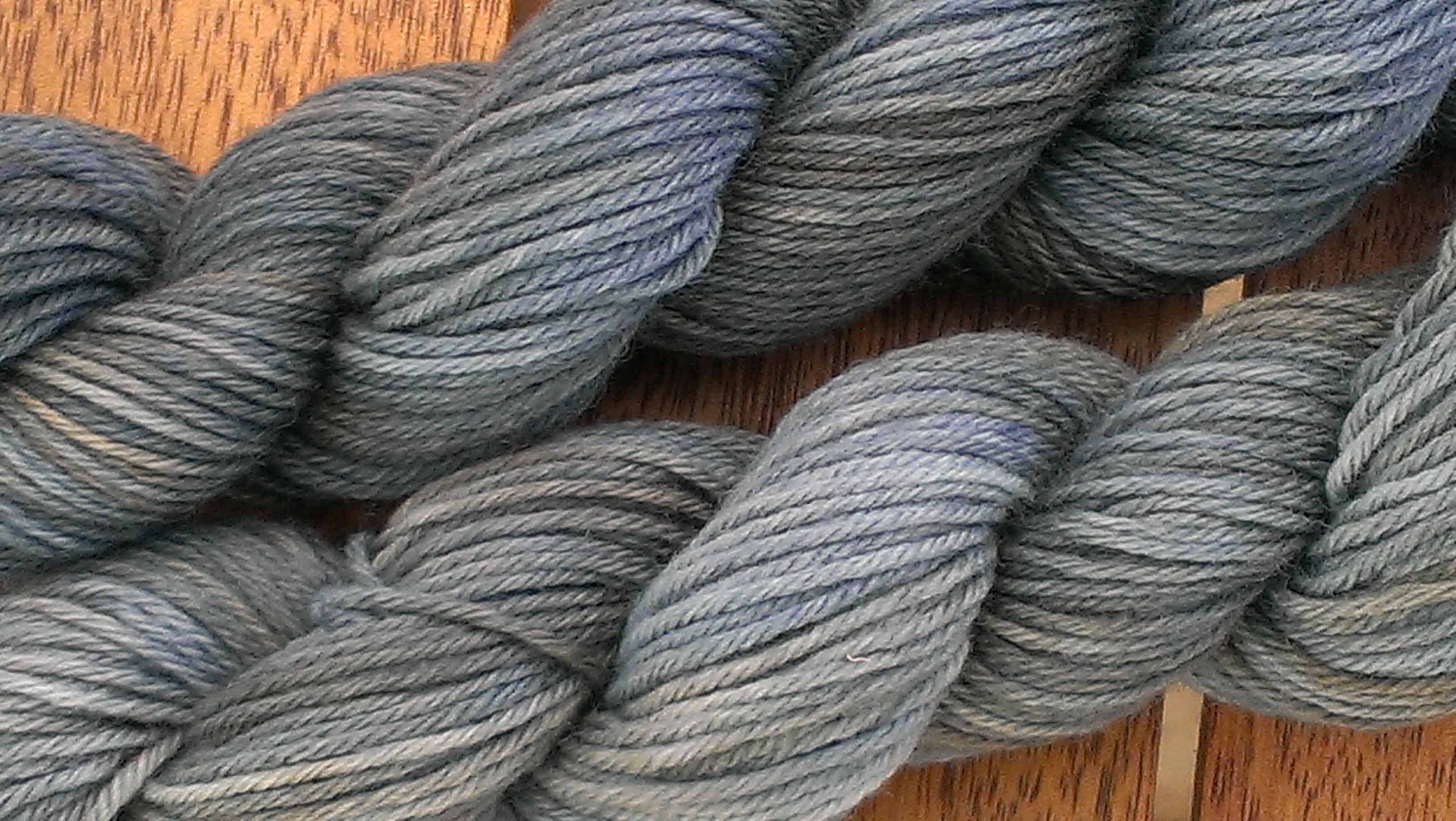
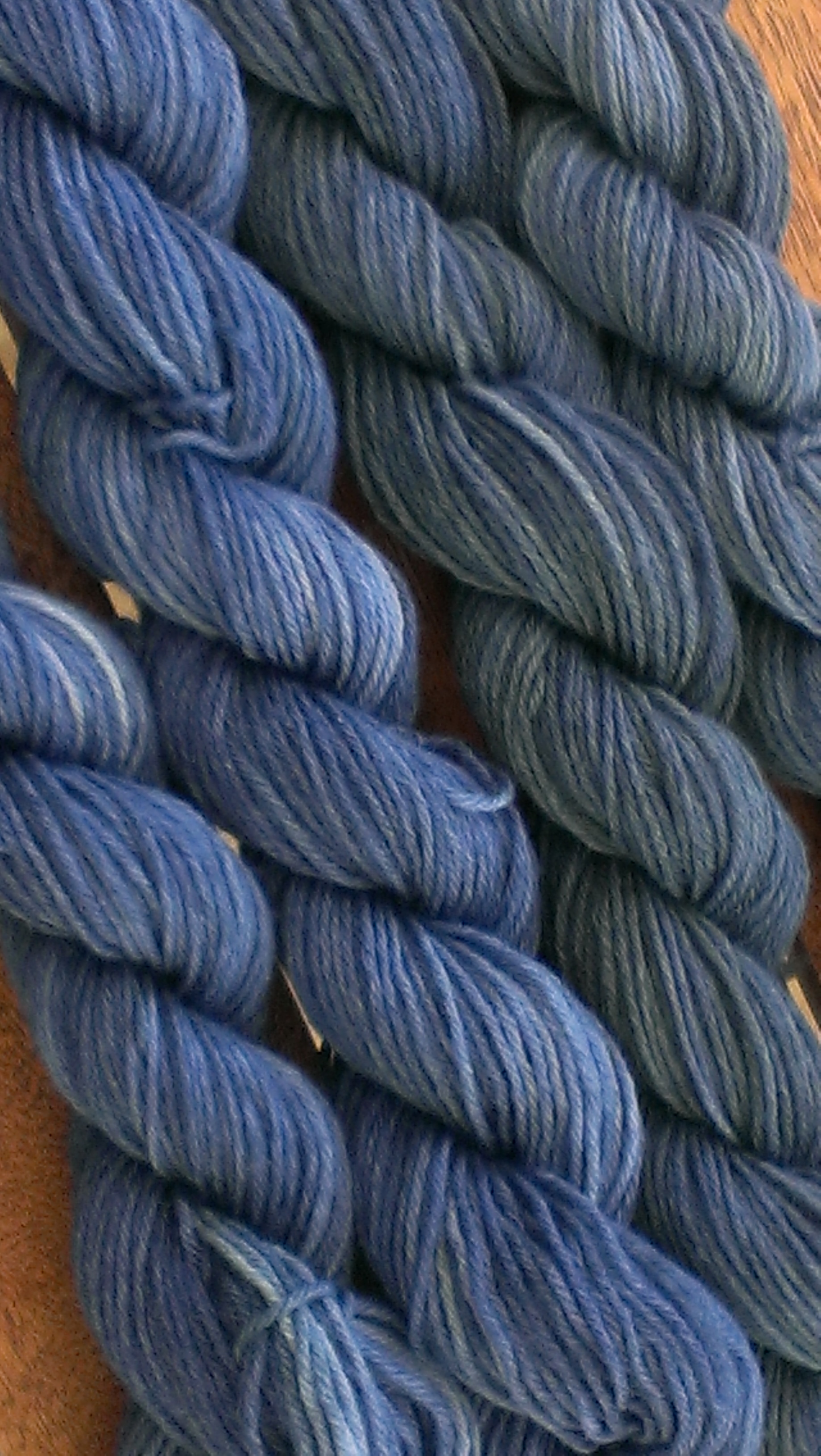
Logwood purples, purple-greys and purple-browns, a cochineal pink (and a cochineal-logwood exhaust), three indigo blues, two madder exhaust-oranges, and a coreopsis exhaust yellow.  I didn’t take good enough notes of the fibres–some are on merino roving (the madder), some on polwarth, some on grey corriedale. Maybe there is a little of Malcolm the Corriedale in there too!

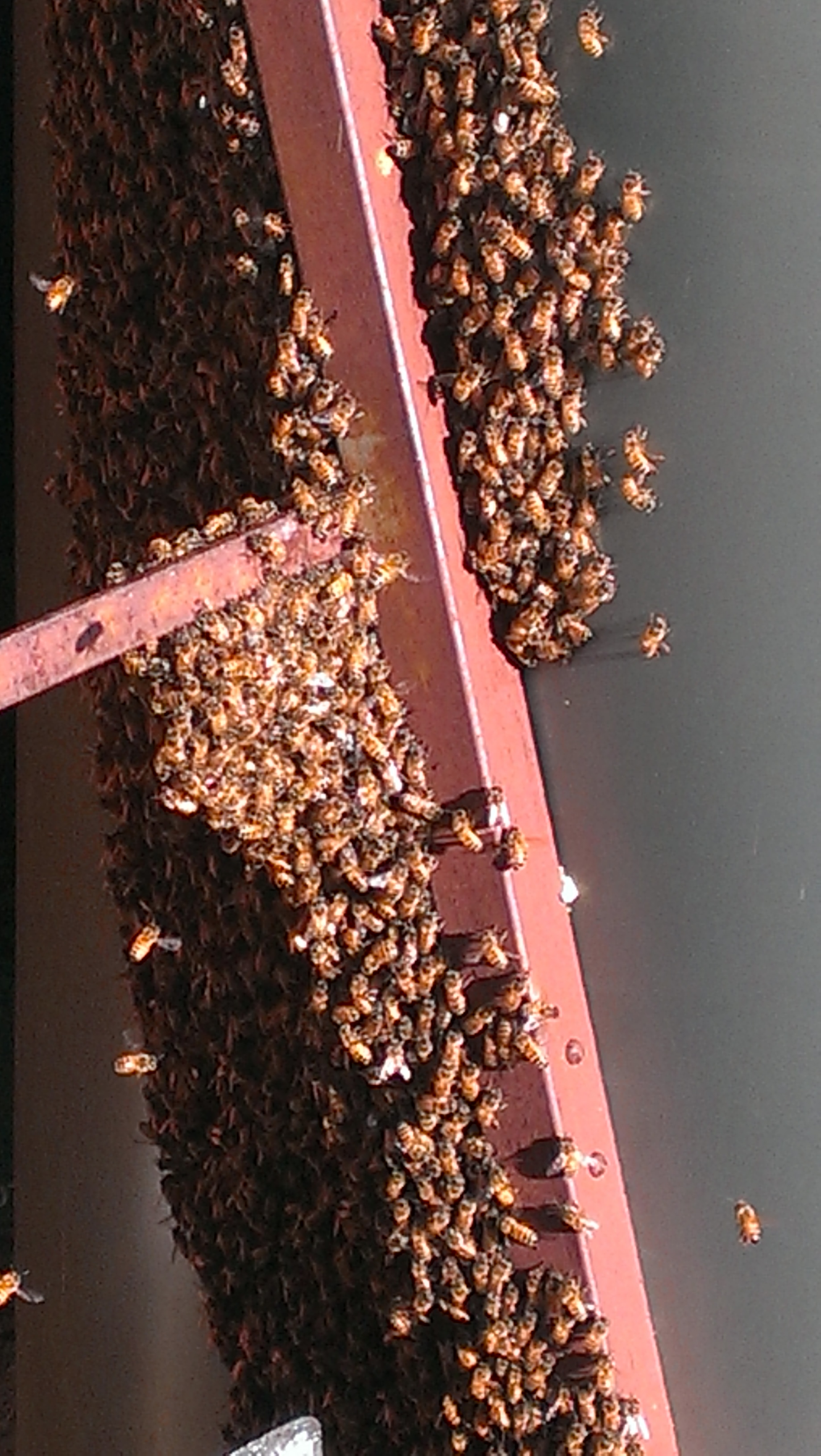
2014-10-09 17.30.19

And there has been even more bee swarm action in the neighbourhood.  These bees have taken up residence on a rainwater tank, with some support from a ladder! And… I am so over tending the silkworms 🙂

8 Comments

Filed under Natural dyeing, Spinning

Travel Knitting

I have been travelling for work… and then my oldest friend invited me to his birthday… so I have been extending my carbon footprint by going to Perth for work, then to my friend’s birthday on my way home (for those who don’t know, Sydney is not on the way home to Adelaide, when you start out in Perth).

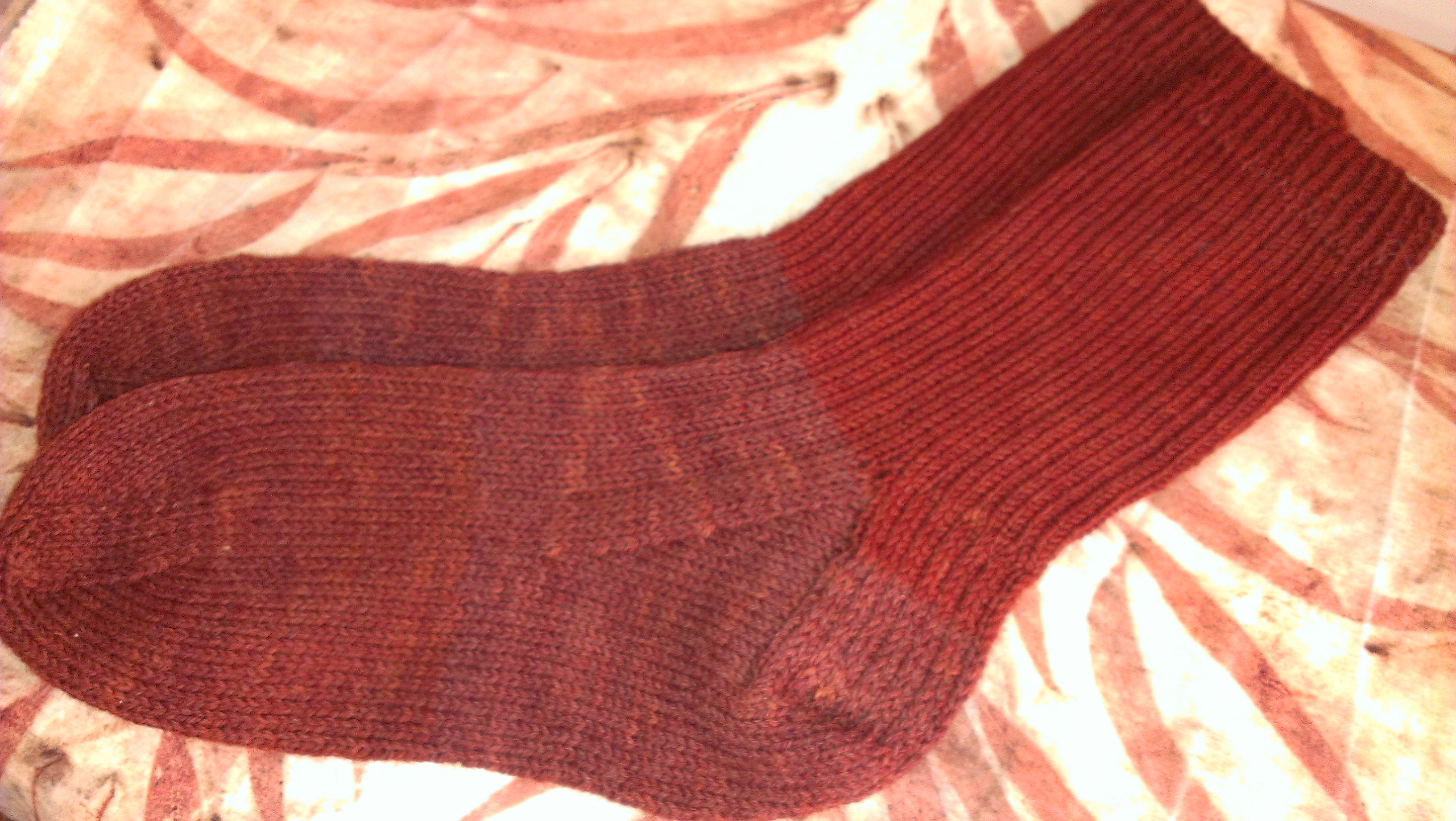
Anyway… in the hurry to leave home I managed to remember to pack travel knitting.  I started out with a sock in progress.  Eucalyptus dyed patonyle, destined for the feet of my Blue Mountains friends.  The weather where they live calls for handknit socks.

Image

These colours are the result of overdyes, where I didn’t like the initial colour and decided to try again.  By the time I left for Perth, I had one sock knit and another underway and caused quite a bit of fascination among the project team by knitting in breaks and grafting a toe over lunch.

IMAG3702

I had overdyed the rest of my patonyle more recently.  It started out dyed with black beans (not as colourfast as I’d like) and plum pine (not at all colourfast).

Image

These yarns went into my first attempt at the Michel Garcia organic indigo vat.  I had reservations about my vat as I went… the Ph test strips I had bought turned out not to measure the part of the Ph spectrum I needed and in the end I ran out of time and should have left the vat to the next day.  On the up side, the preparation of the vat all made sense and most of it went really well.   I think my judgment about it was basically right, I just didn’t go with my judgment as I should have done.  My friend dyed a doily:

Image

I re-dyed the sock yarn, originally bought second hand at a garage sale.

Image

Although I was happy with the finished colours, it turned out that I had hurried the indigo too much and I was left with crocking… the blue rubbed of on my hands a lot as I was knitting in Perth.  This made it certain the finished socks would leave the wearer with blue feet and I finally decided to abandon them after a few centimetres, frogged and left the yarn in a bin in Perth.  Sigh!  That must be the fiirst dyeing fail I have pronounced irretrievable.

I had an alternative plan.  I pulled out yarn I intended for a hat and chose one of the two patterns in my bag, Jared Flood’s Turn a Square.  I wound the ball in my motel room and cast on. Here it is as I wait for the taxi to the airport in Perth.

Image

The time difference between Western Australia (Perth) and the rest of the country is considerable, so even though the flight was four and a half hours, I left Perth at 10 am and arrived in Sydney at 5 pm, and here is the hat in the Sydney airport:

Image

Here it is in Sydney about to depart for Adelaide next day…

IMAG3701

I finished it on the way and started a second hat with the rest of the skein, top down. I’d call that a productive trip on many fronts!

IMAG3707_1

12 Comments

Filed under Dyefastness, Knitting, Natural dyeing

Austral Indigo 2: Hydrosulphite vat process

My second experiment with Indigofera Australis was a hydrospulphite vat. Robyn Heywood from the Victorian Handspinners and Weavers Guild has made her experiments with Indigofera Australis available online. I was delighted to be able to see the records and samples of the Victorian Handspinners and Weavers dyeing group at their Guild Rooms when I was in Melbourne last year.  It was really inspiring to see the variety of methods they had used and the range of colours they had achieved.

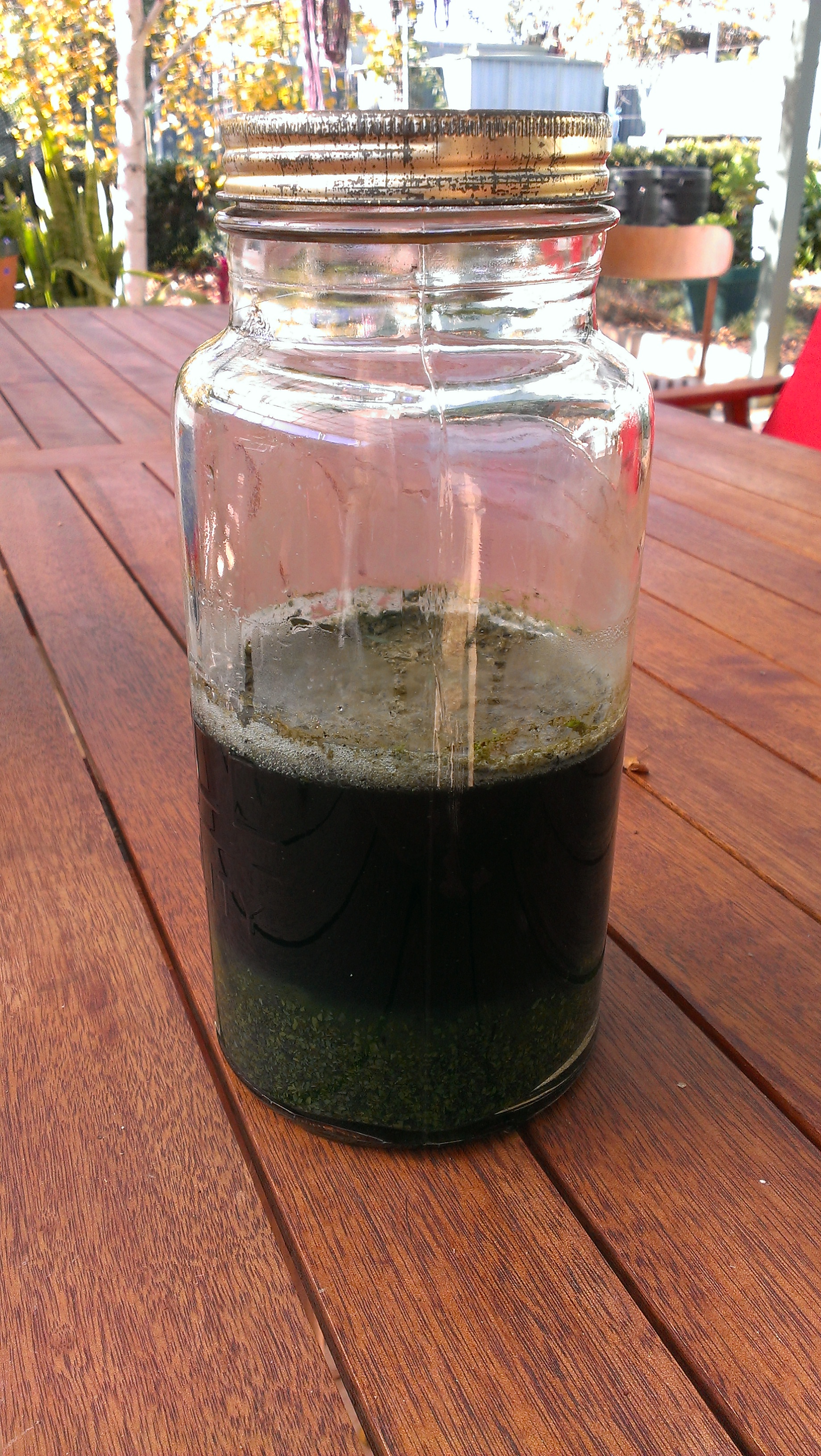
Robyn Heywood has trialled this method as well as the cold vinegar method and provided instructions.  So, since I still had some hydrosulphite left from my last indigo vat, I decided to try it.  Robyn Heywood soaked the leaves… apparently it is too much to expect that I would follow instructions exactly.  I blended them and left to soak for a couple of days. Here they are 18 hours later.
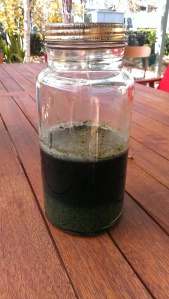
IMAG1614

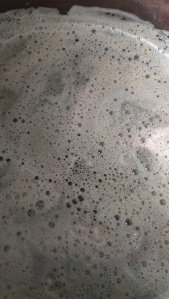
Robyn’s proposal was to leave them in a warm place.  I created one the first night by sitting my vat in a bucket of warm water, and then since the days aren’t warm right now (17C maximum)– the best I could do was a sunny spot.  48 hours later–or so–I started in on the preparation of the vat.  First, I sieved out the plant matter.  Then, added washing soda.  Now for aeration.  I went with the trusty blender method, which I was sure would introduce a lot of air.  Before:

IMAG1624

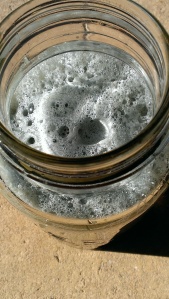
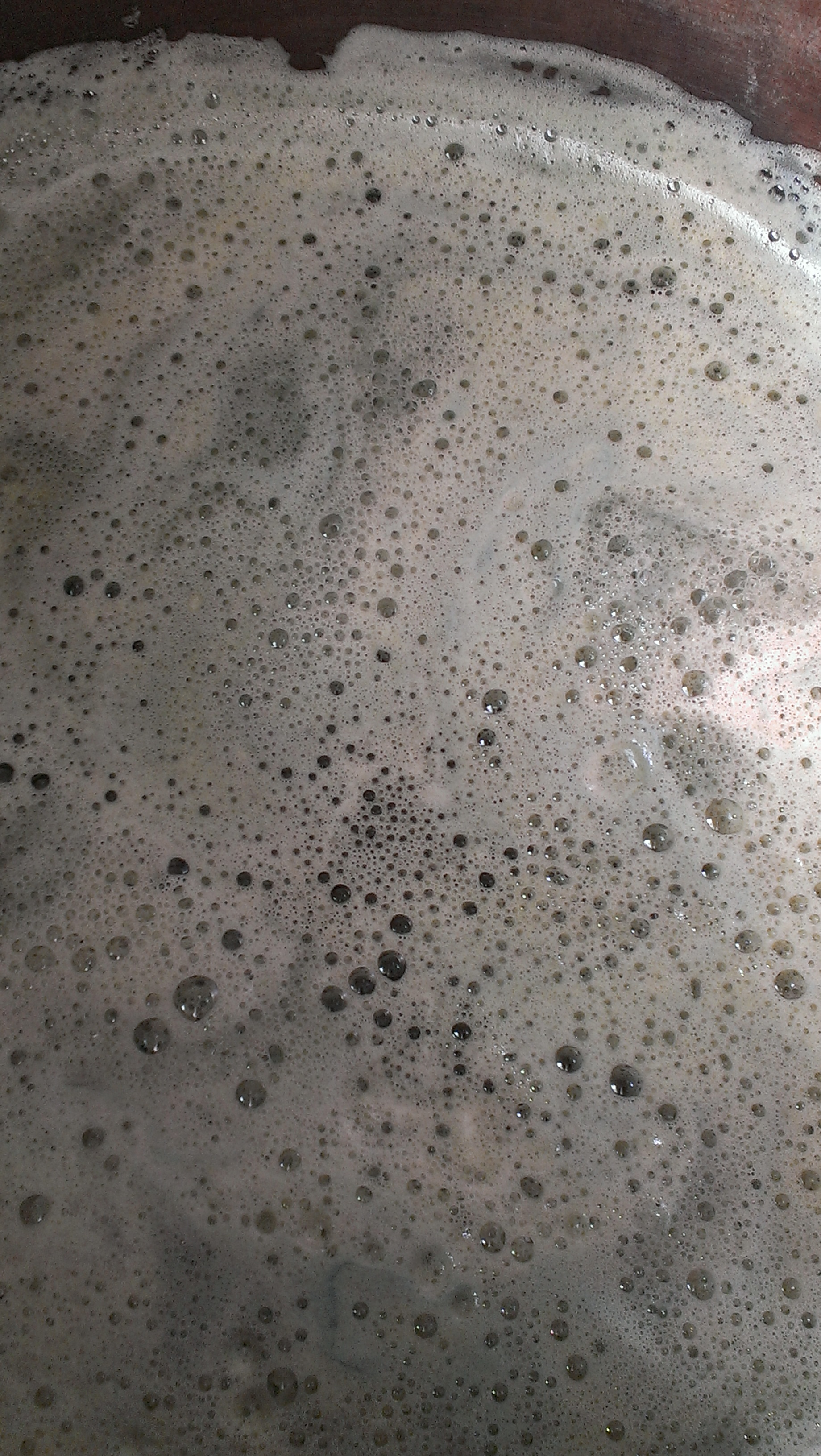
After:

IMAG1629 (1)

I watched sceptically, but indeed, the bubbles did turn from green to bluish!  I prepared a hot water bath to raise the temperature of my vat.  I put the jar into it.  I turned away, and a few minutes later there was an almighty crack as the jar came apart.  Rude words were used.  On the down side, I now had glass shards I couldn’t see in my dye;  evidence of poor judgment on my part; a  broken jar and a clean up job.  My dye bath had at least 1.5 litres of water added to it, so probably now had three times the amount of water I had decided on (that sounded like a weak vat to me!)  And it was now in a stainless steel dyepot, along with whatever contaminants it contained after being rinsed out.  On the up side, the bath got to 50C almost immediately and the bubbles were still going blue.
IMAG1632

‘Press on, how do I know what will happen?’  I thought.  ‘Don’t be wasting that precious dyestuff’, I thought.   I got out my trusty milk crate/felted blanket dyebath insulating system, filled up one hot water bottle which promptly sprung a leak; filled up another hot water bottle, sprinkled on the dye run remover, applied hot water bottle and felt blanket to vat and walked away.  ‘Que sera, sera and all that’,  I said, sighing.  Well, I need not have sighed, because the vat turned a vivid yellow.  In went some silk/cotton thread and a piece of hemp fabric.

IMAG1641

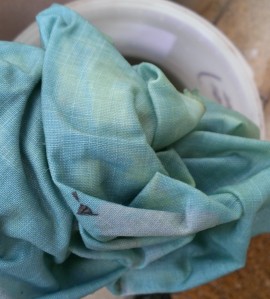
They came out bright yellow and turned green and then blue-ish almost immediately.
IMAG1649

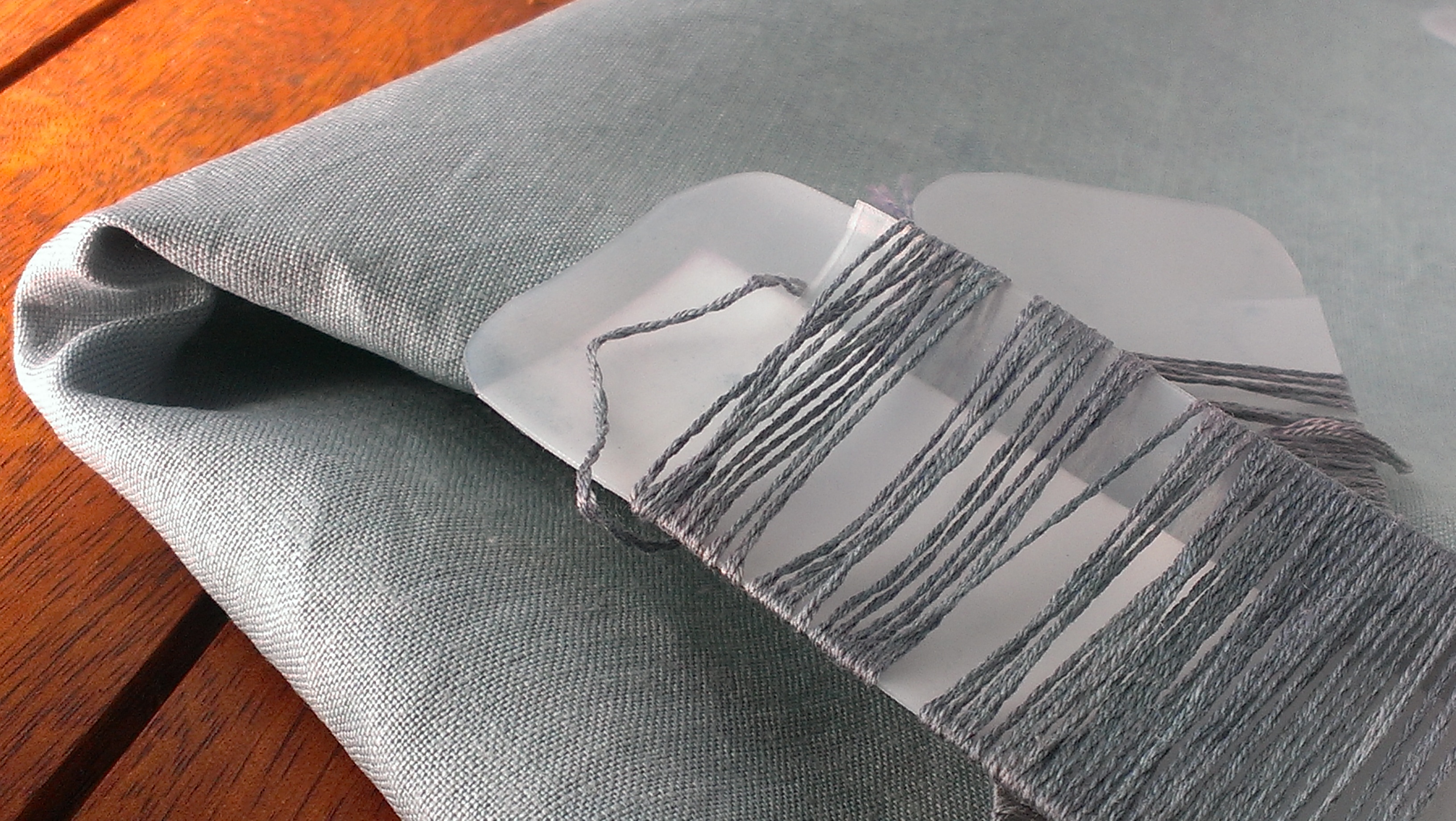
And so, to re-dipping, gleefully (and repeatedly).  Yield: several lengths of silk thread in shades of blue and grey, and a piece of pale blue fabric.  I have plans for them.  I am not sure whether this amount of leaf would always have produced a pale shade and to what extent my accidentally diluted dyebath contributed.  But, some blue resulted, and that part is excellent!

IMAG1664

6 Comments

Filed under Dye Plants, Natural dyeing

Dyeing with black beans

At the workshops I ran recently at the Guild, I demonstrated black bean dyeing.  It’s a cold process that takes some days, so it isn’t possible to complete it during a workshop.  I had pre-mordanted my fibres in alum and chosen some 25g skeins of patonyle I acquired at a garage sale.  This is a superwash wool/nylon blend that is designed for socks.  It started out a cream colour rather than absolutely white.  The first workshop took place during a hot period.  It was 36C on the day and I was longing to have enough space for a bucket of beans in the fridge.  Travelling home with them in my car was not as sweet smelling as a person might like.  The resulting colour wasn’t at the high end of blues I have previously achieved with black beans, either.

IMAG0907

For the second workshop, I used a different pack of beans from a different source, and when I looked at the bag, which said ‘1 kg black eyed beans, $3.40’–clearly inaccurate on the naming front–I couldn’t even remember where I found them.  Quite likely in an Asian grocery rather than a supermarket chain, looking at the label.  They had been packaged by someone who wasn’t working in a gigantic factory. I travelled home from the second workshop with soymilk and black beans in the front seat of the car.

The black bean colour was so lovely and so strong-looking by the evening of that day that I decided to throw the two skeins in the picture above in as well.

IMAG0930

I used 3 cups of beans (about half the pack) and tap water (as rain water had not imparted any special magic the first time).  100g sock yarn dyed for $1.70 with the option to remove the beans from the dye bath before putting the wool in and make them into dinner!  My thanks to the geniuses who posted about their experiments online on Ravelry.

I’ve heard online that this isn’t the most lightfast dye known to humankind but I’ve dyed and knit two sets of socks with black beans so far and they’re doing well.  I figure socks don’t get a lot of exposure to light, and if they fade… I can cold dye them again to tune them up.


2 Comments

Filed under Natural dyeing