Tag Archives: corriedale

An invitation, a week 2 silkworm update and some random happenings

Let me begin with some dignity, because it won’t last. Soon we’ll be back to silkworms and other silly stuff.  Anne Harris of Annie’s Workroom would like to invite you to her exhibition.  It’s in Brisbane, Queensland–I am sorry to report this means I won’t be able to see it.

Invite Back & Front

Expressions of Love: Lovingly Interrupted brings together established contemporary artist Kim Schoenberger’s collection of treasured memories assembled from the humble teabag. And introduces emerging artist Anne Harris’s work of naturally dyed, painted and stitched images exploring the emotions of love. Official Opening 14th September 3.30pm. Closes 28th September: Gallery 159, 159 Payne Road, The Gap, Brisbane.  There is a special bus to make it easy for sunshine coast people to attend. Please call  Anne 0433 162 847 for more information or visit her on the web.

And now… for the silkworm update of the week.  OMG, as they say in the classics, the silkworms are still hatching!  I have been struggling to figure out a cross-national item to give a sense of scale (US coins don’t work for me).  Here is my trial object.  Let me know how I’m doing!

IMAG0983

Here is a close up of silk worms in several stages of growth–with more hatching every single day two weeks after they started!  They were all laid as eggs within a couple of days of one another, I hasten to add. What more can I say? There is still just one mulberry tree with leaves on it in the neighbourhood.

IMAG0984

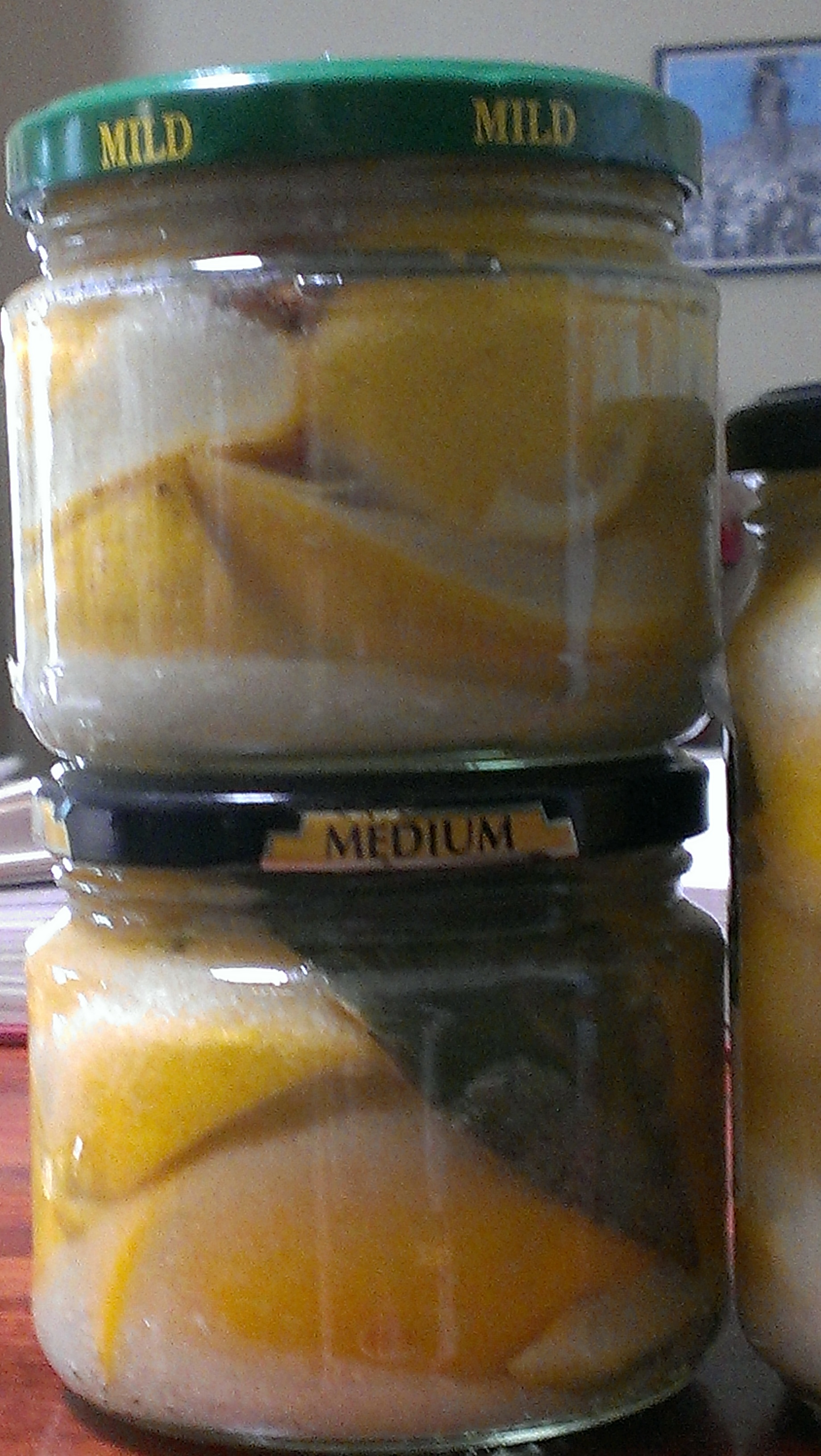
On the weekend, there was lemon preserving (the salty kind)… inspired in part by an anonymous donation of a bag of Meyer lemons left on our porch.  Three cheers for the grower and the tree!
IMAG0946

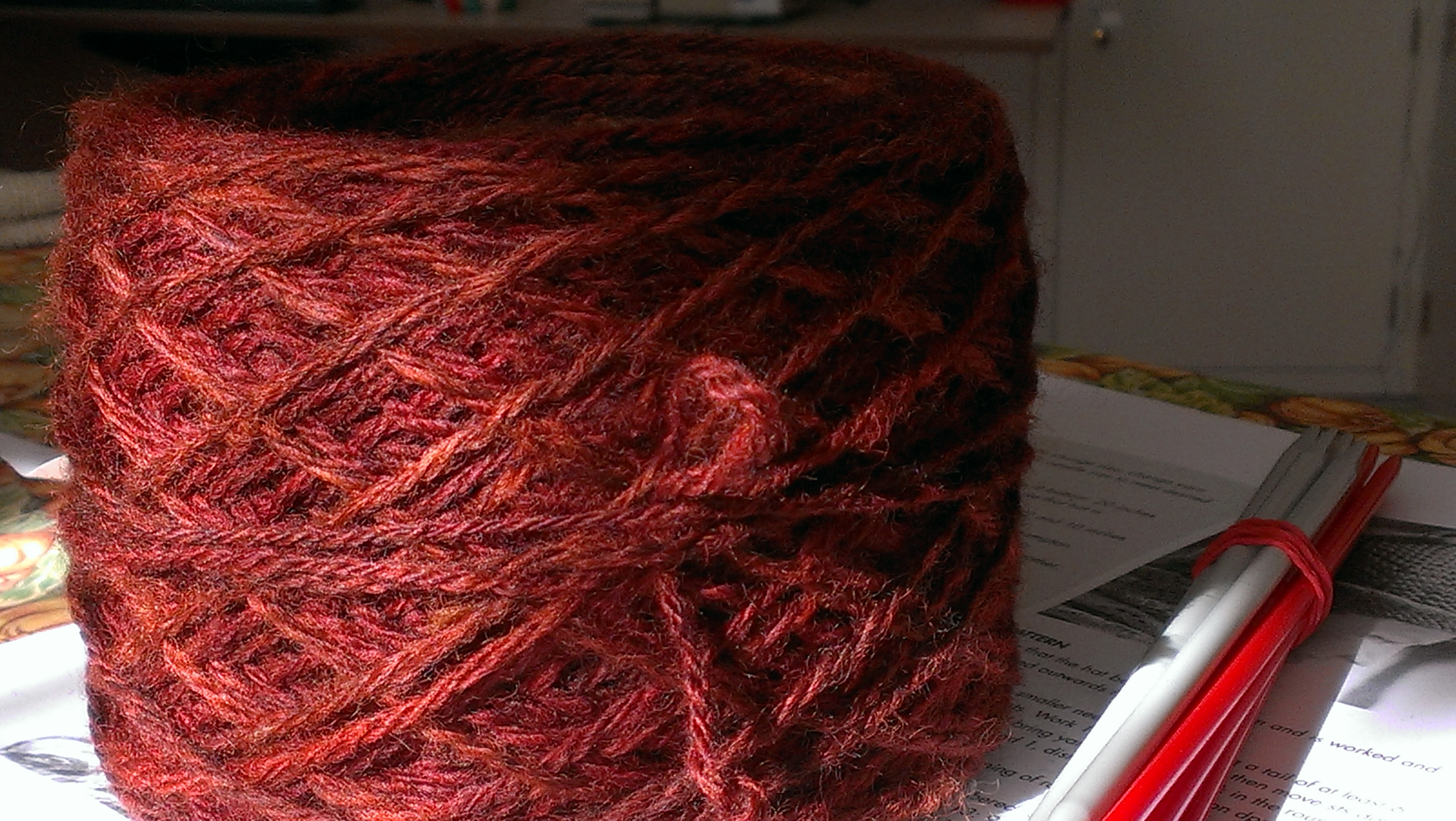
I had the urge to cast on, a lot.

IMAG0957

I also had the urge to dye and since it was warm and sunny, took advantage by mordanting fabric for future leaf prints.  I had the realisation some time ago that I had somehow managed not to find a section on mordanting cellulose fabrics, with quite specific instructions, in Eco-Colour.  I had always wished there was a section like that in there.  Happily India Flint has indeed put it in her gorgeous book and if only I had paid more attention… Anyway, since I can’t change the past, I have been waiting for sunny weather to dip and dry and dip and dry on a principle somewhat different to the one I have been experimenting with–and now the sunshine is here I got to it!  Good dyeing times are coming…

IMAG0942


12 Comments

Filed under Fibre preparation, Knitting, Natural dyeing, Neighbourhood pleasures

Dyes of antiquity: Carmine cochineal

2014-06-14 14.20.01

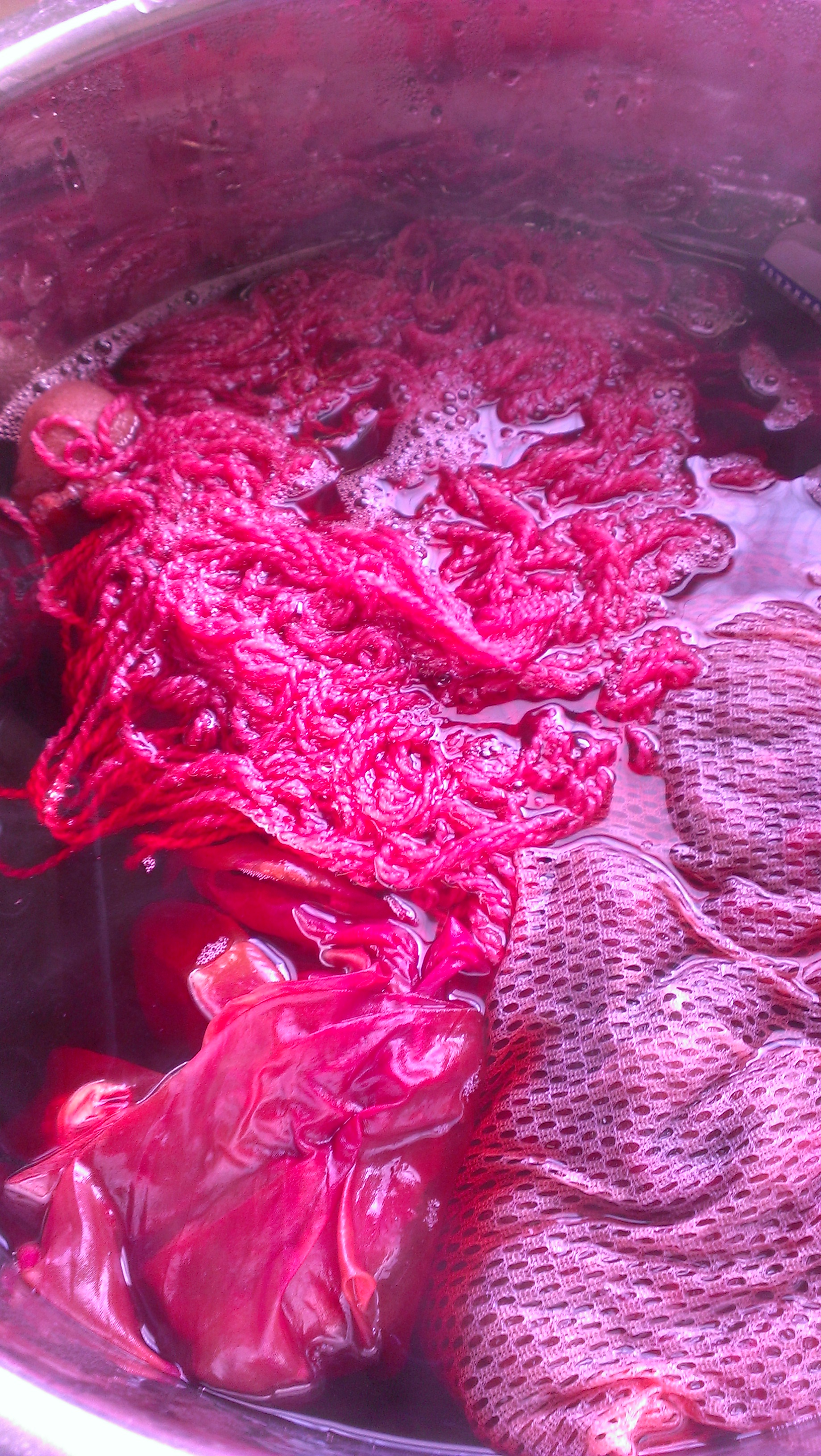
Cochineal is another of the dyes I received from the Guild and used at the workshop a while back.  In fact, there was a choice of cochineals.  In what I realise now was my ignorance, I chose ‘carmine cochineal’ because it was ground up and I was unsure how I could adequately grind the whole dried insects I also have.  As you can see, after an initial period of being dull ornage, the dye bath was an impressively shocking pink.  It turns out that ‘carmine cochineal’ is not a shade of cochineal but a preparation of cochineal boiled with ammonia or sodium carbonate.  I borrowed Frederick Gerber’s Cochineal and the Insect Dyes 1978 from, the Guild and found that the deeper red colour I had in mind when I saw the term ‘carmine’ could only be obtained from this preparation with the application of a tin mordant which I am not prepared to use.  the colours we achieved with alum were well within the range indicated by the included colour chart of wool samples (those were the days!)

2014-07-20 16.00.18

The colour range on this card (with madder beneath for comparison) is impressive even without tin. 

2014-07-21 14.33.21

We dyed organic wool. I dyed silk paj and twined string (the orange string was dyed with madder). 

2014-07-04 12.52.33

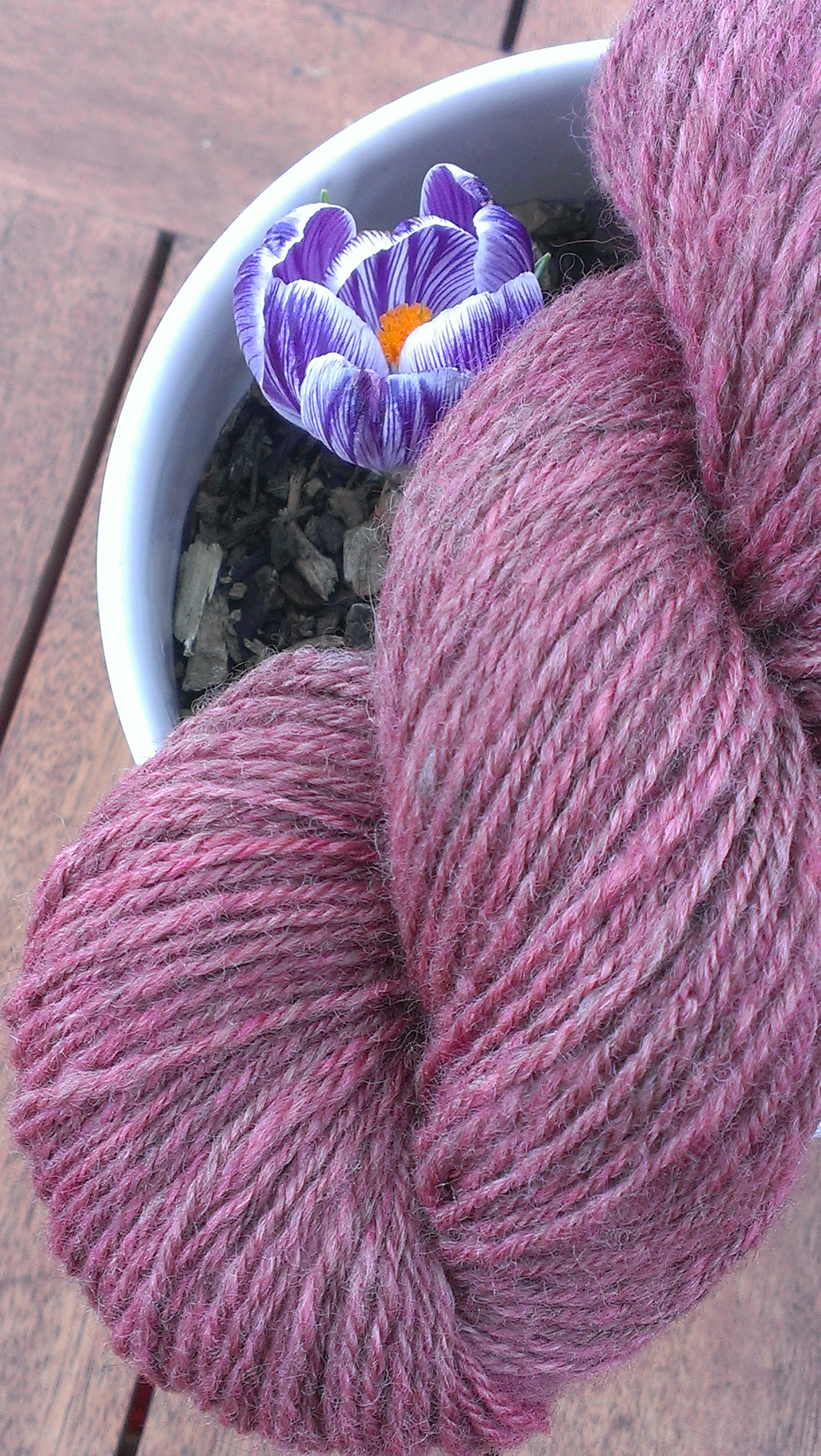
I brought the vat home with me and dyed a lot more fibre in an attempt to exhaust it.  Here is grey corriedale mordanted with alum and overdyed with carmine cochineal.

2014-07-30 11.27.48

And spun–three plied.  This is my first ever crocus flower, by the way!

2014-08-23 11.57.30

The magenta silk embroidery thread had maximum time in the bath, since I fished it out when removing the dyestuff (in its recycled stocking) prior to disposing of the bath!

2014-07-30 11.23.55


12 Comments

Filed under Natural dyeing, Spinning

Dyes of antiquity: Madder root

Three cheers for dried madder root!

2014-06-12 16.16.20

You may remember that I acquired some through the Guild.  I set out by pouring boiling water over it twice, and draining off the resulting liquid.  This is a strategy which is usually described as a good idea in order to help separate some of the brown and yellow pigments in the root from those which might produce red.  The resulting liquid was very dark brown.  I saved it for later experimentation.  I’ll get back to that!

2014-06-12 16.21.42

Every long term reader of this blog knows I can organise orange dye in a heartbeat, so I was hoping for red from madder.  When seen at the workshop I ran at the Guild, it was looking rather orange.

2014-06-14 13.43.07

However, time is needed.  And gentle heat.  This pot produced some light reds at the Guild. Once again, the cold processed alum, long steeped sample gave the most intense colour. Rhubarb (the two samples on the right hand side), not so much.

2014-06-21 13.41.26

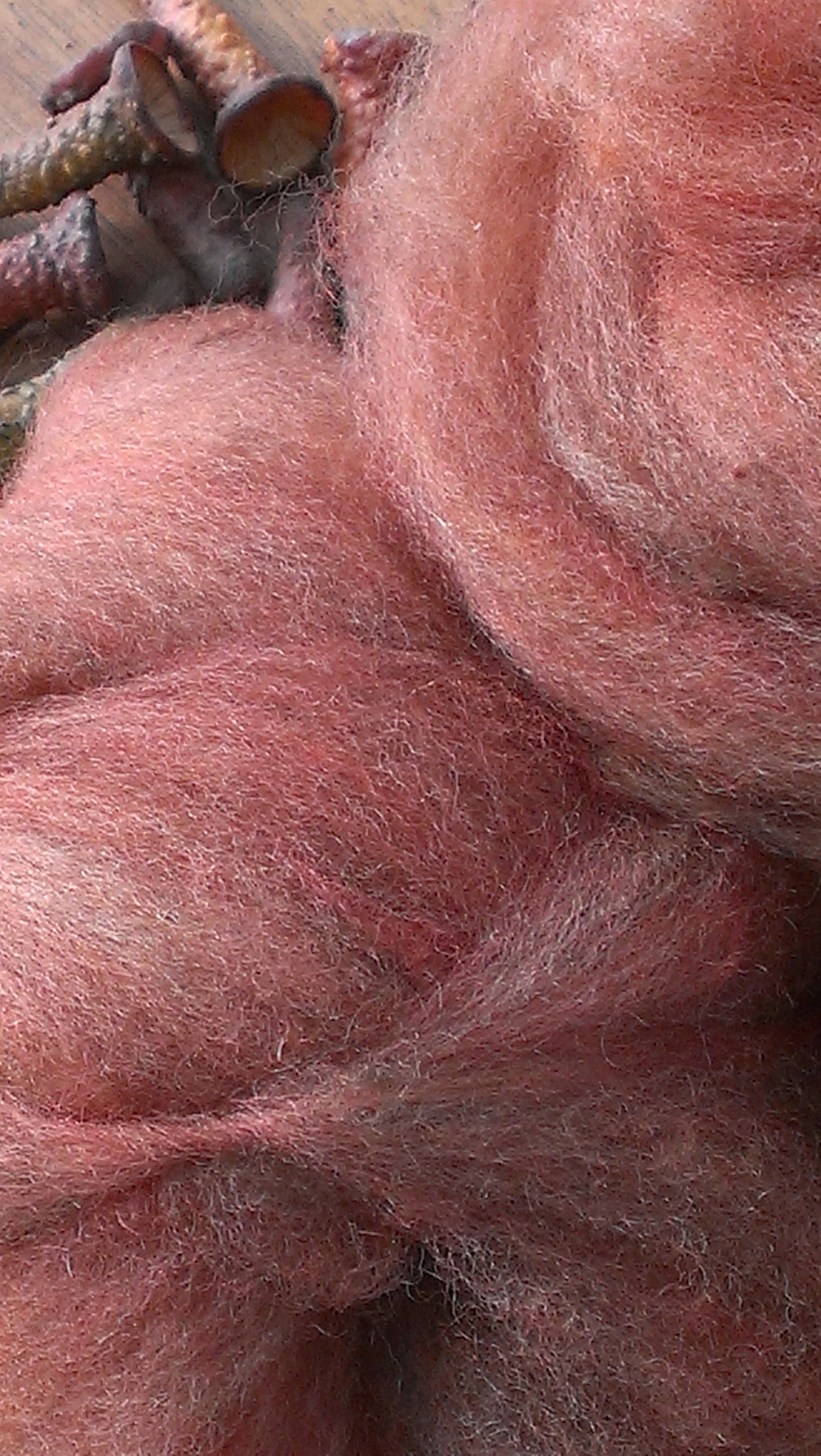
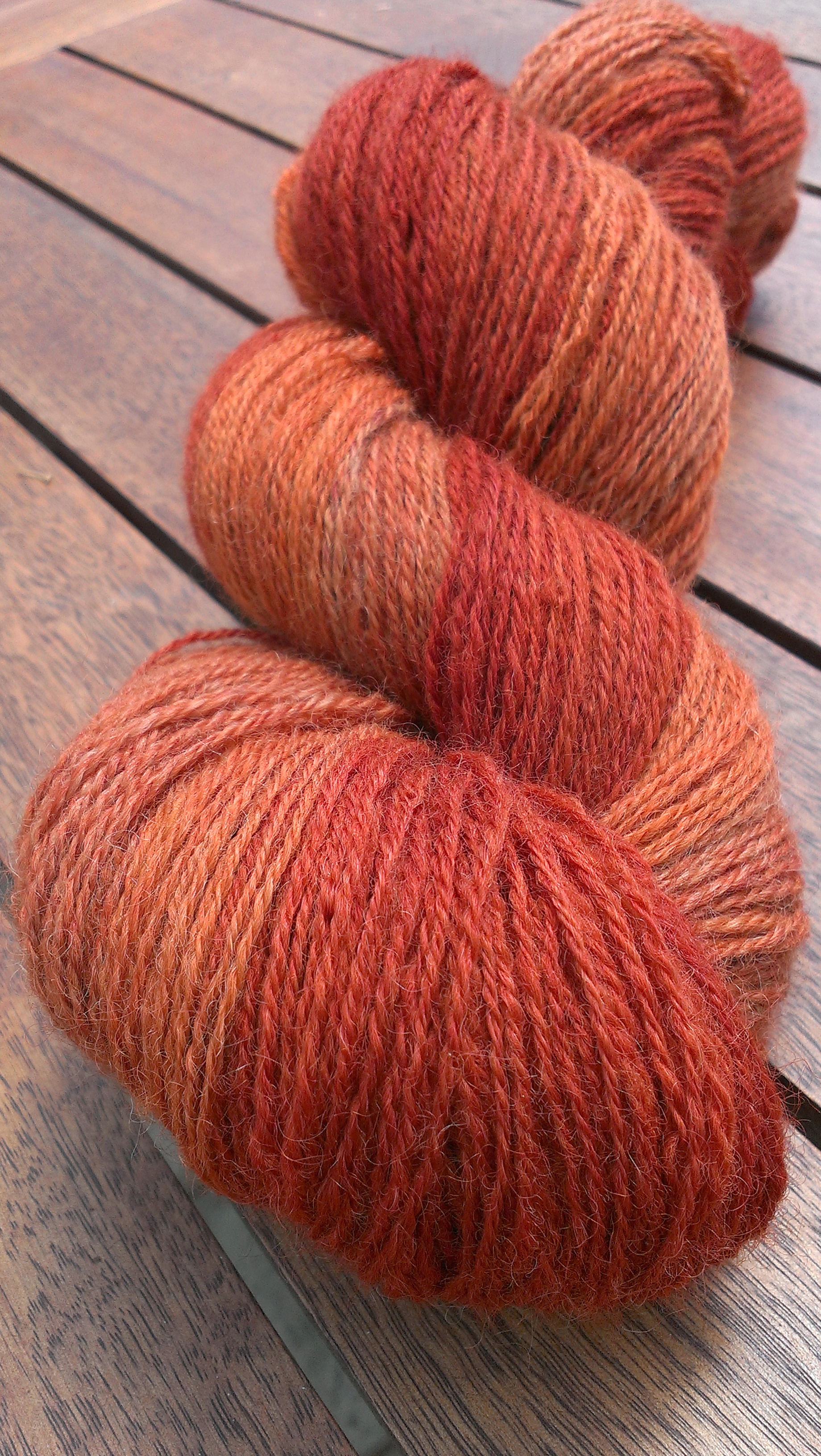
I didn’t think it was done, however, so I took the whole dyebath home.  Happily, no mishaps en route.  Since then, I’ve been happily trying to exhaust this madder. I have overdyed grey corriedale. The fleece took up the dye differently in different parts of the locks (the weathered paler tips most of all).

2014-06-21 13.42.57

I turned it into roving while I kept dyeing…
2014-06-21 14.11.22

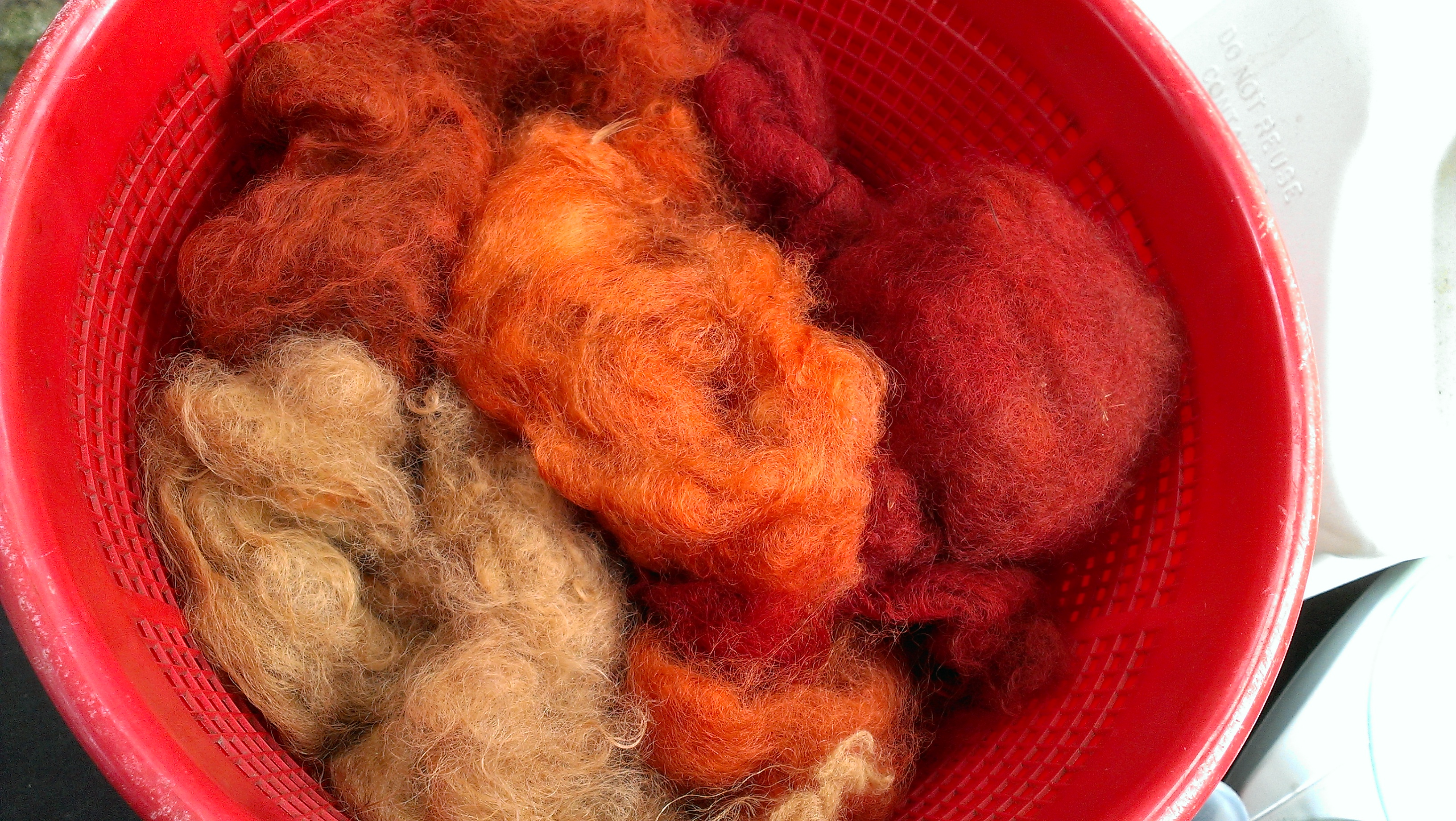
When I ran a dye bath with the rinse water… to my surprise it gave a strong red, stronger than the exhaust dyebath by far.  Here it is on the left, with the original dye bath on the right for comparison.

2014-06-23 19.43.44

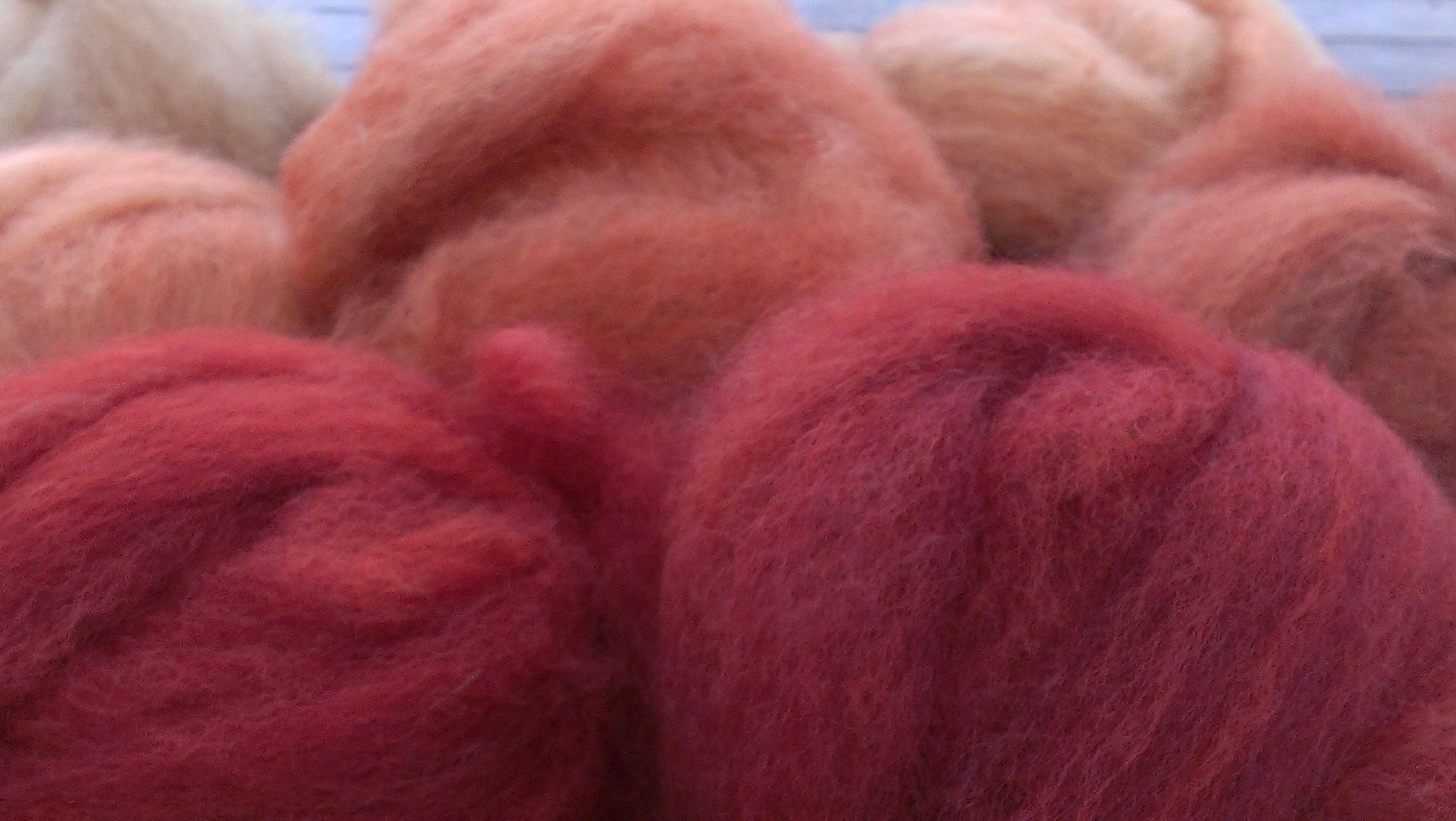
I also dyed quite a bit of merino roving I happened to have put by, achieving three different shades. And some more grey corriedale… not bad going from madder root that might have been in those jars for decades.

2014-06-28 10.34.17

14 Comments

Filed under Natural dyeing

In preparation for a natural dyeing workshop

As I write, I’m preparing to run a workshop at my Guild.  I’m counting down and there are only a few days left.  Preparation has been going on for weeks now! I’ve skeined beautiful organic wool and mordanted some.

2014-06-08 16.22.13

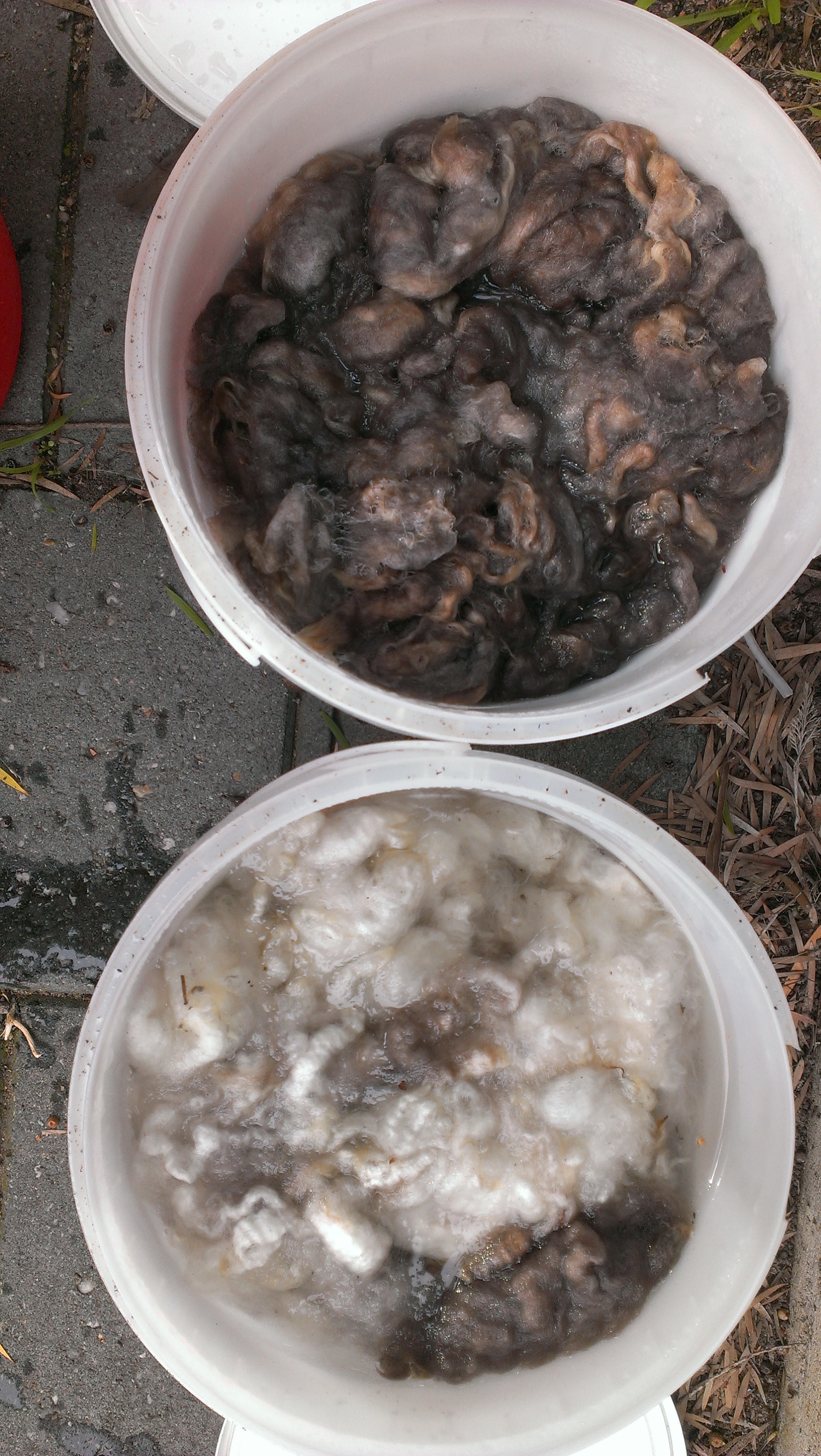
I’ve washed fleece in two colours and two breeds, and mordanted some.  I’ve decided being able to mordant cold in alum is a real benefit to preparing unspun fibres.  Less opportunity for felting or simply mooshing the fibres.  Three cheers to Jenny Dean, who introduced me to the idea of cold mordanting with alum.

2014-06-09 12.38.23

I treated some merino roving to a cold alum bath too. Later I decided that past unlovely experiments with paj silk could go in the mordant bath with a view to being overdyed.  And added silk embroidery thread.

2014-06-09 12.59.57

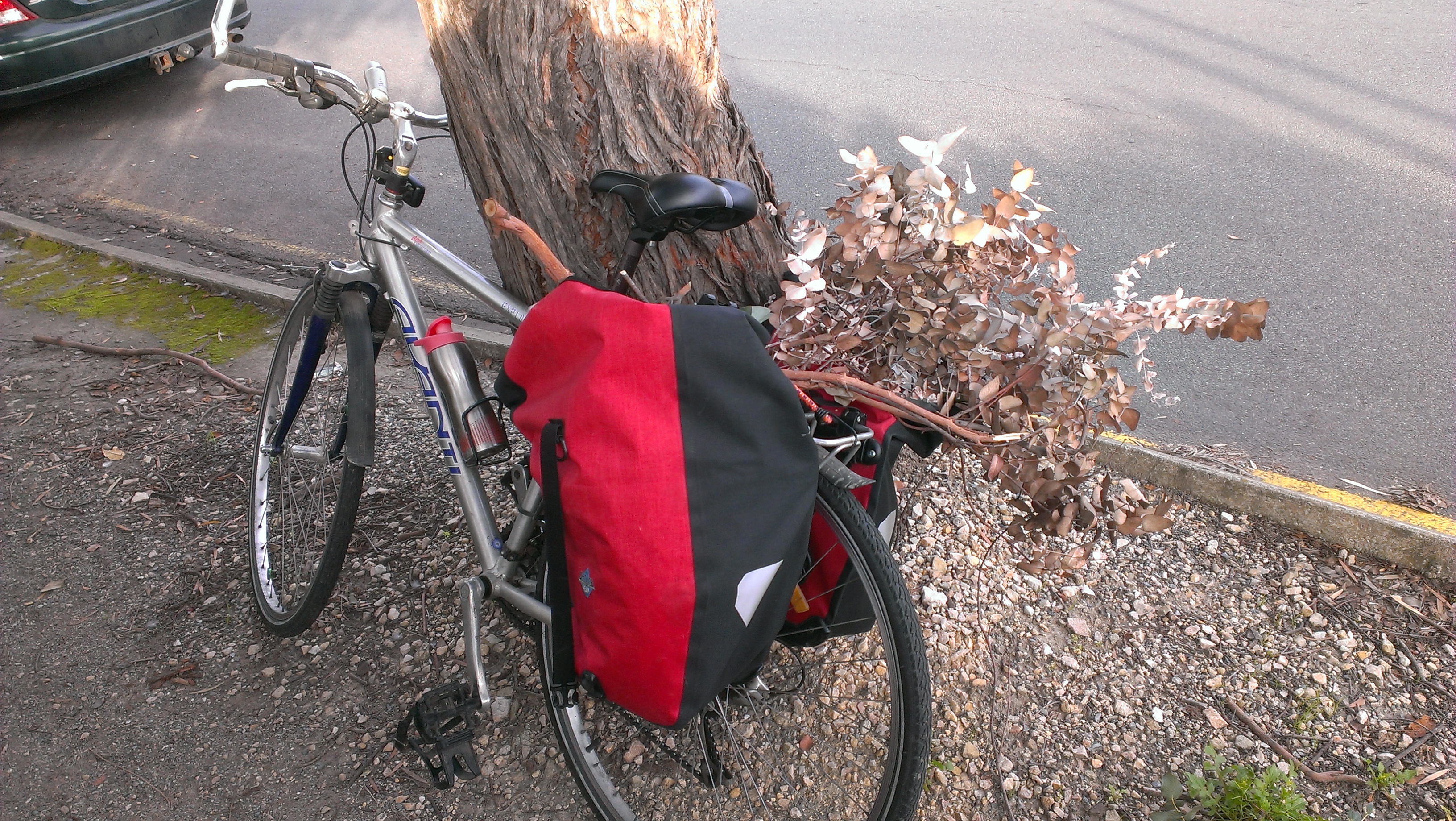
I have been packing things into bags and writing lists. I’ve begged milk bottles from coffee carts and turned them into sample cards. Finally, on the weekend, I wandered the neighbourhood on my bike gleaning leaves, and finding some damaged pomegranates that might be used for dyeing–the rats that were scampering along the fence nearby had clearly been having a banquet!  It was overcast, but can you see these two E Cinereas forming an arch at the end of this street?  Cute as a button!

2014-06-09 14.58.15

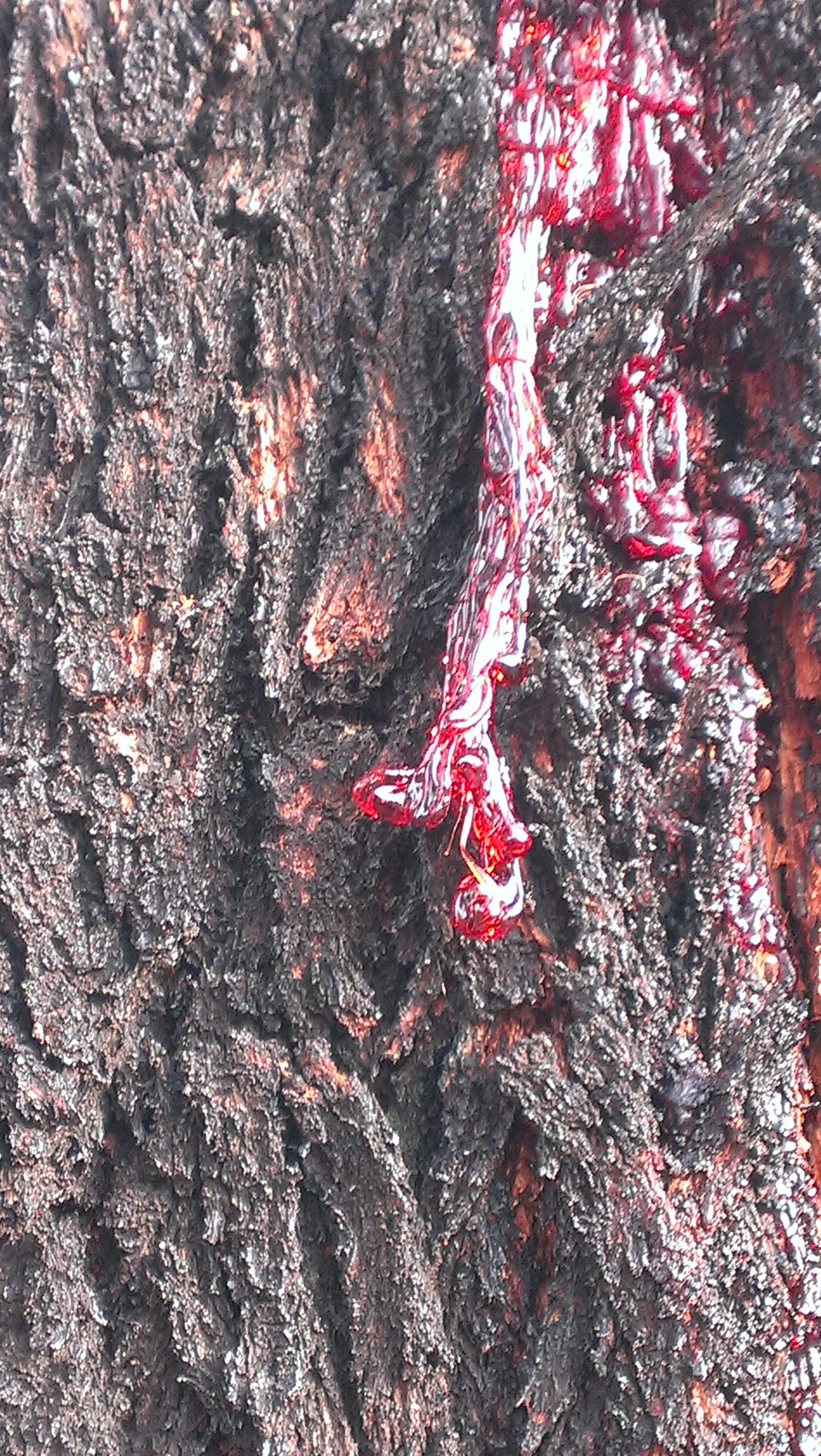
Ironbarks were oozing kino, which is their main strategy for avoiding pest attack.  This one seemed to have gone a bit too far…

2014-06-09 15.46.52

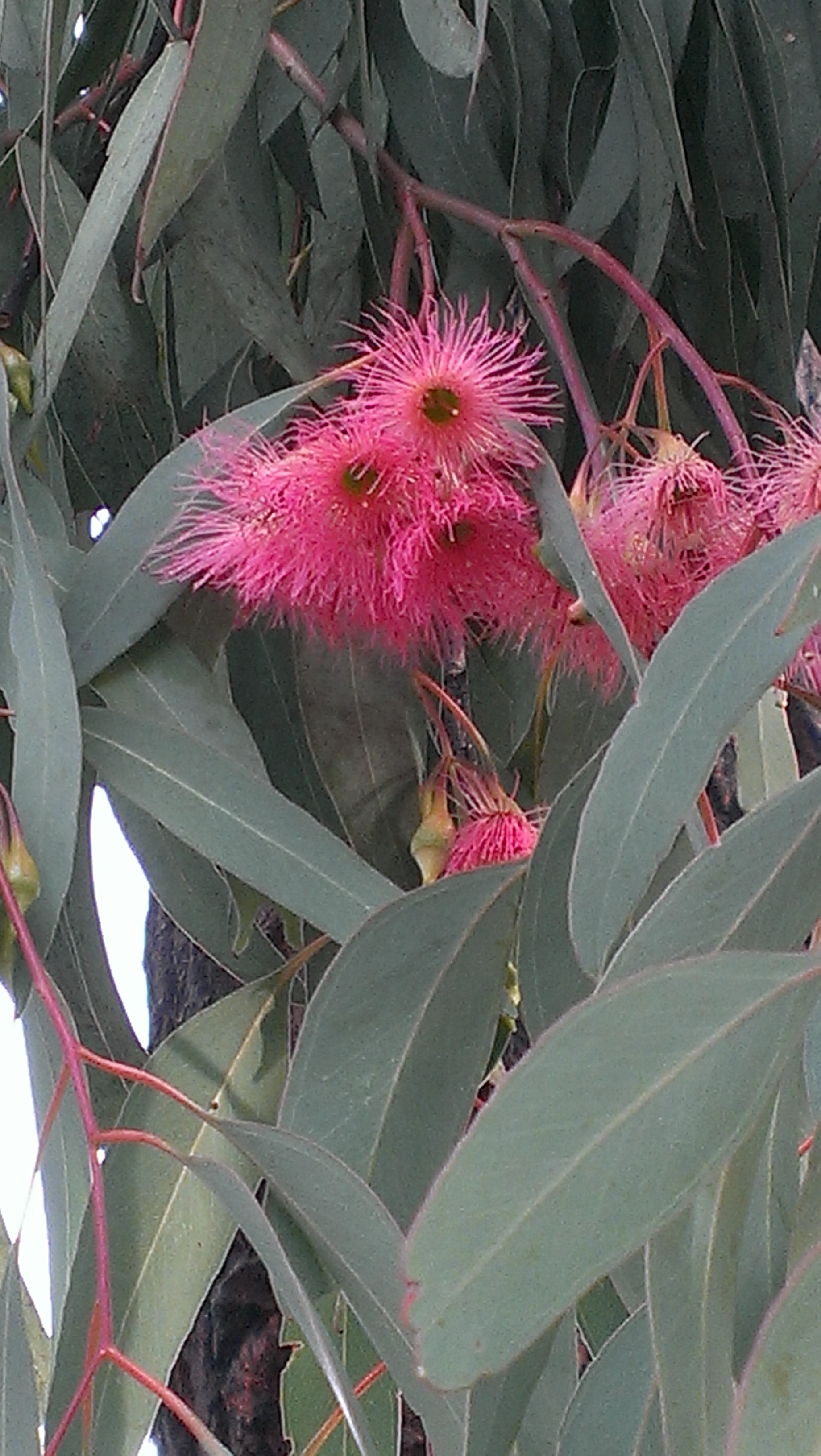
Some ironbarks were in flower. Gloriously.

2014-06-09 15.47.02

In some streets there was a carpet of flowers on the ground where lorikeets and rosellas had been partying.

2014-06-09 15.47.16

Some of the neighbourhood E Cinereas have recovered from the most recent attack of the chainsaws a bit.

2014-06-09 15.50.43

I stopped off at my favourite E Scoparia on my way home.  It now has some leaves I can reach for the first time since a bough was lopped a couple of years ago.

2014-06-09 16.08.04

So, I came home fully laden.  I even found an E Cinerea branch that had been cut some time ago but must have fallen to the ground more recently. Needless to say, it came home with me.

2014-06-09 15.59.41

Hopefully, my preparations are nearing completion.  I had a dream the other night where my workshop went terribly wrong… for one thing, there were two workshops and I had not prepared for the first one at all… and the Guild hall, which is a bit of a rabbit warren, had several rooms that I had not previously seen!  Perhaps it is the idea of using cochineal for the first time acting on my overdeveloped sense of responsibility…
7 Comments

Filed under Dye Plants, Eucalypts, Fibre preparation, Natural dyeing, Neighbourhood pleasures

More joy of stranded colourwork knitting

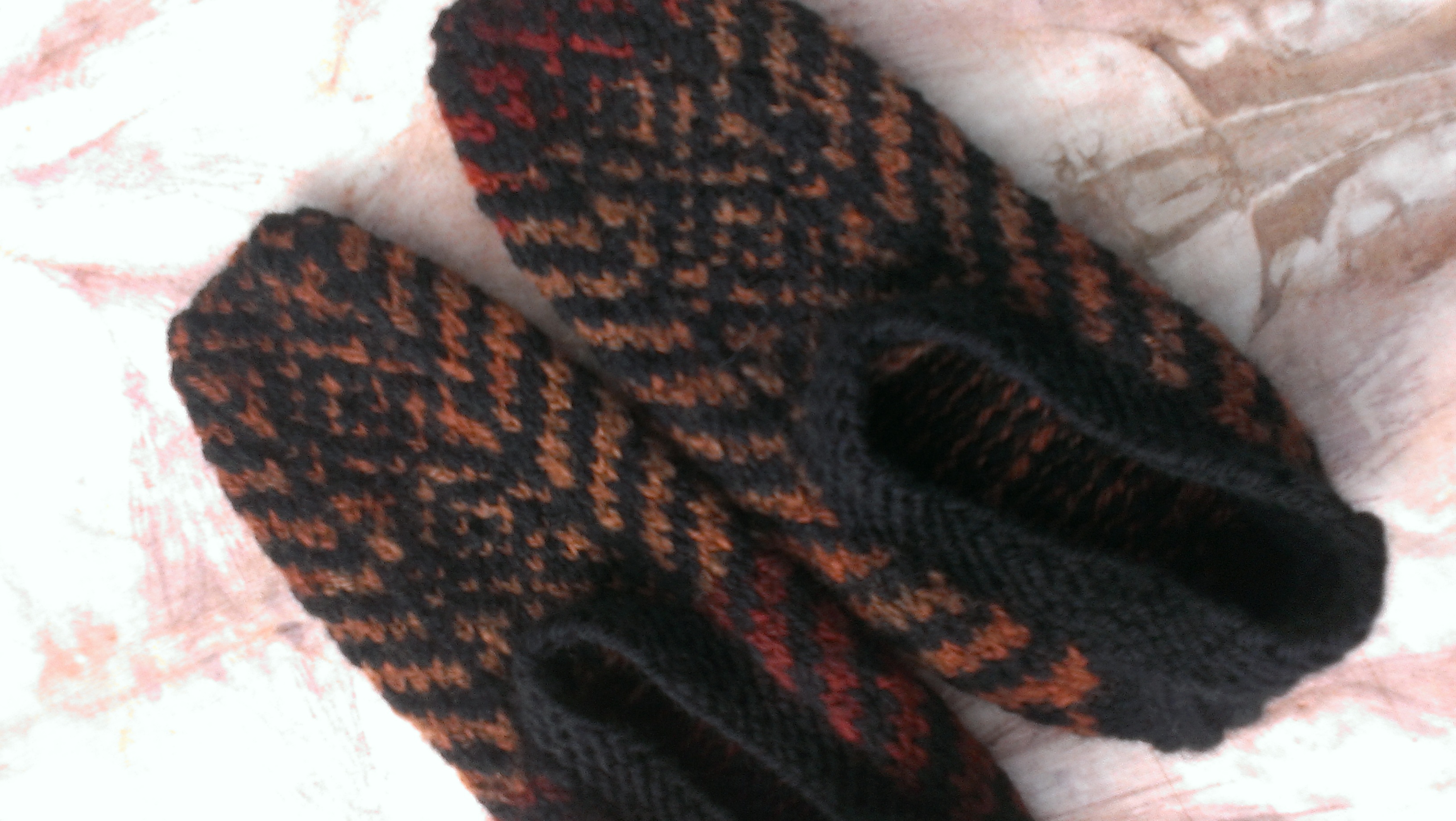
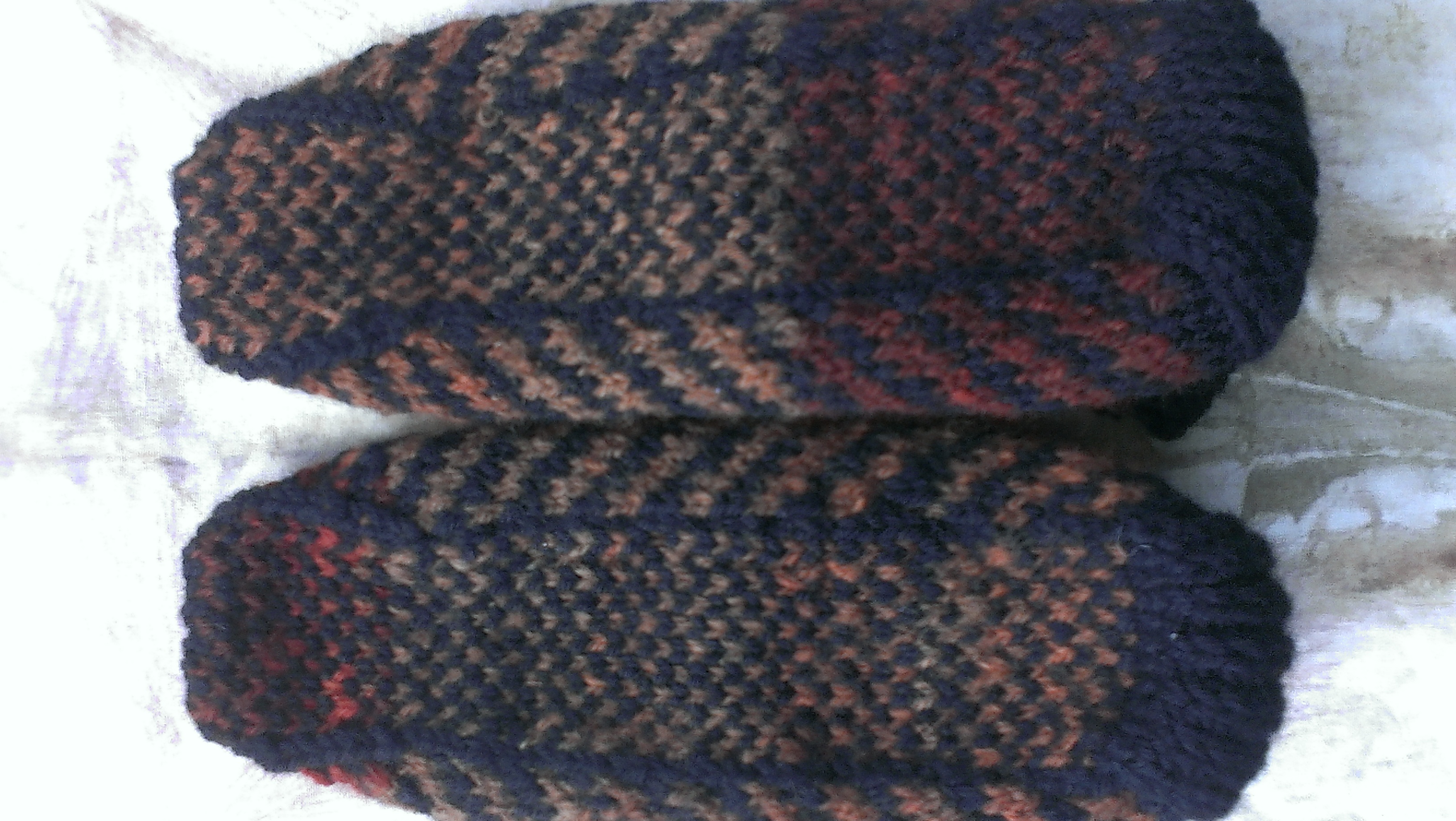
There have been two more pairs of Tingvoll slippers. Too much fun!  Unfortunately, without going into boring detail, I have also been having a great deal of trouble with photographs.  My phone  suffered a major episode while I was in Melbourne and is now on its second trip to repair.  The first visit fixed one problem but rendered the camera absolutely unable to focus.  This has meant discovering not a single photo is in focus when it it too late to take another set… having unfamiliar equipment, no equipment, or using the retired cameras and remembering why they were pensioned off!  So, my apologies for photo quality, and my hopes that my capacity to take pictures for the blog at will, and upload them with similar abandon, and access WordPress on my phone, will return soon.

IMAG1308

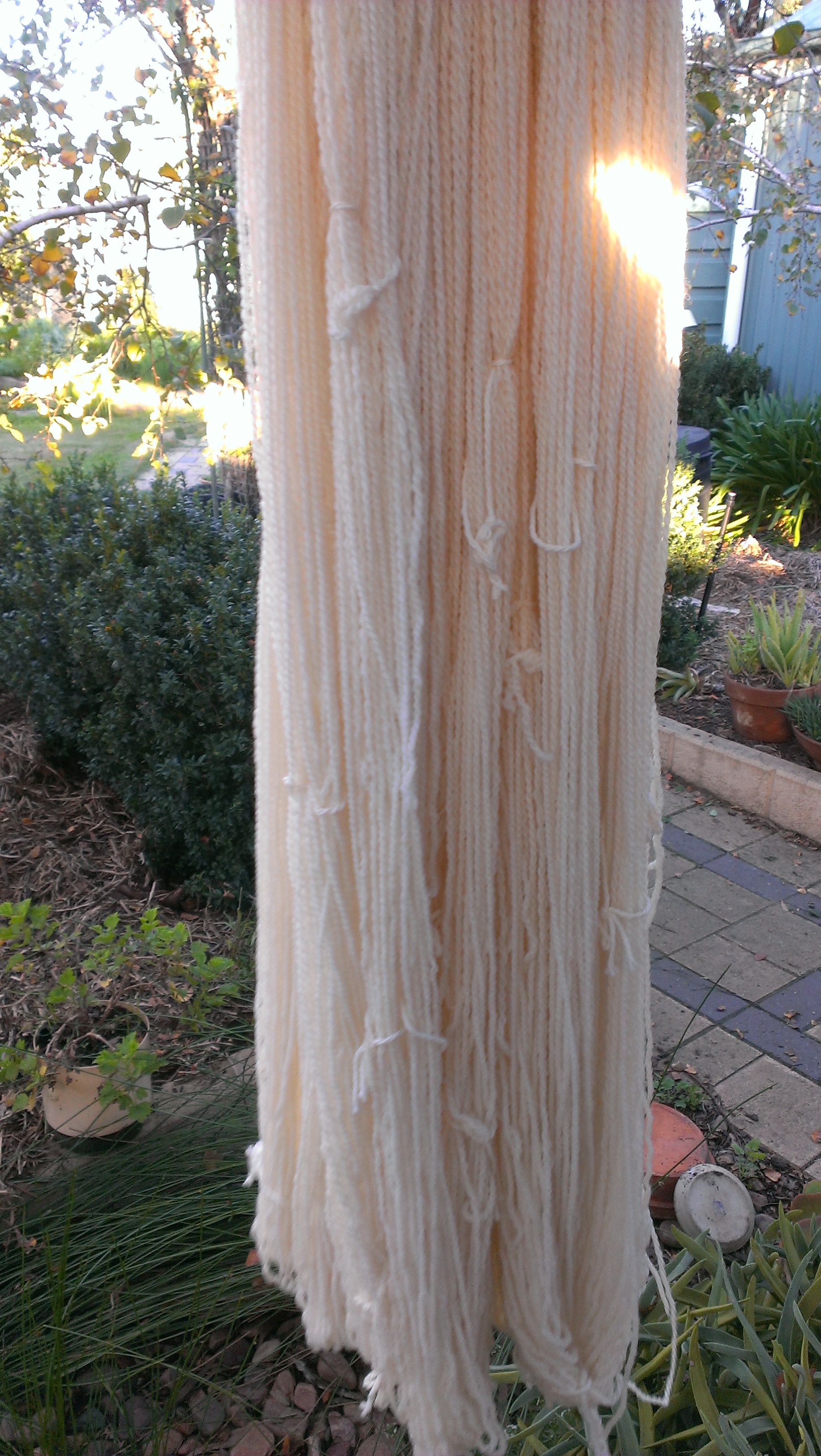
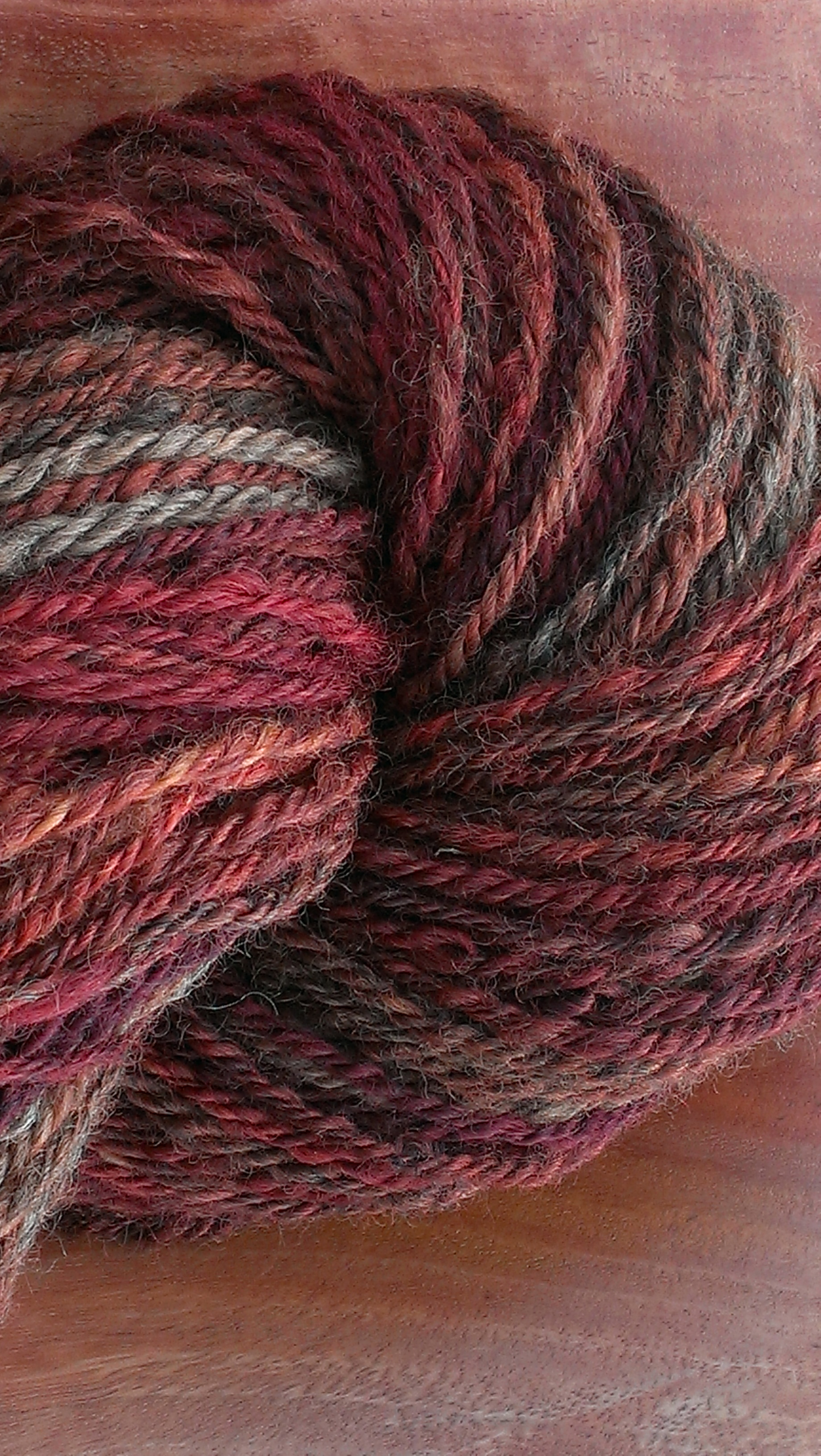
If you have been following along for a long while you might remember my dyeing project using eucalypts over grey Corriedale.  I created two sets of yarn–one where I maintained the colour changes and one where I plied different coloured singles together.  These slippers use the three ply colour-changes-maintained yarn.  Until now, I had struggled to figure out what to make with something so lovely but so chunky.

IMAG0070

This first pair were made with 5.5 mm needles, my handspun eucalyptus dyed Corriedale wool and Bendigo Woolen Mills 12 ply, leftover from making slippers for a goth friend.

IMAG0071

They have gone to a different friend who is a writer.  She said she might save them to be special writing slippers.  What an exceedingly fine compliment.

IMAG0098

This second pair, knit on 5 mm needles, have gone to another dear one who spends her work life assisting people to recover from trauma.

IMAG0086

I hope they will gladden her heart!

IMAG0090

Having done it three times I began to find the chart so much easier to follow… my sense of following a chart as difficult began to ebb away.  My confidence that I can do colour knitting began to grow stronger.  I began to have that sense of happy familiarity you get with a song you have listened to a lot.  I now have my first set of metal DPNs and I like them very much–I tend to use circulars for most knitting in the round–and I mostly do knit in the round.  But in this case the pattern divides into four sections in a way that I decided very much lent itself to DPNs.  Lovely!  I can only recommend this pattern.

2 Comments

Filed under Knitting

The unbearable cuteness of stranded colour knitting

IMAG0009

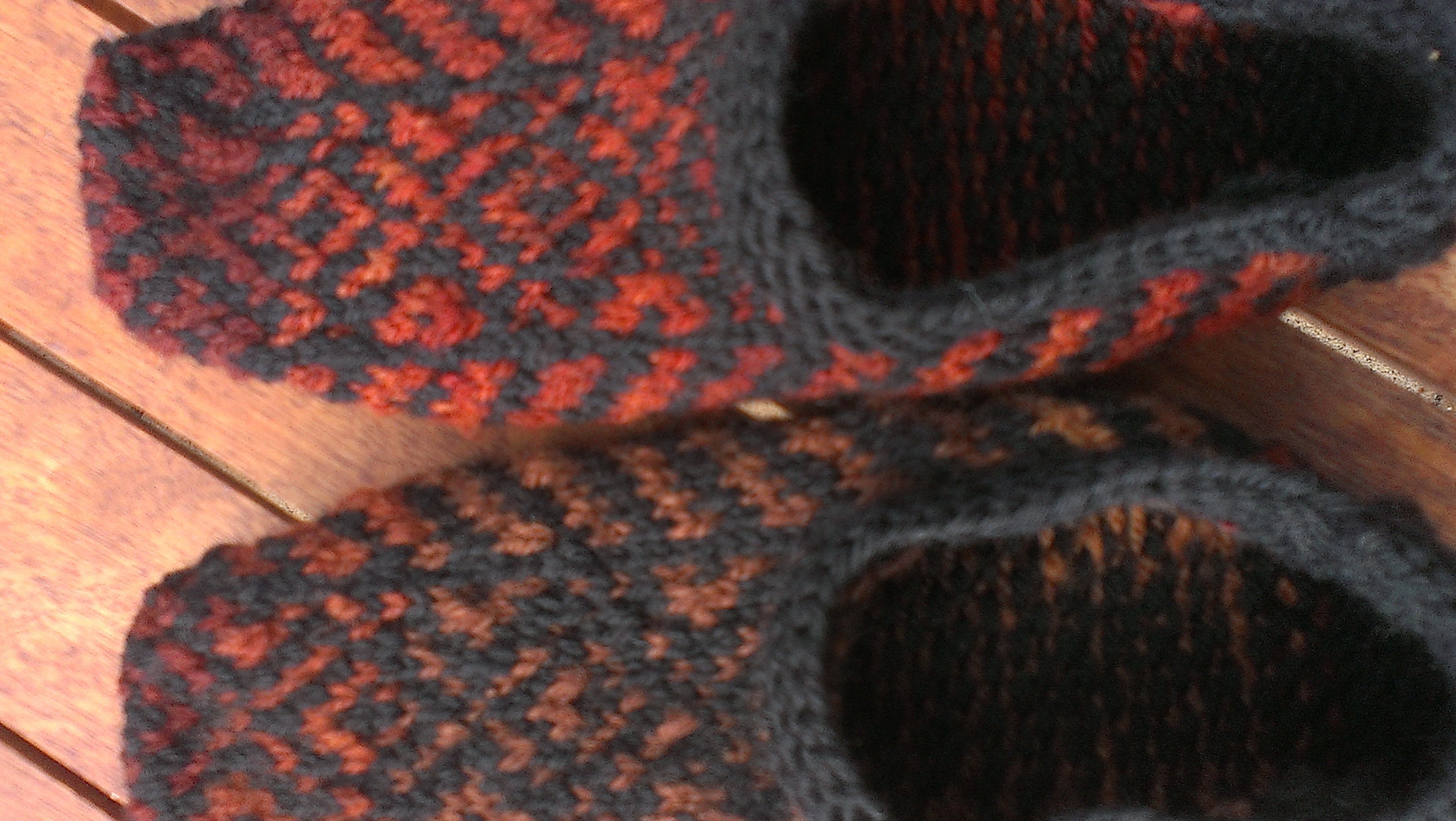
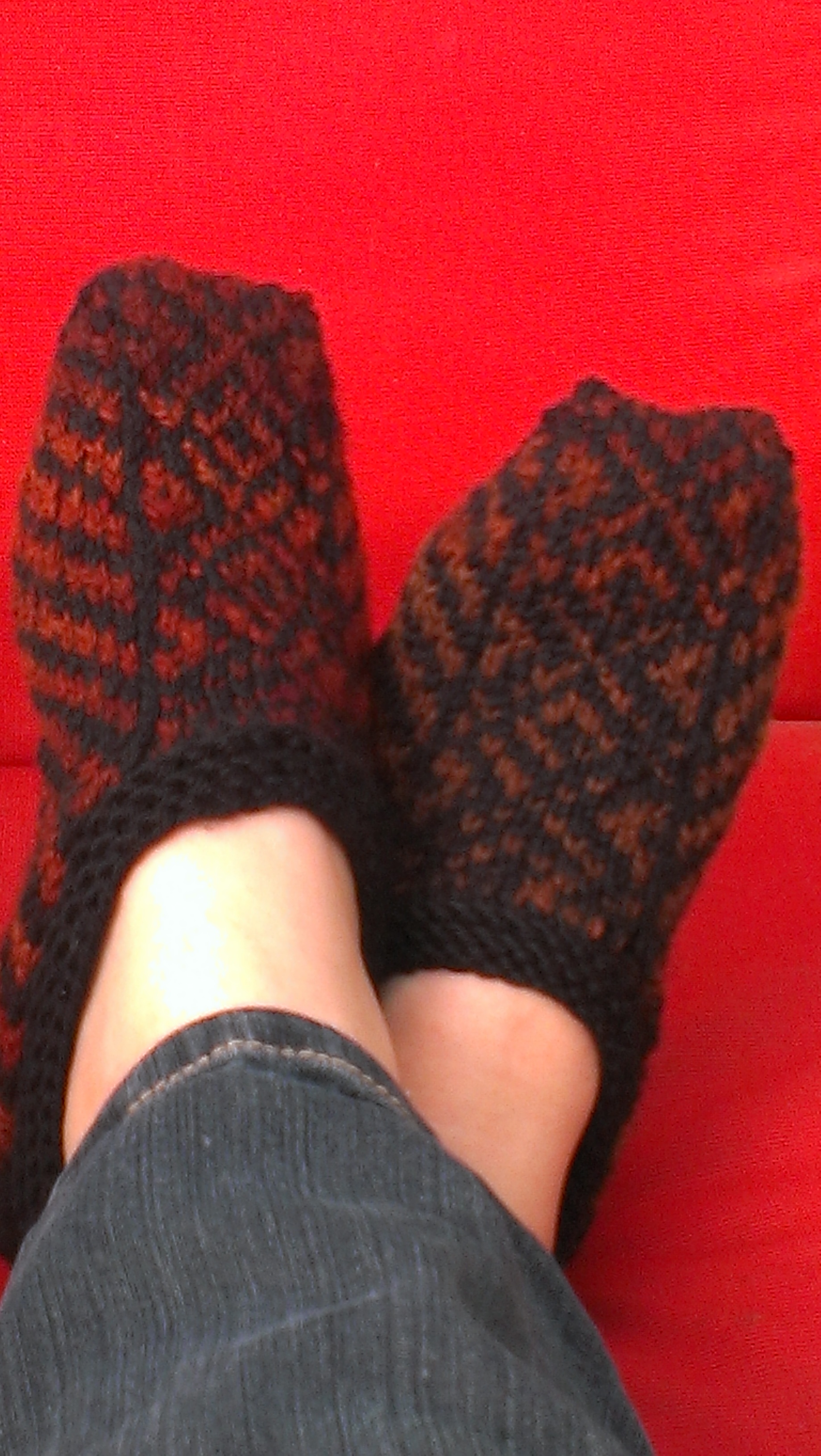
After all the three-ply colour spinning there has been around here, I started to itch to use those colours in knitting. I settled on these, the Tingvoll slippers by Kristin Spurkland. I began them before I went to Melbourne in March.  I found that knitting them over breakfast in  a cafe in Melbourne triggered a conversation every single day, and usually with another keen knitter.  It made me feel right at home, even though I was far from home and essentially, I was in the cafe because there was nothing for breakfast in the cupboard where I was staying!

Even the soles are cute.

IMAG0013

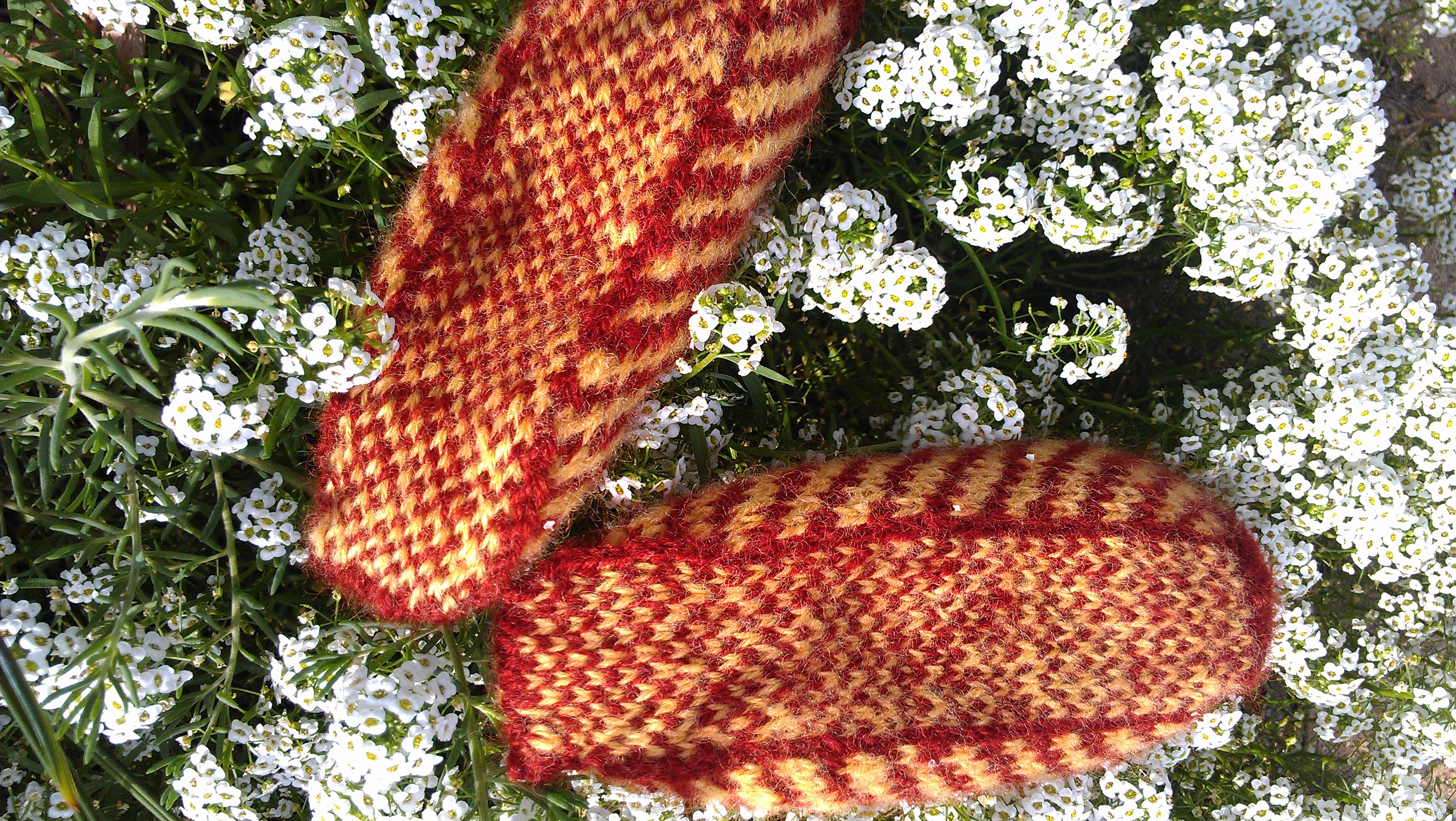
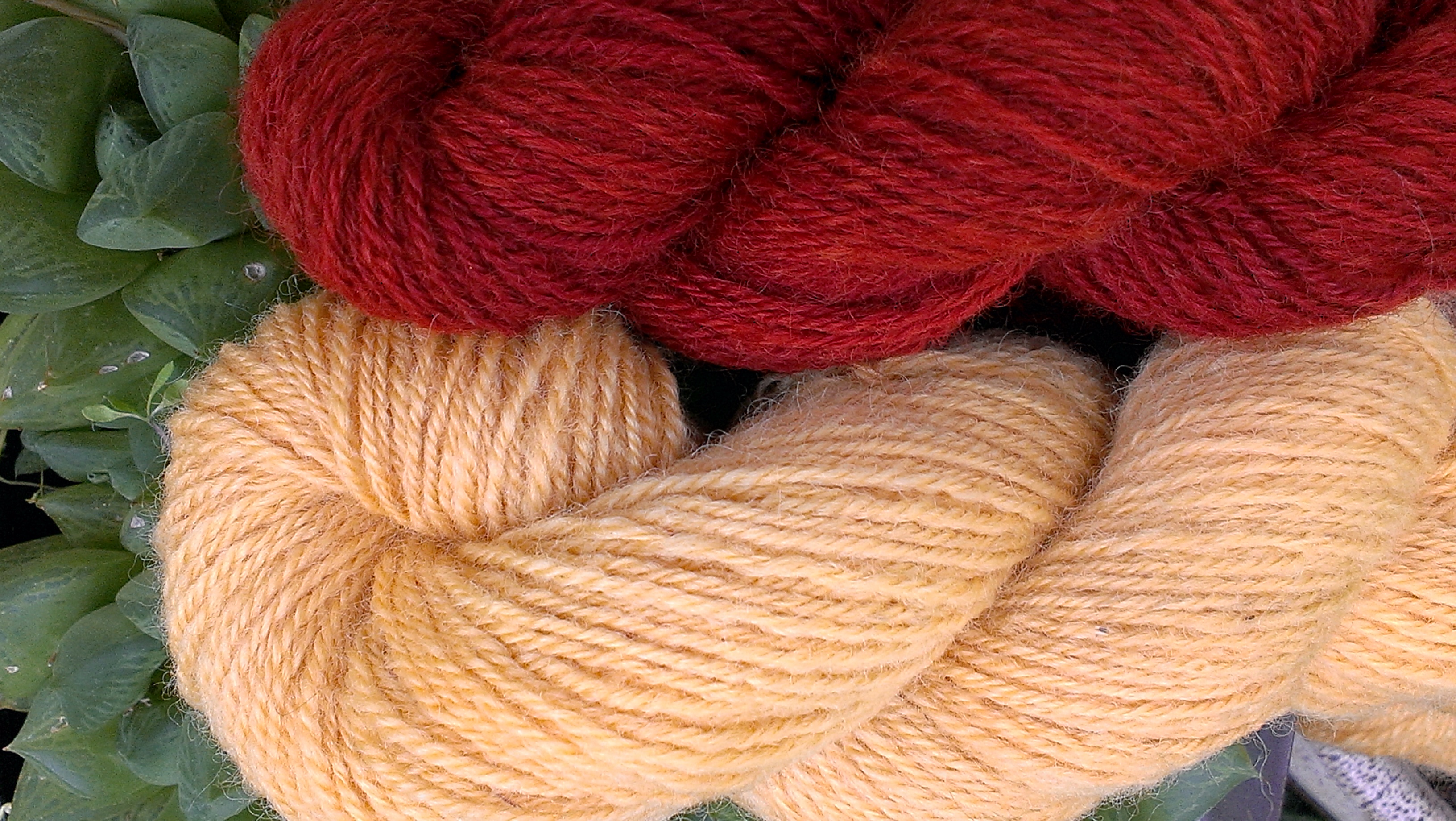
I knit these in Corriedale.  Yes, Malcolm the Corriedale.  The orange is dyed with eucalyptus, and the yellow with my mother’s coreopsis flowers.  While I was in Melbourne, I found myself frustrated by how slowly it was all going and how hard I was finding it to read the charts.  In the learning zone I was in spending my whole day at a workshop–I started to explore.  By the time I was flying home I had found that I could knit withe one colour in each hand–picking the yellow (‘European style’ as some call it here–yarn in the left hand) and throwing the orange (‘English style’, as some call it here–yarn in the right hand).  Best of both worlds!  I love that phenomenon: learning one new thing opens the doors to learning others.  Delightful.

IMAG0010

They are smaller than I had hoped, which just shows I settled on this wool and this pattern with no real thought for sizing and not much attention to the instructions.  Clearly it would be a good idea for me to quit spinning finer than I like to knit!  I think they are destined for a small child of my acquaintance.  She is a fine appreciator of hand knits.  Her Dad says when he told her I might be knitting her slippers, she was ‘beside herself!’ Apparently she likes the felted clogs I knit him so much she tries them on a lot, even though he has some of the largest feet I’ve ever knit for…

15 Comments

Filed under Knitting, Natural dyeing

Spinning up a storm. And some more newspaper.

I am continuing to ply the holiday spinning, but this is the last of it… This coreopsis-dyed yellow yarn has been waiting patiently for weeks.  The eucalyptus-dyed yarn is a new spin.

IMAG4174

Of course, there is more eucalyptus-dyed corriedale spun on holiday and plied recently.  I elected to keep the two shades distinct.  When I began dyeing I preferred dyeing yarn and was afraid to dye fleece.  Now I prefer to dye the fleece, because it gives me so much choice when it comes to spinning (and I have learned a few things about controlling the temperature of the dye bath to avoid felting).

IMAG4007

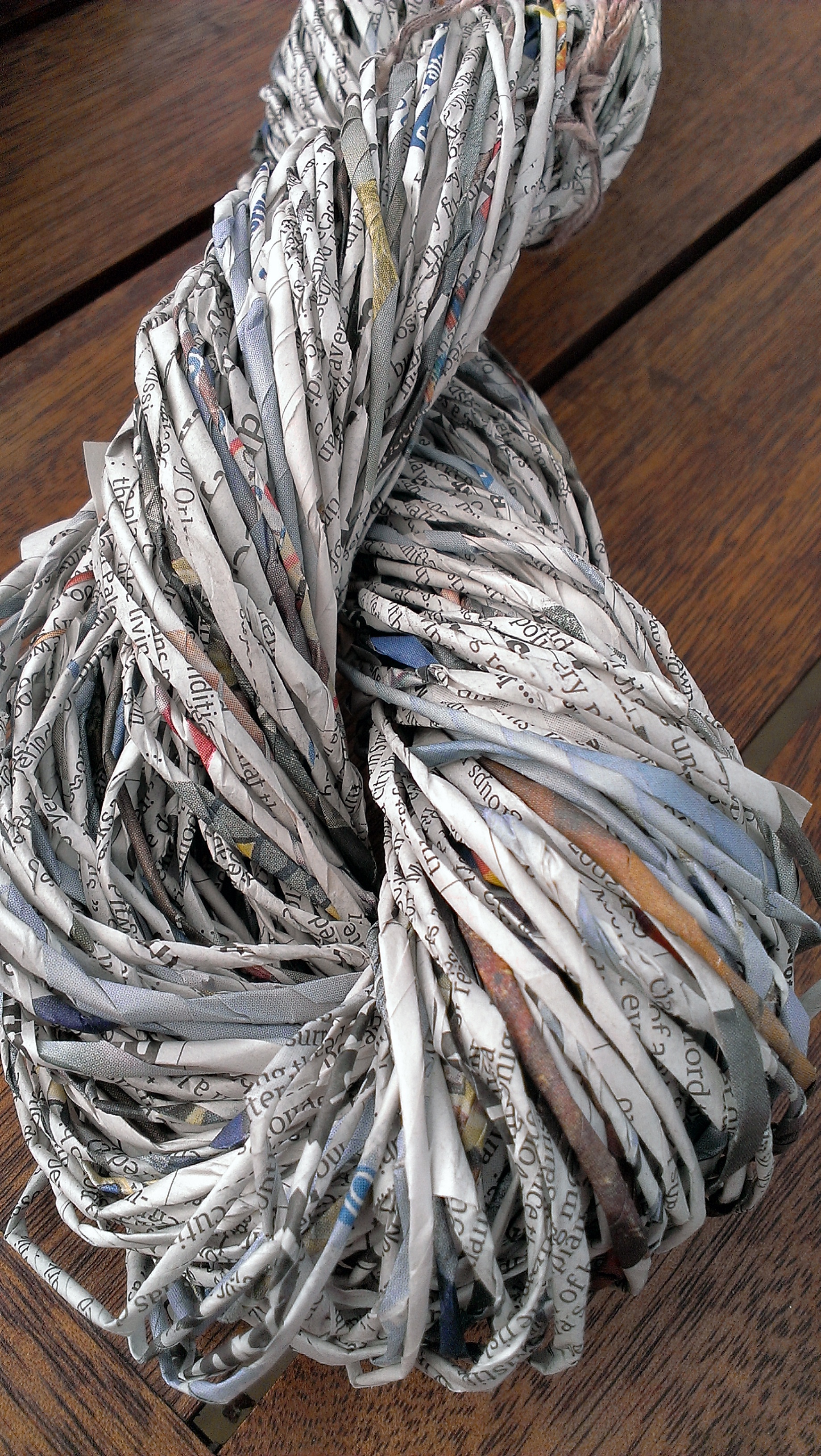
I also decided that I could probably refine my newspaper spinning skills, and you know, I think I have!  It’s possible to coax the newspaper strips into a tube as you spin, and I like the effect better.  I think I also succeeded in creating a lower twist single that still holds together.  More fun than I had ever expected…

IMAG4171

2 Comments

Filed under Natural dyeing, Spinning

Cool spectrum gradient yarn

There has been some plain Jane spinning.  Three ply natural Polwarth, finaly plied after a long wait. Not my best work, unfortunately.  One of the singles is plumper and fluffier than the other two.  Just the same, it’s yarn and it’s a true three ply made from three singles.

IMAG3856

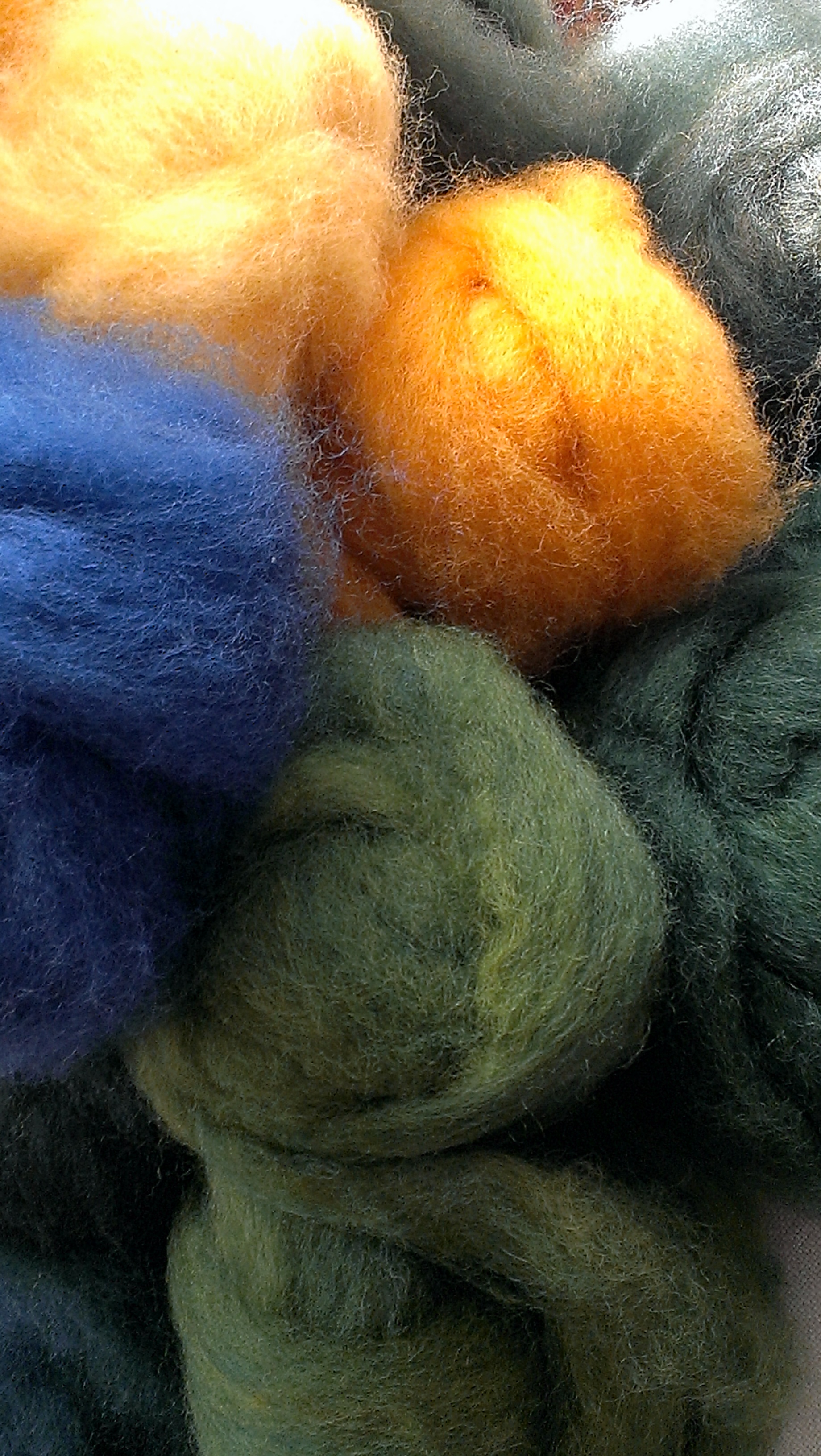
In the not-so-plain stakes, there has also been plying of some of the holiday spinning.  This one is Malcolm the Corriedale, dyed yellow with osange orange and my mother’s coreopsis flowers (she is generous enough to collect her dead flowers for me and such a committed gardener that she deadheads her coreopsis).  I overdyed with indigo to create greens and, of course, blue.

IMAG3870


No sign of crocking, just in case you’re wondering!  I have several more flour sacks of this fibre carded, pulled into roving through a diz and ready to spin.  Mmmm!

IMAG2939

The yarn is three ply and I’ve chain plied it so it will stripe… and just for the sheer pleasure of it.  Because I met internet spinners before I met many in real life, chain plying never seemed to me to be an unusual skill.  I took it up quite early in my spinning career and expected it to be challenging, because I was beginner and most things were challenging.  While I was plying this yarn at my regular Guild group, women who have been spinning for decades were commenting about how easy I made it look.  Ah, the warm glow of competence…  I admire all the things they can do that I find difficult, and there they are, doing just the same thing in reverse.

IMAG3858

6 Comments

Filed under Fibre preparation, Natural dyeing, Spinning

Alas, poor Malcolm the Corriedale

We had a glorious visit to our friends in the hills on the weekend. There were recently shorn alpacas.  In black…

IMAG2929

In white…

IMAG2926

And in cinnamon.  But like the sheep, the brown alpacas were too shy for photos.  There was a woodlot of blackwood trees, and some stumps with very impressive fungi growing on them:

IMAG2932

There was a wealth of eucalypts and a knowledgeable community member who knew what many of them were. I brought home E Nicholii leaves (I have not had the chance to greet a fully grown specimen before, let alone a row of them), E Cinerea leaves and some massive juvenile E Globulus leaves.

IMAG2935

There was fine company, cake and scones and home grown cherries.  Not only that, but koala sightings and visits with rescue joeys (baby kangaroos whose mothers have been killed on the road, being raised by hand with tender loving care).  Such awesomeness!  I took lots of handspun yarn and left quite a bit behind where creative minds were whirling with plans and fingers were itching to get knitting… but there was bad news too.  I got to meet with the people who hand raised the corriedale whose fleece I have been working with most recently, from a lamb.  And sadly, poor Malcolm had recently and unexpectedly died, just before the shearer was due to visit.  We paused on Malcolm’s grave.  So it was special to have taken yarns made from Malcolm’s fleece to share… and I still have some, plus fleece that I dyed with eucalypts last week (it is E Scoparia bark peeling season) …
IMAG2936


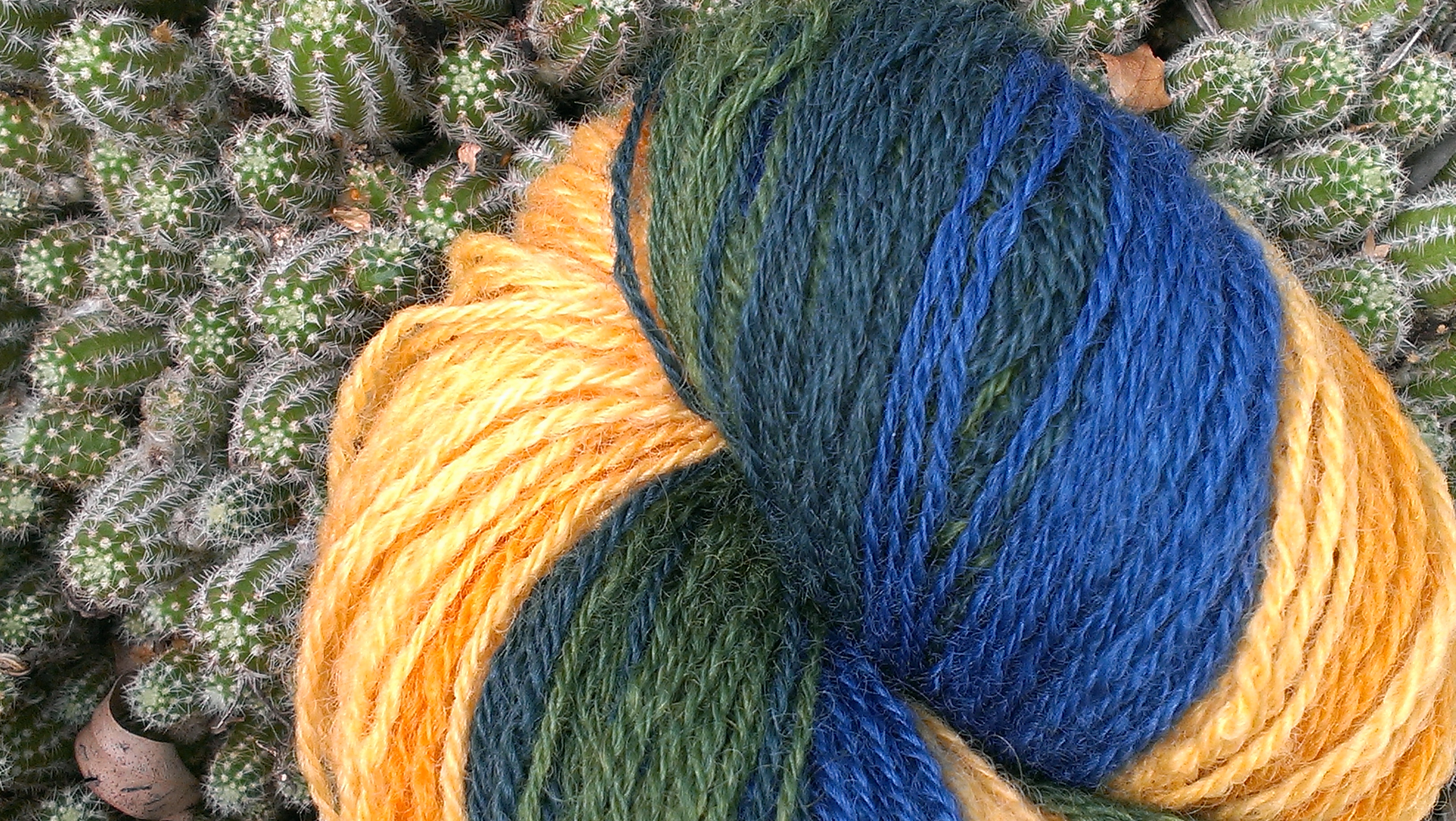
And fleece that is prepared and ready to spin, from my recent coreopsis–osage orange–indigo dyeing season.  So… although I never did get to meet Malcolm, it’s conceivable I’ve spent more hours with my hands in his fleece than anyone…

IMAG2939

And I now have 5 alpaca fleeces and one from Lentil the sheep to think about and share around, such is the generosity of our friends!

7 Comments

Filed under Dye Plants, Eucalypts, Fibre preparation, Natural dyeing, Spinning

Eucalyptus dyed gradient yarns

Some time ago I blogged about dyeing with windfall eucalyptus leaves. I had been dyeing over white corriedale and had quite a range of colours in the range of ochre and caramel through flame orange and… opinions differ about whether that really is red. Here it is, wet from dyeing and ready to be rinsed:

IMAG2316

I divided my fleece up into colour groupings, carded it and pulled a roving straight from the carder drum with a diz.  What a great technique.  You can find it on YouTube, but it was watching a friend from the Guild demonstrate it that really convinced me to try it out.  This Youtube video has an explanation of the same simple homemade diz my friend has made, so maybe she was inspired by that video.  Here are my rovings.  Creating these made me feel like I have learned a few things about fleece preparation.

IMAG2392

Then I created bumps of roving with segments of each colour, lined up to create a gradient from ochre through to reddish. Then, there was spinning and plying and skeining and washing–spinning being a craft of many stages–and now…

wpid-IMAG2742.jpg

I am so happy with this yarn! I can’t wait to share it with the friends whose sheep this wool came from.  Coincidentally, the week I finished this yarn, they invited me to their place for shearing time.

wpid-IMAG2750.jpg

16 Comments

Filed under Eucalypts, Fibre preparation, Natural dyeing, Spinning