Tag Archives: dyeing

More joy of stranded colourwork knitting

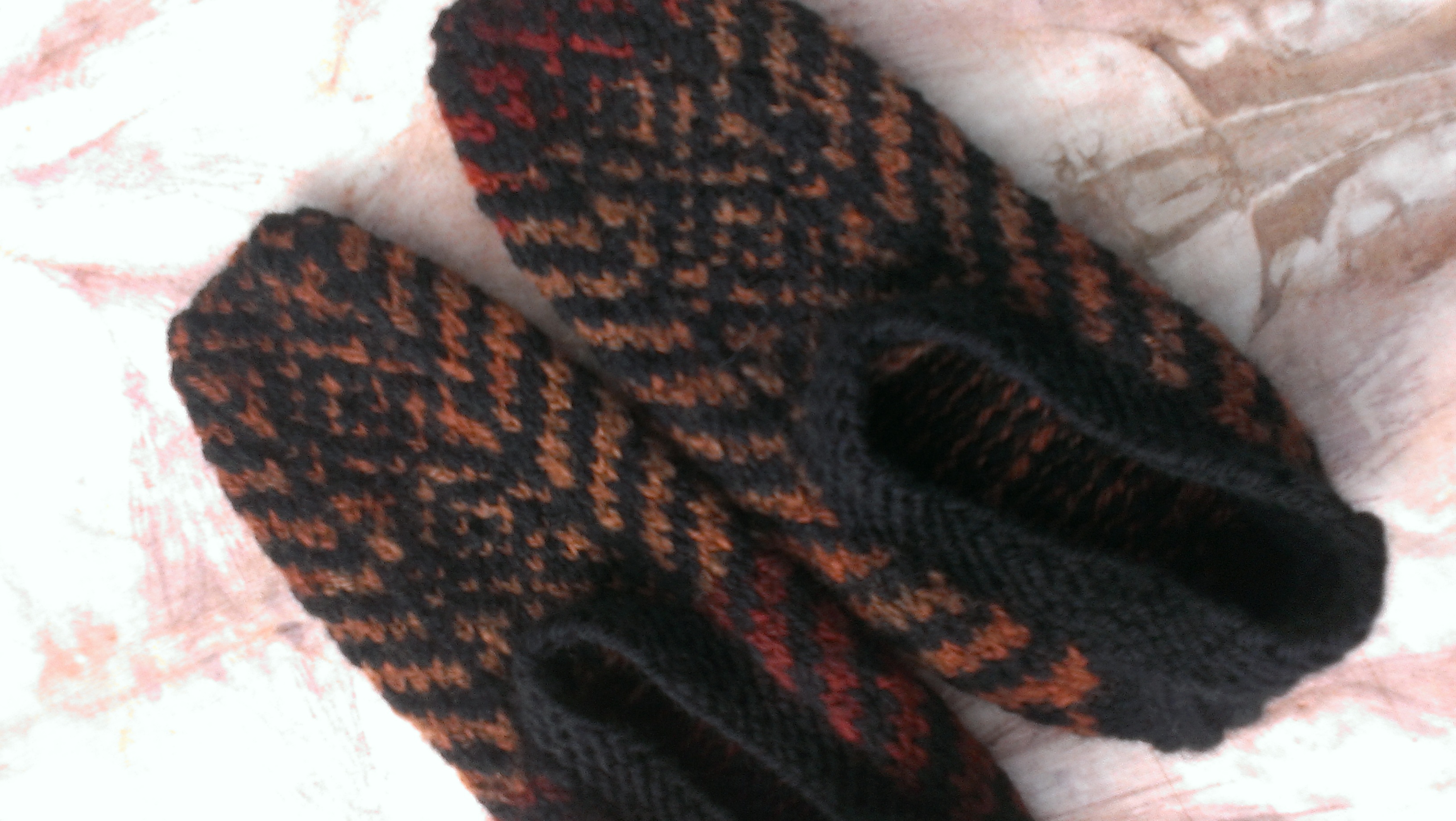
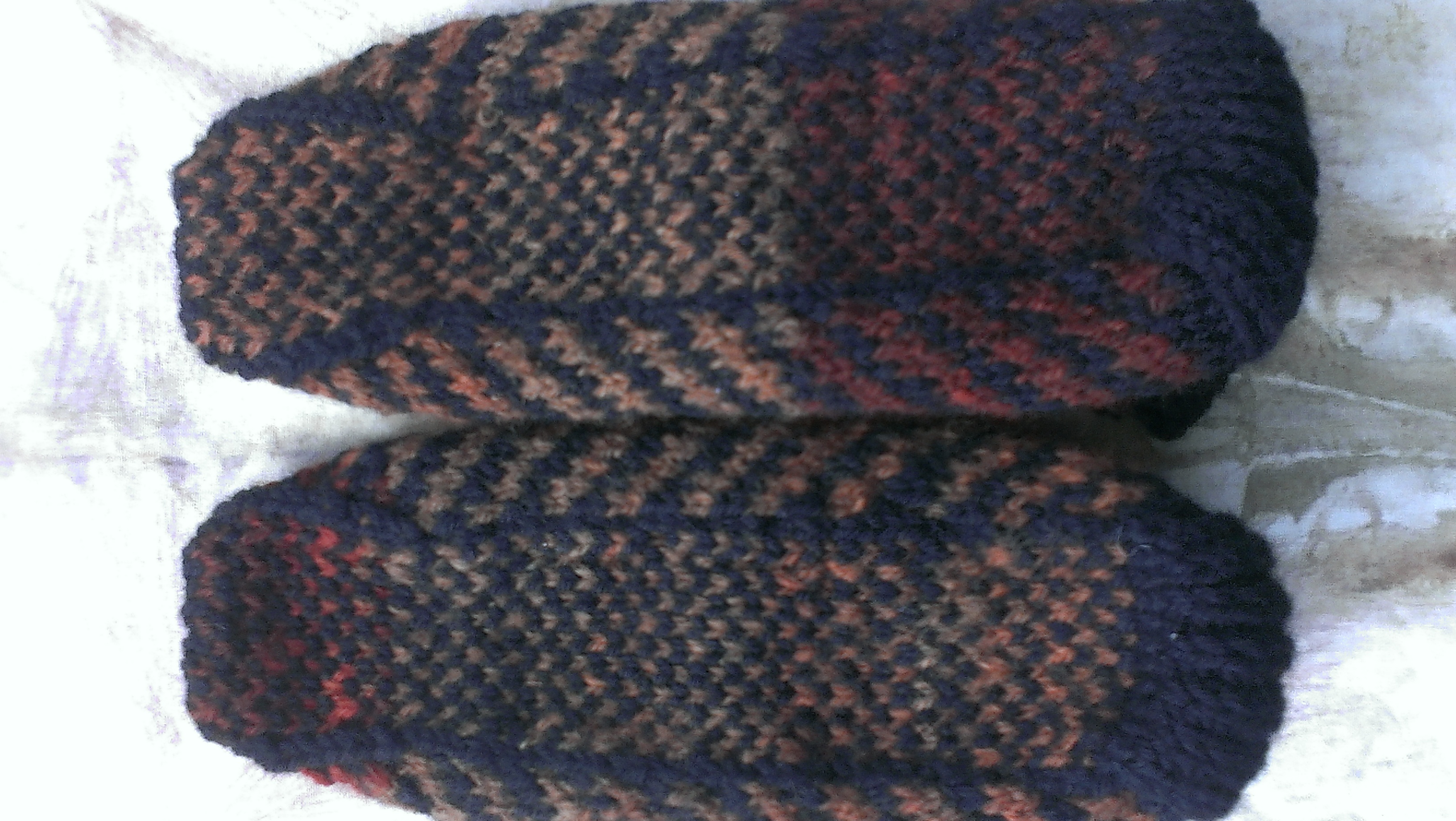
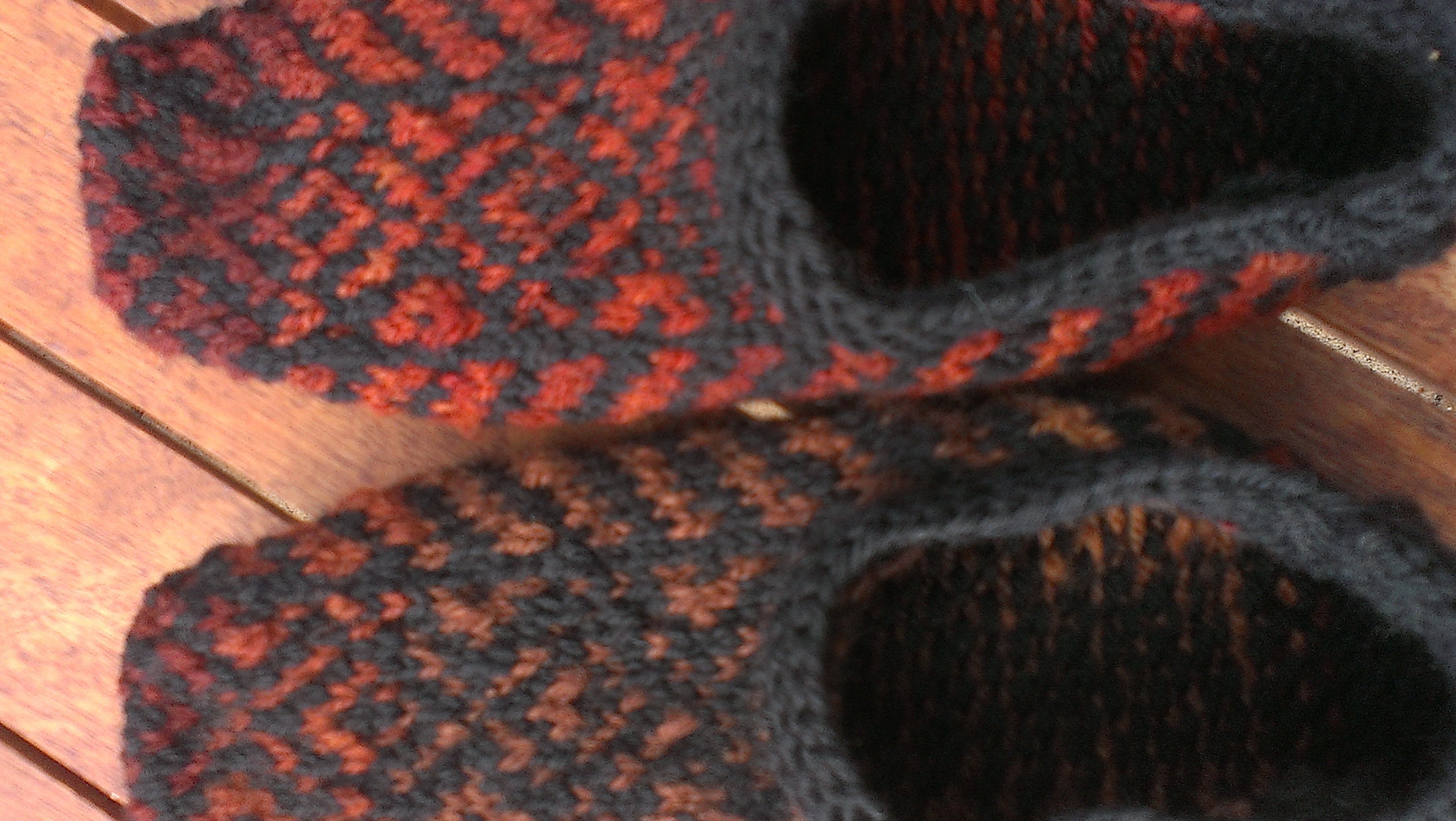
There have been two more pairs of Tingvoll slippers. Too much fun!  Unfortunately, without going into boring detail, I have also been having a great deal of trouble with photographs.  My phone  suffered a major episode while I was in Melbourne and is now on its second trip to repair.  The first visit fixed one problem but rendered the camera absolutely unable to focus.  This has meant discovering not a single photo is in focus when it it too late to take another set… having unfamiliar equipment, no equipment, or using the retired cameras and remembering why they were pensioned off!  So, my apologies for photo quality, and my hopes that my capacity to take pictures for the blog at will, and upload them with similar abandon, and access WordPress on my phone, will return soon.

IMAG1308

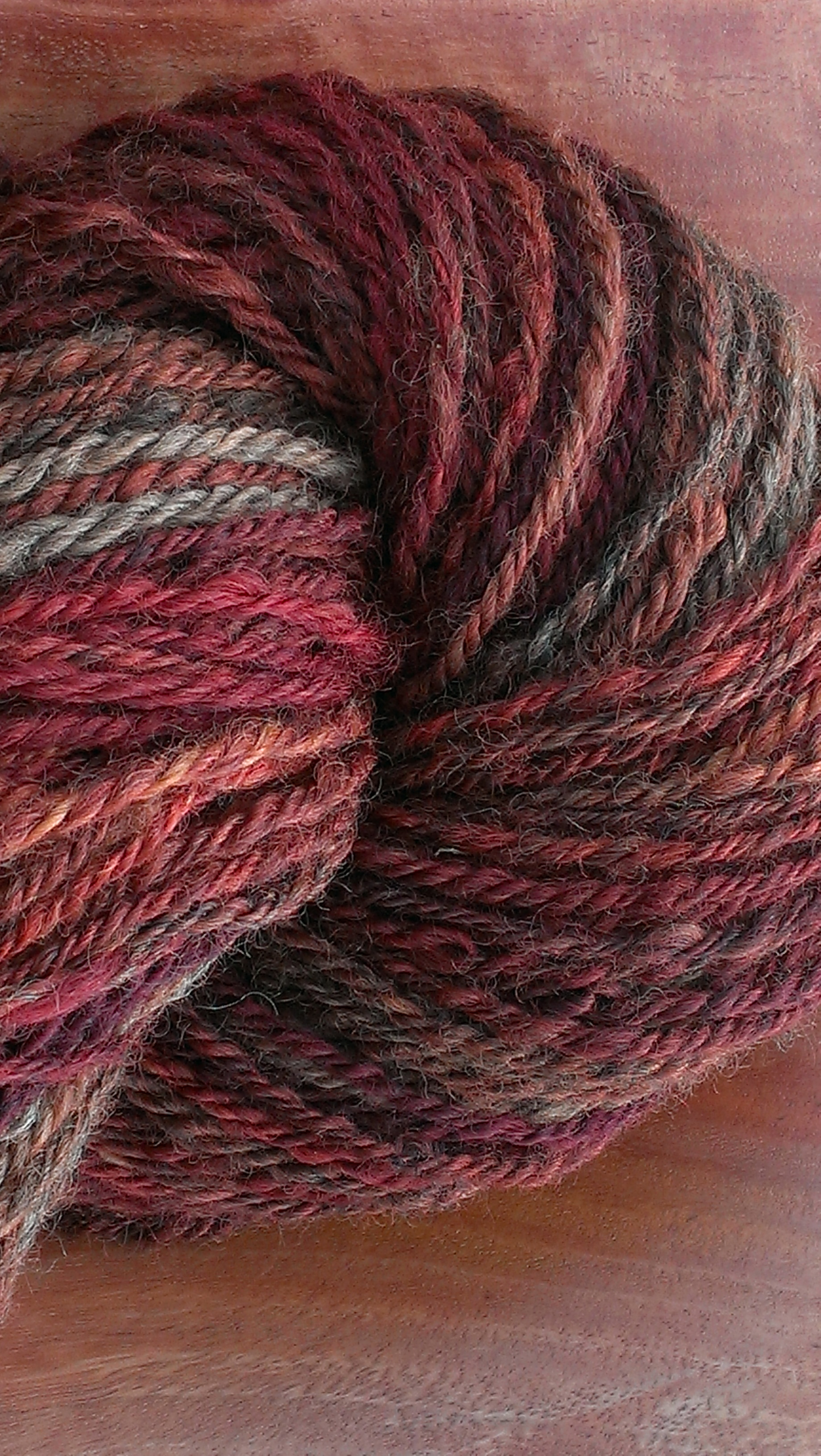
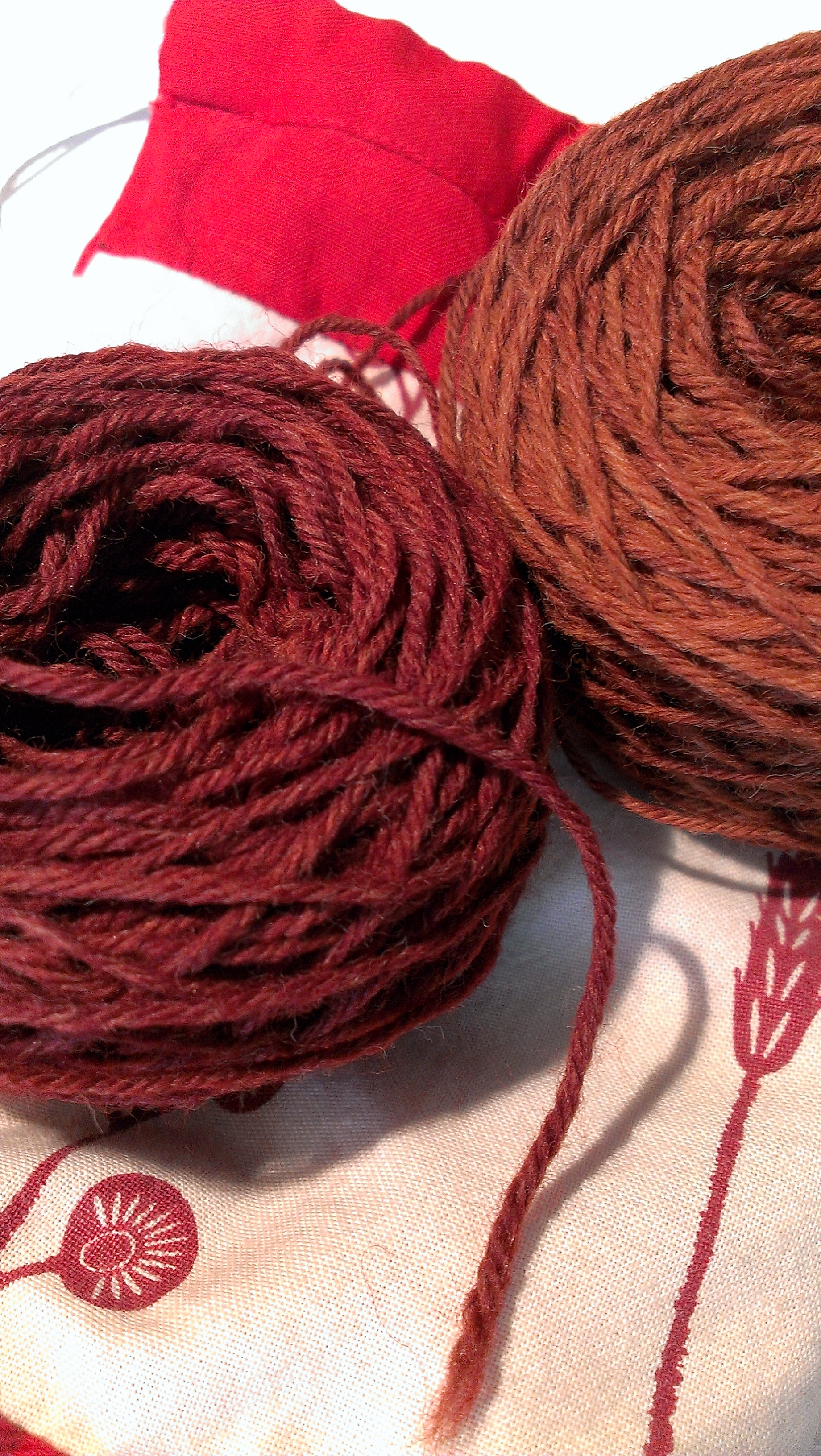
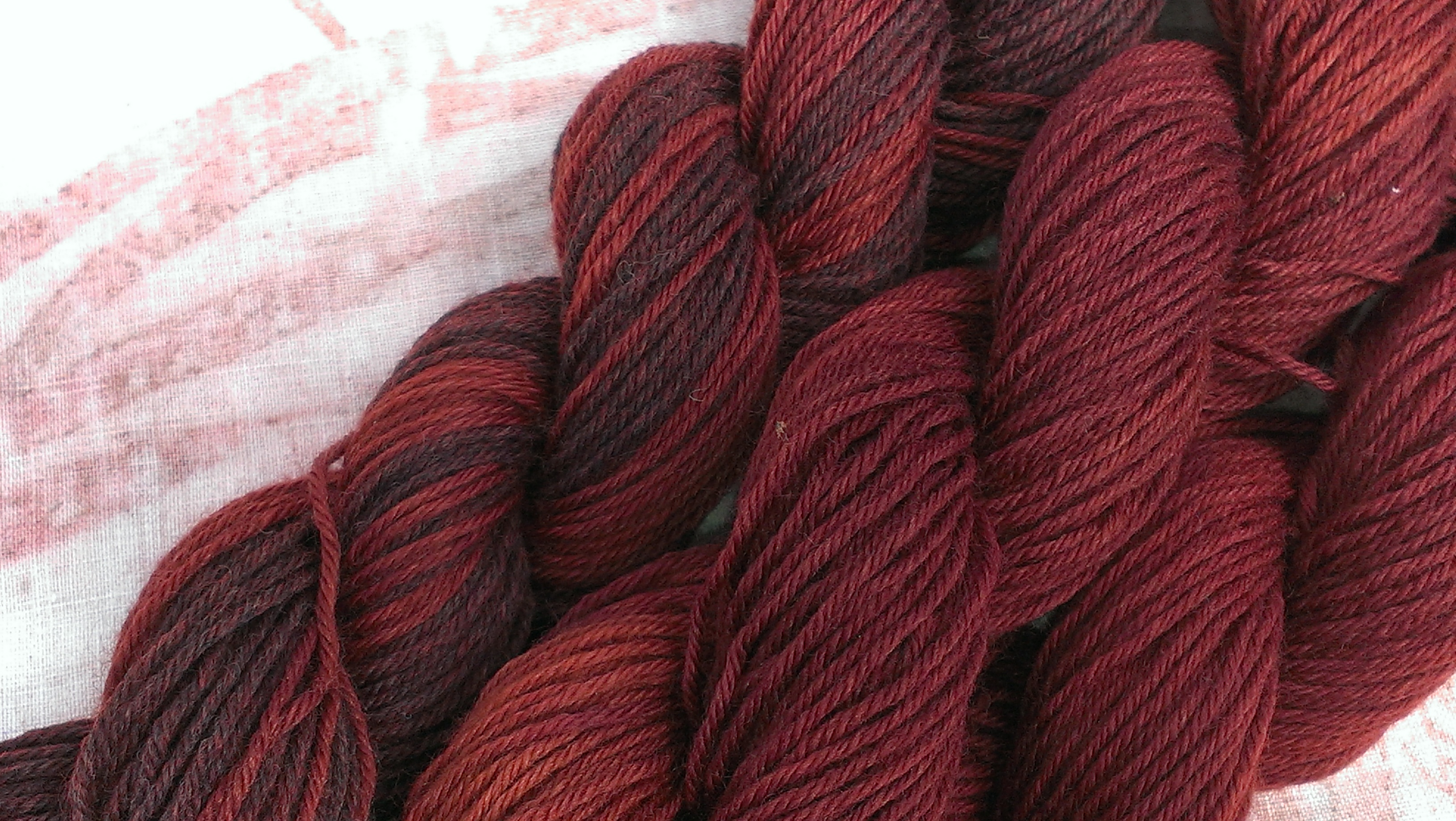
If you have been following along for a long while you might remember my dyeing project using eucalypts over grey Corriedale.  I created two sets of yarn–one where I maintained the colour changes and one where I plied different coloured singles together.  These slippers use the three ply colour-changes-maintained yarn.  Until now, I had struggled to figure out what to make with something so lovely but so chunky.

IMAG0070

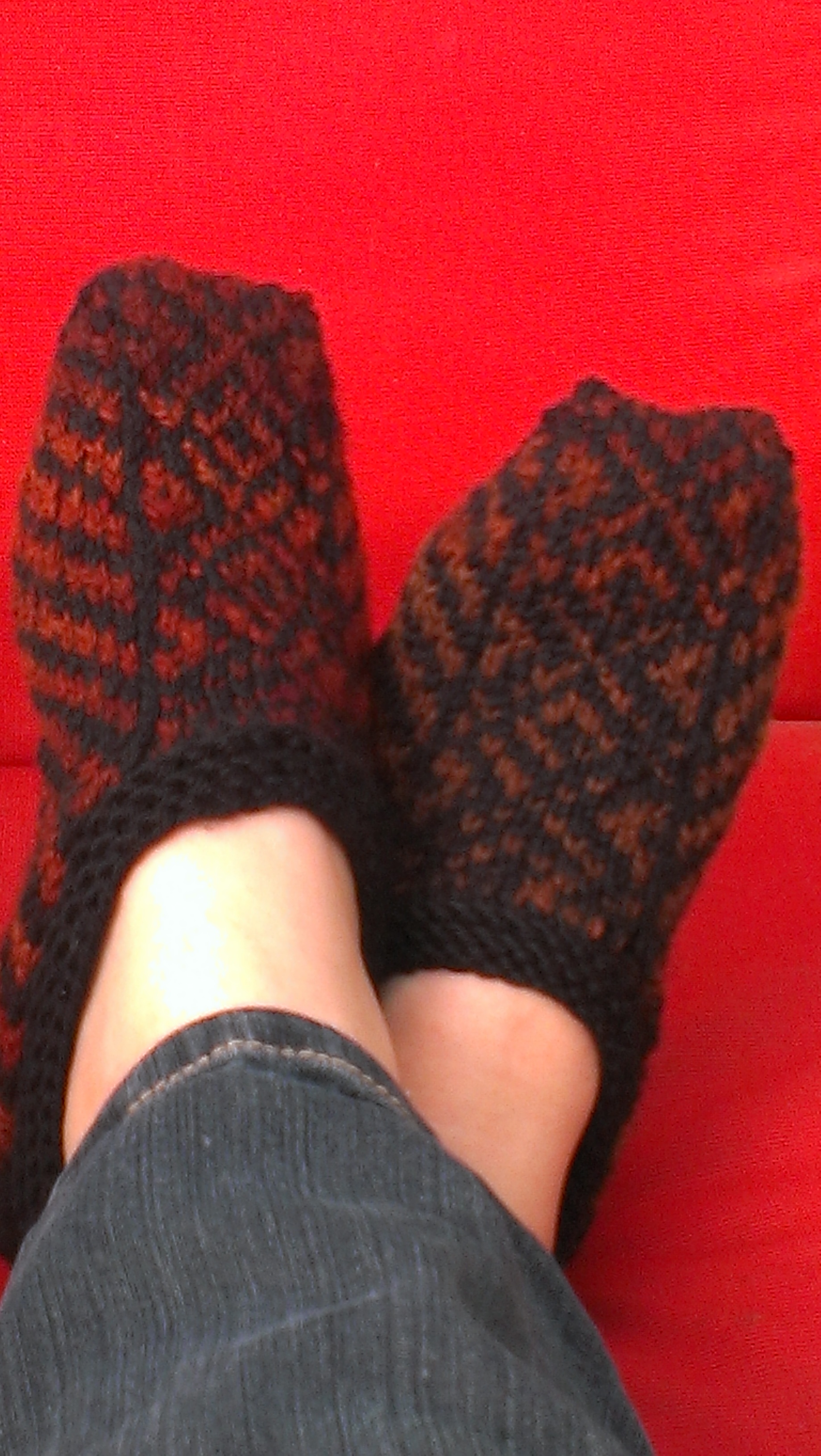
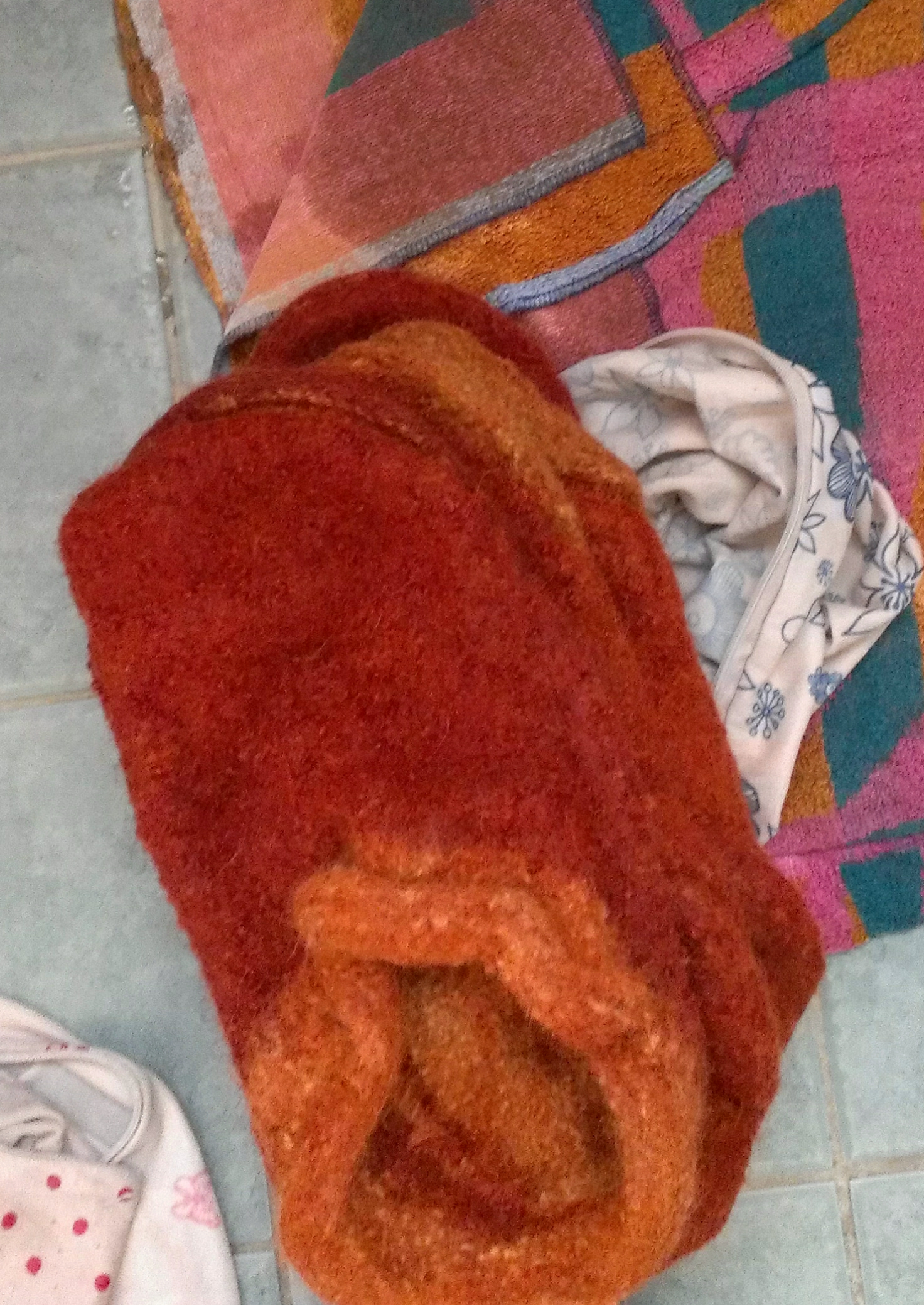
This first pair were made with 5.5 mm needles, my handspun eucalyptus dyed Corriedale wool and Bendigo Woolen Mills 12 ply, leftover from making slippers for a goth friend.

IMAG0071

They have gone to a different friend who is a writer.  She said she might save them to be special writing slippers.  What an exceedingly fine compliment.

IMAG0098

This second pair, knit on 5 mm needles, have gone to another dear one who spends her work life assisting people to recover from trauma.

IMAG0086

I hope they will gladden her heart!

IMAG0090

Having done it three times I began to find the chart so much easier to follow… my sense of following a chart as difficult began to ebb away.  My confidence that I can do colour knitting began to grow stronger.  I began to have that sense of happy familiarity you get with a song you have listened to a lot.  I now have my first set of metal DPNs and I like them very much–I tend to use circulars for most knitting in the round–and I mostly do knit in the round.  But in this case the pattern divides into four sections in a way that I decided very much lent itself to DPNs.  Lovely!  I can only recommend this pattern.

2 Comments

Filed under Knitting

Indigofera Australis crop of 2014

Last year, I tried a cold vinegar process on some indigofera australis. The result was very pale blue, but just the same, blue, especially on silk and linen.  I thought this time I’d stick to silk.  I also found a direct dyeing method described online and decided to try it out on my indigofera australis.

IMAG4610

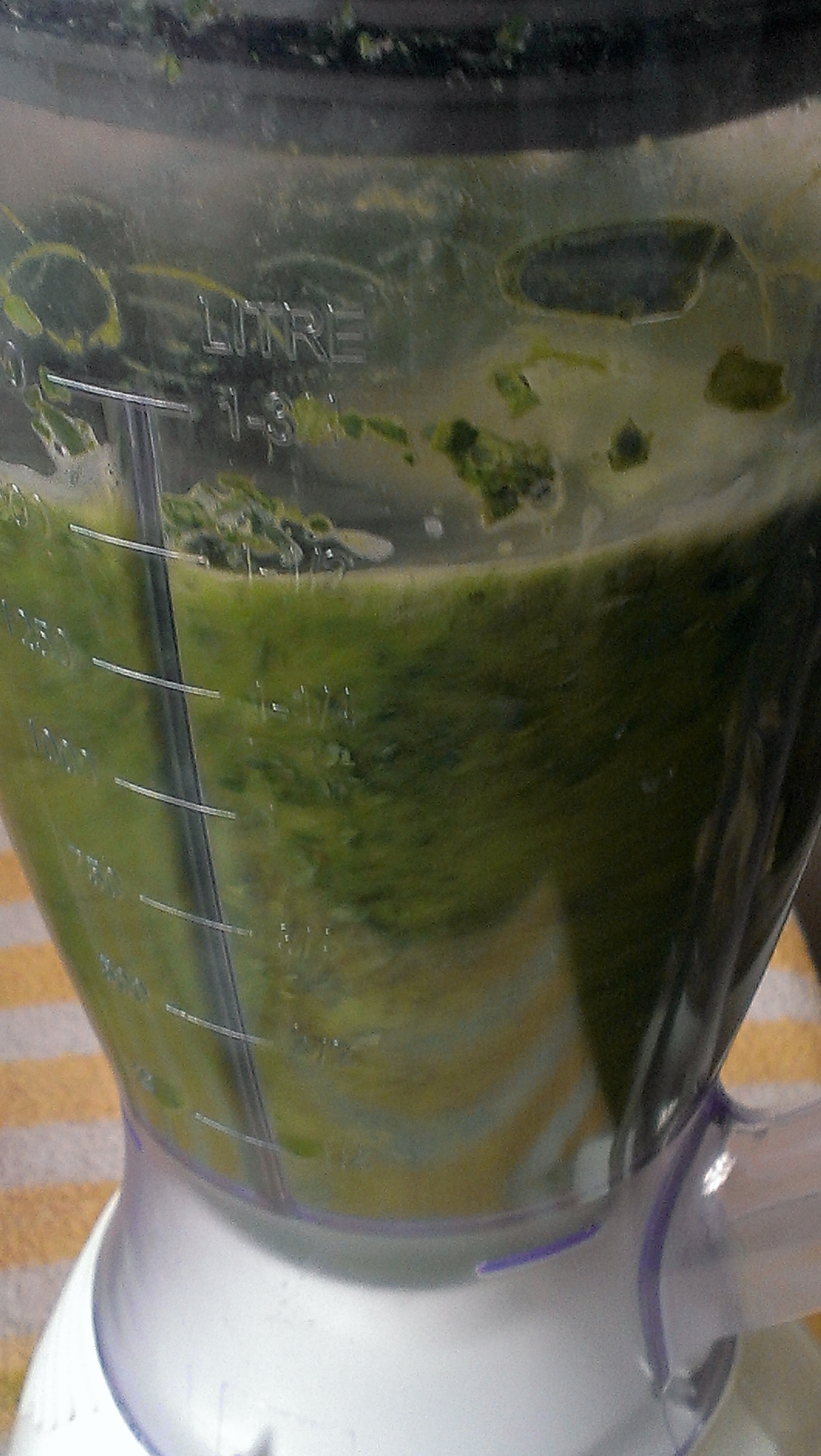
My friend and I stripped the leaves from the stems and into the blender they went.

IMAG4622

Pretty soon we had finely mushed leaves.

IMAG4624

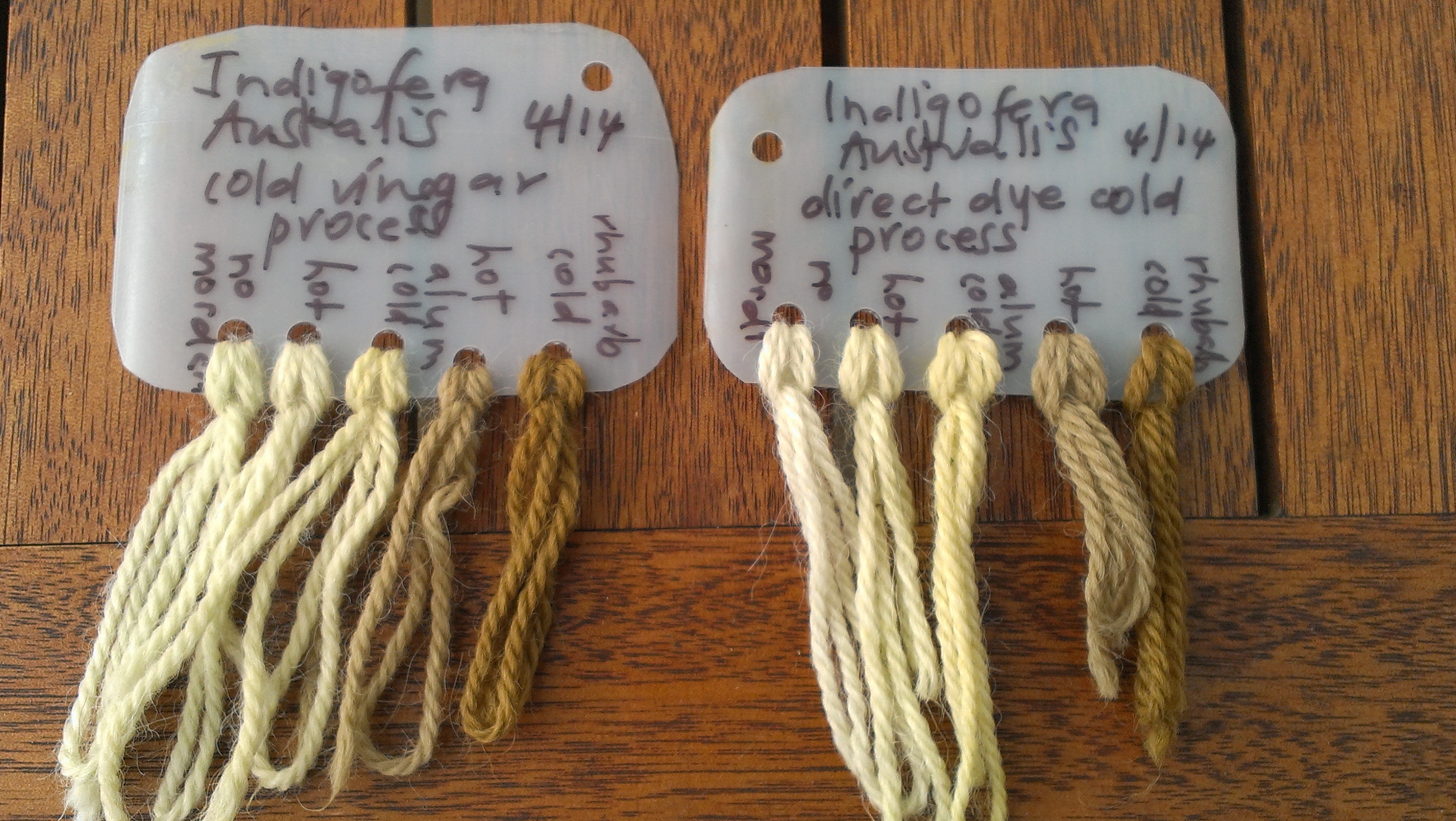
I tried both the  vinegar method and the direct dye method with no success to speak of, even after repeated dippings.

IMAG4627

Remember that the wool on the right of each sample card has been mordanted with rhubarb leaf, so wasn’t white to begin with.

IMAG4648

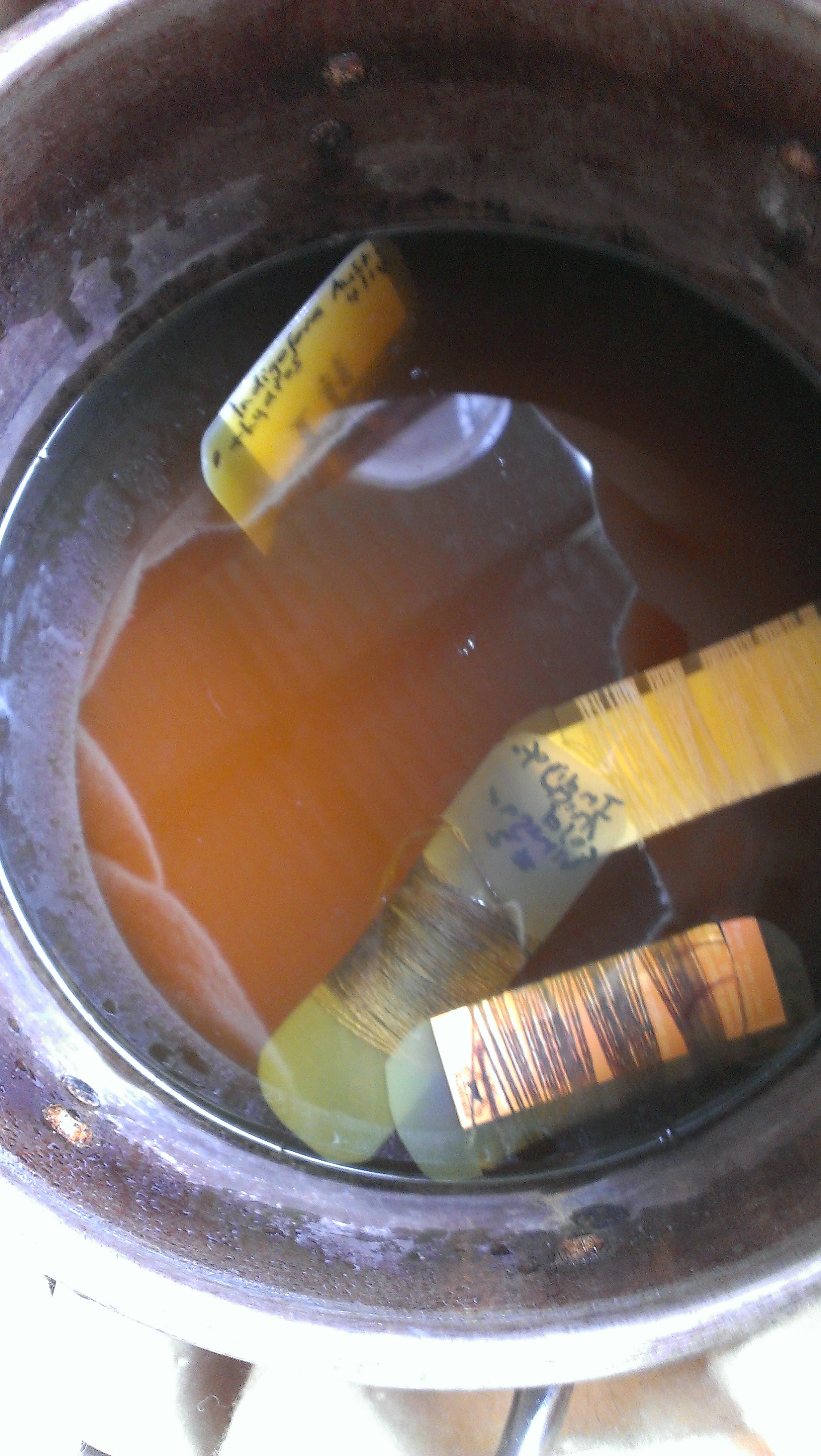
Well, I thought I had nothing to lose by leaving the leaves and the liquid to sit for a few days and trying again, so I reunited the pulverised leaves and the two dye baths.

IMAG4651

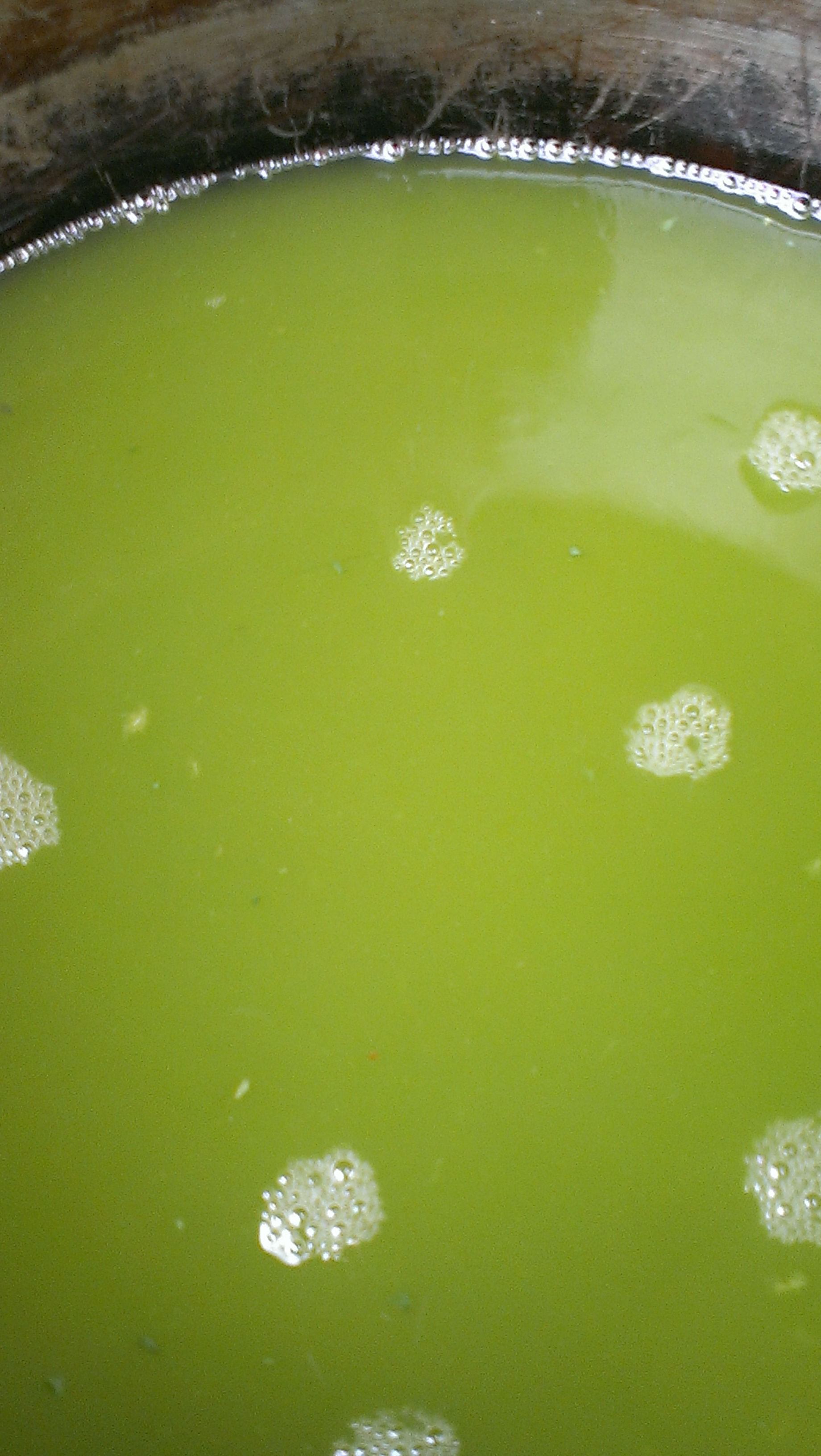
I thought I’d try hydrosulphite, the last resort in case of indigo failure, in my case.  I warmed the liquid and strained out the leaves.

IMAG4654

I have recently received a Ph meter as a gift, so I aimed for 10.5 and added washing soda in solution until I reached it.  The result was a striking yellow.

IMAG4657

However… absolutely no blue whatsoever, not even an improvement on samples I thought I might overdye for improved colour.

IMAG4659

Time of harvest?    User error in the process?  The Ph meter isn’t properly calibrated?  The thermometer is out of whack (it certainly didn’t agree with the one on the Ph meter, so I knew one of them must be wrong–and I now know it was the thermometer)?  I have no idea, honestly.  I’ve decided to leave my one Japanese indigo plant to keep for seed…

10 Comments

Filed under Dye Plants, Natural dyeing

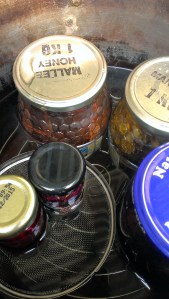
Opening some jars and filling others…

Once upon a time, I used to make ginger beer, recycling glass beer bottles for the purpose.  We had some with us one time years ago when I was travelling by (even-then-antique) Kombi.  We stopped at a wonderful national park, near Hattah Lakes.  There was a long walk in intense dry heat.  We walked much further than we planned, perhaps having failed to fully understand the map on the sign before setting out.  The water in the lakes was so low that we eventually realised we were not seeing eels in the lake, we were seeing the spines of large fish as they swam in water so shallow that it was barely as deep as the fish were tall.  We got back to the Kombi, and since we’d been walking for hours, and we were on holiday, opened up the back of the van and lay down on the bed for a nap.  We’d been there a little while when there was an almighty bang.  We sat up pretty quickly, because to our untrained ears, it sounded like a gunshot.  There were no other people in sight and only one car in the distance.  All fell quiet.  No dramatic action.  Eventually realisation dawned on one of us, and the three way (gas–electric–car battery) fridge was opened.  Inside it were the remains of a bottle of ginger beer which had exploded under the pressure of its own contents, sprayed though the vegies and suchlike.  Three cheers for the fridge keeping the glass shards safely contained.  Long story short–all bottles of ginger beer stashed under the bed were emptied right there and then, and I never put ginger beer in glass again, except once the lid was off!

IMAG4581

In case you can’t tell, this is a sideways introduction to my circumspection about the state of my steeping jars of dyestuff.  I’ve had some difficulty getting a good seal with with the Stuff, Steep and Store method.  The first time,  I think I raised the temperature too quickly.  It’s a vice I’ve been known to indulge in (or a problem I’ve suffered from, depending on source of heat) when preserving fruit, too.  I resealed some jars and took additional steps to ensure a good seal.  But several of the lids began to dome up again (or just plain leak). This one (pelargonium petals) leaked, as you can see.

IMAG4611

Luckily I had stored it on top of another jar.  Ahem.  So much dye lost!

IMAG4613

The very reverse of a vacuum seal (which is the intention), all of this suggested to me the contents were fermenting.  Perhaps the lids were damaged.  Perhaps my thermometer was actually faulty… I went off and checked when I had this thought on the weekend.  Yes, the thermometer was faulty–the little glass blob that should have held it in a fixed position had clearly broken away unnoticed, allowing the whole business part to slide down by about ten degrees.  So… back to the drawing board.  I am glad I didn’t use that thermometer for preserving peaches and plums!  The jars of fruit all came out just fine, which leads me to think that Stuff, Steep and Store should work for me, as it undoubtedly does for others.  Clearly I can manage a vacuum seal under favourable circumstances.  The good news on my jars of dye is that it looks like I got colour even though these jars haven’t steeped as long as I planned.  Here they are wet from their baths… and not smelling especially fermented.

IMAG0068

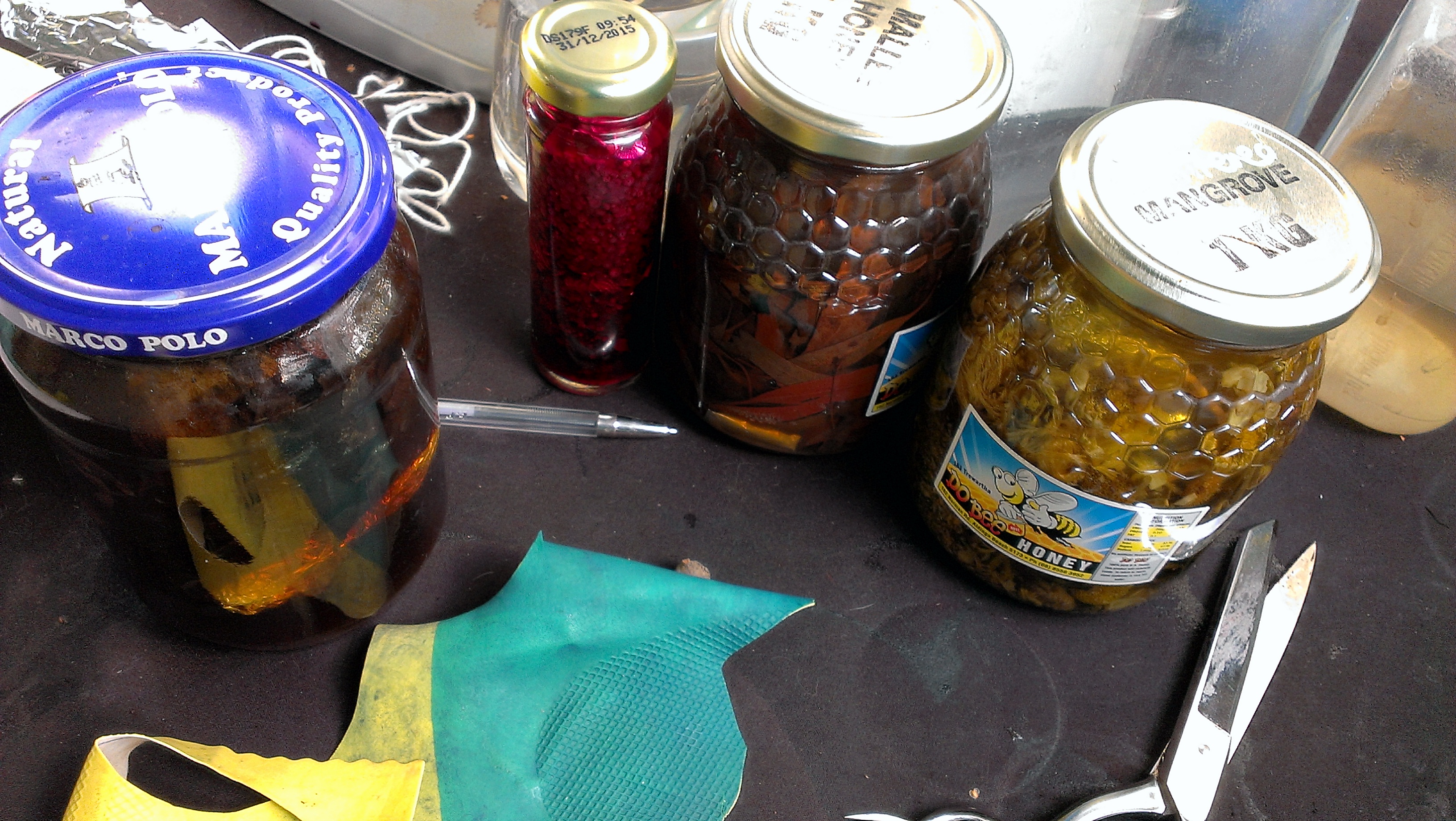
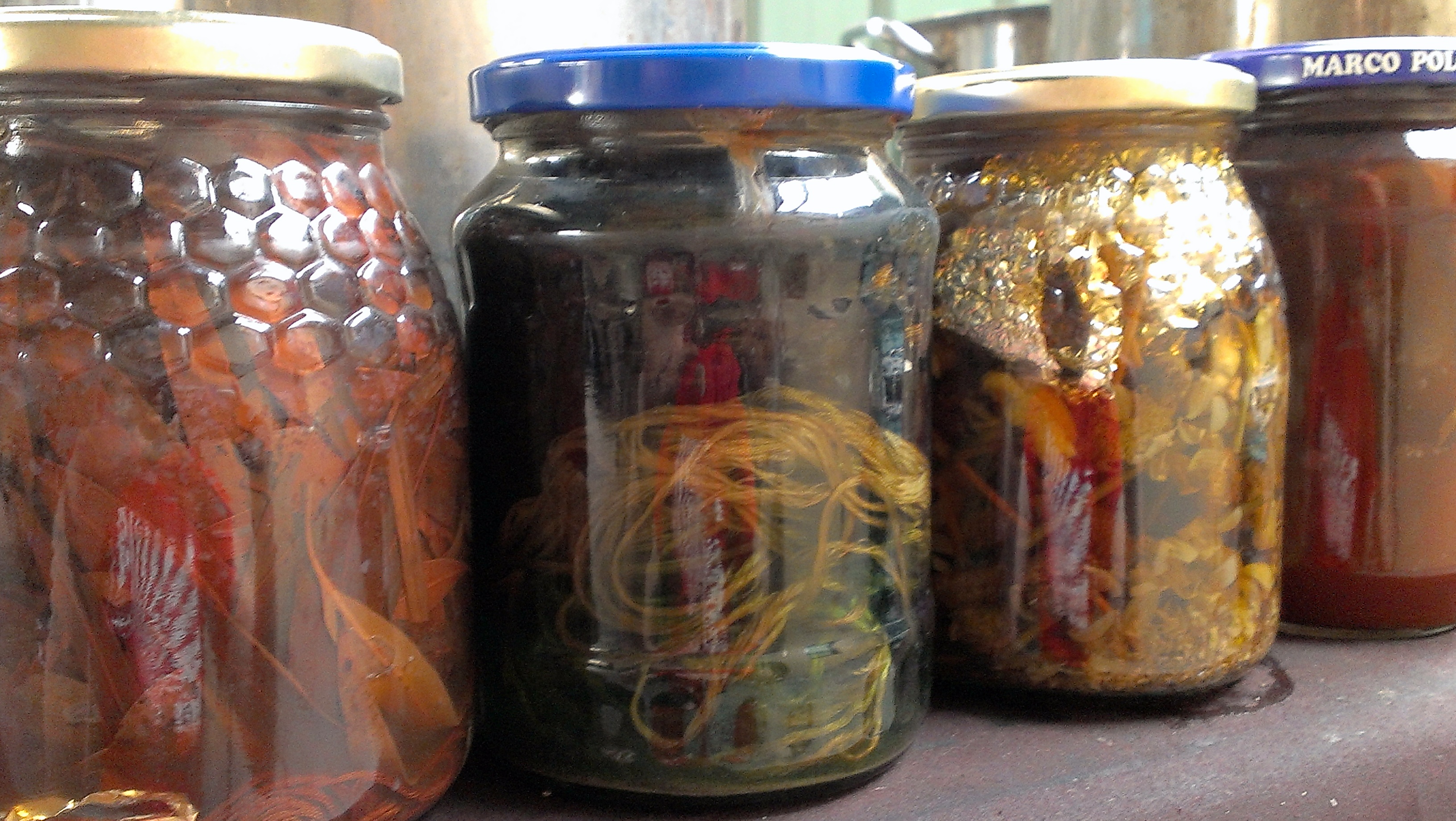
From left to right, pelargonium petals (greyer and less blue than the image);  dyers’ chamomile,  brown onion skins, and E Scoparia exhaust dye bath on various silk threads.  Since it’s my patience and my thermometer and not the method that are at fault… I decided to try again.

IMAG0046

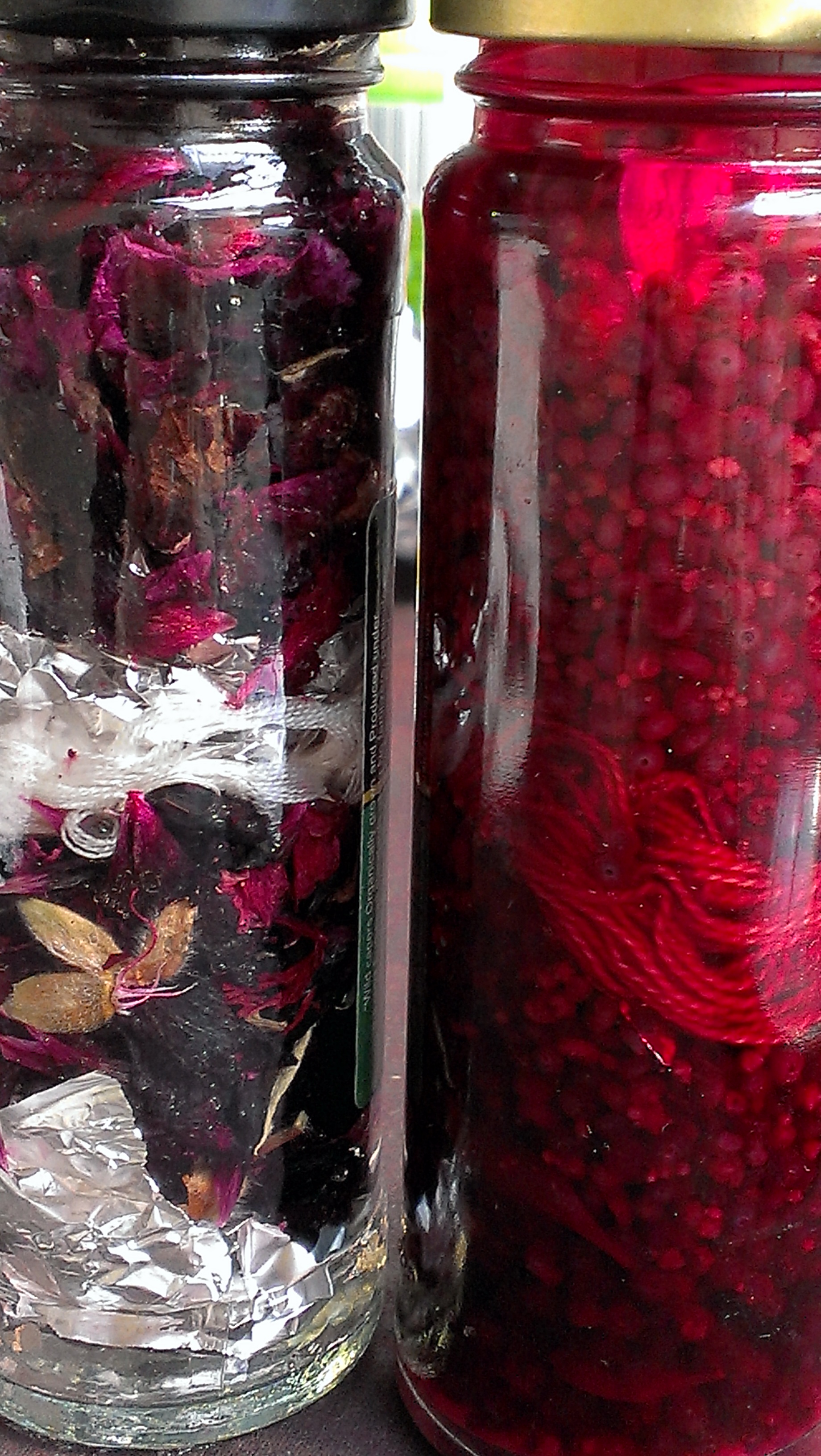
From left to right (below): red hibiscus flowers, dried prunus leaves and fallen flowers from an unusual, purple-leaved hibiscus I found almost at the end of its flowering season when I visited the Himeji Japanese gardens on the weekend.  Each with vinegar, sea water, silk/cotton thread and aluminium foil.  Wait and see!

IMAG0081


7 Comments

Filed under Dye Plants, Natural dyeing

Drive-by dyeing and mending

On my bike ride home from work (about a 40 minute ride), I pass just one Eucalyptus Cinerea. Well, there are two, but one is inside someone’s front garden.  A person has to have some boundaries!  The street tree had dropped a small branch.

IMAG4127

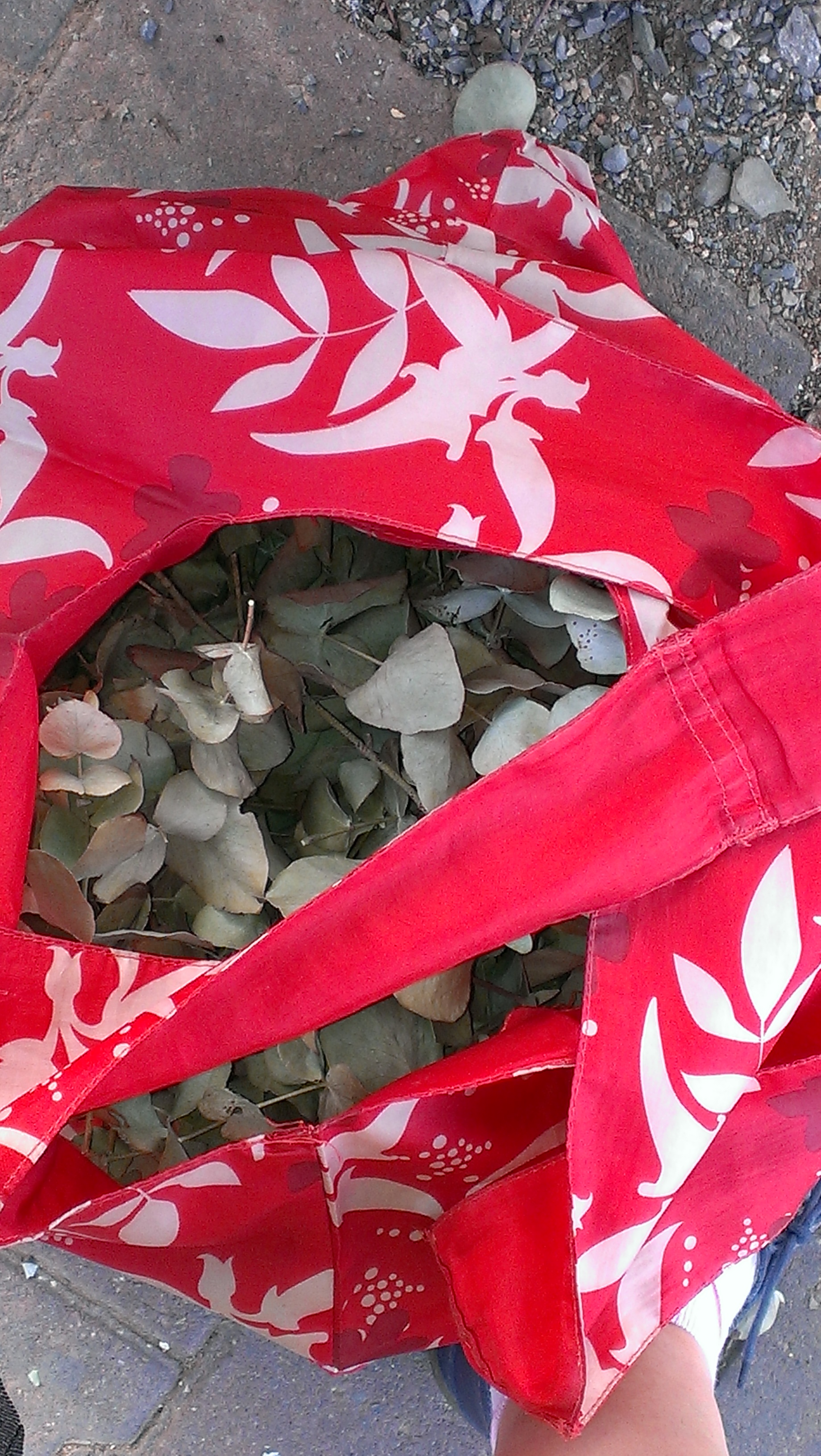
I decided I’d better collect it.  Usually I carry a calico bag in my bike pannier for such contingencies, but this was what I found when I scrabbled about in the bottom of my pannier on the day, so in went all the stray leaves I could find.

IMAG4131

This tree has had to contend with a lot.  It has had a  very strange pruning job designed to protect the electrical wires that now pass through its branches.  The pruning took out a lot of the canopy, but the tree is still standing.  For this, I am grateful.

IMAG4128

Recent events have caused me to reflect on the way I think about trees on my regular routes… like old acquaintances.  I think about them as I pass, the way I think of people when I pass near their homes without visiting.  I notice what happens to them.  I check them over when I have the chance.  I remember how they were when they were younger, or before that accident befell them.  It’s not entirely unlike the way I notice people I don’t know well, but see out and about in the neighbourhood regularly.

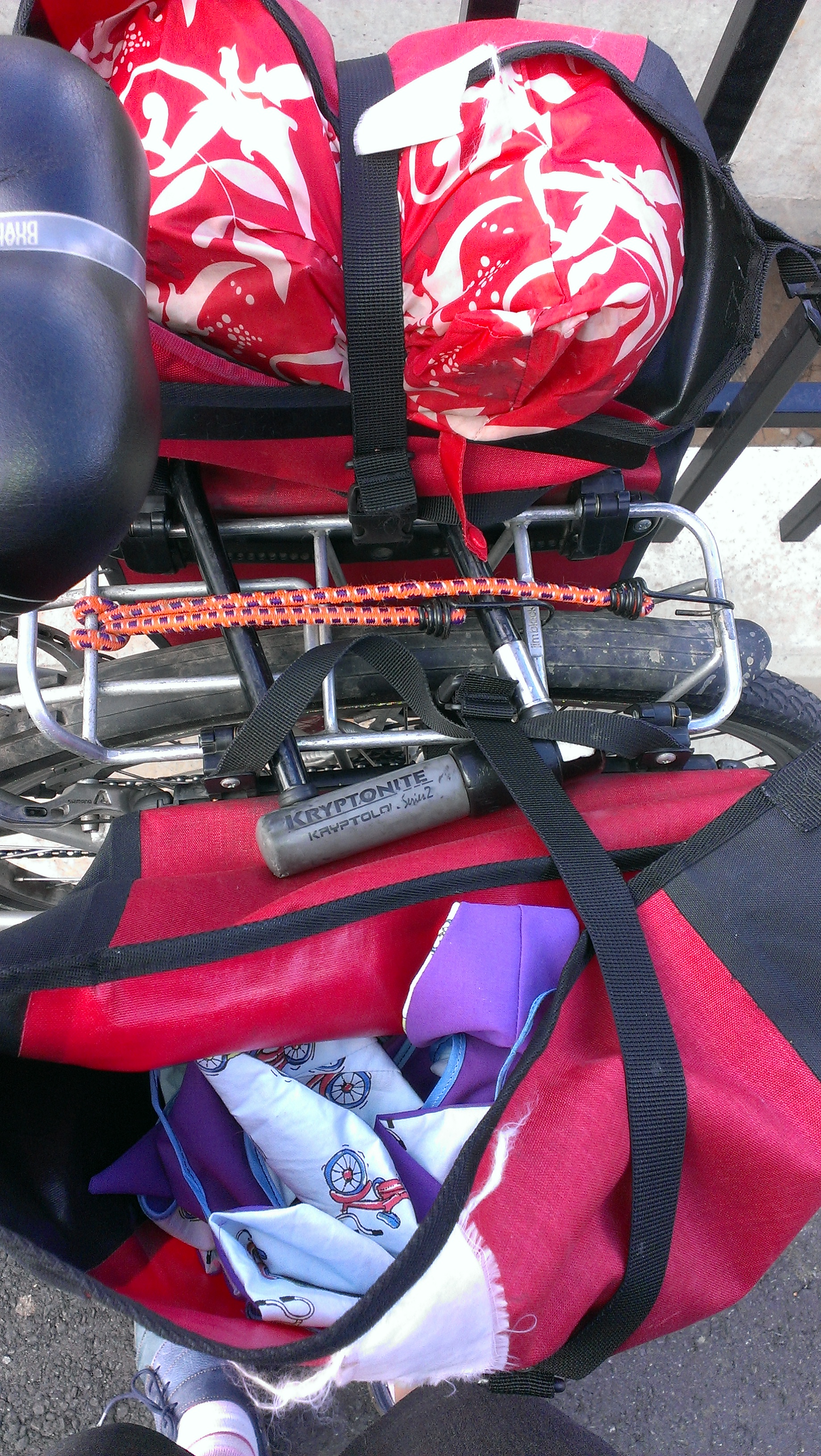
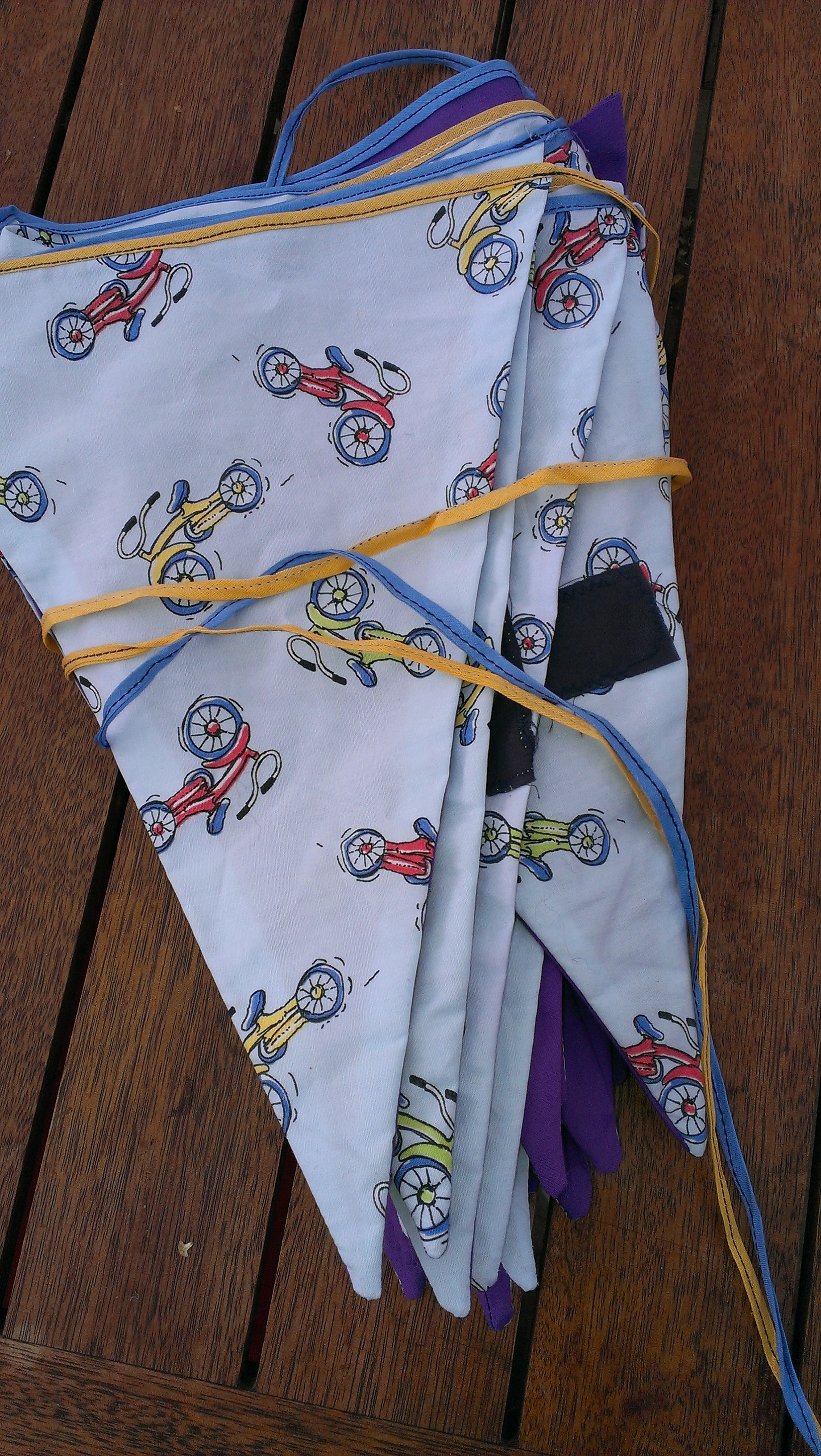
Further along, I saw that my “thanks for cycling” bunting had been ripped and some of it was lying on the ground.  Soon it was in my other pannier headed for the mending pile.

IMAG4135

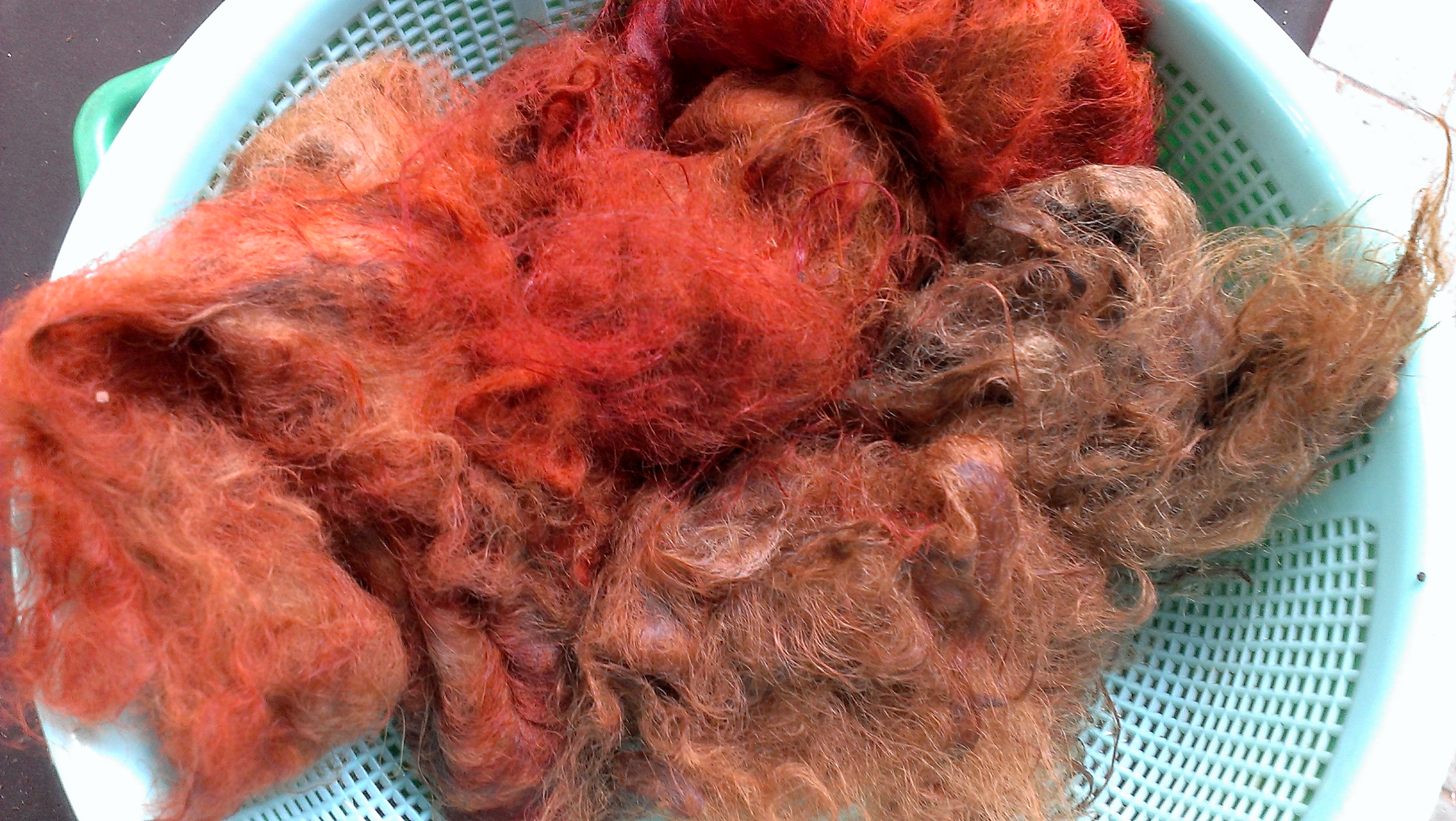
A few days later, the E Cinerea made it into the dye pot and produced its usual dependable flamelike orange.  I also collected some ironbark leaves that had fallen in the parklands near where we had exercise class.  Once the E Cinerea was all but exhausted I reused that dyebath with the ironbark leaves, thinking I would save water and energy, but clearly this was not E Sideroxylon–it produced that sad, damp little pile of fawn alpaca on the right.

IMAG4183

I have come to regard this as a sign: The orange leaves in the picture below are the E Cinerea leaves, which have gone from silver-grey-green to orange in the dyebath.  The ironbark leaves, on the other hand, have remained a robustly green shade even after cooking.

IMAG4180

And, I’ve mended the bunting ready to hang it again on a suitable occasion…

IMAG4184

4 Comments

Filed under Craftivism, Dye Plants, Eucalypts, Natural dyeing, Neighbourhood pleasures

Eucalyptus Stricklandii

Eucalyptus Stricklandii is in bloom at the moment.

IMAG3745

There are a row of these trees growing along a main road near a friend’s place in the Northern suburbs, and I have admired them each time I’ve visited.  This time I stopped and sampled as well.  I wasn’t the only one. The tree was full of bees, but bees don’t understand about pausing graciously when someone offers to take your picture and make you famous (ahem!) on the web.

IMAG3751

There were also fully mature fruit:

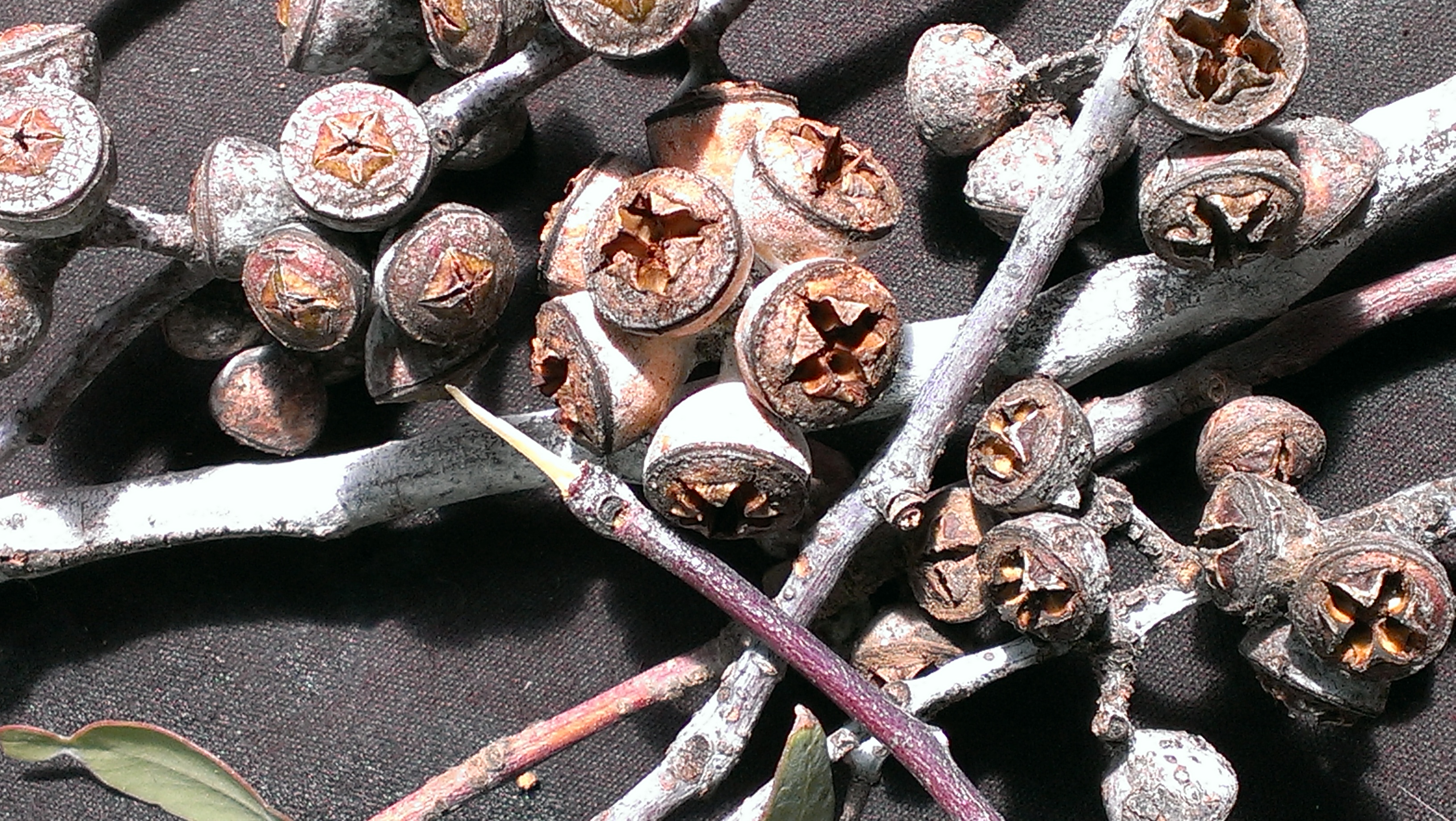
IMAG3791

And fruit that were nearing maturity:

IMAG3756

Buds as well, since this is a eucalypt…

IMAG3753

And rather spectacular bark.

IMAG3758

Here’s the tree as a whole…

IMAG3760

And someone’s tenderly crafted home, fallen to the ground, neatly combining flyscreen wire with vegetation and paper that has been weathered until pliable.

IMAG3762

Cocoa and chocolate?  Chestnut and walnut?

IMAG3961

8 Comments

Filed under Dye Plants, Eucalypts, Natural dyeing

Sock yarn overdyeing progress and an indigo update

Socks are one of my go-to projects.  I’m sure you’ve noticed.  They are portable and don’t require a pattern (for me, any more) and so they accompany me on public transport, to meetings and conferences, picnics and TV shows. Admittedly, I am not usually making fancy socks.

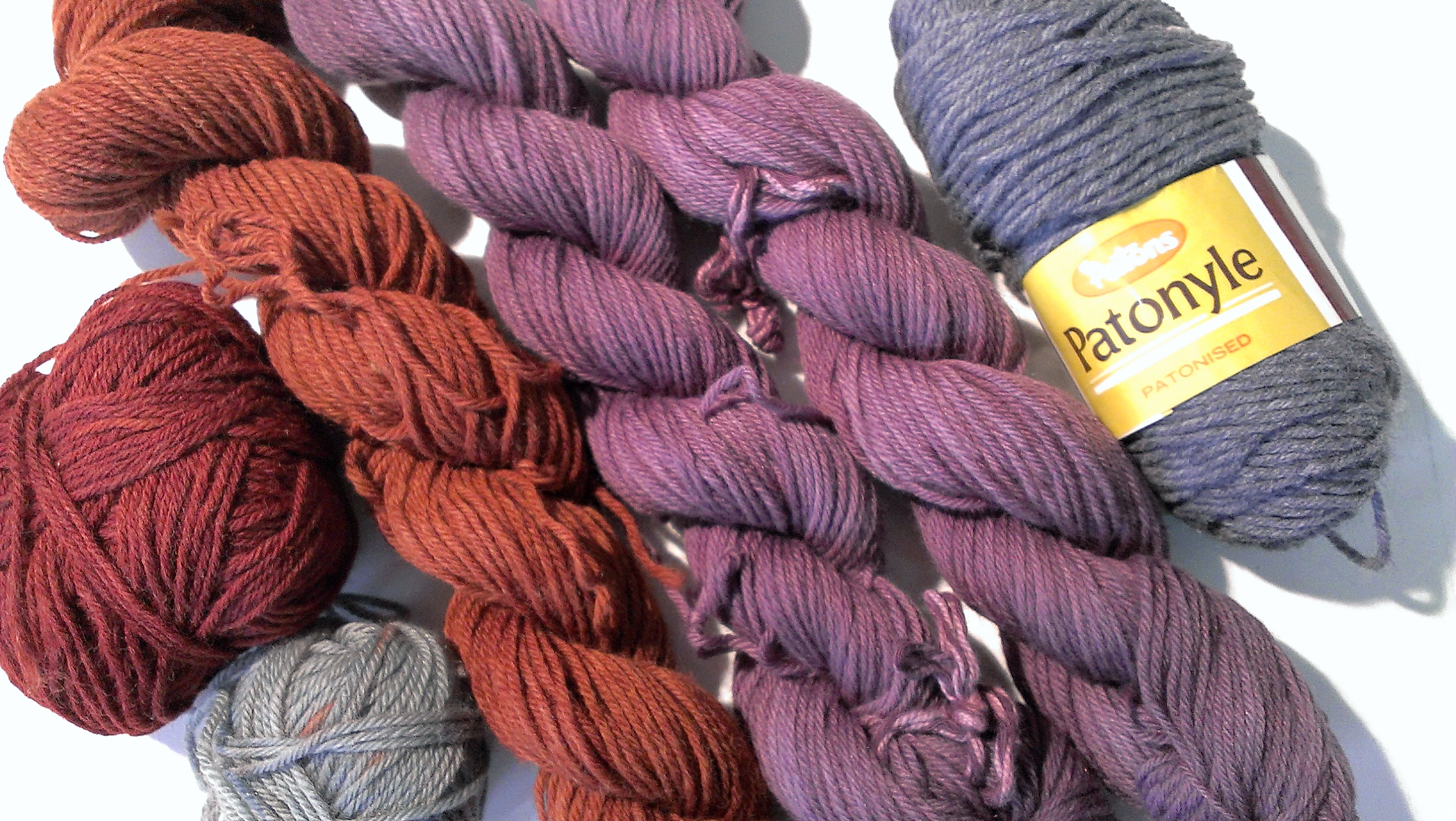
A couple of years back I acquired a lot of pre-loved patonyle (this is a wool/nylon blend and probably one of the best known Australian sock yarns).  Patonyle has been around a long time.  When I found this lot at a garage sale some of it was in 1 oz balls (Australia gave up imperial measures in 1970–to oversimplify).  I’ve been working my way through this haul for quite some time.  Today I pulled out all my ball bands.  Some have that souped up 19760s-70s styling (in lime green and purple–at top right), the pallid specimen in the top left corner is the current 100g format, the only ball I bought new–and those ochre coloured wrappers surely predate the 1970s.  And … there are quite a few of them!

IMAG3736

No wonder it has taken awhile to turn it all into socks.  I’ve used this wool with all manner of natural dyes, with greater and lesser success.  After the recent indigo saga began (update below), I looked at the remainder.  Some dyed with eucalypt, some with plum pine, which I now know won’t last long, a leftover black bean ball and some in the original grey.

IMAG3735

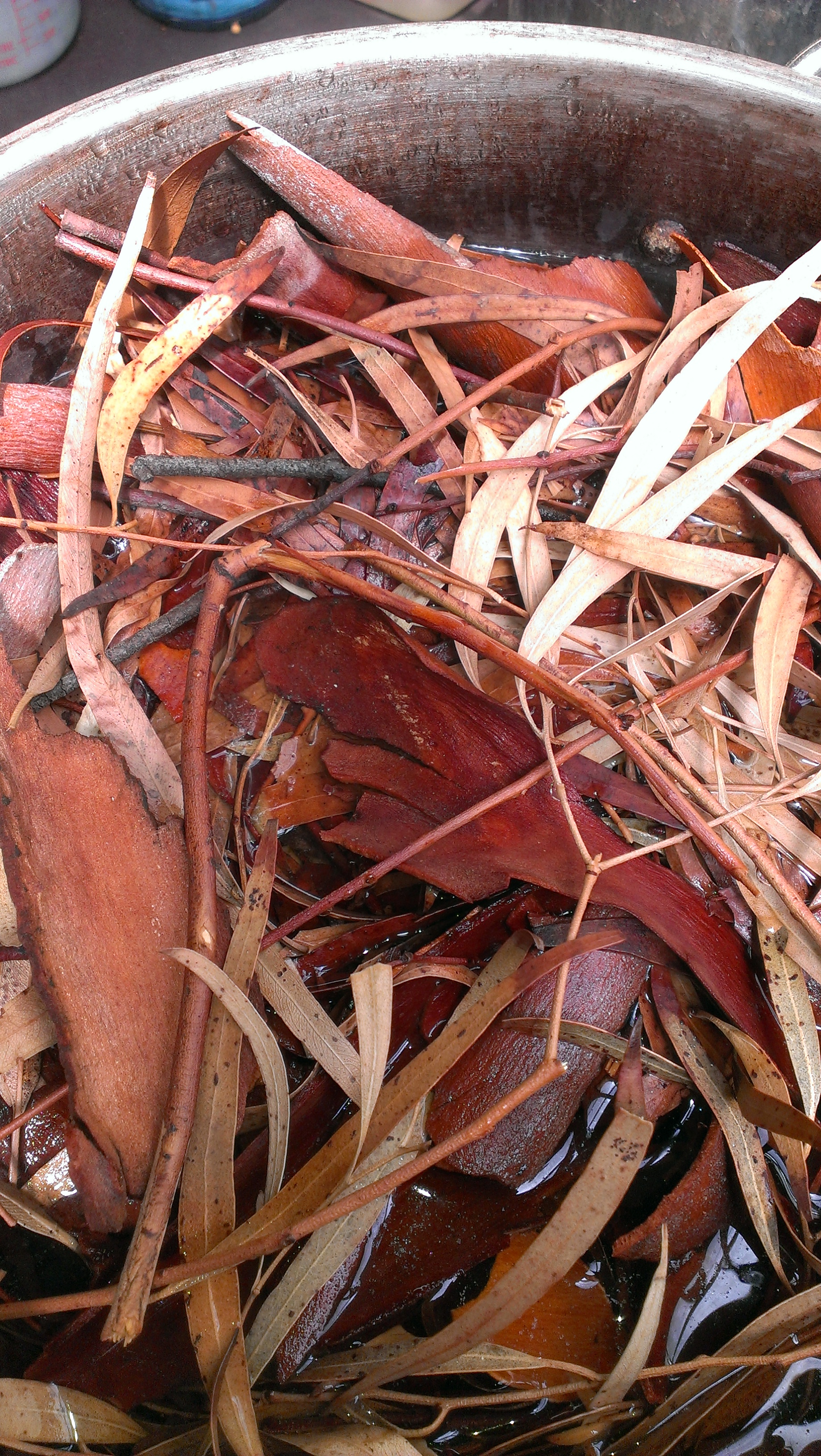
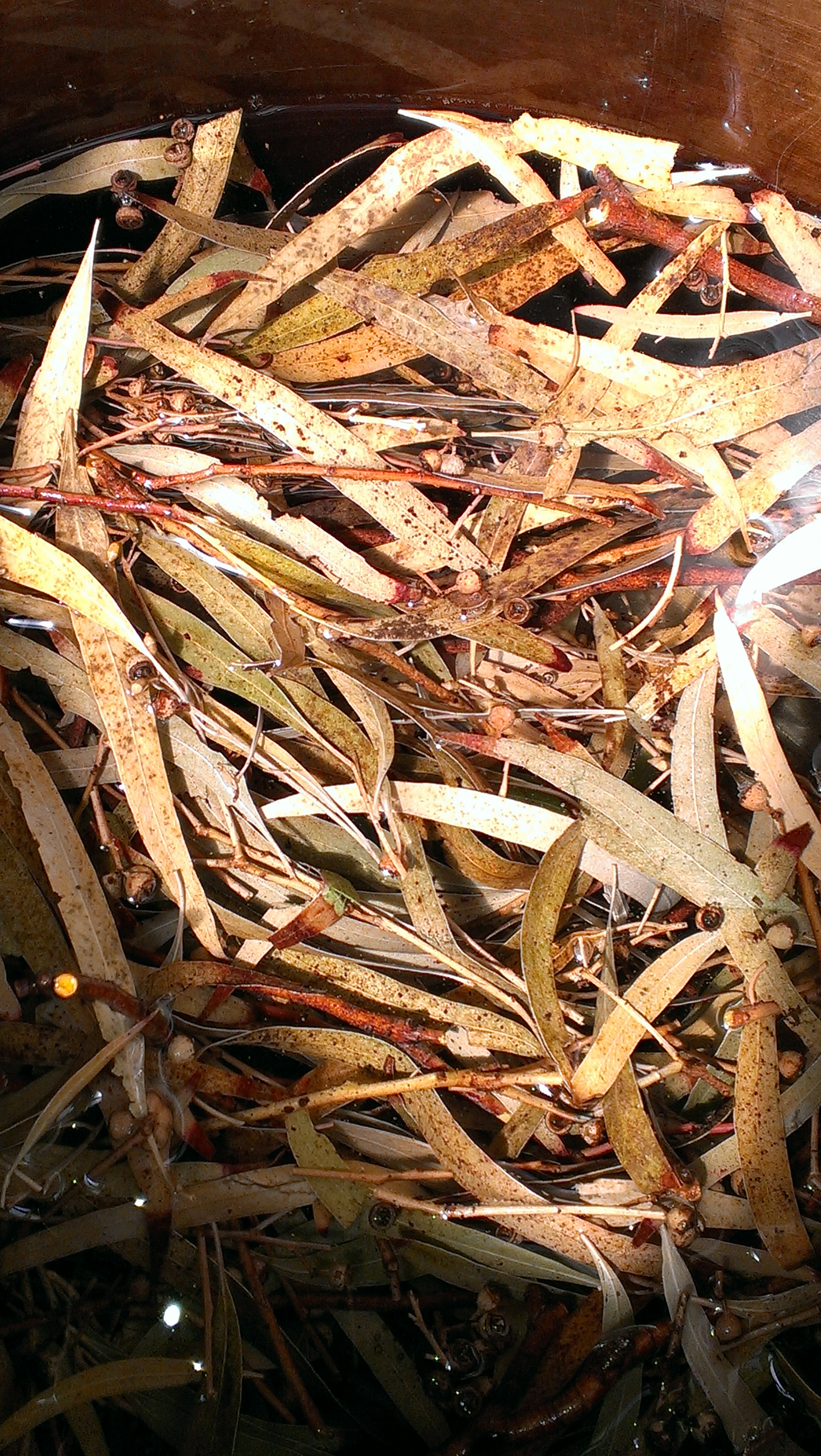
I decided to overdye the black bean, grey and plum pine yarn with eucalypt and made my way past one of my favourite E Scoparias, collecting fallen leaves and bark on my way back from the shops.  On went the pots. One contains the fruit of past harvests… mostly E Scoparia bark.

IMAG3742

The other contains what I collected the day I started writing this post: E Scoparia leaves and bark.  We have had sudden rain and wind after a prolonged hot spell, so there were leaves and a few pieces of bark from other trees in there and the smell of E Citriodora wafted up from this pot as soon as it came to a simmer, then died away.  The nearest lemon scented gum is only a few metres from where I was gathering.

IMAG3740

Meanwhile, I cast on with the yarn that is already in the classic eucalypt colours…

IMAG3738

And here are those blue, plum and grey yarns after their trip through my dye pots…

IMAG3868

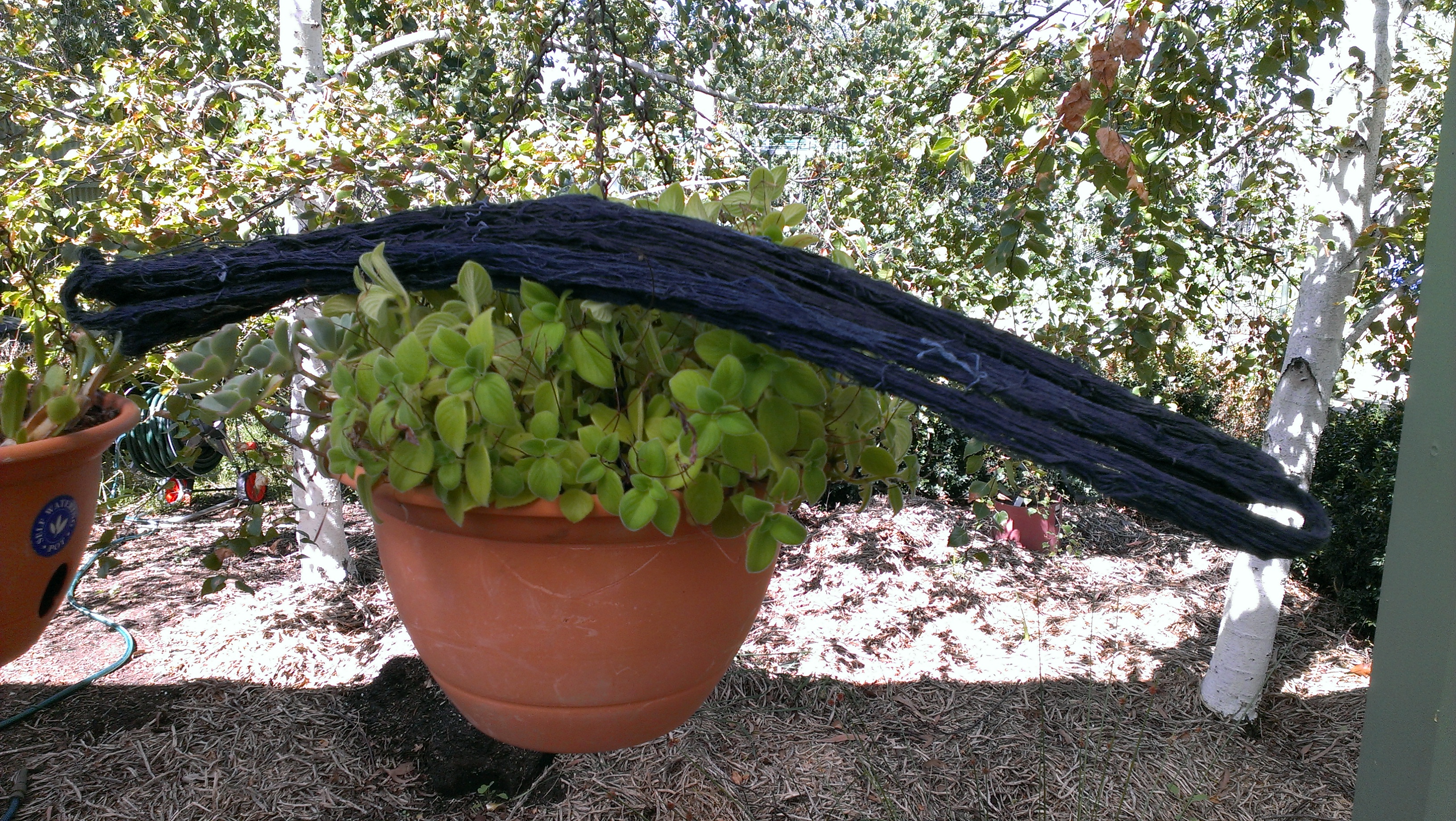
On the indigo front, here are the yarns after soaking in soy and drying.  They are lying across a nodding violet in a hanging pot so you can get some sense of how stiff they are!

IMAG3878

I let them dry out really well and have since been soaking and rinsing.  The soy milk soak has meant that more indigo is washing out of the sock yarn, which is what I had hoped for.  I am reasoning that the soy has bonded with some of the loose particles of indigo, rendering them capable of being washed out (rather than coming off on my hands, since I couldn’t rinse any more of the indigo out previously).  I am going to keep soaking and rinsing until that stops… and then try knitting again!

2 Comments

Filed under Eucalypts, Natural dyeing

Where do I find the time?

I was at a wonderful birthday picnic today, celebrating my friends turning 7 and 40, respectively.  There was all kinds of interesting chat, of course, and in the midst of it another friend who reads this blog was marvelling at the way things seem to happen at my place, to judge by the blog.  I had to break the news that I write posts at all kinds of odd times and that their sequence isn’t always entirely mapping the way things happen at my place, and that I auto scheduled posts to load every two days while I was on holidays…  I guess I think the way that things really do happen is not quite such a good story!

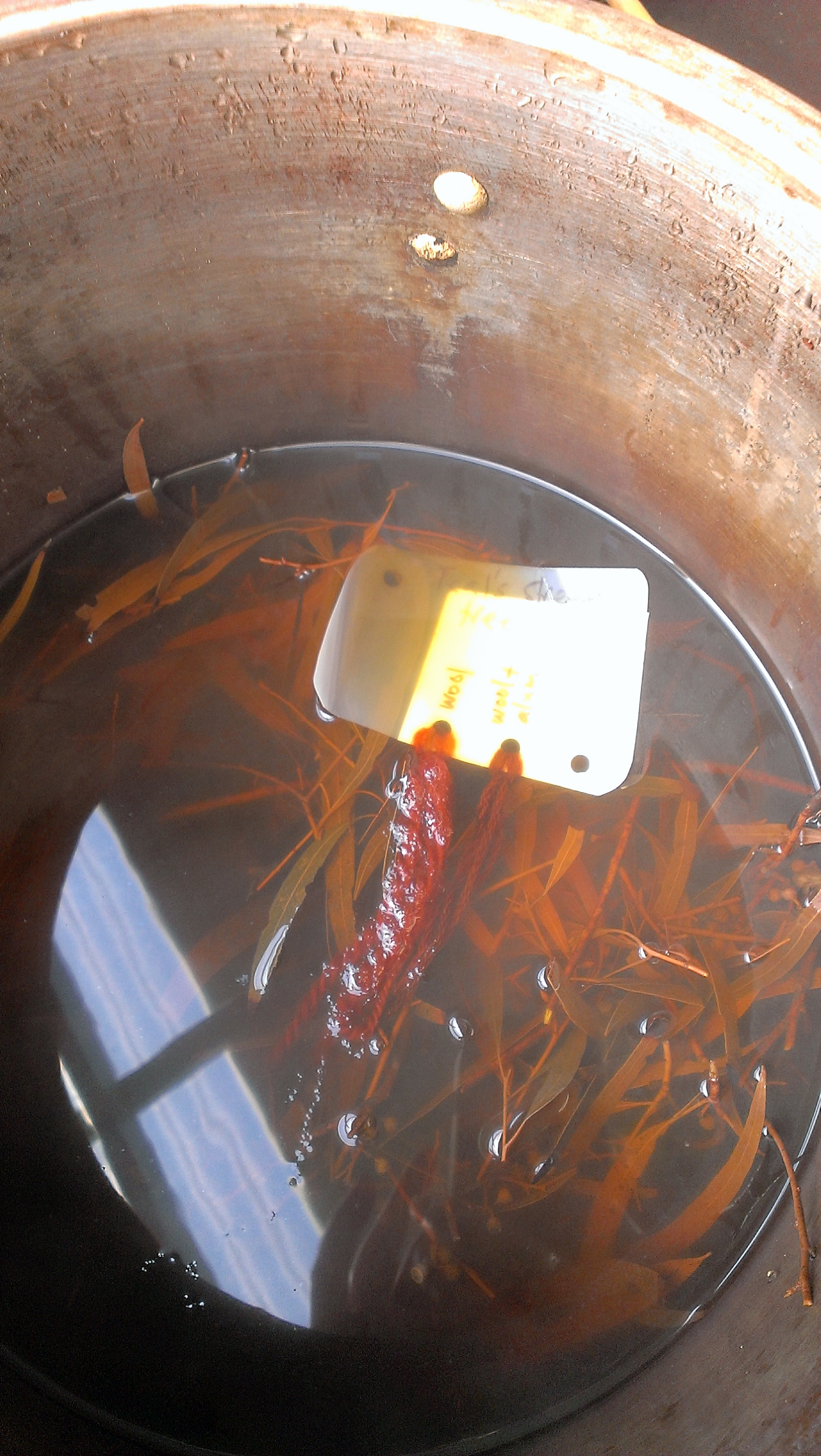
But just in case…   here’s the story of my Saturday.  We were up early to go to an exercise class.  I was ready in plenty of time so went outside, removed the sock yarn from its eucalypt dye bath, put it to soak in rainwater and hung the soy-soaked-indigo-dyed sock yarn up to dry.  Then there was exercise, a ‘coffee’ (I don’t drink coffee so for me it was yoghurt and hot chocolate).  I knit a few rows on my sock.

Then there was grocery shopping and visiting an upholsterer who had calico flour sacks and hessian sugar sacks on the wall that had come out of old chairs he was refurbishing (I like him already).  Then preparing food and gifts and off to the picnic.  I knit more on my sock there.  Another friend was appliqueing on a pair of jeans which were her gift.  Then home.  Cleaning up and a short pause.  So many ideas in my head! I have a couple of hours to do what I like and so… I have samples of two trees collected yesterday.
IMAG3779

Dealing with them requires two empty dye pots but my two are full.
IMAG3782

They are the ones the sock yarn came out of at breakfast time. I empty, rinse and refill them. One with my friend’s street tree in case it might be E Nicholii (I live in hope, but not much!!)
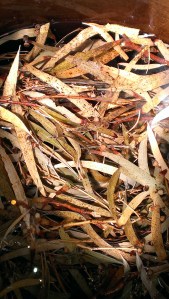
IMAG3788

The other with leaves from a tree that has intrigued me every time I’ve driven to her house–but yesterday it was in flower and I was running early, so I stopped. Put the heat on them. While dealing with that I’ve remembered the sock yarn.  That bucket isn’t very clean, is it?  Better keep rinsing.
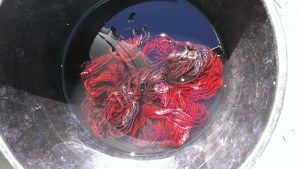
IMAG3784

Thank goodness we’ve had rain and the whole place is on rainwater at last. Must deal with the sealing fail on my dye jars.  That requires another free dye pot I don’t have.  Next.
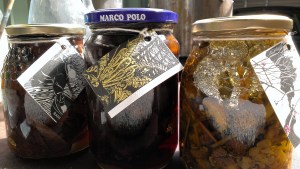
IMAG3781

I decide to try to identify the eucalypt. Oh, remember to rinse the sock yarn.

IMAG3786

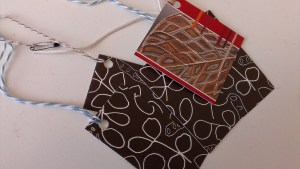
Uploading photos for this post takes a while, so I set about turning saved cardboard into tags to clean it off the desk.
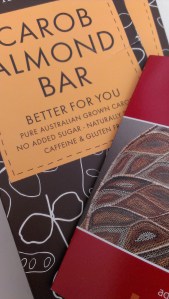
IMAG3795

Miraculously I manage to find some of the lovely pre-used string and thread I’ve been saving… some of it with attached safety pins, and that gets reuse too.  It puits me in mind of clearing out my grandfather’s shed after he died.  String saved for re-use, straightened out nails, screws that have been saved from previous applications…
IMAG3798

Now these tags can join the ones that are already in the drawer made from last year’s calendar.  Out comes my favourite euc book.  If that tree is in the book it is E Stricklandii, which means I probably should have recognised it.  Mmmm.  A friend comes over.  More chat and then my beloved and said friend head off into the shed.  Rinse the sock yarn.  Put sample cards into the dye pots and turn them down.  One looks promising, the other not so much. Back to the computer, to check out my euc.  These leaves are not glossy… and so on….

Some work on another blog post.  Go to the bin to put the cardboard remains in the recycling only to find my beloved has put some greeting cards in there that surely shouldn’t be so readily disposed of… three new postcards created, one card saved for potential use as a stencil (lovely cut out design).  Check out my files for the last time I identified E Stricklandii.  Clearly I did try it out as a dye plant so there will be a comparison… Re-file craft books and fabrics. Check dye pots. Looking good.

IMAG3801

Empty sock yarn rinse water.  Tidy up in the laundy and see those slippers I finished ages ago but haven’t felted.  What the hey?  Put them in the washing machine and get out a timer so I won’t forget they are there (sure sign of overreach but always a good idea with felting).  Put timer in pocket.  Set up India Flint’s suggested fix for hard to seal jars (I think mine suffered from being heated too quickly despite using the lowest heat on the stove, but may as well add insurance).  Now they will be ready when the dye pot comes free.  Or tomorrow, if it comes to that!
IMAG3803

Timer rings.  Check slippers.  Not ready yet.  Go to find traced shape of my friend’s foot.
IMAG3804_1

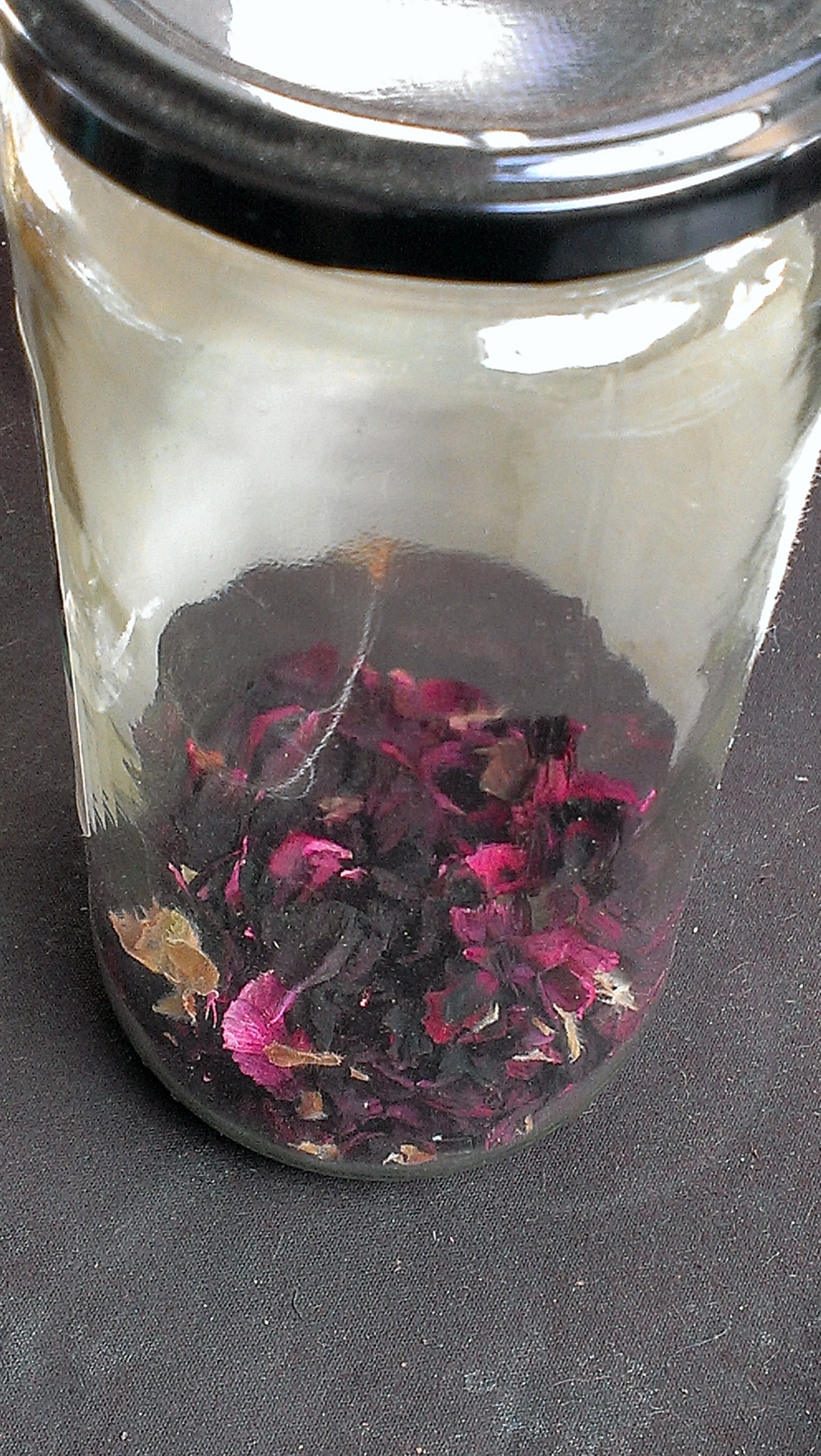
Take drum carder and the vacola jars Dad picked up secondhand out to the shed.  Check dye pots. terminate the less interesting dye pot ready for the jars, pour the dyebath into a bucket.  Put the knitting nancy (french knitting kit) I found at an op shop in the box for delivery to friends who might use this, plus things from the picnic that need to go to their place.  Decide to make another dye jar with the pelargonium petals, since the pelargonium has stopped flowering. I must have been so optimistic when I started gathering them in this jar!

IMAG3806

Timer goes.  Slippers look about right. Take them out to cool.

IMAG3807

One slipper pair is perfect.  The other, back in for ten minutes.  Finish sorting out those jars of stuff, steep and store goodness.

IMAG3811

In they go!

IMAG3815

The dried avocado peels from the kitchen finally make it out into dyestuff storage land.

IMAG3809

Slippers come out just after our other dinner guest arrives (with dinner! bless her!)  I shape the slippers over chat with crackers and avocado and cheese.  And put a load of the really dirty dyeing stuff on to wash.  I need to keep an eye on the stuff, steep and store jars during the evening.  I am pronounced a nerd with glee…  After main course, one of our guests says she wants to ask a technical question, which is whether I could draft a pattern from a simple vest she has so that she can make one on a ‘trashed and treasured’ theme… Out comes the recycled tissue paper and we give it a go and find a vest pattern that might help with conceptualising construction.

IMAG3816

Well, it’s bedtime.  After heating extremely slowly (the dye burners win over the gas stove in the kitchen for slowly heating, clearly) my jars are now a little too hot… I turn them down and leave them to the dye pot timer.  Goodnight!
IMAG3817


11 Comments

Filed under Dye Plants, Eucalypts, Knitting, Natural dyeing, Neighbourhood pleasures

Leaf print of the week

IMG_0020_1

These are Eucalyptus Cinerea leaves on silk velvet. The velvet came from Beautiful Silks.  Just four small squares in a couple of scrap packs I bought along with whatever I was ordering at the time.  From my point of view this was lucky dip by post, and more fun than most lucky dips I remember as a child.  I would never have expected to enjoy velvet so much!  Here are both squares fresh from unbundling.
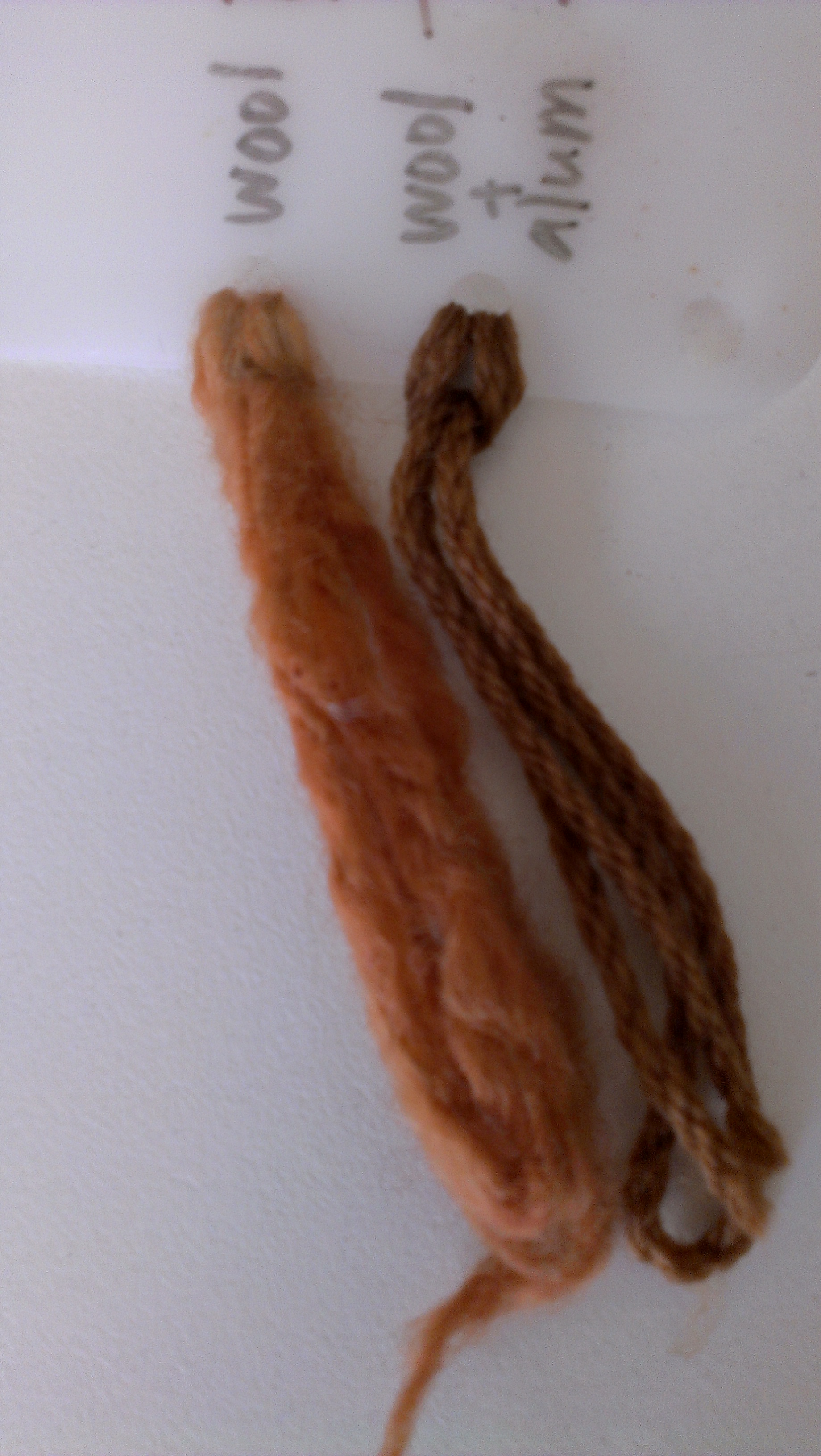
IMAG3229

Perhaps I’ll have to make a cushion cover… as proposed in the comments.  Finally, a little close-up.  E Cinerea famously has heart-shaped leaves, but this tree had been pruned (mostly by me) and the new growth has come out in quite different shapes, which suits me just fine.  For some reason, I love the leaves that have provided food to caterpillars at least as much as the intact leaves, if not more.

IMAG3264 (1)

Meanwhile, I still have at least 80g of indigo dyed sock yarn (enough for a pair of socks), so after all the cheering on from readers recently, I have tried the least difficult solution to crocking I found (start with simple!) and soaked it overnight in a vinegar solution.  No bleeding into the rinse water… and I’ve left the yarn out to dry.  Fingers crossed!

10 Comments

Filed under Eucalypts, Leaf prints

Travel Knitting

I have been travelling for work… and then my oldest friend invited me to his birthday… so I have been extending my carbon footprint by going to Perth for work, then to my friend’s birthday on my way home (for those who don’t know, Sydney is not on the way home to Adelaide, when you start out in Perth).

Anyway… in the hurry to leave home I managed to remember to pack travel knitting.  I started out with a sock in progress.  Eucalyptus dyed patonyle, destined for the feet of my Blue Mountains friends.  The weather where they live calls for handknit socks.

Image

These colours are the result of overdyes, where I didn’t like the initial colour and decided to try again.  By the time I left for Perth, I had one sock knit and another underway and caused quite a bit of fascination among the project team by knitting in breaks and grafting a toe over lunch.

IMAG3702

I had overdyed the rest of my patonyle more recently.  It started out dyed with black beans (not as colourfast as I’d like) and plum pine (not at all colourfast).

Image

These yarns went into my first attempt at the Michel Garcia organic indigo vat.  I had reservations about my vat as I went… the Ph test strips I had bought turned out not to measure the part of the Ph spectrum I needed and in the end I ran out of time and should have left the vat to the next day.  On the up side, the preparation of the vat all made sense and most of it went really well.   I think my judgment about it was basically right, I just didn’t go with my judgment as I should have done.  My friend dyed a doily:

Image

I re-dyed the sock yarn, originally bought second hand at a garage sale.

Image

Although I was happy with the finished colours, it turned out that I had hurried the indigo too much and I was left with crocking… the blue rubbed of on my hands a lot as I was knitting in Perth.  This made it certain the finished socks would leave the wearer with blue feet and I finally decided to abandon them after a few centimetres, frogged and left the yarn in a bin in Perth.  Sigh!  That must be the fiirst dyeing fail I have pronounced irretrievable.

I had an alternative plan.  I pulled out yarn I intended for a hat and chose one of the two patterns in my bag, Jared Flood’s Turn a Square.  I wound the ball in my motel room and cast on. Here it is as I wait for the taxi to the airport in Perth.

Image

The time difference between Western Australia (Perth) and the rest of the country is considerable, so even though the flight was four and a half hours, I left Perth at 10 am and arrived in Sydney at 5 pm, and here is the hat in the Sydney airport:

Image

Here it is in Sydney about to depart for Adelaide next day…

IMAG3701

I finished it on the way and started a second hat with the rest of the skein, top down. I’d call that a productive trip on many fronts!

IMAG3707_1

12 Comments

Filed under Dyefastness, Knitting, Natural dyeing

Trying out Stuff, Steep and Store

I mentioned a while back that I let out a squeak of glee when I got my copy of India Flint’s new book Stuff, Steep and Store… and it was only a matter of time before I’d try it out.

IMAG3530

I’m trying out the following.  I can’t pretend to think they are especially well suited to this method but there it is… time will tell, as it always does!

  • Brown onion skins, aluminium foil, E Scoparia dyebath with vinegar (I hope I wrote some fibre or other on the label!!)
  • E Scoparia leaves, bark and dye, aluminium foil, silk thread, vinegar
  • Dyers’ chamomile flowers, aluminium foil, silk thread, water and seawater and finally
  • Red onion skins, silk thread, copper and vinegar water, seawater.

Entertainingly enough, while India Flint says she has been inspired in this dyeing process by years of food preserving (and that’s evident from the book)… After my first batch of dye jars I was inspired to pitch a round of food preserving to my beloved.  We put up a dozen or so jars of white peaches and yellow plums for later enjoyment.  I am not sure why this is called ‘canning’ in the US, but in Australia it’s usually called ‘bottling’ because it is done in glass jars.  I have a massive collection. I have been the receiving point for others’ Fowlers Vacola preserving kits for so long I now gift or share them with friends who are not so well endowed.  Perfect, really!

Since filling these jars I’ve been on a seaside holiday.  I set the blog to load scheduled posts while I was gone… and being lazy at the beach is the reason for slow responses to comments lately.  WordPress and my phone have an on-again-off-again relationship, which doesn’t help.  Since I was by the sea and pedalling around the neighbourhood, I collected seeds of hardy native plants for later propagation and planting in the abandoned waste parts of my own neighbourhood. Plantings on public land just call out for seed collection, don’t you think?

IMAG3651

One plant, the seaberry saltbush (rhagodia spp, probably rhagodia candolleana), was in such profuse fruit that I collected enough to fill a small jar we had finished using.

IMAG3657

I can confirm that rhagodia fruit ferments quickly in heat like we’ve had lately (41C today)… and began to do so before I managed to get it home and process my jar properly.  Ooops!  That really should not have been a surprise.  The fruits are smaller than a currant but very pretty…

IMAG3670

Another experiment, since if anyone else has tried dyeing with this plant I don’t know about it and have only a foggy memory of the Victorian Handspinners reporting they got some colour from saltbush fruit (saltbush is a big family).  I happened to have embroidery thread with me… and into the jar it went with chocolate-bar-foil.  And now we wait.

IMAG3687

To see how others are working with this process, visit the delectable ‘pantry’ India Flint has set up, or if you’re so inclined, have a look on facebook.

8 Comments

Filed under Dye Plants, Eucalypts, Natural dyeing