Tag Archives: dyeing

Eucalyptus Saligna Bark Dyepot

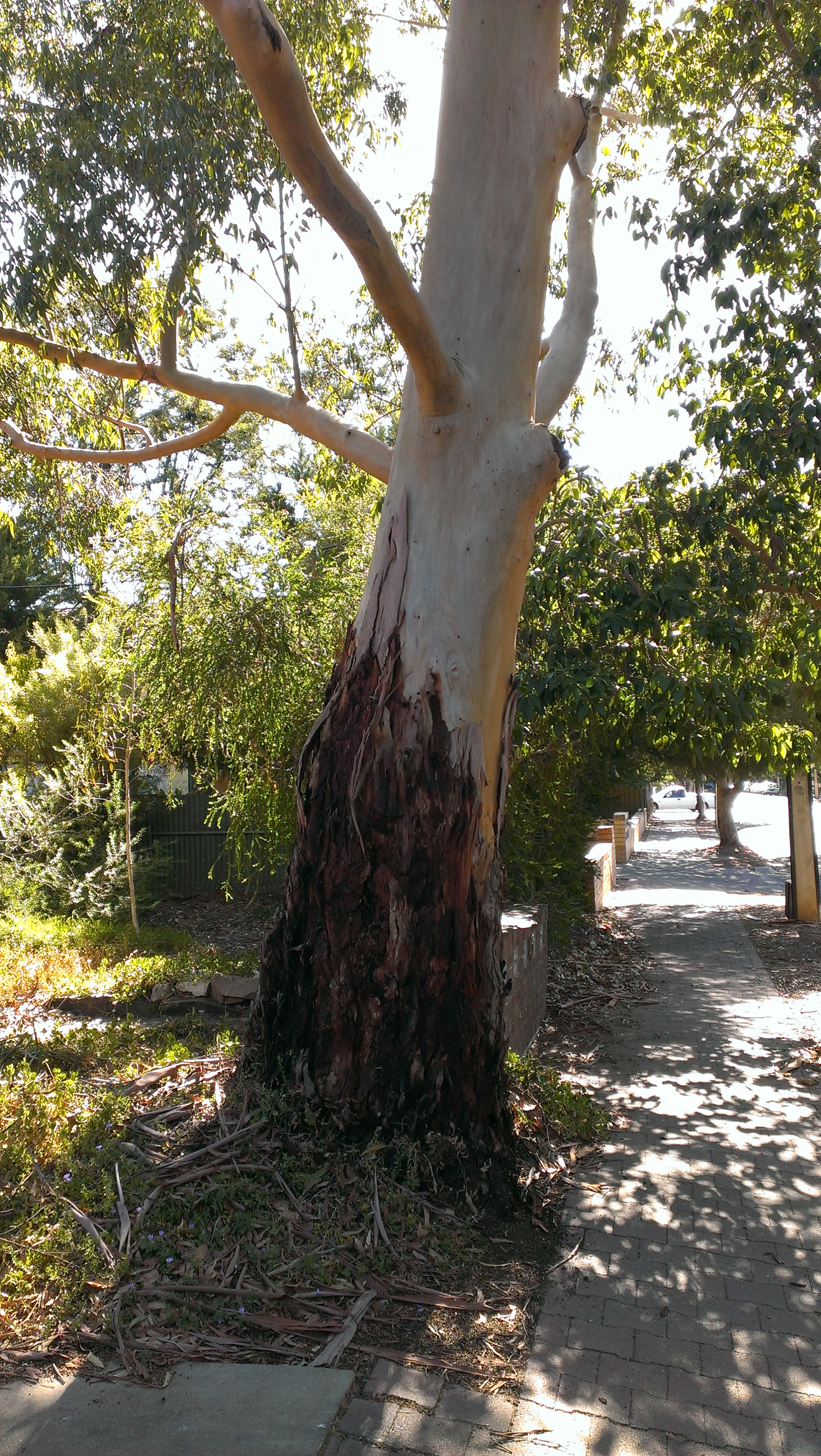
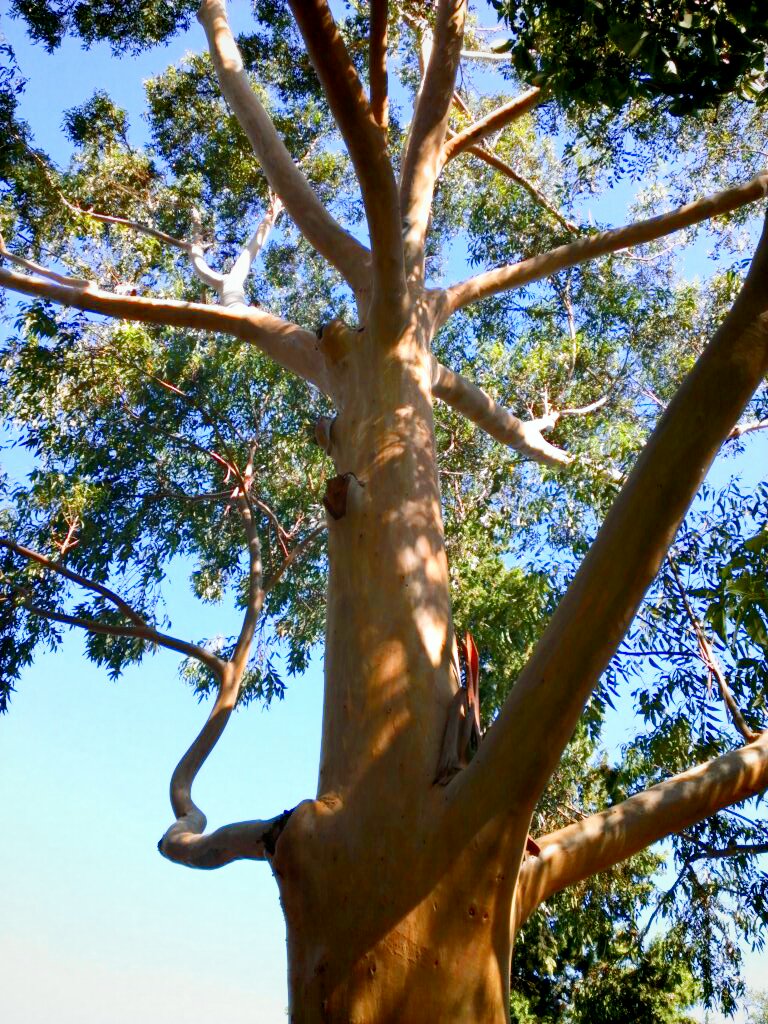
Continuing the recent bark theme… and since it is the season of bark shedding for so many local trees, I bring you a Eucalyptus Saligna (Sydney blue gum) bark dyepot.  I collected the bark in December and had a very funny conversation with a passerby who had lots of ideas about what I might be doing with that bark.  This tree has a rough base but has shed all the bark above it in strips now.

IMAG0572

It is a huge tree!  It is outside a block of townhouses, where some trees were removed a while back but this one was saved by some local friends.

IMAG0574

What a beauty.

IMG_0031

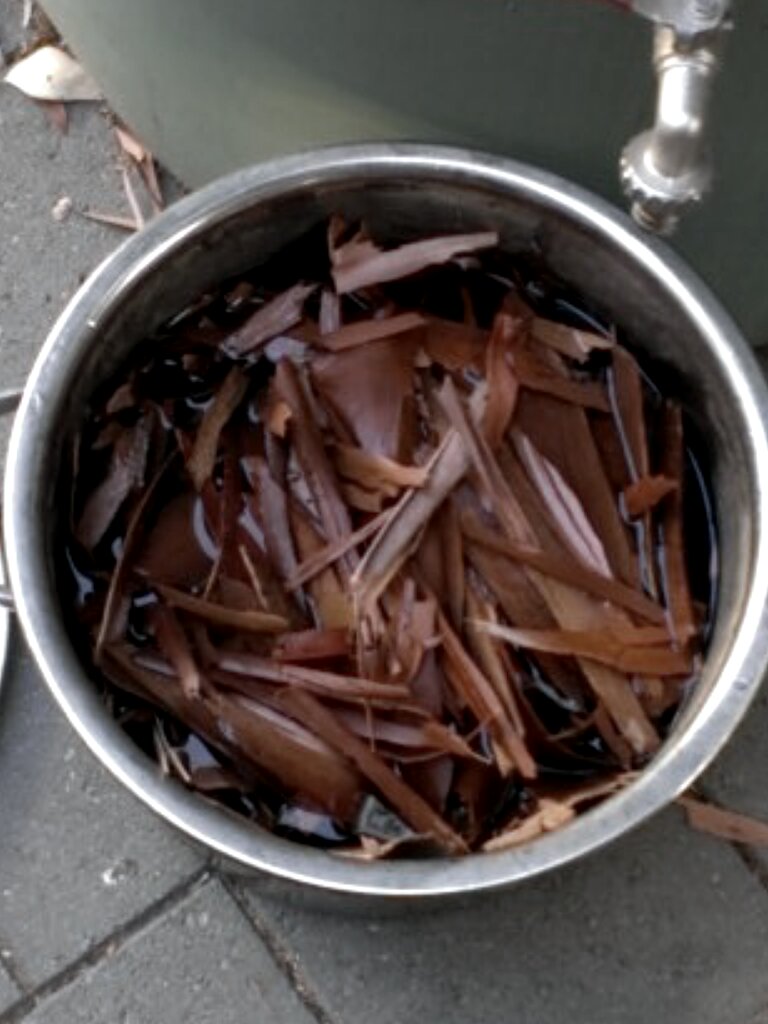
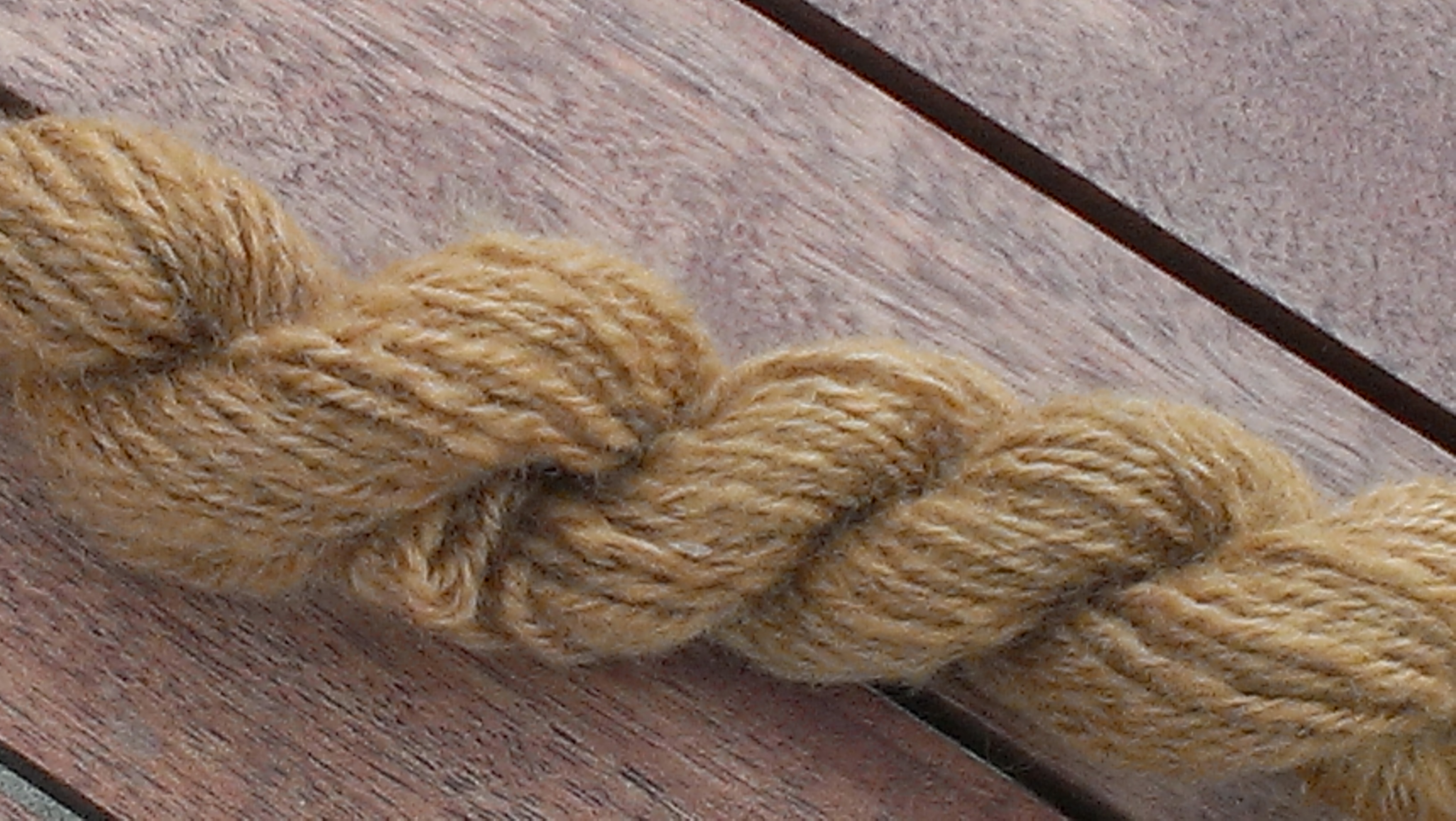
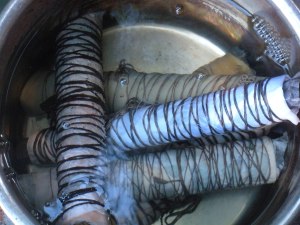
Enjoy the tree, because as I write I’ve looked into the dye pot where my handspun wool is heating and this is a case of tan again, I believe.  Here is the bark after I added rainwater for a few days of soaking. 

IMG_0033

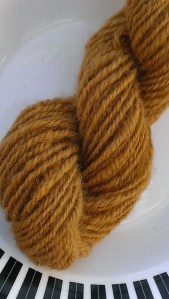
And here, my friends, is my dyed wool.

IMAG0584

And against a background of E Scoparia-dyed merino:

IMAG0583

4 Comments

Filed under Dye Plants, Eucalypts, Natural dyeing, Uncategorized

Hibiscus Flowers

IMAG0332

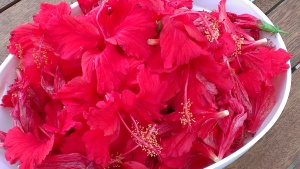
Until recently, there was a house near us that we were told would be demolished within the next week (it’s gone now).  The inhabitants moved out in a hurry, leaving the tide of unfinished business you might expect in the circumstances: the gate and doors open and unwanted stuff everywhere.  I picked all the grapefruit they’d left on the tree and gave it to a friend who loves grapefruit, saved the water lily and goldfish for another friend with a pond, with the help of friends, I put out the bins and piled their recyclables into our recycling bin and their recycling bin and a crate or two, ready for collection the next day.  I decided to harvest the flowers from their red hibiscus, which was in full bloom.   I followed the instructions Jenny Dean gives in her very fine book Wild Colour, up to a point…
IMAG0335

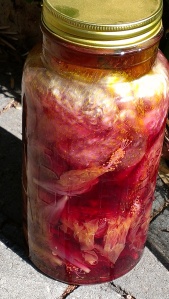
I decided to use more rather than less dyestuff, 125g flowers to 50g washed unmordanted polwarth locks to begin with.  I began as Jenny Dean suggests but decided to try solar dyeing.  You can see the wool in the top of the jar wrapped in a couple of yellow onion nets.
IMAG0337

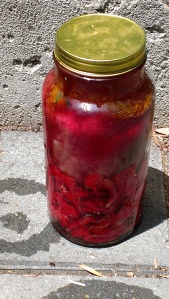
Two days after beginning the dyebath, I picked a whole extra round of flowers, sieved out the ones that had been steeping two days, gave them to the worms in our worm farm and added a fresh lot of flowers to my dye jar.  The dye liquid was a plum colour and a little thicker than water.  I took the second round of flowers out after they gave their colour up.
IMAG0346

Well, after a good fortnight in the jar, almost no colour on the fleece.  So I returned to Jenny Dean’s instructions and heated the dye bath.  The fleece still didn’t take up colour, but my sample card gave green on alum mordanted wool.  Green???  I have dyed with hibiscus before and achieved a rose pink on unmordanted washed fleece, which I spun up three-ply and knit into socks for my mother.  Green isn’t even on Jenny Dean’s horizon.  Deep, olive green (checked against a couple of friends with decent eyesight).

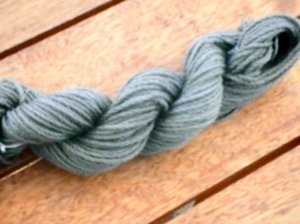
So, I put a skein of alum mordanted, commercial superwash in the dye bath, heated again and my skein turned steely grey.  This picture gets the colour right despite its defects in the focus department:
IMG_0027

To me, this is quite bizarre.  I can only think that the fleece failed to take colour because it was inadequately scoured, though it didn’t feel at all greasy or sticky.  Polwarth is a high-grease breed.  But how I can explain the green and grey outcomes?  Well, I can’t–and I await your thoughts.  Dye pots which had been inadequately cleaned might mean there was some iron in the dye bath, but Jenny Dean suggests purple to pink would still be the outcome.  And after all this, the dye bath was still full of colour–red-purple colour.  Mystery!

12 Comments

Filed under Dye Plants, Natural dyeing

Hits and misses

The other day I was at an exercise class in a park.  One if the trees was helpfully labelled Lagunaria patersonia (pyramid tree).  It turns out to be native (to Australia, though not to this part of it).  So… I decided to take a sample and test its dye properties.

1953

I am here to report to you, dear reader, that this is not one of the stellar dye plants of our time.  That smudge on the right of the linen square with the questionable machine embroidery is the best I can show for a leaf print after an hour and with teh presence of iron and soy mordant.  The only fibre on my swatch showing any colour after an hour of simmering is wool + alum, a delicate shade of yellow-green.

IMAG0565

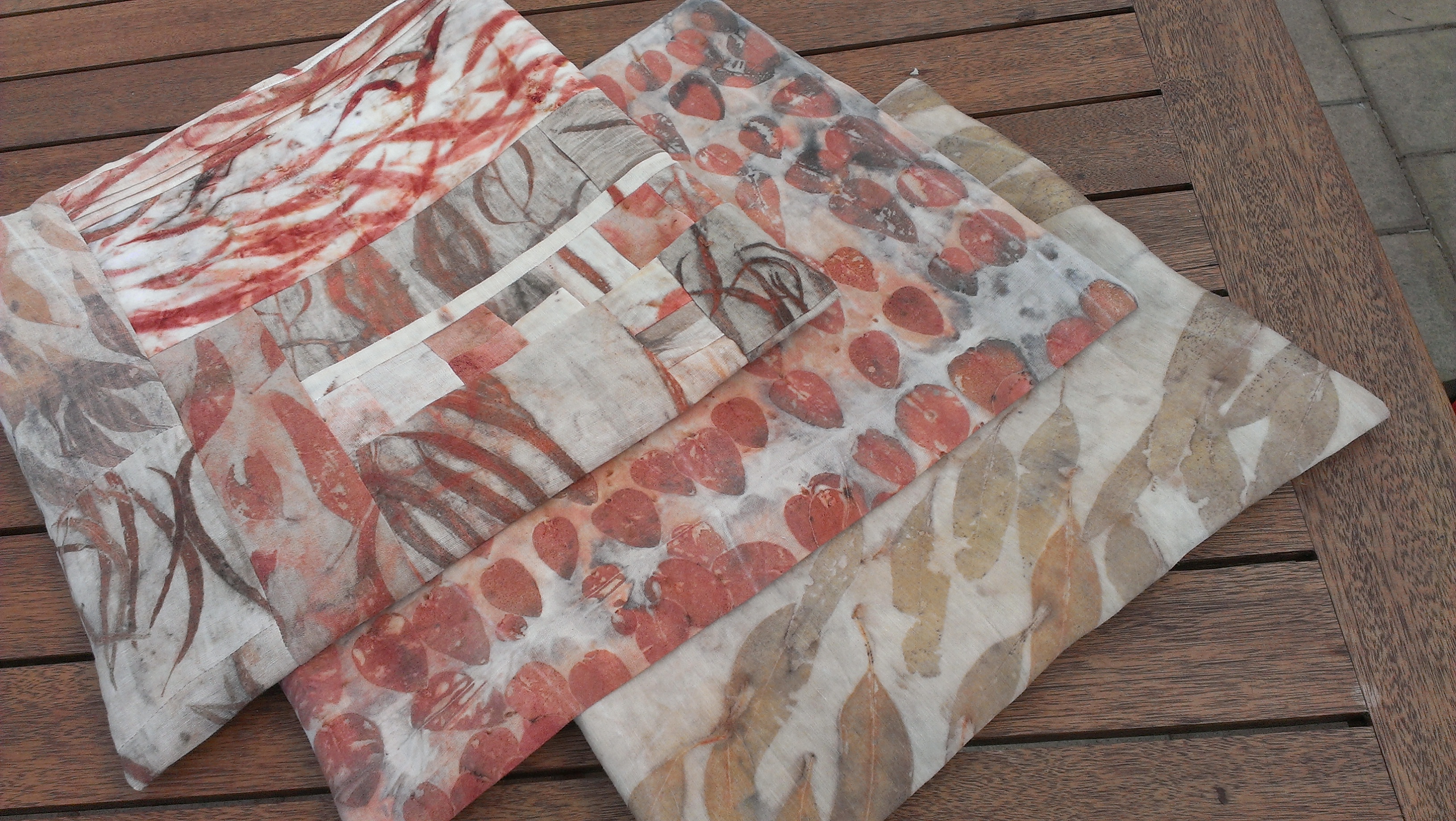
On the other hand, I made these cushion covers from leaf-printed cotton and linen.  They are for friends who invited us to a holiday house they share near Mittagong.  I hope they’ll accept these as thanks for the lovely relaxing time we had with them.

1963

They are custom fit to the cushions on the verandah of their holiday house, whose covers have seen better days.

1962

6 Comments

Filed under Dye Plants, Eucalypts, Leaf prints, Natural dyeing, Sewing, Uncategorized

More Eucalyptus Cladocalyx Bark Outcomes

Given the level of colour in my E Cladocalyx bark tannin bath (see previous post), I couldn’t resist trying to dye some wool.  This is handspun finn cross wool, cooked for about 90 minutes in a solution of E Cladocalyx bark, which had been soaked in a sunny spot for 14 days prior to dyeing. The commercial superwash, alum mordanted strand of wool on my test card is a much darker shade of brown.

IMAG0557

Leave a comment

Filed under Dye Plants, Eucalypts, Natural dyeing

Oak leaf ‘prints’

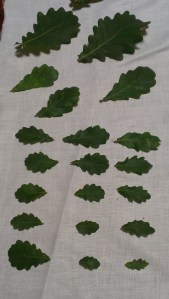
Following Rebecca Burgess’ instructions for a fall dye starter from Harvesting Color, I pulled out my rusty nail solution and, given the difficulty of collecting maple leaves nearby, took the opportunity when I was passing a street where oaks had been planted as street trees. 

IMAG0339

I wrapped my bundle and put it in a jar of vinegar and rust nail water on 16 December (that’s it beween the rusty nail jar and the hibiscus dye jar).  Now to see what happens.  I have to say it is a mystery to me why my rusty nails, which were…rusty and orange… have produced a black solution over time in my case.  I have added more vinergar and water to the nails and the black particles have settled out in the bundle jar overnight in this photo.

IMAG0341

After two weeks in the sun, my rusty water looks more rusty (and you can just see my bundle in there):

IMAG0530

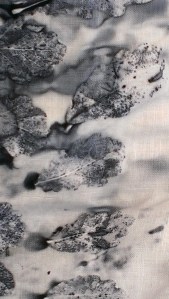
And yes, I did get a leaf print, albeit a mostly very blurred one.  The colour is impressive, but I think this is a clear case of time (unusually) not being the dyer’s friend.  Rebecca Burgess suggested 2-3 days and I left this for 10-11 days, which suited me but not the process.  I will be sure to try again and be more obedient in my instruction-following!
IMAG0553

Leave a comment

Filed under Leaf prints, Natural dyeing, Uncategorized

Dianella fruit

IMAG0321

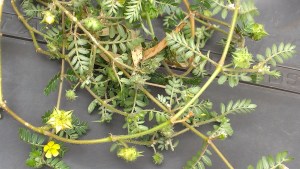
Yesterday I came through the royal showgrounds with my secateurs.  On the way out, I spotted these fruits.  I think this is one of the dianellas, probably Dianella Revoluta. It’s a  common native, drought hardy inclusion in public plantings in my area.  There were so many that on the way back, I took just a couple of stems from each plant and put them in my panniers.  While I was there I saw some caltrop, so I removed that while I was there.

IMAG0323

It’s one of the enemies of cyclists, as you might guess from these immature fruits… which when ripe will be the stuff of many punctures.  I pull this out any time I have the chance.

IMAG0325

I followed Jenny Dean’s suggestions about processing berries…

IMAG0328

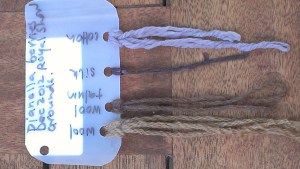
And, as might have been expected, the result was nothing like the fruits I started with.  I would rate the unmordanted wool pale tan, wool with alum dark tan, the silk is grey-brown and the cotton is pale grey.  Not too exciting, is my conclusion!IMAG0340

15 Comments

Filed under Dye Plants, Natural dyeing, Uncategorized

Leaf prints of the week: Eucalyptus Cinerea and pecan leaves

It was another weekend with leaf prints.

Leaf prints 005

Eucalyptus Cinerea, before..

Leaf prints 001

and after:

Leaf prints 021

My test cotton sample, demonstrating that the mordanting I wrote about a little while back should work out just fine for the natural dyeing workshop I’ll be running.

Leaf prints 022

On the weekend I travelled south of the city to celebrate the lives and love of two dear friends.  They had an all-in-one birthday party and anniversary.  I gave them a teapot and teacosy dyed with silky oak leaves (grevillea Robusta) and eucalypt, and they found it suitably funny.

Dyeing 005

As we left, one of them pointed out their now-flourishing, though still relatively small,  pecan tree.  I had seen pecan eco-prints on Lotta Helleberg’s lovely blog.  I asked if I could pluck a few, and then I took them home and wrapped them in a piece of cotton twill that used to be a pair of trousers.  It was ready and waiting, mordanted in soy and ready to go!  Before… (such lovely leaves…)

Leaf prints 002

and, after:

Leaf prints 025

I had also saved this sample of an unidentified eucalypt a friend was growing in his backyard, but sadly it yielded a few brownish smudges.  It’s much prettier in person than as a leaf print.  I think it is Eucalyptus Kruseana (Bookleaf Mallee).

Leaf prints 003      Leaf prints 009

And I spent some time creating textured batts ready for textured yarn spinning… wool with mohair locks, while I tried a new method for washing wool.

Leaf prints 014

Good times!

1 Comment

Filed under Dye Plants, Eucalypts, Fibre preparation, Leaf prints

Works in progress

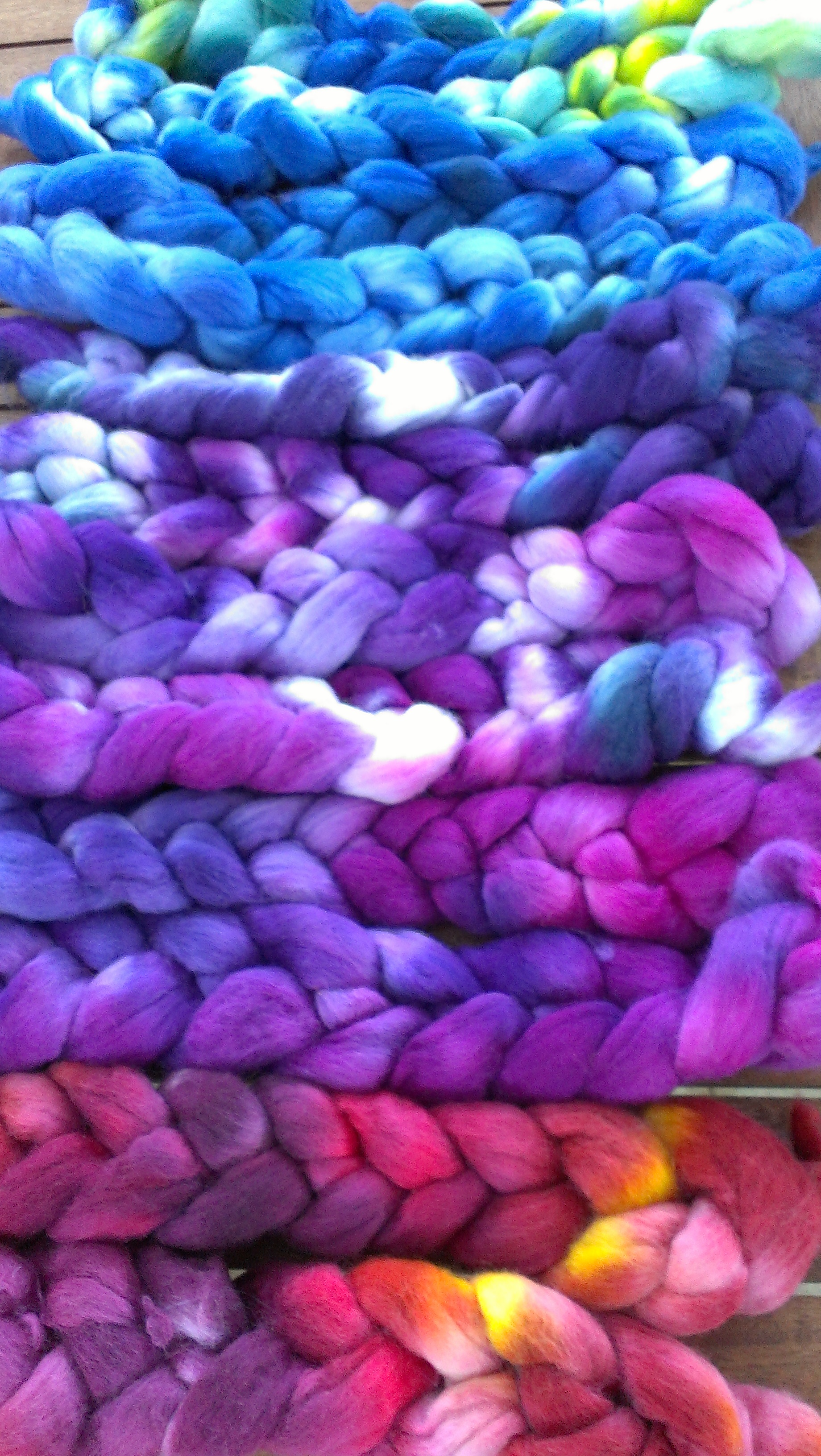
I’ve been puttering along on a number of different projects over the last few weeks… and lest this sounds unusual in some way, that is probably the way life goes most of the time around here!  I returned to cold dyeing roving after retrieving my last spectacular failure.  For good measure, I also dyed some local mohair locks.  I am planning toward a textured yarn spinning workshop and I’m determined to go as close as I can to a local supply of materials for the participants.

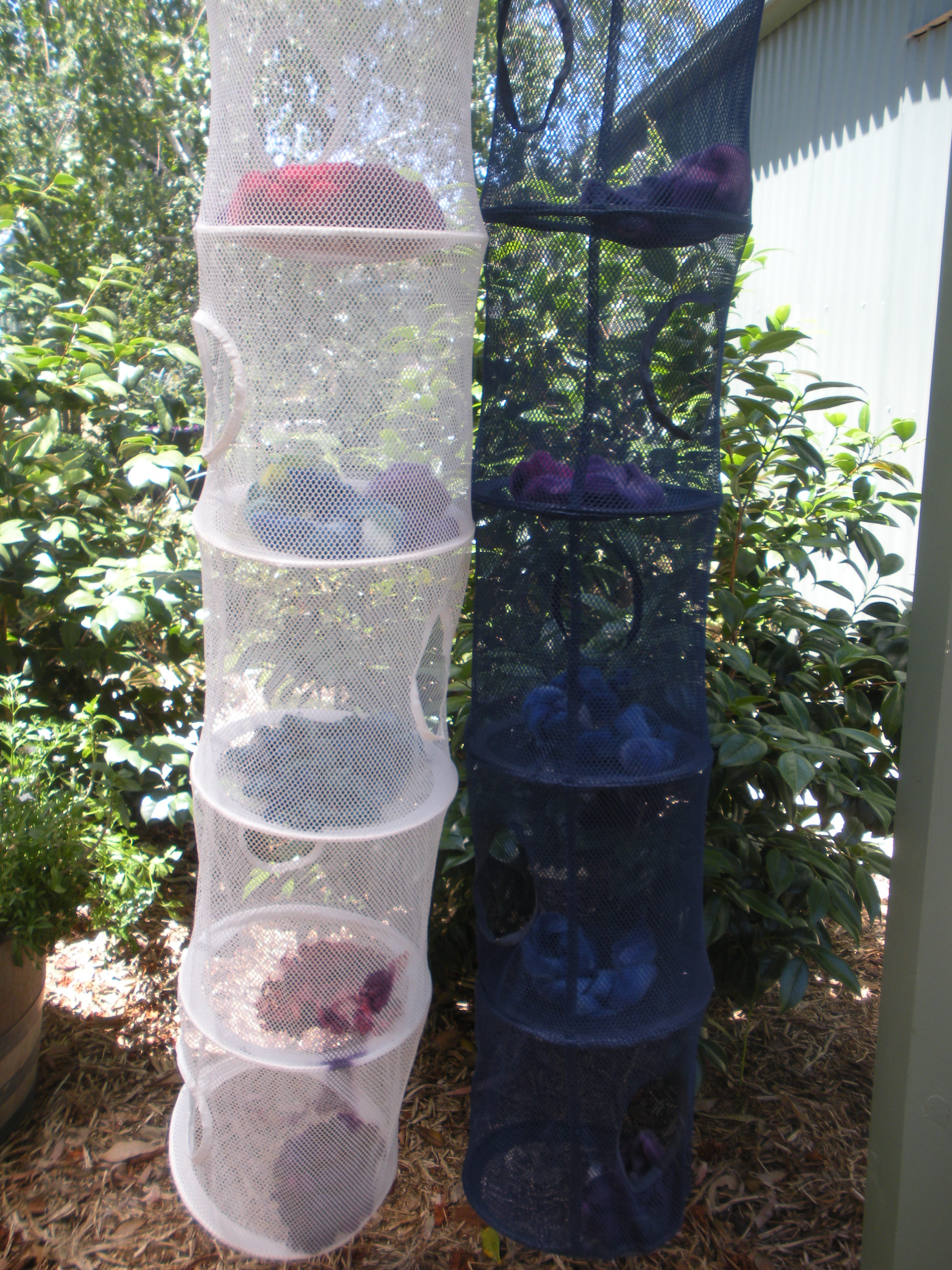
We’ve had Ikea here for long enough that the op shops of the city now turn up these fantastic wool drying apparatuses.  One came with a small supply of plastic animals.  This time, just when I thought I had found them all, a small plastic dalmatian dropped out.  Hopefully the child whose toys left home this way is not grieving and bereft!

This time, the merino braids turned out better than I had hoped.  Perhaps I am slowly acquiring a better sense of colour.  Those with a red base (at the bottom of the picture) were the ones I felt most tentative about, but I like them best of all.

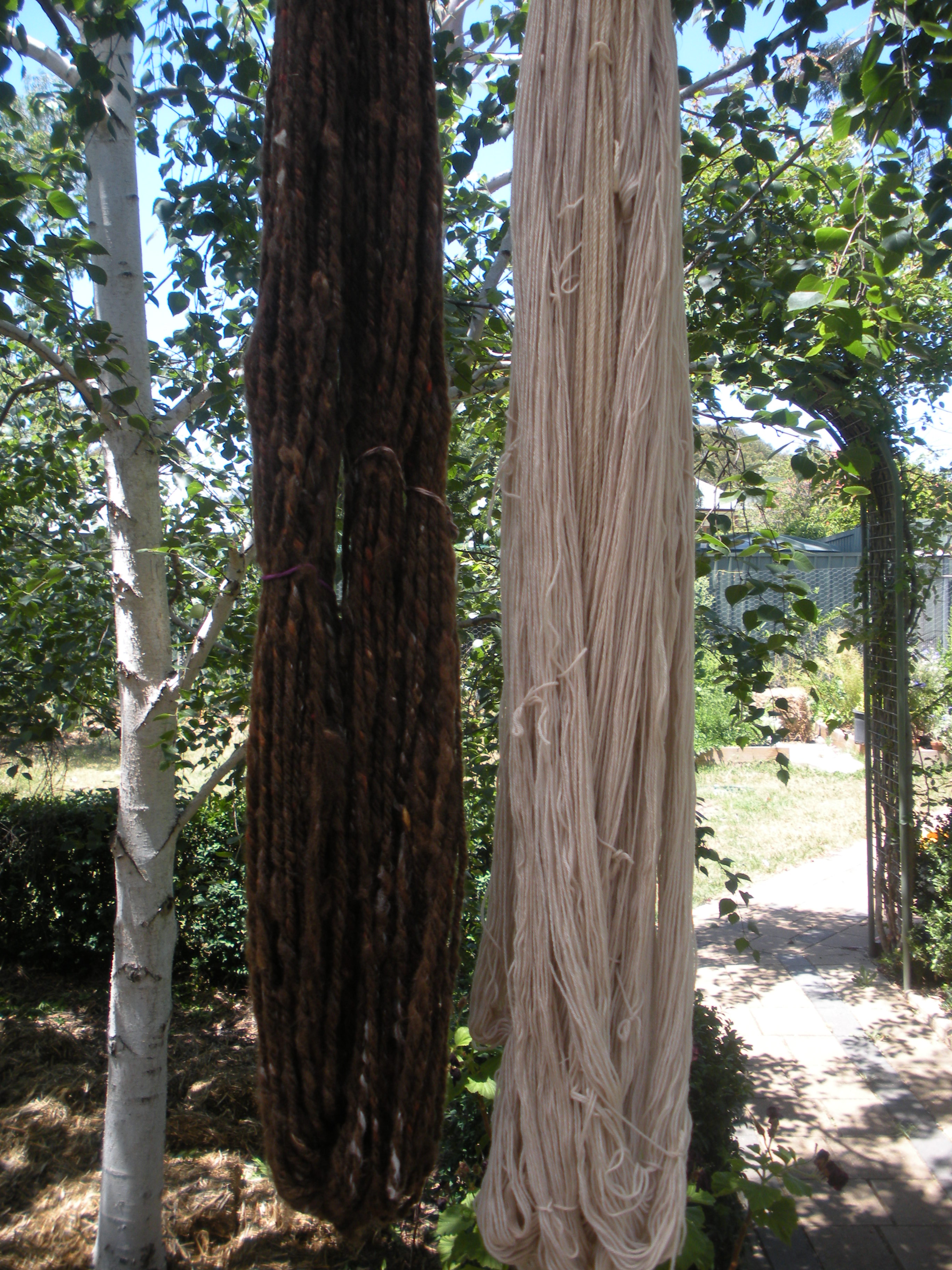
The mohair is ready to have seed heads picked out of it and to become part of some textured batts for corespinning and other good times.  Meanwhile, I have been preparing for a natural dyeing workshop focusing on eucalypts.  Again, I need to provide materials, so I’ve been laying in what I need.  It’s the season for bark collection so I have been touring the neighbourhood with my trusty bike trailer and a chook feed sack, pulling over if I’m passing in the car, or wandering out with a bucket, whichever may be appropriate to the day and location of the tree.  In short, I am keeping the E Scoparia bark that is falling to the ground from being blown away, tidied up by others or crushed on the road.  I have almost 3 sacks full so far.  Seeing the bark shedding has allowed me to run test dye pots on a few trees I had been unsure of with more confidence.  I’ve found several more specimens in the local area.  Meantime, I have been mordanting fibres (wool with alum on the right) and continuing to convert my sow’s ear fibre into slipper-suitable yarn (left) as I knit up what has already been spun. I think that particular batch of unlovely spinning may finally be over.  Two pairs of slippers are knit, one to go.

I’ve been converting milk bottles into sample cards, writing up notes and assessing the state of the Guild’s dye room.  Today, I’ve got soybeans soaking ready to mordant cotton for the workshop.  It has me wanting to dye…

10 Comments

Filed under Dye Plants, Fibre preparation, Spinning

Ironbark identification saga continues

I’ve been working my Eucalypt identification skills overtime and discovered that there are at least 3 dark-barked (by which I mean their trunk bark is brown to grey to black) types of ironbark growing as street trees in my area.  The main two seem to be E Tricarpa and E Sideroxylon, but it appears I also have E Corynodes.  One of the reasons I’m feeling some confidence is because of the results I have had from the dye pot:

In order of appearance:

E Citriodora–not an ironbark, just for comparison!–(Goodwood); E Tricarpa (Goodwood); E Tricarpa (Black Forest)

E Corynodes (Black Forest); E Sideroxylon (Goodwood); E Sideroxylon (a different tree, in Goodwood)

I would have to say that the dye results are more consistent than my perception of the appearance of the trees! One happy outcome of paying more attention is that I have observed that at this time of year E Tricarpa (and some E Sideroxylons) have tiny buds in formation among the fresh young leaves, and this enables a confident identification as between them. E Tricarpa has buds grouped in threes and E Sideroxylon has buds grouped in sevens.  Sometimes fruits are so high in the tree I can’t tell, and sometimes the sample I am able to reach has umbels where some fruits have broken off but I can’t be confident how many.  So this discovery is a help to the person trying confidently to tell them apart–me, for instance.

E Tricarpa (see those tiny buds-in-formation?):

E Sideroxylon:

I need to go a little further afield to consider other variations on the theme, but for now I think I will consider wider-leafed ironbarks to be types I don’t know well, rather than assuming they are E Sideroxylon with a better supply of water and nutrients.  You know what they say about assumptions!

6 Comments

Filed under Dye Plants, Eucalypts, Natural dyeing

Dyeing merino braids

I decided to dye some roving in mixed colours.  So, I braided my merino roving, soaked it overnight, spun it dry in my washing machine until it was moist but not wet (I have to say I won’t do this again–it compacted the fibre a good deal more than I expected), and got out my Earth Palette dyes.  These dyes are made by a small business in a country town called Gladstone, in my state.  I’m pleased to see they’ve made it onto the interwebs.  The railway between Adelaide and Port Augusta used to stop in Gladstone and I had a holiday there once.  It’s not much of a tourist destination, but I was there for the fine company.

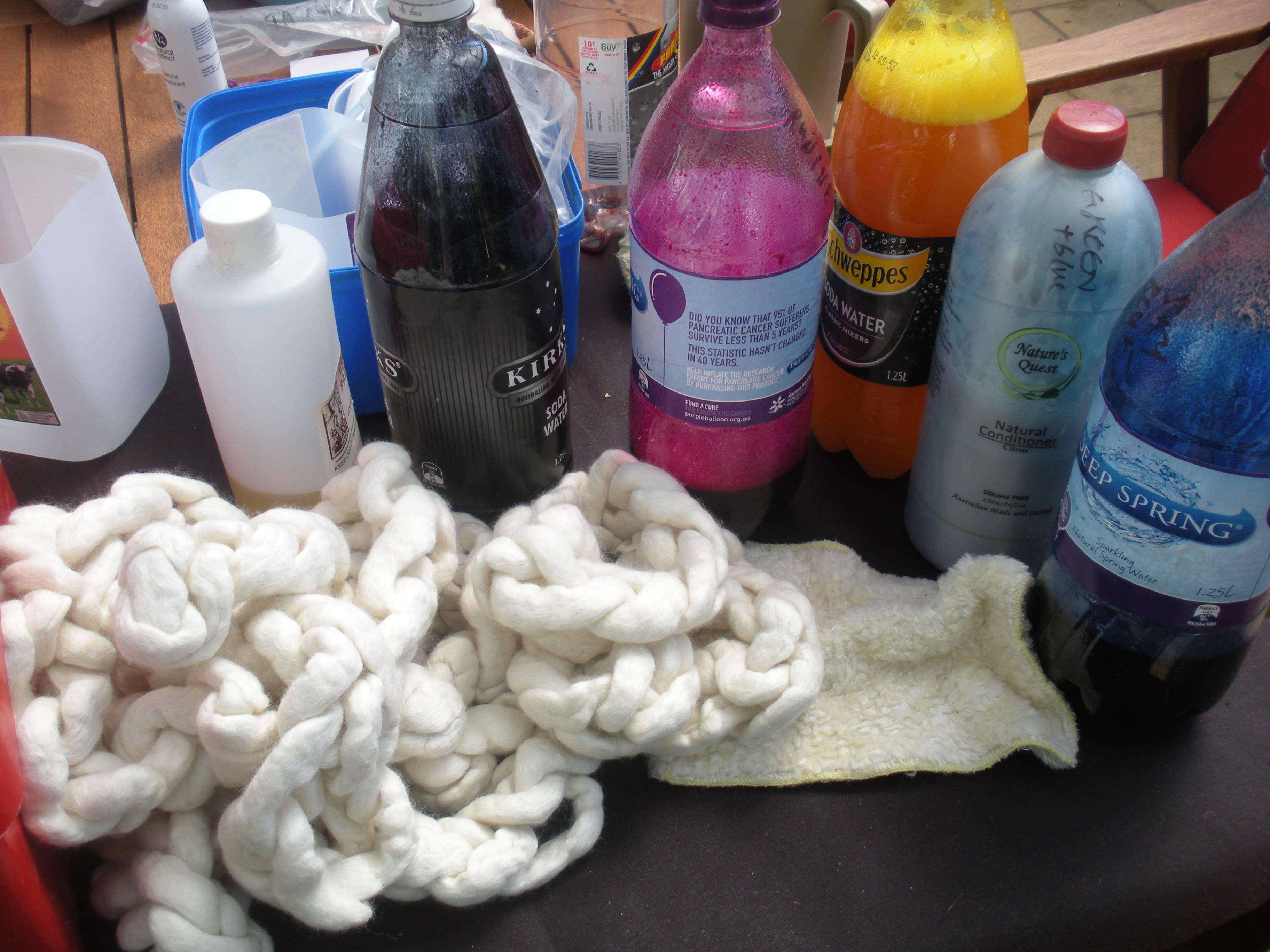
I had pre-mixed several colours and that is what you can see in the soft drink bottles.

Request Feedback

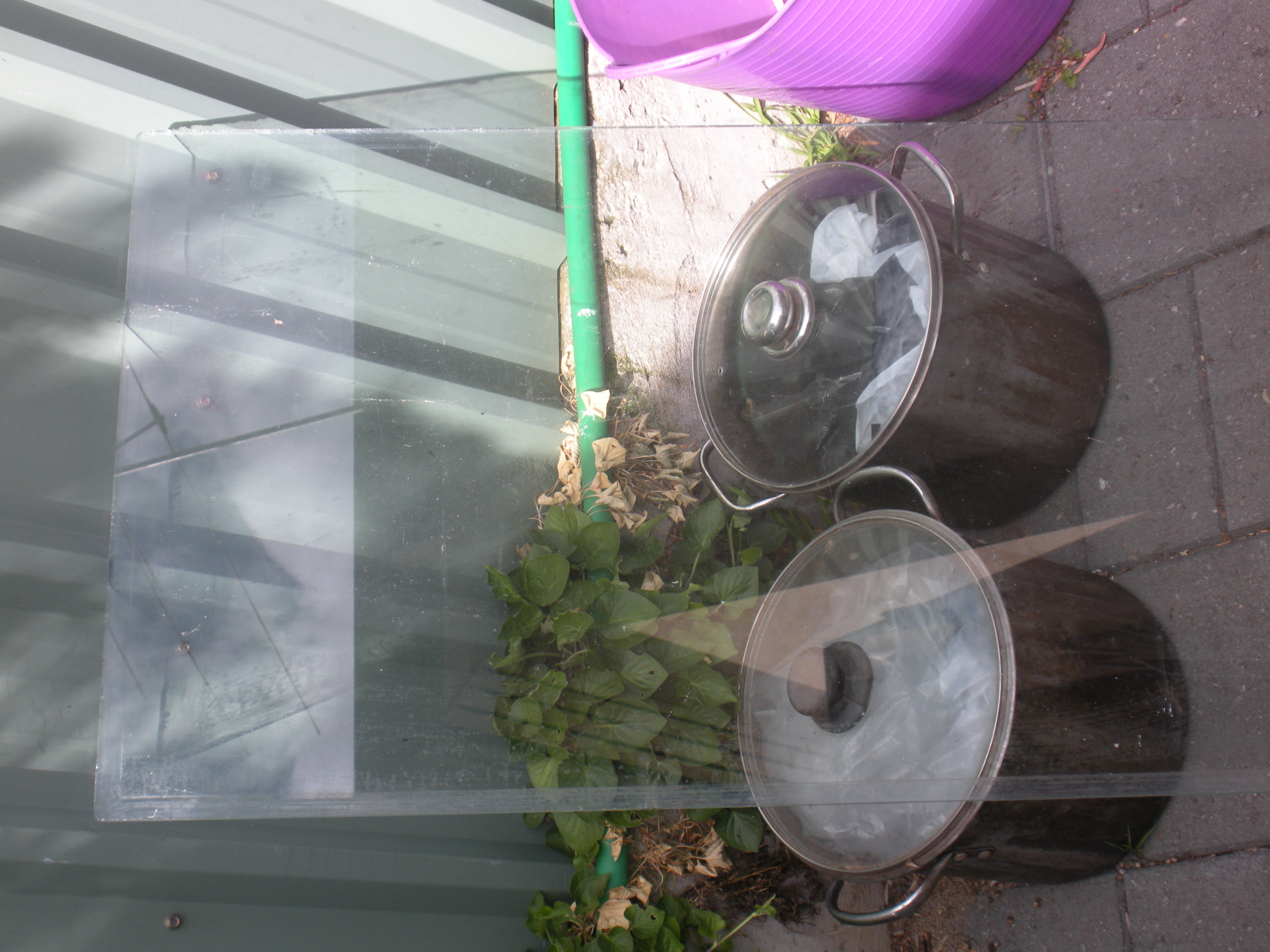
These dyes can be applied cold and fixed at room temperature–what a fantastic system.  So I applied dye, plastic bagged each plait, and set them in a warm sunny spot to fix.  I enhanced the warmth factor by putting the plastic bags in my dye pots and under a pane of glass since we’re expecting 20C maximums.  Ahhh, what a simple method.

I was really happy with the colours… but it turned out that as I feared, spin drying this merino roving, even though it was braided and bagged and cold and I’ve done this before without trouble… meant these braids needed to find adifferent use than the one I had planned.  They will never draft easily or evenly.  So I’ve been spinning them up after extensively fluffing them up.

Once again…not exactly what I planned, but sufficiently satisfying.

2 Comments

Filed under Uncategorized