Tag Archives: hemp

Leaf print bags

IMAG2211

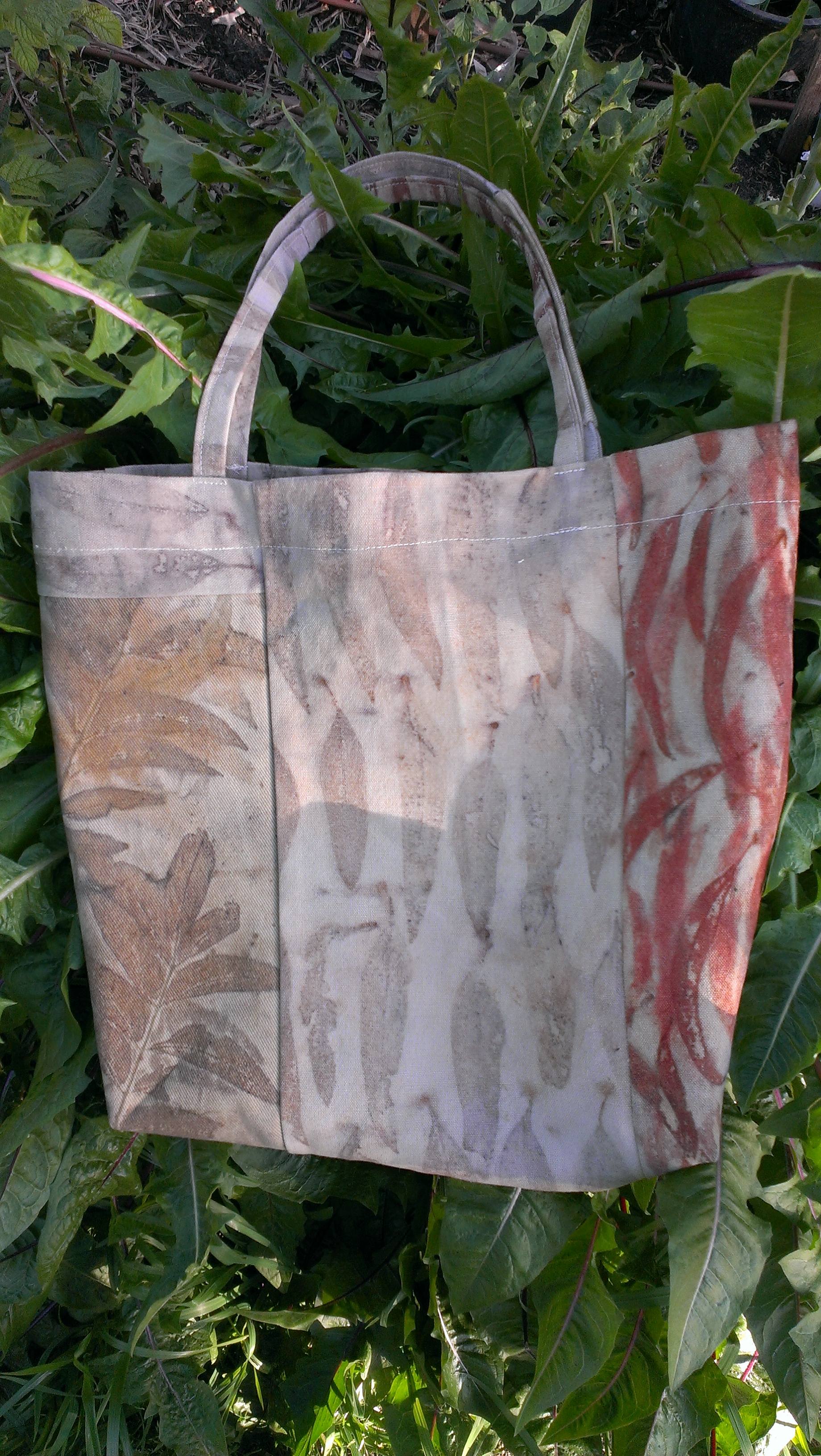
The bag making has been continuing.  This is a simple, unlined bag made from recycled heavyweight garment fabrics–parts of an old pair of hemp shorts and some recycled men’s cotton twill trousers.  Last year I went to a huge Red Cross sale where entire secondhand garments were $1 or $2.  I acquired all kinds of stained and/or worn pale coloured garments which I have been transforming.

IMAG2202

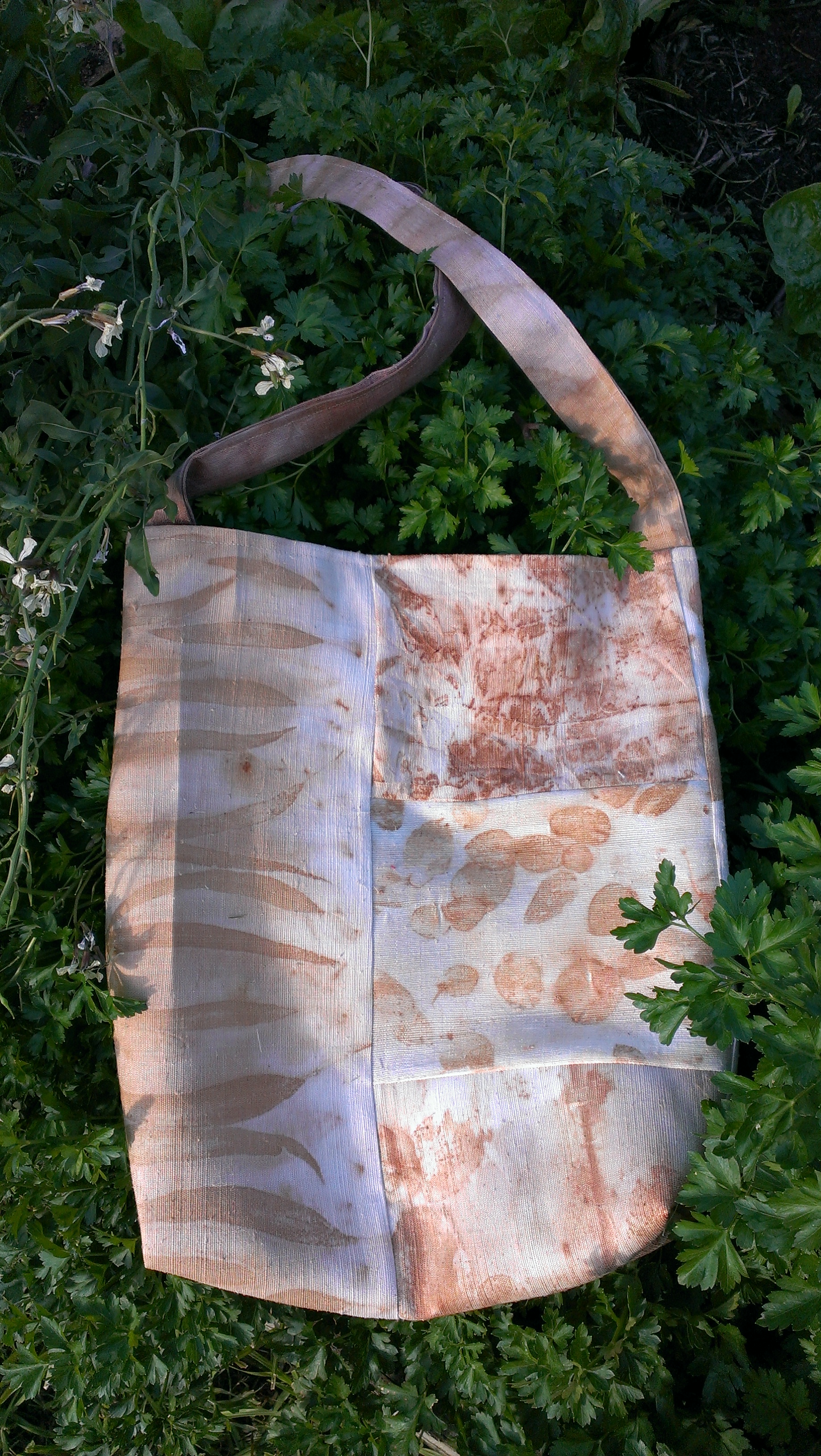
This, on the other hand, is a lined bag made of silk.  When I first bought and read India Flint’s Eco-Colour, I was immediately inspired and keen to try out her ideas and techniques, but finding silk and wool fabrics was quite a challenge.  I had been dyeing sheep fleece and woolen yarns.  I started out eco-printing with some fine gauzy silk and that was exciting enough to keep me going, though I was less than clear about how I could use it.  Then I found a length of Thai silk clearly purchased in Thailand and brought home to Australia which had somehow found its way to an op shop I like to comb through.  Many experiments followed, and they have been sitting rolled up in the sewing room for years now.

IMAG2201

The darker colour on some sections is red wine.  The splotchy random pattern–clearly not a leaf–on one piece really had me puzzled until I ironed it.  The smell was a giveaway.  Ah!  Onion skins!  That is what you can see on the top right of this bag.

IMAG2199

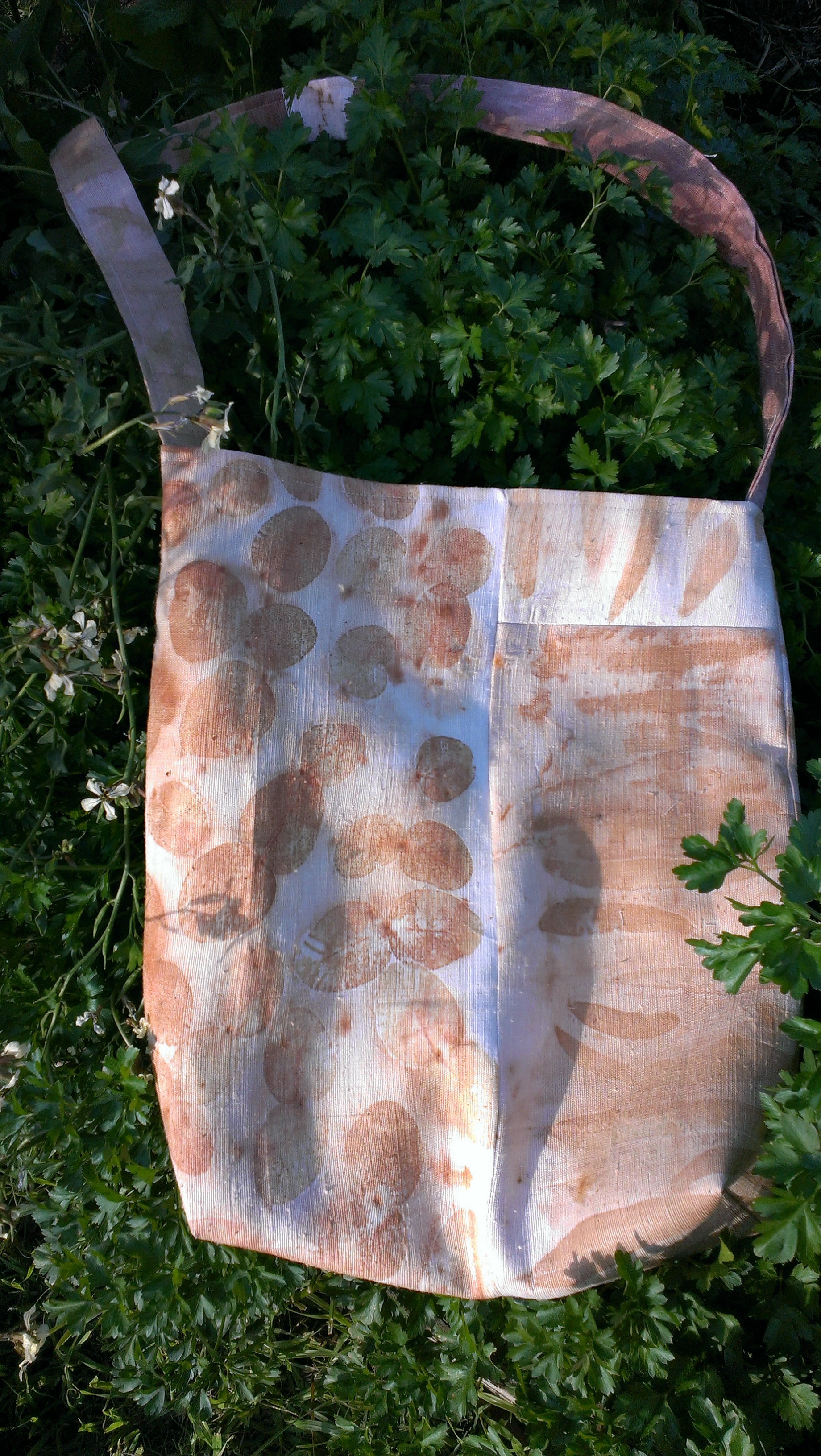
And the other side (with red wine on the strap)…

IMAG2198

I have constructed the linings from samples and less successful printing efforts on cottons…

IMAG2204

It’s very satisfying finally to put these samples to use.

4 Comments

Filed under Eucalypts, Leaf prints, Sewing

Indigo dyeing

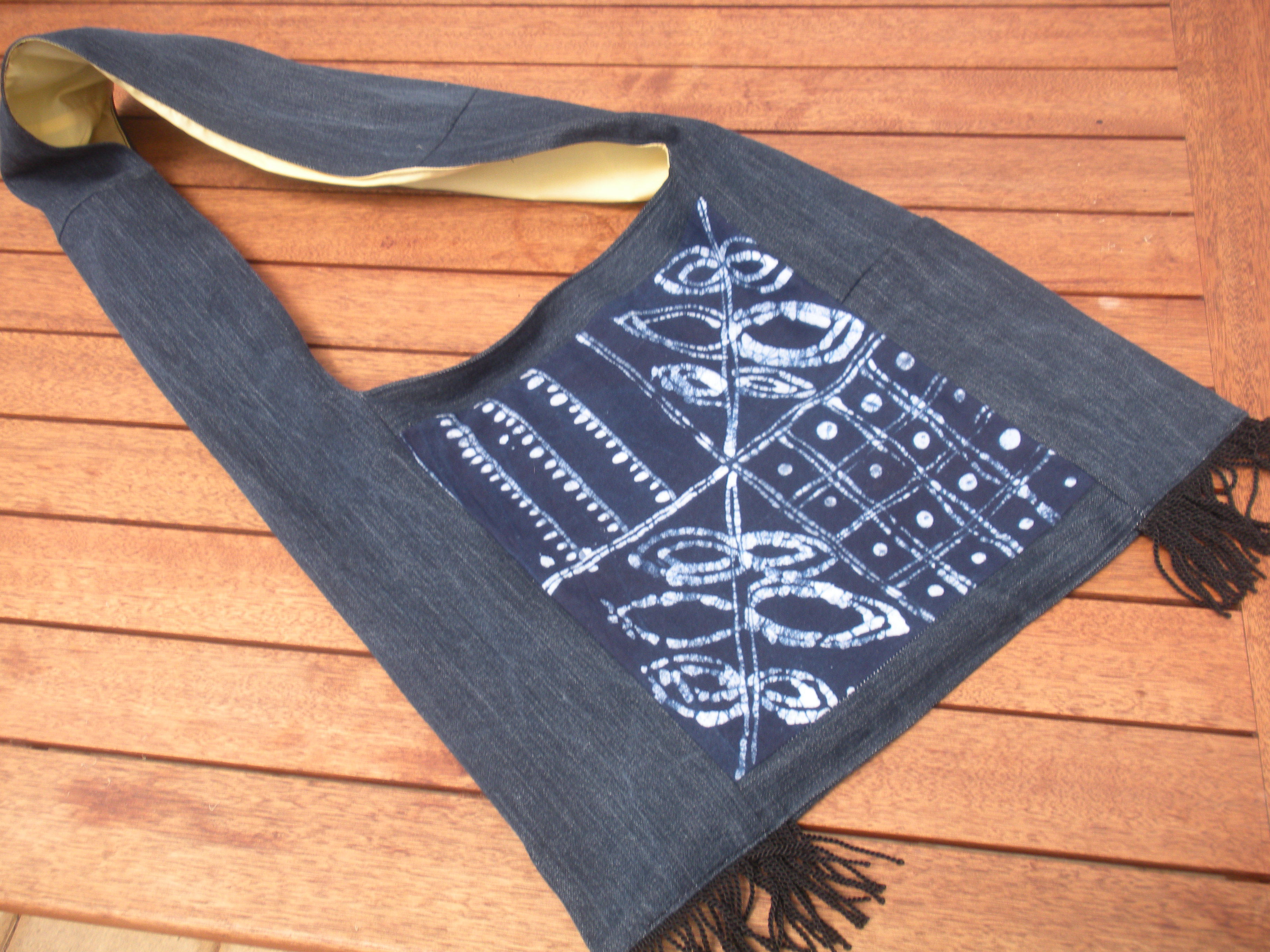
A while back, I did a workshop on Nigerian Indigo dyeing with CraftSouth.  The tutor was the fabulous Oluwole Oginni.  I highly recommend this workshop, part of a series of Traditional Craft Workshops.  Indigo dyeing wasn’t offered in 2012 but hopefully there will be another opportunity.

We used wax resists and then dyed with indigo, using several dips.

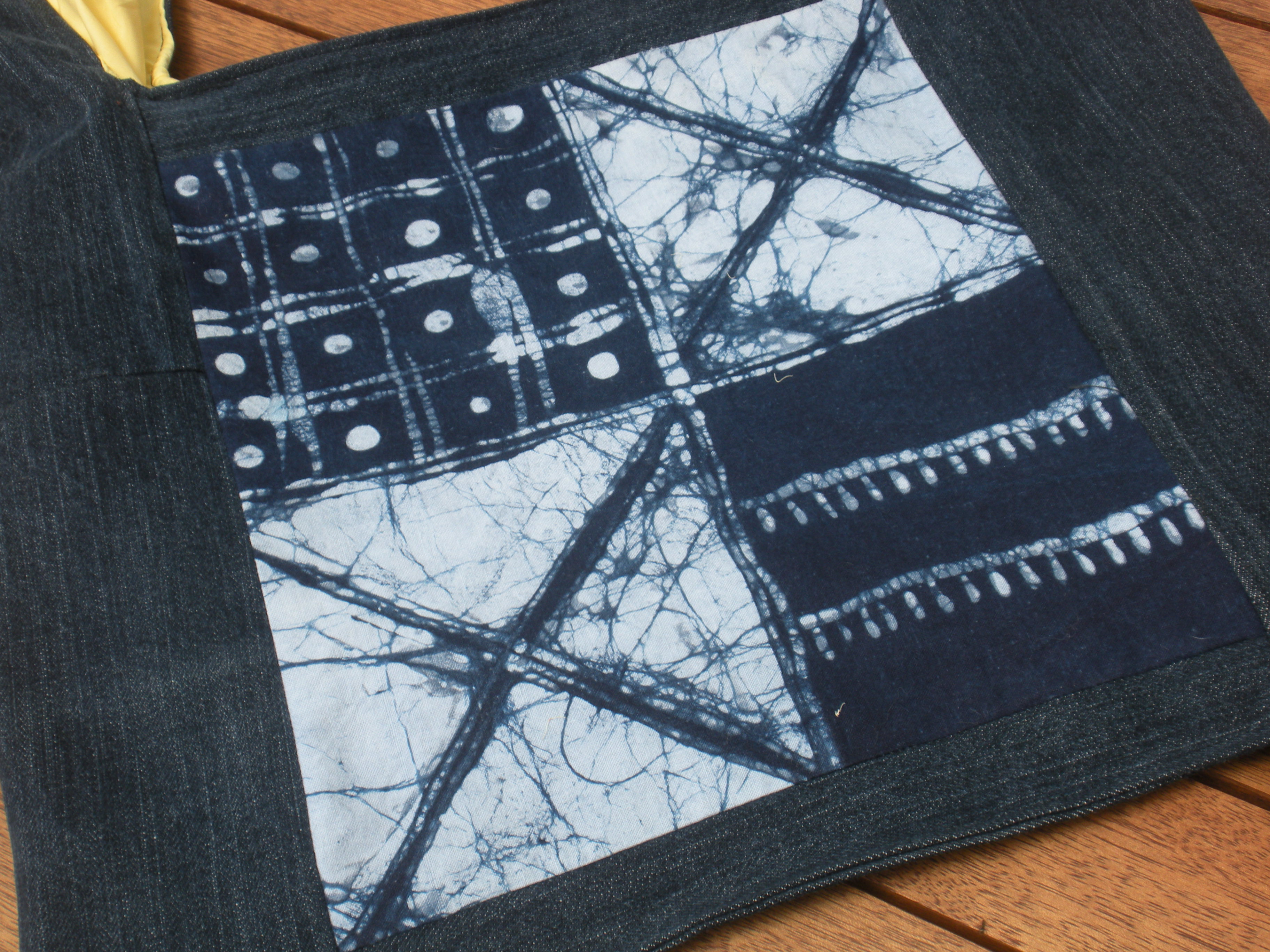
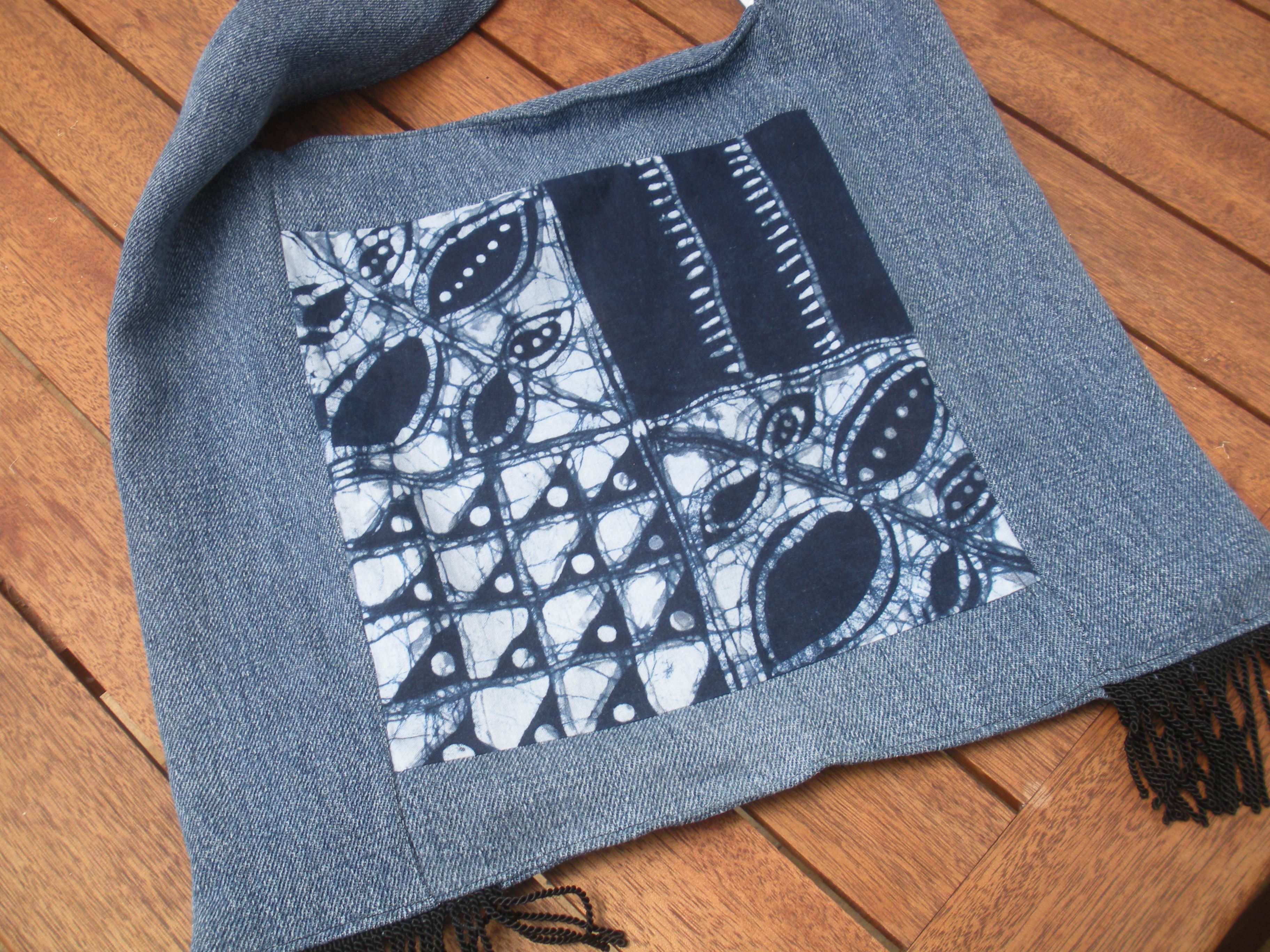
I turned some of the fabric I worked on into these fully lined bags.

The denim is from recycled jeans, one pair to each bag!  This pair are a hemp blend.

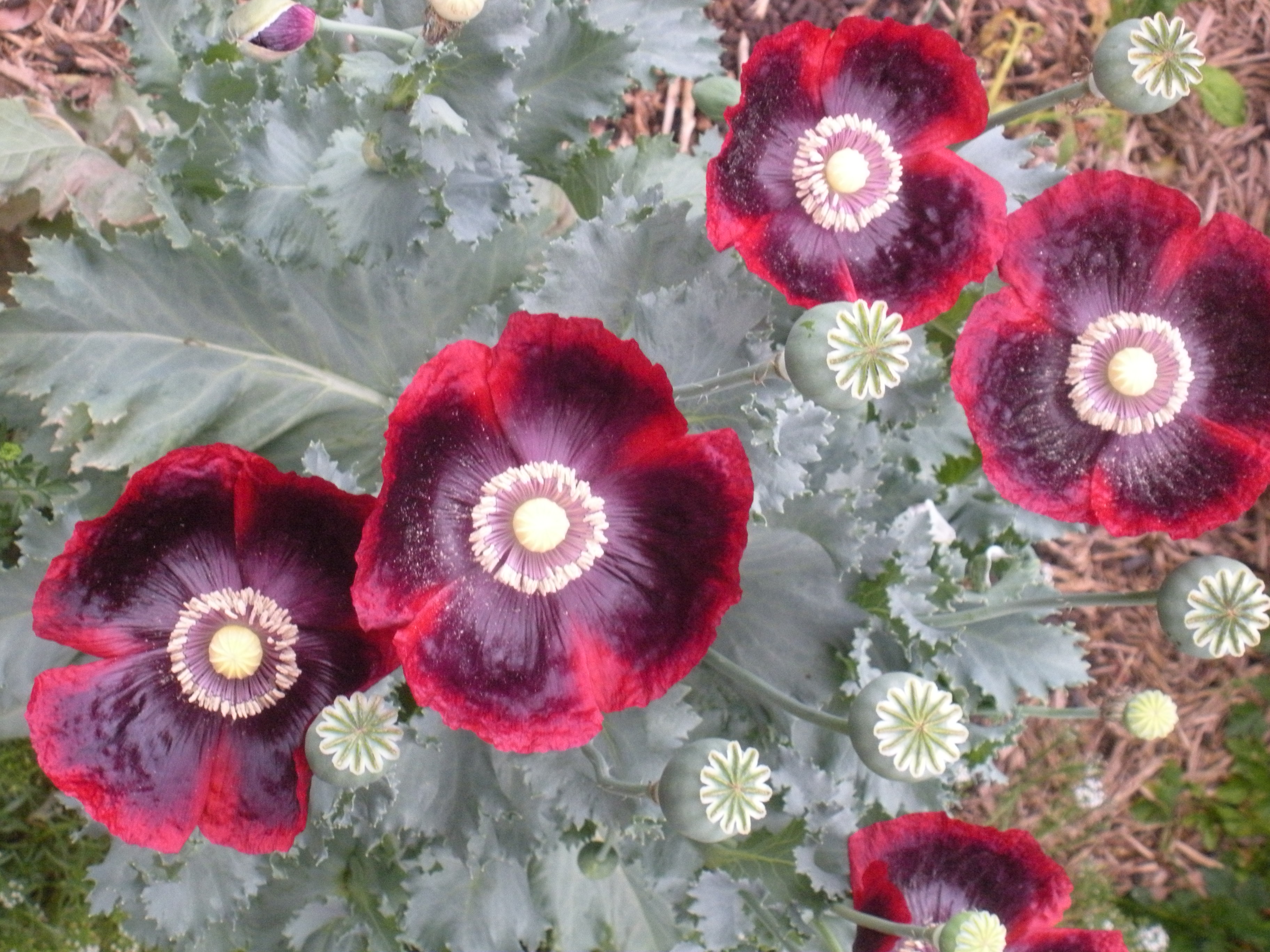
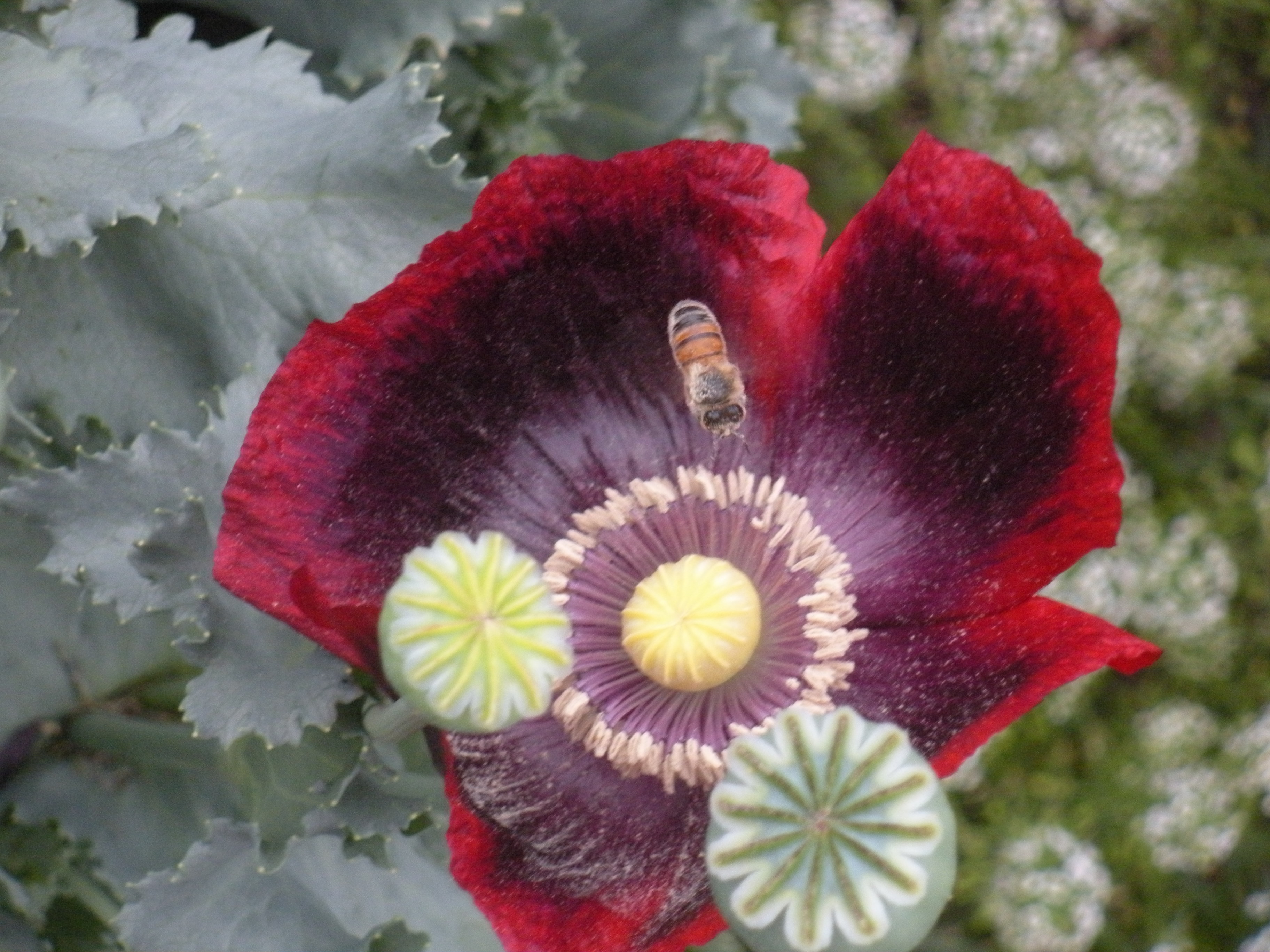
And since we’re here… a couple of gratuitous pictures of a poppy that came up in my garden.  I can’t really claim to have planted it, though it bears a strong resemblance to some blood poppies I grew years back from a gift of seed.  But it was beautiful, and the bees love these flowers.  It is winter here now and I have just a few of these poppies beginning life in the garden, which have escaped the caterpillars.  So here’s hoping for more flowers later in the year!

2 Comments

Filed under Sewing

Embroidery for the heart, from the heart

One of my friends is a poet, and a social worker.  She has spent years dedicating herself to the wellbeing of the people in the locality where she works, a place where poverty and violence have taken their toll, creating tough lives.  She witnesses people’s skills and talents in the face of difficulty and enables the bringing into existence of new connections, new skills, new capacities and new lives.  She helps those who must escape violence to make that difficult, vital journey into new lives without abuse.  I am full of admiration for all that she can do and all that she is.

IMAG1901

She has been facing some powerful challenges of her own in the face of government budget cuts and policy changes.  I have been thinking of her a great deal.  There is one poem in particular that brings her solace.  I decided to embroider it for her.  It has been a pleasure to spend so many hours thinking of her, holding her in my heart and wishing her well.  I’ve stitched the words on hemp dyed with indigofera australis and thread dyed with indigofera for blue and silky oak for yellow.

Leave a comment

Filed under Natural dyeing, Sewing

Austral Indigo 2: Hydrosulphite vat process

My second experiment with Indigofera Australis was a hydrospulphite vat. Robyn Heywood from the Victorian Handspinners and Weavers Guild has made her experiments with Indigofera Australis available online. I was delighted to be able to see the records and samples of the Victorian Handspinners and Weavers dyeing group at their Guild Rooms when I was in Melbourne last year.  It was really inspiring to see the variety of methods they had used and the range of colours they had achieved.

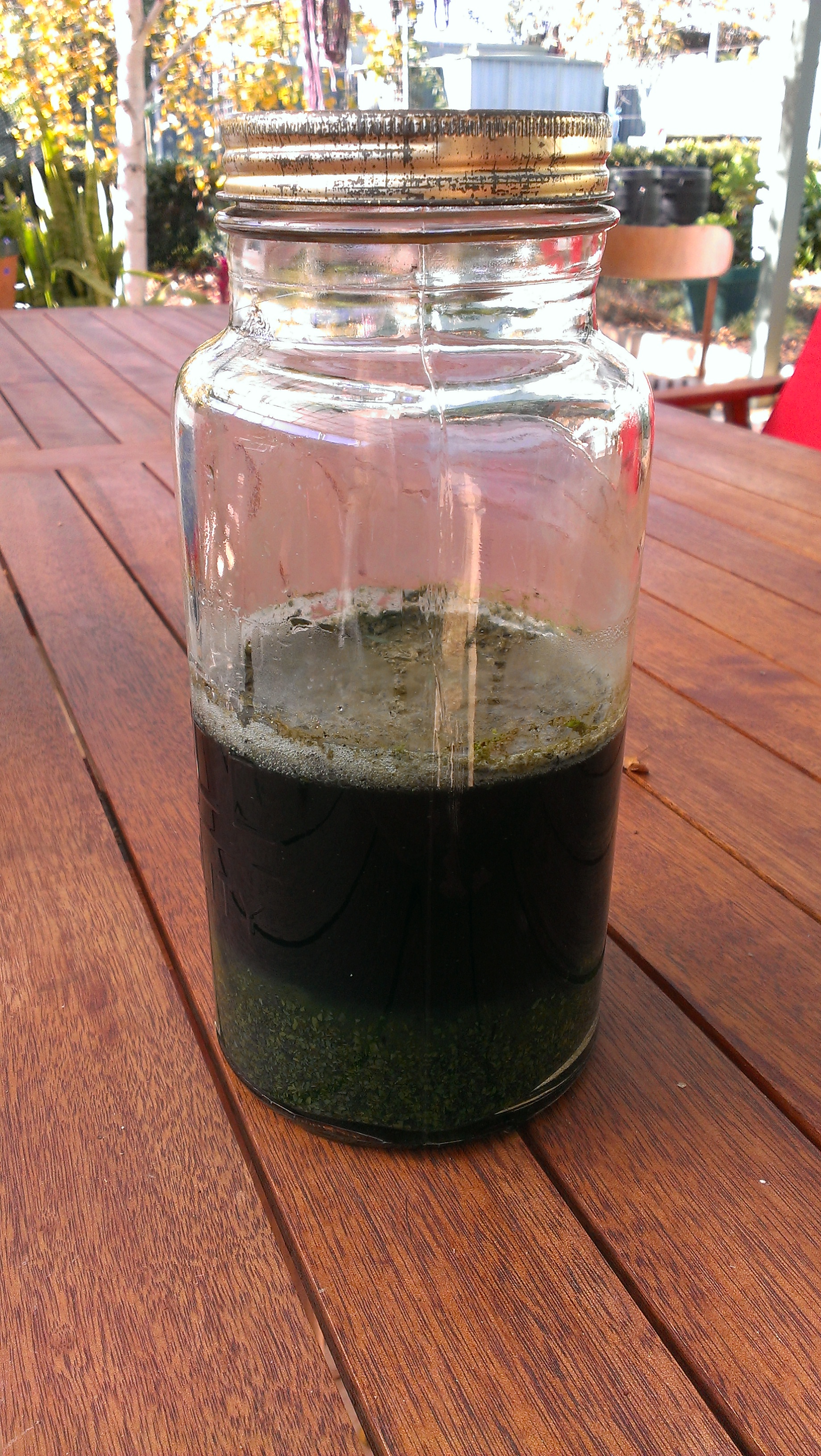
Robyn Heywood has trialled this method as well as the cold vinegar method and provided instructions.  So, since I still had some hydrosulphite left from my last indigo vat, I decided to try it.  Robyn Heywood soaked the leaves… apparently it is too much to expect that I would follow instructions exactly.  I blended them and left to soak for a couple of days. Here they are 18 hours later.
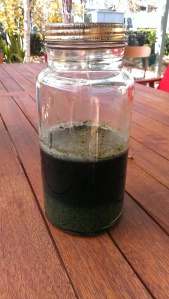
IMAG1614

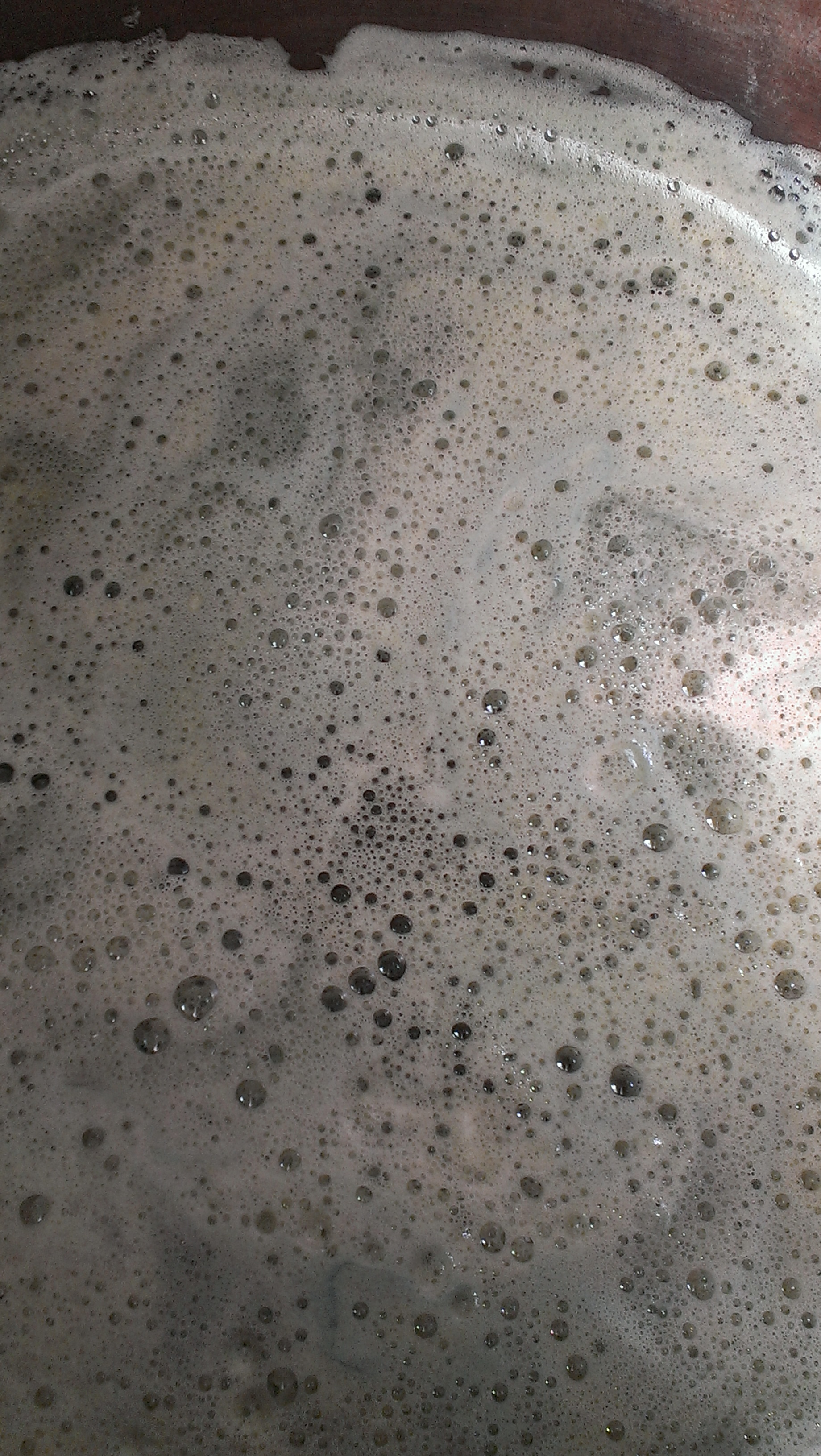
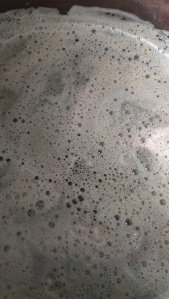
Robyn’s proposal was to leave them in a warm place.  I created one the first night by sitting my vat in a bucket of warm water, and then since the days aren’t warm right now (17C maximum)– the best I could do was a sunny spot.  48 hours later–or so–I started in on the preparation of the vat.  First, I sieved out the plant matter.  Then, added washing soda.  Now for aeration.  I went with the trusty blender method, which I was sure would introduce a lot of air.  Before:

IMAG1624

After:

IMAG1629 (1)

I watched sceptically, but indeed, the bubbles did turn from green to bluish!  I prepared a hot water bath to raise the temperature of my vat.  I put the jar into it.  I turned away, and a few minutes later there was an almighty crack as the jar came apart.  Rude words were used.  On the down side, I now had glass shards I couldn’t see in my dye;  evidence of poor judgment on my part; a  broken jar and a clean up job.  My dye bath had at least 1.5 litres of water added to it, so probably now had three times the amount of water I had decided on (that sounded like a weak vat to me!)  And it was now in a stainless steel dyepot, along with whatever contaminants it contained after being rinsed out.  On the up side, the bath got to 50C almost immediately and the bubbles were still going blue.
IMAG1632

‘Press on, how do I know what will happen?’  I thought.  ‘Don’t be wasting that precious dyestuff’, I thought.   I got out my trusty milk crate/felted blanket dyebath insulating system, filled up one hot water bottle which promptly sprung a leak; filled up another hot water bottle, sprinkled on the dye run remover, applied hot water bottle and felt blanket to vat and walked away.  ‘Que sera, sera and all that’,  I said, sighing.  Well, I need not have sighed, because the vat turned a vivid yellow.  In went some silk/cotton thread and a piece of hemp fabric.

IMAG1641

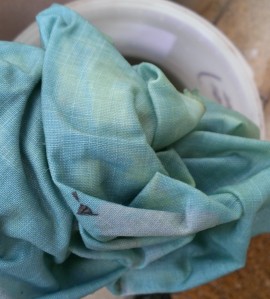
They came out bright yellow and turned green and then blue-ish almost immediately.
IMAG1649

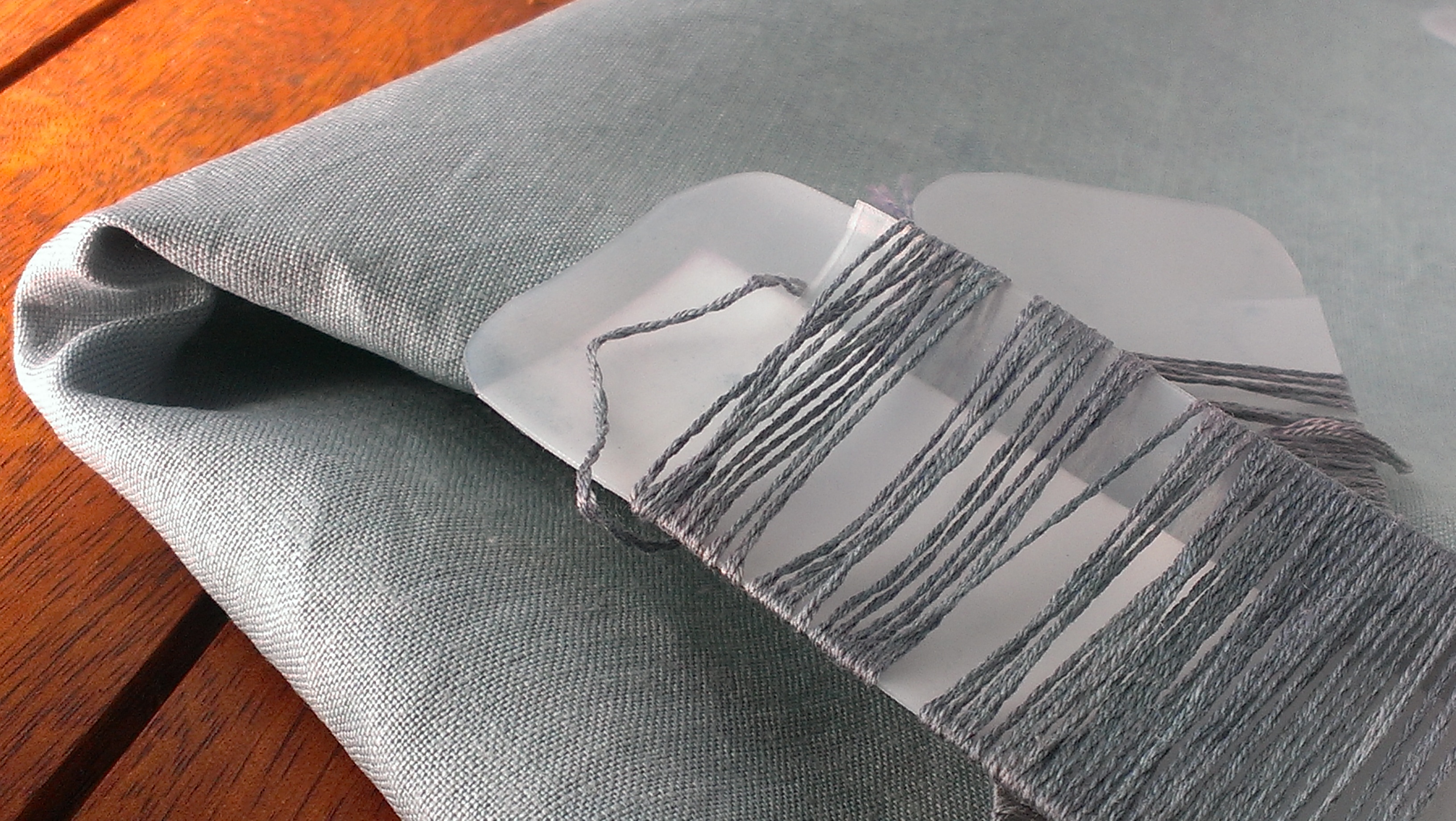
And so, to re-dipping, gleefully (and repeatedly).  Yield: several lengths of silk thread in shades of blue and grey, and a piece of pale blue fabric.  I have plans for them.  I am not sure whether this amount of leaf would always have produced a pale shade and to what extent my accidentally diluted dyebath contributed.  But, some blue resulted, and that part is excellent!

IMAG1664

6 Comments

Filed under Dye Plants, Natural dyeing

Waste not want not

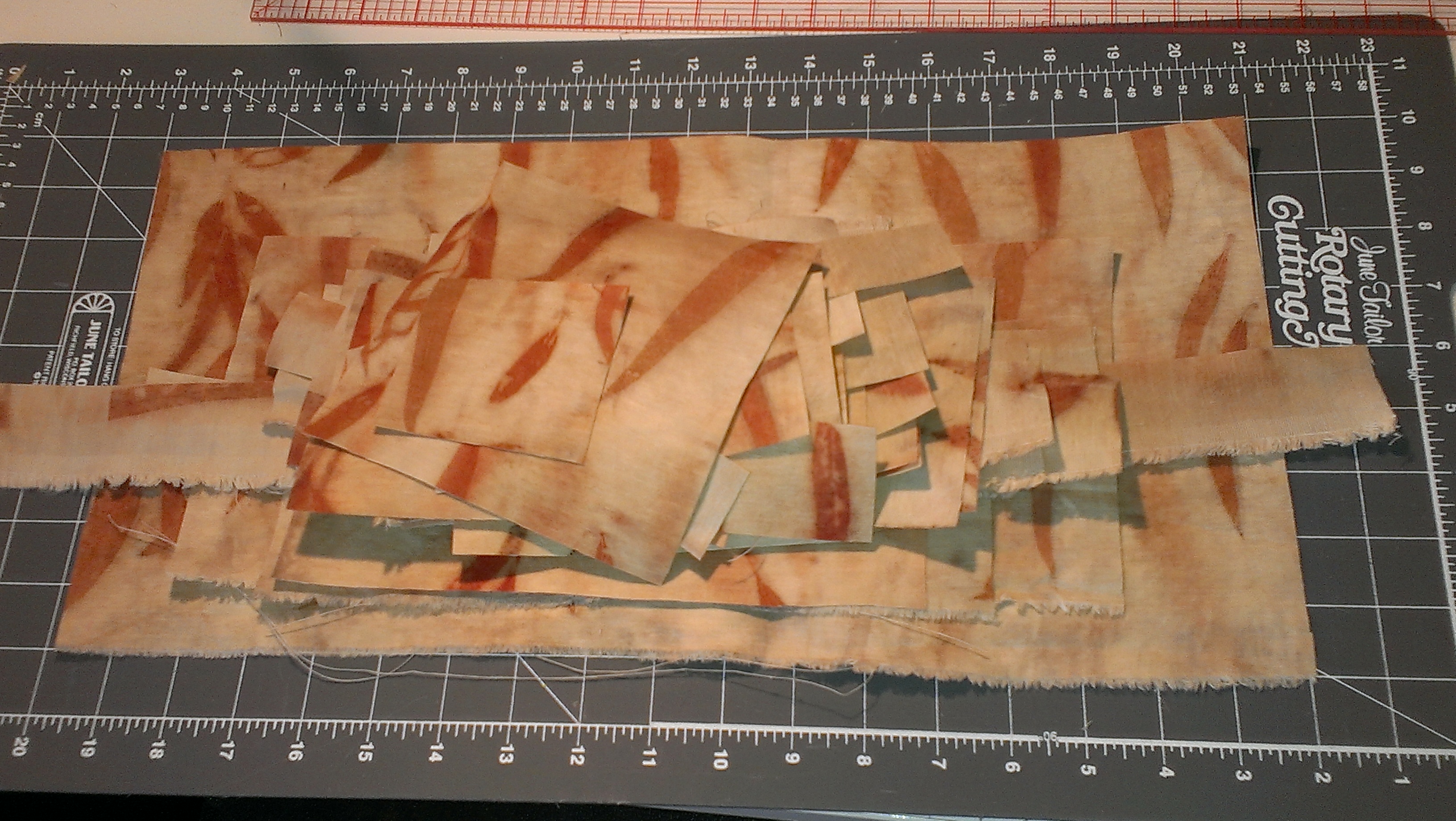
Having made two shirts from my length of leaf-printed hemp/silk, I was left with a selection of mostly quite small pieces.  Other people have clever ways of designing that don’t leave waste but use the whole length of fabric.  Not me.  Maybe I’ll learn this one day.  But I have my ways.  I cut all the pieces into rectangles and squares.

IMAG1075

Then I start piecing them together and matching sizes.

IMAG1078

I stitch them into bigger and bigger pieces, until I can decide whether to make a bag or a cushion cover or whatever seems to suit the fabric and design.  Finally all I have left are useable pieces of patchwork.

IMG_0059

And a really small pile of scraps.

IMAG1073

And of course, the second shirt.

IMG_0118

5 Comments

Filed under Eucalypts, Leaf prints, Sewing

Tribeca shirt

At last, the piece of lovely fabric I was speaking about toward the end of this post has become a garment.  The fabric is a silk/hemp blend from Margaret River Hempco.  The pattern is the Tribeca Shirt from the Sewing Workshop.  The leaf prints use India Flint’s techniques and Eucalyptus Scoparia leaves.

IMG_0080

I invested in this pattern because I have been making the same unisex shirt from McCall’s for years in different fabrics.  It is an oversized shirt with collar, collar stand, button bands, plackets and cuffs.  I’ve had great value from that pattern, making it for myself numerous times and for other people from time to time. Sometimes I’ve made it with collar stand and no collar, or a differently shaped collar.  I’ve made it from recycled linen tablecloths, lovely quilting fabrics and even a screenprint from an Indigenous business on the Tiwi Islands.

IMG_0074

I wanted something different and I decided on this.  It really was different.  No facings, no cuffs, the funnel neck involves no collar, and the whole shirt is designed for french seams. I had a failure of nerve prior to setting in the sleeves using french seams and had to set it aside for a couple of days!  The buttonholes are placed over a patch sewn to the reverse side.  Shaping is achieved with darts.  This is really interesting but also really efficient sewing.

IMG_0078

The level of instruction in the pattern worked well for me.  As usual, the bodies contemplated by the pattern measurements and my own body seemed to have little in common.  My pattern adjustment skills are better than they have ever been but could still use improvement–just the same, the result has me feeling really happy.  I had enough fabric leftover to cut out a second, simple shirt which is now waiting for my attention. Now all I need is the right occasion for a first outing.

IMG_0076

8 Comments

Filed under Eucalypts, Leaf prints, Sewing

Eucalyptus leaf prints of the week

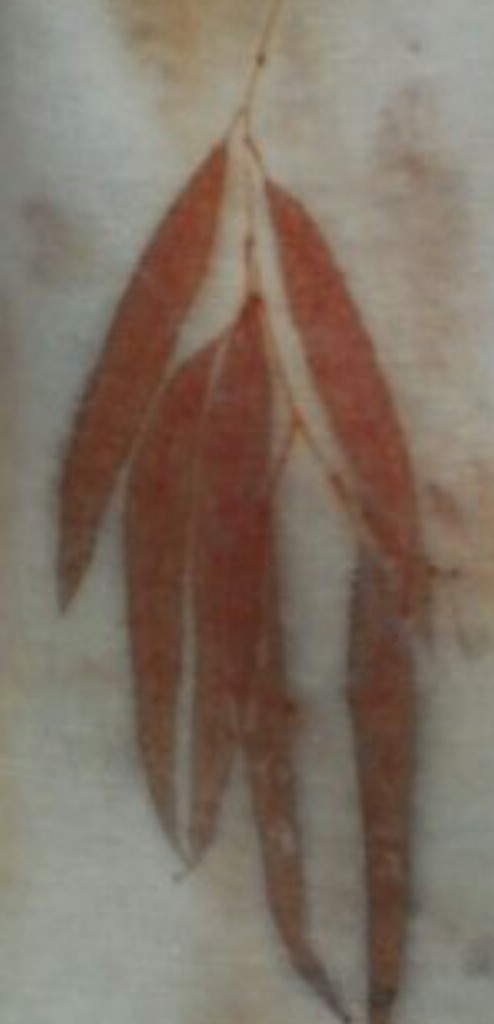
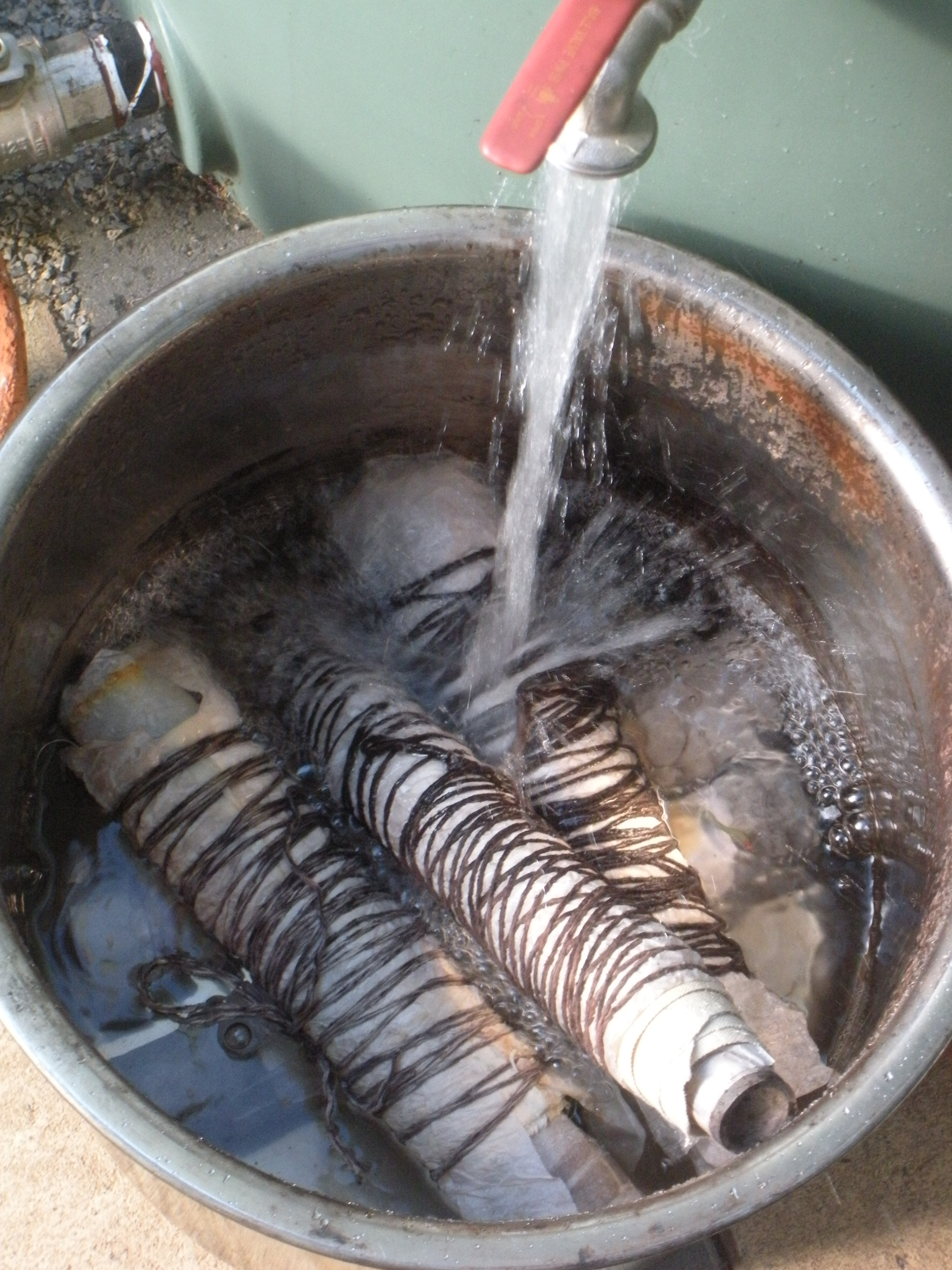
Alongside all these  yarn samples, I made leaf prints.  I sprayed my fabrics in vinegar (as India Flint recommends in her beautiful book Eco-Colour: follow the link on her blog and support her that way if buying online: it is in the left hand sidebar).  Next, I sandwiched the leaves between two layers of fabric, wrapped them tightly around cast iron pipe and cooked them in rainwater for about three hours.

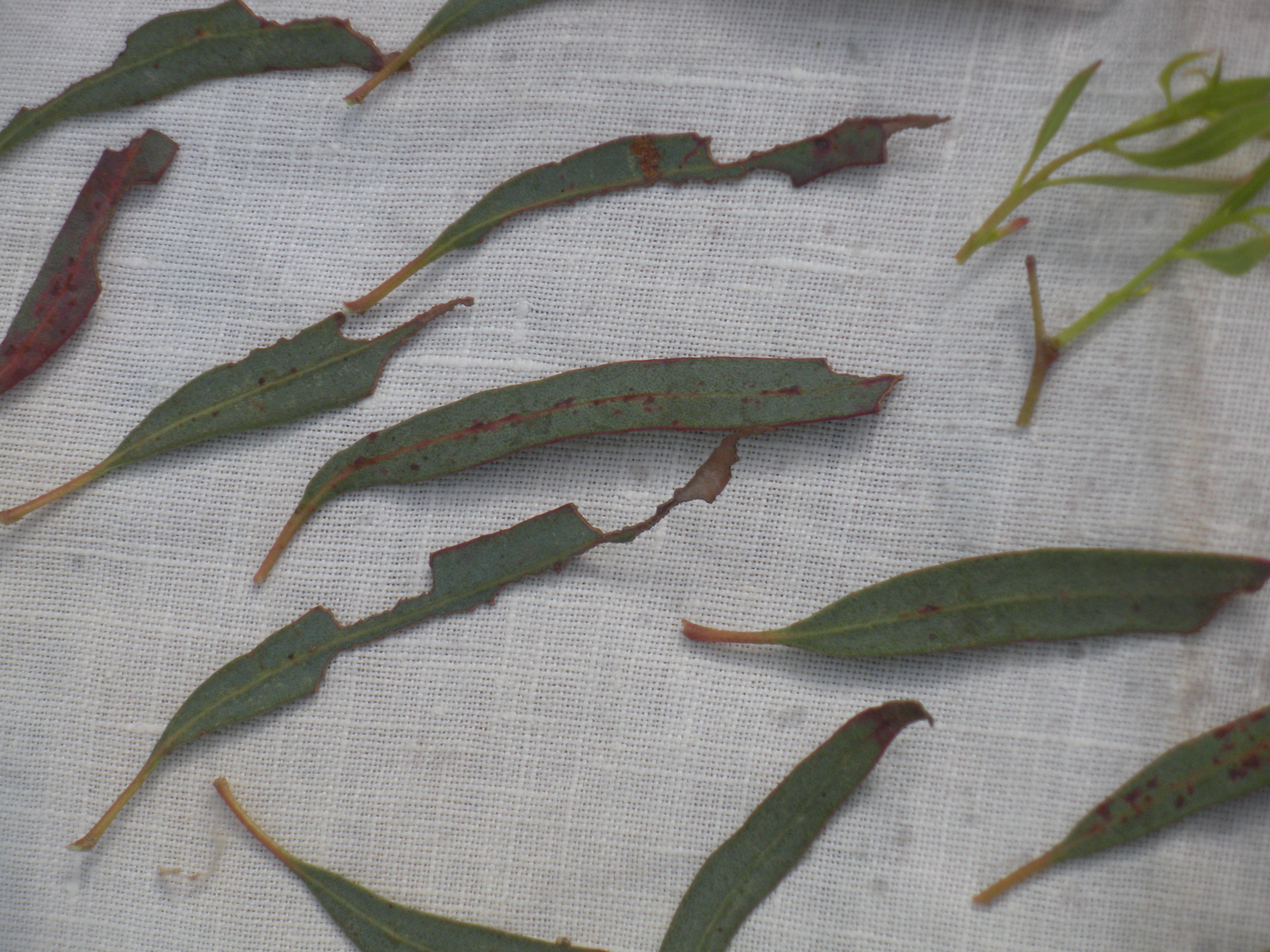
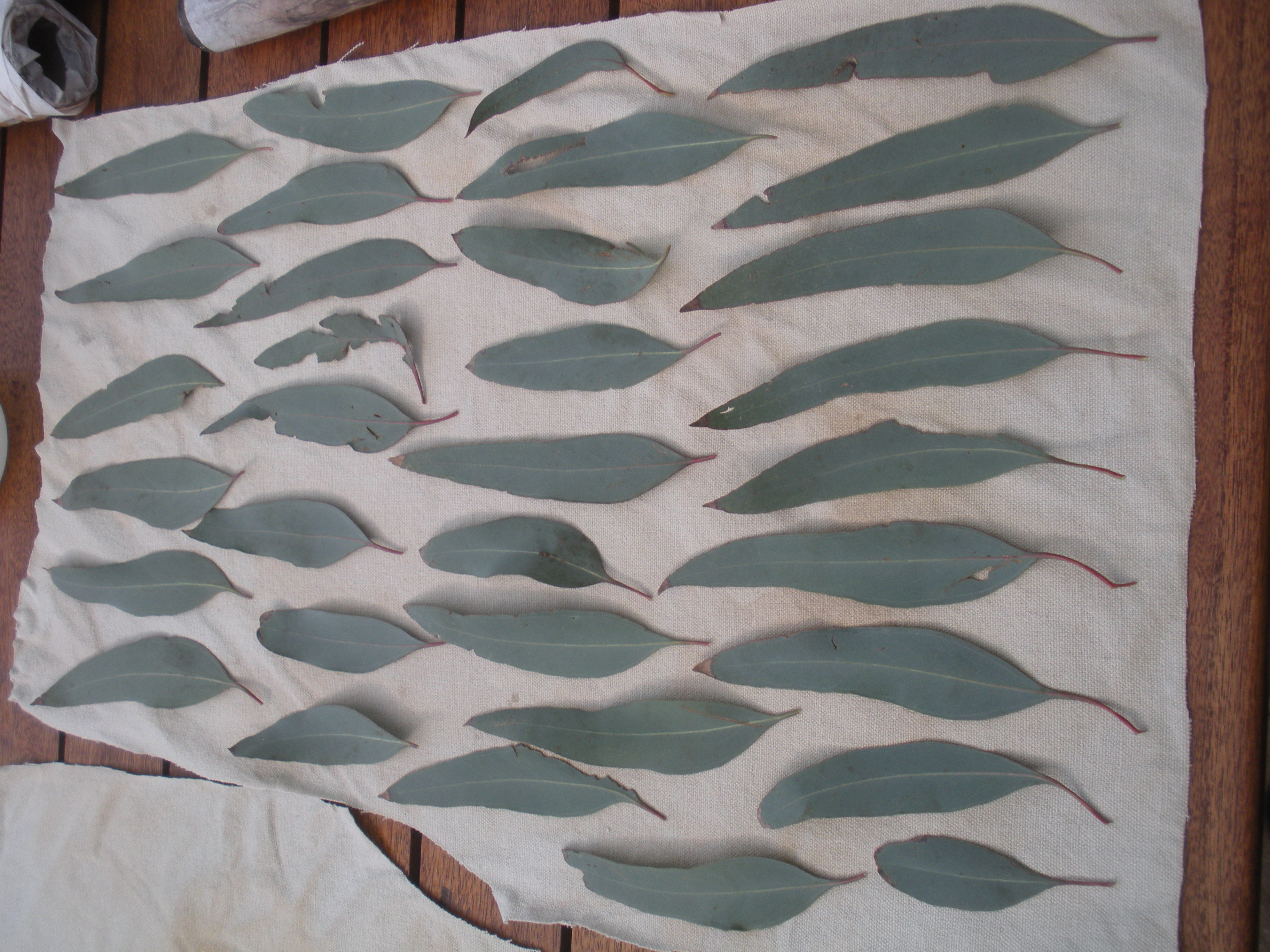
Here is my suspected E Scoparia before cooking: I got a small sample and only what I could reach, and when I got it home, there was a lot of evidence of insect activity!

E Scoparia? Sample

After…

I also set up some E Sideroxylon leaf prints, which as I have now confided in you, were not E Sideroxylon at all!   Some on recycled hemp shorts (I’ve decided that I am allowed to use the fabric of garments I no longer like/want for other purposes), and some on some hemp/silk fabric I ordered online. Here is one piece of what used to be a pair of shorts, before:

I am planning to make a leaf-printed shirt, but I am a bit scared.  I mordanted this fabric months ago.  I have a great pattern.  I did not expect this fabric to have one silk face and one hemp face, and I can’t decide which is the’ right’ side.  So I set up one sample on the silk face and one on the hemp face.  Here are the results.

Silk side:

Hemp side:

So… I think the silk side might be the ‘right’ side.  Feel free to offer alternative opinions!  And I might use a different tree for the shirt prints when I gather my courage.

1 Comment

Filed under Eucalypts, Leaf prints