Tag Archives: neighbourhood dyeplants

Alpaca preparation

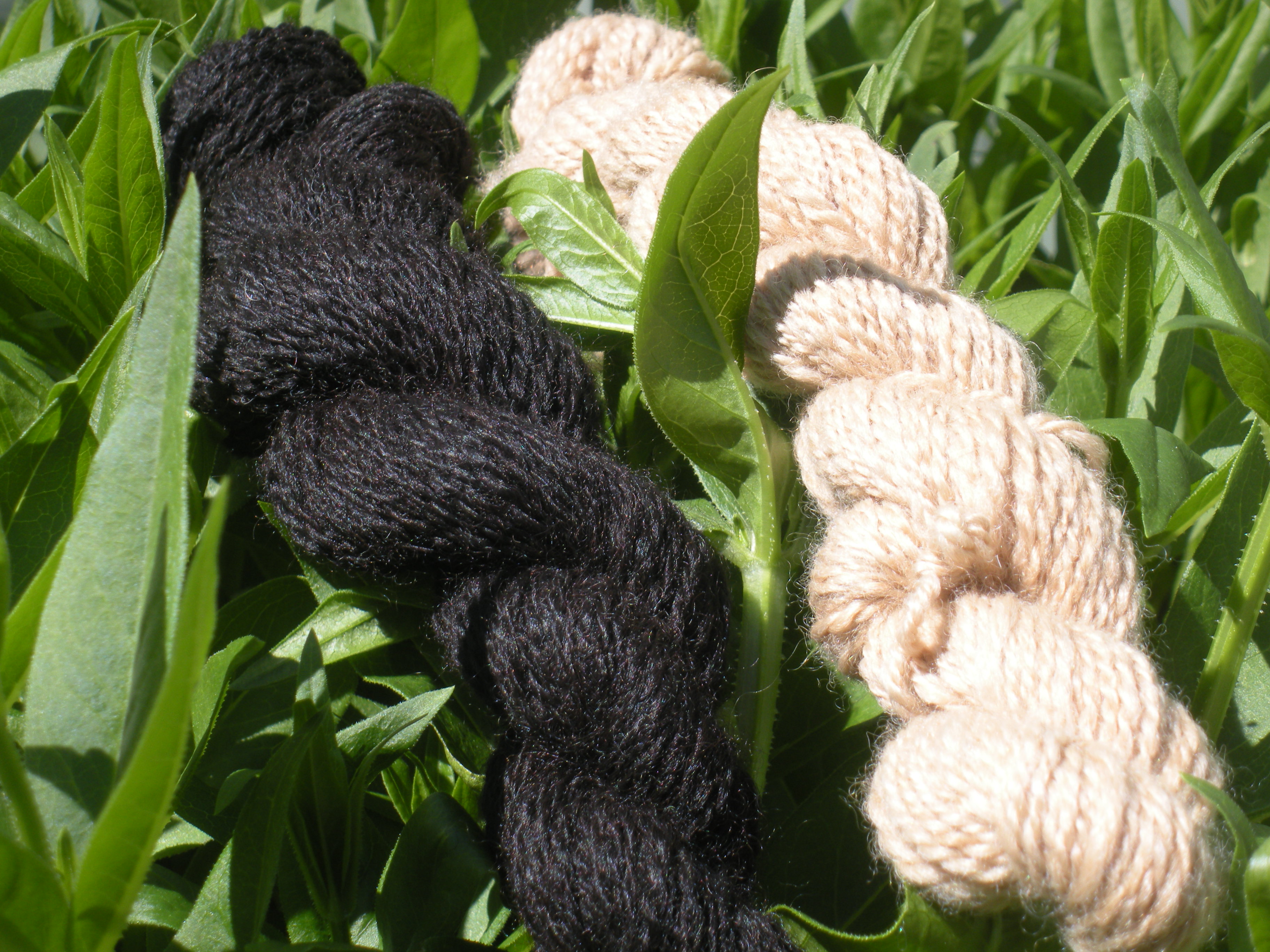
I’ve been having a lovely time spinning alpaca given to me by a generous friend.  She gave me samples of three different fleeces, white, black and what she rather fetchingly calls ‘champagne’.  I’ve been combing it and spinning it two ply and I’m very happy with the results.
I told my friend how lovely I thought the alpaca was, and she gave me more!  I have spun alpaca before, sometimes in quite a large quantity, but this has the longest staple I have ever seen, about 90 mm (these are the 90 mm matches I use to light to the dye pots–extra long.

I have to confess I have never washed alpaca, and it is always filthy, since alpacas roll and dust bathe.  My chooks dust bathe too, and watching them,  it’s no wonder that sand falls out of this fleece any time I move it! This fleece had so much dust in it that combing it was an outside activity that gave me hayfever.  I spun a lot of the white fleece rinsed and combed (that stopped the hayfever at least).  Then, I decided to brace myself and washed the rest of it.  And that led to dyeing the unspun fibre, as it turned out.  I have been working my dyepots hard experimenting toward red and…

IMAG1267

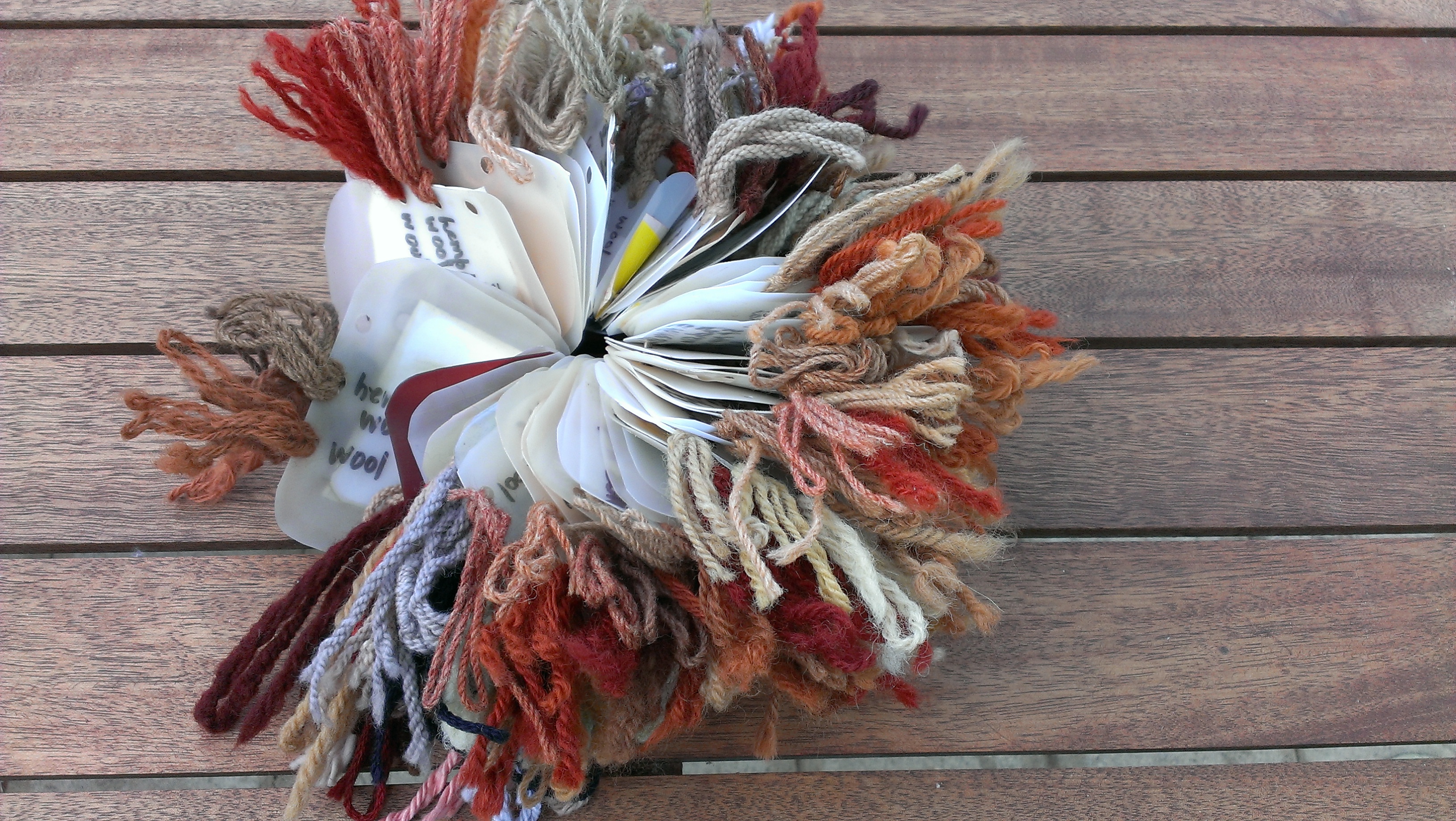
I am getting more interesting colours on silk thread (wrapped around the cards at left) than ever before.  My friends agree that the alpaca on the left, first through the dye bath, is red, then there is grey corriedale (second pass, same dye bath), more alpaca (third pass, still the same dyebath) and some still damp alpaca (fourth pass).  Three cheers for the potential to spin alpaca of many colours!

4 Comments

Filed under Dye Plants, Eucalypts, Fibre preparation, Natural dyeing, Spinning

Leaf prints with rust water

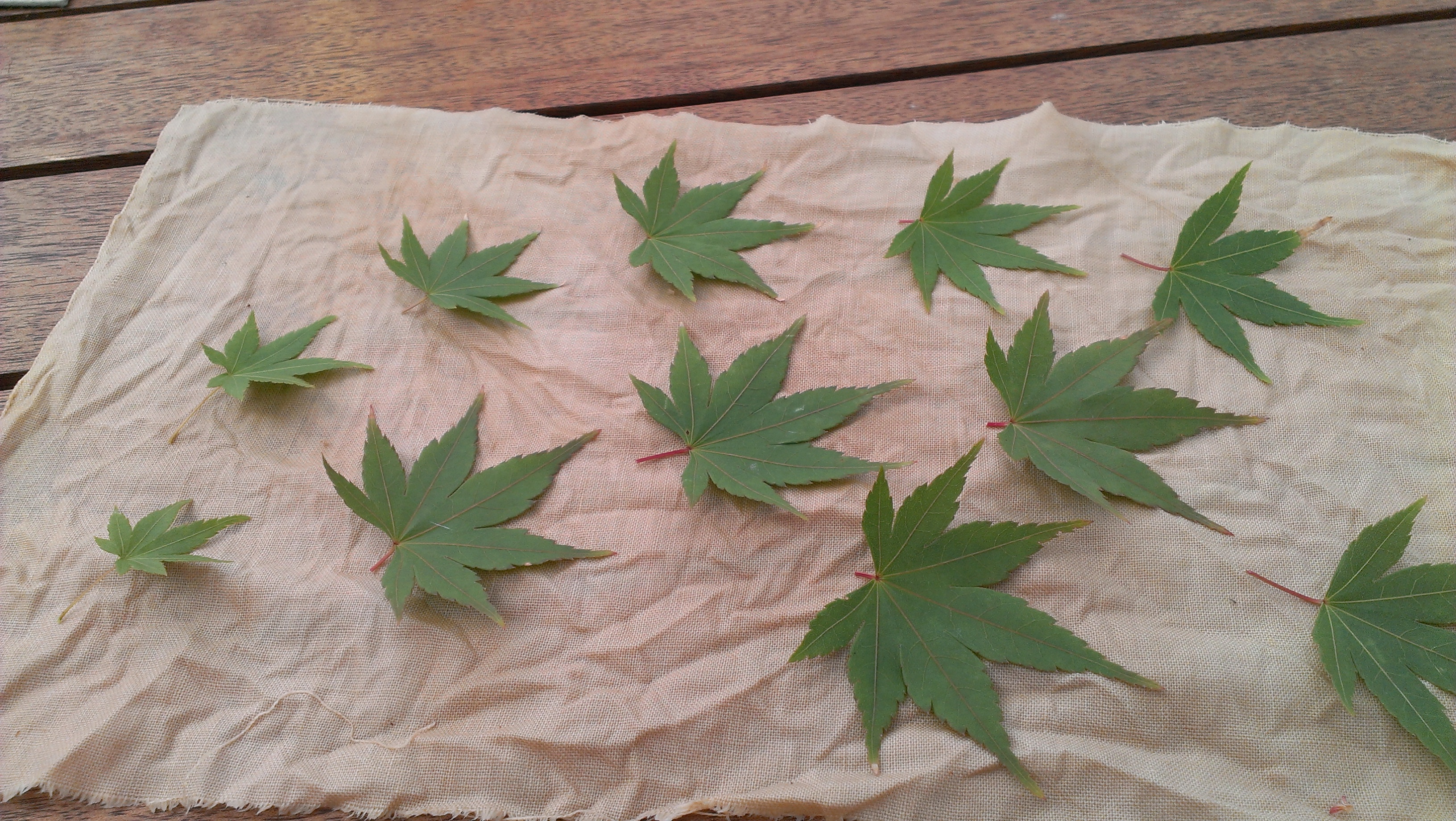
I have continued my experiments with Rebecca Burgess‘ ‘fall dye starter’ from Harvesting Color. I admit, it is barely autumn here and I’ve actually been trying this out through our summer… but this is a mere detail, I hope! I tried these three lobed leaves which someone told me were from a maple (I know little about maples), and birch leaves–why not?

IMAG0662 IMAG0765

I like the results a lot, but I won’t bother with birch again. I also collected oak leaves and wrapped them.

IMAG0661IMAG0766

Finally, I made a special trip to what I was confident was a maple to collect these exquisite five-lobed leaves.    I tried these on fabric cooked with tannin-bearing eucalyptus bark, which is not what Burgess recommends at all.

IMAG0658

This produced hardly a smudge.  So, I may have to review my ideas about tannin.  Or on the other hand, I may have to reconsider my naive ideas about maples!

4 Comments

Filed under Dye Plants, Leaf prints, Natural dyeing

Eucalyptus Orbifolia

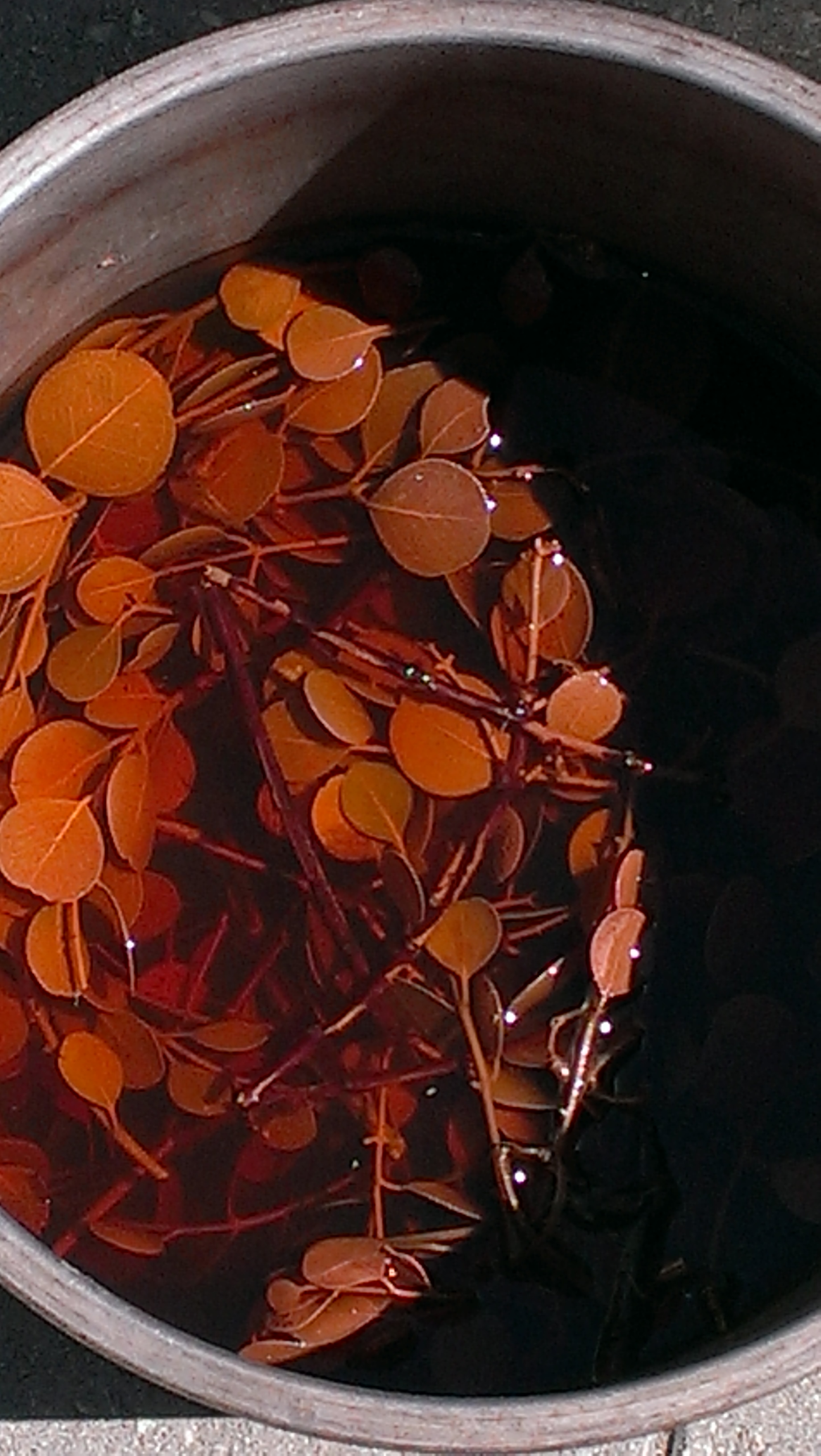
Alas, poor Eucalyptus Orbifolia.  I grew this plant from a small seedling to a still small, but perhaps 50 cm high plant hardly worthy of the title ‘sapling’, in a large pot.  It seems to have been a casualty of the hot summer and perhaps its far flung location at the back of the yard.  Despite all the watering it received, poor old Orbi gives every impression of having curled up its toes.  So, I’ve cut back and harvested the leaves for the dye pot.  Perhaps there will be regrowth, but I’m not letting all the leaves fall while I wait to find out.

I bought this plant and not some other believing it to be a dye plant for some reason I can no longer remember.  I’ve been to the place I thought this idea generated but it isn’t there!  And now I can break the news to you, dear reader.  It isn’t going to join the list of truly exciting dye plants anytime soon.  Here is the dye pot after some hours of simmering.
IMAG1189

The dye liquor is still quite clear, with an amber tint.  The leaves are still the glorious shape that gives the tree its name.  I have leaf printed with them in the past and the result was definitely a print, though not any really impressive colour.  And here is the result of a dyebath test. The handspun with no mordant: orange.  The millspun superwash with alum mordant: brown.  What was I thinking mixing and matching fibres on my test cards in this batch? Silk thread, nothing of significance to report (E Orbifolia is in the middle). And for comparison, handspun Finn X dyed with E Scoparia bark at the bottom of the frame.

IMAG1215

5 Comments

Filed under Dye Plants, Eucalypts, Natural dyeing

Random harvest

In the beginning, when I’d read the Handweavers and Spinners Guild of Victoria Dyemaking with Australian Flora (1974) and perhaps Jean Carman’s Dyemaking with Eucalypts (1978) and knew just about nothing about identifying eucalypts, I used to just choose a tree at random and try it out on some wool.  Sometimes that is still the thing to do!

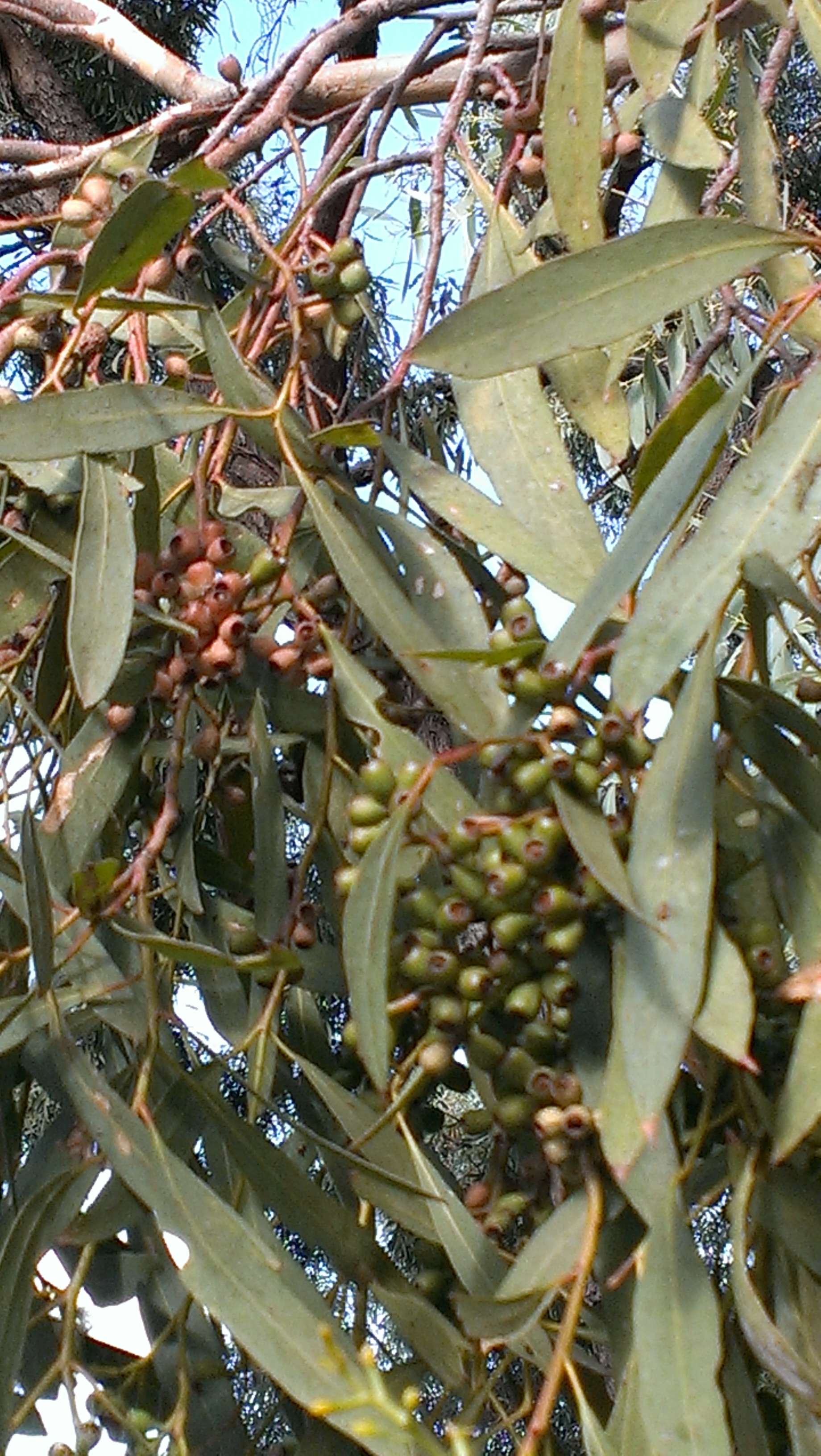
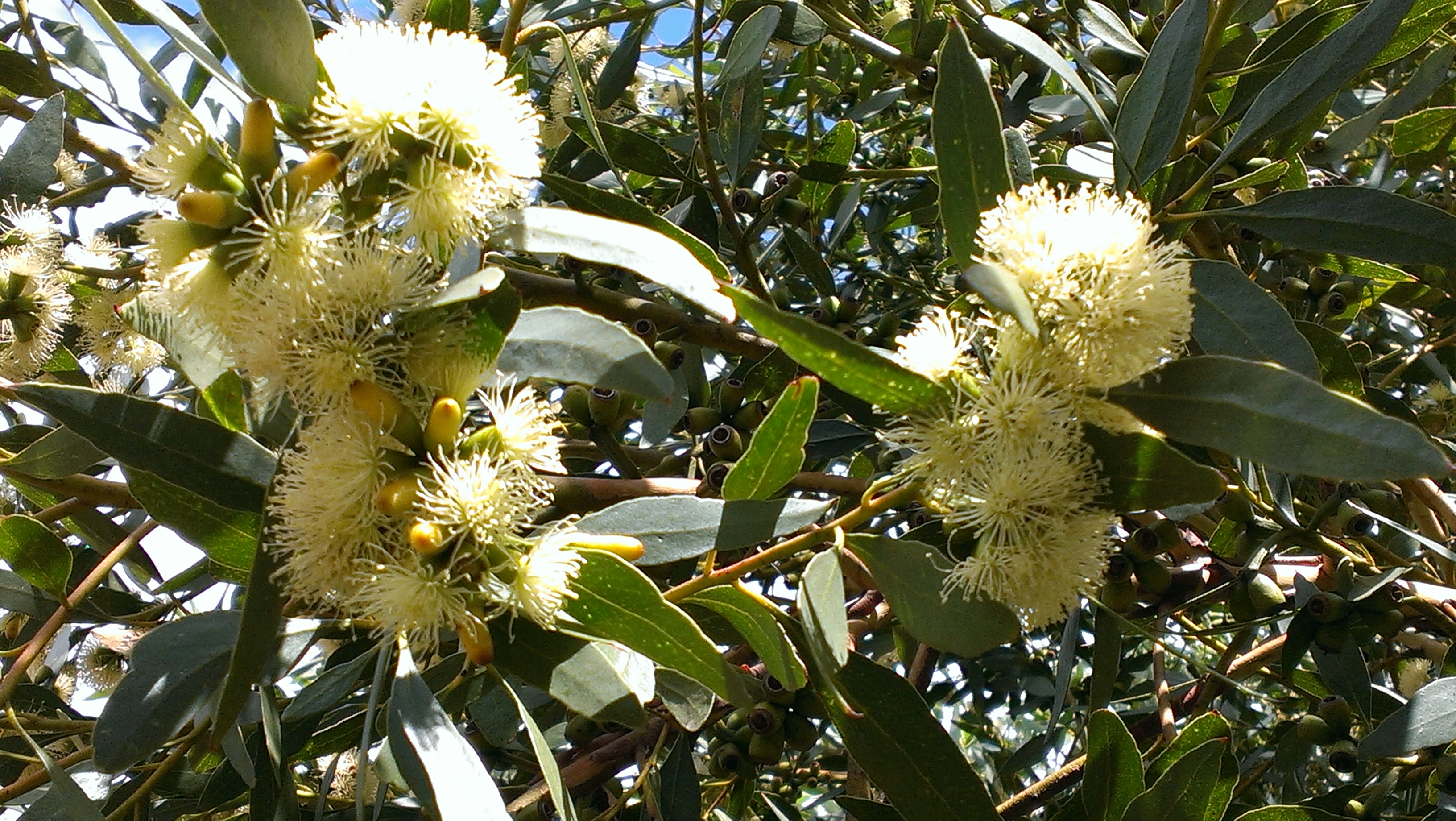
Last week I had a testing trip home from work by public transport.  It took one and a half times as long as doing the trip by bike would have done, partly because I travelled on a bus route further from home and walked a good way.  So I looked for entertainment on my walk.  This rough barked tree was in flower (small, cream-white flowers) and hanging through a park fence.

IMAG1105

Lots of fruit in several stages of maturity.  I took a small leafy sample. 

IMAG1107

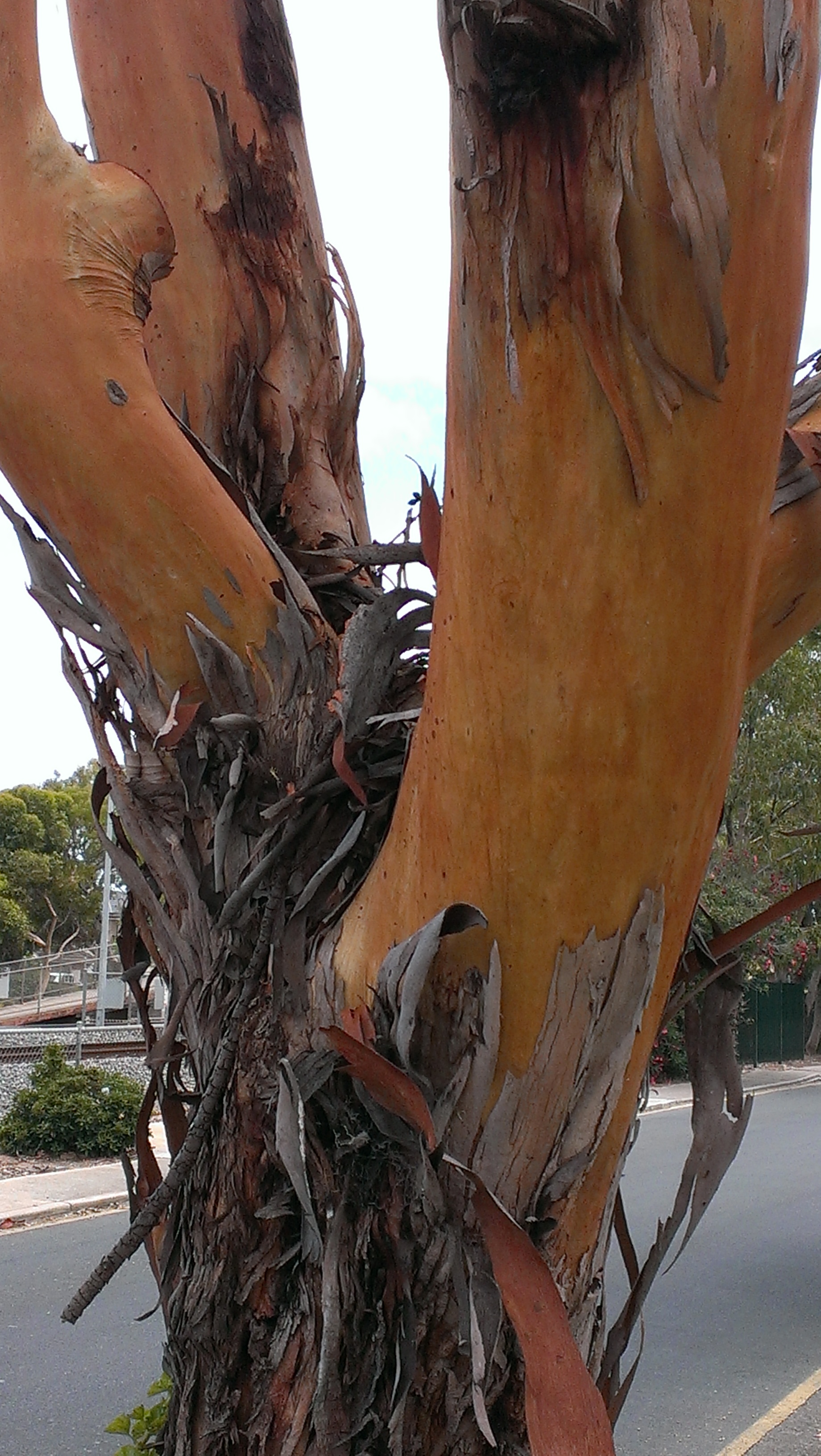
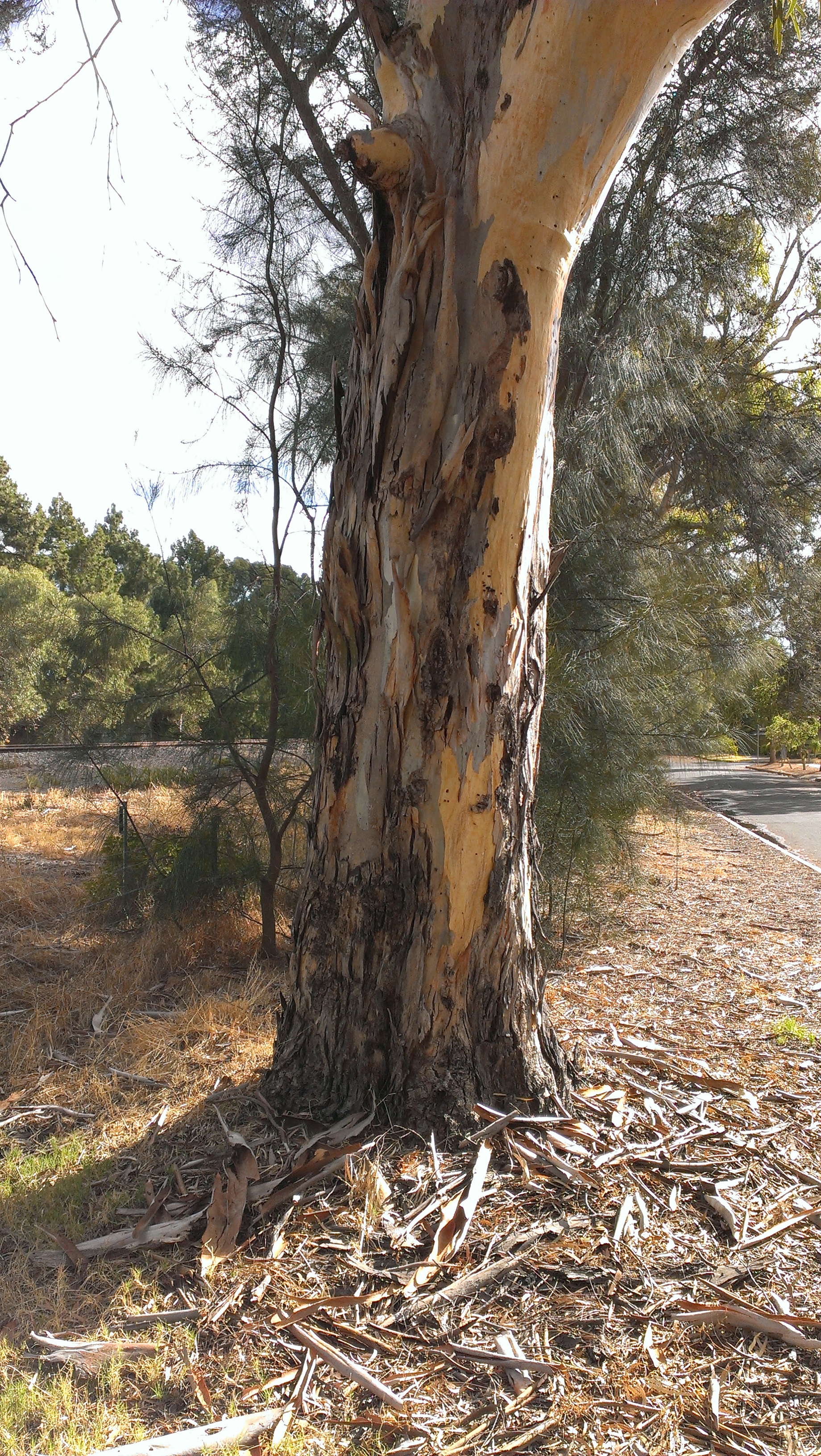
I kept walking.and came across this tree with its spectacular peeling bark and bronzed trunk by the tramline.  There was a broken branch still hanging suspended from the intact branches, so I broke off enough dried leaves to make a meaningful test dye bath.

IMAG1109 IMAG1110

Along the tramline closer to home, I saw this beauty with coppery bark (suggesting it might be a mallet, I believe) but quite a broad leaf by comparison with the family member I know best, the swamp mallet, E Spathulata. A few more leaves selected.

IMAG1111 IMAG1112

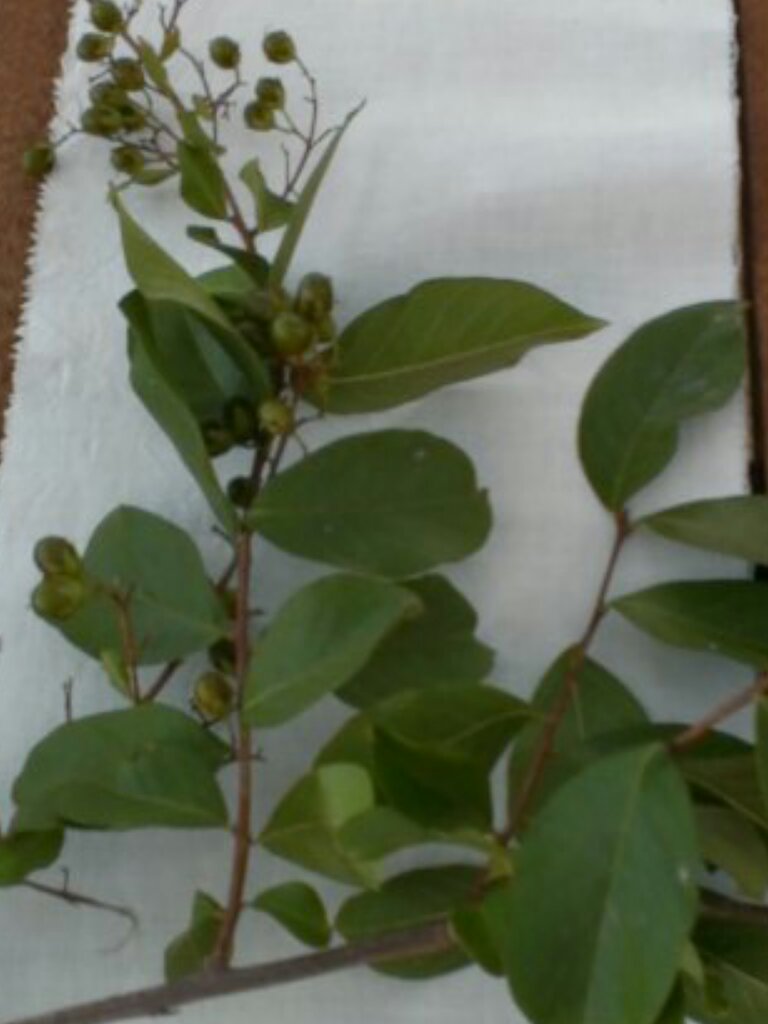
Finally, I passed a friend’s place.  His neighbour’s house had been demolished that day and part of the crepe myrtle (Lagerstroemia Indica) on the street had been a casualty, so I picked a sample of that, too, and when he came out of his garden, there was a chat to be had as well. Crepe myrtle turns out not o be an indigenous species.

IMG_0083

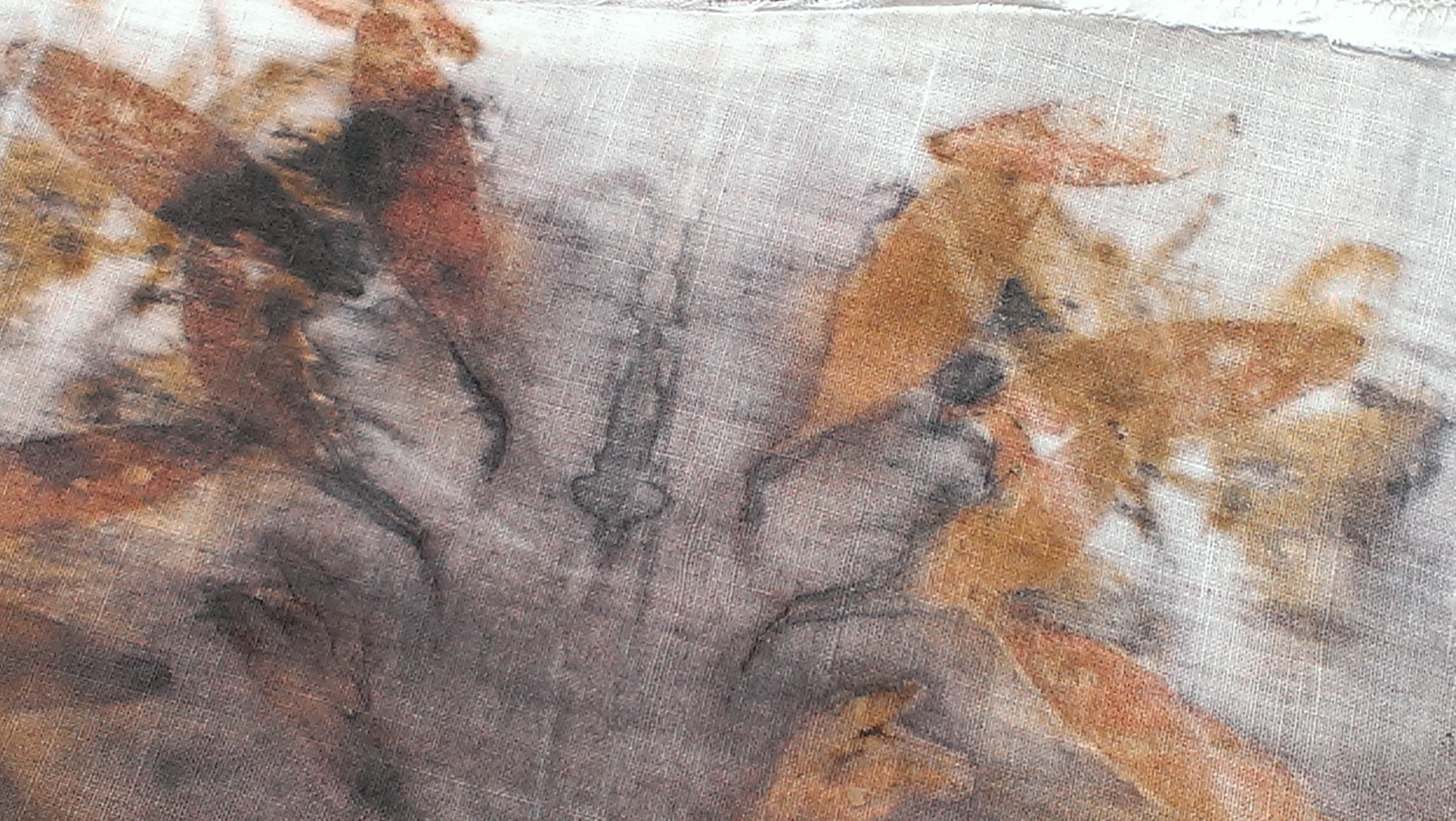
And now for the (dyeing) punchline.  I won’t be losing sleep identifying these trees! That’s the crepe myrtle to the left.  You can see the leaves have acted as a resist to the iron in my bath, with some tan patterning from the leaves themselves.

IMAG1216

And… here is the result from the dried leaf dye bath from the tree with bark peeling in strips.  Tan or brown, depending.

IMAG1214

3 Comments

Filed under Dye Plants, Eucalypts, Leaf prints, Natural dyeing

Tribeca shirt

At last, the piece of lovely fabric I was speaking about toward the end of this post has become a garment.  The fabric is a silk/hemp blend from Margaret River Hempco.  The pattern is the Tribeca Shirt from the Sewing Workshop.  The leaf prints use India Flint’s techniques and Eucalyptus Scoparia leaves.

IMG_0080

I invested in this pattern because I have been making the same unisex shirt from McCall’s for years in different fabrics.  It is an oversized shirt with collar, collar stand, button bands, plackets and cuffs.  I’ve had great value from that pattern, making it for myself numerous times and for other people from time to time. Sometimes I’ve made it with collar stand and no collar, or a differently shaped collar.  I’ve made it from recycled linen tablecloths, lovely quilting fabrics and even a screenprint from an Indigenous business on the Tiwi Islands.

IMG_0074

I wanted something different and I decided on this.  It really was different.  No facings, no cuffs, the funnel neck involves no collar, and the whole shirt is designed for french seams. I had a failure of nerve prior to setting in the sleeves using french seams and had to set it aside for a couple of days!  The buttonholes are placed over a patch sewn to the reverse side.  Shaping is achieved with darts.  This is really interesting but also really efficient sewing.

IMG_0078

The level of instruction in the pattern worked well for me.  As usual, the bodies contemplated by the pattern measurements and my own body seemed to have little in common.  My pattern adjustment skills are better than they have ever been but could still use improvement–just the same, the result has me feeling really happy.  I had enough fabric leftover to cut out a second, simple shirt which is now waiting for my attention. Now all I need is the right occasion for a first outing.

IMG_0076

8 Comments

Filed under Eucalypts, Leaf prints, Sewing

Sampling dye plants

IMAG0722

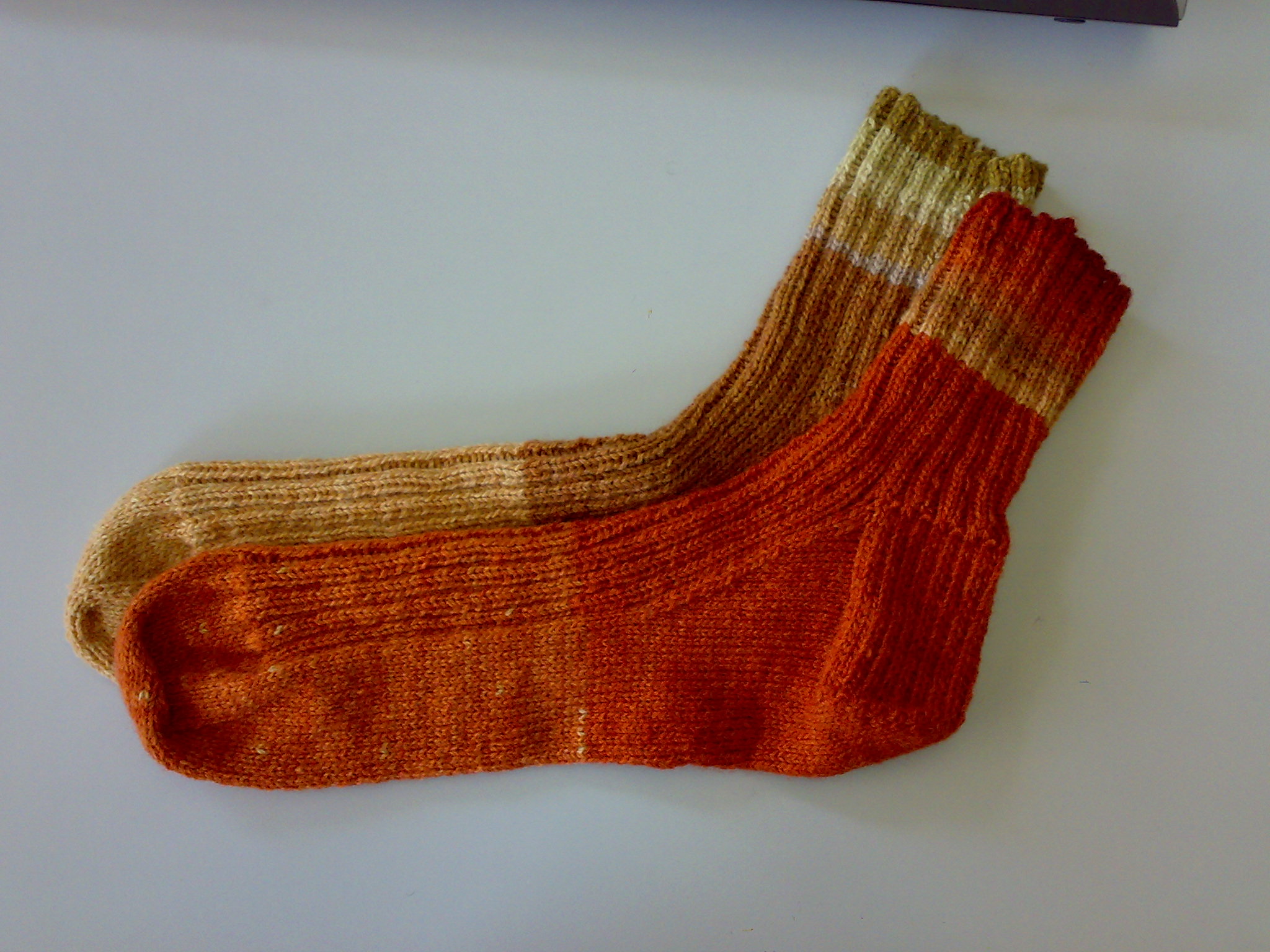
When I started plant dyeing, I used to make a tiny skein, about 1-2 metres long, and try out the leaves of trees around my neighbourhood on that.  In those early days, I tried rue after I found it listed in a book… oh my goodness…  the least said about that smell,  the better.  It almost put me off for good.  (Pale green, if anyone is wondering–not the red I was hoping for in my naivete).  When I had accumulated enough experiments to have identified some trees I wanted to keep visiting and some I would appreciate but not use for dye, I knit the samples into striped socks for a dear longtime friend. So that method had its advantages.  My friend asked for short cuffs (well, I thought he had–), so that’s what he got.

150620091160

I may have mentioned my devil-may-care attiutude to matching socks.  Happily my friend shares it, or he wouldn’t have scored this pair! 

Eventually I learned about sample cards from more experienced dyers on Ravelry.

IMAG0723

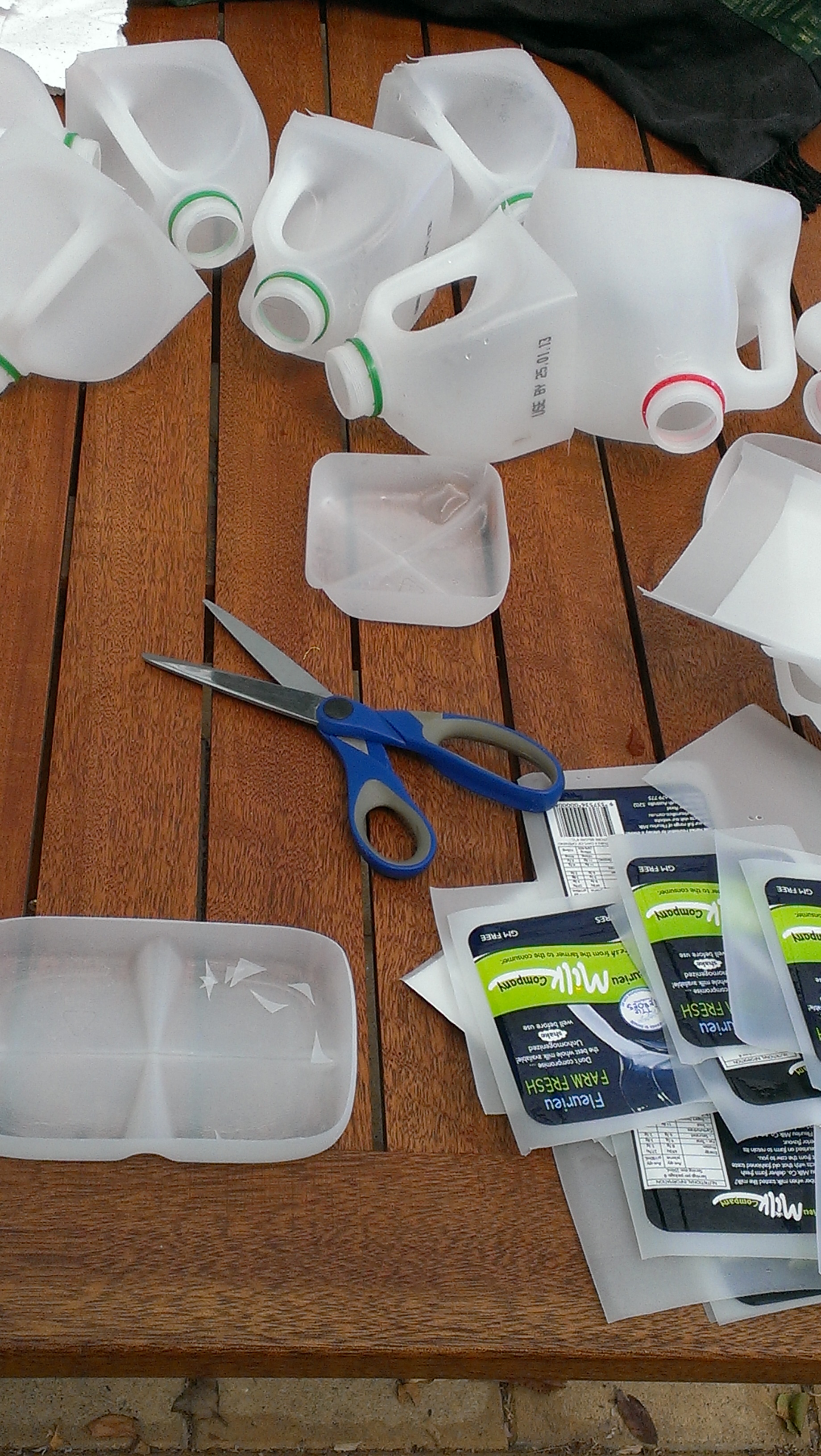
I use milk bottles to make mine.  We don’t use this kind at home any more, so I raided a recycling bin at a coffee cart during the weekly farmers’ market to get these.

IMAG0768

I keep my samples on a split ring, which I think I also saw on Ravelry, and it’s a great record of plants investigated.  Some have been identified long after being cooked in the dyepot.  A few have been identified correctly after an initial misidentification.  Some have been tried several times.

IMAG0773

And there are still so many to try out!  In the lead up to the recent workshops, I collected leaves fresh and dried: from trees, from the gutter, from fallen branches.  I collected more bark too.  This one is Eucalyptus Forrestiana,  believe:

IMAG0764

And I collected a few specimens I couldn’t identify… This one branched so high I couldn’t pick a leaf, but bud caps were raining down and lorikeets were having a great party high above me.

IMAG0760

This one was a sprawling mallee near the railway line, and came complete with new holland honeyeaters protesting my invasion.  I hope they had chicks in there somewhere, and this was the reason they kept trying to see me off even though they are about the length of my hand.

IMAG0746

This tree has fascinated me for some time: it gives a peach or apricot colour.  But I still can’t identify it.

IMAG0738

So many possibilities for the future….

6 Comments

Filed under Dye Plants, Eucalypts, Knitting, Natural dyeing

Eucalyptus Lehmanii bark dyepot

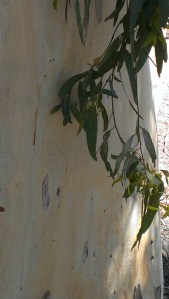
E Lehmanii (bushy yate) has a very distinctive arrangement of buds, flowers and fruit.  When I was a kindergardener, we used to put the long bud caps on our fingers and call them witch’s fingers and chase each other around.  I can’t pretend to have had any sophisticated critique of the concept ‘witch’ at that stage in my life!

I came across some planted as street trees while I was out doing a run with friends.  On the way back to our car, I managed to collect some bark–since it had helpfully fallen.  I also collected a few leaves.  I have a sample card from a previous experiment with bushy yate leaves from a friend’s property, which gave quite a strong orange-brown.

I used iron with the leaves, and the contribution from the iron on this occasion was really quite intense.  Before…

IMAG0828

After… a result that won’t have me rushing out to collect bushy yate for leaf prints, but a result just the same.

IMAG0845

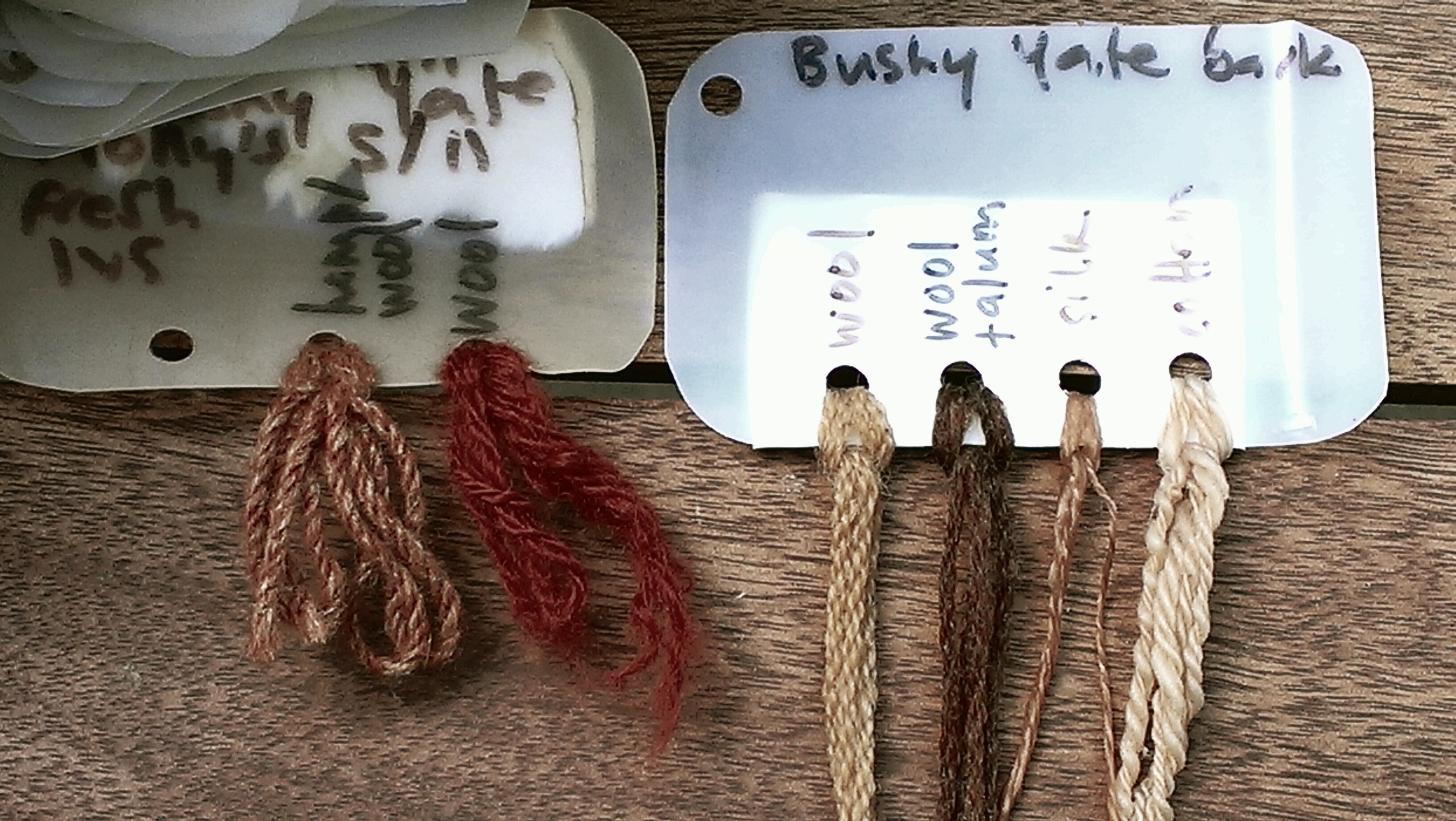
And as for the bark pot… tan, again!  I would have to rate the biggest take home message from the series of bark dye pots this summer as being that alum really makes a difference with the Eucalypt barks I’ve tried.  With leaves, I seldom see any impressive difference between alum mordanted wool and plain wool.  I dye with E Scoparia bark often and have found no point in mordanting with alum (though this experience makes me think I should try again and double check). The bark pots, however, have given various shades of tan without mordant and much stronger browns with alum, and E Lehmanii is no exception. On the left, sample card from a pot of fresh leaves.  On the right, results of the bark pot, simmered for an hour and a half.

IMAG0844_1

2 Comments

Filed under Dye Plants, Eucalypts, Fibre preparation, Leaf prints, Natural dyeing

Tree loving

IMAG0538

I decided on a bark collecting mission prior to a big heatwave we were expecting, so I went out with my trusty bike trailer and a couple of sacks to collect from this glorious Eucalyptus Scoparia.  I was hailed by the woman who lives directly across the road from the tree: ‘Oh, you are a good man!’  Eventually we left the gender confusion (and her embarassment about it) to one side and she embarked on explaining that the council hadn’t swept her street for two months.  We have spoken before when I’ve been admiring this tree, so I wasn’t entirely surprised.  However, tree hating always surprises me somewhat in spite of myself.

IMAG0541

I am privately amazed that this woman leads a life in which she sees this tree only as a source of rubbish that lands on the road, which she would prefer swept clean.  This saddened me so much that after I filled my first sack with bark, I collected up all the leaves from the gutter in my second sack and took them home to be appreciated by my chickens.  I am not sure if I was trying to spare her the agitation she clearly feels, or trying to spare the tree her anger, though the tree is indifferent.  It does concern me that when people hate trees, those trees can be endangered, since even when there are people dedicated to tree preservation, so many are cut down.

I managed not to mention that my favourite local tree has been reduced to this:

IMG_0003

Despite the council agreeing to ensure the tree was not chipped once it was felled, only intervention from an alert and interventionist neighbour from a few blocks away stopped it being shredded for mulch.  The neighbour was kind enough to leave a note in our letterbox explaining what she had done to try to preserve it, even reduced as it now is, to being wood.  Tree loving: now that, I can understand.

2 Comments

Filed under Dye Plants, Eucalypts

Eucalyptus Erythronema var Erythronema

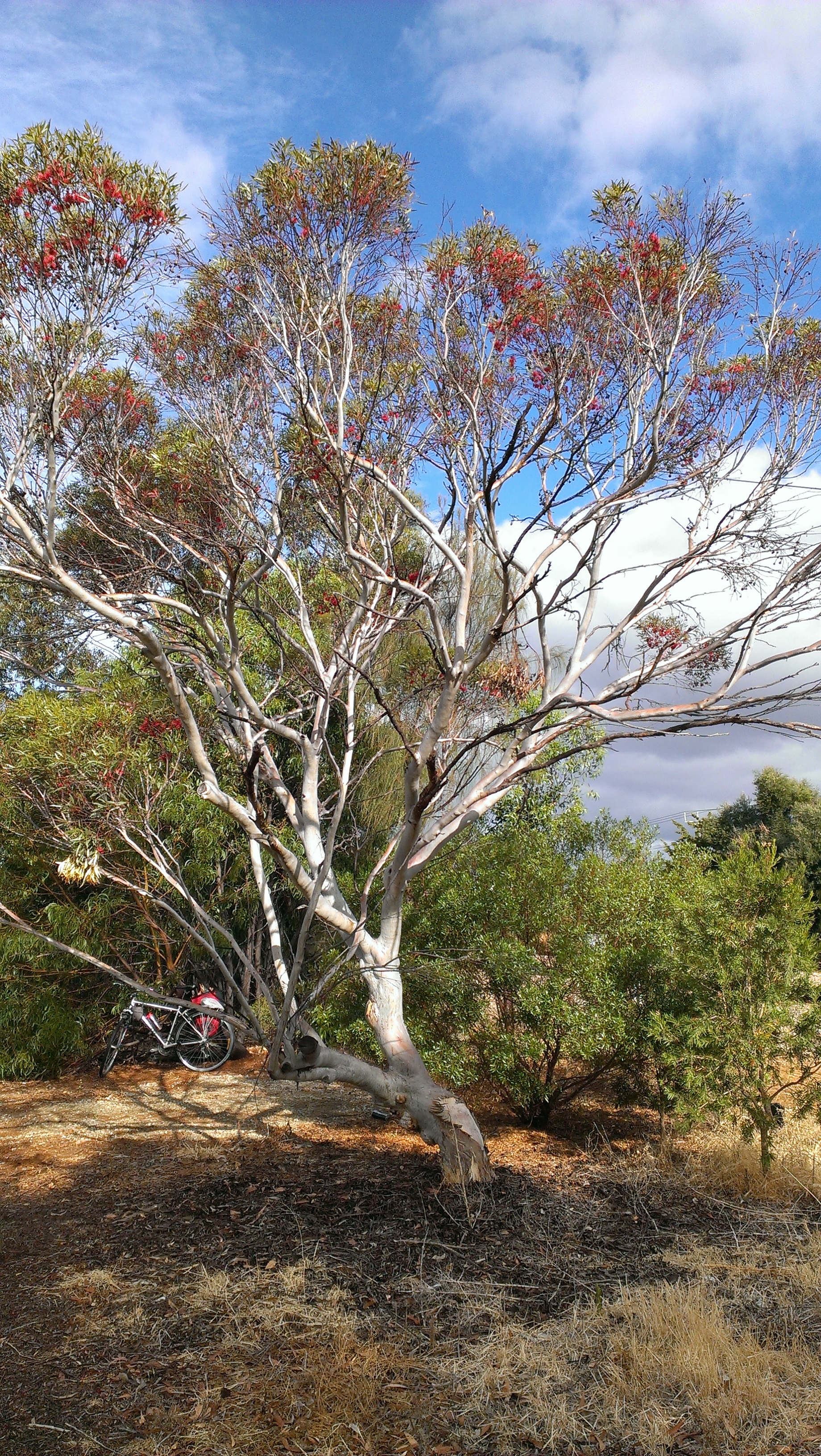
Riding along the railway corridor near Oaklands railway station, I passed one striking red-flowered tree I didn’t recognise and kept pedalling, but when I saw a second, I pulled over.  Here’s the tree.

IMAG0676

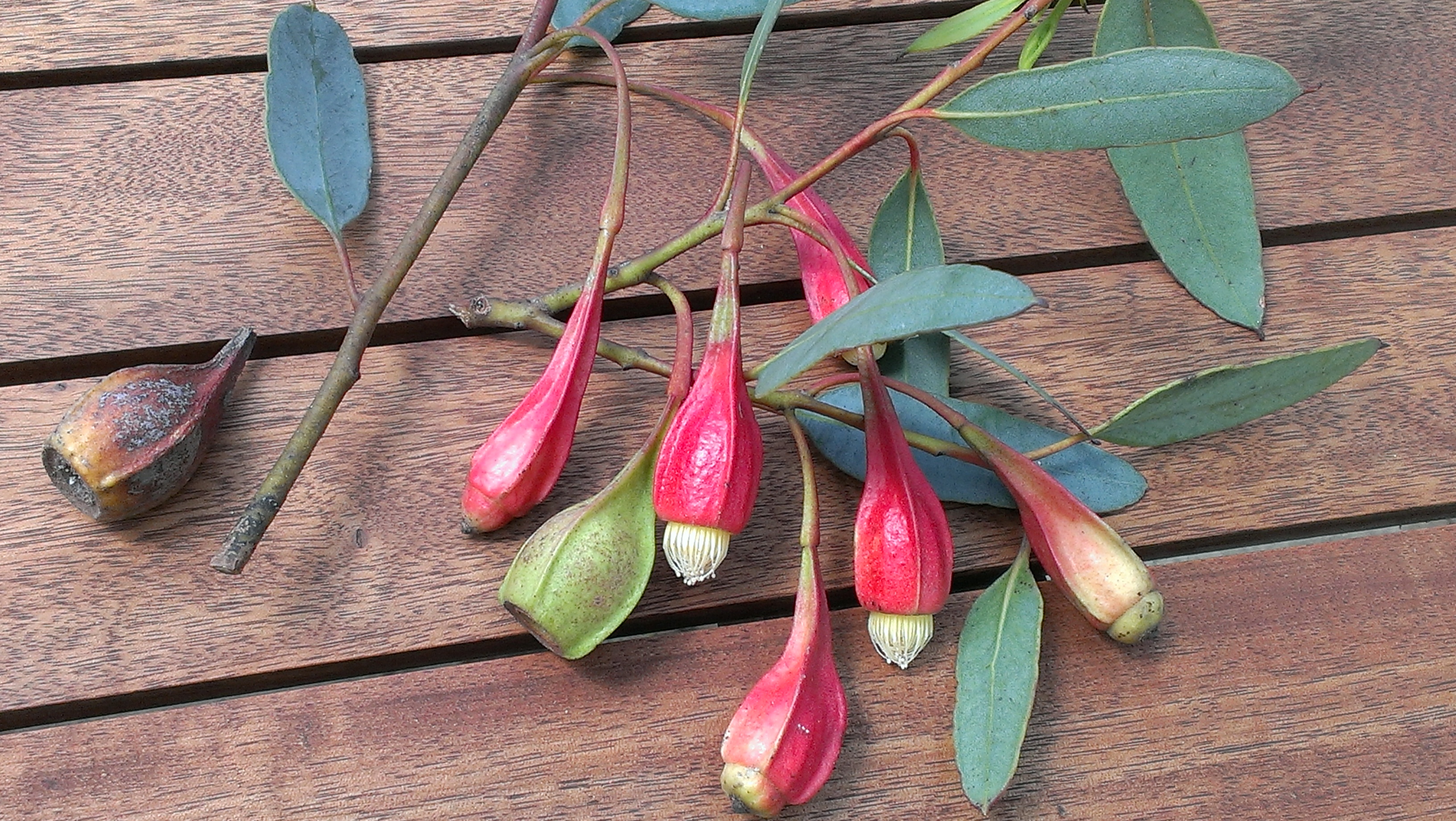
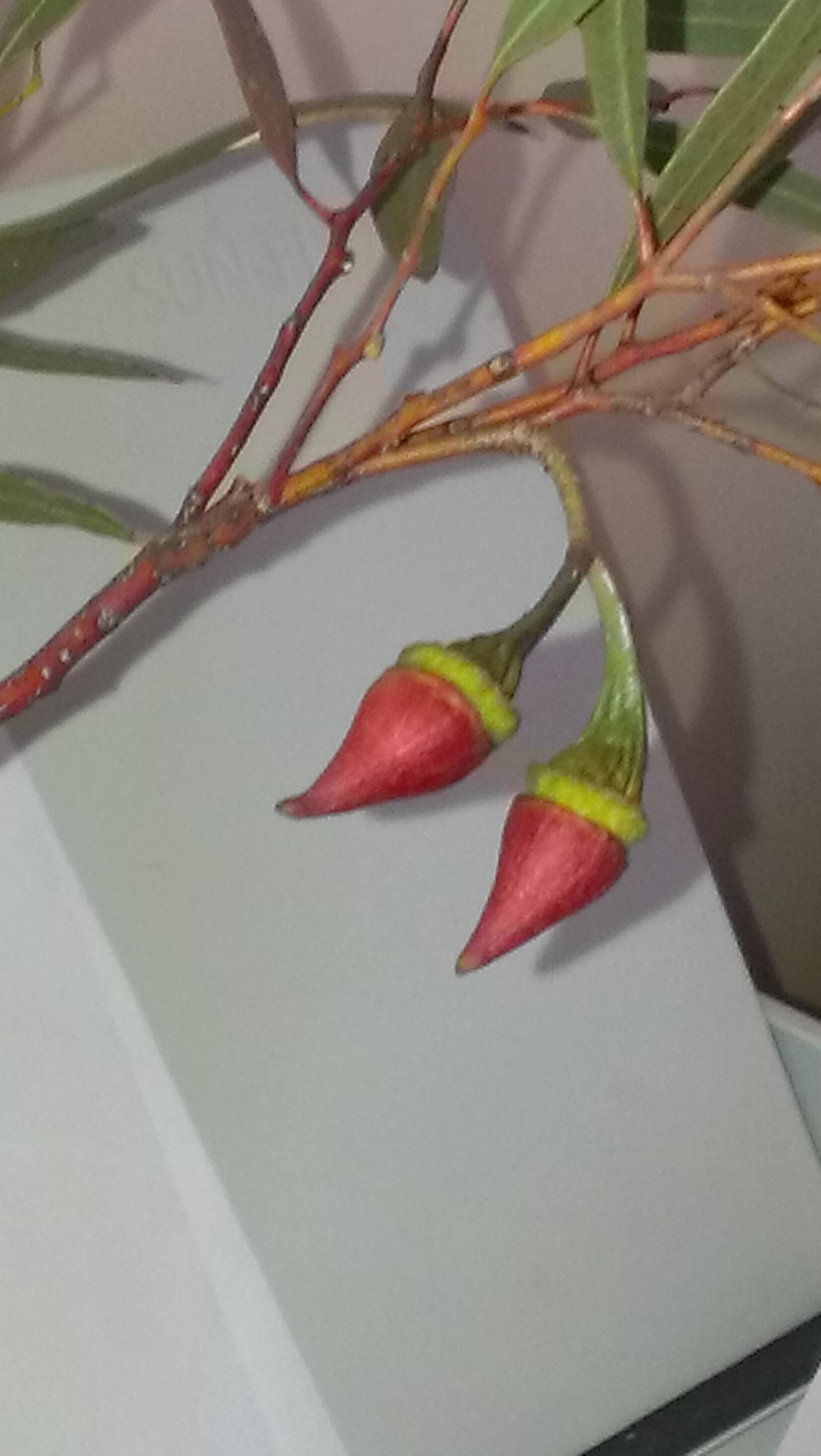
The flowers were especially striking: bright red, with stamens curling back up and around the base of the fruit.  The bud caps are bright red, coming to a pointed tip.

IMAG0679

Quite a sight.

IMAG0678

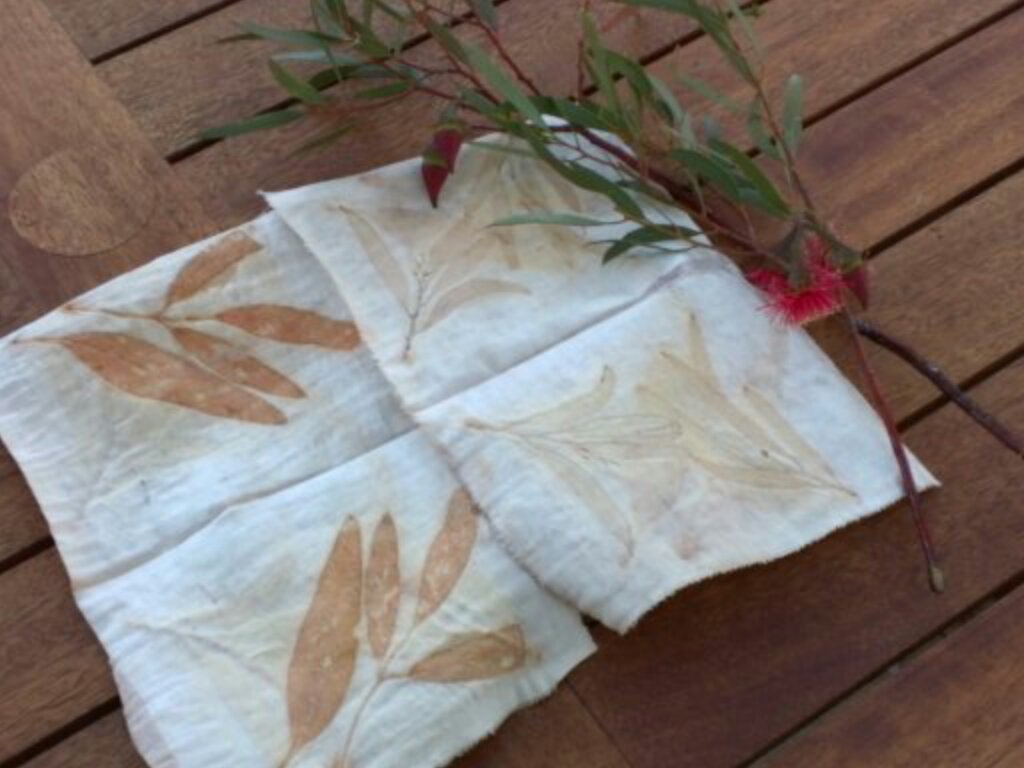
In her book Eco Colour, India Flint argues that eco-prints are a good way to test potential dye plants using minimal leaf material, and she is, of course, right. On the right, E Erythronema var Erythronema.  Not much of a dye specimen.  On the left, leaves from another E Scoparia, I believe.

IMG_0046

4 Comments

Filed under Dye Plants, Eucalypts, Leaf prints, Natural dyeing, Uncategorized

Eucalyptus Camaldulensis Bark Dyepot

The river red gums are shedding bark all over my city.  I was riding down to visit my parents passing a planting of these trees along the railway corridor near Marion station.  I couldn’t resist, so pulled over and took pictures and bark.  Under these trees, the ground is covered with thousands of tiny gumnuts (as well as bark).

IMAG0670 IMAG0668IMAG0669IMAG0775

So of course, I collected some bark just to try it out… and yes, tan again.  Brown, with alum.  Often I can see almost no difference between wool with no mordant and wool with alum after dyeing, but this was a clear example of alum making a difference.

Leave a comment

Filed under Dye Plants, Eucalypts, Natural dyeing, Uncategorized