Tag Archives: silk

Crafting time: How to make trousers

The question I hear more often than anything other, about this blog or my life in general, is ‘how do you fit it all in?’  There are a lot of ways I could answer, but one of the big ones is: slowly, in many small steps.  I started this post as a way of demonstrating the point, but quite early on decided this post might be much too long, even though I left out all the days when nothing happened on this project!  This is the story of how I made enough time to make a pair of trousers.

Day 1: drop in at the public library and find David Page Coffin has written a book on making trousers.  Borrow it. In Week 1, read this book in various states of understanding and misunderstanding and failing to follow.  Feel my confidence in attempting double welt pockets begin to rise. This has been the barrier to the creation of some new summer work pants for some years now.  So this is progress!

Day 2: Iron fabric from the stash.

Day 3: Cut out.  Mostly remembering adjustments (I think) and deciding to try cutting on the fly facing.  I am surprised to find a zipper in the pattern envelope. Clearly I have had good intentions before, so long ago I can’t figure out what they were.  Black pants, I assume!

2016-03-31 08.55.19

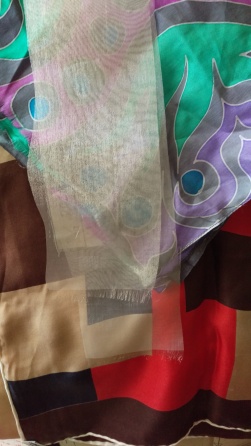
Day 4: Choose one of my grandma’s scarves for the pocket bags.  Silk pockets!! I have looked up Clifford Bond online and found him listed alongside vintage silk scarves.  This one is vintage, certainly.  It is also stained and well loved.  To my surprise, when I ironed it, a faint waft of my beloved, stylish grandmother’s cosmetic choices wafted up, even after so many years.  The silk is beautiful quality to my way of thinking, and the hand rolled hem is exquisitely stitched.  The tiny tag says it was made in Japan.  I do not know how Merle would have come to have this scarf.  She had many, and they were a style statement of hers so well recognised she received many as gifts.

2016-04-21 08.13.10

Day 5: Read two more ways of creating  welt pockets, beginning with a lovely illustrated tutorial on Male Pattern Boldness.  The lead post was on welt pockets when I happened past his blog.  At this stage, I am beginning to feel the universe telling me to make those pants.  Well, I confess, I don’t think the universe troubles itself about me personally very much.  Really, I am experiencing recognition that I am scared of making the welt pockets, and that this is irrational.  Perhaps I should get over it and get on with it.  The blog post makes me think of an article in Threads magazine which I copied years ago and had used to create two sets of pockets with success and (relative) ease.  I dig that out and consider.  I pull out the two pairs of wool pants I made using this approach.  The pocket openings look great.  Much better than those I made using the method in the pattern–albeit in a fabric better suited to the pocket style.

Day 6: carry out an extensive search for organza, required by the Threads article method. This inspires plans for about seven other projects.  I find some organza that probably isn’t silk (silk is proposed by the authors in question).  I also find an op shopped silk scarf that leads to reconsideration of the pocket bags.  Ahem.
2016-04-03 08.41.27

Day 7: It is a weekend.  I have at least two hours.  I could sew the pockets.  Nerve fails me.  I make a soothing patchwork square.

2016-04-03 08.40.48

One turns out not to be enough (the cupboard-by-cupboard search for organza has uncovered yet more scraps, needless to say).  Well.  There’s the end of the time that could have been used to create the dreaded pockets, but some of the scraps from this pair of pants have been used up! I have also given up the chance to go to the Farmer’s Market, for good or ill.

2016-04-03 09.16.26

Day 8.  Return book on sewing trousers to the library. This should be a clue that considerable time has passed between some of the days listed here.

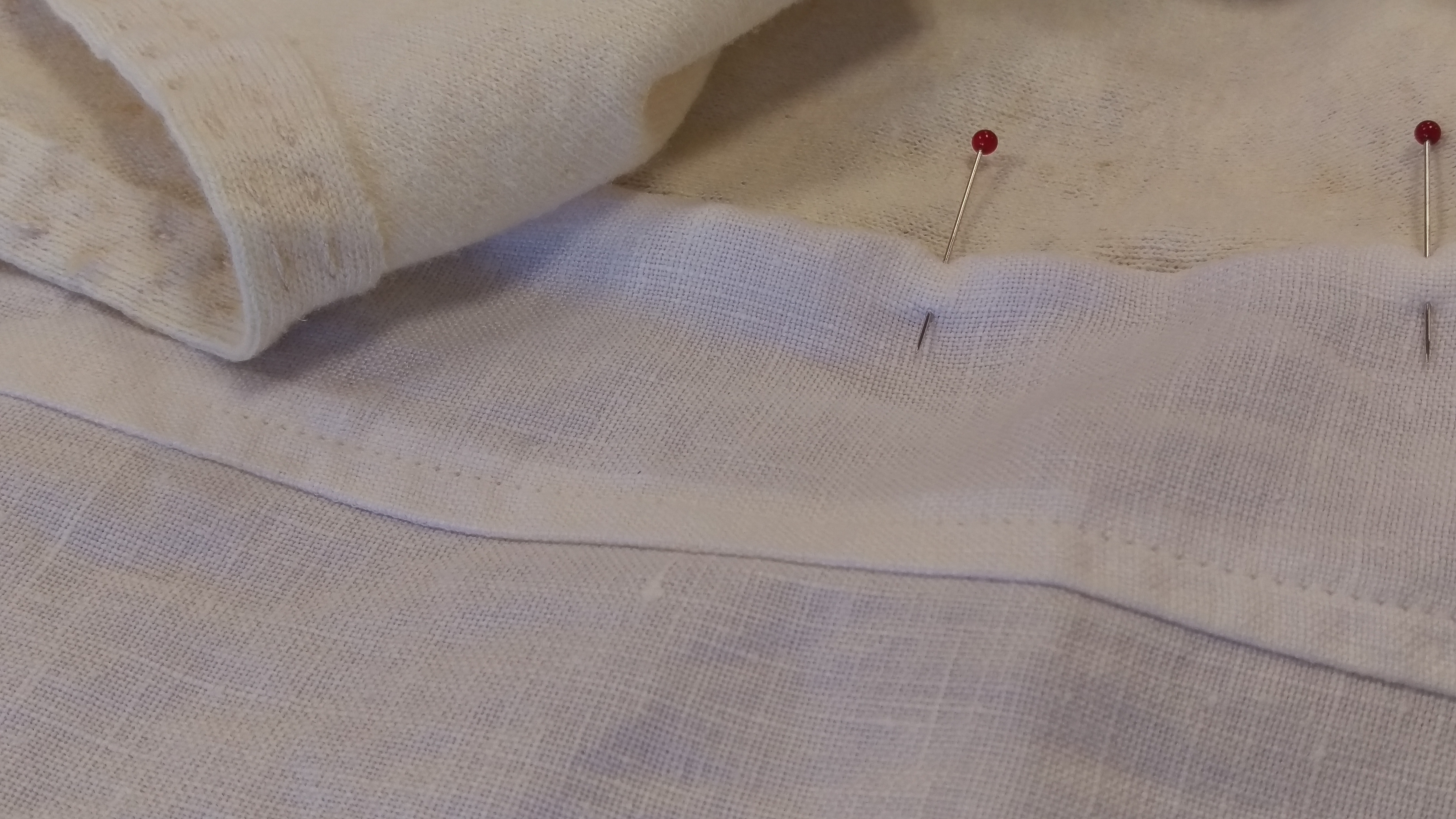
Day 9.  After much deferring, stitch the organza to the trouser fronts.

2016-04-16 19.15.43

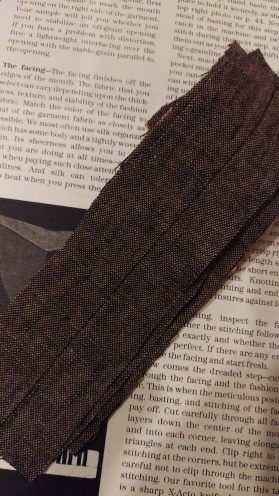
Next, baste the welts together and iron ready for insertion.  Done!  Having deferred so long, it is now time to have dinner.  So, you know, a day of high trouser sewing achievement.
2016-04-16 19.15.51

Day 10: turn the facings, create the pocket mouths, pin the welts in place.

2016-04-20 09.16.02

Smoking speed, I’d say!

2016-04-20 09.19.13

I did all that before work, and then took the trouser fronts to my spinning group at Guild and stab stitched them into position while supporting a new spinner (or at least trying to be friendly–she is lovely); listening to several conversations; debriefing someone about a recent difficult situation; fielding jokes about how I would spin this when I was finished and responding to queries about my embroidery (yes, stitching the pocket welts in).  These pictures are a bit watching-paint-dry, I think.  Apologies.  And here ends the first ten days, with the pockets almost finished…
2016-04-21 14.26.09-1

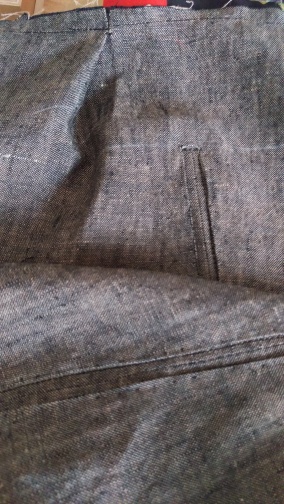
Day 11: Day 11 was, for once, the next day after day 10.  Not spaced out by a week or so as some have been.  I machine stitched the welts into position and problem solved my pocket bags, the part of this method that seems to me a bit problematic.  Because I’ve done it before and washed and worn many times, I understand that nothing catastrophic happens despite my worries.  Finally, the part that has been really putting me off, the welt pockets, is done.  The pockets are imperfect but this is to be expected (I made them) they are pockets (hooray, pants without pockets are not for me) and they will not attract attention from passersby (imperfect but not astonishingly awful).  Now I only have to manage the fly and much of the rest will be plain sailing, sewing wise.  I hope.  I make a start on the fly facing.

Day 12: The next day.  I decide against going out in the evening for no really good reason and instead have a lovely chat with friends who give me eggs and cake as well as the pleasure of their company, and insert most of the fly for good measure before bed.

Day 13: I am on a roll!  Finish zipper insertion before work.  Come across some bias binding I made from ties and select some I might use on the hems for fun.

2016-04-22 11.53.16

Day 14: it’s a long weekend.  Stitch the darts, stitch the main seams, figure out what to do about interfacing (cut pieces from a recycled black linen shirt sleeve.  Stitch to pattern pieces. Realise later that this would mean lots of stitching showing on the main pattern pieces. Decide I can live with it).  Decide to finish the waist facing with more recycled tie bias binding.  Stitch one side on with the machine, then hand stitch the inside edge into position in front of the TV.  This looks really neat and lovely, so it’s a shame about my interfacing stitching being so random. As you can see.

2016-04-25 16.09.43

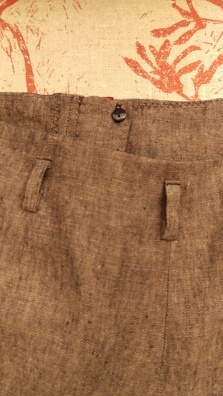
Day 15: Stitch on the waist facing.  Tack some seams so I can find my way through making the front edges look good.  Machine a buttonhole into the fly facing so there can be a button on the inside top edge–thank you to Page Coffin’s book.  Hand stitch on a small button for it.  Hand stitch on a hook and slide.  Create the belt loops.  Fail to find the loop turner.  I love that thing.  Room to room search.  No joy. Much time passes, I clean some drawers out, eventually turn belt loops without the loop turner.
2016-04-25 16.08.56

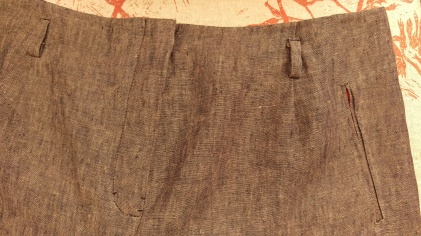
Day 16: Stitch belt loops in place; try on (they are roomy and will require a belt!  Better than being too small which was my concern)…
2016-04-25 16.08.34

Take up hems with tie bias binding and use a quilt binding trick to do this in the neatest way I have ever managed.  Feel so proud I have learned something. Rip out the tacking holding the welts together so Merle’s scarf can peep out.  DONE!

2016-04-25 16.10.09

I love the hem finish on these.  I have done this before and enjoyed looking at this tiny, loving detail at odd moments while wearing them, for years.  Here’s hoping this pair will have a long and cheerful life in my work wardrobe.


27 Comments

Filed under Sewing

Adventures in woad

2016-03-12 10.44.46

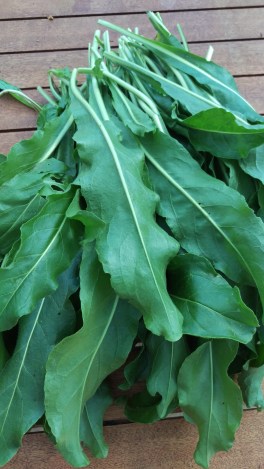
Woad has been one of the success stories in our summer garden.  Until two years ago I had no success at all growing a seedling. This summer, it has really grown and thrived.  So I have decided I can try a few things out.  I started with India Flint’s ice flower method.  She describes using it with with Japanese Indigo on silk here. It seemed logical to me that if it worked with Japanese Indigo, it should work with woad.  But logic requires consideration of all the facts, and I know for sure I don’t understand all the chemistry and plant magic involved.  So who knew what might happen? The last time I tried this, with some Japanese Indigo leaves, nothing obvious happened and I decided I just didn’t have enough leaf matter (and the leaves were tired and sad in any case).
2016-03-13 15.17.21

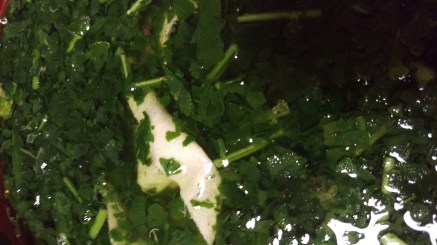
This time I was rich in leaves, though woad is a low-indigo plant. I followed the instructions.  After a night in the freezer, here are my woad leaves in filtered rainwater, with a little pre-loved raw silk and some silk embroidery thread.

2016-03-13 17.04.47

A while later, there were exciting signs of success.  A couple of hours later, the colour was deeper still and the embroidery thread was looking good too. Definitely deep turquoise–tending to green rather than blue, but that would be a happy outcome. I added more thread! That looked good too, so I added some more fabric and went to bed.  The next morning the woad leaves were very green, but the silk was not!

2016-03-14 14.08.18

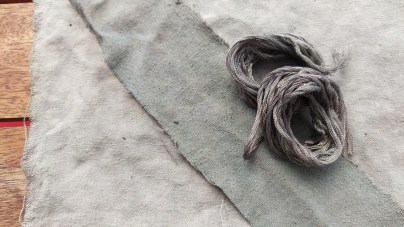
I haven’t had a lot of luck catching the colours exactly, but…. grey is close enough!  The thread is a sheeny steely grey that I have obtained from Austral Indigo in the past by a similar method.  I really enjoyed stitching with it and now I have a new supply.  The smaller fabric that went in first is a darker colour and slightly green-grey.  the larger piece is a rosy-grey, perhaps.

2016-03-14 14.06.43

I forgot to alkanise as India suggests, which would have been a good idea: that might be the issue.  The silk is much worn and washed.  Contaminants?  The woad has had a hard summer? I have chosen a plant in its second year without much indigotin: that is entirely possible.  This method doesn’t suit woad?  I should have pulled the fabric and thread out sooner, when I liked the colour?  Further oversights on my part?  I just don’t know!


8 Comments

Filed under Natural dyeing

Let the sock yarn spinning begin!

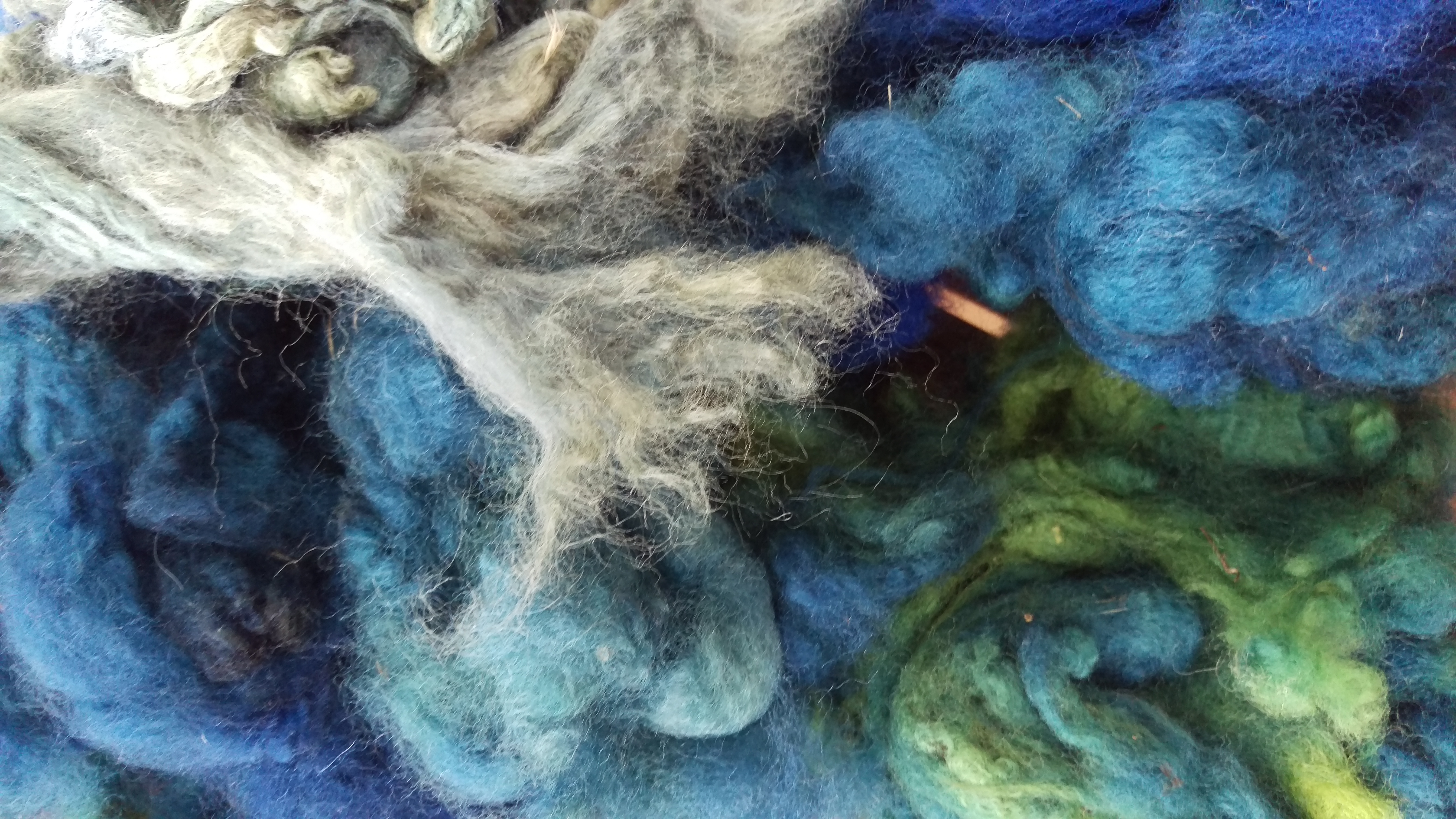
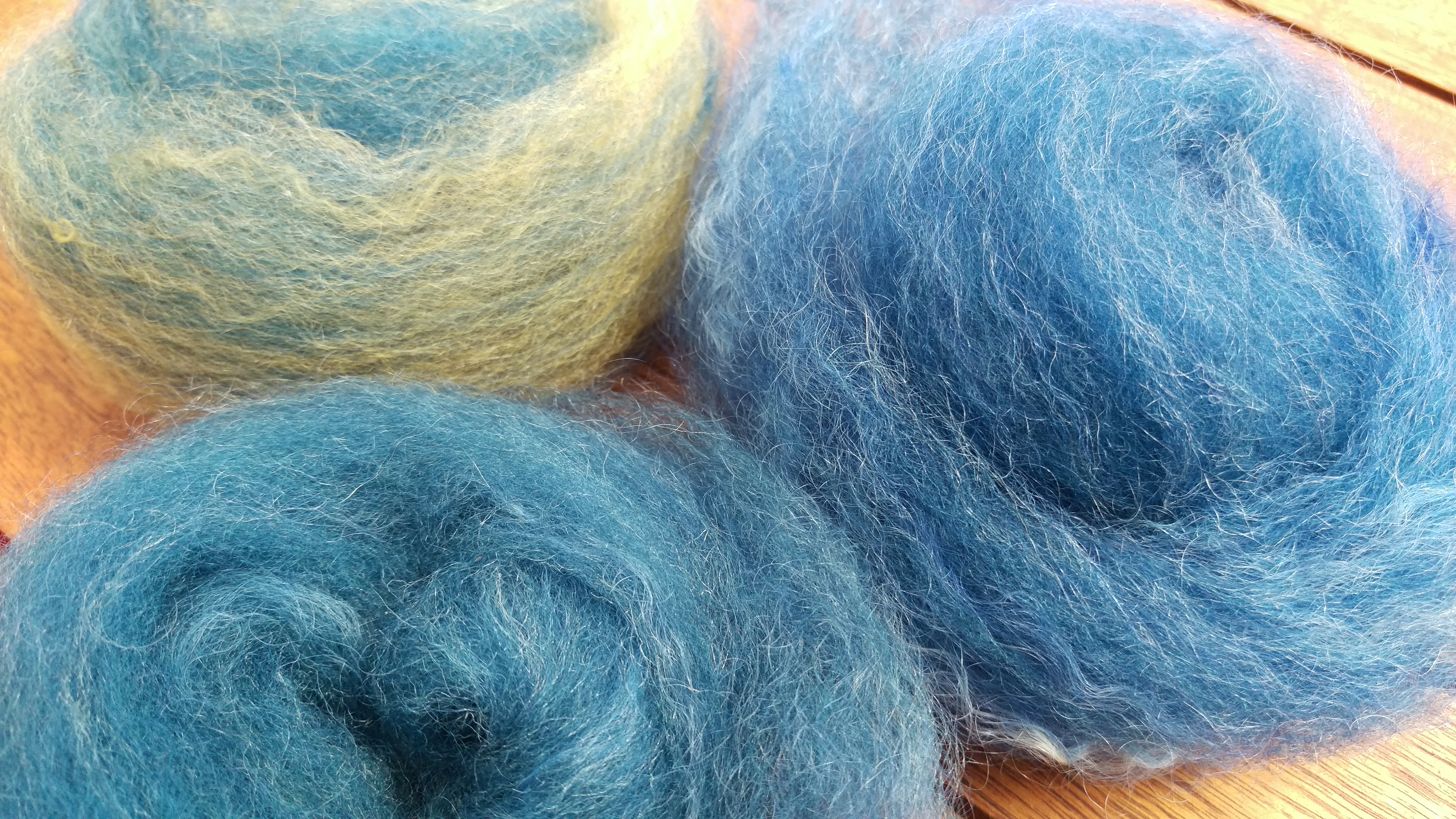
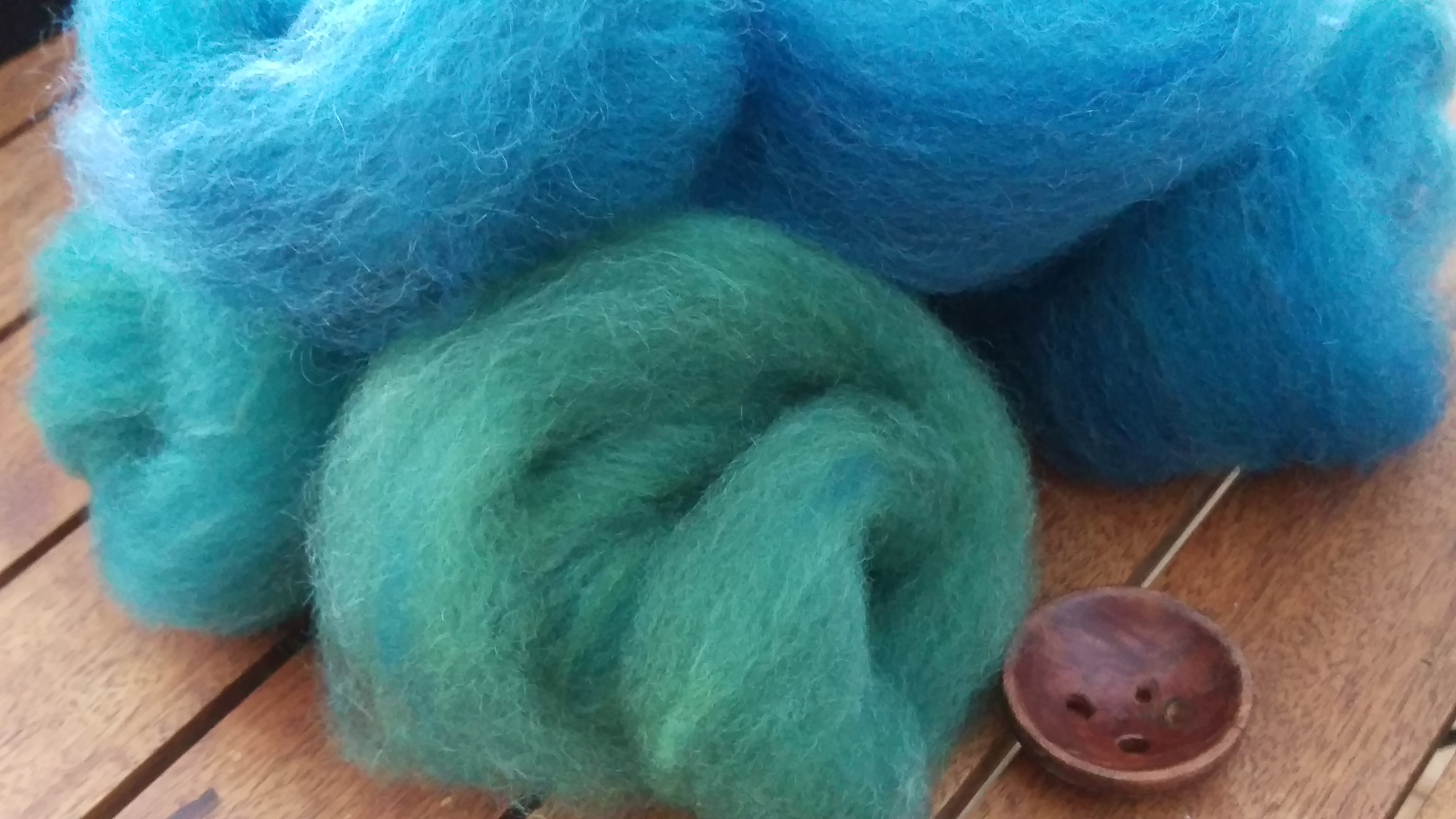
Classically, a hand spun sock yarn is made with a combed, rather than carded, preparation of fibres. I started out with my kilogram of Suffolk fleece, and divided it up.  Some has been dyed with legacy unnatural dyes and some with plant dyes.  I started in on combing some wool dyed in shades of blue and green.  I dyed some tussah silk along with the wool (the silk did not take the dye well at all), and have local kid mohair that is plain natural white, and some that has been dyed with dyers’ chamomile, and some I bought dyed by the seller in shades of blue and purple.  I am blending in the silk and mohair for strength and durability.

2016-02-10 18.55.57

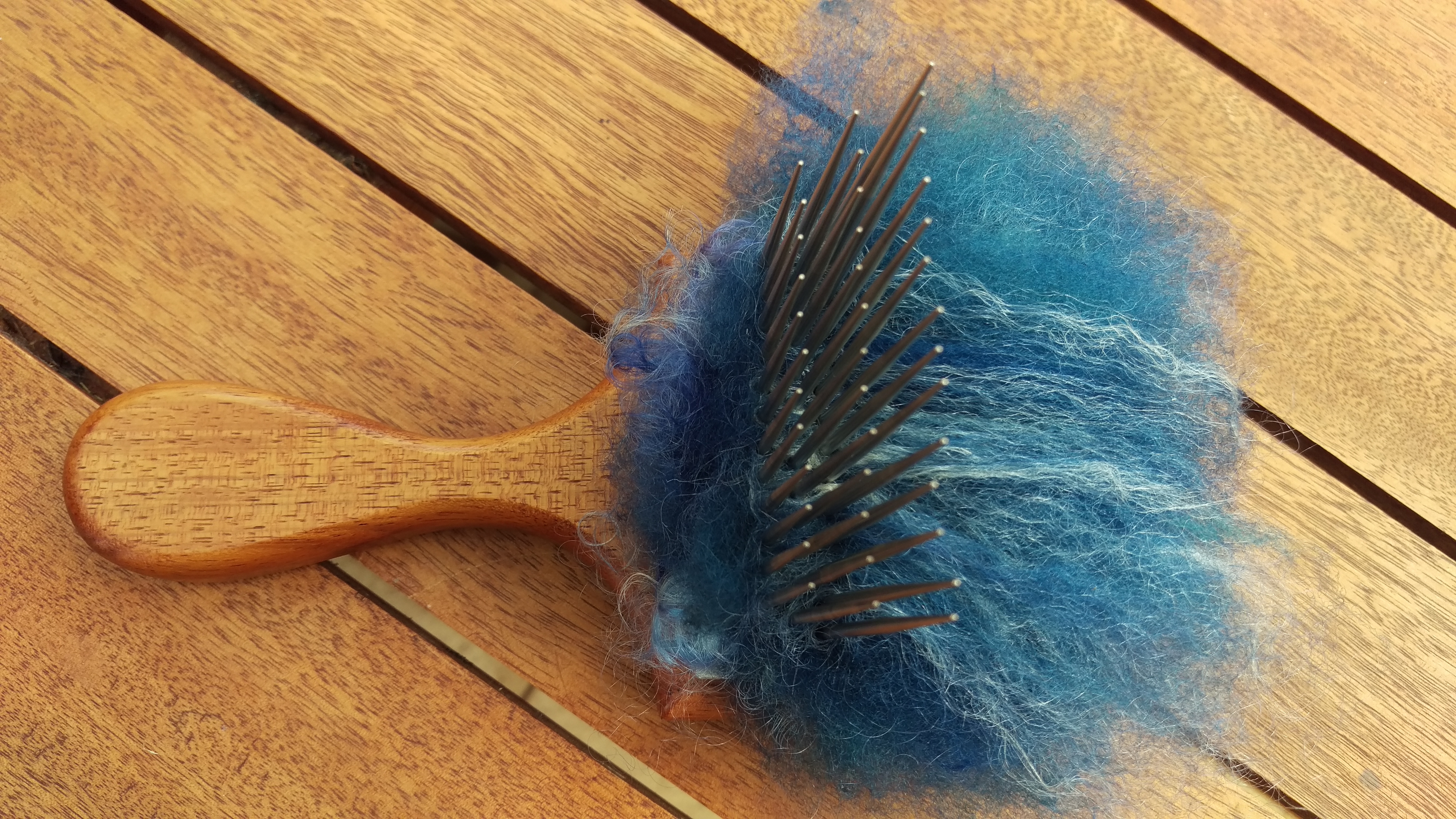
I have ‘English’ combs.  I am not sure what makes them English (they were made here in Australia)–I am sure there is a historical reason for the name.  But they are vicious looking things.  When I take them to Guild, there are always onlookers commenting on the fiendish tines.  Unfortunately, I am yet to find a Guildie who can offer me advice on better use.  This seems to be a minority preoccupation at my Guild, or perhaps I’ve just been unlucky.  So.  Step 1 is ‘lashing on’, loading the stationary comb with fibres.

2016-02-20 11.12.05

Step 2 involves combing the fibres off that comb and onto the other.  Done!

2016-02-20 11.14.01

Now, transferring the fibres back to the stationary comb.  It could go on… but this is the extent of my patience at this point.

2016-02-20 11.16.41

Then, pulling off ‘top’ through a diz.  I do love spinning terminology!  This produces a preparation in which the fibres are in alignment, ready to be spun into a dense, hard wearing yarn.

2016-02-20 11.34.38

Some of my top shows that I tried to blend fibres of different lengths.  This is a vice to be avoided in combing.  Combing does a great job of removing short fibres (and burrs and grass seeds…) but if the fibres are of differing lengths, the top will have (in my case) all mohair–the longest fibre–at one end and wool predominating in the middle, with the shortest silk fibres predominating at the other end.  I cut some of the kid mohair locks in half (another spinning crime!) to resolve this issue in some cases, and in others, spun top from both ends to blend the fibres as I spun them up.

2016-02-10 19.58.27

And here is the finished skein.  It is abut 5 ply (fingering), a little thicker than many sock yarns–but after my last effort, where I produced something thinner than sock yarn and have been too overcome to knit it up–I think that is OK.  I have chain plied it, which is not strictly speaking recommended for durability–but this seems to be a much debated point and I chose colour happiness over potentially reduced durability on this occasion. So–I am not quite ready for the knitting to begin, but I am getting closer.  One sock down to the toe on the current pair in progress…

2016-02-28 18.31.27

6 Comments

Filed under Fibre preparation, Sewing

So many hand made bags!

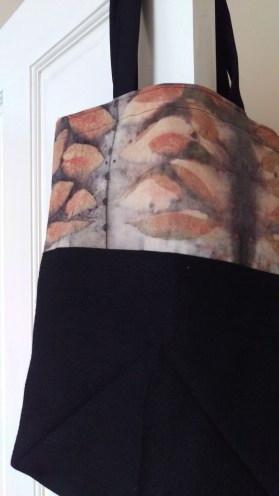
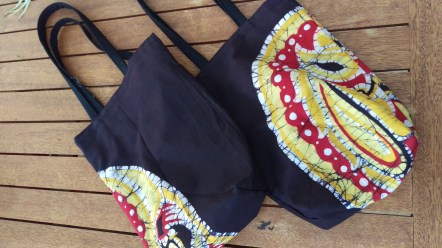
When I turned that pair of Thai fishing pants into bag linings a while back… it had the predictable effect of setting off a bag jag. Since then, there have been dozens more.  In fact, I gave some away without ever photographing them.  I lost count.  One had a silk panel of E Cinerea leaves and a hemp base, with purple sheeting lining.

2016-02-11 17.16.11

A few had ikat fabrics salvaged from the op shop.

2016-01-30 10.59.08

There were fabrics from my friend’s mother’s stash.  Her mother has now passed on, but I think she would be pleased to know they were being used and appreciated.  There were fabrics from my stash acquired with other purposes in mind, or perhaps no purpose at all.  Those red flowers mystify me.

2016-02-07 19.10.12

E Cinerea leaves on calico and hemp fabric left over from making a pair of shorts.

2016-02-11 17.17.17

Bags with dragonflies.

2016-02-14 09.42.44

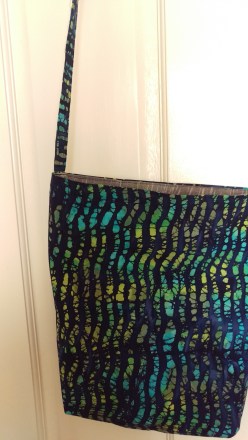
Bags with flowers. I remember acquiring this fabric in Melbourne! There are two-handled models and over-the-shoulder models.

2016-02-11 17.14.49

On the lining front, I used up a lot of manufacturers’ waste sheeting offcuts, and not before time (having had them for perhaps 20 years).  But scraps from recent sewing went into the mix too, along with random findings of patch-worked flour-bag-scraps.  Apparently this strange fixation with sewing little bits together has been going on longer than I imagine.

2016-02-09 08.21.14

There was a series of bags made with fat quarters (at least, I think that’s what they were) acquired when I made a quilt panel for a community quilt project.

2016-01-25 17.27.09

I still love these fabrics, and a friend let me see hers peeping out of her backpack on the bus to work recently.  It evaded photography apparently–and I see these are also lined with Thai fishing pant fabrics!

2016-01-25 17.26.18

But honestly, linings both fugly and lovely (to my eye) have been created.  Some fugly fabrics became lovely linings.

2016-01-25 17.57.31

Somewhat faded batiks from a garage sale.

2016-02-07 19.20.33

Screenprints of a cockatoo, from the same garage sale!  One of was destined for a friend whose taste is deliriously nineteen eighties even now, bless her. She loves it.

2016-02-07 19.20.53

Oh my.  Well, that was a major incursion into the stash.  Lots of bags were gifted over afternoon tea with a clutch of friends, which was great fun (I like it when people can choose what they really like and will use).  Then more at another celebratory lunch with a different bunch of friends. Others have been stuffed with handspun wool and handed to a friend undergoing horrible cancer treatment who still finds knitting a pleasure; stuffed with yarn for a knitting obsessive who is excited about my most outrageously strange yarns; wrapped around an awkwardly shaped birthday gift for another treasure in my life; and taken home full of clothes by my daughter instead of her using some random plastic bag.  Some have been handed to people who seem like especially strong candidates for some sentimental reason or because of a sense of taste or the sheer wish to give a gift.

As I neared the finish line and my puff started to recede, I realised I had a hessian potato sack with a hole in it awaiting attention.  Converted to a bag, mended and embellished all in one step! Then I tidied up remaining scraps by making the final two bags and called it the end of this particular bag jag.  A pile of bags has gone to Port Augusta to be shared with Adnyamathanha women through her work.  And there’s an end of it, until next time!


8 Comments

Filed under Leaf prints, Sewing

Experiments with E Cinerea

2016-01-24 16.25.58

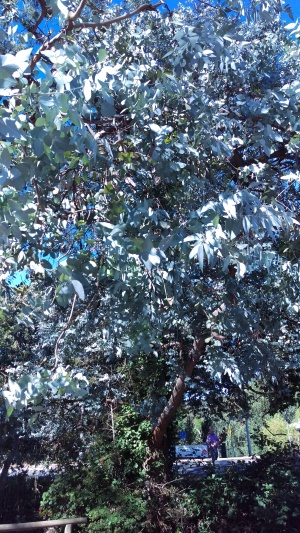
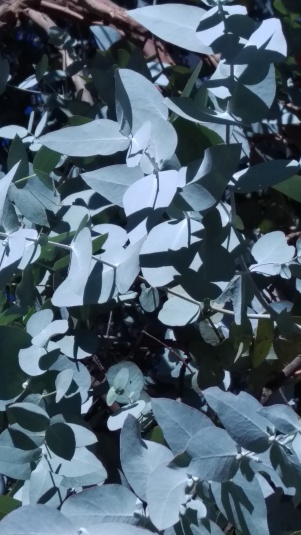
It all began with a trip to the Adelaide Hills to visit a friend who had just moved into a new house one weekend.  On the way, I saw a massive E Cinerea with a huge variety of leaf types and sizes.  On the way back, we made a brief stop to harvest a few of the leaves overhanging a car park.

2016-01-24 16.26.17

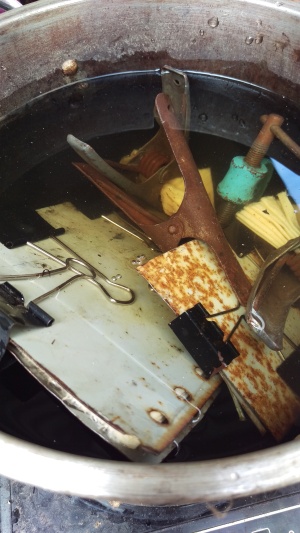
That evening, we went to my parents’ for dinner, and I asked my father if he had any metal disks.  He helpfully offered quite a range of recycled washers and then asked a lot of questions.  I underestimated his interest in understanding what I’m doing and how he could help me out!  This led him to suggest bottle tops (up there for thinking!  Why didn’t I have that thought? Surely I have heard this idea before…).  He also offered me clamps.  He really felt that bulldog clips (my suggestion) might not be strong enough.  He had a collection of tired old clamps he didn’t want, so I chose some and headed home with all kinds of ideas.

2016-01-26 13.24.58

There was ironing and folding and general faffing, until I crammed all I could into the pot.  The pot, it must be said, is not designed for G clamps in large sizes and numbers.

2016-01-26 13.50.18

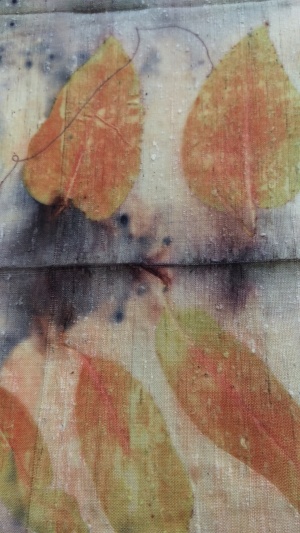
I like the results a lot, though when you try any approach new to you, there is always a lot to experiment with. Perhaps the bulldog clips would actually be better?

2016-01-28 19.50.05

In this piece the holes in the piece of metal I used have allowed the dye bath in to create dots…

2016-01-28 19.49.54

I tried some silk…

2016-01-28 19.51.13

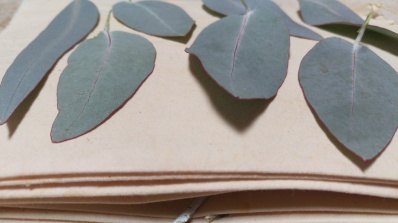
And I love these strips, inspired by Jude Hill’s indigo moons. Only different.  I found myself wondering what shape I would really like to create, and answering with the thought that the shape of a leaf is very difficult to improve upon.  I love leaves so much.  The second round hit the dye bath in double quick time!

2016-01-28 19.51.37


22 Comments

Filed under Dye Plants, Leaf prints, Natural dyeing

More summer preserving

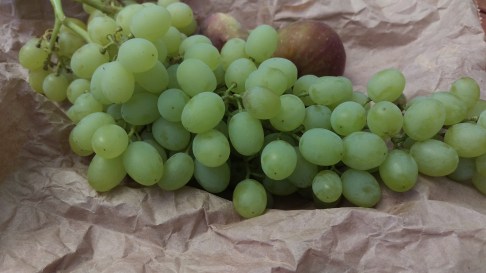
The harvest is continuing round our place.  One friend dropped a bag of figs and grapes on the front doorstep.  I took a bag of plums over to hers on a run!

2016-01-25 10.58.25

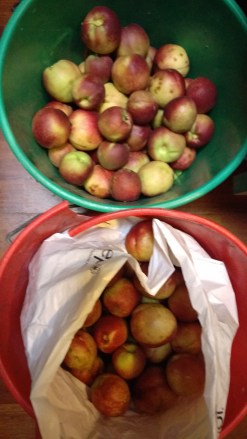
Then I went to visit another friend who is house-bound after surgery, taking a care pack of salads and mains.  She asked me to deal with her nectarine tree.  It was so heavily laden!  I collected a huge bucket of fallen spoiled fruit (things such as this are known at our house as ‘chicken happiness’).  Then I picked fruit for my friend and another visitor, and then two more buckets.  Then I cleared fruit out of her neighbour’s gutter!  The tree was still covered in unripe fruit.

2016-01-23 18.25.19

I shared nectarines with two other households and then put our share in jars, since we have a young nectarine tree which is bearing enough to keep us in fresh fruit.  Oh, and there were more plums. Just one jar this time.

2016-01-26 09.47.28

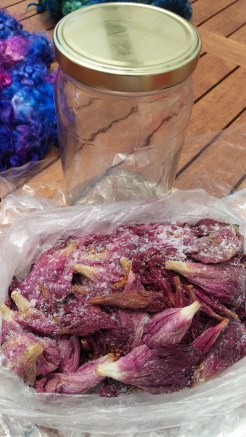
There was also a handover of a HUGE bag of frozen hibiscus flowers from a dedicated friend, bless her heart!  They had to wait a couple of days, and then I decided it was time to use the only dependable looking big jar I had for them.  I wasn’t sure they would all fit, but in the end, with defrosting and squeezing … they did.

2016-01-25 13.10.40

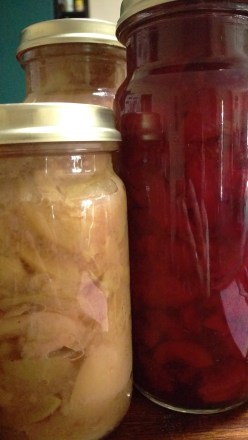
In went fermented citrus peel water and aluminium foil water (thank you to India Flint for yet another ingenious use of kitchen discards that are neither worm happiness nor chicken happiness)… fabric, threads, and so on… (last week’s batch are here for size comparison).

2016-01-25 19.42.02

I filled another, smaller jar with kino from an E Sideroxylon I had been saving, and another (slightly less) large jar, albeit with a rusty lid which might not seal, with my mother’s dried coreopsis flowers. That was all the dye pot would take for processing.

2016-01-27 19.02.17

Three more for the pantry shelf.  It is so interesting to see such a deep green already developing in the hibiscus flower jar…


4 Comments

Filed under Dye Plants, Natural dyeing, Neighbourhood pleasures

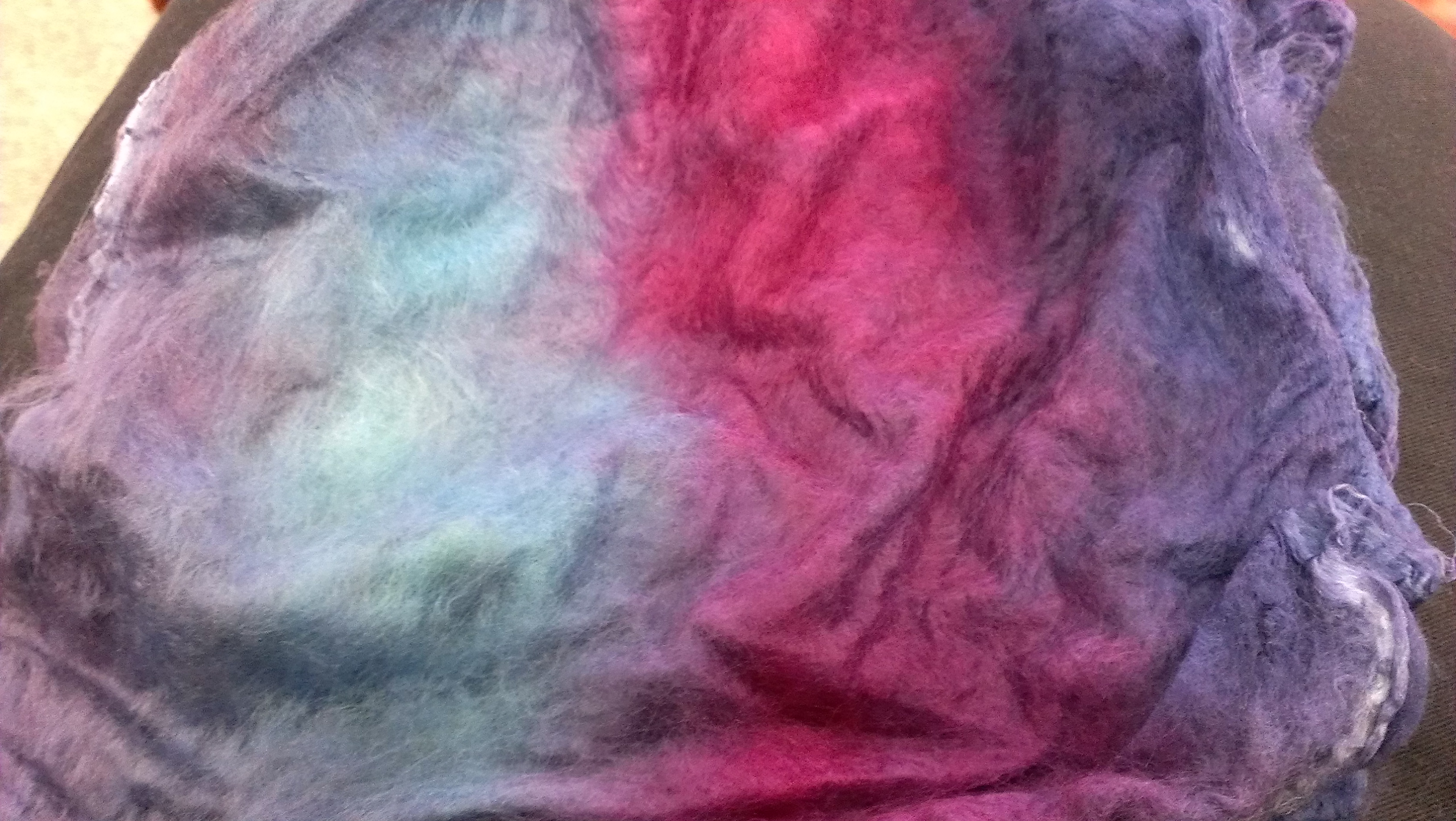
Silk hankies

No, I don’t mean I have been making hankies out of silk.  Silk hankies are one preparation of silk that you can spin.  But apparently it’s an intimidating kind of preparation, because I’ve had these few silk hankies for years without attempting it.

2015-10-17 16.36.29

At the Guild weekend away, I decided to try it.  I peeled one of my little stack and pulled it into a long loop, then attenuated it until it seemed about right, and then I spun a single.

2015-10-23 20.26.05

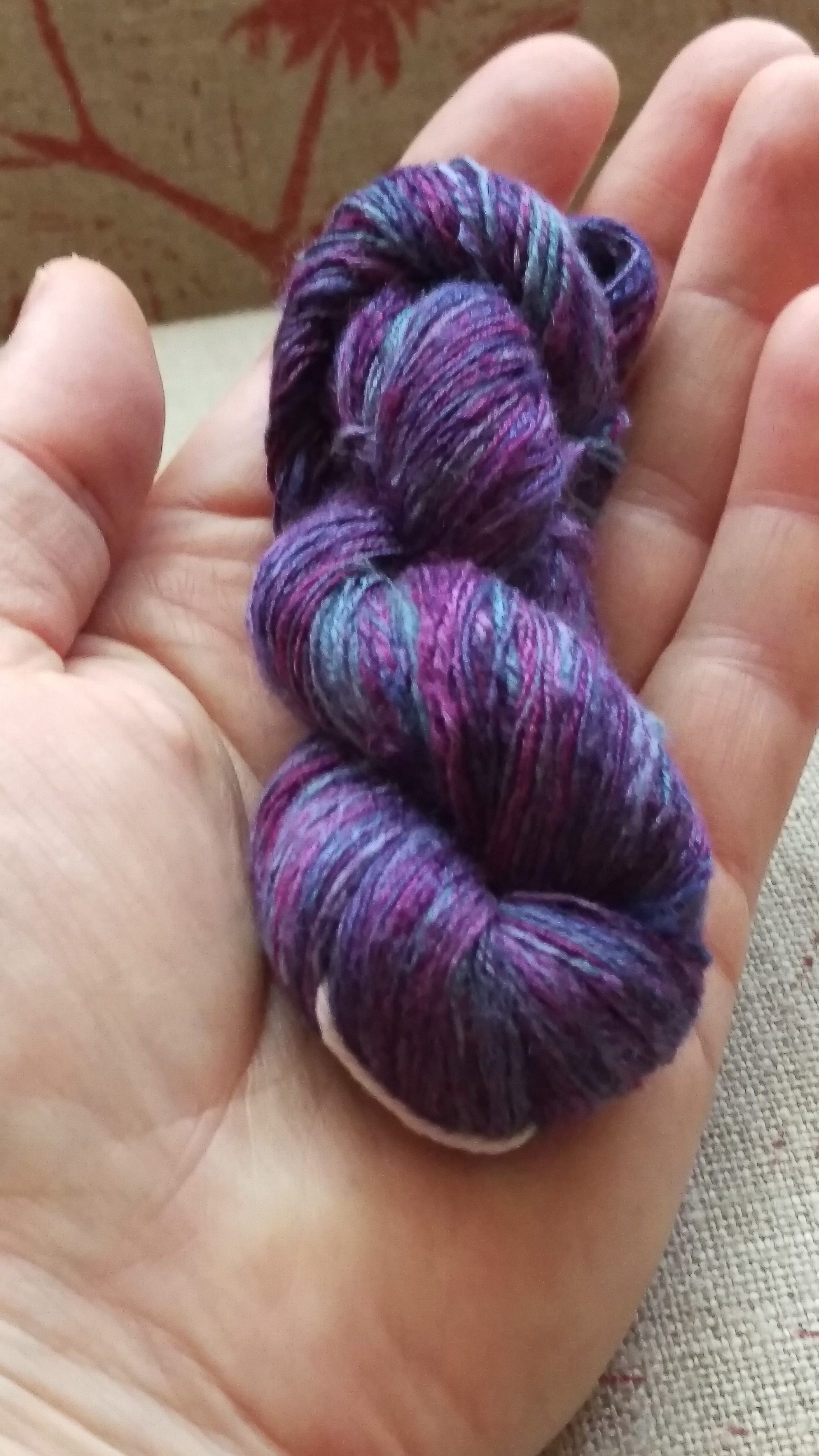
The single was so fine that I didn’t finish and had to bring the rest home to finish the job.  Even three plied, this is quite a fine yarn, and there isn’t much of it.

2015-12-14 10.26.19

But it’s pretty!  And not too difficult… and perhaps that is good, because I have been gifted more of these, undyed, by a friend at the Guild.  So perhaps I could dye them and spin some more… you just never know!

2015-12-14 10.25.38

8 Comments

Filed under Spinning

Spring Sewing Circle 3

This time: garment construction.  It was a  sewing circle, after all!

2015-11-16 12.08.35

To begin, for those who haven’t worked this out for themselves, let it be understood that I am a pretty plain sewer.  I like sewing, I have some skills, I’ve been doing it a long time. But, I tend to use patterns, amend patterns created by others,  make changes driven by sheer lack of cloth or my own mistakes, or construct a pattern from an existing garment.  I don’t just look at a piece of fabric, form a concept and apply scissors.  India Flint does, and she has written a new little book about the underpinning concepts which I hope will be available to others at some stage… I’ve been kindly gifted a stapled copy. Some of her approaches to creating new garments from old (‘refashioning’ to some) are also set out beautifully in Second Skin.

2015-11-14 15.51.14

But the thing is, having the concepts doesn’t get me from here to there.  Practice would be needed, of course!  But confidence, too–and these two things have a relationship to one another.  I know when I went to the first workshop I did with India I listened and watched and was inspired as she demonstrated and explained.  I remember wondering why I hadn’t organised my life so I could do exactly this every day. And then I had my own expanse of cloth and my own scissors and my heart sank just about immediately.

2015-11-16 09.49.49

It’s a statement of the extremely obvious that India has spent a lifetime thinking about art and garment construction and honing her skills at all related things, and I have not. This knowledge and experience cannot be transferred from one mind to another like a thumb drive plugged into a hard drive. For one thing, it would be more like the hard drive being plugged into the thumb drive!  But more than this, I experience doubt that my mental architecture could ever equip me to do this kind of design work.  Which is fine.  The rich diversity of human minds and creativity is part of what makes life wondrous.

2015-11-17 15.31.57

I noticed all manner of things.  I have a few good ideas and only so much time, so while I get stuck on some things, I have more ideas than I can carry out already.  India had so many ideas about what I could do with the few things I had with me, that my mind boggled.  I couldn’t come close to carrying them all out.  But when it came to deciding which ones to act on, I found myself up against all kinds of things, from sheer inability to believe that I could carry that idea out, confidence that I would not wear the resulting garment, and sheer inability to conjure up what that would look like or how it could be done, in my own mind.

2015-11-17 15.31.45

I have the concept that many of the sewing ‘rules’ I have been taught are the kind that a more skilled person can adjust, skirt around or safely ignore because they know the exceptions and have superior skills. But I can feel myself clinging to them like some kind of misplaced sense of a lifebuoy. It’s only fabric, after all!

2015-11-17 15.45.22

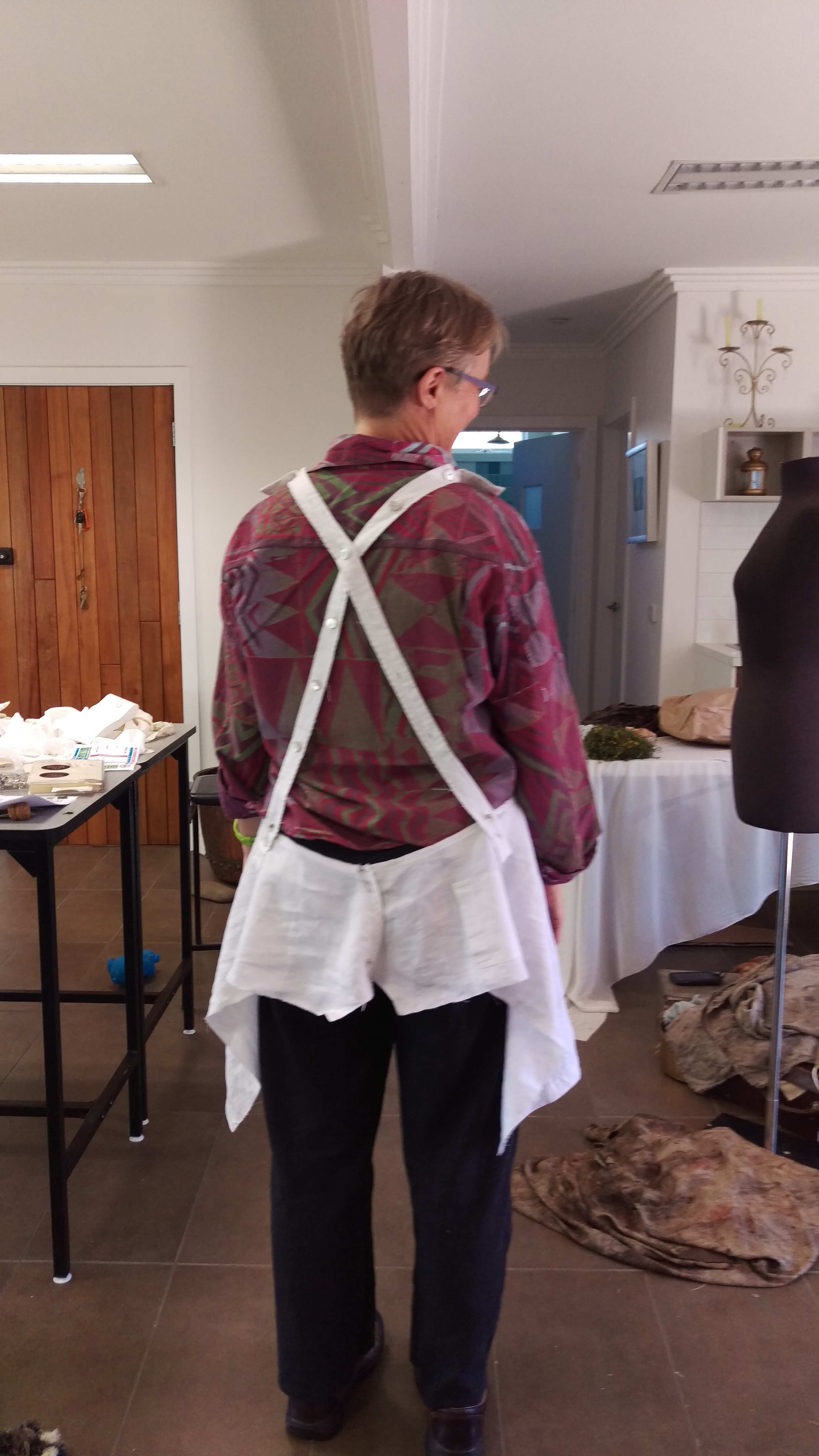
Well. The thing is, a learning experience is about expanding your mind. Even if you can feel the strain!  So here I am modelling a linen shirt from the op shop, in the process of becoming–an apron?  A frock? I thought apron, but by the time it came home, my beloved felt that it was, essentially, a frock.  I can’t say she’s a real expert in frocks, but she has an opinion.  I am continually being struck by my own inflexibility about what I’ll wear.  I have courageous moments of branching out, but I am just nailed on to some core concepts.  For one thing, when India thinks of an apron, she thinks this (you’ll have to scroll down, but Sweetpea’s blog is a special place, so don’t hurry over it).  When I think of an apron I think of a rectangle of black cotton with two tape ties.  I have two, and have had them since I was making my living cooking, long ago!

2015-11-16 11.48.04

Anyway, back to the main story.  This strategy for shape shifting (shirt to apron) is set out in Second Skin, and I’ve read it a few times without feeling any inclination to try it out.  But here it is!  It ended up with some recycled raw silk sewn on so it became longer and more flowing.  More and more frock-like, one could say.  I finished sewing it in Mansfield and it has been sitting quietly at home waiting for the transformation of the dye pot.  I am still trying to figure out whether there is any chance of my wearing a shirt-apron-frock.  But you never know!  And if I can’t, well, I am sure someone else will.

2015-11-16 09.47.11

This process really made me think that when I run my fingers through the choices at a garage sale or op shop, I see something that could be taken apart ready to begin again.  Where I see a shaped garment that could become flat pieces and then from flat pieces be converted into something else, India seems to me, to see one three dimensional thing that could become other three dimensional things.  While we were working in Crockett Cottage, she was taking two pairs of men’s trousers and turning them into one long, glorious skirt of many pockets.  It was a thing of wonder to behold this process, let alone the insertion of a silk lining.  There is a sample of the finished glory here. Below, a garment made from hemp and cotton knit and the sleeves from the linen short that became a frock, with  sheoak leaf prints.

2015-11-17 15.45.02

On my way home I had enough time in Melbourne betwixt the bus from Mansfield to the Melbourne central railway station and the Airport shuttle to nip out and see some of Blue at the National Gallery of Victoria.  Let it be said that this adventure involved taking my public transport courage in both hands: two trams each way and half an hour at the Gallery.  It was so worth it!  I could not take pictures.  But see images here and here and here. There were fragments of Egyptian garments from many, many hundreds of years ago.  Examples of indigo work from a wide variety of weaving and embroidery traditions from China, Japan, Indonesia, India and Europe.  At one point I was surprised to find myself answering another wanderer who was asking out loud whether something was woven or embroidered.  Clearly I have acquired some knowledge about weaving from hanging about with weavers!  Garments ranged from elaborate finery to those constructed entirely from rags in the boro style, and a rather extraordinary rain- and wind-protective cape made of two layers of cotton or hemp, with a layer of waxed paper sewn between them.  They were constructed from cotton, linen, hemp, silk, elm fibre.  If you have the chance, I recommend this exhibition highly.  It can’t help but inspire and amaze to see such evidence of the skill and ingenuity and sheer hard work of peoples from past and (in some cases) continuing traditions and to learn a little about the significance of indigo and the creation of cloth and clothing to them.

26 Comments

Filed under Leaf prints, Natural dyeing, Sewing

Spring Sewing Circle 2

This time, a little more about dyes and dyeing at the Spring Sewing Circle.  In the main street of Mansfield, there was a great two colour display of pansies.  I am not sure what the passersby made of me deadheading the purple pansies… I suspect no one noticed from their car. I took them along to the day’s sewing circle with me after they had spent a night in the freezer and this produced an impromptu class in dye chemistry from India.

2015-11-17 09.45.34

Once a selection from the three kinds of water available had been made, I tucked the remainder of the blooms into some raw silk (the pocket bag from an op shop suit).

2015-11-17 11.43.21

Into a clean yoghurt tub they went with some silk thread.

2015-11-17 11.49.38

The colour got bluer…

2015-11-17 12.02.19

Overnight it became turquoise.

2015-11-17 15.10.21

It came home in my bags, and surprise!  The water at home really does have the capacity to create greens.   My last experience of this was not an accident or a one off. Thread that had been quite blue and fabric that had been purple and blue went green immediately on rinsing.  I’m not complaining–these are great colours!

2015-11-22 14.28.23

There were many incidental marvellings at the beauty of plants and fabrics…

2015-11-17 11.49.24

I had a lesson in mordants I hadn’t used before, and some help with my issues with milk.  Very exciting.  Sure to lead to all manner of future experiments.

2015-11-15 15.39.14

I had an unexpected visit to a laundrette (laundromat?) on the day I left home, and found one just doors from a rather good op shop that benefits Medecins Sans Frontieres.  I spent the time my quilt was washing there and scored a long sleeved t shirt, which was the subject of these experiments.  Greens… oranges… iron…

2015-11-17 15.38.33

Using this technique for all-over colour and pattern is something I notice others doing to great effect but often don’t attempt.  I’ve realised that when buying fabric I tend to plain colours or picture prints, and evidently I have carried this over into my own dyeing. Workshops are for learning so I tried stepping away from my habits a bit.  It’s interesting to observe how entrenched some of my habits are.

2015-12-10 12.16.44

The back of the t shirt.  These last two photos show the garment laundered and dry.

2015-12-10 12.17.01

For those who can’t resist the idea of pictures of food… picture this as afternoon tea!  Extraordinary.  India turns out to have the kind of fine cooking skills capable of making everything delectable.  She also has the capacity to turn a few ingredients that might be mere sustenance in other hands (I am not knocking sustenance) into something irresistibly delicious.  Macaroni and cheese much better than a restaurant meal.  Just saying.  We have an onion, garlic and dairy free household and India was kind enough to load me up with garlic and butter and other fabulous things we can’t share at home for the duration.  Such happy pleasures for me and such generosity and skill from her.

2015-11-14 15.03.01

8 Comments

Filed under Dye Plants, Leaf prints, Natural dyeing

Treppenviertel

2015-06-05 16.12.30

It all began some time ago with wool/silk yarn and some madder dyeing.  There was madder root of antiquity.  I soaked it overnight first.  And tried to follow Jenny Dean’s wisdom.

2015-06-05 16.24.51

It all looked good to me.  Eventually I added wool to the vat to exhaust the dye, and got apricot shades on the wool.

2015-06-07 12.14.17

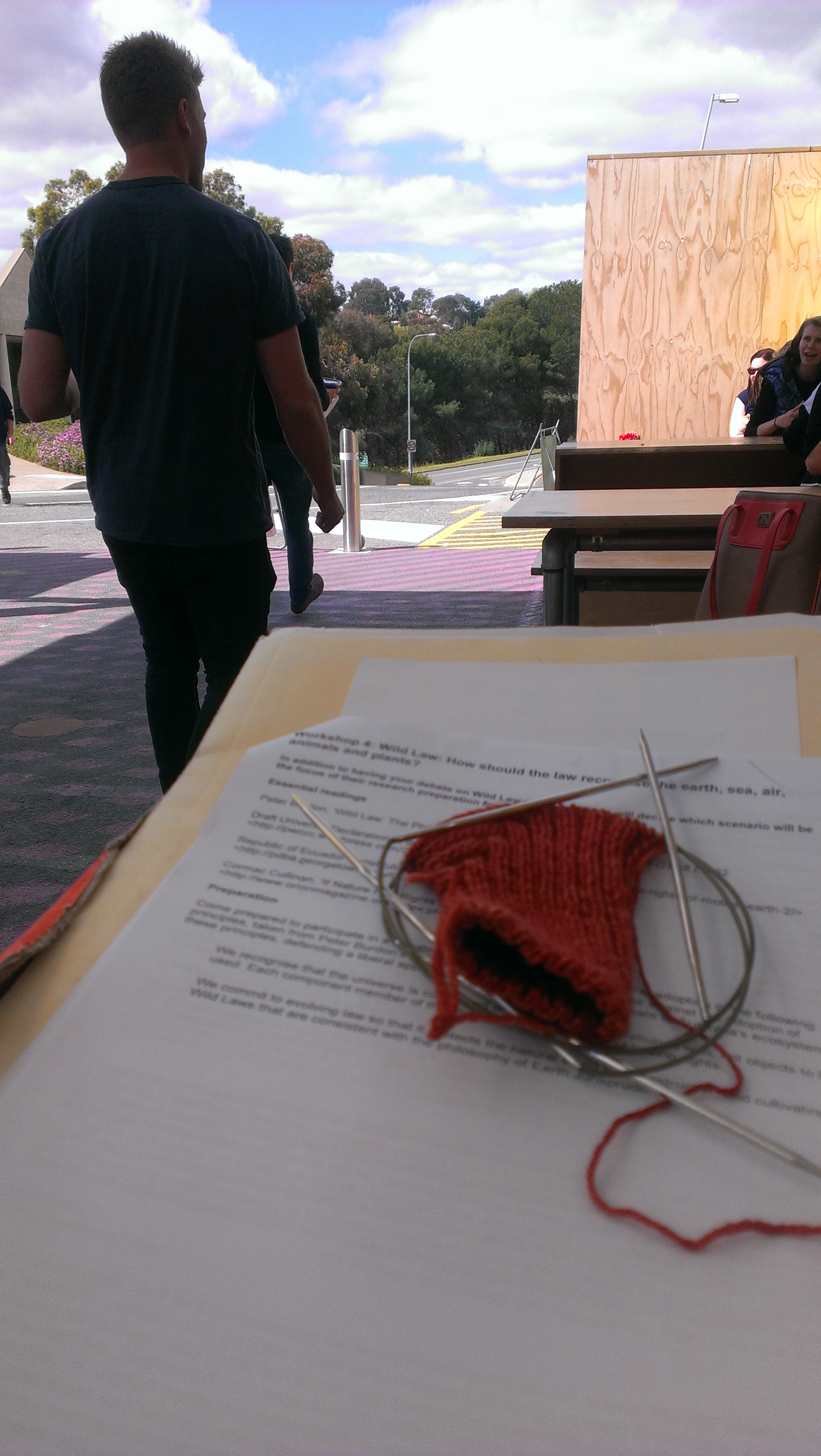
The yarn came out rather nicely.  So then I was looking for a pattern that might be suitable.  Somehow I slipped a gear and thought I might not just knit the sock that lives in my head.

2015-06-16 08.56.59

I cast on, on the bus to work one morning.

2015-09-11 09.14.28

Here we are preparing for class and waiting for lunch.

2015-09-18 13.14.49

Here we are at a break in a conference, admiring kangaroo paw.  I knit the heel three times at the conference because apparently I can’t be trusted to read a pattern.  The first time I knit as the pattern required, and then had a failure of understanding, so I ripped back, re-knit and then realised what I had missed on the first pass, and followed the pattern again!  That slowed me down.  I am prepared to knit in a conference but not to rip back and pick up live stitches!  I had to do that in breaks.

2015-09-22 13.19.17

Here I am on my way to a formal occasion, wearing a frock and knitting at the tram stop.  I thought perhaps the rare occasion of me in public in a frock should be recorded for posterity.

2015-09-28 14.35.07

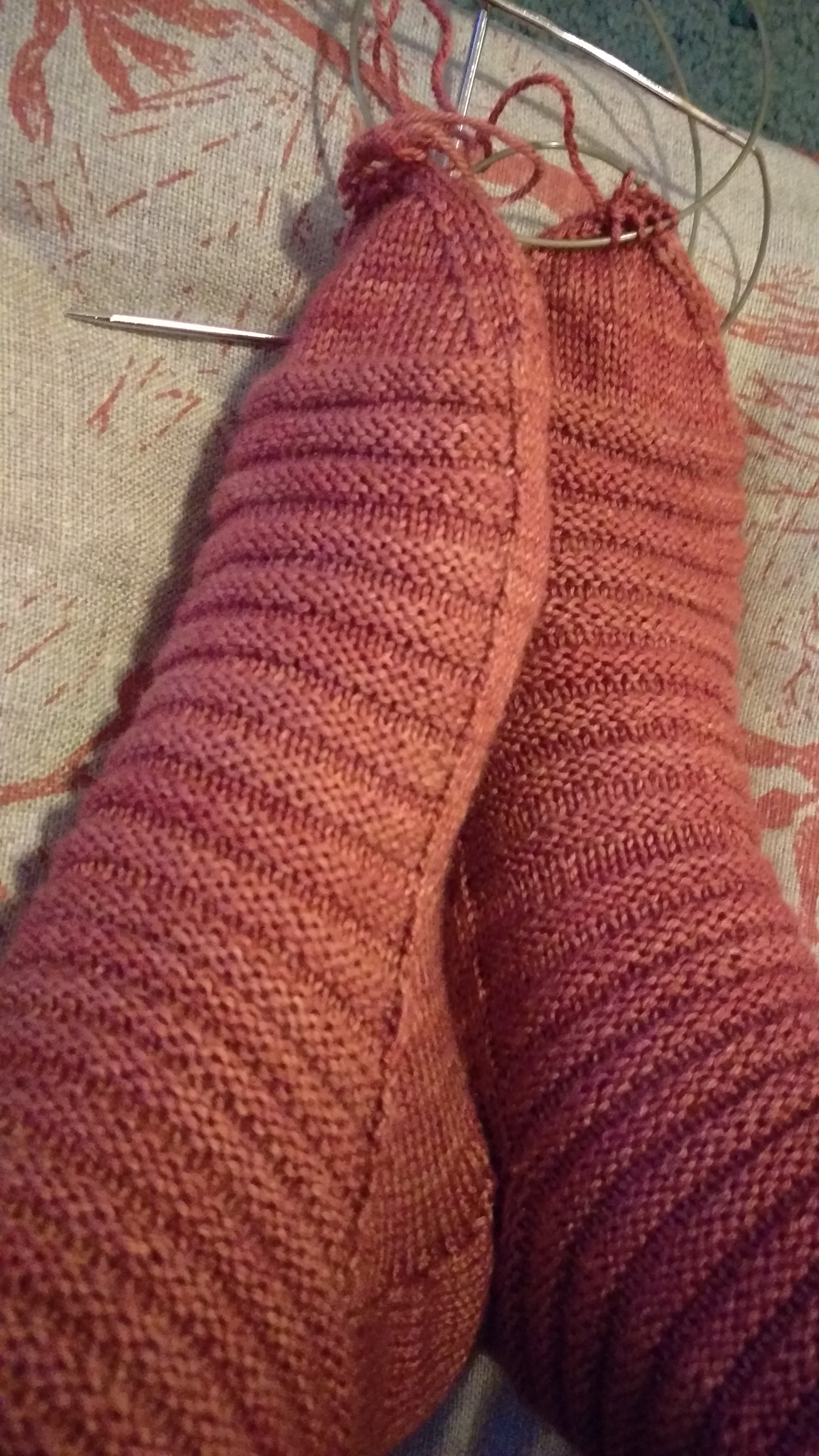
Nearing the final moment… just prior to the grafting of toes…

2015-11-10 19.53.45

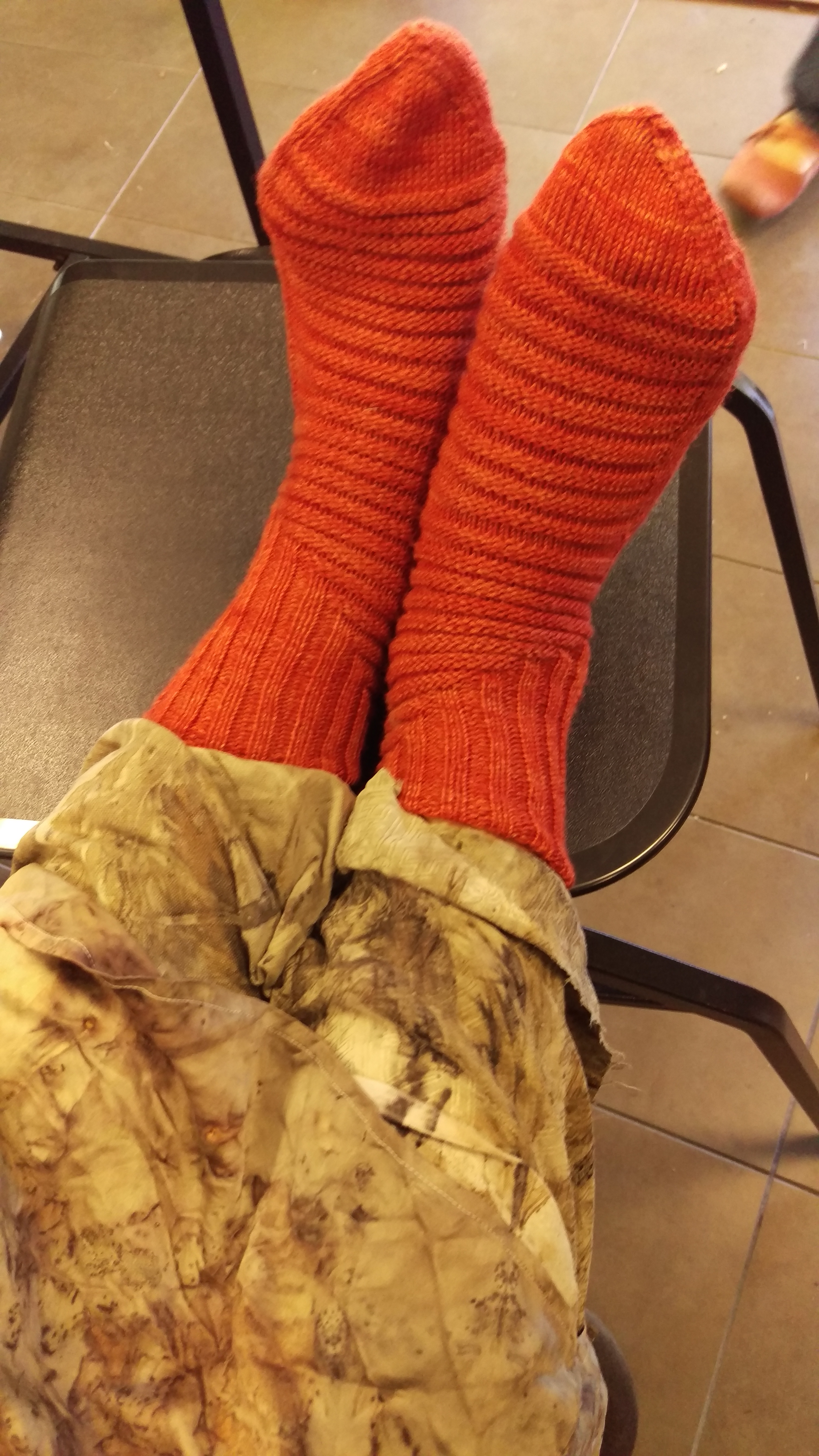
And here is a less than wonderful mood lighting photo of the socks on their rather wonderful intended recipient, at last!  The pattern  is Treppenviertel by Nicola Susen.  It is a rather lovely ode to the ‘stairs district’ of Hamburg.  As promised, I managed to pick up the pattern after a while, rather than needing to count every row–and this is just what a public transport knitter needs!  Three cheers for frieds, socks, and public transport.

2015-11-14 09.34.22


8 Comments

Filed under Knitting, Natural dyeing