Category Archives: Dye Plants

A funny thing happened in the madder patch…

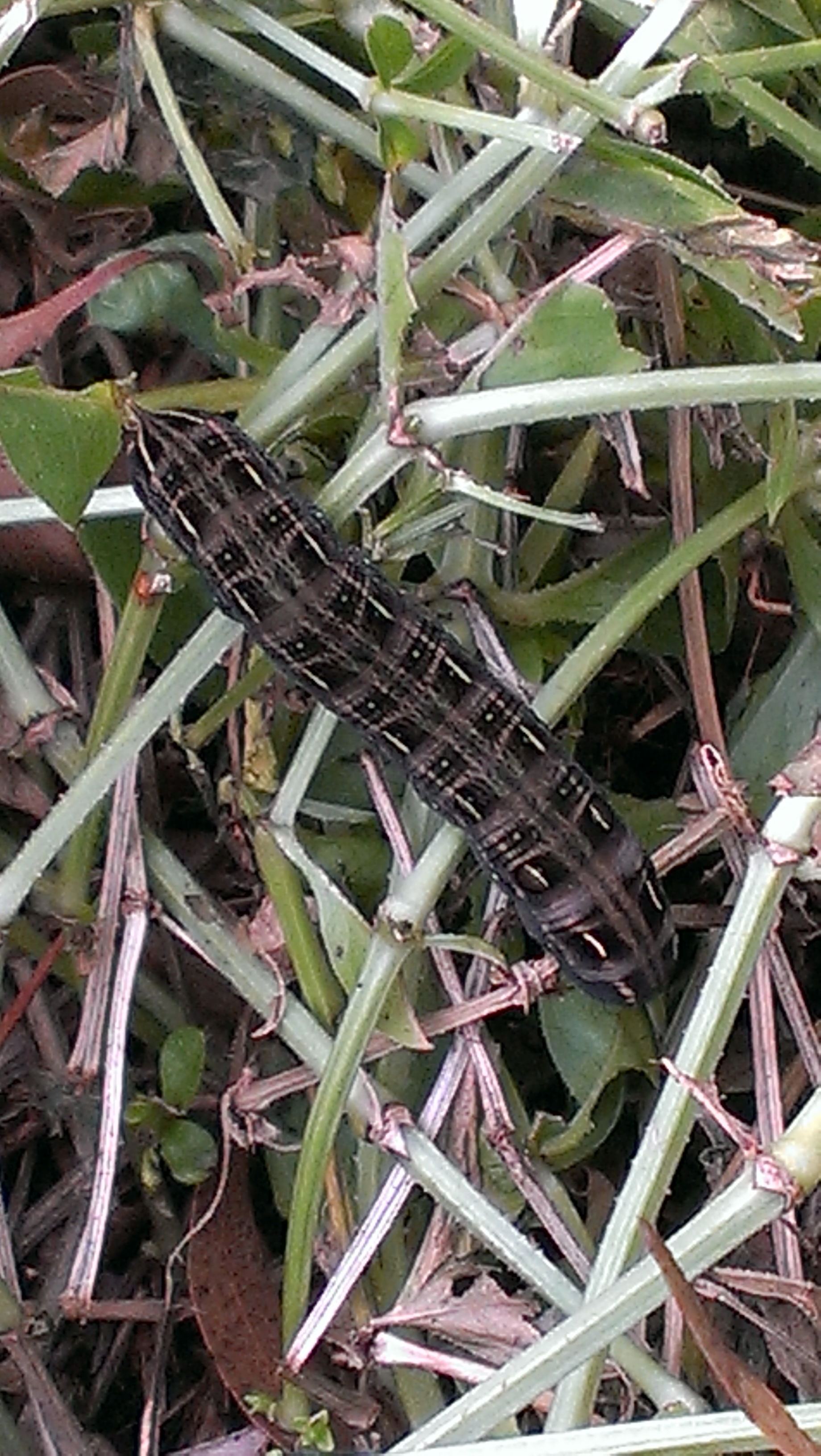
This morning I gave the madder a closer than usual look.  The weather has turned toward autumn here, so I expected the madder to look a little leafier, and it really doesn’t.  I found snails–which is normal–and then I found this, which is a first…

IMAG1298

That, my friends, is a bigger than average caterpillar, and I have no idea what it might become in the fullness of time.  And through being full of madder leaves.  It has at least one friend/relative.  So I decided not to remove all the stems for now and let the caterpillars munch what remains of the madder leaves until they transform.  I’m still pondering whether to dig roots and try them as I think this plant must be getting up toward 3 years old now!

5 Comments

Filed under Dye Plants

Alpaca preparation

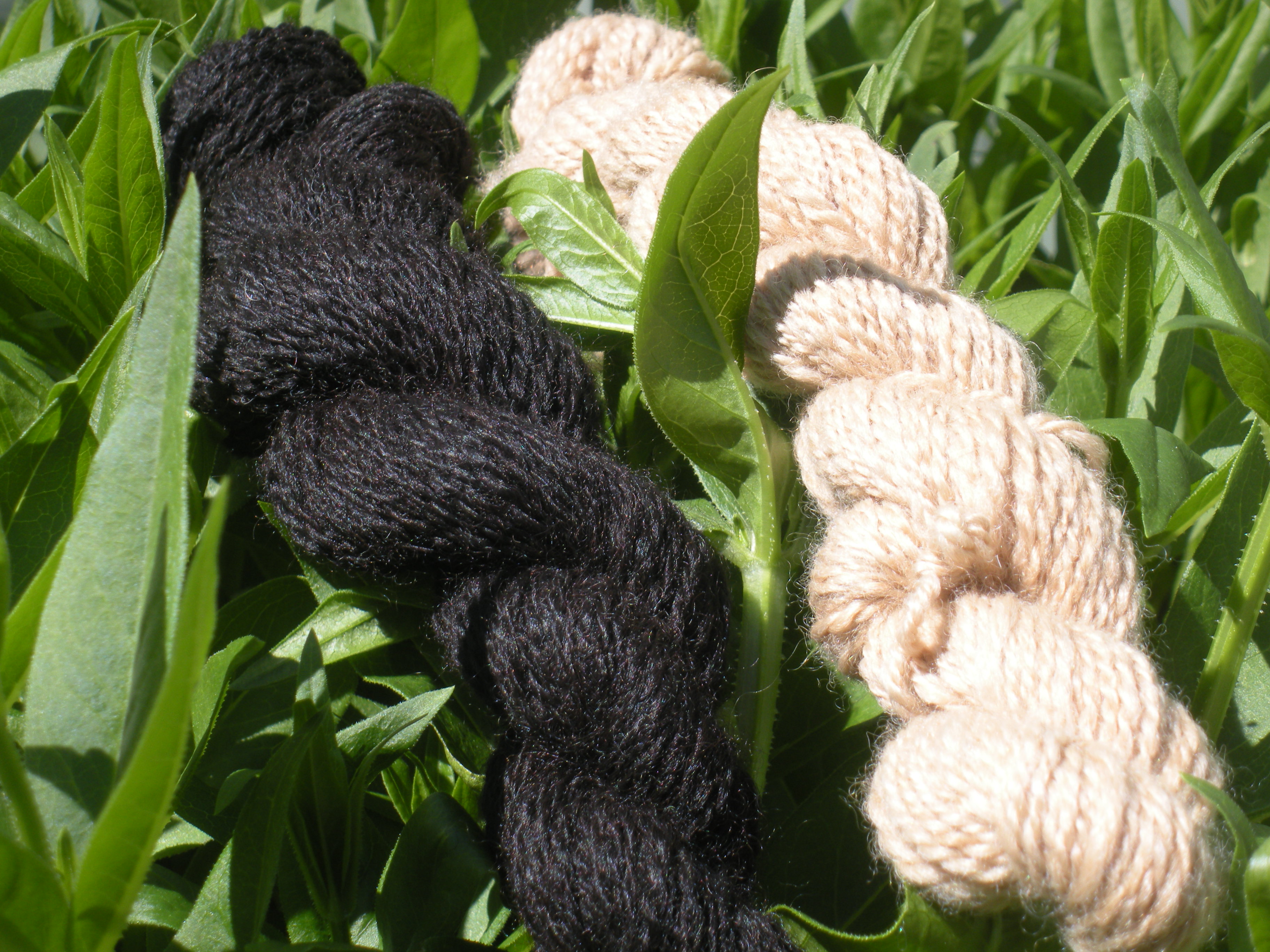
I’ve been having a lovely time spinning alpaca given to me by a generous friend.  She gave me samples of three different fleeces, white, black and what she rather fetchingly calls ‘champagne’.  I’ve been combing it and spinning it two ply and I’m very happy with the results.

I told my friend how lovely I thought the alpaca was, and she gave me more!  I have spun alpaca before, sometimes in quite a large quantity, but this has the longest staple I have ever seen, about 90 mm (these are the 90 mm matches I use to light to the dye pots–extra long.

I have to confess I have never washed alpaca, and it is always filthy, since alpacas roll and dust bathe.  My chooks dust bathe too, and watching them,  it’s no wonder that sand falls out of this fleece any time I move it! This fleece had so much dust in it that combing it was an outside activity that gave me hayfever.  I spun a lot of the white fleece rinsed and combed (that stopped the hayfever at least).  Then, I decided to brace myself and washed the rest of it.  And that led to dyeing the unspun fibre, as it turned out.  I have been working my dyepots hard experimenting toward red and…

IMAG1267

I am getting more interesting colours on silk thread (wrapped around the cards at left) than ever before.  My friends agree that the alpaca on the left, first through the dye bath, is red, then there is grey corriedale (second pass, same dye bath), more alpaca (third pass, still the same dyebath) and some still damp alpaca (fourth pass).  Three cheers for the potential to spin alpaca of many colours!

4 Comments

Filed under Dye Plants, Eucalypts, Fibre preparation, Natural dyeing, Spinning

On obtaining reds from Eucalypts

I’ve spent a good deal of time trying to figure out how to get stronger colours, and especially red to burgundy, from Eucalypts.  I’ve had occasional, but not dependable, success.

I have had the thought that the temperature of a dye bath might affect the colour obtained from eucalypts several times.  In particular, I’ve had the thought that relatively low temperatures might be required to obtain reds. Bear with me in my ignorance about chemistry… I’ve had this idea when thinking about the way that madder turns toward brown if heated too much. The chemical constituents are not the same, but perhaps their reaction to heat could be.   I’ve had the same idea reading the inspiring Karen Casselman’s Craft of the Dyer, in which she mentions that tannin bearing plant dyes will move toward brown if overheated.  I’ve certainly obtained many oranges from boiled eucalypt dyebaths.  I had this idea about reds and temperature again reading this glorious and informative post by Dustin Kahn and her comments.  I had it when reading Ravelry and coming across very infrequent references to people achieving red from eucalypts of unknown variety, in which I’ve noticed slow cooker or crockpot methods seem to get success sometimes, suggesting low temperatures and long processing.  I’ve noticed that when I’ve achieved red or maroon shades I’ve considered temperature to be a factor sometimes.

I used to use two gas burners that would do ‘boiling hard’ or ‘blowing out’ with only luck in between, and a lot of turning on and turning off to manage my results.  Now that I have hobs that will allow relatively finely tuned temperature control, I think it is time to test this theory a bit more systematically. I’ve tried to test it before and been unable to replicate anything close to red. More recently I tested it again and felt that while keeping the pot at a simmer close to but below boiling is a good idea in order not to create felt, the lower temperatures I trued did not generate reds and sometimes were too low for good fixation. For the time being I am letting go of my temperature theory.  So what are the other factors?

It is beyond question that the variety of eucalypt will predict the range of colours that are possible.  I have best results with E Scoparia, E Cinerea, E Kingsmillii Alatissima and E Sideroxylon in the red range and of these, the best is E Scoparia bark in my own experiments.

I’ve found that sheer quantity of dyestuff to fibre is a factor in achieving any strong colour, certainly including red, but it is not a guarantee.  Dustin Kahn reported using 340g fresh E Sideroxylon leaves and stems to 10g yarn to obtain brick red (and then achieved yellow and orange on two other 10g skeins).  I am convinced that time is a factor.  Rebecca Burgess and Dustin Kahn both report heating their dyestuffs for long periods with cooling in between (which I have found changes the colour but not in a red direction necessarily). The redoubtable Ida Grae reports achieving red from E Cinerea only after 3 hours of simmering.

India Flint recommends acidity as influencing brightness of colour, but I have to admit having tried it without being confident it made a difference–hence, more experiments needed, preferably with higher acidity levels. At a recent workshop, we had two E Scoparia bark pots running.  We did a trial and put vinegar in one pot and not the other.  The no-vinegar pot gave brown on alum mordanted superwash wool and alum mordanted alpaca.  Brown surprised me, but I wouldn’t usually use alum.  We’d run out of unmordanted wool in the mix that day.  In the with-vinegar pot, grey handspun wool with no mordant came out burgundy, which was very exciting!  Polwarth locks with no mordant came out brilliant orange, and the alum mordanted skeins of alpaca and alpaca blends came out toward the red end of orange.  We cooked them on as low a heat as we could–but the no vinegar pot was bigger, so heat control was easier.

So… I am continuing to experiment with favourite species, no excessive heat (wasteful in any case), a high ratio of dyestuff to fibre and acidity.

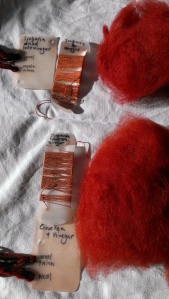
Here are the latest findings: red on alpaca!  Burgundy on the wool samples, rosy pink and orange on silk thread.  The top sample used E Scoparia (dried leaves) and The lower samples used dried E Cinerea leaves, both with white wine vinegar.
IMAG1270


18 Comments

Filed under Dye Plants, Eucalypts, Natural dyeing

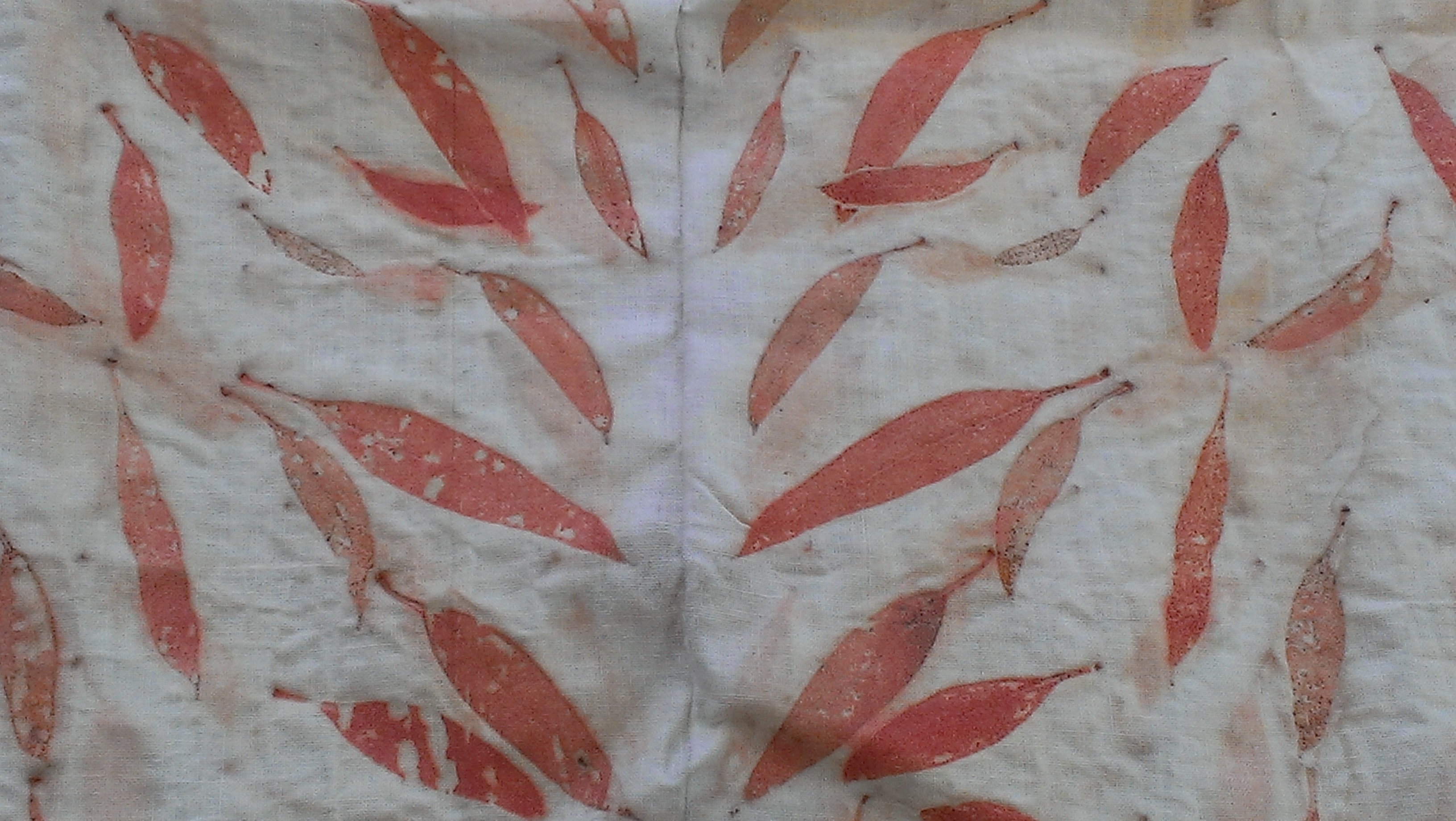
Leaf prints with rust water

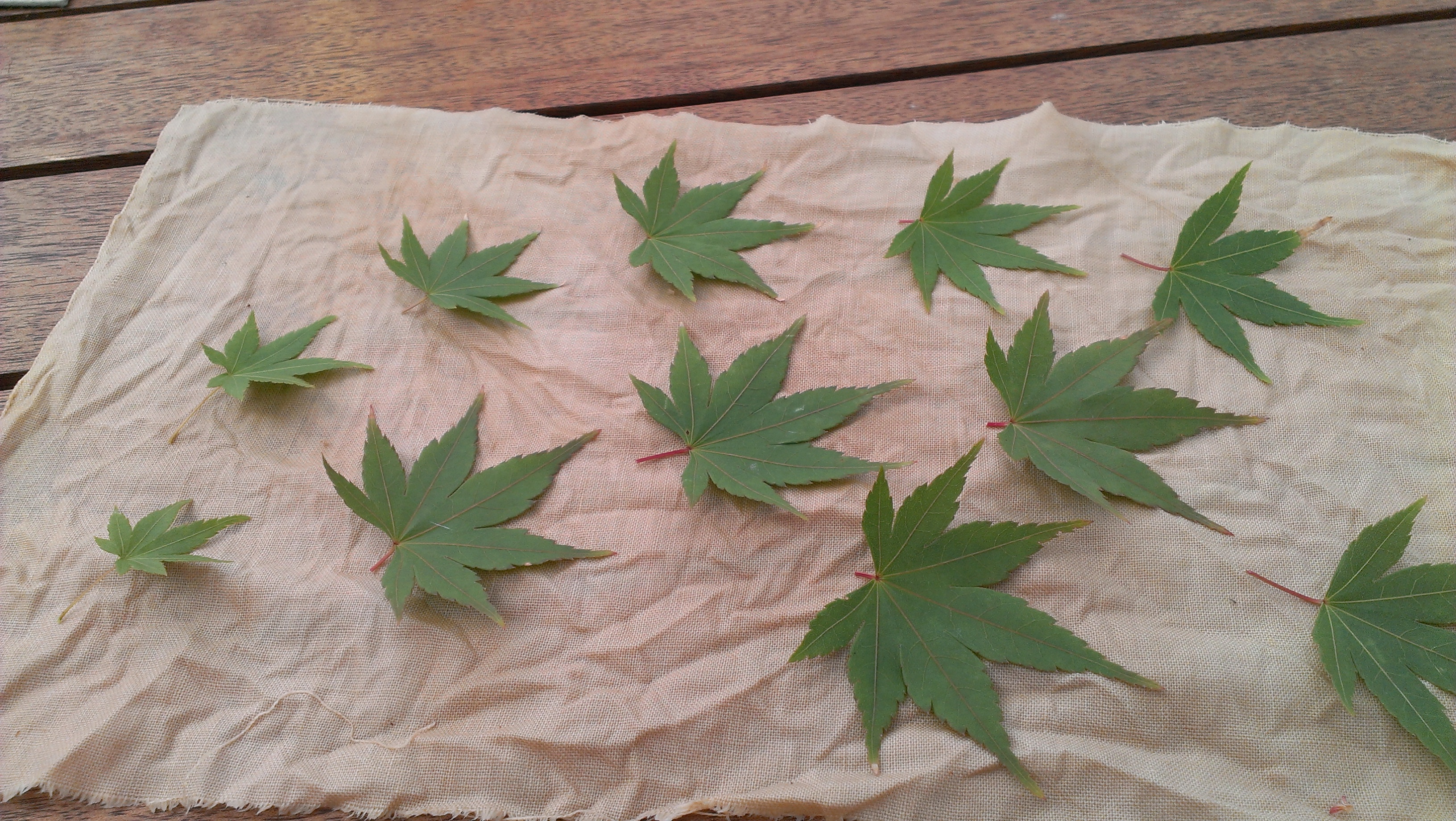
I have continued my experiments with Rebecca Burgess‘ ‘fall dye starter’ from Harvesting Color. I admit, it is barely autumn here and I’ve actually been trying this out through our summer… but this is a mere detail, I hope! I tried these three lobed leaves which someone told me were from a maple (I know little about maples), and birch leaves–why not?
IMAG0662 IMAG0765

I like the results a lot, but I won’t bother with birch again. I also collected oak leaves and wrapped them.
IMAG0661IMAG0766

Finally, I made a special trip to what I was confident was a maple to collect these exquisite five-lobed leaves.    I tried these on fabric cooked with tannin-bearing eucalyptus bark, which is not what Burgess recommends at all.

IMAG0658

This produced hardly a smudge.  So, I may have to review my ideas about tannin.  Or on the other hand, I may have to reconsider my naive ideas about maples!

4 Comments

Filed under Dye Plants, Leaf prints, Natural dyeing

Eucalyptus Orbifolia

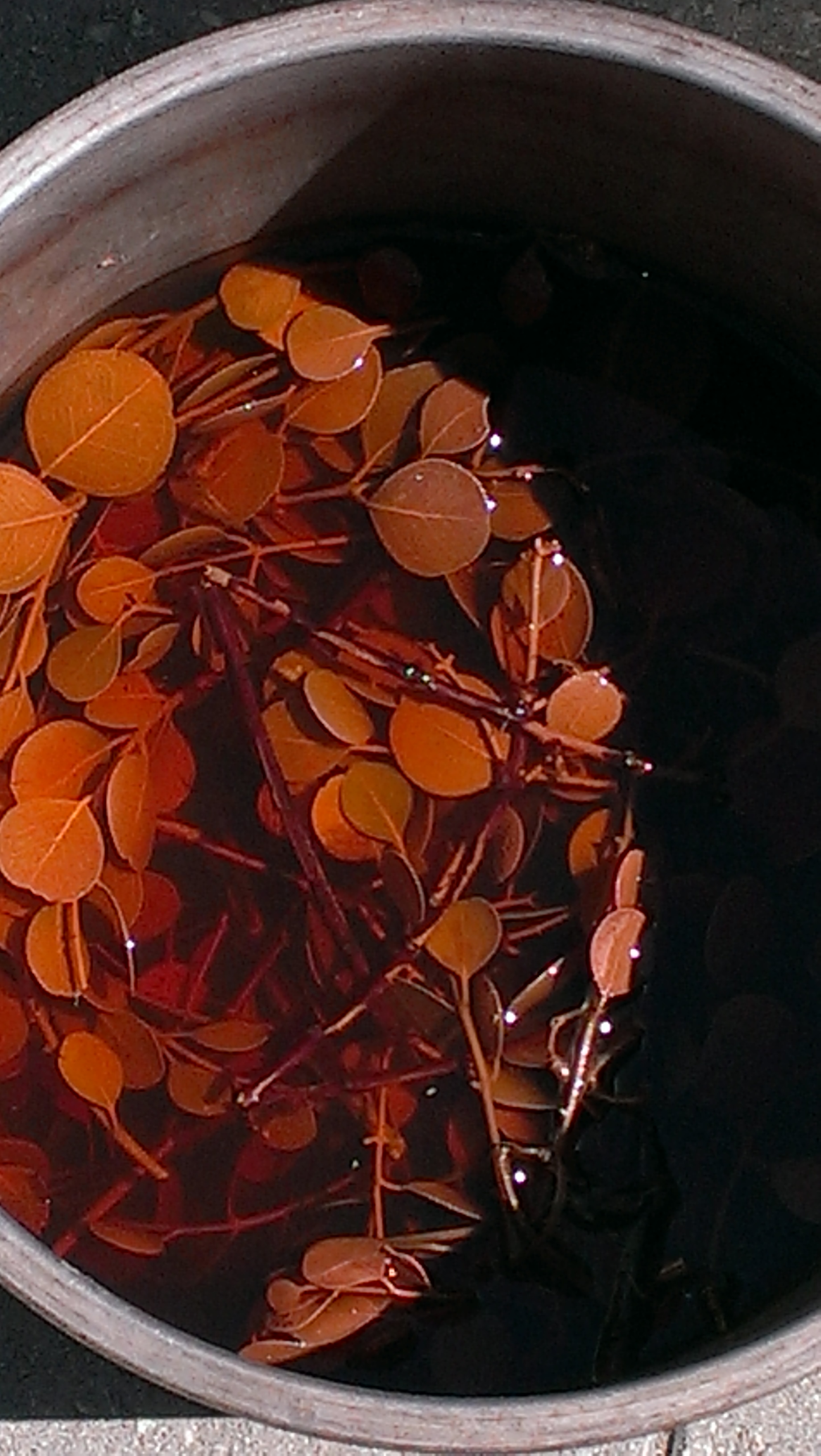
Alas, poor Eucalyptus Orbifolia.  I grew this plant from a small seedling to a still small, but perhaps 50 cm high plant hardly worthy of the title ‘sapling’, in a large pot.  It seems to have been a casualty of the hot summer and perhaps its far flung location at the back of the yard.  Despite all the watering it received, poor old Orbi gives every impression of having curled up its toes.  So, I’ve cut back and harvested the leaves for the dye pot.  Perhaps there will be regrowth, but I’m not letting all the leaves fall while I wait to find out.

I bought this plant and not some other believing it to be a dye plant for some reason I can no longer remember.  I’ve been to the place I thought this idea generated but it isn’t there!  And now I can break the news to you, dear reader.  It isn’t going to join the list of truly exciting dye plants anytime soon.  Here is the dye pot after some hours of simmering.

IMAG1189

The dye liquor is still quite clear, with an amber tint.  The leaves are still the glorious shape that gives the tree its name.  I have leaf printed with them in the past and the result was definitely a print, though not any really impressive colour.  And here is the result of a dyebath test. The handspun with no mordant: orange.  The millspun superwash with alum mordant: brown.  What was I thinking mixing and matching fibres on my test cards in this batch? Silk thread, nothing of significance to report (E Orbifolia is in the middle). And for comparison, handspun Finn X dyed with E Scoparia bark at the bottom of the frame.

IMAG1215

5 Comments

Filed under Dye Plants, Eucalypts, Natural dyeing

Random harvest

In the beginning, when I’d read the Handweavers and Spinners Guild of Victoria Dyemaking with Australian Flora (1974) and perhaps Jean Carman’s Dyemaking with Eucalypts (1978) and knew just about nothing about identifying eucalypts, I used to just choose a tree at random and try it out on some wool.  Sometimes that is still the thing to do!

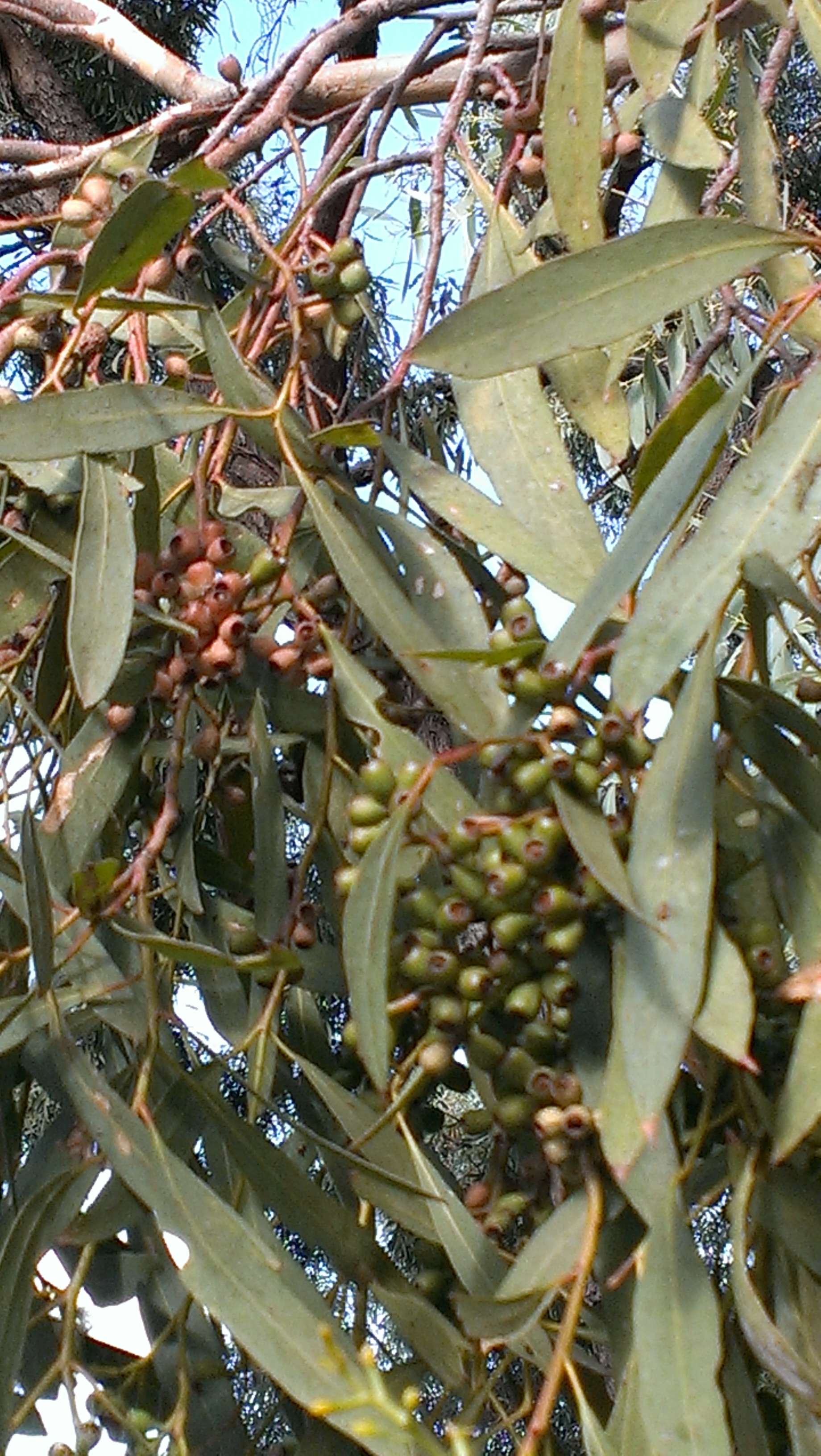
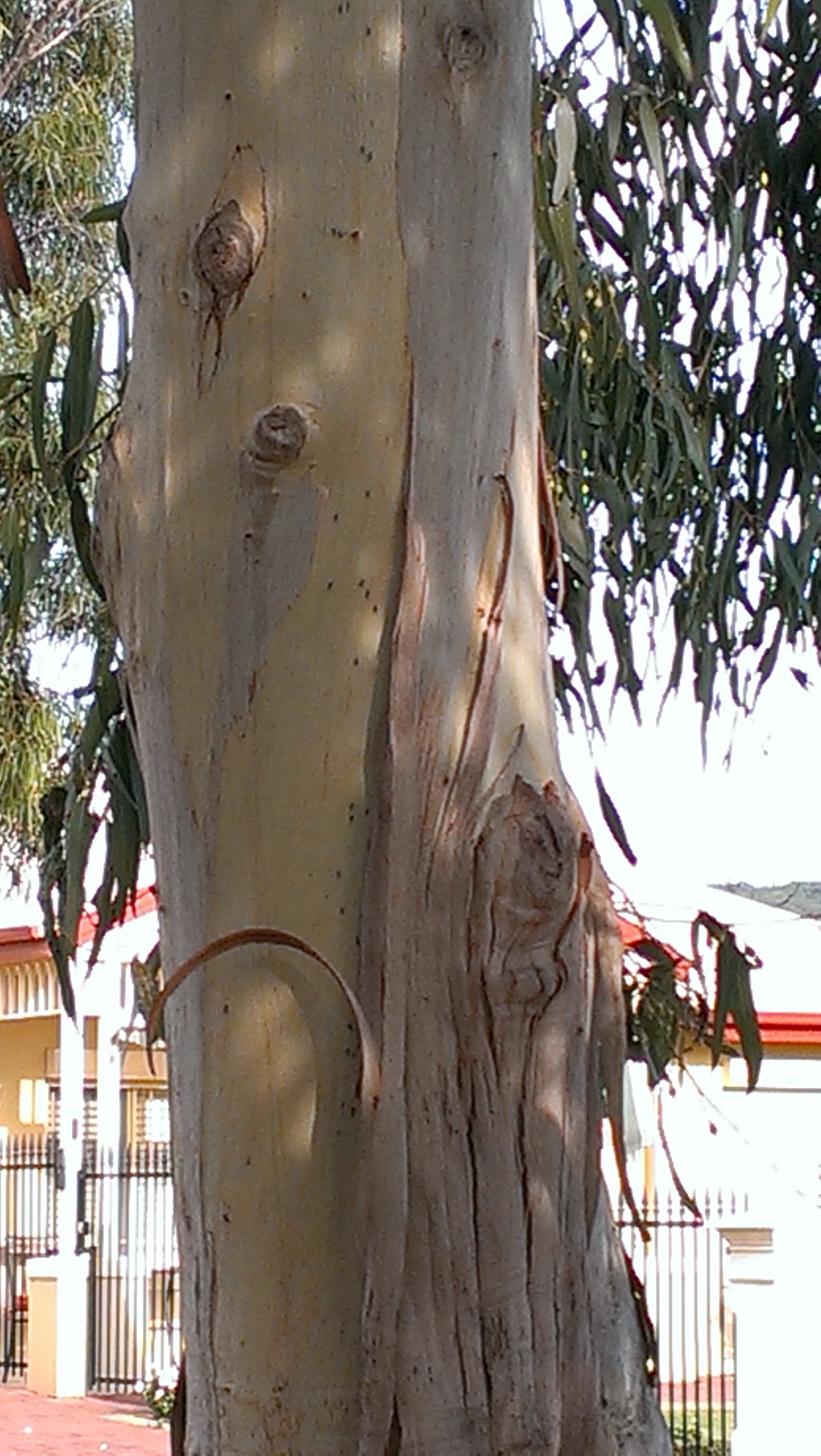
Last week I had a testing trip home from work by public transport.  It took one and a half times as long as doing the trip by bike would have done, partly because I travelled on a bus route further from home and walked a good way.  So I looked for entertainment on my walk.  This rough barked tree was in flower (small, cream-white flowers) and hanging through a park fence.

IMAG1105

Lots of fruit in several stages of maturity.  I took a small leafy sample. 

IMAG1107

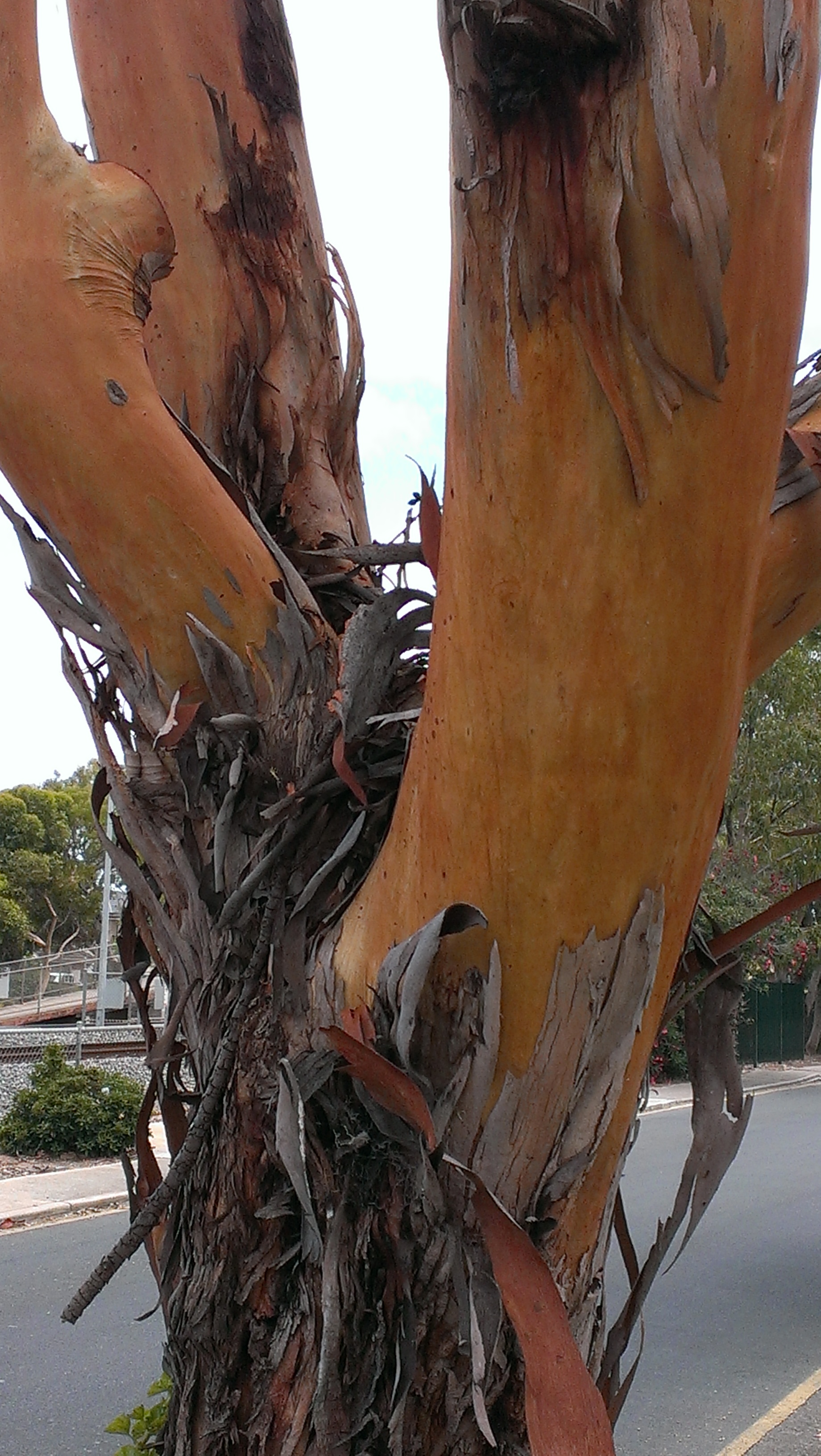
I kept walking.and came across this tree with its spectacular peeling bark and bronzed trunk by the tramline.  There was a broken branch still hanging suspended from the intact branches, so I broke off enough dried leaves to make a meaningful test dye bath.

IMAG1109 IMAG1110

Along the tramline closer to home, I saw this beauty with coppery bark (suggesting it might be a mallet, I believe) but quite a broad leaf by comparison with the family member I know best, the swamp mallet, E Spathulata. A few more leaves selected.

IMAG1111 IMAG1112

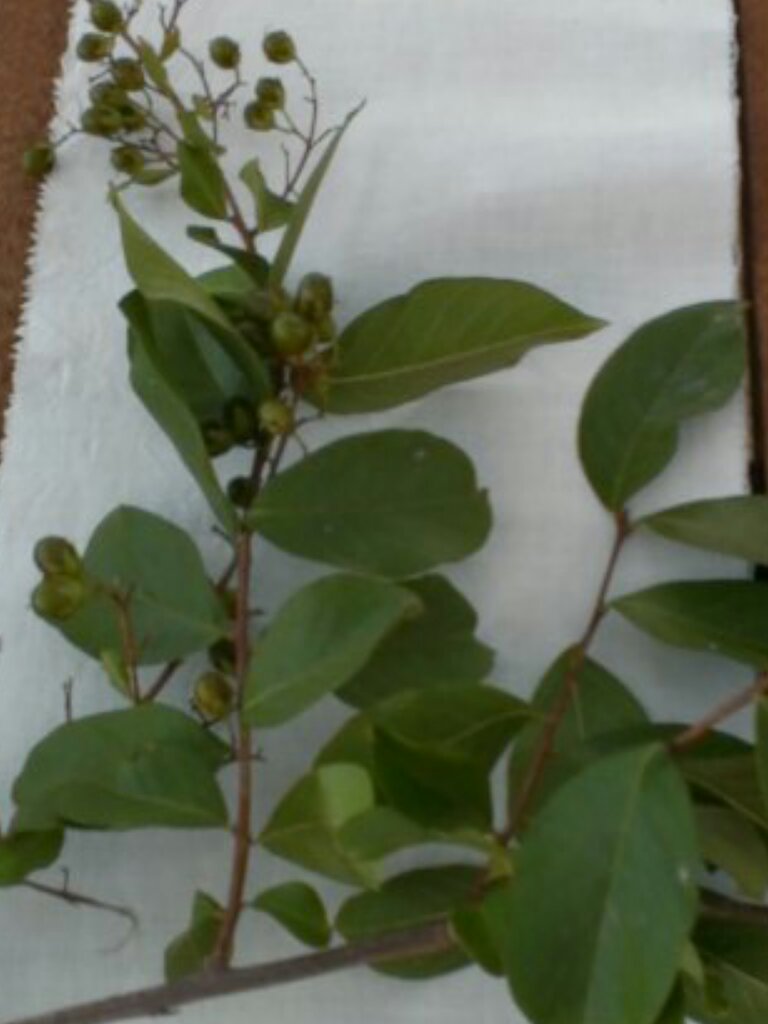
Finally, I passed a friend’s place.  His neighbour’s house had been demolished that day and part of the crepe myrtle (Lagerstroemia Indica) on the street had been a casualty, so I picked a sample of that, too, and when he came out of his garden, there was a chat to be had as well. Crepe myrtle turns out not o be an indigenous species.

IMG_0083

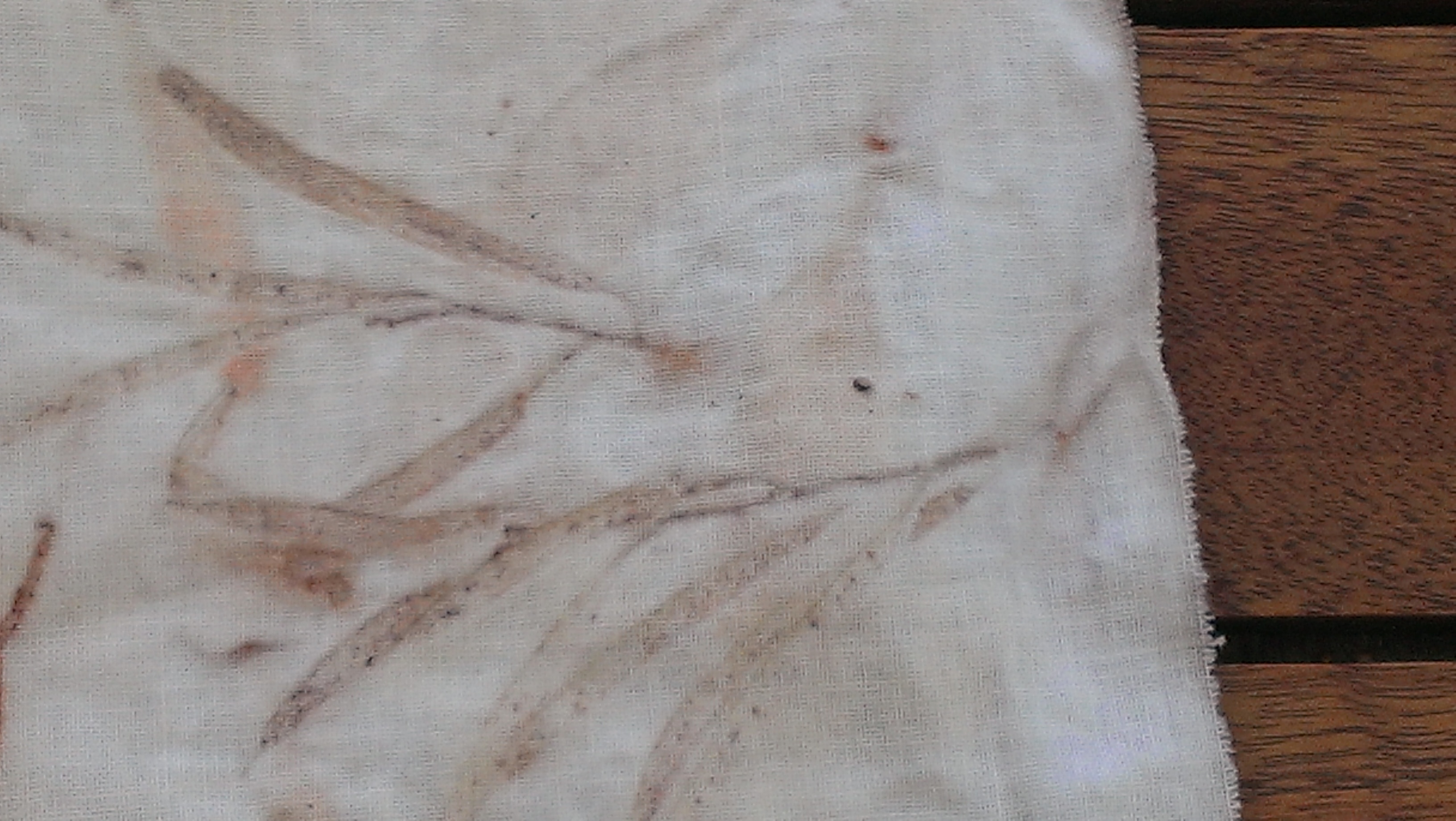
And now for the (dyeing) punchline.  I won’t be losing sleep identifying these trees! That’s the crepe myrtle to the left.  You can see the leaves have acted as a resist to the iron in my bath, with some tan patterning from the leaves themselves.

IMAG1216

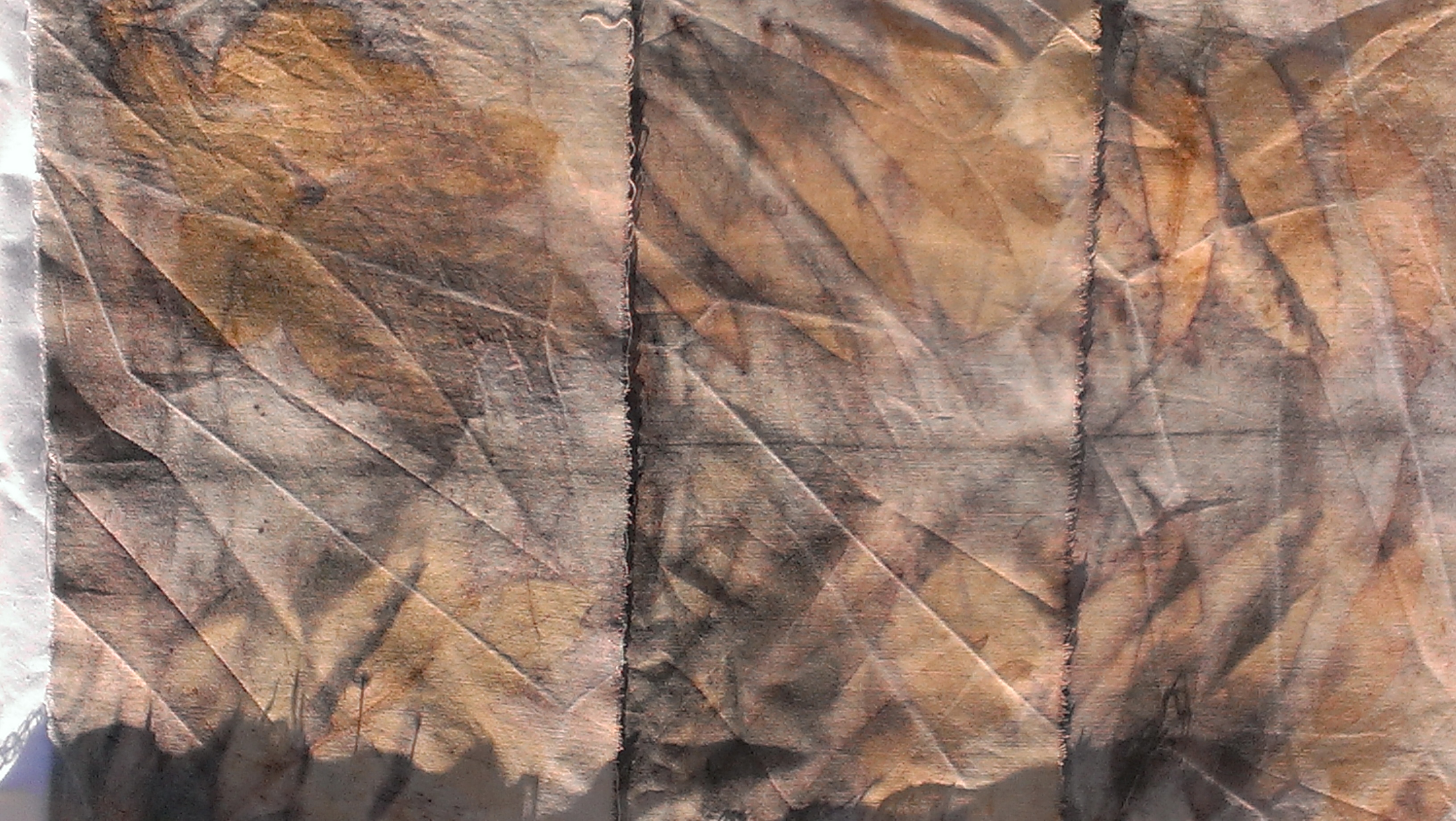
And… here is the result from the dried leaf dye bath from the tree with bark peeling in strips.  Tan or brown, depending.

IMAG1214

3 Comments

Filed under Dye Plants, Eucalypts, Leaf prints, Natural dyeing

Eucalyptus Leptophylla; Eucalyptus Gillii

I love botanical gardens, where the trees are helpfully labelled.  In Adelaide, this is true even of those outside the grounds… which is how I came to take a few leaves from E Leptophylla.

IMAG0959

For lovers of brown, this might be a viable dye plant.  I’m still working on loving brown for most applications.  I tend to think brown sheep are made for creating brown wool.  But I’m blessed with access to coloured sheep fleece, and not everyone is so lucky.

IMAG0920

I have to say that it is more of a dye prospect than E Gillii.  A friend has this beautiful plant growing in his backyard, so I tried it out some time ago and got smudgy tan marks and no more.  It’s best admired for loveliness of leaf and flower in my view.  I also tried Chinese elm–no colour at all.

IMAG0965

A visit to the botanical gardens, even when I am really outside the gates, is never wasted.

Leave a comment

Filed under Dye Plants, Eucalypts, Leaf prints, Natural dyeing

Eucalyptus Leucoxylon Megalocarpa

Eucalyptus Leucoxylon Megalocarpa--what a hefty title for the South Australian Blue Gum!  Well, that’s what people call it where I live, but it is native to Victoria as well as South Australia and in Victoria, it is more likely to be called Large-Fruited Yellow Gum.  The fruits are large compared to other blue gums I know, but by comparison with seriously large-fruited gums such as E Erythrocorys, not so big.

This is possibly the most popular street tree in my city.  There are loads of them.  So it’s a shame that this is not an exciting dye plant (tan again!)  On the other hand, at the moment it is coming into flower everywhere and the lorikeets and bees couldn’t be happier.  As eucalypts go, it is a small-medium size tree (to only about 8 metres).  Here it is with a house for comparison.

IMAG1030

It is shedding bark in lots of places at present–I haven’t tried dyeing with the bark as yet.

IMAG1039 (1)

The flowers are a major attraction for those who plan parks and streetscapes, and also for lorikeets, honeyeaters and bees.  Cream is one of the most common colours…

IMAG1034

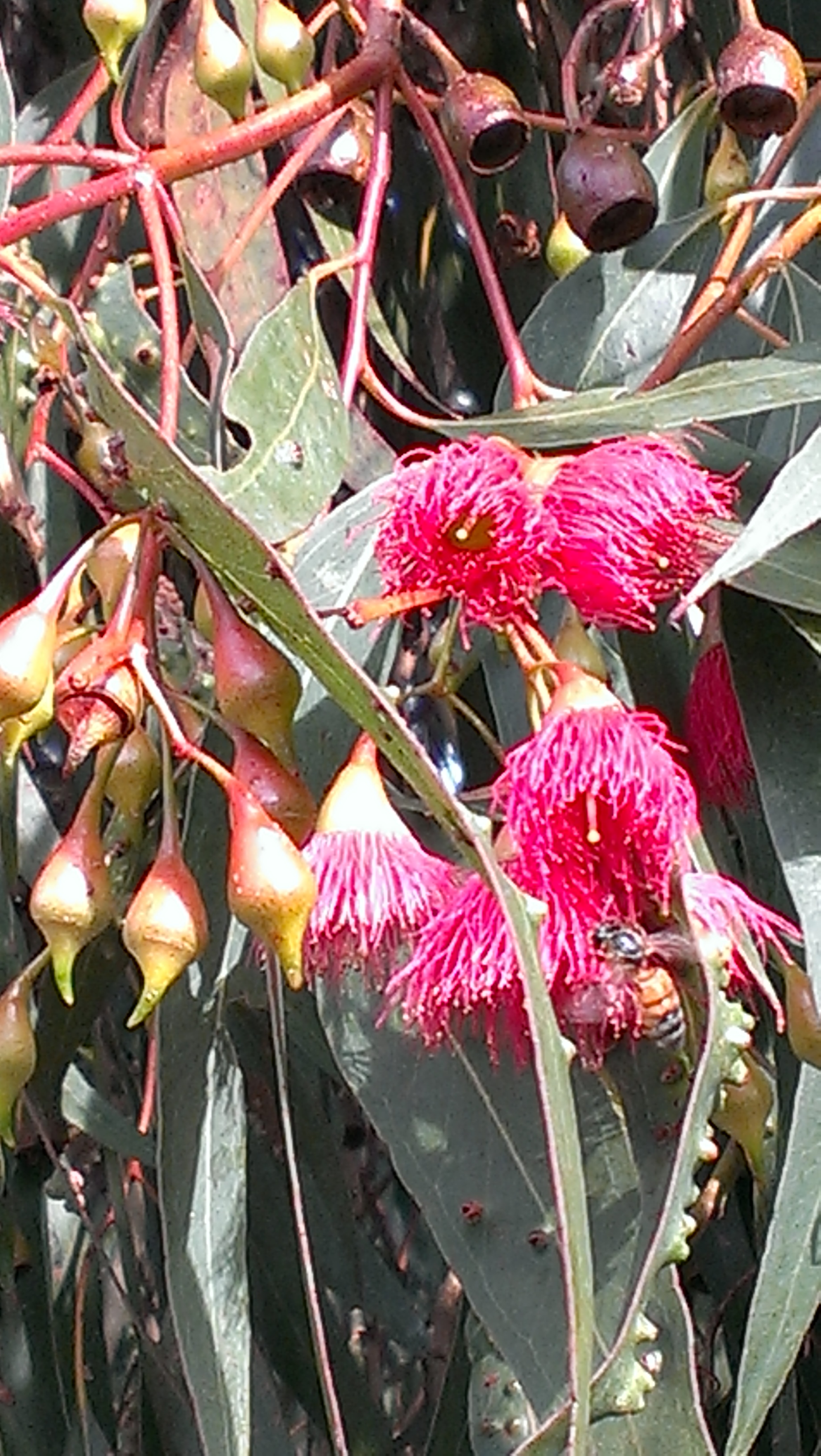
Red is the other, and these trees are profuse. There are also specimens that have been grafted or bred for other flower colours.  I saw a peach-coloured display of flowers yesterday.

IMAG1047

The lorikeets just went higher when they saw my camera, but the bees stuck with what they were doing.  Moving fast!  But this one allowed a partial photo.You can see buds, immature fruits and flowers all present close together here.  On some trees, fully mature fruit that have released seed are on the tree as well.

IMAG1050

I have to say this specimen had the most extensive infestation of whatever insect produced those little galls I’ve ever seen. Clearly it’s providing habitat for a lot of baby insects of some kind as well as bees, ants and birds.  I can’t really complain that it gives tan in the circumstances.

IMAG1053

2 Comments

Filed under Dye Plants, Eucalypts

Sampling dye plants

IMAG0722

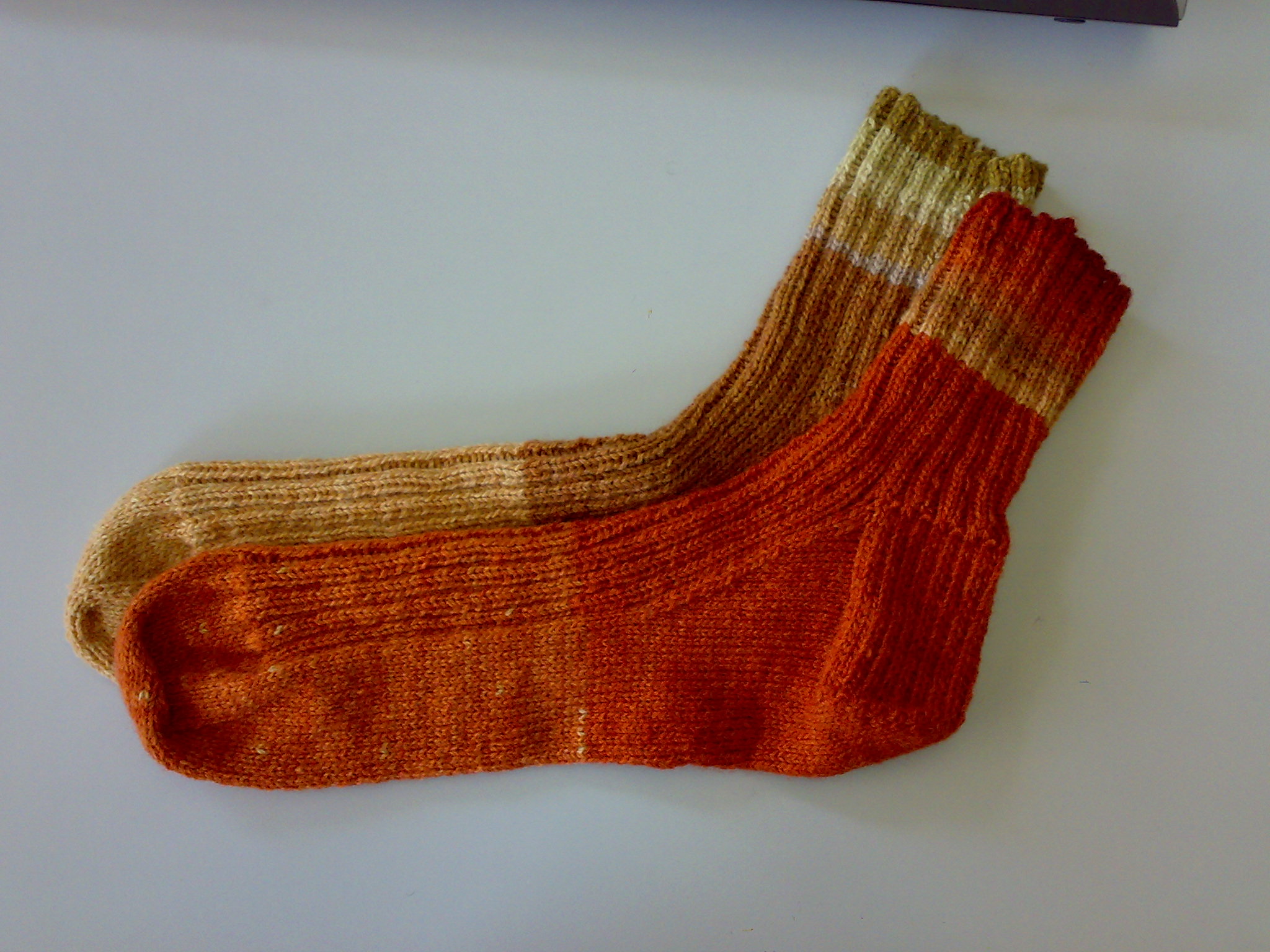
When I started plant dyeing, I used to make a tiny skein, about 1-2 metres long, and try out the leaves of trees around my neighbourhood on that.  In those early days, I tried rue after I found it listed in a book… oh my goodness…  the least said about that smell,  the better.  It almost put me off for good.  (Pale green, if anyone is wondering–not the red I was hoping for in my naivete).  When I had accumulated enough experiments to have identified some trees I wanted to keep visiting and some I would appreciate but not use for dye, I knit the samples into striped socks for a dear longtime friend. So that method had its advantages.  My friend asked for short cuffs (well, I thought he had–), so that’s what he got.

150620091160

I may have mentioned my devil-may-care attiutude to matching socks.  Happily my friend shares it, or he wouldn’t have scored this pair! 

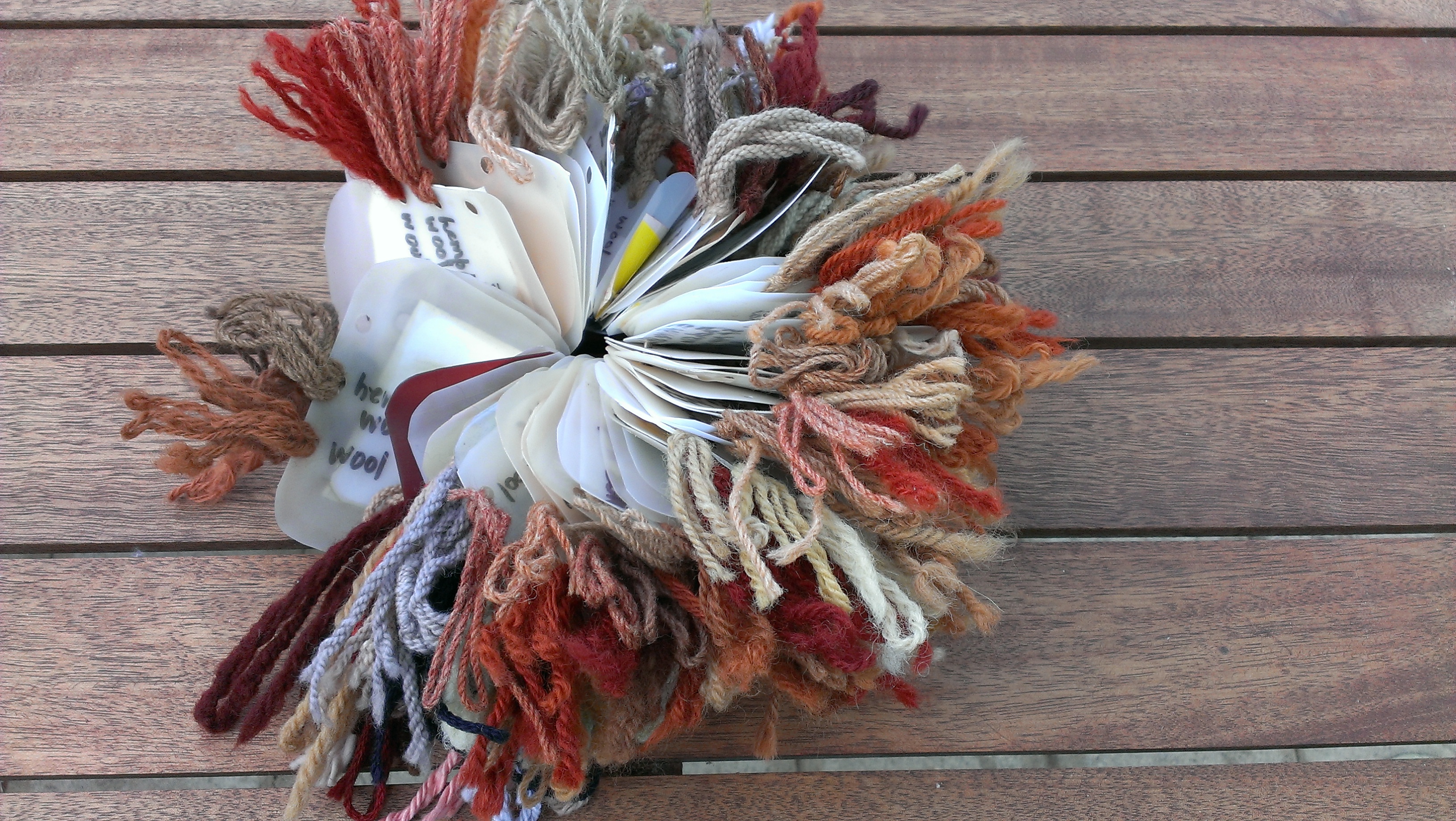
Eventually I learned about sample cards from more experienced dyers on Ravelry.

IMAG0723

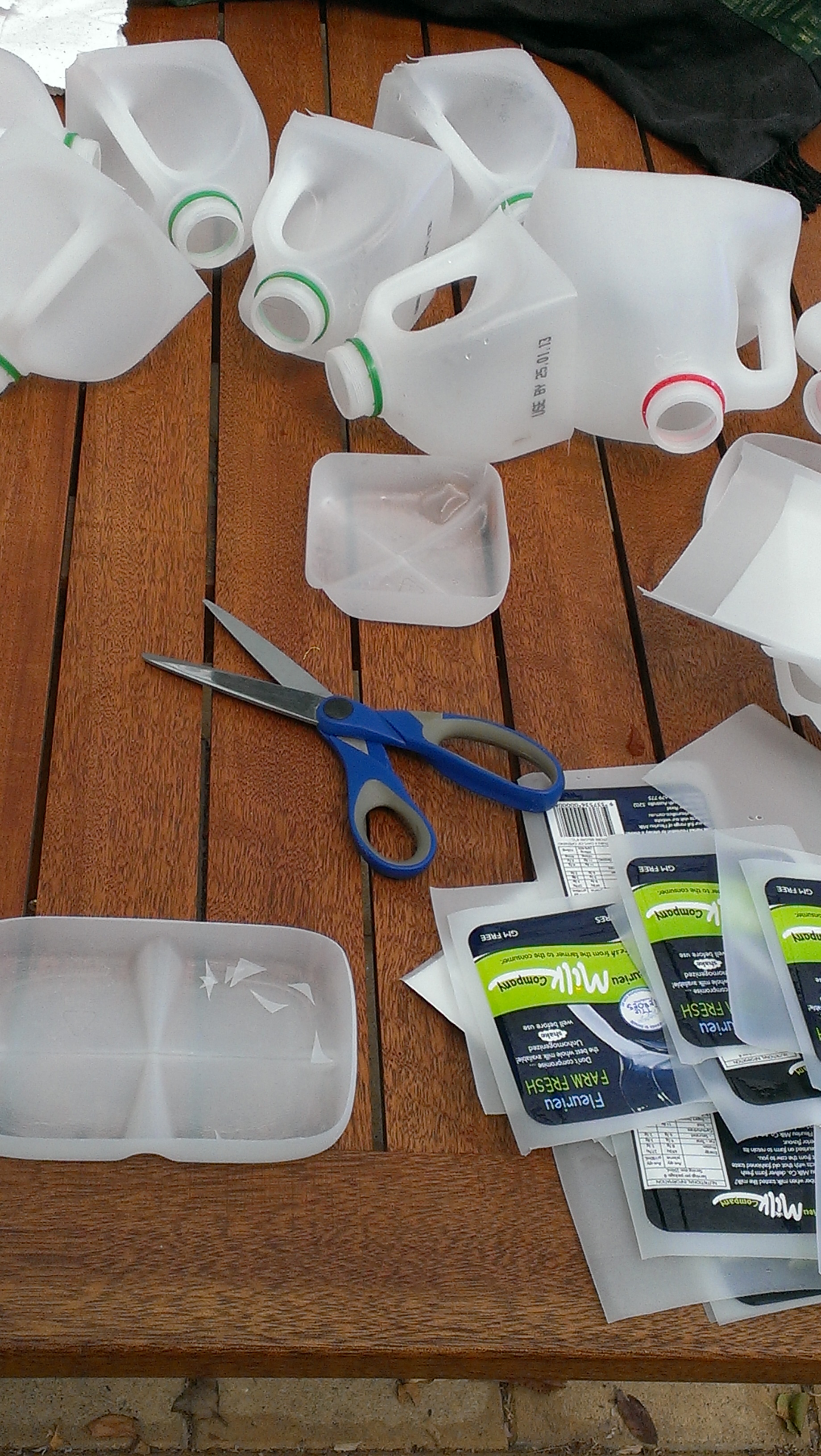
I use milk bottles to make mine.  We don’t use this kind at home any more, so I raided a recycling bin at a coffee cart during the weekly farmers’ market to get these.

IMAG0768

I keep my samples on a split ring, which I think I also saw on Ravelry, and it’s a great record of plants investigated.  Some have been identified long after being cooked in the dyepot.  A few have been identified correctly after an initial misidentification.  Some have been tried several times.

IMAG0773

And there are still so many to try out!  In the lead up to the recent workshops, I collected leaves fresh and dried: from trees, from the gutter, from fallen branches.  I collected more bark too.  This one is Eucalyptus Forrestiana,  believe:

IMAG0764

And I collected a few specimens I couldn’t identify… This one branched so high I couldn’t pick a leaf, but bud caps were raining down and lorikeets were having a great party high above me.

IMAG0760

This one was a sprawling mallee near the railway line, and came complete with new holland honeyeaters protesting my invasion.  I hope they had chicks in there somewhere, and this was the reason they kept trying to see me off even though they are about the length of my hand.

IMAG0746

This tree has fascinated me for some time: it gives a peach or apricot colour.  But I still can’t identify it.

IMAG0738

So many possibilities for the future….

6 Comments

Filed under Dye Plants, Eucalypts, Knitting, Natural dyeing

E Kingsmillii subsp Alatissima

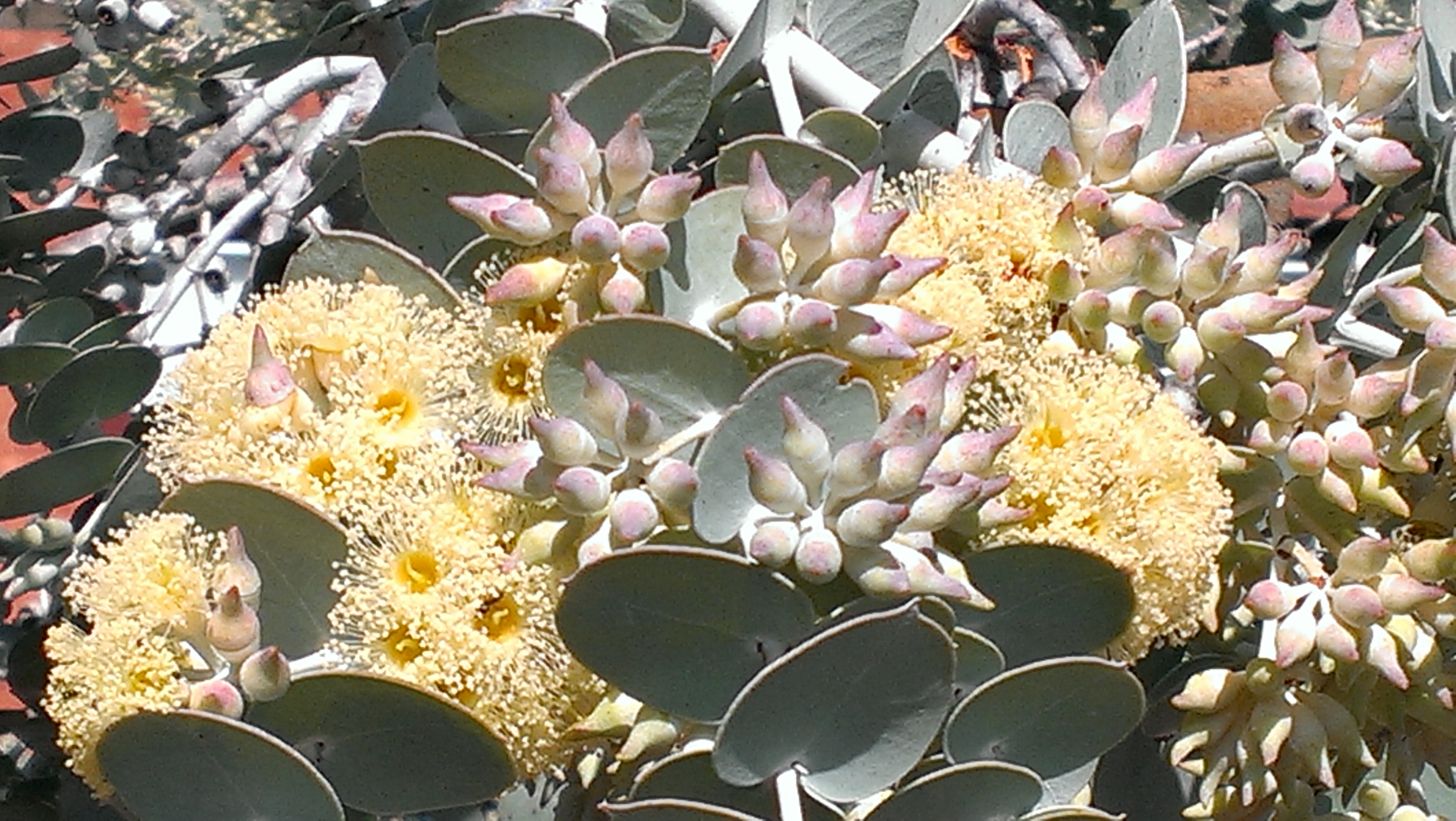
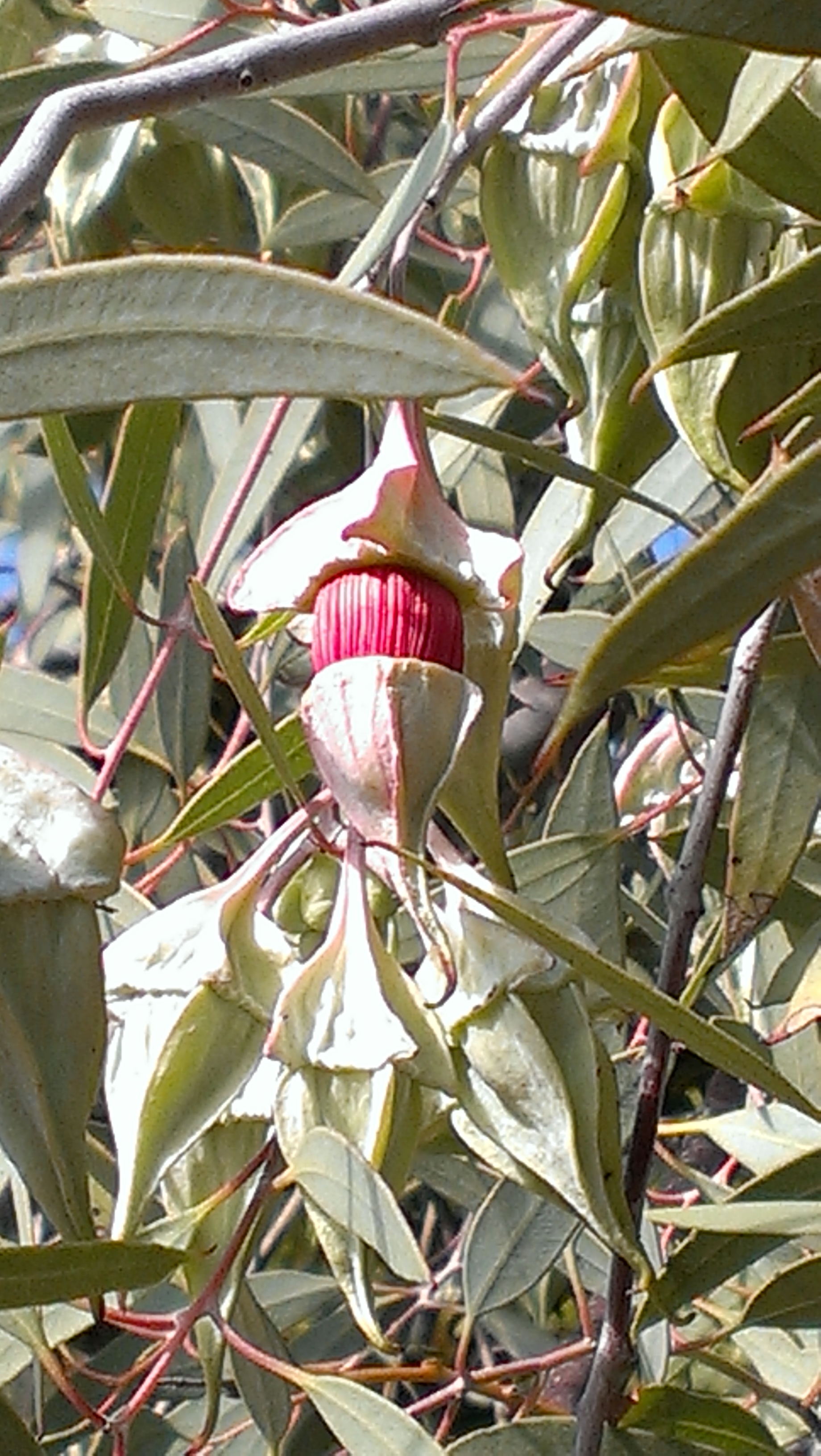
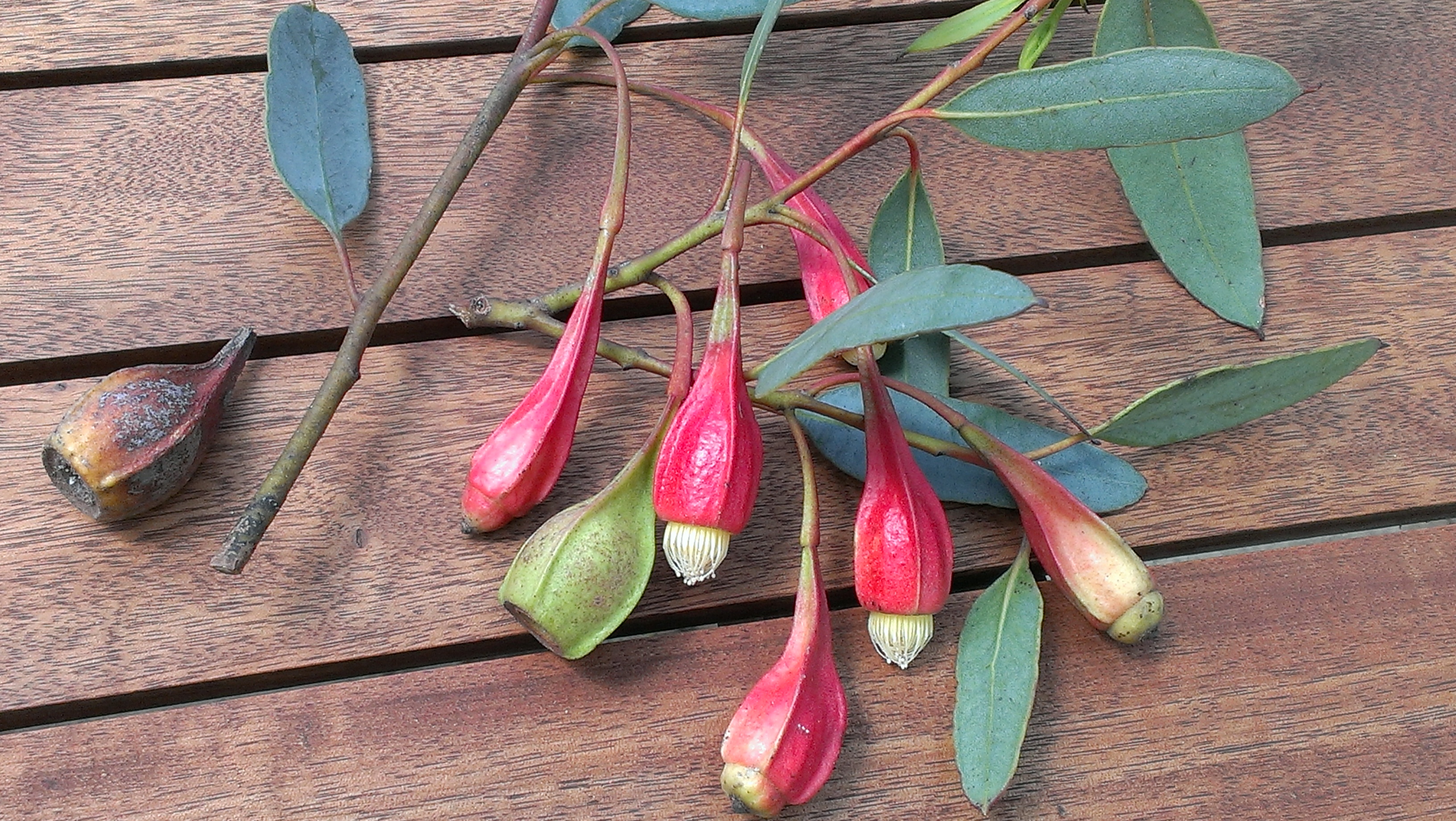
How spectacular is E Kingsmillii (Kingsmill’s Mallee; wing-fruited mallee)?

IMAG0952

Perhaps the tree doesn’t seem obviously wonderful.  The buds are truly glorious!

IMAG0955

And so are the flowers and the fruits.  It turned out I was photographing this tree outside the Botanical Gardens centre for plant diversity.  My eucalypt admiration was shared with a woman who came by and offered me more information, so I told her about this beauty being a dye plant.  It isn’t every day you get this kind of fun on your way to a conference!

IMAG0957

And… for me this is a happy result, pulled from the copper at the Guild as a test during our workshop.  I am so prejudiced in the matter of red.  I just love it…

IMAG0919

4 Comments

Filed under Dye Plants, Eucalypts, Leaf prints