Category Archives: Eucalypts

Eucalyptus Grandis

2014-04-25 16.10.31-8

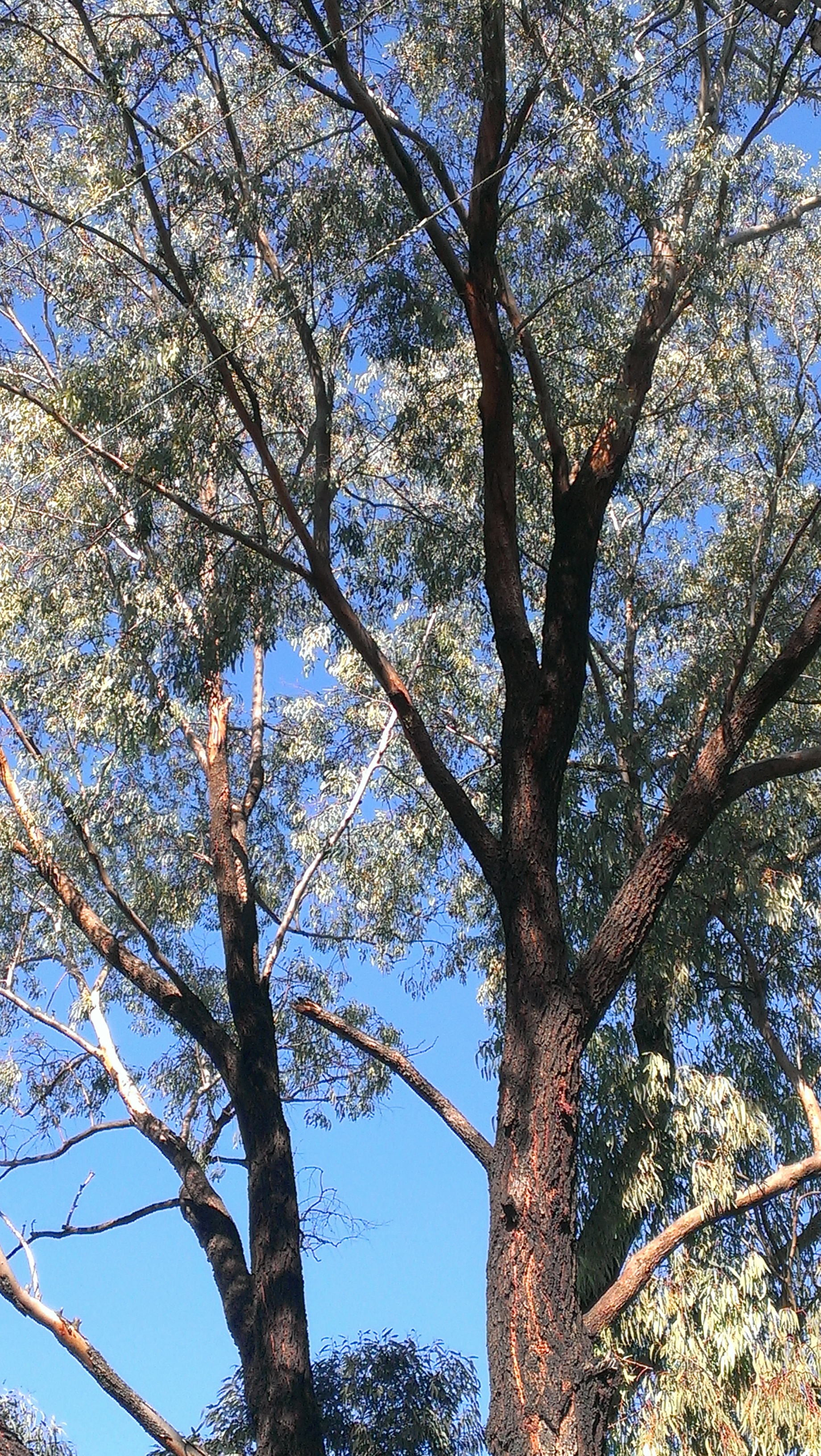
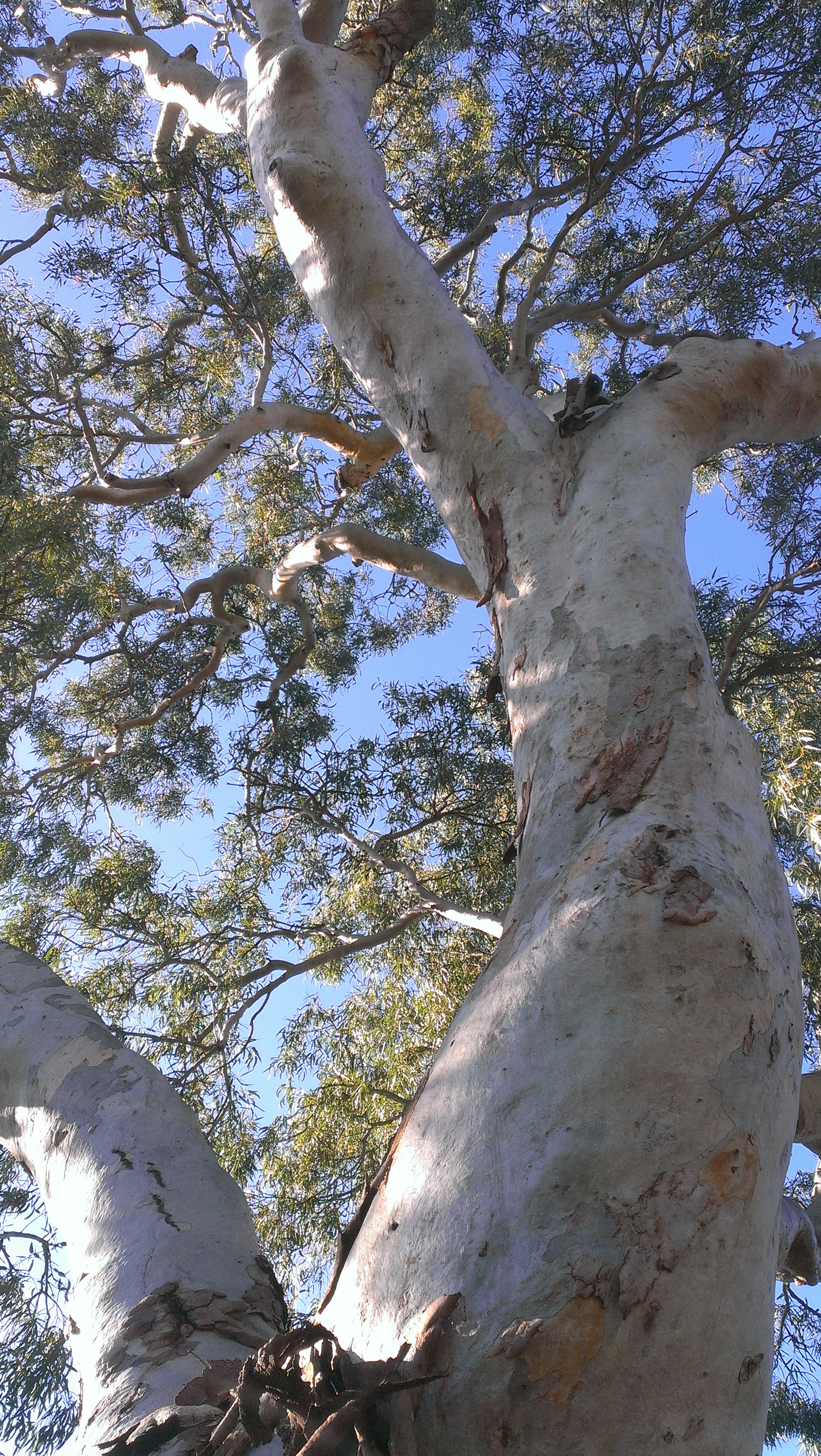
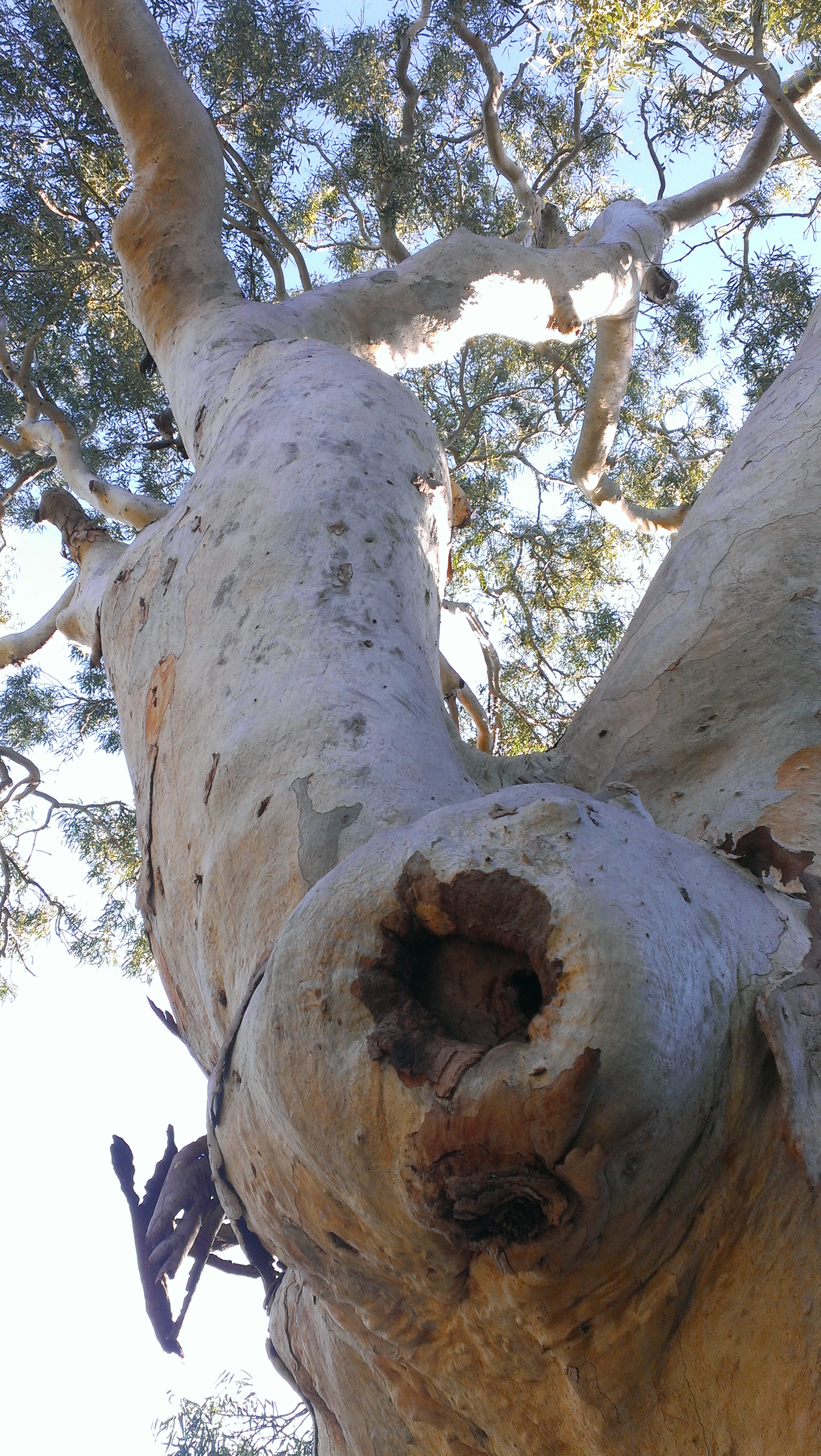
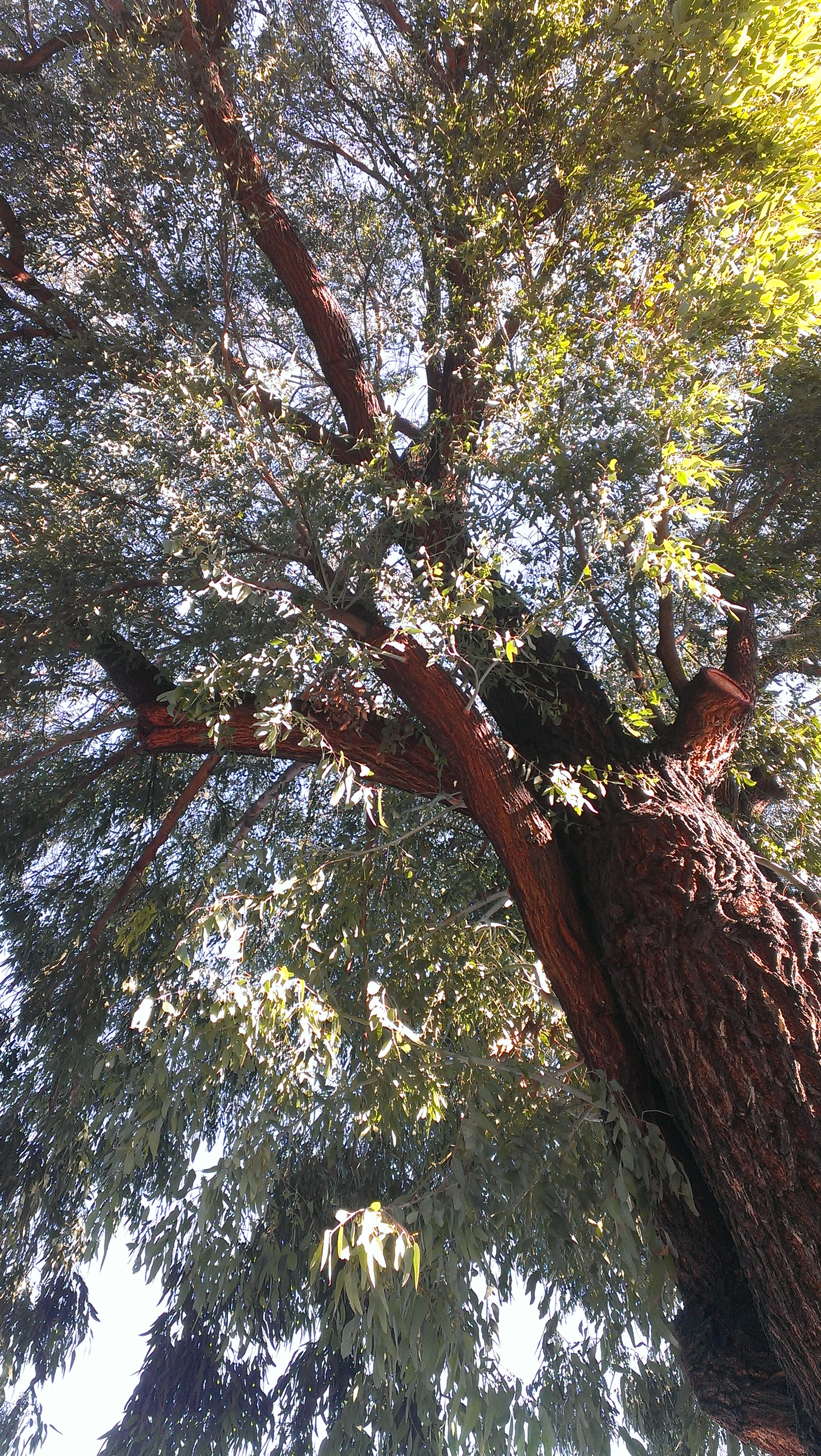
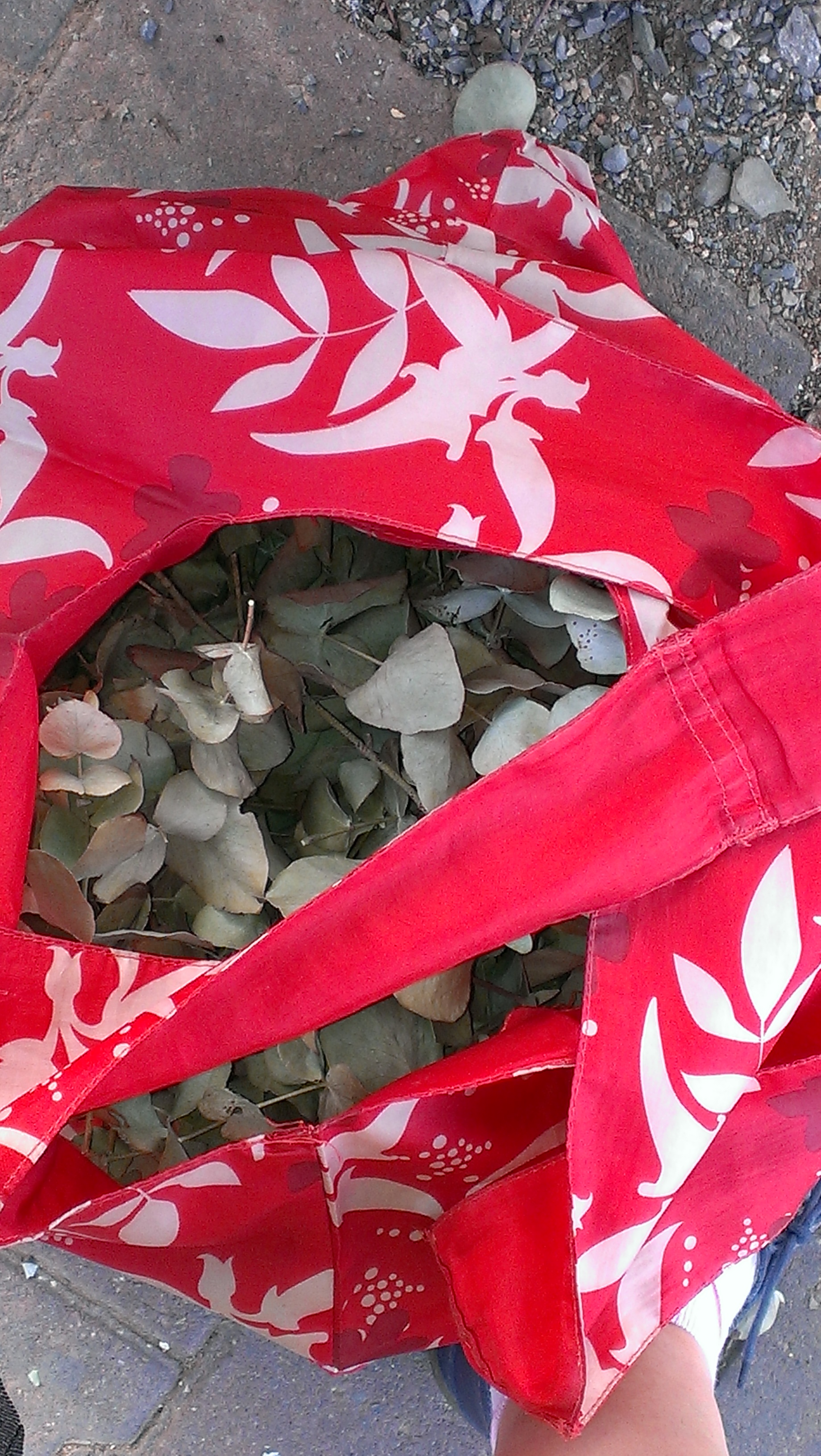
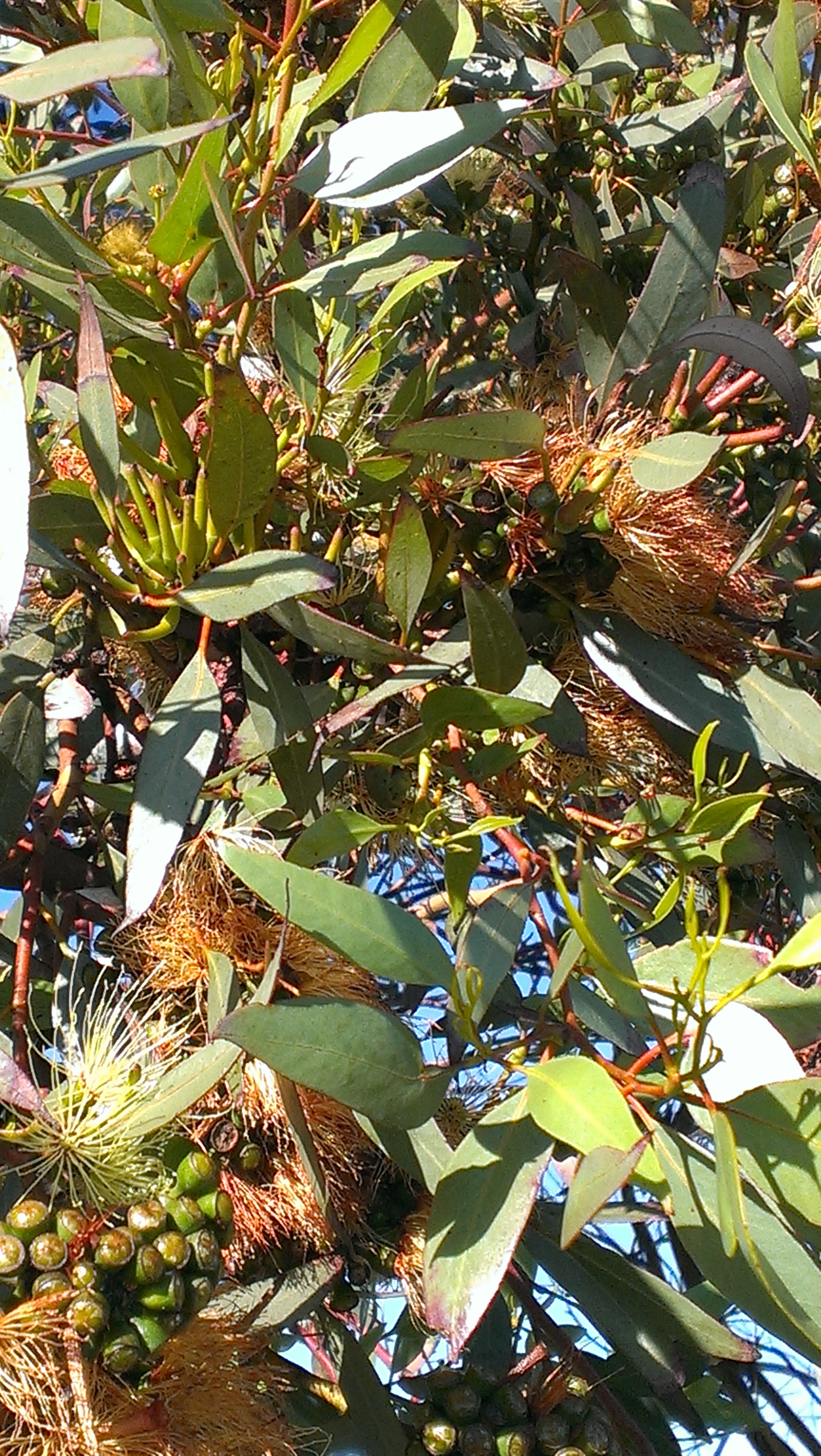
These massive trees are a feature planting at Wittunga Botanical Gardens.  I am sure they are far from full grown, but they are huge!  I gathered fallen leaves from beneath them and since I was playing a game of trying to identify eucalypts as I walked up to them but before I could see their name tags–I guessed they were E Saligna.  My eucalypt handbook assures me the two are closely related, so perhaps I’m learning something…

IMAG0067

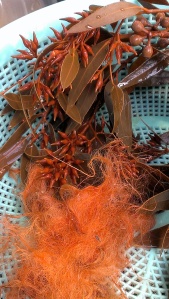
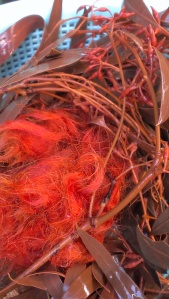
I had a significant amount of plant material relative to this tiny sample, but apparently this tree gives colour.  There were, of course, so many beautiful plants.  This one is Calistemon Rugulosus var Rugolosus:

2014-04-25 16.10.31-17

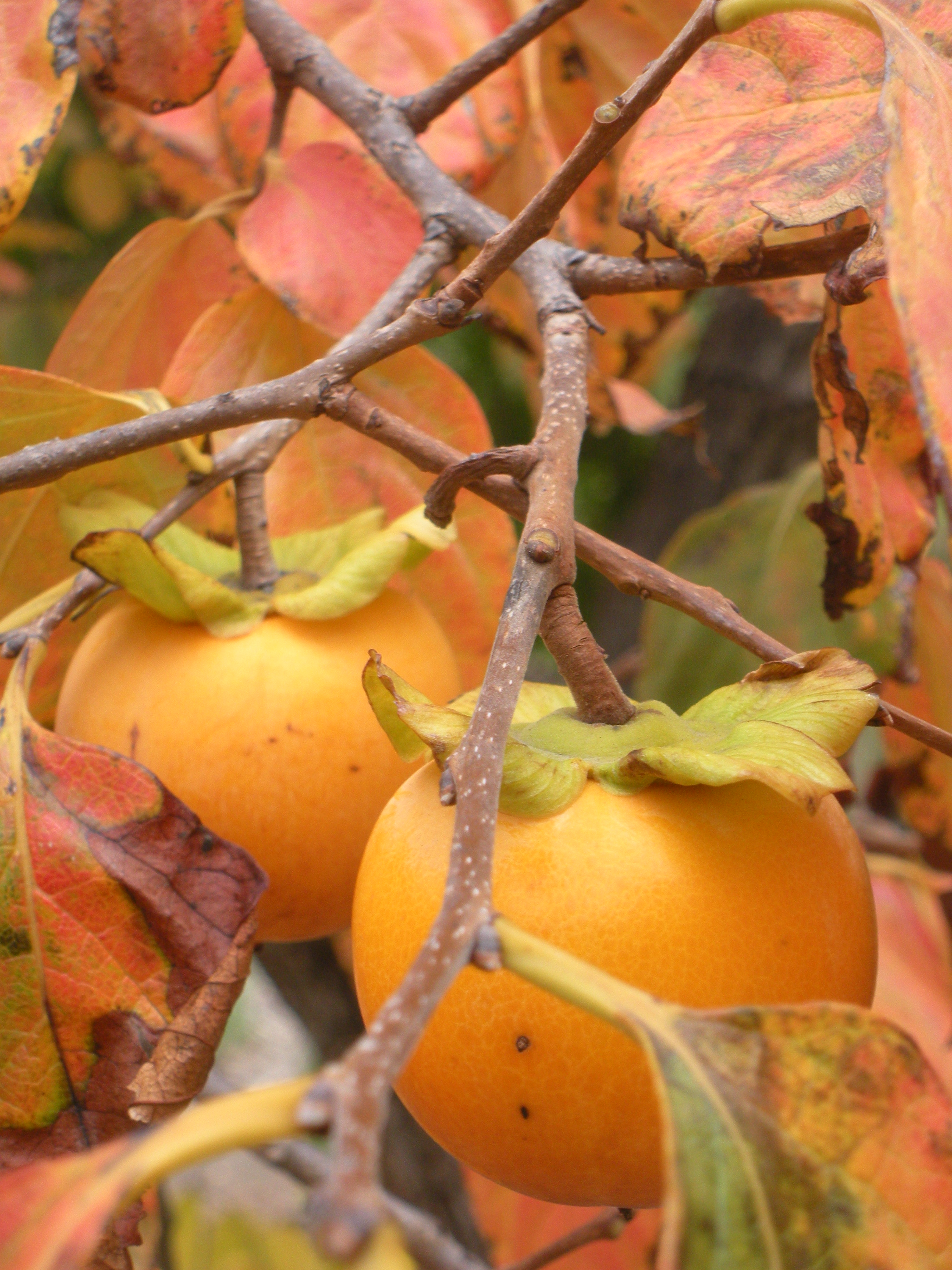
There is also a magnificent persimmon tree in the grounds.  Perhaps it pre-dates the gardens, since they are focused on Australian and South African plants. A persimmon in autumn is always a glorious sight, but this one is huge and spreading and even more magnificent than those I can see in my neighbourhood right now.

2014-04-25 16.10.31-10

And, of course, it is in fruit–those glowing orbs are just so beautiful… I’ve been investing in a couple each week at the farmer’s market and they are delectable!

2014-04-25 16.10.31-13

4 Comments

Filed under Dye Plants, Eucalypts, Natural dyeing

These are a few of my favourite trees

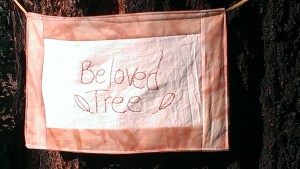
The ‘Beloved tree’ banners are out in the neighbourhood.  A bunch of us put up the first couple, and I pedalled around attaching the rest on Mother’s Day.  This one is on a massive ironbark.
IMAG0114

It stands beside the tram bridge in Goodwood.

IMAG0116

This one is dwarfed by a huge E Camaldulensis in a park beside Brownhill Creek.

IMAG0118

This trunk has survived a lot of depredations, whether human, animal or insect.

IMAG0119

I’ve tried to capture a sense of its canopy…


IMAG0120

But it is hard to show all there is to see when you stand beneath its curved limbs and beside that massive trunk.  Needless to say it isn’t all about what you can see, in any case.
IMAG0122

This is the place where lorikeets sometimes nest.  I’ve seen them wiggling their way in through the hole they have nibbled out of the pace where a branch used to be, as well as flying out at speed like small, feathered, green comets.

IMAG0123

This next tree is an E Sideroxylon. It stands outside the Le Cornu warehouse on Leader St.

  IMAG0124

IMAG0125

I used to be able to reach its lowest leaves, but the chainsaws took off the lower limbs some time back.  It is still magnificent.
IMAG0126

The light wasn’t great for it, but since there is at least one appreciator of industrial buildings reading, here is a shot of the background. I oriented my banner toward pedestrians.

IMAG0127

Next, one of the largest E Cinereas in the neighbourhood, standing outside what seems to be a disused office in Leader St.  Perhaps people work there but are not interested in the garden!

IMAG0128

It has suffered the chainsaw too, losing a truly huge bough.
IMAG0129

Still glorious.

IMAG0132

Still vast.

IMAG0133

Finally, my old friend on the corner of Laught and East Sts.  I thought this was an E Scoparia at first, but while the leaves give amazing colour, the bark produces a different result than other E Scoparias I’ve dyed with.  Name, uncertain. Beauty, obvious.
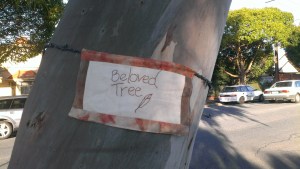
IMAG0134

This time I was spared conversation with the tree hater who lives opposite this tree and can only see it as a source of litter.  I was on the bike, so picked up a bagful of fallen dried leaves.  When I have more carrying capacity I take fallen twigs and whatever bark or wood is lying beneath it in hopes of mollifying the tree hater. 

IMAG0136 (1)


Fabulous.  I must say that visiting all these beloved trees and wrapping my arms around each one… I did feel like a tree hugger.  And proud!

IMAG0137

6 Comments

Filed under Craftivism, Dye Plants, Eucalypts, Neighbourhood pleasures

Unidentified Eucalypt sample of the week

My attention was caught by another eucalypt in the parklands.  It was the colour of the flowers that attracted my interest.  I don’t remember seeing it in flower before.  Something about this purplish shade of pink caught my eye.

IMAG4635

The tree itself was rather unprepossessing at a distance.

IMAG4634


It seems to be managing to grow despite having survived multiple insults and lost limbs if not its entire primary trunk at some point in the past.


IMAG4636


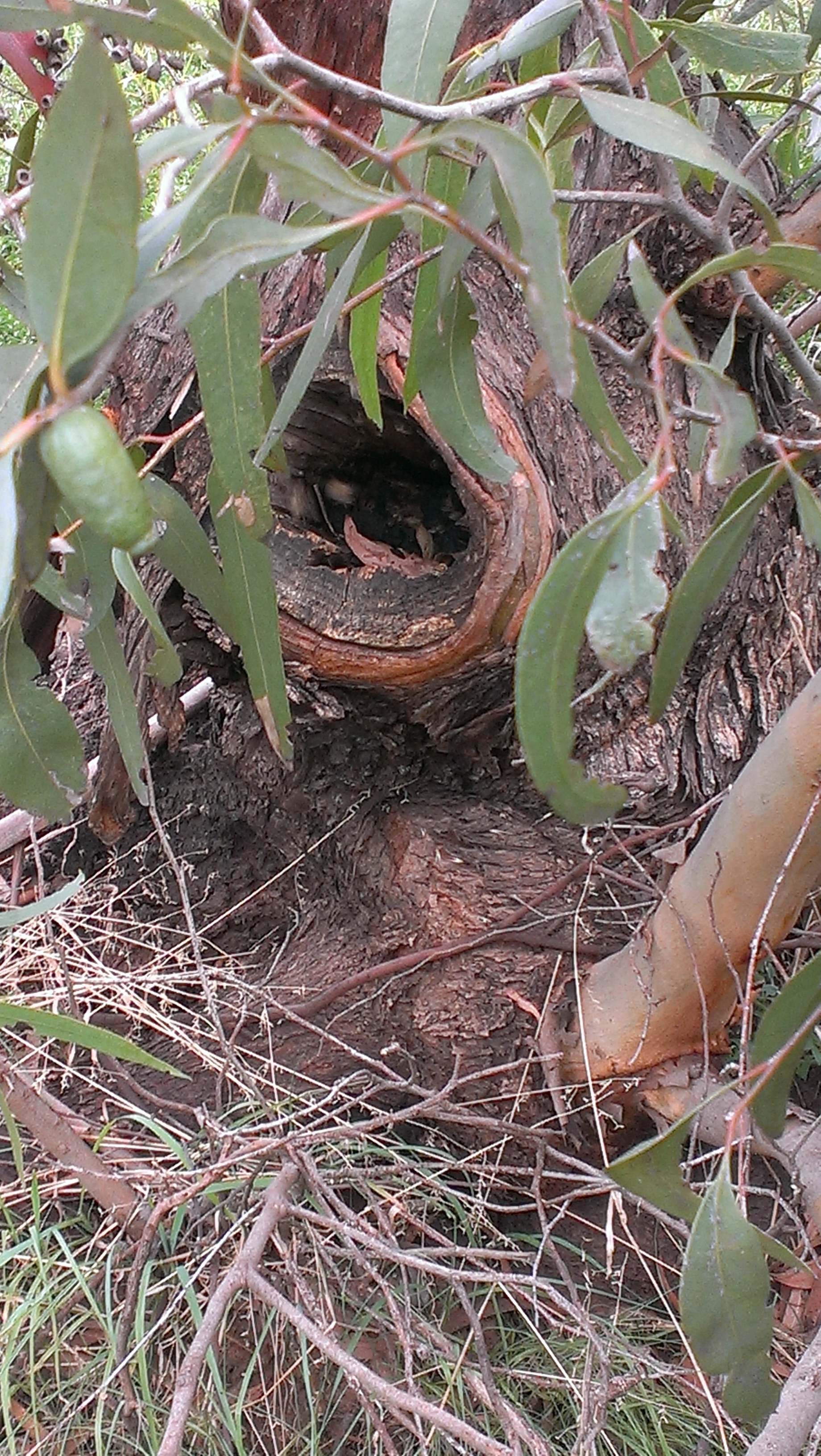
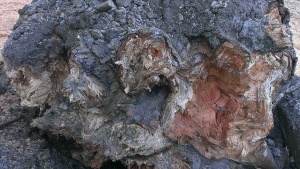
On the other hand, this had clearly created an opportunity: the hollow at the base of the trunk had been chosen as home by bees, who were flying in and out the whole time I was watching (they would be the small blurs in the photo).

IMAG4639

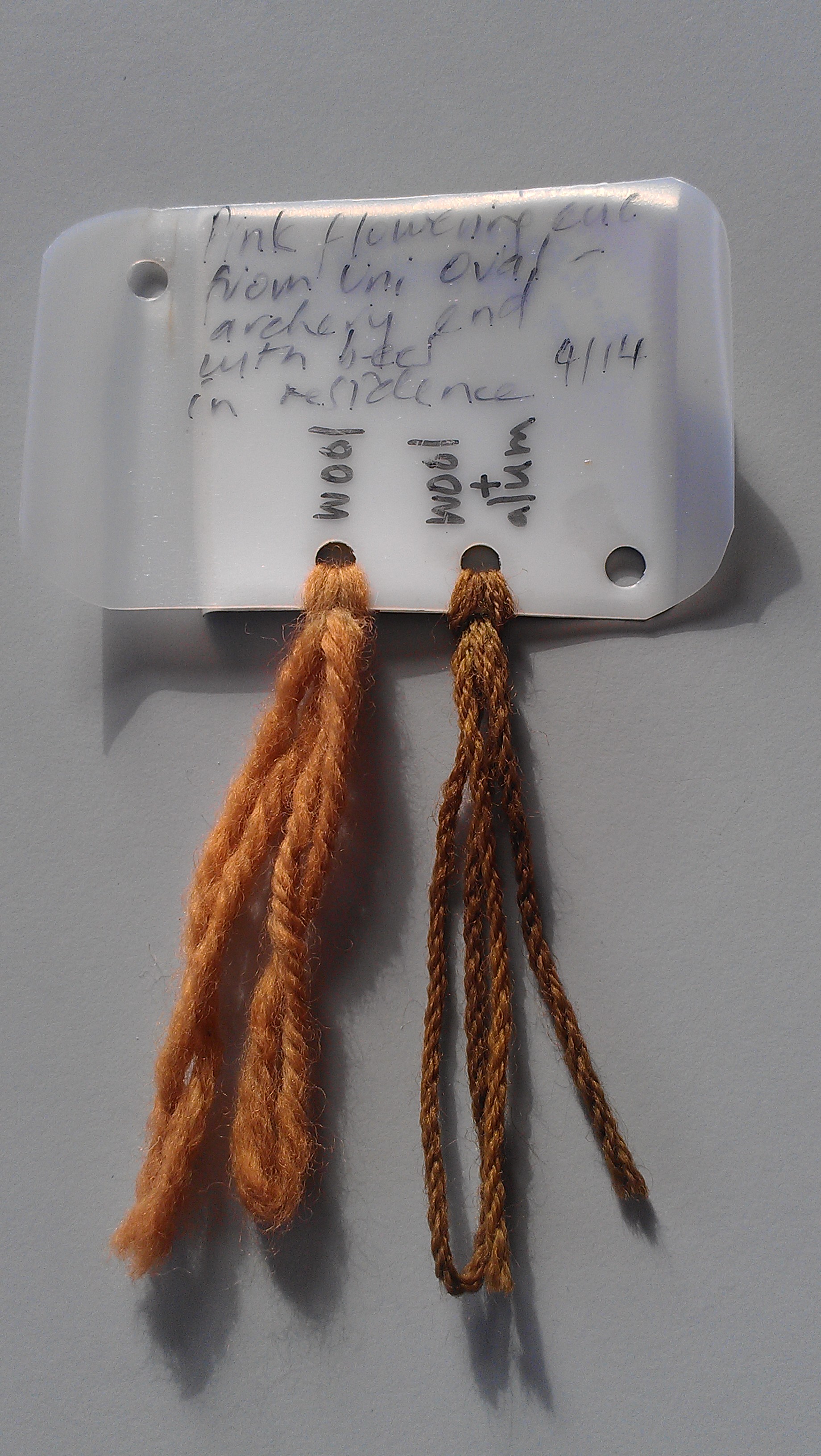
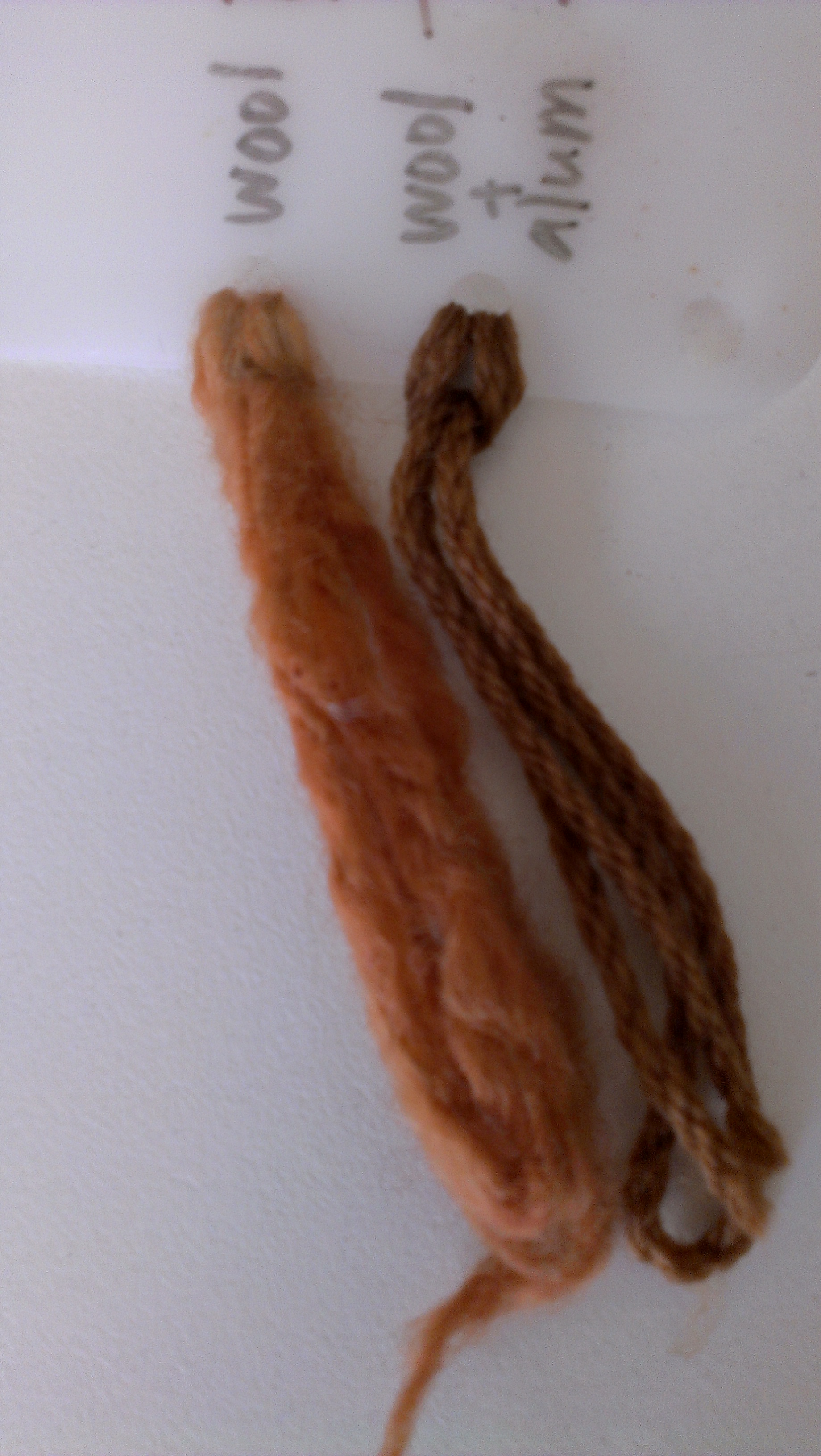
I took a small sample and really…  this tree is safe from me.  The alum mordanted sample gave a good brown and the no mordant sample, a pinkish shade of tan.

IMAG0001

Leave a comment

Filed under Dye Plants, Eucalypts, Natural dyeing

Sampling eucalypts

IMAG4429

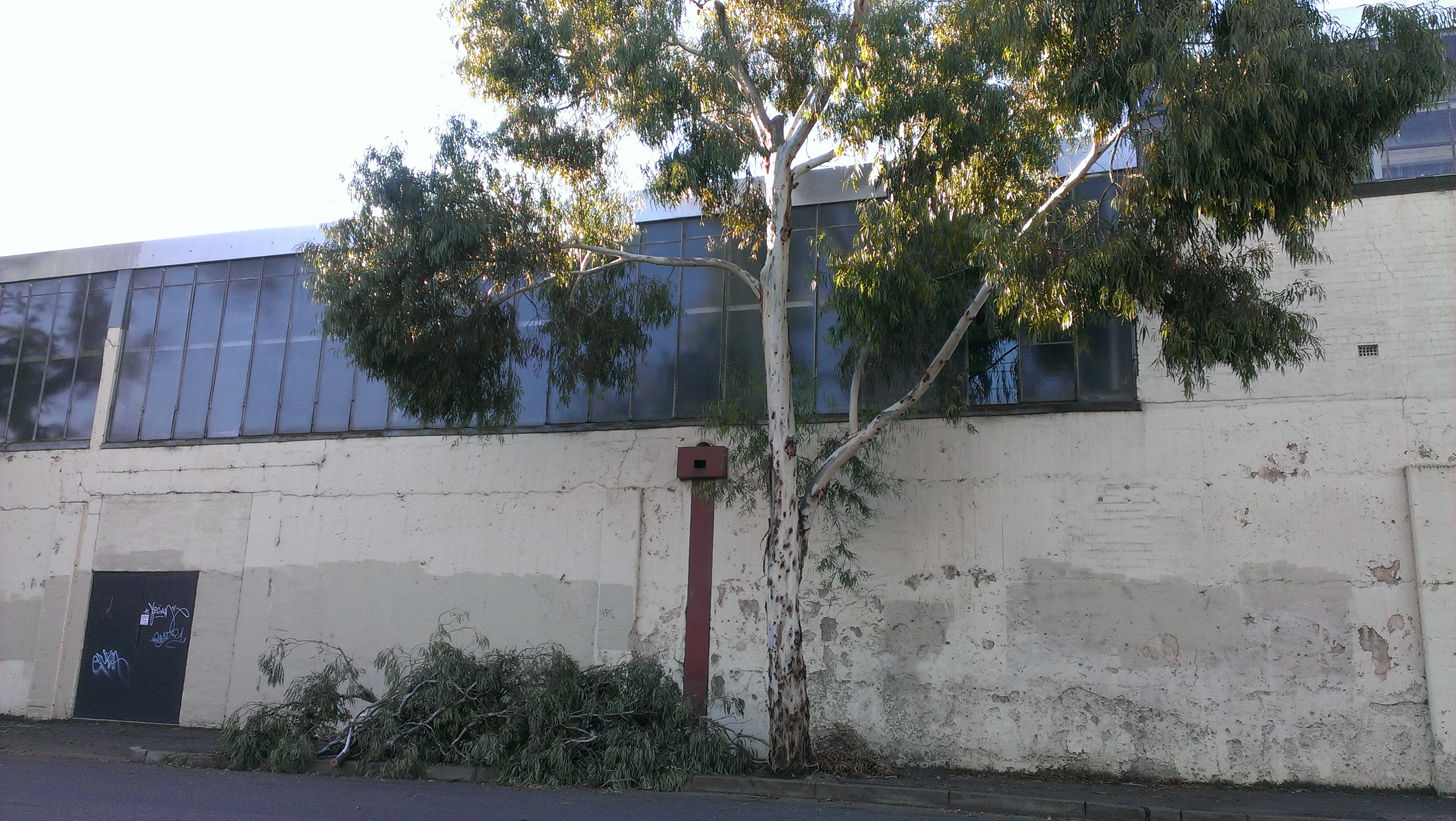
As we drove home from exercise group last Saturday morning, it became clear that a big part of a tree had been cut down beside a warehouse-style business near home.  A big chunk of tree canopy was lying on the footpath.  I didn’t think I had sampled the tree in question, but there are several in that area that look like E Scoparia, but have been pruned to branch very high–out of reach.  There isn’t much hope of my identifying this one–it has no fruit, flowers or buds on it right now, though it does have red twigs and white-barked branches and leaves the right shape for E Scoparia.   I have had some success with leaves from the gutters on that street, but not right where these branches were lying.  I went back and applied my secateurs.

IMAG4432

To my sadness when I actually stopped I could see that a tree had been felled and that its trunk had been taken away.  The very base of it was all that was left, and it was clear that a large section of the root mass had rotted away or become diseased.  Just the same… the continuing loss of trees around our way feels relentless. This week someone else aggrieved by the felling of three massive trees on one block which I posted about recently took a spray can to the fence of the block in question.  One fence had something I can’t fully reprint here: ‘What the f*** have you done?’, and the other fence said the neighbourhood was in mourning for the loss of the trees and that planning laws should be changed.  I thought I would take a photo but this morning there was a chap with a paintbrush taking it out less than 48 hours after it went up.

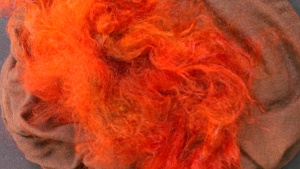
But this is no reason to allow all the leaves of this felled tree to go to commercial composting if I could dye with them and then compost them.  Needless to say, after this flame orange result, I went back and cut all I could get into a chaff bag (that’s a very big sack, in my terms). As a bonus to my visit, the tree had been felled beside an E Cinerea, so I picked up every last leaf that had fallen from the E Cinerea too.  I’ll be running a workshop at my Guild in June and I’ll need to bring a goodly amount of dye material.

IMAG4483

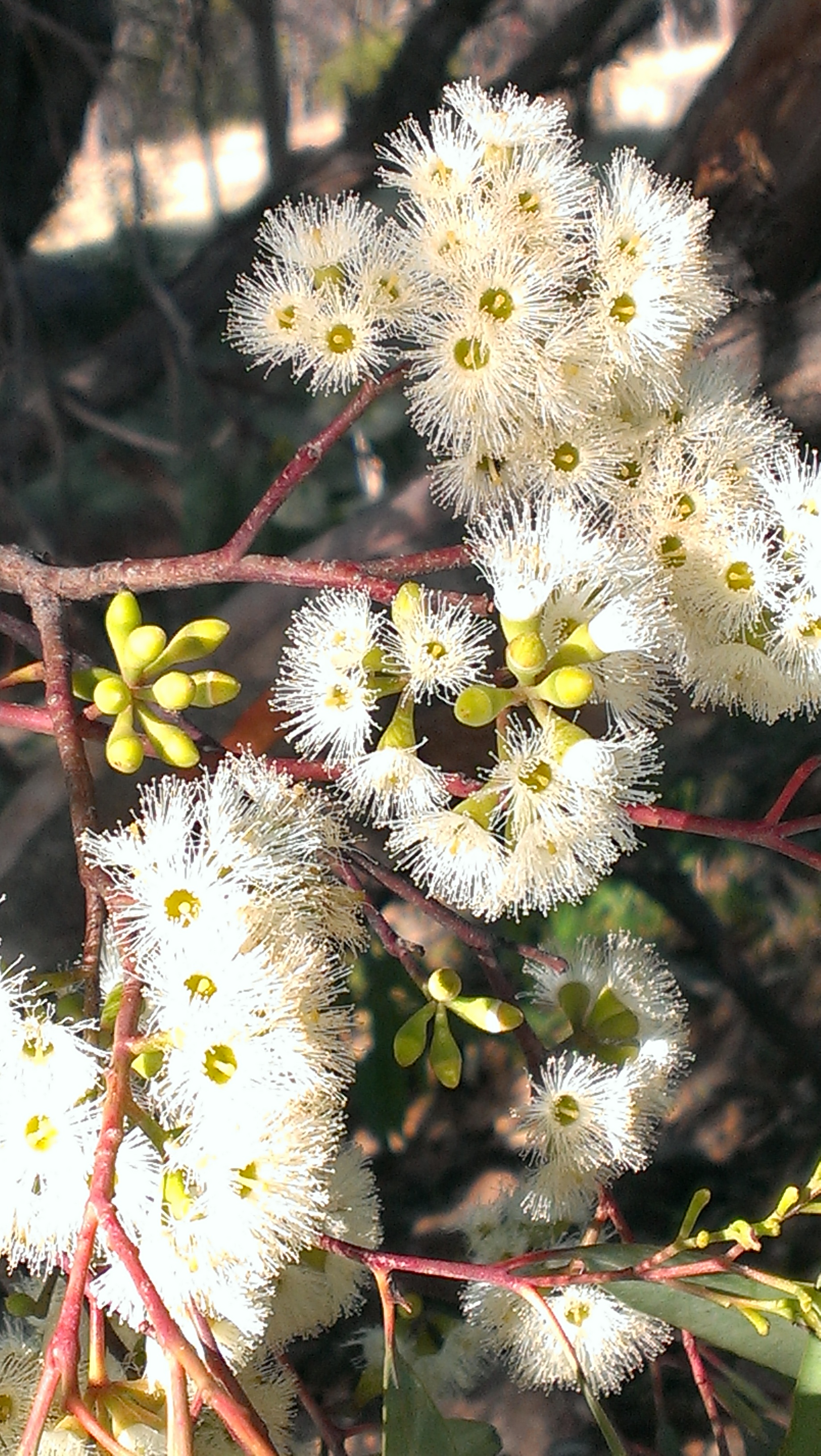
This next eucalypt was standing in the parklands in North Adelaide.  I went there early one morning for an appointment so had a walk before my appointment.  I decided to sample it because India Flint suggests silver grey leaved eucalypts are promising dye plants.  The buds were so pretty!
IMAG4374

Clearly when it flowers there are many flowers… but not yet…

IMAG4375

The tree was an interesting shape…

IMAG4377

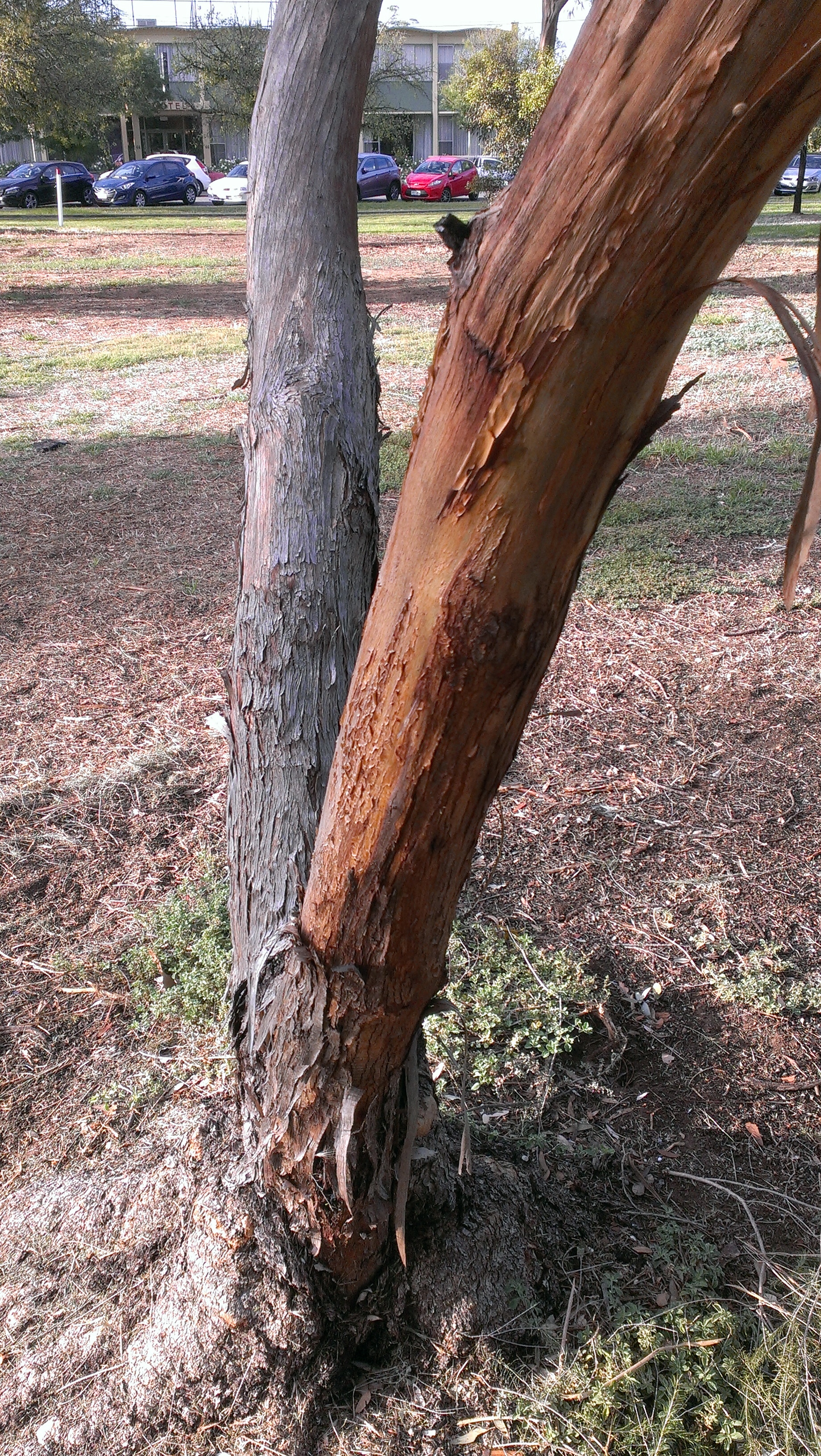
There was the intriguing feature of two different coloured trunks coming from one lignotuber.

IMAG4379

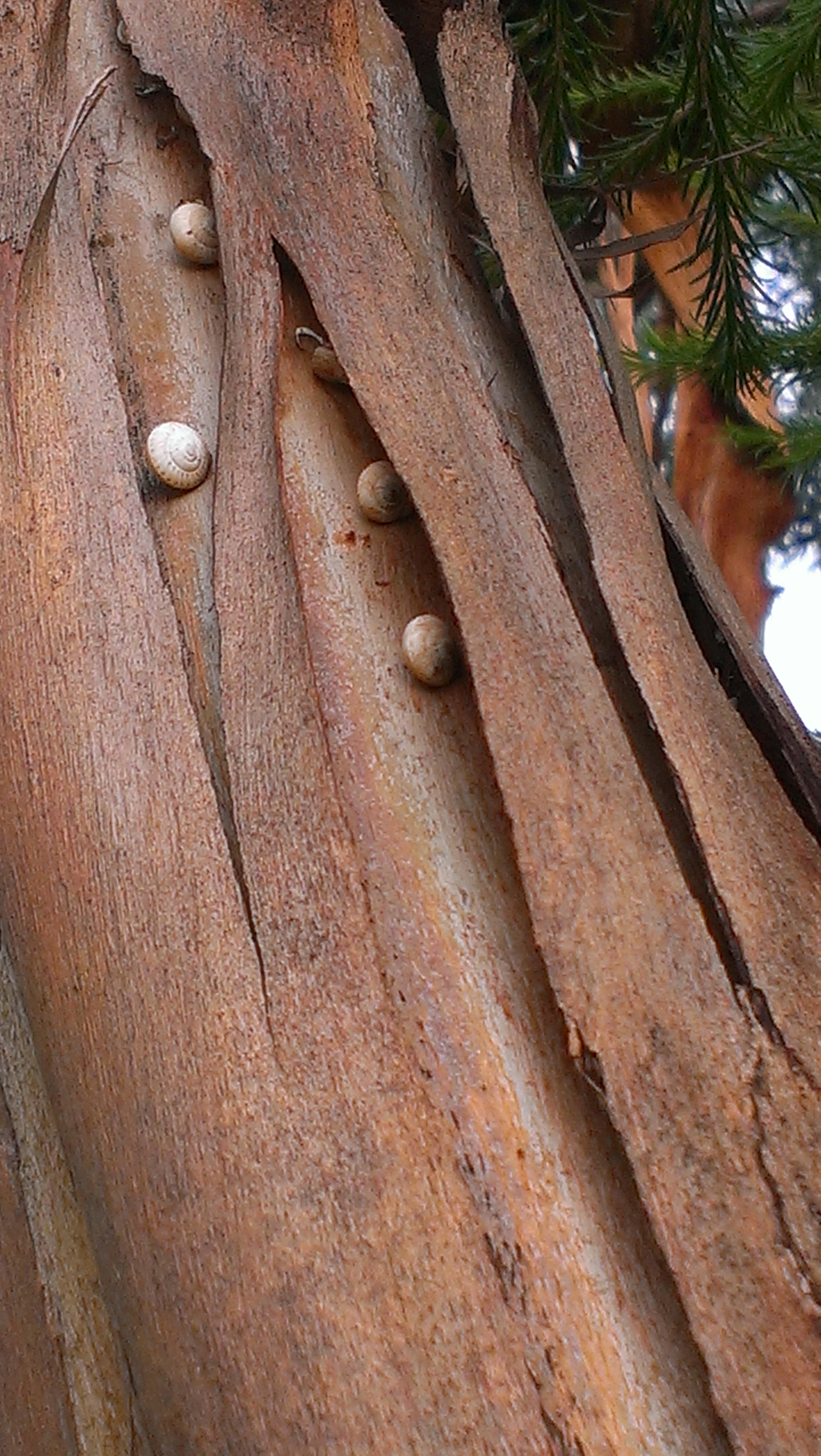
And I just can’t explain why there were so many land snails, but I love land snails.

IMAG4382

The result in the dyebath was a pale apricot.

IMAG4434

Then there was this tree, growing on the far outskirts of my workplace just outside a car park.  It seems like a box (one branch of the eucalypt family) to me.

IMAG4385

It was gloriously in flower, full of bees and birds.

IMAG4388

When I went back in the evening, I realised there were a few of these trees and there were also fallen branches.  Well worth sampling, in my view!

IMAG4396

I loved the colour from this plant, and I used a dyeing strategy India Flint described in Melbourne.  Far less energy use and potential for fibre damage… and clearly this may become my new normal way to dye with eucalypts!

IMAG4436

19 Comments

Filed under Dye Plants, Eucalypts, Natural dyeing

Drive-by dyeing and mending

On my bike ride home from work (about a 40 minute ride), I pass just one Eucalyptus Cinerea. Well, there are two, but one is inside someone’s front garden.  A person has to have some boundaries!  The street tree had dropped a small branch.

IMAG4127

I decided I’d better collect it.  Usually I carry a calico bag in my bike pannier for such contingencies, but this was what I found when I scrabbled about in the bottom of my pannier on the day, so in went all the stray leaves I could find.

IMAG4131

This tree has had to contend with a lot.  It has had a  very strange pruning job designed to protect the electrical wires that now pass through its branches.  The pruning took out a lot of the canopy, but the tree is still standing.  For this, I am grateful.

IMAG4128

Recent events have caused me to reflect on the way I think about trees on my regular routes… like old acquaintances.  I think about them as I pass, the way I think of people when I pass near their homes without visiting.  I notice what happens to them.  I check them over when I have the chance.  I remember how they were when they were younger, or before that accident befell them.  It’s not entirely unlike the way I notice people I don’t know well, but see out and about in the neighbourhood regularly.

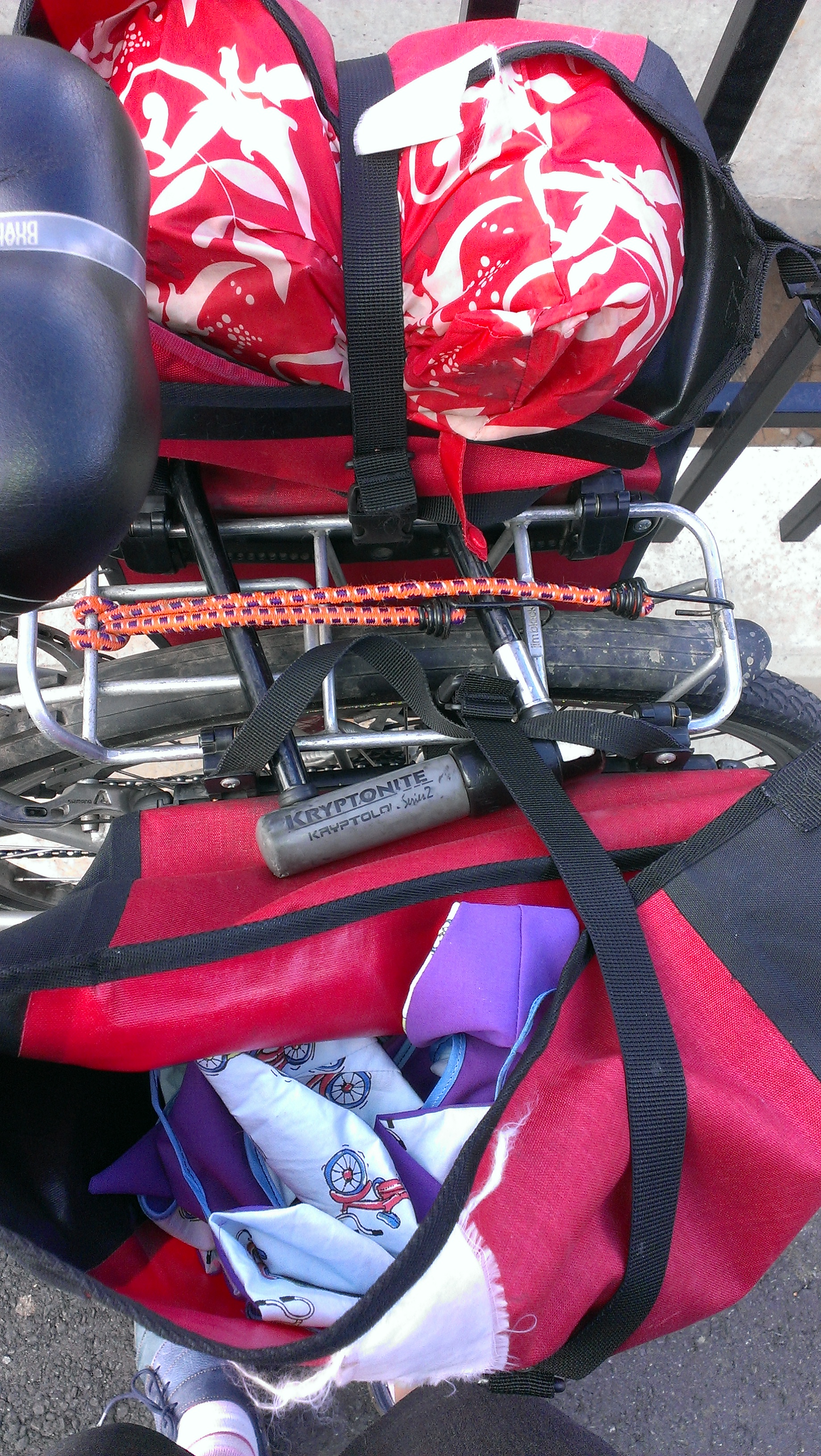
Further along, I saw that my “thanks for cycling” bunting had been ripped and some of it was lying on the ground.  Soon it was in my other pannier headed for the mending pile.

IMAG4135

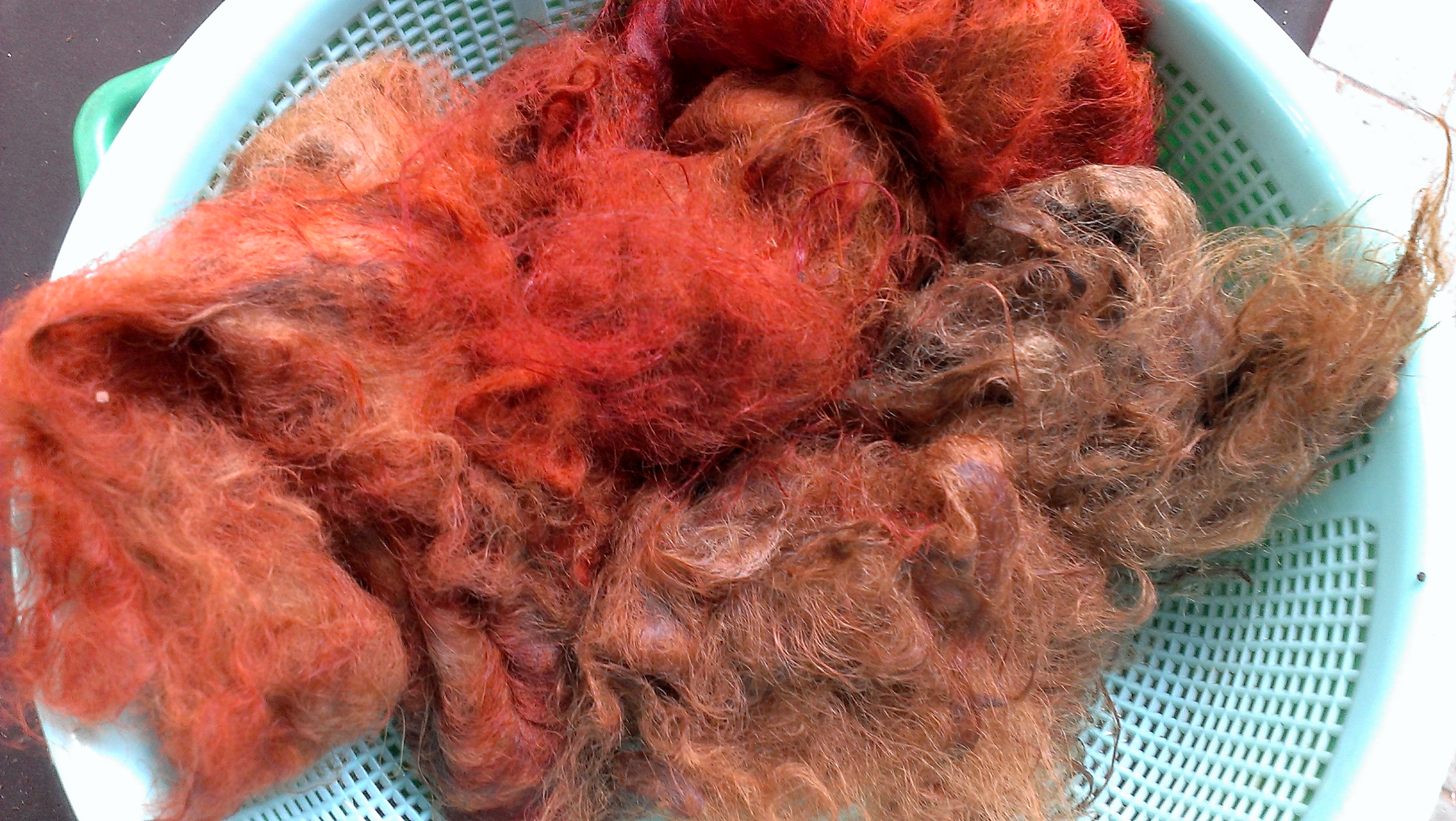
A few days later, the E Cinerea made it into the dye pot and produced its usual dependable flamelike orange.  I also collected some ironbark leaves that had fallen in the parklands near where we had exercise class.  Once the E Cinerea was all but exhausted I reused that dyebath with the ironbark leaves, thinking I would save water and energy, but clearly this was not E Sideroxylon–it produced that sad, damp little pile of fawn alpaca on the right.

IMAG4183

I have come to regard this as a sign: The orange leaves in the picture below are the E Cinerea leaves, which have gone from silver-grey-green to orange in the dyebath.  The ironbark leaves, on the other hand, have remained a robustly green shade even after cooking.

IMAG4180

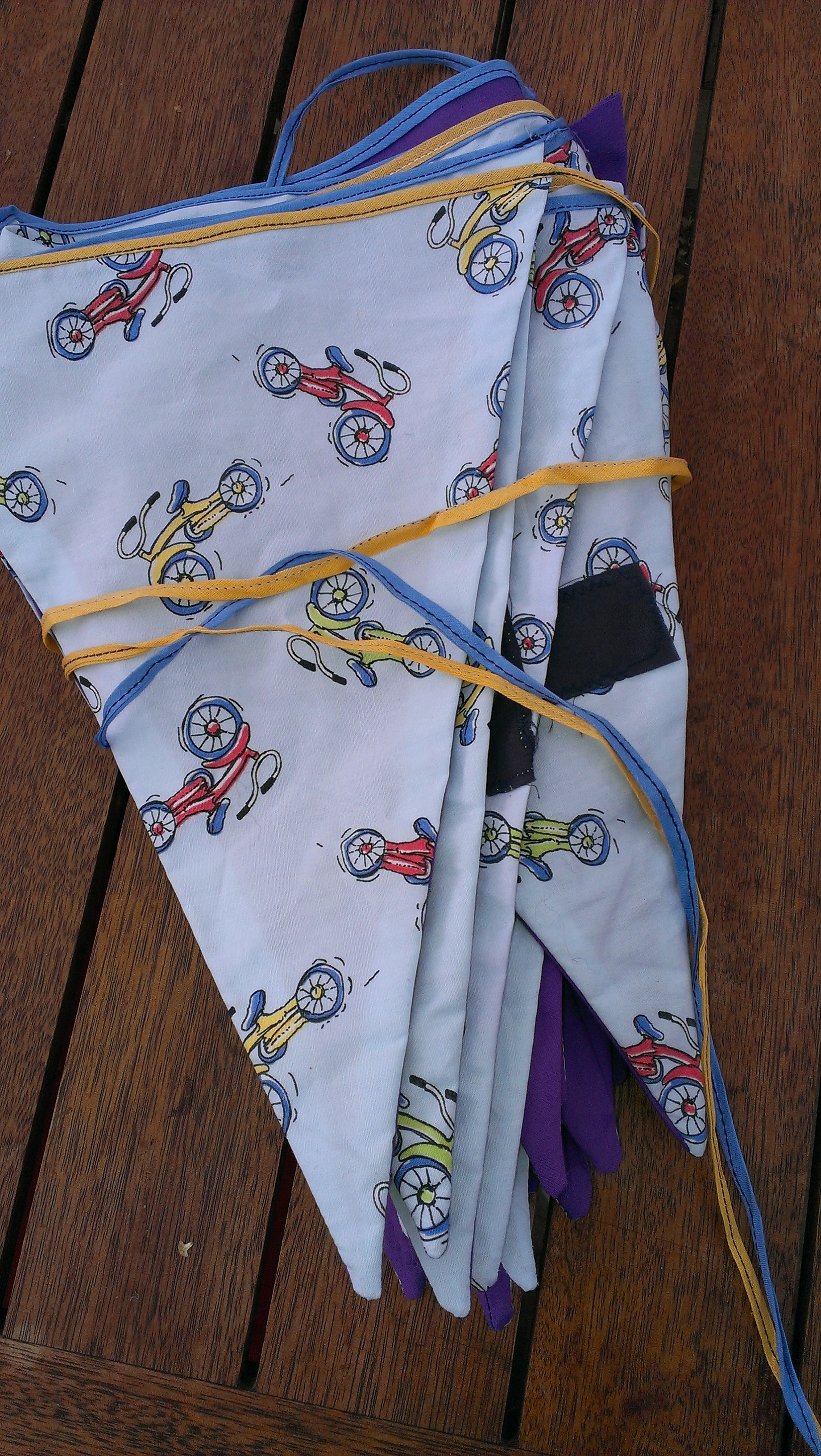
And, I’ve mended the bunting ready to hang it again on a suitable occasion…

IMAG4184

4 Comments

Filed under Craftivism, Dye Plants, Eucalypts, Natural dyeing, Neighbourhood pleasures

Two more neighbourhood trees fall

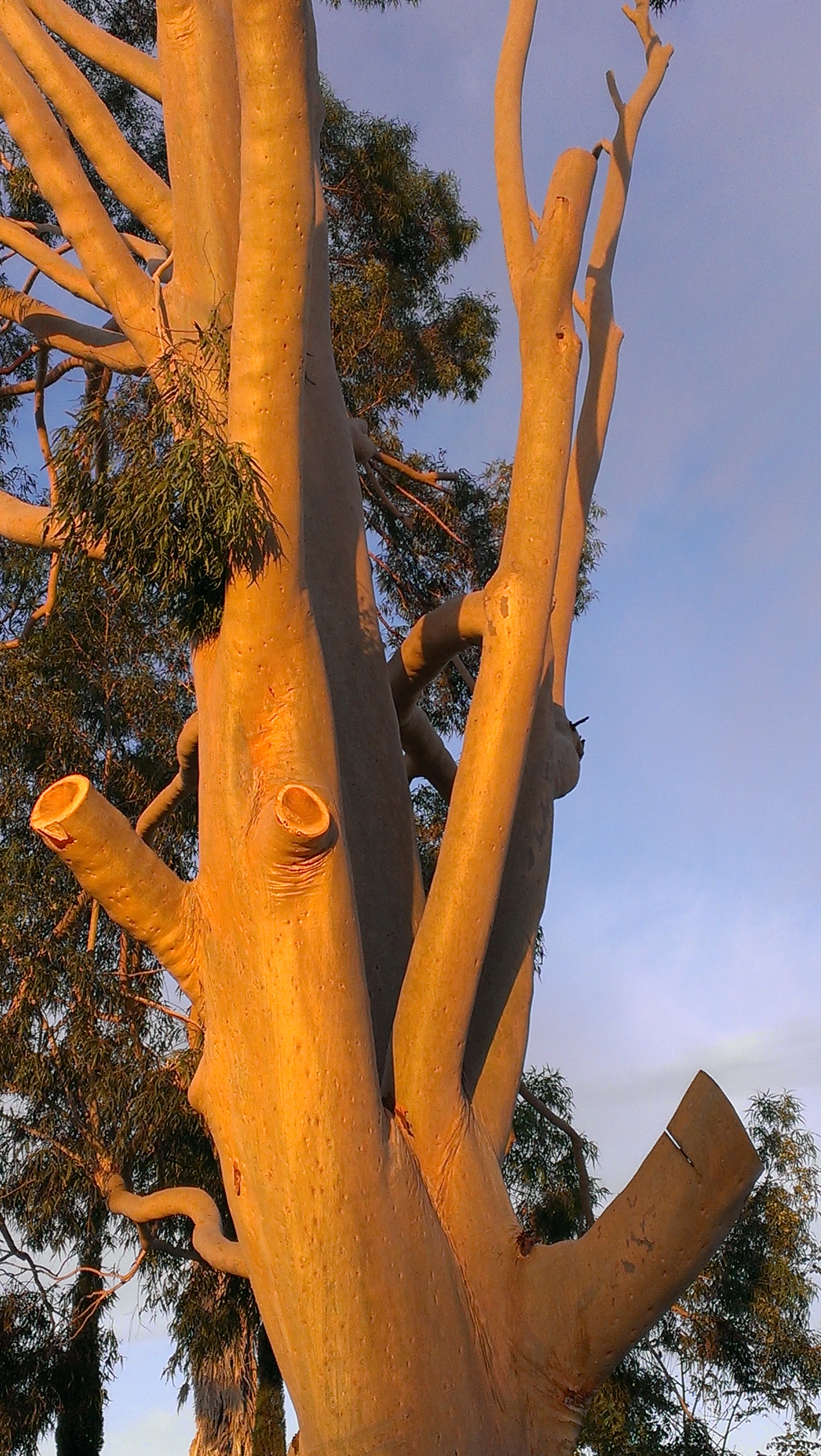
When I got home last night I was in a  hurry.  It was a little while later that I saw what had happened.  One tree had vanished from the neighbourhood skyline completely.  Where previously there was a huge lemon-scented gum, now there is this.

IMAG4137

The other tree has been severely lopped.  It is the kind of lopping that takes place when no care needs to be taken.  The kind of lopping that means this tree will not be there when I get home from work today. This one, too, we believed had been saved from being felled by a government department.  Now it is to be felled by the property owner.

IMAG4139

This morning I came home from my run and there were many native birds flying through it and calling.  Tonight I expect there will be total silence and an uninterrupted view of the sky where once it stood.  Every single tree on that block will have been felled.  These were the two largest trees in the street where they stood.

IMAG4136

Speechless and sad.

23 Comments

Filed under Eucalypts

Eucalyptus Macrandra?

I found this tree in flower in a park in  West Lakes (my sweetheart is a triathlete, and that is what you can see happening in the background).

IMAG3824

The trunk was smooth and shiny with some peeled bark, and as you can see, the whole tree has been shaped by the prevailing wind.

IMAG3825

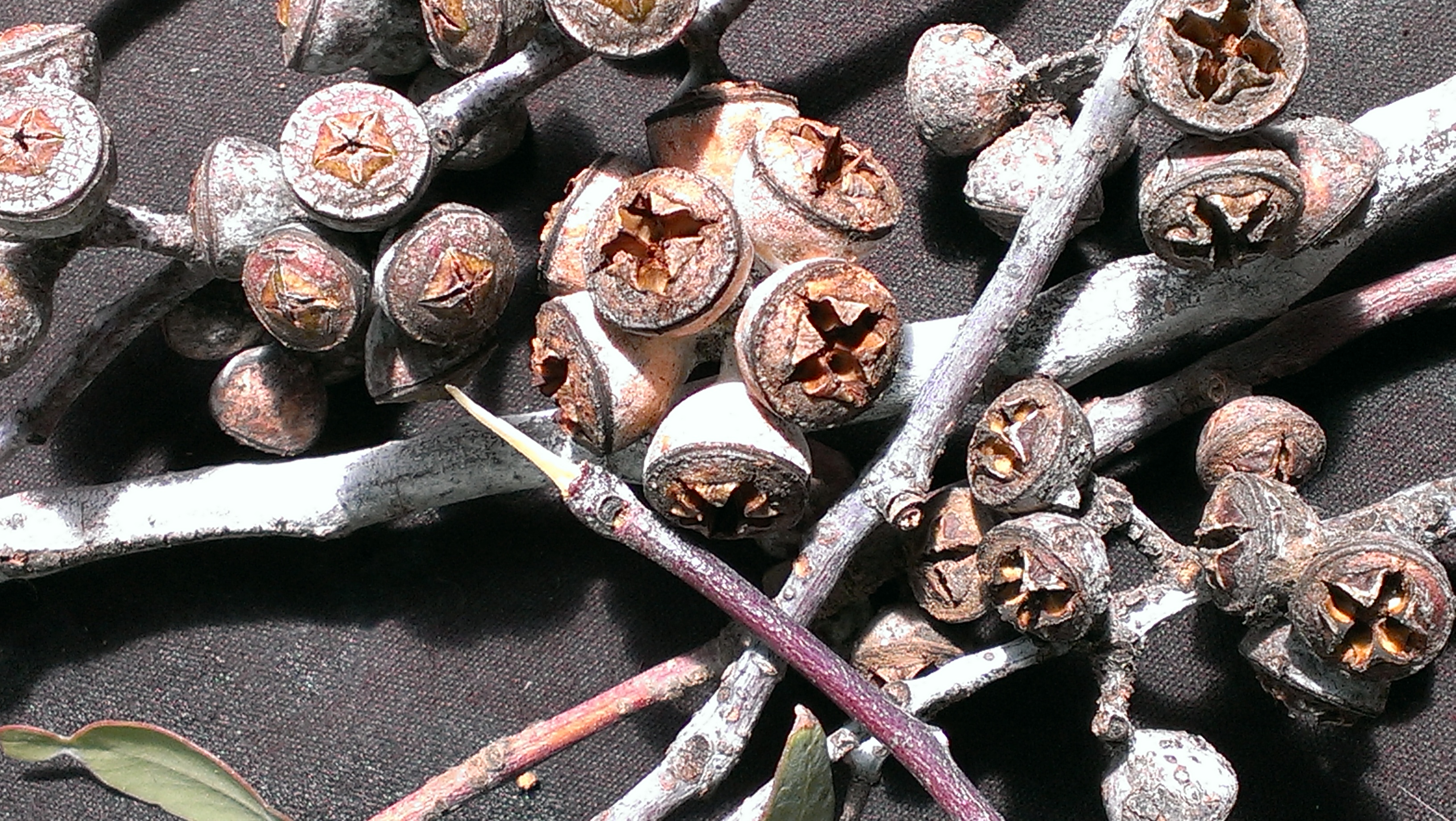
The flowers were a yellow shade of green, with the older flowers turning brown.  There were two generations of buds on long, flattened peduncles (always a striking feature, especially with a name like ‘peduncle’!).  The bud caps were 15 mm long–much smaller than the Yates that I know.  Perhaps someone else can confirm or deny whether this is E Macrandra!  I will regain access to Euclid (the CSIRO eucalypt database) later this month after a long, long time when it wouldn’t work for me… and I can’t wait!  For the time being I’m depending on my trusty book collection, which has its limits–and so do I.

IMAG3959

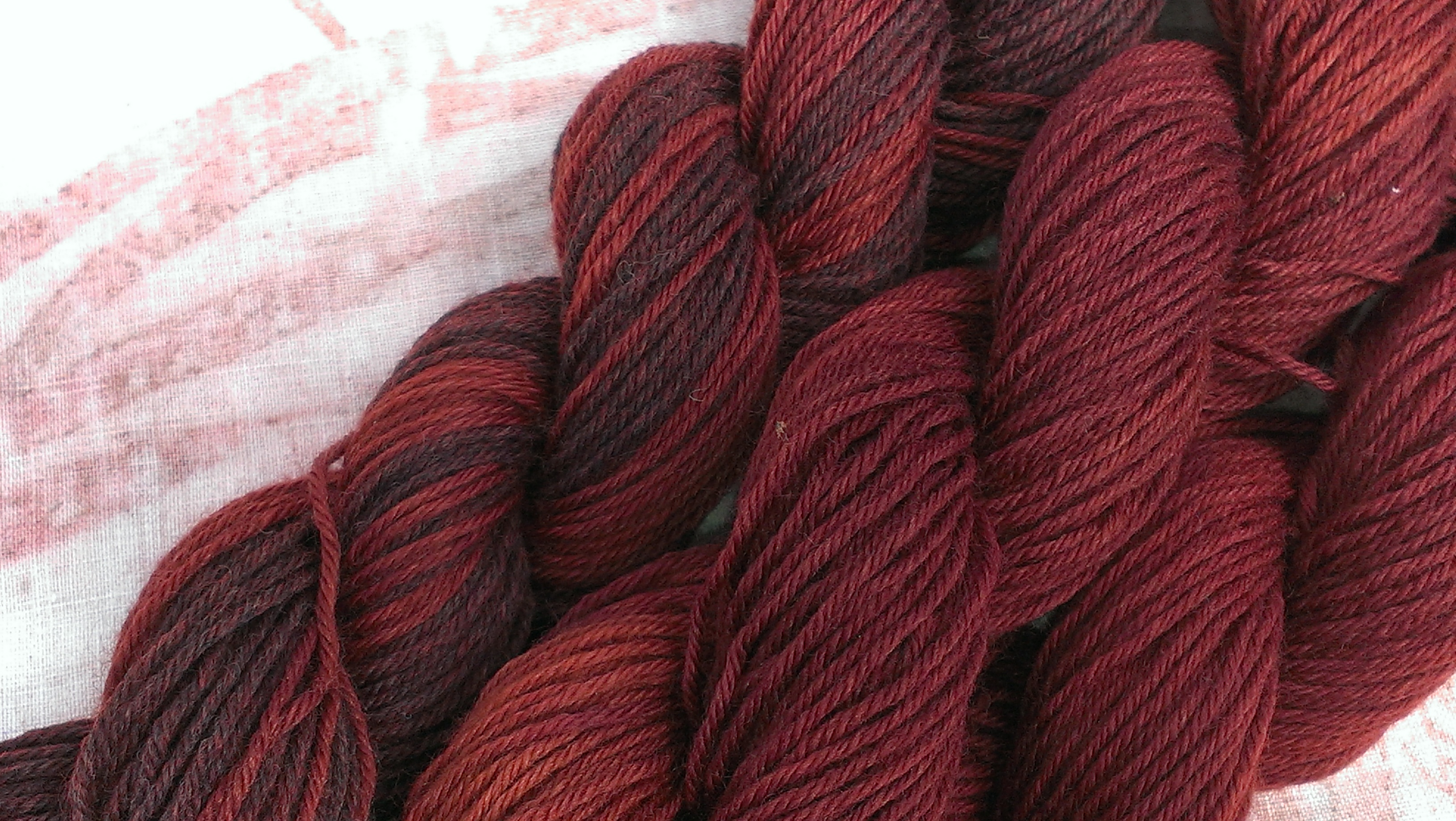
Results like these have me wondering why I would ever bother using walnut hulls for deep browns. I am blessed with great choices in oranges and browns, for sure.

6 Comments

Filed under Dye Plants, Eucalypts, Natural dyeing

Eucalyptus Stricklandii

Eucalyptus Stricklandii is in bloom at the moment.

IMAG3745

There are a row of these trees growing along a main road near a friend’s place in the Northern suburbs, and I have admired them each time I’ve visited.  This time I stopped and sampled as well.  I wasn’t the only one. The tree was full of bees, but bees don’t understand about pausing graciously when someone offers to take your picture and make you famous (ahem!) on the web.

IMAG3751

There were also fully mature fruit:

IMAG3791

And fruit that were nearing maturity:

IMAG3756

Buds as well, since this is a eucalypt…

IMAG3753

And rather spectacular bark.

IMAG3758

Here’s the tree as a whole…

IMAG3760

And someone’s tenderly crafted home, fallen to the ground, neatly combining flyscreen wire with vegetation and paper that has been weathered until pliable.

IMAG3762

Cocoa and chocolate?  Chestnut and walnut?

IMAG3961

8 Comments

Filed under Dye Plants, Eucalypts, Natural dyeing

Another giant falls

I went to work yesterday unsuspecting and came home to find that a tree that stood a couple of storeys high and was one of only two really large trees still standing in our street, had been cut down without warning.  Here it is in December.  It stood on a block with a couple of E Citriodoras but I think this one was an E Maculata.

IMAG3141

And yesterday afternoon.

IMAG3986

I saw two men measuring its girth a couple of weeks ago as I was on my way to work.  I thought at the time that wasn’t a good sign (the definition of “significant tree” turns on the girth of a tree and has been changed in the relatively recent past), but I wasn’t in a position to stop and ask.  I wish now that I’d followed up.  This tree was scheduled for destruction as part of the infrastructure works that have turned our neighbourhood upside down.  But a way was found to complete them without cutting it down.  We thought it had been saved.  The infrastructure works are almost complete and the removal of this tree clearly wasn’t necessary for them.

All this on the same day as our Prime Minister declared too much of our native forest, what little of it remains, is “locked up” in national parks.  Pardon me while I put my head down on my desk.

UPDATE

I called the Council and the tree was cut down by the property owners on whose land it stood.  This is one tree in our neighbourhood not felled by the Department of Planning, Transport and Infrastructure.  Apparently the Council arborist will call back to explain.  I’ll spare you.

26 Comments

Filed under Eucalypts

Sock yarn overdyeing progress and an indigo update

Socks are one of my go-to projects.  I’m sure you’ve noticed.  They are portable and don’t require a pattern (for me, any more) and so they accompany me on public transport, to meetings and conferences, picnics and TV shows. Admittedly, I am not usually making fancy socks.

A couple of years back I acquired a lot of pre-loved patonyle (this is a wool/nylon blend and probably one of the best known Australian sock yarns).  Patonyle has been around a long time.  When I found this lot at a garage sale some of it was in 1 oz balls (Australia gave up imperial measures in 1970–to oversimplify).  I’ve been working my way through this haul for quite some time.  Today I pulled out all my ball bands.  Some have that souped up 19760s-70s styling (in lime green and purple–at top right), the pallid specimen in the top left corner is the current 100g format, the only ball I bought new–and those ochre coloured wrappers surely predate the 1970s.  And … there are quite a few of them!

IMAG3736

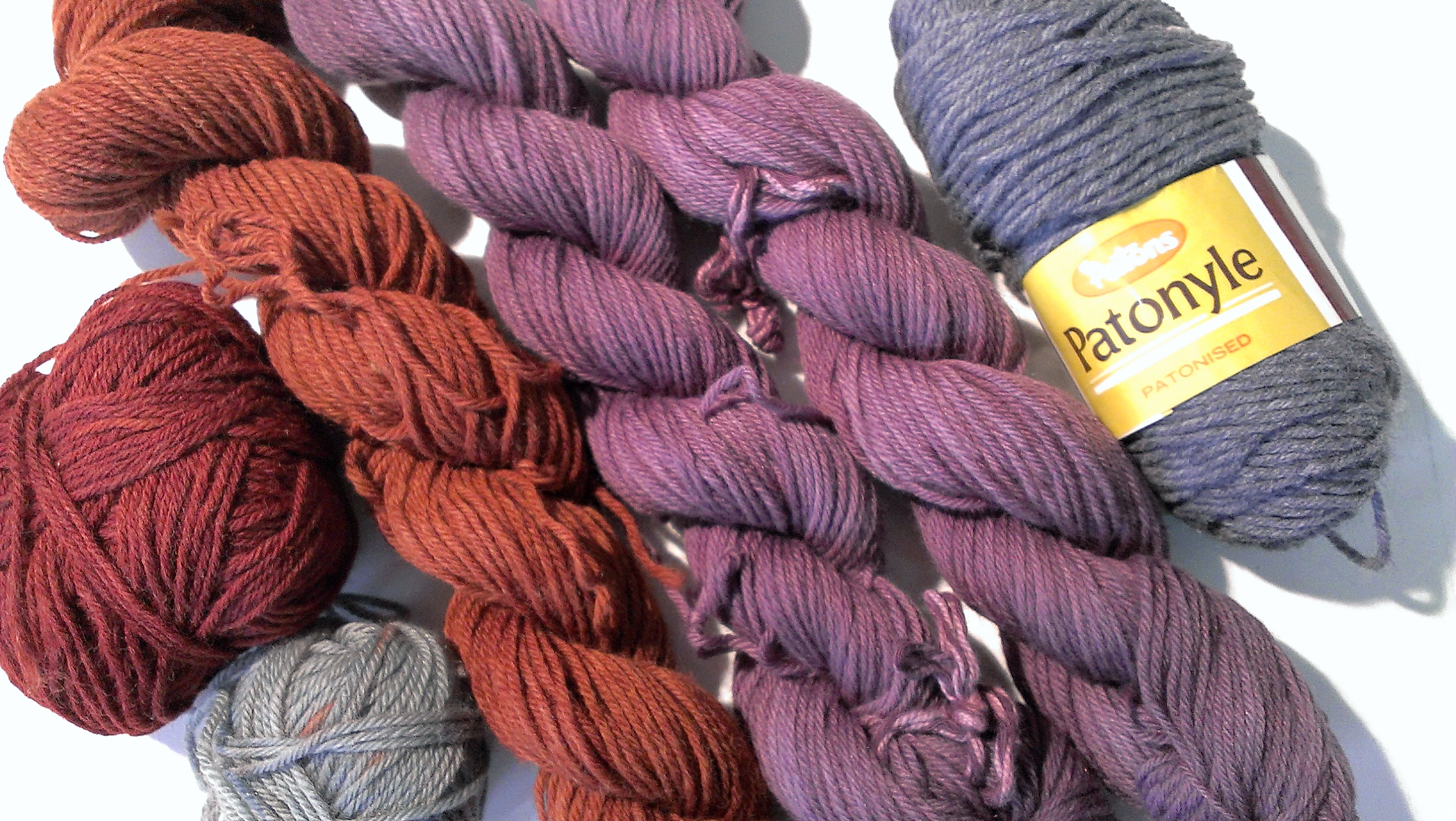
No wonder it has taken awhile to turn it all into socks.  I’ve used this wool with all manner of natural dyes, with greater and lesser success.  After the recent indigo saga began (update below), I looked at the remainder.  Some dyed with eucalypt, some with plum pine, which I now know won’t last long, a leftover black bean ball and some in the original grey.

IMAG3735

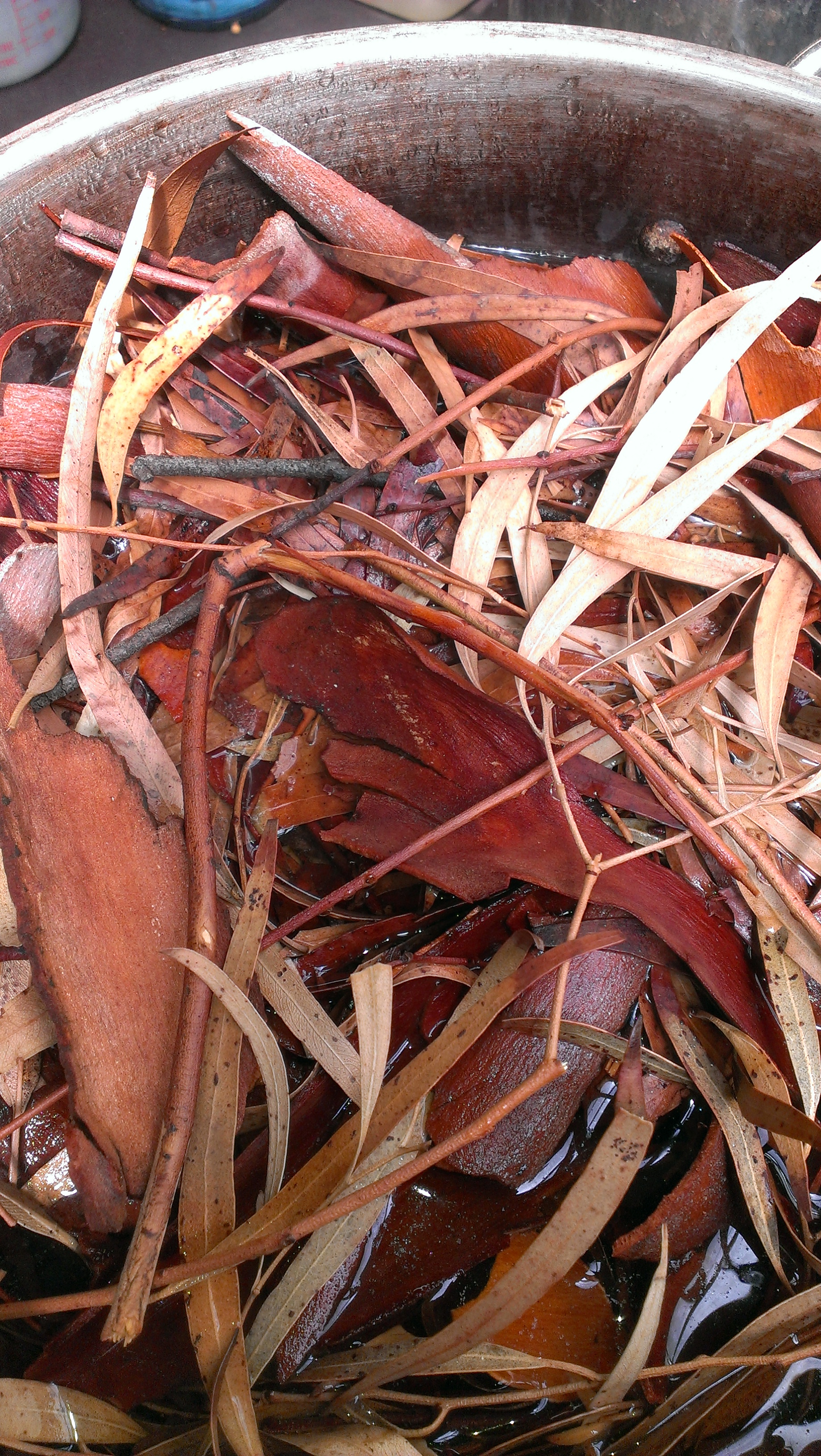
I decided to overdye the black bean, grey and plum pine yarn with eucalypt and made my way past one of my favourite E Scoparias, collecting fallen leaves and bark on my way back from the shops.  On went the pots. One contains the fruit of past harvests… mostly E Scoparia bark.

IMAG3742

The other contains what I collected the day I started writing this post: E Scoparia leaves and bark.  We have had sudden rain and wind after a prolonged hot spell, so there were leaves and a few pieces of bark from other trees in there and the smell of E Citriodora wafted up from this pot as soon as it came to a simmer, then died away.  The nearest lemon scented gum is only a few metres from where I was gathering.

IMAG3740

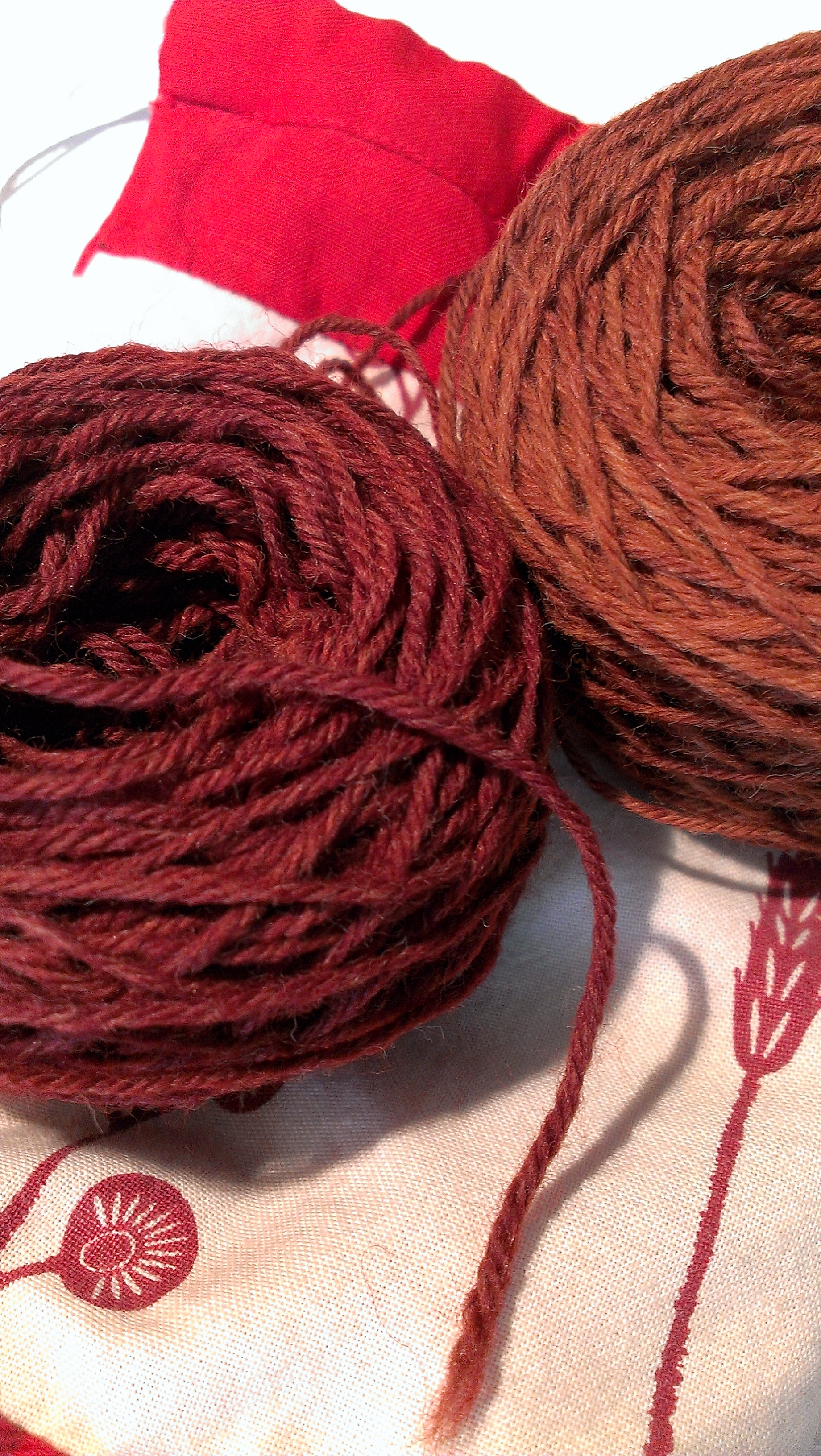
Meanwhile, I cast on with the yarn that is already in the classic eucalypt colours…

IMAG3738

And here are those blue, plum and grey yarns after their trip through my dye pots…

IMAG3868

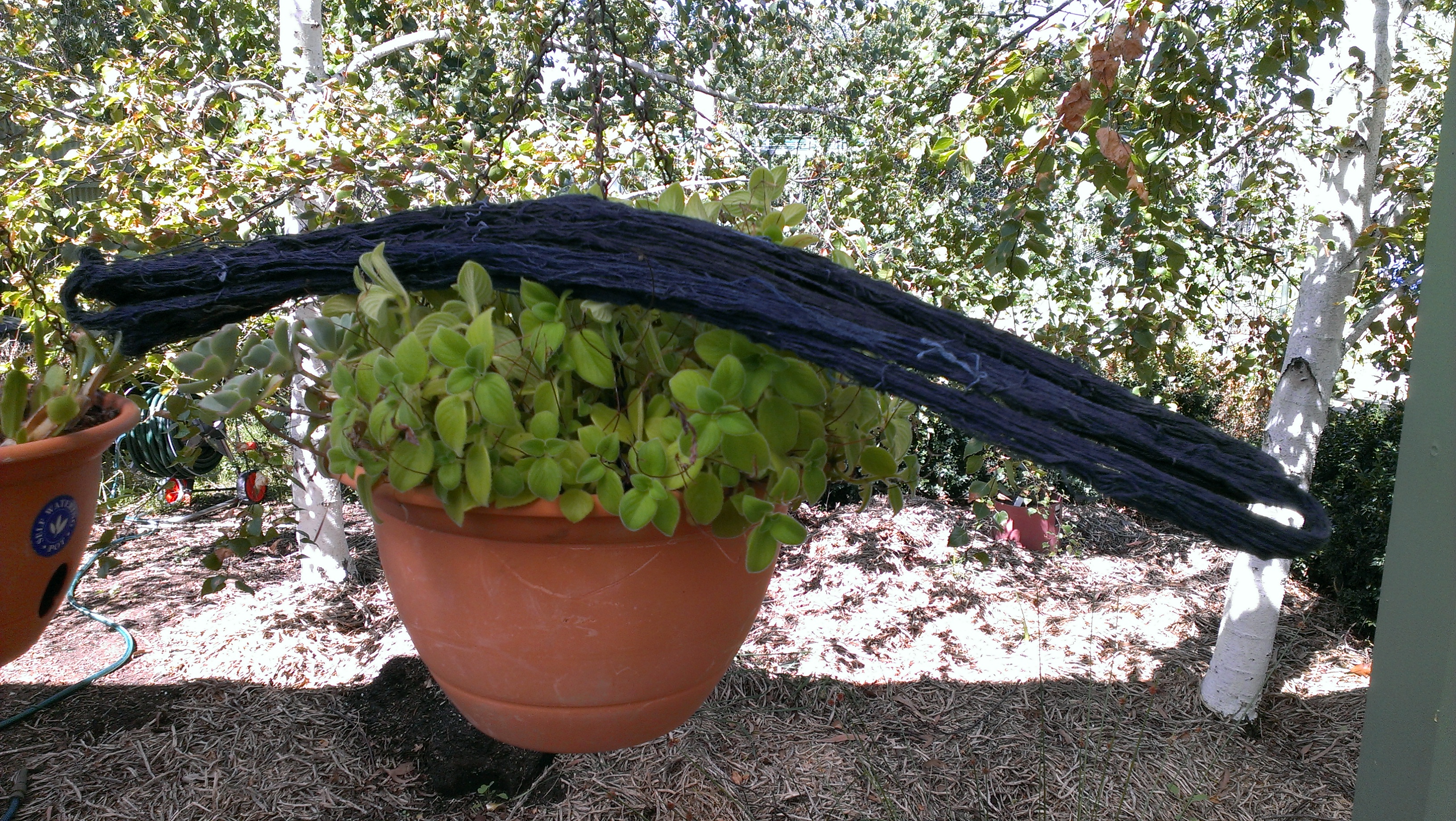
On the indigo front, here are the yarns after soaking in soy and drying.  They are lying across a nodding violet in a hanging pot so you can get some sense of how stiff they are!

IMAG3878

I let them dry out really well and have since been soaking and rinsing.  The soy milk soak has meant that more indigo is washing out of the sock yarn, which is what I had hoped for.  I am reasoning that the soy has bonded with some of the loose particles of indigo, rendering them capable of being washed out (rather than coming off on my hands, since I couldn’t rinse any more of the indigo out previously).  I am going to keep soaking and rinsing until that stops… and then try knitting again!

2 Comments

Filed under Eucalypts, Natural dyeing