Category Archives: Fibre preparation

Yellows from coreopsis flowers and osage orange

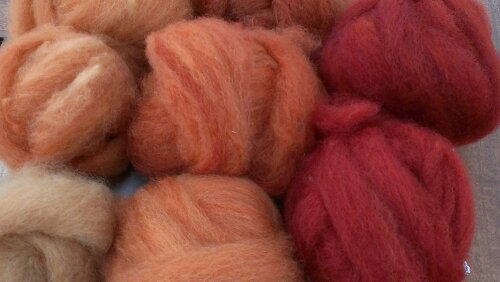
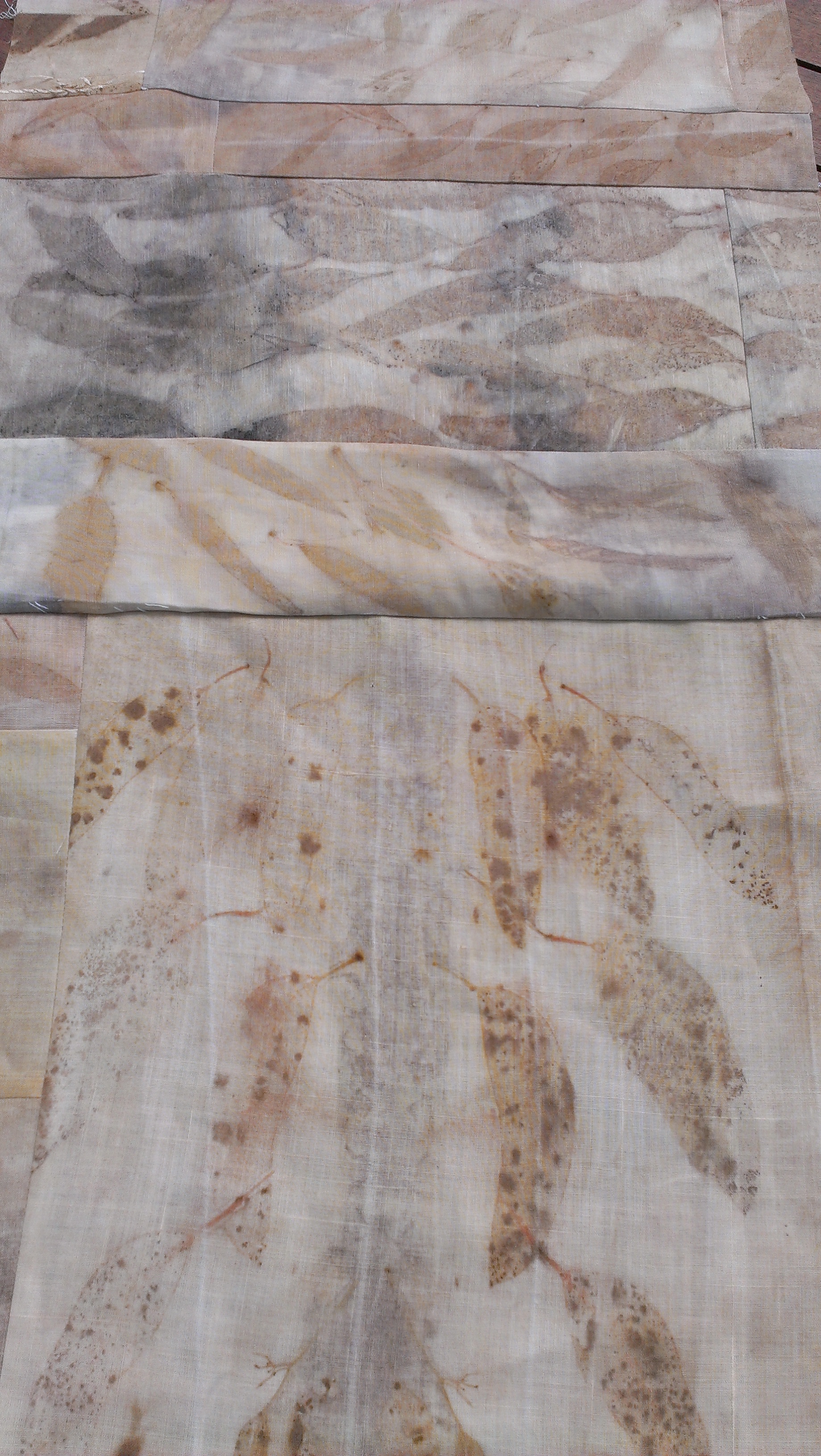
I have decided to branch out from the eucalyptus based palette of ochre–caramel–tan–orange–red–maroon I have been so focused on for the last while and plan toward an indigo vat.  Don’t you love these bold statements?

I still love the eucalypt colours: here, a small quantity of alpaca passing through various stages of preparation.  Picked, dyed locks;

IMAG2377

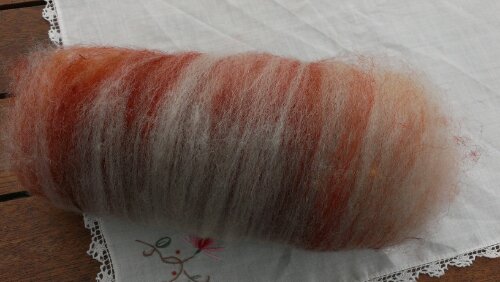
Partially carded batt;

IMAG2379

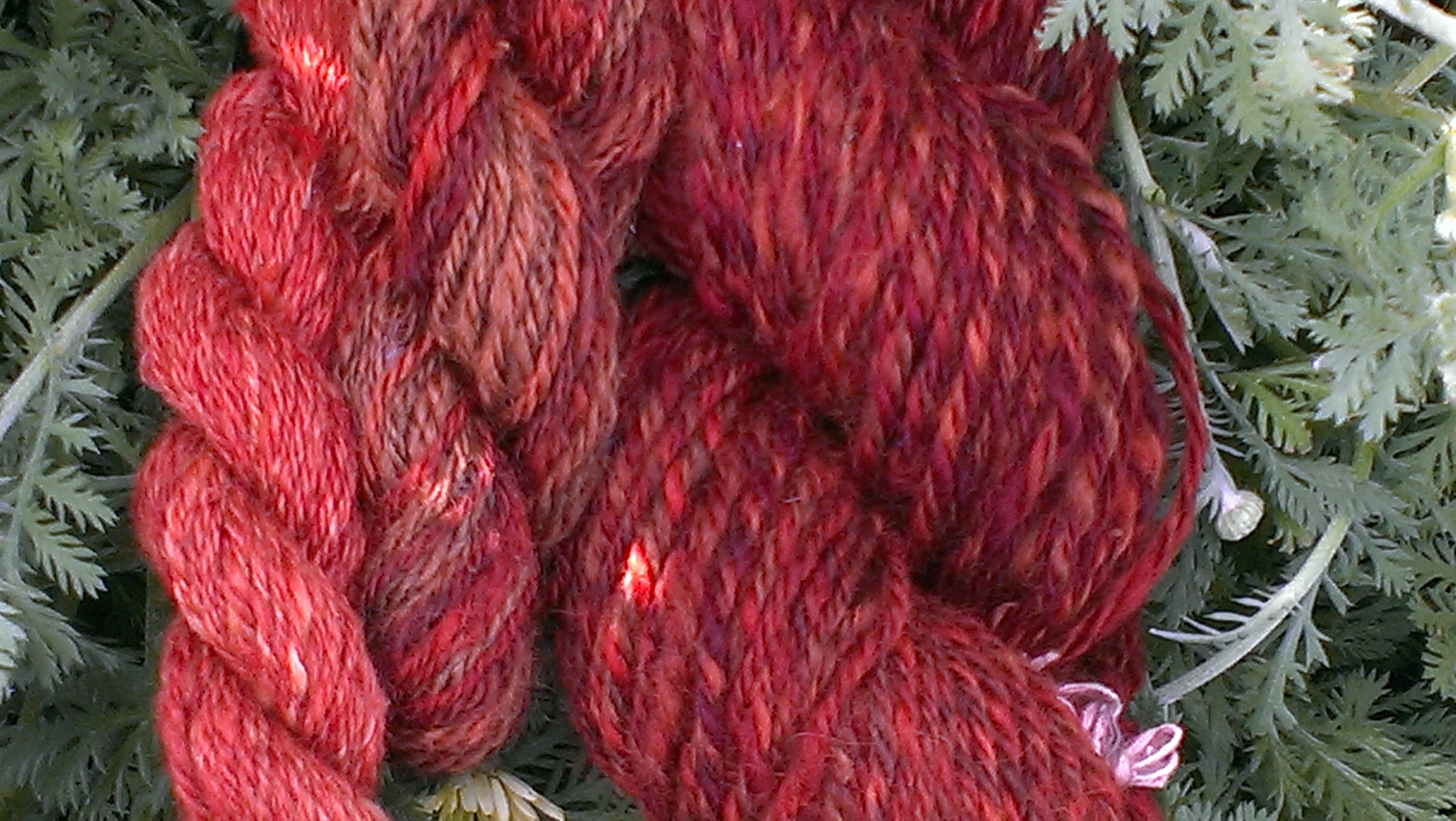
and, finally, yarn–pictured in the dyer’s chamomile patch.
IMAG2428

I have decided to try for yellow–green–blue transitions, which will necessarily begin with yellow.  I had coreopsis flowers my mother saved me one summer, as she deadheaded her plants. This collection of flower heads speak to me of her love and her fine qualities as a gardener and a person who loves to share.  I had reservations about the colour I would get from them, as some had gone mouldy.  Her -plants are just so prolific–the stack of wilted heads had trapped enough moisture to create mould.

IMAG2370

I also had a little remaining quantity of osage orange shavings of antiquity, gifted to me from the Guild.

IMAG2371

I prepared them both for the dyebath, but have to say my tea ball was not a good enough receptacle to retain the osage orange.  I not only sieved the dye vat before adding wool (thank goodness I remembered to do this as I tackled it one night when the amount of sawdust in the vat was not as obvious as in the clear light of day) but also placed the whole tea ball in another fine cloth bag before running an exhaust bath.

IMAG2372

Even after the first bath of each dye, there was a lot of colour left, so I ran an exhaust bath and dyed a total of about 800g of white corriedale.  I was especially impressed with the amount of colour and the wonderful smell of the coreopsis bath.  I need not have worried about the mould.  Here is the coreopsis bath between dyeings.

IMAG2383

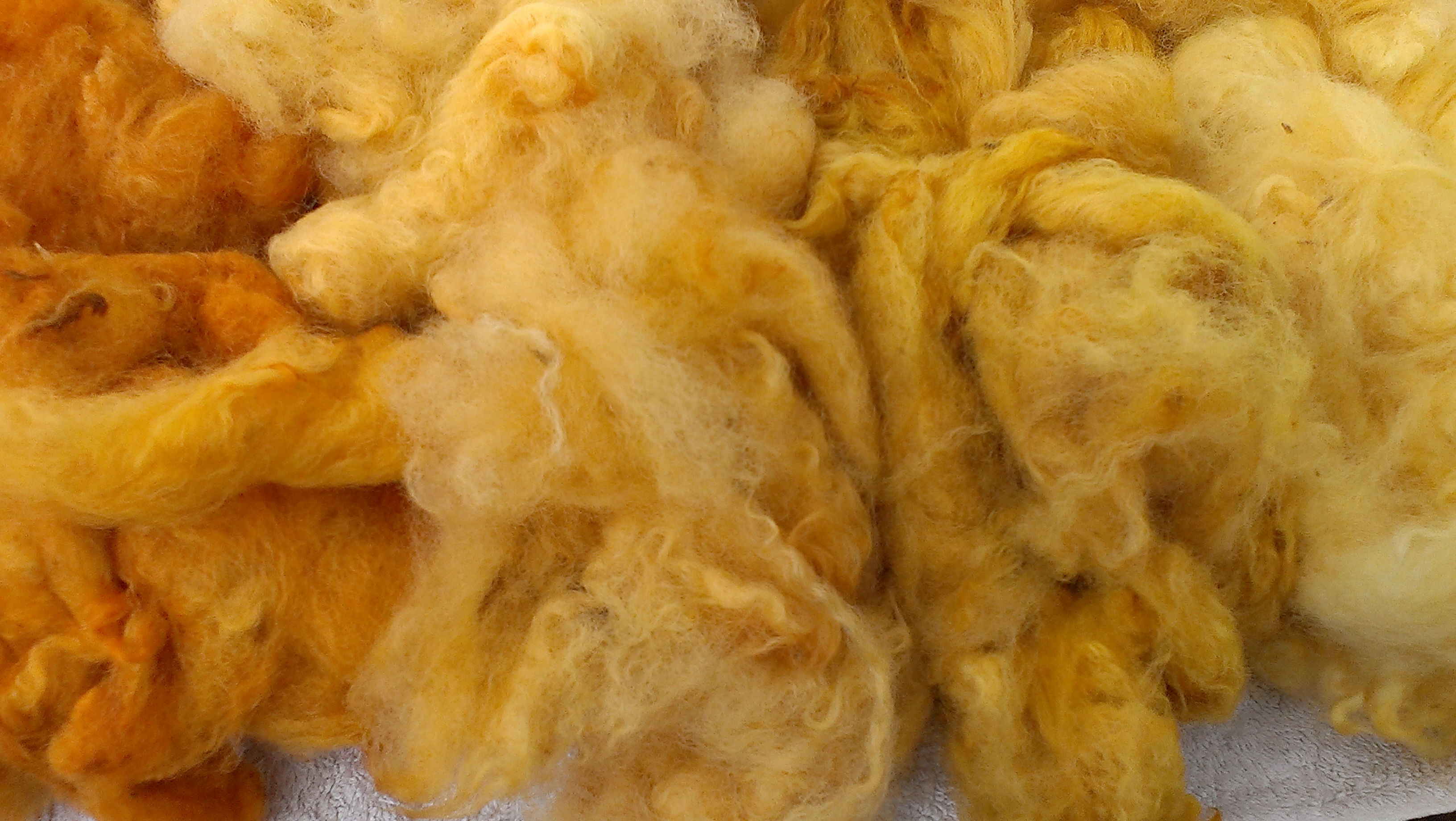
The resulting yellows are lovely.  On the left, coreopsis bath 1, then coreopsis bath 2, osage orange bath 1 and osage orange bath 2.  The coreopsis yellows are quite buttery and golden and the osage orange colours are a little more lemony.  And, there is further evidence that grass seeds and other vegetable matter take dyes quite well!  Now, to build up my courage for the indigo stage and some greens and blues.
IMAG2453

10 Comments

Filed under Dye Plants, Eucalypts, Fibre preparation, Natural dyeing

Silkworms: 4 week update

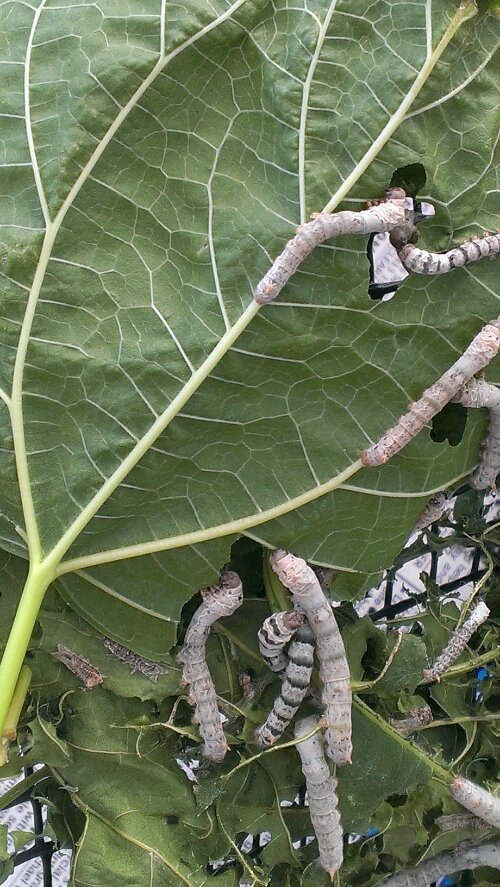
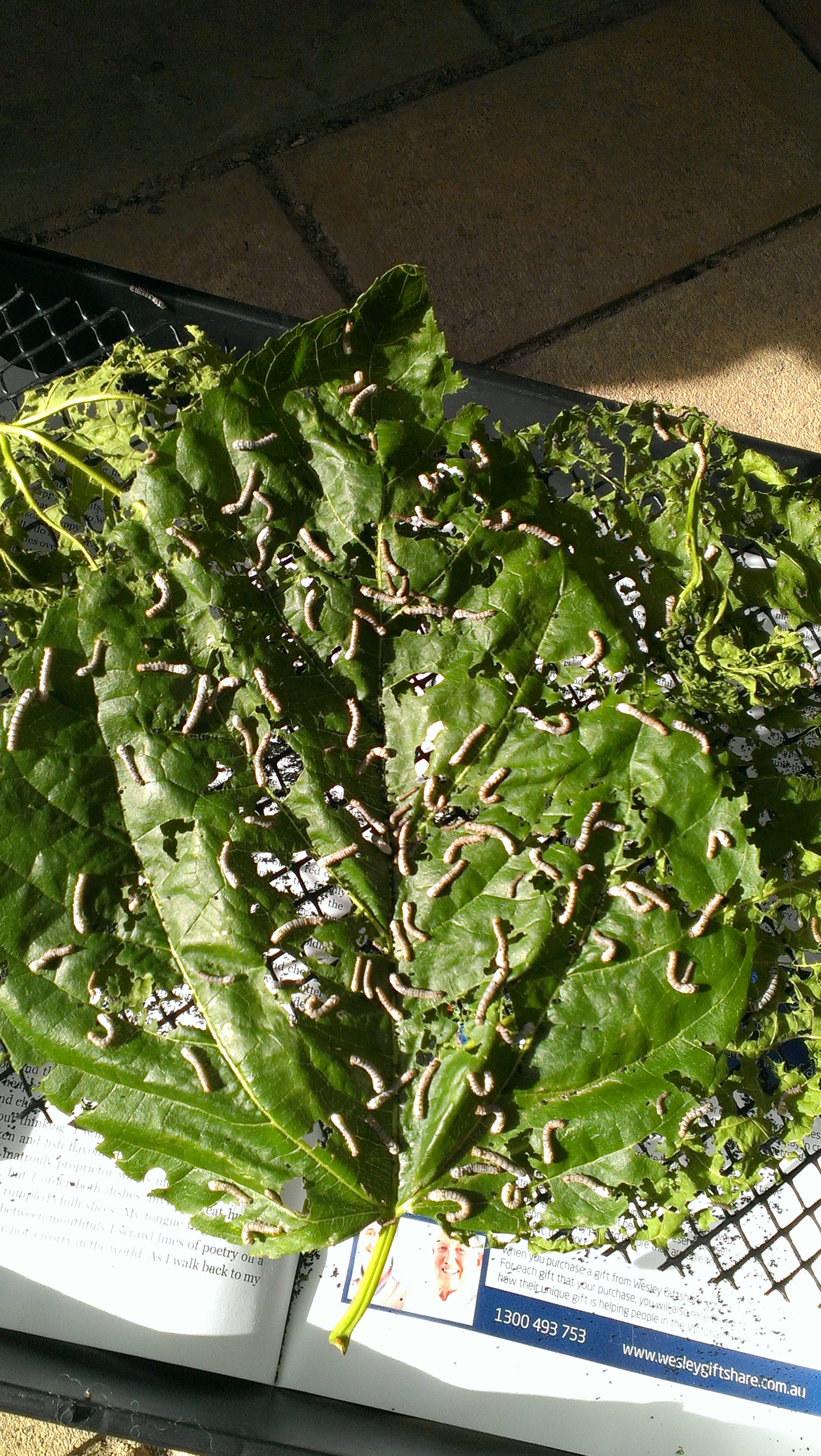
The silkworm marathon continues. This week, there has been a hiatus in the relentless chewing while they prepare to shed their skins and move on to a still larger stage of life.

image

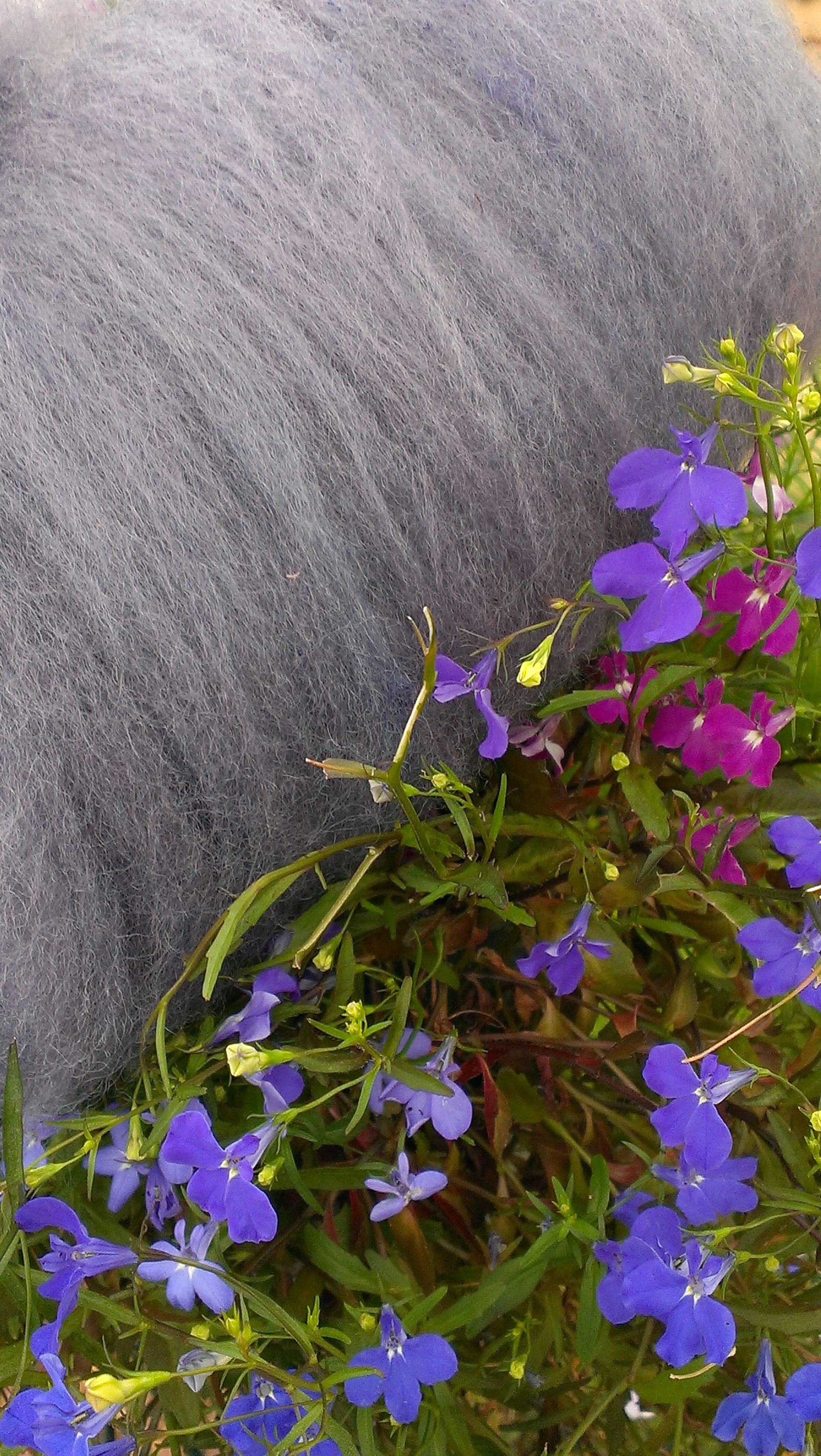
Meanwhile, I have been carding my eucalyptus dyed corriedale in preparation for spinning…

image

And creating another trash batt from the carder waste and some polwarth locks.

image

Leave a comment

Filed under Dye Plants, Eucalypts, Fibre preparation, Natural dyeing

Silkworms: 3 week update

This week’s update is a little late… But the silkworms grew hugely. Many shed their skins and moved on to the next stage of life.

image

There are so many I took about 50 to the guild yesterday and they went to happy homes!

image

I have expanded their accommodation and my hunt for mulberry leaves, and between our house guests and my beloved, they are getting an enormous amount of attention and concern for their wellbeing. But they seem to be doing well!

image

6 Comments

Filed under Fibre preparation

Silkworms: 2 week update

My goodness…  they just keep growing!

IMAG2267


I don’t mean to sound surprised by this… and I am not sure how to make it interesting viewing, either.

IMAG2265

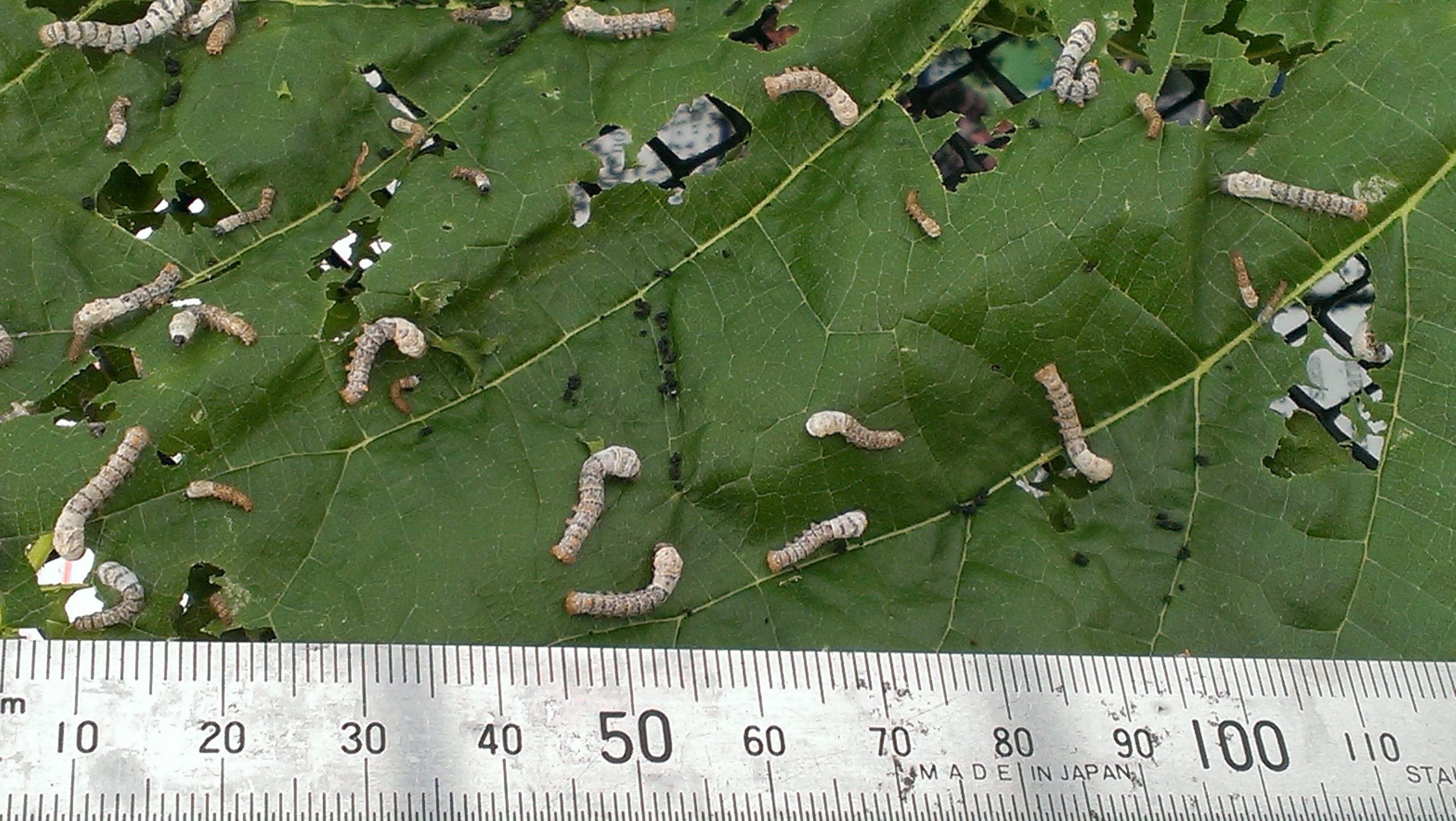
It’s hard to even give a sense of scale… but I think they’re at least double the size they were last week, which isn’t bad going.  You can still see tinier silkworms amid the bigger ones in the images above.

IMAG2269

And just for the curious, my parents inform me (based on first hand, childhood experience living in a country town with few mulberry trees) that a hungry silkworm will eat a grape vine leaf.  I tested this theory and mine definitely chose mulberry leaves over grape leaves–but a few were prepared to nibble on the grape leaves.  For today… mulberry leaf again!

2 Comments

Filed under Fibre preparation

Further experiments in converting textile waste

I have been wondering about trying some more spinning experiments with waste from the overlocker and the carding process.  There is nothing like yarn bombing to make me consider any kind of yarn useable!  Yarn bombing is even more forgiving than teapots when it comes to the texture and qualities of the fibre concerned… and there is an argument for only using fibres that can’t be made into clothing or blankets for yarn bombing, I think.  So in a  burst of carding enthusiasm, I’ve been preparing batts.

First up, carding waste (corriedale dyed with eucalypt), overlocker waste (from bag making, mostly–silk, cotton, linen and some polyester blend) and some polwarth locks to hold it all together.  Here it is going into the drum carder:

IMAG2241

Carded and ready to spin.

IMAG2249

More fabric scraps and overlocker thread in some parts than others…

IMAG2256

While I was on the job, I carded some rough lavender wool of unknown origin.  It was discarded by the felting group at the Guild: say no more!   I re-washed it, which improved its texture and cleanliness somewhat…

IMAG2262

The felters also passed on this green fibre of unknown origin, which was improved very much by re-washing and carded out beautifully.  I have added dyed mohair locks and silk noil, and we’ll see if it can become a repectable art yarn.

IMAG2261

Carding waste from those two batts and some more overlocker waste…

IMAG2264

I’ll report back when I’ve tried turning these away from the waste stream and into something of use!

12 Comments

Filed under Fibre preparation

Silkworms: 1 week update

IMAG2217

One week along, I have at least 100 silkworms and have started trying to find them future homes.  The wigglers with pale heads are a week old, but you can see two tiny black ones toward the bottom of this image which have hatched much more recently.  I will be needing a lot of mulberry leaves if this keeps up!

Leave a comment

Filed under Fibre preparation

Hatchling silkworms and other thrills

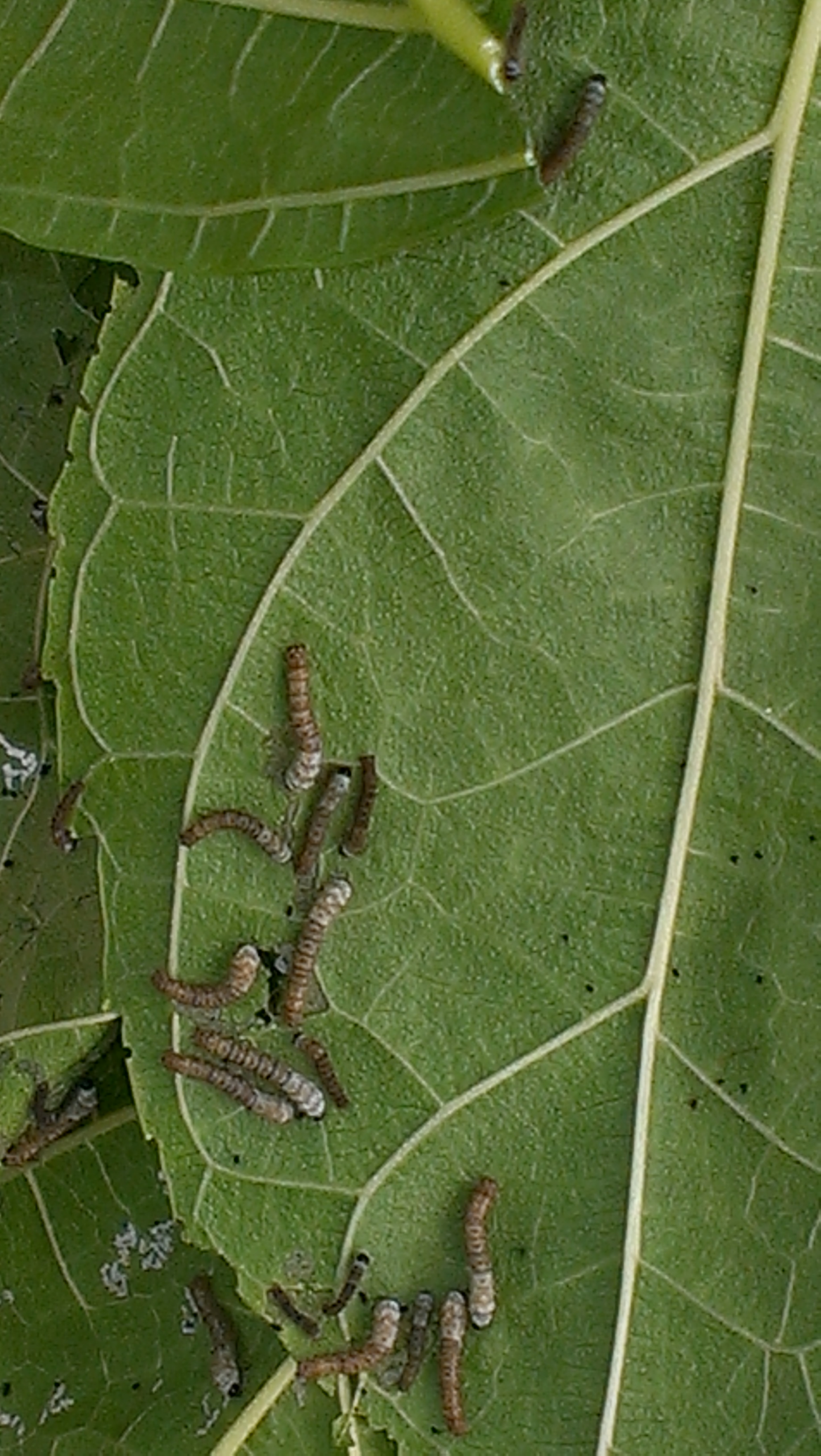
Last year, I bought five silk worms at a school fair and raised them into moths. Later, when I was wondering what to expect next, I had quite a conversation with a delightful woman in the Button Bar in the Adelaide Arcade, as you do.  I can’t remember how we got from the tea cosy she was knitting to silk worms, but somehow we did.  She told me to expect the eggs that resulted from a dalliance between a couple of my moths to hatch in September.  I remember thinking about this on 1 September.  Then on Friday 13 September I realised I had taken no action and sprinted down the hall to check on them and lo!  There were tiny black creatures wiggling around!  I made an immediate mercy dash to the nearest mulberry tree.  Can you make the hatchlings out?

IMAG2179

The hatchlings are the tiny black lines.  Those spots on the cardboard are eggs.  Today I conservatively estimate I have 50 silkworm hatchlings, and I have started working on finding some of them new homes.

Meanwhile, I have been on a bag jag… sewing loads more bags and taming [some of] my scrap collection.  I decided to photograph a lining in progress on the weekend, because what is more thrilling than a lining?


IMAG2182

Well, one of our chooks seemed to think so.  She could tell whatever was happening on the table was worth looking into, so she flew up immediately to check into it.  Regrettably, this was not an edible thrill from her point of view.

IMAG2184

Thrills come in very disparate packages, all depending on perspective… or so it seems to me!  Audrey finds earwigs a lot more thrilling than I do.

Meanwhile, I have taken the nettle stems back out of the retting bath (which this time certainly did go to the garden–) and set them out in the rain to rinse.  Since so much of my crafting takes place in crevices of time and is ordered by whim rather than a linear plan, I hope you’re managing to follow all these emerging themes …

10 Comments

Filed under Fibre preparation, Leaf prints, Sewing

Fibre processing continues…

For those who are wondering… the nettle stems are back in the retting wheelbarrow for now. So I return to our regularly scheduled fibre–wool.

All I want to say about this last Polwarth fleece, with the prickly seedheads and the tips that were spiny and pulled off… is that I have reached the end of it.  Here it is–the last of it–!  It will be keeping toes warm for years to come once these slippers are felted. I do not need to spin more of it, ever.  The fleece from this sheep’s sibling, and fleece from this sheep in other years, are lovely, and I will return to those in time.

IMAG2143

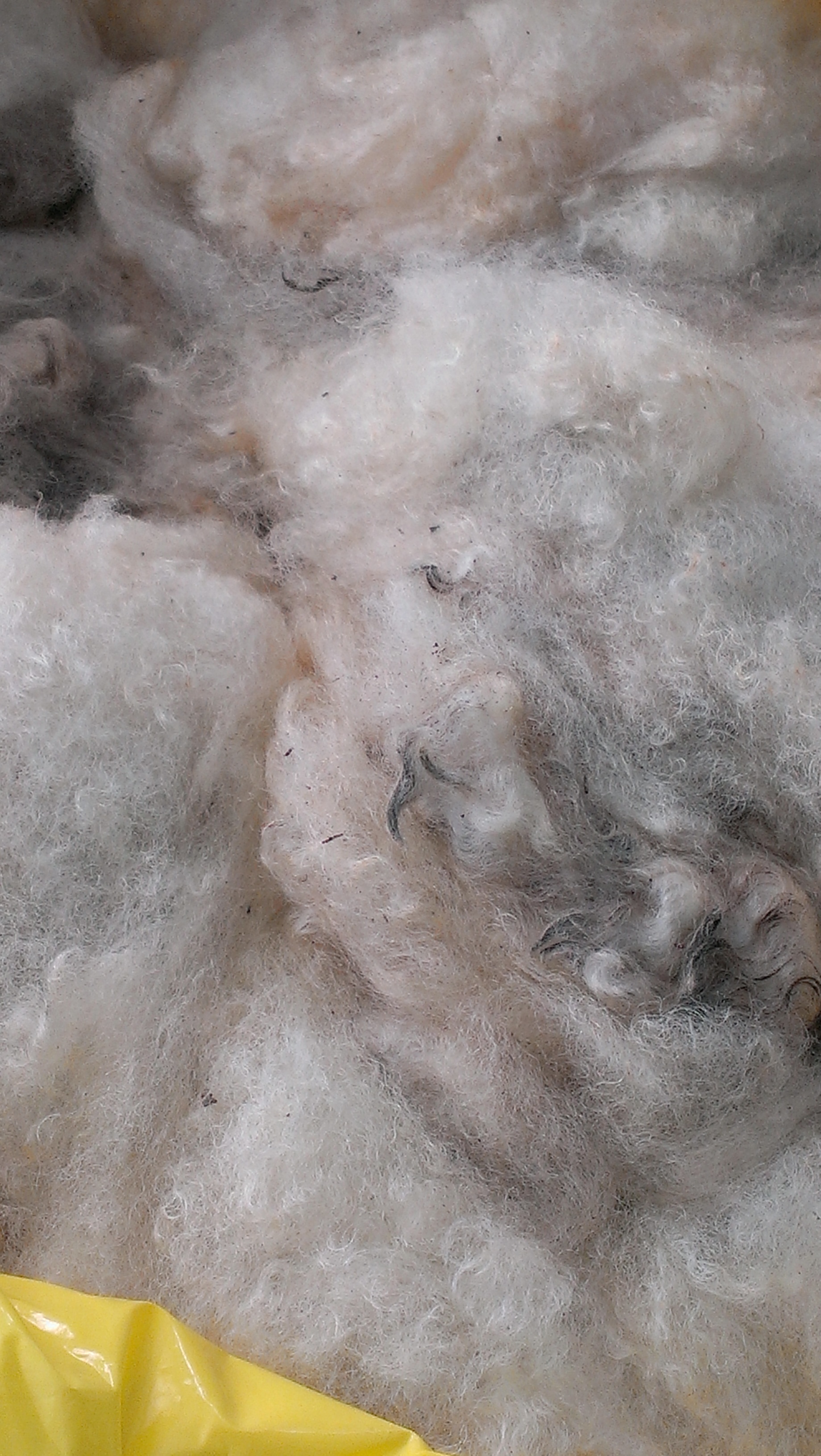
Next stop on the fibre processing journey is a Corriedale fleece one of my co-workers gave me (in 2011!! I wrote the date down).  I dyed some greasy a year or so ago and it came out badly.  I can be put off by experiences like that, which so often indicate the current limitations of my skills or patience, or both.  I put the Corriedale down and haven’t come back to it for at least a year.  It does have vegetable matter in it, but it is otherwise a lovely fleece.  I weighed the remainder and there was 2.3 kg still to wash.  It’s in a yellow plastic bag designed for a double bed feather quilt.

IMAG2138

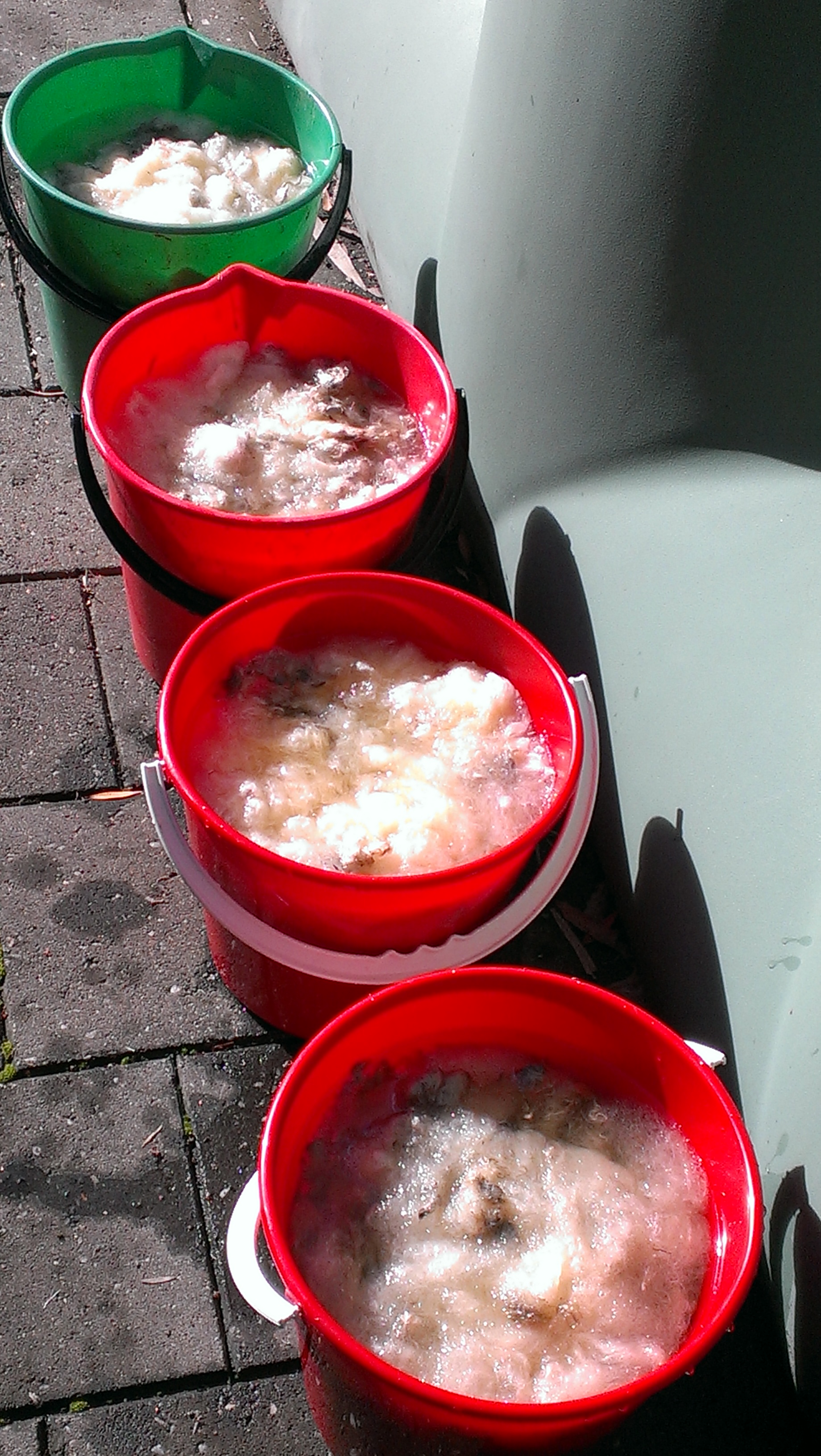
I sat a kilogramme of it to soak cold for a few days, because I’ve seen this suggested on Ravelry and it makes good sense as a first stage in getting mud, as well as grease, out of the fleece.  having tried it now, I would definitely use this process again.

IMAG2139

This kilogramme is now clean and drying, and that leaves only 1.3kg of this fleece yet to be washed.  After that, only one more Polwarth fleece left to wash. I admit, a Polwarth is a mighty big sheep.  However, this is the closest I have been in years to having the fleece stash clean and ready to spin!

7 Comments

Filed under Fibre preparation, Knitting, Spinning

Retting the nettle crop

The last time I wrote about nettle processing, Andrea wrote in with some really helpful suggestions from her experience.  She also provided a link to a useful article by Vogl and Hartl on the subject.

This time, I am taking Andrea’s advice to the extent I can.  I have the common stinging nettle, urtica dioica, and no other nettles to choose from, so that is what I am using.  There is no chance of my accessing large amounts of nettles as tall as 1.2 m, but a few of my sample are that tall. I am harvesting at the end of winter, the plants have flowered and had a lot of green seed on them–I thought I had left them too long but perhaps not.  It is hard to fully understand how the seasons here affect plants native to Europe, but nettles don’t grow here when it is warm.  They are more likely to lose leaves as the warm weather sets in, than to lose them in autumn.  This means that I am harvesting nettles at pretty much the opposite point in the seasons that a person in Europe might.

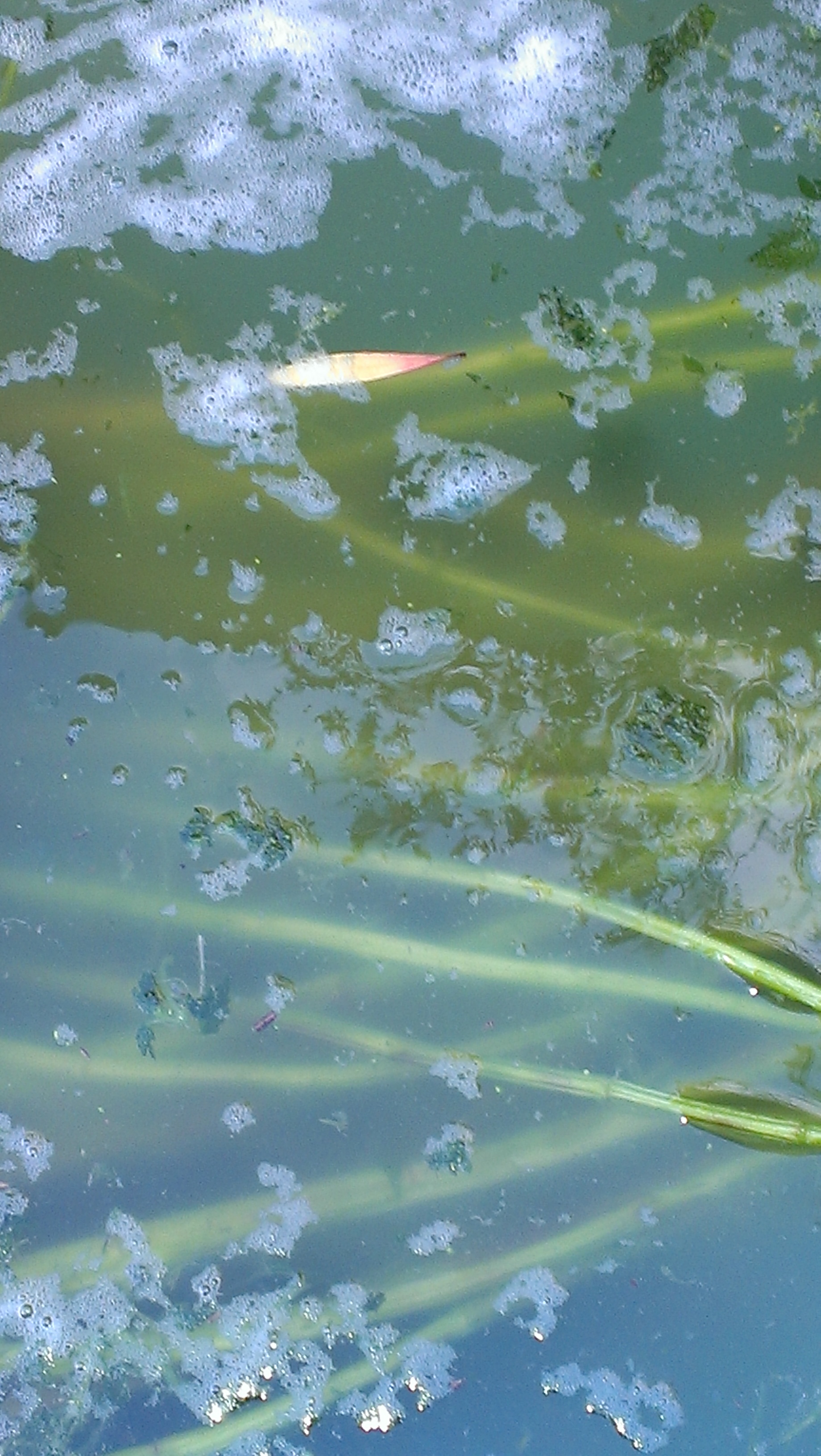
So.  The nettles were harvested on 24 August, and set to rett that morning.  I changed the water twice on 25 August to prevent fermentation (and the chilly weather will have helped that too) and had an interesting conversation with a seller at the farmers’ market who had harvested his nettles and had them for sale.  5 days later, I decided they were about right. They had begun to smell somewhat, and the evidence that the outer layer had begun to rot away was clear (as opposed to the murky water).

IMAG2129

The surface green layer of the stem rubbed away readily.


IMAG2132

Once I had thoroughly rinsed them, most of the green covering of the stem was gone.  I am offering these photos in hopes that others more knowledgeable might offer me their advice.  The works I have consulted make it seem to me that identifying when retting has gone far enough but not too far is difficult to describe.  No doubt it is an expert skill (which needless to say, I don’t possess), and perhaps one of those not readily converted into words–like how to tell the level of kneading is perfect for bread dough by feel, or how to tell a fermentation indigo vat is ready to use from the way it smells.

IMAG2135

I set them to dry thoroughly.  At this stage I belatedly had the thought that perhaps next time I should stage the removal of stems from the retting process, and see if I can identify which stage gives me a better outcome.  Too late to do such a logical experiment with this batch!  To be continued….

14 Comments

Filed under Fibre preparation

Nettle harvest

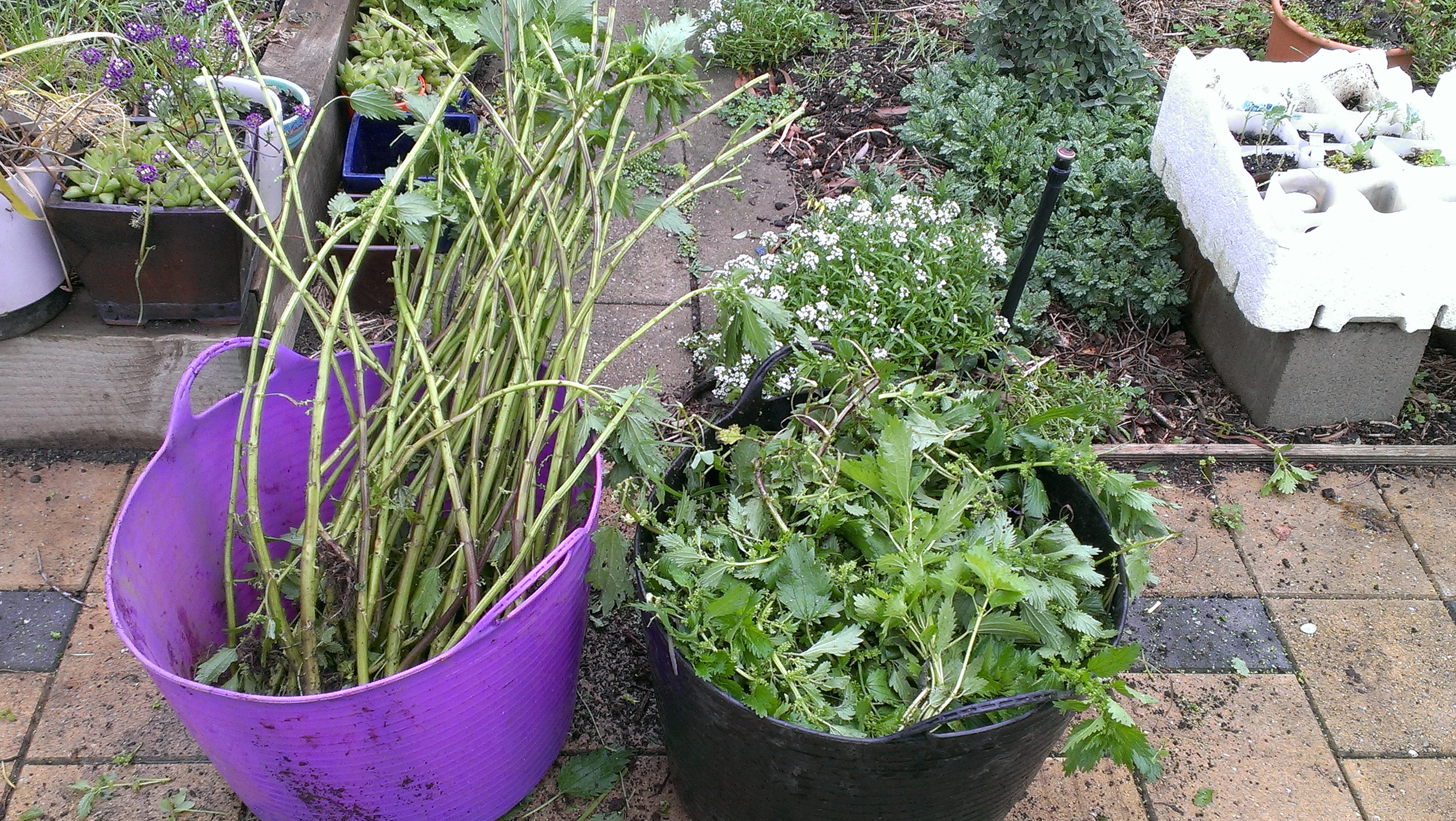
I decided to grow my nettles high and try processing them for fibre again this year. I have left this a little later than ideal, but so much about my knowledge of processing nettle fibre is imperfect I decided to just give it a try and worry about fine detail at some future point when I have more understanding and more experience!  Here we have my harvest, with leaves:

IMAG2120

And after the leaves have been stripped.  The leaves went to friends who were enthusiastic about nettle soup.  I am sorry to say I don’t like the flavour of nettles.  I wish I did, they are full of minerals and I have plenty of them!  I love the idea of eating them but not the reality.  I will just have to stick to eating dandelion, prickly lettuce and milk thistle to keep my weeds down.

IMAG2121

While I was pulling the nettles and weeding out the soursobs and burr medic and grass, the chickens kept me company and enjoyed the fruits (and earwigs) of my labours.  If this was a podcast, I would have been only too delighted to record their excited voices.  And when I found these, I had some excitement of my own!  In fact, I went in and made a potato and silverbeet (and endive, milk thistle, chicory, parsley) soup to share with my friends the nettle lovers.

IMAG2123

The nettles are much bigger than the previous harvest.  So much so there was no chance I could rett them in a bucket, even my biggest one.  In the end, they went into the wheelbarrow, the biggest receptacle I could find other than my bathtub!  To be continued…

IMAG2124

19 Comments

Filed under Fibre preparation