Category Archives: Leaf prints

Leaves on wool

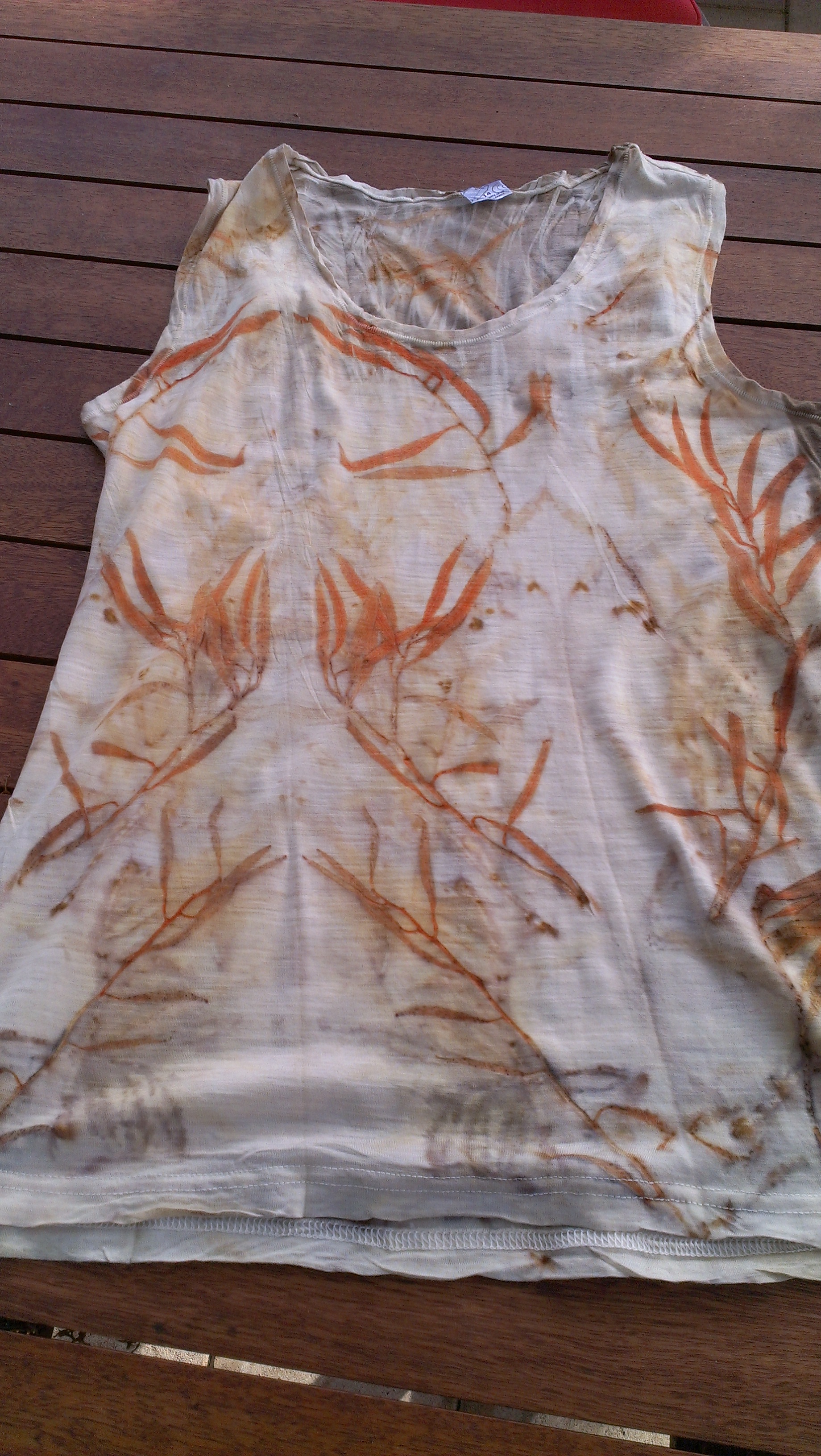
I have been planning some bundles for quite some time.  And, quite frankly, wanting to wear these woolies and not prepared to do that until they are dyed, which doesn’t make a whole lot of sense.  Finally, the time came!  Naturally, it came after the sun went down, and hence the quality of this picture.

IMAG1760

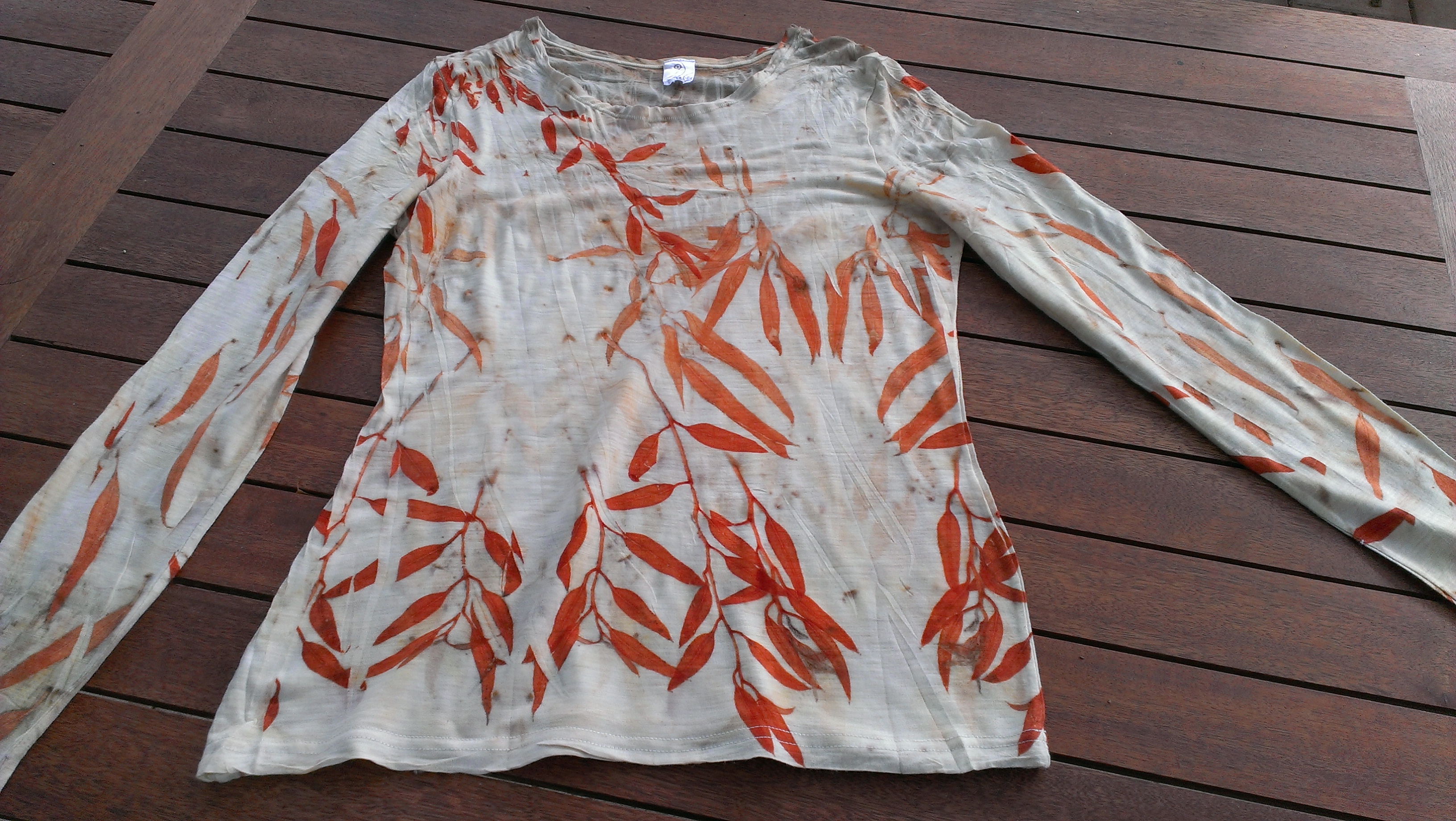
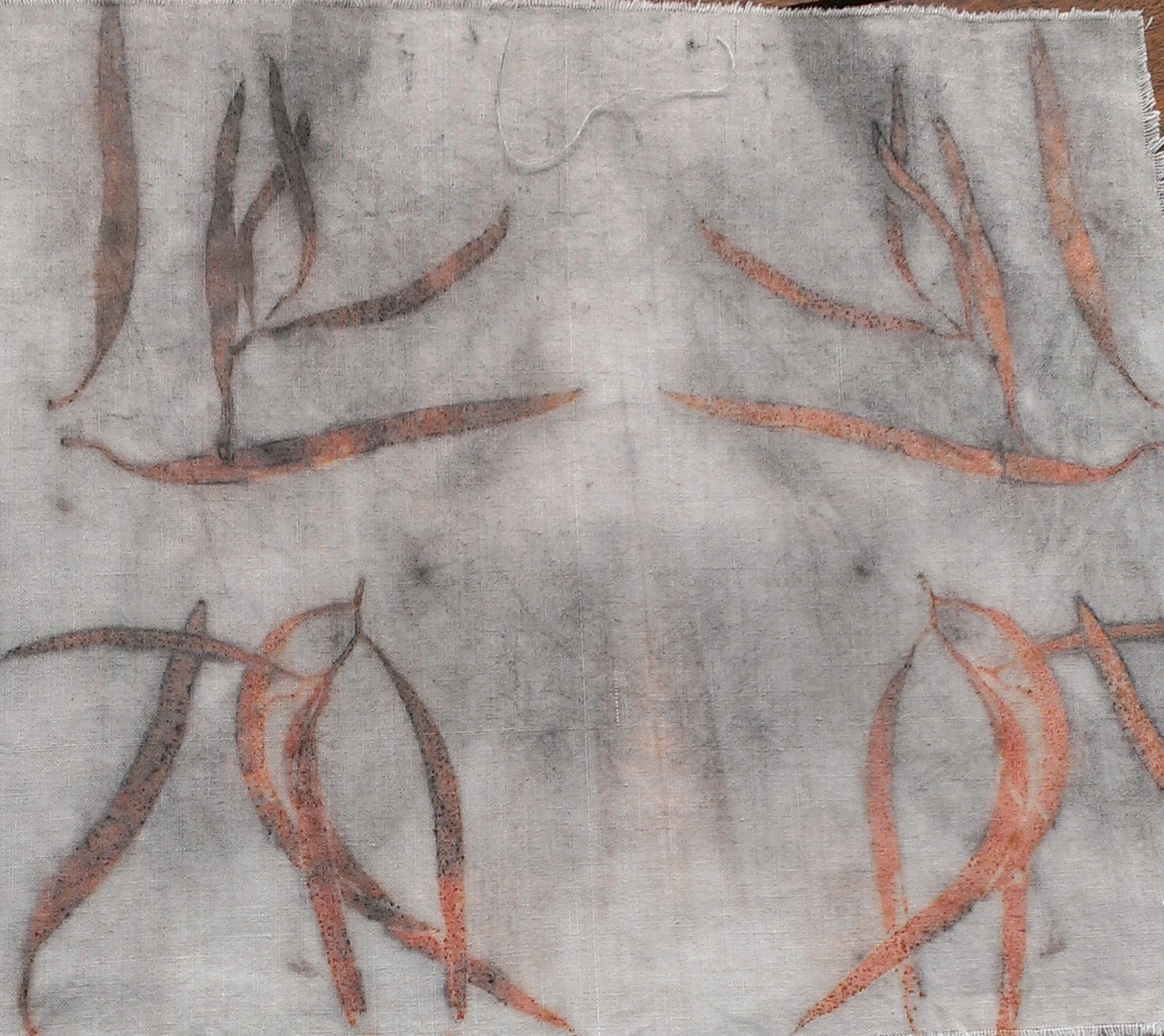
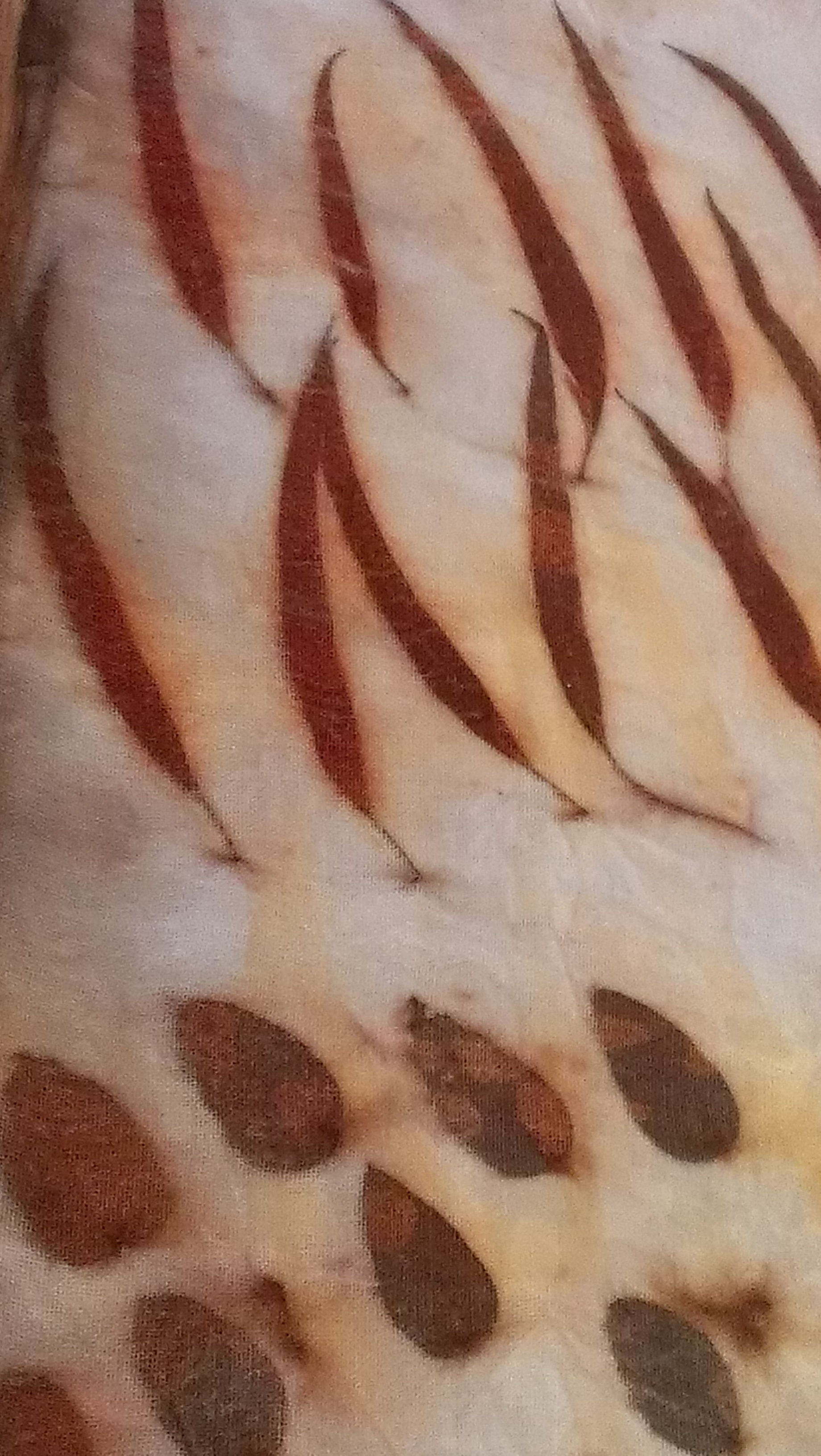
The leaves were collected on a rainy day’s outing when we happened to be passing some trees I know of.  My companions were prepared to stop and humour me.  They stayed in the car and I studiously ignored passersby while harvesting.  This one is E Calycogona Calycogona. Front:

IMAG1770

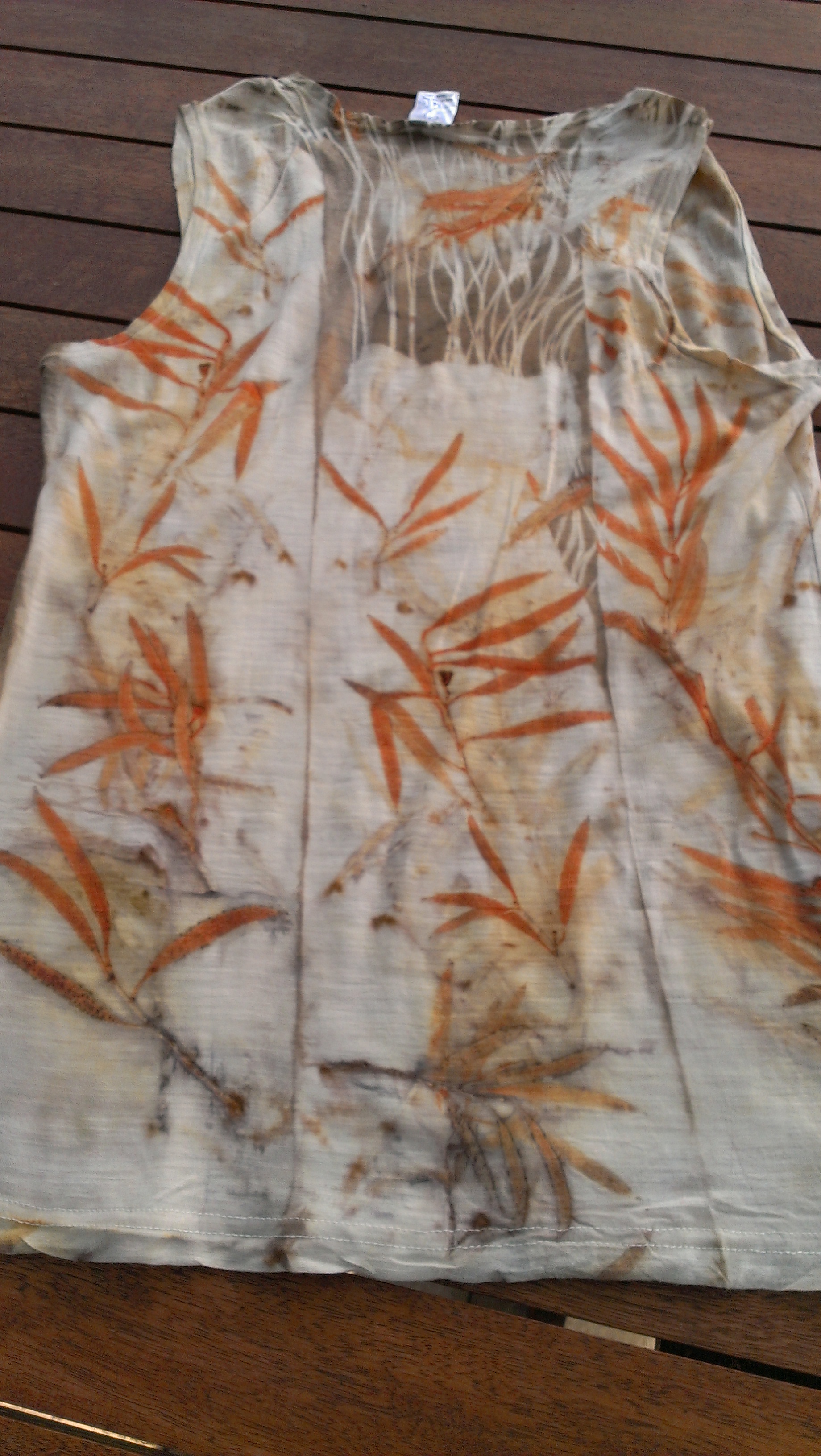
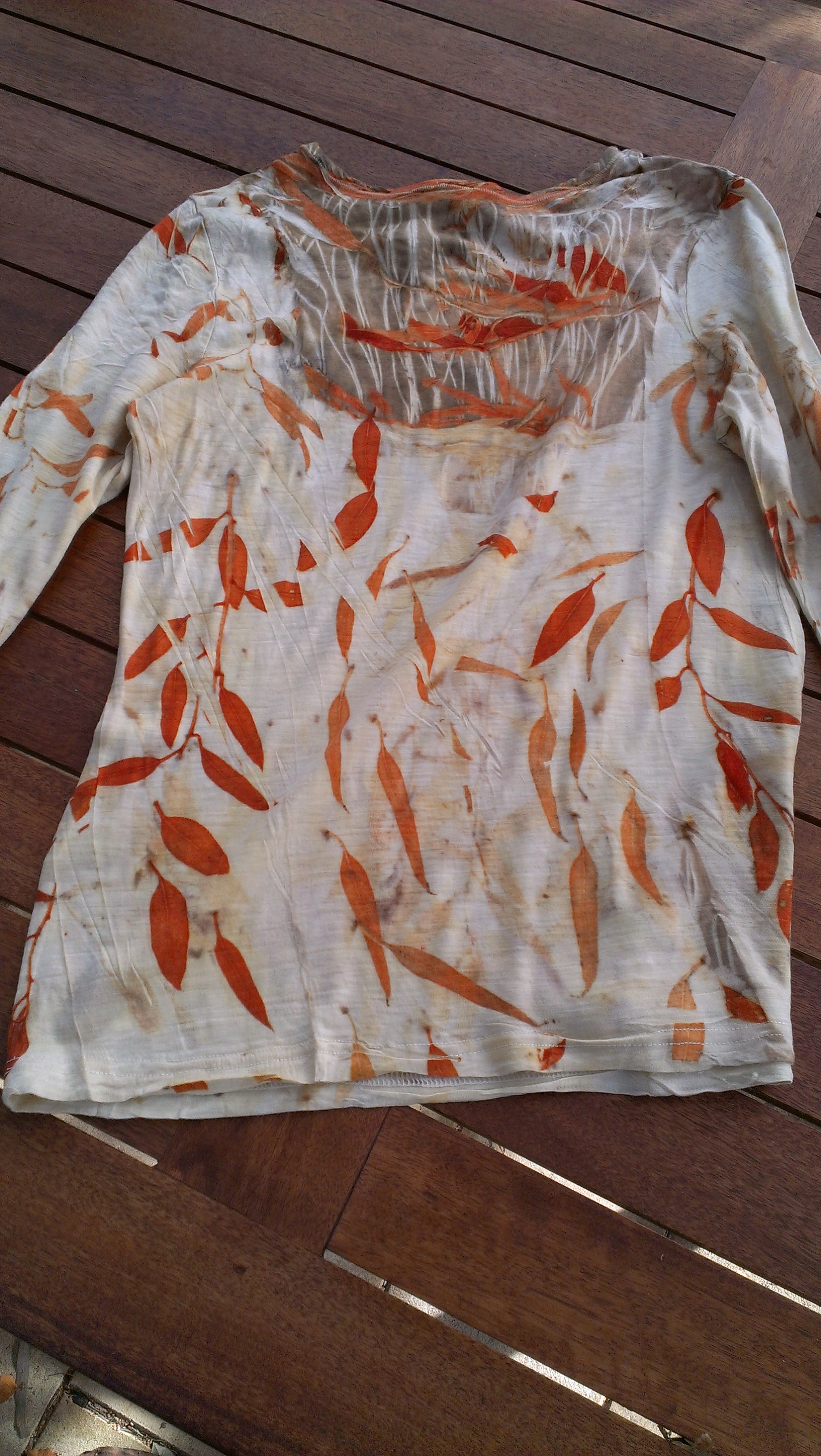
Back:

IMAG1771

Detail:

IMAG1772

E Kingsmillii Alatissima: Front

IMAG1766

Back:  IMAG1773

And a particularly lovely detail:

IMAG1769

I think it would have been better if these bundles spent longer in the pot and my sense of design was better… but I am nevertheless happy.  Just between you & me, I like heading out into the world with secret leaves twining up (or down) my body.  Secret, since these are layers which I don’t usually wear on the outside.  It’s a quiet comfort, especially given the extra warmth of the wool.

12 Comments

Filed under Dye Plants, Eucalypts, Leaf prints

Eucalyptus Calycogona subsp Calycogona

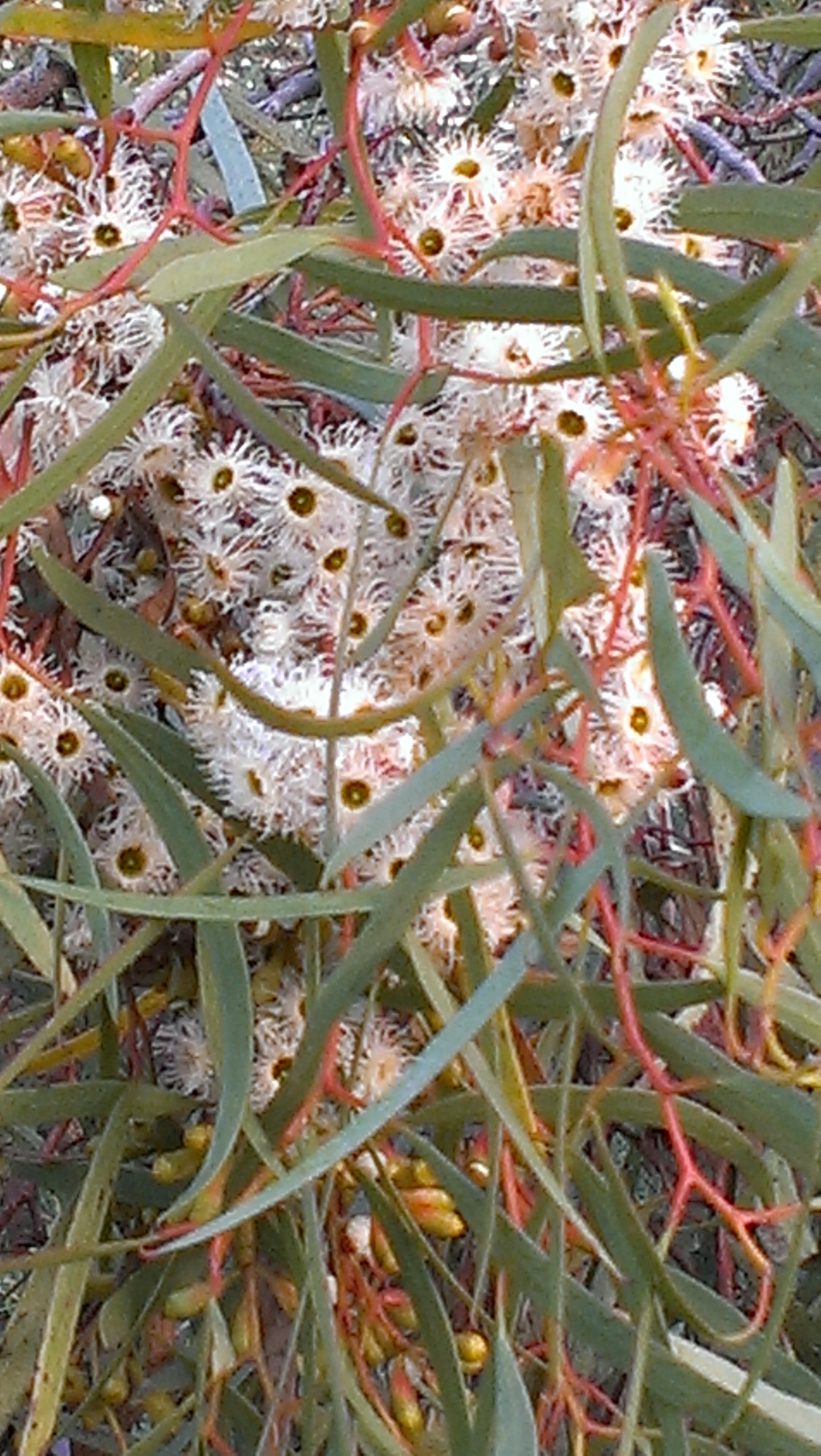
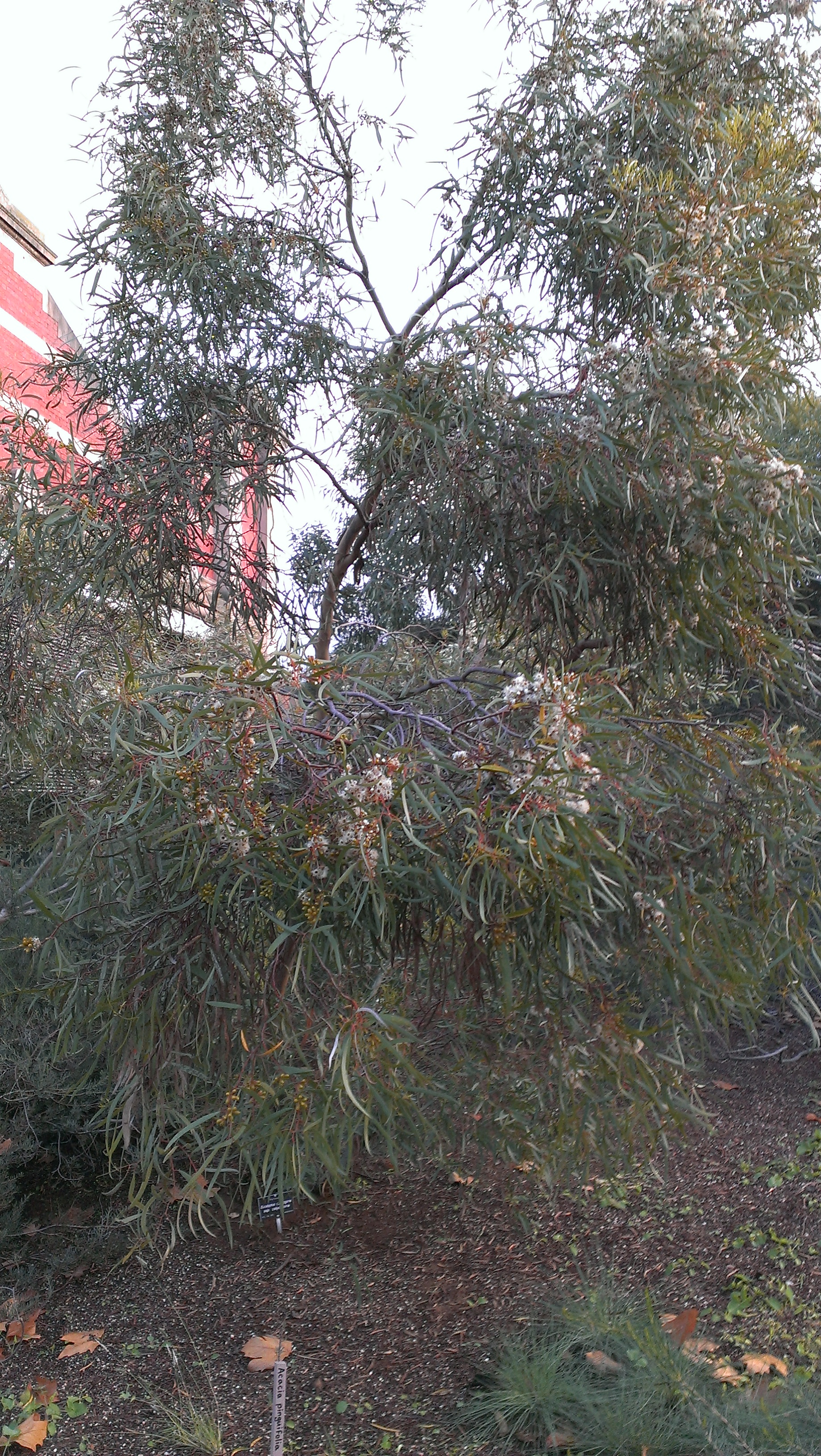
While on the path of trees helpfully labelled in Botanic Park… I bring you E Calycogona Calycogona. It is native to Western Australia.  Here it is flowering generously in early June in Adelaide.

IMAG1405

IMAG1404

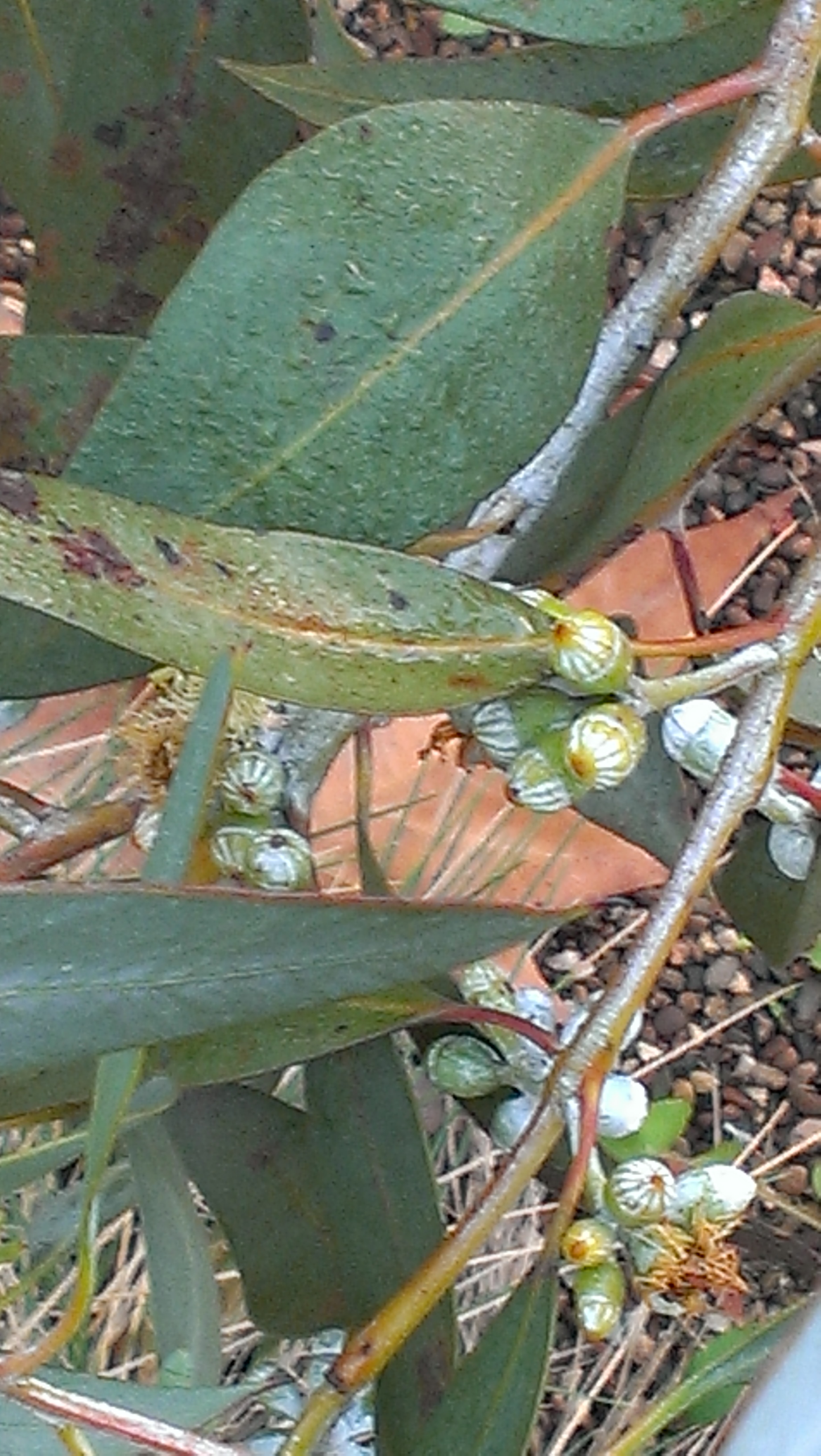
And what a result in the dye bath!  Every fallen bud cap printed.

IMAG1431

Leave a comment

Filed under Dye Plants, Eucalypts, Leaf prints

Eucalyptus Cretata

These trees were rather young and rather prostrate. However, the fact that they were helpfully labelled made me feel I should take an interest!

IMAG1402

I took only a few leaves, which is one of the big advantages of the eco-print technique of assessing dye potential, as India Flint has emphasised.

IMAG1401

The grooves on the bud caps are rather lovely, I think.  The sample print… not deeply exciting, even with some help from iron!

E Cretata

2 Comments

Filed under Dye Plants, Eucalypts, Leaf prints

Kurrajong

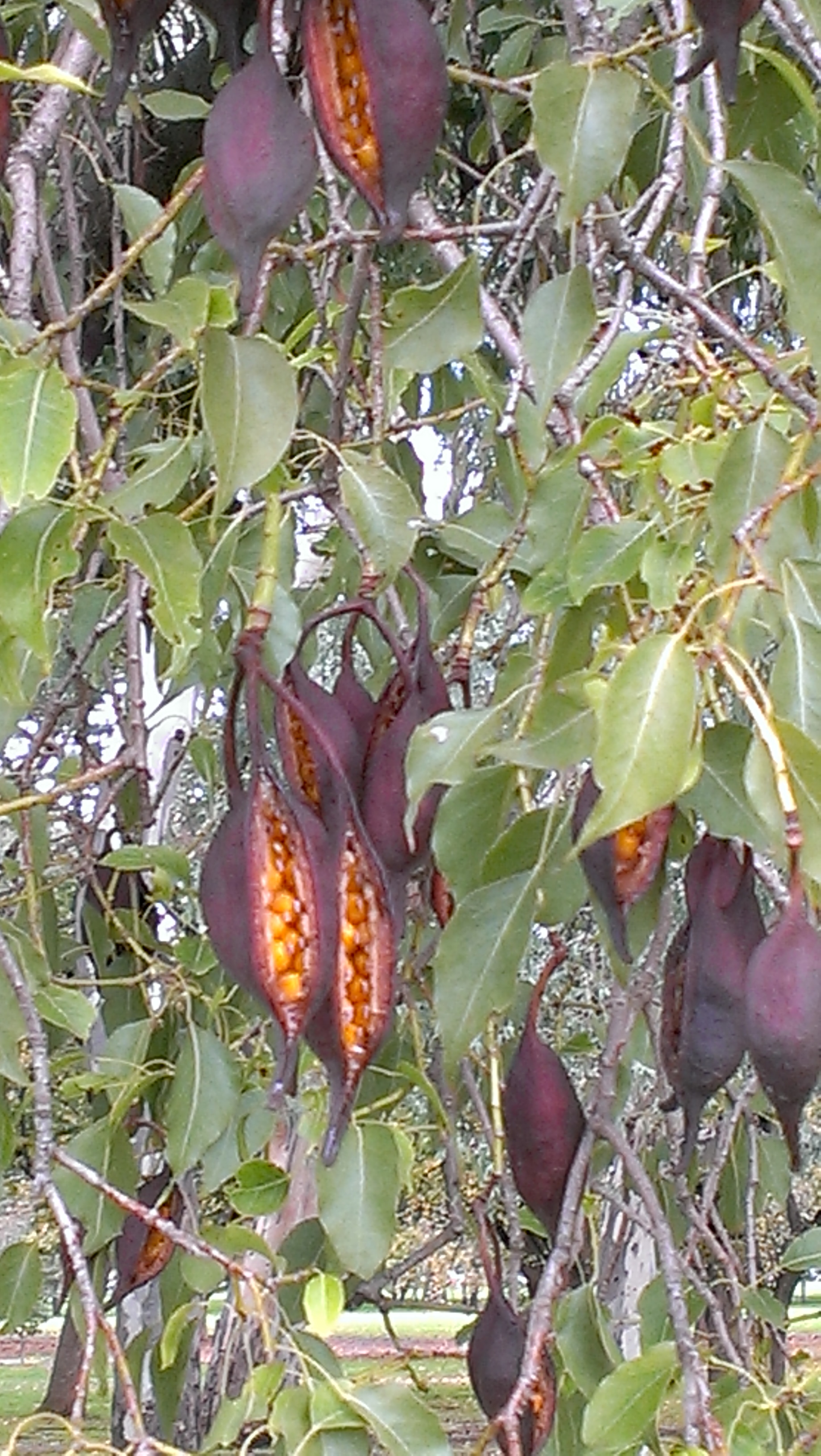
Kurrajong trees (Brachychiton spp) are in fruit in the parklands and suburbs.  They are native to Australia, but not my part of it.

IMAG1397

The seeds are edible when roasted, but the fact that they come nestled into their little boat-shaped pods in a bed of irritating hairs puts a lot of people off (I’m one of those people)!

We went for a run by Victoria Park Racecourse a few weeks back, and there were many. Some with glorious lichen-covered trunks.

IMAG1392

Here is the whole tree…

IMAG1398

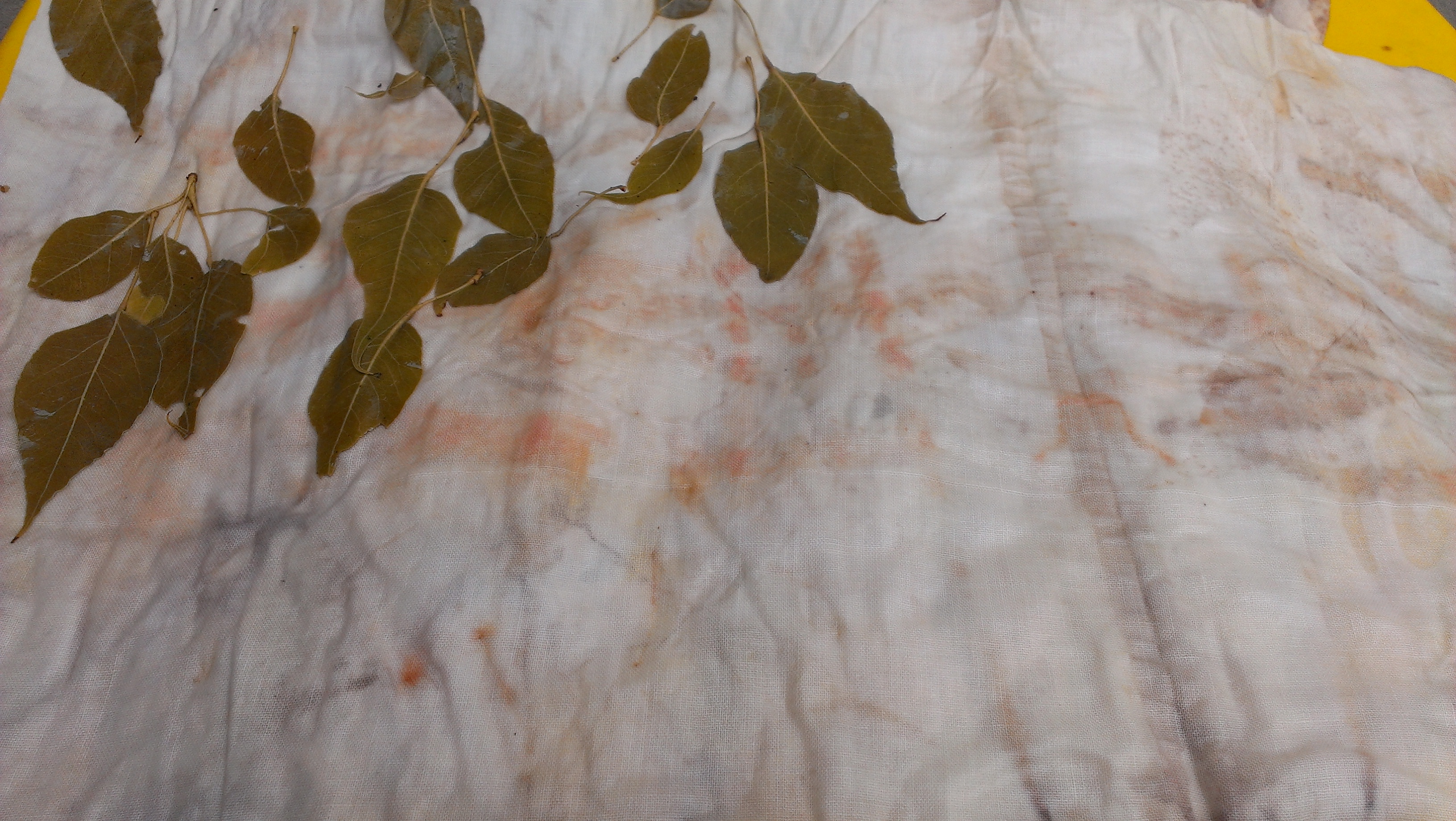
And evidence that it is not on the verge of becoming a world-renowned dye plant.  In this image you can see my test piece, with half the leaves removed from it.  The smudges of colour you see have transferred through from other samples in the same bundle.  Nothing from the kurrajong leaves my beady eye could detect.

IMAG1415

2 Comments

Filed under Dye Plants, Leaf prints

Eucalyptus Nicholii

I finally found E Nicholii, growing in Botanic Park. My beady eyes have been searching the suburbs of my city for this tree as I ride past, to no avail until now.

IMAG1407

This is such a finely-leaved tree!  Perhaps I have failed to identify it if I have seen one fully grown, mistaking it for another kind of tree altogether.  I had one growing in a pot but it suffered too much through summer. It is also the only tree I have ever seen as the subject of a public notice at Guild, where I once saw a hand lettered note asking if anyone could supply E Nicholii leaves for a dyer. My friend’s godmother–another dyer–who lives in NSW, recommended E Nicholii as her favourite dye plant.  These are some of the reasons I was trying to grow it in a pot.  I have given that up and we have a tiny specimen growing in the corner of the back yard.  And now–the reason why people are so keen!  I think this print is sensational.

IMAG1428

See that big black splodge?  I have wondered why I get one of these once in a while (and needless to say I have had a few theories).  Just recently the penny dropped.  Or should I say, the washer dropped–because that is what actually happened.  One of my dye pots has a glass lid with a knob screwed into the centre of it. All these eucalypt dye baths have eaten away at the metal of the screw and washers.  One washer recently fell off altogether, as the hole in it simply had been made too large for it to stay in position.  So… there has been an inadvertent contribution of iron to some of my dye baths, and some unintended black smudges where iron water drips down onto my bundles from above–since this lid is convex, I have preferred it when I have large bundles in the pot.  Aha!  Another mystery solved.  This may explain some of my surprise dye bath outcomes, too…

3 Comments

Filed under Dye Plants, Eucalypts, Leaf prints

Dyeing in Katoomba–and some local-to-Katoomba eucalypt species

Just recently I had a short holiday in Katoomba (New South Wales).  I spent part of a day doing some dyeing with a group of friends who meet as a textile group.  One of my dear friends did a lovely job of organising a space to meet.  The group had a lot of great skills–with artists, a chemist, bush regenerators, plant identifiers and a librarian among them.  They had read and been inspired by Eco-ColourIndia Flint‘s fabulous book on natural dyeing in which she sets out the eco-print process.  But they had not had a great deal of success and some had formed the view that we have special trees in South Australia.  Of course, we do have special trees in SA, and so do they in NSW!  I tried to explain that it was far more likely a question of species than state boundary…

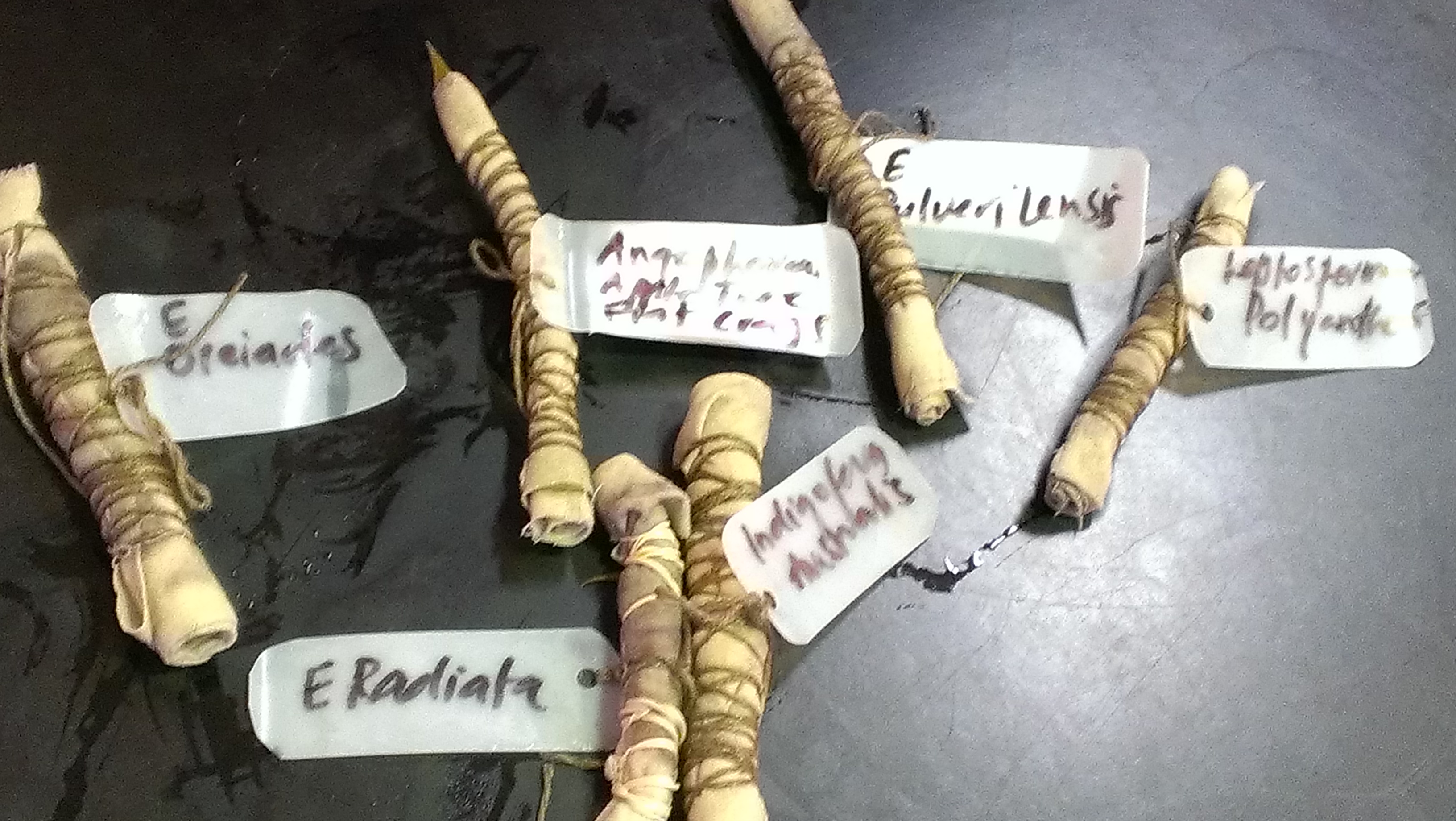
I love the stages in this process of setting up and bundling…

IMAG1508

Cooking…  we ran one pot with vinegar, one with iron and one with onion skins (the orange bundles have spent time in the onion skin bath and then been moved to a different pot).

IMAG1532

And then the big reveal!  It reminds me of that fantastic Judy Horacek cartoon… which by coincidence my friends have up at their place in Katoomba.  Please follow the link to be introduced to a wonderful Australian cartoonist–and to see the cartoon!  E Scoparia and E Cinerea on wool:

IMAG1559

With so much expertise–and because my wise and sweetheart friends who were hosting our holiday as well as dye day had been out collecting and applying plant knowledge–we were able to try out some local species.  These samples are all on silk noil scraps, and have all been in hot water for at least an hour–just to test their potential really.

IMAG1513

We couldn’t resist trying Indigofera Australis even though it didn’t seem likely a hot process would be ideal for an indigo-bearing plant.  It wasn’t, leaving almost no mark except when dipped in an iron modifier.  Here it is, before and after.  The yellowy-greenish tinge is an effect of photography indoors.  Sorry about that part.

IMAG1521IMAG1561

E Radiata, the Narrow-Leaved Peppermint:

IMAG1515

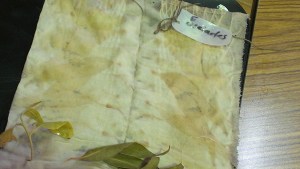
One of the especially beloved and tall local species is E Oreades, the Blue Mountains Ash–a truly local-to-Katoomba tree:
IMAG1517

And finally, E Pulverulenta, the Silver-leaved Mountain Gum, is a vulnerable species in the local area.  As a result, people who want to make sure it lives on are planting it in towns, and this sample came from a street tree.  Dyers will now have an additional reason to support the conservation effort!

IMAG1518

A big, big thanks to my Katoomba friends, and to the textile group for having me!

7 Comments

Filed under Dye Plants, Eucalypts, Leaf prints, Natural dyeing

Plum pine 1

Podocarpus elatus is fruiting in Botanic Park.  I rode past recently with my beady eyes alert, looking for this tree.  I’ve investigated its qualities previously and discovered the fruit is edible.  And today, there they were, lying on the ground in plenty.  They offer plenty of weirdness by regular fruit standards, since the seed is outside the fruit.  One of the less common forms of fruit in my limited experience!  Here they are on the tree…
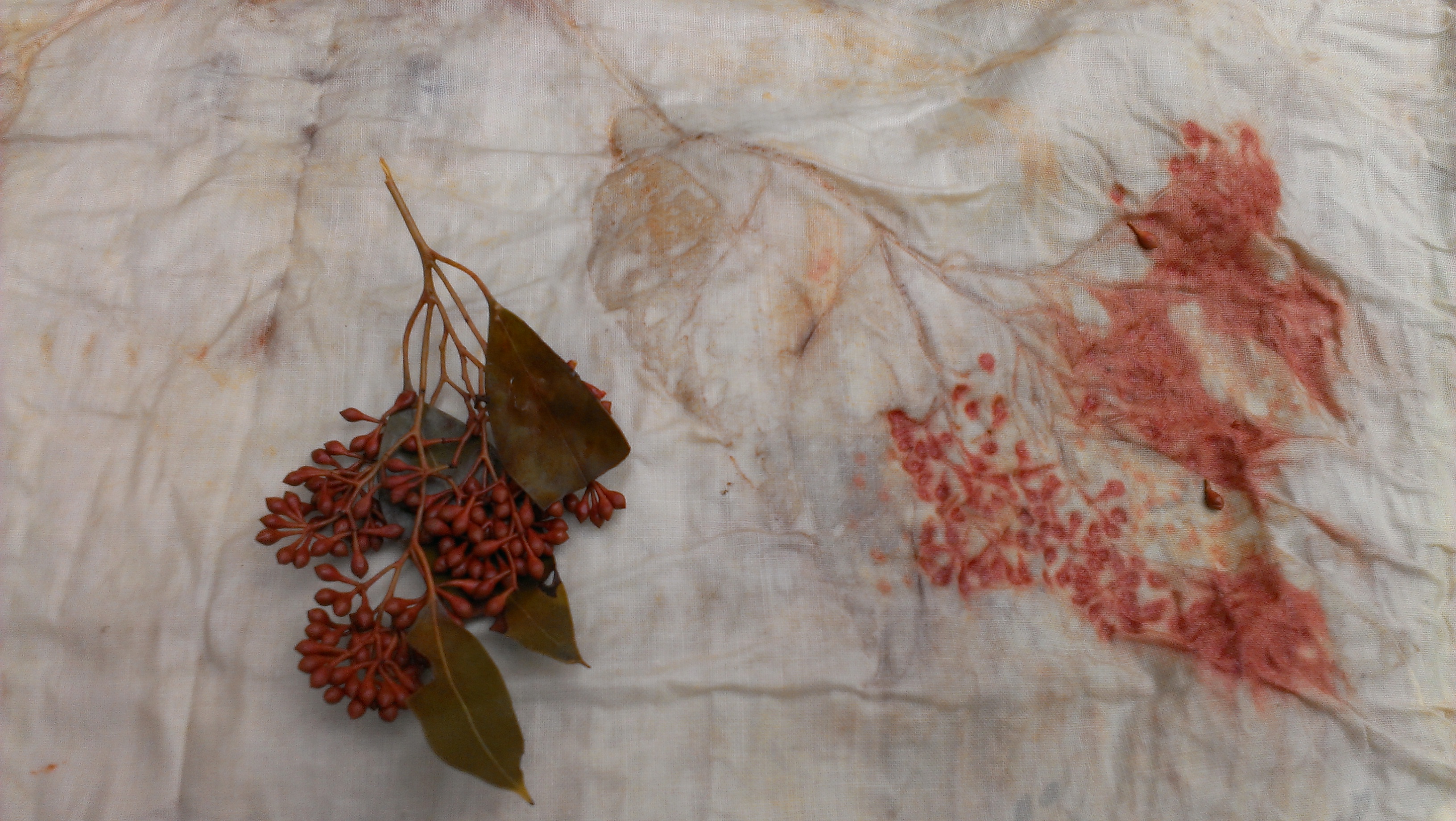
IMAG1412

And on the ground below.

IMAG1413

This is the tree itself.  It is native to Australia, but it is a rainforest tree.  For those who don’t know…  I am not living anywhere near a rainforest.  South Australia is generously described as having a Mediterranean climate.  Those less generous just call it a desert, and a fair amount of the state answers that description.

IMAG1414

I tried eating one of the fruits and it was just as I remembered it from last time: subtle is the most I could say about the flavour, and the word ‘mucilaginous’ came to mind immediately.  If there is a commercial application for this fruit perhaps it would be… lubricant.  Or perhaps it could be the gumbo of Australian bush food desserts.  I tried leaf prints… but nothing too exciting came of it.

IMAG1432

I twisted the seeds off the fruit and soaked the fruit overnight–pitting plums has never been so simple.  No change in the colour of the water.  I cooked them for almost an hour–water a deep plum colour by now–and then threw in a  sample card and some silk thread.  Soon after that, the alum mordanted wool looked almost blue, and the other fibres (cotton, silk, wool) looked pink.  After about an hour of heat, the alum mordanted wool was deep grey-blue, the wool was deep rose-pink and the other fibres looked paler shades of pink.

IMAG1462

Needless to say, this outcome made me think I should go back to that tree 🙂

7 Comments

Filed under Dye Plants, Leaf prints, Natural dyeing

Unidentified Eucalypt Buds of Wonder

I have seen this Eucalypt before, and dyed with it before. At most, I have had apricot on silk from the leaves.

IMAG1399

Sadly, I can tell when I am looking at the same species (I think) but have not been able to identify the species.  If any reader knows the species, I’d be glad of your advice.  The bark is a lovely rough tan.

IMAG1393

Then I found this one in full bud and beginning to flower, in early June.

IMAG1394

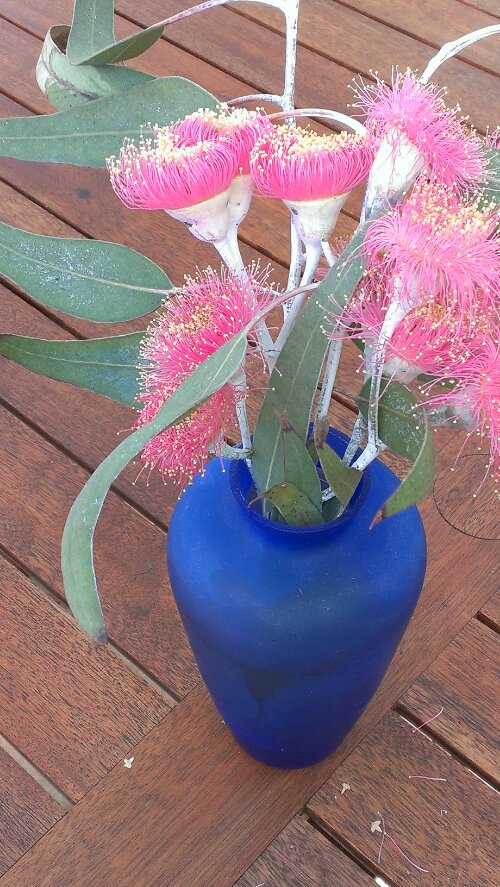
I decided to try again and got the same result: the leaves barely make a mark, but oh my!  The buds!
IMAG1418

2 Comments

Filed under Dye Plants, Eucalypts, Leaf prints

Eucalyptus Caesia

image

My parents came around one weekend as autumn was beginning and brought gifts from their garden: quince, guavas, mandarins, and these lovely flowers from their front yard. Eucalyptus Caesia ‘Silver Princess’.

It has been quite a season. We have made an incredible amount of pesto from our basil plants and had enough to share as well.  The final pesto fest was last weekend, shared gleefully with a friend who is a wonderful cook. We also made a walnut and pomegranate molasses dip of wonder, a rice pudding flavoured with mastic and orange flower water and some fiendishly rich and delectable mastic and rosewater icecream.  Finally, she read poetry.  Exquisite!

image

Once the flowers wilted, into the pot the leaves went.  Nothing too exciting came out, which has been my experience in the past.  However, the lovely weeping habit, young white bark, minnirichi bark on the trunk (the bark peels in vertical strips in a rather amazing way) and the spectacular flowers… are probably enough delights for one plant to provide.

IMAG1374

2 Comments

Filed under Dye Plants, Eucalypts, Leaf prints, Natural dyeing

Wash fastness: Eucalyptus leaves on cotton knit

I leaf printed a cotton t shirt on 10 February 2013.  I prepared the fabric with soymilk and dyed using iron and E Scoparia leaves.

Here it is on my office desk after its first trip through the washing machine at 30C and its first trip to my office on my back as I rode to work. The front and the back (with the part that was outermost in the dye bath at the upper mid back):

IMAG0950 IMAG0951

It still smells strongly of eucalyptus when you’re up close (and sweaty), but the smell of soybean is almost gone, or overwhelmed by eucalyptus.  I am thinking I can take a photo of it in the (relatively) controlled light conditions of my office at regular intervals and see what we can notice.  One wash more and the smell of eucalyptus was fading a good deal.

Here it is in May, 12-15 washes later:

IMAG1289IMAG1288

I am just not sure about the influence of light on this image… to me as the person wearing the garment, it seems to have changed little except that the part on the upper mid back where the fabric was exposed to the dye bath (and consequently, to  iron) is much lighter.  There’s no doubt the photo looks much less orange, though the leaf prints are still entirely distinct.

6 Comments

Filed under Eucalypts, Leaf prints, Natural dyeing