Category Archives: Sewing

Craftivist pennants and another handspun hat

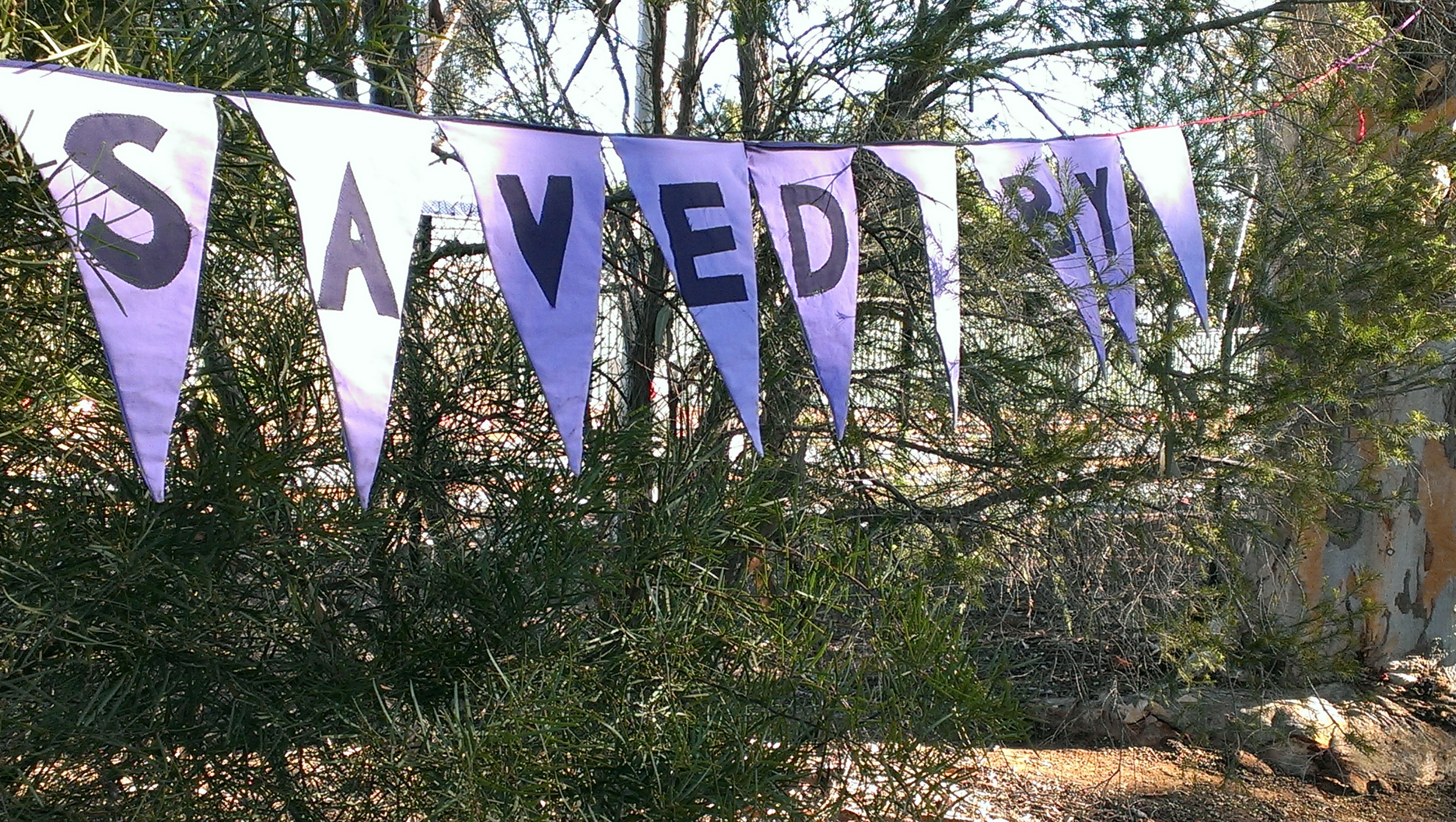
There have been some small moments of crafty completion in the recent period of day job overwork. The ‘thanks for cycling!’ bunting, which had been ripped down, was replaced after mending by a group of friends one sunny afternoon.

IMAG4425

Proper attention was paid to all its hanging particulars by willing fingers….

IMAG4426

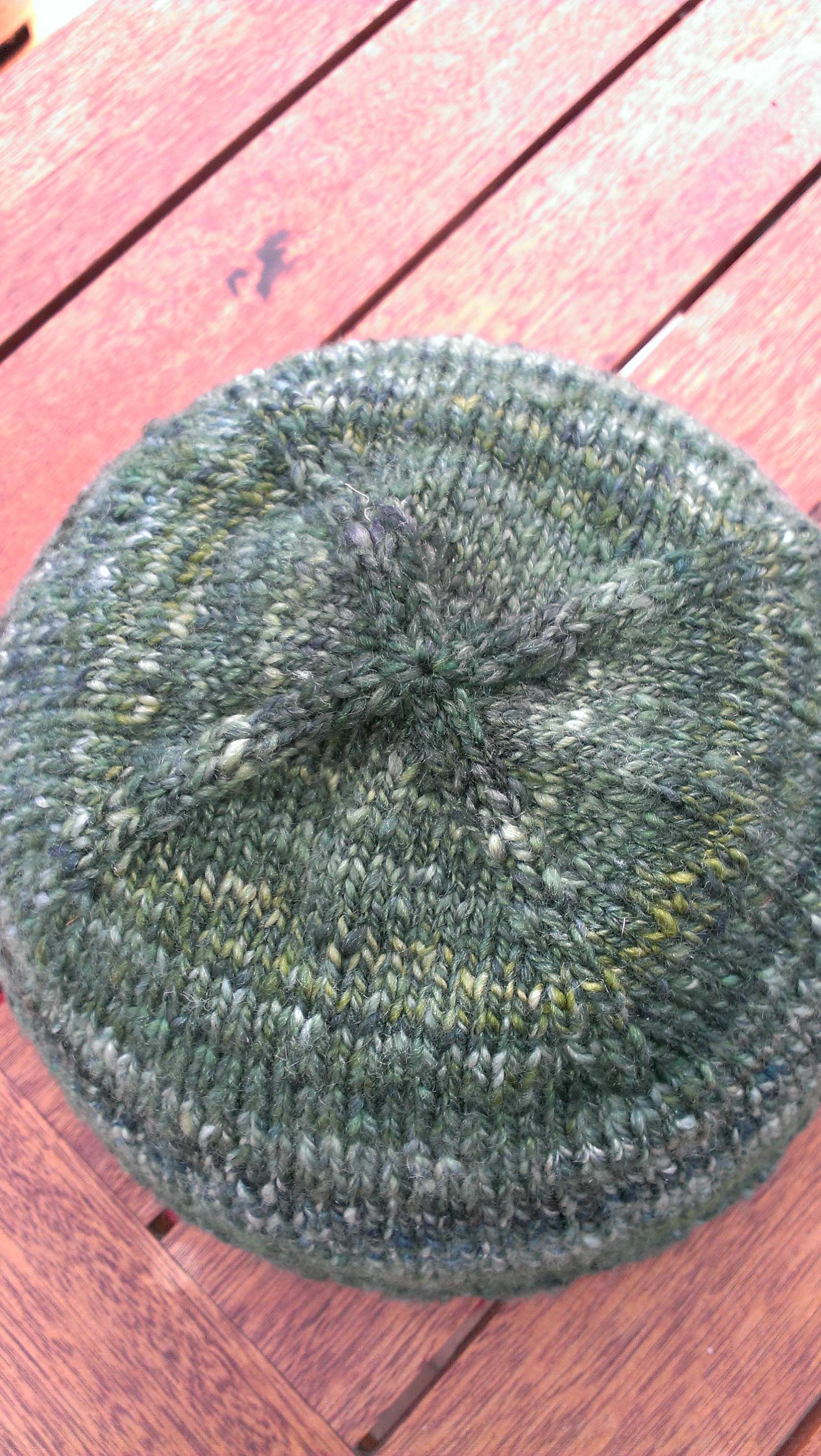
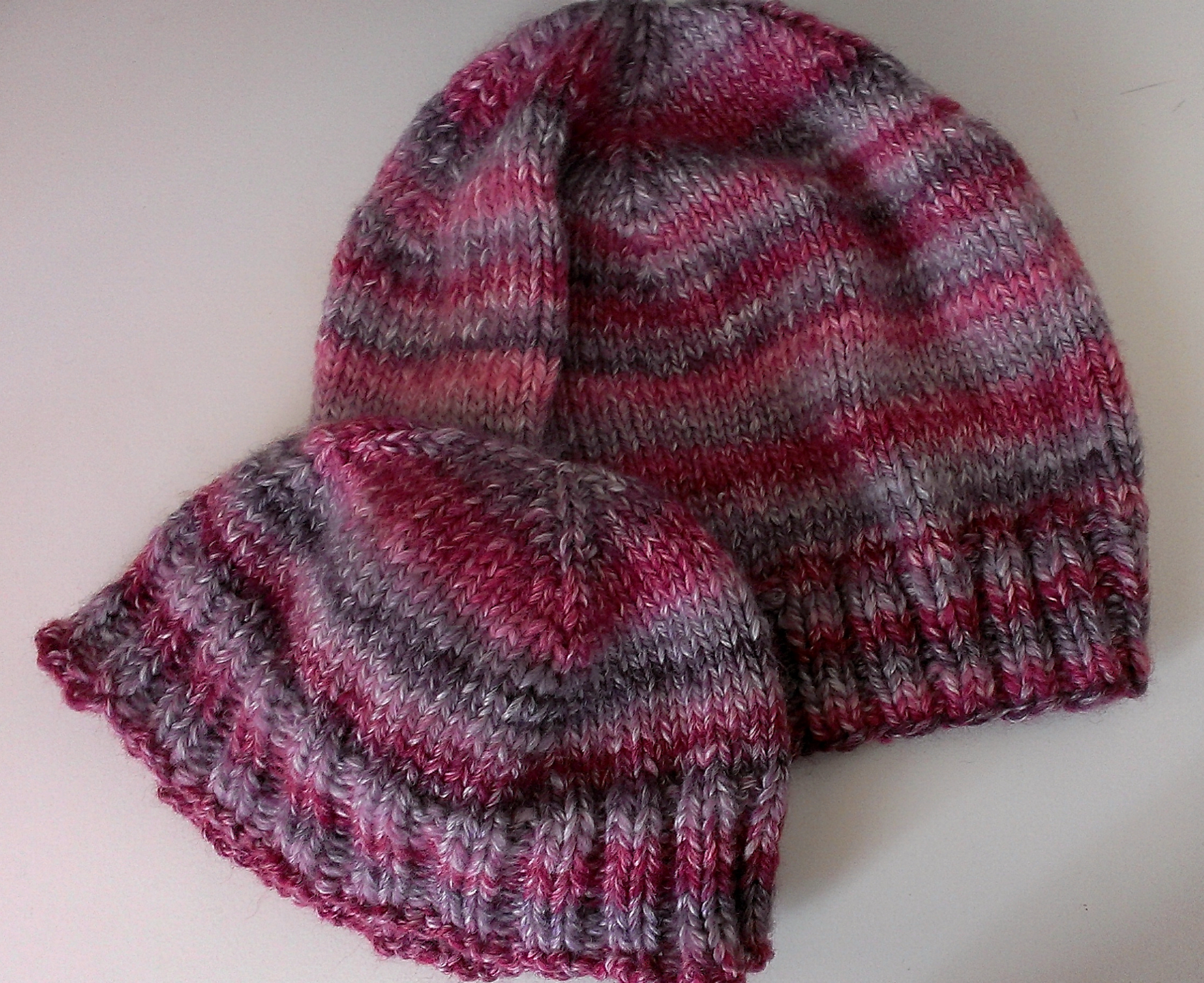
And there has been still another Turn A Square made from the remainder of a skein of luscious handspun yarn.  Here it is, modelled by a particularly willing bowl.

IMAG4414

The distinctive crown shaping of this pattern is so simple, yet so effective. 

IMAG4411

Upcoming public holidays may prove more viable crafting time than recent weeks have done… and I am looking forward to it!  I have plans!


Leave a comment

Filed under Book Review, Knitting, Neighbourhood pleasures, Sewing

Things learned 4

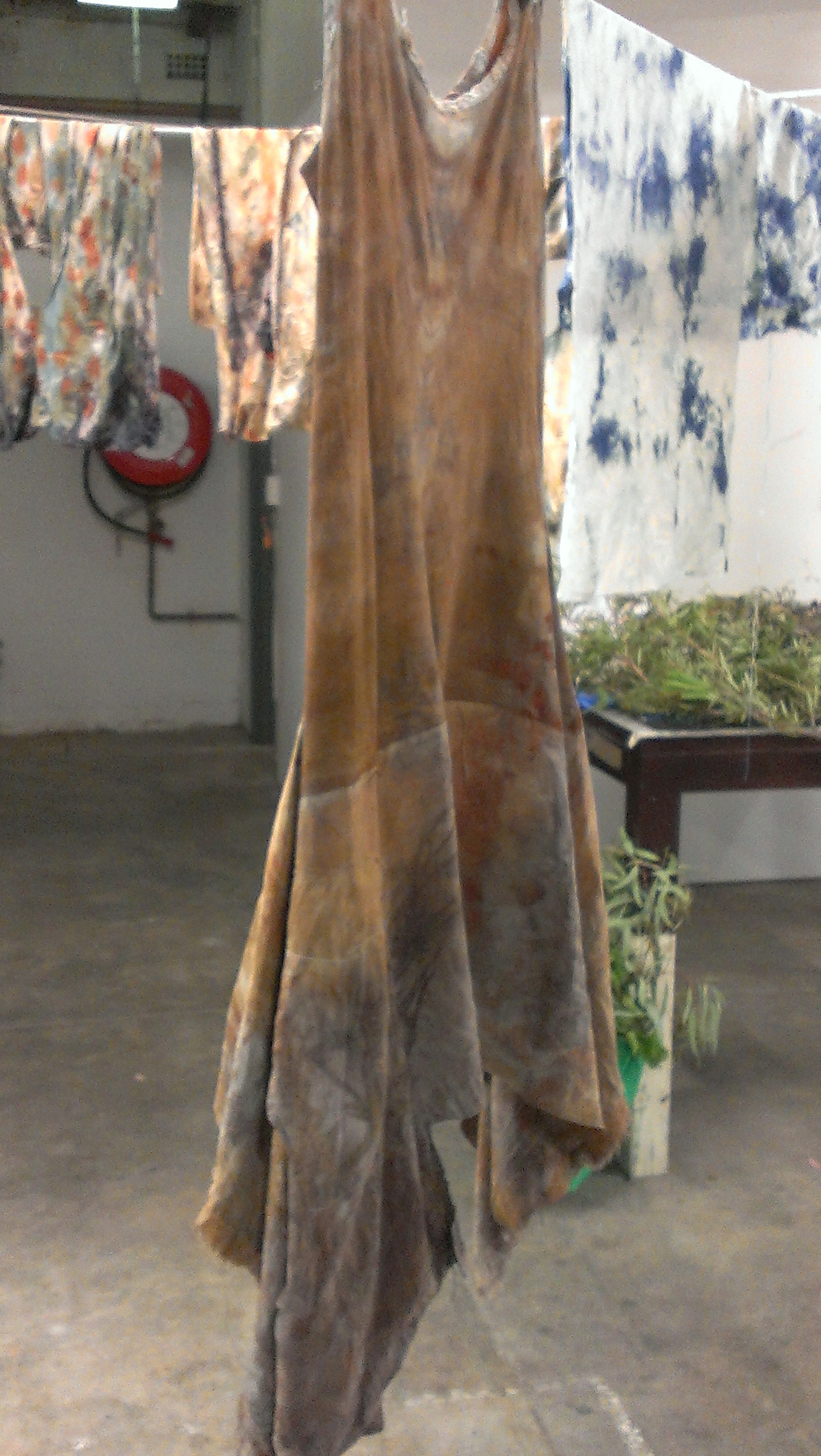
Second Skin offered lots of possibilities for learning-by-looking through the admiration of plant-dyed clothing.  India Flint was wearing her own creations every day and it was a delight to have that opportunity to see them in use and to think about their construction/reconstruction/dyeing. Other participants wore clothing they had dyed sometimes too–also a pleasure to admire.  And India brought along some garments to show. She gave permission for me to show images of this dress.   The upper part (bodice?) is a knit fabric–I am assuming it’s silky merino.  The neckline and armscyes have been bound with a different fabric: a sheeny silk that has taken up dye differently. There’s a lovely leafy detail heading toward one shoulder.

IMAG4311

The skirt of the dress is asymmetrical, and composed of a variety of fabrics, some repurposed.  There is a large pocket in the skirt that might once have been the neckline and part of the front of a shirt, replete with buttons.  I found that a delectable detail.

IMAG4310

This view shows how lush the skirt is.  I loved the generous, undulating hemline and skirt.  India gave a demonstration of how it had been created.  I loved the idea of using a variety of fabrics and textures in a single garment. I’m a plain sewer, as you may have detected, and my mind was abuzz with ideas for using some of the lovely pieces of fabric in my stash of eco-printed fabrics in this way.  Hand-stitching clearly has advantages in creating this kind of garment and coaxing all its component parts into a sweet relationship with one another.

IMAG4304

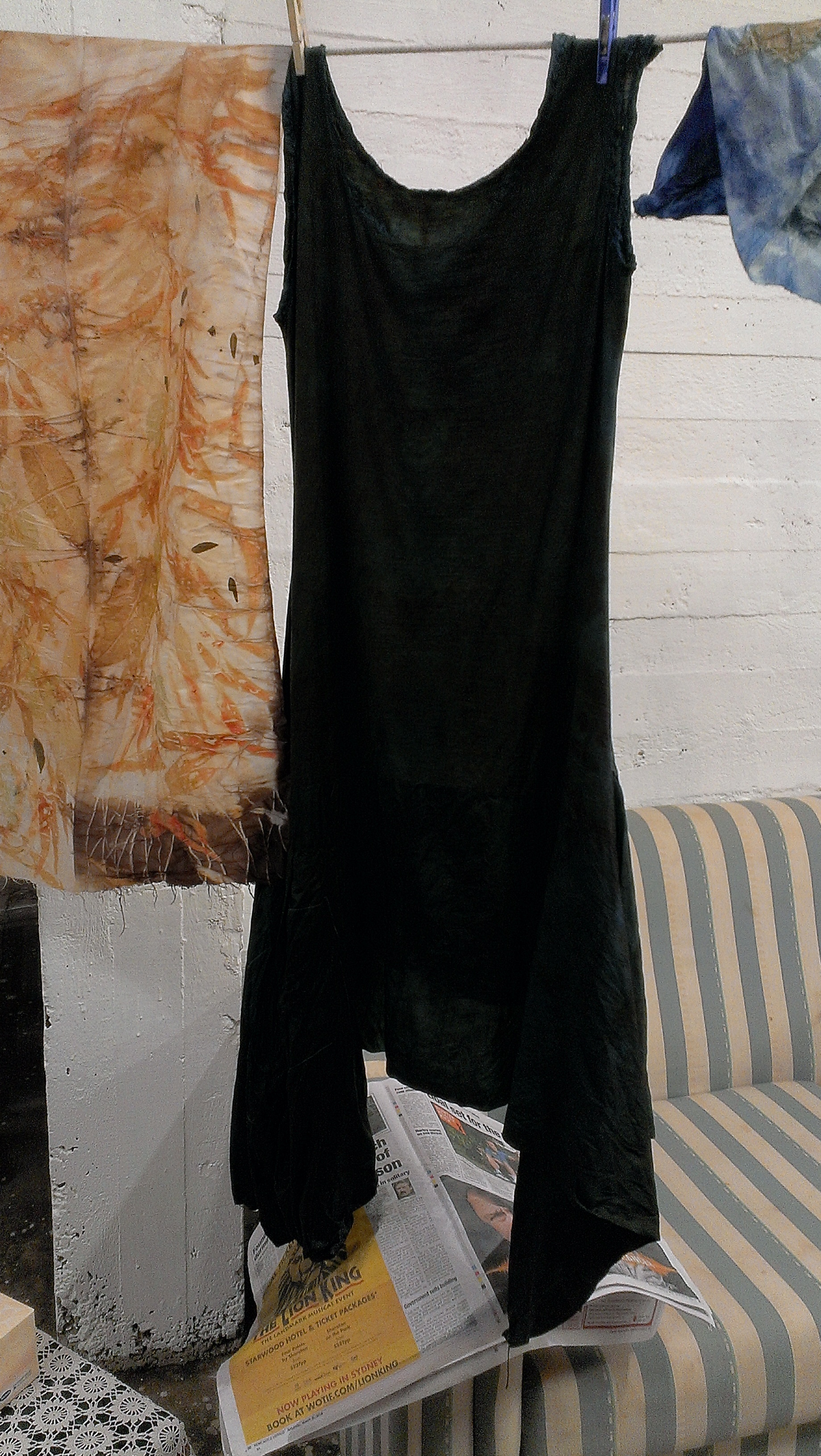
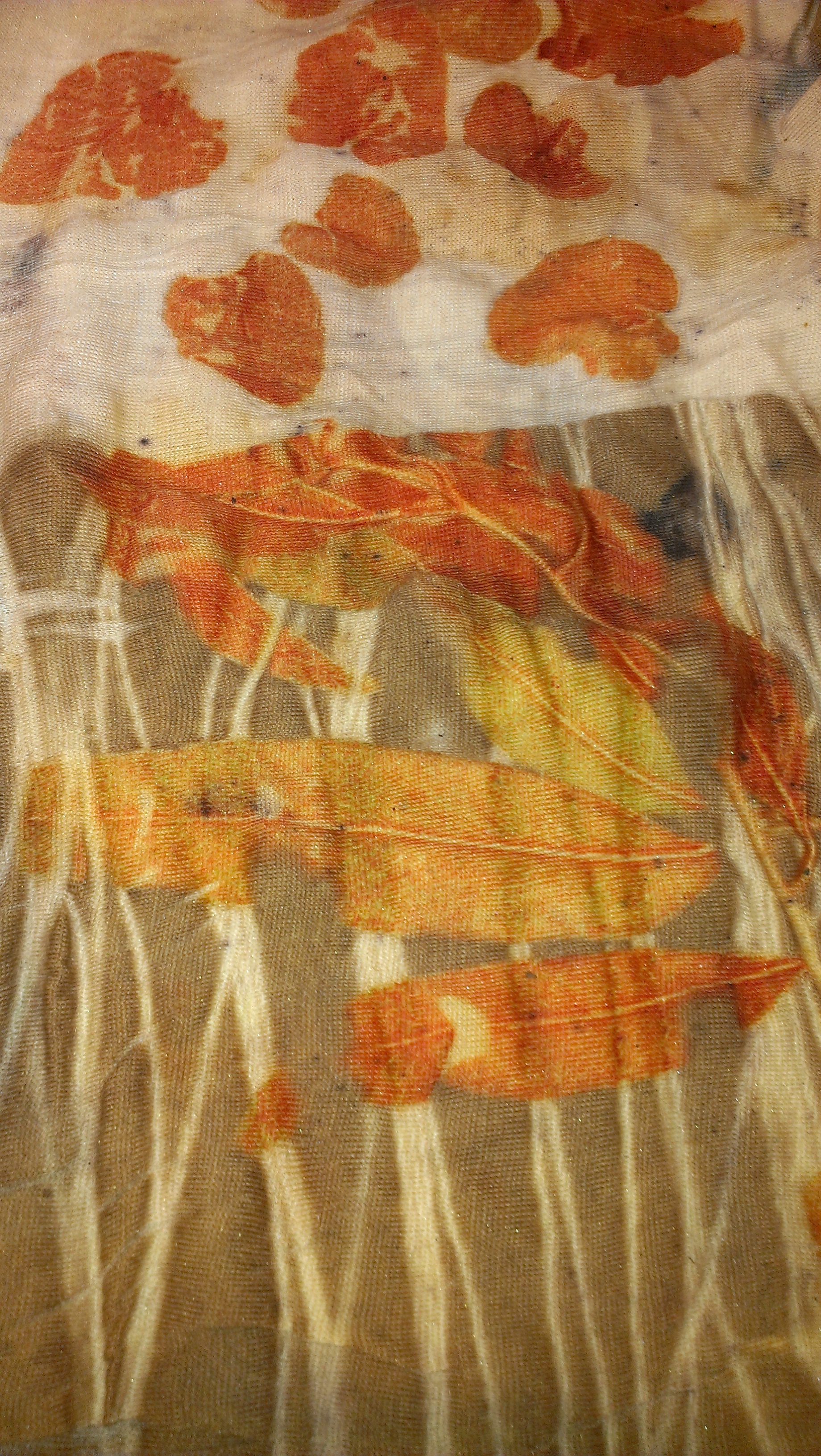
I found it really interesting to observe this use of eco-printing as a way of creating a series of colour and texture effects, rather than the way I tend to use it, in which I am aiming for images of leaves as a predominating motif.  Here is the same dress again, drying after a dip in indigo!

IMAG4359

5 Comments

Filed under Leaf prints, Sewing

Things learned 3

Have I made it sound as though there was no real making at Second Skin, and it was all about the thinking?  Well, I was surprised by how pleasurable hand stitching and the odd spot of thinking were, but of course, there was making.

It began with string. This was part of an extremely cunning method of having all your measurements to hand without any numbers attached to them.  Hand twined string is further evidence of human genius, from my point of view.  I first learned how to make it from a basket weaver and was delighted and intrigued from that point forward.  Usually I make it from daylily leaves.  But this application of it struck me as further genius.  I know I always hate the part of pattern using where I have to compare my measurements to those contemplated by the pattern drafter.  Let me tell you, “The Vogue Body” and the one I am getting around in have little in common!  So many women’s feelings about clothing are really just feelings about our own bodies in the context of an environment where very few of us have the idealised shape and there is a lot of unwanted critique of female bodies.  What genius to sidestep a large part of that drama and along with it, simplify the process of design.  My string is made from tired old cotton that didn’t improve in some dye bath or other, but there were glorious examples of silk string, beautifully crafted by my fellow workshop participants.

IMAG4246

Then there was the infinity scarf.  I made two, because when I modelled a plain cream version for my daughter she liked it so much I stitched all evening to hem hers and bundled it next day along with the frocks… and promptly forgot to take a picture.  Mine, of course, still needs one hem!  But it has been touched by indigo as well as leafy goodness of other kinds:

IMAG4487

I like it very much!  I’d better finish the hem…

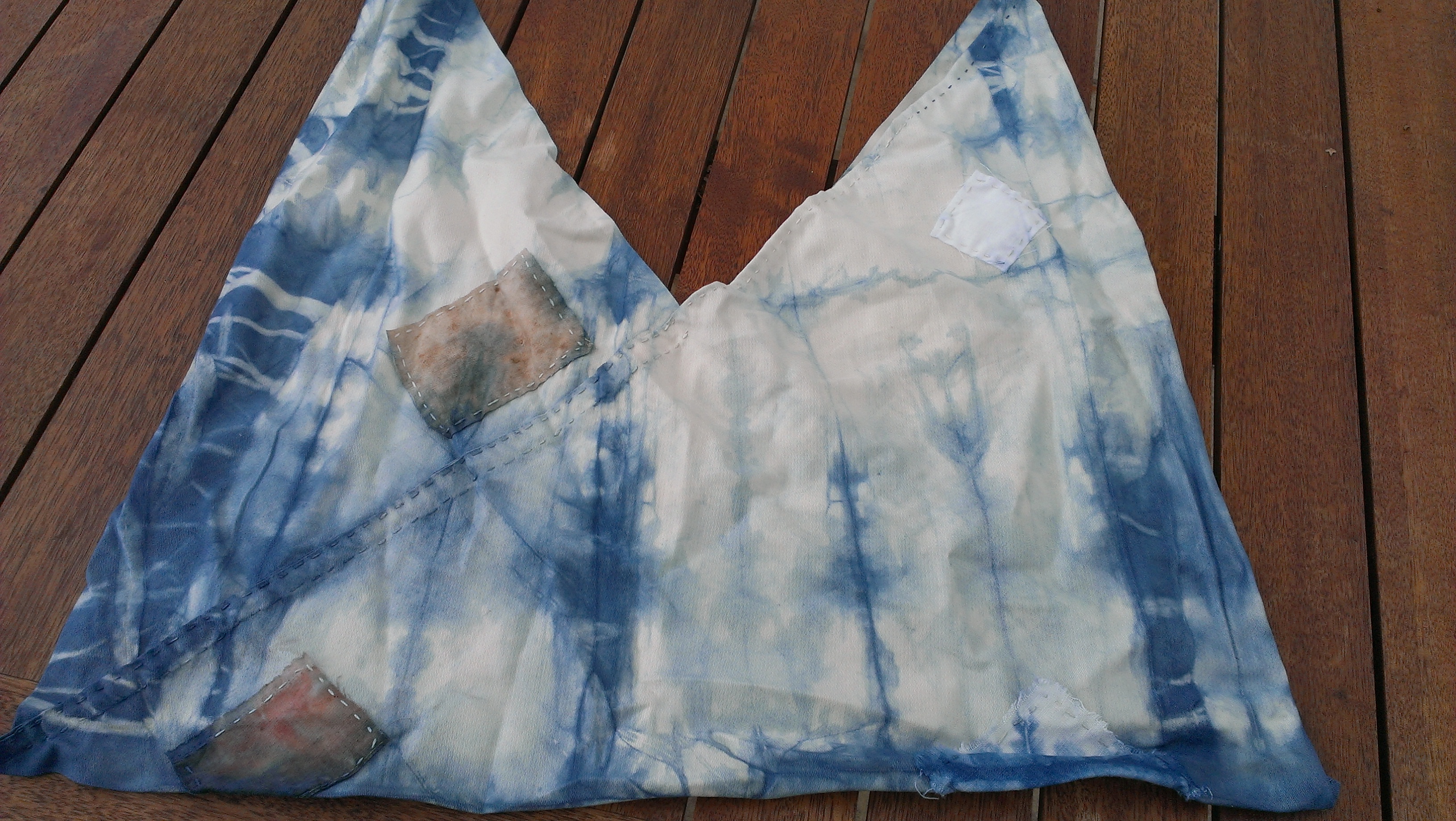
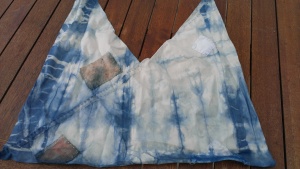
We had the good luck to be at Beautiful Silks in the aftermath of workshops on Indigo.  The bag below has also been dipped…  India said that this style of bag revels in the name tsunobukuro (I hope I have that right), which evidently translates as ‘horn bag’, because, of course, it has horns, which you tie together to create a handle.  Japanese design is so often beautifully economical–I did not fully grasp the geometry of this bag, but made it anyway and finished it a few nights ago.

I am not sure I can explain the feeling I have about ‘hornbag’ as an Australian…  and perhaps people who haven’t encountered Kath and Kim won’t be able to understand even if I try to explain this Australian phenomenon.  Those want to try could start with Wikiquote’s take on it.  I won’t trouble you with a critique of Kath and Kim right now, after all, we’re talking about things learned and things made!  Anyone in Melbourne could still take advantage of the fermentation indigo vats at afternoon sessions using them at Beautiful Silks.  The vats were set up when master indigo dyer Aboubakar Fofana was there recently.  Our getting to use them was an unexpected bonus.
IMAG4485

And finally, there was a dress.  It features E Crenulata leaves, happily found in a park near where I was staying.  India said: ‘everything will be beautiful in the end.  And if it isn’t beautiful, it isn’t the end.’  I think this is a beautiful piece of fabric, and I learned a lot from turning it into a dress.  Partly because of my feelings on the subject of myself in a dress, and partly because of the inevitable features of a first attempt (in my case), I think this isn’t finished.  Or perhaps it is finished, but I haven’t found its true owner yet.  But I am still glad to have made it and learned from it.  That’s enough for me.

IMAG4349

My eyes popped out when I saw the number of hits on this blog for today, (it’s usually a friendly but low traffic part of the glorious online universe) and then I realised there was a link in from India’s blog.  Thanks for stopping by if that is what brought you here.  If it wasn’t, and this workshop sounds like it’s for you, India Flint is running this workshop in Victoria later in the year, and there may still be places if that sounds like the holiday for you!

35 Comments

Filed under Natural dyeing, Neighbourhood pleasures, Sewing

Things learned 1

I finally went to a workshop with India Flint: Second Skin, at Beautiful Silks in Melbourne.  It’s an extravagant thing to go to another city and spend three days doing things you enjoy for the sheer pleasure of doing them and learning more–and what a treat it was!

India began each day with a stretch and a lovely metaphorical invitation to focus on the here and now of our time together.  Each time we did it, I thought some more about how I don’t do this at the beginning of my days, but that they would probably go a lot better if I did.  I loved spending that little piece of time with my mind on an image, before leaping into the excitement or the sheer tasks of the day.  I managed to remember to do it again at work once this week so far…

IMAG4275

I thought a lot about being a teacher at this workshop.  I make my living teaching.  One of the reasons I spend a lot of time learning is that I love learning and I think human beings are one of the few creatures who must, of necessity, learn for the entirety of our lives.  I think it is a skill for life as well as a delight.  But another reason is that as a teacher, it is immensely helpful to be a learner over and over again and be reminded constantly of the joys, frustrations, excitements and fears that attend learning for most of us.  To be confronted by places you thought you understood and suddenly realise you didn’t.  To see the bigger picture open up.  To feel fear of failure.  To find some things work for you and some don’t.  To notice you learn differently than others.

IMAG4267

I always find it very interesting to be in the presence of a teacher whose approach is really different to mine.  I think that great teaching draws on the whole of who you are as a person, and it is only right and appropriate that there are many great teachers whose styles and approaches are exquisitely different.  India is unquestionably a deeply different teacher than I am. I have often thought that Eco-Colour and Second Skin are more inspirational than instructional.  That they invite experimentation rather than providing a step by step guide to anything.  I don’t mean there are no instructions in these books.  Of course, there are.  But I think the weight of India’s teaching strategy is on inspiring and challenging people to make techniques their own and to discover what is local and useful to them in their own lives and environments.  I am much more of an instructor, and this is, in part, because I’m a structured and linear thinker, comparatively speaking.  Freeform creativity… not so much!  I have spent quite a bit of time in the last few years honing my capacity to deliver a short, inspirational speech, because I notice that while I see usefulness in a technique or skill and set about practicing it until I’ve mastered enough of it to satisfy myself, many others do not feel moved in this way (at least, in my current context).  I love to be inspired, but I can accept less and still feel motivated and act on that motivation.  I notice a lot of other people can’t.

IMAG4268

I was so impressed by India’s capacity to inspire.  Understand that I don’t wear frocks and went to a class where you make (among other things, but principally) a dress.  Understand that when I make a garment I usually start from a pattern or draft one from a garment because I don’t believe I have much capacity for design.  Also, understand that the expression “measure twice and cut once” was liberally applied in my childhood.  This is the base from which I watched India demonstrate zero waste drafting of a dress and then freehand cutting the design, with many examples of how this might be adapted or modified or experimented with.  I eventually found myself thinking that this was so exciting it was a shame I couldn’t just play with these ideas every day for the foreseeable future… I could picture all manner of things taking shape in my mind.  Curiosity, play, particular fabrics I have at home, shapes… then, a short while later, I was standing in front of a length of rather expensive and lovely fabric, with a pair of scissors and a hand-twined string.  Terrified!

IMAG4269

It was pretty funny, and partly because I have watched people I teach having that sense of possibility and capacity, and then watched them attempt something new and feel their fear return and their doubts re-enter.  If you’re lucky, courage and inspiration win out until the first hurdle has been mounted, a sense of possibility begins to solidify and the hard work begins…

IMAG4273


13 Comments

Filed under Natural dyeing, Sewing

Leafy quilt back finished!

IMAG3956
On the weekend, I finally stitched together the back for a quilt that has been in some kind of progress through most of the last year.
IMAG3952
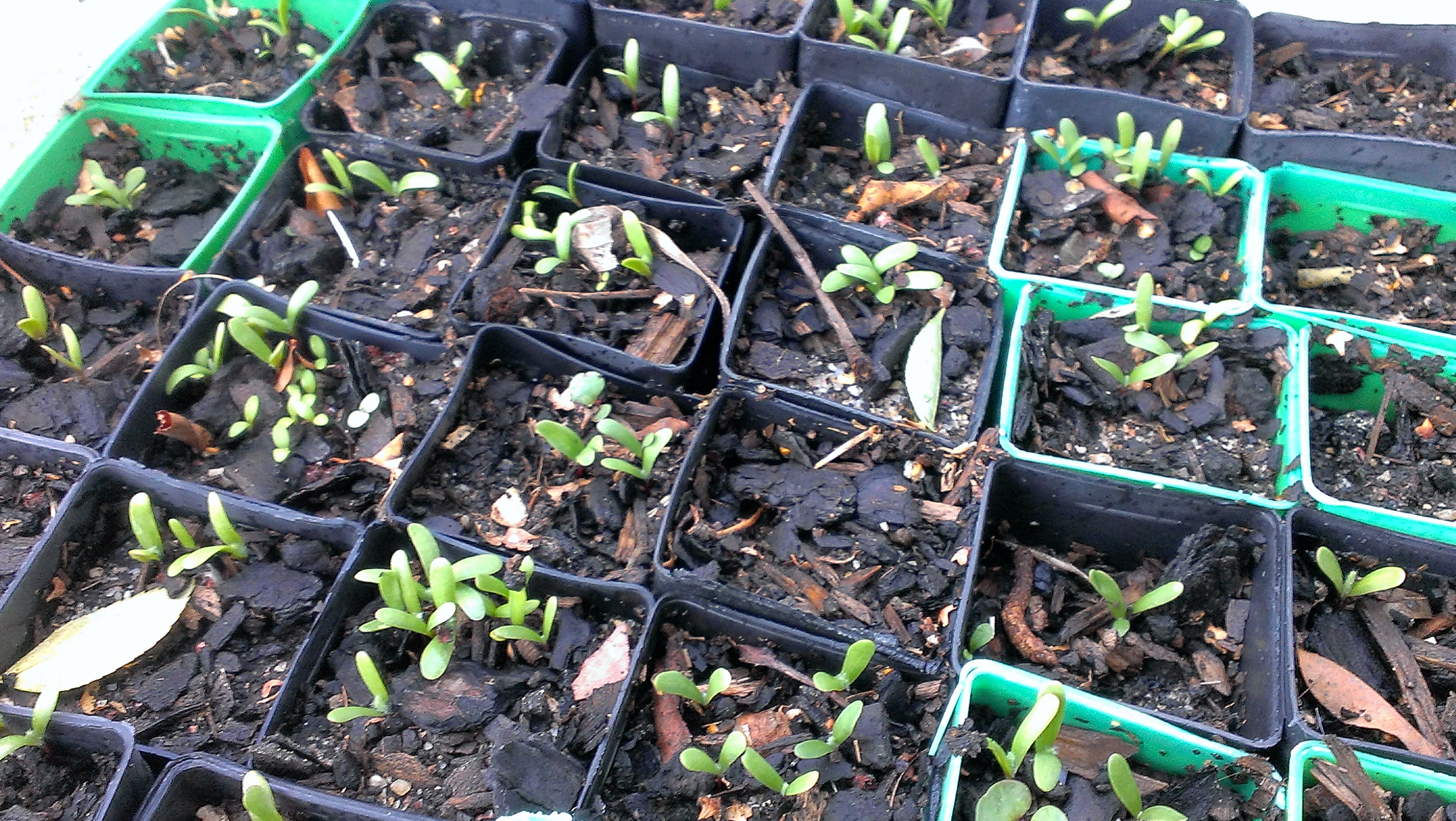
The blocks for the front are finished and I hope I have eco printed enough fabric for a border. A friend who was over on the weekend advised me about the sashing. So… now I need to get started on piecing the front together. Don’t hold your breath! Meanwhile, the saltbush seed I collected while we were on holidays is coming up and so are my vegetable seedlings, and I’m contemplating what to do with the home grown indigo and when I should do it!
IMAG3893

5 Comments

Filed under Leaf prints, Natural dyeing, Sewing

Thanks for cycling! The bunting.

There is a new segment of cycleway near our place that has been one of the upsides of living beside a major engineering project for most of the last 2 years.  It seems only right to celebrate.  The new segment isn’t terribly long, but is one of those little pieces of path that make a big difference to a cyclist.

IMAG3531

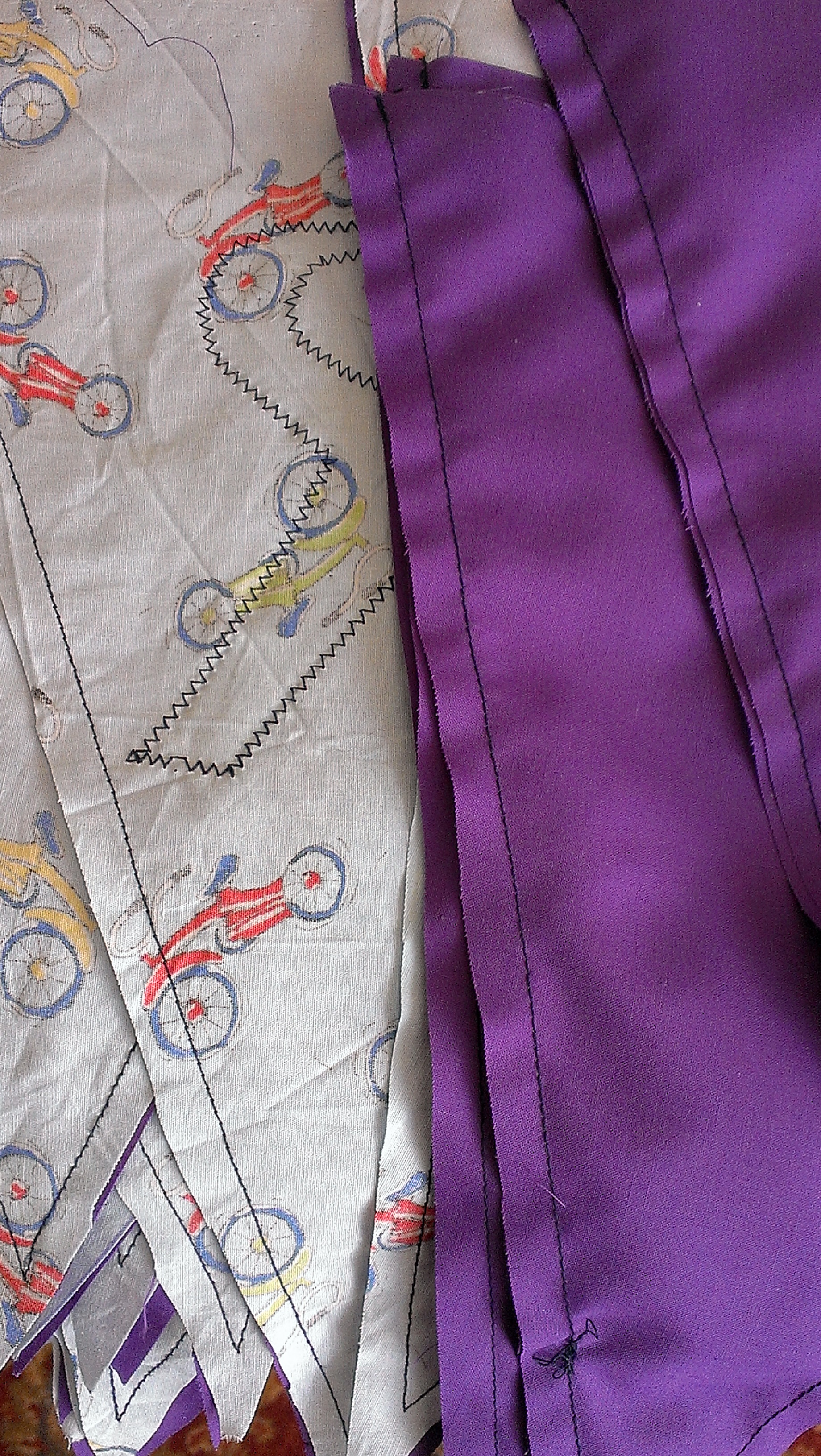
I started out with some bike themed fabric.  It was originally intended as a shirt for a small bike loving friend… but he grew quickly into quite a large, keen cyclist and my sewing queue moves slowly sometimes.  Some of the fabric became a bag and the rest was sitting there ready to go.  I decided in the end that worrying about aligning the grain was beside the point for bunting, so relentlessly pieced leftovers together until there was just about nothing left.

IMAG3712

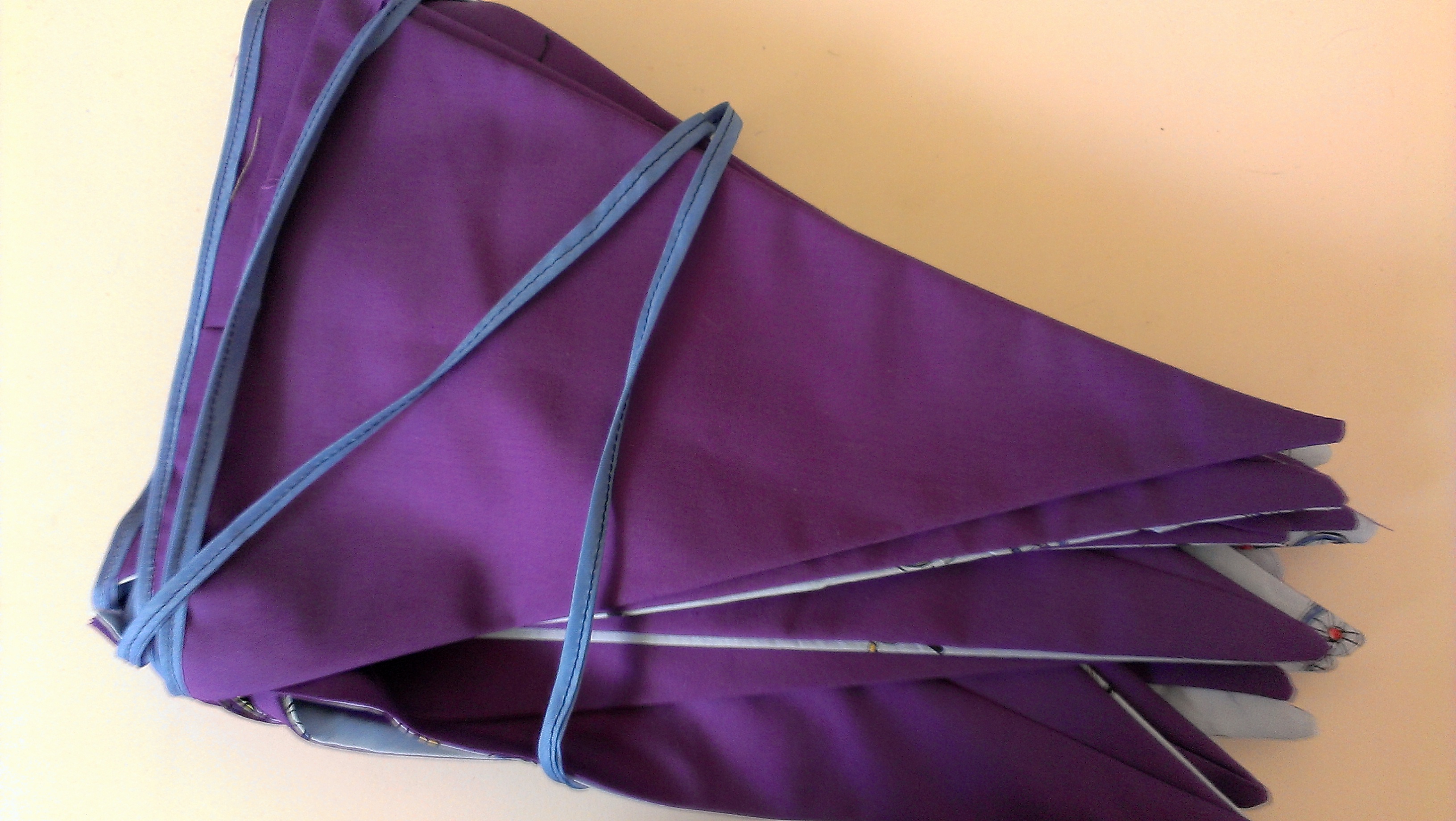
Then I moved over into some purple fabric.  It dates back over fifteen years to when there was a shop nearby that sold offcuts from sheet and quilt manufacturing.  I made all kinds of things from those offcuts!  This came in one of the odd shapes that I am sure could be explained by someone who had been to the factory: a square with three squared off corners and one rounded corner.  Soon it was all triangles, some constructed from two smaller triangles.  On went the lettering.

IMAG3882

Some more of my vintage bias binding was pressed into action, and pretty soon…

IMAG3884

Last night a friend was visiting and she was keen on hanging it, so we had bunting hanging before dinner.
IMAG3921
Hopefully it will cheer up weary cyclists (and energetic ones) as they pass.
IMAG3935
IMAG3936

4 Comments

Filed under Craftivism, Neighbourhood pleasures, Sewing

Well Made Guildhouse Members Exhibition

This week I had to go into the centre of the city for a work related event, so I left early and went to Well Made, an exhibition of members of the Guildhouse at the Light Square Gallery.  India Flint is one of those members, so I thought I’d go along.  I thought of you, blog readers, while I was there, and wished I could take you along–especially those who live outside our fair city.  I just wasn’t sure it would be OK to take pictures inside the gallery.  In fact, I thought it probably wouldn’t be OK and that I should err on the side of refraining, even if only because the artists undoubtedly have better images of their work than my photography would create.  So I took pictures of the building, and found you links to follow to see the works–or other works by the artists concerned.  Click away!

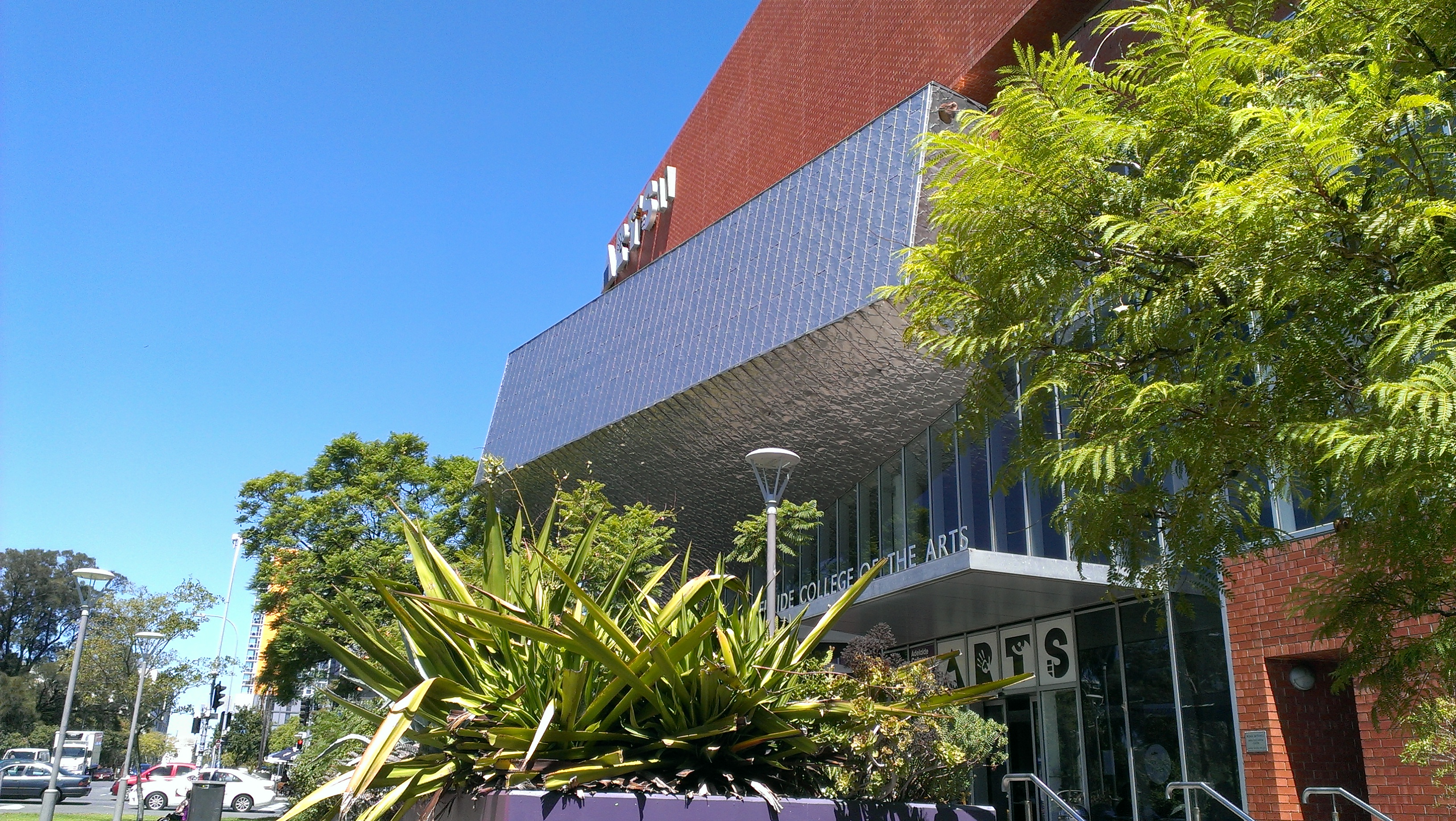
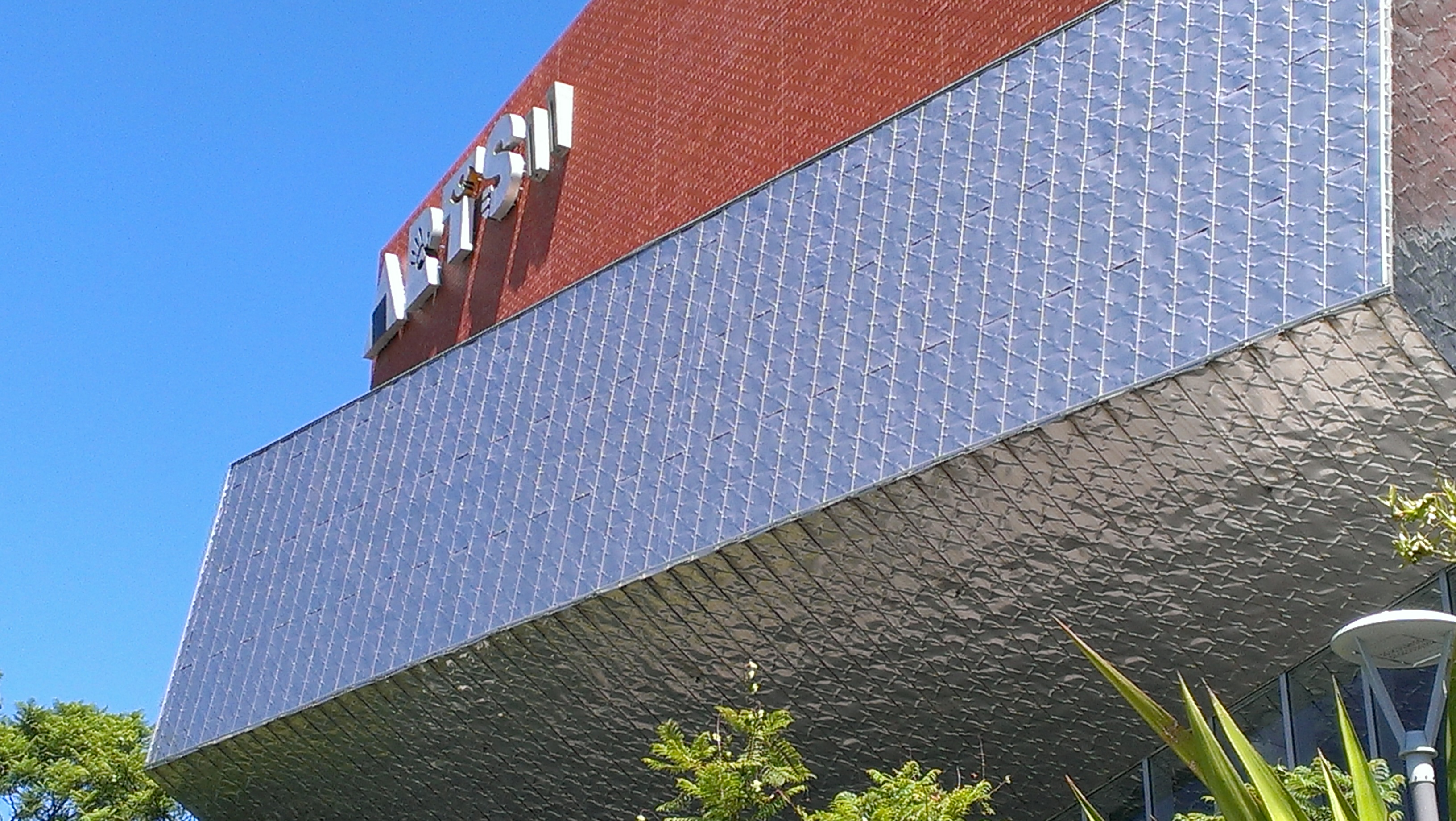
The Centre for the Arts is a great building, and the day was glorious.

IMAG3887

I can’t pretend to be an art critic (or for that matter, an educated art appreciator) of any kind.  I am an art ignoramus.  So when I go to an exhibition I am just curious and interested.  I know there are all kinds of things to know about and think on, as well as skills I know little about, that underpin the artworks.  I am aware of only the tiniest segment of all that knowledge, skill and thoughtfulness.  On the other hand, it’s a shame to say nothing at all… and thus not invite others to go along and wonder at what there is to see, no matter how ignorant we each might be!

There were all kinds of forms and media represented: painting, sculpture, leather cutting, glass, ceramics and of course, textiles.  Among the works that caught my attention was a glowing and almost–but not quite– geometric oil painting with gold leaf: ‘Golden Ochre’ by Megan O’Hara.  Beautiful images of her artworks, including this one, can be found here.  Two sets of intriguing glass mushrooms were ‘growing’ from wood: ‘Fungi’ by Roger Buddle. Seldom has glass looked less like glass to me.  Blue fungi on wood are there to be seen and admired on his home page today for anyone who wishes to see them.  There was a striking 3mm mild steel sculpture: ‘Feather’ by Anna Small (more of her work here). Pamela Kouwenhoven contributed ‘Muddy Waters Murray River’, a wall-mounted sculpture of faded plastic (car) battery cases.  There are images of this sculpture and others in the same series here.

IMAG3888

India Flint’s contribution is called ‘The Wasteland in Bloom’.  A more than fitting title.  It is a silk and wool dress, hand stitched in silk thread, to judge by the sheen of those stitches.  It is flowing, floor length and sleeveless.  It features a striking eco-print design of orange/red leaf prints alternating with bands of darker colour, which are almost black (iron, I assume) and striped by the resist created by the ties used in bundling the fabric.  It has slanting, curved side seams, creating a very interesting draping of the garment.  One of the seams had some… pleats is the closest term I know, but it suggests something crisp and vertical while these are soft and horizontal … creating further interest in the drape of the fabric toward the hemline.  The hemline is a feature in its own right, a separately stitched band with its own embellishments.  I don’t think India has published a picture of this work, but you can of course see many glorious garments she has created here.

So if you can… go along and see what you find interesting!

IMAG3889

2 Comments

Filed under Leaf prints, Sewing

Let’s try that again!

IMAG3709

My indigo dyed sock yarn emerged from its vinegar and water soak a little improved.  Instead of being able to see blue on my fingers after just twisting the skeins and then being sble to see the track yarn takes around my fingers when I knit in blue detail after only a row or two… it took winding the skein into a ball to produce this effect…

IMAG3722

I decided to try casting on.  After casting on 64 stitches…

IMAG3723

(That would be the long tail cast on for knitters who need to know!)  Well, it’s an option to knit and get blue fingers: people who seem to know on Ravelry say the resulting garment will not lose dye onto the wearer.  Why not, I wonder–as a sock will clearly be in friction with the feet it is on and crocking is all about dye loss through friction rather than washing.  Still, a little slower rate of dye loss would be my preference!  I’ve checked with the redoubtable J N Liles The Art and Craft of Natural Dyeing (1990), and he would appear to be the source of my belief that if indigo crocks it will keep doing so.  He offers a method for addressing the problem that seems entirely logical but does involve some effort.  There is another simple solution suggested on Ravelry–a soymilk soak.  Since finding it mentioned on Ravelry, I’ve found John Marshall offering soymilk as a solution to crocking here.

IMAG3724

On the premise of doing the simple things first, I’ll try that before proceeding to take Mr Liles’ advice, which would have to wait for a day with some relaxed hours.  As it happens, there were two part-used boxes of soymilk in the tearoom fridge at work… they have been there a long while and no one is claiming knowledge (one of them is mine but I’m not sure which one!)  They smell fine but I think they’re past the point of safe human consumption. What an opportunity!  Now we wait.

IMAG3716_1

I made a little hat to match the big one.  Same basic hat, smaller, and top-down so I could use all the yarn.  I am sure it will fit a little person or perhaps a doll or a bear…

IMAG3720

And… I had a score at the op shop (thrift store) on my way home from work.  I could not resist all that thread for A$2 and there were so many examples of lovely embroidery I had to bring one home…

6 Comments

Filed under Dyefastness, Knitting, Natural dyeing, Sewing

There are never too many socks or too many friends to knit socks for…

Another pair of socks reached completion on the weekend.  Their final moments happened at a long lunch, on a farm, where–I admit–my knitting was much commented on but did not seem to offend.  Two more sets of slippers were negotiated over lunch, and it was a truly lovely afternoon. I took a picture of my sock-in-progress on the table, a la Yarn Harlot

IMAG3115

And the finished socks are ready.  The friend for whom they are intended is a big repairer and recycler.  One of the biggest I know, which is saying quite a lot.  She’s coming around to finish up rehabilitating a table this week, and when I saw her on the weekend she showed off some pretty wonderful jeans mending.  When I told her about my Mum’s favourite way to mend jeans, she knew that method already and had tried it on sheets.  Say no more.  You can’t talk the pros and cons of different mending strategies with just anyone.  She is a sister!  If she can’t already darn, she’ll want to learn, and I am one of the keepers of the skill for future generations–only too happy to teach her.  [I’ve asked now, and can confirm she already knows how to mend]. So, her ball of darning wool is right there ready to add into the small pile of woolly goodness that is soon to be hers.

IMAG3127

The yarn is locally dyed by Kathys Fibres–wool/bamboo/nylon, autumn colourway.

2 Comments

Filed under Knitting, Sewing

A Community Celebration

As I read The Little Book of Craftivism, ideas kept popping into my head.  This one took a little longer to execute than the mini banners. There is a row of immense, sugar gums (Eucalyptus Cladocalyx) over 100 year old in our neighbourhood which were scheduled to be cut down due to changes in the railway corridor.  Many people in our neighbourhood were part of a campaign to save them.

IMAG3510

We managed to save these trees (albeit very severely pruned) while dozens of others were cut down.  People have been saying to me when they visit the nearby local neighbourhood centre how awful it looks now that all the trees that used to stand between the neighbourhood centre and the railway have been cut down.  They often say how relieved they are that the ones we saved are still there–but they do not realise what went into saving them.  They don’t even know those trees were threatened.  There are still all night works and daytime works and continuing campaigns and about noise going on and many people in the area feel very discouraged living with the aftermath of all the infrastructure works.  So I imagined bunting that read ‘these trees saved by community action’ and a bit of a celebration of our having actually succeeded in this part of what we have tried to do.

IMAG3512_1

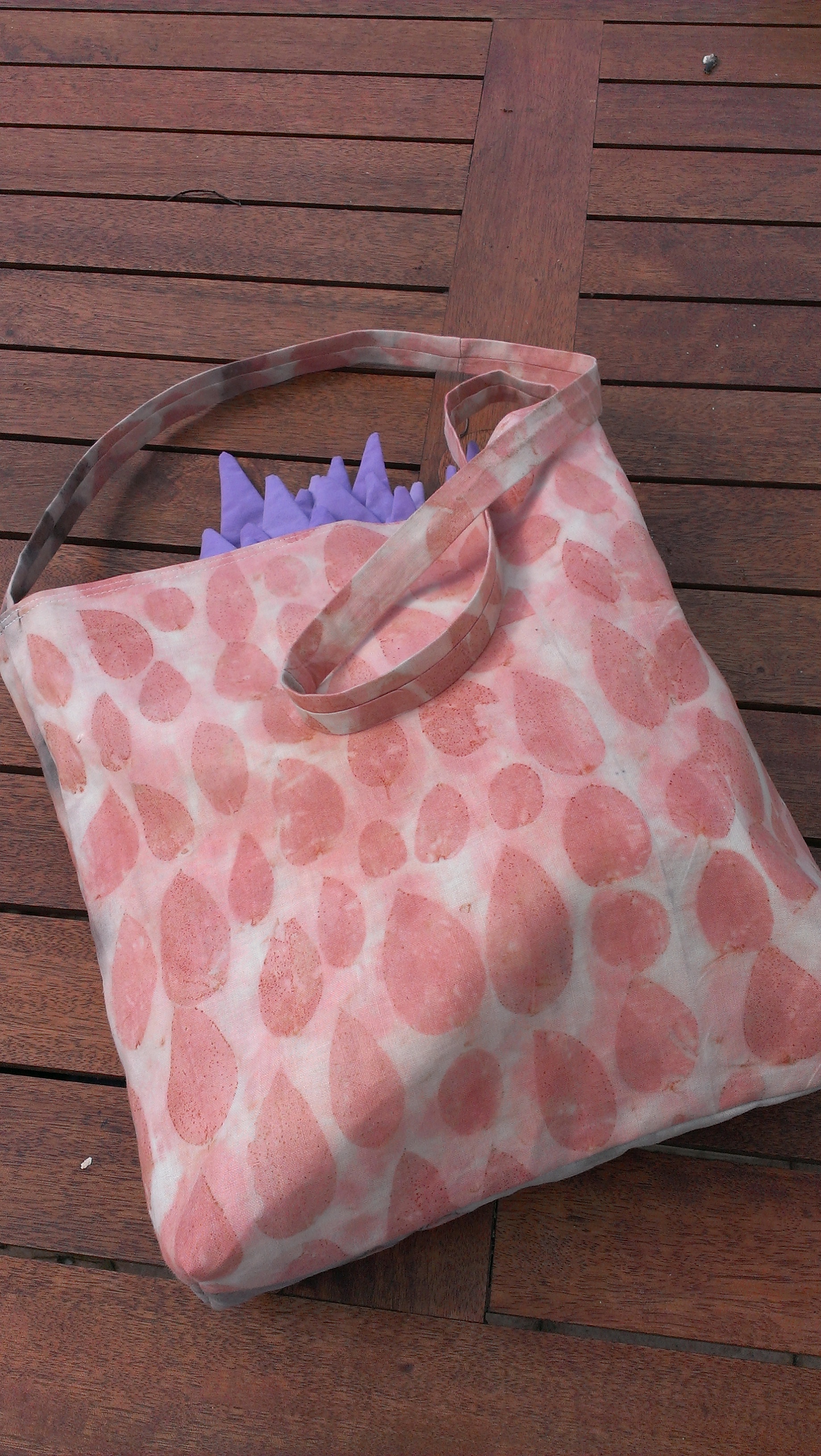
Well, I made the bunting.  And another member of our local group emailed out the most beautiful invitation to come and hang it up and celebrate the continued existence of the sugar gums.  And so a small local celebration, complete with our local MP Steph Key and our local councillor, Jennie Boisvert, who both put considerable effort into supporting our campaign.  I wanted to thank the woman who stared the campaign and was its mainstay, so I made her a little leafy bag.  Here it is filled with rolled up bunting ready to go and celebrate.

IMAG3501

And here we are, after a highly entertaining hanging of the bunting.

IMAG1509

I’ve made a tutorial on how to create this kind of lettered bunting, which you can find in the how-to page (link at the top of the blog) or here, if you’d like to try your own.  I already have another plan, personally….

2 Comments

Filed under Craftivism, Leaf prints, Neighbourhood pleasures, Sewing