Mending

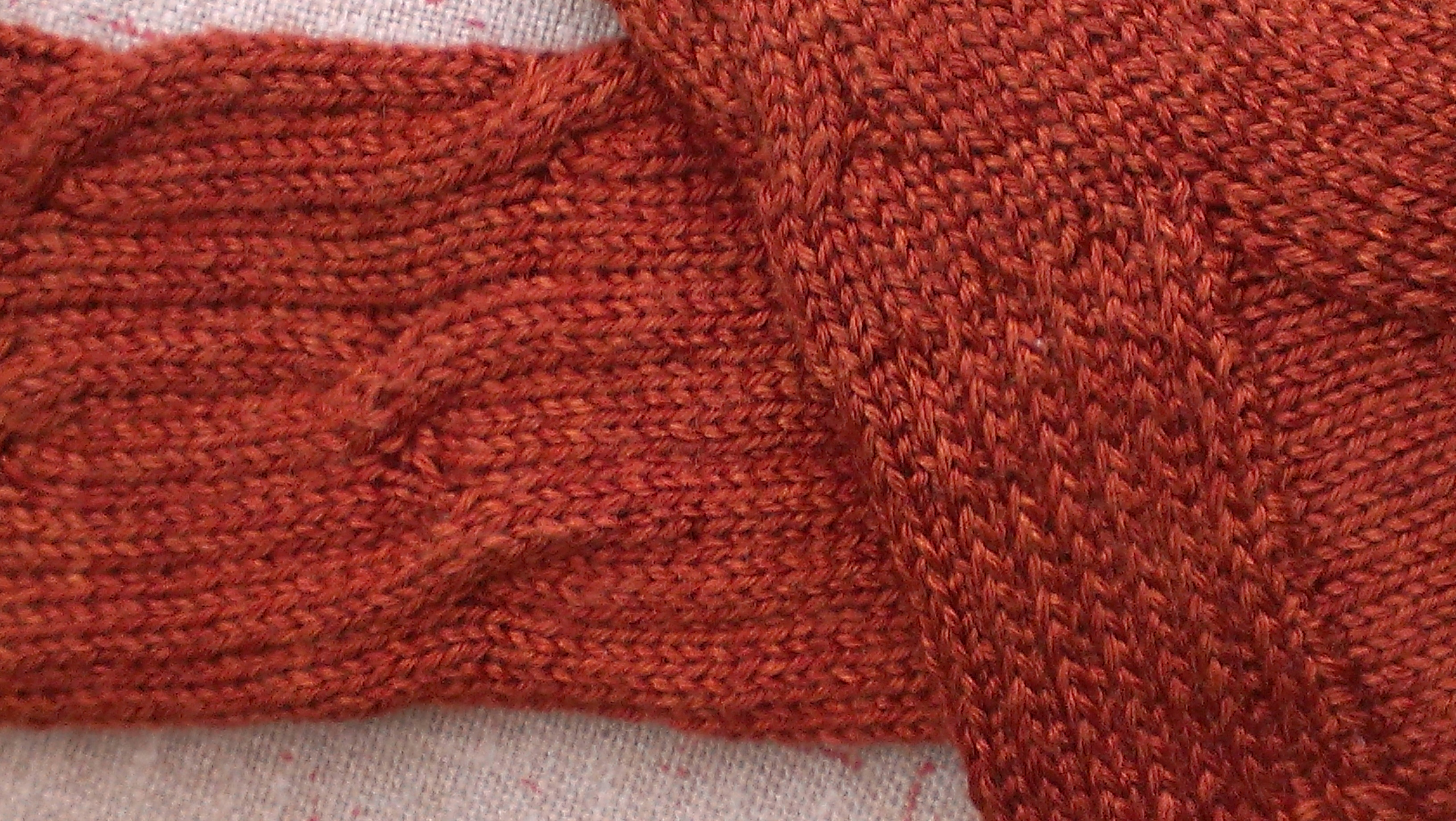
There has been less mending this winter because after the attack of the m*ths last year, stringent measures have been taken round here. M*th proof storage and pheromone sticky traps, and a cleaning programme that gets into the corners.  This is the first mend I’ve needed to make to a woollen undergarment this season, and this garment is years old and has seen a lot of wear.  It’s underwear, so I decided to trial an external patch, as well as an internal patch.  The internal patch was almost invisible from the outside. Here’s the outside view of the external patch:

2015-06-23 09.13.55

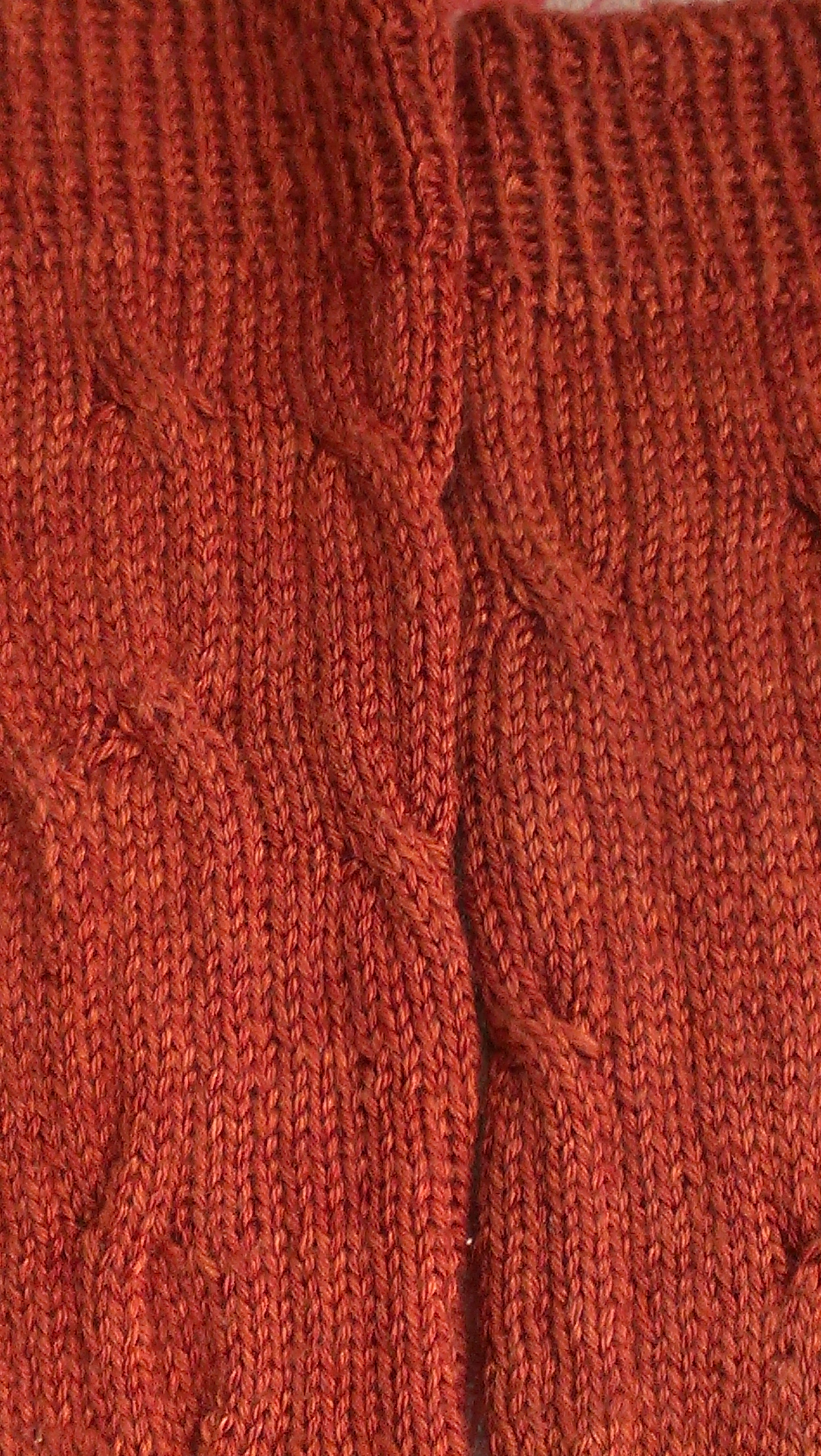
Silkymerino eucalyptus-print patch sewn on with eucalyptus dyed silk thread… and here is the inside–interior patch on the left and exterior patch on the right.
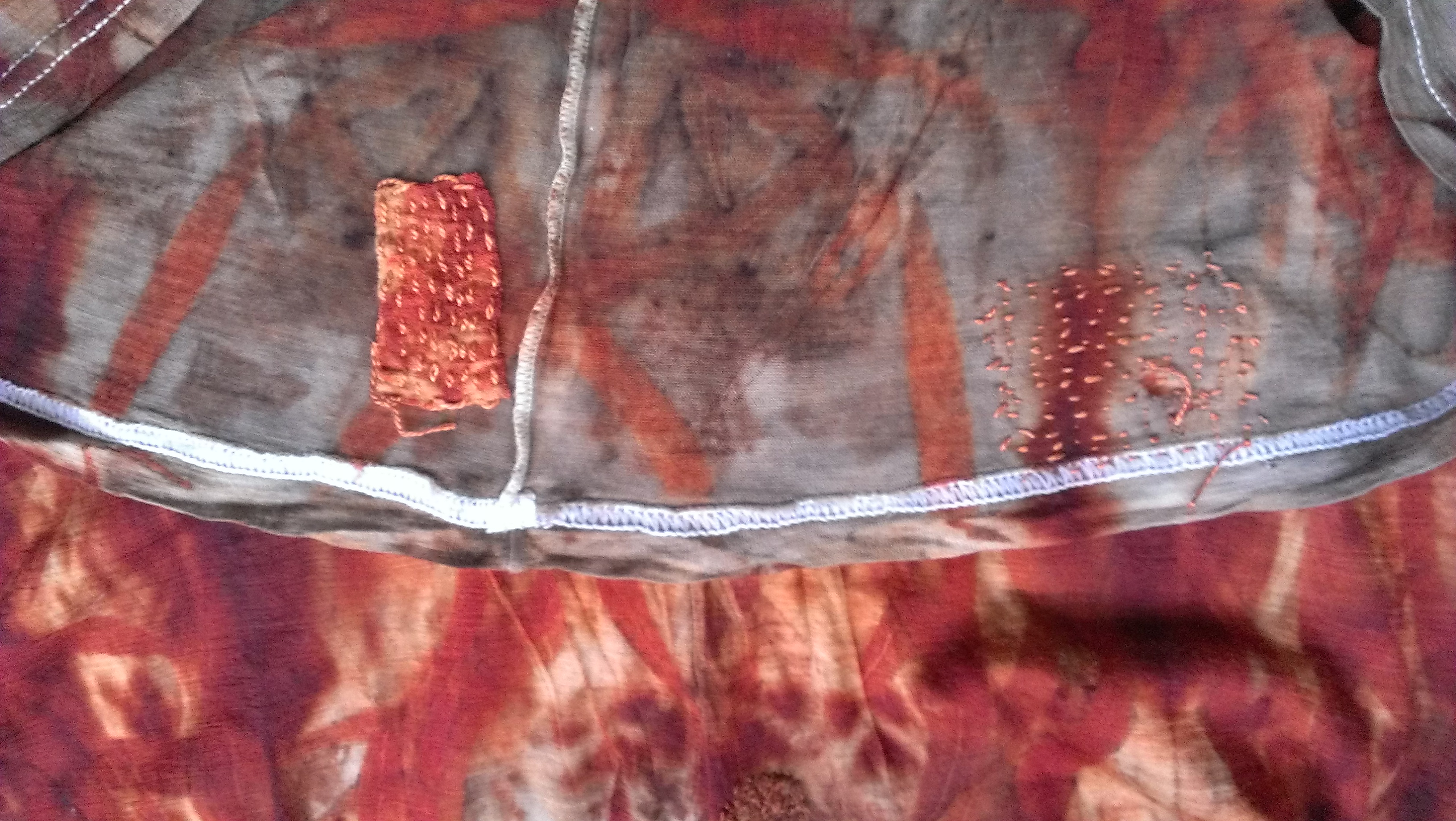
2015-06-23 09.14.40

I also have a favourite T shirt.  It’s a fine bamboo shirt with a design by the wonderful Nikki McClure. It has worn some small holes in front.  In the region of the belly button (or perhaps the belt buckle), to be exact!  Hence the trial of internal and external patching.  Conclusion: a feature external patch in this location… will not be flattering when the garment is on, though it could look great if it wasn’t actually on me!  The patched place is at the centre bottom of this image, looking slightly puckered.

2015-06-23 09.12.58

Here is the inside view–silkymerino stitched with madder dyed cotton/silk thread.  The little holes show red and so do all the tiny stitches… so there is a little speckled area on the front of the shirt.  In the spirit of the visible mending programme, this patch is visible… but not too visible!  And I personally will enjoy the internal view.

2015-06-23 09.13.30

And… some rough and ready patching on my gardening jeans has also been needed.  The second knee finally gave way.

2015-07-01 09.51.41

And when I went to mend the knee, one of the back pockets pulled away from the seat.  Better than this happening while I’m out on the street!  I decided against anything fancy because there isn’t much left in the way of strong fabric in these jeans any more–the hem has worn right through, the belt loops are pulling away from the waistband, and the next pair in the queue are more than ready for a permanent move to gardening wear.  In the meantime, some reinforcement on the inside and some machine darning over the most threadbare section will keep them going awhile longer…

2015-07-01 09.51.49

18 Comments

Filed under Sewing

Whimsically cabled socks

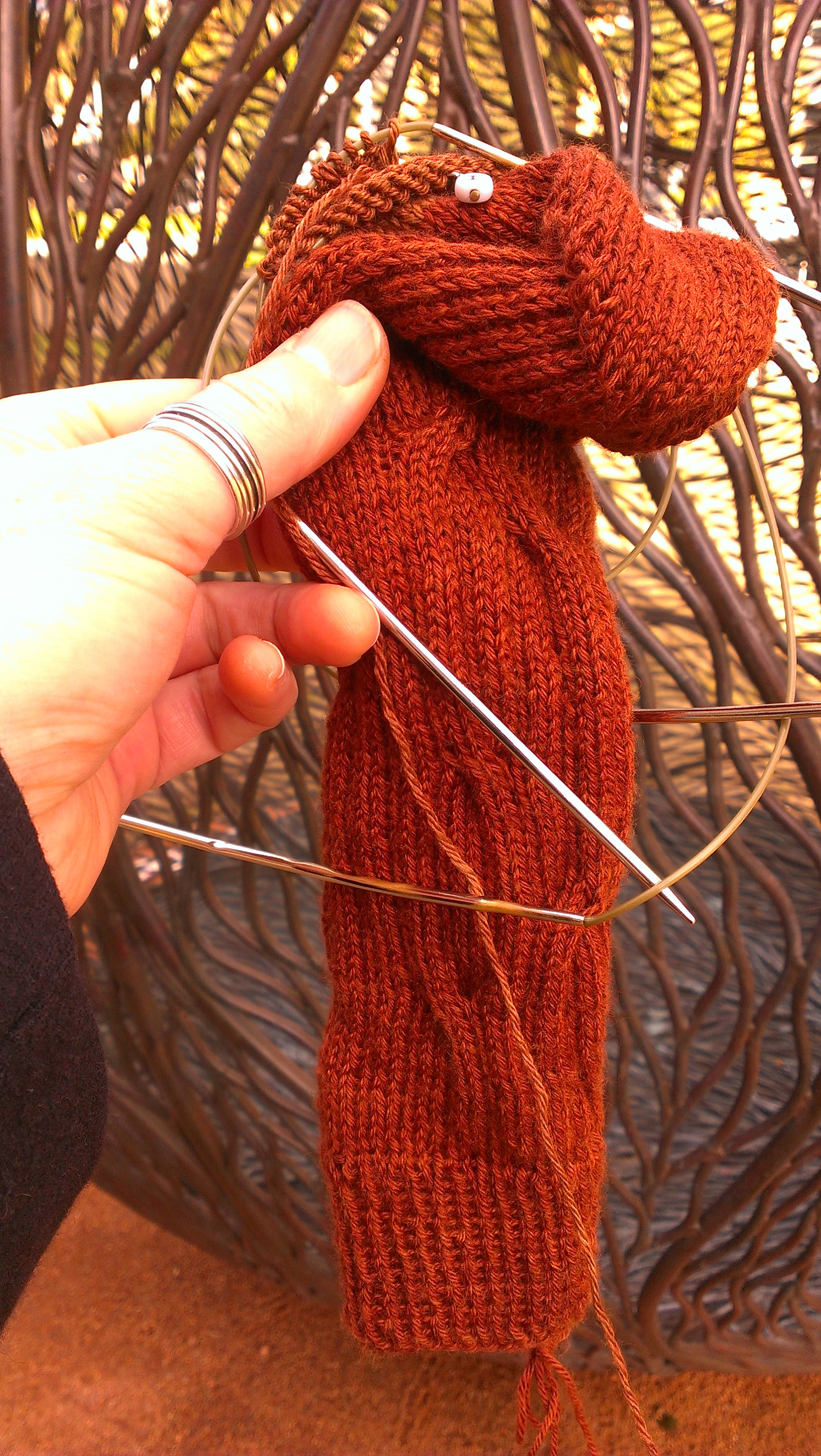
Socks take a little while to knit.  Maybe 20 hours or more of knitting for a pair in 4 ply (fingering).  To be honest, I’m not sure.  Needless to say, I don’t sit down and time myself knitting them. I don’t knit them on a whim, they way I do hats, which just sit about waiting for the right head to come by.  I want them to be well received and they need to fit in more senses than one.  So, a little while back, there was a tracing of the foot.  Then I checked the preferences of the intended recipient, ordered BFL/silk sock yarn, and dyed it with eucalyptus.  To get a good strong colour, I dyed the 100g of yarn in four dye baths.  These socks have travelled, because in those hours of knitting, socks-in-the-making are my constant companions, which is one of the lovely things about them.  I enjoy the knitting, and I enjoy holding the intended recipient in my mind for the time the knitting takes. Here is the first sock, and that week’s reading for theory reading group.

2015-06-12 09.26.58

They came with me to hospital to visit a complicated relative who had a near death experience, twice (she is still alive).  They may not have brought her comfort but they brought me comfort.  The second hospital visit was so dim I did something quite inappropriate and had to rip back a bit.  They have been to some high level meetings.  They came to a very informal meeting with a workmate which was interrupted by another knitter (otherwise, a total stranger) who was beside herself to see socks being knit right there in front of her eyes.  My workmate is a generous man who didn’t flinch!  I have walked along knitting them from my bag.  They have been fondled lovingly by the odd stranger.  I was getting to the heel of the second sock when I went to Sydney.  Here we are in a cafe reading political theory (with relish).

2015-06-29 16.27.06

In front of a sculpture at a university in Sydney where I attended part of a conference where my beloved did a wonderful job of presenting.

2015-06-29 14.14.56

In a hotel room with a banksia cone.

2015-06-30 09.55.45

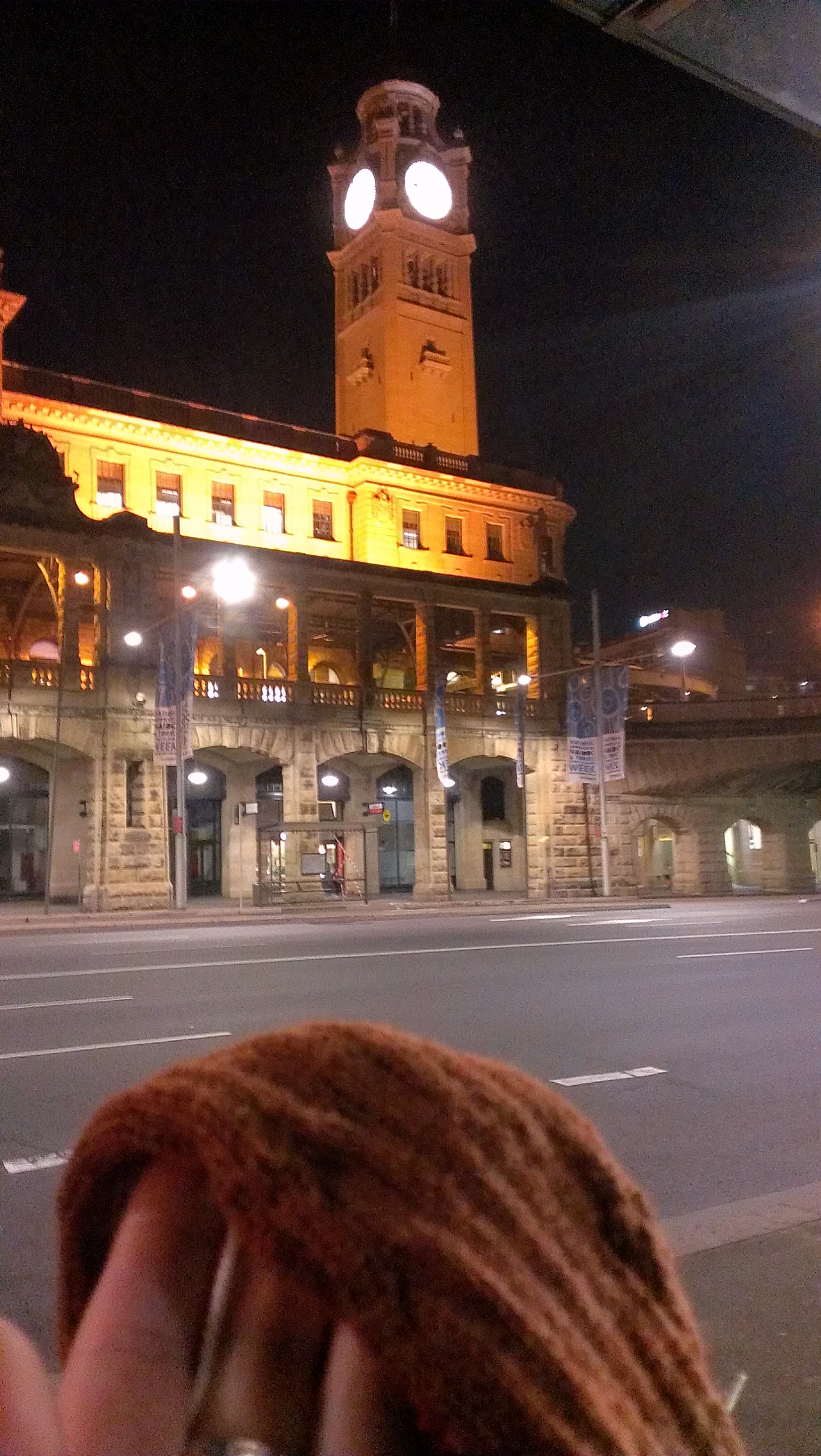
Waiting for a bus outside central railway station in Sydney.  Ask not what the other people waiting thought of my photographing a sock.  There is a lot going on outside Central at night and no one blinked.

2015-06-29 20.57.55

Almost done at Coogee Beach.

2015-06-30 15.49.27

Maybe you wanted to see Coogee beach?  Glorious!

2015-06-30 15.47.39

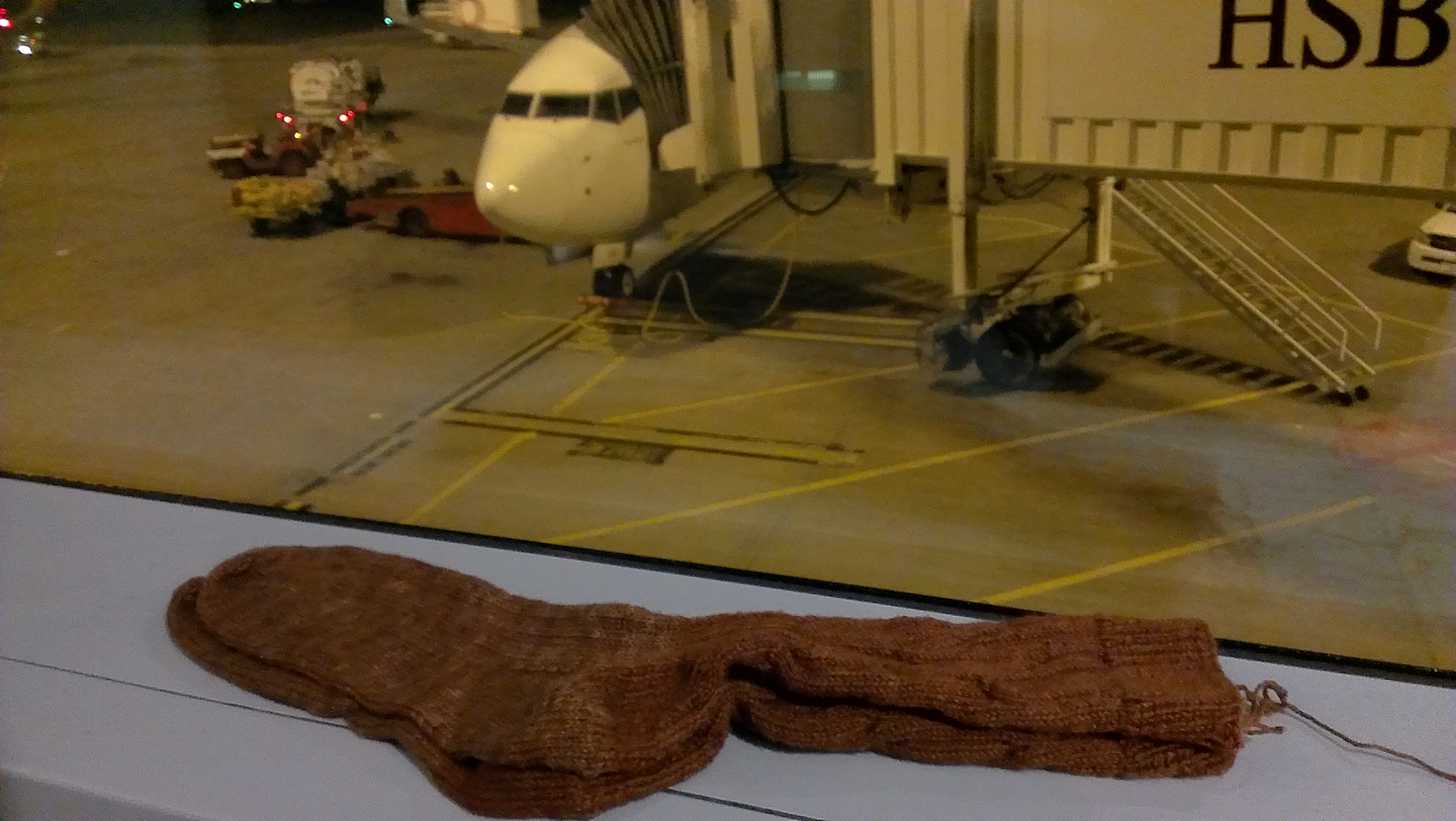
Toe grafted and ends darned in, in the Sydney airport.

2015-06-30 18.35.39

Here they are in better light after a nice steam press!

2015-07-01 09.55.08

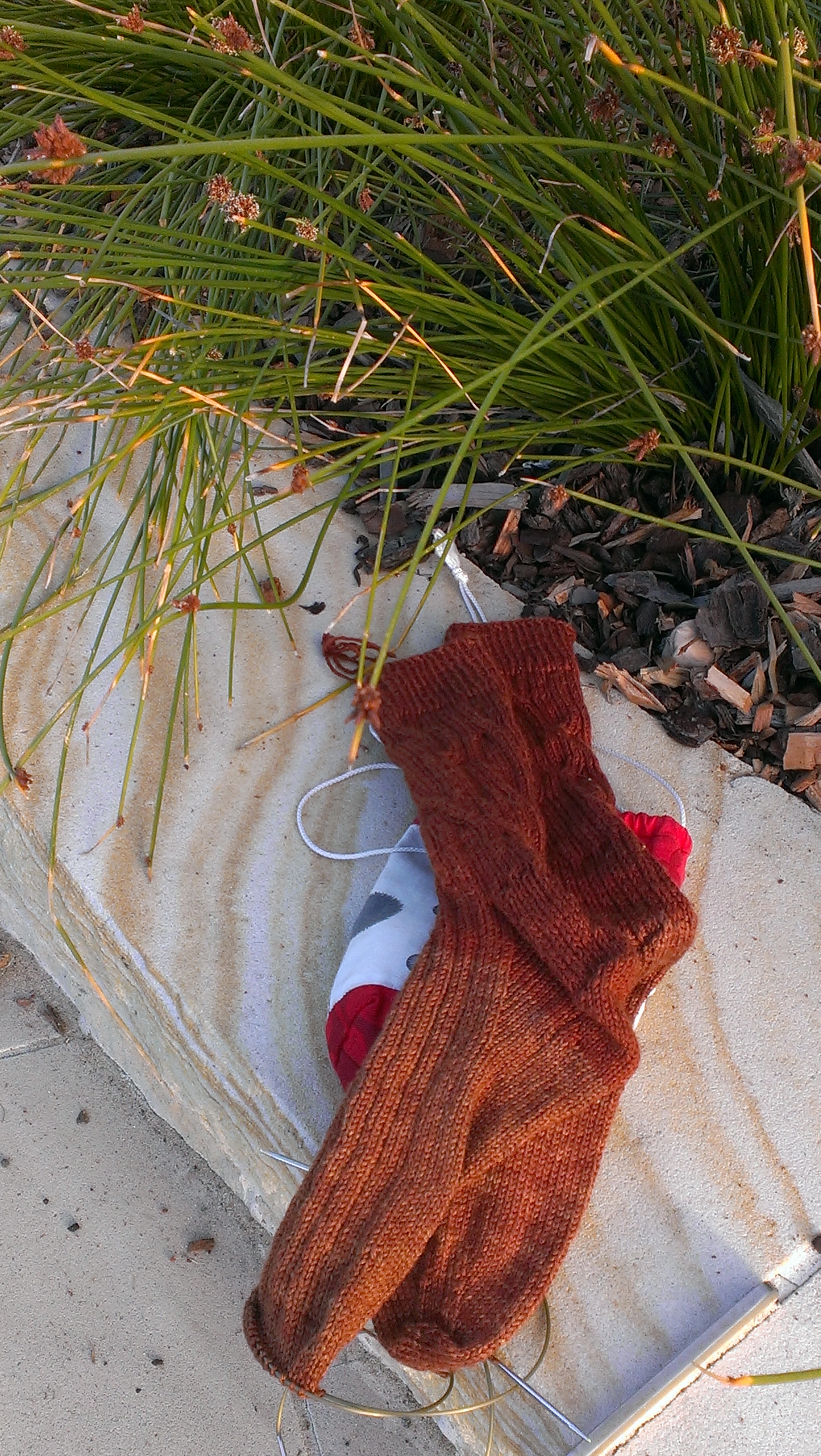
I hope that they will be snug and long lasting… (non knitters: that is a reinforcing heel stitch you see there).

2015-07-01 09.55.38

And I hope that the whimsy of these cables will tickle India‘s fancy the way it tickles mine!  This design was suggested by one of my nearest and dearest, who first told me about India’s work years before I first saw it.  He was the first to have a whimsically cabled pair of socks made by me… and now there are two such pairs!  It is an absolute delight to be able to turn the generosity back toward someone who has been so exceedingly generous to me.

2015-07-01 09.55.25

4 Comments

Filed under Eucalypts, Knitting, Natural dyeing

Winter earth hours

Happiness!  Today council workers arrived early in the morning and planted TREES in our street!  And hardenbergia and dianellas and other good things.  And I heard a spinebill’s call.  I have not been the only one planting the neighbourhood lately, and it makes me very happy.  New people have come by the blog in the last few weeks in larger numbers than usual–a warm welcome to new folk!  It might be helpful to know that my area suffered the loss of many trees (about 25 in my own street alone) a couple of years back, so the addition of trees is extra specially welcome.  This post is about a project I have been on for a while, guerilla planting my neighbourhood in a variety of small ways.  My ‘earth hours’ approach to this project started this year, after some years of quietly planting native plants had grown and grown into quite a persistent approach to the neighbourhoood coupled to a significant propagation programme.  I’ve taken to recording what I take out into the neighbourhood (here, in my bike trailer!) and what I bring back.

2015-07-02 08.16.11

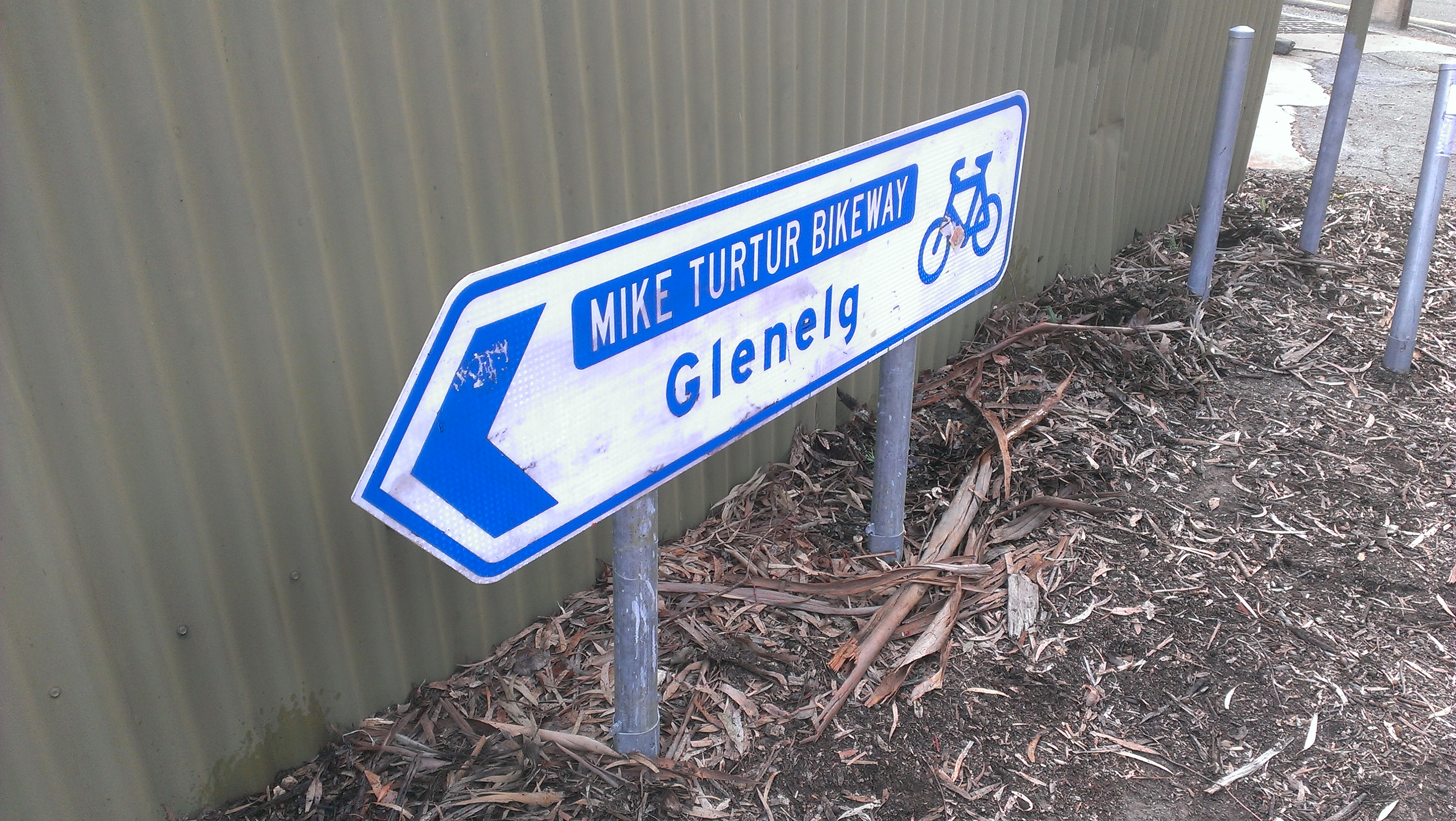
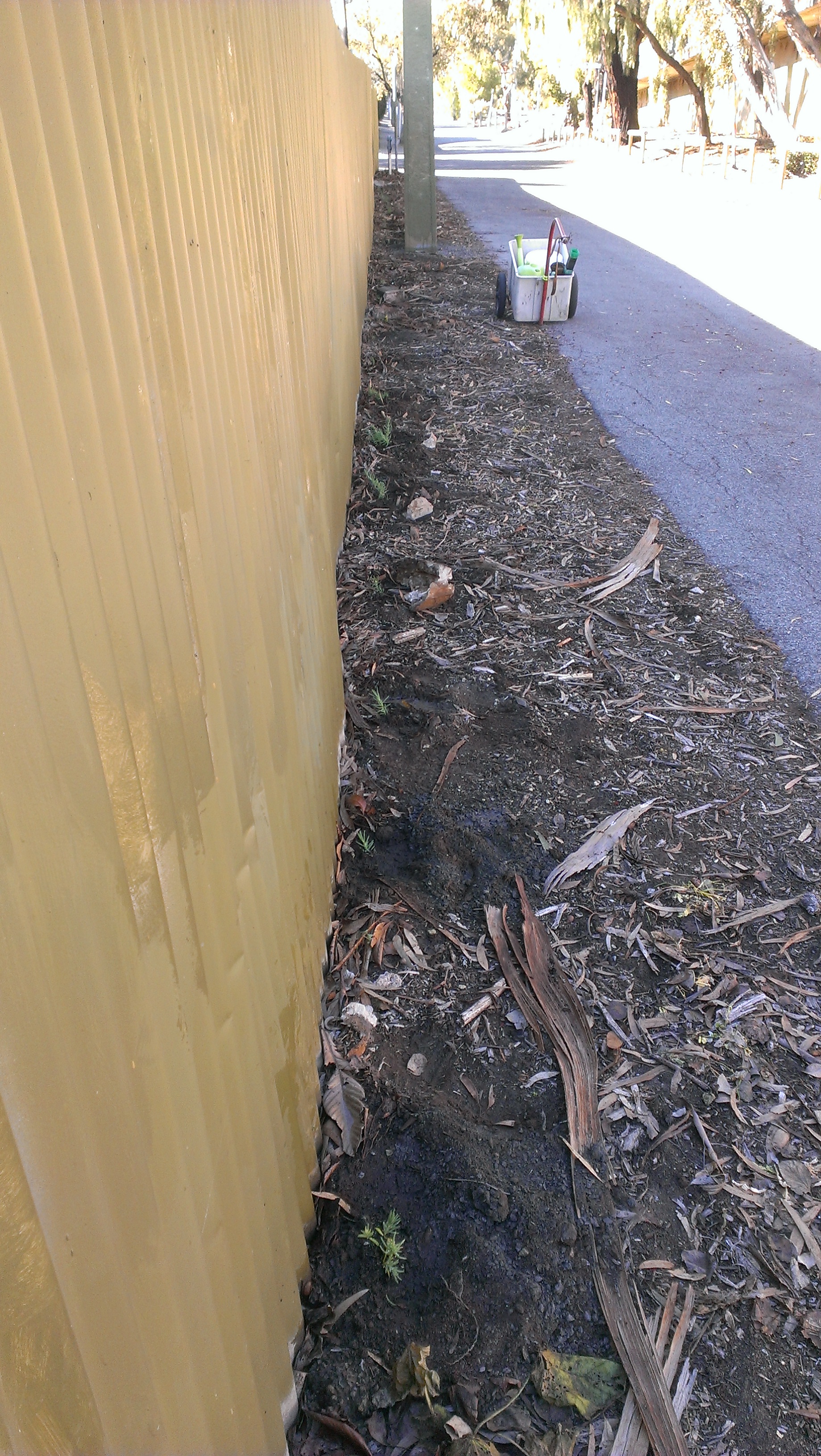
Here’s how it went last week.  One winter morning before work, I set out to start on a new patch on the way to the local railway station.  There has been new planting on one side of the path, and on the other side of the path, the council poisoner has killed off the hollyhocks that had managed to self seed.  Ruby saltbush, once again, gets the job!  Once I got my trowel into the ground, I realised that there wasn’t much soil there.  The asphalt went further toward the fence than I thought.  All hail the hollyhocks that had convinced me anything could grow here.

2015-07-02 08.41.33

The eucalypts which stand opposite this fence have been showering leaves and bark down on this patch for years, and the earth is gradually converting them into soil.  I love this wonderful process by which the earth itself creates more earth.  Under the mulch there is a lovely layer of compost and soil for a few centimetres, and then bluemetal which must be left from when this path was asphalted.  The saltbush I planted in bluemetal in another part of the neighbourhood is still alive, so I pressed on, glad I had brought saltbush in bigger pots this time.  They will have a little parcel of soil to help them get started.  In some places there was gravel and earth to plant them in.

2015-07-02 08.41.27

Bricks have been dumped here over time and I turned them to good use.  Maybe they will protect these little plants from passing dogs while they grow.  I am hoping that the poisoner’s next trip is far enough away that these will grow up enough not to be treated as weeds when he comes again.

2015-07-02 08.41.40

Finally, I watered in 15 new plants, collected all the rubbish I found, applied the hori hori to the big weeds coming up among the plantings that have gone in on the other side of the path and marvelled over this volunteer, with a shiny cap.

2015-07-01 13.36.44

On the weekend, I went back and put in another 18 plants.

2015-07-05 13.47.33

It doesn’t show, but there is one little saltbush every half metre or so all along here now. One cyclist cheered me on as I planted them.

2015-07-05 13.47.21

And here I am returning home, rubbish bucket half full, watering can empty and pots ready for refilling.

2015-07-05 13.57.04

18 Comments

Filed under Neighbourhood pleasures

Eco-printed scarves

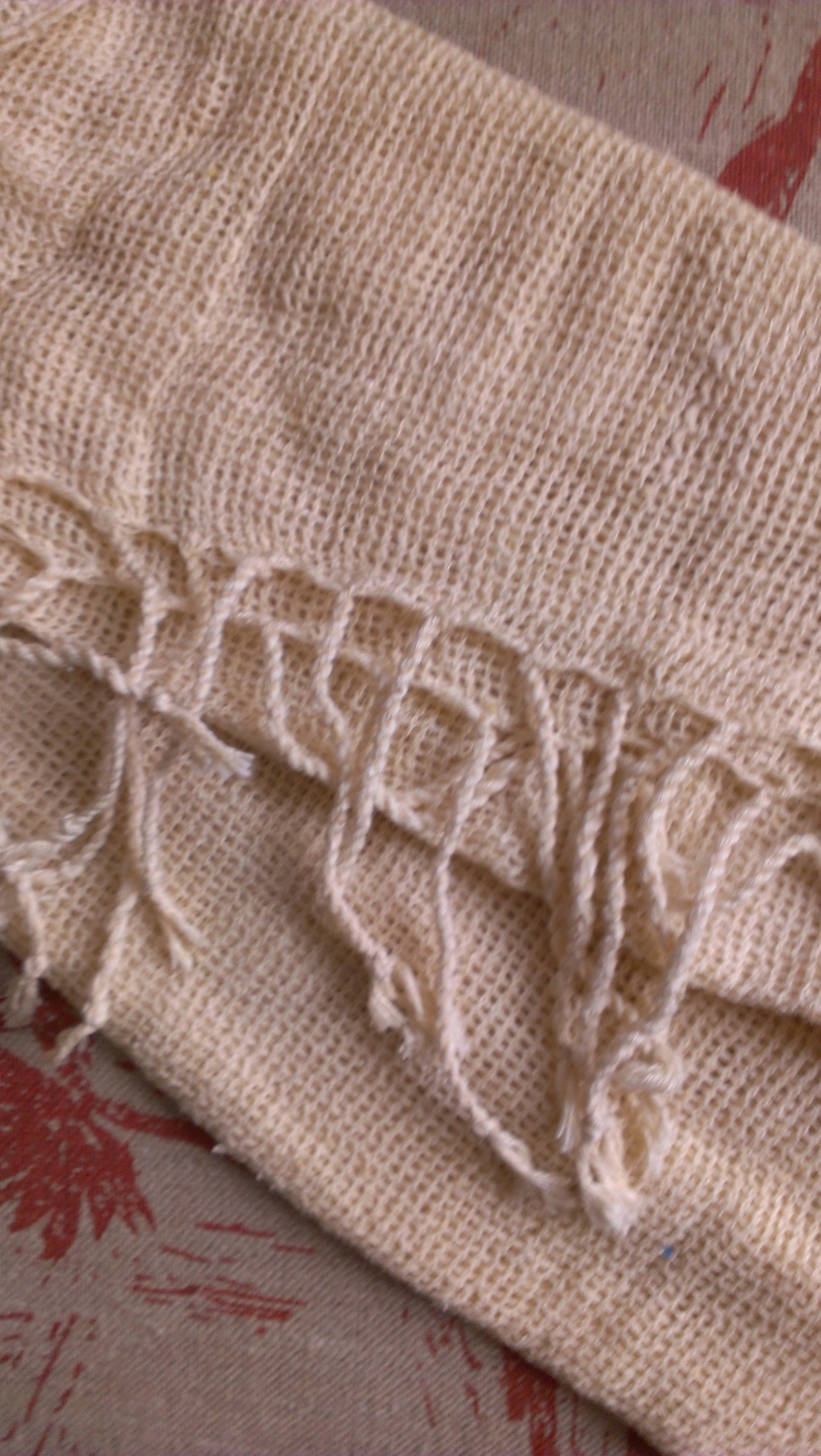
I was rifling through some of the wool and silk items that I packed away protectively during summer, (when clothes m*ths are breeding) and realised I still have three scarf blanks that were given to me by friends. One is a wool gauze, I think.

2015-06-22 12.11.24

One is probably silk scrim.

2015-06-22 12.11.42

And the other looks like a finer grade of still quite open-weave silk.

2015-06-22 12.11.08

I had an idea for how they might find happy homes, and after some days of wishing but not finding time…

2015-06-22 12.56.01

These leaves were collected in the neighbourhood as they fell from trees lining a driveway.  And of course, eucalyptus!  One pot had a madder exhaust in it, because madder is never really exhausted as far as I can tell.

2015-06-22 13.04.21

Out they came…

2015-06-23 07.56.41

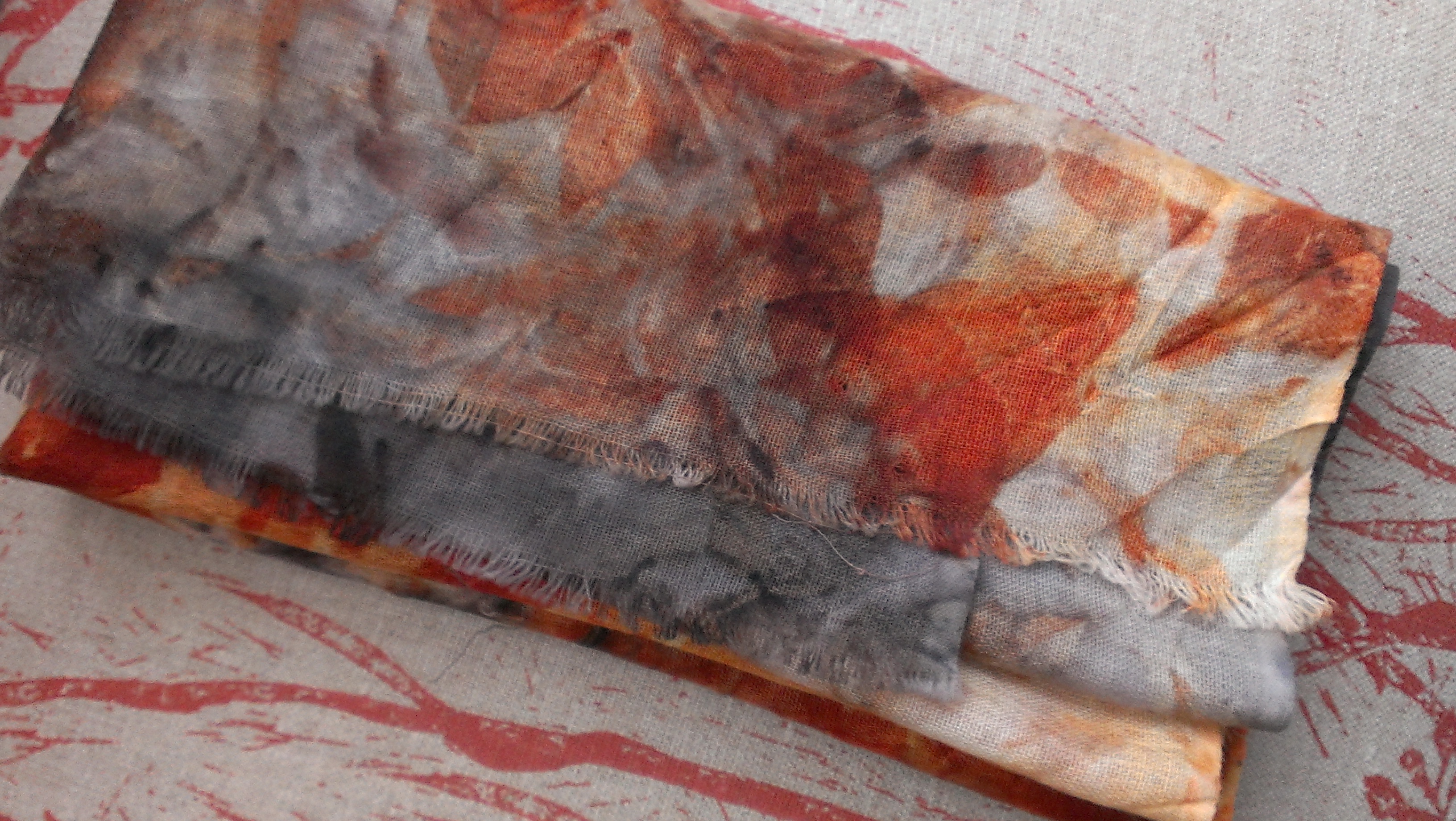
The silk scrim will need another dye bath, I think. The other two made me very happy–and this is good, because I planned for them to be part of my daughter’s birthday present.  I tried a different folding and wrapping strategy on the wool and love the way it came out.  The tie resist marks were great–

2015-07-01 09.36.15

There are leafy parts and abstract parts, parts that are burgundy or grey-black and others that are more orange.

2015-07-01 09.37.16

I tend to get more muted colours on silk, and this was no exception.  Still lovely, and just as important in this case, different.

2015-07-01 09.39.34

I hope she will like them both.  She lives in a colder part of the country and she does love a good scarf.

2015-07-01 09.40.13

And now… they have been folded, wrapped, tied with hand made string and placed in the post!

2015-07-01 09.37.48

19 Comments

Filed under Leaf prints, Natural dyeing

Alkanet and pomegranate

A friendly natural dyer (and highly accomplished spinner and weaver) from the Guild gave me a gift a while back.  Alkanet root! This is a dyestuff I had not expected ever to be able to use, and a welcome gift: very generous of him!

2015-06-14 15.44.42

Once it went into the bottom of the dye pot, its purpleness became ever clearer–albeit with some camera help!  Jenny Dean clearly doesn’t like the smell of alkanet, and I have seen other dyers suggest it is especially unpleasant.  For me, it evoked a rotting tropical fruit.  The kind of thing some people find delicious and others find appalling. I do prefer the lovely smell of madder or eucalypt, but wasn’t troubled by the alkanet root bath.  Mind you, I dye out of doors.

2015-06-14 15.45.48

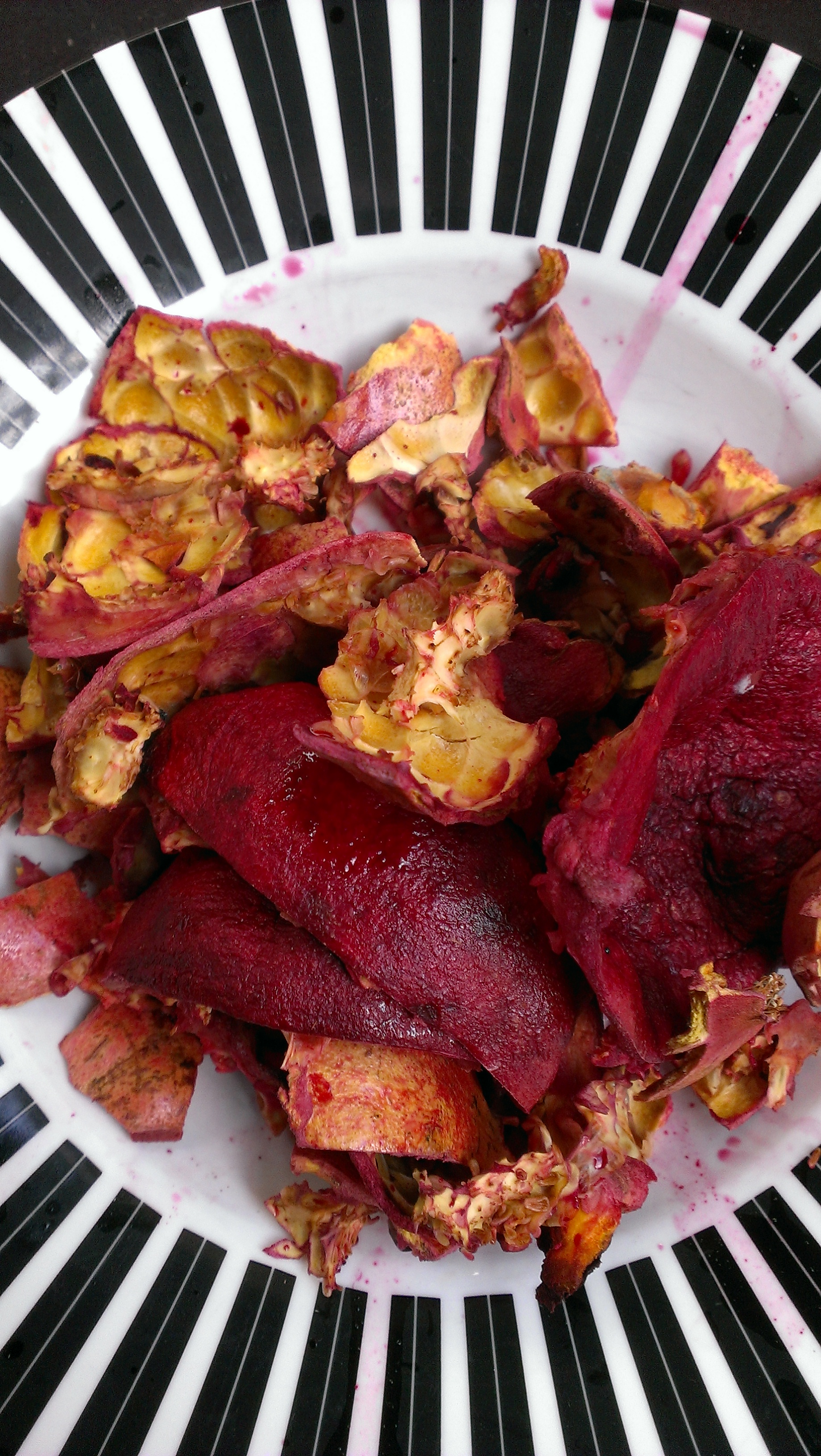
As it happened, this was the same day I made a delectable juice from the last of the season’s pomegranates.  Years back, I  noticed just one pomegranate tree in all the streets of the neighbourhood where I walk that never, ever, had a rotting fruit fallen underneath it.  The tree was always in superb condition–clearly loved, tended and cared for by knowledgeable people.  One day I found the people from that garden in the front yard and asked what they did with the fruit, because at that point, no one I knew had ever served them up to me (all this has since changed).  The man I asked went into the house and brought me out a sample of the pomegranate juice he had made for his dinner guests!  And then explained how to make it by releasing the jewel like seeds from the skin and then putting them in a food processor and straining the results.  So.  That’s how I had used the fruit.  And this is all that was left.

2015-06-14 09.59.49

Jenny Dean came with me again for the ride, and some of my cold alum mordanted fleece-of-Viola went into the pots.  Once I had carried out Jenny Dean’s alkanet instructions, I threw more fleece into the pot to see whether there would be any additional colour in there.

2015-07-02 09.52.07

On the left, the alkanet purple.  Upper right, alkanet exhaust, which I would call a pale brown.  Bottom right, the pomegranate yellow.  Subtle but pleasing.

8 Comments

Filed under Natural dyeing

Solstice planting

My family of choice have started a seasonal celebration tradition that we are happily invited to.  Winter solstice usually involves a progressive dinner, and we hosted dessert this year.  We started out with some planting in the neighbourhood in the afternoon.  I loaded up the wheelbarrow with about 40 plants.

2015-06-20 15.59.33

My beloved pushed.

2015-06-20 15.59.44

We planted out an unloved patch of earth beside a tram stop, and for good measure, weeded the bed next to it that council had planted with grevilleas.  Hooray for grevilleas!  The hori hori got another outing and no one was injured in the process, always a good thing, especially with the assistance of so many keen people with tiny fingers.

IMAG0846

Who knows what the public transport catching public and people driving past in cars thought… but I thought it was wonderful.  There was a bit of chat about a recent tree planting that I missed because I was sick.  One of the folk who was planting quoted another one of our number as saying something like ‘our loyalty is to the earth’.  Which perfectly sums up my feeling… that planting saltbush in the city is no less worthy than planting elsewhere.  That said, planting a forest and rehabilitating land where there isn’t a pile of asphalt nearby is a happy thing too!  It was a complete delight to be planting in such joyous and plentiful company rather than kneeling in the dirt on my own in the chill before work.

IMAG0848

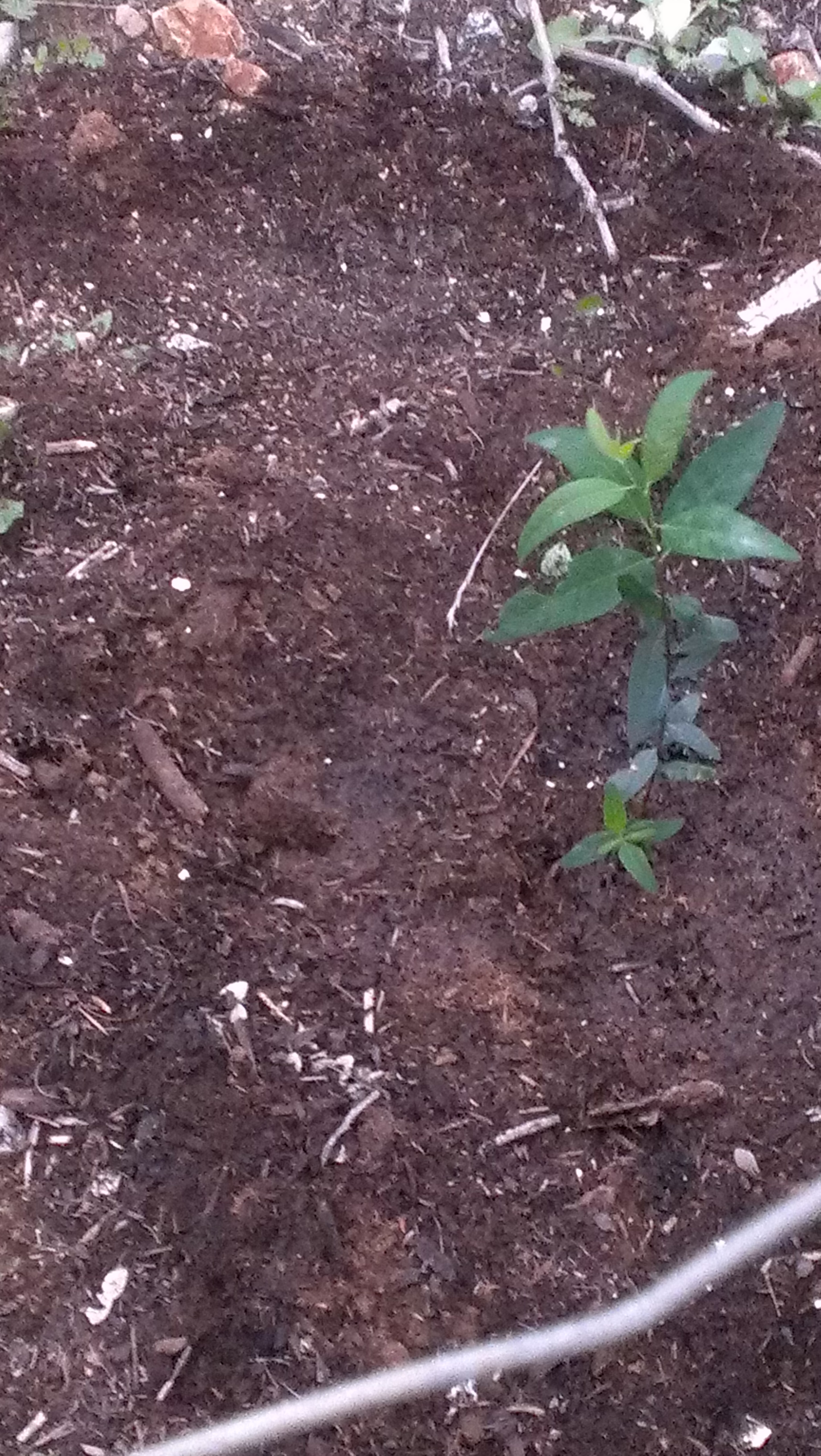
I have become a person who attracts native plants!  That day I was gifted a volunteer eucalypt in a pot, and a month before, two others that had come up in someone else’s vegie patch.  The gifted volunteer eucalypts went in alongside the tram line, along with a feijoa or two that friends brought along.  I was speaking with a friend this morning who had been past and watered them—I checked on them this morning and they were looking damp.  Now I know why!

2015-06-20 17.14.40

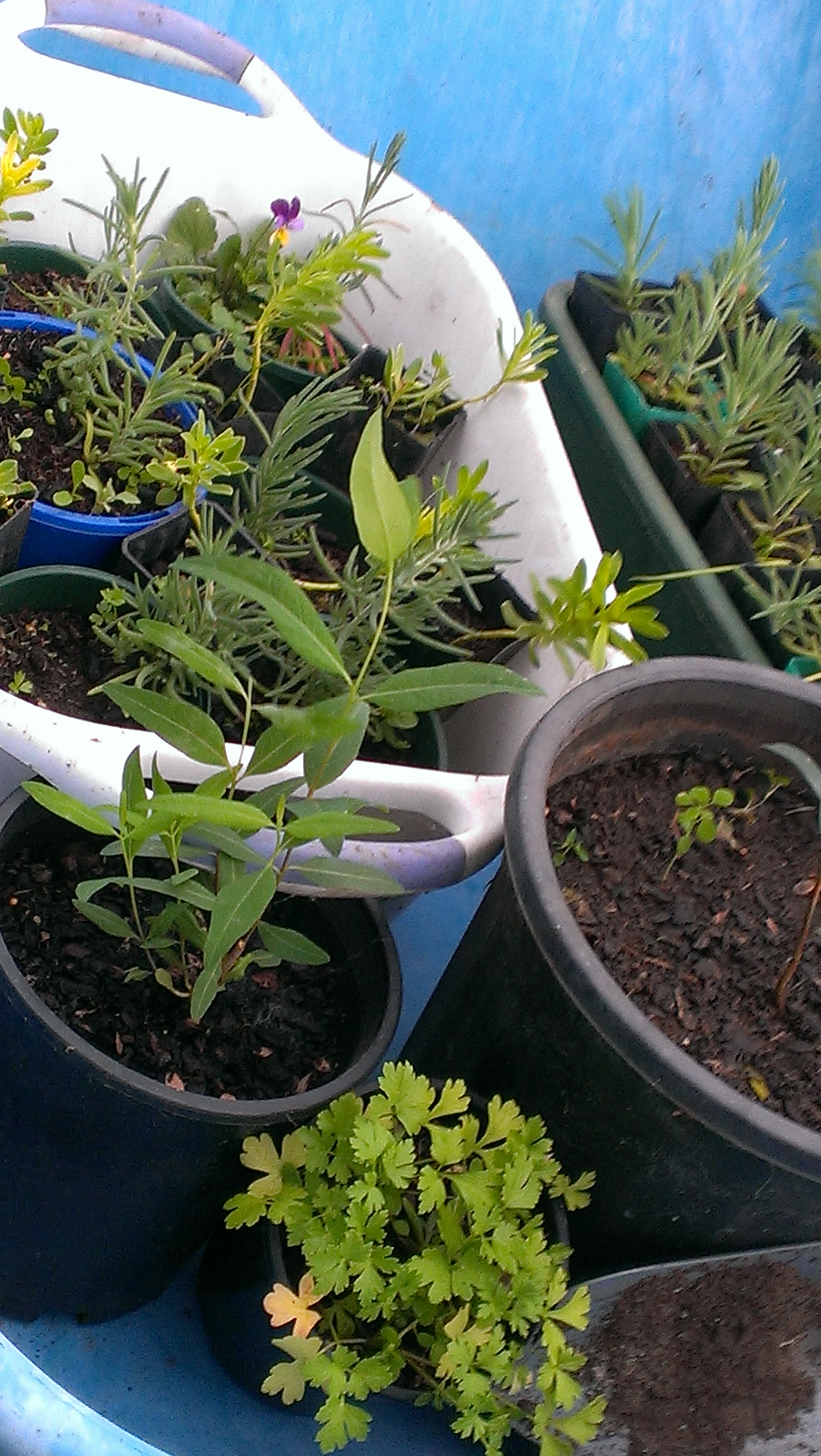
Needless to say, all this planting meant that more propagation was needed, and right on cue these ruby saltbush seeds planted improbably in May (because, how will I learn if I never experiment?) had germinated rather fulsomely.  Now that I know pricking them out works really well… I went ahead and pricked them out.

2015-06-23 08.24.32

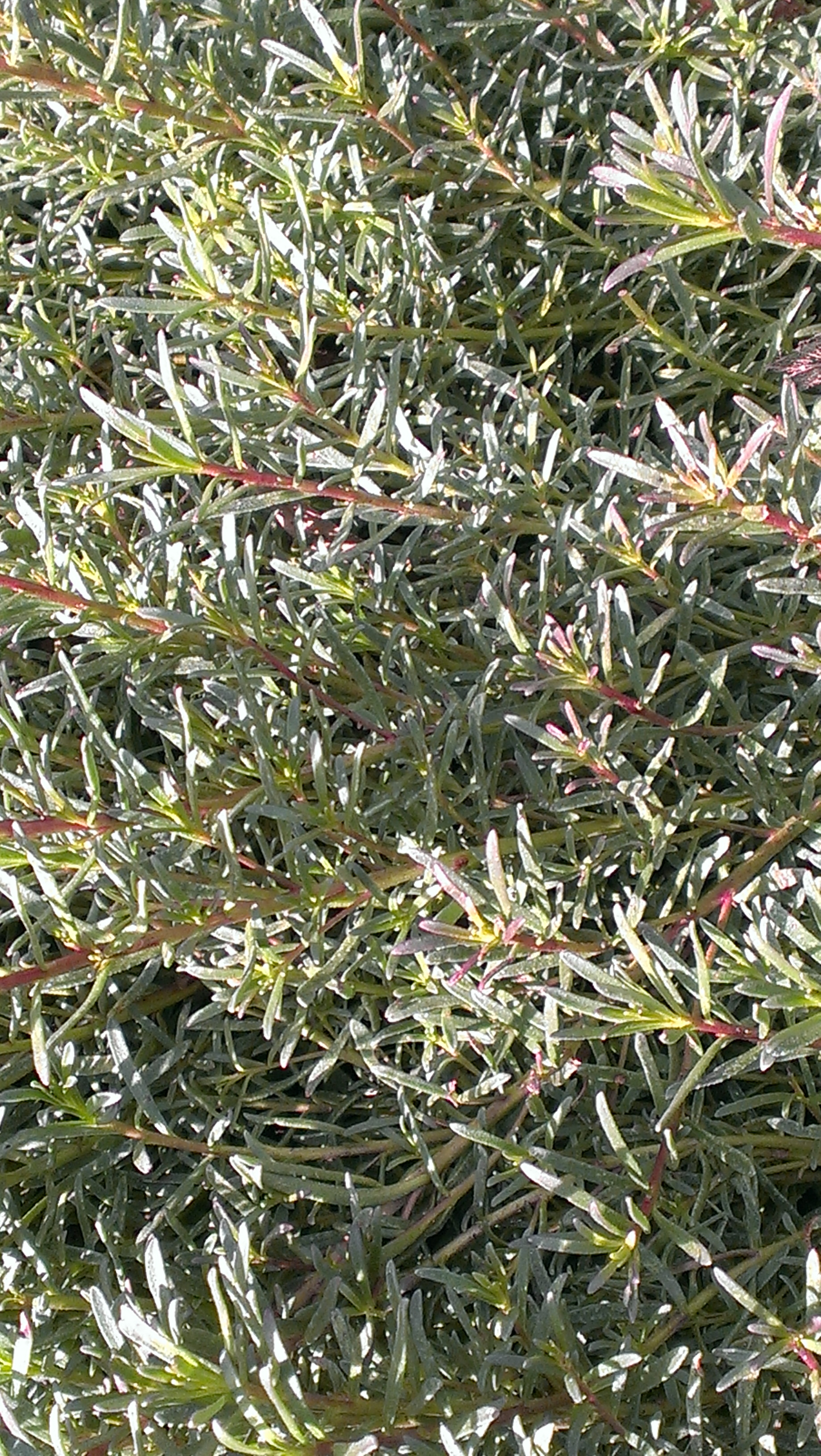
I have also been planting creeping boobialla, so some more cuttings went in too.  The regular form:

2015-06-20 15.02.52

The fine leaved form:

2015-06-20 15.06.26

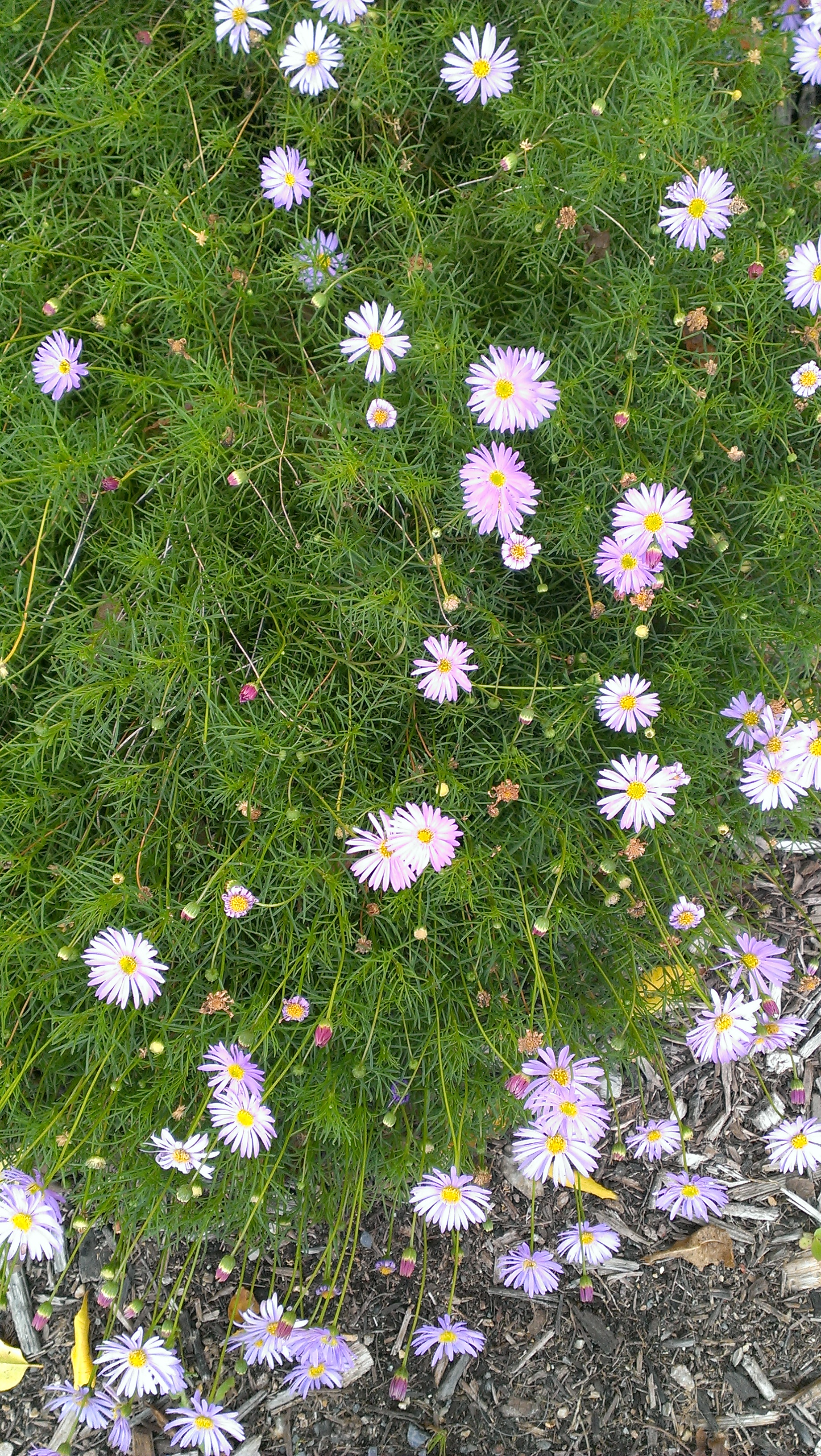
And some of the plants the council has been putting in!

2015-06-20 15.05.00

They have drip watering and they are really thriving.  Three cheers for thriving plants, whomever may plant them…  Meanwhile, India Flint’s wonderful Solace project made its way from a pile of parcels from all around the world into the crisp air of Andamooka, also on the solstice.  Please do go and see for yourselves…

2015-06-20 15.04.45


6 Comments

Filed under Neighbourhood pleasures

Just knit a hat!

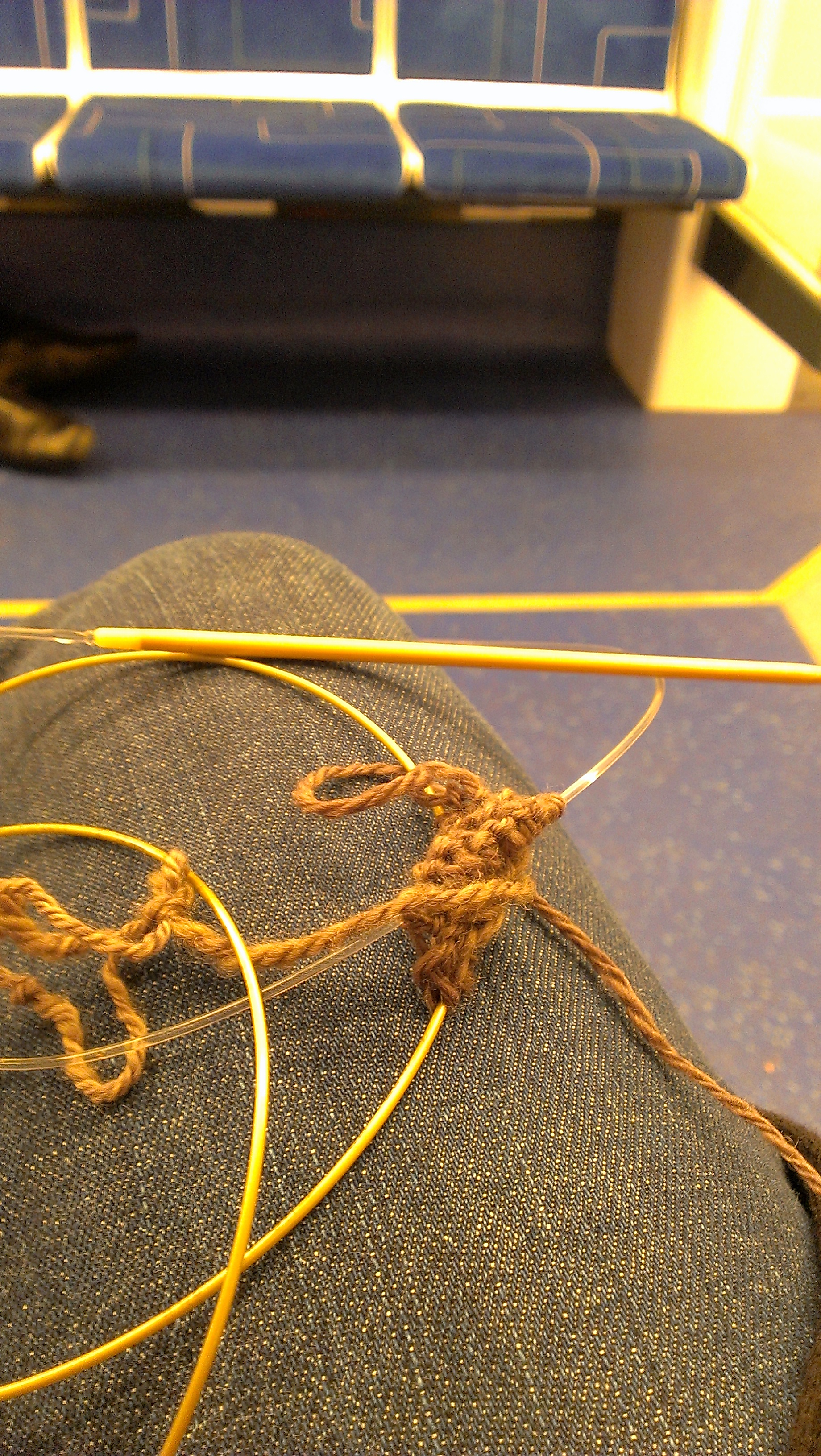
After the chicken hat, and before the kind lesson in white balance from a knowledgeable friend and reader… I decided something simple was called for.  This is the swatchless watch cap from Knitting from the Center Out by Daniel Yuhas.  Locals may recognise that I am casting on, on the train.

2015-06-16 17.20.13

This hat went a few places, from our house…

2015-06-19 12.15.14

…to solstice dinner with a big bunch of friends large and small.

2015-06-20 18.29.42

This is a small amount (66g) of luxury handspun merino/yak/silk naturally dyed by A Verb for Keeping Warm in ‘sticks and stones’.  I bought the fibre from someone else’s destash and it struck me as a delightfully soft and understated hat for someone.  Done.

2015-06-23 15.36.58


5 Comments

Filed under Knitting, Neighbourhood pleasures

Indigo fructose vat

I am determined to learn to use Michel Garcia’s fructose indigo vat rather than the very simple but clearly toxic and stinky hydrosulphite vat. I am also on a mission to create handspun, plant dyed yarns for colourwork, and I have a pattern in mind which requires some greens.  Also a plan about sock yarn in which this previously undyed, now (osage orange yellow) skein of BFL/silk becomes a variegated green.

2015-06-08 15.20.47

I prepared the vat and waited for a bronze sheen and yellow-green liquid below as signs reduction (the removal of oxygen from the vat) had been achieved.  I have a Ph meter to ensure the Ph is within range.

2015-06-08 10.49.33

I had success with reducing the vat but a lot of difficulty in getting the Ph into a range suitable for wool.  In the end, I decided to make the most of it and dipped my ugly cotton bags several times.

2015-06-08 11.08.43

In all I dipped them three times and they are now an old denim colour which is a decided improvement.

2015-06-23 09.22.05

Once I had managed the Ph, next came fleece from Viola, previously dyed in coreopsis or osage orange.

2015-06-08 14.33.07

Finally, in went the gloriously yellow sock yarn.  That yellow was so awesome I was tempted to leave it as it stood.  But I was looking for yellows and various shades of green, and here they are, ready for the next stage of my cunning plan….

2015-06-16 08.56.59


10 Comments

Filed under Natural dyeing

More lessons from string

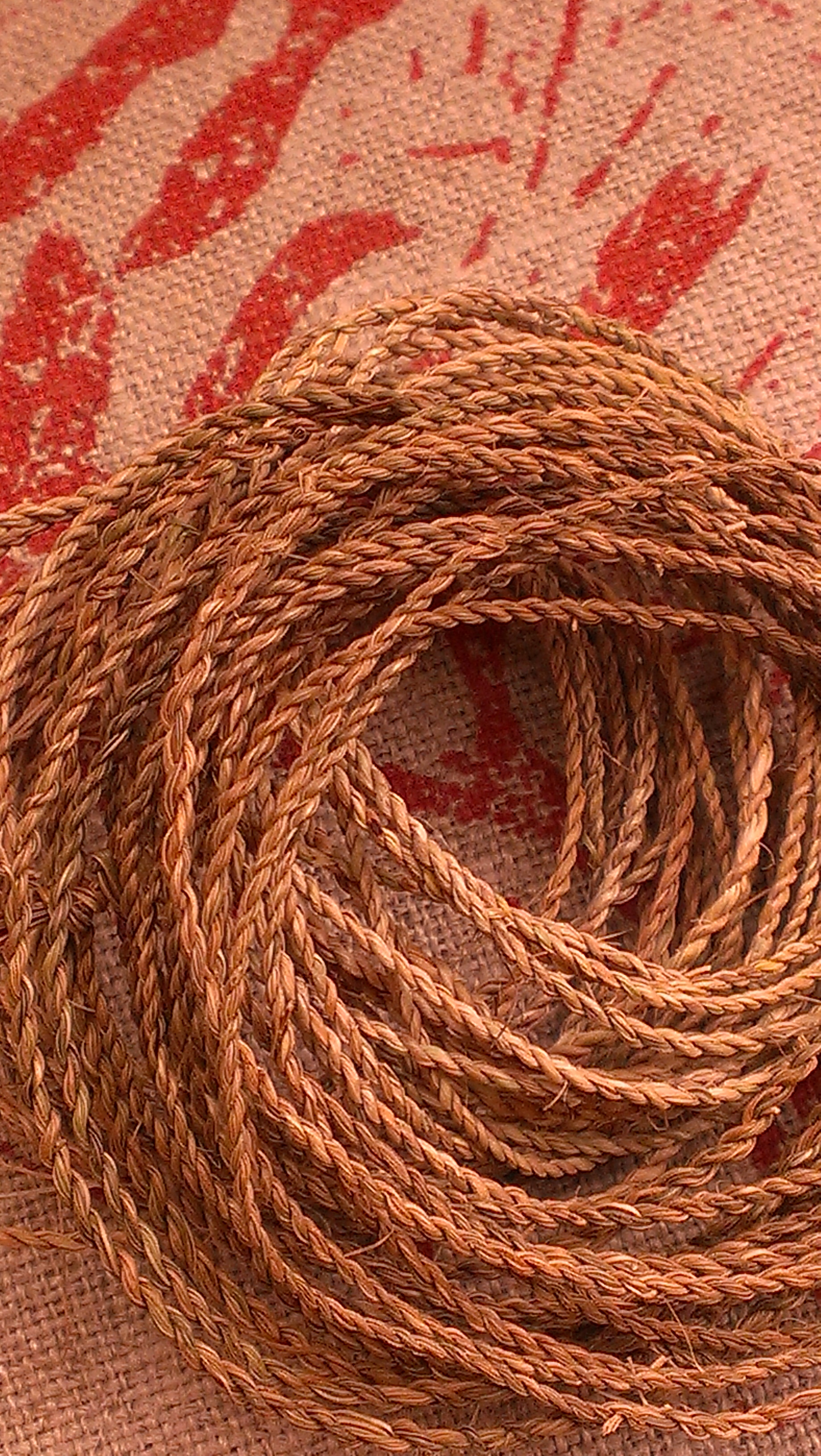
You don’t need as much as you think. A message that I can never hear too often as a first worlder.  Only a few leaves will make many metres of string if you twine it right!

2015-07-01 09.18.29

What you might need is all around you.  This is dianella, which we are growing, and so is the council.  Eventually dead leaves come away from the base and even these make decent string!

2015-06-24 15.00.21

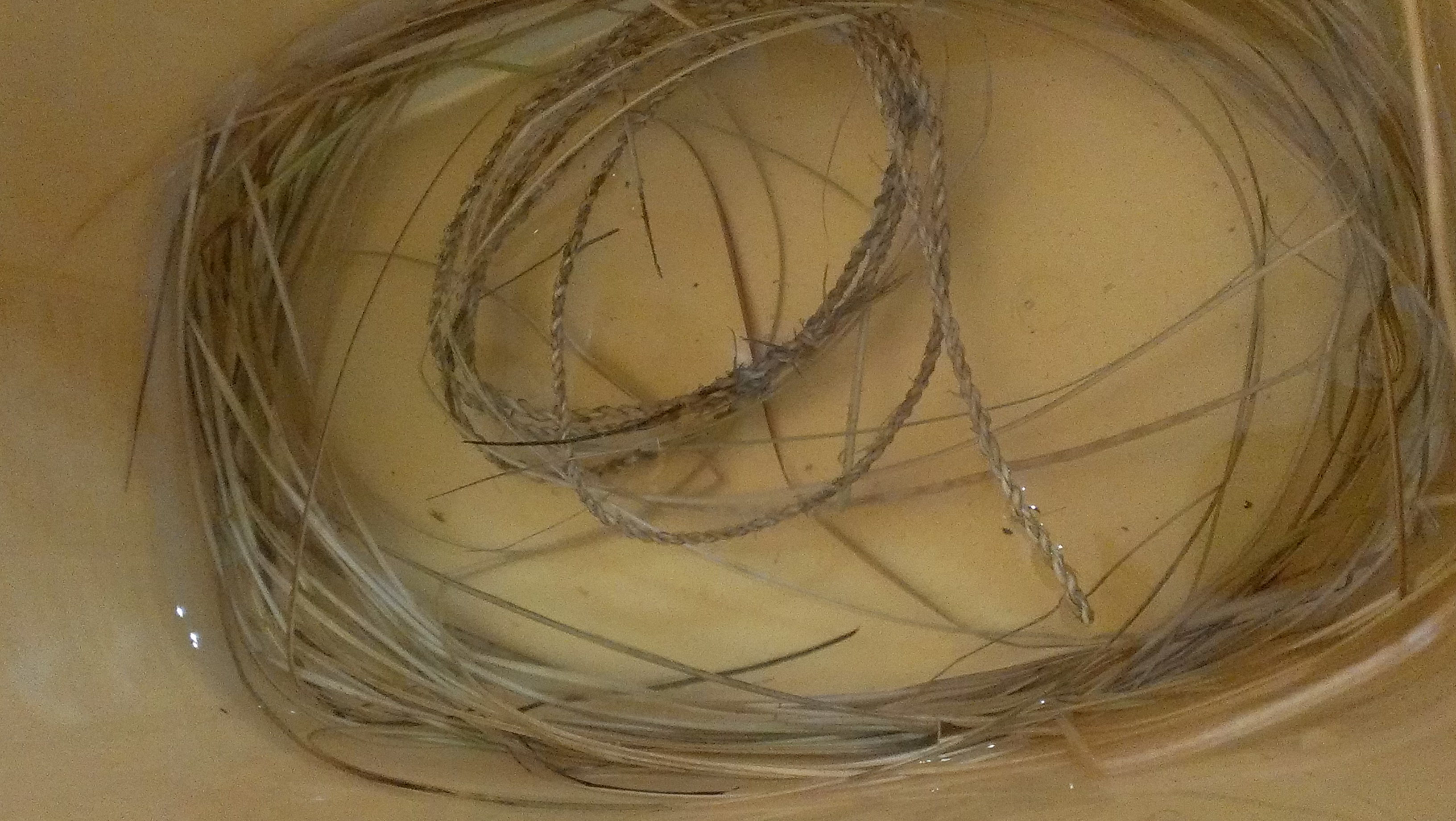
If you have the right leaf, and you use a pin or needle, you can get a nice, fine strip with which to make nice, fine string.  Just insert needle into leaf and pull it toward one end of the leaf or the other! I learned this method when I did introductory basketry, but had clean forgotten until just recently.  I’ve found with cordyline that keeping everything really wet helps a good deal.  Here it is stripped into fine lengths and sitting in a container of water suitable for indoor string making.

2015-06-24 18.29.03

Tough fibres are more resilient and make a more robust string, but pliable fibres are much more pleasurable to work and not so poky to wear (if you’re wearing string this season).  Cordyline and dianella have been my more recent experiments, and they make very resilient and strong string.  But it never gets as smooth as daylily, which is lovely and pliable when damp and smooth and comfortable to wear when dry.

2015-06-24 08.43.22

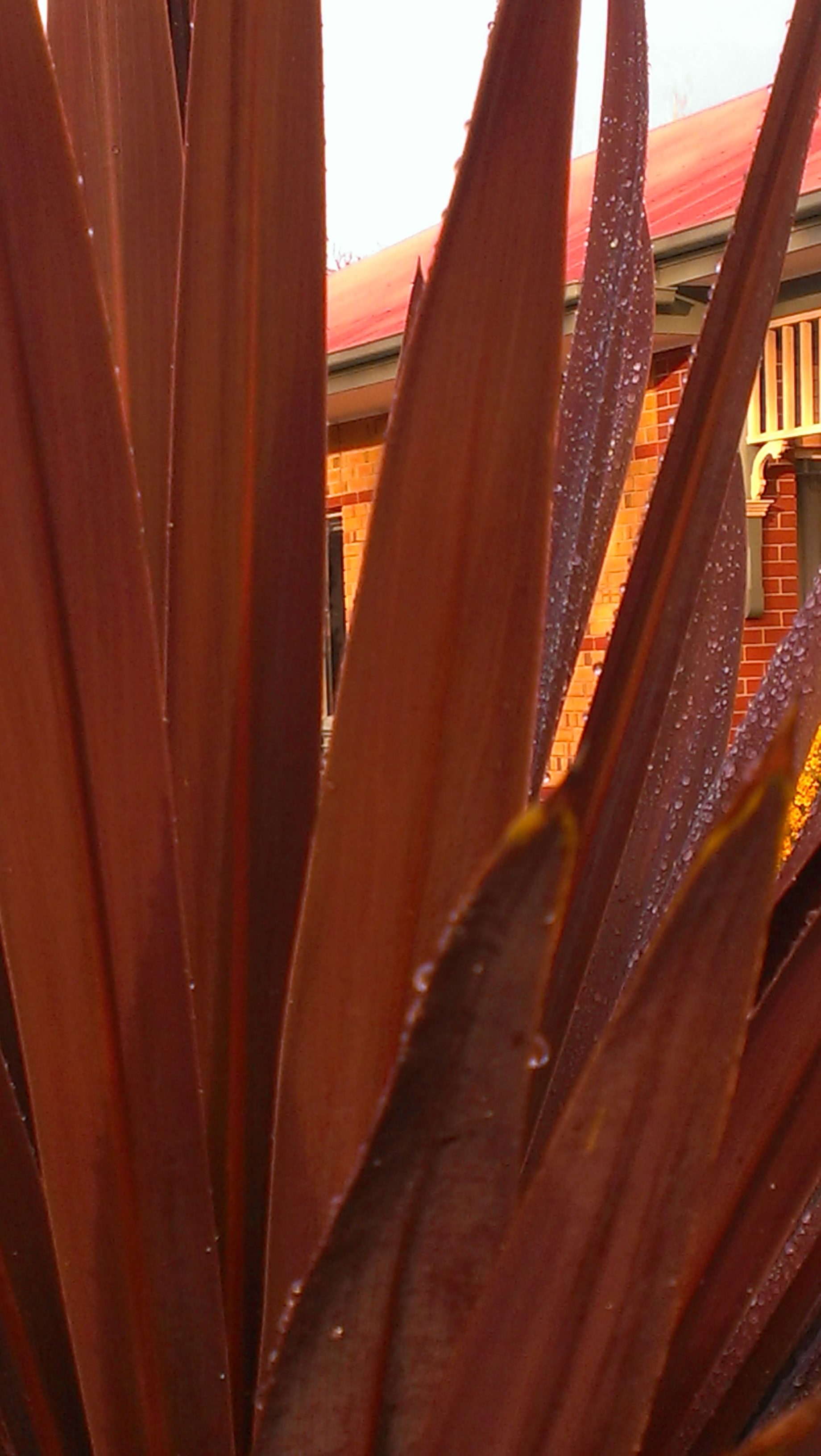
Imperfection is acceptable more often than you might think.  Basketry manuals offer excellent advice about how to choose and prepare plant fibres for optimal use in basketry and cordage but you can use non optimal fibres and less than optimal preparation and still make something that will please you and that might be more than adequate for use or need.  Here you can see the cordylines I have most recently tried making string from.  They are standing in a bed alongside the footpath outside a residential facility for frail elderly folk in my suburb.  Under the live red leaves, dead brown leaves are gradually withering and eventually falling to the ground.  Taking a few of the dead leaves is unlikely to worry anyone.  In fact, I’ve collected fallen leaves for mulch from the footpath outside this place and been thanked by the residents and applauded for my public spiritedness (little do they know!)  If leaves have been out in the sun, wind and weather for too long they will become brittle and degraded, but these leaves are so tough they have been more than adequate for use, and I have made a lot more string since I realised (with some help from Roz Hawker and some experiments with leaves wet from rain in my own garden) that much less preparation and care might work fine for at least some applications.

2015-06-24 08.41.57

The structure of leaves is every bit as intricate and individual and interesting as I had always suspected from looking at leaves but not trying to work out how to use the fibres in them.

2015-06-24 08.43.28

There are companions on the road.  There are always companions.  Helle Jorgensen; Patten project; Weaving Magic and clearly many Indigenous traditions.  Thanks to kind readers who have pointed me in the direction of some of these lovely makers.

2015-07-05 11.53.23

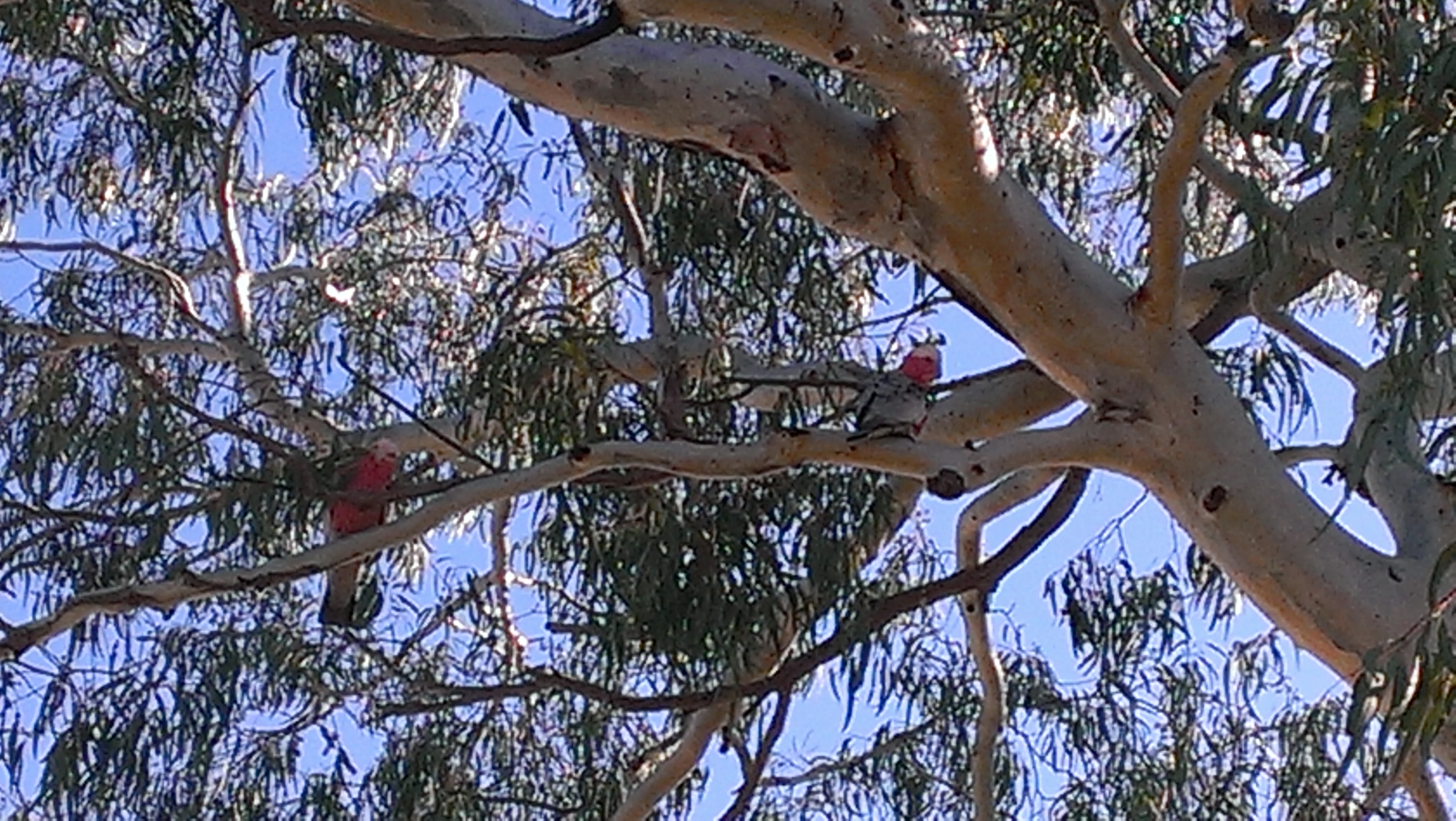
These galahs (can you see them?) kept me company making lemongrass string and some rosellas watched over me and dropped little bits of tree on me while I made green lomandra leaf string and lemongrass string.

2015-07-05 11.46.18

There and the lessons of string for the moment!

2 Comments

Filed under Basketry, Neighbourhood pleasures

Madder

2015-06-05 16.12.30

I still have some dyestuffs that have been given to me… and before I dig out my home grown madder, I thought I would use the last of the dried madder root I have.

2015-06-05 16.24.51

First, the boiling water soak and pour off (saving the poured off liquid for another bath, in my case).  Jenny Dean is my guide in the case of madder though I also read Jim Liles and Rebecca Burgess…

2015-06-06 13.32.51

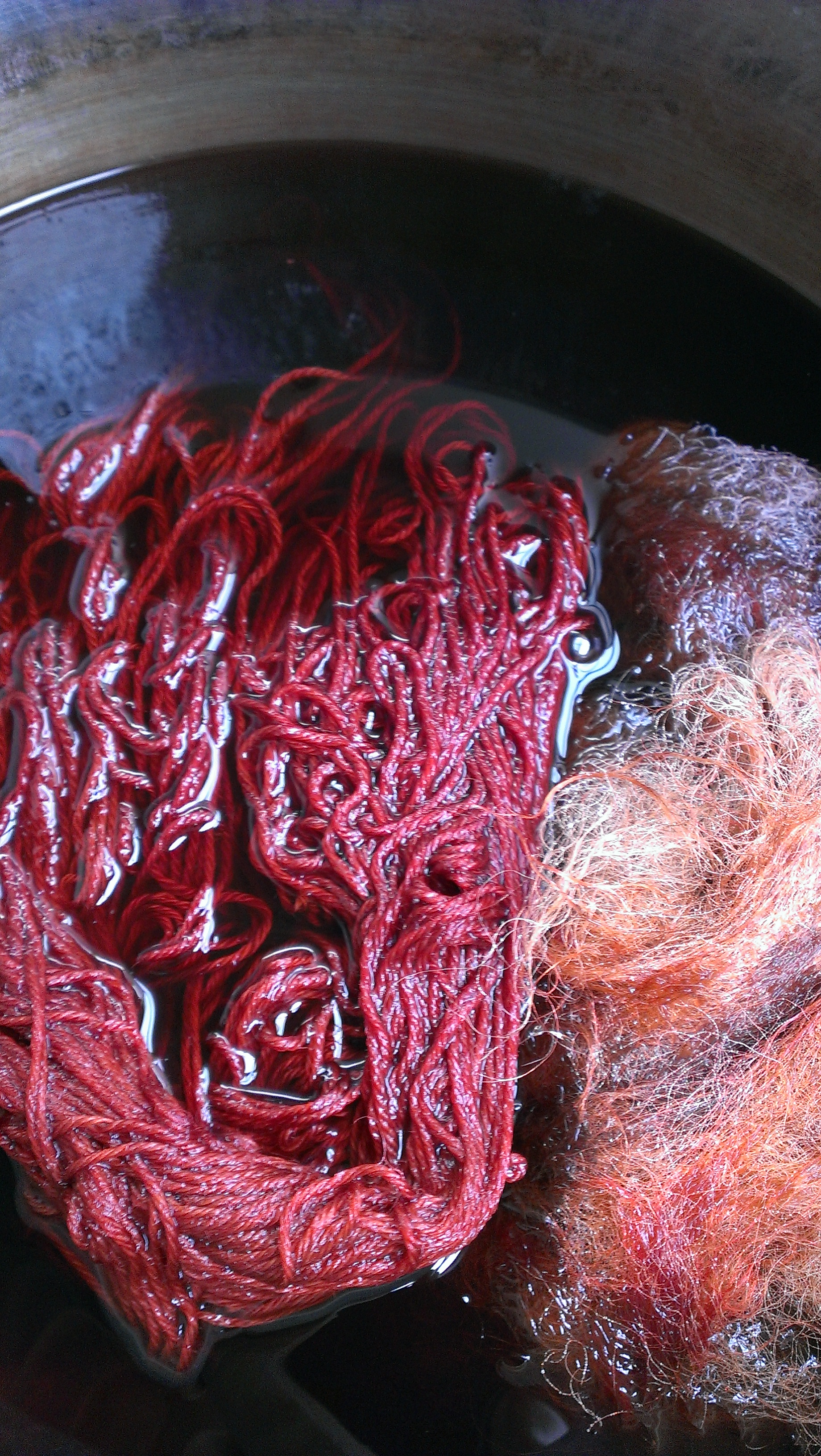
I decided to try to manage the madder (as opposed to having little particles distributed through my fleece and yarn) by putting it in a recycled nylon stocking–which you can see at the bottom of the picture poking out of the dyebath.  First I added alum mordanted BFL-silk sock yarn.  The first fibres to enter are those likely to be most red.

2015-06-06 13.43.27

Over time the shade really does deepen.

2015-06-07 12.14.17

Eventually I decided to add fleece, as you can see.

2015-06-06 13.43.34

I did several exhaust baths, including one or two some days later.  Then I did one a week later and still got apricot!  I also tried a different method by which Jenny Dean (in her rather lovely new book A Heritage of Colour) achieves aubergine.  I was sceptical about this method.  Not because I doubt Jenny Dean really gets purple in this way–I am sure she does!  But because it calls for using judgment in the matter of mordanting and modifier, and I know my judgment is nowhere as refined as hers.  I further prejudiced my chances by using the poured off first bath rather than using the most powerful dye bath I could.  I had, you know, only so much madder, so many plans, and only a modicum of confidence to be going on with.  I kept looking at this brownish bath and thinking it was not succeeding.  To my surprise though–once the fleece actually came out of the bath and I pulled it from the rinse bucket, it clearly was a shade of purple.

2015-06-23 09.35.37

The sock yarn–made me happy.  It came out of the dyeing process all scruffy looking, reminding me to always do my own skein ties.  But I love the colour!

2015-06-16 08.56.59


8 Comments

Filed under Natural dyeing