Tag Archives: cotton

Tie-dye

A friend from work told me her 6 year old had said he wanted to try tie-dye.  So I invited them over!  In the end there were two 6 year olds and a 3 year old, and 4 adults of varying ages and stages.  We were spoiled for colour choices but had only two pots, so after some lovely parental problem solving we ran a red pot and a blue pot and transferred one garment from red to blue to make purple.  I believe this t shirt was worn to childcare every day for some days after emerging in all its glory onto a towel designed with a tie dye aesthetic in mind.

IMAG1210

My random collection of op-shopped craft books came good when there was a request for a tie dyed square and after three readings of the instructions in Hilary Haywood’s Enjoying Dyes (1974) this emerged:

IMAG1193

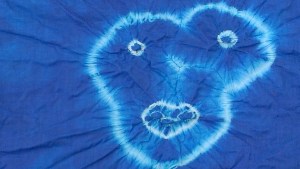
Fancy having a Dad who is not intimidated when you say you want a monkey face on your tie dye and instead creates this!

IMAG1197

And of course, the classics reinterpreted:

IMAG1209

I think the last time I tie dyed in this style would have been with Mum, in the 1970s. Just once.  It was an honour to be in charge of the dye pots and watch such fine parents encourage and be encouraged by their lovely children.

Leave a comment

Filed under Uncategorized

Sampling dye plants

IMAG0722

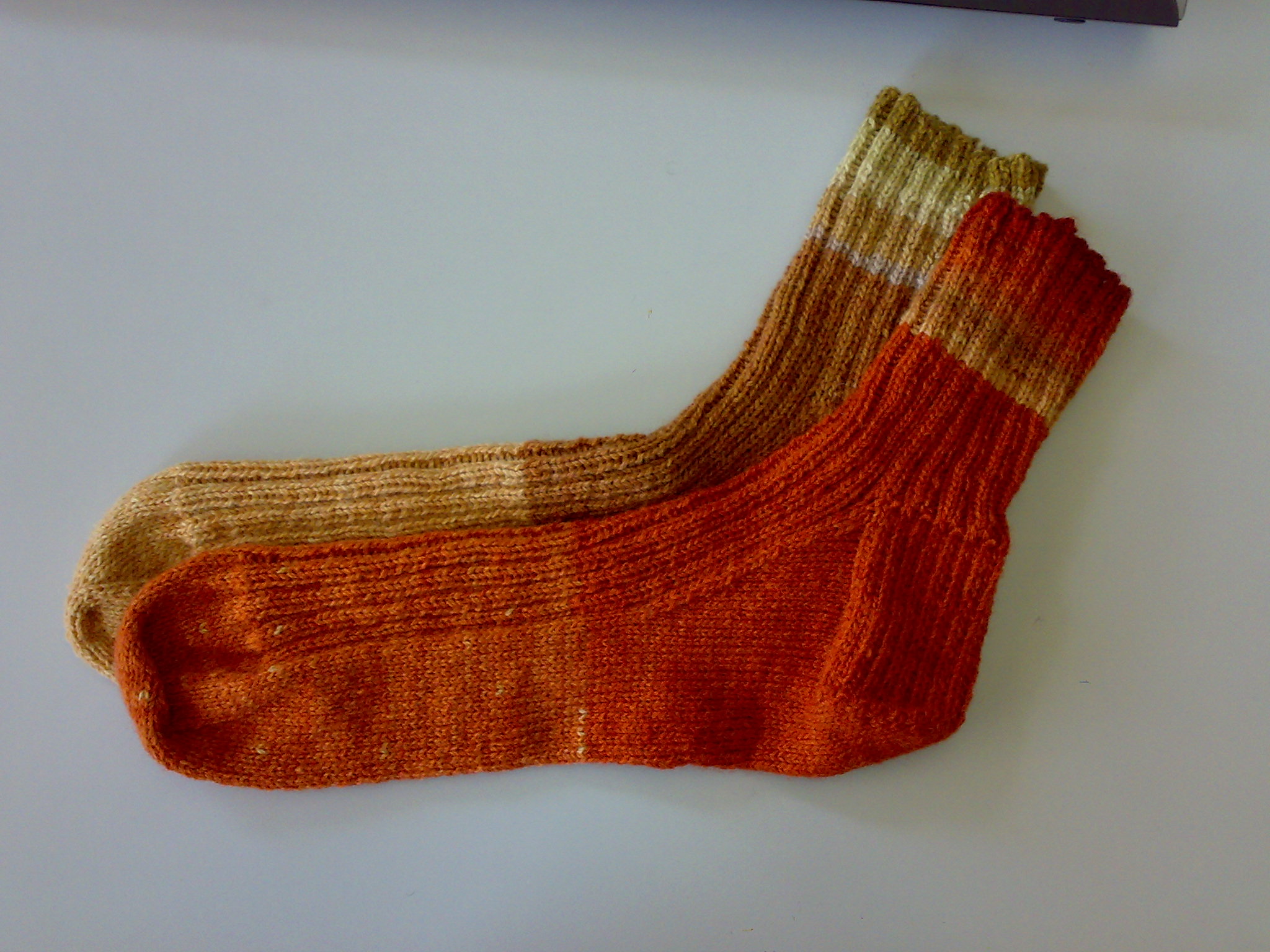
When I started plant dyeing, I used to make a tiny skein, about 1-2 metres long, and try out the leaves of trees around my neighbourhood on that.  In those early days, I tried rue after I found it listed in a book… oh my goodness…  the least said about that smell,  the better.  It almost put me off for good.  (Pale green, if anyone is wondering–not the red I was hoping for in my naivete).  When I had accumulated enough experiments to have identified some trees I wanted to keep visiting and some I would appreciate but not use for dye, I knit the samples into striped socks for a dear longtime friend. So that method had its advantages.  My friend asked for short cuffs (well, I thought he had–), so that’s what he got.

150620091160

I may have mentioned my devil-may-care attiutude to matching socks.  Happily my friend shares it, or he wouldn’t have scored this pair! 

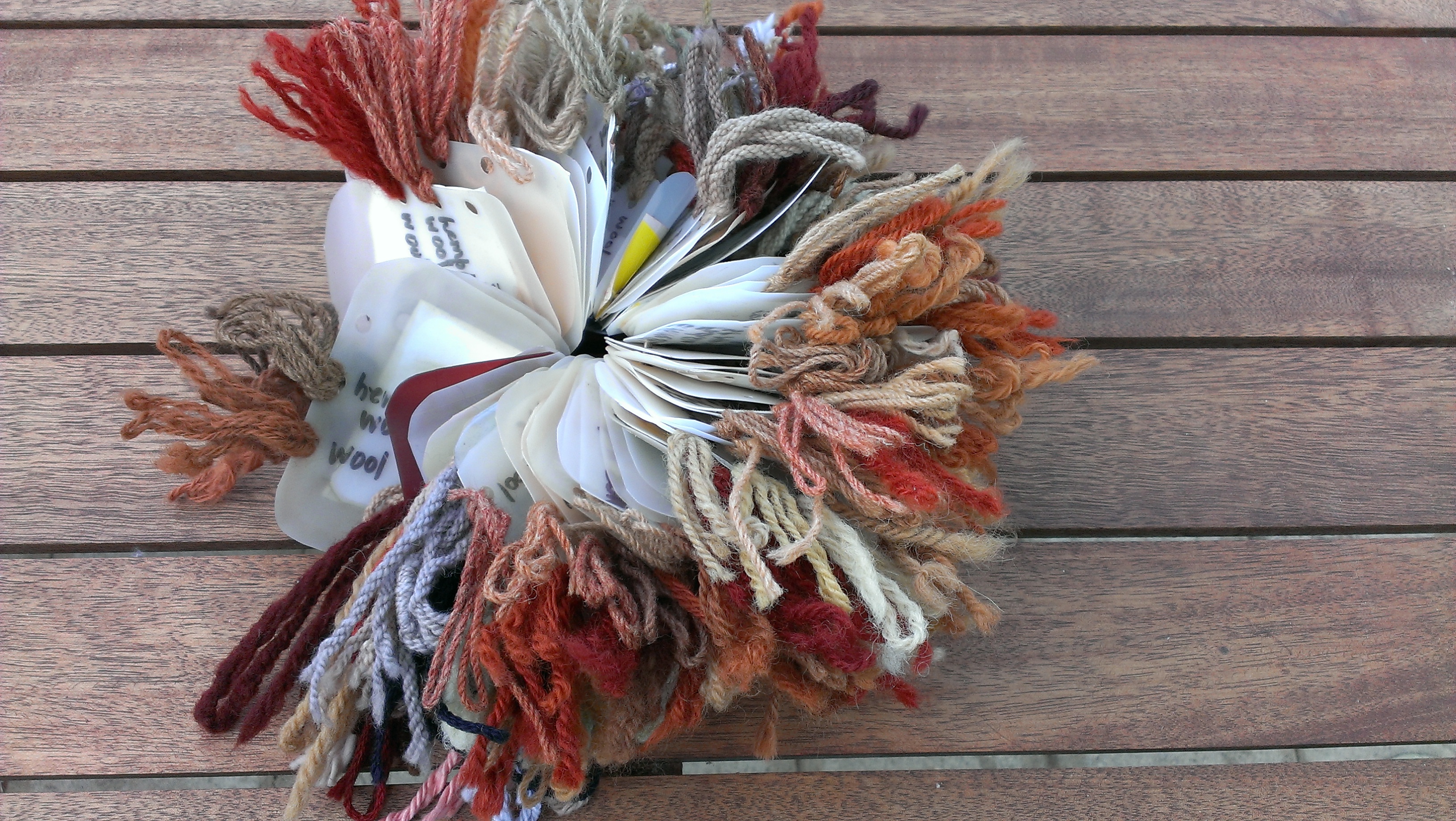
Eventually I learned about sample cards from more experienced dyers on Ravelry.

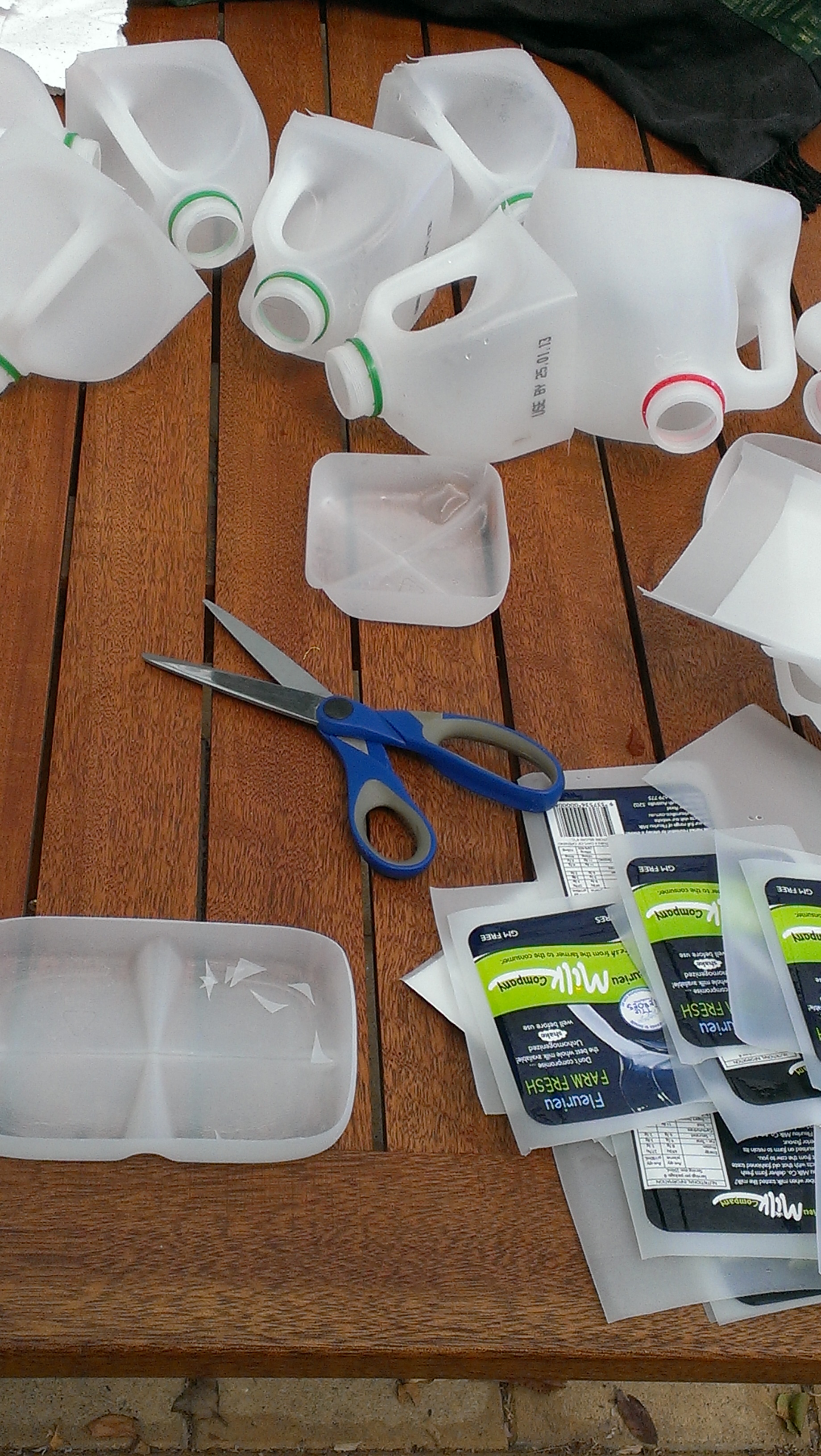
IMAG0723

I use milk bottles to make mine.  We don’t use this kind at home any more, so I raided a recycling bin at a coffee cart during the weekly farmers’ market to get these.

IMAG0768

I keep my samples on a split ring, which I think I also saw on Ravelry, and it’s a great record of plants investigated.  Some have been identified long after being cooked in the dyepot.  A few have been identified correctly after an initial misidentification.  Some have been tried several times.

IMAG0773

And there are still so many to try out!  In the lead up to the recent workshops, I collected leaves fresh and dried: from trees, from the gutter, from fallen branches.  I collected more bark too.  This one is Eucalyptus Forrestiana,  believe:

IMAG0764

And I collected a few specimens I couldn’t identify… This one branched so high I couldn’t pick a leaf, but bud caps were raining down and lorikeets were having a great party high above me.

IMAG0760

This one was a sprawling mallee near the railway line, and came complete with new holland honeyeaters protesting my invasion.  I hope they had chicks in there somewhere, and this was the reason they kept trying to see me off even though they are about the length of my hand.

IMAG0746

This tree has fascinated me for some time: it gives a peach or apricot colour.  But I still can’t identify it.

IMAG0738

So many possibilities for the future….

6 Comments

Filed under Dye Plants, Eucalypts, Knitting, Natural dyeing

E Kingsmillii subsp Alatissima

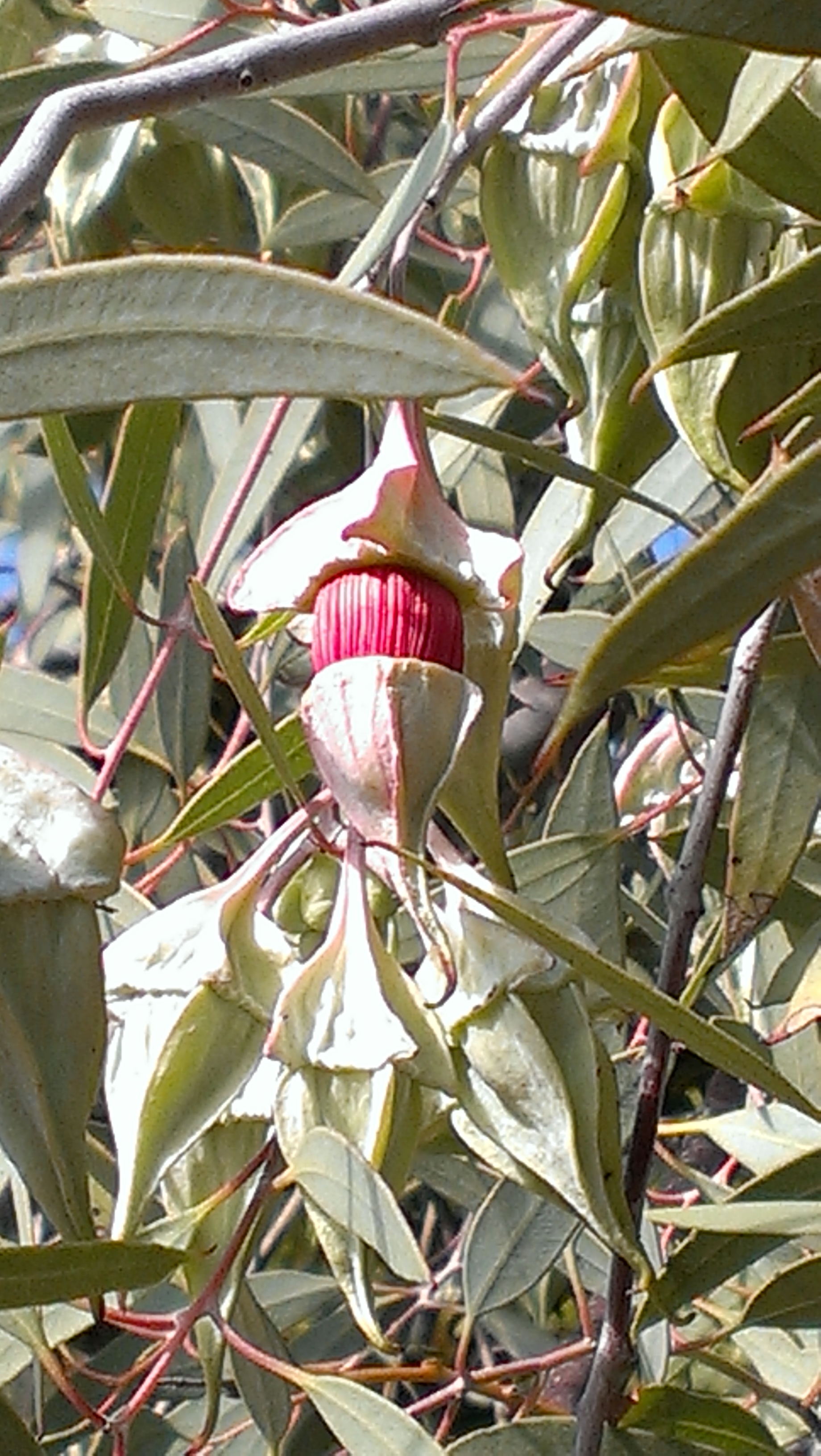
How spectacular is E Kingsmillii (Kingsmill’s Mallee; wing-fruited mallee)?

IMAG0952

Perhaps the tree doesn’t seem obviously wonderful.  The buds are truly glorious!

IMAG0955

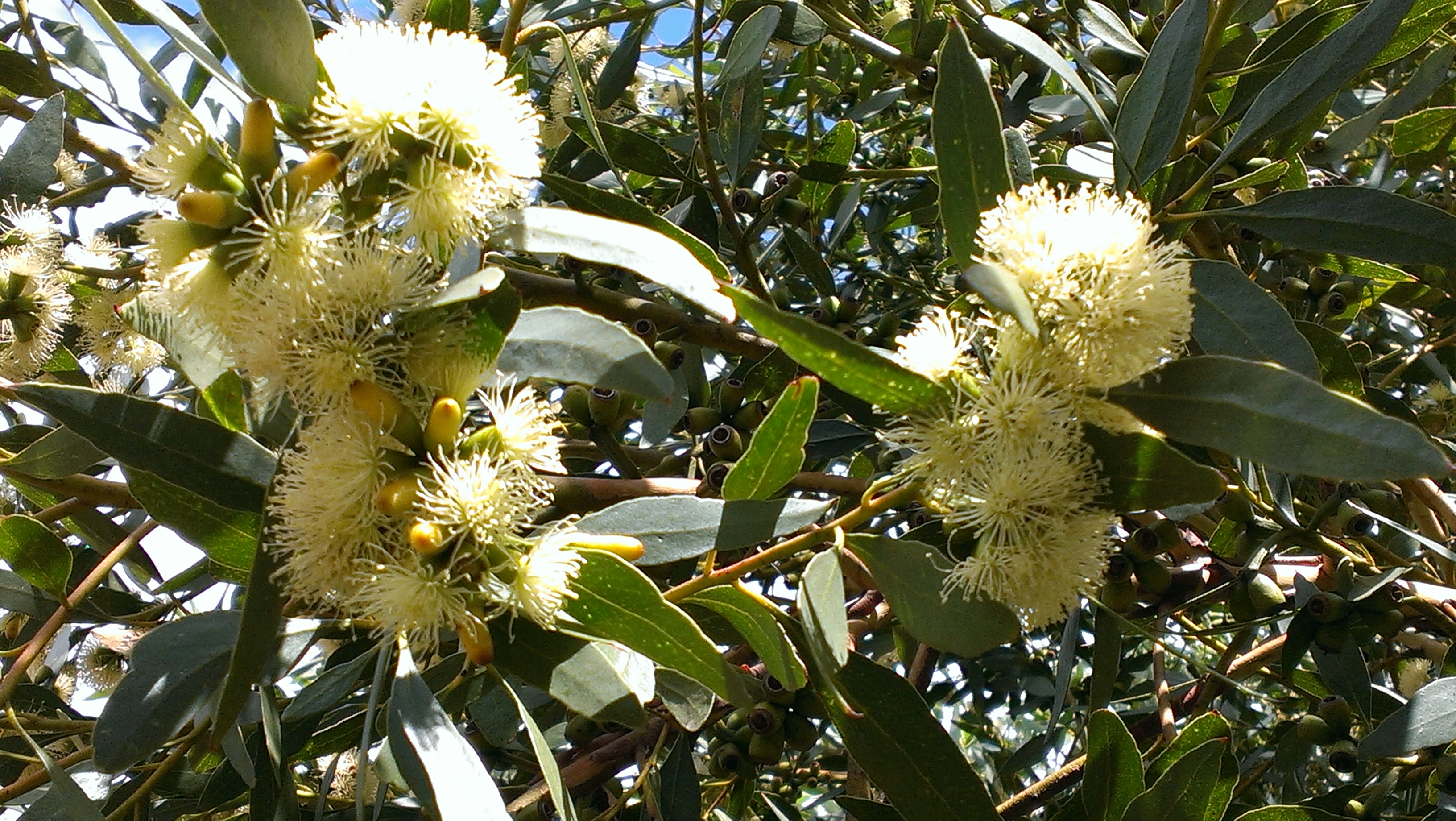
And so are the flowers and the fruits.  It turned out I was photographing this tree outside the Botanical Gardens centre for plant diversity.  My eucalypt admiration was shared with a woman who came by and offered me more information, so I told her about this beauty being a dye plant.  It isn’t every day you get this kind of fun on your way to a conference!

IMAG0957

And… for me this is a happy result, pulled from the copper at the Guild as a test during our workshop.  I am so prejudiced in the matter of red.  I just love it…

IMAG0919

4 Comments

Filed under Dye Plants, Eucalypts, Leaf prints

Another workshop done!

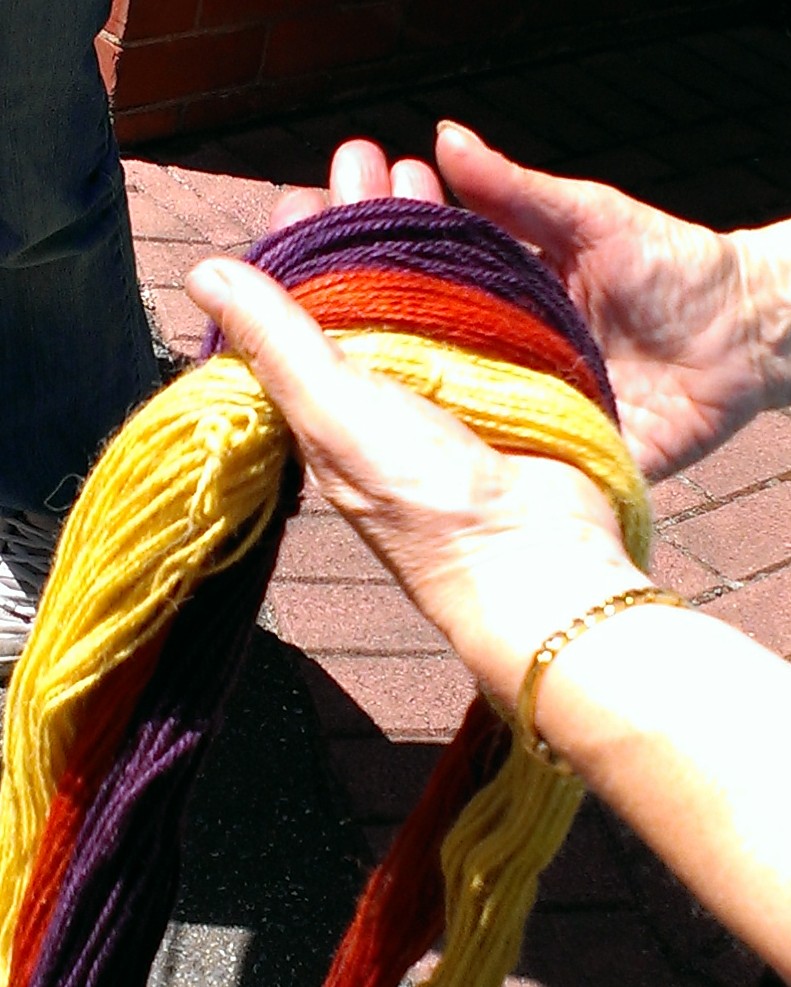
The second in my little series of workshops at the Guild went really well. There was yarn, fleece and roving dyeing.  Brown, orange, almost-red and maroon from E Scoparia (bark and leaves) and E Cinerea leaves, yellow from silky oak (Grevillea Robusta) using Ida Grae’s recipe from Nature’s Colors: Dyes from Plants, and the ever-astonishing purple from red sanderswood with alum.  I again used Jenny Dean’s method from Wild Colour and still got nothing like the oranges she suggests are likely.

IMAG0896

Mysterious outcomes in natural dyeing are not all that uncommon (at least for me!), as the number of variables is so huge.  But this one is out of the box–purple!?  Since my last post on the subject, Jenny Dean has very generously been in touch with her thoughts on the matter.  She suggests this purple could be the result of alkalinity (but given I made no attempt to generate an alkaline bath, it seems unlikely it was seriously alkaline).

Or–and I agree with her that this is much more likely, even though I used 4 different jars/packs labelled “sanderswood”–perhaps the dyestuff  was never sanderswood to begin with.  The colour is very, very like the logwood results I have had, just about indistinguishable.  I am still not complaining about the result–I love purple and so did the participants.  I was hoping for purple on this occasion, as I have no more logwood–that I know to be logwood.  Perhaps there was a time in the past when a batch of “sanderswood” came to our Guild or a supplier nearby and all the different jars I’ve used ultimately can be traced back to the same mislabelled supply. This would fit with my experience of Eucalypts… it is much more likely that I have misidentified my tree than that the dye bath is giving a completely different colour.  Variation to some extent, however, is completely expected.

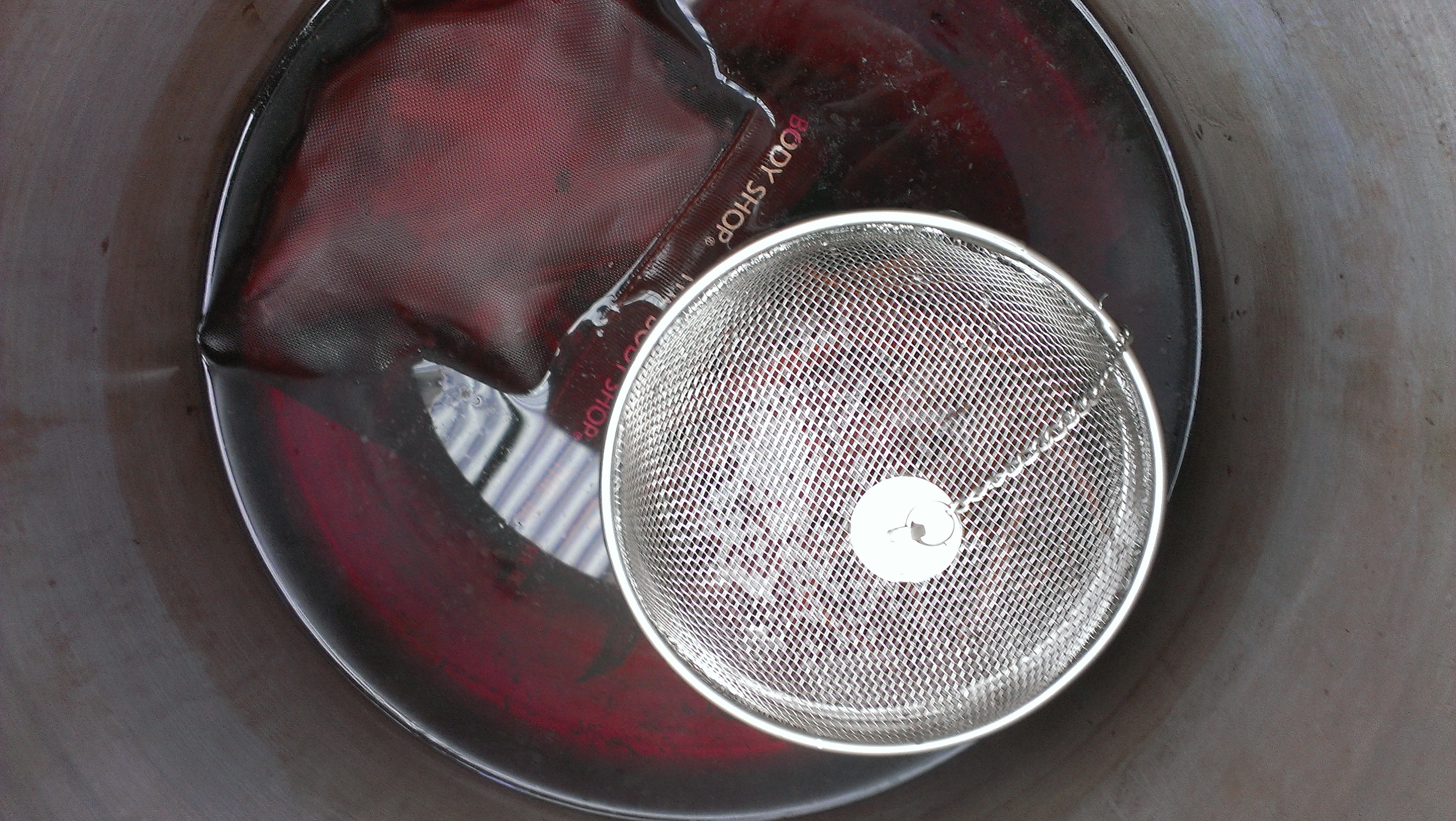
Here is the “sanderswood” just after I poured boiling water over it–Jenny says this looks like a logwood bath to her.  I bow to her much more extensive experience and wisdom, without hesitation.

IMAG0862

I have the biggest chips in a little zippered mesh pouch that must once have held toiletries.  The smallest chips/splinters are in something that looks just like a giant tea ball.  I saw it for sale in a Vietnamese grocery where I was investing in greens, seaweed and soy products and immediately saw its possibilities.  The woman who sold it to me had an eye-popping moment (evidently she hasn’t sold one to an Anglo before), and asked me what I was planning to do with it.  I love those moments in Asian groceries, because once I’ve been ask the question and given my (admittedly bizarre) response, I can ask about the ordinary use of the device or food in question.  This one is usually used to contain whole spices when making a big pot of stock or soup.  This point was helpfully illustrated by a packet of soup seasonings–star anise and cinnamon and coriander seed were some of the spices I could identify right away.

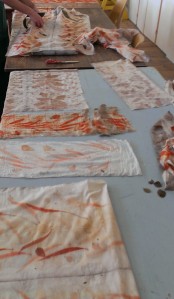
People tried out India  Flint‘s eco-print technique on cotton, wool prefelt and silk.  I hope she will get some extra book sales as a result (if you’d like to acquire her books, click on the link to her blog and look for the option to buy them postage free in the left hand sidebar).
IMAG0871

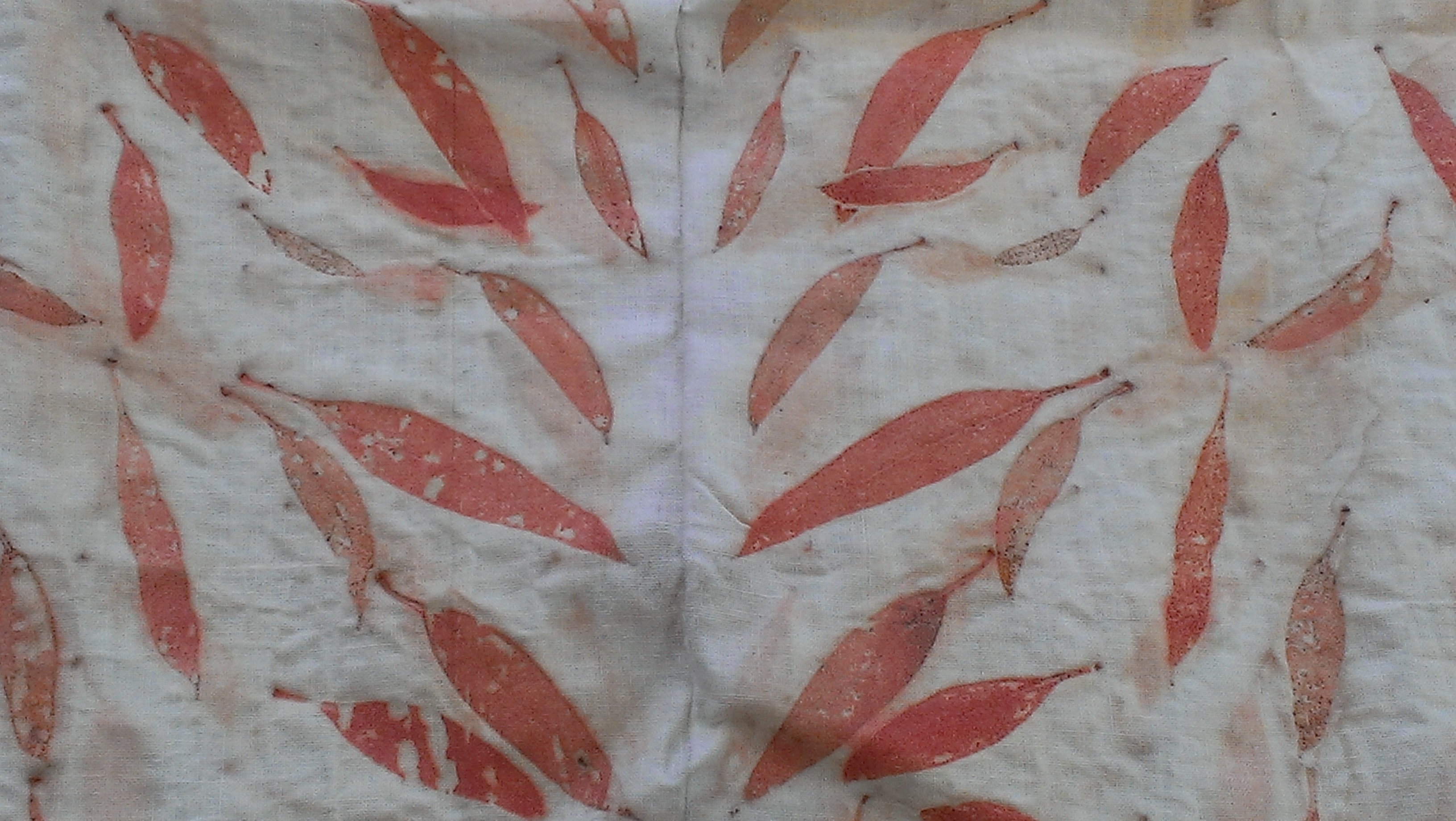
There were biscuits and icy poles and lots of chat.  I demonstrated soy mordanting and black bean dyeing.  And while we were at the Guild and using the copper, which is such a generously sized vessel by comparison with my dye pots, I leaf printed some significant lengths of fabric that I brought to the workshop bundled up and ready to go.  The copper really is copper lined, but I could detect no obvious impact on the colours.  Seedy silk noil:

IMAG0903

Wool prefelt… the degree of detail is fantastic.  This is destined for felting experimentation by a dear friend who generously assisted me at the workshop.  Her practical help, support, constant grace and good cheer made things go so smoothly.  I also decided to start some processes before participants arrived, which I didn’t do at the previous workshop.  I think that helped.  But it was a fabulous group of people too.

IMAG0913

And finally, silk/hemp blend, destined to be made into a shirt (by me, so it may take a while).  I am delighted with how it turned out, after many months of putting off the day.

IMAG0924

9 Comments

Filed under Eucalypts, Leaf prints, Natural dyeing

Magical madder

IMAG0623

I received a gift of dried madder root recently: it could be years old! But then, the tradition of madder dyeing is ancient and there was no reason to think it was past its use-by date.  I followed Rebecca Burgess‘ instructions in the beautiful Harvesting Colour to process it during a dyeing day with a friend who (happily) shares my enthusiasm. Here are our fibres going in:

IMAG0649

I left fibres soaking in the dyepot for a week afterward.  And here they are after drying.

IMAG0770

The alpaca/wool (larger skein) is really red, and so is the smaller skein of mohair.  The cotton mordanted with soy on the left is a red-brown shade, and the well-loved but unmordanted silk fabric (previously a precious shirt handmade for my friend) is a lovely red-orange.  This madder bath didn’t begin to give orange until it was on its third exhaust bath. After that, I kept dyeing with it until I got down to peach on some handspun wool and banana fibre blend.

It’s exciting to see madder dye red with my own eyes, as every madder-dyed textile I have seen dyed by anyone I know is decidedly orange.  Not unlike the colour I can get with many local eucalypts.  And it is also exciting because my madder must be getting close to possible harvest!  Here it is at the height of our Australian summer, which is to say, partially crisp.  But about two or three years old and so promising…

IMAG0777

2 Comments

Filed under Dye Plants, Natural dyeing

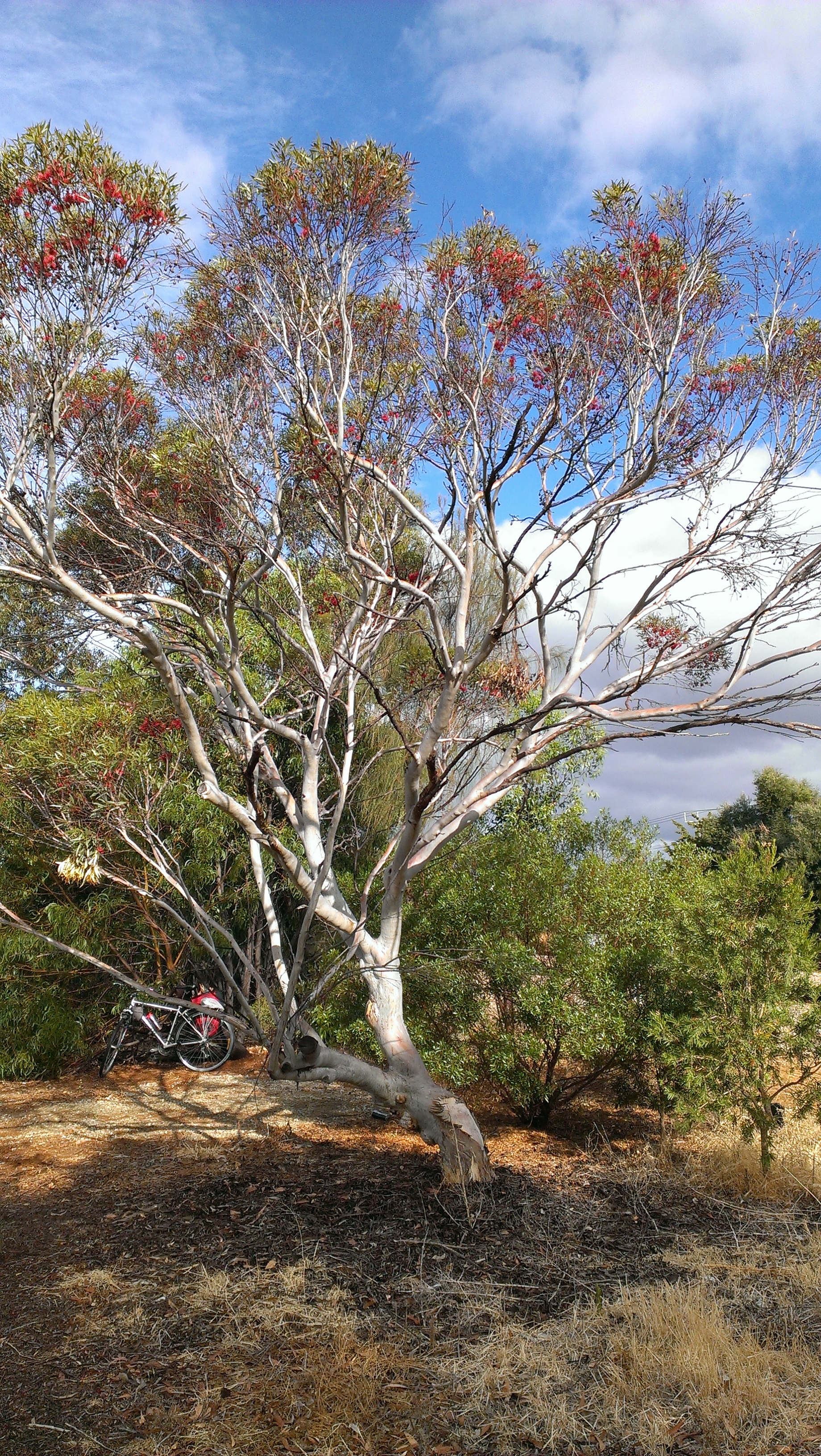
Eucalyptus Erythronema var Erythronema

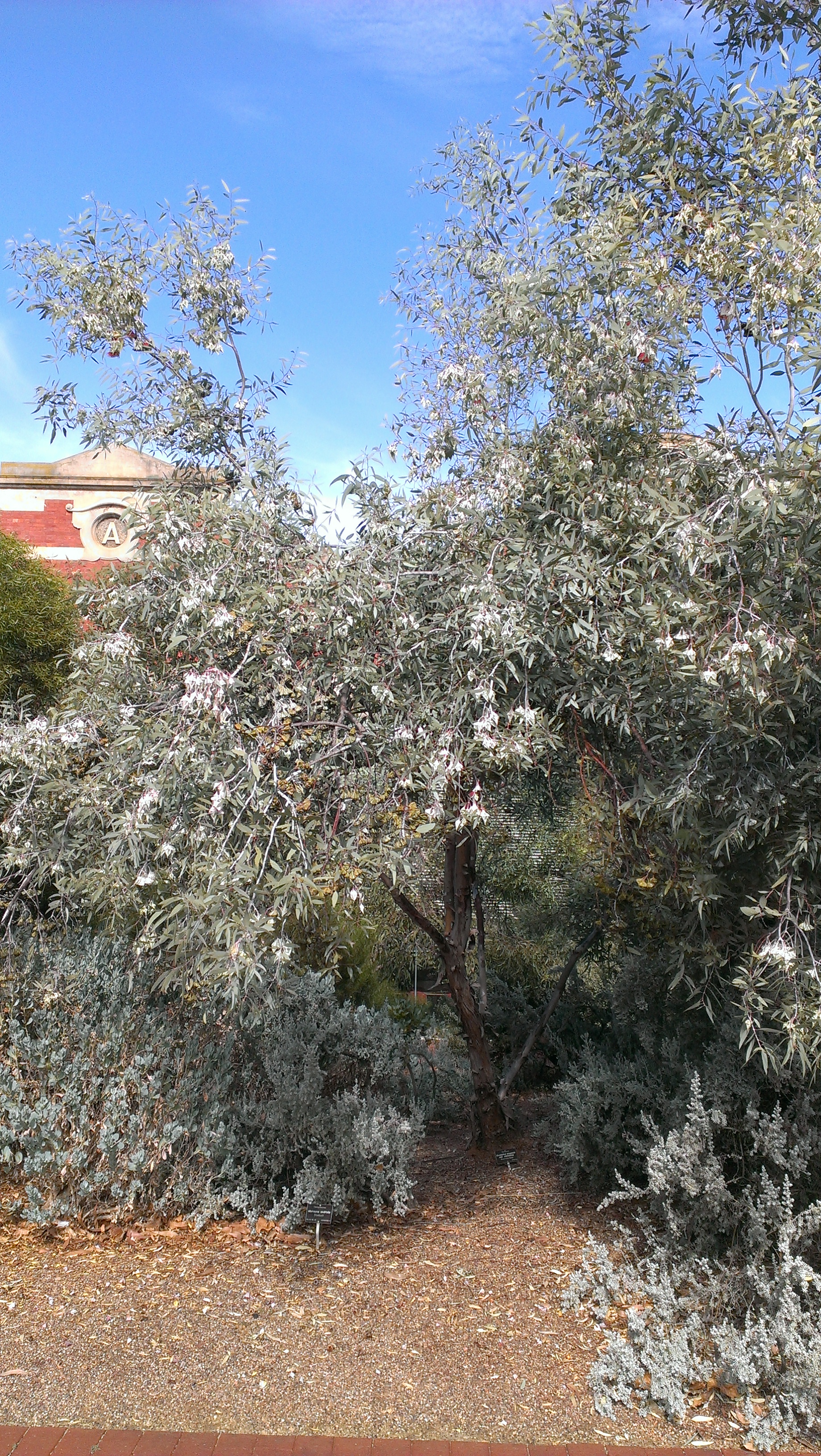
Riding along the railway corridor near Oaklands railway station, I passed one striking red-flowered tree I didn’t recognise and kept pedalling, but when I saw a second, I pulled over.  Here’s the tree.

IMAG0676

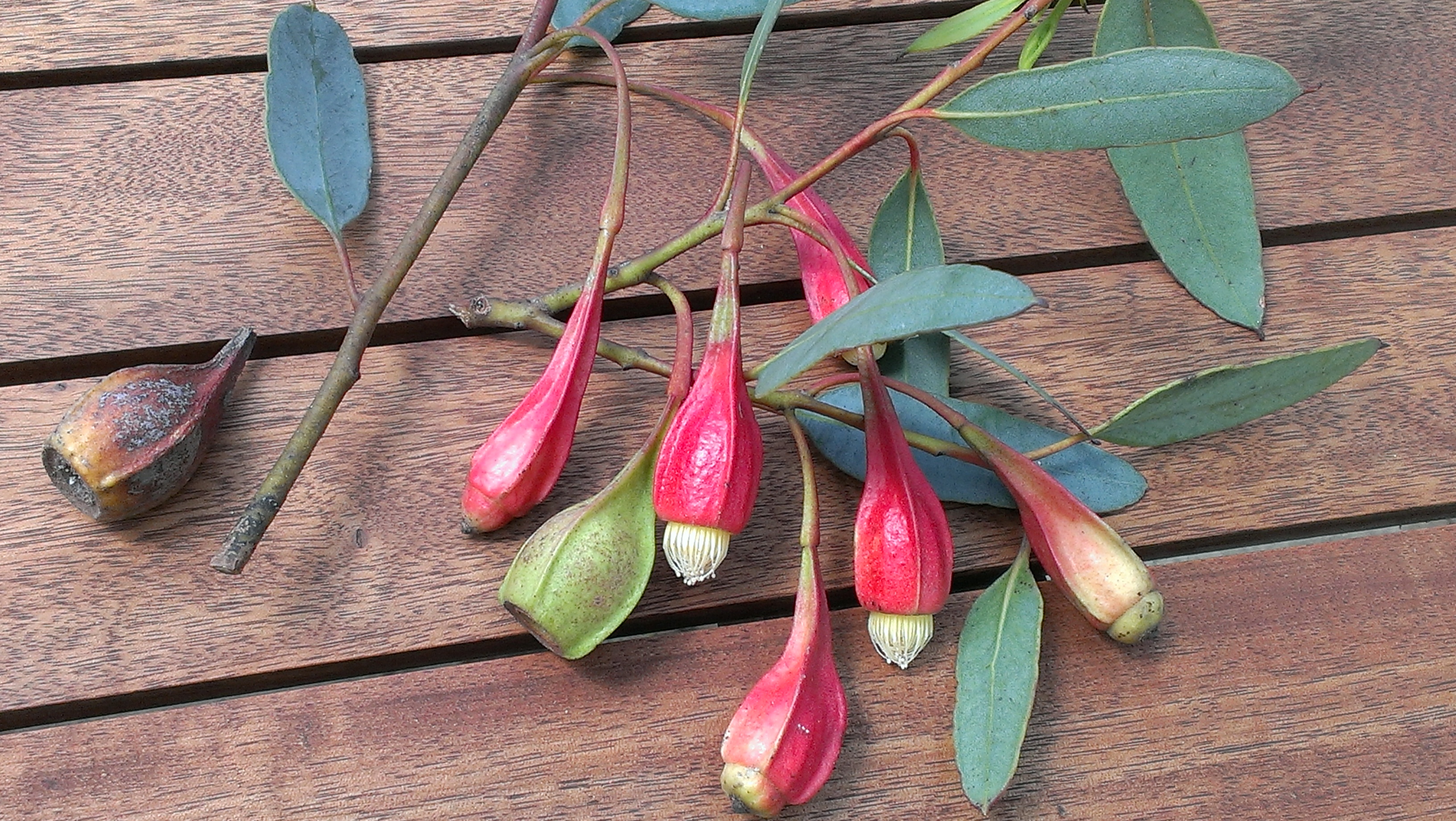
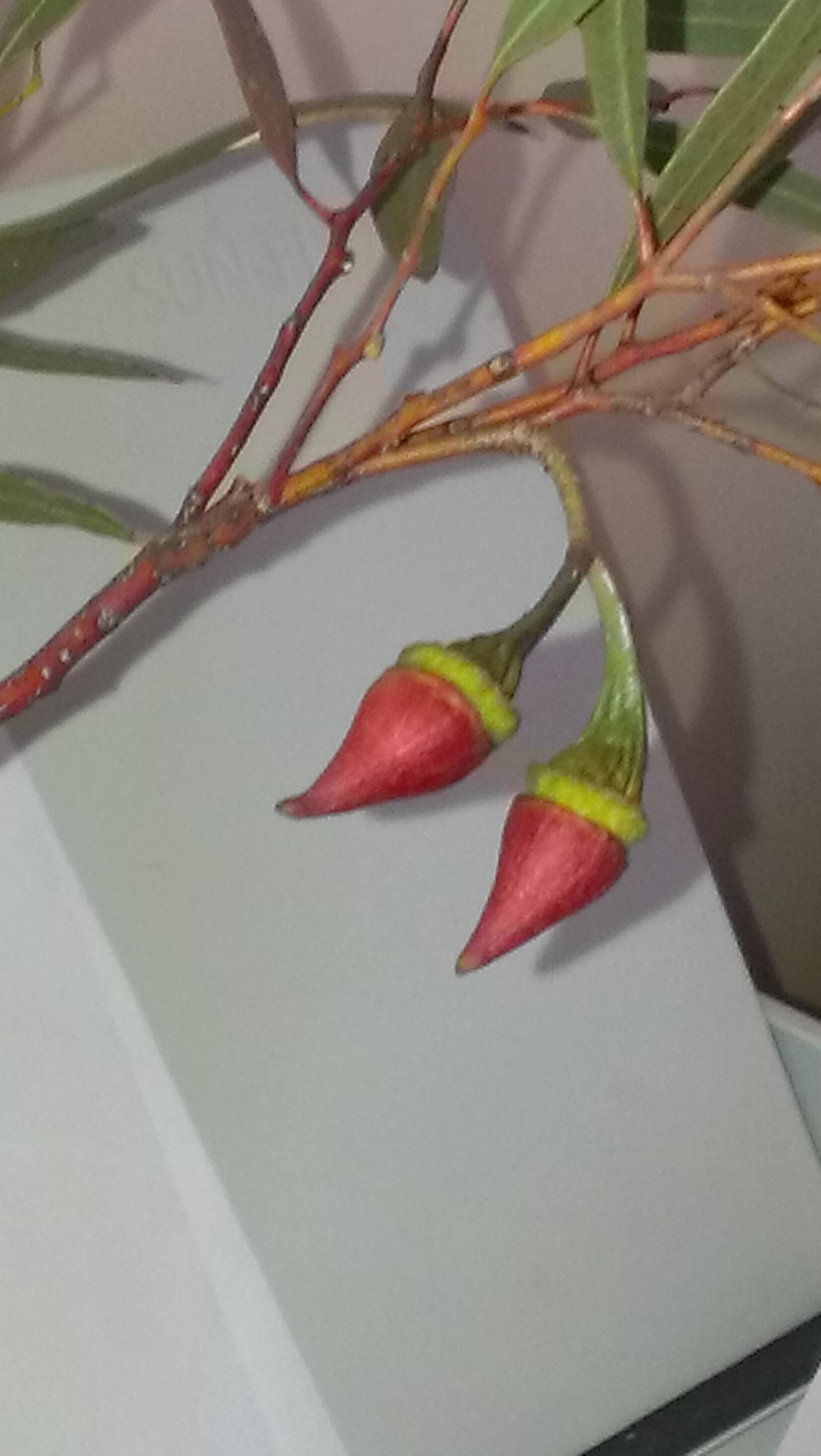
The flowers were especially striking: bright red, with stamens curling back up and around the base of the fruit.  The bud caps are bright red, coming to a pointed tip.

IMAG0679

Quite a sight.

IMAG0678

In her book Eco Colour, India Flint argues that eco-prints are a good way to test potential dye plants using minimal leaf material, and she is, of course, right. On the right, E Erythronema var Erythronema.  Not much of a dye specimen.  On the left, leaves from another E Scoparia, I believe.

IMG_0046

4 Comments

Filed under Dye Plants, Eucalypts, Leaf prints, Natural dyeing, Uncategorized

Oak leaf ‘prints’

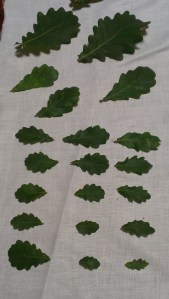
Following Rebecca Burgess’ instructions for a fall dye starter from Harvesting Color, I pulled out my rusty nail solution and, given the difficulty of collecting maple leaves nearby, took the opportunity when I was passing a street where oaks had been planted as street trees. 

IMAG0339

I wrapped my bundle and put it in a jar of vinegar and rust nail water on 16 December (that’s it beween the rusty nail jar and the hibiscus dye jar).  Now to see what happens.  I have to say it is a mystery to me why my rusty nails, which were…rusty and orange… have produced a black solution over time in my case.  I have added more vinergar and water to the nails and the black particles have settled out in the bundle jar overnight in this photo.

IMAG0341

After two weeks in the sun, my rusty water looks more rusty (and you can just see my bundle in there):

IMAG0530

And yes, I did get a leaf print, albeit a mostly very blurred one.  The colour is impressive, but I think this is a clear case of time (unusually) not being the dyer’s friend.  Rebecca Burgess suggested 2-3 days and I left this for 10-11 days, which suited me but not the process.  I will be sure to try again and be more obedient in my instruction-following!

IMAG0553

Leave a comment

Filed under Leaf prints, Natural dyeing, Uncategorized

Leaf prints of the week: Eucalyptus Cinerea and pecan leaves

It was another weekend with leaf prints.

Leaf prints 005

Eucalyptus Cinerea, before..

Leaf prints 001

and after:

Leaf prints 021

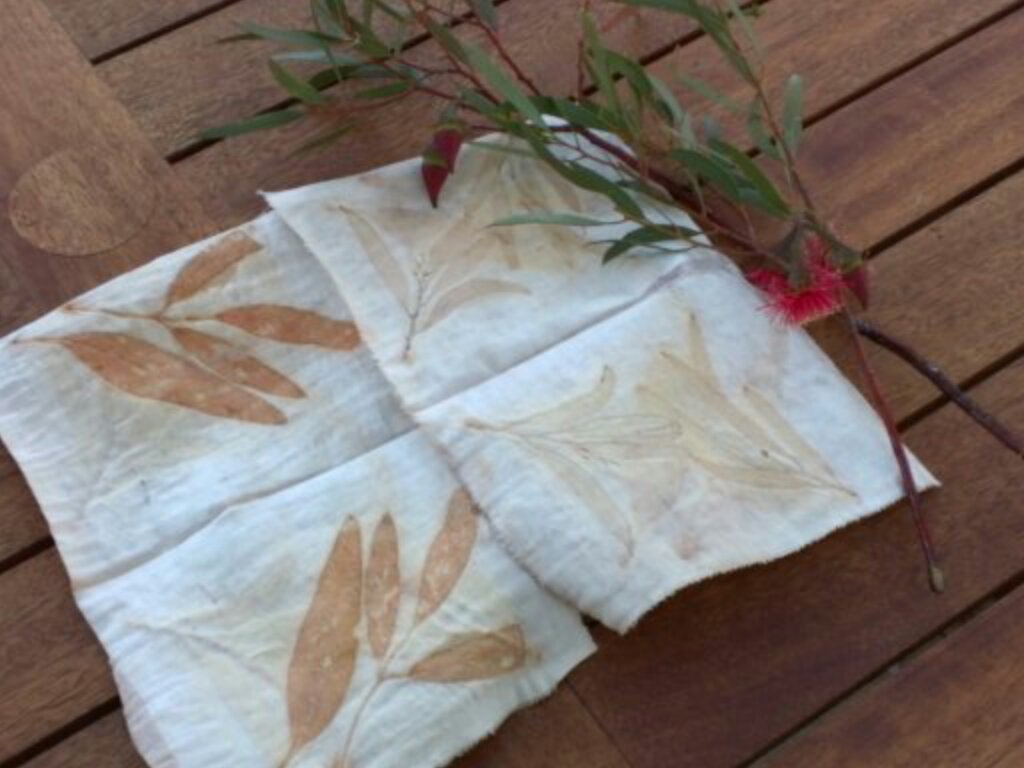
My test cotton sample, demonstrating that the mordanting I wrote about a little while back should work out just fine for the natural dyeing workshop I’ll be running.

Leaf prints 022

On the weekend I travelled south of the city to celebrate the lives and love of two dear friends.  They had an all-in-one birthday party and anniversary.  I gave them a teapot and teacosy dyed with silky oak leaves (grevillea Robusta) and eucalypt, and they found it suitably funny.

Dyeing 005

As we left, one of them pointed out their now-flourishing, though still relatively small,  pecan tree.  I had seen pecan eco-prints on Lotta Helleberg’s lovely blog.  I asked if I could pluck a few, and then I took them home and wrapped them in a piece of cotton twill that used to be a pair of trousers.  It was ready and waiting, mordanted in soy and ready to go!  Before… (such lovely leaves…)

Leaf prints 002

and, after:

Leaf prints 025

I had also saved this sample of an unidentified eucalypt a friend was growing in his backyard, but sadly it yielded a few brownish smudges.  It’s much prettier in person than as a leaf print.  I think it is Eucalyptus Kruseana (Bookleaf Mallee).

Leaf prints 003      Leaf prints 009

And I spent some time creating textured batts ready for textured yarn spinning… wool with mohair locks, while I tried a new method for washing wool.

Leaf prints 014

Good times!

1 Comment

Filed under Dye Plants, Eucalypts, Fibre preparation, Leaf prints

Soy mordanting

Ah, the humble soybean.  It gives me enormous respect for Japanese culture to see all that they have achieved with this rather unpromising bean (to say nothing of all the other skills and treasures of Japanese culture). Tempeh and tofu are very much on our menus at present, too.

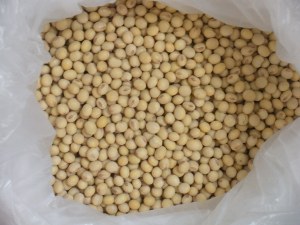
I am just using it to mordant cellulose fibres ready for leaf prints, nothing as complex as tempeh, or even tofu. Usually I dip the fabric in the sea first when I’m visiting someone by the sea and then dry it and then begin with beans, but not this time. I forgot to take the cloth when I went visiting at Hove and the beans were already soaking. I measure out 3 cups of beans to every kilogram of fabric. I soak the beans overnight, grind them finely and dilute, then strain out the solids.

Then, it’s dip and dry at least three times.  So this week I made the most of hot weather: 4 dips on a single day.  These pieces of cloth are destined to be dyed by those who attend my dyeing workshop in January. It isn’t a difficult process to mordant this way, but there are a few steps to it.  I’ve decided to try mordanting in advance in the hot weather of summer.  Drying fabrics that have been through this process in winter is pretty trying and makes this a 4 day process, by the end of which the soymilk smells less pleasant. Mind you, even then, it takes about 5 minutes a day of actual effort for me!
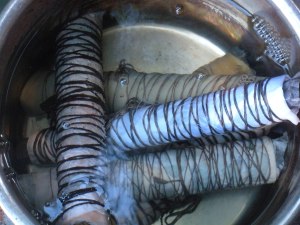
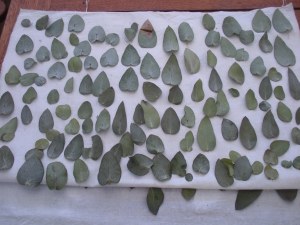
Next, I’ll be testing one of these out to make certain sure there will be a good result on the day of the workshop. And perhaps, doing some more mordanting while the weather is perfect for it, as part of working toward taking advantage of the seasons to do the work that is most suitable to the weather and conditions.

25 Comments

Filed under Fibre preparation