Tag Archives: eucalyptus

Waste not want not

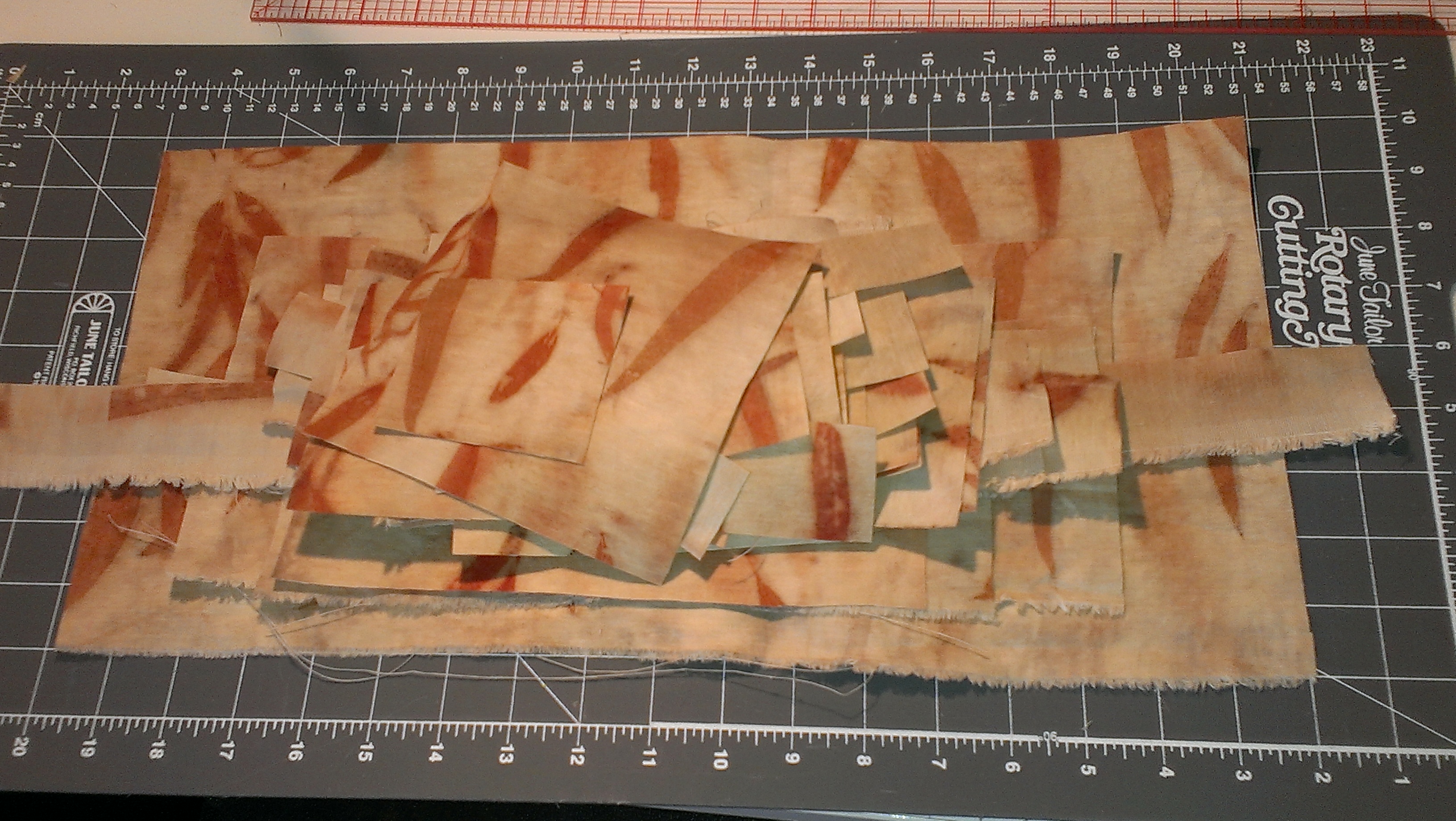
Having made two shirts from my length of leaf-printed hemp/silk, I was left with a selection of mostly quite small pieces.  Other people have clever ways of designing that don’t leave waste but use the whole length of fabric.  Not me.  Maybe I’ll learn this one day.  But I have my ways.  I cut all the pieces into rectangles and squares.

IMAG1075

Then I start piecing them together and matching sizes.

IMAG1078

I stitch them into bigger and bigger pieces, until I can decide whether to make a bag or a cushion cover or whatever seems to suit the fabric and design.  Finally all I have left are useable pieces of patchwork.

IMG_0059

And a really small pile of scraps.

IMAG1073

And of course, the second shirt.

IMG_0118

5 Comments

Filed under Eucalypts, Leaf prints, Sewing

Eucalyptus Orbifolia

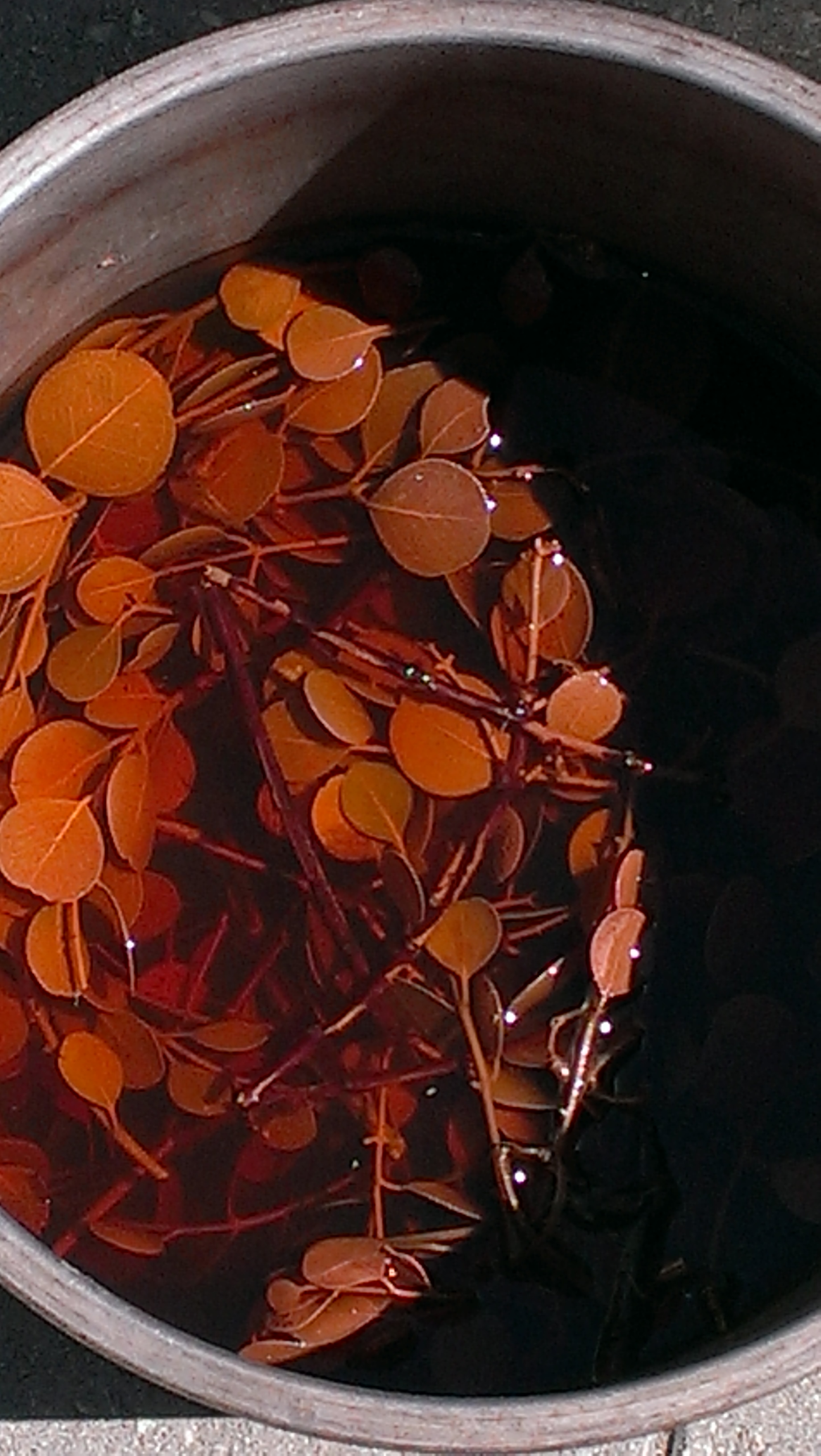
Alas, poor Eucalyptus Orbifolia.  I grew this plant from a small seedling to a still small, but perhaps 50 cm high plant hardly worthy of the title ‘sapling’, in a large pot.  It seems to have been a casualty of the hot summer and perhaps its far flung location at the back of the yard.  Despite all the watering it received, poor old Orbi gives every impression of having curled up its toes.  So, I’ve cut back and harvested the leaves for the dye pot.  Perhaps there will be regrowth, but I’m not letting all the leaves fall while I wait to find out.

I bought this plant and not some other believing it to be a dye plant for some reason I can no longer remember.  I’ve been to the place I thought this idea generated but it isn’t there!  And now I can break the news to you, dear reader.  It isn’t going to join the list of truly exciting dye plants anytime soon.  Here is the dye pot after some hours of simmering.

IMAG1189

The dye liquor is still quite clear, with an amber tint.  The leaves are still the glorious shape that gives the tree its name.  I have leaf printed with them in the past and the result was definitely a print, though not any really impressive colour.  And here is the result of a dyebath test. The handspun with no mordant: orange.  The millspun superwash with alum mordant: brown.  What was I thinking mixing and matching fibres on my test cards in this batch? Silk thread, nothing of significance to report (E Orbifolia is in the middle). And for comparison, handspun Finn X dyed with E Scoparia bark at the bottom of the frame.

IMAG1215

5 Comments

Filed under Dye Plants, Eucalypts, Natural dyeing

Random harvest

In the beginning, when I’d read the Handweavers and Spinners Guild of Victoria Dyemaking with Australian Flora (1974) and perhaps Jean Carman’s Dyemaking with Eucalypts (1978) and knew just about nothing about identifying eucalypts, I used to just choose a tree at random and try it out on some wool.  Sometimes that is still the thing to do!

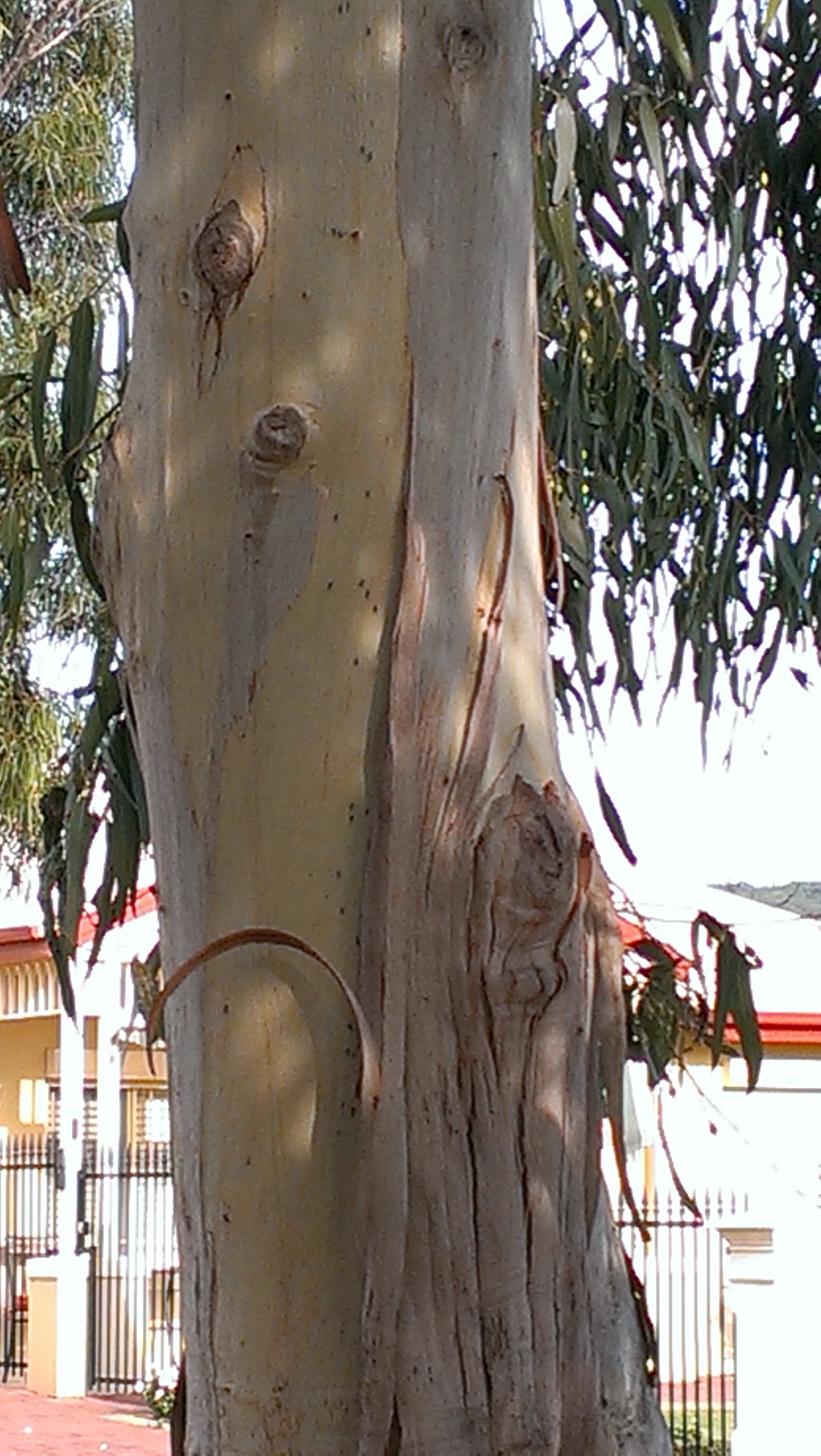
Last week I had a testing trip home from work by public transport.  It took one and a half times as long as doing the trip by bike would have done, partly because I travelled on a bus route further from home and walked a good way.  So I looked for entertainment on my walk.  This rough barked tree was in flower (small, cream-white flowers) and hanging through a park fence.

IMAG1105

Lots of fruit in several stages of maturity.  I took a small leafy sample. 

IMAG1107

I kept walking.and came across this tree with its spectacular peeling bark and bronzed trunk by the tramline.  There was a broken branch still hanging suspended from the intact branches, so I broke off enough dried leaves to make a meaningful test dye bath.

IMAG1109 IMAG1110

Along the tramline closer to home, I saw this beauty with coppery bark (suggesting it might be a mallet, I believe) but quite a broad leaf by comparison with the family member I know best, the swamp mallet, E Spathulata. A few more leaves selected.

IMAG1111 IMAG1112

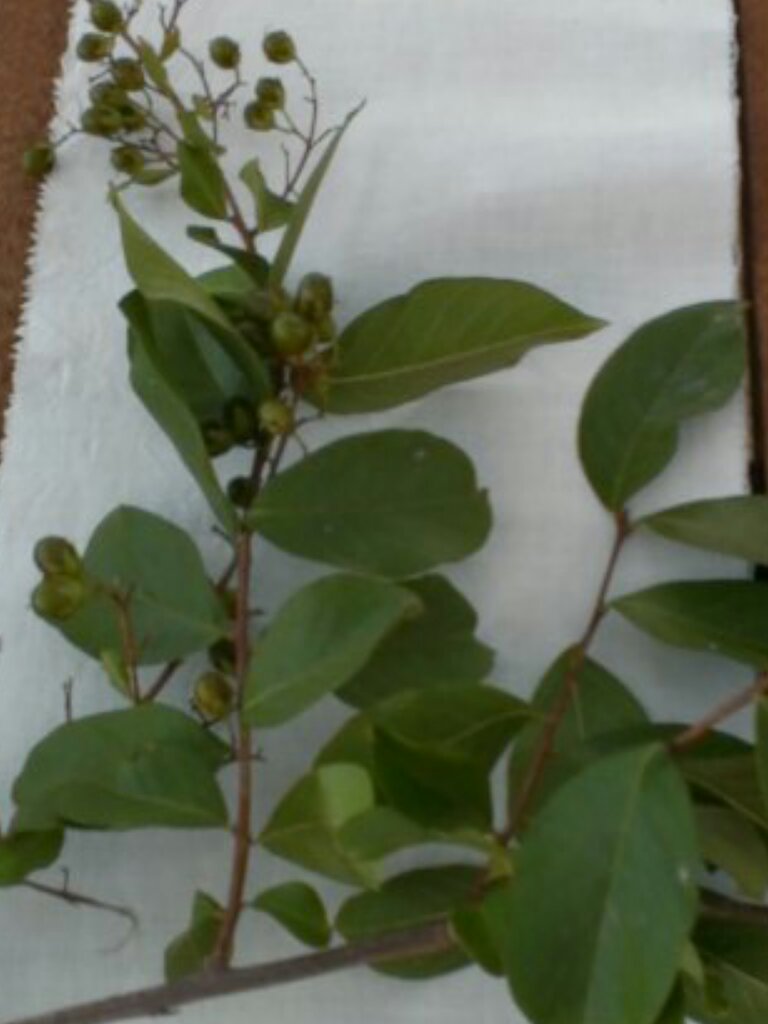
Finally, I passed a friend’s place.  His neighbour’s house had been demolished that day and part of the crepe myrtle (Lagerstroemia Indica) on the street had been a casualty, so I picked a sample of that, too, and when he came out of his garden, there was a chat to be had as well. Crepe myrtle turns out not o be an indigenous species.

IMG_0083

And now for the (dyeing) punchline.  I won’t be losing sleep identifying these trees! That’s the crepe myrtle to the left.  You can see the leaves have acted as a resist to the iron in my bath, with some tan patterning from the leaves themselves.

IMAG1216

And… here is the result from the dried leaf dye bath from the tree with bark peeling in strips.  Tan or brown, depending.

IMAG1214

3 Comments

Filed under Dye Plants, Eucalypts, Leaf prints, Natural dyeing

Tribeca shirt

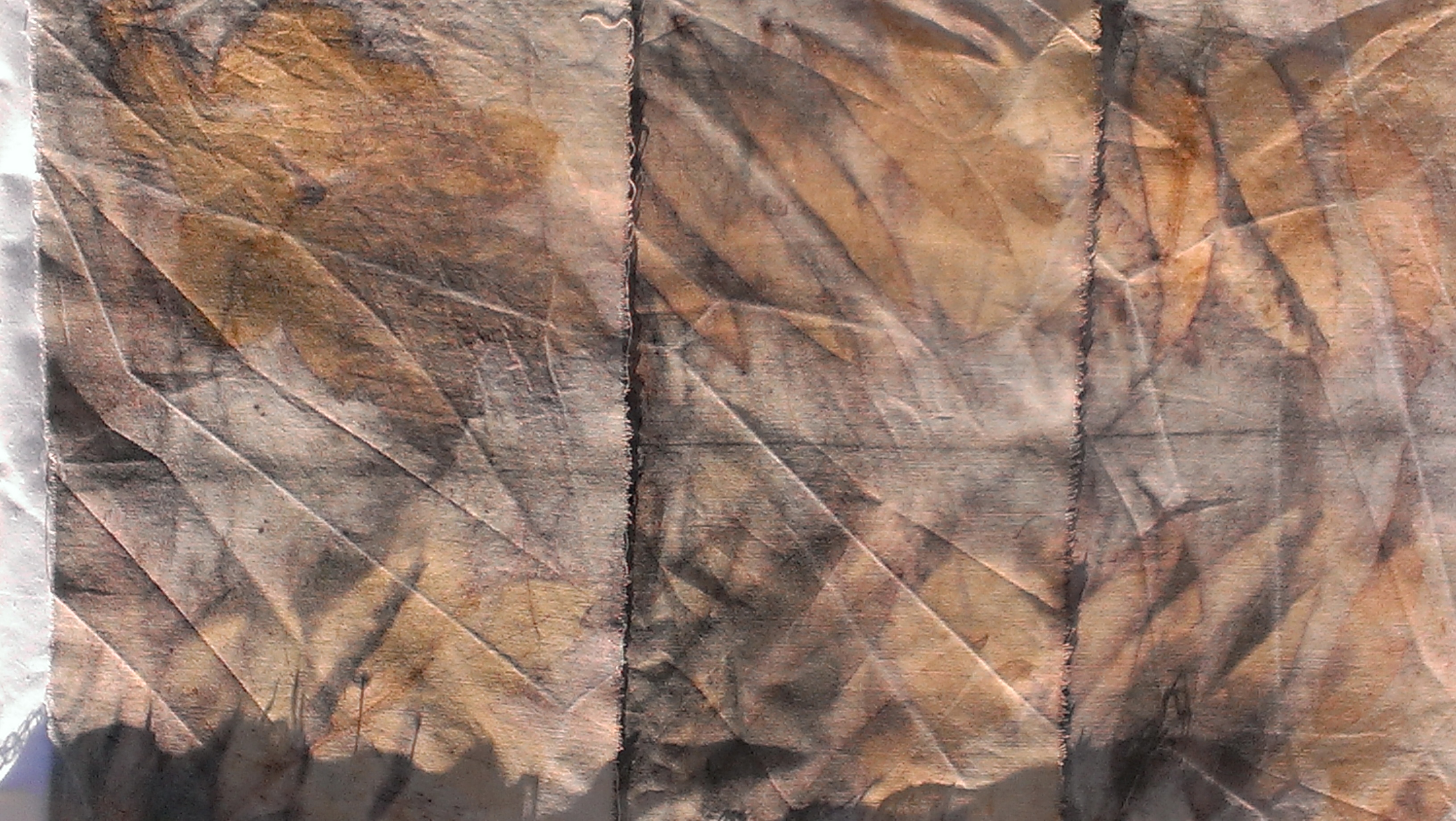
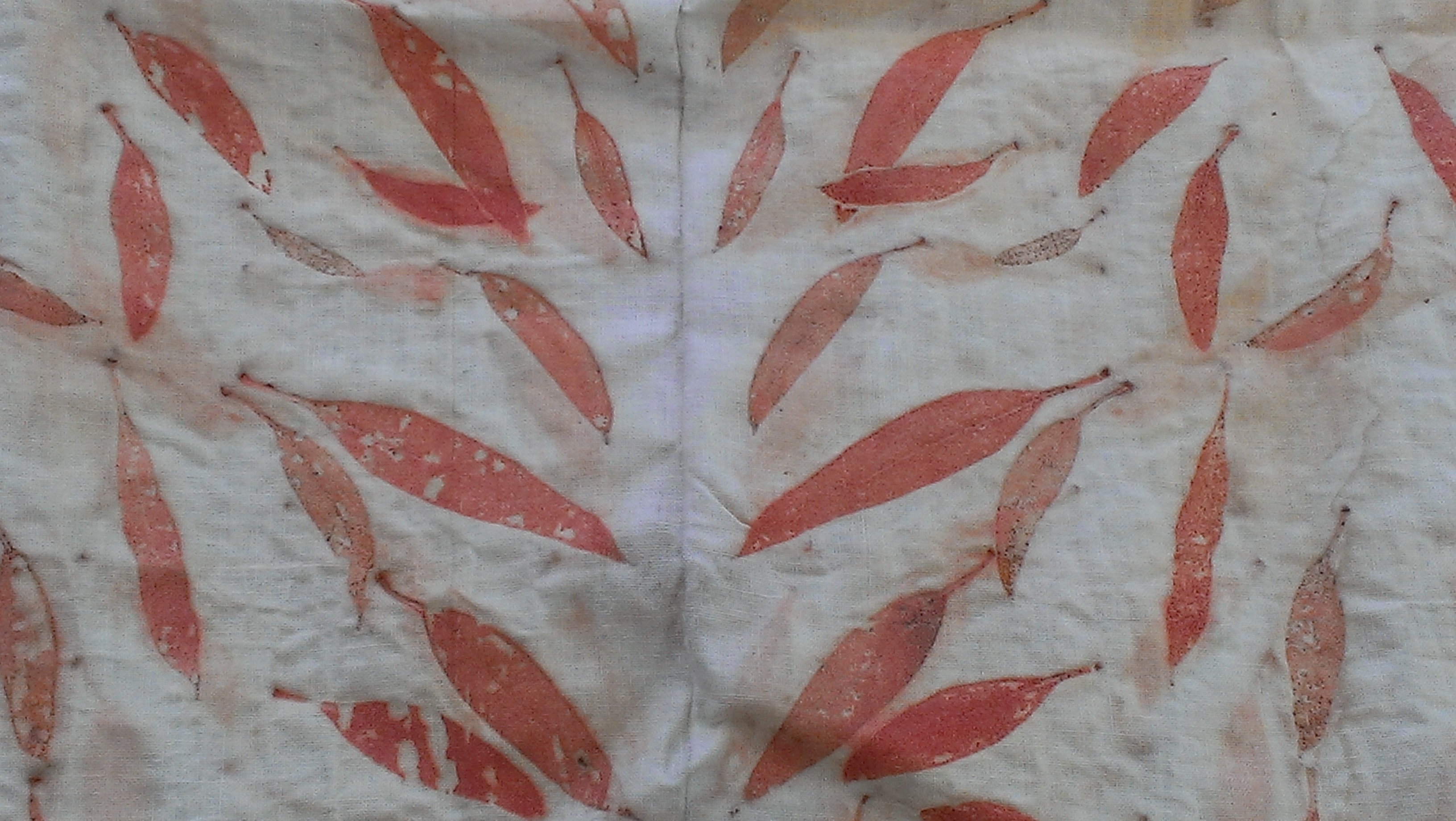
At last, the piece of lovely fabric I was speaking about toward the end of this post has become a garment.  The fabric is a silk/hemp blend from Margaret River Hempco.  The pattern is the Tribeca Shirt from the Sewing Workshop.  The leaf prints use India Flint’s techniques and Eucalyptus Scoparia leaves.

IMG_0080

I invested in this pattern because I have been making the same unisex shirt from McCall’s for years in different fabrics.  It is an oversized shirt with collar, collar stand, button bands, plackets and cuffs.  I’ve had great value from that pattern, making it for myself numerous times and for other people from time to time. Sometimes I’ve made it with collar stand and no collar, or a differently shaped collar.  I’ve made it from recycled linen tablecloths, lovely quilting fabrics and even a screenprint from an Indigenous business on the Tiwi Islands.

IMG_0074

I wanted something different and I decided on this.  It really was different.  No facings, no cuffs, the funnel neck involves no collar, and the whole shirt is designed for french seams. I had a failure of nerve prior to setting in the sleeves using french seams and had to set it aside for a couple of days!  The buttonholes are placed over a patch sewn to the reverse side.  Shaping is achieved with darts.  This is really interesting but also really efficient sewing.

IMG_0078

The level of instruction in the pattern worked well for me.  As usual, the bodies contemplated by the pattern measurements and my own body seemed to have little in common.  My pattern adjustment skills are better than they have ever been but could still use improvement–just the same, the result has me feeling really happy.  I had enough fabric leftover to cut out a second, simple shirt which is now waiting for my attention. Now all I need is the right occasion for a first outing.

IMG_0076

8 Comments

Filed under Eucalypts, Leaf prints, Sewing

Leafy pillowcases

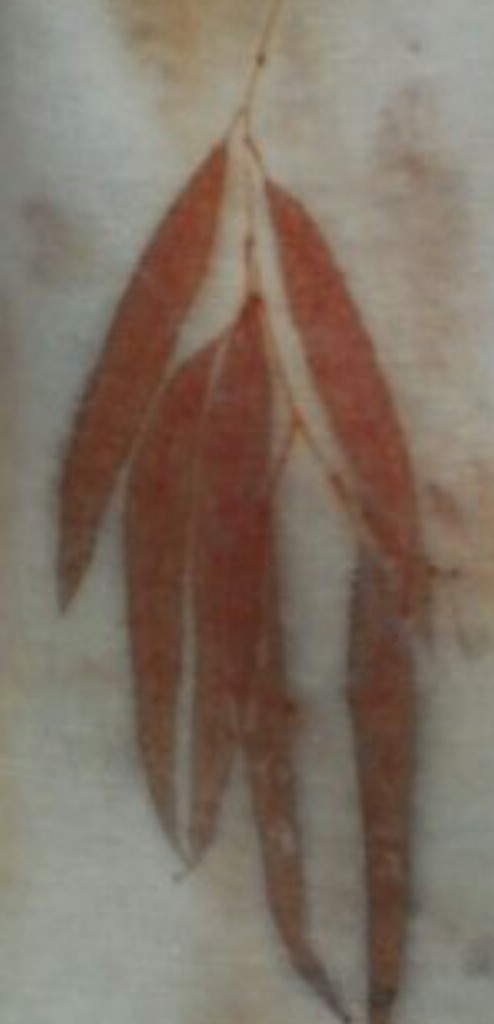
A while back I leaf printed a length of seedy silk noil.  Today I turned it into two custom fit pillowcases for a small and contoured pillow I find very comfortable. One part of the fabric I printed wth E Scoparia–but you can see faint prints of E Cinerea leaves coming through too.

IMG_0060

The other, with E Cinerea. Interestingly enough, the lingering smell of eucalypt is very faint and the smell of raw silk overwhelms it: I’ve tried this before and it will last only a few washes. The colours are muted but the leaf shapes are clear.

IMG_0064

I love a simple sewing project… I’m one of those people who can make the same thing over and over again.

1 Comment

Filed under Eucalypts, Leaf prints

Eucalyptus Leucoxylon Megalocarpa

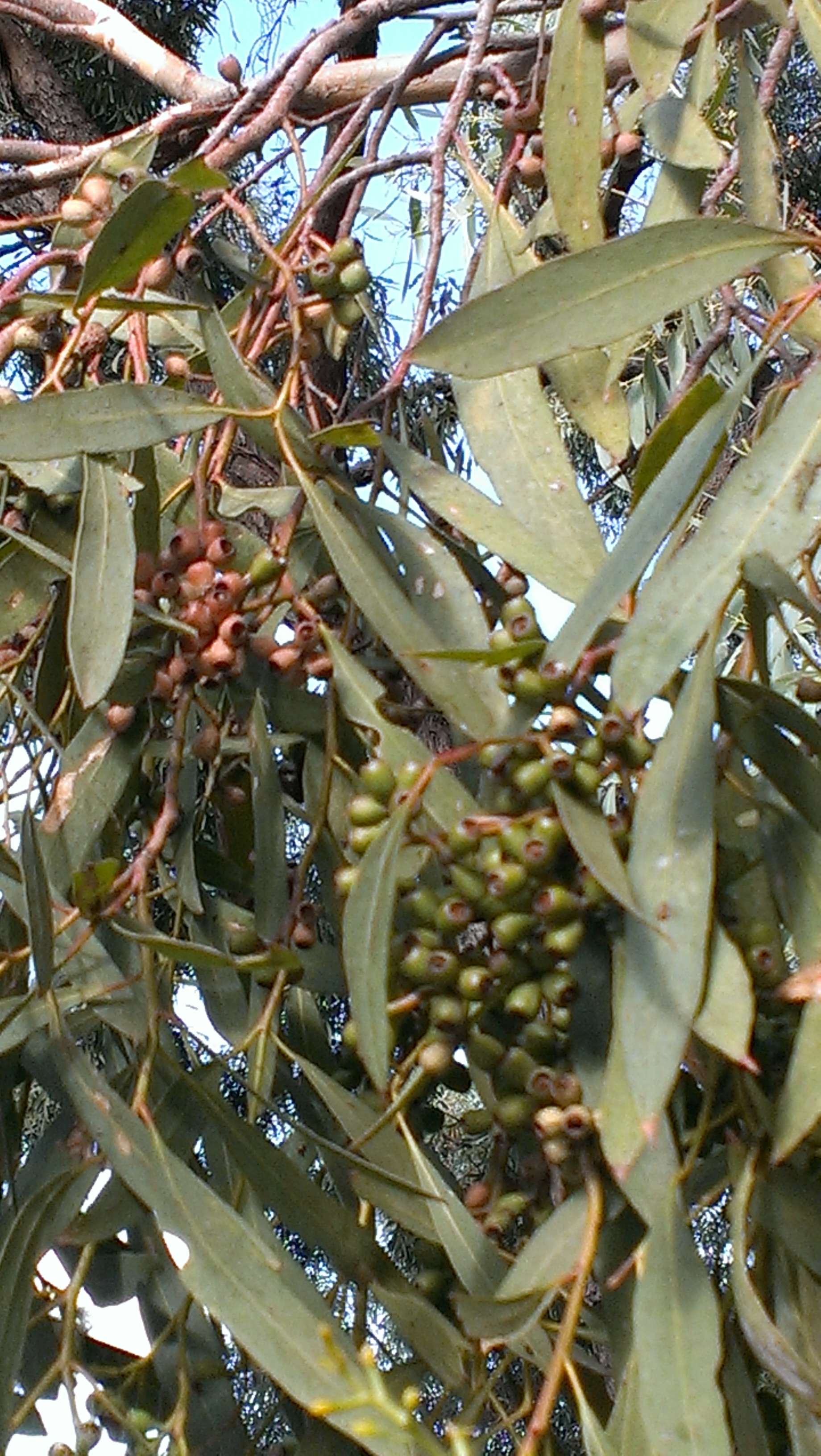
Eucalyptus Leucoxylon Megalocarpa--what a hefty title for the South Australian Blue Gum!  Well, that’s what people call it where I live, but it is native to Victoria as well as South Australia and in Victoria, it is more likely to be called Large-Fruited Yellow Gum.  The fruits are large compared to other blue gums I know, but by comparison with seriously large-fruited gums such as E Erythrocorys, not so big.

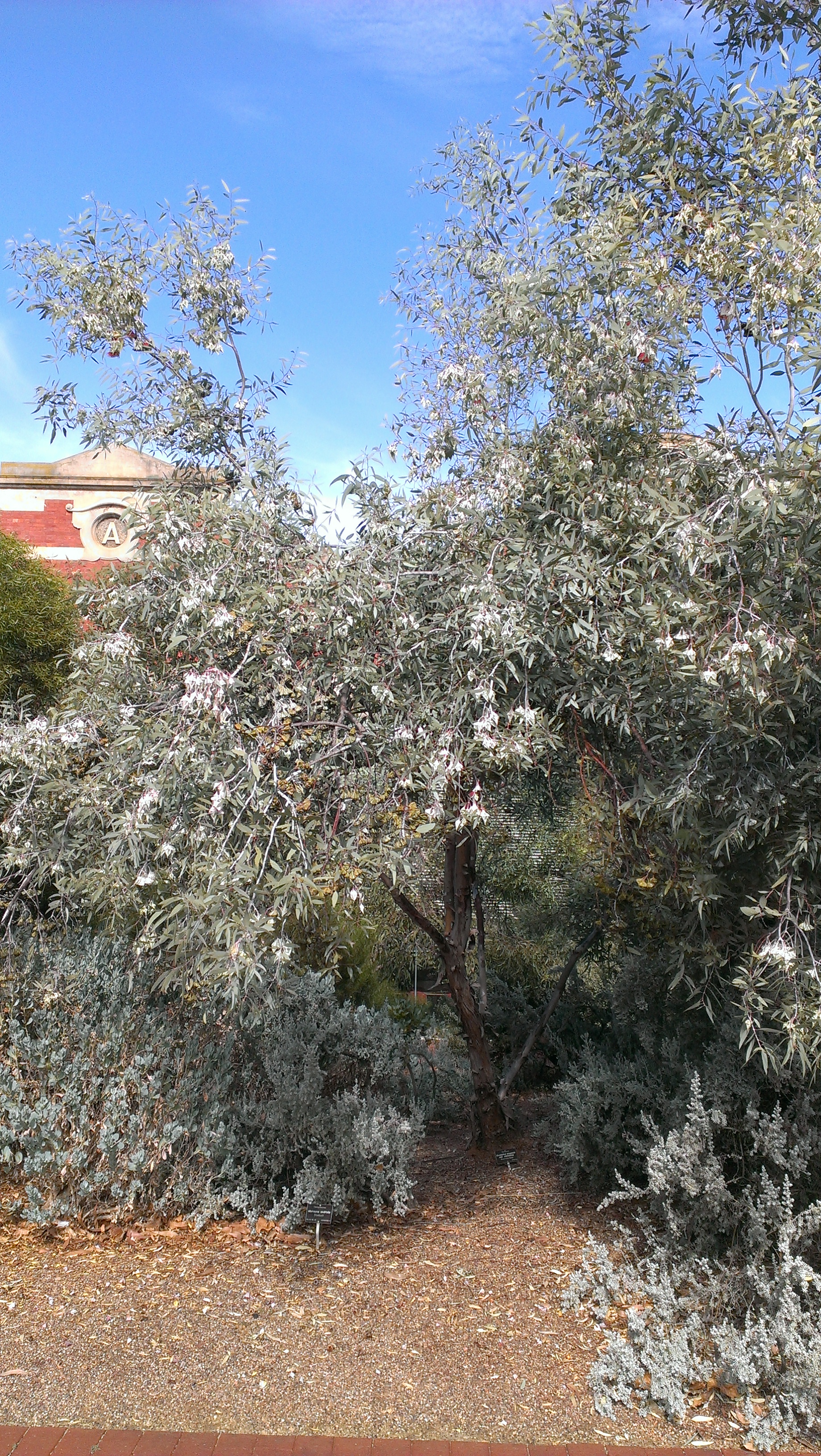
This is possibly the most popular street tree in my city.  There are loads of them.  So it’s a shame that this is not an exciting dye plant (tan again!)  On the other hand, at the moment it is coming into flower everywhere and the lorikeets and bees couldn’t be happier.  As eucalypts go, it is a small-medium size tree (to only about 8 metres).  Here it is with a house for comparison.

IMAG1030

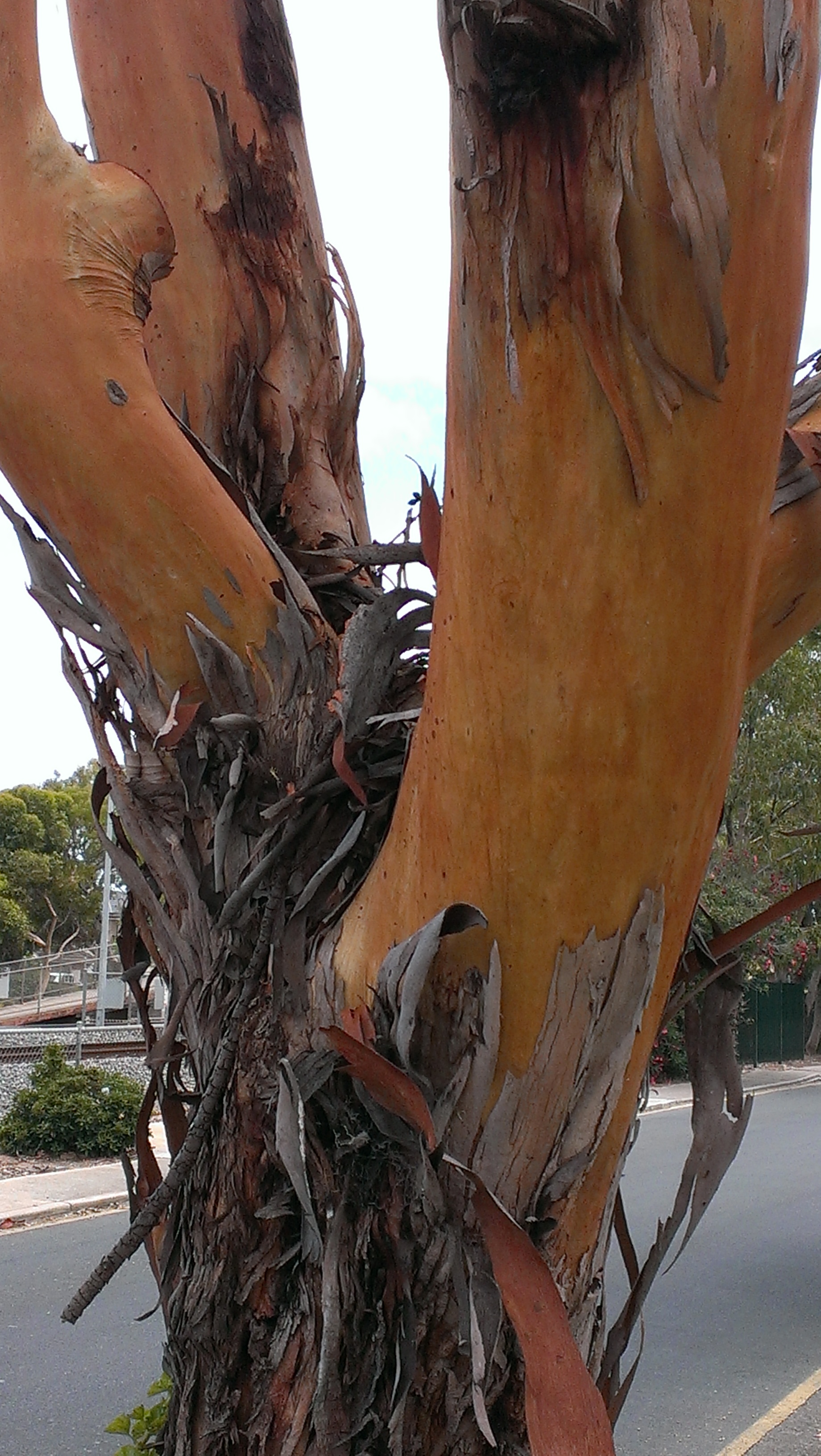
It is shedding bark in lots of places at present–I haven’t tried dyeing with the bark as yet.

IMAG1039 (1)

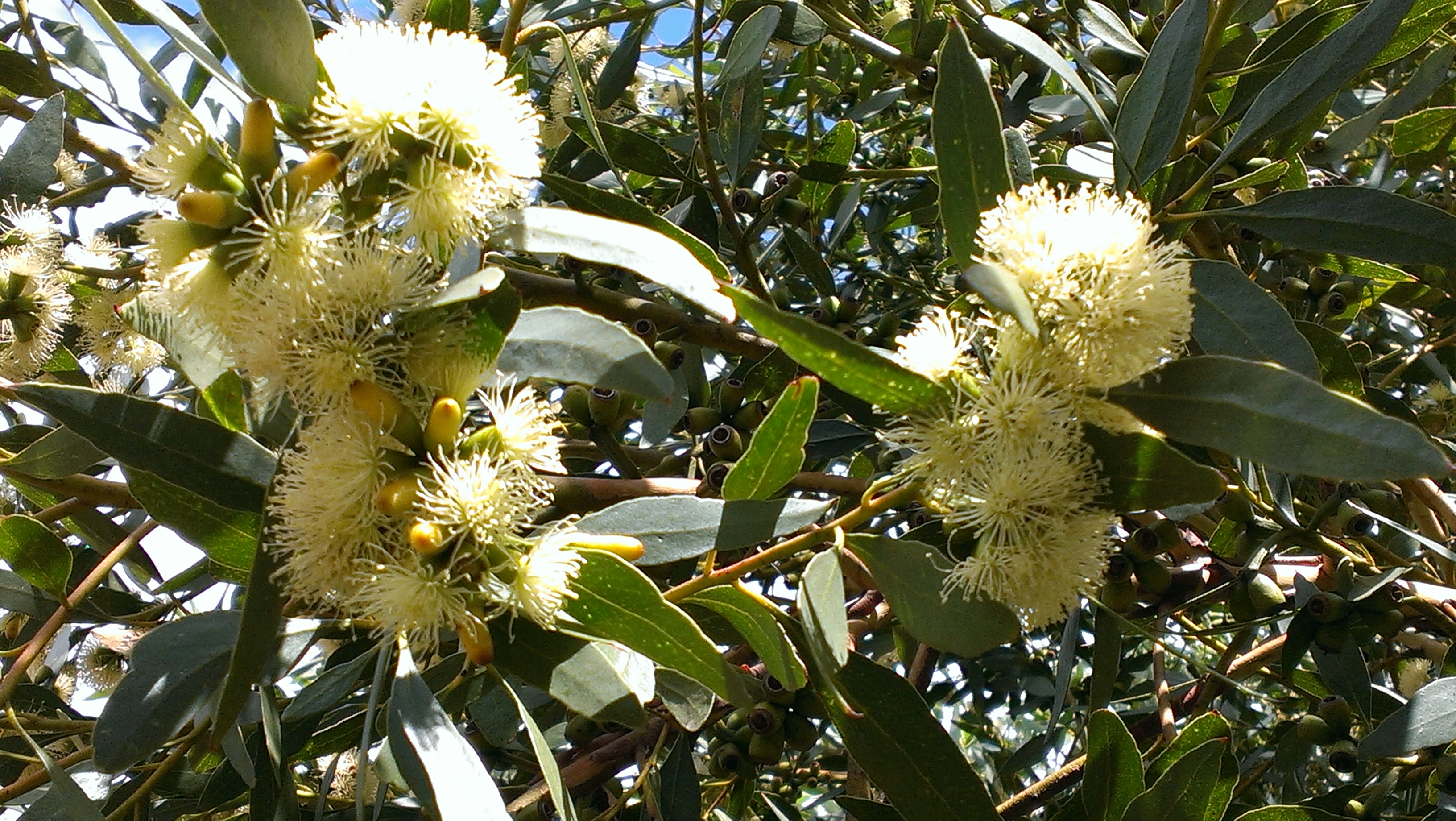
The flowers are a major attraction for those who plan parks and streetscapes, and also for lorikeets, honeyeaters and bees.  Cream is one of the most common colours…

IMAG1034

Red is the other, and these trees are profuse. There are also specimens that have been grafted or bred for other flower colours.  I saw a peach-coloured display of flowers yesterday.

IMAG1047

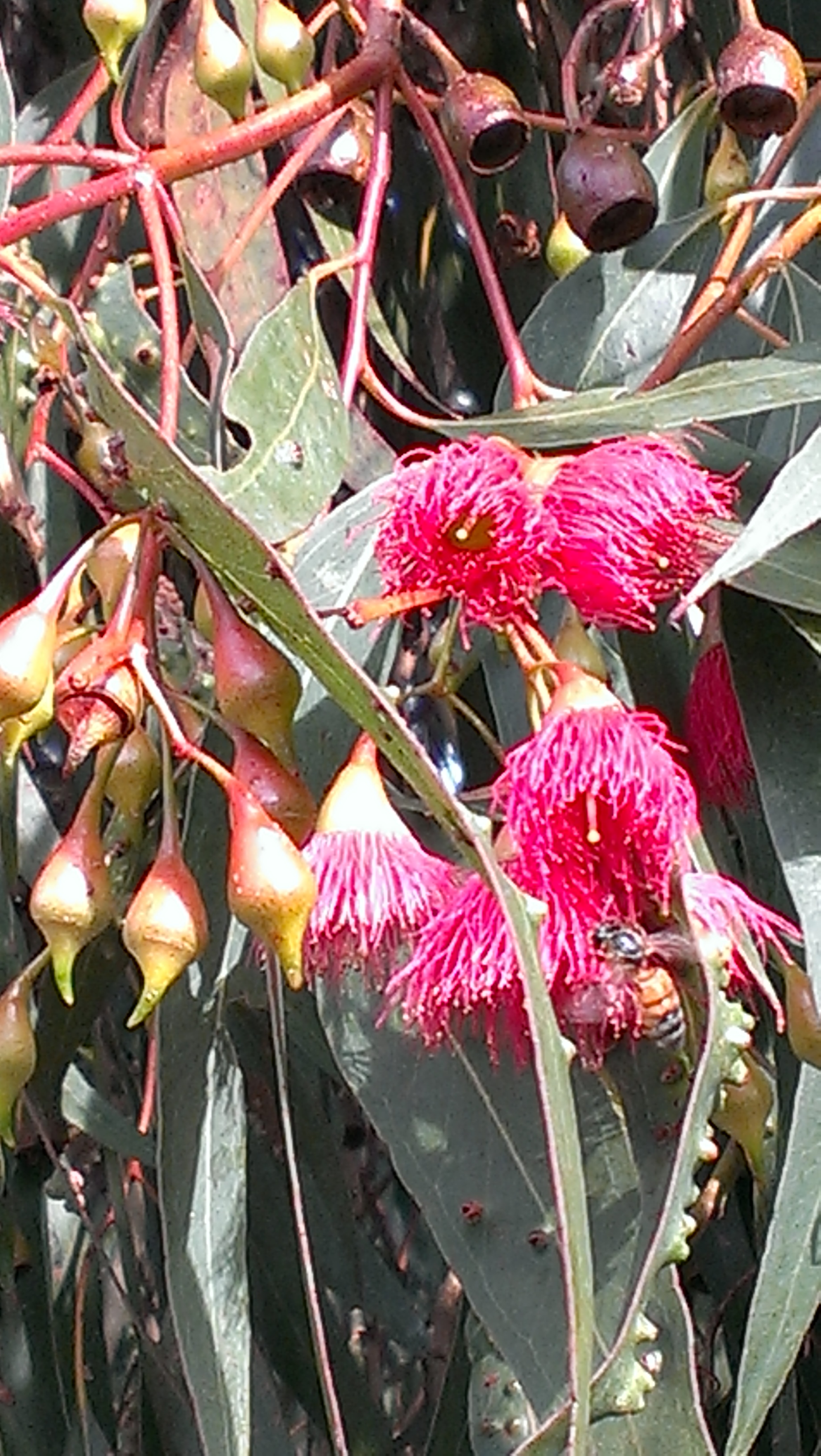
The lorikeets just went higher when they saw my camera, but the bees stuck with what they were doing.  Moving fast!  But this one allowed a partial photo.You can see buds, immature fruits and flowers all present close together here.  On some trees, fully mature fruit that have released seed are on the tree as well.

IMAG1050

I have to say this specimen had the most extensive infestation of whatever insect produced those little galls I’ve ever seen. Clearly it’s providing habitat for a lot of baby insects of some kind as well as bees, ants and birds.  I can’t really complain that it gives tan in the circumstances.

IMAG1053

2 Comments

Filed under Dye Plants, Eucalypts

Sampling dye plants

IMAG0722

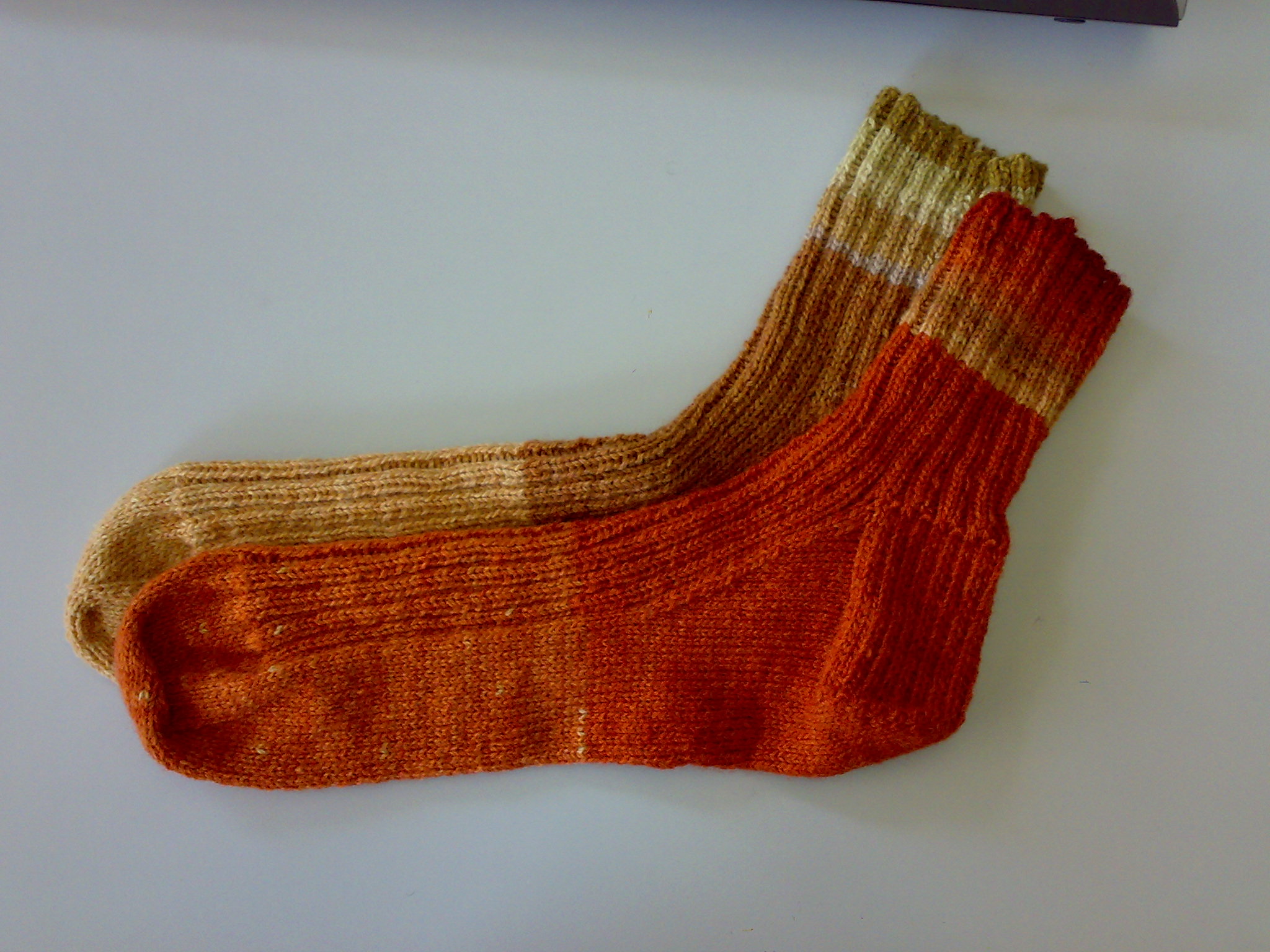
When I started plant dyeing, I used to make a tiny skein, about 1-2 metres long, and try out the leaves of trees around my neighbourhood on that.  In those early days, I tried rue after I found it listed in a book… oh my goodness…  the least said about that smell,  the better.  It almost put me off for good.  (Pale green, if anyone is wondering–not the red I was hoping for in my naivete).  When I had accumulated enough experiments to have identified some trees I wanted to keep visiting and some I would appreciate but not use for dye, I knit the samples into striped socks for a dear longtime friend. So that method had its advantages.  My friend asked for short cuffs (well, I thought he had–), so that’s what he got.

150620091160

I may have mentioned my devil-may-care attiutude to matching socks.  Happily my friend shares it, or he wouldn’t have scored this pair! 

Eventually I learned about sample cards from more experienced dyers on Ravelry.

IMAG0723

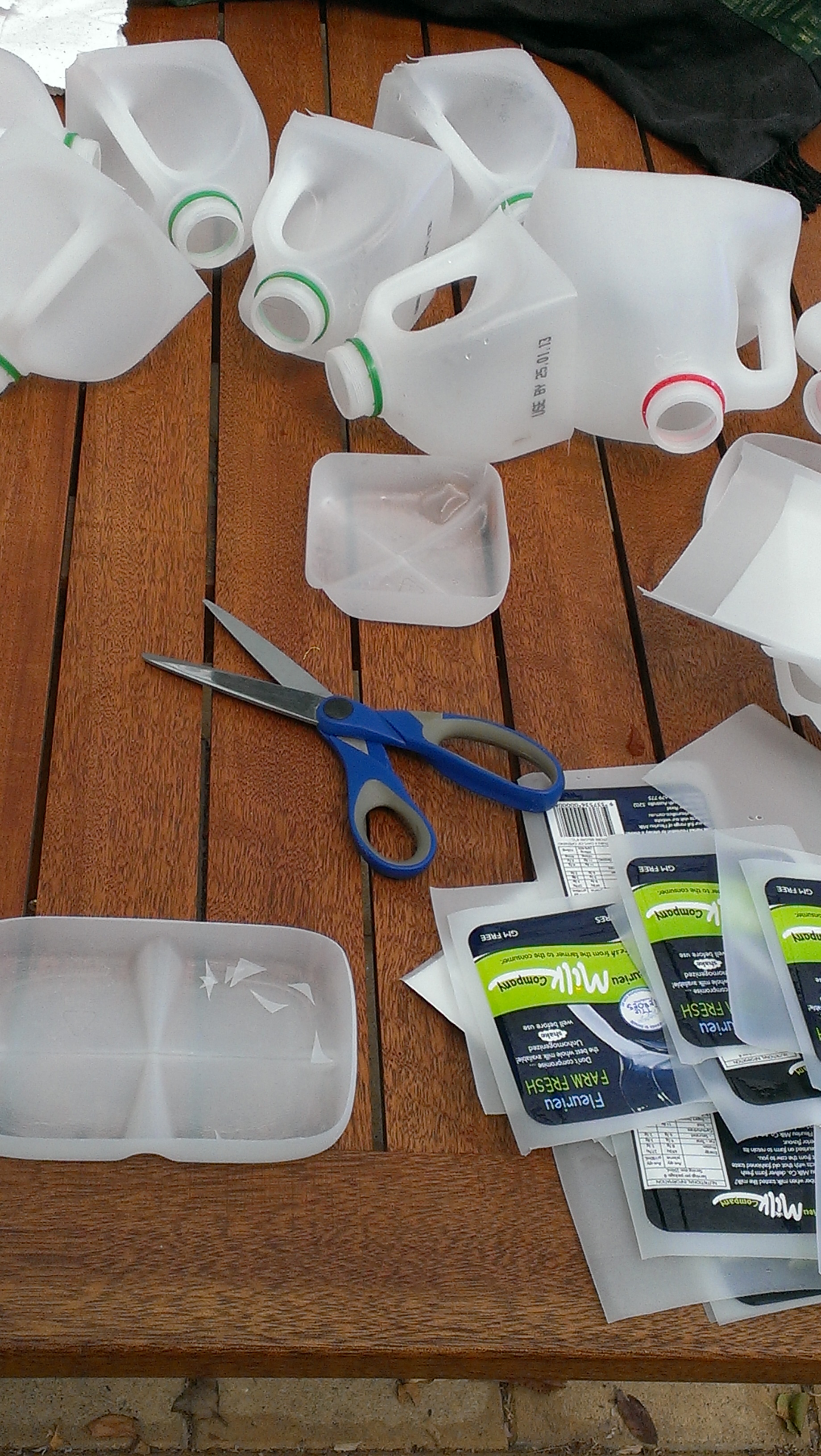
I use milk bottles to make mine.  We don’t use this kind at home any more, so I raided a recycling bin at a coffee cart during the weekly farmers’ market to get these.

IMAG0768

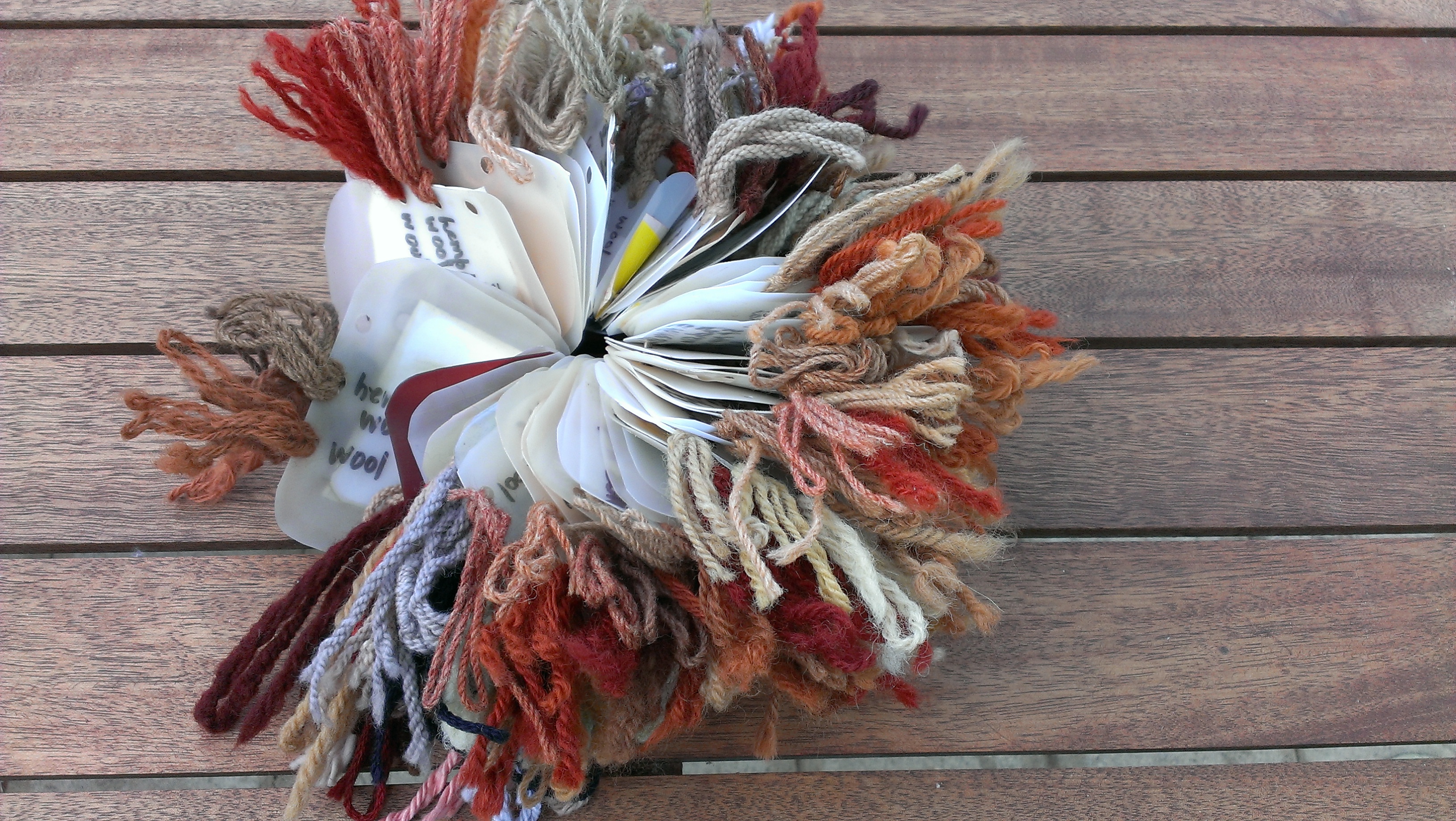
I keep my samples on a split ring, which I think I also saw on Ravelry, and it’s a great record of plants investigated.  Some have been identified long after being cooked in the dyepot.  A few have been identified correctly after an initial misidentification.  Some have been tried several times.

IMAG0773

And there are still so many to try out!  In the lead up to the recent workshops, I collected leaves fresh and dried: from trees, from the gutter, from fallen branches.  I collected more bark too.  This one is Eucalyptus Forrestiana,  believe:

IMAG0764

And I collected a few specimens I couldn’t identify… This one branched so high I couldn’t pick a leaf, but bud caps were raining down and lorikeets were having a great party high above me.

IMAG0760

This one was a sprawling mallee near the railway line, and came complete with new holland honeyeaters protesting my invasion.  I hope they had chicks in there somewhere, and this was the reason they kept trying to see me off even though they are about the length of my hand.

IMAG0746

This tree has fascinated me for some time: it gives a peach or apricot colour.  But I still can’t identify it.

IMAG0738

So many possibilities for the future….

6 Comments

Filed under Dye Plants, Eucalypts, Knitting, Natural dyeing

E Kingsmillii subsp Alatissima

How spectacular is E Kingsmillii (Kingsmill’s Mallee; wing-fruited mallee)?

IMAG0952

Perhaps the tree doesn’t seem obviously wonderful.  The buds are truly glorious!

IMAG0955

And so are the flowers and the fruits.  It turned out I was photographing this tree outside the Botanical Gardens centre for plant diversity.  My eucalypt admiration was shared with a woman who came by and offered me more information, so I told her about this beauty being a dye plant.  It isn’t every day you get this kind of fun on your way to a conference!

IMAG0957

And… for me this is a happy result, pulled from the copper at the Guild as a test during our workshop.  I am so prejudiced in the matter of red.  I just love it…

IMAG0919

4 Comments

Filed under Dye Plants, Eucalypts, Leaf prints

Another workshop done!

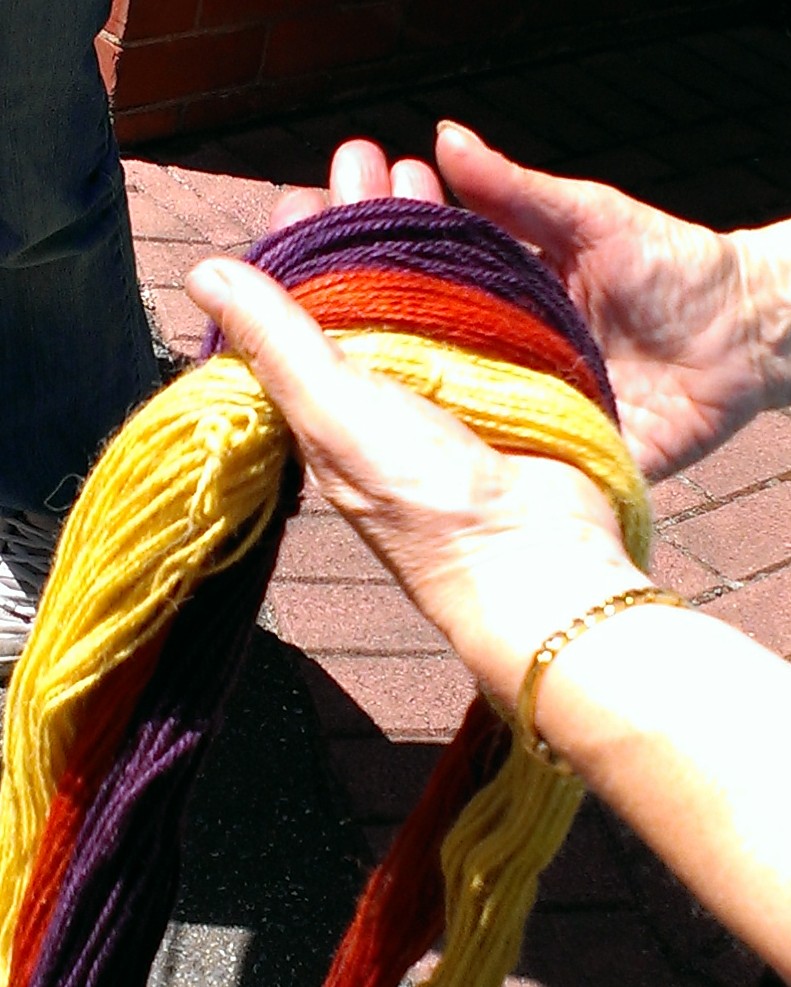
The second in my little series of workshops at the Guild went really well. There was yarn, fleece and roving dyeing.  Brown, orange, almost-red and maroon from E Scoparia (bark and leaves) and E Cinerea leaves, yellow from silky oak (Grevillea Robusta) using Ida Grae’s recipe from Nature’s Colors: Dyes from Plants, and the ever-astonishing purple from red sanderswood with alum.  I again used Jenny Dean’s method from Wild Colour and still got nothing like the oranges she suggests are likely.

IMAG0896

Mysterious outcomes in natural dyeing are not all that uncommon (at least for me!), as the number of variables is so huge.  But this one is out of the box–purple!?  Since my last post on the subject, Jenny Dean has very generously been in touch with her thoughts on the matter.  She suggests this purple could be the result of alkalinity (but given I made no attempt to generate an alkaline bath, it seems unlikely it was seriously alkaline).

Or–and I agree with her that this is much more likely, even though I used 4 different jars/packs labelled “sanderswood”–perhaps the dyestuff  was never sanderswood to begin with.  The colour is very, very like the logwood results I have had, just about indistinguishable.  I am still not complaining about the result–I love purple and so did the participants.  I was hoping for purple on this occasion, as I have no more logwood–that I know to be logwood.  Perhaps there was a time in the past when a batch of “sanderswood” came to our Guild or a supplier nearby and all the different jars I’ve used ultimately can be traced back to the same mislabelled supply. This would fit with my experience of Eucalypts… it is much more likely that I have misidentified my tree than that the dye bath is giving a completely different colour.  Variation to some extent, however, is completely expected.

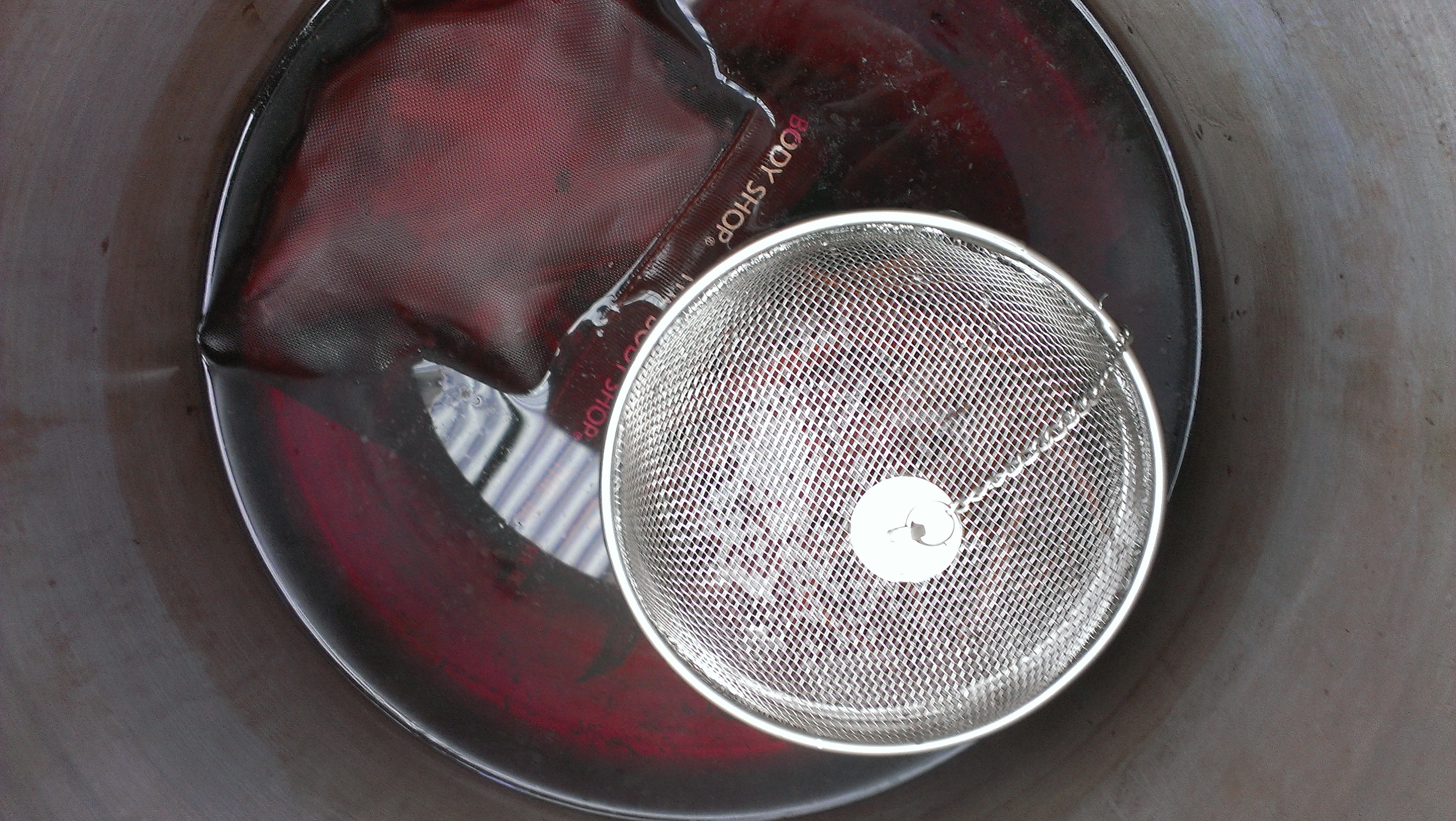
Here is the “sanderswood” just after I poured boiling water over it–Jenny says this looks like a logwood bath to her.  I bow to her much more extensive experience and wisdom, without hesitation.

IMAG0862

I have the biggest chips in a little zippered mesh pouch that must once have held toiletries.  The smallest chips/splinters are in something that looks just like a giant tea ball.  I saw it for sale in a Vietnamese grocery where I was investing in greens, seaweed and soy products and immediately saw its possibilities.  The woman who sold it to me had an eye-popping moment (evidently she hasn’t sold one to an Anglo before), and asked me what I was planning to do with it.  I love those moments in Asian groceries, because once I’ve been ask the question and given my (admittedly bizarre) response, I can ask about the ordinary use of the device or food in question.  This one is usually used to contain whole spices when making a big pot of stock or soup.  This point was helpfully illustrated by a packet of soup seasonings–star anise and cinnamon and coriander seed were some of the spices I could identify right away.

People tried out India  Flint‘s eco-print technique on cotton, wool prefelt and silk.  I hope she will get some extra book sales as a result (if you’d like to acquire her books, click on the link to her blog and look for the option to buy them postage free in the left hand sidebar).
IMAG0871

There were biscuits and icy poles and lots of chat.  I demonstrated soy mordanting and black bean dyeing.  And while we were at the Guild and using the copper, which is such a generously sized vessel by comparison with my dye pots, I leaf printed some significant lengths of fabric that I brought to the workshop bundled up and ready to go.  The copper really is copper lined, but I could detect no obvious impact on the colours.  Seedy silk noil:

IMAG0903

Wool prefelt… the degree of detail is fantastic.  This is destined for felting experimentation by a dear friend who generously assisted me at the workshop.  Her practical help, support, constant grace and good cheer made things go so smoothly.  I also decided to start some processes before participants arrived, which I didn’t do at the previous workshop.  I think that helped.  But it was a fabulous group of people too.

IMAG0913

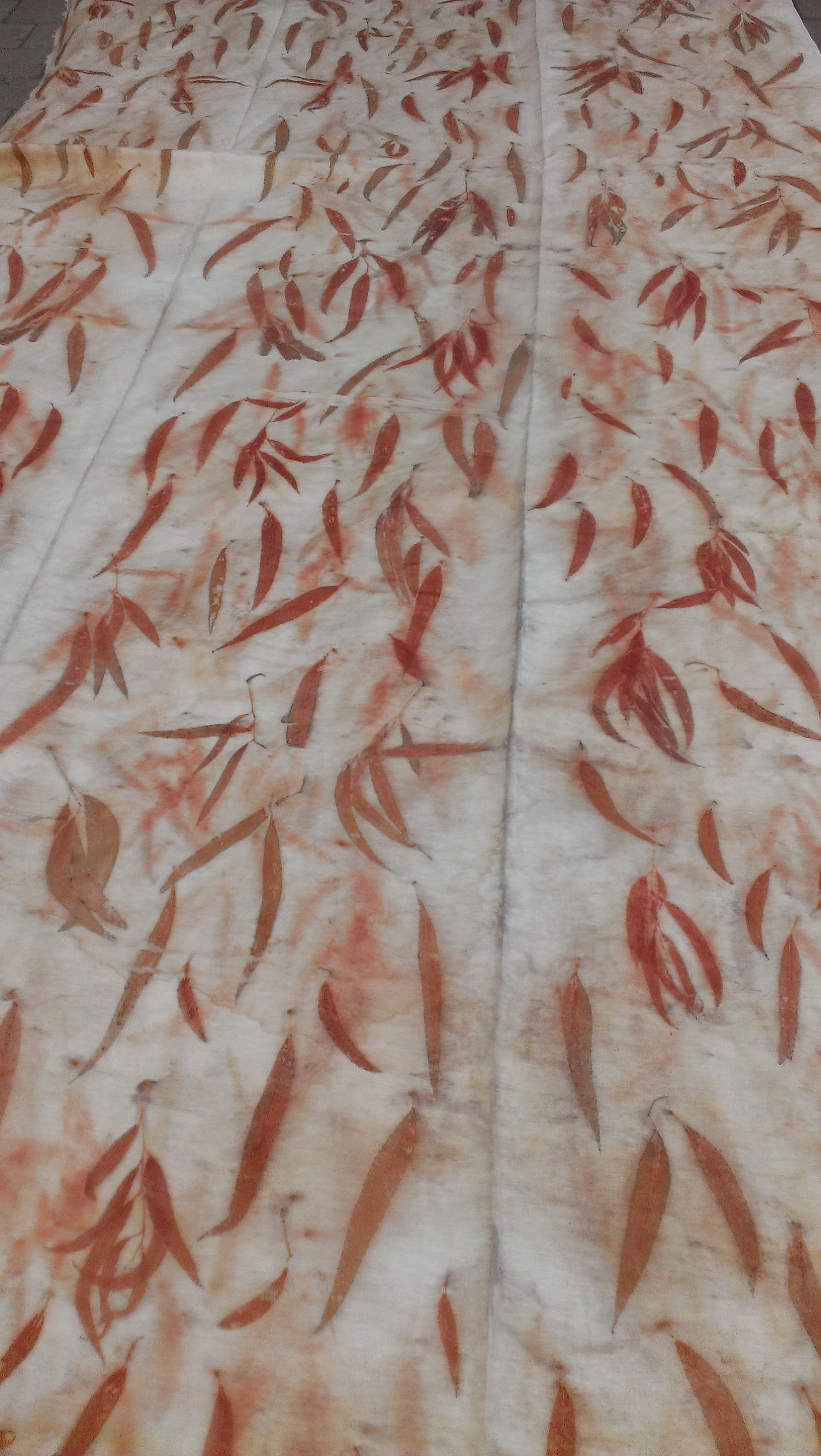
And finally, silk/hemp blend, destined to be made into a shirt (by me, so it may take a while).  I am delighted with how it turned out, after many months of putting off the day.

IMAG0924

9 Comments

Filed under Eucalypts, Leaf prints, Natural dyeing

Eucalyptus Erythrocorys


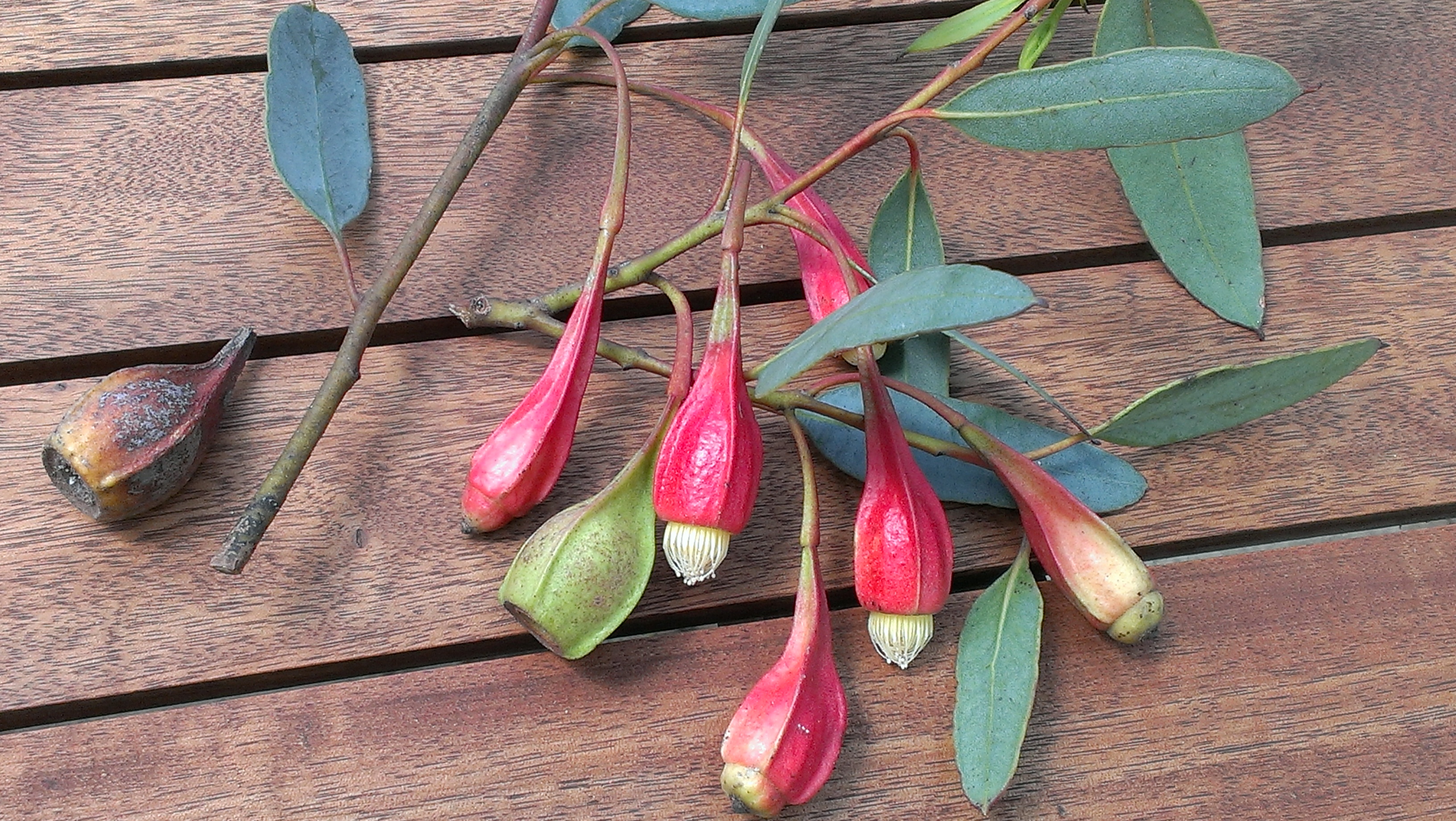
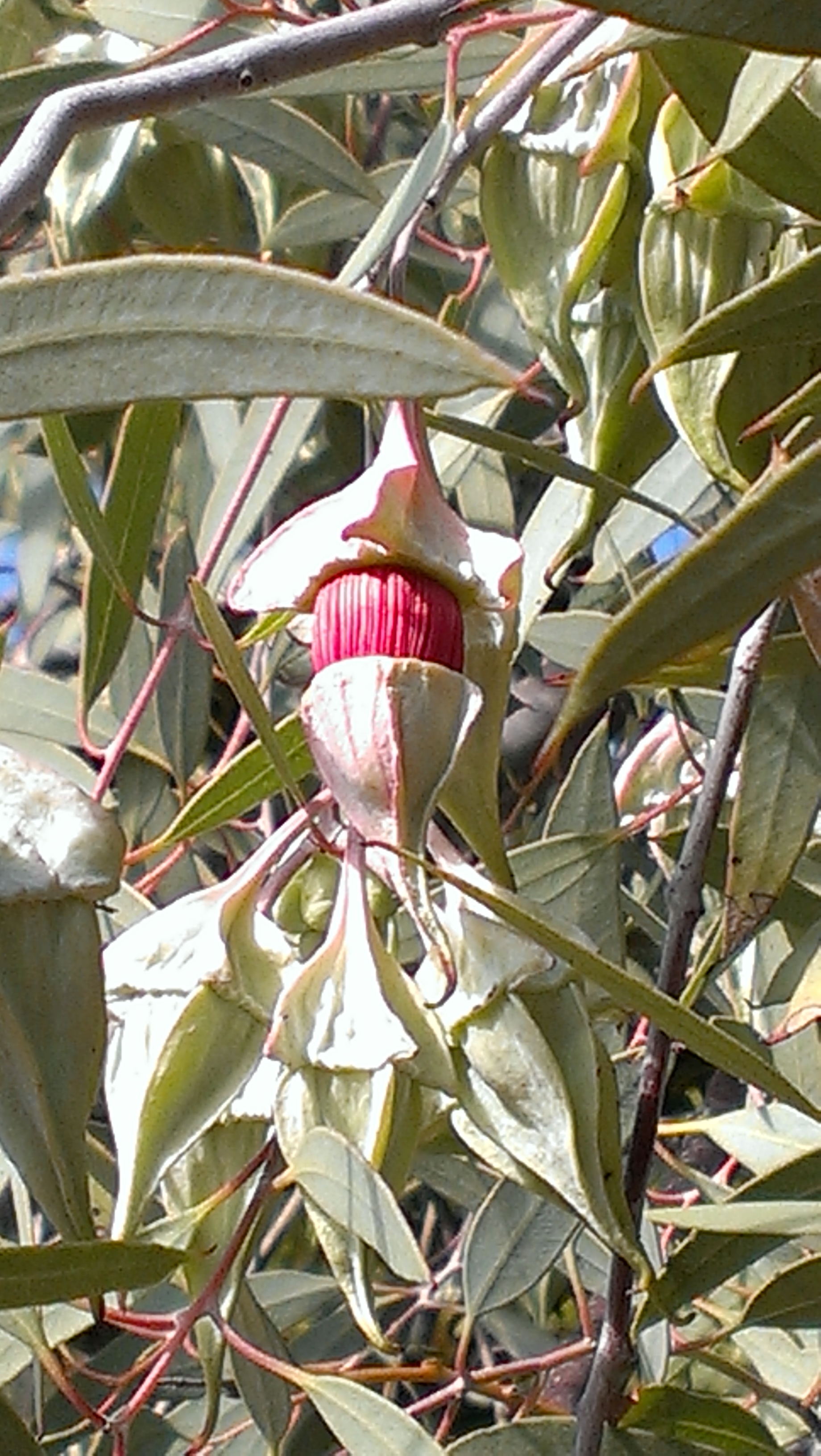
E Erythrocorys (Ilyarrie) is in bud at present. The buds are large, with impressive, unusually shaped bud caps.

IMAG0910

I found a few flowers on one of the trees near a car park at work, but they were high up. The fruits of the previous season are still maturing, and they are just enormous–the size of a large apricot or plum.

IMAG0823

The leaves are long, too.  I’ve experimented with this tree in the past, obtaining a mid-orange from dried fallen leaves. This time I tried leaf prints.  Before…

IMAG0829

And after simmering with iron.  Another not-too-exciting result.

IMAG0849

Leave a comment

Filed under Dye Plants, Eucalypts, Leaf prints, Natural dyeing