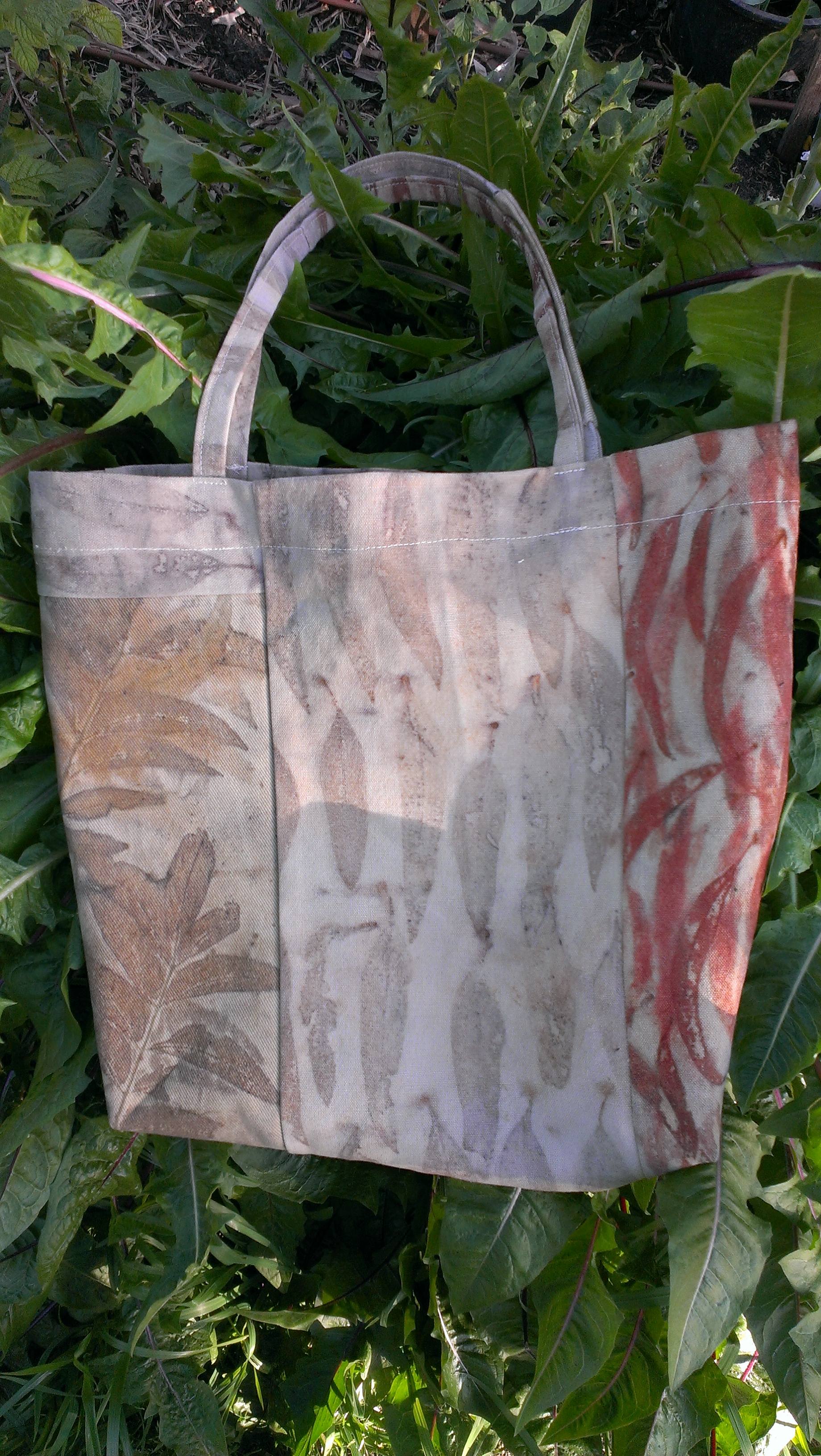
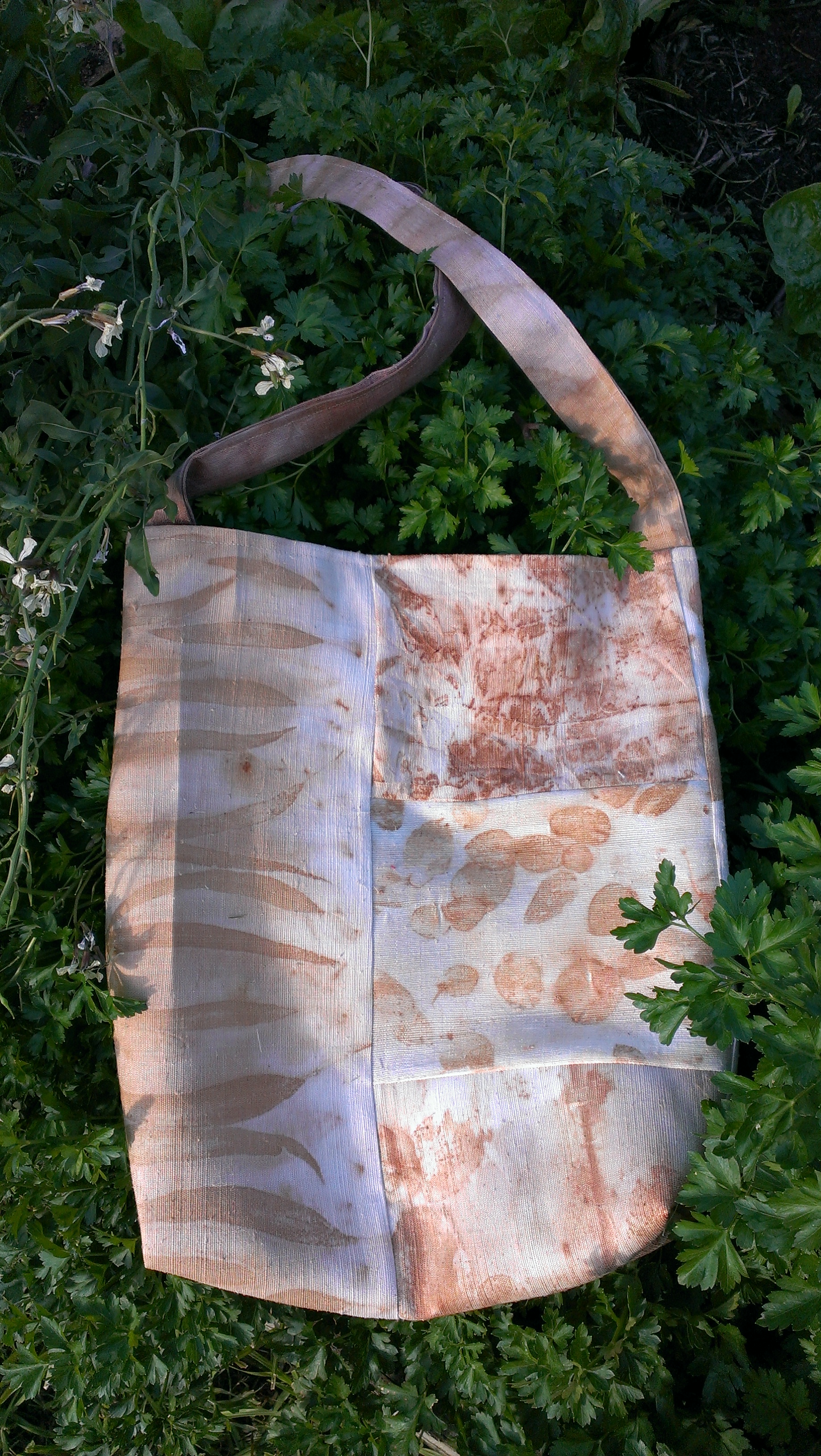
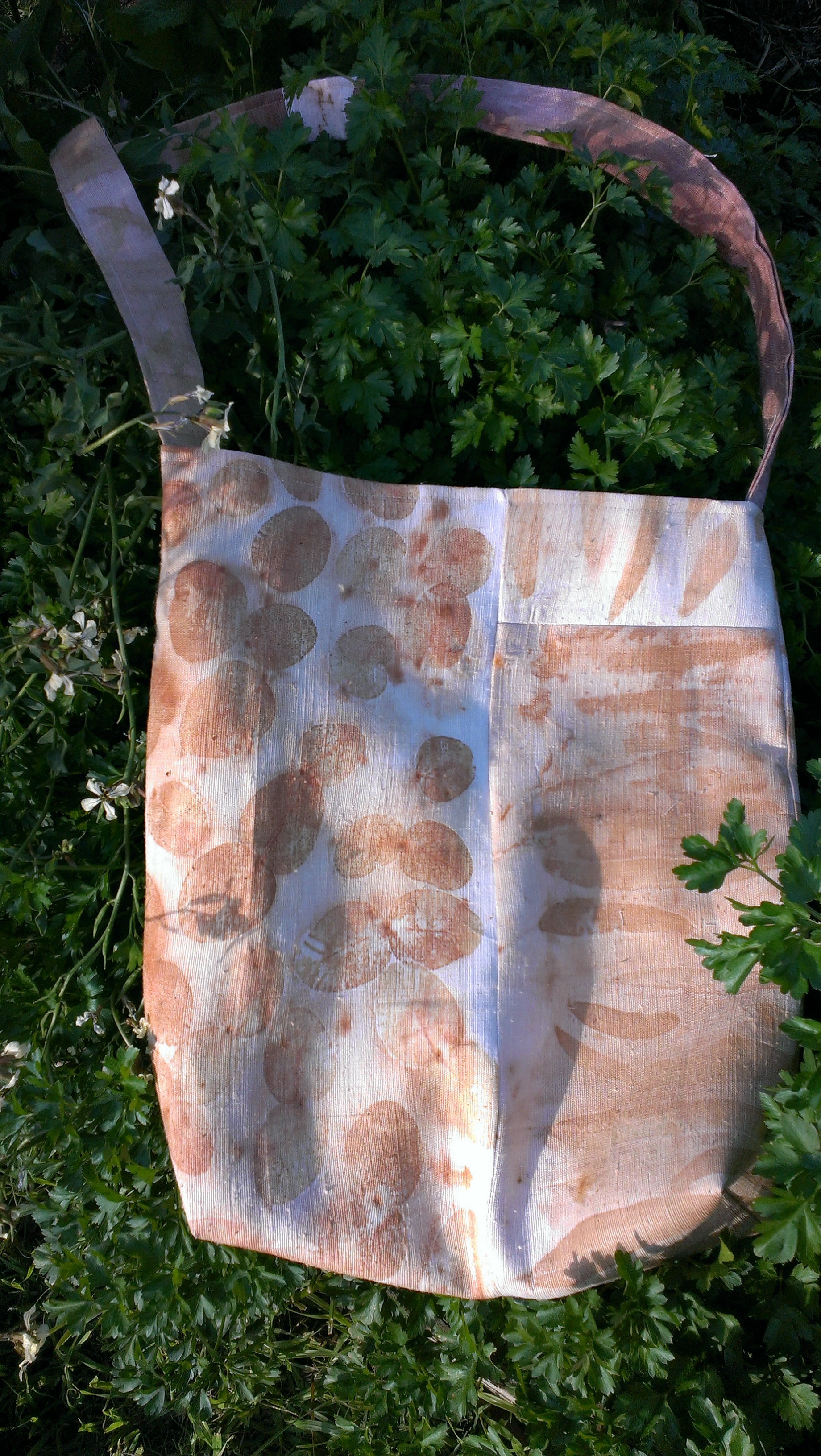
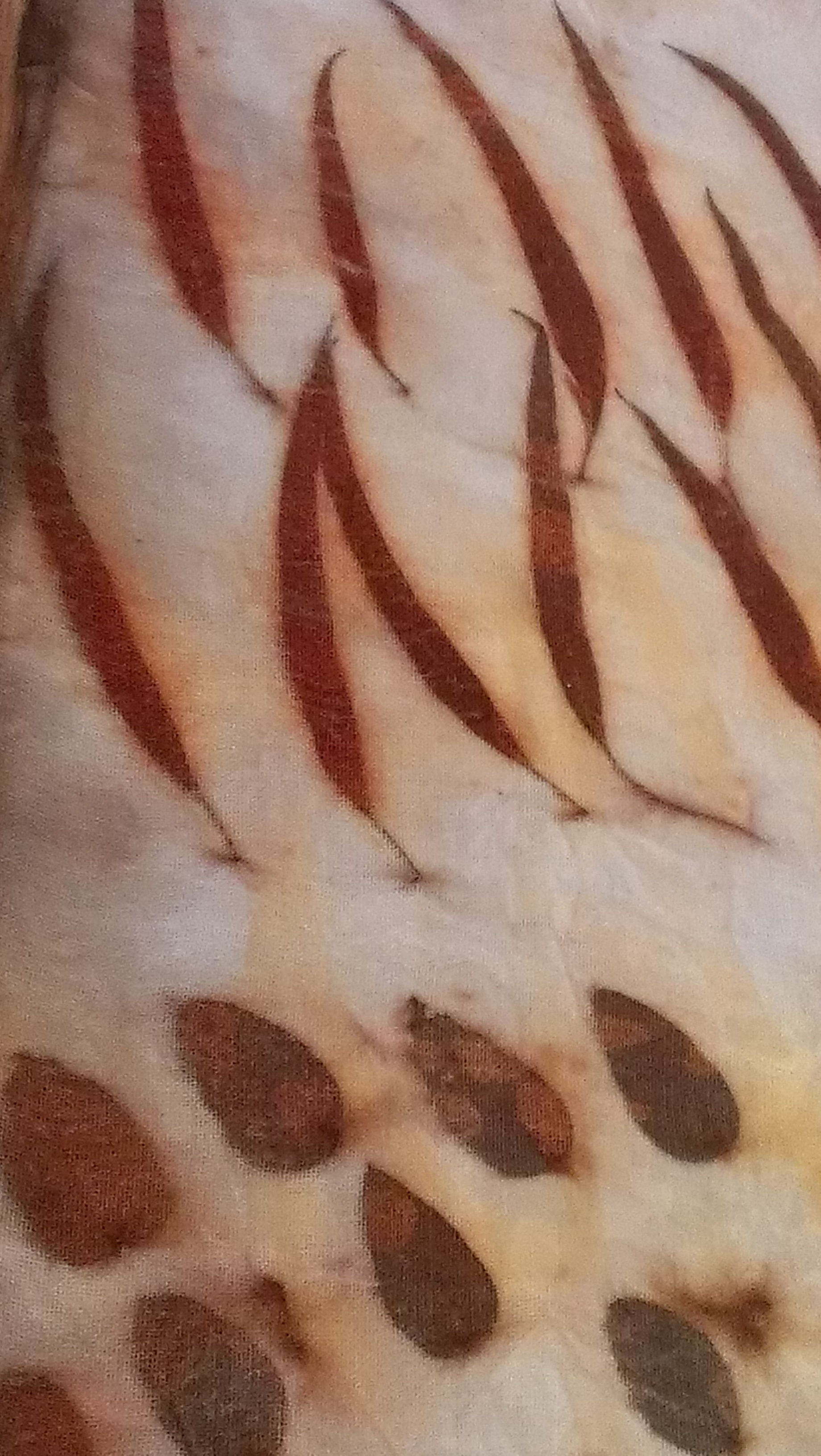
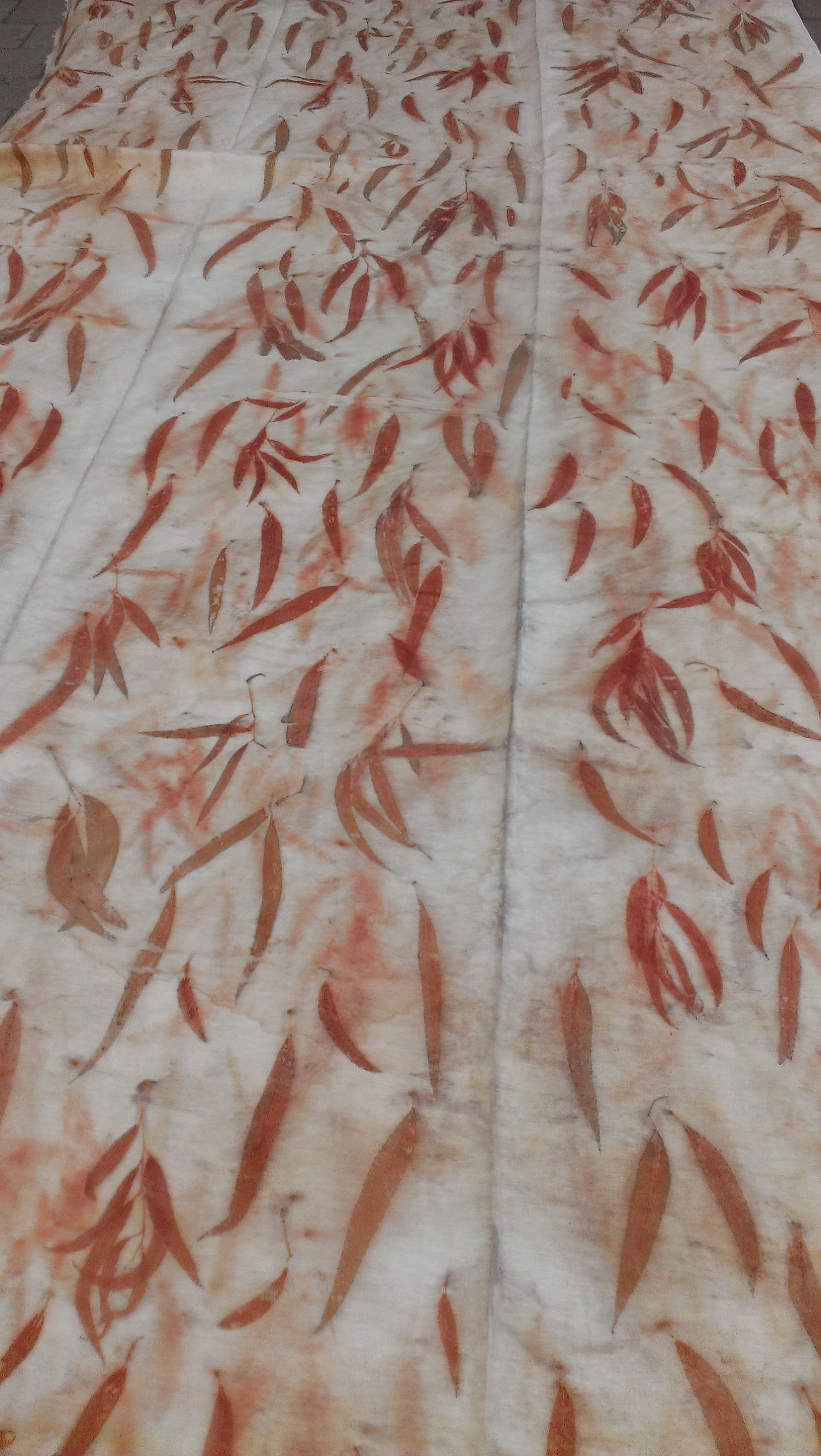
It was a weekend of leaf printing… and more about that later, since there were some expected outcomes as well as some surprises! But meanwhile… India Flint, whose techniques I am trying to use to create these prints (though as they say in the classics, all failures are my own work), has a brilliant blog. It is just as interesting and informative as on previous occasions when I’ve linked to it, but currently India is inviting people to post what they would like her to write about. So, should you wish to take up this opportunity, click here and contribute to the conversation!
Tag Archives: India Flint
Waste not, want not, with a side serving of the election
I live in a society so wealthy and so wasteful, in global context, that any selection of actions I make about waste reduction can feel a bit arbitrary. I see so many missed opportunities every day! But still the principle that waste should be avoided is beyond criticism, and the principle that I should do what I can, is likewise sound. So this election night, I took the eucalyptus-printed silk/hemp scraps from my previous foray into shirtmaking (I was piecing them together back in this post) and the scraps of my skirt adventure, and created bags from them. I love bags. I love making them, giving them and carrying them around. I seldom leave home with less than three, a curious fact I’ve decided to relax about.
Skirt bag 1: has already gone to an enthusiastic new owner who cooked a fabulous dinner for us last night:
Skirt bag 2 is with me now and soon to be introduced to someone I am confident will like it:
I decided to line the hemp/silk bags on account of the method of piecing I had chosen and being unsure of the fabric’s propensity to wear. I had leftover silk noil from various workshops and from making pillowcases. Apologies for the dodgy pictures taken after dark, indoors, with a flash. Some bloggers are so impatient!
There were some small sample pieces that had indigo australis and local eucalyptus leaves printed onto them and then an iron afterbath in the Blue Mountains. I took these pictures just before they vanished into the interior of the bags to be seen only by the new owners, whom I hope will enjoy having this treat inside their bags! I personally am the kind of person who revels in pocket linings made of treasured fabrics, whether they are organic flour bags or were formerly part of my late Grandmother’s extensive scarf collection. Needless to say, I love a bag lining with a story.
I like these bags a lot. The weight of the fabric with the lining works well, to my way of thinking. I could feel the urge to give these away before they were off the sewing machine, so here are pictures on an overcast morning!
This next one has been rated suitable as a gift for my mother-out-law, who is apparently generous enough in her assessment of my skills to talk to her friends about my crafting sometimes. She has friends who have been weavers and dyers for years. She herself has been a wonderful garment creator for decades and keeps thinking she has given it up and then changing her mind, so her judgment may not be unbiased but I am flattered by it nonetheless. Her bag has been finished with a strip from a heavy weight ramie shirt found at an op shop (thrift store)–beautiful fabric and sewing skill but an appalling garment I felt no compunction about cutting up and redeploying. Most of it became another bag complete with interior welt/flap pockets which had been a beautifully crafted feature of the front of the shirt. Sadly they were an offence against fashion even to me, and I don’t hold with fashion much!
And for gratuitous images, I have these of our hens. They don’t stand around waiting for their photos to be taken when there are earwigs to be found.
However, they are glorious, and they are also blissfully ignorant of the election that was taking place the day I snapped their pictures. We were planting and pruning and mowing and they were seeking insects and seeds.
I feel deeply sad that the people of my country have elected a government that thinks we need to pay less international aid to fund infrastructure here; that expresses routine contempt rather than compassion for refugees taking desperate measures to escape their mostly war torn homelands and get to our shores; that thinks roads are a higher priority than public transport; that cares little for renewable energy and plans to fund it less; and that has expressed little interest in participating in global efforts to halt or turn back environmental devastation or climate change. Here’s India Flint on the subject, should you wish for more. I haven’t made a habit of commenting on the state of our nation here, but I felt the need to mark the day. There will be some serious further consideration given to the forms of action that might be needed in the coming period at our house and in our community of friends. Thinking about the state of the world and our impact upon it, in all their complexity, will continue to be crucial.
Filed under Eucalypts, Leaf prints, Natural dyeing, Sewing
Dyeing in Katoomba–and some local-to-Katoomba eucalypt species
Just recently I had a short holiday in Katoomba (New South Wales). I spent part of a day doing some dyeing with a group of friends who meet as a textile group. One of my dear friends did a lovely job of organising a space to meet. The group had a lot of great skills–with artists, a chemist, bush regenerators, plant identifiers and a librarian among them. They had read and been inspired by Eco-Colour—India Flint‘s fabulous book on natural dyeing in which she sets out the eco-print process. But they had not had a great deal of success and some had formed the view that we have special trees in South Australia. Of course, we do have special trees in SA, and so do they in NSW! I tried to explain that it was far more likely a question of species than state boundary…
I love the stages in this process of setting up and bundling…
Cooking… we ran one pot with vinegar, one with iron and one with onion skins (the orange bundles have spent time in the onion skin bath and then been moved to a different pot).
And then the big reveal! It reminds me of that fantastic Judy Horacek cartoon… which by coincidence my friends have up at their place in Katoomba. Please follow the link to be introduced to a wonderful Australian cartoonist–and to see the cartoon! E Scoparia and E Cinerea on wool:
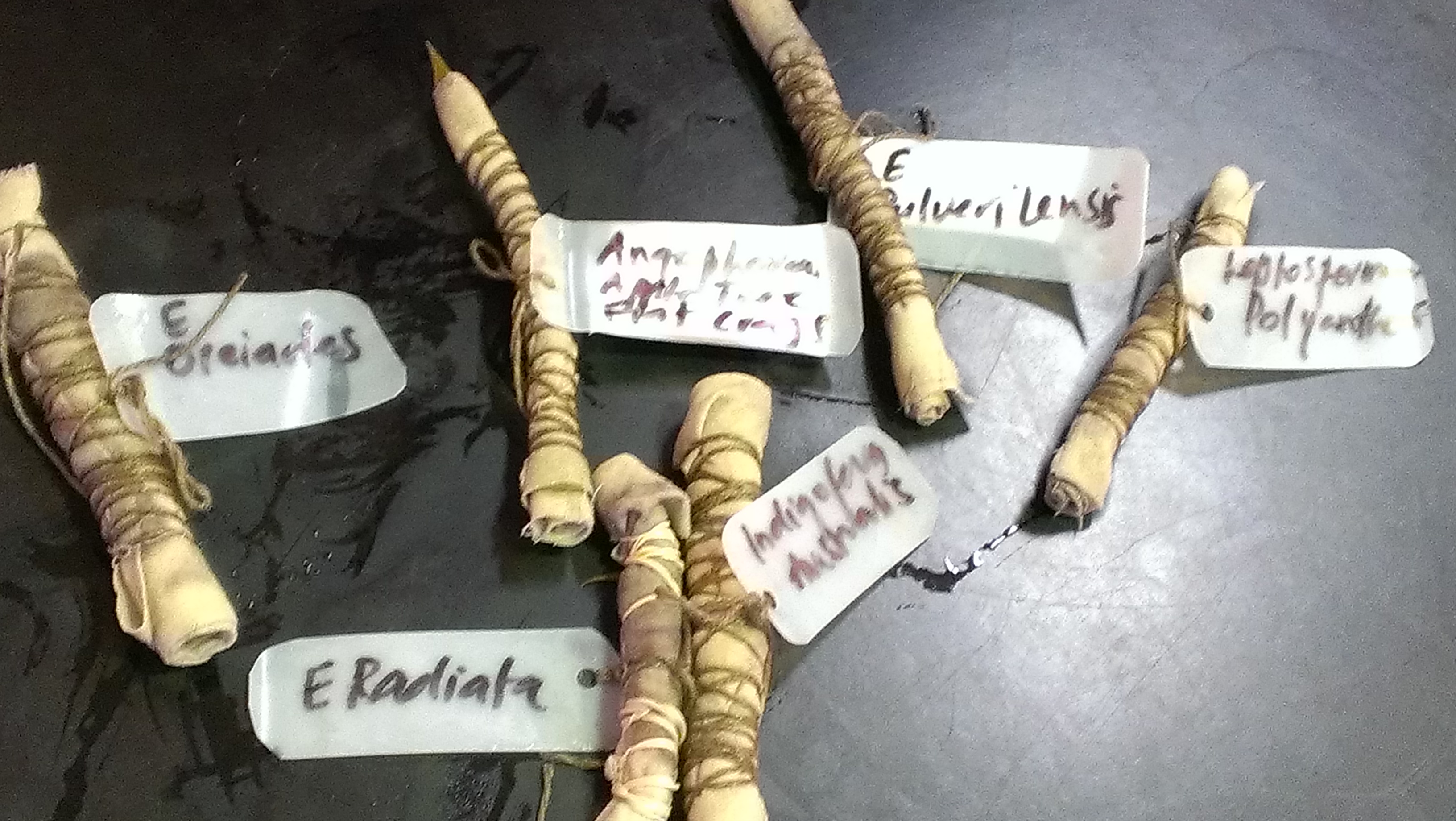
With so much expertise–and because my wise and sweetheart friends who were hosting our holiday as well as dye day had been out collecting and applying plant knowledge–we were able to try out some local species. These samples are all on silk noil scraps, and have all been in hot water for at least an hour–just to test their potential really.
We couldn’t resist trying Indigofera Australis even though it didn’t seem likely a hot process would be ideal for an indigo-bearing plant. It wasn’t, leaving almost no mark except when dipped in an iron modifier. Here it is, before and after. The yellowy-greenish tinge is an effect of photography indoors. Sorry about that part.
E Radiata, the Narrow-Leaved Peppermint:
One of the especially beloved and tall local species is E Oreades, the Blue Mountains Ash–a truly local-to-Katoomba tree:
And finally, E Pulverulenta, the Silver-leaved Mountain Gum, is a vulnerable species in the local area. As a result, people who want to make sure it lives on are planting it in towns, and this sample came from a street tree. Dyers will now have an additional reason to support the conservation effort!
A big, big thanks to my Katoomba friends, and to the textile group for having me!
Filed under Dye Plants, Eucalypts, Leaf prints, Natural dyeing
India Flint at Murray Bridge Regional Gallery
The weekend that just was, was a long weekend for us. Adelaide Cup Day honours a horse race–a strange reason for a public holiday, but we welcome public holidays! 5 of us went together to see India Flint’s exhibition in Murray Bridge.
It was an hour long trip each way with Totally Gourdgeous sing-a-longs, word games, a ‘how many songs connected to Africa can you sing?’ game and I-spy. I highly recommend Totally Gourdgeous. Where else can you hear orginal Australian music on gourd instruments? And find reviews which actually are plausible when you’ve heard the band, like:
But… the exhibition was very much the reason for the trip.
By way of introduction… because I feel a little odd saying anything at all about this experience, but at the same time, I’d really like to share it a little… as a musician I have been fascinated to hear people speak about songs I’ve sung. Sometimes the listener has complete confidence they know what the songwriter had in mind. As the singer, sometimes I’ve been in conversation with the songwriter about interpreting that song from when it was half-written, and know that the songwriter was quite emphatically not thinking what the listener believes s/he heard. I believe that art succeeds when it moves people and makes them think. But the feelings and thoughts that result from encounters with art may be only loosely connected to what the artist offered, let alone intended!
The exhibition spans two rooms in a lovely gallery–in one of them, the lighting is bright and the dominant colours are white and– it was a subject of conversation between us–orange–red? India Flint has offered a preview on her blog for those far from Murray Bridge. The long span of fabric suspended on hooks which dominates the room is extraordinary: brilliant colours and shapes. It is a spectacular sight hanging in space looking fragile and gauzy yet vibrant and strong. In the same room hangs a work called ‘waterbag’. I just loved this work but struggled to explain why. One of my friends theorised my fascination with bags–using, giving and making–might be part of it, but even with that suggestion I’m not sure. I was drawn to its complexity–the dyeing, the form of the bag, the vivid stitching.
In the second room was a poem about New Orleans seven years after the storm painted on the wall in mud, together with an arrangement of paper and silk boats in a range of subtle colours. We spent a lot of time looking into individual boats as well as admiring the effect of the boats from a distance and reading the poetry. Then there was a selection of eco-bundles wrapped around various pieces of pipe suspended in the air–also spectacular. It made my fingers itch to unwrap them! There were a series of works on the wall… one of them a single piece of fabric in purples and greys with a spectacular repeating compound leaf eco-print on it. The others were rich and complex: pieced, stitched/embroidered and plant dyed in a multitude of different ways, using different fibres and mostly in dark colours–greys, browns, blacks and blues.
It gave rise to a series of conversations.
One was about the extraordinary source of inspiration that India Flint and her work have been. Her work has been so generative. In its showing the possibilities of eco-printing as a process. In its incitement to experiment–explicit and implicit. In its focus on local and native plants (eucalypts for us, of course–but clearly people in other parts of the world have taken up the invitation with plants local to them). In its deployment of mending and boro and patching and darning as skills, aesthetics and practices. In its use of a wide variety of materials. In its uses of stitching. In its invocation of the natural world and the potential of sustainable dyeing practices that would respect that world.
Another conversation was about the hoary old question of art and craft. Naturally we did not resolve it (or try to), but we spoke about the phenomenon of people like India Flint, who are gesturing at larger ideas, images and aesthetics in their chosen media. Who carry ideas into their works and express ideas through their works. And then, there are people, me for instance, who seldom do this and have more of their attention on the process of making and the function of the ultimate thing/s made. This is not to say that they don’t overlap or cannot coincide. They must, they clearly do… but they are not exactly identical processes or intentions and they affect what might be understood as an interesting outcome, too.
There was a lot of interest and speculation about process–how was this done? What could have produced this shape/colour/amazing thing of wonder?
There were a number of conversations about which works or parts of them drew attention viewed from close up and which were fascinating from further away.
It was a lovely adventure. Thanks to India Flint for inspiring it, and so much else besides.
Filed under Eucalypts, Leaf prints, Natural dyeing, Sewing
Tribeca shirt
At last, the piece of lovely fabric I was speaking about toward the end of this post has become a garment. The fabric is a silk/hemp blend from Margaret River Hempco. The pattern is the Tribeca Shirt from the Sewing Workshop. The leaf prints use India Flint’s techniques and Eucalyptus Scoparia leaves.
I invested in this pattern because I have been making the same unisex shirt from McCall’s for years in different fabrics. It is an oversized shirt with collar, collar stand, button bands, plackets and cuffs. I’ve had great value from that pattern, making it for myself numerous times and for other people from time to time. Sometimes I’ve made it with collar stand and no collar, or a differently shaped collar. I’ve made it from recycled linen tablecloths, lovely quilting fabrics and even a screenprint from an Indigenous business on the Tiwi Islands.
I wanted something different and I decided on this. It really was different. No facings, no cuffs, the funnel neck involves no collar, and the whole shirt is designed for french seams. I had a failure of nerve prior to setting in the sleeves using french seams and had to set it aside for a couple of days! The buttonholes are placed over a patch sewn to the reverse side. Shaping is achieved with darts. This is really interesting but also really efficient sewing.
The level of instruction in the pattern worked well for me. As usual, the bodies contemplated by the pattern measurements and my own body seemed to have little in common. My pattern adjustment skills are better than they have ever been but could still use improvement–just the same, the result has me feeling really happy. I had enough fabric leftover to cut out a second, simple shirt which is now waiting for my attention. Now all I need is the right occasion for a first outing.
Filed under Eucalypts, Leaf prints, Sewing
Another workshop done!
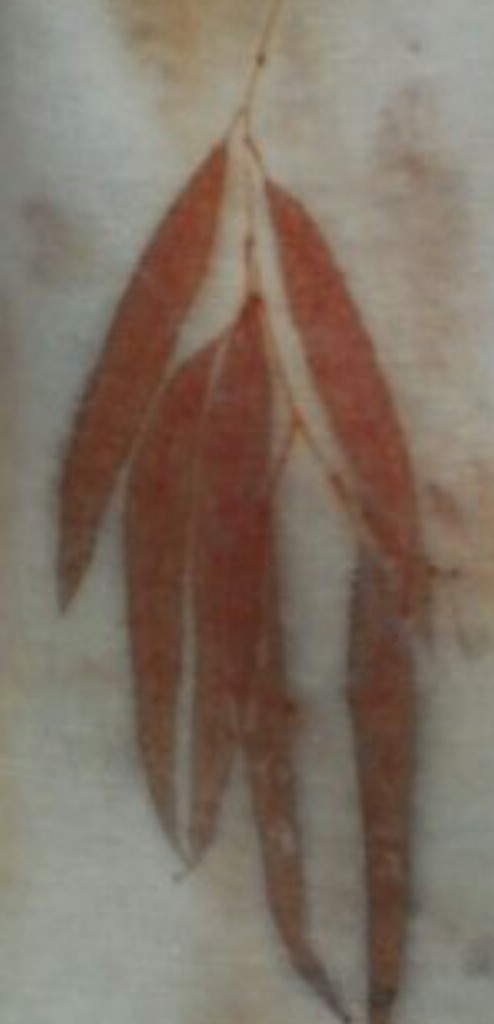
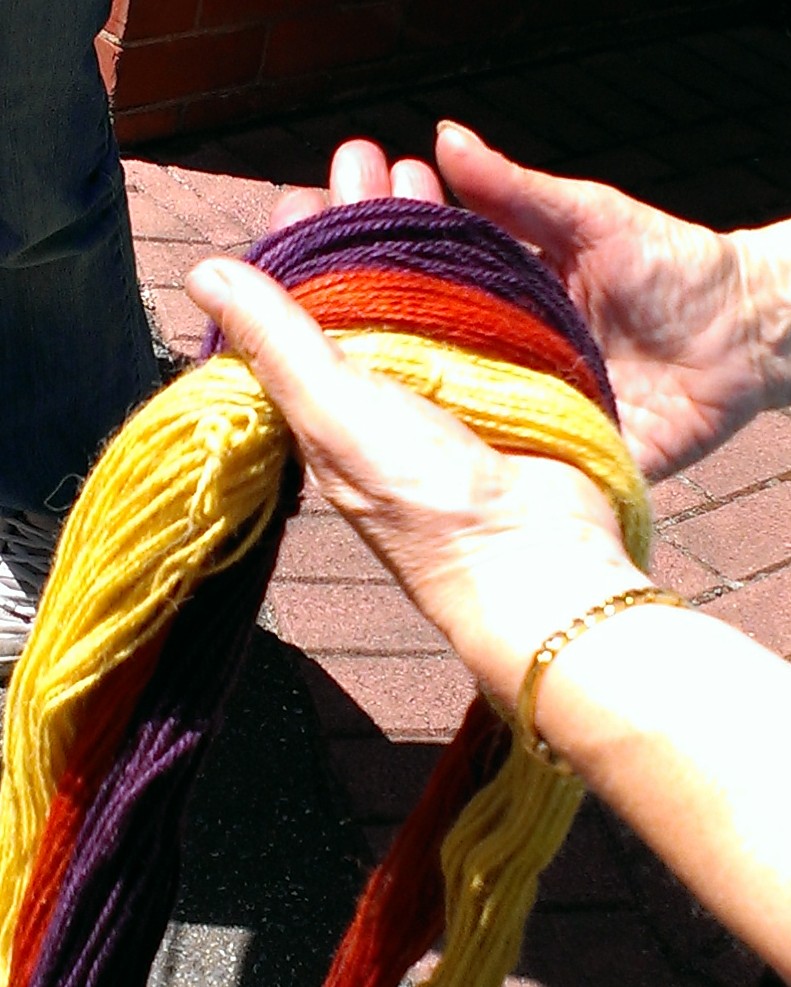
The second in my little series of workshops at the Guild went really well. There was yarn, fleece and roving dyeing. Brown, orange, almost-red and maroon from E Scoparia (bark and leaves) and E Cinerea leaves, yellow from silky oak (Grevillea Robusta) using Ida Grae’s recipe from Nature’s Colors: Dyes from Plants, and the ever-astonishing purple from red sanderswood with alum. I again used Jenny Dean’s method from Wild Colour and still got nothing like the oranges she suggests are likely.
Mysterious outcomes in natural dyeing are not all that uncommon (at least for me!), as the number of variables is so huge. But this one is out of the box–purple!? Since my last post on the subject, Jenny Dean has very generously been in touch with her thoughts on the matter. She suggests this purple could be the result of alkalinity (but given I made no attempt to generate an alkaline bath, it seems unlikely it was seriously alkaline).
Or–and I agree with her that this is much more likely, even though I used 4 different jars/packs labelled “sanderswood”–perhaps the dyestuff was never sanderswood to begin with. The colour is very, very like the logwood results I have had, just about indistinguishable. I am still not complaining about the result–I love purple and so did the participants. I was hoping for purple on this occasion, as I have no more logwood–that I know to be logwood. Perhaps there was a time in the past when a batch of “sanderswood” came to our Guild or a supplier nearby and all the different jars I’ve used ultimately can be traced back to the same mislabelled supply. This would fit with my experience of Eucalypts… it is much more likely that I have misidentified my tree than that the dye bath is giving a completely different colour. Variation to some extent, however, is completely expected.
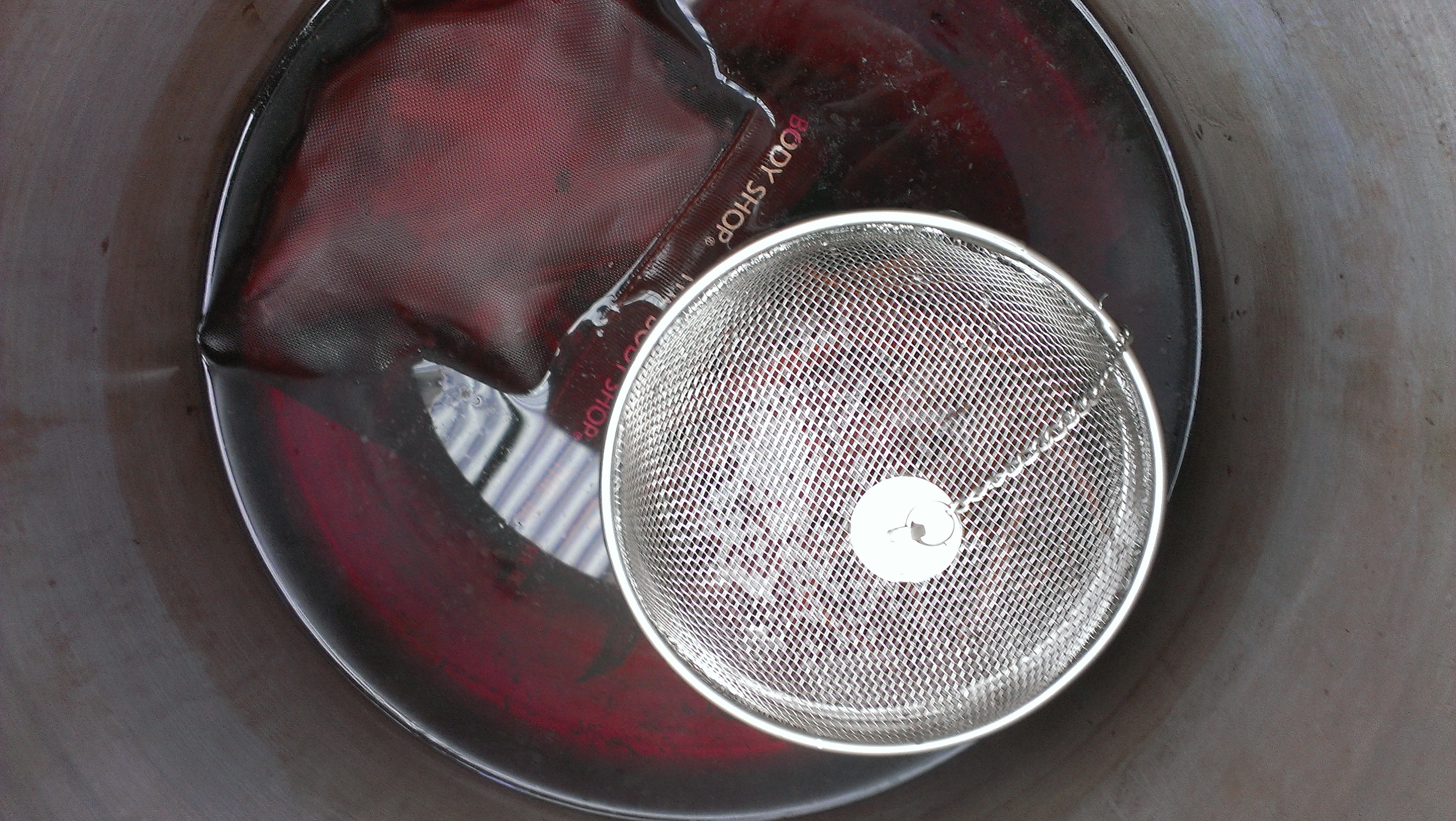
Here is the “sanderswood” just after I poured boiling water over it–Jenny says this looks like a logwood bath to her. I bow to her much more extensive experience and wisdom, without hesitation.
I have the biggest chips in a little zippered mesh pouch that must once have held toiletries. The smallest chips/splinters are in something that looks just like a giant tea ball. I saw it for sale in a Vietnamese grocery where I was investing in greens, seaweed and soy products and immediately saw its possibilities. The woman who sold it to me had an eye-popping moment (evidently she hasn’t sold one to an Anglo before), and asked me what I was planning to do with it. I love those moments in Asian groceries, because once I’ve been ask the question and given my (admittedly bizarre) response, I can ask about the ordinary use of the device or food in question. This one is usually used to contain whole spices when making a big pot of stock or soup. This point was helpfully illustrated by a packet of soup seasonings–star anise and cinnamon and coriander seed were some of the spices I could identify right away.
People tried out India Flint‘s eco-print technique on cotton, wool prefelt and silk. I hope she will get some extra book sales as a result (if you’d like to acquire her books, click on the link to her blog and look for the option to buy them postage free in the left hand sidebar).
There were biscuits and icy poles and lots of chat. I demonstrated soy mordanting and black bean dyeing. And while we were at the Guild and using the copper, which is such a generously sized vessel by comparison with my dye pots, I leaf printed some significant lengths of fabric that I brought to the workshop bundled up and ready to go. The copper really is copper lined, but I could detect no obvious impact on the colours. Seedy silk noil:
Wool prefelt… the degree of detail is fantastic. This is destined for felting experimentation by a dear friend who generously assisted me at the workshop. Her practical help, support, constant grace and good cheer made things go so smoothly. I also decided to start some processes before participants arrived, which I didn’t do at the previous workshop. I think that helped. But it was a fabulous group of people too.
And finally, silk/hemp blend, destined to be made into a shirt (by me, so it may take a while). I am delighted with how it turned out, after many months of putting off the day.
Filed under Eucalypts, Leaf prints, Natural dyeing