Tag Archives: mend and make do

Bag making

There came a point in the end of year crazy-pants where I couldn’t stand all the bits and pieces that were lurking around my office/sewing space. Finally, I decided to take action.  Who needs a potato sack in residence in their work space for months?  It went the way of so many potato sacks round here.  This one was a particularly nice sack, with quite a complex weave structure (for a hessian sack).  The printing was even less wash fast than usual (for a hessian sack) but hopefully it will now have another life being appreciated for its carrying qualities.

2014-11-29 16.38.19

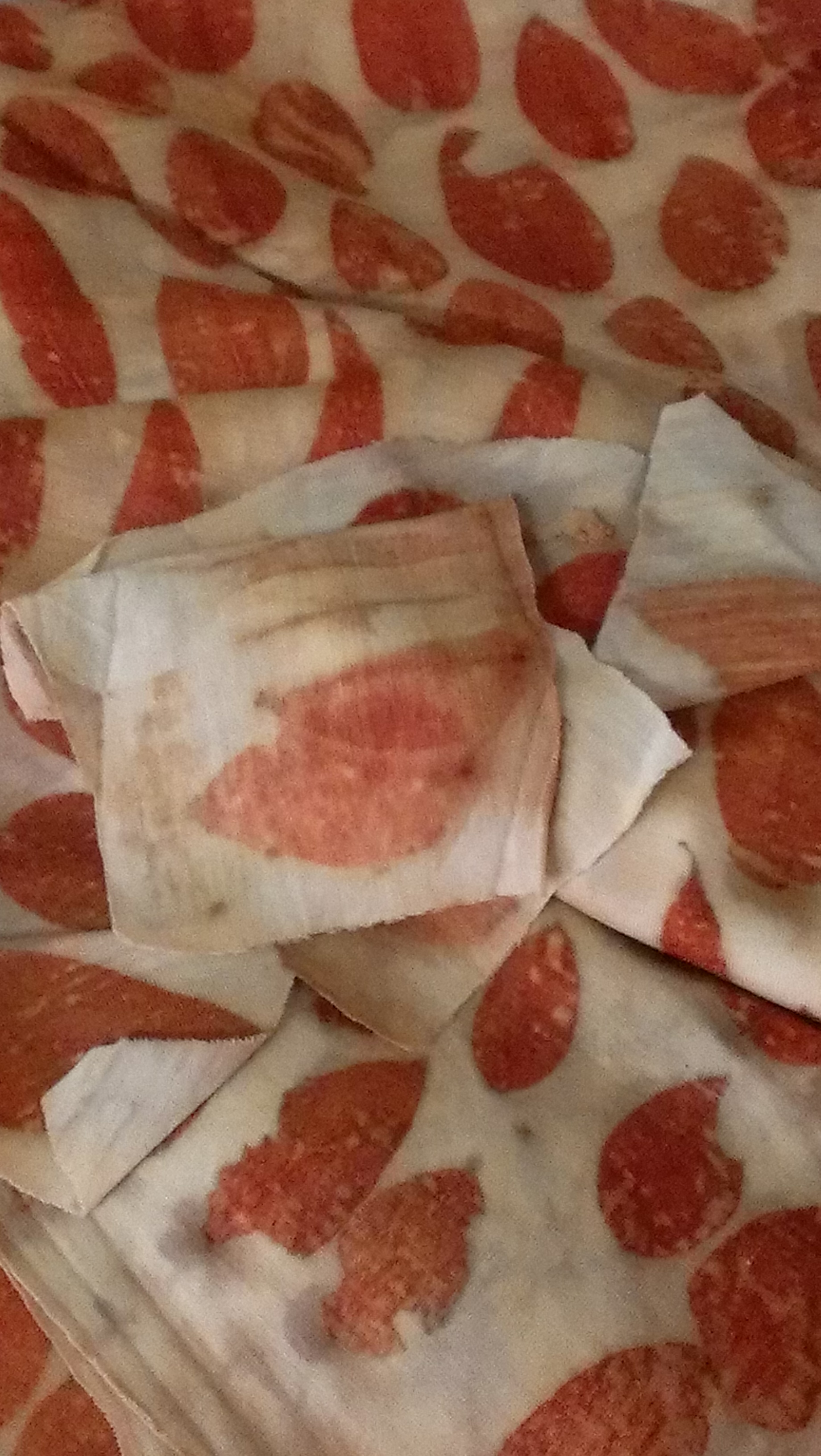
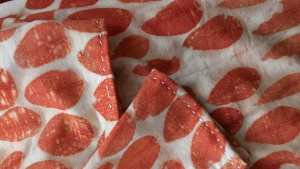
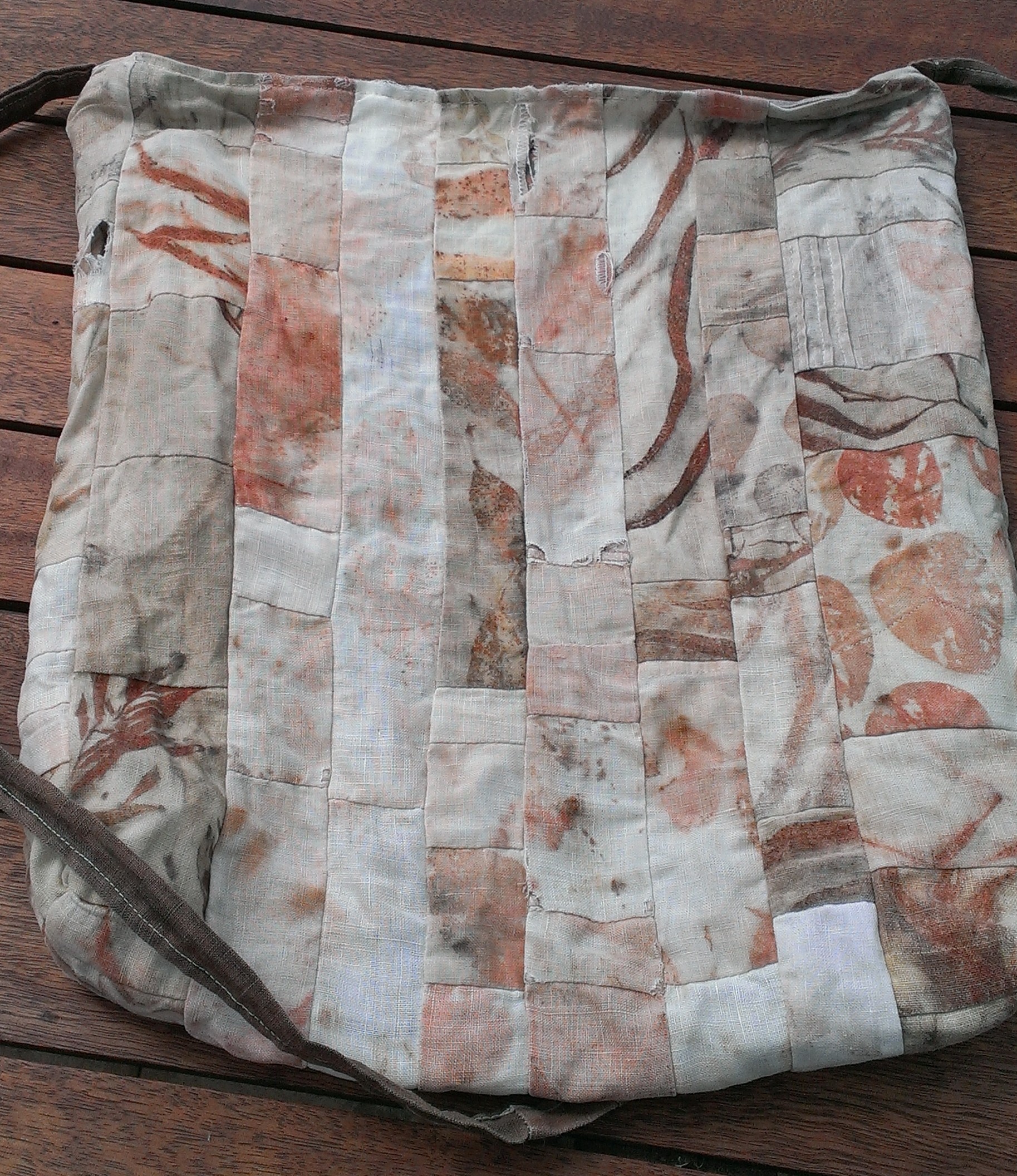
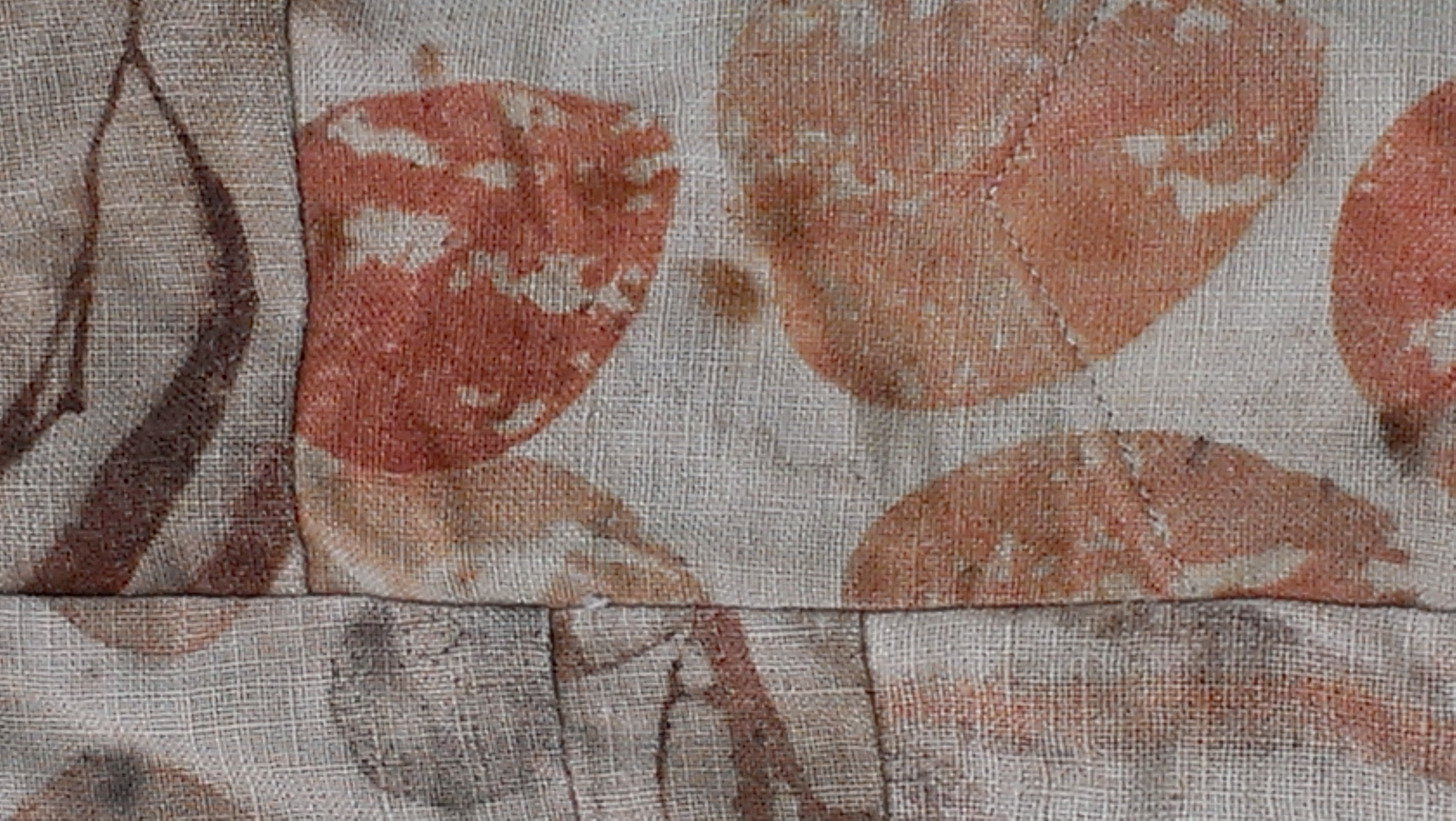
Then there were all the small pieces of fabric left over from other things.  I created patchwork from them and soon had enough for a bag (or two!) lined with eco-prints I like less.

2014-11-29 18.15.55

These are mostly small pieces of pre-loved garments that have been turned into other things, with or without prior leaf prints.  This one has already gone to a happy home with friends who use bags all the time.

2014-11-29 18.15.49

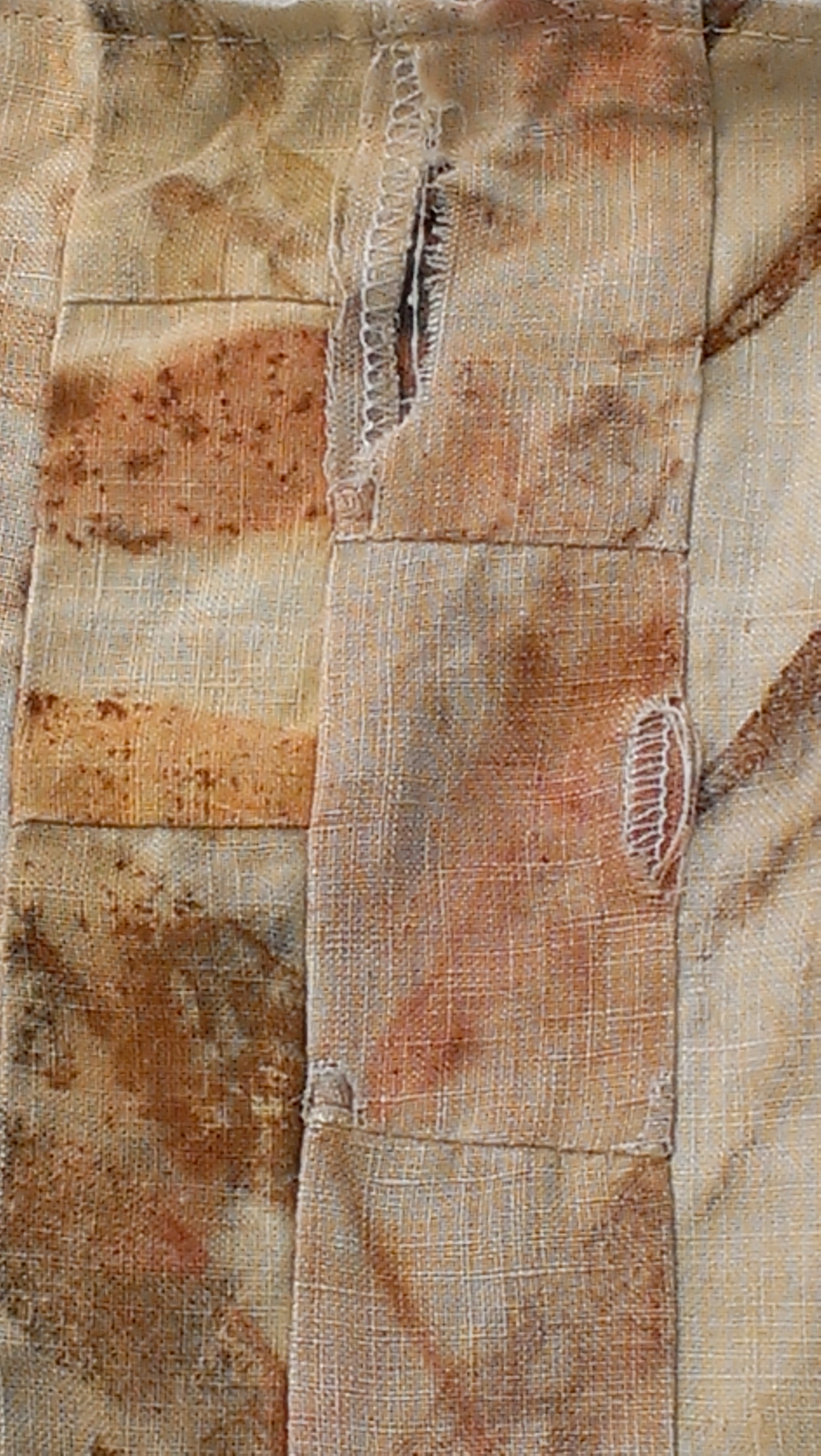
And then there was the ongoing bag patching ritual.  There were three or four new holes… so my favourite bag got yet another patching job.  From this:

2014-11-23 12.35.17

To this!

2014-11-23 13.14.30

4 Comments

Filed under Leaf prints, Sewing

How not to sew knits

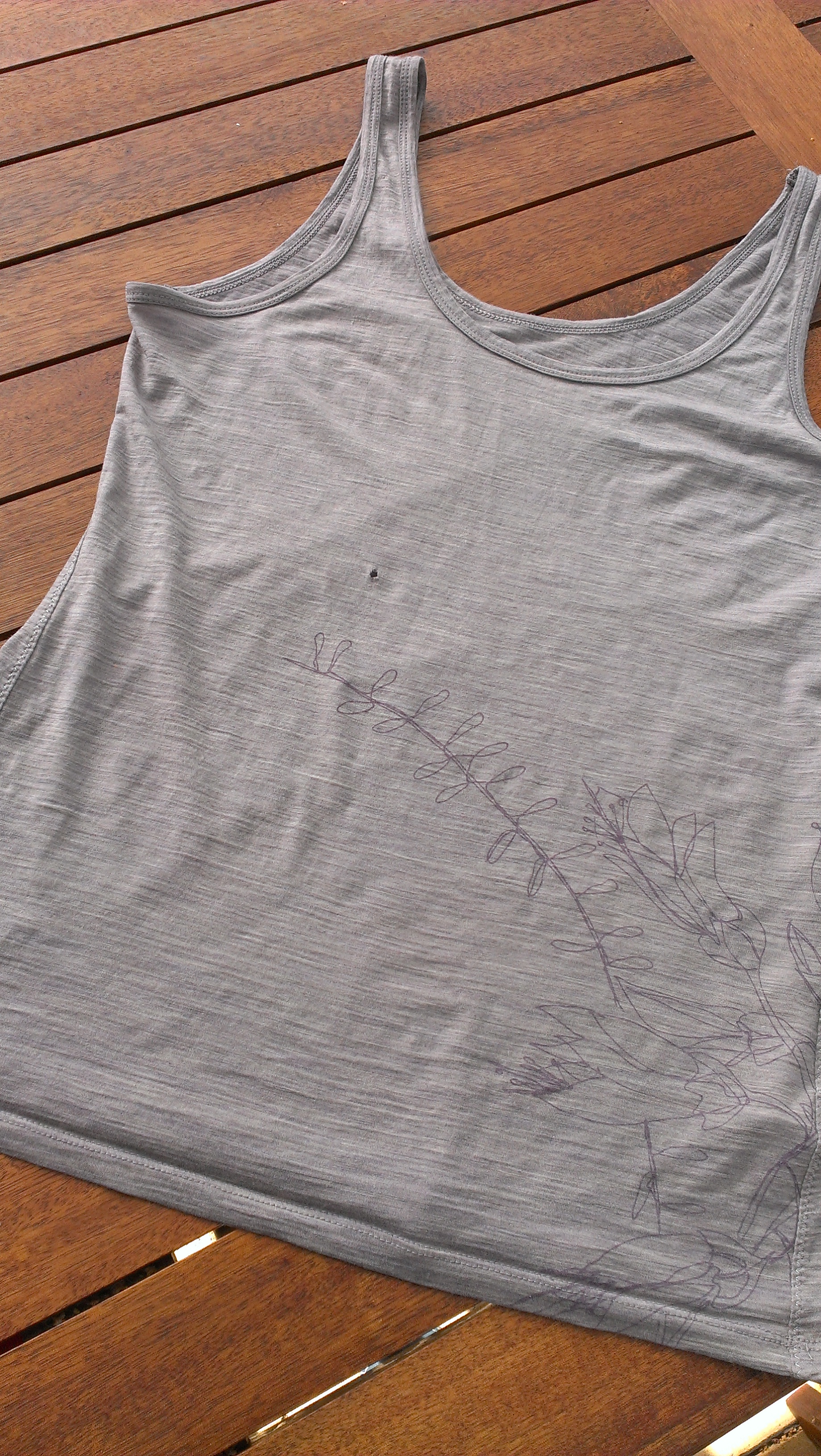
Last winter, I believe… I bundled up this milky merino and dyed it.  Actually, I cut and dyed two different garments, and when I stitched the first one, I found the fabric had shrunk in one direction.  I think this was the appalling realisation that led me to put this garment aside for at least a year.

2014-07-19 16.52.57

One weekend a while back, I had a new sense of the possible.  If it has shrunk, waiting won’t make it grow back and I’ll just have to figure out what to do then, I thought.  I measured it against the pattern pieces.  I has indeed shrunk–but I pressed on.  I sat down to sew and that’s when I realised there was another profound sense of foreboding involved in my reluctance to start stitching this together.  Step 2 of Very Easy Vogue 9904 involves setting in an invisible zipper.  Suggesting Vogue’s idea of ‘very easy’ may have as much in common with mine as ‘the Vogue body’ has with my body shape!  I have applied a lot of zippers, albeit intermittently, but not into a knit fabric.  And not with any real pretence to invisibility.  I won’t catalogue all the things that went wrong.  I’ll just sum up by saying that sometimes a sense of foreboding is your subconscious letting you know–ahem, you don’t have the skills for this to go well!

2014-08-01 15.26.22

I set the zipper in by machine the first time and it was truly appalling.  In the end, I did it again by hand.  Decent!  I won’t bore you with all the missteps–in the end I hand stitched the hems as well, and I like them too.  Perhaps I should have dyed the thread, but I quite like the luminous stitches. I used dyed thread for the zipper after all the chat in the comments and so much practice sewing with embroidery thread.

2014-08-01 15.35.53

Speaking of which, right now… no wool garment story could be complete without darning.  Sigh!  I spoke to another friend who has been doing unprecedented levels of darning at her place this morning at Guild.

2014-08-01 15.36.24

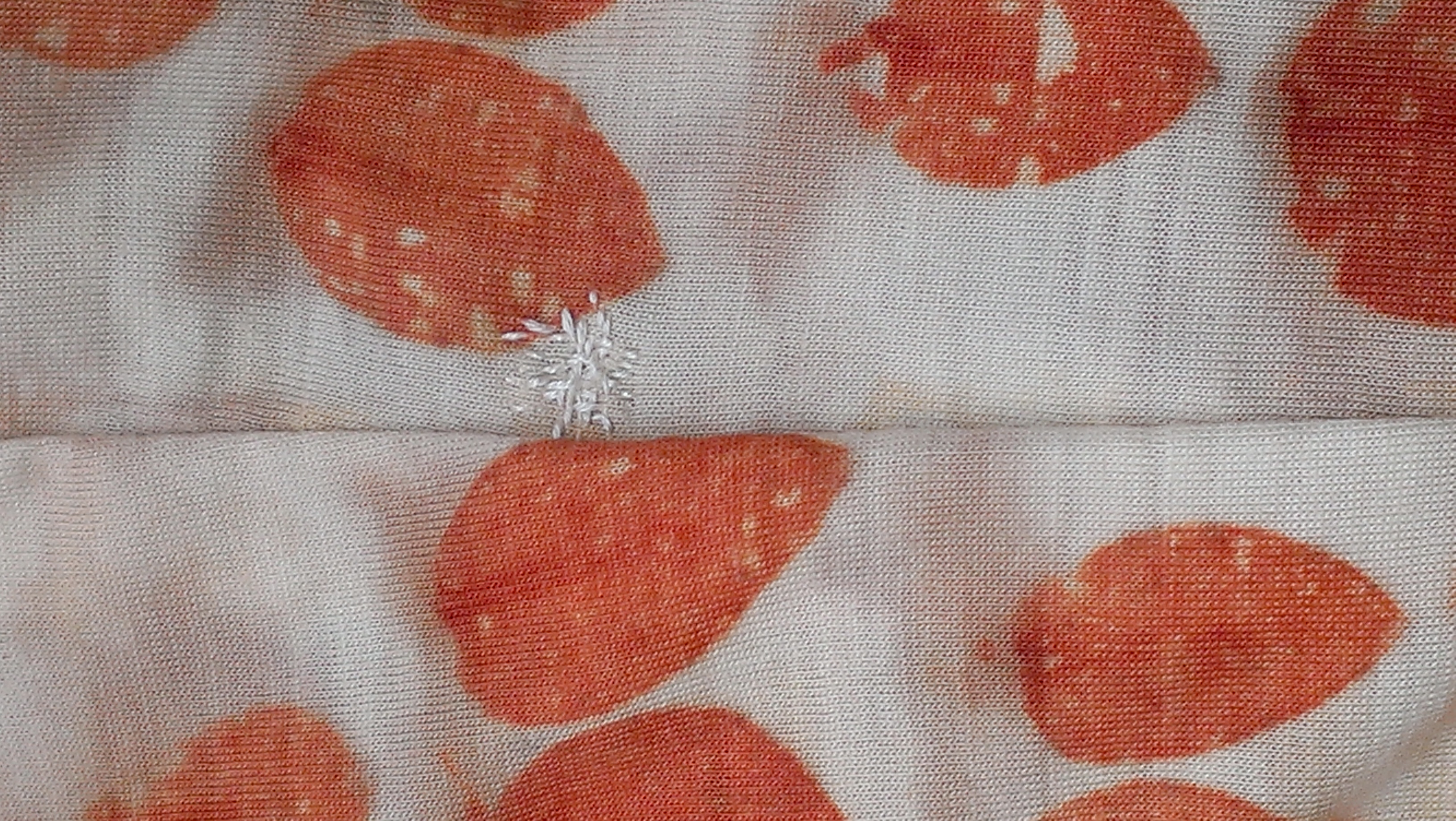
In fact–I needed about six darns on this garment. Without washing or wear.

2014-08-01 15.36.15

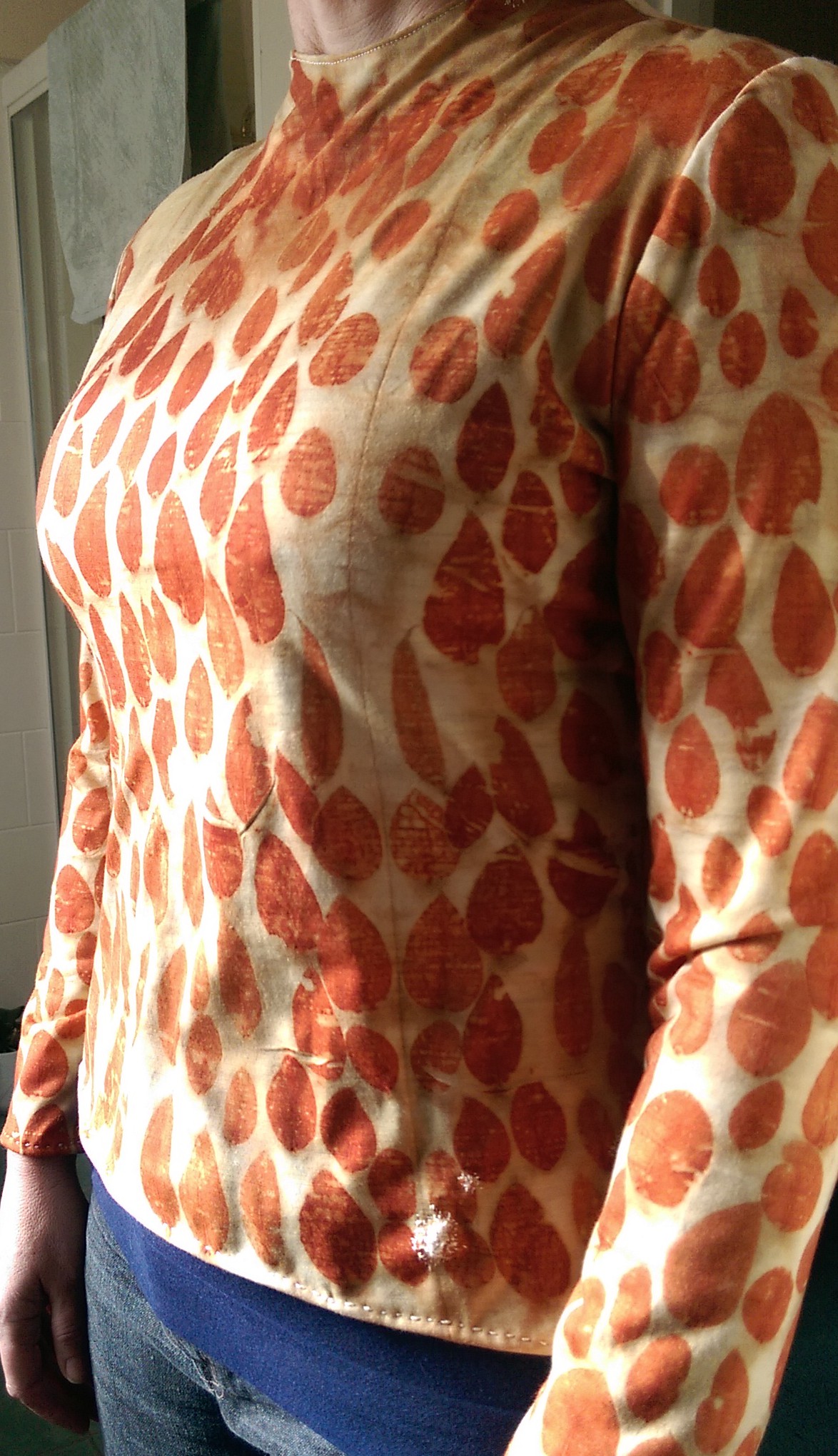
Never before have I needed to darn prior to completing a garment!  But… I like the garment.  I would prefer it hadn’t required darning!  I’d make this pattern again, and the fit might be smaller than I intended and snugglier than I prefer… but it’s decent.  Even if it ends up being an underlayer, that’s better than staying on the chair where the moths found, it, not being finished!

IMAG0115

10 Comments

Filed under Leaf prints, Natural dyeing, Sewing

Festival of mending, continued…

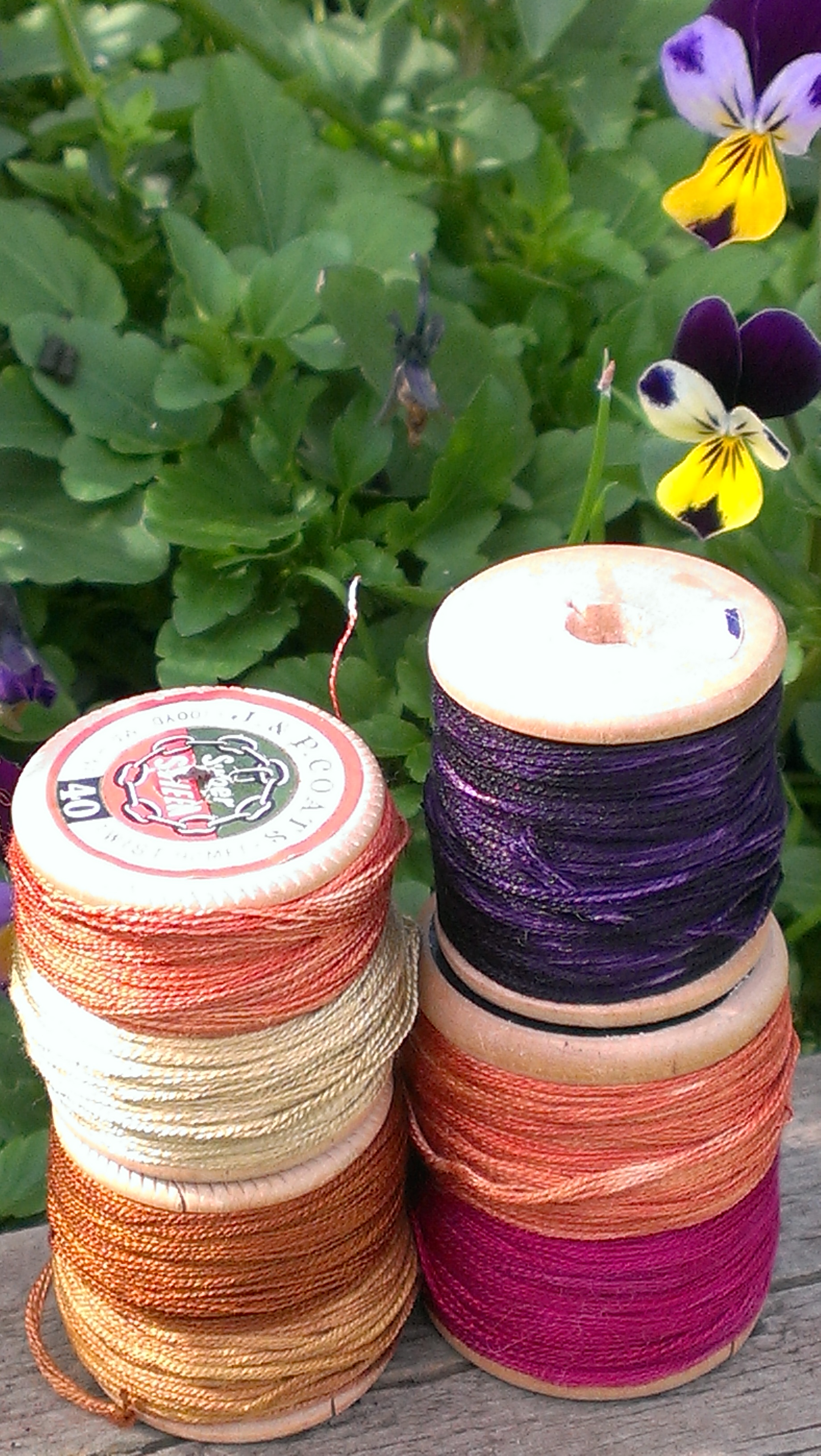
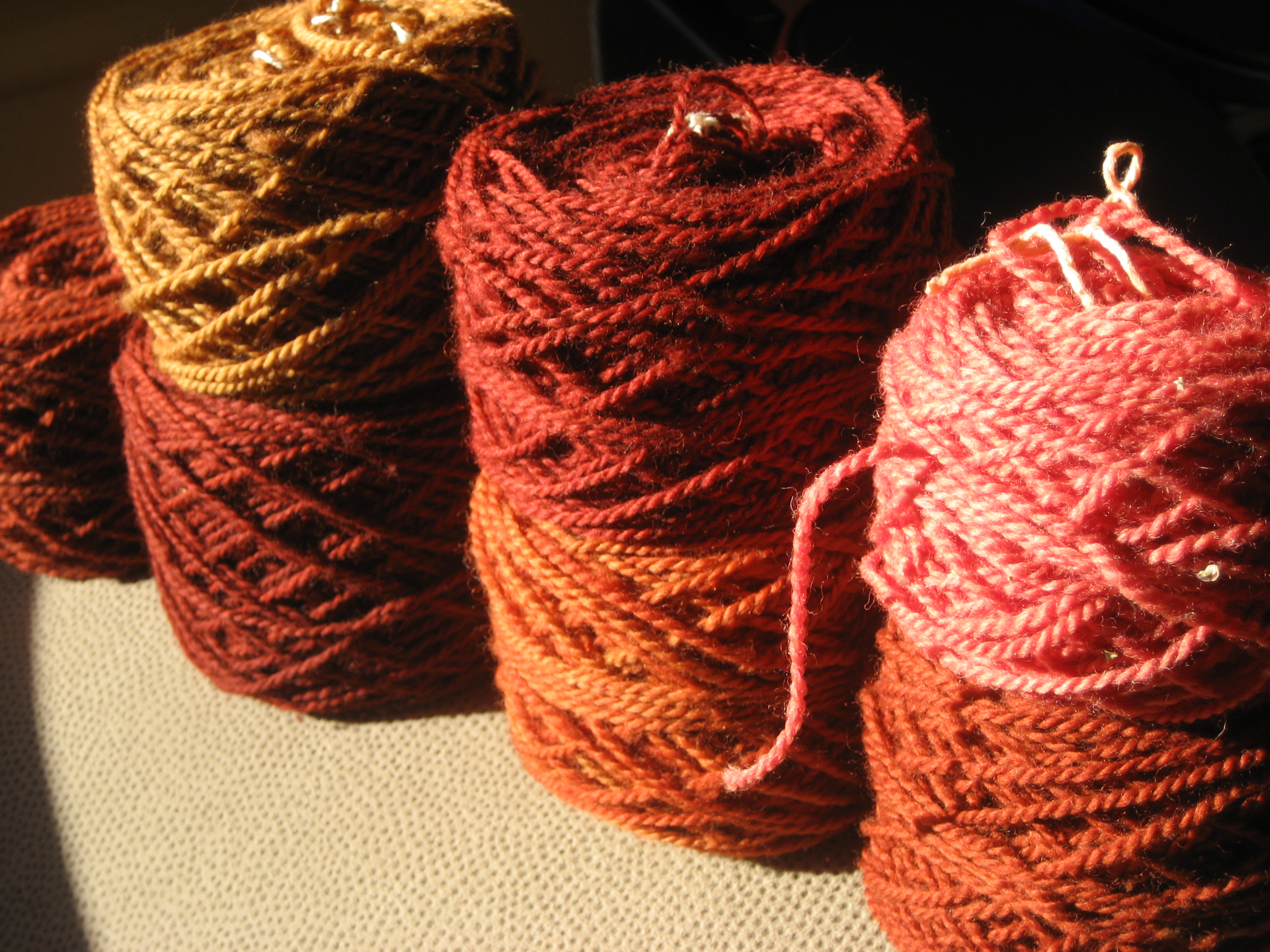
I have had plenty of occasions to get out my darning kit this week. Wendi of the Treasure’s comment on the post about moths and mending recently helped me decide to get organised for colour darning. I began by winding some of my silk embroidery threads onto reels.  Oranges from madder, tans from eucalypt and onion skins, purple from logwood, and fuchsia pink from cochineal.  I have other colours but ran out of reels!

2014-07-30 11.24.13

So… now that woollen items are being subjected to rigorous scrutiny before return to the cupboards… I give you indigo darning.

2014-07-31 07.48.19

Onion skin darning.

2014-07-31 07.48.47

And logwood darning. This may well be the place I failed to eradicate a couple of moths last year, as this top already has a series of darns dyed with Plum Pine.  As a washfastness test, those darns have continued to show that I have not found a way to make Plum Pine washfast–it is fading, but that has worked well with the mauve of the top.

2014-07-31 07.48.59

While I was on a roll, I appliqued a patch over this hole where two pieces of recycled fabric in the lining of a bag parted company.

2014-07-30 20.33.29


I don’t rate my applique but I have been practising!

2014-07-30 20.58.44


Then there was the worn through section of my quilt (made of recycled linen garments)…

2014-07-30 20.32.16


Now repaired with a piece of linen collar from a test-dye.

2014-07-30 21.26.00

Well.  My mending queue is getting plenty of attention, but it remains to be seen whether it will just continue to grow as washing exposes where the maws of those moth larvae have been…

21 Comments

Filed under Natural dyeing, Sewing

Drive-by dyeing and mending

On my bike ride home from work (about a 40 minute ride), I pass just one Eucalyptus Cinerea. Well, there are two, but one is inside someone’s front garden.  A person has to have some boundaries!  The street tree had dropped a small branch.

IMAG4127

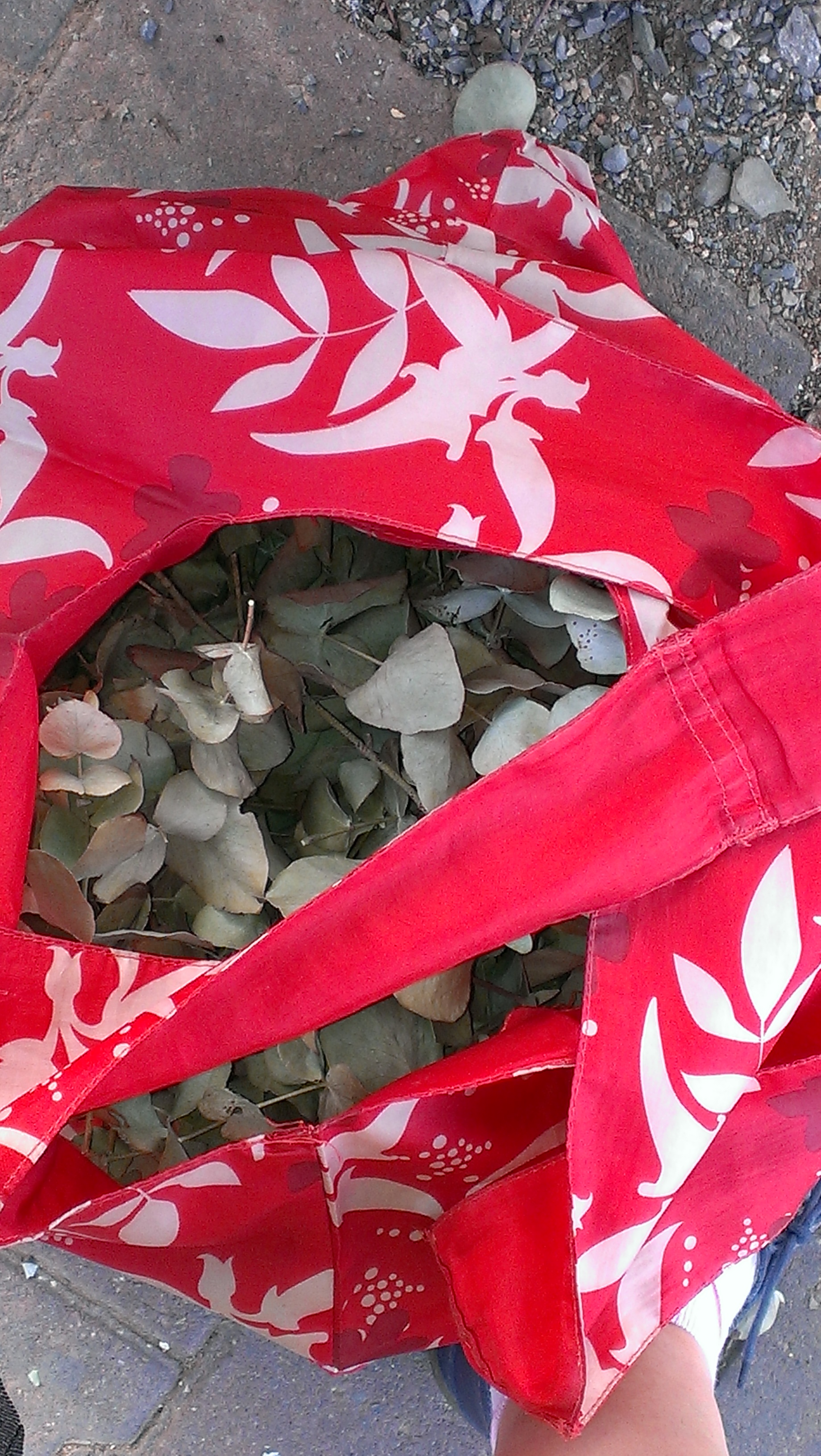
I decided I’d better collect it.  Usually I carry a calico bag in my bike pannier for such contingencies, but this was what I found when I scrabbled about in the bottom of my pannier on the day, so in went all the stray leaves I could find.

IMAG4131

This tree has had to contend with a lot.  It has had a  very strange pruning job designed to protect the electrical wires that now pass through its branches.  The pruning took out a lot of the canopy, but the tree is still standing.  For this, I am grateful.

IMAG4128

Recent events have caused me to reflect on the way I think about trees on my regular routes… like old acquaintances.  I think about them as I pass, the way I think of people when I pass near their homes without visiting.  I notice what happens to them.  I check them over when I have the chance.  I remember how they were when they were younger, or before that accident befell them.  It’s not entirely unlike the way I notice people I don’t know well, but see out and about in the neighbourhood regularly.

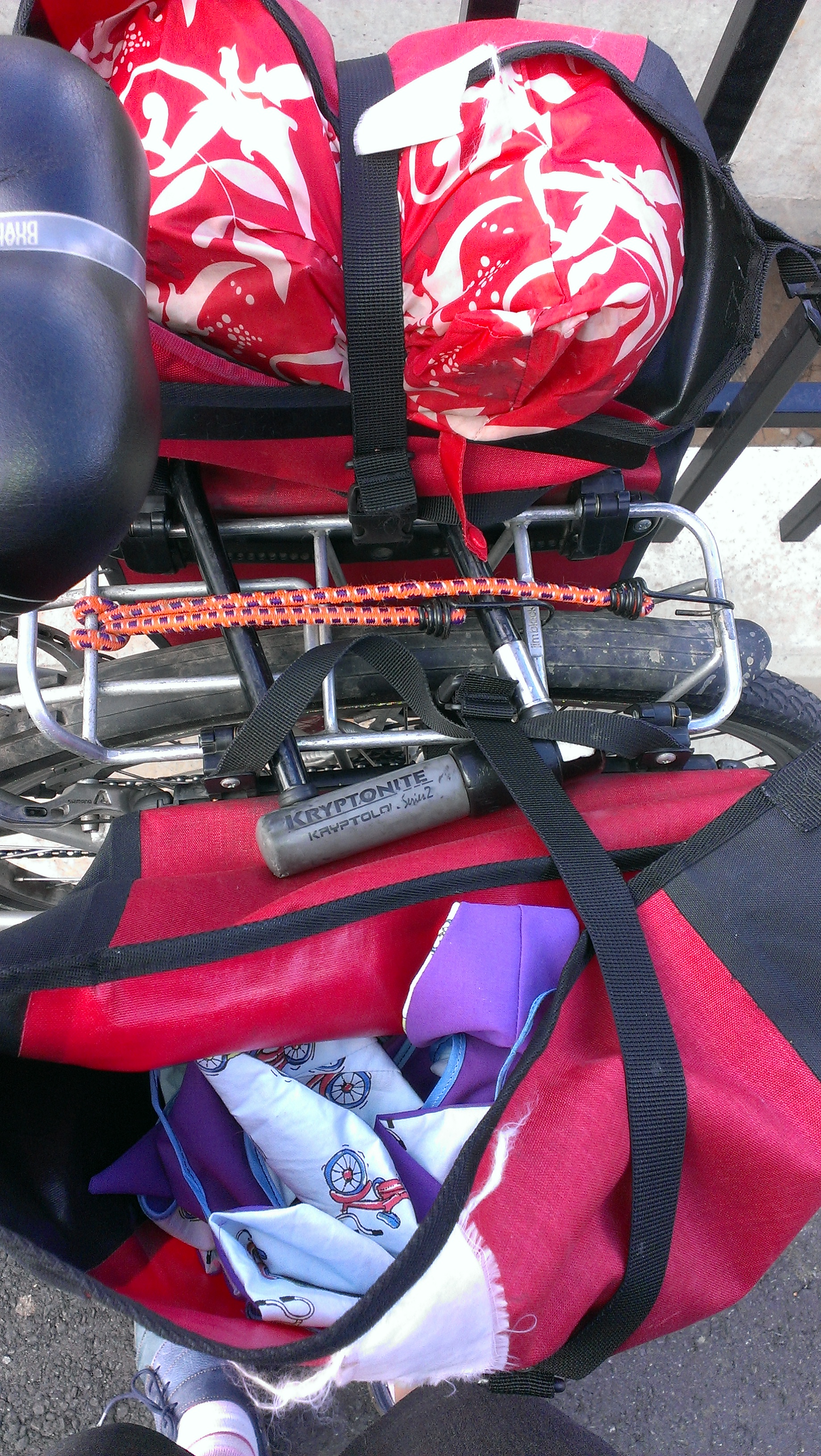
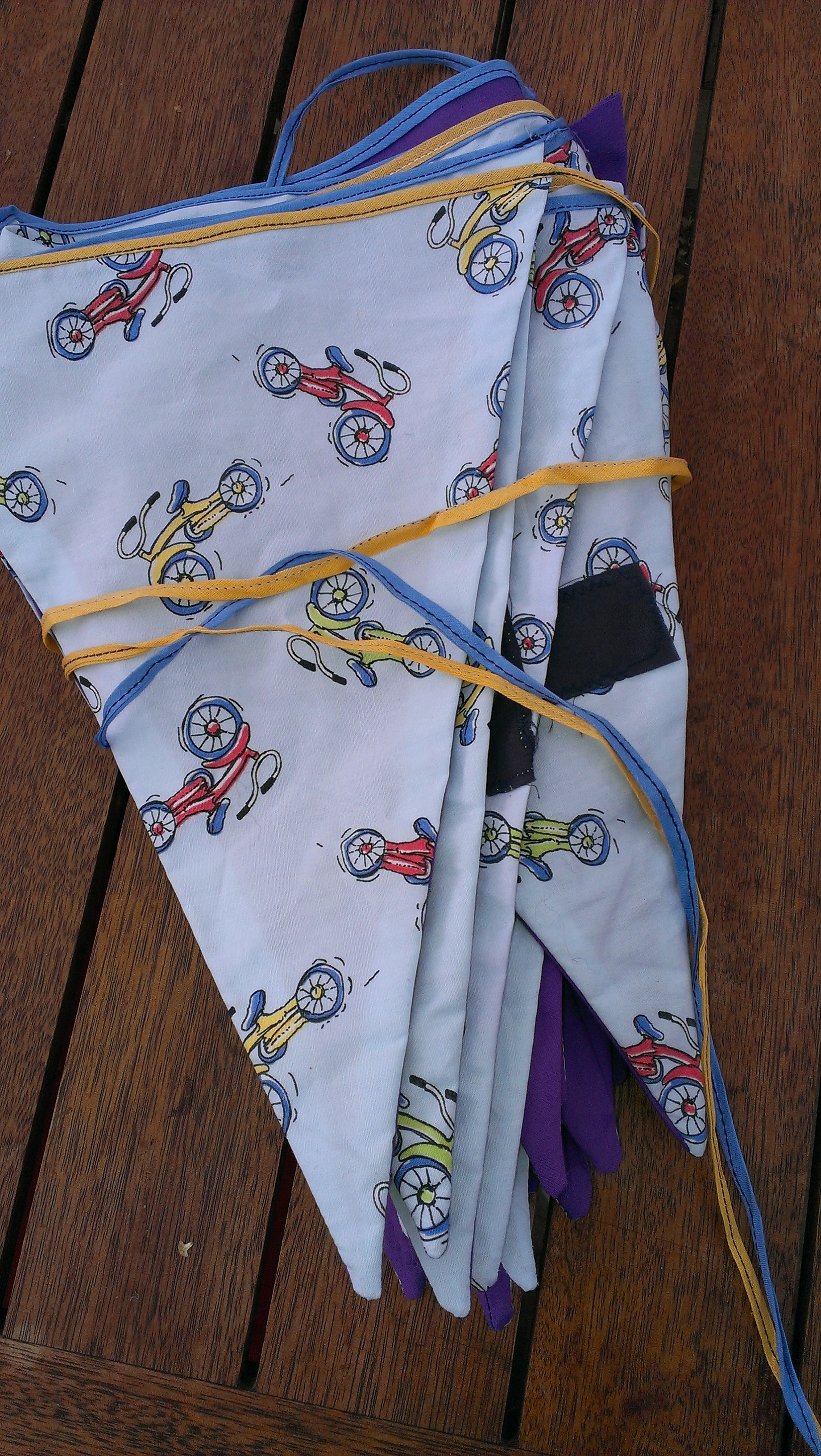
Further along, I saw that my “thanks for cycling” bunting had been ripped and some of it was lying on the ground.  Soon it was in my other pannier headed for the mending pile.

IMAG4135

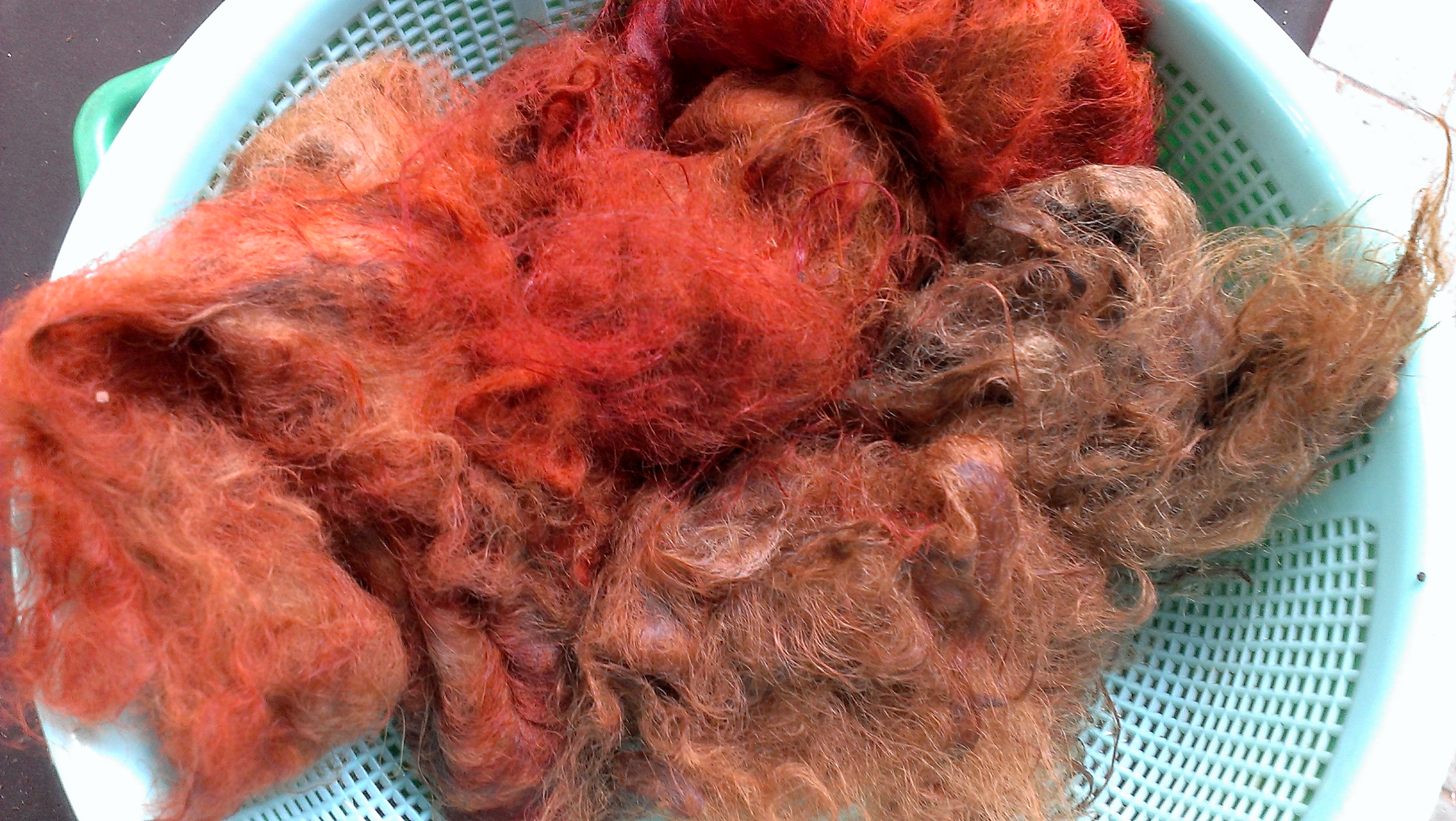
A few days later, the E Cinerea made it into the dye pot and produced its usual dependable flamelike orange.  I also collected some ironbark leaves that had fallen in the parklands near where we had exercise class.  Once the E Cinerea was all but exhausted I reused that dyebath with the ironbark leaves, thinking I would save water and energy, but clearly this was not E Sideroxylon–it produced that sad, damp little pile of fawn alpaca on the right.

IMAG4183

I have come to regard this as a sign: The orange leaves in the picture below are the E Cinerea leaves, which have gone from silver-grey-green to orange in the dyebath.  The ironbark leaves, on the other hand, have remained a robustly green shade even after cooking.

IMAG4180

And, I’ve mended the bunting ready to hang it again on a suitable occasion…

IMAG4184

4 Comments

Filed under Craftivism, Dye Plants, Eucalypts, Natural dyeing, Neighbourhood pleasures

Downsides of upcycling

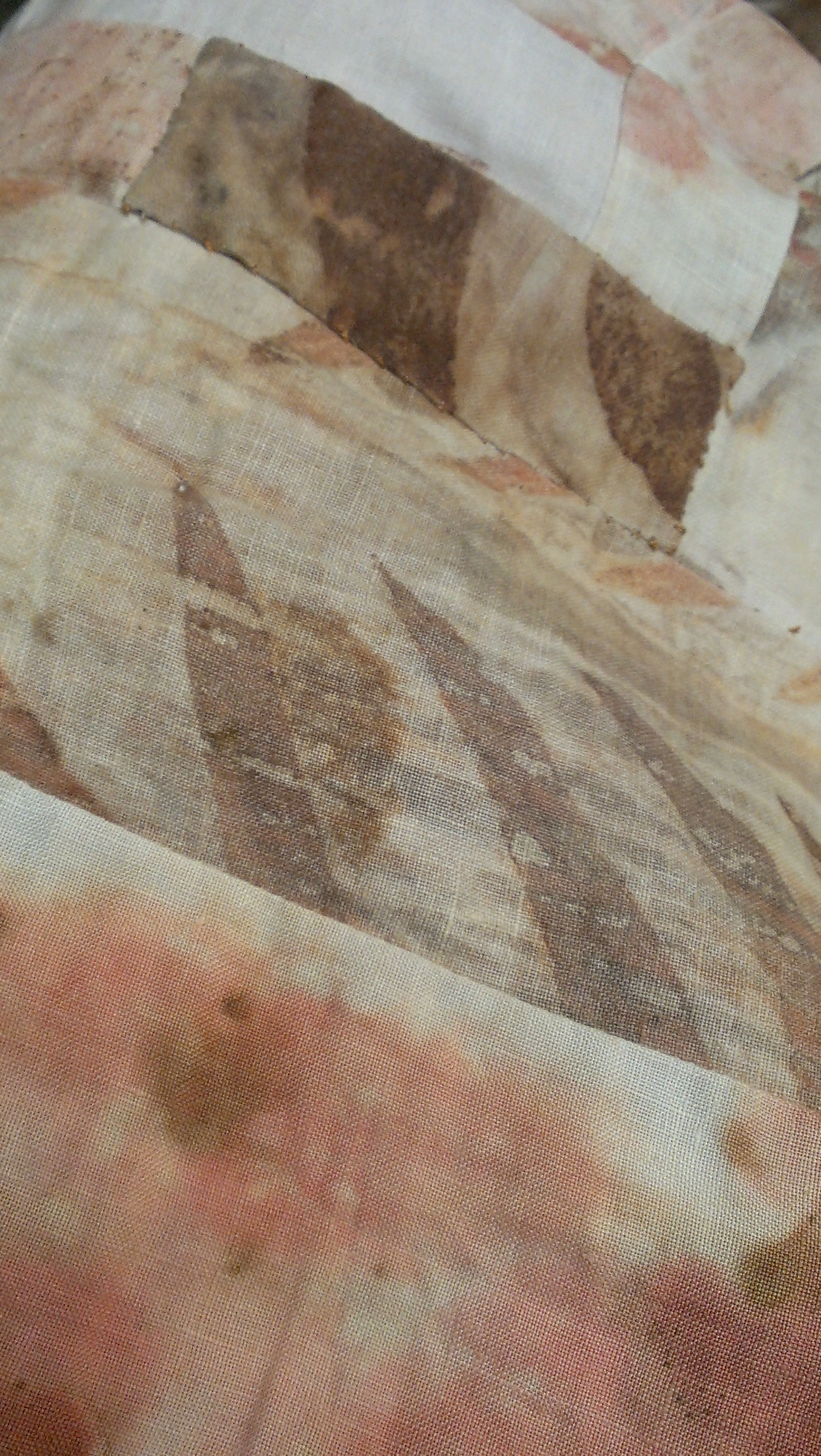
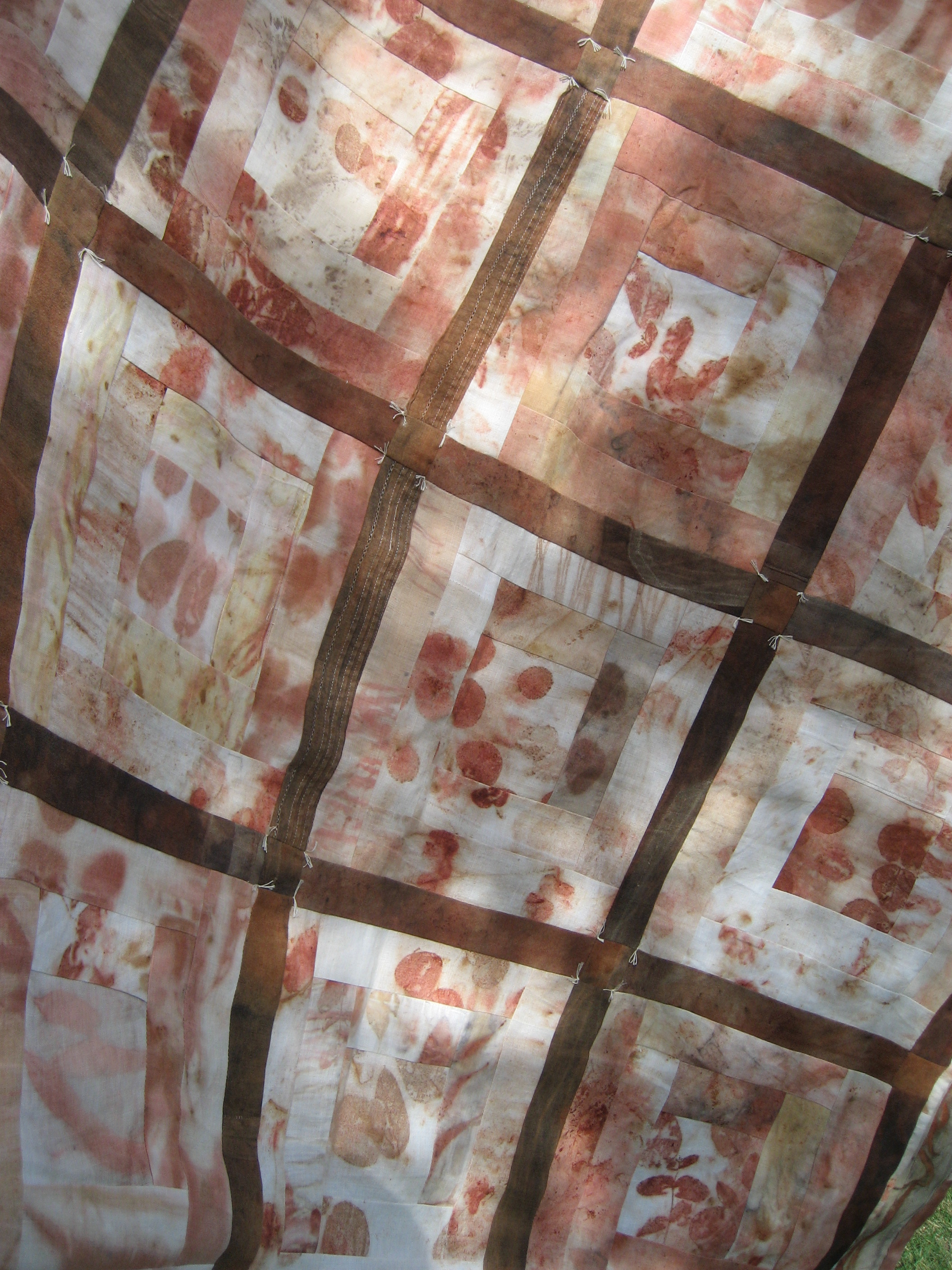
Quite some time ago, I made a quilt.  It was a project I decided on when I began to experiment with India Flint’s eco-printing technique on cotton and linen.  Her book Eco-Colour (see the left hand sidebar of her blog if you’re following the link–her books are there) mostly focused on wool and silk, but offered some guidance about cotton and linen.  I followed that guidance as best I could and at first I could achieve only pinkish smudges.  I had become pretty decent at dyeing wool by this stage, but only some of these skills proved transferable.
IMG_5240

Leaf printing or eco-printing was clearly a whole other skill. I teach for a living and observe the process of learning almost daily both in those I teach and in myself.  It is very rarely possible to read instructions and then successfully and immediately carry out a process someone else (that would be India Flint) has spent years figuring out and becoming exquisitely good at.  Nor can the outcomes of a process with so many variables always be confidently predicted by a novice (that would be me). Indeed, just plain carrying out instructions accurately is not always possible on the first attempt.

The amount of fabric wastage that might be involved in learning and practising made me think I would have to give up and just admire the work of others.  India Flint, for instance. This was the point at which I thought of the quilt.  If I made a log cabin style quilt, I could frame whatever leaf-ish smudges were my then best efforts, and the smudgy parts could simply be borders.  Standards are not always high round here.
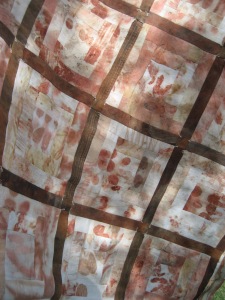
IMG_6440

By the time I came to halfway through the back of the quilt, I had been experimenting for about a year and I had some breakthroughs–in understanding the process, in refining my skills at using it, in mordanting, in identifying eucalypts, even growing a few.
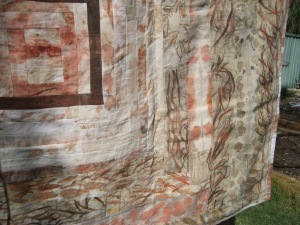
IMG_6446

I made this entire quilt from recyled/upcycled linen garments from op shops and garage sales, most of them having gone there because they were stained beyond rescue.  Needless to say, I couldn’t bear to waste a scrap.  So even the tiny leftovers of the log cabin quilt were turned into other things.  Including bags–which won’t surprise regular readers!
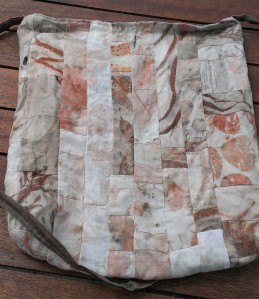
IMAG2740

This bag has had a lot of use, because I like it so much.  Which is to say it has been treated roughly, stuffed full, rammed into other bags and rubbed against all manner of things.  And although parts of it are still glorious… including what must have been virtually my first really exciting E Cinerea, E Scoparia and E Nicholii prints:
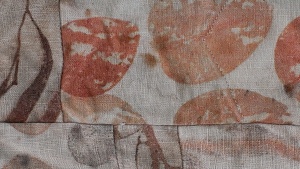
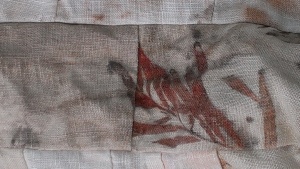
IMAG2754 IMAG2753

There are also some points of real wear.

IMAG2752

I often think that a well made, long lasting garment or bag is highly desirable. But a thing that will stand the test of time is only a good thing when the item remains one you (or someone else) want to keep using.   I own things that I wish would reach the end of their useful lives because I’m tired of them even though they don’t need replacement, or because a better version exists 20 years later.  I have things I wish I had never acquired or that don’t have the capacity to biodegrade.  I now think about the benefits of things that can break down and won’t last forever to burden coming generations.

This bag, though, has had a short life as a bag because of the hard life some parts of it had as clothing, and it certainly will biodegrade.  I polled some of my near and dear and they thought the bag should continue even if it required lots and lots of mends… So here it is, reworked considerably.

IMG_0215

And the other side…

IMG_0212

Ready for more years of hard use, I hope! For those who are wondering, the quilt is doing fine so far and I remain happy to use it.

18 Comments

Filed under Leaf prints, Natural dyeing, Sewing

Of moths and mending

I have a serious programme of moth management due to the amount of wool that is stored at my place.  It involves ziplock bags, careful wool storage, regular washing of clothing and pheromone traps.  However, there are noticeably more moths in this house than our previous one, and it has wool carpets.  This winter when I pulled out my woolens, the jumpers were all intact but one of my fine woollen undergarments had suffered some nibbling.  There is a small hole on the front:

IMAG1464

And a small cluster of holes on the back.

IMAG1466

I thought I might just leave them.  This garment is not outerwear and surely they wouldn’t run too far.  But then I thought of mending them with silk thread and overdyeing the whole garment in eucalyptus… and just when that was tickling my fancy, I dyed silk embroidery thread with Plum Pine and got colours that seemed like they might fit… and so I spent an evening working on my mending.

IMAG1490

Since the moths gave me circles (more or less), I worked with that theme.  I’ve tried to leave a little extra thread at the outer edge of each part of the darn to accommodate stretch–which is what my Mum taught me to do when darning a sock.

IMAG1488

The silk yarn I pulled out of the plum pine and vinegar dyepot the day after darning is a deeper shade, so I’m considering further embellishment with that, or the silk I dyed the night we worked with the indigo dyepot.  But for now, I’m pleased to have mended these holes… and on the same weekend as I mended a ravelled hem, for good measure.  This will be an initial washfastness test for the plum pine on silk, too…

5 Comments

Filed under Natural dyeing, Sewing