Tag Archives: silk thread

With words and without words

2016-07-23 13.21.23

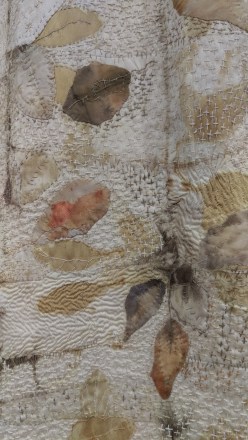
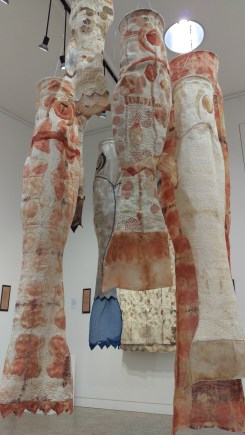
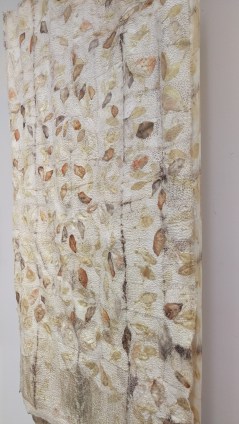
I regret to say that this is a report on an exhibition that has since closed.  The wonderful (and local-to-me) Isobel McGarry exhibited during winter at Gallery M in Marion.   Isobel is a dyer who uses eco-prints in her works.

2016-07-23 13.21.01

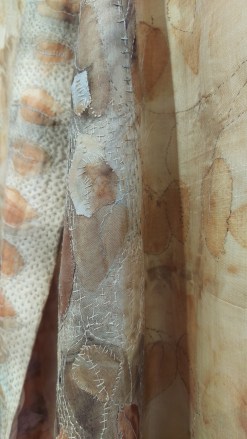
However, the thing that strikes me as really central to her work is her embroidery.  She uses an extraordinary number of tiny stitches.  She often embroiders on silk, and her work shows a fascination with Japanese textile traditions and culture.  I loved the combination of these gorgeous works with Japanese poetry.

2016-07-23 13.18.43

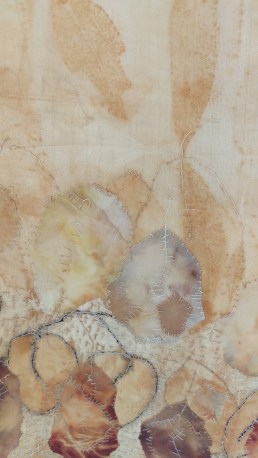
As always in these techniques, the splendour of lovely details is part of the pleasure.

2016-07-23 13.25.31

Every little detail has been attended to and embellished.

2016-07-23 13.25.49

Isobel’s longing for peace seems to me to be accompanied by meditations on all that war has caused us to lose… and so the themes of fallen leaves and of the crucifix evident in so many cemeteries in this part of the world are persistent.

2016-07-23 13.26.15

A small posse of us who are admirers of Isobel’s work were privileged to go and admire the exhibit together one winter’s weekend, and it was good to spend time appreciating all that detail.

2016-07-23 13.26.01

I am sorry that you can’t go and see this lovely exhibit… but here is our departing view…

2016-07-23 13.30.51

10 Comments

Filed under Natural dyeing, Sewing

Mending in July

2016-07-20 16.36.49

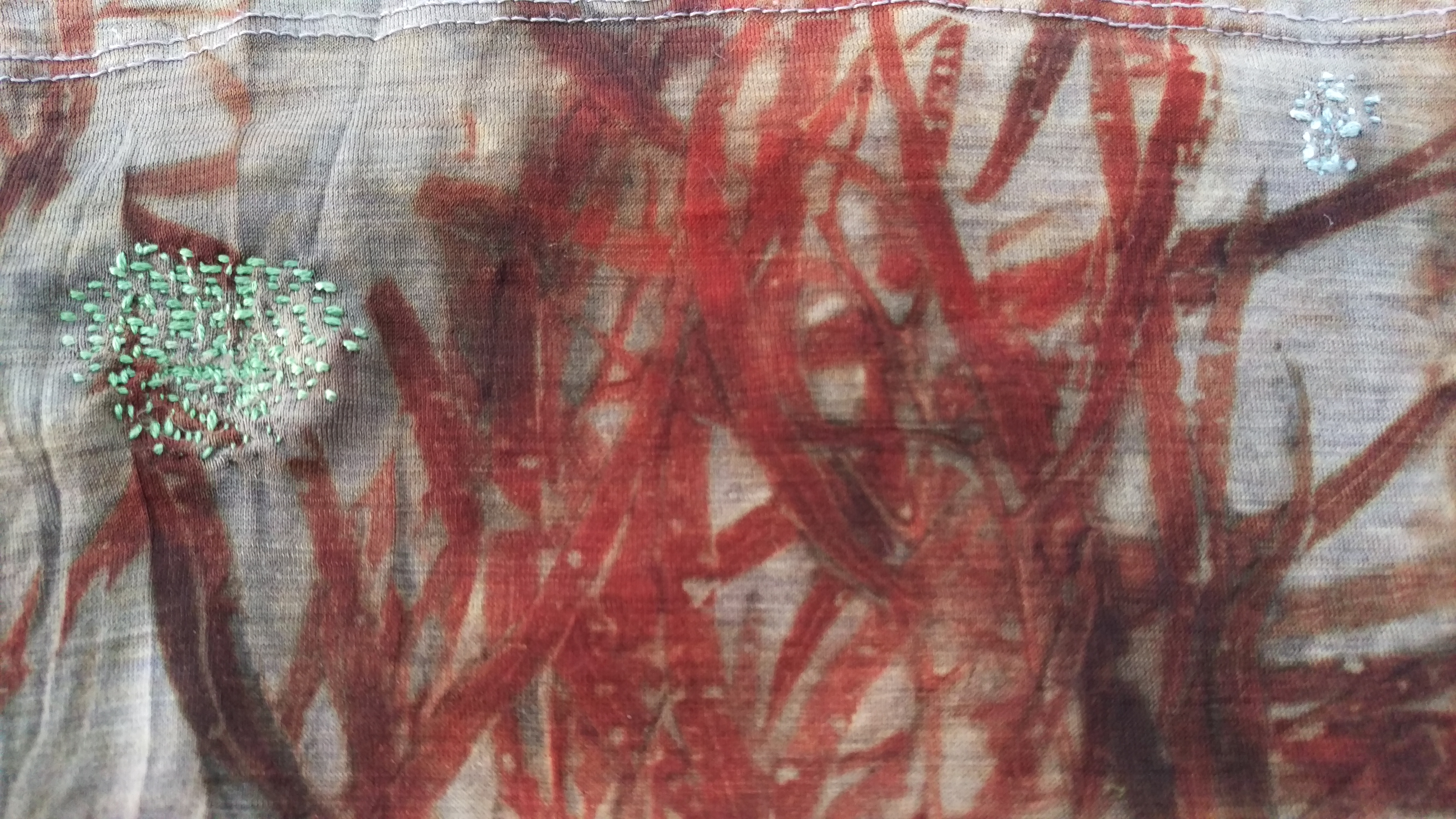
Because mending never stops… I have not restricted mine to May.  This is a little light darning on some underwear. I know, this is pansy dyed green thread… but this top already has indigo dyed darning (top right) and lots of other mends in all kinds of colours… so when the pansy green took my fancy I didn’t resist.

2016-07-21 16.20.06

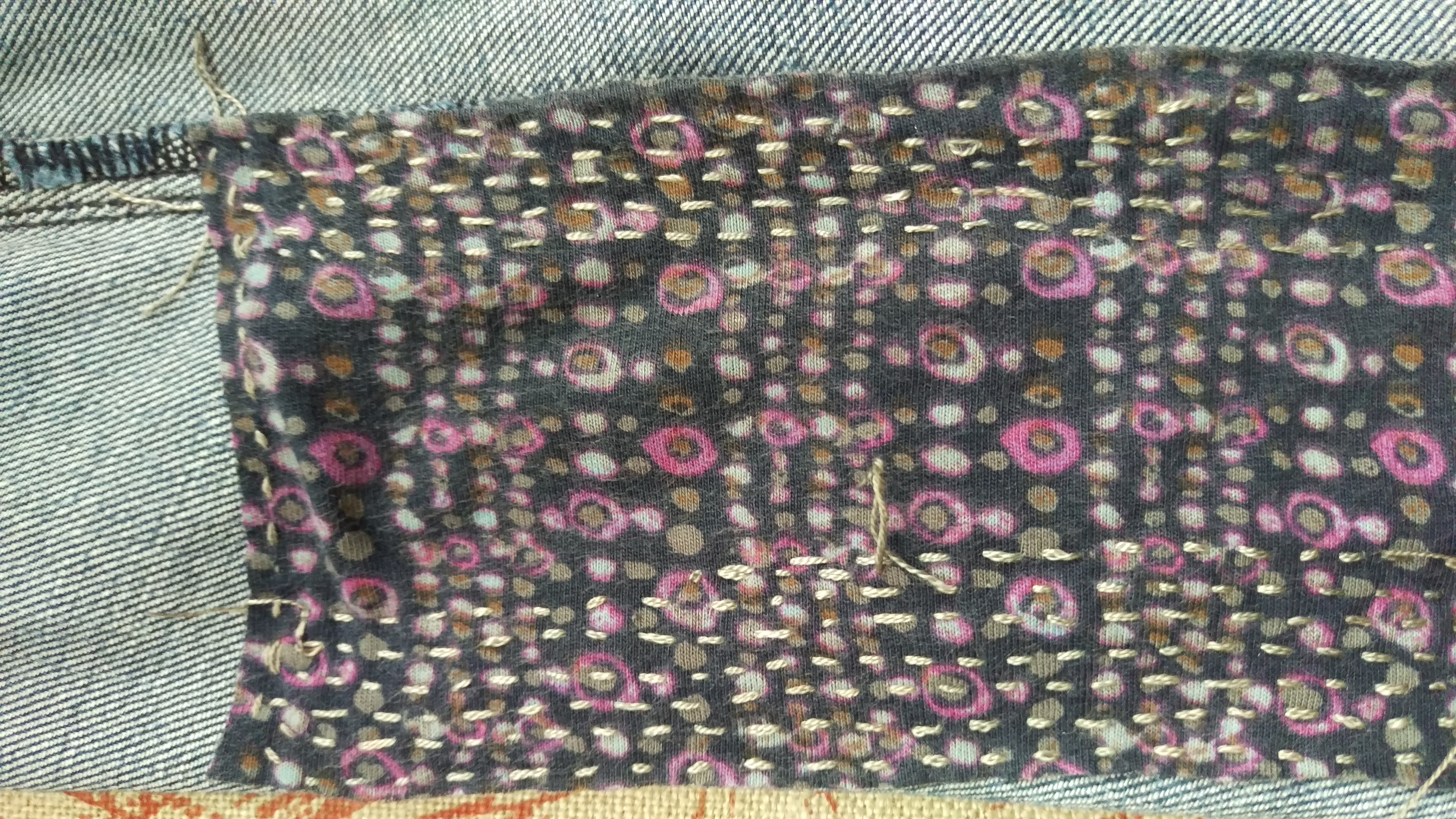
This, on the other hand, is  a pair of jeans. I love seeing people’s glorious sashiko style mending on jeans, but these people have the physique and luck to wear their jeans through on the knees.  Not me. And, I think it would be an overstatement of my mending to call it sashiko as well as doing injustice to Japanese sewing traditions…

2016-07-21 17.24.18

Anyway… on the outside this is not too obtrusive.

2016-07-21 17.27.20

Hopefully good enough to hang together in gardening use, in any case!

2016-07-21 17.24.58


1 Comment

Filed under Sewing

Woad in winter

2016-07-18 11.33.25

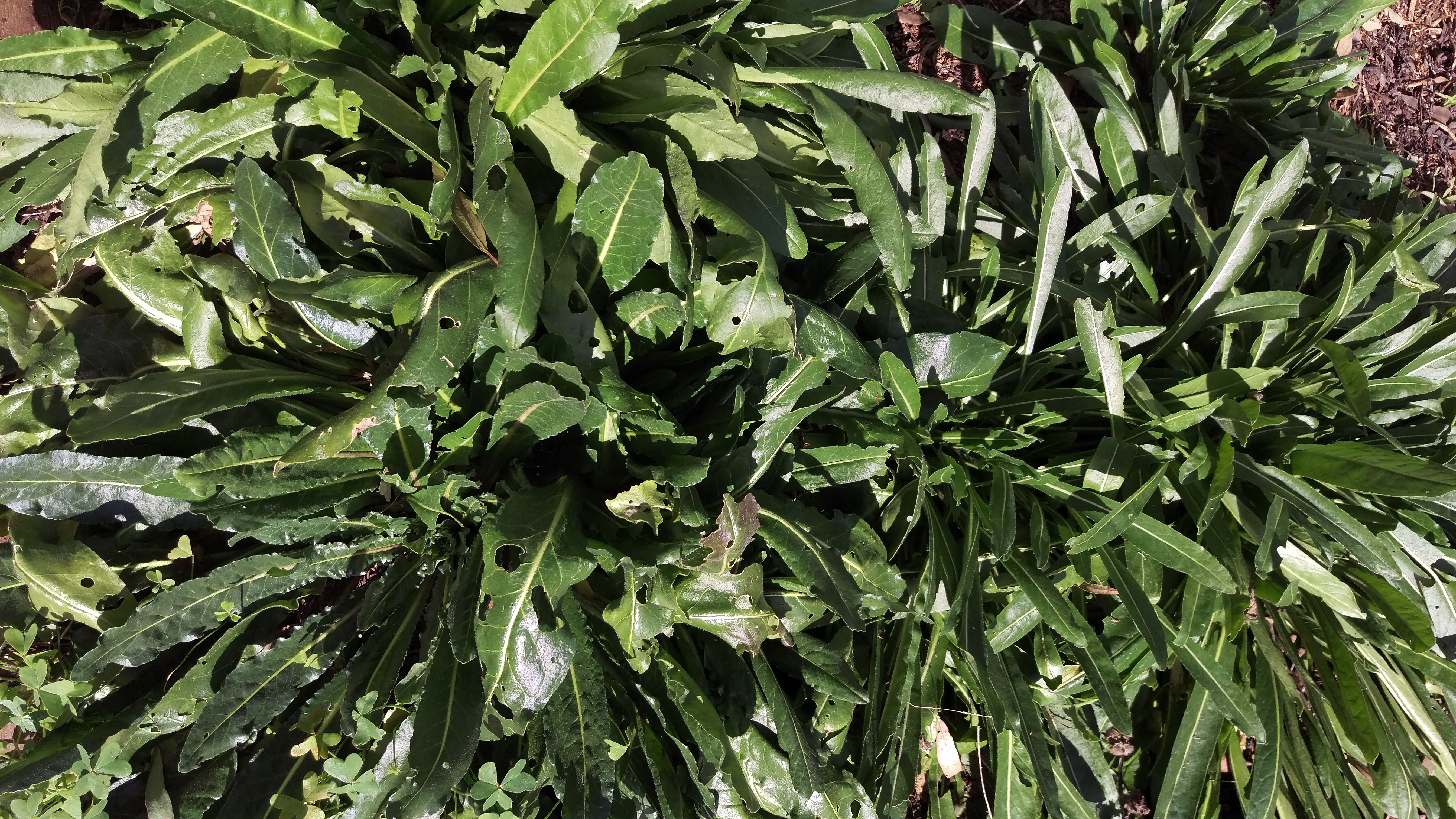
I realised a little late that I should have picked my woad earlier. But decided I had nothing to lose by picking it now.

2016-07-18 11.41.33

Then the chopping…

2016-07-18 13.42.25

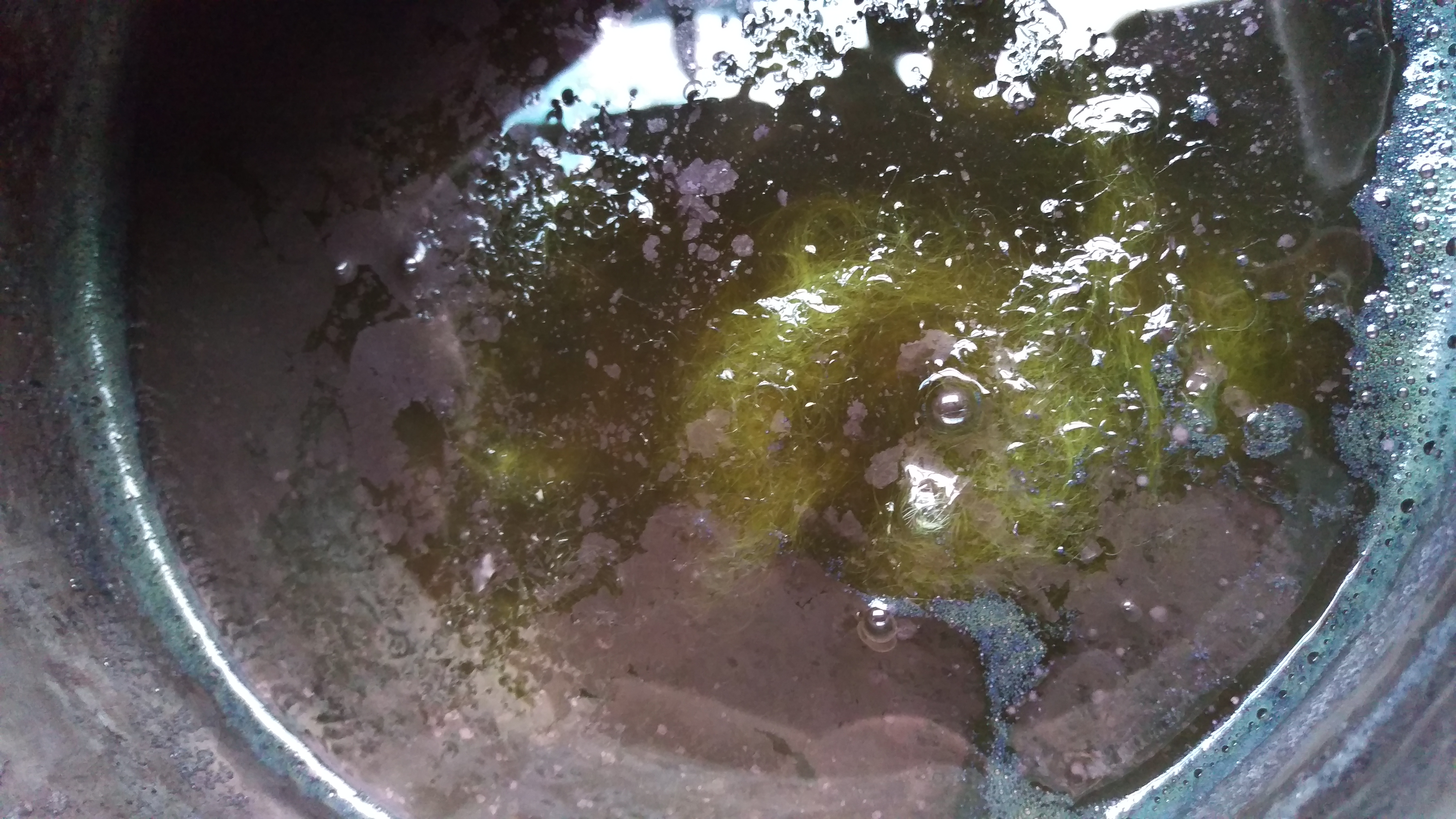
Then the vat. How blue should the froth be, to be blue enough? These are the questions that plague my blue-dyeing!

2016-07-18 14.35.48

Eventually, I had a vat. The wool came out the same colour it was when it went in. The second vat had a lot more leaf to the same volume of water.

2016-07-18 16.52.14

I ended up with some blue-pale blue-bluish wool.

2016-07-23 14.46.19

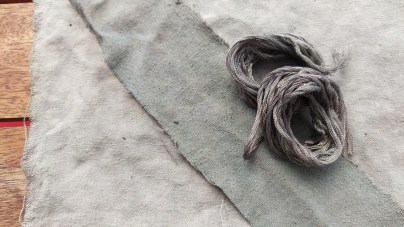
And some silk thread that is more of a silver grey.  I swear it was blue after the second vat, but either subsequent re-dips stripped the colour back out, or it was fugitive.  Or I dreamed it. Well, they do say that woad doesn’t bear much indigotin, and harvesting in winter is not ideal.  But, am I allowed to be a bit disappointed anyway?

2016-07-23 14.46.40

12 Comments

Filed under Natural dyeing

Madder: the growing and the dyeing

IMAG2100

I have been growing madder for some years now without having enough to use for dye. It had to be transplanted when we moved house.  Then, I heard so much about how invasive it can be, I planted it in a half wine barrel and it really hasn’t enjoyed this spot.  I think people who find it invasive must have more rainfall or better watering practices, or perhaps all of the above and better soil. Then, it is amazing how many critters want to eat it despite the leaves being the texture of rough sandpaper!  I decided to divide and transplant finally.

IMAG2101

Here is the crop. Not too bad, but really, not a huge mass of roots.

IMAG2102

My beloved put three new garden beds in that will get dependable summer watering and generously agreed to one of them being a dye bed. When I had divided one of the rhubarb plants, re planted the resulting crowns and set out the new madder bed, I had a few roots left. I consulted my various manuals and washed the roots.

IMAG2104

Then, out with the dye blender (my parents scored this for me in their travels through second hand shops)!

IMAG2106

It went into the dye bath looking orange, but as I heated it, it became a deeper and deeper shade.

IMAG2110

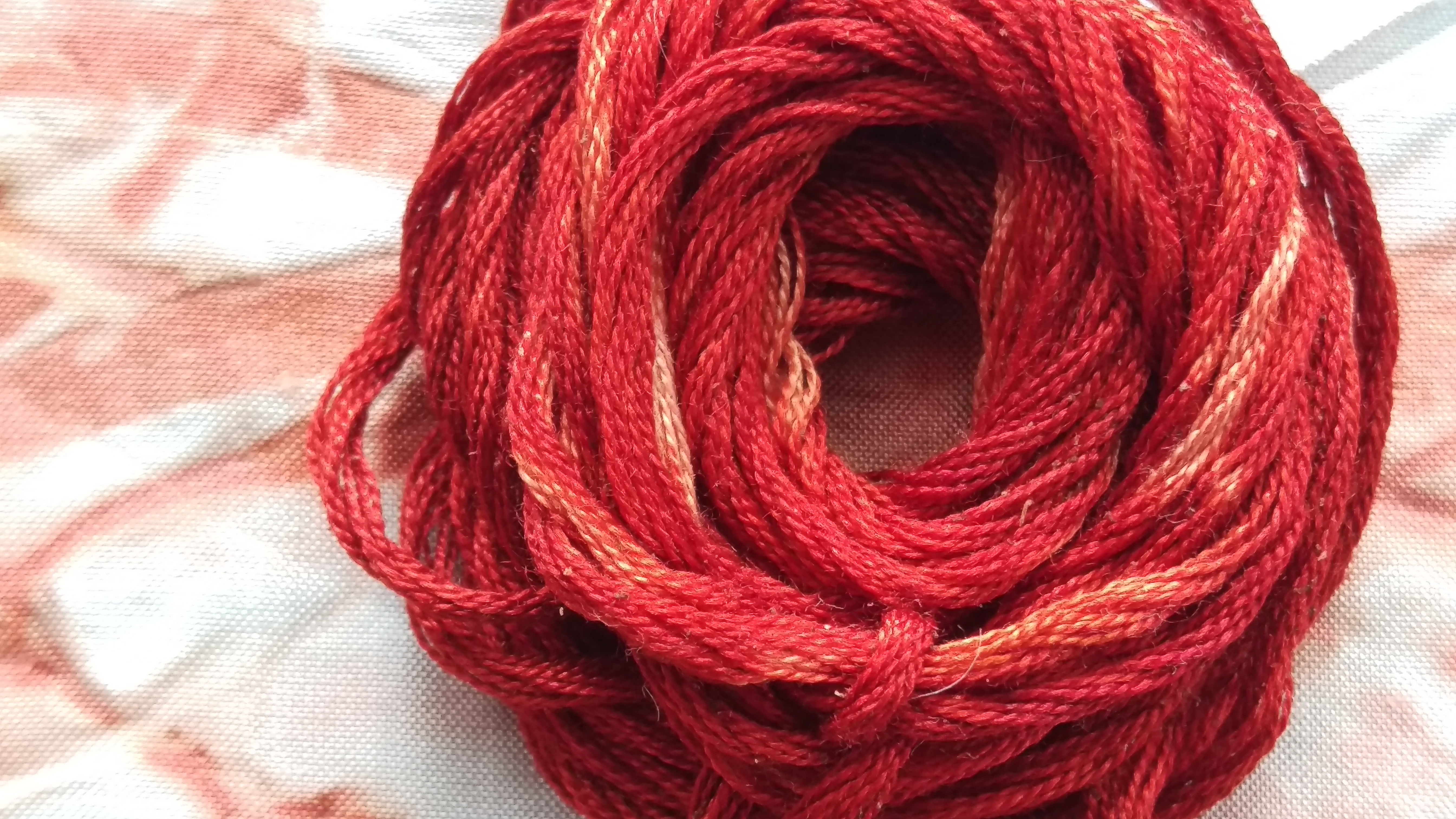
At this stage, I put some silk embroidery thread in, in a zippered mesh pouch that has seen a lot of dye baths since it left the Body Shop and ended up empty in an op shop (and thence came home with me). This turned out not to be enough to keep out all the particles of madder!

IMAG2112

My goodness! I think this is the red I have been promised from madder!

2016-07-21 11.54.36

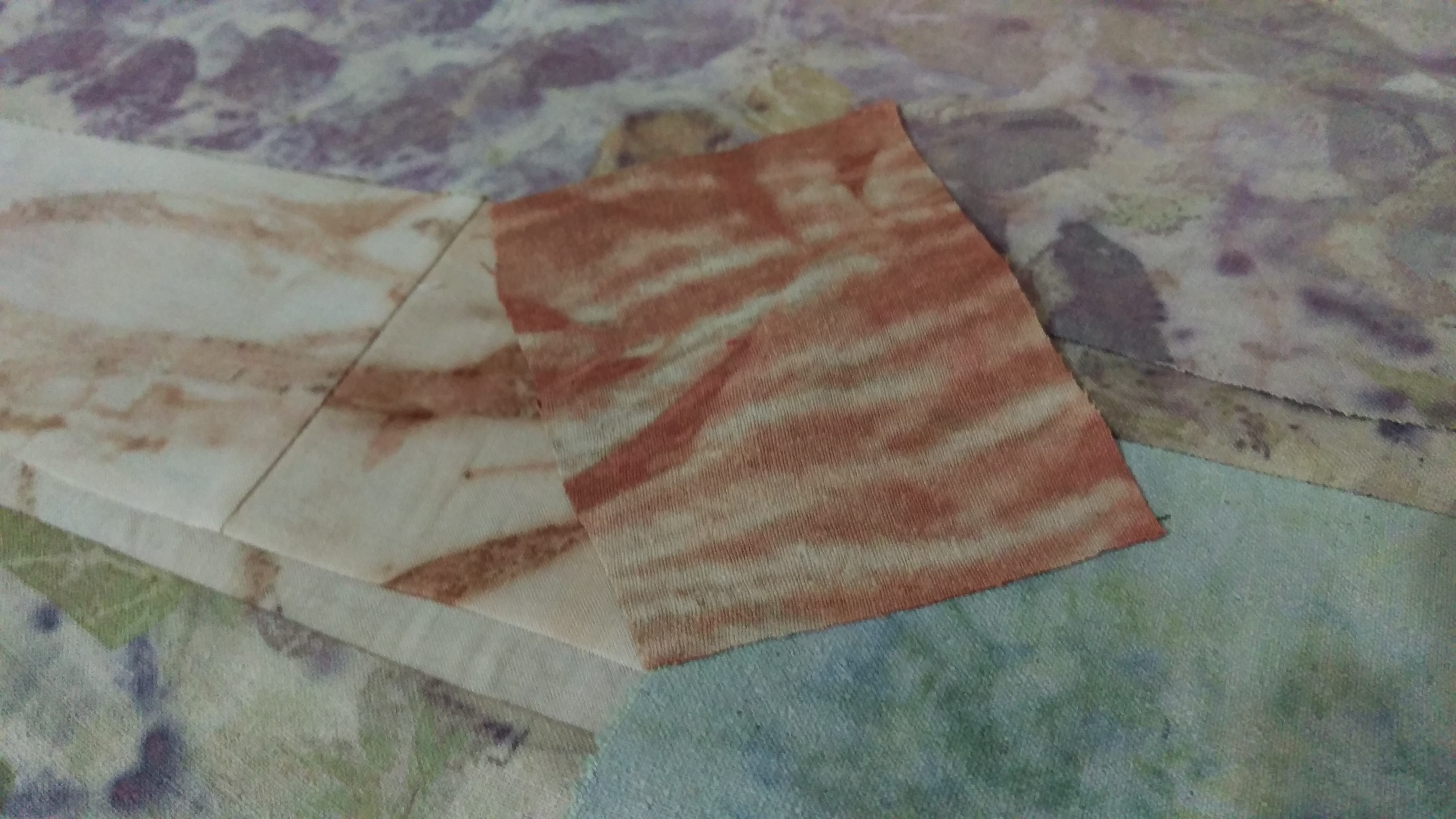
One skein dyed quite evenly and one streakily and both will be gorgeous in their own ways.

2016-07-21 11.59.04

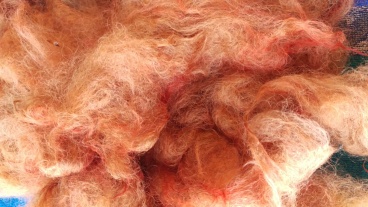
After this point, I strained the dye bath through two layers of nylon next curtain, added mordanted grey fleece and got the kind of orange that madder often gives in an exhaust (to me, at any rate).  And now, I can’t wait to see if I can really get this madder thriving!  For other bloggers whose madder growing and dyeing is inspirational I suggest An Impartation of Colour and Jenny Dean and Deb McClintock (so many posts to read from Deb!).

2016-07-23 14.45.44


7 Comments

Filed under Dye Plants, Natural dyeing

#MenditMay: Beyond darning

I have a dear friend whose entire family are facing some very tough times.  I’d been wondering what I could do that might bring some comfort to her, and then I had an idea.  I knew she had a cardigan that had belonged to someone she treasured, and that it was showing signs of long wear and lots of love.  So I offered to mend it for her.  She chose some yarn and on some quiet nights last week I set to work.

IMAG1584

Darning is always possible, but sometimes it seems barely adequate to the task, and the result is unlikely to be pleasing.  I have darned holes bigger than this, but I did cover some of them with leather elbow patches afterward!

IMAG1586

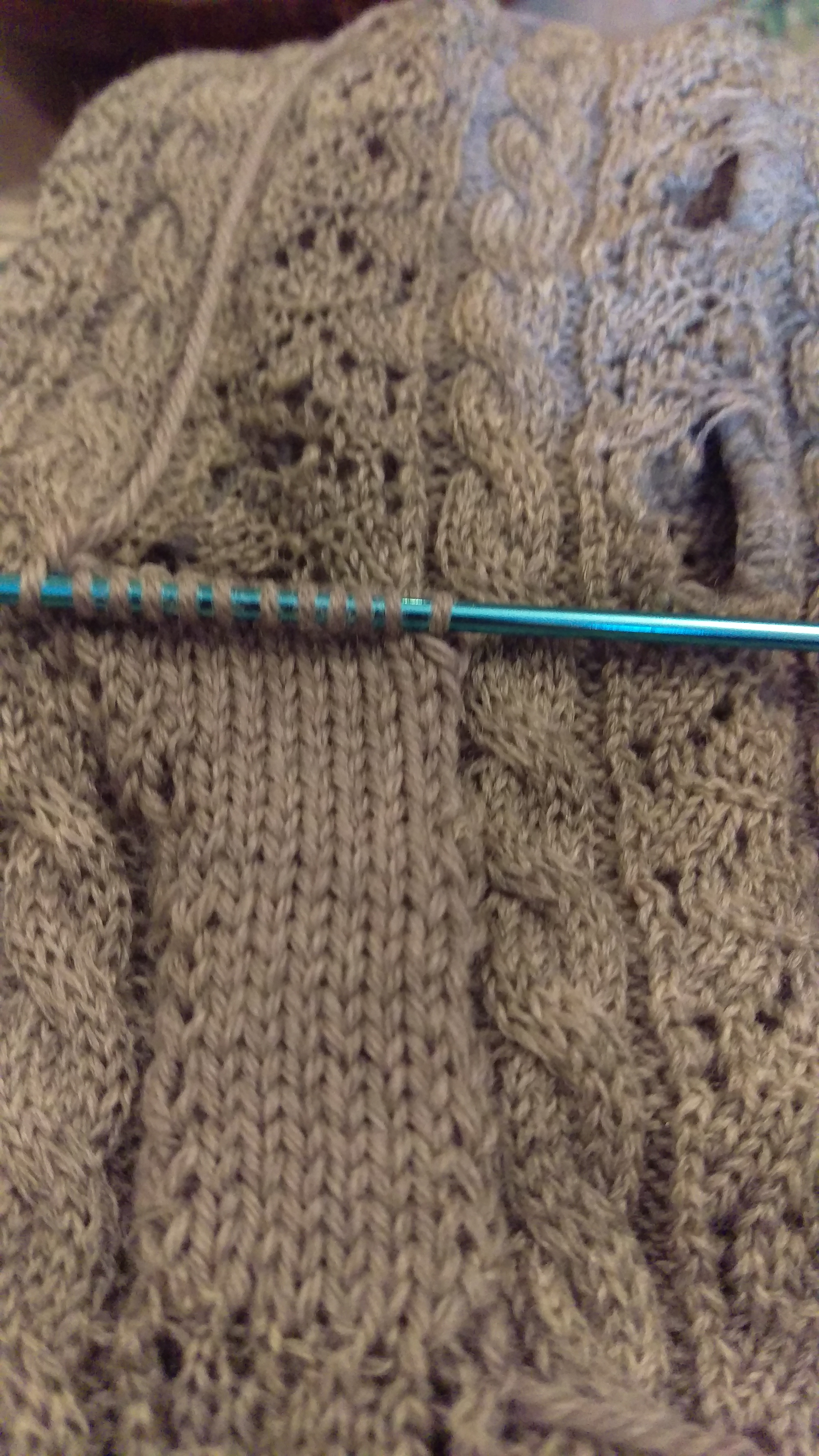
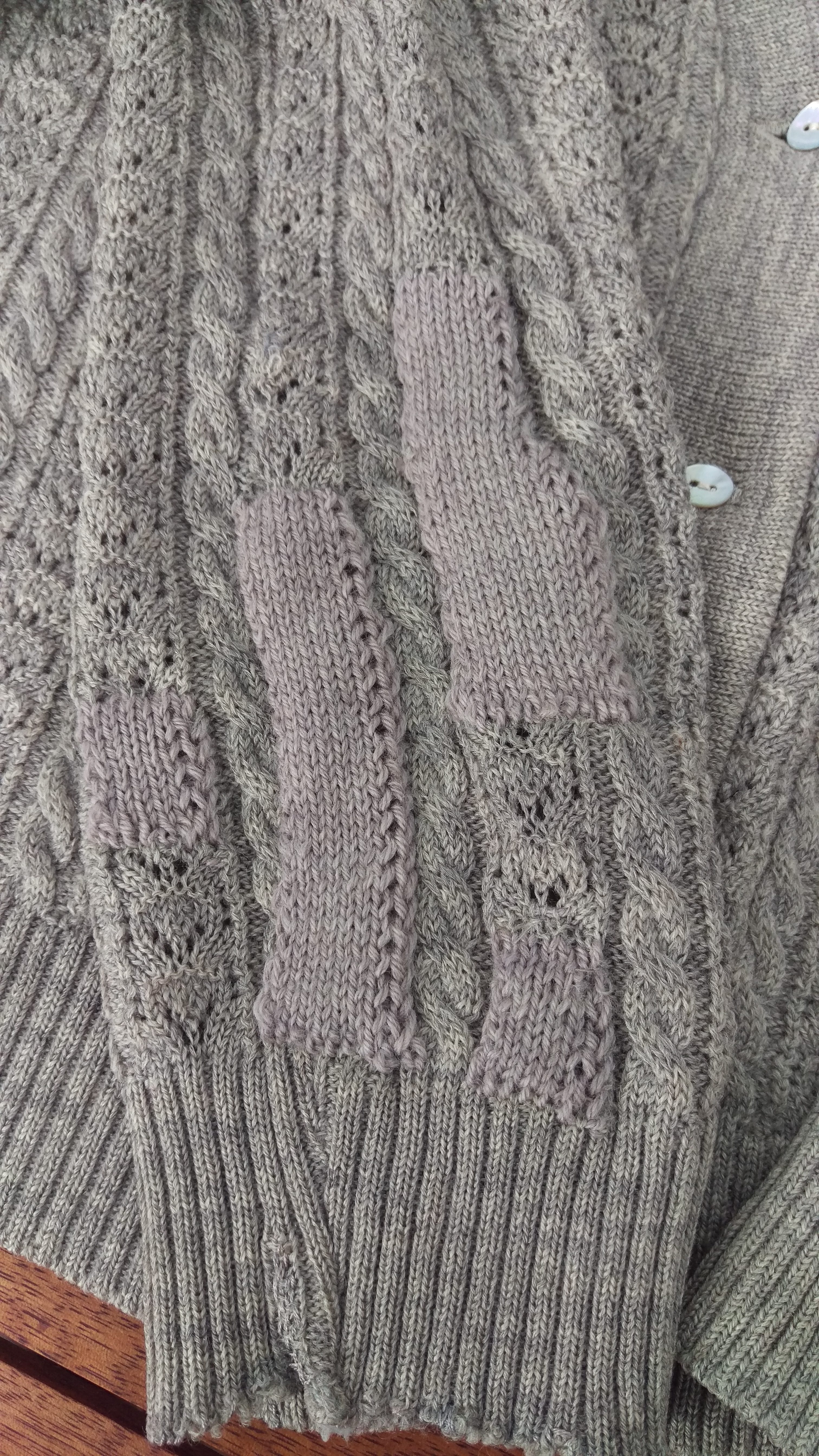
In the end I decided knitting in patches was a better idea.  I used needle and yarn to stabilise runaway live stitches.  Then I picked up some stitches, as you can see above.

IMAG1590

In a couple of spots I darned first and then picked up stitches.  See the woven section above the knitting needle?  Then it is really a process of knitting along and purling back, knitting two together at each side with a patch-stitch and a picked up strand from the garment.  There were some places where I added extra stitches or cast some off as I passed.

IMAG1588

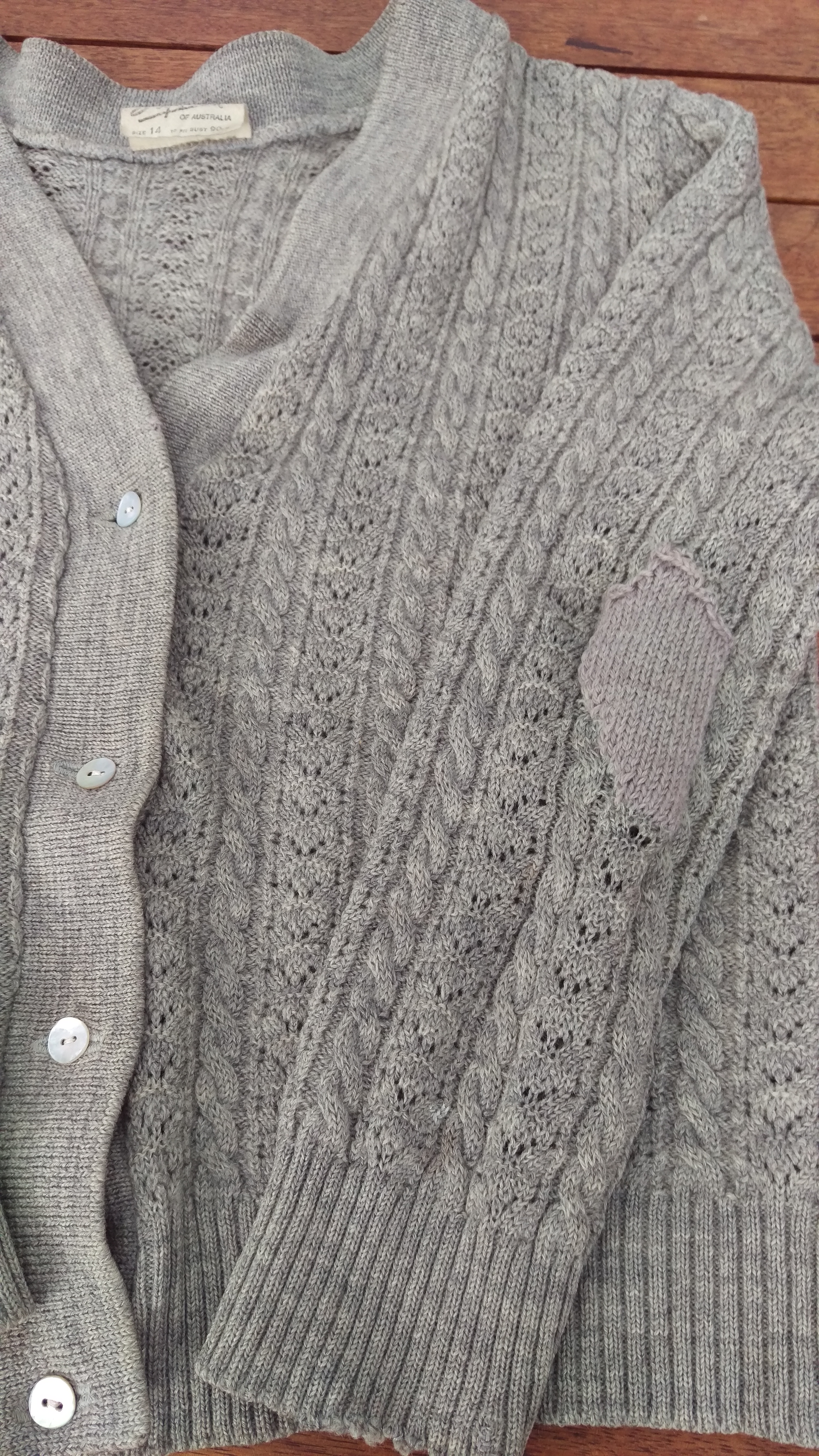
One sleeve got several patches.  I tried different ways of casting off (binding off) and decided hand sewing the stitches down was the smoothest finish.

IMAG1602

There were smaller places where I did small darns or just trapped live stitches so that ladders could not spread further.

IMAG1592

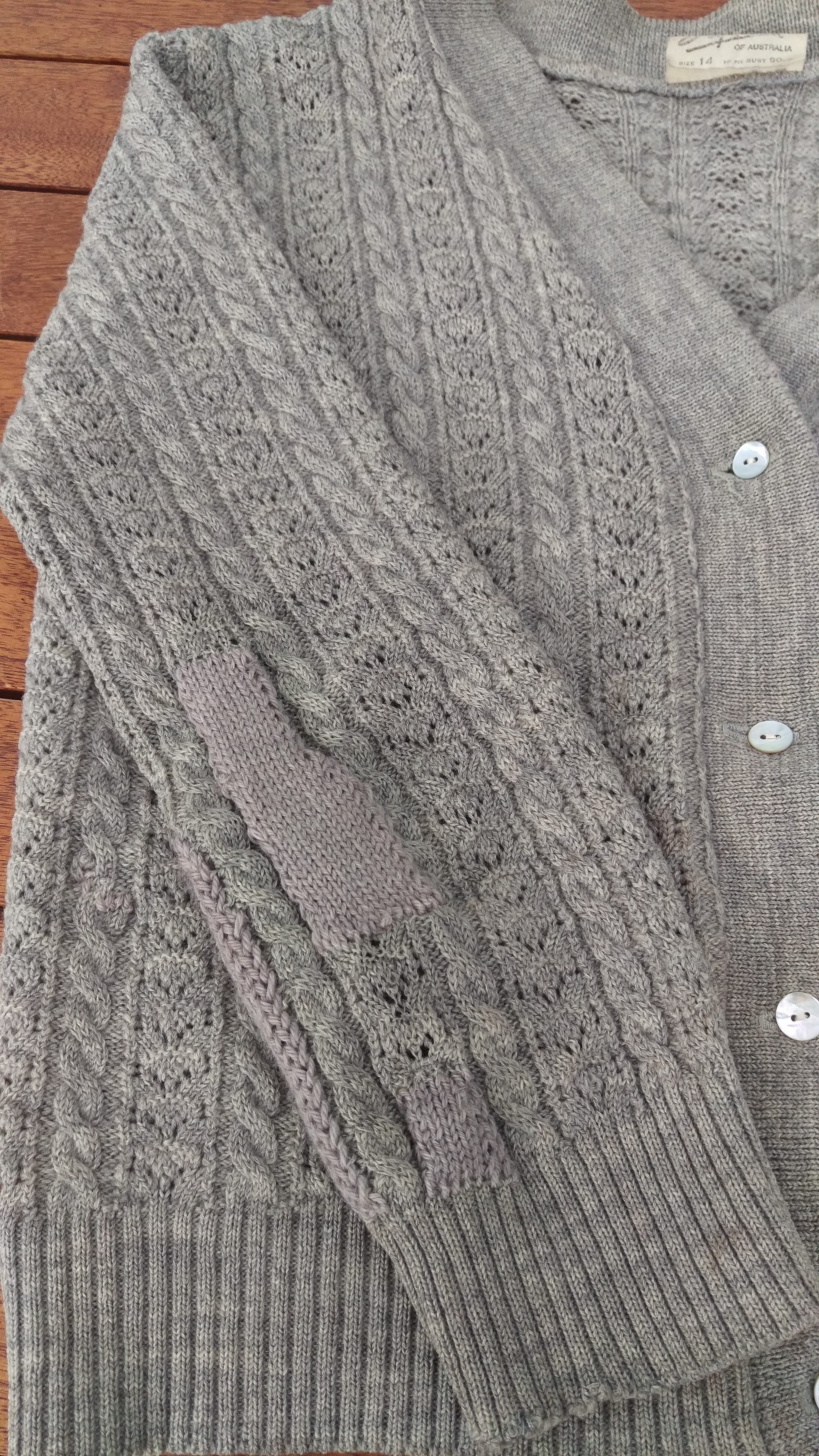
On the cuffs, I considered a few options before settling on using some of the silk thread I dyed with Japanese indigo.  The grey was pretty much perfect here and I was able to use a fine enough needle to stop the stitches that are unravelling going further.

IMAG1594

There were four buttonholes but one button.  I couldn’t match it, so I sewed on four that have come off some other garment.

IMAG1598

Because a cardigan can be worn open, I concealed the ends of the stitching, with the initial knot and the tie off under the button rather than on the ‘wrong’ side, where I would happily tie them off on a shirt.

IMAG1599

And here it is.  Visibly mended but in a way I hope will mean this treasured cardigan will have an extended life providing comfort and warmth to my friend through times good and bad.

IMAG1601

I know my friend is surrounded by the love and care of many friends and her family too.  I’m lucky to be among them.

IMAG1600


18 Comments

Filed under Knitting, Sewing

#MenditMay Mending sewing machines and more

2016-05-14 15.28.54

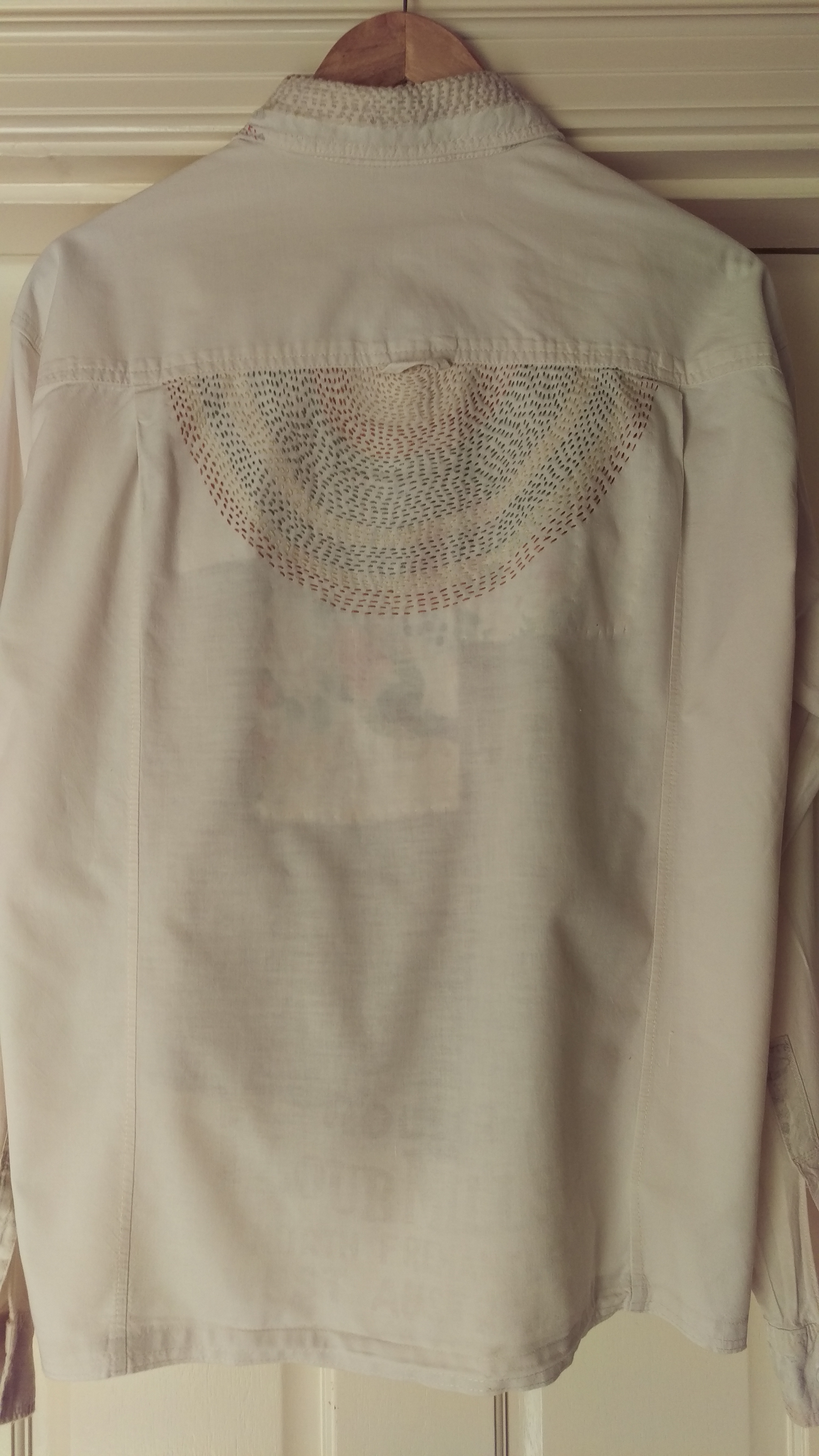
This sewing machine was found in a shed.  It was unwanted by the new resident, so it came to me for cleaning, oiling and a look over.  You see it here with some of the upper casing removed to allow lubrication. It is now on its way to new users in the Anangu Pitjantjatjara Yangkunytjatjara lands. Meanwhile at our place, the threadbare flourbag shirt got some more patches added.  Here, the glue stitching I mentioned in my last post holding them in position.

2016-05-14 11.26.19

Here, the inside view.

2016-05-14 11.32.17

And here, the finished–for now–view of the back.

IMAG1604

Threads dyed with pansy, dyer’s chamomile and eucalyptus.

IMAG1605

I took up my friend’s jeans.  I feel like I have almost got top stitching denim sorted!

2016-05-14 17.41.39

Top tips: use a jeans needle.  If using top stitching thread, thread the needle by hand (should you have any other options, don’t use them); and leave ordinary thread in the bobbin. Use a 4mm stitch at least.

2016-05-12 11.27.07

Buttons replaced in position and stitched down so they don’t get away. I had to laugh when one button fell off at work the day of the second mending workshop!

2016-04-26 19.46.29

And another sewing machine cleaned, oiled, tested and ready to go to its new owners.  My grandmother lived in a country town where getting your machine serviced was not easy to arrange (cost may have been an issue too).  She was a fearless tender to her own machine and those of all her friends and told me many times that cleaning and oiling fixed most troubles.  So I am in her footsteps here, but in this case with a manual to guide me.  I took this machine apart and oiled all. the. places.  It really whirs along! It is now headed to asylum seekers who have been released from increasingly notorious conditions in detention on Nauru, who were tailors in their country of origin and will make great use of this well maintained machine.  It came to me because I was working on the mending kits and a lovely volunteer in an op shop asked if I could re-home a machine she knew needed to find a new home. I feel sure its new use would please the original owner very much.

8 Comments

Filed under Natural dyeing, Sewing

Just mend it: Getting started

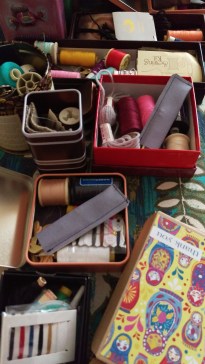
In preparation for the upcoming mending workshops, I’ve created a directory of mending tutorials.  I’ve also been beetling away creating mending kits. Friends have been handing over their spare unwanted haberdashery and tins.  I have raided local op shops.  At one of them I was offered a motherlode of  unwanted notions that were seeking a new home. Here’s a partial view.
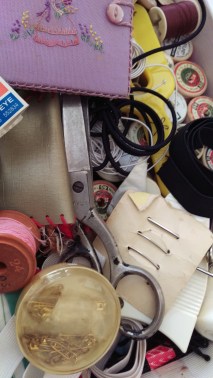
2016-04-13 14.49.05

Such treasures.  Including a lifetime’s collection of travelling mending kits from hotels and airlines the like of which I have never seen.  Now, it is going to new homes. I’ve even sewed little covers for thread snips from lino samples I seem to somehow have acquired.
2016-04-16 10.26.28

There are pincushions and measuring tapes, thimbles and safety pins and many reels of thread.  Amazing collections of needles, pins and such.

2016-04-16 10.27.08

The creation of the needle case gallery has been ongoing. Scraps of fabric with a lovely button and all manner of little bits of ribbon, string and cord I have saved for a special occasion (or just a use) have been converted into needle books.

2016-04-16 07.08.38

Lovely little bits of hand embroidery on fabric that has gone well past original use, now adorn a few.  Beautiful Australian print remnants have been  turned to use too.  Some have buttonholes and some have loop closures. Some are plant dyed and some are tied with cord too short to form a drawstring on a bag.

2016-04-16 07.09.22

I am very fond of my own needle case, so eventually I made some just like it.  Well, sort of like it. We started here (mine on the left, and pieces of dyed blanket on the right).

2016-04-16 12.36.40

Eventually, there were about eight.  I stitched at triathlons and in front of the TV and on the train.  I finished some with fancy buttons, beads or little bells saved from Easter bunnies.  I tied some with cotton string that has also seen the dye bath, and others with some hand twined silk string, with a thankyou to India Flint for allowing me to see this was possible and that string was not only to be made from plants.  I was thinking about the fact that I had saved all these improbable things, while others had been handed on to me by relatives and friends with similar habits–

2016-04-19 22.20.55

It brought to mind my mother’s parents, two people who lived in poverty their entire lives, scaling up to indoor plumbing and heated water during my lifetime.  My grandfather left countless pieces of recycled string, pre-loved screws and straightened out nails when he died. My grandmother had a drawer where special treasures lived that I was allowed to admire as a child.   There was a special safety pin in there she used to pierce a hole in the filter of her rare cigarettes for some supposed health reason.  There was also a little black cat made of plastic.  I knew it had come from a box of Black Magic chocolates.  I had seen the boxes for sale but never had any.  Like her, I thought this little creature was a treasure worth saving when the cardboard box and the rather amazing papers surrounding each chocolate might have passed on.

2016-04-19 21.29.37

My life is utterly unlike Millie’s.  But it is good to have things in common with her. It warms me to carry these memories of her along and hold them in my mind as I craft these little books for future menders who will share some fraction of the skills she had.

15 Comments

Filed under Leaf prints, Sewing

Adventures in woad

2016-03-12 10.44.46

Woad has been one of the success stories in our summer garden.  Until two years ago I had no success at all growing a seedling. This summer, it has really grown and thrived.  So I have decided I can try a few things out.  I started with India Flint’s ice flower method.  She describes using it with with Japanese Indigo on silk here. It seemed logical to me that if it worked with Japanese Indigo, it should work with woad.  But logic requires consideration of all the facts, and I know for sure I don’t understand all the chemistry and plant magic involved.  So who knew what might happen? The last time I tried this, with some Japanese Indigo leaves, nothing obvious happened and I decided I just didn’t have enough leaf matter (and the leaves were tired and sad in any case).

2016-03-13 15.17.21

This time I was rich in leaves, though woad is a low-indigo plant. I followed the instructions.  After a night in the freezer, here are my woad leaves in filtered rainwater, with a little pre-loved raw silk and some silk embroidery thread.

2016-03-13 17.04.47

A while later, there were exciting signs of success.  A couple of hours later, the colour was deeper still and the embroidery thread was looking good too. Definitely deep turquoise–tending to green rather than blue, but that would be a happy outcome. I added more thread! That looked good too, so I added some more fabric and went to bed.  The next morning the woad leaves were very green, but the silk was not!

2016-03-14 14.08.18

I haven’t had a lot of luck catching the colours exactly, but…. grey is close enough!  The thread is a sheeny steely grey that I have obtained from Austral Indigo in the past by a similar method.  I really enjoyed stitching with it and now I have a new supply.  The smaller fabric that went in first is a darker colour and slightly green-grey.  the larger piece is a rosy-grey, perhaps.

2016-03-14 14.06.43

I forgot to alkanise as India suggests, which would have been a good idea: that might be the issue.  The silk is much worn and washed.  Contaminants?  The woad has had a hard summer? I have chosen a plant in its second year without much indigotin: that is entirely possible.  This method doesn’t suit woad?  I should have pulled the fabric and thread out sooner, when I liked the colour?  Further oversights on my part?  I just don’t know!


8 Comments

Filed under Natural dyeing

More adventures in plant dyed embroidery

2016-03-07 17.44.42

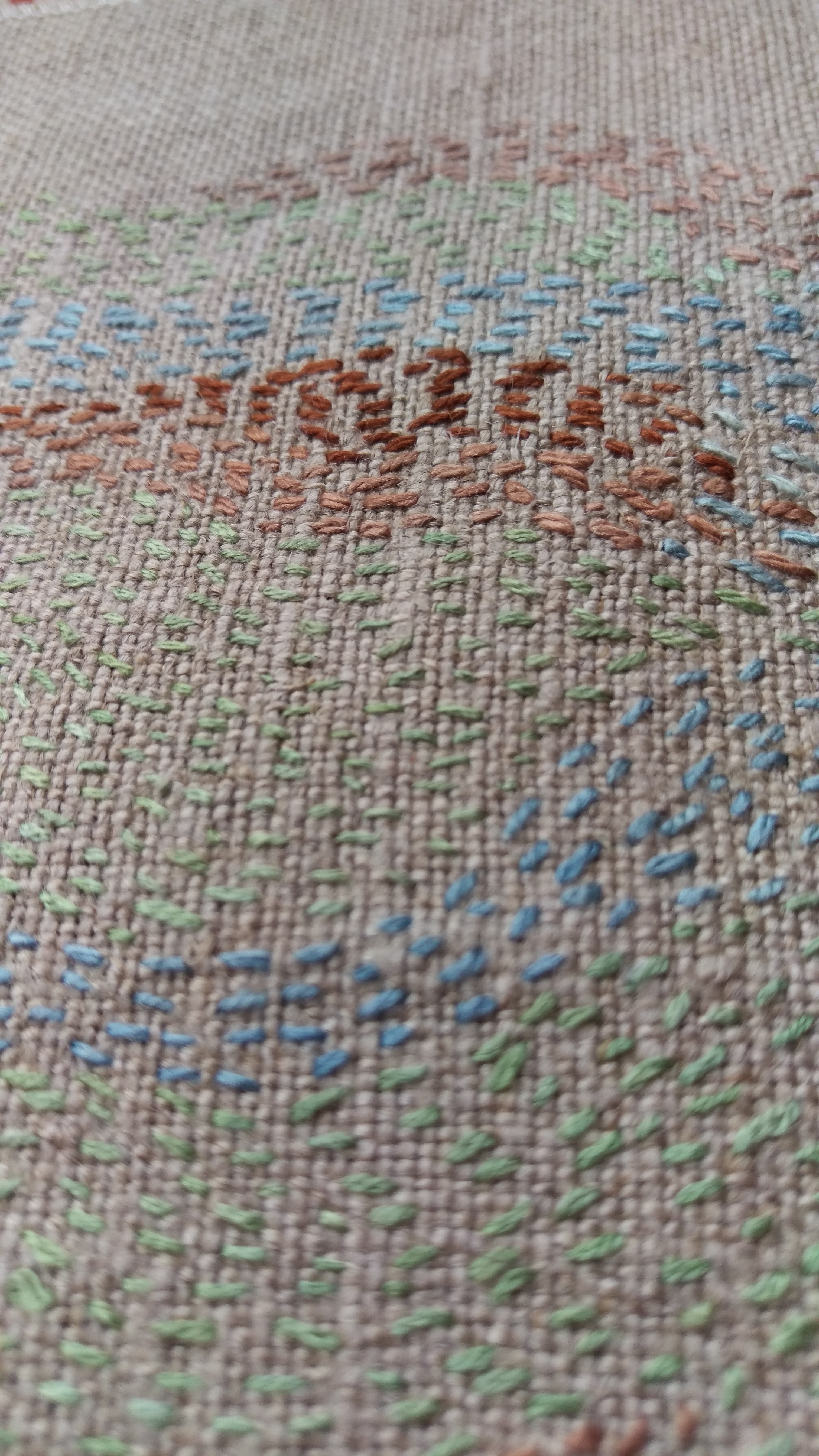
I still have some upholstery fabric left from having some chairs re-covered.  It is natural linen, a lovely fabric.  I have been wondering what to do with it.  One day I went to an exhibition of Papunya artists in the City Gallery of Flinders University (on the ground floor of the State Library) and I came home longing to embroider.  I can’t exactly say why.  Perhaps it is partly that some of these glorious paintings are such clear manifestations of the principle that many tiny marks can make a whole that is sheer wonder.  I marvelled at the capacity of these artists to hold entire desert landscapes and the stories of these places in their minds, and from these to create spectacular images which somehow communicate the story and the place. Even if I cannot begin to grasp all that they might have in mind in creating these works, I can still stand in awe.

2016-03-07 17.44.50

I don’t need to be able to create wonder.  I don’t expect to, and I don’t mind.  But stitches are tiny.  Perhaps the immediate thing was simply the invitation to begin.

2016-03-07 17.45.00

These threads have been dyed with indigo, pansy, hibiscus and eucalyptus.  I love their subtlety and the slight sheen of the silk thread against the matte texture of the linen.  I love the effects of uneven dyeing, as it turns out.  Even dyeing is overrated!  Once I had decided I was done (which is a com0plicated thing in itself, I find), I settled on yet another bag.

2016-03-16 13.21.01

The lining is made of patchworked silk scraps dyed with all kinds of plants.

2016-03-14 19.19.45

And then, just because I can never make just one… I made another with a different piece of upholstery fabric and some scraps of recycled fabric of different weights.

2016-03-16 13.21.30


9 Comments

Filed under Natural dyeing, Sewing

Seasonal preserving

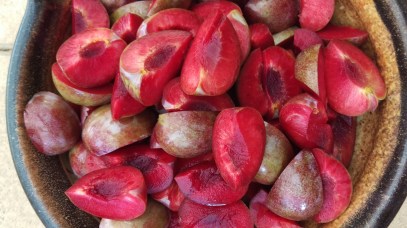
Here in the wide brown land it is high summer and stone fruit is in season.  Settle down, all you folk in midwinter on the far side of the planet!  There has been an outbreak of illness and surgery in my extended family, and it was with regret that my father informed me that their blood plums would be ripening while my parents were away visiting and supporting those in need.  I draw your attention to the basket, evidently made by either my grandma or my grandpa on Mum’s side.

2016-01-11 15.31.02

My parents can really grow things.  Fruit, flowers, vegetables, ferns, natives… these plums are enormous!  They already had more than they could use, so I pulled out my Fowlers Vacola bottling outfit and set to work.  I think I now understand that this is what folk in North America call canning.  As a child, I was amazed to think people in the US had a way to put things in cans at home.  North American supplies are now available here along with those from Italy and other parts of Europe.  But this is what I grew up with.  I now understand it was quite an Anglo-Australian thing.  Friends with families from other parts of Europe sometimes used different processing and preservation methods and sometimes just used jars from anything consumed in their household to bottle fruit.

2016-01-11 16.32.39

I love that food preserving is becoming hip at the moment–a bit–but when I was a child it was viewed as a necessity by my family, along with making jam.  Now, this kind of equipment is readily available second hand and cheaply.  For my parents it was a huge outlay and we had the smallest, most basic kit available.  I scored the next model up (bigger but still basic) for a few dollars at a garage sale, something that could have saved my mother hours of what she clearly experienced as drudgery.

2016-01-11 18.42.08

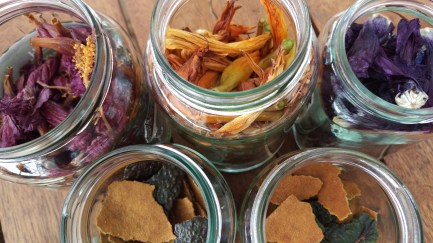
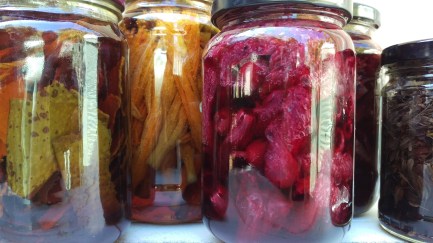
Well, this time she can have some glowing ruby jars of stewed plums without any drudgery at all, bless her.  And while I was on the project I decided to clear the freezer out a bit and do a round of dye jars using India Flint’s Stuff, Steep and Store Method.

2016-01-16 19.34.28

Hibiscus flowers, daylily flowers, hollyhocks, and clean, scoured avocado peel (fresh from lunch).  Into the jars with pre-mordanted silk embroidery thread they went.

2016-01-16 19.42.03

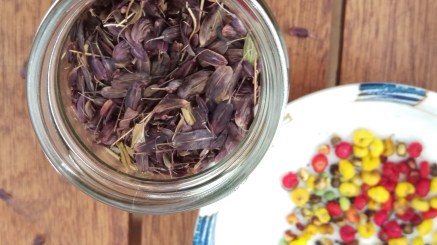
In the whole scheme of summer preservation, I also collected mizuna seed, woad seed and some ruby saltbush seed and set up to save them.  There was such an abundance of woad seed, and purple dye is so amazing, I put up a jar of that too.  I am looking forward to trying the agrimony seed that Wendi of the Treasure has sent when the time is right.  And to opening these jars in the future!

2016-01-22 15.37.53

18 Comments

Filed under Natural dyeing